EP3489919A1 - Apparatus, method and computer program for indicating an emergency situation - Google Patents
Apparatus, method and computer program for indicating an emergency situation Download PDFInfo
- Publication number
- EP3489919A1 EP3489919A1 EP17203574.3A EP17203574A EP3489919A1 EP 3489919 A1 EP3489919 A1 EP 3489919A1 EP 17203574 A EP17203574 A EP 17203574A EP 3489919 A1 EP3489919 A1 EP 3489919A1
- Authority
- EP
- European Patent Office
- Prior art keywords
- sound signal
- user
- environment
- emergency situation
- detected sound
- Prior art date
- Legal status (The legal status is an assumption and is not a legal conclusion. Google has not performed a legal analysis and makes no representation as to the accuracy of the status listed.)
- Granted
Links
Images


Classifications
-
- G—PHYSICS
- G08—SIGNALLING
- G08B—SIGNALLING SYSTEMS, e.g. PERSONAL CALLING SYSTEMS; ORDER TELEGRAPHS; ALARM SYSTEMS
- G08B25/00—Alarm systems in which the location of the alarm condition is signalled to a central station, e.g. fire or police telegraphic systems
- G08B25/009—Signalling of the alarm condition to a substation whose identity is signalled to a central station, e.g. relaying alarm signals in order to extend communication range
-
- G—PHYSICS
- G08—SIGNALLING
- G08B—SIGNALLING SYSTEMS, e.g. PERSONAL CALLING SYSTEMS; ORDER TELEGRAPHS; ALARM SYSTEMS
- G08B29/00—Checking or monitoring of signalling or alarm systems; Prevention or correction of operating errors, e.g. preventing unauthorised operation
- G08B29/18—Prevention or correction of operating errors
- G08B29/185—Signal analysis techniques for reducing or preventing false alarms or for enhancing the reliability of the system
-
- G—PHYSICS
- G08—SIGNALLING
- G08B—SIGNALLING SYSTEMS, e.g. PERSONAL CALLING SYSTEMS; ORDER TELEGRAPHS; ALARM SYSTEMS
- G08B3/00—Audible signalling systems, e.g. audible personal calling systems
- G08B3/10—Audible signalling systems, e.g. audible personal calling systems using electric transmission; using electromagnetic transmission
-
- G—PHYSICS
- G08—SIGNALLING
- G08B—SIGNALLING SYSTEMS, e.g. PERSONAL CALLING SYSTEMS; ORDER TELEGRAPHS; ALARM SYSTEMS
- G08B5/00—Visible signalling systems, e.g. visible personal calling systems or remote indication of seats occupied
- G08B5/22—Visible signalling systems, e.g. visible personal calling systems or remote indication of seats occupied using electric transmission; using electromagnetic transmission
- G08B5/36—Visible signalling systems, e.g. visible personal calling systems or remote indication of seats occupied using electric transmission; using electromagnetic transmission using visible light sources
-
- G—PHYSICS
- G08—SIGNALLING
- G08B—SIGNALLING SYSTEMS, e.g. PERSONAL CALLING SYSTEMS; ORDER TELEGRAPHS; ALARM SYSTEMS
- G08B6/00—Tactile signalling systems, e.g. tactile personal calling systems
-
- G—PHYSICS
- G08—SIGNALLING
- G08B—SIGNALLING SYSTEMS, e.g. PERSONAL CALLING SYSTEMS; ORDER TELEGRAPHS; ALARM SYSTEMS
- G08B7/00—Signalling systems according to two or more of groups G08B3/00 - G08B6/00
- G08B7/06—Signalling systems according to two or more of groups G08B3/00 - G08B6/00 using electric transmission, e.g. involving audible and visible signalling through the use of sound and light sources
Definitions
- the present disclosure relates to an apparatus, a method and a computer program for indicating an emergency situation.
- headbands, glasses, helmets or other wearable apparatuses have been equipped with microphones and displays so that visual information can be output when audio information in the environment of a user is indicative of an emergency situation.
- an apparatus for indicating an emergency situation comprising:
- the haptic signal may comprise a vibration signal.
- the detected sound signal may comprise a name (e.g. name of the user or specified names), a siren (e.g. an ambulance siren, a police siren, a fire brigade siren), an alarm (e.g. a fire alarm, an earthquake alarm, a hurricane alarm, a flood alarm), a car horn, a voice (e.g. a human voice as opposed to a machine generated voice), a word in a specific language such as "look out", "help", "beware”, or other.
- a name e.g. name of the user or specified names
- a siren e.g. an ambulance siren, a police siren, a fire brigade siren
- an alarm e.g. a fire alarm, an earthquake alarm, a hurricane alarm, a flood alarm
- a car horn e.g. a human voice as opposed to a machine generated voice
- a voice e.g. a human voice as opposed to a machine generated voice
- the apparatus may comprise:
- the visual signal may comprise a light signal, for example a flashing light signal.
- the visual output unit may be configurable to output a light signal when the detected sound signal is indicative of an emergency situation in the environment of the user only when the light level in the environment of the user is below a threshold.
- the processing unit may be configured to:
- the predetermined sound signal stored on the apparatus may be programmed by the manufacturer during manufacture or by the user after purchase.
- the user may program the apparatus to download a sound signal from another apparatus or to record a sound signal from the environment of the user (e.g. a sound signal generated by the user's pet such as a user's dog barking).
- a sound signal generated by the user's pet such as a user's dog barking.
- the apparatus may comprise:
- the other apparatus may be a smart phone, a desktop computer, a laptop computer, a table computer, a television, a server or other.
- the communication link may be a wireless link
- the communication link may be a Bluetooth link.
- the communication link may be an Internet link, for example a Wi-Fi link.
- the processing unit may be configured to: if the detected sound signal is not associated with a predetermined sound signal stored on the apparatus, communicate with another apparatus to query whether the detected sound signal is associated with a predetermined sound signal stored on the other apparatus and to receive a response to the query; and if the detected sound signal is associated with a predetermined sound signal stored on the other apparatus, determine that the detected sound signal is indicative of an emergency situation in the environment of the user.
- the processing unit may be configured to: if the detected sound signal is indicative of an emergency situation in the environment of the user, instruct another apparatus to display an indication of an emergency situation in the environment of the user.
- the indication may comprises a text and/or an image.
- the processing unit is configured to:
- the information may be retrieved by the other apparatus from a network.
- the information may comprise podcasts, articles, photographs, videos, etc.
- the apparatus may be portable and preferably wearable.
- the apparatus may be a watch.
- the apparatus may be waterproof.
- the method may comprise:
- the method may comprise:
- the method may comprise:
- a computer program for an apparatus comprising software code portions for performing the above method when said computer program is run on the apparatus.
- Existing apparatus for assisting people with hearing impairment rely on visual information to indicate an emergency situation to a user. Accordingly, they may be ineffective in circumstances where visual information cannot be perceived by the user. For example, the user may have a visual impairment. The user may be asleep. The user may not be able to wear the apparatus because s/he is having a shower, a swim or practising another activity that is incompatible with wearing the apparatus.
- FIG. 1 shows schematically an example of a system according to an embodiment.
- the system comprises a watch 2, a television set 4, a tablet computer 6, a laptop computer 8, a mobile phone 10 and a server 12 connected to a network 14.
- the network 14 may be a local area network and/or a wide area network (e.g. Internet).
- not all of a television set 4, a tablet computer 6, a laptop computer 8, a mobile phone 10 and a server 12 are required or used.
- the watch 2 is indirectly connected to the television 4, the tablet computer 6, the laptop computer 8, the mobile phone 10 and the server 12 via one or more routers 16.
- the watch 2 may communicate with the routers 16 over a medium range wireless communication link (e.g. Wi-Fi link).
- the watch 2 is directly connected to the television 4, the tablet computer 6, the laptop computer 8 and the mobile phone 10.
- the watch 2 may communicate over a short range wireless communication link (e.g. Bluetooth link).
- FIG 2 shows schematically an example of the watch 2 shown in Figure 1 according to an embodiment.
- the watch 2 comprises a sound detection unit 20 for detecting a sound signal in the environment of a user.
- the sound detection unit 20 may comprise a microphone.
- the watch 2 comprises a haptic output unit 22 for outputting a haptic signal.
- the haptic signal may comprise a vibration signal, a heat signal, a braille signal, an electric shock signal or other.
- the haptic output unit may comprise a vibration motor, a heating resistance, a braille display, an electrode or other.
- the watch 2 comprises a visual output unit 24 for outputting a visual signal.
- the visual signal may comprise a text, an image, a light (the colour and/ or flashing frequency of which may be adjustable for example) or other.
- the visual output unit 24 may comprise a display, a light emitting diode or other.
- the watch 2 comprises a communication unit 26 for communicating with the television 4, the tablet computer 6, the laptop computer 8, the mobile phone 10 and the server 12.
- the communication unit 26 may comprise a Bluetooth communication unit, a Wi-Fi communication unit or other.
- the watch 2 comprises a power unit 28, a processing unit 30 and a memory unit 32.
- the memory unit 32 contains instructions which when executed by the processing unit 30 allow the watch 2 to perform the method of Figure 3 (described in further details below).
- the memory unit 32 further comprises a sound database storing predetermined (i.e. predefined) sound signals.
- the detected sound signal may comprise a name (e.g. name of the user and/or specified names of one or more other people), a siren (e.g. an ambulance siren, a police siren, a fire brigade siren), an alarm (e.g. a fire alarm, an earthquake alarm, a hurricane alarm, a flood alarm), a car horn, a voice (e.g. a human voice as opposed to a machine generated voice), one or more words or phrases in a specific language such as "look out", "help", "beware”, or other.
- a name e.g. name of the user and/or specified names of one or more other people
- a siren e.g. an ambulance siren, a police siren, a fire brigade siren
- an alarm e.g. a fire alarm, an earthquake alarm, a hurricane alarm, a flood alarm
- a car horn e.g. a human voice as opposed to a machine generated voice
- a voice e.g
- the sound database may be populated by the manufacturer during manufacture and/or by the user after purchase.
- the user may program the watch 2 to download and store a predetermined sound signal stored on the television 4, the tablet computer 6, the laptop computer 8, the mobile phone 10 or the server 12.
- the user may also program the watch 2 to capture a sound (e.g. specific words or phrases, including for example specific names, the sound of a user's dog barking, etc.) and store the captured sound in the sound database.
- a sound e.g. specific words or phrases, including for example specific names, the sound of a user's dog barking, etc.
- the watch 2 comprises a housing.
- the housing may be waterproof.
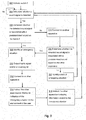
- Figure 3 shows schematically an example of a flow diagram of a method of operating the watch 2 according to an embodiment.
- step 302 the watch 2 is activated (i.e. the various units are powered on).
- step 304 the sound detection unit 20 determines whether a sound signal is detected. If a sound signal is detected the method goes to step 306. If no sound signal is detected the method loops back to step 304.
- the processing unit 30 processes the detected sound signal to perform sound recognition.
- the processing may include analogue to digital conversion, time to frequency conversion, filtering, speech detection or other.
- the processing unit 30 determines whether the detected sound signal is associated (i.e. matches) with a predetermined sound signal in the sound database in the memory unit 32. If the detected sound signal is associated with a predetermined sound signal in the sound database in the memory unit 32, the method goes to step 308. If the detected sound signal is not associated with a predetermined sound signal in the sound database, the method goes to step 318.
- the processing unit 30 identifies an emergency situation. For example, the processing unit 30 may determine that a car is coming when the detected sound signal matches with an ambulance siren or a car horn. The processing unit may determine that a fire is ongoing when the detected sound signal matches with a fire alarm or other.
- the haptic output unit 22 outputs a haptic signal and/or the visual output unit 24 outputs a visual signal.
- the haptic signal and/or the visual signal may be based on the emergency situation.
- the intensity or the frequency of the haptic signal and/or the visual signal may vary based on the type of emergency situation or the degree of emergency of the emergency situation.
- step 312 the communication unit 26 connects to the television 4, the tablet computer 6, the laptop computer 8 or the mobile phone 10.
- step 314 the communication unit 26 instructs the television 4, the tablet computer 6, the laptop computer 8 or the mobile phone 10 to remotely display an indication (i.e. a notification) of the identified emergency situation.
- the visual output unit 24 locally displays an indication of the identified emergency situation.
- the indication may comprise a text (e.g. "Warning: ongoing fire!”, “Warning: ongoing hurricane!, “Warning: ongoing flood!, “Warning: ongoing earthquake!, “Warning: ongoing tsunami!, “Warning: ongoing thunder!” or other), and/or an image (e.g. a flame icon, a hurricane icon, a flood icon, an earthquake icon, a tsunami icon, a thunder icon, or other).
- a text e.g. "Warning: ongoing fire!”, “Warning: ongoing hurricane!, “Warning: ongoing flood!”, “Warning: ongoing earthquake!, “Warning: ongoing tsunami!, “Warning: ongoing thunder!” or other
- an image e.g. a flame icon, a hurricane icon, a flood icon, an earthquake icon, a tsunami icon, a thunder icon, or other.
- the watch 2, the television 4, the tablet computer 6, the laptop computer 8 or the mobile phone 10 checks whether there is an actual emergency situation before displaying the indication. Checking can be done by connecting to the network 14 and analysing one or more of current or breaking news items, articles, videos, podcast, images trending thereon, etc..
- step 316 the communication units 26 instructs the television 4, the tablet computer 6, the laptop computer 8 or the mobile phone 10 to display further information related to the identified emergency situation.
- the visual output unit 24 locally displays further information related to the identified emergency situation.
- the information may comprise a text (e.g. fire brigade phone number, flood related newspaper article, hurricane instructions, transcription of a podcast related to an ongoing earthquake) and/or an image (e.g. map of the building showing the location of closest exits, safe rooms or fire extinguishers).
- a text e.g. fire brigade phone number, flood related newspaper article, hurricane instructions, transcription of a podcast related to an ongoing earthquake
- an image e.g. map of the building showing the location of closest exits, safe rooms or fire extinguishers.
- the information may be stored locally on the television 4, the tablet computer 6, the laptop computer 8, the mobile phone 10 or remotely on the server 12.
- the method then loops back to step 304.
- step 318 i.e. for the case that the detected sound signal is not associated with a predetermined sound signal in the sound database of the watch 2
- the communication unit 24 connects to some other apparatus, such as for example one or more of the television 4, the tablet computer 6, the laptop computer 8, the mobile phone 10 or the server 12. It will be understood that the communication unit 24 may connect to the same or a different apparatus to the apparatus it connects with in step 312.
- step 320 the communication unit 24 transmits the detected sound signal to the television 4, the tablet computer 6, the laptop computer 8, the mobile phone 10 or the server 12 to remotely determine whether the detected sound signal is associated (e.g. matches) with a predetermined sound signal on the television 4, the tablet computer 6, the laptop computer 8, the mobile phone 10 or the server 12.
- the communication unit 24 then receives a result of the determination.
- the communication unit 24 receives a predetermined sound signal from the television 4, the tablet computer 6, the laptop computer 8, the mobile phone 10 or the server 12.
- the watch 2 can then locally determine whether the detected sound signal is associated (e.g. matches) with a predetermined sound signal stored on the television 4, the tablet computer 6, the laptop computer 8, the mobile phone 10 or the server 12.
- the method goes to step 308. If the detected sound signal is not associated (e.g. does not match) with a predetermined sound signal stored on the television 4, the tablet computer 6, the laptop computer 8, the mobile phone 10 or the server 12, the method goes to step 322.
- step 322 the processing unit identifies a lack of emergency situation and loops back to step 304.
- An advantage of the watch 2 over existing apparatus for assisting people with hearing impairment is that it does not only rely on visual information to indicate an emergency situation to a user. Accordingly, the user can be notified of an emergency situation even where visual information cannot be perceived by the user.
- the identification may be more accurate.
- the watch 2 as shown in Figure 2 is represented as a schematic block diagram for the purposes of explaining the functionality of the watch 2 only. Hence, it is understood that each unit of the watch is a functional block for performing the functionality ascribed to it herein. Each unit may be implemented in hardware, software, firmware, or a combination thereof.
- the processing unit referred to herein may in practice be provided by a single chip or integrated circuit or plural chips or integrated circuits, optionally provided as a chipset, an application-specific integrated circuit (ASIC), field-programmable gate array (FPGA), digital signal processor (DSP), graphics processing units (GPUs), etc.
- the chip or chips may comprise circuitry (as well as possibly firmware) for embodying at least one or more of a data processor or processors, a digital signal processor or processors, baseband circuitry and radio frequency circuitry, which are configurable so as to operate in accordance with the exemplary embodiments.
- the exemplary embodiments may be implemented at least in part by computer software stored in (non-transitory) memory and executable by the processor, or by hardware, or by a combination of tangibly stored software and hardware (and tangibly stored firmware).
- a memory unit This may be provided by a single device or by plural devices. Suitable devices include for example a hard disk and nonvolatile semiconductor memory.
- the invention also extends to computer programs, particularly computer programs on or in a carrier, adapted for putting the invention into practice.
- the program may be in the form of non-transitory source code, object code, a code intermediate source and object code such as in partially compiled form, or in any other non-transitory form suitable for use in the implementation of processes according to the invention.
- the carrier may be any entity or device capable of carrying the program.
- the carrier may comprise a storage medium, such as a solid-state drive (SSD) or other semiconductor-based RAM; a ROM, for example a CD ROM or a semiconductor ROM; a magnetic recording medium, for example a floppy disk or hard disk; optical memory devices in general; etc.
- SSD solid-state drive
- ROM read-only memory
- magnetic recording medium for example a floppy disk or hard disk
- optical memory devices in general etc.
- an apparatus comprising:
Landscapes
- Physics & Mathematics (AREA)
- General Physics & Mathematics (AREA)
- Electromagnetism (AREA)
- Business, Economics & Management (AREA)
- Emergency Management (AREA)
- Engineering & Computer Science (AREA)
- Computer Security & Cryptography (AREA)
- Alarm Systems (AREA)
- Emergency Alarm Devices (AREA)
Abstract
Description
- The present disclosure relates to an apparatus, a method and a computer program for indicating an emergency situation.
- In recent years, various solutions have been proposed for assisting people with hearing impairment in their everyday life. For example, headbands, glasses, helmets or other wearable apparatuses have been equipped with microphones and displays so that visual information can be output when audio information in the environment of a user is indicative of an emergency situation.
- According to a first aspect disclosed herein, there is provided an apparatus for indicating an emergency situation, the apparatus comprising:
- a sound detection unit configured to detect a sound signal in an environment of a user;
- a processing unit configured to determine whether the detected sound signal is indicative of an emergency situation in the environment of the user ; and
- a haptic output unit configured to output a haptic signal when the detected sound signal is indicative of an emergency situation in the environment of the user.
- The haptic signal may comprise a vibration signal.
- The detected sound signal may comprise a name (e.g. name of the user or specified names), a siren (e.g. an ambulance siren, a police siren, a fire brigade siren), an alarm (e.g. a fire alarm, an earthquake alarm, a hurricane alarm, a flood alarm), a car horn, a voice (e.g. a human voice as opposed to a machine generated voice), a word in a specific language such as "look out", "help", "beware", or other.
- The apparatus may comprise:
- a visual output unit configured to output a visual signal when the detected sound signal is indicative of an emergency situation in the environment of the user.
- The visual signal may comprise a light signal, for example a flashing light signal.
- The visual output unit may be configurable to output a light signal when the detected sound signal is indicative of an emergency situation in the environment of the user only when the light level in the environment of the user is below a threshold.
- The processing unit may be configured to:
- determine whether the detected sound signal is associated with a predetermined sound signal stored on the apparatus; and
- if the detected sound signal is associated with a predetermined sound signal stored on the apparatus, determine that the detected sound signal is indicative of an emergency situation in the environment of the user.
- The predetermined sound signal stored on the apparatus may be programmed by the manufacturer during manufacture or by the user after purchase.
- The user may program the apparatus to download a sound signal from another apparatus or to record a sound signal from the environment of the user (e.g. a sound signal generated by the user's pet such as a user's dog barking).
- The apparatus may comprise:
- a communication unit configured to communicate with another apparatus via a communication link.
- The other apparatus may be a smart phone, a desktop computer, a laptop computer, a table computer, a television, a server or other.
- The communication link may be a wireless link,
- The communication link may be a Bluetooth link.
- The communication link may be an Internet link, for example a Wi-Fi link.
- The processing unit may be configured to: if the detected sound signal is not associated with a predetermined sound signal stored on the apparatus, communicate with another apparatus to query whether the detected sound signal is associated with a predetermined sound signal stored on the other apparatus and to receive a response to the query; and
if the detected sound signal is associated with a predetermined sound signal stored on the other apparatus, determine that the detected sound signal is indicative of an emergency situation in the environment of the user. - The processing unit may be configured to:
if the detected sound signal is indicative of an emergency situation in the environment of the user, instruct another apparatus to display an indication of an emergency situation in the environment of the user. - The indication may comprises a text and/or an image.
- The processing unit is configured to:
- if the detected sound signal is indicative of an emergency situation in the environment of the user, instruct another apparatus to display information related to the emergency situation in the environment of the user.
- The information may be retrieved by the other apparatus from a network. The information may comprise podcasts, articles, photographs, videos, etc.
- The apparatus may be portable and preferably wearable.
- The apparatus may be a watch.
- The apparatus may be waterproof.
- According to a second aspect disclosed herein, there is provided a method comprising:
- detecting a sound signal in an environment of a user;
- determining whether the detected sound signal is indicative of an emergency situation in the environment of the user ; and
- outputting a haptic signal when the detected sound signal is indicative of an emergency situation in the environment of the user.
- The method may comprise:
- determining whether the detected sound signal is associated with a predetermined sound signal stored on the apparatus; and
- if the detected sound signal is associated with a predetermined sound signal stored on the apparatus, determining that the detected sound signal is indicative of an emergency situation in the environment of the user.
- The method may comprise:
- if the detected sound signal is not associated with a predetermined sound signal stored on the apparatus, instructing another apparatus to determine whether the detected sound signal is associated with a predetermined sound signal stored on the other apparatus; and
- if the detected sound signal is associated with a predetermined sound signal stored on the other apparatus, determining that the detected sound signal is indicative of an emergency situation in the environment of the user.
- The method may comprise:
- if the detected sound signal is indicative of an emergency situation in the environment of the user, instructing another apparatus to display an indication of an emergency situation in the environment of the user.
- According to a third aspect disclosed herein, there is provided a computer program for an apparatus, comprising software code portions for performing the above method when said computer program is run on the apparatus.
- For assisting understanding of the present disclosure and to show how embodiments may be put into effect, reference is made by way of example to the accompanying drawings in which:
-
Figure 1 shows schematically an example of a system according to an embodiment described herein; -
Figure 2 shows schematically an example of an apparatus which is part of the system ofFigure 1 according to an embodiment described herein; and -
Figure 3 shows schematically an example of a flow diagram of a method of operating the apparatus ofFigure 2 according to an embodiment described herein. - Existing apparatus for assisting people with hearing impairment rely on visual information to indicate an emergency situation to a user. Accordingly, they may be ineffective in circumstances where visual information cannot be perceived by the user. For example, the user may have a visual impairment. The user may be asleep. The user may not be able to wear the apparatus because s/he is having a shower, a swim or practising another activity that is incompatible with wearing the apparatus.
-
Figure 1 shows schematically an example of a system according to an embodiment. The system comprises awatch 2, atelevision set 4, atablet computer 6, alaptop computer 8, amobile phone 10 and aserver 12 connected to anetwork 14. Thenetwork 14 may be a local area network and/or a wide area network (e.g. Internet). In some examples, not all of atelevision set 4, atablet computer 6, alaptop computer 8, amobile phone 10 and aserver 12 are required or used. - The
watch 2 is indirectly connected to thetelevision 4, thetablet computer 6, thelaptop computer 8, themobile phone 10 and theserver 12 via one ormore routers 16. Thewatch 2 may communicate with therouters 16 over a medium range wireless communication link (e.g. Wi-Fi link). - The
watch 2 is directly connected to thetelevision 4, thetablet computer 6, thelaptop computer 8 and themobile phone 10. Thewatch 2 may communicate over a short range wireless communication link (e.g. Bluetooth link). -
Figure 2 shows schematically an example of thewatch 2 shown inFigure 1 according to an embodiment. - The
watch 2 comprises asound detection unit 20 for detecting a sound signal in the environment of a user. Thesound detection unit 20 may comprise a microphone. - The
watch 2 comprises ahaptic output unit 22 for outputting a haptic signal. The haptic signal may comprise a vibration signal, a heat signal, a braille signal, an electric shock signal or other. The haptic output unit may comprise a vibration motor, a heating resistance, a braille display, an electrode or other. - The
watch 2 comprises avisual output unit 24 for outputting a visual signal. The visual signal may comprise a text, an image, a light (the colour and/ or flashing frequency of which may be adjustable for example) or other. Thevisual output unit 24 may comprise a display, a light emitting diode or other. - The
watch 2 comprises acommunication unit 26 for communicating with thetelevision 4, thetablet computer 6, thelaptop computer 8, themobile phone 10 and theserver 12. Thecommunication unit 26 may comprise a Bluetooth communication unit, a Wi-Fi communication unit or other. - The
watch 2 comprises apower unit 28, aprocessing unit 30 and amemory unit 32. Thememory unit 32 contains instructions which when executed by theprocessing unit 30 allow thewatch 2 to perform the method ofFigure 3 (described in further details below). Thememory unit 32 further comprises a sound database storing predetermined (i.e. predefined) sound signals. - The detected sound signal may comprise a name (e.g. name of the user and/or specified names of one or more other people), a siren (e.g. an ambulance siren, a police siren, a fire brigade siren), an alarm (e.g. a fire alarm, an earthquake alarm, a hurricane alarm, a flood alarm), a car horn, a voice (e.g. a human voice as opposed to a machine generated voice), one or more words or phrases in a specific language such as "look out", "help", "beware", or other.
- The sound database may be populated by the manufacturer during manufacture and/or by the user after purchase. For example, the user may program the
watch 2 to download and store a predetermined sound signal stored on thetelevision 4, thetablet computer 6, thelaptop computer 8, themobile phone 10 or theserver 12. The user may also program thewatch 2 to capture a sound (e.g. specific words or phrases, including for example specific names, the sound of a user's dog barking, etc.) and store the captured sound in the sound database. In this way, the sound database can be customized by the user. - The
watch 2 comprises a housing. The housing may be waterproof. -
Figure 3 shows schematically an example of a flow diagram of a method of operating thewatch 2 according to an embodiment. - In
step 302, thewatch 2 is activated (i.e. the various units are powered on). - In
step 304, thesound detection unit 20 determines whether a sound signal is detected. If a sound signal is detected the method goes to step 306. If no sound signal is detected the method loops back tostep 304. - In
step 306, theprocessing unit 30 processes the detected sound signal to perform sound recognition. The processing may include analogue to digital conversion, time to frequency conversion, filtering, speech detection or other. - The
processing unit 30 determines whether the detected sound signal is associated (i.e. matches) with a predetermined sound signal in the sound database in thememory unit 32. If the detected sound signal is associated with a predetermined sound signal in the sound database in thememory unit 32, the method goes to step 308. If the detected sound signal is not associated with a predetermined sound signal in the sound database, the method goes to step 318. - In
step 308, theprocessing unit 30 identifies an emergency situation. For example, theprocessing unit 30 may determine that a car is coming when the detected sound signal matches with an ambulance siren or a car horn. The processing unit may determine that a fire is ongoing when the detected sound signal matches with a fire alarm or other. - In
step 310, thehaptic output unit 22 outputs a haptic signal and/or thevisual output unit 24 outputs a visual signal. The haptic signal and/or the visual signal may be based on the emergency situation. For example, the intensity or the frequency of the haptic signal and/or the visual signal may vary based on the type of emergency situation or the degree of emergency of the emergency situation. - In
step 312, thecommunication unit 26 connects to thetelevision 4, thetablet computer 6, thelaptop computer 8 or themobile phone 10. - In step 314, the
communication unit 26 instructs thetelevision 4, thetablet computer 6, thelaptop computer 8 or themobile phone 10 to remotely display an indication (i.e. a notification) of the identified emergency situation. Alternatively, thevisual output unit 24 locally displays an indication of the identified emergency situation. - The indication may comprise a text (e.g. "Warning: ongoing fire!", "Warning: ongoing hurricane!", "Warning: ongoing flood!", "Warning: ongoing earthquake!", "Warning: ongoing tsunami!", "Warning: ongoing thunder!" or other), and/or an image (e.g. a flame icon, a hurricane icon, a flood icon, an earthquake icon, a tsunami icon, a thunder icon, or other).
- In an implementation, the
watch 2, thetelevision 4, thetablet computer 6, thelaptop computer 8 or themobile phone 10 checks whether there is an actual emergency situation before displaying the indication. Checking can be done by connecting to thenetwork 14 and analysing one or more of current or breaking news items, articles, videos, podcast, images trending thereon, etc.. - In
step 316, thecommunication units 26 instructs thetelevision 4, thetablet computer 6, thelaptop computer 8 or themobile phone 10 to display further information related to the identified emergency situation. Alternatively, thevisual output unit 24 locally displays further information related to the identified emergency situation. - The information may comprise a text (e.g. fire brigade phone number, flood related newspaper article, hurricane instructions, transcription of a podcast related to an ongoing earthquake) and/or an image (e.g. map of the building showing the location of closest exits, safe rooms or fire extinguishers).
- The information may be stored locally on the
television 4, thetablet computer 6, thelaptop computer 8, themobile phone 10 or remotely on theserver 12. - The method then loops back to
step 304. - In step 318 (i.e. for the case that the detected sound signal is not associated with a predetermined sound signal in the sound database of the watch 2), the
communication unit 24 connects to some other apparatus, such as for example one or more of thetelevision 4, thetablet computer 6, thelaptop computer 8, themobile phone 10 or theserver 12. It will be understood that thecommunication unit 24 may connect to the same or a different apparatus to the apparatus it connects with instep 312. - In
step 320, thecommunication unit 24 transmits the detected sound signal to thetelevision 4, thetablet computer 6, thelaptop computer 8, themobile phone 10 or theserver 12 to remotely determine whether the detected sound signal is associated (e.g. matches) with a predetermined sound signal on thetelevision 4, thetablet computer 6, thelaptop computer 8, themobile phone 10 or theserver 12. Thecommunication unit 24 then receives a result of the determination. - Alternatively, the
communication unit 24 receives a predetermined sound signal from thetelevision 4, thetablet computer 6, thelaptop computer 8, themobile phone 10 or theserver 12. Thewatch 2 can then locally determine whether the detected sound signal is associated (e.g. matches) with a predetermined sound signal stored on thetelevision 4, thetablet computer 6, thelaptop computer 8, themobile phone 10 or theserver 12. - If the detected sound signal is associated (e.g. matches) with a predetermined sound signal stored on the
television 4, thetablet computer 6, thelaptop computer 8, themobile phone 10 or theserver 12, the method goes to step 308. If the detected sound signal is not associated (e.g. does not match) with a predetermined sound signal stored on thetelevision 4, thetablet computer 6, thelaptop computer 8, themobile phone 10 or theserver 12, the method goes to step 322. - In
step 322, the processing unit identifies a lack of emergency situation and loops back tostep 304. - An advantage of the
watch 2 over existing apparatus for assisting people with hearing impairment is that it does not only rely on visual information to indicate an emergency situation to a user. Accordingly, the user can be notified of an emergency situation even where visual information cannot be perceived by the user. - Moreover, it does not only rely on sound signals stored on the
watch 2 to identify an emergency situation. Accordingly, the identification may be more accurate. - It will be understood that although the
watch 2 has been described as an example of an embodiment, other embodiments may encompass other wearable or non-wearable apparatus. - The
watch 2 as shown inFigure 2 is represented as a schematic block diagram for the purposes of explaining the functionality of thewatch 2 only. Hence, it is understood that each unit of the watch is a functional block for performing the functionality ascribed to it herein. Each unit may be implemented in hardware, software, firmware, or a combination thereof. - It will be understood that the processing unit referred to herein may in practice be provided by a single chip or integrated circuit or plural chips or integrated circuits, optionally provided as a chipset, an application-specific integrated circuit (ASIC), field-programmable gate array (FPGA), digital signal processor (DSP), graphics processing units (GPUs), etc. The chip or chips may comprise circuitry (as well as possibly firmware) for embodying at least one or more of a data processor or processors, a digital signal processor or processors, baseband circuitry and radio frequency circuitry, which are configurable so as to operate in accordance with the exemplary embodiments. In this regard, the exemplary embodiments may be implemented at least in part by computer software stored in (non-transitory) memory and executable by the processor, or by hardware, or by a combination of tangibly stored software and hardware (and tangibly stored firmware).
- Reference is made herein to a memory unit. This may be provided by a single device or by plural devices. Suitable devices include for example a hard disk and nonvolatile semiconductor memory.
- Although at least some aspects of the embodiments described herein with reference to the drawings comprise computer processes performed in processing systems or processors, the invention also extends to computer programs, particularly computer programs on or in a carrier, adapted for putting the invention into practice. The program may be in the form of non-transitory source code, object code, a code intermediate source and object code such as in partially compiled form, or in any other non-transitory form suitable for use in the implementation of processes according to the invention. The carrier may be any entity or device capable of carrying the program. For example, the carrier may comprise a storage medium, such as a solid-state drive (SSD) or other semiconductor-based RAM; a ROM, for example a CD ROM or a semiconductor ROM; a magnetic recording medium, for example a floppy disk or hard disk; optical memory devices in general; etc.
- The examples described herein are to be understood as illustrative examples of embodiments of the invention. Further embodiments and examples are envisaged. Any feature described in relation to any one example or embodiment may be used alone or in combination with other features. In addition, any feature described in relation to any one example or embodiment may also be used in combination with one or more features of any other of the examples or embodiments, or any combination of any other of the examples or embodiments. Furthermore, equivalents and modifications not described herein may also be employed within the scope of the invention, which is defined in the claims.
- In other aspects, there may also be provided an apparatus comprising:
- a communication unit configured to communicate to another apparatus via a communication link;
- a sound detection unit configured to detect a sound signal in an environment of a user;
- a processing unit configured to:
- if the detected sound signal is not associated with a predetermined sound signal on the apparatus, instruct the other apparatus to determine whether the detected sound signal is associated with a predetermined sound signal on the other apparatus; and
- if the detected sound signal is associated with a predetermined sound signal on the other apparatus, determine that the detected sound signal is indicative of an emergency situation in the environment of the user.
Claims (15)
- An apparatus for indicating an emergency situation, the apparatus comprising:a sound detection unit configured to detect a sound signal in an environment of a user;a processing unit configured to determine whether the detected sound signal is indicative of an emergency situation in the environment of the user; anda haptic output unit configured to output a haptic signal when the detected sound signal is indicative of an emergency situation in the environment of the user.
- An apparatus according to claim 1, comprising:a visual output unit configured to output a visual signal when the detected sound signal is indicative of an emergency situation in the environment of the user.
- An apparatus according to claim 2, wherein the visual output unit is configurable to output a light signal when the detected sound signal is indicative of an emergency situation in the environment of the user only when the light level in the environment of the user is below a threshold.
- An apparatus according to any of claims 1 to 3, wherein the processing unit is configured to:determine whether the detected sound signal is associated with a predetermined sound signal stored on the apparatus; andif the detected sound signal is associated with a predetermined sound signal stored on the apparatus, determine that the detected sound signal is indicative of an emergency situation in the environment of the user.
- An apparatus according to claim 4, wherein the predetermined sound signal on the apparatus is stored by the manufacturer or by the user.
- An apparatus according to any of claims 1 to 5, wherein the processing unit is configured to:if the detected sound signal is not associated with a predetermined sound signal stored on the apparatus, communicate with another apparatus to query whether the detected sound signal is associated with a predetermined sound signal stored on the other apparatus and to receive a response to the query; andif the detected sound signal is associated with a predetermined sound signal stored on the other apparatus, determine that the detected sound signal is indicative of an emergency situation in the environment of the user.
- An apparatus according to any of claims 1 to 6, wherein the processing unit is configured to:if the detected sound signal is indicative of an emergency situation in the environment of the user, instruct another apparatus to display an indication of an emergency situation in the environment of the user.
- An apparatus according to any of claims 1 to 7, wherein the processing unit is configured to:if the detected sound signal is indicative of an emergency situation in the environment of the user, instruct another apparatus to display information related to the emergency situation in the environment of the user.
- An apparatus according to claims 1 to 8, wherein the apparatus is a wearable apparatus.
- A method comprising:detecting a sound signal in an environment of a user;determining whether the detected sound signal is indicative of an emergency situation in the environment of the user ; andoutputting a haptic signal when the detected sound signal is indicative of an emergency situation in the environment of the user.
- A method according determine according to claim 10, comprising:determining whether the detected sound signal is associated with a predetermined sound signal stored on the apparatus; andif the detected sound signal is associated with a predetermined sound signal stored on the apparatus, determining that the detected sound signal is indicative of an emergency situation in the environment of the user.
- A method according to claim 11, comprising:if the detected sound signal is not associated with a predetermined sound signal stored on the apparatus, instructing another appararus to determine whether the detected sound signal is associated with a predetermined sound signal stored on the other apparatus; andif the detected sound signal is associated with a predetermined sound signal stored on the other apparatus, determining that the detected sound signal is indicative of an emergency situation in the environment of the user.
- A method according to any of claims 10 to 12, comprising:if the detected sound signal is indicative of an emergency situation in the environment of the user, instructing another apparatus to display an indication of an emergency situation in the environment of the user.
- A method according to any of claims 10 to 13, comprising:if the detected sound signal is indicative of an emergency situation in the environment of the user, instruct another apparatus to display information related to the emergency situation in the environment of the user.
- A computer program for an apparatus, comprising software code portions for performing the method of any of claims 10 to 14 when said computer program is run on the apparatus.
Priority Applications (2)
| Application Number | Priority Date | Filing Date | Title |
|---|---|---|---|
| EP17203574.3A EP3489919B1 (en) | 2017-11-24 | 2017-11-24 | Apparatus, method and computer program for indicating an emergency situation |
| TR2017/20943A TR201720943A2 (en) | 2017-11-24 | 2017-12-20 | APPARATUS, METHOD AND COMPUTER PROGRAM FOR INDICATING AN EMERGENCY |
Applications Claiming Priority (1)
| Application Number | Priority Date | Filing Date | Title |
|---|---|---|---|
| EP17203574.3A EP3489919B1 (en) | 2017-11-24 | 2017-11-24 | Apparatus, method and computer program for indicating an emergency situation |
Publications (2)
| Publication Number | Publication Date |
|---|---|
| EP3489919A1 true EP3489919A1 (en) | 2019-05-29 |
| EP3489919B1 EP3489919B1 (en) | 2021-07-07 |
Family
ID=60569600
Family Applications (1)
| Application Number | Title | Priority Date | Filing Date |
|---|---|---|---|
| EP17203574.3A Active EP3489919B1 (en) | 2017-11-24 | 2017-11-24 | Apparatus, method and computer program for indicating an emergency situation |
Country Status (2)
| Country | Link |
|---|---|
| EP (1) | EP3489919B1 (en) |
| TR (1) | TR201720943A2 (en) |
Citations (4)
| Publication number | Priority date | Publication date | Assignee | Title |
|---|---|---|---|---|
| US4237449A (en) * | 1978-06-16 | 1980-12-02 | Zibell J Scott | Signalling device for hard of hearing persons |
| US5651070A (en) * | 1995-04-12 | 1997-07-22 | Blunt; Thomas O. | Warning device programmable to be sensitive to preselected sound frequencies |
| US20080293453A1 (en) * | 2007-05-25 | 2008-11-27 | Scott J. Atlas | Method and apparatus for an audio-linked remote indicator for a wireless communication device |
| US20140253326A1 (en) * | 2013-03-08 | 2014-09-11 | Qualcomm Incorporated | Emergency Handling System Using Informative Alarm Sound |
Family Cites Families (1)
| Publication number | Priority date | Publication date | Assignee | Title |
|---|---|---|---|---|
| US9083821B2 (en) * | 2011-06-03 | 2015-07-14 | Apple Inc. | Converting audio to haptic feedback in an electronic device |
-
2017
- 2017-11-24 EP EP17203574.3A patent/EP3489919B1/en active Active
- 2017-12-20 TR TR2017/20943A patent/TR201720943A2/en unknown
Patent Citations (4)
| Publication number | Priority date | Publication date | Assignee | Title |
|---|---|---|---|---|
| US4237449A (en) * | 1978-06-16 | 1980-12-02 | Zibell J Scott | Signalling device for hard of hearing persons |
| US5651070A (en) * | 1995-04-12 | 1997-07-22 | Blunt; Thomas O. | Warning device programmable to be sensitive to preselected sound frequencies |
| US20080293453A1 (en) * | 2007-05-25 | 2008-11-27 | Scott J. Atlas | Method and apparatus for an audio-linked remote indicator for a wireless communication device |
| US20140253326A1 (en) * | 2013-03-08 | 2014-09-11 | Qualcomm Incorporated | Emergency Handling System Using Informative Alarm Sound |
Also Published As
| Publication number | Publication date |
|---|---|
| EP3489919B1 (en) | 2021-07-07 |
| TR201720943A2 (en) | 2019-06-21 |
Similar Documents
| Publication | Publication Date | Title |
|---|---|---|
| US10506411B1 (en) | Portable home and hotel security system | |
| US20210056981A1 (en) | Systems and methods for managing an emergency situation | |
| US20210287522A1 (en) | Systems and methods for managing an emergency situation | |
| US9721457B2 (en) | Global positioning system equipped with hazard detector and a system for providing hazard alerts thereby | |
| US20130070928A1 (en) | Methods, systems, and media for mobile audio event recognition | |
| US10873661B2 (en) | Voice communication method, voice communication apparatus, and voice communication system | |
| WO2017049503A1 (en) | Underwater warning method and smart wristband | |
| CN109451385A (en) | A kind of based reminding method and device based on when using earphone | |
| US11030879B2 (en) | Environment-aware monitoring systems, methods, and computer program products for immersive environments | |
| US11176788B2 (en) | Emergency notification system and method | |
| AU2022201050A1 (en) | Improving situational awareness, communication, and safety in hearing protection and communication systems | |
| JP2015138534A (en) | Electronics | |
| EP3489919B1 (en) | Apparatus, method and computer program for indicating an emergency situation | |
| AU2016205895A1 (en) | Determining entry into or exit from a place while a tracking device is in the place | |
| US11176799B2 (en) | Global positioning system equipped with hazard detector and a system for providing hazard alerts thereby | |
| KR102847887B1 (en) | Apparatus, method and program for assisting deaf | |
| EP2983148B1 (en) | Voice-sensitive emergency alert system | |
| US9280914B2 (en) | Vision-aided hearing assisting device | |
| JP2021117921A (en) | Information processing system and electronic apparatus | |
| KR20160131678A (en) | Portable device for protecting having camera and method for taking picture | |
| US20220301408A1 (en) | Headphone loss prevention alarm | |
| US20160117914A1 (en) | Security system, security arrangement and method therfore | |
| WO2017190803A1 (en) | Ambient sound monitoring and visualizing system for hearing impaired persons | |
| US12154343B2 (en) | Information acquisition support apparatus, information acquisition support method, and recording medium storing information acquisition support program | |
| WO2019034244A1 (en) | Image display device provided with sound prioritization function |
Legal Events
| Date | Code | Title | Description |
|---|---|---|---|
| PUAI | Public reference made under article 153(3) epc to a published international application that has entered the european phase |
Free format text: ORIGINAL CODE: 0009012 |
|
| STAA | Information on the status of an ep patent application or granted ep patent |
Free format text: STATUS: THE APPLICATION HAS BEEN PUBLISHED |
|
| AK | Designated contracting states |
Kind code of ref document: A1 Designated state(s): AL AT BE BG CH CY CZ DE DK EE ES FI FR GB GR HR HU IE IS IT LI LT LU LV MC MK MT NL NO PL PT RO RS SE SI SK SM TR |
|
| AX | Request for extension of the european patent |
Extension state: BA ME |
|
| STAA | Information on the status of an ep patent application or granted ep patent |
Free format text: STATUS: REQUEST FOR EXAMINATION WAS MADE |
|
| 17P | Request for examination filed |
Effective date: 20191031 |
|
| RBV | Designated contracting states (corrected) |
Designated state(s): AL AT BE BG CH CY CZ DE DK EE ES FI FR GB GR HR HU IE IS IT LI LT LU LV MC MK MT NL NO PL PT RO RS SE SI SK SM TR |
|
| GRAP | Despatch of communication of intention to grant a patent |
Free format text: ORIGINAL CODE: EPIDOSNIGR1 |
|
| STAA | Information on the status of an ep patent application or granted ep patent |
Free format text: STATUS: GRANT OF PATENT IS INTENDED |
|
| INTG | Intention to grant announced |
Effective date: 20200929 |
|
| RIN1 | Information on inventor provided before grant (corrected) |
Inventor name: YILMAZ, EVREN GOEKHAN Inventor name: OEZTEKIN, GUENER |
|
| GRAJ | Information related to disapproval of communication of intention to grant by the applicant or resumption of examination proceedings by the epo deleted |
Free format text: ORIGINAL CODE: EPIDOSDIGR1 |
|
| STAA | Information on the status of an ep patent application or granted ep patent |
Free format text: STATUS: REQUEST FOR EXAMINATION WAS MADE |
|
| INTC | Intention to grant announced (deleted) | ||
| GRAP | Despatch of communication of intention to grant a patent |
Free format text: ORIGINAL CODE: EPIDOSNIGR1 |
|
| STAA | Information on the status of an ep patent application or granted ep patent |
Free format text: STATUS: GRANT OF PATENT IS INTENDED |
|
| INTG | Intention to grant announced |
Effective date: 20210305 |
|
| GRAS | Grant fee paid |
Free format text: ORIGINAL CODE: EPIDOSNIGR3 |
|
| GRAA | (expected) grant |
Free format text: ORIGINAL CODE: 0009210 |
|
| STAA | Information on the status of an ep patent application or granted ep patent |
Free format text: STATUS: THE PATENT HAS BEEN GRANTED |
|
| AK | Designated contracting states |
Kind code of ref document: B1 Designated state(s): AL AT BE BG CH CY CZ DE DK EE ES FI FR GB GR HR HU IE IS IT LI LT LU LV MC MK MT NL NO PL PT RO RS SE SI SK SM TR |
|
| REG | Reference to a national code |
Ref country code: GB Ref legal event code: FG4D |
|
| REG | Reference to a national code |
Ref country code: AT Ref legal event code: REF Ref document number: 1409340 Country of ref document: AT Kind code of ref document: T Effective date: 20210715 |
|
| REG | Reference to a national code |
Ref country code: DE Ref legal event code: R096 Ref document number: 602017041561 Country of ref document: DE |
|
| REG | Reference to a national code |
Ref country code: IE Ref legal event code: FG4D |
|
| REG | Reference to a national code |
Ref country code: LT Ref legal event code: MG9D |
|
| REG | Reference to a national code |
Ref country code: NL Ref legal event code: MP Effective date: 20210707 |
|
| REG | Reference to a national code |
Ref country code: AT Ref legal event code: MK05 Ref document number: 1409340 Country of ref document: AT Kind code of ref document: T Effective date: 20210707 |
|
| PG25 | Lapsed in a contracting state [announced via postgrant information from national office to epo] |
Ref country code: SE Free format text: LAPSE BECAUSE OF FAILURE TO SUBMIT A TRANSLATION OF THE DESCRIPTION OR TO PAY THE FEE WITHIN THE PRESCRIBED TIME-LIMIT Effective date: 20210707 Ref country code: RS Free format text: LAPSE BECAUSE OF FAILURE TO SUBMIT A TRANSLATION OF THE DESCRIPTION OR TO PAY THE FEE WITHIN THE PRESCRIBED TIME-LIMIT Effective date: 20210707 Ref country code: HR Free format text: LAPSE BECAUSE OF FAILURE TO SUBMIT A TRANSLATION OF THE DESCRIPTION OR TO PAY THE FEE WITHIN THE PRESCRIBED TIME-LIMIT Effective date: 20210707 Ref country code: PT Free format text: LAPSE BECAUSE OF FAILURE TO SUBMIT A TRANSLATION OF THE DESCRIPTION OR TO PAY THE FEE WITHIN THE PRESCRIBED TIME-LIMIT Effective date: 20211108 Ref country code: NL Free format text: LAPSE BECAUSE OF FAILURE TO SUBMIT A TRANSLATION OF THE DESCRIPTION OR TO PAY THE FEE WITHIN THE PRESCRIBED TIME-LIMIT Effective date: 20210707 Ref country code: NO Free format text: LAPSE BECAUSE OF FAILURE TO SUBMIT A TRANSLATION OF THE DESCRIPTION OR TO PAY THE FEE WITHIN THE PRESCRIBED TIME-LIMIT Effective date: 20211007 Ref country code: ES Free format text: LAPSE BECAUSE OF FAILURE TO SUBMIT A TRANSLATION OF THE DESCRIPTION OR TO PAY THE FEE WITHIN THE PRESCRIBED TIME-LIMIT Effective date: 20210707 Ref country code: FI Free format text: LAPSE BECAUSE OF FAILURE TO SUBMIT A TRANSLATION OF THE DESCRIPTION OR TO PAY THE FEE WITHIN THE PRESCRIBED TIME-LIMIT Effective date: 20210707 Ref country code: AT Free format text: LAPSE BECAUSE OF FAILURE TO SUBMIT A TRANSLATION OF THE DESCRIPTION OR TO PAY THE FEE WITHIN THE PRESCRIBED TIME-LIMIT Effective date: 20210707 Ref country code: BG Free format text: LAPSE BECAUSE OF FAILURE TO SUBMIT A TRANSLATION OF THE DESCRIPTION OR TO PAY THE FEE WITHIN THE PRESCRIBED TIME-LIMIT Effective date: 20211007 Ref country code: LT Free format text: LAPSE BECAUSE OF FAILURE TO SUBMIT A TRANSLATION OF THE DESCRIPTION OR TO PAY THE FEE WITHIN THE PRESCRIBED TIME-LIMIT Effective date: 20210707 |
|
| PG25 | Lapsed in a contracting state [announced via postgrant information from national office to epo] |
Ref country code: PL Free format text: LAPSE BECAUSE OF FAILURE TO SUBMIT A TRANSLATION OF THE DESCRIPTION OR TO PAY THE FEE WITHIN THE PRESCRIBED TIME-LIMIT Effective date: 20210707 Ref country code: LV Free format text: LAPSE BECAUSE OF FAILURE TO SUBMIT A TRANSLATION OF THE DESCRIPTION OR TO PAY THE FEE WITHIN THE PRESCRIBED TIME-LIMIT Effective date: 20210707 Ref country code: GR Free format text: LAPSE BECAUSE OF FAILURE TO SUBMIT A TRANSLATION OF THE DESCRIPTION OR TO PAY THE FEE WITHIN THE PRESCRIBED TIME-LIMIT Effective date: 20211008 |
|
| REG | Reference to a national code |
Ref country code: DE Ref legal event code: R097 Ref document number: 602017041561 Country of ref document: DE |
|
| PG25 | Lapsed in a contracting state [announced via postgrant information from national office to epo] |
Ref country code: DK Free format text: LAPSE BECAUSE OF FAILURE TO SUBMIT A TRANSLATION OF THE DESCRIPTION OR TO PAY THE FEE WITHIN THE PRESCRIBED TIME-LIMIT Effective date: 20210707 |
|
| PLBE | No opposition filed within time limit |
Free format text: ORIGINAL CODE: 0009261 |
|
| STAA | Information on the status of an ep patent application or granted ep patent |
Free format text: STATUS: NO OPPOSITION FILED WITHIN TIME LIMIT |
|
| PG25 | Lapsed in a contracting state [announced via postgrant information from national office to epo] |
Ref country code: SM Free format text: LAPSE BECAUSE OF FAILURE TO SUBMIT A TRANSLATION OF THE DESCRIPTION OR TO PAY THE FEE WITHIN THE PRESCRIBED TIME-LIMIT Effective date: 20210707 Ref country code: SK Free format text: LAPSE BECAUSE OF FAILURE TO SUBMIT A TRANSLATION OF THE DESCRIPTION OR TO PAY THE FEE WITHIN THE PRESCRIBED TIME-LIMIT Effective date: 20210707 Ref country code: RO Free format text: LAPSE BECAUSE OF FAILURE TO SUBMIT A TRANSLATION OF THE DESCRIPTION OR TO PAY THE FEE WITHIN THE PRESCRIBED TIME-LIMIT Effective date: 20210707 Ref country code: EE Free format text: LAPSE BECAUSE OF FAILURE TO SUBMIT A TRANSLATION OF THE DESCRIPTION OR TO PAY THE FEE WITHIN THE PRESCRIBED TIME-LIMIT Effective date: 20210707 Ref country code: CZ Free format text: LAPSE BECAUSE OF FAILURE TO SUBMIT A TRANSLATION OF THE DESCRIPTION OR TO PAY THE FEE WITHIN THE PRESCRIBED TIME-LIMIT Effective date: 20210707 Ref country code: AL Free format text: LAPSE BECAUSE OF FAILURE TO SUBMIT A TRANSLATION OF THE DESCRIPTION OR TO PAY THE FEE WITHIN THE PRESCRIBED TIME-LIMIT Effective date: 20210707 |
|
| 26N | No opposition filed |
Effective date: 20220408 |
|
| PG25 | Lapsed in a contracting state [announced via postgrant information from national office to epo] |
Ref country code: MC Free format text: LAPSE BECAUSE OF FAILURE TO SUBMIT A TRANSLATION OF THE DESCRIPTION OR TO PAY THE FEE WITHIN THE PRESCRIBED TIME-LIMIT Effective date: 20210707 |
|
| REG | Reference to a national code |
Ref country code: CH Ref legal event code: PL |
|
| PG25 | Lapsed in a contracting state [announced via postgrant information from national office to epo] |
Ref country code: LU Free format text: LAPSE BECAUSE OF NON-PAYMENT OF DUE FEES Effective date: 20211124 Ref country code: IT Free format text: LAPSE BECAUSE OF FAILURE TO SUBMIT A TRANSLATION OF THE DESCRIPTION OR TO PAY THE FEE WITHIN THE PRESCRIBED TIME-LIMIT Effective date: 20210707 Ref country code: BE Free format text: LAPSE BECAUSE OF NON-PAYMENT OF DUE FEES Effective date: 20211130 |
|
| REG | Reference to a national code |
Ref country code: BE Ref legal event code: MM Effective date: 20211130 |
|
| PG25 | Lapsed in a contracting state [announced via postgrant information from national office to epo] |
Ref country code: IE Free format text: LAPSE BECAUSE OF NON-PAYMENT OF DUE FEES Effective date: 20211124 |
|
| PG25 | Lapsed in a contracting state [announced via postgrant information from national office to epo] |
Ref country code: FR Free format text: LAPSE BECAUSE OF NON-PAYMENT OF DUE FEES Effective date: 20211130 |
|
| PG25 | Lapsed in a contracting state [announced via postgrant information from national office to epo] |
Ref country code: CY Free format text: LAPSE BECAUSE OF FAILURE TO SUBMIT A TRANSLATION OF THE DESCRIPTION OR TO PAY THE FEE WITHIN THE PRESCRIBED TIME-LIMIT Effective date: 20210707 |
|
| PG25 | Lapsed in a contracting state [announced via postgrant information from national office to epo] |
Ref country code: LI Free format text: LAPSE BECAUSE OF NON-PAYMENT OF DUE FEES Effective date: 20220630 Ref country code: HU Free format text: LAPSE BECAUSE OF FAILURE TO SUBMIT A TRANSLATION OF THE DESCRIPTION OR TO PAY THE FEE WITHIN THE PRESCRIBED TIME-LIMIT; INVALID AB INITIO Effective date: 20171124 Ref country code: CH Free format text: LAPSE BECAUSE OF NON-PAYMENT OF DUE FEES Effective date: 20220630 |
|
| PG25 | Lapsed in a contracting state [announced via postgrant information from national office to epo] |
Ref country code: MK Free format text: LAPSE BECAUSE OF FAILURE TO SUBMIT A TRANSLATION OF THE DESCRIPTION OR TO PAY THE FEE WITHIN THE PRESCRIBED TIME-LIMIT Effective date: 20210707 |
|
| PG25 | Lapsed in a contracting state [announced via postgrant information from national office to epo] |
Ref country code: MT Free format text: LAPSE BECAUSE OF FAILURE TO SUBMIT A TRANSLATION OF THE DESCRIPTION OR TO PAY THE FEE WITHIN THE PRESCRIBED TIME-LIMIT Effective date: 20210707 |
|
| REG | Reference to a national code |
Ref country code: DE Ref legal event code: R082 Ref document number: 602017041561 Country of ref document: DE Representative=s name: WESTPHAL, MUSSGNUG & PARTNER PATENTANWAELTE MI, DE |
|
| PGFP | Annual fee paid to national office [announced via postgrant information from national office to epo] |
Ref country code: TR Payment date: 20251121 Year of fee payment: 9 |
|
| PGFP | Annual fee paid to national office [announced via postgrant information from national office to epo] |
Ref country code: GB Payment date: 20260126 Year of fee payment: 9 |
|
| PGFP | Annual fee paid to national office [announced via postgrant information from national office to epo] |
Ref country code: DE Payment date: 20260127 Year of fee payment: 9 |