EP3489916A1 - Zugangskontrollvorrichtung, zugangskontrollsystem und verfahren - Google Patents
Zugangskontrollvorrichtung, zugangskontrollsystem und verfahren Download PDFInfo
- Publication number
- EP3489916A1 EP3489916A1 EP18208415.2A EP18208415A EP3489916A1 EP 3489916 A1 EP3489916 A1 EP 3489916A1 EP 18208415 A EP18208415 A EP 18208415A EP 3489916 A1 EP3489916 A1 EP 3489916A1
- Authority
- EP
- European Patent Office
- Prior art keywords
- access control
- control device
- access
- programming interface
- rule
- Prior art date
- Legal status (The legal status is an assumption and is not a legal conclusion. Google has not performed a legal analysis and makes no representation as to the accuracy of the status listed.)
- Granted
Links
Images


Classifications
-
- G—PHYSICS
- G07—CHECKING-DEVICES
- G07C—TIME OR ATTENDANCE REGISTERS; REGISTERING OR INDICATING THE WORKING OF MACHINES; GENERATING RANDOM NUMBERS; VOTING OR LOTTERY APPARATUS; ARRANGEMENTS, SYSTEMS OR APPARATUS FOR CHECKING NOT PROVIDED FOR ELSEWHERE
- G07C9/00—Individual registration on entry or exit
- G07C9/00174—Electronically operated locks; Circuits therefor; Nonmechanical keys therefor, e.g. passive or active electrical keys or other data carriers without mechanical keys
- G07C9/00817—Electronically operated locks; Circuits therefor; Nonmechanical keys therefor, e.g. passive or active electrical keys or other data carriers without mechanical keys where the code of the lock can be programmed
-
- G—PHYSICS
- G06—COMPUTING OR CALCULATING; COUNTING
- G06F—ELECTRIC DIGITAL DATA PROCESSING
- G06F21/00—Security arrangements for protecting computers, components thereof, programs or data against unauthorised activity
- G06F21/30—Authentication, i.e. establishing the identity or authorisation of security principals
- G06F21/31—User authentication
- G06F21/34—User authentication involving the use of external additional devices, e.g. dongles or smart cards
- G06F21/35—User authentication involving the use of external additional devices, e.g. dongles or smart cards communicating wirelessly
-
- H—ELECTRICITY
- H04—ELECTRIC COMMUNICATION TECHNIQUE
- H04W—WIRELESS COMMUNICATION NETWORKS
- H04W12/00—Security arrangements; Authentication; Protecting privacy or anonymity
- H04W12/08—Access security
-
- G—PHYSICS
- G07—CHECKING-DEVICES
- G07C—TIME OR ATTENDANCE REGISTERS; REGISTERING OR INDICATING THE WORKING OF MACHINES; GENERATING RANDOM NUMBERS; VOTING OR LOTTERY APPARATUS; ARRANGEMENTS, SYSTEMS OR APPARATUS FOR CHECKING NOT PROVIDED FOR ELSEWHERE
- G07C9/00—Individual registration on entry or exit
- G07C9/00174—Electronically operated locks; Circuits therefor; Nonmechanical keys therefor, e.g. passive or active electrical keys or other data carriers without mechanical keys
- G07C9/00817—Electronically operated locks; Circuits therefor; Nonmechanical keys therefor, e.g. passive or active electrical keys or other data carriers without mechanical keys where the code of the lock can be programmed
- G07C2009/00841—Electronically operated locks; Circuits therefor; Nonmechanical keys therefor, e.g. passive or active electrical keys or other data carriers without mechanical keys where the code of the lock can be programmed by a portable device
-
- G—PHYSICS
- G07—CHECKING-DEVICES
- G07C—TIME OR ATTENDANCE REGISTERS; REGISTERING OR INDICATING THE WORKING OF MACHINES; GENERATING RANDOM NUMBERS; VOTING OR LOTTERY APPARATUS; ARRANGEMENTS, SYSTEMS OR APPARATUS FOR CHECKING NOT PROVIDED FOR ELSEWHERE
- G07C9/00—Individual registration on entry or exit
- G07C9/00174—Electronically operated locks; Circuits therefor; Nonmechanical keys therefor, e.g. passive or active electrical keys or other data carriers without mechanical keys
- G07C9/00309—Electronically operated locks; Circuits therefor; Nonmechanical keys therefor, e.g. passive or active electrical keys or other data carriers without mechanical keys operated with bidirectional data transmission between data carrier and locks
Definitions
- the invention relates to an access control device for an access control system according to the preamble of patent claim 1.
- the access control device is designed for assignment to a physical area.
- the access control device allows access to the physical area.
- the access control device includes a programming interface.
- the invention relates to an access control system with an access control device according to the invention according to claim 11 and a method for transmitting data from a mobile device to an access control device according to independent claim 14.
- US 2002/0204167 A1 discloses an access control device with a biometric fingerprint sensor.
- the access control device includes a programming interface to receive control data from a token wired for comparison with data acquired by the fingerprint sensor.
- the cable connection of the token to the access control device is complex for the user to produce.
- the object is achieved by an access control device according to the independent claim 1.
- Advantageous developments of the access control device are specified in the dependent claims, the description and in the figures.
- the object is also achieved by an access control system according to claim 11 and by a method according to independent claim 14.
- Advantageous developments of the access control system are given in the dependent claims 12 and 13, in the description and in the figures.
- the access control system according to the invention comprises an access control device according to the invention, as the access control device is described in one of claims 1 to 10, the description and the figures.
- Advantageous developments of the method according to the invention are given in the description and in the figures.
- an access control device and an access control system are put under protection, on which the method according to the invention, in particular the method according to claim 14, can be carried out, as well as a method which can be carried out with the access control device according to the invention, in particular with an access control device according to one of claims 1 to 10, or with the access control system according to the invention, in particular with an access control system according to one of claims 11 to 13.
- the programming interface serves to communicate wirelessly with a mobile device.
- the fact that the mobile device and the programming interface (API) communicate wirelessly with each other, can be dispensed with the establishment of a wired connection.
- the access control device according to the invention is particularly user-friendly.
- the programming interface can also be referred to as API.
- a communication is understood in particular to mean that the access control device receives data by means of the programming interface.
- the access control device is associated with the physical area.
- a user will associate the access control device with the physical area.
- the access control device serves as a particular permanently installed guard to the physical area.
- the access control device is preferably provided for placement near the physical area.
- the access control device may comprise an electromechanical device, e.g. As an electric motor or a solenoid, or include an electromagnetic device by means of which the user can gain access to the physical area.
- the access control device may comprise a handle which is operatively connectable by means of the electromechanical device with a lock.
- the access control device by means of the electromechanical device, a locking element, in particular a latch and / or a trap operated.
- the access control device by means of the electromechanical or electromagnetic device, an opening of the barrier, in particular the door, the barrier or the turnstile allow.
- the access control device may in particular be designed as an electromechanical fitting, as an electromechanical lock cylinder, as an electromechanical door opener or as a motor lock.
- the access control device may comprise an electric motor for moving the barrier, in particular the door, the turnstile or the barrier.
- the access control device can be designed in several parts.
- the access control device may comprise a reader.
- the reader can communicate with the electromechanical or electromagnetic device, in particular with the electromechanical fitting, the electromechanical lock cylinder, the electric motor, the electromagnet or the motor lock, wireless or wired.
- the access control device preferably comprises a processor.
- the access control device preferably comprises a memory.
- the access control device may include a sounder for acoustically displaying a grant of access and / or a light source for visually indicating a grant and / or a denial of access.
- the physical area is preferably blocked by a barrier.
- the barrier can be designed as a door, in particular as a building door, as a lid, as a flap, as a turnstile or as a barrier.
- the door can z. B. be designed as a revolving door, a sliding door or as a revolving door.
- the physical area is fixed.
- the physical area can be designed as a room or as a box.
- the physical area may be a space locked by a door.
- the physical area may be defined as an obstructed box, in particular a postbox, a locker, an outdoor area or a restricted area by a barrier, e.g. B. parking area, be formed.
- the mobile device and the access control device can communicate with each other via wireless short-range communication.
- a short-range communication such as Bluetooth, in particular Bluetooth Low Energy (BLE), RFID or NFC is used.
- the access control device comprises a transmitting and receiving unit for short-range communication.
- the data which is processed by means of the programming interface in the access control device, receives the access control device wirelessly via a receiving unit.
- the receiving unit comprises at least one antenna.
- the mobile device comprises a processor and / or a memory.
- the mobile device comprises a connection to a mobile communication network.
- the mobile communication network can be designed as a telecommunications network.
- the mobile device is particularly preferably designed as a mobile phone.
- the mobile phone is designed as a smartphone.
- the mobile device may in particular comprise a display. Particularly preferably, the user can enter commands via the display.
- the mobile device comprises a first transmitting and receiving device for the telecommunications network.
- the mobile device comprises a second transmission and reception device for short-range communication.
- the access control device comprises in particular a further communication interface, in particular a binary interface.
- the data obtained by means of Communication interface are processed in the access control device, the access control device receives wirelessly.
- the same receiving unit of the access control device is used for this purpose.
- data can be transmitted to the programming interface and to the communication interface by means of the same hardware.
- the data for the communication interface and for the programming interface can be transmitted with the same frequency to the receiving unit.
- the access control device at least partially opens the programming interface as a result of communication with the mobile device.
- the access control device may at least partially open the programming interface as a result of communication with the mobile device.
- the programming interface can be closed as an initial state.
- the access control device can not process any data via the programming interface.
- the access control device In order for the access control device to be able to process data via the programming interface, the access control device first has to open the programming interface for this purpose. Ie. The access control device must first allow reception of the data via the programming interface.
- a method for at least partially opening the programming interface begins, in particular, with the programming interface being closed. If the prerequisites for the at least partial opening of the programming interface are met, the method for at least partially opening the programming interface may end with the programming interface being opened or the programming interface being closed again after opening. If at least one prerequisite for opening the programming interface is not met, the method ends with the programming interface remaining closed.
- the communication which at least partly causes an at least partial opening of the programming interface, takes place in particular via the communication interface.
- the communication which contributes to at least a partial opening of the programming interface, takes place in order to grant access to the physical area.
- the communication that at least partially causes an at least partial opening of the programming interface can thus take place within an access control process.
- the access control method may comprise the communication, as a result of which the programming interface is at least partially opened.
- the access control process takes place to give a user access to the physical area.
- the physical area is at the beginning of the Access control procedure blocked.
- Checking whether access may be granted is an essential part of the access control procedure.
- the mobile device and the access control device may be configured to perform the access control process.
- the access control process is performed at least by means of the access control device and the mobile device, in particular when the mobile device is in the vicinity of the access control device.
- the access control procedure ends with the granting of access or the termination of the grant of access if the review of whether access is granted is completed positively. If an entry requirement is not fulfilled, the access control procedure may end earlier, but access is denied.
- the mobile device may include access information.
- the access information serves to provide access to the physical area guarded by the access control device.
- the access information may be specific to the access control device.
- the access information may be associated with the access control device.
- the mobile device preferably comprises at least one memory in which the access information is stored.
- the access information may include at least one access attribute.
- the at least one access attribute is preferably used in the access control process.
- the access information may include an encrypted portion.
- the mobile portion may be undecipherable by the mobile device.
- the encrypted portion may include the access attribute.
- the access information, in particular the encrypted portion is received in particular via the communication interface of the access control device.
- the access information may include a readable portion that is unencrypted or decryptable by the mobile device.
- the readable portion may include information that may be displayed to the user on the mobile device.
- the displayable information can be displayed in particular on a display of the mobile device.
- the access information may be formed as a file.
- the access control device may preferably receive the at least one access attribute via the receiving unit. Several access attributes of the access information may also be received by the access control device. If the access attribute is mentioned below, several access attributes may also be meant.
- the access control device may preferably receive the encrypted portion via the receiving unit.
- the access control device may use the at least one provided access attribute in the access control process.
- the communication which at least partly causes the at least partial opening of the programming interface, may include the transmission of the access attribute from the mobile device to the access control device or the transmission of the access attribute from the mobile device to the access control device.
- the access control device at least partially opens the programming interface as a result of a positive result of a check of at least one rule.
- the access control device may at least partially open the programming interface as a result of a positive result of a review of at least one rule.
- the rule can thus be defined as a prerequisite for at least partially opening the programming interface.
- a check of the rule means that it is checked whether the condition defined in the rule is fulfilled or not.
- the checking of the at least one rule preferably takes place in the access control device.
- the programming interface remains closed.
- the positive result of checking the rule is at least a prerequisite for the at least partial opening of the programming interface. If only one rule is checked for the at least partial opening of the programming interface or if the checked rule corresponds to the last rule to be checked, the programming interface is at least partially opened if the result of the check of the rule is positive. If at least one further rule for the at least partial opening of the programming interface has to be checked, the check is made of at least the at least one further rule with the aim of at least partially opening the programming interface. An at least partial opening of the programming interface takes place only if there is a positive result of all the rules to be checked.
- the review of the rule is preferably also part of the access control process.
- the rule can thus serve to grant access to the physical area.
- the rule can serve to control access.
- the rule can define an access requirement.
- an admission profile may at least include the rule.
- a "review of the rule" means that it is checked whether or not the access requirement defined in the rule is fulfilled.
- the positive result of the review of the rule is at least one Prerequisite for granting access. If only one access rule is checked or if the revised rule is the last rule to be considered for granting access, access will be granted if the result of the review is positive. If another rule for granting access has to be reviewed, the result of a positive result of the review of the rule will be the further rule with the aim of granting access. Access will only be granted if there is a positive result of all the rules to be checked.
- the at least one rule which defines a prerequisite for the at least partial opening of the programming interface, at the same time defines a prerequisite for granting the access.
- At least one further rule for at least partially opening the programming interface is to be checked and / or that at least one further rule for granting the access is to be checked.
- the rules to be checked for at least partially opening the programming interface and the rules to be checked to grant access thus overlap in at least one rule.
- the rules to be checked for at least partially opening the programming interface and the rules to be checked to grant access overlap in several rules. Ie. it may be that several rules are to be checked both for at least partially opening the programming interface and for granting access.
- At least one rule may be outside of the overlap area. It may be that at least one rule for granting access, but not for at least partially opening the programming interface, is checked. It may be that at least one rule is checked to at least partially open the programming interface, but not to grant access.
- the number of rules to be checked, which are prerequisites for the opening of the programming interface, and the number of checking rules, which are prerequisites for granting access differ from each other.
- the rules to be checked for the opening of the programming interface may correspond to the rules to be checked for granting the access.
- the checking of the at least one rule for the opening of the programming interface and / or for granting the access preferably takes place in the access control device.
- the access attribute may be formed as a rule, as data for a rule, as an instruction, or as data for an instruction.
- the encrypted portion may include a rule, as data for a rule, as an instruction, or as data for an instruction.
- the data for a rule may be provided as the access attribute instead of the complete rule.
- the access control device can use the data for the rule to check the associated rule. If data for the rule is transmitted as an access attribute, then the rest of the rule can be stored in the access control device. In this case, the rule can be completed by means of the data transmitted by the mobile device for the rule. The access control device can check the associated rule by means of the transmitted data for the rule.
- the access attribute may include at least one instruction or correspond to an instruction.
- the instruction defines the way of granting access to the physical area in more detail.
- the instruction is not a requirement for granting access to the physical area.
- the instruction may include how the grant of access is visually and / or audibly displayed in the access control device.
- the instruction may include how to terminate the grant of access, e.g. B. after a predetermined period of time after the start of the grant, at a predetermined time regardless of the start of the grant or after a predetermined number of grants.
- the instruction may also include whether information about granting access is sent to the mobile device.
- the data for the at least one instruction may, in particular, be provided instead of the complete instruction as an access attribute.
- the access control device can perform the associated instruction using the data for the instruction. If data for the instruction is transmitted as an access attribute, then the rest of the instruction can be stored in the access control device. In this case, the instruction can be completed by means of the data transmitted by the mobile device for the instruction.
- the access control device may preferably receive the at least one access attribute via the receiving unit. Several access attributes of the access information can also be received by the access control unit.
- the rule to be checked in the access control device for at least partially opening the programming interface and / or granting access may conform to the following rule or include the following rule: Compare a comparison value with a check value (rule a.).
- the comparison value and / or the check value may be in the form of a code, in particular as a hash value or as an electronic signature.
- the comparison identifies the mobile device as being authorized in principle.
- the comparison of the comparison value with the check value is used in particular if it is to be particularly ensured that the mobile device is authorized. If the comparison of the comparison value with the check value is compared with a positive result, then at least one prerequisite for at least partially opening the programming interface and / or for granting the access is fulfilled.
- the mobile device first transmits the comparison value to the access control device so that the access control device can check whether the programming interface is at least partially open and / or whether the access is to be granted.
- the currently transmitted comparison value is used for the comparison.
- the comparison value can be encrypted.
- the comparison value can be encrypted in such a way that the comparison value can not be decrypted by the mobile device.
- the encrypted portion may include the comparison value.
- the comparison value is always transmitted from the mobile device to the access control device before it is checked whether the programming interface is at least partially open and / or whether the access is to be granted.
- the transmission of the comparison value is always part of the current access control procedure and / or the current method for opening the programming interface. If there is no transmission of the comparison value in the current method, the programming interface preferably remains closed and / or the access is denied. It is conceivable that a storage of the comparison value in the access control device after the comparison is omitted.
- the check value is transmitted from the mobile device to the access control device.
- the mobile device contains the verification value.
- the check value is particularly provided to the mobile device by the access management device.
- the check value can be z. B. be contained in the readable portion. Alternatively, the check value z. From the access management device be provided to the mobile device in addition to the access information.
- the verification value can be encrypted.
- the check value is preferably always transmitted from the mobile device to the access control device before it is checked whether the programming interface is at least partially open and / or whether the access is granted.
- the transmission of the check value is always part of the current access control method and / or the current method for opening the programming interface. If there is no transmission of the check value in the current method, the programming interface preferably remains closed and / or access is denied.
- the comparison value and the check value are always transmitted in the current method before the comparison value is compared with the check value, so that the access control device always uses the transmitted comparison value and the transmitted check value.
- the use of a current comparison value and a current check value is always ensured, in particular without having to carry out extensive updates to the access control device.
- the rule to be checked in the access control device for at least partially opening the programming interface and / or granting access may conform to the following rule or include the following rule: Check that a current time is within a predetermined time range (Rule b.).
- the time range may include times, days of the week, days off and working days, months and / or years.
- the time domain may be transmitted in encrypted form from the mobile device to the access control device during the access control process and / or the programming interface opening process.
- the encrypted portion may include the time range. If the time range is always transmitted in the current access control method and / or in the current method for opening the programming interface, there is no need to store the time range in the access control device. If the current time is within the predetermined time range, then at least one prerequisite for at least partially opening the programming interface and / or granting the access is fulfilled.
- the rule to be checked in the access control device for at least partially opening the programming interface and / or granting access may conform to the following rule or include the following rule: Further authentication, in particular by means of a code or a biometric recognition, shall be performed (Rule c.).
- the access control device preferably performs the further authentication.
- a control value is compared with a code or a biometric identifier.
- the code and / or the biometric recognition may be input to the mobile device and transmitted to the access control device.
- the comparison of the code and / or the biometric recognition with the control value takes place in the access control device.
- the further authentication is available. If the further authentication is present, then at least one prerequisite for the at least partial opening of the programming interface and / or for granting the access is fulfilled.
- the authentication control value may be received by the access control device during the access control process and / or during the method of opening the programming interface in encrypted form from the mobile device.
- the control value may include a control code and / or a control biometrics detection.
- the encrypted portion may include the control value. This eliminates the need to store the control value in the access control device.
- the rule to be checked in the access control device for at least partially opening the programming interface and / or granting access may conform to the following rule or include the following rule:
- a label indicating that the user is a guard is to be checked (Rule d.). It may be desirable for a guard to identify himself on a tour of the access control device to detect the proper departure of the tour. It may be desirable that the guard is denied access and / or the programming interface remains closed. With a positive identification as a guard access is thus denied and / or the programming interface remains closed.
- the positive or negative tag as a guard may be transmitted encrypted from the mobile device to the access control device during the access control process.
- the encrypted portion may include the positive or negative identifier as a guardian. If the positive or negative identification is always transmitted as a guard in the current access control procedure and / or in the current procedure for opening the programming interface, there is no need to store the identification.
- the rule to be checked in the access control device for at least partially opening the programming interface and / or granting access may conform to the following rule or include the following rule: a positive result of a rule to be checked in the mobile device, must exist (rule e.). It may be desirable to check at least one rule for granting access to the physical area and / or for at least partially opening the programming interface in the mobile device.
- the rule to be checked in the mobile device can be z. B. access information that is not available to the access control device. For example, the mobile device may check whether a payment has been made or a receipt of payment has been recorded, whether a user order for the physical area has been accepted or whether a security briefing has been completed positively. It is also conceivable that the further authentication, in particular by means of the input of a code or a biometric recognition in the mobile device is checked, in particular when the control value is stored in the mobile device.
- the access attribute may include a characteristic that includes the need to consider the result of checking the rule in the mobile device in granting access to and / or opening the programming interface. If a rule is to be tested in the mobile device, the access control device expects the positive result of the rule to be checked in the mobile device within a time frame. If the access control device does not receive the positive result of the rule to be checked in the mobile device within the time frame, access is denied and / or the programming interface is closed.
- the comparison value, the time range, the control value, the identifier as a guard and / or the characteristic value thus correspond to data for a rule which may comprise the access attribute.
- Checking a rule of rule type a., C., D. and / or e. may be provided only for a given time window in the access control method and / or in the method for opening the programming interface. This is particularly preferred for the rules of the rule type c., D. and / or e .. Outside the time window, a check of the rule associated with a time window is omitted. For example, only at weekends another authentication using a PIN code must be done. Within the working week, there is no need for further authentication. In this case, a rule of the rule type c. be checked in the time window "Weekend". Within the working week, further authentication is a precondition for granting access and / or opening the programming interface.
- the access information in particular the encrypted portion, may include the time window.
- the rule to be checked only in the time window may include the corresponding time window.
- the access attribute may include the rule that includes the time window.
- rule a For opening the programming interface, at least rule a is preferred. checked.
- rule a be the one rule that is checked for at least partially opening the programming interface as well as granting access. It is conceivable that a positive result of the review of the rules b., C. and / or d. for the at least partial opening of the programming interface is not a requirement.
- the access control device receives data from the mobile device for the at least one rule that is to be checked in the access control device and / or that receives at least one rule that is to be checked in the access control device.
- the access control device may thus receive the rules to be checked by the access control device to grant access to the physical area and / or to open the programming interface from the mobile device.
- the access control device may receive the comparison value and / or the verification value from the mobile device.
- the comparison value can correspond to data for a rule and thus an access attribute.
- the data for the at least one rule and / or the rule are preferably received via the communication interface.
- the received rule and / or the received data for a rule is used directly in the current access control process and / or to open the programming interface.
- the access control device uses the received data for the at least one rule and / or the received at least one rule only for the current granting of access to the physical area and / or to the current opening of the programming interface.
- storage of the transmitted rule or the transmitted data for a rule is omitted.
- a communication of the access control device with the mobile device and / or the storage capacity of the access control device can be kept slim.
- the use of current data is always achieved.
- At least one instruction or data for at least one instruction may be transmitted from the mobile device to the access control device.
- the at least one instruction or data for the at least one instruction is preferably used in the current access control method. Particularly preferred are the instruction or the data used for the at least one instruction only in the current grant of access.
- the access control device may receive at least an updated version of firmware and / or additional firmware via the programming interface.
- this can only be one option.
- embodiments are also conceivable in which the programming interface does not receive firmware or not exclusively via the programming interface.
- the access control device may receive at least an updated version of an access control device identifier via the programming interface.
- the access control device is arranged to transmit the access control device identifier to the mobile device and to receive from the mobile device the access information or at least an access attribute for the access control device whose access control device identifier the mobile device has received.
- the mobile device may select the appropriate access information based on the access control device identifier.
- the access control device may receive at least an updated version of at least one default attribute, preferably a plurality of default attributes, via the programming interface.
- the default attribute may be stored in the access control device.
- the default attribute may replace a rule, data for a rule, an instruction, and / or data for an instruction of the access attribute.
- the access attribute transmitted by the mobile device preferably overrides the default attribute.
- the access attribute transmitted by the mobile device and the default attribute belong to the same rule or statement. In other words, if there is an access attribute transmitted from the mobile device in the current access control process, then in the current access control process, the access attribute transmitted from the mobile device is used, while the default attribute is disregarded in the current access control process.
- a default attribute is stored in the access control device.
- the access control device may receive at least one updated version of an updated version of data for decryption via the programming interface.
- the access control device may have at least one revocation list listing the mobile devices that are denied access receive the programming interface.
- the blacklist may be an updated version.
- the access control device at least one updated version of at least one instruction for driving the access control device and / or receive a control command for driving the access control device via the programming interface.
- the control command can in particular serve to activate an instruction.
- the control commands can activate special instructions.
- the instructions can be stored in the access control device.
- the control commands can z. B. be provided for the acoustic sounder and / or the light source of the access control device.
- the control command and / or the instruction may relate to the manner of audible and / or visual display, e.g. As the volume, the tone length or height, the color, the brightness and / or a flashing frequency.
- the access control device at least partially opens the programming interface before the access control device has granted access to the physical area. This makes it possible that the programming interface is available to receive data for the current access control process.
- the programming interface can be opened in order to obtain data for checking a rule, in particular a further rule, for granting access in the access control device.
- a positive result of the review of the other rule can be a prerequisite for the granting of access.
- biometric data of a user may be transmitted to the access control device via the programming interface.
- the biometric data may be captured by the mobile device.
- the programming interface may be opened to obtain results of a check on a rule granting access checked in the mobile device.
- the programming interface can be opened to receive a control command.
- the control command may correspond to a command for the manner of granting the access.
- the control command may correspond to an instruction or comprise data for an instruction.
- the control command can be used to activate a stored in the access control device instruction.
- the control command may correspond to an opening command.
- the programming interface can be opened to receive an opening command. It may be that the mobile device decides whether access is granted. In particular, the mobile device checks a rule for granting access. If access is granted, then For example, the mobile device may send the open command to the access control device. If the opening command is received by the access control device, the access control device grants access without further verification.
- the access control device receives the encrypted portion via the communication interface. Because the operator of the mobile device can not decrypt the encrypted portion, the operator has no way to change the encrypted portion.
- Data can be transferred in particular between software programs or program parts via the programming interface (API).
- the mobile device and the access control device may each comprise a software program or program part.
- the programming interface serves to receive the data from the software program or program part of the mobile device with the software program or program part of the access control device.
- the operator of the mobile device may make inputs to the mobile device to change the control command received via the programming device (API) from the access control device prior to transmission.
- the mobile device includes software, in particular an app, on which an instruction, i. H. the way of access, eg. B. the flashing frequency of the light source or the length of the access, is adjustable by the operator.
- an instruction i. H. the way of access, eg. B. the flashing frequency of the light source or the length of the access
- a corresponding control command is generated by the mobile device.
- the instruction d. H. the way of access, eg. B. the flashing frequency of the light source or the length of access
- the software can receive data in the program sequence on the basis of which the software generates or changes a corresponding control command.
- the access control device receives the control command via the programming interface and uses the control command in the current access control process.
- the programming interface API makes it possible to transmit complex control commands in a secure manner.
- control command overrides the instructions or the data for the instructions of the encrypted portion.
- the encrypted portion may not contain corresponding instructions or corresponding data for instructions. It is conceivable that the control command overrides preset attributes.
- the programming interface can not be opened until after access has been granted.
- a special security is achieved in order to transmit data via the programming interface.
- particularly security-relevant data such as an updated version of a firmware and / or additional firmware, an updated version of an access control device identifier, an updated version of at least one default attribute, preferably a plurality of default attributes, an updated version of a revocation list, and / or an updated version of Data for decryption.
- it may require a special command in order to open the programming interface for transmitting the security-relevant data can.
- an instruction or a control command for the manner of granting the access can be obtained via the programming interface.
- the access control device can only partially open the programming interface. This allows the reception of some data through the programming interface, while preventing the reception of other data through the programming interface.
- the programming interface remains partially closed during the partial opening. For example, it is possible to receive control commands or instructions via the programming interface while receiving an updated version of firmware, additional firmware, an updated version of an access control device identifier, an updated version of at least one default attribute, preferably multiple default attributes, a revocation list, and / or updated version of data to perform a decryption is prevented.
- the mobile device includes at least one command or data for at least one command.
- the mobile device transmits the command or data for the command to the access control device.
- the command may be to partially open the programming interface.
- the command may include for which data the programming interface is to be opened.
- the command may include which part of the programming interface to open.
- the command can z.
- the programming interface for at least one of: an updated version of firmware, additional firmware, an updated version of an access control device identifier, an updated version of at least one Preset attribute, preferably a plurality of preset attributes, a revocation list, an updated version of data for performing a decryption, an instruction and / or a control command, in particular an opening command to open.
- the commands or data of the commands may be transmitted encrypted from the mobile device to the access control device.
- the access information in particular the encrypted portion, may include the command or data for the command.
- the access control device closes the programming interface after a predetermined period of time.
- the predetermined period of time may be stored in the access control device.
- the flow of data can be deliberately controlled. If the transmission of the information is not requested, the communication of the access control device with the mobile device can be kept slim.
- the object of the invention is also achieved by an access control system according to the invention.
- the access control system according to the invention comprises the access control device according to the invention, as the access control device is described within this disclosure.
- the access control system also includes a mobile device configured for wireless communication with the access control device via the programming interface.
- the mobile device may be configured as described.
- the mobile device and the access control device may interact with each other as described.
- the mobile device may include access information, wherein the access information comprises an encrypted portion that is undecipherable by the mobile device.
- the encrypted portion may comprise an access attribute to be transmitted, in particular a rule to be checked or data for a rule to be checked.
- the rule may be used to grant access and / or to open the programming interface.
- the mobile device checks a rule for granting access to the physical area, and the access control device receives the result of the check via the programming interface.
- the rule checked by the mobile device is in particular an additional rule, while at least one other rule for granting access in the access control device is checked.
- the object of the invention is also achieved by a method for transmitting data from a mobile device to an access control device, in particular according to one of claims 1 to 10.
- the method can be carried out with the access control system according to the invention, in particular with an access control system according to one of claims 11 to 13.
- the access control device for the method according to the invention is designed to be assigned to a physical area to which access can be granted by means of the access control device.
- the access control device includes a programming interface.
- the access control device uses the programming interface to receive the data wirelessly from the mobile device.
- the method according to the invention may comprise an access control process and / or be part of an access control process.
- the method according to the invention may comprise the method for opening the programming interface.
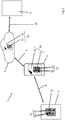
- FIG. 1 an access control device 3 according to the invention and an access control system 1 according to the invention are shown.
- the access control system 1 comprises a mobile device 2 and the access control device 3 according to the invention.
- the mobile device 2 is shown schematically.
- the mobile device 2 is designed as a smartphone.
- the mobile device 2 comprises a display 18.
- the access control device 3 according to the invention and the access control system 1 according to the invention can carry out a method 100, 200, 300 according to the invention.
- the mobile device 2 comprises at least one processor, not shown, for carrying out the method 100, 200, 300 according to the invention.
- the mobile device 2 can in this case use a processor, with which other functions of the mobile device 2 are also exercised.
- the mobile device comprises a first transmitting and receiving device to a via a telecommunications network 4 z. B. to be able to communicate with a cloud 5.
- the access control device 3 serves as a permanently installed guard of a barrier-locked physical area, not shown.
- the access control device 3 is exemplified as electromechanical fitting 3.
- the access control device 3 may be formed as an electromechanical lock cylinder, as a door opener or as a motor lock.
- the access control device 3 can also be designed in several parts (not shown).
- the access control device 3 can, for.
- As a reader and a motor lock include (not shown). The reader and the motorized lock can communicate with each other via cable or wirelessly.
- the access control device 3 and the mobile device 2 communicate with each other via a short-range communication link 6 such as Bluetooth, BLE, RFID or NFC.
- a short-range communication link 6 such as Bluetooth, BLE, RFID or NFC.
- BLE is used.
- the short-range communication connection 6 is shown purely schematically as a double arrow.
- the mobile device 2 has a second transmission and reception device (not shown).
- the access control device 3 has a transmitting and receiving unit 20, which in FIG. 3 is shown.
- the transmitting and receiving unit 20 is located behind a cover 21 of the access control device 3.
- the transmitting and receiving unit 20 comprises an antenna 22 and a transmitting and receiving circuit.
- the transmitting and receiving circuit may be formed on a printed circuit board 23.
- the printed circuit board 23 comprises a processor, not shown, and a memory.
- the access control device 3 comprises an in FIG. 1 purely schematic and in FIG. 3 figured electro-mechanical device 7.
- the electromechanical device 7 is exemplified as an electric motor.
- the electromechanical device 7 is located inside the access control device 3 and is therefore in FIG FIG. 1 indicated only by dashed lines.
- the electromechanical device 7 can couple a handle 17 of the access control device 3 with a lock, not shown, to grant access to the physical area (see FIG. FIG. 1 ).
- a user In the coupled state, a user can transfer the lock into an unlocked state by the actuation of the handle 17.
- the handle 17 is decoupled from the lock.
- the electromechanical device 7 bring a coupling element 24 into engagement and out of engagement with a counter-coupling element 25 (s. FIG. 3 ).
- a coupling element 24 into engagement and out of engagement with a counter-coupling element 25 (s. FIG. 3 ).
- the electromechanical device 7 can automatically transfer the lock to an unlocked state, in which the electromechanical device 7 retracts a latch and / or a latch.
- the electromechanical device 7 can release a case of a door opener.
- the access control device 3 comprises a light guide 16 as in FIGS FIGS. 1 and 3 shown. Behind the light guide 16, a light source 26 is disposed inside the access control device 3 (s. FIG. 3 ). By means of the light source 26 and the light guide 16, the access control device 3 can indicate a denial of access and a grant of access by different visual signals. For example, a denial of access may be displayed in red and a grant of access in green.
- the access control device 3 comprises a sounder, not shown, through which a denial of access and / or a grant of access can be indicated by an acoustic signal. In particular, only the grant of access is displayed acoustically.
- the access control device 3 comprises a timer, not shown, for measuring the time.
- the access control device 3 comprises a programming interface 8, which in FIG. 1 is indicated purely schematically.
- the programming interface is realized by means of the processor and the memory.
- Data for the Programming interface 8 are received via the transmitting and receiving unit 20.
- the processor and the memory realize yet another communication interface 28, which is designed as a binary interface.
- the communication interface 28 is in FIG. 1 indicated purely schematically.
- Data for the communication interface 28 are also received via the transmitting and receiving unit 20.
- Data for the programming interface 8 and for the communication interface 28 are thereby transmitted at the same transmission frequency from the mobile device 2 to the access control device 3.
- data for the programming interface 8 are transmitted wirelessly from the mobile device 2 to the access control device 3. This increases the comfort for the user.
- the programming interface 8 may be at least partially open at times, so that data can be received via the programming interface 8.
- the programming interface 8 may be temporarily closed, so that no data can be received via the programming interface.
- the programming interface 8 is always closed, provided that there is no requirement for the at least partial opening of the programming interface 8.
- the programming interface 8 is at least partially opened when at least one rule has been checked in the access control device 3 and the check has been completed with a positive result.
- the check of the rule does not take place solely with the aim of opening the programming interface 8. Rather, the rule is also reviewed to check if access to the physical area can be granted. Thus, the check of the rule is also part of an access control method 100, 200, 300. A method for at least partially opening the programming interface 8 is part of the access control method 100, 200, 300.
- the access control device 3 denies access to the physical area.
- the access control method 100, 200, 300 serves to check whether the user of the mobile device 2 can be granted access.
- the access control method 100, 200, 300 may begin with a first communication of the mobile device 2 and the access control device 3 for the purpose of granting access to the physical area.
- the access control procedure 100, 200, 300 may include the granting of the access if the result of the review is positive. If the result of the review is positive, the access control procedure may end with the granting of access or the end of the granting of access.
- the way in which the access is granted is part of the access control procedure 100, 200, 300.
- the access control device 3 may check one or more rules to check whether access should be granted and / or whether the programming interface 8 should be opened.
- the review of at least one rule serves both to check whether access should be granted and to check whether the programming interface 8 should be opened.
- the rule may include granting access only after a positive result of comparing a comparison value with a verification value.
- the comparison value and / or the check value can be embodied as a code, in particular as a hash value or as an electronic signature.
- the rule may include checking if the current time is within a predetermined time range.
- the access control device 3 knows the current time by means of the timer.
- the rule may include that the access control device has to perform another authentication.
- the PIN entry for authentication is made after a request to the mobile device 2 and is transmitted to the access control device 3, so that the access control device input the further authentication by comparing a control value with the PIN, such as the PIN on the mobile device 2 and the Access control device 3 has been transmitted, can perform.
- the rule may include the mobile device 2 checking a rule. If the mobile device transmits the result to the access control device within a predetermined time frame, the rule has been checked with a positive result.
- At least a positive result of a comparison of the comparison value with the check value as a prerequisite for the opening of the programming interface 8 and for granting the access is necessary.
- the access control device 3 receives from the mobile device 2 the rule (s) and / or data for the rule (s) in the current method 100, 200, 300. This ensures that always up-to-date data is used.
- the mobile device 2 has access to the cloud 5 via the telecommunications network 4.
- the telecommunications network 4 is shown schematically as a double arrow.
- the cloud 5 there are access information 10.
- the access information 10 comprises an encrypted portion 11 and a readable portion 12. If the access information 10 is intended for the mobile device 2, the mobile device 2 can retrieve the access information 10 from the cloud 5. The retrieval option for the mobile device 2 is limited to that for the mobile device 2 provided access information 10.
- the access information 10 is also specific to the access control device 3. D. h. the access information 10 contains information intended to grant access to the physical area guarded by the specific access control device 3.
- the access information is assigned to the access control device 3 on the basis of an access control device identifier.
- the access information includes the access control device identifier. If the user can be granted access to several physical areas guarded by different access control devices 3 by means of the mobile device 2, then the mobile device 2 contains a plurality of access information 10.
- access information 10 in the mobile device can be provided for each of the access control devices 3 2 provided and deposited. In FIG. 2 is purely schematically an access information 10 for the illustrated access control device 3 in the mobile device 2 deposited.
- the access information 10 is made available to the cloud 5 by a purely schematically illustrated access management device 9.
- the access management device 9 may be part of the access control system 1 according to the invention.
- the access management device 9 or the cloud 5 encrypts the encrypted portion 11 of the access information 10 such that the mobile device 2 is unable to decrypt the encrypted portion 11.
- the encrypted portion 11 is intended to be at least partially transmitted from the mobile device 2 to the access control device 3.
- the access control device 3 can decrypt the encrypted portion 11.
- the access management device 9 can communicate with the cloud 5 via a communication link 19.
- the cloud 5 may be part of the access control system 1.
- the cloud 5 is not part of the access control system 1 according to the invention.
- the mobile device 2 may be configured such that the access information 10 can be retrieved from the mobile device 2 from the cloud 5.
- the access management device 9 can be configured such that the access information 10 can be stored by the access management device 9 in the cloud 5.
- the access management device 9 can send the access information to the mobile device 2 via the telecommunication network 4 without being deposited in the cloud 5.
- the access control system 1 can in particular be based on a connection of the access control device 3 to the telecommunications network 4 and / or on a dispense with wired access to the access management device 9.
- the access control device 3 may be configured as a stand-alone / offline device.
- the encrypted portion 11 is received by the access control device 3 by means of the transmitting and receiving unit 20 and via the communication interface 28.
- the encrypted portion 11 contains access attributes 13. Some access attributes 13 are formed as a rule or data for a rule 14. The access attributes 13 formed as a rule or as data for a rule 14 are shown in FIG FIG. 2 purely schematically marked as a star.
- Some access attributes 13 are formed as an instruction or data for an instruction 15.
- the way of access is determined by at least one instruction.
- the instruction may include how the grant of access is displayed visually and / or acoustically in the access control device 3. Alternatively or additionally, the instruction may include how to terminate the grant of access, e.g. After a predetermined period of time after the start of the grant, at a predetermined time regardless of the start of the grant or after a number of grants made.
- the instruction may also include whether information about the grant of the access is stored or sent to the mobile device 2.
- the access attributes formed as an instruction or data for an instruction 15 are in FIG. 2 purely schematically represented as a triangle. For reasons of clarity, no access attribute 13 is shown in the encrypted portion 11 deposited in the cloud 5. However, the encrypted portion 11 deposited in the cloud 5 also contains the access attributes 13.
- the access attributes 13 are used in the current access control method 100. This will always allow current access attributes.
- instructions for the manner of granting the access may be received by the access control device 3 via the transmitting and receiving unit 20 and the programming interface 8 become. It may also be that control commands for activating a stored in the access control device 3 instruction via the programming interface 8 are received.
- Other data that may be received via the programming interface 8 is an updated version of firmware and / or additional firmware, an updated version of the access control device identifier, an updated version of at least one default attribute, preferably multiple default attributes, a revocation list and / or an updated version of data to perform a decryption, in particular the decryption of the encrypted portion 11.
- the programming interface 8 receives data for the further course of the access control method 100, 200, 300 from the mobile device 2. For example, data for the further authentication and / or the positive result of a check of a rule to be checked in the mobile device 2 can be received via the programming interface 8. For this purpose, the programming interface 8 is at least partially opened before access to the physical area is granted.
- the programming interface 8 receives an opening command from the mobile device 2.
- the mobile device 2 sends the opening command after the mobile device 2 has decided to grant the access.
- the opening command causes the electromechanical device 7 to operate to grant access.
- the access control device 3 can only partially open the programming interface 8.
- the access control device 3 may receive from the mobile device 2 a command or data for an instruction to open the programming interface 8.
- the command is to open the programming interface only partially.
- the command includes the data for which the programming interface is to be opened.
- the command or data for the command is sent encrypted from the mobile device 2 to the access control device 3.
- an algorithm is stored in the access control device 3, after which check of a rule the programming interface 8 for which data is at least partially open. In this case, no special command is required to at least partially open the programming interface 8.
- the access control device 3 closes the programming interface 8 again after a predetermined period of time.
- the access control device 3 transmits the outcome of the access control process for granting access to the physical area and / or features of the access control process to the mobile device after a request command to send the exit of the access control process and / or the access control process features of the mobile device 2 from the mobile device 2 Access control device 3 was received.
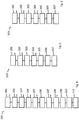
- inventive methods 100, 200, 300 are shown.
- the inventive method 100, 200, 300 serves both as a method for Transmission of data from the mobile device 2 to the access control device 3 according to the invention as well as an access control method 100, 200, 300, so that the same reference numerals for the common method 100, 200, 300 are used.
- the method for transmitting data from the mobile device 2 to the access control device 3 is part of the access control method 100, 200, 300.
- the programming interface 8 is closed in each case.
- an access control device identifier is sent from the access control device 3 to the mobile device 2.
- the mobile device 2 checks, in a second method step 102 of the method 100, whether access information 10, which is identifiable as belonging to the access control device 3 on the basis of the access control device identifier, is stored in the mobile device 2. If such access information 10 is stored, then the mobile device 2 transmits the encrypted portion 11 of the access information 10 that has been identified as belonging to the access control device 3 to the access control device 3. This is particularly in FIG. 2 shown. If a corresponding access information 10 for the access control device 3 is not stored in the mobile device 2, then the method 100 ends. This is indicated by an arrow at the second method step 102 in FIG. 3 clarified.
- the user on the mobile device 2 receives an input, e.g. For example, pressing a button or launching an app must prompt the user for access. If the input is missing, the method 100 can be ended. This is indicated by an arrow at the first method step 101 in FIG FIG. 3 clarified.
- Part of the first method step 101 may additionally or alternatively be that the mobile device 2 the user all access control devices 3, with which the mobile device 2 can communicate, in particular their access control device identifier has received the mobile device 2 and to which access information 10 in the mobile device 2 is deposited, 18 displays on the display.
- the display of the access control devices 3 is supported by the information contained in the respective readable portion 12 of the access information 10 to the corresponding access control devices 3.
- the readable portion 12 may be a picture or a description of the possible access control devices 3, the possible physical spaces and / or the barriers guarded by the possible access control devices 3, include.
- the corresponding images and / or descriptions may be displayed on the display 18 of the mobile device 2.
- the user can select one of the access control devices 3 based on the displayed information.
- the mobile device 2 then sends in the method step 102 only to the selected access control device 3, the associated access information 10, in particular the encrypted portion 11th
- the encrypted portion 11 received in the method step 102 is decrypted by the access control device 3 in a third method step 103 of the method 100.
- the encrypted portion 11 contains a comparison value.
- the mobile device 2 has received a check value from the access management device 9, for example via the cloud 5.
- the check value may be included in the readable portion 12. It is also conceivable that the mobile device 2 receives the check value separately from the access information 10 from the access management device 9.
- the check value can be z. B. downloaded via the cloud 5 of the mobile device 2.
- a fourth method step 104 of the method 100 the mobile device 2 transmits to the access control device 3 the check value.
- a fifth method step 105 of the method 100 the access control device 3 compares the comparison value with the check value. As a result, the access control device 3 checks a rule. In the case of a positive comparison, the access control device 3 recognizes the mobile device 2 as authorized in principle and the method 100 is continued.
- the programming interface 8 is opened directly in a method step 106. This makes it possible for the access control device 3 to receive further data for the access control method 100 via the programming interface 8.
- the access control device 3 can receive a PIN code for further authentication from the mobile device 2 by means of the programming interface 8 and carry out the further authentication. If the PIN code is not received, the method 100 ends without granting the access. This is indicated by an arrow at steps 107 in FIG FIG. 4 shown.
- the access control device 3 can receive within a predetermined time frame via the programming interface 8 a positive result of a rule to be checked in the mobile device 2.
- the mobile device 2 may request the user to accept, by input to the mobile device 2, a usage order such as "this is a non-smoking room". Additionally or alternatively, the mobile device 2 can check the successful completion of a security briefing. For this purpose, the mobile device 2 perform a test and evaluate. Additionally or alternatively, the mobile device 2 may grant access only if another access has previously been granted. In this case, it may be that the user first another physical area, for. As a lock or a clean room, must pass through before the user the currently desired access is granted. The mobile device 2 thus checks a residence history of the mobile device 2. The mobile device 2 can also check whether a payment for the use of the physical area has been made previously. Likewise, at least one of the rules b, c. or d. be checked in the mobile device 2 to grant access.
- the method 100 is ended. If the access control device 8 receives the positive result within the time frame, the method 100 is continued. This is indicated by an arrow at steps 108 in FIG FIG. 4 shown.
- a ninth method step 109 the access control device 3 determines that all rules to be checked for granting access have been checked with a positive result and waits for a predefined period of time whether a control command or an instruction has been received via the programming interface 8. In this case, the access control device 3 grants access according to the control command or an instruction received via the programming interface 8. If no control command or instruction is received within the predetermined time period, the access control device 3 grants access in accordance with instructions 15 of the encrypted portion 11 and / or according to the preconfiguration attributes stored in the access control device 3. To grant access, the electromechanical device 7 is activated for coupling.
- a tenth method step 110 the access control device 3 closes the programming interface 8.
- an eleventh method step 111 the access control device 3 terminates the method 100. In this case access is again denied.
- the controller of the access control device 3 controls the electromechanical device 7 for decoupling.
- the encrypted portion 11 is not stored in the access control device 3 after completion of the method 100. This ensures that a current encrypted portion 11, which is transmitted by the mobile device 2 during the method 100, is always used. If the transmission of the encrypted portion 11 is missing, the method 100 is ended.
- FIG. 5 another method 200 according to the invention is shown.
- the method 200 can use the access control system 1 according to the invention and the access control device 3 according to the invention FIGS. 1 . 2 and 3 be performed.
- the first, second, and third method steps 101, 102, 103 of the method 100 FIG. 4 corresponds to the first, second and third method steps 201, 202, 203 of the method 200 FIG. 5 ,
- a fourth method step 204 rules, in particular the rules a., B., C. and / or d., Checked in the access control device 3. If one of the checks ends with a negative result, the method 200 ends. This is indicated by an arrow at method step 204 in FIG. 5 clarified.
- the method is continued and the access control device 3 grants access to the physical area in a fifth method step 205 by actuating the electromechanical device 7.
- an instruction 15 is carried out, with which the granting of the access is visually displayed.
- the light source 26 is driven behind the light guide 16.
- the instruction 15 is included in the encrypted portion 11.
- the programming interface 8 is partially opened.
- the programming interface 8 is opened only to receive an updated version of preset attributes. Otherwise, the programming interface 8 remains closed.
- the access control device 3 waits for a predetermined period of time for default attributes to be transmitted encrypted by the mobile device 2. If the preset attributes are communicated within the predetermined time period, the access control device 3 stores the default attributes for use in future procedures. If there is no transmission of the preset attributes within the predetermined period of time, reception of the preset attributes by the Programming Interface 8. The access control device 3 closes the programming interface 8 after the predetermined period of time.
- a seventh method step 207 access to the physical area is ended.
- the encrypted portion 11 comprises a predetermined period of time.
- the period of time indicates when access should be denied after the start of granting access.
- the time period was transmitted to the access control device 3 in the encrypted portion 11.
- the access control device 3 determines the time elapsed since granting the access in step 205. If the determined time period corresponds to the predetermined period of time, the controller of the access control device 3 activates the electromechanical device 7. This is then denied access by the electromechanical device 7. For example, the electromechanical device 7 disengages the handle 17 from a lock, so that a torque of the handle 17 is no longer transferable to the lock. Thereafter, the method 200 ends.
- FIG. 6 another method 300 according to the invention is shown.
- the method 300 can be realized by means of the access control system 1 according to the invention and the access control device 3 according to the invention FIGS. 1 . 2 and 3 be performed.
- the first, second, third, fourth, fifth and seventh process steps 201, 202, 203, 204, 205, 207 of the method 200 FIG. 5 corresponds to the first, second, third, fourth, fifth and seventh process steps 301, 302, 303, 304, 305, 307 of the method 300 FIG. 6 ,
- access control device 3 checks in step 306 whether there is a command to partially open the programming interface to receive an updated version of firmware, the access control device identifier, and / or data to perform decryption.
- the encrypted portion 11 comprises the corresponding command.
- the mobile device 2 transmits the command that is not included in the encrypted portion 11.
- the access control device 3 opens the programming interface 8. The access control device 3 waits a predetermined period of time to encrypt the updated version of firmware to be transmitted, the access control device identifier, and / or data to perform decryption the mobile device 2 are transmitted.
- the access control device 3 When the updated version of firmware to be transmitted, the access control device identifier and / or data for performing decryption is transmitted within the predetermined time period, the access control device 3 stores the updated version of firmware to be transmitted, the access control device identifier and / or data for performing decryption Use in future procedures. Missing one Transmission of the updated version of a firmware to be transmitted, the access control device identifier and / or data for performing a decryption within the predetermined period of time, so receiving the updated version to be transmitted by the programming interface 8. The access control device 3 closes the programming interface 8 after the predetermined period of time ,
- step 306 it is not sufficient for the mobile device 2 to send the command to the access control device 3. Rather, although access has already been granted, yet another rule must be checked in order to open the programming interface 8. Only with a positive result of the review of the other rule, the programming interface 8 can be opened. The further rule can be checked in the mobile device 2 or in the access control device 3.
Landscapes
- Engineering & Computer Science (AREA)
- Computer Security & Cryptography (AREA)
- Computer Networks & Wireless Communication (AREA)
- Physics & Mathematics (AREA)
- General Physics & Mathematics (AREA)
- Theoretical Computer Science (AREA)
- Computer Hardware Design (AREA)
- Software Systems (AREA)
- General Engineering & Computer Science (AREA)
- Signal Processing (AREA)
- Mobile Radio Communication Systems (AREA)
Abstract
Description
- Die Erfindung betrifft eine Zugangskontrollvorrichtung für ein Zugangskontrollsystem gemäß dem Oberbegriff des Patentanspruchs 1. Die Zugangskontrollvorrichtung ist zur Zuordnung zu einem physischen Bereich ausgebildet. Mittels der Zugangskontrollvorrichtung ist Zugang zu dem physischen Bereich gewährbar. Die Zugangskontrollvorrichtung umfasst eine Programmierschnittstelle. Des Weiteren betrifft die Erfindung ein Zugangskontrollsystem mit einer erfindungsgemäßen Zugangskontrollvorrichtung gemäß dem Anspruch 11 und ein Verfahren zur Übermittlung von Daten von einer mobilen Vorrichtung an eine Zugangskontrollvorrichtung gemäß dem unabhängigen Patentanspruch 14.
-
US 2002/0204167 A1 offenbart eine Zugangskontrollvorrichtung mit einem biometrischen Fingerprintsensor. Die Zugangskontrollvorrichtung umfasst eine Programmierschnittstelle, um von einem Token kabelgebunden Kontrolldaten zum Vergleich mit Daten, die von dem Fingerprintsensor erfasst werden, übermittelt zu bekommen. Die Kabelverbindung des Tokens zu der Zugangskontrollvorrichtung ist für den Benutzer aufwändig herzustellen. - Es ist daher die Aufgabe der Erfindung, eine Zugangskontrollvorrichtung, ein Zugangskontrollsystem und ein Verfahren zur Übermittlung von Daten von einer mobilen Vorrichtung an eine Zugangskontrollvorrichtung zur Verfügung zu stellen, die den vorherigen Nachteil überwinden, insbesondere die benutzerfreundlich ausgebildet ist.
- Die Aufgabe wird gelöst durch eine Zugangskontrollvorrichtung gemäß dem unabhängigen Anspruch 1. Vorteilhafte Weiterbildungen der Zugangskontrollvorrichtung sind in den abhängigen Ansprüchen, der Beschreibung und in den Figuren angegeben. Ferner wird die Aufgabe auch durch ein Zugangskontrollsystem gemäß dem Anspruch 11 und durch ein Verfahren gemäß dem unabhängigen Anspruch 14 gelöst. Vorteilhafte Weiterbildungen des Zugangskontrollsystems sind in den abhängigen Ansprüchen 12 und 13, in der Beschreibung und in den Figuren angegeben. Insbesondere umfasst das erfindungsgemäße Zugangskontrollsystem eine erfindungsgemäße Zugangskontrollvorrichtung, so wie die Zugangskontrollvorrichtung in einem der Ansprüche 1 bis 10, der Beschreibung und den Figuren beschrieben ist. Vorteilhafte Weiterbildungen des erfindungsgemäßen Verfahrens sind in der Beschreibung und in den Figuren angegeben. Merkmale und Details, die in Zusammenhang mit der erfindungsgemäßen Zugangskontrollvorrichtung beschrieben sind, gelten dabei auch in Zusammenhang mit dem erfindungsgemäßen Zugangskontrollsystem und dem erfindungsgemäßen Verfahren und umgekehrt. Dabei können die in der Beschreibung und in den Ansprüchen erwähnten Merkmale jeweils einzeln für sich oder in Kombination erfindungswesentlich sein. Insbesondere werden eine Zugangskontrollvorrichtung und ein Zugangskontrollsystem unter Schutz gestellt, auf dem das erfindungsgemäße Verfahren, insbesondere das Verfahren nach Anspruch 14, ausführbar ist, wie auch ein Verfahren, das mit der erfindungsgemäßen Zugangskontrollvorrichtung, insbesondere mit einer Zugangskontrollvorrichtung gemäß einem der Ansprüche 1 bis 10, oder das mit dem erfindungsgemäßen Zugangskontrollsystem, insbesondere mit einem Zugangskontrollsystem nach einem der Ansprüche 11 bis13, ausgeführt werden kann.
- Erfindungsgemäß ist vorgesehen, dass die Programmierschnittstelle dazu dient, mit einer mobilen Vorrichtung drahtlos zu kommunizieren.
- Dadurch, dass die mobile Vorrichtung und die Programmierschnittstelle (API) drahtlos miteinander kommunizieren, kann auf die Herstellung einer kabelgebundenen Verbindung verzichtet werden. Hierdurch ist die erfindungsgemäße Zugangskontrollvorrichtung besonders benutzerfreundlich. Die Programmierschnittstelle kann auch als API bezeichnet werden.
- Unter einer Kommunikation wird insbesondere verstanden, dass die Zugangskontrollvorrichtung Daten mittels der Programmierschnittstelle empfängt.
- Die Zugangskontrollvorrichtung ist dem physischen Bereich zugeordnet. Ein Benutzer wird insbesondere die Zugangskontrollvorrichtung dem physischen Bereich zuordnen. Die Zugangskontrollvorrichtung dient als insbesondere festinstallierter Wächter zu dem physischen Bereich. Die Zugangskontrollvorrichtung ist bevorzugt zur Anordnung nahe dem physischen Bereich vorgesehen. Die Zugangskontrollvorrichtung kann eine elektromechanische Vorrichtung, z. B. einen Elektromotor oder ein Solenoid, oder eine elektromagnetische Vorrichtung umfassen, mittels derer der Benutzer Zugang zu dem physischen Bereich erlangen kann. Beispielsweise kann die Zugangskontrollvorrichtung eine Handhabe umfassen, die mittels der elektromechanischen Vorrichtung mit einem Schloss wirkverbindbar ist. Alternativ kann die Zugangskontrollvorrichtung mittels der elektromechanischen Vorrichtung ein Riegelelement, insbesondere einen Riegel und/oder eine Falle, betätigen. In einer weiteren Alternative kann die Zugangskontrollvorrichtung mittels der elektromechanischen oder elektromagnetischen Vorrichtung eine Öffnung der Barriere, insbesondere der Tür, der Schranke oder des Drehkreuzes, zulassen. Die Zugangskontrollvorrichtung kann insbesondere als ein elektromechanischer Beschlag, als ein elektromechanischer Schließzylinder, als ein elektromechanischer Türöffner oder als ein Motorschloss ausgebildet sein. Die Zugangskontrollvorrichtung kann einen Elektromotor zur Bewegung der Barriere, insbesondere der Tür, des Drehkreuzes oder der Schranke, umfassen. Die Zugangskontrollvorrichtung kann mehrteilig ausgebildet sein. So kann die Zugangskontrollvorrichtung einen Leser umfassen. Der Leser kann mit der elektromechanischen oder elektromagnetischen Vorrichtung, insbesondere mit dem elektromechanischen Beschlag, dem elektromechanischer Schließzylinder, dem Elektromotor, dem Elektromagnet oder dem Motorschloss, kabellos oder kabelgebunden kommunizieren. Die Zugangskontrollvorrichtung umfasst bevorzugt einen Prozessor. Die Zugangskontrollvorrichtung umfasst bevorzugt einen Speicher.
- Die Zugangskontrollvorrichtung kann einen Tongeber zur akustischen Anzeige einer Gewährung des Zugangs und/oder eine Lichtquelle zur visuellen Anzeige einer Gewährung und/oder einer Verwehrung des Zugangs umfassen.
- Der physische Bereich ist bevorzugt durch eine Barriere versperrt. Die Barriere kann als Tür, insbesondere als Gebäudetür, als Deckel, als Klappe, als Drehkreuz oder als Schranke ausgebildet sein. Die Tür kann z. B. als eine Drehtür, eine Schiebetür oder als eine Karusselltür ausgebildet sein.
- Der physische Bereich ist insbesondere feststehend. Der physische Bereich kann als Raum oder als Box ausgebildet sein. Beispielsweise kann es sich bei dem physischen Bereich um eine durch eine Tür versperrter Raum handeln. Alternativ kann der physische Bereich als eine versperrte Box, insbesondere eine Postbox, als ein Schließfach, als ein Außenbereich oder als ein durch eine Schranke behinderter Bereich, z. B. Parkbereich, ausgebildet sein.
- Die mobile Vorrichtung und die Zugangskontrollvorrichtung können insbesondere über eine drahtlose Nahbereichskommunikation miteinander kommunizieren. Hierbei wird insbesondere eine Nahbereichskommunikation wie Bluetooth, insbesondere Bluetooth Low Energy (BLE), RFID oder NFC verwendet.
- Die Zugangskontrollvorrichtung umfasst insbesondere eine Sende- und Empfangseinheit für die Nahbereichskommunikation. Die Daten, die mittels der Programmierschnittstelle in der Zugangskontrollvorrichtung verarbeitet werden, empfängt die Zugangskontrollvorrichtung drahtlos über eine Empfangseinheit. Die Empfangseinheit umfasst zumindest eine Antenne.
- Die mobile Vorrichtung umfasst insbesondere einen Prozessor und/oder einen Speicher. Bevorzugt umfasst die mobile Vorrichtung einen Anschluss an ein mobiles Kommunikationsnetz. Das mobile Kommunikationsnetz kann als Telekommunikationsnetz ausgebildet sein. So ist die mobile Vorrichtung besonders bevorzugt als Mobiltelefon ausgebildet. Bevorzugt ist das Mobiltelefon als ein Smartphone ausgebildet. Die mobile Vorrichtung kann insbesondere ein Display umfassen. Besonders bevorzugt kann der Benutzer über das Display Befehle eingeben.
- Die mobile Vorrichtung umfasst insbesondere eine erste Sende- und Empfangsvorrichtung für das Telekommunikationsnetz. Die mobile Vorrichtung umfasst insbesondere zweite eine Sende- und Empfangsvorrichtung für die Nahbereichskommunikation.
- Die Zugangskontrollvorrichtung umfasst insbesondere eine weitere Kommunikationsschnittstelle, insbesondere eine Binärschnittstelle. Die Daten, die mittels der Kommunikationsschnittstelle in der Zugangskontrollvorrichtung verarbeitet werden, empfängt die Zugangskontrollvorrichtung drahtlos. Bevorzugt wird hierzu dieselbe Empfangseinheit der Zugangskontrollvorrichtung verwendet. Somit können an die Programmierschnittstelle und an die Kommunikationsschnittstelle mittels derselben Hardware Daten übermittelt werden.
- Die Daten für die Kommunikationsschnittstelle und für die Programmierschnittstelle können mit derselben Frequenz an die Empfangseinheit übermittelt werden.
- Bevorzugt ist vorgesehen, dass die Zugangskontrollvorrichtung die Programmierschnittstelle infolge einer Kommunikation mit der mobilen Vorrichtung zumindest teilweise öffnet. Die Zugangskontrollvorrichtung kann die Programmierschnittstelle als Folge einer Kommunikation mit der mobilen Vorrichtung zumindest teilweise öffnen.
- So kann die Programmierschnittstelle als ein Ausgangszustand verschlossen sein. Über die Programmierschnittstelle kann die Zugangskontrollvorrichtung somit keine Daten verarbeiten. Damit die Zugangskontrollvorrichtung Daten über die Programmierschnittstelle verarbeiten kann, muss die Zugangskontrollvorrichtung die Programmierschnittstelle hierfür zunächst öffnen. D. h. die Zugangskontrollvorrichtung muss zunächst einen Empfang der Daten über die Programmierschnittstelle erlauben.
- Ein Verfahren zur zumindest teilweise Öffnung der Programmierschnittstelle beginnt insbesondere damit, dass die Programmierschnittstelle geschlossen ist. Sind die Voraussetzungen zur zumindest teilweisen Öffnung der Programmierschnittstelle erfüllt, so kann das Verfahren zur zumindest teilweise Öffnung der Programmierschnittstelle damit enden, dass die Programmierschnittstelle geöffnet wird oder dass die Programmierschnittstelle nach dem Öffnen erneut geschlossen wird. Ist zumindest eine Voraussetzung zur Öffnung der Programmierschnittstelle nicht erfüllt, so endet das Verfahren damit, dass die Programmierschnittstelle geschlossen bleibt.
- Die Kommunikation, die eine zumindest teilweise Öffnung der Programmierschnittstelle zumindest mitverursacht, erfolgt insbesondere über die Kommunikationsschnittstelle.
- Es kann sein, dass die Kommunikation, die eine zumindest teilweise Öffnung der Programmierschnittstelle mitverursacht, zur Gewährung eines Zugangs zu dem physischen Bereich erfolgt. Die Kommunikation, die eine zumindest teilweise Öffnung der Programmierschnittstelle zumindest mitverursacht, kann somit innerhalb eines Zugangskontrollverfahrens stattfinden. Das Zugangskontrollverfahren kann die Kommunikation, als dessen Folge die Programmierschnittstelle zumindest teilweise geöffnet wird, umfassen.
- Das Zugangskontrollverfahren findet insbesondere statt, um einem Benutzer den Zugang zu dem physischen Bereich zu gewähren. Der physische Bereich ist zu Beginn des Zugangskontrollverfahrens versperrt. Die Überprüfung, ob Zugang gewährt werden darf, ist ein wesentlicher Teil des Zugangskontrollverfahrens. Die mobile Vorrichtung und die Zugangskontrollvorrichtung können dazu ausgebildet sein, das Zugangskontrollverfahren durchzuführen.
- Das Zugangskontrollverfahren wird zumindest mittels der Zugangskontrollvorrichtung und der mobilen Vorrichtung durchgeführt, insbesondere wenn sich die mobile Vorrichtung in der Nähe der Zugangskontrollvorrichtung befindet. Das Zugangskontrollverfahren endet insbesondere mit der Gewährung des Zugangs oder mit der Beendigung der Gewährung des Zugangs, wenn die Überprüfung, ob Zugang gewährt werden darf, positiv abgeschlossen wird. Ist eine Zugangsvoraussetzung nicht erfüllt, so kann das Zugangskontrollverfahren vorher enden, wobei ein Zugang verwehrt bleibt.
- Die mobile Vorrichtung kann eine Zugangsinformation umfassen. Die Zugangsinformation dient zur Gewährung des Zugangs zu dem physischen Bereich, der von der Zugangskontrollvorrichtung bewacht wird. Die Zugangsinformation kann spezifisch für die Zugangskontrollvorrichtung ausgebildet sein. Die Zugangsinformation kann der Zugangskontrollvorrichtung zugeordnet sein. Die mobile Vorrichtung umfasst bevorzugt zumindest einen Speicher, in dem die Zugangsinformation gespeichert ist.
- Die Zugangsinformation kann zumindest ein Zugangsattribut umfassen. Das zumindest eine Zugangsattribut wird bevorzugt in dem Zugangskontrollverfahren verwendet.
- Die Zugangsinformation kann einen verschlüsselten Anteil umfassen. Der mobile Anteil kann von der mobilen Vorrichtung unentschlüsselbar sein. Der verschlüsselte Anteil kann das Zugangsattribut umfassen. Die Zugangsinformation, insbesondere der verschlüsselte Anteil, wird insbesondere über die Kommunikationsschnittstelle von der Zugangskontrollvorrichtung empfangen.
- Die Zugangsinformation kann einen lesbaren Anteil, der unverschlüsselt ist oder von der mobilen Vorrichtung entschlüsselbar ist, umfassen. Der lesbare Anteil kann eine für den Benutzer auf der mobilen Vorrichtung anzeigbare Information umfassen. Die anzeigbare Information kann insbesondere auf einem Display der mobilen Vorrichtung anzeigbar sein.
- Die Zugangsinformation kann als eine Datei ausgebildet sein.
- Die Zugangskontrollvorrichtung kann bevorzugt über die Empfangseinheit das zumindest eine Zugangsattribut empfangen. Es können auch mehrere Zugangsattribute der Zugangsinformation von der Zugangskontrollvorrichtung empfangen werden. Wird im Folgenden das Zugangsattribut erwähnt, so können auch mehrere Zugangsattribute gemeint sein. Die Zugangskontrollvorrichtung kann bevorzugt über die Empfangseinheit den verschlüsselten Anteil empfangen.
- Die Zugangskontrollvorrichtung kann in dem Zugangskontrollverfahren das zumindest eine übermittelte Zugangsattribut verwenden. Die Kommunikation, die die zumindest teilweise Öffnung der Programmierschnittstelle zumindest mitverursacht, kann die Übermittlung des Zugangsattributs von der mobilen Vorrichtung an die Zugangskontrollvorrichtung umfassen oder der Übermittlung des Zugangsattributs von der mobilen Vorrichtung an die Zugangskontrollvorrichtung entsprechen.
- Bevorzugt ist vorgesehen, dass die Zugangskontrollvorrichtung die Programmierschnittstelle in Folge eines positiven Ergebnisses einer Überprüfung zumindest einer Regel zumindest teilweise öffnet. Die Zugangskontrollvorrichtung kann die Programmierschnittstelle als Folge eines positiven Ergebnisses einer Überprüfung zumindest einer Regel zumindest teilweise öffnen.
- Die Regel kann somit als eine Voraussetzung zur zumindest teilweise Öffnung der Programmierschnittstelle definiert sein. Eine Überprüfung der Regel bedeutet, dass überprüft wird, ob die in der Regel definierte Voraussetzung erfüllt ist oder nicht.
- Die Überprüfung der zumindest einen Regel erfolgt bevorzugt in der Zugangskontrollvorrichtung.
- Bei einem negativen Ergebnis der Überprüfung der Regel bleibt die Programmierschnittstelle geschlossen. Das positive Ergebnis der Überprüfung der Regel ist zumindest eine Voraussetzung für die zumindest teilweise Öffnung der Programmierschnittstelle. Wird nur eine Regel zur zumindest teilweisen Öffnung der Programmierschnittstelle überprüft oder entspricht die überprüfte Regel der letzten zu überprüfenden Regel, so wird bei positiven Ergebnis der Überprüfung der Regel die Programmierschnittstelle zumindest teilweise geöffnet. Muss noch zumindest eine weitere Regel zur zumindest teilweise Öffnung der Programmierschnittstelle überprüft werden, so wird die Überprüfung zumindest der zumindest einen weiteren Regel mit dem Ziel, die Programmierschnittstelle zumindest teilweise zu öffnen, vorgenommen. Eine zumindest teilweise Öffnung der Programmierschnittstelle erfolgt nur, wenn ein positives Ergebnis aller hierzu zu überprüfenden Regeln vorliegt.
- Die Überprüfung der Regel ist bevorzugt zugleich Teil des Zugangskontrollverfahrens. Die Regel kann somit dazu dienen, den Zugang zu dem physischen Bereich zu gewähren. Somit kann die Regel dazu dienen, den Zugang zu kontrollieren. Die Regel kann eine Zugangsvoraussetzung definieren. Somit kann ein Zugangsberechtigungsprofil zumindest die Regel umfassen. Eine "Überprüfung der Regel" bedeutet, dass überprüft wird, ob die in der Regel definierte Zugangsvoraussetzung erfüllt ist oder nicht.
- Bei einem negativen Ergebnis der Überprüfung der Regel wird der Zugang zu dem physischen Bereich verwehrt. Das positive Ergebnis der Überprüfung der Regel ist zumindest eine Voraussetzung zur Gewährung des Zugangs. Wird nur eine Regel zur Gewährung des Zugangs überprüft oder entspricht die überprüfte Regel der letzten für die Gewährung des Zugangs zu überprüfenden Regel, so wird bei positiven Ergebnis der Überprüfung der Regel der Zugang gewährt. Muss noch eine weitere Regel zur Gewährung des Zugangs überprüft werden, so wird bei einem positiven Ergebnis der Überprüfung der Regel die weitere Regel mit dem Ziel der Gewährung des Zugangs überprüft. Eine Gewährung des Zugangs erfolgt nur, wenn ein positives Ergebnis aller hierzu zu überprüfenden Regeln vorliegt.
- Somit wird nicht nur durch das Überprüfen der zumindest einen Regel überprüft, ob die Programmierschnittstelle geöffnet werden darf. Vielmehr wird zugleich überprüft, ob eine Voraussetzung für die Gewährung des Zugangs erfüllt ist. Somit wird durch die Verknüpfung des Zugangskontrollverfahrens mit der Prüfung, ob die Programmierschnittstelle zumindest teilweise zu öffnen ist, ein Synergieeffekt erzeugt.
- So kann vorgesehen sein, dass die zumindest eine Regel, die eine Voraussetzung zur zumindest teilweisen Öffnung der Programmierschnittstelle definiert, zugleich eine Voraussetzung zur Gewährung des Zugangs definiert.
- Hierbei kann es sein, dass darüber hinaus zumindest eine weitere Regel zur zumindest teilweise Öffnung der Programmierschnittstelle zu überprüfen ist und/oder dass darüber hinaus zumindest eine weitere Regel zur Gewährung des Zugangs zu überprüfen ist. Die Regeln, die zur zumindest teilweise Öffnung der Programmierschnittstelle zu überprüfen sind, und die Regeln, die zur Gewährung des Zugangs zu überprüfen sind, überlappen sich somit in zumindest einer Regel. Bevorzugt überlappen sich die Regeln, die zur zumindest teilweise Öffnung der Programmierschnittstelle zu überprüfen sind, und die Regeln, die zur Gewährung des Zugangs zu überprüfen sind, in mehreren Regeln. D. h. es kann sein, dass mehrere Regeln sowohl zur zumindest teilweise Öffnen der Programmierschnittstelle als auch zur Gewährung des Zugangs zu überprüfen sind.
- Insbesondere kann sich zumindest eine Regel außerhalb des Überlappungsbereichs befinden. Es kann sein, dass zumindest eine Regel zur Gewährung des Zugangs, jedoch nicht zur zumindest teilweisen Öffnung der Programmierschnittstelle überprüft wird. Es kann sein, dass zumindest eine Regel zur zumindest teilweisen Öffnung der Programmierschnittstelle, jedoch nicht zur Gewährung des Zugangs überprüft wird.
- Es ist denkbar, dass die Anzahl der zu überprüfenden Regeln, die Voraussetzung für die Öffnung der Programmierschnittstelle sind, und die Anzahl der überprüfenden Regeln, die Voraussetzung für die Gewährung des Zugangs sind, sich voneinander unterscheiden. Alternativ können die Regeln, die für die Öffnung der Programmierschnittstelle zu überprüfen sind, den Regeln, die für die Gewährung des Zugangs zu überprüfen sind, einander entsprechen.
- Die Überprüfung der zumindest einen Regel für die Öffnung der Programmierschnittstelle und/oder für die Gewährung des Zugangs findet bevorzugt in der Zugangskontrollvorrichtung statt.
- Das Zugangsattribut kann als eine Regel, als Daten für eine Regel, als eine Anweisung oder als Daten für eine Anweisung ausgebildet sein. Der verschlüsselte Anteil kann eine Regel, als Daten für eine Regel, als eine Anweisung oder als Daten für eine Anweisung umfassen. Die Daten für eine Regel können insbesondere anstelle der vollständigen Regel als Zugangsattribut vorgesehen sein. Die Zugangskontrollvorrichtung kann mittels der Daten für die Regel die dazugehörige Regel überprüfen. Werden Daten für die Regel als Zugangsattribut übermittelt, so kann die übrige Regel in der Zugangskontrollvorrichtung hinterlegt sein. Hierbei kann die Regel mittels der von der mobilen Vorrichtung übermittelten Daten für die Regel vervollständigt werden. Die Zugangskontrollvorrichtung kann die dazugehörige Regel mittels der übermittelten Daten für die Regel überprüfen.
- Das Zugangsattribut kann zumindest eine Anweisung umfassen oder einer Anweisung entsprechen. Die Anweisung definiert die Art und Weise der Gewährung des Zugangs zu dem physischen Bereich näher. Die Anweisung ist keine Voraussetzung für die Gewährung des Zugangs zu dem physischen Bereich. Die Anweisung kann umfassen, wie die Gewährung des Zugangs visuell und/oder akustisch in der Zugangskontrollvorrichtung angezeigt wird. Alternativ oder zusätzlich kann die Anweisung umfassen, wie die Gewährung des Zugangs beendet wird, z. B. nach einer vorbestimmten Zeitspanne nach Beginn der Gewährung, an einem vorbestimmten Zeitpunkt unabhängig von dem Beginn der Gewährung oder nach einer vorgegebenen Anzahl der erfolgten Gewährungen. Die Anweisung kann ebenfalls umfassen, ob Informationen über die Gewährung des Zugangs an die mobile Vorrichtung gesendet werden.
- Die Daten für die zumindest eine Anweisung können insbesondere anstelle der vollständigen Anweisung als Zugangsattribut vorgesehen sein. Die Zugangskontrollvorrichtung kann mittels der Daten für die Anweisung die dazugehörige Anweisung durchführen. Werden Daten für die Anweisung als Zugangsattribut übermittelt, so kann die übrige Anweisung in der Zugangskontrollvorrichtung hinterlegt sein. Hierbei kann die Anweisung mittels der von der mobilen Vorrichtung übermittelten Daten für die Anweisung vervollständigt werden.
- Die Zugangskontrollvorrichtung kann bevorzugt über die Empfangseinheit das zumindest eine Zugangsattribut empfangen. Es können auch mehrere Zugangsattribute der Zugangsinformation von der Zugangskontrolleinheit empfangen werden.
- Die Regel, die in der Zugangskontrollvorrichtung zur zumindest teilweise Öffnung der Programmierschnittstelle und/oder zur Gewährung des Zugangs zu überprüfen ist, kann der folgenden Regel entsprechen oder die folgende Regel umfassen: Es ist ein Vergleichswert mit einem Überprüfwert zu vergleichen (Regel a.). Der Vergleichswert und/oder der Überprüfwert können Code-artig, insbesondere als ein Hashwert oder als eine elektronische Signatur, ausgebildet sein. Durch den Vergleich wird die mobile Vorrichtung als prinzipiell berechtigt identifiziert. Der Vergleich des Vergleichswerts mit dem Überprüfwert wird insbesondere dann verwendet, wenn besonders sichergestellt werden soll, dass die mobile Vorrichtung berechtigt ist. Wird der Vergleich des Vergleichswerts mit dem Überprüfwert mit einem positiven Ergebnis verglichen, so ist zumindest eine Voraussetzung zur zumindest teilweisen Öffnung der Programmierschnittstelle und/oder zur Gewährung des Zugangs erfüllt.
- Besonders bevorzugt übermittelt die mobile Vorrichtung zunächst den Vergleichswert an die Zugangskontrollvorrichtung, damit die Zugangskontrollvorrichtung überprüfen kann, ob die Programmierschnittstelle zumindest teilweise zu öffnen ist und/oder ob der Zugang zu gewähren ist. Anders ausgedrückt, wird der aktuell übermittelte Vergleichswert für den Vergleich verwendet. Der Vergleichswert kann verschlüsselt sein. Der Vergleichswert kann derart verschlüsselt sein, dass der Vergleichswert von der mobilen Vorrichtung unentschlüsselbar ist. Insbesondere kann der verschlüsselte Anteil den Vergleichswert enthalten.
- Der Vergleichswert wird insbesondere stets von der mobilen Vorrichtung an die Zugangskontrollvorrichtung übermittelt, bevor überprüft wird, ob die Programmierschnittstelle zumindest teilweise zu öffnen ist und/oder ob der Zugang zu gewähren ist. Die Übermittlung des Vergleichswerts ist insbesondere stets Teil des aktuellen Zugangskontrollverfahrens und/oder des aktuellen Verfahrens zur Öffnung der Programmierschnittstelle. Entfällt eine Übermittlung des Vergleichswerts in dem aktuellen Verfahren, so bleibt bevorzugt die Programmierschnittstelle geschlossen und/oder der Zugang bleibt verwehrt. Es ist denkbar, dass eine Speicherung des Vergleichswerts in der Zugangskontrollvorrichtung nach dem Vergleich unterbleibt.
- Bevorzugt wird der Überprüfwert von der mobilen Vorrichtung an die Zugangskontrollvorrichtung übermittelt. Die mobile Vorrichtung enthält den Überprüfwert. Der Überprüfwert wird insbesondere der mobilen Vorrichtung von der Zugangsverwaltungsvorrichtung zur Verfügung gestellt. Der Überprüfwert kann z. B. in dem lesbaren Anteil enthalten sein. Alternativ kann der Überprüfwert z. B. von der Zugangsverwaltungsvorrichtung der mobilen Vorrichtung zusätzlich zu der Zugangsinformation zur Verfügung gestellt worden sein.
- Der Überprüfwert kann verschlüsselt sein.
- Der Überprüfwert wird bevorzugt stets von der mobilen Vorrichtung an die Zugangskontrollvorrichtung übermittelt, bevor überprüft wird, ob die Programmierschnittstelle zumindest teilweise zu öffnen ist und/oder ob der Zugang zu gewähren ist. Die Übermittlung des Überprüfwerts ist insbesondere stets Teil des aktuellen Zugangskontrollverfahrens und/oder des aktuellen Verfahrens zur Öffnung der Programmierschnittstelle. Entfällt eine Übermittlung des Überprüfwerts in dem aktuellen Verfahren, so bleibt bevorzugt die Programmierschnittstelle geschlossen und/oder der Zugang bleibt verwehrt.
- Es ist denkbar, dass der Vergleichswert und der Überprüfwert stets in dem aktuellen Verfahren übermittelt werden, bevor ein Vergleich des Vergleichswerts mit dem Überprüfwert erfolgt, so dass die Zugangskontrollvorrichtung den übermittelten Vergleichswert und den übermittelten Überprüfwert stets verwendet. Somit ist es nicht notwendig, den Vergleichswert und/oder den Überprüfwert in der Zugangskontrollvorrichtung zu speichern. Vielmehr wird der Zugang verweigert, wenn der Vergleichswert und der Überprüfwert von der mobilen Vorrichtung nicht an die Zugangskontrollvorrichtung während des aktuellen Verfahrens zur Gewährung des Zugangs und/oder zur Öffnung der Programmierschnittstelle übermittelt werden. Somit wird stets die Verwendung eines aktuellen Vergleichswerts und eines aktuellen Überprüfwerts gewährleistet, insbesondere ohne umfangreiche Updates an der Zugangskontrollvorrichtung durchführen zu müssen.
- Die Regel, die in der Zugangskontrollvorrichtung zur zumindest teilweise Öffnung der Programmierschnittstelle und/oder zur Gewährung des Zugangs zu überprüfen ist, kann der folgenden Regel entsprechen oder die folgende Regel umfassen: Es ist zu überprüfen, ob eine aktuelle Zeit sich in einem vorgegebenen Zeitbereich befindet (Regel b.). Der Zeitbereich kann Uhrzeiten, Wochentage, Arbeits- und arbeitsfreie Tage, Monate und/oder Jahre umfassen. Der Zeitbereich kann verschlüsselt von der mobilen Vorrichtung an die Zugangskontrollvorrichtung während des Zugangskontrollverfahrens und/oder des Verfahrens zur Öffnung der Programmierschnittstelle übermittelt werden. Insbesondere kann der verschlüsselte Anteil den Zeitbereich umfassen. Wird stets der Zeitbereich im aktuellen Zugangskontrollverfahren und/oder in dem aktuellen Verfahren zur Öffnung der Programmierschnittstelle übermittelt, so entfällt die Notwendigkeit den Zeitbereich in der Zugangskontrollvorrichtung zu speichern. Befindet sich die aktuelle Zeit in dem vorgegebenen Zeitbereich, so ist zumindest eine Voraussetzung zur zumindest teilweisen Öffnung der Programmierschnittstelle und/oder zur Gewährung des Zugangs erfüllt.
- Die Regel, die in der Zugangskontrollvorrichtung zur zumindest teilweise Öffnung der Programmierschnittstelle und/oder zur Gewährung des Zugangs zu überprüfen ist, kann der folgenden Regel entsprechen oder die folgende Regel umfassen: Eine weitere Authentifizierung, insbesondere mittels eines Codes oder einer biometrischen Erkennung, ist vorzunehmen (Regel c.). Bevorzugt führt die Zugangskontrollvorrichtung die weitere Authentifizierung durch. Hierzu wird ein Kontrollwert mit einem Code oder einer biometrischen Kennung verglichen. Der Code und/oder die biometrische Erkennung kann an der mobilen Vorrichtung eingegeben bzw. erfasst und an die Zugangskontrollvorrichtung übermittelt werden. Der Vergleich des Codes und/oder der biometrischen Erkennung mit dem Kontrollwert erfolgt in der Zugangskontrollvorrichtung. Bei einem positiven Vergleich liegt die weitere Authentifizierung vor. Liegt die weitere Authentifizierung vor, so ist zumindest eine Voraussetzung zur zumindest teilweisen Öffnung der Programmierschnittstelle und/oder zur Gewährung des Zugangs erfüllt.
- Der Kontrollwert für die Authentifizierung kann von der Zugangskontrollvorrichtung während des Zugangskontrollverfahrens und/oder während des Verfahrens zur Öffnung der Programmierschnittstelle verschlüsselt von der mobilen Vorrichtung empfangen werden. Der Kontrollwert kann einen Kontrollcode und/oder einen Kontrollbiometrie-Erkennung umfassen. Insbesondere kann der verschlüsselte Anteil den Kontrollwert umfassen. Hierdurch entfällt die Notwendigkeit, den Kontrollwert in der Zugangskontrollvorrichtung zu speichern.
- Die Regel, die in der Zugangskontrollvorrichtung zur zumindest teilweise Öffnung der Programmierschnittstelle und/oder zur Gewährung des Zugangs zu überprüfen ist, kann der folgenden Regel entsprechen oder die folgende Regel umfassen: Eine Kennzeichnung, die den Benutzer als einen Wächter kenntlich macht, ist zu überprüfen (Regel d.). Es kann gewünscht sein, dass ein Wächter sich auf einem Rundgang an der Zugangskontrollvorrichtung identifiziert, um das ordnungsgemäße Abgehen des Rundgangs zu erfassen. Es kann wünschenswert sein, dass dem Wächter kein Zugang gewährt wird und/oder die Programmierschnittstelle geschlossen bleibt. Bei einer positiven Kennzeichnung als Wächter wird somit der Zugang verweigert und/oder die Programmierschnittstelle bleibt geschlossen.
- Die positive bzw. negative Kennzeichnung als Wächter kann verschlüsselt von der mobilen Vorrichtung an die Zugangskontrollvorrichtung während des Zugangskontrollverfahrens übermittelt werden. Insbesondere kann der verschlüsselte Anteil die positive bzw. negative Kennzeichnung als Wächter umfassen. Wird stets die positive bzw. negative Kennzeichnung als Wächter im aktuellen Zugangskontrollverfahren und/oder in dem aktuellen Verfahren zur Öffnung der Programmierschnittstelle übermittelt, so entfällt die Notwendigkeit die Kennzeichnung zu speichern.
- Die Regel, die in der Zugangskontrollvorrichtung zur zumindest teilweise Öffnung der Programmierschnittstelle und/oder zur Gewährung des Zugangs zu überprüfen ist, kann der folgenden Regel entsprechen oder die folgende Regel umfassen: Ein positives Ergebnis einer Regel, die in der mobilen Vorrichtung zu prüfen ist, muss vorliegen (Regel e.). Es kann wünschenswert sein, wenn zumindest eine Regel zur Gewährung des Zugangs zu dem physischen Bereich und/oder zur zumindest teilweisen Öffnung der Programmierschnittstelle in der mobilen Vorrichtung geprüft wird. Die in der mobilen Vorrichtung zu überprüfende Regel kann dabei z. B. auf Informationen zugreifen, die der Zugangskontrollvorrichtung nicht zur Verfügung stehen. Beispielsweise kann die mobile Vorrichtung überprüfen, ob eine Zahlung erfolgt ist oder ein Zahlungseingang verzeichnet worden ist, ob eine Benutzerordnung für den physischen Bereich akzeptiert wurde oder ob eine Sicherheitsunterweisung positiv abgeschlossen wurde. Ebenfalls ist es denkbar, dass die einer weiteren Authentifizierung, insbesondere mittels der Eingabe eines Codes oder einer biometrischen Erkennung in der mobilen Vorrichtung überprüft wird, insbesondere wenn der Kontrollwert in der mobilen Vorrichtung gespeichert ist.
- Das Zugangsattribut kann einen Kennwert umfassen, der die Notwendigkeit, das Ergebnis der Überprüfung der Regel in der mobilen Vorrichtung bei der Gewährung des Zugangs zu und/oder bei der Öffnung der Programmierschnittstelle berücksichtigen, beinhaltet. Ist eine Regel in der mobilen Vorrichtung zu prüfen, so erwartet die Zugangskontrollvorrichtung das positive Ergebnis der in der mobilen Vorrichtung zu überprüfenden Regel innerhalb eines Zeitrahmens. Erhält die Zugangskontrollvorrichtung nicht innerhalb des Zeitrahmens das positive Ergebnis der in der mobilen Vorrichtung zu überprüfenden Regel, so bleibt der Zugang verwehrt und/oder die Programmierschnittstelle geschlossen.
- Der Vergleichswert, der Zeitbereich, der Kontrollwert, die Kennzeichnung als Wächter und/oder der Kennwert entspricht somit Daten für eine Regel, die das Zugangsattribut umfassen kann.
- Die Überprüfung einer Regel des Regeltyps a., c., d. und/oder e. kann nur für ein vorgegebenes Zeitfenster in dem Zugangskontrollverfahren und/oder in dem Verfahren zur Öffnung der Programmierschnittstelle vorgesehen sein. Dieses gilt besonders bevorzugt für die Regeln des Regeltyps c., d. und/oder e.. Außerhalb des Zeitfensters unterbleibt eine Überprüfung der Regel, die einem Zeitfenster zugeordnet ist. Beispielsweise muss nur an Wochenenden eine weitere Authentifizierung mittels eines PIN-Codes erfolgen. Innerhalb der Arbeitswoche entfällt die Notwendigkeit einer weiteren Authentifizierung. In diesem Fall würde eine Regel des Regeltyps c. im dem Zeitfenster "Wochenende" zu überprüfen sein. Innerhalb der Arbeitswoche unterbleibt die weitere Authentifizierung als Voraussetzung für die Gewährung des Zugangs und/oder Öffnung der Programmierschnittstelle.
- Die Zugangsinformation, insbesondere der verschlüsselte Anteil, kann das Zeitfenster umfassen. In der Zugangsinformation kann diejenige Regel, die nur in dem Zeitfenster zu prüfen ist, das entsprechende Zeitfenster umfassen. Das Zugangsattribut kann die Regel, die das Zeitfenster beinhaltet, umfassen.
- Zur Öffnung der Programmierschnittstelle wird bevorzugt zumindest Regel a. überprüft. Insbesondere kann die Regel a. diejenige Regel sein, die sowohl zur zumindest teilweisen Öffnung der Programmierschnittstelle als auch zur Gewährung des Zugangs überprüft wird. Es ist denkbar, dass ein positives Ergebnis der Überprüfung der Regeln b., c. und/oder d. zur zumindest teilweise Öffnung der Programmierschnittstelle keine Voraussetzung ist.
- Es ist denkbar, dass die Zugangskontrollvorrichtung von der mobilen Vorrichtung Daten für die zumindest eine Regel, die in der Zugangskontrollvorrichtung zu überprüfen ist und/oder die zumindest eine Regel, die in der Zugangskontrollvorrichtung zu überprüfen ist, empfängt. Die Zugangskontrollvorrichtung kann somit die Regeln, die von der Zugangskontrollvorrichtung zu überprüfen sind, um Zugang zu dem physischen Bereich zu gewähren und/oder um die Programmierschnittstelle zu öffnen, von der mobilen Vorrichtung empfangen. Beispielsweise kann die Zugangskontrollvorrichtung den Vergleichswert und/oder den Überprüfwert von der mobilen Vorrichtung empfangen. Der Vergleichswert kann Daten für eine Regel und damit einem Zugangsattribut entsprechen.
- Die Daten für die zumindest eine Regel und/oder die Regel werden bevorzugt über die Kommunikationsschnittstelle empfangen.
- Bevorzugt wird die empfangene Regel und/oder die empfangenen Daten für eine Regel in dem aktuellen Zugangskontrollverfahren und/oder zur Öffnung der Programmierschnittstelle unmittelbar verwendet.
- Besonders bevorzugt verwendet die Zugangskontrollvorrichtung die empfangenen Daten für die zumindest eine Regel und/oder die empfangene zumindest eine Regel nur zur aktuellen Gewährung des Zugangs zu dem physischen Bereich und/oder zur aktuellen Öffnung der Programmierschnittstelle. Bevorzugt unterbleibt eine Speicherung der übermittelten Regel oder der übermittelten Daten für eine Regel. Hierdurch kann eine Kommunikation der Zugangskontrollvorrichtung mit der mobilen Vorrichtung und/oder die Speicherkapazitäten der Zugangskontrollvorrichtung schlank gehalten werden. Zudem wird stets die Verwendung aktueller Daten erreicht.
- Ebenfalls kann zumindest eine Anweisung oder Daten für zumindest eine Anweisung von der mobilen Vorrichtung auf die Zugangskontrollvorrichtung übertragen werden. Die zumindest eine Anweisung oder die Daten für die zumindest eine Anweisung werden bevorzugt in dem aktuellen Zugangskontrollverfahren verwendet. Besonders bevorzugt werden die Anweisung oder die Daten für die zumindest eine Anweisung nur bei der aktuellen Gewährung des Zugangs verwendet.
- Die Zugangskontrollvorrichtung kann zumindest eine aktualisierte Fassung einer Firmware und/oder eine zusätzliche Firmware über die Programmierschnittstelle empfangen. Dieses kann jedoch nur eine Möglichkeit sein. Insbesondere sind auch Ausführungsformen denkbar, in denen die Programmierschnittstelle nicht oder nicht ausschließlich Firmware über die Programmierschnittstelle empfängt.
- Zusätzlich oder alternativ kann die Zugangskontrollvorrichtung zumindest eine aktualisierte Fassung einer Zugangskontrollvorrichtungskennung über die Programmierschnittstelle empfangen. Die Zugangskontrollvorrichtung ist eingerichtet, die Zugangskontrollvorrichtungskennung an die mobile Vorrichtung zu übermitteln und von der mobilen Vorrichtung die Zugangsinformation oder zumindest ein Zugangsattribut für die Zugangskontrollvorrichtung, deren Zugangskontrollvorrichtungskennung die mobile Vorrichtung erhalten hat, zu empfangen. Die mobile Vorrichtung kann anhand der Zugangskontrollvorrichtungskennung die passende Zugangsinformation auswählen.
- Zusätzlich oder alternativ kann die Zugangskontrollvorrichtung zumindest eine aktualisierte Fassung zumindest eines Voreinstellungsattributs, bevorzugt mehrerer Voreinstellungsattribute über die Programmierschnittstelle empfangen. Das Voreinstellungsattribut kann in der Zugangskontrollvorrichtung hinterlegt sein. Das Voreinstellungsattribut kann eine Regel, Daten für eine Regel, eine Anweisung und/oder Daten für eine Anweisung des Zugangsattributs ersetzen. Das von der mobilen Vorrichtung übermittelte Zugangsattribut übersteuert bevorzugt das Voreinstellungsattribut. Das von der mobilen Vorrichtung übermittelte Zugangsattribut und das Voreinstellungsattribut gehören hierbei zu derselben Regel oder zu derselben Anweisung. Anders ausgedrückt, liegt ein von der mobilen Vorrichtung in dem aktuellen Zugangskontrollverfahren übermitteltes Zugangsattribut vor, so wird in dem aktuellen Zugangskontrollverfahren das von der mobilen Vorrichtung übermittelte Zugangsattribut verwendet, während das Voreinstellungsattribut in dem aktuellen Zugangskontrollverfahren unberücksichtigt bleibt. Bevorzugt sind für mehrere Zugangsattribute, die von der mobilen Vorrichtung übermittelbar sind, ein Voreinstellungsattribut in der Zugangskontrollvorrichtung hinterlegt.
- Zusätzlich oder alternativ kann die Zugangskontrollvorrichtung zumindest eine aktualisierte Fassung eine aktualisierte Fassung von Daten, um eine Entschlüsselung durchführen zu können, über die Programmierschnittstelle empfangen.
- Zusätzlich oder alternativ kann die Zugangskontrollvorrichtung zumindest eine Sperrliste, in denen die mobilen Vorrichtungen aufgeführt sind, denen der Zugang zu verwehren ist, über die Programmierschnittstelle empfangen. Die Sperrliste kann insbesondere eine aktualisierte Fassung sein.
- Zusätzlich oder alternativ kann die Zugangskontrollvorrichtung zumindest eine aktualisierte Fassung zumindest eine Anweisung zum Ansteuern der Zugangskontrollvorrichtung und/oder einen Steuerbefehl zum Ansteuern der Zugangskontrollvorrichtung über die Programmierschnittstelle empfangen.
- Der Steuerbefehl kann insbesondere zur Aktivierung einer Anweisung dienen. Die Steuerbefehle können spezielle Anweisungen aktivieren. Die Anweisungen können in der Zugangskontrollvorrichtung hinterlegt sein. Die Steuerbefehle können z. B. für den akustische Tongeber und/oder die Lichtquelle der Zugangskontrollvorrichtung vorgesehen sein. Der Steuerbefehl und/oder die Anweisung kann die Art und Weise des akustischen und/oder visuellen Anzeigens betreffen, z. B. die Lautstärke, die Tonlänge oder -höhe, die Farbe, die Helligkeit und/oder eine Blinkfrequenz. Bevorzugt ist vorgesehen, dass die Zugangskontrollvorrichtung die Programmierschnittstelle zumindest teilweise öffnet, bevor die Zugangskontrollvorrichtung Zugang zu dem physischen Bereich gewährt hat. Hierdurch ist es möglich, dass die Programmierschnittstelle zur Verfügung steht, um Daten für das aktuellen Zugangskontrollverfahren zu empfangen.
- So kann die Programmierschnittstelle geöffnet werden, um Daten zur Überprüfung einer Regel, insbesondere einer weiteren Regel, zur Gewährung des Zugangs in der Zugangskontrollvorrichtung zu erhalten. Ein positives Ergebnis der Überprüfung der weiteren Regel kann dabei Voraussetzung für die Gewährung des Zugangs sein. Z. B. können biometrische Daten eines Benutzers über die Programmierschnittstelle an die Zugangskontrollvorrichtung übermittelt werden. Die biometrischen Daten können mittels der mobilen Vorrichtung erfasst werden.
- Die Programmierschnittstelle kann geöffnet werden, um Ergebnisse einer Überprüfung einer Regel zur Gewährung des Zugangs, die in der mobilen Vorrichtung überprüft wird, zu erhalten.
- Die Programmierschnittstelle kann geöffnet werden, um einen Steuerbefehl zu erhalten.
- Der Steuerbefehl kann einem Befehl zur Art und Weise der Gewährung des Zugangs entsprechen. So kann der Steuerbefehl einer Anweisung entsprechen oder Daten für eine Anweisung umfassen. Der Steuerbefehl kann zur Aktivierung einer in der Zugangskontrollvorrichtung hinterlegten Anweisung dienen.
- Der Steuerbefehl kann einem Öffnungsbefehl entsprechen. Die Programmierschnittstelle kann geöffnet werden, um einen Öffnungsbefehl zu erhalten. Es kann sein, dass die mobile Vorrichtung entscheidet, ob der Zugang gewährt wird. Hierzu überprüft insbesondere die mobile Vorrichtung eine Regel zur Gewährung des Zugangs. Wird der Zugang gewährt, so kann die mobile Vorrichtung den Öffnungsbefehl an die Zugangskontrollvorrichtung senden. Wird der Öffnungsbefehl von der Zugangskontrollvorrichtung empfangen, so gewährt die Zugangskontrollvorrichtung ohne weitere Überprüfung den Zugang.
- Über die Kommunikationsschnittstelle empfängt die Zugangskontrollvorrichtung insbesondere den verschlüsselten Anteil. Dadurch, dass der Bediener der mobilen Vorrichtung den verschlüsselten Anteil nicht entschlüsseln kann, hat der Bediener keine Möglichkeit, den verschlüsselten Anteil zu ändern.
- Über die Programmierschnittstelle (API) kann insbesondere zwischen Softwareprogrammen oder -programmteilen eine Datenübergabe erfolgen. Hierbei können die mobile Vorrichtung und die Zugangskontrollvorrichtung jeweils ein Softwareprogramm oder -programmteil umfassen. Die Programmierschnittstelle dient dazu, die Daten von dem Softwareprogramm oder -programmteil der mobilen Vorrichtung mit dem Softwareprogramm oder -programmteil der Zugangskontrollvorrichtung zu empfangen.
- Insbesondere kann der Bediener der mobilen Vorrichtung Eingaben an der mobilen Vorrichtung vornehmen, um den Steuerbefehl, der über die Programmiervorrichtung (API) von der Zugangskontrollvorrichtung empfangen wird, vor dem Senden zu verändern. Beispielsweise umfasst die mobile Vorrichtung eine Software, insbesondere eine App, auf der eine Anweisung, d. h. die Art und Weise des Zugangs, z. B. die Blinkfrequenz der Lichtquelle oder die Länge des Zugangs, von dem Bediener einstellbar ist. Gemäß der Einstellung der App wird ein entsprechender Steuerbefehl von der mobilen Vorrichtung generiert. Auch ist es denkbar, dass über einen Programmablauf einer Software der mobilen Vorrichtung die Anweisung, d. h. die Art und Weise des Zugangs, z. B. die Blinkfrequenz der Lichtquelle oder die Länge des Zugangs, steuerbar ist. Die Software kann im Programmablauf Daten erhalten, auf deren Basis die Software einen entsprechenden Steuerbefehl generiert oder ändert.
- Die Zugangskontrollvorrichtung empfängt den Steuerbefehl über die Programmierschnittstelle und verwendet den Steuerbefehl im aktuellen Zugangskontrollverfahren. Hierdurch leuchtet z. B. die Lichtquelle der Zugangskontrollvorrichtung in der von dem Bediener gewünschten oder von dem Programmablauf der Software der mobilen Vorrichtung vorgegebenen Blinkfrequenz. Durch die Programmierschnittstelle (API) ist es besonders gut möglich, auf sichere Art komplexe Steuerbefehle zu übermitteln.
- Es ist denkbar, dass der Steuerbefehl die Anweisungen oder die Daten für die Anweisungen des verschlüsselten Anteils übersteuert. Alternativ kann es sein, dass der verschlüsselte Anteil keine entsprechenden Anweisungen oder entsprechende Daten für Anweisungen enthält. Es ist denkbar, dass der Steuerbefehl Voreinstellungsattribute übersteuert.
- Alternativ dazu, dass die Öffnung der Programmierschnittstelle vor der Gewährung des Zugangs erfolgt, kann die Programmierschnittstelle erst mit oder nach Gewährung des Zugangs geöffnet werden. Hierdurch wird eine besondere Sicherheit erreicht, um Daten über die Programmierschnittstelle übertragen zu dürfen. Dieses gilt insbesondere für besonders sicherheitsrelevante Daten, wie eine aktualisierte Fassung einer Firmware und/oder eine zusätzliche Firmware, eine aktualisierte Fassung einer Zugangskontrollvorrichtungskennung, eine aktualisierte Fassung zumindest eines Voreinstellungsattributs, bevorzugt mehrerer Voreinstellungsattribute, eine aktualisierte Fassung einer Sperrliste und/oder eine aktualisierte Fassung von Daten, um eine Entschlüsselung durchführen zu können. Insbesondere kann es eines besonderen Befehls bedürfen, um die Programmierschnittstelle zur Übertragung der sicherheitsrelevanten Daten öffnen zu können.
- Wird die Programmierschnittstelle mit der Gewährung des Zugangs geöffnet, so kann über die Programmierschnittstelle eine Anweisung oder einen Steuerbefehl zur Art und Weise der Gewährung des Zugangs erhalten werden.
- Es kann vorgesehen sein, dass unterschiedliche Teile der Programmierschnittstelle von der Zugangskontrollvorrichtung öffenbar sind. Anders ausgedrückt, kann die Zugangskontrollvorrichtung die Programmierschnittstelle nurteilweise öffnen. Hierdurch ist der Empfang von einigen Daten über die Programmierschnittstelle gestattet, während der Empfang von anderen Daten über die Programmierschnittstelle verhindert bleibt. So bleibt die Programmierschnittstelle während der teilweise Öffnung teilweise geschlossen. Beispielsweise ist es möglich, Steuerbefehle oder Anweisungen über die Programmierschnittstelle zu empfangen, während ein Empfang einer aktualisierte Fassung einer Firmware, einer zusätzlichen Firmware, einer aktualisierte Fassung einer Zugangskontrollvorrichtungskennung, einer aktualisierte Fassung zumindest eines Voreinstellungsattributs, bevorzugt mehrerer Voreinstellungsattribute, einer Sperrliste und/oder einer aktualisierte Fassung von Daten zur Durchführung einer Entschlüsselung verhindert ist.
- Insbesondere umfasst die mobile Vorrichtung zumindest einen Befehl oder Daten für zumindest einen Befehl. Die mobile Vorrichtung übermittelt den Befehl oder die Daten für den Befehl an die Zugangskontrollvorrichtung. Der Befehl kann lauten, die Programmierschnittstelle teilweise zu öffnen. Der Befehl kann umfassen, für welche Daten die Programmierschnittstelle zu öffnen ist. Der Befehl kann umfassen, für welcher Teil der Programmierschnittstelle zu öffnen ist. Der Befehl kann z. B. lauten, die Programmierschnittstelle für zumindest eine der folgenden Daten: einer aktualisierte Fassung einer Firmware, einer zusätzlichen Firmware, einer aktualisierte Fassung einer Zugangskontrollvorrichtungskennung, einer aktualisierte Fassung zumindest eines Voreinstellungsattributs, bevorzugt mehrerer Voreinstellungsattribute, einer Sperrliste, einer aktualisierte Fassung von Daten zur Durchführung einer Entschlüsselung, einer Anweisung und/oder eines Steuerbefehls, insbesondere eines Öffnungsbefehls, zu öffnen.
- Die Befehle oder Daten der Befehle können verschlüsselt von der mobilen Vorrichtung an die Zugangskontrollvorrichtung übermittelt werden.
- Z. B. kann die Zugangsinformation, insbesondere der verschlüsselte Anteil, den Befehl oder die Daten für den Befehl umfassen.
- Es ist denkbar, dass nur bei wenigen Zugangskontrollvorrichtungen die Datenübertragung von zumindest einer der genannten sicherheitsrelevanten Daten erlaubt ist. Insbesondere können unterschiedliche Zugangsinformationen den Empfang jeweils unterschiedliche sicherheitsrelevanter Daten ermöglichen.
- Bevorzugt ist vorgesehen, dass die Zugangskontrollvorrichtung die Programmierschnittstelle nach einer vorgegebenen Zeitdauer schließt. Die vorgegebene Zeitdauer kann in der Zugangskontrollvorrichtung hinterlegt sein.
- Es kann vorgesehen sein, dass die Zugangskontrollvorrichtung den Ausgang eines Zugangskontrollverfahrens zur Gewährung des Zugangs zu dem physischen Bereich und/oder von Merkmalen des Zugangskontrollverfahrens, insbesondere von über die Programmierschnittstelle empfangene Steuerbefehlen oder Anweisungen, an die mobile Vorrichtung sendet, nachdem ein Aufforderungsbefehl zum Senden des Ausgangs des Zugangskontrollverfahrens und/oder der Merkmale des Zugangskontrollverfahrens der mobilen Vorrichtung von der Zugangskontrollvorrichtung empfangen wurde, wobei insbesondere ein Benutzer willentlich den Aufforderungsbefehl initiiert. Bei einer willentlichen Initiierung der Zurücksendung von Informationen an die mobile Vorrichtung kann der Datenfluss bewusst gesteuert werden. Wird die Sendung der Informationen nicht angefordert, so kann die Kommunikation der Zugangskontrollvorrichtung mit der mobilen Vorrichtung schlank gehalten werden.
- Die Aufgabenstellung der Erfindung wird auch durch ein erfindungsgemäßes Zugangskontrollsystem gelöst. Das erfindungsgemäße Zugangskontrollsystem umfasst die erfindungsgemäße Zugangskontrollvorrichtung, so wie die Zugangskontrollvorrichtung innerhalb dieser Offenbarung beschrieben ist. Das Zugangskontrollsystem umfasst zudem eine mobile Vorrichtung, die zur drahtlosen Kommunikation mit der Zugangskontrollvorrichtung über die Programmierschnittstelle ausgebildet ist. Die mobile Vorrichtung kann wie beschrieben ausgebildet sein. Die mobile Vorrichtung und die Zugangskontrollvorrichtung können miteinander wie beschrieben interagieren.
- Insbesondere kann die mobile Vorrichtung eine Zugangsinformation umfassen, wobei die Zugangsinformation einen verschlüsselten Anteil, der von der mobilen Vorrichtung unentschlüsselbar ist, umfasst. Insbesondere kann der verschlüsselte Anteil ein zu übermittelndes Zugangsattribut, insbesondere eine zu überprüfende Regel oder Daten für eine zu überprüfende Regel, umfassen. Die Regel kann zur Gewährung des Zugangs und/oder zur Öffnung der Programmierschnittstelle dienen.
- Es ist denkbar, dass die mobile Vorrichtung eine Regel zur Gewährung des Zugangs zu dem physischen Bereich überprüft, und die Zugangskontrollvorrichtung das Ergebnis der Überprüfung über die Programmierschnittstelle erhält. Die von der mobilen Vorrichtung überprüften Regel ist insbesondere eine zusätzliche Regel, während zumindest eine weitere Regel zur Gewährung des Zugangs in der Zugangskontrollvorrichtung überprüft wird.
- Die Aufgabenstellung der Erfindung wird auch durch ein Verfahren zur Übermittlung von Daten von einer mobilen Vorrichtung an eine Zugangskontrollvorrichtung, insbesondere nach einem der Ansprüche 1 bis 10, gelöst. Das Verfahren kann mit dem erfindungsgemäßen Zugangskontrollsystem, insbesondere mit einem Zugangskontrollsystem nach einem der Ansprüche 11 bis 13, durchführbar sein.
- Die Zugangskontrollvorrichtung für das erfindungsgemäße Verfahren ist zur Zuordnung zu einem physischen Bereich, zu dem mittels der Zugangskontrollvorrichtung Zugang gewährbar ist, ausgebildet. Die Zugangskontrollvorrichtung umfasst eine Programmierschnittstelle.
- Erfindungsgemäß ist vorgesehen, dass die Zugangskontrollvorrichtung die Programmierschnittstelle verwendet, um die Daten drahtlos von der mobilen Vorrichtung zu empfangen.
- Das erfindungsgemäße Verfahren kann ein Zugangskontrollverfahren umfassen und/oder Teil eines Zugangskontrollverfahrens sein. Das erfindungsgemäße Verfahren kann das Verfahren zur Öffnung der Programmierschnittstelle umfassen.
- Die Erfindung wird nachfolgend anhand von Ausführungsbeispielen näher erläutert. Technische Merkmale mit gleicher Funktion sind in den Figuren mit identischen Bezugszeichen versehen. Es zeigen:
-
Fig. 1 eine erfindungsgemäße Zugangskontrollvorrichtung und ein erfindungsgemäßes Zugangskontrollsystem mit einer erfindungsgemäßen Zugangskontrollvorrichtung und gemäß einem ersten Ausführungsbeispiel, -
Fig. 2 die Zugangskontrollvorrichtung und das Zugangskontrollsystem ausFigur 1 , bei dem die Übertragung von Zugangsattributen dargestellt ist, -
Fig. 3 eine Explosionsdarstellung eines Teils der erfindungsgemäßen Zugangskontrollvorrichtung, -
Fig. 4 ein erfindungsgemäßes Verfahren gemäß einem ersten Ausführungsbeispiel, -
Fig. 5 ein erfindungsgemäßes Verfahren gemäß einem zweiten Ausführungsbeispiel und -
Fig. 6 ein erfindungsgemäßes Verfahren gemäß einem dritten Ausführungsbeispiel. - In
Figur 1 ist eine erfindungsgemäße Zugangskontrollvorrichtung 3 und ein erfindungsgemäßes Zugangskontrollsystem 1 dargestellt. Das Zugangskontrollsystem 1 umfasst eine mobile Vorrichtung 2 und die erfindungsgemäße Zugangskontrollvorrichtung 3. Die mobile Vorrichtung 2 ist schematisch dargestellt. Die mobile Vorrichtung 2 ist als ein Smartphone ausgebildet. Die mobile Vorrichtung 2 umfasst ein Display 18. Die erfindungsgemäße Zugangskontrollvorrichtung 3 und das erfindungsgemäße Zugangskontrollsystem 1 können ein erfindungsgemäßes Verfahren 100, 200, 300 durchführen. Die mobile Vorrichtung 2 umfasst zumindest einen nicht dargestellten Prozessor zur Durchführung des erfindungsgemäßen Verfahrens 100, 200, 300. Die mobile Vorrichtung 2 kann hierbei einen Prozessor verwenden, mit dem auch weitere Funktionen der mobilen Vorrichtung 2 ausgeübt werden. Die mobile Vorrichtung umfasst eine erste Sende- und Empfangsvorrichtung um über ein Telekommunikationsnetz 4 z. B. mit einer Cloud 5 kommunizieren zu können. - Die Zugangskontrollvorrichtung 3 dient als festinstallierter Wächter eines durch eine Barriere versperrten, nicht dargestellten physischen Bereichs. In
Figur 1 ist die Zugangskontrollvorrichtung 3 beispielhaft als elektromechanischer Beschlag 3 dargestellt. Rein beispielhaft ist ein derartiger Beschlag 3 in derEP2998484 A1 beschrieben. Alternativ kann die Zugangskontrollvorrichtung 3 als ein elektromechanischer Schließzylinder, als ein Türöffner oder als ein Motorschloss ausgebildet sein. Die Zugangskontrollvorrichtung 3 kann auch mehrteilig ausgebildet sein (nicht dargestellt). Die Zugangskontrollvorrichtung 3 kann z. B. einen Leser und ein Motorschloss, umfassen (nicht dargestellt). Der Leser und das Motorschloss können miteinander kabelgebunden oder kabellos miteinander kommunizieren. - Die Zugangskontrollvorrichtung 3 und die mobile Vorrichtung 2 kommunizieren über eine Nahbereichskommunikationsverbindung 6, wie Bluetooth, BLE, RFID oder NFC, miteinander. Bevorzugt wird BLE verwendet. Die Nahbereichskommunikationsverbindung 6 ist rein schematisch als Doppelpfeil dargestellt. Für die Nahbereichskommunikationsverbindung 6 weist die mobile Vorrichtung 2 eine zweite nicht dargestellte Sende- und Empfangsvorrichtung auf. Für die Nahbereichskommunikationsverbindung 6 weist die Zugangskontrollvorrichtung 3 eine Sende- und Empfangseinheit 20 auf, die in
Figur 3 dargestellt ist. Die Sende- und Empfangseinheit 20 befindet sich hinter einer Abdeckung 21 der Zugangskontrollvorrichtung 3. Die Sende- und Empfangseinheit 20 umfasst eine Antenne 22 und eine Sende- und Empfangsschaltung. Die Sende- und Empfangsschaltung kann auf einer Leiterkarte 23 ausgebildet sein. - Die Leiterkarte 23 umfasst einen nicht dargestellten Prozessor und einen Speicher.
- Die Zugangskontrollvorrichtung 3 umfasst eine in
Figur 1 rein schematisch und inFigur 3 figürlich dargestellte elektromechanische Vorrichtung 7. Die elektromechanische Vorrichtung 7 ist beispielhaft als ein Elektromotor ausgebildet. Die elektromechanische Vorrichtung 7 befindet sich im Inneren der Zugangskontrollvorrichtung 3 und ist daher inFigur 1 nur gestrichelt angedeutet. Die elektromechanische Vorrichtung 7 kann zur Gewährung des Zugangs zu dem physischen Bereich eine Handhabe 17 der Zugangskontrollvorrichtung 3 mit einem nicht dargestellten Schloss koppeln (s.Figur 1 ). Im gekoppelten Zustand kann ein Benutzer durch die Betätigung der Handhabe 17 das Schloss in einen entriegelten Zustand überführen. Im entkoppelten Zustand ist die Handhabe 17 von dem Schloss entkoppelt. Beispielsweise kann hierzu die elektromechanische Vorrichtung 7 ein Kupplungselement 24 in Eingriff und außer Eingriff mit einem Gegenkupplungselement 25 bringen (s.Figur 3 ). Dieses ist z. B. in der in derEP2998484 A1 beschrieben. Alternativ kann die elektromechanische Vorrichtung 7 selbsttätig das Schloss in einen entriegelten Zustand überführen, in dem die elektromechanische Vorrichtung 7 einen Riegel und/oder eine Falle zurückzieht. In einer weiteren Alternative kann die elektromechanische Vorrichtung 7 eine Falle eines Türöffners freigeben. - Die Zugangskontrollvorrichtung 3 umfasst eine Lichtleiter 16, wie in den
Figuren 1 und3 dargestellt. Hinter dem Lichtleiter 16 ist im Inneren der Zugangskontrollvorrichtung 3 eine Lichtquelle 26 angeordnet (s.Figur 3 ). Mittels der Lichtquelle 26 und dem Lichtleiter 16 kann die Zugangskontrollvorrichtung 3 eine Verwehrung des Zugangs und eine Gewährung des Zugangs durch unterschiedliche visuelle Signale anzeigen. Z. B. kann eine Verwehrung des Zugangs rot und eine Gewährung des Zugangs grün angezeigt werden. - Die Zugangskontrollvorrichtung 3 umfasst eine nicht dargestellten Tongeber, durch den eine Verwehrung des Zugangs und/oder eine Gewährung des Zugangs durch ein akustisches Signal anzeigt werden kann. Insbesondere wird nur die Gewährung des Zugangs akustisch angezeigt.
- Die Zugangskontrollvorrichtung 3 umfasst einen nicht dargestellten Timer zur Messung der Zeit.
- Erfindungsgemäß umfasst die Zugangskontrollvorrichtung 3 eine Programmierschnittstelle 8, die in
Figur 1 rein schematisch angedeutet ist. Als Softwareschnittstelle wird die Programmierschnittstelle mittels des Prozessors und des Speichers realisiert. Daten für die Programmierschnittstelle 8 werden über die Sende- und Empfangseinheit 20 empfangen. Der Prozessor und der Speicher realisieren noch eine weitere Kommunikationsschnittstelle 28, die als Binärschnittstelle ausgebildet ist. Die Kommunikationsschnittstelle 28 ist inFigur 1 rein schematisch angedeutet. Daten für die Kommunikationsschnittstelle 28 werden ebenfalls über die Sende- und Empfangseinheit 20 empfangen. Daten für die Programmierschnittstelle 8 und für die Kommunikationsschnittstelle 28 werden dabei mit derselben Sendefrequenz von der mobilen Vorrichtung 2 an die Zugangskontrollvorrichtung 3 gesendet. - Erfindungsgemäß werden Daten für die Programmierschnittstelle 8 kabellos von der mobilen Vorrichtung 2 an die Zugangskontrollvorrichtung 3 übertragen. Hierdurch erhöht sich der Komfort für den Benutzer.
- Die Programmierschnittstelle 8 kann zeitweise zumindest teilweise geöffnet sein, so dass Daten über die Programmierschnittstelle 8 empfangbar sind. Die Programmierschnittstelle 8 kann zeitweise geschlossen sein, so dass keine Daten über die Programmierschnittstelle empfangbar sind. Bevorzugt ist die Programmierschnittstelle 8 stets geschlossen, sofern keine Voraussetzung für die zumindest teilweise Öffnung der Programmierschnittstelle 8 vorliegt.
- Die Programmierschnittstelle 8 wird zumindest teilweise geöffnet, wenn zumindest eine Regel in der Zugangskontrollvorrichtung 3 überprüft wurde und die Überprüfung mit einem positiven Ergebnis abgeschlossen wurde.
- Die Überprüfung der Regel erfolgt nicht alleine mit dem Ziel, die Programmierschnittstelle 8 zu öffnen. Vielmehr wird die Regel auch überprüft, um zu überprüfen, ob Zugang zu dem physischen Bereich gewährt werden kann. Somit ist die Überprüfung der Regel zugleich Teil eines Zugangskontrollverfahrens 100, 200, 300. Ein Verfahren zur zumindest teilweisen Öffnung der Programmierschnittstelle 8 ist Teil des Zugangskontrollverfahrens 100, 200, 300.
- Zu Beginn des Zugangskontrollverfahrens 100, 200, 300 verwehrt die Zugangskontrollvorrichtung 3 den Zugang zu dem physischen Bereich. Das Zugangskontrollverfahren 100, 200, 300 dient dazu zu überprüfen, ob dem Benutzer der mobilen Vorrichtung 2 der Zugang gewährt werden kann. Das Zugangskontrollverfahren 100, 200, 300 kann mit einer ersten Kommunikation der mobile Vorrichtung 2 und der Zugangskontrollvorrichtung 3 zum Zwecke der Gewährung des Zugangs zu dem physischen Bereich beginnen. Das Zugangskontrollverfahren 100, 200, 300 kann bei positivem Ergebnis der Überprüfung die Gewährung des Zugangs umfassen. Das Zugangskontrollverfahren kann bei positivem Ergebnis der Überprüfung mit der Gewährung des Zugangs oder dem Ende der Gewährung des Zugangs enden. Hierbei ist auch die Art und Weise der Gewährung des Zugangs Teil des Zugangskontrollverfahrens 100, 200, 300.
- Die Zugangskontrollvorrichtung 3 kann eine oder auch mehrere Regeln überprüfen, um zu überprüfen, ob Zugang gewährt werden soll und/oder ob die Programmierschnittstelle 8 geöffnet werden soll. Bevorzugt dient die Überprüfung zumindest einer Regel sowohl zur Überprüfung, ob Zugang gewährt werden soll als auch zur Überprüfung, ob die Programmierschnittstelle 8 geöffnet werden soll.
- Die Regel kann beinhalten, dass der Zugang nur nach einem positiven Ergebnis des Vergleichs eines Vergleichswerts mit einem Überprüfwert gewährt wird. Der Vergleichswert und/oder der Überprüfwert können als ein Code, insbesondere als ein Hashwert oder als eine elektronische Signatur, ausgebildet sein.
- Die Regel kann die Überprüfung beinhalten, ob sich die aktuelle Zeit in einem vorgegebenen Zeitbereich befindet. Die Zugangskontrollvorrichtung 3 kennt die aktuelle Zeit mittels des Timers.
- Die Regel kann beinhalten, dass die Zugangskontrollvorrichtung eine weitere Authentifizierung vorzunehmen hat. Die PIN-Eingabe zur Authentifizierung erfolgt nach einer Aufforderung an der mobilen Vorrichtung 2 und wird der Zugangskontrollvorrichtung 3 übermittelt, so dass die Zugangskontrollvorrichtung die weitere Authentifizierung durch einen Vergleich eines Kontrollwerts mit dem PIN, so wie der PIN an der mobilen Vorrichtung 2 eingegeben und der Zugangskontrollvorrichtung 3 übermittelt wurde, durchführen kann.
- Die Regel kann beinhalten, dass die mobile Vorrichtung 2 eine Regel überprüft. Übermittelt die mobile Vorrichtung das Ergebnis innerhalb eines vorgegebenen Zeitrahmens an die Zugangskontrollvorrichtung, so ist die Regel mit einem positiven Ergebnis überprüft worden.
- Bevorzugt ist zumindest ein positives Ergebnis eines Vergleichs des Vergleichswerts mit dem Überprüfwert als Voraussetzung für die Öffnung der Programmierschnittstelle 8 als auch zur Gewährung des Zugangs notwendig.
- Die Zugangskontrollvorrichtung 3 erhält von der mobilen Vorrichtung 2 die Regel(n) und/oder Daten für die Regel(n) in dem aktuellen Verfahren 100, 200, 300. Hierdurch wird gewährleistet, dass stets aktuelle Daten verwendet werden.
- Die mobile Vorrichtung 2 hat über das Telekommunikationsnetz 4 Zugriff auf die Cloud 5. Das Telekommunikationsnetz 4 ist schematisch als Doppelpfeil dargestellt. In der Cloud 5 sind befindet sich eine Zugangsinformation 10.
- Die Zugangsinformation 10 umfasst einen verschlüsselten Anteil 11 und einen lesbaren Anteil 12. Ist die Zugangsinformation 10 für die mobile Vorrichtung 2 bestimmt, so kann die mobile Vorrichtung 2 die Zugangsinformation 10 aus der Cloud 5 abrufen. Die Abrufmöglichkeit für die mobile Vorrichtung 2 beschränkt sich hierbei auf die für die mobile Vorrichtung 2 vorgesehene Zugangsinformation 10. Die Zugangsinformation 10 ist zudem spezifisch für die Zugangskontrollvorrichtung 3. D. h. die Zugangsinformation 10 enthält Informationen, die der Gewährung des Zugangs zu dem von der spezifischen Zugangskontrollvorrichtung 3 bewachten physischen Bereichs vorgesehen sind. Die Zugangsinformation ist der Zugangskontrollvorrichtung 3 anhand einer Zugangskontrollvorrichtungskennung zugeordnet. Die Zugangsinformation umfasst die Zugangskontrollvorrichtungskennung. Kann dem Benutzer mittels der mobile Vorrichtung 2 Zugang zu mehreren physischen Bereichen, die von unterschiedlichen Zugangskontrollvorrichtungen 3 bewacht werden, gewährt werden, so enthält die mobile Vorrichtung 2 mehrere Zugangsinformationen 10. Insbesondere kann für jede der Zugangskontrollvorrichtungen 3 jeweils eine Zugangsinformation 10 in der mobilen Vorrichtung 2 vorgesehen und hinterlegt sein. In
Figur 2 ist rein schematisch eine Zugangsinformation 10 für die abgebildete Zugangskontrollvorrichtung 3 in der mobilen Vorrichtung 2 hinterlegt. - Die Zugangsinformation 10 wird der Cloud 5 durch eine rein schematisch dargestellte Zugangsverwaltungsvorrichtung 9 zur Verfügung gestellt. Die Zugangsverwaltungsvorrichtung 9 kann Teil des erfindungsgemäßen Zugangskontrollsystems 1 sein. Die Zugangsverwaltungsvorrichtung 9 oder die Cloud 5 verschlüsselt den verschlüsselten Anteil 11 der Zugangsinformation 10 derart, dass die mobile Vorrichtung 2 nicht in der Lage ist, den verschlüsselten Anteil 11 zu entschlüsseln. Der verschlüsselte Anteil 11 ist dazu vorgesehen, zumindest teilweise von der mobilen Vorrichtung 2 auf die Zugangskontrollvorrichtung 3 übertragen zu werden. Die Zugangskontrollvorrichtung 3 kann den verschlüsselten Anteil 11 entschlüsseln.
- Die Zugangsverwaltungsvorrichtung 9 kann über eine Kommunikationsverbindung 19 mit der Cloud 5 kommunizieren.
- Die Cloud 5 kann Teil des Zugangskontrollsystems 1 sein. Alternativ ist die Cloud 5 nicht Teil des erfindungsgemäßen Zugangskontrollsystems 1. Vielmehr kann die mobile Vorrichtung 2 derart ausgebildet sein, dass die Zugangsinformation 10 von der mobile Vorrichtung 2 aus der Cloud 5 abrufbar ist. Die Zugangsverwaltungsvorrichtung 9 kann derart ausgebildet sein, dass die Zugangsinformation 10 von der Zugangsverwaltungsvorrichtung 9 in der Cloud 5 hinterlegbar ist.
- In einer nicht dargestellten Alternative kann die Zugangsverwaltungsvorrichtung 9 über das Telekommunikationsnetz 4 die Zugangsinformation an die mobile Vorrichtung 2 senden, ohne dass eine Hinterlegung in der Cloud 5 erfolgt.
- Das erfindungsgemäße Zugangskontrollsystem 1 kann insbesondere auf eine Anbindung der Zugangskontrollvorrichtung 3 an das Telekommunikationsnetz 4 und/oder auf eine kabelgebundene Anbindung an die Zugangsverwaltungsvorrichtung 9 verzichten. Somit kann die Zugangskontrollvorrichtung 3 als eine Stand-alone/Offline Vorrichtung ausgebildet sein.
- Der verschlüsselte Anteil 11 wird von der Zugangskontrollvorrichtung 3 mittels der Sende- und Empfangseinheit 20 und über die Kommunikationsschnittstelle 28 empfangen.
- Der verschlüsselte Anteil 11 enthält Zugangsattribute 13. Einige Zugangsattribute 13 sind als Regel oder als Daten für eine Regel 14 ausgebildet. Die als Regel oder als Daten für eine Regel 14 ausgebildete Zugangsattribute 13 sind in
Figur 2 rein schematisch als ein Stern gekennzeichnet. - Einige Zugangsattribute 13 sind als Anweisung oder als Daten für eine Anweisung 15 ausgebildet. Die Art und Weise des Zugangs wird durch zumindest eine Anweisung bestimmt. Die Anweisung kann umfassen, wie die Gewährung des Zugangs visuell und/oder akustisch in der Zugangskontrollvorrichtung 3 angezeigt wird. Alternativ oder zusätzlich kann die Anweisung umfassen, wie die Gewährung des Zugangs beendet wird, z. B. nach einer vorbestimmten Zeitspanne nach Beginn der Gewährung, an einem vorbestimmten Zeitpunkt unabhängig von dem Beginn der Gewährung oder nach einer Anzahl der erfolgten Gewährungen. Die Anweisung kann ebenfalls umfassen, ob Informationen über die Gewährung des Zugangs gespeichert oder an die mobile Vorrichtung 2 gesendet werden. Die als Anweisung oder als Daten für eine Anweisung 15 ausgebildeten Zugangsattribute sind in
Figur 2 rein schematisch als Dreieck dargestellt. Aus Gründen der Übersichtlichkeit ist in dem verschlüsselte Anteil 11, der in der Cloud 5 hinterlegt ist, kein Zugangsattribut 13 eingezeichnet. Der verschlüsselte Anteil 11, der in der Cloud 5 hinterlegt ist, enthält jedoch auch die Zugangsattribute 13. - Die Zugangsattribute 13 werden in dem aktuellen Zugangskontrollverfahren 100 verwendet. Hierdurch werden stets aktuelle Zugangsattribute ermöglicht.
- Zusätzlich oder alternativ zu den Anweisungen 15, die in dem verschlüsselten Anteil 11 enthalten und über die Kommunikationsschnittstelle 28 empfangen werden, können Anweisungen zur Art und Weise der Gewährung des Zugangs von der Zugangskontrollvorrichtung 3 über die Sende- und Empfangseinheit 20 und über die Programmierschnittstelle 8 empfangen werden. Es kann auch sein, dass Steuerbefehle zur Aktivierung einer in der Zugangskontrollvorrichtung 3 hinterlegten Anweisung über die Programmierschnittstelle 8 empfangen werden.
- Weitere Daten, die über die Programmierschnittstelle 8 empfangen werden können, sind: eine aktualisierte Fassung einer Firmware und/oder eine zusätzliche Firmware, eine aktualisierte Fassung der Zugangskontrollvorrichtungskennung, eine aktualisierte Fassung zumindest eines Voreinstellungsattributs, bevorzugt mehrerer Voreinstellungsattribute, eine Sperrliste und/oder eine aktualisierte Fassung von Daten, um eine Entschlüsselung durchzuführen, insbesondere die Entschlüsselung des verschlüsselten Anteils 11.
- Ebenfalls kann es sein, dass die Programmierschnittstelle 8 Daten für den weiteren Verlauf des Zugangskontrollverfahrens 100, 200, 300 von der mobilen Vorrichtung 2 empfängt. Z. B. können Daten für die weitere Authentifizierung und/oder das positive Ergebnis einer Überprüfung einer in der mobilen Vorrichtung 2 zu überprüfenden Regel über die Programmierschnittstelle 8 empfangen werden. Hierzu wird die Programmierschnittstelle 8 zumindest teilweise geöffnet, bevor Zugang zu dem physischen Bereich gewährt wird.
- Ebenfalls ist es denkbar, dass die Programmierschnittstelle 8 einen Öffnungsbefehl von der mobilen Vorrichtung 2 erhält. Die mobile Vorrichtung 2 versendet den Öffnungsbefehl, nachdem die mobile Vorrichtung 2 die Gewährung des Zugangs beschlossen hat. Der Öffnungsbefehl verursacht, dass die elektromechanische Vorrichtung 7 zur Gewährung des Zugangs arbeitet.
- Die Zugangskontrollvorrichtung 3 kann die Programmierschnittstelle 8 nur teilweise öffnen.
- So kann die Zugangskontrollvorrichtung 3 von der mobilen Vorrichtung 2 einen Befehl oder Daten für einen Befehl zur Öffnung der Programmierschnittstelle 8 empfangen. Der Befehl lautet, die Programmierschnittstelle nur teilweise zu öffnen. Der Befehl umfasst hierbei, für welche Daten die Programmierschnittstelle zu öffnen ist. Der Befehl oder die Daten für den Befehl werden verschlüsselt von der mobilen Vorrichtung 2 an die Zugangskontrollvorrichtung 3 gesendet.
- Alternativ ist ein Algorithmus in der Zugangskontrollvorrichtung 3 hinterlegt, nach welcher Überprüfung einer Regel die Programmierschnittstelle 8 für welche Daten zumindest teilweise zu öffnen ist. In diesem Fall bedarf es keinen besonderen Befehls, um die Programmierschnittstelle 8 zumindest teilweise zu öffnen.
- Die Zugangskontrollvorrichtung 3 schließt die Programmierschnittstelle 8 nach einer vorgegebenen Zeitdauer wieder.
- Die Zugangskontrollvorrichtung 3 sendet den Ausgang des Zugangskontrollverfahrens zur Gewährung des Zugangs zu dem physischen Bereich und/oder von Merkmalen des Zugangskontrollverfahrens an die mobile Vorrichtung, nachdem ein Aufforderungsbefehl zum Senden des Ausgangs des Zugangskontrollverfahrens und/oder der Merkmale des Zugangskontrollverfahrens der mobilen Vorrichtung 2 von der Zugangskontrollvorrichtung 3 empfangen wurde.
- In den
Figuren 4, 5 und 6 sind mehrere erfindungsgemäße Verfahren 100, 200, 300 dargestellt. Hierbei dient das erfindungsgemäße Verfahren 100, 200, 300 sowohl als ein Verfahren zur Übermittlung von Daten von der mobilen Vorrichtung 2 an die erfindungsgemäße Zugangskontrollvorrichtung 3 als auch als ein Zugangskontrollverfahren 100, 200, 300, so dass dieselben Bezugszeichen für das gemeinsame Verfahren 100, 200, 300 verwendet werden. Das Verfahren zur Übermittlung von Daten von der mobilen Vorrichtung 2 an die Zugangskontrollvorrichtung 3 ist Teil des Zugangskontrollverfahrens 100, 200, 300. - Zu Beginn der Verfahren 100, 200, 300 ist jeweils die Programmierschnittstelle 8 geschlossen.
- In einem ersten Verfahrensschritt 101 des erfindungsgemäßen Verfahrens 100 wird eine Zugangskontrollvorrichtungskennung von der Zugangskontrollvorrichtung 3 an die mobile Vorrichtung 2 gesendet.
- Die mobile Vorrichtung 2 überprüft daraufhin in einem zweiten Verfahrensschritt 102 des Verfahrens 100, ob eine Zugangsinformation 10, die anhand der Zugangskontrollvorrichtungskennung als zu der Zugangskontrollvorrichtung 3 zugehörig identifizierbar ist, in der mobilen Vorrichtung 2 hinterlegt ist. Ist eine derartige Zugangsinformation 10 hinterlegt, so sendet die mobile Vorrichtung 2 den verschlüsselten Anteil 11 derjenigen Zugangsinformation 10, die als zu der Zugangskontrollvorrichtung 3 zugehörig identifiziert wurde, an die Zugangskontrollvorrichtung 3. Dieses ist insbesondere in
Figur 2 dargestellt. Ist eine entsprechende Zugangsinformation 10 für die Zugangskontrollvorrichtung 3 in der mobilen Vorrichtung 2 nicht hinterlegt, so endet das Verfahren 100. Dieses wird durch einen Pfeil an dem zweiten Verfahrensschritt 102 inFigur 3 verdeutlicht. - In dem Verfahrensschritt 101 kann es vorgesehen sein, dass der Benutzer an der mobilen Vorrichtung 2 eine Eingabe, z. B. Drücken eines Knopfs oder Starten einer App, vornehmen muss, mit der der Benutzer den Willen zum Zugang bekundet. Fehlt die Eingabe, so kann das Verfahren 100 beendet sein. Dieses wird durch einen Pfeil an dem ersten Verfahrensschritt 101 in
Figur 3 verdeutlicht. - Teil des ersten Verfahrensschritts 101 kann zusätzlich oder alternativ sein, dass die mobile Vorrichtung 2 dem Benutzer alle Zugangskontrollvorrichtungen 3, mit denen die mobile Vorrichtung 2 kommunizieren kann, insbesondere deren Zugangskontrollvorrichtungskennung die mobile Vorrichtung 2 empfangen hat und zu denen eine Zugangsinformation 10 in der mobilen Vorrichtung 2 hinterlegt ist, auf dem Display 18 anzeigt. Die Anzeige der Zugangskontrollvorrichtungen 3 wird durch die Informationen, die in dem jeweilige lesbaren Anteil 12 des Zugangsinformationen 10 zu den entsprechenden Zugangskontrollvorrichtungen 3 enthalten sind, unterstützt. So kann der lesbare Anteil 12 ein Bild oder eine Beschreibung der möglichen Zugangskontrollvorrichtungen 3, der möglichen physischen Räume und/oder der Barrieren, die von den möglichen Zugangskontrollvorrichtungen 3 bewacht werden, umfassen. Die entsprechenden Bilder und/oder Beschreibungen können auf dem Display 18 der mobilen Vorrichtung 2 angezeigt werden. Der Benutzer kann anhand der angezeigten Information eine der Zugangskontrollvorrichtungen 3 auswählen. Die mobile Vorrichtung 2 sendet dann in dem Verfahrensschritt 102 nur an die ausgewählte Zugangskontrollvorrichtung 3 die dazugehörige Zugangsinformation 10, insbesondere den verschlüsselten Anteil 11.
- Der in dem Verfahrensschritt 102 empfangene verschlüsselte Anteil 11 wird von der Zugangskontrollvorrichtung 3 in einem dritten Verfahrensschritt 103 des Verfahrens 100 entschlüsselt. Der verschlüsselte Anteil 11 enthält einen Vergleichswert.
- Die mobile Vorrichtung 2 hat von der Zugangsverwaltungsvorrichtung 9, beispielsweise über die Cloud 5, einen Überprüfwert erhalten. Der Überprüfwert kann in dem lesbare Anteil 12 enthalten sein. Ebenfalls ist es denkbar, dass die mobile Vorrichtung 2 den Überprüfwert separat zu der Zugangsinformation 10 von der Zugangsverwaltungsvorrichtung 9 empfängt. Der Überprüfwert kann z. B. über die Cloud 5 von der mobilen Vorrichtung 2 heruntergeladen werden.
- In einem vierten Verfahrensschritt 104 des Verfahrens 100 übermittelt die mobile Vorrichtung 2 an die Zugangskontrollvorrichtung 3 den Überprüfwert.
- In einem fünften Verfahrensschritt 105 des Verfahrens 100 vergleicht die Zugangskontrollvorrichtung 3 den Vergleichswert mit dem Überprüfwert. Hierdurch überprüft die Zugangskontrollvorrichtung 3 eine Regel. Bei einem positiven Vergleich erkennt die Zugangskontrollvorrichtung 3 die mobile Vorrichtung 2 als prinzipiell berechtigt an und das Verfahren 100 wird fortgesetzt.
- Wird der Vergleichswert oder/und der Überprüfwert in dem aktuellen Verfahren 100 nicht übermittelt oder fällt der Vergleich zwischen dem Vergleichswert und dem Überprüfwert negativ aus, so bleibt der Zugang verwehrt und die Programmierschnittstelle 8 geschlossen. Das Verfahren 100 endet. Dieses wird durch Pfeile an den Verfahrensschritten 103, 104 und 105 in
Figur 4 dargestellt. - Fällt der Vergleich zwischen dem Vergleichswert und/oder dem Überprüfwert positiv aus, so wird in einem Verfahrensschritt 106 die Programmierschnittstelle 8 unmittelbar geöffnet. Hierdurch ist es der Zugangskontrollvorrichtung 3 möglich, weitere Daten für das Zugangskontrollverfahren 100 über die Programmierschnittstelle 8 zu empfangen.
- So kann die Zugangskontrollvorrichtung 3 in einem siebten Verfahrensschritt 107 mittels der Programmierschnittstelle 8 einen PIN-Code für eine weitere Authentifizierung von der mobilen Vorrichtung 2 empfangen und die weitere Authentifizierung durchführen. Wird der PIN-Code nicht empfangen, so endet das Verfahren 100 ohne Gewährung des Zugangs. Dieses wird durch einen Pfeil an den Verfahrensschritten 107 in
Figur 4 dargestellt. - In einem achten Verfahrensschritt 108 kann die Zugangskontrollvorrichtung 3 innerhalb eines vorgegebenen Zeitrahmens über die Programmierschnittstelle 8 ein positives Ergebnis einer in der mobilen Vorrichtung 2 zu überprüfenden Regel empfangen.
- Als zu überprüfende Regel kann die mobile Vorrichtung 2 den Benutzer auffordern, per Eingabe an der mobilen Vorrichtung 2 eine Benutzungsordnung wie "dieses ist ein Nichtraucherzimmer" zu akzeptieren. Zusätzlich oder alternativ kann die mobile Vorrichtung 2 den erfolgreichen Abschluss einer Sicherheitsunterweisung überprüfen. Hierzu kann die mobile Vorrichtung 2 einen Test durchführen und auswerten. Zusätzlich oder alternativ kann die mobile Vorrichtung 2 den Zugang nur gewähren, wenn zuvor ein anderer Zugang gewährt wurde. Hierbei kann es sein, dass der Benutzer zunächst einen weiteren physischen Bereich, z. B. eine Schleuse oder einen Reinraum, durchqueren muss, bevor dem Benutzer der aktuell gewünschte Zugang gewährt wird. Die mobile Vorrichtung 2 überprüft somit eine Aufenthaltshistorie der mobilen Vorrichtung 2. Die mobile Vorrichtung 2 kann auch überprüfen, ob zuvor eine Zahlung zur Nutzung des physischen Bereichs geleistet wurde. Ebenfalls kann zumindest eine der Regeln b, c. oder d. in der mobilen Vorrichtung 2 zur Gewährung des Zugangs überprüft werden.
- Verstreicht der vorgegebene Zeitrahmen, ohne dass ein positives Ergebnis der in der mobilen Vorrichtung 2 zu überprüfenden Regel empfangen wurde, so wird das Verfahren 100 beendet. Empfängt die Zugangskontrollvorrichtung 8 das positive Ergebnis innerhalb des Zeitrahmens, so wird das Verfahren 100 fortgesetzt. Dieses wird durch einen Pfeile an den Verfahrensschritten 108 in
Figur 4 dargestellt. - In einem neunten Verfahrensschritt 109 stellt die Zugangskontrollvorrichtung 3 fest, dass alle zur Gewährung eines Zugangs zu überprüfenden Regeln mit positiven Ergebnis überprüft wurden und wartet eine vorgegebene Zeitdauer ab, ob ein Steuerbefehl oder eine Anweisung über die Programmierschnittstelle 8 empfangen wurde. In diesem Fall gewährt die Zugangskontrollvorrichtung 3 den Zugang gemäß dem Steuerbefehl oder eine Anweisung, die über die Programmierschnittstelle 8 empfangen wurde. Wird innerhalb der vorgegebenen Zeitdauer kein Steuerbefehl oder keine Anweisung empfangen, so gewährt die Zugangskontrollvorrichtung 3 den Zugang gemäß Anweisungen 15 des verschlüsselten Anteils 11 und/oder gemäß in der Zugangskontrollvorrichtung 3 hinterlegten als Anweisung ausgebildeten Voreinstellungsattributen. Zur Gewährung des Zugangs wird die elektromechanische Vorrichtung 7 zur Kopplung angesteuert.
- In einem zehnten Verfahrensschritt 110 schließt die Zugangskontrollvorrichtung 3 die Programmierschnittstelle 8. In einem elften Verfahrensschritt 111 beendet die Zugangskontrollvorrichtung 3 das Verfahren 100. Hierbei wird der Zugang erneut verwehrt.
- Dazu steuert der Controller der Zugangskontrollvorrichtung 3 die elektromechanische Vorrichtung 7 zur Entkopplung an.
- Alternative Verfahren, in denen ein oder zwei der Verfahrensschritte 107, 108 und/oder 109 fehlen, sind möglich.
- Der verschlüsselte Anteil 11 wird in der Zugangskontrollvorrichtung 3 nach Beendigung des Verfahrens 100 nicht gespeichert. Somit wird gewährleistet, dass stets ein aktueller verschlüsselter Anteil 11, der von der mobilen Vorrichtung 2 während des Verfahrens 100 übertragen wird, verwendet wird. Fehlt die Übertragung des verschlüsselten Anteils 11, so wird das Verfahren 100 beendet.
- In
Figur 5 ist ein weiteres erfindungsgemäßes Verfahren 200 dargestellt. Das Verfahren 200 kann mittels des erfindungsgemäßen Zugangskontrollsystems 1 und des erfindungsgemäße Zugangskontrollvorrichtung 3 derFiguren 1 ,2 und3 durchgeführt werden. Der erste, zweite, und dritte Verfahrensschritt 101, 102, 103 des Verfahrens 100 ausFigur 4 entspricht dem ersten, zweiten und dritten Verfahrensschritt 201, 202, 203 des Verfahrens 200 ausFigur 5 . - In einem vierten Verfahrensschritt 204 werden Regeln, insbesondere die Regeln a., b., c. und/oder d., in der Zugangskontrollvorrichtung 3 überprüft. Wird eine der Überprüfungen mit einem negativen Ergebnis beendet, so endet das Verfahren 200. Dieses wird durch einen Pfeil an dem Verfahrensschritt 204 in
Figur 5 verdeutlicht. - Werden alle zu überprüfenden Regeln mit einem positiven Ergebnis überprüft, so wird das Verfahren fortgesetzt und die Zugangskontrollvorrichtung 3 gewährt in einem fünften Verfahrensschritt 205 den Zugang zu dem physischen Bereich, indem die elektromechanische Vorrichtung 7 angesteuert wird. Zudem wird in dem fünften Verfahrensschritt 205 eine Anweisung 15 durchgeführt, mit dem die Gewährung des Zugangs visuell anzeigt wird. Hierzu wird die Lichtquelle 26 hinter dem Lichtleiter 16 angesteuert. Die Anweisung 15 ist in dem verschlüsselten Anteil 11 enthalten.
- In einem sechsten Verfahrensschritt 206 wird die Programmierschnittstelle 8 teilweise geöffnet. Die Programmierschnittstelle 8 wird nur zum Empfang einer aktualisierten Fassung von Voreinstellungsattributen geöffnet. Ansonsten bleibt die Programmierschnittstelle 8 geschlossen. Die Zugangskontrollvorrichtung 3 wartet eine vorgegebene Zeitdauer, dass Voreinstellungsattribute verschlüsselt von der mobilen Vorrichtung 2 übermittelt werden. Werden die Voreinstellungsattribute innerhalb der vorgegebenen Zeitdauer übermittelt, so speichert die Zugangskontrollvorrichtung 3 die Voreinstellungsattribute zur Verwendung in zukünftigen Verfahren. Fehlt eine Übermittlung der Voreinstellungsattribute innerhalb der vorgegebenen Zeitdauer, so unterbleibt ein Empfang der Voreinstellungsattribute durch die Programmierschnittstelle 8. Die Zugangskontrollvorrichtung 3 schließt die Programmierschnittstelle 8 nach der vorgegebenen Zeitdauer.
- In einem siebten Verfahrensschritt 207 wird der Zugang zu dem physischen Bereich beendet. Hierzu umfasst der verschlüsselte Anteil 11 eine vorbestimmte Zeitspanne. Die Zeitspanne gibt an, wann der Zugang nach Beginn der Gewährung des Zugangs wieder zu verwehren ist. Die Zeitspanne wurde der Zugangskontrollvorrichtung 3 in dem verschlüsselten Anteil 11 übermittelt. Mittels des Timers ermittelt die Zugangskontrollvorrichtung 3 die Zeitspanne, die seit Gewährung des Zugangs in Schritt 205 verstrichen ist. Entspricht die ermittelte Zeitspanne der vorbestimmten Zeitspanne, so steuert der Controller der Zugangskontrollvorrichtung 3 die elektromechanische Vorrichtung 7 an. Hieraufhin wird durch die elektromechanische Vorrichtung 7 der Zugang verwehrt. Z. B. entkuppelt die elektromechanischen Vorrichtung 7 die Handhabe 17 von einem Schloss, so dass ein Drehmoment der Handhabe 17 nicht mehr auf das Schloss übertragbar ist. Danach endet das Verfahren 200.
- In
Figur 6 ist ein weiteres erfindungsgemäßes Verfahren 300 dargestellt. Das Verfahren 300 kann mittels des erfindungsgemäßen Zugangskontrollsystems 1 und des erfindungsgemäße Zugangskontrollvorrichtung 3 derFiguren 1 ,2 und3 durchgeführt werden. Der erste, zweite, dritte, vierte, fünfte und siebten Verfahrensschritt 201, 202, 203, 204, 205, 207 des Verfahrens 200 ausFigur 5 entspricht dem ersten, zweiten, dritten, vierten, fünften und siebten Verfahrensschritt 301, 302, 303, 304, 305, 307 des Verfahrens 300 ausFigur 6 . - Wird der Zugang gewährt, so überprüft die Zugangskontrollvorrichtung 3 in einem Schritt 306, ob ein Befehl zum teilweise Öffnen der Programmierschnittstelle zum Empfang einer aktualisierten Fassung einer Firmware, der Zugangskontrollvorrichtungskennung und/oder Daten zur Durchführung einer Entschlüsselung vorliegt. In einer Ausführungsform des Verfahrens 300 umfasst der verschlüsselte Anteil 11 den entsprechenden Befehl. In einer alternativen Ausführungsform übermittelt die mobile Vorrichtung 2 den Befehl, der nicht in dem verschlüsselten Anteil 11 enthalten ist. Ist der Zugang gewährt worden und liegt der entsprechende Befehl vor, so öffnet die Zugangskontrollvorrichtung 3 die Programmierschnittstelle 8. Die Zugangskontrollvorrichtung 3 wartet eine vorgegebene Zeitdauer, dass die aktualisierte zu übermittelnde Fassung einer Firmware, der Zugangskontrollvorrichtungskennung und/oder Daten zur Durchführung einer Entschlüsselung verschlüsselt von der mobilen Vorrichtung 2 übermittelt werden. Wird die die aktualisierte zu übermittelnde Fassung einer Firmware, der Zugangskontrollvorrichtungskennung und/oder Daten zur Durchführung einer Entschlüsselung innerhalb der vorgegebenen Zeitdauer übermittelt, so speichert die Zugangskontrollvorrichtung 3 die aktualisierte zu übermittelnde Fassung einer Firmware, der Zugangskontrollvorrichtungskennung und/oder Daten zur Durchführung einer Entschlüsselung zur Verwendung in zukünftigen Verfahren. Fehlt eine Übermittlung die aktualisierte zu übermittelnde Fassung einer Firmware, der Zugangskontrollvorrichtungskennung und/oder Daten zur Durchführung einer Entschlüsselung innerhalb der vorgegebenen Zeitdauer, so unterbleibt ein Empfang der die aktualisierte zu übermittelnde Fassung durch die Programmierschnittstelle 8. Die Zugangskontrollvorrichtung 3 schließt die Programmierschnittstelle 8 nach der vorgegebenen Zeitdauer.
- In einer Alternative zu Schritt 306 reicht es nicht aus, dass die mobile Vorrichtung 2 den Befehl an die Zugangskontrollvorrichtung 3 sendet. Vielmehr muss, obwohl bereits Zugang gewährt wurde, noch eine weitere Regel überprüft werden, um die Programmierschnittstelle 8 öffnen zu können. Erst bei einem positiven Ergebnis der Überprüfung der weiteren Regel kann die Programmierschnittstelle 8 geöffnet werden. Die weitere Regel kann in der mobilen Vorrichtung 2 oder in der Zugangskontrollvorrichtung 3 überprüft werden.
Claims (14)
- Zugangskontrollvorrichtung (3) für ein Zugangskontrollsystem (1),
wobei die Zugangskontrollvorrichtung (3) zur Zuordnung zu einem physischen Bereich, zu dem mittels der Zugangskontrollvorrichtung (3) Zugang gewährbar ist, ausgebildet ist, wobei die Zugangskontrollvorrichtung (3) eine Programmierschnittstelle (8) umfasst,
dadurch gekennzeichnet,
dass die Programmierschnittstelle (8) dazu dient, drahtlos mit einer mobilen Vorrichtung (2) zu kommunizieren. - Zugangskontrollvorrichtung (3) nach Anspruch 1, dadurch gekennzeichnet, dass die Zugangskontrollvorrichtung (3) die Programmierschnittstelle (8) infolge einer Kommunikation mit der mobilen Vorrichtung (2) zumindest teilweise öffnet, wobei insbesondere die Kommunikation zur Gewährung eines Zugangs zu dem physischen Bereich erfolgt.
- Zugangskontrollvorrichtung (3) nach Anspruch 1 oder 2, dadurch gekennzeichnet, dass die Zugangskontrollvorrichtung (3) die Programmierschnittstelle (8) in Folge eines positiven Ergebnisses einer Überprüfung zumindest einer Regel, die in der Zugangskontrollvorrichtung (3) stattfindet, zumindest teilweise öffnet, wobei insbesondere die Überprüfung der Regel zur Gewährung des Zugangs zu dem physischen Bereich erfolgt.
- Zugangskontrollvorrichtung (3) nach Anspruch 3, dadurch
gekennzeichnet, dass die Regel, die in der Zugangskontrollvorrichtung (3) zur zumindest teilweise Öffnung der Programmierschnittstelle (8) und/oder zur Gewährung des Zugangs zu überprüfen ist, einer der folgenden Regeln entspricht oder umfasst:a. Es ist ein Vergleichswert mit einem Überprüfwert zu vergleichen,b. es ist zu überprüfen, ob eine aktuelle Zeit sich in einem vorgegebenen Zeitbereich befindet,c. eine weitere Authentifizierung, insbesondere mittels eines Codes oder einer biometrischen Erkennung, ist vorzunehmen,d. eine Kennzeichnung, die den Benutzer als einen Wächter kenntlich macht, ist zu überprüfen,e. ein positives Ergebnis einer Regel, die in der mobilen Vorrichtung zu prüfen ist, muss vorliegen,wobei insbesondere die Regel b., c., d. und/oder e. nur in einem vorgegebenen Zeitfenster gilt. - Zugangskontrollvorrichtung (3) nach Anspruch 3 oder 4, dadurch gekennzeichnet, dass die Zugangskontrollvorrichtung (3) von der mobilen Vorrichtung (2) Daten für die zumindest eine Regel und/oder die zumindest eine Regel empfängt, insbesondere dass die Zugangskontrollvorrichtung (3) die empfangenen Daten für die zumindest eine Regel und/oder die empfangene zumindest eine Regel nur zur aktuellen Gewährung des Zugangs zu dem physischen Bereich und/oder zur aktuellen Öffnung der Programmierschnittstelle verwendet.
- Zugangskontrollvorrichtung (3) nach einem der vorhergehenden Ansprüche, dadurch gekennzeichnet, dass die Zugangskontrollvorrichtung (3) über die Programmierschnittstelle (8) zumindest eine, bevorzugt mehrere der folgenden Daten, empfängt:i. eine aktualisierte Fassung einer Firmware und/oder eine zusätzliche Firmwareii. eine aktualisierte Fassung einer Zugangskontrollvorrichtungskennung,iii. eine aktualisierte Fassung zumindest eines Voreinstellungsattributs, bevorzugt mehrerer Voreinstellungsattribute,iv. eine aktualisierte Fassung von Daten, um eine Entschlüsselung durchführen zu können,v. zumindest ein Steuerbefehl zum Ansteuern der Zugangskontrollvorrichtung (3).
- Zugangskontrollvorrichtung (3) nach einem der vorhergehenden Ansprüche, dadurch gekennzeichnet, dass die Zugangskontrollvorrichtung (3) die Programmierschnittstelle (8) zumindest teilweise öffnet, bevor die Zugangskontrollvorrichtung (3) Zugang zu dem physischen Bereich gewährt hat.
- Zugangskontrollvorrichtung (3) nach einem der vorhergehenden Ansprüche, dadurch gekennzeichnet, dass unterschiedliche Teile der Programmierschnittstelle (8) von der Zugangskontrollvorrichtung (3) öffenbar sind, insbesondere dass der Teil der Programmierschnittstelle (8), der geöffnet wird, von einem von der mobilen Vorrichtung (2) empfangenen Befehl oder Daten für einen Befehl abhängt, wobei der Befehl umfasst, für welcher Teil der Programmierschnittstelle (8) zu öffnen ist.
- Zugangskontrollvorrichtung (3) nach einem der vorhergehenden Ansprüche, dadurch gekennzeichnet, dass die Zugangskontrollvorrichtung (3) die Programmierschnittstelle (8) nach einer vorgegebenen Zeitdauer schließt.
- Zugangskontrollvorrichtung (3) nach einem der vorhergehenden Ansprüche, dadurch gekennzeichnet, dass die Zugangskontrollvorrichtung (3) den Ausgang eines Zugangskontrollverfahrens zur Gewährung des Zugangs zu dem physischen Bereich und/oder von Merkmalen des Zugangskontrollverfahrens, insbesondere von über die Programmierschnittstelle empfangene Steuerbefehlen, an die mobile Vorrichtung (2) sendet, nachdem ein Aufforderungsbefehl zum Senden des Ausgangs des Zugangskontrollverfahrens und/oder der Merkmale des Zugangskontrollverfahrens der mobilen Vorrichtung von der Zugangskontrollvorrichtung empfangen wurde, wobei insbesondere ein Benutzer willentlich den Aufforderungsbefehl initiiert.
- Zugangskontrollsystem (1)
mit einer Zugangskontrollvorrichtung (3) nach einem der vorhergehenden Ansprüche 1 bis 10 und mit einer mobilen Vorrichtung (2), die zur drahtlosen Kommunikation mit der Zugangskontrollvorrichtung (3) über die Programmierschnittstelle (8) ausgebildet ist. - Zugangskontrollsystem (1) nach Anspruch 11, dadurch gekennzeichnet, dass die mobile Vorrichtung (2) eine Zugangsinformation (10) umfasst, wobei die Zugangsinformation (10) einen verschlüsselten Anteil (11), der von der mobilen Vorrichtung (2) unentschlüsselbar ist, umfasst, wobei insbesondere der verschlüsselte Anteil (11) ein zu übermittelndes Zugangsattribut (13, 14, 15), insbesondere eine zu überprüfende Regel (14) oder Daten für eine zu überprüfende Regel (14), umfasst.
- Zugangskontrollsystem (1) nach Anspruch 11 oder 12, dadurch gekennzeichnet, dass die mobile Vorrichtung (2) eine Regel zur Gewährung des Zugangs zu dem physischen Bereich überprüft, und die Zugangskontrollvorrichtung (3) das Ergebnis der Überprüfung über die Programmierschnittstelle (8) erhält.
- Verfahren (100, 200, 300) zur Übermittlung von Daten von einer mobilen Vorrichtung (2) an eine Zugangskontrollvorrichtung (3), insbesondere nach einem der Ansprüche 1 bis 10,
wobei die Zugangskontrollvorrichtung (3) zur Zuordnung zu einem physischen Bereich, zu dem mittels der Zugangskontrollvorrichtung (3) Zugang gewährbar ist, ausgebildet ist, wobei die Zugangskontrollvorrichtung (3) eine Programmierschnittstelle (8) umfasst,
dadurch gekennzeichnet, dass
dass die Zugangskontrollvorrichtung (3) die Programmierschnittstelle (8) verwendet, um Daten drahtlos von der mobilen Vorrichtung (2) zu empfangen.
Applications Claiming Priority (1)
| Application Number | Priority Date | Filing Date | Title |
|---|---|---|---|
| EP17203912 | 2017-11-27 |
Publications (3)
| Publication Number | Publication Date |
|---|---|
| EP3489916A1 true EP3489916A1 (de) | 2019-05-29 |
| EP3489916B1 EP3489916B1 (de) | 2024-10-09 |
| EP3489916C0 EP3489916C0 (de) | 2024-10-09 |
Family
ID=60480230
Family Applications (1)
| Application Number | Title | Priority Date | Filing Date |
|---|---|---|---|
| EP18208415.2A Active EP3489916B1 (de) | 2017-11-27 | 2018-11-26 | Zugangskontrollvorrichtung, zugangskontrollsystem und verfahren |
Country Status (2)
| Country | Link |
|---|---|
| EP (1) | EP3489916B1 (de) |
| ES (1) | ES2991892T3 (de) |
Citations (6)
| Publication number | Priority date | Publication date | Assignee | Title |
|---|---|---|---|---|
| US20020004167A1 (en) | 2000-03-24 | 2002-01-10 | Integrated Power Solutions Inc. | Device enclosures and devices with integrated battery |
| US20050204167A1 (en) * | 2004-03-15 | 2005-09-15 | Conlin Michael T. | Systems and methods for access control |
| US20140298023A1 (en) * | 2011-11-11 | 2014-10-02 | Audi Ag | Method and system for enabling a technical apparatus |
| EP2998484A1 (de) | 2014-09-22 | 2016-03-23 | DORMA Deutschland GmbH | Beschlag für eine Gebäudetür |
| WO2016185008A1 (en) * | 2015-05-20 | 2016-11-24 | Assa Abloy Ab | Configuration reporting |
| DE102016104530A1 (de) * | 2016-03-11 | 2017-09-14 | Huf Hülsbeck & Fürst Gmbh & Co. Kg | Verfahren zur Kontrolle des Zugriffs auf Fahrzeuge |
Family Cites Families (2)
| Publication number | Priority date | Publication date | Assignee | Title |
|---|---|---|---|---|
| US20170098335A1 (en) * | 2015-10-02 | 2017-04-06 | Stanley Security Solutions, Inc. | Cardless access control with electronic locks using smartphones |
| US20170180539A1 (en) * | 2015-12-17 | 2017-06-22 | Stanley Security Solutions, Inc. | Back Channel Authentication Using Smartphones |
-
2018
- 2018-11-26 EP EP18208415.2A patent/EP3489916B1/de active Active
- 2018-11-26 ES ES18208415T patent/ES2991892T3/es active Active
Patent Citations (6)
| Publication number | Priority date | Publication date | Assignee | Title |
|---|---|---|---|---|
| US20020004167A1 (en) | 2000-03-24 | 2002-01-10 | Integrated Power Solutions Inc. | Device enclosures and devices with integrated battery |
| US20050204167A1 (en) * | 2004-03-15 | 2005-09-15 | Conlin Michael T. | Systems and methods for access control |
| US20140298023A1 (en) * | 2011-11-11 | 2014-10-02 | Audi Ag | Method and system for enabling a technical apparatus |
| EP2998484A1 (de) | 2014-09-22 | 2016-03-23 | DORMA Deutschland GmbH | Beschlag für eine Gebäudetür |
| WO2016185008A1 (en) * | 2015-05-20 | 2016-11-24 | Assa Abloy Ab | Configuration reporting |
| DE102016104530A1 (de) * | 2016-03-11 | 2017-09-14 | Huf Hülsbeck & Fürst Gmbh & Co. Kg | Verfahren zur Kontrolle des Zugriffs auf Fahrzeuge |
Also Published As
| Publication number | Publication date |
|---|---|
| EP3489916B1 (de) | 2024-10-09 |
| EP3489916C0 (de) | 2024-10-09 |
| ES2991892T3 (es) | 2024-12-05 |
Similar Documents
| Publication | Publication Date | Title |
|---|---|---|
| EP3262859B1 (de) | System zur verwendung mobiler endgeräte als schlüssel für fahrzeuge | |
| DE102013215303B4 (de) | Mobiles elektronisches Gerät und Verfahren | |
| EP3416140B1 (de) | Verfahren und vorrichtung zum authentisieren eines nutzers an einem fahrzeug | |
| DE102017112273A1 (de) | Schlüsselloser car-sharing-mechanismus unter verwendung von smartphones und eingebauten wlan/wi-fi-systemen zur authentifizierung | |
| EP3427237B1 (de) | Verfahren zur kontrolle des zugriffs auf elektronisch steuerbare einrichtungen | |
| AT506619B1 (de) | Verfahren zur zeitweisen personalisierung einer kommunikationseinrichtung | |
| EP2966605A1 (de) | Verfahren und System zur Authentifizierung eines Benutzers | |
| DE102016215021B4 (de) | Verfahren und Servervorrichtung zum Konfigurieren eines Weitergabevorgangs einer Zugangsberechtigung zu einem Kraftfahrzeug | |
| EP2387007A1 (de) | Verfahren und System zur Zugangskontrolle | |
| EP3848911A1 (de) | Verfahren und vorrichtung zum authentifizieren eines benutzers einer fachanlage | |
| EP3411856A1 (de) | Verfahren und vorrichtungen betreffend ein kraftfahrzeugzugangs- und/oder start-system | |
| DE102011078018A1 (de) | System zum Ausführen von Fernfunktionen eines Kraftfahrzeugs | |
| DE102014219502A1 (de) | System und Verfahren für einen beschränkten Zugang zu einem Fahrzeug | |
| EP3567557A1 (de) | Schliesssystem | |
| WO2017157629A1 (de) | Verfahren zur kontrolle des zugriffs auf fahrzeuge | |
| EP3489916B1 (de) | Zugangskontrollvorrichtung, zugangskontrollsystem und verfahren | |
| WO2016041843A1 (de) | Verfahren und anordnung zur autorisierung einer aktion an einem selbstbedienungssystem | |
| DE102018202173A1 (de) | Verfahren und Vorrichtung zur Authentifizierung eines Nutzers eines Fahrzeugs | |
| EP2584539A1 (de) | Verfahren zum Konfigurieren eines elektromechanischen Schlosses | |
| DE10202321B4 (de) | System und Methode zur elektronischen Authentifizierung | |
| DE102020123756B3 (de) | Verfahren zur Nutzungsfreigabe sowie Funktionsfreigabeeinrichtung hierzu | |
| DE102015108028B4 (de) | Verfahren zum Betrieb einer Schließanlage sowie Schließanlage | |
| DE102017128028A1 (de) | Zeiterfassungsvorrichtung, Zeiterfassungssystem und Verfahren | |
| WO2022180088A1 (de) | Verfahren zur installation von mehreren türkomponenten | |
| EP3489915A1 (de) | Zugangskontrollverfahren und zugangskontrollsystem |
Legal Events
| Date | Code | Title | Description |
|---|---|---|---|
| PUAI | Public reference made under article 153(3) epc to a published international application that has entered the european phase |
Free format text: ORIGINAL CODE: 0009012 |
|
| STAA | Information on the status of an ep patent application or granted ep patent |
Free format text: STATUS: THE APPLICATION HAS BEEN PUBLISHED |
|
| AK | Designated contracting states |
Kind code of ref document: A1 Designated state(s): AL AT BE BG CH CY CZ DE DK EE ES FI FR GB GR HR HU IE IS IT LI LT LU LV MC MK MT NL NO PL PT RO RS SE SI SK SM TR |
|
| AX | Request for extension of the european patent |
Extension state: BA ME |
|
| STAA | Information on the status of an ep patent application or granted ep patent |
Free format text: STATUS: REQUEST FOR EXAMINATION WAS MADE |
|
| 17P | Request for examination filed |
Effective date: 20191126 |
|
| RBV | Designated contracting states (corrected) |
Designated state(s): AL AT BE BG CH CY CZ DE DK EE ES FI FR GB GR HR HU IE IS IT LI LT LU LV MC MK MT NL NO PL PT RO RS SE SI SK SM TR |
|
| STAA | Information on the status of an ep patent application or granted ep patent |
Free format text: STATUS: EXAMINATION IS IN PROGRESS |
|
| 17Q | First examination report despatched |
Effective date: 20210408 |
|
| RAP1 | Party data changed (applicant data changed or rights of an application transferred) |
Owner name: DORMA DEUTSCHLAND GMBH Owner name: DORMAKABA SCHWEIZ AG |
|
| REG | Reference to a national code |
Ref country code: DE Free format text: PREVIOUS MAIN CLASS: G07C0009000000 Ref country code: DE Ref legal event code: R079 Ref document number: 502018015202 Country of ref document: DE Free format text: PREVIOUS MAIN CLASS: G07C0009000000 Ipc: H04W0012080000 |
|
| GRAP | Despatch of communication of intention to grant a patent |
Free format text: ORIGINAL CODE: EPIDOSNIGR1 |
|
| STAA | Information on the status of an ep patent application or granted ep patent |
Free format text: STATUS: GRANT OF PATENT IS INTENDED |
|
| RIC1 | Information provided on ipc code assigned before grant |
Ipc: G07C 9/00 20060101ALI20240620BHEP Ipc: G06F 21/35 20130101ALI20240620BHEP Ipc: H04W 12/08 20090101AFI20240620BHEP |
|
| INTG | Intention to grant announced |
Effective date: 20240716 |
|
| GRAS | Grant fee paid |
Free format text: ORIGINAL CODE: EPIDOSNIGR3 |
|
| GRAA | (expected) grant |
Free format text: ORIGINAL CODE: 0009210 |
|
| STAA | Information on the status of an ep patent application or granted ep patent |
Free format text: STATUS: THE PATENT HAS BEEN GRANTED |
|
| AK | Designated contracting states |
Kind code of ref document: B1 Designated state(s): AL AT BE BG CH CY CZ DE DK EE ES FI FR GB GR HR HU IE IS IT LI LT LU LV MC MK MT NL NO PL PT RO RS SE SI SK SM TR |
|
| REG | Reference to a national code |
Ref country code: CH Ref legal event code: EP |
|
| REG | Reference to a national code |
Ref country code: DE Ref legal event code: R081 Ref document number: 502018015202 Country of ref document: DE Owner name: DORMAKABA SCHWEIZ AG, CH Free format text: FORMER OWNER: ANMELDERANGABEN UNKLAR / UNVOLLSTAENDIG, 80297 MUENCHEN, DE Ref country code: DE Ref legal event code: R081 Ref document number: 502018015202 Country of ref document: DE Owner name: DORMAKABA DEUTSCHLAND GMBH, DE Free format text: FORMER OWNER: ANMELDERANGABEN UNKLAR / UNVOLLSTAENDIG, 80297 MUENCHEN, DE |
|
| REG | Reference to a national code |
Ref country code: DE Ref legal event code: R096 Ref document number: 502018015202 Country of ref document: DE |
|
| REG | Reference to a national code |
Ref country code: IE Ref legal event code: FG4D Free format text: LANGUAGE OF EP DOCUMENT: GERMAN |
|
| U01 | Request for unitary effect filed |
Effective date: 20241023 |
|
| U07 | Unitary effect registered |
Designated state(s): AT BE BG DE DK EE FI FR IT LT LU LV MT NL PT RO SE SI Effective date: 20241105 |
|
| REG | Reference to a national code |
Ref country code: ES Ref legal event code: FG2A Ref document number: 2991892 Country of ref document: ES Kind code of ref document: T3 Effective date: 20241205 |
|
| U20 | Renewal fee for the european patent with unitary effect paid |
Year of fee payment: 7 Effective date: 20241227 |
|
| PG25 | Lapsed in a contracting state [announced via postgrant information from national office to epo] |
Ref country code: IS Free format text: LAPSE BECAUSE OF FAILURE TO SUBMIT A TRANSLATION OF THE DESCRIPTION OR TO PAY THE FEE WITHIN THE PRESCRIBED TIME-LIMIT Effective date: 20250209 Ref country code: HR Free format text: LAPSE BECAUSE OF FAILURE TO SUBMIT A TRANSLATION OF THE DESCRIPTION OR TO PAY THE FEE WITHIN THE PRESCRIBED TIME-LIMIT Effective date: 20241009 |
|
| PG25 | Lapsed in a contracting state [announced via postgrant information from national office to epo] |
Ref country code: GR Free format text: LAPSE BECAUSE OF FAILURE TO SUBMIT A TRANSLATION OF THE DESCRIPTION OR TO PAY THE FEE WITHIN THE PRESCRIBED TIME-LIMIT Effective date: 20250110 |
|
| PG25 | Lapsed in a contracting state [announced via postgrant information from national office to epo] |
Ref country code: PL Free format text: LAPSE BECAUSE OF FAILURE TO SUBMIT A TRANSLATION OF THE DESCRIPTION OR TO PAY THE FEE WITHIN THE PRESCRIBED TIME-LIMIT Effective date: 20241009 |
|
| PG25 | Lapsed in a contracting state [announced via postgrant information from national office to epo] |
Ref country code: RS Free format text: LAPSE BECAUSE OF FAILURE TO SUBMIT A TRANSLATION OF THE DESCRIPTION OR TO PAY THE FEE WITHIN THE PRESCRIBED TIME-LIMIT Effective date: 20250109 |
|
| PG25 | Lapsed in a contracting state [announced via postgrant information from national office to epo] |
Ref country code: SM Free format text: LAPSE BECAUSE OF FAILURE TO SUBMIT A TRANSLATION OF THE DESCRIPTION OR TO PAY THE FEE WITHIN THE PRESCRIBED TIME-LIMIT Effective date: 20241009 |
|
| PG25 | Lapsed in a contracting state [announced via postgrant information from national office to epo] |
Ref country code: MC Free format text: LAPSE BECAUSE OF FAILURE TO SUBMIT A TRANSLATION OF THE DESCRIPTION OR TO PAY THE FEE WITHIN THE PRESCRIBED TIME-LIMIT Effective date: 20241009 |
|
| PG25 | Lapsed in a contracting state [announced via postgrant information from national office to epo] |
Ref country code: SK Free format text: LAPSE BECAUSE OF FAILURE TO SUBMIT A TRANSLATION OF THE DESCRIPTION OR TO PAY THE FEE WITHIN THE PRESCRIBED TIME-LIMIT Effective date: 20241009 |
|
| PG25 | Lapsed in a contracting state [announced via postgrant information from national office to epo] |
Ref country code: CZ Free format text: LAPSE BECAUSE OF FAILURE TO SUBMIT A TRANSLATION OF THE DESCRIPTION OR TO PAY THE FEE WITHIN THE PRESCRIBED TIME-LIMIT Effective date: 20241009 |
|
| PLBE | No opposition filed within time limit |
Free format text: ORIGINAL CODE: 0009261 |
|
| STAA | Information on the status of an ep patent application or granted ep patent |
Free format text: STATUS: NO OPPOSITION FILED WITHIN TIME LIMIT |
|
| 26N | No opposition filed |
Effective date: 20250710 |
|
| REG | Reference to a national code |
Ref country code: CH Ref legal event code: U11 Free format text: ST27 STATUS EVENT CODE: U-0-0-U10-U11 (AS PROVIDED BY THE NATIONAL OFFICE) Effective date: 20251201 |
|
| U20 | Renewal fee for the european patent with unitary effect paid |
Year of fee payment: 8 Effective date: 20251127 |
|
| PGFP | Annual fee paid to national office [announced via postgrant information from national office to epo] |
Ref country code: GB Payment date: 20251121 Year of fee payment: 8 |
|
| PGFP | Annual fee paid to national office [announced via postgrant information from national office to epo] |
Ref country code: NO Payment date: 20251125 Year of fee payment: 8 |
|
| PGFP | Annual fee paid to national office [announced via postgrant information from national office to epo] |
Ref country code: CH Payment date: 20251201 Year of fee payment: 8 |
|
| PGFP | Annual fee paid to national office [announced via postgrant information from national office to epo] |
Ref country code: IE Payment date: 20251121 Year of fee payment: 8 |
|
| PGFP | Annual fee paid to national office [announced via postgrant information from national office to epo] |
Ref country code: ES Payment date: 20251229 Year of fee payment: 8 |
|
| PG25 | Lapsed in a contracting state [announced via postgrant information from national office to epo] |
Ref country code: HU Free format text: LAPSE BECAUSE OF FAILURE TO SUBMIT A TRANSLATION OF THE DESCRIPTION OR TO PAY THE FEE WITHIN THE PRESCRIBED TIME-LIMIT; INVALID AB INITIO Effective date: 20181126 |
|
| PG25 | Lapsed in a contracting state [announced via postgrant information from national office to epo] |
Ref country code: CY Free format text: LAPSE BECAUSE OF FAILURE TO SUBMIT A TRANSLATION OF THE DESCRIPTION OR TO PAY THE FEE WITHIN THE PRESCRIBED TIME-LIMIT; INVALID AB INITIO Effective date: 20181126 |