EP3486903A1 - Identity vector generating method, computer apparatus and computer readable storage medium - Google Patents
Identity vector generating method, computer apparatus and computer readable storage medium Download PDFInfo
- Publication number
- EP3486903A1 EP3486903A1 EP17827019.5A EP17827019A EP3486903A1 EP 3486903 A1 EP3486903 A1 EP 3486903A1 EP 17827019 A EP17827019 A EP 17827019A EP 3486903 A1 EP3486903 A1 EP 3486903A1
- Authority
- EP
- European Patent Office
- Prior art keywords
- statistic
- gaussian distribution
- distribution component
- quotient
- speaker
- Prior art date
- Legal status (The legal status is an assumption and is not a legal conclusion. Google has not performed a legal analysis and makes no representation as to the accuracy of the status listed.)
- Granted
Links
Images



Classifications
-
- G—PHYSICS
- G10—MUSICAL INSTRUMENTS; ACOUSTICS
- G10L—SPEECH ANALYSIS TECHNIQUES OR SPEECH SYNTHESIS; SPEECH RECOGNITION; SPEECH OR VOICE PROCESSING TECHNIQUES; SPEECH OR AUDIO CODING OR DECODING
- G10L17/00—Speaker identification or verification techniques
- G10L17/02—Preprocessing operations, e.g. segment selection; Pattern representation or modelling, e.g. based on linear discriminant analysis [LDA] or principal components; Feature selection or extraction
-
- G—PHYSICS
- G10—MUSICAL INSTRUMENTS; ACOUSTICS
- G10L—SPEECH ANALYSIS TECHNIQUES OR SPEECH SYNTHESIS; SPEECH RECOGNITION; SPEECH OR VOICE PROCESSING TECHNIQUES; SPEECH OR AUDIO CODING OR DECODING
- G10L15/00—Speech recognition
- G10L15/06—Creation of reference templates; Training of speech recognition systems, e.g. adaptation to the characteristics of the speaker's voice
-
- G—PHYSICS
- G10—MUSICAL INSTRUMENTS; ACOUSTICS
- G10L—SPEECH ANALYSIS TECHNIQUES OR SPEECH SYNTHESIS; SPEECH RECOGNITION; SPEECH OR VOICE PROCESSING TECHNIQUES; SPEECH OR AUDIO CODING OR DECODING
- G10L17/00—Speaker identification or verification techniques
- G10L17/06—Decision making techniques; Pattern matching strategies
- G10L17/14—Use of phonemic categorisation or speech recognition prior to speaker recognition or verification
-
- G—PHYSICS
- G10—MUSICAL INSTRUMENTS; ACOUSTICS
- G10L—SPEECH ANALYSIS TECHNIQUES OR SPEECH SYNTHESIS; SPEECH RECOGNITION; SPEECH OR VOICE PROCESSING TECHNIQUES; SPEECH OR AUDIO CODING OR DECODING
- G10L17/00—Speaker identification or verification techniques
- G10L17/20—Pattern transformations or operations aimed at increasing system robustness, e.g. against channel noise or different working conditions
Definitions
- This application relates to the field of computer technologies, and in particular, to an identity vector generation method, a computer device, and a computer-readable storage medium.
- Speaker identity authentication is an important identity authentication means, in which a speech made by a user is collected, a series of operations such as preprocessing, feature extraction, modeling, and parameter estimation are performed on the collected speech, and the speech on which the operations have been performed is mapped to a vector that can represent speech features of the speaker, where the vector is referred to as an identity vector (i-vector).
- the identity vector can favorably represent speaker identity information included in the corresponding speech.
- acoustic features of the speech data need to be extracted, and based on a speaker background model in a form of a Gaussian mixture model, a statistic of a posterior probability that each of the acoustic features belongs to each Gaussian distribution component in the speaker background model is calculated, to generate an identity vector based on the statistic.
- an identity vector generation method a computer device, and a computer-readable storage medium are provided.
- An identity vector generation method includes:
- a computer device includes a memory and a processor, the memory storing a computer-readable instruction, and the computer-readable instruction, when executed by the processor, causing the processor to perform the following steps:
- One or more non-volatile computer-readable storage media stores computer-readable instructions, the computer-readable instructions, when executed by one or more processors, causing the one or more processors to perform the following steps:
- first and second used in this application may be used for describing various components in this specification. However, these components are not limited to these terms. These terms are used merely to differentiate one component from another.
- a first zero-order statistic and a second zero-order statistic are both zero-order statistics, but are not a same zero-order statistic.
- FIG. 1 is a diagram of an application environment of a speaker recognition system according to an embodiment.
- the system includes a terminal 110 and a server 120 that are connected by using a network.
- the terminal 110 may be configured to: collect to-be-verified speech data, generate a to-be-verified identity vector by using an identity vector generation method in this application, and sends the to-be-verified identity vector to the server 120.
- the server 120 may collect speech data of a target speaker category, and generate a target speaker identity vector by using the identity vector generation method in this application.
- the server 120 may be configured to: calculate a similarity between the to-be-verified identity vector and the target speaker identity vector, and perform speaker identity authentication according to the similarity.
- the server 120 may be configured to feed back an identity authentication result to the terminal 110.
- FIG. 2A is a schematic diagram of an internal structure of a server according to an embodiment.
- the server includes a processor, a non-volatile storage medium, a main memory, and a network interface that are connected by using a system bus.
- the non-volatile storage medium of the server stores an operating system, a database, and a computer-readable instruction.
- the computer-readable instruction may cause the processor to implement an identity vector generation method.
- the processor of the server is configured to provide computing and control capabilities to support running of the entire server.
- the main memory of the server may store a computer-readable instruction. When executed by the processor, the computer-readable instruction may cause the processor to perform an identity vector generation method.
- the network interface of the server is configured to perform connection and communication with a terminal.
- the server may be an independent server or implemented by using a server cluster including multiple servers.
- a person skilled in the art may understand that, in the structure shown in FIG. 2A , only a block diagram of a partial structure related to a solution in this application is shown, and does not constitute a limit to the server to which the solution in this application is applied.
- the server may include more components or fewer components than those shown in the figure, or some components may be combined, or a different component deployment may be used.
- FIG. 2B is a schematic diagram of an internal structure of a terminal according to an embodiment.
- the terminal includes a processor, a non-volatile storage medium, a main memory, a network interface, and a sound collection device that are connected by using a system bus.
- the non-volatile storage medium of the terminal stores an operating system, and further stores a computer-readable instruction.
- the computer-readable instruction may cause the processor to implement an identity vector generation method.
- the processor is configured to provide computing and control capabilities to support running of the entire terminal.
- the main memory of the terminal may store a computer-readable instruction. When executed by the processor, the computer-readable instruction may cause the processor to perform an identity vector generation method.
- the network interface is configured to perform network communication with a server.
- the terminal may be a mobile phone, a tablet computer, a personal digital assistant, a wearable device, or the like.
- a person skilled in the art may understand that, in the structure shown in FIG. 2B , only a block diagram of a partial structure related to a solution in this application is shown, and does not constitute a limit to the terminal to which the solution in this application is applied.
- the terminal may include more components or fewer components than those shown in the figure, or some components may be combined, or a different component deployment may be used.
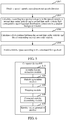
- FIG. 3 is a schematic flowchart of an identity vector generation method according to an embodiment. This embodiment is described by using an example in which the method is applied to a server 120. Referring to FIG. 3 , the method specifically includes the following steps: S302. Obtain to-be-processed speech data.
- the to-be-processed speech data refers to speech data on which a series of processing needs to be performed to generate a corresponding identity vector.
- the speech data is data formed by storing sound that is generated after a speaker speaks is collected by a sound collection device.
- the to-be-processed speech data may include to-be-verified speech data and speech data of a target speaker category.
- the to-be-verified speech data refers to speech data whose speaker category is unknown, where whether the speech data belongs to the target speaker category needs to be determined.
- the target speaker category is a known speaker category, and is a category including speech data generated after a target speaker speaks.
- the server may preprocess the to-be-processed speech data, for example, perform noise filtering or speech format unification on the to-be-processed speech data, and then extract a corresponding acoustic feature vector from the preprocessed to-be-processed speech data.
- the acoustic feature vector refers to a vector including acoustic features reflecting acoustic properties.
- the acoustic feature vector includes a series of acoustic features.
- the acoustic feature may be a mel-frequency cepstral coefficient (MFCC) or a linear predictive cepstral coefficient (LPCC).
- the speaker background model is a Gaussian mixture model obtained through training by using a series of speech samples, and is used for training a distribution of features representing irrelevance to a speaker.
- the Gaussian mixture model is a mathematical model obtained by combing a fixed quantity of Gaussian distribution components.
- the speaker background model may be obtained through training by using an expectation maximization algorithm (EM algorithm).
- EM algorithm expectation maximization algorithm
- the speaker background model may use a Gaussian mixture model-universal background model (GMM-UBM).
- the acoustic feature vector may be expressed as ⁇ y 1 ,y 2 ... y L ⁇ .
- the acoustic feature vector includes L acoustic features, and each acoustic feature may be represented as y t , where t ⁇ [1, L].
- a posterior probability that each of the acoustic features belongs to each Gaussian distribution component in the speaker background model may be expressed as: P(c
- the server may perform statistics collection based on the posterior probability P(c
- the statistic space is a vector space.
- the statistic space is built according to a statistic of a same type as the foregoing calculated statistic corresponding to the speech sample.
- Speech duration of the speech sample for building a statistic space exceeds the preset speech duration.
- the preset speech duration may be, for example, 30 seconds.
- the speech sample for building a statistic space may be a speech sample that exceeds the preset speech duration and that is selected from speech samples for training a speaker background model.
- the calculated statistic is mapped to the statistic space to obtain a reference statistic.
- the reference statistic is a prior statistic that is determined according to the statistic corresponding to the speech sample exceeding the preset speech duration.
- the corrected statistic is a statistic obtained after the calculated statistic is corrected by using the reference statistic.
- the statistic combines the prior statistic and a posterior statistic.
- an identity vector may be generated in a regular identity vector generation manner by using the corrected statistic.
- a statistic space is built according to a statistic corresponding to a speech sample exceeding preset speech duration. After a posterior probability that each of acoustic features belongs to each Gaussian distribution component in a speaker background model is calculated to obtain a statistic, the statistic is mapped to the statistic space, and an obtained reference statistic is a prior statistic. The calculated statistic is corrected by using the prior statistic to obtain a corrected statistic.
- the corrected statistic can compensate for a statistic offset estimation caused by extremely short speech duration of to-be-processed speech data and sparse speech, and improve identity authentication performance of an identity vector.
- FIG. 4 is a schematic flowchart of an identity vector generation method according to another embodiment. As shown in the FIG. 4 , the identity vector generation method includes the following steps:
- y t , ⁇ ) that all the acoustic features y t belong to the corresponding Gaussian distribution component c is separately calculated, and the sum is used as a first zero-order statistic corresponding to the corresponding Gaussian distribution component c.
- each Gaussian distribution component in the speaker background model separately calculate, by using the posterior probabilities that all the acoustic features belong to the corresponding Gaussian distribution component as weights, a weighted sum of all the acoustic features as a corresponding first first-order statistic.
- S404 and S406 are included in the foregoing step S304.
- a weighted sum of all the acoustic features y t is separately calculated by using the posterior probabilities P(c
- a first zero-order statistic N c (u) and a first first-order statistic F c (u) are mapped to a statistic space H, to obtain a second quotient: F c ref (u)/N c ref (u) corresponding to a reference first-order statistic F c ref (u) of each Gaussian distribution component c in the speaker background model and a corresponding reference zero-order statistic N c ref (u).
- a weight of the third quotient is a result obtained by dividing a first zero-order statistic of the corresponding Gaussian distribution component by a sum of the corresponding first zero-order statistic and an adjustable parameter
- a weight of the second quotient is a result obtained by dividing the adjustable parameter by a sum of the first zero-order statistic of the corresponding Gaussian distribution component and the adjustable parameter.
- a corrected first-order statistic matrix F ⁇ (u) is defined according to the following formula (8):
- F ⁇ u F ⁇ 1 u F ⁇ 2 u ⁇ F ⁇ C u
- F ⁇ 1 (u), F ⁇ 2 (u)... F ⁇ C (u) are separately corrected first-order statistics corresponding to the Gaussian distribution components of the speaker background model.
- I represents an identity matrix
- T represents a known total factor matrix
- t represents a transpose
- ⁇ represents a covariance matrix in a form of a diagonal matrix, a diagonal element of ⁇ is a covariance of each Gaussian distribution component
- m represents a supervector of an average value of the speaker background model
- ⁇ (u) represents a corrected zero-order statistic matrix
- F ⁇ (u) represents a corrected first-order statistic matrix.
- F c ⁇ u N c ⁇ u may be directly used to calculate an identity vector, without a need to build the matrices F ⁇ (u) and ⁇ (u), thereby simplifying calculation.
- use of a first first-order statistic and a first zero-order statistic can more accurately reflect properties of acoustic features, thereby facilitating calculation of an accurate corrected statistic. Because a quotient between a first-order statistic and a corresponding zero-order statistic basically remains in a stable range, a linear summation may be directly performed when the corrected statistic is determined, thereby reducing a calculation amount.
- FIG. 5 is a schematic flowchart of steps of building a statistic space according to an embodiment.
- the steps of building a statistic space specifically include the following steps: S502. Obtain a speech sample exceeding preset speech duration.
- a speech sample whose speech duration exceeds preset speech duration may be selected from speech samples for training a speaker background model.
- a second zero-order statistic N c s ⁇ and a second first-order statistic F c s ⁇ that correspond to each Gaussian distribution component c are separately calculated with reference to the foregoing formula (2) and formula (3).
- a first quotient F c s ⁇ / N c s ⁇ between the second first-order statistic F c s ⁇ corresponding to each Gaussian distribution component c in the speaker background model and the corresponding second zero-order statistic N c s ⁇ is calculated.
- first quotients for all the speaker categories s and corresponding to all the Gaussian distribution components c in the speaker background model are sequentially arranged according to the speaker category and the corresponding Gaussian distribution component to form a matrix representing the statistic space.
- a statistic space is built based on a first quotient between a second first-order statistic and a corresponding second zero-order statistic. Because a quotient between a first-order statistic and a corresponding zero-order statistic basically remains in a stable range, calculation of mapping a first zero-order statistic and a first first-order statistic to the statistic space is facilitated, thereby improving calculation efficiency.
- S508 includes: subtracting an average value of corresponding Gaussian distribution components from the calculated first quotient to obtain a corresponding difference, and sequentially arranging the obtained differences according to the speaker category and the corresponding Gaussian distribution component to form a matrix representing the statistic space.
- the average value of the corresponding Gaussian distribution components is subtracted from the calculated first quotient to obtain the corresponding difference, and the obtained differences are sequentially arranged according to the speaker category and the corresponding Gaussian distribution component to form the matrix representing the statistic space, so that a center of the built statistic space is roughly at an original of the statistic space, thereby facilitating calculation and improving calculation efficiency.
- S410 specifically includes: obtaining an orthogonal base vector of the statistic space; deriving a mapping coefficient of the orthogonal base vector, where a two-norm distance between a result obtained by adding a product of the orthogonal base vector and the mapping coefficient to an average value of corresponding Gaussian distribution components, and the third quotient of the corresponding Gaussian distribution component is minimized; and adding a result obtaining by multiplying the orthogonal base vector by the mapping coefficient to the average value of the corresponding Gaussian distribution components, to obtain a second quotient between the reference first-order statistic corresponding to each Gaussian distribution component in the speaker background model and the corresponding reference zero-order statistic.
- eigenvalue decomposition may be performed on the statistic space to obtain a group of orthogonal base vectors F eigen of the statistic space.
- An optimization function may be defined for the following formula (12): min ⁇ u N c u ⁇ F c u N c u ⁇ ⁇ c ⁇ F eigen * ⁇ u ⁇ 2 2 where N c (u) represents a first zero-order statistic corresponding to the Gaussian distribution component c; F c (u) represents a first first-order statistic corresponding to the Gaussian distribution component c; F c u N c u represents a third quotient corresponding to the Gaussian distribution component c; ⁇ c represents an average value corresponding to the Gaussian distribution component c; F eigen represents an orthogonal base vector of the statistic space H; and ⁇ (u) represents the mapping coefficient.
- the first zero-order statistic and the first first-order statistic can be accurately mapped to the statistic space.
- the to-be-processed speech data includes to-be-verified speech data and speech data of a target speaker category.
- Step S312 includes: generating a to-be-verified identity vector according to a corrected statistic corresponding to the to-be-verified speech data; and generating a target speaker identity vector according to a corrected statistic corresponding to the speech data of the target speaker category.
- the identity vector generation method further includes: calculating a similarity between the to-be-verified identity vector and the target speaker identity vector; and performing speaker identity authentication according to the similarity.
- the speaker identity authentication may be applied to various scenarios in which an identify of an unknown user needs to be authenticated.
- the speaker identity authentication includes two phases: an off-line phase and an on-line phase. In the off-line phase, a large quantity of speech samples of a non-target speaker category need to be collected for training a speaker identity authentication system.
- the speaker identity authentication system includes an identity vector extraction module and an identity vector normalization module.
- the on-line phase includes two phases: a registration phase and an authentication phase.
- a registration phase speech data of a target speaker needs to be obtained, and preprocessing, feature extraction, and model training are performed on the speech data.
- the speech data on which the preprocessing, the feature extraction, and the model training have been performed is then mapped to an identity vector with a fixed length.
- the known identity vector is a model representing an identity of the target speaker.
- the authentication phase a piece of to-be-verified speech corresponding to an unknown identity is obtained, and similarly, preprocessing, feature extraction, and model training are performed on the to-be-verified speech.
- the to-be-verified speech on which the preprocessing, the feature extraction, and the model training have been performed is then mapped to a to-be-verified identity vector.
- a similarity calculation module calculates a similarity between an identity vector of a target speaker category and the to-be-verified identity vector in the authentication phase.
- the similarity is compared with a manually preset threshold. If the similarity is greater than or equal to the threshold, it may be determined that the identity corresponding to the to-be-verified speech matches the identity of the target speaker, and the identity authentication succeeds. If the similarity is less than the threshold, it may be determined that the identity corresponding to the to-be-verified speech does not match the identity of the target speaker, and the identity authentication fails.
- the similarity may be a cosine similarity, a Pearson correlation coefficient, a Euclidean distance, or the like.
- an identity vector with relatively high identity authentication performance can still be generated by using the identity vector generation method of this embodiment, and a speaker does not need to make a long speech, so that short-time speaker recognition irrelevant to text can widely spread.
- FIG. 6 is a structural block diagram of a computer device 600 according to an embodiment.
- the computer device 600 may be used as a server, or may be used as a terminal.
- An internal structure of the server may correspond to the structure shown in FIG. 2A
- an internal structure of the terminal may correspond to the structure shown in FIG. 2B .
- Each of the following modules may be implemented all or partially by using software, hardware, or a combination thereof.
- the computer device 600 includes an acoustic feature extraction module 610, a statistic generation module 620, a mapping module 630, a corrected statistic determining module 640, and an identity vector generation module 650.
- the acoustic feature extraction module 610 is configured to: obtain to-be-processed speech data, and extract corresponding acoustic features from the to-be-processed speech data.
- the statistic generation module 620 is configured to calculate a posterior probability that each of the acoustic features belongs to each Gaussian distribution component in a speaker background model to obtain a statistic.
- the mapping module 630 is configured to map the statistic to a statistic space to obtain a reference statistic, the statistic space being built according to a statistic corresponding to a speech sample exceeding preset speech duration.
- the corrected statistic determining module 640 is configured to determine a corrected statistic according to the calculated statistic and the reference statistic.
- the identity vector generation module 650 is configured to generate an identity vector according to the corrected statistic.
- a statistic space is built according to a statistic corresponding to a speech sample exceeding preset speech duration. After a posterior probability that each of acoustic features belongs to each Gaussian distribution component in a speaker background model is calculated to obtain a statistic, the statistic is mapped to the statistic space, and an obtained reference statistic is a prior statistic. The calculated statistic is corrected by using the prior statistic to obtain a corrected statistic.
- the corrected statistic can compensate for a statistic offset estimation caused by extremely short speech duration of to-be-processed speech data and sparse speech, and improve identity authentication performance of an identity vector.
- FIG. 7 is a structural block diagram of a statistic generation module 620 according to an embodiment.
- a calculated statistic includes a first zero-order statistic and a first first-order statistic.
- the statistic generation module 620 includes a first zero-order statistic generation module 621 and a first first-order statistic generation module 622.
- the first zero-order statistic generation module 621 is configured to: corresponding to each Gaussian distribution component in a speaker background model, separately calculate a sum of posterior probabilities that all the acoustic features belong to the corresponding Gaussian distribution component as a corresponding first zero-order statistic.
- the first first-order statistic generation module 622 is configured to: corresponding to each Gaussian distribution component in the speaker background model, separately calculate, by using the posterior probabilities that all the acoustic features belong to the corresponding Gaussian distribution component as weights, a weighted sum of all the acoustic features as a corresponding first first-order statistic.
- FIG. 8 is a structural block diagram of a computer device 600 according to another embodiment.
- the computer device 600 further includes: a statistic calculation module 660 and a statistic space building module 670.
- the statistic calculation module 660 is configured to: obtain the speech sample exceeding the preset speech duration, and calculate, according to a speaker category in the speech sample, a second zero-order statistic and a second first-order statistic that correspond to each Gaussian distribution component in the speaker background model.
- the statistic space building module 670 is configured to: calculate a first quotient between the second first-order statistic and the corresponding second zero-order statistic, and build the statistic space according to the calculated first quotient.
- a statistic space is built based on a first quotient between a second first-order statistic and a corresponding second zero-order statistic. Because a quotient between a first-order statistic and a corresponding zero-order statistic basically remains in a stable range, calculation of mapping a first zero-order statistic and a first first-order statistic to the statistic space is facilitated, thereby improving calculation efficiency.
- the statistic space building module 670 is further configured to: subtract an average value of corresponding Gaussian distribution components from the calculated first quotient to obtain a corresponding difference, and sequentially arranging the obtained differences according to the speaker category and the corresponding Gaussian distribution component to form a matrix representing the statistic space.
- the average value of the corresponding Gaussian distribution components is subtracted from the calculated first quotient to obtain the corresponding difference, and the obtained differences are sequentially arranged according to the speaker category and the corresponding Gaussian distribution component to form the matrix representing the statistic space, so that a center of the built statistic space is roughly at an original of the statistic space, thereby facilitating calculation and improving calculation efficiency.
- the reference statistic includes a second quotient between a reference first-order statistic corresponding to each Gaussian distribution component in the speaker background model and a corresponding reference zero-order statistic.
- the corrected statistic determining module 640 is further configured to perform weighted summation on a third quotient between the first first-order statistic and the corresponding first zero-order statistic and the second quotient of the corresponding Gaussian distribution component, to obtain, as the corrected statistic, a fourth quotient between a corrected first-order statistic corresponding to each Gaussian distribution component in the speaker background model and a corresponding corrected zero-order statistic.
- a weight of the third quotient is a result obtained by dividing a first zero-order statistic of the corresponding Gaussian distribution component by a sum of the corresponding first zero-order statistic and an adjustable parameter
- a weight of the second quotient is a result obtained by dividing the adjustable parameter by a sum of the first zero-order statistic of the corresponding Gaussian distribution component and the adjustable parameter.
- differentiated adjustments may be performed for different environments by adjusting the adjustable parameter, to increase robustness.
- the mapping module 630 is further configured to: obtain an orthogonal base vector of the statistic space; derive a mapping coefficient of the orthogonal base vector, where a two-norm distance between a result obtained by adding a product of the orthogonal base vector and the mapping coefficient to an average value of corresponding Gaussian distribution components, and the third quotient of the corresponding Gaussian distribution component is minimized; and add a result obtaining by multiplying the orthogonal base vector by the mapping coefficient to the average value of the corresponding Gaussian distribution components, to obtain a second quotient between the reference first-order statistic corresponding to each Gaussian distribution component in the speaker background model and the corresponding reference zero-order statistic.
- the to-be-processed speech data includes to-be-verified speech data and speech data of a target speaker category.
- the identity vector generation module 650 is further configured to: generate a to-be-verified identity vector according to a corrected statistic corresponding to the to-be-verified speech data; and generate a target speaker identity vector according to a corrected statistic corresponding to the speech data of the target speaker category.
- FIG. 9 is a structural block diagram of a computer device 600 according to still another embodiment.
- the computer device 600 in this embodiment further includes a speaker identity authentication module 680, configured to: calculate a similarity between the to-be-verified identity vector and the target speaker identity vector; and perform speaker identity authentication according to the similarity.
- an identity vector with relatively high identity authentication performance can still be generated by using the identity vector generation method of this embodiment, and a speaker does not need to make a long speech, so that short-time speaker recognition irrelevant to text can widely spread.
- a computer device including a memory and a processor.
- the memory stores a computer-readable instruction.
- the computer-readable instruction causes the processor to perform the following steps: obtaining to-be-processed speech data; extracting corresponding acoustic features from the to-be-processed speech data; calculating a posterior probability that each of the acoustic features belongs to each Gaussian distribution component in a speaker background model to obtain a statistic; mapping the statistic to a statistic space to obtain a reference statistic, the statistic space being built according to a statistic corresponding to a speech sample exceeding preset speech duration; determining a corrected statistic according to the calculated statistic and the reference statistic; and generating an identity vector according to the corrected statistic.
- the calculated statistic includes a first zero-order statistic and a first first-order statistic; and the calculating a posterior probability that each of the acoustic features belongs to a Gaussian distribution component in a speaker background model to obtain a statistic includes: corresponding to each Gaussian distribution component in the speaker background model, separately calculating, by using the posterior probabilities that all the acoustic features belong to the corresponding Gaussian distribution component as weights, a weighted sum of all the acoustic features as a corresponding first first-order statistic.
- the computer-readable instruction further causes the processor to perform the following steps: obtaining the speech sample exceeding the preset speech duration; calculating, according to a speaker category in the speech sample, a second zero-order statistic and a second first-order statistic that correspond to each Gaussian distribution component in the speaker background model; calculating a first quotient between the second first-order statistic and the corresponding second zero-order statistic; and building the statistic space according to the calculated first quotient.
- the building the statistic space according to the calculated first quotient includes: subtracting an average value of corresponding Gaussian distribution components from the calculated first quotient to obtain a corresponding difference; and sequentially arranging the obtained differences according to the speaker category and the corresponding Gaussian distribution component to form a matrix representing the statistic space.
- the reference statistic includes a second quotient between a reference first-order statistic corresponding to each Gaussian distribution component in the speaker background model and a corresponding reference zero-order statistic.
- the determining a corrected statistic according to the calculated statistic and the reference statistic includes: performing weighted summation on a third quotient between the first first-order statistic and the corresponding first zero-order statistic and the second quotient of the corresponding Gaussian distribution component, to obtain, as the corrected statistic, a fourth quotient between a corrected first-order statistic corresponding to each Gaussian distribution component in the speaker background model and a corresponding corrected zero-order statistic.
- a weight of the third quotient is a result obtained by dividing a first zero-order statistic of the corresponding Gaussian distribution component by a sum of the corresponding first zero-order statistic and an adjustable parameter
- a weight of the second quotient is a result obtained by dividing the adjustable parameter by a sum of the first zero-order statistic of the corresponding Gaussian distribution component and the adjustable parameter.
- the mapping the statistic to a statistic space to obtain a reference statistic includes: obtaining an orthogonal base vector of the statistic space; deriving a mapping coefficient of the orthogonal base vector, where a two-norm distance between a result obtained by adding a product of the orthogonal base vector and the mapping coefficient to an average value of corresponding Gaussian distribution components, and the third quotient of the corresponding Gaussian distribution component is minimized; and adding a result obtaining by multiplying the orthogonal base vector by the mapping coefficient to the average value of the corresponding Gaussian distribution components, to obtain a second quotient between the reference first-order statistic corresponding to each Gaussian distribution component in the speaker background model and the corresponding reference zero-order statistic.
- the to-be-processed speech data includes to-be-verified speech data and speech data of a target speaker category.
- the generating an identity vector according to the corrected statistic includes: generating a to-be-verified identity vector according to a corrected statistic corresponding to the to-be-verified speech data; and generating a target speaker identity vector according to a corrected statistic corresponding to the speech data of the target speaker category.
- the computer-readable instruction further causes the processor to perform the following steps: calculating a similarity between the to-be-verified identity vector and the target speaker identity vector; and performing speaker identity authentication according to the similarity.
- a statistic space is built according to a statistic corresponding to a speech sample exceeding preset speech duration. After a posterior probability that each of acoustic features belongs to each Gaussian distribution component in a speaker background model is calculated to obtain a statistic, the statistic is mapped to the statistic space, and an obtained reference statistic is a prior statistic. The calculated statistic is corrected by using the prior statistic to obtain a corrected statistic.
- the corrected statistic can compensate for a statistic offset estimation caused by extremely short speech duration of to-be-processed speech data and sparse speech, and improve identity authentication performance of an identity vector.
- one or more non-volatile computer-readable storage media storing computer-readable instructions When executed by one or more processors, the computer-readable instructions cause the one or more processors to perform the following steps: obtaining to-be-processed speech data; extracting corresponding acoustic features from the to-be-processed speech data; calculating a posterior probability that each of the acoustic features belongs to each Gaussian distribution component in a speaker background model to obtain a statistic; mapping the statistic to a statistic space to obtain a reference statistic, the statistic space being built according to a statistic corresponding to a speech sample exceeding preset speech duration; determining a corrected statistic according to the calculated statistic and the reference statistic; and generating an identity vector according to the corrected statistic.
- the calculated statistic includes a first zero-order statistic and a first first-order statistic; and the calculating a posterior probability that each of the acoustic features belongs to a Gaussian distribution component in a speaker background model to obtain a statistic includes: corresponding to each Gaussian distribution component in the speaker background model, separately calculating, by using the posterior probabilities that all the acoustic features belong to the corresponding Gaussian distribution component as weights, a weighted sum of all the acoustic features as a corresponding first first-order statistic.
- the computer-readable instruction further causes the processor to perform the following steps: obtaining the speech sample exceeding the preset speech duration; calculating, according to a speaker category in the speech sample, a second zero-order statistic and a second first-order statistic that correspond to each Gaussian distribution component in the speaker background model; calculating a first quotient between the second first-order statistic and the corresponding second zero-order statistic; and building the statistic space according to the calculated first quotient.
- the building the statistic space according to the calculated first quotient includes: subtracting an average value of corresponding Gaussian distribution components from the calculated first quotient to obtain a corresponding difference; and sequentially arranging the obtained differences according to the speaker category and the corresponding Gaussian distribution component to form a matrix representing the statistic space.
- the reference statistic includes a second quotient between a reference first-order statistic corresponding to each Gaussian distribution component in the speaker background model and a corresponding reference zero-order statistic.
- the determining a corrected statistic according to the calculated statistic and the reference statistic includes: performing weighted summation on a third quotient between the first first-order statistic and the corresponding first zero-order statistic and the second quotient of the corresponding Gaussian distribution component, to obtain, as the corrected statistic, a fourth quotient between a corrected first-order statistic corresponding to each Gaussian distribution component in the speaker background model and a corresponding corrected zero-order statistic.
- a weight of the third quotient is a result obtained by dividing a first zero-order statistic of the corresponding Gaussian distribution component by a sum of the corresponding first zero-order statistic and an adjustable parameter
- a weight of the second quotient is a result obtained by dividing the adjustable parameter by a sum of the first zero-order statistic of the corresponding Gaussian distribution component and the adjustable parameter.
- the mapping the statistic to a statistic space to obtain a reference statistic includes: obtaining an orthogonal base vector of the statistic space; deriving a mapping coefficient of the orthogonal base vector, where a two-norm distance between a result obtained by adding a product of the orthogonal base vector and the mapping coefficient to an average value of corresponding Gaussian distribution components, and the third quotient of the corresponding Gaussian distribution component is minimized; and adding a result obtaining by multiplying the orthogonal base vector by the mapping coefficient to the average value of the corresponding Gaussian distribution components, to obtain a second quotient between the reference first-order statistic corresponding to each Gaussian distribution component in the speaker background model and the corresponding reference zero-order statistic.
- the to-be-processed speech data includes to-be-verified speech data and speech data of a target speaker category.
- the generating an identity vector according to the corrected statistic includes: generating a to-be-verified identity vector according to a corrected statistic corresponding to the to-be-verified speech data; and generating a target speaker identity vector according to a corrected statistic corresponding to the speech data of the target speaker category.
- the computer-readable instruction further causes the processor to perform the following steps: calculating a similarity between the to-be-verified identity vector and the target speaker identity vector; and performing speaker identity authentication according to the similarity.
- a statistic space is built according to a statistic corresponding to a speech sample exceeding preset speech duration. After a posterior probability that each of acoustic features belongs to each Gaussian distribution component in a speaker background model is calculated to obtain a statistic, the statistic is mapped to the statistic space, and an obtained reference statistic is a prior statistic. The calculated statistic is corrected by using the prior statistic to obtain a corrected statistic.
- the corrected statistic can compensate for a statistic offset estimation caused by extremely short speech duration of to-be-processed speech data and sparse speech, and improve identity authentication performance of an identity vector.
- the program may be stored in a non-volatile computer-readable storage medium.
- the program may include the procedures of the embodiments of the foregoing methods.
- the storage medium may be a magnetic disk, an optical disc, a read-only memory (ROM), or the like.
Landscapes
- Engineering & Computer Science (AREA)
- Multimedia (AREA)
- Audiology, Speech & Language Pathology (AREA)
- Human Computer Interaction (AREA)
- Physics & Mathematics (AREA)
- Acoustics & Sound (AREA)
- Health & Medical Sciences (AREA)
- Computer Vision & Pattern Recognition (AREA)
- Business, Economics & Management (AREA)
- Game Theory and Decision Science (AREA)
- Artificial Intelligence (AREA)
- Computational Linguistics (AREA)
- Information Retrieval, Db Structures And Fs Structures Therefor (AREA)
- Telephonic Communication Services (AREA)
- Circuit For Audible Band Transducer (AREA)
Abstract
Description
- This application claims priority to Chinese Patent Application No.
201610560366.3 - This application relates to the field of computer technologies, and in particular, to an identity vector generation method, a computer device, and a computer-readable storage medium.
- Speaker identity authentication is an important identity authentication means, in which a speech made by a user is collected, a series of operations such as preprocessing, feature extraction, modeling, and parameter estimation are performed on the collected speech, and the speech on which the operations have been performed is mapped to a vector that can represent speech features of the speaker, where the vector is referred to as an identity vector (i-vector). The identity vector can favorably represent speaker identity information included in the corresponding speech.
- Currently, to generate an identity vector of speech data, acoustic features of the speech data need to be extracted, and based on a speaker background model in a form of a Gaussian mixture model, a statistic of a posterior probability that each of the acoustic features belongs to each Gaussian distribution component in the speaker background model is calculated, to generate an identity vector based on the statistic.
- However, in the existing identity vector generation manner, short speech duration of speech data or sparse speech causes degradation of identity authentication performance of an identity vector.
- According to embodiments of this application, an identity vector generation method, a computer device, and a computer-readable storage medium are provided.
- An identity vector generation method includes:
- obtaining to-be-processed speech data;
- extracting corresponding acoustic features from the to-be-processed speech data;
- calculating a posterior probability that each of the acoustic features belongs to each Gaussian distribution component in a speaker background model to obtain a statistic;
- mapping the statistic to a statistic space to obtain a reference statistic, the statistic space being built according to a statistic corresponding to a speech sample exceeding preset speech duration;
- determining a corrected statistic according to the calculated statistic and the reference statistic; and
- generating an identity vector according to the corrected statistic.
- A computer device includes a memory and a processor, the memory storing a computer-readable instruction, and the computer-readable instruction, when executed by the processor, causing the processor to perform the following steps:
- obtaining to-be-processed speech data;
- extracting corresponding acoustic features from the to-be-processed speech data;
- calculating a posterior probability that each of the acoustic features belongs to each Gaussian distribution component in a speaker background model to obtain a statistic;
- mapping the statistic to a statistic space to obtain a reference statistic, the statistic space being built according to a statistic corresponding to a speech sample exceeding preset speech duration;
- determining a corrected statistic according to the calculated statistic and the reference statistic; and
- generating an identity vector according to the corrected statistic.
- One or more non-volatile computer-readable storage media stores computer-readable instructions, the computer-readable instructions, when executed by one or more processors, causing the one or more processors to perform the following steps:
- obtaining to-be-processed speech data;
- extracting corresponding acoustic features from the to-be-processed speech data;
- calculating a posterior probability that each of the acoustic features belongs to each Gaussian distribution component in a speaker background model to obtain a statistic;
- mapping the statistic to a statistic space to obtain a reference statistic, the statistic space being built according to a statistic corresponding to a speech sample exceeding preset speech duration;
- determining a corrected statistic according to the calculated statistic and the reference statistic; and
- generating an identity vector according to the corrected statistic.
- Details of one or more embodiments of this application are provided in the following accompanying drawings and descriptions. Other features and advantages of this application become more obvious with reference to the specification, the accompanying drawings, and the claims.
- To describe the technical solutions in the embodiments of this application more clearly, the following briefly describes the accompanying drawings required for describing the embodiments. Apparently, the accompanying drawings in the following description show merely some embodiments of this application, and a person of ordinary skill in the art may still derive other drawings from these accompanying drawings without creative efforts.
-
FIG. 1 is a diagram of an application environment of a speaker recognition system according to an embodiment; -
FIG. 2A is a schematic diagram of an internal structure of a server according to an embodiment; -
FIG. 2B is a schematic diagram of an internal structure of a terminal according to an embodiment; -
FIG. 3 is a schematic flowchart of an identity vector generation method according to an embodiment; -
FIG. 4 is a schematic flowchart of an identity vector generation method according to another embodiment; -
FIG. 5 is a schematic flowchart of steps of building a statistic space according to an embodiment; -
FIG. 6 is a structural block diagram of a computer device according to an embodiment; -
FIG. 7 is a structural block diagram of a statistic generation module according to an embodiment; -
FIG. 8 is a structural block diagram of a computer device according to another embodiment; and -
FIG. 9 is a structural block diagram of a computer device according to still another embodiment. - To make the technical solutions and advantages of this application clearer and more comprehensible, the following further describes this application in detail with reference to the accompanying drawings and embodiments. It should be understood that the specific embodiments described herein are merely used for explaining this application but are not intended to limit this application.
- It may be understood that terms such as "first" and "second" used in this application may be used for describing various components in this specification. However, these components are not limited to these terms. These terms are used merely to differentiate one component from another. A first zero-order statistic and a second zero-order statistic are both zero-order statistics, but are not a same zero-order statistic.
-
FIG. 1 is a diagram of an application environment of a speaker recognition system according to an embodiment. As shown inFIG. 1 , the system includes aterminal 110 and aserver 120 that are connected by using a network. Theterminal 110 may be configured to: collect to-be-verified speech data, generate a to-be-verified identity vector by using an identity vector generation method in this application, and sends the to-be-verified identity vector to theserver 120. Theserver 120 may collect speech data of a target speaker category, and generate a target speaker identity vector by using the identity vector generation method in this application. Theserver 120 may be configured to: calculate a similarity between the to-be-verified identity vector and the target speaker identity vector, and perform speaker identity authentication according to the similarity. Theserver 120 may be configured to feed back an identity authentication result to theterminal 110. -
FIG. 2A is a schematic diagram of an internal structure of a server according to an embodiment. As shown inFIG. 2A , the server includes a processor, a non-volatile storage medium, a main memory, and a network interface that are connected by using a system bus. The non-volatile storage medium of the server stores an operating system, a database, and a computer-readable instruction. When executed by the processor, the computer-readable instruction may cause the processor to implement an identity vector generation method. The processor of the server is configured to provide computing and control capabilities to support running of the entire server. The main memory of the server may store a computer-readable instruction. When executed by the processor, the computer-readable instruction may cause the processor to perform an identity vector generation method. The network interface of the server is configured to perform connection and communication with a terminal. The server may be an independent server or implemented by using a server cluster including multiple servers. A person skilled in the art may understand that, in the structure shown inFIG. 2A , only a block diagram of a partial structure related to a solution in this application is shown, and does not constitute a limit to the server to which the solution in this application is applied. Specifically, the server may include more components or fewer components than those shown in the figure, or some components may be combined, or a different component deployment may be used. -
FIG. 2B is a schematic diagram of an internal structure of a terminal according to an embodiment. As shown inFIG. 2B , the terminal includes a processor, a non-volatile storage medium, a main memory, a network interface, and a sound collection device that are connected by using a system bus. The non-volatile storage medium of the terminal stores an operating system, and further stores a computer-readable instruction. When executed by the processor, the computer-readable instruction may cause the processor to implement an identity vector generation method. The processor is configured to provide computing and control capabilities to support running of the entire terminal. The main memory of the terminal may store a computer-readable instruction. When executed by the processor, the computer-readable instruction may cause the processor to perform an identity vector generation method. The network interface is configured to perform network communication with a server. The terminal may be a mobile phone, a tablet computer, a personal digital assistant, a wearable device, or the like. A person skilled in the art may understand that, in the structure shown inFIG. 2B , only a block diagram of a partial structure related to a solution in this application is shown, and does not constitute a limit to the terminal to which the solution in this application is applied. Specifically, the terminal may include more components or fewer components than those shown in the figure, or some components may be combined, or a different component deployment may be used. -
FIG. 3 is a schematic flowchart of an identity vector generation method according to an embodiment. This embodiment is described by using an example in which the method is applied to aserver 120. Referring toFIG. 3 , the method specifically includes the following steps:
S302. Obtain to-be-processed speech data. - The to-be-processed speech data refers to speech data on which a series of processing needs to be performed to generate a corresponding identity vector. The speech data is data formed by storing sound that is generated after a speaker speaks is collected by a sound collection device. The to-be-processed speech data may include to-be-verified speech data and speech data of a target speaker category. The to-be-verified speech data refers to speech data whose speaker category is unknown, where whether the speech data belongs to the target speaker category needs to be determined. The target speaker category is a known speaker category, and is a category including speech data generated after a target speaker speaks.
- S304. Extract corresponding acoustic features from the to-be-processed speech data.
- Specifically, the server may preprocess the to-be-processed speech data, for example, perform noise filtering or speech format unification on the to-be-processed speech data, and then extract a corresponding acoustic feature vector from the preprocessed to-be-processed speech data. The acoustic feature vector refers to a vector including acoustic features reflecting acoustic properties. The acoustic feature vector includes a series of acoustic features. The acoustic feature may be a mel-frequency cepstral coefficient (MFCC) or a linear predictive cepstral coefficient (LPCC).
- S306. Calculate a posterior probability that each of the acoustic features belongs to each Gaussian distribution component in a speaker background model to obtain a statistic.
- The speaker background model is a Gaussian mixture model obtained through training by using a series of speech samples, and is used for training a distribution of features representing irrelevance to a speaker. The Gaussian mixture model is a mathematical model obtained by combing a fixed quantity of Gaussian distribution components. The speaker background model may be obtained through training by using an expectation maximization algorithm (EM algorithm). The speaker background model may use a Gaussian mixture model-universal background model (GMM-UBM).
- In an embodiment, the speaker background model may be expressed by using the following formula (1):

- In an embodiment, the acoustic feature vector may be expressed as {y1,y2 ... yL}. The acoustic feature vector includes L acoustic features, and each acoustic feature may be represented as yt, where t ∈ [1, L]. In an embodiment, a posterior probability that each of the acoustic features belongs to each Gaussian distribution component in the speaker background model may be expressed as: P(c|yt, Ω), where Ω represents the speaker background model, and P(c|yt, Ω) represents a posterior probability that an acoustic features yt belongs to the cth Gaussian distribution component when a speaker background model Ω and an acoustic features yt have been observed. The server may perform statistics collection based on the posterior probability P(c|yt, Ω) to obtain a statistic.
- S308. Map the statistic to a statistic space to obtain a reference statistic, the statistic space being built according to a statistic corresponding to a speech sample exceeding preset speech duration.
- The statistic space is a vector space. The statistic space is built according to a statistic of a same type as the foregoing calculated statistic corresponding to the speech sample. Speech duration of the speech sample for building a statistic space exceeds the preset speech duration. The preset speech duration may be, for example, 30 seconds. The speech sample for building a statistic space may be a speech sample that exceeds the preset speech duration and that is selected from speech samples for training a speaker background model. The calculated statistic is mapped to the statistic space to obtain a reference statistic. The reference statistic is a prior statistic that is determined according to the statistic corresponding to the speech sample exceeding the preset speech duration.
- S310. Determine a corrected statistic according to the calculated statistic and the reference statistic.
- The corrected statistic is a statistic obtained after the calculated statistic is corrected by using the reference statistic. The statistic combines the prior statistic and a posterior statistic.
- S312. Generate an identity vector according to the corrected statistic.
- Specifically, after the corrected statistic is obtained, an identity vector may be generated in a regular identity vector generation manner by using the corrected statistic.
- According to the foregoing identity vector generation method, a statistic space is built according to a statistic corresponding to a speech sample exceeding preset speech duration. After a posterior probability that each of acoustic features belongs to each Gaussian distribution component in a speaker background model is calculated to obtain a statistic, the statistic is mapped to the statistic space, and an obtained reference statistic is a prior statistic. The calculated statistic is corrected by using the prior statistic to obtain a corrected statistic. The corrected statistic can compensate for a statistic offset estimation caused by extremely short speech duration of to-be-processed speech data and sparse speech, and improve identity authentication performance of an identity vector.
-
FIG. 4 is a schematic flowchart of an identity vector generation method according to another embodiment. As shown in theFIG. 4 , the identity vector generation method includes the following steps: - S402. Obtain to-be-processed speech data.
- S404. Extract corresponding acoustic features from the to-be-processed speech data.
- S406. Corresponding to each Gaussian distribution component in a speaker background model, separately calculate a sum of posterior probabilities that all the acoustic features belong to the corresponding Gaussian distribution component as a corresponding first zero-order statistic.
- Specifically, corresponding to each Gaussian distribution component c in a speaker background model Ω, a sum of posterior probabilities P(c|yt, Ω) that all the acoustic features yt belong to the corresponding Gaussian distribution component c is separately calculated, and the sum is used as a first zero-order statistic corresponding to the corresponding Gaussian distribution component c.
- More specifically, a first zero-order statistic Nc(u) corresponding to the corresponding Gaussian distribution component c may be calculated by using the following formula (2):

- S408. Corresponding to each Gaussian distribution component in the speaker background model, separately calculate, by using the posterior probabilities that all the acoustic features belong to the corresponding Gaussian distribution component as weights, a weighted sum of all the acoustic features as a corresponding first first-order statistic.
- S404 and S406 are included in the foregoing step S304. Specifically, corresponding to each Gaussian distribution component c in the speaker background model, a weighted sum of all the acoustic features yt is separately calculated by using the posterior probabilities P(c|yt, Ω) that all the acoustic features yt belong to the corresponding Gaussian distribution component c as weights, and the weighted sum is used as a first zero-order statistic corresponding to the corresponding Gaussian distribution component c.
- More specifically, a first first-order statistic Fc(u) corresponding to the corresponding Gaussian distribution component c may be calculated by using the following formula (3):

- S410. Map the first zero-order statistic and the first first-order statistic to a statistic space, to obtain a second quotient between a reference first-order statistic corresponding to each Gaussian distribution component in the speaker background model and a corresponding reference zero-order statistic, the statistic space being built according to a statistic corresponding to a speech sample exceeding preset speech duration.
- Specifically, a first zero-order statistic Nc(u) and a first first-order statistic Fc(u) are mapped to a statistic space H, to obtain a second quotient: Fc ref(u)/Nc ref(u) corresponding to a reference first-order statistic Fc ref(u) of each Gaussian distribution component c in the speaker background model and a corresponding reference zero-order statistic Nc ref(u).
- S412. Perform weighted summation on a third quotient between the first first-order statistic and the corresponding first zero-order statistic and the second quotient of the corresponding Gaussian distribution component, to obtain, as a corrected statistic, a fourth quotient between a corrected first-order statistic corresponding to each Gaussian distribution component in the speaker background model and a corresponding corrected zero-order statistic.
- Specifically, the corrected statistic corresponding to the Gaussian distribution component c may be calculated by using the following formula (4):


- In an embodiment, in the weighted summation, a weight of the third quotient is a result obtained by dividing a first zero-order statistic of the corresponding Gaussian distribution component by a sum of the corresponding first zero-order statistic and an adjustable parameter, and a weight of the second quotient is a result obtained by dividing the adjustable parameter by a sum of the first zero-order statistic of the corresponding Gaussian distribution component and the adjustable parameter.
- Specifically, the corrected statistic corresponding to the Gaussian distribution component c may be calculated by using the following formula (5):


- S414. Generate an identity vector according to the corrected statistic.
- Specifically, when


- A supervector m of an average value of the speaker background model may be defined according to the following formula (6):

- A corrected zero-order statistic matrix Ñ(u) in a form of a diagonal matrix is defined according to the following formula (7):

- A corrected first-order statistic matrix F̃(u) is defined according to the following formula (8):

- In an embodiment, an identity vector ω̃(u) may be calculated according to the following formula (9):

- In an embodiment, the foregoing formula (9) may be transformed, to change calculated related to the matrices F̃(u) and Ñ(u) to calculation related to


- In this embodiment, use of a first first-order statistic and a first zero-order statistic can more accurately reflect properties of acoustic features, thereby facilitating calculation of an accurate corrected statistic. Because a quotient between a first-order statistic and a corresponding zero-order statistic basically remains in a stable range, a linear summation may be directly performed when the corrected statistic is determined, thereby reducing a calculation amount.
-
FIG. 5 is a schematic flowchart of steps of building a statistic space according to an embodiment. Referring toFIG. 5 , the steps of building a statistic space specifically include the following steps:
S502. Obtain a speech sample exceeding preset speech duration. - Specifically, a speech sample whose speech duration exceeds preset speech duration may be selected from speech samples for training a speaker background model.
- S504. Calculate, according to a speaker category in the speech sample, a second zero-order statistic and a second first-order statistic that correspond to each Gaussian distribution component in a speaker background model.
- Specifically, if the obtained speech sample includes S speaker categories in total, for an sth speaker category, a second zero-order statistic


- S506. Calculate a first quotient between the second first-order statistic and the corresponding second zero-order statistic.
- Specifically, for each speaker category s, a first quotient


- S508. Build a statistic space according to the calculated first quotient.
- Specifically, first quotients for all the speaker categories s and corresponding to all the Gaussian distribution components c in the speaker background model are sequentially arranged according to the speaker category and the corresponding Gaussian distribution component to form a matrix representing the statistic space.
- In this embodiment, a statistic space is built based on a first quotient between a second first-order statistic and a corresponding second zero-order statistic. Because a quotient between a first-order statistic and a corresponding zero-order statistic basically remains in a stable range, calculation of mapping a first zero-order statistic and a first first-order statistic to the statistic space is facilitated, thereby improving calculation efficiency.
- In an embodiment, S508 includes: subtracting an average value of corresponding Gaussian distribution components from the calculated first quotient to obtain a corresponding difference, and sequentially arranging the obtained differences according to the speaker category and the corresponding Gaussian distribution component to form a matrix representing the statistic space.
- Specifically, a matrix H representing the statistic space may be determined according to the following formula (10):


- Therefore, the foregoing formula (10) may be transformed into the following formula (11):

- In this embodiment, the average value of the corresponding Gaussian distribution components is subtracted from the calculated first quotient to obtain the corresponding difference, and the obtained differences are sequentially arranged according to the speaker category and the corresponding Gaussian distribution component to form the matrix representing the statistic space, so that a center of the built statistic space is roughly at an original of the statistic space, thereby facilitating calculation and improving calculation efficiency.
- In an embodiment, S410 specifically includes: obtaining an orthogonal base vector of the statistic space; deriving a mapping coefficient of the orthogonal base vector, where a two-norm distance between a result obtained by adding a product of the orthogonal base vector and the mapping coefficient to an average value of corresponding Gaussian distribution components, and the third quotient of the corresponding Gaussian distribution component is minimized; and adding a result obtaining by multiplying the orthogonal base vector by the mapping coefficient to the average value of the corresponding Gaussian distribution components, to obtain a second quotient between the reference first-order statistic corresponding to each Gaussian distribution component in the speaker background model and the corresponding reference zero-order statistic.
- Specifically, eigenvalue decomposition may be performed on the statistic space to obtain a group of orthogonal base vectors Feigen of the statistic space. An optimization function may be defined for the following formula (12):


- The optimization function as the formula (12) is optimized to obtain an optimal mapping coefficient ϕ (u) as the following formula (13):

- Further, the second quotient between the reference first-order statistic corresponding to each Gaussian distribution component in the speaker background model and the corresponding reference zero-order statistic is calculated according to the following formula (14):

- In this embodiment, the first zero-order statistic and the first first-order statistic can be accurately mapped to the statistic space.
- In an embodiment, the to-be-processed speech data includes to-be-verified speech data and speech data of a target speaker category. Step S312 includes: generating a to-be-verified identity vector according to a corrected statistic corresponding to the to-be-verified speech data; and generating a target speaker identity vector according to a corrected statistic corresponding to the speech data of the target speaker category. The identity vector generation method further includes: calculating a similarity between the to-be-verified identity vector and the target speaker identity vector; and performing speaker identity authentication according to the similarity.
- Specifically, the speaker identity authentication may be applied to various scenarios in which an identify of an unknown user needs to be authenticated. The speaker identity authentication includes two phases: an off-line phase and an on-line phase. In the off-line phase, a large quantity of speech samples of a non-target speaker category need to be collected for training a speaker identity authentication system. The speaker identity authentication system includes an identity vector extraction module and an identity vector normalization module.
- The on-line phase includes two phases: a registration phase and an authentication phase. In the registration phase, speech data of a target speaker needs to be obtained, and preprocessing, feature extraction, and model training are performed on the speech data. The speech data on which the preprocessing, the feature extraction, and the model training have been performed is then mapped to an identity vector with a fixed length. In this case, the known identity vector is a model representing an identity of the target speaker. In the authentication phase, a piece of to-be-verified speech corresponding to an unknown identity is obtained, and similarly, preprocessing, feature extraction, and model training are performed on the to-be-verified speech. The to-be-verified speech on which the preprocessing, the feature extraction, and the model training have been performed is then mapped to a to-be-verified identity vector.
- Subsequently, a similarity calculation module calculates a similarity between an identity vector of a target speaker category and the to-be-verified identity vector in the authentication phase. The similarity is compared with a manually preset threshold. If the similarity is greater than or equal to the threshold, it may be determined that the identity corresponding to the to-be-verified speech matches the identity of the target speaker, and the identity authentication succeeds. If the similarity is less than the threshold, it may be determined that the identity corresponding to the to-be-verified speech does not match the identity of the target speaker, and the identity authentication fails. The similarity may be a cosine similarity, a Pearson correlation coefficient, a Euclidean distance, or the like.
- In this embodiment, even for speech data whose speech duration is very short, an identity vector with relatively high identity authentication performance can still be generated by using the identity vector generation method of this embodiment, and a speaker does not need to make a long speech, so that short-time speaker recognition irrelevant to text can widely spread.
-
FIG. 6 is a structural block diagram of acomputer device 600 according to an embodiment. Thecomputer device 600 may be used as a server, or may be used as a terminal. An internal structure of the server may correspond to the structure shown inFIG. 2A , and an internal structure of the terminal may correspond to the structure shown inFIG. 2B . Each of the following modules may be implemented all or partially by using software, hardware, or a combination thereof. - As shown in
FIG. 6 , thecomputer device 600 includes an acousticfeature extraction module 610, astatistic generation module 620, amapping module 630, a corrected statistic determiningmodule 640, and an identityvector generation module 650. - The acoustic
feature extraction module 610 is configured to: obtain to-be-processed speech data, and extract corresponding acoustic features from the to-be-processed speech data. - The
statistic generation module 620 is configured to calculate a posterior probability that each of the acoustic features belongs to each Gaussian distribution component in a speaker background model to obtain a statistic. - The
mapping module 630 is configured to map the statistic to a statistic space to obtain a reference statistic, the statistic space being built according to a statistic corresponding to a speech sample exceeding preset speech duration. - The corrected statistic determining
module 640 is configured to determine a corrected statistic according to the calculated statistic and the reference statistic. - The identity
vector generation module 650 is configured to generate an identity vector according to the corrected statistic. - By means of the
computer device 600, a statistic space is built according to a statistic corresponding to a speech sample exceeding preset speech duration. After a posterior probability that each of acoustic features belongs to each Gaussian distribution component in a speaker background model is calculated to obtain a statistic, the statistic is mapped to the statistic space, and an obtained reference statistic is a prior statistic. The calculated statistic is corrected by using the prior statistic to obtain a corrected statistic. The corrected statistic can compensate for a statistic offset estimation caused by extremely short speech duration of to-be-processed speech data and sparse speech, and improve identity authentication performance of an identity vector. -
FIG. 7 is a structural block diagram of astatistic generation module 620 according to an embodiment. In this embodiment, a calculated statistic includes a first zero-order statistic and a first first-order statistic. Thestatistic generation module 620 includes a first zero-orderstatistic generation module 621 and a first first-orderstatistic generation module 622. - The first zero-order
statistic generation module 621 is configured to: corresponding to each Gaussian distribution component in a speaker background model, separately calculate a sum of posterior probabilities that all the acoustic features belong to the corresponding Gaussian distribution component as a corresponding first zero-order statistic. - The first first-order
statistic generation module 622 is configured to: corresponding to each Gaussian distribution component in the speaker background model, separately calculate, by using the posterior probabilities that all the acoustic features belong to the corresponding Gaussian distribution component as weights, a weighted sum of all the acoustic features as a corresponding first first-order statistic. -
FIG. 8 is a structural block diagram of acomputer device 600 according to another embodiment. Thecomputer device 600 further includes: astatistic calculation module 660 and a statisticspace building module 670. - The
statistic calculation module 660 is configured to: obtain the speech sample exceeding the preset speech duration, and calculate, according to a speaker category in the speech sample, a second zero-order statistic and a second first-order statistic that correspond to each Gaussian distribution component in the speaker background model. - The statistic
space building module 670 is configured to: calculate a first quotient between the second first-order statistic and the corresponding second zero-order statistic, and build the statistic space according to the calculated first quotient. - In this embodiment, a statistic space is built based on a first quotient between a second first-order statistic and a corresponding second zero-order statistic. Because a quotient between a first-order statistic and a corresponding zero-order statistic basically remains in a stable range, calculation of mapping a first zero-order statistic and a first first-order statistic to the statistic space is facilitated, thereby improving calculation efficiency.
- In an embodiment, the statistic
space building module 670 is further configured to: subtract an average value of corresponding Gaussian distribution components from the calculated first quotient to obtain a corresponding difference, and sequentially arranging the obtained differences according to the speaker category and the corresponding Gaussian distribution component to form a matrix representing the statistic space. - In this embodiment, the average value of the corresponding Gaussian distribution components is subtracted from the calculated first quotient to obtain the corresponding difference, and the obtained differences are sequentially arranged according to the speaker category and the corresponding Gaussian distribution component to form the matrix representing the statistic space, so that a center of the built statistic space is roughly at an original of the statistic space, thereby facilitating calculation and improving calculation efficiency.
- In an embodiment, the reference statistic includes a second quotient between a reference first-order statistic corresponding to each Gaussian distribution component in the speaker background model and a corresponding reference zero-order statistic. The corrected statistic determining
module 640 is further configured to perform weighted summation on a third quotient between the first first-order statistic and the corresponding first zero-order statistic and the second quotient of the corresponding Gaussian distribution component, to obtain, as the corrected statistic, a fourth quotient between a corrected first-order statistic corresponding to each Gaussian distribution component in the speaker background model and a corresponding corrected zero-order statistic. - In an embodiment, when the corrected statistic determining
module 640 is configured to perform weighted summation, a weight of the third quotient is a result obtained by dividing a first zero-order statistic of the corresponding Gaussian distribution component by a sum of the corresponding first zero-order statistic and an adjustable parameter, and a weight of the second quotient is a result obtained by dividing the adjustable parameter by a sum of the first zero-order statistic of the corresponding Gaussian distribution component and the adjustable parameter. In this embodiment, differentiated adjustments may be performed for different environments by adjusting the adjustable parameter, to increase robustness. - In an embodiment, the
mapping module 630 is further configured to: obtain an orthogonal base vector of the statistic space; derive a mapping coefficient of the orthogonal base vector, where a two-norm distance between a result obtained by adding a product of the orthogonal base vector and the mapping coefficient to an average value of corresponding Gaussian distribution components, and the third quotient of the corresponding Gaussian distribution component is minimized; and add a result obtaining by multiplying the orthogonal base vector by the mapping coefficient to the average value of the corresponding Gaussian distribution components, to obtain a second quotient between the reference first-order statistic corresponding to each Gaussian distribution component in the speaker background model and the corresponding reference zero-order statistic. - In an embodiment, the to-be-processed speech data includes to-be-verified speech data and speech data of a target speaker category. The identity
vector generation module 650 is further configured to: generate a to-be-verified identity vector according to a corrected statistic corresponding to the to-be-verified speech data; and generate a target speaker identity vector according to a corrected statistic corresponding to the speech data of the target speaker category. -
FIG. 9 is a structural block diagram of acomputer device 600 according to still another embodiment. Thecomputer device 600 in this embodiment further includes a speakeridentity authentication module 680, configured to: calculate a similarity between the to-be-verified identity vector and the target speaker identity vector; and perform speaker identity authentication according to the similarity. - In this embodiment, even for speech data whose speech duration is very short, an identity vector with relatively high identity authentication performance can still be generated by using the identity vector generation method of this embodiment, and a speaker does not need to make a long speech, so that short-time speaker recognition irrelevant to text can widely spread.
- In an embodiment, a computer device is provided, including a memory and a processor. The memory stores a computer-readable instruction. When executed by the processor, the computer-readable instruction causes the processor to perform the following steps: obtaining to-be-processed speech data; extracting corresponding acoustic features from the to-be-processed speech data; calculating a posterior probability that each of the acoustic features belongs to each Gaussian distribution component in a speaker background model to obtain a statistic; mapping the statistic to a statistic space to obtain a reference statistic, the statistic space being built according to a statistic corresponding to a speech sample exceeding preset speech duration; determining a corrected statistic according to the calculated statistic and the reference statistic; and generating an identity vector according to the corrected statistic.
- In an embodiment, the calculated statistic includes a first zero-order statistic and a first first-order statistic; and the calculating a posterior probability that each of the acoustic features belongs to a Gaussian distribution component in a speaker background model to obtain a statistic includes: corresponding to each Gaussian distribution component in the speaker background model, separately calculating, by using the posterior probabilities that all the acoustic features belong to the corresponding Gaussian distribution component as weights, a weighted sum of all the acoustic features as a corresponding first first-order statistic.
- In an embodiment, the computer-readable instruction further causes the processor to perform the following steps: obtaining the speech sample exceeding the preset speech duration; calculating, according to a speaker category in the speech sample, a second zero-order statistic and a second first-order statistic that correspond to each Gaussian distribution component in the speaker background model; calculating a first quotient between the second first-order statistic and the corresponding second zero-order statistic; and building the statistic space according to the calculated first quotient.
- In an embodiment, the building the statistic space according to the calculated first quotient includes: subtracting an average value of corresponding Gaussian distribution components from the calculated first quotient to obtain a corresponding difference; and sequentially arranging the obtained differences according to the speaker category and the corresponding Gaussian distribution component to form a matrix representing the statistic space.
- In an embodiment, the reference statistic includes a second quotient between a reference first-order statistic corresponding to each Gaussian distribution component in the speaker background model and a corresponding reference zero-order statistic. The determining a corrected statistic according to the calculated statistic and the reference statistic includes: performing weighted summation on a third quotient between the first first-order statistic and the corresponding first zero-order statistic and the second quotient of the corresponding Gaussian distribution component, to obtain, as the corrected statistic, a fourth quotient between a corrected first-order statistic corresponding to each Gaussian distribution component in the speaker background model and a corresponding corrected zero-order statistic.
- In an embodiment, in the weighted summation, a weight of the third quotient is a result obtained by dividing a first zero-order statistic of the corresponding Gaussian distribution component by a sum of the corresponding first zero-order statistic and an adjustable parameter, and a weight of the second quotient is a result obtained by dividing the adjustable parameter by a sum of the first zero-order statistic of the corresponding Gaussian distribution component and the adjustable parameter.
- In an embodiment, the mapping the statistic to a statistic space to obtain a reference statistic includes: obtaining an orthogonal base vector of the statistic space; deriving a mapping coefficient of the orthogonal base vector, where a two-norm distance between a result obtained by adding a product of the orthogonal base vector and the mapping coefficient to an average value of corresponding Gaussian distribution components, and the third quotient of the corresponding Gaussian distribution component is minimized; and adding a result obtaining by multiplying the orthogonal base vector by the mapping coefficient to the average value of the corresponding Gaussian distribution components, to obtain a second quotient between the reference first-order statistic corresponding to each Gaussian distribution component in the speaker background model and the corresponding reference zero-order statistic.
- In an embodiment, the to-be-processed speech data includes to-be-verified speech data and speech data of a target speaker category. The generating an identity vector according to the corrected statistic includes: generating a to-be-verified identity vector according to a corrected statistic corresponding to the to-be-verified speech data; and generating a target speaker identity vector according to a corrected statistic corresponding to the speech data of the target speaker category. The computer-readable instruction further causes the processor to perform the following steps: calculating a similarity between the to-be-verified identity vector and the target speaker identity vector; and performing speaker identity authentication according to the similarity.
- By means of the computer device, a statistic space is built according to a statistic corresponding to a speech sample exceeding preset speech duration. After a posterior probability that each of acoustic features belongs to each Gaussian distribution component in a speaker background model is calculated to obtain a statistic, the statistic is mapped to the statistic space, and an obtained reference statistic is a prior statistic. The calculated statistic is corrected by using the prior statistic to obtain a corrected statistic. The corrected statistic can compensate for a statistic offset estimation caused by extremely short speech duration of to-be-processed speech data and sparse speech, and improve identity authentication performance of an identity vector.
- In an embodiment, one or more non-volatile computer-readable storage media storing computer-readable instructions are provided. When executed by one or more processors, the computer-readable instructions cause the one or more processors to perform the following steps: obtaining to-be-processed speech data; extracting corresponding acoustic features from the to-be-processed speech data; calculating a posterior probability that each of the acoustic features belongs to each Gaussian distribution component in a speaker background model to obtain a statistic; mapping the statistic to a statistic space to obtain a reference statistic, the statistic space being built according to a statistic corresponding to a speech sample exceeding preset speech duration; determining a corrected statistic according to the calculated statistic and the reference statistic; and generating an identity vector according to the corrected statistic.
- In an embodiment, the calculated statistic includes a first zero-order statistic and a first first-order statistic; and the calculating a posterior probability that each of the acoustic features belongs to a Gaussian distribution component in a speaker background model to obtain a statistic includes: corresponding to each Gaussian distribution component in the speaker background model, separately calculating, by using the posterior probabilities that all the acoustic features belong to the corresponding Gaussian distribution component as weights, a weighted sum of all the acoustic features as a corresponding first first-order statistic.
- In an embodiment, the computer-readable instruction further causes the processor to perform the following steps: obtaining the speech sample exceeding the preset speech duration; calculating, according to a speaker category in the speech sample, a second zero-order statistic and a second first-order statistic that correspond to each Gaussian distribution component in the speaker background model; calculating a first quotient between the second first-order statistic and the corresponding second zero-order statistic; and building the statistic space according to the calculated first quotient.
- In an embodiment, the building the statistic space according to the calculated first quotient includes: subtracting an average value of corresponding Gaussian distribution components from the calculated first quotient to obtain a corresponding difference; and sequentially arranging the obtained differences according to the speaker category and the corresponding Gaussian distribution component to form a matrix representing the statistic space.
- In an embodiment, the reference statistic includes a second quotient between a reference first-order statistic corresponding to each Gaussian distribution component in the speaker background model and a corresponding reference zero-order statistic. The determining a corrected statistic according to the calculated statistic and the reference statistic includes: performing weighted summation on a third quotient between the first first-order statistic and the corresponding first zero-order statistic and the second quotient of the corresponding Gaussian distribution component, to obtain, as the corrected statistic, a fourth quotient between a corrected first-order statistic corresponding to each Gaussian distribution component in the speaker background model and a corresponding corrected zero-order statistic.
- In an embodiment, in the weighted summation, a weight of the third quotient is a result obtained by dividing a first zero-order statistic of the corresponding Gaussian distribution component by a sum of the corresponding first zero-order statistic and an adjustable parameter, and a weight of the second quotient is a result obtained by dividing the adjustable parameter by a sum of the first zero-order statistic of the corresponding Gaussian distribution component and the adjustable parameter.
- In an embodiment, the mapping the statistic to a statistic space to obtain a reference statistic includes: obtaining an orthogonal base vector of the statistic space; deriving a mapping coefficient of the orthogonal base vector, where a two-norm distance between a result obtained by adding a product of the orthogonal base vector and the mapping coefficient to an average value of corresponding Gaussian distribution components, and the third quotient of the corresponding Gaussian distribution component is minimized; and adding a result obtaining by multiplying the orthogonal base vector by the mapping coefficient to the average value of the corresponding Gaussian distribution components, to obtain a second quotient between the reference first-order statistic corresponding to each Gaussian distribution component in the speaker background model and the corresponding reference zero-order statistic.
- In an embodiment, the to-be-processed speech data includes to-be-verified speech data and speech data of a target speaker category. The generating an identity vector according to the corrected statistic includes: generating a to-be-verified identity vector according to a corrected statistic corresponding to the to-be-verified speech data; and generating a target speaker identity vector according to a corrected statistic corresponding to the speech data of the target speaker category. The computer-readable instruction further causes the processor to perform the following steps: calculating a similarity between the to-be-verified identity vector and the target speaker identity vector; and performing speaker identity authentication according to the similarity.
- By means of the computer-readable storage medium, a statistic space is built according to a statistic corresponding to a speech sample exceeding preset speech duration. After a posterior probability that each of acoustic features belongs to each Gaussian distribution component in a speaker background model is calculated to obtain a statistic, the statistic is mapped to the statistic space, and an obtained reference statistic is a prior statistic. The calculated statistic is corrected by using the prior statistic to obtain a corrected statistic. The corrected statistic can compensate for a statistic offset estimation caused by extremely short speech duration of to-be-processed speech data and sparse speech, and improve identity authentication performance of an identity vector.
- A person of ordinary skill in the art may understand that all or some of the procedures of the methods of the foregoing embodiments may be implemented by a computer program instructing relevant hardware. The program may be stored in a non-volatile computer-readable storage medium. When the program is executed, the program may include the procedures of the embodiments of the foregoing methods. The storage medium may be a magnetic disk, an optical disc, a read-only memory (ROM), or the like.
- Technical features of the foregoing embodiments may be randomly combined. To make description concise, not all possible combinations of the technical features in the foregoing embodiments are described. However, as long as combinations of these technical features do not contradict each other, it should be considered that the combinations all fall within the scope recorded by this specification.
- The foregoing embodiments describe only several implementations of this application, and the descriptions are specific and detailed, but cannot be construed as a limitation to the patent scope of the present disclosure. It should be noted that various changes and improvements may further be made by a person of ordinary skill in the art without departing from the ideas of this application, and these changes and improvements all fall within the protection scope of this application. Therefore, the protection scope of the patent of this application shall be subject to the appended claims.
Claims (24)
- An identity vector generation method, comprising:obtaining to-be-processed speech data;extracting corresponding acoustic features from the to-be-processed speech data;calculating a posterior probability that each of the acoustic features belongs to each Gaussian distribution component in a speaker background model to obtain a statistic;mapping the statistic to a statistic space to obtain a reference statistic, the statistic space being built according to a statistic corresponding to a speech sample exceeding preset speech duration;determining a corrected statistic according to the calculated statistic and the reference statistic; andgenerating an identity vector according to the corrected statistic.
- The method according to claim 1, wherein the calculated statistic comprises a first zero-order statistic and a first first-order statistic; and the calculating a posterior probability that each of the acoustic features belongs to a Gaussian distribution component in a speaker background model to obtain a statistic comprises:corresponding to each Gaussian distribution component in the speaker background model, separately calculating a sum of posterior probabilities that all the acoustic features belong to the corresponding Gaussian distribution component as a corresponding first zero-order statistic; andcorresponding to each Gaussian distribution component in the speaker background model, separately calculating, by using the posterior probabilities that all the acoustic features belong to the corresponding Gaussian distribution component as weights, a weighted sum of all the acoustic features as a corresponding first first-order statistic.
- The method according to claim 2, further comprising:obtaining the speech sample exceeding the preset speech duration;calculating, according to a speaker category in the speech sample, a second zero-order statistic and a second first-order statistic that correspond to each Gaussian distribution component in the speaker background model;calculating a first quotient between the second first-order statistic and the corresponding second zero-order statistic; andbuilding the statistic space according to the calculated first quotient.
- The method according to claim 3, wherein the building the statistic space according to the calculated first quotient comprises:subtracting an average value of corresponding Gaussian distribution components from the calculated first quotient to obtain a corresponding difference; andsequentially arranging the obtained differences according to the speaker category and the corresponding Gaussian distribution component to form a matrix representing the statistic space.
- The method according to claim 2, wherein the reference statistic comprises a second quotient between a reference first-order statistic corresponding to each Gaussian distribution component in the speaker background model and a corresponding reference zero-order statistic; and the determining a corrected statistic according to the calculated statistic and the reference statistic comprises:
performing weighted summation on a third quotient between the first first-order statistic and the corresponding first zero-order statistic and the second quotient of the corresponding Gaussian distribution component, to obtain, as the corrected statistic, a fourth quotient between a corrected first-order statistic corresponding to each Gaussian distribution component in the speaker background model and a corresponding corrected zero-order statistic. - The method according to claim 5, wherein in the weighted summation, a weight of the third quotient is a result obtained by dividing a first zero-order statistic of the corresponding Gaussian distribution component by a sum of the corresponding first zero-order statistic and an adjustable parameter, and a weight of the second quotient is a result obtained by dividing the adjustable parameter by a sum of the first zero-order statistic of the corresponding Gaussian distribution component and the adjustable parameter.
- The method according to claim 5, wherein the mapping the statistic to a statistic space to obtain a reference statistic comprises:obtaining an orthogonal base vector of the statistic space;deriving a mapping coefficient of the orthogonal base vector, wherein a two-norm distance between a result obtained by adding a product of the orthogonal base vector and the mapping coefficient to an average value of corresponding Gaussian distribution components, and the third quotient of the corresponding Gaussian distribution component is minimized; andadding a result obtaining by multiplying the orthogonal base vector by the mapping coefficient to the average value of the corresponding Gaussian distribution components, to obtain a second quotient between the reference first-order statistic corresponding to each Gaussian distribution component in the speaker background model and the corresponding reference zero-order statistic.
- The method according to claim 1, wherein the to-be-processed speech data comprises to-be-verified speech data and speech data of a target speaker category; and the generating an identity vector according to the corrected statistic comprises:generating a to-be-verified identity vector according to a corrected statistic corresponding to the to-be-verified speech data; andgenerating a target speaker identity vector according to a corrected statistic corresponding to the speech data of the target speaker category, whereinthe method further comprises:calculating a similarity between the to-be-verified identity vector and the target speaker identity vector; andperforming speaker identity authentication according to the similarity.
- A computer device, comprising a memory and a processor, the memory storing a computer-readable instruction, and the computer-readable instruction, when executed by the processor, causing the processor to perform the following steps:obtaining to-be-processed speech data;extracting corresponding acoustic features from the to-be-processed speech data;calculating a posterior probability that each of the acoustic features belongs to each Gaussian distribution component in a speaker background model to obtain a statistic;mapping the statistic to a statistic space to obtain a reference statistic, the statistic space being built according to a statistic corresponding to a speech sample exceeding preset speech duration;determining a corrected statistic according to the calculated statistic and the reference statistic; andgenerating an identity vector according to the corrected statistic.
- The computer device according to claim 9, wherein the calculated statistic comprises a first zero-order statistic and a first first-order statistic; and the calculating a posterior probability that each of the acoustic features belongs to a Gaussian distribution component in a speaker background model to obtain a statistic comprises:corresponding to each Gaussian distribution component in the speaker background model, separately calculating a sum of posterior probabilities that all the acoustic features belong to the corresponding Gaussian distribution component as a corresponding first zero-order statistic; andcorresponding to each Gaussian distribution component in the speaker background model, separately calculating, by using the posterior probabilities that all the acoustic features belong to the corresponding Gaussian distribution component as weights, a weighted sum of all the acoustic features as a corresponding first first-order statistic.
- The computer device according to claim 10, wherein the computer-readable instruction further causes the processor to perform the following steps:obtaining the speech sample exceeding the preset speech duration;calculating, according to a speaker category in the speech sample, a second zero-order statistic and a second first-order statistic that correspond to each Gaussian distribution component in the speaker background model;calculating a first quotient between the second first-order statistic and the corresponding second zero-order statistic; andbuilding the statistic space according to the calculated first quotient.
- The computer device according to claim 11, wherein the building the statistic space according to the calculated first quotient comprises:subtracting an average value of corresponding Gaussian distribution components from the calculated first quotient to obtain a corresponding difference; andsequentially arranging the obtained differences according to the speaker category and the corresponding Gaussian distribution component to form a matrix representing the statistic space.
- The computer device according to claim 10, wherein the reference statistic comprises a second quotient between a reference first-order statistic corresponding to each Gaussian distribution component in the speaker background model and a corresponding reference zero-order statistic; and the determining a corrected statistic according to the calculated statistic and the reference statistic comprises:
performing weighted summation on a third quotient between the first first-order statistic and the corresponding first zero-order statistic and the second quotient of the corresponding Gaussian distribution component, to obtain, as the corrected statistic, a fourth quotient between a corrected first-order statistic corresponding to each Gaussian distribution component in the speaker background model and a corresponding corrected zero-order statistic. - The computer device according to claim 13, wherein in the weighted summation, a weight of the third quotient is a result obtained by dividing a first zero-order statistic of the corresponding Gaussian distribution component by a sum of the corresponding first zero-order statistic and an adjustable parameter, and a weight of the second quotient is a result obtained by dividing the adjustable parameter by a sum of the first zero-order statistic of the corresponding Gaussian distribution component and the adjustable parameter.
- The computer device according to claim 13, wherein the mapping the statistic to a statistic space to obtain a reference statistic comprises:obtaining an orthogonal base vector of the statistic space;deriving a mapping coefficient of the orthogonal base vector, wherein a two-norm distance between a result obtained by adding a product of the orthogonal base vector and the mapping coefficient to an average value of corresponding Gaussian distribution components, and the third quotient of the corresponding Gaussian distribution component is minimized; andadding a result obtaining by multiplying the orthogonal base vector by the mapping coefficient to the average value of the corresponding Gaussian distribution components, to obtain a second quotient between the reference first-order statistic corresponding to each Gaussian distribution component in the speaker background model and the corresponding reference zero-order statistic.
- The computer device according to claim 9, wherein the to-be-processed speech data comprises to-be-verified speech data and speech data of a target speaker category; and the generating an identity vector according to the corrected statistic comprises:generating a to-be-verified identity vector according to a corrected statistic corresponding to the to-be-verified speech data; andgenerating a target speaker identity vector according to a corrected statistic corresponding to the speech data of the target speaker category, whereinthe computer-readable instruction further causes the processor to perform the following steps:calculating a similarity between the to-be-verified identity vector and the target speaker identity vector; andperforming speaker identity authentication according to the similarity.
- One or more non-volatile computer-readable storage media storing computer-readable instructions, the computer-readable instructions, when executed by one or more processors, causing the one or more processors to perform the following steps:obtaining to-be-processed speech data;extracting corresponding acoustic features from the to-be-processed speech data;calculating a posterior probability that each of the acoustic features belongs to each Gaussian distribution component in a speaker background model to obtain a statistic;mapping the statistic to a statistic space to obtain a reference statistic, the statistic space being built according to a statistic corresponding to a speech sample exceeding preset speech duration;determining a corrected statistic according to the calculated statistic and the reference statistic; andgenerating an identity vector according to the corrected statistic.
- The computer-readable storage medium according to claim 17, wherein the calculated statistic comprises a first zero-order statistic and a first first-order statistic; and the calculating a posterior probability that each of the acoustic features belongs to a Gaussian distribution component in a speaker background model to obtain a statistic comprises:corresponding to each Gaussian distribution component in the speaker background model, separately calculating a sum of posterior probabilities that all the acoustic features belong to the corresponding Gaussian distribution component as a corresponding first zero-order statistic; andcorresponding to each Gaussian distribution component in the speaker background model, separately calculating, by using the posterior probabilities that all the acoustic features belong to the corresponding Gaussian distribution component as weights, a weighted sum of all the acoustic features as a corresponding first first-order statistic.
- The computer-readable storage medium according to claim 18, wherein the computer-readable instruction further causes the processor to perform the following steps:obtaining the speech sample exceeding the preset speech duration;calculating, according to a speaker category in the speech sample, a second zero-order statistic and a second first-order statistic that correspond to each Gaussian distribution component in the speaker background model;calculating a first quotient between the second first-order statistic and the corresponding second zero-order statistic; andbuilding the statistic space according to the calculated first quotient.
- The computer-readable storage medium according to claim 19, wherein the building the statistic space according to the calculated first quotient comprises:subtracting an average value of corresponding Gaussian distribution components from the calculated first quotient to obtain a corresponding difference; andsequentially arranging the obtained differences according to the speaker category and the corresponding Gaussian distribution component to form a matrix representing the statistic space.
- The computer-readable storage medium according to claim 18, wherein the reference statistic comprises a second quotient between a reference first-order statistic corresponding to each Gaussian distribution component in the speaker background model and a corresponding reference zero-order statistic; and the determining a corrected statistic according to the calculated statistic and the reference statistic comprises:
performing weighted summation on a third quotient between the first first-order statistic and the corresponding first zero-order statistic and the second quotient of the corresponding Gaussian distribution component, to obtain, as the corrected statistic, a fourth quotient between a corrected first-order statistic corresponding to each Gaussian distribution component in the speaker background model and a corresponding corrected zero-order statistic. - The computer-readable storage medium according to claim 21, wherein in the weighted summation, a weight of the third quotient is a result obtained by dividing a first zero-order statistic of the corresponding Gaussian distribution component by a sum of the corresponding first zero-order statistic and an adjustable parameter, and a weight of the second quotient is a result obtained by dividing the adjustable parameter by a sum of the first zero-order statistic of the corresponding Gaussian distribution component and the adjustable parameter.
- The computer-readable storage medium according to claim 21, wherein the mapping the statistic to a statistic space to obtain a reference statistic comprises:obtaining an orthogonal base vector of the statistic space;deriving a mapping coefficient of the orthogonal base vector, wherein a two-norm distance between a result obtained by adding a product of the orthogonal base vector and the mapping coefficient to an average value of corresponding Gaussian distribution components, and the third quotient of the corresponding Gaussian distribution component is minimized; andadding a result obtaining by multiplying the orthogonal base vector by the mapping coefficient to the average value of the corresponding Gaussian distribution components, to obtain a second quotient between the reference first-order statistic corresponding to each Gaussian distribution component in the speaker background model and the corresponding reference zero-order statistic.
- The computer-readable storage medium according to claim 17, wherein the to-be-processed speech data comprises to-be-verified speech data and speech data of a target speaker category; and the generating an identity vector according to the corrected statistic comprises:generating a to-be-verified identity vector according to a corrected statistic corresponding to the to-be-verified speech data; andgenerating a target speaker identity vector according to a corrected statistic corresponding to the speech data of the target speaker category, whereinthe computer-readable instruction further causes the processor to perform the following steps:calculating a similarity between the to-be-verified identity vector and the target speaker identity vector; andperforming speaker identity authentication according to the similarity.
Applications Claiming Priority (2)
| Application Number | Priority Date | Filing Date | Title |
|---|---|---|---|
| CN201610560366.3A CN106169295B (en) | 2016-07-15 | 2016-07-15 | Identity vector generation method and device |
| PCT/CN2017/092892 WO2018010683A1 (en) | 2016-07-15 | 2017-07-14 | Identity vector generating method, computer apparatus and computer readable storage medium |
Publications (3)
| Publication Number | Publication Date |
|---|---|
| EP3486903A1 true EP3486903A1 (en) | 2019-05-22 |
| EP3486903A4 EP3486903A4 (en) | 2019-05-22 |
| EP3486903B1 EP3486903B1 (en) | 2024-04-24 |
Family
ID=58065477
Family Applications (1)
| Application Number | Title | Priority Date | Filing Date |
|---|---|---|---|
| EP17827019.5A Active EP3486903B1 (en) | 2016-07-15 | 2017-07-14 | Identity vector generating method, computer apparatus and computer readable storage medium |
Country Status (4)
| Country | Link |
|---|---|
| US (1) | US10909989B2 (en) |
| EP (1) | EP3486903B1 (en) |
| CN (1) | CN106169295B (en) |
| WO (1) | WO2018010683A1 (en) |
Families Citing this family (11)
| Publication number | Priority date | Publication date | Assignee | Title |
|---|---|---|---|---|
| CN106169295B (en) | 2016-07-15 | 2019-03-01 | 腾讯科技(深圳)有限公司 | Identity vector generation method and device |
| CN107068154A (en) * | 2017-03-13 | 2017-08-18 | 平安科技(深圳)有限公司 | The method and system of authentication based on Application on Voiceprint Recognition |
| CN110310647B (en) * | 2017-09-29 | 2022-02-25 | 腾讯科技(深圳)有限公司 | A voice identity feature extractor, classifier training method and related equipment |
| KR102637339B1 (en) * | 2018-08-31 | 2024-02-16 | 삼성전자주식회사 | Method and apparatus of personalizing voice recognition model |
| CN109346084A (en) * | 2018-09-19 | 2019-02-15 | 湖北工业大学 | Speaker recognition method based on deep stack autoencoder network |
| CN110544481B (en) * | 2019-08-27 | 2022-09-20 | 华中师范大学 | S-T classification method and device based on voiceprint recognition and equipment terminal |
| JP7355248B2 (en) * | 2020-01-31 | 2023-10-03 | 日本電気株式会社 | Audio embedding device and method |
| CN111462762B (en) * | 2020-03-25 | 2023-02-24 | 清华大学 | A speaker vector regularization method, device, electronic equipment and storage medium |
| CN113660670B (en) * | 2020-05-12 | 2024-02-06 | 哈尔滨工程大学 | Radio frequency fingerprint-based wireless equipment identity authentication method and device |
| CN113053395B (en) * | 2021-03-05 | 2023-11-17 | 深圳市声希科技有限公司 | Pronunciation error correction learning methods, devices, storage media and electronic equipment |
| CN119603677B (en) * | 2024-11-18 | 2025-10-21 | 国网北京市电力公司 | Device identity generation method, device and computer equipment |
Family Cites Families (18)
| Publication number | Priority date | Publication date | Assignee | Title |
|---|---|---|---|---|
| US20080010065A1 (en) * | 2006-06-05 | 2008-01-10 | Harry Bratt | Method and apparatus for speaker recognition |
| US8060366B1 (en) * | 2007-07-17 | 2011-11-15 | West Corporation | System, method, and computer-readable medium for verbal control of a conference call |
| CN102024455B (en) * | 2009-09-10 | 2014-09-17 | 索尼株式会社 | Speaker recognition system and method |
| US9042867B2 (en) * | 2012-02-24 | 2015-05-26 | Agnitio S.L. | System and method for speaker recognition on mobile devices |
| CN102820033B (en) * | 2012-08-17 | 2013-12-04 | 南京大学 | Voiceprint identification method |
| EP2713367B1 (en) * | 2012-09-28 | 2016-11-09 | Agnitio, S.L. | Speaker recognition |
| US9406298B2 (en) * | 2013-02-07 | 2016-08-02 | Nuance Communications, Inc. | Method and apparatus for efficient i-vector extraction |
| US20140222423A1 (en) * | 2013-02-07 | 2014-08-07 | Nuance Communications, Inc. | Method and Apparatus for Efficient I-Vector Extraction |
| US9336781B2 (en) * | 2013-10-17 | 2016-05-10 | Sri International | Content-aware speaker recognition |
| US20150154002A1 (en) * | 2013-12-04 | 2015-06-04 | Google Inc. | User interface customization based on speaker characteristics |
| US9640186B2 (en) * | 2014-05-02 | 2017-05-02 | International Business Machines Corporation | Deep scattering spectrum in acoustic modeling for speech recognition |
| CN105261367B (en) * | 2014-07-14 | 2019-03-15 | 中国科学院声学研究所 | A method of speaker recognition |
| US10354657B2 (en) * | 2015-02-11 | 2019-07-16 | Bang & Olufsen A/S | Speaker recognition in multimedia system |
| US10141009B2 (en) * | 2016-06-28 | 2018-11-27 | Pindrop Security, Inc. | System and method for cluster-based audio event detection |
| CN106169295B (en) * | 2016-07-15 | 2019-03-01 | 腾讯科技(深圳)有限公司 | Identity vector generation method and device |
| WO2018053531A1 (en) * | 2016-09-19 | 2018-03-22 | Pindrop Security, Inc. | Dimensionality reduction of baum-welch statistics for speaker recognition |
| GB2563952A (en) * | 2017-06-29 | 2019-01-02 | Cirrus Logic Int Semiconductor Ltd | Speaker identification |
| CN110310647B (en) * | 2017-09-29 | 2022-02-25 | 腾讯科技(深圳)有限公司 | A voice identity feature extractor, classifier training method and related equipment |
-
2016
- 2016-07-15 CN CN201610560366.3A patent/CN106169295B/en active Active
-
2017
- 2017-07-14 WO PCT/CN2017/092892 patent/WO2018010683A1/en not_active Ceased
- 2017-07-14 EP EP17827019.5A patent/EP3486903B1/en active Active
-
2018
- 2018-12-07 US US16/213,421 patent/US10909989B2/en active Active
Also Published As
| Publication number | Publication date |
|---|---|
| CN106169295A (en) | 2016-11-30 |
| US10909989B2 (en) | 2021-02-02 |
| WO2018010683A1 (en) | 2018-01-18 |
| US20190115031A1 (en) | 2019-04-18 |
| CN106169295B (en) | 2019-03-01 |
| EP3486903B1 (en) | 2024-04-24 |
| EP3486903A4 (en) | 2019-05-22 |
Similar Documents
| Publication | Publication Date | Title |
|---|---|---|
| EP3486903B1 (en) | Identity vector generating method, computer apparatus and computer readable storage medium | |
| EP3479377B1 (en) | Speech recognition | |
| US20210050020A1 (en) | Voiceprint recognition method, model training method, and server | |
| US9406298B2 (en) | Method and apparatus for efficient i-vector extraction | |
| CN110310647B (en) | A voice identity feature extractor, classifier training method and related equipment | |
| CN112562693B (en) | Speaker determining method and device based on clustering and electronic equipment | |
| US9373330B2 (en) | Fast speaker recognition scoring using I-vector posteriors and probabilistic linear discriminant analysis | |
| WO2016095218A1 (en) | Speaker identification using spatial information | |
| WO2024055752A9 (en) | Speech synthesis model training method, speech synthesis method, and related apparatuses | |
| CN105261367B (en) | A method of speaker recognition | |
| WO2018166112A1 (en) | Voiceprint recognition-based identity verification method, electronic device, and storage medium | |
| CN113590798B (en) | Dialog intention recognition, training method for a model for recognizing dialog intention | |
| US20140222423A1 (en) | Method and Apparatus for Efficient I-Vector Extraction | |
| Kanagasundaram et al. | Weighted LDA techniques for i-vector based speaker verification | |
| US11783841B2 (en) | Method for speaker authentication and identification | |
| CN106128466A (en) | Identity vector processing method and device | |
| JP2014215385A (en) | Model estimation system, sound source separation system, model estimation method, sound source separation method, and program | |
| CN113724705B (en) | Voice response method, device, equipment and storage medium | |
| Song et al. | Auditory scene analysis-based feature extraction for indoor subarea localization using smartphones | |
| CN116486789A (en) | Speech recognition model generation method, speech recognition method, device and equipment | |
| Omar et al. | Training Universal Background Models for Speaker Recognition. | |
| JP2013186383A (en) | Sound source separation device, sound source separation method and program | |
| WO2021189980A1 (en) | Voice data generation method and apparatus, and computer device and storage medium | |
| Bui et al. | A non-linear GMM KL and GUMI kernel for SVM using GMM-UBM supervector in home acoustic event classification | |
| CN115294997B (en) | Voice processing method, device, electronic equipment and storage medium |
Legal Events
| Date | Code | Title | Description |
|---|---|---|---|
| STAA | Information on the status of an ep patent application or granted ep patent |
Free format text: STATUS: THE INTERNATIONAL PUBLICATION HAS BEEN MADE |
|
| PUAI | Public reference made under article 153(3) epc to a published international application that has entered the european phase |
Free format text: ORIGINAL CODE: 0009012 |
|
| STAA | Information on the status of an ep patent application or granted ep patent |
Free format text: STATUS: REQUEST FOR EXAMINATION WAS MADE |
|
| 17P | Request for examination filed |
Effective date: 20190114 |
|
| A4 | Supplementary search report drawn up and despatched |
Effective date: 20190415 |
|
| AK | Designated contracting states |
Kind code of ref document: A1 Designated state(s): AL AT BE BG CH CY CZ DE DK EE ES FI FR GB GR HR HU IE IS IT LI LT LU LV MC MK MT NL NO PL PT RO RS SE SI SK SM TR |
|
| AX | Request for extension of the european patent |
Extension state: BA ME |
|
| DAV | Request for validation of the european patent (deleted) | ||
| DAX | Request for extension of the european patent (deleted) | ||
| STAA | Information on the status of an ep patent application or granted ep patent |
Free format text: STATUS: EXAMINATION IS IN PROGRESS |
|
| 17Q | First examination report despatched |
Effective date: 20210408 |
|
| RAP3 | Party data changed (applicant data changed or rights of an application transferred) |
Owner name: TENCENT TECHNOLOGY (SHENZHEN) COMPANY LIMITED |
|
| GRAP | Despatch of communication of intention to grant a patent |
Free format text: ORIGINAL CODE: EPIDOSNIGR1 |
|
| STAA | Information on the status of an ep patent application or granted ep patent |
Free format text: STATUS: GRANT OF PATENT IS INTENDED |
|
| INTG | Intention to grant announced |
Effective date: 20240214 |
|
| GRAS | Grant fee paid |
Free format text: ORIGINAL CODE: EPIDOSNIGR3 |
|
| GRAA | (expected) grant |
Free format text: ORIGINAL CODE: 0009210 |
|
| STAA | Information on the status of an ep patent application or granted ep patent |
Free format text: STATUS: THE PATENT HAS BEEN GRANTED |
|
| AK | Designated contracting states |
Kind code of ref document: B1 Designated state(s): AL AT BE BG CH CY CZ DE DK EE ES FI FR GB GR HR HU IE IS IT LI LT LU LV MC MK MT NL NO PL PT RO RS SE SI SK SM TR |
|
| REG | Reference to a national code |
Ref country code: GB Ref legal event code: FG4D |
|
| REG | Reference to a national code |
Ref country code: CH Ref legal event code: EP |
|
| REG | Reference to a national code |
Ref country code: DE Ref legal event code: R096 Ref document number: 602017081348 Country of ref document: DE |
|
| REG | Reference to a national code |
Ref country code: IE Ref legal event code: FG4D |
|
| REG | Reference to a national code |
Ref country code: LT Ref legal event code: MG9D |
|
| REG | Reference to a national code |
Ref country code: NL Ref legal event code: MP Effective date: 20240424 |
|
| REG | Reference to a national code |
Ref country code: AT Ref legal event code: MK05 Ref document number: 1680513 Country of ref document: AT Kind code of ref document: T Effective date: 20240424 |
|
| PG25 | Lapsed in a contracting state [announced via postgrant information from national office to epo] |
Ref country code: NL Free format text: LAPSE BECAUSE OF FAILURE TO SUBMIT A TRANSLATION OF THE DESCRIPTION OR TO PAY THE FEE WITHIN THE PRESCRIBED TIME-LIMIT Effective date: 20240424 |
|
| PG25 | Lapsed in a contracting state [announced via postgrant information from national office to epo] |
Ref country code: NL Free format text: LAPSE BECAUSE OF FAILURE TO SUBMIT A TRANSLATION OF THE DESCRIPTION OR TO PAY THE FEE WITHIN THE PRESCRIBED TIME-LIMIT Effective date: 20240424 |
|
| PG25 | Lapsed in a contracting state [announced via postgrant information from national office to epo] |
Ref country code: IS Free format text: LAPSE BECAUSE OF FAILURE TO SUBMIT A TRANSLATION OF THE DESCRIPTION OR TO PAY THE FEE WITHIN THE PRESCRIBED TIME-LIMIT Effective date: 20240824 |
|
| PG25 | Lapsed in a contracting state [announced via postgrant information from national office to epo] |
Ref country code: BG Free format text: LAPSE BECAUSE OF FAILURE TO SUBMIT A TRANSLATION OF THE DESCRIPTION OR TO PAY THE FEE WITHIN THE PRESCRIBED TIME-LIMIT Effective date: 20240424 |
|
| PG25 | Lapsed in a contracting state [announced via postgrant information from national office to epo] |
Ref country code: HR Free format text: LAPSE BECAUSE OF FAILURE TO SUBMIT A TRANSLATION OF THE DESCRIPTION OR TO PAY THE FEE WITHIN THE PRESCRIBED TIME-LIMIT Effective date: 20240424 Ref country code: FI Free format text: LAPSE BECAUSE OF FAILURE TO SUBMIT A TRANSLATION OF THE DESCRIPTION OR TO PAY THE FEE WITHIN THE PRESCRIBED TIME-LIMIT Effective date: 20240424 |
|
| PG25 | Lapsed in a contracting state [announced via postgrant information from national office to epo] |
Ref country code: GR Free format text: LAPSE BECAUSE OF FAILURE TO SUBMIT A TRANSLATION OF THE DESCRIPTION OR TO PAY THE FEE WITHIN THE PRESCRIBED TIME-LIMIT Effective date: 20240725 |
|
| PG25 | Lapsed in a contracting state [announced via postgrant information from national office to epo] |
Ref country code: PT Free format text: LAPSE BECAUSE OF FAILURE TO SUBMIT A TRANSLATION OF THE DESCRIPTION OR TO PAY THE FEE WITHIN THE PRESCRIBED TIME-LIMIT Effective date: 20240826 |
|
| PG25 | Lapsed in a contracting state [announced via postgrant information from national office to epo] |
Ref country code: ES Free format text: LAPSE BECAUSE OF FAILURE TO SUBMIT A TRANSLATION OF THE DESCRIPTION OR TO PAY THE FEE WITHIN THE PRESCRIBED TIME-LIMIT Effective date: 20240424 |
|
| PG25 | Lapsed in a contracting state [announced via postgrant information from national office to epo] |
Ref country code: AT Free format text: LAPSE BECAUSE OF FAILURE TO SUBMIT A TRANSLATION OF THE DESCRIPTION OR TO PAY THE FEE WITHIN THE PRESCRIBED TIME-LIMIT Effective date: 20240424 |
|
| PG25 | Lapsed in a contracting state [announced via postgrant information from national office to epo] |
Ref country code: PL Free format text: LAPSE BECAUSE OF FAILURE TO SUBMIT A TRANSLATION OF THE DESCRIPTION OR TO PAY THE FEE WITHIN THE PRESCRIBED TIME-LIMIT Effective date: 20240424 |
|
| PG25 | Lapsed in a contracting state [announced via postgrant information from national office to epo] |
Ref country code: LV Free format text: LAPSE BECAUSE OF FAILURE TO SUBMIT A TRANSLATION OF THE DESCRIPTION OR TO PAY THE FEE WITHIN THE PRESCRIBED TIME-LIMIT Effective date: 20240424 |
|
| PG25 | Lapsed in a contracting state [announced via postgrant information from national office to epo] |
Ref country code: PT Free format text: LAPSE BECAUSE OF FAILURE TO SUBMIT A TRANSLATION OF THE DESCRIPTION OR TO PAY THE FEE WITHIN THE PRESCRIBED TIME-LIMIT Effective date: 20240826 Ref country code: PL Free format text: LAPSE BECAUSE OF FAILURE TO SUBMIT A TRANSLATION OF THE DESCRIPTION OR TO PAY THE FEE WITHIN THE PRESCRIBED TIME-LIMIT Effective date: 20240424 Ref country code: NO Free format text: LAPSE BECAUSE OF FAILURE TO SUBMIT A TRANSLATION OF THE DESCRIPTION OR TO PAY THE FEE WITHIN THE PRESCRIBED TIME-LIMIT Effective date: 20240724 Ref country code: LV Free format text: LAPSE BECAUSE OF FAILURE TO SUBMIT A TRANSLATION OF THE DESCRIPTION OR TO PAY THE FEE WITHIN THE PRESCRIBED TIME-LIMIT Effective date: 20240424 Ref country code: IS Free format text: LAPSE BECAUSE OF FAILURE TO SUBMIT A TRANSLATION OF THE DESCRIPTION OR TO PAY THE FEE WITHIN THE PRESCRIBED TIME-LIMIT Effective date: 20240824 Ref country code: HR Free format text: LAPSE BECAUSE OF FAILURE TO SUBMIT A TRANSLATION OF THE DESCRIPTION OR TO PAY THE FEE WITHIN THE PRESCRIBED TIME-LIMIT Effective date: 20240424 Ref country code: GR Free format text: LAPSE BECAUSE OF FAILURE TO SUBMIT A TRANSLATION OF THE DESCRIPTION OR TO PAY THE FEE WITHIN THE PRESCRIBED TIME-LIMIT Effective date: 20240725 Ref country code: FI Free format text: LAPSE BECAUSE OF FAILURE TO SUBMIT A TRANSLATION OF THE DESCRIPTION OR TO PAY THE FEE WITHIN THE PRESCRIBED TIME-LIMIT Effective date: 20240424 Ref country code: ES Free format text: LAPSE BECAUSE OF FAILURE TO SUBMIT A TRANSLATION OF THE DESCRIPTION OR TO PAY THE FEE WITHIN THE PRESCRIBED TIME-LIMIT Effective date: 20240424 Ref country code: BG Free format text: LAPSE BECAUSE OF FAILURE TO SUBMIT A TRANSLATION OF THE DESCRIPTION OR TO PAY THE FEE WITHIN THE PRESCRIBED TIME-LIMIT Effective date: 20240424 Ref country code: AT Free format text: LAPSE BECAUSE OF FAILURE TO SUBMIT A TRANSLATION OF THE DESCRIPTION OR TO PAY THE FEE WITHIN THE PRESCRIBED TIME-LIMIT Effective date: 20240424 Ref country code: RS Free format text: LAPSE BECAUSE OF FAILURE TO SUBMIT A TRANSLATION OF THE DESCRIPTION OR TO PAY THE FEE WITHIN THE PRESCRIBED TIME-LIMIT Effective date: 20240724 |
|
| PG25 | Lapsed in a contracting state [announced via postgrant information from national office to epo] |
Ref country code: DK Free format text: LAPSE BECAUSE OF FAILURE TO SUBMIT A TRANSLATION OF THE DESCRIPTION OR TO PAY THE FEE WITHIN THE PRESCRIBED TIME-LIMIT Effective date: 20240424 |
|
| PG25 | Lapsed in a contracting state [announced via postgrant information from national office to epo] |
Ref country code: EE Free format text: LAPSE BECAUSE OF FAILURE TO SUBMIT A TRANSLATION OF THE DESCRIPTION OR TO PAY THE FEE WITHIN THE PRESCRIBED TIME-LIMIT Effective date: 20240424 |
|
| PG25 | Lapsed in a contracting state [announced via postgrant information from national office to epo] |
Ref country code: CZ Free format text: LAPSE BECAUSE OF FAILURE TO SUBMIT A TRANSLATION OF THE DESCRIPTION OR TO PAY THE FEE WITHIN THE PRESCRIBED TIME-LIMIT Effective date: 20240424 |
|
| PG25 | Lapsed in a contracting state [announced via postgrant information from national office to epo] |
Ref country code: SK Free format text: LAPSE BECAUSE OF FAILURE TO SUBMIT A TRANSLATION OF THE DESCRIPTION OR TO PAY THE FEE WITHIN THE PRESCRIBED TIME-LIMIT Effective date: 20240424 Ref country code: RO Free format text: LAPSE BECAUSE OF FAILURE TO SUBMIT A TRANSLATION OF THE DESCRIPTION OR TO PAY THE FEE WITHIN THE PRESCRIBED TIME-LIMIT Effective date: 20240424 |
|
| REG | Reference to a national code |
Ref country code: DE Ref legal event code: R097 Ref document number: 602017081348 Country of ref document: DE |
|
| PG25 | Lapsed in a contracting state [announced via postgrant information from national office to epo] |
Ref country code: SM Free format text: LAPSE BECAUSE OF FAILURE TO SUBMIT A TRANSLATION OF THE DESCRIPTION OR TO PAY THE FEE WITHIN THE PRESCRIBED TIME-LIMIT Effective date: 20240424 |
|
| PG25 | Lapsed in a contracting state [announced via postgrant information from national office to epo] |
Ref country code: SM Free format text: LAPSE BECAUSE OF FAILURE TO SUBMIT A TRANSLATION OF THE DESCRIPTION OR TO PAY THE FEE WITHIN THE PRESCRIBED TIME-LIMIT Effective date: 20240424 Ref country code: SK Free format text: LAPSE BECAUSE OF FAILURE TO SUBMIT A TRANSLATION OF THE DESCRIPTION OR TO PAY THE FEE WITHIN THE PRESCRIBED TIME-LIMIT Effective date: 20240424 Ref country code: RO Free format text: LAPSE BECAUSE OF FAILURE TO SUBMIT A TRANSLATION OF THE DESCRIPTION OR TO PAY THE FEE WITHIN THE PRESCRIBED TIME-LIMIT Effective date: 20240424 Ref country code: EE Free format text: LAPSE BECAUSE OF FAILURE TO SUBMIT A TRANSLATION OF THE DESCRIPTION OR TO PAY THE FEE WITHIN THE PRESCRIBED TIME-LIMIT Effective date: 20240424 Ref country code: DK Free format text: LAPSE BECAUSE OF FAILURE TO SUBMIT A TRANSLATION OF THE DESCRIPTION OR TO PAY THE FEE WITHIN THE PRESCRIBED TIME-LIMIT Effective date: 20240424 Ref country code: CZ Free format text: LAPSE BECAUSE OF FAILURE TO SUBMIT A TRANSLATION OF THE DESCRIPTION OR TO PAY THE FEE WITHIN THE PRESCRIBED TIME-LIMIT Effective date: 20240424 |
|
| PG25 | Lapsed in a contracting state [announced via postgrant information from national office to epo] |
Ref country code: MC Free format text: LAPSE BECAUSE OF FAILURE TO SUBMIT A TRANSLATION OF THE DESCRIPTION OR TO PAY THE FEE WITHIN THE PRESCRIBED TIME-LIMIT Effective date: 20240424 |
|
| PLBE | No opposition filed within time limit |
Free format text: ORIGINAL CODE: 0009261 |
|
| REG | Reference to a national code |
Ref country code: CH Ref legal event code: PL |
|
| STAA | Information on the status of an ep patent application or granted ep patent |
Free format text: STATUS: NO OPPOSITION FILED WITHIN TIME LIMIT |
|
| PG25 | Lapsed in a contracting state [announced via postgrant information from national office to epo] |
Ref country code: LU Free format text: LAPSE BECAUSE OF NON-PAYMENT OF DUE FEES Effective date: 20240714 |
|
| PG25 | Lapsed in a contracting state [announced via postgrant information from national office to epo] |
Ref country code: LU Free format text: LAPSE BECAUSE OF NON-PAYMENT OF DUE FEES Effective date: 20240714 |
|
| 26N | No opposition filed |
Effective date: 20250127 |
|
| PG25 | Lapsed in a contracting state [announced via postgrant information from national office to epo] |
Ref country code: SI Free format text: LAPSE BECAUSE OF FAILURE TO SUBMIT A TRANSLATION OF THE DESCRIPTION OR TO PAY THE FEE WITHIN THE PRESCRIBED TIME-LIMIT Effective date: 20240424 Ref country code: CH Free format text: LAPSE BECAUSE OF NON-PAYMENT OF DUE FEES Effective date: 20240731 Ref country code: BE Free format text: LAPSE BECAUSE OF NON-PAYMENT OF DUE FEES Effective date: 20240731 |
|
| REG | Reference to a national code |
Ref country code: BE Ref legal event code: MM Effective date: 20240731 |
|
| PG25 | Lapsed in a contracting state [announced via postgrant information from national office to epo] |
Ref country code: IE Free format text: LAPSE BECAUSE OF NON-PAYMENT OF DUE FEES Effective date: 20240714 |
|
| PG25 | Lapsed in a contracting state [announced via postgrant information from national office to epo] |
Ref country code: SE Free format text: LAPSE BECAUSE OF FAILURE TO SUBMIT A TRANSLATION OF THE DESCRIPTION OR TO PAY THE FEE WITHIN THE PRESCRIBED TIME-LIMIT Effective date: 20240424 |
|
| PGFP | Annual fee paid to national office [announced via postgrant information from national office to epo] |
Ref country code: DE Payment date: 20250722 Year of fee payment: 9 |
|
| PGFP | Annual fee paid to national office [announced via postgrant information from national office to epo] |
Ref country code: GB Payment date: 20250724 Year of fee payment: 9 |
|
| PGFP | Annual fee paid to national office [announced via postgrant information from national office to epo] |
Ref country code: FR Payment date: 20250722 Year of fee payment: 9 |
|
| PG25 | Lapsed in a contracting state [announced via postgrant information from national office to epo] |
Ref country code: CY Free format text: LAPSE BECAUSE OF FAILURE TO SUBMIT A TRANSLATION OF THE DESCRIPTION OR TO PAY THE FEE WITHIN THE PRESCRIBED TIME-LIMIT; INVALID AB INITIO Effective date: 20170714 |
|
| PG25 | Lapsed in a contracting state [announced via postgrant information from national office to epo] |
Ref country code: IT Free format text: LAPSE BECAUSE OF FAILURE TO SUBMIT A TRANSLATION OF THE DESCRIPTION OR TO PAY THE FEE WITHIN THE PRESCRIBED TIME-LIMIT Effective date: 20240424 |
|
| PG25 | Lapsed in a contracting state [announced via postgrant information from national office to epo] |
Ref country code: HU Free format text: LAPSE BECAUSE OF FAILURE TO SUBMIT A TRANSLATION OF THE DESCRIPTION OR TO PAY THE FEE WITHIN THE PRESCRIBED TIME-LIMIT; INVALID AB INITIO Effective date: 20170714 |