EP3486348A1 - Method for obtaining a nanocomposite material by means of cycles of galvanostatic charge and discharge under the action of magnetic fields and material thus obtained - Google Patents
Method for obtaining a nanocomposite material by means of cycles of galvanostatic charge and discharge under the action of magnetic fields and material thus obtained Download PDFInfo
- Publication number
- EP3486348A1 EP3486348A1 EP17827050.0A EP17827050A EP3486348A1 EP 3486348 A1 EP3486348 A1 EP 3486348A1 EP 17827050 A EP17827050 A EP 17827050A EP 3486348 A1 EP3486348 A1 EP 3486348A1
- Authority
- EP
- European Patent Office
- Prior art keywords
- magnetic field
- cycles
- galvanostatic
- magnetic fields
- nanocomposite material
- Prior art date
- Legal status (The legal status is an assumption and is not a legal conclusion. Google has not performed a legal analysis and makes no representation as to the accuracy of the status listed.)
- Granted
Links
Images




Classifications
-
- C—CHEMISTRY; METALLURGY
- C22—METALLURGY; FERROUS OR NON-FERROUS ALLOYS; TREATMENT OF ALLOYS OR NON-FERROUS METALS
- C22C—ALLOYS
- C22C19/00—Alloys based on nickel or cobalt
- C22C19/03—Alloys based on nickel or cobalt based on nickel
-
- B—PERFORMING OPERATIONS; TRANSPORTING
- B82—NANOTECHNOLOGY
- B82Y—SPECIFIC USES OR APPLICATIONS OF NANOSTRUCTURES; MEASUREMENT OR ANALYSIS OF NANOSTRUCTURES; MANUFACTURE OR TREATMENT OF NANOSTRUCTURES
- B82Y30/00—Nanotechnology for materials or surface science, e.g. nanocomposites
-
- C—CHEMISTRY; METALLURGY
- C22—METALLURGY; FERROUS OR NON-FERROUS ALLOYS; TREATMENT OF ALLOYS OR NON-FERROUS METALS
- C22C—ALLOYS
- C22C38/00—Ferrous alloys, e.g. steel alloys
- C22C38/08—Ferrous alloys, e.g. steel alloys containing nickel
-
- H—ELECTRICITY
- H01—ELECTRIC ELEMENTS
- H01F—MAGNETS; INDUCTANCES; TRANSFORMERS; SELECTION OF MATERIALS FOR THEIR MAGNETIC PROPERTIES
- H01F41/00—Apparatus or processes specially adapted for manufacturing or assembling magnets, inductances or transformers; Apparatus or processes specially adapted for manufacturing materials characterised by their magnetic properties
- H01F41/14—Apparatus or processes specially adapted for manufacturing or assembling magnets, inductances or transformers; Apparatus or processes specially adapted for manufacturing materials characterised by their magnetic properties for applying magnetic films to substrates
- H01F41/24—Apparatus or processes specially adapted for manufacturing or assembling magnets, inductances or transformers; Apparatus or processes specially adapted for manufacturing materials characterised by their magnetic properties for applying magnetic films to substrates from liquids
- H01F41/26—Apparatus or processes specially adapted for manufacturing or assembling magnets, inductances or transformers; Apparatus or processes specially adapted for manufacturing materials characterised by their magnetic properties for applying magnetic films to substrates from liquids using electric currents, e.g. electroplating
-
- B—PERFORMING OPERATIONS; TRANSPORTING
- B22—CASTING; POWDER METALLURGY
- B22F—WORKING METALLIC POWDER; MANUFACTURE OF ARTICLES FROM METALLIC POWDER; MAKING METALLIC POWDER; APPARATUS OR DEVICES SPECIALLY ADAPTED FOR METALLIC POWDER
- B22F2999/00—Aspects linked to processes or compositions used in powder metallurgy
-
- B—PERFORMING OPERATIONS; TRANSPORTING
- B22—CASTING; POWDER METALLURGY
- B22F—WORKING METALLIC POWDER; MANUFACTURE OF ARTICLES FROM METALLIC POWDER; MAKING METALLIC POWDER; APPARATUS OR DEVICES SPECIALLY ADAPTED FOR METALLIC POWDER
- B22F9/00—Making metallic powder or suspensions thereof
- B22F9/16—Making metallic powder or suspensions thereof using chemical processes
- B22F9/18—Making metallic powder or suspensions thereof using chemical processes with reduction of metal compounds
- B22F9/24—Making metallic powder or suspensions thereof using chemical processes with reduction of metal compounds starting from liquid metal compounds, e.g. solutions
-
- B—PERFORMING OPERATIONS; TRANSPORTING
- B82—NANOTECHNOLOGY
- B82Y—SPECIFIC USES OR APPLICATIONS OF NANOSTRUCTURES; MEASUREMENT OR ANALYSIS OF NANOSTRUCTURES; MANUFACTURE OR TREATMENT OF NANOSTRUCTURES
- B82Y40/00—Manufacture or treatment of nanostructures
-
- C—CHEMISTRY; METALLURGY
- C22—METALLURGY; FERROUS OR NON-FERROUS ALLOYS; TREATMENT OF ALLOYS OR NON-FERROUS METALS
- C22C—ALLOYS
- C22C2202/00—Physical properties
- C22C2202/02—Magnetic
-
- H—ELECTRICITY
- H01—ELECTRIC ELEMENTS
- H01M—PROCESSES OR MEANS, e.g. BATTERIES, FOR THE DIRECT CONVERSION OF CHEMICAL ENERGY INTO ELECTRICAL ENERGY
- H01M4/00—Electrodes
- H01M4/86—Inert electrodes with catalytic activity, e.g. for fuel cells
- H01M4/90—Selection of catalytic material
- H01M4/9041—Metals or alloys
-
- H—ELECTRICITY
- H01—ELECTRIC ELEMENTS
- H01M—PROCESSES OR MEANS, e.g. BATTERIES, FOR THE DIRECT CONVERSION OF CHEMICAL ENERGY INTO ELECTRICAL ENERGY
- H01M4/00—Electrodes
- H01M4/86—Inert electrodes with catalytic activity, e.g. for fuel cells
- H01M4/90—Selection of catalytic material
- H01M4/9075—Catalytic material supported on carriers, e.g. powder carriers
-
- H—ELECTRICITY
- H01—ELECTRIC ELEMENTS
- H01M—PROCESSES OR MEANS, e.g. BATTERIES, FOR THE DIRECT CONVERSION OF CHEMICAL ENERGY INTO ELECTRICAL ENERGY
- H01M4/00—Electrodes
- H01M4/86—Inert electrodes with catalytic activity, e.g. for fuel cells
- H01M4/96—Carbon-based electrodes
-
- Y—GENERAL TAGGING OF NEW TECHNOLOGICAL DEVELOPMENTS; GENERAL TAGGING OF CROSS-SECTIONAL TECHNOLOGIES SPANNING OVER SEVERAL SECTIONS OF THE IPC; TECHNICAL SUBJECTS COVERED BY FORMER USPC CROSS-REFERENCE ART COLLECTIONS [XRACs] AND DIGESTS
- Y02—TECHNOLOGIES OR APPLICATIONS FOR MITIGATION OR ADAPTATION AGAINST CLIMATE CHANGE
- Y02E—REDUCTION OF GREENHOUSE GAS [GHG] EMISSIONS, RELATED TO ENERGY GENERATION, TRANSMISSION OR DISTRIBUTION
- Y02E60/00—Enabling technologies; Technologies with a potential or indirect contribution to GHG emissions mitigation
- Y02E60/30—Hydrogen technology
- Y02E60/50—Fuel cells
Definitions
- Two-dimensional materials such as graphene or DLH (double layered hydroxides) are fundamental components for the design of advanced nanomaterials since they have unique properties of electrochemical activity and energy conversion. These materials allow the development of applications that benefit from the two-dimensional nature of these systems, providing flexibility, numerous redox processes of interest and good electrical conductivity. These are aspects of utmost importance for the development of batteries with efficient anodes and cathodes, supercapacitors with high density of energy or fuel cells. Among others, supercapacitors are an important type of device for the storage of energy. They allow high density storage of energy in short periods of time with the capacity to repeat many charge-discharge cycles without losing efficiency.
- the present invention addresses a new material and a method of manufacturing thereof comprising the step of applying a series of galvanostatic charges and discharges to a nanocomposite (NC) material of graphitized carbon matrix with FeNi 3 nanoparticles in the presence of an external magnetic field.
- NC nanocomposite
- This will produce a much more active material from the supercapacitive point of view, therefore capable of improving the efficiency of supercapacitors manufactured with said material.
- a layer of nickel oxide (Ni 2+ ) is generated, more efficient from the electrochemical point of view than if it was obtained in the absence of the magnetic field.
- this material is capable of increasing its capacitance almost 600% higher than the material in the absence of a magnetic field, and there is no reference in the bibliography of such increase.
- WO 2013/177543 A1 discloses that the application of a magnetic field to certain dielectric materials can lead to a large increase in the dielectric constant of the material, and therefore in the capacitance of the supercapacitor constructed therewith.
- a variable magnetic field is used, thus increasing the difficulty of implementation and the cost of the invention, unlike the present invention, which can use both electromagnets and static commercial magnets.
- US20100302703 discloses a thin film capacitor intended to be implemented in circuits. As in the previous case, it is reported that, by applying magnetic fields, it is possible to increase the dielectric constant of dielectric materials up to a factor of 10x.
- Lu et al., RSC Advances 2015, 5, 99745-99753 discloses the influence of magnetic fields on the morphology and pseudo-capacitive properties of nanostructured nickel oxide. It was found that the magnetic field affected the size and growth direction of the NiO nanoplates, as well as the electrochemical performance of the NiO nanomaterial. In other words, this document shows that when applying magnetic fields, the compaction and NiO growth on Ni foam is better. On the other hand, in the case of the present invention, there is no growth reaction of the NiO nanoplates, instead, there is Ni oxidation to form Ni(OH) 2 .
- This electrochemically very active material shows capacitance increases much higher than those obtained without the application of the magnetic field. These capacitance increases are also permanent and are still observed even in the absence of a magnetic field after its generation. Therefore, this demonstrates that this phenomenon is not transient and that a new material has been generated.
- This material has been characterized by the following techniques: HRTEM, SEM, Raman, XPS, electronic conductivity and magnetism, and from all of them it is inferred that in the new material a much larger oxide layer has been generated.
- galvanostatic cycles are applied as part of the characterization method of the studied nanocomposites. Therefore, said galvanostatic cycles are in no case used as methods of obtaining nanocomposite because the prior art materials are typically obtained by the usual autoclave hydrothermal process.
- the problem to be solved in the present invention is to provide a method of obtaining a new material with much better magnetic properties than the materials known to date, which after the application of a magnetic field, this new material, exhibits increases of capacitance up to 600% compared to the absence of a magnetic field.
- the inventors have identified a solution of this problem based on the fact that by applying a magnetic field of intensity between 50 G and 6000 G, preferably between 1000 G and 6000 G, more preferably between 2000 G and 6000 G, most preferably around 4000 G, to a graphitized carbon matrix with FeNi 3 nanoparticles a resulting material is obtained which is capable of exhibiting a capacitance increase up to 600% higher than is the one obtained in the absence of a magnetic field.
- a magnetic field of intensity between 50 G and 6000 G, preferably between 1000 G and 6000 G, more preferably between 2000 G and 6000 G, most preferably around 4000 G
- a first aspect of the invention addresses a method of obtaining a nanocomposite material comprising the following steps:
- the number of galvanostatic cycles to which the material is subjected will preferably be between 100 and 5,000, more preferably between 500 and 1,500, and most preferably between 700 and 1,000, since from this value, capacitance does not significantly increase, an n this way manufacturing costs are controlled.
- the invention refers to the nanocomposite material obtained by said process, as well as to electrodes for batteries or supercapacitors comprising said material.
- the invention refers to the use of said nanocomposite material in electrodes for batteries or supercapacitors.
- the nanocomposite material of the invention is also quite economical, because the precursor, before calcining it to obtain the graphitized matrix, is obtained at low temperatures (80 °C) and the optimum magnetic field is a low intensity one (4000 G, equivalent to the field produced by a neodymium hand magnet).
- the present invention shows how the performance of a supercapacitive device can improve by using an external magnetic field.
- nanoparticles particles less than 100 nanometers in size.
- graphitized carbon matrix is meant a carbon-rich material which initial structure has been totally derived to a graphite structure.
- This graphitic structure is an allotropic carbon form in which the carbon atoms have sp 2 hybridization, what means that It forms three covalent bonds in the same plane at an angle of 120° (hexagonal structure) and an orbital ⁇ perpendicular to that plane remains free.
- delocalized ⁇ orbitals are the ones that confer electrical properties to graphite.
- nanocomposite material or “nanocomposite” is meant, in the present invention, a multiphase solid material having a voluminous matrix and one or more nanodimensional phases (less than 100 nanometers) with different chemical and/or structural properties.
- the solid obtained was filtered and washed with abundant water and ethanol, and finally dried under vacuum at room temperature. The entire procedure was carried out in an inert atmosphere to prevent contamination by atmospheric CO 2 in the final precursor. Additionally, the pH was kept constant to avoid formation of impurities in the final solid.
- the solids obtained in the first stage were calcined in nitrogen atmosphere at different temperatures (400, 650 and 900 °C) during different time periods: 3, 6 and 9 hours in a programmable oven with a heating ramp that can be 1, 5 and 10 °C/min and a nitrogen flow of 40-120 mL/min.
- a powder was obtained, FeNi 3 -carbon nanocomposite material, in the form of crystalline nanoparticles.
- the material resulting from this process is called "NC precursor".
- nanoparticles were subjected to an acid wash with 2M HCI with magnetic stirring for 2 hours, thus, Ni and Fe nanoparticles embedded in the matrix were eliminated. Thus, a graphitized and porous matrix with FeNi 3 nanoparticles was obtained.
- a suspension was made with ethanol and the NC precursor. Once the suspension was prepared, it was deposited on nickel foam (density of 6.6 mg cm -2 ) and allowed to dry at 80 °C for two hours. Once dried, the nickel foam was compressed with a 10 tons pressure.
- Figure 7 shows HRTEM images of the NC formed after applying the magnetic field.
- the selected images revealed highly crystalline multiple domain nanoparticles embedded in the carbon matrix.
- the redox reaction induced by the application of the magnetic field forms a rougher surface. It is believed that the appearance of these rough , as a consequence of the galvanostatic activation, leads to an increase in the specific surface area a greater penetration of the OH - ions in the inner zone of the FeNi 3 NPs, will allow a higher oxidation, thus, forming more active species that will participate in the redox reactions.
- Raman spectroscopic analysis shows graphene characteristic bands (ie, D, G and 2D), which have a smaller proportion of I D ⁇ I G and a 2D sharp peak, indicative of less aggregated flakes ( Figure 8 ). This could be related to the massive deployment of the previously formed carbon nano-onionsand/or a better separation of the graphene layers as a consequence of the electrolyte penetration.
- Figure 9 shows a Raman spectrum of the NC precursor and the NC obtained after 1000 galvanostatic cycles under a magnetic field.
- the Raman signal of nickel oxide is negligible for the NC precursor, but it is very intense in the NC resulting from the oxidation with the galvanostatic cycles and under the magnetic field, demonstrating again the formation of Ni oxide with the proposed procedure.
- the average spectra exhibit a morphology quite similar to the NC precursor, without cycles and in the absence of magnetic fields. This is indicative of the structural stability of the graphene counterpart. However, the voltammetric cycles and galvanostatic discharge curves show the opposite.
- the magnetic properties of the NC precursor and the resultant NC were measured after galvanostatic cycles with, and without, a magnetic field applied.
- Hysteresis cycles of the different NCs show a first increase in the coercive field after galvanostatic cycles. Within these, is greater in the NC with magnetic field applied, demonstrating a greater formation of oxide.
- the "exchange bias” effect appears.
- the presence of the “exchange bias” in the NC formed after applying a magnetic field can come from the interaction between the antiferromagnetic spins formed in the oxidized surface and the ferromagnetic spins of the FeNi 3 nucleus. This "exchange bias" depends on the thickness of the antiferromagnetic oxide layer formed.
Landscapes
- Chemical & Material Sciences (AREA)
- Engineering & Computer Science (AREA)
- Materials Engineering (AREA)
- Nanotechnology (AREA)
- Metallurgy (AREA)
- Organic Chemistry (AREA)
- Mechanical Engineering (AREA)
- Manufacturing & Machinery (AREA)
- Power Engineering (AREA)
- Physics & Mathematics (AREA)
- Condensed Matter Physics & Semiconductors (AREA)
- General Physics & Mathematics (AREA)
- Crystallography & Structural Chemistry (AREA)
- Composite Materials (AREA)
- Electric Double-Layer Capacitors Or The Like (AREA)
- Battery Electrode And Active Subsutance (AREA)
Abstract
Description
- The rapid increase in energy demand in recent years has accelerated the search for low cost alternatives for energy storage and conversion. Two-dimensional materials such as graphene or DLH (double layered hydroxides) are fundamental components for the design of advanced nanomaterials since they have unique properties of electrochemical activity and energy conversion. These materials allow the development of applications that benefit from the two-dimensional nature of these systems, providing flexibility, numerous redox processes of interest and good electrical conductivity. These are aspects of utmost importance for the development of batteries with efficient anodes and cathodes, supercapacitors with high density of energy or fuel cells. Among others, supercapacitors are an important type of device for the storage of energy. They allow high density storage of energy in short periods of time with the capacity to repeat many charge-discharge cycles without losing efficiency.
- The present invention addresses a new material and a method of manufacturing thereof comprising the step of applying a series of galvanostatic charges and discharges to a nanocomposite (NC) material of graphitized carbon matrix with FeNi3 nanoparticles in the presence of an external magnetic field. This will produce a much more active material from the supercapacitive point of view, therefore capable of improving the efficiency of supercapacitors manufactured with said material. By applying an external magnetic field to the precursor nanocomposite material, a layer of nickel oxide (Ni2+) is generated, more efficient from the electrochemical point of view than if it was obtained in the absence of the magnetic field. Surprisingly, this material is capable of increasing its capacitance almost 600% higher than the material in the absence of a magnetic field, and there is no reference in the bibliography of such increase.
-
WO 2013/177543 A1 discloses that the application of a magnetic field to certain dielectric materials can lead to a large increase in the dielectric constant of the material, and therefore in the capacitance of the supercapacitor constructed therewith. In this document a variable magnetic field is used, thus increasing the difficulty of implementation and the cost of the invention, unlike the present invention, which can use both electromagnets and static commercial magnets. -
US20100302703 discloses a thin film capacitor intended to be implemented in circuits. As in the previous case, it is reported that, by applying magnetic fields, it is possible to increase the dielectric constant of dielectric materials up to a factor of 10x. - In Guo et al., NanoEnergy 2014, 6, 180 and in Guo et al., Energy Environmental Science 2013, 6, 194, the authors demonstrate a relatively modest (less than 200%) increase in capacity by applying magnetic fields to nanocomposites materials based on Fe2O3 and graphene. In addition, they present a very poor cyclability, after less than 1000 cycles capacity decreases.
- Lu et al., RSC Advances 2015, 5, 99745-99753 discloses the influence of magnetic fields on the morphology and pseudo-capacitive properties of nanostructured nickel oxide. It was found that the magnetic field affected the size and growth direction of the NiO nanoplates, as well as the electrochemical performance of the NiO nanomaterial. In other words, this document shows that when applying magnetic fields, the compaction and NiO growth on Ni foam is better. On the other hand, in the case of the present invention, there is no growth reaction of the NiO nanoplates, instead, there is Ni oxidation to form Ni(OH)2.
- However, all these documents have a common aspect: The observed increases in capacitance are due to other phenomena different to the generation of electrochemically active chemical compounds; on the contrary, they are due to other phenomena such as magneto-resistance effects or similar. In contrast, in the case of the present invention the observed increases in capacitance are due, as will be explained in detail below, to a substantial increase in the nickel oxide layer (which is electrochemically active) generated, in comparison with which it is generated in the absence of the magnetic field. That is, the chemical reaction has been favored by applying a magnetic field, thus, generating much more nickel oxide than that would be obtained in the absence of a magnetic field. To the inventor's knowledge, this phenomenon has not been described to date. This electrochemically very active material shows capacitance increases much higher than those obtained without the application of the magnetic field. These capacitance increases are also permanent and are still observed even in the absence of a magnetic field after its generation. Therefore, this demonstrates that this phenomenon is not transient and that a new material has been generated. This material has been characterized by the following techniques: HRTEM, SEM, Raman, XPS, electronic conductivity and magnetism, and from all of them it is inferred that in the new material a much larger oxide layer has been generated.
- Furthermore, in the prior art documents cited above, galvanostatic cycles are applied as part of the characterization method of the studied nanocomposites. Therefore, said galvanostatic cycles are in no case used as methods of obtaining nanocomposite because the prior art materials are typically obtained by the usual autoclave hydrothermal process.
- Therefore, the problem to be solved in the present invention is to provide a method of obtaining a new material with much better magnetic properties than the materials known to date, which after the application of a magnetic field, this new material, exhibits increases of capacitance up to 600% compared to the absence of a magnetic field.
- The inventors have identified a solution of this problem based on the fact that by applying a magnetic field of intensity between 50 G and 6000 G, preferably between 1000 G and 6000 G, more preferably between 2000 G and 6000 G, most preferably around 4000 G, to a graphitized carbon matrix with FeNi3 nanoparticles a resulting material is obtained which is capable of exhibiting a capacitance increase up to 600% higher than is the one obtained in the absence of a magnetic field.
- Accordingly, a first aspect of the invention addresses a method of obtaining a nanocomposite material comprising the following steps:
- a) Providing a nanocomposite precursor material comprising a carbon matrix graphitized with FeNi3 nanoparticles, and
- b) Subjecting said material to a number between 100 and 10,000 galvanostatic charge/discharge cycles at a current density between 30 and 1 Ag-1 either for charge or discharge,simultaneously applying a magnetic field of an intensity between 50 G and 6000 G is applied.
- In preferred embodiments of the invention, the number of galvanostatic cycles to which the material is subjected will preferably be between 100 and 5,000, more preferably between 500 and 1,500, and most preferably between 700 and 1,000, since from this value, capacitance does not significantly increase, an n this way manufacturing costs are controlled.
- In a second aspect, the invention refers to the nanocomposite material obtained by said process, as well as to electrodes for batteries or supercapacitors comprising said material.
- In a third aspect, the invention refers to the use of said nanocomposite material in electrodes for batteries or supercapacitors.
- Obtaining the nanocomposite material of the invention is also quite economical, because the precursor, before calcining it to obtain the graphitized matrix, is obtained at low temperatures (80 °C) and the optimum magnetic field is a low intensity one (4000 G, equivalent to the field produced by a neodymium hand magnet). On the other hand, the present invention shows how the performance of a supercapacitive device can improve by using an external magnetic field.
-
-
Figure 1 : Diagram of the homemade electrochemical cell used in the described experiments and electromagnet that applies a magnetic field to it. The components are (A) reference electrode; (B) working electrode; (C) auxiliary electrode; (D) electrolyte; (E) electromagnet. -
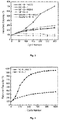
Figure 2 : Capacitive retention of the NC after 50 galvanostatic cycles in the absence of a magnetic field and applying different types of magnetic fields. -
Figure 3 : Capacitive retention of the NC and its components separately after 300 galvanostatic cycles with and in the absence of a magnetic field. -
Figure 4 : Capacitive retention of the NC after 1000 galvanostatic cycles with and without magnetic field. -
Figure 5 : Galvanostatic discharge curves of the NC with magnetic field. (A) Curve ofcycle 1; (B) Curve ofcycle 250; (C) Curve ofcycle 500; (D) Curve of cycle 750; (E) Curve ofcycle 1000. -
Figure 6 : FESEM image of the NC after 1000 galvanostatic cycles with a magnetic field. -
Figure 7 : HRTEM images of the NC after 1000 galvanostatic cycles with a magnetic field. -
Figure 8 : Raman spectrum of the NC obtained with 1000 galvanostatic cycles applying a magnetic field. -
Figure 9 : Raman spectrum of the NC precursor and the NC after 1000 galvanostatic cycles with a magnetic field. -
Figure 10 : XPS spectrum of the NC oxygen after 1000 galvanostatic cycles with and without a magnetic field. -
Figure 11 : Hysteresis cycle at low temperature, 2 K. In this figure, the curve with alternating dot-dash lines corresponds to the starting precursor sample. The sample with dashed lines represents the magnetism of the precursor sample after applying 1000 galvanostatic cycles in the absence of a magnetic field. The curve with dotted lines represents the precursor sample with a magnetic field. -
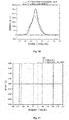
Figure 12 : Current curves of the source sample (left) and the sample (right) after applying 1000 cycles and a magnetic field. -
Figure 13 : Stability test of the NC obtained with 1000 galvanostatic cycles with a 4000 G continuous magnetic field, carried out at a current density of 20 Ag-1. - In the present invention, by "nanoparticles" is meant, particles less than 100 nanometers in size.
- By "graphitized carbon matrix" is meant a carbon-rich material which initial structure has been totally derived to a graphite structure. This graphitic structure is an allotropic carbon form in which the carbon atoms have sp2 hybridization, what means that It forms three covalent bonds in the same plane at an angle of 120° (hexagonal structure) and an orbital π perpendicular to that plane remains free. These delocalized π orbitals are the ones that confer electrical properties to graphite.
- By "nanocomposite material" or "nanocomposite" is meant, in the present invention, a multiphase solid material having a voluminous matrix and one or more nanodimensional phases (less than 100 nanometers) with different chemical and/or structural properties.
- So far, all efforts to improve energy density and power in supercapacitive devices have been dedicated to modify the internal configuration of the capacitor. This includes new approaches to improve electrodes materials, new configurations of the capacitors, or tailor-made porous structures. During our investigations with these magnetic hybrid materials, we have discovered that the application of an external magnetic field leads to a significant increase in the device performance. In fact, by applying relatively small magnetic fields (4000 G) we have observed an order of magnitude increase in the capacitance of a magnetic hybrid nanocomposite material in a conventional three-electrode cell (from 105 F.g-1 to 1010 F.g-1). The present invention is based on this magnetic approach, to build supercapacitative device prototypes such as two electrode batteries or other architectures based on these magnetic materials.
- As a precursor, the nanocomposite material (NC) described in
WO 2013124503 A1 and developed by the present inventors in 2013 was used, namely:
Aqueous solutions of nickel and iron salts were prepared keeping the stoichiometric coefficient x = M'" / (M" + M'") constant for x values of 0.20, 0.25 and 0.33, and with a total metal concentration constant and equal to 1 M using distilled water. A second aqueous solution of decanedioic acid and NaOH was prepared using distilled water. Both solutions were mixed dropwise, what resulted in a gel of pH = 8. Subsequently, it was heated to 80 °C under constant stirring and keeping this temperature for five days at atmospheric pressure. The solid obtained was filtered and washed with abundant water and ethanol, and finally dried under vacuum at room temperature. The entire procedure was carried out in an inert atmosphere to prevent contamination by atmospheric CO2 in the final precursor. Additionally, the pH was kept constant to avoid formation of impurities in the final solid. - The solids obtained in the first stage were calcined in nitrogen atmosphere at different temperatures (400, 650 and 900 °C) during different time periods: 3, 6 and 9 hours in a programmable oven with a heating ramp that can be 1, 5 and 10 °C/min and a nitrogen flow of 40-120 mL/min. For all cases a powder was obtained, FeNi3-carbon nanocomposite material, in the form of crystalline nanoparticles. In this document, the material resulting from this process is called "NC precursor".
- Finally, these nanoparticles were subjected to an acid wash with 2M HCI with magnetic stirring for 2 hours, thus, Ni and Fe nanoparticles embedded in the matrix were eliminated. Thus, a graphitized and porous matrix with FeNi3 nanoparticles was obtained.
- To synthesize the NC of the invention, a suspension was made with ethanol and the NC precursor. Once the suspension was prepared, it was deposited on nickel foam (density of 6.6 mg cm-2) and allowed to dry at 80 °C for two hours. Once dried, the nickel foam was compressed with a 10 tons pressure.
- Once the electrode was prepared, a series of galvanostatic cycles were applied at a current density of 10 and 1 Ag-1, with a potential window between +0.4 V and -0.3 V vs Ag/AgCI. Said galvanostatic cycles were carried out in a homemade electrochemical cell, using the material of the invention as working electrode, stainless steel as counterelectrode, and a reference electrode of Ag/AgClKCL 3M. In order to apply different external magnetic fields, the cell was interposed between the poles of an electromagnet (
Figure 1 ). The following charge/discharge cycles were applied to said cell: - 1. Constant and continuous field of 2000 G
- 2. Constant and continuous field of 4000 G
- 3. Constant and continuous field of 6000 G
- 4. Ascending field, starting with 50 G and increasing 50 G every 2 cycles.
- 5. No magnetic field applied.
- In general, tests show that the specific capacity retention increases with the number of cycles (160% without applying magnetic fields), beginning with noticeable increases after 50-100 cycles, as a consequence of the NC activation, when metal oxides and oxohydroxides (NiOOH and FeOOH) are generated. In an initial optimization process, when applying a 2000 G constant and continuous magnetic field, better results were obtained than without a magnetic field, increasing the difference with the number of cycles (
Figure 2 ). However, best results were obtained with a 4000 G continuous magnetic field with an increase of 240% at 50 cycles, as can be seen inFigure 2 . No matter the field is continuous or gradual, the application of a magnetic field causes a greater increase in the specific capacity of the material of the invention. In tests conducted with higher magnetic fields (up to 10,000 G, according toFigure 13 ) it was observed that the increase in capacitance was practically the same as with 4000 G, so the value of 4000 G was adopted for subsequent tests as the optimum value of the magnetic field strength. Likewise, tests were also carried out at different current densities between 1 and 30 Ag-1 both for charge and discharge, observing that greater increases in specific capacity were obtained with lower current densities. Thus, the optimal method is to carry out cycles at current density of 10 Ag-1 for the charge and 1 Ag-1 for the discharge. - To elucidate which part of the material of the invention was affected by the presence of a magnetic field, we decided to do the same study to the two material components separately: the FeNi3 nanoparticles (NP) and the carbon matrix. Galvanostatic cycles show a smaller increase in capacitive retention in the presence of an external magnetic field for the separate components (NPs and carbon matrix), as can be seen in
Figure 3 . We performed up to 1000 cycles in order to determine how much the specific capacity of our NC could increase. The capacity of our initial NC was 105.42 F g-1 for a current density of 1 Ag-1 and after 1000 cycles it was 1010.28 F g-1 (958.27% greater). If we compare this result with the same experiment but in the absence of a magnetic field, the capacitive retention is 590% higher (Figure 4 andFigure 5 ). - We compare these results with those obtained by Liu et al. in the RSC Advances, publication cited above. Saving the differences in starting materials (NiO in Liu et al., versus FeNi3 in the present invention) and the obtaining procedure (hydrothermal with autoclaves in Liu et al., application of galvanostatic cycles in the present invention), we found that, applying the maximum magnetic field strength used in said publication (12.6 mT or 126 G), and transforming the 0.4 V potential window used in Liu et al., in 0.7 V in the present invention, the resulting capacitance would be 1562 F g-1. It should be noticed that the measurements of Liu et al. are made at a current density of 0.5 Ag-1 while in the
present invention 1 Ag-1 was used. Since the relationship between capacitance and current density is exponential, the capacitance value obtained should be more than twice the 1562 F g-1 indicated. This data is a clear indication of the enormous increases in capacitance surprisingly obtained in the development of the present invention, and have no comparison with those achieved to date in the state of the art. - In order to reveal the processes behind this important increase in capacitance, a posttreatment structural analysis was performed by electronic microscopy and Raman spectroscopy after cycles application under a magnetic field, were performed to the sample. FESEM images (
Figure 6 ) of the sample after 1000 cycles show an open and highly corrugated surface with the presence of graphene "flakes". In addition, it is possible to observe some less conductive agglomerates that suggest partial sintering of metal nanoparticles, as well as the presence of strongly oxidized surfaces. -
Figure 7 shows HRTEM images of the NC formed after applying the magnetic field. The selected images revealed highly crystalline multiple domain nanoparticles embedded in the carbon matrix. In addition, it can be observed that the redox reaction induced by the application of the magnetic field forms a rougher surface. It is believed that the appearance of these rough , as a consequence of the galvanostatic activation, leads to an increase in the specific surface area a greater penetration of the OH- ions in the inner zone of the FeNi3 NPs, will allow a higher oxidation, thus, forming more active species that will participate in the redox reactions. - In some spectra, Raman spectroscopic analysis shows graphene characteristic bands (ie, D, G and 2D), which have a smaller proportion of ID\IG and a 2D sharp peak, indicative of less aggregated flakes (
Figure 8 ). This could be related to the massive deployment of the previously formed carbon nano-onionsand/or a better separation of the graphene layers as a consequence of the electrolyte penetration. - Also,
Figure 9 shows a Raman spectrum of the NC precursor and the NC obtained after 1000 galvanostatic cycles under a magnetic field. In this spectrum, it can be observed that the Raman signal of nickel oxide is negligible for the NC precursor, but it is very intense in the NC resulting from the oxidation with the galvanostatic cycles and under the magnetic field, demonstrating again the formation of Ni oxide with the proposed procedure. - In addition, the average spectra exhibit a morphology quite similar to the NC precursor, without cycles and in the absence of magnetic fields. This is indicative of the structural stability of the graphene counterpart. However, the voltammetric cycles and galvanostatic discharge curves show the opposite.
- In order to corroborate that in the presence of a magnetic field we favor the reaction of oxide formation. XPS measurements were made to the NCs obtained by galvanostatic cycles with and without applying a magnetic field. As can be seen in
Figure 10 for the NC obtained with magnetic field, the oxide signal increases, corroborating that the oxidation is favored in the presence of the magnetic field. - Finally, the magnetic properties of the NC precursor and the resultant NC were measured after galvanostatic cycles with, and without, a magnetic field applied. Hysteresis cycles of the different NCs show a first increase in the coercive field after galvanostatic cycles. Within these, is greater in the NC with magnetic field applied, demonstrating a greater formation of oxide. Also in the measure of the NC with magnetic field, the "exchange bias" effect appears. The presence of the "exchange bias" in the NC formed after applying a magnetic field, can come from the interaction between the antiferromagnetic spins formed in the oxidized surface and the ferromagnetic spins of the FeNi3 nucleus. This "exchange bias" depends on the thickness of the antiferromagnetic oxide layer formed. The fact that there is an "exchange bias" only in the sample formed after applying the cycles with magnetic field is another demonstration than the magnetic field favors the formation of the oxide layer. On the other hand, conductivity measurements were also carried out. For the NC synthesized with the magnetic field, resistance increases by two orders of magnitude compared to the precursor NC (from 6.54 kOhms cm-1 to 200 Ohms cm-1 respectively). Nickel oxide is not a good conductor, thus, resistance increase confirms the formation of much more nickel oxide. Another corroboration of oxide formation is the change of conductor type. NC precursor is a metallic conductor, but after performing the galvanostatic cycles with a magnetic field, it behaves like a semiconductor, as can be seen in
Figure 12 . - Finally, in order to see the new NC stability, 10,000 charge/discharge cycles were performed to see its degradation during these cycles. As can be seen in
Figure 13 , after 10,000 cycles retention is greater than 90%, what means thatonly 10% of the material is degraded after this number of charges and discharges. - In conclusion, we have synthesized a new composite material by galvanostatic cycles and an external magnetic field with much higher capacitive properties than those of the NC precursor. These results open the door to an external improvement of the specific capacitance in magnetic hybrid supercapacitors, and bring us closer to the development of new promising magnetically switchable energy storage devices.
Claims (15)
- Method for obtaining a nanocomposite material comprising the following steps:a) providing a precursor nanocomposite material comprising a graphitized carbon matrix with FeNi3 nanoparticles, andb) subjecting said material to a number between 100 and 10,000 galvanostatic charging/discharging cycles at a current density between 30 Ag-1 and 1 Ag-1 either for charge or discharge, while a magnetic field of an intensity between 50 G and 6,000 G is applied.
- Method according to claim 1, wherein the galvanostatic cycles are carried out at a current density of 10 Ag-1 for the charge and 1 Ag-1 for the discharge.
- Method according to claims 1 or 2, wherein the galvanostatic cycles are carried out in a potential window of between +0.4 V and -0.3 V vs Ag/AgCl.
- Method according to any one of the preceding claims, wherein the magnetic field has an intensity between 1000 G and 6000 G.
- Method according to claim 4, wherein the magnetic field has an intensity between 2000 G and 6000 G
- Method according to claim 5, wherein the magnetic field has an intensity of 4000 G.
- Method according to any one of claims 1 to 6 above, wherein the number of galvanostatic cycles is between 100 and 5000.
- Method according to claim 7, wherein the number of galvanostatic cycles is between 500 and 1500.
- Method according to claim 8, wherein the number of galvanostatic cycles is between 700 and 1000.
- Method according to any one of the preceding claims, wherein the magnetic field is constant.
- Method according to any one of the preceding claims 1-9, wherein the magnetic field is variable.
- Nanocomposite material obtained through the process described in any one of claims 1 to 11 above.
- Electrodes for batteries or supercapacitors comprising the material of claim 12.
- Use of the nanocomposite material of claim 12 in electrodes for batteries.
- Use of the nanocomposite material of claim 12 in electrodes for supercapacitors.
Priority Applications (1)
| Application Number | Priority Date | Filing Date | Title |
|---|---|---|---|
| PL17827050T PL3486348T3 (en) | 2016-07-13 | 2017-07-05 | Method for obtaining a nanocomposite material by means of cycles of galvanostatic charge and discharge under the action of magnetic fields and material thus obtained |
Applications Claiming Priority (2)
| Application Number | Priority Date | Filing Date | Title |
|---|---|---|---|
| ES201600602A ES2649688B1 (en) | 2016-07-13 | 2016-07-13 | Method of obtaining nanocomposite material by means of cycles of galvanic static charges and discharges under the action of magnetic fields, and material thus obtained |
| PCT/ES2017/070487 WO2018011445A1 (en) | 2016-07-13 | 2017-07-05 | Method for obtaining a nanocomposite material by means of cycles of galvanostatic charge and discharge under the action of magnetic fields and material thus obtained |
Publications (3)
| Publication Number | Publication Date |
|---|---|
| EP3486348A1 true EP3486348A1 (en) | 2019-05-22 |
| EP3486348A4 EP3486348A4 (en) | 2020-03-18 |
| EP3486348B1 EP3486348B1 (en) | 2021-05-26 |
Family
ID=60937151
Family Applications (1)
| Application Number | Title | Priority Date | Filing Date |
|---|---|---|---|
| EP17827050.0A Active EP3486348B1 (en) | 2016-07-13 | 2017-07-05 | Method for obtaining a nanocomposite material by means of cycles of galvanostatic charge and discharge under the action of magnetic fields and material thus obtained |
Country Status (5)
| Country | Link |
|---|---|
| EP (1) | EP3486348B1 (en) |
| ES (1) | ES2649688B1 (en) |
| PL (1) | PL3486348T3 (en) |
| PT (1) | PT3486348T (en) |
| WO (1) | WO2018011445A1 (en) |
Families Citing this family (1)
| Publication number | Priority date | Publication date | Assignee | Title |
|---|---|---|---|---|
| CN114920243A (en) * | 2022-06-28 | 2022-08-19 | 山西沁新能源集团股份有限公司 | Coal-based graphite composite material and preparation method and application thereof |
Family Cites Families (1)
| Publication number | Priority date | Publication date | Assignee | Title |
|---|---|---|---|---|
| ES2423970B1 (en) * | 2012-02-23 | 2014-07-15 | Universitat De València | Graphite matrix nanocomposites and metal nanoparticles with supercapacitance and magnetoresistance properties |
-
2016
- 2016-07-13 ES ES201600602A patent/ES2649688B1/en active Active
-
2017
- 2017-07-05 PT PT178270500T patent/PT3486348T/en unknown
- 2017-07-05 EP EP17827050.0A patent/EP3486348B1/en active Active
- 2017-07-05 WO PCT/ES2017/070487 patent/WO2018011445A1/en not_active Ceased
- 2017-07-05 PL PL17827050T patent/PL3486348T3/en unknown
Also Published As
| Publication number | Publication date |
|---|---|
| PT3486348T (en) | 2021-07-23 |
| ES2649688B1 (en) | 2018-10-24 |
| WO2018011445A1 (en) | 2018-01-18 |
| EP3486348B1 (en) | 2021-05-26 |
| ES2649688A1 (en) | 2018-01-15 |
| PL3486348T3 (en) | 2021-10-04 |
| EP3486348A4 (en) | 2020-03-18 |
Similar Documents
| Publication | Publication Date | Title |
|---|---|---|
| Zhu et al. | Magnetocapacitance in magnetic microtubular carbon nanocomposites under external magnetic field | |
| Dai et al. | Effects of electrodeposition time on a manganese dioxide supercapacitor | |
| Aghazadeh et al. | Evaluation of supercapacitive and magnetic properties of Fe3O4 nano-particles electrochemically doped with dysprosium cations: Development of a novel iron-based electrode | |
| Tang et al. | Enhanced supercapacitive performance of manganese oxides doped two-dimensional titanium carbide nanocomposite in alkaline electrolyte | |
| Li et al. | Anion exchange strategy to synthesis of porous NiS hexagonal nanoplates for supercapacitors | |
| Chen et al. | Strong interface coupling and few-crystalline MnO2/Reduced graphene oxide composites for supercapacitors with high cycle stability | |
| Vijayakumar et al. | Microwave assisted synthesis of Co3O4 nanoparticles for high-performance supercapacitors | |
| Kuang et al. | Tunable synthesis of hierarchical NiCo2O4 nanosheets-decorated Cu/CuOx nanowires architectures for asymmetric electrochemical capacitors | |
| Meng et al. | Fabrication of hematite (α-Fe2O3) nanoparticles using electrochemical deposition | |
| Xu et al. | Understanding the effect of polypyrrole and poly (3, 4-ethylenedioxythiophene) on enhancing the supercapacitor performance of NiCo 2 O 4 electrodes | |
| Liu et al. | Binder-free NiO@ MnO2 core-shell electrode: rod-like NiO core prepared through corrosion by oxalic acid and enhanced pseudocapacitance with sphere-like MnO2 shell | |
| KR101803144B1 (en) | Method for manufacturing flexible electrodes of high performance super capacitor | |
| Shakir et al. | Synthesis of hierarchical porous spinel nickel cobaltite nanoflakes for high performance electrochemical energy storage supercapacitors | |
| Wang et al. | Supercapacitive performance of TiO 2 boosted by a unique porous TiO 2/Ti network and activated Ti 3+ | |
| Feng et al. | Decoration of carbon cloth by manganese oxides for flexible asymmetric supercapacitors | |
| Xi et al. | High-performance flexible supercapatteries enabled by binder-free two-dimensional mesoporous ultrathin nickel-ferrite nanosheets | |
| Ghasemi et al. | Synthesis of novel NiFe2O4 nanospheres for high performance pseudocapacitor applications | |
| Cheng et al. | A novel electrode for supercapacitors: Spicules-like Ni3S2 shell grown on molybdenum nanoparticles doped nickel foam | |
| Shaikh et al. | Nanowires of Ni substituted MnCo2O4 as an anode material for high performance Lithium‐ion battery | |
| Tan et al. | Facile formation of Fe3O4-particles decorated carbon paper and its application for all-solid-state rechargeable Fe-air battery | |
| Wang et al. | Network-like holey NiCo2O4 nanosheet arrays on Ni foam synthesized by electrodeposition for high-performance supercapacitors | |
| Liu et al. | Carbon dots decorated zinc cobaltite nanowires-assembled hierarchical arrays supported on nickel foam as binder-free electrodes for high performance supercapacitors | |
| Prasad et al. | Surfactant assisted morphological transformation of rod-like ZnCo2O4 into hexagonal-like structures for high-performance supercapacitors | |
| Ji et al. | Printable thin film supercapacitors utilizing single crystal cobalt hydroxide nanosheets | |
| Keyang et al. | Controllable synthesis of superparamagnetic NiCo-graphene quantum dot-graphene composite with excellent dispersion for high performance magnetic field-controlled electrochemical flow hybrid supercapacitor |
Legal Events
| Date | Code | Title | Description |
|---|---|---|---|
| STAA | Information on the status of an ep patent application or granted ep patent |
Free format text: STATUS: THE INTERNATIONAL PUBLICATION HAS BEEN MADE |
|
| PUAI | Public reference made under article 153(3) epc to a published international application that has entered the european phase |
Free format text: ORIGINAL CODE: 0009012 |
|
| STAA | Information on the status of an ep patent application or granted ep patent |
Free format text: STATUS: REQUEST FOR EXAMINATION WAS MADE |
|
| 17P | Request for examination filed |
Effective date: 20190114 |
|
| AK | Designated contracting states |
Kind code of ref document: A1 Designated state(s): AL AT BE BG CH CY CZ DE DK EE ES FI FR GB GR HR HU IE IS IT LI LT LU LV MC MK MT NL NO PL PT RO RS SE SI SK SM TR |
|
| AX | Request for extension of the european patent |
Extension state: BA ME |
|
| DAV | Request for validation of the european patent (deleted) | ||
| DAX | Request for extension of the european patent (deleted) | ||
| A4 | Supplementary search report drawn up and despatched |
Effective date: 20200214 |
|
| RIC1 | Information provided on ipc code assigned before grant |
Ipc: H01M 4/96 20060101ALN20200210BHEP Ipc: C22C 38/08 20060101AFI20200210BHEP Ipc: B82Y 25/00 20110101ALI20200210BHEP Ipc: B82Y 40/00 20110101ALI20200210BHEP Ipc: H01M 4/90 20060101ALN20200210BHEP Ipc: B22F 9/30 20060101ALI20200210BHEP Ipc: C22C 19/03 20060101ALI20200210BHEP Ipc: B82Y 30/00 20110101ALI20200210BHEP Ipc: H01F 1/00 20060101ALI20200210BHEP |
|
| GRAP | Despatch of communication of intention to grant a patent |
Free format text: ORIGINAL CODE: EPIDOSNIGR1 |
|
| STAA | Information on the status of an ep patent application or granted ep patent |
Free format text: STATUS: GRANT OF PATENT IS INTENDED |
|
| RIC1 | Information provided on ipc code assigned before grant |
Ipc: B22F 9/24 20060101ALN20200929BHEP Ipc: H01F 41/26 20060101ALI20200929BHEP Ipc: H01M 4/90 20060101ALN20200929BHEP Ipc: C22C 19/03 20060101AFI20200929BHEP Ipc: B82Y 40/00 20110101ALN20200929BHEP Ipc: H01M 4/96 20060101ALN20200929BHEP |
|
| INTG | Intention to grant announced |
Effective date: 20201015 |
|
| GRAJ | Information related to disapproval of communication of intention to grant by the applicant or resumption of examination proceedings by the epo deleted |
Free format text: ORIGINAL CODE: EPIDOSDIGR1 |
|
| STAA | Information on the status of an ep patent application or granted ep patent |
Free format text: STATUS: REQUEST FOR EXAMINATION WAS MADE |
|
| REG | Reference to a national code |
Ref country code: DE Ref legal event code: R079 Ref document number: 602017039407 Country of ref document: DE Free format text: PREVIOUS MAIN CLASS: C22C0038080000 Ipc: C22C0019030000 |
|
| GRAS | Grant fee paid |
Free format text: ORIGINAL CODE: EPIDOSNIGR3 |
|
| STAA | Information on the status of an ep patent application or granted ep patent |
Free format text: STATUS: GRANT OF PATENT IS INTENDED |
|
| GRAP | Despatch of communication of intention to grant a patent |
Free format text: ORIGINAL CODE: EPIDOSNIGR1 |
|
| INTC | Intention to grant announced (deleted) | ||
| RIC1 | Information provided on ipc code assigned before grant |
Ipc: H01M 4/96 20060101ALN20210217BHEP Ipc: B82Y 40/00 20110101ALN20210217BHEP Ipc: C22C 19/03 20060101AFI20210217BHEP Ipc: H01F 41/26 20060101ALI20210217BHEP Ipc: H01M 4/90 20060101ALN20210217BHEP Ipc: B22F 9/24 20060101ALN20210217BHEP |
|
| INTG | Intention to grant announced |
Effective date: 20210302 |
|
| GRAA | (expected) grant |
Free format text: ORIGINAL CODE: 0009210 |
|
| STAA | Information on the status of an ep patent application or granted ep patent |
Free format text: STATUS: THE PATENT HAS BEEN GRANTED |
|
| AK | Designated contracting states |
Kind code of ref document: B1 Designated state(s): AL AT BE BG CH CY CZ DE DK EE ES FI FR GB GR HR HU IE IS IT LI LT LU LV MC MK MT NL NO PL PT RO RS SE SI SK SM TR |
|
| REG | Reference to a national code |
Ref country code: GB Ref legal event code: FG4D |
|
| REG | Reference to a national code |
Ref country code: CH Ref legal event code: EP |
|
| REG | Reference to a national code |
Ref country code: AT Ref legal event code: REF Ref document number: 1396287 Country of ref document: AT Kind code of ref document: T Effective date: 20210615 |
|
| REG | Reference to a national code |
Ref country code: DE Ref legal event code: R096 Ref document number: 602017039407 Country of ref document: DE |
|
| REG | Reference to a national code |
Ref country code: IE Ref legal event code: FG4D |
|
| REG | Reference to a national code |
Ref country code: PT Ref legal event code: SC4A Ref document number: 3486348 Country of ref document: PT Date of ref document: 20210723 Kind code of ref document: T Free format text: AVAILABILITY OF NATIONAL TRANSLATION Effective date: 20210719 |
|
| REG | Reference to a national code |
Ref country code: LT Ref legal event code: MG9D |
|
| REG | Reference to a national code |
Ref country code: AT Ref legal event code: MK05 Ref document number: 1396287 Country of ref document: AT Kind code of ref document: T Effective date: 20210526 |
|
| PG25 | Lapsed in a contracting state [announced via postgrant information from national office to epo] |
Ref country code: LT Free format text: LAPSE BECAUSE OF FAILURE TO SUBMIT A TRANSLATION OF THE DESCRIPTION OR TO PAY THE FEE WITHIN THE PRESCRIBED TIME-LIMIT Effective date: 20210526 Ref country code: FI Free format text: LAPSE BECAUSE OF FAILURE TO SUBMIT A TRANSLATION OF THE DESCRIPTION OR TO PAY THE FEE WITHIN THE PRESCRIBED TIME-LIMIT Effective date: 20210526 Ref country code: HR Free format text: LAPSE BECAUSE OF FAILURE TO SUBMIT A TRANSLATION OF THE DESCRIPTION OR TO PAY THE FEE WITHIN THE PRESCRIBED TIME-LIMIT Effective date: 20210526 Ref country code: AT Free format text: LAPSE BECAUSE OF FAILURE TO SUBMIT A TRANSLATION OF THE DESCRIPTION OR TO PAY THE FEE WITHIN THE PRESCRIBED TIME-LIMIT Effective date: 20210526 Ref country code: BG Free format text: LAPSE BECAUSE OF FAILURE TO SUBMIT A TRANSLATION OF THE DESCRIPTION OR TO PAY THE FEE WITHIN THE PRESCRIBED TIME-LIMIT Effective date: 20210826 |
|
| REG | Reference to a national code |
Ref country code: NL Ref legal event code: MP Effective date: 20210526 |
|
| PG25 | Lapsed in a contracting state [announced via postgrant information from national office to epo] |
Ref country code: LV Free format text: LAPSE BECAUSE OF FAILURE TO SUBMIT A TRANSLATION OF THE DESCRIPTION OR TO PAY THE FEE WITHIN THE PRESCRIBED TIME-LIMIT Effective date: 20210526 Ref country code: NO Free format text: LAPSE BECAUSE OF FAILURE TO SUBMIT A TRANSLATION OF THE DESCRIPTION OR TO PAY THE FEE WITHIN THE PRESCRIBED TIME-LIMIT Effective date: 20210826 Ref country code: SE Free format text: LAPSE BECAUSE OF FAILURE TO SUBMIT A TRANSLATION OF THE DESCRIPTION OR TO PAY THE FEE WITHIN THE PRESCRIBED TIME-LIMIT Effective date: 20210526 Ref country code: RS Free format text: LAPSE BECAUSE OF FAILURE TO SUBMIT A TRANSLATION OF THE DESCRIPTION OR TO PAY THE FEE WITHIN THE PRESCRIBED TIME-LIMIT Effective date: 20210526 Ref country code: IS Free format text: LAPSE BECAUSE OF FAILURE TO SUBMIT A TRANSLATION OF THE DESCRIPTION OR TO PAY THE FEE WITHIN THE PRESCRIBED TIME-LIMIT Effective date: 20210926 Ref country code: GR Free format text: LAPSE BECAUSE OF FAILURE TO SUBMIT A TRANSLATION OF THE DESCRIPTION OR TO PAY THE FEE WITHIN THE PRESCRIBED TIME-LIMIT Effective date: 20210827 |
|
| PG25 | Lapsed in a contracting state [announced via postgrant information from national office to epo] |
Ref country code: NL Free format text: LAPSE BECAUSE OF FAILURE TO SUBMIT A TRANSLATION OF THE DESCRIPTION OR TO PAY THE FEE WITHIN THE PRESCRIBED TIME-LIMIT Effective date: 20210526 |
|
| PG25 | Lapsed in a contracting state [announced via postgrant information from national office to epo] |
Ref country code: CZ Free format text: LAPSE BECAUSE OF FAILURE TO SUBMIT A TRANSLATION OF THE DESCRIPTION OR TO PAY THE FEE WITHIN THE PRESCRIBED TIME-LIMIT Effective date: 20210526 Ref country code: DK Free format text: LAPSE BECAUSE OF FAILURE TO SUBMIT A TRANSLATION OF THE DESCRIPTION OR TO PAY THE FEE WITHIN THE PRESCRIBED TIME-LIMIT Effective date: 20210526 Ref country code: EE Free format text: LAPSE BECAUSE OF FAILURE TO SUBMIT A TRANSLATION OF THE DESCRIPTION OR TO PAY THE FEE WITHIN THE PRESCRIBED TIME-LIMIT Effective date: 20210526 Ref country code: RO Free format text: LAPSE BECAUSE OF FAILURE TO SUBMIT A TRANSLATION OF THE DESCRIPTION OR TO PAY THE FEE WITHIN THE PRESCRIBED TIME-LIMIT Effective date: 20210526 Ref country code: ES Free format text: LAPSE BECAUSE OF FAILURE TO SUBMIT A TRANSLATION OF THE DESCRIPTION OR TO PAY THE FEE WITHIN THE PRESCRIBED TIME-LIMIT Effective date: 20210526 Ref country code: SM Free format text: LAPSE BECAUSE OF FAILURE TO SUBMIT A TRANSLATION OF THE DESCRIPTION OR TO PAY THE FEE WITHIN THE PRESCRIBED TIME-LIMIT Effective date: 20210526 Ref country code: SK Free format text: LAPSE BECAUSE OF FAILURE TO SUBMIT A TRANSLATION OF THE DESCRIPTION OR TO PAY THE FEE WITHIN THE PRESCRIBED TIME-LIMIT Effective date: 20210526 |
|
| REG | Reference to a national code |
Ref country code: CH Ref legal event code: PL |
|
| REG | Reference to a national code |
Ref country code: DE Ref legal event code: R097 Ref document number: 602017039407 Country of ref document: DE |
|
| PLBE | No opposition filed within time limit |
Free format text: ORIGINAL CODE: 0009261 |
|
| STAA | Information on the status of an ep patent application or granted ep patent |
Free format text: STATUS: NO OPPOSITION FILED WITHIN TIME LIMIT |
|
| PG25 | Lapsed in a contracting state [announced via postgrant information from national office to epo] |
Ref country code: MC Free format text: LAPSE BECAUSE OF FAILURE TO SUBMIT A TRANSLATION OF THE DESCRIPTION OR TO PAY THE FEE WITHIN THE PRESCRIBED TIME-LIMIT Effective date: 20210526 |
|
| REG | Reference to a national code |
Ref country code: BE Ref legal event code: MM Effective date: 20210731 |
|
| PG25 | Lapsed in a contracting state [announced via postgrant information from national office to epo] |
Ref country code: LI Free format text: LAPSE BECAUSE OF NON-PAYMENT OF DUE FEES Effective date: 20210731 Ref country code: CH Free format text: LAPSE BECAUSE OF NON-PAYMENT OF DUE FEES Effective date: 20210731 |
|
| 26N | No opposition filed |
Effective date: 20220301 |
|
| PG25 | Lapsed in a contracting state [announced via postgrant information from national office to epo] |
Ref country code: IS Free format text: LAPSE BECAUSE OF FAILURE TO SUBMIT A TRANSLATION OF THE DESCRIPTION OR TO PAY THE FEE WITHIN THE PRESCRIBED TIME-LIMIT Effective date: 20210926 Ref country code: LU Free format text: LAPSE BECAUSE OF NON-PAYMENT OF DUE FEES Effective date: 20210705 Ref country code: AL Free format text: LAPSE BECAUSE OF FAILURE TO SUBMIT A TRANSLATION OF THE DESCRIPTION OR TO PAY THE FEE WITHIN THE PRESCRIBED TIME-LIMIT Effective date: 20210526 |
|
| PG25 | Lapsed in a contracting state [announced via postgrant information from national office to epo] |
Ref country code: IE Free format text: LAPSE BECAUSE OF NON-PAYMENT OF DUE FEES Effective date: 20210705 Ref country code: BE Free format text: LAPSE BECAUSE OF NON-PAYMENT OF DUE FEES Effective date: 20210731 |
|
| P01 | Opt-out of the competence of the unified patent court (upc) registered |
Effective date: 20230519 |
|
| PG25 | Lapsed in a contracting state [announced via postgrant information from national office to epo] |
Ref country code: CY Free format text: LAPSE BECAUSE OF FAILURE TO SUBMIT A TRANSLATION OF THE DESCRIPTION OR TO PAY THE FEE WITHIN THE PRESCRIBED TIME-LIMIT Effective date: 20210526 |
|
| PG25 | Lapsed in a contracting state [announced via postgrant information from national office to epo] |
Ref country code: HU Free format text: LAPSE BECAUSE OF FAILURE TO SUBMIT A TRANSLATION OF THE DESCRIPTION OR TO PAY THE FEE WITHIN THE PRESCRIBED TIME-LIMIT; INVALID AB INITIO Effective date: 20170705 |
|
| PG25 | Lapsed in a contracting state [announced via postgrant information from national office to epo] |
Ref country code: MK Free format text: LAPSE BECAUSE OF FAILURE TO SUBMIT A TRANSLATION OF THE DESCRIPTION OR TO PAY THE FEE WITHIN THE PRESCRIBED TIME-LIMIT Effective date: 20210526 |
|
| PG25 | Lapsed in a contracting state [announced via postgrant information from national office to epo] |
Ref country code: MT Free format text: LAPSE BECAUSE OF FAILURE TO SUBMIT A TRANSLATION OF THE DESCRIPTION OR TO PAY THE FEE WITHIN THE PRESCRIBED TIME-LIMIT Effective date: 20210526 |
|
| PGFP | Annual fee paid to national office [announced via postgrant information from national office to epo] |
Ref country code: PT Payment date: 20250626 Year of fee payment: 9 |
|
| PGFP | Annual fee paid to national office [announced via postgrant information from national office to epo] |
Ref country code: DE Payment date: 20250729 Year of fee payment: 9 |
|
| PGFP | Annual fee paid to national office [announced via postgrant information from national office to epo] |
Ref country code: PL Payment date: 20250630 Year of fee payment: 9 Ref country code: IT Payment date: 20250721 Year of fee payment: 9 |
|
| PGFP | Annual fee paid to national office [announced via postgrant information from national office to epo] |
Ref country code: GB Payment date: 20250728 Year of fee payment: 9 |
|
| PGFP | Annual fee paid to national office [announced via postgrant information from national office to epo] |
Ref country code: FR Payment date: 20250725 Year of fee payment: 9 |
|
| PG25 | Lapsed in a contracting state [announced via postgrant information from national office to epo] |
Ref country code: TR Free format text: LAPSE BECAUSE OF FAILURE TO SUBMIT A TRANSLATION OF THE DESCRIPTION OR TO PAY THE FEE WITHIN THE PRESCRIBED TIME-LIMIT Effective date: 20210526 |