EP3486218B1 - Method for the synthesis of metal molybdates and tungstates from molybdenum and tungsten carbides and nitrides - Google Patents
Method for the synthesis of metal molybdates and tungstates from molybdenum and tungsten carbides and nitrides Download PDFInfo
- Publication number
- EP3486218B1 EP3486218B1 EP18206299.2A EP18206299A EP3486218B1 EP 3486218 B1 EP3486218 B1 EP 3486218B1 EP 18206299 A EP18206299 A EP 18206299A EP 3486218 B1 EP3486218 B1 EP 3486218B1
- Authority
- EP
- European Patent Office
- Prior art keywords
- molybdenum
- synthesis
- metal
- tungstates
- nitrides
- Prior art date
- Legal status (The legal status is an assumption and is not a legal conclusion. Google has not performed a legal analysis and makes no representation as to the accuracy of the status listed.)
- Active
Links
Images







Classifications
-
- C—CHEMISTRY; METALLURGY
- C01—INORGANIC CHEMISTRY
- C01G—COMPOUNDS CONTAINING METALS NOT COVERED BY SUBCLASSES C01D OR C01F
- C01G39/00—Compounds of molybdenum
- C01G39/02—Oxides; Hydroxides
-
- C—CHEMISTRY; METALLURGY
- C01—INORGANIC CHEMISTRY
- C01G—COMPOUNDS CONTAINING METALS NOT COVERED BY SUBCLASSES C01D OR C01F
- C01G41/00—Compounds of tungsten
- C01G41/02—Oxides; Hydroxides
-
- C—CHEMISTRY; METALLURGY
- C01—INORGANIC CHEMISTRY
- C01P—INDEXING SCHEME RELATING TO STRUCTURAL AND PHYSICAL ASPECTS OF SOLID INORGANIC COMPOUNDS
- C01P2002/00—Crystal-structural characteristics
- C01P2002/70—Crystal-structural characteristics defined by measured X-ray, neutron or electron diffraction data
-
- C—CHEMISTRY; METALLURGY
- C01—INORGANIC CHEMISTRY
- C01P—INDEXING SCHEME RELATING TO STRUCTURAL AND PHYSICAL ASPECTS OF SOLID INORGANIC COMPOUNDS
- C01P2004/00—Particle morphology
- C01P2004/01—Particle morphology depicted by an image
- C01P2004/03—Particle morphology depicted by an image obtained by SEM
-
- C—CHEMISTRY; METALLURGY
- C01—INORGANIC CHEMISTRY
- C01P—INDEXING SCHEME RELATING TO STRUCTURAL AND PHYSICAL ASPECTS OF SOLID INORGANIC COMPOUNDS
- C01P2004/00—Particle morphology
- C01P2004/01—Particle morphology depicted by an image
- C01P2004/04—Particle morphology depicted by an image obtained by TEM, STEM, STM or AFM
Definitions
- the subject of the invention is a method for a synthesis of metal molybdates and metal tungstates from molybdenum and tungsten carbides and nitrides.
- the invention belongs to the field of inorganic chemistry and chemistry of transition metals.
- the invention refers to a synthesis of metal molybdates and metal tungstates form molybdenum and tungsten carbides and nitrides by using a method of conversion molybdenum and tungsten carbides and nitrides in the presence of a solution of a reactive compounds containing metal cations.
- This method provides for a synthesis of large amounts of metal molybdates and metal tungstates from molybdenum and tungsten carbides and nitrides.
- Metal tungstates and molybdates have also been synthesized under more mild synthetic conditions through various chemical pathways, such as those of polymer-controlled crystallization- as described in Yu, S. H., Antonietti, M., Cölfen, H., Giersig, M.: Angew. Chem., Int. Ed., 2002: 41, 2356-2360 , a reversed micelle templating method -as described in Kwan, S., Kim, F., Akana, J., Yang, P.
- Metal molybdate catalytic particles Fe 2 (MoO 4 ) 3 /MoO 3 are formed by mixing Fe 2 O 3 and MoOs particles during the oxidation of methanol in the reactor - as described in US Patent 6331503 B1 .
- a number of techniques have been used, such as chemical precipitation - as described by Anandakumar V. M., Khadar M. A.: Phys.
- PbMoO 4 nanoparticles were prepared from lead nitrate and a water suspension of MoOs nanoparticles - as described in Perkins C. K., Barber K. N., Apblett A. W.:CrystEngComm, 2014: 16, 2869-2873 .
- Monocrystals of lead molybdate were synthesized by heating solid, insoluble lead salts, solid, insoluble ammonium molybdate and water. The synthesis process comprises mixing, heating, separating the solid liquid, drying and roasting, whereby pure lead molybdate is obtained - as described in Patent CN 102010006 B .
- Monocrystals PbWO 4 were prepared by the modified Bridgman method - as described in Patents ZL94 1 14075 and ZL2005100297447. Solid nanoporous WOs material reacts with lead in water and forms insoluble PbWO 4 - as described in Perkins C.K., Reed, T.M., Brown, Z.A.
- Metal tungstates (MWO 4 ), functional materials with a high potential for a diverse set of applications ranging from low-dimensional magnetism to chemical sensing and photoelectrocatalytic water oxidation, are synthesised with different synthetic strategies - as decribed in Denk M., Kuhness D., Wagner M., Surnev S., Negreiros F. R., Sementa L., Barcaro G., Vobornik I., Fortunelli A., Netzer F. P.: ACS Nano 2014: 8 (4), 3947-3954 .
- Table 3 Comparison of the obtained X-ray image of the resulting PbWO 4 crystals from W 2 N from the database, which is attached and certified in the EVA program
- Solvent in which said reactive compounds containing metal selected from Sr, Ba, Co, Bi, Cd, Cu, Fe, Mn, Pb are dissolved is water or a mixture of solvents consisting of at least 0.5 % by weight of water, the remainder of the solvents being liquids (e.g. alcohols) that are mixed with water.
- the reaction takes place at temperatures above 1 °C, preferably at temperatures between 20 °C and 300 °C.
- the reaction also takes place under conditions of solvatothermal reaction in autoclaves.
Landscapes
- Chemical & Material Sciences (AREA)
- Organic Chemistry (AREA)
- Inorganic Chemistry (AREA)
- Inorganic Compounds Of Heavy Metals (AREA)
- Catalysts (AREA)
Description
- The subject of the invention is a method for a synthesis of metal molybdates and metal tungstates from molybdenum and tungsten carbides and nitrides. The invention belongs to the field of inorganic chemistry and chemistry of transition metals. The invention refers to a synthesis of metal molybdates and metal tungstates form molybdenum and tungsten carbides and nitrides by using a method of conversion molybdenum and tungsten carbides and nitrides in the presence of a solution of a reactive compounds containing metal cations. This method provides for a synthesis of large amounts of metal molybdates and metal tungstates from molybdenum and tungsten carbides and nitrides.
- Most synthesis of molybdates and tungstates require high temperatures and sharp reaction conditions, such as solid reactions - as described in Swanson, H. E., Morris, M. C., Stinchfield, R., Evans, E. H.: NBS. Monogr. (U.S.), 1963: 25, 24; Patherau P., Josse M., Dessapt R., Mevellec J-Y., Porcher F., Maglione M., Deniard P., Payen C.: Inorganic Chemistry, 2015: 54 (22), 10623-10631 and the salt gel method - as described in Bonanni, M., Spanhel, L., Lerch, M., Fuglein, E., Muller, G.: Chem. Mater,. 1998: 10, 304-310; Yourey J. E., Kurtz J. B., Bartlett B. M.: Inorganic Chemistry, 2012: 51(19), 10394-10401. Metal tungstates and molybdates have also been synthesized under more mild synthetic conditions through various chemical pathways, such as those of polymer-controlled crystallization- as described in Yu, S. H., Antonietti, M., Cölfen, H., Giersig, M.: Angew. Chem., Int. Ed., 2002: 41, 2356-2360, a reversed micelle templating method -as described in Kwan, S., Kim, F., Akana, J., Yang, P. D.: Chem. Commun., 2001: 5, 447-448; Shi, H. T., Wang, X. H., Zhao, N. N., Qi, LM, Ma, J. M.: J. Phys. Chem. B, 2006: 110, 748-753, with hydrothermal synthesis - as described in Yu, S. H., Liu, B., Mo, M. S., Huang, J. H., Liu, X. M., Qian, Y. T.: Adv. Funct. Mater., 2003: 13, 639-647:Cui, X. J., Yu, S. H., Li, L. L., Liu, H. B., Mo, M. S., Liu, X. M.: Chem.- Eur. J., 2004: 10, 218-223; Ding, Y., Yu, S. H., Liu, C., Zang, Z. A.: Chem.-Eur. J., 2007: 13, 746-753; Zhang, Q., Yao, W. T., Chen, X. Y., Zhu, L. W., Fu, Y. B., Zhang, G. B., Yu., S. H.: Cryst. Growth Des., 2007: 7, 1423-1431; Ding Y., Wan Y, Min Y. L., Zhang W., Yu S-G.: Inorganic Chemistry, 2008: 47 (17), 7813-7823, with coprecipitation methods - as described in Ramezani M., Hosseinpour-Mashkani S. M., Sobhani-Nasab A., Ghasemi H. Estarki : J. Mater. Sci. Mater. Electron. 2015: 26, 7588; Hashempour M., Razavizadeh H., Rezaie H-R., Hashempour M., Ardestani M.: Mater. Chem. Phys.,123, 2010 : 83-90; Cavalcante I.S., Sczancoski J.C., Tranquilin R.L.,Varela J.A., Omaghi Orlandi E.L.: Particuology 2009: M. 7, I 5, 353-362, with mechanical-chemical synthesis of metal oxides - as described in Janbua W., Bongkarn T., Vittayakorn W., Vittayakorn N. : Ceramics International, 2017 : S435-S443, with the vapor diffusion sol-gel method resulting AMoO4 (A = Ca, Sr, Ba) - as described in Culver S. P., Rabuffetti F, A., Zhou S., Mecklenburg M., Song Y.,. Melot B. C, Brutchey R. L. : Chemistry of Materials 2013: 25 (20), 4129-4134. Metal molybdate catalytic particles Fe2(MoO4)3/MoO3 are formed by mixing Fe2O3 and MoOs particles during the oxidation of methanol in the reactor - as described in
US Patent 6331503 B1 . For the synthesis of PbMoO4 and PbWO4, a number of techniques have been used, such as chemical precipitation - as described by Anandakumar V. M., Khadar M. A.: Phys. Status Solidi A, 2008:205, 2666-2672 ; Hernández-Uresti D. B., Martínez-de la Cruz A., Torres-Martinez L.: Res. Chem. Intermed., 2012: 38, 817-828; Chu H., Li X,. Chen G,Jin Z,. Zhang Y., Li Y.: Nano Res.,2008:1, 213-220; PatentUS 4366126A ;Chu H., Li X., Chen G., Jin Z., Zhang Y., Li Y.: Nano Res., 2008: 1, 213-220, hydrothermal reactions - as described in Sczancoski J. C, Bomio, M. D. R., Cavalcante L.S., Joya M. R., Pizani P.S., Varela J. A., Longo E., Siu M. L., Andrés J.A.: The Journal of Physical Chemistry C, 2009:113(14), 5812-5822; Shen M., Zhang X., Dai K., Chen H.,. Peng T.: CrystEngComm, 2013: 15, 1146-1152; Sczancoski J. C., Bomio M. D. R, Cavalcante L. S., Joya M. R., Pizani P. S., Varela J. A., Longo E., Li M. S., Andrés J. A.: J. Phys. Chem. C, 2009: 113, 5812-5822, synthesis using ultrasound -as described in Phuruangrat A., Phillips S., Varela J.A., Longo E, Siu Li M., Andrés J.A.:The Journal of Physical Chemistry C, 2009: 113 (14), 5812-5822; Phuruangrat, T. Thongtem S.: Curr. Appl. Phys., 2010: 10, 342-345; Thongtem T., Thongtem S.: Curr. Appl. Phys., 2010: 10, 342-345, solid reactions - as described in Neiman A.Y., Guseva A.F., Sharafutdinov A.R.: Solid State Ionics, 1997: 101-103, 367-372, Czochralski Crystal Growth Process- as described in Takano S., Esashi S., Mori K, Namikata T.: J. Cryst. Growth, 1974: 24-25, 437-440; Zeng H.C.: Journal of Crystal Growth., 1996: 160, 119-128, by combustion of MoOs and Pb(NO3)2 as starting materials- as described in Vidya S., Thomas J. K: IOP Conf. Ser.: Mater. Sci. Eng.,: 2015, 73, 012120, , with microwaves - as described in Kwolek P., Tokarski T.,okcik T., Szaci owski K.: Arch Metall Mater., 2013: 58, 217-222; Phuruangrat A, Thongtem T, Thongtem S.: J. Cryst Growth, 2009: 311, 4076-4081.
- PbMoO4 nanoparticles were prepared from lead nitrate and a water suspension of MoOs nanoparticles - as described in Perkins C. K., Barber K. N., Apblett A. W.:CrystEngComm, 2014: 16, 2869-2873. Monocrystals of lead molybdate were synthesized by heating solid, insoluble lead salts, solid, insoluble ammonium molybdate and water. The synthesis process comprises mixing, heating, separating the solid liquid, drying and roasting, whereby pure lead molybdate is obtained - as described in Patent
CN 102010006 B . Monocrystals PbWO4 were prepared by the modified Bridgman method - as described inPatents ZL94 1 14075 and ZL2005100297447. Solid nanoporous WOs material reacts with lead in water and forms insoluble PbWO4 - as described in Perkins C.K., Reed, T.M., Brown, Z.A. Apblett A.W.: Enivomental Science-Water Research & Technology, 2017: 3, 3, 429-432.Metal molybdate compounds MMoO4 (M = Co, Zn, Mn, Fe, Ni etc ), obtained by different approaches - as described in Zhang L., Zheng S., Wang L., Tang H., Xue H, Wang G., Pang H.: Small 2017: 1700917 have proven to be remarkable materials in various fields. Metal tungstates (MWO4), functional materials with a high potential for a diverse set of applications ranging from low-dimensional magnetism to chemical sensing and photoelectrocatalytic water oxidation, are synthesised with different synthetic strategies - as decribed in Denk M., Kuhness D., Wagner M., Surnev S., Negreiros F. R., Sementa L., Barcaro G., Vobornik I., Fortunelli A., Netzer F. P.: ACS Nano 2014: 8 (4), 3947-3954. - Several different techniques and ways of synthesising metal molybdates and metal tungstates are known, but no process for the synthesis of metal molybdates and metal tungstates from molybdenum and tungsten carbides and molybdenum and tungsten nitrides in the presence of a solution of metal-containing reactive compounds has been described yet. The task and goal of the invention is a synthesis that will allow a synthesis of large amounts of metal molybdates and tungstates. According to the invention, the task is solved by a process for the synthesis of macroscopic quantities of metal molybdates and tungstates from molybdenum and tungsten carbides and nitrides according to independent claims.
- The invention will be described by embodiments and figures.
- The figures show:
-
Fig. 1 : a) Image of the starting material Mo2C (Aldrich) applied to the carbon strip; and b) the resulting PbMoO4 crystals applied to the carbon ribbon were taken with a linear electron microscope onto a field emission -
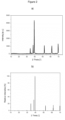
Fig. 2 : a) X-ray diffraction recording of the starting material Mo2C (Aldrich); and b) the Mo2C X-ray spectrum from the International Center for Diffraction Data ICDD 01-077-0720; -
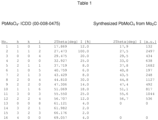
Fig. 3 : a) X-ray diffraction pattern of the resulting PbMoO4 crystals from the initial Mo2C material (Aldrich); - Table 1: Comparison of the obtained x-ray image of the resulting PbMoO4 from the Mo2C (Aldrich) and PbMoO4 crystals from the database, which is attached and certified in the EVA program;
-
Fig. 4 : a) Image of the starting material Mo2N in the form of nanowires applied to the carbon strip; and b) the resulting PbMoO4 crystals applied to the carbon strip taken with a linear electron microscope to a field emission; -
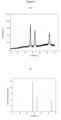
Fig. 5 : a) X-ray diffraction overlay of Mo2N nanowires and b) X-ray spectrum Mo2N from the International Center for Diffraction Data Mo2N ICDD (00-025-1366); -
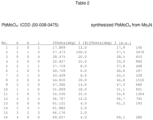
Fig. 6 : X-ray diffraction pattern of the resulting PbMoO4 crystals from the initial Mo2N material; - Table 2: Comparison of the obtained X-ray spectrum of the resulting PbMoO4 crystals from Mo2N and PbMoO4 from the database, which is attached and certified in the EVA program;
-
Fig. 7 : a) Image of the starting material W2N applied to the carbon strip; and b) the resulting PbWO4 crystals applied to the carbon tape taken with a linear electron microscope on a field emission; -
Fig. 8 : a) X-ray diffraction image of the initial material W2N; and b) X-ray X-ray spectrum from the International Center for Diffraction Data W2N ICDD (00-025-1257); -
Fig. 9 : X-ray diffraction pattern of the resulting PbWO4 crystals from the initial material W2N; - Table 3: Comparison of the obtained X-ray image of the resulting PbWO4 crystals from W2N from the database, which is attached and certified in the EVA program
- The described technical problem is solved by the chemical conversion of molybdenum and tungsten nitrides MxN, where M =Mo,W and 1 ≤ x ≤ 2 and molybdenum and tungsten carbides MxC, where M = Mo,W and 1≤x≤2. Chemical conversion into metal molybdates and metal tungstates in a form AaMO4, where A = Sr, Ba, Co, Bi, Cd, Cu, Fe, Mn, Pb and 0.6 ≤ a ≤ 1, M = Mo, W takes place in a solution of reactive compounds, containing metal A = Sr, Ba, Co, Bi, Cd, Cu, Fe, Mn, Pb. Solvent in which said reactive compounds containing metal selected from Sr, Ba, Co, Bi, Cd, Cu, Fe, Mn, Pb are dissolved is water or a mixture of solvents consisting of at least 0.5 % by weight of water, the remainder of the solvents being liquids (e.g. alcohols) that are mixed with water. Reactive compounds containing metals A = Sr, Ba, Co, Bi, Cd, Cu, Fe, Mn, Pb are preferably nitrates, oxides, acetates and halides. The reaction is also carried out with insoluble reactive compounds containing metal A = Sr, Ba, Co, Bi, Cd, Co, Cu, Fe, Mn, Pb. Conversion takes place at temperatures above 1 °C, preferably at temperatures between 20 °C and 300 °C. The reaction also takes place under conditions of solvatothermal reaction in autoclaves. The starting materials are molybdenum and tungsten nitrides MxN, where M = Mo, W and 1 ≤ x ≤ 2 and molybdenum and tungsten carbides MxC, where M = Mo, W and 1 ≤ x ≤ 2, wherein said molybdenum and tungsten nitrides MxN and molybdenum and tungsten carbides MxC are, with reactive compounds containing metal A = Sr, Ba, Co, Bi, Cd, Cu, Fe, Mn, Pb, converted to metal molybdates or metal tungstates.
-
- 1. Implementation example describes the synthesis of lead molybdate P PbMoO4 with the chemical conversion of molybdenum carbide Mo2C (Aldrich).
202 mg of molybdenum carbide Mo2C (Aldrich).was poured with 100 ml of distilled water and dispersed for 15 minutes using an ultrasonic bath. 500 mg of Pb(NO3)2 was dissolved at room temperature in 100 ml of distilled water and added to the Mo2C dispersion and heated to 50 °C for 12 hours. The dispersion was then centrifuged for 30 minutes at 2500 rpm and the product was washed three times with distilled water, once with isopropanol, and dried at 50 °C in an oven. We received 220 mg of material. The material was examined by linear electron microscopy (SEM), by electron microscopy (TEM) and X-ray powder diffraction. - 2. Implementation example describes the synthesis of lead molybdate PbMoO4 with the chemical conversion of molybdenum nitride Mo2N
30 mg of molybdenum nitride Mo2N in the form of nanowires was poured with 60 ml of distilled water and dispersed for 15 minutes using an ultrasonic bath. 500 mg Pb(NO3)2 was dissolved at room temperature in 100 ml of distilled water, 30 ml of this solution was added to the Mo2N dispersion at room temperature (20 °C) with stirring on a magnetic stirrer. The resulting dispersion was centrifuged for 30 minutes at 10000 rpm and the resulting insoluble product was washed three times with distilled water with isopropanol once and dried at 50 °C in an oven. The mass of the final material was 62 mg. The material was examined by linear electron microscopy (SEM), by electron microscopy (TEM) and X-ray powder diffraction. - 3. The Implementation example the synthesis of lead tungsten PbWO4 with the chemical conversion of tungsten nitride W2N
930 mg WOs (Aldrich) was heated at 630 °C for 4 hours with a mixture of argon and ammonia gas (flow rate of 10 ml/min to 30 ml/min). We obtained 785 mg of tungsten nitride W2N. 80 mg of this material was dispersed in 60 ml of water. 500 mg of Pb(NO3)2 was dissolved at room temperature in 100 ml of distilled water, 50 ml of this solution was added to the W2N dispersion. The dispersion was heated at 50 °C for 12 hours. The dispersion was centrifuged for 30 minutes at 2400 rpm and the product was washed three times with distilled and once with isopropanol and dried at 50 °C in an oven. The weight of the final material was 125 mg. The material was examined by linear electron microscopy (SEM), by electron microscopy (TEM) and X-ray powder diffraction.
Claims (3)
- A process for the synthesis of metal molybdates and tungstates in the form of AaMO4, wherein A = Sr, Ba, Co, Bi, Cd, Cu, Fe, Mn, Pb, wherein 0.6 ≤ a ≤ 1, M = Mo, W, characterized in that the synthesis is carried out by the chemical conversion of molybdenum and tungsten nitrides MxN, wherein M = Mo, W and 1 ≤ x ≤ 2, and molybdenum and tungsten carbides MxC, wherein M = Mo, W and 1 ≤ x ≤ 2 in a solution of reactive compounds containing metal A = Sr, Ba, Bi, Cd, Co, Cu, Fe, Mn, Pb, wherein a solvent, in which said reactive compounds containing metal A = Sr, Ba, Bi, Cd, Co, Cu, Fe, Mn, Pb are dissolved, is water or a mixture of solvents consisting of at least 0.5 weight % of water and the remainder of the solvents are liquids that are miscible with water, at temperatures above 1 °C.
- The process according to claim 1, characterized in that reactive compounds containing metal A = Sr, Ba, Co, Bi, Cd, Cu, Fe, Mn, Pb are nitrates, acetates, oxides or halides.
- The process according to claim 1, characterized in that the chemical conversion is carried out at temperatures between 20 °C and 300 °C.
Applications Claiming Priority (1)
| Application Number | Priority Date | Filing Date | Title |
|---|---|---|---|
| SI201700312A SI25549A (en) | 2017-11-16 | 2017-11-16 | Procedure for synthesis of metal molybdates and wolframates from molybdenum and wolfram carbides and nitrides |
Publications (3)
| Publication Number | Publication Date |
|---|---|
| EP3486218A1 EP3486218A1 (en) | 2019-05-22 |
| EP3486218B1 true EP3486218B1 (en) | 2024-09-25 |
| EP3486218C0 EP3486218C0 (en) | 2024-09-25 |
Family
ID=64959080
Family Applications (1)
| Application Number | Title | Priority Date | Filing Date |
|---|---|---|---|
| EP18206299.2A Active EP3486218B1 (en) | 2017-11-16 | 2018-11-14 | Method for the synthesis of metal molybdates and tungstates from molybdenum and tungsten carbides and nitrides |
Country Status (2)
| Country | Link |
|---|---|
| EP (1) | EP3486218B1 (en) |
| SI (1) | SI25549A (en) |
Family Cites Families (3)
| Publication number | Priority date | Publication date | Assignee | Title |
|---|---|---|---|---|
| US4366126A (en) | 1979-12-14 | 1982-12-28 | Union Carbide Corporation | Removal of molybdenum from uranium solutions |
| US6331503B1 (en) | 1998-04-15 | 2001-12-18 | Lehigh University | In-situ formation of metal-molybdate catalysts |
| CN102010006B (en) | 2010-12-24 | 2012-05-30 | 金堆城钼业股份有限公司 | Method for synthesizing lead molybdate |
-
2017
- 2017-11-16 SI SI201700312A patent/SI25549A/en active IP Right Grant
-
2018
- 2018-11-14 EP EP18206299.2A patent/EP3486218B1/en active Active
Also Published As
| Publication number | Publication date |
|---|---|
| SI25549A (en) | 2019-05-31 |
| EP3486218A1 (en) | 2019-05-22 |
| EP3486218C0 (en) | 2024-09-25 |
Similar Documents
| Publication | Publication Date | Title |
|---|---|---|
| Wang et al. | A novel pathway to PbSe nanowires at room temperature | |
| US6872249B2 (en) | Synthesis of colloidal nanocrystals | |
| EP1812336B1 (en) | Preparation method of magnetic and metal oxide nanoparticles | |
| Lu et al. | Advances in Synthesis of High‐Performance Thermoelectric Materials | |
| CN112174212B (en) | Manganese hydroxychloride nanomaterial and preparation method thereof | |
| EP2043950A2 (en) | Synthesis of high surface area nanogrystalline materials useful in battery applications | |
| US4840925A (en) | Compositions of transition metal manganites in the form of particles or ceramics, their preparation and their use in the production of thermistors | |
| Gervas et al. | Phase pure Ni 3 S 2 and NiS from bis (N′-ethyl-N-piperazinylcarbodithioato-S, S′)–nickel (ii) via solvent thermolysis and aerosol assisted chemical vapour deposition | |
| Yekta et al. | Synthesis of CaWO4 nanoparticles and its application for the adsorption-degradation of organophosphorus cyanophos | |
| Wang et al. | Solution synthesis of triangular and hexagonal nickel nanosheets with the aid of tungsten hexacarbonyl | |
| KR20090108826A (en) | Metal chalcogenide nanoparticles and preparation method thereof | |
| CN1068267C (en) | Method of preparing powders for hard materials | |
| CN1260118C (en) | Preparation for metal sulfide | |
| EP3486218A1 (en) | Method for the synthesis of metal molybdates and tungstates from molybdenum and tungsten carbides and nitrides | |
| CA1103424A (en) | Chalcogenides and method of preparation | |
| CN100400693C (en) | Process for producing diamond using catalytic methods and method for treating mixtures of graphite and catalyst used in the synthesis | |
| WO1996003239A1 (en) | Method of preparing powders for hard materials from apt and soluble cobalt salts | |
| Mohandes et al. | Preparation of Mn2O3 nanostructures with different shapes by a simple solid-state method | |
| CN113184908A (en) | Rapid synthesis method of molybdenum oxide nanowire | |
| Datta et al. | Composition controlled synthesis of Bi rich Bi 1− x Sb x alloy nanocrystals by a low temperature polyol process | |
| Fuller et al. | A simple procedure for the production of large ferromagnetic cobalt nanoparticles | |
| SE502932C2 (en) | Method for the production of powder from hard material of WC and other metal carbides | |
| Zhang et al. | Preparation and microstructure of nanometer-sized Mn2O3 | |
| WO2006090151A1 (en) | Process of forming a nanocrystalline metal alloy | |
| KR101697823B1 (en) | A cobalt-molybdenum nanoparticles and method of thereof |
Legal Events
| Date | Code | Title | Description |
|---|---|---|---|
| PUAI | Public reference made under article 153(3) epc to a published international application that has entered the european phase |
Free format text: ORIGINAL CODE: 0009012 |
|
| STAA | Information on the status of an ep patent application or granted ep patent |
Free format text: STATUS: THE APPLICATION HAS BEEN PUBLISHED |
|
| AK | Designated contracting states |
Kind code of ref document: A1 Designated state(s): AL AT BE BG CH CY CZ DE DK EE ES FI FR GB GR HR HU IE IS IT LI LT LU LV MC MK MT NL NO PL PT RO RS SE SI SK SM TR |
|
| AX | Request for extension of the european patent |
Extension state: BA ME |
|
| STAA | Information on the status of an ep patent application or granted ep patent |
Free format text: STATUS: REQUEST FOR EXAMINATION WAS MADE |
|
| 17P | Request for examination filed |
Effective date: 20191114 |
|
| RBV | Designated contracting states (corrected) |
Designated state(s): AL AT BE BG CH CY CZ DE DK EE ES FI FR GB GR HR HU IE IS IT LI LT LU LV MC MK MT NL NO PL PT RO RS SE SI SK SM TR |
|
| STAA | Information on the status of an ep patent application or granted ep patent |
Free format text: STATUS: EXAMINATION IS IN PROGRESS |
|
| RIC1 | Information provided on ipc code assigned before grant |
Ipc: C01G 41/02 20060101ALI20220511BHEP Ipc: C01G 39/02 20060101AFI20220511BHEP |
|
| 17Q | First examination report despatched |
Effective date: 20220527 |
|
| GRAP | Despatch of communication of intention to grant a patent |
Free format text: ORIGINAL CODE: EPIDOSNIGR1 |
|
| STAA | Information on the status of an ep patent application or granted ep patent |
Free format text: STATUS: GRANT OF PATENT IS INTENDED |
|
| GRAS | Grant fee paid |
Free format text: ORIGINAL CODE: EPIDOSNIGR3 |
|
| GRAA | (expected) grant |
Free format text: ORIGINAL CODE: 0009210 |
|
| STAA | Information on the status of an ep patent application or granted ep patent |
Free format text: STATUS: THE PATENT HAS BEEN GRANTED |
|
| INTG | Intention to grant announced |
Effective date: 20240731 |
|
| AK | Designated contracting states |
Kind code of ref document: B1 Designated state(s): AL AT BE BG CH CY CZ DE DK EE ES FI FR GB GR HR HU IE IS IT LI LT LU LV MC MK MT NL NO PL PT RO RS SE SI SK SM TR |
|
| REG | Reference to a national code |
Ref country code: GB Ref legal event code: FG4D |
|
| REG | Reference to a national code |
Ref country code: CH Ref legal event code: EP |
|
| REG | Reference to a national code |
Ref country code: DE Ref legal event code: R096 Ref document number: 602018074669 Country of ref document: DE |
|
| REG | Reference to a national code |
Ref country code: IE Ref legal event code: FG4D |
|
| U01 | Request for unitary effect filed |
Effective date: 20241016 |
|
| U07 | Unitary effect registered |
Designated state(s): AT BE BG DE DK EE FI FR IT LT LU LV MT NL PT RO SE SI Effective date: 20241030 |
|
| U20 | Renewal fee for the european patent with unitary effect paid |
Year of fee payment: 7 Effective date: 20241028 |
|
| PG25 | Lapsed in a contracting state [announced via postgrant information from national office to epo] |
Ref country code: NO Free format text: LAPSE BECAUSE OF FAILURE TO SUBMIT A TRANSLATION OF THE DESCRIPTION OR TO PAY THE FEE WITHIN THE PRESCRIBED TIME-LIMIT Effective date: 20241225 |
|
| PG25 | Lapsed in a contracting state [announced via postgrant information from national office to epo] |
Ref country code: GR Free format text: LAPSE BECAUSE OF FAILURE TO SUBMIT A TRANSLATION OF THE DESCRIPTION OR TO PAY THE FEE WITHIN THE PRESCRIBED TIME-LIMIT Effective date: 20241226 |
|
| PG25 | Lapsed in a contracting state [announced via postgrant information from national office to epo] |
Ref country code: RS Free format text: LAPSE BECAUSE OF FAILURE TO SUBMIT A TRANSLATION OF THE DESCRIPTION OR TO PAY THE FEE WITHIN THE PRESCRIBED TIME-LIMIT Effective date: 20241225 |
|
| PG25 | Lapsed in a contracting state [announced via postgrant information from national office to epo] |
Ref country code: RS Free format text: LAPSE BECAUSE OF FAILURE TO SUBMIT A TRANSLATION OF THE DESCRIPTION OR TO PAY THE FEE WITHIN THE PRESCRIBED TIME-LIMIT Effective date: 20241225 Ref country code: NO Free format text: LAPSE BECAUSE OF FAILURE TO SUBMIT A TRANSLATION OF THE DESCRIPTION OR TO PAY THE FEE WITHIN THE PRESCRIBED TIME-LIMIT Effective date: 20241225 Ref country code: GR Free format text: LAPSE BECAUSE OF FAILURE TO SUBMIT A TRANSLATION OF THE DESCRIPTION OR TO PAY THE FEE WITHIN THE PRESCRIBED TIME-LIMIT Effective date: 20241226 |
|
| PG25 | Lapsed in a contracting state [announced via postgrant information from national office to epo] |
Ref country code: IS Free format text: LAPSE BECAUSE OF FAILURE TO SUBMIT A TRANSLATION OF THE DESCRIPTION OR TO PAY THE FEE WITHIN THE PRESCRIBED TIME-LIMIT Effective date: 20250125 |
|
| PG25 | Lapsed in a contracting state [announced via postgrant information from national office to epo] |
Ref country code: SM Free format text: LAPSE BECAUSE OF FAILURE TO SUBMIT A TRANSLATION OF THE DESCRIPTION OR TO PAY THE FEE WITHIN THE PRESCRIBED TIME-LIMIT Effective date: 20240925 |
|
| PG25 | Lapsed in a contracting state [announced via postgrant information from national office to epo] |
Ref country code: ES Free format text: LAPSE BECAUSE OF FAILURE TO SUBMIT A TRANSLATION OF THE DESCRIPTION OR TO PAY THE FEE WITHIN THE PRESCRIBED TIME-LIMIT Effective date: 20240925 |
|
| PG25 | Lapsed in a contracting state [announced via postgrant information from national office to epo] |
Ref country code: CZ Free format text: LAPSE BECAUSE OF FAILURE TO SUBMIT A TRANSLATION OF THE DESCRIPTION OR TO PAY THE FEE WITHIN THE PRESCRIBED TIME-LIMIT Effective date: 20240925 Ref country code: PL Free format text: LAPSE BECAUSE OF FAILURE TO SUBMIT A TRANSLATION OF THE DESCRIPTION OR TO PAY THE FEE WITHIN THE PRESCRIBED TIME-LIMIT Effective date: 20240925 |
|
| PG25 | Lapsed in a contracting state [announced via postgrant information from national office to epo] |
Ref country code: SK Free format text: LAPSE BECAUSE OF FAILURE TO SUBMIT A TRANSLATION OF THE DESCRIPTION OR TO PAY THE FEE WITHIN THE PRESCRIBED TIME-LIMIT Effective date: 20240925 |
|
| REG | Reference to a national code |
Ref country code: CH Ref legal event code: PL |
|
| PG25 | Lapsed in a contracting state [announced via postgrant information from national office to epo] |
Ref country code: MC Free format text: LAPSE BECAUSE OF FAILURE TO SUBMIT A TRANSLATION OF THE DESCRIPTION OR TO PAY THE FEE WITHIN THE PRESCRIBED TIME-LIMIT Effective date: 20240925 |
|
| REG | Reference to a national code |
Ref country code: CH Ref legal event code: PL |
|
| PG25 | Lapsed in a contracting state [announced via postgrant information from national office to epo] |
Ref country code: CH Free format text: LAPSE BECAUSE OF NON-PAYMENT OF DUE FEES Effective date: 20241130 |
|
| PLBE | No opposition filed within time limit |
Free format text: ORIGINAL CODE: 0009261 |
|
| STAA | Information on the status of an ep patent application or granted ep patent |
Free format text: STATUS: NO OPPOSITION FILED WITHIN TIME LIMIT |
|
| GBPC | Gb: european patent ceased through non-payment of renewal fee |
Effective date: 20241225 |
|
| 26N | No opposition filed |
Effective date: 20250626 |
|
| PG25 | Lapsed in a contracting state [announced via postgrant information from national office to epo] |
Ref country code: GB Free format text: LAPSE BECAUSE OF NON-PAYMENT OF DUE FEES Effective date: 20241225 |
|
| PG25 | Lapsed in a contracting state [announced via postgrant information from national office to epo] |
Ref country code: IE Free format text: LAPSE BECAUSE OF NON-PAYMENT OF DUE FEES Effective date: 20241114 |
|
| U20 | Renewal fee for the european patent with unitary effect paid |
Year of fee payment: 8 Effective date: 20251001 |
|
| PG25 | Lapsed in a contracting state [announced via postgrant information from national office to epo] |
Ref country code: HR Free format text: LAPSE BECAUSE OF FAILURE TO SUBMIT A TRANSLATION OF THE DESCRIPTION OR TO PAY THE FEE WITHIN THE PRESCRIBED TIME-LIMIT Effective date: 20240925 |
|
| PG25 | Lapsed in a contracting state [announced via postgrant information from national office to epo] |
Ref country code: HU Free format text: LAPSE BECAUSE OF FAILURE TO SUBMIT A TRANSLATION OF THE DESCRIPTION OR TO PAY THE FEE WITHIN THE PRESCRIBED TIME-LIMIT; INVALID AB INITIO Effective date: 20181114 |
|
| PG25 | Lapsed in a contracting state [announced via postgrant information from national office to epo] |
Ref country code: CY Free format text: LAPSE BECAUSE OF FAILURE TO SUBMIT A TRANSLATION OF THE DESCRIPTION OR TO PAY THE FEE WITHIN THE PRESCRIBED TIME-LIMIT; INVALID AB INITIO Effective date: 20181114 |