EP3485409B1 - Estimation of insulin based on reinforcement learning - Google Patents
Estimation of insulin based on reinforcement learning Download PDFInfo
- Publication number
- EP3485409B1 EP3485409B1 EP17754790.8A EP17754790A EP3485409B1 EP 3485409 B1 EP3485409 B1 EP 3485409B1 EP 17754790 A EP17754790 A EP 17754790A EP 3485409 B1 EP3485409 B1 EP 3485409B1
- Authority
- EP
- European Patent Office
- Prior art keywords
- insulin
- glucose
- time
- policy
- control action
- Prior art date
- Legal status (The legal status is an assumption and is not a legal conclusion. Google has not performed a legal analysis and makes no representation as to the accuracy of the status listed.)
- Active
Links
Images

Classifications
-
- G—PHYSICS
- G16—INFORMATION AND COMMUNICATION TECHNOLOGY [ICT] SPECIALLY ADAPTED FOR SPECIFIC APPLICATION FIELDS
- G16H—HEALTHCARE INFORMATICS, i.e. INFORMATION AND COMMUNICATION TECHNOLOGY [ICT] SPECIALLY ADAPTED FOR THE HANDLING OR PROCESSING OF MEDICAL OR HEALTHCARE DATA
- G16H20/00—ICT specially adapted for therapies or health-improving plans, e.g. for handling prescriptions, for steering therapy or for monitoring patient compliance
- G16H20/10—ICT specially adapted for therapies or health-improving plans, e.g. for handling prescriptions, for steering therapy or for monitoring patient compliance relating to drugs or medications, e.g. for ensuring correct administration to patients
- G16H20/17—ICT specially adapted for therapies or health-improving plans, e.g. for handling prescriptions, for steering therapy or for monitoring patient compliance relating to drugs or medications, e.g. for ensuring correct administration to patients delivered via infusion or injection
-
- A—HUMAN NECESSITIES
- A61—MEDICAL OR VETERINARY SCIENCE; HYGIENE
- A61B—DIAGNOSIS; SURGERY; IDENTIFICATION
- A61B5/00—Measuring for diagnostic purposes; Identification of persons
- A61B5/145—Measuring characteristics of blood in vivo, e.g. gas concentration or pH-value ; Measuring characteristics of body fluids or tissues, e.g. interstitial fluid or cerebral tissue
- A61B5/14532—Measuring characteristics of blood in vivo, e.g. gas concentration or pH-value ; Measuring characteristics of body fluids or tissues, e.g. interstitial fluid or cerebral tissue for measuring glucose, e.g. by tissue impedance measurement
-
- A—HUMAN NECESSITIES
- A61—MEDICAL OR VETERINARY SCIENCE; HYGIENE
- A61B—DIAGNOSIS; SURGERY; IDENTIFICATION
- A61B5/00—Measuring for diagnostic purposes; Identification of persons
- A61B5/72—Signal processing specially adapted for physiological signals or for diagnostic purposes
- A61B5/7271—Specific aspects of physiological measurement analysis
- A61B5/7282—Event detection, e.g. detecting unique waveforms indicative of a medical condition
-
- G—PHYSICS
- G06—COMPUTING OR CALCULATING; COUNTING
- G06N—COMPUTING ARRANGEMENTS BASED ON SPECIFIC COMPUTATIONAL MODELS
- G06N20/00—Machine learning
-
- G—PHYSICS
- G06—COMPUTING OR CALCULATING; COUNTING
- G06N—COMPUTING ARRANGEMENTS BASED ON SPECIFIC COMPUTATIONAL MODELS
- G06N7/00—Computing arrangements based on specific mathematical models
-
- G—PHYSICS
- G16—INFORMATION AND COMMUNICATION TECHNOLOGY [ICT] SPECIALLY ADAPTED FOR SPECIFIC APPLICATION FIELDS
- G16H—HEALTHCARE INFORMATICS, i.e. INFORMATION AND COMMUNICATION TECHNOLOGY [ICT] SPECIALLY ADAPTED FOR THE HANDLING OR PROCESSING OF MEDICAL OR HEALTHCARE DATA
- G16H50/00—ICT specially adapted for medical diagnosis, medical simulation or medical data mining; ICT specially adapted for detecting, monitoring or modelling epidemics or pandemics
- G16H50/20—ICT specially adapted for medical diagnosis, medical simulation or medical data mining; ICT specially adapted for detecting, monitoring or modelling epidemics or pandemics for computer-aided diagnosis, e.g. based on medical expert systems
-
- G—PHYSICS
- G16—INFORMATION AND COMMUNICATION TECHNOLOGY [ICT] SPECIALLY ADAPTED FOR SPECIFIC APPLICATION FIELDS
- G16H—HEALTHCARE INFORMATICS, i.e. INFORMATION AND COMMUNICATION TECHNOLOGY [ICT] SPECIALLY ADAPTED FOR THE HANDLING OR PROCESSING OF MEDICAL OR HEALTHCARE DATA
- G16H50/00—ICT specially adapted for medical diagnosis, medical simulation or medical data mining; ICT specially adapted for detecting, monitoring or modelling epidemics or pandemics
- G16H50/50—ICT specially adapted for medical diagnosis, medical simulation or medical data mining; ICT specially adapted for detecting, monitoring or modelling epidemics or pandemics for simulation or modelling of medical disorders
Definitions
- the invention relates to the field of administration of insulin and to a corresponding Artificial Pancreas.
- Type 1 diabetes is a metabolic disease characterised by uncontrolled blood glucose levels, due to the absence or malfunction of insulin.
- the Artificial Pancreas (AP) system aims to simulate the function of the physiological pancreas and serve as an external automatic glucose regulation system.
- AP combines a continuous glucose monitor (CGM), a continuous subcutaneous insulin infusion (CSII) pump and a control algorithm which closes the loop between the two devices and optimises the insulin infusion rate.
- CGM continuous glucose monitor
- CSII continuous subcutaneous insulin infusion
- Reinforcement learning is a branch of machine learning (ML) and is an intensively active research field which embraces algorithms that are able to learn from data and perform optimisation within uncertain environments.
- the field of RL falls between supervised and unsupervised learning and includes problems where an agent attempts to improve its performance at a given task over time by continual interaction with its environment. During this effort, no input-output data are explicitly provided, and the performance improvement is translated as minimizing some notion of long-term expected cost over the path of the agent.
- RL began to develop as an independent branch in the early 1980s and was inspired by animal psychology and the idea of learning through trial-and-error.
- RL It was quickly adopted by the field of optimal control as a very efficient way to solve dynamic programming problems for which Bellman's "curse of dimensionality" restricted an analytical solution.
- the agent follows a certain control policy based on which it choses actions u and moves from the current state x to the next. Each state transition is followed by a local cost c which denotes the quality of this transition based on some predefined criteria. Aim of the agent is to find an optimal control policy so as to minimize the total expected cost throughout its path.
- RL is a field with an extensiveliy investigated theoretical background, which is now finding its way towards practical application, due to modern advances in computational capacity. In this view, the application in real life problems is highlighted as one of the current trends of RL.
- RL is mainly investigated for prognosis, classification and diagnosis by means of big/heterogeneous data collection, fusion and analysis, with fewer reports on treatment studies.
- the advantages of ML and RL illustrate a promising path towards the resolution of the AP challenges, as has been recently recognised and reported.
- a deterministic gluco-regulatory model was used, but augmented with uncertainty to simulate patient variability. This process may not be representative of actual patient variability and limits the strength of the adaptive capability presented.
- an RL-based algorithm is proposed for personalised insulin infusion and glucose regulation in T1D.
- a model-free Actor-Critic (AC) algorithm is developed and evaluated in silico for its ability to maintain normoglycaemia within a large patient cohort and under variable environmental uncertainties. The scope of the approach is two-fold:
- the AC algorithm is enhanced with a novel method for automatic and personalised tuning, based on the estimation of information transfer (IT) from insulin to glucose signals.
- IT information transfer
- the proposed novel control scheme is able to meet the following challenges:
- the present invention discloses a method as defined by claims 1 to 17.
- the invention provides a method for estimating an optimal therapy, for example, the optimal insulin to be delivered by an insulin delivery device such as an infusion pump.
- the therapy may be determined by using a reinforcement learning algorithm aiming to the personalized glucose regulation.
- the algorithm may optimize the daily basal insulin rate and insulin to carbohydrate ratio for each patient, on the basis (for example) of his/her measured glucose profile.
- Such algorithm may able to learn in real-time patient-specific characteristics captured in the daily glucose profile and provide individualised insulin treatment.
- An automatic and personalised tuning method contributes in the optimisation of the algorithm's performance. It is worth noting that the design of the algorithm may permits its direct use by the patient without any intervention or intermediate steps involving either physicians or engineers.
- the system provides the patient's standard treatment as defined by his/her physician and, in parallel, may collect his/her continuous glucose monitor and insulin pump data.
- the algorithm automatically initialises several parameters.
- the algorithm may continue the personalisation of insulin treatment with daily adaptation of the daily basal insulin rate and insulin-carbohydrate ratio.
- the algorithm needs minimal computational time and can run smoothly on a mobile/portable device.
- One of aspects of the invention is a method for determining an insulin therapy for a patient. This method may comprise the following steps:
- the determined control action takes into account at least one of the following control actions:
- the linear deterministic control action (P a ) may be defined as a linear combination of the glucose-regulatory system's state and a determined policy parameter vector.
- the supervisory control action (P s ) may correspond to a conservative suggestion of a previous insulin control policy. It may act as safety module against extreme changes of the insulin control policy (S) by the algorithm and/or as guidance of the direction of the update.
- the exploratory control action (P e ) may allow widening the search space of the glucose-regulatory system's state and/or supports a faster converge.
- the evaluation step is performed at an end of each period of time and the policy parameter vector may be updated at the end of the determined period of time.
- the duration of the predetermined period of time and/or of the subsequent period of time may be comprised between 1 hour and 36 hours, preferentially substantially equal to 24 hours.
- the determined control action may be defined as a rate of change of the insulin control policy (S) from the predetermined period of time (k-1) to the subsequent period of time (k).
- the determined control action may take into account at least two of the linear deterministic control action (P a ) the supervisory control action (P s ) and the exploratory control action (P e ).
- the determined control action may take into account a total deterministic control action (P d ) which is determined by means of a mathematical model that takes into account the linear deterministic control action (P a ) and the supervisory control action (P s ).
- the exploratory control action (P e ) is determined by means of a mathematical model that takes into account at least the total deterministic control action (P d ).
- the policy parameter vector may depend on the difference between the total deterministic control action (P d )and the exploratory control action (P e ).
- the critic may evaluate the state of the glucose-regulatory system as described by two features related to the hyper- and hypoglycaemic status occurred during the predetermined period of time (k-1). Furthermore, the critic may evaluate the state of the glucose-regulatory system as described by the average daily hypoglycaemia and hyperglycaemia error occurred during the predetermined period of time (k-1).
- the critic computes a local cost of the state of the glucose-regulatory system for the predetermined period of time.
- the actor may be configured to minimize the average expected cost per state.
- An initial insulin control policy may be determined by taking into account the patient's individual values as optimized by his/her physician and/or an in silico simulator.
- the value or the initial value of the policy parameter vector may be determined by using an insulin-to-glucose transfer entropy calculation.
- the insulin-to-glucose transfer entropy may be estimated on the basis of blood glucose data and insulin delivery data for duration of a time period comprised between 1 and 7 days, preferentially 4 days.
- the method may comprise an initialization phase during which an initial insulin control policy and/or an initial value of the policy parameter vector may be determined and adapted to the patient.
- the duration of the initialization phase may be comprised between 1 and 7 days, preferentially 4 days.
- any direction referred to herein, such as “top”, “bottom”, “left”, “right”, “upper”, “lower”, and other directions or orientations are described herein for clarity in reference to the figures and are not intended to be limiting of an actual device or system. Devices and systems described herein may be used in a number of directions and orientations.
- the Actor - Critic control system for closing the loop between continuous glucose monitors and insulin infusion pumps may run on any one of a portable / mobile device and smartphone, and is presented in the following paragraphs.
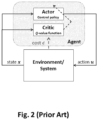
- the AC algorithm belongs to the class of RL and is characterised by the separation of the agent into two complementary parts shown in FIG: 2 : the Critic, which is responsible for evaluating the control policy and the Actor, which is responsible for improving control policy.
- the AC algorithms differ from actoronly or critic-only methods in that they possess better convergence properties. Moreover, their computational cost is lower, as they intrinsically estimate low variance gradients and parameterise policy to allow continuous time optimisation.
- Fig. 2 shows a schematic view of a system controlled by an AC algorithm.
- control policy is a conditional probability function ⁇ ( u
- the aim of the agent is to find an optimal control policy, in order to minimise the expected cost throughout its path. Transition between states x and y depends on the chosen control action u and follows a transition probability distribution p ( y
- ⁇ ⁇ ⁇ x ⁇ X , u ⁇ U c x u ⁇ ⁇ x u
- ⁇ ⁇ ( x,u ) is the stationary probability of the Markov chain ⁇ X k ,U k ⁇ .
- the Critic agent is responsible for the evaluation of the current control policy on the basis of approximation of an associated expected cost.
- One of the most powerful methods used for this purpose is temporal difference (TD) learning, in which the total expected cost of a process that starts at state x, takes as first action u and follows policy ⁇ ( u
- x 0 x
- x , u V ⁇ y V ⁇ x u ⁇ u ⁇ u
- the value function V ( x ) may be approximated by a parameterised function V w ( x ) with w ⁇ R K .
- w T denotes transpose.
- ⁇ k is a positive non-increasing learning rate sequence
- 0 ⁇ ⁇ ⁇ 1 is constant
- the aim of the Actor is to optimise the control policy over time towards minimisation of the average expected cost per state ⁇ ( ⁇ ).
- Policy gradient methods may be employed for the minimisation, which involve the estimation of the gradient ⁇ ⁇ ⁇ ( ⁇ ) with respect to the policy parameter vector 9.
- the AC algorithm is designed to optimise the insulin regime for each T1D patient.
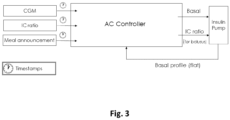
- the insulin regime may be defined as the combination of insulin basal rate (BR) and insulin-carbohydrate (IC) ratio ( FIG. 3 ). This choice was taken in order to be consistent with the medical practice; however, other insulin regime profiles may be used.
- the learning window is defined here as the time period provided for data collection prior to an update of the insulin profile. There are several considerations that influence this decision. The learning window cannot be comparable to the loop delay introduced by the CGM and the subcutaneous insulin absorption. Moreover, the trade-off between fast and slow learning should be considered. Frequent updates may effectively follow the rapid glucose dynamics, but miss the "big picture" which carries more basic or generic information about the patient's characteristics. Taking these into account, this document describes an example where the optimisation window is one day (24 hours). It is understood that "one day” refers to a time period of 24 hours which may start at any time of day or night, preferentially the time period may start at midnight of a given day and may end at the end this given day. This time period may also be longer or shorter.
- This "1 day” choice also considers the 24-hour circle of the human body, which carries adequate information about the patient's general gliycaemic status. As a result, the insulin policy is evaluated and updated once per day as based on the respective daily glucose profile ( FIGs. 3 and 4 ).
- the dynamics of the glucoregulatory system are represented as a Markov decision process, where the state x k is the status of the system in terms of hypo- and hyperglycaemia for day k .
- the mathematical formulation of the Critic was given before.
- the CGM measures the blood glucose of the patient over the time period (for example 24 h) and these measurements define the glucose profile of the time period. All or a part of these data may be recorded in a memory device.
- the glucose profile of the day is collected (and may be retrieved from the memory device) and the state x k may be calculated, for example by taking into account the measurements of the blood glucose or the blood glucose profile.
- the weights a h and a l are used for scaling the hypo- and hyperglycaemia components.
- the action-value function is linearly approximated as described in (12).
- the basis functions ⁇ ( ⁇ ) may be set equal to the likelihood ratio derivative (LRD) of the control policy which will be derived in a later phase.
- the initial parameters r 0 may be set to random values in [-1 1] and the initial parameters z 0 to zero values for all patients.
- the Actor implements a dual stochastic control policy ⁇ ( u k
- the control action u k may be defined as the rate of change of BR (IC ratio) from day k-1 to day k. The benefit of this choice will be revealed later.
- S ⁇ BR, IC ⁇
- S k is the control policy for the day k
- P k S is the control action i.e. the rate of change of S k from day k-1 to day k.
- the final applied control action P k S is withdrawn from the probability distribution ⁇ u k S
- a three-step process is followed, based on the generation of three different types of control actions:
- the control policy is a Gaussian probability distribution with mean equal to the total deterministic action P d ( x ) and standard deviation ⁇ .
- the LRD ⁇ ⁇ ( x,u ) has to be derived. Taking the gradient of the control policy with respect to ⁇ we have: ⁇ ⁇ ⁇ u
- x , ⁇ ⁇ u
- x k ⁇ k ⁇ ⁇ k d k u ⁇ P d x ⁇ 2 ⁇ ⁇ P d x
- the update of the policy parameter vector depends on the difference between the total deterministic and the exploratory policy, i.e. on the noise variance ⁇ 2 .
- the constant KS may be comprised between 0 and 1, preferentially set to 0.05 (following a trial-and-error process).
- the Actor learning rate ⁇ k may be set equal to the variance ⁇ 2 using the same reasoning. In this way, the AC algorithm may be all-time learning, in order to compensate for temporal or permanent changes in the gluco-regulatory system of each patient.
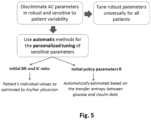
- the design of the AC algorithm involves various parameters that need to be tuned ( FIG. 5 ). Taking into account the patient variability, personalised tuning might be required for some of the parameters. Manual tuning for each patient is infeasible or might compromise the patients' safety, so automatic methods need to be investigated.
- the AC parameters may be first split into two classes, as robust (R) or sensitive (S):
- the initial values for the BR and IC ratio should be specific and appropriate for each patient.
- Clinical experience in treating diabetes has developed a number of empirical rules for the estimation of BR profiles and IC ratios for patients under CSII pump therapy, as based on their body weight, SI and lifestyle factors. These rules provide an open-loop insulin regime which may not be optimal but ensures primary glucose regulation.
- the BR and IC ratio of the AC algorithm can be initialised using the patient's individual values as optimised by his/her physician ( FIG. 5 ). This practice has the additional advantage that the transition of a patient from CSII to AP can be smoother both for him/herself and the physician.
- Initialisation of the policy parameter vector ⁇ may be based on investigation of its natural representation within the designed insulin infusion control algorithm ( FIG. 5 ).
- the optimal values of the policy parameter vector ⁇ answers the question: "How much should we change BR and IC ratio based on the observed daily hyper-/hypoglycaemia?" The answer may be related to the patient's SI and depends on his/her body mass index (BMI), total daily insulin (TDI) needs, lifestyle and genetic factors.
- BMI body mass index
- TDI total daily insulin
- TE transfer entropy
- TE estimates the IT from a cause signal Y (insulin) to an effect signal X (glucose). This value is independent of the magnitude of the two signals, i.e. the amount of insulin and the glucose concentration. For two patients with the same TE, higher TDI corresponds to lower SI.
- ⁇ S i c ′ x i TE TDI
- ⁇ S i is the change in BR or IC ratio based on the respective feature and c' a positive constant.
- the aforementioned analysis illustrates that defining the control action as the rate of insulin change permitted tuning of AC, using the insulin to glucose IT and without the need to estimate SI, which would be a more cumbersome process.
- the analysis may be approximate and may (only) be used as a draft estimate of the necessary BR or IC update. However, the scope is to provide a better starting point to AC in order to enhance the optimisation process.
- Insulin-to-glucose TE may be estimated on the basis of CGM and insulin pump data for four days (for example) collected from each patient. In order to choose the appropriate data size, datasets of different durations were used and the correlation between the respective TE values was computed for successive data lengths. It was observed that data of four days or more gave highly correlated TE values (>99%).
- TE IA ⁇ G ⁇ t p G t G t ⁇ 1 IA t ⁇ d log p G t
- the fixed data partitioning method may be used, in which the time-series may be partitioned into equal sized bins and the probability distributions are approximated as histograms.
- the method may include two successive stages:
- the learning stage is continuous and is executed at each time period after the initialization stage.
- the actor's initial basal insulin rate, initial insulin to carbohydrate ratio and/or the policy parameter vector may be patient-specific.
- the basal insulin rate and insulin to carbohydrate ratio of the AC may be initialized using the patient's individual values as optimised by his/her physician and/or an in silico simulator.
- the policy parameter vector of the AC controller may be initialized using the insulin-to-glucose transfer entropy estimated on the basis of glucose and insulin pump data for a short period of time, e.g. four days, collected from each patient.
- Insulin may be an insulin analog.
- the method may be carried out prior/during/after delivering insulin to the patient.
- the method may receive wireless/wired communication interfaces real-time data from a glucose monitor and insulin pump.
- the meal may be unannounced or manually entered by the patient.
- the meal may be announced to the controller via interface with other mobile/smartphone applications or sensors.
- the estimated basal rate and insulin to carbohydrate ratio may be used to control an insulin pump or an insulin patch pump either directly or via the pump's control unit.
- the invention provides a device for informing the patient regarding the estimated basal rate and insulin to carbohydrate ratio.
- the device can be any portable / mobile device or smartphone with processor configured to execute the method described herein above.
- the device may include all the display and interfaces needed to inform the patient about the optimal insulin therapy and transfer wired/wireless the data to a cloud/server or other diabetes technology related devices.
- the device may include interfaces with other mobile applications (e.g. diabetes e-logbook, fitness / food apps etc).
- other mobile applications e.g. diabetes e-logbook, fitness / food apps etc.
- the device may include all the display and interfaces needed to inform the patient about the optimal insulin therapy and transfer wired/wireless the data to a cloud/server or other diabetes technology related devices.
Landscapes
- Engineering & Computer Science (AREA)
- Health & Medical Sciences (AREA)
- Medical Informatics (AREA)
- Public Health (AREA)
- General Health & Medical Sciences (AREA)
- Biomedical Technology (AREA)
- Life Sciences & Earth Sciences (AREA)
- Physics & Mathematics (AREA)
- Pathology (AREA)
- Data Mining & Analysis (AREA)
- Epidemiology (AREA)
- Primary Health Care (AREA)
- Theoretical Computer Science (AREA)
- Databases & Information Systems (AREA)
- General Physics & Mathematics (AREA)
- Software Systems (AREA)
- Artificial Intelligence (AREA)
- Heart & Thoracic Surgery (AREA)
- Animal Behavior & Ethology (AREA)
- Veterinary Medicine (AREA)
- Evolutionary Computation (AREA)
- Surgery (AREA)
- Molecular Biology (AREA)
- Computing Systems (AREA)
- General Engineering & Computer Science (AREA)
- Mathematical Physics (AREA)
- Biophysics (AREA)
- Computer Vision & Pattern Recognition (AREA)
- Bioinformatics & Cheminformatics (AREA)
- Medicinal Chemistry (AREA)
- Chemical & Material Sciences (AREA)
- Mathematical Analysis (AREA)
- Physiology (AREA)
- Optics & Photonics (AREA)
- Pure & Applied Mathematics (AREA)
- Mathematical Optimization (AREA)
- Emergency Medicine (AREA)
- Computational Mathematics (AREA)
- Algebra (AREA)
- Psychiatry (AREA)
Description
- The invention relates to the field of administration of insulin and to a corresponding Artificial Pancreas.
-
Type 1 diabetes (T1D) is a metabolic disease characterised by uncontrolled blood glucose levels, due to the absence or malfunction of insulin. The Artificial Pancreas (AP) system aims to simulate the function of the physiological pancreas and serve as an external automatic glucose regulation system. AP combines a continuous glucose monitor (CGM), a continuous subcutaneous insulin infusion (CSII) pump and a control algorithm which closes the loop between the two devices and optimises the insulin infusion rate. - An important challenge in the design of efficient control algorithms for AP is the use of the subcutaneous route both for subcutaneous glucose measurement and subcutaneous insulin infusion; this introduces delays of up to 30 minutes for subcutaneous glucose measurement and up to 20 minutes for insulin absorption. Thus, a total delay of almost one hour restricts both monitoring and intervention in real time. Moreover, glucose is affected by multiple factors, which may be genetic, lifestyle and environmental. With the improvement in sensor technology, more information can be provided to the control algorithm (e.g. more accurate glucose readings and physical activity levels); however, the level of uncertainty remains very high. Last but not least, one of the most important challenges emerges from the high inter- and intra-patient variability, which dictates personalised insulin treatment.
- Along with hardware improvements, the challenges of the AP are gradually being addressed with the development of advanced algorithmic strategies; the strategies most investigated clinically are the Proportional integral Derivative (PID)], the Model Predictive Controller (MPC) and fuzzy logic (e.g. MD-Logic) algorithms. A recent development has been the bi-hormonal AP, which uses both insulin and glucagon. The increasing number of clinical trials has led to extensive in-hospital and, more recently, at-home evaluation of the feasibility of AP outside the controlled hospital environment. Most studies are restricted to the algorithmic evaluation of a patient cohort under uncertain conditions, such as erroneous meal intake and insulin sensitivity (SI) changes (e.g. physical activity).
- In spite of these promising results, none of the currently proposed control strategies is intrinsically designed to handle uncertainties and personalisation. PID is designed for linear systems, MPC solves an open-loop optimisation problem which has proved sub-optimal in the presence of uncertainty and MD-Logic is a rule-based approach directly subjected to the experience of the designer. In the view of patient variability, the algorithms have been enhanced with adaptive components, which are mainly based on the personalised identification of models involved or correlation of algorithmic parameters with one or multiple patient-specific characteristics, such as body weight, correction factor or SI. Nevertheless, the successful performance of the state-of-the-art AP algorithms proves that AP development is both feasible and viable and paves the path to a new era of more advanced algorithmic research towards robust and personalised insulin treatment.
- Reinforcement learning (RL) is a branch of machine learning (ML) and is an intensively active research field which embraces algorithms that are able to learn from data and perform optimisation within uncertain environments. The field of RL falls between supervised and unsupervised learning and includes problems where an agent attempts to improve its performance at a given task over time by continual interaction with its environment. During this effort, no input-output data are explicitly provided, and the performance improvement is translated as minimizing some notion of long-term expected cost over the path of the agent. RL began to develop as an independent branch in the early 1980s and was inspired by animal psychology and the idea of learning through trial-and-error. It was quickly adopted by the field of optimal control as a very efficient way to solve dynamic programming problems for which Bellman's "curse of dimensionality" restricted an analytical solution. In RL, the agent follows a certain control policy based on which it choses actions u and moves from the current state x to the next. Each state transition is followed by a local cost c which denotes the quality of this transition based on some predefined criteria. Aim of the agent is to find an optimal control policy so as to minimize the total expected cost throughout its path. RL is a field with an extensiveliy investigated theoretical background, which is now finding its way towards practical application, due to modern advances in computational capacity. In this view, the application in real life problems is highlighted as one of the current trends of RL. In medicine, RL is mainly investigated for prognosis, classification and diagnosis by means of big/heterogeneous data collection, fusion and analysis, with fewer reports on treatment studies. The advantages of ML and RL illustrate a promising path towards the resolution of the AP challenges, as has been recently recognised and reported. To evaluate the algorithm, a deterministic gluco-regulatory model was used, but augmented with uncertainty to simulate patient variability. This process may not be representative of actual patient variability and limits the strength of the adaptive capability presented.
- One factor that complicates the use of RL in medicine is the high number of constant and adaptive parameters which need to be tuned or initialised. Choosing the optimal values for these parameters is a challenging task and is usually performed manually, on the basis of problem-specific characteristics. However, in the face of interindividual variability, this manual process may be unreliable or even unfeasible. Yet another criticism of RL is the difficulty in generalisation or qualitative explanation of both the learning process and the final solution (black box).
- In the present approach, an RL-based algorithm is proposed for personalised insulin infusion and glucose regulation in T1D. A model-free Actor-Critic (AC) algorithm is developed and evaluated in silico for its ability to maintain normoglycaemia within a large patient cohort and under variable environmental uncertainties. The scope of the approach is two-fold:
- i) to investigate the applicability of RL in the context of a personalised AP and
- ii) to achieve an AC design that can be generalised and directly translated to medical experience.
- In order to overcome the tuning constraint discussed previously, the AC algorithm is enhanced with a novel method for automatic and personalised tuning, based on the estimation of information transfer (IT) from insulin to glucose signals.
- Early-stage work in AC algorithms has already been presented, together with preliminary evaluation results:
- DASKALAKI ELENA ET AL: "An Actor-Critic based controller for glucose regulation in
- Daskalaki E, Diem P, Mougiakakou S. Personalized tuning of a reinforcement learning control algorithm for glucose regulation, Proceedings of the 35th IEEE Eng Med Biol Soc Conference; 2013 July 3-7; Osaka, Japan.
- "Mariano De Paula, Luis Omar Ávila, Ernesto C. Martinez, Controlling blood glucose variability under uncertainty using reinforcement learning and Gaussian processes, Applied Soft Computing, Volume 35, 2015, Pages 310-332, ISSN 1568-4946" describes a novel approach for controlling variability in blood glucose concentration using simulation-based learning of a robust control policy is presented. To account for inter-patient variability, a policy iteration algorithm that combines reinforcement learning with Gaussian process approximation is proposed. A generic control policy is learned off-line using an Ito's stochastic process model of the glucose-insulin dynamics that simulates glycemic variability comprehensively. For safety and performance, only relevant data are sampled through Bayesian active learning.
- In the present invention, a novel design for the AC controller is introduced. Specifically:
- The control policy has been augmented by an exploratory policy, in order to increase the search space of the algorithm.
- A supervisory control policy has been incorporated to enhance the algorithm's safety.
- The AC controller is directly linked to physiological parameters and/or actions drawn from medical experience.
- The automatic tuning method has been extended and associated to patient-specific characteristics.
- In summary, the proposed novel control scheme is able to meet the following challenges:
- Inter-/intra-patient variability and personalisation of insulin treatment through the use of a real-time adaptive learning algorithm
- Robustness from using a control algorithm which is suitable for optimisation under uncertainty
- Easy transfer to practice in hospital and at home since it is
- based on limited a priori assumptions that counteract the high inter-patient variability
- initialised on the basis of physiological parameters
- The present invention discloses a method as defined by
claims 1 to 17. - The invention provides a method for estimating an optimal therapy, for example, the optimal insulin to be delivered by an insulin delivery device such as an infusion pump. The therapy may be determined by using a reinforcement learning algorithm aiming to the personalized glucose regulation. The algorithm may optimize the daily basal insulin rate and insulin to carbohydrate ratio for each patient, on the basis (for example) of his/her measured glucose profile. Such algorithm may able to learn in real-time patient-specific characteristics captured in the daily glucose profile and provide individualised insulin treatment. An automatic and personalised tuning method contributes in the optimisation of the algorithm's performance. It is worth noting that the design of the algorithm may permits its direct use by the patient without any intervention or intermediate steps involving either physicians or engineers.
- For example, during the first four operation days, the system provides the patient's standard treatment as defined by his/her physician and, in parallel, may collect his/her continuous glucose monitor and insulin pump data. At the end of this period, the algorithm automatically initialises several parameters. In sequence, the algorithm may continue the personalisation of insulin treatment with daily adaptation of the daily basal insulin rate and insulin-carbohydrate ratio. Preferentially, for all involved calculations, the algorithm needs minimal computational time and can run smoothly on a mobile/portable device.
- One of aspects of the invention is a method for determining an insulin therapy for a patient. This method may comprise the following steps:
- use a reinforcement learning algorithm to operate an adaptive controller, the reinforcement learning algorithm comprising:
- a. a critic which evaluates an insulin control policy (S) including at least one of an insulin infusion rate and an insulin to carbohydrate ratio, and
- b.an actor which improves the insulin control policy (S);
- apply, over a predetermined period of time (k-1), a predetermined insulin control policy (Sk-1);
- collect, over the predetermined period of time (k-1), blood glucose data or profile of the patient;
- determine a state of the glucose-regulatory system based, for example, on the collected blood glucose data;
- evaluate by the critic the predetermined insulin control policy (Sk-1) based, for example, on the state of the glucose-regulatory system;
- update by the actor, the insulin control policy (S), based, for example, on a determined control action, wherein the updated insulin control policy (Sk) is intended to apply over a subsequent period of time (k);
- The determined control action takes into account at least one of the following control actions:
- a linear deterministic control action (Pa);
- a supervisory control action (Ps), and
- an exploratory control action (Pe).
- The linear deterministic control action (Pa) may be defined as a linear combination of the glucose-regulatory system's state and a determined policy parameter vector. The supervisory control action (Ps) may correspond to a conservative suggestion of a previous insulin control policy. It may act as safety module against extreme changes of the insulin control policy (S) by the algorithm and/or as guidance of the direction of the update. The exploratory control action (Pe) may allow widening the search space of the glucose-regulatory system's state and/or supports a faster converge.
- Preferentially, the evaluation step is performed at an end of each period of time and the policy parameter vector may be updated at the end of the determined period of time. Furthermore, the duration of the predetermined period of time and/or of the subsequent period of time may be comprised between 1 hour and 36 hours, preferentially substantially equal to 24 hours.
- The determined control action may be defined as a rate of change of the insulin control policy (S) from the predetermined period of time (k-1) to the subsequent period of time (k).
- The determined control action may take into account at least two of the linear deterministic control action (Pa) the supervisory control action (Ps) and the exploratory control action (Pe).
- The determined control action may take into account a total deterministic control action (Pd) which is determined by means of a mathematical model that takes into account the linear deterministic control action (Pa) and the supervisory control action (Ps). Preferentially, the exploratory control action (Pe) is determined by means of a mathematical model that takes into account at least the total deterministic control action (Pd). The policy parameter vector may depend on the difference between the total deterministic control action (Pd)and the exploratory control action (Pe).
- The critic may evaluate the state of the glucose-regulatory system as described by two features related to the hyper- and hypoglycaemic status occurred during the predetermined period of time (k-1). Furthermore, the critic may evaluate the state of the glucose-regulatory system as described by the average daily hypoglycaemia and hyperglycaemia error occurred during the predetermined period of time (k-1).
- Preferentially, the critic computes a local cost of the state of the glucose-regulatory system for the predetermined period of time. And, the actor may be configured to minimize the average expected cost per state.
- An initial insulin control policy may be determined by taking into account the patient's individual values as optimized by his/her physician and/or an in silico simulator. The value or the initial value of the policy parameter vector may be determined by using an insulin-to-glucose transfer entropy calculation. Furthermore, the insulin-to-glucose transfer entropy may be estimated on the basis of blood glucose data and insulin delivery data for duration of a time period comprised between 1 and 7 days, preferentially 4 days.
- The method may comprise an initialization phase during which an initial insulin control policy and/or an initial value of the policy parameter vector may be determined and adapted to the patient. And the duration of the initialization phase may be comprised between 1 and 7 days, preferentially 4 days.
- The invention will be better understood in view of the description of preferred embodiments and in reference to the figures, wherein
-
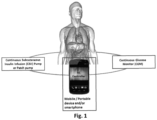
FIG. 1 illustrates the system, artificial pancreas, in which the control system for the pump or patch pump is integrated into a portable device wirelessly connected to both continuous glucose monitor (s) and insulin pump for the real-time transmission of data; -
FIG. 2 is a block diagram illustrating the general implementation of the actor-critic control system ofFIG. 1 for the implementation of the closed-loop system according to the prior art; -
FIG. 3 is a block diagram illustrating the inputs/outputs of the actor-critic control system ofFIG. 1 for the implementation of the closed-loop system according to the invention; -
FIG. 4 is a block diagram illustrating one implementation of the actor-critic control system ofFIG. 1 for the implementation of the closed-loop system according to the invention; and -
FIG. 5 illustrates an example of the procedure to be followed to tune the actor-critic system according to the invention. - The invention is set forth and characterized in the independent claims, white the dependent claims describe other characteristics of the invention.
- The present application claims the benefit of the priority of
PCT/IB2016/054242 filed on July 15, 2016 in the name of University Bern . - All scientific and technical terms used herein have meanings commonly used in the art unless otherwise specified. The definitions provided herein are to facilitate understanding of certain terms used frequently herein and are not meant to limit the scope of the present disclosure.
- As used in this specification and the appended claims, the singular forms "a", "an", and "the" encompass embodiments having plural referents, unless the content clearly dictates otherwise.
- As used in this specification and the appended claims, any direction referred to herein, such as "top", "bottom", "left", "right", "upper", "lower", and other directions or orientations are described herein for clarity in reference to the figures and are not intended to be limiting of an actual device or system. Devices and systems described herein may be used in a number of directions and orientations.
- As used herein, "have", "having", "include", "including", "comprise", "comprising" or the like are used in their open ended sense, and generally mean "including, but not limited to".
- As used in this specification and the appended claims, the term "or" is generally employed in its sense including "and/or" unless the content clearly dictates otherwise.
- The Actor - Critic control system for closing the loop between continuous glucose monitors and insulin infusion pumps, as illustrated in
FIG. 1 , may run on any one of a portable / mobile device and smartphone, and is presented in the following paragraphs. - The AC algorithm belongs to the class of RL and is characterised by the separation of the agent into two complementary parts shown in
FIG: 2 : the Critic, which is responsible for evaluating the control policy and the Actor, which is responsible for improving control policy. Within the RL family, the AC algorithms differ from actoronly or critic-only methods in that they possess better convergence properties. Moreover, their computational cost is lower, as they intrinsically estimate low variance gradients and parameterise policy to allow continuous time optimisation. - In AC learning, the agent follows a specific control policy and performs transitions between states within an uncertain environment.
Fig. 2 shows a schematic view of a system controlled by an AC algorithm. - In the case of stochastic systems, the control policy is a conditional probability function µ(u|x,θ) from which control actions u are withdrawn, given current states of x. The aim of the agent is to find an optimal control policy, in order to minimise the expected cost throughout its path. Transition between states x and y depends on the chosen control action u and follows a transition probability distribution p(y|x,u). A
- local cost c(x,u) is associated with each state and action. Preferentially, in an average reward setting, the aim of the AC algorithm is to find an optimal control policy in order to minimise the average expected cost per state over all states. This may be defined as:

- The Critic agent is responsible for the evaluation of the current control policy on the basis of approximation of an associated expected cost. One of the most powerful methods used for this purpose is temporal difference (TD) learning, in which the total expected cost of a process that starts at state x, takes as first action u and follows policy µ(u|x,θ) that may be defined through the value and action-value functions Vθ (x) and Qθ (x,u), respectively:


- The value and action-value functions may satisfy the following equations:


- For the given observed states, x = x k-1 , y = xk and action u = u k-1 , and the Bellman Equation (5) may reduce to:

- The Bellman's curse of dimensionality restricts the analytical solution of (6) in high dimensional spaces and requires the use of approximation methods. In the TD framework, the value function V(x) may be approximated by a parameterised function Vw (x) with w ∈ RK . The most commonly used architecture for the parameterised function may be the linear approximation defined as:


- On the basis of the TD error, the parameter vector w may be updated according to the formula:



- A similar process may be followed for the approximation of the action-value function Qθ (x,u):

- The aim of the Actor is to optimise the control policy over time towards minimisation of the average expected cost per state
α (θ). Policy gradient methods may be employed for the minimisation, which involve the estimation of the gradient ∇ θα (θ) with respect to the policy parameter vector 9. The general policy update function may have the following form:
α (θ). In the present example, the Actor may be used in which:
- The AC algorithm is designed to optimise the insulin regime for each T1D patient. The insulin regime may be defined as the combination of insulin basal rate (BR) and insulin-carbohydrate (IC) ratio (
FIG. 3 ). This choice was taken in order to be consistent with the medical practice; however, other insulin regime profiles may be used. The IC ratio is used for the calculation of the bolus dose (Ibolus) according to the known carbohydrate (CHO) size of the upcoming meal as:
- Prior to the design of the Critic and Actor agents, two important parameters of the algorithm need to be defined:
- i) the learning window, which corresponds to the update rate of the algorithm and
- ii) the state of the system.
- Both are discussed in the following paragraphs.
- The learning window is defined here as the time period provided for data collection prior to an update of the insulin profile. There are several considerations that influence this decision. The learning window cannot be comparable to the loop delay introduced by the CGM and the subcutaneous insulin absorption. Moreover, the trade-off between fast and slow learning should be considered. Frequent updates may effectively follow the rapid glucose dynamics, but miss the "big picture" which carries more basic or generic information about the patient's characteristics. Taking these into account, this document describes an example where the optimisation window is one day (24 hours). It is understood that "one day" refers to a time period of 24 hours which may start at any time of day or night, preferentially the time period may start at midnight of a given day and may end at the end this given day. This time period may also be longer or shorter. This "1 day" choice also considers the 24-hour circle of the human body, which carries adequate information about the patient's general gliycaemic status. As a result, the insulin policy is evaluated and updated once per day as based on the respective daily glucose profile (
FIGs. 3 and4 ). - The dynamics of the glucoregulatory system are represented as a Markov decision process, where the state xk is the status of the system in terms of hypo- and hyperglycaemia for day k. The glucose error EG at each time t may be defined as:

FIG. 4 ):


- The mathematical formulation of the Critic was given before. The CGM measures the blood glucose of the patient over the time period (for example 24 h) and these measurements define the glucose profile of the time period. All or a part of these data may be recorded in a memory device. At the end of day k (it is understood that the day is an example of the time period), the glucose profile of the day is collected (and may be retrieved from the memory device) and the state xk may be calculated, for example by taking into account the measurements of the blood glucose or the blood glucose profile. On the basis of the state, a local cost c(xk ) may be assigned (
FIG. 4 ), defined as:
- The weights ah and al are used for scaling the hypo- and hyperglycaemia components. ah and al may be comprised between 0 and 50, for example ah = 1 and al = 10. The action-value function is linearly approximated as described in (12). The basis functions ϕ(·) may be set equal to the likelihood ratio derivative (LRD) of the control policy which will be derived in a later phase. For the Critic update, the constants γ and λ may be comprised each of them between 0 and 1, preferentially γ = 0.9 and λ = 0.5 for all patients. The Critic's learning rate may be comprised between 0 and 1, preferentially

- The Actor implements a dual stochastic control policy µ(uk |xk,θk ) for the daily optimisation of the BR and IC ratio starting from an initial BR (IC ratio) value (
FIG. 4 ). in order to dissociate the action from the absolute level of the current insulin regime, the control action uk may be defined as the rate of change of BR (IC ratio) from day k-1 to day k. The benefit of this choice will be revealed later. Thus, the BR (IC ratio) may be updated as follows:


- i) linear deterministic,
- ii) supervisory and
- iii) exploratory action.
- However, only one or two of these types of control actions may be used for the design of the probability distribution. Hereafter, the notations k and S are omitted for clarity purposes. The procedure may be the same for BR and the IC ratio.
- Linear deterministic control action:
- The linear deterministic control action Pa is defined as the linear combination of the current state and policy parameter vector:

- In other words, this control action associates the daily hypo- and hyperglycaemic status to the needed percentage of BR (IC ratio) change for the next day.
- Supervisory control action:
- The supervisory control action Ps is a conservative rule-based advice to the algorithm and mainly serves as guidance of the direction of change to be followed and as a safety module against extreme insulin changes by the algorithm. The supervisory action is defined as:

- where the upper sign refers to BR and the lower sign to IC ratio.
- Preferentially, the weighted sum of the two previous actions may define the total deterministic control action Pd :

- Exploratory control action:
- The exploratory control action Pe may occur by adding white noise to the final deterministic policy as below:

- where N(0, σ) may be white Gaussian noise with zero mean and standard deviation σ. The aim of the exploration process is to widen the search space of the algorithm in order to optimise the performance and the convergence rate. The result of the exploration process is the final control action to be applied.
- Based on the previous analysis, we are now ready to derive the control policy µ(u | x,θ) as the probability distribution from which the final control action u = Pe is withdrawn:

- The control policy is a Gaussian probability distribution with mean equal to the total deterministic action Pd (x) and standard deviation σ. Finally, the LRD ψθ (x,u) has to be derived. Taking the gradient of the control policy with respect to θ we have:

- From (25, 26), LRD becomes:


- It can be seen in (28) that the update of the policy parameter vector depends on the difference between the total deterministic and the exploratory policy, i.e. on the noise variance σ 2. When an optimal policy has been found, which results in a state xk ~ 0 , we would like to reduce the exploration, as this may lead the system away from the solution found. To this end, the variance σ 2 is defined as a function of the state xk :

- The larger the state xk , the greater the time spent in hypo-/hyperglycaemia on day k, i.e. the larger the exploration space for a better control policy. The constant KS may be comprised between 0 and 1, preferentially set to 0.05 (following a trial-and-error process). The Actor learning rate βk may be set equal to the variance σ2 using the same reasoning. In this way, the AC algorithm may be all-time learning, in order to compensate for temporal or permanent changes in the gluco-regulatory system of each patient.
- The design of the AC algorithm, as described in the previous section, involves various parameters that need to be tuned (
FIG. 5 ). Taking into account the patient variability, personalised tuning might be required for some of the parameters. Manual tuning for each patient is infeasible or might compromise the patients' safety, so automatic methods need to be investigated. - On the basis of preliminary simulations and under different tuning configurations, the AC parameters may be first split into two classes, as robust (R) or sensitive (S):
- The parameters included in the R class were associated with low sensitivity to patient variability and may be manually tuned by empirical methods, with common values for all patients given in the previous section.
- The S class included the parameters which were found to be sensitive to patient-specific characteristics. The parameters identified in this class may be the initial values of the BR and IC ratio and the Actor's initial policy parameter vector θ 0. For the first two parameters, universal tuning is not possible, as the insulin requirements naturally differ between different diabetic patients. It will be shown that the policy parameter vector θ may be tightly related to patient-specific characteristics and its initial tuning affects both the performance and convergence rate of the algorithm. Thus, automatic, individualised tuning procedures may be followed for the S class parameters. Table 1 summarises an example of parameters of the AC algorithm along with their description, values and tuning class.
- In order to guarantee safety, the initial values for the BR and IC ratio should be specific and appropriate for each patient. Clinical experience in treating diabetes has developed a number of empirical rules for the estimation of BR profiles and IC ratios for patients under CSII pump therapy, as based on their body weight, SI and lifestyle factors. These rules provide an open-loop insulin regime which may not be optimal but ensures primary glucose regulation. Thus, when applied in clinical practice, the BR and IC ratio of the AC algorithm can be initialised using the patient's individual values as optimised by his/her physician (
FIG. 5 ). This practice has the additional advantage that the transition of a patient from CSII to AP can be smoother both for him/herself and the physician. - Initialisation of the policy parameter vector θ may be based on investigation of its natural representation within the designed insulin infusion control algorithm (
FIG. 5 ). The optimal values of the policy parameter vector θ answers the question: "How much should we change BR and IC ratio based on the observed daily hyper-/hypoglycaemia?" The answer may be related to the patient's SI and depends on his/her body mass index (BMI), total daily insulin (TDI) needs, lifestyle and genetic factors. - Estimation of SI is currently performed in a clinical environment using clamp or intravenous glucose tolerance tests, which are time consuming and costly. In recent years, there have been efforts to achieve online estimation of SI to be incorporated into AP algorithms, using CGM and insulin pump data and based on the inverse solution of a diabetes physiological model.
- Often in practice, SI is directly related to a patient's TDI, as this information is easily accessible. However, even for two patients with the same TDI and BMI, the impact of 1 U of insulin may be different. In this study, we capture this difference through the IT from insulin to glucose signals. The insulin-to-glucose IT may be measured using the notion of transfer entropy (TE), a very powerful method for the estimation of IT in non-linear random processes. TE estimates the IT from a cause signal Y (insulin) to an effect signal X (glucose). This value is independent of the magnitude of the two signals, i.e. the amount of insulin and the glucose concentration. For two patients with the same TE, higher TDI corresponds to lower SI. Similarly, if two patients have the same TDI, higher TE can be translated to lower SI. Following this reasoning, information about a patient's SI may be estimated as:


- Substituting SI with its estimation S̃I given in (30), we have:

- In the case of the AC algorithm, the aim is to find the optimal change in the BR and IC ratio in order to eliminate daily hypo- and hyperglycaemia. This can be seen as a parallel to (32):


- If we set


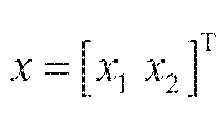

- The aforementioned analysis illustrates that defining the control action as the rate of insulin change permitted tuning of AC, using the insulin to glucose IT and without the need to estimate SI, which would be a more cumbersome process. The analysis may be approximate and may (only) be used as a draft estimate of the necessary BR or IC update. However, the scope is to provide a better starting point to AC in order to enhance the optimisation process. The initial values of the policy parameter vector for patient p may be set as:

- Insulin-to-glucose TE may be estimated on the basis of CGM and insulin pump data for four days (for example) collected from each patient. In order to choose the appropriate data size, datasets of different durations were used and the correlation between the respective TE values was computed for successive data lengths. It was observed that data of four days or more gave highly correlated TE values (>99%).
- The estimation of TE may be based on the following formula:


- For the estimation of the probability distributions, the fixed data partitioning method may be used, in which the time-series may be partitioned into equal sized bins and the probability distributions are approximated as histograms. The size of the partition bins for glucose and insulin may be Gbin = 10 mg/dl and IAbin = 1 U, respectively.
- According to one aspect as described above, the invention provides a method for estimating an insulin therapy comprising at least one of the insulin infusion rate (basal) and insulin to carbohydrate ratio (bolus dose = carbohydrates contained in the upcoming meal x insulin to carbohydrate ratio) adapted to a patient based on one of the following items:
- adaptive controller using actor-critic learning;
- insulin control policy evaluated (critic) and updated (actor) once per day using the glucose/insulin profiles of the last 24 hours;
- the state of the glucose-regulatory system as described by two features related to the hyper- and hypoglycaemic status of that day and more specifically by the average daily hypoglycaemia and/or hyperglycaemia error;
- the evaluation of the control policy (critic) at the end of each day based on the calculation of glucose-regulatory system's state and the corresponding assigned local cost, preferentially using temporal difference learning; and
- the update of the control policy (actor), the rate of insulin change from a first time period (in the example one day) to a subsequent time period, based on the effects of one, two or three different types of control actions, i) the deterministic action, which associates the daily hypo- and hyperglycaemic status to the needed percentage of basal rate and insulin to carbohydrate ratio change for the next day, ii) the supervisory action, which corresponds to the conservative suggestion of the control policy and acts as safety and guidance to the system, and iii) the exploratory action, which widens the search space of the system's status and supports the faster and better converge; or
- Scope of the actor is to minimize the average expected cost per system's state (optimization of the control policy)
- The method may include two successive stages:
- Initialization stage, in which the method is initialized;
- Learning stage, in which the adaptive method learns from the patient (patient-specific control policy).
- Preferentially the learning stage is continuous and is executed at each time period after the initialization stage.
- The actor's initial basal insulin rate, initial insulin to carbohydrate ratio and/or the policy parameter vector may be patient-specific.
- The basal insulin rate and insulin to carbohydrate ratio of the AC may be initialized using the patient's individual values as optimised by his/her physician and/or an in silico simulator.
- The policy parameter vector of the AC controller may be initialized using the insulin-to-glucose transfer entropy estimated on the basis of glucose and insulin pump data for a short period of time, e.g. four days, collected from each patient.
- Insulin may be an insulin analog.
- The method may be carried out prior/during/after delivering insulin to the patient.
- The method may receive wireless/wired communication interfaces real-time data from a glucose monitor and insulin pump.
- The meal may be unannounced or manually entered by the patient.
- The meal may be announced to the controller via interface with other mobile/smartphone applications or sensors.
- The estimated basal rate and insulin to carbohydrate ratio may be used to control an insulin pump or an insulin patch pump either directly or via the pump's control unit.
- In a further aspect, the invention provides a device for informing the patient regarding the estimated basal rate and insulin to carbohydrate ratio. The device can be any portable / mobile device or smartphone with processor configured to execute the method described herein above.
- The device may include all the display and interfaces needed to inform the patient about the optimal insulin therapy and transfer wired/wireless the data to a cloud/server or other diabetes technology related devices.
- The device may include interfaces with other mobile applications (e.g. diabetes e-logbook, fitness / food apps etc).
- The device may include all the display and interfaces needed to inform the patient about the optimal insulin therapy and transfer wired/wireless the data to a cloud/server or other diabetes technology related devices.
| Parameter | Description | Value | Class |
| ah | Local cost hyperglycemia weight | 1 | R |
| al | Local cost hyporglycemia weight | 1 | R |
| γ | Discount factor long-term cost | 0.9 | R |
| λ | TD learning constant | 0.5 | R |
 | Critic learning rate | 0.5 | R |
 | Actor learning rate | 1 | R |
| r 0 | Critic initial parameter vector | Random in [-1 1] | R |
| z 0 | Critic initial eligibility vector | Zero | R |
| σ | Standard deviation exploration action | 0.05 | R |
| S 0 | Actor initial BR/IC ratio | patient-specific | S |
| θ 0 | Actor initial parameter vector | patient-specific | S |
Claims (17)
- A method for determining an insulin therapy for a patient by a device having a processor, the method comprising:• use, by the processor, of a reinforcement learning algorithm to operate an adaptive controller of the device, the reinforcement learning algorithm comprising:a. a critic which evaluates an insulin control policy (S) including at least one of an insulin infusion rate and an insulin to carbohydrate ratio, by computing a cost related to a state of the glucose-regulatory system of the patient for a predetermined period of time, andb. an actor which improves the insulin control policy (S) so as to minimize the expected cost related to a subsequent state of the glucose-regulatory system;• apply, over a predetermined period of time (k-1), a predetermined insulin control policy (Sk-1);• collect, over the predetermined period of time (k-1), blood glucose data of the patient;• determine a state of the glucose-regulatory system based on the collected blood glucose data;• evaluate by the critic the predetermined insulin control policy (Sk-1) based on the state of the glucose-regulatory system;• update by the actor, the insulin control policy (S), based on a determined control action, wherein the updated insulin control policy (Sk) is intended to apply over a subsequent period of time (k);wherein the determined control action takes into account at least two of the following control actions:- a linear deterministic control action (Pa) which updates the insulin control policy (S) by means of a mathematical model that takes into account a linear combination of the glucose-regulatory system's state and a determined policy parameter vector so as to associate the glucose regulatory system's state to the needed change for the subsequent period of time (k);- a supervisory control action (Ps), which updates the insulin control policy (S) by means of a mathematical model that takes into account a previous insulin control policy so as to act as safety module against extreme changes of the insulin control policy (S) by the algorithm and/or as guidance of the direction of the update, and- an exploratory control action (Pe) which updates the insulin control policy (s) by means of a mathematical model that takes a white noise so as to widen the search space of the algorithm of the glucose-regulatory system's state in order to optimise a performance and a convergence rate.
- Method according to claim 1, wherein the determined control action is defined as a rate of change of the insulin control policy (S) from the predetermined period of time (k-1) to the subsequent period of time (k).
- Method according to claim 1, wherein the determined control action takes into account a total deterministic control action (Pd) which is determined by means of a mathematical model that takes into account the linear deterministic control action (Pa) and the supervisory control action (Ps).
- Method according to claim 3, wherein the exploratory control action (Pe) is determined by means of a mathematical model that takes into account at least the total deterministic control action (Pd).
- Method according to any one of the previous claims, wherein the critic evaluates the state of the glucose-regulatory system as described by two features related to the hyper- and hypoglycaemic status occurred during the predetermined period of time (k-1).
- Method according to any one of the previous claims, wherein the critic evaluates the state of the glucose-regulatory system as described by the average daily hypoglycaemia and hyperglycaemia error occurred during the predetermined period of time (k-1).
- Method according to any one of the previous claims, wherein the critic further computes a local cost of the state of the glucose-regulatory system for the predetermined period of time.
- Method according to claim 7, wherein the actor is configured to minimize the average expected cost per state.
- Method according to any one of the previous claims, wherein the evaluation step is performed at an end of each period of time.
- Method according to any one of the previous claims 3 to 4, wherein the policy parameter vector depends on the difference between the total deterministic control action Pd and the exploratory control action Pe.
- Method according to any one of the previous claims, wherein the policy parameter vector is updated at the end of the determined period of time.
- Method according to any one of the previous claims, wherein the initial insulin control policy is determined by taking into account the patient's individual values as optimized by his/her physician and/or an in silico simulator.
- Method according to any one of the previous claims, wherein the value or the initial value of the policy parameter vector is determined by using an insulin-to-glucose transfer entropy calculation.
- Method according to claim 13, wherein the insulin-to-glucose transfer entropy is estimated on the basis of blood glucose data and insulin delivery data for a duration of a time period comprised between 1 and 7 days, preferentially 4 days.
- Method according to any one of the previous claims, further comprising an initialization phase during which an initial insulin control policy and/or an initial value of the policy parameter vector are determined and adapted to the patient.
- Method according to the claim 15, wherein the duration of the initialization phase is comprised between 1 and 7 days, preferentially 4 days.
- Method according to any one of the previous claims, wherein the duration of the predetermined period of time and/or of the subsequent period of time is comprised between 1 hour and 36 hours, preferentially substantially equal to 24 hours.
Applications Claiming Priority (2)
| Application Number | Priority Date | Filing Date | Title |
|---|---|---|---|
| IB2016054242 | 2016-07-15 | ||
| PCT/IB2017/054283 WO2018011766A1 (en) | 2016-07-15 | 2017-07-14 | Estimation of insulin based on reinforcement learning |
Publications (2)
| Publication Number | Publication Date |
|---|---|
| EP3485409A1 EP3485409A1 (en) | 2019-05-22 |
| EP3485409B1 true EP3485409B1 (en) | 2024-11-06 |
Family
ID=59677263
Family Applications (1)
| Application Number | Title | Priority Date | Filing Date |
|---|---|---|---|
| EP17754790.8A Active EP3485409B1 (en) | 2016-07-15 | 2017-07-14 | Estimation of insulin based on reinforcement learning |
Country Status (5)
| Country | Link |
|---|---|
| US (1) | US10937536B2 (en) |
| EP (1) | EP3485409B1 (en) |
| JP (1) | JP7019127B2 (en) |
| ES (1) | ES2996267T3 (en) |
| WO (1) | WO2018011766A1 (en) |
Families Citing this family (17)
| Publication number | Priority date | Publication date | Assignee | Title |
|---|---|---|---|---|
| EP3594961A1 (en) | 2010-10-31 | 2020-01-15 | Trustees of Boston University | Blood glucose control system |
| WO2015116524A1 (en) | 2014-01-31 | 2015-08-06 | Trustees Of Boston University | Offline glucose control based on preceding periods |
| EP3319511B1 (en) | 2015-08-07 | 2021-10-06 | Trustees of Boston University | Glucose control system with automatic adaptation of glucose target |
| WO2018167543A1 (en) | 2017-03-17 | 2018-09-20 | Universität Bern | System and method for drug therapy management |
| US11457863B1 (en) * | 2017-10-27 | 2022-10-04 | Verily Life Sciences Llc | Virtual health coach based insulin titration platform |
| EP3731233A1 (en) | 2019-04-24 | 2020-10-28 | Digital Diabetes Analytics Sweden AB | Decision support system, and method in relation thereto |
| MX2022000670A (en) | 2019-07-16 | 2022-05-20 | Beta Bionics Inc | BLOOD GLUCOSE CONTROL SYSTEM. |
| US11957876B2 (en) | 2019-07-16 | 2024-04-16 | Beta Bionics, Inc. | Glucose control system with automated backup therapy protocol generation |
| JP7657428B2 (en) | 2019-07-16 | 2025-04-07 | ベータ バイオニクス,インコーポレイテッド | Blood Glucose Control System |
| MX2022003961A (en) * | 2019-10-04 | 2022-07-21 | Beta Bionics Inc | BLOOD GLUCOSE CONTROL SYSTEM. |
| WO2022126080A1 (en) | 2020-12-07 | 2022-06-16 | Beta Bionics, Inc. | Medicament pumps and control systems for managing glucose control therapy data of a subject |
| US20230241314A1 (en) * | 2020-06-18 | 2023-08-03 | Capillary Biomedical, Inc. | Event-driven compensated insulin delivery over time |
| US11931548B2 (en) * | 2020-08-26 | 2024-03-19 | Anas EL FATHI | Method and system for determining optimal and recommended therapy parameters for diabetic subject |
| KR102420872B1 (en) * | 2020-12-18 | 2022-07-14 | 포항공과대학교 산학협력단 | Method of Determining Continuous Drug Dose using Reinforcement Learning and Pharmacokinetic-Pharmacodynamic Models |
| USD1127405S1 (en) | 2021-03-25 | 2026-05-26 | Beta Bionics, Inc. | Clip for bionic pancreas infusion pump cases |
| US12465686B2 (en) | 2021-03-25 | 2025-11-11 | Beta Bionics, Inc. | Emergency medicament dose control |
| FR3142280B1 (en) * | 2022-11-23 | 2024-10-11 | Diabeloop | Method for determining an uncertainty level of deep reinforcement learning network and device implementing such method. |
Family Cites Families (5)
| Publication number | Priority date | Publication date | Assignee | Title |
|---|---|---|---|---|
| US7651845B2 (en) * | 2004-05-13 | 2010-01-26 | The Regents Of The University Of California | Method and apparatus for glucose control and insulin dosing for diabetics |
| US10154804B2 (en) | 2007-01-31 | 2018-12-18 | Medtronic Minimed, Inc. | Model predictive method and system for controlling and supervising insulin infusion |
| US9474855B2 (en) | 2013-10-04 | 2016-10-25 | Animas Corporation | Method and system for controlling a tuning factor due to sensor replacement for closed-loop controller in an artificial pancreas |
| GB201319681D0 (en) * | 2013-11-07 | 2013-12-25 | Imp Innovations Ltd | System and method for drug delivery |
| US20170277841A1 (en) * | 2016-03-23 | 2017-09-28 | HealthPals, Inc. | Self-learning clinical intelligence system based on biological information and medical data metrics |
-
2017
- 2017-07-14 EP EP17754790.8A patent/EP3485409B1/en active Active
- 2017-07-14 ES ES17754790T patent/ES2996267T3/en active Active
- 2017-07-14 US US16/318,015 patent/US10937536B2/en active Active
- 2017-07-14 JP JP2019523199A patent/JP7019127B2/en active Active
- 2017-07-14 WO PCT/IB2017/054283 patent/WO2018011766A1/en not_active Ceased
Non-Patent Citations (1)
| Title |
|---|
| DASKALAKI ELENA ET AL: "An Actor-Critic based controller for glucose regulation in type 1 diabetes", COMPUTER METHODS AND PROGRAMS IN BIOMEDICINE, ELSEVIER, AMSTERDAM, NL, vol. 109, no. 2, 12 April 2012 (2012-04-12), pages 116 - 125, XP028971483, ISSN: 0169-2607, DOI: 10.1016/J.CMPB.2012.03.002 * |
Also Published As
| Publication number | Publication date |
|---|---|
| US10937536B2 (en) | 2021-03-02 |
| JP2019525367A (en) | 2019-09-05 |
| ES2996267T3 (en) | 2025-02-12 |
| WO2018011766A1 (en) | 2018-01-18 |
| EP3485409A1 (en) | 2019-05-22 |
| US20190214124A1 (en) | 2019-07-11 |
| JP7019127B2 (en) | 2022-02-15 |
Similar Documents
| Publication | Publication Date | Title |
|---|---|---|
| US10937536B2 (en) | Estimation of insulin based on reinforcement learning | |
| Daskalaki et al. | Model-free machine learning in biomedicine: Feasibility study in type 1 diabetes | |
| Sun et al. | Predicting blood glucose with an lstm and bi-lstm based deep neural network | |
| KR101423807B1 (en) | System and method for developing patient specific therapies based on modeling of patient physiology | |
| Daskalaki et al. | An Actor–Critic based controller for glucose regulation in type 1 diabetes | |
| Eren-Oruklu et al. | Adaptive control strategy for regulation of blood glucose levels in patients with type 1 diabetes | |
| US20210068669A1 (en) | Systems And Methods For Prediction Of Glycemia And Decisions Support | |
| Yu et al. | Online glucose prediction using computationally efficient sparse kernel filtering algorithms in type-1 diabetes | |
| Hameed et al. | Investigating potentials and pitfalls of knowledge distillation across datasets for blood glucose forecasting | |
| Zhao et al. | A safe-enhanced fully closed-loop artificial pancreas controller based on deep reinforcement learning | |
| Hettiarachchi et al. | A reinforcement learning based system for blood glucose control without carbohydrate estimation in type 1 diabetes: In silico validation | |
| Wang et al. | Reinforcement learning-based insulin injection time and dosages optimization | |
| Szalay et al. | Exploring robustness in blood glucose control with unannounced meal intake for type-1 diabetes patient | |
| Wang et al. | Intensive insulin therapy for critically ill subjects based on direct data-driven model predictive control | |
| Serafini et al. | Long-term adaptation of closed-loop glucose regulation via reinforcement learning tools | |
| Takahashi et al. | A Survey of Insulin‐Dependent Diabetes—Part II: Control Methods | |
| CN116705230B (en) | MDI decision system and method with insulin sensitivity adaptive estimation | |
| Pritchard-Bell et al. | Modeling glucose and subcutaneous insulin dynamics in critical care | |
| Dandge et al. | A personalized, non-invasive blood glucose prediction system using a CNN-LSTM model with a sim-to-real transfer learning strategy | |
| Gavrila et al. | A Review on artificial pancreas mathematical models | |
| Hettiarachchi | Reinforcement learning-based artificial pancreas systems to automate treatment in type 1 diabetes | |
| Huang et al. | A hybrid closed-loop blood glucose control algorithm with a safety limiter based on deep reinforcement learning and model predictive control | |
| Borle et al. | The Challenge of Predicting Meal-to-meal Blood Glucose Concentrations for Patients with Type I Diabetes | |
| Sevil et al. | Automated insulin delivery systems for people with type 1 diabetes | |
| Lopez-Palau et al. | Reinforcement learning optimization of automated insulin delivery in type 1 and type 2 diabetes mellitus |
Legal Events
| Date | Code | Title | Description |
|---|---|---|---|
| STAA | Information on the status of an ep patent application or granted ep patent |
Free format text: STATUS: UNKNOWN |
|
| STAA | Information on the status of an ep patent application or granted ep patent |
Free format text: STATUS: THE INTERNATIONAL PUBLICATION HAS BEEN MADE |
|
| PUAI | Public reference made under article 153(3) epc to a published international application that has entered the european phase |
Free format text: ORIGINAL CODE: 0009012 |
|
| STAA | Information on the status of an ep patent application or granted ep patent |
Free format text: STATUS: REQUEST FOR EXAMINATION WAS MADE |
|
| 17P | Request for examination filed |
Effective date: 20190207 |
|
| AK | Designated contracting states |
Kind code of ref document: A1 Designated state(s): AL AT BE BG CH CY CZ DE DK EE ES FI FR GB GR HR HU IE IS IT LI LT LU LV MC MK MT NL NO PL PT RO RS SE SI SK SM TR |
|
| AX | Request for extension of the european patent |
Extension state: BA ME |
|
| DAV | Request for validation of the european patent (deleted) | ||
| DAX | Request for extension of the european patent (deleted) | ||
| STAA | Information on the status of an ep patent application or granted ep patent |
Free format text: STATUS: EXAMINATION IS IN PROGRESS |
|
| 17Q | First examination report despatched |
Effective date: 20210514 |
|
| REG | Reference to a national code |
Ref country code: DE Free format text: PREVIOUS MAIN CLASS: G06F0019000000 Ref country code: DE Ref legal event code: R079 Ref document number: 602017085923 Country of ref document: DE Free format text: PREVIOUS MAIN CLASS: G06F0019000000 Ipc: G16H0020170000 |
|
| GRAP | Despatch of communication of intention to grant a patent |
Free format text: ORIGINAL CODE: EPIDOSNIGR1 |
|
| STAA | Information on the status of an ep patent application or granted ep patent |
Free format text: STATUS: GRANT OF PATENT IS INTENDED |
|
| RIC1 | Information provided on ipc code assigned before grant |
Ipc: G16H 20/17 20180101AFI20240617BHEP |
|
| INTG | Intention to grant announced |
Effective date: 20240716 |
|
| GRAS | Grant fee paid |
Free format text: ORIGINAL CODE: EPIDOSNIGR3 |
|
| GRAA | (expected) grant |
Free format text: ORIGINAL CODE: 0009210 |
|
| STAA | Information on the status of an ep patent application or granted ep patent |
Free format text: STATUS: THE PATENT HAS BEEN GRANTED |
|
| P01 | Opt-out of the competence of the unified patent court (upc) registered |
Free format text: CASE NUMBER: APP_51652/2024 Effective date: 20240913 |
|
| AK | Designated contracting states |
Kind code of ref document: B1 Designated state(s): AL AT BE BG CH CY CZ DE DK EE ES FI FR GB GR HR HU IE IS IT LI LT LU LV MC MK MT NL NO PL PT RO RS SE SI SK SM TR |
|
| REG | Reference to a national code |
Ref country code: GB Ref legal event code: FG4D |
|
| REG | Reference to a national code |
Ref country code: CH Ref legal event code: EP |
|
| REG | Reference to a national code |
Ref country code: DE Ref legal event code: R096 Ref document number: 602017085923 Country of ref document: DE |
|
| REG | Reference to a national code |
Ref country code: IE Ref legal event code: FG4D |
|
| REG | Reference to a national code |
Ref country code: ES Ref legal event code: FG2A Ref document number: 2996267 Country of ref document: ES Kind code of ref document: T3 Effective date: 20250212 |
|
| REG | Reference to a national code |
Ref country code: LT Ref legal event code: MG9D |
|
| REG | Reference to a national code |
Ref country code: NL Ref legal event code: MP Effective date: 20241106 |
|
| PG25 | Lapsed in a contracting state [announced via postgrant information from national office to epo] |
Ref country code: IS Free format text: LAPSE BECAUSE OF FAILURE TO SUBMIT A TRANSLATION OF THE DESCRIPTION OR TO PAY THE FEE WITHIN THE PRESCRIBED TIME-LIMIT Effective date: 20250306 Ref country code: PT Free format text: LAPSE BECAUSE OF FAILURE TO SUBMIT A TRANSLATION OF THE DESCRIPTION OR TO PAY THE FEE WITHIN THE PRESCRIBED TIME-LIMIT Effective date: 20250306 Ref country code: HR Free format text: LAPSE BECAUSE OF FAILURE TO SUBMIT A TRANSLATION OF THE DESCRIPTION OR TO PAY THE FEE WITHIN THE PRESCRIBED TIME-LIMIT Effective date: 20241106 |
|
| PG25 | Lapsed in a contracting state [announced via postgrant information from national office to epo] |
Ref country code: FI Free format text: LAPSE BECAUSE OF FAILURE TO SUBMIT A TRANSLATION OF THE DESCRIPTION OR TO PAY THE FEE WITHIN THE PRESCRIBED TIME-LIMIT Effective date: 20241106 Ref country code: NL Free format text: LAPSE BECAUSE OF FAILURE TO SUBMIT A TRANSLATION OF THE DESCRIPTION OR TO PAY THE FEE WITHIN THE PRESCRIBED TIME-LIMIT Effective date: 20241106 |
|
| REG | Reference to a national code |
Ref country code: AT Ref legal event code: MK05 Ref document number: 1740316 Country of ref document: AT Kind code of ref document: T Effective date: 20241106 |
|
| PG25 | Lapsed in a contracting state [announced via postgrant information from national office to epo] |
Ref country code: BG Free format text: LAPSE BECAUSE OF FAILURE TO SUBMIT A TRANSLATION OF THE DESCRIPTION OR TO PAY THE FEE WITHIN THE PRESCRIBED TIME-LIMIT Effective date: 20241106 |
|
| PG25 | Lapsed in a contracting state [announced via postgrant information from national office to epo] |
Ref country code: NO Free format text: LAPSE BECAUSE OF FAILURE TO SUBMIT A TRANSLATION OF THE DESCRIPTION OR TO PAY THE FEE WITHIN THE PRESCRIBED TIME-LIMIT Effective date: 20250206 |
|
| PG25 | Lapsed in a contracting state [announced via postgrant information from national office to epo] |
Ref country code: LV Free format text: LAPSE BECAUSE OF FAILURE TO SUBMIT A TRANSLATION OF THE DESCRIPTION OR TO PAY THE FEE WITHIN THE PRESCRIBED TIME-LIMIT Effective date: 20241106 Ref country code: GR Free format text: LAPSE BECAUSE OF FAILURE TO SUBMIT A TRANSLATION OF THE DESCRIPTION OR TO PAY THE FEE WITHIN THE PRESCRIBED TIME-LIMIT Effective date: 20250207 Ref country code: AT Free format text: LAPSE BECAUSE OF FAILURE TO SUBMIT A TRANSLATION OF THE DESCRIPTION OR TO PAY THE FEE WITHIN THE PRESCRIBED TIME-LIMIT Effective date: 20241106 |
|
| PG25 | Lapsed in a contracting state [announced via postgrant information from national office to epo] |
Ref country code: PL Free format text: LAPSE BECAUSE OF FAILURE TO SUBMIT A TRANSLATION OF THE DESCRIPTION OR TO PAY THE FEE WITHIN THE PRESCRIBED TIME-LIMIT Effective date: 20241106 |
|
| PG25 | Lapsed in a contracting state [announced via postgrant information from national office to epo] |
Ref country code: RS Free format text: LAPSE BECAUSE OF FAILURE TO SUBMIT A TRANSLATION OF THE DESCRIPTION OR TO PAY THE FEE WITHIN THE PRESCRIBED TIME-LIMIT Effective date: 20250206 |
|
| PG25 | Lapsed in a contracting state [announced via postgrant information from national office to epo] |
Ref country code: SM Free format text: LAPSE BECAUSE OF FAILURE TO SUBMIT A TRANSLATION OF THE DESCRIPTION OR TO PAY THE FEE WITHIN THE PRESCRIBED TIME-LIMIT Effective date: 20241106 |
|
| PG25 | Lapsed in a contracting state [announced via postgrant information from national office to epo] |
Ref country code: DK Free format text: LAPSE BECAUSE OF FAILURE TO SUBMIT A TRANSLATION OF THE DESCRIPTION OR TO PAY THE FEE WITHIN THE PRESCRIBED TIME-LIMIT Effective date: 20241106 |
|
| PG25 | Lapsed in a contracting state [announced via postgrant information from national office to epo] |
Ref country code: EE Free format text: LAPSE BECAUSE OF FAILURE TO SUBMIT A TRANSLATION OF THE DESCRIPTION OR TO PAY THE FEE WITHIN THE PRESCRIBED TIME-LIMIT Effective date: 20241106 |
|
| PG25 | Lapsed in a contracting state [announced via postgrant information from national office to epo] |
Ref country code: RO Free format text: LAPSE BECAUSE OF FAILURE TO SUBMIT A TRANSLATION OF THE DESCRIPTION OR TO PAY THE FEE WITHIN THE PRESCRIBED TIME-LIMIT Effective date: 20241106 |
|
| PG25 | Lapsed in a contracting state [announced via postgrant information from national office to epo] |
Ref country code: SK Free format text: LAPSE BECAUSE OF FAILURE TO SUBMIT A TRANSLATION OF THE DESCRIPTION OR TO PAY THE FEE WITHIN THE PRESCRIBED TIME-LIMIT Effective date: 20241106 |
|
| PG25 | Lapsed in a contracting state [announced via postgrant information from national office to epo] |
Ref country code: CZ Free format text: LAPSE BECAUSE OF FAILURE TO SUBMIT A TRANSLATION OF THE DESCRIPTION OR TO PAY THE FEE WITHIN THE PRESCRIBED TIME-LIMIT Effective date: 20241106 |
|
| REG | Reference to a national code |
Ref country code: DE Ref legal event code: R097 Ref document number: 602017085923 Country of ref document: DE |
|
| PG25 | Lapsed in a contracting state [announced via postgrant information from national office to epo] |
Ref country code: SE Free format text: LAPSE BECAUSE OF FAILURE TO SUBMIT A TRANSLATION OF THE DESCRIPTION OR TO PAY THE FEE WITHIN THE PRESCRIBED TIME-LIMIT Effective date: 20241106 |
|
| PLBE | No opposition filed within time limit |
Free format text: ORIGINAL CODE: 0009261 |
|
| STAA | Information on the status of an ep patent application or granted ep patent |
Free format text: STATUS: NO OPPOSITION FILED WITHIN TIME LIMIT |
|
| PGFP | Annual fee paid to national office [announced via postgrant information from national office to epo] |
Ref country code: ES Payment date: 20250826 Year of fee payment: 9 |
|
| PGFP | Annual fee paid to national office [announced via postgrant information from national office to epo] |
Ref country code: DE Payment date: 20250722 Year of fee payment: 9 |
|
| 26N | No opposition filed |
Effective date: 20250807 |
|
| PGFP | Annual fee paid to national office [announced via postgrant information from national office to epo] |
Ref country code: IT Payment date: 20250722 Year of fee payment: 9 |
|
| PGFP | Annual fee paid to national office [announced via postgrant information from national office to epo] |
Ref country code: GB Payment date: 20250722 Year of fee payment: 9 |
|
| PGFP | Annual fee paid to national office [announced via postgrant information from national office to epo] |
Ref country code: FR Payment date: 20250725 Year of fee payment: 9 |
|
| PGFP | Annual fee paid to national office [announced via postgrant information from national office to epo] |
Ref country code: CH Payment date: 20250801 Year of fee payment: 9 |
|
| PG25 | Lapsed in a contracting state [announced via postgrant information from national office to epo] |
Ref country code: LU Free format text: LAPSE BECAUSE OF NON-PAYMENT OF DUE FEES Effective date: 20250714 |
|
| REG | Reference to a national code |
Ref country code: BE Ref legal event code: MM Effective date: 20250731 |
|
| PG25 | Lapsed in a contracting state [announced via postgrant information from national office to epo] |
Ref country code: BE Free format text: LAPSE BECAUSE OF NON-PAYMENT OF DUE FEES Effective date: 20250731 |
|
| PG25 | Lapsed in a contracting state [announced via postgrant information from national office to epo] |
Ref country code: LT Free format text: LAPSE BECAUSE OF FAILURE TO SUBMIT A TRANSLATION OF THE DESCRIPTION OR TO PAY THE FEE WITHIN THE PRESCRIBED TIME-LIMIT Effective date: 20241106 |
|
| PG25 | Lapsed in a contracting state [announced via postgrant information from national office to epo] |
Ref country code: IE Free format text: LAPSE BECAUSE OF NON-PAYMENT OF DUE FEES Effective date: 20250714 |
|
| PG25 | Lapsed in a contracting state [announced via postgrant information from national office to epo] |
Ref country code: MC Free format text: LAPSE BECAUSE OF FAILURE TO SUBMIT A TRANSLATION OF THE DESCRIPTION OR TO PAY THE FEE WITHIN THE PRESCRIBED TIME-LIMIT Effective date: 20241106 |
|
| REG | Reference to a national code |
Ref country code: CH Ref legal event code: U11 Free format text: ST27 STATUS EVENT CODE: U-0-0-U10-U11 (AS PROVIDED BY THE NATIONAL OFFICE) Effective date: 20260801 |
|
| PG25 | Lapsed in a contracting state [announced via postgrant information from national office to epo] |
Ref country code: CY Free format text: LAPSE BECAUSE OF FAILURE TO SUBMIT A TRANSLATION OF THE DESCRIPTION OR TO PAY THE FEE WITHIN THE PRESCRIBED TIME-LIMIT Effective date: 20241106 |