EP3484811B1 - Method and device for biogas upgrading and hydrogen production from anaerobic fermentation of biological material - Google Patents
Method and device for biogas upgrading and hydrogen production from anaerobic fermentation of biological material Download PDFInfo
- Publication number
- EP3484811B1 EP3484811B1 EP17745886.6A EP17745886A EP3484811B1 EP 3484811 B1 EP3484811 B1 EP 3484811B1 EP 17745886 A EP17745886 A EP 17745886A EP 3484811 B1 EP3484811 B1 EP 3484811B1
- Authority
- EP
- European Patent Office
- Prior art keywords
- hydrogen
- biogas
- reforming
- flow
- cao
- Prior art date
- Legal status (The legal status is an assumption and is not a legal conclusion. Google has not performed a legal analysis and makes no representation as to the accuracy of the status listed.)
- Active
Links
Images

Classifications
-
- C—CHEMISTRY; METALLURGY
- C01—INORGANIC CHEMISTRY
- C01B—NON-METALLIC ELEMENTS; COMPOUNDS THEREOF; METALLOIDS OR COMPOUNDS THEREOF NOT COVERED BY SUBCLASS C01C
- C01B3/00—Hydrogen; Gaseous mixtures containing hydrogen; Separation of hydrogen from mixtures containing it; Purification of hydrogen; Reversible storage of hydrogen
- C01B3/02—Production of hydrogen; Production of gaseous mixtures containing hydrogen
- C01B3/32—Production of hydrogen; Production of gaseous mixtures containing hydrogen by reaction of gaseous or liquid organic compounds with gasifying agents, e.g. water, carbon dioxide or air
- C01B3/34—Production of hydrogen; Production of gaseous mixtures containing hydrogen by reaction of gaseous or liquid organic compounds with gasifying agents, e.g. water, carbon dioxide or air by reaction of hydrocarbons with gasifying agents
- C01B3/344—Production of hydrogen; Production of gaseous mixtures containing hydrogen by reaction of gaseous or liquid organic compounds with gasifying agents, e.g. water, carbon dioxide or air by reaction of hydrocarbons with gasifying agents using non-catalytic solid particles
-
- C—CHEMISTRY; METALLURGY
- C01—INORGANIC CHEMISTRY
- C01B—NON-METALLIC ELEMENTS; COMPOUNDS THEREOF; METALLOIDS OR COMPOUNDS THEREOF NOT COVERED BY SUBCLASS C01C
- C01B3/00—Hydrogen; Gaseous mixtures containing hydrogen; Separation of hydrogen from mixtures containing it; Purification of hydrogen; Reversible storage of hydrogen
- C01B3/02—Production of hydrogen; Production of gaseous mixtures containing hydrogen
- C01B3/32—Production of hydrogen; Production of gaseous mixtures containing hydrogen by reaction of gaseous or liquid organic compounds with gasifying agents, e.g. water, carbon dioxide or air
- C01B3/34—Production of hydrogen; Production of gaseous mixtures containing hydrogen by reaction of gaseous or liquid organic compounds with gasifying agents, e.g. water, carbon dioxide or air by reaction of hydrocarbons with gasifying agents
-
- C—CHEMISTRY; METALLURGY
- C01—INORGANIC CHEMISTRY
- C01B—NON-METALLIC ELEMENTS; COMPOUNDS THEREOF; METALLOIDS OR COMPOUNDS THEREOF NOT COVERED BY SUBCLASS C01C
- C01B3/00—Hydrogen; Gaseous mixtures containing hydrogen; Separation of hydrogen from mixtures containing it; Purification of hydrogen; Reversible storage of hydrogen
- C01B3/50—Separation of hydrogen or hydrogen-containing gases from gaseous mixtures, e.g. purification
- C01B3/56—Separation of hydrogen or hydrogen-containing gases from gaseous mixtures, e.g. purification by contacting with solids; Regeneration of used solids
-
- C—CHEMISTRY; METALLURGY
- C12—BIOCHEMISTRY; BEER; SPIRITS; WINE; VINEGAR; MICROBIOLOGY; ENZYMOLOGY; MUTATION OR GENETIC ENGINEERING
- C12P—FERMENTATION OR ENZYME-USING PROCESSES TO SYNTHESISE A DESIRED CHEMICAL COMPOUND OR COMPOSITION OR TO SEPARATE OPTICAL ISOMERS FROM A RACEMIC MIXTURE
- C12P3/00—Preparation of elements or inorganic compounds except carbon dioxide
-
- C—CHEMISTRY; METALLURGY
- C12—BIOCHEMISTRY; BEER; SPIRITS; WINE; VINEGAR; MICROBIOLOGY; ENZYMOLOGY; MUTATION OR GENETIC ENGINEERING
- C12P—FERMENTATION OR ENZYME-USING PROCESSES TO SYNTHESISE A DESIRED CHEMICAL COMPOUND OR COMPOSITION OR TO SEPARATE OPTICAL ISOMERS FROM A RACEMIC MIXTURE
- C12P5/00—Preparation of hydrocarbons or halogenated hydrocarbons
- C12P5/02—Preparation of hydrocarbons or halogenated hydrocarbons acyclic
- C12P5/023—Methane
-
- C—CHEMISTRY; METALLURGY
- C01—INORGANIC CHEMISTRY
- C01B—NON-METALLIC ELEMENTS; COMPOUNDS THEREOF; METALLOIDS OR COMPOUNDS THEREOF NOT COVERED BY SUBCLASS C01C
- C01B2203/00—Integrated processes for the production of hydrogen or synthesis gas
- C01B2203/02—Processes for making hydrogen or synthesis gas
- C01B2203/0205—Processes for making hydrogen or synthesis gas containing a reforming step
- C01B2203/0227—Processes for making hydrogen or synthesis gas containing a reforming step containing a catalytic reforming step
- C01B2203/0233—Processes for making hydrogen or synthesis gas containing a reforming step containing a catalytic reforming step the reforming step being a steam reforming step
-
- C—CHEMISTRY; METALLURGY
- C01—INORGANIC CHEMISTRY
- C01B—NON-METALLIC ELEMENTS; COMPOUNDS THEREOF; METALLOIDS OR COMPOUNDS THEREOF NOT COVERED BY SUBCLASS C01C
- C01B2203/00—Integrated processes for the production of hydrogen or synthesis gas
- C01B2203/02—Processes for making hydrogen or synthesis gas
- C01B2203/0205—Processes for making hydrogen or synthesis gas containing a reforming step
- C01B2203/0227—Processes for making hydrogen or synthesis gas containing a reforming step containing a catalytic reforming step
- C01B2203/0238—Processes for making hydrogen or synthesis gas containing a reforming step containing a catalytic reforming step the reforming step being a carbon dioxide reforming step
-
- C—CHEMISTRY; METALLURGY
- C01—INORGANIC CHEMISTRY
- C01B—NON-METALLIC ELEMENTS; COMPOUNDS THEREOF; METALLOIDS OR COMPOUNDS THEREOF NOT COVERED BY SUBCLASS C01C
- C01B2203/00—Integrated processes for the production of hydrogen or synthesis gas
- C01B2203/04—Integrated processes for the production of hydrogen or synthesis gas containing a purification step for the hydrogen or the synthesis gas
-
- C—CHEMISTRY; METALLURGY
- C01—INORGANIC CHEMISTRY
- C01B—NON-METALLIC ELEMENTS; COMPOUNDS THEREOF; METALLOIDS OR COMPOUNDS THEREOF NOT COVERED BY SUBCLASS C01C
- C01B2203/00—Integrated processes for the production of hydrogen or synthesis gas
- C01B2203/04—Integrated processes for the production of hydrogen or synthesis gas containing a purification step for the hydrogen or the synthesis gas
- C01B2203/042—Purification by adsorption on solids
-
- C—CHEMISTRY; METALLURGY
- C01—INORGANIC CHEMISTRY
- C01B—NON-METALLIC ELEMENTS; COMPOUNDS THEREOF; METALLOIDS OR COMPOUNDS THEREOF NOT COVERED BY SUBCLASS C01C
- C01B2203/00—Integrated processes for the production of hydrogen or synthesis gas
- C01B2203/04—Integrated processes for the production of hydrogen or synthesis gas containing a purification step for the hydrogen or the synthesis gas
- C01B2203/042—Purification by adsorption on solids
- C01B2203/043—Regenerative adsorption process in two or more beds, one for adsorption, the other for regeneration
-
- C—CHEMISTRY; METALLURGY
- C01—INORGANIC CHEMISTRY
- C01B—NON-METALLIC ELEMENTS; COMPOUNDS THEREOF; METALLOIDS OR COMPOUNDS THEREOF NOT COVERED BY SUBCLASS C01C
- C01B2203/00—Integrated processes for the production of hydrogen or synthesis gas
- C01B2203/04—Integrated processes for the production of hydrogen or synthesis gas containing a purification step for the hydrogen or the synthesis gas
- C01B2203/0465—Composition of the impurity
- C01B2203/0475—Composition of the impurity the impurity being carbon dioxide
-
- C—CHEMISTRY; METALLURGY
- C01—INORGANIC CHEMISTRY
- C01B—NON-METALLIC ELEMENTS; COMPOUNDS THEREOF; METALLOIDS OR COMPOUNDS THEREOF NOT COVERED BY SUBCLASS C01C
- C01B2203/00—Integrated processes for the production of hydrogen or synthesis gas
- C01B2203/06—Integration with other chemical processes
- C01B2203/066—Integration with other chemical processes with fuel cells
-
- C—CHEMISTRY; METALLURGY
- C01—INORGANIC CHEMISTRY
- C01B—NON-METALLIC ELEMENTS; COMPOUNDS THEREOF; METALLOIDS OR COMPOUNDS THEREOF NOT COVERED BY SUBCLASS C01C
- C01B2203/00—Integrated processes for the production of hydrogen or synthesis gas
- C01B2203/12—Feeding the process for making hydrogen or synthesis gas
- C01B2203/1205—Composition of the feed
- C01B2203/1211—Organic compounds or organic mixtures used in the process for making hydrogen or synthesis gas
- C01B2203/1235—Hydrocarbons
- C01B2203/1241—Natural gas or methane
-
- C—CHEMISTRY; METALLURGY
- C01—INORGANIC CHEMISTRY
- C01B—NON-METALLIC ELEMENTS; COMPOUNDS THEREOF; METALLOIDS OR COMPOUNDS THEREOF NOT COVERED BY SUBCLASS C01C
- C01B2203/00—Integrated processes for the production of hydrogen or synthesis gas
- C01B2203/12—Feeding the process for making hydrogen or synthesis gas
- C01B2203/1258—Pre-treatment of the feed
-
- C—CHEMISTRY; METALLURGY
- C01—INORGANIC CHEMISTRY
- C01B—NON-METALLIC ELEMENTS; COMPOUNDS THEREOF; METALLOIDS OR COMPOUNDS THEREOF NOT COVERED BY SUBCLASS C01C
- C01B2203/00—Integrated processes for the production of hydrogen or synthesis gas
- C01B2203/12—Feeding the process for making hydrogen or synthesis gas
- C01B2203/1258—Pre-treatment of the feed
- C01B2203/1264—Catalytic pre-treatment of the feed
- C01B2203/127—Catalytic desulfurisation
-
- C—CHEMISTRY; METALLURGY
- C01—INORGANIC CHEMISTRY
- C01B—NON-METALLIC ELEMENTS; COMPOUNDS THEREOF; METALLOIDS OR COMPOUNDS THEREOF NOT COVERED BY SUBCLASS C01C
- C01B2203/00—Integrated processes for the production of hydrogen or synthesis gas
- C01B2203/80—Aspect of integrated processes for the production of hydrogen or synthesis gas not covered by groups C01B2203/02 - C01B2203/1695
- C01B2203/86—Carbon dioxide sequestration
-
- Y—GENERAL TAGGING OF NEW TECHNOLOGICAL DEVELOPMENTS; GENERAL TAGGING OF CROSS-SECTIONAL TECHNOLOGIES SPANNING OVER SEVERAL SECTIONS OF THE IPC; TECHNICAL SUBJECTS COVERED BY FORMER USPC CROSS-REFERENCE ART COLLECTIONS [XRACs] AND DIGESTS
- Y02—TECHNOLOGIES OR APPLICATIONS FOR MITIGATION OR ADAPTATION AGAINST CLIMATE CHANGE
- Y02E—REDUCTION OF GREENHOUSE GAS [GHG] EMISSIONS, RELATED TO ENERGY GENERATION, TRANSMISSION OR DISTRIBUTION
- Y02E50/00—Technologies for the production of fuel of non-fossil origin
- Y02E50/30—Fuel from waste, e.g. synthetic alcohol or diesel
-
- Y—GENERAL TAGGING OF NEW TECHNOLOGICAL DEVELOPMENTS; GENERAL TAGGING OF CROSS-SECTIONAL TECHNOLOGIES SPANNING OVER SEVERAL SECTIONS OF THE IPC; TECHNICAL SUBJECTS COVERED BY FORMER USPC CROSS-REFERENCE ART COLLECTIONS [XRACs] AND DIGESTS
- Y02—TECHNOLOGIES OR APPLICATIONS FOR MITIGATION OR ADAPTATION AGAINST CLIMATE CHANGE
- Y02P—CLIMATE CHANGE MITIGATION TECHNOLOGIES IN THE PRODUCTION OR PROCESSING OF GOODS
- Y02P30/00—Technologies relating to oil refining and petrochemical industry
Definitions
- the present invention concerns a method for anaerobic fermentation of biological material for the production of hydrogen and, optionally, methane as disclosed by the preamble of claim 1 and a device for conducting the method as disclosed by the preamble of claim 11.
- Biogas can be produced by anaerobic digestion (AD) or fermentation of biodegradable materials, such as manure, wastewater and sewage sludge, municipal waste, green waste, plant material, and crops.
- Biogas consists mainly of methane (CH 4 ) and carbon dioxide (CO 2 ), and small amounts of hydrogen sulphide (H 2 S), moisture, and siloxanes.
- the anaerobically produced biogas is to be used as a transportation fuel (vehicle grade), it first has to be upgraded to remove impurities and increase its calorific value (heating value).
- This upgrading step includes drying, desulfurization, and CO 2 -removal.
- the CO 2 -separation is normally carried out by water scrubbing, physical or chemical absorption using organic solvents, pressure swing adsorption, or by permeation using membranes, depending on the location and size of the system.
- US 2015 0284247 A1 teaches an apparatus for producing high-purity gas which includes a column configured for sorption-enhanced reaction (SE-SMR) for removing a by-product through a catalyst reaction.
- SE-SMR sorption-enhanced reaction
- the column is divided into a plurality of sections, the sections having decreasing proportions of catalyst and increasing proportions of an absorbent.
- CN 1050 84312 A discloses a process for hydrogen production by utilizing the reaction of calcium oxide to absorb carbon dioxide and reinforce continuous reforming of methane and water vapor.
- the starting gas may be a biogas obtained by anaerobic digestion.
- biogas from food waste (or other sources such as manure and wastewater) treatment facilities typically consist of 55-65% CH 4 and 35-45% CO 2 .
- Upgrading (CO 2 removal) consumes energy and adds significant costs to the overall system (Luo and Angelidaki, 2012).
- the main objective of the present invention is thus to develop a new and cost-efficient process that allows production of vehicle grade fuels based on anaerobic digestion of wet organic substrates, with CO 2 capture or no negative climate consequence.
- the invention concerns a device for performing the method as defined by claim 11.
- raw biogas as discussed herein is understood a biogas from which Sulfur have been removed but in which the content of CO 2 is as originated from the anaerobic digester reactor, contrary to upgraded biogas which is essentially pure methane.
- a main feature of the present invention is the conversion of the raw biogas with enhanced methane: CO 2 ratio directly in a sorption enhanced reforming (SER) process without prior separation of CO 2 .
- This is achieved by dimensioning the reformer 70 to capture both CO 2 from the initial desulfurized raw biogas (CH 4 + CO 2 ) and the CO 2 formed in the reforming step (SE-SMR process).
- Ca-looping has, to our knowledge, not been suggested as a method for CO 2 removal in relation to production of hydrogen from raw biogas or gases with considerable amounts of initial CO 2 in addition to methane.
- the present invention provides in one embodiment a combined system for production of vehicle grade biomethane, and vehicle grade hydrogen, with the option of total CO 2 capture, from anaerobic digestion of organic waste.
- Cost efficiency and sustainability are keyword and common denominators for the overall process.
- An anaerobic digester 50 for biogas production is charged with a charge material 11 based on sewage sludge, domestic organic waste, animal or agricultural waste.
- the produced raw biogas 12 is desulfurized 60, and the desulfurized, still raw biogas 13 (CH 4 + initial CO 2 ) is charged to a reformer 70 together with water 14 in the form of steam for a sorption enhanced reforming (SER) process.
- a substantially pure hydrogen 15 gas leaves the reformer unit.
- the hydrogen purification may typically be performed as a pressure swing adsorption process.
- the purified hydrogen 16 leaving the purifier is of vehicle grade.
- the off-gas 17 from the hydrogen purification unit 100 is mixed with raw biogas 13c, which may be a partial flow of biogas flow 13, and charged to a burner 90 for production of the necessary heat (850 to 900 °C) for regeneration of CaCO 3 to CaO in a CaO regenerator 80, in an endothermic process.
- the CO 2 (100%) flow 23 produced in the reformer 70 and released in regenerator 80, may be used or stored (sequestration).
- the burner 90 is also charged with an oxygen containing gas 18, typically air.
- the CO 2 in the exhaust from the burner 90 would have no climatic consequence since the fuel source is of biogenic origin.
- the CO 2 flow captured as flow 23 has a "negative" CO 2 climate impact, if this flow of CO 2 is stored or used.
- FIG. 3 Most of the components of figure 3 are the same as the ones in figure 1 and are equally numbered.
- the process according to Figure 3 has the additional ability of producing electricity and high temperature heat due to the presence of a solid oxide fuel cell (SOFC) integrated in the process and equipment.
- SOFC solid oxide fuel cell
- the substantially pure hydrogen discharged from the reformer is typically divided into three substreams, namely substream 15a which is charged to the SOFC, substream 15b which is recycled to the digester 50 (like in Fig. 1 and 2 ) and substream 15c which, when present, is used as a fuel for a heater 95.
- the temperature of the exhaust gas (830 °C, Megel et. al 2013) is too low to effectively provide a temperature in the regenerator at which the CaCO 3 is converted to CaO for further use.
- the heat integration between the SOFC 120 and the Regenerator 80, via the heater 95, is in figure 3 provided by a closed heat loop 21', 22', however other options are possible.
- the heater 95 may be heated in different ways, one convenient way is the use of a partial flow of hydrogen 15c from the reformer.
- Another option for fuel to 95 would be raw biogas 13c.
- the fuel for the heater has the form of raw biogas 13c according to figures 1, 2 , or 4 or hydrogen 15c according to figure 3
- the heat delivered by the burner 90 or by the heater 95 is at least partially provided, directly or indirectly, by the desulfurized raw bio-gas to be upgraded.
- the SOFC exhaust air 27 provides the oxygen for the heating process in 95.
- the CO 2 in the exhaust outlet 28 from the heating device would be climate neutral because of the biogenic origin of the fuel used. If required, additional air (not shown) may be supplied to the heater 95.
- the flow of desulfurized biogas 13 is split into a first flow 13a which is charged to the reformer 70 while the other flow 13b is charged to a CO 2 separation unit 110 to be separated into vehicle grade biomethane 24 and CO 2 25.
- the treatment of the first flow 13a is as described above in relation to Figure 1
- the other flow 13b is subjected to a treatment as generally described in relation to Figure 2 .
- the general concept of the present invention is a method for the manufacture of vehicle grade fuels from biological materials in a cost-efficient and sustainable manner, involving a minimum of steps.
- a step of desulfurization 60 is typically conducted upstream of the step of sorption enhanced reforming 70.
- a partial flow of desulfurized biogas 13 is according some embodiments subjected to treatment in a CO 2 separation unit 110 thereby providing one discharge flow of vehicle grade biomethane 24 and one discharge flow 25 containing CO 2 .
- the CO 2 separation unit 110 is typically one using a principle for separation selected among water scrubbing, physical or chemical absorption using organic solvents, pressure swing adsorption, and permeation using membranes.
- the heat required for regenerating CaO is provided by burning a gas containing a partial flow of desulfurized biogas.
- heat for regeneration of CaO may also be provided in part from a solid oxide fuel cell 120 charged with hydrogen 15a from the sorption enhanced reforming step 70. Additional heat may in case be provided by a heater 95 charged with hydrogen 15c discharged from the sorption enhanced reforming step 70.
- the fuel cell 120 may be charged with raw biogas or a combination of hydrogen and raw biogas.
- a heat medium 21', 22' is circulated in a closed loop between at least the solid oxide fuel cell 120, the heater 95 and the regenerator 80.
- the addition of hydrogen to the digestion process may be arranged at least in part as a recycle hydrogen flow 15b from the reforming step 70.
- the raw biogas to be upgraded is produced in a digestion process based on digestion of a raw material selected among one or more of sewage, sludge, municipal waste, domestic waste, animal waste, and agricultural waste.
Landscapes
- Chemical & Material Sciences (AREA)
- Organic Chemistry (AREA)
- Engineering & Computer Science (AREA)
- Chemical Kinetics & Catalysis (AREA)
- Life Sciences & Earth Sciences (AREA)
- Zoology (AREA)
- Wood Science & Technology (AREA)
- Health & Medical Sciences (AREA)
- General Health & Medical Sciences (AREA)
- General Engineering & Computer Science (AREA)
- Biotechnology (AREA)
- General Chemical & Material Sciences (AREA)
- Microbiology (AREA)
- Genetics & Genomics (AREA)
- Biochemistry (AREA)
- Bioinformatics & Cheminformatics (AREA)
- Inorganic Chemistry (AREA)
- Combustion & Propulsion (AREA)
- Fuel Cell (AREA)
- Hydrogen, Water And Hydrids (AREA)
- Preparation Of Compounds By Using Micro-Organisms (AREA)
- Gas Separation By Absorption (AREA)
- Purification Treatments By Anaerobic Or Anaerobic And Aerobic Bacteria Or Animals (AREA)
- Treatment Of Sludge (AREA)
- Processing Of Solid Wastes (AREA)
Description
- The present invention concerns a method for anaerobic fermentation of biological material for the production of hydrogen and, optionally, methane as disclosed by the preamble of claim 1 and a device for conducting the method as disclosed by the preamble of
claim 11. - Biogas can be produced by anaerobic digestion (AD) or fermentation of biodegradable materials, such as manure, wastewater and sewage sludge, municipal waste, green waste, plant material, and crops. Biogas consists mainly of methane (CH4) and carbon dioxide (CO2), and small amounts of hydrogen sulphide (H2S), moisture, and siloxanes.
- If the anaerobically produced biogas is to be used as a transportation fuel (vehicle grade), it first has to be upgraded to remove impurities and increase its calorific value (heating value). This upgrading step includes drying, desulfurization, and CO2-removal. The CO2-separation is normally carried out by water scrubbing, physical or chemical absorption using organic solvents, pressure swing adsorption, or by permeation using membranes, depending on the location and size of the system.
- In a presentation made at Group Exhibit 2015 Hydrogen Fuel Cells Batteries, April 14, 2015), as also documented in Energia Procedia 63 (2014) 279-285, published by Elsevier Ltd., a plant for so-called bio-ZEG methane was presented and discussed, including the use of solid oxide fuel cells and use of CaO as a CO2 scavenger. There was, however, no mention of using raw CO2 containing biogas as a source feed for such a process.
-
US 2015 0284247 A1 teaches an apparatus for producing high-purity gas which includes a column configured for sorption-enhanced reaction (SE-SMR) for removing a by-product through a catalyst reaction. The column is divided into a plurality of sections, the sections having decreasing proportions of catalyst and increasing proportions of an absorbent. -
US 2013 011326 A1 andDE 19 946 381 A1 are other publications in this technical field.CN 1050 84312 A discloses a process for hydrogen production by utilizing the reaction of calcium oxide to absorb carbon dioxide and reinforce continuous reforming of methane and water vapor. The starting gas may be a biogas obtained by anaerobic digestion. - However, one of the main drawbacks and challenges with biogas is the requirement for upgrading to bio-methane, with a quality for use as fuel for (bio) gas vehicles, or as a source for hydrogen fuel cell electric vehicles (FCEVs). Biogas from food waste (or other sources such as manure and wastewater) treatment facilities typically consist of 55-65% CH4 and 35-45% CO2. Upgrading (CO2 removal) consumes energy and adds significant costs to the overall system (Luo and Angelidaki, 2012). Hence, there is a need to find new, more efficient, and less costly methods for upgrading anaerobically produced biogas for example used directly as fuel in vehicles, and as a source for hydrogen production used in hydrogen fuel cell electric vehicles.
- There is still, however, a need for further improvements in this area to make fuel produced by digestion of organic waste competitive as vehicle fuel.
- This can to some extent be achieved by reduction of the CO2 content and enhancement of the methane content, by adding hydrogen to the anaerobic digestion (AD) process, thereby increasing the methane content to about 80%
- The main objective of the present invention is thus to develop a new and cost-efficient process that allows production of vehicle grade fuels based on anaerobic digestion of wet organic substrates, with CO2 capture or no negative climate consequence.
- The above mentioned objects are achieved by the method according to the invention as defined by claim 1.
- According to another aspect the invention concerns a device for performing the method as defined by
claim 11. - Preferred embodiments are disclosed by dependent claims.
- By "raw biogas" as discussed herein is understood a biogas from which Sulfur have been removed but in which the content of CO2 is as originated from the anaerobic digester reactor, contrary to upgraded biogas which is essentially pure methane.
- Addition of H2 to the digestion process increases the ratio between bio-methane and CO2, with CO2 content potentially lower than 20%.
- A main feature of the present invention is the conversion of the raw biogas with enhanced methane: CO2 ratio directly in a sorption enhanced reforming (SER) process without prior separation of CO2. This is achieved by dimensioning the
reformer 70 to capture both CO2 from the initial desulfurized raw biogas (CH4 + CO2) and the CO2 formed in the reforming step (SE-SMR process). - Ca-looping has, to our knowledge, not been suggested as a method for CO2 removal in relation to production of hydrogen from raw biogas or gases with considerable amounts of initial CO2 in addition to methane.
- The total SER-process with desulfurized raw biogas as feed gas is illustrated in the chemical reaction (not balanced) given below;
CH4 + CO2 +H2O + CaO = CaCO3 + H2
- Two alternative embodiments of the present invention are illustrated below, namely (1) Biological conversion of CO2 to CH4 by the addition of H2 from an SER-process in an AD reactor and (2) Direct conversion of desulfurized raw biogas (CH4 + CO2) to hydrogen in a SER reactor.
- As illustrated and exemplified below the present invention provides in one embodiment a combined system for production of vehicle grade biomethane, and vehicle grade hydrogen, with the option of total CO2 capture, from anaerobic digestion of organic waste.
- Cost efficiency and sustainability are keyword and common denominators for the overall process.
- Different embodiments of the invention are illustrated below with reference to the enclosed drawings, where:
-
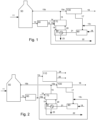
Figure 1 is a schematic view of a first embodiment of the present invention, in which vehicle grade hydrogen is produced from anaerobic fermentation of biological material in a cost-efficient and sustainable manner. -
Figure 2 is a schematic view of another embodiment of the present invention, in which vehicle grade hydrogen and vehicle grade biomethane is produced from anaerobic fermentation of biological material in a cost-efficient and sustainable manner. -
Figure 3 is a schematic view of a third embodiment of the present invention, in which vehicle grade hydrogen is produced from anaerobic fermentation of biological material in a cost-efficient and sustainable manner, while also producing electricity. -
Figure 4 is a schematic view of a fourth embodiment of the present invention, in which vehicle grade hydrogen and vehicle grade biomethane is produced from anaerobic fermentation of biological material in a cost-efficient and sustainable manner, while also producing electricity. - Attention is drawn to
fig. 1 . Ananaerobic digester 50 for biogas production is charged with acharge material 11 based on sewage sludge, domestic organic waste, animal or agricultural waste. - The produced
raw biogas 12 is desulfurized 60, and the desulfurized, still raw biogas 13 (CH4 + initial CO2) is charged to areformer 70 together withwater 14 in the form of steam for a sorption enhanced reforming (SER) process. A substantiallypure hydrogen 15 gas leaves the reformer unit. In the reformer unit, onepart 15b of which typically being returned to thedigester 50 to enhance the methane yield while another and typicallylarger part 15a is subjected to purification in a hydrogen-purifier 100. The hydrogen purification may typically be performed as a pressure swing adsorption process. The purifiedhydrogen 16 leaving the purifier is of vehicle grade. - While the step of
desulfurization 60 is a step commonly used in such processes and not inventive as such, it is a step which for practical chemical purposes will rarely or never be omitted. - The process of reforming and CO2 capture in the
reformer 70 involves a reaction between fuel (CH4), water (steam), CO2 (both from the original biogas and from the SER process) and CaO as a CO2 absorber, a process in which CaO is converted to CaCO3 in an exothermic reaction known per se. - The off-
gas 17 from thehydrogen purification unit 100 is mixed withraw biogas 13c, which may be a partial flow ofbiogas flow 13, and charged to aburner 90 for production of the necessary heat (850 to 900 °C) for regeneration of CaCO3 to CaO in aCaO regenerator 80, in an endothermic process. The CO2 (100%)flow 23 produced in thereformer 70 and released inregenerator 80, may be used or stored (sequestration). Theburner 90 is also charged with anoxygen containing gas 18, typically air. - The CO2 in the exhaust from the
burner 90 would have no climatic consequence since the fuel source is of biogenic origin. In addition, the CO2 flow captured asflow 23 has a "negative" CO2 climate impact, if this flow of CO2 is stored or used. -
Flow 19 is a flow from thereformer 70 to theregenerator 80 of solid CaCO3, resulting from CaO having absorbed CO2, whileflow 20 is a flow of solid CaO, converted back from CaCO3, from theregenerator 80 back to thereformer 70. This Ca-looping process is well known as such, but not in the context here presented. - Attention is now directed to
fig. 2 . Most of the components and flows offigure 2 are the same as the ones infigure 1 and are numbered equally. The process according toFigure 2 , however, has the additional ability of producing vehicle grade biogas. Afirst part 13a of thedesulfurized biogas 13 is charged to thereformer 70 like inFigure 1 and treated accordingly. A second part of thebiogas 13b from thedesulfurization unit 60 is charged to a CO2 separation unit 110. The CO2-separation is normally carried out by water scrubbing, physical or chemical absorption using organic solvents, pressure swing adsorption, or by permeation using membranes, depending on the location and size of the system. Thebio methane 24 discharged from CO2 separation unit 110 may be said to be of natural gas quality or of vehicle grade and hence used for such purposes. - The
CO 2 25 released from the CO2 separation unit 110 may be stored or used, if the method applied makes this economically feasible. This is however usually not the case. Regardless of the method used, the biogenic origin of the fuel source would result in no climatic consequence. The purity of theCO 2 25 released from the CO2 separation unit 110 depends on the type and nature of this unit. - Attention is now directed to
fig. 3 . Most of the components offigure 3 are the same as the ones infigure 1 and are equally numbered. The process according toFigure 3 , however, has the additional ability of producing electricity and high temperature heat due to the presence of a solid oxide fuel cell (SOFC) integrated in the process and equipment. Thus, the substantially pure hydrogen discharged from the reformer, is typically divided into three substreams, namelysubstream 15a which is charged to the SOFC,substream 15b which is recycled to the digester 50 (like inFig. 1 and 2 ) andsubstream 15c which, when present, is used as a fuel for aheater 95. - The
hydrogen substream 15a is partially used to produce electricity in the SOFC while another part of the hydrogen flow 16' leaves the SOFC for further upgrading in a hydrogen purifier 100' which may or may not be similar to theunit 100 shown inFigures 1 and 2 to obtainvehicle grade hydrogen 26. The electricity may be used internally or externally or both. - The high temperature exhaust gas of the SOFC is used to heat the
regenerator 80, but may typically need some assistance since the temperature needed in theregenerator 80 is 850 to 900 °C. This temperature may be reached (without any assistance) if ceramic interconnects are used in the SOFC system. - In practice, however, the temperature of the exhaust gas (830 °C, Megel et. al 2013) is too low to effectively provide a temperature in the regenerator at which the CaCO3 is converted to CaO for further use. A dedicated system, to elevate the temperature of the exhaust gas in a temperature increasing cell/heating device, would thus be necessary.
- The heat integration between the
SOFC 120 and theRegenerator 80, via theheater 95, is infigure 3 provided by a closed heat loop 21', 22', however other options are possible. - The heat transfers medium of the heat loop 21', 22' in
fig. 3 , can be different gases, such as for example; Hydrogen, CO2, air, helium, water vapor, different gas mixtures or fluids such as; mineral oils, hydrocarbons and different types of molten salts. The heat of the heat loop infigure 3 , leaving the SOFC system, is typically about 830 °C. The heat of this heat loop is enhanced in theheater 95 to at least 850 °C, more preferable at least 950 °C and most preferred at least 1000 °C, in order to meet the temperature regeneration requirement in theregenerator 80 where CaCO3 is converted to CaO while releasing CO2. While theheater 95 may be heated in different ways, one convenient way is the use of a partial flow ofhydrogen 15c from the reformer. Another option for fuel to 95 would beraw biogas 13c. Whether the fuel for the heater has the form ofraw biogas 13c according tofigures 1, 2 , or4 orhydrogen 15c according tofigure 3 , the heat delivered by theburner 90 or by theheater 95 is at least partially provided, directly or indirectly, by the desulfurized raw bio-gas to be upgraded. TheSOFC exhaust air 27 provides the oxygen for the heating process in 95. The CO2 in theexhaust outlet 28 from the heating device would be climate neutral because of the biogenic origin of the fuel used. If required, additional air (not shown) may be supplied to theheater 95. - Attention is now directed to
figure 4 . Most of the components infigure 4 are the same as infigure 3 . The process ofFigure 4 , however, has the additional ability of allowing production of vehicle grade biogas, in a manner similar to the difference betweenfigure 1 and Figure 2 . - Thus, according to
Figure 4 , the flow of desulfurizedbiogas 13 is split into afirst flow 13a which is charged to thereformer 70 while theother flow 13b is charged to a CO2 separation unit 110 to be separated intovehicle grade biomethane 24 andCO 2 25. The treatment of thefirst flow 13a is as described above in relation toFigure 1 , while theother flow 13b is subjected to a treatment as generally described in relation toFigure 2 . - With regard to the SOFC and the processes involved therein, there is no difference between the embodiments of
Figure 3 and 4 . The same is to be said about the closed loop heat exchange 21', 22' including the use of theheater 95. - It is to be understood that the processes according to
Figures 2 and4 allows a split of the desulfurized raw biogas into afirst flow 13a and asecond flow 13b, covering a ratio between the two from 5:95 to 100:0. Thus, if demand is high for vehicle grade biomethane and low for vehicle grade hydrogen and electricity, theflow 13a would be reduced so as to basically just cover the need for hydrogen in the digester. On the other hand, if the demand for vehicle grade biomethane is low, theflow 13b could basically be cut off, rendering the embodiment ofFigure 2 temporarily identical to the embodiment ofFigure 1 and/ or rendering the embodiment ofFigure 4 temporarily identical to the embodiment ofFigure 3 . - The general concept of the present invention is a method for the manufacture of vehicle grade fuels from biological materials in a cost-efficient and sustainable manner, involving a minimum of steps. There is a versatility in the method in the sense that vehicle grade biomethane and vehicle grade hydrogen may be produced at a flexible mutual ratio, as well as flexible amounts of electricity.
- While not representing the core of the present invention, a step of
desulfurization 60 is typically conducted upstream of the step of sorption enhanced reforming 70. - As explained in relation to the drawings, a partial flow of desulfurized
biogas 13 is according some embodiments subjected to treatment in a CO2 separation unit 110 thereby providing one discharge flow ofvehicle grade biomethane 24 and onedischarge flow 25 containing CO2. - The CO2 separation unit 110 is typically one using a principle for separation selected among water scrubbing, physical or chemical absorption using organic solvents, pressure swing adsorption, and permeation using membranes.
- According to at least some embodiments the heat required for regenerating CaO is provided by burning a gas containing a partial flow of desulfurized biogas. In some embodiments heat for regeneration of CaO may also be provided in part from a solid
oxide fuel cell 120 charged withhydrogen 15a from the sorption enhanced reformingstep 70. Additional heat may in case be provided by aheater 95 charged withhydrogen 15c discharged from the sorption enhanced reformingstep 70. In other embodiments thefuel cell 120 may be charged with raw biogas or a combination of hydrogen and raw biogas. - In some embodiments a heat medium 21', 22' is circulated in a closed loop between at least the solid
oxide fuel cell 120, theheater 95 and theregenerator 80. The addition of hydrogen to the digestion process may be arranged at least in part as arecycle hydrogen flow 15b from the reformingstep 70. - In a number of embodiments the raw biogas to be upgraded is produced in a digestion process based on digestion of a raw material selected among one or more of sewage, sludge, municipal waste, domestic waste, animal waste, and agricultural waste.
-
- 11
- feed to
digester 50 - 12
- biogas from
digester 50 - 13
- desulfurized biogas to
reformer 70 - 13a
- partial flow desulfurized biogas to
reformer 70 - 13b
- desulfurized biogas to CO2 separator 110
- 13c
- raw, desulfurized biogas to
heater 95/burner 90 - 14
- water to
reformer 70 - 15
- substantially pure hydrogen from
reformer 70 - 15a
- partial flow hydrogen to
reformer 70 - 15b
- recycle partial flow of hydrogen to
digester 50 - 15c
- partial hydrogen flow to
heater 95 - 16
- vehicle grade hydrogen from
hydrogen purifier 100 - 16'
- Subst pure hydrogen from SOFC120
- 17
- off gas from
hydrogen purifier 100 - 18
- air inlet to
burner 90 - 19
- CaCO3 from
reformer 70 toregenerator 80 - 20
- CaO from
regenerator 80 toreformer 70 - 21
- hot gas from
burner 90 toregenerator 80 - 21'
- hot gas from
heater 95 toregenerator 80 - 22
- off gas from
regenerator 80 - 22'
- off gas from regenerator to
SOFC 120 in closed loop - 23
- CO2 from
regenerator 80 - 24
- vehicle grade bio-gas from CO2 separator 110
- 25
- CO2 from CO2 separator 110
- 26
- Vehicle grade hydrogen from 100'
- 27
- Exhaust from
SOFC 120 - 28
- Exhaust from
heater 95 - 50
- digester
- 60
- desulfurizer
- 70
- reformer
- 80
- regenerator
- 90
- burner
- 95
- heater
- 100
- hydrogen purifier
- 100'
- hydrogen purifier
- 110
- CO2 separator
- 120
- solid oxide fuel cell
Claims (13)
- Method for upgrading biogas from anaerobic fermentation of biological material in a digester (50) for production of hydrogen (16, 26) and optionally methane (24), comprising addition of hydrogen gas to the fermentation step (50) to enhance the methane:CO2 ratio in the raw biogas (12) produced and subjecting the raw biogas to a step of desulfurization to the extent required characterized in further comprising subjecting at least a part of the desulfurized raw biogas to a step of sorption enhanced reforming (70) without prior separation of CO2 using CaO as an absorbent to capture CO2 from the raw biogas as well as CO2 released in the reforming reaction, regenerating CaO in an endothermic reaction (80) using heat at least partially provided, directly or indirectly, by the bio-gas to be upgraded, thereby producing substantially pure hydrogen (15) and substantially pure CO2 (23).
- Method as claimed in any one of claim 1, wherein a partial flow of desulfurized raw biogas (13) is subjected to treatment in a CO2 separation unit (110) thereby providing one discharge flow of vehicle grade biomethane (24) and one discharge flow (25) containing CO2.
- Method as claimed in claim 2 wherein the CO2 separation unit (110) is one using a principle for separation selected among water scrubbing, physical or chemical absorption using organic solvents, pressure swing adsorption, and permeation using membranes.
- Method as claimed in any one of the preceding claims wherein the substantially pure H2 (15) is subjected to a step (100) of further purification to produce vehicle grade H2 (16).
- Method as claimed in any one of the preceding claims, wherein the heat required for regenerating Cao is provided by burning a gas containing a partial flow of desulfurized raw biogas (13c).
- Method as claimed in any one of claims 1- 4, wherein the heat for regeneration of CaO is provided in part from a solid oxide fuel cell (120) charged by hydrogen (15a) from the sorption enhanced reforming step (70).
- Method as claimed in claims 6, wherein additional heat for regeneration of CaO is provided by a heater (95) charged with hydrogen (15c) discharged from the sorption enhanced reforming step (70).
- Method as claimed in one of claims 6 or 7, wherein a heat medium (21', 22') is circulated in a closed loop between at least the solid oxide fuel cell (120), the heater (95) and the regenerator (80).
- Method as claimed in any one of claims 1-8 wherein the raw biogas to be upgraded is produced in a digestion process (50) based on digestion of a raw material selected among one or more of sewage, sludge, municipal waste, domestic waste, animal waste, and agricultural waste.
- Method as claimed in claim 8 wherein the addition of hydrogen to the digestion process is arranged at least in part as a recycle hydrogen flow (15b) from the reforming step (70)
- Device for upgrading biogas from anaerobic fermentation of biological material under production of hydrogen (16, 26) and optionally methane (24), comprising a digester (50), a device (60) for desulfurization as well as a reformer unit (70, 80), characterized in that the reforming unit (70, 80) is arranged downstream of the digester (50) and the device for desulfurization, for reforming according to sorption enhanced reforming principle based on Ca-looping to provide a reforming which is inherently integrated with carbon capture and subsequent purification of the hydrogen (15) with a hydrogen purification unit (100, 100'), the digester (50) being arranged to receive a recycle flow of hydrogen (15b) from the reformer (70).
- Device as claimed in claim 11, wherein a solid oxide fuel cell (120) is arranged to receive at least part of the gas discharged from the reformer (70), for production of electric energy and heat.
- Device as claimed in claim 11, wherein a CO2 separation unit (110) is arranged to receive part of the gas discharged from the desulfurizer (60) to split the gas flow into a vehicle grade biomethane (24) and pure CO2 (25).
Applications Claiming Priority (2)
| Application Number | Priority Date | Filing Date | Title |
|---|---|---|---|
| NO20161174A NO344851B1 (en) | 2016-07-14 | 2016-07-14 | Method and device for upgrading of biogas and hydrogen production from anaerobic fermentation of biological material |
| PCT/NO2017/050185 WO2018012983A1 (en) | 2016-07-14 | 2017-07-07 | Method and device for biogas upgrading and hydrogen production from anaerobic fermentation of biological material |
Publications (3)
| Publication Number | Publication Date |
|---|---|
| EP3484811A1 EP3484811A1 (en) | 2019-05-22 |
| EP3484811C0 EP3484811C0 (en) | 2025-03-26 |
| EP3484811B1 true EP3484811B1 (en) | 2025-03-26 |
Family
ID=59485398
Family Applications (1)
| Application Number | Title | Priority Date | Filing Date |
|---|---|---|---|
| EP17745886.6A Active EP3484811B1 (en) | 2016-07-14 | 2017-07-07 | Method and device for biogas upgrading and hydrogen production from anaerobic fermentation of biological material |
Country Status (9)
| Country | Link |
|---|---|
| US (1) | US10927008B2 (en) |
| EP (1) | EP3484811B1 (en) |
| JP (1) | JP6977972B2 (en) |
| CN (1) | CN110035974A (en) |
| CA (1) | CA3032787C (en) |
| ES (1) | ES3022917T3 (en) |
| NO (1) | NO344851B1 (en) |
| PL (1) | PL3484811T3 (en) |
| WO (1) | WO2018012983A1 (en) |
Families Citing this family (13)
| Publication number | Priority date | Publication date | Assignee | Title |
|---|---|---|---|---|
| DE102018209042A1 (en) * | 2018-06-07 | 2019-12-12 | Thyssenkrupp Ag | Plant network for steel production and a process for operating the plant network. |
| WO2020163623A1 (en) * | 2019-02-07 | 2020-08-13 | California Bioenergy Llc | Systems for processing of biogas to produce electricity in fuel cells |
| EP4036055A1 (en) * | 2021-01-29 | 2022-08-03 | Hitachi Zosen Inova AG | Process for producing a hydrogen-containing product gas using energy from waste |
| FR3120317B1 (en) * | 2021-03-05 | 2023-05-12 | Air Liquide | Installation for the production of biomethane and syngas from a flow of biogas with a means of adjusting the quality of the biogas |
| EP4323308A4 (en) | 2021-04-15 | 2025-04-23 | Iogen Corporation | LOW CARBON INTENSITY RENEWABLE HYDROGEN PRODUCTION PROCESS AND SYSTEM |
| EP4326671A4 (en) | 2021-04-22 | 2024-11-06 | Iogen Corporation | METHOD AND SYSTEM FOR PRODUCING FUEL |
| CN113460963A (en) * | 2021-08-03 | 2021-10-01 | 乔治洛德方法研究和开发液化空气有限公司 | Method for producing hydrogen from biogas |
| US11807530B2 (en) | 2022-04-11 | 2023-11-07 | Iogen Corporation | Method for making low carbon intensity hydrogen |
| PL74343Y1 (en) * | 2023-03-28 | 2026-04-13 | Uniwersytet Warmińsko-Mazurski w Olsztynie | Filter for biogas upgrading |
| US12264068B2 (en) | 2023-04-04 | 2025-04-01 | Iogen Corporation | Method for making low carbon intensity hydrogen |
| CN116924331B (en) * | 2023-07-17 | 2024-04-05 | 上海汉兴化工科技有限公司 | Natural gas hydrogen production system |
| NO348835B1 (en) * | 2023-09-08 | 2025-06-16 | Arne Raaheim/Raaheims Energy Consulting | Method and device for providing an algae production plant with a nutrient composition |
| JP7756696B2 (en) * | 2023-11-06 | 2025-10-20 | 大阪瓦斯株式会社 | Biogas production equipment |
Family Cites Families (18)
| Publication number | Priority date | Publication date | Assignee | Title |
|---|---|---|---|---|
| US6007699A (en) * | 1996-08-21 | 1999-12-28 | Energy And Environmental Research Corporation | Autothermal methods and systems for fuels conversion |
| DE19946381C2 (en) * | 1999-09-28 | 2001-09-06 | Zsw | Method and device for producing a low-carbon, hydrogen-rich gas or a conditioned synthesis gas and use thereof |
| US6790430B1 (en) * | 1999-12-09 | 2004-09-14 | The Regents Of The University Of California | Hydrogen production from carbonaceous material |
| JP3935197B2 (en) * | 2001-09-28 | 2007-06-20 | 旭男 多田 | Method and apparatus for removing carbon dioxide using biomass |
| US20050229489A1 (en) * | 2004-04-19 | 2005-10-20 | Texaco Inc. | Apparatus and method for hydrogen generation |
| EP2032710A2 (en) * | 2006-06-26 | 2009-03-11 | Novus Energy, LLC | Bio-recycling of carbon dioxide emitted from power plants |
| EP2501788A4 (en) * | 2009-11-18 | 2013-12-04 | G4 Insights Inc | Sorption enhanced methanation of biomass |
| EP2450449A1 (en) * | 2010-11-09 | 2012-05-09 | Ineos Commercial Services UK Limited | Process and apparatus for the production of alcohols |
| CN102181486B (en) * | 2011-03-14 | 2013-03-13 | 同济大学 | Method for promoting rapid preparation of methane from organic waste by utilizing exogenous hydrogen |
| CN102250956A (en) * | 2011-06-15 | 2011-11-23 | 中国科学院广州能源研究所 | A method for preparing hydrogen-doped natural gas from biomass raw materials |
| US20130011326A1 (en) * | 2011-07-05 | 2013-01-10 | L' Air Liquide Societe Anonyme Pour L'etude Et L'exploitation Des Procedes Georges Claude | Process For The Production Of Hydrogen And Carbon Dioxide Utilizing Magnesium Based Sorbents |
| US11193142B2 (en) * | 2011-10-24 | 2021-12-07 | AgorFora ApS | Methods and apparatus for hydrogen based biogas upgrading |
| US9505616B2 (en) * | 2012-06-22 | 2016-11-29 | Korea University Research And Business Foundation | High-purity gas production apparatus and production method therefor |
| DE102013006935A1 (en) * | 2013-04-23 | 2014-10-23 | E.ON Bioerdgas GmbH | Process and plant for producing methane-rich biogases |
| NO343140B1 (en) | 2013-06-14 | 2018-11-19 | Zeg Power As | Process for sustainable energy production in a power plant comprising a solid oxide fuel cell |
| US20150111273A1 (en) * | 2013-10-21 | 2015-04-23 | Greenfield Specialty Alcohols Inc. | Biohydrogen production method and reactor |
| CN105084312B (en) * | 2015-07-20 | 2017-03-01 | 浙江大学 | React the method that absorbing carbon dioxide strengthens biogas vapor CONTINUOUS REFORMER hydrogen manufacturing using calcium oxide |
| CN105602999A (en) * | 2015-11-13 | 2016-05-25 | 中国石油大学(北京) | System and method used for producing high-quality biological methane gas from biomass |
-
2016
- 2016-07-14 NO NO20161174A patent/NO344851B1/en unknown
-
2017
- 2017-07-07 ES ES17745886T patent/ES3022917T3/en active Active
- 2017-07-07 EP EP17745886.6A patent/EP3484811B1/en active Active
- 2017-07-07 CN CN201780055785.4A patent/CN110035974A/en active Pending
- 2017-07-07 US US16/317,582 patent/US10927008B2/en active Active
- 2017-07-07 JP JP2019524014A patent/JP6977972B2/en active Active
- 2017-07-07 CA CA3032787A patent/CA3032787C/en active Active
- 2017-07-07 WO PCT/NO2017/050185 patent/WO2018012983A1/en not_active Ceased
- 2017-07-07 PL PL17745886.6T patent/PL3484811T3/en unknown
Also Published As
| Publication number | Publication date |
|---|---|
| CA3032787A1 (en) | 2018-01-18 |
| WO2018012983A1 (en) | 2018-01-18 |
| NO20161174A1 (en) | 2018-01-15 |
| ES3022917T3 (en) | 2025-05-29 |
| CN110035974A (en) | 2019-07-19 |
| US20190241434A1 (en) | 2019-08-08 |
| EP3484811A1 (en) | 2019-05-22 |
| EP3484811C0 (en) | 2025-03-26 |
| PL3484811T3 (en) | 2025-06-02 |
| JP2019525888A (en) | 2019-09-12 |
| NO344851B1 (en) | 2020-06-02 |
| JP6977972B2 (en) | 2021-12-08 |
| CA3032787C (en) | 2023-10-31 |
| US10927008B2 (en) | 2021-02-23 |
Similar Documents
| Publication | Publication Date | Title |
|---|---|---|
| CA3032787C (en) | Method and device for biogas upgrading and hydrogen production from anaerobic fermentation of biological material | |
| Ahmed et al. | Biogas upgrading, economy and utilization: a review | |
| CN101801842B (en) | Method and system for the production of synthethis gas made from biogas | |
| CN102046265B (en) | Method and system for purifying biogas for extracting methane | |
| US20110244555A1 (en) | Method and system for purifying raw gases, particularly biogas, for obtaining methane | |
| CA2469653A1 (en) | System and method for extracting energy from agricultural waste | |
| US8158378B2 (en) | Utilizing waste tail gas from a separation unit biogas upgrade systems as beneficial fuel | |
| JP2002275482A (en) | Power generation method and power generation system using digestive gas | |
| KR101442730B1 (en) | Apparatus for preprocessing of bio-gas | |
| KR101527931B1 (en) | The combined heat and power system using a biomass gasification | |
| CA3052504A1 (en) | Production of liquid hydrocarbons, biofuels and uncontaminated co2 from gaseous feedstock | |
| JP2016108382A (en) | Biogas production system | |
| CN107033961A (en) | The method that hydrogen is produced using underground coal gasification(UCG) product gas | |
| Lapa et al. | Production of biogas and BioH2: biochemical methods | |
| JP2001023677A (en) | Fuel cell power generating method and fuel cell power generating system | |
| KR101845499B1 (en) | Fuel cell power generating system | |
| Lee et al. | Simultaneous removal process of hydrogen sulfide and siloxanes and field application of iron hydroxide desulfurization agent for green hydrogen production from biogas | |
| KR20140034623A (en) | Biogas fuel cells system and gas supplying method thereto | |
| JP7586672B2 (en) | Residual methane removal system, residual methane removal method, and anaerobic treatment system | |
| KR102821318B1 (en) | Fuel cell based energy system using biogas produced from organic waste resources | |
| Mohanty et al. | Industrial applications of anaerobic digestion | |
| KR101598818B1 (en) | Parallel type gas purification apparatus for production of methane and liquid carbon dioxide using pressure swing adsorption and membrane separation | |
| Aydin | Anaerobic Digestion: Biotechnology for Environmental Sustainability | |
| WO2025027431A1 (en) | Biogas upgrading system | |
| JP2024086396A (en) | METHOD FOR PRODUCING METHANE AND APPARATUS FOR PRODUCING METHANE |
Legal Events
| Date | Code | Title | Description |
|---|---|---|---|
| STAA | Information on the status of an ep patent application or granted ep patent |
Free format text: STATUS: UNKNOWN |
|
| STAA | Information on the status of an ep patent application or granted ep patent |
Free format text: STATUS: THE INTERNATIONAL PUBLICATION HAS BEEN MADE |
|
| PUAI | Public reference made under article 153(3) epc to a published international application that has entered the european phase |
Free format text: ORIGINAL CODE: 0009012 |
|
| STAA | Information on the status of an ep patent application or granted ep patent |
Free format text: STATUS: REQUEST FOR EXAMINATION WAS MADE |
|
| 17P | Request for examination filed |
Effective date: 20190214 |
|
| AK | Designated contracting states |
Kind code of ref document: A1 Designated state(s): AL AT BE BG CH CY CZ DE DK EE ES FI FR GB GR HR HU IE IS IT LI LT LU LV MC MK MT NL NO PL PT RO RS SE SI SK SM TR |
|
| AX | Request for extension of the european patent |
Extension state: BA ME |
|
| DAV | Request for validation of the european patent (deleted) | ||
| DAX | Request for extension of the european patent (deleted) | ||
| STAA | Information on the status of an ep patent application or granted ep patent |
Free format text: STATUS: EXAMINATION IS IN PROGRESS |
|
| 17Q | First examination report despatched |
Effective date: 20201005 |
|
| RAP3 | Party data changed (applicant data changed or rights of an application transferred) |
Owner name: ZEG POWER AS |
|
| GRAP | Despatch of communication of intention to grant a patent |
Free format text: ORIGINAL CODE: EPIDOSNIGR1 |
|
| STAA | Information on the status of an ep patent application or granted ep patent |
Free format text: STATUS: GRANT OF PATENT IS INTENDED |
|
| RIC1 | Information provided on ipc code assigned before grant |
Ipc: C12P 5/02 20060101ALI20250108BHEP Ipc: C12P 3/00 20060101ALI20250108BHEP Ipc: C01B 3/34 20060101AFI20250108BHEP |
|
| GRAS | Grant fee paid |
Free format text: ORIGINAL CODE: EPIDOSNIGR3 |
|
| GRAA | (expected) grant |
Free format text: ORIGINAL CODE: 0009210 |
|
| STAA | Information on the status of an ep patent application or granted ep patent |
Free format text: STATUS: THE PATENT HAS BEEN GRANTED |
|
| INTG | Intention to grant announced |
Effective date: 20250124 |
|
| AK | Designated contracting states |
Kind code of ref document: B1 Designated state(s): AL AT BE BG CH CY CZ DE DK EE ES FI FR GB GR HR HU IE IS IT LI LT LU LV MC MK MT NL NO PL PT RO RS SE SI SK SM TR |
|
| REG | Reference to a national code |
Ref country code: GB Ref legal event code: FG4D |
|
| REG | Reference to a national code |
Ref country code: CH Ref legal event code: EP |
|
| REG | Reference to a national code |
Ref country code: DE Ref legal event code: R096 Ref document number: 602017088527 Country of ref document: DE |
|
| REG | Reference to a national code |
Ref country code: IE Ref legal event code: FG4D |
|
| U01 | Request for unitary effect filed |
Effective date: 20250410 |
|
| U07 | Unitary effect registered |
Designated state(s): AT BE BG DE DK EE FI FR IT LT LU LV MT NL PT RO SE SI Effective date: 20250417 |
|
| REG | Reference to a national code |
Ref country code: ES Ref legal event code: FG2A Ref document number: 3022917 Country of ref document: ES Kind code of ref document: T3 Effective date: 20250529 |
|
| PG25 | Lapsed in a contracting state [announced via postgrant information from national office to epo] |
Ref country code: RS Free format text: LAPSE BECAUSE OF FAILURE TO SUBMIT A TRANSLATION OF THE DESCRIPTION OR TO PAY THE FEE WITHIN THE PRESCRIBED TIME-LIMIT Effective date: 20250626 |
|
| PGFP | Annual fee paid to national office [announced via postgrant information from national office to epo] |
Ref country code: PL Payment date: 20250620 Year of fee payment: 9 |
|
| U20 | Renewal fee for the european patent with unitary effect paid |
Year of fee payment: 9 Effective date: 20250602 |
|
| PGFP | Annual fee paid to national office [announced via postgrant information from national office to epo] |
Ref country code: GB Payment date: 20250604 Year of fee payment: 9 |
|
| PGFP | Annual fee paid to national office [announced via postgrant information from national office to epo] |
Ref country code: NO Payment date: 20250514 Year of fee payment: 9 |
|
| PG25 | Lapsed in a contracting state [announced via postgrant information from national office to epo] |
Ref country code: HR Free format text: LAPSE BECAUSE OF FAILURE TO SUBMIT A TRANSLATION OF THE DESCRIPTION OR TO PAY THE FEE WITHIN THE PRESCRIBED TIME-LIMIT Effective date: 20250326 |
|
| PG25 | Lapsed in a contracting state [announced via postgrant information from national office to epo] |
Ref country code: GR Free format text: LAPSE BECAUSE OF FAILURE TO SUBMIT A TRANSLATION OF THE DESCRIPTION OR TO PAY THE FEE WITHIN THE PRESCRIBED TIME-LIMIT Effective date: 20250627 |
|
| PG25 | Lapsed in a contracting state [announced via postgrant information from national office to epo] |
Ref country code: SM Free format text: LAPSE BECAUSE OF FAILURE TO SUBMIT A TRANSLATION OF THE DESCRIPTION OR TO PAY THE FEE WITHIN THE PRESCRIBED TIME-LIMIT Effective date: 20250326 |
|
| PGFP | Annual fee paid to national office [announced via postgrant information from national office to epo] |
Ref country code: ES Payment date: 20250821 Year of fee payment: 9 |
|
| PG25 | Lapsed in a contracting state [announced via postgrant information from national office to epo] |
Ref country code: SK Free format text: LAPSE BECAUSE OF FAILURE TO SUBMIT A TRANSLATION OF THE DESCRIPTION OR TO PAY THE FEE WITHIN THE PRESCRIBED TIME-LIMIT Effective date: 20250326 |
|
| PG25 | Lapsed in a contracting state [announced via postgrant information from national office to epo] |
Ref country code: IS Free format text: LAPSE BECAUSE OF FAILURE TO SUBMIT A TRANSLATION OF THE DESCRIPTION OR TO PAY THE FEE WITHIN THE PRESCRIBED TIME-LIMIT Effective date: 20250726 |
|
| PG25 | Lapsed in a contracting state [announced via postgrant information from national office to epo] |
Ref country code: CZ Free format text: LAPSE BECAUSE OF FAILURE TO SUBMIT A TRANSLATION OF THE DESCRIPTION OR TO PAY THE FEE WITHIN THE PRESCRIBED TIME-LIMIT Effective date: 20250326 |
|
| PLBE | No opposition filed within time limit |
Free format text: ORIGINAL CODE: 0009261 |
|
| STAA | Information on the status of an ep patent application or granted ep patent |
Free format text: STATUS: NO OPPOSITION FILED WITHIN TIME LIMIT |
|
| REG | Reference to a national code |
Ref country code: CH Ref legal event code: L10 Free format text: ST27 STATUS EVENT CODE: U-0-0-L10-L00 (AS PROVIDED BY THE NATIONAL OFFICE) Effective date: 20260211 |
|
| REG | Reference to a national code |
Ref country code: CH Ref legal event code: H13 Free format text: ST27 STATUS EVENT CODE: U-0-0-H10-H13 (AS PROVIDED BY THE NATIONAL OFFICE) Effective date: 20260224 |
|
| 26N | No opposition filed |
Effective date: 20260105 |
|
| PG25 | Lapsed in a contracting state [announced via postgrant information from national office to epo] |
Ref country code: CH Free format text: LAPSE BECAUSE OF NON-PAYMENT OF DUE FEES Effective date: 20250731 |