EP3484311B1 - Compositions for use in methods for managing digestive disorders - Google Patents
Compositions for use in methods for managing digestive disorders Download PDFInfo
- Publication number
- EP3484311B1 EP3484311B1 EP17745586.2A EP17745586A EP3484311B1 EP 3484311 B1 EP3484311 B1 EP 3484311B1 EP 17745586 A EP17745586 A EP 17745586A EP 3484311 B1 EP3484311 B1 EP 3484311B1
- Authority
- EP
- European Patent Office
- Prior art keywords
- prebiotic composition
- amount
- combination
- iii
- foodstuff
- Prior art date
- Legal status (The legal status is an assumption and is not a legal conclusion. Google has not performed a legal analysis and makes no representation as to the accuracy of the status listed.)
- Active
Links
Images
Classifications
-
- A—HUMAN NECESSITIES
- A23—FOODS OR FOODSTUFFS; TREATMENT THEREOF, NOT COVERED BY OTHER CLASSES
- A23L—FOODS, FOODSTUFFS OR NON-ALCOHOLIC BEVERAGES, NOT OTHERWISE PROVIDED FOR; PREPARATION OR TREATMENT THEREOF
- A23L33/00—Modifying nutritive qualities of foods; Dietetic products; Preparation or treatment thereof
- A23L33/40—Complete food formulations for specific consumer groups or specific purposes, e.g. infant formula
-
- A—HUMAN NECESSITIES
- A61—MEDICAL OR VETERINARY SCIENCE; HYGIENE
- A61K—PREPARATIONS FOR MEDICAL, DENTAL OR TOILETRY PURPOSES
- A61K31/00—Medicinal preparations containing organic active ingredients
- A61K31/70—Carbohydrates; Sugars; Derivatives thereof
- A61K31/715—Polysaccharides, i.e. having more than five saccharide radicals attached to each other by glycosidic linkages; Derivatives thereof, e.g. ethers, esters
-
- A—HUMAN NECESSITIES
- A23—FOODS OR FOODSTUFFS; TREATMENT THEREOF, NOT COVERED BY OTHER CLASSES
- A23K—FODDER
- A23K20/00—Accessory food factors for animal feeding-stuffs
- A23K20/10—Organic substances
- A23K20/142—Amino acids; Derivatives thereof
-
- A—HUMAN NECESSITIES
- A23—FOODS OR FOODSTUFFS; TREATMENT THEREOF, NOT COVERED BY OTHER CLASSES
- A23K—FODDER
- A23K20/00—Accessory food factors for animal feeding-stuffs
- A23K20/10—Organic substances
- A23K20/158—Fatty acids; Fats; Products containing oils or fats
-
- A—HUMAN NECESSITIES
- A23—FOODS OR FOODSTUFFS; TREATMENT THEREOF, NOT COVERED BY OTHER CLASSES
- A23K—FODDER
- A23K20/00—Accessory food factors for animal feeding-stuffs
- A23K20/10—Organic substances
- A23K20/174—Vitamins
-
- A—HUMAN NECESSITIES
- A23—FOODS OR FOODSTUFFS; TREATMENT THEREOF, NOT COVERED BY OTHER CLASSES
- A23K—FODDER
- A23K20/00—Accessory food factors for animal feeding-stuffs
- A23K20/20—Inorganic substances, e.g. oligoelements
-
- A—HUMAN NECESSITIES
- A23—FOODS OR FOODSTUFFS; TREATMENT THEREOF, NOT COVERED BY OTHER CLASSES
- A23L—FOODS, FOODSTUFFS OR NON-ALCOHOLIC BEVERAGES, NOT OTHERWISE PROVIDED FOR; PREPARATION OR TREATMENT THEREOF
- A23L2/00—Non-alcoholic beverages; Dry compositions or concentrates therefor; Preparation or treatment thereof
- A23L2/52—Adding ingredients
-
- A—HUMAN NECESSITIES
- A23—FOODS OR FOODSTUFFS; TREATMENT THEREOF, NOT COVERED BY OTHER CLASSES
- A23L—FOODS, FOODSTUFFS OR NON-ALCOHOLIC BEVERAGES, NOT OTHERWISE PROVIDED FOR; PREPARATION OR TREATMENT THEREOF
- A23L33/00—Modifying nutritive qualities of foods; Dietetic products; Preparation or treatment thereof
- A23L33/10—Modifying nutritive qualities of foods; Dietetic products; Preparation or treatment thereof using additives
- A23L33/115—Fatty acids or derivatives thereof; Fats or oils
-
- A—HUMAN NECESSITIES
- A23—FOODS OR FOODSTUFFS; TREATMENT THEREOF, NOT COVERED BY OTHER CLASSES
- A23L—FOODS, FOODSTUFFS OR NON-ALCOHOLIC BEVERAGES, NOT OTHERWISE PROVIDED FOR; PREPARATION OR TREATMENT THEREOF
- A23L33/00—Modifying nutritive qualities of foods; Dietetic products; Preparation or treatment thereof
- A23L33/10—Modifying nutritive qualities of foods; Dietetic products; Preparation or treatment thereof using additives
- A23L33/15—Vitamins
-
- A—HUMAN NECESSITIES
- A23—FOODS OR FOODSTUFFS; TREATMENT THEREOF, NOT COVERED BY OTHER CLASSES
- A23L—FOODS, FOODSTUFFS OR NON-ALCOHOLIC BEVERAGES, NOT OTHERWISE PROVIDED FOR; PREPARATION OR TREATMENT THEREOF
- A23L33/00—Modifying nutritive qualities of foods; Dietetic products; Preparation or treatment thereof
- A23L33/10—Modifying nutritive qualities of foods; Dietetic products; Preparation or treatment thereof using additives
- A23L33/16—Inorganic salts, minerals or trace elements
-
- A—HUMAN NECESSITIES
- A23—FOODS OR FOODSTUFFS; TREATMENT THEREOF, NOT COVERED BY OTHER CLASSES
- A23L—FOODS, FOODSTUFFS OR NON-ALCOHOLIC BEVERAGES, NOT OTHERWISE PROVIDED FOR; PREPARATION OR TREATMENT THEREOF
- A23L33/00—Modifying nutritive qualities of foods; Dietetic products; Preparation or treatment thereof
- A23L33/10—Modifying nutritive qualities of foods; Dietetic products; Preparation or treatment thereof using additives
- A23L33/17—Amino acids, peptides or proteins
-
- A—HUMAN NECESSITIES
- A23—FOODS OR FOODSTUFFS; TREATMENT THEREOF, NOT COVERED BY OTHER CLASSES
- A23L—FOODS, FOODSTUFFS OR NON-ALCOHOLIC BEVERAGES, NOT OTHERWISE PROVIDED FOR; PREPARATION OR TREATMENT THEREOF
- A23L33/00—Modifying nutritive qualities of foods; Dietetic products; Preparation or treatment thereof
- A23L33/10—Modifying nutritive qualities of foods; Dietetic products; Preparation or treatment thereof using additives
- A23L33/17—Amino acids, peptides or proteins
- A23L33/175—Amino acids
-
- A—HUMAN NECESSITIES
- A23—FOODS OR FOODSTUFFS; TREATMENT THEREOF, NOT COVERED BY OTHER CLASSES
- A23L—FOODS, FOODSTUFFS OR NON-ALCOHOLIC BEVERAGES, NOT OTHERWISE PROVIDED FOR; PREPARATION OR TREATMENT THEREOF
- A23L33/00—Modifying nutritive qualities of foods; Dietetic products; Preparation or treatment thereof
- A23L33/10—Modifying nutritive qualities of foods; Dietetic products; Preparation or treatment thereof using additives
- A23L33/17—Amino acids, peptides or proteins
- A23L33/18—Peptides; Protein hydrolysates
-
- A—HUMAN NECESSITIES
- A23—FOODS OR FOODSTUFFS; TREATMENT THEREOF, NOT COVERED BY OTHER CLASSES
- A23L—FOODS, FOODSTUFFS OR NON-ALCOHOLIC BEVERAGES, NOT OTHERWISE PROVIDED FOR; PREPARATION OR TREATMENT THEREOF
- A23L33/00—Modifying nutritive qualities of foods; Dietetic products; Preparation or treatment thereof
- A23L33/20—Reducing nutritive value; Dietetic products with reduced nutritive value
- A23L33/21—Addition of substantially indigestible substances, e.g. dietary fibres
-
- A—HUMAN NECESSITIES
- A61—MEDICAL OR VETERINARY SCIENCE; HYGIENE
- A61K—PREPARATIONS FOR MEDICAL, DENTAL OR TOILETRY PURPOSES
- A61K31/00—Medicinal preparations containing organic active ingredients
- A61K31/045—Hydroxy compounds, e.g. alcohols; Salts thereof, e.g. alcoholates
- A61K31/07—Retinol compounds, e.g. vitamin A
-
- A—HUMAN NECESSITIES
- A61—MEDICAL OR VETERINARY SCIENCE; HYGIENE
- A61K—PREPARATIONS FOR MEDICAL, DENTAL OR TOILETRY PURPOSES
- A61K31/00—Medicinal preparations containing organic active ingredients
- A61K31/185—Acids; Anhydrides, halides or salts thereof, e.g. sulfur acids, imidic, hydrazonic or hydroximic acids
- A61K31/19—Carboxylic acids, e.g. valproic acid
- A61K31/195—Carboxylic acids, e.g. valproic acid having an amino group
- A61K31/197—Carboxylic acids, e.g. valproic acid having an amino group the amino and the carboxyl groups being attached to the same acyclic carbon chain, e.g. gamma-aminobutyric acid [GABA], beta-alanine, epsilon-aminocaproic acid or pantothenic acid
-
- A—HUMAN NECESSITIES
- A61—MEDICAL OR VETERINARY SCIENCE; HYGIENE
- A61K—PREPARATIONS FOR MEDICAL, DENTAL OR TOILETRY PURPOSES
- A61K31/00—Medicinal preparations containing organic active ingredients
- A61K31/185—Acids; Anhydrides, halides or salts thereof, e.g. sulfur acids, imidic, hydrazonic or hydroximic acids
- A61K31/19—Carboxylic acids, e.g. valproic acid
- A61K31/195—Carboxylic acids, e.g. valproic acid having an amino group
- A61K31/197—Carboxylic acids, e.g. valproic acid having an amino group the amino and the carboxyl groups being attached to the same acyclic carbon chain, e.g. gamma-aminobutyric acid [GABA], beta-alanine, epsilon-aminocaproic acid or pantothenic acid
- A61K31/198—Alpha-amino acids, e.g. alanine or edetic acid [EDTA]
-
- A—HUMAN NECESSITIES
- A61—MEDICAL OR VETERINARY SCIENCE; HYGIENE
- A61K—PREPARATIONS FOR MEDICAL, DENTAL OR TOILETRY PURPOSES
- A61K31/00—Medicinal preparations containing organic active ingredients
- A61K31/28—Compounds containing heavy metals
-
- A—HUMAN NECESSITIES
- A61—MEDICAL OR VETERINARY SCIENCE; HYGIENE
- A61K—PREPARATIONS FOR MEDICAL, DENTAL OR TOILETRY PURPOSES
- A61K31/00—Medicinal preparations containing organic active ingredients
- A61K31/33—Heterocyclic compounds
- A61K31/335—Heterocyclic compounds having oxygen as the only ring hetero atom, e.g. fungichromin
- A61K31/35—Heterocyclic compounds having oxygen as the only ring hetero atom, e.g. fungichromin having six-membered rings with one oxygen as the only ring hetero atom
- A61K31/352—Heterocyclic compounds having oxygen as the only ring hetero atom, e.g. fungichromin having six-membered rings with one oxygen as the only ring hetero atom condensed with carbocyclic rings, e.g. methantheline
- A61K31/353—3,4-Dihydrobenzopyrans, e.g. chroman, catechin
- A61K31/355—Tocopherols, e.g. vitamin E
-
- A—HUMAN NECESSITIES
- A61—MEDICAL OR VETERINARY SCIENCE; HYGIENE
- A61K—PREPARATIONS FOR MEDICAL, DENTAL OR TOILETRY PURPOSES
- A61K31/00—Medicinal preparations containing organic active ingredients
- A61K31/33—Heterocyclic compounds
- A61K31/335—Heterocyclic compounds having oxygen as the only ring hetero atom, e.g. fungichromin
- A61K31/365—Lactones
- A61K31/375—Ascorbic acid, i.e. vitamin C; Salts thereof
-
- A—HUMAN NECESSITIES
- A61—MEDICAL OR VETERINARY SCIENCE; HYGIENE
- A61K—PREPARATIONS FOR MEDICAL, DENTAL OR TOILETRY PURPOSES
- A61K31/00—Medicinal preparations containing organic active ingredients
- A61K31/33—Heterocyclic compounds
- A61K31/395—Heterocyclic compounds having nitrogen as a ring hetero atom, e.g. guanethidine or rifamycins
- A61K31/40—Heterocyclic compounds having nitrogen as a ring hetero atom, e.g. guanethidine or rifamycins having five-membered rings with one nitrogen as the only ring hetero atom, e.g. sulpiride, succinimide, tolmetin, buflomedil
- A61K31/401—Proline; Derivatives thereof, e.g. captopril
-
- A—HUMAN NECESSITIES
- A61—MEDICAL OR VETERINARY SCIENCE; HYGIENE
- A61K—PREPARATIONS FOR MEDICAL, DENTAL OR TOILETRY PURPOSES
- A61K31/00—Medicinal preparations containing organic active ingredients
- A61K31/33—Heterocyclic compounds
- A61K31/395—Heterocyclic compounds having nitrogen as a ring hetero atom, e.g. guanethidine or rifamycins
- A61K31/40—Heterocyclic compounds having nitrogen as a ring hetero atom, e.g. guanethidine or rifamycins having five-membered rings with one nitrogen as the only ring hetero atom, e.g. sulpiride, succinimide, tolmetin, buflomedil
- A61K31/403—Heterocyclic compounds having nitrogen as a ring hetero atom, e.g. guanethidine or rifamycins having five-membered rings with one nitrogen as the only ring hetero atom, e.g. sulpiride, succinimide, tolmetin, buflomedil condensed with carbocyclic rings, e.g. carbazole
- A61K31/404—Indoles, e.g. pindolol
- A61K31/405—Indole-alkanecarboxylic acids; Derivatives thereof, e.g. tryptophan, indomethacin
-
- A—HUMAN NECESSITIES
- A61—MEDICAL OR VETERINARY SCIENCE; HYGIENE
- A61K—PREPARATIONS FOR MEDICAL, DENTAL OR TOILETRY PURPOSES
- A61K31/00—Medicinal preparations containing organic active ingredients
- A61K31/33—Heterocyclic compounds
- A61K31/395—Heterocyclic compounds having nitrogen as a ring hetero atom, e.g. guanethidine or rifamycins
- A61K31/41—Heterocyclic compounds having nitrogen as a ring hetero atom, e.g. guanethidine or rifamycins having five-membered rings with two or more ring hetero atoms, at least one of which being nitrogen, e.g. tetrazole
- A61K31/4164—1,3-Diazoles
- A61K31/4172—Imidazole-alkanecarboxylic acids, e.g. histidine
-
- A—HUMAN NECESSITIES
- A61—MEDICAL OR VETERINARY SCIENCE; HYGIENE
- A61K—PREPARATIONS FOR MEDICAL, DENTAL OR TOILETRY PURPOSES
- A61K31/00—Medicinal preparations containing organic active ingredients
- A61K31/33—Heterocyclic compounds
- A61K31/395—Heterocyclic compounds having nitrogen as a ring hetero atom, e.g. guanethidine or rifamycins
- A61K31/41—Heterocyclic compounds having nitrogen as a ring hetero atom, e.g. guanethidine or rifamycins having five-membered rings with two or more ring hetero atoms, at least one of which being nitrogen, e.g. tetrazole
- A61K31/4164—1,3-Diazoles
- A61K31/4188—1,3-Diazoles condensed with other heterocyclic ring systems, e.g. biotin, sorbinil
-
- A—HUMAN NECESSITIES
- A61—MEDICAL OR VETERINARY SCIENCE; HYGIENE
- A61K—PREPARATIONS FOR MEDICAL, DENTAL OR TOILETRY PURPOSES
- A61K31/00—Medicinal preparations containing organic active ingredients
- A61K31/33—Heterocyclic compounds
- A61K31/395—Heterocyclic compounds having nitrogen as a ring hetero atom, e.g. guanethidine or rifamycins
- A61K31/435—Heterocyclic compounds having nitrogen as a ring hetero atom, e.g. guanethidine or rifamycins having six-membered rings with one nitrogen as the only ring hetero atom
- A61K31/44—Non condensed pyridines; Hydrogenated derivatives thereof
- A61K31/4415—Pyridoxine, i.e. Vitamin B6
-
- A—HUMAN NECESSITIES
- A61—MEDICAL OR VETERINARY SCIENCE; HYGIENE
- A61K—PREPARATIONS FOR MEDICAL, DENTAL OR TOILETRY PURPOSES
- A61K31/00—Medicinal preparations containing organic active ingredients
- A61K31/33—Heterocyclic compounds
- A61K31/395—Heterocyclic compounds having nitrogen as a ring hetero atom, e.g. guanethidine or rifamycins
- A61K31/435—Heterocyclic compounds having nitrogen as a ring hetero atom, e.g. guanethidine or rifamycins having six-membered rings with one nitrogen as the only ring hetero atom
- A61K31/44—Non condensed pyridines; Hydrogenated derivatives thereof
- A61K31/455—Nicotinic acids, e.g. niacin; Derivatives thereof, e.g. esters, amides
-
- A—HUMAN NECESSITIES
- A61—MEDICAL OR VETERINARY SCIENCE; HYGIENE
- A61K—PREPARATIONS FOR MEDICAL, DENTAL OR TOILETRY PURPOSES
- A61K31/00—Medicinal preparations containing organic active ingredients
- A61K31/33—Heterocyclic compounds
- A61K31/395—Heterocyclic compounds having nitrogen as a ring hetero atom, e.g. guanethidine or rifamycins
- A61K31/495—Heterocyclic compounds having nitrogen as a ring hetero atom, e.g. guanethidine or rifamycins having six-membered rings with two or more nitrogen atoms as the only ring heteroatoms, e.g. piperazine or tetrazines
- A61K31/505—Pyrimidines; Hydrogenated pyrimidines, e.g. trimethoprim
- A61K31/506—Pyrimidines; Hydrogenated pyrimidines, e.g. trimethoprim not condensed and containing further heterocyclic rings
- A61K31/51—Thiamines, e.g. vitamin B1
-
- A—HUMAN NECESSITIES
- A61—MEDICAL OR VETERINARY SCIENCE; HYGIENE
- A61K—PREPARATIONS FOR MEDICAL, DENTAL OR TOILETRY PURPOSES
- A61K31/00—Medicinal preparations containing organic active ingredients
- A61K31/33—Heterocyclic compounds
- A61K31/395—Heterocyclic compounds having nitrogen as a ring hetero atom, e.g. guanethidine or rifamycins
- A61K31/495—Heterocyclic compounds having nitrogen as a ring hetero atom, e.g. guanethidine or rifamycins having six-membered rings with two or more nitrogen atoms as the only ring heteroatoms, e.g. piperazine or tetrazines
- A61K31/505—Pyrimidines; Hydrogenated pyrimidines, e.g. trimethoprim
- A61K31/519—Pyrimidines; Hydrogenated pyrimidines, e.g. trimethoprim ortho- or peri-condensed with heterocyclic rings
- A61K31/525—Isoalloxazines, e.g. riboflavins, vitamin B2
-
- A—HUMAN NECESSITIES
- A61—MEDICAL OR VETERINARY SCIENCE; HYGIENE
- A61K—PREPARATIONS FOR MEDICAL, DENTAL OR TOILETRY PURPOSES
- A61K31/00—Medicinal preparations containing organic active ingredients
- A61K31/33—Heterocyclic compounds
- A61K31/555—Heterocyclic compounds containing heavy metals, e.g. hemin, hematin, melarsoprol
-
- A—HUMAN NECESSITIES
- A61—MEDICAL OR VETERINARY SCIENCE; HYGIENE
- A61K—PREPARATIONS FOR MEDICAL, DENTAL OR TOILETRY PURPOSES
- A61K31/00—Medicinal preparations containing organic active ingredients
- A61K31/59—Compounds containing 9, 10- seco- cyclopenta[a]hydrophenanthrene ring systems
- A61K31/593—9,10-Secocholestane derivatives, e.g. cholecalciferol, i.e. vitamin D3
-
- A—HUMAN NECESSITIES
- A61—MEDICAL OR VETERINARY SCIENCE; HYGIENE
- A61K—PREPARATIONS FOR MEDICAL, DENTAL OR TOILETRY PURPOSES
- A61K31/00—Medicinal preparations containing organic active ingredients
- A61K31/70—Carbohydrates; Sugars; Derivatives thereof
- A61K31/7016—Disaccharides, e.g. lactose, lactulose
-
- A—HUMAN NECESSITIES
- A61—MEDICAL OR VETERINARY SCIENCE; HYGIENE
- A61K—PREPARATIONS FOR MEDICAL, DENTAL OR TOILETRY PURPOSES
- A61K31/00—Medicinal preparations containing organic active ingredients
- A61K31/70—Carbohydrates; Sugars; Derivatives thereof
- A61K31/702—Oligosaccharides, i.e. having three to five saccharide radicals attached to each other by glycosidic linkages
-
- A—HUMAN NECESSITIES
- A61—MEDICAL OR VETERINARY SCIENCE; HYGIENE
- A61K—PREPARATIONS FOR MEDICAL, DENTAL OR TOILETRY PURPOSES
- A61K31/00—Medicinal preparations containing organic active ingredients
- A61K31/70—Carbohydrates; Sugars; Derivatives thereof
- A61K31/7135—Compounds containing heavy metals
- A61K31/714—Cobalamins, e.g. cyanocobalamin, i.e. vitamin B12
-
- A—HUMAN NECESSITIES
- A61—MEDICAL OR VETERINARY SCIENCE; HYGIENE
- A61K—PREPARATIONS FOR MEDICAL, DENTAL OR TOILETRY PURPOSES
- A61K33/00—Medicinal preparations containing inorganic active ingredients
- A61K33/18—Iodine; Compounds thereof
-
- A—HUMAN NECESSITIES
- A61—MEDICAL OR VETERINARY SCIENCE; HYGIENE
- A61K—PREPARATIONS FOR MEDICAL, DENTAL OR TOILETRY PURPOSES
- A61K33/00—Medicinal preparations containing inorganic active ingredients
- A61K33/24—Heavy metals; Compounds thereof
- A61K33/30—Zinc; Compounds thereof
-
- A—HUMAN NECESSITIES
- A61—MEDICAL OR VETERINARY SCIENCE; HYGIENE
- A61K—PREPARATIONS FOR MEDICAL, DENTAL OR TOILETRY PURPOSES
- A61K33/00—Medicinal preparations containing inorganic active ingredients
- A61K33/24—Heavy metals; Compounds thereof
- A61K33/32—Manganese; Compounds thereof
-
- A—HUMAN NECESSITIES
- A61—MEDICAL OR VETERINARY SCIENCE; HYGIENE
- A61K—PREPARATIONS FOR MEDICAL, DENTAL OR TOILETRY PURPOSES
- A61K33/00—Medicinal preparations containing inorganic active ingredients
- A61K33/24—Heavy metals; Compounds thereof
- A61K33/34—Copper; Compounds thereof
-
- A—HUMAN NECESSITIES
- A61—MEDICAL OR VETERINARY SCIENCE; HYGIENE
- A61K—PREPARATIONS FOR MEDICAL, DENTAL OR TOILETRY PURPOSES
- A61K38/00—Medicinal preparations containing peptides
- A61K38/16—Peptides having more than 20 amino acids; Gastrins; Somatostatins; Melanotropins; Derivatives thereof
- A61K38/168—Peptides having more than 20 amino acids; Gastrins; Somatostatins; Melanotropins; Derivatives thereof from plants
-
- A—HUMAN NECESSITIES
- A61—MEDICAL OR VETERINARY SCIENCE; HYGIENE
- A61K—PREPARATIONS FOR MEDICAL, DENTAL OR TOILETRY PURPOSES
- A61K45/00—Medicinal preparations containing active ingredients not provided for in groups A61K31/00 - A61K41/00
- A61K45/06—Mixtures of active ingredients without chemical characterisation, e.g. antiphlogistics and cardiaca
-
- A—HUMAN NECESSITIES
- A61—MEDICAL OR VETERINARY SCIENCE; HYGIENE
- A61K—PREPARATIONS FOR MEDICAL, DENTAL OR TOILETRY PURPOSES
- A61K9/00—Medicinal preparations characterised by special physical form
- A61K9/0012—Galenical forms characterised by the site of application
- A61K9/0053—Mouth and digestive tract, i.e. intraoral and peroral administration
- A61K9/0056—Mouth soluble or dispersible forms; Suckable, eatable, chewable coherent forms; Forms rapidly disintegrating in the mouth; Lozenges; Lollipops; Bite capsules; Baked products; Baits or other oral forms for animals
-
- A—HUMAN NECESSITIES
- A61—MEDICAL OR VETERINARY SCIENCE; HYGIENE
- A61K—PREPARATIONS FOR MEDICAL, DENTAL OR TOILETRY PURPOSES
- A61K9/00—Medicinal preparations characterised by special physical form
- A61K9/0087—Galenical forms not covered by A61K9/02 - A61K9/7023
- A61K9/0095—Drinks; Beverages; Syrups; Compositions for reconstitution thereof, e.g. powders or tablets to be dispersed in a glass of water; Veterinary drenches
-
- A—HUMAN NECESSITIES
- A23—FOODS OR FOODSTUFFS; TREATMENT THEREOF, NOT COVERED BY OTHER CLASSES
- A23V—INDEXING SCHEME RELATING TO FOODS, FOODSTUFFS OR NON-ALCOHOLIC BEVERAGES AND LACTIC OR PROPIONIC ACID BACTERIA USED IN FOODSTUFFS OR FOOD PREPARATION
- A23V2002/00—Food compositions, function of food ingredients or processes for food or foodstuffs
Definitions
- the present invention generally relates to a prebiotic composition and, more specifically, to a prebiotic composition comprising a combination of 2'fucosyllactose (2'FL) and isomaltooligosaccharide (IMO) and to related uses and methods associated with the prebiotic composition, as defined in the appended claims.
- a prebiotic composition comprising a combination of 2'fucosyllactose (2'FL) and isomaltooligosaccharide (IMO) and to related uses and methods associated with the prebiotic composition, as defined in the appended claims.
- GI gastrointestinal
- epithelium typically functions as a selective barrier to permit the absorption of nutrients, electrolytes, and water, and that minimizes and/or prevent exposure of the bodies to dietary and microbial antigens.
- GI disorders have been shown to be associated with GI tracts having altered microbiota.
- dysbiosis i.e., alteration of an intestinal microbiota
- Animals, such as mammals (e.g. humans) afflicted by such G! disorder(s) may, as a result of the GI disorder(s), develop nutrient deficiencies and/or malnutrition.
- GI disorders such as irritable bowel syndrome (IBS), inflammatory bowel disease(s) (IBD), Crohn's disease, and ulcerative colitis (UC), which are each described in further detail below, affect a significant and growing number of humans in the United States (U.S.).
- IBS irritable bowel syndrome
- IBD inflammatory bowel disease
- UC ulcerative colitis
- Celiac disease typically affects about 1 % of the general population of the U.S. alone.
- these GI disorders have no cure, and current treatments often cause further complications in the afflicted host.
- IBS is typically characterized by a combination of persistent and recurrent abdominal pain and irregular bowel habits such as diarrhea and/or constipation.
- Typical pharmacologic treatments i.e., drug therapies
- IBS may include medications to manage abdominal pain, diarrhea, and constipation, and in certain instances, antibiotics.
- IBS has not been cured by such typical pharmacologic treatments.
- IBD is typically characterized by chronic inflammation of all or part of a GI tract, and is often confused with IBS. Typically, IBD presents as ulcerative colitis or Crohn's disease, which each typically include diarrhea, pain, fatigue, and weight loss. IBD may be debilitating and, in certain instances, may lead to one or more life-threatening complications.
- Typical pharmacologic treatments for IBD include 5-aminosalicylates (e.g. 5-ASA), antibiotics, systemic and/or non-systemic glucocorticoids, immune-modulators, biologic therapies, anti-diarrheal medications, probiotics, and dietary interventions such the elimination of food triggers and (e.g. lactose avoidance).
- Crohn's disease is an IBD that causes inflammation of tissues lining an affected GI tract. It is also understood that such inflammation may spread deep into the tissues of the affected GI tract, and may afflict different areas of the GI tract such as, for example large and/or small intestines. Crohn's disease is typically characterized by a combination of abdominal pain, diarrhea, vomiting, or weight loss, but may also include complications outside of the GI tract such as skin rashes, arthritis, and/or exhaustion. Like IBS, Crohn's disease has not been cured by typical pharmacologic treatments. Rather, treatments of Crohn's disease are typically restricted to controlling symptoms, maintaining remission, and preventing relapse.
- UC ulcerosa
- IBD IBD
- UC ulcerosa
- UC is an IBD characterized by long-lasting inflammation and sores (ulcers) in the innermost lining of the colon (i.e., large intestine, including the rectum) and, in some cases, the small intestine.
- UC is a form of colitis (i.e., a disease of a colon), and includes a primary symptom of gradual onset bloody diarrhea.
- UC is an intermittent disease and includes both periods of exacerbated symptoms and also periods that are relatively symptom-free.
- Typical pharmacologic treatments for UC include anti-inflammatory drugs, immunosuppression, and biological therapies targeting specific immune responses.
- UC ulcerative colitis
- Other treatments for UC include surgical interventions such as colectomy (i.e., partial or total surgical removal of a colon) and total proctocolectomy (i.e., removal of the entirety of a colon and rectum).
- surgical interventions may be associated with life-altering complications.
- Celiac disease is an autoimmune disorder of the small intestine, and is characterized by symptoms including pain and discomfort in the G! tract, chronic constipation and/or diarrhea, failure to thrive (in children), and fatigue.
- vitamin deficiencies are often noted in people with celiac disease, and are typically thought to be caused by a reduction in an ability of the small intestine of an afflicted person to properly absorb nutrients from food.
- Treatments for celiac disease are typically limited to a life-long avoidance of dietary gluten. However, such treatments do not typically provide relief from symptoms.
- EP2827724 relates to a fermented infant formulae comprising non digestible oligosaccharides for improving intestinal tract health by decreasing protein digestive effort, by decreasing the amount of endogenously formed proteases concomitant with an increased protein digestion, and a reduced protein fermentation.
- Fernandez J. et al (2015) Aims Microb, vol. 1, no. 1 pp48-71 describes healthy effects of prebiotics and their metabolites against intestinal diseases and colorectal cancer.
- Fernandez, J et al (2016) J. Funct. Foods, vol 25 pp511-522 provides a review of colon microbiota fermentation of dietary prebiotics towards short-chain fatty acids and their roles as anti-inflammatory and antitumour agents.
- CN102366615A relates to a preparation method of traditional Chinese medicine used for treating gastritis caused by insufficiency of spleen-yang.
- US 2006/165670 concerns a composition comprising a Lactobacillus strain and a non-digestible oligosaccharide and the oligosaccharide is chosen from a et galacto-oligosaccharide (GOS), fructo-oligosaccharide (FOS), xylo-oligosaccharide (XOS), soybean-oligosaccharide (SOS), isomalto-oligosaccharide (IMO), gentio-oligosaccharide, fructan, lactulose, glucco-oligosaccharide and lactosucrose. Yu Z-T et al (2012) Glycobiology vol 23, no. 2 pp 169-177 describes the principal fucosylated oligosaccharides of human milk exhibit prebiotic properties on cultured infant microbio
- the invention provides a prebiotic composition comprising a combination of 2'fucosyllactose (2'FL) and isomaltooligosaccharide (IMO) in a weight ratio of from 1:1 to 1:10 wherein the 2'FL is present in an amount of from 2 to 8 weight percent (wt.%) and the IMO is present is an amount of from 2 to 80 wt.%, each based on the total weight of the prebiotic composition
- 2'FL 2'fucosyllactose
- IMO isomaltooligosaccharide
- the present invention provides a foodstuff or beverage for use in reducing or suppressing inflammation in a human gastrointestinal (GI) tract, comprising the prebiotic composition of the present invention, and wherein the inflammation is associated with: (i) IBS; (ii) IBD; (iii) Celiac disease; (iv) ulcerative colitis; (v) Crohn's disease; or (vi) any combination of (i) to (v).
- GI human gastrointestinal
- the present invention provides a kit presentation for use in reducing or suppressing inflammation in a human gastrointestinal (GI) tract, comprising a combination of the prebiotic composition of the present invention, and a pharmaceutical agent, and wherein the inflammation is associated with: (i) IBS; (ii) IBD; (iii) Celiac disease; (iv) ulcerative colitis; (v) Crohn's disease; or (vi) any combination of (i) to (v).
- GI human gastrointestinal
- the invention also provides the prebiotic composition of the present invention for use in a method of preventing and/or treating a gastrointestinal (GI) condition in a human, wherein the GI condition is selected from: (i) IBS; (ii) IBD; (iii) Celiac disease; (iv) ulcerative colitis; (v) Crohn's disease; or (vi) any combination of (i) to (v).
- GI gastrointestinal
- a prebiotic composition comprising a combination of 2'fucosyllactose (2'FL) and isomaltooligosaccharide (IMO), a foodstuff or beverage comprising the prebiotic composition, a kit presentation comprising the prebiotic composition, and a method of using the prebiotic composition are disclosed in greater detail below.
- an “embodiment” means that a particular feature, structure or characteristic is included in at least one or more manifestations, examples, or implementations of this invention.
- weight percent typically refers to a percent by weight expressed in terms of a weight of dry matter.
- wt. % typically refers to a percent by weight expressed in terms of a weight of dry matter.
- a wt. % can be calculated on a basis of a total weight of a composition, or calculated from a ratio between two or more components/parts of a mixture (e.g. a total weight of dry matter).
- the terms "about” and “approximately”, when referring to a specified, measurable value is meant to encompass the specified value and variations of and from the specified value, such as variations of +/-10% or less, alternatively +/-5% or less, alternatively +/-1% or less, alternatively +/-0.1% or less of and from the specified value, insofar as such variations are appropriate to perform in the disclosed embodiments.
- variations of +/-10% or less, alternatively +/-5% or less, alternatively +/-1% or less, alternatively +/-0.1% or less of and from the specified value insofar as such variations are appropriate to perform in the disclosed embodiments.
- the value to which the modifier "about” or “approximately” refers is itself also specifically disclosed.
- animal refers to an organism of the kingdom Animalia that has a gastrointestinal (GI) tract.
- animals include mammals (i.e., vertebrates of the class Mammalia). All mammals have digestive tracts.
- Mammals that are specifically contemplated herein are domesticated mammals, such as dogs, cats, goats, sheep, pigs, cattle, horses, donkeys, camels, and the like. Additional mammals that are specifically contemplated herein include semi-domesticated mammals and mammals that are routinely bred in captivity.
- mammal also encompasses humans (which may be referred to as "people" and/or "person(s).”
- the term “adult” is typically used herein to refer to a human that has reached sexual maturity.
- the terms “child” and “juvenile” are used herein to refer to a human that has not yet reached sexual maturity.
- the term “child” means a human subject between the stage of birth and the age of about 10 (i.e., childhood), and the term “juvenile” means a human subject that is greater than the age of about 10 and who has not completed the stage of puberty.
- the terms child, juvenile, adult, and infant are all encompassed by the term human, which is itself a subcategory of mammal, which is a subcategory of animal as defined herein.
- gastrointestinal tract refers to an organ system within an animal (e.g. a mammal) that ingests foodstuff, digests the foodstuff (e.g. to extract and/or absorb nutrients from the foodstuff or components thereof), and expels any non-digested component(s) of the foodstuff as waste (e.g. as urine and/or feces).
- animal e.g. a mammal
- digests the foodstuff e.g. to extract and/or absorb nutrients from the foodstuff or components thereof
- waste e.g. as urine and/or feces
- the terms “digestive tract”, “GIT”, “gut”, and “alimentary canal” may be used synonymously to refer to a GI tract.
- a GI tract may comprise multiple organs and/or anatomic structures, such as a mouth, esophagus, stomach, and intestine(s). Moreover, as will be understood by one of skill in the art, a GI tract may be divided into multiple systems, such as upper and lower tracts, and small and large intestines. Each of such systems may comprise a number of anatomic structures, including a buccal cavity, pharynx, esophagus, stomach, duodenum, jejunum, ileum, cecum, colon(s) (e.g. ascending, transverse, descending, and sigmoid colons, and colic flexure(s)), rectum, and anus.
- anatomic structures including a buccal cavity, pharynx, esophagus, stomach, duodenum, jejunum, ileum, cecum, colon(s) (e.g. ascending, transverse, descending, and sigmoid colons, and colic flexure(
- prebiotic refers to non-digestible food component which may selectively stimulate the growth and/or activity of one or a limited number of beneficial bacteria in a GI tract (e.g. in a colon) of a host (e.g. an animal) and thereby improve or maintain the health of the host.
- prebiotic may refer to a food comprising a non-digestible component that beneficially affects the host through selective metabolism in the host's GI tract.
- prebiotics may selectively stimulate the growth and/or activity of one or a limited number of bacteria in a part of the host's GI tract (e.g. a colon) and thereby improve the host's health.
- prebiotic effect refers to a selective, prebiotic-induced stimulation of growth and/or activity of one or a limited number of bacteria (e.g. bifidobacteria, lactobacilli, etc.) in the gut flora of a host that results in an improvement to the health of the host.
- bacteria e.g. bifidobacteria, lactobacilli, etc.
- improvements to the health of the host may include the alleviating constipation, improving gut health, improving mineral absorption, improving lipid metabolism, and/or improving satiety in the host.
- gut flora refers to microorganisms (i.e., microflora) that normally live in the G! tract of an animal.
- the gut flora present in a typical animal comprises pathogenic, benign, and beneficial microbial genera.
- the gut flora of a typical, healthy human comprises beneficial bacteria such as lactobacilli and bifidobacteria, and non-beneficial gut bacteria such as bacteroides, coliforms, clostridia, and sulfate-reducing bacteria.
- beneficial bacteria such as lactobacilli and bifidobacteria
- non-beneficial gut bacteria such as bacteroides, coliforms, clostridia, and sulfate-reducing bacteria.
- a predominance of such non-beneficial gut bacteria in the gut flora of an animal, such as a human may lead to acute or chronic intestinal disorders including gastroenteritis, inflammatory bowel syndrome, irritable bowel syndrome, and intestinal cancer
- treatment refers to and encompass prophylactic (i.e., preventive), modifying, and curative treatments. As such, these terms including treatment of patients (e.g. humans) at risk of contracting a disease or suspected to have contracted a disease, as well as patients who are ill or have been diagnosed as suffering from a disease or medical condition.
- the term "therapeutically effective amount” relates to an amount (i.e., a quantity) of a composition (e.g. the prebiotic composition of the present embodiments) required to achieve a particular therapeutic and/or prophylactic effect, such as in treating a patient.
- the term “physiologically effective amount” relates to an amount of a composition required to achieve a desired physiological effect. As will be understood by one of skill in the art, such effective amounts are typically measured and/or expressed in terms of g/day, or a derivative thereof (e.g. mg/day).
- the term “synergism” or “synergy” refers to an effect in which two or more agents (e.g. compounds) working together to produce a result not obtainable by any of the agents independently.
- the term “synergistic amount” refers to amounts of the two or more agents at which a more pronounced (e.g. greater) effect is achieved as compared to the effects of each agent alone.
- the term "foodstuff” refers to a material that may be used as a food. As such, in certain instances the term foodstuff is used to describe a composition that may be consumed (e.g. by eating) by a living organism (e.g. a mammal), such as for nourishment and/or sustenance.
- beverage refers to a potable liquid or other non-solid composition.
- beverage is used to describe a non-solid (e.g. liquid, slurry, suspension, etc.) composition that may be consumed by a living organism for nourishment and/or sustenance.
- non-solid e.g. liquid, slurry, suspension, etc.
- the terms “beverage” and “foodstuff” may overlap.
- the term “nutritional composition” is used to describe a foodstuff and/or beverage formulation that can be eaten or drunk by a human subject for nutrition.
- the term "functional food additive” refers to an ingredient, additive, component, or supplement suitable for incorporation in a foodstuff and/or beverage to confer a technical, nutritional, and/or health benefit (i.e., a function) to a host that consumes the foodstuff and/or beverage. Accordingly, such benefits may be closely related to a selective stimulation of some gut flora bacteria, and may include an alleviation of constipation, fan improved gut health, for an improved mineral absorption, an improved lipid metabolism, a better regulation of glycemia/insulinemia, and/or improved satiety (i.e., a prebiotic effect, as described above).
- the "functional food additive” can be added to different types of food including, but not limited to, medical foods, dietetic foods, and supplements.
- the term "medical food” is typically used to refer to a food for a special dietary use, such as a food formulated for dietary management of a medical condition (e.g. based upon scientific or medical evaluation).
- a food formulated for dietary management of a medical condition e.g. based upon scientific or medical evaluation.
- the term “medical food” may have one or more particular definitions depending on, for example, geographic location, specific use, regulatory agency, and the like.
- the term medical food may be defined as a food which is formulated to be consumed or administered enterally under the supervision of a physician and which is intended for the specific dietary management of a disease or condition for which distinctive nutritional requirements, based on recognized scientific principles, are established by medical evaluation (see, e.g., section 5(b) of the Orphan Drug Act (21 U.S.C. 360ee (b) (3)),).
- the term medical food may be defined as a food for special dietary use as a food that has been specially processed or formulated to meet the particular requirements of a person: (a) in whom a physical or physiological condition exists as a result of a disease, disorder, or injury; or (b) for whom a particular effect, including but not limited to weight loss, is to be obtained by a controlled intake of food (see, e.g., section B.24.001 of the Canadian Food and Drug Regulations (FDR, C.R.C., c. 870)(as amended 13 June 2017)),).
- FDR, C.R.C., c. 870 Canadian Food and Drug Regulations
- the term "supplement” relates to a nutritional supplement which is a concentrated source of nutrient or alternatively other substances with a nutritional or physiological effect whose purpose is to supplement the normal diet.
- carbohydrate refers to a polyhydroxy-aldehyde (aldose) or ketone (ketose) compound (i.e., typically referred to as saccharides or sugars), or to a substance which yields one or more of such compounds upon hydrolysis.
- aldose aldose
- ketone ketose
- Examples of carbohydrates include mono-, poly-, and oligosaccharides, as well as certain fermentable carbohydrates.
- Polysaccharides are carbohydrates composed of a many monosaccharides (e.g. 20 or more) that are linked via glycosidic linkages.
- Non-limiting examples of naturally occurring polysaccharides are plant cell wall polysaccharides such as cellulose, pectins, arabinans/arabans, arabinoxylans, xylans, arabinogalactans, xyloglucans, and betaglucans, or other polysaccharides such as starches, galactomannans, mannans, arabinogalactans, and fructans.
- Oligosaccharides are carbohydrates composed of a limited number of monosaccharides (e.g. fewer than 20) that are linked by glycosidic linkages.
- Non-limiting examples of naturally occurring oligosaccharides are saccharose, cellobiose, raffinose, xylo-oligosaccharides, fructo-oligosaccharides, and galacto-oligosaccharides.
- fermentable carbohydrates refers to oligosaccharides and/or polysaccharides that are not generally digestible or useful to an animal (e.g. a mammal), but may be fermentable by gut flora present in the animal.
- fermentable carbohydrates comprise oligosaccharides and/or polysaccharides that escape digestion and/or absorption in an upper digestive tract of a mammal (e.g. a human), and are subsequently fermented by endogenous microflora (i.e., the gut flora) in a large intestine of the mammal.
- Such a fermentation process may generate gas(es) and/or short-chain fatty acids. Included in this definition are the IMO and 2'FL oligosaccharides of the oligosaccharide prebiotic composition described herein.
- peptide describes a molecule having 2 or more amino acids joined together by a peptide bond.
- peptide encompasses oligopeptides (i.e., peptides comprising 20 or fewer, alternatively 10 or fewer amino acids, e.g. di-, tri-, tetra-, and pentapeptides, etc.) polypeptides (i.e., peptides comprising greater than 10, alternatively greater than 20 amino acids), proteins (i.e., organic compounds comprising amino acids linked via peptide bonds in a linear chain and folded into a globular form), enzymes (i.e., functional proteins), and the like.
- Such peptides may include any known amino acid, such as the 20 gene-encoded amino acids or others such as selenocysteine. Additionally, the term “peptide” also encompasses naturally modified peptides, e.g. peptides naturally and/or synthetically modified by glycosylation, acetylation, phosphorylation, and the like, or any combination thereof. Furthermore, the term “peptide” also encompasses branched peptides, especially those known to have therapeutic or beneficial effects. It is to be appreciated that the peptides described herein may be produced recombinantly, synthetically, or semi-synthetically, or obtained from natural sources (e.g. via isolation after hydrolysis of a protein and/or enzyme).
- lipid refers to naturally occurring and/or synthetic small molecules that exhibit hydrophobic or amphiphilic properties and typically form vesicles, multilamellar/unilamellar liposomes, and/or membranes in an aqueous environment.
- lipid encompasses oils, fats (e.g. triclygerides), fatty acids, waxes, sterols, fat-soluble vitamins (e.g. vitamin A, D, E, K, etc.), glycerolipids (e.g. monoglycerides, diglycerides, triglycerides, glycerols, etc.), phospholipids, Sphingolipids, sterols, prenols, saccarolipids, and the like.
- short chain fatty acids refers a sub-group of fatty acids with aliphatic chains containing less than six carbons in a backbone. They include, but are not limited to, acetic acid, propionic acid, isobutyric acid, butyric acid, isovaleric acid, valeric acid, caproic acid, lactic acid, and succinic acid.
- the present invention relates to a prebiotic composition
- a prebiotic composition comprising a combination of 2'fucosyllactose (2'FL) and isomaltooligosaccharide (IMO) in a weight ratio of from 1:1 to 1:10, wherein the 2'FL is present in an amount of from 2 to 8 weight percent (wt.%) and the IMO is present is an amount of from 2 to 80 wt.%, each based on the total weight of the prebiotic composition.
- the prebiotic composition comprises a synergistic combination 2'fucosyllactose (2'FL) and isomaltooligosaccharide (IMO).
- the prebiotic composition of the invention is suitable for use in a method of preventing and/or treating a GI condition in a human, wherein the GI condition is selected from: (i) IBS; (ii) IBD; (iii) Celiac disease; (iv) ulcerative colitis; (v) Crohn's disease; or (vi) any combination of (i) to (v).
- the prebiotic composition may comprise 2'FL from any source, such as naturally-occurring 2'FL (e.g. from milk, including human breast milk), and/or synthetic 2'FL (e.g. synthesized or expressed via recombinant DNA technology).
- the 2'FL may be synthesized and/or derived from a naturally occurring precursor (e.g. lactose).
- 2'FL provides the inventive prebiotic composition with abilities to support the growth of beneficial microbiota (e.g. B ifidobacterium ) , regulate gut motility (by reducing the frequency and velocity of contractions), and induce production of certain SCFAs via GI fermentation.
- beneficial microbiota e.g. B ifidobacterium
- gut motility by reducing the frequency and velocity of contractions
- SCFAs are believed to decrease intra-luminal pH, directly inhibit the growth and/or activity of harmful microorganisms, and encourage the growth of beneficial bacteria (e.g. Bifidobacterium ) that compete with potentially pathogenic microorganisms for nutrients and epithelial adhesion sites in mammalian GI tracts.
- the prebiotic composition comprises from 2 to 8, alternatively from 3 to 7, alternatively from 4 to 6, alternatively from 4.5 to 5.5, weight percent (wt. %) of 2'FL, based on the total weight of the prebiotic composition.
- the prebiotic composition comprises 2, 2.5, 3, 3.5, 4, 4.5, 5, 5.5, 6, 6.5, 7, 7.5, or 8, wt. % 2'FL, based on the total weight of the prebiotic composition.
- the prebiotic composition comprises 5 wt. % 2'FL, based on the total weight of the prebiotic composition.
- the particular amount of 2'FL present in the prebiotic composition may vary in accordance with the total weight of the prebiotic composition, which may be measured and/or described on the bases of a sample, a serving size, a batch, or an average of one or more samples, serving sizes, or batches.
- the amount of 2'FL present in the prebiotic composition is measured and/or described with reference to a serving size of the prebiotic composition as described herein.
- the 2'FL is typically present in an amount of from 1 to 3, alternatively from 1.25 to 2.75, alternatively from 1.5 to 2.5, alternatively from 1.75 to 2.25, alternatively of 2, g.
- IMO is used herein to describe a chemical composition characterized by inclusion of a mixture of short-chain carbohydrates, such as glucose oligomers including isomaltose, panose, isomaltotriose, isomaltotetrose, isomaltopentose, isomaltoshexose, and isomaltoheptose.
- IMO is a branched oligosaccharide containing a series of ⁇ -(1,6) bonds in its structure.
- IMO includes oligosaccharide polymers comprising 4-7 repeating monomeric units of isomaltose (i.e., 6-O- ⁇ -D-glucopyranosyl-D-glucose, CAS no. 499-40-1 ), which can be represented by the following chemical formula: where n is 4, 5, 6, or 7.
- the prebiotic composition may comprise IMO from any source, such as naturally-occurring IMO (e.g. from honey) and/or synthetic IMO (e.g. as produced via enzymatic conversion of starch).
- the IMO may be synthesized and/or derived from a naturally occurring precursor (e.g. starch from cereal crops like wheat, barley, potato, and the like).
- IMO is a prebiotic soluble fiber which supports the production of certain SCFA end products via GI fermentation.
- SCFAs are believed to decrease intra-luminal pH, directly inhibit the growth and/or activity of harmful microorganisms, and encourage the growth of beneficial bacteria (e.g. Bifidobacterium ) that compete with potentially pathogenic microorganisms for nutrients and epithelial adhesion sites in mammalian GI tracts.
- beneficial bacteria e.g. Bifidobacterium
- the prebiotic composition comprises a synergistic combination of the 2'FL and the IMO.
- the synergistic combination comprises the 2'FL and the IMO in a weight ratio (w/w) of 2'FL:IMO of from 1:1 to 1:10, alternatively of from 1:2 to 1:5, alternatively of 1:2.5.
- the prebiotic composition comprises the synergistic combination of the 2'FL and the IMO
- the 2'FL and the IMO may likewise be present in the prebiotic composition itself in a weight ratio of 2'FL:IMO of from 1:1 to 1:10.
- the 2'FL and the IMO are present in the prebiotic composition in a weight ratio of 2'FL:IMO of from 1:2 to 1:5.
- the 2'FL and the IMO are present in the prebiotic composition in a weight ratio of 2'FL:IMO of 1:2.5.
- the prebiotic composition may comprise any amount of IMO, so long as the synergistic combination of the 2'FL and the IMO present in the prebiotic composition comprises the 2'FL and the IMO in weight ratio (w/w) of 2'FL:IMO within the ranges described herein, and so long as the prebiotic composition comprises from 2 to 80, alternatively from 2 to 72, alternatively from 4 to 64, alternatively from 4 to 56, alternatively from 6 to 48, alternatively from 6 to 40, alternatively from 8 to 32, alternatively from 8 to 24, alternatively from 10 to 16, alternatively from 12 to 13, weight percent (wt. %) of IMO, based on the total weight of the prebiotic composition.
- the prebiotic composition comprises 2, 4, 5, 6, 8, 9, 10, 11, 11.5, 12, 12.5, 13, 13.5, 14, 15, 16, 20, 24, 25, 30, 32, 35, 40, 45, 48, 50, 56, or 72, wt. % IMO, based on the total weight of the prebiotic composition.
- the prebiotic composition comprises 12.5 wt. % IMO, based on the total weight of the prebiotic composition.
- the particular amount of IMO present in the prebiotic composition may vary in accordance with the total weight of the prebiotic composition, which may be measured and/or described on the bases of a sample, a serving size, a batch, or an average of one or more samples, serving sizes, or batches.
- the amount of IMO present in the prebiotic composition is measured and/or described with reference to a serving size of the prebiotic composition as described herein.
- the IMO is typically present in an amount of from 1 to 26, alternatively from 1.5 to 22.75, alternatively from 1.5 to 19.5, alternatively from 2 to 19.5, alternatively from 2.25 to 16.25, alternatively from 3 to 13, alternatively from 3.75 to 10, alternatively from 4 to 9.75, alternatively from 4 to 8, alternatively from 4.5 to 6.5, alternatively from 4.5 to 6, alternatively of 5, g.
- the prebiotic composition may include one or more additional components.
- suitable additional components include fat and/or lipid components, protein components, and additive components.
- the prebiotic composition includes a fat and/or lipid component.
- the fat and/or lipid component comprises fats (e.g. saturated, monounsaturated, polyunsaturated, and/or unsaturated) and/or lipids (e.g. cholesterol, other sterols).
- the fat and/or lipid component comprises sunflower oil, flaxseed oil, medium chain triglycerides, or a combination thereof.
- the prebiotic composition may comprise the fat and/or lipid component in any suitable amount.
- the prebiotic composition includes the fat and/or lipid component in an amount of from 12.5 to 30 wt. %, based on the total weight of the prebiotic composition. In certain embodiments, the prebiotic composition comprises 17.5 wt. % of the fat and/or lipid component.
- the prebiotic composition includes a protein component.
- the protein component typically includes a protein source, such as individual amino acids, peptides, oligopeptides, and/or proteins.
- the protein component comprises pea protein isolate and/or rice protein concentrate.
- the protein component comprises L-alanyl-L-glutamine, L-alanine, L-arginine, L-aspartic acid, L-cystine, L-glutamic acid, L-glutamine, glycine, L-histidine, L-isoleucine, L-leucine, L-lysine, L-methionine, L-phenylalanine, L-proline, L-serine, L-threonine, L-tryptophan, L-tyrosine, L-Valine, selenomethionine, or a combination thereof.
- the prebiotic composition includes the protein component in an amount of from 25 to 75, alternatively from 35 to 50, alternatively of 45, wt. %, based on the total weight of the prebiotic composition. In certain embodiments, the prebiotic composition comprises 45 wt. % of the protein component.
- the prebiotic composition includes an additive component comprising one or more additive suitable for use in a prebiotic composition.
- the additive component may comprise the fat and/or lipid component and/or the protein component, as each described above.
- the additive component may be separate from the fat and/or lipid component and/or the protein component, if present within the prebiotic composition.
- prebiotic composition may comprise one or more of the fat and/or lipid component, the protein component, and the additive component.
- the additive component may comprise an amino acid, a peptide, and/or a protein that is the same as or different than any one or more amino acid, peptide, and/or protein present in the protein component.
- the additive component may comprise a fat and/or lipid that is the same as or different than any fat and/or lipid present in the fat and/or lipid component.
- the ranges listed herein with respect to the any particular component may encompass the total amount of such component (e.g. the protein, lipid, and/or additive components) present within the prebiotic composition, or may refer merely to amount of a single, particular component described therewith.
- the prebiotic composition comprises the additive component, and the additive component comprises an amino acid, a peptide, a protein, a lipid, a vitamin, a carbohydrate, a nucleic acid, a mineral, an anabolic nutrient, an antioxidant, a probiotic bacterial strain, a lipotropic agent, or any combination thereof.
- the additive component comprises a flavoring agent, a dye, a flow modifier, a preservative, a filler, a binder, a dispersing agent, a carrier, a supplemental nutrient, or any combination thereof.
- the additive component comprises a carrier, such as a consumable, nutritional, and/or pharmaceutical carrier, or a combination thereof.
- additives suitable for use in the additive component include pea protein isolate, isomalto-oligosaccharide, rice protein concentrate, 2'-fucosyllactose powder, flaxseed, organic cane sugar, natural flavors, high oleic sunflower oil, L-lysine HCl, medium chain triglycerides, L-leucine, Silica, L-valine, L-alanyl-L-glutamine, L-isoleucine, xanthan gum, vitamins, minerals, zinc gluconate, ascorbic acid, manganese gluconate, alpha tocopheryl acetate, copper gluconate, D-biotin, retinyl palmitate, niacinamide, cholecalciferol, calcium pantothenate, chromium picolinate, pyridoxine HCl, riboflavin, potassium iodide, thiamin HCl, calcium L-5-methyltetra
- the prebiotic composition includes the additive component in an amount of from 12.5 to 75, alternatively from 17.5 to 75, alternatively from 17.5 to 50, alternatively from 25 to 50, alternatively from 25 to 45, alternatively from 35 to 50, alternatively from 35 to 45, alternatively of 17.5, 25, 35, 45, or 50 wt. %, based on the total weight of the prebiotic composition.
- the prebiotic composition includes at least one additive comprising an amino acid, a peptide, and/or a protein, and the at least one additive is present in an amount of from 10 to 30 grams, alternatively from 15 to 20 grams, alternatively of 18 grams, per 40 gram dry weight sample of the prebiotic composition.
- the prebiotic composition includes at least one additive comprising a lipid, and the lipid is present in an amount of from 5 to 12 grams, alternatively of 7 grams, per 40 gram dry weight sample of the prebiotic composition.
- the prebiotic composition may compose any form, such as a dry powder, a solution, a suspension, an emulsion, or the like.
- the prebiotic composition is a dry powder.
- the prebiotic composition is adapted to be consumed as a liquid.
- the prebiotic composition may be a dry powder that is combined with a consumable liquid (e.g. water) to form a consumable liquid solution, suspension, or emulsion comprising the prebiotic composition.
- the prebiotic composition may be adapted to be mixed with a foodstuff or beverage.
- the prebiotic composition is, alternatively is a component of, a foodstuff or beverage.
- the prebiotic composition may be further defined as a food additive. Accordingly, it is to be appreciated that certain aspects of the present embodiments include the use of the prebiotic composition as a food additive, and the use of the prebiotic composition in methods of preparing foodstuff and/or beverages.
- the present embodiments can include a foodstuff or beverage comprising the prebiotic composition of the invention, for use in reducing or suppressing inflammation in a human gastrointestinal (GI) tract, wherein the inflammation is associated with: (i) IBS; (ii) IBD; (iii) Celiac disease; (iv) ulcerative colitis; (v) Crohn's disease; or (vi) any combination of (i) to (v).
- GI human gastrointestinal
- a foodstuff or beverage suitable for use in methods of reducing or suppressing inflammation in an animalian GI tract or a cause or symptoms thereof, such as diarrhea, inflammatory bowel disease (IBD), Crohn's disease, enterocolitis, ulcerative colitis, allergic colitis, irritable bowel syndrome, pouchitis, post-infection colitis, Clostridium difficile-associated diarrhea, Rotavirus-associated diarrhea, post-infective diarrhea, and/or diarrheal disease due to an infectious agent (e.g. E. coli), IBS, Celiac disease, intolerances, allergies, and combinations thereof.
- IBD inflammatory bowel disease
- Crohn's disease enterocolitis
- ulcerative colitis allergic colitis
- irritable bowel syndrome pouchitis
- post-infection colitis Clostridium difficile-associated diarrhea
- Rotavirus-associated diarrhea Rotavirus-associated diarrhea
- post-infective diarrhea and/or diarrheal disease due to an infectious agent (e.g. E. coli), IBS, Celiac
- the foodstuff or beverage comprises an admixture of the prebiotic composition with one or more feed products, liquids, supplements, or combinations thereof.
- the foodstuff or beverage comprises 40 g of the prebiotic composition per serving/unit dose of the foodstuff or beverage.
- the prebiotic composition may itself be further defined as a foodstuff or beverage composition, depending on the quantity, nature, and identity of individual additives and components present in the prebiotic composition, such as those described above.
- the disclosure described herein with respect to the prebiotic composition is intended to equally encompass the foodstuff or beverage, a food or beverage product, and/or a food supplement comprising the prebiotic composition.
- the foodstuff or beverage comprising the prebiotic composition comprises a fat and/or lipid component, a protein component, an additive component, or a combination thereof.
- a fat and/or lipid component e.g. a protein component, an additive component, or a combination thereof.
- any amount of fat and/or lipids, protein (e.g. amino acids, peptides, protein, etc.), and additives present in the prebiotic composition will thus also be present in the foodstuff or beverage comprising the prebiotic composition.
- any amounts and/or examples of such components described herein with respect to the prebiotic composition itself may equally apply to the foodstuff or beverage comprising the prebiotic composition, as will be understood by one of skill in the art.
- the foodstuff or beverage comprising the prebiotic composition comprises from 5 to 12 grams of fat components, if any, from 5 to 12 grams of lipid components, if any, and from 10 to 30 grams of protein components, if any, each based on a 40 gram dry weight sample of the foodstuff or beverage.
- the foodstuff or beverage comprising the prebiotic composition may be further defined as a nutritional composition.
- the nutritional composition typically has a nutritional value of at least 1 kilocalorie (kcal) per 100 grams (g) for dry food formulations (i.e., foodstuffs), or per 100 milliliters (ml) for liquid formulations (i.e., beverages).
- the nutritional composition has a nutritional value of at least 10, alternatively at least 50, alternatively at least 100, alternatively at least 300, kcal per 100 g for dry food formulations (i.e., foodstuffs), or per 100 ml for liquid formulations (i.e., beverages).
- the nutritional formulation has a nutritional value of from 50 to 200 kcal/100 ml for liquid formulations, and of from 300 to 600 kcal/100 g for dry food formulations.
- the nutritional composition may be in the form of a dry food concentrate, which may be mixed with liquid or food and subsequently consumed. It is to be appreciated that the nutritional composition is distinguished from a vaccine, and the compositions described herein may be free, alternatively substantially free, from a vaccine.
- the nutritional composition may further comprise ingredients selected from lipids, minerals, carbohydrates, amino acids, amino acid chelates, anabolic nutrients, vitamins, antioxidants, probiotic bacterial strain, lipotropic agents, and the like, which may each be independently selected in order to provide the nutritional composition with a formulation capable of sustaining energy and/or anabolism in an animal.
- the nutritional composition may be further defined as a nutritional supplement, or as a complete nutritive.
- the nutritional composition may be formulated to provide a mammal (e.g. a human), via consumption of the nutritional composition, with at least 5%, alternatively at least 10%, alternatively at least 25%, alternatively at least 50%, alternatively at least 75%, alternatively at least 90%, of daily calories required by the mammal.
- a daily calorie requirement is dependent on several factors, including the gender, height, and/or age of the mammal, and thus the percentage of caloric requirement provided by the nutritional composition will be dependent on the particular person consuming the nutritional composition.
- the nutritional formulation may be a nutritional product for human infants or juveniles.
- the foodstuff or beverage may be further defined as an animal food, typically formulated for ingestion by one or more non-human animals, such as livestock including cattle, swine, horses, sheep, goats, poultry, and fish, domesticated companionship species such as dogs, cats, fish, and rodents, undomesticated wildlife such as deer, moose, elk, migratory, and non-migratory fowl, those non-human animals described herein, and combinations thereof.
- livestock including cattle, swine, horses, sheep, goats, poultry, and fish
- domesticated companionship species such as dogs, cats, fish, and rodents
- undomesticated wildlife such as deer, moose, elk, migratory, and non-migratory fowl, those non-human animals described herein, and combinations thereof.
- the foodstuff or beverage is further defined as a medical food.
- the medical food comprises the prebiotic composition.
- the prebiotic composition and the medical food are formulated such that a 40 g dry weight serving of the medical food contains the lipid component in an amount of from 5 to 12 g, alternatively of 7 g.
- the medical food is formulated such that a 40 g dry weight serving of the medical food contains the protein component in an amount of from 10 to 30 g, alternatively of from 15 to 20 g, alternatively of 18 g.
- kits presentation comprising a combination of the prebiotic composition of the invention and a pharmaceutical agent, for use in a method of reducing or suppressing inflammation in a human gastrointestinal (GI) tract, wherein the inflammation is associated with: (i) IBS; (ii) IBD; (iii) Celiac disease; (iv) ulcerative colitis; (v) Crohn's disease; or (vi) any combination of (i) to (v).
- GI human gastrointestinal
- the kit presentation comprising the prebiotic composition the pharmaceutical agent may be configured, and thus used, for providing separate, sequential, or simultaneous administration of the prebiotic composition and the pharmaceutical agent, or a treatment comprising the pharmaceutical agent. Accordingly, the prebiotic composition and the pharmaceutical agent may be formulated together in standard pharmaceutical dosage forms known in the art.
- the pharmaceutical agent may be any pharmaceutical agent suitable for use in combination with the prebiotic composition.
- the pharmaceutical agent comprises mesalamine, sulphasalazine, a 5-ASA agent, a corticosteroid (e.g. adrenal steroids, prednisone, hydrocortisone, budesonide, etc.), an anti-inflammatory medication, an antibody therapeutic agent (e.g. ENTYVIO ® ), a drug used against pain, diarrhea, and/or infection, a serotonin-4 receptor agonist (e.g. ZELNORM ® /ZELMAC ® ), or a combination thereof.
- an antibody therapeutic agent e.g. ENTYVIO ®
- a serotonin-4 receptor agonist e.g. ZELNORM ® /ZELMAC ®
- combining the prebiotic composition with a treatment or therapy comprising the pharmaceutical agent is also disclosed herein for illustration purposes but not forming part of the invention.
- reference to the pharmaceutical agent is to be understood to encompass treatments and therapies which include the pharmaceutical agent, and not merely the pharmaceutical agent itself, wherein said treatments and therapies are not forming part of the invention.
- the prebiotic composition may also be used in combination with supplements commonly used by patients suffering from GI conditions, non-limiting examples of which include multivitamins, fish oils and omega fatty acids (e.g. EPA, DHA, etc.), probiotics, and/or certain medical foods (e.g., ENTERAGAM ® , PODIAPN TM , ULTRAINFLAMX ® , and the like).
- supplements commonly used by patients suffering from GI conditions, non-limiting examples of which include multivitamins, fish oils and omega fatty acids (e.g. EPA, DHA, etc.), probiotics, and/or certain medical foods (e.g., ENTERAGAM ® , PODIAPN TM , ULTRAINFLAMX ® , and the like).
- the kit presentation may comprise such a supplement in addition to the pharmaceutical agent.
- a further embodiment includes the prebiotic composition of the invention for use in a method of preventing and/or treating a GI condition in a human, wherein the GI condition is selected from: (i) IBS; (ii) IBD; (iii) Celiac disease; (iv) ulcerative colitis; (v) Crohn's disease; or (vi) any combination of (i) to (v).
- the prebiotic composition described herein has surprisingly been found to be suitable for use in a method of, or as a therapeutic for, preventing, treating, and/or reducing GI (e.g. intestinal) inflammation associated with the above GI conditions.
- the prebiotic composition which is useful in a method of preventing and/or treating a GI condition in an animal (e.g., a mammal, a human).
- the prebiotic composition is useful in a method of prophylactically treating a GI condition.
- the prebiotic compositions described herein is administered to treat an individual suffering from any of a number of diseases or medical conditions characterized by or associated with GI inflammation, such as IBS, IBD, UC, Crohn's disease, diarrhea, constipation, diabetes, hypertension, dyslipidemia, obesity, heart disease, stroke, and those other conditions described above, or a combination thereof.
- the prebiotic composition is administered to treat (e.g. prophylactically) an individual who has undergone surgical intervention (e.g. removal of all or part of the individual's GI tract, such as an ileocecal valve, etc.).
- the method of preventing and/or treating the GI condition in the animal comprises administering the prebiotic composition to the animal (i.e., using the prebiotic composition) to prevent, reduce, or eliminate symptoms and/or causes of one or more GI conditions.
- the prebiotic composition is used to prevent and/or treat IBS, IBD, Celiac disease, Ulcerative colitis, Crohn's disease, or a combination thereof.
- preventing and/or treating the GI condition comprises healing or restoring health to a G! tract of the animal, reducing or suppressing inflammation in the G!
- the method of preventing and/or treating the GI condition in the animal using the prebiotic composition may be further defined as a synergistic method of healing, assisting in the health of, restoring the health of, or an adjunct therapy for, the GI condition.
- Preventing and/or treating the GI condition comprises improving or enhancing the quality of life of the animal.
- the animal may be a human and the method of preventing and/or treating the GI condition may comprise improving or enhancing the quality of life of the human on a basis of a validated quality of life questionnaire, such as the Digestive Symptom Frequency Questionnaire (DSFQ), the Gastrointestinal Quality of Life Index (GIQLI), and/or the Inflammatory Bowel Disease Questionnaire (IBDQ), regardless of which Gl condition is present.
- DSFQ Digestive Symptom Frequency Questionnaire
- GIQLI Gastrointestinal Quality of Life Index
- IBDQ Inflammatory Bowel Disease Questionnaire
- the prebiotic composition may be administered to the animal by any means known in the art, including via topical, enteral, or parenteral routes. Typically, the prebiotic composition is administered orally. However, rectal and/or enteral administration may also be used.
- the method of using the prebiotic composition described above may further include shifting a gut microbiome of a host (e.g. an animal, mammal, human, etc.) to a more optimal profile.
- a shift may include and/or result in a decrease in a number of potential pathogens and/or an increase the presence of beneficial butyrate-producing microbe (i.e., improve the host's gut profile).
- An improved gut profile may provide the host with a decreased risk of digestive irregularities that can lead to one or more digestive disorders, which can progress to more advanced conditions such as IBS, IBD, and other compromised health states including those described above.
- the prebiotic composition may be administered to a host to promote the growth of beneficial bacteria in the host's Gl tract and thereby prevent or reduce a likelihood of the host suffering from a disease or Gl condition, such as one of those described above.
- beneficial bacteria for example, Roseburia hominis and Faecalibacterium prausnitzii are butyrate-producing species known to be deficient in patients with IBD, and both species display an inverse correlation with UC disease activity.
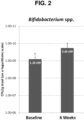
- an increased presence of Bifidobacterium spp. In a GI tract of a mammal is a known indicator of GI health.
- the method of using the prebiotic composition further comprises increasing a level (e.g.
- Bifidobacterium spp. Bifidobacterium spp., Faecalibacterium prausnitzii, and/or Roseburia spp. in the G! tract of the host.
- butyrate producing bacteria are generally beneficial to a host and may improve intestinal barrier function and reduce methane-producing microorganisms in the host's colon, which in turn will thereby reduce abdominal gas in the host.
- the prebiotic composition is administered to the host to reduce the growth and/or number of pathogens in the host's GI tract (e.g. the host's large intestine)
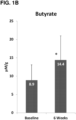
- the method of preventing and/or treating the GI condition in the host further comprises increasing or stabilizing a level of butyrate in a large intestine of the host.
- the method may further comprise normalizing a butyrate level in the gut to support healthy colonocytes in the GI tract of the host.
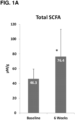
- the method of preventing and/or treating the GI condition in the host further comprises increasing a level of short chain fatty acids (SCFAs) in a large intestine of the host.
- SCFAs short chain fatty acids
- the use of the prebiotic composition in a method of providing nutritional support in combination with a therapy to a host afflicted by a GI condition.
- the method includes administering the therapy and administering the prebiotic composition as described above.
- the therapy may be any therapy and/or treatment for the GI condition.
- the prebiotic composition may be administered to the host as a stand-alone composition, or as one or more of the foodstuff, beverage, nutritional composition, medical food, and kit presentation described above.
- the method of providing nutritional support in combination with the therapy further comprises administering a vitamin and/or mineral supplement to the host.
- administering the prebiotic composition to a host in accordance with the method described above may result in an increased yield in one or more host-derived commodity, such as eggs, meat, milk, wool, or combinations thereof.
- the prebiotic composition may be administered as needed, daily, several times per day or in any suitable regimen such that the desired outcome is achieved.
- the frequency of administration can depend on several factors, including the desired level of prevention and/or treatment.
- a regimen includes administration of the prebiotic composition to the host once or twice daily to include an administration in the morning and/or an administration in the evening.
- the amount of prebiotic composition administered to the host during each administration may depend on several factors including level of desired results and the specific prebiotic composition.
- a first composition comprising a combination of 2'fucosyllactose (2'FL) and isomaltooligosaccharide (IMO) is formulated as shown in Table 1 below to give a first prebiotic composition.
- Table 1 - Exemplary Composition 1 Nutrient Per Svg Nutrient Per Svg Serving (Svg) Size (g) 40 Vitamin E (IU) 7.5 Servings Per Container 14 Thiamin (mg) 0.375 Calories (kcal) 150 Riboflavin (mg) 0.425 Total Fat (g) 5 Niacin (mg) 5 Saturated Fat (g) 1.5 Vitamin B6 (mg) 0.5 Trans Fat (g) 0 Folate (mcg) 185.2 Polyunsaturated Fat (g) 1 Vitamin B12 (mg) 0.5 Monounsaturated Fat (g) 2 Biotin (mcg) 75 Cholesterol (mg) 0 Pantothenic Acid (mg) 2.5 Sodium (mg) 100 Phosphorus (mg) 185
- Dietary Fiber is a mixture of about 2 grams of 2'FL and about 5 grams of IMO per serving.
- a second composition comprising a combination of 2'FL and IMO is formulated as shown in Table 2 below to include flavorings (vanilla, and natural flavors), sweeteners (sugar), and supplemental nutrients to give a second prebiotic composition comprising a vanilla flavor.
- a third composition comprising a combination of 2'FL and IMO is formulated as shown in Table 2 below to include flavorings (cocoa powder, and natural flavors), sweeteners (sugar), and supplemental nutrients to give a third prebiotic composition comprising a chocolate flavor.
- the prebiotic composition of Exemplary Composition 1 is formulated into a medical food formulated to provide nutritional support in the management of compromised gut function, mucosal inflammation, malnutrition, and/or intestinal dysbiosis.
- the medical food is then administered to adult human patients with previously diagnosed IBS, IBD, and/or celiac disease.
- the effects of the prebiotic composition on GI symptoms and quality of life in the adult human patients is then measured to determine the effects of the prebiotic composition on GI symptoms and quality of life in adults with previously diagnosed IBS, IBD, and celiac disease.
- Example 1B improved quality of life per GIQLI
- GIQLI Gastrointestinal Quality of Life Index
- Example 1C Improved quality of life of US sufferers per DSFQ for UC
- DSFQ Digestive Symptom Frequency Questionnaire
- IBDQ Quality of Life in Inflammatory Bowel Disease Questionnaire
- Example 1D Improved quality of life for patients suffering for IBD per IBDQ
- the four participants with UC also completed the Inflammatory Bowel Disease Questionnaire (IBDQ) which yields a total score and four subdomain scores.
- IBDQ Inflammatory Bowel Disease Questionnaire
- the IBDQ scores are indicative of an improvement in the quality of life of the participants.
- Example 1E improved quality of life for patients suffering for IBS per DSFQ
- DSFQ Digestive Symptom Frequency Questionnaire
- Example 1F Improved GI health compared to healthy individuals per patient's stool samples
- Figs. 1 and 2 demonstrate that administration of the prebiotic composition, as described above, increases both production of SCFAs (including butyrate, see Fig. 1B ) and also levels of Bifidobacterium in human subjects.
- GIQLI Gastrointestinal Quality of Life Index
- SCFAs short chain fatty acids
- any ratio, expressed as a range defined by two numbers as each number, and variations between listed whole numbers is also specifically disclosed.
- Use of the term "optionally" with respect to any element of the embodiment, whether included in a claim or not means that the element is required, or alternatively, the element is not required, both alternatives being within the scope of the invention.
- Use of broader terms such as comprises, includes, and having should be understood to provide support for narrower terms such as consisting of, consisting essentially of, and comprised substantially of.
- any ranges and subranges relied upon in describing various embodiments of the present invention are understood to describe and contemplate all ranges including whole and/or fractional values therein, even if such values are not expressly written herein.
- One of skill in the art readily recognizes that the enumerated ranges and subranges may be further delineated into relevant halves, thirds, quarters, fifths, and so on.
- a range "of from 0.1 to 0.9" may be further delineated into a lower third, i.e., from 0.1 to 0.3, a middle third, i.e., from 0.4 to 0.6, and an upper third, i.e., from 0.7 to 0.9.
- a range of “at least 10” inherently includes a subrange of from at least 10 to 35, a subrange of from at least 10 to 25, a subrange of from 25 to 35, and so on.
- an individual number within a disclosed range may be relied upon.
- a range “of from 1 to 9” includes various individual integers, such as 3, as well as individual numbers including a decimal point (or fraction), such as 4.1.
Landscapes
- Health & Medical Sciences (AREA)
- Life Sciences & Earth Sciences (AREA)
- Chemical & Material Sciences (AREA)
- Veterinary Medicine (AREA)
- Epidemiology (AREA)
- Pharmacology & Pharmacy (AREA)
- Animal Behavior & Ethology (AREA)
- General Health & Medical Sciences (AREA)
- Public Health (AREA)
- Medicinal Chemistry (AREA)
- Polymers & Plastics (AREA)
- Engineering & Computer Science (AREA)
- Food Science & Technology (AREA)
- Nutrition Science (AREA)
- Mycology (AREA)
- Inorganic Chemistry (AREA)
- Proteomics, Peptides & Aminoacids (AREA)
- Molecular Biology (AREA)
- Zoology (AREA)
- Animal Husbandry (AREA)
- Bioinformatics & Cheminformatics (AREA)
- Botany (AREA)
- Gastroenterology & Hepatology (AREA)
- Immunology (AREA)
- Pediatric Medicine (AREA)
- Oil, Petroleum & Natural Gas (AREA)
- Physiology (AREA)
- Pharmaceuticals Containing Other Organic And Inorganic Compounds (AREA)
- Medicines Containing Material From Animals Or Micro-Organisms (AREA)
- Coloring Foods And Improving Nutritive Qualities (AREA)
Description
- This application claims priority to
U.S. Prov. Appl. No. 62/363,590, filed on 18 July 2016 - The present invention generally relates to a prebiotic composition and, more specifically, to a prebiotic composition comprising a combination of 2'fucosyllactose (2'FL) and isomaltooligosaccharide (IMO) and to related uses and methods associated with the prebiotic composition, as defined in the appended claims.
- Many animals, such as mammals, have a gastrointestinal (GI) tract that includes an epithelium, which typically functions as a selective barrier to permit the absorption of nutrients, electrolytes, and water, and that minimizes and/or prevent exposure of the bodies to dietary and microbial antigens. However, GI disorders have been shown to be associated with GI tracts having altered microbiota. In particular, dysbiosis (i.e., alteration of an intestinal microbiota) may result in neuroendocrine changes that contribute to pathogenesis of GI disorder(s). Animals, such as mammals (e.g. humans) afflicted by such G! disorder(s) may, as a result of the GI disorder(s), develop nutrient deficiencies and/or malnutrition.
- Some of the GI disorders, such as irritable bowel syndrome (IBS), inflammatory bowel disease(s) (IBD), Crohn's disease, and ulcerative colitis (UC), which are each described in further detail below, affect a significant and growing number of humans in the United States (U.S.). One particular GI disorder is Celiac disease, which typically affects about 1 % of the general population of the U.S. alone. Generally, these GI disorders have no cure, and current treatments often cause further complications in the afflicted host.
- IBS is typically characterized by a combination of persistent and recurrent abdominal pain and irregular bowel habits such as diarrhea and/or constipation. Typical pharmacologic treatments (i.e., drug therapies) for IBS may include medications to manage abdominal pain, diarrhea, and constipation, and in certain instances, antibiotics. However, IBS has not been cured by such typical pharmacologic treatments.
- IBD is typically characterized by chronic inflammation of all or part of a GI tract, and is often confused with IBS. Typically, IBD presents as ulcerative colitis or Crohn's disease, which each typically include diarrhea, pain, fatigue, and weight loss. IBD may be debilitating and, in certain instances, may lead to one or more life-threatening complications. Typical pharmacologic treatments for IBD include 5-aminosalicylates (e.g. 5-ASA), antibiotics, systemic and/or non-systemic glucocorticoids, immune-modulators, biologic therapies, anti-diarrheal medications, probiotics, and dietary interventions such the elimination of food triggers and (e.g. lactose avoidance).
- Crohn's disease is an IBD that causes inflammation of tissues lining an affected GI tract. It is also understood that such inflammation may spread deep into the tissues of the affected GI tract, and may afflict different areas of the GI tract such as, for example large and/or small intestines. Crohn's disease is typically characterized by a combination of abdominal pain, diarrhea, vomiting, or weight loss, but may also include complications outside of the GI tract such as skin rashes, arthritis, and/or exhaustion. Like IBS, Crohn's disease has not been cured by typical pharmacologic treatments. Rather, treatments of Crohn's disease are typically restricted to controlling symptoms, maintaining remission, and preventing relapse.
- UC (or Colitis ulcerosa) is a form of IBD, and is often considered similar to Crohn's disease. In particular, UC is an IBD characterized by long-lasting inflammation and sores (ulcers) in the innermost lining of the colon (i.e., large intestine, including the rectum) and, in some cases, the small intestine. As such, UC is a form of colitis (i.e., a disease of a colon), and includes a primary symptom of gradual onset bloody diarrhea. However, UC is an intermittent disease and includes both periods of exacerbated symptoms and also periods that are relatively symptom-free. Typical pharmacologic treatments for UC include anti-inflammatory drugs, immunosuppression, and biological therapies targeting specific immune responses. Other treatments for UC include surgical interventions such as colectomy (i.e., partial or total surgical removal of a colon) and total proctocolectomy (i.e., removal of the entirety of a colon and rectum). However, such surgical interventions may be associated with life-altering complications.
- Celiac disease is an autoimmune disorder of the small intestine, and is characterized by symptoms including pain and discomfort in the G! tract, chronic constipation and/or diarrhea, failure to thrive (in children), and fatigue. In certain cases, vitamin deficiencies are often noted in people with celiac disease, and are typically thought to be caused by a reduction in an ability of the small intestine of an afflicted person to properly absorb nutrients from food. Treatments for celiac disease are typically limited to a life-long avoidance of dietary gluten. However, such treatments do not typically provide relief from symptoms.
EP2827724 relates to a fermented infant formulae comprising non digestible oligosaccharides for improving intestinal tract health by decreasing protein digestive effort, by decreasing the amount of endogenously formed proteases concomitant with an increased protein digestion, and a reduced protein fermentation.
Fernandez J. et al (2015) Aims Microb, vol. 1, no. 1 pp48-71 describes healthy effects of prebiotics and their metabolites against intestinal diseases and colorectal cancer.
Fernandez, J et al (2016) J. Funct. Foods, provides a review of colon microbiota fermentation of dietary prebiotics towards short-chain fatty acids and their roles as anti-inflammatory and antitumour agents.
CN102366615A relates to a preparation method of traditional Chinese medicine used for treating gastritis caused by insufficiency of spleen-yang.
US 2006/165670 concerns a composition comprising a Lactobacillus strain and a non-digestible oligosaccharide and the oligosaccharide is chosen from a et galacto-oligosaccharide (GOS), fructo-oligosaccharide (FOS), xylo-oligosaccharide (XOS), soybean-oligosaccharide (SOS), isomalto-oligosaccharide (IMO), gentio-oligosaccharide, fructan, lactulose, glucco-oligosaccharide and lactosucrose.
Yu Z-T et al (2012) Glycobiology vol 23, no. 2 pp 169-177 describes the principal fucosylated oligosaccharides of human milk exhibit prebiotic properties on cultured infant microbiota. - The invention is set out in the appended claims. The invention provides a prebiotic composition comprising a combination of 2'fucosyllactose (2'FL) and isomaltooligosaccharide (IMO) in a weight ratio of from 1:1 to 1:10 wherein the 2'FL is present in an amount of from 2 to 8 weight percent (wt.%) and the IMO is present is an amount of from 2 to 80 wt.%, each based on the total weight of the prebiotic composition
- In one aspect, the present invention provides a foodstuff or beverage for use in reducing or suppressing inflammation in a human gastrointestinal (GI) tract, comprising the prebiotic composition of the present invention, and wherein the inflammation is associated with: (i) IBS; (ii) IBD; (iii) Celiac disease; (iv) ulcerative colitis; (v) Crohn's disease; or (vi) any combination of (i) to (v).
- In another aspect, the present invention provides a kit presentation for use in reducing or suppressing inflammation in a human gastrointestinal (GI) tract, comprising a combination of the prebiotic composition of the present invention, and a pharmaceutical agent, and wherein the inflammation is associated with: (i) IBS; (ii) IBD; (iii) Celiac disease; (iv) ulcerative colitis; (v) Crohn's disease; or (vi) any combination of (i) to (v).
- In a further aspect, the invention also provides the prebiotic composition of the present invention for use in a method of preventing and/or treating a gastrointestinal (GI) condition in a human, wherein the GI condition is selected from: (i) IBS; (ii) IBD; (iii) Celiac disease; (iv) ulcerative colitis; (v) Crohn's disease; or (vi) any combination of (i) to (v).
-
-
FIG. 1A is a bar chart illustrating enhanced production of total short chain fatty acids (SCFAs). The SCFA levels include the sum of butyrate, acetate, and propionate. -
FIG. 1B is a bar chart illustrating the amount of butyrate in the Total SCFA illustrated inFIG. 1A . -
FIG. 2 is a bar chart illustrating levels of Bifidobacterium spp. at baseline and 6 weeks after treatment with the prebiotic composition according to Example 1. Paired t-test was conducted on log-transformed data. *p<0.05. - A prebiotic composition comprising a combination of 2'fucosyllactose (2'FL) and isomaltooligosaccharide (IMO), a foodstuff or beverage comprising the prebiotic composition, a kit presentation comprising the prebiotic composition, and a method of using the prebiotic composition are disclosed in greater detail below.
- As used herein, the singular forms "a", "an," and "the" are meant to include plural referents unless the context clearly dictates otherwise.
- As used herein, an "embodiment" means that a particular feature, structure or characteristic is included in at least one or more manifestations, examples, or implementations of this invention.
- As used herein, the term "weight percent" (and thus the associated abbreviation "wt. %") typically refers to a percent by weight expressed in terms of a weight of dry matter. As such, it is to be appreciated that a wt. % can be calculated on a basis of a total weight of a composition, or calculated from a ratio between two or more components/parts of a mixture (e.g. a total weight of dry matter).
- As used herein, the terms "about" and "approximately", when referring to a specified, measurable value (such as a parameter, an amount, a temporal duration, and the like), is meant to encompass the specified value and variations of and from the specified value, such as variations of +/-10% or less, alternatively +/-5% or less, alternatively +/-1% or less, alternatively +/-0.1% or less of and from the specified value, insofar as such variations are appropriate to perform in the disclosed embodiments. Thus the value to which the modifier "about" or "approximately" refers is itself also specifically disclosed.
- As used herein, the term "animal" refers to an organism of the kingdom Animalia that has a gastrointestinal (GI) tract. Examples of animals include mammals (i.e., vertebrates of the class Mammalia). All mammals have digestive tracts. Mammals that are specifically contemplated herein are domesticated mammals, such as dogs, cats, goats, sheep, pigs, cattle, horses, donkeys, camels, and the like. Additional mammals that are specifically contemplated herein include semi-domesticated mammals and mammals that are routinely bred in captivity. Of course, the term mammal also encompasses humans (which may be referred to as "people" and/or "person(s)." When describing a human, the term "adult" is typically used herein to refer to a human that has reached sexual maturity. By contrast, the terms "child" and "juvenile" are used herein to refer to a human that has not yet reached sexual maturity. Typically, the term "child" means a human subject between the stage of birth and the age of about 10 (i.e., childhood), and the term "juvenile" means a human subject that is greater than the age of about 10 and who has not completed the stage of puberty. Of course, the terms child, juvenile, adult, and infant are all encompassed by the term human, which is itself a subcategory of mammal, which is a subcategory of animal as defined herein.
- As used herein, the term "gastrointestinal tract" (and thus the associated abbreviation "Gl tract") refers to an organ system within an animal (e.g. a mammal) that ingests foodstuff, digests the foodstuff (e.g. to extract and/or absorb nutrients from the foodstuff or components thereof), and expels any non-digested component(s) of the foodstuff as waste (e.g. as urine and/or feces). In certain instances, the terms "digestive tract", "GIT", "gut", and "alimentary canal" may be used synonymously to refer to a GI tract. A GI tract may comprise multiple organs and/or anatomic structures, such as a mouth, esophagus, stomach, and intestine(s). Moreover, as will be understood by one of skill in the art, a GI tract may be divided into multiple systems, such as upper and lower tracts, and small and large intestines. Each of such systems may comprise a number of anatomic structures, including a buccal cavity, pharynx, esophagus, stomach, duodenum, jejunum, ileum, cecum, colon(s) (e.g. ascending, transverse, descending, and sigmoid colons, and colic flexure(s)), rectum, and anus.
- As used herein, the term "prebiotic" refers to non-digestible food component which may selectively stimulate the growth and/or activity of one or a limited number of beneficial bacteria in a GI tract (e.g. in a colon) of a host (e.g. an animal) and thereby improve or maintain the health of the host. In particular instances, the term "prebiotic" may refer to a food comprising a non-digestible component that beneficially affects the host through selective metabolism in the host's GI tract. Without wishing to be bound by theory, it is thought that prebiotics may selectively stimulate the growth and/or activity of one or a limited number of bacteria in a part of the host's GI tract (e.g. a colon) and thereby improve the host's health.
- As used herein, the term "prebiotic effect" refers to a selective, prebiotic-induced stimulation of growth and/or activity of one or a limited number of bacteria (e.g. bifidobacteria, lactobacilli, etc.) in the gut flora of a host that results in an improvement to the health of the host. Non-limiting examples of the improvements to the health of the host may include the alleviating constipation, improving gut health, improving mineral absorption, improving lipid metabolism, and/or improving satiety in the host.
- The term "gut flora" refers to microorganisms (i.e., microflora) that normally live in the G! tract of an animal. For example, the gut flora present in a typical animal comprises pathogenic, benign, and beneficial microbial genera. The gut flora of a typical, healthy human comprises beneficial bacteria such as lactobacilli and bifidobacteria, and non-beneficial gut bacteria such as bacteroides, coliforms, clostridia, and sulfate-reducing bacteria. A predominance of such non-beneficial gut bacteria in the gut flora of an animal, such as a human, may lead to acute or chronic intestinal disorders including gastroenteritis, inflammatory bowel syndrome, irritable bowel syndrome, and intestinal cancer.
- As used herein, the terms "treatment" and "treat" refer to and encompass prophylactic (i.e., preventive), modifying, and curative treatments. As such, these terms including treatment of patients (e.g. humans) at risk of contracting a disease or suspected to have contracted a disease, as well as patients who are ill or have been diagnosed as suffering from a disease or medical condition.
- As used herein, the term "therapeutically effective amount" relates to an amount (i.e., a quantity) of a composition (e.g. the prebiotic composition of the present embodiments) required to achieve a particular therapeutic and/or prophylactic effect, such as in treating a patient. Likewise, as used herein, the term "physiologically effective amount" relates to an amount of a composition required to achieve a desired physiological effect. As will be understood by one of skill in the art, such effective amounts are typically measured and/or expressed in terms of g/day, or a derivative thereof (e.g. mg/day).
- As used herein, the term "synergism" or "synergy" refers to an effect in which two or more agents (e.g. compounds) working together to produce a result not obtainable by any of the agents independently. As such, the term "synergistic amount" refers to amounts of the two or more agents at which a more pronounced (e.g. greater) effect is achieved as compared to the effects of each agent alone.
- As used herein, the term "foodstuff" refers to a material that may be used as a food. As such, in certain instances the term foodstuff is used to describe a composition that may be consumed (e.g. by eating) by a living organism (e.g. a mammal), such as for nourishment and/or sustenance.
- As used herein, the term "beverage" refers to a potable liquid or other non-solid composition. As such, in certain instances the term beverage is used to describe a non-solid (e.g. liquid, slurry, suspension, etc.) composition that may be consumed by a living organism for nourishment and/or sustenance. As such, in particular instances the terms "beverage" and "foodstuff" may overlap. In certain instances, the term "nutritional composition" is used to describe a foodstuff and/or beverage formulation that can be eaten or drunk by a human subject for nutrition.
- As used herein, the term "functional food additive" refers to an ingredient, additive, component, or supplement suitable for incorporation in a foodstuff and/or beverage to confer a technical, nutritional, and/or health benefit (i.e., a function) to a host that consumes the foodstuff and/or beverage. Accordingly, such benefits may be closely related to a selective stimulation of some gut flora bacteria, and may include an alleviation of constipation, fan improved gut health, for an improved mineral absorption, an improved lipid metabolism, a better regulation of glycemia/insulinemia, and/or improved satiety (i.e., a prebiotic effect, as described above). The "functional food additive" can be added to different types of food including, but not limited to, medical foods, dietetic foods, and supplements.
- As used herein, the term "medical food" is typically used to refer to a food for a special dietary use, such as a food formulated for dietary management of a medical condition (e.g. based upon scientific or medical evaluation). However, it is to be appreciated that the term "medical food" may have one or more particular definitions depending on, for example, geographic location, specific use, regulatory agency, and the like. For example, in certain cases, the term medical food may be defined as a food which is formulated to be consumed or administered enterally under the supervision of a physician and which is intended for the specific dietary management of a disease or condition for which distinctive nutritional requirements, based on recognized scientific principles, are established by medical evaluation (see, e.g., section 5(b) of the Orphan Drug Act (21 U.S.C. 360ee (b) (3)),). In these or other instances, the term medical food may be defined as a food for special dietary use as a food that has been specially processed or formulated to meet the particular requirements of a person: (a) in whom a physical or physiological condition exists as a result of a disease, disorder, or injury; or (b) for whom a particular effect, including but not limited to weight loss, is to be obtained by a controlled intake of food (see, e.g., section B.24.001 of the Canadian Food and Drug Regulations (FDR, C.R.C., c. 870)(as amended 13 June 2017)),).
- As used herein, the term "supplement" relates to a nutritional supplement which is a concentrated source of nutrient or alternatively other substances with a nutritional or physiological effect whose purpose is to supplement the normal diet.
- As used herein, the term "carbohydrate" refers to a polyhydroxy-aldehyde (aldose) or ketone (ketose) compound (i.e., typically referred to as saccharides or sugars), or to a substance which yields one or more of such compounds upon hydrolysis. Examples of carbohydrates include mono-, poly-, and oligosaccharides, as well as certain fermentable carbohydrates. Polysaccharides are carbohydrates composed of a many monosaccharides (e.g. 20 or more) that are linked via glycosidic linkages. Non-limiting examples of naturally occurring polysaccharides are plant cell wall polysaccharides such as cellulose, pectins, arabinans/arabans, arabinoxylans, xylans, arabinogalactans, xyloglucans, and betaglucans, or other polysaccharides such as starches, galactomannans, mannans, arabinogalactans, and fructans. Oligosaccharides are carbohydrates composed of a limited number of monosaccharides (e.g. fewer than 20) that are linked by glycosidic linkages. Non-limiting examples of naturally occurring oligosaccharides are saccharose, cellobiose, raffinose, xylo-oligosaccharides, fructo-oligosaccharides, and galacto-oligosaccharides.
- As used herein, the term "fermentable carbohydrates" refers to oligosaccharides and/or polysaccharides that are not generally digestible or useful to an animal (e.g. a mammal), but may be fermentable by gut flora present in the animal. For example, in certain instances, fermentable carbohydrates comprise oligosaccharides and/or polysaccharides that escape digestion and/or absorption in an upper digestive tract of a mammal (e.g. a human), and are subsequently fermented by endogenous microflora (i.e., the gut flora) in a large intestine of the mammal. Such a fermentation process may generate gas(es) and/or short-chain fatty acids. Included in this definition are the IMO and 2'FL oligosaccharides of the oligosaccharide prebiotic composition described herein.
- As used herein, the term "peptide" describes a molecule having 2 or more amino acids joined together by a peptide bond. As will be understood by those of skill in the art, the term "peptide" encompasses oligopeptides (i.e., peptides comprising 20 or fewer, alternatively 10 or fewer amino acids, e.g. di-, tri-, tetra-, and pentapeptides, etc.) polypeptides (i.e., peptides comprising greater than 10, alternatively greater than 20 amino acids), proteins (i.e., organic compounds comprising amino acids linked via peptide bonds in a linear chain and folded into a globular form), enzymes (i.e., functional proteins), and the like. Such peptides may include any known amino acid, such as the 20 gene-encoded amino acids or others such as selenocysteine. Additionally, the term "peptide" also encompasses naturally modified peptides, e.g. peptides naturally and/or synthetically modified by glycosylation, acetylation, phosphorylation, and the like, or any combination thereof. Furthermore, the term "peptide" also encompasses branched peptides, especially those known to have therapeutic or beneficial effects. It is to be appreciated that the peptides described herein may be produced recombinantly, synthetically, or semi-synthetically, or obtained from natural sources (e.g. via isolation after hydrolysis of a protein and/or enzyme).
- As used herein, the term "lipid" refers to naturally occurring and/or synthetic small molecules that exhibit hydrophobic or amphiphilic properties and typically form vesicles, multilamellar/unilamellar liposomes, and/or membranes in an aqueous environment. As will be understood by one of skill in the art, the term "lipid" encompasses oils, fats (e.g. triclygerides), fatty acids, waxes, sterols, fat-soluble vitamins (e.g. vitamin A, D, E, K, etc.), glycerolipids (e.g. monoglycerides, diglycerides, triglycerides, glycerols, etc.), phospholipids, Sphingolipids, sterols, prenols, saccarolipids, and the like.
- As used herein, the term "short chain fatty acids" (and thus the associated abbreviation "SCFA") refers a sub-group of fatty acids with aliphatic chains containing less than six carbons in a backbone. They include, but are not limited to, acetic acid, propionic acid, isobutyric acid, butyric acid, isovaleric acid, valeric acid, caproic acid, lactic acid, and succinic acid.
- As introduced above, in one aspect, the present invention relates to a prebiotic composition comprising a combination of 2'fucosyllactose (2'FL) and isomaltooligosaccharide (IMO) in a weight ratio of from 1:1 to 1:10, wherein the 2'FL is present in an amount of from 2 to 8 weight percent (wt.%) and the IMO is present is an amount of from 2 to 80 wt.%, each based on the total weight of the prebiotic composition. More specifically, the prebiotic composition comprises a synergistic combination 2'fucosyllactose (2'FL) and isomaltooligosaccharide (IMO). Moreover, the prebiotic composition of the invention is suitable for use in a method of preventing and/or treating a GI condition in a human, wherein the GI condition is selected from: (i) IBS; (ii) IBD; (iii) Celiac disease; (iv) ulcerative colitis; (v) Crohn's disease; or (vi) any combination of (i) to (v).
- For clarity, it is to be understood that the compound name "2'fucosyllactose" (and thus the associated abbreviation "2'FL") is used herein to describe a chemical compound having a chemical formula of C18H32O15, an associated CAS number of 41263-94-9, and the following chemical structure:

- The prebiotic composition may comprise 2'FL from any source, such as naturally-occurring 2'FL (e.g. from milk, including human breast milk), and/or synthetic 2'FL (e.g. synthesized or expressed via recombinant DNA technology). In certain embodiments, the 2'FL may be synthesized and/or derived from a naturally occurring precursor (e.g. lactose).
- Without wishing to be bound by theory, it is believed that 2'FL provides the inventive prebiotic composition with abilities to support the growth of beneficial microbiota (e.g. Bifidobacterium), regulate gut motility (by reducing the frequency and velocity of contractions), and induce production of certain SCFAs via GI fermentation. These certain SCFAs are believed to decrease intra-luminal pH, directly inhibit the growth and/or activity of harmful microorganisms, and encourage the growth of beneficial bacteria (e.g. Bifidobacterium) that compete with potentially pathogenic microorganisms for nutrients and epithelial adhesion sites in mammalian GI tracts.
- The prebiotic composition comprises from 2 to 8, alternatively from 3 to 7, alternatively from 4 to 6, alternatively from 4.5 to 5.5, weight percent (wt. %) of 2'FL, based on the total weight of the prebiotic composition. In certain embodiments, the prebiotic composition comprises 2, 2.5, 3, 3.5, 4, 4.5, 5, 5.5, 6, 6.5, 7, 7.5, or 8, wt. % 2'FL, based on the total weight of the prebiotic composition. In particular embodiments, the prebiotic composition comprises 5 wt. % 2'FL, based on the total weight of the prebiotic composition.
- It is to be appreciated that the particular amount of 2'FL present in the prebiotic composition may vary in accordance with the total weight of the prebiotic composition, which may be measured and/or described on the bases of a sample, a serving size, a batch, or an average of one or more samples, serving sizes, or batches. Typically, the amount of 2'FL present in the prebiotic composition is measured and/or described with reference to a serving size of the prebiotic composition as described herein. For instance, in a 40 g serving size of the prebiotic composition, the 2'FL is typically present in an amount of from 1 to 3, alternatively from 1.25 to 2.75, alternatively from 1.5 to 2.5, alternatively from 1.75 to 2.25, alternatively of 2, g.
- For clarity, it is to be understood that the compound name "isomaltooligosaccharide" (and thus the associated abbreviation "IMO") is used herein to describe a chemical composition characterized by inclusion of a mixture of short-chain carbohydrates, such as glucose oligomers including isomaltose, panose, isomaltotriose, isomaltotetrose, isomaltopentose, isomaltoshexose, and isomaltoheptose. As such, IMO is a branched oligosaccharide containing a series of α-(1,6) bonds in its structure. Typically, IMO includes oligosaccharide polymers comprising 4-7 repeating monomeric units of isomaltose (i.e., 6-O-α-D-glucopyranosyl-D-glucose, CAS no. 499-40-1), which can be represented by the following chemical formula:

- The prebiotic composition may comprise IMO from any source, such as naturally-occurring IMO (e.g. from honey) and/or synthetic IMO (e.g. as produced via enzymatic conversion of starch). In certain embodiments, the IMO may be synthesized and/or derived from a naturally occurring precursor (e.g. starch from cereal crops like wheat, barley, potato, and the like).
- Without wishing to be bound by theory, it is believed that IMO is a prebiotic soluble fiber which supports the production of certain SCFA end products via GI fermentation. These certain SCFAs are believed to decrease intra-luminal pH, directly inhibit the growth and/or activity of harmful microorganisms, and encourage the growth of beneficial bacteria (e.g. Bifidobacterium) that compete with potentially pathogenic microorganisms for nutrients and epithelial adhesion sites in mammalian GI tracts.
- As introduced above, the prebiotic composition comprises a synergistic combination of the 2'FL and the IMO. The synergistic combination comprises the 2'FL and the IMO in a weight ratio (w/w) of 2'FL:IMO of from 1:1 to 1:10, alternatively of from 1:2 to 1:5, alternatively of 1:2.5. As the prebiotic composition comprises the synergistic combination of the 2'FL and the IMO, the 2'FL and the IMO may likewise be present in the prebiotic composition itself in a weight ratio of 2'FL:IMO of from 1:1 to 1:10. In certain embodiments, the 2'FL and the IMO are present in the prebiotic composition in a weight ratio of 2'FL:IMO of from 1:2 to 1:5. In some embodiments, the 2'FL and the IMO are present in the prebiotic composition in a weight ratio of 2'FL:IMO of 1:2.5.
- It is to be understood that the prebiotic composition may comprise any amount of IMO, so long as the synergistic combination of the 2'FL and the IMO present in the prebiotic composition comprises the 2'FL and the IMO in weight ratio (w/w) of 2'FL:IMO within the ranges described herein, and so long as the prebiotic composition comprises from 2 to 80, alternatively from 2 to 72, alternatively from 4 to 64, alternatively from 4 to 56, alternatively from 6 to 48, alternatively from 6 to 40, alternatively from 8 to 32, alternatively from 8 to 24, alternatively from 10 to 16, alternatively from 12 to 13, weight percent (wt. %) of IMO, based on the total weight of the prebiotic composition. In certain embodiments, the prebiotic composition comprises 2, 4, 5, 6, 8, 9, 10, 11, 11.5, 12, 12.5, 13, 13.5, 14, 15, 16, 20, 24, 25, 30, 32, 35, 40, 45, 48, 50, 56, or 72, wt. % IMO, based on the total weight of the prebiotic composition. In particular embodiments, the prebiotic composition comprises 12.5 wt. % IMO, based on the total weight of the prebiotic composition.
- It is to be appreciated that the particular amount of IMO present in the prebiotic composition may vary in accordance with the total weight of the prebiotic composition, which may be measured and/or described on the bases of a sample, a serving size, a batch, or an average of one or more samples, serving sizes, or batches. Typically, the amount of IMO present in the prebiotic composition is measured and/or described with reference to a serving size of the prebiotic composition as described herein. For instance, in a 40 g serving size of the prebiotic composition, the IMO is typically present in an amount of from 1 to 26, alternatively from 1.5 to 22.75, alternatively from 1.5 to 19.5, alternatively from 2 to 19.5, alternatively from 2.25 to 16.25, alternatively from 3 to 13, alternatively from 3.75 to 10, alternatively from 4 to 9.75, alternatively from 4 to 8, alternatively from 4.5 to 6.5, alternatively from 4.5 to 6, alternatively of 5, g.
- The prebiotic composition may include one or more additional components. Examples of suitable additional components include fat and/or lipid components, protein components, and additive components.
- In certain embodiments, the prebiotic composition includes a fat and/or lipid component. The fat and/or lipid component comprises fats (e.g. saturated, monounsaturated, polyunsaturated, and/or unsaturated) and/or lipids (e.g. cholesterol, other sterols). In certain embodiments, the fat and/or lipid component comprises sunflower oil, flaxseed oil, medium chain triglycerides, or a combination thereof. The prebiotic composition may comprise the fat and/or lipid component in any suitable amount. In particular embodiments, the prebiotic composition includes the fat and/or lipid component in an amount of from 12.5 to 30 wt. %, based on the total weight of the prebiotic composition. In certain embodiments, the prebiotic composition comprises 17.5 wt. % of the fat and/or lipid component.
- In some embodiments, the prebiotic composition includes a protein component. The protein component typically includes a protein source, such as individual amino acids, peptides, oligopeptides, and/or proteins. In certain embodiments, the protein component comprises pea protein isolate and/or rice protein concentrate. In these or other embodiments, the protein component comprises L-alanyl-L-glutamine, L-alanine, L-arginine, L-aspartic acid, L-cystine, L-glutamic acid, L-glutamine, glycine, L-histidine, L-isoleucine, L-leucine, L-lysine, L-methionine, L-phenylalanine, L-proline, L-serine, L-threonine, L-tryptophan, L-tyrosine, L-Valine, selenomethionine, or a combination thereof.
- In particular embodiments, the prebiotic composition includes the protein component in an amount of from 25 to 75, alternatively from 35 to 50, alternatively of 45, wt. %, based on the total weight of the prebiotic composition. In certain embodiments, the prebiotic composition comprises 45 wt. % of the protein component.
- In particular embodiments, the prebiotic composition includes an additive component comprising one or more additive suitable for use in a prebiotic composition. The additive component may comprise the fat and/or lipid component and/or the protein component, as each described above. Alternatively, the additive component may be separate from the fat and/or lipid component and/or the protein component, if present within the prebiotic composition. As such, it is to be appreciated that prebiotic composition may comprise one or more of the fat and/or lipid component, the protein component, and the additive component. In embodiments where each of such components is present in the prebiotic composition, the additive component may comprise an amino acid, a peptide, and/or a protein that is the same as or different than any one or more amino acid, peptide, and/or protein present in the protein component. Likewise, the additive component may comprise a fat and/or lipid that is the same as or different than any fat and/or lipid present in the fat and/or lipid component. As such, the ranges listed herein with respect to the any particular component may encompass the total amount of such component (e.g. the protein, lipid, and/or additive components) present within the prebiotic composition, or may refer merely to amount of a single, particular component described therewith.
- Examples of suitable additives for use in the additive component include amino acids, peptides, proteins, lipids, vitamins, carbohydrates, nucleic acids, minerals, anabolic nutrients, antioxidants, probiotic bacterial strains, lipotropic agents, extracts, concentrates, oils, gums, and combinations thereof. In certain embodiments, the prebiotic composition comprises the additive component, and the additive component comprises an amino acid, a peptide, a protein, a lipid, a vitamin, a carbohydrate, a nucleic acid, a mineral, an anabolic nutrient, an antioxidant, a probiotic bacterial strain, a lipotropic agent, or any combination thereof. In these or other embodiments, the additive component comprises a flavoring agent, a dye, a flow modifier, a preservative, a filler, a binder, a dispersing agent, a carrier, a supplemental nutrient, or any combination thereof. In particular embodiments, the additive component comprises a carrier, such as a consumable, nutritional, and/or pharmaceutical carrier, or a combination thereof.
- In addition to those additives listed above, specific examples of additives suitable for use in the additive component include pea protein isolate, isomalto-oligosaccharide, rice protein concentrate, 2'-fucosyllactose powder, flaxseed, organic cane sugar, natural flavors, high oleic sunflower oil, L-lysine HCl, medium chain triglycerides, L-leucine, Silica, L-valine, L-alanyl-L-glutamine, L-isoleucine, xanthan gum, vitamins, minerals, zinc gluconate, ascorbic acid, manganese gluconate, alpha tocopheryl acetate, copper gluconate, D-biotin, retinyl palmitate, niacinamide, cholecalciferol, calcium pantothenate, chromium picolinate, pyridoxine HCl, riboflavin, potassium iodide, thiamin HCl, calcium L-5-methyltetrahydrofolate, selenomethionine, and methylcobalamin, Luo Han Guo fruit (monk fruit) extract, vanilla, rosemary extract, cocoa powder, vitamin E, thiamin, riboflavin, niacin, vitamin B6, folate, vitamin B12, biotin, pantothenic acid, phosphorus, iodine, magnesium, zinc, selenium, copper, manganese, and the like, and combinations thereof.
- In particular embodiments, the prebiotic composition includes the additive component in an amount of from 12.5 to 75, alternatively from 17.5 to 75, alternatively from 17.5 to 50, alternatively from 25 to 50, alternatively from 25 to 45, alternatively from 35 to 50, alternatively from 35 to 45, alternatively of 17.5, 25, 35, 45, or 50 wt. %, based on the total weight of the prebiotic composition.
- In some embodiments, the prebiotic composition includes at least one additive comprising an amino acid, a peptide, and/or a protein, and the at least one additive is present in an amount of from 10 to 30 grams, alternatively from 15 to 20 grams, alternatively of 18 grams, per 40 gram dry weight sample of the prebiotic composition.
- In certain embodiments, the prebiotic composition includes at least one additive comprising a lipid, and the lipid is present in an amount of from 5 to 12 grams, alternatively of 7 grams, per 40 gram dry weight sample of the prebiotic composition.
- The prebiotic composition may compose any form, such as a dry powder, a solution, a suspension, an emulsion, or the like. In certain embodiments, the prebiotic composition is a dry powder. In some embodiments, the prebiotic composition is adapted to be consumed as a liquid. For example, the prebiotic composition may be a dry powder that is combined with a consumable liquid (e.g. water) to form a consumable liquid solution, suspension, or emulsion comprising the prebiotic composition. Likewise, the prebiotic composition may be adapted to be mixed with a foodstuff or beverage. As such, in some embodiments, the prebiotic composition is, alternatively is a component of, a foodstuff or beverage. In these or other embodiments, the prebiotic composition may be further defined as a food additive. Accordingly, it is to be appreciated that certain aspects of the present embodiments include the use of the prebiotic composition as a food additive, and the use of the prebiotic composition in methods of preparing foodstuff and/or beverages.
- As introduced above, the present embodiments can include a foodstuff or beverage comprising the prebiotic composition of the invention, for use in reducing or suppressing inflammation in a human gastrointestinal (GI) tract, wherein the inflammation is associated with: (i) IBS; (ii) IBD; (iii) Celiac disease; (iv) ulcerative colitis; (v) Crohn's disease; or (vi) any combination of (i) to (v). Also disclosed for illustration purposes but not forming part of the present invention, is a foodstuff or beverage suitable for use in methods of reducing or suppressing inflammation in an animalian GI tract or a cause or symptoms thereof, such as diarrhea, inflammatory bowel disease (IBD), Crohn's disease, enterocolitis, ulcerative colitis, allergic colitis, irritable bowel syndrome, pouchitis, post-infection colitis, Clostridium difficile-associated diarrhea, Rotavirus-associated diarrhea, post-infective diarrhea, and/or diarrheal disease due to an infectious agent (e.g. E. coli), IBS, Celiac disease, intolerances, allergies, and combinations thereof.
- Typically, the foodstuff or beverage comprises an admixture of the prebiotic composition with one or more feed products, liquids, supplements, or combinations thereof. In particular embodiments, the foodstuff or beverage comprises 40 g of the prebiotic composition per serving/unit dose of the foodstuff or beverage. However, in certain embodiments the prebiotic composition may itself be further defined as a foodstuff or beverage composition, depending on the quantity, nature, and identity of individual additives and components present in the prebiotic composition, such as those described above. Thus, it is to be appreciated that the disclosure described herein with respect to the prebiotic composition is intended to equally encompass the foodstuff or beverage, a food or beverage product, and/or a food supplement comprising the prebiotic composition. In certain embodiments, the foodstuff or beverage comprising the prebiotic composition comprises a fat and/or lipid component, a protein component, an additive component, or a combination thereof. As such, it is to be appreciated that any amount of fat and/or lipids, protein (e.g. amino acids, peptides, protein, etc.), and additives present in the prebiotic composition will thus also be present in the foodstuff or beverage comprising the prebiotic composition. Accordingly, any amounts and/or examples of such components described herein with respect to the prebiotic composition itself may equally apply to the foodstuff or beverage comprising the prebiotic composition, as will be understood by one of skill in the art.
- Typically, the foodstuff or beverage comprising the prebiotic composition comprises from 5 to 12 grams of fat components, if any, from 5 to 12 grams of lipid components, if any, and from 10 to 30 grams of protein components, if any, each based on a 40 gram dry weight sample of the foodstuff or beverage.
- The foodstuff or beverage comprising the prebiotic composition may be further defined as a nutritional composition. The nutritional composition typically has a nutritional value of at least 1 kilocalorie (kcal) per 100 grams (g) for dry food formulations (i.e., foodstuffs), or per 100 milliliters (ml) for liquid formulations (i.e., beverages). The nutritional composition has a nutritional value of at least 10, alternatively at least 50, alternatively at least 100, alternatively at least 300, kcal per 100 g for dry food formulations (i.e., foodstuffs), or per 100 ml for liquid formulations (i.e., beverages). For example, the nutritional formulation has a nutritional value of from 50 to 200 kcal/100 ml for liquid formulations, and of from 300 to 600 kcal/100 g for dry food formulations. The nutritional composition may be in the form of a dry food concentrate, which may be mixed with liquid or food and subsequently consumed. It is to be appreciated that the nutritional composition is distinguished from a vaccine, and the compositions described herein may be free, alternatively substantially free, from a vaccine.
- In addition to the components described above with respect to the prebiotic composition and the foodstuff or beverage comprising the prebiotic composition, the nutritional composition may further comprise ingredients selected from lipids, minerals, carbohydrates, amino acids, amino acid chelates, anabolic nutrients, vitamins, antioxidants, probiotic bacterial strain, lipotropic agents, and the like, which may each be independently selected in order to provide the nutritional composition with a formulation capable of sustaining energy and/or anabolism in an animal.
- The nutritional composition may be further defined as a nutritional supplement, or as a complete nutritive. For example, the nutritional composition may be formulated to provide a mammal (e.g. a human), via consumption of the nutritional composition, with at least 5%, alternatively at least 10%, alternatively at least 25%, alternatively at least 50%, alternatively at least 75%, alternatively at least 90%, of daily calories required by the mammal. However, it is to be appreciated that a daily calorie requirement is dependent on several factors, including the gender, height, and/or age of the mammal, and thus the percentage of caloric requirement provided by the nutritional composition will be dependent on the particular person consuming the nutritional composition. For example, a 30 year old human male of 80 kg body weight and 180 cm height has a daily calorie requirement of around 2900 cal (calories) to maintain his body weight whereas a 30 year old human female of 55 kg body weight and 165 cm height has a daily calorie requirement of around 2100 cal to maintain her body weight. The nutritional formulation may be a nutritional product for human infants or juveniles.
- The foodstuff or beverage may be further defined as an animal food, typically formulated for ingestion by one or more non-human animals, such as livestock including cattle, swine, horses, sheep, goats, poultry, and fish, domesticated companionship species such as dogs, cats, fish, and rodents, undomesticated wildlife such as deer, moose, elk, migratory, and non-migratory fowl, those non-human animals described herein, and combinations thereof.
- In some embodiments, the foodstuff or beverage is further defined as a medical food. As such, it is to be appreciated that the medical food comprises the prebiotic composition.
- In certain embodiments, the prebiotic composition and the medical food are formulated such that a 40 g dry weight serving of the medical food contains the lipid component in an amount of from 5 to 12 g, alternatively of 7 g. In these or other embodiments, the medical food is formulated such that a 40 g dry weight serving of the medical food contains the protein component in an amount of from 10 to 30 g, alternatively of from 15 to 20 g, alternatively of 18 g.
- As introduced above, the present embodiments can provide a kit presentation, comprising a combination of the prebiotic composition of the invention and a pharmaceutical agent, for use in a method of reducing or suppressing inflammation in a human gastrointestinal (GI) tract, wherein the inflammation is associated with: (i) IBS; (ii) IBD; (iii) Celiac disease; (iv) ulcerative colitis; (v) Crohn's disease; or (vi) any combination of (i) to (v).
- The kit presentation comprising the prebiotic composition the pharmaceutical agent may be configured, and thus used, for providing separate, sequential, or simultaneous administration of the prebiotic composition and the pharmaceutical agent, or a treatment comprising the pharmaceutical agent. Accordingly, the prebiotic composition and the pharmaceutical agent may be formulated together in standard pharmaceutical dosage forms known in the art.
- The pharmaceutical agent may be any pharmaceutical agent suitable for use in combination with the prebiotic composition. Typically, the pharmaceutical agent comprises mesalamine, sulphasalazine, a 5-ASA agent, a corticosteroid (e.g. adrenal steroids, prednisone, hydrocortisone, budesonide, etc.), an anti-inflammatory medication, an antibody therapeutic agent (e.g. ENTYVIO®), a drug used against pain, diarrhea, and/or infection, a serotonin-4 receptor agonist (e.g. ZELNORM®/ZELMAC®), or a combination thereof. It is to be appreciated that combining the prebiotic composition with a treatment or therapy comprising the pharmaceutical agent is also disclosed herein for illustration purposes but not forming part of the invention. As such, reference to the pharmaceutical agent is to be understood to encompass treatments and therapies which include the pharmaceutical agent, and not merely the pharmaceutical agent itself, wherein said treatments and therapies are not forming part of the invention.
- In addition, the prebiotic composition may also be used in combination with supplements commonly used by patients suffering from GI conditions, non-limiting examples of which include multivitamins, fish oils and omega fatty acids (e.g. EPA, DHA, etc.), probiotics, and/or certain medical foods (e.g., ENTERAGAM®, PODIAPN™, ULTRAINFLAMX®, and the like). Accordingly, the kit presentation may comprise such a supplement in addition to the pharmaceutical agent.
- As introduced above, a further embodiment includes the prebiotic composition of the invention for use in a method of preventing and/or treating a GI condition in a human, wherein the GI condition is selected from: (i) IBS; (ii) IBD; (iii) Celiac disease; (iv) ulcerative colitis; (v) Crohn's disease; or (vi) any combination of (i) to (v). In particular, the prebiotic composition described herein has surprisingly been found to be suitable for use in a method of, or as a therapeutic for, preventing, treating, and/or reducing GI (e.g. intestinal) inflammation associated with the above GI conditions.
- Also disclosed herein for illustration purposes but not forming part of the present invention is the prebiotic composition which is useful in a method of preventing and/or treating a GI condition in an animal (e.g., a mammal, a human). For example, the prebiotic composition is useful in a method of prophylactically treating a GI condition. More specifically, the prebiotic compositions described herein is administered to treat an individual suffering from any of a number of diseases or medical conditions characterized by or associated with GI inflammation, such as IBS, IBD, UC, Crohn's disease, diarrhea, constipation, diabetes, hypertension, dyslipidemia, obesity, heart disease, stroke, and those other conditions described above, or a combination thereof. For example, the prebiotic composition is administered to treat (e.g. prophylactically) an individual who has undergone surgical intervention (e.g. removal of all or part of the individual's GI tract, such as an ileocecal valve, etc.).
- Typically, the method of preventing and/or treating the GI condition in the animal comprises administering the prebiotic composition to the animal (i.e., using the prebiotic composition) to prevent, reduce, or eliminate symptoms and/or causes of one or more GI conditions. For example, the prebiotic composition is used to prevent and/or treat IBS, IBD, Celiac disease, Ulcerative colitis, Crohn's disease, or a combination thereof. However, preventing and/or treating the GI condition comprises healing or restoring health to a G! tract of the animal, reducing or suppressing inflammation in the G! tract of the animal, restoring a GI function in the animal, reducing an amount of a pathogen present in a large intestine of the animal, improving or enhancing a quality of life of the animal, or a combination thereof. As such, the method of preventing and/or treating the GI condition in the animal using the prebiotic composition may be further defined as a synergistic method of healing, assisting in the health of, restoring the health of, or an adjunct therapy for, the GI condition.
- Preventing and/or treating the GI condition comprises improving or enhancing the quality of life of the animal. The animal may be a human and the method of preventing and/or treating the GI condition may comprise improving or enhancing the quality of life of the human on a basis of a validated quality of life questionnaire, such as the Digestive Symptom Frequency Questionnaire (DSFQ), the Gastrointestinal Quality of Life Index (GIQLI), and/or the Inflammatory Bowel Disease Questionnaire (IBDQ), regardless of which Gl condition is present.
- It is to be appreciated that the prebiotic composition may be administered to the animal by any means known in the art, including via topical, enteral, or parenteral routes. Typically, the prebiotic composition is administered orally. However, rectal and/or enteral administration may also be used.
- The method of using the prebiotic composition described above may further include shifting a gut microbiome of a host (e.g. an animal, mammal, human, etc.) to a more optimal profile. Such a shift may include and/or result in a decrease in a number of potential pathogens and/or an increase the presence of beneficial butyrate-producing microbe (i.e., improve the host's gut profile). An improved gut profile may provide the host with a decreased risk of digestive irregularities that can lead to one or more digestive disorders, which can progress to more advanced conditions such as IBS, IBD, and other compromised health states including those described above. As such, in accordance with the method of using the prebiotic composition described above, the prebiotic composition may be administered to a host to promote the growth of beneficial bacteria in the host's Gl tract and thereby prevent or reduce a likelihood of the host suffering from a disease or Gl condition, such as one of those described above. For example, Roseburia hominis and Faecalibacterium prausnitzii are butyrate-producing species known to be deficient in patients with IBD, and both species display an inverse correlation with UC disease activity. Additionally, an increased presence of Bifidobacterium spp. In a GI tract of a mammal is a known indicator of GI health. Accordingly, the method of using the prebiotic composition further comprises increasing a level (e.g. growth, number, etc.) of Bifidobacterium spp., Faecalibacterium prausnitzii, and/or Roseburia spp. in the G! tract of the host. Without wishing to be bound by theory, it is believed that butyrate producing bacteria are generally beneficial to a host and may improve intestinal barrier function and reduce methane-producing microorganisms in the host's colon, which in turn will thereby reduce abdominal gas in the host. For example, the prebiotic composition is administered to the host to reduce the growth and/or number of pathogens in the host's GI tract (e.g. the host's large intestine)
- The method of preventing and/or treating the GI condition in the host further comprises increasing or stabilizing a level of butyrate in a large intestine of the host. The method may further comprise normalizing a butyrate level in the gut to support healthy colonocytes in the GI tract of the host. The method of preventing and/or treating the GI condition in the host further comprises increasing a level of short chain fatty acids (SCFAs) in a large intestine of the host.
- Also disclosed herein for illustration purposes but not forming part of the present invention is the use of the prebiotic composition in a method of providing nutritional support in combination with a therapy to a host afflicted by a GI condition. The method includes administering the therapy and administering the prebiotic composition as described above. The therapy may be any therapy and/or treatment for the GI condition. The prebiotic composition may be administered to the host as a stand-alone composition, or as one or more of the foodstuff, beverage, nutritional composition, medical food, and kit presentation described above. The method of providing nutritional support in combination with the therapy further comprises administering a vitamin and/or mineral supplement to the host.
- In certain instances, administering the prebiotic composition to a host in accordance with the method described above may result in an increased yield in one or more host-derived commodity, such as eggs, meat, milk, wool, or combinations thereof.
- The prebiotic composition may be administered as needed, daily, several times per day or in any suitable regimen such that the desired outcome is achieved. In the methods, the frequency of administration can depend on several factors, including the desired level of prevention and/or treatment. Generally, a regimen includes administration of the prebiotic composition to the host once or twice daily to include an administration in the morning and/or an administration in the evening. The amount of prebiotic composition administered to the host during each administration may depend on several factors including level of desired results and the specific prebiotic composition.
- In an effort to further illustrate the embodiments herein, this disclosure includes the following non-limiting examples:
- A first composition comprising a combination of 2'fucosyllactose (2'FL) and isomaltooligosaccharide (IMO) is formulated as shown in Table 1 below to give a first prebiotic composition.
Table 1 - Exemplary Composition 1: Nutrient Per Svg Nutrient Per Svg Serving (Svg) Size (g) 40 Vitamin E (IU) 7.5 Servings Per Container 14 Thiamin (mg) 0.375 Calories (kcal) 150 Riboflavin (mg) 0.425 Total Fat (g) 5 Niacin (mg) 5 Saturated Fat (g) 1.5 Vitamin B6 (mg) 0.5 Trans Fat (g) 0 Folate (mcg) 185.2 Polyunsaturated Fat (g) 1 Vitamin B12 (mg) 0.5 Monounsaturated Fat (g) 2 Biotin (mcg) 75 Cholesterol (mg) 0 Pantothenic Acid (mg) 2.5 Sodium (mg) 100 Phosphorus (mg) 185 Potassium (mg) 220 Iodine (mcg) 3.75 Total Carbohydrate (g) 17 Magnesium (mg) 35 Dietary Fiber (g) 7 Zinc (mg) 35 Sugars (g) 3 Selenium 52.5 Protein (g) 15 Copper (mg) 1.5 Vitamin A (IU) 1250 Manganese (mg) 1.5 Amino Acid mg/Serving L-Alanine (mg) 740 L-Phenylalanine (mg) 670 L-Arginine (mg) 1080 L-Proline (mg) 550 L-Aspartic Acid (mg) 1360 L-Serine (mg) 640 L-Cystine (Cysteine) (mg) 150 L-Threonine (mg) 470 L-Glutamic Acid (mg) 2050 L-Tryptophan (mg) 130 L-Glutamine (mg) 310 L-Tyrosine (mg) 490 Glycine (mg) 500 L-Valine (BCAA) (mg) 1190 L-Histidine (mg) 300 L-Lysine (as L-lysine HCl) 1650 L-Isoleucine (BCAA) (mg) 1070 L-Methionine (mg) 160 L-Leucine (BCAA) (mg) 1820 - Dietary Fiber is a mixture of about 2 grams of 2'FL and about 5 grams of IMO per serving.
- A second composition comprising a combination of 2'FL and IMO is formulated as shown in Table 2 below to include flavorings (vanilla, and natural flavors), sweeteners (sugar), and supplemental nutrients to give a second prebiotic composition comprising a vanilla flavor.
- A third composition comprising a combination of 2'FL and IMO is formulated as shown in Table 2 below to include flavorings (cocoa powder, and natural flavors), sweeteners (sugar), and supplemental nutrients to give a third prebiotic composition comprising a chocolate flavor.
Table 2 - Exemplary Compositions 2 and 3: Exemplary Composition 2 - Vanilla Exemplary Composition 3 - Chocolate Pea Protein Isolate Pea Protein Isolate Isomalto-Oligosaccharide Isomalto-Oligosaccharide Rice Protein Concentrate Rice Protein Concentrate 2'-Fucosyllactose Powder 2'-Fucosyllactose Powder Flaxseed Golden Flaxseed Organic Cane Sugar Cane Sugar Natural Flavors Natural Flavors High Oleic Sunflower Oil Sunflower Oil L-Lysine HCl L-Lysine Medium Chain Triglycerides Medium Chain Triglycerides L-Leucine L-Leucine Silica Silica L-Valine L-Valine L-Alanyl-L-Glutamine L-Alanyl-L-Glutamine L-Isoleucine L-Isoleucine Xanthan Gum Xanthan Gum Vitamin And Mineral Blend (Zinc Gluconate, Ascorbic Acid, Manganese Gluconate, D-Alpha Tocopheryl Acetate, Copper Gluconate, D-Biotin, Retinyl Palmitate, Niacinamide, Cholecalciferol, D-Calcium Pantothenate, Chromium Picolinate, Pyridoxine HCl, Riboflavin, Potassium Iodide, Thiamin HCl, Calcium L-5-Methyltetrahydrofolate, Selenomethionine, and Methylcobalamin) Vitamin and Mineral Blend (Zinc Gluconate, Ascorbic Acid, Manganese Gluconate, D-Alpha Tocopheryl Acetate, Copper Gluconate, D-Biotin, Retinyl Palmitate, Niacinamide, Cholecalciferol, D-Calcium Pantothenate, Chromium Picolinate, Pyridoxine HCl, Riboflavin, Potassium Iodide, Thiamin HCl, Calcium L-5-Methyltetrahydrofolate, Selenomethionine, and Methylcobalamin) Luo Han Guo Fruit (Monk Fruit) Extract Luo Han Guo Fruit (Monk Fruit) Extract Vanilla Dutch Processed Cocoa Powder Rosemary Extract Rosemary Extract - Most data below are expressed as "mean ± SD." Changes from baseline to 6 weeks were analyzed using two-sided paired t-tests. Gut microbiota PCR data were log-transformed prior to analysis. A value of p<0.05 is considered statistically significant.
- The prebiotic composition of Exemplary Composition 1 is formulated into a medical food formulated to provide nutritional support in the management of compromised gut function, mucosal inflammation, malnutrition, and/or intestinal dysbiosis. The medical food is then administered to adult human patients with previously diagnosed IBS, IBD, and/or celiac disease. The effects of the prebiotic composition on GI symptoms and quality of life in the adult human patients is then measured to determine the effects of the prebiotic composition on GI symptoms and quality of life in adults with previously diagnosed IBS, IBD, and celiac disease.
- 12 adult participants, including seven men and five women ranging in age from 22-60 years old (mean age of 31.4 ± 10.5) with a mean weight of 73.8 ± 15.0 kg (162.8 ± 33.1 lbs) and a mean BMI of 23.8 ± 3.4 kg/m2 completed the study. These participants were recruited via U.S. medical, osteopathic, and naturopathic practices. Each participant had a previous diagnosis of IBS, UC, Crohn's disease, or celiac disease. Each participant consumed 1 serving (approximately 40 grams) of Exemplary Composition 1, which was formulated as a medical food mixed with water, twice daily for 6 weeks. As each serving of Exemplary Composition 1 includes about 2 grams of 2'FL and about 5 grams of IMO, each patient was treated daily with about 4 grams of 2'FL and about 10 grams of IMO.
- At the beginning of the study and at the study end, participants completed the Gastrointestinal Quality of Life Index (GIQLI), a validated 36-item questionnaire designed for patients with disorders of the esophagus, stomach, gallbladder, pancreas, small intestine, colon, and rectum (i.e., GI conditions/disorders) The GIQLI yields a total score and 4 subdomain scores, and detects changes over time: higher scores are consistent with a better quality of life.
- Participants with UC (n=4) were asked to complete condition-specific questionnaires, including the Digestive Symptom Frequency Questionnaire (DSFQ) if they also had IBS, the Quality of Life in Inflammatory Bowel Disease Questionnaire (IBDQ) if they had UC or Crohn's disease.
- The four participants with UC also completed the Inflammatory Bowel Disease Questionnaire (IBDQ) which yields a total score and four subdomain scores. The total score improved by a mean of 43.6% (p=0.078) following treatment with the oligosaccharide prebiotic, and the systemic symptoms subdomain score improvement of 66.9% was statistically significant (p=0.0002). The IBDQ scores are indicative of an improvement in the quality of life of the participants.
- The seven participants with IBS also completed the Digestive Symptom Frequency Questionnaire (DSFQ) and indicated a minor improvement in mean score by 10.3% (p=0.522).
- Stool samples were collected at both baseline and also at the end of the study. These stool samples were analyzed using the GENOVA G! EFFECTS® Comprehensive Stool Profile to assess gut microbiota short-chain fatty acid (SCFA) levels, biomarkers that indicate digestive and absorptive function, gut inflammation, and immunology, and to identify species that may be classified as "potential pathogens." The results of these analyses are summarized in
Figs. 1 and2 . - More specifically, the data in
Figs. 1 and2 demonstrate that administration of the prebiotic composition, as described above, increases both production of SCFAs (including butyrate, seeFig. 1B ) and also levels of Bifidobacterium in human subjects. - As shown in
Figs. 1A and1B in particular, administering the prebiotic composition (Exemplary Composition 1) according to the method exemplified in Example 1 increases butyrate levels by a mean of 72.7% (p=0.022), and increases total SCFA levels by a mean of 72.2% (p=0.026) after 6 weeks. - As shown in
Fig. 2 in particular, administering the prebiotic composition (Exemplary Composition 1) according to the method exemplified in Example 1 increases Levels of Bifidobacterium spp. by 336.9% (p=0.028) after 6 weeks. - Without being bound to any specific mechanism of action, it is hypothesized that the mechanism for the increased production of SCFAs, including butyrate, the increased levels of Bifidobacterium, and the resolution of potentially pathogenic microorganisms involves the induction of intestinal microbiota changes by the synergistic combination of 2'FL and IMO in the prebiotic composition, as described above.
- Out of the 12 participants that completed the study, a total of 8 potential pathogens were identified at baseline. At the end of the study, 7 of the 8 total potential pathogens were no longer detected. In contrast, only 2 potential pathogens were present at the end of the study. (data not shown)
- All participants, regardless of pre-existing conditions, completed the GIQLI. The resulting GIQLI scores are shown in Table 3 below.
Table 3 - GIQLI scores at baseline and 6 weeks among participants who completed the study: Scores Mean % change P value Score range Total score Baseline: 94.3±25.5 20.8% 0.020 0-144 6 weeks: 109.4±19.2 Subdomain GI symptoms Baseline: 53.3±10.3 18.1% 0.022 0-76 6 weeks: 61.4±7.7 Social function Baseline: 10.7±3.8 18.4% 0.004 0-16 6 weeks: 12.3±3.7 Emotional function Baseline: 12.0±5.8 46.5% 0.139 0-20 6 weeks: 14.7± 4.5 Physical function Baseline: 15.6±7.4 36.5% 0.164 0-28 6 weeks: 17.8±6.1 - As shown in Table 3, total scores improved by a mean of 20.8% (p=0.020) from baseline to the end of the study. Scores for the GI symptoms domain and the social function domain also improved significantly.
- The clinical study described above demonstrates that the embodiments herein have the following unexpected effects when used in the treatment of a group of adult humans with IBS, IBD, and/or celiac disease:
- Reduced GI symptoms and improved overall GI quality of life;
- Total Gastrointestinal Quality of Life Index (GIQLI) questionnaire scores improved by 16.0% (p=0.020);
- GIQLI GI symptoms sub-domain scores improved by 15.2% (p=0.022);
- Increased production of short chain fatty acids (SCFAs) including butyrate. Butyrate, a hallmark of GI health, increased significantly by 72.7% (p=0.022), while total SCFAs increased by 72.2 % (p=0.026) (as illustrated in
FIG. 1 ); - Levels of Bifidobacterium spp. increased by 336.9% (p=0.028) (as illustrated in
FIG. 2 ); - Levels of other known butyrate producing gut bacteria increased: Faecalibacterium prausnitzii increased by 60.7% (p=0.086) and Roseburia spp. increased by 135.3% (p=0.072) (data not shown);
- Resolved potential pathogenic intestinal microflora; and
- 87.5% of potential pathogens that were identified at baseline had resolved by the end of the study.
- A specific adult male with irregular symptoms of wasting, including a BMI of 17, participated in the clinical study of Example 1. By the end of the study, the irregular symptoms reported at the beginning of the trial had resolved, and the specific adult male had gained 4.1 kg (9 pounds). Though the trial had concluded, the specific adult male sought to continue the use of the embodiment, as he had not experienced weight gain in a very long time.
- The examples shown above are not exhaustive, but are intended to provide guidance sufficient to practice the embodiments herein.
- With regard to the description herein, where numerical ranges or limitations are expressly stated, such express ranges or limitations should be understood to include iterative ranges or limitations of like magnitude falling within the expressly stated ranges or limitations (e.g., from about 1 to about 10 includes, 2, 3, 4, etc.; greater than 0.10 includes 0.11, 0.12, 0.13, etc.). For example, whenever a numerical range with a lower limit and an upper limit, is disclosed, any number falling within the range is specifically disclosed. In particular, the following numbers within the range are specifically disclosed: for example, when a variable ranges from 1 percent to 100 percent, this disclosure explicitly includes 1 percent, 2 percent, 3 percent, 4 percent, 5 percent, ... 50 percent, 51 percent, 52 percent, ..., 95 percent, 96 percent, 97 percent, 98 percent, 99 percent, or 100 percent. Moreover, any ratio, expressed as a range defined by two numbers as each number, and variations between listed whole numbers is also specifically disclosed. Use of the term "optionally" with respect to any element of the embodiment, whether included in a claim or not means that the element is required, or alternatively, the element is not required, both alternatives being within the scope of the invention. Use of broader terms such as comprises, includes, and having should be understood to provide support for narrower terms such as consisting of, consisting essentially of, and comprised substantially of.
- Additionally, any ranges and subranges relied upon in describing various embodiments of the present invention are understood to describe and contemplate all ranges including whole and/or fractional values therein, even if such values are not expressly written herein. One of skill in the art readily recognizes that the enumerated ranges and subranges may be further delineated into relevant halves, thirds, quarters, fifths, and so on. As just one example, a range "of from 0.1 to 0.9" may be further delineated into a lower third, i.e., from 0.1 to 0.3, a middle third, i.e., from 0.4 to 0.6, and an upper third, i.e., from 0.7 to 0.9. In addition, with respect to the language which defines or modifies a range, such as "at least," "greater than," "less than," "no more than," and the like, it is to be understood that such language includes subranges and/or an upper or lower limit. As another example, a range of "at least 10" inherently includes a subrange of from at least 10 to 35, a subrange of from at least 10 to 25, a subrange of from 25 to 35, and so on. Likewise, an individual number within a disclosed range may be relied upon. For example, a range "of from 1 to 9" includes various individual integers, such as 3, as well as individual numbers including a decimal point (or fraction), such as 4.1.
Claims (17)
- A prebiotic composition comprising a combination of 2'fucosyllactose (2'FL) and isomaltooligosaccharide (IMO) in a weight ratio of from 1:1 to 1:10, wherein the 2'FL is present in an amount of from 2 to 8 weight percent (wt.%) and the IMO is present is an amount of from 2 to 80 wt.%, each based on the total weight of the prebiotic composition.
- The prebiotic composition of claim 1, wherein the combination comprises the 2'FL and IMO in a weight ratio of from 1:2 to 1:5, optionally a weight ratio of 1:2.5.
- The prebiotic composition of claim 1 or 2, wherein the prebiotic composition is: (i) adapted to be consumed as a liquid; (ii) a dry powder; (iii) adapted to be mixed with a foodstuff; or (iv) any combination of (i) to (iii).
- The prebiotic composition of any one of claims 1-3, further comprising at least one additive comprising: (i) an amino acid; (ii) a peptide; (iii) a protein; (iv) a lipid; (v) a vitamin; (vi) a carbohydrate; (vii) a nucleic acid; (viii) a mineral; (ix) an anabolic nutrient; (x) an antioxidant; (xi) a probiotic bacterial strain; (xii) a lipotropic agent; or (xiii) any combination of (i) to (xii).
- The prebiotic composition of claim 4, wherein the at least one additive comprises the (i) amino acid, the (ii) peptide, and/or the (iii) protein, and wherein the at least one additive is present in an amount of from 10 to 30 grams, optionally in an amount of 18 grams, per 40 gram dry weight sample of the prebiotic composition.
- The prebiotic composition of claim 4, wherein the prebiotic composition comprises the lipid, and wherein the lipid is present in an amount of from 5 to 12 grams, optionally in an amount of 7 grams, per 40 gram dry weight sample of the prebiotic composition.
- The prebiotic composition of any one of claims 1-6, further comprising: (i) a flavoring agent; (ii) a dye; (iii) a flow modifier; (iv) a preservative; (v) a filler; (vi) a binder; (vii) a dispersing agent; or (viii) any combination of (i) to (vii).
- A foodstuff or beverage for use in reducing or suppressing inflammation in a human gastrointestinal (GI) tract, comprising the prebiotic composition of any one of the claims 1-7, and wherein the inflammation is associated with: (i) irritable bowel syndrome (IBS); (ii) inflammatory bowel disease (IBD); (iii) Celiac disease; (iv) ulcerative colitis; (v) Crohn's disease; or (vi) any combination of (i) to (v).
- The foodstuff or beverage of claim 8, comprising the prebiotic in an amount of 40 grams dry weight per serving of the food or beverage product.
- The foodstuff or beverage of claim 8 or 9, further comprising: (i) a fat component; (ii) a lipid component; (iii) a protein source component; or (iv) any combination of (i) to (iii).
- The foodstuff or beverage of claim 10, comprising: (i) 2 grams of 2'FL and 5 grams of IMO; (ii) from 5 to 12 grams of the fat component; (iii) from 5 to 12 grams of the lipid component; (iv) from 10 to 30 grams of the protein source component; or (v) any combination of (i) to (iv); each based on a 40 gram dry weight sample of the foodstuff or beverage.
- The foodstuff or beverage of any one of claims 8-11, wherein the foodstuff or beverage is further defined as a medical food.
- A kit presentation for use in reducing or suppressing inflammation in a human gastrointestinal (GI) tract, comprising a combination of the prebiotic composition of any one of claims 1-7 and a pharmaceutical agent, and wherein the inflammation is associated with: (i) IBS; (ii) IBD; (iii) Celiac disease; (iv) ulcerative colitis; (v) Crohn's disease; or (vi) any combination of (i) to (v).
- The kit presentation of claim 13, wherein the pharmaceutical agent comprises: (i) mesalamine; (ii) sulphasalazine; (iii) a 5-ASA agent; (iv) a corticosteroid; (v) an anti-inflammatory medication; (vi) an antibody therapeutic agent; (vii) a drug used against pain, diarrhea, and/or infection; (viii) a serotonin-4 receptor agonist; or (ix) any combination of (i) to (viii).
- The prebiotic composition of any one of the claims 1-7 for use in a method of preventing and/or treating a gastrointestinal (GI) condition in a human, wherein the GI condition is selected from: (i) IBS; (ii) IBD; (iii) Celiac disease; (iv) ulcerative colitis; (v) Crohn's disease; or (vi) any combination of (i) to (v).
- The prebiotic composition of claim 1, wherein the 2'FL is present in an amount of from 4 to 6 wt.%, optionally in an amount of from 4.5 to 5.5 wt.%, based on the total weight of the prebiotic composition, and wherein the IMO is present in an amount of from 6 to 48 wt.%, optionally in an amount of from 12 to 13 wt.%, based on the total weight of the prebiotic composition.
- The prebiotic composition of claim 1, 2, or 16, further comprising a fat and/or lipid component, wherein the fat and/or lipid component is present in an amount of from 12.5 to 30 wt.%, optionally in an amount of 17.5 wt.%, based on the total weight of the prebiotic composition, and further comprising a protein component, wherein the protein component is present in an amount of from 25 to 75 wt.%, optionally in an amount of from 35 to 50 wt.%, based on the total weight of the prebiotic composition.
Applications Claiming Priority (2)
| Application Number | Priority Date | Filing Date | Title |
|---|---|---|---|
| US201662363590P | 2016-07-18 | 2016-07-18 | |
| PCT/US2017/042329 WO2018017456A1 (en) | 2016-07-18 | 2017-07-17 | Compositions and methods for managing digestive disorders and a healthy microbiome |
Publications (2)
| Publication Number | Publication Date |
|---|---|
| EP3484311A1 EP3484311A1 (en) | 2019-05-22 |
| EP3484311B1 true EP3484311B1 (en) | 2023-12-06 |
Family
ID=60941862
Family Applications (1)
| Application Number | Title | Priority Date | Filing Date |
|---|---|---|---|
| EP17745586.2A Active EP3484311B1 (en) | 2016-07-18 | 2017-07-17 | Compositions for use in methods for managing digestive disorders |
Country Status (5)
| Country | Link |
|---|---|
| US (1) | US10751362B2 (en) |
| EP (1) | EP3484311B1 (en) |
| AU (1) | AU2017298212B2 (en) |
| CA (1) | CA3030292C (en) |
| WO (1) | WO2018017456A1 (en) |
Families Citing this family (8)
| Publication number | Priority date | Publication date | Assignee | Title |
|---|---|---|---|---|
| US10806169B2 (en) | 2018-05-15 | 2020-10-20 | Kate Farms, Inc. | Hydrolyzed pea protein-based nutrient composition |
| US12558370B2 (en) * | 2018-06-12 | 2026-02-24 | Kate Farms, Inc. | Intact pea protein-based nutrient composition |
| US11026897B2 (en) | 2018-08-10 | 2021-06-08 | Metagenics, Inc. | Composition of curcumagalactomannoside and hops extract |
| US20200113858A1 (en) * | 2018-10-15 | 2020-04-16 | Freedom Health, Llc | Human dietary supplement and method for treating digestive system and immune-related disorders |
| AU2021311810A1 (en) | 2020-07-23 | 2023-02-23 | Metagenics LLC | Composition for prevention of dumping syndrome in a post-bariatric surgery setting |
| MX2023006295A (en) * | 2020-12-01 | 2023-06-13 | Frieslandcampina Nederland Bv | 2'-fucosyllactose for use in stimulating f. prausnitzii abundance. |
| CN116615117A (en) * | 2020-12-01 | 2023-08-18 | 菲仕兰坎皮纳荷兰公司 | 2' -fucosyllactose for stimulating the abundance of fecal clostridium prasukii |
| KR102585310B1 (en) * | 2021-12-03 | 2023-10-10 | 주식회사 네이처인랩 | Composition for improving skin comprising an amino acid complex as an active ingredient |
Citations (1)
| Publication number | Priority date | Publication date | Assignee | Title |
|---|---|---|---|---|
| EP2827724B1 (en) * | 2012-06-14 | 2016-07-13 | N.V. Nutricia | Fermented infant formula with non digestible oligosaccharides |
Family Cites Families (6)
| Publication number | Priority date | Publication date | Assignee | Title |
|---|---|---|---|---|
| GB0308104D0 (en) * | 2003-04-08 | 2003-05-14 | Novartis Nutrition Ag | Organic compounds |
| US7291607B2 (en) * | 2003-05-20 | 2007-11-06 | Board Of Supervisors Of Louisiana State University And Agricultural And Mechanical College | Isomaltooligosaccharides from Leuconostoc as neutraceuticals |
| BR112013016929A2 (en) * | 2010-12-31 | 2019-09-24 | Abbott Lab | human milk oligosaccharides to promote the growth of beneficial bacteria |
| CN103491969A (en) * | 2011-02-09 | 2014-01-01 | 拉维沃公司 | Synbiotic compositions for restoration and reconstitution of gut microbiota |
| JP6129821B2 (en) * | 2011-05-13 | 2017-05-17 | グリコシン リミテッド ライアビリティー カンパニー | Use of purified 2'-fucosyl lactose, 3-fucosyl lactose, and lactodifucotetraose as prebiotics |
| CN102366615B (en) * | 2011-09-13 | 2013-01-30 | 孟德芹 | Preparation method of traditional Chinese medicine used for treating gastritis caused by insufficiency of spleen-yang |
-
2017
- 2017-07-17 WO PCT/US2017/042329 patent/WO2018017456A1/en not_active Ceased
- 2017-07-17 US US15/651,108 patent/US10751362B2/en active Active
- 2017-07-17 EP EP17745586.2A patent/EP3484311B1/en active Active
- 2017-07-17 CA CA3030292A patent/CA3030292C/en active Active
- 2017-07-17 AU AU2017298212A patent/AU2017298212B2/en active Active
Patent Citations (1)
| Publication number | Priority date | Publication date | Assignee | Title |
|---|---|---|---|---|
| EP2827724B1 (en) * | 2012-06-14 | 2016-07-13 | N.V. Nutricia | Fermented infant formula with non digestible oligosaccharides |
Also Published As
| Publication number | Publication date |
|---|---|
| US10751362B2 (en) | 2020-08-25 |
| WO2018017456A1 (en) | 2018-01-25 |
| US20180015032A1 (en) | 2018-01-18 |
| EP3484311A1 (en) | 2019-05-22 |
| CA3030292A1 (en) | 2018-01-25 |
| AU2017298212A1 (en) | 2019-01-24 |
| AU2017298212B2 (en) | 2020-06-11 |
| CA3030292C (en) | 2021-09-14 |
Similar Documents
| Publication | Publication Date | Title |
|---|---|---|
| JP7301093B2 (en) | Synthetic compositions and methods for treatment of irritable bowel syndrome | |
| US10751362B2 (en) | Compositions and methods for managing digestive disorders and a healthy microbiome | |
| US11529364B2 (en) | Synthetic composition for treating metabolic disorders | |
| US11432578B2 (en) | Mixture of HMOs | |
| KR102741265B1 (en) | Human milk oligosaccharides and their synthetic compositions for microbiota regulation | |
| US11890293B2 (en) | Synthetic composition for treating metabolic disorders | |
| US11541067B2 (en) | HMO compositions and methods for reducing detrimental proteolytic metabolites | |
| US20210393657A1 (en) | Synthetic composition for preventing or treating cvd | |
| JP7431842B2 (en) | Human nutritional supplements for treating disorders of the digestive and immune systems | |
| CN111698994A (en) | HMO mixtures for treating wheat sensitivity | |
| US10835544B2 (en) | Synthetic composition for regulating satiety |
Legal Events
| Date | Code | Title | Description |
|---|---|---|---|
| STAA | Information on the status of an ep patent application or granted ep patent |
Free format text: STATUS: UNKNOWN |
|
| STAA | Information on the status of an ep patent application or granted ep patent |
Free format text: STATUS: THE INTERNATIONAL PUBLICATION HAS BEEN MADE |
|
| PUAI | Public reference made under article 153(3) epc to a published international application that has entered the european phase |
Free format text: ORIGINAL CODE: 0009012 |
|
| STAA | Information on the status of an ep patent application or granted ep patent |
Free format text: STATUS: REQUEST FOR EXAMINATION WAS MADE |
|
| 17P | Request for examination filed |
Effective date: 20190110 |
|
| AK | Designated contracting states |
Kind code of ref document: A1 Designated state(s): AL AT BE BG CH CY CZ DE DK EE ES FI FR GB GR HR HU IE IS IT LI LT LU LV MC MK MT NL NO PL PT RO RS SE SI SK SM TR |
|
| AX | Request for extension of the european patent |
Extension state: BA ME |
|
| DAV | Request for validation of the european patent (deleted) | ||
| DAX | Request for extension of the european patent (deleted) | ||
| STAA | Information on the status of an ep patent application or granted ep patent |
Free format text: STATUS: EXAMINATION IS IN PROGRESS |
|
| 17Q | First examination report despatched |
Effective date: 20201112 |
|
| REG | Reference to a national code |
Ref country code: DE Ref legal event code: R079 Free format text: PREVIOUS MAIN CLASS: A23L0033000000 Ipc: A23L0033210000 Ref country code: DE Ref legal event code: R079 Ref document number: 602017077214 Country of ref document: DE Free format text: PREVIOUS MAIN CLASS: A23L0033000000 Ipc: A23L0033210000 |
|
| GRAP | Despatch of communication of intention to grant a patent |
Free format text: ORIGINAL CODE: EPIDOSNIGR1 |
|
| STAA | Information on the status of an ep patent application or granted ep patent |
Free format text: STATUS: GRANT OF PATENT IS INTENDED |
|
| P01 | Opt-out of the competence of the unified patent court (upc) registered |
Effective date: 20230522 |
|
| RIC1 | Information provided on ipc code assigned before grant |
Ipc: A61K 31/525 20060101ALI20230528BHEP Ipc: A61K 31/51 20060101ALI20230528BHEP Ipc: A61K 31/455 20060101ALI20230528BHEP Ipc: A61K 31/4415 20060101ALI20230528BHEP Ipc: A61K 31/4188 20060101ALI20230528BHEP Ipc: A61K 31/4172 20060101ALI20230528BHEP Ipc: A61K 31/405 20060101ALI20230528BHEP Ipc: A61K 31/401 20060101ALI20230528BHEP Ipc: A61K 31/375 20060101ALI20230528BHEP Ipc: A61K 31/355 20060101ALI20230528BHEP Ipc: A61K 31/28 20060101ALI20230528BHEP Ipc: A61K 31/198 20060101ALI20230528BHEP Ipc: A61K 31/197 20060101ALI20230528BHEP Ipc: A61K 31/07 20060101ALI20230528BHEP Ipc: A23L 2/52 20060101ALI20230528BHEP Ipc: A61K 31/7016 20060101ALI20230528BHEP Ipc: A61K 31/702 20060101ALI20230528BHEP Ipc: A23L 33/21 20160101AFI20230528BHEP |
|
| INTG | Intention to grant announced |
Effective date: 20230621 |
|
| GRAS | Grant fee paid |
Free format text: ORIGINAL CODE: EPIDOSNIGR3 |
|
| GRAA | (expected) grant |
Free format text: ORIGINAL CODE: 0009210 |
|
| STAA | Information on the status of an ep patent application or granted ep patent |
Free format text: STATUS: THE PATENT HAS BEEN GRANTED |
|
| RAP3 | Party data changed (applicant data changed or rights of an application transferred) |
Owner name: METAGENICS LLC |
|
| AK | Designated contracting states |
Kind code of ref document: B1 Designated state(s): AL AT BE BG CH CY CZ DE DK EE ES FI FR GB GR HR HU IE IS IT LI LT LU LV MC MK MT NL NO PL PT RO RS SE SI SK SM TR |
|
| REG | Reference to a national code |
Ref country code: GB Ref legal event code: FG4D |
|
| REG | Reference to a national code |
Ref country code: CH Ref legal event code: EP |
|
| REG | Reference to a national code |
Ref country code: DE Ref legal event code: R096 Ref document number: 602017077214 Country of ref document: DE |
|
| REG | Reference to a national code |
Ref country code: IE Ref legal event code: FG4D |
|
| REG | Reference to a national code |
Ref country code: NL Ref legal event code: FP |
|
| REG | Reference to a national code |
Ref country code: LT Ref legal event code: MG9D |
|
| PG25 | Lapsed in a contracting state [announced via postgrant information from national office to epo] |
Ref country code: GR Free format text: LAPSE BECAUSE OF FAILURE TO SUBMIT A TRANSLATION OF THE DESCRIPTION OR TO PAY THE FEE WITHIN THE PRESCRIBED TIME-LIMIT Effective date: 20240307 |
|
| PG25 | Lapsed in a contracting state [announced via postgrant information from national office to epo] |
Ref country code: LT Free format text: LAPSE BECAUSE OF FAILURE TO SUBMIT A TRANSLATION OF THE DESCRIPTION OR TO PAY THE FEE WITHIN THE PRESCRIBED TIME-LIMIT Effective date: 20231206 |
|
| PG25 | Lapsed in a contracting state [announced via postgrant information from national office to epo] |
Ref country code: ES Free format text: LAPSE BECAUSE OF FAILURE TO SUBMIT A TRANSLATION OF THE DESCRIPTION OR TO PAY THE FEE WITHIN THE PRESCRIBED TIME-LIMIT Effective date: 20231206 |
|
| PG25 | Lapsed in a contracting state [announced via postgrant information from national office to epo] |
Ref country code: LT Free format text: LAPSE BECAUSE OF FAILURE TO SUBMIT A TRANSLATION OF THE DESCRIPTION OR TO PAY THE FEE WITHIN THE PRESCRIBED TIME-LIMIT Effective date: 20231206 Ref country code: GR Free format text: LAPSE BECAUSE OF FAILURE TO SUBMIT A TRANSLATION OF THE DESCRIPTION OR TO PAY THE FEE WITHIN THE PRESCRIBED TIME-LIMIT Effective date: 20240307 Ref country code: ES Free format text: LAPSE BECAUSE OF FAILURE TO SUBMIT A TRANSLATION OF THE DESCRIPTION OR TO PAY THE FEE WITHIN THE PRESCRIBED TIME-LIMIT Effective date: 20231206 Ref country code: BG Free format text: LAPSE BECAUSE OF FAILURE TO SUBMIT A TRANSLATION OF THE DESCRIPTION OR TO PAY THE FEE WITHIN THE PRESCRIBED TIME-LIMIT Effective date: 20240306 |
|
| REG | Reference to a national code |
Ref country code: AT Ref legal event code: MK05 Ref document number: 1637528 Country of ref document: AT Kind code of ref document: T Effective date: 20231206 |
|
| PG25 | Lapsed in a contracting state [announced via postgrant information from national office to epo] |
Ref country code: SE Free format text: LAPSE BECAUSE OF FAILURE TO SUBMIT A TRANSLATION OF THE DESCRIPTION OR TO PAY THE FEE WITHIN THE PRESCRIBED TIME-LIMIT Effective date: 20231206 Ref country code: RS Free format text: LAPSE BECAUSE OF FAILURE TO SUBMIT A TRANSLATION OF THE DESCRIPTION OR TO PAY THE FEE WITHIN THE PRESCRIBED TIME-LIMIT Effective date: 20231206 Ref country code: NO Free format text: LAPSE BECAUSE OF FAILURE TO SUBMIT A TRANSLATION OF THE DESCRIPTION OR TO PAY THE FEE WITHIN THE PRESCRIBED TIME-LIMIT Effective date: 20240306 Ref country code: LV Free format text: LAPSE BECAUSE OF FAILURE TO SUBMIT A TRANSLATION OF THE DESCRIPTION OR TO PAY THE FEE WITHIN THE PRESCRIBED TIME-LIMIT Effective date: 20231206 Ref country code: HR Free format text: LAPSE BECAUSE OF FAILURE TO SUBMIT A TRANSLATION OF THE DESCRIPTION OR TO PAY THE FEE WITHIN THE PRESCRIBED TIME-LIMIT Effective date: 20231206 |
|
| PG25 | Lapsed in a contracting state [announced via postgrant information from national office to epo] |
Ref country code: IS Free format text: LAPSE BECAUSE OF FAILURE TO SUBMIT A TRANSLATION OF THE DESCRIPTION OR TO PAY THE FEE WITHIN THE PRESCRIBED TIME-LIMIT Effective date: 20240406 |
|
| PG25 | Lapsed in a contracting state [announced via postgrant information from national office to epo] |
Ref country code: CZ Free format text: LAPSE BECAUSE OF FAILURE TO SUBMIT A TRANSLATION OF THE DESCRIPTION OR TO PAY THE FEE WITHIN THE PRESCRIBED TIME-LIMIT Effective date: 20231206 Ref country code: AT Free format text: LAPSE BECAUSE OF FAILURE TO SUBMIT A TRANSLATION OF THE DESCRIPTION OR TO PAY THE FEE WITHIN THE PRESCRIBED TIME-LIMIT Effective date: 20231206 |
|
| PG25 | Lapsed in a contracting state [announced via postgrant information from national office to epo] |
Ref country code: SK Free format text: LAPSE BECAUSE OF FAILURE TO SUBMIT A TRANSLATION OF THE DESCRIPTION OR TO PAY THE FEE WITHIN THE PRESCRIBED TIME-LIMIT Effective date: 20231206 |
|
| PG25 | Lapsed in a contracting state [announced via postgrant information from national office to epo] |
Ref country code: SM Free format text: LAPSE BECAUSE OF FAILURE TO SUBMIT A TRANSLATION OF THE DESCRIPTION OR TO PAY THE FEE WITHIN THE PRESCRIBED TIME-LIMIT Effective date: 20231206 Ref country code: SK Free format text: LAPSE BECAUSE OF FAILURE TO SUBMIT A TRANSLATION OF THE DESCRIPTION OR TO PAY THE FEE WITHIN THE PRESCRIBED TIME-LIMIT Effective date: 20231206 Ref country code: RO Free format text: LAPSE BECAUSE OF FAILURE TO SUBMIT A TRANSLATION OF THE DESCRIPTION OR TO PAY THE FEE WITHIN THE PRESCRIBED TIME-LIMIT Effective date: 20231206 Ref country code: IS Free format text: LAPSE BECAUSE OF FAILURE TO SUBMIT A TRANSLATION OF THE DESCRIPTION OR TO PAY THE FEE WITHIN THE PRESCRIBED TIME-LIMIT Effective date: 20240406 Ref country code: EE Free format text: LAPSE BECAUSE OF FAILURE TO SUBMIT A TRANSLATION OF THE DESCRIPTION OR TO PAY THE FEE WITHIN THE PRESCRIBED TIME-LIMIT Effective date: 20231206 Ref country code: CZ Free format text: LAPSE BECAUSE OF FAILURE TO SUBMIT A TRANSLATION OF THE DESCRIPTION OR TO PAY THE FEE WITHIN THE PRESCRIBED TIME-LIMIT Effective date: 20231206 Ref country code: AT Free format text: LAPSE BECAUSE OF FAILURE TO SUBMIT A TRANSLATION OF THE DESCRIPTION OR TO PAY THE FEE WITHIN THE PRESCRIBED TIME-LIMIT Effective date: 20231206 |
|
| PG25 | Lapsed in a contracting state [announced via postgrant information from national office to epo] |
Ref country code: PT Free format text: LAPSE BECAUSE OF FAILURE TO SUBMIT A TRANSLATION OF THE DESCRIPTION OR TO PAY THE FEE WITHIN THE PRESCRIBED TIME-LIMIT Effective date: 20240408 Ref country code: PL Free format text: LAPSE BECAUSE OF FAILURE TO SUBMIT A TRANSLATION OF THE DESCRIPTION OR TO PAY THE FEE WITHIN THE PRESCRIBED TIME-LIMIT Effective date: 20231206 |
|
| PG25 | Lapsed in a contracting state [announced via postgrant information from national office to epo] |
Ref country code: PT Free format text: LAPSE BECAUSE OF FAILURE TO SUBMIT A TRANSLATION OF THE DESCRIPTION OR TO PAY THE FEE WITHIN THE PRESCRIBED TIME-LIMIT Effective date: 20240408 Ref country code: PL Free format text: LAPSE BECAUSE OF FAILURE TO SUBMIT A TRANSLATION OF THE DESCRIPTION OR TO PAY THE FEE WITHIN THE PRESCRIBED TIME-LIMIT Effective date: 20231206 |
|
| REG | Reference to a national code |
Ref country code: DE Ref legal event code: R097 Ref document number: 602017077214 Country of ref document: DE |
|
| PG25 | Lapsed in a contracting state [announced via postgrant information from national office to epo] |
Ref country code: DK Free format text: LAPSE BECAUSE OF FAILURE TO SUBMIT A TRANSLATION OF THE DESCRIPTION OR TO PAY THE FEE WITHIN THE PRESCRIBED TIME-LIMIT Effective date: 20231206 |
|
| PLBE | No opposition filed within time limit |
Free format text: ORIGINAL CODE: 0009261 |
|
| STAA | Information on the status of an ep patent application or granted ep patent |
Free format text: STATUS: NO OPPOSITION FILED WITHIN TIME LIMIT |
|
| PG25 | Lapsed in a contracting state [announced via postgrant information from national office to epo] |
Ref country code: SI Free format text: LAPSE BECAUSE OF FAILURE TO SUBMIT A TRANSLATION OF THE DESCRIPTION OR TO PAY THE FEE WITHIN THE PRESCRIBED TIME-LIMIT Effective date: 20231206 |
|
| PG25 | Lapsed in a contracting state [announced via postgrant information from national office to epo] |
Ref country code: SI Free format text: LAPSE BECAUSE OF FAILURE TO SUBMIT A TRANSLATION OF THE DESCRIPTION OR TO PAY THE FEE WITHIN THE PRESCRIBED TIME-LIMIT Effective date: 20231206 Ref country code: DK Free format text: LAPSE BECAUSE OF FAILURE TO SUBMIT A TRANSLATION OF THE DESCRIPTION OR TO PAY THE FEE WITHIN THE PRESCRIBED TIME-LIMIT Effective date: 20231206 |
|
| 26N | No opposition filed |
Effective date: 20240909 |
|
| PG25 | Lapsed in a contracting state [announced via postgrant information from national office to epo] |
Ref country code: MC Free format text: LAPSE BECAUSE OF FAILURE TO SUBMIT A TRANSLATION OF THE DESCRIPTION OR TO PAY THE FEE WITHIN THE PRESCRIBED TIME-LIMIT Effective date: 20231206 |
|
| REG | Reference to a national code |
Ref country code: CH Ref legal event code: PL |
|
| PG25 | Lapsed in a contracting state [announced via postgrant information from national office to epo] |
Ref country code: LU Free format text: LAPSE BECAUSE OF NON-PAYMENT OF DUE FEES Effective date: 20240717 |
|
| PG25 | Lapsed in a contracting state [announced via postgrant information from national office to epo] |
Ref country code: LU Free format text: LAPSE BECAUSE OF NON-PAYMENT OF DUE FEES Effective date: 20240717 |
|
| PG25 | Lapsed in a contracting state [announced via postgrant information from national office to epo] |
Ref country code: CH Free format text: LAPSE BECAUSE OF NON-PAYMENT OF DUE FEES Effective date: 20240731 |
|
| PG25 | Lapsed in a contracting state [announced via postgrant information from national office to epo] |
Ref country code: FI Free format text: LAPSE BECAUSE OF FAILURE TO SUBMIT A TRANSLATION OF THE DESCRIPTION OR TO PAY THE FEE WITHIN THE PRESCRIBED TIME-LIMIT Effective date: 20231207 |
|
| PGFP | Annual fee paid to national office [announced via postgrant information from national office to epo] |
Ref country code: DE Payment date: 20250521 Year of fee payment: 9 |
|
| PG25 | Lapsed in a contracting state [announced via postgrant information from national office to epo] |
Ref country code: CY Free format text: LAPSE BECAUSE OF FAILURE TO SUBMIT A TRANSLATION OF THE DESCRIPTION OR TO PAY THE FEE WITHIN THE PRESCRIBED TIME-LIMIT; INVALID AB INITIO Effective date: 20170717 |
|
| PG25 | Lapsed in a contracting state [announced via postgrant information from national office to epo] |
Ref country code: HU Free format text: LAPSE BECAUSE OF FAILURE TO SUBMIT A TRANSLATION OF THE DESCRIPTION OR TO PAY THE FEE WITHIN THE PRESCRIBED TIME-LIMIT; INVALID AB INITIO Effective date: 20170717 |
|
| PG25 | Lapsed in a contracting state [announced via postgrant information from national office to epo] |
Ref country code: TR Free format text: LAPSE BECAUSE OF FAILURE TO SUBMIT A TRANSLATION OF THE DESCRIPTION OR TO PAY THE FEE WITHIN THE PRESCRIBED TIME-LIMIT Effective date: 20231206 |
|
| PGFP | Annual fee paid to national office [announced via postgrant information from national office to epo] |
Ref country code: GB Payment date: 20260615 Year of fee payment: 10 |
|
| PGFP | Annual fee paid to national office [announced via postgrant information from national office to epo] |
Ref country code: IT Payment date: 20260622 Year of fee payment: 10 |
|
| PGFP | Annual fee paid to national office [announced via postgrant information from national office to epo] |
Ref country code: IE Payment date: 20260617 Year of fee payment: 10 Ref country code: BE Payment date: 20260615 Year of fee payment: 10 |
|
| PGFP | Annual fee paid to national office [announced via postgrant information from national office to epo] |
Ref country code: NL Payment date: 20260615 Year of fee payment: 10 |
|
| PGFP | Annual fee paid to national office [announced via postgrant information from national office to epo] |
Ref country code: FR Payment date: 20260608 Year of fee payment: 10 |