EP3483782A1 - Face detection starting method, face detection starting device and electronic device - Google Patents
Face detection starting method, face detection starting device and electronic device Download PDFInfo
- Publication number
- EP3483782A1 EP3483782A1 EP17868511.1A EP17868511A EP3483782A1 EP 3483782 A1 EP3483782 A1 EP 3483782A1 EP 17868511 A EP17868511 A EP 17868511A EP 3483782 A1 EP3483782 A1 EP 3483782A1
- Authority
- EP
- European Patent Office
- Prior art keywords
- face detection
- pixels
- pixel array
- activate
- depth values
- Prior art date
- Legal status (The legal status is an assumption and is not a legal conclusion. Google has not performed a legal analysis and makes no representation as to the accuracy of the status listed.)
- Granted
Links
Images




Classifications
-
- G—PHYSICS
- G06—COMPUTING OR CALCULATING; COUNTING
- G06V—IMAGE OR VIDEO RECOGNITION OR UNDERSTANDING
- G06V40/00—Recognition of biometric, human-related or animal-related patterns in image or video data
- G06V40/10—Human or animal bodies, e.g. vehicle occupants or pedestrians; Body parts, e.g. hands
- G06V40/16—Human faces, e.g. facial parts, sketches or expressions
- G06V40/161—Detection; Localisation; Normalisation
- G06V40/162—Detection; Localisation; Normalisation using pixel segmentation or colour matching
-
- G—PHYSICS
- G06—COMPUTING OR CALCULATING; COUNTING
- G06V—IMAGE OR VIDEO RECOGNITION OR UNDERSTANDING
- G06V10/00—Arrangements for image or video recognition or understanding
- G06V10/20—Image preprocessing
- G06V10/22—Image preprocessing by selection of a specific region containing or referencing a pattern; Locating or processing of specific regions to guide the detection or recognition
-
- G—PHYSICS
- G06—COMPUTING OR CALCULATING; COUNTING
- G06V—IMAGE OR VIDEO RECOGNITION OR UNDERSTANDING
- G06V40/00—Recognition of biometric, human-related or animal-related patterns in image or video data
- G06V40/10—Human or animal bodies, e.g. vehicle occupants or pedestrians; Body parts, e.g. hands
- G06V40/16—Human faces, e.g. facial parts, sketches or expressions
- G06V40/161—Detection; Localisation; Normalisation
- G06V40/166—Detection; Localisation; Normalisation using acquisition arrangements
Definitions
- the present application relates to a face detection activating method and a face detection activating device, and more particularly, to a face detection activating method and a face detection activating device capable of quickly determining whether to activate the face detection operation and saving power.
- Face detection technology is widely used in electronic product such as smart phone.
- the face detection operation is configured to detect whether a human face exists in an image, which requires a plenty of computation.
- the smart phone aimlessly performs the face detection operation on every single image, it would consume much unnecessary computation corresponding to the face detection operation, and the power consumption of the smart is raised in vain. Therefore, it is necessary to improve the prior art.
- an embodiment of the present application provides a face detection activating method, applied in an electronic device comprising a pixel array.
- the face detection activating method comprises computing a plurality of first depth values corresponding Lo a plurality of first pixels within the pixel array, wherein the plurality of first pixels is a part of pixels in the pixel array; and determining whether to activate a face detection operation according to the plurality of first depth values.
- the step of determining whether to activate the face detection operation according to the plurality of first depth values comprises determining whether or not the plurality of first depth values is within a specific depth range, and accordingly determining whether to activate the face detection operation.
- the step of determining whether to activate the face detection operation according to whether or not the plurality of first depth values is within the specific depth range comprises determining whether a number of a plurality of second pixels among the plurality of first pixels is greater than a specific number, wherein the plurality of second pixels is a part of the plurality of first pixels and the first depth values corresponding to the plurality of second pixels are within the specific depth range; and determining to activate the face detection operation when the number of the plurality of second pixels is greater than the specific number.
- the method further comprises determining whether the plurality of second pixels concentrates in a specific area within the pixel array; and determining to activate the face detection operation when the number of the plurality of second pixels is greater than the specific number and the plurality of second pixels concentrates in the specific area within the pixel array.
- the face detection activating method further comprises sensing whether an object satisfies human body physiological condition, and generate a physiologic sensing result; wherein determining whether to activate the face detection operation according to the plurality of first depth values and the physiologic sensing result.
- the plurality of first pixels is part of pixel columns or a part of pixel rows of the pixel array.
- the plurality of first pixels is uniformly distributed over the pixel array.
- An embodiment of the present application provides a face detection activating device comprising a pixel array; a depth computing unit, configured to compute a plurality of first depth values corresponding to a plurality of first pixels within the pixel array, wherein the plurality of first pixels is a part of pixels in the pixel array; and a determining unit, configured to determine whether to activate a face detection operation according to the plurality of first depth values.
- the present application utilizes the depth values corresponding to a part of pixels within the pixel array to determine whether to activate the face detection operation or not. Compared to the prior art, it is able to save unnecessary computation of the face detection operation in addition, only the depth values corresponding to the partial pixels are used to determine whether to activate the face detection operation or not, which is able to save both power and time.
- Face detection operation configured to detect whether a human face is within the image, requires a plenty of computation. To reduce unnecessary computation, before the face detection operation is preformed, the present application determines whether to activate the face detection operation according to depth values corresponding to the pixel array. Furthermore, the present application only utilizes the depth values corresponding to a part of pixels within the pixel array to determine whether to activate the face detection operation, which saves power consumption.
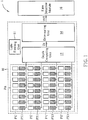
- FIG. 1 is a schematic diagram of an electronic device 1 according to an embodiment of the present application.
- the electronic device 1 may be a smart phone, a tablet computer or a signage device, which comprises a face detection activating device 10 and a face detection module 16.
- the face detection activating device 10 is configured to generate a control signal ctrl, so as to instruct the face detection module 16 whether to perform a face detection operation.
- the face detection activating device 10 comprises a light emitting unit 11, a pixel array PA, a depth computing unit 12 and a determining unit 14.
- the light emitting unit 11 may comprise a light emitting diode (LED), configured to emit an incident light.
- LED light emitting diode
- the pixel array PA is configured to receive a reflected light corresponding to the incident light and form an image.
- the pixel array PA comprises a plurality of pixels.
- the plurality of pixels within the pixel array PA can be classified into a plurality of pixels PX' and a plurality of first pixels PX1.
- the depth computing unit 12 is coupled to at least the plurality of first pixels PX1, configured to compute a plurality of first depth values D1 corresponding to the plurality of first pixels PX1, and output the plurality of first depth values D1 corresponding to the plurality of first pixels PX1 to the determining unit 14.
- the determining unit 14 determines whether to activate the face detection operation according to the plurality of first depth values D1.
- the determining unit 14 generates the control signal ctrl according to the plurality of first depth values D1, so as to instruct the face detection module 16 whether to perform the face detection on operation.
- the plurality of first pixels PX1 is enabled when the face detection activating device 10 operates.
- the plurality of first pixels PX1 receives lights and generates pixel values corresponding to the plurality of first pixels PX1 to the depth computing unit 12.
- the plurality of pixels PX' of the pixel array PA, except the plurality of first pixels PX1 may be OFF or disabled, in order to save power.
- the depth computing unit 12 computes the plurality of first depth values D1 corresponding to the plurality of first pixels PX1.
- the light emitting unit 11 may emit continuously modulated light, pulse modulated light or structured light.
- the depth computing unit 12 may utilize time of flight (ToF) or the triangulation method, but not limited, to compute the plurality of first depth values D1 corresponding to the plurality of first pixels PX1.
- TOF time of flight
- the determining unit 14 may execute a determining process to determine whether to activate the face detection operation according to the plurality of first depth values D1. Please refer to FIG. 2.
- FIG. 2 is a schematic diagram of a determining process 20 according to an embodiment of the present application.
- the determining process 20, executed by the determining unit 14, comprises the following steps:
- the determining unit 14 determines whether or not the plurality of first depth values D1 is within a specific depth range RG.
- the specific depth range RG may be determined according to practical situation of the electronic device 1, which may be set by the user or by other operators. For example, when the electronic device 1 perform a selfie operation (i.e., one/user uses with the electronic device to take a picture of oneself), the specific depth range RG may be set as 40-60 centimeters. When the electronic device 1 is a signage device to detect whether or not a person stares on content displayed by the signage device, the specific depth range RG may be set as 0.5-3 meters, and noL limited thereto.
- method of the determining unit 14 determining whether or not the plurality of first depth values D1 is with in the specific depth range RG is not limited. For example, when there is a human face existing within the image captured by the pixel array PA, it would cause that first depth values D1 corresponding to a specific number of the first pixels PX1 among an entire of the plurality of first pixels PX1 is within the specific depth range RG.
- the determining unit 14 may firstly obtain (e.g., by selecting) a plurality of second pixels PX2, where the second pixels PX2 is a part of the plurality of first pixels PX1 and the first depth values D1 corresponding to the plurality of second pixels PX2 are within the specific depth range RG (which means that the second pixel PX2 has to be the first pixel PX1, but the first pixel PX1 is not necessarily the second pixel PX2), and the determining unit 14 may secondly determine whether a pixel number of the plurality of second pixels PX2 is greater than a specific number N.
- the determining unit 14 determines that the pixel number of the plurality of second pixels PX2 is greater than the specific number N, the determining unit 14 determines that the plurality of first depth values D1 is within the specific depth range RG, and generate a determining result DRS at the same time to indicate that the plurality of first depth values D1 is within the specific depth range RG.
- Step 202 the determining unit 14 generates the control signal ctrl to instruct the face detection module 16 to perform the face detection operation, i.e., the determining unit 14 decides to activate the face detection operation.
- FIG. 3 is a schematic diagram of a determining process 30 according to an embodiment of the present application.
- the determining process 30 may be executed by the determining unit 14 and comprises the following steps:
- Step 306 the determining unit 14 determines whether the plurality of second pixels PX2 concentrates in the specific area ZN of the pixel array PA. In an embodiment, the determining unit 14 may determine whether a maximum distance D max between the plurality of second pixels PX2 is smaller than a specific a distance Dth. If yes, the determining unit 14 determines the plurality of second pixels PX2 concentrates in the specific area ZN of the pixel array PA. Moreover, the maximum distance D max between the plurality of second pixels PX2 may be a maximum of distances between a second pixel PX2 and another second pixel PX2.
- the determining unit 14 may obtain a plurality of coordinates of the plurality of second pixels PX2 in the pixel array PA, obtain a center point of the plurality of second pixels PX2 distributed over the pixel array PA according to the plurality of coordinates, forms a circular area where the center point (of the plurality of second pixels PX2) is taken as the center of the circular area and r is taken as the radius of the circular area, and determine whether a ratio of the second pixels PX2 lies in the circular area compared to the entire plurality of the second pixels PX2 is greater a specific value. If yes, the determining unit 14 determines the plurality of second pixels PX2 concentrates in the specific area ZN of the pixel array PA.
- Step 308 the determining unit 14 generates the control signal ctrl to instruct the face detection module 16 to perform the face detection operation, i.e., the determining unit 14 decides to activate the face detection operation.
- FIG. 4 is a schematic diagram of a process 40 according to an embodiment of the present application.
- the process 40 may be executed by the face detection activating device 10 and comprises the following steps:
- the process 40 is a pre-process of the face detection operation, which utilizes the depth values corresponding to a part of pixels within the pixel array to determine whether to activate the face detection operation or not. Compared to the prior art, it is able to save unnecessary computation of the face detection operation. In addition, only the depth values corresponding to the partial pixels are used to determine whether to activate the face detection operation or not, which is able to save both power and time.
- the plurality of first pixels PX1 is part of pixel columns or a part of pixel rows of the pixel array PA, and not limited thereto.
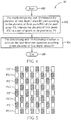
- the plurality of first pixels PX1 may be uniformly distributed over the pixel array PA, as shown in FIG. 5 . As long as the first pixels PX1 occupies a constant ratio in a block/area within the pixel array PA, i.e., uniformly distributed, the requirements of the present application is satisfied.
- FIG. 6 is a schematic diagram of a face detection activating device 60 according to an embodiment of the present application.
- the face detection activating device 60 is similar to the face detection activating device 10, and thus, the same components are denoted by the same notations.
- the face detection activating device 60 further comprises a physiologic sensing module 62, which may sense whether an object out of the face detection activating device 60 satisfies a human body physiological condition, and generate a physiologic sensing result PRS.
- the physiologic sensing module 62 may sense whether a temperature of the object out of the face detection activating device 60 is within a range of human body temperature (e.g., 34°C-42°C).
- the physiologic sensing module 62 may perform a skin color detection on a surface color of the object, which is to detect whether RGB values of the pixels of the object image are within a specific range of pixel value. If not, even (in Step 304) it is determined that the plurality of first depth values D1 is within the specific depth range RG, a possibility of the object being a human face can be excluded. In other words, the determining unit 14 may determine whether to activate the face detection operation according to the plurality of first depth values D1 and the physiologic sensing result PRS. Operations of the face detection activating device 60 may be summarized as a process 70. As shown in FIG. 7 , the process 70 comprises the following steps:
- the present application utilizes the depth values corresponding to a part of pixels within the pixel array to determine whether to activate the face detection operation or not. Compared to the prior art, it is able to save unnecessary computation of the Lace detection operation In addition, only the depth values corresponding to the partial pixels are used to determine whether to activate the face detection operation or not, which is able to save both power and time.
Landscapes
- Engineering & Computer Science (AREA)
- Physics & Mathematics (AREA)
- General Physics & Mathematics (AREA)
- Multimedia (AREA)
- Theoretical Computer Science (AREA)
- Health & Medical Sciences (AREA)
- General Health & Medical Sciences (AREA)
- Oral & Maxillofacial Surgery (AREA)
- Human Computer Interaction (AREA)
- Image Processing (AREA)
- Image Analysis (AREA)
Abstract
Description
- The present application relates to a face detection activating method and a face detection activating device, and more particularly, to a face detection activating method and a face detection activating device capable of quickly determining whether to activate the face detection operation and saving power.
- Face detection technology is widely used in electronic product such as smart phone. The face detection operation is configured to detect whether a human face exists in an image, which requires a plenty of computation. However, if the smart phone aimlessly performs the face detection operation on every single image, it would consume much unnecessary computation corresponding to the face detection operation, and the power consumption of the smart is raised in vain. Therefore, it is necessary to improve the prior art.
- It is therefore a primary objective of the present invention/application to provide a face detection activating method and a face detection activating device capable of quickly determining whether to activate the face detection operation and saving power, to improve over disadvantages of the prior art.
- To solve the problem stated above, an embodiment of the present application provides a face detection activating method, applied in an electronic device comprising a pixel array. The face detection activating method comprises computing a plurality of first depth values corresponding Lo a plurality of first pixels within the pixel array, wherein the plurality of first pixels is a part of pixels in the pixel array; and determining whether to activate a face detection operation according to the plurality of first depth values.
- For example, the step of determining whether to activate the face detection operation according to the plurality of first depth values comprises determining whether or not the plurality of first depth values is within a specific depth range, and accordingly determining whether to activate the face detection operation.
- For example, the step of determining whether to activate the face detection operation according to whether or not the plurality of first depth values is within the specific depth range comprises determining whether a number of a plurality of second pixels among the plurality of first pixels is greater than a specific number, wherein the plurality of second pixels is a part of the plurality of first pixels and the first depth values corresponding to the plurality of second pixels are within the specific depth range; and determining to activate the face detection operation when the number of the plurality of second pixels is greater than the specific number.
- For example, the method further comprises determining whether the plurality of second pixels concentrates in a specific area within the pixel array; and determining to activate the face detection operation when the number of the plurality of second pixels is greater than the specific number and the plurality of second pixels concentrates in the specific area within the pixel array.
- For example, the face detection activating method further comprises sensing whether an object satisfies human body physiological condition, and generate a physiologic sensing result; wherein determining whether to activate the face detection operation according to the plurality of first depth values and the physiologic sensing result.
- For example, the plurality of first pixels is part of pixel columns or a part of pixel rows of the pixel array.
- For example, the plurality of first pixels is uniformly distributed over the pixel array.
- An embodiment of the present application provides a face detection activating device comprising a pixel array; a depth computing unit, configured to compute a plurality of first depth values corresponding to a plurality of first pixels within the pixel array, wherein the plurality of first pixels is a part of pixels in the pixel array; and a determining unit, configured to determine whether to activate a face detection operation according to the plurality of first depth values.
- The present application utilizes the depth values corresponding to a part of pixels within the pixel array to determine whether to activate the face detection operation or not. Compared to the prior art, it is able to save unnecessary computation of the face detection operation in addition, only the depth values corresponding to the partial pixels are used to determine whether to activate the face detection operation or not, which is able to save both power and time.
- These and other objectives of the present invention will no doubt become obvious to those of ordinary skill in the art after reading the following detailed description of the preferred embodiment that is illustrated in the various figures and drawings.
-
-
FIG. 1 is a schematic diagram of an electronic device according to an embodiment of the present application. -
FIG. 2 is a schematic diagram of a determining process according to an embodiment of the present application. -
FIG. 3 is a schematic diagram of a determining process according to an embodiment of the present application. -
FIG. 4 is a schematic diagram of a process according to an embodiment of the present application. -
FIG. 5 is a schematic diagram of a plurality of first pixels according to an embodiment of the present application. -
FIG. 6 is a schematic diagram of a face detection activating device according to an embodiment of the present application. -
FIG. 7 is a schematic diagram of a process according to an embodiment of the present application. - In order to make the objects, technical solutions and advantages of the present invention become more apparent, the following relies on the accompanying drawings and embodiments to describe the present invention in further detail. It should be understood that the specific embodiments described herein are only for explaining the present invention and are not intended to limit the present invention.
- Face detection operation, configured to detect whether a human face is within the image, requires a plenty of computation. To reduce unnecessary computation, before the face detection operation is preformed, the present application determines whether to activate the face detection operation according to depth values corresponding to the pixel array. Furthermore, the present application only utilizes the depth values corresponding to a part of pixels within the pixel array to determine whether to activate the face detection operation, which saves power consumption.
- Specifically, please refer to
FIG. 1. FIG. 1 is a schematic diagram of anelectronic device 1 according to an embodiment of the present application. Theelectronic device 1 may be a smart phone, a tablet computer or a signage device, which comprises a facedetection activating device 10 and aface detection module 16. The facedetection activating device 10 is configured to generate a control signal ctrl, so as to instruct theface detection module 16 whether to perform a face detection operation. The facedetection activating device 10 comprises alight emitting unit 11, a pixel array PA, adepth computing unit 12 and a determiningunit 14. Thelight emitting unit 11 may comprise a light emitting diode (LED), configured to emit an incident light. The pixel array PA is configured to receive a reflected light corresponding to the incident light and form an image. The pixel array PA comprises a plurality of pixels. The plurality of pixels within the pixel array PA can be classified into a plurality of pixels PX' and a plurality of first pixels PX1. Thedepth computing unit 12 is coupled to at least the plurality of first pixels PX1, configured to compute a plurality of first depth values D1 corresponding to the plurality of first pixels PX1, and output the plurality of first depth values D1 corresponding to the plurality of first pixels PX1 to the determiningunit 14. The determiningunit 14 determines whether to activate the face detection operation according to the plurality of first depth values D1. In other words, the determiningunit 14 generates the control signal ctrl according to the plurality of first depth values D1, so as to instruct theface detection module 16 whether to perform the face detection on operation. Moreover, the plurality of first pixels PX1 is enabled when the facedetection activating device 10 operates. In other words, when the facedetection activating device 10 operates, the plurality of first pixels PX1 receives lights and generates pixel values corresponding to the plurality of first pixels PX1 to thedepth computing unit 12. In another perspective, when the facedetection activating device 10 operates, the plurality of pixels PX' of the pixel array PA, except the plurality of first pixels PX1, may be OFF or disabled, in order to save power. - Details of the
depth computing unit 12 computes the plurality of first depth values D1 corresponding to the plurality of first pixels PX1. according to the pixel values of the plurality of first pixels PX1 are known by the art, which are not narrated herein for brevity. For example, thelight emitting unit 11 may emit continuously modulated light, pulse modulated light or structured light. Thedepth computing unit 12 may utilize time of flight (ToF) or the triangulation method, but not limited, to compute the plurality of first depth values D1 corresponding to the plurality of first pixels PX1. - The determining
unit 14 may execute a determining process to determine whether to activate the face detection operation according to the plurality of first depth values D1. Please refer toFIG. 2. FIG. 2 is a schematic diagram of a determiningprocess 20 according to an embodiment of the present application. The determiningprocess 20, executed by the determiningunit 14, comprises the following steps: - Step 200: Start.
- Step 202: Determine whether or not the plurality of first depth values D1 is wi thin a specific depth range RG. If yes, go to
Step 204. - Step 204: Generate the control signal ctrl to instruct the
face detection module 16 to perform the face detection operation. - Step 206: End.
- In
Step 202, the determiningunit 14 determines whether or not the plurality of first depth values D1 is within a specific depth range RG. The specific depth range RG may be determined according to practical situation of theelectronic device 1, which may be set by the user or by other operators. For example, when theelectronic device 1 perform a selfie operation (i.e., one/user uses with the electronic device to take a picture of oneself), the specific depth range RG may be set as 40-60 centimeters. When theelectronic device 1 is a signage device to detect whether or not a person stares on content displayed by the signage device, the specific depth range RG may be set as 0.5-3 meters, and noL limited thereto. - In addition, method of the determining
unit 14 determining whether or not the plurality of first depth values D1 is with in the specific depth range RG is not limited. For example, when there is a human face existing within the image captured by the pixel array PA, it would cause that first depth values D1 corresponding to a specific number of the first pixels PX1 among an entire of the plurality of first pixels PX1 is within the specific depth range RG. Therefore, the determiningunit 14 may firstly obtain (e.g., by selecting) a plurality of second pixels PX2, where the second pixels PX2 is a part of the plurality of first pixels PX1 and the first depth values D1 corresponding to the plurality of second pixels PX2 are within the specific depth range RG (which means that the second pixel PX2 has to be the first pixel PX1, but the first pixel PX1 is not necessarily the second pixel PX2), and the determiningunit 14 may secondly determine whether a pixel number of the plurality of second pixels PX2 is greater than a specific number N. When the determiningunit 14 determines that the pixel number of the plurality of second pixels PX2 is greater than the specific number N, the determiningunit 14 determines that the plurality of first depth values D1 is within the specific depth range RG, and generate a determining result DRS at the same time to indicate that the plurality of first depth values D1 is within the specific depth range RG. - When the determining result DRS indicates that the plurality of first depth values D1 is within the specific depth range RG, in
Step 202, the determiningunit 14 generates the control signal ctrl to instruct theface detection module 16 to perform the face detection operation, i.e., the determiningunit 14 decides to activate the face detection operation. - In addition, since the human face image occupies a closed area within the image. Therefore, when there is a human face existing in the image captured by the pixel array PA, in addition to determining whether the number of the plurality of second pixels PX2, with the depth values in the specific depth range RG, is greater than the specific number N, the determining
unit 14 may also determine whether the plurality of second pixels PX2, with the depth values in the specific depth range RG, concentrates in a specific area ZN of the pixel array PA. Specifically, please refer toFIG. 3. FIG. 3 is a schematic diagram of a determiningprocess 30 according to an embodiment of the present application. The determiningprocess 30 may be executed by the determiningunit 14 and comprises the following steps: - Step 300: Start.
- Step 302: Obtain the plurality of second pixels PX2, wherein the second pixels PX2 are the first pixels with the first depth values D1 in the specific depth range RG.
- Step 304: Determine whether the pixel number of the plurality of second pixels PX2 is greater than the specific number N. If yes, go to
Step 306. - Step 306: Determine whether the plurality of second pixels PX2 concentrates in the specific area ZN of the pixel array PA. If yes, go to
Step 308. - Step 308: Generate the control signal ctrl to instruct the
face detection module 16 to perform the face detection operation. - Step 310: End.
- Details of
Steps Step 306, the determiningunit 14 determines whether the plurality of second pixels PX2 concentrates in the specific area ZN of the pixel array PA. In an embodiment, the determiningunit 14 may determine whether a maximum distance Dmax between the plurality of second pixels PX2 is smaller than a specific a distance Dth. If yes, the determiningunit 14 determines the plurality of second pixels PX2 concentrates in the specific area ZN of the pixel array PA. Moreover, the maximum distance Dmax between the plurality of second pixels PX2 may be a maximum of distances between a second pixel PX2 and another second pixel PX2. In another embodiment, the determiningunit 14 may obtain a plurality of coordinates of the plurality of second pixels PX2 in the pixel array PA, obtain a center point of the plurality of second pixels PX2 distributed over the pixel array PA according to the plurality of coordinates, forms a circular area where the center point (of the plurality of second pixels PX2) is taken as the center of the circular area and r is taken as the radius of the circular area, and determine whether a ratio of the second pixels PX2 lies in the circular area compared to the entire plurality of the second pixels PX2 is greater a specific value. If yes, the determiningunit 14 determines the plurality of second pixels PX2 concentrates in the specific area ZN of the pixel array PA. - When the pixel number of the plurality of second pixels PX2 is greater than the specific number N and the plurality of second pixels PX2 concentrates in the specific area ZN οf the pixel array PA, in
Step 308, the determiningunit 14 generates the control signal ctrl to instruct theface detection module 16 to perform the face detection operation, i.e., the determiningunit 14 decides to activate the face detection operation. - Operations of the face
detection activating device 10 may be summarized as a process. Please refer toFIG. 4. FIG 4 is a schematic diagram of aprocess 40 according to an embodiment of the present application. Theprocess 40 may be executed by the facedetection activating device 10 and comprises the following steps: - Step 400: Start.
- Step 402: The
depth computing unit 12 computes the plurality of first depth values D1 corresponding to the plurality of first pixels PX1 of the pixel array PA, wherein the plurality of first pixels PX1 is a part of pixels in the pixel array PA. - Step 404: The determining
unit 14 determines whether to activate the face detection operation according to the plurality of first depth values D1. - Step 406: End.
- In other words, the
process 40 is a pre-process of the face detection operation, which utilizes the depth values corresponding to a part of pixels within the pixel array to determine whether to activate the face detection operation or not. Compared to the prior art, it is able to save unnecessary computation of the face detection operation. In addition, only the depth values corresponding to the partial pixels are used to determine whether to activate the face detection operation or not, which is able to save both power and time. - Notably, the embodiments stated in the above are utilized for illustrating the concept of the present application. Those skilled in the art may make modifications and alterations accordingly, and not limited herein. For example, in
FIG. 1 , the plurality of first pixels PX1 is part of pixel columns or a part of pixel rows of the pixel array PA, and not limited thereto. The plurality of first pixels PX1 may be uniformly distributed over the pixel array PA, as shown inFIG. 5 . As long as the first pixels PX1 occupies a constant ratio in a block/area within the pixel array PA, i.e., uniformly distributed, the requirements of the present application is satisfied. - In addition, please refer to
FIG. 6. FIG. 6 is a schematic diagram of a facedetection activating device 60 according to an embodiment of the present application. The facedetection activating device 60 is similar to the facedetection activating device 10, and thus, the same components are denoted by the same notations. Different from the facedetection activating device 10, the facedetection activating device 60 further comprises aphysiologic sensing module 62, which may sense whether an object out of the facedetection activating device 60 satisfies a human body physiological condition, and generate a physiologic sensing result PRS. In an embodiment, thephysiologic sensing module 62 may sense whether a temperature of the object out of the facedetection activating device 60 is within a range of human body temperature (e.g., 34°C-42°C). If not, even (in Step 304) it is determined that the plurality of first depth values D1 is within the specific depth range RG, a possibility of the object being a human face can be excluded. In another embodiment, thephysiologic sensing module 62 may perform a skin color detection on a surface color of the object, which is to detect whether RGB values of the pixels of the object image are within a specific range of pixel value. If not, even (in Step 304) it is determined that the plurality of first depth values D1 is within the specific depth range RG, a possibility of the object being a human face can be excluded. In other words, the determiningunit 14 may determine whether to activate the face detection operation according to the plurality of first depth values D1 and the physiologic sensing result PRS. Operations of the facedetection activating device 60 may be summarized as aprocess 70. As shown inFIG. 7 , theprocess 70 comprises the following steps: - Step 700: Start.
- Step 702: The determining
unit 14 obtains the plurality of second pixels PX2, wherein the second pixels PX2 are the first pixels with the first depth values D1 in the specific depth range RG. - Step 704: The determining
unit 14 determines whether the pixel number of the plurality of second pixels PX2 is greater than the specific number N. If yes, go toStep 706. - Step 706: The
physiologic sensing module 62 sense whether the object satisfies human body physiological condition. If yes, go toStep 708. - Step 708: The determining
unit 14 generates the control signal ctrl to instruct theface detection module 16 to perform the face detection operation. - Step 710: End.
- In summary, the present application utilizes the depth values corresponding to a part of pixels within the pixel array to determine whether to activate the face detection operation or not. Compared to the prior art, it is able to save unnecessary computation of the Lace detection operation In addition, only the depth values corresponding to the partial pixels are used to determine whether to activate the face detection operation or not, which is able to save both power and time.
- The foregoing is only embodiments of the present application, which is not intended to limit the present application. Any modification following the spirit and principle of the present application, equivalent substitutions, improvements should be included within the scope of the present invention.
- Those skilled in the art will readily observe that numerous modifications and alterations of the device and method may be made while retaining the teachings of the invention. Accordingly, the above disclosure should be construed as limited only by the metes and bounds of the appended claims.
Claims (15)
- A face detection activating method, applied in an electronic device comprising a pixel array, characterized in that, the face detection activating method comprises:computing a plurality of first depth values corresponding to a plurality of first pixels within the pixel array, wherein the plurality of first pixels is a part of pixels in the pixel array; anddetermining whether to activate a face detection operation according to the plurality of first depth values.
- The face detection activating method of claim 1, characterized in that, the step of determining whether to activate the face detection operation according to the plurality of first depth values comprises: determining whether or not the plurality of first depth values is within a specific depth range, and accordingly determining whether to activate the face detection operation.
- The face detection activating method of claim 2, characterized in that, the step of determining whether to activate the face detection operation according to whether or not the plurality of first depth values is within the specific depth range comprises:determining whether a number of a plurality of second pixels among the plurality of first pixels is greater than a specific number, wherein the plurality of second pixels is a part of the plurality of first pixels and the first depth values corresponding to the plurality of second pixels are within the specific depth range; anddetermining to activate the face detection operation when the number of the plurality of second pixels is greater than the specific number.
- The face detection activating method of claim 3, characterized in that, the method further comprises:determining whether the plurality of second pixels concentrates in a specific area within the pixel array; anddetermining to activate the face detection operation when the number of the plurality of second pixels is greater than the specific number and the plurality of second pixels concentrates in the specific area within the pixel array.
- The face detection activating method of claim 1, characterized by, further comprising:sensing whether an object satisfies human body physiological condition, and generate a physiologic sensing result; anddetermining whether to activate the face detection operation according to the plurality of first depth values and the physiologic sensing result.
- The face detection activating method of claim 1, characterized in that, the plurality of first pixels is part of pixel columns or a part of pixel rows of the pixel array.
- The face detection activating method of claim 1, characterized in that, the plurality of first pixels is uniformly distributed over the pixel array.
- A face detection activating device, characterized by, comprising:a pixel array;a depth computing unit, configured to compute a plurality of first depth values corresponding to a plurality of first pixels within the pixel array, wherein the plurality of first pixels is a part of pixels in the pixel array; anda determining unit, configured to determine whether to activate a face detection operation according to the plurality of first depth values.
- The face detection activating device of claim 8, characterized in that, the determining unit is configured to execute the following stop: determining whether or not the plurality of first depth values is within a specific depth range, and accordingly determining whether to activate the face detection operation.
- The face detection activating device of claim 9, characterized in that, the determining unit is configured to execute the following steps:determining whether a number of a plurality of second pixels among the plurality of first pixels is greater than a specific number, wherein the plurality of second pixels is a part of the plurality of first pixels and the first depth values corresponding to the plurality of second pixels are within the specific depth range; anddetermining to activate the face detection operation when the number of the pluralility of second pixels is greater than the specific number.
- The face detection activating device of claim 10, characterized in that, the determining unit is configured to execute the following steps:determining whether the plurality of second pixels concentrates in a specific area within the pixel array; anddetermining to activate the face detection operation when the number of the plurality of second pixels is greater than the specific number and the plurality of second pixels concentrates in the specific area within the pixel array.
- The face detection activating device of claim 8, characterized by, further comprising:a physiologic sensing module, configured to sense whether an object satisfies human body physiological condition, and generate a physiologic sensing result;wherein the determining unit determines whether to activate the face detection operation according to the plurality of first depth values and the physiologic sensing result.
- The face detection activating device of claim 8, characterized in that, the plurality of first pixels is part of pixel columns or a part of pixel rows of the pixel array.
- The face detection activating device of claim 8, characterized in that, the pLurality of first pixels is uniformly distributed over the pixel array.
- An electronic device, characterized by, comprising:a face detection activating device of any of claims 8-14; anda face detection module, coupled to the pixel array of the face detection activating device, configured to perform the face detection operation;wherein the determining unit generates a control signal according to the plurality of first depth values, so as to instruct the face detection module whether to perform the face detection operation.
Applications Claiming Priority (1)
| Application Number | Priority Date | Filing Date | Title |
|---|---|---|---|
| PCT/CN2017/101376 WO2019051636A1 (en) | 2017-09-12 | 2017-09-12 | Face detection starting method, face detection starting device and electronic device |
Publications (3)
| Publication Number | Publication Date |
|---|---|
| EP3483782A1 true EP3483782A1 (en) | 2019-05-15 |
| EP3483782A4 EP3483782A4 (en) | 2019-05-15 |
| EP3483782B1 EP3483782B1 (en) | 2023-07-19 |
Family
ID=65632097
Family Applications (1)
| Application Number | Title | Priority Date | Filing Date |
|---|---|---|---|
| EP17868511.1A Active EP3483782B1 (en) | 2017-09-12 | 2017-09-12 | Face detection starting method, face detection starting device and electronic device |
Country Status (5)
| Country | Link |
|---|---|
| US (1) | US10909352B2 (en) |
| EP (1) | EP3483782B1 (en) |
| KR (1) | KR102113591B1 (en) |
| CN (1) | CN109844754A (en) |
| WO (1) | WO2019051636A1 (en) |
Families Citing this family (1)
| Publication number | Priority date | Publication date | Assignee | Title |
|---|---|---|---|---|
| CN113687386B (en) * | 2021-07-07 | 2024-10-11 | 汇顶科技私人有限公司 | Imaging system and related electronic device |
Family Cites Families (11)
| Publication number | Priority date | Publication date | Assignee | Title |
|---|---|---|---|---|
| JP4597391B2 (en) * | 2001-01-22 | 2010-12-15 | 本田技研工業株式会社 | Facial region detection apparatus and method, and computer-readable recording medium |
| US7430315B2 (en) * | 2004-02-13 | 2008-09-30 | Honda Motor Co. | Face recognition system |
| CN101907950B (en) * | 2009-06-03 | 2013-06-19 | 原相科技股份有限公司 | Control method applied to sensing system |
| US9036920B2 (en) * | 2010-10-08 | 2015-05-19 | Industrial Technology Research Institute | Method of detecting feature points of an object in a system for motion detection |
| US9076267B2 (en) * | 2011-07-19 | 2015-07-07 | Panasonic Intellectual Property Corporation Of America | Image coding device, integrated circuit thereof, and image coding method |
| CN102509074B (en) * | 2011-10-18 | 2014-01-29 | Tcl集团股份有限公司 | Target identification method and device |
| US8396265B1 (en) * | 2012-06-26 | 2013-03-12 | Google Inc. | Facial recognition |
| KR101714349B1 (en) * | 2014-12-29 | 2017-03-09 | 주식회사 슈프리마 | Biometric image output-control method and biometric authentification apparatus |
| US9955140B2 (en) * | 2015-03-11 | 2018-04-24 | Microsoft Technology Licensing, Llc | Distinguishing foreground and background with inframed imaging |
| US9715619B2 (en) | 2015-03-14 | 2017-07-25 | Microsoft Technology Licensing, Llc | Facilitating aligning a user and camera for user authentication |
| CN106250850B (en) * | 2016-07-29 | 2020-02-21 | 深圳市优必选科技有限公司 | Face detection tracking method and device, and robot head rotation control method and system |
-
2017
- 2017-09-12 KR KR1020187014605A patent/KR102113591B1/en not_active Expired - Fee Related
- 2017-09-12 CN CN201780001115.4A patent/CN109844754A/en active Pending
- 2017-09-12 EP EP17868511.1A patent/EP3483782B1/en active Active
- 2017-09-12 WO PCT/CN2017/101376 patent/WO2019051636A1/en not_active Ceased
-
2018
- 2018-05-15 US US15/979,477 patent/US10909352B2/en not_active Expired - Fee Related
Also Published As
| Publication number | Publication date |
|---|---|
| KR20190040125A (en) | 2019-04-17 |
| WO2019051636A1 (en) | 2019-03-21 |
| KR102113591B1 (en) | 2020-05-22 |
| EP3483782A4 (en) | 2019-05-15 |
| US20190080150A1 (en) | 2019-03-14 |
| EP3483782B1 (en) | 2023-07-19 |
| US10909352B2 (en) | 2021-02-02 |
| CN109844754A (en) | 2019-06-04 |
Similar Documents
| Publication | Publication Date | Title |
|---|---|---|
| US10795004B2 (en) | Distance measurement apparatus | |
| CN107608515B (en) | Dynamic saving of imaging power | |
| US20150358594A1 (en) | Technologies for viewer attention area estimation | |
| US10156437B2 (en) | Control method of a depth camera | |
| US11188730B1 (en) | Apparatus and method for estimating bio-information | |
| EP3075215B1 (en) | Multi-modal sensing | |
| US20190361259A1 (en) | Semi-dense depth estimation from a dynamic vision sensor (dvs) stereo pair and a pulsed speckle pattern projector | |
| US20180020209A1 (en) | Integrated Camera System Having Two Dimensional Image Capture and Three Dimensional Time-of-Flight Capture With A Partitioned Field of View | |
| US20130335576A1 (en) | Dynamic adaptation of imaging parameters | |
| KR101636903B1 (en) | Electronic device including motion sensing camera and operating method according to motion sensing | |
| WO2014134993A1 (en) | Target object information acquisition method and electronic device | |
| EP3428884B1 (en) | Tracking system and tracking method thereof | |
| US11172180B2 (en) | Control apparatus, control method and non-transitory computer-readable medium | |
| WO2021019308A9 (en) | Flash lidar having nonuniform light modulation | |
| US10909352B2 (en) | Face detection activating method, face detection activating device and electronic device | |
| EP3783389B1 (en) | Distance sensor module, display device, electronic device and distance detection method | |
| US9195346B2 (en) | Touch panel, touch device using the same, and touch control method | |
| US8724852B2 (en) | Method for sensing motion and device for implementing the same | |
| US9779689B2 (en) | Method and system for adjusting display unit | |
| CN109471119A (en) | Method and terminal device for controlling power consumption | |
| US20220003865A1 (en) | Optical ranging system having multi-mode operation using short and long pulses | |
| US7876424B2 (en) | Distance estimation based on image contrast | |
| US20140313132A1 (en) | Motion detecting device and the method for dynamically adjusting image sensing area thereof | |
| CN117420532A (en) | Ranging correction method, ranging correction device, terminal and storage medium | |
| US12050264B2 (en) | Emissive display configured with through-display zero-distance proximity sensor |
Legal Events
| Date | Code | Title | Description |
|---|---|---|---|
| STAA | Information on the status of an ep patent application or granted ep patent |
Free format text: STATUS: UNKNOWN |
|
| STAA | Information on the status of an ep patent application or granted ep patent |
Free format text: STATUS: THE INTERNATIONAL PUBLICATION HAS BEEN MADE |
|
| PUAI | Public reference made under article 153(3) epc to a published international application that has entered the european phase |
Free format text: ORIGINAL CODE: 0009012 |
|
| STAA | Information on the status of an ep patent application or granted ep patent |
Free format text: STATUS: REQUEST FOR EXAMINATION WAS MADE |
|
| 17P | Request for examination filed |
Effective date: 20180518 |
|
| A4 | Supplementary search report drawn up and despatched |
Effective date: 20190103 |
|
| AK | Designated contracting states |
Kind code of ref document: A1 Designated state(s): AL AT BE BG CH CY CZ DE DK EE ES FI FR GB GR HR HU IE IS IT LI LT LU LV MC MK MT NL NO PL PT RO RS SE SI SK SM TR |
|
| AX | Request for extension of the european patent |
Extension state: BA ME |
|
| STAA | Information on the status of an ep patent application or granted ep patent |
Free format text: STATUS: EXAMINATION IS IN PROGRESS |
|
| 17Q | First examination report despatched |
Effective date: 20200128 |
|
| DAV | Request for validation of the european patent (deleted) | ||
| DAX | Request for extension of the european patent (deleted) | ||
| REG | Reference to a national code |
Ref country code: DE Ref legal event code: R079 Free format text: PREVIOUS MAIN CLASS: G06K0009000000 Ipc: G06V0010220000 Ref country code: DE Ref legal event code: R079 Ref document number: 602017071603 Country of ref document: DE Free format text: PREVIOUS MAIN CLASS: G06K0009000000 Ipc: G06V0010220000 |
|
| GRAP | Despatch of communication of intention to grant a patent |
Free format text: ORIGINAL CODE: EPIDOSNIGR1 |
|
| STAA | Information on the status of an ep patent application or granted ep patent |
Free format text: STATUS: GRANT OF PATENT IS INTENDED |
|
| RIC1 | Information provided on ipc code assigned before grant |
Ipc: G06V 40/16 20220101ALI20230321BHEP Ipc: G06V 10/22 20220101AFI20230321BHEP |
|
| INTG | Intention to grant announced |
Effective date: 20230413 |
|
| GRAS | Grant fee paid |
Free format text: ORIGINAL CODE: EPIDOSNIGR3 |
|
| GRAA | (expected) grant |
Free format text: ORIGINAL CODE: 0009210 |
|
| STAA | Information on the status of an ep patent application or granted ep patent |
Free format text: STATUS: THE PATENT HAS BEEN GRANTED |
|
| AK | Designated contracting states |
Kind code of ref document: B1 Designated state(s): AL AT BE BG CH CY CZ DE DK EE ES FI FR GB GR HR HU IE IS IT LI LT LU LV MC MK MT NL NO PL PT RO RS SE SI SK SM TR |
|
| REG | Reference to a national code |
Ref country code: GB Ref legal event code: FG4D |
|
| REG | Reference to a national code |
Ref country code: CH Ref legal event code: EP |
|
| REG | Reference to a national code |
Ref country code: DE Ref legal event code: R096 Ref document number: 602017071603 Country of ref document: DE |
|
| REG | Reference to a national code |
Ref country code: IE Ref legal event code: FG4D |
|
| REG | Reference to a national code |
Ref country code: LT Ref legal event code: MG9D |
|
| REG | Reference to a national code |
Ref country code: NL Ref legal event code: MP Effective date: 20230719 |
|
| REG | Reference to a national code |
Ref country code: AT Ref legal event code: MK05 Ref document number: 1590253 Country of ref document: AT Kind code of ref document: T Effective date: 20230719 |
|
| PG25 | Lapsed in a contracting state [announced via postgrant information from national office to epo] |
Ref country code: NL Free format text: LAPSE BECAUSE OF FAILURE TO SUBMIT A TRANSLATION OF THE DESCRIPTION OR TO PAY THE FEE WITHIN THE PRESCRIBED TIME-LIMIT Effective date: 20230719 |
|
| PG25 | Lapsed in a contracting state [announced via postgrant information from national office to epo] |
Ref country code: GR Free format text: LAPSE BECAUSE OF FAILURE TO SUBMIT A TRANSLATION OF THE DESCRIPTION OR TO PAY THE FEE WITHIN THE PRESCRIBED TIME-LIMIT Effective date: 20231020 |
|
| PG25 | Lapsed in a contracting state [announced via postgrant information from national office to epo] |
Ref country code: IS Free format text: LAPSE BECAUSE OF FAILURE TO SUBMIT A TRANSLATION OF THE DESCRIPTION OR TO PAY THE FEE WITHIN THE PRESCRIBED TIME-LIMIT Effective date: 20231119 |
|
| PG25 | Lapsed in a contracting state [announced via postgrant information from national office to epo] |
Ref country code: SE Free format text: LAPSE BECAUSE OF FAILURE TO SUBMIT A TRANSLATION OF THE DESCRIPTION OR TO PAY THE FEE WITHIN THE PRESCRIBED TIME-LIMIT Effective date: 20230719 Ref country code: RS Free format text: LAPSE BECAUSE OF FAILURE TO SUBMIT A TRANSLATION OF THE DESCRIPTION OR TO PAY THE FEE WITHIN THE PRESCRIBED TIME-LIMIT Effective date: 20230719 Ref country code: PT Free format text: LAPSE BECAUSE OF FAILURE TO SUBMIT A TRANSLATION OF THE DESCRIPTION OR TO PAY THE FEE WITHIN THE PRESCRIBED TIME-LIMIT Effective date: 20231120 Ref country code: NO Free format text: LAPSE BECAUSE OF FAILURE TO SUBMIT A TRANSLATION OF THE DESCRIPTION OR TO PAY THE FEE WITHIN THE PRESCRIBED TIME-LIMIT Effective date: 20231019 Ref country code: LV Free format text: LAPSE BECAUSE OF FAILURE TO SUBMIT A TRANSLATION OF THE DESCRIPTION OR TO PAY THE FEE WITHIN THE PRESCRIBED TIME-LIMIT Effective date: 20230719 Ref country code: LT Free format text: LAPSE BECAUSE OF FAILURE TO SUBMIT A TRANSLATION OF THE DESCRIPTION OR TO PAY THE FEE WITHIN THE PRESCRIBED TIME-LIMIT Effective date: 20230719 Ref country code: IS Free format text: LAPSE BECAUSE OF FAILURE TO SUBMIT A TRANSLATION OF THE DESCRIPTION OR TO PAY THE FEE WITHIN THE PRESCRIBED TIME-LIMIT Effective date: 20231119 Ref country code: HR Free format text: LAPSE BECAUSE OF FAILURE TO SUBMIT A TRANSLATION OF THE DESCRIPTION OR TO PAY THE FEE WITHIN THE PRESCRIBED TIME-LIMIT Effective date: 20230719 Ref country code: GR Free format text: LAPSE BECAUSE OF FAILURE TO SUBMIT A TRANSLATION OF THE DESCRIPTION OR TO PAY THE FEE WITHIN THE PRESCRIBED TIME-LIMIT Effective date: 20231020 Ref country code: FI Free format text: LAPSE BECAUSE OF FAILURE TO SUBMIT A TRANSLATION OF THE DESCRIPTION OR TO PAY THE FEE WITHIN THE PRESCRIBED TIME-LIMIT Effective date: 20230719 Ref country code: AT Free format text: LAPSE BECAUSE OF FAILURE TO SUBMIT A TRANSLATION OF THE DESCRIPTION OR TO PAY THE FEE WITHIN THE PRESCRIBED TIME-LIMIT Effective date: 20230719 |
|
| PG25 | Lapsed in a contracting state [announced via postgrant information from national office to epo] |
Ref country code: PL Free format text: LAPSE BECAUSE OF FAILURE TO SUBMIT A TRANSLATION OF THE DESCRIPTION OR TO PAY THE FEE WITHIN THE PRESCRIBED TIME-LIMIT Effective date: 20230719 |
|
| REG | Reference to a national code |
Ref country code: DE Ref legal event code: R119 Ref document number: 602017071603 Country of ref document: DE |
|
| PG25 | Lapsed in a contracting state [announced via postgrant information from national office to epo] |
Ref country code: ES Free format text: LAPSE BECAUSE OF FAILURE TO SUBMIT A TRANSLATION OF THE DESCRIPTION OR TO PAY THE FEE WITHIN THE PRESCRIBED TIME-LIMIT Effective date: 20230719 |
|
| PG25 | Lapsed in a contracting state [announced via postgrant information from national office to epo] |
Ref country code: SM Free format text: LAPSE BECAUSE OF FAILURE TO SUBMIT A TRANSLATION OF THE DESCRIPTION OR TO PAY THE FEE WITHIN THE PRESCRIBED TIME-LIMIT Effective date: 20230719 Ref country code: RO Free format text: LAPSE BECAUSE OF FAILURE TO SUBMIT A TRANSLATION OF THE DESCRIPTION OR TO PAY THE FEE WITHIN THE PRESCRIBED TIME-LIMIT Effective date: 20230719 Ref country code: ES Free format text: LAPSE BECAUSE OF FAILURE TO SUBMIT A TRANSLATION OF THE DESCRIPTION OR TO PAY THE FEE WITHIN THE PRESCRIBED TIME-LIMIT Effective date: 20230719 Ref country code: EE Free format text: LAPSE BECAUSE OF FAILURE TO SUBMIT A TRANSLATION OF THE DESCRIPTION OR TO PAY THE FEE WITHIN THE PRESCRIBED TIME-LIMIT Effective date: 20230719 Ref country code: DK Free format text: LAPSE BECAUSE OF FAILURE TO SUBMIT A TRANSLATION OF THE DESCRIPTION OR TO PAY THE FEE WITHIN THE PRESCRIBED TIME-LIMIT Effective date: 20230719 Ref country code: CZ Free format text: LAPSE BECAUSE OF FAILURE TO SUBMIT A TRANSLATION OF THE DESCRIPTION OR TO PAY THE FEE WITHIN THE PRESCRIBED TIME-LIMIT Effective date: 20230719 Ref country code: SK Free format text: LAPSE BECAUSE OF FAILURE TO SUBMIT A TRANSLATION OF THE DESCRIPTION OR TO PAY THE FEE WITHIN THE PRESCRIBED TIME-LIMIT Effective date: 20230719 |
|
| REG | Reference to a national code |
Ref country code: CH Ref legal event code: PL |
|
| PG25 | Lapsed in a contracting state [announced via postgrant information from national office to epo] |
Ref country code: LU Free format text: LAPSE BECAUSE OF NON-PAYMENT OF DUE FEES Effective date: 20230912 |
|
| PLBE | No opposition filed within time limit |
Free format text: ORIGINAL CODE: 0009261 |
|
| STAA | Information on the status of an ep patent application or granted ep patent |
Free format text: STATUS: NO OPPOSITION FILED WITHIN TIME LIMIT |
|
| REG | Reference to a national code |
Ref country code: BE Ref legal event code: MM Effective date: 20230930 |
|
| PG25 | Lapsed in a contracting state [announced via postgrant information from national office to epo] |
Ref country code: LU Free format text: LAPSE BECAUSE OF NON-PAYMENT OF DUE FEES Effective date: 20230912 Ref country code: IT Free format text: LAPSE BECAUSE OF FAILURE TO SUBMIT A TRANSLATION OF THE DESCRIPTION OR TO PAY THE FEE WITHIN THE PRESCRIBED TIME-LIMIT Effective date: 20230719 Ref country code: MC Free format text: LAPSE BECAUSE OF FAILURE TO SUBMIT A TRANSLATION OF THE DESCRIPTION OR TO PAY THE FEE WITHIN THE PRESCRIBED TIME-LIMIT Effective date: 20230719 |
|
| 26N | No opposition filed |
Effective date: 20240422 |
|
| GBPC | Gb: european patent ceased through non-payment of renewal fee |
Effective date: 20231019 |
|
| REG | Reference to a national code |
Ref country code: IE Ref legal event code: MM4A |
|
| PG25 | Lapsed in a contracting state [announced via postgrant information from national office to epo] |
Ref country code: IE Free format text: LAPSE BECAUSE OF NON-PAYMENT OF DUE FEES Effective date: 20230912 |
|
| PG25 | Lapsed in a contracting state [announced via postgrant information from national office to epo] |
Ref country code: GB Free format text: LAPSE BECAUSE OF NON-PAYMENT OF DUE FEES Effective date: 20231019 |
|
| PG25 | Lapsed in a contracting state [announced via postgrant information from national office to epo] |
Ref country code: CH Free format text: LAPSE BECAUSE OF NON-PAYMENT OF DUE FEES Effective date: 20230930 |
|
| PG25 | Lapsed in a contracting state [announced via postgrant information from national office to epo] |
Ref country code: IE Free format text: LAPSE BECAUSE OF NON-PAYMENT OF DUE FEES Effective date: 20230912 Ref country code: GB Free format text: LAPSE BECAUSE OF NON-PAYMENT OF DUE FEES Effective date: 20231019 Ref country code: FR Free format text: LAPSE BECAUSE OF NON-PAYMENT OF DUE FEES Effective date: 20230919 Ref country code: DE Free format text: LAPSE BECAUSE OF NON-PAYMENT OF DUE FEES Effective date: 20240403 Ref country code: CH Free format text: LAPSE BECAUSE OF NON-PAYMENT OF DUE FEES Effective date: 20230930 Ref country code: SI Free format text: LAPSE BECAUSE OF FAILURE TO SUBMIT A TRANSLATION OF THE DESCRIPTION OR TO PAY THE FEE WITHIN THE PRESCRIBED TIME-LIMIT Effective date: 20230719 |
|
| PG25 | Lapsed in a contracting state [announced via postgrant information from national office to epo] |
Ref country code: BE Free format text: LAPSE BECAUSE OF NON-PAYMENT OF DUE FEES Effective date: 20230930 |
|
| PG25 | Lapsed in a contracting state [announced via postgrant information from national office to epo] |
Ref country code: BG Free format text: LAPSE BECAUSE OF FAILURE TO SUBMIT A TRANSLATION OF THE DESCRIPTION OR TO PAY THE FEE WITHIN THE PRESCRIBED TIME-LIMIT Effective date: 20230719 |
|
| PG25 | Lapsed in a contracting state [announced via postgrant information from national office to epo] |
Ref country code: BG Free format text: LAPSE BECAUSE OF FAILURE TO SUBMIT A TRANSLATION OF THE DESCRIPTION OR TO PAY THE FEE WITHIN THE PRESCRIBED TIME-LIMIT Effective date: 20230719 |
|
| PG25 | Lapsed in a contracting state [announced via postgrant information from national office to epo] |
Ref country code: CY Free format text: LAPSE BECAUSE OF FAILURE TO SUBMIT A TRANSLATION OF THE DESCRIPTION OR TO PAY THE FEE WITHIN THE PRESCRIBED TIME-LIMIT; INVALID AB INITIO Effective date: 20170912 |
|
| PG25 | Lapsed in a contracting state [announced via postgrant information from national office to epo] |
Ref country code: HU Free format text: LAPSE BECAUSE OF FAILURE TO SUBMIT A TRANSLATION OF THE DESCRIPTION OR TO PAY THE FEE WITHIN THE PRESCRIBED TIME-LIMIT; INVALID AB INITIO Effective date: 20170912 |
|
| PG25 | Lapsed in a contracting state [announced via postgrant information from national office to epo] |
Ref country code: TR Free format text: LAPSE BECAUSE OF FAILURE TO SUBMIT A TRANSLATION OF THE DESCRIPTION OR TO PAY THE FEE WITHIN THE PRESCRIBED TIME-LIMIT Effective date: 20230719 |