EP3483415A1 - Procédé de séparation d'informations de mesure d'oxydes d'azote et d'ammoniac - Google Patents
Procédé de séparation d'informations de mesure d'oxydes d'azote et d'ammoniac Download PDFInfo
- Publication number
- EP3483415A1 EP3483415A1 EP18199684.4A EP18199684A EP3483415A1 EP 3483415 A1 EP3483415 A1 EP 3483415A1 EP 18199684 A EP18199684 A EP 18199684A EP 3483415 A1 EP3483415 A1 EP 3483415A1
- Authority
- EP
- European Patent Office
- Prior art keywords
- nox
- measurement information
- nitrogen oxide
- flow rate
- nitrogen
- Prior art date
- Legal status (The legal status is an assumption and is not a legal conclusion. Google has not performed a legal analysis and makes no representation as to the accuracy of the status listed.)
- Granted
Links
Images
Classifications
-
- F—MECHANICAL ENGINEERING; LIGHTING; HEATING; WEAPONS; BLASTING
- F02—COMBUSTION ENGINES; HOT-GAS OR COMBUSTION-PRODUCT ENGINE PLANTS
- F02D—CONTROLLING COMBUSTION ENGINES
- F02D41/00—Electrical control of supply of combustible mixture or its constituents
- F02D41/02—Circuit arrangements for generating control signals
- F02D41/14—Introducing closed-loop corrections
- F02D41/1438—Introducing closed-loop corrections using means for determining characteristics of the combustion gases; Sensors therefor
- F02D41/1444—Introducing closed-loop corrections using means for determining characteristics of the combustion gases; Sensors therefor characterised by the characteristics of the combustion gases
- F02D41/146—Introducing closed-loop corrections using means for determining characteristics of the combustion gases; Sensors therefor characterised by the characteristics of the combustion gases the characteristics being an NOx content or concentration
- F02D41/1463—Introducing closed-loop corrections using means for determining characteristics of the combustion gases; Sensors therefor characterised by the characteristics of the combustion gases the characteristics being an NOx content or concentration of the exhaust gases downstream of exhaust gas treatment apparatus
-
- F—MECHANICAL ENGINEERING; LIGHTING; HEATING; WEAPONS; BLASTING
- F01—MACHINES OR ENGINES IN GENERAL; ENGINE PLANTS IN GENERAL; STEAM ENGINES
- F01N—GAS-FLOW SILENCERS OR EXHAUST APPARATUS FOR MACHINES OR ENGINES IN GENERAL; GAS-FLOW SILENCERS OR EXHAUST APPARATUS FOR INTERNAL-COMBUSTION ENGINES
- F01N3/00—Exhaust or silencing apparatus having means for purifying, rendering innocuous, or otherwise treating exhaust
- F01N3/08—Exhaust or silencing apparatus having means for purifying, rendering innocuous, or otherwise treating exhaust for rendering innocuous
- F01N3/10—Exhaust or silencing apparatus having means for purifying, rendering innocuous, or otherwise treating exhaust for rendering innocuous by thermal or catalytic conversion of noxious components of exhaust
- F01N3/18—Exhaust or silencing apparatus having means for purifying, rendering innocuous, or otherwise treating exhaust for rendering innocuous by thermal or catalytic conversion of noxious components of exhaust characterised by methods of operation; Control
- F01N3/20—Exhaust or silencing apparatus having means for purifying, rendering innocuous, or otherwise treating exhaust for rendering innocuous by thermal or catalytic conversion of noxious components of exhaust characterised by methods of operation; Control specially adapted for catalytic conversion
- F01N3/206—Adding periodically or continuously substances to exhaust gases for promoting purification, e.g. catalytic material in liquid form, NOx reducing agents
- F01N3/2066—Selective catalytic reduction [SCR]
-
- F—MECHANICAL ENGINEERING; LIGHTING; HEATING; WEAPONS; BLASTING
- F02—COMBUSTION ENGINES; HOT-GAS OR COMBUSTION-PRODUCT ENGINE PLANTS
- F02D—CONTROLLING COMBUSTION ENGINES
- F02D41/00—Electrical control of supply of combustible mixture or its constituents
- F02D41/02—Circuit arrangements for generating control signals
- F02D41/14—Introducing closed-loop corrections
- F02D41/1438—Introducing closed-loop corrections using means for determining characteristics of the combustion gases; Sensors therefor
- F02D41/1444—Introducing closed-loop corrections using means for determining characteristics of the combustion gases; Sensors therefor characterised by the characteristics of the combustion gases
- F02D41/146—Introducing closed-loop corrections using means for determining characteristics of the combustion gases; Sensors therefor characterised by the characteristics of the combustion gases the characteristics being an NOx content or concentration
- F02D41/1463—Introducing closed-loop corrections using means for determining characteristics of the combustion gases; Sensors therefor characterised by the characteristics of the combustion gases the characteristics being an NOx content or concentration of the exhaust gases downstream of exhaust gas treatment apparatus
- F02D41/1465—Introducing closed-loop corrections using means for determining characteristics of the combustion gases; Sensors therefor characterised by the characteristics of the combustion gases the characteristics being an NOx content or concentration of the exhaust gases downstream of exhaust gas treatment apparatus with determination means using an estimation
-
- F—MECHANICAL ENGINEERING; LIGHTING; HEATING; WEAPONS; BLASTING
- F01—MACHINES OR ENGINES IN GENERAL; ENGINE PLANTS IN GENERAL; STEAM ENGINES
- F01N—GAS-FLOW SILENCERS OR EXHAUST APPARATUS FOR MACHINES OR ENGINES IN GENERAL; GAS-FLOW SILENCERS OR EXHAUST APPARATUS FOR INTERNAL-COMBUSTION ENGINES
- F01N2560/00—Exhaust systems with means for detecting or measuring exhaust gas components or characteristics
- F01N2560/02—Exhaust systems with means for detecting or measuring exhaust gas components or characteristics the means being an exhaust gas sensor
- F01N2560/026—Exhaust systems with means for detecting or measuring exhaust gas components or characteristics the means being an exhaust gas sensor for measuring or detecting NOx
-
- F—MECHANICAL ENGINEERING; LIGHTING; HEATING; WEAPONS; BLASTING
- F02—COMBUSTION ENGINES; HOT-GAS OR COMBUSTION-PRODUCT ENGINE PLANTS
- F02D—CONTROLLING COMBUSTION ENGINES
- F02D41/00—Electrical control of supply of combustible mixture or its constituents
- F02D41/02—Circuit arrangements for generating control signals
- F02D41/14—Introducing closed-loop corrections
- F02D41/1401—Introducing closed-loop corrections characterised by the control or regulation method
- F02D2041/1413—Controller structures or design
- F02D2041/1432—Controller structures or design the system including a filter, e.g. a low pass or high pass filter
-
- F—MECHANICAL ENGINEERING; LIGHTING; HEATING; WEAPONS; BLASTING
- F02—COMBUSTION ENGINES; HOT-GAS OR COMBUSTION-PRODUCT ENGINE PLANTS
- F02D—CONTROLLING COMBUSTION ENGINES
- F02D41/00—Electrical control of supply of combustible mixture or its constituents
- F02D41/02—Circuit arrangements for generating control signals
- F02D41/14—Introducing closed-loop corrections
- F02D41/1438—Introducing closed-loop corrections using means for determining characteristics of the combustion gases; Sensors therefor
- F02D41/1444—Introducing closed-loop corrections using means for determining characteristics of the combustion gases; Sensors therefor characterised by the characteristics of the combustion gases
- F02D2041/1468—Introducing closed-loop corrections using means for determining characteristics of the combustion gases; Sensors therefor characterised by the characteristics of the combustion gases the characteristics being an ammonia content or concentration of the exhaust gases
-
- F—MECHANICAL ENGINEERING; LIGHTING; HEATING; WEAPONS; BLASTING
- F02—COMBUSTION ENGINES; HOT-GAS OR COMBUSTION-PRODUCT ENGINE PLANTS
- F02D—CONTROLLING COMBUSTION ENGINES
- F02D41/00—Electrical control of supply of combustible mixture or its constituents
- F02D41/02—Circuit arrangements for generating control signals
- F02D41/14—Introducing closed-loop corrections
- F02D41/1438—Introducing closed-loop corrections using means for determining characteristics of the combustion gases; Sensors therefor
- F02D41/1444—Introducing closed-loop corrections using means for determining characteristics of the combustion gases; Sensors therefor characterised by the characteristics of the combustion gases
- F02D2041/1468—Introducing closed-loop corrections using means for determining characteristics of the combustion gases; Sensors therefor characterised by the characteristics of the combustion gases the characteristics being an ammonia content or concentration of the exhaust gases
- F02D2041/1469—Introducing closed-loop corrections using means for determining characteristics of the combustion gases; Sensors therefor characterised by the characteristics of the combustion gases the characteristics being an ammonia content or concentration of the exhaust gases with determination means using an estimation
-
- F—MECHANICAL ENGINEERING; LIGHTING; HEATING; WEAPONS; BLASTING
- F02—COMBUSTION ENGINES; HOT-GAS OR COMBUSTION-PRODUCT ENGINE PLANTS
- F02D—CONTROLLING COMBUSTION ENGINES
- F02D41/00—Electrical control of supply of combustible mixture or its constituents
- F02D41/24—Electrical control of supply of combustible mixture or its constituents characterised by the use of digital means
- F02D41/2406—Electrical control of supply of combustible mixture or its constituents characterised by the use of digital means using essentially read only memories
- F02D41/2409—Addressing techniques specially adapted therefor
-
- Y—GENERAL TAGGING OF NEW TECHNOLOGICAL DEVELOPMENTS; GENERAL TAGGING OF CROSS-SECTIONAL TECHNOLOGIES SPANNING OVER SEVERAL SECTIONS OF THE IPC; TECHNICAL SUBJECTS COVERED BY FORMER USPC CROSS-REFERENCE ART COLLECTIONS [XRACs] AND DIGESTS
- Y02—TECHNOLOGIES OR APPLICATIONS FOR MITIGATION OR ADAPTATION AGAINST CLIMATE CHANGE
- Y02A—TECHNOLOGIES FOR ADAPTATION TO CLIMATE CHANGE
- Y02A50/00—TECHNOLOGIES FOR ADAPTATION TO CLIMATE CHANGE in human health protection, e.g. against extreme weather
- Y02A50/20—Air quality improvement or preservation, e.g. vehicle emission control or emission reduction by using catalytic converters
-
- Y—GENERAL TAGGING OF NEW TECHNOLOGICAL DEVELOPMENTS; GENERAL TAGGING OF CROSS-SECTIONAL TECHNOLOGIES SPANNING OVER SEVERAL SECTIONS OF THE IPC; TECHNICAL SUBJECTS COVERED BY FORMER USPC CROSS-REFERENCE ART COLLECTIONS [XRACs] AND DIGESTS
- Y02—TECHNOLOGIES OR APPLICATIONS FOR MITIGATION OR ADAPTATION AGAINST CLIMATE CHANGE
- Y02T—CLIMATE CHANGE MITIGATION TECHNOLOGIES RELATED TO TRANSPORTATION
- Y02T10/00—Road transport of goods or passengers
- Y02T10/10—Internal combustion engine [ICE] based vehicles
- Y02T10/12—Improving ICE efficiencies
Definitions
- the invention generally relates to the reduction of pollutant emissions of nitrogen oxides of a heat engine by means of a selective catalytic reduction system. More particularly, the invention relates to a method for separating measurement information of nitrogen oxides and ammonia contained in the measurement signal provided by a measurement probe of nitrogen oxides (NOx) which is placed downstream of a catalytic selective reduction catalyst in a heat engine exhaust line.
- NOx nitrogen oxides
- the motor vehicles are equipped with exhaust aftertreatment systems designed for the reduction of polluting emissions and the respect of environmental standards.
- SCR Selective Catalytic Reduction
- NOx nitrogen oxides
- SCR catalyst a specific catalyst, called SCR catalyst, in which oxidation-reduction reactions leading to a selective reduction of nitrogen oxides to nitrogen and water.
- the reducing agent conventionally used is ammonia (NH3). Ammonia is obtained by dissociation of an aqueous solution of urea which is injected into the gas exhaust line, upstream of the SCR catalyst.
- the injection of urea into the exhaust line is set to the necessary and is controlled in particular depending on the amount of nitrogen oxides at the output of the engine, that is to say upstream of the catalyst SCR and the amount of nitrogen oxides downstream of the SCR catalyst.
- An estimation model is frequently used to calculate the amount of nitrogen oxides upstream of the SCR catalyst.
- a probe for measuring nitrogen oxides called the NOx probe, is placed downstream of the SCR catalyst to measure the residual amount of nitrogen oxides in the gases leaving the SCR catalyst and to correct the control of the SCR system accordingly.
- the control of the SCR system must also take into account an ammonia desorption phenomenon and manage a compromise between the efficiency of the reduction of nitrogen oxides and the release of ammonia at the outlet of the exhaust line.
- the NOx probe generally used has sensitivity to ammonia and the measurement signal delivered by it thus contains an inaccuracy in the measurement of nitrogen oxides due to the presence of ammonia.
- a More accurate nitrogen oxide measurement would allow better performance of functions using this one, such as injection time dosing, SCR system efficiency diagnosis, optimization of combustion settings according to the effectiveness of the SCR system and others.
- the use of a probe measuring exclusively NOx could be a solution to technically solve the above disadvantage, but such a probe has a significant economic cost.
- the measurement of the amount of ammonia released by the SCR catalyst has a certain interest, in particular to correct a dispersion or a drift of the urea injection device.
- the addition of a specific measurement probe for ammonia also has a significant impact on the cost of the SCR system.
- the difference between the raw flow measurement information and a nitrogen oxide flow rate estimate downstream of the selective catalytic reduction catalyst is divided by the equivalence factor.
- step c) the ammonia flow measurement information is multiplied by the equivalence factor.
- the method also comprises a low-pass filtering step for filtering the nitrogen oxide flow measurement information calculated in step c).
- the method also comprises a switching step delivering, at the output, the nitrogen oxide flow measurement information or the nitrogen oxide flow rate estimation, depending on whether the measuring probe nitrogen oxides delivers valid raw measurement information or not.
- the invention also relates to a computer having a memory storing program instructions for implementing the method as briefly described above.
- the invention also relates to a heat engine having a gas exhaust line equipped with a selective catalytic reduction system in which is included the computer above and a vehicle comprising the engine.
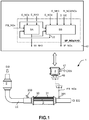
- a gas exhaust line LE comprising an exhaust gas after-treatment system 1 in which the process according to the invention for measuring the amounts of NOx and NH3 downstream of an SCR catalyst 30 is carried out is shown partially to the Fig.1 .
- the exhaust gas after-treatment system 1 is intended for the post-treatment of the exhaust gas EG of a diesel engine.
- the exhaust gas after-treatment system 1 essentially comprises a LE gas exhaust line and an electronic control unit 4.
- the gas exhaust line LE here comprises an oxidation catalyst 2 and a device compact 3 selective catalytic reduction and filtering of soot particles.
- the oxidation catalyst 2 is typically a DOC type oxidation catalyst (for "Diesel Oxydation Catalyst").
- the compact device 3 comprises a SCR catalyst 30 and a particulate filter 31.
- the SCR 30 destroys NOx by reacting them with NH3 as a reducing agent.
- the NH 3 is contained in an aqueous solution of urea, such as AdBlue (registered trademark), introduced into the gas exhaust line LE by the injector 300.
- AdBlue registered trademark
- a NOx probe 301 is provided downstream of the SCR catalyst 30. , here in the gas exhaust line LE at the outlet of the compact device 3, in particular for the control of the catalyst SCR 30.
- the electronic control unit 4 is here the engine control computer of the vehicle.
- the computer 4 comprises in particular an input / output port 40 through which the various signals necessary for the control of the functional components of the exhaust gas after-treatment system 1 pass and a communication port 41 with a CAN network of the vehicle.
- Gross measurement information IFB_NOx delivered by the NOx probe 301 is provided here to the computer 4 through the input / output port 40.
- the raw measurement information IFB_NOx is a flow measurement and is composed of the sum of two flow measurement information which are hereinafter designated IF_NOx and IF_NH3.
- the measurement information IF_NOx is representative of the flow rate of NOx downstream of the catalyst SCR 30.
- the measurement information IF_NH3 is representative of the flow rate of NH3 downstream of the catalyst SCR 30.
- the method according to the invention makes it possible to extract the measurement information IF_NOx of the raw measurement information IFB_NOx and provides indirect measurement information, hereinafter MI_NH3, of the flow rate of NH3 downstream of the catalyst SCR 30.
- a dedicated software module SP_NOx / NH3 is implemented in the memory 42 of the computer 4 for implementing the method according to the invention by the execution of program code instructions by a processor of the computer 4.
- the dedicated software module SP_NOx / NH3 comprises two treatment blocks BA and BB which respectively calculate the indirect measurement information MI_NH3 relating to the flow rate of NH3 downstream of the catalyst SCR 30 and the measurement information IF_NOx representative of the flow of NOx downstream of the catalyst SCR 30 .
- the software module SP_NOx / NH3 essentially uses as input the raw measurement information IFB_NOx delivered by the probe NOx 301, estimates E_NOx and E_NH3 respectively of the flow of NOx and the flow of NH3 downstream of the catalyst SCR 30, the flow D_GE of the exhaust gas and an R_NO2 / NOx ratio between the concentration of nitrogen dioxides (NO2) and NOx concentration.
- the flow rate estimates E_NOx and E_NH3, the flow rate D_GE of the exhaust gases and the ratio R_NO2 / NOx can be obtained by known methods using, for example, estimation models, cartographies and others.
- This information E_NOx, E_NH3, D_GE and R_NO2 / NOx are frequently already available in the engine control computers for other purposes, for control strategies.
- the raw measurement information IFB_NOx, the flow estimates E_NOx and E_NH3 and an equivalence factor FE delivered by the processing block BB are inputted to the processing block BA.
- the raw measurement information IFB_NOx, the flow estimates E_NOx and E_NH3, the exhaust gas flow D_GE and the ratio R_NO2 / NOx are input to the processing block BB.
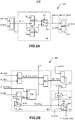
- the processing block BA essentially comprises three processing steps A1 to A3.
- step A1 the flow estimate E_NOx is subtracted by a subtraction operator A10 from the raw measurement information IFB_NOx and an information I1_NH3 is obtained.
- the processing considers that the information I1_NH3 is representative of the measurement information IF_NH3 contained in the raw measurement information IFB_NOx delivered by the probe NOx 301.
- Step A2 concerns the application of the equivalence factor FE to the information I1_NH3.
- the NOx 301 probe measures the two chemical species NOx and NH3 with different precisions and treats NH3 as if it were NOx. It is therefore necessary to apply the equivalence factor FE to match the information I1_NH3 to a measure of NH3.
- the equivalence factor FE also contains the conversion of the molar mass of NOx to the molar mass of NH3.
- the equivalence factor FE to be applied is determined in the block BB described below.
- step A2 the information I1_NH3 is applied to a numerator input (N) of a division operator A21 and the equivalence factor FE is applied to a denominator input (D) thereof.
- N numerator input
- D denominator input
- a division of the information I1_NH3 by the equivalence factor FE is thus carried out and the result of this operation is delivered by the output S1 of the operator A21.
- the division performed by the operator A21 is secured to avoid division by zero.
- there is a multiplication operator A22 which applies a default multiplication factor F D to I1_NH3 information.
- a switch A23 controlled by information IC1 is also provided to disable if necessary the correction with the equivalence factor FE.
- the switch A23 is typically of calibratable type with an adjustable switching threshold applied to the information IC1.
- step A3 the rate estimate E_NH3 is subtracted by a subtraction operator A30 from the information I2_NH3 and the indirect measurement information MI_NH3 is obtained.
- This indirect measurement information MI_NH3 represents a deviation on the prediction of NH3 downstream of the SCR catalyst 30 and quantifies a dispersion or drift of the urea injection system.
- the indirect measurement information MI_NH3 can be used as input data of correction functions.
- the processing block BB essentially comprises four processing steps B1 to B4.
- the main function of the block BB is to deliver the measurement information IF_NOx representative of the flow of NOx downstream of the catalyst SCR 30.
- the raw measurement IFB_NOx NOx by the probe NOx 301 is polluted by the presence of NH3.
- the correction of this gross measurement IFB_NOx by subtracting the estimate of NH3, E_NH3, is not sufficient because the probe NOx 301 does not measure NOX and NH3 with the same sensitivity. It is therefore necessary to calculate an equivalence between a flow rate of nitrogen oxides and an ammonia flow in a measurement of the NOx probe.
- the invention implements in the processing block BB a mapping and an adaptive loop for determining and adapting the equivalence factor FE at each occurrence of calculation of the measurement information IF_NOx.
- Step B1 calculates an equivalent amount of NOx, EQ_NOx, which represents the contribution of NH3 in the raw measurement information IFB_NOx.
- the sum operator B11 adds the estimation E_NH3 and the indirect measurement information MI_NH3 calculated by the processing block BA, so as to obtain an information I4_NH3 representative of a total flow of NH3 at the NOx probe 301, that is to say, equivalent to the measurement information IF_NH3.
- the information I4_NH3 is inputted to a multiplication operator B12.
- the multiplication operator B12 receives at another input the equivalence factor FE and outputs the information EQ_NOx representing the equivalent amount of NOx.
- a division operator B13 and a map B14 are included in the adaptive loop which determines the value of the equivalence factor FE to be applied.
- step n of the processing of the block BB calculates the occurrence IF_NOx n of the measurement information IF_NOx
- the previous occurrence thereof computed in step n-1 above is IF_NOx n-1 .
- Storage in a B130 buffer of IF_NOx n-1 is shown in FIG. Fig.2B .
- the measurement information IF_NOx n-1 is applied to a numerator input (N) of the division operator B13 and the exhaust gas flow D_GE is applied to a denominator input (D) thereof.
- a division of the measurement information IF_NOx n-1 by the flow D_GE is thus performed and the result of this operation is delivered by the output S3 of the operator B13 to a first input u1 of the map B14.
- a fault value DF1 is supplied to a fault input df2 of the operator B13, in particular for the case of a division by zero error.
- the mapping B14 is a 2D cartography, that is to say two-dimensional, and includes a second input u2 to which is provided the ratio R_NO2 / NOx.
- the map B14 outputs the equivalence factor FE, corresponding to the values of the IF_NOx n-1 and R_NO2 / NOx information, which is input to the multiplication operator B12 and the processing block BA.
- the information EQ_NOx, representing the equivalent amount of NOx, delivered by the operator B12 is supplied to a negative input of a subtraction operator B21 of the step B2.
- a positive input of the subtraction operator B21 receives the raw measurement information IFB_NOx.
- the subtraction operator B21 outputs raw measurement information IF_NOx, designated IF_NOx B.
- the measurement information IF_NOx B is filtered in step B2 by a low-pass filter B31 having a time constant K which eliminates the oscillations on the information and delivers the measurement information IF_NOx which is the measurement provided by the invention of the NOx flow downstream of the catalyst SCR 30.
- the measurement information IF_NOx provided by the processing block algorithm BB is only valid if the NOx probe 301 is active.
- the active state of the NOx probe 301 is indicated by the information EN which controls in step B4 a switch B40.
- the switch B40 outputs the measurement information IF_NOx when the NOx probe 301 is active and the estimation E_NOx when the latter is inactive.
Landscapes
- Engineering & Computer Science (AREA)
- Chemical & Material Sciences (AREA)
- Combustion & Propulsion (AREA)
- Mechanical Engineering (AREA)
- General Engineering & Computer Science (AREA)
- Chemical Kinetics & Catalysis (AREA)
- Health & Medical Sciences (AREA)
- Toxicology (AREA)
- Exhaust Gas After Treatment (AREA)
Abstract
Description
- L'invention concerne de manière générale la réduction des émissions polluantes d'oxydes d'azote d'un moteur thermique au moyen d'un système de réduction catalytique sélective. Plus particulièrement, l'invention se rapporte à un procédé de séparation d'informations de mesure d'oxydes d'azote et d'ammoniac contenues dans le signal de mesure fourni par une sonde de mesure d'oxydes d'azote (NOx) qui est placée en aval d'un catalyseur de réduction catalytique sélective dans une ligne d'échappement de moteur thermique.
- Les véhicules à moteur thermique sont équipés de systèmes de post-traitement des gaz d'échappement conçus pour la réduction des émissions polluantes et le respect des normes environnementales. Dans un système de réduction catalytique sélective, dit SCR (de « Sélective Catalytic Réduction » en anglais), le traitement des émissions d'oxydes d'azote (NOx) a lieu dans un catalyseur spécifique, dit catalyseur SCR, dans lequel se produisent des réactions d'oxydo-réduction conduisant à une réduction sélective des oxydes d'azote en azote et eau. L'agent réducteur classiquement utilisé est l'ammoniac (NH3). L'ammoniac est obtenu par dissociation d'une solution aqueuse d'urée qui est injectée dans la ligne d'échappement des gaz, en amont du catalyseur SCR. L'injection d'urée dans la ligne d'échappement est réglée au juste nécessaire et est commandée notamment en fonction de la quantité d'oxydes d'azote en sortie du moteur thermique, c'est-à-dire en amont du catalyseur SCR, et de la quantité d'oxydes d'azote en aval du catalyseur SCR. Un modèle d'estimation est fréquemment utilisé pour calculer la quantité d'oxydes d'azote en amont du catalyseur SCR. Une sonde de mesure d'oxydes d'azote, dite sonde NOx, est placée en aval du catalyseur SCR pour mesurer la quantité résiduelle d'oxydes d'azote dans les gaz sortant du catalyseur SCR et corriger en conséquence la commande du système SCR. La commande du système SCR doit également tenir compte d'un phénomène de désorption d'ammoniac et gérer un compromis entre l'efficacité de la réduction des oxydes d'azote et le relâchement d'ammoniac en sortie de la ligne d'échappement.
- Dans les systèmes SCR actuels, la sonde NOx généralement utilisée présente une sensibilité à l'ammoniac et le signal de mesure délivrée par celle-ci contient donc une imprécision sur la mesure des oxydes d'azote due à la présence de l'ammoniac. Une mesure des oxydes d'azote plus précise autoriserait une meilleure exécution des fonctions utilisant celle-ci, telles que le dosage de l'injection durée, le diagnostic d'efficacité du système SCR, l'optimisation des réglages de combustion en fonction de l'efficacité du système SCR et autres. L'utilisation d'une sonde mesurant exclusivement les NOx pourrait être une solution pour résoudre techniquement l'inconvénient ci-dessus, mais une telle sonde a un coût économique non négligeable.
- Par ailleurs, la mesure de la quantité d'ammoniac relâchée par le catalyseur SCR présente un intérêt certain, notamment pour corriger une dispersion ou une dérive du dispositif d'injection d'urée. Cependant, l'ajout d'une sonde de mesure spécifique pour l'ammoniac a aussi un impact sensible sur le coût du système SCR.
- Il existe donc un besoin pour une solution nouvelle et économique autorisant des mesures de débit d'oxydes d'azote et d'ammoniac en aval d'un catalyseur SCR, afin d'améliorer les systèmes SCR existants et de répondre aux exigences des normes environnementales, notamment la norme environnementale européenne dite « euro 6.3 », avec une commande plus précise du système SCR et une meilleure maîtrise des rejets polluants.
- Selon un premier aspect, l'invention concerne un procédé de séparation d'une information de mesure de débit d'oxydes d'azote et d'une information de mesure de débit d'ammoniac contenues dans une information de mesure de débit brute fournie par une sonde de mesure d'oxydes d'azote, la sonde étant placée en aval d'un catalyseur de réduction catalytique sélective dans une ligne d'échappement de gaz d'un moteur thermique. Conformément à l'invention, le procédé comporte les étapes suivantes :
- a) déterminer, à l'aide d'une cartographie et d'une boucle adaptative, un facteur d'équivalence entre un débit d'oxydes d'azote et un débit d'ammoniac dans la mesure de la sonde, la sonde ayant des sensibilités de mesure différentes pour les oxydes d'azote et pour l'ammoniac, le facteur d'équivalence étant adapté à chaque occurrence de calcul de l'information de mesure de débit d'oxydes d'azote en fonction d'au moins une valeur calculée précédente de l'information de mesure de débit d'oxydes d'azote, un rapport entre une concentration de dioxydes d'azote et une concentration d'oxydes d'azote et un débit des gaz d'échappement,
- b) calculer l'information de mesure de débit d'ammoniac en appliquant le facteur d'équivalence à une différence entre l'information de mesure de débit brute et une estimation de débit d'oxydes d'azote en aval du catalyseur de réduction catalytique sélective, et
- c) calculer l'information de mesure de débit d'oxydes d'azote par une différence entre l'information de mesure de débit brute et l'information de mesure de débit d'ammoniac à laquelle a été appliquée le facteur d'équivalence.
- Selon une caractéristique particulière du procédé, la différence entre l'information de mesure de débit brute et une estimation de débit d'oxydes d'azote en aval du catalyseur de réduction catalytique sélective est divisée par le facteur d'équivalence.
- Selon une autre caractéristique particulière du procédé, à l'étape c), l'information de mesure de débit d'ammoniac est multipliée par le facteur d'équivalence.
- Selon encore une autre caractéristique particulière, le procédé comprend également une étape de filtrage passe-bas pour filtrer l'information de mesure de débit d'oxydes d'azote calculée à l'étape c).
- Selon encore une autre caractéristique particulière, le procédé comprend également une étape de commutation délivrant en sortie l'information de mesure de débit d'oxydes d'azote ou l'estimation de débit d'oxydes d'azote selon que la sonde de mesure d'oxydes d'azote délivre une information de mesure brute valide ou pas.
- Selon un autre aspect, l'invention concerne aussi un calculateur comportant une mémoire stockant des instructions de programme pour la mise en oeuvre du procédé tel que décrit brièvement ci-dessus.
- L'invention concerne également un moteur thermique ayant une ligne d'échappement de gaz équipée d'un système de réduction catalytique sélective dans lequel est inclus le calculateur ci-dessus et un véhicule comportant ce moteur thermique.
- D'autres avantages et caractéristiques de la présente invention apparaîtront plus clairement à la lecture de la description détaillée ci-dessous d'une forme de réalisation particulière de l'invention, en référence aux dessins annexés, dans lesquels :
- la
Fig.1 montre de manière partielle un exemple d'un système de post-traitement de gaz d'échappement comprenant un catalyseur SCR et un calculateur de commande comprenant un module logiciel embarqué pour la mise en oeuvre du procédé de l'invention ; - les
Figs.2A et 2B montrent sous forme de blocs-diagrammes des algorithmes de traitements effectués par le module logiciel embarqué pour la séparation des informations de mesure d'oxydes d'azote et d'ammoniac contenues dans le signal de mesure fourni par une sonde NOx en aval du catalyseur SCR de laFig. 1 . - Une ligne d'échappement de gaz LE comprenant un système de post-traitement de gaz d'échappement 1 dans lequel est mis en oeuvre le procédé selon l'invention pour la mesure des quantités de NOx et NH3 en aval d'un catalyseur SCR 30 est montré de manière partielle à la
Fig.1 . Dans cette forme de réalisation particulière, le système de post-traitement de gaz d'échappement 1 est destiné au post-traitement des gaz d'échappement EG d'un moteur thermique de type Diesel. - Comme montré à la
Fig.1 , le système de post-traitement de gaz d'échappement 1 comprend essentiellement une ligne d'échappement de gaz LE et une unité électronique de commande 4. La ligne d'échappement de gaz LE comprend ici un catalyseur d'oxydation 2 et un dispositif compact 3 de réduction catalytique sélective et de filtrage de particules de suies. Le catalyseur d'oxydation 2 est typiquement un catalyseur d'oxydation de type DOC (pour « Diesel Oxydation Catalyst » en anglais). - Le dispositif compact 3 comprend un catalyseur SCR 30 et un filtre à particules 31. Le catalyseur SCR 30 détruit les Nox en les faisant réagir avec le NH3 comme agent réducteur. Le NH3 est contenu dans une solution aqueuse d'urée, telle que l'AdBlue (marque déposée), introduite dans la ligne d'échappement de gaz LE par l'injecteur 300. Une sonde NOx 301 est prévue en aval du catalyseur SCR 30, ici dans la ligne d'échappement de gaz LE en sortie du dispositif compact 3, notamment pour la commande du catalyseur SCR 30.
- L'unité électronique de commande 4 est ici le calculateur de commande moteur du véhicule. Le calculateur 4 comporte notamment un port d'entrée/sortie 40 à travers lequel transitent les différents signaux nécessaires à la commande des composants fonctionnels du système de post-traitement de gaz d'échappement 1 et un port de communication 41 avec un réseau CAN du véhicule. Une information de mesure brute IFB_NOx délivrée par la sonde NOx 301 est fournie ici au calculateur 4 à travers le port d'entrée/sortie 40.
- L'information de mesure brute IFB_NOx est une mesure de débit et est composée de la somme de deux informations de mesure de débit qui sont désignées ci-après IF_NOx et IF_NH3. L'information de mesure IF_NOx est représentative du débit de NOx en aval du catalyseur SCR 30. L'information de mesure IF_NH3 est représentative du débit de NH3 en aval du catalyseur SCR 30. Le procédé selon l'invention permet d'extraire l'information de mesure IF_NOx de l'information de mesure brute IFB_NOx et fournit une information de mesure indirecte, désignée ci-après MI_NH3, du débit de NH3 en aval du catalyseur SCR 30.
- Comme montré à la
Fig.1 , un module logiciel dédié SP_NOx/NH3 est implanté dans la mémoire 42 du calculateur 4 pour la mise en oeuvre du procédé selon l'invention par l'exécution d'instructions de code de programme par un processeur du calculateur 4. Le module logiciel dédié SP_NOx/NH3 comporte deux blocs de traitement BA et BB qui calculent respectivement l'information de mesure indirecte MI_NH3 relative au débit de NH3 en aval du catalyseur SCR 30 et l'information de mesure IF_NOx représentative du débit de NOx en aval du catalyseur SCR 30. - Le module logiciel SP_NOx/NH3 utilise essentiellement en entrée l'information de mesure brute IFB_NOx délivrée par la sonde NOx 301, des estimations E_NOx et E_NH3 respectivement du débit de NOx et du débit de NH3 en aval du catalyseur SCR 30, le débit D_GE des gaz d'échappement et un rapport R_NO2/NOx entre la concentration des dioxydes d'azote (NO2) et la concentration des NOx. On notera que les estimations de débit E_NOx et E_NH3, le débit D_GE des gaz d'échappement et le rapport R_NO2/NOx pourront être obtenues par des procédés connus faisant appel par exemple à des modèles d'estimation, des cartographies et autres. Ces informations E_NOx, E_NH3, D_GE et R_NO2/NOx sont fréquemment déjà disponibles dans les calculateurs de commande moteur à d'autres fins, pour des stratégies de commande.
- L'information de mesure brute IFB_NOx, les estimations de débit E_NOx et E_NH3 et un facteur d'équivalence FE délivré par le bloc de traitement BB sont fournis en entrée au bloc de traitement BA.
- L'information de mesure brute IFB_NOx, les estimations de débit E_NOx et E_NH3, le débit D_GE des gaz d'échappement et le rapport R_NO2/NOx sont fournis en entrée au bloc de traitement BB.
- En référence également aux
Figs.2A et 2B , il est maintenant décrit ci-dessous les algorithmes de traitement effectués par les blocs BA et BB. - Comme montré à la
Fig.2A , le bloc de traitement BA comprend essentiellement trois étapes de traitement A1 à A3. - A l'étape A1, l'estimation de débit E_NOx est soustraite par un opérateur de soustraction A10 à l'information de mesure brute IFB_NOx et il est obtenu une information I1_NH3. Le traitement considère que l'information I1_NH3 est représentative de l'information de mesure IF_NH3 contenue dans l'information de mesure brute IFB_NOx délivrée par la sonde NOx 301.
- L'étape A2 concerne l'application du facteur d'équivalence FE à l'information I1_NH3. La sonde NOx 301 mesure les deux espèces chimiques NOx et NH3 avec des précisions différentes et traite le NH3 comme s'il s'agissait de NOx. Il est donc nécessaire d'appliquer le facteur d'équivalence FE pour faire correspondre l'information I1_NH3 à une mesure de NH3. Le facteur d'équivalence FE contient également la conversion de la masse molaire de NOx en masse molaire de NH3. Le facteur d'équivalence FE à appliquer est déterminé dans le bloc BB décrit plus bas.
- A l'étape A2, l'information I1_NH3 est appliquée à une entrée de numérateur (N) d'un opérateur de division A21 et le facteur d'équivalence FE est appliqué à une entrée de dénominateur (D) de celui-ci. Une division de l'information I1_NH3 par le facteur d'équivalence FE est ainsi réalisée et le résultat de cette opération est délivré par la sortie S1 de l'opérateur A21.
- La division effectuée par l'opérateur A21 est sécurisée pour éviter une division par zéro. Pour cela, il est prévu un opérateur de multiplication A22 qui applique un facteur multiplicatif de défaut FD à l'information I1_NH3. Le résultat (I1_NH3 x FD) de cette opération, fourni par une sortie S2 de l'opérateur A22, est appliqué à une entrée de valeur de défaut df1 de l'opérateur A21 qui le délivre à sa sortie S1 en cas d'erreur de division par zéro.
- Un commutateur A23 commandé par une information IC1 est également prévu pour désactiver si nécessaire la correction avec le facteur d'équivalence FE. Le commutateur A23 est typiquement de type calibrable avec un seuil de commutation réglable appliqué à l'information IC1. Lorsque la correction est activée et qu'il n'y a pas de défaut de division par zéro, l'étape A2 fournit en sortie une information de mesure I2_NH3 = (I1_NH3 / FE) = IF_NH3. Dans le cas contraire, l'étape A2 fournit une valeur l'information I2_NH3 = (I1_NH3 x FD).
- A l'étape A3, l'estimation de débit E_NH3 est soustraite par un opérateur de soustraction A30 à l'information I2_NH3 et il est obtenu l'information de mesure indirecte MI_NH3. Cette information de mesure indirecte MI_NH3 représente un écart sur la prédiction de NH3 en aval du catalyseur SCR 30 et quantifie une dispersion ou une dérive du système d'injection d'urée. L'information de mesure indirecte MI_NH3 pourra être utilisée comme donnée d'entrée de fonctions de correction.
- Comme montré à la
Fig.2B , le bloc de traitement BB comprend essentiellement quatre étapes de traitement B1 à B4. La fonction principale du bloc BB est de délivrer l'information de mesure IF_NOx représentative du débit de NOx en aval du catalyseur SCR 30. Comme indiqué précédemment, la mesure brute IFB_NOx des NOx par la sonde NOx 301 est polluée par la présence de NH3. La correction de cette mesure brute IFB_NOx en retranchant l'estimation de NH3, E_NH3, n'est pas suffisante car la sonde NOx 301 ne mesure pas les NOX et le NH3 avec la même sensibilité. Il est donc nécessaire de calculer une équivalence entre un débit d'oxydes d'azote et un débit d'ammoniac dans une mesure de la sonde NOx. L'invention met en oeuvre dans le bloc de traitement BB une cartographie et une boucle adaptative pour déterminer et adapter le facteur d'équivalence FE à chaque occurrence de calcul de l'information de mesure IF_NOx. - L'étape B1 calcule une quantité équivalente de NOx, EQ_NOx, qui représente la contribution du NH3 dans l'information de mesure brute IFB_NOx.
- L'opérateur de somme B11 additionne l'estimation E_NH3 et l'information de mesure indirecte MI_NH3 calculée par le bloc de traitement BA, de manière à obtenir une information I4_NH3 représentative d'un débit total de NH3 au niveau de la sonde NOx 301, c'est-à-dire équivalente à l'information de mesure IF_NH3.
- L'information I4_NH3 est fournie en entrée à un opérateur de multiplication B12. L'opérateur de multiplication B12 reçoit à une autre entrée le facteur d'équivalence FE et délivre en sortie l'information EQ_NOx représentant la quantité équivalente de NOx.
- Un opérateur de division B13 et une cartographie B14 sont inclus dans la boucle adaptative qui détermine la valeur du facteur d'équivalence FE à appliquer.
- En considérant que le pas courant n du traitement du bloc BB calcule l'occurrence IF_NOxn de l'information de mesure IF_NOx, l'occurrence précédente de celle-ci calculée lors du pas n-1 précédent est IF_NOxn-1. Un stockage dans une mémoire tampon B130 de IF_NOxn-1 est montrée à la
Fig.2B . - L'information de mesure IF_NOxn-1 est appliquée à une entrée de numérateur (N) de l'opérateur de division B13 et le débit D_GE des gaz d'échappement est appliqué à une entrée de dénominateur (D) de celui-ci. Une division de l'information de mesure IF_NOxn-1 par le débit D_GE est ainsi réalisée et le résultat de cette opération est délivré par la sortie S3 de l'opérateur B13 à une première entrée u1 de la cartographie B14. On notera qu'une valeur de défaut DF1 est fournie à une entrée de défaut df2 de l'opérateur B13, notamment pour le cas d'une erreur de division par zéro.
- La cartographie B14 est une cartographie 2D, c'est-à-dire à deux dimensions, et comprend une deuxième entrée u2 à laquelle est fourni le rapport R_NO2/NOx. La cartographie B14 délivre en sortie le facteur d'équivalence FE, correspondant aux valeurs des informations IF_NOxn-1 et R_NO2/NOx, qui est fourni en entrée à l'opérateur de multiplication B12 et au bloc de traitement BA.
- L'information EQ_NOx, représentant la quantité équivalente de NOx, délivrée par l'opérateur B12 est fournie à une entrée négative d'un opérateur de soustraction B21 de l'étape B2. Une entrée positive de l'opérateur de soustraction B21 reçoit l'information de mesure brute IFB_NOx. L'opérateur de soustraction B21 délivre en sortie une information de mesure IF_NOx brute, désignée IF_NOxB.
- L'information de mesure IF_NOxB est filtrée à l'étape B2, par un filtre passe-bas B31 ayant une constante de temps K qui élimine les oscillations sur l'information et délivre l'information de mesure IF_NOx qui est la mesure fournie par l'invention du débit de NOx en aval du catalyseur SCR 30.
- L'information de mesure IF_NOx fournie par l'algorithme du bloc de traitement BB n'est valide que si la sonde NOx 301 est active. L'état actif de la sonde NOx 301 est indiqué par l'information EN qui commande à l'étape B4 un commutateur B40. Le commutateur B40 délivre en sortie l'information de mesure IF_NOx lorsque la sonde NOx 301 est active et l'estimation E_NOx lorsque celle-ci est inactive.
- L'invention ne se limite pas à la forme de réalisation particulière qui a été décrite ici à titre d'exemple. L'homme du métier, selon les applications de l'invention, pourra y apporter différentes modifications et variantes qui entrent dans la portée des revendications ci-annexées.
Claims (10)
- Procédé de séparation d'une information de mesure de débit d'oxydes d'azote (IF_NOx) et d'une information de mesure de débit d'ammoniac (IF_NH3) contenues dans une information de mesure de débit brute (IFB_NOx) fournie par une sonde de mesure d'oxydes d'azote (301), ladite sonde (301) étant placée en aval d'un catalyseur de réduction catalytique sélective (30) dans une ligne d'échappement de gaz (LE) d'un moteur thermique, caractérisé en ce qu'il comporte les étapes suivantes :- a) déterminer, à l'aide d'une cartographie (B14) et d'une boucle adaptative, un facteur d'équivalence (FE) entre un débit d'oxydes d'azote et un débit d'ammoniac dans la mesure de ladite sonde (301), ladite sonde (301) ayant des sensibilités de mesure différentes pour les oxydes d'azote (NOx) et pour l'ammoniac (NH3), ledit facteur d'équivalence (FE) étant adapté à chaque occurrence de calcul (IF_NOXn) de ladite information de mesure de débit d'oxydes d'azote (IF_NOX) en fonction d'au moins une valeur calculée précédente (IF_NOXn-1) de ladite information de mesure de débit d'oxydes d'azote, un rapport (R_NO2/NOx) entre une concentration de dioxydes d'azote et une concentration d'oxydes d'azote et un débit (D_GE) des gaz d'échappement,- b) calculer ladite information de mesure de débit d'ammoniac (IF_NH3) en appliquant ledit facteur d'équivalence (FE) à une différence (A10, I1_NH3) entre ladite information de mesure de débit brute (IFB_NOx) et une estimation de débit d'oxydes d'azote (E_NOx) en aval dudit catalyseur de réduction catalytique sélective (30), et- c) calculer ladite information de mesure de débit d'oxydes d'azote (IF_NOx) par une différence (B21, IF_NOxB) entre ladite information de mesure de débit brute (IFB_NOx) et ladite information de mesure de débit d'ammoniac (IF_NH3, I4_NH3) à laquelle a été appliquée ledit facteur d'équivalence (FE).
- Procédé selon la revendication 1, caractérisé en ce que, à l'étape a) ledit facteur d'équivalence (FE) est fourni par une cartographie à deux dimensions (B14) dont une première entrée (u1) reçoit un rapport entre ladite valeur calculée précédente (IF_NOXn-1) de ladite information de mesure de débit d'oxydes d'azote et ledit débit (D_GE) des gaz d'échappement et une deuxième entrée (u2) reçoit ledit rapport (R_NO2/NOx) entre une concentration de dioxydes d'azote et une concentration d'oxydes d'azote.
- Procédé selon la revendication 1 ou 2, caractérisé en ce que, à l'étape b), ladite différence (A10, I1_NH3) entre ladite information de mesure de débit brute (IFB_NOx) et une estimation de débit d'oxydes d'azote (E_NOx) en aval dudit catalyseur de réduction catalytique sélective (30) est divisée (A21) par ledit facteur d'équivalence (FE).
- Procédé selon l'une quelconque des revendications 1 à 3, caractérisé en ce que, à l'étape c), ladite information de mesure de débit d'ammoniac (IF_NH3, I4_NH3) est multipliée (B12) par ledit facteur d'équivalence (FE).
- Procédé selon l'une quelconque des revendications 1 à 4, caractérisé en ce qu'il comprend également une étape de filtrage passe-bas (B31) pour filtrer ladite information de mesure de débit d'oxydes d'azote (IF_NOxB) calculée à l'étape c).
- Procédé selon l'une quelconque des revendications 1 à 5, caractérisé en ce qu'il comprend également une étape de commutation (B40) délivrant en sortie ladite information de mesure de débit d'oxydes d'azote (IF_NOx) ou ladite estimation de débit d'oxydes d'azote (E_NOx) selon que ladite sonde de mesure d'oxydes d'azote (301) délivre une information de mesure brute valide ou pas (EN).
- Calculateur (4) comportant une mémoire (42) stockant des instructions de programme pour la mise en oeuvre du procédé selon l'une quelconque des revendications 1 à 6.
- Calculateur selon la revendication 7, caractérisé en ce que ledit calculateur est le calculateur de commande moteur (4) d'un véhicule.
- Moteur thermique ayant une ligne d'échappement de gaz (LE) équipée d'un système de réduction catalytique sélective (1), caractérisé en ce ledit système de réduction catalytique sélective (1) comprend un calculateur (4) selon la revendication 7 ou 8.
- Véhicule comportant un moteur thermique selon la revendication 9.
Applications Claiming Priority (1)
| Application Number | Priority Date | Filing Date | Title |
|---|---|---|---|
| FR1760562A FR3073624B1 (fr) | 2017-11-10 | 2017-11-10 | Procede de separation d’informations de mesure d’oxydes d’azote et d’ammoniac |
Publications (2)
| Publication Number | Publication Date |
|---|---|
| EP3483415A1 true EP3483415A1 (fr) | 2019-05-15 |
| EP3483415B1 EP3483415B1 (fr) | 2021-03-17 |
Family
ID=61599301
Family Applications (1)
| Application Number | Title | Priority Date | Filing Date |
|---|---|---|---|
| EP18199684.4A Active EP3483415B1 (fr) | 2017-11-10 | 2018-10-10 | Procédé de séparation d'informations de mesure d'oxydes d'azote et d'ammoniac |
Country Status (2)
| Country | Link |
|---|---|
| EP (1) | EP3483415B1 (fr) |
| FR (1) | FR3073624B1 (fr) |
Cited By (1)
| Publication number | Priority date | Publication date | Assignee | Title |
|---|---|---|---|---|
| FR3154144A1 (fr) * | 2023-10-12 | 2025-04-18 | Psa Automobiles Sa | Vehicule automobile comprenant un systeme de controle d’echapement determinant les emissions d’oxydes d’azote, procede et programme sur la base d’un tel vehicule |
Citations (3)
| Publication number | Priority date | Publication date | Assignee | Title |
|---|---|---|---|---|
| DE102004046640A1 (de) * | 2004-09-25 | 2006-03-30 | Robert Bosch Gmbh | Verfahren zum Betreiben einer Brennkraftmaschine und Vorrichtung zur Durchführung des Verfahrens |
| US20100028230A1 (en) * | 2008-07-30 | 2010-02-04 | Gm Global Technology Operations, Inc. | Dosing agent injection control for selective catalytic reduction catalysts |
| FR3007795A1 (fr) * | 2013-06-28 | 2015-01-02 | Renault Sa | Systeme et procede de diagnostic de la reduction catalytique selective d'un vehicule automobile. |
-
2017
- 2017-11-10 FR FR1760562A patent/FR3073624B1/fr not_active Expired - Fee Related
-
2018
- 2018-10-10 EP EP18199684.4A patent/EP3483415B1/fr active Active
Patent Citations (3)
| Publication number | Priority date | Publication date | Assignee | Title |
|---|---|---|---|---|
| DE102004046640A1 (de) * | 2004-09-25 | 2006-03-30 | Robert Bosch Gmbh | Verfahren zum Betreiben einer Brennkraftmaschine und Vorrichtung zur Durchführung des Verfahrens |
| US20100028230A1 (en) * | 2008-07-30 | 2010-02-04 | Gm Global Technology Operations, Inc. | Dosing agent injection control for selective catalytic reduction catalysts |
| FR3007795A1 (fr) * | 2013-06-28 | 2015-01-02 | Renault Sa | Systeme et procede de diagnostic de la reduction catalytique selective d'un vehicule automobile. |
Cited By (1)
| Publication number | Priority date | Publication date | Assignee | Title |
|---|---|---|---|---|
| FR3154144A1 (fr) * | 2023-10-12 | 2025-04-18 | Psa Automobiles Sa | Vehicule automobile comprenant un systeme de controle d’echapement determinant les emissions d’oxydes d’azote, procede et programme sur la base d’un tel vehicule |
Also Published As
| Publication number | Publication date |
|---|---|
| FR3073624B1 (fr) | 2019-10-18 |
| FR3073624A1 (fr) | 2019-05-17 |
| EP3483415B1 (fr) | 2021-03-17 |
Similar Documents
| Publication | Publication Date | Title |
|---|---|---|
| EP3014082B1 (fr) | Système et procédé de diagnostic de la réduction catalytique sélective d'un véhicule automobile | |
| US11035281B2 (en) | Soot load estimation using dual differential pressure sensors | |
| CN107250517B (zh) | 基于缸内内容确定发动机排出nox的系统和方法 | |
| FR2987397A1 (fr) | Calcul du taux de no2 a l'entree d'un dispositif de reduction catalytique selective et dispositif pour la mise en oeuvre de ce procede | |
| EP3819483A1 (fr) | Procédé d'estimation de la quantité d'oxydes d'azote (nox) et/ou de la quantité d'ammoniac (nh3) en aval d'un piège à oxydes d'azote | |
| EP3483415B1 (fr) | Procédé de séparation d'informations de mesure d'oxydes d'azote et d'ammoniac | |
| FR3016924A1 (fr) | Procede de correction d'un modele d'estimation d'une quantite d'oxydes d'azotes en amont d'un systeme de reduction catalytique selective | |
| EP1209333B1 (fr) | Procédé de régénération d'un filtre à particules | |
| FR2930282A3 (fr) | Procede de traitement a l'echappement des emissions de nox d'un moteur a combustion interne | |
| FR2985770A1 (fr) | Gestion optimisee d'un catalyseur scr par regenerations periodiques d'un filtre a particules | |
| EP3060771B1 (fr) | GESTION DE l'APRÈS-TRAITEMENT DES GAZ D'ÉCHAPPPEMENT ISSUS D'UN MOTEUR À COMBUSTION INTERNE | |
| EP2193261B1 (fr) | Procede et systeme de gestion d'un module de traitement des gaz d'echappement | |
| FR2988305A1 (fr) | Procede de determination de la quantite d'ammoniac stockee dans un catalyseur, et systeme correspondant | |
| FR3081917A1 (fr) | Systeme et procede d'estimation de la presence d'un monolithe de catalyse d'un systeme de catalyse des gaz d'echappement d'un moteur a combustion interne pour vehicule automobile. | |
| FR2850133A1 (fr) | Procede et dispositif de mise en oeuvre d'une unite de dosage d'un catalyseur | |
| EP3056703B1 (fr) | Procédé et système de réduction des oxydes d'azotes issus d'un moteur à combustion interne | |
| FR2903729A1 (fr) | Procede de determination de quantite d'ammoniac pour systeme de traitement d'oxydes d'azote | |
| EP3043041B1 (fr) | Procédé de traitement des oxydes d'azote issus d'un moteur à combustion interne | |
| JP2022075531A (ja) | 後処理システムの制御装置、後処理システム、後処理システムを制御する方法、及びコンピュータプログラム | |
| EP3536920A1 (fr) | Procede de correction d'une estimation d'une quantite d'oxydes d'azote en fonction d'un taux d'hygrometrie | |
| FR2957819A1 (fr) | Procede de determination de la quantite de suies emises a l'aval d'un filtre a particules | |
| FR2952675A1 (fr) | Procede de controle des emissions polluantes d'un moteur a combustion | |
| FR2955188A1 (fr) | Procede de calcul d'une consigne d'introduction d'un fluide reducteur dans une ligne d'echappement | |
| FR3013761A1 (fr) | Procede de depollution des gaz d'echappement d'un moteur a combustion interne | |
| FR3042223A1 (fr) | Dispositif de post-traitement des gaz d'echappement d'un moteur a combustion interne de vehicule automobile |
Legal Events
| Date | Code | Title | Description |
|---|---|---|---|
| PUAI | Public reference made under article 153(3) epc to a published international application that has entered the european phase |
Free format text: ORIGINAL CODE: 0009012 |
|
| STAA | Information on the status of an ep patent application or granted ep patent |
Free format text: STATUS: THE APPLICATION HAS BEEN PUBLISHED |
|
| AK | Designated contracting states |
Kind code of ref document: A1 Designated state(s): AL AT BE BG CH CY CZ DE DK EE ES FI FR GB GR HR HU IE IS IT LI LT LU LV MC MK MT NL NO PL PT RO RS SE SI SK SM TR |
|
| AX | Request for extension of the european patent |
Extension state: BA ME |
|
| STAA | Information on the status of an ep patent application or granted ep patent |
Free format text: STATUS: REQUEST FOR EXAMINATION WAS MADE |
|
| 17P | Request for examination filed |
Effective date: 20191118 |
|
| STAA | Information on the status of an ep patent application or granted ep patent |
Free format text: STATUS: EXAMINATION IS IN PROGRESS |
|
| 17Q | First examination report despatched |
Effective date: 20200728 |
|
| RBV | Designated contracting states (corrected) |
Designated state(s): AL AT BE BG CH CY CZ DE DK EE ES FI FR GB GR HR HU IE IS IT LI LT LU LV MC MK MT NL NO PL PT RO RS SE SI SK SM TR |
|
| RAP1 | Party data changed (applicant data changed or rights of an application transferred) |
Owner name: PSA AUTOMOBILES SA |
|
| GRAP | Despatch of communication of intention to grant a patent |
Free format text: ORIGINAL CODE: EPIDOSNIGR1 |
|
| STAA | Information on the status of an ep patent application or granted ep patent |
Free format text: STATUS: GRANT OF PATENT IS INTENDED |
|
| RIC1 | Information provided on ipc code assigned before grant |
Ipc: F02D 41/24 20060101ALN20201016BHEP Ipc: F01N 3/20 20060101ALI20201016BHEP Ipc: F02D 41/14 20060101AFI20201016BHEP Ipc: G01N 27/28 20060101ALI20201016BHEP |
|
| INTG | Intention to grant announced |
Effective date: 20201124 |
|
| GRAS | Grant fee paid |
Free format text: ORIGINAL CODE: EPIDOSNIGR3 |
|
| GRAA | (expected) grant |
Free format text: ORIGINAL CODE: 0009210 |
|
| STAA | Information on the status of an ep patent application or granted ep patent |
Free format text: STATUS: THE PATENT HAS BEEN GRANTED |
|
| AK | Designated contracting states |
Kind code of ref document: B1 Designated state(s): AL AT BE BG CH CY CZ DE DK EE ES FI FR GB GR HR HU IE IS IT LI LT LU LV MC MK MT NL NO PL PT RO RS SE SI SK SM TR |
|
| REG | Reference to a national code |
Ref country code: GB Ref legal event code: FG4D Free format text: NOT ENGLISH |
|
| REG | Reference to a national code |
Ref country code: CH Ref legal event code: EP |
|
| REG | Reference to a national code |
Ref country code: DE Ref legal event code: R096 Ref document number: 602018013990 Country of ref document: DE |
|
| REG | Reference to a national code |
Ref country code: IE Ref legal event code: FG4D Free format text: LANGUAGE OF EP DOCUMENT: FRENCH |
|
| REG | Reference to a national code |
Ref country code: AT Ref legal event code: REF Ref document number: 1372453 Country of ref document: AT Kind code of ref document: T Effective date: 20210415 |
|
| REG | Reference to a national code |
Ref country code: DE Ref legal event code: R084 Ref document number: 602018013990 Country of ref document: DE |
|
| REG | Reference to a national code |
Ref country code: GB Ref legal event code: 746 Effective date: 20210601 |
|
| REG | Reference to a national code |
Ref country code: LT Ref legal event code: MG9D |
|
| PG25 | Lapsed in a contracting state [announced via postgrant information from national office to epo] |
Ref country code: BG Free format text: LAPSE BECAUSE OF FAILURE TO SUBMIT A TRANSLATION OF THE DESCRIPTION OR TO PAY THE FEE WITHIN THE PRESCRIBED TIME-LIMIT Effective date: 20210617 Ref country code: FI Free format text: LAPSE BECAUSE OF FAILURE TO SUBMIT A TRANSLATION OF THE DESCRIPTION OR TO PAY THE FEE WITHIN THE PRESCRIBED TIME-LIMIT Effective date: 20210317 Ref country code: GR Free format text: LAPSE BECAUSE OF FAILURE TO SUBMIT A TRANSLATION OF THE DESCRIPTION OR TO PAY THE FEE WITHIN THE PRESCRIBED TIME-LIMIT Effective date: 20210618 Ref country code: HR Free format text: LAPSE BECAUSE OF FAILURE TO SUBMIT A TRANSLATION OF THE DESCRIPTION OR TO PAY THE FEE WITHIN THE PRESCRIBED TIME-LIMIT Effective date: 20210317 Ref country code: NO Free format text: LAPSE BECAUSE OF FAILURE TO SUBMIT A TRANSLATION OF THE DESCRIPTION OR TO PAY THE FEE WITHIN THE PRESCRIBED TIME-LIMIT Effective date: 20210617 |
|
| REG | Reference to a national code |
Ref country code: AT Ref legal event code: MK05 Ref document number: 1372453 Country of ref document: AT Kind code of ref document: T Effective date: 20210317 |
|
| REG | Reference to a national code |
Ref country code: NL Ref legal event code: MP Effective date: 20210317 |
|
| PG25 | Lapsed in a contracting state [announced via postgrant information from national office to epo] |
Ref country code: SE Free format text: LAPSE BECAUSE OF FAILURE TO SUBMIT A TRANSLATION OF THE DESCRIPTION OR TO PAY THE FEE WITHIN THE PRESCRIBED TIME-LIMIT Effective date: 20210317 Ref country code: LV Free format text: LAPSE BECAUSE OF FAILURE TO SUBMIT A TRANSLATION OF THE DESCRIPTION OR TO PAY THE FEE WITHIN THE PRESCRIBED TIME-LIMIT Effective date: 20210317 Ref country code: RS Free format text: LAPSE BECAUSE OF FAILURE TO SUBMIT A TRANSLATION OF THE DESCRIPTION OR TO PAY THE FEE WITHIN THE PRESCRIBED TIME-LIMIT Effective date: 20210317 |
|
| PG25 | Lapsed in a contracting state [announced via postgrant information from national office to epo] |
Ref country code: NL Free format text: LAPSE BECAUSE OF FAILURE TO SUBMIT A TRANSLATION OF THE DESCRIPTION OR TO PAY THE FEE WITHIN THE PRESCRIBED TIME-LIMIT Effective date: 20210317 |
|
| PG25 | Lapsed in a contracting state [announced via postgrant information from national office to epo] |
Ref country code: EE Free format text: LAPSE BECAUSE OF FAILURE TO SUBMIT A TRANSLATION OF THE DESCRIPTION OR TO PAY THE FEE WITHIN THE PRESCRIBED TIME-LIMIT Effective date: 20210317 Ref country code: CZ Free format text: LAPSE BECAUSE OF FAILURE TO SUBMIT A TRANSLATION OF THE DESCRIPTION OR TO PAY THE FEE WITHIN THE PRESCRIBED TIME-LIMIT Effective date: 20210317 Ref country code: LT Free format text: LAPSE BECAUSE OF FAILURE TO SUBMIT A TRANSLATION OF THE DESCRIPTION OR TO PAY THE FEE WITHIN THE PRESCRIBED TIME-LIMIT Effective date: 20210317 Ref country code: SM Free format text: LAPSE BECAUSE OF FAILURE TO SUBMIT A TRANSLATION OF THE DESCRIPTION OR TO PAY THE FEE WITHIN THE PRESCRIBED TIME-LIMIT Effective date: 20210317 Ref country code: AT Free format text: LAPSE BECAUSE OF FAILURE TO SUBMIT A TRANSLATION OF THE DESCRIPTION OR TO PAY THE FEE WITHIN THE PRESCRIBED TIME-LIMIT Effective date: 20210317 |
|
| PG25 | Lapsed in a contracting state [announced via postgrant information from national office to epo] |
Ref country code: SK Free format text: LAPSE BECAUSE OF FAILURE TO SUBMIT A TRANSLATION OF THE DESCRIPTION OR TO PAY THE FEE WITHIN THE PRESCRIBED TIME-LIMIT Effective date: 20210317 Ref country code: RO Free format text: LAPSE BECAUSE OF FAILURE TO SUBMIT A TRANSLATION OF THE DESCRIPTION OR TO PAY THE FEE WITHIN THE PRESCRIBED TIME-LIMIT Effective date: 20210317 Ref country code: PL Free format text: LAPSE BECAUSE OF FAILURE TO SUBMIT A TRANSLATION OF THE DESCRIPTION OR TO PAY THE FEE WITHIN THE PRESCRIBED TIME-LIMIT Effective date: 20210317 Ref country code: PT Free format text: LAPSE BECAUSE OF FAILURE TO SUBMIT A TRANSLATION OF THE DESCRIPTION OR TO PAY THE FEE WITHIN THE PRESCRIBED TIME-LIMIT Effective date: 20210719 Ref country code: IS Free format text: LAPSE BECAUSE OF FAILURE TO SUBMIT A TRANSLATION OF THE DESCRIPTION OR TO PAY THE FEE WITHIN THE PRESCRIBED TIME-LIMIT Effective date: 20210717 |
|
| REG | Reference to a national code |
Ref country code: DE Ref legal event code: R097 Ref document number: 602018013990 Country of ref document: DE |
|
| PLBE | No opposition filed within time limit |
Free format text: ORIGINAL CODE: 0009261 |
|
| STAA | Information on the status of an ep patent application or granted ep patent |
Free format text: STATUS: NO OPPOSITION FILED WITHIN TIME LIMIT |
|
| PG25 | Lapsed in a contracting state [announced via postgrant information from national office to epo] |
Ref country code: ES Free format text: LAPSE BECAUSE OF FAILURE TO SUBMIT A TRANSLATION OF THE DESCRIPTION OR TO PAY THE FEE WITHIN THE PRESCRIBED TIME-LIMIT Effective date: 20210317 Ref country code: DK Free format text: LAPSE BECAUSE OF FAILURE TO SUBMIT A TRANSLATION OF THE DESCRIPTION OR TO PAY THE FEE WITHIN THE PRESCRIBED TIME-LIMIT Effective date: 20210317 Ref country code: AL Free format text: LAPSE BECAUSE OF FAILURE TO SUBMIT A TRANSLATION OF THE DESCRIPTION OR TO PAY THE FEE WITHIN THE PRESCRIBED TIME-LIMIT Effective date: 20210317 |
|
| 26N | No opposition filed |
Effective date: 20211220 |
|
| PG25 | Lapsed in a contracting state [announced via postgrant information from national office to epo] |
Ref country code: SI Free format text: LAPSE BECAUSE OF FAILURE TO SUBMIT A TRANSLATION OF THE DESCRIPTION OR TO PAY THE FEE WITHIN THE PRESCRIBED TIME-LIMIT Effective date: 20210317 |
|
| PG25 | Lapsed in a contracting state [announced via postgrant information from national office to epo] |
Ref country code: IT Free format text: LAPSE BECAUSE OF FAILURE TO SUBMIT A TRANSLATION OF THE DESCRIPTION OR TO PAY THE FEE WITHIN THE PRESCRIBED TIME-LIMIT Effective date: 20210317 |
|
| PG25 | Lapsed in a contracting state [announced via postgrant information from national office to epo] |
Ref country code: IS Free format text: LAPSE BECAUSE OF FAILURE TO SUBMIT A TRANSLATION OF THE DESCRIPTION OR TO PAY THE FEE WITHIN THE PRESCRIBED TIME-LIMIT Effective date: 20210717 |
|
| REG | Reference to a national code |
Ref country code: CH Ref legal event code: PL |
|
| REG | Reference to a national code |
Ref country code: BE Ref legal event code: MM Effective date: 20211031 |
|
| PG25 | Lapsed in a contracting state [announced via postgrant information from national office to epo] |
Ref country code: MC Free format text: LAPSE BECAUSE OF FAILURE TO SUBMIT A TRANSLATION OF THE DESCRIPTION OR TO PAY THE FEE WITHIN THE PRESCRIBED TIME-LIMIT Effective date: 20210317 |
|
| PG25 | Lapsed in a contracting state [announced via postgrant information from national office to epo] |
Ref country code: LU Free format text: LAPSE BECAUSE OF NON-PAYMENT OF DUE FEES Effective date: 20211010 Ref country code: BE Free format text: LAPSE BECAUSE OF NON-PAYMENT OF DUE FEES Effective date: 20211031 |
|
| PG25 | Lapsed in a contracting state [announced via postgrant information from national office to epo] |
Ref country code: LI Free format text: LAPSE BECAUSE OF NON-PAYMENT OF DUE FEES Effective date: 20211031 Ref country code: CH Free format text: LAPSE BECAUSE OF NON-PAYMENT OF DUE FEES Effective date: 20211031 |
|
| PG25 | Lapsed in a contracting state [announced via postgrant information from national office to epo] |
Ref country code: IE Free format text: LAPSE BECAUSE OF NON-PAYMENT OF DUE FEES Effective date: 20211010 |
|
| PG25 | Lapsed in a contracting state [announced via postgrant information from national office to epo] |
Ref country code: CY Free format text: LAPSE BECAUSE OF FAILURE TO SUBMIT A TRANSLATION OF THE DESCRIPTION OR TO PAY THE FEE WITHIN THE PRESCRIBED TIME-LIMIT Effective date: 20210317 |
|
| PG25 | Lapsed in a contracting state [announced via postgrant information from national office to epo] |
Ref country code: HU Free format text: LAPSE BECAUSE OF FAILURE TO SUBMIT A TRANSLATION OF THE DESCRIPTION OR TO PAY THE FEE WITHIN THE PRESCRIBED TIME-LIMIT; INVALID AB INITIO Effective date: 20181010 |
|
| REG | Reference to a national code |
Ref country code: DE Ref legal event code: R081 Ref document number: 602018013990 Country of ref document: DE Owner name: STELLANTIS AUTO SAS, FR Free format text: FORMER OWNER: PSA AUTOMOBILES SA, POISSY, FR |
|
| PG25 | Lapsed in a contracting state [announced via postgrant information from national office to epo] |
Ref country code: MK Free format text: LAPSE BECAUSE OF FAILURE TO SUBMIT A TRANSLATION OF THE DESCRIPTION OR TO PAY THE FEE WITHIN THE PRESCRIBED TIME-LIMIT Effective date: 20210317 |
|
| PG25 | Lapsed in a contracting state [announced via postgrant information from national office to epo] |
Ref country code: MT Free format text: LAPSE BECAUSE OF FAILURE TO SUBMIT A TRANSLATION OF THE DESCRIPTION OR TO PAY THE FEE WITHIN THE PRESCRIBED TIME-LIMIT Effective date: 20210317 |
|
| PGFP | Annual fee paid to national office [announced via postgrant information from national office to epo] |
Ref country code: GB Payment date: 20250923 Year of fee payment: 8 |
|
| PGFP | Annual fee paid to national office [announced via postgrant information from national office to epo] |
Ref country code: FR Payment date: 20250924 Year of fee payment: 8 |
|
| PG25 | Lapsed in a contracting state [announced via postgrant information from national office to epo] |
Ref country code: TR Free format text: LAPSE BECAUSE OF FAILURE TO SUBMIT A TRANSLATION OF THE DESCRIPTION OR TO PAY THE FEE WITHIN THE PRESCRIBED TIME-LIMIT Effective date: 20210317 |
|
| PGFP | Annual fee paid to national office [announced via postgrant information from national office to epo] |
Ref country code: DE Payment date: 20250923 Year of fee payment: 8 |