EP3483287A1 - Internal amplification control - Google Patents
Internal amplification control Download PDFInfo
- Publication number
- EP3483287A1 EP3483287A1 EP18205948.5A EP18205948A EP3483287A1 EP 3483287 A1 EP3483287 A1 EP 3483287A1 EP 18205948 A EP18205948 A EP 18205948A EP 3483287 A1 EP3483287 A1 EP 3483287A1
- Authority
- EP
- European Patent Office
- Prior art keywords
- amplification
- nucleic acid
- internal
- primers
- inhibitors
- Prior art date
- Legal status (The legal status is an assumption and is not a legal conclusion. Google has not performed a legal analysis and makes no representation as to the accuracy of the status listed.)
- Withdrawn
Links
- 230000003321 amplification Effects 0.000 title claims abstract description 138
- 238000003199 nucleic acid amplification method Methods 0.000 title claims abstract description 138
- 238000006243 chemical reaction Methods 0.000 claims abstract description 38
- 230000015556 catabolic process Effects 0.000 claims abstract description 33
- 238000006731 degradation reaction Methods 0.000 claims abstract description 33
- 239000003112 inhibitor Substances 0.000 claims abstract description 29
- 238000004458 analytical method Methods 0.000 claims abstract description 22
- 238000000034 method Methods 0.000 claims abstract description 22
- 238000001514 detection method Methods 0.000 claims abstract description 9
- 238000003205 genotyping method Methods 0.000 claims abstract description 7
- 150000007523 nucleic acids Chemical class 0.000 claims description 68
- 108020004707 nucleic acids Proteins 0.000 claims description 66
- 102000039446 nucleic acids Human genes 0.000 claims description 66
- 239000002773 nucleotide Substances 0.000 claims description 23
- 125000003729 nucleotide group Chemical group 0.000 claims description 23
- 239000000523 sample Substances 0.000 claims description 23
- 238000005251 capillar electrophoresis Methods 0.000 claims description 9
- 239000003153 chemical reaction reagent Substances 0.000 claims description 6
- 239000011541 reaction mixture Substances 0.000 claims description 6
- 238000011529 RT qPCR Methods 0.000 claims description 2
- 238000000246 agarose gel electrophoresis Methods 0.000 claims description 2
- 238000007847 digital PCR Methods 0.000 claims description 2
- 238000007481 next generation sequencing Methods 0.000 claims description 2
- 239000012634 fragment Substances 0.000 abstract description 39
- 238000003752 polymerase chain reaction Methods 0.000 abstract description 13
- 208000035473 Communicable disease Diseases 0.000 abstract description 2
- 208000026350 Inborn Genetic disease Diseases 0.000 abstract description 2
- 206010028980 Neoplasm Diseases 0.000 abstract description 2
- 230000000735 allogeneic effect Effects 0.000 abstract description 2
- 238000010322 bone marrow transplantation Methods 0.000 abstract description 2
- 201000011510 cancer Diseases 0.000 abstract description 2
- 238000003745 diagnosis Methods 0.000 abstract description 2
- 208000016361 genetic disease Diseases 0.000 abstract description 2
- 238000001823 molecular biology technique Methods 0.000 abstract description 2
- 238000011160 research Methods 0.000 abstract description 2
- 238000012360 testing method Methods 0.000 abstract description 2
- 108091092878 Microsatellite Proteins 0.000 description 24
- 238000001962 electrophoresis Methods 0.000 description 19
- 108020004414 DNA Proteins 0.000 description 18
- 238000002474 experimental method Methods 0.000 description 9
- 238000007403 mPCR Methods 0.000 description 7
- BMUDPLZKKRQECS-UHFFFAOYSA-K 3-[18-(2-carboxyethyl)-8,13-bis(ethenyl)-3,7,12,17-tetramethylporphyrin-21,24-diid-2-yl]propanoic acid iron(3+) hydroxide Chemical compound [OH-].[Fe+3].[N-]1C2=C(C)C(CCC(O)=O)=C1C=C([N-]1)C(CCC(O)=O)=C(C)C1=CC(C(C)=C1C=C)=NC1=CC(C(C)=C1C=C)=NC1=C2 BMUDPLZKKRQECS-UHFFFAOYSA-K 0.000 description 5
- QJZYHAIUNVAGQP-UHFFFAOYSA-N 3-nitrobicyclo[2.2.1]hept-5-ene-2,3-dicarboxylic acid Chemical compound C1C2C=CC1C(C(=O)O)C2(C(O)=O)[N+]([O-])=O QJZYHAIUNVAGQP-UHFFFAOYSA-N 0.000 description 5
- 229940109738 hematin Drugs 0.000 description 5
- 239000004021 humic acid Substances 0.000 description 5
- 239000007850 fluorescent dye Substances 0.000 description 4
- 230000009871 nonspecific binding Effects 0.000 description 3
- 108091028043 Nucleic acid sequence Proteins 0.000 description 2
- 108091036333 Rapid DNA Proteins 0.000 description 2
- 230000000295 complement effect Effects 0.000 description 2
- 150000001875 compounds Chemical class 0.000 description 2
- 239000000975 dye Substances 0.000 description 2
- 230000002068 genetic effect Effects 0.000 description 2
- 238000007834 ligase chain reaction Methods 0.000 description 2
- 239000003550 marker Substances 0.000 description 2
- 102000054765 polymorphisms of proteins Human genes 0.000 description 2
- 230000010076 replication Effects 0.000 description 2
- 238000013518 transcription Methods 0.000 description 2
- 230000035897 transcription Effects 0.000 description 2
- 238000002604 ultrasonography Methods 0.000 description 2
- 108060004795 Methyltransferase Proteins 0.000 description 1
- 108091034117 Oligonucleotide Proteins 0.000 description 1
- 238000003766 bioinformatics method Methods 0.000 description 1
- 239000008280 blood Substances 0.000 description 1
- 210000004369 blood Anatomy 0.000 description 1
- 238000001818 capillary gel electrophoresis Methods 0.000 description 1
- 238000012864 cross contamination Methods 0.000 description 1
- 238000012217 deletion Methods 0.000 description 1
- 230000037430 deletion Effects 0.000 description 1
- 230000001419 dependent effect Effects 0.000 description 1
- 238000013461 design Methods 0.000 description 1
- 238000001917 fluorescence detection Methods 0.000 description 1
- 238000003780 insertion Methods 0.000 description 1
- 230000037431 insertion Effects 0.000 description 1
- 230000001404 mediated effect Effects 0.000 description 1
- 239000013612 plasmid Substances 0.000 description 1
- 230000003389 potentiating effect Effects 0.000 description 1
- 108090000623 proteins and genes Proteins 0.000 description 1
- 230000003252 repetitive effect Effects 0.000 description 1
- 238000005096 rolling process Methods 0.000 description 1
- 238000000926 separation method Methods 0.000 description 1
- 238000013024 troubleshooting Methods 0.000 description 1
- 238000010200 validation analysis Methods 0.000 description 1
Images





Classifications
-
- C—CHEMISTRY; METALLURGY
- C12—BIOCHEMISTRY; BEER; SPIRITS; WINE; VINEGAR; MICROBIOLOGY; ENZYMOLOGY; MUTATION OR GENETIC ENGINEERING
- C12Q—MEASURING OR TESTING PROCESSES INVOLVING ENZYMES, NUCLEIC ACIDS OR MICROORGANISMS; COMPOSITIONS OR TEST PAPERS THEREFOR; PROCESSES OF PREPARING SUCH COMPOSITIONS; CONDITION-RESPONSIVE CONTROL IN MICROBIOLOGICAL OR ENZYMOLOGICAL PROCESSES
- C12Q1/00—Measuring or testing processes involving enzymes, nucleic acids or microorganisms; Compositions therefor; Processes of preparing such compositions
- C12Q1/68—Measuring or testing processes involving enzymes, nucleic acids or microorganisms; Compositions therefor; Processes of preparing such compositions involving nucleic acids
- C12Q1/6844—Nucleic acid amplification reactions
- C12Q1/686—Polymerase chain reaction [PCR]
Definitions
- Molecular biology techniques are widely used in genotyping applications and other areas such as biological research, forensic and diagnostic applications, including human identification and paternity testing and for diagnosis of infectious diseases or chimera analysis after allogeneic bone marrow transplantation as well the detection of genetic diseases and cancer.
- the most commonly used technique is the polymerase chain reaction (PCR) that allows the researchers to amplify the desired DNA requiring only tiny amounts of sample.
- PCR polymerase chain reaction
- STR markers are genetic elements of variable lengths that are characterized by short repetitive sequence motifs and are used in combination with other STR loci in order to obtain a genetic fingerprint of an individual. This information can be further used to accurately identify or eliminate a suspect by comparing this fingerprint with evidence from the crime scene.
- the resulting PCR products are labelled using fluorescent dyes and the technique of capillary electrophoresis (CE) is employed to separate said amplification products according to their molecular size.
- CE capillary electrophoresis
- the invention addresses the technical problems described above by means of an internal amplification control consisting of a set of primers and a template.
- the invention further relates to a method for evaluating the amplification efficiency and/or the presence of inhibitors and/or degradation in an amplification reaction comprising a reaction mixture comprising
- the invention further relates to a kit for evaluating the amplification efficiency and/or the presence of inhibitors and/or degradation in an amplification reaction, comprising
- a “primer” herein refers to an oligonucleotide comprising a sequence that is complementary to a nucleic acid to be amplified or transcribed ("template").
- template a nucleic acid to be amplified or transcribed
- a polymerase attaches nucleotides to the 3'-OH end of the primer complementary to the respective nucleotides of the template.
- the invention further relates to a method for evaluating the amplification efficiency and/or the presence of inhibitors and/or degradation in an amplification reaction comprising a reaction mixture comprising
- the method relates to the use of an internal control nucleic acid and its amplification as an internal control.
- the internal nucleic acid template or the one or more internal nucleic acid templates are artificial nucleic acid templates.
- the internal nucleic acid template or the one or more internal nucleic acid templates consist of a sequence of an organism, which is different than the origin or suspected origin of the sample nucleic acid to be analyzed.
- the internal nucleic acid template or the one or more internal nucleic acid templates consist of a sequence with a very low identity to sequences in the sample.
- the internal nucleic acid template or templates have been generated using a random algorithm.
- the internal nucleic acid template or templates comprise any of the non-human artificial sequences SEQ ID NOs 29 to 34.
- the internal nucleic acid template or templates consist of a sequence selected from the group comprising SEQ ID NOs 29, 30, 31, 32, 33 and 34.
- the internal nucleic acid template or templates have a length between 70 and 2000 nucleotides. In a preferred embodiment the internal nucleic acid template or templates have a length between 150 and 1500 nucleotides. In a more preferred embodiment the internal nucleic acid template or templates have a length between 150 and 1000 nucleotides. In an even more preferred embodiment the internal nucleic acid template or templates have a length between 200 and 500 nucleotides.
- the internal nucleic acid template or templates have a length between 50 and 2000 nucleotides. In a preferred embodiment the internal nucleic acid template or templates have a length between 50 and 1500 nucleotides. In a more preferred embodiment the internal nucleic acid template or templates have a length between 50 and 1000 nucleotides. In an even more preferred embodiment the internal nucleic acid template or templates have a length between 50 and 500 nucleotides.
- the method relates to at least two internal amplification products, wherein one amplification product has a shorter length than the other.
- These amplification products are referred to herein as first and second amplification product.
- the first amplification product has a length of at least 20 nucleotides and the second amplification product has a length of at least 70 nucleotides.
- the difference in length of the first and second amplification product has to be detectable.
- the invention further relates to primers or sets of primers to amplify the internal nucleic acid template or templates. If the internal nucleic acid template or templates comprise a sequence selected from SEQ ID NOs 29 to 34 it is preferred that the primers are selected from the group comprising SEQ ID NOs 1 to 28.
- the invention relates to a method for evaluating the amplification efficiency and/or the presence of inhibitors and/or degradation in an amplification reaction, wherein the analysis of the ratio of said first smaller internal control amplification product to said second larger internal control amplification product is performed by a method selected from the group comprising agarose gel electrophoresis, capillary electrophoresis, qPCR, digital PCR and next generation sequencing.
- capillary electrophoresis is preferred, wherein the resulting amplification products are separated according to their molecular size and fluorescent dye label.
- the fluorescent dyes are frequently used as molecular labels attached to probes or other biomolecules.
- the amplification may be a multiplex PCR.
- Multiplex PCR is for example used for the simultaneous detection of multiple marker genes and/or their polymorphisms, e.g. short tandem repeats (STRs) or deletion insertion polymorphisms (DIPS or Indels).
- STRs short tandem repeats
- DIPS or Indels deletion insertion polymorphisms
- Detection of the amplification products and their genotyping is usually carried out by multiple colour fluorescence detection after electrophoretic separation (e.g. capillary gel electrophoresis) in DNA sequencers.
- electrophoretic separation e.g. capillary gel electrophoresis
- the amplification of multiple target sequences can be monitored at the same time by simultaneous detection of fluorescence of different fluorescent dyes.
- the amplification reaction is preferably selected from the group comprising polymerase chain reaction (PCR), ligase chain reaction (LCR), transcription-based amplification system (TAS), nucleic acid sequence based amplification (NASBA), rolling circle amplification (RCA), transcription-mediated amplification (TMA), self-sustaining sequence replication (3SR), QP amplification and (thermostable) helicase dependent amplification ((t)HAD). More preferably the amplification reaction is a PCR. Most preferably, the amplification reaction is a multiplex PCR, i.e. the amplification of more than one target nucleic acid sequence in a single tube, e.g.
- loci target nucleic acid sequences
- 2, 3, 4, 5, 6, 7, 8, 9, 10, 11, 12, 13, 14, 15,16, 17,18, 19, 20, 21, 22, 23, 24, 25, 26, 27, 28, 29, 30, 31, 32, 33, 34, 35, 36, 37, 38, 39 or 40 loci may be amplified simultaneously.
- the invention in another embodiment relates to a method for evaluating the amplification efficiency and/or the presence of inhibitors and/or degradation in an amplification reaction, wherein the analysis of the ratio of said first smaller internal control amplification product to said second larger internal control amplification product is performed by a method called "Rapid DNA Analysis".
- DNA from buccal and blood samples is processed by a fully automated DNA analysis system in about 90 minutes.
- Commercially available systems are for example RapidHITTM (IntegenX), DNAscan (GE Healthcare Life Sciences, NetBio® Inc.). Rapid DNA Analysis Systems automatically extract DNA, perform the amplification of STR marker regions, separate the DNA fragments via capillary electrophoresis and produce standardized DNA profiles.
- the invention relates to a method for evaluating the amplification efficiency and/or the presence of inhibitors and/or degradation in an amplification reaction, wherein in addition several STR markers are amplified.
- the invention relates to a method for evaluating the amplification efficiency and/or the presence of inhibitors and/or degradation in an amplification reaction, wherein the amplification reaction is performed in the context of genotyping.
- genotyping typically involves the amplification of a set of STR markers using multiplex PCR.
- the invention relates to a method for evaluating the amplification efficiency and/or the presence of inhibitors and/or degradation in an amplification reaction, wherein an equal ratio of the small and the larger internal control amplification products suggests a non-inhibited sample.
- an equal ratio of the small and the larger internal control amplification products together with a ratio in favour of small target products of the sample suggests a degraded sample.
- a shift of a ratio in favour of the small internal amplification product suggests the presence of one or several inhibitors in the sample.
- the presence of both the large and the small internal control amplification fragments suggests that the sample did not comprise amplifiable nucleic acids.
- the invention relates to a nucleic acid, wherein the nucleic acid comprising a sequence elected from the group consisting of SEQ ID NO: 1 to 28 is used as a primer or a probe. These sequences are used in amplification reactions to generate said two internal amplification products.
- the invention relates to the use of a nucleic acid according to SEQ ID NO 29 to 34 as an internal nucleic acid template in an amplification reaction.
- Said template is preferably used in a multiplex PCR reaction, wherein a set of STR markers are analysed.
- Said two internal control products of different sizes are amplified using that internal template.
- the invention relates to a kit for evaluating the amplification efficiency and/or the presence of degradation and/or degradation in an amplification reaction, comprising
- BLAST searches were performed. As shown in Figure 7 , in the case of IC1 at least 80 hits were identified. Some regions of the sequence show up to 100 hits. The BLAST search using IC2 also identified several hits across the sequence ( Figure 8 ).
- Table 1 Primer and template sequences. The sequences of the primers and the templates are presented together with the corresponding SEQ ID NO and sequence annotation. Note that in the case of the templates (SEQ ID NO 29 to 34), only the first 30 nucleotides are presented. The complete sequences can be found in the sequence protocol.
- the examples show that a system comprising an internal artificial template together with three primers that amplify two fragments of distinct sizes from the internal control is a means to distinguish the presence of inhibitors from the DNA degradation level and to thereby evaluate amplification efficiency. Presence of inhibitors is characterized by inefficient amplification of both the larger target fragments and the larger internal control fragment whilst maintaining efficient amplification of the smaller internal control fragment. Degradation however does not affect efficient amplification of both internal control fragments.
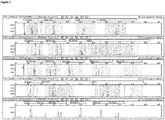
- Electropherogram of STR analysis 23 STR markers were amplified and analysed using CE. The large and the small internal control fragments were amplified in the same reaction. Annotations are as follows: The respective markers are presented at the top of the electropherogram. a and b denote the large and the small internal control fragment respectively.
- Electropherogram of STR analysis in the presence of hematin 23 STR markers were amplified in the presence of 1 mM hematin and analysed using CE. The large and the small internal control fragments were amplified in the same reaction. Annotations are as follows: The respective markers are presented at the top of the electropherogram. a and b denote the large and the small internal control fragment respectively. A peak corresponding to fragment a is absent.
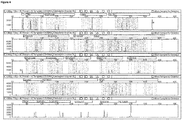
- Electropherogram of STR analysis in the presence of humic acid 23 STR markers were amplified in the presence of 200 ng/ ⁇ l humic acid and analyzed using CE. The large and the small internal control fragments were amplified in the same reaction. Annotations are as follows: The respective markers are presented at the top of the electropherogram. a and b denote the large and the small internal control fragment respectively. A peak corresponding to fragment a is absent.
- Electropherogram of STR analysis Genomic DNA was used in this experiment. Annotations are as follows: The respective markers are presented at the top of the electropherogram. a and b denote the large and the small internal control fragment respectively.
- Electropherogram of STR analysis in the presence of DNA degradation fragment of 300 bp.
- Genomic DNA was used in this experiment and sheared to fragments of 300 bp using ultrasound. Annotations are as follows: The respective markers are presented at the top of the electropherogram. a and b denote the large and the small internal control fragment respectively.
- Electropherogram of STR analysis in the presence of DNA degradation fragment of 150 bp.
- Genomic DNA was used in this experiment and sheared to fragments of 150 bp using ultrasound. Annotations are as follows: The respective markers are presented at the top of the electropherogram. a and b denote the large and the small internal control fragment respectively.
- BLAST search using internal control IC1 The sequence of IC1 is shown at the top. The number of BLAST hits is shown on the left. Grey areas represent the regions of the sequence per base that show hits in the BLAST search.
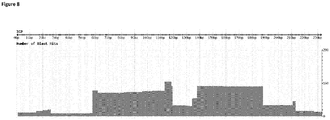
- BLAST search using internal control IC2 The sequence of IC2 is shown at the top. The number of BLAST hits is shown on the left. Grey areas represent the regions of the sequence per base that show hits in the BLAST search.
- BLAST search using artificial template GIIC 004 (SEQ ID NO 29).
- the sequence of GIIC 004 is shown at the top.
- the number of BLAST hits is shown on the left.
- Grey areas represent the regions of the sequence per base that show hits in the BLAST search.
Landscapes
- Chemical & Material Sciences (AREA)
- Organic Chemistry (AREA)
- Life Sciences & Earth Sciences (AREA)
- Chemical Kinetics & Catalysis (AREA)
- Zoology (AREA)
- Wood Science & Technology (AREA)
- Proteomics, Peptides & Aminoacids (AREA)
- Health & Medical Sciences (AREA)
- Engineering & Computer Science (AREA)
- Biophysics (AREA)
- Immunology (AREA)
- Microbiology (AREA)
- Molecular Biology (AREA)
- Biotechnology (AREA)
- Analytical Chemistry (AREA)
- Physics & Mathematics (AREA)
- Biochemistry (AREA)
- Bioinformatics & Cheminformatics (AREA)
- General Engineering & Computer Science (AREA)
- General Health & Medical Sciences (AREA)
- Genetics & Genomics (AREA)
- Measuring Or Testing Involving Enzymes Or Micro-Organisms (AREA)
Abstract
Description
- Molecular biology techniques are widely used in genotyping applications and other areas such as biological research, forensic and diagnostic applications, including human identification and paternity testing and for diagnosis of infectious diseases or chimera analysis after allogeneic bone marrow transplantation as well the detection of genetic diseases and cancer. The most commonly used technique is the polymerase chain reaction (PCR) that allows the researchers to amplify the desired DNA requiring only tiny amounts of sample.
- Forensic workflow schemes entail the amplification of so called short tandem repeat (STR) markers. These markers are genetic elements of variable lengths that are characterized by short repetitive sequence motifs and are used in combination with other STR loci in order to obtain a genetic fingerprint of an individual. This information can be further used to accurately identify or eliminate a suspect by comparing this fingerprint with evidence from the crime scene.
- After amplification, the resulting PCR products are labelled using fluorescent dyes and the technique of capillary electrophoresis (CE) is employed to separate said amplification products according to their molecular size. The fluorescent signals are represented as peaks in the electropherogram.
- However, such analyses are hampered by several practical issues that prevent accurate genotyping. At the level of the template, possible degradation of the sample complicates efficient amplification of the target sequence. Further, naturally occurring compounds such as hematin or humic acid are potent inhibitors of PCR reactions. Since forensic samples are usually only available in very small quantities, the extent of possible trouble shooting in order to obtain a conclusive result is very limited.
- Current means to provide an internal amplification control are hampered by non-specific binding that complicates subsequent analysis and do not allow for the distinction of the presence of inhibitors and template degradation.
- Therefore, there is a need for a system that allows the researcher to differentially identify said problems in amplification and detection experiments.
- The invention addresses the technical problems described above by means of an internal amplification control consisting of a set of primers and a template.
- The invention further relates to a method for evaluating the amplification efficiency and/or the presence of inhibitors and/or degradation in an amplification reaction comprising a reaction mixture comprising
- i. one or more internal nucleic acid templates with a length of between 50 and 2000 nucleotides,
- ii. at least 3 primers or 2 pairs of primers, which allow the generation of a first internal amplification product of between 20 and 800 nucleotides and at least one further internal amplification product of between 50 and 2000 nucleotides, wherein the at least 3 primers or 2 pairs of primers are specific for the one or more internal nucleic acid templates and the first and second internal amplification product are amplification products of the one or more internal nucleic acid templates, wherein the first internal amplification product is smaller than the second internal amplification product,
- iii. a sample nucleic acid to be analysed and primers specific for said nucleic acid and reagents for said amplification,
- The invention further relates to a kit for evaluating the amplification efficiency and/or the presence of inhibitors and/or degradation in an amplification reaction, comprising
- i. a nucleic acid to serve as an internal nucleic acid template and
- ii. at least 3 primers that are specific for said internal nucleic acid template and wherein said primers generate a smaller and larger amplification product of the internal nucleic acid template and
- iii. reagents for amplification and detection of nucleic acids.
- A "primer" herein refers to an oligonucleotide comprising a sequence that is complementary to a nucleic acid to be amplified or transcribed ("template"). During replication a polymerase attaches nucleotides to the 3'-OH end of the primer complementary to the respective nucleotides of the template.
- The invention further relates to a method for evaluating the amplification efficiency and/or the presence of inhibitors and/or degradation in an amplification reaction comprising a reaction mixture comprising
- i. one or more internal nucleic acid templates with a length of between 50 and 2000 nucleotides,
- ii. at least 3 primers or 2 pairs of primers, which allow the generation of a first internal amplification product of between 20 and 800 nucleotides and at least one further internal amplification product of between 50 and 2000 nucleotides, wherein the at least 3 primers or 2 pairs of primers are specific for the one or more internal nucleic acid templates and the first and second internal amplification product are amplification products of the one or more internal nucleic acid templates, wherein the first internal amplification product is smaller than the second internal amplification product,
- iii. a sample nucleic acid to be analysed and primers specific for said nucleic acid and reagents for said amplification,
- In particular the method relates to the use of an internal control nucleic acid and its amplification as an internal control.
- In one embodiment the internal nucleic acid template or the one or more internal nucleic acid templates are artificial nucleic acid templates. In an alternative embodiment the internal nucleic acid template or the one or more internal nucleic acid templates consist of a sequence of an organism, which is different than the origin or suspected origin of the sample nucleic acid to be analyzed. In a preferred embodiment the internal nucleic acid template or the one or more internal nucleic acid templates consist of a sequence with a very low identity to sequences in the sample. In a preferred embodiment the internal nucleic acid template or templates have been generated using a random algorithm. In a more preferred embodiment the internal nucleic acid template or templates comprise any of the non-human artificial sequences SEQ ID NOs 29 to 34. In a most preferred embodiment the internal nucleic acid template or templates consist of a sequence selected from the group comprising
SEQ ID NOs 29, 30, 31, 32, 33 and 34. - In a preferred embodiment the internal nucleic acid template or templates have a length between 70 and 2000 nucleotides. In a preferred embodiment the internal nucleic acid template or templates have a length between 150 and 1500 nucleotides. In a more preferred embodiment the internal nucleic acid template or templates have a length between 150 and 1000 nucleotides. In an even more preferred embodiment the internal nucleic acid template or templates have a length between 200 and 500 nucleotides.
- More preferably the internal nucleic acid template or templates have a length between 50 and 2000 nucleotides. In a preferred embodiment the internal nucleic acid template or templates have a length between 50 and 1500 nucleotides. In a more preferred embodiment the internal nucleic acid template or templates have a length between 50 and 1000 nucleotides. In an even more preferred embodiment the internal nucleic acid template or templates have a length between 50 and 500 nucleotides.
- The method relates to at least two internal amplification products, wherein one amplification product has a shorter length than the other. These amplification products are referred to herein as first and second amplification product. Preferably the first amplification product has a length of at least 20 nucleotides and the second amplification product has a length of at least 70 nucleotides. The difference in length of the first and second amplification product has to be detectable.
- The invention further relates to primers or sets of primers to amplify the internal nucleic acid template or templates. If the internal nucleic acid template or templates comprise a sequence selected from SEQ ID NOs 29 to 34 it is preferred that the primers are selected from the group comprising
SEQ ID NOs 1 to 28. - In one embodiment the invention relates to a method for evaluating the amplification efficiency and/or the presence of inhibitors and/or degradation in an amplification reaction, wherein the analysis of the ratio of said first smaller internal control amplification product to said second larger internal control amplification product is performed by a method selected from the group comprising agarose gel electrophoresis, capillary electrophoresis, qPCR, digital PCR and next generation sequencing. The use of capillary electrophoresis is preferred, wherein the resulting amplification products are separated according to their molecular size and fluorescent dye label. The fluorescent dyes are frequently used as molecular labels attached to probes or other biomolecules.
- The amplification may be a multiplex PCR. Multiplex PCR is for example used for the simultaneous detection of multiple marker genes and/or their polymorphisms, e.g. short tandem repeats (STRs) or deletion insertion polymorphisms (DIPS or Indels). Detection of the amplification products and their genotyping is usually carried out by multiple colour fluorescence detection after electrophoretic separation (e.g. capillary gel electrophoresis) in DNA sequencers. In real-time, quantitative multiplex PCR, the amplification of multiple target sequences can be monitored at the same time by simultaneous detection of fluorescence of different fluorescent dyes.
- The amplification reaction is preferably selected from the group comprising polymerase chain reaction (PCR), ligase chain reaction (LCR), transcription-based amplification system (TAS), nucleic acid sequence based amplification (NASBA), rolling circle amplification (RCA), transcription-mediated amplification (TMA), self-sustaining sequence replication (3SR), QP amplification and (thermostable) helicase dependent amplification ((t)HAD). More preferably the amplification reaction is a PCR. Most preferably, the amplification reaction is a multiplex PCR, i.e. the amplification of more than one target nucleic acid sequence in a single tube, e.g. 2, 3, 4, 5, 6, 7, 8, 9, 10, 11, 12, 13, 14, 15,16, 17,18, 19, 20, 21, 22, 23, 24, 25, 26, 27, 28, 29, 30, 31, 32, 33, 34, 35, 36, 37, 38, 39 or 40 loci (target nucleic acid sequences) may be amplified simultaneously.
- In another embodiment the invention relates to a method for evaluating the amplification efficiency and/or the presence of inhibitors and/or degradation in an amplification reaction, wherein the analysis of the ratio of said first smaller internal control amplification product to said second larger internal control amplification product is performed by a method called "Rapid DNA Analysis". Herein DNA from buccal and blood samples is processed by a fully automated DNA analysis system in about 90 minutes. Commercially available systems are for example RapidHIT™ (IntegenX), DNAscan (GE Healthcare Life Sciences, NetBio® Inc.). Rapid DNA Analysis Systems automatically extract DNA, perform the amplification of STR marker regions, separate the DNA fragments via capillary electrophoresis and produce standardized DNA profiles.
- In a preferred embodiment the invention relates to a method for evaluating the amplification efficiency and/or the presence of inhibitors and/or degradation in an amplification reaction, wherein in addition several STR markers are amplified.
- In a more preferred embodiment the invention relates to a method for evaluating the amplification efficiency and/or the presence of inhibitors and/or degradation in an amplification reaction, wherein the amplification reaction is performed in the context of genotyping. Such genotyping typically involves the amplification of a set of STR markers using multiplex PCR.
- Analysis of the target amplification products and the internal control fragments allows for the differential identification of the presence of inhibitors or degradation of the sample.
- The invention relates to a method for evaluating the amplification efficiency and/or the presence of inhibitors and/or degradation in an amplification reaction, wherein an equal ratio of the small and the larger internal control amplification products suggests a non-inhibited sample. Herein, an equal ratio of the small and the larger internal control amplification products together with a ratio in favour of small target products of the sample suggests a degraded sample. A shift of a ratio in favour of the small internal amplification product suggests the presence of one or several inhibitors in the sample. In the case that no target product is detected in the analysis of the amplification products, the presence of both the large and the small internal control amplification fragments suggests that the sample did not comprise amplifiable nucleic acids.
- In a preferred embodiment the invention relates to a nucleic acid, wherein the nucleic acid comprising a sequence elected from the group consisting of SEQ ID NO: 1 to 28 is used as a primer or a probe. These sequences are used in amplification reactions to generate said two internal amplification products.
- The invention relates to the use of a nucleic acid according to SEQ ID NO 29 to 34 as an internal nucleic acid template in an amplification reaction. Said template is preferably used in a multiplex PCR reaction, wherein a set of STR markers are analysed. Said two internal control products of different sizes are amplified using that internal template.
- The invention relates to a kit for evaluating the amplification efficiency and/or the presence of degradation and/or degradation in an amplification reaction, comprising
- i. one or more nucleic acid to serve as an internal nucleic acid template and
- ii. at least 3 primers or at least two pairs of primers that are specific for said one or more internal nucleic acid templates and wherein said primers generate a smaller and larger amplification product of the one or more internal nucleic acid templates and
- iii. reagents for amplification and detection of nucleic acids.
- Previous STR analysis protocols entailed the use of primers and plasmids that originate from other organisms than the one of the sample to be analysed. In other cases, the same primers were used in both the internal control reaction and in the multiplex amplification of a target genomic region. However, this strategy of said parallel usage of primers is risky. In the case of forensic samples where the presence of PCR inhibitors and template quantity is critical, a drop in performance is observed in the amplification of the genomic target region. Using components from other kits as an internal control bears the risk of cross contamination.
- Further, current methods did not provide a conclusive insight into whether an amplification reaction is hampered by the presence of a degraded template or by PCR inhibitors in said template.
- In order to assess sequence similarity of known internal control templates such as IC1 and IC2 to sequences available in public databases, BLAST searches were performed. As shown in
Figure 7 , in the case of IC1 at least 80 hits were identified. Some regions of the sequence show up to 100 hits. The BLAST search using IC2 also identified several hits across the sequence (Figure 8 ). - To address the aspect of sequence similarity and the possibility of non-specific binding synthetic DNA templates were designed using a random algorithm. A subsequent BLAST search yielded only up to 3 distinct hits spanning a short segment of 20 to 30 bp (
Figure 9 ). The chance of non-specific binding in the context of a multiplex PCR amplification reaction is therefore very low. Primers (selected fromSEQ ID NO 1 to 28) were designed based on these sequences to amplify two products of different sizes. The sequence of the primers and the first 30 nucleotides of the templates are shown in Table 1.SEQ ID NO Sequence annotation Sequence 1 GlIC_004_for1 tactccaaccacataatagtcctc 2 GlIC_004_for2 tctactccaaccacataatagtcc 3 GlIC_004_for3 tcgctctactccaaccacataata 4 GlIC_004_for6 cagccgcgtgaggtctacaaa 5 GlIC_004_for7 attcgctctactccaaccacataatag 6 GlIC_004_rev1 gctccataatcagaagatgcgctac 7 GlIC_004_rev2 gcgtagctccataatcagaagatgc 8 GlIC_004_rev3 gtaggcgtagctccataatcagaagat 9 GlIC_004_rev5 gtagctccataatcagaagatgcg 10 GlIC_048_for1 tggtggtgattacgtatcttagtc 11 GlIC_048_for2 cctagcctaagttcagatgtaagg 12 GlIC_048_rev1 tcatttctgctagtctaccttagc 13 GlIC_048_rev2 tcatttctgctagtctaccttagc 14 GlIC_058_for1 tcgtacgggctatccactctag 15 GlIC_058_for2 ctatccactctagcaaacgactta 16 GlIC_058_rev1 aggatgctatttagtctacttaagct 17 GlIC_058_rev2 ccagatgccgaataagtgtagtta 18 GlIC_073_for1 gcccttaagatcagatacaacaga 19 GlIC_073_for2 aagactagaactccgtgagtgata 20 GlIC_073_rev1 atacacccgtacgtaatcacaatc 21 GlIC_074_for1 gcaatttaatccgcctactcatat 22 GlIC_074_for2 atcaaccgtacgtttgtatttcac 23 GlIC_074_rev1 cagcgttgcgaaacttatcat 24 GlIC_074_rev2 Gacttttcgcacacatatgagtag 25 GlIC_082_for1 cgtatttccggtattctaatccct 26 GlIC_082_for2 gcacgtatttccggtattctaatc 27 GlIC_082_rev1 atccgaggttctcacgaaattag 28 GlIC_082_rev2 ctcgcatcaacaagtcgtaaag 29 GlIC_004 aaattcgctctactccaaccacataatagt 30 GlIC_048 agccaactcagtcaatctcaaaccgttttc 31 GlIC_058 cgaacggggtccggtatctgaccgtcacat 32 GlIC_073 tcccgcccttaagatcagatacaacagaaa 33 GlIC_074 gatcaaccgtacgtttgtatttcacactta 34 GlIC_082 gggcacgtatttccggtattctaatccctg - Table 1: Primer and template sequences. The sequences of the primers and the templates are presented together with the corresponding SEQ ID NO and sequence annotation. Note that in the case of the templates (SEQ ID NO 29 to 34), only the first 30 nucleotides are presented. The complete sequences can be found in the sequence protocol.
- Analysis of the presence of these two internal template amplification products allows the researchers to differentially identify the presence of PCR inhibitors or the level of degradation in the forensic sample. When inhibitors such as hematin and humic acid are present in a sample, amplification is less efficient and especially larger DNA fragments are amplified less than smaller ones. In the case of sample degradation, smaller fragments are more abundant and larger target fragments are also amplified less efficiently. However, said degradation of the target template does not hamper amplification of the internal control fragments from the internal control template.
- In order to validate said internal amplification template and primers in amplification experiments, STR analyses were performed. In the preliminary experiment, a set of 23 markers was amplified. As shown in
Figure 1 , all markers were amplified correctly and are represented in the electropherogram according to their molecular size and dye label. Further, both the large and the small internal control fragments were amplified correctly and can be identified in the electropherogram at the expected locations (Figure 1 , a: large fragment, b: small fragment). This shows that the amplification reaction was successful and that the presence of the internal template and primers did not affect amplification of the target STR markers. - The subsequent experiments consisted of STR analyses in the presence of 1 mM hematin and 200 ng/µl humic acid. The presence of these compounds led to inefficient amplification of larger DNA fragments. The corresponding peaks in the electropherogram are either very small or not visible. Similarly, the larger internal control fragment was also not amplified efficiently. The small internal control fragment however was amplified and can be identified in the electropherograms (
Figure 2 and3 , fragment b). - Further, the internal control primers and template were evaluated with regards to sample degradation. The preliminary experiment using intact genomic DNA showed that all STR markers were amplified and are represented in the electropherogram according to their molecular size and dye label. Both the large and the small internal control fragment were amplified (
Figure 4 , a and b). - For the subsequent experiments said genomic DNA was sheared to fragments of 300 and 150 bp respectively using an ultra-sonic device (Covaris) and amplification reactions were performed. As shown in
Figure 5 and6 , larger STR target fragments were not amplified efficiently and the corresponding peaks are either small or not present in the electropherograms. However, in both cases the large and the small internal control fragments were amplified irrespective of said degradation of the target template (Figure 5 and6 , a and b). - In summary, the examples show that a system comprising an internal artificial template together with three primers that amplify two fragments of distinct sizes from the internal control is a means to distinguish the presence of inhibitors from the DNA degradation level and to thereby evaluate amplification efficiency. Presence of inhibitors is characterized by inefficient amplification of both the larger target fragments and the larger internal control fragment whilst maintaining efficient amplification of the smaller internal control fragment. Degradation however does not affect efficient amplification of both internal control fragments.
- Electropherogram of STR analysis. 23 STR markers were amplified and analysed using CE. The large and the small internal control fragments were amplified in the same reaction. Annotations are as follows: The respective markers are presented at the top of the electropherogram. a and b denote the large and the small internal control fragment respectively.
- Electropherogram of STR analysis in the presence of hematin. 23 STR markers were amplified in the presence of 1 mM hematin and analysed using CE. The large and the small internal control fragments were amplified in the same reaction. Annotations are as follows: The respective markers are presented at the top of the electropherogram. a and b denote the large and the small internal control fragment respectively. A peak corresponding to fragment a is absent.
- Electropherogram of STR analysis in the presence of humic acid. 23 STR markers were amplified in the presence of 200 ng/µl humic acid and analyzed using CE. The large and the small internal control fragments were amplified in the same reaction. Annotations are as follows: The respective markers are presented at the top of the electropherogram. a and b denote the large and the small internal control fragment respectively. A peak corresponding to fragment a is absent.
- Electropherogram of STR analysis. Genomic DNA was used in this experiment. Annotations are as follows: The respective markers are presented at the top of the electropherogram. a and b denote the large and the small internal control fragment respectively.
- Genomic DNA was used in this experiment and sheared to fragments of 300 bp using ultrasound. Annotations are as follows: The respective markers are presented at the top of the electropherogram. a and b denote the large and the small internal control fragment respectively.
- Genomic DNA was used in this experiment and sheared to fragments of 150 bp using ultrasound. Annotations are as follows: The respective markers are presented at the top of the electropherogram. a and b denote the large and the small internal control fragment respectively.
- BLAST search using internal control IC1. The sequence of IC1 is shown at the top. The number of BLAST hits is shown on the left. Grey areas represent the regions of the sequence per base that show hits in the BLAST search.
- BLAST search using internal control IC2. The sequence of IC2 is shown at the top. The number of BLAST hits is shown on the left. Grey areas represent the regions of the sequence per base that show hits in the BLAST search.
- BLAST search using artificial template GIIC 004 (SEQ ID NO 29). The sequence of
GIIC 004 is shown at the top. The number of BLAST hits is shown on the left. Grey areas represent the regions of the sequence per base that show hits in the BLAST search.


Claims (11)
- Method for evaluating the amplification efficiency and/or the presence of inhibitors and/or degradation in an amplification reaction comprising a reaction mixture comprisingi. one or more internal nucleic acid templates with a length of between 50 and 2000 nucleotides,ii. at least 3 primers or at least 2 pairs of primers, which allow the generation of a first internal amplification product of between 20 and 800 nucleotides and at least one further internal amplification product of between 70 and 2000 nucleotides, wherein the 3 primers or 2 pairs of primers are specific for the one or more internal nucleic acid template and the first and second internal amplification product are amplification products of the one or more internal nucleic acid template, wherein the first internal amplification product is smaller than the second internal amplification product,iii. a sample nucleic acid to be analysed and primers specific for said nucleic acid and reagents for said amplification,wherein an amplification reaction is performed with said reaction mixture and the ratio of the smaller internal control amplification product to the larger internal control amplification product is analysed.
- Method for evaluating the amplification efficiency and/or the presence of inhibitors and/or degradation in an amplification reaction according to claim 1, wherein the analysis of the ratio of said first smaller internal control amplification product to said second larger internal control amplification product is performed by a method selected from the group comprising agarose gel electrophoresis, capillary electrophoresis, qPCR, digital PCR and next generation sequencing.
- Method for evaluating the amplification efficiency and/or the presence of inhibitors and/or degradation in an amplification reaction according to claim 1 or 2, wherein in addition several STR markers are amplified.
- Method for evaluating the amplification efficiency and/or the presence of inhibitors and/or degradation in an amplification reaction according to claims 1 to 3, wherein the amplification reaction is performed in the context of genotyping.
- Method for evaluating the amplification efficiency and/or the presence of inhibitors and/or degradation in an amplification reaction according to claims 1 or 2, wherein an equal ratio of the small and the larger products suggests degradation of the sample.
- Method for evaluating the amplification efficiency and/or the presence of inhibitors and/or degradation in an amplification reaction according to claims 1-2, wherein a shift of said ratio in favour of the small product suggests the presence of one or several inhibitors.
- A nucleic acid comprising a sequence selected from the group of SEQ ID NO 1 to 34.
- A nucleic acid according to claim 7, wherein the nucleic acid comprises a sequence selected from the group of SEQ ID NO 29 to 34.
- A nucleic acid according to claim 7, wherein the nucleic acid comprising a sequence selected from the group of SEQ ID NO 1 to 28 is used as a primer or a probe.
- Use of a nucleic acid according to SEQ ID NO 29 to 34 as an internal nucleic acid template in an amplification reaction.
- Kit for evaluating the amplification efficiency and/or the presence of inhibitors and/or degradation in an amplification reaction, comprisingi. one or more nucleic acids to serve as an internal nucleic acid template andii. at least 3 primers or at least two pairs of primers that are specific for said internal nucleic acid templates and wherein said primers generate a smaller and larger amplification product of the internal nucleic acid template andiii. reagents for amplification and detection of nucleic acids.
Applications Claiming Priority (3)
| Application Number | Priority Date | Filing Date | Title |
|---|---|---|---|
| EP14152875 | 2014-01-28 | ||
| PCT/EP2015/051710 WO2015114009A1 (en) | 2014-01-28 | 2015-01-28 | Internal amplification control |
| EP15701773.2A EP3099812B1 (en) | 2014-01-28 | 2015-01-28 | Method and kit with internal amplification control |
Related Parent Applications (1)
| Application Number | Title | Priority Date | Filing Date |
|---|---|---|---|
| EP15701773.2A Division EP3099812B1 (en) | 2014-01-28 | 2015-01-28 | Method and kit with internal amplification control |
Publications (1)
| Publication Number | Publication Date |
|---|---|
| EP3483287A1 true EP3483287A1 (en) | 2019-05-15 |
Family
ID=50000881
Family Applications (2)
| Application Number | Title | Priority Date | Filing Date |
|---|---|---|---|
| EP15701773.2A Revoked EP3099812B1 (en) | 2014-01-28 | 2015-01-28 | Method and kit with internal amplification control |
| EP18205948.5A Withdrawn EP3483287A1 (en) | 2014-01-28 | 2015-01-28 | Internal amplification control |
Family Applications Before (1)
| Application Number | Title | Priority Date | Filing Date |
|---|---|---|---|
| EP15701773.2A Revoked EP3099812B1 (en) | 2014-01-28 | 2015-01-28 | Method and kit with internal amplification control |
Country Status (5)
| Country | Link |
|---|---|
| US (1) | US20170002397A1 (en) |
| EP (2) | EP3099812B1 (en) |
| HU (1) | HUE043152T2 (en) |
| TR (1) | TR201820505T4 (en) |
| WO (1) | WO2015114009A1 (en) |
Families Citing this family (3)
| Publication number | Priority date | Publication date | Assignee | Title |
|---|---|---|---|---|
| EP3433382B1 (en) * | 2016-03-25 | 2021-09-01 | Karius, Inc. | Synthetic nucleic acid spike-ins |
| US11345952B2 (en) | 2016-09-16 | 2022-05-31 | Qiagen Gmbh | Internal amplification control |
| US12163185B2 (en) | 2020-08-21 | 2024-12-10 | Monoquant Pty Ltd. | Method of assessment |
Citations (3)
| Publication number | Priority date | Publication date | Assignee | Title |
|---|---|---|---|---|
| WO2005083114A1 (en) * | 2004-02-26 | 2005-09-09 | Thomsen Bioscience A/S | Method, kit and system for enhanced nested pcr |
| WO2012113577A1 (en) * | 2011-02-21 | 2012-08-30 | Qiagen Gmbh | Method for quantifying human dna using an internal control |
| WO2014028531A2 (en) * | 2012-08-13 | 2014-02-20 | Sudhir Sinha | Development of a highly sensitive quantification system for assessing dna degradation and quality in forensic samples |
-
2015
- 2015-01-28 EP EP15701773.2A patent/EP3099812B1/en not_active Revoked
- 2015-01-28 US US15/113,305 patent/US20170002397A1/en not_active Abandoned
- 2015-01-28 TR TR2018/20505T patent/TR201820505T4/en unknown
- 2015-01-28 HU HUE15701773A patent/HUE043152T2/en unknown
- 2015-01-28 WO PCT/EP2015/051710 patent/WO2015114009A1/en not_active Ceased
- 2015-01-28 EP EP18205948.5A patent/EP3483287A1/en not_active Withdrawn
Patent Citations (3)
| Publication number | Priority date | Publication date | Assignee | Title |
|---|---|---|---|---|
| WO2005083114A1 (en) * | 2004-02-26 | 2005-09-09 | Thomsen Bioscience A/S | Method, kit and system for enhanced nested pcr |
| WO2012113577A1 (en) * | 2011-02-21 | 2012-08-30 | Qiagen Gmbh | Method for quantifying human dna using an internal control |
| WO2014028531A2 (en) * | 2012-08-13 | 2014-02-20 | Sudhir Sinha | Development of a highly sensitive quantification system for assessing dna degradation and quality in forensic samples |
Non-Patent Citations (8)
| Title |
|---|
| ANONYMOUS: "AmpFlSTR Identifiler PCR amplification kit", 1 August 2012 (2012-08-01), pages 1 - 141, XP055125647, Retrieved from the Internet <URL:http://www3.appliedbiosystems.com/cms/groups/applied_markets_support/documents/generaldocuments/cms_041201.pdf> [retrieved on 20140627] * |
| ANONYMOUS: "NORGEN BIOTEK CORPORATION-Catalogue 2007", 1 January 2007 (2007-01-01), XP055125582, Retrieved from the Internet <URL:http://tecscience.com.br/novosite/wp-content/uploads/2011/05/Catalogonorgenbiotek.pdf> [retrieved on 20140627] * |
| D BAUTISTA ET AL: "DNA Quantification by Gel Densitometry with Norgen DNA Ladders", 1 January 2007 (2007-01-01), XP055125585, Retrieved from the Internet <URL:https://norgenbiotek.com/product_resources/minisizer_50_bp_dna_ladder_dna_quantification_by_gel_densitometry_with_norgen_dna_ladders_11200_307.pdf> [retrieved on 20140627] * |
| HUDLOW ET AL: "A quadruplex real-time qPCR assay for the simultaneous assessment of total human DNA, human male DNA, DNA degradation and the presence of PCR inhibitors in forensic samples: A diagnostic tool for STR typing", 20071126, vol. 2, no. 2, 26 November 2007 (2007-11-26), pages 108 - 125, XP022452115 * |
| NGUYEN V Q ET AL: "A large-scale validation of dosage analysis by robust dosage-polymerase chain reaction", ANALYTICAL BIOCHEMISTRY, ELSEVIER, AMSTERDAM, NL, vol. 371, no. 1, 1 December 2007 (2007-12-01), pages 37 - 42, XP026864790, ISSN: 0003-2697, [retrieved on 20071010] * |
| PIONZIO ARIANNA M ET AL: "The effect of internal control sequence and length on the response to PCR inhibition in real-time PCR quantitation", FORENSIC SCIENCE INTERNATIONAL: GENETICS, vol. 9, 31 October 2013 (2013-10-31), pages 55 - 60, XP028610825, ISSN: 1872-4973, DOI: 10.1016/J.FSIGEN.2013.10.010 * |
| SWANGO K L ET AL: "A quantitative PCR assay for the assessment of DNA degradation in forensic samples", FORENSIC SCIENCE INTERNATIONAL, ELSEVIER SCIENTIFIC PUBLISHERS IRELAND LTD, IE, vol. 158, no. 1, 20 April 2006 (2006-04-20), pages 14 - 26, XP027939885, ISSN: 0379-0738, [retrieved on 20060420] * |
| VERDIN E ET AL: "Use of an internal control in a nested-PCR assay for Mycoplasma hyopneumoniae detection and quantification in tracheobronchiolar washings from pigs", MOLECULAR AND CELLULAR PROBES, ACADEMIC PRESS, LONDON, GB, vol. 14, no. 6, 1 November 2000 (2000-11-01), pages 365 - 372, XP004466403, ISSN: 0890-8508, DOI: 10.1006/MCPR.2000.0326 * |
Also Published As
| Publication number | Publication date |
|---|---|
| HUE043152T2 (en) | 2019-08-28 |
| EP3099812A1 (en) | 2016-12-07 |
| TR201820505T4 (en) | 2019-01-21 |
| EP3099812B1 (en) | 2018-11-14 |
| WO2015114009A1 (en) | 2015-08-06 |
| US20170002397A1 (en) | 2017-01-05 |
Similar Documents
| Publication | Publication Date | Title |
|---|---|---|
| US11530446B2 (en) | Methods and compositions for DNA profiling | |
| US11857940B2 (en) | High-level multiplex amplification | |
| EP3610032B1 (en) | Methods of attaching adapters to sample nucleic acids | |
| US20200010893A1 (en) | Barcoded dna for long-range sequencing | |
| US9334532B2 (en) | Complexity reduction method | |
| US20250329412A1 (en) | Method of correcting amplification bias in amplicon sequencing | |
| CN108913757B (en) | Primer group and detection kit for chromosome aneuploid number abnormality and application thereof | |
| CN110863056A (en) | Method, reagent and application for accurately typing human DNA | |
| US20190185932A1 (en) | Method for preparing libraries for massively parallel sequencing based on molecular barcoding and use of libraries prepared by the method | |
| US20250230485A1 (en) | Barcoding of nucleic acids | |
| EP3099812B1 (en) | Method and kit with internal amplification control | |
| US12331348B2 (en) | Detection probe for internal amplification control and kit including same | |
| Rapley | Basic molecular biology techniques | |
| US20230212663A1 (en) | Methods for 3' overhang repair | |
| CN110656183A (en) | STR locus set for dogs and application | |
| CN112342297B (en) | Multiplex amplification system, method, kit for simultaneous analysis of multiple DIP and STR sites and uses thereof | |
| Cain | Targeted STR and SNP in-field sequencing by Oxford Nanopore MinION™ for the identification of an individual in a military scenario |
Legal Events
| Date | Code | Title | Description |
|---|---|---|---|
| PUAI | Public reference made under article 153(3) epc to a published international application that has entered the european phase |
Free format text: ORIGINAL CODE: 0009012 |
|
| AC | Divisional application: reference to earlier application |
Ref document number: 3099812 Country of ref document: EP Kind code of ref document: P |
|
| AK | Designated contracting states |
Kind code of ref document: A1 Designated state(s): AL AT BE BG CH CY CZ DE DK EE ES FI FR GB GR HR HU IE IS IT LI LT LU LV MC MK MT NL NO PL PT RO RS SE SI SK SM TR |
|
| RIN1 | Information on inventor provided before grant (corrected) |
Inventor name: MUELLER, DANIEL Inventor name: SIEGMUND, VANESSA Inventor name: STRAUSS, SASCHA |
|
| RBV | Designated contracting states (corrected) |
Designated state(s): AL AT BE BG CH CY CZ DE DK EE ES FI FR GB GR HR HU IE IS IT LI LT LU LV MC MK MT NL NO PL PT RO RS SE SI SK SM TR |
|
| 17P | Request for examination filed |
Effective date: 20191112 |
|
| 17Q | First examination report despatched |
Effective date: 20200402 |
|
| STAA | Information on the status of an ep patent application or granted ep patent |
Free format text: STATUS: THE APPLICATION IS DEEMED TO BE WITHDRAWN |
|
| 18D | Application deemed to be withdrawn |
Effective date: 20200813 |