EP3483166A1 - Imidazooxazole derivative having antitumor effect, and pharmaceutical composition including same - Google Patents
Imidazooxazole derivative having antitumor effect, and pharmaceutical composition including same Download PDFInfo
- Publication number
- EP3483166A1 EP3483166A1 EP17824476.0A EP17824476A EP3483166A1 EP 3483166 A1 EP3483166 A1 EP 3483166A1 EP 17824476 A EP17824476 A EP 17824476A EP 3483166 A1 EP3483166 A1 EP 3483166A1
- Authority
- EP
- European Patent Office
- Prior art keywords
- pyrimidin
- amino
- imidazo
- ethyl
- oxazol
- Prior art date
- Legal status (The legal status is an assumption and is not a legal conclusion. Google has not performed a legal analysis and makes no representation as to the accuracy of the status listed.)
- Granted
Links
- 0 CCC*(C(*=CC=C(C)C1*(CCO)C1C(CC=C1)C=C1OC)=C)=C Chemical compound CCC*(C(*=CC=C(C)C1*(CCO)C1C(CC=C1)C=C1OC)=C)=C 0.000 description 4
- YIXBBODMIZSTKF-ZOZTXWPVSA-N CC(/C=C\C=C/C)/C=C(\C1=CC=CCC1)/[I](CCO1)C1=N Chemical compound CC(/C=C\C=C/C)/C=C(\C1=CC=CCC1)/[I](CCO1)C1=N YIXBBODMIZSTKF-ZOZTXWPVSA-N 0.000 description 1
- OANCACBVMVQLKF-UHFFFAOYSA-N CC(C)C(C1C=CC(O)=CC1)N(O)[U] Chemical compound CC(C)C(C1C=CC(O)=CC1)N(O)[U] OANCACBVMVQLKF-UHFFFAOYSA-N 0.000 description 1
- PXLQHEASTXUOCY-FLQJDPLTSA-N CC(C1)(C=CC=C1c1c(C2N=C(NCCNS(/C(/C=C(\C=C)/F)=C/C)(=O)=O)N=CC2)[n](cc[s]2)c2n1)OC Chemical compound CC(C1)(C=CC=C1c1c(C2N=C(NCCNS(/C(/C=C(\C=C)/F)=C/C)(=O)=O)N=CC2)[n](cc[s]2)c2n1)OC PXLQHEASTXUOCY-FLQJDPLTSA-N 0.000 description 1
- XRMYPTVASQFWTO-UHFFFAOYSA-N CCN(CCN1CCNc2nccc(-c3c(-c(cc4)ccc4F)nc4OCC[n]34)n2)S1(=O)=O Chemical compound CCN(CCN1CCNc2nccc(-c3c(-c(cc4)ccc4F)nc4OCC[n]34)n2)S1(=O)=O XRMYPTVASQFWTO-UHFFFAOYSA-N 0.000 description 1
- MHQXGCNSDIJCEN-QDEBKDIKSA-N CCS(CC/C(/O)=C\C)(NCC[IH]C1=NC=[IH]=N1)=C1[IH]C1 Chemical compound CCS(CC/C(/O)=C\C)(NCC[IH]C1=NC=[IH]=N1)=C1[IH]C1 MHQXGCNSDIJCEN-QDEBKDIKSA-N 0.000 description 1
- WBOYUDKCKRWVNR-UHFFFAOYSA-N CN(CCN1CCNc2nccc(-c3c(-c4cccc(O)c4)nc4[s]cc[n]34)n2)S1(=O)=O Chemical compound CN(CCN1CCNc2nccc(-c3c(-c4cccc(O)c4)nc4[s]cc[n]34)n2)S1(=O)=O WBOYUDKCKRWVNR-UHFFFAOYSA-N 0.000 description 1
- WFTAGVVIUQANFH-UHFFFAOYSA-N CN(CCN1CCNc2nccc(-c3c(-c4cccc(OC)c4)nc4[s]cc[n]34)n2)S1(=O)=O Chemical compound CN(CCN1CCNc2nccc(-c3c(-c4cccc(OC)c4)nc4[s]cc[n]34)n2)S1(=O)=O WFTAGVVIUQANFH-UHFFFAOYSA-N 0.000 description 1
- NZOWRJAZLXIPTL-UHFFFAOYSA-N COc(cc1)ccc1-c1c(-c2ccnc(NCCNS(c3cc(cccc4)c4cc3)(=O)=O)n2)[n](cc[s]2)c2n1 Chemical compound COc(cc1)ccc1-c1c(-c2ccnc(NCCNS(c3cc(cccc4)c4cc3)(=O)=O)n2)[n](cc[s]2)c2n1 NZOWRJAZLXIPTL-UHFFFAOYSA-N 0.000 description 1
- ULSFUKCOBSGZHC-UHFFFAOYSA-N COc1cc(-c2c(-c3ccnc(NCCCNS(c4ccc(cccc5)c5c4)(=O)=O)n3)[n](cc[o]3)c3n2)ccc1 Chemical compound COc1cc(-c2c(-c3ccnc(NCCCNS(c4ccc(cccc5)c5c4)(=O)=O)n3)[n](cc[o]3)c3n2)ccc1 ULSFUKCOBSGZHC-UHFFFAOYSA-N 0.000 description 1
- IGNKZAYXZVXCOS-UHFFFAOYSA-N COc1cc(-c2c(-c3ccnc(NCCCNS(c4cccc(F)c4)(=O)=O)n3)[n](cc[o]3)c3n2)ccc1 Chemical compound COc1cc(-c2c(-c3ccnc(NCCCNS(c4cccc(F)c4)(=O)=O)n3)[n](cc[o]3)c3n2)ccc1 IGNKZAYXZVXCOS-UHFFFAOYSA-N 0.000 description 1
- IXNBXNMYYSMTJZ-UHFFFAOYSA-N Cc(cc1)ccc1S(NCCCNc1nc(-c2c(-c3cccc(OC)c3)nc3[s]cc[n]23)ccn1)(=O)=O Chemical compound Cc(cc1)ccc1S(NCCCNc1nc(-c2c(-c3cccc(OC)c3)nc3[s]cc[n]23)ccn1)(=O)=O IXNBXNMYYSMTJZ-UHFFFAOYSA-N 0.000 description 1
- WOIVSOPDVDHNNG-UHFFFAOYSA-N Oc1cc(-c2c(-c3nc(NCCNS(c(cc4)ccc4F)(=O)=O)ncc3)[n](cc[o]3)c3n2)ccc1 Chemical compound Oc1cc(-c2c(-c3nc(NCCNS(c(cc4)ccc4F)(=O)=O)ncc3)[n](cc[o]3)c3n2)ccc1 WOIVSOPDVDHNNG-UHFFFAOYSA-N 0.000 description 1
Images

Classifications
-
- C—CHEMISTRY; METALLURGY
- C07—ORGANIC CHEMISTRY
- C07D—HETEROCYCLIC COMPOUNDS
- C07D513/00—Heterocyclic compounds containing in the condensed system at least one hetero ring having nitrogen and sulfur atoms as the only ring hetero atoms, not provided for in groups C07D463/00, C07D477/00 or C07D499/00 - C07D507/00
- C07D513/02—Heterocyclic compounds containing in the condensed system at least one hetero ring having nitrogen and sulfur atoms as the only ring hetero atoms, not provided for in groups C07D463/00, C07D477/00 or C07D499/00 - C07D507/00 in which the condensed system contains two hetero rings
- C07D513/04—Ortho-condensed systems
-
- A—HUMAN NECESSITIES
- A61—MEDICAL OR VETERINARY SCIENCE; HYGIENE
- A61K—PREPARATIONS FOR MEDICAL, DENTAL OR TOILETRY PURPOSES
- A61K31/00—Medicinal preparations containing organic active ingredients
- A61K31/33—Heterocyclic compounds
- A61K31/395—Heterocyclic compounds having nitrogen as a ring hetero atom, e.g. guanethidine or rifamycins
- A61K31/41—Heterocyclic compounds having nitrogen as a ring hetero atom, e.g. guanethidine or rifamycins having five-membered rings with two or more ring hetero atoms, at least one of which being nitrogen, e.g. tetrazole
- A61K31/42—Oxazoles
- A61K31/424—Oxazoles condensed with heterocyclic ring systems, e.g. clavulanic acid
-
- A—HUMAN NECESSITIES
- A61—MEDICAL OR VETERINARY SCIENCE; HYGIENE
- A61K—PREPARATIONS FOR MEDICAL, DENTAL OR TOILETRY PURPOSES
- A61K31/00—Medicinal preparations containing organic active ingredients
- A61K31/33—Heterocyclic compounds
- A61K31/395—Heterocyclic compounds having nitrogen as a ring hetero atom, e.g. guanethidine or rifamycins
- A61K31/41—Heterocyclic compounds having nitrogen as a ring hetero atom, e.g. guanethidine or rifamycins having five-membered rings with two or more ring hetero atoms, at least one of which being nitrogen, e.g. tetrazole
- A61K31/425—Thiazoles
- A61K31/429—Thiazoles condensed with heterocyclic ring systems
-
- A—HUMAN NECESSITIES
- A61—MEDICAL OR VETERINARY SCIENCE; HYGIENE
- A61K—PREPARATIONS FOR MEDICAL, DENTAL OR TOILETRY PURPOSES
- A61K31/00—Medicinal preparations containing organic active ingredients
- A61K31/33—Heterocyclic compounds
- A61K31/395—Heterocyclic compounds having nitrogen as a ring hetero atom, e.g. guanethidine or rifamycins
- A61K31/41—Heterocyclic compounds having nitrogen as a ring hetero atom, e.g. guanethidine or rifamycins having five-membered rings with two or more ring hetero atoms, at least one of which being nitrogen, e.g. tetrazole
- A61K31/433—Thidiazoles
-
- A—HUMAN NECESSITIES
- A61—MEDICAL OR VETERINARY SCIENCE; HYGIENE
- A61K—PREPARATIONS FOR MEDICAL, DENTAL OR TOILETRY PURPOSES
- A61K31/00—Medicinal preparations containing organic active ingredients
- A61K31/33—Heterocyclic compounds
- A61K31/395—Heterocyclic compounds having nitrogen as a ring hetero atom, e.g. guanethidine or rifamycins
- A61K31/495—Heterocyclic compounds having nitrogen as a ring hetero atom, e.g. guanethidine or rifamycins having six-membered rings with two or more nitrogen atoms as the only ring heteroatoms, e.g. piperazine or tetrazines
- A61K31/505—Pyrimidines; Hydrogenated pyrimidines, e.g. trimethoprim
- A61K31/506—Pyrimidines; Hydrogenated pyrimidines, e.g. trimethoprim not condensed and containing further heterocyclic rings
-
- A—HUMAN NECESSITIES
- A61—MEDICAL OR VETERINARY SCIENCE; HYGIENE
- A61P—SPECIFIC THERAPEUTIC ACTIVITY OF CHEMICAL COMPOUNDS OR MEDICINAL PREPARATIONS
- A61P35/00—Antineoplastic agents
-
- C—CHEMISTRY; METALLURGY
- C07—ORGANIC CHEMISTRY
- C07D—HETEROCYCLIC COMPOUNDS
- C07D417/00—Heterocyclic compounds containing two or more hetero rings, at least one ring having nitrogen and sulfur atoms as the only ring hetero atoms, not provided for by group C07D415/00
- C07D417/14—Heterocyclic compounds containing two or more hetero rings, at least one ring having nitrogen and sulfur atoms as the only ring hetero atoms, not provided for by group C07D415/00 containing three or more hetero rings
-
- C—CHEMISTRY; METALLURGY
- C07—ORGANIC CHEMISTRY
- C07D—HETEROCYCLIC COMPOUNDS
- C07D498/00—Heterocyclic compounds containing in the condensed system at least one hetero ring having nitrogen and oxygen atoms as the only ring hetero atoms
- C07D498/02—Heterocyclic compounds containing in the condensed system at least one hetero ring having nitrogen and oxygen atoms as the only ring hetero atoms in which the condensed system contains two hetero rings
- C07D498/04—Ortho-condensed systems
Definitions
- the present disclosure relates to an imidazooxazole derivative or a pharmaceutically acceptable salt thereof, a method of preparing the same, and a pharmaceutical composition for preventing or treating tumors including the same as an active ingredient.
- the mitogen-activated protein kinase (MAPK) signaling pathway (EGFR > Ras > Raf > Mek > Erk) is a signaling pathway involved in cell proliferation, which has been considered to be important in tumorigenesis in many studies since it was discovered in 1990.
- RAF kinase enzymes There are three RAF kinase enzymes in humans: A-RAF, B-RAF, and C-RAF ( Marais and Marshall Cancer Surv. 27: 101-125, 1996 ). Since mutations of B-RAF were found at a high frequency in human cancer, RAF proteins were recognized as a critical initiator and promoter of malignancy ( Davies, H. et al. Nature 417: 949-954 (2002 )).
- B-RAF mutations have been identified in approximately 7 % of cancers, including 50 % to 70 % of melanomas, 35 % of ovarian cancers, 50 % of thyroid cancers, and 10 % of colorectal cancers ( Tuveson, et al., Cancer Cell. 4:95-98 (2003 ); and Xing, Endocrine-Related Cancer: 12:245-262 (2005 )).
- Approximately 90% of the mutations occur as a point mutation (V600E) in which a valine residue is changed to a glutamate residue in the kinase domain. This V600E is an important target for the development of cancer therapeutics.
- a V600E mutation confers an approximately 500-fold increase in kinase activity, resulting in hyperactivation of MEK and ERK and abnormal growth of tumor cells.
- B-RAF mutations have been found (mainly at the activation segment and the glycine-rich G-loop of the kinase catalytic domain).
- the occurrence of mutations other than V600E is fairly infrequent.
- about 10% of B-RAF mutations occur at the G-loop of the kinase domain ( Rajagopalan et al., Nature 2002 418, 934 ).
- An aspect provides an imidazooxazole derivative compound or a solvate, stereoisomer, or pharmaceutically acceptable salt thereof.
- Another aspect provides a pharmaceutical composition for preventing and treating tumors, the pharmaceutical composition including the imidazooxazole derivative compound or the solvate, stereoisomer, or pharmaceutically acceptable salt thereof as an active ingredient.
- Still another aspect provides a method of preventing or treating tumors, the method including administering the pharmaceutical composition to a subject having or at risk of developing a tumor.
- An aspect provides a compound represented by the following Chemical Formula S or a solvate, stereoisomer, or pharmaceutically acceptable salt thereof, wherein:
- R 1 is hydrogen, fluoro, methoxy, hydroxyl, or a combination thereof
- R 2 , R 3 , and R 4 are each independently hydrogen, tert-butyloxycarbonyl, ethyl, methyl, or benzyl
- R 5 is phenyl unsubstituted or substituted with one or more substituents, wherein the substituent may be selected from the group consisting of methyl, ethyl, fluoro, trifluoromethyl, hydroxyl, methoxy, nitro, amide, urea, and acetyl.
- the 'halogen' may be F, Cl, Br, or I.
- the 'alkoxy' may be methoxy, ethoxy, n-propoxy, isopropoxy, n-butoxy, isobutoxy, or t-butoxy.
- the 'alkyl' refers to a linear or branched aliphatic hydrocarbon group having a particular number of carbon atoms, and may be methyl, ethyl, n-propyl, isopropyl, butyl, isobutyl, or t-butyl.
- the 'aryl' may be phenyl, naphthyl, anthracenyl, indanyl, or biphenyl.
- the 'heteroaryl' or 'heterocycloalkyl' may be azetidinyl, acridinyl, benzodioxolyl, benzodioxanyl, benzofuranyl, carbazolyl, cinnolinyl, dioxolanyl, pyridyl, pteridinyl, purinyl, quinazolinyl, quinoxalinyl, quinolinyl, isoquinolinyl, tetrazolyl, imidazolyl, tetrahydroisoquinolinyl, pyrrolyl, piperonyl, pyrazinyl, pyrimidinyl, pyridazinyl, pyrazolyl, oxazolyl, oxazolinyl, triazolyl, indanyl, isoxazolyl, isoxazolidinyl, decahydroisoquinolyl
- the 'cycloalkyl' may be selected from cyclopropyl, cyclobutyl, cyclopentyl, cyclohexyl, cyclooctyl, cycloheptyl, perhydronaphthyl, adamantyl, cross-linked cyclic groups, and spirobicyclic groups.
- the compound may be represented by any one of the following Chemical Formulae I to IV: and
- the compound represented by Chemical Formula S may be selected from the group consisting of 2-(2-((4-(6-(4-fluorophenyl)imidazo[2,1-b]oxazol-5-yl)pyrimidin-2-yl)amino)ethyl)-5-methyl-1,2,5-thiadiazolidine 1,1-dioxide (11); 2-ethyl-5-(2-((4-(6-(4-fluorophenyl)imidazo[2,1-b]oxazol-5-yl)pyrimidin-2-yl)amino)ethyl)-1,2,5-thiadiazolidine 1,1-dioxide (21); 2-benzyl-5-(2-((4-(6-(4-fluorophenyl)imidazo[2,1-b]oxazol-5-yl)pyrimidin-2-yl)amino)ethyl)-1,2,5-thiadiazolidine 1,1-dioxide (11); 2-e
- An aspect provides a method of preparing the compound represented by Chemical Formula S or the solvate, stereoisomer, or pharmaceutically acceptable salt thereof, the method including:
- the preparation method may be represented by the following Reaction Scheme 1:
- preparation of the compound of Chemical Formula 4 by reacting the compound of Chemical Formula 3 with 4-chloro-2-(methylthio)pyrimidine may be performed under Heck reaction conditions in the presence of Pd(OAc) 2 as a catalyst.
- Each procedure may further include purification as needed.
- the base may be diisopropylethylamine (DIPEA).
- compositions for preventing and treating tumors including the compound or the solvate, stereoisomer, or pharmaceutically acceptable salt thereof as an active ingredient.
- Still another aspect provides use of a composition including the compound or the solvate, stereoisomer, or pharmaceutically acceptable salt thereof in the preparation of the pharmaceutical composition.
- the 'pharmaceutically acceptable salt' is any organic or inorganic acid addition salt of the compound of Chemical Formula S which is at such a concentration that is relatively nontoxic to a patient and has a harmless effective action, and adverse effects from the salt do not counteract benefits of the compound of Chemical Formula S.
- These salts may use an inorganic acid or an organic acid as a free acid.
- an inorganic acid hydrochloric acid, bromic acid, nitric acid, sulfuric acid, perchloric acid, phosphoric acid, etc. may be used.
- citric acid As an organic acid, citric acid, acetic acid, lactic acid, maleic acid, fumaric acid, gluconic acid, methanesulfonic acid, glycolic acid, succinic acid, tartaric acid, galacturonic acid, embonic acid, glutamic acid, aspartic acid, oxalic acid, (D) or (L) malic acid, maleic acid, methanesulfonic acid, ethanesulfonic acid, 4-toluenesulfonic acid, salicilic acid, citric acid, benzoic acid, malonic acid, etc. may be used.
- salts may include alkali metal salts (sodium salt, potassium salt, etc.) and alkali earth metal salts (calcium salt, magnesium salt, etc.).
- the acid addition salt may include acetate, aspartate, benzoate, besylate, bicarbonate/carbonate, bisulfate/sulfate, borate, camcilate, citrate, edisylate, ethylate, formate, fumarate, gluceptate, gluconate, glucuronate, hexafluorophosphate, hibenzate, hydrochloride/chloride, hydrobromide/bromide, hydroiodide/iodide, isethionate, lactate, malate, maleate, malonate, methylate, methylsulfate, naphthalate, 2-naphthylate, nicotinate, nitrate, orotate, oxalate, palmitate, pamoate, phosphate/hydrogen
- the compound or the solvate, stereoisomer, or pharmaceutically acceptable salt thereof may inhibit protein kinase to inhibit proliferation of tumor cells.
- the protein kinase is involved in proliferation of tumor cells, and may be one or more selected from the group consisting of V600E Rapidly Accelerated Fibrosarcoma (RAF), B-RAF, C-RAF, Mitogen-activated protein kinase 14 (MAPK14), Fms-like tyrosine kinase 3 (FLT3), and Glycogen synthase kinase 3 beta (GSK3 ⁇ ).
- the tumors may be lung cancer, liver cancer, esophageal cancer, stomach cancer, colorectal cancer, small intestine cancer, pancreatic cancer, melanoma, breast cancer, oral cancer, bone cancer, brain tumor, thyroid cancer, parathyroid cancer, renal cancer, cervical cancer, sarcoma, prostate cancer, urethral cancer, bladder cancer, testicular cancer, leukemia, multiple myeloma, myelodysplastic syndrome, hematological malignancy such as or glioblastoma, lymphoma such as Hodgkin's disease and non-Hodgkin lymphoma, Behcet's disease, skin cancer, psoriasis, and fibroadenoma.
- An aspect provides a method of preventing or treating tumors, the method including administering the compound or the solvate, stereoisomer, or pharmaceutically acceptable salt thereof to a subject having or at risk of developing a tumor.
- the subject may be a mammal, and the mammal may be a human.
- An administration dose of the compound of the present disclosure which is effective for a human body may vary depending on a patient' age, body weight, sex, administration mode, health conditions, and severity of disease.
- the administration may be performed by various formulations for oral administration or parenteral administration such as intravenous, intraperitoneal, intradermal, subcutaneous, epithelial, or intramuscular administration.
- the formulations may be prepared using a commonly used diluent or excipient such as a filler, an extender, a binder, a wetting agent, a disintegrant, a surfactant, etc.
- Solid formulations for oral administration may include tablets, pills, powders, granules, capsules, troches, etc., and such a solid formulation is prepared by mixing one or more compounds of the present disclosure with at least one excipient, for example, starches, calcium carbonate, sucrose, lactose, gelatin, etc. Also, lubricants such as magnesium stearate and talc may be used in addition to simple excipients.
- Liquid formulations for oral administration may include suspensions, solutions for internal use, emulsions, syrups, etc.
- excipients for example, wetting agents, sweetening agents, fragrances, preservatives, etc. may be included in addition to water and liquid paraffin which are simple diluents commonly employed.
- Formulations for parenteral administration may include sterilized aqueous solutions, non-aqueous solutions, suspensions, emulsions, lyophilized formulations, suppositories, etc.
- non-aqueous solutions or suspensions may include propylene glycol, polyethylene glycol, vegetable oil such as olive oil, an injectable ester such as ethyl oleate, etc.
- suppository bases may include Witepsol, macrogol, Tween 61, cacao butter, laurin fat, glycerol, gelatin, etc.
- FIG. 1 shows tumor size according to the number of days after transplantation, which represents anti-cancer effects after administration of compound 2II to A375P cell line xenograft models (G1 indicates an excipient control group, G2 indicates a group administered with 20 mg/kg/day of a test material, and G3 indicates a group administered with 50 mg/kg/day of a test material).
- a method of synthesize an imidazooxazole compound is the same as in the following Reaction Scheme 2, and for synthesis of the compounds of Chemical Formulae I to IV, it is important to synthesize a compound 5 which is a main intermediate.
- Reagents and Conditions i) CH 3 CN, THF, room temperature, 24 hours; ii) TiCl 4 , toluene, reflux; iii) 4-chloro-2-(methylthio)pyrimidine, palladium acetate, triphenylphosphine, cesium carbonate, DMF, 80 °C, 16 hours; iv) oxone, methanol, H 2 O; v) N-(2-aminoethyl)benzene sulfonamide or N-aminoethyl cyclicsulfonamide, DIPEA, DMSO, 80 °C; vi) BBr 3 , dichloromethane.
- Cyclization was carried out by reacting 2-aminooxazole (2) with ⁇ -bromo-4-fluoroacetophenone in ethanol under reflux for 16 hours, and crystallization was carried out using ammonia to synthesize a compound 3.
- the compound 3 thus synthesized was reacted with 4-chloro-2-(methylthio) pyrimidine in the presence of Pd(OAc) 2 catalyst under Heck reaction conditions at 80 °C for 36 hours. After the reaction was completed, column chromatography was used to obtain a methylthiopyrimidinyl compound 4.
- the compound 4 thus synthesized was oxidized using oxone at room temperature overnight, and purified by a column to synthesize a compound 5 which is a key intermediate.
- N-aminoethyl cyclic sulfonamide or N-(2-aminoethyl)benzenesulfonamide was dissolved in a DMF solvent, and stirred at 80 °C for 5 hours to 10 hours to obtain compounds I, II, and IV.
- a methoxy compound was dissolved in methylene chloride, and cooled at -78 °C.
- BBr 3 was slowly added dropwise, and stirred for 30 minutes. The temperature was raised to room temperature, and demethylation was carried out for 12 hours to synthesize a target compound having a hydroxyl group.
- a method of synthesizing an imidazothiazole compound is the same as in the following Reaction Scheme 3, and the method was carried out in the same manner as in Reaction Scheme 2, except that 2-aminothiazole(2) was used.
- Reagents and Conditions i) ethanol, reflux; overnight, ii) 4-chloro-2-(methylthio)pyrimidine, palladium acetate, triphenylphosphine, cesium carbonate, DMF, 80 °C, 16 hours; iii) oxone, methanol, H 2 O; iv) N-(2-aminoethyl)benzenesulfonamide or N-aminoethyl cyclic sulfonamide, DIPEA, DMSO, 80 °C; v) BBr 3 , dichloromethane.
- 6-(4-Phenyl)imidazo[2,1-b]oxazole (compound 3a, 8.26 g, 37.8 mmol), 4-chloro-2-(methylthio)pyrimidine (9.09 g, 56.6 mmol), cesium carbonate (18.44 g, 56.6 mmol), palladium acetate (1.71 g, 7.6 mmol), and triphenylphosphine (3.96 g, 15.1 mmol) were added to DMF (80 mL) and stirred at 80 °C for 36 hours. Completion of the reaction was confirmed by TLC, and the reaction solution was cooled to room temperature. EtOAc (200 mL) and distilled water (250 mL) were added to separate layers.
- N-methylethylendiamine (1.5 g, 20.8 mmol) and sulfuric diimide (2.0 g, 20.8 mmol) were added to a pyridine solvent (20 mL), and refluxed, stirred, and heated for 3 hours. After the reaction was completed, toluene (5 mL) was added to the reactant, followed by concentration and extraction with ethyl acetate. An organic solvent layer was dried over MgSO 4 and filtered to remove the solvent. A residue was purified by column chromatography (EtOAc) to obtain a compound 6a.
- test compounds were solubilized in dimethyl sulfoxide at 400-fold the intended final maximum test concentration, and stored frozen prior to use. At the time of compound addition, an aliquot of frozen concentrate was thawed and diluted to twice the intended final maximum test concentration with a complete medium containing 50 ⁇ g/ml of gentamicin.
- the plates were incubated for additional 48 hours at 37 °C, 5 % CO 2 , 95 % air, and 100 % relative humidity.
- the assay was terminated by the addition of cold TCA.
- Cells were fixed in situ by the gentle addition of 50 ⁇ l of cold 50 % (w/v) TCA (final concentration, 10% TAC) and incubated at 4 °C for 60 minutes. The supernatant was discarded, and the plates were washed five times with tap water and air-dried.
- a sulforhodamine B (SRB) solution 100 ⁇ l
- SRB sulforhodamine B
- test compounds showed proliferation-inhibitory activities against most of the melanoma cell lines shown in Table 2 (all 10 ⁇ M or less), indicating that the imidazooxazole- or imidazothiazole-based compounds according to the present disclosure have excellent inhibitory activities against melanoma.
- A375P cell line purchased from ATCC was cultured in a DMEM medium [containing 10% FBS and 1% penicillin/streptomycin] under 5% CO 2 at 37 °C.
- the cultured A375P cell line was collected using 0.05% trypsin-0.02% EDTA, and inoculated at a cell density of 5 ⁇ 10 3 cells per well in a 96-well plate.
- MTT [3-(4,5-dimethylthiazol-2-yl)-2,5-diphenyltetrazolium bromide] assay (CellTiter 96 Assay, Promega) was performed as follows. MTT assay was performed in accordance with the guidelines of CellTiter 96® (Promega).
- EnVision 2103 was used to read a value at a wavelength of 590 nm, and IC 50 was calculated using a software of GraphPad Prism 4.0.
- imidazooxazole- and imidazothiazole-based compounds of the present disclosure inhibit kinase enzymatic activity involved with inhibitory activities against melanoma cell line proliferation was examined by the following method.
- Reaction biology kinase hotspot service http://www.reactionbiology.com ) was used to measure IC 50 .
- kinase 5 mU to 10 mU
- 25 mM Tris pH 7.5
- 0.02 mM EGTA 0.66 mg/ml of myelin basic protein
- 10 mM magnesium acetate 0.66 mg/ml of myelin basic protein
- [ 33 P-ATP] specific activity of about 500 CPM/pmol, concentration as required.
- the reaction was initiated by addition of Mg-ATP mix. After incubation for 40 min at room temperature, the reaction was stopped by addition of 5 ⁇ l of a 3% phosphoric acid solution. 10 ⁇ L of the reaction was then spotted onto a P30 filtermat and washed three times for 5 minutes in 75 mM phosphoric acid and once in methanol prior to drying and scintillation counting.
- the compounds 1II, 2II, 25III, and 31III showed excellent inhibitory effects against enzymatic activities of B-RAF, V600E-RAF, and C-RAF, which were higher than those of GW5074 and vemurafenib.
- the compounds according to the present disclosure showed excellent inhibitory effects against protein kinases, in particular, many different protein kinases, for example, V600E RAF, B-RAF, C-RAF, MAPK14, FLT3, and GSK3 ⁇ , each causing diseases associated with abnormal cell growth such as tumor cells, and thus the compounds may be usefully applied to prevention and treatment of tumor cell growth.
- protein kinases for example, many different protein kinases, for example, V600E RAF, B-RAF, C-RAF, MAPK14, FLT3, and GSK3 ⁇ , each causing diseases associated with abnormal cell growth such as tumor cells, and thus the compounds may be usefully applied to prevention and treatment of tumor cell growth.
- A375P cell line which is a human-derived malignant melanoma cell line was subcutaneously administered to nude mice to prepare xenograft models, and the test material (compound 2II) was administered to the xenograft models to evaluate anti-cancer effects (G1: an excipient control group, G2: a group administered with 20 mg/kg/day of the test material, and G3: a group administered with 50 mg/kg/day of the test material).
- Tumor sizes were measured, and as a result, there was no significant difference between all experimental groups, but it was observed that increase of the tumor size was inhibited in a dose-dependent manner in the groups administered with the test material.
Landscapes
- Chemical & Material Sciences (AREA)
- Health & Medical Sciences (AREA)
- Organic Chemistry (AREA)
- Medicinal Chemistry (AREA)
- Pharmacology & Pharmacy (AREA)
- Life Sciences & Earth Sciences (AREA)
- Animal Behavior & Ethology (AREA)
- General Health & Medical Sciences (AREA)
- Public Health (AREA)
- Veterinary Medicine (AREA)
- Epidemiology (AREA)
- Chemical Kinetics & Catalysis (AREA)
- General Chemical & Material Sciences (AREA)
- Nuclear Medicine, Radiotherapy & Molecular Imaging (AREA)
- Pharmaceuticals Containing Other Organic And Inorganic Compounds (AREA)
- Nitrogen And Oxygen Or Sulfur-Condensed Heterocyclic Ring Systems (AREA)
Abstract
Description
- The present disclosure relates to an imidazooxazole derivative or a pharmaceutically acceptable salt thereof, a method of preparing the same, and a pharmaceutical composition for preventing or treating tumors including the same as an active ingredient.
- The mitogen-activated protein kinase (MAPK) signaling pathway (EGFR > Ras > Raf > Mek > Erk) is a signaling pathway involved in cell proliferation, which has been considered to be important in tumorigenesis in many studies since it was discovered in 1990.
- There are three RAF kinase enzymes in humans: A-RAF, B-RAF, and C-RAF (Marais and Marshall Cancer Surv. 27: 101-125, 1996). Since mutations of B-RAF were found at a high frequency in human cancer, RAF proteins were recognized as a critical initiator and promoter of malignancy (Davies, H. et al. Nature 417: 949-954 (2002)).
- B-RAF mutations have been identified in approximately 7 % of cancers, including 50 % to 70 % of melanomas, 35 % of ovarian cancers, 50 % of thyroid cancers, and 10 % of colorectal cancers (Tuveson, et al., Cancer Cell. 4:95-98 (2003); and Xing, Endocrine-Related Cancer: 12:245-262 (2005)). Approximately 90% of the mutations occur as a point mutation (V600E) in which a valine residue is changed to a glutamate residue in the kinase domain. This V600E is an important target for the development of cancer therapeutics. A V600E mutation confers an approximately 500-fold increase in kinase activity, resulting in hyperactivation of MEK and ERK and abnormal growth of tumor cells. Until now, about 40 B-RAF mutations have been found (mainly at the activation segment and the glycine-rich G-loop of the kinase catalytic domain). However, the occurrence of mutations other than V600E is fairly infrequent. In corectal cancer, about 10% of B-RAF mutations occur at the G-loop of the kinase domain (Rajagopalan et al., Nature 2002 418, 934).
- Recent studies have found that knockdown of mutant B-RAF by siRNA in human melanoma cells inhibits both MEK and ERK, causing growth arrest of tumor cells and ultimately promoting apoptosis (Sharma, et al., Canfer Res. 65:2412-2421 (2005); and Wellbrock et al., Cancer Res. 64:2338-2342 (2004)). In addition, experimental results from short-hairpin RNA xenograft models targeting mutant B-RAF have shown that tumor regression resulting from B-RAF suppression is reversibly regulated (Hoeflich et al., Cancer Res. 66:999-1006 (2006). Taken together, in-vivo B-RAF signaling is strongly associated with tumorigenicity, confirming B-RAF as an important target for cancer therapeutics.
- An aspect provides an imidazooxazole derivative compound or a solvate, stereoisomer, or pharmaceutically acceptable salt thereof.
- Another aspect provides a pharmaceutical composition for preventing and treating tumors, the pharmaceutical composition including the imidazooxazole derivative compound or the solvate, stereoisomer, or pharmaceutically acceptable salt thereof as an active ingredient.
- Still another aspect provides a method of preventing or treating tumors, the method including administering the pharmaceutical composition to a subject having or at risk of developing a tumor.
- An aspect provides a compound represented by the following Chemical Formula S or a solvate, stereoisomer, or pharmaceutically acceptable salt thereof, wherein:


- A is

- when X is O, R1 is hydrogen, halogen, C1-C4 alkoxy, hydroxyl, or a combination thereof, and
- when X is S, R1 is hydrogen, Cl, Br, I, C1-C4 alkoxy, hydroxyl, or a combination thereof; and
- B is

- n = 1 or 2,
- R2, R3, and R4 are each independently hydrogen, tert-butyloxycarbonyl, or C1-C4 linear or branched alkyl, C5-C12 aryl, C5-C12 heteroaryl, or C5-C12 heterocycloalkyl unsubstituted or substituted with one or more substituents, and
- R5 is X or X-Y, wherein X and Y are each independently C5-C12 aryl, C5-C12 heteroaryl, C5-C12 aryl, C1-C4 alkyl, C5-C12 heteroaryl, C1-C4 alkyl, C5-C12 cycloalkyl, or C5-C12 heterocycloalkyl unsubstituted or substituted with one or more substituents, wherein the one or more substituents may be selected from the group consisting of halogen, C1-C4 linear or branched alkyl, C1-C4 alkoxy, trifluoromethyl, hydroxyl, amine, C1-C4 alkylamine, nitro, amide, C1-C4 alkylamide, urea, and acetyl.
- In one embodiment, when X is O, R1 is hydrogen, fluoro, methoxy, hydroxyl, or a combination thereof,
R2, R3, and R4 are each independently hydrogen, tert-butyloxycarbonyl, ethyl, methyl, or benzyl, and
R5 is phenyl unsubstituted or substituted with one or more substituents, wherein the substituent may be selected from the group consisting of methyl, ethyl, fluoro, trifluoromethyl, hydroxyl, methoxy, nitro, amide, urea, and acetyl. - The 'halogen' may be F, Cl, Br, or I.
- The 'alkoxy' may be methoxy, ethoxy, n-propoxy, isopropoxy, n-butoxy, isobutoxy, or t-butoxy.
- The 'alkyl' refers to a linear or branched aliphatic hydrocarbon group having a particular number of carbon atoms, and may be methyl, ethyl, n-propyl, isopropyl, butyl, isobutyl, or t-butyl.
- The 'aryl' may be phenyl, naphthyl, anthracenyl, indanyl, or biphenyl.
- The 'heteroaryl' or 'heterocycloalkyl' may be azetidinyl, acridinyl, benzodioxolyl, benzodioxanyl, benzofuranyl, carbazolyl, cinnolinyl, dioxolanyl, pyridyl, pteridinyl, purinyl, quinazolinyl, quinoxalinyl, quinolinyl, isoquinolinyl, tetrazolyl, imidazolyl, tetrahydroisoquinolinyl, pyrrolyl, piperonyl, pyrazinyl, pyrimidinyl, pyridazinyl, pyrazolyl, oxazolyl, oxazolinyl, triazolyl, indanyl, isoxazolyl, isoxazolidinyl, decahydroisoquinolyl, benzimidazolyl, indazolyl, phenylpiperidinyl, furyl, tetrahydrofuryl, tetrahydropyranyl, piperazinyl, homopiperazinyl, piperidyl, piperidopiperidyl, morpholinyl, thiomorpholinyl, piperidinyl, 2-oxopiperazinyl, 2-oxopiperidinyl, pyrrolidinyl, 2-oxopyrrolidinyl, or oxazolidinyl.
- The 'cycloalkyl' may be selected from cyclopropyl, cyclobutyl, cyclopentyl, cyclohexyl, cyclooctyl, cycloheptyl, perhydronaphthyl, adamantyl, cross-linked cyclic groups, and spirobicyclic groups.
- In another embodiment, the compound may be represented by any one of the following Chemical Formulae I to IV:


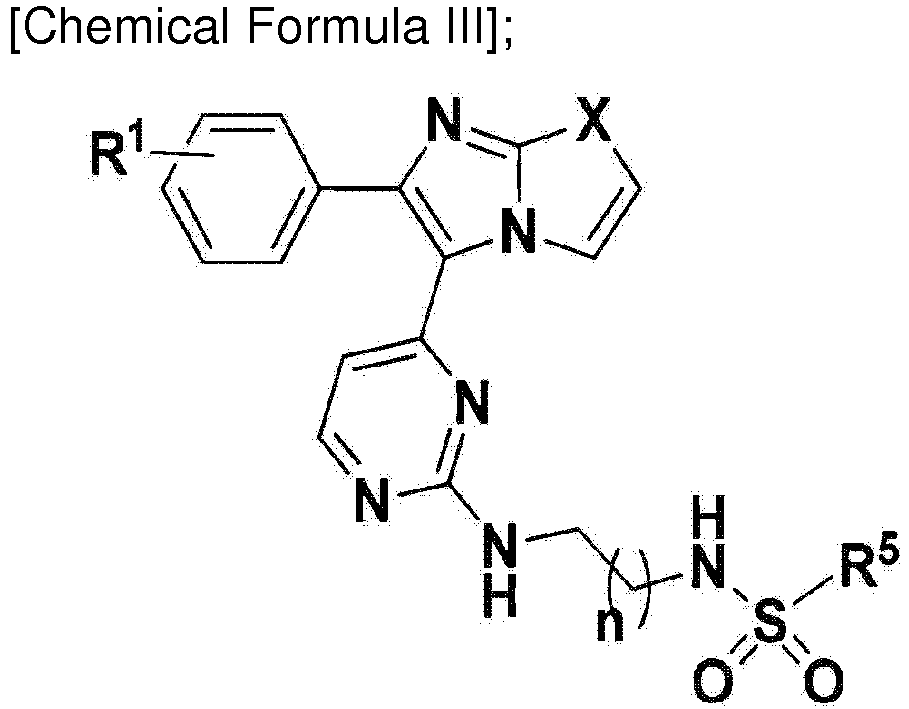

- In the above Chemical Formulae, X, n, R1, R2, R3, R4, and R5 are the same as mentioned above.
- In still another embodiment, the compound represented by Chemical Formula S may be selected from the group consisting of
2-(2-((4-(6-(4-fluorophenyl)imidazo[2,1-b]oxazol-5-yl)pyrimidin-2-yl)amino)ethyl)-5-methyl-1,2,5-thiadiazolidine 1,1-dioxide (11);
2-ethyl-5-(2-((4-(6-(4-fluorophenyl)imidazo[2,1-b]oxazol-5-yl)pyrimidin-2-yl)amino)ethyl)-1,2,5-thiadiazolidine 1,1-dioxide (21);
2-benzyl-5-(2-((4-(6-(4-fluorophenyl)imidazo[2,1-b]oxazol-5-yl)pyrimidin-2-yl)amino)ethyl)-1,2,5-thiadiazolidine 1,1-dioxide (31);
2-(2-((4-(6-(3-methoxyphenyl)imidazo[2,1-b]oxazol-5-yl)pyrimidin-2-yl)amino)ethyl)-5-methyl-1,2,5-thiadiazolidine 1,1-dioxide (41);
2-ethyl-5-(2-((4-(6-(3-methoxyphenyl)imidazo[2,1-b]oxazol-5-yl)pyrimidin-2-yl)amino)ethyl)-1,2,5-thiadiazolidine 1,1-dioxide (51);
2-benzyl-5-(2-((4-(6-(3-methoxyphenyl)imidazo[2,1-b]oxazol-5-yl)pyrimidin-2-yl)amino)ethyl)-1,2,5-thiadiazolidine 1,1-dioxide (61);
2-(2-((4-(6-(3-methoxyphenyl)imidazo[2,1-b]oxazol-5-yl)pyrimidin-2-yl)amino)ethyl)-1,2,5-thiadiazolidine 1,1-dioxide (71);
2-(2-((4-(6-(3-methoxyphenyl)imidazo[2,1-b]oxazol-5-yl)pyrimidin-2-yl)amino)ethyl)-4,4-dimethyl-1,2,5-thiadiazolidine 1,1-dioxide (81);
2-(2-((4-(6-(3-methoxyphenyl)imidazo[2,1-b]oxazol-5-yl)pyrimidin-2-yl)amino)ethyl)-6-methyl-1,2,6-thiadiazinane 1,1-dioxide (91);
2-(2-((4-(6-(3-methoxyphenyl)imidazo[2,1-b]oxazol-5-yl)pyrimidin-2-yl)amino)ethyl)-1,2,6-thiadiazinane 1,1-dioxide (101);
2-(2-((4-(6-(3-hydroxylphenyl)imidazo[2,1-b]oxazol-5-yl)pyrimidin-2-yl)amino)ethyl)-5-methyl-1,2,5-thiadiazolidine 1,1-dioxide (1II);
2-ethyl-5-(2-((4-(6-(3-hydroxylphenyl)imidazo[2,1-b]oxazol-5-yl)pyrimidin-2-yl)amino)ethyl)-1,2,5-thiadiazolidine 1,1-dioxide (2II);
2-benzyl-5-(2-((4-(6-(3-hydroxylphenyl)imidazo[2,1-b]oxazol-5-yl)pyrimidin-2-yl)amino)ethyl)-1,2,5-thiadiazolidine 1,1-dioxide (3II);
2-(2-((4-(6-(3-hydroxylphenyl)imidazo[2,1-b]oxazol-5-yl)pyrimidin-2-yl)amino)ethyl)-1,2,5-thiadiazolidine 1,1-dioxide (4II);
2-(2-((4-(6-(3-hydroxylphenyl)imidazo[2,1-b]oxazol-5-yl)pyrimidin-2-yl)amino)ethyl)-4,4-dimethyl-1,2,5-thiadiazolidine 1,1-dioxide (5II);
2-(2-((4-(6-(3-hydroxylphenyl)imidazo[2,1-b]oxazol-5-yl)pyrimidin-2-yl)amino)ethyl)-6-methyl-1,2,6-thiadiazinane 1,1-dioxide (6II);
tert-butyl-6-(2-((4-(6-(3-hydroxylphenyl)imidazo[2,1-b]oxazol-5-yl)pyrimidin-2-yl)amino)ethyl)-1,2,6-thiadiazinane-2-carboxylate 1,1-dioxide (7II);
2-(2-((4-(6-(3-hydroxylphenyl)imidazo[2,1-b]oxazol-5-yl)pyrimidin-2-yl)amino)ethyl)-1,2,6-thiadiazinane 1,1-dioxide (8II);
4-fluoro-N-(2-((4-(6-phenylimidazo[2,1-b]thiazol-5-yl)pyrimidin-2-yl)amino)ethyl)benzenesulfonamide (1III);
4-methoxy-N-(2-((4-(6-phenylimidazo[2,1-b]thiazol-5-yl)pyrimidin-2-yl)amino)ethyl)benzenesulfonamide (2III);
4-methyl-N-(2-((4-(6-phenylimidazo[2,1-b]thiazol-5-yl)pyrimidin-2-yl)amino)ethyl)benzenesulfonamide (3III);
N-(2-((4-(6-(4-fluorophenyl)imidazo[2,1-b]oxazol-5-yl)pyrimidin-2-yl)amino)ethyl)benzenesulfonamide (4IV);
3-fluoro-N-(2-((4-(6-(4-fluorophenyl)imidazo[2,1-b]oxazol-5-yl)pyrimidin-2-yl)amino)ethyl)benzenesulfonamide (5IV);
4-fluoro-N-(2-((4-(6-(4-fluorophenyl)imidazo[2,1-b]oxazol-5-yl)pyrimidin-2-yl)amino)ethyl)benzenesulfonamide (6IV);
N-(2-((4-(6-(4-fluorophenyl)imidazo[2,1-b]oxazol-5-yl)pyrimidin-2-yl)amino)ethyl)-4-iodobenzenesulfonamide (7IV);
N-(2-((4-(6-(4-fluorophenyl)imidazo[2,1-b]oxazol-5-yl)pyrimidin-2-yl)amino)ethyl)-4-methoxybenzenesulfonamide (8IV);
N-(2-((4-(6-(4-fluorophenyl)imidazo[2,1-b]oxazol-5-yl)pyrimidin-2-yl)amino)ethyl)-4-methyl benzenesulfonamide (9IV);
N-(2-((4-(6-(4-fluorophenyl)imidazo[2,1-b]oxazol-5-yl)pyrimidin-2-yl)amino)ethyl)-4-(trifluoromethyl)benzenesulfonamide (10IV);
N-(2-((4-(6-(4-fluorophenyl)imidazo[2,1-b]oxazol-5-yl)pyrimidin-2-yl)amino)ethyl)-3,4-dimethoxybenzenesulfonamide (11IV);
N-(2-((4-(6-(4-fluorophenyl)imidazo[2,1-b]oxazol-5-yl)pyrimidin-2-yl)amino)ethyl)-3,4-dimethylbenzenesulfonamide (12IV);
N-(2-((4-(6-(4-fluorophenyl)imidazo[2,1-b]oxazol-5-yl)pyrimidin-2-yl)amino)ethyl)naphthalene-2-sulfonamide (13IV);
N-(2-((4-(6-(3-methoxyphenyl)imidazo[2,1-b]thiazol-5-yl)pyrimidin-2-yl)amino)ethyl)benzenesulfonamide (4III);
4-fluoro-N-(2-((4-(6-(3-methoxyphenyl)imidazo[2,1-b]thiazol-5-yl)pyrimidin-2-yl)amino)ethyl)benzenesulfonamide (5III);
4-methoxy-N-(2-((4-(6-(3-methoxyphenyl)imidazo[2,1-b]thiazol-5-yl)pyrimidin-2-yl)amino)ethyl)benzenesulfonamide (6III);
N-(2-((4-(6-(3-methoxyphenyl)imidazo[2,1-b]thiazol-5-yl)pyrimidin-2-yl)amino)ethyl)-4-methylbenzenesulfonamide (7III);
N-(2-((4-(6-(3-methoxyphenyl)imidazo[2,1-b]thiazol-5-yl)pyrimidin-2-yl)amino)ethyl)-4-(trifluoromethyl)benzenesulfonamide (8III);
3-fluoro-N-(2-((4-(6-(3-methoxyphenyl)imidazo[2,1-b]thiazol-5-yl)pyrimidin-2-yl)amino)ethyl)benzenesulfonamide (9III);
N-(2-((4-(6-(3-methoxyphenyl)imidazo[2,1-b]thiazol-5-yl)pyrimidin-2-yl)amino)ethyl)naphthalene-2-sulfonamide (10III);
4-fluoro-N-(2-((4-(6-(4-methoxyphenyl)imidazo[2,1-b]thiazol-5-yl)pyrimidin-2-yl)amino)ethyl)benzenesulfonamide (11III);
4-methoxy-N-(2-((4-(6-(4-methoxyphenyl)imidazo[2,1-b]thiazol-5-yl)pyrimidin-2-yl)amino)ethyl)benzenesulfonamide (12III);
N-(2-((4-(6-(4-methoxyphenyl)imidazo[2,1-b]thiazol-5-yl)pyrimidin-2-yl)amino)ethyl)-4-methylbenzenesulfonamide (13III);
N-(2-((4-(6-(4-methoxyphenyl)imidazo[2,1-b]thiazol-5-yl)pyrimidin-2-yl)amino)ethyl)naphthalene-2-sulfonamide (14III);
4-fluoro-N-(3-((4-(6-phenylimidazo[2,1-b]thiazol-5-yl)pyrimidin-2-yl)amino)propyl)benzenesulfonamide (15III);
4-methoxy-N-(3-((4-(6-phenylimidazo[2,1-b]thiazol-5-yl)pyrimidin-2-yl)amino)propyl)benzenesulfonamide (16III);
4-methyl-N-(3-((4-(6-phenylimidazo[2,1-b]thiazol-5-yl)pyrimidin-2-yl)amino)propyl)benzenesulfonamide (17III);
N-(3-((4-(6-(4-fluorophenyl)imidazo[2,1-b]oxazol-5-yl)pyrimidin-2-yl)amino)propyl)benzenesulfonamide (28IV);
4-fluoro-N-(3-((4-(6-(4-fluorophenyl)imidazo[2,1-b]oxazol-5-yl)pyrimidin-2-yl)amino)propyl)benzenesulfonamide (29IV);
N-(3-((4-(6-(4-fluorophenyl)imidazo[2,1-b]oxazol-5-yl)pyrimidin-2-yl)amino)propyl)-4-iodobenzenesulfonamide (30IV);
N-(3-((4-(6-(4-fluorophenyl)imidazo[2,1-b]oxazol-5-yl)pyrimidin-2-yl)amino)propyl)-4-methoxybenzenesulfonamide (31IV);
N-(3-((4-(6-(4-fluorophenyl)imidazo[2,1-b]oxazol-5-yl)pyrimidin-2-yl)amino)propyl)-4-methylbenzenesulfonamide (32IV);
N-(3-((4-(6-(4-fluorophenyl)imidazo[2,1-b]oxazol-5-yl)pyrimidin-2-yl)amino)propyl)-4-(trifluoromethyl)benzenesulfonamide (33IV);
3-fluoro-N-(3-((4-(6-(4-fluorophenyl)imidazo[2,1-b]oxazol-5-yl)pyrimidin-2-yl)amino)propyl)benzenesulfonamide (34IV);
N-(3-((4-(6-(4-fluorophenyl)imidazo[2,1-b]oxazol-5-yl)pyrimidin-2-yl)amino)propyl)-3,4-dimethoxybenzenesulfonamide (35IV);
N-(3-((4-(6-(4-fluorophenyl)imidazo[2,1-b]oxazol-5-yl)pyrimidin-2-yl)amino)propyl)-3,4-dimethylbenzenesulfonamide (36IV);
N-(3-((4-(6-(4-fluorophenyl)imidazo[2,1-b]oxazol-5-yl)pyrimidin-2-yl)amino)propyl)naphthalene-2-sulfonamide (37IV);
N-(3-((4-(6-(3-methoxyphenyl)imidazo[2,1-b]thiazol-5-yl)pyrimidin-2-yl)amino)propyl)benzenesulfonamide (18111);
3-fluoro-N-(3-((4-(6-(3-methoxyphenyl)imidazo[2,1-b]thiazol-5-yl)pyrimidin-2-yl)amino)propyl)benzenesulfonamide (19III);
4-fluoro-N-(3-((4-(6-(3-methoxyphenyl)imidazo[2,1-b]thiazol-5-yl)pyrimidin-2-yl)amino)propyl)benzenesulfonamide (20III);
4-methoxy-N-(3-((4-(6-(3-methoxyphenyl)imidazo[2,1-b]thiazol-5-yl)pyrimidin-2yl)amino)propyl)benzenesulfonamide (21III);
N-(3-((4-(6-(3-methoxyphenyl)imidazo[2,1-b]thiazol-5-yl)pyrimidin-2-yl)amino)propyl)-4-methylbenzenesulfonamide (22III);
N-(3-((4-(6-(3-methoxyphenyl)imidazo[2,1-b]thiazol-5-yl)pyrimidin-2-yl)amino)propyl)naphthalene-2-sulfonamide (23III);
4-hydroxyl-N-(2-((4-(6-phenylimidazo[2,1-b]thiazol-5-yl)pyrimidin-2-yl)amino)ethyl)benzenesulfonamide (24III);
N-(2-((4-(6-(4-fluorophenyl)imidazo[2,1-b]oxazol-5-yl)pyrimidin-2-yl)amino)ethyl)-4-hydroxylbenzenesulfonamide (45IV);
4-fluoro-N-(2-((4-(6-(3-hydroxylphenyl)imidazo[2,1-b]thiazol-5-yl)pyrimidin-2-yl)amino)ethyl)benzenesulfonamide (25III);
4-hydroxyl-N-(2-((4-(6-(3-hydroxylphenyl)imidazo[2,1-b]thiazol-5-yl)pyrimidin-2-yl)amino)ethyl)benzenesulfonamide (26III);
N-(2-((4-(6-(3-hydroxylphenyl)imidazo[2,1-b]thiazol-5-yl)pyrimidin-2-yl)amino)ethyl)-4-methylbenzenesulfonamide (27III);
4-hydroxyl-N-(2-((4-(6-(4-hydroxylphenyl)imidazo[2,1-b]thiazol-5-yl)pyrimidin-2-yl)amino)ethyl)benzenesulfonamide (28III);
N-(2-((4-(6-(4-hydroxylphenyl)imidazo[2,1-b]thiazol-5-yl)pyrimidin-2-yl)amino)ethylbenzenesulfonamide (29III);
N-(3-((4-(6-(4-fluorophenyl)imidazo[2,1-b]oxazol-5-yl)pyrimidin-2-yl)amino)propyl)-4-hydroxylbenzenesulfonamide (51IV);
N-(3-((4-(6-(3-hydroxylphenyl)imidazo[2,1-b]thiazol-5-yl)pyrimidin-2-yl)amino)propyl)benzenesulfonamide (30III); and
4-fluoro-N-(3-((4-(6-(3-hydroxylphenyl)imidazo[2,1-b]thiazol-5-yl)pyrimidin-2-yl)amino)propyl)benzenesulfonamide (31III). - An aspect provides a method of preparing the compound represented by Chemical Formula S or the solvate, stereoisomer, or pharmaceutically acceptable salt thereof, the method including:
- cyclizing a compound of Chemical Formula 1 and a compound of Chemical Formula 2 to prepare a compound of Chemical Formula 3;
- reacting the compound of Chemical Formula 3 with 4-chloro-2-(methylthio)pyrimidine to prepare a compound of
Chemical Formula 4; - oxidizing the compound of
Chemical Formula 4 to prepare a compound of Chemical Formula 5; and - reacting the compound of Chemical Formula 5 with an N-aminoethylcyclic sulfonamide derivative or an N-(2-aminoethyl)benzenesulfonamide derivative in the presence of a base to prepare the compound of Chemical Formula S.
- Specifically, the preparation method may be represented by the following Reaction Scheme 1:

- In Reaction Scheme 1, A, B, and X are the same as defined above.
- In a specific embodiment, preparation of the compound of
Chemical Formula 4 by reacting the compound of Chemical Formula 3 with 4-chloro-2-(methylthio)pyrimidine may be performed under Heck reaction conditions in the presence of Pd(OAc)2 as a catalyst. Each procedure may further include purification as needed. In theprocedure 4, the base may be diisopropylethylamine (DIPEA). - Another aspect provides a pharmaceutical composition for preventing and treating tumors, the pharmaceutical composition including the compound or the solvate, stereoisomer, or pharmaceutically acceptable salt thereof as an active ingredient.
- Still another aspect provides use of a composition including the compound or the solvate, stereoisomer, or pharmaceutically acceptable salt thereof in the preparation of the pharmaceutical composition.
- The 'pharmaceutically acceptable salt' is any organic or inorganic acid addition salt of the compound of Chemical Formula S which is at such a concentration that is relatively nontoxic to a patient and has a harmless effective action, and adverse effects from the salt do not counteract benefits of the compound of Chemical Formula S. These salts may use an inorganic acid or an organic acid as a free acid. As an inorganic acid, hydrochloric acid, bromic acid, nitric acid, sulfuric acid, perchloric acid, phosphoric acid, etc. may be used. As an organic acid, citric acid, acetic acid, lactic acid, maleic acid, fumaric acid, gluconic acid, methanesulfonic acid, glycolic acid, succinic acid, tartaric acid, galacturonic acid, embonic acid, glutamic acid, aspartic acid, oxalic acid, (D) or (L) malic acid, maleic acid, methanesulfonic acid, ethanesulfonic acid, 4-toluenesulfonic acid, salicilic acid, citric acid, benzoic acid, malonic acid, etc. may be used. These salts may include alkali metal salts (sodium salt, potassium salt, etc.) and alkali earth metal salts (calcium salt, magnesium salt, etc.). For example, the acid addition salt may include acetate, aspartate, benzoate, besylate, bicarbonate/carbonate, bisulfate/sulfate, borate, camcilate, citrate, edisylate, ethylate, formate, fumarate, gluceptate, gluconate, glucuronate, hexafluorophosphate, hibenzate, hydrochloride/chloride, hydrobromide/bromide, hydroiodide/iodide, isethionate, lactate, malate, maleate, malonate, methylate, methylsulfate, naphthalate, 2-naphthylate, nicotinate, nitrate, orotate, oxalate, palmitate, pamoate, phosphate/hydrogen phosphate/dihydrogen phosphate, saccharate, stearate, succinate, tartrate, tosylate, trifluoroacetate, aluminum, arginine, benzathine, calcium, choline, diethylamine, diolamine, glycine, lysine, magnesium, meglumine, olamine, potassium, sodium, tromethamine, zinc salt, etc. Among them, hydrochloride or trifluoroacetate may be used.
- In a specific embodiment, the compound or the solvate, stereoisomer, or pharmaceutically acceptable salt thereof may inhibit protein kinase to inhibit proliferation of tumor cells. The protein kinase is involved in proliferation of tumor cells, and may be one or more selected from the group consisting of V600E Rapidly Accelerated Fibrosarcoma (RAF), B-RAF, C-RAF, Mitogen-activated protein kinase 14 (MAPK14), Fms-like tyrosine kinase 3 (FLT3), and Glycogen synthase kinase 3 beta (GSK3β).
- In another specific embodiment, the tumors may be lung cancer, liver cancer, esophageal cancer, stomach cancer, colorectal cancer, small intestine cancer, pancreatic cancer, melanoma, breast cancer, oral cancer, bone cancer, brain tumor, thyroid cancer, parathyroid cancer, renal cancer, cervical cancer, sarcoma, prostate cancer, urethral cancer, bladder cancer, testicular cancer, leukemia, multiple myeloma, myelodysplastic syndrome, hematological malignancy such as or glioblastoma, lymphoma such as Hodgkin's disease and non-Hodgkin lymphoma, Behcet's disease, skin cancer, psoriasis, and fibroadenoma.
- An aspect provides a method of preventing or treating tumors, the method including administering the compound or the solvate, stereoisomer, or pharmaceutically acceptable salt thereof to a subject having or at risk of developing a tumor.
- The subject may be a mammal, and the mammal may be a human. An administration dose of the compound of the present disclosure which is effective for a human body may vary depending on a patient' age, body weight, sex, administration mode, health conditions, and severity of disease.
- The administration may be performed by various formulations for oral administration or parenteral administration such as intravenous, intraperitoneal, intradermal, subcutaneous, epithelial, or intramuscular administration. The formulations may be prepared using a commonly used diluent or excipient such as a filler, an extender, a binder, a wetting agent, a disintegrant, a surfactant, etc.
- Solid formulations for oral administration may include tablets, pills, powders, granules, capsules, troches, etc., and such a solid formulation is prepared by mixing one or more compounds of the present disclosure with at least one excipient, for example, starches, calcium carbonate, sucrose, lactose, gelatin, etc. Also, lubricants such as magnesium stearate and talc may be used in addition to simple excipients. Liquid formulations for oral administration may include suspensions, solutions for internal use, emulsions, syrups, etc. Various excipients, for example, wetting agents, sweetening agents, fragrances, preservatives, etc. may be included in addition to water and liquid paraffin which are simple diluents commonly employed.
- Formulations for parenteral administration may include sterilized aqueous solutions, non-aqueous solutions, suspensions, emulsions, lyophilized formulations, suppositories, etc. Examples of non-aqueous solutions or suspensions may include propylene glycol, polyethylene glycol, vegetable oil such as olive oil, an injectable ester such as ethyl oleate, etc. Examples of suppository bases may include Witepsol, macrogol, Tween 61, cacao butter, laurin fat, glycerol, gelatin, etc.
-
FIG. 1 shows tumor size according to the number of days after transplantation, which represents anti-cancer effects after administration of compound 2II to A375P cell line xenograft models (G1 indicates an excipient control group, G2 indicates a group administered with 20 mg/kg/day of a test material, and G3 indicates a group administered with 50 mg/kg/day of a test material). - Hereinafter, the present disclosure will be described in more details with reference to Examples. However, these Examples are for illustrative purposes only, and the scope of the present disclosure is not intended to be limited thereto.
- Compounds of Chemical Formulae I to IV were prepared according to the following procedures, as shown in Reaction Schemes 2 and 3.
- A method of synthesize an imidazooxazole compound is the same as in the following Reaction Scheme 2, and for synthesis of the compounds of Chemical Formulae I to IV, it is important to synthesize a compound 5 which is a main intermediate.
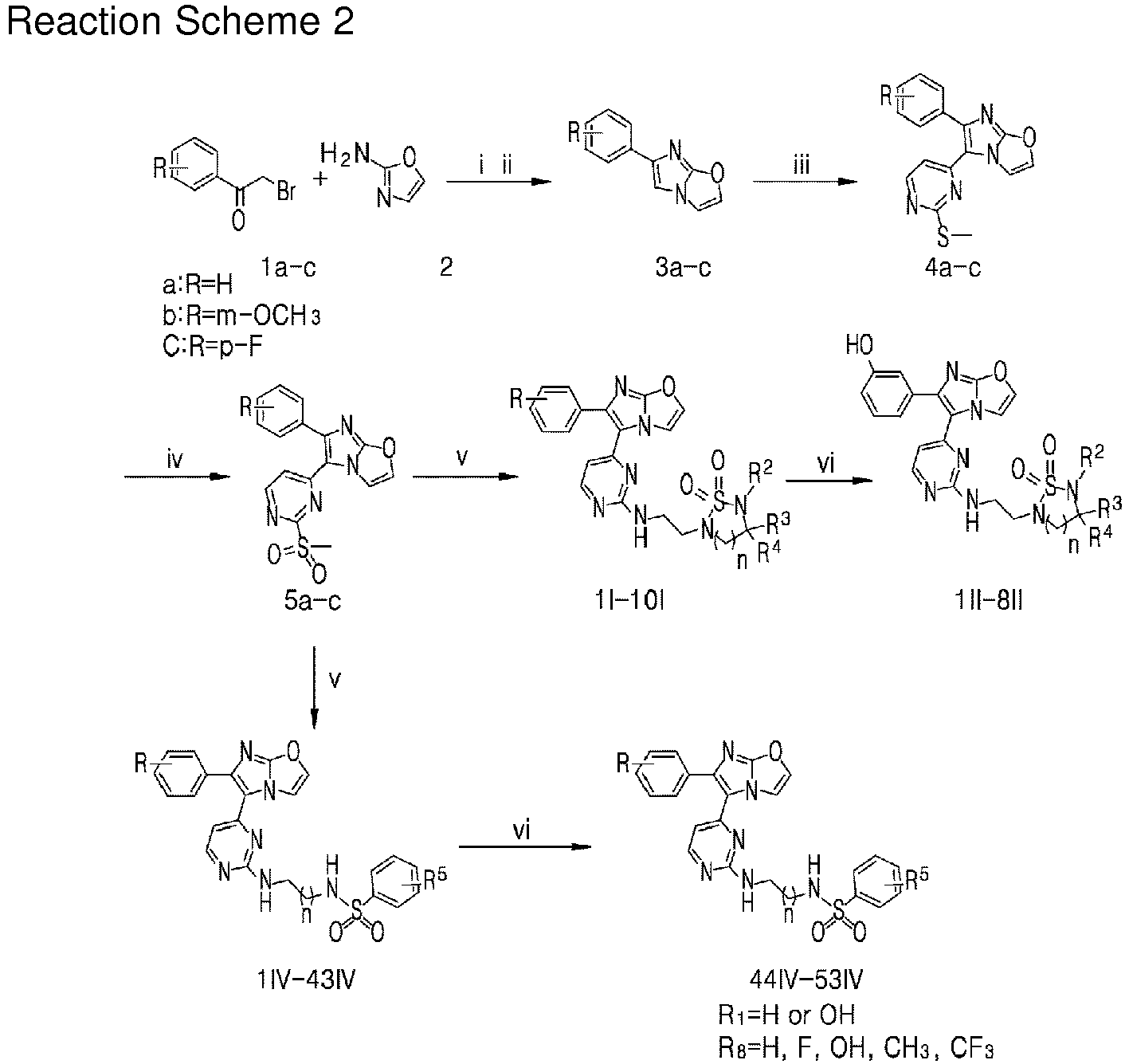
- Reagents and Conditions: i) CH3CN, THF, room temperature, 24 hours; ii) TiCl4, toluene, reflux; iii) 4-chloro-2-(methylthio)pyrimidine, palladium acetate, triphenylphosphine, cesium carbonate, DMF, 80 °C, 16 hours; iv) oxone, methanol, H2O; v) N-(2-aminoethyl)benzene sulfonamide or N-aminoethyl cyclicsulfonamide, DIPEA, DMSO, 80 °C; vi) BBr3, dichloromethane.
- Cyclization was carried out by reacting 2-aminooxazole (2) with α-bromo-4-fluoroacetophenone in ethanol under reflux for 16 hours, and crystallization was carried out using ammonia to synthesize a compound 3. The compound 3 thus synthesized was reacted with 4-chloro-2-(methylthio) pyrimidine in the presence of Pd(OAc)2 catalyst under Heck reaction conditions at 80 °C for 36 hours. After the reaction was completed, column chromatography was used to obtain a
methylthiopyrimidinyl compound 4. Thecompound 4 thus synthesized was oxidized using oxone at room temperature overnight, and purified by a column to synthesize a compound 5 which is a key intermediate. Under diisopropylethylamine, N-aminoethyl cyclic sulfonamide or N-(2-aminoethyl)benzenesulfonamide was dissolved in a DMF solvent, and stirred at 80 °C for 5 hours to 10 hours to obtain compounds I, II, and IV. Among these compounds, a methoxy compound was dissolved in methylene chloride, and cooled at -78 °C. Then, BBr3 was slowly added dropwise, and stirred for 30 minutes. The temperature was raised to room temperature, and demethylation was carried out for 12 hours to synthesize a target compound having a hydroxyl group. - A method of synthesizing an imidazothiazole compound is the same as in the following Reaction Scheme 3, and the method was carried out in the same manner as in Reaction Scheme 2, except that 2-aminothiazole(2) was used.

- Reagents and Conditions: i) ethanol, reflux; overnight, ii) 4-chloro-2-(methylthio)pyrimidine, palladium acetate, triphenylphosphine, cesium carbonate, DMF, 80 °C, 16 hours; iii) oxone, methanol, H2O; iv) N-(2-aminoethyl)benzenesulfonamide or N-aminoethyl cyclic sulfonamide, DIPEA, DMSO, 80 °C; v) BBr3, dichloromethane.
- The compound of each reaction scheme is shown in the following Example.
- To acetonitrile (120 mL), 2-aminooxazole (2 in Reaction Scheme 2, 4.7 g, 47.4 mmol) and α-bromo-4-acetophenone (10.8 g, 49.9 mmol) were added, and stirred at room temperature for 48 hours. Completion of the reaction was confirmed by TLC, followed by filtration. A produced solid was added to toluene (100 mL). 20 mL of titanium chloride (1 M dichloromethane solution) was slowly added to the suspension at 0 °C. This reaction solution was refluxed and stirred for 20 hours, and concentrated to one half of its initial volume. A saturated sodium carbonate solution was added thereto, and extracted with ethyl acetate. An organic layer was dried over anhydrous Na2SO4, followed by filtration. The resulting product was distilled under reduced pressure and concentrated to obtain a target compound of 6-(4-phenyl)imidazo[2,1-b]oxazole (3a) in a crystal state.
- White solid (5.1 g, 56 %). mp 143-144°C; IR (KBr) [cm-1]: 3139, 3120, 1955, 1884, 1602. 1H-NMR (DMSO-d6, 300 MHz) δ 8.63 (d, 1H, J = 7.17 Hz), 8.29 (t, 1H, J = 5.71 Hz), 7.77 (t, 3H, J = 6.7 Hz), 7.49-7.36 (m, 3H). 13CNMR (DMSO-d6, 75 MHz) δ 158.1, 154.4, 134.9, 132.6, 127.7, 125.7, 121.9, 119.6, 111.5, 104.2.
- 6-(4-Phenyl)imidazo[2,1-b]oxazole (compound 3a, 8.26 g, 37.8 mmol), 4-chloro-2-(methylthio)pyrimidine (9.09 g, 56.6 mmol), cesium carbonate (18.44 g, 56.6 mmol), palladium acetate (1.71 g, 7.6 mmol), and triphenylphosphine (3.96 g, 15.1 mmol) were added to DMF (80 mL) and stirred at 80 °C for 36 hours. Completion of the reaction was confirmed by TLC, and the reaction solution was cooled to room temperature. EtOAc (200 mL) and distilled water (250 mL) were added to separate layers. An aqueous layer was extracted with EtOAc (100 mL) three times, and discarded. An organic layer was washed with saline (100 mL), and dried over anhydrous Na2SO4, followed by filtration. The resulting product was distilled under reduced pressure and concentrated, and then purified by flash column chromatography to obtain 4.37 g of a target compound of 6-(4-phenyl)-5-(2-(methylthio)pyrimidin-4-yl)imidazo[2,1-b]oxazole (4a) in a crystal state.
- White solid(19%), mp. 143-144 °C; IR (KBr) [cm-1]: 3054, 6103, 1538, 1685; 1H-NMR (CDCl3, 300 MHz) δ 8.62 (dd, 1H, J = 4.53, J = 0.7), 8.23 (dd, 1H, J = 5.4, J = 0.7), 7.65-7.62 (m, 2H), 7.47-7.45 (m, 3H), 6.97 (dd, 1H, J = 4.53, J = 0.66), 6.89 (dd, 1H, J = 4.77, J = 0.66), 2.64 (s, 3H); 13C NMR (CDCl3,75 MHz) δ 172.4, 156.2, 156.2, 152.7, 151.1, 134.6, 129.2, 128.9, 128.8, 122.2, 120.1, 112.7, 112.0, 14.2.
- 6-(4-phenyl)-5-(2-(methylthio)pyrimidin-4-yl)imidazo[2,1-b]oxazole (Compound 4a, 3.0 g, 8.8 mmol) was added to MeOH (300 mL). While stirring at room temperature, oxone (14.76 g, 97.0 mmol) in distilled water (60 mL) was added thereto, followed by stirring for 16 hours. Completion of the reaction was confirmed by TLC, and the organic solvent was removed by distillation under reduced pressure. DCM (60 mL) was added to an aqueous layer to separate layers. An aqueous layer was extracted with DCM (30 mL) three times, and the aqueous layer was discarded. An organic layer was washed with saline (50 mL) and distilled water (50 mL), and dried over anhydrous Na2SO4, followed by filtration. The resulting product was distilled under reduced pressure and concentrated, and then purified by flash column chromatography to obtain 2.69 g of a target compound of 6-(4-phenyl)-5-(2-(methylsulfonyl)pyrimidin-4-yl)imidazo[2,1-b]oxazole (5a) in a crystal state.
- White solid(85%); 1H-NMR (CDCl3, 300 MHz) δ 8.89 (d, 1H, J = 4.30), 8.56 (d, 1H, J = 5.40), 7.71 (d, 2H, J = 2.50), 7.64-7.45 (m, 3H), 7.42 (d, 1H, J = 5.20), 7.17 (d, 1H, J = 4.40), 3.45 (s, 3H); 13C NMR (CDCl3,75 MHz) δ 165.7, 157.5, 156.8, 153.3, 134.1, 133.3, 130.0, 129.5, 129.1, 129.0, 128.3, 119.5, 117.5, 113.8, 39.3.
- This compound was synthesized in the same manner as in the synthesis of compound 5a.
- Yellow solid (85 %); mp. 115-116 °C. 1H-NMR (CDCl3,300MHz) δ 8.90 (d, 1H, J = 4.5 Hz), 8.53 (d, 1H, J = 5.6 Hz) 7.63 (q, 2H, J = 4.7 Hz), 7.33 (d, 1H, J = 5.6 Hz), 7.22 (t, 2H, J = 8.6 Hz), 7.10 (d, 1H, J = 4.5 Hz), 3.37 (s, 3H); 13CNMR (CDCl3,75 MHz) δ 171.1, 165.7, 157.3, 157.0, 154.2, 151.7, 131.0, 130.9, 129.9, 123.1, 119.4, 117.4, 116.4, 116.1, 114.2, 39.2.
- This compound was synthesized in the same manner as in the synthesis of compound 5a.
- White solid (95%); mp. 176-177 °C. IR (KBr) [cm-1]: 3137, 3110, 2931, 1979, 1902, 1797, 1444, 1373; 1H-NMR (CDCl3, 300 MHz) δ 8.99 (d, 1H, J = 4.41), 8.58 (d, 1H, J = 5.40), 7.73 (d, 2H, J = 2.46), 7.66-7.47 (m, 3H), 7.45 (d, 1H, J = 5.22), 7.17 (d, 1H, J = 4.41), 3.47 (s, 3H); 13CNMR (CDCl3, 75 MHz) δ 165.7, 157.5, 156.8, 153.3, 134.1, 133.3, 130.0, 129.5, 129.1, 129.0, 128.3, 119.5, 117.5, 113.8, 39.3; LC-MS: Predicted value calculated with respect to C16H12N4O2S2 m/z: 356. Measured value: 357(M+1)+.
- N-methylethylendiamine (1.5 g, 20.8 mmol) and sulfuric diimide (2.0 g, 20.8 mmol) were added to a pyridine solvent (20 mL), and refluxed, stirred, and heated for 3 hours. After the reaction was completed, toluene (5 mL) was added to the reactant, followed by concentration and extraction with ethyl acetate. An organic solvent layer was dried over MgSO4 and filtered to remove the solvent. A residue was purified by column chromatography (EtOAc) to obtain a compound 6a.
- White solid (52.3 %). Mp 80 to 82 °C; 1H-NMR (CDCl3, 300 MHz) δ7.27 (s, 1H), 3.53-3.19 (m, 2H), 3.42-3.37 (m, 2H), 2.75 (s, 1H); 13C NMR (CDCl3, 75 MHz) δ 32.67, 39.64, 46.94; LC-MS: Predicted value calculated with respect to C3H8N2O2S m/z: 136. Measured value: 137(M+1)+.
- Under nitrogen atmosphere, the compound 6a (0.856 g, 6.26 mmol) was dissolved in 5 mL of anhydrous DMSO, and 60% NaH (0.282 g, 11.8 mmol) was slowly added dropwise at 0°C. The temperature was raised to room temperature, and then the solution was stirred for 1 hour. 2-(((benzyloxy)carbonyl)amino)ethyl methane sulfonate (1.5 g, 5.83 mmol) was slowly added dropwise at 0 °C, and then stirred at room temperature for 5 hours. After the reaction was completed, extraction was performed with ethyl acetate, and an organic solvent layer was dried over MgSO4. Filtration was performed to remove the solvent, and a residue was purified by column chromatography (EtOAc) to obtain a compound 7a (0.82 g).
- Sticky oil (42.9%). 1H-NMR (CDCl3, 300MHz) δ7.36-7.30 (m, 5H), 5.19 (bs, 1H), 5.10 (s, 2H), 3.46 (q, 2H, J = 5.9 Hz), 3.36-3.26 (m, 4H), 3.20 (t, 2H, J = 6.0 Hz). LC-MS: Predicted value calculated with respect to C13H19N3O4S m/z: 313. Measured value: 314(M+1)+.
- The compound 7a (0.82 g, 2.5 mmol) was dissolved in 10 mL of methanol, and then 10% Pd/C (0.40 g) was added thereto. Hydrogenation was performed for 2 hours, filtration was performed, and the solvent was removed by distillation under reduced pressure. A product was used in the next reaction without purification (yield: 91%).
- White solid(72%); mp. 108 to 109; IR (KBr) cm-1: 3582, 3350, 3299, 3107, 3068, 1903, 1317, 838; 1H-NMR (CDCl3, 300 MHz) δ7.84-7.79 (m, 2H), 7.11 (t, 2H, J = 6 Hz), 2.89 (t, 2H, J = 6 Hz), 2.71(t, 2H, J = 6 Hz). 13C NMR (CDCl3, 75 MHz) δ166.7, 136.0, 129.7(J=33), 116.3(J=90), 45.2, 40.9. LC-MS: Predicted value calculated with respect to C8H11FN2O2S m/z: 218 Measured value: 219(M+1)+.
-

- Light yellow solid; to DMSO (5 mL), 6-(4-fluorophenyl)-5-(2-(methylsulfonyl)pyrimidin-4-yl)imidazo[2,1-b]thiazole (compound 5c, 0.19 g, 0.50 mmol), 2-(2-aminoethyl)-5-methyl-1,2,5-thiadiazolidine 1,1-dioxide (compound 8a, 0.27 g, 1.24 mmol), and DIPEA (0.29 mL, 1.70 mmol) were added and stirred at 80 °C for 8 hours. This mixture was cooled to room temperature, and distilled water (10 mL) and EtOAc (10 mL) were added to separate layers. An aqueous layer was extracted with EtOAc (10 mL) twice and discarded. An organic layer was washed with saline (10 mL), and dried over anhydrous Na2SO4, followed by filtration. A product was concentrated under reduced pressure, and purified by recrystallization using DCM (1 mL) and hexane (3 mL) to obtain 0.18 g of a target compound 1I in a crystal form.
- (72%); 1H-NMR (CDCl3, 300MHz) δ 8.52(d, 1H, J = 4.5 Hz), 8.08 (s, 1H), 7.61 (q, 2H, J = 4.6 Hz), 7.13 (t, 2H, J = 8.5 Hz), 6.91 (d, 1H, J = 4.5 Hz), 6.55 (d, 1H, J = 5.5 Hz), 5.81 (bs, 1H), 3.78 (q, 2H, J = 6.1 Hz), 3.43-3.30 (m, 6H), 2.79 (s, 3H);
-

- This compound was synthesized in the same manner as in the synthesis of compound 1I.
- White solid (50.5%); mp 144-145 °C; 1HNMR (CDCl3, 300 MHz) 8.58 (d, 1H, J = 4.5 Hz), 8.06 (d, 1H, J = 5.3 Hz), 7.33 (t, 1H, J = 7.8 Hz), 7.23-7.19 (m, 2H), 6.98-6.90 (m, 2H), 6.58 (d, 1H, J = 5.4 Hz), 3.83 (s, 3H), 3.78 (q, 2H, J = 6.1 Hz), 3.43-3.30 (m, 6H), 2.78 (s, 3H).
-

- Under nitrogen atmosphere, the compound 4I (17.5 mg, 0.1 mmol) was dissolved in 3 mL of MC, and then BBr3 (0.02 mL of 1 M solution in MC, 0.3 mmol) was added dropwise at -78 °C, and stirred at the same temperature for 30 minutes, and further stirred at room temperature for 1 hour. After the reaction was completed, a product was dissolved with ethyl acetate, and washed with NaHCO3 and H2O. The organic solvent was dried over MgSO4, followed by filtration. A product was purified by column chromatography (EtOAc:hexane = 1:2) to obtain a compound 1II.
- White solid (78.1 %); mp 151-152 °C; 1HNMR (DMSO-d6, 300 MHz) δ 9.56 (s, 1H), 8.12 (d, 1H, J = 5.3 Hz), 7.56-7.45 (m, 2H), 7.25 (t, 1H, J = 7.9 Hz), 7.00 (s, 1H), 6.97 (d, 2H, J = 1.5 Hz), 6.84-6.80 (m, 1H), 6.41 (d, 1H, J = 5.3 Hz), 3.71-3.62 (m, 2H), 3.48-3.23 (m, 4H), 3.16 (t, 2H, J = 6.0 Hz), 2.60 (s, 3H).
-

- This compound was synthesized in the same manner as in the synthesis of compound 1II.
- White solid (66.5 %); mp 149-150 °C; 1HNMR (DMSO-d6, 300 MHz) δ 9.58 (s, 1H), 8.11 (d, 1H, J = 5.4 Hz), 7.56-7.45 (m, 2H), 7.25 (t, 1H, J = 8.0 Hz), 6.99-6.80 (m, 3H), 6.41 (d, 1H, J = 5.3 Hz), 3.55-3.49 (m, 2H), 3.44-3.23 (m, 4H), 3.19-3.15 (m, 2H), 2.95 (q, 2H, J = 7.2 Hz).
-
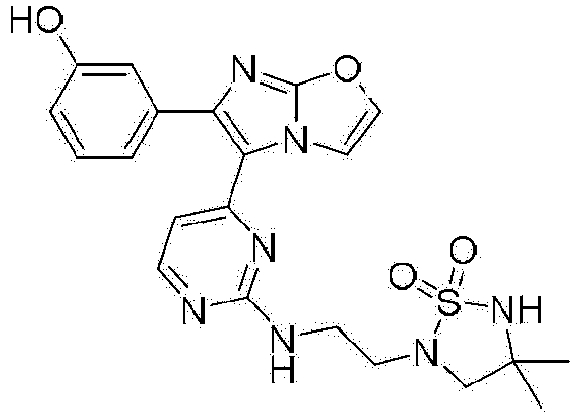
- This compound was synthesized in the same manner as in the synthesis of compound 1II.
- White solid (25.0 %); mp 196-197 °C; 1HNMR (CDCl3, 400 MHz) δ 8.55 (d, 1H, J = 5.4 Hz), 8.04 (d, 1H, J = 5.4 Hz), 7.30-7.28 (m, 1H), 7.15-7.13 (m, 2H), 6.95 (d, H, J = 8.1 Hz), 3.76 (t, 2H, J = 6.1 Hz), 3.33 (t, 2H, J = 5.92 Hz), 3.25 (s, 2H), 1.45 (s, 6H).
-

- This compound was synthesized in the same manner as in the synthesis of compound 1II.
- White solid (71.7 %); mp 184-185 °C; 1HNMR (CDCl3, 400 MHz) δ 8.57 (d, 1H, J = 4.5 Hz), 8.01 (d, 1H, J = 5.4 Hz), 7.28-7.26 (m, 1H), 7.15-7.11 (m, 2H), 6.88 (d, H, J = 7.7 Hz), 6.59 (d, 1H, J = 5.3 Hz), 3.67 (t, 2H, J = 5.4 Hz), 3.48 (t, 2H, J = 5.2Hz), 3.37 (t, 2H, J = 6.0 Hz), 2.75 (s, 3H), 1.78 (m, 2H).
-

- This compound was synthesized in the same manner as in the synthesis of compound 1II.
- White solid (85.3 %); mp 183-184 °C; 1H-NMR(CDCl3, 400 MHz) δ 8.85 (s, 1H), 8.14 (d, 1H, J = 5.9 Hz), 7.78 (d, 1H, J = 4.1 Hz), 7.47 (t, 1H, J = 7.7 Hz), 7.17-7.09 (m, 3H), 6.74 (d, H, J = 6.7 Hz), 3.88 (m, 2H), 3.60 (t, 2H, J = 7.7 Hz), 3.44-3.41 (m, 4H), 1.78 (m, 2H).
-

- Under nitrogen atmosphere, the compound 5d (327 mg, 0.92 mmol), N-(3-aminoethyl)-4-fluorobenzenesulfonamide (11b, 540 mg, 2.48 mmol), and diisopropylethylamine (0.57 mL 3.3 mmol) were added to a DMSO solvent (10 mL), and stirred at 80°C for 8 hours. After the reaction was completed, a product was extracted with ethyl acetate. An organic solvent layer was dried over MgSO4, and filtered to remove the solvent. A residue was purified by column chromatography (EtOAc) to obtain a compound 1III.
- Orange color solid (52.1 %); mp. 121-122 °C; 1HNMR (DMSO-d6, 300 MHz) δ 8.83 (bs, NH), 8.05 (d, 1H, J = 6 Hz), 7.80 (dd, 2H, J = 6, J = 3 Hz), 7.58 (dd, 4H, J = 6, J = 3 Hz), 7.46 (d, 5H, J = 6 Hz), 6.31 (d, 1H, J = 6 Hz), 2.96 (t, 2H, J = 6 Hz), 2.50 (s, 2H); 13C-NMR(DMSO-d6, 75 MHz) δ 164.2, 162.5, 160.9, 158.2, 156.2, 151.6, 148.0, 140.9, 132.7, 131.7, 129.6, 126.8, 121.0, 115.9, 114.5, 105.7, 38.7, 29.5; LC-MS: Predicted value calculated with respect to C23H19FN6O2S2 m/z: 494 Measured value: 495 (M+1)+.
-

- This compound was synthesized in the same manner as in the synthesis of compound 1III.
- White solid (65%); mp. 199-200 °C; 1H-NMR (MeOD, 400 MHz) δ 9-10 (bs, 2NH protons), 8.87(d, 1H, J = 4.8 Hz), 8.50 (d, 2H, J = 7.5 Hz), 8.40 (s, 2H), 8.28 (s, 5H), 8.16 (d, 2H, J = 7.2 Hz), 7.12 (s, 1H), 3.76 (s, 3H), 3.33 (s, 2H), 3.15 (s, 1H); 13C NMR (DMSO-d6, 100 MHz) δ 163.8, 162.5, 161.4, 158.1, 156.2, 151.6, 148.1, 142.9, 138.0, 131.7, 130.1, 127.0, 121.0, 115.9, 114.4, 105.7, 55.3, 41.7, 29.5. LC-MS: Predicted value calculated with respect to C24H22N6O2S2 m/z: 506 Measured value: 507 (M+1)+.
-

- This compound was synthesized in the same manner as in the synthesis of compound 1III.
- Colorless sticky oil (25%); 1HNMR (DMSO-d6, 400 MHz) δ 8.05 (d, 1H, J = 5.2 Hz), 7.73 (t, 2H, J = 7.2 Hz), 7.59 (dd, 2H, J = 2, J = 8 Hz), 7.47 (d, 4H, J = 7.2 Hz), 7.06 (d, 2H, J = 8.8 Hz), 6.31 (d, 1H, J = 5.2 Hz), 3.79 (s, 3H), 3.39 (bs, 2H), 2.94 (brs, 2H). LC-MS: Predicted value calculated with respect to C25H21F3N6O3S2 m/z: 574. Measured value: 575(M+1)+.
-

- This compound was synthesized in the same manner as in the synthesis of compound 1III.
- Dark orange color solid (44%); mp 70-71 °C; IR (KBr) [cm-1]: 3115, 2854, 1639, 1574, 1445, 1328; 1H-NMR (MeOD, 300) δ 8.68 (s, 1H), 7.87 (t, 3H, J = 9 Hz), 7.58-7.45 (m, 6 H), 6.97 (d, 3H, J = 6 Hz), 6.65 (d, 1H, J = 9 Hz), 3.33 (brs, 2H), 3.22 (t, 2H, J=6). LC-MS: Predicted value calculated with respect to C23H20N6O3S2 m/z: 492. Measured value: 493(M+1)+.
-

- This compound was synthesized in the same manner as in the synthesis of compound 1II.
- Lemon yellow color solid (20%); mp 92-93 °C; IR (KBr) [cm-1]: 3382, 3258, 3118, 2933, 1731, 1574, 1447, 1331; 1H-NMR (DMSO-d6, 400) δ 9.59 (s, 1H), 8.08 (d, 1H, J = 4 Hz), 7.85 (dd, 2H, J = 4, J = 8 Hz), 7.70 (t, 1H, J = 4 Hz), 7.45 (d, 1H, J = 4 Hz), 7.40 (t, 3H, J = 8 Hz), 7.27 (t, 1H, J = 8 Hz), 6.98 (d, 1H, J = 4 Hz), 6.84 (d, 1H, J = 8 Hz), 6.38 (d, 1H, J = 4 Hz), 3.31 (d, 2H, J = 4 Hz), 2.85 (q, 2H, J = 4 Hz), 1.70 (t, 2H, J = 4 Hz). LC-MS: Predicted value calculated with respect to C24H21FN6O3S2 m/z: 524. Measured value: 525(M+1)+.
- The other compounds were synthesized in the same manner as in the synthesis of compound 1I, compound 111, or compound III, except that different substituents were used. Examples of the synthesized compounds are as shown in the following Table 1.
[Table 1] Compound No. Structure Compound No. Structure 1I 
2I 
3I 
4I 
5I 
6I 
7I 
8I 
9I 
10I 
11I 
12I 
13I 
14I 
15I 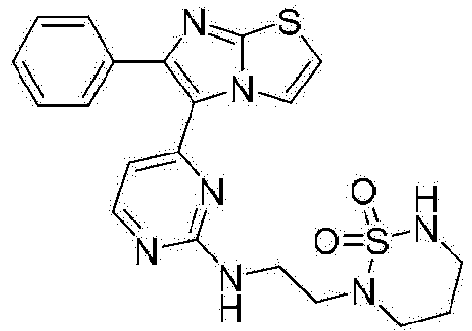
16I 
17I 
18I 
19I 
20I 
21I 
22I 
23I 
24I 
1II 
2II 
3II 
4II 
5II 
6II 
7II 
8II 
9II 
10II 
11II 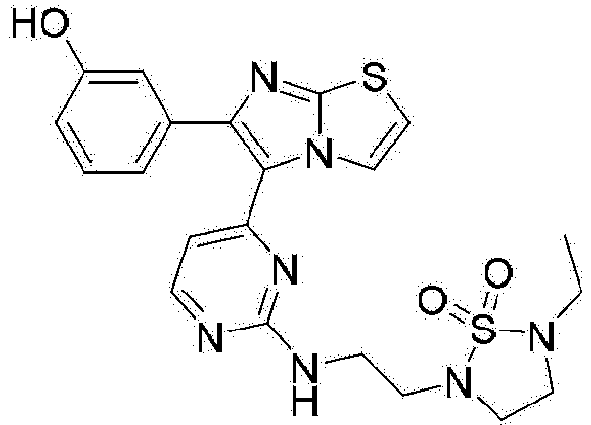
12II 
13II 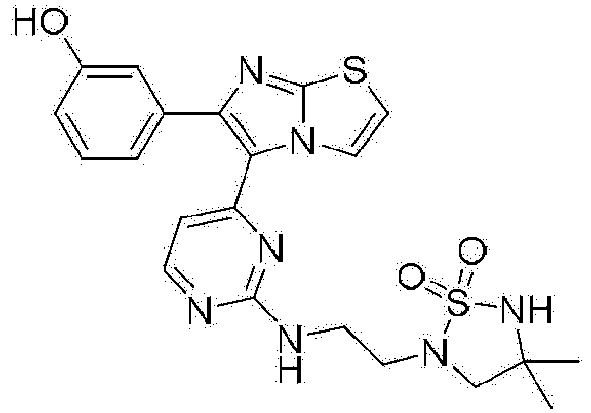
14II 
15II 
16II 
1III 
2III 
3III 
4III 
5III 
6III 
7III 
8III 
9III 
10III 
11III 
12III 
13III 
14III 
15III 
16III 
17III 
18III 
19III 
20III 
21III 
22III 
23III 
24III 
25III 
26III 
27III 
28III 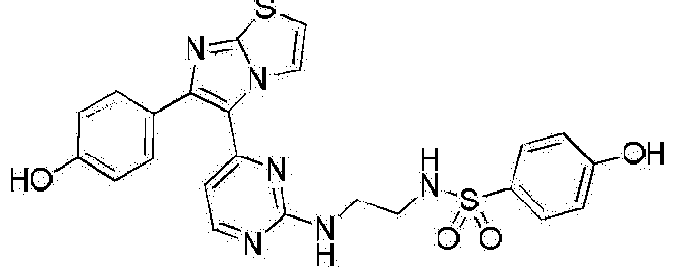
29III 
30III 31III 
1IV 2IV 
3IV 4IV 
5IV 6IV 
7IV 8IV 
9IV 10IV 
11IV 12IV 
13IV 14IV 
15IV 16IV 
17IV 18IV 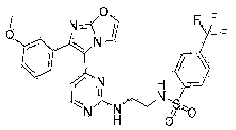
19IV 20IV 
21IV 22IV 
23IV 24IV 
25IV 26IV 
27IV 28IV 
29IV 30IV 
31IV 321V 
33IV 34IV 
35IV 36IV 
37IV 38IV 
39IV 
40IV 
41IV 
42IV 
43IV 
44IV 
45IV 
46IV 
47IV 
48IV 
49IV 
50IV 
51IV 
52IV 
53IV 
- To measure inhibitory activities of imidazooxazole- or imidazothiazole-based compounds according to the present disclosure against proliferation of cancer cells at a cell level, the following experiments were carried out.
- According to the standard protocol (http://dtp.nci.nih.gov/dtpstandard/dwindex/index.isp) of the US National Cancer Institute (NCI) (www.dtp.nci.nih.gov), screening of a cancer cell line panel was performed. Briefly, human cell lines were allowed to grow in an RPMI 1640 medium containing 5 % FBS and 2 mM L-glutamine. For a general screening experiment, cells were inoculated in 96-well microtiter plates in 100 µl at a plating density ranging from 5000 cells/well to 40,000 cells/well depending on the doubling time of individual cell lines. After cell inoculation, the microtiter plates were incubated at 37 °C, 5 % CO2, 95 % air, and 100 % relative humidity for 24 hours prior to addition of test compounds. 24 hours later, two plates of each cell line were fixed in situ with trichloroacetic acid (TCA) to measure the cell population for each cell line at the time of test compound addition (Tz). Test compounds were solubilized in dimethyl sulfoxide at 400-fold the intended final maximum test concentration, and stored frozen prior to use. At the time of compound addition, an aliquot of frozen concentrate was thawed and diluted to twice the intended final maximum test concentration with a complete medium containing 50 µg/ml of gentamicin. Additional four concentration of 10-fold or 1/2 log serial dilutions were made to provide a total of five compound concentrations plus control. Aliquots of 100 µl of these different compound dilutions were added to appropriate microtiter wells already containing 100 µl of medium, resulting in the required final compound concentrations.
- Following compound addition, the plates were incubated for additional 48 hours at 37 °C, 5 % CO2, 95 % air, and 100 % relative humidity. For adherent cells, the assay was terminated by the addition of cold TCA. Cells were fixed in situ by the gentle addition of 50 µl of cold 50 % (w/v) TCA (final concentration, 10% TAC) and incubated at 4 °C for 60 minutes. The supernatant was discarded, and the plates were washed five times with tap water and air-dried. A sulforhodamine B (SRB) solution (100 µl) at 0.4 %(w/v) in 1 % acetic acid was added to each well, and plates were incubated at room temperature for 10 minutes. After staining, unbound dye was removed by washing five times with 1% acetic acid and the plates were air-dried. Bound stain was subsequently solubilized with 10 mM Trizma base, and the absorbance was read on an automated plate reader at a wavelength of 515 nm. For suspension cells, the methodology was the same except that the assay was terminated by fixing settled cells at the bottom of the wells by gently adding 50 µl of 80 % TCA (final concentration, 16 % TCA). Using the seven absorbance measurements [time zero (Tz), control growth (C), and test growth rate in the presence of compound at the five concentration levels (Ti)], the growth percentage was calculated at each of the compound concentration levels. Growth inhibition percentage was calculated as follows:


- Table 2. IC50 values of main compounds against melanoma cell lines in vitro
[Table 2] 1II 2II 5II 6II 8II 2III 8III 25III 31III A375 0.06 0.19 0.87 0.47 0.058 ND ND 0.48 0.30 LOX IMVI ND 2.53 2.30 4.36 2.15 3.94 3.26 4.11 0.56 M14 ND 0.14 0.32 0.16 0.30 2.77 3.26 0.56 0.06 MDA-MB-435 ND 0.37 0.74 0.49 0.38 1.22 3.26 0.93 0.24 SK-MEL-2 ND 2.60 1.6 2.28 0.38 4.98 3.04 4.49 1.1 SK-MEL-28 ND 0.13 0.22 0.24 0.17 5.79 3.68 0.66 0.05 SK-MEL-5 ND 6.28 0.34 0.24 0.17 1.68 1.24 1.61 1.2 UACC-62 ND 0.07 0.09 0.058 0.059 1.17 0.48 0.26 0.02 - The test compounds showed proliferation-inhibitory activities against most of the melanoma cell lines shown in Table 2 (all 10 µM or less), indicating that the imidazooxazole- or imidazothiazole-based compounds according to the present disclosure have excellent inhibitory activities against melanoma.
- To examine whether the compounds (2II, 9II, 1011, and 1211 to 1511) of the present disclosure have remarkable effects, as compared with imidazothiazole-based compounds previously disclosed by the present inventors (M.S. Abdel-Maksoud et al./European Journal of Medicinal Chemistry 95 (2015) 453-463), inhibitory activities thereof against proliferation of A375P cell line which is a melanoma cell line were compared by the following experiments.
- A375P cell line purchased from ATCC was cultured in a DMEM medium [containing 10% FBS and 1% penicillin/streptomycin] under 5% CO2 at 37 °C. The cultured A375P cell line was collected using 0.05% trypsin-0.02% EDTA, and inoculated at a cell density of 5×10³ cells per well in a 96-well plate. To measure cell viability, MTT [3-(4,5-dimethylthiazol-2-yl)-2,5-diphenyltetrazolium bromide] assay (CellTiter 96 Assay, Promega) was performed as follows. MTT assay was performed in accordance with the guidelines of CellTiter 96® (Promega). EnVision 2103 was used to read a value at a wavelength of 590 nm, and IC50 was calculated using a software of GraphPad Prism 4.0.
- Table 3. Inhibitory activities (IC50 values (µM)) of main imidazothiazole-based compounds against proliferation of A375P cell line
[Table 3] Compound IC50 (A375P) 
1.90 
0.60 
0.38 
>10 
>10 
0.63 
0.06 
0.19 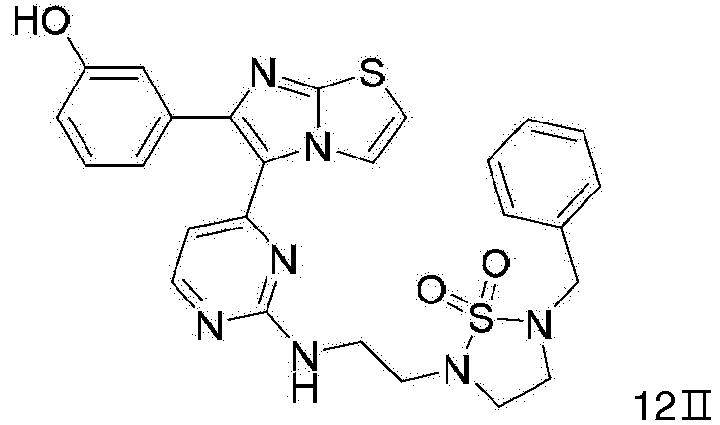
0.25 
0.87 
0.72 
0.47 
0.47 - As shown in Table 3, most of the compounds 2II, 9II, 1011, and 1211 to 1511 of the present disclosure were found to have excellent proliferation-inhibitory effects, as compared with the known imidazothiazole-based compounds P1 to P5. Particularly, when similar structures were compared with each other (compounds P1/9II, P2/10II, P3/2II, and P4/12II), it was more clearly found that the compounds of the present disclosure have more remarkable effects.
- Whether the imidazooxazole- and imidazothiazole-based compounds of the present disclosure inhibit kinase enzymatic activity involved with inhibitory activities against melanoma cell line proliferation was examined by the following method.
- Reaction biology kinase hotspot service (http://www.reactionbiology.com) was used to measure IC50. In a final reaction volume of 25 µL, kinase (5 mU to 10 mU) was incubated with 25 mM Tris (pH 7.5), 0.02 mM EGTA, 0.66 mg/ml of myelin basic protein, 10 mM magnesium acetate, and [33P-ATP] (specific activity of about 500 CPM/pmol, concentration as required). The reaction was initiated by addition of Mg-ATP mix. After incubation for 40 min at room temperature, the reaction was stopped by addition of 5 µl of a 3% phosphoric acid solution. 10 µL of the reaction was then spotted onto a P30 filtermat and washed three times for 5 minutes in 75 mM phosphoric acid and once in methanol prior to drying and scintillation counting.
- Table 4. Inhibitory effects against kinase activities of B-RAF, V600E-RAF, and C-RAF (nM)
[Table 4] B-RAF V600E-B-RAF C-RAF 1II 3.23 1.85 2.95 2II <0.04 0.67 0.75 2III 459 77 ND 8III 687 98 ND 25III 5.70 1.00 ND 31II 4.19 0.98 7.83 GW5074 8.52 2.96 2.58 Vemurafenib 100 31 48 - As shown in Table 4, among the compounds according to the present disclosure, the compounds 1II, 2II, 25III, and 31III showed excellent inhibitory effects against enzymatic activities of B-RAF, V600E-RAF, and C-RAF, which were higher than those of GW5074 and vemurafenib.
- Taken together, the compounds according to the present disclosure showed excellent inhibitory effects against protein kinases, in particular, many different protein kinases, for example, V600E RAF, B-RAF, C-RAF, MAPK14, FLT3, and GSK3β, each causing diseases associated with abnormal cell growth such as tumor cells, and thus the compounds may be usefully applied to prevention and treatment of tumor cell growth.
- To examine whether the inhibitory effects against proliferation of melanoma cells and the inhibitory effects against enzymatic activities of B-RAF, V600E-RAF, and C-RAF observed at the cell level are also reproduced in animal models, the following experiment was performed.
- In this experiment, A375P cell line which is a human-derived malignant melanoma cell line was subcutaneously administered to nude mice to prepare xenograft models, and the test material (compound 2II) was administered to the xenograft models to evaluate anti-cancer effects (G1: an excipient control group, G2: a group administered with 20 mg/kg/day of the test material, and G3: a group administered with 50 mg/kg/day of the test material).
- Results are shown in
FIG. 1 and Table 5 below. - Table 5. Increase of tumor size in melanoma xenograft models (compound 2II)
[Table 5] Day Group (mg/kg/day) G1 G2 G3 (0) (20 mg/kg/day) (50 mg/kg/day) 0 148.94±6.23 145.08±20.85 149.36±20.91 4 271.05±85.51 271.88±60.05 276.08±86.17 7 552.89±311.28 556.42±161.21 442.88±73.08 11 984.73±589.89 978.91±258.24 754.16±211.86 14 1697.7±931.04 1711.5±631.79 1174.7±411.22 18 2512.6±1491.9 2438.5±962.99 1543.9±411.21 21 3557.1±2162.2 3200.6±944.99 2063.1±657.93 - General symptoms were examined, and as a result, no deaths or no abnormalities in general symptoms were observed. Body weights were examined, and as a result, the body weight of the group (G3) administered with 50 mg/kg/day of the test material was significantly low at 14 days and 21 days after administration of the test material, as compared with that of the control group (G1), and the body weight gain of the group administered with 50 mg/kg/day of the test material was also significantly low, as compared with that of the excipient control group.
- Tumor sizes were measured, and as a result, there was no significant difference between all experimental groups, but it was observed that increase of the tumor size was inhibited in a dose-dependent manner in the groups administered with the test material.
- In conclusion, when intravenous administration of the test material to the malignant melanoma xenograft models prepared using nude mice was repeated twice per week for 3 weeks, increase of the tumor size was found to be inhibited in a dose-dependent manner, although the body weight of the test material-administered group was significantly low or tend to decrease and reduction in the body weight gain thereof was observed, as compared with that of the control group. Accordingly, it was confirmed that the compounds of the present disclosure show inhibitory activity against tumor growth in the animal test as well as at the cell level, suggesting that the compounds may have therapeutic and prophylactic effects on tumors.
Claims (10)
- A compound represented by the following Chemical Formula S or a solvate, stereoisomer, or pharmaceutically acceptable salt thereof, wherein:
 A is
A is when X is O, R1 is hydrogen, halogen, C1-C4 alkoxy, hydroxyl, or a combination thereof, andwhen X is S, R1 is hydrogen, Cl, Br, I, C1-C4 alkoxy, hydroxyl, or a combination thereof; andB is
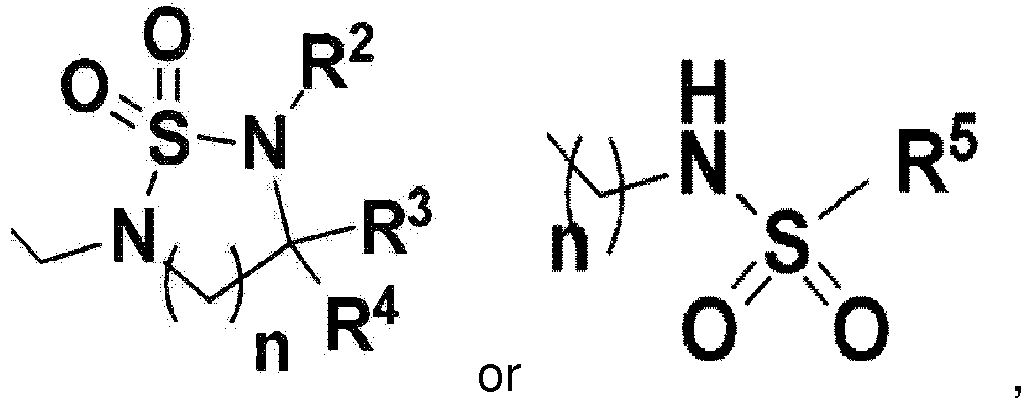 R2, R3, and R4 are each independently hydrogen, tert-butyloxycarbonyl, or C1-C4 linear or branched alkyl, C5-C12 aryl, C5-C12 heteroaryl, or C5-C12 heterocycloalkyl unsubstituted or substituted with one or more substituents, andR5 is X or X-Y, wherein X and Y are each independently C5-C12 aryl, C5-C12 heteroaryl, C5-C12 aryl, C1-C4 alkyl, C5-C12 heteroaryl, C1-C4 alkyl, C5-C12 cycloalkyl, or C5-C12 heterocycloalkyl unsubstituted or substituted with one or more substituents, wherein the one or more substituents are selected from the group consisting of halogen, C1-C4 linear or branched alkyl, C1-C4 alkoxy, trifluoromethyl, hydroxyl, amine, C1-C4 alkylamine, nitro, amide, C1-C4 alkylamide, urea, and acetyl.
 - The compound or the solvate, stereoisomer, or pharmaceutically acceptable salt thereof of claim 1, wherein,
when X is O, R1 is hydrogen, fluoro, methoxy, hydroxyl, or a combination thereof,
R2, R3, and R4 are each independently hydrogen, tert-butyloxycarbonyl, ethyl, methyl, or benzyl, and
R5 is phenyl unsubstituted or substituted with one or more substituents,
wherein the one or more substituents being selected from the group consisting of methyl, ethyl, fluoro, trifluoromethyl, hydroxyl, methoxy, nitro, amide, urea, and acetyl. - The compound or the solvate, stereoisomer, or pharmaceutically acceptable salt thereof of claim 1, wherein the Chemical Formula S is a compound represented by any one of the following Chemical Formulae I to IV:


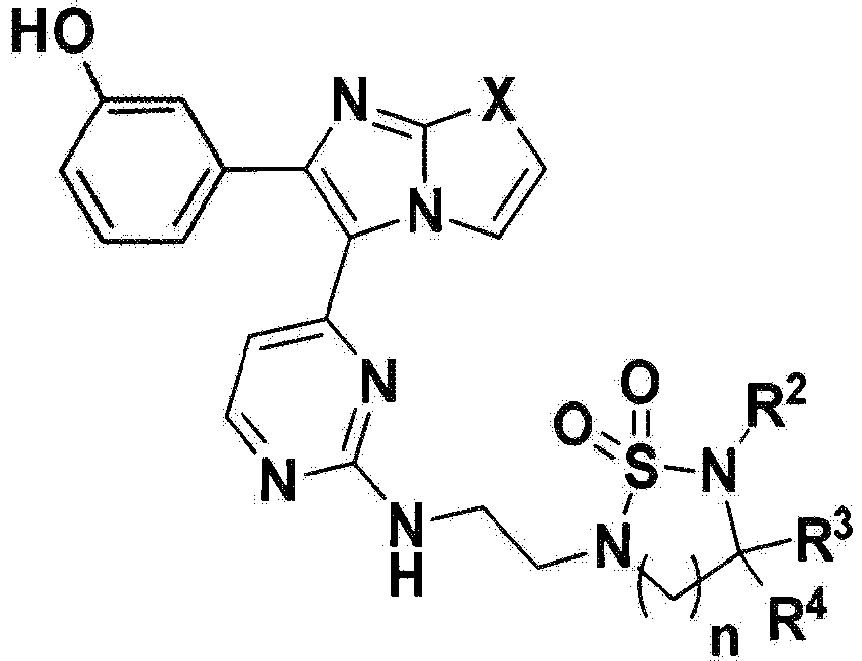


- The compound or the solvate, stereoisomer, or pharmaceutically acceptable salt thereof of claim 1, wherein the compound represented by Chemical Formula S is selected from the group consisting of:2-(2-((4-(6-(4-fluorophenyl)imidazo[2,1-b]oxazol-5-yl)pyrimidin-2-yl)amino)ethyl)-5-methyl-1,2,5-thiadiazolidine 1,1-dioxide;2-ethyl-5-(2-((4-(6-(4-fluorophenyl)imidazo[2,1-b]oxazol-5-yl)pyrimidin-2-yl)amino)ethyl)-1,2,5-thiadiazolidine 1,1-dioxide;2-benzyl-5-(2-((4-(6-(4-fluorophenyl)imidazo[2,1-b]oxazol-5-yl)pyrimidin-2-yl)amino)ethyl)-1,2,5-thiadiazolidine 1,1-dioxide;2-(2-((4-(6-(3-methoxyphenyl)imidazo[2,1-b]oxazol-5-yl)pyrimidin-2-yl)amino)ethyl)-5-methyl-1,2,5-thiadiazolidine 1,1-dioxide;2-ethyl-5-(2-((4-(6-(3-methoxyphenyl)imidazo[2,1-b]oxazol-5-yl)pyrimidin-2-yl)amino)ethyl)-1,2,5-thiadiazolidine 1,1-dioxide;2-benzyl-5-(2-((4-(6-(3-methoxyphenyl)imidazo[2,1-b]oxazol-5-yl)pyrimidin-2-yl)amino)ethyl)-1,2,5-thiadiazolidine 1,1-dioxide;2-(2-((4-(6-(3-methoxyphenyl)imidazo[2,1-b]oxazol-5-yl)pyrimidin-2-yl)amino)ethyl)-1,2,5-thiadiazolidine 1,1-dioxide;2-(2-((4-(6-(3-methoxyphenyl)imidazo[2,1-b]oxazol-5-yl)pyrimidin-2-yl)amino)ethyl)-4,4-dimethyl-1,2,5-thiadiazolidine 1,1-dioxide;2-(2-((4-(6-(3-methoxyphenyl)imidazo[2,1-b]oxazol-5-yl)pyrimidin-2-yl)amino)ethyl)-6-methyl-1,2,6-thiadiazinane 1,1-dioxide;2-(2-((4-(6-(3-methoxyphenyl)imidazo[2,1-b]oxazol-5-yl)pyrimidin-2-yl)amino)ethyl)-1,2,6-thiadiazinane 1,1-dioxide;2-(2-((4-(6-(3-hydroxylphenyl)imidazo[2,1-b]oxazol-5-yl)pyrimidin-2-yl)amino)ethyl)-5-methyl-1,2,5-thiadiazolidine 1,1-dioxide;2-ethyl-5-(2-((4-(6-(3-hydroxylphenyl)imidazo[2,1-b]oxazol-5-yl)pyrimidin-2-yl)amino)ethyl)-1,2,5-thiadiazolidine 1,1-dioxide;2-benzyl-5-(2-((4-(6-(3-hydroxylphenyl)imidazo[2,1-b]oxazol-5-yl)pyrimidin-2-yl)amino)ethyl)-1,2,5-thiadiazolidine 1,1-dioxide;2-(2-((4-(6-(3-hydroxylphenyl)imidazo[2,1-b]oxazol-5-yl)pyrimidin-2-yl)amino)ethyl)-1,2,5-thiadiazolidine 1,1-dioxide;2-(2-((4-(6-(3-hydroxylphenyl)imidazo[2,1-b]oxazol-5-yl)pyrimidin-2-yl)amino)ethyl)-4,4-dimethyl-1,2,5-thiadiazolidine 1,1-dioxide;2-(2-((4-(6-(3-hydroxylphenyl)imidazo[2,1-b]oxazol-5-yl)pyrimidin-2-yl)amino)ethyl)-6-methyl-1,2,6-thiadiazinane 1,1-dioxide;tert-butyl-6-(2-((4-(6-(3-hydroxylphenyl)imidazo[2,1-b]oxazol-5-yl)pyrimidin-2-yl)amino)ethyl)-1,2,6-thiadiazinane-2-carboxylate 1,1-dioxide;2-(2-((4-(6-(3-hydroxylphenyl)imidazo[2,1-b]oxazol-5-yl)pyrimidin-2-yl)amino)ethyl)-1,2,6-thiadiazinane 1,1-dioxide;4-fluoro-N-(2-((4-(6-phenylimidazo[2,1-b]thiazol-5-yl)pyrimidin-2-yl)amino)ethyl)benzenesulfonamide;4-methoxy-N-(2-((4-(6-phenylimidazo[2,1-b]thiazol-5-yl)pyrimidin-2-yl)amino)ethyl)benzenesulfonamide;4-methyl-N-(2-((4-(6-phenylimidazo[2,1-b]thiazol-5-yl)pyrimidin-2-yl)amino)ethyl)benzenesulfonamide;N-(2-((4-(6-(4-fluorophenyl)imidazo[2,1-b]oxazol-5-yl)pyrimidin-2-yl)amino)ethyl)benzenesulfonamide;3-fluoro-N-(2-((4-(6-(4-fluorophenyl)imidazo[2,1-b]oxazol-5-yl)pyrimidin-2-yl)amino)ethyl)benzenesulfonamide;4-fluoro-N-(2-((4-(6-(4-fluorophenyl)imidazo[2,1-b]oxazol-5-yl)pyrimidin-2-yl)amino)ethyl)benzenesulfonamide;N-(2-((4-(6-(4-fluorophenyl)imidazo[2,1-b]oxazol-5-yl)pyrimidin-2-yl)amino)ethyl)-4-iodobenzenesulfonamide;N-(2-((4-(6-(4-fluorophenyl)imidazo[2,1-b]oxazol-5-yl)pyrimidin-2-yl)amino)ethyl)-4-methoxybenzenesulfonamide;N-(2-((4-(6-(4-fluorophenyl)imidazo[2,1-b]oxazol-5-yl)pyrimidin-2-yl)amino)ethyl)-4-methylbenzenesulfonamide;N-(2-((4-(6-(4-fluorophenyl)imidazo[2,1-b]oxazol-5-yl)pyrimidin-2-yl)amino)ethyl)-4-(trifluoromethyl)benzenesulfonamide;N-(2-((4-(6-(4-fluorophenyl)imidazo[2,1-b]oxazol-5-yl)pyrimidin-2-yl)amino)ethyl)-3,4-dimethoxybenzenesulfonamide;N-(2-((4-(6-(4-fluorophenyl)imidazo[2,1-b]oxazol-5-yl)pyrimidin-2-yl)amino)ethyl)-3,4-dimethylbenzenesulfonamide;N-(2-((4-(6-(4-fluorophenyl)imidazo[2,1-b]oxazol-5-yl)pyrimidin-2-yl)amino)ethyl)naphthalene-2-sulfonamide;N-(2-((4-(6-(3-methoxyphenyl)imidazo[2,1-b]thiazol-5-yl)pyrimidin-2-yl)amino)ethyl)benzenesulfonamide;4-fluoro-N-(2-((4-(6-(3-methoxyphenyl)imidazo[2,1-b]thiazol-5-yl)pyrimidin-2-yl)amino)ethyl)benzenesulfonamide;4-methoxy-N-(2-((4-(6-(3-methoxyphenyl)imidazo[2,1-b]thiazol-5-yl)pyrimidin-2-yl)amino)ethyl)benzenesulfonamide;N-(2-((4-(6-(3-methoxyphenyl)imidazo[2,1-b]thiazol-5-yl)pyrimidin-2-yl)amino)ethyl)-4-methylbenzenesulfonamide;N-(2-((4-(6-(3-methoxyphenyl)imidazo[2,1-b]thiazol-5-yl)pyrimidin-2-yl)amino)ethyl)-4-(trifluoromethyl)benzenesulfonamide;3-fluoro-N-(2-((4-(6-(3-methoxyphenyl)imidazo[2,1-b]thiazol-5-yl)pyrimidin-2-yl)amino)ethyl)benzenesulfonamide;N-(2-((4-(6-(3-methoxyphenyl)imidazo[2,1-b]thiazol-5-yl)pyrimidin-2-yl)amino)ethyl)naphthalene-2-sulfonamide;4-fluoro-N-(2-((4-(6-(4-methoxyphenyl)imidazo[2,1-b]thiazol-5-yl)pyrimidin-2-yl)amino)ethyl)benzenesulfonamide;4-methoxy-N-(2-((4-(6-(4-methoxyphenyl)imidazo[2,1-b]thiazol-5-yl)pyrimidin-2-yl)amino)ethyl)benzenesulfonamide;N-(2-((4-(6-(4-methoxyphenyl)imidazo[2,1-b]thiazol-5-yl)pyrimidin-2-yl)amino)ethyl)-4-methylbenzenesulfonamide;N-(2-((4-(6-(4-methoxyphenyl)imidazo[2,1-b]thiazol-5-yl)pyrimidin-2-yl)amino)ethyl)naphthalene-2-sulfonamide;4-fluoro-N-(3-((4-(6-phenylimidazo[2,1-b]thiazol-5-yl)pyrimidin-2-yl)amino)propyl)benzenesulfonamide;4-methoxy-N-(3-((4-(6-phenylimidazo[2,1-b]thiazol-5-yl)pyrimidin-2-yl)amino)propyl)benzenesulfonamide;4-methyl-N-(3-((4-(6-phenylimidazo[2,1-b]thiazol-5-yl)pyrimidin-2-yl)amino)propyl)benzenesulfonamide;N-(3-((4-(6-(4-fluorophenyl)imidazo[2,1-b]oxazol-5-yl)pyrimidin-2-yl)amino)propyl)benzenesulfonamide;4-fluoro-N-(3-((4-(6-(4-fluorophenyl)imidazo[2,1-b]oxazol-5-yl)pyrimidin-2-yl)amino)propyl)benzenesulfonamide;N-(3-((4-(6-(4-fluorophenyl)imidazo[2,1-b]oxazol-5-yl)pyrimidin-2-yl)amino)propyl)-4-iodobenzenesulfonamide;N-(3-((4-(6-(4-fluorophenyl)imidazo[2,1-b]oxazol-5-yl)pyrimidin-2-yl)amino)propyl)-4-methoxybenzenesulfonamide;N-(3-((4-(6-(4-fluorophenyl)imidazo[2,1-b]oxazol-5-yl)pyrimidin-2-yl)amino)propyl)-4-methylbenzenesulfonamide;N-(3-((4-(6-(4-fluorophenyl)imidazo[2,1-b]oxazol-5-yl)pyrimidin-2-yl)amino)propyl)-4-(trifluoromethyl)benzenesulfonamide;3-fluoro-N-(3-((4-(6-(4-fluorophenyl)imidazo[2,1-b]oxazol-5-yl)pyrimidin-2-yl)amino)propyl)benzenesulfonamide;N-(3-((4-(6-(4-fluorophenyl)imidazo[2,1-b]oxazol-5-yl)pyrimidin-2-yl)amino)propyl)-3,4-dimethoxybenzenesulfonamide;N-(3-((4-(6-(4-fluorophenyl)imidazo[2,1-b]oxazol-5-yl)pyrimidin-2-yl)amino)propyl)-3,4-dimethylbenzenesulfonamide;N-(3-((4-(6-(4-fluorophenyl)imidazo[2,1-b]oxazol-5-yl)pyrimidin-2-yl)amino)propyl)naphthalene-2-sulfonamide;N-(3-((4-(6-(3-methoxyphenyl)imidazo[2,1-b]thiazol-5-yl)pyrimidin-2-yl)amino)propyl)benzenesulfonamide;3-fluoro-N-(3-((4-(6-(3-methoxyphenyl)imidazo[2,1-b]thiazol-5-yl)pyrimidin-2-yl)amino)propyl)benzenesulfonamide;4-fluoro-N-(3-((4-(6-(3-methoxyphenyl)imidazo[2,1-b]thiazol-5-yl)pyrimidin-2-yl)amino)propyl)benzenesulfonamide;4-methoxy-N-(3-((4-(6-(3-methoxyphenyl)imidazo[2,1-b]thiazol-5-yl)pyrimidin-2-yl)amino)propyl)benzenesulfonamide;N-(3-((4-(6-(3-methoxyphenyl)imidazo[2,1-b]thiazol-5-yl)pyrimidin-2-yl)amino)propyl)-4-methylbenzenesulfonamide;N-(3-((4-(6-(3-methoxyphenyl)imidazo[2,1-b]thiazol-5-yl)pyrimidin-2-yl)amino)propyl)naphthalene-2-sulfonamide;4-hydroxyl-N-(2-((4-(6-phenylimidazo[2,1-b]thiazol-5-yl)pyrimidin-2-yl)amino)ethyl)benzenesulfonamide;N-(2-((4-(6-(4-fluorophenyl)imidazo[2,1-b]oxazol-5-yl)pyrimidin-2-yl)amino)ethyl)-4-hydroxylbenzenesulfonamide;4-fluoro-N-(2-((4-(6-(3-hydroxylphenyl)imidazo[2,1-b]thiazol-5-yl)pyrimidin-2-yl)amino)ethyl)benzenesulfonamide;4-hydroxyl-N-(2-((4-(6-(3-hydroxylphenyl)imidazo[2,1-b]thiazol-5-yl)pyrimidin-2-yl)amino)ethyl)benzenesulfonamide;N-(2-((4-(6-(3-hydroxylphenyl)imidazo[2,1-b]thiazol-5-yl)pyrimidin-2-yl)amino)ethyl)-4-methylbenzenesulfonamide;4-hydroxyl-N-(2-((4-(6-(4-hydroxylphenyl)imidazo[2,1-b]thiazol-5-yl)pyrimidin-2-yl)amino)ethyl)benzenesulfonamide;N-(2-((4-(6-(4-hydroxylphenyl)imidazo[2,1-b]thiazol-5-yl)pyrimidin-2-yl)amino)ethylbenzenesulfonamide;N-(3-((4-(6-(4-fluorophenyl)imidazo[2,1-b]oxazol-5-yl)pyrimidin-2-yl)amino)propyl)-4-hydroxylbenzenesulfonamide;N-(3-((4-(6-(3-hydroxylphenyl)imidazo[2,1-b]thiazol-5-yl)pyrimidin-2-yl)amino)propyl)benzenesulfonamide; and4-fluoro-N-(3-((4-(6-(3-hydroxylphenyl)imidazo[2,1-b]thiazol-5-yl)pyrimidin-2-yl)amino)propyl)benzenesulfonamide.
- A method of preparing the compound or the solvate, stereoisomer, or pharmaceutically acceptable salt thereof of claim 1, the method comprising:cyclizing a compound of Chemical Formula 1 and a compound of Chemical Formula 2 to prepare a compound of Chemical Formula 3;reacting the compound of Chemical Formula 3 with 4-chloro-2-(methylthio)pyrimidine to prepare a compound of Chemical Formula 4;oxidizing the compound of Chemical Formula 4 to prepare a compound of Chemical Formula 5; andreacting the compound of Chemical Formula 5 with an N-aminoethylcyclic sulfonamide derivative or an N-(2-aminoethyl)benzenesulfonamide derivative in the presence of a base to prepare the compound of Chemical Formula S.


- A pharmaceutical composition for preventing and treating tumors, the pharmaceutical composition comprising the compound or the solvate, stereoisomer, or pharmaceutically acceptable salt thereof of claim 1 as an active ingredient.
- The pharmaceutical composition of claim 6, wherein the compound or the solvate, stereoisomer, or pharmaceutically acceptable salt thereof inhibits protein kinase to inhibit proliferation of tumor cells.
- The pharmaceutical composition of claim 7, wherein the protein kinase is selected from the group consisting of V600E RAF, B-RAF, C-RAF, mitogen-activated protein kinase 14 (MAPK14), Fms-like tyrosine kinase 3 (FLT3), and glycogen synthase kinase 3 beta (GSK3β).
- The pharmaceutical composition of claim 6, wherein the tumors are selected from the group consisting of lung cancer, liver cancer, esophageal cancer, stomach cancer, colorectal cancer, small intestine cancer, pancreatic cancer, melanoma, breast cancer, oral cancer, brain tumor, thyroid cancer, parathyroid cancer, renal cancer, cervical cancer, sarcoma, prostate cancer, urethral cancer, bladder cancer, testicular cancer, hematological malignancy, lymphoma, skin cancer, psoriasis, and fibroadenoma.
- A method of preventing or treating tumors, the method comprising administering the pharmaceutical composition of claim 6 to a subject having or at risk of developing a tumor.
Applications Claiming Priority (2)
| Application Number | Priority Date | Filing Date | Title |
|---|---|---|---|
| KR1020160085062A KR101948805B1 (en) | 2016-07-05 | 2016-07-05 | Imidazo[2,1-b]oxazole derivatives with anti-tumor activity and pharmaceutical compositions comprising the same |
| PCT/KR2017/007021 WO2018008920A1 (en) | 2016-07-05 | 2017-07-03 | Imidazooxazole derivative having antitumor effect, and pharmaceutical composition including same |
Publications (3)
| Publication Number | Publication Date |
|---|---|
| EP3483166A1 true EP3483166A1 (en) | 2019-05-15 |
| EP3483166A4 EP3483166A4 (en) | 2019-11-27 |
| EP3483166B1 EP3483166B1 (en) | 2023-11-01 |
Family
ID=60912897
Family Applications (1)
| Application Number | Title | Priority Date | Filing Date |
|---|---|---|---|
| EP17824476.0A Active EP3483166B1 (en) | 2016-07-05 | 2017-07-03 | Imidazooxazole derivative having antitumor effect, and pharmaceutical composition including same |
Country Status (6)
| Country | Link |
|---|---|
| US (1) | US10570155B2 (en) |
| EP (1) | EP3483166B1 (en) |
| JP (1) | JP6694531B2 (en) |
| KR (1) | KR101948805B1 (en) |
| CN (1) | CN109689659B (en) |
| WO (1) | WO2018008920A1 (en) |
Cited By (2)
| Publication number | Priority date | Publication date | Assignee | Title |
|---|---|---|---|---|
| EP3845539A1 (en) * | 2019-12-31 | 2021-07-07 | Korea Institute of Science and Technology | Imidazooxazole derivative having antitumor effect, and pharmaceutical composition including same |
| US11332479B2 (en) | 2016-07-05 | 2022-05-17 | Korea Institute Of Science And Technology | Imidazooxazole derivative having antitumor effect, and pharmaceutical composition including same |
Families Citing this family (3)
| Publication number | Priority date | Publication date | Assignee | Title |
|---|---|---|---|---|
| CN112194653B (en) * | 2020-11-21 | 2022-11-01 | 深圳泽医细胞治疗集团有限公司 | Pyrimidine benzimidazole heterozygote, preparation method and colon cancer resisting application |
| US11752118B2 (en) | 2020-12-02 | 2023-09-12 | Gongwin Biopharm Co., Ltd | Method for treating melanoma |
| US11795179B2 (en) * | 2020-12-30 | 2023-10-24 | University Of Sharjah | Discovery of imidazothiazole- and imidazooxazole-based selective HER4 kinase inhibitors as potential anticancer agents |
Family Cites Families (8)
| Publication number | Priority date | Publication date | Assignee | Title |
|---|---|---|---|---|
| CN1823072A (en) * | 2003-05-15 | 2006-08-23 | 艾科尔公司 | Inhibitors of P38 and methods of using the same |
| US7902192B2 (en) * | 2003-05-15 | 2011-03-08 | Arqule, Inc. | Inhibitors of P38 and methods of using the same |
| WO2007123892A2 (en) * | 2006-04-17 | 2007-11-01 | Arqule Inc. | Raf inhibitors and their uses |
| MX2009003650A (en) * | 2006-10-06 | 2009-04-22 | Abbott Lab | Novel imidazothiazoles and imidazoxazoles. |
| EP2103619A4 (en) * | 2006-12-14 | 2011-11-23 | Daiichi Sankyo Co Ltd | IMIDAZOTHIAZOLE DERIVATIVES |
| BRPI0921862A2 (en) | 2008-12-05 | 2015-12-29 | Arqule Inc | raf inhibitors and their uses |
| EP2869822B1 (en) * | 2012-07-09 | 2016-09-14 | Janssen Pharmaceutica, N.V. | Inhibitors of phosphodiesterase 10 enzyme |
| AU2015316719A1 (en) | 2015-02-03 | 2017-09-07 | Active Biotech Ab | Imidazo[2,1-b]thiazole and 5,6-dihydroimidazo[2,1-b]thiazole derivatives useful as S100-inhibitors |
-
2016
- 2016-07-05 KR KR1020160085062A patent/KR101948805B1/en active Active
-
2017
- 2017-07-03 US US16/315,263 patent/US10570155B2/en active Active
- 2017-07-03 CN CN201780054484.XA patent/CN109689659B/en active Active
- 2017-07-03 JP JP2018568680A patent/JP6694531B2/en active Active
- 2017-07-03 EP EP17824476.0A patent/EP3483166B1/en active Active
- 2017-07-03 WO PCT/KR2017/007021 patent/WO2018008920A1/en not_active Ceased
Cited By (2)
| Publication number | Priority date | Publication date | Assignee | Title |
|---|---|---|---|---|
| US11332479B2 (en) | 2016-07-05 | 2022-05-17 | Korea Institute Of Science And Technology | Imidazooxazole derivative having antitumor effect, and pharmaceutical composition including same |
| EP3845539A1 (en) * | 2019-12-31 | 2021-07-07 | Korea Institute of Science and Technology | Imidazooxazole derivative having antitumor effect, and pharmaceutical composition including same |
Also Published As
| Publication number | Publication date |
|---|---|
| JP2019524680A (en) | 2019-09-05 |
| CN109689659A (en) | 2019-04-26 |
| WO2018008920A1 (en) | 2018-01-11 |
| CN109689659B (en) | 2022-01-28 |
| EP3483166B1 (en) | 2023-11-01 |
| KR101948805B1 (en) | 2019-02-15 |
| KR20180005079A (en) | 2018-01-15 |
| JP6694531B2 (en) | 2020-05-13 |
| US20190211032A1 (en) | 2019-07-11 |
| EP3483166A4 (en) | 2019-11-27 |
| US10570155B2 (en) | 2020-02-25 |
Similar Documents
| Publication | Publication Date | Title |
|---|---|---|
| EP3483166B1 (en) | Imidazooxazole derivative having antitumor effect, and pharmaceutical composition including same | |
| EP2797927B1 (en) | THIENO[3,2-d]PYRIMIDINE DERIVATIVES HAVING INHIBITORY ACTIVITY FOR PROTEIN KINASES | |
| RU2636310C1 (en) | New tetrahydropyrimidine connection or its salt | |
| TW202404605A (en) | Pharmaceutical composition containing SOS1 inhibitor | |
| AU2019218187B2 (en) | Dioxinoquinoline compounds, preparation method and uses thereof | |
| WO2021000884A1 (en) | 2-aminopyrimidine compound and application thereof | |
| US11072596B2 (en) | Poly(ADP-ribose) polymerase inhibitor, preparation method and use | |
| EP3845539B1 (en) | Imidazooxazole derivative having antitumor effect, and pharmaceutical composition including same | |
| US11332479B2 (en) | Imidazooxazole derivative having antitumor effect, and pharmaceutical composition including same | |
| EP3750893B1 (en) | Dioxazoline compound, preparation method therefor, and uses thereof | |
| JP2021510704A (en) | 5- (Pyrimidine-4-yl) thiazole-2-ylurea derivative as a therapeutic agent | |
| KR102382641B1 (en) | Novel TYRO 3 inhibitory compounds, preparation method thereof, pharmaceutical composition for use in preventing or treating TYRO 3 relating diseases containing the same as an active ingredient | |
| JP7863272B2 (en) | Fluoroalkoxyalkylene-dihydroimidazo[5,1-D]tetradinone compounds and related compounds, and their use in the treatment of medical conditions | |
| JP2009545538A (en) | Effective analgesics and anti-inflammatory agents 2-heteroaryl-quinazolines and amidine derivatives of quinoline | |
| JP2026514636A (en) | Fluoroalkoxyalkylene-dihydroimidazo[5,1-D]tetradinone compounds and related compounds, and their use in the treatment of medical conditions | |
| HK40083035B (en) | Parp7 inhibitor and use thereof | |
| HK40066516B (en) | Derivatives of 4-(imidazo[1,2-a]pyridin-3-yl)-n-(pyridinyl)pyrimidin-2-amine as therapeutic agents |
Legal Events
| Date | Code | Title | Description |
|---|---|---|---|
| STAA | Information on the status of an ep patent application or granted ep patent |
Free format text: STATUS: THE INTERNATIONAL PUBLICATION HAS BEEN MADE |
|
| PUAI | Public reference made under article 153(3) epc to a published international application that has entered the european phase |
Free format text: ORIGINAL CODE: 0009012 |
|
| STAA | Information on the status of an ep patent application or granted ep patent |
Free format text: STATUS: REQUEST FOR EXAMINATION WAS MADE |
|
| 17P | Request for examination filed |
Effective date: 20190130 |
|
| AK | Designated contracting states |
Kind code of ref document: A1 Designated state(s): AL AT BE BG CH CY CZ DE DK EE ES FI FR GB GR HR HU IE IS IT LI LT LU LV MC MK MT NL NO PL PT RO RS SE SI SK SM TR |
|
| AX | Request for extension of the european patent |
Extension state: BA ME |
|
| DAV | Request for validation of the european patent (deleted) | ||
| DAX | Request for extension of the european patent (deleted) | ||
| A4 | Supplementary search report drawn up and despatched |
Effective date: 20191029 |
|
| RIC1 | Information provided on ipc code assigned before grant |
Ipc: C07D 417/14 20060101ALI20191023BHEP Ipc: C07D 513/04 20060101ALI20191023BHEP Ipc: A61K 31/429 20060101ALI20191023BHEP Ipc: A61K 31/506 20060101ALI20191023BHEP Ipc: A61K 31/424 20060101ALI20191023BHEP Ipc: C07D 498/04 20060101AFI20191023BHEP Ipc: A61K 31/433 20060101ALI20191023BHEP |
|
| STAA | Information on the status of an ep patent application or granted ep patent |
Free format text: STATUS: EXAMINATION IS IN PROGRESS |
|
| 17Q | First examination report despatched |
Effective date: 20220210 |
|
| GRAP | Despatch of communication of intention to grant a patent |
Free format text: ORIGINAL CODE: EPIDOSNIGR1 |
|
| STAA | Information on the status of an ep patent application or granted ep patent |
Free format text: STATUS: GRANT OF PATENT IS INTENDED |
|
| INTG | Intention to grant announced |
Effective date: 20230725 |
|
| GRAS | Grant fee paid |
Free format text: ORIGINAL CODE: EPIDOSNIGR3 |
|
| GRAA | (expected) grant |
Free format text: ORIGINAL CODE: 0009210 |
|
| STAA | Information on the status of an ep patent application or granted ep patent |
Free format text: STATUS: THE PATENT HAS BEEN GRANTED |
|
| AK | Designated contracting states |
Kind code of ref document: B1 Designated state(s): AL AT BE BG CH CY CZ DE DK EE ES FI FR GB GR HR HU IE IS IT LI LT LU LV MC MK MT NL NO PL PT RO RS SE SI SK SM TR |
|
| REG | Reference to a national code |
Ref country code: GB Ref legal event code: FG4D |
|
| REG | Reference to a national code |
Ref country code: CH Ref legal event code: EP |
|
| REG | Reference to a national code |
Ref country code: IE Ref legal event code: FG4D |
|
| REG | Reference to a national code |
Ref country code: DE Ref legal event code: R096 Ref document number: 602017076072 Country of ref document: DE |
|
| REG | Reference to a national code |
Ref country code: NO Ref legal event code: T2 Effective date: 20231101 |
|
| REG | Reference to a national code |
Ref country code: NL Ref legal event code: FP |
|
| REG | Reference to a national code |
Ref country code: LT Ref legal event code: MG9D |
|
| PG25 | Lapsed in a contracting state [announced via postgrant information from national office to epo] |
Ref country code: GR Free format text: LAPSE BECAUSE OF FAILURE TO SUBMIT A TRANSLATION OF THE DESCRIPTION OR TO PAY THE FEE WITHIN THE PRESCRIBED TIME-LIMIT Effective date: 20240202 |
|
| PG25 | Lapsed in a contracting state [announced via postgrant information from national office to epo] |
Ref country code: IS Free format text: LAPSE BECAUSE OF FAILURE TO SUBMIT A TRANSLATION OF THE DESCRIPTION OR TO PAY THE FEE WITHIN THE PRESCRIBED TIME-LIMIT Effective date: 20240301 |
|
| PG25 | Lapsed in a contracting state [announced via postgrant information from national office to epo] |
Ref country code: LT Free format text: LAPSE BECAUSE OF FAILURE TO SUBMIT A TRANSLATION OF THE DESCRIPTION OR TO PAY THE FEE WITHIN THE PRESCRIBED TIME-LIMIT Effective date: 20231101 |
|
| REG | Reference to a national code |
Ref country code: AT Ref legal event code: MK05 Ref document number: 1627127 Country of ref document: AT Kind code of ref document: T Effective date: 20231101 |
|
| PG25 | Lapsed in a contracting state [announced via postgrant information from national office to epo] |
Ref country code: AT Free format text: LAPSE BECAUSE OF FAILURE TO SUBMIT A TRANSLATION OF THE DESCRIPTION OR TO PAY THE FEE WITHIN THE PRESCRIBED TIME-LIMIT Effective date: 20231101 |
|
| PG25 | Lapsed in a contracting state [announced via postgrant information from national office to epo] |
Ref country code: ES Free format text: LAPSE BECAUSE OF FAILURE TO SUBMIT A TRANSLATION OF THE DESCRIPTION OR TO PAY THE FEE WITHIN THE PRESCRIBED TIME-LIMIT Effective date: 20231101 |
|
| PG25 | Lapsed in a contracting state [announced via postgrant information from national office to epo] |
Ref country code: LT Free format text: LAPSE BECAUSE OF FAILURE TO SUBMIT A TRANSLATION OF THE DESCRIPTION OR TO PAY THE FEE WITHIN THE PRESCRIBED TIME-LIMIT Effective date: 20231101 Ref country code: IS Free format text: LAPSE BECAUSE OF FAILURE TO SUBMIT A TRANSLATION OF THE DESCRIPTION OR TO PAY THE FEE WITHIN THE PRESCRIBED TIME-LIMIT Effective date: 20240301 Ref country code: GR Free format text: LAPSE BECAUSE OF FAILURE TO SUBMIT A TRANSLATION OF THE DESCRIPTION OR TO PAY THE FEE WITHIN THE PRESCRIBED TIME-LIMIT Effective date: 20240202 Ref country code: ES Free format text: LAPSE BECAUSE OF FAILURE TO SUBMIT A TRANSLATION OF THE DESCRIPTION OR TO PAY THE FEE WITHIN THE PRESCRIBED TIME-LIMIT Effective date: 20231101 Ref country code: BG Free format text: LAPSE BECAUSE OF FAILURE TO SUBMIT A TRANSLATION OF THE DESCRIPTION OR TO PAY THE FEE WITHIN THE PRESCRIBED TIME-LIMIT Effective date: 20240201 Ref country code: AT Free format text: LAPSE BECAUSE OF FAILURE TO SUBMIT A TRANSLATION OF THE DESCRIPTION OR TO PAY THE FEE WITHIN THE PRESCRIBED TIME-LIMIT Effective date: 20231101 Ref country code: PT Free format text: LAPSE BECAUSE OF FAILURE TO SUBMIT A TRANSLATION OF THE DESCRIPTION OR TO PAY THE FEE WITHIN THE PRESCRIBED TIME-LIMIT Effective date: 20240301 |
|
| PG25 | Lapsed in a contracting state [announced via postgrant information from national office to epo] |
Ref country code: SE Free format text: LAPSE BECAUSE OF FAILURE TO SUBMIT A TRANSLATION OF THE DESCRIPTION OR TO PAY THE FEE WITHIN THE PRESCRIBED TIME-LIMIT Effective date: 20231101 Ref country code: RS Free format text: LAPSE BECAUSE OF FAILURE TO SUBMIT A TRANSLATION OF THE DESCRIPTION OR TO PAY THE FEE WITHIN THE PRESCRIBED TIME-LIMIT Effective date: 20231101 Ref country code: PL Free format text: LAPSE BECAUSE OF FAILURE TO SUBMIT A TRANSLATION OF THE DESCRIPTION OR TO PAY THE FEE WITHIN THE PRESCRIBED TIME-LIMIT Effective date: 20231101 Ref country code: LV Free format text: LAPSE BECAUSE OF FAILURE TO SUBMIT A TRANSLATION OF THE DESCRIPTION OR TO PAY THE FEE WITHIN THE PRESCRIBED TIME-LIMIT Effective date: 20231101 Ref country code: HR Free format text: LAPSE BECAUSE OF FAILURE TO SUBMIT A TRANSLATION OF THE DESCRIPTION OR TO PAY THE FEE WITHIN THE PRESCRIBED TIME-LIMIT Effective date: 20231101 |
|
| PG25 | Lapsed in a contracting state [announced via postgrant information from national office to epo] |
Ref country code: DK Free format text: LAPSE BECAUSE OF FAILURE TO SUBMIT A TRANSLATION OF THE DESCRIPTION OR TO PAY THE FEE WITHIN THE PRESCRIBED TIME-LIMIT Effective date: 20231101 |
|
| PG25 | Lapsed in a contracting state [announced via postgrant information from national office to epo] |
Ref country code: CZ Free format text: LAPSE BECAUSE OF FAILURE TO SUBMIT A TRANSLATION OF THE DESCRIPTION OR TO PAY THE FEE WITHIN THE PRESCRIBED TIME-LIMIT Effective date: 20231101 |
|
| PG25 | Lapsed in a contracting state [announced via postgrant information from national office to epo] |
Ref country code: SK Free format text: LAPSE BECAUSE OF FAILURE TO SUBMIT A TRANSLATION OF THE DESCRIPTION OR TO PAY THE FEE WITHIN THE PRESCRIBED TIME-LIMIT Effective date: 20231101 |
|
| PG25 | Lapsed in a contracting state [announced via postgrant information from national office to epo] |
Ref country code: SM Free format text: LAPSE BECAUSE OF FAILURE TO SUBMIT A TRANSLATION OF THE DESCRIPTION OR TO PAY THE FEE WITHIN THE PRESCRIBED TIME-LIMIT Effective date: 20231101 Ref country code: SK Free format text: LAPSE BECAUSE OF FAILURE TO SUBMIT A TRANSLATION OF THE DESCRIPTION OR TO PAY THE FEE WITHIN THE PRESCRIBED TIME-LIMIT Effective date: 20231101 Ref country code: IT Free format text: LAPSE BECAUSE OF FAILURE TO SUBMIT A TRANSLATION OF THE DESCRIPTION OR TO PAY THE FEE WITHIN THE PRESCRIBED TIME-LIMIT Effective date: 20231101 Ref country code: EE Free format text: LAPSE BECAUSE OF FAILURE TO SUBMIT A TRANSLATION OF THE DESCRIPTION OR TO PAY THE FEE WITHIN THE PRESCRIBED TIME-LIMIT Effective date: 20231101 Ref country code: DK Free format text: LAPSE BECAUSE OF FAILURE TO SUBMIT A TRANSLATION OF THE DESCRIPTION OR TO PAY THE FEE WITHIN THE PRESCRIBED TIME-LIMIT Effective date: 20231101 Ref country code: CZ Free format text: LAPSE BECAUSE OF FAILURE TO SUBMIT A TRANSLATION OF THE DESCRIPTION OR TO PAY THE FEE WITHIN THE PRESCRIBED TIME-LIMIT Effective date: 20231101 |
|
| REG | Reference to a national code |
Ref country code: DE Ref legal event code: R097 Ref document number: 602017076072 Country of ref document: DE |
|
| PLBE | No opposition filed within time limit |
Free format text: ORIGINAL CODE: 0009261 |
|
| STAA | Information on the status of an ep patent application or granted ep patent |
Free format text: STATUS: NO OPPOSITION FILED WITHIN TIME LIMIT |
|
| 26N | No opposition filed |
Effective date: 20240802 |
|
| PG25 | Lapsed in a contracting state [announced via postgrant information from national office to epo] |
Ref country code: SI Free format text: LAPSE BECAUSE OF FAILURE TO SUBMIT A TRANSLATION OF THE DESCRIPTION OR TO PAY THE FEE WITHIN THE PRESCRIBED TIME-LIMIT Effective date: 20231101 |
|
| PG25 | Lapsed in a contracting state [announced via postgrant information from national office to epo] |
Ref country code: SI Free format text: LAPSE BECAUSE OF FAILURE TO SUBMIT A TRANSLATION OF THE DESCRIPTION OR TO PAY THE FEE WITHIN THE PRESCRIBED TIME-LIMIT Effective date: 20231101 |
|
| PG25 | Lapsed in a contracting state [announced via postgrant information from national office to epo] |
Ref country code: MC Free format text: LAPSE BECAUSE OF FAILURE TO SUBMIT A TRANSLATION OF THE DESCRIPTION OR TO PAY THE FEE WITHIN THE PRESCRIBED TIME-LIMIT Effective date: 20231101 |
|
| PG25 | Lapsed in a contracting state [announced via postgrant information from national office to epo] |
Ref country code: LU Free format text: LAPSE BECAUSE OF NON-PAYMENT OF DUE FEES Effective date: 20240703 |
|
| PG25 | Lapsed in a contracting state [announced via postgrant information from national office to epo] |
Ref country code: LU Free format text: LAPSE BECAUSE OF NON-PAYMENT OF DUE FEES Effective date: 20240703 |
|
| PG25 | Lapsed in a contracting state [announced via postgrant information from national office to epo] |
Ref country code: BE Free format text: LAPSE BECAUSE OF NON-PAYMENT OF DUE FEES Effective date: 20240731 |
|
| REG | Reference to a national code |
Ref country code: BE Ref legal event code: MM Effective date: 20240731 |
|
| PG25 | Lapsed in a contracting state [announced via postgrant information from national office to epo] |
Ref country code: IE Free format text: LAPSE BECAUSE OF NON-PAYMENT OF DUE FEES Effective date: 20240703 |
|
| PGFP | Annual fee paid to national office [announced via postgrant information from national office to epo] |
Ref country code: NL Payment date: 20250722 Year of fee payment: 9 |
|
| PG25 | Lapsed in a contracting state [announced via postgrant information from national office to epo] |
Ref country code: FI Free format text: LAPSE BECAUSE OF FAILURE TO SUBMIT A TRANSLATION OF THE DESCRIPTION OR TO PAY THE FEE WITHIN THE PRESCRIBED TIME-LIMIT Effective date: 20231101 |
|
| PGFP | Annual fee paid to national office [announced via postgrant information from national office to epo] |
Ref country code: DE Payment date: 20250721 Year of fee payment: 9 |
|
| PGFP | Annual fee paid to national office [announced via postgrant information from national office to epo] |
Ref country code: NO Payment date: 20250715 Year of fee payment: 9 |
|
| PGFP | Annual fee paid to national office [announced via postgrant information from national office to epo] |
Ref country code: GB Payment date: 20250722 Year of fee payment: 9 |
|
| PGFP | Annual fee paid to national office [announced via postgrant information from national office to epo] |
Ref country code: FR Payment date: 20250725 Year of fee payment: 9 |
|
| PGFP | Annual fee paid to national office [announced via postgrant information from national office to epo] |
Ref country code: CH Payment date: 20250801 Year of fee payment: 9 |
|
| PG25 | Lapsed in a contracting state [announced via postgrant information from national office to epo] |
Ref country code: RO Free format text: LAPSE BECAUSE OF FAILURE TO SUBMIT A TRANSLATION OF THE DESCRIPTION OR TO PAY THE FEE WITHIN THE PRESCRIBED TIME-LIMIT Effective date: 20231101 |
|
| PG25 | Lapsed in a contracting state [announced via postgrant information from national office to epo] |
Ref country code: CY Free format text: LAPSE BECAUSE OF FAILURE TO SUBMIT A TRANSLATION OF THE DESCRIPTION OR TO PAY THE FEE WITHIN THE PRESCRIBED TIME-LIMIT; INVALID AB INITIO Effective date: 20170703 |
|
| PG25 | Lapsed in a contracting state [announced via postgrant information from national office to epo] |
Ref country code: HU Free format text: LAPSE BECAUSE OF FAILURE TO SUBMIT A TRANSLATION OF THE DESCRIPTION OR TO PAY THE FEE WITHIN THE PRESCRIBED TIME-LIMIT; INVALID AB INITIO Effective date: 20170703 |