EP3481827B1 - Imidazo[1,2-a]pyridine derivatives, methods for preparing the same and use thereof - Google Patents
Imidazo[1,2-a]pyridine derivatives, methods for preparing the same and use thereof Download PDFInfo
- Publication number
- EP3481827B1 EP3481827B1 EP17824485.1A EP17824485A EP3481827B1 EP 3481827 B1 EP3481827 B1 EP 3481827B1 EP 17824485 A EP17824485 A EP 17824485A EP 3481827 B1 EP3481827 B1 EP 3481827B1
- Authority
- EP
- European Patent Office
- Prior art keywords
- pyridin
- methanone
- amino
- dimethylimidazo
- dimethylbenzyl
- Prior art date
- Legal status (The legal status is an assumption and is not a legal conclusion. Google has not performed a legal analysis and makes no representation as to the accuracy of the status listed.)
- Active
Links
- FUQGQCLZWOJDKI-UHFFFAOYSA-N CC(C1)(CN1C(c(cc1NCc2c(C)cccc2C)c[n]2c1nc(C)c2C)=O)O Chemical compound CC(C1)(CN1C(c(cc1NCc2c(C)cccc2C)c[n]2c1nc(C)c2C)=O)O FUQGQCLZWOJDKI-UHFFFAOYSA-N 0.000 description 1
- CQWLDBCFJQZZQW-UHFFFAOYSA-N Cc1c(C)nc(c(NCc(c(C)c2)ccc2F)c2)[n]1cc2C(N1CCC1)=O Chemical compound Cc1c(C)nc(c(NCc(c(C)c2)ccc2F)c2)[n]1cc2C(N1CCC1)=O CQWLDBCFJQZZQW-UHFFFAOYSA-N 0.000 description 1
- DNMUAAWOZWKDDJ-UHFFFAOYSA-N Cc1c(C)nc(c(NCc2c(C)ccc(F)c2C)c2)[n]1cc2C(N(C1)CC1O)=O Chemical compound Cc1c(C)nc(c(NCc2c(C)ccc(F)c2C)c2)[n]1cc2C(N(C1)CC1O)=O DNMUAAWOZWKDDJ-UHFFFAOYSA-N 0.000 description 1
Images

Classifications
-
- C—CHEMISTRY; METALLURGY
- C07—ORGANIC CHEMISTRY
- C07D—HETEROCYCLIC COMPOUNDS
- C07D471/00—Heterocyclic compounds containing nitrogen atoms as the only ring hetero atoms in the condensed system, at least one ring being a six-membered ring with one nitrogen atom, not provided for by groups C07D451/00 - C07D463/00
- C07D471/02—Heterocyclic compounds containing nitrogen atoms as the only ring hetero atoms in the condensed system, at least one ring being a six-membered ring with one nitrogen atom, not provided for by groups C07D451/00 - C07D463/00 in which the condensed system contains two hetero rings
- C07D471/04—Ortho-condensed systems
-
- A—HUMAN NECESSITIES
- A61—MEDICAL OR VETERINARY SCIENCE; HYGIENE
- A61K—PREPARATIONS FOR MEDICAL, DENTAL OR TOILETRY PURPOSES
- A61K31/00—Medicinal preparations containing organic active ingredients
- A61K31/33—Heterocyclic compounds
- A61K31/395—Heterocyclic compounds having nitrogen as a ring hetero atom, e.g. guanethidine or rifamycins
- A61K31/397—Heterocyclic compounds having nitrogen as a ring hetero atom, e.g. guanethidine or rifamycins having four-membered rings, e.g. azetidine
-
- A—HUMAN NECESSITIES
- A61—MEDICAL OR VETERINARY SCIENCE; HYGIENE
- A61K—PREPARATIONS FOR MEDICAL, DENTAL OR TOILETRY PURPOSES
- A61K31/00—Medicinal preparations containing organic active ingredients
- A61K31/33—Heterocyclic compounds
- A61K31/395—Heterocyclic compounds having nitrogen as a ring hetero atom, e.g. guanethidine or rifamycins
- A61K31/435—Heterocyclic compounds having nitrogen as a ring hetero atom, e.g. guanethidine or rifamycins having six-membered rings with one nitrogen as the only ring hetero atom
- A61K31/4353—Heterocyclic compounds having nitrogen as a ring hetero atom, e.g. guanethidine or rifamycins having six-membered rings with one nitrogen as the only ring hetero atom ortho- or peri-condensed with heterocyclic ring systems
- A61K31/437—Heterocyclic compounds having nitrogen as a ring hetero atom, e.g. guanethidine or rifamycins having six-membered rings with one nitrogen as the only ring hetero atom ortho- or peri-condensed with heterocyclic ring systems the heterocyclic ring system containing a five-membered ring having nitrogen as a ring hetero atom, e.g. indolizine, beta-carboline
-
- A—HUMAN NECESSITIES
- A61—MEDICAL OR VETERINARY SCIENCE; HYGIENE
- A61P—SPECIFIC THERAPEUTIC ACTIVITY OF CHEMICAL COMPOUNDS OR MEDICINAL PREPARATIONS
- A61P1/00—Drugs for disorders of the alimentary tract or the digestive system
-
- A—HUMAN NECESSITIES
- A61—MEDICAL OR VETERINARY SCIENCE; HYGIENE
- A61P—SPECIFIC THERAPEUTIC ACTIVITY OF CHEMICAL COMPOUNDS OR MEDICINAL PREPARATIONS
- A61P1/00—Drugs for disorders of the alimentary tract or the digestive system
- A61P1/04—Drugs for disorders of the alimentary tract or the digestive system for ulcers, gastritis or reflux esophagitis, e.g. antacids, inhibitors of acid secretion, mucosal protectants
-
- C—CHEMISTRY; METALLURGY
- C07—ORGANIC CHEMISTRY
- C07D—HETEROCYCLIC COMPOUNDS
- C07D403/00—Heterocyclic compounds containing two or more hetero rings, having nitrogen atoms as the only ring hetero atoms, not provided for by group C07D401/00
- C07D403/02—Heterocyclic compounds containing two or more hetero rings, having nitrogen atoms as the only ring hetero atoms, not provided for by group C07D401/00 containing two hetero rings
- C07D403/06—Heterocyclic compounds containing two or more hetero rings, having nitrogen atoms as the only ring hetero atoms, not provided for by group C07D401/00 containing two hetero rings linked by a carbon chain containing only aliphatic carbon atoms
-
- C—CHEMISTRY; METALLURGY
- C07—ORGANIC CHEMISTRY
- C07D—HETEROCYCLIC COMPOUNDS
- C07D519/00—Heterocyclic compounds containing more than one system of two or more relevant hetero rings condensed among themselves or condensed with a common carbocyclic ring system not provided for in groups C07D453/00 or C07D455/00
Definitions
- the present disclosure relates to imidazo[1,2- a ]pyridine derivatives that exhibit an excellent activity of inhibiting gastric acid secretion, methods for preparing the same, and the use thereof.
- Gastrointestinal inflammatory diseases or gastric acid-related diseases including peptic ulcer, gastric and duodenal ulcer, gastroesophageal reflux disease (GERD), nonerosive reflux disease (NERD) and the like, are the most common gastrointestinal diseases that affect most people in the world, including Korea.
- Antiulcer agents which are classified as agents for treating such diseases, are divided into two categories: drugs that inhibit aggressive factors such as gastric acid or pepsin; and drugs that enhance defensive factors such as sucralfate or misoprostol.
- drugs that inhibit aggressive factors such as gastric acid or pepsin
- drugs that enhance defensive factors such as sucralfate or misoprostol.
- various drugs have been used in the past as agent to inhibit aggressive factors such as antacids, anticholinergic drugs, H 2 receptor antagonists, proton pump inhibitors (PPIs) and the like.
- PPIs proton pump inhibitor
- PAI proton pump inhibitor
- the proton pump is H + /K + -ATPase that releases H + into parietal cells and absorbs K + in the final stage of a gastric acid secretion response caused by binding of various acid secretion stimulators (histamine, acetylcholine, gastrin and the like) to their receptors present in parietal cells in vivo.
- acid secretion stimulators histamine, acetylcholine, gastrin and the like
- PPIs proton pump inhibitors
- drugs that inhibit gastric acid secretion by inhibiting the H + /K + -ATPase of parietal cells, which is the final stage of gastric acid secretion.
- GPIs proton pump inhibitors
- PPIs proton pump inhibitors
- PPIs proton pump inhibitors
- P-CAB potassium competitive acid blocker
- the reversible potassium competitive acid blockers (P-CABs) will exhibit fast efficacy in view of their mechanism, will be easily taken before or after a meal, and will be very effective in nighttime symptoms, which is a problem of irreversible proton pump inhibitors.
- the present disclosure also relates to reversible proton pump inhibitors (P-CABs), and typical examples of reversible proton pump inhibitors known in the art include pyrrole derivative TAK-438 [Takeda Pharmaceutical Co. Ltd.; WO2007/026916 ], pyrrolo[2,3-c]pyridine YH-4808 [Yuhan Corp.; WO2006/025716 ], 1 H -benzo[ d ]imidazole derivative CJ-12420 [Pfizer Inc., Japan, Raqualia Pharma Inc.; WO2007/072146 ], and imidazo[1,2- a ]pyridine derivative AZD0865 [AstraZeneca AB; WO99/55705 and WO99/55706 ].
- P-CABs reversible proton pump inhibitors
- the present inventors have studied to develop low-molecular-weight reversible proton pump inhibitors that can be effectively used for the prevention or treatment of gastrointestinal inflammatory diseases or gastric acid-related diseases, including peptic ulcer, gastric and duodenal ulcer, gastritis, gastroesophageal reflux disease (GERD), nonerosive reflux disease (NERD) and the like.
- GUD gastroesophageal reflux disease
- NERD nonerosive reflux disease
- the present inventors have prepared novel imidazo[1,2- a ]pyridine derivatives during such studies and have found that these derivatives exhibit excellent proton pump inhibitory activity, thereby completing the present disclosure.
- Another object of the present disclosure is to provide a pharmaceutical composition for preventing or treating a disease caused by excessive secretion of gastric acid, the composition containing the imidazo[1,2- a ]pyridine derivative as an active ingredient.
- Still another object of the present disclosure is to provide the use of the imidazo[1,2- a ]pyridine derivative for prevention or treatment of a disease caused by excessive secretion of gastric acid.
- Yet another object of the present disclosure is to provide a method for preventing or treating a disease caused by excessive secretion of gastric acid, the method comprising administering the imidazo[1,2- a ]pyridine derivative.
- novel imidazo[1,2- a ]pyridine derivatives are prepared and these derivatives are effective in the treatment of diseases caused by gastric acid excess secretion by inhibiting the secretion of gastric acid.
- the present disclosure provides an imidazo[1,2- a ]pyridine derivative represented by the following formula 1 or a pharmaceutically acceptable salt thereof: wherein
- pharmaceutically acceptable salts may be those that are generally used in the art such as acid addition salts that are formed by pharmaceutically acceptable free acids, but not limited thereto.
- the pharmaceutically acceptable free acids may be organic acids and inorganic acids.
- the inorganic acids may include hydrochloric acid, phosphoric acid, sulfuric acid, nitric acid and the like, and the organic acid may include methanesulfonic acid, p-toluenesulfonic acid, acetic acid, trifluoroacetic acid, maleic acid, succinic acid, oxalic acid, benzoic acid, tartaric acid, fumaric acid, mandelic acid, propionic acid, citric acid, lactic acid, glycolic acid, gluconic acid, galacturonic acid, glutamic acid, glutaric acid, glucuronic acid, aspartic acid, ascorbic acid, carbonic acid, vinylic acid and the like.
- a pharmaceutically acceptable metal salt may be prepared using a base.
- an alkali metal or alkaline earth metal salt of a compound may be prepared by dissolving the compound in an excess of an alkali metal hydroxide or alkaline earth metal hydroxide solution, filtering an undissolved compound salt, and evaporating and drying the filtrate.
- a pharmaceutically acceptable metal salt suitable for pharmaceutical use is sodium, potassium or calcium salt, but is not limited thereto.
- the compounds of formula 1 according to the present disclosure include solvates and hydrates that can be prepared from pharmaceutically acceptable salts, and all possible optical isomers, stereoisomers and mixtures thereof also fall within the scope of the present disclosure.
- solvates, hydrates and stereoisomers of the compounds represented by formula 1 may be prepared using conventional methods known in the art.
- the compound of formula 1 according to the present disclosure may be prepared in a crystalline form or an amorphous form.
- the compound of formula 1 may optionally be hydrated or solvated.
- the present disclosure provides methods for preparation of the imidazo[1,2- a ]pyridine derivatives represented by formula 1 or pharmaceutically acceptable salts thereof.
- the compounds of formula 1 can be prepared by the method shown in reaction scheme 1 below, but are not limited thereto. Particularly, any person skilled in the art will sufficiently understand that the compounds of formula 1 according to the present disclosure can be prepared by various methods using known techniques well known in the art.
- Reaction scheme 1 shown below show each step of a method for preparing representative compounds according to the present disclosure, and various compounds according to the present disclosure can be prepared by modifications that change reagents, solvents and reaction sequences, which are used in the preparation process shown in reaction scheme 1 below.
- reagents, solvents and reaction sequences which are used in the preparation process shown in reaction scheme 1 below.
- Several compounds according to the present disclosure can be prepared according to processes that do not fall within the scope of reaction scheme 1 shown below, and specific processes for preparation of such compounds will be described in detail in the Examples below.
- the derivatives of formula 1 or pharmaceutically acceptable salts thereof can be prepared by a method comprising the steps of:
- step 1 a carboxylic acid alkyl ester of formula 2, which can be easily synthesized using a known technique ( WO 99/055705 or WO 99/055706 ), is reacted with substituted benzyl halide (e.g., 2,6-dimethylbenzyl chloride or 4-fluoro-2-methylbenzyl bromide) in the presence of a base such as potassium carbonate and a catalytic amount of sodium iodide, thereby preparing a substituted benzylamino imidazolopyridine compound of formula 3.
- a base such as potassium carbonate
- a catalytic amount of sodium iodide thereby preparing a substituted benzylamino imidazolopyridine compound of formula 3.
- This reaction is benzylation of amine acid compound with benzyl halide and is performed in the presence of a base that may be used in benzylation.
- Examples of a base that may be used for this purpose include sodium hydride (NaH), potassium carbonate, sodium carbonate, cesium carbonate, sodium or potassium alkoxides, etc.
- the reaction is preferably performed in the presence of a solvent that does not adversely affect the reaction, and examples of this solvent include dichloromethane, chloroform, tetrahydrofuran, diethylether, toluene, N,N-dimethylformamide or acetonitrile.
- the reaction temperature is not particularly limited, but the reaction may generally be performed at cold temperature or warm temperature, preferably room temperature or warm temperature.
- step 2 an aqueous solution of potassium hydroxide or sodium hydroxide is slowly added dropwise to the compound of formula 3 prepared in step 1, thereby preparing a hydrolyzed carboxylic acid compound of formula (4).
- the reaction in step 2 is performed in an alcohol solvent such as methanol or ethanol, which does not adversely affect the reaction.
- the reaction temperature is not particularly limited, but the reaction is performed at cold temperature or warm temperature, preferably room temperature or warm temperature. This reaction may be performed under general ester hydrolysis conditions.
- step 3 the carboxylic acid compound of formula 4, prepared in step 2, is amidated with unsubstituted or substituted azetidine by use of a coupling reagent, thereby preparing the compound of formula 1.
- the coupling reagent used may be [1-(3-dimethylaminopropyl)-3-ethylcarbodiimide] (EDCI), 1,3-dicyclohexyl carbodiimide (DCC), 1,1-carbonyl diimidazole and the like, which is commercially easily available.
- reaction may be performed in the absence of a base, it is preferably performed in a solvent, such as acetonitrile, dimethyl formamide or dichloromethane, which does not adversely affect the reaction, in the presence of a conventional base such as 4-dimethylaminopyridine, pyridine, triethylamine, diethylisopropylamine, N-methylmorpholine or dimethylphenylamine, which may be used in amidation.
- a solvent such as acetonitrile, dimethyl formamide or dichloromethane
- a conventional base such as 4-dimethylaminopyridine, pyridine, triethylamine, diethylisopropylamine, N-methylmorpholine or dimethylphenylamine, which may be used in amidation.
- the reaction temperature is not particularly limited, but the reaction is performed at cold temperature or warm temperature, preferably room temperature or warm temperature.
- Target compounds produced according to the method shown in reaction scheme 1 above may be purified using conventional methods, for example, column chromatography, recrystallization and the like.
- the compounds of formula 1 according to the present disclosure may be prepared into pharmaceutically acceptable salts thereof or solvates thereof according to conventional methods known in the art.
- the present disclosure provides a pharmaceutical composition for preventing or treating a disease caused by excessive secretion of gastric acid, the composition containing the imidazo[1,2- a ]pyridine derivative of formula 1 or a pharmaceutically acceptable salt thereof.
- Examples of the disease caused by excessive secretion of gastric acid include gastrointestinal inflammatory diseases or gastric acid-related diseases.
- the gastrointestinal inflammatory diseases or gastric acid-related diseases include peptic ulcer, gastric and duodenal ulcer, nonsteroidal anti-inflammatory drug (NSAID)-induced ulcer, Helicobacter pylori infection, indigestion, functional indigestion, Zollinger-Ellison syndrome, gastritis, gastroesophageal reflux disease (GERD), laryngopharyngeal reflux disease, nonerosive reflux disease (NERD), visceral referred pain, cancer, heartburn, vomiting, esophagitis, dysphagia, hypersalivation, airway obstruction, or asthma.
- NSAID nonsteroidal anti-inflammatory drug
- the imidazo[1,2- a ]pyridine derivative according to the present disclosure has an excellent activity of inhibiting gastric acid secretion, and thus may be effectively used for prevention or treatment of gastrointestinal inflammatory diseases or gastric acid-related diseases, particularly peptic ulcer, gastric and duodenal ulcer, gastroesophageal reflux disease (GERD), and nonerosive reflux disease (NERD).
- gastrointestinal inflammatory diseases or gastric acid-related diseases particularly peptic ulcer, gastric and duodenal ulcer, gastroesophageal reflux disease (GERD), and nonerosive reflux disease (NERD).
- a pharmaceutical composition containing the compound of the present disclosure as an active ingredient may be formulated according to standard pharmaceutical practice to provide oral formulations, including powders, granules, tablets, capsules, suspensions, emulsions, syrups and aerosols, formulations for external use, suppositories, or sterile injectable formulations.
- the pharmaceutical composition of the present disclosure may be formulated using diluents or excipients, such as fillers, extenders, binders, wetting agents, disintegrants, surfactants, etc., which are commonly used.
- Solid formulations for oral administration include tablets, pills, powders, granules, capsules and the like, and such solid formulations may be prepared by mixing the compound with at least one or more excipient, for example, starch, calcium carbonate, sucrose, lactose or gelatin.
- excipients for example, starch, calcium carbonate, sucrose, lactose or gelatin.
- lubricants such as magnesium stearate or talc may also be used.
- Liquid formulations for oral administration include suspensions, solutions, emulsions, and syrup, and may contain various excipients, for example, wetting agents, flavoring agents, aromatics and preservatives, in addition to water and liquid paraffin, which are frequently used simple diluents.
- Formulations for parenteral administration include sterilized aqueous solutions, non-aqueous solutions, suspensions, emulsions, freeze-dried preparations, and suppositories.
- non-aqueous solvents or suspending agents propylene glycol, polyethylene glycol, plant oils such as olive oil, injectable esters such as ethyl oleate, etc., can be used.
- suppositories witepsol, Macrogol, Tween 61, cacao butter, laurin fat, glycerogelatin and the like may be used, but are not limited thereto.
- the preferred dose of the compound of formula 1 according to the present disclosure or a pharmaceutically acceptable salt thereof may vary depending on the patient's condition and body weight, the severity of the disease, the form of drug, and the route and period of administration, and can be suitably determined by a person skilled in the art.
- the compound of the present disclosure may be administered once or several times a day at a dose of 0.0001-1000 mg/kg, preferably 0.01-500 mg/kg.
- the composition of the present disclosure may contain the compound of formula 1 in an amount of 0.0001-99 wt%, preferably 0.01-50 wt%, depending on the mode of administration.
- composition of the present disclosure may further contain, in addition to the compound of formula 1 or a pharmaceutically acceptable salt thereof, one or more active ingredients exhibiting a medicinal effect equal or similar to the compound of formula 1.
- composition of the present disclosure may be administered by various routes to mammals, including rats, mice, livestock and humans. All modes of administration are contemplated, for example, administration can be orally, rectally, intravenously, intramuscularly, subcutaneously, intrathecally or by injection into cerebral blood vessels.
- the present disclosure also provides the use of the imidazo[1,2- a ]pyridine derivative for prevention or treatment of a disease caused by excessive secretion of gastric acid.
- the compound represented by formula 1 may be mixed with a pharmaceutically acceptable adjuvant, diluent or carrier, and may also be combined with other active ingredients so as to exhibit synergistic effects.
- the present disclosure also provides a method for preventing or treating a disease caused by excessive secretion of gastric acid, the method comprising administering an effective amount of the imidazo[1,2- a ]pyridine derivative to mammals, including humans.
- the method for preventing or treating disease according to the present disclosure also comprises inhibiting or averting symptoms of the disease as well as addressing the disease itself prior to the onset of symptoms, by administering the compound of formula 1.
- the prophylactic or therapeutic dose of a particular active ingredient in the management of a disease will vary depending on the nature and severity of the disease or condition, and the route by which the active ingredient is administered.
- the dose and the dose frequency will also vary according to the age, body weight, and response of the individual patient.
- the method for preventing or treating disease according to the present disclosure may further comprise administering a therapeutically effective amount of an additional active agent assisting in treatment of the disease, together with administration of the compound of formula 1.
- the additional active agent can exhibit a synergistic effect or an additive effect with the compound of formula 1.
- Imidazo[1,2- a ]pyridine derivatives according to the present disclosure can reversibly inhibit the proton pump, and thus can be effectively used for prevention or treatment of diseases caused by excessive secretion of gastric acid, particularly peptic ulcer, gastric and duodenal ulcer, nonsteroidal anti-inflammatory drug (NSAID)-induced ulcer, Helicobacter pylori infection, functional indigestion, Zollinger-Ellison syndrome, gastritis, gastroesophageal reflux disease (GERD), nonerosive reflux disease (NERD), etc.
- NSAID nonsteroidal anti-inflammatory drug
- FIG. 1 is a graph showing the long-lasting inhibitory effects of compounds of the present disclosure against gastric acid secretion in lumen-perfused rats as a function of time.
- step 2 The compound (775 mg, 5.1 mmol) prepared in step 2 was dissolved in dichloromethane (30 ml), and thionyl chloride (1.0 ml, 15.2 mmol) was slowly added thereto dropwise at room temperature, followed by stirring for 2 hours. Cold ice water was added to the reaction solution to terminate the reaction, followed by extraction with dichloromethane. The organic layer was dried with anhydrous magnesium sulfate, and then concentrated under reduced pressure to remove the solvent, thereby obtaining the title compound (804 mg; yield: 93%).
- step 1 The compound (4.7 g, 24.08 mmol) prepared in step 1 was dissolved in N,N-dimethylformamide (15 ml), and potassium carbonate (6.7 g, 48.16 mmol) and methyl iodide (6.7 ml, 108.37 mmol) were sequentially added thereto, followed by stirring overnight at 0°C. The reaction was terminated by addition of cold ice water, and the reaction solution was extracted with ethyl acetate and washed with an aqueous solution of sodium chloride.
- step 2 The compound (3.8 g, 18.16 mmol) prepared in step 2 was dissolved in ethyl acetate (20 ml) and methanol (20 ml), and 10% palladium (760 mg, 20 wt%) was added thereto at room temperature, followed by stirring overnight in an atmosphere of hydrogen gas. After completion of the reaction, the reaction solution was filtered through celite and concentrated under reduced pressure, thereby obtaining the title compound (3 g; yield: 92%) as colorless oil.
- reaction solution was cooled to room temperature, extracted with ethyl acetate, and washed with an aqueous solution of sodium chloride, after which the separated organic layer was dried with anhydrous sodium sulfate and concentrated under reduced pressure.
- step 4 The compound (2.8 g, 14.35 mmol) prepared in step 4 was dissolved in tetrahydrofuran (30 ml), and lithium aluminum hydride (590 mg, 15.78 mmol) was added to the solution at -78°C, followed by stirring at room temperature for 4 hours.
- the reaction was terminated by addition of a 1N aqueous solution of sodium hydroxide at 0°C, and the reaction solution was stirred for 30 minutes, and then filtered through celite under reduced pressure and extracted with dichloromethane. The separated organic layer was washed with an aqueous solution of sodium chloride, dried with anhydrous sodium sulfate, and then concentrated under reduced pressure, thereby obtaining the title compound (1.9 g; yield: 79%) as a white solid.
- the produced solid was filtered under reduced pressure, washed with cold ice water and methanol, and then dried under reduced pressure, after which toluene (20 ml) was added thereto, followed by heating at 120°C for 2 hours.
- the reaction solution was cooled to room temperature, and cold ice water was added thereto to terminate the reaction.
- the reaction solution was extracted with ethyl acetate and washed with an aqueous solution of sodium chloride.
- the separated organic layer was dried with anhydrous sodium sulfate and concentrated under reduced pressure.
- Example 1 ⁇ 8-[(2,6-Dimethylbenzyl)amino]-2,3-dimethylimidazo[1,2- a ] pyridin- 6-yl ⁇ (3-hydroxyazetidin-1-yl)methanone
- Step 2 Synthesis of 8-(2,6-dimethylbenzylamino)-2,3-dimethylimidazo[1.2- a ]pyridine-6-carboxylic acid
- the compound (92.5 g, 25.3 mmol) prepared in step 1 was dissolved in ethanol (920 ml), and a 2N aqueous solution of sodium hydroxide (500 ml) was added to the solution at room temperature, followed by stirring at 80°C for 2 hours.
- the reaction solution was cooled to room temperature and concentrated under reduced pressure the solvent, after which water was added to the residue and a 2N aqueous solution of hydrochloric acid (500 ml) was slowly added dropwise to the aqueous solution at 0°C to adjust the pH to about 5.
- the solution was stirred for 8 hours, filtered, washed with water, and then dried, thereby obtaining the title compound (69 g; yield 85%) as a white solid.
- Step 3 Synthesis of ⁇ 8-[(2,6-dimethylbenzyl)amino]-2,3-dimethylimidazo[1,2- a ]pyridin-6-yl ⁇ (3-hydroxyazetidin-1-yl)methanone
- step 2 The compound (30 mg, 0.06 mmol) prepared in step 2 was dissolved in anhydrous dichloromethane (5 ml). Then, 1-ethyl-3-(3-dimethylaminopropyl)-carbodiimide chloride (EDCI, 18 mg, 0.09 mmol), 1-hydroxy-benzotriazole hydrate (HOBt, 13 mg, 0.09 mmol), 3-hydroxyazetidine (8.1 mg, 0.07 mmol) and triethylamine (34 ⁇ l, 0.25 mmol) were sequentially added to the solution at 0°C, followed by stirring at room temperature for 22 hours.
- EDCI 1-ethyl-3-(3-dimethylaminopropyl)-carbodiimide chloride
- HOBt 1-hydroxy-benzotriazole hydrate
- 3-hydroxyazetidine 8.1 mg, 0.07 mmol
- triethylamine 34 ⁇ l, 0.25 mmol
- Gastric vesicles used in the experiment were prepared by separation from porcine gastric mucosa according to a centrifugation method [ Saccomani G, et al., A Nonelectrogenic H+ Pump in Plasma Membranes of Hog Stomach, J Biol Chem., 1976, 251(23), 7690-8 ].
- the protein content of the gastric vesicles was quantified using a bicinchoninic acid kit [ Smith PK, et al., Measurement of protein using bicinchoninic acid, Anal Biochem., 1985, 150(1), 76-85 )].
- the inhibitory effects of the compounds against proton pump activity were calculated based on the pump activity determined in the presence of K + ions excluding the pump activity determined in the absence of K + ions.
- the inhibitory effects against proton pump activity were measured in 96-well plates, and all reactions were performed with a reaction volume of 100 ⁇ m at 37°C. Specifically, 10 ⁇ m of valinomycin and each concentration of each compound were pre-incubated in a reaction buffer (50 mmol/L Tris-Hepes buffer, pH 6.4) containing porcine gastric vesicles for 15 minutes. For negative and positive control groups, 1% DMSO was added to buffer, and for test groups, 1% DMSO and a dilution of each concentration of each compound were added.
- adenosine triphosphate adenosine triphosphate (ATP) was added to the reaction buffer and incubated at 37°C for 40 minutes. After completion of the incubation, a malachite green solution was added to the reaction buffer and incubated for 30 minutes, and the amount of inorganic phosphate in the reaction buffer was measured by colorimetry using a malachite green phosphate assay Kit (Bioassay Systems). For colorimetry, the OD (optical density) at 620 nm was measured using a microplate reader [Synergy H4, hybrid multimode microplate reader, BioTek].
- Example IC 50 ( ⁇ M) Example IC 5o ( ⁇ M)
- Example IC so ( ⁇ M) 1 0.020 16 0.122 34 0.028 2 0.128 17 0.180 35 0.016 3 0.090 18 0.140 36 0.029 4 0.093 19 0.117 37 0.021 5 0.117 20 0.046 38 0.041 6 0.017 21 0.600 39 0.024 7 0.055 22 0.
- the compounds of the present disclosure have excellent inhibitory effects against gastric H + /K + -ATPase.
- test animals were euthanized, and the esophagus ranging from the thyroid to the cardiac portion was carefully extracted.
- the extracted esophagus was incised in a longitudinal direction and spread so as to expose the mucosa and was then fixed, after which the area of esophageal injury was measured.
- the results are shown in Table 3 below.
- Percent (%) inhibitory activity of test compounds ⁇ (total esophageal injury area of control group - esophageal injury area of group treated with test compound) / total esophageal injury area of control group ⁇ ⁇ 100.
- Table 3 Example GERD (rat/mpk)
- the compounds of the present disclosure have strong inhibitory effects against esophageal injury in reflux esophagitis models.
- Test Example 4 Inhibitory Effects against Histamine-Stimulated Gastric Acid Secretion in Pylorus-Ligated Rats
- the control group was administered orally with only 10% DMSO, 10% Cremophor EL and 80% water, and the other groups were administered orally with 2 mg/kg/2 ml of each compound together with 10% DMSO, 10% Cremophor EL and 80% water.
- the abdominal cavity of each rate was incised under isoflurane anesthesia, and the pylorus was ligated.
- histamine 2HCl was administered subcutaneously to each rat at a dose of 30 mg/kg/10 ml.
- the test animals were euthanized, and the gastric content was extracted.
- the extracted gastric content was centrifuged at 3,000 ⁇ g for 10 minutes, and the supernatant was collected to obtain gastric juice.
- the acidity of the gastric juice was determined based on the volume of (ueq/ml) of 0.1 N-NaOH required for automatic titration of the gastric juice to pH 7.0, and the acidity of the gastric juice was multiplied by the amount of the gastric juice to determine total acid output.
- Table 4 The results are shown in Table 4 below.
- Percent (%) inhibitory activity of test compounds ⁇ (total acid output in control group - total acid output in group treated with test compound) / total acid output in control group ⁇ ⁇ 100.
- Table 4 Example acid output (rat/2 mpk) 1 71% 6 94% 7 91% 11 78%
- the compounds of the present disclosure have string inhibitory activities against histamine-stimulated gastric acid secretion in pylorus-ligated rats.
- urethane 1.2 g/kg
- histamine 2HCl (8 mg/kg) was infused through the jugular vein to stabilize the gastric pH.
- the control group was administered intravenously with only 10% DMSO, 10% Cremophor EL and 80% water, and the other groups were administered intravenously with 2 mg/kg/2 ml of each compound together with 10% DMSO, 10% Cremophor EL and 80% water.
- the perfusate was collected at 10-minute intervals for 5 hours, and the pH thereof was measured. The results are shown in FIG. 1 .
- the compounds of the present disclosure have strong and long-lasting inhibitory activities against histamine-stimulated gastric acid secretion in lumen-perfused rats.
Landscapes
- Chemical & Material Sciences (AREA)
- Organic Chemistry (AREA)
- Health & Medical Sciences (AREA)
- General Health & Medical Sciences (AREA)
- Veterinary Medicine (AREA)
- Pharmacology & Pharmacy (AREA)
- Life Sciences & Earth Sciences (AREA)
- Animal Behavior & Ethology (AREA)
- Medicinal Chemistry (AREA)
- Public Health (AREA)
- Epidemiology (AREA)
- Engineering & Computer Science (AREA)
- Bioinformatics & Cheminformatics (AREA)
- Chemical Kinetics & Catalysis (AREA)
- General Chemical & Material Sciences (AREA)
- Nuclear Medicine, Radiotherapy & Molecular Imaging (AREA)
- Pharmaceuticals Containing Other Organic And Inorganic Compounds (AREA)
- Nitrogen Condensed Heterocyclic Rings (AREA)
- Nitrogen And Oxygen Or Sulfur-Condensed Heterocyclic Ring Systems (AREA)
Description
- The present disclosure relates to imidazo[1,2-a]pyridine derivatives that exhibit an excellent activity of inhibiting gastric acid secretion, methods for preparing the same, and the use thereof.
- Gastrointestinal inflammatory diseases or gastric acid-related diseases, including peptic ulcer, gastric and duodenal ulcer, gastroesophageal reflux disease (GERD), nonerosive reflux disease (NERD) and the like, are the most common gastrointestinal diseases that affect most people in the world, including Korea.
- Antiulcer agents, which are classified as agents for treating such diseases, are divided into two categories: drugs that inhibit aggressive factors such as gastric acid or pepsin; and drugs that enhance defensive factors such as sucralfate or misoprostol. Among these a representative therapeutic agents, various drugs have been used in the past as agent to inhibit aggressive factors such as antacids, anticholinergic drugs, H2 receptor antagonists, proton pump inhibitors (PPIs) and the like. However, currently, proton pump inhibitor (PPI) drugs represented by Omeprazole, Lansoprazole, Pantoprazole, Raveprazole and the like are leading the market.
- The proton pump is H+/K+-ATPase that releases H+ into parietal cells and absorbs K+ in the final stage of a gastric acid secretion response caused by binding of various acid secretion stimulators (histamine, acetylcholine, gastrin and the like) to their receptors present in parietal cells in vivo. Thus, proton pump inhibitors (PPIs) are drugs that inhibit gastric acid secretion by inhibiting the H+/K+-ATPase of parietal cells, which is the final stage of gastric acid secretion. These proton pump inhibitors (PPIs) are more effective and long-lasting in inhibiting gastric acid compared to prior drugs, and thus have been widely used for the past 20 years as therapeutic agents against peptic ulcer, gastric and duodenal ulcer, gastritis, gastroesophageal reflux disease (GERD) and the like. In particular, gastroesophageal reflux disease (GERD) is a chronic recurrent disease whose patients recently have rapidly increased in number, and it is an inflammatory disease that causes esophageal (adenocarcinoma) through the Barrett's esophagus when progressing to a chronic stage. The treatment rate of this gastroesophageal reflux disease (GERD) has increased rapidly since launching of proton pump inhibitors (PPIs).
- However, it was reported that, since existing proton pump inhibitors (PPIs) are converted to an active sulfenamide form by acid secretion, and then bind irreversibly to the cysteine residues of H+/K+-ATPase to thereby inhibit gastric acid secretion for a long period of time, they may cause adverse effects, including gastric bacterial growth, stimulation of proton pump expression, and tumor cell formation due to hypergastrinemia [Havu N, Digestion, 1986, 35 (Suppl 1), 42-55; Chang Seok Song, Dong Il Park, Korean J Med., 2011, 81(1), 6-10]. Furthermore, it was recently reported that, when these proton pump inhibitors (PPIs) are used over a long period of time, they inhibit calcium absorption ability and bone cell growth due to gastric acid inhibition, thereby increasing the risk of fractures of the hip joint, carpus and spine [Yang YX, et al., JAMA, 2006, 296, 2947-53; Targownik LE, et al., CMAJ, 2008, 179(4), 319-26;
- Gray SL, et al., Arch Intern Med. 2010, 170(9), 765-71]. In addition, due to an increase in the elderly population, the use of nonsteroidal anti-inflammatory drugs (NSAIDs) has increased, and the development of various medical technologies has led to an increase in survival rate against various diseases, resulting in an increase in the number of patients with peptic ulcer and gastroesophageal reflux disease (GERD) induced by various causes. Furthermore, the number of patients refractory to proton pump inhibitors (PPIs) has also increased in spite of the very effective therapeutic ability of the proton pump inhibitors (PPIs).
- Accordingly, among recent proton pump inhibitors (PPIs), there is an increasing interest and need for potassium competitive acid blocker (P-CAB, acid pump antagonist) drugs having a mechanism by which they bind reversibly to the K+ binding site of H+/K+-ATPase to inhibit acid secretion in a potassium-competitive manner. Particularly, it is expected that unlike the irreversible proton pump inhibitors (PPIs), the reversible potassium competitive acid blockers (P-CABs) will exhibit fast efficacy in view of their mechanism, will be easily taken before or after a meal, and will be very effective in nighttime symptoms, which is a problem of irreversible proton pump inhibitors.
- The present disclosure also relates to reversible proton pump inhibitors (P-CABs), and typical examples of reversible proton pump inhibitors known in the art include pyrrole derivative TAK-438 [Takeda Pharmaceutical Co. Ltd.;
WO2007/026916 ], pyrrolo[2,3-c]pyridine YH-4808 [Yuhan Corp.;WO2006/025716 ], 1H-benzo[d ]imidazole derivative CJ-12420 [Pfizer Inc., Japan, Raqualia Pharma Inc.;WO2007/072146 ], and imidazo[1,2-a]pyridine derivative AZD0865 [AstraZeneca AB;WO99/55705 WO99/55706 - Accordingly, the present inventors have studied to develop low-molecular-weight reversible proton pump inhibitors that can be effectively used for the prevention or treatment of gastrointestinal inflammatory diseases or gastric acid-related diseases, including peptic ulcer, gastric and duodenal ulcer, gastritis, gastroesophageal reflux disease (GERD), nonerosive reflux disease (NERD) and the like. As a result, the present inventors have prepared novel imidazo[1,2-a]pyridine derivatives during such studies and have found that these derivatives exhibit excellent proton pump inhibitory activity, thereby completing the present disclosure.
- It is an object of the present disclosure to provide an imidazo[1,2-a]pyridine derivative having an excellent activity of inhibiting gastric acid secretion, and a method for preparing the same.
- Another object of the present disclosure is to provide a pharmaceutical composition for preventing or treating a disease caused by excessive secretion of gastric acid, the composition containing the imidazo[1,2-a]pyridine derivative as an active ingredient.
- Still another object of the present disclosure is to provide the use of the imidazo[1,2-a]pyridine derivative for prevention or treatment of a disease caused by excessive secretion of gastric acid.
- Yet another object of the present disclosure is to provide a method for preventing or treating a disease caused by excessive secretion of gastric acid, the method comprising administering the imidazo[1,2-a]pyridine derivative.
- To achieve the above objects, the present inventors have found that novel imidazo[1,2-a]pyridine derivatives are prepared and these derivatives are effective in the treatment of diseases caused by gastric acid excess secretion by inhibiting the secretion of gastric acid.
- The present disclosure provides an imidazo[1,2-a]pyridine derivative represented by the following formula 1 or a pharmaceutically acceptable salt thereof:

- Y1, Y2 and Y3 are each independently H, halogen, C1-C6 straight or branched chain alkyl unsubstituted or substituted with R1, or hydroxy;
- R1 is hydroxy ;
- Y4 is H, C1-C6 straight or branched chain alkyl, or C1-C6 alkoxy; and
- X is H or halogen.
- According to one embodiment of the present disclosure,
- Y1 may be H or C1-C3 straight or branched chain alkyl unsubstituted or substituted with R1;
- Y2 and Y3 are each independently H, F, Cl, C1-C3 straight or branched chain alkyl unsubstituted or substituted with R1, or hydroxy;
- R1 is hydroxy ;
- Y4 may be H, C1-C3 straight or branched chain alkyl or C1-C3 alkoxy; and
- X may be H, F, or Cl.
- According to another embodiment of the present disclosure,
- Y1 may be H;
- Y2 and Y3 may be each independently H, F, Cl, C1-C2 straight or branched chain alkyl unsubstituted or substituted with R1, or hydroxy;
- R1 may be hydroxy;
- Y4 may be H or C1-C2 straight or branched chain alkyl; and
- X may be H or F.
- According to still another embodiment of the present disclosure,
- Y1 may be H;
- Y2 and Y3 may be each independently H, F, methyl, hydroxymethyl, or hydroxy;
- Y4 may be H or methyl; and
- X may be H or F.
- In a preferred embodiment, the imidazo[1,2-a]pyridine derivative of the present disclosure may be selected from the group consisting of the following compounds:
- [1) {8-[(2,6-dimethylbenzyl)amino]-2,3-dimethylimidazo[1,2-a ]pyridin-6-yl}(3-hydroxyazetidin-1-yl)methanone;
- 6) azetidin-1-yl{8-[(2,6-dimethylbenzyl)amino]-2,3-dimethylimidazo[1,2-a ]pyridin-6-yl}methanone;
- 7) {8-[(2,6-dimethyl)amino]-2,3-dimethylimidazo[1,2-a ]pyridin-6-yl}[(3-fluoroazetidin-1-yl)methanone;
- 8) {8-[(2,6-dimethylbenzyl)amino]-2,3-dimethylimidazo[1,2-a ]pyridin-6-yl}(3-methylazetidin-1-yl)methanone;
- 9) {8-[(2,6-dimethylbenzyl)amino]-2,3-dimethylimidazo[1,2-a ]pyridin-6-yl}(3-hydroxy-3-methylazetidin-1-yl)methanone;
- 11) {8-[(2,6-dimethylbenzyl)amino]-2,3-dimethylimidazo[1,2-a ]pyridin-6-yl}[3-(hydroxymethyl)azetidin-1-yl]methanone;
- 17) {8-[(2,6-dimethylbenzyl)amino]-2,3-dimethylimidazo [1,2-a ]pyridin-6-yl} [2-(hydroxymethyl)azetidin-1-yl]methanone;
- 20) {8-[(2,6-dimethylbenzyl)amino]-2,3-dimethylimidazo[1,2-a ]pyridin-6-yl}[3-(2-hydroxyethyl)azetidin-1-yl]methanone;
- 23) {2,3-dimethyl-8-[(2-methylbenzyl)amino]imidazo[1,2-a ]pyridin-6-yl}(3-hydroxyazetidin-1-yl)methanone;
- 24) {8-[(5-fluoro-2-methylbenzyl)amino]-2,3-dimethylimidazo[1,2-a ]pyridin-6-yl}(3-hydroxyazetidin-1-yl)methanone;
- 25) (3-hydroxyazetidin-1-yl){8-[(2-methoxy-6-methylbenzyl)amino]-2,3-dimethylimidazo [1,2-a]pyridin-6-yl)methanone;
- 26) [3-(hydroxymethyl)azetidin-1-yl]{8-[(2-methoxy-6-methylbenzyl)amino]-2,3-dimethyl imidazo[1,2-a]pyridin-6-yl}methanone;
- 27) {8-[(4-fluoro-2-methylbenzyl)amino]-2,3-dimethylimidazo[1,2-a ]pyridin-6-yl}(3-hydroxyazetidin-1-yl)methanone;
- 28) azetidin-1-yl{8-[(4-fluoro-2-methylbenzyl)amino]-2,3-dimethylimidazo1,2-a ]pyridin-6-yl}methanone;
- 29) {8-[(4-fluoro-2-methylbenzyl)amino]-2,3-dimethylimidazo[1,2-a ]pyridin-6-yl}(3-fluoroazetidin-1-yl)methanone;
- 30) {8-[(4-fluoro-2-methylbenzyl)amino]-2,3-dimethylimidazo[1,2-a ]pyridin-6-yl}(3-methylazetidin-1-yl)methanone;
- 31) {8-[(4-fluoro-2-methylbenzyl)amino]-2,3-dimethylimidazo[1,2-a ]pyridin-6-yl}(3-hydroxy-3-methylazetidine-1-yl)methanone;
- 33) {8-[(4-fluoro-2-methylbenzyl)amino]-2,3-dimethylimidazo[1,2-a ]pyridin-6-yl}(3-(hydroxymethyl)azetidin-1-yl)niethanone;
- 34) {8-[(4-fluoro-2,6-dimethylbenzyl)amino]-2,3-dimethylimidazo[1,2-a ]pyridin-6-yl}(3-hydroxyazetidin-1-yl)methanone;
- 35) azetidin-1-yl{8-[(4-fluoro-2,6-dimethylbenzyl)amino]-2,3-dimethylimidazo[1,2-a]pyridin-6-yl}methanone;
- 36) {8-[(4-fluoro-2,6-dimethylbenzyl)amino]-2,3-dimethylimidazo[1,2-a ]pyridin-6-yl}(3-fluoroazetidin-1-yl)methanone;
- 37) {8-[(4-fluoro-2,6-dimethylbenzyl)amino]-2,3-dimethylimidazo[1,2-a ]pyridin-6-yl}(3-methylazetidin-1-yl)methanone;
- 38) {8-[(4-fluoro-2,6-dimethylbenzyl)amino]-2,3-dimethylimidazo[1,2-a ]pyridin-6-yl}(3-hydroxy-3-methylazetidin-1-yl)methanone;
- 39) {8-[(4-fluoro-2,6-dimethylbenzyl)amino]-2,3-dimethylimidazo[1,2-a ]pyridin-6-yl}[3-(hydroxymethyl)azetidin-1-yl]methanone;
- 41) {8-[(3-fluoro-2,6-dimethylbenzyl)amino]-2,3-dimethylimidazo[1,2-a ]pyridin-6-yl}(3-hydroxyazetidin-1-yl)methanone;
- 42) azetidin-1-yl{8-[(3-fluoro-2,6-dimethylbenzyl)amino]-2,3-dimethylimidazo[1,2-a]pyridin-6-yl}methanone;
- 43) {8-[(3-fluoro-2,6-dimethylbenzyl)amino]-2,3-dimethylimidazo[1,2-a ]pyridin-6-yl}(3-fluoroazetidin-1-yl)methanone;
- 44) {8-[(3-fluoro-2,6-dimethylbenzyl)amino]-2,3-dimethylimidazo[1,2-a ]pyridin-6-yl} [3-(hydroxymethyl)azetidin-1-yl]methanone;
- 45) azetidin-1-yl{8-[(3-chloro-2,6-dimethylbenzyl)amino]-2,3-dimethylimidazo[1,2-a]pyridin-6-yl}methanone;
- 46) {8-[(3-chloro-2,6-dimethylbenzyl)amino]-2,3-dimethylimidazo[1,2-a ]pyridin-6-yl}(3-hydroxyazetidin-1-yl]methanone;
- 47) {8-[(3-chloro-2,6-dimethylbenzyl)amino]-2,3-dimethylimidazo[1,2-a ]pyridin-6-yl}(3-fluoroazetidin-1-yl)methanone; and
- [48) {8-[(3-chloro-2,6-dimethylbenzyl)amino]-2,3-dimethylimidazo[1,2-a ]pyridin-6-yl} [3-(hydroxymethyl)azetidin-1-yl]methanone.
- In the present disclosure, pharmaceutically acceptable salts may be those that are generally used in the art such as acid addition salts that are formed by pharmaceutically acceptable free acids, but not limited thereto. The pharmaceutically acceptable free acids may be organic acids and inorganic acids. The inorganic acids may include hydrochloric acid, phosphoric acid, sulfuric acid, nitric acid and the like, and the organic acid may include methanesulfonic acid, p-toluenesulfonic acid, acetic acid, trifluoroacetic acid, maleic acid, succinic acid, oxalic acid, benzoic acid, tartaric acid, fumaric acid, mandelic acid, propionic acid, citric acid, lactic acid, glycolic acid, gluconic acid, galacturonic acid, glutamic acid, glutaric acid, glucuronic acid, aspartic acid, ascorbic acid, carbonic acid, vinylic acid and the like.
- Furthermore, a pharmaceutically acceptable metal salt may be prepared using a base. For example, an alkali metal or alkaline earth metal salt of a compound may be prepared by dissolving the compound in an excess of an alkali metal hydroxide or alkaline earth metal hydroxide solution, filtering an undissolved compound salt, and evaporating and drying the filtrate. Herein, a pharmaceutically acceptable metal salt suitable for pharmaceutical use is sodium, potassium or calcium salt, but is not limited thereto.
- In addition, the compounds of formula 1 according to the present disclosure include solvates and hydrates that can be prepared from pharmaceutically acceptable salts, and all possible optical isomers, stereoisomers and mixtures thereof also fall within the scope of the present disclosure. Herein, solvates, hydrates and stereoisomers of the compounds represented by formula 1 may be prepared using conventional methods known in the art.
- In addition, the compound of formula 1 according to the present disclosure may be prepared in a crystalline form or an amorphous form. When the compound of formula 1 is prepared in a crystalline form, it may optionally be hydrated or solvated.
- Methods for Preparation of Imidazo[1,2-a]Pyridine Derivatives
- The present disclosure provides methods for preparation of the imidazo[1,2-a ]pyridine derivatives represented by formula 1 or pharmaceutically acceptable salts thereof.
- Preferably, the compounds of formula 1 can be prepared by the method shown in reaction scheme 1 below, but are not limited thereto. Particularly, any person skilled in the art will sufficiently understand that the compounds of formula 1 according to the present disclosure can be prepared by various methods using known techniques well known in the art.
- Reaction scheme 1 shown below show each step of a method for preparing representative compounds according to the present disclosure, and various compounds according to the present disclosure can be prepared by modifications that change reagents, solvents and reaction sequences, which are used in the preparation process shown in reaction scheme 1 below. Several compounds according to the present disclosure can be prepared according to processes that do not fall within the scope of reaction scheme 1 shown below, and specific processes for preparation of such compounds will be described in detail in the Examples below.
- Specifically, as shown in reaction scheme 1 below, the derivatives of formula 1 or pharmaceutically acceptable salts thereof can be prepared by a method comprising the steps of:
- 1) benzylating a carboxylic acid alkyl ester of formula 2 with substituted benzyl halide or benzaldehyde to thereby prepare a compound of formula 3 (step 1);
- 2) adding an aqueous solution of potassium hydroxide or sodium hydroxide dropwise to the compound of formula 3 prepared in step 1, thereby preparing a hydrolyzed carboxylic acid of formula 4 (step 2); and
- 3) amidating the carboxylic acid of formula 4, prepared in step 2, with unsubstituted or substituted azetidine by use of a coupling reagent, thereby preparing the compound of formula 1.
- Each of the method for preparing the compound of formula 1 will now be described in detail with reference to reaction scheme 1.
- In step 1, a carboxylic acid alkyl ester of formula 2, which can be easily synthesized using a known technique (
WO 99/055705 WO 99/055706 - In step 2, an aqueous solution of potassium hydroxide or sodium hydroxide is slowly added dropwise to the compound of formula 3 prepared in step 1, thereby preparing a hydrolyzed carboxylic acid compound of formula (4). The reaction in step 2 is performed in an alcohol solvent such as methanol or ethanol, which does not adversely affect the reaction. The reaction temperature is not particularly limited, but the reaction is performed at cold temperature or warm temperature, preferably room temperature or warm temperature. This reaction may be performed under general ester hydrolysis conditions.
- In step 3, the carboxylic acid compound of formula 4, prepared in step 2, is amidated with unsubstituted or substituted azetidine by use of a coupling reagent, thereby preparing the compound of formula 1. The coupling reagent used may be [1-(3-dimethylaminopropyl)-3-ethylcarbodiimide] (EDCI), 1,3-dicyclohexyl carbodiimide (DCC), 1,1-carbonyl diimidazole and the like, which is commercially easily available. Although this reaction may be performed in the absence of a base, it is preferably performed in a solvent, such as acetonitrile, dimethyl formamide or dichloromethane, which does not adversely affect the reaction, in the presence of a conventional base such as 4-dimethylaminopyridine, pyridine, triethylamine, diethylisopropylamine, N-methylmorpholine or dimethylphenylamine, which may be used in amidation. The reaction temperature is not particularly limited, but the reaction is performed at cold temperature or warm temperature, preferably room temperature or warm temperature.
- Target compounds produced according to the method shown in reaction scheme 1 above may be purified using conventional methods, for example, column chromatography, recrystallization and the like.
- The compounds of formula 1 according to the present disclosure may be prepared into pharmaceutically acceptable salts thereof or solvates thereof according to conventional methods known in the art.
- Pharmaceutical Composition Containing Imidazo[1,2-a]Pyridine Derivative, Use
- The present disclosure provides a pharmaceutical composition for preventing or treating a disease caused by excessive secretion of gastric acid, the composition containing the imidazo[1,2-a]pyridine derivative of formula 1 or a pharmaceutically acceptable salt thereof.
- Examples of the disease caused by excessive secretion of gastric acid include gastrointestinal inflammatory diseases or gastric acid-related diseases. The gastrointestinal inflammatory diseases or gastric acid-related diseases include peptic ulcer, gastric and duodenal ulcer, nonsteroidal anti-inflammatory drug (NSAID)-induced ulcer, Helicobacter pylori infection, indigestion, functional indigestion, Zollinger-Ellison syndrome, gastritis, gastroesophageal reflux disease (GERD), laryngopharyngeal reflux disease, nonerosive reflux disease (NERD), visceral referred pain, cancer, heartburn, vomiting, esophagitis, dysphagia, hypersalivation, airway obstruction, or asthma.
- The imidazo[1,2-a]pyridine derivative according to the present disclosure has an excellent activity of inhibiting gastric acid secretion, and thus may be effectively used for prevention or treatment of gastrointestinal inflammatory diseases or gastric acid-related diseases, particularly peptic ulcer, gastric and duodenal ulcer, gastroesophageal reflux disease (GERD), and nonerosive reflux disease (NERD).
- A pharmaceutical composition containing the compound of the present disclosure as an active ingredient may be formulated according to standard pharmaceutical practice to provide oral formulations, including powders, granules, tablets, capsules, suspensions, emulsions, syrups and aerosols, formulations for external use, suppositories, or sterile injectable formulations.
- Specifically, the pharmaceutical composition of the present disclosure may be formulated using diluents or excipients, such as fillers, extenders, binders, wetting agents, disintegrants, surfactants, etc., which are commonly used. Solid formulations for oral administration include tablets, pills, powders, granules, capsules and the like, and such solid formulations may be prepared by mixing the compound with at least one or more excipient, for example, starch, calcium carbonate, sucrose, lactose or gelatin. In addition to simple excipients, lubricants such as magnesium stearate or talc may also be used. Liquid formulations for oral administration include suspensions, solutions, emulsions, and syrup, and may contain various excipients, for example, wetting agents, flavoring agents, aromatics and preservatives, in addition to water and liquid paraffin, which are frequently used simple diluents. Formulations for parenteral administration include sterilized aqueous solutions, non-aqueous solutions, suspensions, emulsions, freeze-dried preparations, and suppositories. As non-aqueous solvents or suspending agents, propylene glycol, polyethylene glycol, plant oils such as olive oil, injectable esters such as ethyl oleate, etc., can be used. For suppositories, witepsol, Macrogol, Tween 61, cacao butter, laurin fat, glycerogelatin and the like may be used, but are not limited thereto.
- The preferred dose of the compound of formula 1 according to the present disclosure or a pharmaceutically acceptable salt thereof may vary depending on the patient's condition and body weight, the severity of the disease, the form of drug, and the route and period of administration, and can be suitably determined by a person skilled in the art. However, for preferred effects, the compound of the present disclosure may be administered once or several times a day at a dose of 0.0001-1000 mg/kg, preferably 0.01-500 mg/kg. Furthermore, the composition of the present disclosure may contain the compound of formula 1 in an amount of 0.0001-99 wt%, preferably 0.01-50 wt%, depending on the mode of administration.
- The pharmaceutical composition of the present disclosure may further contain, in addition to the compound of formula 1 or a pharmaceutically acceptable salt thereof, one or more active ingredients exhibiting a medicinal effect equal or similar to the compound of formula 1.
- Moreover, the pharmaceutical composition of the present disclosure may be administered by various routes to mammals, including rats, mice, livestock and humans. All modes of administration are contemplated, for example, administration can be orally, rectally, intravenously, intramuscularly, subcutaneously, intrathecally or by injection into cerebral blood vessels.
- The present disclosure also provides the use of the imidazo[1,2-a]pyridine derivative for prevention or treatment of a disease caused by excessive secretion of gastric acid.
- For preparation of medicaments, the compound represented by formula 1 may be mixed with a pharmaceutically acceptable adjuvant, diluent or carrier, and may also be combined with other active ingredients so as to exhibit synergistic effects.
- The present disclosure also provides a method for preventing or treating a disease caused by excessive secretion of gastric acid, the method comprising administering an effective amount of the imidazo[1,2-a]pyridine derivative to mammals, including humans. The method for preventing or treating disease according to the present disclosure also comprises inhibiting or averting symptoms of the disease as well as addressing the disease itself prior to the onset of symptoms, by administering the compound of formula 1. The prophylactic or therapeutic dose of a particular active ingredient in the management of a disease will vary depending on the nature and severity of the disease or condition, and the route by which the active ingredient is administered. The dose and the dose frequency will also vary according to the age, body weight, and response of the individual patient. Suitable dosing regimens can be readily selected by those skilled in the art with due consideration of such factors. In addition, the method for preventing or treating disease according to the present disclosure may further comprise administering a therapeutically effective amount of an additional active agent assisting in treatment of the disease, together with administration of the compound of formula 1. The additional active agent can exhibit a synergistic effect or an additive effect with the compound of formula 1.
- The details mentioned in the pharmaceutical composition, use and treating method of the present disclosure are applied in the same manner, unless they are not contradictory to each other.
- Imidazo[1,2-a]pyridine derivatives according to the present disclosure can reversibly inhibit the proton pump, and thus can be effectively used for prevention or treatment of diseases caused by excessive secretion of gastric acid, particularly peptic ulcer, gastric and duodenal ulcer, nonsteroidal anti-inflammatory drug (NSAID)-induced ulcer, Helicobacter pylori infection, functional indigestion, Zollinger-Ellison syndrome, gastritis, gastroesophageal reflux disease (GERD), nonerosive reflux disease (NERD), etc.
-
FIG. 1 is a graph showing the long-lasting inhibitory effects of compounds of the present disclosure against gastric acid secretion in lumen-perfused rats as a function of time. - Hereinafter, preferred examples and test examples will be presented to help understand the present disclosure. It is to be understood, however, that these examples and test examples are merely provided to facilitate understanding of the present disclosure and are not intended to limit the scope of the present disclosure.
- To 1-fluoro-3,5-dimethylbenzene (2.0 g, 16.1 mmol), p-formaldehyde (7.5 g, 250 mmol), hydrogen bromide (33 wt% in acetic acid; 35 ml) and acetic acid (12 ml, 210 mmol) were sequentially added at room temperature, followed by stirring for 5 hours. Water was added to the reaction solution to terminate the reaction, followed by extraction with diethylether. The organic layer was dried with anhydrous magnesium sulfate, and then concentrated under reduced pressure to remove the solvent. The residue was purified by column chromatography (100% hexane) to afford the title compound (1.0 g, yield: 30%) as a yellow solid.
- 1H NMR (400 MHz, CDCl3); δ 6.76 (s, 1H), 6.74 (s, 1H), 4.53 (s, 2H), 2.41 (s, 6H).
- Ethyl 2-hydroxy-6-methylbenzoate (1.0 g, 5.6 mmol), methyl iodide (866 mg, 6.1 mmol), and potassium carbonate (1.5 g, 11.1 mmol) were dissolved in acetone, and then refluxed for 17 hours. Water was added to the reaction solution to terminate the reaction, followed by extraction with dichloromethane. The organic layer was dried with anhydrous magnesium sulfate, and then concentrated under reduced pressure to remove the solvent. The residue was purified by column chromatography (100% hexane) to afford the title compound (1.1 g, yield: 99%).
- 1H NMR (400 MHz, CDCl3); δ 7.26-7.21 (m, 1H), 6.80-6.75 (m, 2H), 4.40 (qt, J =14.4, 7.2Hz, 2H), 3.82 (s, 3H), 2.30 (s, 3H), 1.38 (t, J=7.2Hz, 3H).
- Anhydrous tetrahydrofuran (20 ml) was added to aluminum lithium hydride (LAH, 365 mg, 9.62 mmol) and cooled to 0°C, after which the compound (1.1 g, 5.6 mmol) prepared in step 1 was dissolved in anhydrous tetrahydrofuran (30 ml) and slowly added dropwise thereto at 0°C. The reaction solution was stirred at room temperature for 2 hours, and an aqueous solution of 15% sodium hydroxide was added thereto to terminate the reaction. Then, the reaction solution was filtered through celite and concentrated under reduced pressure, and the residue was purified by column chromatography (hexane: ethyl acetate = 20:1) to afford the title compound (775 mg; yield: 91%).
- 1H NMR (400 MHz, CDCl3); δ 7.20-7.17 (m, 1H), 6.83 (m, 2H), 4.78 (s, 2H), 4.01 (s, 3H), 3.41 (s, 3H).
- The compound (775 mg, 5.1 mmol) prepared in step 2 was dissolved in dichloromethane (30 ml), and thionyl chloride (1.0 ml, 15.2 mmol) was slowly added thereto dropwise at room temperature, followed by stirring for 2 hours. Cold ice water was added to the reaction solution to terminate the reaction, followed by extraction with dichloromethane. The organic layer was dried with anhydrous magnesium sulfate, and then concentrated under reduced pressure to remove the solvent, thereby obtaining the title compound (804 mg; yield: 93%).
- 1H NMR (400 MHz, CDCl3); δ 7.19 (t, J=8.0 Hz, 1H), 6.83 (m, 2H), 4.62 (s, 2H), 3.91 (s, 3H), 3.36 (s, 3H).
- To a mixture of concentrated sulfuric acid (8 ml) and 60% nitric acid (8 ml), 2,6-dimethylbenzoic acid (3.7 g, 24.64 mmol) was added at 0°C, followed by stirring for 1.5 hours. After completion of the reaction, water was added to the reaction solution at the same temperature, followed by stirring for 0.5 hours. The produced solid was filtered under reduced pressure, washed with water, and then dried, thereby obtaining the title compound (4.7 g; yield: 98%) as a white solid.
- 1H NMR (400 MHz, CDCl3); δ 7.87 (d, J=8.0Hz, 1H), 7.23 (d, J=7.6Hz, 1H), 2.58 (s, 3H), 2.48 (s, 3H).
- The compound (4.7 g, 24.08 mmol) prepared in step 1 was dissolved in N,N-dimethylformamide (15 ml), and potassium carbonate (6.7 g, 48.16 mmol) and methyl iodide (6.7 ml, 108.37 mmol) were sequentially added thereto, followed by stirring overnight at 0°C. The reaction was terminated by addition of cold ice water, and the reaction solution was extracted with ethyl acetate and washed with an aqueous solution of sodium chloride. The separated organic layer was dried with anhydrous sodium sulfate and concentrated under reduced pressure, and the residue was purified by column chromatography (hexane: ethyl acetate = 4:1) to afford the title compound (3.8 g; yield 75%) as a yellow solid.
- 1H NMR (400 MHz, CDCl3); δ 7.84 (d, J=7.6Hz, 1H), 7.19 (d, J=8.4Hz, 1H), 3.96 (s, 3H), 2.46 (s, 3H), 2.36 (s, 3H).
- The compound (3.8 g, 18.16 mmol) prepared in step 2 was dissolved in ethyl acetate (20 ml) and methanol (20 ml), and 10% palladium (760 mg, 20 wt%) was added thereto at room temperature, followed by stirring overnight in an atmosphere of hydrogen gas. After completion of the reaction, the reaction solution was filtered through celite and concentrated under reduced pressure, thereby obtaining the title compound (3 g; yield: 92%) as colorless oil.
- 1H NMR (400 MHz, CDCl3); δ 6.86 (d, J=8.0Hz, 1H), 6.63 (d, J=8.4Hz, 1H), 3.90 (s, 3H), 3.55 (br, 2H), 2.19 (s, 3H), 2.08 (s, 3H).
- To the compound (2.0 g, 11.16 mmol) prepared in step 3, water (20 ml) and concentrated hydrochloric acid (20 ml) were added, followed by stirring for 10 minutes. The reaction solution was cooled to -10°C, and a solution of sodium nitrite (810 mg, 11.72 mmol) in water (2 ml) was slowly added dropwise thereto. After 30 minutes, water (10 ml), and a solution of cuprous chloride (1.3 g, 13.39 mmol) in concentrated hydrochloric acid (10 ml) at 0°C was slowly added dropwise to the reaction solution at -10°C, followed by stirring at the same temperature for 1 hour. Next, the reaction solution was heated at 70°C for 1 hour. Thereafter, the reaction solution was cooled to room temperature, extracted with ethyl acetate, and washed with an aqueous solution of sodium chloride, after which the separated organic layer was dried with anhydrous sodium sulfate and concentrated under reduced pressure. The residue was purified by column chromatography (hexane: ethyl acetate = 10:1) to afford the title compound (2.2 g; yield 99%) as colorless oil.
- 1H NMR (400 MHz, CDCl3); δ 7.28 (d, J=8.0Hz, 1H), 6.98 (d, J=8.0Hz, 1H), 3.92 (s, 3H), 2.30 (s, 3H), 2.26 (s, 3H).
- The compound (2.8 g, 14.35 mmol) prepared in step 4 was dissolved in tetrahydrofuran (30 ml), and lithium aluminum hydride (590 mg, 15.78 mmol) was added to the solution at -78°C, followed by stirring at room temperature for 4 hours. The reaction was terminated by addition of a 1N aqueous solution of sodium hydroxide at 0°C, and the reaction solution was stirred for 30 minutes, and then filtered through celite under reduced pressure and extracted with dichloromethane. The separated organic layer was washed with an aqueous solution of sodium chloride, dried with anhydrous sodium sulfate, and then concentrated under reduced pressure, thereby obtaining the title compound (1.9 g; yield: 79%) as a white solid.
- 1H NMR (400 MHz, CDCl3); δ 7.22 (d, J=8.0Hz, 1H), 6.97 (d, J=8.4Hz, 1H), 4.75 (d, J=4.8Hz, 2H), 2.48 (s, 3H), 2.39 (s, 3H).
- The compound (2.0 g, 11.72 mmol) prepared in step 5 was added to anhydrous dichloromethane (20 ml), and thionyl chloride (1.3 ml, 17.58 mmol) was slowly added dropwise thereto at 0°C, followed by stirring at room temperature for 3 hours. After completion of the reaction, the reaction solution was concentrated under reduced pressure to remove the solvent and an excess of thionyl chloride, and the residue was purified by column chromatography (hexane: ethyl acetate = 15:1) to afford the title compound (1.8 g; yield 83%) as colorless oil.
- 1H NMR (400 MHz, CDCl3); δ 7.23 (d, J=8.0Hz, 1H), 6.97 (d, J=8.4Hz, 1H), 4.64 (s, 2H), 2.47 (s, 3H), 2.39 (s, 3H).
- To the compound (4.3 g, 23.99 mmol) prepared in step 3 of Reference Example 3, water (40 ml) and concentrated hydrochloric acid (40 ml) were added, and the solution was stirred for 10 minutes. The reaction solution was cooled to -10°C, and a solution of sodium nitrite (1.7 g, 11.72 mmol) in water (4 ml) was slowly added dropwise thereto. After 30 minutes, a solution of sodium fluoroborate (3.2 g, 28.79 mmol) in water (20 ml) was slowly added dropwise to the reaction solution at -10°C, followed by stirring at the same temperature for 1 hour. Next, the reaction solution was heated to room temperature and stirred for 1 hour. The produced solid was filtered under reduced pressure, washed with cold ice water and methanol, and then dried under reduced pressure, after which toluene (20 ml) was added thereto, followed by heating at 120°C for 2 hours. The reaction solution was cooled to room temperature, and cold ice water was added thereto to terminate the reaction. Next, the reaction solution was extracted with ethyl acetate and washed with an aqueous solution of sodium chloride. The separated organic layer was dried with anhydrous sodium sulfate and concentrated under reduced pressure. The residue was purified by column chromatography (hexane: ethyl acetate = 15:1) to afford the title compound (1.8 g; yield: 81%) as colorless oil.
- 1H NMR (400 MHz, CDCl3); δ 6.99 (dd, J=8.2Hz, 5.4Hz, 1H), 6.94 (d, J=8.0Hz, 1H), 3.92 (s, 3H), 2.26 (s, 3H), 2.20 (d, J=2.0Hz, 3H).
- The compound (1.8 g, 10.15 mmol) was reacted in the same manner as described in
steps 5 and 6 of Reference Example 3, thereby obtaining the title compound (1.3 g; yield: 77%) as colorless oil. - 1H NMR (400 MHz, CDCl3); δ 6.99 (dd, J=8.2Hz, 5.8Hz, 1H), 6.90 (t, J=9.0Hz, 1H), 4.62 (s, 2H), 2.38 (s, 3H), 2.32 (d, J=2.0Hz, 3H).
- To isopropyl 8-amino-2,3-dimethylimidazo[1,2-a]pyridine-6-carboxylate (59 g, 18.0 mmol), anhydrous 2-propanol (590 ml) was added, and potassium carbonate (59 g, 44.9 mmol) and sodium iodide (15 g, 10.0 mmol) were sequentially added thereto. The mixture was heated to 70°C. At the same temperature, a solution of 2,6-dimethylbenzyl chloride (31 g, 20.0 mmol) in anhydrous 2-propanol (60 ml) was slowly added dropwise top the reaction mixture, followed by stirring for 4 hours. Thereafter, a solution of 2,6-dimethylbenzyl chloride (17 g, 10.8 mmol) in potassium chloride (54.7 g, 39.5 mmol) and anhydrous 2-propanol (20 ml) was added to the reaction solution, followed by stirring for 6 hours. At room temperature, the reaction was terminated by addition of water, and the reaction solution was stirred for 30 minutes. The produced solid was filtered, washed sequentially with water and cold 2-propanol, and then dried, thereby obtaining the title compound (55 g; yield: 88%) as a white solid.
- 1H NMR (400 MHz, CDCl3); δ 8.25 (s, 1H), 7.30 (s, 1H), 7.15-7.09 (m, 1H), 7.06-7.04 (m, 2H), 6.73 (s, 1H), 5.31-5.26 (m, 1H), 4.84 (br, 1H), 4.41 (d, J=4.4Hz, 2H), 2.39 (s, 12H), 1.40 (d, J=6.4Hz, 6H).
- The compound (92.5 g, 25.3 mmol) prepared in step 1 was dissolved in ethanol (920 ml), and a 2N aqueous solution of sodium hydroxide (500 ml) was added to the solution at room temperature, followed by stirring at 80°C for 2 hours. The reaction solution was cooled to room temperature and concentrated under reduced pressure the solvent, after which water was added to the residue and a 2N aqueous solution of hydrochloric acid (500 ml) was slowly added dropwise to the aqueous solution at 0°C to adjust the pH to about 5. Next, the solution was stirred for 8 hours, filtered, washed with water, and then dried, thereby obtaining the title compound (69 g; yield 85%) as a white solid.
- 1H NMR (400 MHz, CDCl3 + CD3OD); δ 8.36 (s, 1H), 7.32 (s, 1H), 7.16-7.14 (m, 1H), 7.11-7.10 (m, 2H), 4.50 (s, 2H), 2.52 (s, 3H), 2.42 (s, 9H).
- The compound (30 mg, 0.06 mmol) prepared in step 2 was dissolved in anhydrous dichloromethane (5 ml). Then, 1-ethyl-3-(3-dimethylaminopropyl)-carbodiimide chloride (EDCI, 18 mg, 0.09 mmol), 1-hydroxy-benzotriazole hydrate (HOBt, 13 mg, 0.09 mmol), 3-hydroxyazetidine (8.1 mg, 0.07 mmol) and triethylamine (34 µℓ, 0.25 mmol) were sequentially added to the solution at 0°C, followed by stirring at room temperature for 22 hours. Next, an aqueous solution of sodium bicarbonate was slowly added to the reaction solution at 0°C to terminate the reaction, and the reaction solution was extracted with dichloromethane. The separated organic layer was washed with a saturated aqueous solution of sodium chloride, dried with anhydrous sodium sulfate, and then concentrated under reduced pressure. The residue was purified by column chromatography (hexane: ethyl acetate = 3:1) to afford the title compound (35 mg; yield: 95%) as a white solid.
- 1H NMR (400 MHz, CDCl3); δ 7.62 (s, 1H), 7.14-7.10 (m, 1H), 7.05-7.03 (m, 2H), 6.39 (s, 1H), 4.92 (br, 1H), 4.77-4.71 (m, 1H), 4.53-4.49 (m, 2H), 4.14 (d, J=6.8, 2H), 4.15-4.13 (m, 2H), 2.38-2.34 (m, 12H).
- Based on the reaction procedure described in Example 1, compounds of Examples 2 to 48, which have different substituents as shown in Table 1 below, were synthesized. In the following only Examples 1, 6-9, 11, 17, 20, 23-31, 33-39 and 41-48 are according to the invention. The other Examples are for comparison.
Example Chemical structure Yield NMR spectrum data 2 
79% 1H NMR(400MHz, CDCl3); δ 7.64(S, 1H), 7.15-7.11(m, 1H), 7.06-7.04(m, 2H), 6.37(s, 1H), 5.30-5.27(m, 1H), 4.80-4.95(m, 1H), 4.70-4.50(m, 2H), 4.37(d, J=4.0Hz, 2H), 4.30-4.20 (m, 2H), 2.38-2.34(m, 12H), 2.13(s, 3H) 3 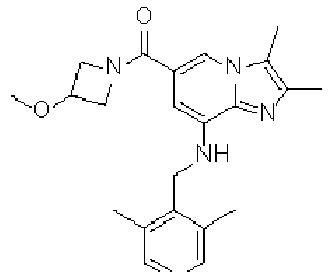
26% 1H NMR(400MHz, CDCl3); δ 7.63(s, 1H), 7.14-7.10(m, 1H), 7.05-7.03(m, 2H), 6.39(s, 1H), 4.91(m, 1H), 4.45(br, 2H), 4.37(d, J=4.0Hz, 2H), 4.30-4.27(m, 1H), 4.17(br, 2H), 3.34(s, 3H), 2.37-2.34(m, 12H) 4 
26% 1H NMR[400MHz, CDCl3); δ 7.63(s, 1H), 7.14-7.09(m, 1H), 7. 05-7.01 (m, 2H), 6.39(s, 1H), 4.86(br, 1H), 4.56(br, 2H), 4.37 (d, J=5. 6Hz, 2E), 4.15-4.12 (m, 2H), 3.50-3.48(qt, 2H), 2.37-2.29(m, 12H), 1.26(t, J=7.0Hz, 3H) 5 
35% 1H NMR(400MHz, CDCl3); δ 7.62(s, 1H), 7.14-7.11 (m, 1H), 7.08-7.03(m, 2H), 6.39(s, 1H), 4.86(m, 1H), 4.45-4.36(m, 7H), 3.60-3.57(m, 4H), 3.40(s, 3H), 2.37-2.34.(m, 12H) 6 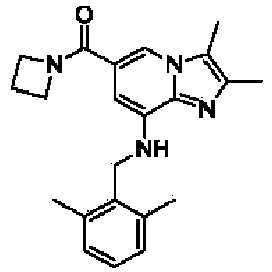
85% 1H NMR (400MHz, CDCl3); δ 7.63(d, J=1.2Hz, 1H), 7.13(dd, J=8.4, 6.8Hz, 1H), 7.06-7.04(m, 2H), 6.42(d, J=1.2Hz, 1H), 4.86-4.84(m, 1H), 4.41-4.28(m, 4H), 4.37(d, J= 4.4Hz., 2E), 3.75-3.69(m, 1H), 2.43-2.34(m, 13H) 7 
59% 1H NMR(400MHz, CDCl3); δ 7.63(s, 1H), 7.14-7.10(m, 1H), 7.05-7.03(m, 2H), 6.36(s, 1H), 5.46-5.45(m, 0.5H), 5.33-5.29(m, 0.5H), 4.90(br, 1H), 4.58-4.36(m, 6H), 2.37-2.34(m, 12H) 8 
84% 1H NMR(400MHz, CDCl3); δ 7.63(d, J=1.2Hz, 1H), 7.13(dd, J=8 .4, 6.8Hz, 1H), 7.06-7.04(m, 2H), 6.42(d, J=1.6Hz, 1H), 4.90-4.88(m, 1H), 4.51(br, 2H), 4.36(d, J=4.0Hz, 2H), 3.95-3.82(m, 1H), 2.87-2.79(m, 1H), 2.38-2.34(m, 12H), 1.32(d,. J=6.8HZ, 1H) 9 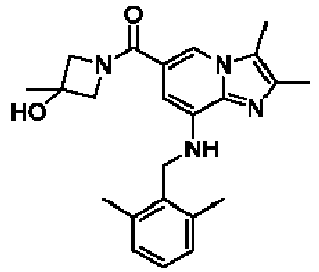
72% 1H NMR(400MHz, CDCl3); δ 7.60(s, 1H), 7.14-7.10(m, 1H), 7.05-7.03.(m, 1H), 6.41(m, 1H), 5.08(br, 1H), 4.35(d, J=4.0Hz, 2H), 4.15-4.12(m, 4H), 2.38-. 2.33(m, 12H), 2.05(s, 3H) 10 
85% 1H NMR(400MHz, CDCl3) ; δ 7.64(d, J=1.6Hz, 1H), 7.13-7.11(m, 1H), 7.06-7.04(m, 2H), 6.32(S, 1H), 4.83-4.86(m, 1H), 4.62-4.40(m, 4H), 4.37(d, J=4.4Hz, 2H), 3.80(s, 3H), 3.60-3.50(m, 1H), 2.38-2.34(m, 12H) 11 
79% 1H NMR(400MHz, CDCl3); δ 7.64(d, J=1. 6, 1H), 7.64 (dd, J=8.8, 6.8Hz, 1H), 7.06-7.04(m, 2H), 6.43(S, 1H), 4.92(br, 1H), 4.44-4.01 (m, 4H), 4.37(d, J=4.4Hz, 2H), 3.84(d, J=5.6Hz, 2H), 2.87-2.82(m, 1H), 2.38-2.36(m, 12H) 12 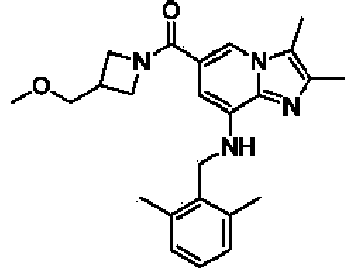
99% 1H NMR(400MHz, CDCl3); δ 7.65(d, J=1.6Hz), 7.15-7.11(m, 1H), 7.06-7.04(m, 1H), 6.42(s, 1H), 4.85(br, 1H), 4.47-3.99(m, 4H), 4.37(d, J=4.4Hz, 2H), 3.59(d, J=6.4, 2H), 3.0-2.92(m, 1H), 2.38-2.34(m, 12H), 2.18(s, 3H) 13 
53% 1H NMR(400MHz, CDCl3); δ 7.65(s, 1H), 7.14-7.11 (m, 1H), 7.05-7.04 (m, 2H), 6.37(s, 1H), 4.91(br, 1H), 4.41-4.37(m, 6H), 3.93(d, J=20.8, 2H), 2.38-2.34(m, 12H) 14 
57% 1H NMR(400MHz, CDCl3); δ 7.64(s, 1H), 7.11(dd, J=8.0, 6.4Hz, 1H), 7.03(m, 2H), 6.43(s, 1H), 4.93-4.91(m, 1H), 4.36(d, J=4.4Hz, 2H), 4.29-3.85 (m, 4H), 3.47(d, J=0.8Hz, 2H), 2.37(s, 6H), 2.34(d, J=7.6Hz, 6H), 1.32(S, 3H) 15 
76% 1H NMR(400MHz, CDCl3); δ 7.64(d, J=1.2Hz, 1H), 7.13(dd, J=8.8, 6.8Hz, 1H), 7.05-7.04(S, 1H), 6.42(s, 1H), 4.87-4.86(m, 1H), 4.67(d, J=4.4Hz, 2H), 4.36-4.01(m, 4H), 2.68(m, 1H), 2.38-2.34(m, 12H), 1.21(d, J=6.4Hz, 3H) 16 
34% 1H NMR(400MHz, CDCl3); δ 7.63(d, J=1.2Hz, 1H), 7.11(dd, J=6.8, 6.4Hz, 1H), 7.04-7.03(m, 2H), 6.42(s, 1H), 4.90(br, 1H), 4.37(d, J=1.1Hz, 2H), 4.31-4.11(m, 4H), 2.70(m, 1H), 2.37-2.33(m, 12H) , 1.21(s, 6H) 17 
48% 1H NMR(400MHz, CDCl3); δ 7.65(s, 1H), 7.13(dd, J=8.4, 6.8Hz, 1H), 7.06-7.04(m, 2H), 6.41(S, 1H), 4.93-4.83(m, 3H), 4.38-4.30(m, 4H), 3.97-3.92(m, 1H), 3.83-3.81(m, 1H), 2.44-2.35(m, 13H), 2.14-2.06(m, 1H) 18 
68 % 1H NMR(400MHz, CDCl3); δ 7.64(d, J=1.2Hz, 1H), 7.15-7.11(m, 1H), 7.06-7.04(m, 2H), 6.39(m, 2H), 4.92-4.89 (m, 1H), 4.60 (br, 1H), 4.46-4.37(m, 4H), 4.28(br, 1H), 3.67-3.58 (m, 1H), 2.38-2.34(m, 12H), 2.25(S, 3H) 19 
74% 1H NMR(400MHz, CDCl3); δ 7.64.(s, 1H), 7.15-7.11(m, 1H), 7.06-7.04(m, 2H), 6.33(s, 1H), 4.93(br, 1H), 4.62-4.54(m, 4H), 4.37(d, J=4.0Hz, 2H), 4.12-4.05(m, 1H), 2.95(s, 3H), 2.38-2.34(m, 12H) 20 
40% 1H NMR(400MHz, CDCl3) δ 7,63(d, J=0.8Hz, 1H), 7.12(dd, J=8.4, 6.8Hz, 1H), 7.05-7.03(m, 2H), 6.42(s, 1H), 4.91-4.90(m, 1H), 4.49-4.31(m, 4H), 4.15-4.09 (m, 2H), 4.04-3.91 (m, 2H), 3.67(t, J=5.8Hz, 3H), 2.69-2.62(m, 1H), 2.36-2.34(m, 12H) 21 
67% 1H NMR(400MHz, CD3OD); δ 8.56(s, 1H), 7.20-7.09(m, 4H), 4.57-3.16(m, 12H), 2.64-2.42(m, 12H) 22 
98% 1H NMR(400MHz, CDCl3); δ 7.62(s, 1H), 7.15-7.11(m, 1H), 7.06-7.04 (m, 2H), 6.36(s, 1H), 4.93(m, 1H), 4.85(br, 4H), 4.46(br, 4H), 4.37(d, J=4.4, 2H), 2.38-2.35(m, 12H) 23 
82% 1H NMR(400MHz, CDCl3); δ 7.66(s, 1H), 7.32(d, J=7.2Hz, 1H), 7.19(d, J=4.0Hz, 2H), 7.16-7.14(m, 1H), 6.14(s, 1H), 5.46(br, 1H), 4.69-4.63(m, 1H), 4.44-4.22(m, 4H), 3.99-3.98(m, 2H), 2.38-2.37(m, 9H) 24 
38% 1H NMR(400MHz, CDCl3); δ 7.67(d, J=1.6Hz, 1H), 7.15(br, 1H), 7.09-7.08(m, 1H), 7. 02-7.00 (m, 1H), 6.15 (S, 1H), 5.35(m, 1H), 4.72-4.62(m, 1H), 4.40-4.38(m, 4H), 4.02-4.00 (m, 2H), 2.39-2.26 (m, 9H) 25 
81% 1H NMR(400MHz, CDCl3) ; δ 7.61(d, J=1.6Hz, 1H), 7.19(t, J=8.0, 7.6Hz, 1H), 6.82(d, J=7.6Hz, 1H), 6.79(d, J=8Hz, 2H), 6.46(d, J=1.2, 1H), 4.69-4. 63 (m, 1H), 4. 52-4. 60 (m, 4H), 4.25(br, 1H), 4.02(br, 1H), 3.84(S, 3H), 3.38-3.36(m, 1H), 2.41(S, 3H), 2.37(S, 3H), 2.33(S, 3H) 26 
43% 1H NMR(400MHz, CDCl3) ; δ 7.62(d, J=1.2Hz( 1H), 7.17(t, J=8.4, 7.6Hz, 1H), 6.80 (d, J=8.0Hz, 2H), 6.75(d, J=8.0Hz, 2H), 6,44(S, 1H), 5. 08-5. 07(m, 1H), 4.43-4.42 (m, 3H), 4.26-4.09(m, 2H), 3. 97 (br, 1H), 3.81(S, 2H), 3.80(S, 3H), 2.32-2.34 (m, 9H) 27 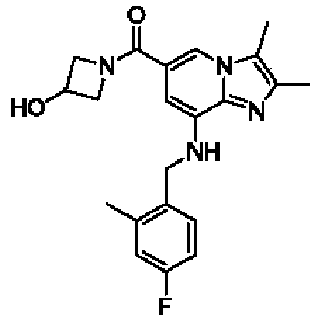
72% 1H NMR(400MHz, CD3OD); δ 7.78 (s, 1H), 7.33 (dd, J=8.0Hz, 6.0Hz, 1H), 6.98-6.96(m, 1H), 6.89-6.85(m, 1H), 6.28(s, 1H), 4.62(s, 2H), 4.32-4.28(m, 1H), 4.20-4.16(m, 1H), 4.00(m, 1H), 3.92(m, 1H), 2.81(m, 1H), 2.41(s, 6H), 2.35(s, 3H) 28 
77% 1H NMR(400MHz, CDCl3); δ 7.67(d, J=1.6, 1H), 7.29-7.28 (m, 1H), 6.93-6.90(m, 1H), 6.85-6.80(m, 1H), 6.19(s, 1H), δ 4.40(d, J=5.6Hz, 2H), 4.19(br, 4H), 2.40-2.28(m, 14H) 29 
85% 1H NMR(400MHz, CDCl3); δ 7.67(S, 1H), 7.30-7.27(m, 1H), 6.94-6.91 (m, 1H), 6.86-6.82(m, 1H), 6.12(S, 1H), 5.41-5.38(m, 1H), 5.27-5.24(m, 1H), 4.400-4.22(m, 6H), 2.39-2.38(m, 9H) 30 
71% 1H NMR(400MHz, CDCl3); δ 7.67(d, J=2.4Hz, 1H), 7.30-7.27(m, 1H), 6.93-6.90(m, 1H), 6.85-6.81(m, 1H), 6.16(d, J=1.2Hz, 1H), 5.33-5.31(m, 1H), 4.39(d, J=5.2, 1H), 4.27(br, 2H), 3.86-3.68(m, 2H), 2.76--2.71(m, 1H), 2.38(S, 9H), 1.26(d, J=6.8Hz, 3H) 31 
68% 1H NMR(400MHz, CDCl3); δ 7.66(S, 1H), 7.30-7.26(m, 1H), 6.93-6.90(m, 1H), 6.86-6.81(m, 1H), 6.14(S, 1H), 5.38-5.36(m, 1H), 4.38(d, J=4.8Hz, 2H), 4.10-3.90(m, 4H), 2.38(S, 9H), 1.53(S, 3H) 32 
81% 1H NMR(400MHz, CDCl3); δ 7.64(S, 1H), 7.12(dd, J=8.4, 7.2Hz, 1H), 7.05-7.03(m, 2H), 6.40(S, 1H), 4.87(br, 1H), 4.38-4.37(m, 2H), 4.30-4.06(m, 4H), 3.29(s, 3H), 2.38-2.34(m, 12H), 1.54(S, 3H) 33 
80% 1H NMR(400MHz, CDCl3); δ 7.67(d, J=1.6Hz, 1H), 7.30-7.27(m, 1H), 6.93-6.90(m, 1H), 6.86-6.81(m, 1H), 6.17(d, J=1.2, 1H), 5.35-5.31(m, 1H), 4.39(d, J=5.2, 2H), 4.22(br, 2H), 3.96-3.92(m, 2H), 3.81-3.80(m, 2H), 2.85-2.82(m, 1H), 2.38(S, 9H) 34 
43% 1H NMR(400MHz, CDCl3); δ 7.62 (d, J=1.2Hz, 1H), 6.76(d, J=9.6, 2H), 6.40(d, J=1.2Hz, 1H), 4.86(br, 1H), 4.78-4.73(m, 1H), 4.54-4.53(m, 2H), 4.31(.d, J=4.4Hz, 2H), 4.16(br, 2H), 2.37-2.35(m, 12H) 35 
95% 1H NMR(400MHz, CDCl3); δ 7.63(s, 1H), 6.76(d, J=9.6Hz, 2H), 6.42(s, 1H), 4.79(br, 1H), 4.41-4.27(m, 4H), 4.32(d, J=4.4Hz), 2.43-2.35(m, 14H) 36 
83% 1H NMR(400MHz, CDCl3); δ 7.64(s, 1H), 6.77(d, J=9.6, 2H), 6.37(s, 1H), 5.50-5.45(m, 0.5H), 5.36-5.30(m, 0.5H), 4.85(br, 1H), 4.63-4.41(m, 4H), 4.32(d, J=4.0Hz, 2H), 2.38-2.35(m, 12H) 37 
76% 1H NMR(400MHz, CDCl3); δ 7.64(d, J=1.6Hz, 1H), 6.76(d, J=9.6Hz, 2H), 6.42(d, J=1.2Hz, 1H), 4.80(br, 1H), 4.51-4.32(m, 4H), 3.97-3.83(m, 2H), 2.87-2.80(m, 1H), 2.38-2.35(m, 12H), 1.32(d, J=7.2Hz, 3H) 38 
84% 1H NMR(400MHz, CDCl3); δ 7.61(s, 1H), 6.75(d, J=9.6, 2H), 6.40(s, 1H), 4.94(br, 1H), 4.30(d, J=4.0Hz, 2H), 4.19-4.09(m, 4H), 2.36-2.34(m, 12H), 1.55(s, 3H) 39 
80% 1H NMR(400MHz, CDCl3); δ 7.64(d, J=1.2Hz, 1H), 6.76(d, J=10Hz, 2H), 6.42(d, J=1.2Hz, 1H), 4.83(br, 1H), 4.53-4.01(m, 4H), 4.32(d, J=4.4Hz, 2H), 3.86(d, J=6.4Hz, 2H), 2.92-2.88(m, 1H), 2.37-2.35(m, 12H) 40 
61% 1H NMR(400MHz, CDCl3); δ 7.65(S, 1H), 6.76(d, J=9.6, 2H), 6.42(S, 1H), 4.80(m, 1H), 4.45-3.99(m, 6H), 3.58(d, J=6.4, 2H), 3.40(S, 3H), 2.97-2.94(m, 1H), 2.37-2.34(m, 12H) 41 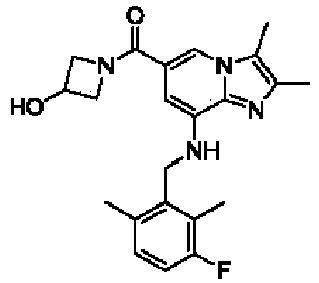
50% 1H NMR(400MHz, CDCl3); δ 7.64(S, 1H), 7.05-7.02(m, 1H), 6.95-6.90(m, 1H), 6.42(S, 1H), 4.68-4.66(m, 1H), 4.53-4.06(m, 7H), 2.41-2.29(m, 14H) 42 
99% 1H NMR(400MHz, CDCl3); δ 7.64(d, J=1.6Hz, 1H), 7.02-6.98(m, 1H), 6.94-6.89(m, 1H), 6.44(s, 1H), 4.89(br, 1H), 4.37-4.29(m, 6H), 2.42-2.27(m, 14H) 43 
73% 1H NMR(400MHz, CDCl3); δ 7.64(d, J=1.2Hz, 1H), 7.02-6.99(m, 1H), 6.94-6.90(m, 1H), 6.38(d, J=1.2Hz, 1H), 5.50-5.45(m, 0.5H), 5.36-5.31(m, 0.5H), 4.82-4.87(m, 1H), 4.60-4.53(m, 2H), 4.53-4.35(m, 5H), 2.38-2.27(m, 12H) 44 
73% 1H NMR(400MHz, CDCl3); δ 7.65(d, J=1.6Hz, 1H), 7.02-6.98(m, 1H), 6.93-6.89(m, 1H), 6.43(d, J=0.8Hz, 1H), 4.87(br, 1H), 4.44-4.00(m, 4H), 4.35(d, J=4.4, 2H), 3.86-3.85(d, J=5.6, 2H), 2.95-2.85(m, 1H), 2.37-2.33(m, 9H), 2.27(d, J=2.0Hz, 3H) 45 
73% 1H NMR(400MHz, CDCl3); δ 7.64(d, J=1.2Hz, 1H), 7.25(d, J=8.0Hz, 1H), 6.99(d, J=8.4Hz, 1H), 6.43(d, J=1.2Hz, 1H), 4.83-4.81(m, 1H), 4.39-4.28(m, 4H), 4.38(d, J=4.4Hz, 2H), 2.44-2.35(m, 14H) 46 
84% 1H NMR(400MHz, CDCl3); δ 7.64(S, 1H), 7.27-7.23(m, 1H), 7.00-6.98 (m, 1H), 6.40(S, 1H), 4.92-4.86(m, 1H), 4.60-4.50(m, 1H), 4.38(d, J=4.0Hz, 2H), 4.15(br, 2H), 2.42-2.35(m, 12H) 47 
90% 1H NMR(400MHz, CECl3); δ 7.64(d, J=1.2Hz, 1H), 7.27-7.24(m, 1H), 7.00(d, J=8.0Hz, 1H), 6.38(s, 1H), 5.50-5.45(m, 0.5H), 5.36-5.31(m, 0.5H), 4.87-4.85(m, 1H), 4.63-4.54(m, 2H), 4.53-4.38(m, 5H), 2.42-2.35(m, 12H) 48 
75% 1H NMR(400MHz, CDCl3); δ 7.65(s, 1H), 7.26-7.23(m, 1H), 7.00-6.98(m, 1H), 6.43(s, 1H), 4.89-4.87(m, 1H), 4.44-3.99(m, 4H), 4.37(d, J=4.0Hz, 2H), 3.84(d, J=5.6, 2H), 2.92-2.85(m, 1H), 2.41-2.35(m, 12H) - Gastric vesicles used in the experiment were prepared by separation from porcine gastric mucosa according to a centrifugation method [Saccomani G, et al., A Nonelectrogenic H+ Pump in Plasma Membranes of Hog Stomach, J Biol Chem., 1976, 251(23), 7690-8]. Next, the protein content of the gastric vesicles was quantified using a bicinchoninic acid kit [Smith PK, et al., Measurement of protein using bicinchoninic acid, Anal Biochem., 1985, 150(1), 76-85)].
- The inhibitory effects of the compounds against proton pump activity were calculated based on the pump activity determined in the presence of K+ ions excluding the pump activity determined in the absence of K+ ions. The inhibitory effects against proton pump activity were measured in 96-well plates, and all reactions were performed with a reaction volume of 100 µm at 37°C. Specifically, 10 µm of valinomycin and each concentration of each compound were pre-incubated in a reaction buffer (50 mmol/L Tris-Hepes buffer, pH 6.4) containing porcine gastric vesicles for 15 minutes. For negative and positive control groups, 1% DMSO was added to buffer, and for test groups, 1% DMSO and a dilution of each concentration of each compound were added. Next, 0.2 mmol/L of adenosine triphosphate (ATP) was added to the reaction buffer and incubated at 37°C for 40 minutes. After completion of the incubation, a malachite green solution was added to the reaction buffer and incubated for 30 minutes, and the amount of inorganic phosphate in the reaction buffer was measured by colorimetry using a malachite green phosphate assay Kit (Bioassay Systems). For colorimetry, the OD (optical density) at 620 nm was measured using a microplate reader [Synergy H4, hybrid multimode microplate reader, BioTek]. The percent inhibition of proton pump (H+/K+-ATPase) was determined based on the OD value of the control group and the OD values of various concentrations of the test compounds, and the IC50 of each test compound was calculated using the Logistic 4-parameter function of Sigmaplot 8.0 program. The results are shown in Table 2 below.
Table 2 Example IC50 (µM) Example IC5o (µM) Example ICso (µM) 1 0.020 16 0.122 34 0.028 2 0.128 17 0.180 35 0.016 3 0.090 18 0.140 36 0.029 4 0.093 19 0.117 37 0.021 5 0.117 20 0.046 38 0.041 6 0.017 21 0.600 39 0.024 7 0.055 22 0. 079 40 0.134 8 0.096 23 0.374 41 0.149 9 0.069 27 0.135 42 0.085 10 0.048 28 0.103 43 0.174 11 0.039 29 0.645 44 0.061 12 0.065 30 0.271 45 0.081 13 0.119 31 0.662 46 0.163 14 0.104 32 0.187 47 0.624 15 0.072 33 0.143 48 0.102 - As can be seen in Table 2 above, the compounds of the present disclosure have excellent inhibitory effects against gastric H+/K+-ATPase.
- The inhibitory effects of the compounds of the present disclosure against esophageal injury in reflux esophagitis models were evaluated according to the method of Nakamura [Nakamura K, et al., Effects of sodium polyacrylate (PANa) on acute esophagitis by gastric juice in rats, Jpn J Pharmacology, 1982, 32, 445-56].
- Male Sprague Dawley (SD) rats (weighing 180-210 g) were divided into X groups (n=6) and fasted without water for 24 hours. Then, the control group was administered orally with only 10% DMSO, 10% Cremophor EL and 80% water, and the other groups were administered orally with 2 mg/kg/2 ml of each test compound together with 10% DMSO, 10% Cremophor EL and 80% water. At 1 hour after administration of the excipients and each compound, the abdominal cavity of each rate was incised under isoflurane anesthesia, and the pylorus was ligated, and the boundary between the anterior portion and the body was also ligated. At 6 hours after ligation, the test animals were euthanized, and the esophagus ranging from the thyroid to the cardiac portion was carefully extracted. The extracted esophagus was incised in a longitudinal direction and spread so as to expose the mucosa and was then fixed, after which the area of esophageal injury was measured. The results are shown in Table 3 below.
- Percent (%) inhibitory activity of test compounds = {(total esophageal injury area of control group - esophageal injury area of group treated with test compound) / total esophageal injury area of control group} × 100.
Table 3 Example GERD (rat/mpk) Example GERD (rat/mpk) 1 84.0% 11 97.6% 6 100.0% 33 92.7% 7 100.0% 34 91.4% 8 95.4% 36 98.2% 9 77.2% 39 98.4% - As can be seen in Table 3 above, the compounds of the present disclosure have strong inhibitory effects against esophageal injury in reflux esophagitis models.
- Test Example 4: Inhibitory Effects against Histamine-Stimulated Gastric Acid Secretion in Pylorus-Ligated Rats
- The inhibitory effects of the compounds of the present disclosure against histamine-stimulated gastric acid secretion were evaluated using Shay's rat models [Shay H, et al., A simple method for the uniform production of gastric ulceration in the rat, Gastroenterology, 1945, 5, 43-61].
- Male Sprague-Dawley (SD) rats (weighing 180-210 g) were divided into X groups (n=7) and fasted with only water access for 24 hours. At 1 hour before pylorus ligation, the control group was administered orally with only 10% DMSO, 10% Cremophor EL and 80% water, and the other groups were administered orally with 2 mg/kg/2 ml of each compound together with 10% DMSO, 10% Cremophor EL and 80% water. The abdominal cavity of each rate was incised under isoflurane anesthesia, and the pylorus was ligated. Immediately after ligation, histamine 2HCl was administered subcutaneously to each rat at a dose of 30 mg/kg/10 ml. At 3 hours after ligation, the test animals were euthanized, and the gastric content was extracted. The extracted gastric content was centrifuged at 3,000×g for 10 minutes, and the supernatant was collected to obtain gastric juice. Next, the acidity of the gastric juice was determined based on the volume of (ueq/ml) of 0.1 N-NaOH required for automatic titration of the gastric juice to pH 7.0, and the acidity of the gastric juice was multiplied by the amount of the gastric juice to determine total acid output. The results are shown in Table 4 below.
- Percent (%) inhibitory activity of test compounds = {(total acid output in control group - total acid output in group treated with test compound) / total acid output in control group} × 100.
Table 4 Example acid output (rat/2 mpk) 1 71% 6 94% 7 91% 11 78% - As can be seen in Table 4 above, the compounds of the present disclosure have string inhibitory activities against histamine-stimulated gastric acid secretion in pylorus-ligated rats.
- The inhibitory effects of the compounds of the present disclosure against histamine-stimulated gastric acid secretion in lumen-perfused rat models were evaluated using the method of Ghosh & Schild [Ghosh MN, et al., Continuous recording of acid gastric secretion in the rat, Br J Pharmacol Chemother., 1958, 13(1), 54-61].
- Male Sprague-Dawley (SD) rats (weighing 250-300 g) were divided into X groups (n=4) and fasted with only water access for 24 hours. Each of the rats was anesthetized by intra-abdominal administration of urethane (1.2 g/kg), and then the abdominal cavity was incised, and the boundary between the boundary between the anterior portion and the body was ligated. A silicone tube was inserted between the stomach and the esophagus so that saline (pH 5.0) would be perfused. Furthermore, a silicone tube was inserted between the pylorus and the duodenum so that the perfusate that passed through the stomach flowed out. Then, histamine 2HCl (8 mg/kg) was infused through the jugular vein to stabilize the gastric pH. After pH stabilization, the control group was administered intravenously with only 10% DMSO, 10% Cremophor EL and 80% water, and the other groups were administered intravenously with 2 mg/kg/2 ml of each compound together with 10% DMSO, 10% Cremophor EL and 80% water. After drug administration, the perfusate was collected at 10-minute intervals for 5 hours, and the pH thereof was measured. The results are shown in
FIG. 1 . - As can be seen in
FIG. 1 , the compounds of the present disclosure have strong and long-lasting inhibitory activities against histamine-stimulated gastric acid secretion in lumen-perfused rats.

Claims (10)
- An imidazo[1,2-a]pyridine derivative represented by the following formula 1 or a pharmaceutically acceptable salt thereof:
 Y1, Y2 and Y3 are each independently H, halogen, a C1-C6 straight or branched chain alkyl unsubstituted or substituted with R1, or hydroxy;R1 is hydroxy;Y4 is H, C1-C6 straight or branched chain alkyl, or C1-C6 alkoxy; andX is H or halogen.
 - The imidazo[1,2-α]pyridine derivative or the pharmaceutically acceptable salt thereof according to claim 1, whereinY1 is H or a C1-C3 straight or branched chain alkyl substituted with R1;Y2 and Y3 are each independently H, F, Cl, a C1-C3 straight or branched chain alkyl unsubstituted or substituted with R1, or hydroxy;R1 is hydroxy;Y4 is H, C1-C3 straight or branched chain alkyl, or C1-C3 alkoxy; andX is H, F, or Cl.
- The imidazo[1,2-α]pyridine derivative or the pharmaceutically acceptable salt thereof according to claim 2, whereinY1 is H;Y2 and Y3 are each independently H, F, Cl, a C1-C2 straight or branched chain alkyl unsubstituted or substituted with R1, or hydroxy;R1 is hydroxy;Y4 is H or C1-C2 straight or branched chain alkyl; andX is H or F.
- The imidazo[1,2-α]pyridine derivative or the pharmaceutically acceptable salt thereof according to claim 3, whereinY1 is H;Y2 and Y3 are each independently H, F, methyl, hydroxymethyl, or hydroxy;Y4 is H or methyl; andX is H or F.
- The imidazo[1,2-α]pyridine derivative or the pharmaceutically acceptable salt thereof according to claim 1,wherein the derivative represented by formula 1 is selected from the group consisting of the following compounds:1) {8-[(2,6-dimethylbenzyl)amino]-2,3-dimethylimidazo[1,2-α]pyridin-6-yl}(3-hydroxyazetidin-1-yl)methanone;6) azetidin-1-yl{8-[(2,6-dimethylbenzyl)amino]-2,3-dimethylimidazo[1,2-α]pyridin-6-yl}methanone;7) {8-[(2,6-dimethylbenzyl)amino]-2,3-dimethylimidazo[1,2-α]pyridin-6-yl}(3-fluoroazetidin-1-yl)methanone;8) {8-[(2,6-dimethylbenzyl)amino]-2,3-dimethylimidazo[1,2-α]pyridin-6-yl}(3-methylazetidin-1-yl)methanone;9) {8-[(2,6-dimethylbenzyl)amino]-2,3-dimethylimidazo[1,2-α]pyridin-6-yl}(3-hydroxy-3-methylazetidin-1-yl)methanone;11) {8-[(2,6-dimethylbenzyl)amino]-2,3-dimethylimidazo[1,2-a]pyridin-6-yl}[3-(hydroxymethyl)azetidin-1-yl]methanone;17) {8-[(2,6-dimethylbenzyl)amino]-2,3-dimethylimidazo [1,2-α]pyridin-6-yl}[2-(hydroxymethyl)azetidin-1-yl]methanone;20) {8-[(2,6-dimethylbenzyl)amino]-2,3-dimethylimidazo[1,2-α]pyridin-6-yl}[3-(2-hydroxyethyl)azetidin-1-yl]methanone;23) {2,3-dimethyl-8-[(2-methylbenzyl)amino]imidazo[1,2-α]pyridin-6-yl}(3-hydroxyazetidin-1-yl)methanone;24) {8-[(5-fluoro-2-methylbenzyl)amino]-2,3-dimethylimidazo[1,2-α]pyridin-6-yl}(3-hydroxyazetidin-1-yl)methanone;25) (3-hydroxyazetidin-1-yl){8-[(2-methoxy-6-methylbenzyl)amino]-2,3-dimethylimidazo[1,2-α]pyridin-6-yl)methanone;26) [3-(hydroxymethyl)azetidin-1-yl] {8-[(2-methoxy-6-methylbenzyl)amino]-2,3-dimethylimidazo[1,2-α]pyridin-6-yl}methanone;27) {8-[(4-fluoro-2-methylbenzyl)amino]-2,3-dimethylimidazo[1,2-α]pyridin-6-yl}(3-hydroxyazetidin-1-yl)methanone;28) azetidin-1-yl{8-[(4-fluoro-2-methylbenzyl)amino]-2,3-dimethylmidazo[1,2-α]pyridin-6-yl}methanone;29) {8-[(4-fluoro-2-methylbenzyl)amino]-2,3-dimethylimidazo[1,2-α]pyridin-6-yl}(3-fluoroazetidin-1-yl)methanone;30) {8-[(4-fluoro-2-methylbenzyl)amino]-2,3-dimethylimidazo[1,2-α]pyridin-6-yl}(3-methylazetidin-1-yl)methanone;31) {8-[(4-fluoro-2-methylbenzyl)amino]-2,3-dimethylimidazo[1,2-α]pyridin-6-yl}(3-hydroxy-3-methylazetidine-1-yl)methanone;33) {8-[(4-fluoro-2-methylbenzyl)amino]-2,3-dimethylimidazo[1,2-α]pyridin-6-yl}(3-(hydroxymethyl)azetidin-1-yl)methanone;34) {8-[(4-fluoro-2,6-dimethylbenzyl)amino]-2,3-dimethylimidazo[1,2-α]pyridin-6-yl}(3-hydroxyazetidin-1-yl)methanone;35) azetidin-1-yl{8-[(4-fluoro-2,6-dimethylbenzyl)amino]-2,3-dimethylimidazo[1,2-a]pyridin-6-yl}methanone;36) {8-[(4-fluoro-2,6-dimethylbenzyl)amino]-2,3-dimethylimidazo[1,2-α]pyridin-6-yl}(3-fluoroazetidin-1-yl)methanone;37) {8-[(4-fluoro-2,6-dimethylbenzyl)amino]-2,3-dimethylimidazo[1,2-α]pyridin-6-yl}(3-methylazetidin-1-yl)methanone;38) {8-[(4-fluoro-2,6-dimethylbenzyl)amino]-2,3-dimethylimidazo[1,2-α]pyridin-6-yl}(3-hydroxy-3-methylazetidin-1-yl)methanone;39) {8-[(4-fluoro-2,6-dimethylbenzyl)amino]-2,3-dimethylimidazo[1,2-α]pyridin-6-yl}[3-(hydroxymethyl)azetidin-1-yl]methanone;41) {8-[(3-fluoro-2,6-dimethylbenzyl)amino]-2,3-dimethylimidazo[1,2-α]pyridin-6-yl}(3-hydroxyazetidin-1-yl)methanone;42) azetidin-1-yl{8-[(3-fluoro-2,6-dimethylbenzyl)amino]-2,3-dimethylimidazo[1,2-α]pyridin-6-yl}methanone;43) {8-[(3-fluoro-2,6-dimethylbenzyl)amino]-2,3-dimethylimidazo[1,2-α]pyridin-6-yl}(3-fluoroazetidin-1-yl)methanone;44) {8-[(3-fluoro-2,6-dimethylbenzyl)amino]-2,3-dimethylimidazo[1,2-α]pyridin-6-yl}[3-(hydroxymethyl)azetidin-1-yl]methanone;45) azetidin-1-yl{8-[(3-chloro-2,6-dimethylbenzyl)amino]-2,3-dimethylimidazo[1,2-α]pyridin-6-yl}methanone;46) 18-[(3-chloro-2,6-dimethylbenzyl)amino]-2,3-dimethylimidazo[1,2-α]pyridin-6-yl}(3-hydroxyazetidin-1-yl]methanone;47) {8-[(3-chloro-2,6-dimethylbenzyl)amino]-2,3-dimethylimidazo[1,2-α]pyridin-6-yl}(3-fluoroazetidin-1-yl)methanone; and48) {8-[(3-chloro-2,6-dimethylbenzyl)amino]-2,3-dimethylimidazo[1,2-a]pyridin-6-yl}[3-(hydroxymethyl)azetidin-1-yl]methanone.
- A pharmaceutical composition, the composition containing, as an active ingredient, an imidazo[1,2-a]pyridine derivative or a pharmaceutically acceptable salt thereof according to any one of claims 1 to 5.
- A pharmaceutical composition according to claim 6, for use in the prevention or treatment of a disease caused by excessive secretion of gastric acid.
- The pharmaceutical composition for use according to claim 7, wherein the disease caused by excessive secretion of gastric acid is a gastrointestinal inflammatory disease or a gastric acid-related disease.
- The pharmaceutical composition for use according to claim 8, wherein the gastrointestinal inflammatory disease or the gastric acid-related disease is selected from the group consisting of peptic ulcer, gastric and duodenal ulcer, nonsteroidal anti-inflammatory drug (NSAID)-induced ulcer, Helicobacter pylori infection, functional indigestion, Zollinger-Ellison syndrome, gastritis, gastroesophageal reflux disease (GERD), and nonerosive reflux disease (NERD).
- An imidazo[1,2-α]pyridine derivative or a pharmaceutically acceptable salt thereof according to any one of claims 1 to 5 for use as a medicine.
Priority Applications (1)
| Application Number | Priority Date | Filing Date | Title |
|---|---|---|---|
| PL17824485T PL3481827T3 (en) | 2016-07-05 | 2017-07-04 | Imidazo[1,2-a]pyridine derivatives, methods for preparing the same and use thereof |
Applications Claiming Priority (2)
| Application Number | Priority Date | Filing Date | Title |
|---|---|---|---|
| KR1020160085048A KR101777971B1 (en) | 2016-07-05 | 2016-07-05 | Imidazo[1,2-a]pyridine derivatives, methods of preparing the same and use thereof |
| PCT/KR2017/007055 WO2018008929A1 (en) | 2016-07-05 | 2017-07-04 | Imidazo[1,2-a]pyridine derivatives, methods for preparing the same and use thereof |
Publications (3)
| Publication Number | Publication Date |
|---|---|
| EP3481827A1 EP3481827A1 (en) | 2019-05-15 |
| EP3481827A4 EP3481827A4 (en) | 2019-11-27 |
| EP3481827B1 true EP3481827B1 (en) | 2021-11-03 |
Family
ID=59926389
Family Applications (1)
| Application Number | Title | Priority Date | Filing Date |
|---|---|---|---|
| EP17824485.1A Active EP3481827B1 (en) | 2016-07-05 | 2017-07-04 | Imidazo[1,2-a]pyridine derivatives, methods for preparing the same and use thereof |
Country Status (22)
| Country | Link |
|---|---|
| US (1) | US10696671B2 (en) |
| EP (1) | EP3481827B1 (en) |
| JP (1) | JP6713556B2 (en) |
| KR (1) | KR101777971B1 (en) |
| CN (1) | CN109415362B (en) |
| AU (1) | AU2017293271C1 (en) |
| CA (1) | CA3029745C (en) |
| DK (1) | DK3481827T3 (en) |
| ES (1) | ES2900305T3 (en) |
| HU (1) | HUE057549T2 (en) |
| IL (1) | IL264075B (en) |
| MX (1) | MX383309B (en) |
| MY (1) | MY196082A (en) |
| NZ (1) | NZ749346A (en) |
| PH (1) | PH12019500015A1 (en) |
| PL (1) | PL3481827T3 (en) |
| PT (1) | PT3481827T (en) |
| RU (1) | RU2725147C1 (en) |
| SA (1) | SA519400792B1 (en) |
| SG (1) | SG11201811221XA (en) |
| WO (1) | WO2018008929A1 (en) |
| ZA (1) | ZA201900236B (en) |
Families Citing this family (16)
| Publication number | Priority date | Publication date | Assignee | Title |
|---|---|---|---|---|
| KR101777971B1 (en) | 2016-07-05 | 2017-09-12 | 제일약품주식회사 | Imidazo[1,2-a]pyridine derivatives, methods of preparing the same and use thereof |
| KR20190057569A (en) * | 2017-11-20 | 2019-05-29 | 제일약품주식회사 | 7-amino-1H-indole-5-carboxamide derivatives, and use thereof |
| EP3955927A4 (en) * | 2019-04-18 | 2023-06-07 | Thomas Julius Borody | COMPOSITIONS AND METHODS FOR THE TREATMENT, MITIGATION AND PREVENTION OF H. PYLORI INFECTION |
| KR102496869B1 (en) * | 2022-07-29 | 2023-02-07 | 제일약품주식회사 | NOVEL SALT OF IMIDAZO[1,2-a]PYRIDINE COMPOUND, CRYSTALLINES THEREOF AND PREPARATION METHODS |
| EP4628081A1 (en) | 2022-11-29 | 2025-10-08 | Jeil Pharmaceutical Co., Ltd. | Composition for removing helicobacter pylori comprising zastaprazan or pharmaceutically acceptable salt thereof |
| WO2024117797A1 (en) | 2022-11-29 | 2024-06-06 | 제일약품 주식회사 | Pharmaceutical composition for prevention or treatment of drug-related peptic ulcer comprising zastaprazan or pharmaceutically acceptable salt thereof |
| CR20250234A (en) * | 2022-11-29 | 2025-07-17 | Jeil Pharmaceutical Co Ltd | Composition for removing helicobacter pylori comprising zastaprazan or pharmaceutically acceptable salt thereof |
| CR20250351A (en) | 2023-02-01 | 2025-10-13 | Jeil Pharmaceutical Co Ltd | Pharmaceutical formulation, preparation method therefor, and tablet composition |
| TW202432120A (en) | 2023-02-01 | 2024-08-16 | 韓商安康尼克治療有限公司 | Injectable composition, pharmaceutical formulation including the same, and method for preparing the composition |
| TW202535382A (en) * | 2023-11-29 | 2025-09-16 | 南韓商第一藥品股份有限公司 | Composition for helicobacter pylori eradication including zastaprazan or pharmaceutically acceptable salt thereof |
| WO2025215593A1 (en) * | 2024-04-12 | 2025-10-16 | Hetero Labs Limited | An improved process for preparation of zastaprazan |
| CN120827558A (en) * | 2024-04-19 | 2025-10-24 | 丽珠医药集团股份有限公司 | Imidazo[1,2-a]pyridine derivative pharmaceutical composition, preparation method and use thereof |
| KR20260002253A (en) | 2024-06-28 | 2026-01-06 | 온코닉테라퓨틱스 주식회사 | Novel Salt of Imidazo[1,2-a]pyridine Compound and Preparation Method Therefor |
| KR20260002254A (en) | 2024-06-28 | 2026-01-06 | 온코닉테라퓨틱스 주식회사 | Crystal Form of Novel Salt of Imidazo[1,2-a]pyridine Compound and Preparation Method Therefor |
| CN120117960A (en) * | 2025-05-12 | 2025-06-10 | 天津全和诚科技有限责任公司 | Impurity compound and preparation method thereof |
| CN121248676B (en) * | 2025-12-04 | 2026-03-06 | 重庆华邦制药有限公司 | Imidazo [1,2-a ] pyridine compound, preparation method and application thereof |
Family Cites Families (12)
| Publication number | Priority date | Publication date | Assignee | Title |
|---|---|---|---|---|
| ZA81219B (en) | 1980-01-23 | 1982-01-27 | Schering Corp | Imidazo (1,2-a) pyridines ,process for their preparation and pharmaceutical compositions containing them |
| GB8722488D0 (en) * | 1987-09-24 | 1987-10-28 | Fujisawa Pharmaceutical Co | Imidazopyridine compound |
| SE9801526D0 (en) | 1998-04-29 | 1998-04-29 | Astra Ab | New compounds |
| SE0003186D0 (en) * | 2000-09-07 | 2000-09-07 | Astrazeneca Ab | New process |
| SE0301904D0 (en) | 2003-06-26 | 2003-06-26 | Astrazeneca Ab | Novel imidazopyridine compound II with therapeutic effect |
| DK1784404T3 (en) | 2004-09-03 | 2012-02-13 | Yuhan Corp | Pyrrolo [2,3-c] pyridine derivatives as well as processes for their preparation |
| EP2327692B9 (en) | 2005-08-30 | 2014-06-04 | Takeda Pharmaceutical Company Limited | 1-heterocyclylsulfonyl, 2-aminomethyl, 5-(hetero-)aryl substituted 1-H-pyrrole derivatives as acid secretion inhibitors |
| EP1934215A1 (en) * | 2005-09-22 | 2008-06-25 | Nycomed GmbH | Isotopically substituted imidazopyridine derivatives for the treatment of gastrointestinal disorders |
| BR122020004679B1 (en) | 2005-12-19 | 2021-09-21 | Raqualia Pharma Inc | PHARMACEUTICAL COMPOSITION |
| WO2008015196A1 (en) | 2006-07-31 | 2008-02-07 | Nycomed Gmbh | 5-,7-bis-substituted imidazo[1,2-a]pyridines |
| FI20086158A0 (en) | 2008-12-03 | 2008-12-03 | Mikael Dahlstroem | imidazopyridine |
| KR101777971B1 (en) | 2016-07-05 | 2017-09-12 | 제일약품주식회사 | Imidazo[1,2-a]pyridine derivatives, methods of preparing the same and use thereof |
-
2016
- 2016-07-05 KR KR1020160085048A patent/KR101777971B1/en active Active
-
2017
- 2017-07-04 MX MX2018016299A patent/MX383309B/en unknown
- 2017-07-04 CN CN201780039504.6A patent/CN109415362B/en active Active
- 2017-07-04 DK DK17824485.1T patent/DK3481827T3/en active
- 2017-07-04 MY MYPI2018002377A patent/MY196082A/en unknown
- 2017-07-04 US US16/314,749 patent/US10696671B2/en active Active
- 2017-07-04 CA CA3029745A patent/CA3029745C/en active Active
- 2017-07-04 EP EP17824485.1A patent/EP3481827B1/en active Active
- 2017-07-04 PT PT178244851T patent/PT3481827T/en unknown
- 2017-07-04 WO PCT/KR2017/007055 patent/WO2018008929A1/en not_active Ceased
- 2017-07-04 ES ES17824485T patent/ES2900305T3/en active Active
- 2017-07-04 RU RU2019102925A patent/RU2725147C1/en active
- 2017-07-04 AU AU2017293271A patent/AU2017293271C1/en active Active
- 2017-07-04 NZ NZ749346A patent/NZ749346A/en unknown
- 2017-07-04 SG SG11201811221XA patent/SG11201811221XA/en unknown
- 2017-07-04 HU HUE17824485A patent/HUE057549T2/en unknown
- 2017-07-04 PL PL17824485T patent/PL3481827T3/en unknown
- 2017-07-04 JP JP2018569003A patent/JP6713556B2/en active Active
-
2019
- 2019-01-02 SA SA519400792A patent/SA519400792B1/en unknown
- 2019-01-03 IL IL264075A patent/IL264075B/en unknown
- 2019-01-03 PH PH12019500015A patent/PH12019500015A1/en unknown
- 2019-01-14 ZA ZA2019/00236A patent/ZA201900236B/en unknown
Also Published As
| Publication number | Publication date |
|---|---|
| JP6713556B2 (en) | 2020-06-24 |
| WO2018008929A1 (en) | 2018-01-11 |
| US20190152971A1 (en) | 2019-05-23 |
| DK3481827T3 (en) | 2021-12-06 |
| RU2725147C1 (en) | 2020-06-30 |
| CA3029745C (en) | 2020-12-08 |
| SG11201811221XA (en) | 2019-01-30 |
| JP2019524691A (en) | 2019-09-05 |
| ZA201900236B (en) | 2020-05-27 |
| CN109415362B (en) | 2021-07-30 |
| IL264075B (en) | 2022-02-01 |
| IL264075A (en) | 2019-01-31 |
| HUE057549T2 (en) | 2022-05-28 |
| AU2017293271A1 (en) | 2019-01-17 |
| MX2018016299A (en) | 2019-08-29 |
| PT3481827T (en) | 2021-12-09 |
| PL3481827T3 (en) | 2022-02-07 |
| SA519400792B1 (en) | 2022-09-01 |
| CA3029745A1 (en) | 2018-01-11 |
| KR101777971B1 (en) | 2017-09-12 |
| BR112018077205A2 (en) | 2019-04-09 |
| EP3481827A1 (en) | 2019-05-15 |
| PH12019500015A1 (en) | 2019-10-28 |
| EP3481827A4 (en) | 2019-11-27 |
| CN109415362A (en) | 2019-03-01 |
| AU2017293271B2 (en) | 2019-12-05 |
| NZ749346A (en) | 2020-04-24 |
| ES2900305T3 (en) | 2022-03-16 |
| MY196082A (en) | 2023-03-14 |
| US10696671B2 (en) | 2020-06-30 |
| MX383309B (en) | 2025-03-13 |
| AU2017293271C1 (en) | 2020-04-23 |
Similar Documents
| Publication | Publication Date | Title |
|---|---|---|
| US10696671B2 (en) | Imidazo[1,2-A]pyridine derivatives, methods for preparing the same and use thereof | |
| KR101629181B1 (en) | Pyrrole compounds | |
| AU2021293694B2 (en) | Novel Acid Secretion Inhibitor and use thereof | |
| EP2536723B1 (en) | Pyrazolo piperidine derivatives as nadph oxidase inhibitors | |
| TW200920366A (en) | 5-membered heterocyclic compound | |
| EP2536721A1 (en) | Pyrazolo piperidine derivatives as nadph oxidase inhibitors | |
| EP1527066B1 (en) | Salt of (S)-pantoprazole and its hydrates | |
| EP1641793B1 (en) | Novel imidazopyridine compound ii with therapeutic effect | |
| HK40000439A (en) | Imidazo[1,2-a]pyridine derivatives, methods for preparing the same and use thereof | |
| BR112018077205B1 (en) | IMIDAZO[1,2-A]PYRIDINE DERIVATIVES, METHODS FOR PREPARING THEM AND USE THEREOF | |
| HK40000439B (en) | Imidazo[1,2-a]pyridine derivatives, methods for preparing the same and use thereof | |
| HK40082822A (en) | Novel acid secretion inhibitor and use thereof | |
| KR20250147590A (en) | N-substituted pyrrol derivatives and pharmaceutical composition comprising the same | |
| KR20150097208A (en) | Isatin derivatives and method for preparation thereof | |
| HK1088315B (en) | Novel imidazopyridine compound ii with therapeutic effect | |
| HK1077059B (en) | Salt of (s)-pantoprazole and its hydrates |
Legal Events
| Date | Code | Title | Description |
|---|---|---|---|
| STAA | Information on the status of an ep patent application or granted ep patent |
Free format text: STATUS: THE INTERNATIONAL PUBLICATION HAS BEEN MADE |
|
| PUAI | Public reference made under article 153(3) epc to a published international application that has entered the european phase |
Free format text: ORIGINAL CODE: 0009012 |
|
| STAA | Information on the status of an ep patent application or granted ep patent |
Free format text: STATUS: REQUEST FOR EXAMINATION WAS MADE |
|
| 17P | Request for examination filed |
Effective date: 20190107 |
|
| AK | Designated contracting states |
Kind code of ref document: A1 Designated state(s): AL AT BE BG CH CY CZ DE DK EE ES FI FR GB GR HR HU IE IS IT LI LT LU LV MC MK MT NL NO PL PT RO RS SE SI SK SM TR |
|
| AX | Request for extension of the european patent |
Extension state: BA ME |
|
| DAV | Request for validation of the european patent (deleted) | ||
| DAX | Request for extension of the european patent (deleted) | ||
| A4 | Supplementary search report drawn up and despatched |
Effective date: 20191029 |
|
| RIC1 | Information provided on ipc code assigned before grant |
Ipc: A61K 31/437 20060101ALI20191023BHEP Ipc: A61K 31/397 20060101ALI20191023BHEP Ipc: C07D 471/04 20060101AFI20191023BHEP Ipc: C07D 403/06 20060101ALI20191023BHEP |
|
| GRAP | Despatch of communication of intention to grant a patent |
Free format text: ORIGINAL CODE: EPIDOSNIGR1 |
|
| STAA | Information on the status of an ep patent application or granted ep patent |
Free format text: STATUS: GRANT OF PATENT IS INTENDED |
|
| INTG | Intention to grant announced |
Effective date: 20210617 |
|
| GRAS | Grant fee paid |
Free format text: ORIGINAL CODE: EPIDOSNIGR3 |
|
| GRAA | (expected) grant |
Free format text: ORIGINAL CODE: 0009210 |
|
| STAA | Information on the status of an ep patent application or granted ep patent |
Free format text: STATUS: THE PATENT HAS BEEN GRANTED |
|
| AK | Designated contracting states |
Kind code of ref document: B1 Designated state(s): AL AT BE BG CH CY CZ DE DK EE ES FI FR GB GR HR HU IE IS IT LI LT LU LV MC MK MT NL NO PL PT RO RS SE SI SK SM TR |
|
| REG | Reference to a national code |
Ref country code: GB Ref legal event code: FG4D |
|
| REG | Reference to a national code |
Ref country code: AT Ref legal event code: REF Ref document number: 1443878 Country of ref document: AT Kind code of ref document: T Effective date: 20211115 Ref country code: CH Ref legal event code: EP |
|
| REG | Reference to a national code |
Ref country code: IE Ref legal event code: FG4D |
|
| REG | Reference to a national code |
Ref country code: FI Ref legal event code: FGE Ref country code: DE Ref legal event code: R096 Ref document number: 602017048824 Country of ref document: DE |
|
| REG | Reference to a national code |
Ref country code: DK Ref legal event code: T3 Effective date: 20211203 |
|
| REG | Reference to a national code |
Ref country code: PT Ref legal event code: SC4A Ref document number: 3481827 Country of ref document: PT Date of ref document: 20211209 Kind code of ref document: T Free format text: AVAILABILITY OF NATIONAL TRANSLATION Effective date: 20211130 |
|
| REG | Reference to a national code |
Ref country code: SE Ref legal event code: TRGR |
|
| REG | Reference to a national code |
Ref country code: NL Ref legal event code: FP |
|
| REG | Reference to a national code |
Ref country code: GR Ref legal event code: EP Ref document number: 20210403240 Country of ref document: GR Effective date: 20220113 |
|
| REG | Reference to a national code |
Ref country code: LT Ref legal event code: MG9D |
|
| REG | Reference to a national code |
Ref country code: ES Ref legal event code: FG2A Ref document number: 2900305 Country of ref document: ES Kind code of ref document: T3 Effective date: 20220316 |
|
| PG25 | Lapsed in a contracting state [announced via postgrant information from national office to epo] |
Ref country code: RS Free format text: LAPSE BECAUSE OF FAILURE TO SUBMIT A TRANSLATION OF THE DESCRIPTION OR TO PAY THE FEE WITHIN THE PRESCRIBED TIME-LIMIT Effective date: 20211103 Ref country code: LT Free format text: LAPSE BECAUSE OF FAILURE TO SUBMIT A TRANSLATION OF THE DESCRIPTION OR TO PAY THE FEE WITHIN THE PRESCRIBED TIME-LIMIT Effective date: 20211103 |
|
| REG | Reference to a national code |
Ref country code: HU Ref legal event code: AG4A Ref document number: E057549 Country of ref document: HU |
|
| PG25 | Lapsed in a contracting state [announced via postgrant information from national office to epo] |
Ref country code: IS Free format text: LAPSE BECAUSE OF FAILURE TO SUBMIT A TRANSLATION OF THE DESCRIPTION OR TO PAY THE FEE WITHIN THE PRESCRIBED TIME-LIMIT Effective date: 20220303 Ref country code: NO Free format text: LAPSE BECAUSE OF FAILURE TO SUBMIT A TRANSLATION OF THE DESCRIPTION OR TO PAY THE FEE WITHIN THE PRESCRIBED TIME-LIMIT Effective date: 20220203 Ref country code: LV Free format text: LAPSE BECAUSE OF FAILURE TO SUBMIT A TRANSLATION OF THE DESCRIPTION OR TO PAY THE FEE WITHIN THE PRESCRIBED TIME-LIMIT Effective date: 20211103 Ref country code: HR Free format text: LAPSE BECAUSE OF FAILURE TO SUBMIT A TRANSLATION OF THE DESCRIPTION OR TO PAY THE FEE WITHIN THE PRESCRIBED TIME-LIMIT Effective date: 20211103 |
|
| PG25 | Lapsed in a contracting state [announced via postgrant information from national office to epo] |
Ref country code: SM Free format text: LAPSE BECAUSE OF FAILURE TO SUBMIT A TRANSLATION OF THE DESCRIPTION OR TO PAY THE FEE WITHIN THE PRESCRIBED TIME-LIMIT Effective date: 20211103 Ref country code: SK Free format text: LAPSE BECAUSE OF FAILURE TO SUBMIT A TRANSLATION OF THE DESCRIPTION OR TO PAY THE FEE WITHIN THE PRESCRIBED TIME-LIMIT Effective date: 20211103 Ref country code: EE Free format text: LAPSE BECAUSE OF FAILURE TO SUBMIT A TRANSLATION OF THE DESCRIPTION OR TO PAY THE FEE WITHIN THE PRESCRIBED TIME-LIMIT Effective date: 20211103 |
|
| REG | Reference to a national code |
Ref country code: DE Ref legal event code: R097 Ref document number: 602017048824 Country of ref document: DE |
|
| PLBE | No opposition filed within time limit |
Free format text: ORIGINAL CODE: 0009261 |
|
| STAA | Information on the status of an ep patent application or granted ep patent |
Free format text: STATUS: NO OPPOSITION FILED WITHIN TIME LIMIT |
|
| 26N | No opposition filed |
Effective date: 20220804 |
|
| PG25 | Lapsed in a contracting state [announced via postgrant information from national office to epo] |
Ref country code: AL Free format text: LAPSE BECAUSE OF FAILURE TO SUBMIT A TRANSLATION OF THE DESCRIPTION OR TO PAY THE FEE WITHIN THE PRESCRIBED TIME-LIMIT Effective date: 20211103 |
|
| PG25 | Lapsed in a contracting state [announced via postgrant information from national office to epo] |
Ref country code: SI Free format text: LAPSE BECAUSE OF FAILURE TO SUBMIT A TRANSLATION OF THE DESCRIPTION OR TO PAY THE FEE WITHIN THE PRESCRIBED TIME-LIMIT Effective date: 20211103 |
|
| PG25 | Lapsed in a contracting state [announced via postgrant information from national office to epo] |
Ref country code: MC Free format text: LAPSE BECAUSE OF FAILURE TO SUBMIT A TRANSLATION OF THE DESCRIPTION OR TO PAY THE FEE WITHIN THE PRESCRIBED TIME-LIMIT Effective date: 20211103 |
|
| P01 | Opt-out of the competence of the unified patent court (upc) registered |
Effective date: 20230417 |
|
| REG | Reference to a national code |
Ref country code: AT Ref legal event code: UEP Ref document number: 1443878 Country of ref document: AT Kind code of ref document: T Effective date: 20211103 |
|
| PG25 | Lapsed in a contracting state [announced via postgrant information from national office to epo] |
Ref country code: MK Free format text: LAPSE BECAUSE OF FAILURE TO SUBMIT A TRANSLATION OF THE DESCRIPTION OR TO PAY THE FEE WITHIN THE PRESCRIBED TIME-LIMIT Effective date: 20211103 Ref country code: CY Free format text: LAPSE BECAUSE OF FAILURE TO SUBMIT A TRANSLATION OF THE DESCRIPTION OR TO PAY THE FEE WITHIN THE PRESCRIBED TIME-LIMIT Effective date: 20211103 |
|
| PG25 | Lapsed in a contracting state [announced via postgrant information from national office to epo] |
Ref country code: MT Free format text: LAPSE BECAUSE OF FAILURE TO SUBMIT A TRANSLATION OF THE DESCRIPTION OR TO PAY THE FEE WITHIN THE PRESCRIBED TIME-LIMIT Effective date: 20211103 |
|
| PGFP | Annual fee paid to national office [announced via postgrant information from national office to epo] |
Ref country code: PL Payment date: 20250610 Year of fee payment: 9 |
|
| PGFP | Annual fee paid to national office [announced via postgrant information from national office to epo] |
Ref country code: PT Payment date: 20250616 Year of fee payment: 9 |
|
| PGFP | Annual fee paid to national office [announced via postgrant information from national office to epo] |
Ref country code: FR Payment date: 20250609 Year of fee payment: 9 |
|
| PGFP | Annual fee paid to national office [announced via postgrant information from national office to epo] |
Ref country code: RO Payment date: 20250620 Year of fee payment: 9 |
|
| PGFP | Annual fee paid to national office [announced via postgrant information from national office to epo] |
Ref country code: TR Payment date: 20250616 Year of fee payment: 9 |
|
| PGFP | Annual fee paid to national office [announced via postgrant information from national office to epo] |
Ref country code: CZ Payment date: 20250623 Year of fee payment: 9 |
|
| PGFP | Annual fee paid to national office [announced via postgrant information from national office to epo] |
Ref country code: HU Payment date: 20250626 Year of fee payment: 9 |
|
| PGFP | Annual fee paid to national office [announced via postgrant information from national office to epo] |
Ref country code: NL Payment date: 20250724 Year of fee payment: 9 Ref country code: LU Payment date: 20250724 Year of fee payment: 9 |
|
| PGFP | Annual fee paid to national office [announced via postgrant information from national office to epo] |
Ref country code: FI Payment date: 20250724 Year of fee payment: 9 Ref country code: ES Payment date: 20250812 Year of fee payment: 9 |
|
| PGFP | Annual fee paid to national office [announced via postgrant information from national office to epo] |
Ref country code: DE Payment date: 20250728 Year of fee payment: 9 Ref country code: DK Payment date: 20250725 Year of fee payment: 9 |
|
| PGFP | Annual fee paid to national office [announced via postgrant information from national office to epo] |
Ref country code: GR Payment date: 20250722 Year of fee payment: 9 |
|
| PGFP | Annual fee paid to national office [announced via postgrant information from national office to epo] |
Ref country code: IT Payment date: 20250721 Year of fee payment: 9 |
|
| PGFP | Annual fee paid to national office [announced via postgrant information from national office to epo] |
Ref country code: BE Payment date: 20250724 Year of fee payment: 9 Ref country code: BG Payment date: 20250728 Year of fee payment: 9 Ref country code: GB Payment date: 20250722 Year of fee payment: 9 |
|
| PGFP | Annual fee paid to national office [announced via postgrant information from national office to epo] |
Ref country code: AT Payment date: 20250718 Year of fee payment: 9 |
|
| PGFP | Annual fee paid to national office [announced via postgrant information from national office to epo] |
Ref country code: SE Payment date: 20250725 Year of fee payment: 9 Ref country code: CH Payment date: 20250801 Year of fee payment: 9 |
|
| PGFP | Annual fee paid to national office [announced via postgrant information from national office to epo] |
Ref country code: IE Payment date: 20250718 Year of fee payment: 9 |