EP3480944A1 - Transmission device for current signal of solar string - Google Patents
Transmission device for current signal of solar string Download PDFInfo
- Publication number
- EP3480944A1 EP3480944A1 EP17820179.4A EP17820179A EP3480944A1 EP 3480944 A1 EP3480944 A1 EP 3480944A1 EP 17820179 A EP17820179 A EP 17820179A EP 3480944 A1 EP3480944 A1 EP 3480944A1
- Authority
- EP
- European Patent Office
- Prior art keywords
- current
- current source
- power line
- photovoltaic
- signal
- Prior art date
- Legal status (The legal status is an assumption and is not a legal conclusion. Google has not performed a legal analysis and makes no representation as to the accuracy of the status listed.)
- Granted
Links
Images




Classifications
-
- H—ELECTRICITY
- H04—ELECTRIC COMMUNICATION TECHNIQUE
- H04B—TRANSMISSION
- H04B3/00—Line transmission systems
- H04B3/54—Systems for transmission via power distribution lines
- H04B3/546—Combination of signalling, telemetering, protection
-
- H—ELECTRICITY
- H02—GENERATION; CONVERSION OR DISTRIBUTION OF ELECTRIC POWER
- H02S—GENERATION OF ELECTRIC POWER BY CONVERSION OF INFRARED RADIATION, VISIBLE LIGHT OR ULTRAVIOLET LIGHT, e.g. USING PHOTOVOLTAIC [PV] MODULES
- H02S50/00—Monitoring or testing of PV systems, e.g. load balancing or fault identification
-
- H—ELECTRICITY
- H02—GENERATION; CONVERSION OR DISTRIBUTION OF ELECTRIC POWER
- H02J—ELECTRIC POWER NETWORKS; CIRCUIT ARRANGEMENTS OR SYSTEMS FOR SUPPLYING OR DISTRIBUTING ELECTRIC POWER; SYSTEMS FOR STORING ELECTRIC ENERGY
- H02J13/00—Circuit arrangements for providing remote monitoring or remote control of equipment in a power distribution network
-
- H—ELECTRICITY
- H02—GENERATION; CONVERSION OR DISTRIBUTION OF ELECTRIC POWER
- H02J—ELECTRIC POWER NETWORKS; CIRCUIT ARRANGEMENTS OR SYSTEMS FOR SUPPLYING OR DISTRIBUTING ELECTRIC POWER; SYSTEMS FOR STORING ELECTRIC ENERGY
- H02J13/00—Circuit arrangements for providing remote monitoring or remote control of equipment in a power distribution network
- H02J13/10—Circuit arrangements for providing remote monitoring or remote control of equipment in a power distribution network characterised by displaying of information or by user interaction, e.g. supervisory control and data acquisition [SCADA] systems
-
- H—ELECTRICITY
- H04—ELECTRIC COMMUNICATION TECHNIQUE
- H04B—TRANSMISSION
- H04B3/00—Line transmission systems
- H04B3/54—Systems for transmission via power distribution lines
- H04B3/548—Systems for transmission via power distribution lines the power on the line being DC
-
- Y—GENERAL TAGGING OF NEW TECHNOLOGICAL DEVELOPMENTS; GENERAL TAGGING OF CROSS-SECTIONAL TECHNOLOGIES SPANNING OVER SEVERAL SECTIONS OF THE IPC; TECHNICAL SUBJECTS COVERED BY FORMER USPC CROSS-REFERENCE ART COLLECTIONS [XRACs] AND DIGESTS
- Y02—TECHNOLOGIES OR APPLICATIONS FOR MITIGATION OR ADAPTATION AGAINST CLIMATE CHANGE
- Y02E—REDUCTION OF GREENHOUSE GAS [GHG] EMISSIONS, RELATED TO ENERGY GENERATION, TRANSMISSION OR DISTRIBUTION
- Y02E10/00—Energy generation through renewable energy sources
- Y02E10/50—Photovoltaic [PV] energy
-
- Y—GENERAL TAGGING OF NEW TECHNOLOGICAL DEVELOPMENTS; GENERAL TAGGING OF CROSS-SECTIONAL TECHNOLOGIES SPANNING OVER SEVERAL SECTIONS OF THE IPC; TECHNICAL SUBJECTS COVERED BY FORMER USPC CROSS-REFERENCE ART COLLECTIONS [XRACs] AND DIGESTS
- Y02—TECHNOLOGIES OR APPLICATIONS FOR MITIGATION OR ADAPTATION AGAINST CLIMATE CHANGE
- Y02E—REDUCTION OF GREENHOUSE GAS [GHG] EMISSIONS, RELATED TO ENERGY GENERATION, TRANSMISSION OR DISTRIBUTION
- Y02E60/00—Enabling technologies; Technologies with a potential or indirect contribution to GHG emissions mitigation
-
- Y—GENERAL TAGGING OF NEW TECHNOLOGICAL DEVELOPMENTS; GENERAL TAGGING OF CROSS-SECTIONAL TECHNOLOGIES SPANNING OVER SEVERAL SECTIONS OF THE IPC; TECHNICAL SUBJECTS COVERED BY FORMER USPC CROSS-REFERENCE ART COLLECTIONS [XRACs] AND DIGESTS
- Y04—INFORMATION OR COMMUNICATION TECHNOLOGIES HAVING AN IMPACT ON OTHER TECHNOLOGY AREAS
- Y04S—SYSTEMS INTEGRATING TECHNOLOGIES RELATED TO POWER NETWORK OPERATION, COMMUNICATION OR INFORMATION TECHNOLOGIES FOR IMPROVING THE ELECTRICAL POWER GENERATION, TRANSMISSION, DISTRIBUTION, MANAGEMENT OR USAGE, i.e. SMART GRIDS
- Y04S40/00—Systems for electrical power generation, transmission, distribution or end-user application management characterised by the use of communication or information technologies, or communication or information technology specific aspects supporting them
- Y04S40/12—Systems for electrical power generation, transmission, distribution or end-user application management characterised by the use of communication or information technologies, or communication or information technology specific aspects supporting them characterised by data transport means between the monitoring, controlling or managing units and monitored, controlled or operated electrical equipment
- Y04S40/121—Systems for electrical power generation, transmission, distribution or end-user application management characterised by the use of communication or information technologies, or communication or information technology specific aspects supporting them characterised by data transport means between the monitoring, controlling or managing units and monitored, controlled or operated electrical equipment using the power network as support for the transmission
Definitions
- the present disclosure relates to a technique of transmitting a current signal in a photovoltaic string.
- a photovoltaic string is a series circuit which is configured such that a plurality of photovoltaic modules each including a photovoltaic element are connected in series via a power line and extracts electric power.
- a configuration in which photovoltaic strings are arranged in parallel is also referred to as a photovoltaic array. It is possible to extract electric power generated from sun light efficiently by using photovoltaic strings (including the photovoltaic array).
- a photovoltaic element used for a typical photovoltaic module operates as a current source (that is, resistance infinity).
- a current value flowing from that photovoltaic element decreases (for example, from 1 A to 0.1 A)
- the power generation efficiency deteriorates remarkably since the current value flowing through the entire string decreases (for example, becomes 0.1 A) due to continuity of current .
- a configuration in which individual photovoltaic modules are connected in parallel, and monitoring information is individually transmitted on the power line is considered.
- a large electric current flows at a low voltage, and electric power transmission efficiency via the power line is lowered, and thus it is not common, and it is common that an apparatus (inverter) on a side in which electric power is received does not support such a configuration.
- an apparatus inverter
- there is a technique of arranging wirings for transmitting the monitoring information (or wireless equipment in the case of wireless transmission) in each photovoltaic module separately from the power line but there is a problem in that an apparatus configuration becomes complicated.
- Patent Document 1 JP-A-2014-155271 ( Figs. 1 to 3 )
- the present disclosure was made in light of the foregoing. It is a main object of the present disclosure to provide a technique capable of improving an SN ratio of a current signal which is superimposed on a power line in a photovoltaic string and transmitted and efficiently specifying a failure location.
- the transmitting apparatus in which the current source is connected to the power line to have the same current polarity as the photovoltaic element connected in parallel to the current source.
- the transmitting apparatus further including a transmitting diode which is connected between the current source and the bypass capacitor so as to block the electric current from being transmitted from the current source to the bypass capacitor and to feed the electric current to the power line.
- the transmitting apparatus further including a resistor which is connected in series to the bypass capacitor and in parallel to the transmitting diode.
- the transmitting apparatus according to any one of items 1 to 4, in which the current source includes a pump capacitor that accumulates electric charges when the current signal is turned off in response to a signal from the controller and transmits the electric current to the power line when the current signal is turned on.
- the current source includes a discharging coil configured to accumulates magnetic flux by drawing the electric current in response to an ON signal from the controller, and to turn off the current signal after the electric current is transmitted to the power line for a period of time according to a time constant of the discharging coil in response to an OFF signal from the controller.
- a monitoring apparatus including:
- a photovoltaic power generation system including:
- a photovoltaic power generation system of the present embodiment includes a photovoltaic string 1, a power extractor 2, and a receiver 3 (see Figs. 1 and 2 ).
- the photovoltaic string 1 includes a plurality of photovoltaic modules 10 and a power line 11.
- a suffix is added to a reference numeral like a photovoltaic module 10N.
- a photovoltaic module 10 is simply referred to, it indicates any one photovoltaic module.
- a plurality of photovoltaic modules 10 are connected in series via the power line 11, and thus electric power obtained by photovoltaic cells can be transmitted via the power line 11.
- each photovoltaic module 10 basically have the same configuration, the following description will proceed using one photovoltaic module 10 as an example.
- the configuration of each photovoltaic module may be changed if necessary.
- the photovoltaic module 10 includes a photovoltaic element 14 and a transmitter 15.
- the transmitter 15 corresponds to one specific example of the transmitting apparatus according to the present disclosure.
- the photovoltaic element 14 can be understood as one power source as illustrated in Fig. 2 .
- the transmitter 15 includes a current source 151, a controller 152, and a bypass capacitor 153 (see Fig. 2 ). Further, the transmitter 15 of the present example additionally includes a transmitting diode 154 and a bypass diode 155.
- the current source 151 is connected to the power line 11 in parallel with the photovoltaic element 14. A specific configuration example of the current source will be described later.
- the current source 151 in this example is connected to the power line 11 to have the same current polarity as the photovoltaic element 14 connected in parallel to the current source 151.
- the controller 152 controls the current value in the current source 151 such that the current signal is generated.
- a microprocessor a micro-controller unit (MCU)
- MCU micro-controller unit
- the controller is not limited to this example as long as current value control (for example, on/off control) of the current source 151 can be performed at a desired timing so that an appropriate current signal is generated.
- the bypass capacitor 153 is connected to the power line 11 in parallel with the photovoltaic element 14 and the current source 151.
- the current signal transmitted through the bypass capacitor 153 from a negative electrode side in the photovoltaic string 1 can be transmitted to a positive electrode side (in a direction of an electric current I in Fig. 2 ) .
- the transmitting diode 154 is connected between the current source 151 and the bypass capacitor 153.
- the electric current is prevented from being sent from the current source 151 to the bypass capacitor 153, and the electric current flows into the power line 11 accordingly.
- the bypass diode 155 is inserted in series between a (k-1)-th photovoltaic module and a (k+1)-th photovoltaic module.
- k is a number of a photovoltaic module of interest, and 1 ⁇ k ⁇ N in the present example.
- the bypass diode 155 allows the electric current to flow through the bypass diode 155 even when a certain failure occurs in a k-th photovoltaic module. Since the bypass diode 155 can be constructed, similarly to that used in the photovoltaic module of the related art, further detailed description is omitted.
- the power extractor 2 is configured to extract electric power from the power line 11 using an inverter (specifically, a DC/AC inverter or a DC/DC converter) .
- an inverter specifically, a DC/AC inverter or a DC/DC converter
- Any device can be used as the power extractor 2 as long as the electric power transmitted from the photovoltaic module 10 can be extracted from the power line 11. Since an existing device can be used as the power extractor of the present embodiment, further description is omitted.
- the receiver 3 is configured to receive the current signal transmitted from the transmitter 15 via the power line 11.
- the receiver 3 of the present example has a configuration capable of extracting a change in the current value as a signal using a current transformer CT. Detailed configuration of the receiver will be described later.
- the current signal it is possible to cause the current signal to be generated by switching the current source 151 (on/off switching).
- the current signal generated by the current source 151 is superimposed on the electric current flowing through the power line 11 and transmitted to the receiver 3.
- the transmitting diode 154 since the transmitting diode 154 is installed, the current signal from the current source 151 does not flow in the direction of the bypass capacitor 153. If a part of the current signal flows in the direction of the bypass capacitor 153, since a signal component passes through the capacitor, a noise rides on the power line 11 and the SN ratio of the current signal deteriorates. In the present embodiment, it is possible to improve the SN ratio of the current signal by suppressing the occurrence of such a noise.
- the current signal generated on an upstream side (for example, the (k-1)-th photovoltaic module) in an electric current direction is transmitted to the k-th photovoltaic module via the power line 11.
- This current signal passes through the bypass capacitor 153 and the transmitting diode 154 in the k-th photovoltaic module and is transmitted to a downstream side (for example, the (k+1)-th photovoltaic module).
- the photovoltaic element 14 is the current source
- the bypass capacitor 153 since the bypass capacitor 153 is not installed, the current signal is stopped by the current source and not transmitted to the downstream side.
- the bypass capacitor 153 since the bypass capacitor 153 is installed, it is possible to transmit the current signal to the downstream side.
- the current signal is transferred by the capacitor 153 without depending on the parasitic capacitance of the photovoltaic module, the SN ratio of the current signal can be improved.
- the technology of the present embodiment can be applied even in a case in which the photovoltaic string 1 is connected in parallel and has an array configuration.
- the photovoltaic string 1 since a diode for backflow prevention is inserted, it is possible to prevent the current signal flowing through a certain string from flowing into another string. Therefore, even in the case of the array configuration, it is possible to detect by causing the current signal to flow in the direction of the receiver 3.
- FIG. 3(a) to 3(d) A further specific example of the current source 151 (including the controller 152) used in the transmitter 15 in the above embodiment will be described below with reference to Figs. 3(a) to 3(d) .
- common reference numerals such as a resistor R1 and a capacitor C1 are used, but an appropriate characteristic is employed in accordance with each circuit configuration.
- terminals a and b in Fig. 3 correspond to terminals a and b in Fig. 2 .
- a transmitter 15 (see Fig. 3(a) ) of a first example is of a capacitor pump type. This transmitter is configured to generate an electric current by using electric charges accumulated in a capacitor C2.
- the controller 152 (specifically, the microprocessor) turns on a transistor Q3 and turns off Q2 (that is, turns off Q1 eventually). Accordingly, the capacitor C2 is in a state in which electric charges are accumulated.
- the transistor Q3 is turned off, and Q2 is turned on (that is, Q1 is turned on accordingly) .
- a potential of the capacitor C2 on a diode (D3 or D2) side rises to be nearly twice (because the potential of the capacitor C2 is added to the potential of the capacitor C1).
- the capacitor C2 transmits the electric current via the diode D3.
- the magnitude of the electric current is controlled in accordance with the electric current flowing through the transistor Q1.
- a current limiting diode D4 is connected to the transistor Q1 and controls the magnitude of the electric current flowing through the transistor Q1.
- the potential of the capacitor C1 decreases during pulse transmission (that is, during transmission of an ON waveform in the current signal), but since it is connected to the power source line via the resistor R1, the magnitude of the electric current drawn from the power source line is smaller than the magnitude of the electric current transmitted by the capacitor C2.
- the first example corresponds to one specific example of a "configuration in which the current source includes the pump capacitor that accumulates electric charges when the current signal is turned off and transmits the electric current to the power line when the current signal is turned on in accordance with a signal from the controller.”
- a transmitter 15 (see Fig. 3(b) ) of a second example can be called an inductor pump type.
- This transmitter 15 uses a capacitor C2 for pushing an electric current into a circuit.
- the controller 152 causes a transistor Q1 to be kept off.
- the controller 152 first turns on the transistor Q1 for a predetermined period time and then turns the transistor Q1 off.
- a coil L1 gradually draws an electric current from a capacitor C1.
- the transistor Q1 is turned off, the electric current from the coil L1 flows to the capacitor C2 via a diode D2 and increases a voltage thereof.
- a diode D3 is an electric current control diode which limits a maximum electric current generated by a transistor Q2.
- the transistor Q2 is turned off, and the current source 151 is turned off accordingly.
- a transmitter 15 (see Fig. 3(c) ) of a third example can be call a coil direct coupling type.
- This transmitter 15 is configured to generate an electric current using magnetic flux accumulated in a coil L1 (cause it to function as a current source).
- a transistor Q1 When the current source 151 is turned off, a transistor Q1 is turned off.
- the controller 152 first turns on the transistor Q1 for a certain period of time. Thereafter, the transistor Q1 is turned off. While the transistor Q1 is in the ON state, the coil L1 gradually draws an electric current from the capacitor C1 and functions as the current source.
- the transistor Q1 is turned OFF, the electric current is transmitted from the coil L1 via a diode D2. The electric current to be transmitted is stopped in due course (the current source 151 is regarded as being turned off accordingly).
- This third example corresponds to one specific example of a "configuration in which the current source includes a discharging coil, magnetic flux is accumulated by drawing the electric current in response to an ON signal from the controller, and the current signal is turned off after the electric current is transmitted to the power line for a period of time according to a time constant in response to an OFF signal from the controller.”
- a transmitter 15 (see Fig. 3(d) ) of a fourth example can be called a reverse electric current type.
- This transmitter 15 uses a transistor Q1 for drawing the electric current from the circuit, that is, for feeding an electric current of a opposite polarity to the circuit.
- the controller 152 switches to turn off the transistor Q1.
- the controller turns on the transistor Q1 via a resistor R 1.
- the resistor R1 by setting the resistor R1 to a large value appropriately, it is possible to limit the maximum electric current flowing through the transistor Q1. Note that, in this example, since a positive electrical current does not flow a direction from the current source 151 to the transmitting diode 154, installation of the transmitting diode 154 can be omitted.
- the receiver 3 can extract a change in the electric current I (see Fig. 2 ) flowing through the circuit without contacting the power line 11 using the current transformer CT and extract a signal transmitted from the transmitter 15 by observing it through an AD converter ADC.
- a resistor R3 is attached between both contact points of the current transformer CT.
- a high frequency noise flowing through the power line 11 can be cut by inserting a capacitor C2 between both ends of the current transformer CT. Further, since a low frequency noise is often in a band of about 50 Hz/60 Hz, it can be removed by signal processing (differential processing) after AD conversion.
- an input voltage range of the AD converter ADC is 1.5 V to 3.5 V (that is, 1.5 V ⁇ VADC ⁇ 3.5 V).
- a smoothing step is necessary. This is because a pulse shape is not an exact rectangle, and the signal intensity varies depending on a configuration of the photovoltaic module. For this reason, the receiver of the present example calculates a smoothed value as follows.
- V t ⁇ 1 S t + 1 ⁇ ⁇ 1 V t ⁇ 1
- V avg t ⁇ 2 V t + 1 ⁇ ⁇ 1 V avg t ⁇ 1
- V max t max V t , V avg t + MINDIFF , ⁇ 3 V max t ⁇ 1 + V avg t ⁇ 1 0 ⁇ ⁇ 2 ⁇ ⁇ 1 ⁇ ⁇ 3 ⁇ 1
- S(t) indicates a sample value obtained by the AD converter ( Fig. 5(a) ), V(t) is a primary smoothed value, and Vmax (t) and Vavg (t) are smoothed values and given strength and an offset of a pulse signal ( Fig. 5(b) ).
- ⁇ 1, ⁇ 2, and ⁇ 3 in Formula are time constants.
- MINDIFF > 0 is a constant parameter, which gives the smallest difference between Vmax(t) and Vavg(t).
- a stage after smoothing is a pulse detection stage.
- a function active(t) is introduced. This is a function which becomes 1 when the pulse signal is active and becomes 0 in a case in which the pulse signal is not active.
- This function can be implemented, for example, as follows.
- ⁇ (0 ⁇ ⁇ ⁇ 1) is a threshold value for pulse detection.
- a transmitter 15 used in a photovoltaic power generation system according to a second embodiment of the present disclosure will be described with reference to Fig. 6 .
- the same reference numerals are used for components which are basically common to components of the first embodiment to avoid complication of the description.
- the transmitting diode 154 is connected in series with the bypass capacitor 153. Further, the transmitter 15 includes a resistor R which is inserted in series with respect to the bypass capacitor 153 and in parallel with respect to the transmitting diode 154.
- a resistance value of the resistor R is set to a value necessary for causing the bypass capacitor to function.
- a model of a used photovoltaic element is SY-M12W-12 (available from SUNYOOO solar limited) .
- An open circuit voltage is 21.8 V, and a short circuit current is 0.73 A.
- Maximum power is 12 W (at 17.4 V and 0.69 A).
- a load resistor in this experiment includes an input capacitance of 190 ⁇ F and a variable resistor whose resistance value is variable between 100 ⁇ and 600 ⁇ .
- the transmitter 15 was attached to a first (#1) photovoltaic module 10, and the current transformer CT of the receiver 3 was attached to a load portion. Further, in the experiments, the current sources 151 of different types (the respective types illustrated in Figs. 3(a) to 3(d) ) were used. Table 1 below shows values of parameters in the transmitter 15 and the receiver 3 used in this experiment example. In Table 1, the examples correspond to the examples of Figs. 3 (a) to 3(d) in order from the top. Of course, these values are just an example, and the present disclosure is not limited by these values.
- ATmega 328 P-PU having a clock frequency of 16 MHz was used as the controller 152.
- An electrical characteristic of the photovoltaic module 10 depend on a situation of an I-V curve. For example, it is assumed that ⁇ , ⁇ , and ⁇ ( ⁇ ⁇ ⁇ ⁇ ⁇ ) indicate operating voltages of the photovoltaic module 10, and the voltage ⁇ corresponds to a maximum power point. At the voltage ⁇ , the photovoltaic module 10 operates as a constant current source, but at a voltage ⁇ , the photovoltaic module 10 operates as a constant voltage source.
- the change in the pulse waveform in the example using ten photovoltaic modules 10 connected in series was reviewed.
- Table 2 shows an operating voltage (V) in this experiment example. Of course, these are just an example, and the present disclosure is not limited thereto.
- Fig. 7 shows a result.
- a capacitor pump type illustrated in Fig. 7 (a) a definite positive pulse with a magnitude of + 0.35 V and a negative pulse subsequent thereto were obtained.
- an inductor pump type illustrated in Fig. 7(b) initially, a negative voltage of -0.1 V was generated. This is probably because the electric current was charged to the coil. Thereafter, a slightly indefinite pulse of +0.3 V was generated for 200 ⁇ sec.
- a direct coil type illustrated in Fig. 7(c) a negative voltage of -1.0 V was similarly generated, but thereafter a definite large pulse of +7 V was generated for 200 ⁇ sec. Thereafter, a negative voltage pulse of -6 V was generated.
- a reverse voltage type illustrated in Fig. 7(d) a characteristic which is inverted upside down from that Fig. 7(a) was shown.
- FIGs. 8(a) to 8(c) illustrate three array configuration patterns.
- 20 ⁇ 1 is an array in which 20 panels are connected in series (that is, one as the photovoltaic string)
- 10 ⁇ 2 is an array in which two strings each including ten panels are arranged in parallel
- 5 ⁇ 4 is an array in which four strings each including five panels are arranged in parallel.
- a voltage giving the maximum power was used as the operating voltage. In other words, 348 V was used in the case of 20 ⁇ 1, 174 V was used in the case of 10 ⁇ 2, and 87 V was used in the case of 5 ⁇ 4.
- Figs. 9(a) to 9(d) The results are illustrated in Figs. 9(a) to 9(d) .
- a relation between the graphs and the type of the current source is similar to that in the case of Fig. 7 .
- the magnitude of the obtained pulse signal strength has a relation of 10 ⁇ 2 array > 20 ⁇ 1 array > 5 ⁇ 4 array.
- the signal strength exceeded a detection level. Therefore, it can be understood that the technology of the present disclosure can also be used for photovoltaic arrays constructed by arranging the photovoltaic strings in parallel.
- a data frame in this experiment example was set as follows. In other words, the data frame starts with an 8-bit signal 11111111. Subsequently, four bytes (for example, one byte is assigned to each for a panel ID, a voltage, an electric current, and a temperature) are continued. Finally, a checksum such as CRC 8 for error detection was inserted. A total length of the data frame is 48 bits. In this example, values of 1 and 0 are transmitted by inserting an interval of 1000 msec, and the transmitter 15 has generated a pulse of 500 ⁇ sec when the value was 1 and has not generated a pulse when the value was 0.
- the pulse can be easily detected by the receiver 3.
- time synchronization is likely to be lost.
- the pulse modulation scheme described above is merely an example, and an appropriate modulation scheme such as pulse width modulation, pulse position modulation, or the like can be used.
- an appropriate modulation scheme such as pulse width modulation, pulse position modulation, or the like can be used.
- a scheme capable of distinguishing the signals as in a spreading coding scheme can be used.
- a combination of the transmitter and the receiver corresponds to a specific example of a monitoring apparatus in the present disclosure.
- a combination of the monitoring apparatus and the power extractor 2 that extracts the electric power transmitted via the power line corresponds to one specific example of the photovoltaic power generation system according to the present disclosure.
Landscapes
- Engineering & Computer Science (AREA)
- Power Engineering (AREA)
- Computer Networks & Wireless Communication (AREA)
- Signal Processing (AREA)
- Remote Monitoring And Control Of Power-Distribution Networks (AREA)
- Photovoltaic Devices (AREA)
- Cable Transmission Systems, Equalization Of Radio And Reduction Of Echo (AREA)
Abstract
Description
- The present disclosure relates to a technique of transmitting a current signal in a photovoltaic string.
- A photovoltaic string is a series circuit which is configured such that a plurality of photovoltaic modules each including a photovoltaic element are connected in series via a power line and extracts electric power. A configuration in which photovoltaic strings are arranged in parallel is also referred to as a photovoltaic array. It is possible to extract electric power generated from sun light efficiently by using photovoltaic strings (including the photovoltaic array).
- In a case in which any one of photovoltaic modules constituting a photovoltaic string has a failure, electric power to be extracted is decreased, and power generation efficiency deteriorates. In the case of a failure visible from the outside (such as an external damage), it is possible to perform abnormality detection by a worker or monitoring with a camera. However, when a failure occurs in a photovoltaic module, it is difficult to specify an abnormal panel visually. In this case, even though there is an abnormality in the entire power generation amount of the photovoltaic string, since the costs for specifying an abnormal panel or performing an exchange work occur, economic efficiency of a photovoltaic power plant is adversely affected. In particular, a photovoltaic element used for a typical photovoltaic module operates as a current source (that is, resistance infinity). In a case in which some photovoltaic module in a string have a failure, and a current value flowing from that photovoltaic element decreases (for example, from 1 A to 0.1 A), the power generation efficiency deteriorates remarkably since the current value flowing through the entire string decreases (for example, becomes 0.1 A) due to continuity of current .
- A technique in which a current signal is superimposed on an electric current of a power line in a photovoltaic string and transmitted, and a current signal is received by a receiver is described in
Figs. 1 to 3 ofPatent Document 1. - In this technique, since the current signal is transmitted via a parasitic capacitor in the photovoltaic module, a signal strength is weak, and an SN ratio of a signal tends to be likely to deteriorate. For this reason, in a case in which the number of panels connected in series (so-called the number of stages) increases, there is a problem that it is hard to use this technique.
- A configuration in which individual photovoltaic modules are connected in parallel, and monitoring information is individually transmitted on the power line is considered. However, in this configuration, a large electric current flows at a low voltage, and electric power transmission efficiency via the power line is lowered, and thus it is not common, and it is common that an apparatus (inverter) on a side in which electric power is received does not support such a configuration. Of course, there is a technique of arranging wirings for transmitting the monitoring information (or wireless equipment in the case of wireless transmission) in each photovoltaic module separately from the power line, but there is a problem in that an apparatus configuration becomes complicated.
- Patent Document 1:
JP-A-2014-155271 Figs. 1 to 3 ) - The present disclosure was made in light of the foregoing. It is a main object of the present disclosure to provide a technique capable of improving an SN ratio of a current signal which is superimposed on a power line in a photovoltaic string and transmitted and efficiently specifying a failure location.
- A means for solving the above-mentioned problems can be described as in the following items.
- A transmitting apparatus for transmitting monitoring information as a current signal in a photovoltaic string including a plurality of photovoltaic elements connected to each other in series via a power line, the transmitting apparatus including:
- a current source;
- a controller; and
- a bypass capacitor,
- in which the current source is connected to the power line in parallel with each of the photovoltaic elements,
- the controller is configured to control a current value of the current source such that the current signal is generated, and
- the bypass capacitor is connected to the power line to be parallel to the each of the photovoltaic elements and the current source so that a current signal transmitted through the bypass capacitor from a negative electrode side in the photovoltaic string can be transmitted to a positive electrode side.
- The transmitting apparatus according to
item 1, in which the current source is connected to the power line to have the same current polarity as the photovoltaic element connected in parallel to the current source. - The transmitting apparatus according to
item - The transmitting apparatus according to
item 3, further including a resistor which is connected in series to the bypass capacitor and in parallel to the transmitting diode. - The transmitting apparatus according to any one of
items 1 to 4, in which the current source includes a pump capacitor that accumulates electric charges when the current signal is turned off in response to a signal from the controller and transmits the electric current to the power line when the current signal is turned on. - The transmitting apparatus according to any one of
items 1 to 4, in which the current source includes a discharging coil configured to accumulates magnetic flux by drawing the electric current in response to an ON signal from the controller, and to turn off the current signal after the electric current is transmitted to the power line for a period of time according to a time constant of the discharging coil in response to an OFF signal from the controller. - A monitoring apparatus, including:
- the transmitting apparatus according to any one of
items 1 to 6; and - a receiver configured to receive the current signal transmitted via the power line.
- A photovoltaic power generation system, including:
- the monitoring apparatus according to
item 7; and - a power extractor that extracts electric power transmitted via the power line.
- According to the present disclosure, it is possible to improve an SN ratio of a current signal which is superimposed on a power line in a photovoltaic string and transmitted and efficiently specify a failure location.
-
-
Fig. 1 is a block diagram illustrating a schematic configuration of a photovoltaic power generation system in a first embodiment of the present disclosure. -
Fig. 2 is an explanatory diagram for describing a configuration of a photovoltaic string used in the system ofFig. 1 . -
Fig. 3 is a circuit diagram illustrating a configuration example of a current source in a transmitter (transmitting apparatus) used in the system ofFig. 1 . -
Fig. 4 is a circuit diagram illustrating a configuration example of a receiver used in the system ofFig. 1 . -
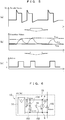
Fig. 5 is an explanatory diagram for describing a time waveform detected in a receiver and a smoothing process therefor, andFig. 5(a) illustrates a detection waveform in a receiver,Fig. 5(b) illustrates a waveform after a smoothing process, andFig. 5(c) illustrates a digital signal obtained by a comparison with a threshold value. -
Fig. 6 is an explanatory diagram for describing a configuration of a transmitter used in a photovoltaic power generation system in a second embodiment of the present disclosure. -
Fig. 7 is a graph illustrating a pulse waveform observed in a receiver corresponding to each type of current source inFigs. 3(a) to 3(d) . -
Fig. 8 is an explanatory diagram for describing an example of an array state of a photovoltaic module,Fig. 8(a) illustrates a 20 × 1 array,Fig. 8(b) illustrates a 10 × 2 array, andFig. 8(c) illustrates a 5 × 4 array. -
Fig. 9 is a graph illustrating a pulse waveform observed in a receiver corresponding to each type of current source inFigs. 3(a) to 3(d) . -
Fig. 10 is a graph illustrating a detection result of a current signal generated by a current source of a type shown inFig. 3(a) . -
Fig. 11 is a graph illustrating a detection result of a current signal generated by a current source of a type shown inFig. 3(c) . - Hereinafter, a photovoltaic power generation system according to a first embodiment of the present disclosure will be described with reference to the appended drawings.
- A photovoltaic power generation system of the present embodiment includes a
photovoltaic string 1, apower extractor 2, and a receiver 3 (seeFigs. 1 and2 ). - The
photovoltaic string 1 includes a plurality ofphotovoltaic modules 10 and apower line 11. In the following description, when an N-th photovoltaic module is referred to, a suffix is added to a reference numeral like aphotovoltaic module 10N. In a case in which aphotovoltaic module 10 is simply referred to, it indicates any one photovoltaic module. - A plurality of
photovoltaic modules 10 are connected in series via thepower line 11, and thus electric power obtained by photovoltaic cells can be transmitted via thepower line 11. - Since the respective
photovoltaic modules 10 basically have the same configuration, the following description will proceed using onephotovoltaic module 10 as an example. Here, the configuration of each photovoltaic module may be changed if necessary. - The
photovoltaic module 10 includes aphotovoltaic element 14 and atransmitter 15. Thetransmitter 15 corresponds to one specific example of the transmitting apparatus according to the present disclosure. - The
photovoltaic element 14 can be understood as one power source as illustrated inFig. 2 . This power source also depends on an operation mode but basically has a characteristic of a current source (ideally, internal resistance = ∞) other than a voltage source (ideally, internal resistance = 0). Since the photovoltaic element can basically have the same structure as that of a photovoltaic element of a related art, detailed description thereof is omitted. - The
transmitter 15 includes acurrent source 151, acontroller 152, and a bypass capacitor 153 (seeFig. 2 ). Further, thetransmitter 15 of the present example additionally includes a transmittingdiode 154 and abypass diode 155. - The
current source 151 is connected to thepower line 11 in parallel with thephotovoltaic element 14. A specific configuration example of the current source will be described later. Thecurrent source 151 in this example is connected to thepower line 11 to have the same current polarity as thephotovoltaic element 14 connected in parallel to thecurrent source 151. - The
controller 152 controls the current value in thecurrent source 151 such that the current signal is generated. For example, a microprocessor (a micro-controller unit (MCU)) can be used as the controller. Here, the controller is not limited to this example as long as current value control (for example, on/off control) of thecurrent source 151 can be performed at a desired timing so that an appropriate current signal is generated. - The
bypass capacitor 153 is connected to thepower line 11 in parallel with thephotovoltaic element 14 and thecurrent source 151. In the present embodiment, with this configuration, the current signal transmitted through thebypass capacitor 153 from a negative electrode side in thephotovoltaic string 1 can be transmitted to a positive electrode side (in a direction of an electric current I inFig. 2 ) . - The transmitting
diode 154 is connected between thecurrent source 151 and thebypass capacitor 153. In the present embodiment, the electric current is prevented from being sent from thecurrent source 151 to thebypass capacitor 153, and the electric current flows into thepower line 11 accordingly. - The
bypass diode 155 is inserted in series between a (k-1)-th photovoltaic module and a (k+1)-th photovoltaic module. Here, k is a number of a photovoltaic module of interest, and 1 ≤ k ≤ N in the present example. Thebypass diode 155 allows the electric current to flow through thebypass diode 155 even when a certain failure occurs in a k-th photovoltaic module. Since thebypass diode 155 can be constructed, similarly to that used in the photovoltaic module of the related art, further detailed description is omitted. - In this embodiment, the
power extractor 2 is configured to extract electric power from thepower line 11 using an inverter (specifically, a DC/AC inverter or a DC/DC converter) . Any device can be used as thepower extractor 2 as long as the electric power transmitted from thephotovoltaic module 10 can be extracted from thepower line 11. Since an existing device can be used as the power extractor of the present embodiment, further description is omitted. - The
receiver 3 is configured to receive the current signal transmitted from thetransmitter 15 via thepower line 11. Thereceiver 3 of the present example has a configuration capable of extracting a change in the current value as a signal using a current transformer CT. Detailed configuration of the receiver will be described later. - In the
transmitter 15 of the present embodiment described above, it is possible to cause the current signal to be generated by switching the current source 151 (on/off switching). The current signal generated by thecurrent source 151 is superimposed on the electric current flowing through thepower line 11 and transmitted to thereceiver 3. Here, in the present embodiment, since the transmittingdiode 154 is installed, the current signal from thecurrent source 151 does not flow in the direction of thebypass capacitor 153. If a part of the current signal flows in the direction of thebypass capacitor 153, since a signal component passes through the capacitor, a noise rides on thepower line 11 and the SN ratio of the current signal deteriorates. In the present embodiment, it is possible to improve the SN ratio of the current signal by suppressing the occurrence of such a noise. - Further, in the present embodiment, the current signal generated on an upstream side (for example, the (k-1)-th photovoltaic module) in an electric current direction is transmitted to the k-th photovoltaic module via the
power line 11. This current signal passes through thebypass capacitor 153 and the transmittingdiode 154 in the k-th photovoltaic module and is transmitted to a downstream side (for example, the (k+1)-th photovoltaic module). Basically, since thephotovoltaic element 14 is the current source, when thebypass capacitor 153 is not installed, the current signal is stopped by the current source and not transmitted to the downstream side. On the other hand, in the present embodiment, since thebypass capacitor 153 is installed, it is possible to transmit the current signal to the downstream side. Further, in the present embodiment, since the current signal is transferred by thecapacitor 153 without depending on the parasitic capacitance of the photovoltaic module, the SN ratio of the current signal can be improved. - The technology of the present embodiment can be applied even in a case in which the
photovoltaic string 1 is connected in parallel and has an array configuration. In the normal photovoltaic string, since a diode for backflow prevention is inserted, it is possible to prevent the current signal flowing through a certain string from flowing into another string. Therefore, even in the case of the array configuration, it is possible to detect by causing the current signal to flow in the direction of thereceiver 3. - A further specific example of the current source 151 (including the controller 152) used in the
transmitter 15 in the above embodiment will be described below with reference toFigs. 3(a) to 3(d) . Note that, in the description of these examples, common reference numerals such as a resistor R1 and a capacitor C1 are used, but an appropriate characteristic is employed in accordance with each circuit configuration. Further, terminals a and b inFig. 3 correspond to terminals a and b inFig. 2 . - A transmitter 15 (see
Fig. 3(a) ) of a first example is of a capacitor pump type. This transmitter is configured to generate an electric current by using electric charges accumulated in a capacitor C2. When thecurrent source 151 is turned off, the controller 152 (specifically, the microprocessor) turns on a transistor Q3 and turns off Q2 (that is, turns off Q1 eventually). Accordingly, the capacitor C2 is in a state in which electric charges are accumulated. To turn on thecurrent source 151, the transistor Q3 is turned off, and Q2 is turned on (that is, Q1 is turned on accordingly) . Accordingly, a potential of the capacitor C2 on a diode (D3 or D2) side rises to be nearly twice (because the potential of the capacitor C2 is added to the potential of the capacitor C1). The capacitor C2 transmits the electric current via the diode D3. The magnitude of the electric current is controlled in accordance with the electric current flowing through the transistor Q1. A current limiting diode D4 is connected to the transistor Q1 and controls the magnitude of the electric current flowing through the transistor Q1. The potential of the capacitor C1 decreases during pulse transmission (that is, during transmission of an ON waveform in the current signal), but since it is connected to the power source line via the resistor R1, the magnitude of the electric current drawn from the power source line is smaller than the magnitude of the electric current transmitted by the capacitor C2. - The first example corresponds to one specific example of a "configuration in which the current source includes the pump capacitor that accumulates electric charges when the current signal is turned off and transmits the electric current to the power line when the current signal is turned on in accordance with a signal from the controller."
- A transmitter 15 (see
Fig. 3(b) ) of a second example can be called an inductor pump type. Thistransmitter 15 uses a capacitor C2 for pushing an electric current into a circuit. Whencurrent source 151 is turned off, thecontroller 152 causes a transistor Q1 to be kept off. In order to turn on thecurrent source 151 and generate a pulse, thecontroller 152 first turns on the transistor Q1 for a predetermined period time and then turns the transistor Q1 off. During the ON state, a coil L1 gradually draws an electric current from a capacitor C1. Thereafter, when the transistor Q1 is turned off, the electric current from the coil L1 flows to the capacitor C2 via a diode D2 and increases a voltage thereof. A diode D3 is an electric current control diode which limits a maximum electric current generated by a transistor Q2. Thereafter, with the passage of time, the transistor Q2 is turned off, and thecurrent source 151 is turned off accordingly. - A transmitter 15 (see
Fig. 3(c) ) of a third example can be call a coil direct coupling type. Thistransmitter 15 is configured to generate an electric current using magnetic flux accumulated in a coil L1 (cause it to function as a current source). When thecurrent source 151 is turned off, a transistor Q1 is turned off. In a case in which a pulse current is generated from thecurrent source 151, thecontroller 152 first turns on the transistor Q1 for a certain period of time. Thereafter, the transistor Q1 is turned off. While the transistor Q1 is in the ON state, the coil L1 gradually draws an electric current from the capacitor C1 and functions as the current source. When the transistor Q1 is turned OFF, the electric current is transmitted from the coil L1 via a diode D2. The electric current to be transmitted is stopped in due course (thecurrent source 151 is regarded as being turned off accordingly). - This third example corresponds to one specific example of a "configuration in which the current source includes a discharging coil, magnetic flux is accumulated by drawing the electric current in response to an ON signal from the controller, and the current signal is turned off after the electric current is transmitted to the power line for a period of time according to a time constant in response to an OFF signal from the controller."
- A transmitter 15 (see
Fig. 3(d) ) of a fourth example can be called a reverse electric current type. Thistransmitter 15 uses a transistor Q1 for drawing the electric current from the circuit, that is, for feeding an electric current of a opposite polarity to the circuit. When thecurrent source 151 is turned off, thecontroller 152 switches to turn off the transistor Q1. In order to turn on thecurrent source 151, the controller turns on the transistor Q1 via aresistor R 1. Here, by setting the resistor R1 to a large value appropriately, it is possible to limit the maximum electric current flowing through the transistor Q1. Note that, in this example, since a positive electrical current does not flow a direction from thecurrent source 151 to the transmittingdiode 154, installation of the transmittingdiode 154 can be omitted. - Next, a specific configuration example of the
receiver 3 will be described with reference toFig. 4 . Thereceiver 3 can extract a change in the electric current I (seeFig. 2 ) flowing through the circuit without contacting thepower line 11 using the current transformer CT and extract a signal transmitted from thetransmitter 15 by observing it through an AD converter ADC. InFig. 4 , AREF indicates a reference voltage of the AD converter, and a contact point on one side of the current transformer CT is attached to a voltage divided by resistors R1 and R2 (normally, R1 = R2). A resistor R3 is attached between both contact points of the current transformer CT. In a case in which the contact point on the other side of the current transformer CT is connected to an input of the AD converter ADC, it is possible to observe the change in the electric current as the change in the voltage. - A high frequency noise flowing through the
power line 11 can be cut by inserting a capacitor C2 between both ends of the current transformer CT. Further, since a low frequency noise is often in a band of about 50 Hz/60 Hz, it can be removed by signal processing (differential processing) after AD conversion. - In a case in which a turn ratio of the current transformer CT is N: 1, an electric current of 1/N of an electric current ΔI flowing through the power line 11 (primary side) (ΔI indicates a change amount in the electric current I) occurs on the secondary side. Resistors R1 and R2 and a capacitor C1 generate a constant voltage. Normally, when R1 = R2, 1/2 AREF (here, an analog reference voltage indicated by AREF) is generated. The electric current generated by the current transformer CT flows through the resistor R3, and thus an input voltage of the AD converter ADC is

- For example, in a case in which AREF = 5 V, N = 3000, 100 mA < ΔI < 100 mA, and the resistor R3 = 30 kΩ, an input voltage range of the AD converter ADC is 1.5 V to 3.5 V (that is, 1.5 V < VADC < 3.5 V). As illustrated in
Fig. 5 , in order to detect a pulse, a smoothing step is necessary. This is because a pulse shape is not an exact rectangle, and the signal intensity varies depending on a configuration of the photovoltaic module. For this reason, the receiver of the present example calculates a smoothed value as follows.


- Here, S(t) indicates a sample value obtained by the AD converter (
Fig. 5(a) ), V(t) is a primary smoothed value, and Vmax (t) and Vavg (t) are smoothed values and given strength and an offset of a pulse signal (Fig. 5(b) ). α1, α2, and α3 in Formula are time constants. MINDIFF > 0 is a constant parameter, which gives the smallest difference between Vmax(t) and Vavg(t). - A stage after smoothing is a pulse detection stage. In the present embodiment, a function active(t) is introduced. This is a function which becomes 1 when the pulse signal is active and becomes 0 in a case in which the pulse signal is not active. This function can be implemented, for example, as follows.

- Here, β (0 < β <1) is a threshold value for pulse detection.
- Next, a
transmitter 15 used in a photovoltaic power generation system according to a second embodiment of the present disclosure will be described with reference toFig. 6 . Note that, in the description of the second embodiment, the same reference numerals are used for components which are basically common to components of the first embodiment to avoid complication of the description. - In the
transmitter 15 of the second embodiment, the transmittingdiode 154 is connected in series with thebypass capacitor 153. Further, thetransmitter 15 includes a resistor R which is inserted in series with respect to thebypass capacitor 153 and in parallel with respect to the transmittingdiode 154. In the second embodiment, since there is no voltage drop (that is, power loss) by the transmittingdiode 154 with respect to the generated power from thephotovoltaic element 14, there is an advantage in that the power generation efficiency can be improved. A resistance value of the resistor R is set to a value necessary for causing the bypass capacitor to function. - The other configurations and advantages of the photovoltaic power generation system of the second embodiment are similar to those in the first embodiment, and thus detailed description thereof is omitted.
- Experiment examples of the
transmitter 15 and thereceiver 3 used in the photovoltaic power generation system of the first embodiment will be described below. The followings will be reviewed below: - (1) a pulse waveform in a different photovoltaic cell operation mode; and
- (2) a pulse waveform in a configuration of a different photovoltaic array. Further, a data frame detected in the receiver will be reviewed as well.
- In this experiment, data transmission using 20 photovoltaic modules has been reviewed. A model of a used photovoltaic element is SY-M12W-12 (available from SUNYOOO solar limited) . An open circuit voltage is 21.8 V, and a short circuit current is 0.73 A. Maximum power is 12 W (at 17.4 V and 0.69 A).
- 1000 µF was used as the
bypass capacitor 153 and thebypass diode 155 was inserted between the photovoltaic modules. A load resistor in this experiment includes an input capacitance of 190 µF and a variable resistor whose resistance value is variable between 100 Ω and 600 Ω. - In the experiment, the
transmitter 15 was attached to a first (#1)photovoltaic module 10, and the current transformer CT of thereceiver 3 was attached to a load portion. Further, in the experiments, thecurrent sources 151 of different types (the respective types illustrated inFigs. 3(a) to 3(d) ) were used. Table 1 below shows values of parameters in thetransmitter 15 and thereceiver 3 used in this experiment example. In Table 1, the examples correspond to the examples ofFigs. 3 (a) to 3(d) in order from the top. Of course, these values are just an example, and the present disclosure is not limited by these values.[Table 1] Type Part Parameter Part Parameter Capacitor Pump Transmitter R 1 300Ω R 2 510Ω R 3 200Ω C 1 2200uF C 2 470uF D 1 SBM1045VSS D 2 PS2010 D 3 PS2010 D 4 E-102(1mA CR D)x2 in parallel Q 1 2SA1359 Q 2 2SC1815 Q 3 2SC3422 Inductor Pump Transmitter R 1 2.0kΩ C 1 2200uF C 2 10uF L 1 470uH D 1 SBM1045VSS D 2 ER504 D 3 E-102(1mA CRD)x2 in parallel Q 1 2SC4495 Q 2 2SC3422 Inductor Direct Transmitter R 1 2.0kΩ C 1 2200uF L 1 470uH D 1 SBM1045VSS D 2 ER504 Q 1 2SC4495 Reverse Transmitter R 1 10kΩ C 1 2200uF Q 1 2SC4495 Receiver R 1 10kΩ R 2 10kΩ R 3 30kΩ C 1 1.0uF CT CTS-10-CLS (u-RD) N : 1 = 3000 : 1 - Further, in the present embodiment, ATmega 328 P-PU having a clock frequency of 16 MHz was used as the
controller 152. - Further, an oscilloscope (MDO 3014 available from Tektronix) was used for measurement of this example.
- In this experiment example, a pulse slot of 1000 µsec was used. For the
current sources 151 of the capacitor pump type (Fig. 3(a) ) and the reverse electric current type (Fig. 3(d) ), initial 500 µsec was taken as an activation phase, and subsequent 500 µsec was taken as an inactivation phase. For thecurrent sources 151 of the coil base type (Figs. 3(b) and 3(c) ), preceding 200 µsec was taken as a coil charging period, and subsequent 800 µsec was taken as a current opening time. - An electrical characteristic of the
photovoltaic module 10 depend on a situation of an I-V curve. For example, it is assumed that α, β, and γ (α < β < γ) indicate operating voltages of thephotovoltaic module 10, and the voltage β corresponds to a maximum power point. At the voltage α, thephotovoltaic module 10 operates as a constant current source, but at a voltage γ, thephotovoltaic module 10 operates as a constant voltage source. In this experiment example, the change in the pulse waveform in the example using tenphotovoltaic modules 10 connected in series was reviewed. The following Table 2 shows an operating voltage (V) in this experiment example. Of course, these are just an example, and the present disclosure is not limited thereto. Columns in the following Table 2 correspond toFigs. 3(a) to 3(d) from the left to the right.[Table 2] Capacitor Pump Inductor Pump Inductor Direct Reverse Current α 166 166 162 167 β 173 174 174 174 γ 184 184 184 184 -
Fig. 7 shows a result. In the case of a capacitor pump type illustrated inFig. 7 (a) , a definite positive pulse with a magnitude of + 0.35 V and a negative pulse subsequent thereto were obtained. In the case of an inductor pump type illustrated inFig. 7(b) , initially, a negative voltage of -0.1 V was generated. This is probably because the electric current was charged to the coil. Thereafter, a slightly indefinite pulse of +0.3 V was generated for 200 µsec. In the case of a direct coil type illustrated inFig. 7(c) , a negative voltage of -1.0 V was similarly generated, but thereafter a definite large pulse of +7 V was generated for 200 µsec. Thereafter, a negative voltage pulse of -6 V was generated. In the case of a reverse voltage type illustrated inFig. 7(d) , a characteristic which is inverted upside down from thatFig. 7(a) was shown. - In these results, there is a small difference between the voltages α, β, and γ.
- Next, as second experiment example, a pulse shape corresponding to the array configuration of the
photovoltaic module 10 was reviewed.Figs. 8(a) to 8(c) illustrate three array configuration patterns. 20 × 1 is an array in which 20 panels are connected in series (that is, one as the photovoltaic string), 10 × 2 is an array in which two strings each including ten panels are arranged in parallel, and 5 × 4 is an array in which four strings each including five panels are arranged in parallel. In this experiment example, in each configuration, a voltage giving the maximum power was used as the operating voltage. In other words, 348 V was used in the case of 20 × 1, 174 V was used in the case of 10 × 2, and 87 V was used in the case of 5 × 4. - The results are illustrated in
Figs. 9(a) to 9(d) . A relation between the graphs and the type of the current source is similar to that in the case ofFig. 7 . When these results are considered, the magnitude of the obtained pulse signal strength has a relation of 10 × 2 array > 20 × 1 array > 5 × 4 array. However, in all the cases, the signal strength exceeded a detection level. Therefore, it can be understood that the technology of the present disclosure can also be used for photovoltaic arrays constructed by arranging the photovoltaic strings in parallel. - In a third experiment example, a data frame transmission characteristic was reviewed. In this experiment example, the capacitor pump type (see
Fig. 7(a) ) and the coil direct coupling type (seeFig. 7(c) ) were used. - A data frame in this experiment example was set as follows. In other words, the data frame starts with an 8-bit signal 11111111. Subsequently, four bytes (for example, one byte is assigned to each for a panel ID, a voltage, an electric current, and a temperature) are continued. Finally, a checksum such as CRC 8 for error detection was inserted. A total length of the data frame is 48 bits. In this example, values of 1 and 0 are transmitted by inserting an interval of 1000 msec, and the
transmitter 15 has generated a pulse of 500 µsec when the value was 1 and has not generated a pulse when the value was 0. - In this experiment example, as a parameter set (α1, α2, α3, β, and MINDIFF) in a specific configuration example of the receiver 3 (see Formulas (1) to (5)), (0.25, 0.00001, 0.9, 0.5, 2) was set in the case of the transmitter of the capacitor pump type, and (0.5, 0.00001, 0.999, 0.75, 2) was set in the case of the transmitter of the coil direct coupling type. A sampling interval was set to about 100 µsec.
Figs. 10 and11 illustrate - (1) V(t), Vmax(t), and Varg(t) (these are values obtained by smoothing S(t)) and sampling data in the AD converter, and
- (2) a pattern of active (t) (detected as a pulse signal) .
- As indicated in the result, the pulse can be easily detected by the
receiver 3. However, in a case in which a plurality of zeros are continued, time synchronization is likely to be lost. - Note that, the pulse modulation scheme described above is merely an example, and an appropriate modulation scheme such as pulse width modulation, pulse position modulation, or the like can be used. Further, in a case in which current signals from a plurality of
current sources 151 are superimposed on thepower line 11, a scheme capable of distinguishing the signals as in a spreading coding scheme can be used. Of course, it is also possible to transmit the current signal by causing a signal transmission timing to differ for each panel (that is, in accordance with a time division scheme). - Note that, a combination of the transmitter and the receiver corresponds to a specific example of a monitoring apparatus in the present disclosure.
- A combination of the monitoring apparatus and the
power extractor 2 that extracts the electric power transmitted via the power line corresponds to one specific example of the photovoltaic power generation system according to the present disclosure. - Note that, the content of the present disclosure is not limited to the above embodiments. The present disclosure can include various modifications made on the specific configurations within the scope described in claims set forth below. For example, the respective circuit elements used in the above embodiments may be various kinds of elements or electronic devices having equivalent functions.
-
- 1
- Photovoltaic string
- 10
- Photovoltaic module
- 11
- Power line
- 14
- Photovoltaic element
- 15
- Transmitter
- 151
- Current source
- 152
- Controller
- 153
- Bypass capacitor
- 154
- Transmitting diode
- 155
- Bypass diode
- 2
- Power extractor
- 3
- Receiver
- ADC
- AD converter
- CT
- Current transformer
Claims (8)
- A transmitting apparatus for transmitting monitoring information as a current signal in a photovoltaic string including a plurality of photovoltaic elements connected to each other in series via a power line, the transmitting apparatus comprising:a current source;a controller; anda bypass capacitor,wherein the current source is connected to the power line in parallel with each of the photovoltaic elements,the controller is configured to control a current value of the current source such that the current signal is generated, andthe bypass capacitor is connected to the power line in parallel with the each of the photovoltaic elements and the current source so that a current signal transmitted through the bypass capacitor from a negative electrode side in the photovoltaic string can be transmitted to a positive electrode side.
- The transmitting apparatus according to claim 1, wherein the current source is connected to the power line to have the same current polarity as the photovoltaic element connected in parallel to the current source.
- The transmitting apparatus according to claim 1 or 2, further comprising a transmitting diode which is connected between the current source and the bypass capacitor so as to block an electric current from being transmitted from the current source to the bypass capacitor and to feed the electric current to the power line.
- The transmitting apparatus according to claim 3, further comprising a resistor which is connected in series to the bypass capacitor and in parallel to the transmitting diode.
- The transmitting apparatus according to any one of claims 1 to 4, wherein the current source includes a pump capacitor that accumulates electric charges when the current signal is turned off in response to a signal from the controller and transmits an electric current to the power line when the current signal is turned on.
- The transmitting apparatus according to any one of claims 1 to 4, wherein the current source includes a discharging coil configured to accumulates magnetic flux by drawing an electric current in response to an ON signal from the controller, and to turn off the current signal after the electric current is transmitted to the power line for a period of time according to a time constant of the discharging coil in response to an OFF signal from the controller.
- A monitoring apparatus, comprising:the transmitting apparatus according to any one of claims 1 to 6; anda receiver configured to receive the current signal transmitted via the power line.
- A photovoltaic power generation system, comprising:the monitoring apparatus according to claim 7; anda power extractor that extracts electric power transmitted via the power line.
Applications Claiming Priority (2)
| Application Number | Priority Date | Filing Date | Title |
|---|---|---|---|
| JP2016130122A JP6710868B2 (en) | 2016-06-30 | 2016-06-30 | Transmitter, receiver, monitoring device, and photovoltaic power generation system |
| PCT/JP2017/023661 WO2018003825A1 (en) | 2016-06-30 | 2017-06-28 | Transmission device for current signal of solar string |
Publications (3)
| Publication Number | Publication Date |
|---|---|
| EP3480944A1 true EP3480944A1 (en) | 2019-05-08 |
| EP3480944A4 EP3480944A4 (en) | 2019-11-13 |
| EP3480944B1 EP3480944B1 (en) | 2023-10-18 |
Family
ID=60786710
Family Applications (1)
| Application Number | Title | Priority Date | Filing Date |
|---|---|---|---|
| EP17820179.4A Active EP3480944B1 (en) | 2016-06-30 | 2017-06-28 | Transmission device for current signal of solar string |
Country Status (5)
| Country | Link |
|---|---|
| US (1) | US10868493B2 (en) |
| EP (1) | EP3480944B1 (en) |
| JP (1) | JP6710868B2 (en) |
| CN (1) | CN109417361B (en) |
| WO (1) | WO2018003825A1 (en) |
Families Citing this family (3)
| Publication number | Priority date | Publication date | Assignee | Title |
|---|---|---|---|---|
| US11398749B2 (en) | 2017-05-22 | 2022-07-26 | Solaredge Technologies Ltd. | Method and apparatus to enable communication and control in a power system |
| CN110798246B (en) * | 2019-09-29 | 2022-02-25 | 华为数字能源技术有限公司 | Interface circuit, group string and system applied to power line communication |
| KR102396454B1 (en) * | 2020-07-15 | 2022-05-09 | 충북대학교 산학협력단 | The System that Measuring Power of Individual Solar Generator at PV Farm Using Amplitude and Frequency Modulation |
Family Cites Families (16)
| Publication number | Priority date | Publication date | Assignee | Title |
|---|---|---|---|---|
| JPH11251615A (en) * | 1998-03-03 | 1999-09-17 | Canon Inc | Solar power generation system with snow melting function |
| JP2007058843A (en) * | 2005-07-27 | 2007-03-08 | Gunma Prefecture | Photovoltaic power generator |
| EP2249457A1 (en) | 2009-05-08 | 2010-11-10 | Nxp B.V. | PV solar cell |
| WO2011133928A2 (en) * | 2010-04-22 | 2011-10-27 | Tigo Energy, Inc. | System and method for enhanced watch dog in solar panel installations |
| JP5419018B2 (en) * | 2010-06-14 | 2014-02-19 | 独立行政法人産業技術総合研究所 | Spread spectrum communication system |
| CN202424315U (en) * | 2011-12-27 | 2012-09-05 | 中电普瑞科技有限公司 | Control and protection system for flexible alternating current power transmission device |
| JP5547311B1 (en) | 2013-02-06 | 2014-07-09 | 株式会社日立アドバンストデジタル | Monitoring system for photovoltaic power generation equipment |
| DE102013101314A1 (en) * | 2013-02-11 | 2014-08-14 | Phoenix Contact Gmbh & Co. Kg | Safe photovoltaic system |
| KR20140123854A (en) * | 2013-04-15 | 2014-10-23 | 한국전자통신연구원 | Apparatus and Method for Serial-Connected Power Line Communication |
| JP6209412B2 (en) * | 2013-09-27 | 2017-10-04 | 株式会社日立製作所 | Fault diagnosis system and fault diagnosis method for photovoltaic power generation system |
| US9947807B2 (en) * | 2014-02-06 | 2018-04-17 | Taiwan Semiconductor Manufacturing Co., Ltd. | Solar module with wireless power transfer |
| JP2015219675A (en) * | 2014-05-16 | 2015-12-07 | 国立研究開発法人産業技術総合研究所 | Power distribution circuit for solar battery |
| CN106256086B (en) * | 2014-05-27 | 2019-06-21 | 太阳能公司 | PV system protection |
| US10218307B2 (en) * | 2014-12-02 | 2019-02-26 | Tigo Energy, Inc. | Solar panel junction boxes having integrated function modules |
| DE102016115295A1 (en) * | 2016-08-17 | 2018-02-22 | Sma Solar Technology Ag | Separator for a photovoltaic string |
| US20180102733A1 (en) * | 2016-10-06 | 2018-04-12 | Sohrab Peshoton Kakalia | Dynamic reconfiguration of solar panels based on light condition |
-
2016
- 2016-06-30 JP JP2016130122A patent/JP6710868B2/en active Active
-
2017
- 2017-06-28 WO PCT/JP2017/023661 patent/WO2018003825A1/en not_active Ceased
- 2017-06-28 US US16/313,949 patent/US10868493B2/en active Active
- 2017-06-28 EP EP17820179.4A patent/EP3480944B1/en active Active
- 2017-06-28 CN CN201780040175.7A patent/CN109417361B/en active Active
Also Published As
| Publication number | Publication date |
|---|---|
| CN109417361B (en) | 2021-06-29 |
| US20190199282A1 (en) | 2019-06-27 |
| CN109417361A (en) | 2019-03-01 |
| JP2018007382A (en) | 2018-01-11 |
| US10868493B2 (en) | 2020-12-15 |
| EP3480944B1 (en) | 2023-10-18 |
| JP6710868B2 (en) | 2020-06-17 |
| WO2018003825A1 (en) | 2018-01-04 |
| EP3480944A4 (en) | 2019-11-13 |
Similar Documents
| Publication | Publication Date | Title |
|---|---|---|
| US12348182B2 (en) | Safety switch for photovoltaic systems | |
| US10672918B2 (en) | Photovoltaic panel rapid shutdown and recovery | |
| CN102313873B (en) | Battery number detecting circuit and method and monitoring system | |
| US10197608B2 (en) | Apparatus for determining insulation resistance at a PV generator, and photovoltaic installation | |
| CN102156504A (en) | Solar-cell panel maximum power tracking device, tracking method and solar power supply device using the same | |
| EP3480944B1 (en) | Transmission device for current signal of solar string | |
| CN106169925A (en) | Monolithic Integrated Circuit Switching Device with Output Current Sharing | |
| CN108897367A (en) | Voltage control circuit, method, apparatus and storage medium | |
| CN110729964B (en) | Photovoltaic system and photovoltaic module thereof | |
| CN101207333B (en) | Switch power supply and control method with awaiting orders mode thereof | |
| CN104979804B (en) | A kind of output overvoltage protection circuit | |
| CN103219888A (en) | Automatic correction device applied to output power supply | |
| CN110958743A (en) | Circuit and method for protecting open circuit and short circuit to ground | |
| US6205039B1 (en) | Device for supervising a high voltage converter station | |
| CN110086143B (en) | Input voltage divider circuit and overvoltage protection switch | |
| CN113589080B (en) | Automatic testing system and method for charger | |
| KR102586441B1 (en) | Power management integrated circuit | |
| DE102005033477B4 (en) | Circuit arrangement and method for converting an alternating voltage into a rectified voltage | |
| CN106655823B (en) | Anti-magnetic interference switching power supply and control circuit and control method thereof | |
| WO2020242786A1 (en) | Techniques for controlling a single-inductor multiple-output (simo) switched-mode power supply (smps) | |
| CN218473026U (en) | Chip starting circuit with wide-range input | |
| CN105656429A (en) | Electrical parameter test method capable of being applicable to high-efficiency photovoltaic cell module | |
| CN114660337A (en) | High-voltage pulse power supply and power semiconductor testing device | |
| CN217739419U (en) | High-voltage sampling circuit and system of power battery | |
| US20250330093A1 (en) | Simo converter including transient enhancement loop |
Legal Events
| Date | Code | Title | Description |
|---|---|---|---|
| STAA | Information on the status of an ep patent application or granted ep patent |
Free format text: STATUS: THE INTERNATIONAL PUBLICATION HAS BEEN MADE |
|
| PUAI | Public reference made under article 153(3) epc to a published international application that has entered the european phase |
Free format text: ORIGINAL CODE: 0009012 |
|
| STAA | Information on the status of an ep patent application or granted ep patent |
Free format text: STATUS: REQUEST FOR EXAMINATION WAS MADE |
|
| 17P | Request for examination filed |
Effective date: 20190128 |
|
| AK | Designated contracting states |
Kind code of ref document: A1 Designated state(s): AL AT BE BG CH CY CZ DE DK EE ES FI FR GB GR HR HU IE IS IT LI LT LU LV MC MK MT NL NO PL PT RO RS SE SI SK SM TR |
|
| AX | Request for extension of the european patent |
Extension state: BA ME |
|
| DAV | Request for validation of the european patent (deleted) | ||
| DAX | Request for extension of the european patent (deleted) | ||
| A4 | Supplementary search report drawn up and despatched |
Effective date: 20191010 |
|
| RIC1 | Information provided on ipc code assigned before grant |
Ipc: H02J 13/00 20060101ALI20191004BHEP Ipc: H02S 50/00 20140101AFI20191004BHEP |
|
| STAA | Information on the status of an ep patent application or granted ep patent |
Free format text: STATUS: EXAMINATION IS IN PROGRESS |
|
| 17Q | First examination report despatched |
Effective date: 20210827 |
|
| GRAP | Despatch of communication of intention to grant a patent |
Free format text: ORIGINAL CODE: EPIDOSNIGR1 |
|
| STAA | Information on the status of an ep patent application or granted ep patent |
Free format text: STATUS: GRANT OF PATENT IS INTENDED |
|
| INTG | Intention to grant announced |
Effective date: 20230510 |
|
| GRAS | Grant fee paid |
Free format text: ORIGINAL CODE: EPIDOSNIGR3 |
|
| P01 | Opt-out of the competence of the unified patent court (upc) registered |
Effective date: 20230807 |
|
| GRAA | (expected) grant |
Free format text: ORIGINAL CODE: 0009210 |
|
| STAA | Information on the status of an ep patent application or granted ep patent |
Free format text: STATUS: THE PATENT HAS BEEN GRANTED |
|
| AK | Designated contracting states |
Kind code of ref document: B1 Designated state(s): AL AT BE BG CH CY CZ DE DK EE ES FI FR GB GR HR HU IE IS IT LI LT LU LV MC MK MT NL NO PL PT RO RS SE SI SK SM TR |
|
| REG | Reference to a national code |
Ref country code: GB Ref legal event code: FG4D |
|
| REG | Reference to a national code |
Ref country code: CH Ref legal event code: EP |
|
| REG | Reference to a national code |
Ref country code: IE Ref legal event code: FG4D |
|
| REG | Reference to a national code |
Ref country code: DE Ref legal event code: R096 Ref document number: 602017075506 Country of ref document: DE |
|
| REG | Reference to a national code |
Ref country code: LT Ref legal event code: MG9D |
|
| REG | Reference to a national code |
Ref country code: NL Ref legal event code: MP Effective date: 20231018 |
|
| REG | Reference to a national code |
Ref country code: AT Ref legal event code: MK05 Ref document number: 1623368 Country of ref document: AT Kind code of ref document: T Effective date: 20231018 |
|
| PG25 | Lapsed in a contracting state [announced via postgrant information from national office to epo] |
Ref country code: NL Free format text: LAPSE BECAUSE OF FAILURE TO SUBMIT A TRANSLATION OF THE DESCRIPTION OR TO PAY THE FEE WITHIN THE PRESCRIBED TIME-LIMIT Effective date: 20231018 |
|
| PG25 | Lapsed in a contracting state [announced via postgrant information from national office to epo] |
Ref country code: GR Free format text: LAPSE BECAUSE OF FAILURE TO SUBMIT A TRANSLATION OF THE DESCRIPTION OR TO PAY THE FEE WITHIN THE PRESCRIBED TIME-LIMIT Effective date: 20240119 |
|
| PG25 | Lapsed in a contracting state [announced via postgrant information from national office to epo] |
Ref country code: IS Free format text: LAPSE BECAUSE OF FAILURE TO SUBMIT A TRANSLATION OF THE DESCRIPTION OR TO PAY THE FEE WITHIN THE PRESCRIBED TIME-LIMIT Effective date: 20240218 |
|
| PG25 | Lapsed in a contracting state [announced via postgrant information from national office to epo] |
Ref country code: LT Free format text: LAPSE BECAUSE OF FAILURE TO SUBMIT A TRANSLATION OF THE DESCRIPTION OR TO PAY THE FEE WITHIN THE PRESCRIBED TIME-LIMIT Effective date: 20231018 |
|
| PG25 | Lapsed in a contracting state [announced via postgrant information from national office to epo] |
Ref country code: AT Free format text: LAPSE BECAUSE OF FAILURE TO SUBMIT A TRANSLATION OF THE DESCRIPTION OR TO PAY THE FEE WITHIN THE PRESCRIBED TIME-LIMIT Effective date: 20231018 |
|
| PG25 | Lapsed in a contracting state [announced via postgrant information from national office to epo] |
Ref country code: ES Free format text: LAPSE BECAUSE OF FAILURE TO SUBMIT A TRANSLATION OF THE DESCRIPTION OR TO PAY THE FEE WITHIN THE PRESCRIBED TIME-LIMIT Effective date: 20231018 |
|
| PG25 | Lapsed in a contracting state [announced via postgrant information from national office to epo] |
Ref country code: LT Free format text: LAPSE BECAUSE OF FAILURE TO SUBMIT A TRANSLATION OF THE DESCRIPTION OR TO PAY THE FEE WITHIN THE PRESCRIBED TIME-LIMIT Effective date: 20231018 Ref country code: IS Free format text: LAPSE BECAUSE OF FAILURE TO SUBMIT A TRANSLATION OF THE DESCRIPTION OR TO PAY THE FEE WITHIN THE PRESCRIBED TIME-LIMIT Effective date: 20240218 Ref country code: GR Free format text: LAPSE BECAUSE OF FAILURE TO SUBMIT A TRANSLATION OF THE DESCRIPTION OR TO PAY THE FEE WITHIN THE PRESCRIBED TIME-LIMIT Effective date: 20240119 Ref country code: ES Free format text: LAPSE BECAUSE OF FAILURE TO SUBMIT A TRANSLATION OF THE DESCRIPTION OR TO PAY THE FEE WITHIN THE PRESCRIBED TIME-LIMIT Effective date: 20231018 Ref country code: BG Free format text: LAPSE BECAUSE OF FAILURE TO SUBMIT A TRANSLATION OF THE DESCRIPTION OR TO PAY THE FEE WITHIN THE PRESCRIBED TIME-LIMIT Effective date: 20240118 Ref country code: AT Free format text: LAPSE BECAUSE OF FAILURE TO SUBMIT A TRANSLATION OF THE DESCRIPTION OR TO PAY THE FEE WITHIN THE PRESCRIBED TIME-LIMIT Effective date: 20231018 Ref country code: PT Free format text: LAPSE BECAUSE OF FAILURE TO SUBMIT A TRANSLATION OF THE DESCRIPTION OR TO PAY THE FEE WITHIN THE PRESCRIBED TIME-LIMIT Effective date: 20240219 |
|
| PG25 | Lapsed in a contracting state [announced via postgrant information from national office to epo] |
Ref country code: SE Free format text: LAPSE BECAUSE OF FAILURE TO SUBMIT A TRANSLATION OF THE DESCRIPTION OR TO PAY THE FEE WITHIN THE PRESCRIBED TIME-LIMIT Effective date: 20231018 Ref country code: RS Free format text: LAPSE BECAUSE OF FAILURE TO SUBMIT A TRANSLATION OF THE DESCRIPTION OR TO PAY THE FEE WITHIN THE PRESCRIBED TIME-LIMIT Effective date: 20231018 Ref country code: PL Free format text: LAPSE BECAUSE OF FAILURE TO SUBMIT A TRANSLATION OF THE DESCRIPTION OR TO PAY THE FEE WITHIN THE PRESCRIBED TIME-LIMIT Effective date: 20231018 Ref country code: NO Free format text: LAPSE BECAUSE OF FAILURE TO SUBMIT A TRANSLATION OF THE DESCRIPTION OR TO PAY THE FEE WITHIN THE PRESCRIBED TIME-LIMIT Effective date: 20240118 Ref country code: LV Free format text: LAPSE BECAUSE OF FAILURE TO SUBMIT A TRANSLATION OF THE DESCRIPTION OR TO PAY THE FEE WITHIN THE PRESCRIBED TIME-LIMIT Effective date: 20231018 Ref country code: HR Free format text: LAPSE BECAUSE OF FAILURE TO SUBMIT A TRANSLATION OF THE DESCRIPTION OR TO PAY THE FEE WITHIN THE PRESCRIBED TIME-LIMIT Effective date: 20231018 |
|
| PG25 | Lapsed in a contracting state [announced via postgrant information from national office to epo] |
Ref country code: DK Free format text: LAPSE BECAUSE OF FAILURE TO SUBMIT A TRANSLATION OF THE DESCRIPTION OR TO PAY THE FEE WITHIN THE PRESCRIBED TIME-LIMIT Effective date: 20231018 |
|
| REG | Reference to a national code |
Ref country code: DE Ref legal event code: R097 Ref document number: 602017075506 Country of ref document: DE |
|
| PG25 | Lapsed in a contracting state [announced via postgrant information from national office to epo] |
Ref country code: CZ Free format text: LAPSE BECAUSE OF FAILURE TO SUBMIT A TRANSLATION OF THE DESCRIPTION OR TO PAY THE FEE WITHIN THE PRESCRIBED TIME-LIMIT Effective date: 20231018 |
|
| PG25 | Lapsed in a contracting state [announced via postgrant information from national office to epo] |
Ref country code: SK Free format text: LAPSE BECAUSE OF FAILURE TO SUBMIT A TRANSLATION OF THE DESCRIPTION OR TO PAY THE FEE WITHIN THE PRESCRIBED TIME-LIMIT Effective date: 20231018 |
|
| PG25 | Lapsed in a contracting state [announced via postgrant information from national office to epo] |
Ref country code: SM Free format text: LAPSE BECAUSE OF FAILURE TO SUBMIT A TRANSLATION OF THE DESCRIPTION OR TO PAY THE FEE WITHIN THE PRESCRIBED TIME-LIMIT Effective date: 20231018 Ref country code: SK Free format text: LAPSE BECAUSE OF FAILURE TO SUBMIT A TRANSLATION OF THE DESCRIPTION OR TO PAY THE FEE WITHIN THE PRESCRIBED TIME-LIMIT Effective date: 20231018 Ref country code: RO Free format text: LAPSE BECAUSE OF FAILURE TO SUBMIT A TRANSLATION OF THE DESCRIPTION OR TO PAY THE FEE WITHIN THE PRESCRIBED TIME-LIMIT Effective date: 20231018 Ref country code: IT Free format text: LAPSE BECAUSE OF FAILURE TO SUBMIT A TRANSLATION OF THE DESCRIPTION OR TO PAY THE FEE WITHIN THE PRESCRIBED TIME-LIMIT Effective date: 20231018 Ref country code: EE Free format text: LAPSE BECAUSE OF FAILURE TO SUBMIT A TRANSLATION OF THE DESCRIPTION OR TO PAY THE FEE WITHIN THE PRESCRIBED TIME-LIMIT Effective date: 20231018 Ref country code: DK Free format text: LAPSE BECAUSE OF FAILURE TO SUBMIT A TRANSLATION OF THE DESCRIPTION OR TO PAY THE FEE WITHIN THE PRESCRIBED TIME-LIMIT Effective date: 20231018 Ref country code: CZ Free format text: LAPSE BECAUSE OF FAILURE TO SUBMIT A TRANSLATION OF THE DESCRIPTION OR TO PAY THE FEE WITHIN THE PRESCRIBED TIME-LIMIT Effective date: 20231018 |
|
| PLBE | No opposition filed within time limit |
Free format text: ORIGINAL CODE: 0009261 |
|
| STAA | Information on the status of an ep patent application or granted ep patent |
Free format text: STATUS: NO OPPOSITION FILED WITHIN TIME LIMIT |
|
| 26N | No opposition filed |
Effective date: 20240719 |
|
| PG25 | Lapsed in a contracting state [announced via postgrant information from national office to epo] |
Ref country code: SI Free format text: LAPSE BECAUSE OF FAILURE TO SUBMIT A TRANSLATION OF THE DESCRIPTION OR TO PAY THE FEE WITHIN THE PRESCRIBED TIME-LIMIT Effective date: 20231018 |
|
| PG25 | Lapsed in a contracting state [announced via postgrant information from national office to epo] |
Ref country code: SI Free format text: LAPSE BECAUSE OF FAILURE TO SUBMIT A TRANSLATION OF THE DESCRIPTION OR TO PAY THE FEE WITHIN THE PRESCRIBED TIME-LIMIT Effective date: 20231018 |
|
| PG25 | Lapsed in a contracting state [announced via postgrant information from national office to epo] |
Ref country code: MC Free format text: LAPSE BECAUSE OF FAILURE TO SUBMIT A TRANSLATION OF THE DESCRIPTION OR TO PAY THE FEE WITHIN THE PRESCRIBED TIME-LIMIT Effective date: 20231018 |
|
| REG | Reference to a national code |
Ref country code: CH Ref legal event code: PL |
|
| PG25 | Lapsed in a contracting state [announced via postgrant information from national office to epo] |
Ref country code: LU Free format text: LAPSE BECAUSE OF NON-PAYMENT OF DUE FEES Effective date: 20240628 |
|
| GBPC | Gb: european patent ceased through non-payment of renewal fee |
Effective date: 20240628 |
|
| PG25 | Lapsed in a contracting state [announced via postgrant information from national office to epo] |
Ref country code: IE Free format text: LAPSE BECAUSE OF NON-PAYMENT OF DUE FEES Effective date: 20240628 |
|
| PG25 | Lapsed in a contracting state [announced via postgrant information from national office to epo] |
Ref country code: BE Free format text: LAPSE BECAUSE OF NON-PAYMENT OF DUE FEES Effective date: 20240630 Ref country code: CH Free format text: LAPSE BECAUSE OF NON-PAYMENT OF DUE FEES Effective date: 20240630 |
|
| PG25 | Lapsed in a contracting state [announced via postgrant information from national office to epo] |
Ref country code: FR Free format text: LAPSE BECAUSE OF NON-PAYMENT OF DUE FEES Effective date: 20240630 |
|
| PG25 | Lapsed in a contracting state [announced via postgrant information from national office to epo] |
Ref country code: GB Free format text: LAPSE BECAUSE OF NON-PAYMENT OF DUE FEES Effective date: 20240628 |
|
| REG | Reference to a national code |
Ref country code: BE Ref legal event code: MM Effective date: 20240630 |
|
| PGFP | Annual fee paid to national office [announced via postgrant information from national office to epo] |
Ref country code: DE Payment date: 20250625 Year of fee payment: 9 |
|
| PG25 | Lapsed in a contracting state [announced via postgrant information from national office to epo] |
Ref country code: FI Free format text: LAPSE BECAUSE OF FAILURE TO SUBMIT A TRANSLATION OF THE DESCRIPTION OR TO PAY THE FEE WITHIN THE PRESCRIBED TIME-LIMIT Effective date: 20231019 |
|
| PG25 | Lapsed in a contracting state [announced via postgrant information from national office to epo] |
Ref country code: CY Free format text: LAPSE BECAUSE OF FAILURE TO SUBMIT A TRANSLATION OF THE DESCRIPTION OR TO PAY THE FEE WITHIN THE PRESCRIBED TIME-LIMIT; INVALID AB INITIO Effective date: 20170628 |
|
| PG25 | Lapsed in a contracting state [announced via postgrant information from national office to epo] |
Ref country code: HU Free format text: LAPSE BECAUSE OF FAILURE TO SUBMIT A TRANSLATION OF THE DESCRIPTION OR TO PAY THE FEE WITHIN THE PRESCRIBED TIME-LIMIT; INVALID AB INITIO Effective date: 20170628 |