EP3480754A1 - Managing power demand of a plurality of passenger transport installations - Google Patents
Managing power demand of a plurality of passenger transport installations Download PDFInfo
- Publication number
- EP3480754A1 EP3480754A1 EP17200335.2A EP17200335A EP3480754A1 EP 3480754 A1 EP3480754 A1 EP 3480754A1 EP 17200335 A EP17200335 A EP 17200335A EP 3480754 A1 EP3480754 A1 EP 3480754A1
- Authority
- EP
- European Patent Office
- Prior art keywords
- passenger transport
- data
- power demand
- transport installation
- demand management
- Prior art date
- Legal status (The legal status is an assumption and is not a legal conclusion. Google has not performed a legal analysis and makes no representation as to the accuracy of the status listed.)
- Granted
Links
Images


Classifications
-
- G—PHYSICS
- G06—COMPUTING OR CALCULATING; COUNTING
- G06Q—INFORMATION AND COMMUNICATION TECHNOLOGY [ICT] SPECIALLY ADAPTED FOR ADMINISTRATIVE, COMMERCIAL, FINANCIAL, MANAGERIAL OR SUPERVISORY PURPOSES; SYSTEMS OR METHODS SPECIALLY ADAPTED FOR ADMINISTRATIVE, COMMERCIAL, FINANCIAL, MANAGERIAL OR SUPERVISORY PURPOSES, NOT OTHERWISE PROVIDED FOR
- G06Q10/00—Administration; Management
- G06Q10/06—Resources, workflows, human or project management; Enterprise or organisation planning; Enterprise or organisation modelling
- G06Q10/063—Operations research, analysis or management
- G06Q10/0631—Resource planning, allocation, distributing or scheduling for enterprises or organisations
- G06Q10/06312—Adjustment or analysis of established resource schedule, e.g. resource or task levelling, or dynamic rescheduling
-
- G—PHYSICS
- G05—CONTROLLING; REGULATING
- G05B—CONTROL OR REGULATING SYSTEMS IN GENERAL; FUNCTIONAL ELEMENTS OF SUCH SYSTEMS; MONITORING OR TESTING ARRANGEMENTS FOR SUCH SYSTEMS OR ELEMENTS
- G05B19/00—Program-control systems
- G05B19/02—Program-control systems electric
- G05B19/04—Program control other than numerical control, i.e. in sequence controllers or logic controllers
- G05B19/042—Program control other than numerical control, i.e. in sequence controllers or logic controllers using digital processors
-
- G—PHYSICS
- G06—COMPUTING OR CALCULATING; COUNTING
- G06Q—INFORMATION AND COMMUNICATION TECHNOLOGY [ICT] SPECIALLY ADAPTED FOR ADMINISTRATIVE, COMMERCIAL, FINANCIAL, MANAGERIAL OR SUPERVISORY PURPOSES; SYSTEMS OR METHODS SPECIALLY ADAPTED FOR ADMINISTRATIVE, COMMERCIAL, FINANCIAL, MANAGERIAL OR SUPERVISORY PURPOSES, NOT OTHERWISE PROVIDED FOR
- G06Q10/00—Administration; Management
- G06Q10/06—Resources, workflows, human or project management; Enterprise or organisation planning; Enterprise or organisation modelling
- G06Q10/063—Operations research, analysis or management
- G06Q10/0631—Resource planning, allocation, distributing or scheduling for enterprises or organisations
- G06Q10/06315—Needs-based resource requirements planning or analysis
-
- G—PHYSICS
- G06—COMPUTING OR CALCULATING; COUNTING
- G06Q—INFORMATION AND COMMUNICATION TECHNOLOGY [ICT] SPECIALLY ADAPTED FOR ADMINISTRATIVE, COMMERCIAL, FINANCIAL, MANAGERIAL OR SUPERVISORY PURPOSES; SYSTEMS OR METHODS SPECIALLY ADAPTED FOR ADMINISTRATIVE, COMMERCIAL, FINANCIAL, MANAGERIAL OR SUPERVISORY PURPOSES, NOT OTHERWISE PROVIDED FOR
- G06Q50/00—Information and communication technology [ICT] specially adapted for implementation of business processes of specific business sectors, e.g. utilities or tourism
- G06Q50/40—Business processes related to the transportation industry
-
- H—ELECTRICITY
- H02—GENERATION; CONVERSION OR DISTRIBUTION OF ELECTRIC POWER
- H02J—ELECTRIC POWER NETWORKS; CIRCUIT ARRANGEMENTS OR SYSTEMS FOR SUPPLYING OR DISTRIBUTING ELECTRIC POWER; SYSTEMS FOR STORING ELECTRIC ENERGY
- H02J13/00—Circuit arrangements for providing remote monitoring or remote control of equipment in a power distribution network
-
- G—PHYSICS
- G05—CONTROLLING; REGULATING
- G05B—CONTROL OR REGULATING SYSTEMS IN GENERAL; FUNCTIONAL ELEMENTS OF SUCH SYSTEMS; MONITORING OR TESTING ARRANGEMENTS FOR SUCH SYSTEMS OR ELEMENTS
- G05B2219/00—Program-control systems
- G05B2219/20—Pc systems
- G05B2219/26—Pc applications
- G05B2219/2639—Energy management, use maximum of cheap power, keep peak load low
Definitions
- the power demand of existing passenger transport systems is extremely volatile. Short peaks in the power demand can be up to 30 times as high as the average demand resulting in significant transient peaks in the power demand of a building.
- the growing amount of renewable energy production and increasing overall grid demand put pressure on grid operators to have sufficient reserve capacity to maintain grid stability.
- a solution that coordinates and optimizes a fleet of demand flexible passenger transport installations.
- the solution enables turning problematic highly volatile loads into an asset for grid operators by harnessing them into a joint resource for frequency regulation and demand management.
- a method for managing power demand of a plurality of passenger transport installations in at least one building comprises obtaining first data on available time-dependent power consumption flexibility capacity from each passenger transport installation; obtaining second data from at least one external data source, the second data being independent from operation of the passenger transport installations; determining an activation order for power demand management of the plurality of passenger transport installations based on the obtained first data and second data; and transmitting a passenger transport installation specific activation signal for power demand management to at least one passenger transport installation of the plurality of passenger transport installations in accordance with the activation order.
- the method further comprises obtaining third data on activation costs of the available time-dependent power consumption flexibility capacity from each passenger transport installation; and taking the third data into account when determining the activation order.
- determining an activation order further comprises determining a grid frequency threshold for at least one passenger transport installation; and transmitting a passenger transport installation specific activation signal further comprises transmitting the grid frequency threshold to the at least one passenger transport installation.
- determining an activation order further comprises determining a start time for initiating the power demand management and/or an end time for terminating the power demand management; and transmitting a passenger transport installation specific activation signal further comprises transmitting the start time for initiating the power demand management and/or the end time for terminating the power demand management to the at least one passenger transport installation.
- obtaining second data from at least one external data source comprises obtaining data from at least one of weather report data source, electricity cost data source, utility signal data source, electricity market data source and a load profile of one or more buildings.
- the method further comprises obtaining data on active power from each passenger transport installation in predefined intervals; and transmitting a verification of implementing the power demand management to a grid operator based on the active power data.
- the passenger transport installation specific activation signal comprises a request to curtail load, increase load, or feed energy back to the grid.
- a method for managing power demand of a passenger transport installation of a building comprises determining available time-dependent power consumption flexibility capacity of the passenger transport installation; and transmitting data indicating the available time-dependent power consumption flexibility capacity to an external control platform.
- the method further comprises receiving an activation signal for power demand management from the external control platform in response to the transmitted data; and managing the power demand according to the received activation signal.
- the activation signal comprises a grid frequency threshold comprising a limit frequency to activate the power demand management; and the method further comprises initiating the power demand management when the grid frequency threshold is reached.
- the activation signal comprises a start time for initiating the power demand management and/or an end time for terminating the power demand management; and the method further comprises initiating the power demand management in accordance with the start time and/or terminating the power demand management in accordance with the end time.
- the method further comprises creating a traffic forecast as a function of time; and determining an activation cost of the available time-dependent power consumption flexibility capacity based on the determined available flexibility capacity and the traffic forecast.
- the method further comprises determining active power data of the passenger transport installation; and transmitting the active power data to the external control platform.
- an apparatus for managing power demand of a plurality of passenger transport installations in at least one building comprises means for obtaining first data on available time-dependent power consumption flexibility capacity from each passenger transport installation; means for obtaining second data from at least one external data source, the second data being independent from operation of the passenger transport installations; means for determining an activation order for power demand management of the plurality of passenger transport installations based on the obtained first data and second data; and means for transmitting a passenger transport installation specific activation signal for power demand management to at least one passenger transport installation of the plurality of passenger transport installations in accordance with the activation order.
- the apparatus further comprises means for obtaining third data on activation costs of the available time-dependent power consumption flexibility capacity from each passenger transport installation, and means for taking the third data into account when determining the activation order.
- the means for determining an activation order comprise means for determining a grid frequency threshold for at least one passenger transport installation; and the means for transmitting a passenger transport installation specific activation signal further comprise means for transmitting the grid frequency threshold to the at least one passenger transport installation.
- the means for determining an activation order further comprise means for determining a start time for initiating the power demand management and/or an end time for terminating the power demand management; and the means for transmitting a passenger transport installation specific activation signal further comprise means for transmitting the start time for initiating the power demand management and/or the end time for terminating the power demand management to the at least one passenger transport installation.
- obtaining second data from at least one external data source comprises obtaining data from at least one of weather report data source, electricity cost data source, utility signal data source, electricity market data source and a load profile of one or more buildings.
- the apparatus further comprises means for obtaining data on active power from each passenger transport installation in predefined intervals; and means for transmitting a verification of implementing the power demand management to a grid operator based on the active power data.
- the passenger transport installation specific activation signal comprises a request to curtail load, increase load, or feed energy back to the grid.
- an apparatus for managing power demand of a passenger transport installation of a building comprises means for determining available time-dependent power consumption flexibility capacity of the passenger transport installation, and means for sending data indicating the available time-dependent power consumption flexibility capacity to an external control platform.
- the apparatus further comprises means for receiving an activation signal for the power demand management from the external control platform in response to the sent data; and means for managing power demand according to the received activation signal.
- the activation signal comprises a grid frequency threshold comprising a limit frequency to activate the power demand management; and the apparatus further comprises means for initiating the power demand management when the grid frequency threshold is reached.
- the activation signal comprises a start time for initiating the power demand management and/or an end time for terminating the power demand management; and the apparatus further comprises means for initiating the power demand management in accordance with the start time and/or terminating the power demand management in accordance with the end time.
- the apparatus further comprises means for creating a traffic forecast as a function of time; and means for determining an activation cost of the available time-dependent power consumption flexibility capacity based on the determined available flexibility capacity and the traffic forecast.
- the apparatus further comprises means for determining active power data of the passenger transport installation; and means for sending the active power data to the control platform.
- a computer program comprising program code, which when executed by at least one processing unit, causes the at least one processing unit to perform the method of the first aspect or the second aspect.
- a computer readable medium comprising program code, which when executed by at least one processor, causes the at least one processor to perform the method of the first aspect or the second aspect.
- an apparatus for managing power demand of a plurality of passenger transport installations in at least one building comprises at least one processor, and at least one memory connected to the at least one processor.
- the at least one memory stores program instructions that, when executed by the at least one processor, cause the apparatus to obtain first data on available time-dependent power consumption flexibility capacity from each passenger transport installation of plurality of passenger transport installations; obtain second data from at least one external data source, the second data being independent from the operation of the passenger transport installations; determine an activation order for power demand management of the plurality of passenger transport installations based on the obtained first data and second data; and transmit a passenger transport installation specific activation signal for the power demand management to at least one passenger transport installation of the plurality of passenger transport installations in accordance with the activation order.
- an apparatus for managing power demand of a passenger transport installation of a building comprises at least one processor, and at least one memory connected to the at least one processor.
- the at least one memory stores program instructions that, when executed by the at least one processor, cause the apparatus to determine available time-dependent power consumption flexibility capacity of a passenger transport installation; and send data indicating the available time-dependent power consumption flexibility capacity to an external control platform.
- the above discussed means may be implemented, for example, using at least one processor, at least one processor and at least one memory connected to the at least one processor, or at least one processor, at least one memory connected to the at least one processor and an input/output interface connected to the at least one processor.
- the following description illustrates a solution that aims to provide a flexible demand response resource for balancing the power grid.
- FIG. 1 illustrates a block diagram of a system for flexibly managing power demand of a plurality of passenger transport installations according to an aspect.
- the passenger transport installation refers, for example, to an elevator, an escalator, or a conveyer.
- the system comprises a plurality of passenger transport installations 102A, 102B, 102C communicatively connected to an external control platform 100, i.e. an aggregation platform.
- the passenger transport installations 102A, 102B, 102C may be physically located in distant locations from each other, or they may locate in a same building. Further, in an embodiment, all the passenger transport installations 102A, 102B, 102C may be operated by the same entity.
- the control platform 100 is further communicatively connected to at least one external data source 104, providing data, for example, about electricity markets, reserve markets or demand management markets.
- the control platform 100 is configured to coordinate and optimize power management of the passenger transport installations 102A, 102B, 102C according to the data obtained from the installations, the at least one external data source 104.
- the passenger transport installations 102A, 102B, 102C may therefore comprise a so-called aggregator combining small-scale consumption and production into a large entity, which can participate in different electricity markets.
- FIG. 2 illustrates a flow chart of a method for managing power demand of a plurality of passenger transport installations in at least one building according to an aspect. The steps discussed below may be performed by the control platform 100.
- the available flexibility capacity may refer to the amount of electrical power which may be released to be further used for the needs of the power grid, for example in frequency regulation.
- time-dependent may refer to the fact that available consumption flexibility capacity may vary. In other words, during a first time window there may be consumption flexibility capacity available, whereas during a second time window there may not be consumption flexibility capacity available.
- second data from at least one external data source is obtained.
- the second data may be independent from the operation of the passenger transport installations (102A, 102B, 102C).
- the external data source may comprise obtaining data from, for example, a weather report data source, electricity cost data source, utility signal data source, electricity market data source, a load profile of one or more buildings or any other data source that is independent from the operation of the passenger transport installations and provides data required for power demand management of the plurality of passenger transport installations.
- an activation order for power demand management of the plurality of passenger transport installations is determined based on the obtained first data and second data. This means, for example, that in addition to the power consumption flexibility capacity received from the passenger transport installations, also information from other data source is taken into account when determining the activation order.
- the activation order may be arranged in such a manner that the passenger transport installations with the lowest activation costs may be activated first. Similarly, the passenger transport installations with the highest activation cost may be activated last.
- a passenger transport installation specific activation signal for the power demand management is transmitted to at least one passenger transport installation in accordance with the activation order.
- the activation signal may comprise, for example, a request to curtail load, increase load, or feed energy back to the power grid, for example, from an energy storage coupled to a passenger transport installation.
- control platform 100 may send to an operator of the power grid 106 information indicating how much available time-dependent power consumption flexibility capacity it has to offer. The operator may then reply by confirming the whole indicated amount of available time-dependent power consumption flexibility capacity or a subset of the whole amount.
- the activation signals sent by the control platform 100 may relate to the whole indicated amount of available time-dependent power consumption flexibility capacity or to a subset of the whole amount.
- the reply from the operator may concern only a portion of the indicated amount by the control platform 100.
- control platform 100 may send the activation signal to all passenger transport installations with available power consumption flexibility capacity to curtail load when the obtained second data indicates that electricity costs are high in order to make savings in the electricity bill.
- control platform 100 may send the activation signal only to some of the passenger transport installations with available power consumption flexibility capacity to curtail load and to some to feed energy back to the grid from their respective energy storages.
- third data on activation costs of the available time-dependent power consumption flexibility capacity may be obtained from each passenger transport installation.
- the activation cost may indicate the profitability of activating power management of the passenger transport installation by taking account the potential incentives, savings, possible waiting and/or transport time costs and passenger experience.
- the obtained third data may then be taking into account when determining the activations order. For example, one passenger transport installation may be able to provide significant power consumption savings during a specific time period, but at the same time, there exists a significant cost for the savings, for example, due to extended passenger waiting and/or transport time. This may then lead to a decision at the control platform 100 that the cost is too high and the power consumption savings are not applied.
- determining the activation order may further comprise determining a grid frequency threshold for at least one passenger transport installation.
- the ones with the lowest activation costs may have a grid frequency threshold closer to the nominal value (i.e. to 50 Hz or 60 Hz), and they will be activated first when the frequency starts to drift above or below the nominal value.
- the ones with higher activation costs may have a grid frequency threshold further away from the nominal value, and they will be activated only if the earlier activations are not sufficient to correct the frequency.
- Transmitting the passenger transport installation specific activation signal may then further comprise transmitting the grid frequency threshold to the at least one passenger transport installation.
- one or more passenger transport installations may be requested to curtail load when the grid frequency drifts below 50 Hz, and some other passenger transport installations to curtail load when the grid frequency drifts below 49.9 Hz.
- one or more passenger transport installations may be requested to charge their energy storages from the power grid when the frequency exceeds 50 Hz, thus providing, for example, a night-time load for the grid.
- determining the activation order may further comprise determining a start time for initiating the power demand management and/or an end time for terminating the power demand management.
- the control platform may additionally transmit the start time for initiating the power demand management and/or the end time for terminating the power demand management to the at least one passenger transport installation.
- the control platform may transmit a length of the power demand management (for example, 10 minutes from now on), or a start time and a length of the power demand management (for example, start at 06:00 and continue 30 minutes) to the at least one passenger transport installation.
- data on active power from each passenger transport installation may be obtained in predefined intervals and a verification may be transmitted to the grid operator based on the active power data.
- the verification may be needed if the control platform 100 has, for example, made a bid on available power management to an electricity market.
- the control platform 100 is able to verify that power management has been implemented according to the bid in order to obtain incentives.
- FIG. 3 illustrates a flow chart of a method for managing power demand of a passenger transport installation in a building according to another aspect.
- the available time-dependent power consumption flexibility capacity of a passenger transport installation is determined.
- the available flexibility capacity may refer to the amount of electrical power which may be released for further use for the needs of the power grid, for example, when frequency regulation is needed. This may be implemented at the passenger transport installation side by utilizing an energy storage coupled to a drive of the elevator, adjusting driving parameters, such as drive speed or acceleration, or switching off energy-consuming features, such as lights or air-conditioning.
- an activation signal may be received for the power demand management from the control platform 100 in response to the sent data. Thereafter, power demand may be managed according to the received activation signal at 306.
- the power demand management may be also initiated following a reached grid frequency threshold.
- the grid frequency threshold may comprise a power grid frequency limit for activating the power demand management.
- the activation signal may instruct the passenger transport installation to curtail load when the grid frequency drifts below 50 Hz.
- the activation signal may instruct the passenger transport installation to curtail load when the grid frequency drifts below 49.9 Hz.
- the passenger transport installations may be requested to charge its energy storage from the power grid when the frequency exceeds 50 Hz, thus providing, for example, a night-time load for the grid.
- the activation signal may comprise a start time for initiating the power demand management and/or an end time for terminating the power demand management.
- the passenger transport installation may then initiate the power demand management in accordance with the start time and/or terminate the power demand management in accordance with the end time.
- the passenger transport installation may receive a length of the power demand management (for example, 10 minutes from now on), or a start time and a length of the power demand management (for example, start at 06:00 and continue 30 minutes) from the from the control platform.
- a traffic forecast may be created as a function of time.
- the traffic forecast may be created to estimate the traffic intensity for example for the current day or during the next hour.
- an activation cost of the available time-dependent power consumption flexibility capacity may be determined based on the available time-dependent power consumption flexibility capacity and the traffic forecast.
- the activation cost may then indicate the profitability of activating power management by taking account the potential savings and passenger experience. For example, high available flexibility capacity and low estimated traffic intensity may indicate small activating cost, whereas low available flexibility capacity and higher estimated traffic intensity may indicate large activating cost.
- the activation cost may be sent to the control platform 100 with the data indicating available time-dependent power consumption flexibility capacity. In one embodiment, also active power data of the passenger transport installation may be determined and sent to the control platform 100.
- FIGS. 2 and 3 enable responding to the fluctuations in the power grid frequency very fast, having a second-level response time. Thus, it may be a valuable asset providing grid balancing services for grid operators.
- reduced peak power demand may result in lower capacity requirements for building power distribution system, reduced demand charges, and bringing down the costs of feeder cables, transformers, UPS, and back-up power generators.
- the disclosed solution may also provide the ability to provide high value grid services, for example, via frequency regulation. Further, the disclosed solution may enable reduced infrastructure costs for building electrical systems, minimizing demand charges and shifting demand to low-price hours.
- the disclosed solution may also provide the ability to scale almost indefinitely the available pool of flexible passenger transport installations that the control platform then coordinates. Robustness is guaranteed by distributing decision-making process among all passenger transport installations in the network. Furthermore, these independent passenger transport installations are fully resistant against the failure of a single DEF influencing the operation of the entire aggregated pool.
- FIG. 4 illustrates a block diagram of an apparatus 100 for coordinating and optimizing power consumption of a plurality of passenger transport installations according to an aspect.
- the illustrated apparatus 100 can include a controller or processor 402 (e.g. signal processor, microprocessor, ASIC, or other control and processing logic circuitry) for performing such tasks as signal coding, data processing, input/output processing, power control, and/or other functions.
- the illustrated apparatus 100 can include a memory or memories 404.
- the memory 404 can include non-removable memory and/or removable memory.
- the non-removable memory can include RAM, ROM, flash memory, a hard disk, or other well-known memory storage technologies.
- the memory 404 can be used for storing data and/or code for running one or more applications.
- the apparatus 100 may comprise an input/output interface enabling the apparatus 100 to communicate with other apparatuses.
- the apparatus 100 may further comprise a network interface 406 enabling communication with external devices or networks.
- the network interface 406 may include a wired or wireless transceiver for communicating with the external devices or networks.
- the memory 404 may store operating system software 408 that controls the operations of the apparatus 100.
- the memory 404 may also comprise one or more applications 410 that can be executed by the processor 402.
- the illustrated components of the apparatus 100 are all-inclusive, as any components can deleted and other components can be added.
- the memory 404 may comprise a computer program that, when executed by the processor 402, causes the apparatus 100 to obtain first data on available time-dependent power consumption flexibility capacity from each passenger transport installation; obtain second data from at least one external data source, the second data being independent from the operation of the passenger transport installations; determine an activation order for power demand management of the plurality of passenger transport installations based on the obtained first data and second data; and transmit a passenger transport installation specific activation signal for the power demand management to at least one passenger transport installation of the plurality of passenger transport installations in accordance with activation order.
- any combination of the illustrated components disclosed in FIG. 4 may constitute means for obtaining first data on available time-dependent power consumption flexibility capacity from each passenger transport installation; means for obtaining second data from at least one external data source, the second data being independent from the operation of the passenger transport installations; means for determining an activation order for power demand management of the plurality of passenger transport installations based on the obtained first data and second data; and means for transmitting a passenger transport installation specific activation signal for the power demand management to at least one passenger transport installation of the plurality of passenger transport installations in accordance with activation order.
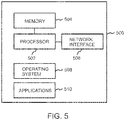
- FIG. 5 illustrates a block diagram of an apparatus 500 for managing power demand of a passenger transport installation of a building according to an aspect.
- the illustrated apparatus 500 can include a controller or processor 502 (e.g. signal processor, microprocessor, ASIC, or other control and processing logic circuitry) for performing such tasks as signal coding, data processing, input/output processing, power control, and/or other functions.
- the illustrated apparatus 500 can include a memory or memories 504.
- the memory 504 can include non-removable memory and/or removable memory.
- the non-removable memory can include RAM, ROM, flash memory, a hard disk, or other well-known memory storage technologies.
- the memory 504 can be used for storing data and/or code for running one or more applications.
- the apparatus 500 may comprise an input/output interface enabling the apparatus 500 to communicate with other apparatuses.
- the apparatus 500 may further comprise a network interface 506 enabling communication with external devices or networks.
- the network interface 506 may include a wired or wireless transceiver for communicating with the external devices or networks.
- the memory 504 may store operating system software 508 that controls the operations of the apparatus 500.
- the memory 504 may also comprise one or more applications 510 that can be executed by the processor 502.
- the illustrated components of the apparatus 500 are all-inclusive, as any components can deleted and other components can be added.
- the memory 504 may comprise a computer program that, when executed by the processor 502, causes the apparatus 500 to determine available time-dependent power consumption flexibility capacity of the passenger transport installation; and send data indicating the available time-dependent power consumption flexibility capacity to an external control platform.
- any combination of the illustrated components disclosed in FIG. 5 may constitute means for determining available time-dependent power consumption flexibility capacity of the passenger transport installation; and means for sending data indicating the available time-dependent power consumption flexibility capacity to an external control platform.
- Example embodiments may be implemented in software, hardware, application logic or a combination of software, hardware and application logic.
- the example embodiments can store information relating to various methods described herein. This information can be stored in one or more memories, such as a hard disk, optical disk, magneto-optical disk, RAM, and the like.
- One or more databases can store the information used to implement the example embodiments.
- the databases can be organized using data structures (e.g., records, tables, arrays, fields, graphs, trees, lists, and the like) included in one or more memories or storage devices listed herein.
- the methods described with respect to the example embodiments can include appropriate data structures for storing data collected and/or generated by the methods of the devices and subsystems of the example embodiments in one or more databases.
- All or a portion of the example embodiments can be conveniently implemented using one or more general purpose processors, microprocessors, digital signal processors, micro-controllers, and the like, programmed according to the teachings of the example embodiments, as will be appreciated by those skilled in the computer and/or software art(s).
- Appropriate software can be readily prepared by programmers of ordinary skill based on the teachings of the example embodiments, as will be appreciated by those skilled in the software art.
- the example embodiments can be implemented by the preparation of application-specific integrated circuits or by interconnecting an appropriate network of conventional component circuits, as will be appreciated by those skilled in the electrical art(s).
- the examples are not limited to any specific combination of hardware and/or software.
- the examples can include software for controlling the components of the example embodiments, for driving the components of the example embodiments, for enabling the components of the example embodiments to interact with a human user, and the like.
- Such computer readable media further can include a computer program for performing all or a portion (if processing is distributed) of the processing performed in implementing the example embodiments.
- Computer code devices of the examples may include any suitable interpretable or executable code mechanism, including but not limited to scripts, interpretable programs, dynamic link libraries (DLLs), Java classes and applets, complete executable programs, and the like.
- a "computer-readable medium” may be any media or means that can contain, store, communicate, propagate or transport the instructions for use by or in connection with an instruction execution system, apparatus, or device, such as a computer.
- a computer-readable medium may include a computer-readable storage medium that may be any media or means that can contain or store the instructions for use by or in connection with an instruction execution system, apparatus, or device, such as a computer.
- a computer readable medium can include any suitable medium that participates in providing instructions to a processor for execution. Such a medium can take many forms, including but not limited to, non-volatile media, volatile media, transmission media, and the like.
Landscapes
- Business, Economics & Management (AREA)
- Human Resources & Organizations (AREA)
- Engineering & Computer Science (AREA)
- Strategic Management (AREA)
- Economics (AREA)
- Entrepreneurship & Innovation (AREA)
- General Physics & Mathematics (AREA)
- Physics & Mathematics (AREA)
- Tourism & Hospitality (AREA)
- General Business, Economics & Management (AREA)
- Theoretical Computer Science (AREA)
- Marketing (AREA)
- Operations Research (AREA)
- Educational Administration (AREA)
- Development Economics (AREA)
- Game Theory and Decision Science (AREA)
- Quality & Reliability (AREA)
- Health & Medical Sciences (AREA)
- Primary Health Care (AREA)
- General Health & Medical Sciences (AREA)
- Power Engineering (AREA)
- Automation & Control Theory (AREA)
- Supply And Distribution Of Alternating Current (AREA)
- Management, Administration, Business Operations System, And Electronic Commerce (AREA)
- Remote Monitoring And Control Of Power-Distribution Networks (AREA)
Abstract
Description
- In the power grid, the supply and demand of electricity must be in balance at all times. The transformation of energy systems towards more renewable and distributed energy production poses major challenges for the electricity markets and participating parties. Large quantities of weather-dependent intermittent renewable generation combined to the global trend on increasing electricity consumption, hampers the task on maintaining the power grid balance. This has caused a shift towards more demand-based electricity tariffs, which penalize end-customers with highly volatile load profiles. At the same time, grid operators are forced to purchase more reserve for frequency regulation and demand response capacity to maintain the grid stability.
- The power demand of existing passenger transport systems is extremely volatile. Short peaks in the power demand can be up to 30 times as high as the average demand resulting in significant transient peaks in the power demand of a building. On the other hand, the growing amount of renewable energy production and increasing overall grid demand put pressure on grid operators to have sufficient reserve capacity to maintain grid stability.
- Therefore, new ways for maintaining the grid stability are constantly required. Thus, it would be beneficial to have a solution that would alleviate at least one of these drawbacks.
- According to at least some of the aspects, a solution is provided that coordinates and optimizes a fleet of demand flexible passenger transport installations. The solution enables turning problematic highly volatile loads into an asset for grid operators by harnessing them into a joint resource for frequency regulation and demand management.
- According to a first aspect, there is provided a method for managing power demand of a plurality of passenger transport installations in at least one building. The method comprises obtaining first data on available time-dependent power consumption flexibility capacity from each passenger transport installation; obtaining second data from at least one external data source, the second data being independent from operation of the passenger transport installations; determining an activation order for power demand management of the plurality of passenger transport installations based on the obtained first data and second data; and transmitting a passenger transport installation specific activation signal for power demand management to at least one passenger transport installation of the plurality of passenger transport installations in accordance with the activation order.
- In an embodiment, the method further comprises obtaining third data on activation costs of the available time-dependent power consumption flexibility capacity from each passenger transport installation; and taking the third data into account when determining the activation order.
- In an embodiment, additionally or alternatively, determining an activation order further comprises determining a grid frequency threshold for at least one passenger transport installation; and transmitting a passenger transport installation specific activation signal further comprises transmitting the grid frequency threshold to the at least one passenger transport installation.
- In an embodiment, additionally or alternatively, determining an activation order further comprises determining a start time for initiating the power demand management and/or an end time for terminating the power demand management; and transmitting a passenger transport installation specific activation signal further comprises transmitting the start time for initiating the power demand management and/or the end time for terminating the power demand management to the at least one passenger transport installation.
- In an embodiment, additionally or alternatively, obtaining second data from at least one external data source comprises obtaining data from at least one of weather report data source, electricity cost data source, utility signal data source, electricity market data source and a load profile of one or more buildings.
- In an embodiment, additionally or alternatively, the method further comprises obtaining data on active power from each passenger transport installation in predefined intervals; and transmitting a verification of implementing the power demand management to a grid operator based on the active power data.
- In an embodiment, additionally or alternatively, the passenger transport installation specific activation signal comprises a request to curtail load, increase load, or feed energy back to the grid.
- According to a second aspect, there is provided a method for managing power demand of a passenger transport installation of a building. The method comprises determining available time-dependent power consumption flexibility capacity of the passenger transport installation; and transmitting data indicating the available time-dependent power consumption flexibility capacity to an external control platform.
- In an embodiment, the method further comprises receiving an activation signal for power demand management from the external control platform in response to the transmitted data; and managing the power demand according to the received activation signal.
- In an embodiment, additionally or alternatively, the activation signal comprises a grid frequency threshold comprising a limit frequency to activate the power demand management; and the method further comprises initiating the power demand management when the grid frequency threshold is reached.
- In an embodiment, additionally or alternatively, the activation signal comprises a start time for initiating the power demand management and/or an end time for terminating the power demand management; and the method further comprises initiating the power demand management in accordance with the start time and/or terminating the power demand management in accordance with the end time.
- In an embodiment, additionally or alternatively, the method further comprises creating a traffic forecast as a function of time; and determining an activation cost of the available time-dependent power consumption flexibility capacity based on the determined available flexibility capacity and the traffic forecast.
- In an embodiment, the method further comprises determining active power data of the passenger transport installation; and transmitting the active power data to the external control platform.
- According to a third aspect, there is provided an apparatus for managing power demand of a plurality of passenger transport installations in at least one building. The apparatus comprises means for obtaining first data on available time-dependent power consumption flexibility capacity from each passenger transport installation; means for obtaining second data from at least one external data source, the second data being independent from operation of the passenger transport installations; means for determining an activation order for power demand management of the plurality of passenger transport installations based on the obtained first data and second data; and means for transmitting a passenger transport installation specific activation signal for power demand management to at least one passenger transport installation of the plurality of passenger transport installations in accordance with the activation order.
- In an embodiment, the apparatus further comprises means for obtaining third data on activation costs of the available time-dependent power consumption flexibility capacity from each passenger transport installation, and means for taking the third data into account when determining the activation order.
- In an embodiment, additionally or alternatively, the means for determining an activation order comprise means for determining a grid frequency threshold for at least one passenger transport installation; and the means for transmitting a passenger transport installation specific activation signal further comprise means for transmitting the grid frequency threshold to the at least one passenger transport installation.
- In an embodiment, additionally or alternatively, the means for determining an activation order further comprise means for determining a start time for initiating the power demand management and/or an end time for terminating the power demand management; and the means for transmitting a passenger transport installation specific activation signal further comprise means for transmitting the start time for initiating the power demand management and/or the end time for terminating the power demand management to the at least one passenger transport installation.
- In an embodiment, additionally or alternatively, obtaining second data from at least one external data source comprises obtaining data from at least one of weather report data source, electricity cost data source, utility signal data source, electricity market data source and a load profile of one or more buildings.
- In an embodiment, additionally or alternatively, the apparatus further comprises means for obtaining data on active power from each passenger transport installation in predefined intervals; and means for transmitting a verification of implementing the power demand management to a grid operator based on the active power data.
- In an embodiment, additionally or alternatively, the passenger transport installation specific activation signal comprises a request to curtail load, increase load, or feed energy back to the grid.
- According to a fourth aspect, there is provided an apparatus for managing power demand of a passenger transport installation of a building. The apparatus comprises means for determining available time-dependent power consumption flexibility capacity of the passenger transport installation, and means for sending data indicating the available time-dependent power consumption flexibility capacity to an external control platform.
- In an embodiment, the apparatus further comprises means for receiving an activation signal for the power demand management from the external control platform in response to the sent data; and means for managing power demand according to the received activation signal.
- In an embodiment, additionally or alternatively, the activation signal comprises a grid frequency threshold comprising a limit frequency to activate the power demand management; and the apparatus further comprises means for initiating the power demand management when the grid frequency threshold is reached.
- In an embodiment, additionally or alternatively, the activation signal comprises a start time for initiating the power demand management and/or an end time for terminating the power demand management; and the apparatus further comprises means for initiating the power demand management in accordance with the start time and/or terminating the power demand management in accordance with the end time.
- In an embodiment, additionally or alternatively, the apparatus further comprises means for creating a traffic forecast as a function of time; and means for determining an activation cost of the available time-dependent power consumption flexibility capacity based on the determined available flexibility capacity and the traffic forecast.
- In an embodiment, additionally or alternatively, the apparatus further comprises means for determining active power data of the passenger transport installation; and means for sending the active power data to the control platform.
- According to a fifth aspect, there is provided a computer program comprising program code, which when executed by at least one processing unit, causes the at least one processing unit to perform the method of the first aspect or the second aspect.
- According to a sixth aspect, there is provided a computer readable medium comprising program code, which when executed by at least one processor, causes the at least one processor to perform the method of the first aspect or the second aspect.
- According to a seventh aspect, there is provided an apparatus for managing power demand of a plurality of passenger transport installations in at least one building. The apparatus comprises at least one processor, and at least one memory connected to the at least one processor. The at least one memory stores program instructions that, when executed by the at least one processor, cause the apparatus to obtain first data on available time-dependent power consumption flexibility capacity from each passenger transport installation of plurality of passenger transport installations; obtain second data from at least one external data source, the second data being independent from the operation of the passenger transport installations; determine an activation order for power demand management of the plurality of passenger transport installations based on the obtained first data and second data; and transmit a passenger transport installation specific activation signal for the power demand management to at least one passenger transport installation of the plurality of passenger transport installations in accordance with the activation order.
- According to an eight aspect, there is provided an apparatus for managing power demand of a passenger transport installation of a building. The apparatus comprises at least one processor, and at least one memory connected to the at least one processor. The at least one memory stores program instructions that, when executed by the at least one processor, cause the apparatus to determine available time-dependent power consumption flexibility capacity of a passenger transport installation; and send data indicating the available time-dependent power consumption flexibility capacity to an external control platform.
- The above discussed means may be implemented, for example, using at least one processor, at least one processor and at least one memory connected to the at least one processor, or at least one processor, at least one memory connected to the at least one processor and an input/output interface connected to the at least one processor.
- The accompanying drawings, which are included to provide a further understanding of the invention and constitute a part of this specification, illustrate embodiments of the invention and together with the description help to explain the principles of the invention. In the drawings:
-
FIG. 1 illustrates a block diagram of a system for flexibly managing power demand of a plurality of passenger transport installations according to an aspect. -
FIG. 2 illustrates a flow chart of a method for coordinating and optimizing power consumption of a plurality of passenger transport installations according to an aspect. -
FIG. 3 illustrates a flow chart of a method for managing power demand of a passenger transport installation of a building according to an aspect. -
FIG. 4 illustrates a block diagram of an apparatus for managing power demand of a plurality of passenger transport installations according to an aspect. -
FIG. 5 illustrates a block diagram of an apparatus for managing power demand of a passenger transport installation of a building according to an aspect. - The following description illustrates a solution that aims to provide a flexible demand response resource for balancing the power grid.
-
FIG. 1 illustrates a block diagram of a system for flexibly managing power demand of a plurality of passenger transport installations according to an aspect. The passenger transport installation refers, for example, to an elevator, an escalator, or a conveyer. - The system comprises a plurality of
passenger transport installations external control platform 100, i.e. an aggregation platform. Thepassenger transport installations passenger transport installations control platform 100 is further communicatively connected to at least oneexternal data source 104, providing data, for example, about electricity markets, reserve markets or demand management markets. Thecontrol platform 100 is configured to coordinate and optimize power management of thepassenger transport installations external data source 104. Thepassenger transport installations -
FIG. 2 illustrates a flow chart of a method for managing power demand of a plurality of passenger transport installations in at least one building according to an aspect. The steps discussed below may be performed by thecontrol platform 100. - At 200 first data on available time-dependent power consumption flexibility capacity from the passenger transport installations in at least one building is obtained. The available flexibility capacity may refer to the amount of electrical power which may be released to be further used for the needs of the power grid, for example in frequency regulation. The term "time-dependent" may refer to the fact that available consumption flexibility capacity may vary. In other words, during a first time window there may be consumption flexibility capacity available, whereas during a second time window there may not be consumption flexibility capacity available.
- At 202 second data from at least one external data source is obtained. The second data may be independent from the operation of the passenger transport installations (102A, 102B, 102C). The external data source may comprise obtaining data from, for example, a weather report data source, electricity cost data source, utility signal data source, electricity market data source, a load profile of one or more buildings or any other data source that is independent from the operation of the passenger transport installations and provides data required for power demand management of the plurality of passenger transport installations.
- At 204 an activation order for power demand management of the plurality of passenger transport installations is determined based on the obtained first data and second data. This means, for example, that in addition to the power consumption flexibility capacity received from the passenger transport installations, also information from other data source is taken into account when determining the activation order. The activation order may be arranged in such a manner that the passenger transport installations with the lowest activation costs may be activated first. Similarly, the passenger transport installations with the highest activation cost may be activated last.
- At 206 a passenger transport installation specific activation signal for the power demand management is transmitted to at least one passenger transport installation in accordance with the activation order. The activation signal may comprise, for example, a request to curtail load, increase load, or feed energy back to the power grid, for example, from an energy storage coupled to a passenger transport installation.
- In an example, the
control platform 100 may send to an operator of thepower grid 106 information indicating how much available time-dependent power consumption flexibility capacity it has to offer. The operator may then reply by confirming the whole indicated amount of available time-dependent power consumption flexibility capacity or a subset of the whole amount. Thus, the activation signals sent by thecontrol platform 100 may relate to the whole indicated amount of available time-dependent power consumption flexibility capacity or to a subset of the whole amount. In another embodiment, the reply from the operator may concern only a portion of the indicated amount by thecontrol platform 100. - As an example, the
control platform 100 may send the activation signal to all passenger transport installations with available power consumption flexibility capacity to curtail load when the obtained second data indicates that electricity costs are high in order to make savings in the electricity bill. As another example, thecontrol platform 100 may send the activation signal only to some of the passenger transport installations with available power consumption flexibility capacity to curtail load and to some to feed energy back to the grid from their respective energy storages. - In an embodiment, third data on activation costs of the available time-dependent power consumption flexibility capacity may be obtained from each passenger transport installation. The activation cost may indicate the profitability of activating power management of the passenger transport installation by taking account the potential incentives, savings, possible waiting and/or transport time costs and passenger experience. The obtained third data may then be taking into account when determining the activations order. For example, one passenger transport installation may be able to provide significant power consumption savings during a specific time period, but at the same time, there exists a significant cost for the savings, for example, due to extended passenger waiting and/or transport time. This may then lead to a decision at the
control platform 100 that the cost is too high and the power consumption savings are not applied. - In another embodiment, determining the activation order may further comprise determining a grid frequency threshold for at least one passenger transport installation. In other words, the ones with the lowest activation costs may have a grid frequency threshold closer to the nominal value (i.e. to 50 Hz or 60 Hz), and they will be activated first when the frequency starts to drift above or below the nominal value. The ones with higher activation costs may have a grid frequency threshold further away from the nominal value, and they will be activated only if the earlier activations are not sufficient to correct the frequency. Transmitting the passenger transport installation specific activation signal may then further comprise transmitting the grid frequency threshold to the at least one passenger transport installation.
- As an example, one or more passenger transport installations may be requested to curtail load when the grid frequency drifts below 50 Hz, and some other passenger transport installations to curtail load when the grid frequency drifts below 49.9 Hz. In another example, one or more passenger transport installations may be requested to charge their energy storages from the power grid when the frequency exceeds 50 Hz, thus providing, for example, a night-time load for the grid.
- In another embodiment, determining the activation order may further comprise determining a start time for initiating the power demand management and/or an end time for terminating the power demand management. Thus, when the passenger transport installation specific activation signal is transmitted, the control platform may additionally transmit the start time for initiating the power demand management and/or the end time for terminating the power demand management to the at least one passenger transport installation. Alternatively, the control platform may transmit a length of the power demand management (for example, 10 minutes from now on), or a start time and a length of the power demand management (for example, start at 06:00 and continue 30 minutes) to the at least one passenger transport installation.
- In order to verify to a grid operator that power demand management has been implemented, data on active power from each passenger transport installation may be obtained in predefined intervals and a verification may be transmitted to the grid operator based on the active power data. The verification may be needed if the
control platform 100 has, for example, made a bid on available power management to an electricity market. Thus, thecontrol platform 100 is able to verify that power management has been implemented according to the bid in order to obtain incentives. -
FIG. 3 illustrates a flow chart of a method for managing power demand of a passenger transport installation in a building according to another aspect. - At 300 available time-dependent power consumption flexibility capacity of a passenger transport installation is determined. The available flexibility capacity may refer to the amount of electrical power which may be released for further use for the needs of the power grid, for example, when frequency regulation is needed. This may be implemented at the passenger transport installation side by utilizing an energy storage coupled to a drive of the elevator, adjusting driving parameters, such as drive speed or acceleration, or switching off energy-consuming features, such as lights or air-conditioning.
- At 302 data indicating the available time-dependent power consumption flexibility capacity is sent to a
control platform 100. - Optionally, at 304 an activation signal may be received for the power demand management from the
control platform 100 in response to the sent data. Thereafter, power demand may be managed according to the received activation signal at 306. In an embodiment, the power demand management may be also initiated following a reached grid frequency threshold. The grid frequency threshold may comprise a power grid frequency limit for activating the power demand management. In an example, the activation signal may instruct the passenger transport installation to curtail load when the grid frequency drifts below 50 Hz. In another example, the activation signal may instruct the passenger transport installation to curtail load when the grid frequency drifts below 49.9 Hz. In another example, the passenger transport installations may be requested to charge its energy storage from the power grid when the frequency exceeds 50 Hz, thus providing, for example, a night-time load for the grid. - In another embodiment, the activation signal may comprise a start time for initiating the power demand management and/or an end time for terminating the power demand management. Thus, the passenger transport installation may then initiate the power demand management in accordance with the start time and/or terminate the power demand management in accordance with the end time. Alternatively, the passenger transport installation may receive a length of the power demand management (for example, 10 minutes from now on), or a start time and a length of the power demand management (for example, start at 06:00 and continue 30 minutes) from the from the control platform.
- In another embodiment, a traffic forecast may be created as a function of time. The traffic forecast may be created to estimate the traffic intensity for example for the current day or during the next hour. Thereafter, an activation cost of the available time-dependent power consumption flexibility capacity may be determined based on the available time-dependent power consumption flexibility capacity and the traffic forecast. The activation cost may then indicate the profitability of activating power management by taking account the potential savings and passenger experience. For example, high available flexibility capacity and low estimated traffic intensity may indicate small activating cost, whereas low available flexibility capacity and higher estimated traffic intensity may indicate large activating cost. The activation cost may be sent to the
control platform 100 with the data indicating available time-dependent power consumption flexibility capacity. In one embodiment, also active power data of the passenger transport installation may be determined and sent to thecontrol platform 100. - The solutions illustrated in
FIGS. 2 and3 enable responding to the fluctuations in the power grid frequency very fast, having a second-level response time. Thus, it may be a valuable asset providing grid balancing services for grid operators. In addition, reduced peak power demand may result in lower capacity requirements for building power distribution system, reduced demand charges, and bringing down the costs of feeder cables, transformers, UPS, and back-up power generators. - The disclosed solution may also provide the ability to provide high value grid services, for example, via frequency regulation. Further, the disclosed solution may enable reduced infrastructure costs for building electrical systems, minimizing demand charges and shifting demand to low-price hours.
- Further, the disclosed solution may also provide the ability to scale almost indefinitely the available pool of flexible passenger transport installations that the control platform then coordinates. Robustness is guaranteed by distributing decision-making process among all passenger transport installations in the network. Furthermore, these independent passenger transport installations are fully resistant against the failure of a single DEF influencing the operation of the entire aggregated pool.
-
FIG. 4 illustrates a block diagram of anapparatus 100 for coordinating and optimizing power consumption of a plurality of passenger transport installations according to an aspect. - The
illustrated apparatus 100 can include a controller or processor 402 (e.g. signal processor, microprocessor, ASIC, or other control and processing logic circuitry) for performing such tasks as signal coding, data processing, input/output processing, power control, and/or other functions. Theillustrated apparatus 100 can include a memory ormemories 404. Thememory 404 can include non-removable memory and/or removable memory. The non-removable memory can include RAM, ROM, flash memory, a hard disk, or other well-known memory storage technologies. Thememory 404 can be used for storing data and/or code for running one or more applications. - The
apparatus 100 may comprise an input/output interface enabling theapparatus 100 to communicate with other apparatuses. Theapparatus 100 may further comprise anetwork interface 406 enabling communication with external devices or networks. Thenetwork interface 406 may include a wired or wireless transceiver for communicating with the external devices or networks. Thememory 404 may storeoperating system software 408 that controls the operations of theapparatus 100. Thememory 404 may also comprise one ormore applications 410 that can be executed by theprocessor 402. The illustrated components of theapparatus 100 are all-inclusive, as any components can deleted and other components can be added. - The
memory 404 may comprise a computer program that, when executed by theprocessor 402, causes theapparatus 100 to obtain first data on available time-dependent power consumption flexibility capacity from each passenger transport installation; obtain second data from at least one external data source, the second data being independent from the operation of the passenger transport installations; determine an activation order for power demand management of the plurality of passenger transport installations based on the obtained first data and second data; and transmit a passenger transport installation specific activation signal for the power demand management to at least one passenger transport installation of the plurality of passenger transport installations in accordance with activation order. - Further, any combination of the illustrated components disclosed in
FIG. 4 , for example, at least one of theprocessor 402 and thememory 404 may constitute means for obtaining first data on available time-dependent power consumption flexibility capacity from each passenger transport installation; means for obtaining second data from at least one external data source, the second data being independent from the operation of the passenger transport installations; means for determining an activation order for power demand management of the plurality of passenger transport installations based on the obtained first data and second data; and means for transmitting a passenger transport installation specific activation signal for the power demand management to at least one passenger transport installation of the plurality of passenger transport installations in accordance with activation order. -
FIG. 5 illustrates a block diagram of anapparatus 500 for managing power demand of a passenger transport installation of a building according to an aspect. - The
illustrated apparatus 500 can include a controller or processor 502 (e.g. signal processor, microprocessor, ASIC, or other control and processing logic circuitry) for performing such tasks as signal coding, data processing, input/output processing, power control, and/or other functions. Theillustrated apparatus 500 can include a memory ormemories 504. Thememory 504 can include non-removable memory and/or removable memory. The non-removable memory can include RAM, ROM, flash memory, a hard disk, or other well-known memory storage technologies. Thememory 504 can be used for storing data and/or code for running one or more applications. - The
apparatus 500 may comprise an input/output interface enabling theapparatus 500 to communicate with other apparatuses. Theapparatus 500 may further comprise anetwork interface 506 enabling communication with external devices or networks. Thenetwork interface 506 may include a wired or wireless transceiver for communicating with the external devices or networks. Thememory 504 may storeoperating system software 508 that controls the operations of theapparatus 500. Thememory 504 may also comprise one ormore applications 510 that can be executed by theprocessor 502. The illustrated components of theapparatus 500 are all-inclusive, as any components can deleted and other components can be added. - The
memory 504 may comprise a computer program that, when executed by theprocessor 502, causes theapparatus 500 to determine available time-dependent power consumption flexibility capacity of the passenger transport installation; and send data indicating the available time-dependent power consumption flexibility capacity to an external control platform. - Further, any combination of the illustrated components disclosed in
FIG. 5 , for example, at least one of theprocessor 502 and thememory 504 may constitute means for determining available time-dependent power consumption flexibility capacity of the passenger transport installation; and means for sending data indicating the available time-dependent power consumption flexibility capacity to an external control platform. - Example embodiments may be implemented in software, hardware, application logic or a combination of software, hardware and application logic. The example embodiments can store information relating to various methods described herein. This information can be stored in one or more memories, such as a hard disk, optical disk, magneto-optical disk, RAM, and the like. One or more databases can store the information used to implement the example embodiments. The databases can be organized using data structures (e.g., records, tables, arrays, fields, graphs, trees, lists, and the like) included in one or more memories or storage devices listed herein. The methods described with respect to the example embodiments can include appropriate data structures for storing data collected and/or generated by the methods of the devices and subsystems of the example embodiments in one or more databases.
- All or a portion of the example embodiments can be conveniently implemented using one or more general purpose processors, microprocessors, digital signal processors, micro-controllers, and the like, programmed according to the teachings of the example embodiments, as will be appreciated by those skilled in the computer and/or software art(s). Appropriate software can be readily prepared by programmers of ordinary skill based on the teachings of the example embodiments, as will be appreciated by those skilled in the software art. In addition, the example embodiments can be implemented by the preparation of application-specific integrated circuits or by interconnecting an appropriate network of conventional component circuits, as will be appreciated by those skilled in the electrical art(s). Thus, the examples are not limited to any specific combination of hardware and/or software. Stored on any one or on a combination of computer readable media, the examples can include software for controlling the components of the example embodiments, for driving the components of the example embodiments, for enabling the components of the example embodiments to interact with a human user, and the like. Such computer readable media further can include a computer program for performing all or a portion (if processing is distributed) of the processing performed in implementing the example embodiments. Computer code devices of the examples may include any suitable interpretable or executable code mechanism, including but not limited to scripts, interpretable programs, dynamic link libraries (DLLs), Java classes and applets, complete executable programs, and the like. In the context of this document, a "computer-readable medium" may be any media or means that can contain, store, communicate, propagate or transport the instructions for use by or in connection with an instruction execution system, apparatus, or device, such as a computer. A computer-readable medium may include a computer-readable storage medium that may be any media or means that can contain or store the instructions for use by or in connection with an instruction execution system, apparatus, or device, such as a computer. A computer readable medium can include any suitable medium that participates in providing instructions to a processor for execution. Such a medium can take many forms, including but not limited to, non-volatile media, volatile media, transmission media, and the like.
- While there have been shown and described and pointed out fundamental novel features as applied to preferred embodiments thereof, it will be understood that various omissions and substitutions and changes in the form and details of the devices and methods described may be made by those skilled in the art without departing from the spirit of the disclosure. For example, it is expressly intended that all combinations of those elements and/or method steps which perform substantially the same function in substantially the same way to achieve the same results are within the scope of the disclosure. Moreover, it should be recognized that structures and/or elements and/or method steps shown and/or described in connection with any disclosed form or embodiments may be incorporated in any other disclosed or described or suggested form or embodiment as a general matter of design choice. Furthermore, in the claims means-plus-function clauses are intended to cover the structures described herein as performing the recited function and not only structural equivalents, but also equivalent structures.
- The applicant hereby discloses in isolation each individual feature described herein and any combination of two or more such features, to the extent that such features or combinations are capable of being carried out based on the present specification as a whole, in the light of the common general knowledge of a person skilled in the art, irrespective of whether such features or combinations of features solve any problems disclosed herein, and without limitation to the scope of the claims. The applicant indicates that the disclosed aspects/embodiments may consist of any such individual feature or combination of features. In view of the foregoing description it will be evident to a person skilled in the art that various modifications may be made within the scope of the disclosure.
Claims (18)
- A method for managing power demand of a plurality of passenger transport installations (102A, 102B, 102C) in at least one building, the method comprising:obtaining (200) first data on available time-dependent power consumption flexibility capacity from each passenger transport installation (102A, 102B, 102C);obtaining (202) second data from at least one external data source (104), the second data being independent from the operation of the passenger transport installations (102A, 102B, 102C);determining (204) an activation order for power demand management of the plurality of passenger transport installations (102A, 102B, 102C) based on the obtained first data and second data; andtransmitting (206) a passenger transport installation specific activation signal for the power demand management to at least one passenger transport installation of the plurality of passenger transport installations (102A, 102B, 102C) in accordance with the activation order.
- The method of claim 1, further comprising:obtaining third data on activation costs of the available time-dependent power consumption flexibility capacity from each passenger transport installation (102A, 102B, 102C); andtaking the third data into account when determining the activation order.
- The method of claim 1 or 2, wherein determining an activation order further comprises determining a grid frequency threshold for at least one passenger transport installation (102A, 102B, 102C); and transmitting a passenger transport installation specific activation signal further comprises transmitting the grid frequency threshold to the at least one passenger transport installation (102A, 102B, 102C).
- The method according to claim 1 or 2, wherein determining an activation order further comprises determining a start time for initiating the power demand management and/or an end time for terminating the power demand management; and transmitting a passenger transport installation specific activation signal further comprises transmitting the start time for initiating the power demand management and/or the end time for terminating the power demand management to the at least one passenger transport installation (102A, 102B, 102C).
- The method of any of the claims 1 - 4, wherein obtaining second data from at least one external data source (104) comprises obtaining data from at least one of weather report data source, electricity cost data source, utility signal data source, electricity market data source and a load profile of one or more buildings.
- The method of any of the claims 1 - 5, further comprising:obtaining data on active power from each passenger transport installation (102A, 102B, 102C) in predefined intervals; andtransmitting a verification of implementing the power demand management to a grid operator based on the active power data.
- The method of any of claims 1 - 6, wherein the passenger transport installation specific activation signal comprises a request to curtail load, increase load, or feed energy back to the grid.
- A method for managing power demand of a passenger transport installation (102A, 102B, 102C) of a building, the method comprising:determining (300) available time-dependent power consumption flexibility capacity of the passenger transport installation (102A, 102B, 102C); andsending (302) data indicating the available time-dependent power consumption flexibility capacity to an external control platform.
- The method of claim 8, further comprising:receiving (304) an activation signal for power demand management from the external control platform in response to the sent data; andmanaging (306) power demand according to the received activation signal.
- The method of claim 9, wherein the activation signal comprises a grid frequency threshold comprising a limit frequency to activate the power demand management; and wherein the method further comprises:initiating the power demand management when the grid frequency threshold is reached.
- The method of claim 9, wherein the activation signal comprises a start time for initiating the power demand management and/or an end time for terminating the power demand management; and wherein the method further comprises:initiating the power demand management in accordance with the start time; and/orterminating the power demand management in accordance with the end time.
- The method of any of claims 8 - 11, further comprising:creating a traffic forecast as a function of time; anddetermining an activation cost of the available time-dependent power consumption flexibility capacity based on the determined available flexibility capacity and the traffic forecast.
- The method of any of claims 8 - 12, further comprising:determining active power data of the passenger transport installation (102A, 102B, 102C); andsending the active power data to the control platform.
- An apparatus (100) for managing power demand of a plurality of passenger transport installations (102A, 102B, 102C) in at least one building, the apparatus (100) comprising:means for obtaining (402, 404) first data on available time-dependent power consumption flexibility capacity from each passenger transport installation (102A, 102B, 102C);means for obtaining (402, 404) second data from at least one external data source, the second data being independent from the operation of the passenger transport installations (102A, 102B, 102C);means for determining (402, 404) an activation order for power demand management of the plurality of passenger transport installations (102A, 102B, 102C) based on the obtained first data and second data; andmeans for transmitting (402, 404) a passenger transport installation specific activation signal for the power demand management to at least one passenger transport installation of the plurality of passenger transport installations (102A, 102B, 102C) in accordance with the activation order.
- The apparatus (100) according to claim 14, further comprising:means for implementing (402, 404) the method of any of claims 2 - 7.
- An apparatus (500) for managing power demand of a passenger transport installation of a building, the apparatus (102A, 102B, 102C) comprising:means for determining (502, 504) available time-dependent power consumption flexibility capacity of the passenger transport installation (102A, 102B, 102C); andmeans for sending data indicating (502, 504) the available time-dependent power consumption flexibility capacity to an external control platform (100).
- The apparatus (500) according to claim 16, further comprising:means for implementing (502, 504) the method of any of claims 9 - 13.
- A system comprising:the apparatus (100) of claim 14; anda plurality of apparatuses (500) of claim 16.
Priority Applications (3)
| Application Number | Priority Date | Filing Date | Title |
|---|---|---|---|
| EP17200335.2A EP3480754B1 (en) | 2017-11-07 | 2017-11-07 | Managing power demand of a plurality of passenger transport installations |
| US16/168,192 US10990071B2 (en) | 2017-11-07 | 2018-10-23 | Managing power demand of a plurality of passenger transport installations |
| CN201811317227.3A CN109754280B (en) | 2017-11-07 | 2018-11-07 | Managing power needs across multiple passenger facilities |
Applications Claiming Priority (1)
| Application Number | Priority Date | Filing Date | Title |
|---|---|---|---|
| EP17200335.2A EP3480754B1 (en) | 2017-11-07 | 2017-11-07 | Managing power demand of a plurality of passenger transport installations |
Publications (2)
| Publication Number | Publication Date |
|---|---|
| EP3480754A1 true EP3480754A1 (en) | 2019-05-08 |
| EP3480754B1 EP3480754B1 (en) | 2021-09-08 |
Family
ID=60269696
Family Applications (1)
| Application Number | Title | Priority Date | Filing Date |
|---|---|---|---|
| EP17200335.2A Active EP3480754B1 (en) | 2017-11-07 | 2017-11-07 | Managing power demand of a plurality of passenger transport installations |
Country Status (3)
| Country | Link |
|---|---|
| US (1) | US10990071B2 (en) |
| EP (1) | EP3480754B1 (en) |
| CN (1) | CN109754280B (en) |
Citations (5)
| Publication number | Priority date | Publication date | Assignee | Title |
|---|---|---|---|---|
| US8417391B1 (en) * | 2011-12-15 | 2013-04-09 | Restore Nv | Automated demand response energy management system |
| US8457802B1 (en) * | 2009-10-23 | 2013-06-04 | Viridity Energy, Inc. | System and method for energy management |
| US20140166407A1 (en) * | 2012-12-18 | 2014-06-19 | Inventio Ag | Energy use in elevator installations |
| EP2863510A2 (en) * | 2013-10-21 | 2015-04-22 | Restore N.V. | Portfolio managed, demand-side response system |
| EP3009899A2 (en) * | 2014-10-16 | 2016-04-20 | Honeywell International Inc. | Allocation of energy production changes to meet demand changes |
Family Cites Families (44)
| Publication number | Priority date | Publication date | Assignee | Title |
|---|---|---|---|---|
| US6935467B1 (en) * | 2001-02-23 | 2005-08-30 | Kone Corporation | Method for controlling an elevator group |
| US7083027B2 (en) * | 2002-10-01 | 2006-08-01 | Kone Corporation | Elevator group control method using destination floor call input |
| SG119203A1 (en) * | 2002-12-13 | 2006-02-28 | Inventio Ag | Method and device for controlling a zonally operated elevator installation |
| US7032715B2 (en) * | 2003-07-07 | 2006-04-25 | Thyssen Elevator Capital Corp. | Methods and apparatus for assigning elevator hall calls to minimize energy use |
| JP5138864B2 (en) * | 2004-01-06 | 2013-02-06 | インベンテイオ・アクテイエンゲゼルシヤフト | Energy-saving elevator control method and elevator equipment |
| US8183995B2 (en) * | 2005-03-08 | 2012-05-22 | Jackson Kit Wang | Systems and methods for modifying power usage |
| FI117091B (en) * | 2005-03-15 | 2006-06-15 | Kone Corp | Transportation control method for destination floor elevator system involves determining transportation device for passenger with respect to traveling time, weighting time and location and selecting device through mobile phone |
| JP2008538737A (en) * | 2005-04-15 | 2008-11-06 | オーチス エレベータ カンパニー | Group elevator scheduling using predicted traffic information. |
| FI117282B (en) * | 2005-05-12 | 2006-08-31 | Kone Corp | Elevator group controlling method for elevator system, involves giving start permission to elevator allocated to call before departure of elevator if taking elevator into use will not result in exceeding set maximum power limit |
| US7274975B2 (en) * | 2005-06-06 | 2007-09-25 | Gridpoint, Inc. | Optimized energy management system |
| US8069958B2 (en) * | 2005-07-18 | 2011-12-06 | Otis Elevator Company | Elevator system and method including a controller and remote elevator monitor for remotely performed and/or assisted restoration of elevator service |
| US7540356B2 (en) * | 2005-10-18 | 2009-06-02 | Thyssen Elevator Capital Corp. | Method and apparatus to prevent or minimize the entrapment of passengers in elevators during a power failure |
| FI118260B (en) * | 2006-03-03 | 2007-09-14 | Kone Corp | Lift system |
| US7743890B2 (en) * | 2007-06-12 | 2010-06-29 | Mitsubishi Electric Research Laboratories, Inc. | Method and system for determining instantaneous peak power consumption in elevator banks |
| US7715951B2 (en) * | 2007-08-28 | 2010-05-11 | Consert, Inc. | System and method for managing consumption of power supplied by an electric utility |
| RU2490201C2 (en) * | 2008-08-15 | 2013-08-20 | Отис Элевэйтор Компани | Elevator and mounted electric power supply system with extra power supply control means |
| CA2949243C (en) * | 2009-01-27 | 2018-09-11 | Inventio Ag | Method for operating an elevator system |
| US9067762B2 (en) * | 2009-07-15 | 2015-06-30 | Otis Elevator Company | Energy savings with optimized motion profiles |
| US8744638B2 (en) * | 2009-09-11 | 2014-06-03 | General Electric Company | Method and system for demand response in a distribution network |
| US20110106327A1 (en) * | 2009-11-05 | 2011-05-05 | General Electric Company | Energy optimization method |
| US9160169B2 (en) * | 2010-10-29 | 2015-10-13 | The Boeing Company | Scheduling to maximize utilization preferred power sources (SMUPPS) |
| EP2500309A1 (en) * | 2011-03-18 | 2012-09-19 | Inventio AG | Energy management system for solar-powered elevator installation |
| EP2565143A1 (en) * | 2011-08-30 | 2013-03-06 | Inventio AG | Energy settings for transportation systems |
| US9481547B2 (en) * | 2011-09-08 | 2016-11-01 | Otis Elevator Company | Elevator system with dynamic traffic profile solutions |
| CN103874648B (en) * | 2011-10-14 | 2015-08-26 | 因温特奥股份公司 | There is the elevator device of multiple car |
| US8538595B2 (en) * | 2011-10-15 | 2013-09-17 | Philip Scott Lyren | Home appliance that can operate in a time range |
| US20130144451A1 (en) * | 2011-10-25 | 2013-06-06 | San Diego State University Research Foundation | Residential and commercial energy management system |
| CN104334486B (en) * | 2012-05-24 | 2017-04-12 | 奥的斯电梯公司 | Adaptive Power Control for Elevator Systems |
| US20140222225A1 (en) * | 2013-02-06 | 2014-08-07 | Gregory C. Rouse | Energy management system and method |
| EP2965282B1 (en) * | 2013-03-07 | 2019-10-30 | Siemens Corporation | Demand shaping in an electrical power grid |
| EP2813457B1 (en) * | 2013-06-10 | 2016-03-23 | Kone Corporation | Method and apparatus for controlling an elevator group |
| WO2015006810A1 (en) * | 2013-07-17 | 2015-01-22 | Malcolm Douglass | A residential management system |
| EP3083465B1 (en) * | 2013-12-17 | 2021-07-07 | Otis Elevator Company | Elevator control with mobile devices |
| WO2015115879A1 (en) * | 2014-01-30 | 2015-08-06 | Modutram México, S.A. De. C.V. | System and method for grouping passengers together in an automated collective form of transport |
| WO2016028338A1 (en) * | 2014-08-20 | 2016-02-25 | Vedero Software, Inc | Method and apparatus for remote electrical load management |
| CA2998101C (en) * | 2014-09-08 | 2022-12-06 | Christopher Robert Debone | Grid tied, real time adaptive, distributed intermittent power |
| US9834405B2 (en) * | 2014-11-10 | 2017-12-05 | Mitsubishi Electric Research Laboratories, Inc. | Method and system for scheduling elevator cars in a group elevator system with uncertain information about arrivals of future passengers |
| CA2991924C (en) * | 2015-07-28 | 2024-06-11 | Battelle Memorial Institute | Frequency threshold determination for frequency-responsive load controllers |
| US10683189B2 (en) * | 2016-06-23 | 2020-06-16 | Intel Corporation | Contextual awareness-based elevator management |
| US10087046B2 (en) * | 2016-10-12 | 2018-10-02 | Otis Elevator Company | Intelligent building system for altering elevator operation based upon passenger identification |
| EP3480152B1 (en) * | 2017-11-07 | 2022-01-05 | KONE Corporation | Power management of a passenger transport system |
| US10476268B2 (en) * | 2018-02-09 | 2019-11-12 | Schweitzer Engineering Laboratories, Inc. | Optimized decoupling and load shedding |
| US20190382235A1 (en) * | 2018-06-15 | 2019-12-19 | Otis Elevator Company | Elevator scheduling systems and methods of operation |
| EP3628619A1 (en) * | 2018-09-27 | 2020-04-01 | Otis Elevator Company | Elevator system |
-
2017
- 2017-11-07 EP EP17200335.2A patent/EP3480754B1/en active Active
-
2018
- 2018-10-23 US US16/168,192 patent/US10990071B2/en active Active
- 2018-11-07 CN CN201811317227.3A patent/CN109754280B/en active Active
Patent Citations (5)
| Publication number | Priority date | Publication date | Assignee | Title |
|---|---|---|---|---|
| US8457802B1 (en) * | 2009-10-23 | 2013-06-04 | Viridity Energy, Inc. | System and method for energy management |
| US8417391B1 (en) * | 2011-12-15 | 2013-04-09 | Restore Nv | Automated demand response energy management system |
| US20140166407A1 (en) * | 2012-12-18 | 2014-06-19 | Inventio Ag | Energy use in elevator installations |
| EP2863510A2 (en) * | 2013-10-21 | 2015-04-22 | Restore N.V. | Portfolio managed, demand-side response system |
| EP3009899A2 (en) * | 2014-10-16 | 2016-04-20 | Honeywell International Inc. | Allocation of energy production changes to meet demand changes |
Also Published As
| Publication number | Publication date |
|---|---|
| US20190137961A1 (en) | 2019-05-09 |
| US10990071B2 (en) | 2021-04-27 |
| CN109754280B (en) | 2024-12-06 |
| CN109754280A (en) | 2019-05-14 |
| EP3480754B1 (en) | 2021-09-08 |
Similar Documents
| Publication | Publication Date | Title |
|---|---|---|
| US11891272B2 (en) | Energy storage management system | |
| US8989911B2 (en) | Power consumption management system, and power consumption manager, power consumption management method, power supply manager, and power supply management method, which are used for the power consumption management system | |
| CA2908965C (en) | Multi-farm wind power generation system | |
| US9728976B2 (en) | Method and system for allocating energy | |
| US9830672B2 (en) | Power management message bus system | |
| JP6408022B2 (en) | Control system and method for an electric vehicle charging station | |
| CN118868091B (en) | Hierarchical scheduling method for low-carbon building optical storage and filling system based on artificial intelligence | |
| US20130175863A1 (en) | Power Sub-grid Including Power Generated From Alternative Sources | |
| US10600135B2 (en) | Energy management system, method, and device for multi-site energy management | |
| EP3343720A1 (en) | Management server, management method, and management system | |
| CN109830992B (en) | Self-adaptive adjustment energy scheduling control method, device and system | |
| US10990071B2 (en) | Managing power demand of a plurality of passenger transport installations | |
| KR102348140B1 (en) | Flexibility energy control method and system by using dispersive energy storage system for wind farm plant | |
| JP6827220B2 (en) | Storage control system, instruction control device, storage control device, storage control method, and program | |
| US20190140451A1 (en) | Power management of a passenger transport system | |
| KR102010147B1 (en) | Scheduling Method and System for Load Tracking by Flexible Time Scaling and Multi Leveling in Micro Grid for Small/Medium Buildings | |
| US20160190808A1 (en) | Method and system for managing electric power | |
| HK40008343A (en) | Managing power demand of a plurality of passenger transport installations | |
| CN105576649A (en) | Power utilization scheduling method and system for microgrid | |
| HK40008343B (en) | Managing power demand of a plurality of passenger transport installations | |
| AU2019100709A4 (en) | Distributed Energy Control | |
| US20160380431A1 (en) | Method for controlling a load | |
| HK40008344A (en) | Energy storage management system | |
| AU2019100705A4 (en) | Distributed Energy Control | |
| WO2025233569A1 (en) | Device, system, and method for optimising use of electric energy in a building automation network |
Legal Events
| Date | Code | Title | Description |
|---|---|---|---|
| PUAI | Public reference made under article 153(3) epc to a published international application that has entered the european phase |
Free format text: ORIGINAL CODE: 0009012 |
|
| STAA | Information on the status of an ep patent application or granted ep patent |
Free format text: STATUS: THE APPLICATION HAS BEEN PUBLISHED |
|
| AK | Designated contracting states |
Kind code of ref document: A1 Designated state(s): AL AT BE BG CH CY CZ DE DK EE ES FI FR GB GR HR HU IE IS IT LI LT LU LV MC MK MT NL NO PL PT RO RS SE SI SK SM TR |
|
| AX | Request for extension of the european patent |
Extension state: BA ME |
|
| STAA | Information on the status of an ep patent application or granted ep patent |
Free format text: STATUS: REQUEST FOR EXAMINATION WAS MADE |
|
| 17P | Request for examination filed |
Effective date: 20191107 |
|
| RBV | Designated contracting states (corrected) |
Designated state(s): AL AT BE BG CH CY CZ DE DK EE ES FI FR GB GR HR HU IE IS IT LI LT LU LV MC MK MT NL NO PL PT RO RS SE SI SK SM TR |
|
| STAA | Information on the status of an ep patent application or granted ep patent |
Free format text: STATUS: EXAMINATION IS IN PROGRESS |
|
| 17Q | First examination report despatched |
Effective date: 20200610 |
|
| GRAP | Despatch of communication of intention to grant a patent |
Free format text: ORIGINAL CODE: EPIDOSNIGR1 |
|
| STAA | Information on the status of an ep patent application or granted ep patent |
Free format text: STATUS: GRANT OF PATENT IS INTENDED |
|
| INTG | Intention to grant announced |
Effective date: 20210412 |
|
| GRAS | Grant fee paid |
Free format text: ORIGINAL CODE: EPIDOSNIGR3 |
|
| GRAA | (expected) grant |
Free format text: ORIGINAL CODE: 0009210 |
|
| STAA | Information on the status of an ep patent application or granted ep patent |
Free format text: STATUS: THE PATENT HAS BEEN GRANTED |
|
| AK | Designated contracting states |
Kind code of ref document: B1 Designated state(s): AL AT BE BG CH CY CZ DE DK EE ES FI FR GB GR HR HU IE IS IT LI LT LU LV MC MK MT NL NO PL PT RO RS SE SI SK SM TR |
|
| REG | Reference to a national code |
Ref country code: GB Ref legal event code: FG4D |
|
| REG | Reference to a national code |
Ref country code: AT Ref legal event code: REF Ref document number: 1429270 Country of ref document: AT Kind code of ref document: T Effective date: 20210915 Ref country code: CH Ref legal event code: EP |
|
| REG | Reference to a national code |
Ref country code: IE Ref legal event code: FG4D |
|
| REG | Reference to a national code |
Ref country code: DE Ref legal event code: R096 Ref document number: 602017045602 Country of ref document: DE |
|
| REG | Reference to a national code |
Ref country code: LT Ref legal event code: MG9D |
|
| REG | Reference to a national code |
Ref country code: NL Ref legal event code: MP Effective date: 20210908 |
|
| PG25 | Lapsed in a contracting state [announced via postgrant information from national office to epo] |
Ref country code: RS Free format text: LAPSE BECAUSE OF FAILURE TO SUBMIT A TRANSLATION OF THE DESCRIPTION OR TO PAY THE FEE WITHIN THE PRESCRIBED TIME-LIMIT Effective date: 20210908 Ref country code: SE Free format text: LAPSE BECAUSE OF FAILURE TO SUBMIT A TRANSLATION OF THE DESCRIPTION OR TO PAY THE FEE WITHIN THE PRESCRIBED TIME-LIMIT Effective date: 20210908 Ref country code: HR Free format text: LAPSE BECAUSE OF FAILURE TO SUBMIT A TRANSLATION OF THE DESCRIPTION OR TO PAY THE FEE WITHIN THE PRESCRIBED TIME-LIMIT Effective date: 20210908 Ref country code: BG Free format text: LAPSE BECAUSE OF FAILURE TO SUBMIT A TRANSLATION OF THE DESCRIPTION OR TO PAY THE FEE WITHIN THE PRESCRIBED TIME-LIMIT Effective date: 20211208 Ref country code: LT Free format text: LAPSE BECAUSE OF FAILURE TO SUBMIT A TRANSLATION OF THE DESCRIPTION OR TO PAY THE FEE WITHIN THE PRESCRIBED TIME-LIMIT Effective date: 20210908 Ref country code: NO Free format text: LAPSE BECAUSE OF FAILURE TO SUBMIT A TRANSLATION OF THE DESCRIPTION OR TO PAY THE FEE WITHIN THE PRESCRIBED TIME-LIMIT Effective date: 20211208 Ref country code: ES Free format text: LAPSE BECAUSE OF FAILURE TO SUBMIT A TRANSLATION OF THE DESCRIPTION OR TO PAY THE FEE WITHIN THE PRESCRIBED TIME-LIMIT Effective date: 20210908 Ref country code: FI Free format text: LAPSE BECAUSE OF FAILURE TO SUBMIT A TRANSLATION OF THE DESCRIPTION OR TO PAY THE FEE WITHIN THE PRESCRIBED TIME-LIMIT Effective date: 20210908 |
|
| REG | Reference to a national code |
Ref country code: AT Ref legal event code: MK05 Ref document number: 1429270 Country of ref document: AT Kind code of ref document: T Effective date: 20210908 |
|
| PG25 | Lapsed in a contracting state [announced via postgrant information from national office to epo] |
Ref country code: LV Free format text: LAPSE BECAUSE OF FAILURE TO SUBMIT A TRANSLATION OF THE DESCRIPTION OR TO PAY THE FEE WITHIN THE PRESCRIBED TIME-LIMIT Effective date: 20210908 Ref country code: GR Free format text: LAPSE BECAUSE OF FAILURE TO SUBMIT A TRANSLATION OF THE DESCRIPTION OR TO PAY THE FEE WITHIN THE PRESCRIBED TIME-LIMIT Effective date: 20211209 |
|
| PG25 | Lapsed in a contracting state [announced via postgrant information from national office to epo] |
Ref country code: AT Free format text: LAPSE BECAUSE OF FAILURE TO SUBMIT A TRANSLATION OF THE DESCRIPTION OR TO PAY THE FEE WITHIN THE PRESCRIBED TIME-LIMIT Effective date: 20210908 |
|
| PG25 | Lapsed in a contracting state [announced via postgrant information from national office to epo] |
Ref country code: IS Free format text: LAPSE BECAUSE OF FAILURE TO SUBMIT A TRANSLATION OF THE DESCRIPTION OR TO PAY THE FEE WITHIN THE PRESCRIBED TIME-LIMIT Effective date: 20220108 Ref country code: SM Free format text: LAPSE BECAUSE OF FAILURE TO SUBMIT A TRANSLATION OF THE DESCRIPTION OR TO PAY THE FEE WITHIN THE PRESCRIBED TIME-LIMIT Effective date: 20210908 Ref country code: SK Free format text: LAPSE BECAUSE OF FAILURE TO SUBMIT A TRANSLATION OF THE DESCRIPTION OR TO PAY THE FEE WITHIN THE PRESCRIBED TIME-LIMIT Effective date: 20210908 Ref country code: RO Free format text: LAPSE BECAUSE OF FAILURE TO SUBMIT A TRANSLATION OF THE DESCRIPTION OR TO PAY THE FEE WITHIN THE PRESCRIBED TIME-LIMIT Effective date: 20210908 Ref country code: PT Free format text: LAPSE BECAUSE OF FAILURE TO SUBMIT A TRANSLATION OF THE DESCRIPTION OR TO PAY THE FEE WITHIN THE PRESCRIBED TIME-LIMIT Effective date: 20220110 Ref country code: PL Free format text: LAPSE BECAUSE OF FAILURE TO SUBMIT A TRANSLATION OF THE DESCRIPTION OR TO PAY THE FEE WITHIN THE PRESCRIBED TIME-LIMIT Effective date: 20210908 Ref country code: NL Free format text: LAPSE BECAUSE OF FAILURE TO SUBMIT A TRANSLATION OF THE DESCRIPTION OR TO PAY THE FEE WITHIN THE PRESCRIBED TIME-LIMIT Effective date: 20210908 Ref country code: EE Free format text: LAPSE BECAUSE OF FAILURE TO SUBMIT A TRANSLATION OF THE DESCRIPTION OR TO PAY THE FEE WITHIN THE PRESCRIBED TIME-LIMIT Effective date: 20210908 Ref country code: CZ Free format text: LAPSE BECAUSE OF FAILURE TO SUBMIT A TRANSLATION OF THE DESCRIPTION OR TO PAY THE FEE WITHIN THE PRESCRIBED TIME-LIMIT Effective date: 20210908 Ref country code: AL Free format text: LAPSE BECAUSE OF FAILURE TO SUBMIT A TRANSLATION OF THE DESCRIPTION OR TO PAY THE FEE WITHIN THE PRESCRIBED TIME-LIMIT Effective date: 20210908 |
|
| REG | Reference to a national code |
Ref country code: DE Ref legal event code: R097 Ref document number: 602017045602 Country of ref document: DE |
|
| PG25 | Lapsed in a contracting state [announced via postgrant information from national office to epo] |
Ref country code: MC Free format text: LAPSE BECAUSE OF FAILURE TO SUBMIT A TRANSLATION OF THE DESCRIPTION OR TO PAY THE FEE WITHIN THE PRESCRIBED TIME-LIMIT Effective date: 20210908 |
|
| REG | Reference to a national code |
Ref country code: CH Ref legal event code: PL |
|
| PLBE | No opposition filed within time limit |
Free format text: ORIGINAL CODE: 0009261 |
|
| STAA | Information on the status of an ep patent application or granted ep patent |
Free format text: STATUS: NO OPPOSITION FILED WITHIN TIME LIMIT |
|
| PG25 | Lapsed in a contracting state [announced via postgrant information from national office to epo] |
Ref country code: LU Free format text: LAPSE BECAUSE OF NON-PAYMENT OF DUE FEES Effective date: 20211107 Ref country code: DK Free format text: LAPSE BECAUSE OF FAILURE TO SUBMIT A TRANSLATION OF THE DESCRIPTION OR TO PAY THE FEE WITHIN THE PRESCRIBED TIME-LIMIT Effective date: 20210908 Ref country code: BE Free format text: LAPSE BECAUSE OF NON-PAYMENT OF DUE FEES Effective date: 20211130 |
|
| REG | Reference to a national code |
Ref country code: BE Ref legal event code: MM Effective date: 20211130 |
|
| 26N | No opposition filed |
Effective date: 20220609 |
|
| PG25 | Lapsed in a contracting state [announced via postgrant information from national office to epo] |
Ref country code: SI Free format text: LAPSE BECAUSE OF FAILURE TO SUBMIT A TRANSLATION OF THE DESCRIPTION OR TO PAY THE FEE WITHIN THE PRESCRIBED TIME-LIMIT Effective date: 20210908 |
|
| PG25 | Lapsed in a contracting state [announced via postgrant information from national office to epo] |
Ref country code: IE Free format text: LAPSE BECAUSE OF NON-PAYMENT OF DUE FEES Effective date: 20211107 |
|
| PG25 | Lapsed in a contracting state [announced via postgrant information from national office to epo] |
Ref country code: IT Free format text: LAPSE BECAUSE OF FAILURE TO SUBMIT A TRANSLATION OF THE DESCRIPTION OR TO PAY THE FEE WITHIN THE PRESCRIBED TIME-LIMIT Effective date: 20210908 |
|
| PG25 | Lapsed in a contracting state [announced via postgrant information from national office to epo] |
Ref country code: CY Free format text: LAPSE BECAUSE OF FAILURE TO SUBMIT A TRANSLATION OF THE DESCRIPTION OR TO PAY THE FEE WITHIN THE PRESCRIBED TIME-LIMIT Effective date: 20210908 |
|
| P01 | Opt-out of the competence of the unified patent court (upc) registered |
Effective date: 20230525 |
|
| PG25 | Lapsed in a contracting state [announced via postgrant information from national office to epo] |
Ref country code: LI Free format text: LAPSE BECAUSE OF NON-PAYMENT OF DUE FEES Effective date: 20220630 Ref country code: HU Free format text: LAPSE BECAUSE OF FAILURE TO SUBMIT A TRANSLATION OF THE DESCRIPTION OR TO PAY THE FEE WITHIN THE PRESCRIBED TIME-LIMIT; INVALID AB INITIO Effective date: 20171107 Ref country code: CH Free format text: LAPSE BECAUSE OF NON-PAYMENT OF DUE FEES Effective date: 20220630 |
|
| PG25 | Lapsed in a contracting state [announced via postgrant information from national office to epo] |
Ref country code: MK Free format text: LAPSE BECAUSE OF FAILURE TO SUBMIT A TRANSLATION OF THE DESCRIPTION OR TO PAY THE FEE WITHIN THE PRESCRIBED TIME-LIMIT Effective date: 20210908 |
|
| PG25 | Lapsed in a contracting state [announced via postgrant information from national office to epo] |
Ref country code: MT Free format text: LAPSE BECAUSE OF FAILURE TO SUBMIT A TRANSLATION OF THE DESCRIPTION OR TO PAY THE FEE WITHIN THE PRESCRIBED TIME-LIMIT Effective date: 20210908 |
|
| PG25 | Lapsed in a contracting state [announced via postgrant information from national office to epo] |
Ref country code: TR Free format text: LAPSE BECAUSE OF FAILURE TO SUBMIT A TRANSLATION OF THE DESCRIPTION OR TO PAY THE FEE WITHIN THE PRESCRIBED TIME-LIMIT Effective date: 20210908 |
|
| PGFP | Annual fee paid to national office [announced via postgrant information from national office to epo] |
Ref country code: DE Payment date: 20251119 Year of fee payment: 9 |
|
| PGFP | Annual fee paid to national office [announced via postgrant information from national office to epo] |
Ref country code: GB Payment date: 20251121 Year of fee payment: 9 |
|
| PGFP | Annual fee paid to national office [announced via postgrant information from national office to epo] |
Ref country code: FR Payment date: 20251126 Year of fee payment: 9 |