EP3480601B1 - Inhibin b chemiluminescent immunoassay kit and preparation method therefor - Google Patents
Inhibin b chemiluminescent immunoassay kit and preparation method therefor Download PDFInfo
- Publication number
- EP3480601B1 EP3480601B1 EP16906845.9A EP16906845A EP3480601B1 EP 3480601 B1 EP3480601 B1 EP 3480601B1 EP 16906845 A EP16906845 A EP 16906845A EP 3480601 B1 EP3480601 B1 EP 3480601B1
- Authority
- EP
- European Patent Office
- Prior art keywords
- inhibin
- monoclonal antibody
- chemiluminescence
- solution
- immunoassay kit
- Prior art date
- Legal status (The legal status is an assumption and is not a legal conclusion. Google has not performed a legal analysis and makes no representation as to the accuracy of the status listed.)
- Active
Links
Images
Classifications
-
- G—PHYSICS
- G01—MEASURING; TESTING
- G01N—INVESTIGATING OR ANALYSING MATERIALS BY DETERMINING THEIR CHEMICAL OR PHYSICAL PROPERTIES
- G01N33/00—Investigating or analysing materials by specific methods not covered by groups G01N1/00 - G01N31/00
- G01N33/48—Biological material, e.g. blood, urine; Haemocytometers
- G01N33/50—Chemical analysis of biological material, e.g. blood, urine; Testing involving biospecific ligand binding methods; Immunological testing
- G01N33/74—Chemical analysis of biological material, e.g. blood, urine; Testing involving biospecific ligand binding methods; Immunological testing involving hormones or other non-cytokine intercellular protein regulatory factors such as growth factors, including receptors to hormones and growth factors
-
- G—PHYSICS
- G01—MEASURING; TESTING
- G01N—INVESTIGATING OR ANALYSING MATERIALS BY DETERMINING THEIR CHEMICAL OR PHYSICAL PROPERTIES
- G01N21/00—Investigating or analysing materials by the use of optical means, i.e. using sub-millimetre waves, infrared, visible or ultraviolet light
- G01N21/75—Systems in which material is subjected to a chemical reaction, the progress or the result of the reaction being investigated
- G01N21/76—Chemiluminescence; Bioluminescence
-
- G—PHYSICS
- G01—MEASURING; TESTING
- G01N—INVESTIGATING OR ANALYSING MATERIALS BY DETERMINING THEIR CHEMICAL OR PHYSICAL PROPERTIES
- G01N33/00—Investigating or analysing materials by specific methods not covered by groups G01N1/00 - G01N31/00
- G01N33/48—Biological material, e.g. blood, urine; Haemocytometers
- G01N33/50—Chemical analysis of biological material, e.g. blood, urine; Testing involving biospecific ligand binding methods; Immunological testing
- G01N33/53—Immunoassay; Biospecific binding assay; Materials therefor
- G01N33/531—Production of immunochemical test materials
- G01N33/532—Production of labelled immunochemicals
-
- G—PHYSICS
- G01—MEASURING; TESTING
- G01N—INVESTIGATING OR ANALYSING MATERIALS BY DETERMINING THEIR CHEMICAL OR PHYSICAL PROPERTIES
- G01N33/00—Investigating or analysing materials by specific methods not covered by groups G01N1/00 - G01N31/00
- G01N33/48—Biological material, e.g. blood, urine; Haemocytometers
- G01N33/50—Chemical analysis of biological material, e.g. blood, urine; Testing involving biospecific ligand binding methods; Immunological testing
- G01N33/53—Immunoassay; Biospecific binding assay; Materials therefor
- G01N33/531—Production of immunochemical test materials
- G01N33/532—Production of labelled immunochemicals
- G01N33/533—Production of labelled immunochemicals with fluorescent label
-
- G—PHYSICS
- G01—MEASURING; TESTING
- G01N—INVESTIGATING OR ANALYSING MATERIALS BY DETERMINING THEIR CHEMICAL OR PHYSICAL PROPERTIES
- G01N33/00—Investigating or analysing materials by specific methods not covered by groups G01N1/00 - G01N31/00
- G01N33/48—Biological material, e.g. blood, urine; Haemocytometers
- G01N33/50—Chemical analysis of biological material, e.g. blood, urine; Testing involving biospecific ligand binding methods; Immunological testing
- G01N33/53—Immunoassay; Biospecific binding assay; Materials therefor
- G01N33/543—Immunoassay; Biospecific binding assay; Materials therefor with an insoluble carrier for immobilising immunochemicals
- G01N33/54313—Immunoassay; Biospecific binding assay; Materials therefor with an insoluble carrier for immobilising immunochemicals the carrier being characterised by its particulate form
- G01N33/54326—Magnetic particles
-
- G—PHYSICS
- G01—MEASURING; TESTING
- G01N—INVESTIGATING OR ANALYSING MATERIALS BY DETERMINING THEIR CHEMICAL OR PHYSICAL PROPERTIES
- G01N33/00—Investigating or analysing materials by specific methods not covered by groups G01N1/00 - G01N31/00
- G01N33/48—Biological material, e.g. blood, urine; Haemocytometers
- G01N33/50—Chemical analysis of biological material, e.g. blood, urine; Testing involving biospecific ligand binding methods; Immunological testing
- G01N33/58—Chemical analysis of biological material, e.g. blood, urine; Testing involving biospecific ligand binding methods; Immunological testing involving labelled substances
- G01N33/582—Chemical analysis of biological material, e.g. blood, urine; Testing involving biospecific ligand binding methods; Immunological testing involving labelled substances with fluorescent label
-
- G—PHYSICS
- G01—MEASURING; TESTING
- G01N—INVESTIGATING OR ANALYSING MATERIALS BY DETERMINING THEIR CHEMICAL OR PHYSICAL PROPERTIES
- G01N2333/00—Assays involving biological materials from specific organisms or of a specific nature
- G01N2333/435—Assays involving biological materials from specific organisms or of a specific nature from animals; from humans
- G01N2333/475—Assays involving growth factors
- G01N2333/495—Transforming growth factor [TGF]
Definitions
- the present disclosure relates to the field of in vitro detection, and more particularly relates to an inhibin B chemiluminescence immunoassay kit and a preparation method thereof.
- Inhibin is a heterodimeric protein hormone secreted by female ovarian granulosa cells and male testicular support cells, belonging to the transforming growth factor beta family, mainly including INHA and INH-B (consisting of ⁇ and ⁇ A or ⁇ B subunits, respectively). Inhibin selectively inhibits the secretion of follicle stimulating hormone (FSH) and also has a local paracrine action on the gonads.
- FSH follicle stimulating hormone
- Inhibin B is a testis-derived glycoprotein hormone. Serum inhibin B levels in adult males are significantly negatively correlated with FSH and have a negative feedback effect on FSH. Shortly after the birth of the male, the serum inhibin B levels gradually increase, reaching the adult level in the second phase of puberty. There is a negative correlation between the inhibin B and FSH from the third phase of puberty to adulthood. The inhibin B levels reach another peak from 20 years old to 30 years old, and after which the inhibin B levels gradually decrease with age. The main role of the inhibin B is to regulate gamete development through negative feedback to FSH. The inhibin B can be used as an endocrine label to monitor the gonad function of male or female by detecting it. Therefore, inhibin B is also very important in the detection of male infertility.
- the inhibin B is a major label of ovarian reserve function and testicular seminiferous tubule function, and can be used for detection of female infertility caused by ovarian factors and male infertility caused by seminiferous tubule dysfunction, and can also be used to evaluate the diagnosis of cryptorchidism and precocious puberty in children, and to monitor the damage of male spermatogenic function by radiotherapy and chemotherapy.
- the conventional methods of detecting the inhibin B include enzyme-linked immunosorbent assay and chemiluminescence assay, however, the conventional method of detecting the inhibin B has poor detection sensitivity.
- An inhibin B chemiluminescence immunoassay kit includes a carboxylated magnetic particle coated with an inhibin B monoclonal antibody and an inhibin B monoclonal antibody labeled with a chemiluminescence label, wherein the inhibin B monoclonal antibody in each of the carboxylated magnetic particle coated with the inhibin B monoclonal antibody and the inhibin B monoclonal antibody labelled with the chemiluminescence label is the same.
- a method of preparing the aforementioned inhibin B chemiluminescence immunoassay kit includes the steps of:
- This inhibin B chemiluminescence immunoassay kit is capable of performing the detection of inhibin B by using a fully automatic chemiluminescence immunoassay analyzer as a detection tool.
- the experiment shows this inhibin B chemiluminescence immunoassay kit has a detection sensitivity of 10 pg/mL, which is at least 10 times more sensitive than a conventional method of detecting inhibin B.
- This inhibin B chemiluminescence immunoassay kit has a higher detection precision.
- An inhibin B chemiluminescence immunoassay kit includes a carboxylated magnetic particle coated with an inhibin B monoclonal antibody and an inhibin B monoclonal antibody labeled with a chemiluminescence label, wherein the inhibin B monoclonal antibody in each of the carboxylated magnetic particle coated with the inhibin B monoclonal antibody and the inhibin B monoclonal antibody labelled with the chemiluminescence label is the same.
- a mass ratio of the inhibin B monoclonal antibody to the carboxylated magnetic particle is 1:25 to 1:35.
- a mass ratio of the inhibin B monoclonal antibody to the chemiluminescence label is 50:1 to 50:10.
- the inhibin B monoclonal antibodies used in the carboxylated magnetic particle coated with the inhibin B monoclonal antibody and the inhibin B monoclonal antibody labeled with the chemiluminescence label are the same.
- the carboxylated magnetic particle has a particle size of 0.05 ⁇ m to 1 ⁇ m.
- the chemiluminescence label can be luminol, isoluminol, terpyridine ruthenium, or acridinium ester.
- the chemiluminescence label is preferably an acridinium ester.
- the aforementioned inhibin B chemiluminescence immunoassay kit further includes a chemiluminescence substrate solution.
- the chemiluminescence substrate solution includes a solution A and a solution B.
- the solution A can be a H 2 O 2 solution
- the solution B can be a NaOH solution.
- the solution A is a H 2 O 2 solution with a concentration of 0.1 mol/L
- the solution B is a NaOH solution with a concentration of 0.25 mol/L.
- the aforementioned inhibin B chemiluminescence immunoassay kit further includes an inhibin B calibrator.
- the inhibin B calibrator is a solution of inhibin B at concentrations of 0 pg/mL, 50 pg/mL, 200 pg/mL, 500 pg/mL, 1000 pg/mL, and 1600 pg/mL, respectively.
- the inhibin B calibrator may be prepared by formulating the inhibin B into the solution of inhibin B at concentrations of 0 pg/mL, 50 pg/mL, 200 pg/mL, 500 pg/mL, 1000 pg/mL, and 1600 pg/mL, respectively, using a calibration buffer.
- this inhibin B chemiluminescence immunoassay kit is used for the detection of inhibin B, the inhibin B calibrator is tested by the fully automatic chemiluminescence immunoassay analyzer, and a standard curve is drawn and established in computer software. Then, an actual sample is tested, and a concentration of the sample is calculated according to a luminescence value of the sample. Finally, the performances (sensitivity, linearity, precision, and interference) of the inhibin B fully automatic chemiluminescence immunoassay system are evaluated.
- This inhibin B chemiluminescence immunoassay kit is capable of performing the detection of inhibin B by using a fully automatic chemiluminescence immunoassay analyzer as a detection tool.
- the experiment shows this inhibin B chemiluminescence immunoassay kit has a detection sensitivity of 10 pg/mL, which is at least 10 times more sensitive than a conventional method of detecting inhibin B.
- This inhibin B chemiluminescence immunoassay kit has a higher detection precision.
- this inhibin B chemiluminescence immunoassay kit has the following advantages:
- the acridinium ester is selected as a labeling material and applied in the chemiluminescence immunoassay system.
- the chemiluminescence system is a direct chemiluminescence, compared with a conventional enzymatic chemiluminescence, the reaction does not require a participation of enzymes, thus saving cost.
- the chemiluminescence immunoassay system using the acridinium ester has a wide linearity range, which can reach 10 pg/mL to 1300 pg/mL, while the conventional inhibin B detection method has a linear range of 20 pg/mL to 1000 pg/mL.
- the acridinium ester chemiluminescence immunoassay system has a high reproducibility, and the intra-assay and inter-assay differences are within 5%, which is difficult to achieve by other chemiluminescence immunoassay systems.
- the chemiluminescence immunoassay system has achieved the quantification analysis of the sample. By establishing standard curve to the test software, the concentration value of the sample can be directly obtained by simply testing the sample.
- the chemiluminescence immunoassay system can be fully automated, and the addition of reagents and samples is completed by instruments, which makes the operation easier and reduces human error.
- a method of preparing the aforementioned inhibin B chemiluminescence immunoassay kit includes the steps of:
- MES (2-(N-morpholine)ethanesulfonic acid) buffer has a concentration of 0.02 M and a pH of 5.5.
- Tris buffer has a concentration of 0.1 M and contains 2% of BSA, and has a pH of 8.0.
- EDC (1-ethyl-3-(3-dimethyl aminopropyl)-carbodiimide) aqueous solution has a concentration of 10 mg/mL to 20 mg/mL, and a mass ratio of EDC to the carboxylated magnetic particle ranges from 0.05: 0.1 to 0.05:1.
- a mass ratio of the inhibin B monoclonal antibody to the carboxylated magnetic particle is 1:25 to 1:35.
- the carboxylated magnetic particle has a particle size of 0.05 ⁇ m to 1 ⁇ m.
- the carbonate buffer has a concentration of 0.1M and a pH of 9.0 to 9.5.
- the impurity removal operation is desalination by a centrifugal desalting column.
- the specific operation is as follows: the centrifugal desalting column is firstly treated with purified water and TBS buffer (40 mM Tris-HCl, 0.5% BSA, 1% NaCl, pH 8.0), respectively; and finally the obtained solution of the carboxylated magnetic particle coated with the inhibin B monoclonal antibody is added, and finally the liquid in the centrifuge tube is collected.
- a mass ratio of the inhibin B monoclonal antibody to the chemiluminescence label is 50:1 to 50:10.
- the chemiluminescence label can be luminol, isoluminol, terpyridine ruthenium, or acridinium ester.
- the chemiluminescence label is preferably an acridinium ester.
- the aforementioned inhibin B chemiluminescence immunoassay kit can be obtained by combining the obtained carboxylated magnetic particle coated with the inhibin B monoclonal antibody and the inhibin B monoclonal antibody labeled with the chemiluminescence label.
- This inhibin B chemiluminescence immunoassay kit further requires a chemiluminescence substrate solution and an inhibin B calibrator when used.
- the chemiluminescence substrate solution and the inhibin B calibrator can be prepared by themselves.
- the chemiluminescence substrate solution includes a solution A and a solution B.
- the solution A can be a H 2 O 2 solution
- the solution B can be a NaOH solution.
- the solution A is a H 2 O 2 solution with a concentration of 0.1 mol/L
- the solution B is a NaOH solution with a concentration of 0.25 mol/L.
- the inhibin B calibrator may be prepared by formulating the inhibin B into the solution of inhibin B at concentrations of 0 pg/mL, 50 pg/mL, 200 pg/mL, 500 pg/mL, 1000 pg/mL, and 1600 pg/mL, respectively, using a calibration buffer.
- the preparation method of the inhibin B chemiluminescence immunoassay kit is simple and convenient, and the prepared inhibin B chemiluminescence immunoassay kit has high detection sensitivity and has a good application prospect.
- Example 1 preparation of an inhibin B chemiluminescence immunoassay kit
- a suspension containing 50 mg of carboxylated magnetic particles (MagnaBind TM , Cat. No. 21353) with a particle size of 0.05 ⁇ m to 1 ⁇ m was weighed, and magnetically separated to remove supernatant, and resuspended with 0.02 M of MES buffer with a pH of 5.5.
- 1 mL of newly prepared 10mg/mL EDC aqueous solution was added to activate the carboxyl group on the surface of the magnetic particles.
- 4 mg of inhibin B monoclonal antibody (biorbyt, Cat. No. orb48780) was added and suspended at room temperature for 6 h, and magnetically separated to remove supernatant.
- inhibin B monoclonal labeled antibody biorbyt, Cat. No. orb48780
- carbonate buffer with a concentration of 0.1 M and a pH of 9.0 to 9.5
- 1.5 ⁇ L of acridinium ester with a concentration of 5 mg/mL was added and mixed uniformly, and reacted at room temperature in the dark.
- the reaction mixture was taken out after 1.5 h and desalted by 2 mL of zeba centrifugal desalting column.
- the treatment was performed firstly by purified water and TBS buffer, respectively, and finally the obtained solution of the acridinium ester labeled with the inhibin B monoclonal antibody was added.
- the liquid in the centrifuge tube was collected to a preservation tube to obtain the acridinium ester labeled with the inhibin B monoclonal antibody, which was dispensed and stored in a 5 mL portions of each bottle at a temperature of 4 °C for use.
- Inhibin B was formulated to concentrations of 0 pg/mL, 50 pg/mL, 200 pg/mL, 500 pg/mL, 1000 pg/mL, and 1600 pg/mL using calibrator buffer (40 mM Tris-HCl, 0.5% BSA, 1% NaCl, pH 8.0), which was dispensed in 0.5 mL per bottle and lyophilized, and stored at a temperature of 4 °C for use.
- calibrator buffer 40 mM Tris-HCl, 0.5% BSA, 1% NaCl, pH 8.0
- Example 2 inhibin B chemiluminescence immunoassay method
- a fully automatic chemiluminescence immunoassay analyzer (YHLO, Cat. No. iFlash3000) was used as a detection tool.
- the methodological mode was a double antibody sandwich method, that is, 50 ⁇ L of sample, 50 ⁇ L of carboxylated magnetic particles coated with the inhibin B monoclonal antibody, and 50 ⁇ L of inhibin B treatment solution were sequentially added by the instrument. 50 ⁇ L of acridinium ester coated with inhibin B was added after reacted for 20 min, and then magnetic separation was performed after reacted for 20 min.
- the instrument fed the reaction mixture into a darkroom, and sequentially added a luminescence substrate solution A (H 2 O 2 ) and solution B (NaOH) to perform the luminescence reaction. Finally, the luminescence intensity was recorded.
- Example 3 performance evaluation of the inhibin B chemiluminescence immunoassay kit
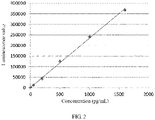
- the inhibin B calibrator was tested by using the method in Example 2, and a standard curve was drawn as shown in FIG. 2 .
- the sensitivity of the inhibin B chemiluminescence immunoassay kit was calculated with reference to the experimental protocol recommended in the CLSI EP17-A document, and the obtained sensitivity was 10 pg/mL.
- the kit has a linear range of 10 pg/ml to 1300 pg/mL for detection of the inhibin B samples.
- the pooled serum was weighed, and interfering substances including: conjugated bilirubin, free bilirubin, hemoglobin, ascorbic acid, and glyceride were added, respectively.
- the adding mass ratio was in accordance with 1:20.
- the measured values of the pooled serum and the pooled serum after the addition of various interfering substances were measured, respectively, and the deviation between the two was calculated, and the range of ⁇ 10% was taken as an acceptable range. The results showed that the interference had reached the NCCLS document standard and can be used for accurate assessment of adiponectin status in clinical laboratories.
- Example 4 comparative experiment of inhibin B chemiluminescence immunoassay kit
- the inhibin B samples at concentrations of 50 pg/mL, 200 pg/mL, 500 pg/mL, 1000 pg/mL, and 1600 pg/mL were tested by the chemiluminescence detection method and the conventional enzyme linked immunosorbent assay, respectively.
- the sensitivity of the chemiluminescence detection method is about 20 times higher than that of the enzyme linked immunosorbent assay.
Landscapes
- Health & Medical Sciences (AREA)
- Life Sciences & Earth Sciences (AREA)
- Immunology (AREA)
- Engineering & Computer Science (AREA)
- Chemical & Material Sciences (AREA)
- Molecular Biology (AREA)
- Biomedical Technology (AREA)
- Hematology (AREA)
- Urology & Nephrology (AREA)
- Physics & Mathematics (AREA)
- Pathology (AREA)
- Analytical Chemistry (AREA)
- General Physics & Mathematics (AREA)
- General Health & Medical Sciences (AREA)
- Biochemistry (AREA)
- Cell Biology (AREA)
- Medicinal Chemistry (AREA)
- Food Science & Technology (AREA)
- Microbiology (AREA)
- Biotechnology (AREA)
- Endocrinology (AREA)
- Chemical Kinetics & Catalysis (AREA)
- Plasma & Fusion (AREA)
- Investigating Or Analysing Materials By The Use Of Chemical Reactions (AREA)
- Peptides Or Proteins (AREA)
Description
- The present disclosure relates to the field of in vitro detection, and more particularly relates to an inhibin B chemiluminescence immunoassay kit and a preparation method thereof.
- Inhibin (INH) is a heterodimeric protein hormone secreted by female ovarian granulosa cells and male testicular support cells, belonging to the transforming growth factor beta family, mainly including INHA and INH-B (consisting of α and βA or βB subunits, respectively). Inhibin selectively inhibits the secretion of follicle stimulating hormone (FSH) and also has a local paracrine action on the gonads.
- Inhibin B is a testis-derived glycoprotein hormone. Serum inhibin B levels in adult males are significantly negatively correlated with FSH and have a negative feedback effect on FSH. Shortly after the birth of the male, the serum inhibin B levels gradually increase, reaching the adult level in the second phase of puberty. There is a negative correlation between the inhibin B and FSH from the third phase of puberty to adulthood. The inhibin B levels reach another peak from 20 years old to 30 years old, and after which the inhibin B levels gradually decrease with age. The main role of the inhibin B is to regulate gamete development through negative feedback to FSH. The inhibin B can be used as an endocrine label to monitor the gonad function of male or female by detecting it. Therefore, inhibin B is also very important in the detection of male infertility.
- The inhibin B is a major label of ovarian reserve function and testicular seminiferous tubule function, and can be used for detection of female infertility caused by ovarian factors and male infertility caused by seminiferous tubule dysfunction, and can also be used to evaluate the diagnosis of cryptorchidism and precocious puberty in children, and to monitor the damage of male spermatogenic function by radiotherapy and chemotherapy.
- The conventional methods of detecting the inhibin B include enzyme-linked immunosorbent assay and chemiluminescence assay, however, the conventional method of detecting the inhibin B has poor detection sensitivity.
- Accordingly, it is necessary to provide an inhibin B chemiluminescence immunoassay kit with high detection sensitivity and a preparation method thereof.
- An inhibin B chemiluminescence immunoassay kit includes a carboxylated magnetic particle coated with an inhibin B monoclonal antibody and an inhibin B monoclonal antibody labeled with a chemiluminescence label, wherein the inhibin B monoclonal antibody in each of the carboxylated magnetic particle coated with the inhibin B monoclonal antibody and the inhibin B monoclonal antibody labelled with the chemiluminescence label is the same.
- A method of preparing the aforementioned inhibin B chemiluminescence immunoassay kit includes the steps of:
- weighing a suspension of a carboxylated magnetic particle, removing supernatant by a magnetic separation, then resuspending with a MES (2-(N-morpholine)ethanesulfonic acid) buffer, and then adding an EDC (1-ethyl-3-(3-dimethyl aminopropyl)-carbodiimide) aqueous solution to activate a surface carboxyl group of the carboxylated magnetic particle, and then adding an inhibin B monoclonal antibody, resuspending at room temperature for 2 h to 10 h, and removing supernatant by the magnetic separation, and then resuspending with a Tris buffer to obtain a carboxylated magnetic particle coated with the inhibin B monoclonal antibody; and
- weighing an inhibin B monoclonal antibody, adding a carbonate buffer and mixing uniformly, and then adding a chemiluminescence label and mixing uniformly, reacting in the dark at room temperature for 1 h to 2 h and then removing impurity to obtain an inhibin B monoclonal antibody labeled with the chemiluminescence label, wherein the inhibin B monoclonal antibody in each of the carboxylated magnetic particle coated with the inhibin B monoclonal antibody and the inhibin B monoclonal antibody labelled with the chemiluminescence label is the same.
- This inhibin B chemiluminescence immunoassay kit is capable of performing the detection of inhibin B by using a fully automatic chemiluminescence immunoassay analyzer as a detection tool. The experiment shows this inhibin B chemiluminescence immunoassay kit has a detection sensitivity of 10 pg/mL, which is at least 10 times more sensitive than a conventional method of detecting inhibin B. This inhibin B chemiluminescence immunoassay kit has a higher detection precision.
-
-
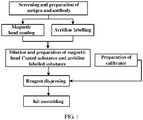
FIG. 1 is a flowchart of a method of preparing an inhibin B chemiluminescence immunoassay kit according to an embodiment; and -
FIG. 2 is a standard curve diagram of inhibin B obtained in Example 3. - The above objects, features and advantages of the present invention will become more apparent by describing in detail embodiments thereof with reference to the accompanying drawings. Numerous specific details are set forth in the description below in order to provide a thorough understanding of the invention.
- An inhibin B chemiluminescence immunoassay kit includes a carboxylated magnetic particle coated with an inhibin B monoclonal antibody and an inhibin B monoclonal antibody labeled with a chemiluminescence label, wherein the inhibin B monoclonal antibody in each of the carboxylated magnetic particle coated with the inhibin B monoclonal antibody and the inhibin B monoclonal antibody labelled with the chemiluminescence label is the same.
- Preferably, in the carboxylated magnetic particle coated with the inhibin B monoclonal antibody, a mass ratio of the inhibin B monoclonal antibody to the carboxylated magnetic particle is 1:25 to 1:35.
- Preferably, in the inhibin B monoclonal antibody labeled with the chemiluminescence label, a mass ratio of the inhibin B monoclonal antibody to the chemiluminescence label is 50:1 to 50:10.
- The inhibin B monoclonal antibodies used in the carboxylated magnetic particle coated with the inhibin B monoclonal antibody and the inhibin B monoclonal antibody labeled with the chemiluminescence label are the same.
- Preferably, the carboxylated magnetic particle has a particle size of 0.05 µm to 1 µm.
- The chemiluminescence label can be luminol, isoluminol, terpyridine ruthenium, or acridinium ester. The chemiluminescence label is preferably an acridinium ester.
- In alternative embodiments, the aforementioned inhibin B chemiluminescence immunoassay kit further includes a chemiluminescence substrate solution.
- The chemiluminescence substrate solution includes a solution A and a solution B. The solution A can be a H2O2 solution, and the solution B can be a NaOH solution.
- In the present embodiment, the solution A is a H2O2 solution with a concentration of 0.1 mol/L, and the solution B is a NaOH solution with a concentration of 0.25 mol/L.
- In alternative embodiments, the aforementioned inhibin B chemiluminescence immunoassay kit further includes an inhibin B calibrator.
- The inhibin B calibrator is a solution of inhibin B at concentrations of 0 pg/mL, 50 pg/mL, 200 pg/mL, 500 pg/mL, 1000 pg/mL, and 1600 pg/mL, respectively.
- Specifically, the inhibin B calibrator may be prepared by formulating the inhibin B into the solution of inhibin B at concentrations of 0 pg/mL, 50 pg/mL, 200 pg/mL, 500 pg/mL, 1000 pg/mL, and 1600 pg/mL, respectively, using a calibration buffer.
- When this inhibin B chemiluminescence immunoassay kit is used for the detection of inhibin B, the inhibin B calibrator is tested by the fully automatic chemiluminescence immunoassay analyzer, and a standard curve is drawn and established in computer software. Then, an actual sample is tested, and a concentration of the sample is calculated according to a luminescence value of the sample. Finally, the performances (sensitivity, linearity, precision, and interference) of the inhibin B fully automatic chemiluminescence immunoassay system are evaluated.
- This inhibin B chemiluminescence immunoassay kit is capable of performing the detection of inhibin B by using a fully automatic chemiluminescence immunoassay analyzer as a detection tool. The experiment shows this inhibin B chemiluminescence immunoassay kit has a detection sensitivity of 10 pg/mL, which is at least 10 times more sensitive than a conventional method of detecting inhibin B. This inhibin B chemiluminescence immunoassay kit has a higher detection precision.
- In addition, this inhibin B chemiluminescence immunoassay kit has the following advantages:
- 1. The acridinium ester is selected as a labeling material and applied in the chemiluminescence immunoassay system. The chemiluminescence system is a direct chemiluminescence, compared with a conventional enzymatic chemiluminescence, the reaction does not require a participation of enzymes, thus saving cost.
- 2. The chemiluminescence immunoassay system using the acridinium ester has a wide linearity range, which can reach 10 pg/mL to 1300 pg/mL, while the conventional inhibin B detection method has a linear range of 20 pg/mL to 1000 pg/mL.
- 3. The acridinium ester chemiluminescence immunoassay system has a high reproducibility, and the intra-assay and inter-assay differences are within 5%, which is difficult to achieve by other chemiluminescence immunoassay systems.
- 4. The chemiluminescence immunoassay system has achieved the quantification analysis of the sample. By establishing standard curve to the test software, the concentration value of the sample can be directly obtained by simply testing the sample.
- 5. The chemiluminescence immunoassay system can be fully automated, and the addition of reagents and samples is completed by instruments, which makes the operation easier and reduces human error.
- Referring to
FIG. 1 , a method of preparing the aforementioned inhibin B chemiluminescence immunoassay kit includes the steps of: - weighing a suspension of a carboxylated magnetic particle, removing supernatant by a magnetic separation, then resuspending with a MES (2-(N-morpholine)ethanesulfonic acid) buffer, and then adding an EDC (1-ethyl-3-(3-dimethyl aminopropyl)-carbodiimide) aqueous solution to activate a surface carboxyl group of the carboxylated magnetic particle, and then adding an inhibin B monoclonal antibody, resuspending at room temperature for 2 h to 10 h, and removing supernatant by the magnetic separation, and then resuspending with a Tris buffer to obtain a carboxylated magnetic particle coated with the inhibin B monoclonal antibody; and
- weighing an inhibin B monoclonal antibody, adding a carbonate buffer and mixing uniformly, and then adding a chemiluminescence label and mixing uniformly, reacting in the dark at room temperature for 1 h to 2 h and then removing impurity to obtain an inhibin B monoclonal antibody labeled with the chemiluminescence label, wherein the inhibin B monoclonal antibody in each of the carboxylated magnetic particle coated with the inhibin B monoclonal antibody and the inhibin B monoclonal antibody labelled with the chemiluminescence label is the same.
- MES (2-(N-morpholine)ethanesulfonic acid) buffer has a concentration of 0.02 M and a pH of 5.5.
- Tris buffer has a concentration of 0.1 M and contains 2% of BSA, and has a pH of 8.0.
- EDC (1-ethyl-3-(3-dimethyl aminopropyl)-carbodiimide) aqueous solution has a concentration of 10 mg/mL to 20 mg/mL, and a mass ratio of EDC to the carboxylated magnetic particle ranges from 0.05: 0.1 to 0.05:1.
- Preferably, in the carboxylated magnetic particle coated with the inhibin B monoclonal antibody, a mass ratio of the inhibin B monoclonal antibody to the carboxylated magnetic particle is 1:25 to 1:35.
- Preferably, the carboxylated magnetic particle has a particle size of 0.05 µm to 1 µm.
- The carbonate buffer has a concentration of 0.1M and a pH of 9.0 to 9.5.
- The impurity removal operation is desalination by a centrifugal desalting column. The specific operation is as follows: the centrifugal desalting column is firstly treated with purified water and TBS buffer (40 mM Tris-HCl, 0.5% BSA, 1% NaCl, pH 8.0), respectively; and finally the obtained solution of the carboxylated magnetic particle coated with the inhibin B monoclonal antibody is added, and finally the liquid in the centrifuge tube is collected.
- Preferably, in the inhibin B monoclonal antibody labeled with the chemiluminescence label, a mass ratio of the inhibin B monoclonal antibody to the chemiluminescence label is 50:1 to 50:10.
- The chemiluminescence label can be luminol, isoluminol, terpyridine ruthenium, or acridinium ester. The chemiluminescence label is preferably an acridinium ester.
- The aforementioned inhibin B chemiluminescence immunoassay kit can be obtained by combining the obtained carboxylated magnetic particle coated with the inhibin B monoclonal antibody and the inhibin B monoclonal antibody labeled with the chemiluminescence label.
- This inhibin B chemiluminescence immunoassay kit further requires a chemiluminescence substrate solution and an inhibin B calibrator when used.
- The chemiluminescence substrate solution and the inhibin B calibrator can be prepared by themselves.
- The chemiluminescence substrate solution includes a solution A and a solution B. The solution A can be a H2O2 solution, and the solution B can be a NaOH solution.
- In the present embodiment, the solution A is a H2O2 solution with a concentration of 0.1 mol/L, and the solution B is a NaOH solution with a concentration of 0.25 mol/L.
- Specifically, the inhibin B calibrator may be prepared by formulating the inhibin B into the solution of inhibin B at concentrations of 0 pg/mL, 50 pg/mL, 200 pg/mL, 500 pg/mL, 1000 pg/mL, and 1600 pg/mL, respectively, using a calibration buffer.
- The preparation method of the inhibin B chemiluminescence immunoassay kit is simple and convenient, and the prepared inhibin B chemiluminescence immunoassay kit has high detection sensitivity and has a good application prospect.
- The following are specific examples.
- A suspension containing 50 mg of carboxylated magnetic particles (MagnaBind™, Cat. No. 21353) with a particle size of 0.05µm to 1µm was weighed, and magnetically separated to remove supernatant, and resuspended with 0.02 M of MES buffer with a pH of 5.5. 1 mL of newly prepared 10mg/mL EDC aqueous solution was added to activate the carboxyl group on the surface of the magnetic particles. 4 mg of inhibin B monoclonal antibody (biorbyt, Cat. No. orb48780) was added and suspended at room temperature for 6 h, and magnetically separated to remove supernatant. 0.1 M of Tris buffer containing 2% of BSA with a pH of 8.0 was used to resuspend to 1 mg/mL, thereby obtaining the carboxylated magnetic particles coated with the inhibin B monoclonal antibody, which was dispensed and stored in a 5 mL portions of each bottle at a temperature of 4 °C for use.
- 50 µL of inhibin B monoclonal labeled antibody (biorbyt, Cat. No. orb48780) solution with a concentration of 25mg/mL was weighed, 150 µL of carbonate buffer with a concentration of 0.1 M and a pH of 9.0 to 9.5 was added and mixed uniformly, and then 1.5 µL of acridinium ester with a concentration of 5 mg/mL was added and mixed uniformly, and reacted at room temperature in the dark. The reaction mixture was taken out after 1.5 h and desalted by 2 mL of zeba centrifugal desalting column. During the desalting process, the treatment was performed firstly by purified water and TBS buffer, respectively, and finally the obtained solution of the acridinium ester labeled with the inhibin B monoclonal antibody was added. The liquid in the centrifuge tube was collected to a preservation tube to obtain the acridinium ester labeled with the inhibin B monoclonal antibody, which was dispensed and stored in a 5 mL portions of each bottle at a temperature of 4 °C for use.
- Inhibin B was formulated to concentrations of 0 pg/mL, 50 pg/mL, 200 pg/mL, 500 pg/mL, 1000 pg/mL, and 1600 pg/mL using calibrator buffer (40 mM Tris-HCl, 0.5% BSA, 1% NaCl, pH 8.0), which was dispensed in 0.5 mL per bottle and lyophilized, and stored at a temperature of 4 °C for use.
- A fully automatic chemiluminescence immunoassay analyzer (YHLO, Cat. No. iFlash3000) was used as a detection tool. The methodological mode was a double antibody sandwich method, that is, 50 µL of sample, 50 µL of carboxylated magnetic particles coated with the inhibin B monoclonal antibody, and 50 µL of inhibin B treatment solution were sequentially added by the instrument. 50 µL of acridinium ester coated with inhibin B was added after reacted for 20 min, and then magnetic separation was performed after reacted for 20 min. The instrument fed the reaction mixture into a darkroom, and sequentially added a luminescence substrate solution A (H2O2) and solution B (NaOH) to perform the luminescence reaction. Finally, the luminescence intensity was recorded.
- The inhibin B calibrator was tested by using the method in Example 2, and a standard curve was drawn as shown in
FIG. 2 . - Subsequently, an actual sample was next tested, and a concentration of the sample was calculated according to a luminescence value of the sample.
- The sensitivity of the inhibin B chemiluminescence immunoassay kit was calculated with reference to the experimental protocol recommended in the CLSI EP17-A document, and the obtained sensitivity was 10 pg/mL.
- Linear analysis was performed on the calibrators at concentrations of 50 pg/mL, 200 pg/mL, 500 pg/mL, 1000 pg/mL, and 1600 pg/mL, and the linear correlation coefficient was calculated, r=0.9996. In addition, the kit has a linear range of 10 pg/ml to 1300 pg/mL for detection of the inhibin B samples.
- Two inhibin B samples at concentrations of 500 pg/mL and 1000 pg/mL were weighed. Each of the samples was performed for 3 parallels for each concentration and the detection was performed with three batches of kits. The intra-assay and inter-assay differences of the kit were calculated, and the results showed that the intra-assay and inter-assay differences of that kit were both less than 5%.
- The pooled serum was weighed, and interfering substances including: conjugated bilirubin, free bilirubin, hemoglobin, ascorbic acid, and glyceride were added, respectively. The adding mass ratio was in accordance with 1:20. The measured values of the pooled serum and the pooled serum after the addition of various interfering substances were measured, respectively, and the deviation between the two was calculated, and the range of ±10% was taken as an acceptable range. The results showed that the interference had reached the NCCLS document standard and can be used for accurate assessment of adiponectin status in clinical laboratories.
- The inhibin B samples at concentrations of 50 pg/mL, 200 pg/mL, 500 pg/mL, 1000 pg/mL, and 1600 pg/mL were tested by the chemiluminescence detection method and the conventional enzyme linked immunosorbent assay, respectively. The detection sensitivities of the two methods were compared, and the results were shown in the following table:
Number of tests Chemiluminescence detection (RLU) Enzyme linked immunosorbent assay (OD) 1 1057 0.066 2 1206 0.079 3 1097 0.069 4 1063 0.081 5 1110 0.073 6 1017 0.069 7 1047 0.056 8 1107 0.074 9 989 0.063 10 1039 0.059 11 1102 0.087 12 1053 0.068 13 1004 0.074 14 1058 0.068 15 1110 0.071 16 1055 0.072 17 1048 0.067 18 1102 0.081 19 992 0.067 20 1080 0.069 Mean 1067 0.071 SD 50 0.007 M+2SD 1168 0.086 50pg/mL 1 11206 0.133 2 10936 0.141 3 10498 0.142 Mean 10880 0.139 Sensitivity (pg/mL) 0.51 10.42 - As can be seen from the above table, the sensitivity of the chemiluminescence detection method is about 20 times higher than that of the enzyme linked immunosorbent assay.
- The foregoing descriptions are merely specific embodiments of the present invention.
- The protection scope of the present invention shall be subject to the protection scope of the appended claims.
Claims (9)
- An inhibin B chemiluminescence immunoassay kit, comprising a carboxylated magnetic particle coated with an inhibin B monoclonal antibody; and an inhibin B monoclonal antibody labeled with a chemiluminescence label, wherein the inhibin B monoclonal antibody in each of the carboxylated magnetic particle coated with the inhibin B monoclonal antibody and the inhibin B monoclonal antibody labelled with the chemiluminescence label is the same.
- The inhibin B chemiluminescence immunoassay kit according to claim 1, wherein in the carboxylated magnetic particle coated with the inhibin B monoclonal antibody, a mass ratio of the inhibin B monoclonal antibody to the carboxylated magnetic particle is 1:25 to 1:35.
- The inhibin B chemiluminescence immunoassay kit according to claim 1, wherein in the inhibin B monoclonal antibody labeled with the chemiluminescence label, a mass ratio of the inhibin B monoclonal antibody to the chemiluminescence label is 50:1 to 50:10.
- The inhibin B chemiluminescence immunoassay kit according to claim 1, wherein the carboxylated magnetic particle has a particle size of 0.05 µm to 1 µm.
- The inhibin B chemiluminescence immunoassay kit according to claim 1, wherein the chemiluminescence label is luminol, isoluminol, terpyridine ruthenium, or acridinium ester.
- The inhibin B chemiluminescence immunoassay kit according to claim 1, further comprising a chemiluminescence substrate solution, wherein the chemiluminescence substrate solution comprises a solution A and a solution B, wherein the solution A is a H2O2 solution, and the solution B is a NaOH solution.
- The inhibin B chemiluminescence immunoassay kit according to claim 1, further comprising an inhibin B calibrator.
- The inhibin B chemiluminescence immunoassay kit according to claim 7, wherein the inhibin B calibrator is a solution of inhibin B at concentrations of 0 pg/mL, 50 pg/mL, 200 pg/mL, 500 pg/mL, 1000 pg/mL, and 1600 pg/mL, respectively.
- A method of preparing an inhibin B chemiluminescence immunoassay kit according to any one of claims 1 to 8, comprising the steps of:weighing a suspension of a carboxylated magnetic particle, removing supernatant by a magnetic separation, then resuspending with a MES (2-(N-morpholine)ethanesulfonic acid) buffer, and then adding an EDC (1-ethyl-3-(3-dimethyl aminopropyl)-carbodiimide) aqueous solution to activate a surface carboxyl group of the carboxylated magnetic particle, and then adding an inhibin B monoclonal antibody, resuspending at room temperature for 2 h to 10 h,and removing supernatant by the magnetic separation, and then resuspending with a Tris buffer to obtain a carboxylated magnetic particle coated with the inhibin B monoclonal antibody; andweighing an inhibin B monoclonal antibody, adding a carbonate buffer and mixing uniformly, and then adding a chemiluminescence label and mixing uniformly, reacting in the dark at room temperature for 1 h to 2 h and then removing impurity to obtain an inhibin B monoclonal antibody labeled with the chemiluminescence label,wherein the inhibin B monoclonal antibody in each of the carboxylated magnetic particle coated with the inhibin B monoclonal antibody and the inhibin B monoclonal antibody labelled with the chemiluminescence label is the same.
Applications Claiming Priority (2)
| Application Number | Priority Date | Filing Date | Title |
|---|---|---|---|
| CN201610506673.3A CN106199012A (en) | 2016-06-30 | 2016-06-30 | Inhibin B chemiluminescence immune detection reagent kit and preparation method thereof |
| PCT/CN2016/088817 WO2018000446A1 (en) | 2016-06-30 | 2016-07-06 | Inhibin b chemiluminescent immunoassay kit and preparation method therefor |
Publications (3)
| Publication Number | Publication Date |
|---|---|
| EP3480601A1 EP3480601A1 (en) | 2019-05-08 |
| EP3480601A4 EP3480601A4 (en) | 2020-03-18 |
| EP3480601B1 true EP3480601B1 (en) | 2022-03-30 |
Family
ID=57464278
Family Applications (1)
| Application Number | Title | Priority Date | Filing Date |
|---|---|---|---|
| EP16906845.9A Active EP3480601B1 (en) | 2016-06-30 | 2016-07-06 | Inhibin b chemiluminescent immunoassay kit and preparation method therefor |
Country Status (3)
| Country | Link |
|---|---|
| EP (1) | EP3480601B1 (en) |
| CN (1) | CN106199012A (en) |
| WO (1) | WO2018000446A1 (en) |
Families Citing this family (5)
| Publication number | Priority date | Publication date | Assignee | Title |
|---|---|---|---|---|
| CN108982482A (en) * | 2018-08-03 | 2018-12-11 | 迪瑞医疗科技股份有限公司 | Inhibin B chemiluminescence immune detection reagent kit and preparation method thereof |
| CN113495153A (en) * | 2020-03-20 | 2021-10-12 | 郑州达诺生物技术有限公司 | System reaction liquid, inhibin A quantitative detection kit containing system reaction liquid and using method |
| CN111505273A (en) * | 2020-04-10 | 2020-08-07 | 蓝怡科技集团股份有限公司 | Non-competitive chemiluminescence immunoassay kit for digoxin and application thereof |
| CN119119264B (en) * | 2024-10-15 | 2025-09-09 | 四川携光生物技术有限公司 | Anti-inhibin B single-chain antibody or fragment thereof, preparation method, DNA molecule and kit |
| CN119470931B (en) * | 2025-01-07 | 2025-08-29 | 深圳市雅为泓源生物科技有限公司 | An improved inhibin B detection kit and monoclonal antibody preparation method |
Family Cites Families (14)
| Publication number | Priority date | Publication date | Assignee | Title |
|---|---|---|---|---|
| CN100464189C (en) * | 2006-04-21 | 2009-02-25 | 深圳市新产业生物医学工程有限公司 | Magnetic separation direct chemiluminescence reagent and test method using the same |
| CN101377490B (en) * | 2007-08-30 | 2012-07-04 | 北京科美生物技术有限公司 | Magnetic microparticle separating chemiluminescence immune analysis determination reagent kit for detecting related sign object and preparing method thereof |
| AU2010221188A1 (en) * | 2009-03-06 | 2011-10-20 | Tripath Imaging, Inc. | Glycodelin monoclonal antibodies and methods for their use in the detection of ovarian cancer |
| CN102072957B (en) * | 2011-01-18 | 2013-08-07 | 威海威高生物科技有限公司 | Hepatitis C virus antibody diagnostic kit and preparation method thereof |
| CN102565405A (en) * | 2011-08-24 | 2012-07-11 | 苏州长光华医生物试剂有限公司 | Method for immunological detection by combining acridinium ester labeling technology with general magnetic particles |
| CN102816754B (en) * | 2012-07-16 | 2014-05-14 | 北京利德曼生化股份有限公司 | Extraction method for hepatitis B virus nucleic acid |
| CN103149350A (en) * | 2013-01-23 | 2013-06-12 | 苏州浩欧博生物医药有限公司 | Method for coupling of nanometer magnetic particles and immune body |
| CN103364568B (en) * | 2013-07-18 | 2015-05-27 | 博奥赛斯(天津)生物科技有限公司 | Laminin nano-magnetic particle chemiluminescent immunity quantitative detection kit and preparation method thereof |
| CN103728457A (en) * | 2013-12-25 | 2014-04-16 | 李志荣 | Preparation method and application of kit for double-sandwich immunofluorescence quantitative detection of human Inhibin-B on basis of quantum dots |
| CN103954779B (en) * | 2014-03-12 | 2015-09-16 | 长春迪瑞医疗科技股份有限公司 | A kind of testosterone based on microparticle chemiluminescence immunoassay technology detects reagent |
| CN104090106A (en) * | 2014-07-21 | 2014-10-08 | 威海威高生物科技有限公司 | Hepatitis B virus surface antigen quantitative determination kit and preparation method thereof |
| CN104614536B (en) * | 2015-02-10 | 2017-06-27 | 深圳市新产业生物医学工程股份有限公司 | A kind of kit for detecting G17 and its preparation method and application |
| CN104849469A (en) * | 2015-04-16 | 2015-08-19 | 广州市达瑞生物技术股份有限公司 | Kit for detecting NGAL content and preparation method thereof |
| CN105527444B (en) * | 2015-12-21 | 2018-08-24 | 深圳华康生物医学工程有限公司 | The enzyme-linked immunologic detecting kit and inhibin B test methods of inhibin B |
-
2016
- 2016-06-30 CN CN201610506673.3A patent/CN106199012A/en active Pending
- 2016-07-06 WO PCT/CN2016/088817 patent/WO2018000446A1/en not_active Ceased
- 2016-07-06 EP EP16906845.9A patent/EP3480601B1/en active Active
Also Published As
| Publication number | Publication date |
|---|---|
| EP3480601A4 (en) | 2020-03-18 |
| EP3480601A1 (en) | 2019-05-08 |
| CN106199012A (en) | 2016-12-07 |
| WO2018000446A1 (en) | 2018-01-04 |
Similar Documents
| Publication | Publication Date | Title |
|---|---|---|
| CN114113637B (en) | Thyroid stimulating hormone receptor antigen reagent and thyroid stimulating hormone receptor antibody quantitative detection kit | |
| EP3480601A1 (en) | Inhibin b chemiluminescent immunoassay kit and preparation method therefor | |
| CN103018464B (en) | Reagent for determining procalcitonin and preparation method of reagent | |
| US20200309770A1 (en) | Chemiluminescence immunoassay kit for adiponectin, and preparation method and use thereof | |
| CN111307789B (en) | Folic acid detection kit and detection method | |
| CN111781374A (en) | Magnetic particle chemiluminescence detection kit for hypersensitive troponin I and application thereof | |
| CN105181694B (en) | Carcinoembryonic antigen latex enhanced immunoturbidimetry kit | |
| CN102944676B (en) | Kit for detecting vasculitis related autoantibody repertoire | |
| CN108089005A (en) | A kind of magnetic particle alpha-fetoprotein chemiluminescence immune detection reagent kit and preparation method thereof | |
| CN111089958A (en) | P16 based on glucan signal amplificationINK4aChemiluminescence kit | |
| CN106645711A (en) | Anti-Sm antibody IgG determining kit (chemiluminiscence method) and preparation method thereof | |
| CN106645689A (en) | Thyroid-stimulating hormone receptor antibody chemiluminescent immunoassay kit and preparation method thereof | |
| Rogier et al. | Two-site immunoenzymometric assay for the 52-kDa cathepsin D in cytosols of breast cancer tissues. | |
| Mu et al. | Comparison of direct and extraction immunoassay methods with liquid chromatography-tandem mass spectrometry measurement of urinary free cortisol for the diagnosis of cushing’s syndrome | |
| Kumar et al. | Dihydrotestosterone-A Potential Biomarker of Hyperandrogenaemia in Polycystic Ovary Syndrome: A Case-control Study from North India | |
| CN106596919A (en) | Kit (chemiluminiscence method) for determining anti-ribonucleoprotein 70 antibody IgG and manufacturing method thereof | |
| CN115856319A (en) | Soluble growth stimulation expression gene 2 protein determination kit and preparation method and application thereof | |
| CN106596524A (en) | Chemiluminescence immunoassay kit for insulin antibodies and preparation method of kit | |
| CN117783544A (en) | Assay Buffers and Kits for Testosterone Assays | |
| Abushoufa et al. | The development of a sialic acid specific lectin‐immunoassay for the measurement of human chorionic gonadotrophin glycoforms in serum and its application in normal and Down's syndrome pregnancies | |
| CN112326967A (en) | Kit for simultaneously detecting alpha-fetoprotein and carcinoembryonic antigen | |
| CN114280307A (en) | Nano magnetic particle chemiluminescence detection kit for hypersensitive cardiac troponin I and preparation method and application thereof | |
| Yang et al. | Development of a novel parallel determination platform: a feasibility study tested on a chemiluminescence device | |
| CN114280311A (en) | Preparation method and detection application of nano-magnetic particle chemiluminescence detection kit for amino-terminal B-type natriuretic peptide precursor | |
| CN106855574A (en) | A kind of III procollagen type N-terminal peptide chemiluminescence immunity detection reagent and preparation method thereof |
Legal Events
| Date | Code | Title | Description |
|---|---|---|---|
| STAA | Information on the status of an ep patent application or granted ep patent |
Free format text: STATUS: THE INTERNATIONAL PUBLICATION HAS BEEN MADE |
|
| PUAI | Public reference made under article 153(3) epc to a published international application that has entered the european phase |
Free format text: ORIGINAL CODE: 0009012 |
|
| STAA | Information on the status of an ep patent application or granted ep patent |
Free format text: STATUS: REQUEST FOR EXAMINATION WAS MADE |
|
| 17P | Request for examination filed |
Effective date: 20190121 |
|
| AK | Designated contracting states |
Kind code of ref document: A1 Designated state(s): AL AT BE BG CH CY CZ DE DK EE ES FI FR GB GR HR HU IE IS IT LI LT LU LV MC MK MT NL NO PL PT RO RS SE SI SK SM TR |
|
| AX | Request for extension of the european patent |
Extension state: BA ME |
|
| RAP1 | Party data changed (applicant data changed or rights of an application transferred) |
Owner name: SHENZHEN YHLO BIOTECH CO., LTD |
|
| RIN1 | Information on inventor provided before grant (corrected) |
Inventor name: LIU, MEITING Inventor name: WANG, GANG Inventor name: ZHU, LIANG Inventor name: QIAN, CHUNGEN Inventor name: XIA, FUZHEN |
|
| DAV | Request for validation of the european patent (deleted) | ||
| DAX | Request for extension of the european patent (deleted) | ||
| REG | Reference to a national code |
Ref country code: DE Ref legal event code: R079 Ref document number: 602016070646 Country of ref document: DE Free format text: PREVIOUS MAIN CLASS: G01N0033740000 Ipc: G01N0033533000 |
|
| A4 | Supplementary search report drawn up and despatched |
Effective date: 20200219 |
|
| RIC1 | Information provided on ipc code assigned before grant |
Ipc: G01N 21/76 20060101ALI20200213BHEP Ipc: G01N 33/74 20060101ALI20200213BHEP Ipc: G01N 33/533 20060101AFI20200213BHEP Ipc: G01N 33/543 20060101ALI20200213BHEP Ipc: G01N 33/58 20060101ALI20200213BHEP |
|
| GRAP | Despatch of communication of intention to grant a patent |
Free format text: ORIGINAL CODE: EPIDOSNIGR1 |
|
| STAA | Information on the status of an ep patent application or granted ep patent |
Free format text: STATUS: GRANT OF PATENT IS INTENDED |
|
| INTG | Intention to grant announced |
Effective date: 20211217 |
|
| GRAS | Grant fee paid |
Free format text: ORIGINAL CODE: EPIDOSNIGR3 |
|
| GRAA | (expected) grant |
Free format text: ORIGINAL CODE: 0009210 |
|
| STAA | Information on the status of an ep patent application or granted ep patent |
Free format text: STATUS: THE PATENT HAS BEEN GRANTED |
|
| AK | Designated contracting states |
Kind code of ref document: B1 Designated state(s): AL AT BE BG CH CY CZ DE DK EE ES FI FR GB GR HR HU IE IS IT LI LT LU LV MC MK MT NL NO PL PT RO RS SE SI SK SM TR |
|
| REG | Reference to a national code |
Ref country code: GB Ref legal event code: FG4D |
|
| REG | Reference to a national code |
Ref country code: CH Ref legal event code: EP |
|
| REG | Reference to a national code |
Ref country code: AT Ref legal event code: REF Ref document number: 1479664 Country of ref document: AT Kind code of ref document: T Effective date: 20220415 |
|
| REG | Reference to a national code |
Ref country code: DE Ref legal event code: R096 Ref document number: 602016070646 Country of ref document: DE |
|
| REG | Reference to a national code |
Ref country code: IE Ref legal event code: FG4D |
|
| REG | Reference to a national code |
Ref country code: LT Ref legal event code: MG9D |
|
| PG25 | Lapsed in a contracting state [announced via postgrant information from national office to epo] |
Ref country code: SE Free format text: LAPSE BECAUSE OF FAILURE TO SUBMIT A TRANSLATION OF THE DESCRIPTION OR TO PAY THE FEE WITHIN THE PRESCRIBED TIME-LIMIT Effective date: 20220330 Ref country code: RS Free format text: LAPSE BECAUSE OF FAILURE TO SUBMIT A TRANSLATION OF THE DESCRIPTION OR TO PAY THE FEE WITHIN THE PRESCRIBED TIME-LIMIT Effective date: 20220330 Ref country code: NO Free format text: LAPSE BECAUSE OF FAILURE TO SUBMIT A TRANSLATION OF THE DESCRIPTION OR TO PAY THE FEE WITHIN THE PRESCRIBED TIME-LIMIT Effective date: 20220630 Ref country code: LT Free format text: LAPSE BECAUSE OF FAILURE TO SUBMIT A TRANSLATION OF THE DESCRIPTION OR TO PAY THE FEE WITHIN THE PRESCRIBED TIME-LIMIT Effective date: 20220330 Ref country code: HR Free format text: LAPSE BECAUSE OF FAILURE TO SUBMIT A TRANSLATION OF THE DESCRIPTION OR TO PAY THE FEE WITHIN THE PRESCRIBED TIME-LIMIT Effective date: 20220330 Ref country code: BG Free format text: LAPSE BECAUSE OF FAILURE TO SUBMIT A TRANSLATION OF THE DESCRIPTION OR TO PAY THE FEE WITHIN THE PRESCRIBED TIME-LIMIT Effective date: 20220630 |
|
| REG | Reference to a national code |
Ref country code: NL Ref legal event code: MP Effective date: 20220330 |
|
| REG | Reference to a national code |
Ref country code: AT Ref legal event code: MK05 Ref document number: 1479664 Country of ref document: AT Kind code of ref document: T Effective date: 20220330 |
|
| PG25 | Lapsed in a contracting state [announced via postgrant information from national office to epo] |
Ref country code: LV Free format text: LAPSE BECAUSE OF FAILURE TO SUBMIT A TRANSLATION OF THE DESCRIPTION OR TO PAY THE FEE WITHIN THE PRESCRIBED TIME-LIMIT Effective date: 20220330 Ref country code: GR Free format text: LAPSE BECAUSE OF FAILURE TO SUBMIT A TRANSLATION OF THE DESCRIPTION OR TO PAY THE FEE WITHIN THE PRESCRIBED TIME-LIMIT Effective date: 20220701 Ref country code: FI Free format text: LAPSE BECAUSE OF FAILURE TO SUBMIT A TRANSLATION OF THE DESCRIPTION OR TO PAY THE FEE WITHIN THE PRESCRIBED TIME-LIMIT Effective date: 20220330 |
|
| PG25 | Lapsed in a contracting state [announced via postgrant information from national office to epo] |
Ref country code: NL Free format text: LAPSE BECAUSE OF FAILURE TO SUBMIT A TRANSLATION OF THE DESCRIPTION OR TO PAY THE FEE WITHIN THE PRESCRIBED TIME-LIMIT Effective date: 20220330 |
|
| PG25 | Lapsed in a contracting state [announced via postgrant information from national office to epo] |
Ref country code: SM Free format text: LAPSE BECAUSE OF FAILURE TO SUBMIT A TRANSLATION OF THE DESCRIPTION OR TO PAY THE FEE WITHIN THE PRESCRIBED TIME-LIMIT Effective date: 20220330 Ref country code: SK Free format text: LAPSE BECAUSE OF FAILURE TO SUBMIT A TRANSLATION OF THE DESCRIPTION OR TO PAY THE FEE WITHIN THE PRESCRIBED TIME-LIMIT Effective date: 20220330 Ref country code: RO Free format text: LAPSE BECAUSE OF FAILURE TO SUBMIT A TRANSLATION OF THE DESCRIPTION OR TO PAY THE FEE WITHIN THE PRESCRIBED TIME-LIMIT Effective date: 20220330 Ref country code: PT Free format text: LAPSE BECAUSE OF FAILURE TO SUBMIT A TRANSLATION OF THE DESCRIPTION OR TO PAY THE FEE WITHIN THE PRESCRIBED TIME-LIMIT Effective date: 20220801 Ref country code: ES Free format text: LAPSE BECAUSE OF FAILURE TO SUBMIT A TRANSLATION OF THE DESCRIPTION OR TO PAY THE FEE WITHIN THE PRESCRIBED TIME-LIMIT Effective date: 20220330 Ref country code: EE Free format text: LAPSE BECAUSE OF FAILURE TO SUBMIT A TRANSLATION OF THE DESCRIPTION OR TO PAY THE FEE WITHIN THE PRESCRIBED TIME-LIMIT Effective date: 20220330 Ref country code: CZ Free format text: LAPSE BECAUSE OF FAILURE TO SUBMIT A TRANSLATION OF THE DESCRIPTION OR TO PAY THE FEE WITHIN THE PRESCRIBED TIME-LIMIT Effective date: 20220330 Ref country code: AT Free format text: LAPSE BECAUSE OF FAILURE TO SUBMIT A TRANSLATION OF THE DESCRIPTION OR TO PAY THE FEE WITHIN THE PRESCRIBED TIME-LIMIT Effective date: 20220330 |
|
| PG25 | Lapsed in a contracting state [announced via postgrant information from national office to epo] |
Ref country code: PL Free format text: LAPSE BECAUSE OF FAILURE TO SUBMIT A TRANSLATION OF THE DESCRIPTION OR TO PAY THE FEE WITHIN THE PRESCRIBED TIME-LIMIT Effective date: 20220330 Ref country code: IS Free format text: LAPSE BECAUSE OF FAILURE TO SUBMIT A TRANSLATION OF THE DESCRIPTION OR TO PAY THE FEE WITHIN THE PRESCRIBED TIME-LIMIT Effective date: 20220730 Ref country code: AL Free format text: LAPSE BECAUSE OF FAILURE TO SUBMIT A TRANSLATION OF THE DESCRIPTION OR TO PAY THE FEE WITHIN THE PRESCRIBED TIME-LIMIT Effective date: 20220330 |
|
| REG | Reference to a national code |
Ref country code: DE Ref legal event code: R097 Ref document number: 602016070646 Country of ref document: DE |
|
| PG25 | Lapsed in a contracting state [announced via postgrant information from national office to epo] |
Ref country code: DK Free format text: LAPSE BECAUSE OF FAILURE TO SUBMIT A TRANSLATION OF THE DESCRIPTION OR TO PAY THE FEE WITHIN THE PRESCRIBED TIME-LIMIT Effective date: 20220330 |
|
| PLBE | No opposition filed within time limit |
Free format text: ORIGINAL CODE: 0009261 |
|
| STAA | Information on the status of an ep patent application or granted ep patent |
Free format text: STATUS: NO OPPOSITION FILED WITHIN TIME LIMIT |
|
| PG25 | Lapsed in a contracting state [announced via postgrant information from national office to epo] |
Ref country code: MC Free format text: LAPSE BECAUSE OF FAILURE TO SUBMIT A TRANSLATION OF THE DESCRIPTION OR TO PAY THE FEE WITHIN THE PRESCRIBED TIME-LIMIT Effective date: 20220330 |
|
| REG | Reference to a national code |
Ref country code: CH Ref legal event code: PL |
|
| 26N | No opposition filed |
Effective date: 20230103 |
|
| GBPC | Gb: european patent ceased through non-payment of renewal fee |
Effective date: 20220706 |
|
| REG | Reference to a national code |
Ref country code: BE Ref legal event code: MM Effective date: 20220731 |
|
| PG25 | Lapsed in a contracting state [announced via postgrant information from national office to epo] |
Ref country code: LU Free format text: LAPSE BECAUSE OF NON-PAYMENT OF DUE FEES Effective date: 20220706 Ref country code: LI Free format text: LAPSE BECAUSE OF NON-PAYMENT OF DUE FEES Effective date: 20220731 Ref country code: CH Free format text: LAPSE BECAUSE OF NON-PAYMENT OF DUE FEES Effective date: 20220731 |
|
| PG25 | Lapsed in a contracting state [announced via postgrant information from national office to epo] |
Ref country code: SI Free format text: LAPSE BECAUSE OF FAILURE TO SUBMIT A TRANSLATION OF THE DESCRIPTION OR TO PAY THE FEE WITHIN THE PRESCRIBED TIME-LIMIT Effective date: 20220330 Ref country code: GB Free format text: LAPSE BECAUSE OF NON-PAYMENT OF DUE FEES Effective date: 20220706 Ref country code: BE Free format text: LAPSE BECAUSE OF NON-PAYMENT OF DUE FEES Effective date: 20220731 |
|
| P01 | Opt-out of the competence of the unified patent court (upc) registered |
Effective date: 20230530 |
|
| PG25 | Lapsed in a contracting state [announced via postgrant information from national office to epo] |
Ref country code: IE Free format text: LAPSE BECAUSE OF NON-PAYMENT OF DUE FEES Effective date: 20220706 |
|
| PG25 | Lapsed in a contracting state [announced via postgrant information from national office to epo] |
Ref country code: HU Free format text: LAPSE BECAUSE OF FAILURE TO SUBMIT A TRANSLATION OF THE DESCRIPTION OR TO PAY THE FEE WITHIN THE PRESCRIBED TIME-LIMIT; INVALID AB INITIO Effective date: 20160706 |
|
| PG25 | Lapsed in a contracting state [announced via postgrant information from national office to epo] |
Ref country code: MK Free format text: LAPSE BECAUSE OF FAILURE TO SUBMIT A TRANSLATION OF THE DESCRIPTION OR TO PAY THE FEE WITHIN THE PRESCRIBED TIME-LIMIT Effective date: 20220330 Ref country code: CY Free format text: LAPSE BECAUSE OF FAILURE TO SUBMIT A TRANSLATION OF THE DESCRIPTION OR TO PAY THE FEE WITHIN THE PRESCRIBED TIME-LIMIT Effective date: 20220330 |
|
| PG25 | Lapsed in a contracting state [announced via postgrant information from national office to epo] |
Ref country code: MT Free format text: LAPSE BECAUSE OF FAILURE TO SUBMIT A TRANSLATION OF THE DESCRIPTION OR TO PAY THE FEE WITHIN THE PRESCRIBED TIME-LIMIT Effective date: 20220330 |
|
| PGFP | Annual fee paid to national office [announced via postgrant information from national office to epo] |
Ref country code: DE Payment date: 20250722 Year of fee payment: 10 |
|
| PGFP | Annual fee paid to national office [announced via postgrant information from national office to epo] |
Ref country code: IT Payment date: 20250724 Year of fee payment: 10 |
|
| PGFP | Annual fee paid to national office [announced via postgrant information from national office to epo] |
Ref country code: FR Payment date: 20250725 Year of fee payment: 10 |
|
| PG25 | Lapsed in a contracting state [announced via postgrant information from national office to epo] |
Ref country code: TR Free format text: LAPSE BECAUSE OF FAILURE TO SUBMIT A TRANSLATION OF THE DESCRIPTION OR TO PAY THE FEE WITHIN THE PRESCRIBED TIME-LIMIT Effective date: 20220330 |