EP3480283A1 - Slipperiness-imparting agent and slipperiness-imparting method - Google Patents
Slipperiness-imparting agent and slipperiness-imparting method Download PDFInfo
- Publication number
- EP3480283A1 EP3480283A1 EP17820176.0A EP17820176A EP3480283A1 EP 3480283 A1 EP3480283 A1 EP 3480283A1 EP 17820176 A EP17820176 A EP 17820176A EP 3480283 A1 EP3480283 A1 EP 3480283A1
- Authority
- EP
- European Patent Office
- Prior art keywords
- constitutional unit
- lubricity
- mol
- copolymer
- imparting agent
- Prior art date
- Legal status (The legal status is an assumption and is not a legal conclusion. Google has not performed a legal analysis and makes no representation as to the accuracy of the status listed.)
- Granted
Links
- 0 CCCC(C)(C)C(Oc(cc1)cc(*)c1C(c1ccccc1)=O)=O Chemical compound CCCC(C)(C)C(Oc(cc1)cc(*)c1C(c1ccccc1)=O)=O 0.000 description 5
- QHZSERJMMDFKTF-UHFFFAOYSA-N CCC(C)(CC)N(C)c(cc1)ccc1N Chemical compound CCC(C)(CC)N(C)c(cc1)ccc1N QHZSERJMMDFKTF-UHFFFAOYSA-N 0.000 description 1
Classifications
-
- A—HUMAN NECESSITIES
- A61—MEDICAL OR VETERINARY SCIENCE; HYGIENE
- A61L—METHODS OR APPARATUS FOR STERILISING MATERIALS OR OBJECTS IN GENERAL; DISINFECTION, STERILISATION OR DEODORISATION OF AIR; CHEMICAL ASPECTS OF BANDAGES, DRESSINGS, ABSORBENT PADS OR SURGICAL ARTICLES; MATERIALS FOR BANDAGES, DRESSINGS, ABSORBENT PADS OR SURGICAL ARTICLES
- A61L33/00—Antithrombogenic treatment of surgical articles, e.g. sutures, catheters, prostheses, or of articles for the manipulation or conditioning of blood; Materials for such treatment
- A61L33/06—Use of macromolecular materials
-
- C—CHEMISTRY; METALLURGY
- C10—PETROLEUM, GAS OR COKE INDUSTRIES; TECHNICAL GASES CONTAINING CARBON MONOXIDE; FUELS; LUBRICANTS; PEAT
- C10M—LUBRICATING COMPOSITIONS; USE OF CHEMICAL SUBSTANCES EITHER ALONE OR AS LUBRICATING INGREDIENTS IN A LUBRICATING COMPOSITION
- C10M145/00—Lubricating compositions characterised by the additive being a macromolecular compound containing oxygen
- C10M145/02—Macromolecular compounds obtained by reactions only involving carbon-to-carbon unsaturated bonds
- C10M145/10—Macromolecular compounds obtained by reactions only involving carbon-to-carbon unsaturated bonds containing monomers having an unsaturated radical bound to a carboxyl radical, e.g. acrylate
- C10M145/12—Macromolecular compounds obtained by reactions only involving carbon-to-carbon unsaturated bonds containing monomers having an unsaturated radical bound to a carboxyl radical, e.g. acrylate monocarboxylic
- C10M145/14—Acrylate; Methacrylate
-
- C—CHEMISTRY; METALLURGY
- C08—ORGANIC MACROMOLECULAR COMPOUNDS; THEIR PREPARATION OR CHEMICAL WORKING-UP; COMPOSITIONS BASED THEREON
- C08F—MACROMOLECULAR COMPOUNDS OBTAINED BY REACTIONS ONLY INVOLVING CARBON-TO-CARBON UNSATURATED BONDS
- C08F220/00—Copolymers of compounds having one or more unsaturated aliphatic radicals, each having only one carbon-to-carbon double bond, and only one being terminated by only one carboxyl radical or a salt, anhydride ester, amide, imide or nitrile thereof
- C08F220/02—Monocarboxylic acids having less than ten carbon atoms; Derivatives thereof
- C08F220/10—Esters
- C08F220/34—Esters containing nitrogen, e.g. N,N-dimethylaminoethyl (meth)acrylate
- C08F220/36—Esters containing nitrogen, e.g. N,N-dimethylaminoethyl (meth)acrylate containing oxygen in addition to the carboxy oxygen, e.g. 2-N-morpholinoethyl (meth)acrylate or 2-isocyanatoethyl (meth)acrylate
- C08F220/365—Esters containing nitrogen, e.g. N,N-dimethylaminoethyl (meth)acrylate containing oxygen in addition to the carboxy oxygen, e.g. 2-N-morpholinoethyl (meth)acrylate or 2-isocyanatoethyl (meth)acrylate containing further carboxylic moieties
-
- C—CHEMISTRY; METALLURGY
- C08—ORGANIC MACROMOLECULAR COMPOUNDS; THEIR PREPARATION OR CHEMICAL WORKING-UP; COMPOSITIONS BASED THEREON
- C08F—MACROMOLECULAR COMPOUNDS OBTAINED BY REACTIONS ONLY INVOLVING CARBON-TO-CARBON UNSATURATED BONDS
- C08F230/00—Copolymers of compounds having one or more unsaturated aliphatic radicals, each having only one carbon-to-carbon double bond, and containing phosphorus, selenium, tellurium or a metal
- C08F230/02—Copolymers of compounds having one or more unsaturated aliphatic radicals, each having only one carbon-to-carbon double bond, and containing phosphorus, selenium, tellurium or a metal containing phosphorus
-
- C—CHEMISTRY; METALLURGY
- C09—DYES; PAINTS; POLISHES; NATURAL RESINS; ADHESIVES; COMPOSITIONS NOT OTHERWISE PROVIDED FOR; APPLICATIONS OF MATERIALS NOT OTHERWISE PROVIDED FOR
- C09D—COATING COMPOSITIONS, e.g. PAINTS, VARNISHES OR LACQUERS; FILLING PASTES; CHEMICAL PAINT OR INK REMOVERS; INKS; CORRECTING FLUIDS; WOODSTAINS; PASTES OR SOLIDS FOR COLOURING OR PRINTING; USE OF MATERIALS THEREFOR
- C09D133/00—Coating compositions based on homopolymers or copolymers of compounds having one or more unsaturated aliphatic radicals, each having only one carbon-to-carbon double bond, and at least one being terminated by only one carboxyl radical, or of salts, anhydrides, esters, amides, imides, or nitriles thereof; Coating compositions based on derivatives of such polymers
- C09D133/04—Homopolymers or copolymers of esters
- C09D133/06—Homopolymers or copolymers of esters of esters containing only carbon, hydrogen and oxygen, the oxygen atom being present only as part of the carboxyl radical
- C09D133/10—Homopolymers or copolymers of methacrylic acid esters
-
- C—CHEMISTRY; METALLURGY
- C10—PETROLEUM, GAS OR COKE INDUSTRIES; TECHNICAL GASES CONTAINING CARBON MONOXIDE; FUELS; LUBRICANTS; PEAT
- C10M—LUBRICATING COMPOSITIONS; USE OF CHEMICAL SUBSTANCES EITHER ALONE OR AS LUBRICATING INGREDIENTS IN A LUBRICATING COMPOSITION
- C10M107/00—Lubricating compositions characterised by the base-material being a macromolecular compound
- C10M107/48—Lubricating compositions characterised by the base-material being a macromolecular compound containing phosphorus
-
- C—CHEMISTRY; METALLURGY
- C10—PETROLEUM, GAS OR COKE INDUSTRIES; TECHNICAL GASES CONTAINING CARBON MONOXIDE; FUELS; LUBRICANTS; PEAT
- C10M—LUBRICATING COMPOSITIONS; USE OF CHEMICAL SUBSTANCES EITHER ALONE OR AS LUBRICATING INGREDIENTS IN A LUBRICATING COMPOSITION
- C10M153/00—Lubricating compositions characterised by the additive being a macromolecular compound containing phosphorus
- C10M153/02—Macromolecular compounds obtained by reactions involving only carbon-to-carbon unsaturated bonds
-
- C—CHEMISTRY; METALLURGY
- C10—PETROLEUM, GAS OR COKE INDUSTRIES; TECHNICAL GASES CONTAINING CARBON MONOXIDE; FUELS; LUBRICANTS; PEAT
- C10M—LUBRICATING COMPOSITIONS; USE OF CHEMICAL SUBSTANCES EITHER ALONE OR AS LUBRICATING INGREDIENTS IN A LUBRICATING COMPOSITION
- C10M173/00—Lubricating compositions containing more than 10% water
- C10M173/02—Lubricating compositions containing more than 10% water not containing mineral or fatty oils
-
- C—CHEMISTRY; METALLURGY
- C08—ORGANIC MACROMOLECULAR COMPOUNDS; THEIR PREPARATION OR CHEMICAL WORKING-UP; COMPOSITIONS BASED THEREON
- C08F—MACROMOLECULAR COMPOUNDS OBTAINED BY REACTIONS ONLY INVOLVING CARBON-TO-CARBON UNSATURATED BONDS
- C08F220/00—Copolymers of compounds having one or more unsaturated aliphatic radicals, each having only one carbon-to-carbon double bond, and only one being terminated by only one carboxyl radical or a salt, anhydride ester, amide, imide or nitrile thereof
- C08F220/02—Monocarboxylic acids having less than ten carbon atoms; Derivatives thereof
- C08F220/10—Esters
- C08F220/26—Esters containing oxygen in addition to the carboxy oxygen
- C08F220/30—Esters containing oxygen in addition to the carboxy oxygen containing aromatic rings in the alcohol moiety
- C08F220/301—Esters containing oxygen in addition to the carboxy oxygen containing aromatic rings in the alcohol moiety and one oxygen in the alcohol moiety
-
- C—CHEMISTRY; METALLURGY
- C08—ORGANIC MACROMOLECULAR COMPOUNDS; THEIR PREPARATION OR CHEMICAL WORKING-UP; COMPOSITIONS BASED THEREON
- C08F—MACROMOLECULAR COMPOUNDS OBTAINED BY REACTIONS ONLY INVOLVING CARBON-TO-CARBON UNSATURATED BONDS
- C08F220/00—Copolymers of compounds having one or more unsaturated aliphatic radicals, each having only one carbon-to-carbon double bond, and only one being terminated by only one carboxyl radical or a salt, anhydride ester, amide, imide or nitrile thereof
- C08F220/02—Monocarboxylic acids having less than ten carbon atoms; Derivatives thereof
- C08F220/10—Esters
- C08F220/26—Esters containing oxygen in addition to the carboxy oxygen
- C08F220/30—Esters containing oxygen in addition to the carboxy oxygen containing aromatic rings in the alcohol moiety
- C08F220/302—Esters containing oxygen in addition to the carboxy oxygen containing aromatic rings in the alcohol moiety and two or more oxygen atoms in the alcohol moiety
-
- C—CHEMISTRY; METALLURGY
- C10—PETROLEUM, GAS OR COKE INDUSTRIES; TECHNICAL GASES CONTAINING CARBON MONOXIDE; FUELS; LUBRICANTS; PEAT
- C10M—LUBRICATING COMPOSITIONS; USE OF CHEMICAL SUBSTANCES EITHER ALONE OR AS LUBRICATING INGREDIENTS IN A LUBRICATING COMPOSITION
- C10M2201/00—Inorganic compounds or elements as ingredients in lubricant compositions
- C10M2201/02—Water
-
- C—CHEMISTRY; METALLURGY
- C10—PETROLEUM, GAS OR COKE INDUSTRIES; TECHNICAL GASES CONTAINING CARBON MONOXIDE; FUELS; LUBRICANTS; PEAT
- C10M—LUBRICATING COMPOSITIONS; USE OF CHEMICAL SUBSTANCES EITHER ALONE OR AS LUBRICATING INGREDIENTS IN A LUBRICATING COMPOSITION
- C10M2209/00—Organic macromolecular compounds containing oxygen as ingredients in lubricant compositions
- C10M2209/02—Macromolecular compounds obtained by reactions only involving carbon-to-carbon unsaturated bonds
- C10M2209/08—Macromolecular compounds obtained by reactions only involving carbon-to-carbon unsaturated bonds containing monomers having an unsaturated radical bound to a carboxyl radical, e.g. acrylate type
- C10M2209/084—Acrylate; Methacrylate
-
- C—CHEMISTRY; METALLURGY
- C10—PETROLEUM, GAS OR COKE INDUSTRIES; TECHNICAL GASES CONTAINING CARBON MONOXIDE; FUELS; LUBRICANTS; PEAT
- C10M—LUBRICATING COMPOSITIONS; USE OF CHEMICAL SUBSTANCES EITHER ALONE OR AS LUBRICATING INGREDIENTS IN A LUBRICATING COMPOSITION
- C10M2225/00—Organic macromolecular compounds containing phosphorus as ingredients in lubricant compositions
- C10M2225/02—Macromolecular compounds from phosphorus-containg monomers, obtained by reactions involving only carbon-to-carbon unsaturated bonds
- C10M2225/025—Macromolecular compounds from phosphorus-containg monomers, obtained by reactions involving only carbon-to-carbon unsaturated bonds used as base material
-
- C—CHEMISTRY; METALLURGY
- C10—PETROLEUM, GAS OR COKE INDUSTRIES; TECHNICAL GASES CONTAINING CARBON MONOXIDE; FUELS; LUBRICANTS; PEAT
- C10N—INDEXING SCHEME ASSOCIATED WITH SUBCLASS C10M RELATING TO LUBRICATING COMPOSITIONS
- C10N2020/00—Specified physical or chemical properties or characteristics, i.e. function, of component of lubricating compositions
- C10N2020/01—Physico-chemical properties
- C10N2020/04—Molecular weight; Molecular weight distribution
-
- C—CHEMISTRY; METALLURGY
- C10—PETROLEUM, GAS OR COKE INDUSTRIES; TECHNICAL GASES CONTAINING CARBON MONOXIDE; FUELS; LUBRICANTS; PEAT
- C10N—INDEXING SCHEME ASSOCIATED WITH SUBCLASS C10M RELATING TO LUBRICATING COMPOSITIONS
- C10N2020/00—Specified physical or chemical properties or characteristics, i.e. function, of component of lubricating compositions
- C10N2020/09—Characteristics associated with water
- C10N2020/091—Water solubility
-
- C—CHEMISTRY; METALLURGY
- C10—PETROLEUM, GAS OR COKE INDUSTRIES; TECHNICAL GASES CONTAINING CARBON MONOXIDE; FUELS; LUBRICANTS; PEAT
- C10N—INDEXING SCHEME ASSOCIATED WITH SUBCLASS C10M RELATING TO LUBRICATING COMPOSITIONS
- C10N2030/00—Specified physical or chemical properties which is improved by the additive characterising the lubricating composition, e.g. multifunctional additives
- C10N2030/06—Oiliness; Film-strength; Anti-wear; Resistance to extreme pressure
-
- C—CHEMISTRY; METALLURGY
- C10—PETROLEUM, GAS OR COKE INDUSTRIES; TECHNICAL GASES CONTAINING CARBON MONOXIDE; FUELS; LUBRICANTS; PEAT
- C10N—INDEXING SCHEME ASSOCIATED WITH SUBCLASS C10M RELATING TO LUBRICATING COMPOSITIONS
- C10N2040/00—Specified use or application for which the lubricating composition is intended
- C10N2040/50—Medical uses
-
- C—CHEMISTRY; METALLURGY
- C10—PETROLEUM, GAS OR COKE INDUSTRIES; TECHNICAL GASES CONTAINING CARBON MONOXIDE; FUELS; LUBRICANTS; PEAT
- C10N—INDEXING SCHEME ASSOCIATED WITH SUBCLASS C10M RELATING TO LUBRICATING COMPOSITIONS
- C10N2050/00—Form in which the lubricant is applied to the material being lubricated
- C10N2050/015—Dispersions of solid lubricants
- C10N2050/02—Dispersions of solid lubricants dissolved or suspended in a carrier which subsequently evaporates to leave a lubricant coating
-
- C—CHEMISTRY; METALLURGY
- C10—PETROLEUM, GAS OR COKE INDUSTRIES; TECHNICAL GASES CONTAINING CARBON MONOXIDE; FUELS; LUBRICANTS; PEAT
- C10N—INDEXING SCHEME ASSOCIATED WITH SUBCLASS C10M RELATING TO LUBRICATING COMPOSITIONS
- C10N2050/00—Form in which the lubricant is applied to the material being lubricated
- C10N2050/023—Multi-layer lubricant coatings
- C10N2050/025—Multi-layer lubricant coatings in the form of films or sheets
Definitions
- the present invention relates to a lubricity-imparting agent including a copolymer having at least a phosphorylcholine group serving as a hydrophilic functional group and a photoreactive functional group, and a lubricity-imparting method.
- plastic products have been soldin a medical field. Examples thereof include a catheter, a contact lens, an intraocular lens, a cannula, and various tubes.
- Those medical devices are each attached and detached in a state of being in contact with a biological tissue, and hence the lubricity (in particular, lubricity at the time of wetting) of the surface of each of the devices has been a required item.
- a contact lens that does not have lubricity causes a reduction in wearing feeling at the time of its wearing or causes damage to a tissue on the surface of an eyeball
- a catheter that does not have lubricity involves pain or causes damage to a tissue at the time of its insertion into a human body.
- a medical device that does not have lubricity imposes a heavy burden not only on a patient but also on medical personnel required to perform delicate work.
- a method involving molding a medical device out of a fluorine-based resin (Patent Literature 1), a method involving coating the medical device with a hydrophilic copolymer, or the like has heretofore been used as a technology for imparting lubricity to the medical device.
- the method involving coating the medical device with the hydrophilic copolymer is simple, and for example, it has been known that the hydrophilic copolymer of Patent Literature 2 containing a (meth) acrylate and vinyl alcohol, and the hydrophilic copolymer of Patent Literature 3 containing 2-methacryloyloxyethyl phosphorylcholine each impart high lubricity in addition to biocompatibility.
- many hydrophilic copolymers have each involved a problem in terms of durability because the copolymers are weakly bonded to substrate surfaces.
- Patent Literature 4 there is a description of a method involving fixing a hydrophilic copolymer containing 2-methacryloyloxyethyl phosphorylcholine and various reactive groups on a substrate surface.
- the hydrophilic copolymer and a functional group on the substrate surface are caused to react with each other by using a condensation agent, such as 1-ethyl-3-(3-dimethylaminopropyl)carbodiimide hydrochloride, and hence a step of removing the condensation agent and the hydrophilic copolymer that are unreacted after the reaction has been required.
- a condensation agent such as 1-ethyl-3-(3-dimethylaminopropyl)carbodiimide hydrochloride
- Patent Literature 5 there is a description of a method involving performing the graft polymerization of 2-methacryloyloxyethyl phosphorylcholine to a substrate having a ketone group on its surface to form a copolymer layer.
- the presence of a ketone group on the surface of the substrate is required.
- the removal of unreacted 2-methacryloyloxyethyl phosphorylcholine after the graft polymerization has been required.
- Patent Literature 6 and Patent Literature 7 there is a description of a copolymer of 2-methacryloyloxyethyl phosphorylcholine and a photoreactive group-containing monomer in order that the copolymer may be easily bonded to a substrate surface.
- a photoreactive group-containing monomer that can improve lubricity, the molecular weight of the copolymer, and the like have not been described.
- An object of the present invention is to provide a lubricity-imparting agent that can impart durable lubricity (in particular, lubricity at the time of wetting) to a substrate.
- a lubricity-imparting agent including a copolymer containing a constitutional unit (A) based on 2-methacryloyloxyethyl phosphorylcholine and a constitutional unit (B) based on a photoreactive functional group-containing monomer, or a copolymer containing a constitutional unit (A) based on 2-methacryloyloxyethyl phosphorylcholine, a constitutional unit (B) based on a photoreactive functional group-containing monomer, and a constitutional unit (C) based on a hydrophobic group-containing monomer can impart durable lubricity to a substrate surface through a simple approach called photoirradiation.
- the inventors have completed the present invention.
- the present invention includes the following.
- the lubricity-imparting agent of the present invention can impart durable lubricity to a substrate surface.
- the article of the present invention has highly durable lubricity.
- a lubricity-imparting agent of the present invention includes a copolymer containing a monomer (A) based on 2-methacryloyloxyethyl phosphorylcholine and a constitutional unit (B) based on a photoreactive functional group-containing monomer, or a copolymer containing a constitutional unit (A) based on 2-methacryloyloxyethyl phosphorylcholine, a constitutional unit (B) based on a photoreactive functional group-containing monomer, and a constitutional unit (C) based on a hydrophobic group-containing monomer.
- the constitutional units based on the respective monomers are described below.
- the copolymer in the lubricity-imparting agent of the present invention contains the constitutional unit (A) based on 2-methacryloyloxyethyl phosphorylcholine represented by the following formula (1).
- a phosphorylcholine group is a polar group having the same structure as that of a phospholipid serving as a main component of a biological membrane.
- the introduction of the constitutional unit (A) having a phosphorylcholine group into the copolymer can impart not only lubricity but also biocompatibility, such as a protein adsorption-suppressing effect, a cell adsorption-suppressing effect, antithrombogenicity, or hydrophilicity, to the copolymer.
- phosphorylcholine group-containing monomer is 2-(meth)acryloyloxyethyl-2'-(trimethylammonio)ethyl phosphate (also known as: 2-methacryloyloxyethyl-2-trimethylammonioethyl phosphate).
- the copolymer in the lubricity-imparting agent of the present invention contains the constitutional unit (B) based on a photoreactive functional group-containing monomer.
- a constitutional unit based on a benzophenone group-containing monomer represented by the following formula (2), or a constitutional unit based on an azidophenyl group-containing monomer represented by the following formula (3) or (6) is given as the constitutional unit (B) based on a photoreactive functional group-containing monomer.
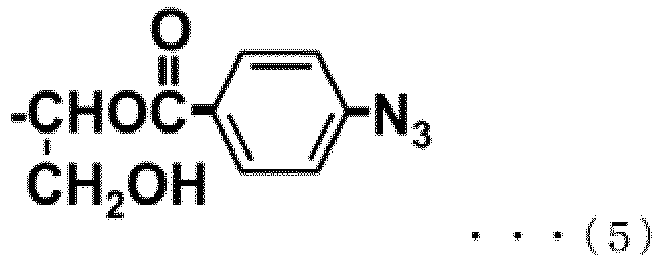
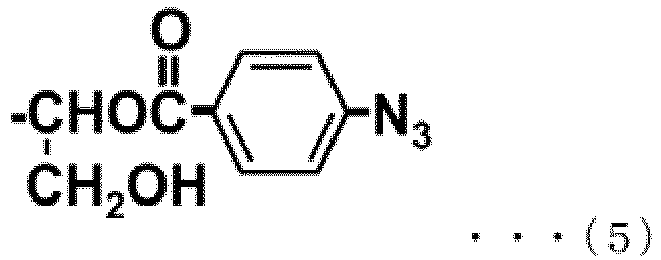
- R 1 represents a hydrogen atom or a hydroxyl group.
- R 2 represents the following formula (4) or the following formula (5).
- a benzophenone group is brought into a triplet excited state rich in reactivity by photoirradiation, and can be bonded to a substrate or a copolymer by abstracting a hydrogen atom therefrom.
- the benzophenone group-containing monomer include, but not particularly limited to, 4-methacryloyloxybenzophenone (MBP) and 4-methacryloxy-2-hydroxybenzophenone (MHP).
- the azidophenyl group produces a nitrene rich in reactivity through photoirradiation, and can be bonded to a substrate or a copolymer by abstracting a hydrogen atom therefrom.
- the constitutional unit based on an azidophenyl group-containing monomer represented by the formula (6) may be obtained from 4-(4-azidobenzoyloxymethyl)styrene (AzSt) represented by the following formula (8) that may be synthesized by a substitution reaction between chloromethylstyrene (hereinafter abbreviated as "CMS") represented by the following formula (11) and an alkali metal carboxylate represented by the following formula (12).
- CMS chloromethylstyrene
- the alkali metal carboxylate is prepared from ABA and an alkali metal salt, and in the formula (12), M represents an alkali metal, such as a lithium atom, a sodium atom, or a potassium atom, preferably a sodium atom or a potassium atom.
- M represents an alkali metal
- the copolymer in the lubricity-imparting agent of the present invention may contain the constitutional unit (C) based on a hydrophobic group-containing monomer represented by the formula (7) in its copolymer structure.
- a hydrophobic group can improve the applicability of the copolymer through its physical adsorption to a hydrophobic substrate surface.
- hydrophobic group-containing monomer examples include, but not particularly limited to, methacrylic acid esters each having a hydrophobic substituent, such as butyl (meth)acrylate, hexyl (meth)acrylate, 2-ethylhexyl (meth)acrylate, decyl (meth)acrylate, dodecyl (meth)acrylate, tridecyl (meth)acrylate, and stearyl (meth)acrylate.
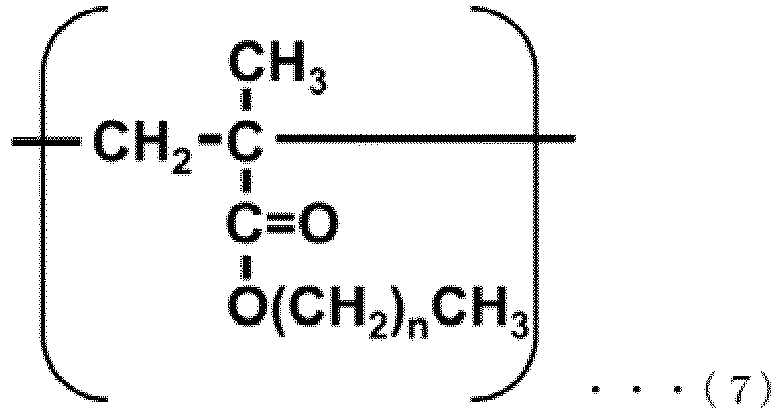
- n represents from 3 to 17.
- the lubricity-imparting agent of the present invention includes the copolymer containing the constitutional unit (A) based on 2-methacryloyloxyethyl phosphorylcholine and the constitutional unit (B) based on a photoreactive functional group-containing monomer, or the copolymer containing the constitutional unit (A) based on 2-methacryloyloxyethyl phosphorylcholine, the constitutional unit (B) based on a photoreactive functional group-containing monomer, and the constitutional unit (C) based on a hydrophobic group-containing monomer at a concentration of from 0.01 mass% to 5.0 mass%, preferably from 0.01 mass% to 2.5 mass%, more preferably from 0.1 mass% to 1.0 mass%.
- the copolymer to be incorporated into the lubricity-imparting agent of the present invention is a copolymer containing 60 mol% to 99 mol% of the constitutional unit (A) based on 2-methacryloyloxyethylphosphorylcholine and 1 mol% to 40 mol% of the constitutional unit (B) based on a photoreactive functional group-containing monomer, or a copolymer containing 60 mol% to 98 mol% of the constitutional unit (A) based on 2-methacryloyloxyethyl phosphorylcholine, 1 mol% to 39 mol% of the constitutional unit (B) based on a photoreactive functional group-containing monomer, and 1 mol% to 30 mol% of the constitutional unit (C) based on a hydrophobic group-containing monomer.
- the weight-average molecular weight of the copolymer to be incorporated into the lubricity-imparting agent of the present invention falls within the range of from 10,000 to 1,000,000, preferably from 15,000 to 750,000, more preferably from 25,000 to 520,000 in terms of the exhibition of satisfactory lubricity.
- the lubricity-imparting agent of the present invention is not particularly limited as long as the agent includes the copolymer as an effective component, and the agent may include a solvent for dissolving the copolymer.
- a lower alcohol such as ethanol, methanol, normal propanol, or isopropanol, purified water, pure water, ultrapure water, ion-exchanged water, physiological saline, or a buffer, such as a phosphate buffer, a Tris-hydrochloric acid buffer, or a HEPES buffer, or a product obtained by mixing two or more of these solvents at an arbitrary ratio may be used as the solvent for dissolving the copolymer.
- the lubricity-imparting agent of the present invention includes 0.01 mass% to 5.0 mass%, preferably 0.01 mass% to 2.5 mass%, more preferably 0.1 mass% to 1.0 mass% of the copolymer.
- the content is excessively high, the agent cannot be uniformly applied, and when the content is excessively low, an effective lubricity-improving effect is not obtained.
- the lubricity-imparting agent of the present invention may contain, in addition to the copolymer, a lower alcohol, water, a buffer, or the like, and may be further blended with, as required, an antiseptic agent (e.g., sodium benzoate, sodium salicylate, potassium sorbate, or benzalkonium chloride), a surfactant (e.g., polysorbate 80, sorbitan monooleate, squalane, or sodium lauryl sulfate), a hydrophilic copolymer (e.g., polyethylene glycol or polyvinyl alcohol), a humectant (e.g., concentrated glycerin, methyl cellulose, hyaluronic acid, a 2-methacryloyloxyethyl phosphorylcholine polymer, a 2-methacryloyloxyethyl phosphorylcholine-butyl methacrylate copolymer liquid, or liquid paraffin), an amino acid (e.g.
- the polymerization reaction of the copolymer in the lubricity-imparting agent of the present invention may be performed by a known method, such as radical polymerization, such as bulk polymerization, suspension polymerization, emulsion polymerization, or solution polymerization, in the presence of a radical polymerization initiator, such as a peroxide or an azo compound, after the inside of a reaction system has been purged with an inert gas, such as nitrogen, carbon dioxide, argon, or helium, or in the inert gas atmosphere.
- radical polymerization such as bulk polymerization, suspension polymerization, emulsion polymerization, or solution polymerization
- a radical polymerization initiator such as a peroxide or an azo compound
- the polymerization reaction is preferably the solution polymerization from the viewpoint of, for example, the purification of the polymer to be obtained.
- Those polymerization reactions provide copolymers having constitutional units represented by the following formulae (13) to (18).
- the copolymer may be of any one of the following structures: a random copolymer, a block copolymer, and a graft copolymer, and a combination of two or more thereof.
- the ratio "a” of the phosphorylcholine constitutional unit (A) of the copolymer of the present invention and the ratio "b” of the constitutional unit (B) based on a photoreactive functional group-containing monomer thereof satisfy a ratio "a:b" of 100:1 to 67.
- the ratio "a” of the phosphorylcholine constitutional unit (A) of the copolymer of the present invention, the ratio "b” of the constitutional unit (B) based on a photoreactive functional group-containing monomer thereof, and the ratio "c” of the constitutional unit (C) based on a hydrophobic group-containing monomer thereof satisfy a ratio "a:b:c" of 100:1 to 65:1 to 50.
- the ratio "a” of the phosphorylcholine constitutional unit (A) of the copolymer of the present invention, the ratio “b” of the constitutional unit (B) based on a photoreactive functional group-containing monomer thereof, and the ratio "c” of the constitutional unit (C) based on a hydrophobic group-containing monomer thereof more preferably satisfy a ratio "a:b:c" of 0.6 to 0.8:0.05 to 0.1:0.1 to 0.3 (Examples 12, 16, 19, 21, and 23).
- R 1 represents a hydrogen atom or a hydroxyl group.
- R 2 represents the following formula (4) or (5) .
- R 1 represents a hydrogen atom or a hydroxyl group, and n represents from 3 to 17.
- R 2 represents the formula (4) or (5), and n represents from 3 to 17.
- n represents from 3 to 17.
- a constitutional unit except the constitutional unit (A) based on 2-methacryloyloxyethyl phosphorylcholine, the constitutional unit (B) based on a photoreactive functional group-containing monomer, and the constitutional unit (C) based on a hydrophobic group-containing monomer may be incorporated into the copolymer to the extent that the lubricity-improving action of the lubricity-imparting agent is not adversely affected.
- Examples thereof may include constitutional units based on a linear or branched alkyl (meth)acrylate, a cyclic alkyl (meth)acrylate, an aromatic group-containing (meth)acrylate, a styrene-based monomer, a vinyl ether monomer, a vinyl ester monomer, a hydrophilic hydroxyl group-containing (meth) acrylate, an acid group-containing monomer, a nitrogen-containing group-containing monomer, an amino group-containing monomer, and a cationic group-containing monomer.
- linear or branched alkyl (meth)acrylate examples include methyl (meth)acrylate, ethyl (meth)acrylate, butyl (meth)acrylate, and 2-ethylhexyl (meth)acrylate.
- cyclic alkyl (meth) acrylate is cyclohexyl (meth)acrylate.
- aromatic group-containing (meth)acrylate examples include benzyl (meth)acrylate and phenoxyethyl (meth)acrylate.
- styrene-based monomer examples include styrene, methylstyrene, and chloromethylstyrene.
- Examples of the vinyl ether monomer include methyl vinyl ether and butyl vinyl ether.
- Examples of the vinyl ester monomer include vinyl acetate and vinyl propionate.
- hydrophilic hydroxyl group-containing (meth)acrylate examples include polyethylene glycol (meth)acrylate, polypropylene glycol (meth)acrylate, 2-hydroxyethyl (meth)acrylate, 2-hydroxybutyl (meth)acrylate, and 4-hydroxybutyl (meth)acrylate.
- Examples of the acid group-containing monomer include (meth)acrylic acid, styrenesulfonic acid, and (meth)acryloyloxyphosphonic acid.
- nitrogen-containing group-containing monomer is N-vinylpyrrolidone.
- amino group-containing monomer examples include aminoethyl (meth)acrylate, dimethylamino (meth)acrylate, and N,N-dimethylaminopropyl (meth)acrylamide.
- cationic group-containing monomer 2-hydroxy-3-(meth)acryloyloxypropyltrimethylammonium chloride.
- a lubricity-imparting method including using the lubricity-imparting agent of the present invention is described.
- the lubricity-imparting agent of the present invention can be used in plastic, metal, and silicone articles (e.g., a guide wire, a stent, an artificial joint, and a silicone tube), in particular, the plastic articles.
- the plastic articles are, for example, articles formed from polystyrene, polyethylene, polypropylene, polyethylene terephthalate, polyolefin, polyether ether ketone, polyurethane, and polycarbonate, and are particularly preferably, for example, a catheter, a guide wire (whose surface is covered with a plastic), a contact lens, and an intraocular lens.
- an article in which the lubricity-imparting agent of the present invention is used is preferably an article from which a hydrogen atom can be abstracted, such as a plastic material, but the use of an appropriate binder enables the agent to be used in an article except the plastic articles.
- a spin coating method, a spray coating method, a cast coating method, a dip coating method, a roll coating method, a flow coating method, or the like may be used as the method of coating the surface with the lubricity-imparting agent of the present invention, but the dip coating method or the cast coating method is preferred. Further, after the coating, the agent may be dried as required at room temperature or by being warmed.
- the substrate coated with (having applied thereto) the lubricity-imparting agent of the present invention is irradiated with light having a wavelength of from 200 nm to 400 nm, preferably light having a wavelength of from 254 nm to 365 nm. Further, an excess lubricity-imparting agent may be washed off by washing the substrate with a proper solvent, such as pure water, ethanol, or methanol, after the photoirradiation.
- a proper solvent such as pure water, ethanol, or methanol
- Lubricity can be imparted to an article (in particular, a plastic article) by such lubricity-imparting method as described above.
- a method of forming a crosslinked body of the present invention includes: coating a substrate surface with the lubricity-imparting agent of the present invention; and then irradiating the substrate surface with light to form the crosslinked body on the substrate surface.
- a crosslinked body of the present invention may be obtained by the method of forming a crosslinked body of the present invention.
- the crosslinked body may be obtained by irradiating the lubricity-imparting agent of the present invention with light.
- An article of the present invention includes the crosslinked body of the present invention.
- the combination of the constitutional unit (A) based on 2-methacryloyloxyethyl phosphorylcholine of the copolymer of the present invention, the constitutional unit (B) based on a photoreactive functional group-containing monomer thereof, and the constitutional unit (C) based on a hydrophobic group-containing monomer thereof is as described below, but is not particularly limited (the left portion represents the constitutional unit (A), the central portion represents the constitutional unit (B), and the right portion represents the constitutional unit (C)).
- more preferred combinations of the phosphorylcholine constitutional unit, photoreactive constitutional unit, and hydrophobic constitutional unit of the copolymer of the present invention are MPC-GMA-Az-butyl methacrylate (Example 12), MPC-GMA-Az-stearyl methacrylate (Example 16), MPC-AzSt-butyl methacrylate (Polymerization Example 19 and Polymerization Example 21), and MPC-AzSt-stearyl methacrylate (Polymerization Example 23).
- GMA-Az and AzSt are each particularly preferred as the photoreactive constitutional unit of the copolymer of the present invention.
- the present invention is also directed to a lubricity-imparting method, including using a copolymer having a weight-average molecular weight of from 10,000 to 1,000,000, the copolymer containing 60 mol% to 99 mol% of a constitutional unit (A) based on 2-methacryloyloxyethyl phosphorylcholine represented by the following formula (1) and 1 mol% to 40 mol% of a constitutional unit (B) based on a photoreactive functional group-containing monomer represented by any one of the following formulae (2), (3), and (6):
- R 1 represents a hydrogen atom or a hydroxyl group.
- R 2 represents the following formula (4) or the following formula (5).
- the present invention is also directed to a lubricity-imparting method, including using a copolymer having a weight-average molecular weight of from 10,000 to 1,000,000, the copolymer containing 60 mol% to 98 mol% of a constitutional unit (A) based on 2-methacryloyloxyethyl phosphorylcholine represented by the following formula (1), 1 mol% to 39 mol% of a constitutional unit (B) based on a photoreactive functional group-containing monomer represented by any one of the following formulae (2), (3), and (6), and 1 mol% to 30 mol% of a constitutional unit (C) based on a hydrophobic group-containing monomer represented by the following formula (7):
- R 1 represents a hydrogen atom or a hydroxyl group.
- R 2 represents the following formula (4) or the following formula (5).
- n represents from 3 to 17.
- the present invention is also directed to a lubricity-imparting copolymer having a weight-average molecular weight of from 10,000 to 1,000,000, the copolymer containing 60 mol% to 99 mol% of a constitutional unit (A) based on 2-methacryloyloxyethyl phosphorylcholine represented by the following formula (1) and 1 mol% to 40 mol% of a constitutional unit (B) based on a photoreactive functional group-containing monomer represented by any one of the following formulae (2), (3), and (6) :
- R 1 represents a hydrogen atom or a hydroxyl group.
- R 2 represents the following formula (4) or the following formula (5).
- the present invention is also directed to a lubricity-imparting copolymer having a weight-average molecular weight of from 10,000 to 1,000,000, the copolymer containing 60 mol% to 98 mol% of a constitutional unit (A) based on 2-methacryloyloxyethyl phosphorylcholine represented by the following formula (1), 1 mol% to 39 mol% of a constitutional unit (B) based on a photoreactive functional group-containing monomer represented by any one of the following formulae (2), (3), and (6), and 1 mol% to 30 mol% of a constitutional unit (C) based on a hydrophobic group-containing monomer represented by the following formula (7):
- R 1 represents a hydrogen atom or a hydroxyl group.
- R 2 represents the following formula (4) or the following formula (5).
- n represents from 3 to 17.
- the present invention is also directed to a use of a copolymer having a weight-average molecular weight of from 10, 000 to 1,000,000, the copolymer containing 60 mol% to 99 mol% of a constitutional unit (A) based on 2-methacryloyloxyethyl phosphorylcholine represented by the following formula (1) and 1 mol% to 40 mol% of a constitutional unit (B) based on a photoreactive functional group-containing monomer represented by any one of the following formulae (2), (3), and (6), inproduction of a lubricity-imparting agent:
- R 1 represents a hydrogen atom or a hydroxyl group.
- R 2 represents the following formula (4) or the following formula (5).
- the present invention is also directed to a use of a copolymer having a weight-average molecular weight of from 10,000 to 1,000,000, the copolymer containing 60 mol% to 98 mol% of a constitutional unit (A) based on 2-methacryloyloxyethyl phosphorylcholine represented by the following formula (1), 1 mol% to 39 mol% of a constitutional unit (B) based on a photoreactive functional group-containing monomer represented by any one of the following formulae (2), (3), and (6), and 1 mol% to 30 mol% of a constitutional unit (C) based on a hydrophobic group-containing monomer represented by the following formula (7), in production of a lubricity-imparting agent:
- R 1 represents a hydrogen atom or a hydroxyl group.
- R 2 represents the following formula (4) or the following formula (5).
- n represents from 3 to 17.
- Copolymers each containing glycidyl methacrylate (GMA) were polymerized under polymerization conditions shown in Table 1 and Table 2 to be described later. After that, 1.5 molar equivalents of azidobenzoic acid (ABA) with respect to GMA were dissolved in each of solution containing the copolymers, and the temperature of the solution was increased to 80°C. After that, 0.2 molar equivalent of triethylamine (TEA) with respect to GMA was added to the solution, and a reaction was performed for 48 hours to provide a copolymer containing a constitutional unit (GMA-Az) based on a GMA monomer containing an azidophenyl group.
- ABA azidobenzoic acid
- TAA triethylamine
- Apparatus RI-8020, DP-8020, SD-8022, and AS-8020 (manufactured by Tosoh Corporation), and 865-CO (manufactured by JASCO Corporation), column: Shodex OHpak (manufactured by Showa Denko K.K.), mobile phase: a 0.1 mol/L aqueous solution of sodium sulfate, standard substance: pullulan, detection: a differential refractometer, calculation of weight-average molecular weight (Mw): a molecular weight calculation program (GPC program for SC-8020), flow rate: 1.0 mL/min, column temperature: 40°C, sample solution injection amount: 100 ⁇ L, measurement time: 30 minutes.
- Mw weight-average molecular weight
- Polymerization was performed in accordance with copolymer composition ratios and polymerization conditions (at 65°C for 6 hours or at 60°C for 6 hours) shown in Table 1, and purification by precipitation, 1 H-NMR analysis, and weight-average molecular weight measurement were performed. The results of the weight-average molecular weight measurement are shown in Table 1.
- Polymerization was performed in accordance with copolymer composition ratios and polymerization conditions (at 60°C for 4 hours and then at 70°C for 2 hours) shown in Table 2, and purification by precipitation, 1 H-NMR analysis, and weight-average molecular weight measurement were performed. The results of the weight-average molecular weight measurement are shown in Table 2.
- Polymerization was performed in accordance with copolymer composition ratios and polymerization conditions shown in Table 2, followed by the performance of purification by precipitation, 1 H-NMRanalysis, and weight-average molecular weight measurement. The results of the weight-average molecular weight measurement are shown in Table 2.
- MPC 2-methacryloyloxyethyl phosphorylcholine
- MBP 4-methacryloyloxybenzophenone
- MHP 4-methacryloxy-2-hydroxybenzophenone
- GMA glycidyl methacrylate
- BMA butyl methacrylate
- SMA stearyl methacrylate
- AzSt 4-(4-azido-benzoylmethyl)styrene (50 mass% ethyl acetate solution product)
- AEMA aminoethyl methacrylate ABA: azidobenzoic acid
- TEA triethylamine
- EtOH ethanol
- nPA n-propanol
- PW water (pure water)
- AIBN 2,2-azobisisobutyronitrile
- copolymers (Polymerization Examples 1 to 23) in the lubricity-imparting agent of the present invention, and analogs thereof (Comparative Polymerization Examples 1 to 4) were evaluated for their lubricity-imparting effects.
- a lubricity-imparting agent including each copolymer was dissolved in a solvent so that its concentration became a predetermined value.
- a plate made of polyethylene terephthalate was immersed in the solution for 30 seconds or more. Ethanol (EtOH) or a 50 wt% aqueous solution of ethanol (EtOH/PW) was used as the solvent.
- EtOH Ethanol
- EtOH/PW a 50 wt% aqueous solution of ethanol
- the plate was irradiated with light having a wavelength of 254 nm, and an unreacted lubricity-imparting agent was washed off with the solvent, followed by the measurement of the surface friction coefficient of the plate. Further, durability was evaluated from the result of the measurement of the surface friction coefficient.
- the friction coefficient was measured with TRIBOGEAR (manufactured by Shinto Scientific Co., Ltd.) under the conditions of a sliding speed of 600 mm/min, a sliding distance of 50 mm, and a load of 10 g at room temperature in physiological saline while a contact terminal made of stainless steel was brought into contact with the plate.
- the surface friction coefficient was measured by reciprocating the contact terminal five times at one and the same place, and a case in which the surface friction coefficient after the fifth reciprocation increased by 25% or more as compared to the friction coefficient after the first reciprocation was indicated by Symbol "+”, and a case in which the increase was less than 25% was indicated by Symbol "++". In addition, a case in which the surface friction coefficient showed a value close to that of Comparative Example 5 at the time of the measurement on or before the fifth reciprocation was indicated by Symbol " ⁇ " .
- the friction coefficient of a substrate surface was able to be reduced by: coating the substrate surface with a lubricity-imparting agent including a copolymer containing a constitutional unit based on 2-methacryloyloxyethyl phosphorylcholine and a constitutional unit based on a photoreactive functional group-containing monomer, or a copolymer containing a constitutional unit based on 2-methacryloyloxyethyl phosphorylcholine, a constitutional unit based on a photoreactive functional group-containing monomer, and a constitutional unit based on a hydrophobic group-containing monomer; and irradiating the substrate surface with light.
- the friction coefficient maintained a low friction coefficient even after the 5-reciprocation measurement.
- Comparative Example 3 in which the substrate surface was coated with the water-insoluble copolymer that had only the constitutional unit based on 2-methacryloyloxyethyl phosphorylcholine and the constitutional unit based on a hydrophobic group-containing monomer, and was free of any constitutional unit based on a photoreactive functional group-containing monomer
- the friction coefficient in the first measurement was able to be reduced because the copolymer was water-insoluble, but as the measurement was repeated, the value of the friction coefficient increased, in other words, the friction coefficient was deficient in durability.
- the lubricity-imparting agent of the present invention was able to impart durable lubricity to a substrate surface through the coating of the substrate surface with the agent and the irradiation of the substrate surface with light.
- the lubricity-imparting agent of the present invention can impart durable lubricity to a substrate surface.
- the article of the present invention has highly durable lubricity.
Landscapes
- Chemical & Material Sciences (AREA)
- Health & Medical Sciences (AREA)
- Organic Chemistry (AREA)
- Chemical Kinetics & Catalysis (AREA)
- General Chemical & Material Sciences (AREA)
- Oil, Petroleum & Natural Gas (AREA)
- Medicinal Chemistry (AREA)
- Polymers & Plastics (AREA)
- Life Sciences & Earth Sciences (AREA)
- Engineering & Computer Science (AREA)
- Materials Engineering (AREA)
- Hematology (AREA)
- Epidemiology (AREA)
- Surgery (AREA)
- Animal Behavior & Ethology (AREA)
- General Health & Medical Sciences (AREA)
- Public Health (AREA)
- Veterinary Medicine (AREA)
- Wood Science & Technology (AREA)
- Addition Polymer Or Copolymer, Post-Treatments, Or Chemical Modifications (AREA)
- Materials For Medical Uses (AREA)
- Lubricants (AREA)
- Paints Or Removers (AREA)
Abstract
Description
- The present invention relates to a lubricity-imparting agent including a copolymer having at least a phosphorylcholine group serving as a hydrophilic functional group and a photoreactive functional group, and a lubricity-imparting method.
- The present application claims priority from Japanese Patent Application No.
2016-129423 - Many plastic products have been soldin a medical field. Examples thereof include a catheter, a contact lens, an intraocular lens, a cannula, and various tubes. Those medical devices are each attached and detached in a state of being in contact with a biological tissue, and hence the lubricity (in particular, lubricity at the time of wetting) of the surface of each of the devices has been a required item.
- For example, there is a risk in that a contact lens that does not have lubricity causes a reduction in wearing feeling at the time of its wearing or causes damage to a tissue on the surface of an eyeball, and there is a risk in that a catheter that does not have lubricity involves pain or causes damage to a tissue at the time of its insertion into a human body. Further, a medical device that does not have lubricity imposes a heavy burden not only on a patient but also on medical personnel required to perform delicate work.
- A method involving molding a medical device out of a fluorine-based resin (Patent Literature 1), a method involving coating the medical device with a hydrophilic copolymer, or the like has heretofore been used as a technology for imparting lubricity to the medical device. In particular, the method involving coating the medical device with the hydrophilic copolymer is simple, and for example, it has been known that the hydrophilic copolymer of Patent Literature 2 containing a (meth) acrylate and vinyl alcohol, and the hydrophilic copolymer of Patent Literature 3 containing 2-methacryloyloxyethyl phosphorylcholine each impart high lubricity in addition to biocompatibility. However, many hydrophilic copolymers have each involved a problem in terms of durability because the copolymers are weakly bonded to substrate surfaces.
- To solve the problem, in Patent Literature 4, there is a description of a method involving fixing a hydrophilic copolymer containing 2-methacryloyloxyethyl phosphorylcholine and various reactive groups on a substrate surface. In the method, however, the hydrophilic copolymer and a functional group on the substrate surface are caused to react with each other by using a condensation agent, such as 1-ethyl-3-(3-dimethylaminopropyl)carbodiimide hydrochloride, and hence a step of removing the condensation agent and the hydrophilic copolymer that are unreacted after the reaction has been required.
- In Patent Literature 5, there is a description of a method involving performing the graft polymerization of 2-methacryloyloxyethyl phosphorylcholine to a substrate having a ketone group on its surface to form a copolymer layer. In the method, however, the presence of a ketone group on the surface of the substrate is required. In addition, the removal of unreacted 2-methacryloyloxyethyl phosphorylcholine after the graft polymerization has been required.
- In addition, in each of Patent Literature 6 and Patent Literature 7, there is a description of a copolymer of 2-methacryloyloxyethyl phosphorylcholine and a photoreactive group-containing monomer in order that the copolymer may be easily bonded to a substrate surface. However, a photoreactive group-containing monomer that can improve lubricity, the molecular weight of the copolymer, and the like have not been described.
-
- [PTL 1]
JP 2014-50549 A - [PTL 2]
JP 2003-144541 A - [PTL 3]
WO 2002/015911 A1 - [PTL 4]
JP 2000-226550 A - [PTL 5]
WO 2011/021642 A1 - [PTL 6]
JP 2010-059346 A - [PTL 7]
JP 2010-059367 A - An object of the present invention is to provide a lubricity-imparting agent that can impart durable lubricity (in particular, lubricity at the time of wetting) to a substrate.
- The inventors of the present invention have made extensive investigations in view of the object, and as a result, have found that a lubricity-imparting agent including a copolymer containing a constitutional unit (A) based on 2-methacryloyloxyethyl phosphorylcholine and a constitutional unit (B) based on a photoreactive functional group-containing monomer, or a copolymer containing a constitutional unit (A) based on 2-methacryloyloxyethyl phosphorylcholine, a constitutional unit (B) based on a photoreactive functional group-containing monomer, and a constitutional unit (C) based on a hydrophobic group-containing monomer can impart durable lubricity to a substrate surface through a simple approach called photoirradiation. Thus, the inventors have completed the present invention.
- That is, the present invention includes the following.
- [1] A lubricity-imparting agent, including 0.01 mass% to 5.0 mass% of a copolymer having a weight-average molecular weight of from 10,000 to 1,000,000, the copolymer containing 60 mol% to 99 mol% of a constitutional unit (A) based on 2-methacryloyloxyethyl phosphorylcholine represented by the following formula (1) and 1 mol% to 40 mol% of a constitutional unit (B) based on a photoreactive functional group-containing monomer represented by any one of the following formulae (2), (3), and (6) :


- [2] A lubricity-imparting agent, including 0.01 mass% to 5.0 mass% of a copolymer having a weight-average molecular weight of from 10,000 to 1,000,000, the copolymer containing 60 mol% to 98 mol% of a constitutional unit (A) based on 2-methacryloyloxyethyl phosphorylcholine represented by the following formula (1), 1 mol% to 39 mol% of a constitutional unit (B) based on a photoreactive functional group-containing monomer represented by any one of the following formulae (2), (3), and (6), and 1 mol% to 30 mol% of a constitutional unit (C) based on a hydrophobic group-containing monomer represented by the following formula (7):


- [3] A lubricity-imparting agent according to the above-mentioned item [1], wherein the constitutional unit (B) includes a constitutional unit based on 4-methacryloyloxybenzophenone.
- [4] A lubricity-imparting agent according to the above-mentioned item [1], wherein the constitutional unit (B) includes a constitutional unit based on 4-methacryloxy-2-hydroxybenzophenone.
- [5] A lubricity-imparting agent according to the above-mentioned item [2], wherein the constitutional unit (B) includes a constitutional unit based on 4-methacryloyloxybenzophenone, and the constitutional unit (C) includes a constitutional unit based on butyl methacrylate.
- [6] A lubricity-imparting agent according to the above-mentioned item [2], wherein the constitutional unit (B) includes a constitutional unit based on 4-methacryloxy-2-hydroxybenzophenone, and the constitutional unit (C) includes a constitutional unit based on butyl methacrylate.
- [7] A lubricity-imparting agent according to the above-mentioned item [2], wherein the constitutional unit (B) includes a constitutional unit based on 4-methacryloyloxybenzophenone, and the constitutional unit (C) includes a constitutional unit based on stearyl methacrylate.
- [8] A lubricity-imparting agent according to the above-mentioned item [1], wherein the constitutional unit (B) includes a constitutional unit based on glycidyl methacrylate.
- [9] A lubricity-imparting agent according to the above-mentioned item [2], wherein the constitutional unit (B) includes a constitutional unit based on glycidyl methacrylate, and the constitutional unit (C) includes a constitutional unit based on butyl methacrylate.
- [10] A lubricity-imparting agent according to the above-mentioned item [2], wherein the constitutional unit (B) includes a constitutional unit based on glycidyl methacrylate, and the constitutional unit (C) includes a constitutional unit based on stearyl methacrylate.
- [11] A lubricity-imparting agent according to the above-mentioned item [1], wherein the constitutional unit (B) includes a constitutional unit based on 4-(4-azidobenzoylmethyl)styrene.
- [12] A lubricity-imparting agent according to the above-mentioned item [2], wherein the constitutional unit (B) includes a constitutional unit based on 4-(4-azidobenzoylmethyl)styrene, and the constitutional unit (C) includes a constitutional unit based on butyl methacrylate.
- [13] A lubricity-imparting agent according to the above-mentioned item [2], wherein the constitutional unit (B) includes a constitutional unit based on 4-(4-azidobenzoylmethyl)styrene, and the constitutional unit (C) includes a constitutional unit based on stearyl methacrylate.
- [14] A method of imparting lubricity to a substrate surface, including the following steps (1) and (2):
- (1) a step of coating the substrate surface with the lubricity-imparting agent of any one of the above-mentioned items [1] to [13]; and
- (2) a step of irradiating the substrate surface coated in the step (1) with light to form a crosslinked body on the substrate surface.
- [15] A method of forming a crosslinked body, including:
- coating a substrate surface with the lubricity-imparting agent of any one of the above-mentioned items [1] to [13] ; and
- then irradiating the substrate surface with light to form the crosslinked body on the substrate surface.
- [16] A crosslinked body, which is obtained by the method of forming a crosslinked body of the above-mentioned item [15].
- [17] A crosslinked body, which is obtained by irradiating the lubricity-imparting agent of any one of the above-mentioned items [1] to [13] with light.
- [18] An article, including the crosslinked body of the above-mentioned item [16] or [17].
- [19] A lubricity-imparting method, including using a copolymer having a weight-average molecular weight of from 10, 000 to 1,000,000, the copolymer containing 60 mol% to 99 mol% of a constitutional unit (A) based on 2-methacryloyloxyethyl phosphorylcholine represented by the following formula (1) and 1 mol% to 40 mol% of a constitutional unit (B) based on a photoreactive functional group-containing monomer represented by any one of the following formulae (2), (3), and (6):


- [20] A lubricity-imparting method, including using a copolymer having a weight-average molecular weight of from 10, 000 to 1,000,000, the copolymer containing 60 mol% to 98 mol% of a constitutional unit (A) based on 2-methacryloyloxyethyl phosphorylcholine represented by the following formula (1), 1 mol% to 39 mol% of a constitutional unit (B) based on a photoreactive functional group-containing monomer represented by any one of the following formulae (2), (3), and (6), and 1 mol% to 30 mol% of a constitutional unit (C) based on a hydrophobic group-containing monomer represented by the following formula (7) :


- [21] A lubricity-imparting copolymer having a weight-average molecular weight of from 10,000 to 1,000,000, the copolymer containing 60 mol% to 99 mol% of a constitutional unit (A) based on 2-methacryloyloxyethyl phosphorylcholine represented by the following formula (1) and 1 mol% to 40 mol% of a constitutional unit (B) based on a photoreactive functional group-containing monomer represented by any one of the following formulae (2), (3), and (6):


- [22] A lubricity-imparting copolymer having a weight-average molecular weight of from 10,000 to 1,000,000, the copolymer containing 60 mol% to 98 mol% of a constitutional unit (A) based on 2-methacryloyloxyethyl phosphorylcholine represented by the following formula (1), 1 mol% to 39 mol% of a constitutional unit (B) based on a photoreactive functional group-containing monomer represented by any one of the following formulae (2), (3), and (6), and 1 mol% to 30 mol% of a constitutional unit (C) based on a hydrophobic group-containing monomer represented by the following formula (7):




- [23] A use of a copolymer having a weight-average molecular weight of from 10,000 to 1,000,000, the copolymer containing 60 mol% to 99 mol% of a constitutional unit (A) based on 2-methacryloyloxyethyl phosphorylcholine represented by the following formula (1) and 1 mol% to 40 mol% of a constitutional unit (B) based on a photoreactive functional group-containing monomer represented by any one of the following formulae (2), (3), and (6), in production of a lubricity-imparting agent:



- [24] A use of a copolymer having a weight-average molecular weight of from 10,000 to 1,000,000, the copolymer containing 60 mol% to 98 mol% of a constitutional unit (A) based on 2-methacryloyloxyethyl phosphorylcholine represented by the following formula (1), 1 mol% to 39 mol% of a constitutional unit (B) based on a photoreactive functional group-containing monomer represented by any one of the following formulae (2), (3), and (6), and 1 mol% to 30 mol% of a constitutional unit (C) based on a hydrophobic group-containing monomer represented by the following formula (7), in production of a lubricity-imparting agent:


- The lubricity-imparting agent of the present invention can impart durable lubricity to a substrate surface. In addition, the article of the present invention has highly durable lubricity.
- An embodiment of the present invention is described in detail below.
- A lubricity-imparting agent of the present invention includes a copolymer containing a monomer (A) based on 2-methacryloyloxyethyl phosphorylcholine and a constitutional unit (B) based on a photoreactive functional group-containing monomer, or a copolymer containing a constitutional unit (A) based on 2-methacryloyloxyethyl phosphorylcholine, a constitutional unit (B) based on a photoreactive functional group-containing monomer, and a constitutional unit (C) based on a hydrophobic group-containing monomer. The constitutional units based on the respective monomers are described below.
- The copolymer in the lubricity-imparting agent of the present invention contains the constitutional unit (A) based on 2-methacryloyloxyethyl phosphorylcholine represented by the following formula (1). In the constitutional unit (A), a phosphorylcholine group is a polar group having the same structure as that of a phospholipid serving as a main component of a biological membrane. The introduction of the constitutional unit (A) having a phosphorylcholine group into the copolymer can impart not only lubricity but also biocompatibility, such as a protein adsorption-suppressing effect, a cell adsorption-suppressing effect, antithrombogenicity, or hydrophilicity, to the copolymer.
- An example of the phosphorylcholine group-containing monomer is 2-(meth)acryloyloxyethyl-2'-(trimethylammonio)ethyl phosphate (also known as: 2-methacryloyloxyethyl-2-trimethylammonioethyl phosphate).

- The copolymer in the lubricity-imparting agent of the present invention contains the constitutional unit (B) based on a photoreactive functional group-containing monomer. A constitutional unit based on a benzophenone group-containing monomer represented by the following formula (2), or a constitutional unit based on an azidophenyl group-containing monomer represented by the following formula (3) or (6) is given as the constitutional unit (B) based on a photoreactive functional group-containing monomer.

- In the formula (2), R1 represents a hydrogen atom or a hydroxyl group.

- In the formula (3), R2 represents the following formula (4) or the following formula (5).


- A benzophenone group is brought into a triplet excited state rich in reactivity by photoirradiation, and can be bonded to a substrate or a copolymer by abstracting a hydrogen atom therefrom. Examples of the benzophenone group-containing monomer include, but not particularly limited to, 4-methacryloyloxybenzophenone (MBP) and 4-methacryloxy-2-hydroxybenzophenone (MHP).
- The azidophenyl group produces a nitrene rich in reactivity through photoirradiation, and can be bonded to a substrate or a copolymer by abstracting a hydrogen atom therefrom.
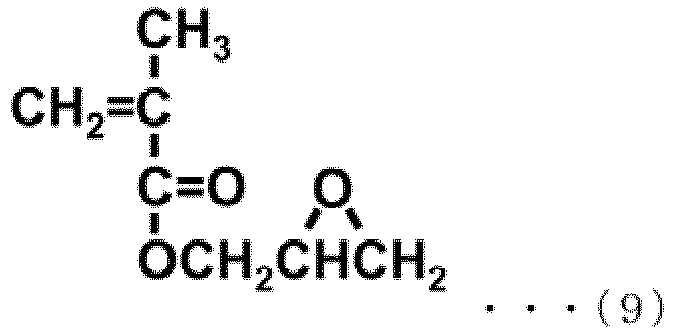
- With regard to the constitutional unit based on an azidophenyl group-containing monomer represented by the formula (3), when a copolymer containing glycidyl methacrylate (hereinafter abbreviated as "GMA") represented by the following formula (9) is polymerized, and then 4-azidobenzoic acid (hereinafter abbreviated as "ABA") represented by the following formula (10) is caused to undergo a ring-opening esterification reaction with a glycidyl group of GMA in the presence of triethylamine, a copolymer containing a constitutional unit based on a GMA monomer containing an azidophenyl group (hereinafter abbreviated as "GMA-Az") may be obtained.
- The constitutional unit based on an azidophenyl group-containing monomer represented by the formula (6) may be obtained from 4-(4-azidobenzoyloxymethyl)styrene (AzSt) represented by the following formula (8) that may be synthesized by a substitution reaction between chloromethylstyrene (hereinafter abbreviated as "CMS") represented by the following formula (11) and an alkali metal carboxylate represented by the following formula (12). The alkali metal carboxylate is prepared from ABA and an alkali metal salt, and in the formula (12), M represents an alkali metal, such as a lithium atom, a sodium atom, or a potassium atom, preferably a sodium atom or a potassium atom.



- In the formula (12), M represents an alkali metal.
- The copolymer in the lubricity-imparting agent of the present invention may contain the constitutional unit (C) based on a hydrophobic group-containing monomer represented by the formula (7) in its copolymer structure. A hydrophobic group can improve the applicability of the copolymer through its physical adsorption to a hydrophobic substrate surface.
- Examples of the hydrophobic group-containing monomer include, but not particularly limited to, methacrylic acid esters each having a hydrophobic substituent, such as butyl (meth)acrylate, hexyl (meth)acrylate, 2-ethylhexyl (meth)acrylate, decyl (meth)acrylate, dodecyl (meth)acrylate, tridecyl (meth)acrylate, and stearyl (meth)acrylate.

- In the formula (7), n represents from 3 to 17.
- The lubricity-imparting agent of the present invention includes the copolymer containing the constitutional unit (A) based on 2-methacryloyloxyethyl phosphorylcholine and the constitutional unit (B) based on a photoreactive functional group-containing monomer, or the copolymer containing the constitutional unit (A) based on 2-methacryloyloxyethyl phosphorylcholine, the constitutional unit (B) based on a photoreactive functional group-containing monomer, and the constitutional unit (C) based on a hydrophobic group-containing monomer at a concentration of from 0.01 mass% to 5.0 mass%, preferably from 0.01 mass% to 2.5 mass%, more preferably from 0.1 mass% to 1.0 mass%.
- The copolymer to be incorporated into the lubricity-imparting agent of the present invention is a copolymer containing 60 mol% to 99 mol% of the constitutional unit (A) based on 2-methacryloyloxyethylphosphorylcholine and 1 mol% to 40 mol% of the constitutional unit (B) based on a photoreactive functional group-containing monomer, or a copolymer containing 60 mol% to 98 mol% of the constitutional unit (A) based on 2-methacryloyloxyethyl phosphorylcholine, 1 mol% to 39 mol% of the constitutional unit (B) based on a photoreactive functional group-containing monomer, and 1 mol% to 30 mol% of the constitutional unit (C) based on a hydrophobic group-containing monomer.
- The weight-average molecular weight of the copolymer to be incorporated into the lubricity-imparting agent of the present invention falls within the range of from 10,000 to 1,000,000, preferably from 15,000 to 750,000, more preferably from 25,000 to 520,000 in terms of the exhibition of satisfactory lubricity.
- The lubricity-imparting agent of the present invention is not particularly limited as long as the agent includes the copolymer as an effective component, and the agent may include a solvent for dissolving the copolymer. A lower alcohol, such as ethanol, methanol, normal propanol, or isopropanol, purified water, pure water, ultrapure water, ion-exchanged water, physiological saline, or a buffer, such as a phosphate buffer, a Tris-hydrochloric acid buffer, or a HEPES buffer, or a product obtained by mixing two or more of these solvents at an arbitrary ratio may be used as the solvent for dissolving the copolymer.
- The lubricity-imparting agent of the present invention includes 0.01 mass% to 5.0 mass%, preferably 0.01 mass% to 2.5 mass%, more preferably 0.1 mass% to 1.0 mass% of the copolymer. When the content is excessively high, the agent cannot be uniformly applied, and when the content is excessively low, an effective lubricity-improving effect is not obtained.
- The lubricity-imparting agent of the present invention may contain, in addition to the copolymer, a lower alcohol, water, a buffer, or the like, and may be further blended with, as required, an antiseptic agent (e.g., sodium benzoate, sodium salicylate, potassium sorbate, or benzalkonium chloride), a surfactant (e.g., polysorbate 80, sorbitan monooleate, squalane, or sodium lauryl sulfate), a hydrophilic copolymer (e.g., polyethylene glycol or polyvinyl alcohol), a humectant (e.g., concentrated glycerin, methyl cellulose, hyaluronic acid, a 2-methacryloyloxyethyl phosphorylcholine polymer, a 2-methacryloyloxyethyl phosphorylcholine-butyl methacrylate copolymer liquid, or liquid paraffin), an amino acid (e.g., L-ascorbic acid, alanine, L-glutamic acid, or L-methionine), a medicinal component (e.g., indomethacin or dexamethasone), a blood anticoagulant (e.g., heparin, sodium citrate, ethylenediaminetetraacetic acid, acetylsalicylic acid, urokinase, or warfarin), an anticancer agent (e.g., taxol, leustatin, adriacin, bleomycin, or imatinib) , an antibiotic (e.g., kanamycin, streptomycin, or polymyxin B), an absorption promoter (e.g., sodiumcaprate), a stabilizing agent (e.g., calcium citrate, natural vitamin E, human serum albumin, or dextran), a radiation absorber (e.g., a metal, such as barium, silver, tin, platinum, gold, or zirconium, and a compound, such as a sulfate, a carbonate, or a nitrate, containing any of those metals), and various compounds other than the above-mentioned compounds.
- The polymerization reaction of the copolymer in the lubricity-imparting agent of the present invention may be performed by a known method, such as radical polymerization, such as bulk polymerization, suspension polymerization, emulsion polymerization, or solution polymerization, in the presence of a radical polymerization initiator, such as a peroxide or an azo compound, after the inside of a reaction system has been purged with an inert gas, such as nitrogen, carbon dioxide, argon, or helium, or in the inert gas atmosphere.
- The polymerization reaction is preferably the solution polymerization from the viewpoint of, for example, the purification of the polymer to be obtained. Those polymerization reactions provide copolymers having constitutional units represented by the following formulae (13) to (18).
- "a", "b", and "c" merely represent the constituent ratios of the constitutional units, and the copolymer may be of any one of the following structures: a random copolymer, a block copolymer, and a graft copolymer, and a combination of two or more thereof.
- In each of the copolymers represented by the formulae (13) to (15), "a" and "b" (molar ratios) satisfy relationships of a/(a+b)=0.60 to 0.99 and b/(a+b)=0.01 to 0.40. In each of the copolymers represented by the formulae (16) to (18), "a", "b", and "c" satisfy relationships of a/(a+b+c)=0.60 to 0.98, b/(a+b+c)=0.01 to 0.39, and c/(a+b+c)=0.01 to 0.30.
- As another representation, in each of the copolymers represented by the formulae (13) to (15), the ratio "a" of the phosphorylcholine constitutional unit (A) of the copolymer of the present invention and the ratio "b" of the constitutional unit (B) based on a photoreactive functional group-containing monomer thereof satisfy a ratio "a:b" of 100:1 to 67.
- In addition, in each of the copolymers represented by the formulae (16) to (18), the ratio "a" of the phosphorylcholine constitutional unit (A) of the copolymer of the present invention, the ratio "b" of the constitutional unit (B) based on a photoreactive functional group-containing monomer thereof, and the ratio "c" of the constitutional unit (C) based on a hydrophobic group-containing monomer thereof satisfy a ratio "a:b:c" of 100:1 to 65:1 to 50.
- Further, as can be seen from Examples below, the ratio "a" of the phosphorylcholine constitutional unit (A) of the copolymer of the present invention, the ratio "b" of the constitutional unit (B) based on a photoreactive functional group-containing monomer thereof, and the ratio "c" of the constitutional unit (C) based on a hydrophobic group-containing monomer thereof more preferably satisfy a ratio "a:b:c" of 0.6 to 0.8:0.05 to 0.1:0.1 to 0.3 (Examples 12, 16, 19, 21, and 23).
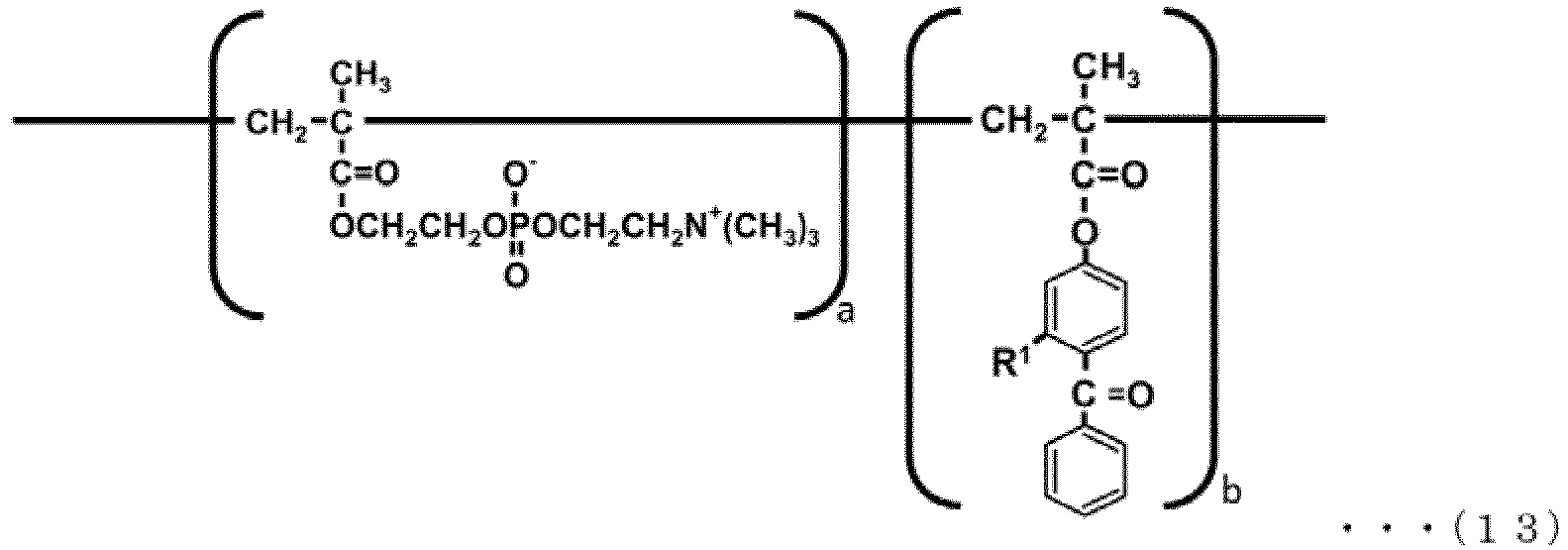
- In the formula (13), R1 represents a hydrogen atom or a hydroxyl group.

- In the formula (14), R2 represents the following formula (4) or (5) .


- In the formula (16), R1 represents a hydrogen atom or a hydroxyl group, and n represents from 3 to 17.

- In the formula (17), R2 represents the formula (4) or (5), and n represents from 3 to 17.

- In the formula (18), n represents from 3 to 17.
- A constitutional unit except the constitutional unit (A) based on 2-methacryloyloxyethyl phosphorylcholine, the constitutional unit (B) based on a photoreactive functional group-containing monomer, and the constitutional unit (C) based on a hydrophobic group-containing monomer may be incorporated into the copolymer to the extent that the lubricity-improving action of the lubricity-imparting agent is not adversely affected.
- Examples thereof may include constitutional units based on a linear or branched alkyl (meth)acrylate, a cyclic alkyl (meth)acrylate, an aromatic group-containing (meth)acrylate, a styrene-based monomer, a vinyl ether monomer, a vinyl ester monomer, a hydrophilic hydroxyl group-containing (meth) acrylate, an acid group-containing monomer, a nitrogen-containing group-containing monomer, an amino group-containing monomer, and a cationic group-containing monomer.
- Examples of the linear or branched alkyl (meth)acrylate include methyl (meth)acrylate, ethyl (meth)acrylate, butyl (meth)acrylate, and 2-ethylhexyl (meth)acrylate.
- An example of the cyclic alkyl (meth) acrylate is cyclohexyl (meth)acrylate.
- Examples of the aromatic group-containing (meth)acrylate include benzyl (meth)acrylate and phenoxyethyl (meth)acrylate.
- Examples of the styrene-based monomer include styrene, methylstyrene, and chloromethylstyrene.
- Examples of the vinyl ether monomer include methyl vinyl ether and butyl vinyl ether.
- Examples of the vinyl ester monomer include vinyl acetate and vinyl propionate.
- Examples of the hydrophilic hydroxyl group-containing (meth)acrylate include polyethylene glycol (meth)acrylate, polypropylene glycol (meth)acrylate, 2-hydroxyethyl (meth)acrylate, 2-hydroxybutyl (meth)acrylate, and 4-hydroxybutyl (meth)acrylate.
- Examples of the acid group-containing monomer include (meth)acrylic acid, styrenesulfonic acid, and (meth)acryloyloxyphosphonic acid.
- An example of the nitrogen-containing group-containing monomer is N-vinylpyrrolidone.
- Examples of the amino group-containing monomer include aminoethyl (meth)acrylate, dimethylamino (meth)acrylate, and N,N-dimethylaminopropyl (meth)acrylamide.
- An example of the cationic group-containing monomer is 2-hydroxy-3-(meth)acryloyloxypropyltrimethylammonium chloride.
- A lubricity-imparting method including using the lubricity-imparting agent of the present invention is described.
- First, the lubricity-imparting agent of the present invention can be used in plastic, metal, and silicone articles (e.g., a guide wire, a stent, an artificial joint, and a silicone tube), in particular, the plastic articles. The plastic articles are, for example, articles formed from polystyrene, polyethylene, polypropylene, polyethylene terephthalate, polyolefin, polyether ether ketone, polyurethane, and polycarbonate, and are particularly preferably, for example, a catheter, a guide wire (whose surface is covered with a plastic), a contact lens, and an intraocular lens. When the surface of any such plastic article is treated with the lubricity-imparting agent of the present invention, the lubricity of the surface can be improved and the lubricity has durability. More specifically, an article in which the lubricity-imparting agent of the present invention is used is preferably an article from which a hydrogen atom can be abstracted, such as a plastic material, but the use of an appropriate binder enables the agent to be used in an article except the plastic articles.
- Next, a method of coating the surface of a substrate with the lubricity-imparting agent of the present invention is described. A spin coating method, a spray coating method, a cast coating method, a dip coating method, a roll coating method, a flow coating method, or the like may be used as the method of coating the surface with the lubricity-imparting agent of the present invention, but the dip coating method or the cast coating method is preferred. Further, after the coating, the agent may be dried as required at room temperature or by being warmed.
- The substrate coated with (having applied thereto) the lubricity-imparting agent of the present invention is irradiated with light having a wavelength of from 200 nm to 400 nm, preferably light having a wavelength of from 254 nm to 365 nm. Further, an excess lubricity-imparting agent may be washed off by washing the substrate with a proper solvent, such as pure water, ethanol, or methanol, after the photoirradiation.
- Lubricity can be imparted to an article (in particular, a plastic article) by such lubricity-imparting method as described above.
- A method of forming a crosslinked body of the present invention includes: coating a substrate surface with the lubricity-imparting agent of the present invention; and then irradiating the substrate surface with light to form the crosslinked body on the substrate surface.
- A crosslinked body of the present invention may be obtained by the method of forming a crosslinked body of the present invention. Alternatively, the crosslinked body may be obtained by irradiating the lubricity-imparting agent of the present invention with light.
- An article of the present invention includes the crosslinked body of the present invention.
- The combination of the constitutional unit (A) based on 2-methacryloyloxyethyl phosphorylcholine of the copolymer of the present invention, the constitutional unit (B) based on a photoreactive functional group-containing monomer thereof, and the constitutional unit (C) based on a hydrophobic group-containing monomer thereof is as described below, but is not particularly limited (the left portion represents the constitutional unit (A), the central portion represents the constitutional unit (B), and the right portion represents the constitutional unit (C)).
- MPC-MBP
MPC-MBP-butyl methacrylate
MPC-MBP-hexyl methacrylate
MPC-MBP-2-ethylhexyl methacrylate
MPC-MBP-decyl methacrylate
MPC-MBP-dodecyl methacrylate
MPC-MBP-tridecyl methacrylate
MPC-MBP-stearyl methacrylate
MPC-MHP
MPC-MHP-butyl methacrylate
MPC-MHP-hexyl methacrylate
MPC-MHP-2-ethylhexyl methacrylate
MPC-MHP-decyl methacrylate
MPC-MHP-dodecyl methacrylate
MPC-MHP-tridecyl methacrylate
MPC-MHP-stearyl methacrylate
MPC-GMA-Az
MPC-GMA-Az-butyl methacrylate
MPC-GMA-Az-hexyl methacrylate
MPC-GMA-Az-2-ethylhexyl methacrylate
MPC-GMA-Az-decyl methacrylate
MPC-GMA-Az-dodecyl methacrylate
MPC-GMA-Az-tridecyl methacrylate
MPC-GMA-Az-stearyl methacrylate
MPC-AzSt
MPC-AzSt-butyl methacrylate
MPC-AzSt-hexyl methacrylate
MPC-AzSt-2-ethylhexyl methacrylate
MPC-AzSt-decyl methacrylate
MPC-AzSt-dodecyl methacrylate
MPC-AzSt-tridecyl methacrylate
MPC-AzSt-stearyl methacrylate - Further, as can be seen from Examples below, more preferred combinations of the phosphorylcholine constitutional unit, photoreactive constitutional unit, and hydrophobic constitutional unit of the copolymer of the present invention are MPC-GMA-Az-butyl methacrylate (Example 12), MPC-GMA-Az-stearyl methacrylate (Example 16), MPC-AzSt-butyl methacrylate (Polymerization Example 19 and Polymerization Example 21), and MPC-AzSt-stearyl methacrylate (Polymerization Example 23).
- Accordingly, GMA-Az and AzSt are each particularly preferred as the photoreactive constitutional unit of the copolymer of the present invention.
- The present invention is also directed to a lubricity-imparting method, including using a copolymer having a weight-average molecular weight of from 10,000 to 1,000,000, the copolymer containing 60 mol% to 99 mol% of a constitutional unit (A) based on 2-methacryloyloxyethyl phosphorylcholine represented by the following formula (1) and 1 mol% to 40 mol% of a constitutional unit (B) based on a photoreactive functional group-containing monomer represented by any one of the following formulae (2), (3), and (6):


- In the formula (3), R2 represents the following formula (4) or the following formula (5).


- The present invention is also directed to a lubricity-imparting method, including using a copolymer having a weight-average molecular weight of from 10,000 to 1,000,000, the copolymer containing 60 mol% to 98 mol% of a constitutional unit (A) based on 2-methacryloyloxyethyl phosphorylcholine represented by the following formula (1), 1 mol% to 39 mol% of a constitutional unit (B) based on a photoreactive functional group-containing monomer represented by any one of the following formulae (2), (3), and (6), and 1 mol% to 30 mol% of a constitutional unit (C) based on a hydrophobic group-containing monomer represented by the following formula (7):


- In the formula (2), R1 represents a hydrogen atom or a hydroxyl group.

- In the formula (3), R2 represents the following formula (4) or the following formula (5).

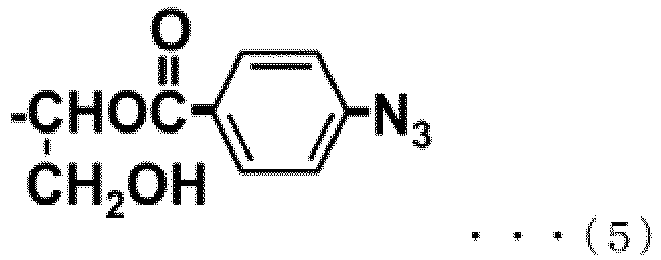


- In the formula (7), n represents from 3 to 17.
- The present invention is also directed to a lubricity-imparting copolymer having a weight-average molecular weight of from 10,000 to 1,000,000, the copolymer containing 60 mol% to 99 mol% of a constitutional unit (A) based on 2-methacryloyloxyethyl phosphorylcholine represented by the following formula (1) and 1 mol% to 40 mol% of a constitutional unit (B) based on a photoreactive functional group-containing monomer represented by any one of the following formulae (2), (3), and (6) :


- In the formula (2), R1 represents a hydrogen atom or a hydroxyl group.

- In the formula (3), R2 represents the following formula (4) or the following formula (5).


- The present invention is also directed to a lubricity-imparting copolymer having a weight-average molecular weight of from 10,000 to 1,000,000, the copolymer containing 60 mol% to 98 mol% of a constitutional unit (A) based on 2-methacryloyloxyethyl phosphorylcholine represented by the following formula (1), 1 mol% to 39 mol% of a constitutional unit (B) based on a photoreactive functional group-containing monomer represented by any one of the following formulae (2), (3), and (6), and 1 mol% to 30 mol% of a constitutional unit (C) based on a hydrophobic group-containing monomer represented by the following formula (7):


- In the formula (2), R1 represents a hydrogen atom or a hydroxyl group.

- In the formula (3), R2 represents the following formula (4) or the following formula (5).

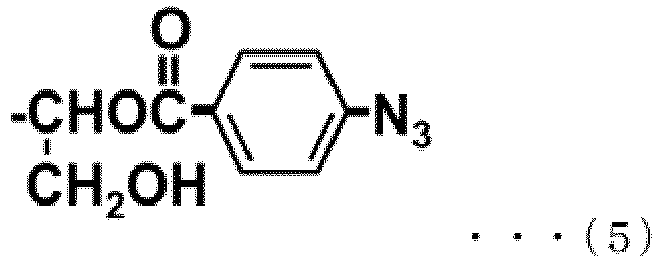


- In the formula (7), n represents from 3 to 17.
- The present invention is also directed to a use of a copolymer having a weight-average molecular weight of from 10, 000 to 1,000,000, the copolymer containing 60 mol% to 99 mol% of a constitutional unit (A) based on 2-methacryloyloxyethyl phosphorylcholine represented by the following formula (1) and 1 mol% to 40 mol% of a constitutional unit (B) based on a photoreactive functional group-containing monomer represented by any one of the following formulae (2), (3), and (6), inproduction of a lubricity-imparting agent:


- In the formula (2), R1 represents a hydrogen atom or a hydroxyl group.

- In the formula (3), R2 represents the following formula (4) or the following formula (5).


- The present invention is also directed to a use of a copolymer having a weight-average molecular weight of from 10,000 to 1,000,000, the copolymer containing 60 mol% to 98 mol% of a constitutional unit (A) based on 2-methacryloyloxyethyl phosphorylcholine represented by the following formula (1), 1 mol% to 39 mol% of a constitutional unit (B) based on a photoreactive functional group-containing monomer represented by any one of the following formulae (2), (3), and (6), and 1 mol% to 30 mol% of a constitutional unit (C) based on a hydrophobic group-containing monomer represented by the following formula (7), in production of a lubricity-imparting agent:
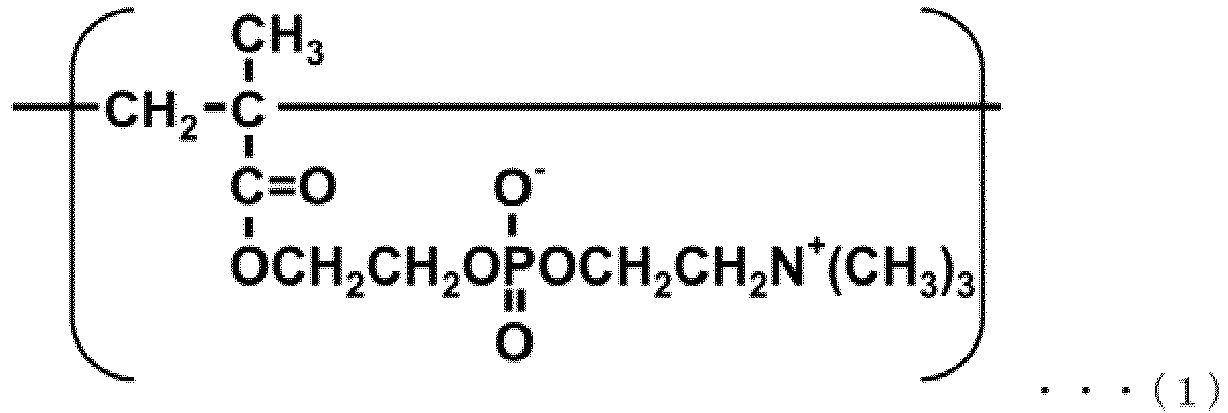

- In the formula (2), R1 represents a hydrogen atom or a hydroxyl group.

- In the formula (3), R2 represents the following formula (4) or the following formula (5).


- In the formula (7), n represents from 3 to 17.
- The present invention is described in more detail below by way of Examples and Comparative Examples.
- Copolymers each containing glycidyl methacrylate (GMA) were polymerized under polymerization conditions shown in Table 1 and Table 2 to be described later. After that, 1.5 molar equivalents of azidobenzoic acid (ABA) with respect to GMA were dissolved in each of solution containing the copolymers, and the temperature of the solution was increased to 80°C. After that, 0.2 molar equivalent of triethylamine (TEA) with respect to GMA was added to the solution, and a reaction was performed for 48 hours to provide a copolymer containing a constitutional unit (GMA-Az) based on a GMA monomer containing an azidophenyl group.
- 6.42 g of azidobenzoic acid and 64 g of dimethylsulfoxide were weighed in a 200-milliliter recovery flask, and a temperature in the flask was increased to 50°C to dissolve the materials. 2.72 g of potassium carbonate was added to the solution, and the mixture was stirred for 30 minutes. After a lapse of time, 5.46 g of chloromethylstyrene was added to the mixture, and a reaction was performed for 8 hours. After a lapse of 8 hours, 193.15 g of ethyl acetate was added to the resultant, and the organic layer was washed with 63.95 g of saturated saline five times, and was separated and extracted. The organic layer was dehydrated with sodium sulfate, and was then concentrated. The residue was dissolved in ethyl acetate so that the concentration of AzSt thus obtained became 50 mass%.
- Various measurements in Polymerization Examples were performed in accordance with the following methods.
- 5 mg of the resultant copolymer is dissolved in 1 g of a 0.1 mol/L aqueous solution of sodium sulfate, and its weight-average molecular weight is measured by gel permeation chromatography (GPC). Measurement conditions are as described below.
- Apparatus: RI-8020, DP-8020, SD-8022, and AS-8020 (manufactured by Tosoh Corporation), and 865-CO (manufactured by JASCO Corporation), column: Shodex OHpak (manufactured by Showa Denko K.K.), mobile phase: a 0.1 mol/L aqueous solution of sodium sulfate, standard substance: pullulan, detection: a differential refractometer, calculation of weight-average molecular weight (Mw): a molecular weight calculation program (GPC program for SC-8020), flow rate: 1.0 mL/min, column temperature: 40°C, sample solution injection amount: 100 µL, measurement time: 30 minutes.
- Polymerization was performed in accordance with copolymer composition ratios and polymerization conditions (at 65°C for 6 hours or at 60°C for 6 hours) shown in Table 1, and purification by precipitation, 1H-NMR analysis, and weight-average molecular weight measurement were performed. The results of the weight-average molecular weight measurement are shown in Table 1.
- Polymerization was performed in accordance with copolymer composition ratios and polymerization conditions (at 60°C for 4 hours and then at 70°C for 2 hours) shown in Tables 1 and 2, and ABA was added to GMA in each of the resultant copolymers (at 80°C for 48 hours), followed by the performance of purification by precipitation, 1H-NMR analysis, and weight-average molecular weight measurement. The results of the weight-average molecular weight measurement are shown in Tables 1 and 2.
- Polymerization was performed in accordance with copolymer composition ratios and polymerization conditions (at 60°C for 4 hours and then at 70°C for 2 hours) shown in Table 2, and purification by precipitation, 1H-NMR analysis, and weight-average molecular weight measurement were performed. The results of the weight-average molecular weight measurement are shown in Table 2.
- Polymerization was performed in accordance with copolymer composition ratios and polymerization conditions shown in Table 2, followed by the performance of purification by precipitation, 1H-NMRanalysis, and weight-average molecular weight measurement. The results of the weight-average molecular weight measurement are shown in Table 2.
- De tails about the materials usedinthe polymerization of the copolymers in Polymerization Examples and Comparative Polymerization Examples are described below (the materials are shown in abbreviations in tables).
- MPC: 2-methacryloyloxyethyl phosphorylcholine
MBP: 4-methacryloyloxybenzophenone
MHP: 4-methacryloxy-2-hydroxybenzophenone
GMA: glycidyl methacrylate
BMA: butyl methacrylate
SMA: stearyl methacrylate
AzSt: 4-(4-azido-benzoylmethyl)styrene (50 mass% ethyl acetate solution product)
AEMA: aminoethyl methacrylate
ABA: azidobenzoic acid
TEA: triethylamine
EtOH: ethanol
nPA: n-propanol
PW: water (pure water)
AIBN: 2,2-azobisisobutyronitrile - The copolymers (Polymerization Examples 1 to 23) in the lubricity-imparting agent of the present invention, and analogs thereof (Comparative Polymerization Examples 1 to 4) were evaluated for their lubricity-imparting effects.
- A lubricity-imparting agent including each copolymer was dissolved in a solvent so that its concentration became a predetermined value. A plate made of polyethylene terephthalate was immersed in the solution for 30 seconds or more. Ethanol (EtOH) or a 50 wt% aqueous solution of ethanol (EtOH/PW) was used as the solvent. The plate was irradiated with light having a wavelength of 254 nm, and an unreacted lubricity-imparting agent was washed off with the solvent, followed by the measurement of the surface friction coefficient of the plate. Further, durability was evaluated from the result of the measurement of the surface friction coefficient. Conditions, such as the kinds of the copolymers, the contents of the copolymers, and the solvents, and the results of the evaluation are shown in Table 3 and Table 4 for the lubricity-imparting agents used in Examples and Comparative Examples. In addition, a similar evaluation was performed by using polyethylene terephthalate that had not been subjected to any surface treatment, and the obtained result was defined as Comparative Example 5.
- The friction coefficient was measured with TRIBOGEAR (manufactured by Shinto Scientific Co., Ltd.) under the conditions of a sliding speed of 600 mm/min, a sliding distance of 50 mm, and a load of 10 g at room temperature in physiological saline while a contact terminal made of stainless steel was brought into contact with the plate.
- The surface friction coefficient was measured by reciprocating the contact terminal five times at one and the same place, and a case in which the surface friction coefficient after the fifth reciprocation increased by 25% or more as compared to the friction coefficient after the first reciprocation was indicated by Symbol "+", and a case in which the increase was less than 25% was indicated by Symbol "++". In addition, a case in which the surface friction coefficient showed a value close to that of Comparative Example 5 at the time of the measurement on or before the fifth reciprocation was indicated by Symbol "×" .


Table 2 Polymerization Example 15 Polymerization Example 16 Polymerization Example 17 Polymerization Example 18 Polymerization Example 19 Polymerization Example 20 Polymerization Example 21 Polymerization Example 22 Polymerization Example 23 Comparative Polymerization Example 1 Comparative Polymerization Example 2 Comparative Polymerization Example 3 Comparative Polymerization Example 4 Feed composition of polymerization of copolymer (g) Monomer MPC 35.70 33.24 38.10 32.35 28.60 32.50 34.80 35.52 31.70 40.00 35.94 23.55 18.20 MBP - - - - - - - - - - - - - MHP - - - - - - - - - - - - - GMA 0.21 2.00 - - - - - - - - - - - BMA 4.08 - - - 6.89 0.20 3.14 4.06 - - 4.06 26.45 - SMA - 4.76 - - - - - - 4.55 - - - - AzSt 3.79 15.30 9.02 14.60 4.11 0.84 7.50 - - - - AEMA - - - - - - - - - - - - 1.20 Additive ABA 0.37 3.45 - - - - - - - - - - - TEA 0.03 0.29 - - - - - - - - - - - Solvent EtOH - - - - - - - - - 155.11 155.11 70.90 - nPA 154.14 154.14 152.24 146.49 149.63 146.84 152.08 153.72 150.39 - - - - PW - - - - - - - - - - - - 80.00 Initiator AIBN 5.86 5.86 5.86 5 5.86 5.86 5.86 5.86 5.86 5.86 4.89 4.89 4.10 0.15 Total 200.40 203.74 200.00 200.00 200.00 200.00 200.00 200.00 200.00 200.00 200.00 125.00 99.65 Polymerization conditions (polymerization temperature and polymerization time) At 60°C for 4 hours and then at 70°C for 2 hours At 60°C for 4 hours and then at 70°C for 2 hours At 60°C for 4 hours and then at 70°C for 2 hours At 60°C for 4 hours and then at 70°C for 2 hours At 60°C for 4 hours and then at 70°C for 2 hours At 60°C for 4 hours and then at 70°C for 2 hours At 60°C for 4 hours and then at 70°C for 2 hours At 60°C for 4 hours and then at 70°C for 2 hours At 60°C for 4 hours and then at 70°C for 2 hours At 65°C for 6 hours At 65°C for 6 hours At 55°C for 24 hours At 60°C for 8 hours Composition ratio of copolymer (mol%) Constitutional unit (A) MPC 80 80 95 80 60 80 80 80 80 100 81 30 90 Constitutional unit (B) MBP - - - - - - - - - - - - - MHP - - - - - - - - - - - - - GMA-Az 1 10 - - - - - - - - - - - AzSt - - 5 20 10 19 5 1 10 Constitutional unit (C) BMA 19 - - - 30 1 15 19 - - 19 70 - SMA - 10 - - - - - - 10 - - - - Others AEMA - - - - - - - - - - - - 10 Polymerization result Water solubility YES YES YES YES YES YES YES YES YES YES YES NO YES Weight-average molecular weight 66,000 55,000 72,00 63,000 25,000 50,000 49,000 33,000 28,000 188,000 138,000 600,000 800,000 (Symbol of (co)polymer) P15 P16 P17 P18 P19 P20 P21 P22 P23 Q1 Q2 Q3 Q4 Table 3 Example 1 Example 2 Example 3 Example 4 Example 5 Example 6 Example 7 Example 8 Example 9 Example 10 Example 11 Example 12 Example 13 Example 14 Kind of copolymer used P1 P2 P3 P4 P5 P6 P7 P8 P9 P10 P11 P12 P13 P14 Ratio of copolymer used (%) 100 100 100 100 100 100 100 100 100 100 100 100 100 100 Other component: ratio of MPC (%) - - - - - - - - - - - - - - Kind of solvent EtOH EtOH EtOH EtOH EtOH EtOH EtOH EtOH EtOH EtOH EtOH EtOH EtOH EtOH Friction coefficient At concentration of 1.0 mass% 0.101 0.071 0.081 0.087 0.054 0.075 0.062 0.025 0.019 0.017 0.017 0.018 0.014 0.009 At concentration of 0.5 mass% 0.098 0.092 0.079 0.074 0.062 0.074 0.069 0.031 0.017 0.014 0.014 0.014 0.017 0.01.2 At concentration of 0.1 mass% 0.095 0.103 0.095 0.091 0.061 0.082 0.085 0.03 0.028 0.025 0.021 0.029 0.02 0.018 Durability At concentration of 1.0 mass% ++ ++ ++ + ++ ++ ++ ++ ++ ++ ++ ++ ++ ++ At concentration of 0.5 mass% ++ ++ ++ + ++ ++ ++ ++ ++ ++ ++ ++ ++ ++ At concentration of 0.1 mass% + + + + + + + + + + + ++ + + Table 4 Example 15 Example 16 Example 17 Example 18 Example 19 Example 20 Example 21 Example 22 Example 23 Example 24 Example 25 Example 26 Comparative Example 1 Comparative Example 2 Comparative Example 3 Comparative Example 4 Comparative Example 5 Kind of copolymer used P15 P16 P17 P18 P19 P20 P21 P22 P23 P2 P12 P20 Q1 Q2 Q3 Q4 - Ratio of copolymer used (%) 100 100 100 100 100 100 100 100 100 50 50 50 100 100 100 100 - Other component: ratio of MPC (%) - - - - - - - - - 50 50 50 - - - - - Kind of solvent EtOH EtOH EtOH EtOH EtOH EtOH EtOH EtOH EtOH EtOH/PW EtOH/PW EtOH/PW EtOH EtOH EtOH EtOH EtOH Friction coefficient At concentration of 1.0 mass% 0.01 0.008 0.018 0.021 0.012 0.007 0.009 0.014 0.0.17 - - - 0.189 0.201 0.072 0.194 0.194 (free of copoly mer) At concentration of 0.5 mass% 0.008 0.012 0.015 0.023 0.009 0.012 0.012 0.011 0.011- 0.008 0.006 0.005 - - - - At concentration of 0.1 mass% 0.018 0.031 0.027 0.04 0.011 0.011 0.015 0.021- 0.019 0.006 - - - - - - Durability At concentration of 1.0 mass% ++ ++ ++ ++ ++ ++ ++ ++ ++ - - - × × × × × At concentration of 0.5 mass% ++ ++ ++ ++ ++ ++ ++ ++ ++ ++ ++ ++ - - - - At concentration of 0.1 mass% + ++ + + ++ + ++ + ++ ++ - - - - - - - As is apparent from the results of Table 3 and Table 4, the friction coefficient of a substrate surface was able to be reduced by: coating the substrate surface with a lubricity-imparting agent including a copolymer containing a constitutional unit based on 2-methacryloyloxyethyl phosphorylcholine and a constitutional unit based on a photoreactive functional group-containing monomer, or a copolymer containing a constitutional unit based on 2-methacryloyloxyethyl phosphorylcholine, a constitutional unit based on a photoreactive functional group-containing monomer, and a constitutional unit based on a hydrophobic group-containing monomer; and irradiating the substrate surface with light. In addition, the friction coefficient maintained a low friction coefficient even after the 5-reciprocation measurement.
- Meanwhile, as can be seen from the results of Table 4, in each of Comparative Example 1 (in which the substrate surface was coated with the polymer formed only of the constitutional unit based on 2-methacryloyloxyethyl phosphorylcholine), Comparative Example 2 (in which the substrate surface was coated with the water-soluble copolymer that had only the constitutional unit based on 2-methacryloyloxyethyl phosphorylcholine and the constitutional unit based on a hydrophobic group-containing monomer, and was free of any constitutional unit based on a photoreactive functional group-containing monomer), and Comparative Example 4 (in which the substrate surface was coated with the copolymer that was free of any constitutional unit based on a hydrophobic group-containing monomer and any constitutional unit based on a photoreactive functional group-containing monomer, but had the constitutional unit based on 2-methacryloyloxyethyl phosphorylcholine and the constitutional unit having an amino group) , no reduction in friction coefficient was observed because no copolymer layer was formed on the substrate surface by the photoirradiation, and hence the value of the friction coefficient was comparable to that of Comparative Example 5 (polyethylene terephthalate that had not been subjected to any surface treatment) . In addition, it was revealed that in Comparative Example 3 (in which the substrate surface was coated with the water-insoluble copolymer that had only the constitutional unit based on 2-methacryloyloxyethyl phosphorylcholine and the constitutional unit based on a hydrophobic group-containing monomer, and was free of any constitutional unit based on a photoreactive functional group-containing monomer) , the friction coefficient in the first measurement was able to be reduced because the copolymer was water-insoluble, but as the measurement was repeated, the value of the friction coefficient increased, in other words, the friction coefficient was deficient in durability.
- It was confirmed from the foregoing results that the lubricity-imparting agent of the present invention was able to impart durable lubricity to a substrate surface through the coating of the substrate surface with the agent and the irradiation of the substrate surface with light.
- The lubricity-imparting agent of the present invention can impart durable lubricity to a substrate surface. In addition, the article of the present invention has highly durable lubricity.
Claims (15)
- A lubricity-imparting agent, comprising 0.01 mass% to 5.0 mass% of a copolymer having a weight-average molecular weight of from 10,000 to 1,000,000, the copolymer containing 60 mol% to 99 mol% of a constitutional unit (A) based on 2-methacryloyloxyethyl phosphorylcholine represented by the following formula (1) and 1 mol% to 40 mol% of a constitutional unit (B) based on a photoreactive functional group-containing monomer represented by any one of the following formulae (2), (3), and (6):


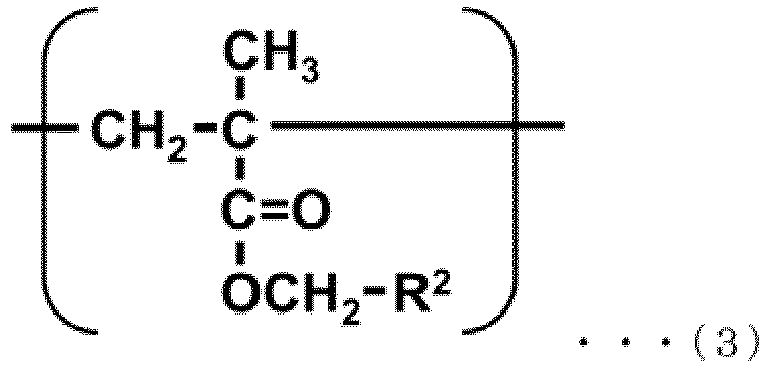


- A lubricity-imparting agent, comprising 0.01 mass% to 5.0 mass% of a copolymer having a weight-average molecular weight of from 10,000 to 1,000,000, the copolymer containing 60 mol% to 98 mol% of a constitutional unit (A) based on 2-methacryloyloxyethyl phosphorylcholine represented by the following formula (1), 1 mol% to 39 mol% of a constitutional unit (B) based on a photoreactive functional group-containing monomer represented by any one of the following formulae (2), (3), and (6), and 1 mol% to 30 mol% of a constitutional unit (C) based on a hydrophobic group-containing monomer represented by the following formula (7):


- A lubricity-imparting agent according to claim 1, wherein the constitutional unit (B) comprises a constitutional unit based on 4-methacryloyloxybenzophenone.
- A lubricity-imparting agent according to claim 1, wherein the constitutional unit (B) comprises a constitutional unit based on 4-methacryloxy-2-hydroxybenzophenone.
- A lubricity-imparting agent according to claim 2, wherein the constitutional unit (B) comprises a constitutional unit based on 4-methacryloyloxybenzophenone, and the constitutional unit (C) comprises a constitutional unit based on butyl methacrylate.
- A lubricity-imparting agent according to claim 2, wherein the constitutional unit (B) comprises a constitutional unit based on 4-methacryloxy-2-hydroxybenzophenone, and the constitutional unit (C) comprises a constitutional unit based on butyl methacrylate.
- A lubricity-imparting agent according to claim 1, wherein the constitutional unit (B) comprises a constitutional unit based on glycidyl methacrylate.
- A lubricity-imparting agent according to claim 2, wherein the constitutional unit (B) comprises a constitutional unit based on glycidyl methacrylate, and the constitutional unit (C) comprises a constitutional unit based on butyl methacrylate.
- A lubricity-imparting agent according to claim 1, wherein the constitutional unit (B) comprises a constitutional unit based on 4-(4-azidobenzoylmethyl)styrene.
- A lubricity-imparting agent according to claim 2, wherein the constitutional unit (B) comprises a constitutional unit based on 4-(4-azidobenzoylmethyl)styrene, and the constitutional unit (C) comprises a constitutional unit based on butyl methacrylate.
- A method of imparting lubricity to a substrate surface, comprising the following steps (1) and (2):(1) a step of coating the substrate surface with the lubricity-imparting agent of any one of claims 1 to 10; and(2) a step of irradiating the substrate surface coated in the step (1) with light to form a crosslinked body on the substrate surface.
- A method of forming a crosslinked body, comprising:coating a substrate surface with the lubricity-imparting agent of any one of claims 1 to 10; andthen irradiating the substrate surface with light to form the crosslinked body on the substrate surface.
- A crosslinked body, which is obtained by the method of forming a crosslinked body of claim 12.
- A crosslinked body, which is obtained by irradiating the lubricity-imparting agent of any one of claims 1 to 10 with light.
- An article, comprising the crosslinked body of claim 13 or 14.
Applications Claiming Priority (2)
| Application Number | Priority Date | Filing Date | Title |
|---|---|---|---|
| JP2016129423 | 2016-06-29 | ||
| PCT/JP2017/023655 WO2018003822A1 (en) | 2016-06-29 | 2017-06-28 | Slipperiness-imparting agent and slipperiness-imparting method |
Publications (3)
| Publication Number | Publication Date |
|---|---|
| EP3480283A1 true EP3480283A1 (en) | 2019-05-08 |
| EP3480283A4 EP3480283A4 (en) | 2020-02-12 |
| EP3480283B1 EP3480283B1 (en) | 2022-02-16 |
Family
ID=60786698
Family Applications (1)
| Application Number | Title | Priority Date | Filing Date |
|---|---|---|---|
| EP17820176.0A Active EP3480283B1 (en) | 2016-06-29 | 2017-06-28 | Slipperiness-imparting agent and slipperiness-imparting method |
Country Status (6)
| Country | Link |
|---|---|
| US (1) | US10829710B2 (en) |
| EP (1) | EP3480283B1 (en) |
| JP (1) | JP6961587B2 (en) |
| CN (1) | CN109312246B (en) |
| TW (1) | TWI745389B (en) |
| WO (1) | WO2018003822A1 (en) |
Families Citing this family (8)
| Publication number | Priority date | Publication date | Assignee | Title |
|---|---|---|---|---|
| WO2018003821A1 (en) * | 2016-06-29 | 2018-01-04 | 日油株式会社 | Copolymer and application therefor |
| EP3697424A4 (en) * | 2017-10-20 | 2021-07-07 | University of Georgia Research Foundation, Inc. | SURFACES AND COATING COMPOSITIONS WITH ANTI-FOULING, ANTITHROMBOTIC AND ANTIBACTERIAL PROPERTIES AND THEIR PREPARATION METHODS |
| WO2019107372A1 (en) * | 2017-11-28 | 2019-06-06 | 国立大学法人東京大学 | Method for modifying surface of aromatic polyetherketone substrate |
| JP7285532B2 (en) * | 2017-11-28 | 2023-06-02 | 国立大学法人 東京大学 | METHOD FOR SURFACE MODIFICATION OF AROMATIC POLYETHER KETONE BASE MATERIAL |
| EP3643758A1 (en) * | 2018-10-25 | 2020-04-29 | BIOTRONIK SE & Co. KG | Silicone material with modified surface to improve sliding and frictional properties |
| CN110684153A (en) * | 2019-09-05 | 2020-01-14 | 珠海博纳百润生物科技有限公司 | Hydrophilic lubricant and application thereof |
| KR102964214B1 (en) * | 2020-02-26 | 2026-05-12 | 니치유 가부시키가이샤 | Disinfection composition |
| CN116355265A (en) * | 2023-02-15 | 2023-06-30 | 东南大学 | Hard cornea contact lens and preparation method and application thereof |
Family Cites Families (12)
| Publication number | Priority date | Publication date | Assignee | Title |
|---|---|---|---|---|
| JP4097768B2 (en) * | 1998-04-06 | 2008-06-11 | 日油株式会社 | Copolymer, treatment agent for eyeglass lens, and treatment lens |
| WO2009091733A2 (en) * | 2008-01-14 | 2009-07-23 | Coopervision International Holding Company, Lp | Polymerizable contact lens formulations and contact lenses obtained therefrom |
| JP5597814B2 (en) * | 2008-09-05 | 2014-10-01 | 国立大学法人 東京大学 | Optical surface modification of hydrophobic polymer materials |
| JP5598891B2 (en) * | 2008-09-05 | 2014-10-01 | 国立大学法人 東京大学 | Hydrophobic substrate surface treatment method |
| KR102159909B1 (en) * | 2010-07-30 | 2020-09-25 | 알콘 인코포레이티드 | Silicone hydrogel lenses with water-rich surfaces |
| US8541498B2 (en) * | 2010-09-08 | 2013-09-24 | Biointeractions Ltd. | Lubricious coatings for medical devices |
| CN102492950A (en) * | 2011-12-16 | 2012-06-13 | 南京理工大学 | Bionic multi-scale structural surface with excellent tribological performance and preparation method |
| WO2013118736A1 (en) * | 2012-02-07 | 2013-08-15 | 国立大学法人 東京大学 | Surface-treating agent for hydrophobic material, and surface treatment method |
| EP2634198B1 (en) * | 2012-03-02 | 2014-09-17 | Suntech Co., Ltd. | Copolymers containing phosphorylcholine groups and methods of preparing and using the same |
| CN102924650A (en) * | 2012-11-05 | 2013-02-13 | 河北智生环保科技有限公司 | Ultraviolet cross-linking copolymer |
| EP3266803B1 (en) * | 2015-03-03 | 2020-01-01 | The University of Tokyo | Polymer and crosslinked body thereof |
| TWI689523B (en) * | 2015-09-16 | 2020-04-01 | 國立大學法人東京大學 | Copolymer and its preparation method |
-
2017
- 2017-06-28 WO PCT/JP2017/023655 patent/WO2018003822A1/en not_active Ceased
- 2017-06-28 CN CN201780026847.9A patent/CN109312246B/en active Active
- 2017-06-28 JP JP2018525192A patent/JP6961587B2/en active Active
- 2017-06-28 EP EP17820176.0A patent/EP3480283B1/en active Active
- 2017-06-28 US US16/313,515 patent/US10829710B2/en active Active
- 2017-06-28 TW TW106121659A patent/TWI745389B/en active
Also Published As
| Publication number | Publication date |
|---|---|
| EP3480283A4 (en) | 2020-02-12 |
| TWI745389B (en) | 2021-11-11 |
| CN109312246B (en) | 2021-07-06 |
| EP3480283B1 (en) | 2022-02-16 |
| CN109312246A (en) | 2019-02-05 |
| JP6961587B2 (en) | 2021-11-05 |
| JPWO2018003822A1 (en) | 2019-06-06 |
| TW201809210A (en) | 2018-03-16 |
| US10829710B2 (en) | 2020-11-10 |
| WO2018003822A9 (en) | 2018-07-19 |
| WO2018003822A1 (en) | 2018-01-04 |
| US20190316054A1 (en) | 2019-10-17 |
Similar Documents
| Publication | Publication Date | Title |
|---|---|---|
| EP3480283B1 (en) | Slipperiness-imparting agent and slipperiness-imparting method | |
| ES2692150T3 (en) | Substrate coating | |
| US8932694B2 (en) | Fluorinated polymers and lubricious coatings | |
| EP3088014B1 (en) | Medical device | |
| JP5707843B2 (en) | Contact lens care formulation and packaging solution | |
| Qi et al. | Salecan-based pH-sensitive hydrogels for insulin delivery | |
| EP3266803B1 (en) | Polymer and crosslinked body thereof | |
| WO2013128633A1 (en) | Contact lens care preparation and packaging solution | |
| JP6781220B2 (en) | Substrate coating | |
| JP5609525B2 (en) | Contact lens care formulation and packaging solution | |
| EP3845573B1 (en) | Copolymer and medical material containing the same | |
| EP4043947A1 (en) | Surface treatment agent for soft contact lens | |
| EP4425244A1 (en) | Treatment fluid for soft contact lens | |
| Bandomir | Development and characterization of hydrogels and their use in in-vitro studies of drug-coated balloons | |
| Rajora | Development of Self-Assembled Amphiphilic Oligo-Urethanes as Cardiovascular Drug Delivery Platforms | |
| JP2022036820A (en) | Copolymer and applications thereof | |
| HK1218396B (en) | Coating for substrate |
Legal Events
| Date | Code | Title | Description |
|---|---|---|---|
| STAA | Information on the status of an ep patent application or granted ep patent |
Free format text: STATUS: THE INTERNATIONAL PUBLICATION HAS BEEN MADE |
|
| PUAI | Public reference made under article 153(3) epc to a published international application that has entered the european phase |
Free format text: ORIGINAL CODE: 0009012 |
|
| STAA | Information on the status of an ep patent application or granted ep patent |
Free format text: STATUS: REQUEST FOR EXAMINATION WAS MADE |
|
| 17P | Request for examination filed |
Effective date: 20181217 |
|
| AK | Designated contracting states |
Kind code of ref document: A1 Designated state(s): AL AT BE BG CH CY CZ DE DK EE ES FI FR GB GR HR HU IE IS IT LI LT LU LV MC MK MT NL NO PL PT RO RS SE SI SK SM TR |
|
| AX | Request for extension of the european patent |
Extension state: BA ME |
|
| DAV | Request for validation of the european patent (deleted) | ||
| DAX | Request for extension of the european patent (deleted) | ||
| A4 | Supplementary search report drawn up and despatched |
Effective date: 20200115 |
|
| RIC1 | Information provided on ipc code assigned before grant |
Ipc: C10N 50/02 20060101ALI20200109BHEP Ipc: A61L 33/06 20060101ALI20200109BHEP Ipc: C08F 220/36 20060101ALI20200109BHEP Ipc: C10M 153/02 20060101ALI20200109BHEP Ipc: C10N 40/00 20060101ALI20200109BHEP Ipc: C08F 230/02 20060101ALI20200109BHEP Ipc: C10N 30/06 20060101ALI20200109BHEP Ipc: C10M 107/28 20060101AFI20200109BHEP Ipc: C10M 173/02 20060101ALI20200109BHEP Ipc: C08F 220/30 20060101ALI20200109BHEP Ipc: C10N 20/04 20060101ALI20200109BHEP Ipc: C10M 145/14 20060101ALI20200109BHEP Ipc: C09D 133/10 20060101ALI20200109BHEP |
|
| STAA | Information on the status of an ep patent application or granted ep patent |
Free format text: STATUS: EXAMINATION IS IN PROGRESS |
|
| 17Q | First examination report despatched |
Effective date: 20201105 |
|
| GRAP | Despatch of communication of intention to grant a patent |
Free format text: ORIGINAL CODE: EPIDOSNIGR1 |
|
| STAA | Information on the status of an ep patent application or granted ep patent |
Free format text: STATUS: GRANT OF PATENT IS INTENDED |
|
| INTG | Intention to grant announced |
Effective date: 20210412 |
|
| RAP3 | Party data changed (applicant data changed or rights of an application transferred) |
Owner name: THE UNIVERSITY OF TOKYO Owner name: NOF CORPORATION |
|
| RIN1 | Information on inventor provided before grant (corrected) |
Inventor name: SAKAMOTO,NOBUYUKI Inventor name: YAMADA,SATOSHI Inventor name: MATSUDA, MASARU Inventor name: NODA, TOMOZUMI Inventor name: ISHIHARA, KAZUHIKO |
|
| GRAJ | Information related to disapproval of communication of intention to grant by the applicant or resumption of examination proceedings by the epo deleted |
Free format text: ORIGINAL CODE: EPIDOSDIGR1 |
|
| STAA | Information on the status of an ep patent application or granted ep patent |
Free format text: STATUS: EXAMINATION IS IN PROGRESS |
|
| GRAP | Despatch of communication of intention to grant a patent |
Free format text: ORIGINAL CODE: EPIDOSNIGR1 |
|
| INTC | Intention to grant announced (deleted) | ||
| STAA | Information on the status of an ep patent application or granted ep patent |
Free format text: STATUS: GRANT OF PATENT IS INTENDED |
|
| INTG | Intention to grant announced |
Effective date: 20210902 |
|
| GRAS | Grant fee paid |
Free format text: ORIGINAL CODE: EPIDOSNIGR3 |
|
| GRAA | (expected) grant |
Free format text: ORIGINAL CODE: 0009210 |
|
| STAA | Information on the status of an ep patent application or granted ep patent |
Free format text: STATUS: THE PATENT HAS BEEN GRANTED |
|
| AK | Designated contracting states |
Kind code of ref document: B1 Designated state(s): AL AT BE BG CH CY CZ DE DK EE ES FI FR GB GR HR HU IE IS IT LI LT LU LV MC MK MT NL NO PL PT RO RS SE SI SK SM TR |
|
| REG | Reference to a national code |
Ref country code: GB Ref legal event code: FG4D |
|
| REG | Reference to a national code |
Ref country code: CH Ref legal event code: EP |
|
| REG | Reference to a national code |
Ref country code: DE Ref legal event code: R096 Ref document number: 602017053500 Country of ref document: DE |
|
| REG | Reference to a national code |
Ref country code: AT Ref legal event code: REF Ref document number: 1468880 Country of ref document: AT Kind code of ref document: T Effective date: 20220315 |
|
| REG | Reference to a national code |
Ref country code: IE Ref legal event code: FG4D |
|
| REG | Reference to a national code |
Ref country code: LT Ref legal event code: MG9D |
|
| REG | Reference to a national code |
Ref country code: NL Ref legal event code: MP Effective date: 20220216 |
|
| REG | Reference to a national code |
Ref country code: AT Ref legal event code: MK05 Ref document number: 1468880 Country of ref document: AT Kind code of ref document: T Effective date: 20220216 |
|
| PG25 | Lapsed in a contracting state [announced via postgrant information from national office to epo] |
Ref country code: SE Free format text: LAPSE BECAUSE OF FAILURE TO SUBMIT A TRANSLATION OF THE DESCRIPTION OR TO PAY THE FEE WITHIN THE PRESCRIBED TIME-LIMIT Effective date: 20220216 Ref country code: RS Free format text: LAPSE BECAUSE OF FAILURE TO SUBMIT A TRANSLATION OF THE DESCRIPTION OR TO PAY THE FEE WITHIN THE PRESCRIBED TIME-LIMIT Effective date: 20220216 Ref country code: PT Free format text: LAPSE BECAUSE OF FAILURE TO SUBMIT A TRANSLATION OF THE DESCRIPTION OR TO PAY THE FEE WITHIN THE PRESCRIBED TIME-LIMIT Effective date: 20220616 Ref country code: NO Free format text: LAPSE BECAUSE OF FAILURE TO SUBMIT A TRANSLATION OF THE DESCRIPTION OR TO PAY THE FEE WITHIN THE PRESCRIBED TIME-LIMIT Effective date: 20220516 Ref country code: NL Free format text: LAPSE BECAUSE OF FAILURE TO SUBMIT A TRANSLATION OF THE DESCRIPTION OR TO PAY THE FEE WITHIN THE PRESCRIBED TIME-LIMIT Effective date: 20220216 Ref country code: LT Free format text: LAPSE BECAUSE OF FAILURE TO SUBMIT A TRANSLATION OF THE DESCRIPTION OR TO PAY THE FEE WITHIN THE PRESCRIBED TIME-LIMIT Effective date: 20220216 Ref country code: HR Free format text: LAPSE BECAUSE OF FAILURE TO SUBMIT A TRANSLATION OF THE DESCRIPTION OR TO PAY THE FEE WITHIN THE PRESCRIBED TIME-LIMIT Effective date: 20220216 Ref country code: ES Free format text: LAPSE BECAUSE OF FAILURE TO SUBMIT A TRANSLATION OF THE DESCRIPTION OR TO PAY THE FEE WITHIN THE PRESCRIBED TIME-LIMIT Effective date: 20220216 Ref country code: BG Free format text: LAPSE BECAUSE OF FAILURE TO SUBMIT A TRANSLATION OF THE DESCRIPTION OR TO PAY THE FEE WITHIN THE PRESCRIBED TIME-LIMIT Effective date: 20220516 |
|
| PG25 | Lapsed in a contracting state [announced via postgrant information from national office to epo] |
Ref country code: PL Free format text: LAPSE BECAUSE OF FAILURE TO SUBMIT A TRANSLATION OF THE DESCRIPTION OR TO PAY THE FEE WITHIN THE PRESCRIBED TIME-LIMIT Effective date: 20220216 Ref country code: LV Free format text: LAPSE BECAUSE OF FAILURE TO SUBMIT A TRANSLATION OF THE DESCRIPTION OR TO PAY THE FEE WITHIN THE PRESCRIBED TIME-LIMIT Effective date: 20220216 Ref country code: GR Free format text: LAPSE BECAUSE OF FAILURE TO SUBMIT A TRANSLATION OF THE DESCRIPTION OR TO PAY THE FEE WITHIN THE PRESCRIBED TIME-LIMIT Effective date: 20220517 Ref country code: FI Free format text: LAPSE BECAUSE OF FAILURE TO SUBMIT A TRANSLATION OF THE DESCRIPTION OR TO PAY THE FEE WITHIN THE PRESCRIBED TIME-LIMIT Effective date: 20220216 Ref country code: AT Free format text: LAPSE BECAUSE OF FAILURE TO SUBMIT A TRANSLATION OF THE DESCRIPTION OR TO PAY THE FEE WITHIN THE PRESCRIBED TIME-LIMIT Effective date: 20220216 |
|
| PG25 | Lapsed in a contracting state [announced via postgrant information from national office to epo] |
Ref country code: IS Free format text: LAPSE BECAUSE OF FAILURE TO SUBMIT A TRANSLATION OF THE DESCRIPTION OR TO PAY THE FEE WITHIN THE PRESCRIBED TIME-LIMIT Effective date: 20220617 |
|
| PG25 | Lapsed in a contracting state [announced via postgrant information from national office to epo] |
Ref country code: SM Free format text: LAPSE BECAUSE OF FAILURE TO SUBMIT A TRANSLATION OF THE DESCRIPTION OR TO PAY THE FEE WITHIN THE PRESCRIBED TIME-LIMIT Effective date: 20220216 Ref country code: SK Free format text: LAPSE BECAUSE OF FAILURE TO SUBMIT A TRANSLATION OF THE DESCRIPTION OR TO PAY THE FEE WITHIN THE PRESCRIBED TIME-LIMIT Effective date: 20220216 Ref country code: RO Free format text: LAPSE BECAUSE OF FAILURE TO SUBMIT A TRANSLATION OF THE DESCRIPTION OR TO PAY THE FEE WITHIN THE PRESCRIBED TIME-LIMIT Effective date: 20220216 Ref country code: EE Free format text: LAPSE BECAUSE OF FAILURE TO SUBMIT A TRANSLATION OF THE DESCRIPTION OR TO PAY THE FEE WITHIN THE PRESCRIBED TIME-LIMIT Effective date: 20220216 Ref country code: DK Free format text: LAPSE BECAUSE OF FAILURE TO SUBMIT A TRANSLATION OF THE DESCRIPTION OR TO PAY THE FEE WITHIN THE PRESCRIBED TIME-LIMIT Effective date: 20220216 Ref country code: CZ Free format text: LAPSE BECAUSE OF FAILURE TO SUBMIT A TRANSLATION OF THE DESCRIPTION OR TO PAY THE FEE WITHIN THE PRESCRIBED TIME-LIMIT Effective date: 20220216 |
|
| REG | Reference to a national code |
Ref country code: DE Ref legal event code: R097 Ref document number: 602017053500 Country of ref document: DE |
|
| PG25 | Lapsed in a contracting state [announced via postgrant information from national office to epo] |
Ref country code: AL Free format text: LAPSE BECAUSE OF FAILURE TO SUBMIT A TRANSLATION OF THE DESCRIPTION OR TO PAY THE FEE WITHIN THE PRESCRIBED TIME-LIMIT Effective date: 20220216 |
|
| PLBE | No opposition filed within time limit |
Free format text: ORIGINAL CODE: 0009261 |
|
| STAA | Information on the status of an ep patent application or granted ep patent |
Free format text: STATUS: NO OPPOSITION FILED WITHIN TIME LIMIT |
|
| 26N | No opposition filed |
Effective date: 20221117 |
|
| PG25 | Lapsed in a contracting state [announced via postgrant information from national office to epo] |
Ref country code: MC Free format text: LAPSE BECAUSE OF FAILURE TO SUBMIT A TRANSLATION OF THE DESCRIPTION OR TO PAY THE FEE WITHIN THE PRESCRIBED TIME-LIMIT Effective date: 20220216 |
|
| REG | Reference to a national code |
Ref country code: CH Ref legal event code: PL |
|
| REG | Reference to a national code |
Ref country code: BE Ref legal event code: MM Effective date: 20220630 |
|
| PG25 | Lapsed in a contracting state [announced via postgrant information from national office to epo] |
Ref country code: SI Free format text: LAPSE BECAUSE OF FAILURE TO SUBMIT A TRANSLATION OF THE DESCRIPTION OR TO PAY THE FEE WITHIN THE PRESCRIBED TIME-LIMIT Effective date: 20220216 |
|
| PG25 | Lapsed in a contracting state [announced via postgrant information from national office to epo] |
Ref country code: LU Free format text: LAPSE BECAUSE OF NON-PAYMENT OF DUE FEES Effective date: 20220628 Ref country code: LI Free format text: LAPSE BECAUSE OF NON-PAYMENT OF DUE FEES Effective date: 20220630 Ref country code: IE Free format text: LAPSE BECAUSE OF NON-PAYMENT OF DUE FEES Effective date: 20220628 Ref country code: CH Free format text: LAPSE BECAUSE OF NON-PAYMENT OF DUE FEES Effective date: 20220630 |
|
| PG25 | Lapsed in a contracting state [announced via postgrant information from national office to epo] |
Ref country code: BE Free format text: LAPSE BECAUSE OF NON-PAYMENT OF DUE FEES Effective date: 20220630 |
|
| P01 | Opt-out of the competence of the unified patent court (upc) registered |
Effective date: 20230410 |
|
| PG25 | Lapsed in a contracting state [announced via postgrant information from national office to epo] |
Ref country code: HU Free format text: LAPSE BECAUSE OF FAILURE TO SUBMIT A TRANSLATION OF THE DESCRIPTION OR TO PAY THE FEE WITHIN THE PRESCRIBED TIME-LIMIT; INVALID AB INITIO Effective date: 20170628 |
|
| PG25 | Lapsed in a contracting state [announced via postgrant information from national office to epo] |
Ref country code: MK Free format text: LAPSE BECAUSE OF FAILURE TO SUBMIT A TRANSLATION OF THE DESCRIPTION OR TO PAY THE FEE WITHIN THE PRESCRIBED TIME-LIMIT Effective date: 20220216 Ref country code: CY Free format text: LAPSE BECAUSE OF FAILURE TO SUBMIT A TRANSLATION OF THE DESCRIPTION OR TO PAY THE FEE WITHIN THE PRESCRIBED TIME-LIMIT Effective date: 20220216 |
|
| PG25 | Lapsed in a contracting state [announced via postgrant information from national office to epo] |
Ref country code: MT Free format text: LAPSE BECAUSE OF FAILURE TO SUBMIT A TRANSLATION OF THE DESCRIPTION OR TO PAY THE FEE WITHIN THE PRESCRIBED TIME-LIMIT Effective date: 20220216 |
|
| PG25 | Lapsed in a contracting state [announced via postgrant information from national office to epo] |
Ref country code: TR Free format text: LAPSE BECAUSE OF FAILURE TO SUBMIT A TRANSLATION OF THE DESCRIPTION OR TO PAY THE FEE WITHIN THE PRESCRIBED TIME-LIMIT Effective date: 20220216 |
|
| PGFP | Annual fee paid to national office [announced via postgrant information from national office to epo] |
Ref country code: GB Payment date: 20260626 Year of fee payment: 10 |
|
| PGFP | Annual fee paid to national office [announced via postgrant information from national office to epo] |
Ref country code: IT Payment date: 20260623 Year of fee payment: 10 |
|
| PGFP | Annual fee paid to national office [announced via postgrant information from national office to epo] |
Ref country code: DE Payment date: 20260622 Year of fee payment: 10 |
|
| PGFP | Annual fee paid to national office [announced via postgrant information from national office to epo] |
Ref country code: FR Payment date: 20260626 Year of fee payment: 10 |