EP3480199B1 - Imidazopyridinamine phenyl derivative and use thereof - Google Patents
Imidazopyridinamine phenyl derivative and use thereof Download PDFInfo
- Publication number
- EP3480199B1 EP3480199B1 EP17819328.0A EP17819328A EP3480199B1 EP 3480199 B1 EP3480199 B1 EP 3480199B1 EP 17819328 A EP17819328 A EP 17819328A EP 3480199 B1 EP3480199 B1 EP 3480199B1
- Authority
- EP
- European Patent Office
- Prior art keywords
- imidazopyrazinamine
- hydrate
- pharmaceutically acceptable
- phenyl derivative
- acceptable salt
- Prior art date
- Legal status (The legal status is an assumption and is not a legal conclusion. Google has not performed a legal analysis and makes no representation as to the accuracy of the status listed.)
- Active
Links
- FBZMQDFUFZOEHY-FQEVSTJZSA-N Cc(cc(cc1)-c2c(c(N)ncc3)[n]3c([C@H](CCC3)N3C(C#CC)=O)n2)c1C(Nc1ccccn1)=O Chemical compound Cc(cc(cc1)-c2c(c(N)ncc3)[n]3c([C@H](CCC3)N3C(C#CC)=O)n2)c1C(Nc1ccccn1)=O FBZMQDFUFZOEHY-FQEVSTJZSA-N 0.000 description 1
Classifications
-
- C—CHEMISTRY; METALLURGY
- C07—ORGANIC CHEMISTRY
- C07D—HETEROCYCLIC COMPOUNDS
- C07D487/00—Heterocyclic compounds containing nitrogen atoms as the only ring hetero atoms in the condensed system, not provided for by groups C07D451/00 - C07D477/00
- C07D487/02—Heterocyclic compounds containing nitrogen atoms as the only ring hetero atoms in the condensed system, not provided for by groups C07D451/00 - C07D477/00 in which the condensed system contains two hetero rings
- C07D487/04—Ortho-condensed systems
-
- A—HUMAN NECESSITIES
- A61—MEDICAL OR VETERINARY SCIENCE; HYGIENE
- A61K—PREPARATIONS FOR MEDICAL, DENTAL OR TOILETRY PURPOSES
- A61K31/00—Medicinal preparations containing organic active ingredients
- A61K31/33—Heterocyclic compounds
- A61K31/395—Heterocyclic compounds having nitrogen as a ring hetero atom, e.g. guanethidine or rifamycins
- A61K31/495—Heterocyclic compounds having nitrogen as a ring hetero atom, e.g. guanethidine or rifamycins having six-membered rings with two or more nitrogen atoms as the only ring heteroatoms, e.g. piperazine or tetrazines
- A61K31/4985—Pyrazines or piperazines ortho- or peri-condensed with heterocyclic ring systems
-
- A—HUMAN NECESSITIES
- A61—MEDICAL OR VETERINARY SCIENCE; HYGIENE
- A61P—SPECIFIC THERAPEUTIC ACTIVITY OF CHEMICAL COMPOUNDS OR MEDICINAL PREPARATIONS
- A61P11/00—Drugs for disorders of the respiratory system
- A61P11/06—Antiasthmatics
-
- A—HUMAN NECESSITIES
- A61—MEDICAL OR VETERINARY SCIENCE; HYGIENE
- A61P—SPECIFIC THERAPEUTIC ACTIVITY OF CHEMICAL COMPOUNDS OR MEDICINAL PREPARATIONS
- A61P19/00—Drugs for skeletal disorders
- A61P19/02—Drugs for skeletal disorders for joint disorders, e.g. arthritis, arthrosis
-
- A—HUMAN NECESSITIES
- A61—MEDICAL OR VETERINARY SCIENCE; HYGIENE
- A61P—SPECIFIC THERAPEUTIC ACTIVITY OF CHEMICAL COMPOUNDS OR MEDICINAL PREPARATIONS
- A61P19/00—Drugs for skeletal disorders
- A61P19/04—Drugs for skeletal disorders for non-specific disorders of the connective tissue
-
- A—HUMAN NECESSITIES
- A61—MEDICAL OR VETERINARY SCIENCE; HYGIENE
- A61P—SPECIFIC THERAPEUTIC ACTIVITY OF CHEMICAL COMPOUNDS OR MEDICINAL PREPARATIONS
- A61P29/00—Non-central analgesic, antipyretic or antiinflammatory agents, e.g. antirheumatic agents; Non-steroidal antiinflammatory drugs [NSAID]
-
- A—HUMAN NECESSITIES
- A61—MEDICAL OR VETERINARY SCIENCE; HYGIENE
- A61P—SPECIFIC THERAPEUTIC ACTIVITY OF CHEMICAL COMPOUNDS OR MEDICINAL PREPARATIONS
- A61P3/00—Drugs for disorders of the metabolism
- A61P3/08—Drugs for disorders of the metabolism for glucose homeostasis
- A61P3/10—Drugs for disorders of the metabolism for glucose homeostasis for hyperglycaemia, e.g. antidiabetics
-
- A—HUMAN NECESSITIES
- A61—MEDICAL OR VETERINARY SCIENCE; HYGIENE
- A61P—SPECIFIC THERAPEUTIC ACTIVITY OF CHEMICAL COMPOUNDS OR MEDICINAL PREPARATIONS
- A61P31/00—Antiinfectives, i.e. antibiotics, antiseptics, chemotherapeutics
-
- A—HUMAN NECESSITIES
- A61—MEDICAL OR VETERINARY SCIENCE; HYGIENE
- A61P—SPECIFIC THERAPEUTIC ACTIVITY OF CHEMICAL COMPOUNDS OR MEDICINAL PREPARATIONS
- A61P35/00—Antineoplastic agents
-
- A—HUMAN NECESSITIES
- A61—MEDICAL OR VETERINARY SCIENCE; HYGIENE
- A61P—SPECIFIC THERAPEUTIC ACTIVITY OF CHEMICAL COMPOUNDS OR MEDICINAL PREPARATIONS
- A61P35/00—Antineoplastic agents
- A61P35/02—Antineoplastic agents specific for leukemia
-
- A—HUMAN NECESSITIES
- A61—MEDICAL OR VETERINARY SCIENCE; HYGIENE
- A61P—SPECIFIC THERAPEUTIC ACTIVITY OF CHEMICAL COMPOUNDS OR MEDICINAL PREPARATIONS
- A61P37/00—Drugs for immunological or allergic disorders
-
- A—HUMAN NECESSITIES
- A61—MEDICAL OR VETERINARY SCIENCE; HYGIENE
- A61P—SPECIFIC THERAPEUTIC ACTIVITY OF CHEMICAL COMPOUNDS OR MEDICINAL PREPARATIONS
- A61P37/00—Drugs for immunological or allergic disorders
- A61P37/08—Antiallergic agents
Definitions
- the present invention relates to an imidazopyrazinamine phenyl derivative, and use thereof in the preparation of medicaments for preventing and/or treating indications/diseases associated with BTK functions which can be rheumatoid arthritis, B cell lymphoma, leukemia, multiple myeloma, allergies, asthma, multiple sclerosis, type I diabetes and systemic lupus erythematosus.
- BTK Bruton's Tyrosine Kinase
- BCR B cell receptor
- BTK is located at the membrane-proximal section and immediately downstream of BCR, BTK deficiency can block BCR signaling.
- BTK inhibitors can be used in the treatment of diseases such as rheumatoid arthritis, B cell lymphoma, leukemia, multiple myeloma, allergies, asthma, multiple sclerosis, type I diabetes and systemic lupus erythematosus.
- ibrutinib acalabrutinib
- ACP-196 acalabrutinib
- MCL mantle cell lymphoma
- CLL chronic lymphocytic leukemia
- Both BTK inhibitors have some toxic side effects, such as: thrombocytopenia, decreased hemoglobin, diarrhea, neutropenia, anemia, fatigue, headache, musculoskeletal pain, angioedema, upper respiratory tract infection, nausea, bruising, dyspnea, constipation, rash, arthralgia, bellyache, vomiting and loss of appetite etc.
- the toxic side effects of ibrutinib are much larger than those of ACP-196 ( Acalabrutinib (ACP-196) in Relapsed Chronic Lymphocytic Leukemia (The New England Journal of Medicine, 374; 4, 2016 )).
- WO 2015/057992 A1 discloses methods to improve hematopoiesis and increase white blood cell counts in subjects and patients using 6,5 fused heteroaryl ring system-based inhibitors of BTK. These compounds include imidazopyrazine phenyl derivatives.
- WO 2013/010868 A1 discloses 6-5 membered fused pyridine ring compounds, in particular 4 - imidazopyridazin-1-yl-benzamides and 4-imidazotriazine-1-yl-benzamides or a pharmaceutically acceptable salt thereof or pharmaceutical compositions comprising these compounds and to their use in the treatment of BTK mediated disorders.
- WO 2013/010380 A1 discloses 6-5 membered fused pyridine ring compounds, in particular imidazopyrazine phenyl derivatives or pharmaceutically acceptable salts thereof, pharmaceutical compositions comprising these compounds and their use in the treatment of BTK mediated disorders.
- WO 2008/121742 A2 discloses irreversible BTK inhibitors, in particular pyrazolopyrimidine phenyl derivatives and pharmaceutical compositions comprising these compounds and their use in the treatment of BTK mediated disorders.
- the technical problem to be solved by the present invention is to provide a novel imidazopyrazinamine phenyl derivative which has relative low toxic side effects and is an ideal non-reversible BTK inhibitor.
- the present invention also provides an imidazopyrazinamine phenyl derivative, a pharmaceutically acceptable salt, hydrate thereof, for use as medicaments in preventing and/or treating indications/diseases associated with BTK functions.
- An objective of the present invention is to provide an imidazopyrazinamine phenyl derivative having a structure represented by general formula (I), a pharmaceutically acceptable salt or hydrate thereof,
- non-exchangeable hydrogen is not substituted, or is partially or completely substituted with deuterium.
- R 1 is a benzene ring, a six-membered heteroaromatic ring containing 1 or 2 nitrogens, which is optionally substituted with 0-2 C1-C4 alkyls.
- R 1 is
- R 2 is H, methyl, ethyl, n-propyl, isopropyl, n-butyl, isobutyl, sec-butyl or tert-butyl.
- R 3 is
- R 5 is H, methyl, ethyl, n-propyl, isopropyl, n-butyl, isobutyl, sec-butyl or tert-butyl.
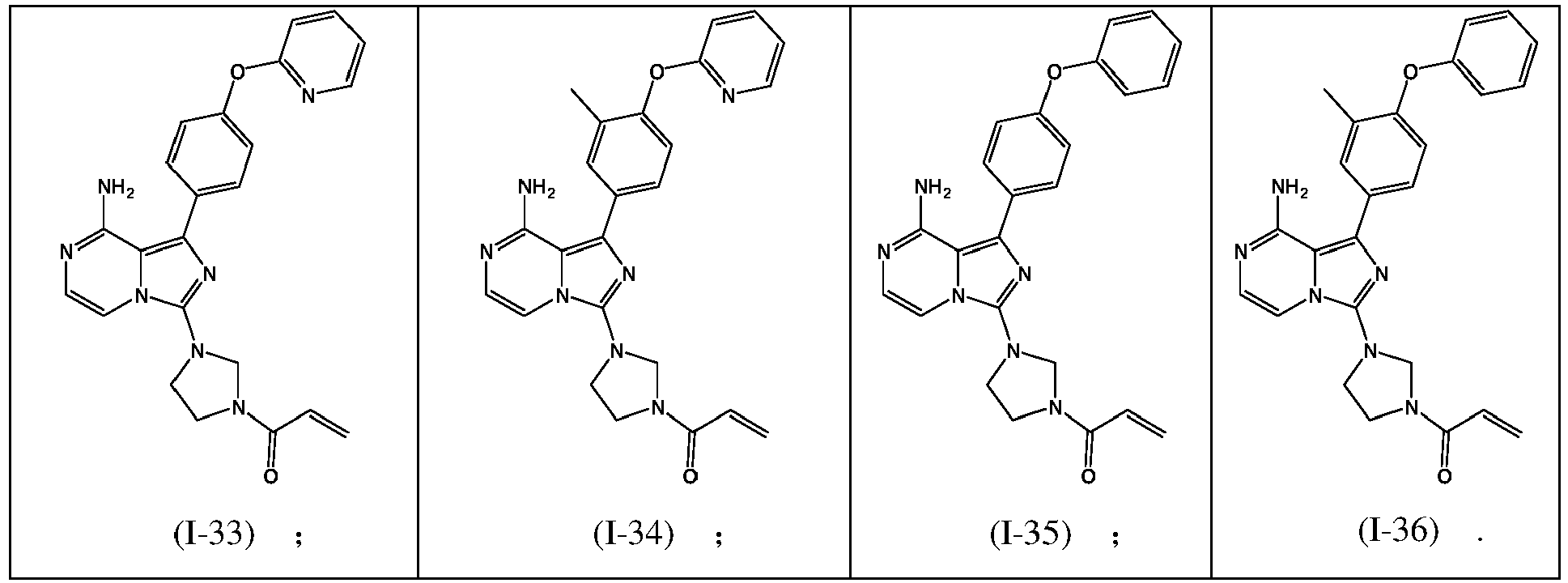
- the imidazopyrazinamine phenyl derivative is one of the compounds represented by the following structural formulas:
- the imidazopyrazinamine phenyl derivative can be not only a single compound but also a mixture of a plurality of compounds satisfying the requirements of general formula (I) and a different isomer of the same compound such as a racemate, a enantiomer, or a diastereomer.
- the pharmaceutically acceptable salt can be, but is not limited to hydrochloride, phosphate, sulfate, acetate, maleate, mesylate, besylate, benzoate, toluenesulfonate, succinate, fumarate, tartrate, gallate, or citrate.
- the preparation of the imidazopyrazinamine phenyl derivative of the invention can be carried out by synthesis routes in analogous methods well known in the field of chemistry, especially the compounds of the present invention can be synthesized in accordance with the description contained herein. Reagents are generally obtained from commercial sources or are readily prepared using methods well known to those skilled in the art.
- an aromatic ring refers to a conjugated planar ring system, wherein the bonds between atoms are not discontinuous alternating single and double bonds, the aromatic ring is an organic aromatic compound covered by a delocalized ⁇ electron cloud, having only carbon element in the ring.
- Five-membered heteroaromatic ring and six-membered heteroaromatic ring refer to aromatic rings having non-carbon element in the ring.
- the third objective of the present invention is to provide use of an imidazopyrazinamine phenyl derivative having general formula (I) as described, a pharmaceutically acceptable salt or hydrate thereof, or an imidazopyrazinamine phenyl derivative having general formula (II) as described, a pharmaceutically acceptable salt or hydrate thereof, for the preparation of medicaments for preventing and/or treating indications/diseases associated with BTK functions which can be diseases such as rheumatoid arthritis, B cell lymphoma, leukemia, multiple myeloma, allergies, asthma, multiple sclerosis, type I diabetes or systemic lupus erythematosus.
- diseases such as rheumatoid arthritis, B cell lymphoma, leukemia, multiple myeloma, allergies, asthma, multiple sclerosis, type I diabetes or systemic lupus erythematosus.
- the present invention also relates to an intermediate, for the preparation of the imidazopyrazinamine phenyl derivative having general formula (I) as described, the pharmaceutically acceptable salt or hydrate thereof.
- the general structural formula of the intermediate is:
- the halogen in R 2 is Cl.
- the intermediate is one of the following structural formulas:
- the present invention has the following advantages compared with the prior art: the compounds provided by the present invention are novel imidazopyrazinamine phenyl derivatives which are ideal high efficient BTK inhibitors and which provide an effective therapeutic approach to block B cell mediated diseases by inhibiting BTK.
- the compounds of the present invention have novel structures, high activities, good pharmacokinetic properties and high oral bioavailabilities.
- the compounds of the present invention have high kinase selectivities, weak or no irreversible inhibitions of related kinases, decreasing the resulting adverse effects. Meanwhile, faster metabolism rates and short half-lives can avoid the risks of immune side reactions due to excessive inhibition of BTK.
- the plasma peak concentration time (T max ) of the compounds of the present invention after oral administration is small, the peak plasma concentration can be reached very quickly, so that the drug takes effect very fast.
- the compounds of the present invention can be used as medicaments in treating or preventing various indications associated with BTK functions and having lower side effects.
- the compound of formula la i.e, the above (II-2), having a chemical structure as shown below:
- the compound of formula Ia can be obtained by the following synthesis route: 1
- the Reference Examples are outside the scope of the invention the preparation method of the compound of formula Ia specifically comprises the following steps:
- the compound of formula Ib i.e, the above (II-1), having a chemical structure as shown below:
- the compound of formula Ib can be obtained by the following synthesis route: the preparation method of the compound of formula Ib specifically comprises the following steps:
- the compound of formula Ic (i.e, the above 1-2), having a chemical structure as shown below:
- the compound of formula Ic can be obtained by the following synthesis route: the preparation method of the compound of formula Ic specifically comprises the following steps:
- the compound of formula Id (i.e, the above I-1), having a chemical structure as shown below:
- the compound of formula Id can be obtained by the following synthesis route: the preparation method of the compound of formula Id specifically comprises the following steps:
- the semi-inhibitory concentration IC 50 of the compound (the concentration of the compound required to inhibit the enzyme activity to 50%) is determined by mixing a fixed enzyme with a specific substrate and different concentrations of the test compounds.
- the test method used was the Caliper Mobility Shift Assay, the kinases to be tested are BTK, ITK, TEC, EGFR, HER2, HER4, JAK3, HCK, LYN, SRC and SYK.
- the standard reference compound used was staurosporine.
- Experiment animals CD-1 mouse, males and females; body weight: 20-25 g; Preparation of test samples: the target compound was formulated into 0.2 mg/mL (for intravenous administration) and 1.0 mg/mL (for oral administration) for later use. Route of administration: oral/intravenous. Dosage and dosing frequency: 2 mL/kg (intravenous) or 5 mL/kg (oral), single administration.
- Sample collection blood samples were collected at the following time points: 5 minutes, 15 minutes, 30 minutes, 1 hours, 2 hours, 4 hours, 8 hours and 24 hours after administration.
- Sample analysis The collected samples were tested using the LC-MS/MS method.
- the model of the instrument used was API4000.
- test results showed that the compound of the present invention has good pharmacokinetic characteristics and a short half life, which can reduce risks of immune side reactions that may be caused by inhibition of BTK.
- T max is small, and the peak plasma concentration can be reached very quickly, so that the drug took effect quickly.
- in vitro liver microsomal metabolism of the compounds of the present invention was also tested.
- the test compound was co-incubated with NADPH and mouse or human liver microsomes in a 37 °C water bath pot, a reaction was initiated by adding the test compound. 20 ⁇ L of the incubated sample was taken at different time points (0, 10, 20, 40 and 60 minutes) and transferred to acetonitrile containing an internal standard. After proteins were precipitated, the supernatant was obtained by centrifugation. The test compound in the supernatant was analyzed by the LC-MS/MS method. The intrinsic clearance in vitro was calculated according to the elimination half life of the test compound in the incubation system. Midazolam was subjected to parallel incubation as a positive control.
- the T 1/2 of the compound of formula Id in mouse and human liver microsomes was 8.26 minutes and 3.13 minutes, respectively, and the intrinsic clearance (CL int ) was 660.83 mL/min/kg and 555.11 mL/min/kg, respectively.
- acalabrutinib had a T 1/2 of 23.32 minutes in mouse liver microsome and a T 1/2 of 11.88 minutes in human liver microsome, respectively, and the intrinsic clearances were 234.03 mL/min/kg and 146.3 mL/min/kg, respectively.
- the compounds of the present invention are ideal highly efficient selective BTK kinase inhibitors and are expected to be used in the treatment or prevention of diseases such as rheumatoid arthritis, B cell lymphoma, leukemia, multiple myeloma, allergies, asthma, multiple sclerosis, type I diabetes and systemic lupus erythematosus and achieve very good results. They can also be combined with different types of medicinal salts to form oral preparations (tablets or capsules, etc.). Tablets or capsules made with the compounds of the present invention can be taken one or more times a day.
- the compounds of the present invention can also be combined with other drugs to prepare compound preparations.
Landscapes
- Health & Medical Sciences (AREA)
- Chemical & Material Sciences (AREA)
- Organic Chemistry (AREA)
- Medicinal Chemistry (AREA)
- Pharmacology & Pharmacy (AREA)
- Life Sciences & Earth Sciences (AREA)
- Animal Behavior & Ethology (AREA)
- General Health & Medical Sciences (AREA)
- Public Health (AREA)
- Veterinary Medicine (AREA)
- Nuclear Medicine, Radiotherapy & Molecular Imaging (AREA)
- Chemical Kinetics & Catalysis (AREA)
- General Chemical & Material Sciences (AREA)
- Engineering & Computer Science (AREA)
- Bioinformatics & Cheminformatics (AREA)
- Pulmonology (AREA)
- Diabetes (AREA)
- Immunology (AREA)
- Rheumatology (AREA)
- Physical Education & Sports Medicine (AREA)
- Hematology (AREA)
- Oncology (AREA)
- Epidemiology (AREA)
- Biomedical Technology (AREA)
- Orthopedic Medicine & Surgery (AREA)
- Pain & Pain Management (AREA)
- Emergency Medicine (AREA)
- Endocrinology (AREA)
- Obesity (AREA)
- Communicable Diseases (AREA)
- Pharmaceuticals Containing Other Organic And Inorganic Compounds (AREA)
- Nitrogen Condensed Heterocyclic Rings (AREA)
Description
- The present invention relates to an imidazopyrazinamine phenyl derivative, and use thereof in the preparation of medicaments for preventing and/or treating indications/diseases associated with BTK functions which can be rheumatoid arthritis, B cell lymphoma, leukemia, multiple myeloma, allergies, asthma, multiple sclerosis, type I diabetes and systemic lupus erythematosus.
- Bruton's Tyrosine Kinase (BTK) is a member of the tyrosine kinase TEC family and plays an important role in B cell activation and cell transduction. B cell receptor (BCR) is a key regulatory site for B cell activity, abnormal signaling can cause dysregulated B cell proliferation and the formation of pathogenic autoantibodies, leading to a variety of autoimmune diseases and inflammatory diseases.
- BTK is located at the membrane-proximal section and immediately downstream of BCR, BTK deficiency can block BCR signaling. Thus, an effective therapeutic approach to block B cell mediated diseases can be provided by inhibiting BTK. BTK inhibitors can be used in the treatment of diseases such as rheumatoid arthritis, B cell lymphoma, leukemia, multiple myeloma, allergies, asthma, multiple sclerosis, type I diabetes and systemic lupus erythematosus.
- Currently, two BTK inhibitors being developed extensively are ibrutinib and ACP-196 (acalabrutinib). The former was approved by FDA in 2013 for the treatment of mantle cell lymphoma (MCL) and chronic lymphocytic leukemia (CLL). The latter is currently in phase III clinical trials.
- Both BTK inhibitors have some toxic side effects, such as: thrombocytopenia, decreased hemoglobin, diarrhea, neutropenia, anemia, fatigue, headache, musculoskeletal pain, angioedema, upper respiratory tract infection, nausea, bruising, dyspnea, constipation, rash, arthralgia, bellyache, vomiting and loss of appetite etc. In the two inhibitors, the toxic side effects of ibrutinib are much larger than those of ACP-196 (Acalabrutinib (ACP-196) in Relapsed Chronic Lymphocytic Leukemia (The New England Journal of Medicine, 374; 4, 2016)).
- These toxic side effects are caused by the low selectivities to the kinase and the long half lives of the drugs.
- In literature: Acalabrutinib (ACP-196) in Relapsed Chronic Lymphocytic Leukemia (The New England Journal of Medicine, 374; 4, 2016), it is disclosed that three kinases, EGFR/ITK/TEC are clearly related to side effects.
- In a conference paper: Presented at the 2nd International Conference on New Concepts in B-cell Malignancies; 9-11 September 2016; Estoril, Portugal, it is disclosed that the half life of ibrutinib was 6 hours and the half life of ACP-196 was 1.13 hours.
-
WO 2015/057992 A1 discloses methods to improve hematopoiesis and increase white blood cell counts in subjects and patients using 6,5 fused heteroaryl ring system-based inhibitors of BTK. These compounds include imidazopyrazine phenyl derivatives. -
WO 2013/010868 A1 discloses 6-5 membered fused pyridine ring compounds, in particular 4 - imidazopyridazin-1-yl-benzamides and 4-imidazotriazine-1-yl-benzamides or a pharmaceutically acceptable salt thereof or pharmaceutical compositions comprising these compounds and to their use in the treatment of BTK mediated disorders. -
WO 2013/010380 A1 discloses 6-5 membered fused pyridine ring compounds, in particular imidazopyrazine phenyl derivatives or pharmaceutically acceptable salts thereof, pharmaceutical compositions comprising these compounds and their use in the treatment of BTK mediated disorders. -
WO 2008/121742 A2 discloses irreversible BTK inhibitors, in particular pyrazolopyrimidine phenyl derivatives and pharmaceutical compositions comprising these compounds and their use in the treatment of BTK mediated disorders. - The technical problem to be solved by the present invention is to provide a novel imidazopyrazinamine phenyl derivative which has relative low toxic side effects and is an ideal non-reversible BTK inhibitor.
- The present invention also provides an imidazopyrazinamine phenyl derivative, a pharmaceutically acceptable salt, hydrate thereof, for use as medicaments in preventing and/or treating indications/diseases associated with BTK functions.
- In order to solve the above technical problems, the present invention adopts the following technical solutions:
An objective of the present invention is to provide an imidazopyrazinamine phenyl derivative having a structure represented by general formula (I), a pharmaceutically acceptable salt or hydrate thereof,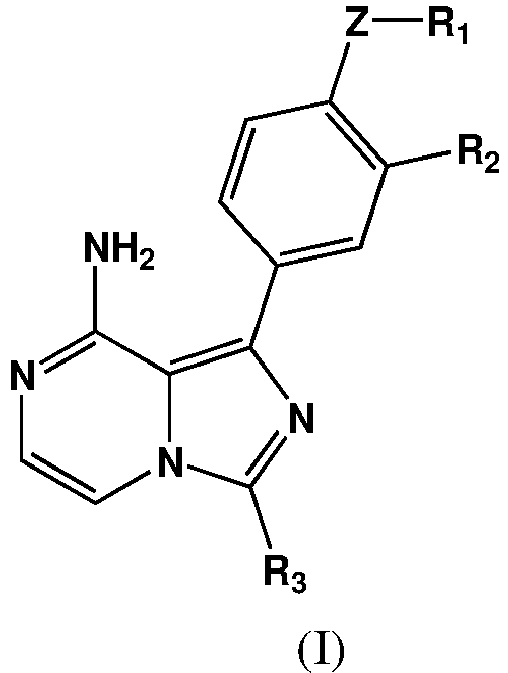
- wherein: Z is selected from NH, C=O or O;
- R1 is an aromatic ring, a five-membered heteroaromatic ring or a six-membered heteroaromatic ring, which is optionally substituted with 0-5 C1-C4 alkyls or halogens independently;
- R2 is H, C1-C4 alkyl or halogen;
- R3 is

- In the present invention, in the imidazopyrazinamine phenyl derivative having the structure represented by general formula (I), a pharmaceutically acceptable salt or hydrate thereof, non-exchangeable hydrogen is not substituted, or is partially or completely substituted with deuterium.
- Preferably, R1 is a benzene ring, a six-membered heteroaromatic ring containing 1 or 2 nitrogens, which is optionally substituted with 0-2 C1-C4 alkyls.
- Further preferably, R1 is


- Preferably, R2 is H, methyl, ethyl, n-propyl, isopropyl, n-butyl, isobutyl, sec-butyl or tert-butyl.
- Preferably, R3 is

- Preferably, R5 is H, methyl, ethyl, n-propyl, isopropyl, n-butyl, isobutyl, sec-butyl or tert-butyl.
- Specifically, the imidazopyrazinamine phenyl derivative is one of the compounds represented by the following structural formulas:


- According to the present invention, the imidazopyrazinamine phenyl derivative can be not only a single compound but also a mixture of a plurality of compounds satisfying the requirements of general formula (I) and a different isomer of the same compound such as a racemate, a enantiomer, or a diastereomer. The pharmaceutically acceptable salt can be, but is not limited to hydrochloride, phosphate, sulfate, acetate, maleate, mesylate, besylate, benzoate, toluenesulfonate, succinate, fumarate, tartrate, gallate, or citrate.
- The preparation of the imidazopyrazinamine phenyl derivative of the invention can be carried out by synthesis routes in analogous methods well known in the field of chemistry, especially the compounds of the present invention can be synthesized in accordance with the description contained herein. Reagents are generally obtained from commercial sources or are readily prepared using methods well known to those skilled in the art.
- In the present invention, an aromatic ring refers to a conjugated planar ring system, wherein the bonds between atoms are not discontinuous alternating single and double bonds, the aromatic ring is an organic aromatic compound covered by a delocalized π electron cloud, having only carbon element in the ring. Five-membered heteroaromatic ring and six-membered heteroaromatic ring refer to aromatic rings having non-carbon element in the ring.
- The third objective of the present invention is to provide use of an imidazopyrazinamine phenyl derivative having general formula (I) as described, a pharmaceutically acceptable salt or hydrate thereof, or an imidazopyrazinamine phenyl derivative having general formula (II) as described, a pharmaceutically acceptable salt or hydrate thereof, for the preparation of medicaments for preventing and/or treating indications/diseases associated with BTK functions which can be diseases such as rheumatoid arthritis, B cell lymphoma, leukemia, multiple myeloma, allergies, asthma, multiple sclerosis, type I diabetes or systemic lupus erythematosus.
- The present invention also relates to an intermediate, for the preparation of the imidazopyrazinamine phenyl derivative having general formula (I) as described, the pharmaceutically acceptable salt or hydrate thereof. The general structural formula of the intermediate is:
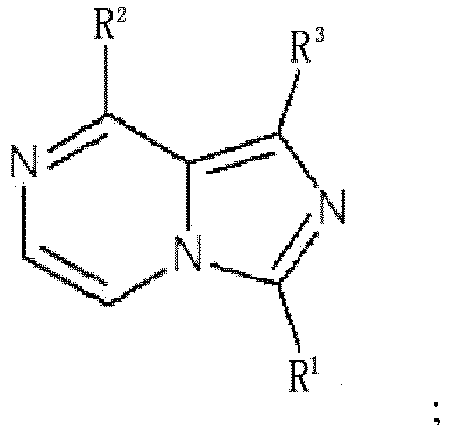
- wherein, R1 is

- R2 is halogen or NH2;
- R3 is
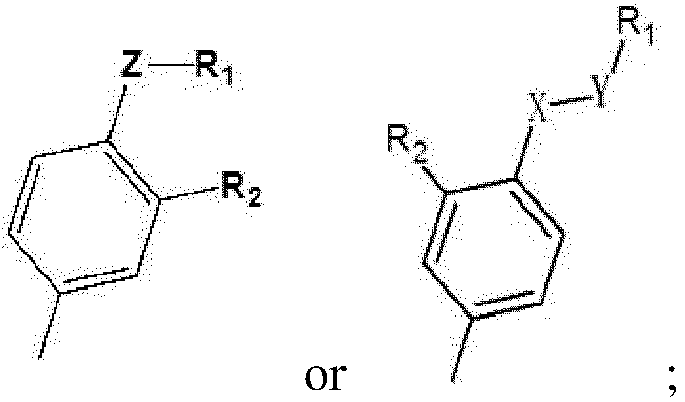
- R1 is an aromatic ring, a five-membered heteroaromatic ring or a six-membered heteroaromatic ring, which is optionally substituted with 0-5 C1-C4 alkyls or halogens independently; R2 is H, C1-C4 alkyl or halogen.
- Preferably, the halogen in R2 is Cl.
- Specifically, the intermediate is one of the following structural formulas:

- wherein Z is selected from NH, C=O or O;
- X is NH and Y is C=O;
- R1 is an aromatic ring, a five-membered heteroaromatic ring or a six-membered heteroaromatic ring, which is optionally substituted with 0-5 C1-C4 alkyls or halogens independently;
- R2 is H, C1-C4 alkyl or halogen.
- Due to the implementation of the above technical solutions, the present invention has the following advantages compared with the prior art:
the compounds provided by the present invention are novel imidazopyrazinamine phenyl derivatives which are ideal high efficient BTK inhibitors and which provide an effective therapeutic approach to block B cell mediated diseases by inhibiting BTK. The compounds of the present invention have novel structures, high activities, good pharmacokinetic properties and high oral bioavailabilities. The compounds of the present invention have high kinase selectivities, weak or no irreversible inhibitions of related kinases, decreasing the resulting adverse effects. Meanwhile, faster metabolism rates and short half-lives can avoid the risks of immune side reactions due to excessive inhibition of BTK. Further, the plasma peak concentration time (Tmax) of the compounds of the present invention after oral administration is small, the peak plasma concentration can be reached very quickly, so that the drug takes effect very fast. Thus, the compounds of the present invention can be used as medicaments in treating or preventing various indications associated with BTK functions and having lower side effects. - The present invention will be further described in detail with reference to specific embodiments, but the present invention is not limited to the following examples.
- The compound of formula la, i.e, the above (II-2), having a chemical structure as shown below:


- (1) preparation of intermediate 2: compound 1 (90 g, 645 mmol), CH3COOH (1 L) and Raney Ni (20 g) were added to a 2 L autoclave successively. A reaction was carried out in the autoclave while the reaction solution was stirred under a hydrogen pressure of 1 MPa for 48 hours at atmospheric temperature. After the reaction was completed, the reaction solution was filtered through diatomite, and a solution of HCl in MeOH (200mL, 6.0N) was used to wash diatomite. The filtrate after being concentrated was poured into toluene and the obtained system was stirred, and was then concentrated again. The obtained mixture was stirred in MTBE (methyl tert-butyl ether) and was filtered. The filter cake was stirred in MTBE and MeOH and was then filtered to obtain intermediate 2 (40g, yield: 35%) as a brown solid. LCMS showed a molecular ion peak (M+1) 144.0.
- (2) Preparation of intermediate 3: in a 3 L reaction flask, DCM (dichloromethane) (500 mL), intermediate 2 (39 g, 217 mmol), 1148-11-4 (N-benzyloxycarbonyl-L-proline) (54 g, 217 mmol) and Et3N (87.7 g, 868 mmol) were added successively. Under nitrogen protection, the reaction solution was cooled to 0 °C and HATU (2-(7-azobenzotriazole)-tetramethylurea hexafluorophosphate) (98.8 g, 260 mmol) was added in batches. The reaction solution was naturally warmed to room temperature, and the reaction was carried out for 14 hours under stirring. After the reaction was completed, HCl (400 mL, 0.5 N H2O) was added, the obtained mixture was filtered through diatomite and was extracted, the organic phase was washed with NaHCO3 (5%) and saturated saline solution, dried over Na2SO4 and concentrated, then passed through column (PE (polyethylene): EA (ethyl acrylate) = 1:1) to obtain intermediate 3 (12.7 g, yield: 14.7%) as a white solid. LCMS showed a molecular ion peak (M+1) 375.0.
- (3) Preparation of intermediate 4: in a 250 mL three neck reaction flask, ACN (acetonitrile) (48 mL) and POCl3 (16 mL, 175 mol) were added, the obtained solution was preheated to 80 °C. Intermediate 3 (8 g, 21.3 mmol) was dissolved in ACN (32 mL) and then the obtained solution was quickly added to the preheated solution. The reaction solution was reacted at 80 °C for 3.5 hours. After cooling to room temperature, the reaction solution was slowly poured into a solution of NH3·H2O in ice water. NH3·H2O was added continuously to adjust pH = 8-9. The aqueous phase was extracted with ethyl acetate for three times. The organic phase was washed with saturated saline solution, dried over Na2SO4 and concentrated to obtain intermediate 4 as a solid which was directly used in the reaction of the next step. LCMS showed a molecular ion peak (M+1) 357.0.
- (4) Preparation of intermediate 5: in a 100 mL reaction flask, DMF (N,N-dimethylformamide) (20 mL), intermediate 4 (21.3 mmol) and NBS (n-bromosuccinimide) (3.791 g, 21.3 mmol) were added successively. The reaction solution was stirred at atmospheric temperature for 12 hours and was purified by reversed phase column to obtain intermediate 5 (6.67 g, the yield of two steps: 72%) as a white solid. LCMS showed a molecular ion peak (M+1) 434.9.
- (5) Preparation of intermediate 6: in a 250 mL sealed tube, intermediate 5 (6 g, 13.8 mmol), IPA (isopropanol) (90 mL) and NH3·H2O (135 mL) were added successively. The reaction solution was reacted at 90 °C for 14 hours, concentrated and purified by reversed phase column to obtain intermediate 6 (5 g, yield: 87%) as a white solid. LCMS showed a molecular ion peak (M+1) 415.9.
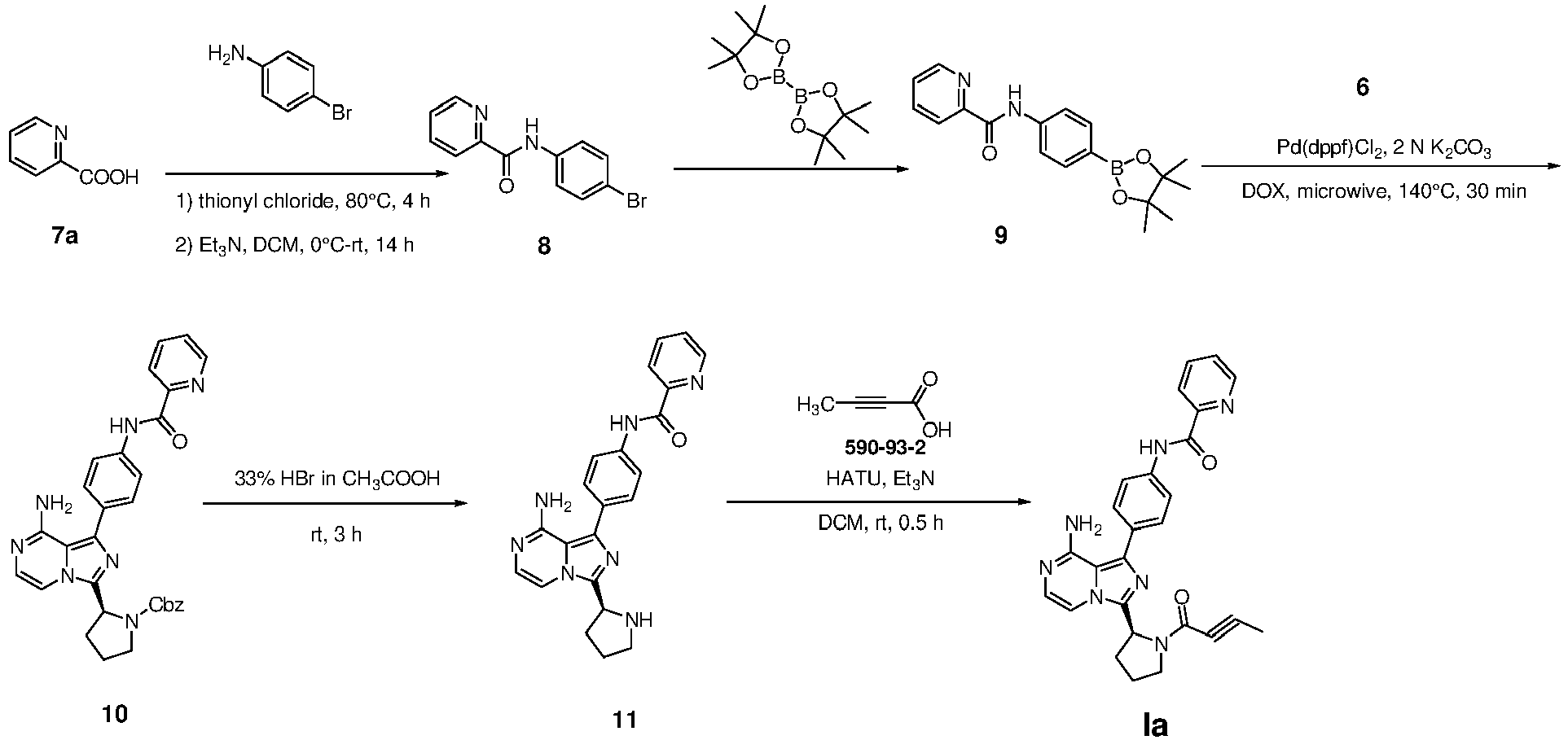
- (6) Preparation of intermediate 8: in a 1 L reaction flask, SOCl2 (thionyl dichloride) (100 mL) and compound 7a (36.9 g, 300 mmol) were added successively. Under nitrogen protection, the reaction solution was stirred at 80 °C for 4 hours, cooled and then concentrated. DCM (dichloromethane) (400 mL) was added, cooled to 10 °C and Et3N (121.1 g, 1200 mmol) was added slowly under nitrogen protection. The obtained system was cooled to 0 °C, a solution of 106-40-1 (p-bromoaniline) (51.6 g, 300 mmol) in DCM (100 mL) was added dropwise. The temperature was naturally increased to room temperature and the obtained system continued to react for 14 hours and was concentrated and separated by rapid column chromatography to obtain intermediate 8 (33.39 g, yield: 40%) as a grey solid. LCMS showed a molecular ion peak (M+1) 277.0.
- (7) Preparation of intermediate 9: in a 1 L reaction flask, intermediate 8 (13.8 g, 50 mmol), bis(pinacolato)diboron (13.97 g, 55 mmol), KOAc (potassium acetate) (14.7 g, 150 mmol), Pd(dppf)Cl2 ([1,1'-bis(diphenylphosphino)ferrocene]dichloropalladium) (1.5 g) and dioxane (250 mL) were added successively. The reaction solution was reacted at 100 °C for 14 hours under argon protection. The reaction solution was cooled, then concentrated and separated by rapid column chromatography to obtain intermediate 9 (10.93 g, yield: 68%) as a white solid. LCMS showed a molecular ion peak (M+1) 325.0.
- (8) Preparation of intermediate 10: in a 30 mL microwave reaction tube, intermediate 9 (970 mg, 3 mmol), intermediate 6 (625 mg, 1.5 mmol), Pd(dppf)Cl2 (200 mg), K2CO3 (2.2 mL2.0 N, 4.4 mmol) and dioxane (7 mL) were added successively. The reaction solution was purged with nitrogen and was microwave-heated to 140 °C to be reacted for 30 minutes. The reaction solution was cooled and was then extracted with EA (ethyl acrylate) for three times. The organic phase was concentrated and was then subjected to rapid column chromatography and purification by reverse phase column to obtain intermediate 10 (500 mg, yield: 62%) as a brown solid. LCMS showed a molecular ion peak (M+1) 534.0.
- (9) Preparation of intermediate 11: in a 50 mL reaction flask, intermediate 10 (500 mg, 0.94 mmol) and a solution of HBr in CH3COOH (7 mL, mass concentration of HBr: 33%) was added successively. The reaction solution was stirred at atmospheric temperature for 4 hours. Water was added, the obtained system was extracted three times with DCM (dichloromethane). The aqueous phase was adjusted to pH = 8-9 with solid Na2CO3 and was extracted with DCM for three times. The organic phase was washed with saturated saline water, dried over Na2SO4, concentrated then purified by traverse phase column to obtain intermediate 11 (100 mg. yield: 27%) as a white solid. LCMS showed a molecular ion peak (M+1) 400.0.
- (10) Preparation of the compound of formula la: in a 25 mL reaction flask, DCM (dichloromethane) (5 mL), intermediate 11 (90 mg, 0.23 mmol), 590-93-2 (2-butynoic acid) (19.3 mg, 0.23 mmol), Et3N (68 mg, 0.68 mmol) and HATU (2-(7-azobenzotriazole)-tetramethylurea hexafluorophosphate) (87.5 mg, 0.23 mmol) were added successively. The reaction solution was stirred at atmospheric temperature for 30 minutes under nitrogen protection. The reaction solution was concentrated, purified by big plate and reverse phase column to obtain compound of formula Ia (47 mg, yield: 45%) as a white solid.
- LCMS showed a molecular ion peak (M+1) 466.3.
- The obtained target product Ia was subjected to hydrogen nuclear magnetic resonance 1H-NMR (400 MHz, d-DMSO) and mass spectrometry, and the results were as follows:
absorption peaks in 1H-NMR spectrum: δ=10.80 (1H, CONH), 8.78-8.77 (1H, ArH), 8.20-8.18 (1H, ArH), 8.11-8.06 (3H, ArH), 7.81-7.74 (1H, ArH), 7.71-7.69 (1H, ArH), 7.60-7.59 (2H, ArH), 7.11-7.06 (1H, ArH), 6.09-6.03 (2H, NH2), 5.71-5.45 (1H, a-H), 3.83-3.78, 3.61-3.55 (2H, d-H), 2.42-1.93, 1.63 (7H, b-H, c-H, -CH3).
m/z [MH]+: 466.3. It was calculated that the product has the molecular formula C26H23N7O2, and the exact molecular mass (exact mass) of the product was 465.19. - The compound of formula Ib, i.e, the above (II-1), having a chemical structure as shown below:
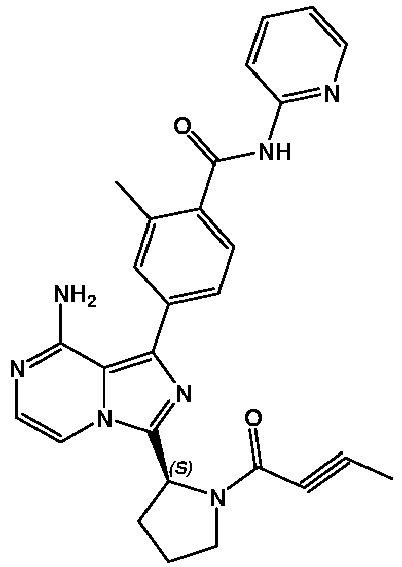
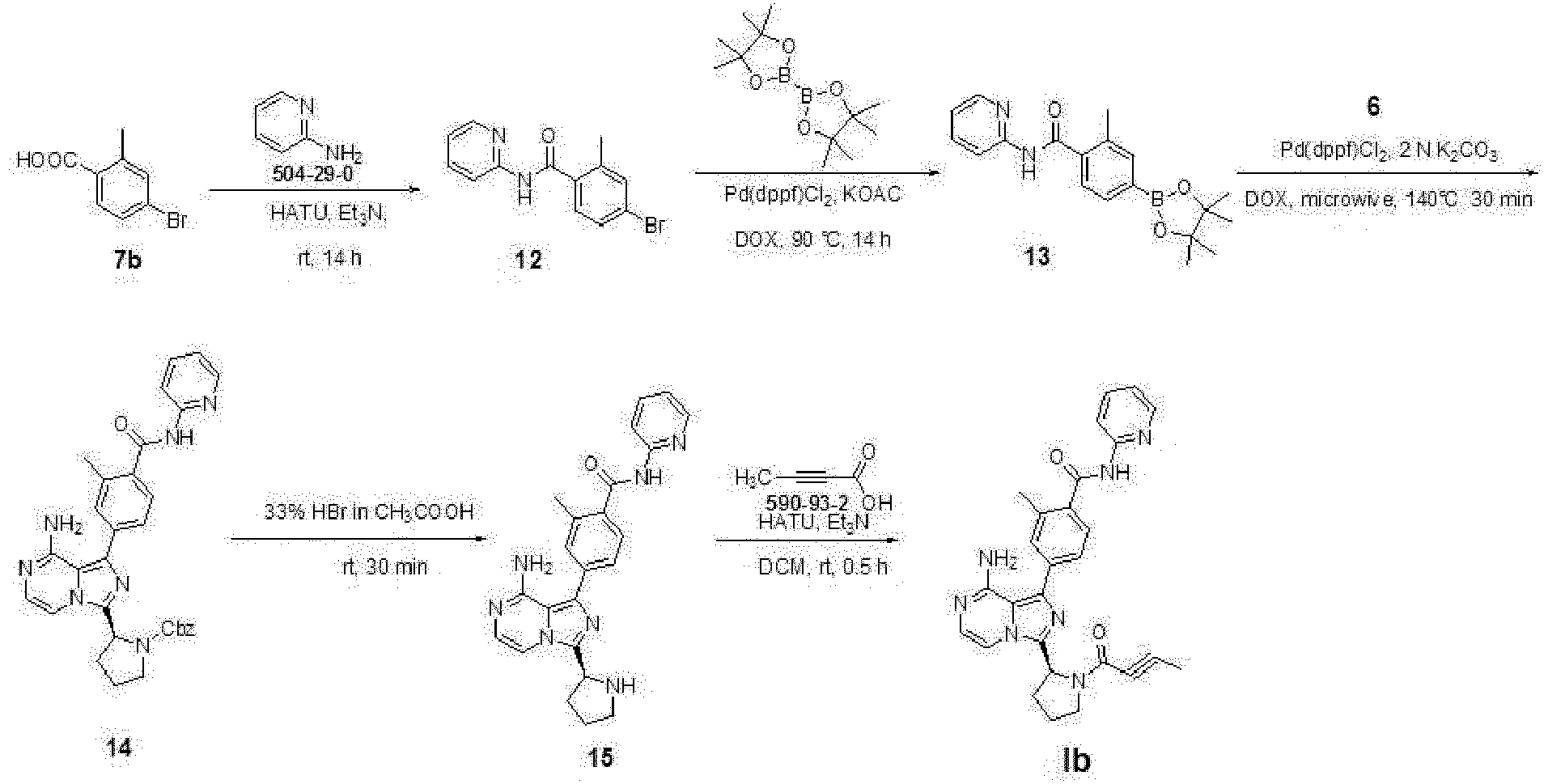
- (1) preparation of intermediate 12: in a 500mL reaction flask, THF (tetrahydrofuran) (100 mL), compound 7a (10.75 g, 50 mmol), Et3N (15.15 g, 150 mmol) and HATU (2-(7-azobenzotriazole)-tetramethylurea hexafluorophosphate) (19 g, 50 mmol) were added successively. The obtained system was stirred at atmospheric temperature for 20 minutes under argon protection. A solution of 504-29-0 (2-aminopyridine) (4.5 g, 47.9 mmol) in THF (100 mL) was added slowly to the above solution, the obtained system was stirred under atmospheric temperature for 14 hours and was concentrated, subjected to rapid column chromatography and reverse phase column purification to obtain intermediate 12 (2 g, yield: 14.2%) as a white solid. LCMS showed a molecular ion peak (M+1) 290.9.
- (2) Preparation of intermediate 13: the method for the synthesis of intermediate 13 was similar to the method for the synthesis of intermediate 9, intermediate 13 was obtained (1.3 g, yield: 56%) as a yellow solid. LCMS showed a molecular ion peak (M+1) 339.1.
- (3) Preparation of intermediate 14: the method for the synthesis of intermediate 14 was similar to the method for the synthesis of intermediate 10, intermediate 14 was obtained (513 mg, yield: 67%) as a yellow solid. LCMS showed a molecular ion peak (M+1) 548.0.
- (4) Preparation of intermediate 15: the method for the synthesis of intermediate 15 was similar to the method for the synthesis of intermediate 11, intermediate 15 was obtained (210 mg, yield: 69.6%) as a yellow solid. LCMS showed a molecular ion peak (M+1) 414.0.
- (5) Preparation of the compound of formula Ib: the method for the synthesis of the compound of formula Ib was similar to the method for the synthesis of the compound of formula la, the compound of formula Ib was obtained (35 mg, yield: 18.2%) as a white solid.
- The obtained target product Ib was subjected to hydrogen nuclear magnetic resonance 1H-NMR (400 MHz, d-DMSO) and mass spectrometry, and the results were as follows:
absorption peaks in 1H-NMR spectrum: δ=10.79 (1H, CONH), 8.37-8.36 (1H, ArH), 8.23-8.21 (1H, ArH), 7.87-7.77 (2H, ArH), 7.62-7.60 (1H, ArH), 7.50-7.45 (2H, ArH), 7.18-7.09 (2H, ArH), 6.14-6.09 (2H, NH2), 5.72-5.46 (1H, a-H), 3.84-3.80, 3.62-3.56 (2H, d-H), 2.47 (3H, PhCH3), 2.42-1.92, 1.63 (7H, b-H, c-H, -CH3).
m/z [MH]+: 480.2. It was calculated that the product has the molecular formula C27H25N7O2, and the exact molecular mass (exact mass) of the product was 479.21. - The compound of formula Ic, (i.e, the above 1-2), having a chemical structure as shown below:


- (1) preparation of intermediate 16: in a 50 mL reaction flask, DMF (N,N-dimethylformamide) (20 mL), compound 7c (1.71 g, 10 mmol), 372-48-5 (2-fluoropyridine) (970 mg, 10 mmol) and Cs2CO3 (6.52 g, 20 mmol) were added successively. The reaction solution was reacted under heating and argon protection for 12 hours. The reaction solution was cooled, then H2O was added and the obtained system was extracted with ethyl acetate for three times. The organic phase was washed with saturated saline water, dried over Na2SO4 and concentrated to obtain intermediate 16 (1.8 g) which was directly used in the reaction of the next step. LCMS showed a molecular ion peak (M+1) 250.0.
- (2) Preparation of intermediate 17: in a 50 mL reaction flask, intermediate 16 (1.8 g, 7 mmol), bis(pinacolato)diboron (3.556 g, 14 mmol), K2CO3 (2.898 g, 21 mmol), Pd(PPh3)4 (tetrakis(triphenylphosphine)palladium) (500 mg) and dioxane (10 mL) were added successively. The reaction solution was reacted at 100 °C for 15 hours under argon protection. The reaction solution was cooled, then was concentrated and separated by rapid column chromatography to obtain intermediate 17 (2 g) as a brown solid. LCMS showed a molecular ion peak (M+1) 298.1.
- (3) Preparation of intermediate 18: in a 30 mL microwave reaction tube, intermediate 17 (2 g, 6.7 mmol), intermediate 6 (625 mg, 1.5 mmol), Pd(dppf)Cl2 ([1,1'- bis(diphenylphosphino)ferrocene]dichloropalladium) (300 mg), K2CO3 (2 mL 2.0 N, 4 mmol) and dioxane (8 mL) were added successively. The reaction solution was purged with nitrogen and was microwave-heated to 140 °C to be reacted for 30 minutes. The reaction solution was cooled, then concentrated and purified by reverse phase column to obtain intermediate 18 (220 mg, yield: 28.9%) as a white solid. LCMS showed a molecular ion peak (M+1) 507.1.
- (4) Preparation of intermediate 19: in a 50 mL reaction flask, intermediate 18 (220 mg, 0.43 mmol) and a solution of HBr in CH3COOH (8 mL, mass concentration of HBr: 33%) was added successively. The reaction solution was stirred at atmospheric temperature for 4 hours. Water was added, the obtained system was extracted three times with DCM (dichloromethane). The aqueous phase was adjusted to pH = 8-9 with solid Na2CO3 and was extracted with DCM for three times. The organic phase was washed with saturated saline water, dried over Na2SO4, concentrated then purified by traverse phase column to obtain intermediate 19 (120 mg. yield: 75%) as a white solid. LCMS showed a molecular ion peak (M+1) 373.1.
- (5) Preparation of the compound of formula Ic: in a 25 mL reaction flask, DCM (dichloromethane) (5 mL), intermediate 23 (120 mg, 0.32 mmol), 590-93-2 (2-butynoic acid) (27 mg, 0.32 mmol), Et3N (96 mg, 0.96 mmol) and HATU (2-(7-azobenzotriazole)-tetramethylurea hexafluorophosphate) (152 mg, 0.4 mmol) were added successively. The reaction solution was stirred at atmospheric temperature for 4 hours under nitrogen protection. The reaction solution was concentrated, purified by reverse phase column to obtain compound of formula Ic (59 mg, yield: 42%) as a white solid.
- The obtained target product Ic was subjected to hydrogen nuclear magnetic resonance 1H-NMR (400 MHz, d-DMSO) and mass spectrometry, and the results were as follows:
absorption peaks in 1H-NMR spectrum: δ=8.20-8.19 (1H, ArH), 7.90-7.87 (1H, ArH), 7.83-7.75 (1H, ArH), 7.64-7.60 (2H, ArH), 7.26-7.24 (2H,ArH), 7.18-7.15 (1H,ArH), 7.11-7.17 (2H,ArH), 6.13-6.07 (2H,NH2), 5.71-5.45 (1H, a-H), 3.82-3.79 (1H, d-H), 3.61-3.54 (1H, d-H), 2.43-1.92, 1.63 (7H, b-H, c-H, -CH3).
m/z [MH]+: 439.2. It was calculated that the product has the molecular formula C25H22N6O2, and the exact molecular mass (exact mass) of the product was 438.18. - The compound of formula Id (i.e, the above I-1), having a chemical structure as shown below:
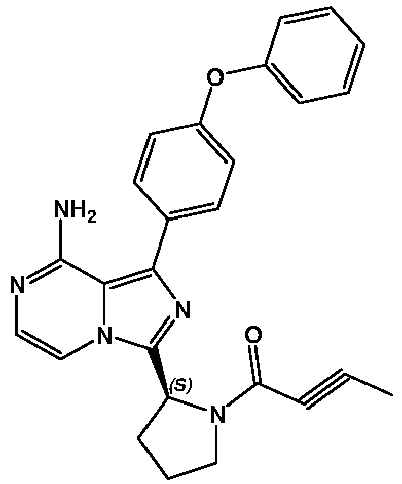

- (1) preparation of intermediate 21: the method for the synthesis of intermediate 21 was similar to the method for the synthesis of intermediate 18, intermediate 21 was obtained (200 mg, yield: 46.4%) as a white solid. LCMS showed a molecular ion peak (M+1) 506.2.
- (2) Preparation of intermediate 22: the method for the synthesis of intermediate 22 was similar to the method for the synthesis of intermediate 19, intermediate 22 was obtained (116 mg, yield: 78%) as a white solid. LCMS showed a molecular ion peak (M+1) 372.1.
- (3) Preparation of the compound of formula Id: the method for the synthesis of the compound of formula Id was similar to the method for the synthesis of the compound of formula Ic, the compound of formula Id was obtained (116 mg, yield: 43.6%) as a white solid.
- The obtained target product Ib was subjected to hydrogen nuclear magnetic resonance 1H-NMR (400 MHz, d-DMSO) and mass spectrometry, and the results were as follows:
absorption peaks in 1H-NMR spectrum: δ=7.82-7.34 (1H, ArH), 7.61-7.57 (2H, ArH), 7.44-7.40 (2H, ArH), 7.19-7.15 (1H, ArH), 7.13-7.05 (5H, ArH), 6.11-6.05 (2H, NH2), 5.70-5.44 (1H, a-H), 3.82-3.79, 3.61-3.55 (2H, d-H), 2.43-1.94, 1.62 (7H, b-H, c-H, -CH3).
m/z [MH]+: 438.2. It was calculated that the product has the molecular formula C26H23N5O2, and the exact molecular mass (exact mass) of the product was 437.19. - The semi-inhibitory concentration IC50 of the compound (the concentration of the compound required to inhibit the enzyme activity to 50%) is determined by mixing a fixed enzyme with a specific substrate and different concentrations of the test compounds. The test method used was the Caliper Mobility Shift Assay, the kinases to be tested are BTK, ITK, TEC, EGFR, HER2, HER4, JAK3, HCK, LYN, SRC and SYK. The standard reference compound used was staurosporine.
- The results of experiments on the inhibitions of BTK enzyme activity by the target compounds (la, Ib, Ic and Id) were summarized in Table 1. The results showed that the target compounds (Ib and Id) had very strong inhibiting effects on BTK kinase, and the compounds of formula Ia and Ic also had strong inhibiting effects on BTK kinase.
- The results of experiments on the inhibitions of ITK, TEC, EGFR, HER2, HER4, JAK3, HCK, LYN, SRC and SYK enzyme activities by the target compound Id were summarized in Table 2. The results showed that the selective inhibiting activity of the target compound Id was good. This selective inhibiting effect has important values for the treatment of diseases such as rheumatoid arthritis, B cell lymphoma, leukemia, multiple myeloma, allergies, asthma, multiple sclerosis, type I diabetes and systemic lupus erythematosus. The tests of other compounds of the present invention also have similar results.
Table 1 Compound Inhibition on kinase activity (IC50, nM) Compound of formula Ia (reference) 415 Compound of formula Ib (reference) 50 Compound of formula Ic (invention) 577 Compound of formula Id (invention) 4.8 Ibrutinib 1.5 Acalabrutinib 11 Table 2 Kinase Inhibition on kinase activity (IC50, nM) Compound of formula Id Acalabrutinib Ibrutinib ITK >1000 >1000 787 TEC 40 37 7 EGFR >1000 >1000 10 HER2 >1000 >1000 63 HER4 >1000 >1000 16 JAK3 >1000 >1000 233 HCK >1000 >1000 1267 LYN >1000 >1000 187 SRC >1000 >1000 610 SYK >1000 >1000 >1000 - Experiment animals: CD-1 mouse, males and females; body weight: 20-25 g;
Preparation of test samples: the target compound was formulated into 0.2 mg/mL (for intravenous administration) and 1.0 mg/mL (for oral administration) for later use. Route of administration: oral/intravenous. Dosage and dosing frequency: 2 mL/kg (intravenous) or 5 mL/kg (oral), single administration. - Sample collection: blood samples were collected at the following time points: 5 minutes, 15 minutes, 30 minutes, 1 hours, 2 hours, 4 hours, 8 hours and 24 hours after administration.
- Sample analysis: The collected samples were tested using the LC-MS/MS method. The model of the instrument used was API4000.
- Pharmacokinetic data analysis: the obtained plasma concentration data were fitted and calculated according to the non-compartmental model method using WinNolin. Some results are summarized in Table 3.
Table 3 Dosage (mg/kg) Route of administration Pharmacokinetic parameters (unit) Compound of formula Id 3 Intravenous injection CL (L/hr/kg) 4.62 Vss (L/kg) 1.30 Terminal t1/2 (hr) 0.286 AUClast(hr∗ng/mL) 661 MRT iNF(hr) 0.297 15 Oral Tmax (hr) 0.25 Cmax (ng/mL) 848 Terminal t1/2 (hr) 1.64 AUClast(hr∗ng/mL) 1878 F (%) 56.4 - In Table 3, CL: clearance. Vss: apparent volume of distribution at steady state. Terminal t1/2: half life. AUClast: area under the curve. MRTINF: average residence time. Tmax: peak time. Cmax: peak concentration. F: bioavailability, refers to the fraction of oral dosage actually reaching the blood circulation.
- The test results showed that the compound of the present invention has good pharmacokinetic characteristics and a short half life, which can reduce risks of immune side reactions that may be caused by inhibition of BTK. At the same time, Tmax is small, and the peak plasma concentration can be reached very quickly, so that the drug took effect quickly.
- In addition, in vitro liver microsomal metabolism of the compounds of the present invention was also tested. The test compound was co-incubated with NADPH and mouse or human liver microsomes in a 37 °C water bath pot, a reaction was initiated by adding the test compound. 20 µL of the incubated sample was taken at different time points (0, 10, 20, 40 and 60 minutes) and transferred to acetonitrile containing an internal standard. After proteins were precipitated, the supernatant was obtained by centrifugation. The test compound in the supernatant was analyzed by the LC-MS/MS method. The intrinsic clearance in vitro was calculated according to the elimination half life of the test compound in the incubation system. Midazolam was subjected to parallel incubation as a positive control. The T1/2 of the compound of formula Id in mouse and human liver microsomes was 8.26 minutes and 3.13 minutes, respectively, and the intrinsic clearance (CLint) was 660.83 mL/min/kg and 555.11 mL/min/kg, respectively. In the same test, acalabrutinib had a T1/2 of 23.32 minutes in mouse liver microsome and a T1/2 of 11.88 minutes in human liver microsome, respectively, and the intrinsic clearances were 234.03 mL/min/kg and 146.3 mL/min/kg, respectively. The results of these tests showed that the compound of formula Id was metabolized faster than acalabrutinib in vivo, thereby predicting that the risks of immune side effects caused by the inhibition of BTK for compound of formula Id were lower than acalabrutinib. Tests of the other compounds of the present invention also had similar results.
- The above examples are merely representative examples. As can be seen from the above examples, the compounds of the present invention are ideal highly efficient selective BTK kinase inhibitors and are expected to be used in the treatment or prevention of diseases such as rheumatoid arthritis, B cell lymphoma, leukemia, multiple myeloma, allergies, asthma, multiple sclerosis, type I diabetes and systemic lupus erythematosus and achieve very good results. They can also be combined with different types of medicinal salts to form oral preparations (tablets or capsules, etc.). Tablets or capsules made with the compounds of the present invention can be taken one or more times a day.
- The compounds of the present invention can also be combined with other drugs to prepare compound preparations.
- The above examples are only provided to illustrate the technical concept and the features of the present invention with the purposes of enabling a person skilled in the art to understand the contents of the present invention and to implement the present invention accordingly, the protection scope of the present invention shall not be limited thereby.
Claims (9)
- An imidazopyrazinamine phenyl derivative having a structure represented by general formula (I), a pharmaceutically acceptable salt or hydrate thereof,
 wherein: Z is selected from NH, C=O or O;R1 is an aromatic ring, a five-membered heteroaromatic ring or a six-membered heteroaromatic ring, which is optionally substituted with 0-5 C1-C4 alkyls or halogens independently;R2 is H, C1-C4 alkyl or halogen;R3 is
 in the imidazopyrazinamine phenyl derivative having the structure represented by general formula (I), the pharmaceutically acceptable salt or hydrate thereof, non-exchangeable hydrogen is not substituted, or is partially or completely substituted with deuterium.
 - The imidazopyrazinamine phenyl derivative according to claim 1, a pharmaceutically acceptable salt or hydrate thereof, wherein R1 is a benzene ring, a six-membered heteroaromatic ring containing 1 or 2 nitrogens, which is optionally substituted with 0-2 C1-C4 alkyls.
- The imidazopyrazinamine phenyl derivative according to claim 1, a pharmaceutically acceptable salt or hydrate thereof, wherein R2 is H, methyl, ethyl, n-propyl, isopropyl, n-butyl, isobutyl, sec-butyl or tert-butyl.
- The imidazopyrazinamine phenyl derivative according to claim 1, a pharmaceutically acceptable salt or hydrate thereof, wherein R3 is

- The imidazopyrazinamine phenyl derivative according to claim 1, a pharmaceutically acceptable salt or hydrate thereof, wherein R5 is H, methyl, ethyl, n-propyl, isopropyl, n-butyl, isobutyl, sec-butyl or tert-butyl.
- The imidazopyrazinamine phenyl derivative according to claim 1, a pharmaceutically acceptable salt or hydrate thereof, wherein the imidazopyrazinamine phenyl derivative is one of the compounds represented by the following structural formulas:


- The imidazopyrazinamine phenyl derivative having a structure represented by general formula (I) according to any one of claims 1-6, a pharmaceutically acceptable salt or hydrate thereof, for use as medicaments.
- The imidazopyrazinamine phenyl derivative having a structure represented by general formula (I) according to any one of claims 1-6, a pharmaceutically acceptable salt or hydrate thereof, for use in preventing and/or treating indications/diseases associated with BTK functions, wherein the indications/diseases associated with BTK functions are selected from rheumatoid arthritis, B cell lymphoma, leukemia, multiple myeloma, allergies, asthma, multiple sclerosis, type I diabetes and systemic lupus erythematosus.
- Intermediate, for the preparation of the imidazopyrazinamine phenyl derivative having general formula (I) according to any one of claims 1-6, a pharmaceutically acceptable salt or hydrate thereof, wherein the general structural formula of the intermediate is:
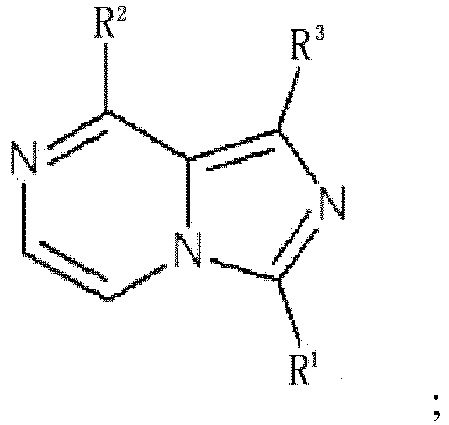 wherein, R1 is
 R2 is halogen or NH2;R3 is
 R4 is H or a benzyloxycarbonyl group.
Applications Claiming Priority (3)
| Application Number | Priority Date | Filing Date | Title |
|---|---|---|---|
| CN201610533291 | 2016-06-30 | ||
| CN201611062661 | 2016-11-25 | ||
| PCT/CN2017/090908 WO2018001331A1 (en) | 2016-06-30 | 2017-06-29 | Imidazopyridinamine phenyl derivative and use thereof |
Publications (3)
| Publication Number | Publication Date |
|---|---|
| EP3480199A1 EP3480199A1 (en) | 2019-05-08 |
| EP3480199A4 EP3480199A4 (en) | 2020-02-26 |
| EP3480199B1 true EP3480199B1 (en) | 2021-03-17 |
Family
ID=60785880
Family Applications (1)
| Application Number | Title | Priority Date | Filing Date |
|---|---|---|---|
| EP17819328.0A Active EP3480199B1 (en) | 2016-06-30 | 2017-06-29 | Imidazopyridinamine phenyl derivative and use thereof |
Country Status (9)
| Country | Link |
|---|---|
| US (1) | US10640512B2 (en) |
| EP (1) | EP3480199B1 (en) |
| JP (1) | JP6715357B2 (en) |
| KR (1) | KR102215172B1 (en) |
| CN (1) | CN107556317B (en) |
| AU (1) | AU2017287553B2 (en) |
| CA (1) | CA3032795C (en) |
| ES (1) | ES2878973T3 (en) |
| WO (1) | WO2018001331A1 (en) |
Families Citing this family (13)
| Publication number | Priority date | Publication date | Assignee | Title |
|---|---|---|---|---|
| CN106588937B (en) * | 2017-01-16 | 2018-09-21 | 东莞市真兴贝特医药技术有限公司 | Imidazopyrazines and its preparation method and application |
| US11554118B2 (en) * | 2017-03-22 | 2023-01-17 | Xibin Liao | Bruton's tyrosine kinase inhibitors |
| CN108129483B (en) * | 2018-01-26 | 2019-06-04 | 成都施贝康生物医药科技有限公司 | A kind of BTK inhibitor and its application |
| CN116284057A (en) * | 2018-09-14 | 2023-06-23 | 正大天晴药业集团股份有限公司 | Compounds Containing Furo[3,4-b]pyrrole |
| EP3942045A1 (en) | 2019-03-21 | 2022-01-26 | Onxeo | A dbait molecule in combination with kinase inhibitor for the treatment of cancer |
| EP4054579A1 (en) | 2019-11-08 | 2022-09-14 | Institut National de la Santé et de la Recherche Médicale (INSERM) | Methods for the treatment of cancers that have acquired resistance to kinase inhibitors |
| MX2022008148A (en) * | 2020-01-02 | 2022-07-21 | Dizal Jiangsu Pharmaceutical Co Ltd | Btk inhibitors. |
| WO2021148581A1 (en) | 2020-01-22 | 2021-07-29 | Onxeo | Novel dbait molecule and its use |
| CN111471048B (en) * | 2020-04-30 | 2021-06-15 | 成都海博为药业有限公司 | Compound with nitrogen-containing bridged ring, spiro ring or fused ring structure and application thereof |
| US20240100172A1 (en) | 2020-12-21 | 2024-03-28 | Hangzhou Jijing Pharmaceutical Technology Limited | Methods and compounds for targeted autophagy |
| CN114984017A (en) * | 2021-03-01 | 2022-09-02 | 杭州邦顺制药有限公司 | Compounds for the treatment of CNS demyelinating diseases |
| CN115043841B (en) * | 2021-03-09 | 2024-04-09 | 药雅科技(上海)有限公司 | Preparation and application of heterocyclic compound serving as BTK inhibitor |
| CN115073468B (en) * | 2021-03-15 | 2023-12-22 | 药雅科技(上海)有限公司 | Preparation and application of imidazopyrazines BTK inhibitor |
Family Cites Families (9)
| Publication number | Priority date | Publication date | Assignee | Title |
|---|---|---|---|---|
| SG10201508035TA (en) * | 2007-03-28 | 2015-10-29 | Pharmacyclics Inc | Inhibitors of bruton's tyrosine kinase |
| AU2012285987C1 (en) * | 2011-07-19 | 2016-09-08 | Merck Sharp & Dohme B.V. | 4 - imidazopyridazin- 1 -yl-benzamides and 4 - imidazotriazin- 1 - yl - benzamides as Btk- inhibitors |
| EP2548877A1 (en) * | 2011-07-19 | 2013-01-23 | MSD Oss B.V. | 4-(5-Membered fused pyridinyl)benzamides as BTK-inhibitors |
| WO2015057992A1 (en) * | 2013-10-16 | 2015-04-23 | Izumi Raquel | Btk inhibitors for hematopoietic mobilization |
| WO2016019237A2 (en) * | 2014-07-31 | 2016-02-04 | Pharmacyclics Llc | Inhibitors of bruton's tyrosine kinase |
| TW201718572A (en) | 2015-06-24 | 2017-06-01 | 普林斯匹亞生物製藥公司 | Tyrosine kinase inhibitors |
| US20190008859A1 (en) * | 2015-08-21 | 2019-01-10 | Acerta Pharma B.V. | Therapeutic Combinations of a MEK Inhibitor and a BTK Inhibitor |
| WO2017077507A1 (en) * | 2015-11-06 | 2017-05-11 | Acerta Pharma B.V. | Imidazopyrazine inhibitors of bruton's tyrosine kinase |
| CN106588937B (en) * | 2017-01-16 | 2018-09-21 | 东莞市真兴贝特医药技术有限公司 | Imidazopyrazines and its preparation method and application |
-
2017
- 2017-06-29 ES ES17819328T patent/ES2878973T3/en active Active
- 2017-06-29 EP EP17819328.0A patent/EP3480199B1/en active Active
- 2017-06-29 JP JP2018569169A patent/JP6715357B2/en active Active
- 2017-06-29 KR KR1020197002682A patent/KR102215172B1/en active Active
- 2017-06-29 AU AU2017287553A patent/AU2017287553B2/en active Active
- 2017-06-29 US US16/311,979 patent/US10640512B2/en active Active
- 2017-06-29 WO PCT/CN2017/090908 patent/WO2018001331A1/en not_active Ceased
- 2017-06-29 CA CA3032795A patent/CA3032795C/en active Active
- 2017-06-30 CN CN201710519104.7A patent/CN107556317B/en active Active
Non-Patent Citations (1)
| Title |
|---|
| None * |
Also Published As
| Publication number | Publication date |
|---|---|
| AU2017287553B2 (en) | 2020-02-06 |
| EP3480199A1 (en) | 2019-05-08 |
| ES2878973T3 (en) | 2021-11-19 |
| KR20190033538A (en) | 2019-03-29 |
| JP2019524699A (en) | 2019-09-05 |
| AU2017287553A1 (en) | 2019-02-07 |
| JP6715357B2 (en) | 2020-07-01 |
| CN107556317B (en) | 2020-06-09 |
| US10640512B2 (en) | 2020-05-05 |
| CA3032795A1 (en) | 2018-01-04 |
| CN107556317A (en) | 2018-01-09 |
| WO2018001331A1 (en) | 2018-01-04 |
| EP3480199A4 (en) | 2020-02-26 |
| CA3032795C (en) | 2021-06-22 |
| KR102215172B1 (en) | 2021-02-16 |
| US20190211023A1 (en) | 2019-07-11 |
Similar Documents
| Publication | Publication Date | Title |
|---|---|---|
| US10640512B2 (en) | Imidazopyrazinamine phenyl derivative and use thereof | |
| WO2021185233A1 (en) | Kras mutant protein inhibitors | |
| JP2022517723A (en) | Macrocycle compound as a CDK inhibitor, its production method and its application in pharmaceutical products | |
| CN104109149B (en) | Deuterated diaminopyrimidine compounds and the pharmaceutical composition comprising the compound | |
| EP2931722B1 (en) | Substituted 1h-pyrrolo [2,3-b]pyridine and 1h-pyrazolo [3, 4-b]pyridine derivatives as salt inducible kinase 2 (sik2) inhibitors | |
| KR102075886B1 (en) | Novel pyrazolo [3,4-d] pyrimidine compounds or salts thereof | |
| CA2859224C (en) | Imidazolidinedione compounds and their uses | |
| TW202115065A (en) | Kras mutant protein inhibitor | |
| CA3165238A1 (en) | Kras mutant protein inhibitors | |
| CN119350242A (en) | Substituted quinolinone compounds targeting KRASG12D and their applications | |
| JP6797923B2 (en) | ALK and SRPK inhibitors and how to use | |
| CN102260260B (en) | 8-phenyl xanthine compound, preparation method, medicine composition including the compound and purpose thereof | |
| CN107074856A (en) | CaMKII inhibitor and application thereof | |
| JP2007505888A (en) | Substituted triazole derivatives as oxytocin antagonists | |
| US20190169163A1 (en) | Quinoline derivative and use thereof | |
| AU2016319597A1 (en) | Novel benzimidazole compound and pharmaceutical use of same | |
| KR102606167B1 (en) | Fluorine-containing substituted benzothiophene compounds, pharmaceutical compositions and applications thereof | |
| CN107793371B (en) | A class of bromodomain recognition protein inhibitors and preparation method and use thereof | |
| EA003941B1 (en) | 2-aminopyridines containing fused ring substituents | |
| HK40004090A (en) | Imidazopyridinamine phenyl derivative and use thereof | |
| HK40004090B (en) | Imidazopyridinamine phenyl derivative and use thereof | |
| WO2023160475A1 (en) | Imidazopyridazine derivative, and preparation method therefor, pharmaceutical composition thereof and use thereof | |
| AU2018234089B2 (en) | Novel benzimidazolone compound and pharmaceutical use thereof | |
| JP7110335B2 (en) | Pyridoquinazoline derivatives useful as protein kinase inhibitors | |
| KR20230163466A (en) | Indoline derivatives as DDR1 and DDR2 inhibitors |
Legal Events
| Date | Code | Title | Description |
|---|---|---|---|
| STAA | Information on the status of an ep patent application or granted ep patent |
Free format text: STATUS: THE INTERNATIONAL PUBLICATION HAS BEEN MADE |
|
| PUAI | Public reference made under article 153(3) epc to a published international application that has entered the european phase |
Free format text: ORIGINAL CODE: 0009012 |
|
| STAA | Information on the status of an ep patent application or granted ep patent |
Free format text: STATUS: REQUEST FOR EXAMINATION WAS MADE |
|
| 17P | Request for examination filed |
Effective date: 20190103 |
|
| AK | Designated contracting states |
Kind code of ref document: A1 Designated state(s): AL AT BE BG CH CY CZ DE DK EE ES FI FR GB GR HR HU IE IS IT LI LT LU LV MC MK MT NL NO PL PT RO RS SE SI SK SM TR |
|
| AX | Request for extension of the european patent |
Extension state: BA ME |
|
| DAV | Request for validation of the european patent (deleted) | ||
| DAX | Request for extension of the european patent (deleted) | ||
| A4 | Supplementary search report drawn up and despatched |
Effective date: 20200123 |
|
| RIC1 | Information provided on ipc code assigned before grant |
Ipc: A61K 31/4985 20060101ALI20200117BHEP Ipc: A61P 31/00 20060101ALI20200117BHEP Ipc: A61P 19/02 20060101ALI20200117BHEP Ipc: A61P 37/00 20060101ALI20200117BHEP Ipc: A61P 29/00 20060101ALI20200117BHEP Ipc: A61P 11/06 20060101ALI20200117BHEP Ipc: A61P 19/04 20060101ALI20200117BHEP Ipc: C07D 487/04 20060101AFI20200117BHEP Ipc: A61P 35/02 20060101ALI20200117BHEP Ipc: A61P 37/08 20060101ALI20200117BHEP Ipc: A61P 35/00 20060101ALI20200117BHEP Ipc: A61P 3/10 20060101ALI20200117BHEP |
|
| REG | Reference to a national code |
Ref country code: HK Ref legal event code: DE Ref document number: 40004090 Country of ref document: HK |
|
| GRAP | Despatch of communication of intention to grant a patent |
Free format text: ORIGINAL CODE: EPIDOSNIGR1 |
|
| STAA | Information on the status of an ep patent application or granted ep patent |
Free format text: STATUS: GRANT OF PATENT IS INTENDED |
|
| INTG | Intention to grant announced |
Effective date: 20201104 |
|
| GRAS | Grant fee paid |
Free format text: ORIGINAL CODE: EPIDOSNIGR3 |
|
| GRAA | (expected) grant |
Free format text: ORIGINAL CODE: 0009210 |
|
| STAA | Information on the status of an ep patent application or granted ep patent |
Free format text: STATUS: THE PATENT HAS BEEN GRANTED |
|
| RAP1 | Party data changed (applicant data changed or rights of an application transferred) |
Owner name: HANGZHOU BANGSHUN PHARMACEUTICAL CO., LTD. Owner name: YIN, JIANMING |
|
| AK | Designated contracting states |
Kind code of ref document: B1 Designated state(s): AL AT BE BG CH CY CZ DE DK EE ES FI FR GB GR HR HU IE IS IT LI LT LU LV MC MK MT NL NO PL PT RO RS SE SI SK SM TR |
|
| REG | Reference to a national code |
Ref country code: GB Ref legal event code: FG4D |
|
| REG | Reference to a national code |
Ref country code: CH Ref legal event code: EP |
|
| REG | Reference to a national code |
Ref country code: DE Ref legal event code: R096 Ref document number: 602017034911 Country of ref document: DE |
|
| REG | Reference to a national code |
Ref country code: IE Ref legal event code: FG4D |
|
| REG | Reference to a national code |
Ref country code: AT Ref legal event code: REF Ref document number: 1372147 Country of ref document: AT Kind code of ref document: T Effective date: 20210415 |
|
| REG | Reference to a national code |
Ref country code: LT Ref legal event code: MG9D |
|
| PG25 | Lapsed in a contracting state [announced via postgrant information from national office to epo] |
Ref country code: NO Free format text: LAPSE BECAUSE OF FAILURE TO SUBMIT A TRANSLATION OF THE DESCRIPTION OR TO PAY THE FEE WITHIN THE PRESCRIBED TIME-LIMIT Effective date: 20210617 Ref country code: GR Free format text: LAPSE BECAUSE OF FAILURE TO SUBMIT A TRANSLATION OF THE DESCRIPTION OR TO PAY THE FEE WITHIN THE PRESCRIBED TIME-LIMIT Effective date: 20210618 Ref country code: HR Free format text: LAPSE BECAUSE OF FAILURE TO SUBMIT A TRANSLATION OF THE DESCRIPTION OR TO PAY THE FEE WITHIN THE PRESCRIBED TIME-LIMIT Effective date: 20210317 Ref country code: FI Free format text: LAPSE BECAUSE OF FAILURE TO SUBMIT A TRANSLATION OF THE DESCRIPTION OR TO PAY THE FEE WITHIN THE PRESCRIBED TIME-LIMIT Effective date: 20210317 Ref country code: BG Free format text: LAPSE BECAUSE OF FAILURE TO SUBMIT A TRANSLATION OF THE DESCRIPTION OR TO PAY THE FEE WITHIN THE PRESCRIBED TIME-LIMIT Effective date: 20210617 |
|
| REG | Reference to a national code |
Ref country code: AT Ref legal event code: MK05 Ref document number: 1372147 Country of ref document: AT Kind code of ref document: T Effective date: 20210317 |
|
| REG | Reference to a national code |
Ref country code: NL Ref legal event code: MP Effective date: 20210317 |
|
| PG25 | Lapsed in a contracting state [announced via postgrant information from national office to epo] |
Ref country code: LV Free format text: LAPSE BECAUSE OF FAILURE TO SUBMIT A TRANSLATION OF THE DESCRIPTION OR TO PAY THE FEE WITHIN THE PRESCRIBED TIME-LIMIT Effective date: 20210317 Ref country code: RS Free format text: LAPSE BECAUSE OF FAILURE TO SUBMIT A TRANSLATION OF THE DESCRIPTION OR TO PAY THE FEE WITHIN THE PRESCRIBED TIME-LIMIT Effective date: 20210317 Ref country code: SE Free format text: LAPSE BECAUSE OF FAILURE TO SUBMIT A TRANSLATION OF THE DESCRIPTION OR TO PAY THE FEE WITHIN THE PRESCRIBED TIME-LIMIT Effective date: 20210317 |
|
| PG25 | Lapsed in a contracting state [announced via postgrant information from national office to epo] |
Ref country code: NL Free format text: LAPSE BECAUSE OF FAILURE TO SUBMIT A TRANSLATION OF THE DESCRIPTION OR TO PAY THE FEE WITHIN THE PRESCRIBED TIME-LIMIT Effective date: 20210317 |
|
| PG25 | Lapsed in a contracting state [announced via postgrant information from national office to epo] |
Ref country code: AT Free format text: LAPSE BECAUSE OF FAILURE TO SUBMIT A TRANSLATION OF THE DESCRIPTION OR TO PAY THE FEE WITHIN THE PRESCRIBED TIME-LIMIT Effective date: 20210317 Ref country code: SM Free format text: LAPSE BECAUSE OF FAILURE TO SUBMIT A TRANSLATION OF THE DESCRIPTION OR TO PAY THE FEE WITHIN THE PRESCRIBED TIME-LIMIT Effective date: 20210317 Ref country code: LT Free format text: LAPSE BECAUSE OF FAILURE TO SUBMIT A TRANSLATION OF THE DESCRIPTION OR TO PAY THE FEE WITHIN THE PRESCRIBED TIME-LIMIT Effective date: 20210317 Ref country code: CZ Free format text: LAPSE BECAUSE OF FAILURE TO SUBMIT A TRANSLATION OF THE DESCRIPTION OR TO PAY THE FEE WITHIN THE PRESCRIBED TIME-LIMIT Effective date: 20210317 Ref country code: EE Free format text: LAPSE BECAUSE OF FAILURE TO SUBMIT A TRANSLATION OF THE DESCRIPTION OR TO PAY THE FEE WITHIN THE PRESCRIBED TIME-LIMIT Effective date: 20210317 |
|
| REG | Reference to a national code |
Ref country code: ES Ref legal event code: FG2A Ref document number: 2878973 Country of ref document: ES Kind code of ref document: T3 Effective date: 20211119 |
|
| PG25 | Lapsed in a contracting state [announced via postgrant information from national office to epo] |
Ref country code: SK Free format text: LAPSE BECAUSE OF FAILURE TO SUBMIT A TRANSLATION OF THE DESCRIPTION OR TO PAY THE FEE WITHIN THE PRESCRIBED TIME-LIMIT Effective date: 20210317 Ref country code: RO Free format text: LAPSE BECAUSE OF FAILURE TO SUBMIT A TRANSLATION OF THE DESCRIPTION OR TO PAY THE FEE WITHIN THE PRESCRIBED TIME-LIMIT Effective date: 20210317 Ref country code: PT Free format text: LAPSE BECAUSE OF FAILURE TO SUBMIT A TRANSLATION OF THE DESCRIPTION OR TO PAY THE FEE WITHIN THE PRESCRIBED TIME-LIMIT Effective date: 20210719 Ref country code: PL Free format text: LAPSE BECAUSE OF FAILURE TO SUBMIT A TRANSLATION OF THE DESCRIPTION OR TO PAY THE FEE WITHIN THE PRESCRIBED TIME-LIMIT Effective date: 20210317 Ref country code: IS Free format text: LAPSE BECAUSE OF FAILURE TO SUBMIT A TRANSLATION OF THE DESCRIPTION OR TO PAY THE FEE WITHIN THE PRESCRIBED TIME-LIMIT Effective date: 20210717 |
|
| REG | Reference to a national code |
Ref country code: DE Ref legal event code: R097 Ref document number: 602017034911 Country of ref document: DE |
|
| PLBE | No opposition filed within time limit |
Free format text: ORIGINAL CODE: 0009261 |
|
| STAA | Information on the status of an ep patent application or granted ep patent |
Free format text: STATUS: NO OPPOSITION FILED WITHIN TIME LIMIT |
|
| PG25 | Lapsed in a contracting state [announced via postgrant information from national office to epo] |
Ref country code: MC Free format text: LAPSE BECAUSE OF FAILURE TO SUBMIT A TRANSLATION OF THE DESCRIPTION OR TO PAY THE FEE WITHIN THE PRESCRIBED TIME-LIMIT Effective date: 20210317 Ref country code: DK Free format text: LAPSE BECAUSE OF FAILURE TO SUBMIT A TRANSLATION OF THE DESCRIPTION OR TO PAY THE FEE WITHIN THE PRESCRIBED TIME-LIMIT Effective date: 20210317 Ref country code: AL Free format text: LAPSE BECAUSE OF FAILURE TO SUBMIT A TRANSLATION OF THE DESCRIPTION OR TO PAY THE FEE WITHIN THE PRESCRIBED TIME-LIMIT Effective date: 20210317 |
|
| REG | Reference to a national code |
Ref country code: CH Ref legal event code: PL |
|
| 26N | No opposition filed |
Effective date: 20211220 |
|
| PG25 | Lapsed in a contracting state [announced via postgrant information from national office to epo] |
Ref country code: SI Free format text: LAPSE BECAUSE OF FAILURE TO SUBMIT A TRANSLATION OF THE DESCRIPTION OR TO PAY THE FEE WITHIN THE PRESCRIBED TIME-LIMIT Effective date: 20210317 |
|
| REG | Reference to a national code |
Ref country code: BE Ref legal event code: MM Effective date: 20210630 |
|
| PG25 | Lapsed in a contracting state [announced via postgrant information from national office to epo] |
Ref country code: LU Free format text: LAPSE BECAUSE OF NON-PAYMENT OF DUE FEES Effective date: 20210629 |
|
| PG25 | Lapsed in a contracting state [announced via postgrant information from national office to epo] |
Ref country code: LI Free format text: LAPSE BECAUSE OF NON-PAYMENT OF DUE FEES Effective date: 20210630 Ref country code: IE Free format text: LAPSE BECAUSE OF NON-PAYMENT OF DUE FEES Effective date: 20210629 Ref country code: CH Free format text: LAPSE BECAUSE OF NON-PAYMENT OF DUE FEES Effective date: 20210630 |
|
| PG25 | Lapsed in a contracting state [announced via postgrant information from national office to epo] |
Ref country code: IS Free format text: LAPSE BECAUSE OF FAILURE TO SUBMIT A TRANSLATION OF THE DESCRIPTION OR TO PAY THE FEE WITHIN THE PRESCRIBED TIME-LIMIT Effective date: 20210717 |
|
| PG25 | Lapsed in a contracting state [announced via postgrant information from national office to epo] |
Ref country code: BE Free format text: LAPSE BECAUSE OF NON-PAYMENT OF DUE FEES Effective date: 20210630 |
|
| PG25 | Lapsed in a contracting state [announced via postgrant information from national office to epo] |
Ref country code: CY Free format text: LAPSE BECAUSE OF FAILURE TO SUBMIT A TRANSLATION OF THE DESCRIPTION OR TO PAY THE FEE WITHIN THE PRESCRIBED TIME-LIMIT Effective date: 20210317 |
|
| PG25 | Lapsed in a contracting state [announced via postgrant information from national office to epo] |
Ref country code: HU Free format text: LAPSE BECAUSE OF FAILURE TO SUBMIT A TRANSLATION OF THE DESCRIPTION OR TO PAY THE FEE WITHIN THE PRESCRIBED TIME-LIMIT; INVALID AB INITIO Effective date: 20170629 |
|
| PG25 | Lapsed in a contracting state [announced via postgrant information from national office to epo] |
Ref country code: MK Free format text: LAPSE BECAUSE OF FAILURE TO SUBMIT A TRANSLATION OF THE DESCRIPTION OR TO PAY THE FEE WITHIN THE PRESCRIBED TIME-LIMIT Effective date: 20210317 |
|
| PG25 | Lapsed in a contracting state [announced via postgrant information from national office to epo] |
Ref country code: TR Free format text: LAPSE BECAUSE OF FAILURE TO SUBMIT A TRANSLATION OF THE DESCRIPTION OR TO PAY THE FEE WITHIN THE PRESCRIBED TIME-LIMIT Effective date: 20210317 |
|
| PG25 | Lapsed in a contracting state [announced via postgrant information from national office to epo] |
Ref country code: MT Free format text: LAPSE BECAUSE OF FAILURE TO SUBMIT A TRANSLATION OF THE DESCRIPTION OR TO PAY THE FEE WITHIN THE PRESCRIBED TIME-LIMIT Effective date: 20210317 |
|
| PGFP | Annual fee paid to national office [announced via postgrant information from national office to epo] |
Ref country code: DE Payment date: 20250617 Year of fee payment: 9 |
|
| PGFP | Annual fee paid to national office [announced via postgrant information from national office to epo] |
Ref country code: GB Payment date: 20250625 Year of fee payment: 9 |
|
| PGFP | Annual fee paid to national office [announced via postgrant information from national office to epo] |
Ref country code: FR Payment date: 20250630 Year of fee payment: 9 |
|
| PGFP | Annual fee paid to national office [announced via postgrant information from national office to epo] |
Ref country code: ES Payment date: 20250710 Year of fee payment: 9 |
|
| PGFP | Annual fee paid to national office [announced via postgrant information from national office to epo] |
Ref country code: IT Payment date: 20250609 Year of fee payment: 9 |
|
| REG | Reference to a national code |
Ref country code: DE Ref legal event code: R081 Ref document number: 602017034911 Country of ref document: DE Owner name: HANGZHOU BANGSHUN PHARMACEUTICAL CO., LTD., CN Free format text: FORMER OWNERS: HANGZHOU BANGSHUN PHARMACEUTICAL CO., LTD., HANGZHOU, CN; YIN, JIANMING, LEXINGTON, MA, US |
|
| REG | Reference to a national code |
Ref country code: GB Ref legal event code: 732E Free format text: REGISTERED BETWEEN 20260205 AND 20260211 |