EP3480186A1 - Novel aryl ethane derivative and pharmaceutical composition containing same as active ingredient - Google Patents
Novel aryl ethane derivative and pharmaceutical composition containing same as active ingredient Download PDFInfo
- Publication number
- EP3480186A1 EP3480186A1 EP16907430.9A EP16907430A EP3480186A1 EP 3480186 A1 EP3480186 A1 EP 3480186A1 EP 16907430 A EP16907430 A EP 16907430A EP 3480186 A1 EP3480186 A1 EP 3480186A1
- Authority
- EP
- European Patent Office
- Prior art keywords
- alkyl
- hydroxy
- heterocycloalkyl
- esi
- 400mhz
- Prior art date
- Legal status (The legal status is an assumption and is not a legal conclusion. Google has not performed a legal analysis and makes no representation as to the accuracy of the status listed.)
- Granted
Links
- 0 *CCCC(c1ccccc1)=*(Cc1c[n](*)nc1)[Al] Chemical compound *CCCC(c1ccccc1)=*(Cc1c[n](*)nc1)[Al] 0.000 description 27
- SMRSDVILRBXSFD-BYYHNAKLSA-N CN(CC1)CCN1c(cc1)ccc1/C(/c(cc1)ccc1O)=C(/CCCO)\c1ccccc1 Chemical compound CN(CC1)CCN1c(cc1)ccc1/C(/c(cc1)ccc1O)=C(/CCCO)\c1ccccc1 SMRSDVILRBXSFD-BYYHNAKLSA-N 0.000 description 2
- VNBHNRPYEWPOQZ-CYYJNZCTSA-N OCCC/C(/c1ccccc1)=C(/c(cc1)ccc1N1CCOCC1)\c(cc1)ccc1O Chemical compound OCCC/C(/c1ccccc1)=C(/c(cc1)ccc1N1CCOCC1)\c(cc1)ccc1O VNBHNRPYEWPOQZ-CYYJNZCTSA-N 0.000 description 2
- RKXHHILTRBGYCC-QAMGGGJWSA-N C=C/C(/C(/c(cc1)ccc1O)=C(\CCCO)/c1ccccc1)=C\C=C\O Chemical compound C=C/C(/C(/c(cc1)ccc1O)=C(\CCCO)/c1ccccc1)=C\C=C\O RKXHHILTRBGYCC-QAMGGGJWSA-N 0.000 description 1
- DZJZDWPNHRBJKY-ZQHSETAFSA-N CC(C)(C)OC(N(C1)CC1c(cc1)ccc1/C(/c(cc1)ccc1O)=C(/CCCO)\c1ccccc1)=O Chemical compound CC(C)(C)OC(N(C1)CC1c(cc1)ccc1/C(/c(cc1)ccc1O)=C(/CCCO)\c1ccccc1)=O DZJZDWPNHRBJKY-ZQHSETAFSA-N 0.000 description 1
- DCZLRWHLKDNDMY-GCUVURNUSA-N CC(C)(C)OC(N(CC1)CCN1c(cc1)ccc1/C(/c(cc1)ccc1Br)=C(/CC/C(/OC)=[O]\C)\c1ccccc1)=O Chemical compound CC(C)(C)OC(N(CC1)CCN1c(cc1)ccc1/C(/c(cc1)ccc1Br)=C(/CC/C(/OC)=[O]\C)\c1ccccc1)=O DCZLRWHLKDNDMY-GCUVURNUSA-N 0.000 description 1
- DVBSUBODITYLQN-QVIHXGFCSA-N CC(C)(C)OC(N(CC1)CCN1c(cc1)ccc1/C(/c(cc1)ccc1O)=C(/CCCO)\c1ccccc1)=O Chemical compound CC(C)(C)OC(N(CC1)CCN1c(cc1)ccc1/C(/c(cc1)ccc1O)=C(/CCCO)\c1ccccc1)=O DVBSUBODITYLQN-QVIHXGFCSA-N 0.000 description 1
- CVUZYFSNKYEAPG-ULIFNZDWSA-N CC(C)(C)OC(N/C(/N(CC1)CCN1c(cc1)ccc1/C(/c(cc1)ccc1O)=C(/CCCO)\c1ccccc1)=N\C(OC(C)(C)C)=O)=O Chemical compound CC(C)(C)OC(N/C(/N(CC1)CCN1c(cc1)ccc1/C(/c(cc1)ccc1O)=C(/CCCO)\c1ccccc1)=N\C(OC(C)(C)C)=O)=O CVUZYFSNKYEAPG-ULIFNZDWSA-N 0.000 description 1
- PEZPLDRXFBKRRB-QVIHXGFCSA-N CC(C)N(CC1)CCN1c(cc1)ccc1/C(/c(cc1)ccc1[N+]([O-])=O)=C(/CCCO)\c1ccccc1 Chemical compound CC(C)N(CC1)CCN1c(cc1)ccc1/C(/c(cc1)ccc1[N+]([O-])=O)=C(/CCCO)\c1ccccc1 PEZPLDRXFBKRRB-QVIHXGFCSA-N 0.000 description 1
- UIIIXOVWZGOQLX-NVQSTNCTSA-N CC(N(CC1)CCC1c(cc1)ccc1/C(/c(cc1)ccc1O)=C(/CCCO)\c1ccccc1)=C Chemical compound CC(N(CC1)CCC1c(cc1)ccc1/C(/c(cc1)ccc1O)=C(/CCCO)\c1ccccc1)=C UIIIXOVWZGOQLX-NVQSTNCTSA-N 0.000 description 1
- OHAQLHIDIAGIHY-KTMFPKCZSA-N CCC/C(/c1ccccc1)=C(\c(cc1)ccc1O)/c(cc1)ccc1[Si](C)(C)CN1CCCCC1 Chemical compound CCC/C(/c1ccccc1)=C(\c(cc1)ccc1O)/c(cc1)ccc1[Si](C)(C)CN1CCCCC1 OHAQLHIDIAGIHY-KTMFPKCZSA-N 0.000 description 1
- GSWWKSGOCBXKOC-QVIHXGFCSA-N CCN(CC1)CCC1c(cc1)ccc1/C(/c1cccc(O)c1)=C(/CCCO)\c1ccccc1 Chemical compound CCN(CC1)CCC1c(cc1)ccc1/C(/c1cccc(O)c1)=C(/CCCO)\c1ccccc1 GSWWKSGOCBXKOC-QVIHXGFCSA-N 0.000 description 1
- LOYWLAIOPICKCI-ZQHSETAFSA-N CCN(CC1)CCN1c(cc1)ccc1/C(/c(cc1)ccc1O)=C(/CCCO)\c1ccccc1 Chemical compound CCN(CC1)CCN1c(cc1)ccc1/C(/c(cc1)ccc1O)=C(/CCCO)\c1ccccc1 LOYWLAIOPICKCI-ZQHSETAFSA-N 0.000 description 1
- HUVMQWKJKJCKKT-UHFFFAOYSA-N CN(C)CCCCC=O Chemical compound CN(C)CCCCC=O HUVMQWKJKJCKKT-UHFFFAOYSA-N 0.000 description 1
- KNZZWTKCWHRDGM-CYYJNZCTSA-N CN(C1)CC1c(cc1)ccc1/C(/c(cc1)ccc1O)=C(/CCCO)\c1ccccc1 Chemical compound CN(C1)CC1c(cc1)ccc1/C(/c(cc1)ccc1O)=C(/CCCO)\c1ccccc1 KNZZWTKCWHRDGM-CYYJNZCTSA-N 0.000 description 1
- DDABDGUZEXWBCP-ZQHSETAFSA-N CN(CC1)CCC1c(cc1)ccc1/C(/c1cccc(O)c1)=C(/CCCO)\c1ccccc1 Chemical compound CN(CC1)CCC1c(cc1)ccc1/C(/c1cccc(O)c1)=C(/CCCO)\c1ccccc1 DDABDGUZEXWBCP-ZQHSETAFSA-N 0.000 description 1
- RVPDDVIQFCWUAC-DQSJHHFOSA-N CN(CC1)CCN1c(cc1)ccc1/C(/c(cc1)ccc1Br)=C(/CCCO)\c1ccccc1 Chemical compound CN(CC1)CCN1c(cc1)ccc1/C(/c(cc1)ccc1Br)=C(/CCCO)\c1ccccc1 RVPDDVIQFCWUAC-DQSJHHFOSA-N 0.000 description 1
- ZUSXRJKXJTTXKD-FLWNBWAVSA-N CN1C(CCOc(cc2)ccc2/C(/c(cc2)ccc2O)=C(/CCCO)\c2ccccc2)CCC1 Chemical compound CN1C(CCOc(cc2)ccc2/C(/c(cc2)ccc2O)=C(/CCCO)\c2ccccc2)CCC1 ZUSXRJKXJTTXKD-FLWNBWAVSA-N 0.000 description 1
- NUCNSICITZKYQF-ZIADKAODSA-N CN1C(COc(cc2)ccc2/C(/c(cc2)ccc2O)=C(/CCCO)\c2ccccc2)CCC1 Chemical compound CN1C(COc(cc2)ccc2/C(/c(cc2)ccc2O)=C(/CCCO)\c2ccccc2)CCC1 NUCNSICITZKYQF-ZIADKAODSA-N 0.000 description 1
- AVFZOVWCLRSYKC-UHFFFAOYSA-N CN1CCCC1 Chemical compound CN1CCCC1 AVFZOVWCLRSYKC-UHFFFAOYSA-N 0.000 description 1
- QSWFGXGDZDVGCL-SGHKYJCFSA-N CN1[C@@H](CCCOc(cc2)ccc2/C(/c(cc2)ccc2O)=C(/CCCO)\c2ccccc2)C1 Chemical compound CN1[C@@H](CCCOc(cc2)ccc2/C(/c(cc2)ccc2O)=C(/CCCO)\c2ccccc2)C1 QSWFGXGDZDVGCL-SGHKYJCFSA-N 0.000 description 1
- ZUSXRJKXJTTXKD-FYUFQVDVSA-N CN1[C@@H](CCOc(cc2)ccc2/C(/c(cc2)ccc2O)=C(/CCCO)\c2ccccc2)CCC1 Chemical compound CN1[C@@H](CCOc(cc2)ccc2/C(/c(cc2)ccc2O)=C(/CCCO)\c2ccccc2)CCC1 ZUSXRJKXJTTXKD-FYUFQVDVSA-N 0.000 description 1
- GSUPRAWBYTWMKE-BSRGVCFCSA-N CN1[C@@H](COc(cc2)ccc2/C(/C(/C=C)=C/C=C/O)=C(/CCCO)\c2ccccc2)CCC1 Chemical compound CN1[C@@H](COc(cc2)ccc2/C(/C(/C=C)=C/C=C/O)=C(/CCCO)\c2ccccc2)CCC1 GSUPRAWBYTWMKE-BSRGVCFCSA-N 0.000 description 1
- HGNAOJLYSUPQQH-FRDMNLSBSA-N CN1[C@@H](COc(cc2)ccc2/C(/c(cc2)ccc2O)=C(/CCCO)\C2=CCCC=C2)CCC1 Chemical compound CN1[C@@H](COc(cc2)ccc2/C(/c(cc2)ccc2O)=C(/CCCO)\C2=CCCC=C2)CCC1 HGNAOJLYSUPQQH-FRDMNLSBSA-N 0.000 description 1
- NUCNSICITZKYQF-FRDMNLSBSA-N CN1[C@@H](COc(cc2)ccc2/C(/c(cc2)ccc2O)=C(/CCCO)\c2ccccc2)CCC1 Chemical compound CN1[C@@H](COc(cc2)ccc2/C(/c(cc2)ccc2O)=C(/CCCO)\c2ccccc2)CCC1 NUCNSICITZKYQF-FRDMNLSBSA-N 0.000 description 1
- QSWFGXGDZDVGCL-QPJMFGLHSA-N CN1[C@H](CCCOc(cc2)ccc2/C(/c(cc2)ccc2O)=C(/CCCO)\c2ccccc2)C1 Chemical compound CN1[C@H](CCCOc(cc2)ccc2/C(/c(cc2)ccc2O)=C(/CCCO)\c2ccccc2)C1 QSWFGXGDZDVGCL-QPJMFGLHSA-N 0.000 description 1
- NUCNSICITZKYQF-WEBDSESRSA-N CN1[C@H](COc(cc2)ccc2/C(/c(cc2)ccc2O)=C(/CCCO)\c2ccccc2)CCC1 Chemical compound CN1[C@H](COc(cc2)ccc2/C(/c(cc2)ccc2O)=C(/CCCO)\c2ccccc2)CCC1 NUCNSICITZKYQF-WEBDSESRSA-N 0.000 description 1
- AUHZKUYITSPNFC-SGEDCAFJSA-N COC(CC/C(/c1ccccc1)=C(/c(cc1)ccc1N1CCNCC1)\c(cc1)ccc1Br)=O Chemical compound COC(CC/C(/c1ccccc1)=C(/c(cc1)ccc1N1CCNCC1)\c(cc1)ccc1Br)=O AUHZKUYITSPNFC-SGEDCAFJSA-N 0.000 description 1
- JUIBZRRXFAAAIC-CCFHIKDMSA-N COC(CC/C(/c1ccccc1)=C(/c(cc1)ccc1NC(CN1CCCCC1)=O)\c(cc1)ccc1O)=O Chemical compound COC(CC/C(/c1ccccc1)=C(/c(cc1)ccc1NC(CN1CCCCC1)=O)\c(cc1)ccc1O)=O JUIBZRRXFAAAIC-CCFHIKDMSA-N 0.000 description 1
- BWFZXLKYQRWAQF-BYYHNAKLSA-N COc(cc1)ccc1/C(/c(cc1)ccc1N1CCNCC1)=C(\CCCO)/c1ccccc1 Chemical compound COc(cc1)ccc1/C(/c(cc1)ccc1N1CCNCC1)=C(\CCCO)/c1ccccc1 BWFZXLKYQRWAQF-BYYHNAKLSA-N 0.000 description 1
- AHLRHCHFIGMNQE-GCUVURNUSA-N Cc(cc1)ccc1/C(/c1ccc(cc(CCN2CCNCC2)[o]2)c2c1)=C(\CCCO)/c1ccccc1 Chemical compound Cc(cc1)ccc1/C(/c1ccc(cc(CCN2CCNCC2)[o]2)c2c1)=C(\CCCO)/c1ccccc1 AHLRHCHFIGMNQE-GCUVURNUSA-N 0.000 description 1
- BJQIHLQMYPDLPP-GCUVURNUSA-N Cc(cc1)ccc1/C(/c1ccc2[o]c(CCN3CCNCC3)cc2c1)=C(\CCCO)/c1ccccc1 Chemical compound Cc(cc1)ccc1/C(/c1ccc2[o]c(CCN3CCNCC3)cc2c1)=C(\CCCO)/c1ccccc1 BJQIHLQMYPDLPP-GCUVURNUSA-N 0.000 description 1
- LOMUHEJLBLNCCR-SJCQXOIGSA-N Cc1cc(/C(/c(cc2)ccc2N(CC2)CC22CNCC2)=C(\CCCO)/C2=CCCC=C2)ccc1[N+]([O-])=O Chemical compound Cc1cc(/C(/c(cc2)ccc2N(CC2)CC22CNCC2)=C(\CCCO)/C2=CCCC=C2)ccc1[N+]([O-])=O LOMUHEJLBLNCCR-SJCQXOIGSA-N 0.000 description 1
- GIGMMHGMMQEYJL-CYYJNZCTSA-N NC(N(CC1)CCN1c(cc1)ccc1/C(/c(cc1)ccc1O)=C(/CCCO)\c1ccccc1)=N Chemical compound NC(N(CC1)CCN1c(cc1)ccc1/C(/c(cc1)ccc1O)=C(/CCCO)\c1ccccc1)=N GIGMMHGMMQEYJL-CYYJNZCTSA-N 0.000 description 1
- KIXLHSVIHLUOMO-SJCQXOIGSA-N OC(CC/C(/c1ccccc1)=C(/c1ccc(C(CC2)CN2C2CC2)cc1)\c(cc1)ccc1O)=O Chemical compound OC(CC/C(/c1ccccc1)=C(/c1ccc(C(CC2)CN2C2CC2)cc1)\c(cc1)ccc1O)=O KIXLHSVIHLUOMO-SJCQXOIGSA-N 0.000 description 1
- IWBYGPFBVWJSMN-XAHDOWKMSA-N OCCC/C(/C1=CC=CC=CC1)=C(/c1ccc(C(CC2)CCN2C2CC2)cc1)\c(cc1)ccc1NSC1CC1 Chemical compound OCCC/C(/C1=CC=CC=CC1)=C(/c1ccc(C(CC2)CCN2C2CC2)cc1)\c(cc1)ccc1NSC1CC1 IWBYGPFBVWJSMN-XAHDOWKMSA-N 0.000 description 1
- LPUYGSPHZKCNJO-SJCQXOIGSA-N OCCC/C(/C1=CC=CCC1)=C(/c(cc1)ccc1NC(CN1CCCCC1)=O)\c(cc1)ccc1O Chemical compound OCCC/C(/C1=CC=CCC1)=C(/c(cc1)ccc1NC(CN1CCCCC1)=O)\c(cc1)ccc1O LPUYGSPHZKCNJO-SJCQXOIGSA-N 0.000 description 1
- ADSRISXFMAUMGG-OCEACIFDSA-N OCCC/C(/C1=CC=CCC1)=C(/c1ccc(C2CNC2)cc1)\c(cc1)ccc1Br Chemical compound OCCC/C(/C1=CC=CCC1)=C(/c1ccc(C2CNC2)cc1)\c(cc1)ccc1Br ADSRISXFMAUMGG-OCEACIFDSA-N 0.000 description 1
- YCARDQUONJBFCC-QNEJGDQOSA-N OCCC/C(/c1ccccc1)=C(/c(cc1)ccc1N(CC1)CCN1C1CCCC1)\c(cc1)ccc1O Chemical compound OCCC/C(/c1ccccc1)=C(/c(cc1)ccc1N(CC1)CCN1C1CCCC1)\c(cc1)ccc1O YCARDQUONJBFCC-QNEJGDQOSA-N 0.000 description 1
- HQXZBGLBXKEQAP-RQZHXJHFSA-N OCCC/C(/c1ccccc1)=C(/c(cc1)ccc1N1CCNCC1)\c(cc1)ccc1Br Chemical compound OCCC/C(/c1ccccc1)=C(/c(cc1)ccc1N1CCNCC1)\c(cc1)ccc1Br HQXZBGLBXKEQAP-RQZHXJHFSA-N 0.000 description 1
- NQAANALTUIQIHT-CYYJNZCTSA-N OCCC/C(/c1ccccc1)=C(/c(cc1)ccc1N1CCNCC1)\c(cc1)ccc1O Chemical compound OCCC/C(/c1ccccc1)=C(/c(cc1)ccc1N1CCNCC1)\c(cc1)ccc1O NQAANALTUIQIHT-CYYJNZCTSA-N 0.000 description 1
- QLPDYHPRQYYVTE-NVQSTNCTSA-N OCCC/C(/c1ccccc1)=C(/c1ccc(C(CC2)CCN2C2CC2)cc1)\c(cc1)ccc1O Chemical compound OCCC/C(/c1ccccc1)=C(/c1ccc(C(CC2)CCN2C2CC2)cc1)\c(cc1)ccc1O QLPDYHPRQYYVTE-NVQSTNCTSA-N 0.000 description 1
- SYZJGNRKRGPMOF-BYYHNAKLSA-N OCCC/C(/c1ccccc1)=C(/c1ccc(C2CCNCC2)cc1)\c(cc1)ccc1O Chemical compound OCCC/C(/c1ccccc1)=C(/c1ccc(C2CCNCC2)cc1)\c(cc1)ccc1O SYZJGNRKRGPMOF-BYYHNAKLSA-N 0.000 description 1
- PPZXDLPCTYRHGJ-OCEACIFDSA-N OCCC/C(/c1ccccc1)=C(/c1ccc(C2CNC2)cc1)\c(cc1)ccc1O Chemical compound OCCC/C(/c1ccccc1)=C(/c1ccc(C2CNC2)cc1)\c(cc1)ccc1O PPZXDLPCTYRHGJ-OCEACIFDSA-N 0.000 description 1
- IXPABWFLCJSWGZ-ZQHSETAFSA-N OCCC/C(/c1ccccc1)=C(/c1ccc(CN2CCCCC2)cc1)\c(cc1)ccc1Br Chemical compound OCCC/C(/c1ccccc1)=C(/c1ccc(CN2CCCCC2)cc1)\c(cc1)ccc1Br IXPABWFLCJSWGZ-ZQHSETAFSA-N 0.000 description 1
- YAZOPMJURQIDRH-FLWNBWAVSA-N OCCC/C(/c1ccccc1)=C(\c(cc1)ccc1O)/c(cc1)ccc1OCCN1CC(C2)C2C1 Chemical compound OCCC/C(/c1ccccc1)=C(\c(cc1)ccc1O)/c(cc1)ccc1OCCN1CC(C2)C2C1 YAZOPMJURQIDRH-FLWNBWAVSA-N 0.000 description 1
- DASGYVOSPONWCR-ZIADKAODSA-N OCCC/C(/c1ccccc1)=C(\c(cc1)ccc1O)/c(cc1)ccc1OCCN1CCNCC1 Chemical compound OCCC/C(/c1ccccc1)=C(\c(cc1)ccc1O)/c(cc1)ccc1OCCN1CCNCC1 DASGYVOSPONWCR-ZIADKAODSA-N 0.000 description 1
- BYOHHOLODBNIMD-NDAPDZNFSA-N OCCC/C(/c1ccccc1)=C(\c(cc1)ccc1O)/c(cc1)ccc1OCCN1C[C@H](CNC2)[C@H]2C1 Chemical compound OCCC/C(/c1ccccc1)=C(\c(cc1)ccc1O)/c(cc1)ccc1OCCN1C[C@H](CNC2)[C@H]2C1 BYOHHOLODBNIMD-NDAPDZNFSA-N 0.000 description 1
Images




Classifications
-
- C—CHEMISTRY; METALLURGY
- C07—ORGANIC CHEMISTRY
- C07D—HETEROCYCLIC COMPOUNDS
- C07D241/00—Heterocyclic compounds containing 1,4-diazine or hydrogenated 1,4-diazine rings
- C07D241/02—Heterocyclic compounds containing 1,4-diazine or hydrogenated 1,4-diazine rings not condensed with other rings
- C07D241/04—Heterocyclic compounds containing 1,4-diazine or hydrogenated 1,4-diazine rings not condensed with other rings having no double bonds between ring members or between ring members and non-ring members
-
- C—CHEMISTRY; METALLURGY
- C07—ORGANIC CHEMISTRY
- C07D—HETEROCYCLIC COMPOUNDS
- C07D487/00—Heterocyclic compounds containing nitrogen atoms as the only ring hetero atoms in the condensed system, not provided for by groups C07D451/00 - C07D477/00
- C07D487/02—Heterocyclic compounds containing nitrogen atoms as the only ring hetero atoms in the condensed system, not provided for by groups C07D451/00 - C07D477/00 in which the condensed system contains two hetero rings
- C07D487/10—Spiro-condensed systems
-
- A—HUMAN NECESSITIES
- A61—MEDICAL OR VETERINARY SCIENCE; HYGIENE
- A61K—PREPARATIONS FOR MEDICAL, DENTAL OR TOILETRY PURPOSES
- A61K31/00—Medicinal preparations containing organic active ingredients
- A61K31/33—Heterocyclic compounds
- A61K31/395—Heterocyclic compounds having nitrogen as a ring hetero atom, e.g. guanethidine or rifamycins
- A61K31/396—Heterocyclic compounds having nitrogen as a ring hetero atom, e.g. guanethidine or rifamycins having three-membered rings, e.g. aziridine
-
- A—HUMAN NECESSITIES
- A61—MEDICAL OR VETERINARY SCIENCE; HYGIENE
- A61K—PREPARATIONS FOR MEDICAL, DENTAL OR TOILETRY PURPOSES
- A61K31/00—Medicinal preparations containing organic active ingredients
- A61K31/33—Heterocyclic compounds
- A61K31/395—Heterocyclic compounds having nitrogen as a ring hetero atom, e.g. guanethidine or rifamycins
- A61K31/397—Heterocyclic compounds having nitrogen as a ring hetero atom, e.g. guanethidine or rifamycins having four-membered rings, e.g. azetidine
-
- A—HUMAN NECESSITIES
- A61—MEDICAL OR VETERINARY SCIENCE; HYGIENE
- A61K—PREPARATIONS FOR MEDICAL, DENTAL OR TOILETRY PURPOSES
- A61K31/00—Medicinal preparations containing organic active ingredients
- A61K31/33—Heterocyclic compounds
- A61K31/395—Heterocyclic compounds having nitrogen as a ring hetero atom, e.g. guanethidine or rifamycins
- A61K31/495—Heterocyclic compounds having nitrogen as a ring hetero atom, e.g. guanethidine or rifamycins having six-membered rings with two or more nitrogen atoms as the only ring heteroatoms, e.g. piperazine or tetrazines
- A61K31/496—Non-condensed piperazines containing further heterocyclic rings, e.g. rifampin, thiothixene or sparfloxacin
-
- A—HUMAN NECESSITIES
- A61—MEDICAL OR VETERINARY SCIENCE; HYGIENE
- A61K—PREPARATIONS FOR MEDICAL, DENTAL OR TOILETRY PURPOSES
- A61K31/00—Medicinal preparations containing organic active ingredients
- A61K31/33—Heterocyclic compounds
- A61K31/395—Heterocyclic compounds having nitrogen as a ring hetero atom, e.g. guanethidine or rifamycins
- A61K31/535—Heterocyclic compounds having nitrogen as a ring hetero atom, e.g. guanethidine or rifamycins having six-membered rings with at least one nitrogen and one oxygen as the ring hetero atoms, e.g. 1,2-oxazines
-
- C—CHEMISTRY; METALLURGY
- C07—ORGANIC CHEMISTRY
- C07D—HETEROCYCLIC COMPOUNDS
- C07D203/00—Heterocyclic compounds containing three-membered rings with one nitrogen atom as the only ring hetero atom
- C07D203/04—Heterocyclic compounds containing three-membered rings with one nitrogen atom as the only ring hetero atom not condensed with other rings
- C07D203/06—Heterocyclic compounds containing three-membered rings with one nitrogen atom as the only ring hetero atom not condensed with other rings having no double bonds between ring members or between ring members and non-ring members
- C07D203/08—Heterocyclic compounds containing three-membered rings with one nitrogen atom as the only ring hetero atom not condensed with other rings having no double bonds between ring members or between ring members and non-ring members with only hydrogen atoms, hydrocarbon or substituted hydrocarbon radicals, directly attached to the ring nitrogen atom
-
- C—CHEMISTRY; METALLURGY
- C07—ORGANIC CHEMISTRY
- C07D—HETEROCYCLIC COMPOUNDS
- C07D205/00—Heterocyclic compounds containing four-membered rings with one nitrogen atom as the only ring hetero atom
- C07D205/02—Heterocyclic compounds containing four-membered rings with one nitrogen atom as the only ring hetero atom not condensed with other rings
- C07D205/04—Heterocyclic compounds containing four-membered rings with one nitrogen atom as the only ring hetero atom not condensed with other rings having no double bonds between ring members or between ring members and non-ring members
-
- C—CHEMISTRY; METALLURGY
- C07—ORGANIC CHEMISTRY
- C07D—HETEROCYCLIC COMPOUNDS
- C07D207/00—Heterocyclic compounds containing five-membered rings not condensed with other rings, with one nitrogen atom as the only ring hetero atom
- C07D207/02—Heterocyclic compounds containing five-membered rings not condensed with other rings, with one nitrogen atom as the only ring hetero atom with only hydrogen or carbon atoms directly attached to the ring nitrogen atom
- C07D207/04—Heterocyclic compounds containing five-membered rings not condensed with other rings, with one nitrogen atom as the only ring hetero atom with only hydrogen or carbon atoms directly attached to the ring nitrogen atom having no double bonds between ring members or between ring members and non-ring members
- C07D207/06—Heterocyclic compounds containing five-membered rings not condensed with other rings, with one nitrogen atom as the only ring hetero atom with only hydrogen or carbon atoms directly attached to the ring nitrogen atom having no double bonds between ring members or between ring members and non-ring members with radicals, containing only hydrogen and carbon atoms, attached to ring carbon atoms
-
- C—CHEMISTRY; METALLURGY
- C07—ORGANIC CHEMISTRY
- C07D—HETEROCYCLIC COMPOUNDS
- C07D209/00—Heterocyclic compounds containing five-membered rings, condensed with other rings, with one nitrogen atom as the only ring hetero atom
- C07D209/02—Heterocyclic compounds containing five-membered rings, condensed with other rings, with one nitrogen atom as the only ring hetero atom condensed with one carbocyclic ring
- C07D209/52—Heterocyclic compounds containing five-membered rings, condensed with other rings, with one nitrogen atom as the only ring hetero atom condensed with one carbocyclic ring condensed with a ring other than six-membered
-
- C—CHEMISTRY; METALLURGY
- C07—ORGANIC CHEMISTRY
- C07D—HETEROCYCLIC COMPOUNDS
- C07D209/00—Heterocyclic compounds containing five-membered rings, condensed with other rings, with one nitrogen atom as the only ring hetero atom
- C07D209/02—Heterocyclic compounds containing five-membered rings, condensed with other rings, with one nitrogen atom as the only ring hetero atom condensed with one carbocyclic ring
- C07D209/54—Spiro-condensed
-
- C—CHEMISTRY; METALLURGY
- C07—ORGANIC CHEMISTRY
- C07D—HETEROCYCLIC COMPOUNDS
- C07D249/00—Heterocyclic compounds containing five-membered rings having three nitrogen atoms as the only ring hetero atoms
- C07D249/02—Heterocyclic compounds containing five-membered rings having three nitrogen atoms as the only ring hetero atoms not condensed with other rings
- C07D249/04—1,2,3-Triazoles; Hydrogenated 1,2,3-triazoles
- C07D249/06—1,2,3-Triazoles; Hydrogenated 1,2,3-triazoles with aryl radicals directly attached to ring atoms
-
- C—CHEMISTRY; METALLURGY
- C07—ORGANIC CHEMISTRY
- C07D—HETEROCYCLIC COMPOUNDS
- C07D265/00—Heterocyclic compounds containing six-membered rings having one nitrogen atom and one oxygen atom as the only ring hetero atoms
- C07D265/28—1,4-Oxazines; Hydrogenated 1,4-oxazines
-
- C—CHEMISTRY; METALLURGY
- C07—ORGANIC CHEMISTRY
- C07D—HETEROCYCLIC COMPOUNDS
- C07D295/00—Heterocyclic compounds containing polymethylene-imine rings with at least five ring members, 3-azabicyclo [3.2.2] nonane, piperazine, morpholine or thiomorpholine rings, having only hydrogen atoms directly attached to the ring carbon atoms
- C07D295/04—Heterocyclic compounds containing polymethylene-imine rings with at least five ring members, 3-azabicyclo [3.2.2] nonane, piperazine, morpholine or thiomorpholine rings, having only hydrogen atoms directly attached to the ring carbon atoms with substituted hydrocarbon radicals attached to ring nitrogen atoms
- C07D295/08—Heterocyclic compounds containing polymethylene-imine rings with at least five ring members, 3-azabicyclo [3.2.2] nonane, piperazine, morpholine or thiomorpholine rings, having only hydrogen atoms directly attached to the ring carbon atoms with substituted hydrocarbon radicals attached to ring nitrogen atoms substituted by singly bound oxygen or sulfur atoms
-
- C—CHEMISTRY; METALLURGY
- C07—ORGANIC CHEMISTRY
- C07D—HETEROCYCLIC COMPOUNDS
- C07D401/00—Heterocyclic compounds containing two or more hetero rings, having nitrogen atoms as the only ring hetero atoms, at least one ring being a six-membered ring with only one nitrogen atom
- C07D401/02—Heterocyclic compounds containing two or more hetero rings, having nitrogen atoms as the only ring hetero atoms, at least one ring being a six-membered ring with only one nitrogen atom containing two hetero rings
- C07D401/04—Heterocyclic compounds containing two or more hetero rings, having nitrogen atoms as the only ring hetero atoms, at least one ring being a six-membered ring with only one nitrogen atom containing two hetero rings directly linked by a ring-member-to-ring-member bond
-
- C—CHEMISTRY; METALLURGY
- C07—ORGANIC CHEMISTRY
- C07D—HETEROCYCLIC COMPOUNDS
- C07D405/00—Heterocyclic compounds containing both one or more hetero rings having oxygen atoms as the only ring hetero atoms, and one or more rings having nitrogen as the only ring hetero atom
- C07D405/02—Heterocyclic compounds containing both one or more hetero rings having oxygen atoms as the only ring hetero atoms, and one or more rings having nitrogen as the only ring hetero atom containing two hetero rings
- C07D405/06—Heterocyclic compounds containing both one or more hetero rings having oxygen atoms as the only ring hetero atoms, and one or more rings having nitrogen as the only ring hetero atom containing two hetero rings linked by a carbon chain containing only aliphatic carbon atoms
-
- C—CHEMISTRY; METALLURGY
- C07—ORGANIC CHEMISTRY
- C07D—HETEROCYCLIC COMPOUNDS
- C07D487/00—Heterocyclic compounds containing nitrogen atoms as the only ring hetero atoms in the condensed system, not provided for by groups C07D451/00 - C07D477/00
- C07D487/02—Heterocyclic compounds containing nitrogen atoms as the only ring hetero atoms in the condensed system, not provided for by groups C07D451/00 - C07D477/00 in which the condensed system contains two hetero rings
- C07D487/04—Ortho-condensed systems
-
- A—HUMAN NECESSITIES
- A61—MEDICAL OR VETERINARY SCIENCE; HYGIENE
- A61P—SPECIFIC THERAPEUTIC ACTIVITY OF CHEMICAL COMPOUNDS OR MEDICINAL PREPARATIONS
- A61P27/00—Drugs for disorders of the senses
- A61P27/02—Ophthalmic agents
-
- A—HUMAN NECESSITIES
- A61—MEDICAL OR VETERINARY SCIENCE; HYGIENE
- A61P—SPECIFIC THERAPEUTIC ACTIVITY OF CHEMICAL COMPOUNDS OR MEDICINAL PREPARATIONS
- A61P35/00—Antineoplastic agents
Definitions
- the present invention relates to an arylethene derivative inhibiting an activity of an estrogen-related receptor gamma (hereinafter, referred to as ERR ⁇ ), or a prodrug, solvate, stereoisomer, or pharmaceutically acceptable salt thereof, and a pharmaceutical composition comprising the compound as an active ingredient.
- ERR ⁇ estrogen-related receptor gamma
- a hormone receptor which responds to the hormone is required for regulating development, growth or differentiation of cells through change in intracellular gene expression, and is largely classified into a cell membrane receptor and a nuclear receptor. Among them, there is an increasing interest in an orphan nuclear receptor which is the nuclear receptor and of which the binding ligand has not been revealed.
- Estrogen-related receptor which is one of the orphan nuclear receptors has three types which are ERR ⁇ , ERR ⁇ , and ERR ⁇ , and each position to be activated is different.
- ERR ⁇ shows an activity in spinal cords and a central nervous system, and is a nuclear hormone receptor which is a transcriptional regulatory protein involved in glucose biosynthesis in a liver, and has an increased transcriptional activity for itself when bound to a ligand, thereby helping gene expression related to glucose synthesis. That is, ERR ⁇ is directly involved in glucose metabolism.
- ERR ⁇ is a human nuclear receptor protein called NR3B3, and is encoded by a ESRRG gene. ERR ⁇ functions as a constitutive activator in transcription. ERR ⁇ is a member of a nuclear hormone receptor family of a steroid hormone receptor.
- An ERR ⁇ protein is known as a main modulator of various genes related to fatty acid oxidation and mitochondria biogenesis in a myocardium, and also known to be involved in glucose production in a liver.
- diabetic retinopathy is a disease developed by occurrence of circulatory failure in a retina which is specific to diabetic patients, and belongs to one of the three major microvascular complications of diabetes together with diabetic neuropathy and diabetic nephropathy.
- Occurrence of diabetic retinopathy is related to a disease period during which a patient suffers from diabetes, and in the case of the diabetes diagnosed before the age of 30 corresponding to type 1, the diabetic retinopathy occurs in 17% when the disease period is 5 years or less, and in 98% when the disease period is 15 years or more, and among them, worsening proliferative diabetic retinopathy occurs in about 1% when the disease period is 10 years or less, and in 67% when the disease period is 35 years or more.
- the diabetic retinopathy occurs in 29% when the disease period is 5 years or less, and in 78% when the disease period is 15 years or more, and the proliferative diabetic retinopathy occurs in 2% when the disease period is 5 years or less, and in 16% when the disease period is 15 years or more.
- vascular change in a capillary such as hypertrophy of a retinal capillary basement membrane, loss of perivascular cells, and occurrence of microaneurysm occurs, and as time passes, retinal neovascularization subsequent to a wide range of capillary nonperfusion may also occur.
- This diabetic retinopathy is a kind of diabetes complications, but once develops, the progression thereof is difficult to be prevented by glycemic control, and a treatment method specific to retinopathy is demanded.
- GSK5182 which is (Z)-4-(1-(4-(2-(dimethylamino)ethoxy)phenyl)-5-hydroxy-2-phenylpent-1-en-1-yl)phenol functions as a ligand in ERR ⁇ to inhibit the ERR ⁇ activity, thereby showing an anti-diabetes effect such as relieving hyperglycemia and insulin resistance, and a treatment effect of retinopathy.
- anaplastic thyroid cancer is one of the most aggressive and deadly cancers known to develop in humans.
- ATC rapidly metastasizes from a thyroid gland to lungs, bones, focal lymph nodes, and the brain. This is in contrast with the nature of well-differentiated benign thyroid cancer which explains most of the thyroid cancer, and thus, treatment of ATC which is surgery, a radiation therapy, and a chemotherapy alone or in combination thereof has not exhibited an effect on patient survival. As a result, development of a novel treatment method is urgently demanded.
- a sodium iodide symporter is a plasma membrane glycoprotein which mediates intracellular active inflow of iodine.
- endogenous NIS accepts a wide range of application of a radioiodine therapy in a clinical situation, which is known as an effective treatment method to remove malignant cells with minimal side effects over the years.
- Low-differentiated cancer cells including ATC cells tend to represent gradual dedifferentiation leading to a decrease in a NIS level. This prevents ATC cells from accumulating iodine in the cells with a high concentration, and accordingly, causes cell resistance to the radioiodine therapy, leading to a poor prognosis. Therefore, there has been many attempts to recover an NIS function from ATC cells, using several methods such as epigenetic regulation using gene transfer, an epigenome-altering drug, and the like, however, no satisfactory result has been obtained so far.
- ERR ⁇ The biological effect of ERR ⁇ has been extensively studied in various disease models (type 2 diabetes mellitus, alcohol-derived oxidative stress, microbial infection by liver damage and gluconeogenesis of the damaged liver, some metabolic diseases such as liver insulin signaling and iron metabolism), however, the role of ERR ⁇ for the NIS function in ATC has not been clearly studied so far.
- GSK5182 which is (Z)-4-(1-(4-(2-(dimethylamino)ethoxy)phenyl)-5-hydroxy-2-phenylpent-1-en-1-yl)phenol functions as a ligand in ERR ⁇ to inhibit the ERR ⁇ activity, thereby improving the function of NIS to increase an ATC intracellular radioiodine uptake and finally exhibit an effect of increasing radioiodine treatment.
- GSK5182 when GSK5182 was administered to an ATC mouse tumor model, a radioiodine uptake in the tumor was not increased. Accordingly, development of a new material which may specifically and significantly inhibit ERR ⁇ transcriptional activity as compared with GSK5182, and as a result, cause a radioactive isotope uptake increase from a cellular level to an animal level is demanded.
- an activity to inhibit ERR ⁇ is better as compared with the conventionally reported activity of GSK5182, and at the same time, drug stability, a pharmacological activity, and toxicity were improved, thereby completing the present invention.
- An object of the present invention is to provide a novel arylethene derivative which may effectively inhibit an ERR ⁇ activity, or a prodrug, solvate, stereoisomer, or pharmaceutically acceptable salt thereof.
- Another object of the present invention is to provide a pharmaceutical composition for preventing or treating ERR ⁇ -mediated diseases, comprising the arylethene derivative, or the prodrug, solvate, stereoisomer, or pharmaceutically acceptable salt thereof as an active ingredient.
- Another object of the present invention is to provide a pharmaceutical composition for preventing or treating retinopathy, comprising the arylethene derivative, or the prodrug, solvate, stereoisomer, or pharmaceutically acceptable salt thereof as an active ingredient.
- Another object of the present invention is to provide a pharmaceutical composition for treating thyroid cancer, comprising the arylethene derivative, or the prodrug, solvate, stereoisomer, or pharmaceutically acceptable salt thereof, and a pharmaceutically acceptable carrier, and being used in combination of radioactive iodine.
- Another object of the present invention is to provide a kit for treating thyroid cancer, comprising the arylethene derivative, or the prodrug, solvate, stereoisomer, or pharmaceutically acceptable salt thereof, and radioiodine.
- an arylethene derivative represented by the following Chemical Formula 1, as a novel compound which may effectively inhibit an activity of ERR ⁇ , or a prodrug, solvate, stereoisomer, or pharmaceutically acceptable salt thereof: wherein
- a pharmaceutical composition for preventing or treating ERR ⁇ -mediated diseases includes: the arylethene derivative, or a prodrug, solvate, stereoisomer, or pharmaceutically acceptable salt thereof as an active ingredient, by confirming an excellent ERR ⁇ inhibitory activity of the arylethene derivative represented by Chemical Formula 1.
- a pharmaceutical composition for preventing or treating retinopathy includes: the arylethene derivative of Chemical Formula 1 which may effectively inhibit an ERR ⁇ activity, or a prodrug, solvate, stereoisomer, or pharmaceutically acceptable salt thereof as an active ingredient.
- a pharmaceutical composition for treating thyroid cancer includes: the arylethene derivative of Chemical Formula 1 which may specifically and significantly inhibit an ERR ⁇ transcriptional activity, or a prodrug, solvate, stereoisomer, or pharmaceutically acceptable salt thereof, and a pharmaceutically acceptable carrier, and is used in combination of radioactive iodine.
- a kit for treating thyroid cancer includes: the arylethene derivative of Chemical Formula 1 which may specifically and significantly inhibit an ERR ⁇ transcriptional activity, or a prodrug, solvate, stereoisomer, or pharmaceutically acceptable salt thereof, and radioactive iodine.
- the arylethene derivative of the present invention is a novel compound, and exhibits very high inhibitory activity to ERR ⁇ as compared with a conventional GSK5182 compound, and at the same time, shows an effect of improved drug stability, pharmacological activity and toxicity.
- the arylethene derivative may be useful as efficient prophylactic agent and therapeutic agent for diseases mediated by ERR ⁇ , in particular, metabolic diseases such as obesity, diabetes, hyperlipidemia, fatty liver, or atherosclerosis, as well as retinopathy, without side effects.
- the arylethene derivative of the present invention may specifically and significantly inhibit ERR ⁇ transcriptional activity as compared with GSK5182, and as a result, cause a radioactive isotope uptake increase from a cellular level to an animal level. Accordingly, the arylethene derivative of the present invention may significantly increase a treatment effect of radioactive iodine therapy for treating cancer, and when administered to cancer cells, may effectively produce cancer cells having an improved sodium iodide symporter (NIS) function, thereby having an excellent effect of being more easily applied to related research and clinical practice for treating anaplastic thyroid cancer.
- NIS sodium iodide symporter
- the present invention provides an arylethene derivative represented by the following Chemical Formula 1, or a prodrug, solvate, stereoisomer, or pharmaceutically acceptable salt thereof: wherein
- the arylethene derivative of Chemical Formula 1 according to the present invention which is a novel compound, has a very high inhibitory activity to ERR ⁇ , and thus, is useful as a therapeutic agent and a prophylactic agent of ERR ⁇ -mediated diseases, in particular, metabolic diseases such as obesity, diabetes, hyperlipidemia, fatty liver or arteriosclerosis, and also may be used as an active ingredient for preventing or treating retinopathy.
- the arylethene derivative of Chemical Formula 1 regulates expression of endogenous ERR ⁇ protein to regulate mitogen-activated protein (MAP) kinase, and improves a sodium iodide symporter (NIS) function to increase membrane-localized NIS, thereby increasing a radioactive iodine uptake when treating thyroid cancer.
- MAP mitogen-activated protein
- NIS sodium iodide symporter
- alkyl refers to a monovalent straight-chain or branched-chain saturated hydrocarbon radical consisting of only carbon and hydrogen atoms
- an example of the alkyl radical includes methyl, ethyl, propyl, isopropyl, butyl, isobutyl, t-butyl, pentyl, hexyl, octyl, nonyl, or the like, but not limited thereto.
- aryl refers to a monovalent organic radical of an aromatic ring derived from aromatic hydrocarbon by removal of one hydrogen, including a single- or fused ring system containing appropriately 4 to 7, preferably 5 or 6 ring atoms in each ring, and even a form in which a plurality of aryls are linked by a single bond.
- a specific example thereof includes phenyl, naphthyl, biphenyl, anthryl, indenyl, fluorenyl, or the like, but not limited thereto.
- heteroaryl refers to a monovalent radical of a heteroaromatic ring which is an aryl group containing 1 to 4 heteroatoms selected from the group consisting of N, O, and S as an aromatic ring backbone atom, and carbons as remaining aromatic ring backbone atoms, and is a 5- or 6-membered monocyclic heteroaryl and a polycyclic heteroaryl fused with one or more benzene rings, which may be partially saturated.
- the heteroaryl in the present invention also includes a form in which one or more heteroaryls are linked by a single bond.
- heteroaryl group includes pyrrolyl, pyrazolyl, quinolyl, isoquinolyl, pyridyl, pyrimidinyl, oxazolyl, thiazolyl, thiadiazolyl, triazolyl, imidazolyl, benzimidazolyl, isoxazolyl, benzisoxazolyl, thiophenyl, benzothiophenyl, furyl, benzofuryl, or the like, but not limited thereto.
- arylene and “heteroarylene” refer to divalent radicals of aromatic ring and heteroaromatic ring.
- fused heterocycle refers to a divalent radical of a fused ring in which a non-aromatic heterocycle containing 1 to 4 heteroatoms selected from the group consisting of N, O, and S, and an aromatic ring are fused, and has a carbon atom or a nitrogen atom in the fused heterocycle as a bonding site.
- An example of the fused heterocycle includes indoline, dihydrobenzofuran, dihydrobenzothiophene, or the like, but not limited thereto.
- heterocycloalkyl is a monovalent radical of a non-aromatic heterocycle containing 1 to 4 heteroatoms selected from the group consisting of N, O, and S, and the non-aromatic heterocycle includes a saturated or unsaturated monocycle, polycycle or spirocycle form, and may be bonded via a heteroatom or a carbon atom.
- heterocycloalkyl radical may include monovalent radicals of non-aromatic heterocycles such as aziridine, pyrrolidine, azetidine, piperidine, tetrahydropyridine, piperazine, morpholine, thiomorpholine, 3-azabicyclo[3.1.0]hexane, octahydropyrrolo[3,4-c]pyrrole, 2,7-diazispiro[4.4]nonane, 2-azaspiro[4.4]nonane, or the like.
- non-aromatic heterocycles such as aziridine, pyrrolidine, azetidine, piperidine, tetrahydropyridine, piperazine, morpholine, thiomorpholine, 3-azabicyclo[3.1.0]hexane, octahydropyrrolo[3,4-c]pyrrole, 2,7-diazispiro[4.4]nonane, 2-azaspiro[4.4]n
- halo or halogen refers to fluorine, chlorine, bromine or iodine atom.
- haloalkyl refers to alkyl substituted by one or more halogens, and an example thereof may include trifluoromethyl, or the like.
- alkenyl is a monovalent radical of a straight chain or branched chain unsaturated hydrocarbon including one or more double bonds between two or more carbon atoms, and specifically includes ethenyl, propenyl, prop-1-en-2-yl, 1-butenyl, 2-butenyl, isobutylenyl, 1-pentenyl, 2-pentenyl, 3-methyl-1-butenyl, 2-methyl-2-butenyl, 2,3-dimethyl-2-butenyl, or the like, but not limited thereto.
- alkoxy refers to an -O-alkyl radical, wherein the alkyl is as described above.
- An example of the alkoxy radical includes methoxy, ethoxy, isopropoxy, butoxy, isobutoxy, t-butoxy, or the like, but not limited thereto.
- An example of the alkylcarbonyloxy radical includes methylcarbonyloxy, ethylcarbonyloxy, isopropylcarbonyloxy, propylcarbonyloxy, butylcarbonyloxy, isobutylcarbonyloxy, t-butylcarbonyloxy, or the like, but not limited thereto.
- An example of the alkylcarbonylamino radical includes methylcarbonylamino, ethylcarbonylamino, isopropylcarbonylamino, propylcarbonylamino, butylcarbonylamino, isobutylcarbonylamino, t-butylcarbonylamino, or the like, but not limited thereto.
- An example of the alkoxycarbonyl radical includes methoxycarbonyl, ethoxycarbonyl, isopropoxycarbonyl, propoxycarbonyl, butoxycarbonyl, isobutoxycarbonyl, t-butoxycarbonyl, or the like, but not limited thereto.
- cycloalkyl refers to a monovalent saturated carbocyclic radical composed of one or more rings.
- An example of the cycloalkyl radical includes cyclopropyl, cyclobutyl, cyclopentyl, cyclohexyl, cycloheptyl, or the like, but not limited thereto.
- alkylsulfonyl refers to a -SO 2 -alkyl radical, wherein the alkyl is as described above.
- An example of the alkylsulfonyl radical includes methylsulfonyl, ethylsulfonyl, or the like, but not limited thereto.
- cycloalkylsulfonyl refers to a -SO 2 -cycloalkyl radical, wherein the cycloalkyl is as described above.
- An example of the cycloalkylsulfonyl radical includes cyclopropylsulfonyl, cyclohexylsulfonyl, or the like, but not limited thereto.
- alkylsulfonyloxy refers to a -OSO 2 -alkyl radical, wherein the alkyl is as described above.
- An example of the alkylsulfonyloxyl radical includes methylsulfonyloxy, ethylsulfonyloxy, or the like, but not limited thereto.
- hydroxyalkyl refers to alkyl substituted by one or more hydroxys, and an example thereof may include hydroxymethyl or the like.
- the arylethene derivative may be represented by the following Chemical Formulae 2 to 5: wherein - - - denotes a single bond or a double bond; and R 1 , Ar and R 2 are as defined in the above Chemical Formula 1.
- R 1 is (C3-C10)heterocycloalkyl, (C3-C10)heteroaryl, -O-(CH) m -R 11 ,-(CH 2 ) m -R 12 , -NH-(CH 2 ) m -R 13 , -NHCO-(CH 2 ) n -R 14 , or -SiR 16 R 17 -(CH 2 ) m -R 15 ;
- R 11 to R 15 are independently of one another (C3-C10)heterocycloalkyl;
- R 16 and R 17 are independently of each other (C1-C10)alkyl;
- m is an integer of 1 to 3;
- n is an integer of 0 or 1;
- Ar is (C6-C12)aryl or (C3-C12)heteroaryl, in which the aryl or heteroaryl of Ar may be further substituted by one or more selected from the group consisting
- R 1 is (C3-C10)heterocycloalkyl or -O-(CH 2 ) m -R 11 ;
- R 11 is (C3-C10)heterocycloalkyl;
- m is an integer of 1 to 3; and the heterocycloalkyl of R 1 and R 11 may be further substituted by one or more selected from the group consisting of (C1-C10)alkyl, (C3-C10)cycloalkyl, (C2-C10)alkenyl, amidino, (C1-C10)alkoxycarbonyl, hydroxy(C1-C10)alkyl, and di(C1-C10)alkylamino(C1-C10)alkyl.
- heterocycloalkyl of the R 1 and R 11 to R 15 may be independently of each other selected from the following structures: wherein R 31 and R 32 are independently of each other hydrogen, (C1-C10)alkyl, (C3-C10)cycloalkyl, (C2-C10)alkenyl, amidino, (C1-C10)alkoxycarbonyl, hydroxy(C1-C10)alkyl, or di(C1-C10)alkylamino(C1-C10)alkyl; and L is O or S.
- the arylethene derivative may be more preferably represented by the following Chemical Formula 6: wherein
- R 1 and R 11 may be independently of each other heterocycloalkyl selected from the following structures: wherein R 31 and R 32 are independently of each other hydrogen, (C1-C10)alkyl, (C3-C10)cycloalkyl, (C2-C10)alkenyl, amidino, (C1-C10)alkoxycarbonyl, hydroxy(C1-C10)alkyl, or di(C1-C10)alkylamino(C1-C10)alkyl; and L is O or S.
- Ar is (C6-C20)aryl, in which the aryl of Ar may be further substituted by one or more selected from the group consisting of hydroxy, halogen, (C1-C10)alkyl, halo(C1-C10)alkyl, (C1-C10)alkoxy, nitro, cyano, amino, (C1-C10)alkylsulfonylamino, (C3-C10)cycloalkylsulfonylamino, di((C1-C10)alkylsulfonyl)amino, (C1-C10)alkylcarbonyloxy, (C1-C10)alkylcarbonylamino, guanidino, (C1-C10)alkylsulfonyl, (C1-C10)alkylsulfonyloxy, halo(C1-C10)alkylsulfonyloxy, and (C
- R 2 may be hydroxy
- R 2 may be hydroxy
- R 1 may be heterocycloalkyl selected from the following structures: wherein R 31 and R 32 are independently of each other hydrogen, (C1-C10)alkyl, (C3-C10)cycloalkyl, (C2-C10)alkenyl, amidino, (C1-C10)alkoxycarbonyl, hydroxy(C1-C10)alkyl, or di(C1-C10)alkylamino(C1-C10)alkyl; and L is O or S.
- R 2 is hydroxy and R 1 is -O-(CH 2 ) m -R 11 ; m is an integer of 1 or 2; and R 11 is heterocycloalkyl selected from the following structures: wherein R 31 and R 32 are independently of each other hydrogen, (C1-C10)alkyl, (C-C10)alkoxycarbonyl, or hydroxy(C1-C10)alkyl; and L is O or S.
- Ar is (C6-C12)aryl, in which the aryl of Ar may be further substituted by one or more selected from the group consisting of hydroxy, halogen, (C1-C10)alkyl, halo(C1-C10)alkyl, (C1-C10)alkoxy, nitro, cyano, amino, (C1-C10)alkylsulfonylamino, (C3-C10)cycloalkylsulfonylamino, di((C1-C10)alkylsulfonyl)amino, (C1-C10)alkylcarbonyloxy, (C1-C10)alkylcarbonylamino, guanidino, (C1-C10)alkylsulfonyl, (C1-C10)alkylsulfonyloxy, halo(C1-C10)alkylsulfonyl
- Ar is (C6-C12)aryl, in which the aryl of Ar may be further substituted by one or more selected from the group consisting of hydroxy, halogen, (C1-C10)alkyl, halo(C1-C10)alkyl, (C1-C10)alkoxy, nitro, cyano, amino, (C1-C10)alkylsulfonylamino, (C3-C10)cycloalkylsulfonylamino, di((C1-C10)alkylsulfonyl)amino, (C1-C10)alkylcarbonyloxy, (C1-C10)alkylcarbonylamino, guanidino, (C1-C10)alkylsulfonyl, (C1-C10)alkylsulfonyloxy, halo(C1-C10)alkylsulfony
- the arylethene derivative may be specifically selected from the following structure, but not limited thereto:
- the arylethene derivative may be preferably selected from the following structures:
- the arylethene derivative may be more preferably selected from the following structures:
- the arylethene derivative may be still more preferably selected from the following structures:
- the arylethene derivative according to the present invention may be used in the form of a prodrug, solvate, and pharmaceutically acceptable salt thereof for increasing in vivo absorption or increasing solubility, the prodrug, the solvate, and the pharmaceutically acceptable salt also fall within the scope of the present invention.
- the arylethene derivative has a chiral carbon, the stereoisomer thereof exists, and the stereoisomer also falls within the scope of the present invention.
- the arylethene derivative according to the present invention may be prepared by various methods known in the art depending on the kinds of substituents, and as an example thereof, the following Reaction Formulae 1 to 21 are illustrated, and the following preparation methods do not limit a method of preparing the arylethene derivative of the present invention.
- the specific details will be described in the following Examples 1 to 121.
- the preparation methods presented in the following Reaction Formulae 1 to 21 are only illustrative, and it is apparent to a person skilled in the art that the preparation methods may be easily modified by a person skilled in the art depending on certain substituents.
- the present invention provides an ERR ⁇ inhibitor composition
- an ERR ⁇ inhibitor composition comprising the arylethene derivative of Chemical Formula 1, or the prodrug, solvate, stereoisomer, or pharmaceutically acceptable salt thereof as an active ingredient.
- the present invention provides a pharmaceutical composition for preventing or treating an ERR ⁇ -mediated disease, comprising the arylethene derivative of Chemical Formula 1, or the prodrug, solvate, stereoisomer, or pharmaceutically acceptable salt thereof as an active ingredient, and further a pharmaceutically acceptable carrier.
- a pharmaceutically acceptable composition comprising them as an active ingredient may be useful for treating or preventing ERR ⁇ -mediated diseases, for example, metabolic diseases such as obesity, diabetes, hyperlipidemia, fatty liver, or atherosclerosis.
- a pharmaceutical composition for preventing or treating retinopathy includes: the arylethene derivative of Chemical Formula 1 which may effectively inhibit an ERR ⁇ activity, or a prodrug, solvate, stereoisomer, or pharmaceutically acceptable salt thereof as an active ingredient.
- retinopathy is a disease caused by chronic or acute damage to a retina of an eye.
- the retinopathy may involve ongoing inflammation and vascular remodeling.
- retinopathy also appears as visual manifestation of a systemic disease such as diabetes or hypertension.
- the kind of retinopathy includes diabetic retinopathy, retinopathy of prematurity (ROP), or the like.
- the diabetic retinopathy refers to an eye complication in which decreased visual acuity occurs due to a disorder following a peripheral circulatory disorder caused by diabetes which is a systemic disease.
- Diabetic retinopathy has no symptoms at the beginning, but as macular invasion occurs, decreased visual acuity appears.
- Diabetic retinopathy involves various pathological features such as microaneurysm, phlebectasia, retinal hemorrhage, retinal infarction, macular edema, neovascularization, vitreous hemorrhage, traction membrane, or the like, and when these phenomena are observed as ocular fundus symptoms, diabetic retinopathy is diagnosed.
- the diabetic retinopathy is a disease caused by a complex combination of various symptoms as described above, and it is unclear whether the disease is treated when one of these symptoms is alleviated.
- retinopathy of prematurity is proliferative retinopathy which may occur in premature babies, in particular low birth weight infants.
- retinopathy of prematurity is proliferative retinopathy which may occur in premature babies, in particular low birth weight infants.
- abnormal fibrovascular proliferation occurs at a border of an angiogenic site and a non-angiogenic site of a retina, whereby the retina is detached, eventually leading to blindness.
- the arylethene derivative according to the present invention may be used in the form of a pharmaceutically acceptable salt, and the pharmaceutically acceptable salt may be prepared by a conventional method in the art, and may include for example, a salt with an inorganic acid such as a hydrochloric acid, a bromic acid, a sulfuric acid, sodium hydrogen sulfate, a phosphoric acid, a nitric acid, or a carbonic acid, a salt with an organic acid such as a formic acid, an acetic acid, a trifluoroacetic acid, a propionic acid, an oxalic acid, a succinic acid, a benzoic acid, a citric acid, a maleic acid, a malonic acid, a mandelic acid, a cinnamic acid, a stearic acid, a palmitic acid, a glycolic acid, a glutamic acid, a tartaric acid, a gluconic acid, a lactic acid
- the arylethene derivative of the present invention may exist in a solvated form, for example, a hydrated form and a non-solvated form, and the solvate of the arylethene derivative according to the present invention includes all solvated forms having a pharmaceutical activity. That is, the arylethene derivative of the present invention is dissolved in water-compatible solvent such as methanol, ethanol, acetone, and 1,4-dioxane, and then a free acid or a free base is added thereto to perform crystallization or recrystallization, thereby forming a solvate including a hydrate. Accordingly, as a novel compound of the present invention, stoichiometric solvates including hydrates may be included, in addition to a compound containing various amounts of water which may be prepared by a method such as lyophilization.
- water-compatible solvent such as methanol, ethanol, acetone, and 1,4-dioxane
- the arylethene derivative of the present invention may have a chiral center, and exist as a racemate, a racemic mixture, and individual enantiomer or diastereomer. These isomers may be separated or resolved by a common method, and an optional predetermined isomer may be obtained by a common synthesis method or stereospecific or asymmetric synthesis. These isomer forms and mixtures thereof are all included in the scope of the present invention.
- the arylethene derivative of the present invention may be administered in the form of a prodrug which is decomposed in a human or animal body to provide the compound of the present invention.
- the prodrug may be used for modifying or improving a physical and (or) pharmacokinetic profile of a parent compound, and may be formed when the parent compound contains an appropriate group or substituent which may be derived to form the prodrug.
- the pharmaceutical composition of the present invention may be formulated into a conventional preparation in the pharmaceutical field, for example, a preparation for oral administration such as a tablet, a pill, a hard/soft capsule, a liquid, a suspension, an emulsion, syrup, granules, and elixirs, or a preparation for parenteral administration of a sterile aqueous or oily solvent for intravenous, subcutaneous, sublingual, intramuscular, or intradermal administration, by adding conventional non-toxic pharmaceutically acceptable carrier, excipient, and the like to the arylethene derivative represented by Chemical Formula 1, or the prodrug, solvate, stereoisomer, or pharmaceutically acceptable salt thereof.
- a preparation for oral administration such as a tablet, a pill, a hard/soft capsule, a liquid, a suspension, an emulsion, syrup, granules, and elixirs
- the pharmaceutically acceptable carrier which may be used in the pharmaceutical composition of the present invention is commonly used in formulation, and includes lactose, dextrose, sucrose, sorbitol, mannitol, starch, acacia gum, calcium phosphate, alginate, gelatin, calcium silicate, microcrystalline cellulose, polyvinylpyrrolidone, cellulose, water, syrup, methyl cellulose, hydroxybenzoate, propylhydroxybenzoate, talc, magnesium stearate, and/or mineral oil, and the like, but not limited thereto.
- the excipient which may be used in the pharmaceutical composition of the present invention may be a sweetener, a binder, a solubilizer, a solubilizing aid, a wetting agent, an emulsifier, an isotonic agent, an adsorbent, a disintegrant, an antioxidant, a preservative, a lubricant, a filler, a fragrance, or the like, and a ratio and properties of the excipient may be determined by solubility and chemical properties of a selected tablet, a selected administration route, and standard pharmaceutical practice.
- excipient may include lactose, dextrose, sucrose, mannitol, sorbitol, cellulose, glycine, silica, talc, stearic acid, sterin, magnesium stearate, magnesium aluminum silicate, starch, gelatin, tragacanth gum, alginic acid, sodium alginate, methyl cellulose, sodium carboxymethyl cellulose, agar, water, ethanol, polyethyleneglycol, polyvinylpyrrolidone, sodium chloride, calcium chloride, orange essence, strawberry essence, vanilla flavor, or the like.
- composition of the present invention may be formulated into a parenteral administration form, and in this case, intravenous administration, intraperitoneal administration, intramuscular administration, subcutaneous administration, topical administration, or the like may be used, and ocular administration or the like may be used, in that the composition is a therapeutic agent for retinopathy, but not limited thereto.
- the pharmaceutical composition may be produced into a solution or suspension by mixing the active ingredient, that is, the arylethene derivative of Chemical Formula 1, or the prodrug, solvate, stereoisomer, or pharmaceutically acceptable salt thereof with water together with a stabilizer or a buffer, and the solution or suspension may be produced into a unit dosage form of an ampoule or vial.
- the pharmaceutical composition of the present invention may be sterilized, or further include an adjuvant such as a preservative, a stabilizer, a hydrating agent or an emulsifying accelerator, a salt for regulating osmotic pressure, and/or a buffer, and other therapeutically useful materials, and may be formulated according to a conventional method of mixing, granulating or coating.
- an adjuvant such as a preservative, a stabilizer, a hydrating agent or an emulsifying accelerator, a salt for regulating osmotic pressure, and/or a buffer, and other therapeutically useful materials
- a dosage of the arylethene derivative represented by Chemical Formula 1, or the prodrug, solvate, stereoisomer, or pharmaceutically acceptable salt thereof as the active ingredient in the pharmaceutical composition according to the present invention for mammals including a human may be varied depending on the age, weight, gender, dosage form, health status, and disease severity of a patient.
- an effective amount of 0.001 to 100 mg/kg (body weight), preferably 0.01 to 100 mg/kg (body weight) per day may be included in the pharmaceutical composition, and the pharmaceutical composition may be divided into once or twice per day, and administered via an oral or parenteral route.
- the amount may be increased or decreased depending on the administration route, severity of the disease, gender, weight, age, and the like, and thus, the administration amount in no way limits the scope of the present invention.
- the present invention provides a pharmaceutical composition for treating thyroid cancer comprising the arylethene derivative of Chemical Formula 1 which may specifically and significantly inhibit an ERR ⁇ transcriptional activity, or the prodrug, solvate, stereoisomer, or pharmaceutically acceptable salt thereof, and a pharmaceutically acceptable carrier, and used in combination of radioactive iodine.
- the present invention provides a kit for treating thyroid cancer comprising the arylethene derivative of Chemical Formula 1 which may specifically and significantly inhibit an ERR ⁇ transcriptional activity, or the prodrug, solvate, stereoisomer, or pharmaceutically acceptable salt thereof, and radioactive iodine.
- the arylethene derivative according to the present invention regulates expression of endogenous ERR ⁇ protein to regulate mitogen-activated protein (MAP) kinase, and improves a sodium iodide symporter (NIS) function to increase membrane-localized NIS, thereby increasing a radioactive iodine uptake when treating thyroid cancer.
- MAP mitogen-activated protein
- NIS sodium iodide symporter
- Step 1 Preparation of [4-[4-(2,2-dimethylpropanoyloxy)benzoyl]phenyl] 2,2-dimethylpropanoate (A-1)
- Step 3 Preparation of (E)-5-[4-(2,2-dimethylpropanoyloxy)phenyl]-5-(4-hydroxyphenyl)-4-phenyl-pent-4-enoate (A-3)
- Zinc (8.8 g, 134 mmol) was added to tetrahydrofuran (130 mL), the temperature was lowered to 0 °C, and titanium chloride (7.35 mL, 67 mmol) was slowly added thereto.
- the reaction solution was heated at 60 °C for 2 hours, and then compound A-2 (5 g, 16.8 mmol) and methyl-3-benzoylpropionate (4.8 g, 25.1 mmol) were added thereto.
- the reaction solution was heated at 50 °C for 1 hour.
- the reaction mixture was poured into a 10% aqueous potassium carbonate solution, stirring was performed for 30 minutes, and filtration was performed using celite.
- Step 4 Preparation of (E)-tert-butyl 4-(2-(4-(5-methoxy-5-oxo-2-phenyl-1-(4-(pivaloyloxy)phenyl)pent-1-en-1-yl)phenoxy)ethyl)piperazine-1-carboxylate (A-4)
- Step 5 Preparation of (Z)-4-(5-hydroxy-1-(4-(2-(4-(tert-Butyloxycarbonyl)piperazin-1-yl)ethoxy)phenyl)-2-phenylpent-1-en-1-yl)phenol (6a)
- the solvent was distilled under reduced pressure to obtain a residue, which was purified using column chromatography and then dissolved in methanol:dichloromethane (1:1), the temperature was lowered to 0 °C, a 1M aqueous HCl solution was slowly added thereto, and distillation under reduced pressure was performed, thereby obtaining 4 mg of the desired compound 7a (17%).
- Step 3 Preparation of (E)-methyl 5-(4-bromophenyl)-5-(4-hydroxyphenyl)-4-phenylpent-4-enoate (B-3)
- Step 4 Preparation of (E)-methyl 5-(4-(2-(aziridin-1-yl)ethoxy)phenyl)-5-(4-bromophenyl)-4-phenylpent-4-enoate (B-4)
- Step 5 Preparation of (E)-5-(4-(2-(aziridin-1-yl)ethoxy)phenyl)-5-(4-bromophenyl)-4-phenylpent-4-en-1-ol hydrochloride salt (13a)
- Step 1 Preparation of methyl 5-(4-(pivaloyloxy)phenyl)pent-4-ynoate (C-1)
- Step 2 Preparation of (E) -tert-butyl 3-(4-(5-methoxy-5-oxo-2-phenyl-1-(4-(pivaloyloxy)phenyl)pent-1-en-1-yl)phenyl)azetidin-1-carboxylate (C-2)
- Step 3 Preparation of tert-butyl (E)-3-(4-(5-hydroxy-1-(4-hydroxyphenyl)-2-phenylpent-1-en-1-yl)phenyl)azetidine-1-carboxylate (18t)
- Step 1 Preparation of methyl (E)-5-(4-bromophenyl)-4-phenyl-5-(4-(piperazin-1-yl)phenyl)pent-4-enoate (D-2)
- Step 2 Preparation of (E)-5-(4-bromophenyl)-4-phenyl-5-(4-(piperazin-1-yl)phenyl)pent-4-en-1-ol (20a)
- Step 1 Preparation of methyl (E)-5-(4-(1-isopropylazetidin-3-yl)phenyl)-4-phenyl-5-(4-(pivaloyloxy)phenyl)pent-4-enoate (E-2)
- Step 2 Preparation of (E)-4-(5-hydroxy-1-(4-(1-isopropylazetidin-3-yl)phenyl)-2-phenylpent-1-en-1-yl)phenol (22a)
- the solvent was distilled under reduced pressure to obtain a residue, which was purified using column chromatography and then dissolved in methanol:dichloromethane (1:1), the temperature was lowered to 0 °C, a 1M aqueous HCl solution was slowly added thereto, and distillation under reduced pressure was performed, thereby obtaining 1 mg of the desired compound 27a (17%).
- Step 1 Preparation of methyl (E)-5-(4-((4-methylpiperazin-1-yl)methyl)phenyl)-4-phenyl-5-(4-(pivaloyloxy)phenyl)pent-4-enoate (H-2)
- Step 2 Preparation of (E)-4-(5-hydroxy-1-(4-((4-methylpiperazin-1-yl)methyl)phenyl)-2-phenylpent-1-en-1-yl)phenol (30a)
- Step 1 Preparation of methyl (Z)-5-(indolin-5-yl)-4-phenyl-5-(4-(pivaloyloxy)phenyl)pent-4-enoate (I-2)
- Step 2 Preparation of methyl (Z)-4-phenyl-5-(4-(pivaloyloxy)phenyl)-5-(1-(2-(pyrrolidin-1-yl)ethyl)indolin-5-yl)pent-4-enoate (1-3)
- Step 3 Preparation of (Z)-4-(5-hydroxy-2-phenyl-1-(1-(2-(pyrrolidin-1-yl)ethyl)indolin-5-yl)pent-1-en-1-yl)phenol (33)
- Step 1 Preparation of methyl (Z)-5-(1H-indol-5-yl)-4-phenyl-5-(4-(pivaloyloxy)phenyl)pent-4-enoate (J-2)
- Step 2 Preparation of methyl (Z)-4-phenyl-5-(1-(2-(piperidin-1-yl)ethyl)-1H-indol-5-yl)-5-(4-(pivaloyloxy)phenyl)pent-4-enoate (J-3)
- Step 3 Preparation of (Z)-4-(5-hydroxy-2-phenyl-1-(1-(2-(piperidin-1-yl)ethyl)-1H-indol-5-yl)pent-1-en-1-yl)phenol (36)
- Step 1 Preparation of methyl (E)-5-(4-(2-(3-azabicyclo[3.1.0]hexan-3-yl)ethoxy)phenyl)-4-phenyl-5-(4-(pivaloyloxy)phenyl)pent-4-enoate (K-2)
- Step 2 Preparation of (Z)-4-(1-(4-(2-(3-azabicyclo[3.1.0]hexan-3-yl)ethoxy)phenyl)-5-hydroxy-2-phenylpent-1-en-1-yl)phenol (38a)
- Step 1 Preparation of methyl (Z)-5-(4-(dimethyl((4-methylpiperazin-1-yl)methyl)silyl)phenyl)-4-phenyl-5-(4-(pivaloyloxy)phenyl)pent-4-enoate (L-2)
- Step 2 Preparation of (Z)-4-(1-(4-(dimethyl((4-methylpiperazin-1-yl)methyl)silyl)phenyl)-5-hydroxy-2-phenylpent-1-en-1-yl)phenol (42a)
- Step 1 Preparation of methyl (E)-4-phenyl-5-(4-(2-(piperidin-1-yl)acetamido)phenyl)-5-(4-(pivaloyloxy)phenyl)pent-4-enoate (M-2)
- Step 2 Preparation of (E)-N-(4-(5-hydroxy-1-(4-hydroxyphenyl)-2-phenylpent-1-en-1-yl)phenyl)-2-(piperidin-1-yl)acetamide (44)
- the solvent was distilled under reduced pressure to obtain a residue, which was purified using column chromatography and then dissolved in methanol:dichloromethane (1:1), the temperature was lowered to 0 °C, a 1M aqueous HCl solution was slowly added thereto, and distillation under reduced pressure was performed, thereby obtaining 0.5 mg of the desired compound 45 (6%).
- Step 1 Preparation of tert-butyl (3aR,6aS)-5-(2-((4-((E)-5-methoxy-5-oxo-2-phenyl-1-(4-(pivaloyloxy)phenyl)pent-1-en-1-yl)phenyl)amino)-2-oxoethyl)-3a,6a-dimethylhexahydropyrrolo[3,4-c]pyrrole-2(1H)-carboxylate (N-1)
- Step 2 Preparation of tert-butyl (3aR,6aS)-5-(2- ( (4-((E)-5-hydroxy-1-(4-hydroxyphenyl)-2-phenylpent-1-en-1-yl)phenyl)amino)-2-oxoethyl)-3a,6a-dimethylhexahydropyrrolo[3,4-c]pyrrole-2(1H)-carboxylate (N-2)
- Step 3 Preparation of 2-((3aR,6aS)-3a,6a-dimethylhexahydropyrrolo[3,4-c]pyrrol-2(1H)-yl)-N-(4-((E)-5-hydroxy-1-(4-hydroxyphenyl)-2-phenylpent-1-en-1-yl)phenyl)acetamide (46)
- Step 1 Preparation of (Z)-5-(4-aminophenyl)-5-(4-(4-isopropylpiperazin-1-yl)phenyl)-4-phenylpent-4-en-1-ol (O-1)
- Step 2 Preparation of (Z)-1-(4-(5-hydroxy-1-(4-(4-isopropylpiperazin-1-yl)phenyl)-2-phenylpent-1-en-1-yl)phenyl)guanidine (50)
- Step 1 Preparation of tert-butyl ((E)-((tert-butoxycarbonyl)imino)(4-(4- ( (E)-5-hydroxy-1-(4-hydroxyphenyl)-2-phenylpent-1-en-1-yl)phenyl)piperazin-1-yl)methyl)carbamate (P-1)
- the arylethene derivative of the present invention was sequentially added to a 384 well plate from a concentration of 10 ⁇ M to a final concentration of two-fold dilution. Then, a GST-bound ERR gamma ligand-binding domain (LBD) was added to a final concentration of 5 nM, and a fluorescein-conjugated coactivator PGC1a and a Tb-a-GST antibody were added to 500 nM and 5 nM, respectively. After all reagents were added, a reaction was carried out with gentle shaking at 20 °C for 1 hour, and after the reaction, a binding activity was measured by a TR-FRET method.
- LBD ERR gamma ligand-binding domain
- ER alpha binding assay In an ER alpha binding assay, a GST-bound ER alpha ligand-binding domain (LBD) was added to a 384 well plate to which the arylethene derivative of the present invention was added to a final concentration of 7.3 nM. Then, a fluorescein-conjugated coactivator PGC1a and a Tb- ⁇ -GST antibody were added to 250 nM and 5 nM, respectively, and beta-estradiol as an agonist was added to a final concentration of 4 nM. All subsequent experiments was the same as the ERR gamma binding assay.
- AD293 was cultured in a 24-well plate for 24 hours, using a DMEM High glucose culture medium (Hyclone, USA) to which 0.5% FBS was added at a concentration of 9 ⁇ 10 4 /well.
- the culture medium was replaced with a DMEM High glucose culture medium to which 10% FBS was added, treatment was performed with a mixture of a TransIT-LT1 transfection reagent (Mirus, USA) and pCMX-Gal4-ERRy, pFR-luciferase reporter plasmid, pCMV- ⁇ -gal, and culturing was performed for 24 hours.
- Human liver microsomes (0.25 mg/ml) with 0.1 M phosphate buffer solution (pH 7.4), a substrate drug cocktail of five drug metabolizing enzymes (Phenacetin 50 ⁇ M, Diclofenac 10 ⁇ M, S-mephenytoin 100 ⁇ M, Dextromethorphan 5 ⁇ M, Midazolam 2.5 ⁇ M), and the arylethene derivative of the present invention were added at concentrations of 0 ⁇ M and 10 ⁇ M, respectively, culturing was performed at 37 °C for 5 minutes in advance, a NADPH generation system solution was added, and culturing was performed at 37 °C for 15 minutes.
- phosphate buffer solution pH 7.4
- a substrate drug cocktail of five drug metabolizing enzymes Phenacetin 50 ⁇ M, Diclofenac 10 ⁇ M, S-mephenytoin 100 ⁇ M, Dextromethorphan 5 ⁇ M, Midazolam 2.5 ⁇ M
- liver microsomes Human, Dog, Rat, Mouse 0.5 mg/ml
- a 0.1 M phosphate buffer solution pH 7.4
- the arylethene derivative of the present invention were added to a concentration of 1 ⁇ M, culturing was performed at 37 °C for 5 minutes in advance, a NADPH regeneration system solution was added thereto, and culturing was performed at 37 °C for 30 minutes.
- PAMPA is a method which has been developed for testing cell membrane permeability of a material in a test tube, and has been performed using a lipid tri-layer PVDF membrane available from Corning Gentest (NY, US), the used reagents were all purchased from Sigma (MO, US).
- a test material is diluted in PBS (pH 7.4) to a final concentration of 10 mM, 300 mL of the solution is added to the bottom well of a 96-transwell equipped with a PVDF membrane, and 200 mL of PBS is added to the upper well.
- a plate is reacted at 25 °C for 5 hours, 20 mL of the solution in each well is transferred to a new container, and 80 mL of acetonitrile containing an internal standard material (4 mM chloropropamide) is added thereto.
- a concentration of the material in the solution is analyzed using LC-MS/MS (ThermoFisher Scientific, MO, US), and the transmittance of the material is calculated according to the equation reported in the reference document.
- E-4031 (effective IC50: 10-90nM) compound as a positive control was diluted stepwise with 3-fold, a pre-prepared membrane containing a hERG channel and a fluorescent tracer were mixed and reacted for 4 hours, and then a polarization values for each concentration were measured to obtain IC 50 .
- fluorescence intensity (excitation at 530nm, emission at 590nm) at a concentration of stepwise diluted 16 points was measured and compared with a DMSO solvent control.
- Example Cmpd No. hERG IC50 ( ⁇ M) Example Cmpd No. hERG IC50 ( ⁇ M) 4 6d >30 50 20k 26.1 6 6f >30 55 22d 6.0 7 6g 5.4 56 22e 20.7 8 6h 18.0 57 22f 5.8 9 6i >30 58 22g 22.0 20 18a 18.7 60 22i >30 21 18b >30 61 22j 8.8 22 18c 11.6 65 22n 14.6 23 18d >20 68 22q 10.9 25 18f 18.9 69 22r 16.4 26 18g 17.9 70 22s 10.6 27 18h 15.3 72 22u 6.1 28 18i >30 73 22v 5.8 29 18j 17.0 83 26a >30 30 18k 24.6 86 26d 26.0 41 20b 7.1 106 38a 16.1 43 20d 15.0 110 39 9.5 49 20j 12.7 GSK5182 >30
- CAL-62 which is an anaplastic thyroid cancer cell line was purchased from Deutsche Sammlung von Mikroorganismen und Zellkulturen. The cell lines were all maintained in a DMEM medium highly supplemented with 10% FBS, 1% antibiotic-antifungal agent (Hyclone), at 37 °C under the atmosphere of 5% CO 2 . A retrovirus from which an enhanced firefly luciferase gene (effluc) is expressed was treated with CAL-62 cells to establish cell lines in which the effluc genes are stably expressed. The thus-established cell lines were referred to as CAL-62/effluc cells.
- effluc enhanced firefly luciferase gene
- the cells were plated in a 24-well plate for 24 hours, treated with compound 18a, produced into a 100 mM stock solution in DMSO, and stored at -80 °C for 24 hours. After adsorbing a drug-containing medium, the cells were washed with 1 mL of HBSS, and incubated with 500 ⁇ of a Hank' balanced salt solution (HBSS) containing 0.5% bovine serum albumin (bHBSS), 3.7kBq carrier-free 125 I (Perkin-Elmer), and 10 ⁇ mol/L of sodium iodide (inactive 740MBq/mmol) at 37 °C for 30 minutes.
- HBSS Hank' balanced salt solution
- bHBSS bovine serum albumin
- 3.7kBq carrier-free 125 I Perkin-Elmer
- 10 ⁇ mol/L of sodium iodide active 740MBq/mmol
- the cells were washed twice with ice-cold bHBSS, and lysed with 500 ⁇ l of 2% sodium dodecyl sulfate (SDS). Radioactivity was measured using a gamma counter (Cobra II; Canberra Packard, Packard Bioscience). The radioactivity of the cells was normalized using a total protein concentration determined by a BCA kit (Pierce Protein Biology).
- the cells were treated with compound 18a at various concentrations (vehicle, 6, 12 uM), and then a 125 I uptake test was performed as described above.
- the cells were pre-incubated with 300 ⁇ M KClO 4 (as a specific inhibitor to NIS) for 30 minutes to inhibit iodine uptake, and then a 125 I uptake test was performed as described above. 1.5. 125 I uptake inhibition assay by MAK kinase inhibitor
- the cells were pre-incubated with PD98059 or U0126 (as a specific inhibitor to MAP kinase) for 30 minutes to inhibit iodine uptake, and then a 1251 uptake test was performed as described above.
- each target gene is as follows: ERR ⁇ (forward, 5'- CAG ACG CCA GTG GGA GCT A -3'; reverse, 5'- TGG CGA GTC AAG TCC GTT CT - 3'), NIS (forward, 5'- TCT AAC CGA TGC TCA CCT CTT CTG -3'; reverse, 5'- AGA TGA TGG CAC CTC CTT GAA CC -3'), and acidic ribosomal protein 36B4 (forward, 5'-CCA CGC TGC TGA ACA TGC T -3'; reverse, 5'- TCG AAC ACC TGC TGG ATG AC -3'). Each target gene was normalized using a 36B4 gene.
- the cells were plated in a 6-well plate, and allowed to stand for 24 hours.
- the cells were treated with 12 ⁇ M compound 18a for 24 hours, the drug-containing medium was discarded, and the cells were washed twice with PBS. Thereafter, the medium was replaced with DMEM for 6 hours in the presence or absence of 50 ⁇ Ci 131 I (KIRAMS, Korea).
- the cells were washed with cold bHBSS, and allowed to stand in a normalized culture medium for a time corresponding to six doublings. Finally, the cells were fixed in a 4% paraformaldehyde (PFA) solution and stained with 0.05% crystal violet. Control colonies having more than 50 cells and 131 I-treated colonies were counted.
- PFA paraformaldehyde
- the cells were treated with or without compound 18a for 24 hours, washed twice with cold PBS, and lysed with a RIPA (Roche) buffer containing a complete protease inhibitor cocktail.
- RIPA Roche
- samples were prepared using a protein biotinylation kit (EZ-LinkTM Sulfo-NHS-Biotin, Thermo Scientific) according to the manufacturer's instruction.
- any one of non-treated cells or treated cells were washed twice with ice-cold PBS/CM (PBS containing 0.1 mM calcium chloride and 1 mM magnesium chloride, pH 7.3), and incubated with EZ link NHS-sulfo-SS-biotin in PBS/CM (1 mg/mL) at 4 °C for 30 minutes.
- the reaction was quenched by washing twice using cold 100 mM glycine in PBS/CM, and further incubated with 100 mM glycine in PBS/CM at 4 °C for 20 minutes.
- the cells were constantly shaken at 4 °C for 1 hour, and rapidly washed twice using PBS/CM before being lysed using a RIPA buffer (Roche) containing a protease inhibitor cocktail and a phosphatase inhibitor.
- the lysate was centrifuged at 16,000 g, at 4 °C for 30 minutes. A portion of the supernatant was used for a total cell protein immune blot. The remaining sample was incubated with 100 ⁇ L streptavidin beads (Thermo Scientific) at room temperature for 1 hour to be used for obtaining membrane protein.
- the beads were washed three times using a RIPA buffer, the bound protein was eluted using 50 ⁇ L of Laemmli buffer (62.5M Tris, pH 6.8; 20% glycerol; 2% SDS; 5% b-mercaptoethanol; and 0.01% bromophenol blue) at room temperature for 30 minutes. Equivalent amounts of the total cell membrane protein and biotinylated cell membrane protein were loaded on each lane, and resolved by a Bis-Tris gel (Invitrogen) with a 4-12% slope. The protein was moved to a 0.2 ⁇ m PVDF membrane (Invitrogen).
- Laemmli buffer 62.5M Tris, pH 6.8; 20% glycerol; 2% SDS; 5% b-mercaptoethanol; and 0.01% bromophenol blue
- the membrane was incubated with a primary rat monoclonal human NIS-specific antibody (dilution 1:1000, Thermo Scientific, Catalog#: MS-1653-P1, clone: FP5A), and then incubated with a HRP-conjugated secondary antibody at room temperature.
- ECL-Plus (Amersham Pharmacia) was used for detecting a peroxidase activity, depending on the manufacturer's method.
- an equivalent amount of protein was loaded to each lane, and resolved by a Bis-Tris gel (Invitrogen) with a 4-12% slope.
- the protein was moved to a 0.2 ⁇ m PVDF membrane (Invitrogen).
- the membrane was incubated with a primary antibody (ERR ⁇ , pERK1/2, ⁇ -actin) at 4 oC for one night, and then incubated with an appropriate HRP-conjugated secondary antibody at room temperature. According to the manufacturer's protocol, the peroxidase activity was detected using ECL-Plus. A band density was determined using an ImageJ software.
- Nude mice (Balb/c nu/nu, female, 6 weeks old) were used, and all animals were normally raised in DMRC center animal laboratory of Kyungbuk National University Hospital in Chilgok. 5 ⁇ 10 6 CAL-62/effluc cells were subcutaneously injected into the left femoral region of the nude mouse to form a tumor. The tumor was extracted, divided into small pieces (20 mg or more), and then intradermally injected into the nude mouse to form a tumor.
- the CAL-62/effluc mouse tumor model was divided into the following groups: Group 1: vehicle, Group 2: 100mpk compound 18a, Group 3: 100mpk compound 18a.
- the vehicle (100% PEG) and compound 18a were orally administered daily for 6 days.
- optical imaging bioluminescent imaging
- an organ distribution study (Bio-distribution study) was performed as follows. After finally administrating the drug, 125 I (5uCi/mouse) was administered to the mouse by intravenous injection on the next day. After 4 hours of administration, all organs including a parent tumor were extracted, and each organ was weighed. Thereafter, each organ was transferred to a 5 mL test tube, and radioactivity in the organ was measured using a gamma counter. A 125 I uptake degree in the organ was expressed by percentage injected dose per gram (%ID/g).
- D-luciferin 3 mg/mouse was intraperitoneally injected to the mouse. After about 10 minutes of injection, the mouse was anesthetized by inhalation (1-2% isoflurane gas), and then positioned on a IVIS Lumina III (PerkinElmer) imaging bed. The time for obtaining the image was automatically set, and then an optical image was obtained.
- a Living imaging software version 2.12, PerkinElmer was used to quantify an optical image signal from the tumor.
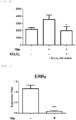
- a significant increase in a phosphorylated MPP kinase level such as p44 and p42 ERK was found in ATC cells treated with compound 18a ( FIG. 8 ).
- the relative increase of the phosphorylated forms oERK1 and ERK2f was 2.2 times and 2.8 times, respectively ( FIG. 9 ).
- radioactive iodine uptake increase ( FIGS. 10 and 11 ) and the relative increase of the phosphorylated form of ERK1 and ERK2 by compound 18a were completely inhibited by selective MEK inhibitors, PD98059 and U0126 ( FIGS. 12 and 13 ) .
- Compound 18a derived a sharp increase in cell membrane-localized NIS protein having mature and immature forms in ATC cells, as compared with control cells ( FIG. 14 ).
- Qualitative analysis of band intensity showed increases in membrane fully glycosylated and partially glycosylated NIS protein in CAL62 cells by 8.1 times and 6.4 times, respectively ( FIG. 15 ).
- a clone formation assay using 1-131 showed a minimal cytotoxic effect in CAL62 cells treated with any one of compounds 18a and 1-131 alone ( FIG. 16 ).
- Relative colony formability of 1-131 or GSK5182 group was 92.9 ⁇ 5.8% and 94.5 ⁇ 10.8%, respectively in CAL62 cells ( FIG. 17 ).
- colony-formability was significantly decreased to about 58.5 ⁇ 7.4% in CAL-62 ( FIG. 17 ).
- the CAL62-effluc mouse tumor model was divided into the following groups ( FIG. 18 , Group 1: vehicle, Group 2: 100mpk compound 18a, Group 3: 200mpk compound 18a). To the mice of each group, the vehicle (100% PEG) and compound 18a (100mpk, 200 mpk) were orally administered daily for 6 days. In order to observe a difference in tumor growth between before administration and after administration, optical imaging (bioluminescent imaging) was performed. After finally administering the drug, a radioactive isotope (I-125) was administered to the mice on the next day, and after 2 hours, the mice were sacrificed, all organs thereof were extracted, and a radiation level was measured with a gamma counter.
- I-125 radioactive isotope
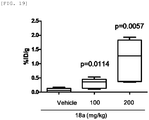
- radioactive iodine uptake in CAL62 tumor was concentration-dependently increased by treatment with compound 18a ( FIG. 19 ).
- the radioactive uptake was increased by 4.4 times and 16.2 times in the 100mpk and 200mpk compound 18a groups, respectively.
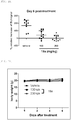
- significant tumor growth inhibitory efficiency was shown in the compound 18a group ( FIG. 20 ).
- Drug concentration-dependent tumor growth inhibitory efficiency was shown ( FIG. 21 ).
- An abrupt weight change in the mice was not shown in all groups ( FIG. 22 ).
- the arylethene derivative of the present invention is a novel compound, and exhibits very high inhibitory activity to ERR ⁇ as compared with a conventional GSK5182 compound, and at the same time, shows an effect of improved drug stability, pharmacological activity and toxicity.
- the arylethene derivative may be useful as efficient prophylactic agent and therapeutic agent for diseases mediated by ERR ⁇ , in particular, metabolic diseases such as obesity, diabetes, hyperlipidemia, fatty liver, or atherosclerosis, as well as retinopathy, without side effects.
- the arylethene derivative of the present invention may specifically and significantly inhibit ERR ⁇ transcriptional activity as compared with GSK5182, and as a result, cause a radioactive isotope uptake increase from a cellular level to an animal level. Accordingly, the arylethene derivative of the present invention may significantly increase a treatment effect of radioactive iodine therapy for treating cancer, and when administered to cancer cells, may effectively produce cancer cells having an improved sodium iodide symporter (NIS) function, thereby having an excellent effect of being more easily applied to related research and clinical practice for treating anaplastic thyroid cancer.
- NIS sodium iodide symporter
Landscapes
- Chemical & Material Sciences (AREA)
- Organic Chemistry (AREA)
- Health & Medical Sciences (AREA)
- Medicinal Chemistry (AREA)
- Pharmacology & Pharmacy (AREA)
- Epidemiology (AREA)
- Life Sciences & Earth Sciences (AREA)
- Animal Behavior & Ethology (AREA)
- General Health & Medical Sciences (AREA)
- Public Health (AREA)
- Veterinary Medicine (AREA)
- Pharmaceuticals Containing Other Organic And Inorganic Compounds (AREA)
- Acyclic And Carbocyclic Compounds In Medicinal Compositions (AREA)
Abstract
Description
- The present invention relates to an arylethene derivative inhibiting an activity of an estrogen-related receptor gamma (hereinafter, referred to as ERRγ), or a prodrug, solvate, stereoisomer, or pharmaceutically acceptable salt thereof, and a pharmaceutical composition comprising the compound as an active ingredient.
- A hormone receptor which responds to the hormone is required for regulating development, growth or differentiation of cells through change in intracellular gene expression, and is largely classified into a cell membrane receptor and a nuclear receptor. Among them, there is an increasing interest in an orphan nuclear receptor which is the nuclear receptor and of which the binding ligand has not been revealed.
- Estrogen-related receptor (ERR) which is one of the orphan nuclear receptors has three types which are ERRα, ERRβ, and ERRγ, and each position to be activated is different.
- In particular, ERRγ shows an activity in spinal cords and a central nervous system, and is a nuclear hormone receptor which is a transcriptional regulatory protein involved in glucose biosynthesis in a liver, and has an increased transcriptional activity for itself when bound to a ligand, thereby helping gene expression related to glucose synthesis. That is, ERRγ is directly involved in glucose metabolism.
- In addition, ERRγ is a human nuclear receptor protein called NR3B3, and is encoded by a ESRRG gene. ERRγ functions as a constitutive activator in transcription. ERRγ is a member of a nuclear hormone receptor family of a steroid hormone receptor.
- An ERRγ protein is known as a main modulator of various genes related to fatty acid oxidation and mitochondria biogenesis in a myocardium, and also known to be involved in glucose production in a liver.
- Meanwhile, diabetic retinopathy is a disease developed by occurrence of circulatory failure in a retina which is specific to diabetic patients, and belongs to one of the three major microvascular complications of diabetes together with diabetic neuropathy and diabetic nephropathy. Occurrence of diabetic retinopathy is related to a disease period during which a patient suffers from diabetes, and in the case of the diabetes diagnosed before the age of 30 corresponding to
type 1, the diabetic retinopathy occurs in 17% when the disease period is 5 years or less, and in 98% when the disease period is 15 years or more, and among them, worsening proliferative diabetic retinopathy occurs in about 1% when the disease period is 10 years or less, and in 67% when the disease period is 35 years or more. In the case oftype 2 diabetes, it is known that the diabetic retinopathy occurs in 29% when the disease period is 5 years or less, and in 78% when the disease period is 15 years or more, and the proliferative diabetic retinopathy occurs in 2% when the disease period is 5 years or less, and in 16% when the disease period is 15 years or more. In a diabetic patient's retina, it is known that vascular change in a capillary such as hypertrophy of a retinal capillary basement membrane, loss of perivascular cells, and occurrence of microaneurysm occurs, and as time passes, retinal neovascularization subsequent to a wide range of capillary nonperfusion may also occur. This diabetic retinopathy is a kind of diabetes complications, but once develops, the progression thereof is difficult to be prevented by glycemic control, and a treatment method specific to retinopathy is demanded. - It has been reported from a recent study that a low molecular organic compound known as GSK5182 which is (Z)-4-(1-(4-(2-(dimethylamino)ethoxy)phenyl)-5-hydroxy-2-phenylpent-1-en-1-yl)phenol functions as a ligand in ERRγ to inhibit the ERRγ activity, thereby showing an anti-diabetes effect such as relieving hyperglycemia and insulin resistance, and a treatment effect of retinopathy.

- Development of a new material which significantly inhibits a transcriptional activity of ERRγ as compared with previously reported GSK5182 is demanded.
- Meanwhile, anaplastic thyroid cancer (ATC) is one of the most aggressive and deadly cancers known to develop in humans. ATC rapidly metastasizes from a thyroid gland to lungs, bones, focal lymph nodes, and the brain. This is in contrast with the nature of well-differentiated benign thyroid cancer which explains most of the thyroid cancer, and thus, treatment of ATC which is surgery, a radiation therapy, and a chemotherapy alone or in combination thereof has not exhibited an effect on patient survival. As a result, development of a novel treatment method is urgently demanded.
- A sodium iodide symporter (NIS) is a plasma membrane glycoprotein which mediates intracellular active inflow of iodine. In the treatment of thyroid cancer, endogenous NIS accepts a wide range of application of a radioiodine therapy in a clinical situation, which is known as an effective treatment method to remove malignant cells with minimal side effects over the years. Low-differentiated cancer cells including ATC cells tend to represent gradual dedifferentiation leading to a decrease in a NIS level. This prevents ATC cells from accumulating iodine in the cells with a high concentration, and accordingly, causes cell resistance to the radioiodine therapy, leading to a poor prognosis. Therefore, there has been many attempts to recover an NIS function from ATC cells, using several methods such as epigenetic regulation using gene transfer, an epigenome-altering drug, and the like, however, no satisfactory result has been obtained so far.
- The biological effect of ERRγ has been extensively studied in various disease models (
type 2 diabetes mellitus, alcohol-derived oxidative stress, microbial infection by liver damage and gluconeogenesis of the damaged liver, some metabolic diseases such as liver insulin signaling and iron metabolism), however, the role of ERRγ for the NIS function in ATC has not been clearly studied so far. It has been reported from a recent study that a low molecular organic compound known as GSK5182 which is (Z)-4-(1-(4-(2-(dimethylamino)ethoxy)phenyl)-5-hydroxy-2-phenylpent-1-en-1-yl)phenol functions as a ligand in ERRγ to inhibit the ERRγ activity, thereby improving the function of NIS to increase an ATC intracellular radioiodine uptake and finally exhibit an effect of increasing radioiodine treatment. However, when GSK5182 was administered to an ATC mouse tumor model, a radioiodine uptake in the tumor was not increased. Accordingly, development of a new material which may specifically and significantly inhibit ERRγ transcriptional activity as compared with GSK5182, and as a result, cause a radioactive isotope uptake increase from a cellular level to an animal level is demanded. - Thus, the inventors of the present invention found that by introducing a specific substituent to an arylethene derivative, an activity to inhibit ERRγ is better as compared with the conventionally reported activity of GSK5182, and at the same time, drug stability, a pharmacological activity, and toxicity were improved, thereby completing the present invention.
- An object of the present invention is to provide a novel arylethene derivative which may effectively inhibit an ERRγ activity, or a prodrug, solvate, stereoisomer, or pharmaceutically acceptable salt thereof.
- Another object of the present invention is to provide a pharmaceutical composition for preventing or treating ERRγ-mediated diseases, comprising the arylethene derivative, or the prodrug, solvate, stereoisomer, or pharmaceutically acceptable salt thereof as an active ingredient.
- Another object of the present invention is to provide a pharmaceutical composition for preventing or treating retinopathy, comprising the arylethene derivative, or the prodrug, solvate, stereoisomer, or pharmaceutically acceptable salt thereof as an active ingredient.
- Another object of the present invention is to provide a pharmaceutical composition for treating thyroid cancer, comprising the arylethene derivative, or the prodrug, solvate, stereoisomer, or pharmaceutically acceptable salt thereof, and a pharmaceutically acceptable carrier, and being used in combination of radioactive iodine.
- Another object of the present invention is to provide a kit for treating thyroid cancer, comprising the arylethene derivative, or the prodrug, solvate, stereoisomer, or pharmaceutically acceptable salt thereof, and radioiodine.
- In one general aspect, an arylethene derivative represented by the following Chemical Formula 1, as a novel compound which may effectively inhibit an activity of ERRγ, or a prodrug, solvate, stereoisomer, or pharmaceutically acceptable salt thereof:
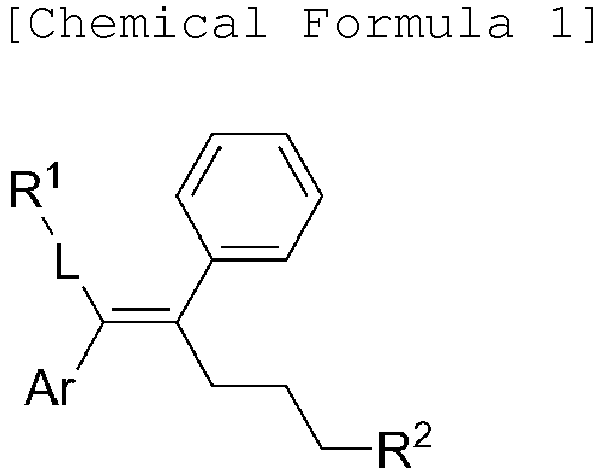
- L is (C6-C20)arylene, (C3-C20)heteroarylene, or (C3-C20)fused heterocycle;
- R1 is (C3-C20)heterocycloalkyl, (C3-C20)heteroaryl,-O-(CH2)m-R11, -(CH2)m-R12, -NH-(CH2)m-R13, -NHCO-(CH2)n-R14, or -SiR16R17-(CH2)m-R15;
- R11 to R15 are independently of one another (C3-C20)heterocycloalkyl;
- R16 and R17 are independently of each other (C1-C20)alkyl;
- m is an integer of 1 to 3;
- n is an integer of 0 or 1;
- Ar is (C6-C20)aryl or (C3-C20)heteroaryl, in which the aryl or heteroaryl of Ar may be further substituted by one or more selected from the group consisting of hydroxy, halogen, (C1-C20)alkyl, halo(C1-C20)alkyl, (C1-C20)alkoxy, nitro, cyano, -NR21R22, (C1-C20) alkylcarbonyloxy, (C1-C20) alkylcarbonylamino, guanidino, -SO2-R23, and -OSO2-R24;
- R21 and R22 are independently of each other hydrogen, (C1-C10)alkylsulfonyl, or (C6-C20)cycloalkylsulfonyl;
- R23 and R24 are independently of each other (C1-C20)alkyl, halo(C1-C20)alkyl, or (C3-C20)cycloalkyl;
- R2 is hydroxy, halogen, (C1-C20)alkylcarbonyloxy, or (C1-C20)alkylsulfonyloxy;
- the heterocycloalkyl or heteroaryl of R1 and the heterocycloalkyl of R11 to R15 may be further substituted by one or more selected from the group consisting of (C1-C20)alkyl, (C3-C20)cycloalkyl, (C2-C20)alkenyl, amidino, (C1-C20)alkoxycarbonyl, hydroxy, hydroxy(C1-C20)alkyl, and di(C1-C20)alkylamino(C1-C20)alkyl; and
- the heterocycloalkyl and heteroaryl contains one or more heteroatoms selected from the group consisting of N, O and S, and the heterocycloalkyl is a saturated or unsaturated mono-, bi-, or spirocycle having a carbon atom or nitrogen atom in a ring as a binding site.
- In another general aspect, a pharmaceutical composition for preventing or treating ERRγ-mediated diseases includes: the arylethene derivative, or a prodrug, solvate, stereoisomer, or pharmaceutically acceptable salt thereof as an active ingredient, by confirming an excellent ERRγ inhibitory activity of the arylethene derivative represented by Chemical Formula 1.
- In another general aspect, a pharmaceutical composition for preventing or treating retinopathy includes: the arylethene derivative of Chemical Formula 1 which may effectively inhibit an ERRγ activity, or a prodrug, solvate, stereoisomer, or pharmaceutically acceptable salt thereof as an active ingredient.
- In another general aspect, a pharmaceutical composition for treating thyroid cancer includes: the arylethene derivative of Chemical Formula 1 which may specifically and significantly inhibit an ERRγ transcriptional activity, or a prodrug, solvate, stereoisomer, or pharmaceutically acceptable salt thereof, and a pharmaceutically acceptable carrier, and is used in combination of radioactive iodine.
- In still another general aspect, a kit for treating thyroid cancer includes: the arylethene derivative of Chemical Formula 1 which may specifically and significantly inhibit an ERRγ transcriptional activity, or a prodrug, solvate, stereoisomer, or pharmaceutically acceptable salt thereof, and radioactive iodine.
- The arylethene derivative of the present invention is a novel compound, and exhibits very high inhibitory activity to ERRγ as compared with a conventional GSK5182 compound, and at the same time, shows an effect of improved drug stability, pharmacological activity and toxicity. Thus, the arylethene derivative may be useful as efficient prophylactic agent and therapeutic agent for diseases mediated by ERRγ, in particular, metabolic diseases such as obesity, diabetes, hyperlipidemia, fatty liver, or atherosclerosis, as well as retinopathy, without side effects.
- In addition, the arylethene derivative of the present invention may specifically and significantly inhibit ERRγ transcriptional activity as compared with GSK5182, and as a result, cause a radioactive isotope uptake increase from a cellular level to an animal level. Accordingly, the arylethene derivative of the present invention may significantly increase a treatment effect of radioactive iodine therapy for treating cancer, and when administered to cancer cells, may effectively produce cancer cells having an improved sodium iodide symporter (NIS) function, thereby having an excellent effect of being more easily applied to related research and clinical practice for treating anaplastic thyroid cancer.
-
-
FIGS. 1 to 3 illustrate an effect ofcompound 18a for a radioactive iodine uptake in anaplastic thyroid cancer cells. -
FIGS. 4 and5 illustrate an effect ofcompound 18a for regulating endogenous ERRγ and NIS mRNA expression in anaplastic thyroid cancer cells. -
FIGS. 6 and7 illustrate an effect ofcompound 18a for regulating endogenous ERRγ protein expression in anaplastic thyroid cancer cells. -
FIGS. 8 and9 illustrate acompound 18a-derived MAP kinase activity in anaplastic thyroid cancer cells. -
FIGS. 10 and11 illustrate a degree of iodine uptake inhibition incompound 18a-treated anaplastic thyroid cancer cells, by PD98059 or U0126. -
FIGS. 12 and13 illustrate a degree of inversion of activated MAK kinase signaling, by PD98059 or U0126. -
FIGS. 14 and15 illustrate an increase aspect of an amount of membrane-localized NIS protein in anaplastic thyroid cancer cells bycompound 18a. -
FIGS. 16 and17 illustrate results showing increased cytotoxicity of increased 131I after treating anaplastic thyroid cancer cells withcompound 18a. -
FIGS. 18 to 22 illustrate an effect ofcompound 18a for a radioactive iodine uptake by administratingcompound 18a in an ATC tumor model. - Hereinafter, the present invention will be described in detail. Technical terms and scientific terms used in the present specification have the general meaning understood by those skilled in the art to which the present invention pertains unless otherwise defined, and a description for the known function and configuration obscuring the present invention will be omitted in the following description.
- The present invention provides an arylethene derivative represented by the following
Chemical Formula 1, or a prodrug, solvate, stereoisomer, or pharmaceutically acceptable salt thereof:
- L is (C6-C20)arylene, (C3-C20)heteroarylene, or (C3-C20)fused heterocycle;
- R1 is (C3-C20)heterocycloalkyl, (C3-C20)heteroaryl, - O-(CH2)m-R11, -(CH2)m-R12, -NH-(CH2)m-R13, -NHCO-(CH2)n-R14, or -SiR16R17-(CH2)m-R15;
- R11 to R15 are independently of one another (C3-C20)heterocycloalkyl;
- R16 and R17 are independently of each other (C1-C20)alkyl;
- m is an integer of 1 to 3;
- n is an integer of 0 or 1;
- Ar is (C6-C20)aryl or (C3-C20)heteroaryl, in which the aryl or heteroaryl of Ar may be further substituted by one or more selected from the group consisting of hydroxy, halogen, (C1-C20)alkyl, halo(C1-C20)alkyl, (C1-C20)alkoxy, nitro, cyano, -NR21R22, (C1-C20)alkylcarbonyloxy, (C1-C20)alkylcarbonylamino, guanidino, -SO2-R23, and -OSO2-R24;
- R21 and R22 are independently of each other hydrogen, (C1-C10)alkylsulfonyl, or (C6-C20)cycloalkylsulfonyl;
- R23 and R24 are independently of each other (C1-C20)alkyl, halo(C1-C20)alkyl, or (C3-C20)cycloalkyl;
- R2 is hydroxy, halogen, (C1-C20)alkylcarbonyloxy, or (C1-C20)alkylsulfonyloxy;
- the heterocycloalkyl or heteroaryl of R1 and the heterocycloalkyl of R11 to R15 may be further substituted by one or more selected from the group consisting of (C1-C20)alkyl, (C3-C20)cycloalkyl, (C2-C20)alkenyl, amidino, (C1-C20)alkoxycarbonyl, hydroxy, hydroxy(C1-C20)alkyl, and di(C1-C20)alkylamino(C1-C20)alkyl; and
- the heterocycloalkyl and heteroaryl contains one or more heteroatoms selected from the group consisting of N, O and S, and the heterocycloalkyl is a saturated or unsaturated mono-, bi-, or spirocycle having a carbon atom or nitrogen atom in a ring as a binding site.
- The arylethene derivative of
Chemical Formula 1 according to the present invention which is a novel compound, has a very high inhibitory activity to ERRγ, and thus, is useful as a therapeutic agent and a prophylactic agent of ERRγ-mediated diseases, in particular, metabolic diseases such as obesity, diabetes, hyperlipidemia, fatty liver or arteriosclerosis, and also may be used as an active ingredient for preventing or treating retinopathy. - In addition, the arylethene derivative of
Chemical Formula 1 according to the present invention regulates expression of endogenous ERRγ protein to regulate mitogen-activated protein (MAP) kinase, and improves a sodium iodide symporter (NIS) function to increase membrane-localized NIS, thereby increasing a radioactive iodine uptake when treating thyroid cancer. - The term of the present invention, "alkyl" refers to a monovalent straight-chain or branched-chain saturated hydrocarbon radical consisting of only carbon and hydrogen atoms, and an example of the alkyl radical includes methyl, ethyl, propyl, isopropyl, butyl, isobutyl, t-butyl, pentyl, hexyl, octyl, nonyl, or the like, but not limited thereto.
- The term of the present invention, "aryl" refers to a monovalent organic radical of an aromatic ring derived from aromatic hydrocarbon by removal of one hydrogen, including a single- or fused ring system containing appropriately 4 to 7, preferably 5 or 6 ring atoms in each ring, and even a form in which a plurality of aryls are linked by a single bond. A specific example thereof includes phenyl, naphthyl, biphenyl, anthryl, indenyl, fluorenyl, or the like, but not limited thereto.
- The term of the present invention, "heteroaryl" refers to a monovalent radical of a heteroaromatic ring which is an aryl group containing 1 to 4 heteroatoms selected from the group consisting of N, O, and S as an aromatic ring backbone atom, and carbons as remaining aromatic ring backbone atoms, and is a 5- or 6-membered monocyclic heteroaryl and a polycyclic heteroaryl fused with one or more benzene rings, which may be partially saturated. In addition, the heteroaryl in the present invention also includes a form in which one or more heteroaryls are linked by a single bond. An example of the heteroaryl group includes pyrrolyl, pyrazolyl, quinolyl, isoquinolyl, pyridyl, pyrimidinyl, oxazolyl, thiazolyl, thiadiazolyl, triazolyl, imidazolyl, benzimidazolyl, isoxazolyl, benzisoxazolyl, thiophenyl, benzothiophenyl, furyl, benzofuryl, or the like, but not limited thereto.
- The term of the present invention, "arylene" and "heteroarylene" refer to divalent radicals of aromatic ring and heteroaromatic ring.
- The term of the present invention, "fused heterocycle" refers to a divalent radical of a fused ring in which a non-aromatic heterocycle containing 1 to 4 heteroatoms selected from the group consisting of N, O, and S, and an aromatic ring are fused, and has a carbon atom or a nitrogen atom in the fused heterocycle as a bonding site. An example of the fused heterocycle includes indoline, dihydrobenzofuran, dihydrobenzothiophene, or the like, but not limited thereto.
- The term of the present invention, "heterocycloalkyl" is a monovalent radical of a non-aromatic heterocycle containing 1 to 4 heteroatoms selected from the group consisting of N, O, and S, and the non-aromatic heterocycle includes a saturated or unsaturated monocycle, polycycle or spirocycle form, and may be bonded via a heteroatom or a carbon atom. An example of the heterocycloalkyl radical may include monovalent radicals of non-aromatic heterocycles such as aziridine, pyrrolidine, azetidine, piperidine, tetrahydropyridine, piperazine, morpholine, thiomorpholine, 3-azabicyclo[3.1.0]hexane, octahydropyrrolo[3,4-c]pyrrole, 2,7-diazispiro[4.4]nonane, 2-azaspiro[4.4]nonane, or the like.
- The term of the present invention, "halo" or "halogen" refers to fluorine, chlorine, bromine or iodine atom.
- The term or the present invention, "haloalkyl" refers to alkyl substituted by one or more halogens, and an example thereof may include trifluoromethyl, or the like.
- The term of the present invention, "alkenyl" is a monovalent radical of a straight chain or branched chain unsaturated hydrocarbon including one or more double bonds between two or more carbon atoms, and specifically includes ethenyl, propenyl, prop-1-en-2-yl, 1-butenyl, 2-butenyl, isobutylenyl, 1-pentenyl, 2-pentenyl, 3-methyl-1-butenyl, 2-methyl-2-butenyl, 2,3-dimethyl-2-butenyl, or the like, but not limited thereto.
- The term of the present invention, "alkoxy" refers to an -O-alkyl radical, wherein the alkyl is as described above. An example of the alkoxy radical includes methoxy, ethoxy, isopropoxy, butoxy, isobutoxy, t-butoxy, or the like, but not limited thereto.
- The term of the present invention, "alkylcarbonyloxy" refers to an -OC(=O)alkyl radical, wherein the alkyl is as described above. An example of the alkylcarbonyloxy radical includes methylcarbonyloxy, ethylcarbonyloxy, isopropylcarbonyloxy, propylcarbonyloxy, butylcarbonyloxy, isobutylcarbonyloxy, t-butylcarbonyloxy, or the like, but not limited thereto.
- The term of the present invention, "alkylcarbonylamino" refers to a -NHC(=O)alkyl radical, wherein the alkyl is as described above. An example of the alkylcarbonylamino radical includes methylcarbonylamino, ethylcarbonylamino, isopropylcarbonylamino, propylcarbonylamino, butylcarbonylamino, isobutylcarbonylamino, t-butylcarbonylamino, or the like, but not limited thereto.
- The term of the present invention, "alkoxycarbonyl" refers to a -C(=O)alkoxy radical, wherein the alkoxy is as described above. An example of the alkoxycarbonyl radical includes methoxycarbonyl, ethoxycarbonyl, isopropoxycarbonyl, propoxycarbonyl, butoxycarbonyl, isobutoxycarbonyl, t-butoxycarbonyl, or the like, but not limited thereto.
- The term of the present invention, "cycloalkyl" refers to a monovalent saturated carbocyclic radical composed of one or more rings. An example of the cycloalkyl radical includes cyclopropyl, cyclobutyl, cyclopentyl, cyclohexyl, cycloheptyl, or the like, but not limited thereto.
- The term of the present invention, "alkylsulfonyl" refers to a -SO2-alkyl radical, wherein the alkyl is as described above. An example of the alkylsulfonyl radical includes methylsulfonyl, ethylsulfonyl, or the like, but not limited thereto.
- The term of the present invention, "cycloalkylsulfonyl" refers to a -SO2-cycloalkyl radical, wherein the cycloalkyl is as described above. An example of the cycloalkylsulfonyl radical includes cyclopropylsulfonyl, cyclohexylsulfonyl, or the like, but not limited thereto.
- The term of the present invention, "alkylsulfonyloxy" refers to a -OSO2-alkyl radical, wherein the alkyl is as described above. An example of the alkylsulfonyloxyl radical includes methylsulfonyloxy, ethylsulfonyloxy, or the like, but not limited thereto.
- The term or the present invention, "hydroxyalkyl" refers to alkyl substituted by one or more hydroxys, and an example thereof may include hydroxymethyl or the like.
- In the arylethene derivative according to an exemplary embodiment of the present invention, the arylethene derivative may be represented by the following
Chemical Formulae 2 to 5:
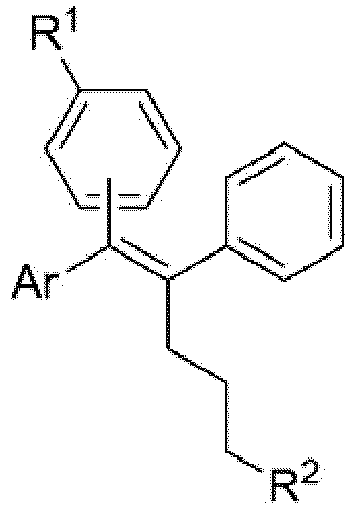


Chemical Formula 1. - In the arylethene derivative according to an exemplary embodiment of the present invention, R1 is (C3-C10)heterocycloalkyl, (C3-C10)heteroaryl, -O-(CH)m-R11,-(CH2)m-R12, -NH-(CH2)m-R13, -NHCO-(CH2)n-R14, or -SiR16R17-(CH2)m-R15; R11 to R15 are independently of one another (C3-C10)heterocycloalkyl; R16 and R17 are independently of each other (C1-C10)alkyl; m is an integer of 1 to 3; n is an integer of 0 or 1; Ar is (C6-C12)aryl or (C3-C12)heteroaryl, in which the aryl or heteroaryl of Ar may be further substituted by one or more selected from the group consisting of hydroxy, halogen, (C1-C10)alkyl, halo(C1-C10)alkyl, (C1-C10)alkoxy, nitro, cyano, amino, (C1-C10)alkylsulfonylamino, (C3-C10)cycloalkylsulfonylamino, di((C1-C10)alkylsulfonyl)amino, (C1-C10)alkylcarbonyloxy, (C1-C10)alkylcarbonylamino, guanidino, (C1-C10)alkylsulfonyl, (C1-C10)alkylsulfonyloxy, halo(C1-C10)alkylsulfonyloxy, and (C3-C10)cycloalkylsulfonyloxy; R2 is hydroxy, fluoro, (C1-C10)alkylcarbonyloxy, or (C1-C10)alkylsulfonyloxy; and the heterocycloalkyl or heteroaryl of R1 and the heterocycloalkyl of R11 to R15 may be further substituted by one or more selected from the group consisting of (C1-C10)alkyl, (C3-C10)cycloalkyl, (C2-C10)alkenyl, amidino, (C1-C10)alkoxycarbonyl, hydroxy(C1-C10)alkyl, and di(C1-C10)alkylamino(C1-C10)alkyl.
- In the arylethene derivative according to an exemplary embodiment of the present invention, it is preferred that R1 is (C3-C10)heterocycloalkyl or -O-(CH2)m-R11; R11 is (C3-C10)heterocycloalkyl; m is an integer of 1 to 3; and the heterocycloalkyl of R1 and R11 may be further substituted by one or more selected from the group consisting of (C1-C10)alkyl, (C3-C10)cycloalkyl, (C2-C10)alkenyl, amidino, (C1-C10)alkoxycarbonyl, hydroxy(C1-C10)alkyl, and di(C1-C10)alkylamino(C1-C10)alkyl.
- In the arylethene derivative according to an exemplary embodiment of the present invention, it is more preferred that heterocycloalkyl of the R1 and R11 to R15 may be independently of each other selected from the following structures:

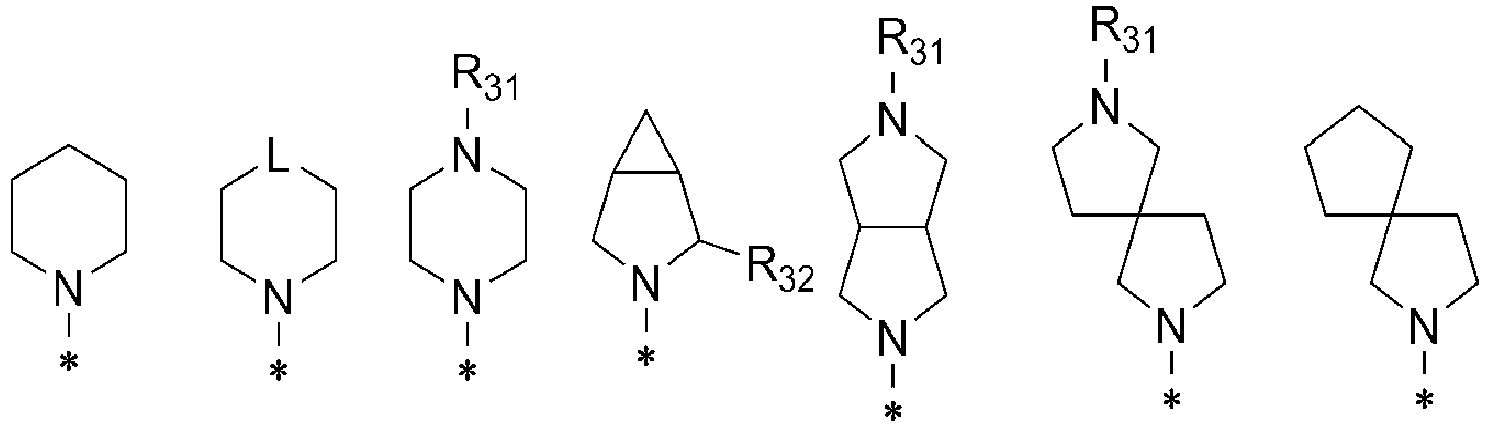
- In the arylethene derivative according to an exemplary embodiment of the present invention, the arylethene derivative may be more preferably represented by the following Chemical Formula 6:

- R1 is (C3-C10)heterocycloalkyl or -O-(CH2)m-R11;
- R11 is (C3-C10)heterocycloalkyl;
- m is an integer of 1 to 3;
- the heterocycloalkyl of R1 and R11 may be further substituted by one or more selected from the group consisting of (C1-C10)alkyl, (C3-C10)cycloalkyl, (C2-C10)alkenyl, amidino, (C1-C10)alkoxycarbonyl, hydroxy(C1-C10)alkyl, and di(C1-C20)alkylamino(C1-C20)alkyl;
- Ar is (C6-C12)aryl or (C3-C12)heteroaryl, in which the aryl or heteroaryl of Ar may be further substituted by one or more selected from the group consisting of hydroxy, halogen, (C1-C10)alkyl, halo(C1-C10)alkyl, (C1-C10)alkoxy, nitro, cyano, amino, (C1-C10)alkylsulfonylamino, (C3-C10)cycloalkylsulfonylamino, di((C1-C10)alkylsulfonyl)amino, (C1-C10)alkylcarbonyloxy, (C1-C10)alkylcarbonylamino, guanidino, (C1-C10)alkylsulfonyl, (C1-C10)alkylsulfonyloxy, halo(C1-C10)alkylsulfonyloxy, and (C3-C10)cycloalkylsulfonyloxy; and
- R2 is hydroxy, fluoro, (C1-C10)alkylcarbonyloxy, or (C1-C10)alkylsulfonyloxy.
- In the arylethene derivative according to an exemplary embodiment of the present invention, R1 and R11 may be independently of each other heterocycloalkyl selected from the following structures:


- In the arylethene derivative according to an exemplary embodiment of the present invention, Ar is (C6-C20)aryl, in which the aryl of Ar may be further substituted by one or more selected from the group consisting of hydroxy, halogen, (C1-C10)alkyl, halo(C1-C10)alkyl, (C1-C10)alkoxy, nitro, cyano, amino, (C1-C10)alkylsulfonylamino, (C3-C10)cycloalkylsulfonylamino, di((C1-C10)alkylsulfonyl)amino, (C1-C10)alkylcarbonyloxy, (C1-C10)alkylcarbonylamino, guanidino, (C1-C10)alkylsulfonyl, (C1-C10)alkylsulfonyloxy, halo(C1-C10)alkylsulfonyloxy, and (C3-C10)cycloalkylsulfonyloxy.
- In the arylethene derivative according to an exemplary embodiment of the present invention, R2 may be hydroxy.
- In the arylethene derivative according to an exemplary embodiment of the present invention, R2 may be hydroxy, and R1 may be heterocycloalkyl selected from the following structures:


- In the arylethene derivative according to an exemplary embodiment of the present invention, it is more preferred that R2 is hydroxy and R1 is -O-(CH2)m-R11; m is an integer of 1 or 2; and R11 is heterocycloalkyl selected from the following structures:


- In the arylethene derivative according to an exemplary embodiment of the present invention, it is more preferred that Ar is (C6-C12)aryl, in which the aryl of Ar may be further substituted by one or more selected from the group consisting of hydroxy, halogen, (C1-C10)alkyl, halo(C1-C10)alkyl, (C1-C10)alkoxy, nitro, cyano, amino, (C1-C10)alkylsulfonylamino, (C3-C10)cycloalkylsulfonylamino, di((C1-C10)alkylsulfonyl)amino, (C1-C10)alkylcarbonyloxy, (C1-C10)alkylcarbonylamino, guanidino, (C1-C10)alkylsulfonyl, (C1-C10)alkylsulfonyloxy, halo(C1-C10)alkylsulfonyloxy, and (C3-C10)cycloalkylsulfonyloxy; R2 is hydroxy; and R1 is heterocycloalkyl selected from the following structures:

- In the arylethene derivative according to an exemplary embodiment of the present invention, it is still more preferred that Ar is (C6-C12)aryl, in which the aryl of Ar may be further substituted by one or more selected from the group consisting of hydroxy, halogen, (C1-C10)alkyl, halo(C1-C10)alkyl, (C1-C10)alkoxy, nitro, cyano, amino, (C1-C10)alkylsulfonylamino, (C3-C10)cycloalkylsulfonylamino, di((C1-C10)alkylsulfonyl)amino, (C1-C10)alkylcarbonyloxy, (C1-C10)alkylcarbonylamino, guanidino, (C1-C10)alkylsulfonyl, (C1-C10)alkylsulfonyloxy, halo(C1-C10)alkylsulfonyloxy, and (C3-C10)cycloalkylsulfonyloxy; R2 is hydroxy; R1 is -O-(CH2)m-R11, m is an integer of 1 or 2, R11 is heterocycloalkyl selected from the following structures:


- In the arylethene derivative according to an exemplary embodiment of the present invention, the arylethene derivative may be specifically selected from the following structure, but not limited thereto:


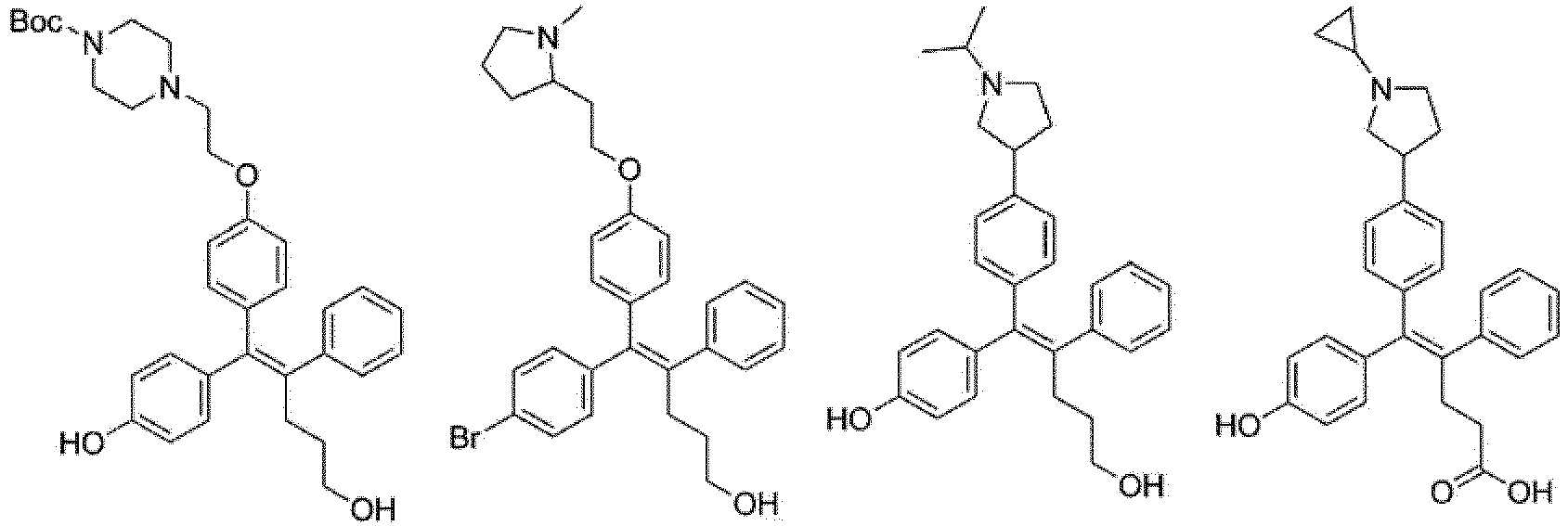


- In the arylethene derivative according to an exemplary embodiment of the present invention, the arylethene derivative may be preferably selected from the following structures:


- In the arylethene derivative according to an exemplary embodiment of the present invention, the arylethene derivative may be more preferably selected from the following structures:


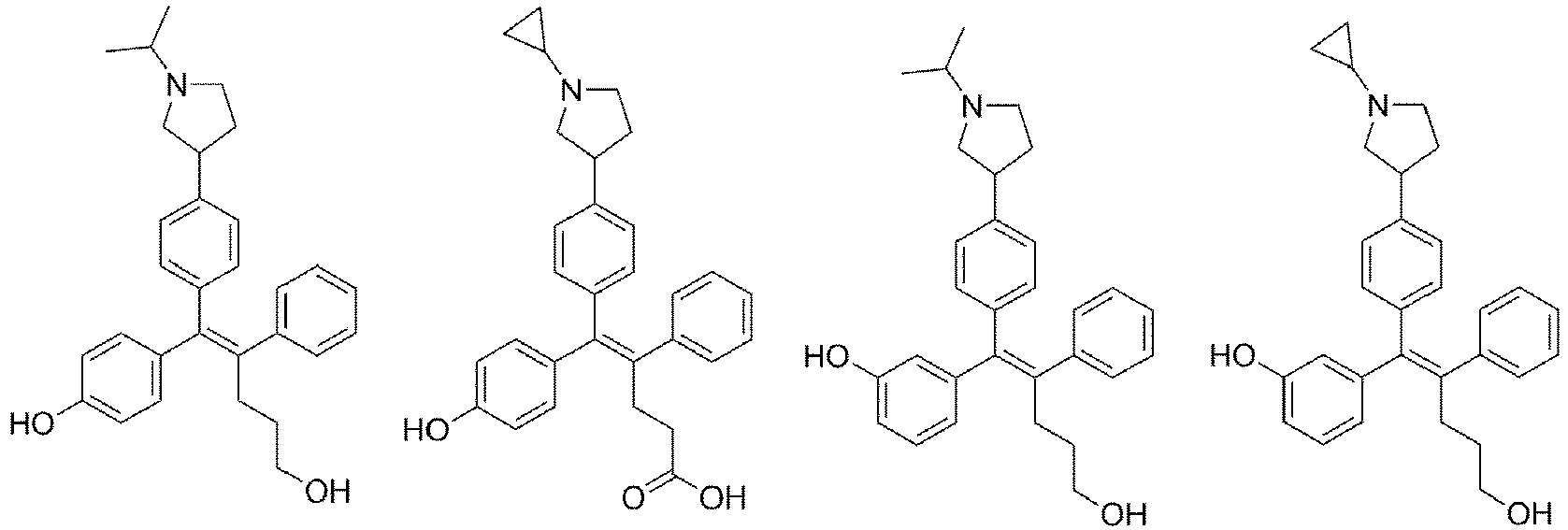

- In the arylethene derivative according to an exemplary embodiment of the present invention, the arylethene derivative may be still more preferably selected from the following structures:


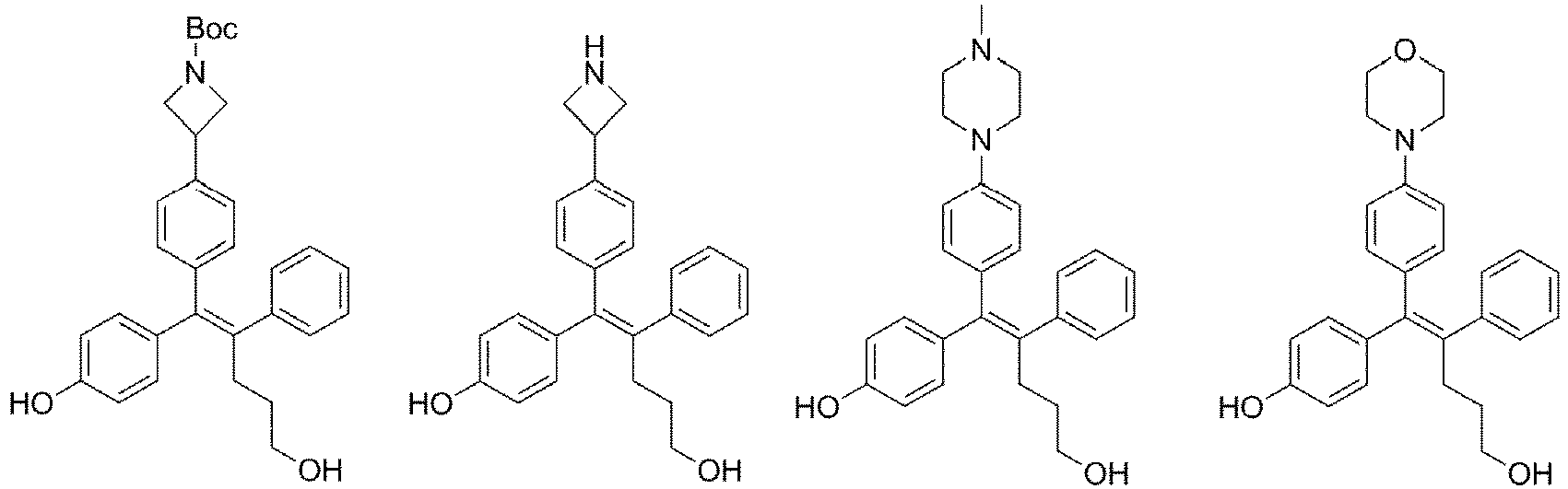


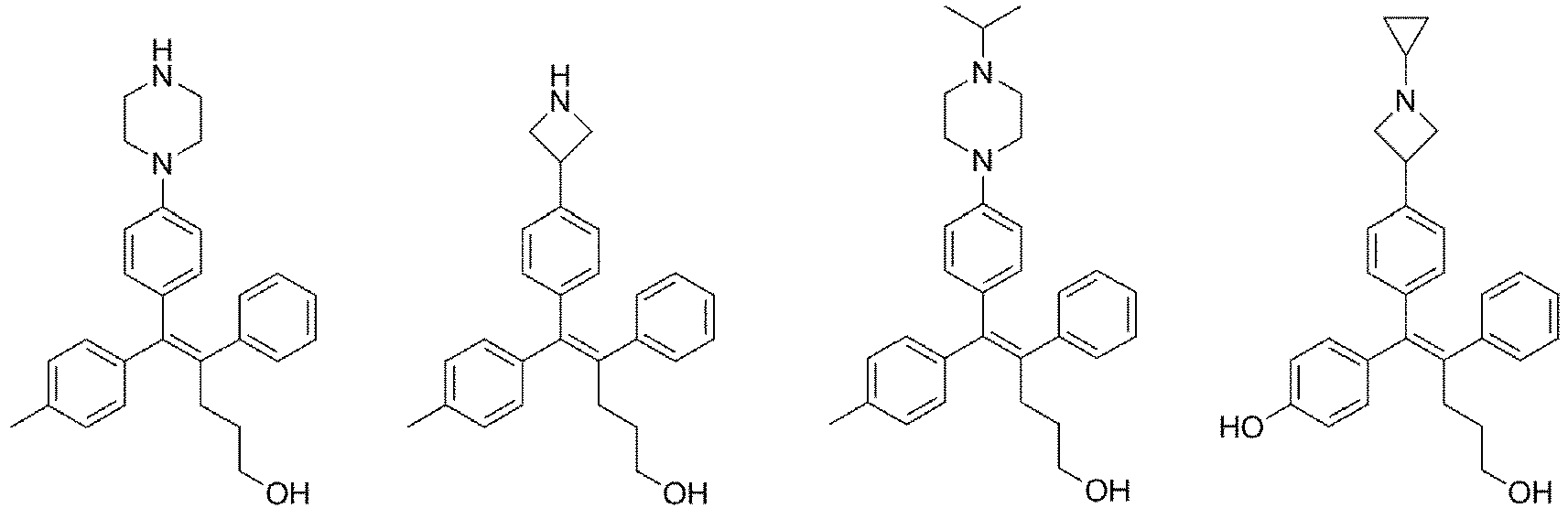


- Since the arylethene derivative according to the present invention may be used in the form of a prodrug, solvate, and pharmaceutically acceptable salt thereof for increasing in vivo absorption or increasing solubility, the prodrug, the solvate, and the pharmaceutically acceptable salt also fall within the scope of the present invention. In addition, since the arylethene derivative has a chiral carbon, the stereoisomer thereof exists, and the stereoisomer also falls within the scope of the present invention.
- The arylethene derivative according to the present invention may be prepared by various methods known in the art depending on the kinds of substituents, and as an example thereof, the following
Reaction Formulae 1 to 21 are illustrated, and the following preparation methods do not limit a method of preparing the arylethene derivative of the present invention. The specific details will be described in the following Examples 1 to 121. The preparation methods presented in the followingReaction Formulae 1 to 21 are only illustrative, and it is apparent to a person skilled in the art that the preparation methods may be easily modified by a person skilled in the art depending on certain substituents.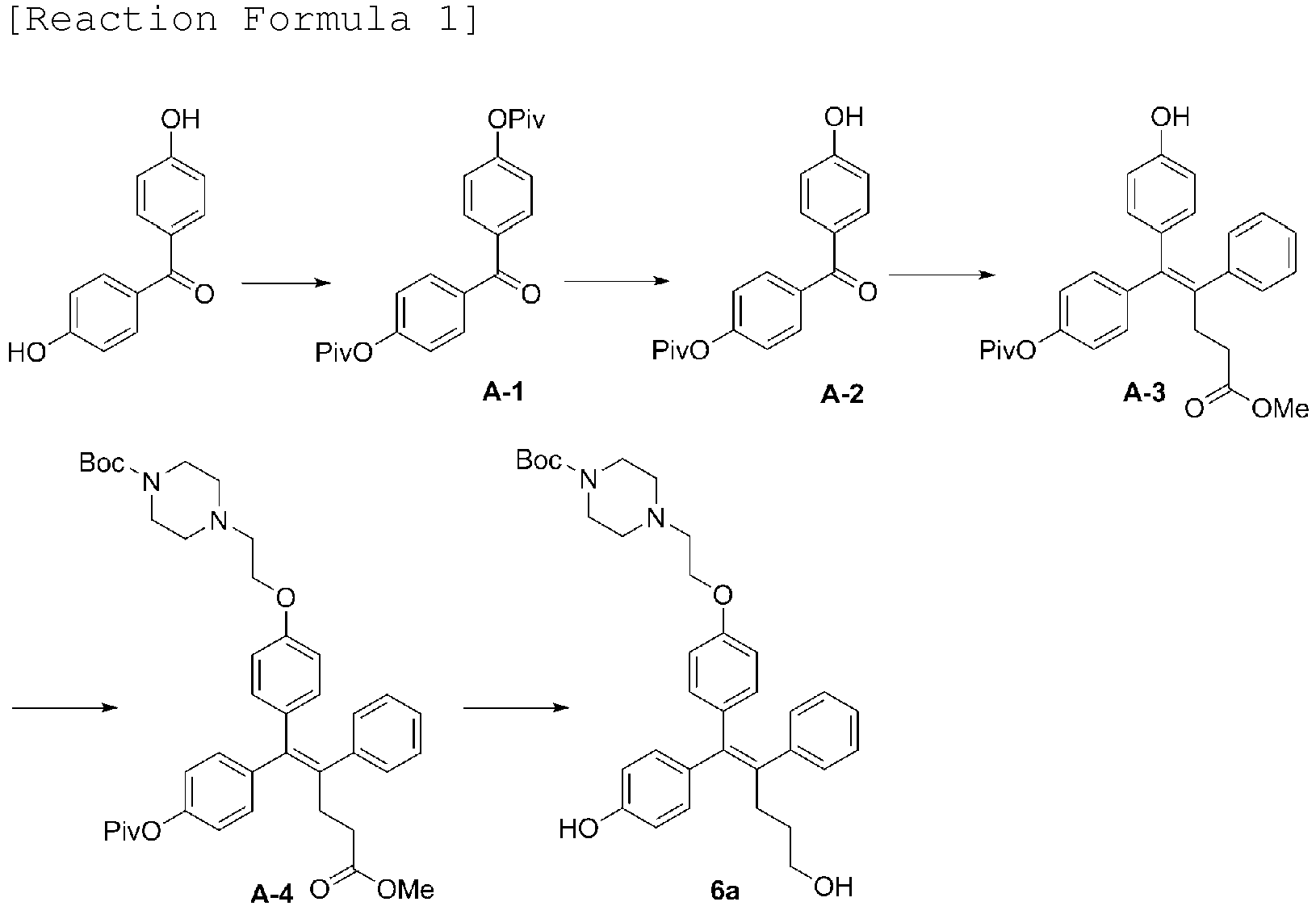

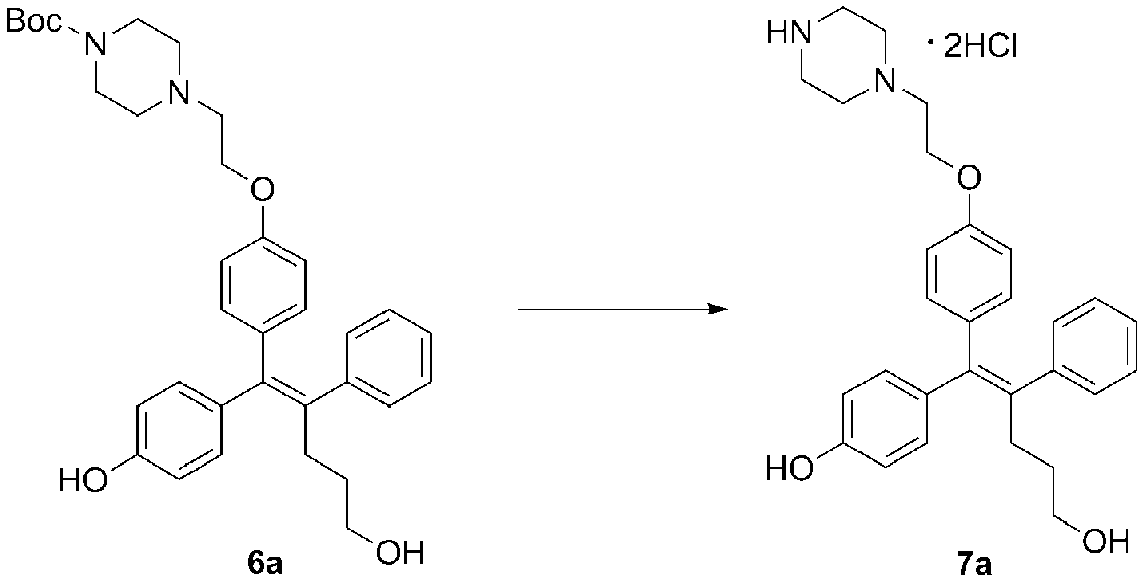


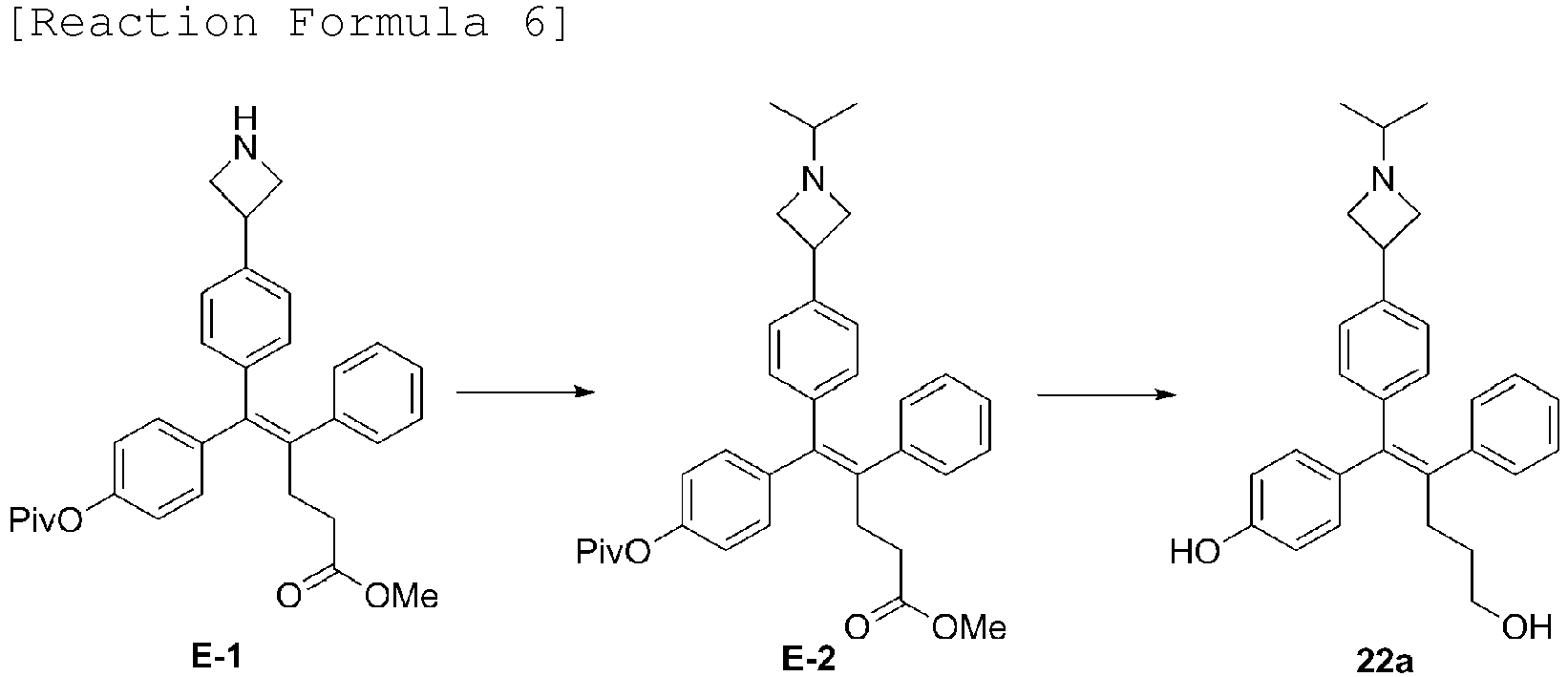
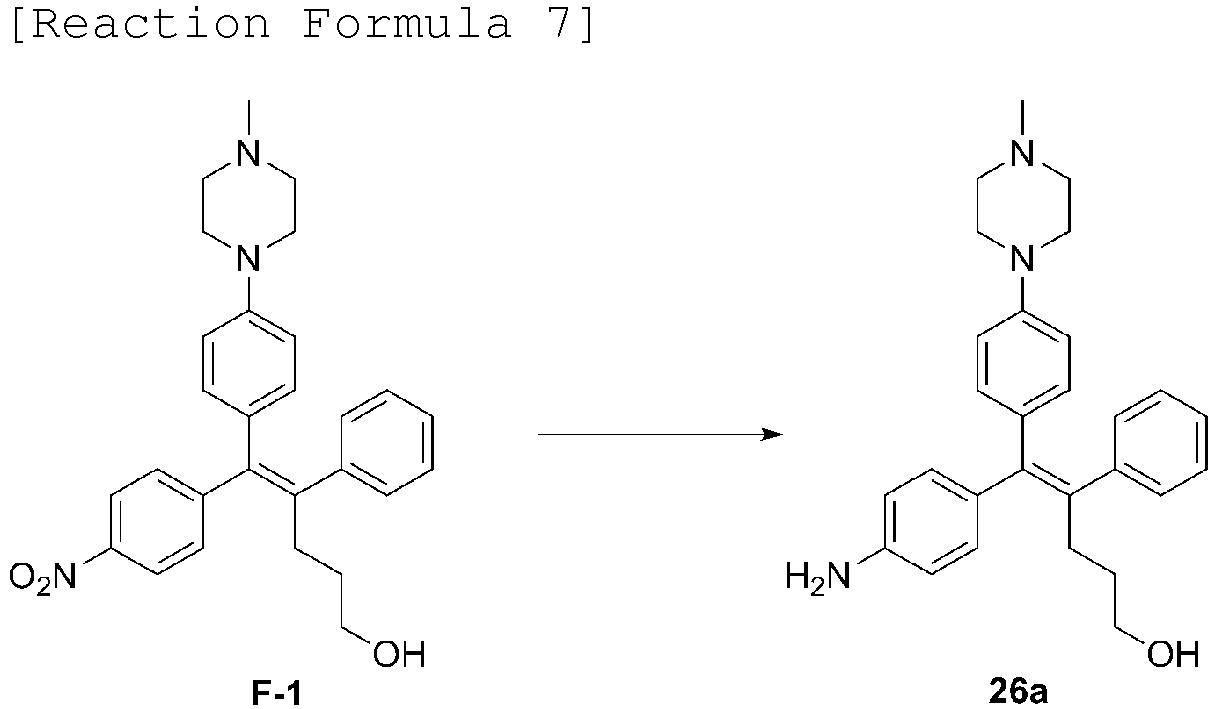

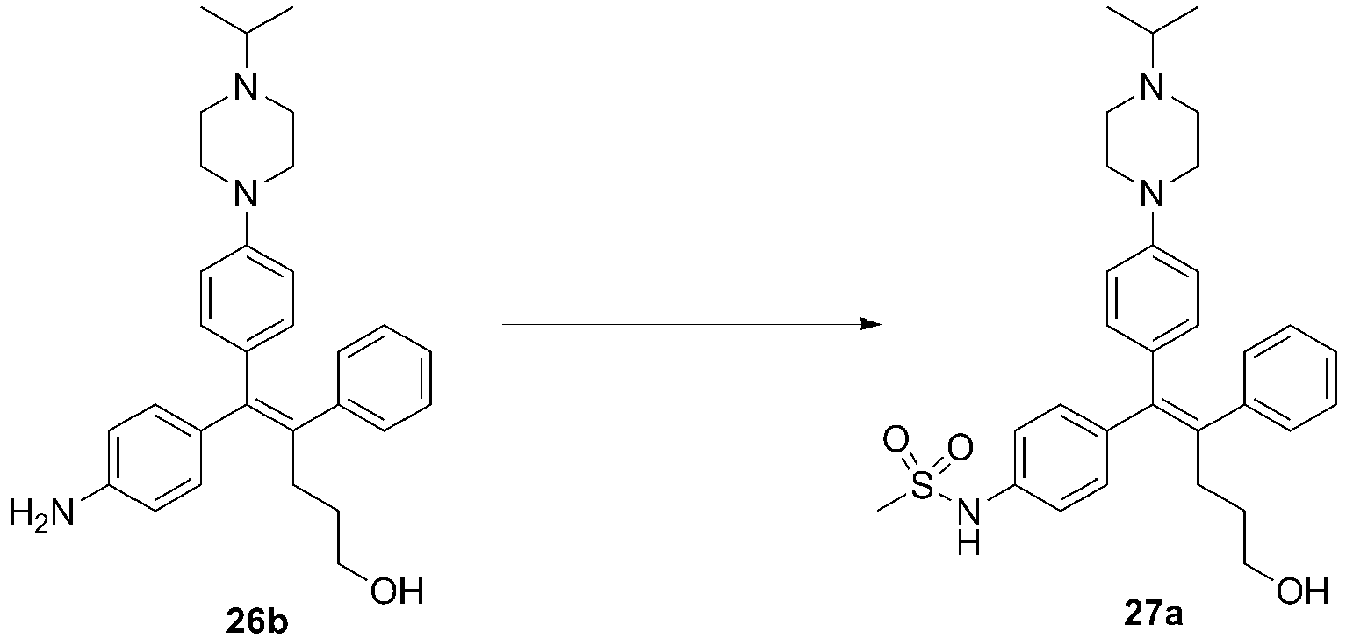


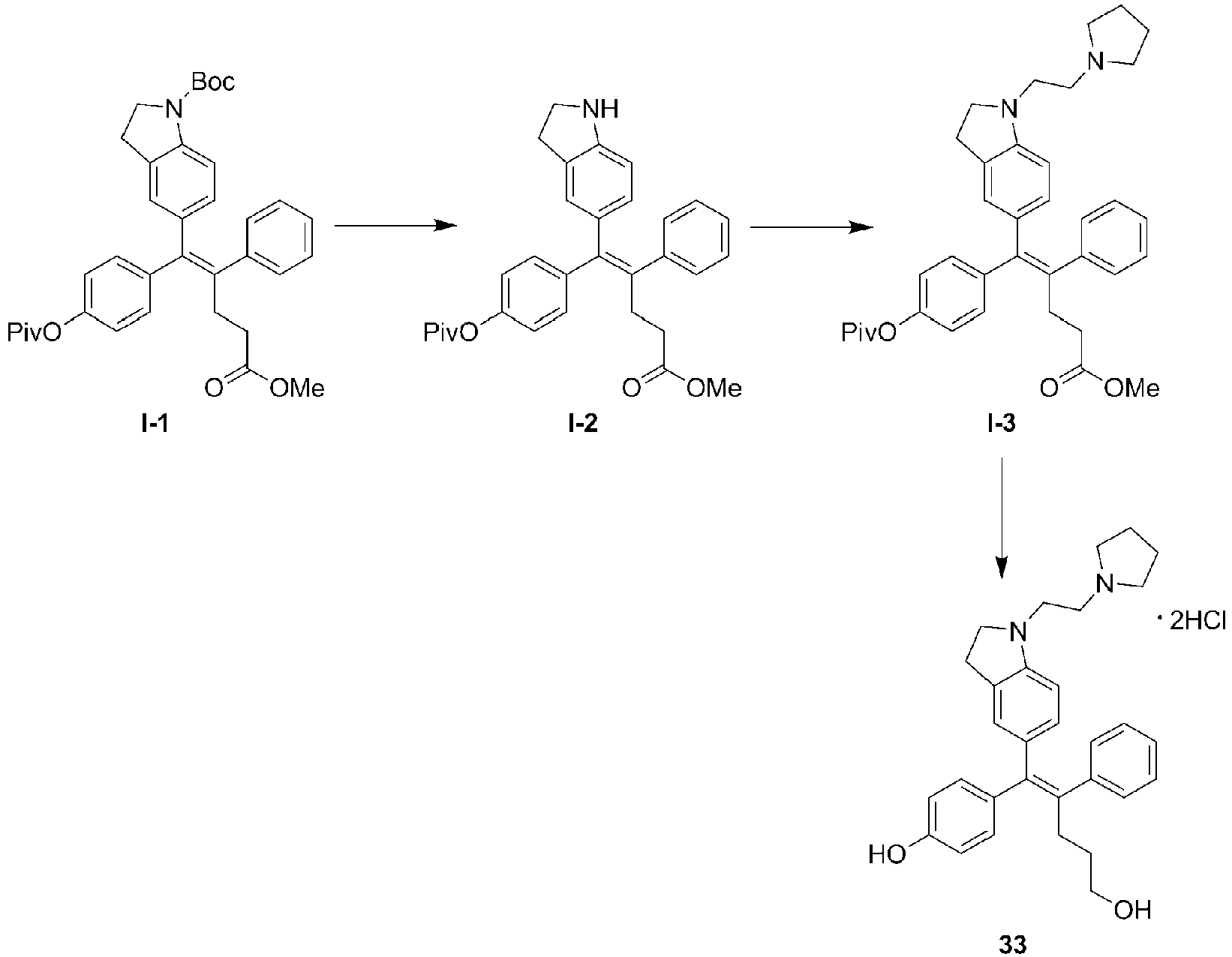


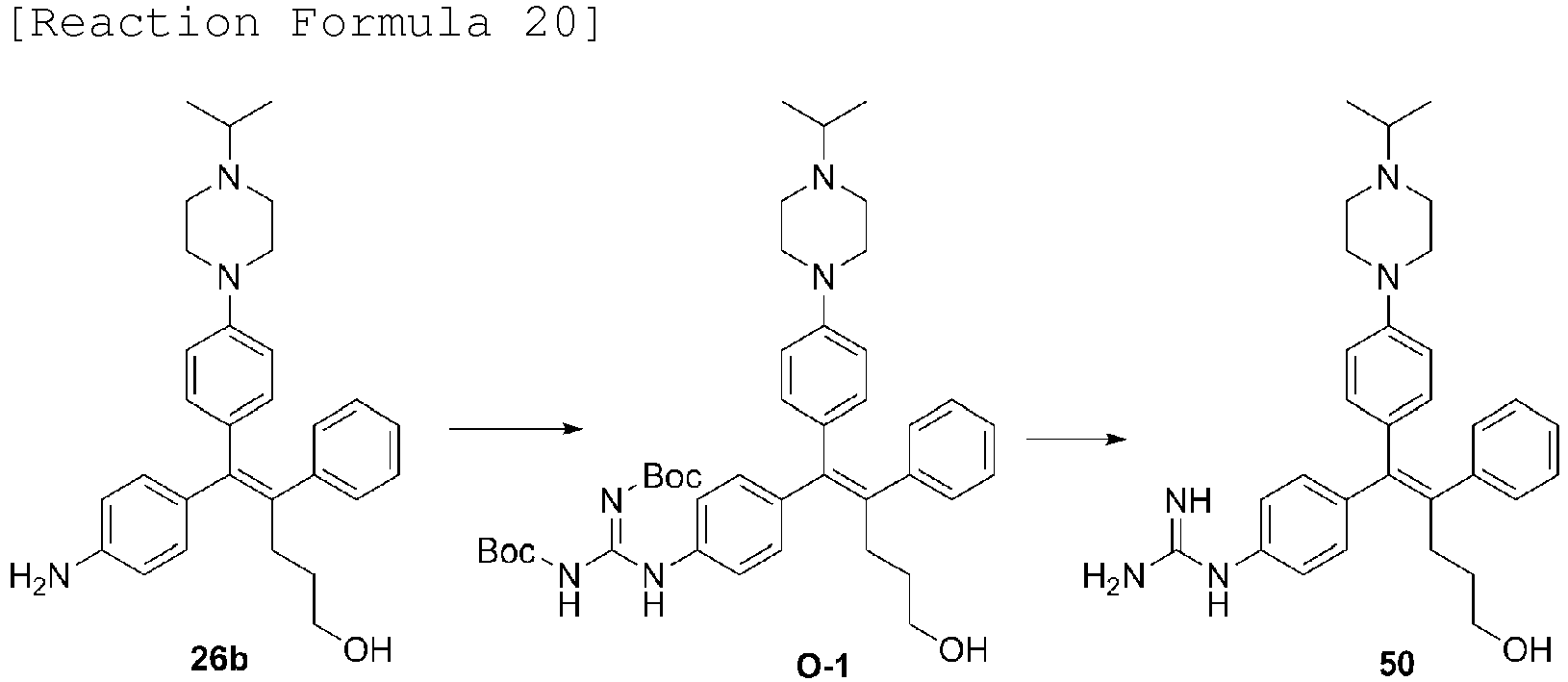


- In addition, the present invention provides an ERRγ inhibitor composition comprising the arylethene derivative of
Chemical Formula 1, or the prodrug, solvate, stereoisomer, or pharmaceutically acceptable salt thereof as an active ingredient. - In addition, the present invention provides a pharmaceutical composition for preventing or treating an ERRγ-mediated disease, comprising the arylethene derivative of
Chemical Formula 1, or the prodrug, solvate, stereoisomer, or pharmaceutically acceptable salt thereof as an active ingredient, and further a pharmaceutically acceptable carrier. - As described above, since the arylethene derivative of
Chemical Formula 1, or the prodrug, solvate, stereoisomer, or pharmaceutically acceptable salt thereof exhibits a high inhibitory activity to ERRγ, a pharmaceutically acceptable composition comprising them as an active ingredient may be useful for treating or preventing ERRγ-mediated diseases, for example, metabolic diseases such as obesity, diabetes, hyperlipidemia, fatty liver, or atherosclerosis. - In another general aspect, a pharmaceutical composition for preventing or treating retinopathy includes: the arylethene derivative of
Chemical Formula 1 which may effectively inhibit an ERRγ activity, or a prodrug, solvate, stereoisomer, or pharmaceutically acceptable salt thereof as an active ingredient. - The "retinopathy" is a disease caused by chronic or acute damage to a retina of an eye. The retinopathy may involve ongoing inflammation and vascular remodeling. In addition, retinopathy also appears as visual manifestation of a systemic disease such as diabetes or hypertension. The kind of retinopathy includes diabetic retinopathy, retinopathy of prematurity (ROP), or the like.
- Here, the diabetic retinopathy refers to an eye complication in which decreased visual acuity occurs due to a disorder following a peripheral circulatory disorder caused by diabetes which is a systemic disease. Diabetic retinopathy has no symptoms at the beginning, but as macular invasion occurs, decreased visual acuity appears. Diabetic retinopathy involves various pathological features such as microaneurysm, phlebectasia, retinal hemorrhage, retinal infarction, macular edema, neovascularization, vitreous hemorrhage, traction membrane, or the like, and when these phenomena are observed as ocular fundus symptoms, diabetic retinopathy is diagnosed. The diabetic retinopathy is a disease caused by a complex combination of various symptoms as described above, and it is unclear whether the disease is treated when one of these symptoms is alleviated.
- In addition, retinopathy of prematurity is proliferative retinopathy which may occur in premature babies, in particular low birth weight infants. When a premature baby whose retinal blood vessels are not completely formed at birth has failure in angiogenesis process after birth, abnormal fibrovascular proliferation occurs at a border of an angiogenic site and a non-angiogenic site of a retina, whereby the retina is detached, eventually leading to blindness.
- The arylethene derivative according to the present invention may be used in the form of a pharmaceutically acceptable salt, and the pharmaceutically acceptable salt may be prepared by a conventional method in the art, and may include for example, a salt with an inorganic acid such as a hydrochloric acid, a bromic acid, a sulfuric acid, sodium hydrogen sulfate, a phosphoric acid, a nitric acid, or a carbonic acid, a salt with an organic acid such as a formic acid, an acetic acid, a trifluoroacetic acid, a propionic acid, an oxalic acid, a succinic acid, a benzoic acid, a citric acid, a maleic acid, a malonic acid, a mandelic acid, a cinnamic acid, a stearic acid, a palmitic acid, a glycolic acid, a glutamic acid, a tartaric acid, a gluconic acid, a lactic acid, a fumaric acid, a lactobionic acid, an ascorbic acid, a salicylic acid, or an acetylsalicylic acid (aspirin), a salt with an amino acid such as glycine, alanine, vanillin, isoleucin, serine, cysteine, cystine, an asparaginic acid, glutamine, lysine, arginine, tyrosine, or proline, a salt with a sulfonic acid such as a methanesulfonic acid, an ethanesulfonic acid, a benzenesulfonic acid, or a toluenesulfonic acid, a metal salt by a reaction with an alkali metal such as sodium or potassium, a salt with an ammonium ion, or the like.
- The arylethene derivative of the present invention may exist in a solvated form, for example, a hydrated form and a non-solvated form, and the solvate of the arylethene derivative according to the present invention includes all solvated forms having a pharmaceutical activity. That is, the arylethene derivative of the present invention is dissolved in water-compatible solvent such as methanol, ethanol, acetone, and 1,4-dioxane, and then a free acid or a free base is added thereto to perform crystallization or recrystallization, thereby forming a solvate including a hydrate. Accordingly, as a novel compound of the present invention, stoichiometric solvates including hydrates may be included, in addition to a compound containing various amounts of water which may be prepared by a method such as lyophilization.
- The arylethene derivative of the present invention may have a chiral center, and exist as a racemate, a racemic mixture, and individual enantiomer or diastereomer. These isomers may be separated or resolved by a common method, and an optional predetermined isomer may be obtained by a common synthesis method or stereospecific or asymmetric synthesis. These isomer forms and mixtures thereof are all included in the scope of the present invention.
- The arylethene derivative of the present invention may be administered in the form of a prodrug which is decomposed in a human or animal body to provide the compound of the present invention. The prodrug may be used for modifying or improving a physical and (or) pharmacokinetic profile of a parent compound, and may be formed when the parent compound contains an appropriate group or substituent which may be derived to form the prodrug.
- In addition, the pharmaceutical composition of the present invention may be formulated into a conventional preparation in the pharmaceutical field, for example, a preparation for oral administration such as a tablet, a pill, a hard/soft capsule, a liquid, a suspension, an emulsion, syrup, granules, and elixirs, or a preparation for parenteral administration of a sterile aqueous or oily solvent for intravenous, subcutaneous, sublingual, intramuscular, or intradermal administration, by adding conventional non-toxic pharmaceutically acceptable carrier, excipient, and the like to the arylethene derivative represented by
Chemical Formula 1, or the prodrug, solvate, stereoisomer, or pharmaceutically acceptable salt thereof. - The pharmaceutically acceptable carrier which may be used in the pharmaceutical composition of the present invention is commonly used in formulation, and includes lactose, dextrose, sucrose, sorbitol, mannitol, starch, acacia gum, calcium phosphate, alginate, gelatin, calcium silicate, microcrystalline cellulose, polyvinylpyrrolidone, cellulose, water, syrup, methyl cellulose, hydroxybenzoate, propylhydroxybenzoate, talc, magnesium stearate, and/or mineral oil, and the like, but not limited thereto.
- The excipient which may be used in the pharmaceutical composition of the present invention may be a sweetener, a binder, a solubilizer, a solubilizing aid, a wetting agent, an emulsifier, an isotonic agent, an adsorbent, a disintegrant, an antioxidant, a preservative, a lubricant, a filler, a fragrance, or the like, and a ratio and properties of the excipient may be determined by solubility and chemical properties of a selected tablet, a selected administration route, and standard pharmaceutical practice. An example of the excipient may include lactose, dextrose, sucrose, mannitol, sorbitol, cellulose, glycine, silica, talc, stearic acid, sterin, magnesium stearate, magnesium aluminum silicate, starch, gelatin, tragacanth gum, alginic acid, sodium alginate, methyl cellulose, sodium carboxymethyl cellulose, agar, water, ethanol, polyethyleneglycol, polyvinylpyrrolidone, sodium chloride, calcium chloride, orange essence, strawberry essence, vanilla flavor, or the like.
- In addition, the pharmaceutical composition of the present invention may be formulated into a parenteral administration form, and in this case, intravenous administration, intraperitoneal administration, intramuscular administration, subcutaneous administration, topical administration, or the like may be used, and ocular administration or the like may be used, in that the composition is a therapeutic agent for retinopathy, but not limited thereto. Here, in order to be formulated into a formulation for parenteral administration, the pharmaceutical composition may be produced into a solution or suspension by mixing the active ingredient, that is, the arylethene derivative of
Chemical Formula 1, or the prodrug, solvate, stereoisomer, or pharmaceutically acceptable salt thereof with water together with a stabilizer or a buffer, and the solution or suspension may be produced into a unit dosage form of an ampoule or vial. - In addition, the pharmaceutical composition of the present invention may be sterilized, or further include an adjuvant such as a preservative, a stabilizer, a hydrating agent or an emulsifying accelerator, a salt for regulating osmotic pressure, and/or a buffer, and other therapeutically useful materials, and may be formulated according to a conventional method of mixing, granulating or coating.
- In addition, a dosage of the arylethene derivative represented by
Chemical Formula 1, or the prodrug, solvate, stereoisomer, or pharmaceutically acceptable salt thereof as the active ingredient in the pharmaceutical composition according to the present invention for mammals including a human may be varied depending on the age, weight, gender, dosage form, health status, and disease severity of a patient. Generally, an effective amount of 0.001 to 100 mg/kg (body weight), preferably 0.01 to 100 mg/kg (body weight) per day may be included in the pharmaceutical composition, and the pharmaceutical composition may be divided into once or twice per day, and administered via an oral or parenteral route. However, the amount may be increased or decreased depending on the administration route, severity of the disease, gender, weight, age, and the like, and thus, the administration amount in no way limits the scope of the present invention. - In addition, the present invention provides a pharmaceutical composition for treating thyroid cancer comprising the arylethene derivative of
Chemical Formula 1 which may specifically and significantly inhibit an ERRγ transcriptional activity, or the prodrug, solvate, stereoisomer, or pharmaceutically acceptable salt thereof, and a pharmaceutically acceptable carrier, and used in combination of radioactive iodine. - In addition, the present invention provides a kit for treating thyroid cancer comprising the arylethene derivative of
Chemical Formula 1 which may specifically and significantly inhibit an ERRγ transcriptional activity, or the prodrug, solvate, stereoisomer, or pharmaceutically acceptable salt thereof, and radioactive iodine. - The arylethene derivative according to the present invention regulates expression of endogenous ERRγ protein to regulate mitogen-activated protein (MAP) kinase, and improves a sodium iodide symporter (NIS) function to increase membrane-localized NIS, thereby increasing a radioactive iodine uptake when treating thyroid cancer.
- Hereinafter, the present invention will be described in more detail by way of the Examples and the Experimental Examples. However, the following Examples and Experimental Examples are only illustrative of the present invention, and do not limit the disclosure of the present invention in any way.
-

- 4,4-Hydroxybenzophenone (10 g, 46.6 mmol) was dissolved in 140 mL of dichloromethane and 40 mL of tetrahydrofuran, pivaloyl chloride (19.7 g, 186 mmol) and triethylamine (26 mL, 186 mmol) were slowly added thereto, and then a reaction was carried out at room temperature for 12 hours. Saturated sodium hydrogen carbonate and dichloromethane were further added to the reaction solution and an organic layer was extracted. The organic layer was dried with anhydrous Na2SO4 and filtered. The solvent was distilled under reduced pressure to obtain a residue, which was purified using column chromatography, thereby obtaining 16 g of the desired compound A-1 (91%).
- Compound A-1 (12.4 g, 32.3 mmol) and potassium carbonate (2.2 g, 16.2 mmol) were dissolved in methanol (360 mL) and dichloromethane (60 mL), and a reaction was carried out at room temperature for 12 hours. A 1 M aqueous citric acid solution (16.2 mL, 16.2 mmol) was added to the reaction solution, and extraction was performed with ethyl acetate. The organic layer was dried with anhydrous Na2SO4 and filtered. The solvent was distilled under reduced pressure to obtain a residue, which was purified using column chromatography, thereby obtaining 5.6 g of the desired compound A-2 (58%).
- Zinc (8.8 g, 134 mmol) was added to tetrahydrofuran (130 mL), the temperature was lowered to 0 °C, and titanium chloride (7.35 mL, 67 mmol) was slowly added thereto. The reaction solution was heated at 60 °C for 2 hours, and then compound A-2 (5 g, 16.8 mmol) and methyl-3-benzoylpropionate (4.8 g, 25.1 mmol) were added thereto. The reaction solution was heated at 50 °C for 1 hour. The reaction mixture was poured into a 10% aqueous potassium carbonate solution, stirring was performed for 30 minutes, and filtration was performed using celite. The filtrate was extracted with ethyl acetate and the organic layer was dried with anhydrous Na2SO4 and filtered. The solvent was distilled under reduced pressure to obtain a residue, which was purified using column chromatography, thereby obtaining 5.4 g of the desired compound A-3 (70%).
- To dichloromethane (3 mL), compound A-3 (0.05 g, 0.11 mmol), 2-(4-(tert-butyloxycarbonyl)piperazin-1-yl)ethanol (30 mg, 0.13 mmol), and triphenylphosphine (86 mg, 0.33 mmol) were added, the temperature was lowered to 0 °C, and diisopropyl azodicarboxylate (0.064 mL, 0.33 mmol) was slowly added thereto. After 15 minutes, the temperature was raised to room temperature, and stirring was performed for 12 hours. Water and ethyl acetate were further added to the reaction solution and an organic layer was extracted. The organic layer was dried with anhydrous Na2SO4 and filtered. The solvent was distilled under reduced pressure to obtain a residue, which was purified using column chromatography, thereby obtaining 73 mg of the desired compound A-4 (99%).
- Compound C (0.34 g, 0.05 mmol) was added to tetrahydrofuran (10 mL), the temperature was lowered to 0 °C, and 1 M lithium aluminum hydride (LiAlH4, 1.5 mL, 1.51 mmol) was slowly added thereto. The temperature was raised to room temperature, and stirring was performed for 1 hour. Water and ethyl acetate were further added to the reaction solution and an organic layer was extracted. The organic layer was dried with anhydrous Na2SO4 and filtered. The solvent was distilled under reduced pressure to obtain a residue, which was purified using column chromatography, thereby obtaining 0.28 g of the desired compound 6a (99%).
- Compounds 6b to 6m were prepared according to the process of Example 1. Compounds 6b to 6m were prepared by the same process, except that in
step 4 of Example 1, 2-(4-(tert-butyloxycarbonyl)piperazin-1-yl)ethanol was replaced with different ethanol. Identification data of the thus-prepared compounds 6a to 6m is shown in the following Table 1.[Table 1] 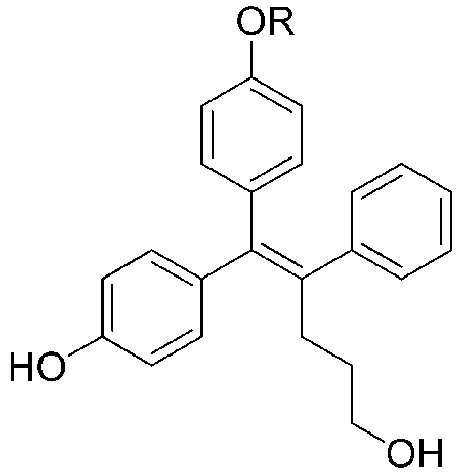
Example Cmpd No. R Identification data 1 6a 
1H-NMR (CD3OD, 400MHz) δ 7.22-7.11 (m, 7H), 7.05 (d, J = 4.1 Hz, 2H), 6.80 (d, J = 6.5 Hz, 2H), 3.77 (s, 4H), 3.43 (m, 6H), 2.56 (m, 2H), 1.59 (m, 2H), 1.49 (s, 9H). MS (ESI) m/z: 515 [M+H]+. 2 6b 
1H-NMR (CD3OD, 400MHz) δ 7.19-7.08 (m, 5H), 7.05-7.02 (m, 2H), 6.85-6.78 (m, 4H), 6.66-6.63 (m, 2H), 4.19 (t, J = 4.6 Hz, 2H), 3.50-3.37 (m, 12H), 2.94 (s, 3H), 2.53 (t, J = 2.8 Hz, 2H), 1.53 (m, 2H). MS (ESI) m/z: 473 [M+H]+. 3 6c 
1H-NMR (DMSO-d6, 400MHz) δ 7.17 (m, 2H), 7.10 (m, 3H), 6.97 (d, J = 8.5 Hz, 2H), 6.75 (m, 4H), 6.66 (d, J = 8.8 Hz, 2H), 4.24 (t, J = 4.3 Hz, 2H), 3.93 (m, 2H), 3.74 (m, 2H), 3.24 (t, J = 6.7 Hz, 2H), 3.15 (s, 2H), 2.54 (s, 4H), 2.39 (m, 2H), 1.38 (m, 2H). MS (ESI) m/z: 460 [M+H]+. 4 6d 
1H-NMR (CD3OD, 400MHz) δ 7.18-7.09 (m, 5H), 7.04 (d, J = 8.6 Hz, 2H), 6.85 (d, J = 8.8 Hz, 2H), 6.79 (d, J = 8.5 Hz, 2H), 6.68 (d, J = 8.8 Hz, 2H), 4.25 (t, J = 4.8 Hz, 2H), 3.58 (m, 2H), 3.50 (t, J = 4.9 Hz, 2H), 3.45 (t, J = 6.8 Hz, 2H), 3.04 (m, 2H), 2.54 (m, 2H), 1.96 (m, 2H), 1.82 (m, 3H), 1.55 (m, 3H). MS (ESI) m/z: 458 [M+H]+. 5 6e 
1H-NMR (CD3OD, 400MHz) δ 7.18-7.09 (m, 5H), 7.04 (d, J = 8.5 Hz, 2H), 6.85 (d, J = 8.7 Hz, 2H), 6.78 (d, J = 8.5 Hz, 2H), 6.68 (d, J = 8.8 Hz, 2H), 4.21 (t, J = 4.8 Hz, 2H), 3.69 (m, 2H), 3.59 (t, J = 4.9 Hz, 2H), 3.43 (t, J = 6.8 Hz, 2H), 3.18 (m, 2H), 2.54 (m, 2H), 2.18 (m, 2H), 2.04 (m, 2H), 1.56 (m, 2H). MS (ESI) m/z: 444 [M+H]+. 6 6f 
1H-NMR (CD3OD, 400MHz) δ 7.17-1.08 (m, 5H), 7.04 (d, J = 8.5 Hz, 2H), 6.84 (d, J = 8.6 Hz, 2H), 6.78 (d, J = 8.5 Hz, 2H), 6.68 (d, J = 8.7 Hz, 2H), 4.20 (t, J = 4.5 Hz, 2H), 3.91 (t, J = 5.5 Hz, 2H), 3.50 (m, 4H), 3.44 (t, J = 6.8 Hz, 2H), 2.53 (m, 2H), 1.55 (m, 2H). MS (ESI) m/z: 416 [M+H]+. 7 6g 
1H-NMR (CD3OD, 400MHz) δ 7.18-7.09 (m, 5H), 7.04 (d, J = 8.5 Hz, 2H), 6.80 (m, 4H), 6.62 (d, J = 8.6 Hz, 2H), 4.09-3.97 (m, 2H), 3.67 (m, 1H), 3.52 (m, 1H), 3.43 (t, J = 6.7 Hz, 2H), 3.16 (m, 1H), 2.94 (s, 3H), 2.53 (t, J = 7.8 Hz, 2H), 2.38 (m, 2H), 2.19-2.01 (m, 3H), 1.85 (m, 1H), 1.54 (m, 2H). MS (ESI) m/z: 458 [M+H]+. 8 6h 
1H-NMR (CD3OD, 400MHz) δ 7.17-7.08 (m, 5H), 7.05 (d, J = 8.4 Hz, 2H), 6.85 (d, J = 8.7 Hz, 2H), 6.79 (d, J = 8.4 Hz, 2H), 6.69 (d, J = 8.7 Hz, 2H), 4.30 (m, 1H), 4.09 (m, 1H), 3.82 (m, 1H), 3.68 (m, 1H), 3.43 (t, J = 6.7 Hz, 2H), 3.21 (m, 1H), 3.02 (s, 3H), 2.54 (m, 2H), 2.35 (m, 1H), 2.20 (m, 1H), 2.02 (m, 2H), 1.56 (m, 2H). MS (ESI) m/z: 444 [M+H]+. 9 6i 
1H-NMR (CD3OD, 400MHz) δ 7.17-7.08 (m, 5H), 7.05 (d, J = 8.5 Hz, 2H), 6.85 (d, J = 8.8 Hz, 2H), 6.79 (d, J = 8.5 Hz, 2H), 6.69 (d, J = 8.8 Hz, 2H), 4.28 (m,. 1H), 4.09 (m, 1H), 3.83 (m, 1H), 3.69 (m, 1H), 3.43 (t, J = 6.7 Hz, 2H), 3.21 (m, 1H), 3.02 (s, 3H), 2.54 (m, 2H), 2.35 (m, 1H), 2.22 (m, 1H), 1.99 (m, 2H), 1.56 (m, 2H). MS (ESI) m/z: 444 [M+H]+. 10 6j 
1H-NMR (CD3OD, 400MHz) δ 7.16-7.07 (m, 5H), 7.02 (d, J = 8.6 Hz, 2H), 6.78 (m, 4H), 6.60 (d, J = 8.8 Hz, 2H), 4.03 (m, 2H), 3.67 (m, 1H), 3.51 (m, 1H), 3.41 (t, J = 6.8 Hz, 2H), 3.15 (m, 1H), 2.92 (s, 3H), 2.51 (m, 2H), 2.38 (m, 1H), 2.08 (m, 4H), 1.84 (m, 1H), 1.55 (m, 2H). MS (ESI) m/z: 458 [M+H]+. 11 6k 
1H-NMR (CD3OD, 400MHz) δ 7.16-7.07 (m, 5H), 7.02 (d, J = 6.6 Hz, 2H), 6.78 (m, 4H), 6.60 (d, J = 8.8 Hz, 2H), 4.01 (m, 2H), 3.67 (m, 1H), 3.50 (m, 1H), 3.41 (t, J = 6.7 Hz, 2H), 3.15 (m, 1H), 2.92 (s, 3H), 2.51 (m, 2H), 2.37 (m, 1H), 2.07 (m, 4H), 1.84 (m, 1H), 1.54 (m, 2H). MS (ESI) m/z: 458 [M+H]+. 12 6l 
1H-NMR (CD3OD, 400MHz) δ 7.18-7.09(m, 5H), 7.05 (d, J = 8.6 Hz, 2H), 6.85 (d, J = 8.8 Hz, 2H), 6.79 (d, J = 8.6 Hz, 2H), 6.71 (d, J = 8.8 Hz, 2H), 3.63 (m, 1H), 3.49 (m, 2H), 3.43 (t, J = 6.8 Hz, 2H), 3.25 (m, 1H), 3.04 (m, 1H), 2.87 (s, 3H), 2.54 (m, 2H), 2.04 (m, 2H), 2.04 (m, 2H), 1.79 (m, 1H), 1.66 (m, 1H), 1.55 (m, 2H). MS (ESI) m/z: 444 [M+H]+. 13 6m 
1H-NMR (CD9OD, 400MHz) δ 7.17-7.09 (m, 5H), 7.04 (d, J = 2H), 6.84 (m, 2H), 6.78 (m, 2H), 6.71 (m, 2H), 3.62 (m, 1H), 3.43 (m, 4H), 3.26 (m, 1H), 3.04 (m, 1H), 2.87 (s, 3H), 2.53 (m, 2H), 2.05 (m, 2H), 1.77 (m, 1H), 1.69 (m, 1H), 1.54 (m, 2H). MS (ESI) m/z: 444 [M+H]+. -
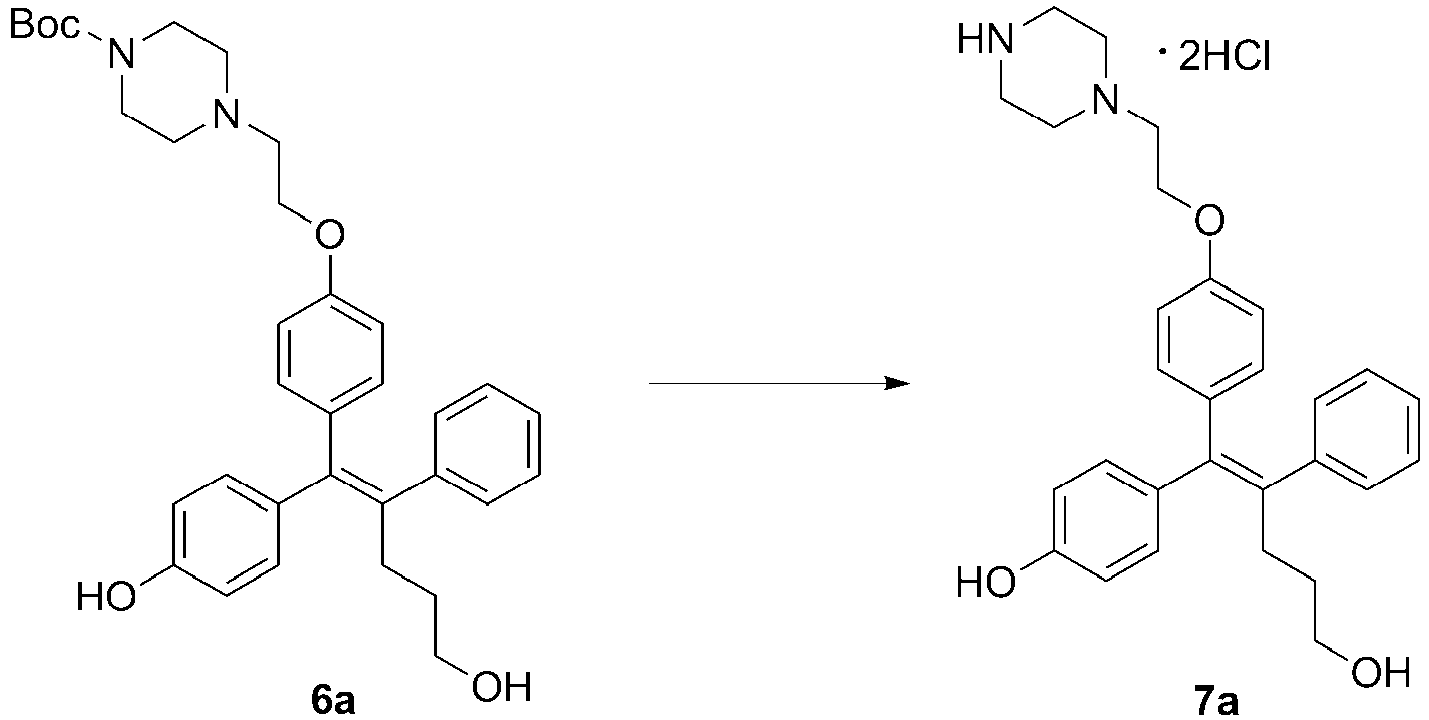
- Compound 6a (28 mg, 0.05 mmol) was added to dichloromethane (5 mL), the temperature was lowered to 0 °C, and trifluoroacetic acid (0.08 mL, 1.00 mmol) was added thereto. The temperature was raised to room temperature, and stirring was performed for 1 hour. Water and ethyl acetate were further added to the reaction solution and an organic layer was extracted. The organic layer was dried with anhydrous Na2SO4 and filtered. The solvent was distilled under reduced pressure to obtain a residue, which was purified using column chromatography and then dissolved in methanol:dichloromethane (1:1), the temperature was lowered to 0 °C, a 1M aqueous HCl solution was slowly added thereto, and distillation under reduced pressure was performed, thereby obtaining 4 mg of the desired compound 7a (17%).
1H-NMR(CD3OD, 400MHz) δ 7.16-7.07 (m, 5H), 7.01 (d, J = 8.6 Hz, 2H), 6.83 (d, J = 8.8 Hz, 2H), 6.76 (d, J = 8.6 Hz, 2H), 4.31 (t, J = 4.2 Hz, 2H), 3.66 (m, 10H), 3.41 (t, J = 6.8 Hz, 2H), 2.51 (m, 2H), 1.54 (m, 2H). MS (ESI) m/z: 459 [M+H]+. -

- 4-Bromobenzoyl chloride (8.2 g, 50.9 mmol) and aluminum chloride (6.1 g, 50.9 mmol) were dissolved in dichloromethane (90 mL), and anisole (5 g, 46.2 mmol) was slowly added thereto. Stirring was performed for 3 hours, the temperature was lowered to 0 °C, and 1N HCl (50 mL) was added thereto. Ethyl acetate was added to extract an aqueous layer, which was dried with anhydrous Na2SO4 and filtered. The solvent was distilled under reduced pressure to obtain a residue, which was purified using column chromatography, thereby obtaining 11 g of the desired compound B-1 (99%).
- Compound B-1 (10 g, 34.3 mmol) was added to toluene (80 mL), the temperature was lowered to 0 °C, and aluminum chloride (11.5 g, 86 mmol) was slowly added thereto. Heating was performed at 70 °C for 4 hours. The reaction solution was cooled to room temperature, 1 N hydrochloric acid was added thereto, ethyl acetate was added thereto, and extraction was performed. The organic layer was dried with anhydrous Na2SO4 and filtered. The solvent was distilled under reduced pressure to obtain a residue, which was purified using column chromatography, thereby obtaining 8.1 g of the desired compound B-2 (85%).
- 0.61 g of the desired compound B-3 (39%) was obtained by the same process as
step 3 of Example 1 - 44 mg of the desired compound B-4 (54%) was obtained, using compound B-3 and 2-(aziridin-1-yl)ethanol by the same process as
step 4 of Example 1. - Compound B-4 (44 mg, 0.09 mmol) was added to tetrahydrofuran (2 mL), the temperature was lowered to 0 °C, and 1 M diisobutylaluminum hydride (0.26 mL, 0.26 mmol) was slowly added thereto. The temperature was raised to room temperature, and stirring was performed for 1 hour. Water and ethyl acetate were further added to the reaction solution and an organic layer was extracted. The organic layer was dried with anhydrous Na2SO4 and filtered. The solvent was distilled under reduced pressure to obtain a residue, which was purified using column chromatography, thereby obtaining 0.3 mg of the desired compound 13a (0.7%).
- Compounds 13b to 13d were prepared according to the process of Example 15. Compounds 13b to 13d were prepared by the same process, except that in
step 4 of Example 15, 2-(aziridin-1-yl)ethanol was replaced with different ethanol. Identification data of the thus-prepared compounds 13a to 13d is shown in the following Table 2.[Table 2] 
Example Cmpd No. R Identification data 15 13a 
1H-NMR(CD3OD, 400MHz) δ 7.51 (d, J = 8.4 Hz, 2H), 7.16-7.09 (m, 7H), 6.83 (d, J = 8.8 Hz, 2H), 6.69 (d, J = 8.8 Hz, 2H), 4.18 (t, J = 4.7 Hz, 2H), 3.89 (t, J = 5.6 Hz, 2H), 3.49 (m, 4H), 3.41 (t, J = 6.6 Hz, 2H), 2.49 (m, 2H), 1.53 (m, 2H). MS (ESI) m/z: 479 [M+H]+. 16 13b 
1H-NMR(CD3OD, 400MHz) δ 7.51 (d, J = 8.4 Hz, 2H), 7.16-7.09 (m, 7H), 6.84 (d, J = 8.8 Hz, 2H), 6.70 (d, J = 8.8 Hz, 2H), 4.27 (m, 1H), 4.08 (m, 1H), 3.80 (m, 1H), 3.66 (m, 1H), 3.41 (t, J = 6.5 Hz, 2H), 3.19 (m, 1H), 3.00 (s, 3H), 2.50 (m, 2H), 2.33 (m, 1H), 2.20 (m, 1H), 1.98 (m, 2H), 1.52 (m, 2H). MS (ESI) m/z: 507 [M + H]+. 17 13c 
1H-NMR(CD3OD, 400MHz) δ 7.52 (d, J = 8.4 Hz, 2H), 7.17-7.12 (m, 7H), 6.84 (d, J = 8.7 Hz, 2H), 6.71 (d, J = 8.6 Hz, 2H), 3.61 (m, 1H), 3.41 (m, 4H), 3.23 (m, 1H), 3.02 (m, 1H), 2.85 (s, 3H), 2.49 (m, 2H), 2.02 (m, 2H), 1.77 (m, 1H), 1.65 (m, 2H), 1.53 (m, 2H). MS (ESI) m/z: 507 [M+H]+. 18 13d 
1H-NMR(CD3OD, 400MHz) δ 7.52 (d, J = 8.4 Hz, 2H), 7.15 (m, 7H), 6.80 (m, 2H), 6.64 (m, 2H), 4.05 (m, 1H), 3.50 (m, 2H), 3.43 (m, 2H), 3.15 (m, 2H), 2.92 (m, 3H), 2.50 (m, 2H), 2.09 (m, 6H), 1.55 (m, 2H). MS (ESI) m/z: 520 [M+H]+. -

- 4-Iodophenyl pivalate (2 g, 6.6 mmol), copper (I) chloride (0.13 g, 0.66 mmol), bis(triphenylphosphine)palladium (II) dichloride (PdCl2(PPh3)2, 0.23 g, 0.33 mmol), and methyl pent-4-ynoate (0.74 g, 0.66 mmol) were dissolved in trimethylamine (15 mL), and the reaction was carried out at 50 °C for 12 hours. The reaction solution was concentrated under reduced pressure, and 1.1 g of the desired compound C-1 (58%) was obtained using column chromatography.
- tert-Butyl 3-(4-(4,4,5,5-tetramethyl-1,3,2-dioxaboran-2-yl)phenyl)azetidin-1-carboxylate (0.27 g, 0.75 mmol), compound C-1 (0.14 g, 0.5 mmol), and iodobenzene (84 µL, 0.75 mmol) were dissolved in DMF (8 mL) and water (4 mL), 0.025 M PdCl2(PhCN)2 (0.2 mL, 5 µmol) was added thereto, and heating was performed at 45 °C for 10 minutes. Cesium carbonate (0.24 g, 0.75 mmol) was added thereto, and heating was performed at 45 °C for 12 hours. When the reaction was completed, brine and ethyl acetate was further added to the reaction solution, and an organic layer was extracted. The organic layer was dried with anhydrous Na2SO4 and filtered. The solvent was distilled under reduced pressure to obtain a residue, which was purified using column chromatography, thereby obtaining 81 mg of the desired compound C-2 (27%).
- Compound C-2 (0.021 mmol) was added to tetrahydrofuran (2 mL), the temperature was lowered to 0 °C, and 1 M lithium aluminum hydride, diisobutylaluminum hydride, or lithium borohydride (0.024 mL, 0.024 mmol) was added thereto. The temperature was raised to room temperature, and stirring was performed for 1 hour. Water and ethyl acetate were further added to the reaction solution and an organic layer was extracted. The organic layer was dried with anhydrous Na2SO4 and filtered. The solvent was distilled under reduced pressure to obtain a residue, which was purified using column chromatography and then dissolved in methanol:dichloromethane (1:1), the temperature was lowered to 0 °C, a 1M aqueous HCl solution was slowly added thereto, and distillation under reduced pressure was performed, thereby obtaining 24 mg of the desired compound 18t (78%).
-
Compounds 18a to 18s and 18u were prepared using the process of Example 19. Identification data of the thus-prepared compounds 18a to 18u is shown in the following Table 3.[Table 3] 
Example Cmpd No. 
R Identification data 19 18t 

1H-NMR (CD3OD, 400MHz) δ 7.18-7.10 (m, 5H), 7.05 (d, J = 8.4 Hz, 2H), 6.98 (d, J = 8.2 Hz, 2H), 6.88 (d, J = 8.2 Hz, 2H), 6.79 (d, J = 8.4 Hz, 2H), 4.25 (t, J = 8.4 Hz, 2H), 3.81 (t, J = 6.6 Hz, 2H), 3.66 (m, 1H), 3.43 (t, J = 6.8 Hz, 2H), 2.55 (m, 2H), 1.57 (m, 2H), 1.45 (s, 9H). MS (ESI) m/z: 386 [M+H]+. 20 18a 

1H-NMR(CD3OD, 400MHz) δ 7.14-7.07 (m, 5H), 7.02 (d, J = 8.0 Hz, 2H), 6.78 (m, 4H), 6.69 (d, J = 8.3 Hz, 2H), 3.76 (m, 2H), 3.52 (m, 3H), 3.41 (t, J = 6.4 Hz, 2H), 3.23 (m, 2H), 2.96 (m, 2H), 2.51 (m, 2H), 1.53 (m, 2H), 1.39 (d, J = 6.5 Hz, 6H). MS (ESI) m/z: 457 [M+H]+. 21 18b 

1H-NMR(CD3OD, 400MHz) δ 7.18-7.13 (m, 5H), 7.08 (m, 4H), 6.79 (d, J = 8.7 Hz, 2H), 6.67 (d, J = 8.7 Hz, 2H), 3.75 (m, 2H), 3.53 (m, 3H), 3.39 (t, J = 6.8 Hz, 2H), 3.21 (m, 2H), 2.92 (m, 2H), 2.48 (m, 2H), 2.35 (s, 3H), 1.53 (m, 2H), 1.38 (d, J = 6.6 Hz, 6H). MS (ESI) m/z: 455 [M+H]+. 22 18c 

1H-NMR(CD3OD, 400MHz) δ 8.25 (d, J = 8.7 Hz, 2H), 7.47 (d, J = 8.7 Hz, 2H), 7.21-7.13 (m, 5H), 6.81 (d, J = 8.7 Hz, 2H), 6.71 (d, J = 8.8 Hz, 2H), 3.74 (m, 2H), 3.54 (m, 2H), 3.42 (t, J = 6.4 Hz, 2H), 3.19 (t, J = 9.8 Hz, 2H), 2.93 (m, 5H), 2.50 (m, 2H), 1.55 (m, 2H). MS (ESI) m/z: 458 [M+H]+. 23 18d 

1H-NMR (CD3OD, 400MHz) δ 7.20-7.07 (m, 7H), 7.04 (d, J = 8.5 Hz, 2H), 6.83 (d, J = 8.7 Hz, 2H), 6.78 (d, J = 8.5 Hz, 2H), 6.73 (d, J = 8.7 Hz, 2H), 6.66 (d, J = 8.6 Hz, 2H), 3.74 (m, 2H), 3.57 (m, 2H), 3.42 (t, J = 6.7 Hz, 2H), 3.33 (m, 2H), 3.23 (m, 2H), 2.95 (s, 3H), 2.53 (m, 2H), 1.55 (m, 2H). MS (ESI) m/z: 429 [M+H]+. 24 18e 

1H-NMR(CD3OD, 400MHz) δ 7.49 (d, J = 8.4 Hz, 2H), 7.14-7.12 (m, 7H), 6.72 (d, J = 8.8 Hz, 2H), 6.61 (d, J = 8.9 Hz, 2H), 3.40 (t, J = 6.6 Hz, 2H), 3.07 (m, 4H), 2.55 (m, 4H), 2.47 (m, 2H), 2.31 (s, 3H), 1.52 (m, 2H). MS (ESI) m/z: 492 [M+H]+. 25 18f 

1H-NMR(CD3OD, 400MHz) δ 7.19-7.09 (m, 9H), 6.81 (d, J = 8.6 Hz, 2H), 6.68 (d, J = 8.8 Hz, 2H), 3.70 (m, 2H), 3.55 (m, 2H), 3.42 (t, J = 6.8 Hz, 2H), 3.20 (m, 2H), 2.00 (m, 2H), 2.93 (s, 3H), 2.50 (m, 2H), 2.36 (s, 3H), 1.55 (m, 2H). MS (ESI) m/z: 427 [M+H]+. 26 18g 

1H-NMR(CD3OD, 400MHz) δ 8.25 (d, J = 8.7 Hz, 2H), 7.47 (d, J = 8.7 Hz, 2H), 7.21-7.13 (m, 5H), 6.81 (d, J = 8.7 Hz, 2H), 6.72 (d, J = 8.8 Hz, 2H), 3.78 (m, 2H), 3.53 (m, 3H), 3.42 (t, J = 6.5 Hz, 2H), 3.21 (m, 2H), 2.93 (m, 2H), 2.50 (m, 2H), 1.55 (m, 2H), 1.39 (d, J = 6.6 Hz, 6H). MS (ESI) m/z: 486 [M+H]+. 27 18h 

1H-NMR(CD3OD, 400MHz) δ 7.49 (d, J = 8.4 Hz, 2H), 7.16-7.11 (m, 7H), 6.74 (d, J = 8.8 Hz, 2H), 6.63 (d, J = 8.8 Hz, 2H), 3.40 (t, J = 6.6 Hz, 2H), 3.16 (m, 4H), 2.96 (m, 5H), 2.47 (m, 2H), 1.54 (m, 2H), 1.19 (d, J = 6.6 Hz, 6H). MS (ESI) m/z: 520 [M+H]+. 28 18i 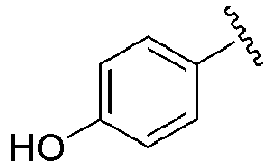

1H-NMR(CD3OD, 400MHz) δ 7.16-7.07 (m, 5H), 7.01 (d, J = 7.6 Hz, 2H), 6.77 (m, 4H), 6.67 (d, J = 8.5 Hz, 2H), 3.73 (m, 2H), 3.58 (m, 2H), 3.41 (t, J = 6.8 Hz, 2H), 3.23 (m, 2H), 3.14 (m, 2H), 2.93 (m, 2H), 2.51 (m, 2H), 1.53 (m, 2H), 1.37 (t, J = 7.3 Hz, 3H). MS (ESI) m/z: 443 [M + H]+. 29 18j 

1H-NMR(CD3OD, 400MHz) δ 7.19-7.15 (m, 5H), 7.10 (m, 4H), 6.8 (d, J = 8.8 Hz, 2H), 6.68 (d, J = 8.9 Hz, 2H), 3.75 (m, 2H), 3.60 (m, 2H), 3.41 (t, J = 6.8 Hz, 2H), 3.25 (q, J = 7.4 Hz, 2H), 3.14 (m, 2H), 2.93 (m, 2H), 2.50 (m, 2H), 2.37 (s, 3H), 1.55 (m, 2H), 1.38 (t, J = 7.3 Hz, 2H). MS (ESI) m/z: 441 [M+H]+. 30 18k 

1H-NMR(CD3OD, 400MHz) δ 7.19-7.09 (m, 6H), 6.81 (d, J = 8.7 Hz, 2H), 6.69 (m, 4H), 6.63 (m, 1H), 3.76 (m, 2H), 3.53 (m, 3H), 3.40 (t, J = 5.6 Hz, 2H), 3.21 (m, 2H), 2.91 (m, 2H), 2.50 (m, 2H), 1.53 (m, 2H), 1.38 (d, J = 6.6 Hz, 6H). MS (ESI) m/z: 457 [M+H]+. 31 18l 

1H-NMR(CD3OD, 400MHz) δ 7.17-7.07 (m, 7H), 6.89 (d, J = 8.7 Hz, 2H), 6.85 (m, 2H), 6.65 (d, J = 8.8 Hz, 2H), 3.73 (m, 2H), 3.50 (m, 2H), 3.35 (m, 2H), 3.20 (m, 2H), 2.91 (m, 2H), 2.39 (t, J = 7.9 Hz, 2H), 1.57 (m, 2H), 1.38 (d, J = 6.6 Hz, 6H). MS (ESI) m/z: 457 [M+H]+. 32 18m 

1H-NMR(CD3OD, 400MHz) δ 7.22-7.11 (m, 7H), 7.05 (m, 4H), 6.80 (d, J = 8.6 Hz, 2H), 3.77 (m, 4H), 3.42 (m, 6H), 2.55 (m, 2H), 1.59 (m, 2H), 1.49 (s, 9H). MS (ESI) m/z: 515 [M+H]+. 33 18n 

1H-NMR(CD3OD, 400MHz) δ 7.49 (d, J = 8.4 Hz, 2H), 7.16-7.12 (m, 7H), 6.72 (d, J = 8.8 Hz, 2H), 6.61 (d, J = 8.8 Hz, 2H), 3.47 (s, 4H), 3.39 (t, J = 6.6 Hz, 2H), 2.98 (m, 4H), 2.47 (m, 2H), 1.52 (m, 2H), 1.44 (s, 9H). MS (ESI) m/z: 478 [M+H]+. 34 18o 

1H-NMR(CD3OD, 400MHz) δ 7.42 (d, J = 8.7 Hz, 2H), 7.20-7.12 (m, 7H), 7.07 (d, J = 8.5 Hz, 2H), 6.82 (d, J = 8.7 Hz, 2H), 4.07 (m, 4H), 3.62 (m, 4H), 3.44 (t, J = 6.6 Hz, 2H), 2.56 (m, 2H), 1.57 (m, 2H). MS (ESI) m/z: 416 [M+H]+. 35 18p 

1H-NMR(CD3OD, 400MHz) δ 8.23 (d, J = 8.8 Hz, 2H), 7.46 (d, J = 8.6 Hz, 2H), 7.22-7.12 (m, 5H), 6.66 (d, J = 8.8 Hz, 2H), 6.23 (d, J = 8.7 Hz, 2H), 3.42 (t, J = 6.5 Hz, 2H), 3.27 (m, 2H), 3.13 (m, 2H), 2.48 (m, 2H), 1.90 (m, 4H), 1.54 (m, 4H), 1.35 (m, 2H), 1.29 (s, 9H). MS (ESI) m/z: 484 [M+H]+. 36 18q 

1H-NMR(CD3OD, 400MHz) δ 7.52 (d, J = 8.4 Hz, 2H), 7.18 (d, J = 8.4 Hz, 2H), 7.17-7.10 (m, 5H), 7.03 (d, J = 8.1 Hz, 2H), 6.89 (d, J = 8.1 Hz, 2H), 3.54 (s, 2H), 3.42 (t, J = 6.6 Hz, 2H), 2.52 (m, 6H), 1.62-1.48 (m, 8H). MS (ESI) m/z: 492 [M+H]+. 37 18r 

1H-NMR(CD3OD, 400MHz) δ 7.38 (m, 2H), 7.31 (m, 1H), 7.22 (m, 2H), 7.07 (d, J = 8.6 Hz, 2H), 6.83 (d, J = 8.6 Hz, 2H), 6.51 (s, 1H), 6.43 (s, 1H), 4.03 (m, 3H), 3.35 (t, J = 6.9 Hz, 2H), 2.32 (m, 2H), 1.81 (m, 2H), 1.59 (m, 6H), 1.44 (s, 9H). MS (ESI) m/z: 404 [M+H]+. 38 18s 

1H-NMR(CD3OD, 400MHz) δ 7.93 (s, 1H), 7.05-7.12 (m, 9H), 6.85 (d, J = 10.0 Hz, 2H), 6.79 (d, J = 8.8 Hz, 2H), 6.47(s, 1H), 3.61 (m, 2H), 3.48 (m, 4H), 3.25 (t, J = 7.6 Hz, 2H), 3.01 (t, J = 10.4 Hz, 2H), 2.59 (m, 2H), 1.99 (m, 2H), 1.77-1.87 (m, 3H), 1.51-1.61 (m, 3H). MS (ESI) m/z: 482 [M+H]+. 39 18u 

1H-NMR(CD3OD, 400MHz) δ 8.22 (s, 1H), 7.34 (d, J = 8.2 Hz, 2H), 6.99 (m, 5H), 6.93 (d, J = 8.5 Hz, 2H), 6.82 (d, J = 8.2 Hz, 2H), 6.65 (d, J = 8.5 Hz, 2H), 4.78 (m, 2H), 3.66 (t, J = 5.8 Hz, 2H), 3.29 (t, J = 6.7 Hz, 2H), 2.84 (s, 6H), 2.42 (m, 2H), 1.43 (m, 2H). MS (ESI) m/z: 469 [M + H]+. -

- Compound D-1 (6 mg, 0.01 mmol) was added to dichloromethane (2 mL), the temperature was lowered to 0 °C, and trifluoroacetic acid (0.05 mL, 0.65 mmol) was slowly added thereto. The temperature was raised to room temperature, and stirring was performed for 12 hours. Water and ethyl acetate were further added to the reaction solution and an organic layer was extracted. The organic layer was dried with anhydrous Na2SO4 and filtered. The solvent was distilled under reduced pressure to obtain a residue, which was purified using column chromatography, thereby obtaining 5 mg of the desired compound D-2 (99%).
- 7 mg of the desired compound 20a (41%) was obtained by the same process as
step 3 of Example 19, using compound D-2. - Compounds 20b to 201 were prepared, using the process of Example 40. Identification data of the thus-prepared compounds 20a to 201 is shown in the following Table 4.
[Table 4] 
Example Cmpd No. 
R Identification data 40 20a 

1H-NMR(CD3OD, 400MHz) δ 7.50 (d, J = 8.4 Hz, 2H), 7.17-7.09 (m, 7H), 6.76 (m, 2H), 6.66 (d, J = 8.8 Hz, 2H), 3.39 (m, 2H), 3.22 (s, 8H), 2.48 (m, 2H), 1.52 (m, 2H). MS (ESI) m/z: 478 [M+H]+. 41 20b 

1H-NMR(CD3OD, 400MHz) δ 7.16-7.06 (m, 9H), 6.71 (d, J = 8.8 Hz, 2H), 6.64 (d, J = 8.8 Hz, 2H), 3.38 (t, J = 6.8 Hz, 2H), 3.19 (s, 8H), 2.47 (m, 2H), 2.34 (s, 3H), 1.52 (m, 2H). MS (ESI) m/z:413 [M+H]+. 42 20c 

1H-NMR(CD3OD, 400MHz) δ 7.20-7.11(m, 7H), 7.04 (m, 4H), 6.80 (d, J = 8.5 Hz, 2H), 3.83 (m, 2H), 3.70 (m, 6H), 3.62 (t, J = 5.2 Hz, 2H), 2.51 (m, 2H), 1.56 (m, 2H). MS (ESI) m/z: 415 [M + H]+. 43 20d 

1H-NMR(CD3OD, 400MHz) δ 7.17-7.07 (m, 9H), 7.03 (d, J = 8.3 Hz, 2H), 6.92 (d, J = 8.4 Hz, 2H), 4.24 (m, 2H), 4.07 (m, 3H), 3.39 (t, J = 6.8 Hz, 2H), 2.49 (m, 2H), 2.34 (s, 3H), 1.53 (m, 2H). MS (ESI) m/z: 384 [M+H]+. 44 20e 

1H-NMR (CD3OD, 400MHz) δ 7.17-7.09 (m, 5H), 7.05 (m, 4H), 6.95 (d, J = 7.4 Hz, 2H), 6.79 (d, J = 7.8 Hz, 2H), 4.29 (m, 2H), 4.12 (m, 3H), 3.44 (t, J = 6.6 Hz, 2H), 2.55 (t, J = 7.6 Hz, 2H), 1.57 (m, 2H). MS (ESI) m/z: 386 [M+H]+. 45 20f 

1H-NMR(CD3OD, 400MHz) δ 7.51 (d, J = 8.4 Hz, 2H), 7.16-7.11 (m, 7H), 7.04 (d, J = 8.2 Hz, 2H), 6.91 (d, J = 8.2 Hz, 2H), 4.18 (m, 2H), 4.02 (m, 3H), 3.41 (t, J = 6.6 Hz, 2H), 2.50 (m, 2H), 1.53 (m, 2H). MS (ESI) m/z: 449 [M+H]+. 46 20g 
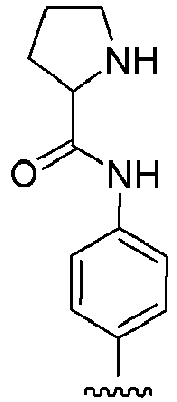
1H-NMR(CD3OD, 400MHz) δ 7.93 (s, 1H), 7.05-7.12 (m, 9H), 6.85 (d, J = 10.0 Hz, 2H), 6.79 (d, J = 8.6 Hz, 2H), 6.47(s, 1H), 3.61 (m, 2H), 3.48 (m, 4H), 3.25 (t, J = 7.6 Hz, 2H), 3.01 (t, J = 10.4 Hz, 2H), 2.59 (m, 2H), 1.99 (m, 2H), 1.77-1.87 (m, 3H), 1.51-1.61 (m, 3H). MS (ESI) m/z: 443 [M+H]+. 47 20h 

1H-NMR(CD3OD, 400MHz) δ 7.93 (s, 1H), 7.05-7.12 (m, 9H), 6.85 (d, J = 10.0 Hz, 2H), 6.79 (d, J = 8.6 Hz, 2H), 6.47(s, 1H), 3.61 (m, 2H), 3.48 (m, 4H), 3.25 (t, J = 7.6 Hz, 2H), 3.01 (t, J = 10.4 Hz, 2H), 2.59 (m, 2H), 1.99 (m, 2H), 1.77-1.87 (m, 3H), 1.51-1.61 (m, 3H). MS (ESI) m/z: 483 [M+H]+. 48 20i 

1H-NMR(CD3OD, 400MHz) δ 7.93 (s, 1H), 7.05-7.12 (m, 9H), 6.85 (d, J = 10.0 Hz, 2H), 6.79 (d, J = 8.6 Hz, 2H), 6.47(s, 1H), 3.61 (m, 2H), 3.48 (m, 4H), 3.25 (t, J = 7.6 Hz, 2H), 3.01 (t, J = 10.4 Hz, 2H), 2.59 (m, 2H), 1.99 (m, 2H), 1.77-1.87 (m, 3H), 1.51-1.61 (m, 3H). MS (ESI) m/z: 481 [M+H]+. 49 20j 

1H-NMR(CD3OD, 400MHz) δ 7.15-7.07 (m, 5H), 7.02 (d, J = 8.2 Hz, 2H), 6.91 (d, J = 8.1 Hz, 2H), 6.84 (d, J = 8.0 Hz, 2H), 6.77 (d, J = 8.1 Hz, 2H), 3.41 (m, 4H), 3.06 (m, 2H), 2.74 (m, 1H), 2.52 (m, 2H), 1.96 (m, 2H), 1.76 (m, 2H), 1.54 (m, 2H). MS (ESI) m/z: 414 [M+H]+. 50 20k 

1H-NMR(CD3OD, 400MHz) δ 7.17 (d, J = 7.8 Hz, 2H), 7.12-7.06 (m, 5H), 6.96 (m, 4H), 6.86 (m, 2H), 3.46 (m, 2H), 3.40 (t, J = 6.8 Hz, 2H), 3.10 (m, 2H), 2.82 (m, 1H), 2.50 (m, 2H), 2.35 (s, 3H), 2.02 (m, 2H), 1.83 (m, 2H), 1.53 (m, 2H). MS (ESI) m/z: 412 [M+H]+. 51 20l 

1H-NMR(CD3OD, 400MHz) δ 8.26 (d, J = 8.6 Hz, 2H) 7.47 (d, J = 8.6 Hz, 2H), 7.21-7.09 (m, 5H), 6.64 (d, J = 8.4 Hz, 2H), 6.30 (d, J = 8.7 Hz, 2H), 3.48 (m, 2H), 3.25 (m, 2H), 3.15 (m, 2H), 2.51 (m, 2H), 2.12 (m, 4H), 1.59 (m, 4H), 1.15 (m, 2H). MS (ESI) m/z: 484 [M+H]+. -

- Compound E-1 (0.03 g, 0.06 mmol), acetone (0.14 mL, 1.9 mmol), and sodium triacetoxyborohydride (NaBH(OAc)3, 41 mg, 0.19 mmol) were added to dichloroethane (3 mL), and stirred at room temperature for 1 hour. Water and ethyl acetate were further added to the reaction solution and an organic layer was extracted. The organic layer was dried with anhydrous Na2SO4 and filtered. The solvent was distilled under reduced pressure to obtain a residue, which was purified using column chromatography, thereby obtaining 18 mg of the desired compound E-2 (54%).
- 4 mg of the desired compound 22a (27%) was obtained by the same process as
step 3 of Example 19, using compound E-2. - Compounds 22b to 22ae were prepared, using the process of Example 52. Identification data of the thus-prepared compounds 22b to 22ae is shown in the following Table 5.
[Table 5] 
Example Cmpd No. 
R Identification data 52 22a 

1H-NMR(CD3OD, 400MHz) δ 7.17-7.08 (m, 5H), 7.08-7.02 (m, 4H), 6.94 (d, J = 8.2 Hz, 2H), 6.78 (d, J = 8.5 Hz, 2H), 4.38 (t, J = 8.3 Hz, 2H), 4.21 (m. 1H), 4.10 (t, J = 9.8 Hz, 2H), 3.98 (m, 1H), 3.43 (t, J = 7.5 Hz, 2H), 2.55 (m, 2H), 1.56 (m, 2H), 1.24 (d, J = 6.4 Hz, 6H). MS (ESI) m/z: 428 [M + H]+. 53 22b 

1H-NMR(CD3OD, 400MHz) δ 7.15-7.07 (m, 5H), 7.05-7.01 (m, 4H), 6.94 (m, 2H), 6.76 (d, J = 8.4 Hz, 2H), 4.46 (m, 2H), 4.34 (m, 1H), 4.22 (m, 1H), 4.02 (m, 2H), 3.41 (t, J = 6.7 Hz, 2H), 2.91 (s, 3H), 2.53 (m, 2H), 1.54 (m, 2H). MS (ESI) m/z: 400 [M+H]+. 54 22c 

1H-NMR(CD3OD, 400MHz) δ 7.17-7.03 (m, 9H), 6.96 (d, J = 8.1 Hz, 2H), 6.78 (d, J = 8.4 Hz, 2H), 4.46 (m, 4H), 4.32 (m, 1H), 3.43 (t, J = 6.7 Hz, 2H), 3.35 (s, 3H), 3.21 (s, 3H), 2.55 (m, 2H), 1.55 (m, 2H). MS (ESI) m/z: 415 [M+H]+. 55 22d 

1H-NMR(CD3OD, 400MHz) δ 7.15-7.09 (m, 5H), 7.06-7.00 (m, 4H), 6.94 (d, J = 8.04, 2H), 6.76 (d, J = 8.6 Hz, 2H), 4.42 (t, J = 9.3 Hz, 2H), 4.32 (m, 1H), 4.19 (m, 1H), 3.98 (m, 1H), 3.41 (t, J = 6.7 Hz, 2H), 2.53 (m, 2H), 1.54 (m, 2H), 0.86 (m, 4H). MS (ESI) m/z: 426 [M+H]+. 56 22e 

1H-NMR(CD3OD, 400MHz) δ 7.17-7.07 (m, 9H), 6.98 (d, J = 8.2 Hz, 2H), 6.88 (d, J = 8.2 Hz, 2H), 4.07 (t, J = 8.2 Hz, 2H), 3.76 (m, 1H), 3.65 (t, J = 8.8 Hz, 2H), 3.39 (t, J = 6.7 Hz, 2H), 3.01 (m, 1H), 2.49 (m, 2H), 2.34 (s, 3H), 1.54 (m, 2H), 1.09 (d, J = 6.4 Hz, 6H). MS (ESI) m/z: 426 [M+H]+. 57 22f 

1H-NMR(CD3OD, 400MHz) δ 7.17 (d, J = 7.8 Hz, 2H), 7.12-7.06 (m, 4H), 6.97 (m, 2H), 6.85 (m, 2H), 3.58 (m, 2H), 3.40 (t, J = 6.8 Hz, 2H), 3.12 (m, 2H), 2.90 (s, 3H), 2.80 (m, 1H), 2.50 (m, 2H), 2.35 (s, 3H), 2.07 (m, 2H), 1.88 (m, 2H), 1.53 (m, 2H). MS (ESI) m/z: 426 [M+H]+. 58 22g 

1H-NMR(CD3OD, 400MHz) δ 7.17-7.07 (m, 5H), 7.02 (d, J = 8.6 Hz, 2H), 6.92 (d, J = 8.2 Hz, 2H), 6.85 (d, J = 8.2 Hz, 2H), 6.77 (d, J = 8.6 Hz, 2H), 3.48 (m, 3H), 3.41 (t, J = 6.7 Hz, 2H), 3.13 (m, 2H), 2.74 (m, 1H), 2.52 (m, 2H), 2.05 (m, 2H), 1.86 (m, 2H), 1.54 (m, 2H), 1.37 (d, J = 6.7 Hz, 6H). MS (ESI) m/z: 456 [M+H]+. 59 22h 

1H-NMR(CD3OD, 400MHz) δ 7.19-7.09 (m, 6H), 6.85 (m, 4H), 6.71 (m, 2H), 6.64 (m, 1H), 3.77 (m, 2H), 3.58 (m, 3H), 3.41 (t, J = 6.8 Hz, 2H), 3.34 (m, 2H), 3.21 (m, 2H), 2.50 (m, 2H), 1.53 (m, 2H), 1.40 (d, J = 6.6 Hz, 6H). MS (ESI) m/z: 456 [M+H]+. 60 22i 

1H-NMR(CD3OD, 400MHz) δ 7.15-7.06 (m, 5H), 7.01 (d, J = 8.4 Hz, 2H), 6.90 (d, J = 8.2 Hz, 2H), 6.84 (d, J = 8.2 Hz, 2H), 6.75 (d, J = 8.5 Hz, 2H), 3.68 (m, 2H), 3.41 (t, J = 6.6 Hz, 2H), 3.24 (m, 2H), 2.79 (m, 2H), 2.52 (m, 2H), 2.02 (m, 2H), 1.78 (m, 2H), 1.54 (m, 2H), 0.97 (m, 4H). MS (ESI) m/z: 454 [M+H]+. 61 22j 

1H-NMR(CD3OD, 400MHz) δ 7.17-7.10 (m, 7H), 7.05 (d, J = 8.4 Hz, 2H), 6.91 (d, J = 8.2 Hz, 2H), 6.79 (d, J = 8.4 Hz, 2H), 6.06 (s, 1H), 4.02 (m, 2H), 3.53 (m, 2H), 3.44 (t, J = 6.7 Hz, 2H), 2.96 (m, 1H), 2.81 (s, 2H), 2.55 (m, 2H), 1.56 (m, 2H), 1.03 (m, 4H). MS (ESI) m/z: 452 [M+H]+. 62 22k 

1H-NMR(CD3OD, 400MHz) δ 7.17-7.10 (m, 7H), 7.05 (d, J = 8.4 Hz, 2H), 6.91 (d, J = 8.2 Hz, 2H), 6.80 (d, J = 8.4 Hz, 2H), 6.07 (s, 1H), 3.88 (s, 2H), 3.64 (m, 2H), 3.44 (t, J = 6.6 Hz, 2H), 3.23 (m, 1H), 2.81 (m, 2H), 2.56 (m, 2H), 1.55 (m, 2H), 1.42 (d, J = 6.6 Hz, 6H). MS (ESI) m/z: 454 [M+H]+. 63 22l 

1H-NMR(CD3OD, 400MHz) δ 7.22-7.12 (m, 8H), 6.92 (d, J = 8.3 Hz, 2H), 6.73 (m, 2H), 6.66 (s, 1H), 6.06 (s, 1H), 4.02 (m, 2H), 3.48 (m, 2H), 3.43 (t, J = 6.8 Hz, 2H), 2.95 (m, 1H), 2.81 (s, 2H), 2.54 (m, 2H), 1.56 (m, 2H), 1.04 (m, 4H). MS (ESI) m/z: 452 [M+H]+. 64 22m 

1H-NMR(CD3OD, 400MHz) δ 7.22-7.12 (m, 9H), 6.93 (d, J = 6.8 Hz, 2H), 6.73 (d, J = 7.6 Hz, 2H), 6.08 (s, 1H), 3.88 (s, 2H), 3.64 (m, 2H), 3.44 (t, J = 6.6 Hz, 2H), 3.23 (m, 1H), 2.80 (m, 2H), 2.54 (m, 2H), 1.56 (m, 2H), 1.41 (d, J = 6.4 Hz, 6H). MS (ESI) m/z: 454 [M+H]+. 65 22n 

1H-NMR(CD3OD, 400MHz) δ 7.17-7.07 (m, 6H), 7.03 (m, 2H), 6.77 (m, 2H), 6.66 (m, 2H), 3.39 (d, J = 8.6 Hz, 1H), 3.89 (m, 1H), 3.72 (m, 2H), 3.63 (m, 2H), 3.41 (t, J = 6.7 Hz, 2H), 3.16 (m, 3H), 2.95 (m, 1H), 2.50 (m, 2H), 2.21 (m, 2H), 1.86 (m, 2H), 1.74 (m, 4H), 1.55 (m, 2H). MS (ESI) m/z: 483 [M+H]+. 66 22o 

1H-NMR(CD3OD, 400MHz) δ 8.14 (d, J = 8.6 Hz, 2H), 7.38 (d, J = 8.6 Hz, 2H), 7.07-7.03 (m, 5H), 6.86 (d, J = 8.2 Hz, 2H), 6.76 (d, J = 8.2 Hz, 2H), 3.57 (m, 2H), 3.32 (t, J = 6.4 Hz, 2H), 3.14 (m, 2H), 2.68 (m, 2H), 2.41 (m, 2H), 1.88 (m, 2H), 1.76 (m, 2H), 1.46 (m, 2H), 0.87 (m, 4H). MS (ESI) m/z: 483 [M+H]+. 67 22p 
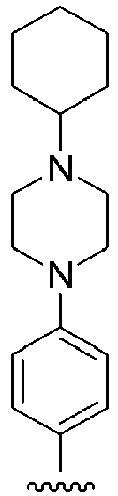
1H-NMR(CD3OD, 400MHz) δ 7.18-7.08 (m, 5H), 7.02 (m, 2H), 6.65 (m, 2H), 6.39 (m, 2H), 3.81 (m, 2H), 3.64 (m, 2H), 3.41 (t, J = 6.7 Hz, 2H), 3.23 (m, 2H), 2.96 (m, 2H), 2.51 (m, 3H), 2.17 (m, 2H), 1.97 (m, 2H), 1.72 (m, 2H), 1.53 (m, 2H), 1.42 (m, 2H), 1.29 (m, 2H). MS (ESI) m/z: 497 [M+H]+. 68 22q 

1H-NMR(CD3OD, 400MHz) δ 7.16-7.07 (m, 5H), 7.02 (d, J = 8.8 Hz, 2H), 6.78 (m, 2H), 6.66 (m, 2H), 3.72 (m, 2H), 3.49 (m, 2H), 3.41 (t, J = 6.7 Hz, 2H), 2.95 (m, 4H), 2.51 (m, 2H), 2.34 (m, 2H), 2.25 (m, 2H), 1.91 (m, 2H), 1.53 (m, 2H). MS (ESI) m/z: 469 [M+H]+. 69 22r 

1H-NMR(CD3OD, 400MHz) δ 7.21-7.10 (m, 7H), 6.90 (m, 4H), 6.72 (d, J = 7.9 Hz, 2H), 3.71 (m, 2H), 3.43 (t, J = 6.8 Hz, 2H), 3.27 (m, 2H), 2.80 (m, 2H), 2.52 (m, 2H), 2.01 (m, 2H), 1.79 (m, 2H), 1.52 (m, 2H), 0.98 (m, 4H). MS (ESI) m/z: 454 [M+H]+. 70 22s 

1H-NMR(CD3OD, 400MHz) δ 7.04-6.86 (m, 9H), 6.78 (d, J = 8.1 Hz, 2H), 6.65 (d, J = 8.5 Hz, 2H), 6.61-6.58 (m, 2H), 3.61-3.51 (m, 2H), 3.36-3.28 (m, 5H), 2.96-2.90 (m, 1H), 2.43-2.39 (m, 2H), 2.33-2.28 (m, 1H), 2.01-1.96 (m, 1H), 1.45-1.41 (m, 2H), 1.26-1.24 (m, 6H). MS (ESI) m/z: 442 [M+H]+. 71 22t 

1H-NMR(CD3OD, 400MHz) δ 7.18-7.09 (m, 5H), 7.05-7.02 (m, 4H), 6.94-6.89 (m, 2H), 6.80-6.78 (m, 2H), 4.28-4.25 (m, 1H), 3.90-3.73 (m, 3H), 3.55-3.51 (m, 1H), 3.45-3.41 (m, 3H), 3.28-3.23 (m, 1H), 3.05-2.96 (m, 1H), 2.56-2.52 (m, 2H), 2.44-2.39 (m, 1H), 2.25-2.19 (m, 1H), 1.59-1.53 (m, 2H), 1.00-0.95 (m, 4H). MS (ESI) m/z: 440 [M+H]+. 72 22u 

1H-NMR(CD3OD, 400MHz) δ 7.08-6.97 (m, 6H), 6.92-6.88 (m, 2H), 6.83-6.79 (m, 2H), 6.61-6.58 (m, 2H), 6.53 (s, 1H), 3.59-3.51 (m, 2H), 3.38-3.29 (m, 5H), 2.96-2.91 (m, 1H), 2.42-2.38 (m, 2H), 2.34-2.24 (m, 1H), 2.05-1.97 (m, 1H), 1.47-1.39 (m, 2H), 1.26-1.24 (m, 6H). MS (ESI) m/z: 442 [M+H]+. 73 22v 

1H-NMR(CD3OD, 400MHz) δ 7.20-7.09 (m, 6H), 7.04-7.00 (m, 2H), 6.93-6.91 (m, 2H), 6.71 (d, J = 7.8 Hz, 2H), 6.55 (s, 1H), 3.91-3.65 (m, 2H), 3.54-3.50 (m, 2H), 3.42 (t, J = 6.7 Hz, 2H), 3.27-3.22 (m, 1H), 3.01-2.96 (m, 1H), 2.54-2.50 (m, 2H), 2.45-2.42 (m, 1H), 2.23-2.21 (m, 1H), 1.58-1.51 (m, 2H), 0.99-0.90 (m, 4H). MS (ESI) m/z: 440 [M+H]+. 74 22w 

1H-NMR(CD3OD, 400MHz) δ 7.20-7.11 (m, 5H), 7.07 (d, J = 8.2 Hz, 2H), 7.01-6.98 (m, 1H), 6.80 (d, J = 8.2 Hz, 2H), 6.76-6.70 (m, 1H), 6.62-6.53 (m, 2H), 3.54-3.42 (m, 7H), 3.22-3.13 (m, 2H), 2.96-2.90 (m, 2H), 2.57-2.54 (m, 2H), 1.61-1.55 (m, 2H), 1.40 (d, J = 6.3 Hz, 6H). MS (ESI) m/z: 457 [M+H]+. 75 22x 

1H-NMR(CD3OD, 400MHz) δ 7.21-7.11 (m, 6H), 7.04-7.00 (m, 1H), 6.75-6.69 (m, 4H), 6.62-6.57 (m, 2H), 3.58-3.42 (m, 7H), 3.20-3.15 (m, 2H), 2.97-2.92 (m, 2H), 2.56-2.52 (m, 2H), 1.61-1.53 (m, 2H), 1.41 (d, J = 6.6 Hz, 6H). MS (ESI) m/z: 457 [M+H]+. 76 22y 

1H-NMR(CD3OD, 400MHz) δ 7.17-6.98 (m, 8H), 6.89 (d, J = 7.6 Hz, 1H), 6.79-6.77 (m, 4H), 3.54-3.32 (m, 5H), 3.12-3.06 (m, 2H), 2.66-2.60 (m, 1H), 2.59-2.54 (m, 2H), 1.87-1.84 (m, 2H), 1.77-1.71 (m, 2H), 1.60-1.53 (m, 2H), 1.37 (d, J = 6.5 Hz, 6H). MS (ESI) m/z: 456 [M+H]+. 77 22z 

1H-NMR(CD3OD, 400MHz) δ 7.17-6.99 (m, 8H), 6.91-6.88 (m, 1H), 6.80-6.78 (m, 4H), 3.68-3.64 (m, 2H), 3.44 (dd, J = 6.7 Hz, 2H), 3.26-3.20 (m, 2H), 2.81-2.77 (m, 1H), 2.69-2.62 (m, 1H), 2.58-2.54 (m, 2H), 1.86-1.82 (m, 2H), 1.68-1.59 (m, 2H), 1.58-1.53 (m, 2H), 1.00-0.98 (m, 4H). MS (ESI) m/z: 454 [M+H]+. 78 22aa 

1H-NMR(CD3OD, 400MHz) δ 7.22-7.09 (m, 6H), 7.05-7.00 (m, 1H), 6.93-6.90 (m, 1H), 6.83-6.80 (m, 2H), 6.75-6.71 (m, 2H), 6.67-6.65 (m, 1H), 3.49-3.42 (m, 5H), 3.15-3.06 (m, 2H), 2.67-2.60 (m, 1H), 2.56-2.53 (m, 2H), 1.89-1.85 (m, 2H), 1.79-1.67 (m, 2H), 1.60-1.53 (m, 2H), 1.38 (d, J = 7.7 Hz, 6H). MS (ESI) m/z: 456 [M+H]+. 79 22ab 

1H-NMR(CD3OD, 400MHz) δ 7.21-7.09 (m, 6H), 7.01 (dd, J = 7.9 Hz, 1H), 6.90 (d, J = 7.7 Hz, 1H), 6.81-6.80 (m, 1H), 6.74-6.71 (m, 2H), 6.68-6.67 (m, 2H), 3.67-3.64 (m, 2H), 3.44 (dd, J = 6.8 Hz, 2H), 3.26-3.20 (m, 2H), 2.81-2.78 (m, 1H), 2.69-2.63 (m, 1H), 2.56-2.53 (m, 2H), 1.84-1.81 (m, 2H), 1.75-1.65 (m, 2H), 1.59-1.53 (m, 2H), 1.04-0.95 (m, 4H). MS (ESI) m/z: 454 [M+H]+. 80 22ac 

1H-NMR(CD3OD, 400MHz) δ 7.15-7.07 (m, 6H), 6.93-6.85 (m, 4H), 6.70 (m, 2H), 6.63 (s, 1H), 3.53 (m, 2H), 3.41 (t, J = 6.8 Hz, 2H), 3.08 (m, 2H), 2.87 (s, 3H), 2.72 (m, 1H), 2.51 (m, 2H), 2.02 (m, 2H), 1.86 (m, 2H), 1.56 (m, 2H). MS (ESI) m/z: 428 [M+H]+. 81 22ad 

1H-NMR(CD3OD, 400MHz) δ 7.21-7.11 (m, 7H), 6.85 (m, 2H), 6.71 (m, 4H), 3.70 (m, 4H), 3.42 (t, J = 6.7 Hz, 2H), 3.18 (m, 3H), 2.53 (m, 2H), 1.53 (m, 2H), 1.00 (m, 4H). MS (ESI) m/z: 455 [M+H]+. 82 22ae 

1H-NMR(CD3OD, 400MHz) δ 7.19-7.09 (m, 6H), 6.97-6.85 (m, 4H), 6.69 (m, 2H), 6.63 (s, 1H), 3.60 (m, 2H), 3.41 (t, J = 6.7 Hz, 2H), 3.16 (m, 2H), 3.00 (m, 2H), 2.74 (m, 1H), 2.51 (m, 2H), 2.02 (m, 2H), 1.85 (m, 2H), 1.52 (m, 2H), 1.36 (m, 3H). MS (ESI) m/z: 442 [M+H]+. -

- Compound F-1 (0.01 g, 0.02 mmol) and ammonium chloride (11 mg, 0.21 mmol) were added to methanol (0.5 mL) and tetrahydrofuran (0.5 mL), the temperature was lowered to 0 °C, and zinc (13 mg, 0.21 mmol) was added thereto Stirring was performed at room temperature for 12 hours. Filtration was performed using celite, and the solvent was distilled under reduced pressure to obtain a residue, which was purified using column chromatography, thereby obtaining 9 mg of the desired compound 26a (99%).
- Compounds 26b to 26d were prepared, using the process of Example 83. Identification data of the thus-prepared compounds 26a to 26d is shown in the following Table 6.
[Table 6] 
Example Cmpd No. R Identification data 83 26a 
1H-NMR(CD3OD, 400MHz) δ 7.43 (s, 4H). 7.21-714 (m, 5H), 6.82 (d, J = 8.8 Hz, 2H), 6.71 (d, J = 8.8 Hz, 2H), 3.70 (m, 2H), 3.55 (m, 2H), 3.44 (m, 2H), 3.17 (m, 2H), 3.14 (m, 5H), 2.49 (m, 2H), 1.55 (m, 2H). MS (ESI) m/z: 428 [M+H]+. 84 26b 
1H-NMR(CD3OD, 400MHz) δ 7.42 (m, 2H), 7.25-7.09 (m, 7H), 7.05 (m, 2H), 6.82 (m, 2H), 3.96 (m, 2H), 3.79 (m, 2H), 3.61 (m, 2H), 3.42 (m, 3H), 3.17 (m, 2H), 2.47 (m, 2H), 1.54 (m, 2H), 1.41 (d, J = 6.6 Hz, 6H). MS (ESI) m/z: 456 [M+H]+. 85 26c 
1H-NMR(CD3OD, 400MHz) δ 7.44 (m, 4H), 7.25-7.11 (m, 5H), 6.97 (m, 2H), 6.88 (m, 2H), 3.59 (m, 4H), 3.42 (t, J = 6.6 Hz, 2H), 3.14 (m, 2H), 2.52 (m, 2H), 2.01 (m, 4H), 1.56 (m, 2H), 1.39 (d, J = 6.6 Hz, 6H). MS (ESI) m/z: 455 [M+H]+. 86 26d 
1H-NMR(CD3OD, 400MHz) δ 7.32 (s, 4H), 7.08-7.01 (m, 5H), 6.85 (d, J = 8.1 Hz 2H), 6.76 (d, J = 8.1 Hz, 2H), 3.59 (m, 2H), 3.30 (t, J = 6.5 Hz, 2H), 3.15 (m, 2H), 2.69 (m, 2H), 2.38 (m, 2H), 1.88 (m, 2H), 1.78 (m, 2H), 1.44 (m, 2H), 0.86 (m, 4H). MS (ESI) m/z: 453 [M+H]+. -

- Compound 26b (5 mg, 10 µmol) and triethylamine (3 µL, 0.02 mmol) were added to dichloromethane (2 mL), the temperature was lowered to 0 °C, and methanesulfonyl chloride (1 µL, 0.01 mmol) was added thereto. Stirring was performed at room temperature for 12 hours. Saturated sodium hydrogen carbonate and dichloromethane were further added to the reaction solution and an organic layer was extracted. The organic layer was dried with anhydrous Na2SO4 and filtered. The solvent was distilled under reduced pressure to obtain a residue, which was purified using column chromatography and then dissolved in methanol:dichloromethane (1:1), the temperature was lowered to 0 °C, a 1M aqueous HCl solution was slowly added thereto, and distillation under reduced pressure was performed, thereby obtaining 1 mg of the desired compound 27a (17%).
- Compounds 27b to 27h were prepared, using the process of Example 87. Identification data of the thus-prepared compounds 27a to 27h is shown in the following Table 7.
[Table 7] 


Ra Rb Rc Rd 
87 27a 
H H 
1H-NMR(CD3OD, 400MHz) δ 7.43 (s, 4H), 7.19-7.13 (m, 5H), 6.82 (d, J = 7.6 Hz, 2 H), 6.71 (d, J = 8.1 Hz 2H), 4.10 (t, J = 5.8 Hz, 2H), 3.76 (m, 2H), 3.54 (m, 3H), 3.21 (m, 2H), 2.98 (m, 5H), 2.56 (m, 2H), 1.74 (m, 2H), 1.39 (d, J = 6.5 Hz, 6H). MS (ESI) m/z: 534 [M+H]+. 88 27b 

H 
1H-NMR(CD3OD, 400MHz) δ 7.26 (d, J = 8.4 Hz, 2H), 7.21-7.14 (m, 7H), 6.82 (d, J = 8.6 Hz, 2H), 6.70 (d, J = 7.5 Hz, 2H), 4.10 (t J = 5.8 Hz, 2H), 3.77 (m, 2H), 3.54 (m, 3H), 3.21 (m, 2H), 2.96 (m, 8H), 2.59 (m, 2H), 1.73 (m, 2H), 1.39 (d, J = 6.6 Hz, 6H). MS (ESI) m/z: 612 [M+H]+. 89 27c 
H H 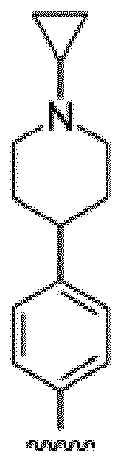
1H-NMR(CD3OD, 400MHz) δ 7.43 (d, J = 8.5 Hz, 2H), 7.07-6.98 (m, 7H), 6.82 (d, J = 8.2 Hz, 2H), 6.75 (d, J = 8.2 Hz, 2H), 3.57 (m, 2H), 3.32 (t, J = 6.7 Hz, 2H), 3.14 (m, 2H), 2.70 (m, 2H), 2.41 (m, 2H), 2.03 (s, 3H), 1.92 (m, 2H), 1.68 (m, 2H), 1.44 (m, 2H), 0.83 (m, 4H), MS (ESI) m/z: 495 [M+H]+. 90 27d 
H 

1H-NMR(CD3OD, 400MHz) δ 7.45 (d, J = 8.5 Hz, 2H), 7.06-7.01 (m, 7H), 6.82 (d, J = 8.3 Hz, 2H), 6.76 (d, J = 8.3 Hz, 2H), 3.84 (t, J = 6.3 Hz, 2H), 6.70 (m, 2H), 3.13 (m, 2H), 2.67 (m, 2H), 2.43 (m, 2H), 2.03 (s, 3H), 1.92 (m, 2H), 1.83 (s, 3H), 1.72 (m. 2H), 1.51 (m, 2H), 0.84 (m, 4H). MS (ESI) m/z: 537 [M+H]+. 91 27e 
H H 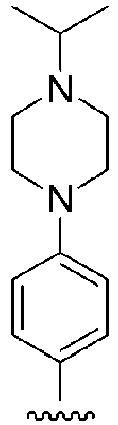
1H-NMR(CD3OD, 400MHz) δ 7.27 (d, J = 8.5 Hz, 2H), 7.19-7.09 (m, 7H), 6.81 (d, J = 8.6 Hz, 2H), 6.68 (d, J = 8.7 Hz, 2H), 3.76 (m, 2H), 3.51 (m, 2H), 3.41 (t, J = 6.5 Hz, 2H), 3.21 (m, 2H), 2.92 (m, 2H), 2.57 (m, 1H), 2.50 (m, 2H), 1.52 (m, 2H), 1.39 (d, J = 6.6 Hz, 6H), 1.29 (s, 1H), 1.04 (m, 2H), 0.96 (m, 2H). MS (ESI) m/z: 560 [M+H]+. 92 27f 
H H 
1H-NMR(CD3OD, 400MHz) δ 7.33 (m, 4H), 7.19-7.12 (m, 5H), 6.83 (d, J = 8.7 Hz, 2H), 6.70 (d, J = 8.8 Hz, 2H), 4.11 (t, J = 6.0 Hz, 2H), 3.77 (m, 2H), 3.53 (m, 3H), 3.20 (m, 2H), 2.95 (m, 5H), 2.58 (m, 2H), 1.73 (m, 2H), 1.38 (d, J = 6.6 Hz, 6H). MS (ESI) m/z: 498 [M+H]+. 93 27g 
H H 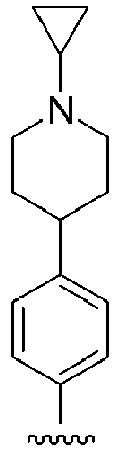
1H-NMR(CD3OD, 400MHz) δ 7.27 (d, J = 8.4 Hz, 2H), 7.19-7.09 (m, 7H), 6.90 (m, 4H), 3.67 (m, 3H), 3.41 (t, J = 6.4 Hz, 2H), 2.77 (m, 2H), 2.55 (m, 3H), 2.02 (m, 2H), 1.76 (m, 2H), 1.54 (m, 2H), 0.96 (m, 4H). MS (ESI) m/z: 557 [M+H]+. 94 27h 
H H 
1H-NMR(CD3OD, 400MHz) δ 7.28-7.11 (m, 9H), 6.96 (m 4H), 3.73 (m, 4H), 3.50 (m, 2H), 2.83 (m, 2H), 2.54 (m, 2H), 2.18 (m, 1H), 1.98 (m, 1H), 1.54(m, 2H), 0.95 (m, 4H). MS (ESI) m/z: 531 [M+H]+. -

- Compound G-1 (10 mg, 22 µmol) and diisopropylethylamine (8 µL, 0.04 mmol) were added to dichloromethane (2 mL), the temperature was lowered to 0 °C, and methanesulfonyl chloride (3 µL, 0.02 mmol) was added thereto. Stirring was performed at room temperature for 12 hours. Saturated sodium hydrogen carbonate and dichloromethane were further added to the reaction solution and an organic layer was extracted. The organic layer was dried with anhydrous Na2SO4 and filtered. The solvent was distilled under reduced pressure to obtain a residue, which was purified using column chromatography, thereby obtaining 1 mg of the desired compound 28a (9%).
- Compounds 28b to 28g were prepared, using the process of Example 95. Identification data of the thus-prepared compounds 28a to 28g is shown in the following Table 8.
[Table 8] 
Example Cmpd No. Ra Rb Rc Identification data 95 28a 
H 
1H-NMR(CD3OD, 400MHz) δ 7.32 (m, 4H), 7.19-7.10 (m, 5H), 6.81 (d, J = 8.7 Hz, 2H), 6.70 (d, J = 8.8 Hz, 2H), 3.77 (m, 2H), 3.53 (m, 3H), 3.41 (t, J = 6.6 Hz, 2H), 3.25 (s, 3H), 3.20 (m, 2H), 2.92 (m, 2H). 2.49 (m, 2H), 1.54 (m, 2H), 1.38 (d, J = 6.6 Hz, 6H). MS (ESI) m/z: 535 [M+H]+. 96 28b 


1H-NMR(CD3OD, 400MHz) δ 7.45 (d, J = 8.5 Hz, 2H), 7.06-6.99 (m, 7H), 6.82 (d, J = 8.3 Hz, 2H). 6.76 (d, J = 8.3 Hz, 2H), 3.84 (t, J = 6.3 Hz, 2H), 3.59 (m, 2H), 3.14 (m, 2H), 2.68 (m, 2H), 2.43 (m, 2H), 2.03 (s, 3H), 1.92 (m, 2H), 1.83 (s, 3H), 1.55 (m, 2H), 1.52 (m, 2H), 0.84 (m, 4H). MS (ESI) m/z: 613 [M+H]+. 97 28c 
H 
1H-NMR(CD3OD, 400MHz) δ 7.35-7.29 (m, 4H), 7.19-7.10 (m, 5H), 6.81 (d, J = 8.8 Hz, 2H), 6.71 (d, J = 8.8 Hz, 2H), 3.77 (m, 2H), 3.54 (m, 3H), 3.41 (t, J = 6.6 Hz, 2H). 3.21 (m, 2H), 2.97 (m, 2H). 2.82 (m, 1H), 2.49 (m, 2H), 1.53 (m, 2H), 1.38 (d, J = 6.6 Hz, 6H), 1.14 (m, 4H). MS (ESI) m/z: 561 [M+H]+. 98 28d 
H 
1H-NMR(CD3OD, 400MHz) δ 7.38 (m, 4H), 7.18-7.11 (m, 5H), 6.81 (d, J = 8.8 Hz, 2H), 6.70 (d, J = 8.8 Hz, 2H), 3.77 (m, 2H), 3.51 (m, 3H), 3.41 (t, J = 6.4 Hz, 2H), 3.21 (m, 2H), 2.92 (m, 2H), 2.48 (m, 2H), 1.53 (m, 2H), 1.38 (d, J = 6.6 Hz, 6H). MS (ESI) m/z: 589 [M+H]+. 99 28e 
H 
1H-NMR(CD3OD, 400MHz) δ 7.25 (d, J = 8.6 Hz, 2H), 7.15 (m, 5H), 7.05 (d, J = 8.5 Hz, 2H), 6.81 (d, J = 8.8 Hz, 2H), 6.68 (d, J = 8.8 Hz, 2H), 3.72 (m, 2H), 3.52 (m, 2H), 3.39 (t, J = 6.7 Hz, 2H), 3.18 (m, 2H), 2.92 (m, 5H), 2.51 (m, 2H), 1.54 (m, 2H), 1.36 (s, 9H). MS (ESI) m/z: 513 [M+H]+. 100 28f H 

1H-NMR(CD3OD, 400MHz) δ 7.20-7.16 (m, 5H), 7.12 (d, J = 7.2 Hz, 2H), 7.04 (d, J = 8.7 Hz, 2H), 6.68 (d, J = 8.7 Hz, 2H), 3.89 (m, 2H), 3.62 (m, 2H), 3.48 (m, 2H), 3.42 (t, J = 6.7 Hz, 2H), 3.07 (m, 2H), 2.98 (s, 3H), 2.54 (m, 2H), 1.56 (m, 2H), 1.28 (s, 9H). MS (ESI) m/z: 513 [M+H]+. 101 28g 
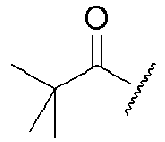

1H-NMR(CD3OD, 400MHz) δ 7.24 (m, 2H), 7.18-7.06 (m, 7H), 6.82 (d, J = 6.9 Hz, 2H), 6.69 (d, J = 8.8 Hz, 2H), 3.93 (t, J = 6.1 Hz, 2H), 3.72 (m, 2H), 3.52 (m, 2H), 3.19 (m, 2H), 2.95 (m, 5H), 2.52 (m, 2H), 1.63 (m, 2H), 1.37 (s, 9H), 1.08 (s, 9H). MS (ESI) m/z: 597 [M+H]+. -

- Compound H-1 (0.01 g, 0.02 mmol), 1-methylpiperizine (7 µL, 0.06 mmol), and sodium triacetoxyborohydride (NaBH(OAc)3, 14 mg, 0.06 mmol) were added to dichloroethane (3 mL), and heated at 50 °C for 12 hour. Water and ethyl acetate were further added to the reaction solution and an organic layer was extracted. The organic layer was dried with anhydrous Na2SO4 and filtered. The solvent was distilled under reduced pressure to obtain a residue, which was purified using column chromatography, thereby obtaining 12 mg of the desired compound H-2 (99%).
- 2 mg of the desired compound 30a (18%) was obtained by the same process as
step 3 of Example 19, using compound H-2. - Compound 30b was prepared, using the process of Example 102. Identification data of the thus-prepared compounds 30a and 30b is shown in the following Table 9.
[Table 9] 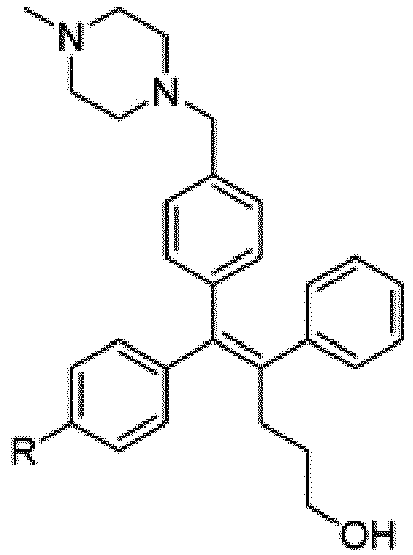
Example Cmpd No. R Identification data 102 30a OH 1H-NMR(CD3OD, 400MHz) δ 7.19 (m. 2H), 7.16-7.10 (m, 5H), 7.07 (d, J = 8.4 Hz, 2H), 7.02 (d, J = 7.8 Hz, 2H), 6.30 (d, J = 8.3 Hz, 2H), 4.17 (s, 2H), 3.55 (m, 8H), 3.43 (t, J = 6.7 Hz, 2H), 2.96 (s, 3H), 2.55 (m, 2H), 1.56 (m, 2H). MS (ESI) m/z: 443 [M+H]+. 103 30b NO2 1H-NMR(CD3OD, 400MHz) δ 8.26 (d, J = 7.9 Hz, 2H). 7.53 (d, J = 8.1 Hz, 2H), 7.31 (m, 2H), 7.17 (m, 5H), 7.06 (d, J = 7.2 Hz, 2H), 4.32 (s, 2H), 3.61 (m, 8H), 3.43 (t, J = 6.2 Hz, 2H), 2.98 (s, 3H), 2.53 (m, 2H), 1.56 (m, 2H). MS (ESI) m/z: 472 [M+H]+. -

- 0.2 g of the desired compound 1-2 (99%) was obtained by the same process as
step 1 of Example 40, using compound I-1. - Compound 1-2 (20 mg, 0.04 mmol), potassium carbonate (17 mg, 0.12 mmol), and sodium iodide (0.06 mg, 0.414 µmol) were added to dimethylformamide (1 mL), and stirred at room temperature for 12 hour. Saturated sodium hydrogen carbonate and ethyl acetate were added to the reaction solution and an organic layer was extracted. The organic layer was dried with anhydrous Na2SO4 and filtered. The solvent was distilled under reduced pressure to obtain a residue, which was purified using column chromatography, thereby obtaining 3 mg of the desired compound 1-3 (11%).
- 1 mg of the desired compound 33 (55%) was obtained by the same process as step 5 of Example 1, using compound 1-3.
1H-NMR(CD3OD, 400MHz) δ 7.19-6.97 (m, 7H), 6.77 (d, J = 8.5 Hz, 2H), 6.64 (m, 2H), 6.41 (d, J = 8.7 Hz, 2H), 3.67 (m, 2H), 3.41 (m, 2H), 3.51 (m, 2H), 2.06 (m, 6H), 1.55 (m, 2H), 0.89 (m, 4H). MS (ESI) m/z: 469 [M+H]+. -

- 24 mg of the desired compound J-2 (99%) was obtained by the same process as
step 2 of Example 40, using compound J-1. - 9 mg of the desired compound J-3 (31%) was obtained by the same process as
step 1 of Example 104, using compound J-2. - 2 mg of the desired compound 36 (18%) was obtained by the same process as step 5 of Example 1, using compound J-3.
- 1H-NMR(CD3OD, 400MHz) δ 7.30-6.95 (m, 14H), 4.41 (m, 2H), 3.61 (m, 4H), 3.44 (m, 2H), 3.11 (m, 2H), 2.56 (m, 2H), 1.93 (m, 6H), 1.57 (m, 2H). MS (ESI) m/z: 481 [M+H]+.
-

- Compound K-1 (10 mg, 0.02 mmol), 3-azabicyclo[3,1,0]hexane (7 mg, 0.06 mmol), sodium iodide (0.3 mg, 2 µmol), and triethylamine (11 µL, 0.08 mmol) were added to dimethylformamide (1 mL), and heated at 80 °C for 12 hours. The solvent was distilled under reduced pressure to obtain a residue, which was purified using column chromatography, thereby obtaining 6 mg of the desired compound K-2 (53%).
- 3 mg of the desired compound 38a (62%) was obtained by the same process as step 5 of Example 1, using compound K-2.
- Compounds 38b to 38d were prepared, using the process of Example 106. Identification data of the thus-prepared compounds 38a to 38d is shown in the following Table 10.
[Table 10] 
Example Cmpd No. R Identification data 106 38a 
1H-NMR(CD3OD), 400MHz) δ 7.16-7.07 (m, 5H), 7.02 (d, J = 8.4 Hz, 2H), 6.83 (d, J = 8.7 Hz, 2H), 6.76 (d, J = 2H), 6.65 (m, 2H), 4.17 (t, J = 4.4 Hz, 2H), 3.70 (m, 2H), 3.57 (t, J = 4.6 Hz 2H), 3.46 (m, 2H), 3.41 (t, J = 6.7 Hz, 2H), 2.52 (m. 2H), 1.86 (m, 2H), 1.54 (m, 2H), 0.84 (m, 1H), 0.63 (m, 1H). MS (ESI) m/z: 456 [M+H]+. 107 38b 
1H-NMR(CD3OD, 400MHz) δ 7.16-7.07 (m, 5H), 7.02 (d, J = 8.5 Hz, 2H), 6.83 (d, J = 8.7 Hz, 2H), 6.76 (d, J = 8.5 Hz, 2H), 6.66 (d, J = 8.8 Hz, 2H), 4.19 (t, J = 4.7 Hz, 2H), 3.72 (m, 1H), 3.60 (m, 2H), 3.50 (m, 1H), 3.41 (t, J = 6.8 Hz, 2H), 3.15 (m, 1H), 2.52 (m, 2H), 2.06 (m, 1H), 1.92 (m, 1H), 1.69 (m, 9H), 1.54 (m, 2H). MS (ESI) m/z: 498 [M+H]+. 108 38c 
1H-MMR(CD3OD, 400MHz) δ 7.93 (s, 1H), 7.13-715 (m, 5H), 7.05 (d, J = 8.8 Hz, 2H), 6.85 (d, J = 8.8 Hz, 2H), 6.79 (d, J = 8.8 Hz, 2H), 6.68 (d, J = 8.8 Hz, 2H), 4.28 (t, J = 10.0 Hz, 2H), 3.90 (m, 2H), 3.75 (m, 4H), 3.50 (m, 1H), 3.44 (t, J = 6.8 Hz, 2H), 2.55 (m, 2H), 1.90-2.22 (m, 4H), 1.57 (m, 2H). MS (ESI) m/z: 474 [M+H]+. 109 38d 
1H-NMR(CD3OD, 400MHz) δ 7.93 (s, 1H), 7.13-7,22 (m, 5H), 7.04 (d, J = 8.6 Hz, 2H), 6.85 (d, J = 8.6 Hz, 2H), 6.79 (d, J = 8.6 Hz, 2H), 6.67 (d, J = 8.8 Hz, 2H), 4.23 (m, 1H). 4.08-4.16 (m, 3H), 3.93 (m, 1H), 3.81 (m, 1H), 3.63 (m, 1H), 3.44 (t, J = 6,8 Hz, 3H), 2.55 (m, 2H), 1.92 (m, 1H), 1.79 (m, 1H), 1.59 (m, 2H), 0.93 (m, 2H). MS (ESI) m/z: 486 [M+H]+. -

- 0.8 mg of the desired compound 39 (24%) was obtained by the same process as
step 1 of Example 40, using compound Q.
1H-NMR(CD3OD, 400MHz) δ 7.18-7.07 (m, 5H), 7.0 (d, J = 7.0 Hz, 2H), 6.83 (d, J = 7.2 Hz, 2H), 6.76 (d, J = 7.0 Hz, 2H), 6.68 (d, J = 7.6 Hz, 2H), 4.23 (s, 2H), 3.81 (m, 2H), 3.66 (m, 2H), 3.41 (m, 8H), 2.51 (m, 2H), 2.21 (m, 4H), 1.54 (m, 2H). MS (ESI) m/z: 499 [M+H]+. -

- 2 mg of the desired compound 40 (19%) was obtained by the same process as
step 1 of Example 40, using compound R.
1H-NMR(CD3OD, 400MHz) δ 7.08-7.16 (m, 5H), 7.04 (d, J = 8.8 Hz, 2H), 6.85 (d, J = 8.0 Hz, 2H), 6.79 (d, J = 8.8 Hz, 2H), 6.70 (d, J = 8.0 Hz, 2H), 4.31 (m, 2H), 4.04 (m, 2H), 3.83(m, 1H), 3.68 (m, 3H), 3.36-3.49 (m, 8H), 2.55 (m, 2H), 1.57 (m, 2H). MS (ESI) m/z: 485 [M+H]+. -

- 8 mg of the desired compound 1-2 (34%) was obtained by the same process as
step 1 of Example 106, using compound L-1. - 3 mg of the desired compound 42a (44%) was obtained by the same process as step 5 of Example 1, using compound L-2.
- Compounds 42b to 42e were prepared, using the process of Example 112. Identification data of the thus-prepared compounds 42a to 42e is shown in the following Table 11.
[Table 11] 
Example Cmpd No. R Identification data 112 42a 
1H-NMR(CD3OD, 400MHz) δ 7.34 (d, J = 7.6 Hz, 2H), 7.20-7.13 (m, 5H), 7.05 (d, J = 8.4 Hz, 2H), 7.00 (d, J = 7.6 Hz, 2H), 6.79 (d, J = 8.4 Hz, 2H), 3.67 (m, 8H), 3.43 (t, J = 6.7 Hz. 2H), 3.01 (m, 5H), 2.55 (m, 2H), 1.56 (m, 2H), 0.52 (s, 6H). MS (ESI) m/z: 501 [M+H]+. 113 42b 
1H-NMR(CD3OD, 400MHz) δ 7.29 (m, 2H), 7.12 (m, 5H), 7.00 (m, 4H), 6.77 (m, 2H), 3.42 (m, 2H), 3.25 (m, 2H), 2.83 (m, 4H), 2.54 (m, 2H), 1.77 (m, 4H), 1.55 (m, 2H). MS (ESI) m/z: 486 [M+H]+. 114 42c 
1H-NMR(CD3OD, 400MHz) δ 7.31 (m, 2H), 7.15-6.99 (m, 9H), 6.79 (d, J = 8.6 Hz, 2H), 3.44 (m, 4H), 2.93 (s, 2H), 2.83 (m, 2H), 2.56 (m, 2H), 2.06 (m, 2H), 1.93 (m, 2H), 1.57 (m, 2H), 0.44 (s, 6H). MS (ESI) m/z: 472 [M+H]+. 115 42d 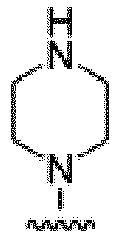
1H-NMR(CD3OD, 400MHz) δ 734 (d, J = 8.0 Hz, 2H), 7.17-7.12 (m, 5H), 7.05 (m, 2H), 7.00 (d, J = 8.0 Hz, 2H), 6.79 (d, J = 8.5 Hz, 2H), 3.56 (s, 8H), 3.43 (t, J = 6.7 Hz, 2H), 3.02 (s, 2H), 2.55 (m, 2H), 1.56 (m, 2H), 0.52 (s, 6H). MS (ESI) m/z: 487 [M+H]+. 116 42e 
1H-NMR(CD3OD, 400MHz) δ 7.30 (m, 2H), 7.13 (m, 5H). 7.01 (m, 4H), 6.77 (m, 2H), 4.26 (t, J = 6.2 Hz, 2H), 3.74 (m, 2H), 3.52 (m, 2H), 3.40 (m, 2H), 3.25 (m, 2H), 3.12 (m, 2H), 2.99 (s, 2H), 2.60 (m, 2H), 1.75 (m, 2H), 1.54 (m, 2H). 0.44 (s, 6H). MS (ESI) m/z: 513 [M+H]+. -

- 7 mg of the desired compound M-2 (80%) was obtained by the same process as
step 1 of Example 106, using compound M-1. - 2 mg of the desired compound 44 (28%) was obtained by the same process as step 5 of Example 1, using compound M-2.
1H-NMR (CD3OD, 400MHz) δ 7.25 (d, J = 7.8 Hz, 2H), 7.17-7.10 (m, 5H), 7.05 (d, J = 8.5 Hz, 2H), 6.86 (d, J = 8.6 Hz, 2H), 6.79 (d, J = 8.5 Hz, 2H), 4.01 (s, 2H), 3.57 (m, 2H), 3.44 (t, J = 6.7 Hz, 2H), 3.05 (m, 2H), 2.55 (m, 2H), 1.90 (m, 6H), 1.56 (m, 2H). MS (ESI) m/z: 471 [M+H]+. -

- Compound 44 (10 mg, 0.02 mmol) was added to tetrahydrofuran (2 mL), the temperature was lowered to 0 °C, and 1 M lithium aluminum hydride (0.051 mL, 0.05 mmol) was added thereto. Heating was performed at 60 °C for 12 hour. Water and ethyl acetate were further added to the reaction solution and an organic layer was extracted. The organic layer was dried with anhydrous Na2SO4 and filtered. The solvent was distilled under reduced pressure to obtain a residue, which was purified using column chromatography and then dissolved in methanol:dichloromethane (1:1), the temperature was lowered to 0 °C, a 1M aqueous HCl solution was slowly added thereto, and distillation under reduced pressure was performed, thereby obtaining 0.5 mg of the desired compound 45 (6%).
1H-NMR (CD3OD, 400MHz) δ 7.15-7.07 (m, 5H), 7.01 (d, J = 8.4 Hz, 2H), 6.74 (m, 4H), 6.50 (d, J = 8.4 Hz, 2H), 3.61 (m, 2H), 3.48 (m, 2H), 3.40 (m, 6H), 2.51 (m, 2H), 1.81 (m, 4H), 1.55 (m, 4H). MS (ESI) m/z: 457 [M+H]+. -

- 11 mg of the desired compound N-1 (99%) was obtained by the same process as
step 1 of Example 106, using compound M-1. - 4 mg of the desired compound N-2 (39%) was obtained by the same process as step 5 of Example 1, using compound N-1.
- 1 mg of the desired compound 46 (38%) was obtained by the same process as
step 1 of Example 40, using compound N-2.
1H-NMR (CD3OD, 400MHz) δ 7.23 (d, J = 8.4 Hz, 2H), 7.17-7.08 (m, 5H), 7.03 (d, J = 8.4 Hz, 2H), 6.83 (d, J = 8.5 Hz, 2H), 6.77 (d, J = 8.4 Hz, 2H), 4.24 (s, 2H), 3.43 (m, 8H), 2.52 (m, 2H), 1.52 (m, 4H). MS (ESI) m/z: 498 [M+H]+. -

- Compound 26b (5 mg, 11 µmol), N,N'-di-boc-thiourea (3 mg, 0.01 mmol), mercury (II) chloride (3 mg, 0.01 mmol), and triethylamine (5 µL, 0.03 mmol) were added to dimethylformamide (1 mL), and heated at room temperature for 12 hours. The solvent was distilled under reduced pressure to obtain a residue, which was purified using column chromatography, thereby obtaining 6 mg of the desired compound 0-1 (84%).
- 0.5 mg of the desired compound 50 (9%) was obtained by the same process as
step 1 of Example 40, using compound 0-1.
MS (ESI) m/z: 498 [M+H]+. -

- 5 mg of the desired compound P-1 (36%) was obtained by the same process as
step 1 of Example 120, using compound 20c. - 0.7 mg of the desired compound 52 (23%) was obtained by the same process as
step 1 of Example 40, using compound P-1.
1H-NMR (CD3OD, 400MHz) δ 7.16-7.07 (m, 5H), 7.01 (m, 2H), 6.78 (m, 2H), 6.67 (m, 2H), 6.40 (d, J = 8.6 Hz, 2H), 3.67 (m, 2H), 3.28 (m, 2H), 3.48 (m, 1H), 3.41 (t, J = 6.7 Hz, 2H), 3.19 (m, 2H), 3.13 (m, 1H), 2.51 (m, 2H), 1.54 (m, 2H). MS (ESI) m/z: 457 [M+H]+. - The arylethene derivative of the present invention was sequentially added to a 384 well plate from a concentration of 10 µM to a final concentration of two-fold dilution. Then, a GST-bound ERR gamma ligand-binding domain (LBD) was added to a final concentration of 5 nM, and a fluorescein-conjugated coactivator PGC1a and a Tb-a-GST antibody were added to 500 nM and 5 nM, respectively. After all reagents were added, a reaction was carried out with gentle shaking at 20 °C for 1 hour, and after the reaction, a binding activity was measured by a TR-FRET method. That is, excitation at 340 nm was performed, each emission value at 495 nm and 520 nm was measured, the result assay was a value measured at 490 nm/a value measured at 520 nm, and an analysis program was
Prism 6. - In an ERR alpha binding assay, GST-bound ERR alpha LBD was used, and all experiments other than that was the same as the ERR gamma binding assay.
- In an ERR beta binding assay, GST-bound ERR alpha LBD was used so that a final concentration was 10 nM and a fluorescein-conjugated coactivator PGC1a was 250 nM, and all experiments other than that was the same as the ERR gamma binding assay.
- In an ER alpha binding assay, a GST-bound ER alpha ligand-binding domain (LBD) was added to a 384 well plate to which the arylethene derivative of the present invention was added to a final concentration of 7.3 nM. Then, a fluorescein-conjugated coactivator PGC1a and a Tb-α-GST antibody were added to 250 nM and 5 nM, respectively, and beta-estradiol as an agonist was added to a final concentration of 4 nM. All subsequent experiments was the same as the ERR gamma binding assay.
- The results of Experiment Example 1 are shown in the following Table 12.
[Table 12] Example Cmpd No. Binding Assay, IC50 (µM) ERRγ ERRα ERRβ ERα 4 6d 0.093 >10 0.262 5 6e 0.067 >10 0.408 6 6f 0.059 >10 0.296 7 6g 0.030 >10 0.331 8 6h 0.042 >10 1.1 10 6j 0.034 11 6k 0.026 16 13b 0.064 >10 3.928 >10 20 18a 0.040 >10 1.33 1.24 21 18b 0.017 >10 0.861 >10 23 18d 0.060 >10 1.7 24 18e 0.060 >10 2.8 >10 25 18f 0.026 >10 1.017 >10 27 18h 0.032 >10 0.99 >10 28 18i 0.050 >10 3.04 1.142 29 18j 0.025 >10 1.045 >10 30 18k 0.035 >10 >10 1.943 33 18n 0.029 8.25 1.09 8.8 40 20a 0.028 8.65 0.98 >10 41 20b 0.027 >10 2.097 >10 49 20j 0.048 >10 4.93 0.992 58 22g 0.095 >10 6.766 4.371 60 22i 0.056 >10 1.665 2.093 62 22k 0.049 >10 4.822 1.381 64 22m 0.078 >10 7.818 >10 67 22p 0.099 9.7 1.648 2.116 68 22q 0.053 >10 2.002 1.658 71 22t 0.096 >10 3.564 5.94 87 27a 0.026 4.318 0.07 0.413 106 38a 0.079 >10 8.13 0.437 107 38b 0.050 >10 3.07 0.256 108 38c 0.091 >10 >10 0.408 109 38d 0.083 >10 8.8 0.276 GSK5182 0.107 >10 >10 2 - AD293 was cultured in a 24-well plate for 24 hours, using a DMEM High glucose culture medium (Hyclone, USA) to which 0.5% FBS was added at a concentration of 9 × 10⁴/well. The culture medium was replaced with a DMEM High glucose culture medium to which 10% FBS was added, treatment was performed with a mixture of a TransIT-LT1 transfection reagent (Mirus, USA) and pCMX-Gal4-ERRy, pFR-luciferase reporter plasmid, pCMV-β-gal, and culturing was performed for 24 hours. Thereafter, a luciferase activity assay and a β-gal assay were performed, respectively, with a lysate obtained after treatment with the arylethene derivative of the present invention for 24 hours. All results were derived from three or more independent repetitive experiments.
- The results are shown in the following Table 13, in which "Cpds" refers to an inverse agonist functional activity when the compound was treated, "Ref 5182" refers to an activity of a reference compound GSK5182 for data verification for every essay, and "Cpds/Ref 5182" refers to an activity degree of the arylethene derivative of the present invention, relative to the reference compound.
[Table 13] Example Cmpd No. Functional Assay at 10 µM (% of control) Cpds Ref 5182 Cpds/Ref 5182 2 6b 7.97 3.08 2.59 3 6c 4.64 3.08 1.51 4 6d 5.2 3.08 1.69 5 6e 5.61 3.08 1.82 6 6f 6.75 3.08 2.19 7 6g 4.94 3.08 1.60 8 6h 5.49 3.08 1.78 9 6i 5 3.08 1.62 10 6j 2.44 3.15 0.77 11 6k 2.5 3.15 0.79 14 7a 2.71 3.15 0.86 16 13b 1.5 3.15 0.48 17 13c 10.58 3.15 3.36 20 18a 4.83 4.09 1.18 21 18b 2.45 3.15 0.78 22 18c 1.31 3.15 0.42 23 18d 9.65 9.97 0.97 24 18e 2.6 2.93 0.89 25 18f 2.57 3.15 0.82 26 18g 1.62 1.93 0.84 27 18h 4.47 4.09 1.09 28 18i 1.88 1.93 0.97 29 18j 3.28 2.72 1.21 30 18k 1.08 0.95 1.14 32 18m 2.97 2.93 1.01 33 18n 3.36 4.09 0.82 34 18o 23.2 9.97 2.33 38 18s 2.92 2.93 1.00 19 18t 11.1 9.97 1.11 39 18u 5.33 0.95 5.61 40 20a 3.15 4.09 0.77 41 20b 3.58 4.09 0.88 42 20c 2.72 2.93 0.93 43 20d 3.32 4.09 0.81 44 20e 10.8 9.97 1.08 45 20f 5.76 2.93 1.97 47 20h 3.57 3.15 1.13 49 20j 1.41 1.02 1.38 52 22a 3.1 4.09 0.76 53 22b 2.94 4.09 0.72 55 22d 1.96 3.15 0.62 56 22e 1.93 3.15 0.61 58 22g 1.84 1.93 0.95 59 22h 0.6 0.93 0.65 60 22i 3.37 2.72 1.24 62 22k 0.77 0.93 0.83 64 22m 0.75 0.93 0.81 65 22n 3.47 2.72 1.28 69 22r 0.64 0.95 0.67 70 22s 6.33 5.97 71 22t 6.19 5.97 72 22u 5.12 5.97 73 22v 5.51 5.97 80 22ac 0.61 0.93 0.66 82 22ae 0.67 0.93 0.72 83 26a 2.66 3.15 0.84 85 26c 4.56 0.95 4.80 87 27a 2.1 2.72 0.77 95 28a 1.14 0.95 1.20 98 28d 1.69 0.95 1.78 99 28e 4.76 4.09 1.16 100 28f 4 4.09 0.98 101 28g 5.1 4.09 1.25 102 30a 2.94 0.95 3.09 106 38a 1.45 1.02 1.42 107 38b 1.27 1.02 1.25 108 38c 4.06 4.09 0.99 109 38d 3.16 4.09 0.77 110 39 3.38 1.02 3.31 111 40 2.8 2.93 0.96 112 42a 4.37 2.93 1.49 113 42b 11.6 9.97 1.16 114 42c 2.6 2.93 0.89 115 42d 11.7 2.93 3.99 116 42e 26.04 4.09 6.37 117 44 12.94 4.09 3.16 118 45 1.58 1.02 1.55 119 46 78.46 3.15 24.91 GSK5182 3∼10 - Human liver microsomes (0.25 mg/ml) with 0.1 M phosphate buffer solution (pH 7.4), a substrate drug cocktail of five drug metabolizing enzymes (
Phenacetin 50 µM,Diclofenac 10 µM, S-mephenytoin 100 µM, Dextromethorphan 5 µM, Midazolam 2.5 µM), and the arylethene derivative of the present invention were added at concentrations of 0 µM and 10 µM, respectively, culturing was performed at 37 °C for 5 minutes in advance, a NADPH generation system solution was added, and culturing was performed at 37 °C for 15 minutes. Thereafter, in order to complete the reaction, an acetonitrile solution containing an internal standard material (Terfenadine) was added thereto, centrifugation (14,000 rpm, 4 °C) was performed for 5 minutes, and a supernatant was injected into a LC-MS/MS system to analyze the metabolites of the substrate drug, thereby evaluating drug metabolism enzyme inhibition by the arylethene derivative of the present invention. - The results are shown in the following Table 14.
[Table 14] Example Cmpd No. CYP inhibition (% of control) 1A2 2C9 2C19 2D6 3A4 3 6c 91.9 77.9 81.6 96.4 81.3 5 6e 79.6 51.6 64.1 80.6 68.1 7 6g 97.8 75.4 81.8 81.7 83.7 8 6h 103 62.8 83.2 90.7 75.4 9 6i 98.1 86.7 82.6 93.6 79.4 10 6j 98.7 85.6 89.1 85.2 74.6 18 13d >100 97 89.4 >100 90.2 20 18a 88 86.1 81.2 63.5 66.4 21 18b 89.8 73.4 69.7 68.9 53 22 18c 92.2 81.7 80 75.6 64.1 23 18d 88 67.7 81.2 98.4 64 24 18e >100 91.3 84.6 >100 84 25 18f >100 62.3 72.8 68.2 70.9 27 18h 93.5 96.9 86.3 71.5 64.5 29 18j >100 87 74 86.6 77.6 38 18s >100 81.8 82.4 >100 77.9 19 18t 100 83 93 98 106 40 20a 85 76 61.9 70.7 55 49 20j 93.6 77.1 62 89.3 66.2 50 20k 79.3 87.6 78.9 96.2 83.6 53 22b 100.4 98.4 96.6 93.5 90.8 55 22d >100 >100 >100 82.5 66.1 56 22e 94.9 61.3 58.4 71.8 58.2 59 22h >100 97.9 >100 69.1 72.2 61 22j 95.7 88 89.6 97.1 85 62 22k >100 97 >100 73.7 74.7 63 22l 96.2 88.3 97 99 80.7 64 22m 97 80.3 >100 70.7 58.1 65 22n 99 97.4 83 82.6 88.3 67 22p 88.1 81.8 61.5 79.6 90.6 68 22q 99.9 77.7 92.8 77.6 81 69 22r >100 >100 >100 91.8 82.7 80 22ac >100 >100 >100 86.2 85 82 22ae 59.4 >100 >100 68.4 81.5 83 26a >100 53.2 89 85.5 75.4 84 26b 99.2 92.5 98.7 81.9 60.9 86 26d >100 96.6 >100 86.1 57.3 108 38c 79.2 55.3 58.8 54.3 61.5 109 38d 79.2 55.3 58.8 54.3 57.6 110 39 82.5 74.4 73.9 67.8 59 GSK5182 84.6 72.9 78.2 82.3 83 - Four liver microsomes (Human, Dog, Rat, Mouse 0.5 mg/ml) with a 0.1 M phosphate buffer solution (pH 7.4), and the arylethene derivative of the present invention were added to a concentration of 1 µM, culturing was performed at 37 °C for 5 minutes in advance, a NADPH regeneration system solution was added thereto, and culturing was performed at 37 °C for 30 minutes. Thereafter, in order to complete the reaction, an acetonitrile solution containing an internal standard material (chlorpropamide) was added thereto, centrifugation (14,000 rpm, 4 °C) was performed for 5 minutes, and a supernatant was injected into a LC-MS/MS system to analyze the substrate drug, thereby evaluating metabolism stability to the arylethene derivative of the present invention.
- The results are shown in the following Table 15.
[Table 15] Example Cmpd No. MS(Microsomal Stability) (%) human dog rat mouse 3 6c 128.0 45.2 14 7a 49.0 64.7 59.5 32.1 16 13b 61.2 66.2 18 13d 67.3 59.9 21 18b 54.2 40.0 19.7 22 18c 96.9 72.8 25 18f 79.2 65.7 47.6 26 18g 87.9 84.9 85.3 84.1 27 18h >100 64.4 74.2 48.5 29 18j 67.9 58.0 62.8 54.9 30 18k 65.4 61.2 54.9 26.9 19 18t 66.9 80.5 40 20a 65.1 84.7 41 20b 44 58 71.5 28.8 42 20c 55.8 53.7 43 20d 83 54 11.3 44 20e 78.1 82.1 45 20f 83.9 99.5 49 20j 76.8 68.3 84.5 25.3 50 20k 93.6 84.9 89.0 81.3 53 22b 63.0 28.1 42.5 6.4 55 22d 57.6 60.2 57 22f 97.0 78.1 80.0 66.3 58 22g 42.8 54.3 43.2 10.7 59 22h 46.9 22.4 43.8 16.2 60 22i 36.0 91.5 92.6 83.6 61 22j 65.2 54.9 65.5 34.9 62 22k 59.7 59.6 69.0 23.4 63 22l 71.8 67.9 53.4 25.8 64 22m 55.3 55.0 53.5 24.2 65 22n 56.3 72.0 47.8 37.8 67 22p 72.3 77.7 75.3 40.4 68 22q 63.7 43.8 67.6 17.6 69 22r 62.0 56.9 49.9 24.5 70 22s 34.9 35.4 75.6 21.7 72 22u 40.0 10.0 44.3 17.2 82 22ae 48.4 33.7 32.2 21.5 83 26a 72.3 46.7 84 26b 49.1 40.6 31.4 14.3 86 26d 77.5 51.5 72.2 38.3 87 27a 66.2 50.3 65.0 32.7 89 27c 83.5 81.2 79.4 42.1 90 27d 63.7 43.8 67.6 17.6 99 28e 56.4 59.6 107 38b 41.8 41.8 53.4 38.4 109 38d 6.9 11.7 11.8 110 39 71.1 88.4 69.9 63.1 111 40 64.7 72.0 GSK5182 42.8-45.1 9.6 26.0-29.1 6.8 - PAMPA is a method which has been developed for testing cell membrane permeability of a material in a test tube, and has been performed using a lipid tri-layer PVDF membrane available from Corning Gentest (NY, US), the used reagents were all purchased from Sigma (MO, US). First, a test material is diluted in PBS (pH 7.4) to a final concentration of 10 mM, 300 mL of the solution is added to the bottom well of a 96-transwell equipped with a PVDF membrane, and 200 mL of PBS is added to the upper well. Then, a plate is reacted at 25 °C for 5 hours, 20 mL of the solution in each well is transferred to a new container, and 80 mL of acetonitrile containing an internal standard material (4 mM chloropropamide) is added thereto. A concentration of the material in the solution is analyzed using LC-MS/MS (ThermoFisher Scientific, MO, US), and the transmittance of the material is calculated according to the equation reported in the reference document.
- Reference document: A novel design of artificial membrane for improving the PAMPA model. Chen X, Murawski A, et al. Pharmaceutical Research. 25:1511, 2007
- The results are shown in the following Table 16.
[Table 16] Example Cmpd No. Permeability Example Cmpd No. Permeability Pampa (10-6cm/s) Pampa (10-6cm/s) 11 6k 0.12 41 20b 3.61 16 13b 0.93 43 20d 0.23 18 13d 0.14 45 20f 0.14 20 18a 0.46 55 22d 0.38 21 18b 2.09 56 22e 6.16 22 18c 5.73 57 22f 3.96 23 18d 0.14 60 22i 0.35 24 18e 1.11 67 22p 0.2 25 18f 4.84 68 22q 0.77 26 18g 4.8 83 26a 1.58 27 18h 0.37 86 26d 1.04 28 18i 1.16 87 27a 2.22 29 18j 1.61 89 27c 0.68 30 18k 1.29 90 27d 0.34 33 18n 0.63 113 42b 0.1 38 18s 0.18 GSK5182 0.11-0.82 40 20a 0.52 - An E-4031 (effective IC50: 10-90nM) compound as a positive control was diluted stepwise with 3-fold, a pre-prepared membrane containing a hERG channel and a fluorescent tracer were mixed and reacted for 4 hours, and then a polarization values for each concentration were measured to obtain IC50. For the arylethene derivative of the present invention, fluorescence intensity (excitation at 530nm, emission at 590nm) at a concentration of stepwise diluted 16 points was measured and compared with a DMSO solvent control.
- A hERG fluorescence polarization assay (Invitrogen: PV5365) kit was used.
- The results are shown in the following Table 17.
[Table 17] Example Cmpd No. hERG IC50 (µM) Example Cmpd No. hERG IC50 (µM) 4 6d >30 50 20k 26.1 6 6f >30 55 22d 6.0 7 6g 5.4 56 22e 20.7 8 6h 18.0 57 22f 5.8 9 6i >30 58 22g 22.0 20 18a 18.7 60 22i >30 21 18b >30 61 22j 8.8 22 18c 11.6 65 22n 14.6 23 18d >20 68 22q 10.9 25 18f 18.9 69 22r 16.4 26 18g 17.9 70 22s 10.6 27 18h 15.3 72 22u 6.1 28 18i >30 73 22v 5.8 29 18j 17.0 83 26a >30 30 18k 24.6 86 26d 26.0 41 20b 7.1 106 38a 16.1 43 20d 15.0 110 39 9.5 49 20j 12.7 GSK5182 >30 - In order to investigate pharmacokinetic behavior when intravenously or orally administrating the compound of the present invention to a rat, rats weighing at least 200 g were used to perform the following experiment, and the results are shown in the following Table 18.
-
- 1. An oral administration group fasts the day before.
- 2. Blood of each animal is collected at 0 hour.
- 3. Into a tail vein of an intravenous administration group (IV), a drug is injected at a dose of 1 mg/kg (syringe).
- 4. To an oral administration group (PO), a drug is orally administered at a dose of 10 mg/kg (oral zondec)
- 5. After administration, blood of the intravenous administration group was collected through a jugular vein 8 times at 0.08, 0.25, 0.5, 1, 2, 4, 6, and 8 hours. One collected blood amount is 400 to 500 ul.
- 6. After administration, blood of the oral administration group was collected through a
jugular vein 6 times at 0.25, 0.5, 1, 4, 6 and 8 hours. One collected blood amount is 400 to 500 ul. - 7. Each blood is mixed with a 3.8% sodium citrate solution and stored on ice.
- 8. Supernatant plasma is collected by a centrifuge.
- 9. The supernatant plasma was injected into a LC-MS/MS system and the drug is analyzed.
- CAL-62 which is an anaplastic thyroid cancer cell line was purchased from Deutsche Sammlung von Mikroorganismen und Zellkulturen. The cell lines were all maintained in a DMEM medium highly supplemented with 10% FBS, 1% antibiotic-antifungal agent (Hyclone), at 37 °C under the atmosphere of 5% CO2. A retrovirus from which an enhanced firefly luciferase gene (effluc) is expressed was treated with CAL-62 cells to establish cell lines in which the effluc genes are stably expressed. The thus-established cell lines were referred to as CAL-62/effluc cells.
- The cells were plated in a 24-well plate for 24 hours, treated with
compound 18a, produced into a 100 mM stock solution in DMSO, and stored at -80 °C for 24 hours. After adsorbing a drug-containing medium, the cells were washed with 1 mL of HBSS, and incubated with 500 µ of a Hank' balanced salt solution (HBSS) containing 0.5% bovine serum albumin (bHBSS), 3.7kBq carrier-free 125I (Perkin-Elmer), and 10 µmol/L of sodium iodide (inactive 740MBq/mmol) at 37 °C for 30 minutes. Thereafter, the cells were washed twice with ice-cold bHBSS, and lysed with 500 µl of 2% sodium dodecyl sulfate (SDS). Radioactivity was measured using a gamma counter (Cobra II; Canberra Packard, Packard Bioscience). The radioactivity of the cells was normalized using a total protein concentration determined by a BCA kit (Pierce Protein Biology). - The cells were treated with
compound 18a at various concentrations (vehicle, 6, 12 uM), and then a 125I uptake test was performed as described above. - The cells were pre-incubated with 300 µM KClO4 (as a specific inhibitor to NIS) for 30 minutes to inhibit iodine uptake, and then a 125I uptake test was performed as described above.
1.5. 125I uptake inhibition assay by MAK kinase inhibitor The cells were pre-incubated with PD98059 or U0126 (as a specific inhibitor to MAP kinase) for 30 minutes to inhibit iodine uptake, and then a 1251 uptake test was performed as described above. - Total RNA was separated using Trizol (Invitrogen, Carlsbad, CA). Total RNA (2ug) was reverse-transcribed into cDNA with RevertAid First Strand cDNA Synthesis Kit (Thermo Scientific, Pittsburgh, PA). Genes were amplified with a
ViiA 7 Real-Time PCR System instrument (Applied Biosystems) using the primer of each target gene and YBR Green PCR master mix (Applied Biosystems, Foster City, CA), using a cDNA template. The primer sequence of each target gene is as follows: ERRγ (forward, 5'- CAG ACG CCA GTG GGA GCT A -3'; reverse, 5'- TGG CGA GTC AAG TCC GTT CT - 3'), NIS (forward, 5'- TCT AAC CGA TGC TCA CCT CTT CTG -3'; reverse, 5'- AGA TGA TGG CAC CTC CTT GAA CC -3'), and acidic ribosomal protein 36B4 (forward, 5'-CCA CGC TGC TGA ACA TGC T -3'; reverse, 5'- TCG AAC ACC TGC TGG ATG AC -3'). Each target gene was normalized using a 36B4 gene. - The cells were plated in a 6-well plate, and allowed to stand for 24 hours. The cells were treated with 12
µM compound 18a for 24 hours, the drug-containing medium was discarded, and the cells were washed twice with PBS. Thereafter, the medium was replaced with DMEM for 6 hours in the presence or absence of 50µCi 131I (KIRAMS, Korea). The cells were washed with cold bHBSS, and allowed to stand in a normalized culture medium for a time corresponding to six doublings. Finally, the cells were fixed in a 4% paraformaldehyde (PFA) solution and stained with 0.05% crystal violet. Control colonies having more than 50 cells and 131I-treated colonies were counted. - The cells were treated with or without
compound 18a for 24 hours, washed twice with cold PBS, and lysed with a RIPA (Roche) buffer containing a complete protease inhibitor cocktail. In the case of cell membrane protein for NIS, samples were prepared using a protein biotinylation kit (EZ-Link™ Sulfo-NHS-Biotin, Thermo Scientific) according to the manufacturer's instruction. Briefly, any one of non-treated cells or treated cells were washed twice with ice-cold PBS/CM (PBS containing 0.1 mM calcium chloride and 1 mM magnesium chloride, pH 7.3), and incubated with EZ link NHS-sulfo-SS-biotin in PBS/CM (1 mg/mL) at 4 °C for 30 minutes. The reaction was quenched by washing twice using cold 100 mM glycine in PBS/CM, and further incubated with 100 mM glycine in PBS/CM at 4 °C for 20 minutes. Thereafter, the cells were constantly shaken at 4 °C for 1 hour, and rapidly washed twice using PBS/CM before being lysed using a RIPA buffer (Roche) containing a protease inhibitor cocktail and a phosphatase inhibitor. The lysate was centrifuged at 16,000 g, at 4 °C for 30 minutes. A portion of the supernatant was used for a total cell protein immune blot. The remaining sample was incubated with 100 µL streptavidin beads (Thermo Scientific) at room temperature for 1 hour to be used for obtaining membrane protein. The beads were washed three times using a RIPA buffer, the bound protein was eluted using 50µL of Laemmli buffer (62.5M Tris, pH 6.8; 20% glycerol; 2% SDS; 5% b-mercaptoethanol; and 0.01% bromophenol blue) at room temperature for 30 minutes. Equivalent amounts of the total cell membrane protein and biotinylated cell membrane protein were loaded on each lane, and resolved by a Bis-Tris gel (Invitrogen) with a 4-12% slope. The protein was moved to a 0.2 µm PVDF membrane (Invitrogen). The membrane was incubated with a primary rat monoclonal human NIS-specific antibody (dilution 1:1000, Thermo Scientific, Catalog#: MS-1653-P1, clone: FP5A), and then incubated with a HRP-conjugated secondary antibody at room temperature. ECL-Plus (Amersham Pharmacia) was used for detecting a peroxidase activity, depending on the manufacturer's method. Similarly, even in the case of other protein, an equivalent amount of protein was loaded to each lane, and resolved by a Bis-Tris gel (Invitrogen) with a 4-12% slope. The protein was moved to a 0.2 µm PVDF membrane (Invitrogen). The membrane was incubated with a primary antibody (ERRγ, pERK1/2, β-actin) at 4 ºC for one night, and then incubated with an appropriate HRP-conjugated secondary antibody at room temperature. According to the manufacturer's protocol, the peroxidase activity was detected using ECL-Plus. A band density was determined using an ImageJ software. - Nude mice (Balb/c nu/nu, female, 6 weeks old) were used, and all animals were normally raised in DMRC center animal laboratory of Kyungbuk National University Hospital in Chilgok. 5×10⁶ CAL-62/effluc cells were subcutaneously injected into the left femoral region of the nude mouse to form a tumor. The tumor was extracted, divided into small pieces (20 mg or more), and then intradermally injected into the nude mouse to form a tumor.
- After forming the tumor, the CAL-62/effluc mouse tumor model was divided into the following groups: Group 1: vehicle, Group 2: 100mpk
compound 18a, Group 3: 100mpkcompound 18a. To the mice of each group, the vehicle (100% PEG) andcompound 18a (100mpk, 200 mpk) were orally administered daily for 6 days. In order to observe a difference in tumor growth between before administration and after administration, optical imaging (bioluminescent imaging) was performed. While the drug was administered, a weight change of the mouse was observed every other day. - In addition, in order to confirm a change in a 1251 uptake increase in the CAL-62/effluc tumor, an organ distribution study (Bio-distribution study) was performed as follows. After finally administrating the drug, 125I (5uCi/mouse) was administered to the mouse by intravenous injection on the next day. After 4 hours of administration, all organs including a parent tumor were extracted, and each organ was weighed. Thereafter, each organ was transferred to a 5 mL test tube, and radioactivity in the organ was measured using a gamma counter. A 125I uptake degree in the organ was expressed by percentage injected dose per gram (%ID/g).
- For obtaining an optical image, D-luciferin (3 mg/mouse) was intraperitoneally injected to the mouse. After about 10 minutes of injection, the mouse was anesthetized by inhalation (1-2% isoflurane gas), and then positioned on a IVIS Lumina III (PerkinElmer) imaging bed. The time for obtaining the image was automatically set, and then an optical image was obtained. A Living imaging software (version 2.12, PerkinElmer) was used to quantify an optical image signal from the tumor.
- All data was represented as an average ±, and statistical significance was determined using a Student test of GraphPad Prism 5. A P value < 0.05 was regarded as being statistically significant.
- After treatment with
compound 18a, a significant increase of radioactive iodine uptake in CAL62 cells was confirmed for each concentration and each time (FIGS. 1 and 2 ). A maximum increase of iodine uptake was observed at a concentration of 12 uM ofcompound 18a. In order to test whether the increased radioactive iodine uptake is related to regulation of a NIS function bycompound 18a, KClO4 which is an inhibitor specific to NIS was co-incubated withcompound 18a-treated CAL62 cells, and a change in a radioactive iodine uptake level was observed. KClO4 completely blocks radioactive iodine uptake which was increased in thecompound 18a-treated cells (FIG. 3 ), which implies that the increased iodine uptake is directly related to the improved functional activity of NIS mediated bycompound 18a. - In order to determine the effect of
compound 18a on an ERRγ mRNA level in ATC cells, real-time PCR was performed using ERRγ- and NIS-specific primers. As a result of treatment withcompound 18a, it was confirmed that ERRγ mRNA expression in CAL62 cells were significantly decreased (FIG. 4 ), and when compared with the vehicle treated group, the expression was decreased by about 16 times. However, it was confirmed that NIS mRNA expression was increased by about 2 times when compared with the vehicle-treated group. - In order to determine the effect of
compound 18a on an ERRγ protein level in ATC cells, immune blotting assay was performed using ERRγ-specific antibody. As a result of treatment withcompound 18a, it was confirmed that ERRγ protein expression in CAL62 cells were significantly decreased (FIG. 6 ), and when compared with the vehicle treated group, the expression was decreased by about 2.8 times (FIG. 7 ). - A significant increase in a phosphorylated MPP kinase level such as p44 and p42 ERK was found in ATC cells treated with
compound 18a (FIG. 8 ). The relative increase of the phosphorylated forms oERK1 and ERK2f was 2.2 times and 2.8 times, respectively (FIG. 9 ). - The radioactive iodine uptake increase (
FIGS. 10 and11 ) and the relative increase of the phosphorylated form of ERK1 and ERK2 bycompound 18a were completely inhibited by selective MEK inhibitors, PD98059 and U0126 (FIGS. 12 and13 ) . - In order to determine the effect of
compound 18a on an ERRγ protein level in ATC cells, immune blotting assay was performed using NIC-specific antibody. As a result of treatment withcompound 18a, it was confirmed that total NIS protein (fully or partially glycosylated form) expression in CAL62 cells were significantly increased (FIGS. 14 and15 ), and when compared with the vehicle treated group, the expression was decreased by about 1.9 times. In order to determine the effect ofcompound 18a on the state of NIS membrane protein, a change in a level of membranous total NIS protein collected fromcompound 18a-treated CAL 62 cells using a cell membrane biotinylated kit was examined using an immune blotting examination using an NIS-specific antibody.Compound 18a derived a sharp increase in cell membrane-localized NIS protein having mature and immature forms in ATC cells, as compared with control cells (FIG. 14 ). Qualitative analysis of band intensity showed increases in membrane fully glycosylated and partially glycosylated NIS protein in CAL62 cells by 8.1 times and 6.4 times, respectively (FIG. 15 ). - A clone formation assay using 1-131 showed a minimal cytotoxic effect in CAL62 cells treated with any one of
compounds 18a and 1-131 alone (FIG. 16 ). Relative colony formability of 1-131 or GSK5182 group was 92.9 ±5.8% and 94.5 ±10.8%, respectively in CAL62 cells (FIG. 17 ). However, as a result of combining 131I and GSK5182, colony-formability was significantly decreased to about 58.5 ±7.4% in CAL-62 (FIG. 17 ). - The CAL62-effluc mouse tumor model was divided into the following groups (
FIG. 18 , Group 1: vehicle, Group 2: 100mpkcompound 18a, Group 3: 200mpk compound 18a). To the mice of each group, the vehicle (100% PEG) andcompound 18a (100mpk, 200 mpk) were orally administered daily for 6 days. In order to observe a difference in tumor growth between before administration and after administration, optical imaging (bioluminescent imaging) was performed. After finally administering the drug, a radioactive isotope (I-125) was administered to the mice on the next day, and after 2 hours, the mice were sacrificed, all organs thereof were extracted, and a radiation level was measured with a gamma counter. It was confirmed that radioactive iodine uptake in CAL62 tumor was concentration-dependently increased by treatment withcompound 18a (FIG. 19 ). When compared with the vehicle group, the radioactive uptake was increased by 4.4 times and 16.2 times in the 100mpk and200mpk compound 18a groups, respectively. When observing the difference in tumor growth using optical imaging, significant tumor growth inhibitory efficiency was shown in thecompound 18a group (FIG. 20 ). Drug concentration-dependent tumor growth inhibitory efficiency was shown (FIG. 21 ). An abrupt weight change in the mice was not shown in all groups (FIG. 22 ). - Hereinabove, although the present invention has been described in detail with reference to the exemplary embodiments, it will be apparent to those skilled in the art that various modifications and alterations may be made without departing from the scope and spirit of the present invention. It should be understood that these modifications and alterations fall within the scope defined by the following claims.
- The arylethene derivative of the present invention is a novel compound, and exhibits very high inhibitory activity to ERRγ as compared with a conventional GSK5182 compound, and at the same time, shows an effect of improved drug stability, pharmacological activity and toxicity. Thus, the arylethene derivative may be useful as efficient prophylactic agent and therapeutic agent for diseases mediated by ERRγ, in particular, metabolic diseases such as obesity, diabetes, hyperlipidemia, fatty liver, or atherosclerosis, as well as retinopathy, without side effects.
- In addition, the arylethene derivative of the present invention may specifically and significantly inhibit ERRγ transcriptional activity as compared with GSK5182, and as a result, cause a radioactive isotope uptake increase from a cellular level to an animal level. Accordingly, the arylethene derivative of the present invention may significantly increase a treatment effect of radioactive iodine therapy for treating cancer, and when administered to cancer cells, may effectively produce cancer cells having an improved sodium iodide symporter (NIS) function, thereby having an excellent effect of being more easily applied to related research and clinical practice for treating anaplastic thyroid cancer.
| Example | Cmpd No. | Administration group | AUCall (µMh) | AUCINF (µMh) | BA (%) | Cmax (µM) | CI(observed)/F (mL/min/kg) | Tmax (h) | t1/2 (h) | Vss (L/Kg) |
| GSK5182 | IV | 0.89 | 0.94 | 44 | 2.3 | 9.1 | ||||
| PO | 0.68 | 0.78 | 8.4 | 0.13 | 134 | 1.9 | ||||
| 20 | 18a | IV | 0.42 | 0.49 | 75 | 3.8 | 25.2 | |||
| PO | 0.81 | 1.29 | 21.4 | 0.21 | 277 | 1.1 | ||||
| 21 | 18b | IV | 0.58 | 0.64 | 58 | 3.1 | 9.8 | |||
| PO | 0.31 | 0.36 | 8.7 | 0.12 | 1065 | 0.6 | ||||
| 24 | 18e | IV | 0.06 | 0.06 | 546 | 0.8 | 39.1 | |||
| PO | 0.07 | 0.09 | 11.5 | 0.01 | 430 | 2.8 | ||||
| 25 | 18f | IV | 0.28 | 0.29 | 139 | 2.5 | 30.3 | |||
| PO | 2.93 | 7.00 | 41.2 | 0.45 | 2.4 | |||||
| 29 | 18j | IV | 0.55 | 0.60 | 59 | 3.2 | 9.8 | |||
| PO | 1.07 | 1.61 | 19.6 | 0.21 | 3 | |||||
| 30 | 18k | IV | 0.99 | 1.00 | 37 | 1.2 | 3.0 | |||
| PO | 4.18 | 4.71 | 42.4 | 0.97 | 1.7 | 2.4 | ||||
| 44 | 20e | IV | 0.28 | 0.34 | 139 | 4.4 | 52.8 | |||
| PO | - | - | - | - | ||||||
| 60 | 22i | IV | 0.49 | 0.54 | 69 | 3.0 | 11.7 | |||
| PO | 2.24 | 4.52 | 45.3 | 0.38 | 2.2 | |||||
| 64 | 22m | IV | 0.34 | 0.00 | 110 | 2.4 | 19.9 | |||
| PO | 0.73 | 0.00 | 24.3 | 0.13 | 2.4 | 4.3 | ||||
| 69 | 22r | IV | 0.85 | 0.87 | 45 | 1.8 | 4.6 | |||
| PO | 4.93 | 5.29 | 58.2 | 1.51 | 1 | 2.3 | ||||
| 70 | 22s | IV | 0.44 | 81.1 | 2.2 | 13.2 | ||||
| PO | 0.09 | 0.11 | 18.5 | 0.02 | 2855 | 1.3 | ||||
Claims (10)
- An arylethene derivative represented by the following Chemical Formula 1, or a prodrug, solvate, stereoisomer, or pharmaceutically acceptable salt thereof:
 L is (C6-C20)arylene, (C3-C20)heteroarylene, or (C3-C20)fused heterocycle;R1 is (C3-C20)heterocycloalkyl, (C3-C20)heteroaryl,-O-(CH2)m-R11, -(CH2)m-R12, -NH-(CH2)m-R13, -NHCO-(CH2)n-R14, or -SiR16R17-(CH2)m-R15;R11 to R15 are independently of one another (C3-C20)heterocycloalkyl;R16 and R17 are independently of each other (Cl-C20)alkyl;m is an integer of 1 to 3; andn is an integer of 0 or 1;Ar is (C6-C20)aryl or (C3-C20)heteroaryl, in which the aryl or heteroaryl of Ar may be further substituted by one or more selected from the group consisting of hydroxy, halogen, (C1-C20)alkyl, halo(C1-C20)alkyl, (C1-C20)alkoxy, nitro, cyano, -NR21R22, (C1-C20) alkylcarbonyloxy, (Cl-C20) alkylcarbonylamino, guanidino, -SO2-R23, and -OSO2-R24;R21 and R22 are independently of each other hydrogen, (C1-C20)alkylsulfonyl, or (C3-C20)cycloalkylsulfonyl;R23 and R24 are independently of each other (Cl-C20)alkyl, halo(C1-C20)alkyl, or (C3-C20)cycloalkyl;R2 is hydroxy, halogen, (C1-C20)alkylcarbonyloxy, or (C1-C20)alkylsulfonyloxy;the heterocycloalkyl or heteroaryl of R1 and the heterocycloalkyl of R11 to R15 may be further substituted by one or more selected from the group consisting of (C1-C20)alkyl, (C3-C20)cycloalkyl, (C2-C20)alkenyl, amidino, (C1-C20)alkoxycarbonyl, hydroxy, hydroxy(C1-C20)alkyl, and di(C1-C20)alkylamino(C1-C20)alkyl; andthe heterocycloalkyl and heteroaryl contains one or more heteroatoms selected from the group consisting of N, O and S, and the heterocycloalkyl is a saturated or unsaturated mono-, bi-, or spirocycle having a carbon atom or nitrogen atom in a ring as a binding site.
 - The arylethene derivative, or the prodrug, solvate, stereoisomer, or pharmaceutically acceptable salt thereof, of claim 1, wherein the arylethene derivative is represented by the following Chemical Formulae 2 to 4:
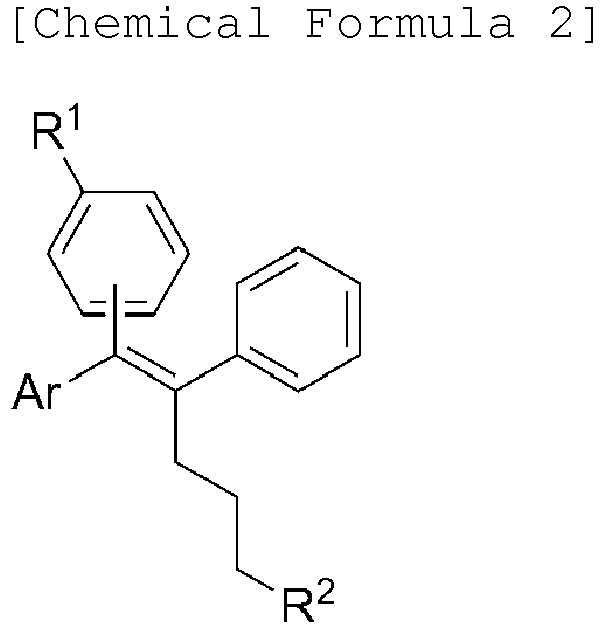


- The arylethene derivative, or the prodrug, solvate, stereoisomer, or pharmaceutically acceptable salt thereof, of claim 1, whereinR1 is (C3-C10)heterocycloalkyl, (C3-C10)heteroaryl,-O-(CH2)m-R11, -(CH2)m-R12, -NH-(CH2)m-R13, -NHCO-(CH2)n-R14, or -SiR16R17-(CH2)m-R15;R11 to R15 are independently of one another (C3-C10)heterocycloalkyl;R16 and R17 are independently of each other (Cl-C10)alkyl;m is an integer of 1 to 3;n is an integer of 0 or 1;Ar is (C6-C12)aryl or (C3-C12)heteroaryl, in which the aryl or heteroaryl of Ar may be further substituted by one or more selected from the group consisting of hydroxy, halogen, (C1-C10)alkyl, halo(C1-C10)alkyl, (C1-C10)alkoxy, nitro, cyano, amino, (C1-C10)alkylsulfonylamino, (C3-C10)cycloalkylsulfonylamino, di((Cl-C10)alkylsulfonyl)amino, (C1-C10)alkylcarbonyloxy, (C1-C10)alkylcarbonylamino, guanidino, (C1-C10)alkylsulfonyl, (C1-C10)alkylsulfonyloxy, halo(C1-C10)alkylsulfonyloxy, and (C3-C10)cycloalkylsulfonyloxy;R2 is hydroxy, fluoro, (C1-C10)alkylcarbonyloxy, or (C1-C10)alkylsulfonyloxy; andthe heterocycloalkyl or heteroaryl of R1 and the heterocycloalkyl of R11 to R15 may be further substituted by one or more selected from the group consisting of (Cl-C10)alkyl, (C3-C10)cycloalkyl, (C2-C10)alkenyl, amidino, (C1-C10)alkoxycarbonyl, hydroxy(C1-C10)alkyl, and di(C1-C10)alkylamino(C1-C10)alkyl.
- The arylethene derivative, or the prodrug, solvate, stereoisomer, or pharmaceutically acceptable salt thereof, of claim 3, wherein R1 is (C3-C10)heterocycloalkyl or -O-(CH2)m-R11; R11 is (C3-C10)heterocycloalkyl; m is an integer of 1 to 3; and the heterocycloalkyl of R1 and R11 may be further substituted by one or more selected from the group consisting of (C1-C10)alkyl, (C3-C10)cycloalkyl, (C2-C10)alkenyl, amidino, (C1-C10)alkoxycarbonyl, hydroxy(C1-C10)alkyl, and di(C1-C10)alkylamino(C1-C10)alkyl.
- The arylethene derivative, or the prodrug, solvate, stereoisomer, or pharmaceutically acceptable salt thereof, of claim 1, wherein the heterocycloalkyl of R1 and R11 to R15 is independently of each other selected from the following structures:


- The arylethene derivative, or the prodrug, solvate, stereoisomer, or pharmaceutically acceptable salt thereof, of claim 2, wherein the arylethene derivative is represented by the following Chemical Formula 6:
 R1 is (C3-C10)heterocycloalkyl or -O-(CH2)m-R11;R11 is (C3-C10)heterocycloalkyl;m is an integer of 1 to 3;the heterocycloalkyl of R1 and R11 may be further substituted by one or more selected from the group consisting of (C1-C10)alkyl, (C3-C10)cycloalkyl, (C2-C10)alkenyl, amidino, (C1-C10)alkoxycarbonyl, hydroxy(C1-C10)alkyl, and di(C1-C20)alkylamino(C1-C20)alkyl;Ar is (C6-C12)aryl or (C3-C12)heteroaryl, in which the aryl or heteroaryl of Ar may be further substituted by one or more selected from the group consisting of hydroxy, halogen, (C1-C10)alkyl, halo(C1-C10)alkyl, (C1-C10)alkoxy, nitro, cyano, amino, (C1-C10)alkylsulfonylamino, (C3-C10)cycloalkylsulfonylamino, di((Cl-C10)alkylsulfonyl)amino, (C1-C10)alkylcarbonyloxy, (Cl-C10)alkylcarbonylamino, guanidino, (C1-C10)alkylsulfonyl, (C1-C10)alkylsulfonyloxy, halo(C1-C10)alkylsulfonyloxy, and (C3-C10)cycloalkylsulfonyloxy; andR2 is hydroxy, fluoro, (C1-C10)alkylcarbonyloxy, or (C1-C10)alkylsulfonyloxy.
 - The arylethene derivative, or the prodrug, solvate, stereoisomer, or pharmaceutically acceptable salt thereof, of claim 6, wherein R2 is hydroxy; and R1 is heterocycloalkyl selected from the following structures:
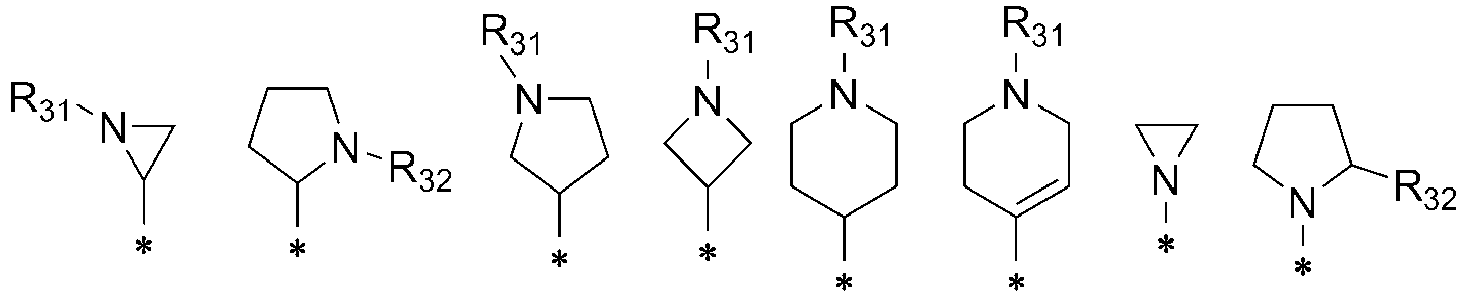

- The arylethene derivative, or the prodrug, solvate, stereoisomer, or pharmaceutically acceptable salt thereof, of claim 6, wherein R2 is hydroxy; R1 is -O-(CH2)m-R11; m is an integer of 1 or 2; and R11 is heterocycloalkyl selected from the following structures:


- The arylethene derivative, or the prodrug, solvate, stereoisomer, or pharmaceutically acceptable salt thereof, of claim 2, wherein the arylethene derivative is selected from the following structures:


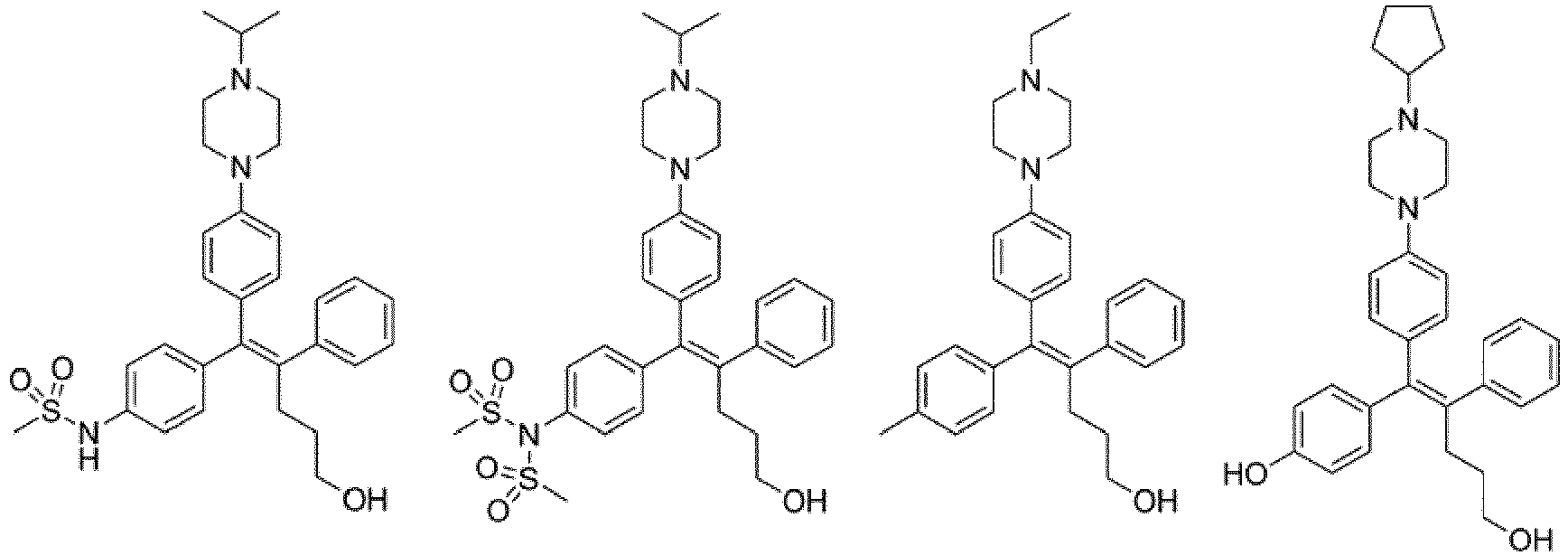


- The arylethene derivative, or the prodrug, solvate, stereoisomer, or pharmaceutically acceptable salt thereof, of claim 6, wherein the arylethene derivative is selected from the following structures:


Applications Claiming Priority (2)
| Application Number | Priority Date | Filing Date | Title |
|---|---|---|---|
| KR1020160080124A KR101819639B1 (en) | 2016-06-27 | 2016-06-27 | Novel aryl ethene derivatives and pharmaceutical composition containing the same as an active ingredient |
| PCT/KR2016/010364 WO2018004065A1 (en) | 2016-06-27 | 2016-09-13 | Novel aryl ethane derivative and pharmaceutical composition containing same as active ingredient |
Publications (3)
| Publication Number | Publication Date |
|---|---|
| EP3480186A1 true EP3480186A1 (en) | 2019-05-08 |
| EP3480186A4 EP3480186A4 (en) | 2020-03-11 |
| EP3480186B1 EP3480186B1 (en) | 2022-06-15 |
Family
ID=60786977
Family Applications (1)
| Application Number | Title | Priority Date | Filing Date |
|---|---|---|---|
| EP16907430.9A Active EP3480186B1 (en) | 2016-06-27 | 2016-09-13 | Novel aryl ethene derivative and pharmaceutical composition containing the same as active ingredient |
Country Status (6)
| Country | Link |
|---|---|
| US (1) | US10934303B2 (en) |
| EP (1) | EP3480186B1 (en) |
| KR (1) | KR101819639B1 (en) |
| CN (1) | CN109415313B (en) |
| ES (1) | ES2925102T3 (en) |
| WO (1) | WO2018004065A1 (en) |
Families Citing this family (10)
| Publication number | Priority date | Publication date | Assignee | Title |
|---|---|---|---|---|
| KR20220029719A (en) * | 2019-07-04 | 2022-03-08 | 리드 파마 홀딩 비.브이. | Estrogen-related receptor alpha modulators |
| CA3159428C (en) * | 2019-11-26 | 2024-05-28 | Keun Gyu Park | Use of composition for enhancing anticancer effect, comprising err.gamma. inhibitor as active ingredient |
| US11413270B2 (en) * | 2020-06-22 | 2022-08-16 | Novmetapharma Co., Ltd. | Method for the treatment of pancreatitis |
| US12496309B2 (en) | 2020-06-22 | 2025-12-16 | Novmetapharma Co., Ltd. | Method for treatment of pancreatitis |
| CN116113409B (en) | 2020-08-04 | 2026-02-03 | 诺麦塔制药有限公司 | Methods of treatment for cytokine release syndrome |
| KR102694118B1 (en) | 2021-11-22 | 2024-08-12 | 주식회사 노브메타파마 | Process for Preparing Aryl Ethene Compound |
| KR102754374B1 (en) * | 2021-12-01 | 2025-01-21 | 경북대학교 산학협력단 | Pharmaceutical composition for prevention or treatment of vascular smooth muscle cell hyper-proliferative disease |
| KR102729791B1 (en) * | 2022-04-13 | 2024-11-14 | 재단법인 대구경북첨단의료산업진흥재단 | Composition for treating inflammatory bowel disease comprising an arylethene derivative as an active ingredient |
| KR20250019775A (en) * | 2022-06-02 | 2025-02-11 | 주식회사 노브메타파마 | Compositions and methods for treating cancer |
| WO2024196053A1 (en) * | 2023-03-17 | 2024-09-26 | 재단법인 대구경북첨단의료산업진흥재단 | Estrogen-related receptor gamma inhibitor, and composition for combination therapy with anticancer drug |
Family Cites Families (5)
| Publication number | Priority date | Publication date | Assignee | Title |
|---|---|---|---|---|
| GB2126576B (en) * | 1982-06-25 | 1985-06-19 | Farmos Group Limited | Alkane and alkene derivatives |
| FI77839C (en) * | 1982-05-27 | 1989-05-10 | Farmos Oy | FOERFARANDE FOER FRAMSTAELLNING AV NYA THERAPEUTIC EFFECTIVE TRIPHENYLALKAN- OCH ALKENDERIVAT. |
| TW593256B (en) * | 1999-11-16 | 2004-06-21 | Hormos Medical Oy Ltd | Triphenylalkene derivatives and their use as selective estrogen receptor modulators |
| EP1951250A4 (en) * | 2005-11-22 | 2009-12-16 | Smithkline Beecham Corp | CHEMICAL COMPOUNDS |
| KR101579008B1 (en) * | 2013-09-25 | 2015-12-22 | 경북대학교 산학협력단 | Pharmaceutical compositions for the prevention or treatment of retinopathy, including ERR-y inhibitors, and uses thereof |
-
2016
- 2016-06-27 KR KR1020160080124A patent/KR101819639B1/en active Active
- 2016-09-13 WO PCT/KR2016/010364 patent/WO2018004065A1/en not_active Ceased
- 2016-09-13 EP EP16907430.9A patent/EP3480186B1/en active Active
- 2016-09-13 ES ES16907430T patent/ES2925102T3/en active Active
- 2016-09-13 CN CN201680087228.6A patent/CN109415313B/en active Active
- 2016-09-13 US US16/313,351 patent/US10934303B2/en active Active
Also Published As
| Publication number | Publication date |
|---|---|
| US10934303B2 (en) | 2021-03-02 |
| EP3480186A4 (en) | 2020-03-11 |
| EP3480186B1 (en) | 2022-06-15 |
| CN109415313B (en) | 2022-08-26 |
| KR101819639B1 (en) | 2018-01-17 |
| US20190161490A1 (en) | 2019-05-30 |
| KR20180001240A (en) | 2018-01-04 |
| ES2925102T3 (en) | 2022-10-13 |
| CN109415313A (en) | 2019-03-01 |
| WO2018004065A1 (en) | 2018-01-04 |
Similar Documents
| Publication | Publication Date | Title |
|---|---|---|
| EP3480186B1 (en) | Novel aryl ethene derivative and pharmaceutical composition containing the same as active ingredient | |
| CN106163516B (en) | Isoindoline compositions and methods of treating neurodegenerative diseases | |
| JP2021531256A (en) | Pyridazine compound that inhibits NaV1.8 | |
| US20210094925A1 (en) | Bicyclic heteroaryl derivatives and preparation and uses thereof | |
| TW201726637A (en) | Hydroxyalkylamine- and hydroxycycloalkylamine-substituted diamine-arylsulfonamide compounds with selective activity in voltage-gated sodium channels | |
| JP2021514963A (en) | Triazine derivatives for the treatment of neurotrophin-related diseases | |
| US11285226B2 (en) | Aryl ethene derivative and pharmaceutical composition containing same as active ingredient | |
| TW201100400A (en) | Piperazine compound capable of inhibiting prostaglandin d synthase | |
| RU2448093C2 (en) | Pyridine derivatives for treating metabolic disorders associated with insulin resistance or hyperglycaemia | |
| CN104337812B (en) | Substituted heteroaryl compound and its application method and purposes | |
| EP3814335B1 (en) | 4-substituted phenyl-1,3,5-triazine derivatives as modulators of trk receptors | |
| TW200902019A (en) | Dicyclic heterocyclic compound | |
| BR112020019284A2 (en) | AGENT TO INHIBIT INCREASE IN THE INTRANEURONAL CALCIUM CONCENTRATION | |
| TW200523249A (en) | Novel heteroaryl derivative | |
| EP3544610A1 (en) | Treatment of autism spectrum disorders, obsessive-compulsive disorder and anxiety disorders | |
| KR101835133B1 (en) | Novel aryl ethene derivatives and pharmaceutical composition containing the same as an active ingredient | |
| JP5694959B2 (en) | 3-Benzofuranyl-indol-2-one derivatives substituted in the 3-position, their preparation and therapeutic use | |
| JP5694958B2 (en) | Substituted 3-benzofuranyl-indol-2-one-3-acetamidopiperazine derivatives, their preparation, and their therapeutic use | |
| CN112703187A (en) | 4-substituted phenyl-1, 3, 5-triazine derivatives as modulators of TRK receptors | |
| KR20180001405A (en) | Novel aryl ethene derivatives and pharmaceutical composition containing the same as an active ingredient | |
| TW201326158A (en) | Piperidinyl-substituted ureas as GPR119 modulators | |
| JP2007511552A (en) | Anti-diabetic compounds including benzofuran and benzothiophene derivatives | |
| WO2025232878A1 (en) | Substituted phenyl-containing amine compound, and preparation method therefor and use thereof | |
| KR20260022307A (en) | Inhibitor of TREK (TWIK-related K+ channel) channel function | |
| JPWO2014050084A1 (en) | Novel phenylacetamide compound and pharmaceutical containing the same |
Legal Events
| Date | Code | Title | Description |
|---|---|---|---|
| STAA | Information on the status of an ep patent application or granted ep patent |
Free format text: STATUS: THE INTERNATIONAL PUBLICATION HAS BEEN MADE |
|
| PUAI | Public reference made under article 153(3) epc to a published international application that has entered the european phase |
Free format text: ORIGINAL CODE: 0009012 |
|
| STAA | Information on the status of an ep patent application or granted ep patent |
Free format text: STATUS: REQUEST FOR EXAMINATION WAS MADE |
|
| 17P | Request for examination filed |
Effective date: 20190125 |
|
| AK | Designated contracting states |
Kind code of ref document: A1 Designated state(s): AL AT BE BG CH CY CZ DE DK EE ES FI FR GB GR HR HU IE IS IT LI LT LU LV MC MK MT NL NO PL PT RO RS SE SI SK SM TR |
|
| AX | Request for extension of the european patent |
Extension state: BA ME |
|
| DAV | Request for validation of the european patent (deleted) | ||
| DAX | Request for extension of the european patent (deleted) | ||
| A4 | Supplementary search report drawn up and despatched |
Effective date: 20200211 |
|
| RAP1 | Party data changed (applicant data changed or rights of an application transferred) |
Owner name: KYUNGPOOK NATIONAL UNIVERSITY HOSPITAL Owner name: KYUNGPOOK NATIONAL UNIVERSITY INDUSTRY-ACADEMIC COOPERATION FOUNDATION Owner name: DAEGU-GYEONGBUK MEDICAL INNOVATION FOUNDATION |
|
| REG | Reference to a national code |
Ref country code: DE Ref legal event code: R079 Ref document number: 602016072924 Country of ref document: DE Free format text: PREVIOUS MAIN CLASS: C07D0203080000 Ipc: C07D0205040000 |
|
| GRAP | Despatch of communication of intention to grant a patent |
Free format text: ORIGINAL CODE: EPIDOSNIGR1 |
|
| RIC1 | Information provided on ipc code assigned before grant |
Ipc: A61P 35/00 20060101ALI20211025BHEP Ipc: C07D 203/08 20060101ALI20211025BHEP Ipc: C07D 487/10 20060101ALI20211025BHEP Ipc: C07D 487/04 20060101ALI20211025BHEP Ipc: C07D 405/06 20060101ALI20211025BHEP Ipc: C07D 401/04 20060101ALI20211025BHEP Ipc: C07D 295/08 20060101ALI20211025BHEP Ipc: C07D 249/06 20060101ALI20211025BHEP Ipc: C07D 209/54 20060101ALI20211025BHEP Ipc: C07D 209/52 20060101ALI20211025BHEP Ipc: C07D 207/06 20060101ALI20211025BHEP Ipc: C07D 265/28 20060101ALI20211025BHEP Ipc: C07D 205/04 20060101AFI20211025BHEP |
|
| STAA | Information on the status of an ep patent application or granted ep patent |
Free format text: STATUS: GRANT OF PATENT IS INTENDED |
|
| INTG | Intention to grant announced |
Effective date: 20211202 |
|
| RAP1 | Party data changed (applicant data changed or rights of an application transferred) |
Owner name: NOVMETAHEALTH CO., LTD. |
|
| GRAS | Grant fee paid |
Free format text: ORIGINAL CODE: EPIDOSNIGR3 |
|
| GRAA | (expected) grant |
Free format text: ORIGINAL CODE: 0009210 |
|
| STAA | Information on the status of an ep patent application or granted ep patent |
Free format text: STATUS: THE PATENT HAS BEEN GRANTED |
|
| AK | Designated contracting states |
Kind code of ref document: B1 Designated state(s): AL AT BE BG CH CY CZ DE DK EE ES FI FR GB GR HR HU IE IS IT LI LT LU LV MC MK MT NL NO PL PT RO RS SE SI SK SM TR |
|
| RAP1 | Party data changed (applicant data changed or rights of an application transferred) |
Owner name: NOVMETAPHARMA CO., LTD. |
|
| REG | Reference to a national code |
Ref country code: CH Ref legal event code: EP Ref country code: GB Ref legal event code: FG4D |
|
| REG | Reference to a national code |
Ref country code: IE Ref legal event code: FG4D |
|
| REG | Reference to a national code |
Ref country code: DE Ref legal event code: R096 Ref document number: 602016072924 Country of ref document: DE |
|
| REG | Reference to a national code |
Ref country code: AT Ref legal event code: REF Ref document number: 1498328 Country of ref document: AT Kind code of ref document: T Effective date: 20220715 |
|
| REG | Reference to a national code |
Ref country code: LT Ref legal event code: MG9D |
|
| REG | Reference to a national code |
Ref country code: ES Ref legal event code: FG2A Ref document number: 2925102 Country of ref document: ES Kind code of ref document: T3 Effective date: 20221013 |
|
| REG | Reference to a national code |
Ref country code: NL Ref legal event code: MP Effective date: 20220615 |
|
| PG25 | Lapsed in a contracting state [announced via postgrant information from national office to epo] |
Ref country code: SE Free format text: LAPSE BECAUSE OF FAILURE TO SUBMIT A TRANSLATION OF THE DESCRIPTION OR TO PAY THE FEE WITHIN THE PRESCRIBED TIME-LIMIT Effective date: 20220615 Ref country code: NO Free format text: LAPSE BECAUSE OF FAILURE TO SUBMIT A TRANSLATION OF THE DESCRIPTION OR TO PAY THE FEE WITHIN THE PRESCRIBED TIME-LIMIT Effective date: 20220915 Ref country code: LT Free format text: LAPSE BECAUSE OF FAILURE TO SUBMIT A TRANSLATION OF THE DESCRIPTION OR TO PAY THE FEE WITHIN THE PRESCRIBED TIME-LIMIT Effective date: 20220615 Ref country code: HR Free format text: LAPSE BECAUSE OF FAILURE TO SUBMIT A TRANSLATION OF THE DESCRIPTION OR TO PAY THE FEE WITHIN THE PRESCRIBED TIME-LIMIT Effective date: 20220615 Ref country code: GR Free format text: LAPSE BECAUSE OF FAILURE TO SUBMIT A TRANSLATION OF THE DESCRIPTION OR TO PAY THE FEE WITHIN THE PRESCRIBED TIME-LIMIT Effective date: 20220916 Ref country code: FI Free format text: LAPSE BECAUSE OF FAILURE TO SUBMIT A TRANSLATION OF THE DESCRIPTION OR TO PAY THE FEE WITHIN THE PRESCRIBED TIME-LIMIT Effective date: 20220615 Ref country code: BG Free format text: LAPSE BECAUSE OF FAILURE TO SUBMIT A TRANSLATION OF THE DESCRIPTION OR TO PAY THE FEE WITHIN THE PRESCRIBED TIME-LIMIT Effective date: 20220915 |
|
| REG | Reference to a national code |
Ref country code: AT Ref legal event code: MK05 Ref document number: 1498328 Country of ref document: AT Kind code of ref document: T Effective date: 20220615 |
|
| PG25 | Lapsed in a contracting state [announced via postgrant information from national office to epo] |
Ref country code: RS Free format text: LAPSE BECAUSE OF FAILURE TO SUBMIT A TRANSLATION OF THE DESCRIPTION OR TO PAY THE FEE WITHIN THE PRESCRIBED TIME-LIMIT Effective date: 20220615 Ref country code: LV Free format text: LAPSE BECAUSE OF FAILURE TO SUBMIT A TRANSLATION OF THE DESCRIPTION OR TO PAY THE FEE WITHIN THE PRESCRIBED TIME-LIMIT Effective date: 20220615 |
|
| PG25 | Lapsed in a contracting state [announced via postgrant information from national office to epo] |
Ref country code: NL Free format text: LAPSE BECAUSE OF FAILURE TO SUBMIT A TRANSLATION OF THE DESCRIPTION OR TO PAY THE FEE WITHIN THE PRESCRIBED TIME-LIMIT Effective date: 20220615 |
|
| PG25 | Lapsed in a contracting state [announced via postgrant information from national office to epo] |
Ref country code: SM Free format text: LAPSE BECAUSE OF FAILURE TO SUBMIT A TRANSLATION OF THE DESCRIPTION OR TO PAY THE FEE WITHIN THE PRESCRIBED TIME-LIMIT Effective date: 20220615 Ref country code: SK Free format text: LAPSE BECAUSE OF FAILURE TO SUBMIT A TRANSLATION OF THE DESCRIPTION OR TO PAY THE FEE WITHIN THE PRESCRIBED TIME-LIMIT Effective date: 20220615 Ref country code: RO Free format text: LAPSE BECAUSE OF FAILURE TO SUBMIT A TRANSLATION OF THE DESCRIPTION OR TO PAY THE FEE WITHIN THE PRESCRIBED TIME-LIMIT Effective date: 20220615 Ref country code: PT Free format text: LAPSE BECAUSE OF FAILURE TO SUBMIT A TRANSLATION OF THE DESCRIPTION OR TO PAY THE FEE WITHIN THE PRESCRIBED TIME-LIMIT Effective date: 20221017 Ref country code: EE Free format text: LAPSE BECAUSE OF FAILURE TO SUBMIT A TRANSLATION OF THE DESCRIPTION OR TO PAY THE FEE WITHIN THE PRESCRIBED TIME-LIMIT Effective date: 20220615 Ref country code: CZ Free format text: LAPSE BECAUSE OF FAILURE TO SUBMIT A TRANSLATION OF THE DESCRIPTION OR TO PAY THE FEE WITHIN THE PRESCRIBED TIME-LIMIT Effective date: 20220615 Ref country code: AT Free format text: LAPSE BECAUSE OF FAILURE TO SUBMIT A TRANSLATION OF THE DESCRIPTION OR TO PAY THE FEE WITHIN THE PRESCRIBED TIME-LIMIT Effective date: 20220615 |
|
| PG25 | Lapsed in a contracting state [announced via postgrant information from national office to epo] |
Ref country code: PL Free format text: LAPSE BECAUSE OF FAILURE TO SUBMIT A TRANSLATION OF THE DESCRIPTION OR TO PAY THE FEE WITHIN THE PRESCRIBED TIME-LIMIT Effective date: 20220615 Ref country code: IS Free format text: LAPSE BECAUSE OF FAILURE TO SUBMIT A TRANSLATION OF THE DESCRIPTION OR TO PAY THE FEE WITHIN THE PRESCRIBED TIME-LIMIT Effective date: 20221015 |
|
| REG | Reference to a national code |
Ref country code: DE Ref legal event code: R097 Ref document number: 602016072924 Country of ref document: DE |
|
| PG25 | Lapsed in a contracting state [announced via postgrant information from national office to epo] |
Ref country code: AL Free format text: LAPSE BECAUSE OF FAILURE TO SUBMIT A TRANSLATION OF THE DESCRIPTION OR TO PAY THE FEE WITHIN THE PRESCRIBED TIME-LIMIT Effective date: 20220615 |
|
| PLBE | No opposition filed within time limit |
Free format text: ORIGINAL CODE: 0009261 |
|
| STAA | Information on the status of an ep patent application or granted ep patent |
Free format text: STATUS: NO OPPOSITION FILED WITHIN TIME LIMIT |
|
| PG25 | Lapsed in a contracting state [announced via postgrant information from national office to epo] |
Ref country code: MC Free format text: LAPSE BECAUSE OF FAILURE TO SUBMIT A TRANSLATION OF THE DESCRIPTION OR TO PAY THE FEE WITHIN THE PRESCRIBED TIME-LIMIT Effective date: 20220615 Ref country code: DK Free format text: LAPSE BECAUSE OF FAILURE TO SUBMIT A TRANSLATION OF THE DESCRIPTION OR TO PAY THE FEE WITHIN THE PRESCRIBED TIME-LIMIT Effective date: 20220615 |
|
| 26N | No opposition filed |
Effective date: 20230316 |
|
| REG | Reference to a national code |
Ref country code: BE Ref legal event code: MM Effective date: 20220930 |
|
| PG25 | Lapsed in a contracting state [announced via postgrant information from national office to epo] |
Ref country code: SI Free format text: LAPSE BECAUSE OF FAILURE TO SUBMIT A TRANSLATION OF THE DESCRIPTION OR TO PAY THE FEE WITHIN THE PRESCRIBED TIME-LIMIT Effective date: 20220615 |
|
| PG25 | Lapsed in a contracting state [announced via postgrant information from national office to epo] |
Ref country code: LU Free format text: LAPSE BECAUSE OF NON-PAYMENT OF DUE FEES Effective date: 20220913 |
|
| P01 | Opt-out of the competence of the unified patent court (upc) registered |
Effective date: 20230606 |
|
| PG25 | Lapsed in a contracting state [announced via postgrant information from national office to epo] |
Ref country code: IE Free format text: LAPSE BECAUSE OF NON-PAYMENT OF DUE FEES Effective date: 20220913 |
|
| PG25 | Lapsed in a contracting state [announced via postgrant information from national office to epo] |
Ref country code: BE Free format text: LAPSE BECAUSE OF NON-PAYMENT OF DUE FEES Effective date: 20220930 |
|
| PG25 | Lapsed in a contracting state [announced via postgrant information from national office to epo] |
Ref country code: HU Free format text: LAPSE BECAUSE OF FAILURE TO SUBMIT A TRANSLATION OF THE DESCRIPTION OR TO PAY THE FEE WITHIN THE PRESCRIBED TIME-LIMIT; INVALID AB INITIO Effective date: 20160913 |
|
| PG25 | Lapsed in a contracting state [announced via postgrant information from national office to epo] |
Ref country code: CY Free format text: LAPSE BECAUSE OF FAILURE TO SUBMIT A TRANSLATION OF THE DESCRIPTION OR TO PAY THE FEE WITHIN THE PRESCRIBED TIME-LIMIT Effective date: 20220615 |
|
| PG25 | Lapsed in a contracting state [announced via postgrant information from national office to epo] |
Ref country code: MK Free format text: LAPSE BECAUSE OF FAILURE TO SUBMIT A TRANSLATION OF THE DESCRIPTION OR TO PAY THE FEE WITHIN THE PRESCRIBED TIME-LIMIT Effective date: 20220615 |
|
| PG25 | Lapsed in a contracting state [announced via postgrant information from national office to epo] |
Ref country code: TR Free format text: LAPSE BECAUSE OF FAILURE TO SUBMIT A TRANSLATION OF THE DESCRIPTION OR TO PAY THE FEE WITHIN THE PRESCRIBED TIME-LIMIT Effective date: 20220615 |
|
| PG25 | Lapsed in a contracting state [announced via postgrant information from national office to epo] |
Ref country code: MT Free format text: LAPSE BECAUSE OF FAILURE TO SUBMIT A TRANSLATION OF THE DESCRIPTION OR TO PAY THE FEE WITHIN THE PRESCRIBED TIME-LIMIT Effective date: 20220615 |
|
| PG25 | Lapsed in a contracting state [announced via postgrant information from national office to epo] |
Ref country code: BG Free format text: LAPSE BECAUSE OF FAILURE TO SUBMIT A TRANSLATION OF THE DESCRIPTION OR TO PAY THE FEE WITHIN THE PRESCRIBED TIME-LIMIT Effective date: 20220615 |
|
| PG25 | Lapsed in a contracting state [announced via postgrant information from national office to epo] |
Ref country code: BG Free format text: LAPSE BECAUSE OF FAILURE TO SUBMIT A TRANSLATION OF THE DESCRIPTION OR TO PAY THE FEE WITHIN THE PRESCRIBED TIME-LIMIT Effective date: 20220615 |
|
| REG | Reference to a national code |
Ref country code: CH Ref legal event code: U11 Free format text: ST27 STATUS EVENT CODE: U-0-0-U10-U11 (AS PROVIDED BY THE NATIONAL OFFICE) Effective date: 20251001 |
|
| PGFP | Annual fee paid to national office [announced via postgrant information from national office to epo] |
Ref country code: DE Payment date: 20250820 Year of fee payment: 10 |
|
| PGFP | Annual fee paid to national office [announced via postgrant information from national office to epo] |
Ref country code: IT Payment date: 20250822 Year of fee payment: 10 |
|
| PGFP | Annual fee paid to national office [announced via postgrant information from national office to epo] |
Ref country code: GB Payment date: 20250820 Year of fee payment: 10 |
|
| PGFP | Annual fee paid to national office [announced via postgrant information from national office to epo] |
Ref country code: FR Payment date: 20250821 Year of fee payment: 10 |
|
| PGFP | Annual fee paid to national office [announced via postgrant information from national office to epo] |
Ref country code: CH Payment date: 20251001 Year of fee payment: 10 |
|
| PGFP | Annual fee paid to national office [announced via postgrant information from national office to epo] |
Ref country code: ES Payment date: 20251007 Year of fee payment: 10 |