EP3479764A1 - Biosensor configuraton which can detect at least two physiological features simultaneously with only two contact positions in mobile device - Google Patents
Biosensor configuraton which can detect at least two physiological features simultaneously with only two contact positions in mobile device Download PDFInfo
- Publication number
- EP3479764A1 EP3479764A1 EP18201871.3A EP18201871A EP3479764A1 EP 3479764 A1 EP3479764 A1 EP 3479764A1 EP 18201871 A EP18201871 A EP 18201871A EP 3479764 A1 EP3479764 A1 EP 3479764A1
- Authority
- EP
- European Patent Office
- Prior art keywords
- electrode set
- electronic device
- optical sensor
- physiological
- signal
- Prior art date
- Legal status (The legal status is an assumption and is not a legal conclusion. Google has not performed a legal analysis and makes no representation as to the accuracy of the status listed.)
- Withdrawn
Links
Images




Classifications
-
- A—HUMAN NECESSITIES
- A61—MEDICAL OR VETERINARY SCIENCE; HYGIENE
- A61B—DIAGNOSIS; SURGERY; IDENTIFICATION
- A61B5/00—Measuring for diagnostic purposes; Identification of persons
- A61B5/02—Detecting, measuring or recording for evaluating the cardiovascular system, e.g. pulse, heart rate, blood pressure or blood flow
- A61B5/021—Measuring pressure in heart or blood vessels
- A61B5/02108—Measuring pressure in heart or blood vessels from analysis of pulse wave characteristics
-
- A—HUMAN NECESSITIES
- A61—MEDICAL OR VETERINARY SCIENCE; HYGIENE
- A61B—DIAGNOSIS; SURGERY; IDENTIFICATION
- A61B5/00—Measuring for diagnostic purposes; Identification of persons
- A61B5/0002—Remote monitoring of patients using telemetry, e.g. transmission of vital signals via a communication network
- A61B5/0004—Remote monitoring of patients using telemetry, e.g. transmission of vital signals via a communication network characterised by the type of physiological signal transmitted
- A61B5/0006—ECG or EEG signals
-
- A—HUMAN NECESSITIES
- A61—MEDICAL OR VETERINARY SCIENCE; HYGIENE
- A61B—DIAGNOSIS; SURGERY; IDENTIFICATION
- A61B5/00—Measuring for diagnostic purposes; Identification of persons
- A61B5/02—Detecting, measuring or recording for evaluating the cardiovascular system, e.g. pulse, heart rate, blood pressure or blood flow
-
- A—HUMAN NECESSITIES
- A61—MEDICAL OR VETERINARY SCIENCE; HYGIENE
- A61B—DIAGNOSIS; SURGERY; IDENTIFICATION
- A61B5/00—Measuring for diagnostic purposes; Identification of persons
- A61B5/02—Detecting, measuring or recording for evaluating the cardiovascular system, e.g. pulse, heart rate, blood pressure or blood flow
- A61B5/0205—Simultaneously evaluating both cardiovascular conditions and different types of body conditions, e.g. heart and respiratory condition
- A61B5/02055—Simultaneously evaluating both cardiovascular condition and temperature
-
- A—HUMAN NECESSITIES
- A61—MEDICAL OR VETERINARY SCIENCE; HYGIENE
- A61B—DIAGNOSIS; SURGERY; IDENTIFICATION
- A61B5/00—Measuring for diagnostic purposes; Identification of persons
- A61B5/02—Detecting, measuring or recording for evaluating the cardiovascular system, e.g. pulse, heart rate, blood pressure or blood flow
- A61B5/024—Measuring pulse rate or heart rate
-
- A—HUMAN NECESSITIES
- A61—MEDICAL OR VETERINARY SCIENCE; HYGIENE
- A61B—DIAGNOSIS; SURGERY; IDENTIFICATION
- A61B5/00—Measuring for diagnostic purposes; Identification of persons
- A61B5/02—Detecting, measuring or recording for evaluating the cardiovascular system, e.g. pulse, heart rate, blood pressure or blood flow
- A61B5/024—Measuring pulse rate or heart rate
- A61B5/02416—Measuring pulse rate or heart rate using photoplethysmograph signals, e.g. generated by infrared radiation
- A61B5/02427—Details of sensor
-
- A—HUMAN NECESSITIES
- A61—MEDICAL OR VETERINARY SCIENCE; HYGIENE
- A61B—DIAGNOSIS; SURGERY; IDENTIFICATION
- A61B5/00—Measuring for diagnostic purposes; Identification of persons
- A61B5/02—Detecting, measuring or recording for evaluating the cardiovascular system, e.g. pulse, heart rate, blood pressure or blood flow
- A61B5/024—Measuring pulse rate or heart rate
- A61B5/02438—Measuring pulse rate or heart rate with portable devices, e.g. worn by the patient
-
- A—HUMAN NECESSITIES
- A61—MEDICAL OR VETERINARY SCIENCE; HYGIENE
- A61B—DIAGNOSIS; SURGERY; IDENTIFICATION
- A61B5/00—Measuring for diagnostic purposes; Identification of persons
- A61B5/02—Detecting, measuring or recording for evaluating the cardiovascular system, e.g. pulse, heart rate, blood pressure or blood flow
- A61B5/024—Measuring pulse rate or heart rate
- A61B5/0245—Measuring pulse rate or heart rate by using sensing means generating electric signals, i.e. ECG signals
-
- A—HUMAN NECESSITIES
- A61—MEDICAL OR VETERINARY SCIENCE; HYGIENE
- A61B—DIAGNOSIS; SURGERY; IDENTIFICATION
- A61B5/00—Measuring for diagnostic purposes; Identification of persons
- A61B5/05—Detecting, measuring or recording for diagnosis by means of electric currents or magnetic fields; Measuring using microwaves or radio waves
- A61B5/053—Measuring electrical impedance or conductance of a portion of the body
- A61B5/0537—Measuring body composition by impedance, e.g. tissue hydration or fat content
-
- A—HUMAN NECESSITIES
- A61—MEDICAL OR VETERINARY SCIENCE; HYGIENE
- A61B—DIAGNOSIS; SURGERY; IDENTIFICATION
- A61B5/00—Measuring for diagnostic purposes; Identification of persons
- A61B5/145—Measuring characteristics of blood in vivo, e.g. gas concentration or pH-value ; Measuring characteristics of body fluids or tissues, e.g. interstitial fluid or cerebral tissue
- A61B5/14507—Measuring characteristics of blood in vivo, e.g. gas concentration or pH-value ; Measuring characteristics of body fluids or tissues, e.g. interstitial fluid or cerebral tissue specially adapted for measuring characteristics of body fluids other than blood
- A61B5/1451—Measuring characteristics of blood in vivo, e.g. gas concentration or pH-value ; Measuring characteristics of body fluids or tissues, e.g. interstitial fluid or cerebral tissue specially adapted for measuring characteristics of body fluids other than blood for interstitial fluid
-
- A—HUMAN NECESSITIES
- A61—MEDICAL OR VETERINARY SCIENCE; HYGIENE
- A61B—DIAGNOSIS; SURGERY; IDENTIFICATION
- A61B5/00—Measuring for diagnostic purposes; Identification of persons
- A61B5/145—Measuring characteristics of blood in vivo, e.g. gas concentration or pH-value ; Measuring characteristics of body fluids or tissues, e.g. interstitial fluid or cerebral tissue
- A61B5/14542—Measuring characteristics of blood in vivo, e.g. gas concentration or pH-value ; Measuring characteristics of body fluids or tissues, e.g. interstitial fluid or cerebral tissue for measuring blood gases
-
- A—HUMAN NECESSITIES
- A61—MEDICAL OR VETERINARY SCIENCE; HYGIENE
- A61B—DIAGNOSIS; SURGERY; IDENTIFICATION
- A61B5/00—Measuring for diagnostic purposes; Identification of persons
- A61B5/145—Measuring characteristics of blood in vivo, e.g. gas concentration or pH-value ; Measuring characteristics of body fluids or tissues, e.g. interstitial fluid or cerebral tissue
- A61B5/14546—Measuring characteristics of blood in vivo, e.g. gas concentration or pH-value ; Measuring characteristics of body fluids or tissues, e.g. interstitial fluid or cerebral tissue for measuring analytes not otherwise provided for, e.g. ions, cytochromes
-
- A—HUMAN NECESSITIES
- A61—MEDICAL OR VETERINARY SCIENCE; HYGIENE
- A61B—DIAGNOSIS; SURGERY; IDENTIFICATION
- A61B5/00—Measuring for diagnostic purposes; Identification of persons
- A61B5/145—Measuring characteristics of blood in vivo, e.g. gas concentration or pH-value ; Measuring characteristics of body fluids or tissues, e.g. interstitial fluid or cerebral tissue
- A61B5/1455—Measuring characteristics of blood in vivo, e.g. gas concentration or pH-value ; Measuring characteristics of body fluids or tissues, e.g. interstitial fluid or cerebral tissue using optical sensors, e.g. spectral photometrical oximeters
- A61B5/14551—Measuring characteristics of blood in vivo, e.g. gas concentration or pH-value ; Measuring characteristics of body fluids or tissues, e.g. interstitial fluid or cerebral tissue using optical sensors, e.g. spectral photometrical oximeters for measuring blood gases
- A61B5/14552—Details of sensors specially adapted therefor
-
- A—HUMAN NECESSITIES
- A61—MEDICAL OR VETERINARY SCIENCE; HYGIENE
- A61B—DIAGNOSIS; SURGERY; IDENTIFICATION
- A61B5/00—Measuring for diagnostic purposes; Identification of persons
- A61B5/24—Detecting, measuring or recording bioelectric or biomagnetic signals of the body or parts thereof
- A61B5/25—Bioelectric electrodes therefor
- A61B5/251—Means for maintaining electrode contact with the body
-
- A—HUMAN NECESSITIES
- A61—MEDICAL OR VETERINARY SCIENCE; HYGIENE
- A61B—DIAGNOSIS; SURGERY; IDENTIFICATION
- A61B5/00—Measuring for diagnostic purposes; Identification of persons
- A61B5/24—Detecting, measuring or recording bioelectric or biomagnetic signals of the body or parts thereof
- A61B5/25—Bioelectric electrodes therefor
- A61B5/279—Bioelectric electrodes therefor specially adapted for particular uses
- A61B5/28—Bioelectric electrodes therefor specially adapted for particular uses for electrocardiography [ECG]
-
- A—HUMAN NECESSITIES
- A61—MEDICAL OR VETERINARY SCIENCE; HYGIENE
- A61B—DIAGNOSIS; SURGERY; IDENTIFICATION
- A61B5/00—Measuring for diagnostic purposes; Identification of persons
- A61B5/24—Detecting, measuring or recording bioelectric or biomagnetic signals of the body or parts thereof
- A61B5/316—Modalities, i.e. specific diagnostic methods
- A61B5/318—Heart-related electrical modalities, e.g. electrocardiography [ECG]
-
- A—HUMAN NECESSITIES
- A61—MEDICAL OR VETERINARY SCIENCE; HYGIENE
- A61B—DIAGNOSIS; SURGERY; IDENTIFICATION
- A61B5/00—Measuring for diagnostic purposes; Identification of persons
- A61B5/24—Detecting, measuring or recording bioelectric or biomagnetic signals of the body or parts thereof
- A61B5/316—Modalities, i.e. specific diagnostic methods
- A61B5/318—Heart-related electrical modalities, e.g. electrocardiography [ECG]
- A61B5/332—Portable devices specially adapted therefor
-
- A—HUMAN NECESSITIES
- A61—MEDICAL OR VETERINARY SCIENCE; HYGIENE
- A61B—DIAGNOSIS; SURGERY; IDENTIFICATION
- A61B5/00—Measuring for diagnostic purposes; Identification of persons
- A61B5/68—Arrangements of detecting, measuring or recording means, e.g. sensors, in relation to patient
- A61B5/6887—Arrangements of detecting, measuring or recording means, e.g. sensors, in relation to patient mounted on external non-worn devices, e.g. non-medical devices
- A61B5/6898—Portable consumer electronic devices, e.g. music players, telephones, tablet computers
-
- A—HUMAN NECESSITIES
- A61—MEDICAL OR VETERINARY SCIENCE; HYGIENE
- A61B—DIAGNOSIS; SURGERY; IDENTIFICATION
- A61B2560/00—Constructional details of operational features of apparatus; Accessories for medical measuring apparatus
- A61B2560/04—Constructional details of apparatus
- A61B2560/0462—Apparatus with built-in sensors
- A61B2560/0468—Built-in electrodes
-
- A—HUMAN NECESSITIES
- A61—MEDICAL OR VETERINARY SCIENCE; HYGIENE
- A61B—DIAGNOSIS; SURGERY; IDENTIFICATION
- A61B2562/00—Details of sensors; Constructional details of sensor housings or probes; Accessories for sensors
- A61B2562/06—Arrangements of multiple sensors of different types
-
- A—HUMAN NECESSITIES
- A61—MEDICAL OR VETERINARY SCIENCE; HYGIENE
- A61B—DIAGNOSIS; SURGERY; IDENTIFICATION
- A61B5/00—Measuring for diagnostic purposes; Identification of persons
- A61B5/01—Measuring temperature of body parts ; Diagnostic temperature sensing, e.g. for malignant or inflamed tissue
-
- A—HUMAN NECESSITIES
- A61—MEDICAL OR VETERINARY SCIENCE; HYGIENE
- A61B—DIAGNOSIS; SURGERY; IDENTIFICATION
- A61B5/00—Measuring for diagnostic purposes; Identification of persons
- A61B5/145—Measuring characteristics of blood in vivo, e.g. gas concentration or pH-value ; Measuring characteristics of body fluids or tissues, e.g. interstitial fluid or cerebral tissue
- A61B5/14532—Measuring characteristics of blood in vivo, e.g. gas concentration or pH-value ; Measuring characteristics of body fluids or tissues, e.g. interstitial fluid or cerebral tissue for measuring glucose, e.g. by tissue impedance measurement
-
- A—HUMAN NECESSITIES
- A61—MEDICAL OR VETERINARY SCIENCE; HYGIENE
- A61B—DIAGNOSIS; SURGERY; IDENTIFICATION
- A61B5/00—Measuring for diagnostic purposes; Identification of persons
- A61B5/145—Measuring characteristics of blood in vivo, e.g. gas concentration or pH-value ; Measuring characteristics of body fluids or tissues, e.g. interstitial fluid or cerebral tissue
- A61B5/14535—Measuring characteristics of blood in vivo, e.g. gas concentration or pH-value ; Measuring characteristics of body fluids or tissues, e.g. interstitial fluid or cerebral tissue for measuring haematocrit
-
- A—HUMAN NECESSITIES
- A61—MEDICAL OR VETERINARY SCIENCE; HYGIENE
- A61B—DIAGNOSIS; SURGERY; IDENTIFICATION
- A61B5/00—Measuring for diagnostic purposes; Identification of persons
- A61B5/145—Measuring characteristics of blood in vivo, e.g. gas concentration or pH-value ; Measuring characteristics of body fluids or tissues, e.g. interstitial fluid or cerebral tissue
- A61B5/14539—Measuring characteristics of blood in vivo, e.g. gas concentration or pH-value ; Measuring characteristics of body fluids or tissues, e.g. interstitial fluid or cerebral tissue for measuring pH
-
- A—HUMAN NECESSITIES
- A61—MEDICAL OR VETERINARY SCIENCE; HYGIENE
- A61B—DIAGNOSIS; SURGERY; IDENTIFICATION
- A61B5/00—Measuring for diagnostic purposes; Identification of persons
- A61B5/145—Measuring characteristics of blood in vivo, e.g. gas concentration or pH-value ; Measuring characteristics of body fluids or tissues, e.g. interstitial fluid or cerebral tissue
- A61B5/1455—Measuring characteristics of blood in vivo, e.g. gas concentration or pH-value ; Measuring characteristics of body fluids or tissues, e.g. interstitial fluid or cerebral tissue using optical sensors, e.g. spectral photometrical oximeters
Definitions
- biosensors become popular for providing physiological information at all time for the reference to the user.
- the current designs of the biosensors may be inconvenient to the user.
- an electronic device is includes a first electrode set and a second electrode set with an optical sensor.
- the first electrode set is arranged to contact a first position of a human body
- the second electrode set with the optical sensor is arranged contact a second position of the human body, to receive a plurality of physiological signals to determine at least two physiological features simultaneously.
- a method for generating at least two cardiac health statues comprises the steps of: using a first electrode set to receive a first physiological signal corresponding a first position of a human body; using a second electrode set to receive a second physiological signal corresponding a second position of the human body; using an optical sensor to receive a third physiological signal; and determining the at least two physiological features according to the first physiological signal, the second physiological signal and the third physiological signal.
- FIG. 1 is a diagram illustrating an electronic device 100 according to a first embodiment of the present invention.
- the electronic device 100 comprises a first electrode set 110, a second electrode set 120 with an optical sensor 126 and a processor 130.
- the first electrode set 110 comprises two electrodes
- the second electrode set 120 comprises two electrodes 122 and 124, where each of the electrodes 122 and 124 is U-shaped
- the optical sensor 126 is within the second electrodes 122 and 124.
- the electronic device 100 is a smartphone
- the first electrode set 110 is positioned at a side of the smartphone
- the second electrode set 120 with the optical sensor 126 is positioned at a back case of the smartphone.
- the shape of the electrodes 122 and 124 shown in FIG. 1 is not a limitation of the present invention. As long as the electrodes 122 and 124 are at a peripheral zone of the optical sensor 126, the electrodes 122 and 124 may have any other shape, e.g., an 0-shaped electrode.
- the first electrode set 110 is arranged to contact a first position of a human body (e.g. right half body or right hand), and the second electrode set 120 with the optical sensor 126 is arranged to contact a second position of the human body (e.g. left half body or left hand), to receive a plurality of physiological signals to determine at least two physiological features simultaneously.
- a user may put a left index finger on the second electrode set 120 with the optical sensor 126, and put a right thumb on the first electrode set 110, where the right hand holds on the left hand to avoid flexing the muscles.
- the first electrode set 110 and the electrodes 122 and 124 are arranged to provide physiological signals
- the processor 130 generates an electrocardiography (ECG) signal (e.g. lead I ECG signal) according to the physiological signals from the first electrode set 110 and the electrodes 122 and 124
- ECG electrocardiography
- the optical sensor 126 may comprise at least one light emitter and a photodiode, the light emitter generates light (e.g. visible or infrared light) to the left index finger of the user, and the photodiode receives the reflected light to generate a physiological signal, and the processor 130 generates an photoplethysmography (PPG) signal according to the physiological signal from the optical sensor 126.
- ECG electrocardiography
- PPG photoplethysmography
- the at least two physiological features such as cardiac health statues can be obtained simultaneously, and the physiological features can be displayed on a screen of the electronic device 100 for the reference to the user.
- the at least two physiological features may comprise cardiac health statues like ECG, heart rate, blood oxygen saturation (Sp02), blood pressure, or other information like bio-impedance, body fat, body muscle, temperature, blood content analysis, or tissue content concentrations (St02, collagen, melanin, water...etc).
- the user can simply put two fingers on the first electrode set 110 and the second electrode set 120 with the optical sensor 126, respectively, to obtain at least two physiological features simultaneously. Therefore, the biosensor configuration is convenient to the user to obtain many cardiac health statues or other body related information.
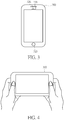
- FIG. 3 is a diagram illustrating an electronic device 300 according to a second embodiment of the present invention.
- the electronic device 300 comprises a first electrode set 310, a second electrode set 320 with an optical sensor 326.
- the electronic device 300 is a smartphone
- the first electrode set 310 is built with a home button of the smartphone
- the second electrode set 320 with the optical sensor 326 is positioned at a face of the smartphone.
- the designs of the second electrode set 320 with the optical sensor 326 is similar to the second electrode set 120 with the optical sensor 126 shown in FIG. 1 , that is the electrodes of the second electrode set 320 may be at a peripheral zone of the optical sensor 326, and the second electrode set 320 may have any suitable shape such as the U-shaped or O-shaped electrode.
- the first electrode set 310 is arranged to contact a first position of a human body
- the second electrode set 320 with the optical sensor 326 is arranged contact a second position of the human body, to receive a plurality of physiological signals to determine at least two physiological features (e.g. cardiac health statues) simultaneously.
- a user may put a left thumb on the second electrode set 320 with the optical sensor 326, and put a right thumb on the first electrode set 310.
- the first electrode set 310 and the second electrode set 320 are arranged to provide physiological signals
- a processor within the electronic device 300 generates the ECG signal (e.g.
- the optical sensor 326 may comprise an light emitter and a photodiode, the light emitter generates light to the left thumb of the user, and the photodiode receives the reflected light to generate a physiological signal, and the processor within the electronic device 300 generates the PPG signal according to the physiological signal from the optical sensor.
- the ECG signal and the PPG signal e.g. analyzing the waveforms and periods of the ECG signal and the PPG signal, the at least two physiological features can be obtained simultaneously, and the physiological features can be displayed on a screen of the electronic device 300 for the reference to the user.
- the at least two physiological features may comprise cardiac health statues like ECG, heart rate, blood oxygen saturation (SpO2), blood pressure, or other information like bio-impedance, body fat, body muscle, temperature, blood content analysis, or tissue content concentrations (St02, collagen, melanin, water...etc).
- cardiac health statues like ECG, heart rate, blood oxygen saturation (SpO2), blood pressure, or other information like bio-impedance, body fat, body muscle, temperature, blood content analysis, or tissue content concentrations (St02, collagen, melanin, water...etc).
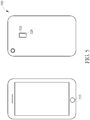
- FIG. 5 is a diagram illustrating an electronic device 500 according to a third embodiment of the present invention.
- the electronic device 500 comprises a first electrode set 510, a second electrode set 520 with an optical sensor 526.
- the electronic device 500 is a smartphone
- the first electrode set 510 is built with a home button of the smartphone
- the second electrode set 520 with the optical sensor 526 is positioned at a back case of the smartphone.
- the designs of the second electrode set 520 with the optical sensor 526 is similar to the second electrode set 120 with the optical sensor 126 shown in FIG. 1 , that is the electrodes of the second electrode set 520 may be at a peripheral zone of the optical sensor 526, and the second electrode set 520 may have any suitable shape such as have the U-shaped or O-shaped electrode.
- the first electrode set 510 is arranged to contact a first position of a human body
- the second electrode set 520 with the optical sensor 526 is arranged contact a second position of the human body, to receive a plurality of physiological signals to determine at least two physiological features simultaneously.
- a user may put the left index finger on the second electrode set 520 with the optical sensor 526, and put the right thumb on the first electrode set 510.
- the first electrode set 510 and the second electrode set 520 are arranged to provide physiological signals, and a processor (not shown) within the electronic device 500 generates the ECG signal (e.g.
- the optical sensor 526 may comprise an light emitter and a photodiode, the light emitter generates light to the left index finger of the user, and the photodiode receives the reflected light to generate a physiological signal, and the processor within the electronic device 500 generates the PPG signal according to the physiological signal from the optical sensor.
- the ECG signal and the PPG signal e.g. analyzing the waveforms and periods of the ECG signal and the PPG signal, the at least two physiological features can be obtained simultaneously, and the physiological features can be displayed on a screen of the electronic device 500 for the reference to the user.
- the at least two physiological features may comprise cardiac health statues like ECG, heart rate, blood oxygen saturation (SpO2), blood pressure, or other information like bio-impedance, body fat, body muscle, temperature, blood content analysis, or tissue content concentrations (St02, collagen, melanin, water...etc).
- cardiac health statues like ECG, heart rate, blood oxygen saturation (SpO2), blood pressure, or other information like bio-impedance, body fat, body muscle, temperature, blood content analysis, or tissue content concentrations (St02, collagen, melanin, water...etc).
- FIG. 7 is a diagram illustrating an electronic device 700 according to a fourth embodiment of the present invention.
- the electronic device 700 comprises a first electrode set 710, a second electrode set 720 with an optical sensor 726.
- the electronic device 700 is a smartphone
- the first electrode set 710 is built with a home button of the smartphone
- the second electrode set 720 with the optical sensor 726 is positioned at a face of the smartphone.
- the designs of the second electrode set 720 with the optical sensor 726 is similar to the second electrode set 120 with the optical sensor 126 shown in FIG. 1 , that is, the electrodes of the second electrode set 720 may be at a peripheral zone of the optical sensor 726, and the second electrode set 720 may have any suitable shape such as the U-shaped or O-shaped electrode.
- the first electrode set 710 is arranged to contact a first position of a human body
- the second electrode set 720 with the optical sensor 726 is arranged contact a second position of the human body, to receive a plurality of physiological signals to determine at least two physiological features simultaneously.
- a user may put the left thumb on the second electrode set 720 with the optical sensor 726, and put the right thumb on the first electrode set 710.
- the first electrode set 710 and the second electrode set 720 are arranged to provide physiological signals, and a processor (not shown) within the electronic device 700 generates the ECG signal (e.g.
- the optical sensor 726 may comprise a photodiode, and an light-emitted diode 728 built in the screen may generate light to the left thumb of the user, and the photodiode receives the reflected light to generate a physiological signal, and the processor within the electronic device 700 generates the PPG signal according to the physiological signal from the optical sensor.
- the ECG signal and the PPG signal e.g. analyzing the waveforms and periods of the ECG signal and the PPG signal, the at least two physiological features can be obtained simultaneously, and the physiological features can be displayed on a screen of the electronic device 700 for the reference to the user.
- the at least two physiological features may comprise cardiac health statues like ECG, heart rate, blood oxygen saturation (SpO2), blood pressure, or other information like bio-impedance, body fat, body muscle, temperature, blood content analysis, or tissue content concentrations (St02, collagen, melanin, water...etc).
- cardiac health statues like ECG, heart rate, blood oxygen saturation (SpO2), blood pressure, or other information like bio-impedance, body fat, body muscle, temperature, blood content analysis, or tissue content concentrations (St02, collagen, melanin, water...etc).
- FIG. 8 is a diagram illustrating an electronic device 800 according to a fifth embodiment of the present invention.
- the electronic device 800 comprises a first electrode set 810, a second electrode set 820 with an optical sensor 826.
- the electronic device 800 is a watch
- the first electrode set 810 is built in the inner side of the watch
- the optical sensor 826 is within the second electrode set 820.
- the first electrode set 810 is arranged to contact a first position of a human body
- the second electrode set 820 with the optical sensor 826 is arranged contact a second position of the human body, to receive a plurality of physiological signals to determine at least two physiological features simultaneously.
- a user may put the right index finger on the second electrode set 820 with the optical sensor 826.
- the first electrode set 810 and the second electrode set 820 are arranged to provide physiological signals, and a processor (not shown) within the electronic device 800 generates the ECG signal according to the physiological signals from the first electrode set 810 and the second electrode set 820; and the optical sensor 826 may comprise a light emitter and a photodiode, the light emitter generates light to the left index finger of the user, and the photodiode receives the reflected light to generate a physiological signal, and the processor within the electronic device 800 generates the PPG signal according to the physiological signal from the optical sensor.
- the ECG signal and the PPG signal e.g.
- the at least two physiological features can be obtained simultaneously, and the physiological features can be displayed on a screen of the electronic device 800 for the reference to the user.
- the at least two physiological features may comprise cardiac health statues like ECG, heart rate, blood oxygen saturation (Sp02), blood pressure, or other information like bio-impedance, body fat, body muscle, temperature, blood content analysis, or tissue content concentrations (St02, collagen, melanin, water...etc).
- an optical sensor is built with one electrode set so that the user can simply put two fingers (or any two body positions) on the electronic device to obtain at least two physiological features simultaneously. Therefore, the biosensor configuration is convenient to the user to obtain many physiological features.
Landscapes
- Health & Medical Sciences (AREA)
- Life Sciences & Earth Sciences (AREA)
- Physics & Mathematics (AREA)
- Engineering & Computer Science (AREA)
- Animal Behavior & Ethology (AREA)
- Veterinary Medicine (AREA)
- Biophysics (AREA)
- Pathology (AREA)
- Public Health (AREA)
- Biomedical Technology (AREA)
- Heart & Thoracic Surgery (AREA)
- Medical Informatics (AREA)
- Molecular Biology (AREA)
- Surgery (AREA)
- General Health & Medical Sciences (AREA)
- Cardiology (AREA)
- Physiology (AREA)
- Optics & Photonics (AREA)
- Signal Processing (AREA)
- Vascular Medicine (AREA)
- Multimedia (AREA)
- Computer Networks & Wireless Communication (AREA)
- Spectroscopy & Molecular Physics (AREA)
- Radiology & Medical Imaging (AREA)
- Nuclear Medicine, Radiotherapy & Molecular Imaging (AREA)
- Pulmonology (AREA)
- Measurement Of The Respiration, Hearing Ability, Form, And Blood Characteristics Of Living Organisms (AREA)
- Measuring Pulse, Heart Rate, Blood Pressure Or Blood Flow (AREA)
- Measurement And Recording Of Electrical Phenomena And Electrical Characteristics Of The Living Body (AREA)
Abstract
Description
- This application claims the priority of
US Provisional Application No. 62/579,939, filed on November 1th, 2017 - Recently, personal biosensors become popular for providing physiological information at all time for the reference to the user. However, the current designs of the biosensors may be inconvenient to the user.
- It is therefore an objective of the present invention to provide a biosensor configuration which can detect at least two physiological features simultaneously upon contacts only with a user's two body positions, to solve the above-mentioned problems.
- According to one embodiment of the present invention, an electronic device is includes a first electrode set and a second electrode set with an optical sensor. The first electrode set is arranged to contact a first position of a human body, and the second electrode set with the optical sensor is arranged contact a second position of the human body, to receive a plurality of physiological signals to determine at least two physiological features simultaneously.
- According to another embodiment of the present invention, a method for generating at least two cardiac health statues is disclosed, and the method comprises the steps of: using a first electrode set to receive a first physiological signal corresponding a first position of a human body; using a second electrode set to receive a second physiological signal corresponding a second position of the human body; using an optical sensor to receive a third physiological signal; and determining the at least two physiological features according to the first physiological signal, the second physiological signal and the third physiological signal.
- These and other objectives of the present invention will no doubt become obvious to those of ordinary skill in the art after reading the following detailed description of the preferred embodiment that is illustrated in the various figures and drawings.
-
-
FIG. 1 is a diagram illustrating an electronic device according to a first embodiment of the present invention. -
FIG. 2 shows how to use the electronic device shown inFIG. 1 according one embodiment of the present invention. -
FIG. 3 is a diagram illustrating an electronic device according to a second embodiment of the present invention. -
FIG. 4 shows how to use the electronic device shown inFIG. 3 according one embodiment of the present invention. -
FIG. 5 is a diagram illustrating an electronic device according to a third embodiment of the present invention. -
FIG. 6 shows how to use the electronic device shown inFIG. 5 according one embodiment of the present invention. -
FIG. 7 is a diagram illustrating an electronic device according to a fourth embodiment of the present invention. -
FIG. 8 is a diagram illustrating an electronic device according to a fifth embodiment of the present invention. -
FIG. 9 shows how to use the electronic device shown inFIG. 8 according one embodiment of the present invention. - Certain terms are used throughout the following description and claims to refer to particular system components. As one skilled in the art will appreciate, manufacturers may refer to a component by different names. This document does not intend to distinguish between components that differ in name but not function. In the following discussion and in the claims, the terms "including" and "comprising" are used in an open-ended fashion, and thus should be interpreted to mean "including, but not limited to ...". The terms "couple" and "couples" are intended to mean either an indirect or a direct electrical connection. Thus, if a first device couples to a second device, that connection may be through a direct electrical connection, or through an indirect electrical connection via other devices and connections.
-
FIG. 1 is a diagram illustrating anelectronic device 100 according to a first embodiment of the present invention. Theelectronic device 100 comprises afirst electrode set 110, a second electrode set 120 with anoptical sensor 126 and aprocessor 130. In this embodiment, the first electrode set 110 comprises two electrodes, the second electrode set 120 comprises twoelectrodes electrodes optical sensor 126 is within thesecond electrodes FIG. 1 , theelectronic device 100 is a smartphone, thefirst electrode set 110 is positioned at a side of the smartphone, and the second electrode set 120 with theoptical sensor 126 is positioned at a back case of the smartphone. - It is noted that the shape of the
electrodes FIG. 1 is not a limitation of the present invention. As long as theelectrodes optical sensor 126, theelectrodes - In the operations of the
electronic device 100, thefirst electrode set 110 is arranged to contact a first position of a human body (e.g. right half body or right hand), and the second electrode set 120 with theoptical sensor 126 is arranged to contact a second position of the human body (e.g. left half body or left hand), to receive a plurality of physiological signals to determine at least two physiological features simultaneously. TakingFIG. 2 as an example, a user may put a left index finger on the second electrode set 120 with theoptical sensor 126, and put a right thumb on the first electrode set 110, where the right hand holds on the left hand to avoid flexing the muscles. In the embodiment shown inFIG. 1 andFIG. 2 , the first electrode set 110 and theelectrodes processor 130 generates an electrocardiography (ECG) signal (e.g. lead I ECG signal) according to the physiological signals from the first electrode set 110 and theelectrodes optical sensor 126 may comprise at least one light emitter and a photodiode, the light emitter generates light (e.g. visible or infrared light) to the left index finger of the user, and the photodiode receives the reflected light to generate a physiological signal, and theprocessor 130 generates an photoplethysmography (PPG) signal according to the physiological signal from theoptical sensor 126. By analyzing the ECG signal and the PPG signal, e.g. analyzing the waveforms and periods of the ECG signal and the PPG signal, the at least two physiological features such as cardiac health statues can be obtained simultaneously, and the physiological features can be displayed on a screen of theelectronic device 100 for the reference to the user. For example, the at least two physiological features may comprise cardiac health statues like ECG, heart rate, blood oxygen saturation (Sp02), blood pressure, or other information like bio-impedance, body fat, body muscle, temperature, blood content analysis, or tissue content concentrations (St02, collagen, melanin, water...etc). - In the embodiment shown in
FIG. 1 and2 , the user can simply put two fingers on the first electrode set 110 and the second electrode set 120 with theoptical sensor 126, respectively, to obtain at least two physiological features simultaneously. Therefore, the biosensor configuration is convenient to the user to obtain many cardiac health statues or other body related information. -
FIG. 3 is a diagram illustrating anelectronic device 300 according to a second embodiment of the present invention. Theelectronic device 300 comprises afirst electrode set 310, a second electrode set 320 with anoptical sensor 326. In this embodiment, theelectronic device 300 is a smartphone, thefirst electrode set 310 is built with a home button of the smartphone, and the second electrode set 320 with theoptical sensor 326 is positioned at a face of the smartphone. In addition, the designs of the second electrode set 320 with theoptical sensor 326 is similar to thesecond electrode set 120 with theoptical sensor 126 shown inFIG. 1 , that is the electrodes of thesecond electrode set 320 may be at a peripheral zone of theoptical sensor 326, and thesecond electrode set 320 may have any suitable shape such as the U-shaped or O-shaped electrode. - In the operations of the
electronic device 300, thefirst electrode set 310 is arranged to contact a first position of a human body, and the second electrode set 320 with theoptical sensor 326 is arranged contact a second position of the human body, to receive a plurality of physiological signals to determine at least two physiological features (e.g. cardiac health statues) simultaneously. TakingFIG. 4 as an example, a user may put a left thumb on the second electrode set 320 with theoptical sensor 326, and put a right thumb on thefirst electrode set 310. In the embodiment shown inFIG. 3 and FIG. 4 , the first electrode set 310 and the second electrode set 320 are arranged to provide physiological signals, and a processor (not shown) within theelectronic device 300 generates the ECG signal (e.g. lead I ECG signal) according to the physiological signals from thefirst electrode set 310 and the second electrode set 320; and theoptical sensor 326 may comprise an light emitter and a photodiode, the light emitter generates light to the left thumb of the user, and the photodiode receives the reflected light to generate a physiological signal, and the processor within theelectronic device 300 generates the PPG signal according to the physiological signal from the optical sensor. By analyzing the ECG signal and the PPG signal, e.g. analyzing the waveforms and periods of the ECG signal and the PPG signal, the at least two physiological features can be obtained simultaneously, and the physiological features can be displayed on a screen of theelectronic device 300 for the reference to the user. For example, the at least two physiological features may comprise cardiac health statues like ECG, heart rate, blood oxygen saturation (SpO2), blood pressure, or other information like bio-impedance, body fat, body muscle, temperature, blood content analysis, or tissue content concentrations (St02, collagen, melanin, water...etc). -
FIG. 5 is a diagram illustrating anelectronic device 500 according to a third embodiment of the present invention. Theelectronic device 500 comprises afirst electrode set 510, a second electrode set 520 with anoptical sensor 526. In this embodiment, theelectronic device 500 is a smartphone, thefirst electrode set 510 is built with a home button of the smartphone, and thesecond electrode set 520 with theoptical sensor 526 is positioned at a back case of the smartphone. In addition, the designs of the second electrode set 520 with theoptical sensor 526 is similar to thesecond electrode set 120 with theoptical sensor 126 shown inFIG. 1 , that is the electrodes of thesecond electrode set 520 may be at a peripheral zone of theoptical sensor 526, and thesecond electrode set 520 may have any suitable shape such as have the U-shaped or O-shaped electrode. - In the operations of the
electronic device 500, thefirst electrode set 510 is arranged to contact a first position of a human body, and the second electrode set 520 with theoptical sensor 526 is arranged contact a second position of the human body, to receive a plurality of physiological signals to determine at least two physiological features simultaneously. TakingFIG. 6 as an example, a user may put the left index finger on the second electrode set 520 with theoptical sensor 526, and put the right thumb on the first electrode set 510. In the embodiment shown inFIG. 5 andFIG. 6 , the first electrode set 510 and thesecond electrode set 520 are arranged to provide physiological signals, and a processor (not shown) within theelectronic device 500 generates the ECG signal (e.g. lead I ECG signal) according to the physiological signals from the first electrode set 510 and thesecond electrode set 520; and theoptical sensor 526 may comprise an light emitter and a photodiode, the light emitter generates light to the left index finger of the user, and the photodiode receives the reflected light to generate a physiological signal, and the processor within theelectronic device 500 generates the PPG signal according to the physiological signal from the optical sensor. By analyzing the ECG signal and the PPG signal, e.g. analyzing the waveforms and periods of the ECG signal and the PPG signal, the at least two physiological features can be obtained simultaneously, and the physiological features can be displayed on a screen of theelectronic device 500 for the reference to the user. For example, the at least two physiological features may comprise cardiac health statues like ECG, heart rate, blood oxygen saturation (SpO2), blood pressure, or other information like bio-impedance, body fat, body muscle, temperature, blood content analysis, or tissue content concentrations (St02, collagen, melanin, water...etc). -
FIG. 7 is a diagram illustrating anelectronic device 700 according to a fourth embodiment of the present invention. Theelectronic device 700 comprises afirst electrode set 710, a second electrode set 720 with anoptical sensor 726. In this embodiment, theelectronic device 700 is a smartphone, thefirst electrode set 710 is built with a home button of the smartphone, and the second electrode set 720 with theoptical sensor 726 is positioned at a face of the smartphone. In addition, the designs of the second electrode set 720 with theoptical sensor 726 is similar to thesecond electrode set 120 with theoptical sensor 126 shown inFIG. 1 , that is, the electrodes of thesecond electrode set 720 may be at a peripheral zone of theoptical sensor 726, and thesecond electrode set 720 may have any suitable shape such as the U-shaped or O-shaped electrode. - In the operations of the
electronic device 700, thefirst electrode set 710 is arranged to contact a first position of a human body, and the second electrode set 720 with theoptical sensor 726 is arranged contact a second position of the human body, to receive a plurality of physiological signals to determine at least two physiological features simultaneously. Similar to the example shown inFIG. 4 , a user may put the left thumb on the second electrode set 720 with theoptical sensor 726, and put the right thumb on the first electrode set 710. In the embodiment shown inFIG. 7 , the first electrode set 710 and thesecond electrode set 720 are arranged to provide physiological signals, and a processor (not shown) within theelectronic device 700 generates the ECG signal (e.g. lead I ECG signal) according to the physiological signals from the first electrode set 710 and the second electrode set 720; and theoptical sensor 726 may comprise a photodiode, and an light-emitteddiode 728 built in the screen may generate light to the left thumb of the user, and the photodiode receives the reflected light to generate a physiological signal, and the processor within theelectronic device 700 generates the PPG signal according to the physiological signal from the optical sensor. By analyzing the ECG signal and the PPG signal, e.g. analyzing the waveforms and periods of the ECG signal and the PPG signal, the at least two physiological features can be obtained simultaneously, and the physiological features can be displayed on a screen of theelectronic device 700 for the reference to the user. For example, the at least two physiological features may comprise cardiac health statues like ECG, heart rate, blood oxygen saturation (SpO2), blood pressure, or other information like bio-impedance, body fat, body muscle, temperature, blood content analysis, or tissue content concentrations (St02, collagen, melanin, water...etc). -
FIG. 8 is a diagram illustrating anelectronic device 800 according to a fifth embodiment of the present invention. Theelectronic device 800 comprises a first electrode set 810, a second electrode set 820 with anoptical sensor 826. In this embodiment, theelectronic device 800 is a watch, the first electrode set 810 is built in the inner side of the watch, and theoptical sensor 826 is within thesecond electrode set 820. - In the operations of the
electronic device 800, the first electrode set 810 is arranged to contact a first position of a human body, and the second electrode set 820 with theoptical sensor 826 is arranged contact a second position of the human body, to receive a plurality of physiological signals to determine at least two physiological features simultaneously. TakingFIG. 9 as an example, a user may put the right index finger on the second electrode set 820 with theoptical sensor 826. In the embodiment shown inFIG. 8 andFIG. 9 , the first electrode set 810 and the second electrode set 820 are arranged to provide physiological signals, and a processor (not shown) within theelectronic device 800 generates the ECG signal according to the physiological signals from the first electrode set 810 and the second electrode set 820; and theoptical sensor 826 may comprise a light emitter and a photodiode, the light emitter generates light to the left index finger of the user, and the photodiode receives the reflected light to generate a physiological signal, and the processor within theelectronic device 800 generates the PPG signal according to the physiological signal from the optical sensor. By analyzing the ECG signal and the PPG signal, e.g. analyzing the waveforms and periods of the ECG signal and the PPG signal, the at least two physiological features can be obtained simultaneously, and the physiological features can be displayed on a screen of theelectronic device 800 for the reference to the user. For example, the at least two physiological features may comprise cardiac health statues like ECG, heart rate, blood oxygen saturation (Sp02), blood pressure, or other information like bio-impedance, body fat, body muscle, temperature, blood content analysis, or tissue content concentrations (St02, collagen, melanin, water...etc). - Briefly summarized, in the biosensor configuration of the present invention, an optical sensor is built with one electrode set so that the user can simply put two fingers (or any two body positions) on the electronic device to obtain at least two physiological features simultaneously. Therefore, the biosensor configuration is convenient to the user to obtain many physiological features.
- Those skilled in the art will readily observe that numerous modifications and alterations of the device and method may be made while retaining the teachings of the invention. Accordingly, the above disclosure should be construed as limited only by the metes and bounds of the appended claims.
Claims (15)
- An electronic device (100, 300, 500, 700, 800), comprising:a first electrode set (110, 310, 510, 710, 810) comprising at least one electrode;a second electrode set (120, 320, 520, 720, 820) with an optical sensor, wherein the second electrode set comprises at least one electrode ;wherein the first electrode set (110, 310, 510, 710, 810) is arranged to contact a first position of a human body, and the second electrode set with the optical sensor is arranged contact a second position of the human body, to receive a plurality of physiological signals.
- The electronic device (100, 300, 500, 700, 800) of claim 1, wherein the second electrode set (120, 320, 520, 720, 820) is at a peripheral zone of the optical sensor.
- The electronic device (100, 300, 500, 700, 800) of claim 2, wherein the optical sensor is within the second electrode.
- The electronic device (100, 300, 500, 700, 800) of claim 1, wherein the first electrode set (110, 310, 510, 710, 810) is arranged to contact one of a right half body and a left half body of the human body, and the second electrode set (120, 320, 520, 720, 820) with the optical sensor is arranged to contact the other one of the right half body and the left half body of the human body.
- The electronic device (100, 300, 500, 700, 800) of claim 4, wherein the first electrode set (110, 310, 510, 710, 810) is arranged to contact one of a right hand and a left hand, and the second electrode set (120, 320, 520, 720, 820) with the optical sensor is arranged to contact the other one of the right hand and the left hand.
- The electronic device (100, 300, 500, 700, 800) of claim 5, wherein the first electrode set (110, 310, 510, 710, 810) is arranged to contact a finger or thumb of one of the right hand and the left hand, and the second electrode set (120, 320, 520, 720, 820) with the optical sensor is arranged to contact a finger or thumb of the other one of the right hand and the left hand.
- The electronic device (100, 300, 500, 700, 800) of claim 4, further comprising:
a processor, coupled to the first electrode set (110, 310, 510, 710, 810) and the second electrode set (120, 320, 520, 720, 820) with the optical sensor, for generating an electrocardiography, ECG, signal according to the physiological signals from the first electrode set (110, 310, 510, 710, 810) and the second electrode set (120, 320, 520, 720, 820), and generating an photoplethysmography, PPG, signal according to the physiological signal from the optical sensor. - The electronic device (100, 300, 500, 700, 800) of claim 7, wherein the processor analyzing the ECG signal and the PPG signal to obtain at least two physiological features simultaneously.
- The electronic device (100, 300, 500, 700, 800) of claim 8, wherein the at least two physiological feature comprises ECG, heart rate, blood oxygen saturation, Sp02, blood pressure, bio-impedance, body fat, body muscle, temperature, blood content analysis, or tissue content concentration.
- The electronic device (100, 300, 500, 700, 800) of claim 1, wherein the electronic device is a smartphone, a pad, a tablet, a watch, an accessary, a wearable device or a patch.
- The electronic device (100, 300, 500, 700, 800) of claim 1, wherein the electronic device (100, 300, 500, 700, 800) is a smartphone, (i) the first electrode set (110, 310, 510, 710, 810) is positioned at a side of the smartphone, and the second electrode set (120, 320, 520, 720, 820) with the optical sensor are positioned at a back case of the electronic device, or (ii) the first electrode set (110, 310, 510, 710, 810) is positioned at a face of the smartphone, and the second electrode set (120, 320, 520, 720, 820) with the optical sensor are positioned at a back case of the electronic device, or (iii) the electronic device (100, 300, 500, 700, 800) is a smartphone, and the first electrode set (110, 310, 510, 710, 810) and the second electrode set (120, 320, 520, 720, 820) with the optical sensor are positioned at a face of the smartphone, or (iv) the first electrode set (110, 310, 510, 710, 810) and the second electrode set (120, 320, 520, 720, 820) with the optical sensor are positioned at a back case of the smartphone.
- A method for generating at least two bio-signal or physiological feature, comprising:using a first electrode set (110, 310, 510, 710, 810) to receive a first physiological signal corresponding a first position of a human body;using a second electrode set (120, 320, 520, 720, 820) to receive a second physiological signal corresponding a second position of the human body;using an optical sensor to receive a third physiological signal; anddetermining the at least two physiological features according to the first physiological signal, the second physiological signal and the third physiological signal.
- The method of claim 12, wherein the first position is one of a right half body and a left half body of the human body, and the second position is the other one of the right half body and the left half body of the human body.
- The method of claim 12, wherein the step of determining the at least two physiological features according to the first physiological signal, the second physiological signal and the third physiological signal comprises:generating an electrocardiography, ECG, signal according to the first physiological signal and the second physiological signal;generating an photoplethysmography, PPG, signal according to the third physiological signal; andanalyzing the ECG signal and the PPG signal to obtain the at least two physiological features simultaneously
- The electronic device of claim 14, wherein the at least two physiological features comprises ECG, heart rate, blood oxygen saturation, Sp02, blood pressure, body fat, body muscle, temperature, blood content analysis, or tissue content concentration bio-impedance.
Applications Claiming Priority (2)
| Application Number | Priority Date | Filing Date | Title |
|---|---|---|---|
| US201762579939P | 2017-11-01 | 2017-11-01 | |
| US16/150,282 US20190125187A1 (en) | 2017-11-01 | 2018-10-03 | Biosensor configuration which can detect at least two physiological features simultaneously with only two contact positions in mobile device |
Publications (1)
| Publication Number | Publication Date |
|---|---|
| EP3479764A1 true EP3479764A1 (en) | 2019-05-08 |
Family
ID=64183840
Family Applications (1)
| Application Number | Title | Priority Date | Filing Date |
|---|---|---|---|
| EP18201871.3A Withdrawn EP3479764A1 (en) | 2017-11-01 | 2018-10-22 | Biosensor configuraton which can detect at least two physiological features simultaneously with only two contact positions in mobile device |
Country Status (4)
| Country | Link |
|---|---|
| US (1) | US20190125187A1 (en) |
| EP (1) | EP3479764A1 (en) |
| CN (1) | CN109998498A (en) |
| TW (1) | TW201929767A (en) |
Cited By (1)
| Publication number | Priority date | Publication date | Assignee | Title |
|---|---|---|---|---|
| IT202000010822A1 (en) * | 2020-05-13 | 2021-11-13 | Biondi Eng S A | Single touch surface device for capturing biometric data, diagnostic system and method making use of the device, in particular for diagnosing viral infection |
Families Citing this family (3)
| Publication number | Priority date | Publication date | Assignee | Title |
|---|---|---|---|---|
| EP3895603A1 (en) * | 2020-04-14 | 2021-10-20 | Biosensors Beyond Borders Ltd | Monitoring device |
| KR102879101B1 (en) | 2020-06-15 | 2025-10-29 | 삼성전자주식회사 | Foldable electronic device and, and method for estimating bio-information using the device |
| KR102755686B1 (en) * | 2021-12-24 | 2025-01-21 | 주식회사 클레어오디언스 | Personal smart stethoscope and operating method using multimodal physiological sensor |
Citations (4)
| Publication number | Priority date | Publication date | Assignee | Title |
|---|---|---|---|---|
| US20120071734A1 (en) * | 2009-04-30 | 2012-03-22 | Murata Manufacturing Co., Ltd. | Biosensor Device |
| US20160213331A1 (en) * | 2015-01-27 | 2016-07-28 | Huinno, Co., Ltd. | Mobile terminal having functions of measuring biometric signals and estimating and monitoring blood pressure in real time based on measured biometric signals |
| US20170027461A1 (en) * | 2015-06-04 | 2017-02-02 | Huinno Co., Ltd. | Biosignal measurement with electrodes |
| US20170281012A1 (en) * | 2016-03-29 | 2017-10-05 | Intel Corporation | Opportunistic measurements and processing of user's context |
Family Cites Families (11)
| Publication number | Priority date | Publication date | Assignee | Title |
|---|---|---|---|---|
| CN100434034C (en) * | 2005-11-29 | 2008-11-19 | 周常安 | Multiple physiological monitoring device |
| CN100376204C (en) * | 2006-04-25 | 2008-03-26 | 北京超思电子技术有限责任公司 | Handheld ECG |
| WO2015096003A1 (en) * | 2013-12-23 | 2015-07-02 | 深圳市倍轻松科技股份有限公司 | Dual-electrode portable detection device |
| CN103720461B (en) * | 2014-01-07 | 2016-03-02 | 北京微心百源科技发展有限公司 | Wearable type multi-parameter physiological index collector |
| US10258288B2 (en) * | 2014-03-24 | 2019-04-16 | Samsung Electronics Co., Ltd. | Confidence indicator for physiological measurements using a wearable sensor platform |
| CN203858581U (en) * | 2014-05-09 | 2014-10-01 | 敦泰科技有限公司 | Electronic equipment |
| US10178975B2 (en) * | 2015-03-19 | 2019-01-15 | Htc Corporation | Detecting system and mobile electronic apparatus, and method for detecting physiological characteristic thereof method thereof |
| KR20170001490A (en) * | 2015-06-26 | 2017-01-04 | 삼성전자주식회사 | The electronic apparatus and method for controlling function in the electronic apparatus using the bio-metric sensor |
| US20170079591A1 (en) * | 2015-09-21 | 2017-03-23 | Qualcomm Incorporated | System and method for obtaining vital measurements using a mobile device |
| US20170188864A1 (en) * | 2016-01-06 | 2017-07-06 | Healmet, Inc. | Spherical handheld biosensor array device for physiological status monitoring |
| US20170202464A1 (en) * | 2016-01-15 | 2017-07-20 | Lite-On Electronics (Guangzhou) Limited | Pulse wave velocity meter |
-
2018
- 2018-10-03 US US16/150,282 patent/US20190125187A1/en not_active Abandoned
- 2018-10-17 CN CN201811210054.5A patent/CN109998498A/en not_active Withdrawn
- 2018-10-17 TW TW107136552A patent/TW201929767A/en unknown
- 2018-10-22 EP EP18201871.3A patent/EP3479764A1/en not_active Withdrawn
Patent Citations (4)
| Publication number | Priority date | Publication date | Assignee | Title |
|---|---|---|---|---|
| US20120071734A1 (en) * | 2009-04-30 | 2012-03-22 | Murata Manufacturing Co., Ltd. | Biosensor Device |
| US20160213331A1 (en) * | 2015-01-27 | 2016-07-28 | Huinno, Co., Ltd. | Mobile terminal having functions of measuring biometric signals and estimating and monitoring blood pressure in real time based on measured biometric signals |
| US20170027461A1 (en) * | 2015-06-04 | 2017-02-02 | Huinno Co., Ltd. | Biosignal measurement with electrodes |
| US20170281012A1 (en) * | 2016-03-29 | 2017-10-05 | Intel Corporation | Opportunistic measurements and processing of user's context |
Cited By (1)
| Publication number | Priority date | Publication date | Assignee | Title |
|---|---|---|---|---|
| IT202000010822A1 (en) * | 2020-05-13 | 2021-11-13 | Biondi Eng S A | Single touch surface device for capturing biometric data, diagnostic system and method making use of the device, in particular for diagnosing viral infection |
Also Published As
| Publication number | Publication date |
|---|---|
| TW201929767A (en) | 2019-08-01 |
| US20190125187A1 (en) | 2019-05-02 |
| CN109998498A (en) | 2019-07-12 |
Similar Documents
| Publication | Publication Date | Title |
|---|---|---|
| JP7047032B2 (en) | Systems and methods for obtaining physical function measurements using mobile devices | |
| US12622649B2 (en) | Personal healthcare device | |
| CN116548975B (en) | Electrocardiogram (ECG) measurement equipment | |
| EP3340881B1 (en) | Integrated electronics for photoplethysmography and electrocardiography | |
| US20140051941A1 (en) | Obtaining physiological measurements using a portable device | |
| JP2022040338A (en) | Systems and methods for obtaining physical function measurements using mobile devices | |
| CN106999056B (en) | Apparatus and method for measuring physiological properties of a subject | |
| US20170238819A1 (en) | System and method to determine blood pressure | |
| KR20200054719A (en) | Apparatus and method for detecting calibration time point of blood pressure | |
| KR102173725B1 (en) | Apparatus and Method for measuring physiological signal | |
| US20190125187A1 (en) | Biosensor configuration which can detect at least two physiological features simultaneously with only two contact positions in mobile device | |
| WO2017215409A1 (en) | Portable smart health monitoring device | |
| Mahmud et al. | SensoRing: An integrated wearable system for continuous measurement of physiological biomarkers | |
| KR102193558B1 (en) | Method, system and non-transitory computer-readable recording medium for measuring bio signal | |
| US12232854B2 (en) | Oral ECG device | |
| WO2025128252A1 (en) | System and method for acquiring an impedance cardiography (icg) signal using a wearable device | |
| Rahman et al. | Portable non-invasive cardiac health monitoring device |
Legal Events
| Date | Code | Title | Description |
|---|---|---|---|
| PUAI | Public reference made under article 153(3) epc to a published international application that has entered the european phase |
Free format text: ORIGINAL CODE: 0009012 |
|
| STAA | Information on the status of an ep patent application or granted ep patent |
Free format text: STATUS: THE APPLICATION HAS BEEN PUBLISHED |
|
| AK | Designated contracting states |
Kind code of ref document: A1 Designated state(s): AL AT BE BG CH CY CZ DE DK EE ES FI FR GB GR HR HU IE IS IT LI LT LU LV MC MK MT NL NO PL PT RO RS SE SI SK SM TR |
|
| AX | Request for extension of the european patent |
Extension state: BA ME |
|
| STAA | Information on the status of an ep patent application or granted ep patent |
Free format text: STATUS: REQUEST FOR EXAMINATION WAS MADE |
|
| 17P | Request for examination filed |
Effective date: 20191007 |
|
| RBV | Designated contracting states (corrected) |
Designated state(s): AL AT BE BG CH CY CZ DE DK EE ES FI FR GB GR HR HU IE IS IT LI LT LU LV MC MK MT NL NO PL PT RO RS SE SI SK SM TR |
|
| STAA | Information on the status of an ep patent application or granted ep patent |
Free format text: STATUS: EXAMINATION IS IN PROGRESS |
|
| 17Q | First examination report despatched |
Effective date: 20211115 |
|
| STAA | Information on the status of an ep patent application or granted ep patent |
Free format text: STATUS: THE APPLICATION HAS BEEN WITHDRAWN |
|
| 18W | Application withdrawn |
Effective date: 20211229 |