EP3479696B1 - Pyridine-based compound including isoxazoline ring, and use thereof as herbicide - Google Patents
Pyridine-based compound including isoxazoline ring, and use thereof as herbicide Download PDFInfo
- Publication number
- EP3479696B1 EP3479696B1 EP17820499.6A EP17820499A EP3479696B1 EP 3479696 B1 EP3479696 B1 EP 3479696B1 EP 17820499 A EP17820499 A EP 17820499A EP 3479696 B1 EP3479696 B1 EP 3479696B1
- Authority
- EP
- European Patent Office
- Prior art keywords
- chloro
- dihydroisoxazol
- amino
- methyl
- picolinate
- Prior art date
- Legal status (The legal status is an assumption and is not a legal conclusion. Google has not performed a legal analysis and makes no representation as to the accuracy of the status listed.)
- Active
Links
- JYTLAUZYCBKWEB-ARJAWSKDSA-N C/C=C\N=N/NC Chemical compound C/C=C\N=N/NC JYTLAUZYCBKWEB-ARJAWSKDSA-N 0.000 description 1
- OXPXLNRMJLIBOG-UHFFFAOYSA-N C=[Br]C(C1)=NOC1c(nc1C(OCc2ccc(C(F)(F)F)cc2)=O)cc(N)c1Cl Chemical compound C=[Br]C(C1)=NOC1c(nc1C(OCc2ccc(C(F)(F)F)cc2)=O)cc(N)c1Cl OXPXLNRMJLIBOG-UHFFFAOYSA-N 0.000 description 1
- VOIBODHOYFLSPB-UHFFFAOYSA-N CC(C)COC(c(nc(C(C1)ON=C1[Br]=C)cc1N)c1Cl)=O Chemical compound CC(C)COC(c(nc(C(C1)ON=C1[Br]=C)cc1N)c1Cl)=O VOIBODHOYFLSPB-UHFFFAOYSA-N 0.000 description 1
- YMPJFZAHSXUZTM-UHFFFAOYSA-N CC(C)OC(c(nc(C(C1)ON=C1Br)cc1N)c1Cl)=O Chemical compound CC(C)OC(c(nc(C(C1)ON=C1Br)cc1N)c1Cl)=O YMPJFZAHSXUZTM-UHFFFAOYSA-N 0.000 description 1
- BVEYRZPKBMKGBZ-UHFFFAOYSA-N CC(C1)(c(cc2N)nc(C(OC)=O)c2Cl)ON=C1Cl Chemical compound CC(C1)(c(cc2N)nc(C(OC)=O)c2Cl)ON=C1Cl BVEYRZPKBMKGBZ-UHFFFAOYSA-N 0.000 description 1
- YGDNGOCFKWWZRQ-UHFFFAOYSA-N CC(C1)=NOC1c(nc1C(O)=O)cc(N)c1Cl Chemical compound CC(C1)=NOC1c(nc1C(O)=O)cc(N)c1Cl YGDNGOCFKWWZRQ-UHFFFAOYSA-N 0.000 description 1
- DDVASXKXRBMWMV-UHFFFAOYSA-N COC(c(nc(C(C1)ON=C1Cl)cc1N)c1Cl)=O Chemical compound COC(c(nc(C(C1)ON=C1Cl)cc1N)c1Cl)=O DDVASXKXRBMWMV-UHFFFAOYSA-N 0.000 description 1
- PJCQARSXYIBFJC-UHFFFAOYSA-N COC(c1nc(C2ON=CC2)cc(N)c1Cl)=O Chemical compound COC(c1nc(C2ON=CC2)cc(N)c1Cl)=O PJCQARSXYIBFJC-UHFFFAOYSA-N 0.000 description 1
Classifications
-
- A—HUMAN NECESSITIES
- A01—AGRICULTURE; FORESTRY; ANIMAL HUSBANDRY; HUNTING; TRAPPING; FISHING
- A01N—PRESERVATION OF BODIES OF HUMANS OR ANIMALS OR PLANTS OR PARTS THEREOF; BIOCIDES, e.g. AS DISINFECTANTS, AS PESTICIDES OR AS HERBICIDES; PEST REPELLANTS OR ATTRACTANTS; PLANT GROWTH REGULATORS
- A01N43/00—Biocides, pest repellants or attractants, or plant growth regulators containing heterocyclic compounds
- A01N43/72—Biocides, pest repellants or attractants, or plant growth regulators containing heterocyclic compounds having rings with nitrogen atoms and oxygen or sulfur atoms as ring hetero atoms
- A01N43/80—Biocides, pest repellants or attractants, or plant growth regulators containing heterocyclic compounds having rings with nitrogen atoms and oxygen or sulfur atoms as ring hetero atoms five-membered rings with one nitrogen atom and either one oxygen atom or one sulfur atom in positions 1,2
-
- A—HUMAN NECESSITIES
- A01—AGRICULTURE; FORESTRY; ANIMAL HUSBANDRY; HUNTING; TRAPPING; FISHING
- A01N—PRESERVATION OF BODIES OF HUMANS OR ANIMALS OR PLANTS OR PARTS THEREOF; BIOCIDES, e.g. AS DISINFECTANTS, AS PESTICIDES OR AS HERBICIDES; PEST REPELLANTS OR ATTRACTANTS; PLANT GROWTH REGULATORS
- A01N25/00—Biocides, pest repellants or attractants, or plant growth regulators, characterised by their forms, or by their non-active ingredients or by their methods of application, e.g. seed treatment or sequential application; Substances for reducing the noxious effect of the active ingredients to organisms other than pests
- A01N25/02—Biocides, pest repellants or attractants, or plant growth regulators, characterised by their forms, or by their non-active ingredients or by their methods of application, e.g. seed treatment or sequential application; Substances for reducing the noxious effect of the active ingredients to organisms other than pests containing liquids as carriers, diluents or solvents
-
- A—HUMAN NECESSITIES
- A01—AGRICULTURE; FORESTRY; ANIMAL HUSBANDRY; HUNTING; TRAPPING; FISHING
- A01N—PRESERVATION OF BODIES OF HUMANS OR ANIMALS OR PLANTS OR PARTS THEREOF; BIOCIDES, e.g. AS DISINFECTANTS, AS PESTICIDES OR AS HERBICIDES; PEST REPELLANTS OR ATTRACTANTS; PLANT GROWTH REGULATORS
- A01N25/00—Biocides, pest repellants or attractants, or plant growth regulators, characterised by their forms, or by their non-active ingredients or by their methods of application, e.g. seed treatment or sequential application; Substances for reducing the noxious effect of the active ingredients to organisms other than pests
- A01N25/02—Biocides, pest repellants or attractants, or plant growth regulators, characterised by their forms, or by their non-active ingredients or by their methods of application, e.g. seed treatment or sequential application; Substances for reducing the noxious effect of the active ingredients to organisms other than pests containing liquids as carriers, diluents or solvents
- A01N25/04—Dispersions, emulsions, suspoemulsions, suspension concentrates or gels
-
- A—HUMAN NECESSITIES
- A01—AGRICULTURE; FORESTRY; ANIMAL HUSBANDRY; HUNTING; TRAPPING; FISHING
- A01N—PRESERVATION OF BODIES OF HUMANS OR ANIMALS OR PLANTS OR PARTS THEREOF; BIOCIDES, e.g. AS DISINFECTANTS, AS PESTICIDES OR AS HERBICIDES; PEST REPELLANTS OR ATTRACTANTS; PLANT GROWTH REGULATORS
- A01N25/00—Biocides, pest repellants or attractants, or plant growth regulators, characterised by their forms, or by their non-active ingredients or by their methods of application, e.g. seed treatment or sequential application; Substances for reducing the noxious effect of the active ingredients to organisms other than pests
- A01N25/08—Biocides, pest repellants or attractants, or plant growth regulators, characterised by their forms, or by their non-active ingredients or by their methods of application, e.g. seed treatment or sequential application; Substances for reducing the noxious effect of the active ingredients to organisms other than pests containing solids as carriers or diluents
-
- A—HUMAN NECESSITIES
- A01—AGRICULTURE; FORESTRY; ANIMAL HUSBANDRY; HUNTING; TRAPPING; FISHING
- A01N—PRESERVATION OF BODIES OF HUMANS OR ANIMALS OR PLANTS OR PARTS THEREOF; BIOCIDES, e.g. AS DISINFECTANTS, AS PESTICIDES OR AS HERBICIDES; PEST REPELLANTS OR ATTRACTANTS; PLANT GROWTH REGULATORS
- A01N25/00—Biocides, pest repellants or attractants, or plant growth regulators, characterised by their forms, or by their non-active ingredients or by their methods of application, e.g. seed treatment or sequential application; Substances for reducing the noxious effect of the active ingredients to organisms other than pests
- A01N25/12—Powders or granules
-
- A—HUMAN NECESSITIES
- A01—AGRICULTURE; FORESTRY; ANIMAL HUSBANDRY; HUNTING; TRAPPING; FISHING
- A01N—PRESERVATION OF BODIES OF HUMANS OR ANIMALS OR PLANTS OR PARTS THEREOF; BIOCIDES, e.g. AS DISINFECTANTS, AS PESTICIDES OR AS HERBICIDES; PEST REPELLANTS OR ATTRACTANTS; PLANT GROWTH REGULATORS
- A01N25/00—Biocides, pest repellants or attractants, or plant growth regulators, characterised by their forms, or by their non-active ingredients or by their methods of application, e.g. seed treatment or sequential application; Substances for reducing the noxious effect of the active ingredients to organisms other than pests
- A01N25/12—Powders or granules
- A01N25/14—Powders or granules wettable
-
- A—HUMAN NECESSITIES
- A01—AGRICULTURE; FORESTRY; ANIMAL HUSBANDRY; HUNTING; TRAPPING; FISHING
- A01N—PRESERVATION OF BODIES OF HUMANS OR ANIMALS OR PLANTS OR PARTS THEREOF; BIOCIDES, e.g. AS DISINFECTANTS, AS PESTICIDES OR AS HERBICIDES; PEST REPELLANTS OR ATTRACTANTS; PLANT GROWTH REGULATORS
- A01N25/00—Biocides, pest repellants or attractants, or plant growth regulators, characterised by their forms, or by their non-active ingredients or by their methods of application, e.g. seed treatment or sequential application; Substances for reducing the noxious effect of the active ingredients to organisms other than pests
- A01N25/30—Biocides, pest repellants or attractants, or plant growth regulators, characterised by their forms, or by their non-active ingredients or by their methods of application, e.g. seed treatment or sequential application; Substances for reducing the noxious effect of the active ingredients to organisms other than pests characterised by the surfactants
-
- A—HUMAN NECESSITIES
- A01—AGRICULTURE; FORESTRY; ANIMAL HUSBANDRY; HUNTING; TRAPPING; FISHING
- A01N—PRESERVATION OF BODIES OF HUMANS OR ANIMALS OR PLANTS OR PARTS THEREOF; BIOCIDES, e.g. AS DISINFECTANTS, AS PESTICIDES OR AS HERBICIDES; PEST REPELLANTS OR ATTRACTANTS; PLANT GROWTH REGULATORS
- A01N43/00—Biocides, pest repellants or attractants, or plant growth regulators containing heterocyclic compounds
- A01N43/34—Biocides, pest repellants or attractants, or plant growth regulators containing heterocyclic compounds having rings with one nitrogen atom as the only ring hetero atom
-
- A—HUMAN NECESSITIES
- A01—AGRICULTURE; FORESTRY; ANIMAL HUSBANDRY; HUNTING; TRAPPING; FISHING
- A01N—PRESERVATION OF BODIES OF HUMANS OR ANIMALS OR PLANTS OR PARTS THEREOF; BIOCIDES, e.g. AS DISINFECTANTS, AS PESTICIDES OR AS HERBICIDES; PEST REPELLANTS OR ATTRACTANTS; PLANT GROWTH REGULATORS
- A01N43/00—Biocides, pest repellants or attractants, or plant growth regulators containing heterocyclic compounds
- A01N43/34—Biocides, pest repellants or attractants, or plant growth regulators containing heterocyclic compounds having rings with one nitrogen atom as the only ring hetero atom
- A01N43/40—Biocides, pest repellants or attractants, or plant growth regulators containing heterocyclic compounds having rings with one nitrogen atom as the only ring hetero atom six-membered rings
-
- A—HUMAN NECESSITIES
- A01—AGRICULTURE; FORESTRY; ANIMAL HUSBANDRY; HUNTING; TRAPPING; FISHING
- A01N—PRESERVATION OF BODIES OF HUMANS OR ANIMALS OR PLANTS OR PARTS THEREOF; BIOCIDES, e.g. AS DISINFECTANTS, AS PESTICIDES OR AS HERBICIDES; PEST REPELLANTS OR ATTRACTANTS; PLANT GROWTH REGULATORS
- A01N43/00—Biocides, pest repellants or attractants, or plant growth regulators containing heterocyclic compounds
- A01N43/64—Biocides, pest repellants or attractants, or plant growth regulators containing heterocyclic compounds having rings with three nitrogen atoms as the only ring hetero atoms
- A01N43/707—1,2,3- or 1,2,4-triazines; Hydrogenated 1,2,3- or 1,2,4-triazines
-
- A—HUMAN NECESSITIES
- A01—AGRICULTURE; FORESTRY; ANIMAL HUSBANDRY; HUNTING; TRAPPING; FISHING
- A01N—PRESERVATION OF BODIES OF HUMANS OR ANIMALS OR PLANTS OR PARTS THEREOF; BIOCIDES, e.g. AS DISINFECTANTS, AS PESTICIDES OR AS HERBICIDES; PEST REPELLANTS OR ATTRACTANTS; PLANT GROWTH REGULATORS
- A01N43/00—Biocides, pest repellants or attractants, or plant growth regulators containing heterocyclic compounds
- A01N43/72—Biocides, pest repellants or attractants, or plant growth regulators containing heterocyclic compounds having rings with nitrogen atoms and oxygen or sulfur atoms as ring hetero atoms
-
- A—HUMAN NECESSITIES
- A01—AGRICULTURE; FORESTRY; ANIMAL HUSBANDRY; HUNTING; TRAPPING; FISHING
- A01P—BIOCIDAL, PEST REPELLANT, PEST ATTRACTANT OR PLANT GROWTH REGULATORY ACTIVITY OF CHEMICAL COMPOUNDS OR PREPARATIONS
- A01P13/00—Herbicides; Algicides
-
- C—CHEMISTRY; METALLURGY
- C07—ORGANIC CHEMISTRY
- C07D—HETEROCYCLIC COMPOUNDS
- C07D413/00—Heterocyclic compounds containing two or more hetero rings, at least one ring having nitrogen and oxygen atoms as the only ring hetero atoms
- C07D413/02—Heterocyclic compounds containing two or more hetero rings, at least one ring having nitrogen and oxygen atoms as the only ring hetero atoms containing two hetero rings
- C07D413/04—Heterocyclic compounds containing two or more hetero rings, at least one ring having nitrogen and oxygen atoms as the only ring hetero atoms containing two hetero rings directly linked by a ring-member-to-ring-member bond
-
- C—CHEMISTRY; METALLURGY
- C07—ORGANIC CHEMISTRY
- C07D—HETEROCYCLIC COMPOUNDS
- C07D413/00—Heterocyclic compounds containing two or more hetero rings, at least one ring having nitrogen and oxygen atoms as the only ring hetero atoms
- C07D413/02—Heterocyclic compounds containing two or more hetero rings, at least one ring having nitrogen and oxygen atoms as the only ring hetero atoms containing two hetero rings
- C07D413/06—Heterocyclic compounds containing two or more hetero rings, at least one ring having nitrogen and oxygen atoms as the only ring hetero atoms containing two hetero rings linked by a carbon chain containing only aliphatic carbon atoms
Definitions
- the present disclosure relates to a pyridine-based compound including an isoxazoline ring, which is a non-aromatic heterocycle, and use thereof as a herbicide.
- Herbicides are crop protection agents that do not damage crops, and suppress the growth of weeds or kills weeds. According to a chemical structure, herbicides are classified into amino acid herbicides, sulfonylurea herbicides, imidazolinone herbicides, triazine herbicides, acetamide herbicides, dinitroaniline herbicides, aryloxyphenoxypropionate herbicides, urea herbicides, carbamate herbicides, bipyridyl herbicides, pyridine herbicides, phenoxyacetic acid herbicides, diphenyl ether herbicides, cyclohexanedione herbicides, and the like.
- pyridine herbicides picloram, fluroxypyr, clopyralid, aminopyralid, triclopyr, and the like are used. These pyridine herbicides are used for various crops including wheat, maize, sugarcane, rice, fruits and vegetables, grasses, and the like. However, the pyridine herbicides need to be used in great amounts, production processes therefor are complicated, and the production costs are high. Accordingly, there is a need to perform researches and development continuously.
- any one compound selected from a pyridine-based compound including an isoxazoline ring represented by Formula 1 and an agrochemically acceptable salt thereof has a selectivity with respect to a cultivated crop and does not harm useful crop, such as wheat, maize, and rice, and has excellent herbicidal effects before and after generation of weeds for the removal of broad-leaved weeds.
- Embodiments of the present disclosure provide any one compound selected from a pyridine-based compound containing an isoxazoline ring represented by Formula 1 and an agrochemically acceptable salt thereof: wherein, in Formula 1,
- the present disclosure provides a herbicide including, as an active ingredient, the compound of Formula I, an agrochemically acceptable salt thereof, or a combination of the compound of Formula I and the agrochemically acceptable salt thereof.
- the present disclosure provides a herbicidal composition including, as an active ingredient, a compound selected from a pyridine-based compound containing an isoxazoline ring represented by Formula 1 and an agrochemically acceptable salt thereof, or a combination of the pyridine-based compound containing an isoxazoline ring represented by Formula 1 and the agrochemically acceptable salt thereof, in an amount of about 0.1 wt% to about 99.9 wt%; and at least one additive selected from a surfactant, a solid diluent, and a liquid diluent, in an amount of about 0.1 wt% to about 99.9 wt%.
- the present disclosure provides a method of preparing a pyridine-based compound containing an isoxazoline ring represented by Formula 1 by reacting a compound represented by Formula 2 with a compound represented by Formula 3:
- R 1 , R 2 , n, X, Y, and Z in Formulae 1, 2, and 3 are the same as described in Formula 1 above.
- any one compound selected from a pyridine-based compound containing an isoxazoline ring represented by Formula 1 and an agrochemically acceptable salt thereof a herbicide including, as an active ingredient, the compound of Formula I, the agrochemically acceptable salt thereof, or a combination of the compound of Formula I and the agrochemically acceptable salt thereof, and a method of preparing the pyridine-based compound containing an isoxazoline ring represented by Formula 1 by reacting a compound represented by Formula 2 with a compound represented by Formula 3, due to the selectivity to cultivated crops, excellent herbicidal effects may be obtained before and after the generation of weeds for the removal of weeds having broad leaves, without harming useful crops, such as weeds, maize, and rice.
- the present disclosure provides any one compound selected from a pyridine-based compound containing an isoxazoline ring represented by Formula 1 and an agrochemically acceptable salt thereof. wherein, in Formula 1,
- Examples of the pyridine-based compound containing the isoxazoline ring represented by Formula 1 are as follows:
- Examples of the agrochemically acceptable salts of the pyridine-based compound containing the isoxazoline ring represented by Formula 1 are a metal salt, a salt with an organic base, a salt with an inorganic acid, a salt with an organic acid, and a salt with a basic or acidic amino acid.
- Examples of the metal salt are alkali metal salts such as sodium salts or potassium salts; alkaline earth metal salts such as calcium salts, magnesium salts, or barium salts; and aluminum salts.
- Examples of the salt with an organic base are a salt with trimethylamine, a salt with triethylamine, a salt with pyridine, a salt with picoline, a salt with 2,6-lutidine, a salt with ethanolamine, a salt with diethanolamine, a salt with triethanolamine, a salt with cyclohexylamine, a salt with dicyclohexylamine, and a salt with N,N-dibenzylethylenediamine.
- Examples of the salt with an inorganic acid are a salt with a hydrochloric acid, a salt with a hydrobromic acid, a salt with an nitric acid, a salt with a sulfuric acid, and a salt with a phosphoric acid.
- Examples of the salt with an organic acid are a salt with formic acid, a salt with acetic acid, a salt with trifluoroacetic acid, a salt with phthalic acid, a salt with fumaric acid, a salt with oxalic acid, a salt with tartaric acid, a salt with maleic acid, a salt with citric acid, a salt with succinic acid, a salt with methanesulfonic acid, a salt with benzenesulfonic acid, and a salt with p-toluenesulfonic acid.
- Examples of the salt with a basic amino acid are a salt with arginine, a salt with lysine, and a salt with ornithine.
- Examples of the salt with an acidic amino acid are a salt with aspartic acid and a salt with glutamic acid.
- the present disclosure provides a herbicide including, as an active ingredient, the compound of Formula I, the agrochemically acceptable salt thereof, or a combination of the compound of Formula I and the agrochemically acceptable salt thereof.
- the herbicide has selectivity with respect to cultivated crops, and may be used for a pre-emergence of weeds to remove weeds having broad leaves.
- the herbicide has selectivity with respect to cultivated crops, and may be used for a post-emergence of weeds to remove weeds having broad leaves.
- the cultivated crop may be maize, wheat, or rice, but is not limited thereto, and the weeds having broad leaves may be Quamoclit pennata, Abutilon theophrasti Medicus, Aeschynomene indica, Xanthium strumarium, or Catchweed bedstraw, but are not limited thereto.
- the present disclosure provides a herbicidal composition including, as an active ingredient, a compound selected from a pyridine-based compound containing an isoxazoline ring represented by Formula 1 and an agrochemically acceptable salt thereof, or a combination of the pyridine-based compound containing an isoxazoline ring represented by Formula 1 and the agrochemically acceptable salt thereof, in an amount of about 0.1 wt% to about 99.9 wt%; and at least one additive selected from a surfactant, a solid diluent, and a liquid diluent, in an amount of about 0.1 wt% to about 99.9 wt%.
- Formula 1 a compound selected from a pyridine-based compound containing an isoxazoline ring represented by Formula 1 and an agrochemically acceptable salt thereof, or a combination of the pyridine-based compound containing an isoxazoline ring represented by Formula 1 and the agrochemically acceptable salt thereof, in an amount of about 0.1
- the herbicidal composition may be formulated in any one of wettable powder, suspensions, emulsions, fine suspensions, liquids, dispersible liquids, granular wettable powder, granules, powder, liquid wettable powder, floating granules, and tablets, but the formulation thereof is not limited thereto.
- the herbicidal composition may further include, in addition to the active ingredient, at least one component selected from an acetyl-CoA carboxylase (ACCase) inhibitor; an acetolactate synthase (ALS) inhibitor; an auxin herbicide; an auxin transport inhibitor; a carotenoid biosynthesis inhibitor; an 5-enolpyruvylshikimate 3-phosphate synthase(ESPS) inhibitor; a glutamine synthetase inhibitor; a lipid biosynthesis inhibitor; a mitotic inhibitor; a protoporphyrinogen IX oxidase inhibitor; a photosynthesis inhibitor; a synergist; a growth material; a cell wall biosynthesis inhibitor; and any known herbicide.
- ACCase acetyl-CoA carboxylase
- ALS acetolactate synthase
- an auxin transport inhibitor a carotenoid biosynthesis inhibitor
- the present disclosure provides a method of preparing the pyridine-based compound containing the isoxazoline ring represented by Formula 1 by reacting the compound represented by Formula 2 with the compound represented by Formula 3.
- R 1 , R 2 , n, X, Y, and Z in Formulae 1, 2, and 3 are the same as described in Formula 1 above.
- the base may be potassium hydrogen carbonate (KHCO 3 ), sodium hydrogen carbonate (NaHCO 3 ), potassium carbonate (K 2 CO 3 ), sodium carbonate (Na 2 CO 3 ), or triethylamine (Et 3 N), and a solvent may be a mixture of water and an organic solvent or an organic solvent alone.
- an available organic solvent herein may be ethyl acetate (EtOAc), dimethylformamide (DMF), methylene chloride (CH 2 Cl 2 ), ethyl ether (Et 2 O), tetrahydrofuran (THF), ethyl alcohol (EtOH), dichloroethane (ClCH 2 CH 2 Cl), or the like.
- the reaction temperature may be in the range of about 40 °C to about 80 °C.
- the reaction mixture was stirred at room temperature for 1 hour and washed with sodium hydrogen carbonate (NaHCO 3 ) aqueous solution.
- the mixture was extracted with ethyl acetate (x 3), dried (MgSO 4 ), filtered, and concentrated under reduced pressure.
- the residue was purified by silica gel column chromatography (50% EtOAc/hexane) to afford the title compound (610 mg, 77%).
- the reaction mixture was cooled to room temperature, filtered, concentrated under reduced pressure, and partitioned between ethyl acetate and water. The aqueous layer was separated and extracted with ethyl acetate (x 3) and the combined organic layers were dried (MgSO 4 ), filtered, and concentrated under reduced pressure. The residue was purified by silica gel column chromatography (30% EtOAc/hexane) to afford the title compound (9.42 g, 92%).
- the reaction mixture was cooled to room temperature, filtered through celite, concentrated under reduced pressure, and partitioned between ethyl acetate and water. The aqueous layer was separated and extracted with ethyl acetate (x 3) and the combined organic layers were dried (MgSO 4 ), filtered, and concentrated under reduced pressure. The residue was purified by silica gel column chromatography (30% EtOAc/hexane) to afford the title compound (667 mg, 69%).
- the reaction mixture was cooled to room temperature, filtered through celite, concentrated under reduced pressure, and partitioned between ethyl acetate and water. The aqueous layer was separated and extracted with ethyl acetate (x 3) and the combined organic layers were dried (MgSO 4 ), filtered, and concentrated under reduced pressure. The residue was purified by silica gel column chromatography (40% EtOAc/hexane) to afford the title compound (2.93 g, 75%).
- the reaction mixture was cooled to room temperature, filtered through celite, concentrated under reduced pressure, and partitioned between ethyl acetate and water. The aqueous layer was separated and extracted with ethyl acetate (x 3) and the combined organic layers were dried (MgSO 4 ), filtered, and concentrated under reduced pressure. The residue was purified by silica gel column chromatography (40% EtOAc/hexane) to afford the title compound (2.44 g, 95%).
- the pyridine-based compound containing an isoxazoline ring represented by Formula 1 according to the present disclosure may be useful for use as a herbicide. Accordingly, a herbicide including, as an active ingredient, a compound selected from a compound represented by Formula 1 and an agrochemically acceptable salt thereof is included in the scope of the present disclosure.
- the herbicide according to the present disclosure may be applied to whole plants or parts of plants.
- the term 'plant' used herein refers to all plants and plant populations, such as wild plants or crops (including wild crops), which are wanted or unwanted.
- 'Crops' include plant varieties and transgenic plants that can be protected or not protected by plant breeding assurances, and may be plants that are obtainable by conventional breeding and optimization methods, biotechnological and recombinant methods, or a combination of these methods.
- the term 'part of a plant' refers to a part or organ of a plant above or under the ground, for example, buds, leaves, flowers, and roots.
- the term 'part of a plant' may include leaves, needles, stalks, trunks, flowers, fruit bodies, fruits, seeds, roots, tubers, and rootstalks. Some of the plants also include nutritive and reproductive material, such as seedlings, tubers, rootstalks, grafting and seeds.
- the applying of the herbicide according to the present disclosure into whole plants or parts of a plant may be performed in a direct contact manner or a conventional process method, such as spray, incorporation, soaking, coating, or fumigation.
- a herbicidal composition including the compound represented by Formula 1 as an active ingredient, a carrier, a surfactant, a diluent, a dispersant, an adjuvant, and the like, which are conventionally used in formulating pesticides, are combined to provide a liquid or solid preparation.
- the liquid or solid preparation may be used directly or diluted in suitable media for treatment.
- the spray amount may be from several hundred liters to several thousand liters per hectare (ha).
- the herbicidal composition according to an embodiment of the present disclosure may include: at least one or two kinds selected from compounds represented by Formula 1 and agrochemically acceptable salts thereof as an active ingredient, in an amount of about 0.1 wt% to about 99.9 wt%; and at least one additive selected from a surfactant, a solid diluent, and a liquid diluent, in an amount of about 0.1 wt% to about 99.9 wt%.
- the herbicidal composition according to an embodiment of the present disclosure may be formulated in any one selected from wettable powder, suspensions, emulsions, fine suspensions, liquids, dispersible liquids, granular wettable powder, granules, powder, liquid wettable powder, floating granules, and tablets.
- Table 2 shows active ingredients and additives including surfactants and diluents, which constitute the herbicidal composition according to the present disclosure, and amounts thereof.
- the composition ratio of the herbicidal composition according to is not limited to Table 2.
- Formulation Content (unit: wt%) Active ingredient Diluent
- Active ingredient Diluent Surfactant Wettable powder 10 ⁇ 90 0 ⁇ 80 1 ⁇ 10 Suspensions 3 ⁇ 50 40 ⁇ 95 0 ⁇ 15 Emulsions/Liquids 3 ⁇ 50 40 ⁇ 95 0 ⁇ 15 Granules 0.1 ⁇ 95 4 ⁇ 98.9 1 ⁇ 15
- the amount of the active ingredient of the herbicidal composition according to the present disclosure may be controlled according to use, and in some cases, the surfactant needs to be used in a greater amount than the active ingredient.
- the surfactant included in the herbicidal composition according to the present disclosure is a substance having a large surface activity and is an amphipathic substance having a hydrophilic molecular group and a lipophilic molecular group in the molecular structure thereof.
- the surfactant has excellent properties in terms of detergency, dispersibility, emulsifying characteristics, solubilization characteristics, wetting characteristics, sterilization characteristics, bubbling characteristics, and penetration characteristics, and accordingly, the surfactant may disintegrate, collapse, disperse, or emulsify the active ingredient to induce drug efficacy effectively.
- the surfactant may include an anionic surfactant selected from a sodium salt or calcium salt of a sulfonate, such as (C 8 to C 12 alkyl)benzenesulfonate, (C 3 to C 6 alkyl)naphthalene sulfonate, di(C 3 to C 6 alkyl)naphthalene sulfonate, di(C 8 to C 12 alkyl)sulfosuccinate, lignin sulfonate, naphthalene sulfosuccinate formalin condensate, (C 8 to C 12 alkyl)naphthalene sulfonate formalin condensate, polyoxyethylene(C 8 to C 12 alkyl)phenyl sulfonate; a sodium salt or calcium salt of sulfate, such as (C 8 to C 12 alkyl)sulfate, polyoxyethylene(C 8 to C 12 alkyl)sulfate, or polyoxyethylene(C
- the surfactant may include a non-ionic surfactant, such as polyoxyethylene(C 8 to C 12 alkyl)ether, polyoxyethylene(C 8 to C 12 alkyl)phenylether, or polyoxyethylene(C 8 to C 12 alkyl)phenylpolymer.
- a non-ionic surfactant such as polyoxyethylene(C 8 to C 12 alkyl)ether, polyoxyethylene(C 8 to C 12 alkyl)phenylether, or polyoxyethylene(C 8 to C 12 alkyl)phenylpolymer.
- the surfactants described above may be used alone or in combination of two or more. Surfactants available for the present disclosure are not limited to those exemplified above.
- the diluent contained in the herbicidal composition according to the present disclosure may be classified as a solid diluent and a liquid diluent, depending on the nature of the diluent.
- a solid diluent a highly absorbing diluent is suitable for the preparation of a wetting agent.
- the liquid diluent and the solvent may retain their stability even at a temperature of 0 ° C without experiencing of phase separation.
- the liquid diluent may be selected from water, toluene, xylene, petroleum ether, vegetable oil, acetone, methyl ethyl ketone, cyclohexanone, acid anhydride, acetonitrile, acetophenone, amyl acetate, 2-butanone, butyrin carbonate, chlorobenzene, cyclohexane, cyclohexanol, alkyl ester of acetic acid, diacetone alcohol, 1,2-dichloropropane, diethanolamine, p-diethyl benzene, diethylene glycol, diethylene glycol butyl ether, diethylene glycol ethyl ether, diethylene glycol methyl ether, N,N- dimethylformamide, dimethyl sulfoxide, 1,4-dioxane, dipropylene glycol, dipropylene glycol methyl ether, dipropylene glycol dibenzoate, diproxi
- the solid diluent may be selected from talc, titanium dioxide, pyroclastic clay, silica, ata perlite clay, diatomite, limestone, calcium carbonate, bentonite, calcium montmorillonite, cottonseed shell, wheatmeal, peas powder, peanuts, wood flour, walnut shells, and lignin.
- the herbicidal composition may further include a small amount of other additives to prevent bubbling, caking, corrosion, and microbial production, which occur during the preparation of the herbicidal composition.
- the preparation method is performed by using a conventional method. In the case of liquid preparations, it is sufficient to merely mix the constituents, and the fine solid phase composition may be mixed and pulverized in a hammer or a flow mill. Suspensions may be prepared by admixing in a wet mill, and granules may be prepared by spraying an active ingredient on a granular carrier.
- the following components were completely mixed and the mixture was mixed with a liquid surfactant while the liquid surfactant was sprayed on solid components.
- the resultant mixture was crushed in a hammer mill to obtain a particle size of 100 ⁇ m or less.
- the following components were mixed and crushed in a hammer mill until the particle size reached to 25 ⁇ m or less, and packaged.
- the following components were uniformly crashed, and then, 20 parts by weight of water was added to 100 parts by weight of the resultant mixture, followed by mixing. Then, the reactant was processed into granules by using the mesh of 14 to 32 by using an extruder, and then dried to produce granules.
- the pyridine-based compound containing an isoxazoline ring has a high selectivity to rice, wheat, and maize during soil treatment and foliage treatment, and selectively controls weeds including Quamoclit pennata, Abutilon theophrasti Medicus, Aeschynomene indica, Xanthium strumarium, and Catchweed bedstraw. Accordingly, the pyridine-based compound containing an isoxazoline ring is useful for farming wheat, maize, and rice.
- the herbicidal composition according to the present disclosure may be used in an amount of about 10 g to about 1 kg per hectare (ha) based on the active ingredient, for example about 50 g to about 200 g, but the amount of the herbicidal composition is not limited thereto.
- the amount of the herbicidal composition may vary depending on factors such as the amount of weed, the degree of growth, and the preparation.
- the herbicidal composition according to the present disclosure may include, as the active ingredient, the compound represented by Formula 1 alone or in combination with active ingredients that are known to be active as pesticides.
- the herbicidal composition according to the present disclosure may include, in addition to the compound represented by Formula 1, at least one herbicidal active composition selected from an acetyl-CoA carboxylase (ACCase) inhibitor, an acetolactate synthase (ALS) inhibitor, an auxin herbicide, an auxin transport inhibitor, a carotenoid biosynthesis inhibitor, an 5-enolpyruvylshikimate 3-phosphate synthase(ESPS) inhibitor, a glutamine synthetase inhibitor, a lipid biosynthesis inhibitor, a mitotic inhibitor, a protoporphyrinogen IX oxidase inhibitor, a photosynthesis inhibitor, a synergist, a growth material, a cell wall biosynthesis inhibitor, and any known herbicide, which are examples of the active ingredients that are known to
- the acetyl-CoA carboxylase (ACCase) inhibitor may be cyclohexenone oxime, such as ether, alloxydim, clethodim, cloproximid, cycloxydim, cetoxydim, tralcoxydim, butroxydim, cleopoxidum, or tepaloxydim; or phenoxyphenoxypropionic acid ester, such as metamifop, cyhalofop-butyl, dichlofop-methyl, fenoxaprop-ethyl, fenoxaprop-P-ethyl, pentiaprop-ethyl, fluazifop-butyl, fluazifop-P-butyl, haloxyfop-ethoxyethyl, haloxyfop-methyl, haloxyfop-P-methyl, isoxapirifop, proppaquizafop, quizalofo
- the acetolactate synthase (ALS) inhibitor may be imidazolinone, such as imazapyr, imazaquin, imazamethabenz-methyl, imazamox, imazapic, imazethapyr, or imazamethapyr; pyrimidylether, such as pyrithiobac acid, pyrithiobac-sodium, bispyribac sodium or pyribenzoxim; sulfonamide, such as florasulam, flumetsulam, or methosulam; or sulfonylurea, such as amidosulfuron, azimulsulfuron, bensulfuron-methyl, chlorimuron-ethyl, chlorsulfuro, cinosulfuron, cyclosulfamuron, ethametsulfuron-methyl, ethoxysulfuron, flazasulfuron, halosulfuron-methyl, imazosulfuron, methsulfur
- oxine herbicide as pyridine carboxylic acid, clofyralide, picloram, 2,4-D or benazolin may be used.
- the auxin transport inhibitor may be naptalam or diflufenzopyr
- the carotenoid biosynthesis inhibitor may be benzofenap, clomazone, diflufenican, fluorochloridone, fluridone, pyrazolinate, pyrazoxyfene, isoxaflutole, isoxachlortole, mesotrion, sulcotrion(chlormesulon), ketospyradox, flurtamone, norflurazone, or amitrole.
- the 5-enolpyruvylshikimate 3-phosphate synthase (ESPS) inhibitor may be glyphosate or sulfocate, and the glutamine synthetase may be bilanafos(bialafos) or glufosinate-ammonium.
- the lipid biosynthesis inhibitor may be anilide, such as anilofos or mefenacet; chloroacetanilide, such as dimethenamide, S-dimethenamide, acetochlor, alachlor, butachlor, buthenachlor, diethatyl-ethyl, dimethachlor, methazachlor, metholachlor, S-metholachlor, pretilachlor, propachlor, prinachlor, therbuchlor, thenylchlor or xylachlor; or thiourea, such as butylate, cycloate, dialate, dimepiperate, EPTC, esprocarb, molinate, febulate, prosulfocarb, thiobencarb(benthiocarb), tri-alate or bernolate, benfulecate, or perfluidone.
- chloroacetanilide such as dimethenamide, S-dimethenamide, acetoch
- the mitotic inhibitor may be carbamate, such as asulam, carbetamid, chloropropam, orbencarb, pronamide(propizamide), propam, or thiocarbzyl; dinitroanilin, such as benefin, butraline, dinitramine, ethalfluraline, fluchloralin, orizaline, pendimethalin, prodiamine, or trifluraline; or pyridine, such as dithiopyr, or thiazopyr, butamifos, chlortal-dimethyl(DCPA), or maletic hydrazid.
- carbamate such as asulam, carbetamid, chloropropam, orbencarb, pronamide(propizamide), propam, or thiocarbzyl
- dinitroanilin such as benefin, butraline, dinitramine, ethalfluraline, fluchloralin, orizaline, pendimethalin, prod
- the protoporphyrinogene IX oxidase inhibitor may be diphenyl ether, such as acifluorfen, acifluorfen-sodium, aclonifene, bifenox, chlornitropene (CNP), ethoxyphen, fluorodifen, fluoro glycophene-ethyl, fomesafen, furyloxyphen, lactophen, nitrofen, nitrofluorpen, or oxyfluorpen; oxadiazol, such as oxadiargyl or oxadiazon; cyclic imide, such as azaphenidine, butaphenacyl, carpentrazone-ethyl, cinidon-ethyl, flumicholac-pentyl, flumioxazin, flumipropin, flupropacyl, fluthiacet-methyl, sulpentrazon, or thidiazimin; or pyrazol, such as pyraflufen-ethy
- the photosynthesis inhibitor may be propanil, pyridate pyridapol; benzothiadiazinone, such as bentazone; dinitrophenol, such as bromofenoxim, dinoseb, dinoseb-acetate, dinoterb, or DNOC; dipyridylene, such as ciferquart-chloride, difenzoquat-methylsufate, diquat, or paraquat-dichloride; urea, such as chlorbromuron, chlorotoluron, diphenoxuron, dimefuron, diuron, ethidimuron, fenuron, fluometuron, isoproturon, isouron, linuron, methabenzthiazuron, methazole, methobenzuron, methoxuron, monolinuron, neburon, ciduron, or tebuthiuron; phenol, such as bromoxynil or ioxynil, chlori
- the synergist may be oxyrane, such as tridipan
- the growth material may be aryloxyalkansanic acid, such as 2,4-DB, chlomeprop, dichlorprop, dichlorprop-P(2,4-DP-P), fluoroxypyr, MCPA, MCPB, mecoprop, mecoprop-P, or trichlopyr
- benzoic acid such as chloramben, or dicamba
- quinolinecarboxylic acid such as quinclorac or quinmerac
- the cell wall biosynthesis inhibitor may be isoxabene or dichlorbenil.
- the known herbicide may be dichloropropionic acid, such as dalapon; dihydrobenzofuran, such as ethofumesate; phenylacetic acid, such as chlorfenac (fenac); or aziprotrin, barban, vensulide, benzthiazuron, benzofluoro, buminafos, buthidazole, buturon, cafenstrole, chlorbufam, chlorfenprop-methyl, chloroxuron, cinmethylin, cumyluron, cycluron, cyprazine, cyprazole, dibenzyluron, dipropetryn, dymron, eglinazine-ethyl, endothal, ethiozin, flucarbazone, fluorbentranil, flupoxam, isocarbamid, isopropalin, carbutylate, mefluidide, monuron, napropamid, naproanilide
- the compounds according to the present disclosure have significant herbicidal activities against harmful plants of dicotyledonous plants. There are several representative examples of weeds that can be controlled by the compounds. However, such weeds are not limited thereto.
- dicotyledonous weeds examples include Cyperaceae weeds, such as Cyperus amuricus, Cyperus microiria, Cyperus rotundus L., Cyperus serotinus Rottb., Eleocharis acicularis for.
- Cyperaceae weeds such as Cyperus amuricus, Cyperus microiria, Cyperus rotundus L., Cyperus serotinus Rottb., Eleocharis acicularis for.
- Gmel. Nakai, or Leonurus sibiricus L .
- Euphorbiaceae weeds such as Acalypha australis L., Euphorbia maculata L., or Chamaesyce supina MOLD.
- Scrophulariaceae weeds such as Mazus pumilus (Burm.
- Van Steenis or Lindernia procumbens (Krock.) Borbas
- Solanaceae weeds such as Solanum nigrum L., or Solanum americanum Mill.
- Amaranthaceae weeds such as Amaranthus lividus, or Amaranthus patulus Bertol.
- Oxalidaceae weeds such as Oxalis corniculata or Oxalis stricta
- Geraniaceae weeds such as Geranium sibiricum, or Geranium thunbergii Siebold & Zucc.
- Malvaceae weeds such as Hibiscus trionum, or Abutilon theophrasti Medicus
- Cannabaceae weeds such as Humulus japonicus Siebold & Zucc., or Cannabis sativa
- Onagraceae weeds such as Ludwigia prostrata Roxb.
- Portulacaceae weeds such as Portulaca oleracea L.
- Equisetaceae weeds such as Equisetum arvense L.
- Araceae weeds such as Pinellia ternata
- Umbelliferae / Apiaceae weeds such as Torilis japonica (Houttuyn) DC.
- Aizoaceae weeds such as Mollugo pentaphylla
- Commelinaceae weeds such as Commelina communis
- Crassulaceae weeds such as Sedum sarmentosum
- Papaveraceae weeds such as Chelidonium majus var.
- Asclepiadaceae weeds such as Metaplexis japonica
- Violaceae weeds such as Viola mandshurica
- Caryophyllaceae weeds such as Stellaria aquatica
- Urticaceae weeds such as Pilea mongolica
- Boraginaceae weeds such as Trigonotis peduncularis
- Plantaginaceae weeds such as Plantago asiatica L.
- Rosaceae weeds such as Potentilla supina
- Pontederiaceae weeds such as Monochoria vaginalis var. plantaginea (Roxb.) Solms.
- a rectangular plastic pot with a surface area of 300 cm 2 was filled with sandy loam soil and mixed soil at a ratio of 1:1, and four kinds of weeds including Quamoclit pennata, Abutilon theophrasti Medicus, and Aeschynomene indica, Xanthium strumarium were sown therein.
- three kinds of crop seeds including maize, wheat, and rice were sown.
- the pots were watered and one day later, a medicament was sprayed thereon.
- the spraying was performed by using a track sprayer (R&D Sprayer, USA) equipped with Teejet 8002EVS (Spraying Systems Co., USA) nozzle, and the spray amount was controlled to be 1000 L/ha.
- a spray solution was prepared by dissolving the compound of each example or a control material in acetone, and then, adding the same amount of 0.1%(v/v) tween 20 aqueous solution thereto.
- the spray amount was 200 g/ha.
- the pots were placed in a greenhouse in which the temperature was maintained at 25 °C to 30 °C during the day and 15 °C to 25 °C during the night, and was regularly watered. After 2 to 3 weeks from the spraying of the compounds or the control material, the efficacy and the damages on each weed and each crop were assessed according to the scale of 0-10 (0: no effect, 10: complete death) scale and the results are shown in Table 3 below.
- Pots for crops and weeds were prepared in the same manner as the test method illustrated in Table 3, and three kinds of weeds selected from Quamoclit pennata, Abutilon theophrasti Medicus, and Aeschynomene indica, Xanthium strumarium were used. The following treatment and evaluation methods were the same as described above and the results are shown in Table 4 below.
- the compounds represented by formula 1 according to the present disclosure showed high selectivity to rice, wheat and maize and showed strong herbicidal activity on weeds.
- Pots for crops and weeds were prepared in the same manner as in Experimental Example 1, and then, when the crops and the weeds were raised up to 2 weeks roughly on a third-leaf stage, the compounds and the control material were sprayed thereon in the same manner as described above.
- the spray amount was 200 g/ha.
- the efficacy and the damages on each weed and each crop were assessed according to the scale of 0-10 (0: no effect, 10: complete death) scale. The results are shown in Table 5 below.
- Pots for crops and weeds were prepared in the same manner as the test method illustrated in Table 5, and four kinds of weeds selected from Quamoclit pennata, Abutilon theophrasti Medicus, and Aeschynomene indica, Xanthium strumarium were used.
- the spray amount was 200 g/ha for crops and 50 g/ha for weeds.
- the following treatment and evaluation methods were the same as described above and the results are shown in Table 6 below.
- the compounds represented by formula 1 according to the present disclosure showed high selectivity to rice, wheat and maize and showed strong herbicidal activity on weeds.
Landscapes
- Life Sciences & Earth Sciences (AREA)
- Health & Medical Sciences (AREA)
- General Health & Medical Sciences (AREA)
- Environmental Sciences (AREA)
- Engineering & Computer Science (AREA)
- Pest Control & Pesticides (AREA)
- Wood Science & Technology (AREA)
- Zoology (AREA)
- Plant Pathology (AREA)
- Dentistry (AREA)
- Agronomy & Crop Science (AREA)
- Chemical & Material Sciences (AREA)
- Toxicology (AREA)
- Organic Chemistry (AREA)
- Dispersion Chemistry (AREA)
- General Chemical & Material Sciences (AREA)
- Chemical Kinetics & Catalysis (AREA)
- Plural Heterocyclic Compounds (AREA)
- Agricultural Chemicals And Associated Chemicals (AREA)
- Catching Or Destruction (AREA)
- Heterocyclic Carbon Compounds Containing A Hetero Ring Having Nitrogen And Oxygen As The Only Ring Hetero Atoms (AREA)
- Pyridine Compounds (AREA)
Description
- The present disclosure relates to a pyridine-based compound including an isoxazoline ring, which is a non-aromatic heterocycle, and use thereof as a herbicide.
- Herbicides are crop protection agents that do not damage crops, and suppress the growth of weeds or kills weeds. According to a chemical structure, herbicides are classified into amino acid herbicides, sulfonylurea herbicides, imidazolinone herbicides, triazine herbicides, acetamide herbicides, dinitroaniline herbicides, aryloxyphenoxypropionate herbicides, urea herbicides, carbamate herbicides, bipyridyl herbicides, pyridine herbicides, phenoxyacetic acid herbicides, diphenyl ether herbicides, cyclohexanedione herbicides, and the like.
- As the pyridine herbicides, picloram, fluroxypyr, clopyralid, aminopyralid, triclopyr, and the like are used. These pyridine herbicides are used for various crops including wheat, maize, sugarcane, rice, fruits and vegetables, grasses, and the like. However, the pyridine herbicides need to be used in great amounts, production processes therefor are complicated, and the production costs are high. Accordingly, there is a need to perform researches and development continuously.
- Many pyridine compounds and their herbicidal activity characteristics are disclosed in the art including, for example,
US Patent Publication No. 2015-0164074 disclosing 4-amino-6-(halo-substituted-alkyl)-picolinic acid and use thereof as herbicides,US Patent Publication 2014-0274695 discloses 4-amino-6-(heterocyclic) picolinate and 6-amino-2-(heterocyclic) pyrimidine-4-carboxylate and use thereof as herbicides,US Patent Publication 2014-0274696 discloses 4-amino-6-(4-substituted-phenyl)-picolinate and 6-amino-2-(4-substituted-phenyl)-pyrimidine-4-carboxylate and use thereof as herbicides,US Patent Publication 2014-0274702 discloses 4-amino-6-(heterocyclic)picolinate and 6-amino-2-(heterocyclic)pyrimidine-4-carboxylate and use thereof as herbicides,US Patent Publication 2014-0274703 discloses 4-amino-6-(pyridyl and 2-substituted-phenyl)-picolinate and 6-amino-2-(pyridyl and 2-substituted-phenyl)-pyrimidine-4-carboxylate and use thereof as herbicides,US Patent Publication 2014-0274701 discloses 4-amino-6-(heterocyclic)picolinate and 6-amino-2-(heterocyclic)pyrimidine-4-carboxylate and use thereof as herbicides, andUS Patent Publication 2015-0133301 discloses 3-alkoxy, thioalkyl, and amino-4-amino-6-(substituted)picolinate and use thereof as herbicides. 1 284 969 B1 discloses phenyl-based compounds comprising an isoxazoline ring and their use as herbicides. However, a pyridine-based compound containing an isoxazoline ring and use thereof as a herbicide according to the present disclosure have not been disclosed. - The present disclosure has been induced by the requirements described above, and the present disclosure has been completed by confirming that any one compound selected from a pyridine-based compound including an isoxazoline ring represented by Formula 1 and an agrochemically acceptable salt thereof has a selectivity with respect to a cultivated crop and does not harm useful crop, such as wheat, maize, and rice, and has excellent herbicidal effects before and after generation of weeds for the removal of broad-leaved weeds.
- Embodiments of the present disclosure provide any one compound selected from a pyridine-based compound containing an isoxazoline ring represented by Formula 1 and an agrochemically acceptable salt thereof:

- R1 is H, a C1 to C4 alkyl group, or a benzyl group;
- R2 is H or a C1 to C2 alkyl group;
- n is an integer of 0 to 3;
- X is a halogen or -NR3R4 (wherein R3 and R4 are each independently H, a C1 to C2 alkyl group, or a C(O)methyl group);
- Y is CH, C-halogen, or N; and
- Z is H, halogen, a C1 to C4 alkyl group, a C1 to C4 halo alkyl group, a C1 to C4 alkoxy group, a C1 to C4 alkoxy carbonyl group, a phenyl group substituted with at least one R5 (wherein R5 is halogen, a C1 to C4 alkyl group, a C1 to C4 alkoxy group, or a C1 to C4 halo alkyl group), or a heterocyclic group (wherein a heterocyclic group is a 5-membered or 6-membered saturated or unsaturated ring containing at least one selected from N, O, and S).
- In addition, the present disclosure provides a herbicide including, as an active ingredient, the compound of Formula I, an agrochemically acceptable salt thereof, or a combination of the compound of Formula I and the agrochemically acceptable salt thereof.
- The present disclosure provides a herbicidal composition including, as an active ingredient, a compound selected from a pyridine-based compound containing an isoxazoline ring represented by Formula 1 and an agrochemically acceptable salt thereof, or a combination of the pyridine-based compound containing an isoxazoline ring represented by Formula 1 and the agrochemically acceptable salt thereof, in an amount of about 0.1 wt% to about 99.9 wt%; and
at least one additive selected from a surfactant, a solid diluent, and a liquid diluent, in an amount of about 0.1 wt% to about 99.9 wt%. - The present disclosure provides a method of preparing a pyridine-based compound containing an isoxazoline ring represented by Formula 1 by reacting a compound represented by Formula 2 with a compound represented by Formula 3:


- R1, R2, n, X, Y, and Z in Formulae 1, 2, and 3 are the same as described in Formula 1 above.
- According to any one compound selected from a pyridine-based compound containing an isoxazoline ring represented by Formula 1 and an agrochemically acceptable salt thereof, a herbicide including, as an active ingredient, the compound of Formula I, the agrochemically acceptable salt thereof, or a combination of the compound of Formula I and the agrochemically acceptable salt thereof, and a method of preparing the pyridine-based compound containing an isoxazoline ring represented by Formula 1 by reacting a compound represented by Formula 2 with a compound represented by Formula 3, due to the selectivity to cultivated crops, excellent herbicidal effects may be obtained before and after the generation of weeds for the removal of weeds having broad leaves, without harming useful crops, such as weeds, maize, and rice.
- The present disclosure provides any one compound selected from a pyridine-based compound containing an isoxazoline ring represented by Formula 1 and an agrochemically acceptable salt thereof.

- R1 is H, a C1 to C4 alkyl group, or a benzyl group;
- R2 is H or a C1 to C2 alkyl group;
- n is an integer of 0 to 3;
- X is a halogen or -NR3R4 (wherein R3 and R4 are each independently H, a C1 to C2 alkyl group, or a C(O)methyl group);
- Y is CH, C-halogen, or N; and
- Z is H, halogen, a C1 to C4 alkyl group, a C1 to C4 halo alkyl group, a C1 to C4 alkoxy group, a C1 to C4 alkoxy carbonyl group, a phenyl group substituted with at least one R5 (wherein R5 is halogen, a C1 to C4 alkyl group, a C1 to C4 alkoxy group, or a C1 to C4 halo alkyl group), or a heterocyclic group (wherein a heterocyclic group is a 5-membered or 6-membered saturated or unsaturated ring containing at least one selected from N, O, and S).
- In one embodiment,
- R1 is H, a methyl group, an ethyl group, or a benzyl group;
- R2 is H or a methyl group;
- n is an integer of 0 to 1;
- X is Cl or -NR3R4 (wherein R3 and R4 are each independently H, a C1 to C2 alkyl group, or a C(O)methyl group);
- Y is CH, CCI, CF, or N; and
- Z is H, Br, Cl, a C1 to C4 alkyl group, a C1 to C4 halo alkyl group, a C1 to C4 alkoxy group, a C1 to C4 alkoxy carbonyl group, a phenyl group substituted with at least one R5 (wherein R5 is F, Cl, or a methoxy group) or
- a heterocyclic group selected from

- In one embodiment,
- R1 is H, a methyl group, an ethyl group, or a benzyl group;
- R2 is H or a methyl group;
- n is an integer of 0 to 1;
- X is -NR3R4 (wherein R3 and R4 are each independently H, a methyl group, or a C(O)methyl group);
- Y is CH, CCI, CF, or N; and
- Z is H, Br, Cl, a methyl group, a tert-butyl group, or a trifluoromethyl group.
- Examples of the pyridine-based compound containing the isoxazoline ring represented by Formula 1 are as follows:
- methyl 4-amino-3-chloro-6-(3-chloro-4,5-dihydroisoxazol-5-yl)picolinate;
- 4-amino-3-chloro-6-(3-chloro-4,5-dihydroisoxazol-5-yl)picolinic acid;
- methyl 4-amino-3-chloro-6-(3-methyl-4,5-dihydroisoxazol-5-yl)picolinate;
- 4-amino-3-chloro-6-(3-methyl-4,5-dihydroisoxazol-5-yl)picolinic acid;
- methyl 4-amino-3-chloro-6-(3-bromo-4,5-dihydroisoxazol-5-yl)picolinate;
- 4-amino-3-chloro-6-(3-bromo-4,5-dihydroisoxazol-5-yl)picolinic acid;
- methyl 4-amino-3-chloro-6-(3-trifluoromethyl-4,5-dihydroisoxazol-5-yl)picolinate;
- 4-amino-3-chloro-6-(3-trifluoromethyl-4,5-dihydroisoxazol-5-yl)picolinic acid;
- methyl 4-amino-3-chloro-6-(3-tert-butyl-4,5-dihydroisoxazol-5-yl)picolinate;
- 4-amino-3-chloro-6-(3-tert-butyl-4,5-dihydroisoxazol-5-yl)picolinic acid;
- methyl 4-amino-3-chloro-6-(4,5-dihydroisoxazol-5-yl)picolinate;
- methyl 4-amino-3-chloro-6-(3-bromo-5-methyl-4,5-dihydroisoxazol-5-yl)picolinate;
- 4-amino-3-chloro-6-(3-bromo-5-methyl-4,5-dihydroisoxazol-5-yl)picolinic acid;
- methyl 4-amino-3-chloro-6-(3-chloro-5-methyl-4,5-dihydroisoxazol-5-yl)picolinate;
- methyl 4-amino-6-((3-chloro-4,5-dihydroisoxazol-5-yl)methyl)-3-chloropicolinate;
- 4-amino-6-((3-chloro-4,5-dihydroisoxazol-5-yl)methyl)-3-chloropicolinic acid;
- ethyl 4-amino-3-chloro-6-(3-chloro-4,5-dihydroisoxazol-5-yl)picolinate;
- isopropyl 4-amino-3-chloro-6-(3-chloro-4,5-dihydroisoxazol-5-yl)picolinate;
- isobutyl 4-amino-3-chloro-6-(3-chloro-4,5-dihydroisoxazol-5-yl)picolinate;
- benzyl 4-amino-3-chloro-6-(3-chloro-4,5-dihydroisoxazol-5-yl)picolinate;
- 4-methylbenzyl 4-amino-3-chloro-6-(3-chloro-4,5-dihydroisoxazol-5-yl)picolinate;
- 4-trifluoromethylbenzyl 4-amino-3-chloro-6-(3-chloro-4,5-dihydroisoxazol-5-yl)picolinate;
- 4-methoxybenzyl 4-amino-3-chloro-6-(3-chloro-4,5-dihydroisoxazol-5-yl)picolinate;
- 4-bromobenzyl 4-amino-3-chloro-6-(3-chloro-4,5-dihydroisoxazol-5-yl)picolinate;
- 4-fluorobenzyl 4-amino-3-chloro-6-(3-chloro-4,5-dihydroisoxazol-5-yl)picolinate;
- phenyl 4-amino-3-chloro-6-(3-chloro-4,5-dihydroisoxazol-5-yl)picolinate;
- lithium 4-amino-3-chloro-6-(3-chloro-4,5-dihydroisoxazol-5-yl)picolinate;
- sodium 4-amino-3-chloro-6-(3-chloro-4,5-dihydroisoxazol-5-yl)picolinate;
- ethyl 4-amino-6-(3-bromo-4,5-dihydroisoxazol-5-yl)-3-chloropicolinate;
- isopropyl 4-amino-6-(3-bromo-4,5-dihydroisoxazol-5-yl)-3-chloropicolinate;
- isobutyl 4-amino-6-(3-bromo-4,5-dihydroisoxazol-5-yl)-3-chloropicolinate;
- benzyl 4-amino-3-chloro-6-(3-bromo-4,5-dihydroisoxazol-5-yl)picolinate;
- 4-methylbenzyl 4-amino-6-(3-bromo-4,5-dihydroisoxazol-5-yl)-3-chloropicolinate;
- 4-trifluoromethylbenzyl 4-amino-6-(3-bromo-4,5-dihydroisoxazol-5-yl)-3-chloropicolinate;
- 4-methoxybenzyl 4-amino-6-(3-bromo-4,5-dihydroisoxazol-5-yl)-3-chloropicolinate;
- 4-bromobenzyl 4-amino-6-(3-bromo-4,5-dihydroisoxazol-5-yl)-3-chloropicolinate;
- 4-fluorobenzyl 4-amino-6-(3-bromo-4,5-dihydroisoxazol-5-yl)-3-chloropicolinate;
- phenyl 4-amino-3-chloro-6-(3-bromo-4,5-dihydroisoxazol-5-yl)picolinate;
- methyl 6-amino-5-chloro-2-(3-bromo-4,5-dihydroisoxazol-5-yl)pyrimidine-4-carboxylate;
- 6-amino-5-chloro-2-(3-bromo-4,5-dihydroisoxazol-5-yl)pyrimidine-4-carboxylic acid;
- methyl 6-amino-5-chloro-2-(3-chloro-4,5-dihydroisoxazol-5-yl)pyrimidine-4-carboxylate;
- 6-amino-5-chloro-2-(3-chloro-4,5-dihydroisoxazol-5-yl)pyrimidine-4-carboxylic acid;
- methyl 3-chloro-6-(3-chloro-4,5-dihydroisoxazol-5-yl)-4-(methylamino)picolinate;
- methyl 3-chloro-6-(3-chloro-4,5-dihydroisoxazol-5-yl)-4-(dimethylamino)picolinate;
- 3-chloro-6-(3-chloro-4,5-dihydroisoxazol-5-yl)-4-(dimethylamino)picolinic acid;
- methyl 4-amino-3,5-dichloro-6-(3-chloro-4,5-dihydroisoxazol-5-yl)picolinate;
- 4-amino-3,5-dichloro-6-(3-chloro-4,5-dihydroisoxazol-5-yl)picolinic acid;
- methyl 4-amino-3-chloro-6-(3-chloro-4,5-dihydroisoxazol-5-yl)-5-fluoropicolinate;
- 4-amino-3-chloro-6-(3-chloro-4,5-dihydroisoxazol-5-yl)-5-fluoropicolinic acid; and
- agrochemically acceptable salts thereof.
- Examples of the agrochemically acceptable salts of the pyridine-based compound containing the isoxazoline ring represented by Formula 1 are a metal salt, a salt with an organic base, a salt with an inorganic acid, a salt with an organic acid, and a salt with a basic or acidic amino acid.
- Examples of the metal salt are alkali metal salts such as sodium salts or potassium salts; alkaline earth metal salts such as calcium salts, magnesium salts, or barium salts; and aluminum salts. Examples of the salt with an organic base are a salt with trimethylamine, a salt with triethylamine, a salt with pyridine, a salt with picoline, a salt with 2,6-lutidine, a salt with ethanolamine, a salt with diethanolamine, a salt with triethanolamine, a salt with cyclohexylamine, a salt with dicyclohexylamine, and a salt with N,N-dibenzylethylenediamine. Examples of the salt with an inorganic acid are a salt with a hydrochloric acid, a salt with a hydrobromic acid, a salt with an nitric acid, a salt with a sulfuric acid, and a salt with a phosphoric acid. Examples of the salt with an organic acid are a salt with formic acid, a salt with acetic acid, a salt with trifluoroacetic acid, a salt with phthalic acid, a salt with fumaric acid, a salt with oxalic acid, a salt with tartaric acid, a salt with maleic acid, a salt with citric acid, a salt with succinic acid, a salt with methanesulfonic acid, a salt with benzenesulfonic acid, and a salt with p-toluenesulfonic acid. Examples of the salt with a basic amino acid are a salt with arginine, a salt with lysine, and a salt with ornithine. Examples of the salt with an acidic amino acid are a salt with aspartic acid and a salt with glutamic acid.
- In addition, the present disclosure provides a herbicide including, as an active ingredient, the compound of Formula I, the agrochemically acceptable salt thereof, or a combination of the compound of Formula I and the agrochemically acceptable salt thereof.
- The herbicide has selectivity with respect to cultivated crops, and may be used for a pre-emergence of weeds to remove weeds having broad leaves.
- The herbicide has selectivity with respect to cultivated crops, and may be used for a post-emergence of weeds to remove weeds having broad leaves.
- The cultivated crop may be maize, wheat, or rice, but is not limited thereto, and the weeds having broad leaves may be Quamoclit pennata, Abutilon theophrasti Medicus, Aeschynomene indica, Xanthium strumarium, or Catchweed bedstraw, but are not limited thereto.
- The present disclosure provides a herbicidal composition including, as an active ingredient, a compound selected from a pyridine-based compound containing an isoxazoline ring represented by Formula 1 and an agrochemically acceptable salt thereof, or a combination of the pyridine-based compound containing an isoxazoline ring represented by Formula 1 and the agrochemically acceptable salt thereof, in an amount of about 0.1 wt% to about 99.9 wt%; and at least one additive selected from a surfactant, a solid diluent, and a liquid diluent, in an amount of about 0.1 wt% to about 99.9 wt%.

- R1 is H, a C1 to C4 alkyl group, or a benzyl group;
- R2 is H or a C1 to C2 alkyl group;
- n is an integer of 0 to 3;
- X is a halogen or -NR3R4 (wherein R3 and R4 are each independently H, a C1 to C2 alkyl group, or a C(O)methyl group);
- Y is CH, C-halogen, or N; and
- Z is H, halogen, a C1 to C4 alkyl group, a C1 to C4 halo alkyl group, a C1 to C4 alkoxy group, a C1 to C4 alkoxy carbonyl group, a phenyl group substituted with at least one R5 (wherein R5 is halogen, a C1 to C4 alkyl group, a C1 to C4 alkoxy group, or a C1 to C4 halo alkyl group), or a heterocyclic group (wherein a heterocyclic group is a 5-membered or 6-membered saturated or unsaturated ring containing at least one selected from N, O, and S).
- The herbicidal composition may be formulated in any one of wettable powder, suspensions, emulsions, fine suspensions, liquids, dispersible liquids, granular wettable powder, granules, powder, liquid wettable powder, floating granules, and tablets, but the formulation thereof is not limited thereto.
- The herbicidal composition may further include, in addition to the active ingredient, at least one component selected from an acetyl-CoA carboxylase (ACCase) inhibitor; an acetolactate synthase (ALS) inhibitor; an auxin herbicide; an auxin transport inhibitor; a carotenoid biosynthesis inhibitor; an 5-enolpyruvylshikimate 3-phosphate synthase(ESPS) inhibitor; a glutamine synthetase inhibitor; a lipid biosynthesis inhibitor; a mitotic inhibitor; a protoporphyrinogen IX oxidase inhibitor; a photosynthesis inhibitor; a synergist; a growth material; a cell wall biosynthesis inhibitor; and any known herbicide.
- The present disclosure provides a method of preparing the pyridine-based compound containing the isoxazoline ring represented by Formula 1 by reacting the compound represented by Formula 2 with the compound represented by Formula 3.

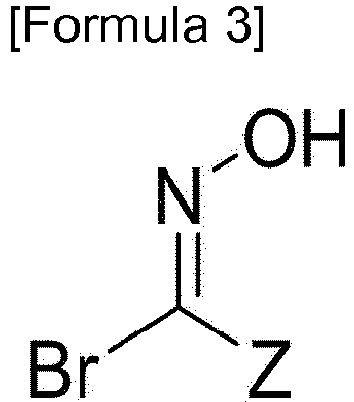

- According to the method, as described in Reaction Scheme 1 illustrated below, the compound represented by Formula 2 in which the 6th position is substituted with a vinyl group or an aryl group is reacted with a bromo oxime compound represented by Formula 3 under a base condition to obtain the compound represented by Formula 1.

- In Reaction Scheme 1, the base may be potassium hydrogen carbonate (KHCO3), sodium hydrogen carbonate (NaHCO3), potassium carbonate (K2CO3), sodium carbonate (Na2CO3), or triethylamine (Et3N), and a solvent may be a mixture of water and an organic solvent or an organic solvent alone. In this regard, an available organic solvent herein may be ethyl acetate (EtOAc), dimethylformamide (DMF), methylene chloride (CH2Cl2), ethyl ether (Et2O), tetrahydrofuran (THF), ethyl alcohol (EtOH), dichloroethane (ClCH2CH2Cl), or the like. The reaction temperature may be in the range of about 40 °C to about 80 °C. After the reaction was completed, the reactant was diluted by using an organic solvent, followed by washing with water, drying and concentrating, and purifying by column chromatography.
- Hereinafter, embodiments of the present disclosure will be described in more detail with reference to Examples. These examples are provided herein for illustrative purpose only, and do not limit the scope of the present disclosure, which is obvious to one of ordinary skill in the art.
- Compounds represented by Formula 1 synthesized according to Examples are shown in Table 1, and one of ordinary skill in the art may easily synthesize the compound shown in Table 2 by using known synthesis methods or modification thereof.
Table 1. Examples of compound represented by Formula 1 according to the present disclosure 
No R1 R2 X Y Z n 1H NMR 1 Me H NHAc CH Cl 0 1H NMR (300 MHz, CDCl6) δ 8.77 (s, 1H), 7.95 (brs, 1H), 5.81 (t, J = 9.3 Hz, 1H), 4.02 (s, 3H), 3.61 (d, J =9.3 Hz, 2H), 2.33 (s, 3H) 2 Me H NHAc CH Me 0 1H NMR (300 MHz, CDCl6) δ 8.73 (s, 1H), 7.93 (brs, 1H) 5.63 (dd, J = 10.1, 6.9 Hz, 1H), 4.01 (s, 3H), 3.42 (dd, J = 17.3, 10.1 Hz, 1H), 3.27 (dd, J = 17.3, 6.9 Hz, 1H), 2.31 (s, 3H), 2.03 (s, 3H) 3 Me H NHAc CH Br 0 1H NMR (300 MHz, CDCl6) δ 8.74 (s, 1H), 7.96 (brs, 1H), 5.72 (t, J =9.3 Hz, 1H), 4.00 (s, 3H), 3.63 (d, J=9.3 Hz, 2H), 2.31 (s, 3H) 4 Me H NHAc CH CF6 0 1H NMR (300 MHz, CDCl6) δ 8.73 (s, 1H), 7.95 (brs, 1H), 5.89 (dd, J = 11.6, 7.7 Hz, 1H), 4.00 (s, 3H), 3.60-3.67 (m, 2H), 2.32 (s, 3H) 5 Me H NHAc CH t-B 0 1H NMR (300 MHz, CDCl6) δ 8.69 (s, 1H), 7.92 (brs, 1H), 5.61 (dd, J = 10.1, 6.6 Hz, 1H), 4.01 (s, 3H), 3.43 (dd, J = 16.9, 10.1 Hz, 1H), 3.27 (dd, J = 16.9, 6.6 Hz, 1H), 2.31 (s, 3H), 1.24 (s, 9H) 6 Me H NHAc CH H 0 1H NMR (300 MHz, CDCl6) δ 8.67 (s, 1H), 7.98 (brs, 1H), 7.20 (s, 1H), 5.60 (dd, J = 11.1, 7.1 Hz, 1H), 3.99 (s, 3H), 3.42 (ddd, J = 17.3, 11.1, 1.7 Hz, 1H), 3.37 (ddd, 3H) 17.3, 7.1, 1.7 Hz, 1H), 2.30 (s, 7 Me H NHAc CH Ph 0 1H NMR (300 MHz, CDCl6) δ 8.78 (s, 1H), 7.93 (brs, 1H), 7.68-7.71 (m, 2H), 7.39-7.41 (m, 3H) 5.81 (dd, J= 10.1, 7.3 Hz, 1H), 3.99 (s, 3H), 3.81 (dd, J = 16.9, 10.1 Hz, 1H), 3.70 (dd, J = 16.9, 7.3 Hz, 1H), 2.30 (s, 3H) 8 Me H NHAc CH 2-F-Ph 0 1H NMR (300 MHz, CDCl6) & 8.78 (s, 1H), 7.93 (brs, 1H), 7.83-7.92 (m, 1 H), 7.32-7.46 (m, 1 H), 7.04 - 7.23 (m, 2H), 5.82 (dd, J = 11.1, 7.3 Hz, 1 H), 4.01 (s, 3H), 3.92 (ddd, J=17.5, 11.1, 2.6 Hz, 1H), 3.76 (ddd, J=17.5, 7.3, 2.6 Hz, 1H) 9 Me H NHAc CH 2-F, 3-OMe, 4-Cl-P h 0 1H NMR (300 MHz, CDCl6) δ 8.76 (s, 1H), 7.93 (s, 1H), 7.53 (dd, J = 8.7, 7.2 Hz, 1H), 7.18 (dd, J=8.7, 1.9 Hz, 1H), 5.82 (dd, J =11.3, 7.5 Hz, 1H), 4.00 (s, 3H), 3.96 (s, 3H), 3.88 (ddd, J=17.8, 11.3, 2.4 Hz, 1H), 3.74 (ddd, J=17.8, 7.5, 2.4 Hz, 1H), 2.30 (s, 3 H) 10 Me Me NHAc CH Br 0 1H 1H NMR (500 MHz, CDCl6) δ 8.83 (s, 1H), 7.93 (brs, 1H), 3.99 (s, 3H), 3.87 (d, J = 17.4 Hz, 1H), 3.25 (d, J = 17.4 Hz, 1H), 2.30 (s, 3H), 1.78 (s, 3H) 11 Me Me NHAc CH Cl 0 1H NMR (300 MHz, CDCl6) δ 8.82 (s, 1H), 7.98 (brs, 1H), 3.99 (s, 3H), 3.83 (d, J = 17.3 Hz, 1H), 3.20 (d, J = 17.3 Hz, 1H), 2.31 (s, 3H), 1.78 (s, 3H) 12 Me H NHAc CH Br 1 1H NMR (500 MHz, CDCl6) δ 8.48 (s, 1H), 7.93 (brs, 1H), 5.10-5.19 (m, 1H), 4.00 (s, 3H), 3.29-3.35 (m, 1H), 3.23-3.27 (m, 1H), 3.08-3.14 (m, 2H), 2.30 (s, 3H) 13 Me H NHAc CH Cl 1 1H NMR (300 MHz, CDCl6) δ 8.48 (s, 1H), 7.95 (brs, 1H), 5.13-5.28 (m, 1H), 3.17-3.36 (m, 2H), 2.99-3.17 (m, 2H), 2.30 (s, 3H) 14 Me H NHAc CH 
0 15 Me H NHAc CH 
0 16 Me H NHAc CH OMe 0 17 Me H NHAc CH SCN 0 18 Me H NHAc CH 
0 Me H NHAc I CCl 19 Br 0 1H NMR (300 MHz, CDCl6) δ 7.58 (brs, 1H), 6.10 (dd, J = 11.0, 8.0 Hz, 1H), 4.10 (dd, J = 17.3, 8.0 Hz, 1H), 3.99 (s, 3H), 3.48 (dd, J = 17.3, 11.0 Hz, 1H), 2.28 (s, 3H) 20 Me H NHAc CCl Cl 0 1H NMR (300 MHz, CDCl6) δ 7.62 (s, 1H), 6.17 (dd, J = 11.0, 8.0 Hz, 1H), 4.07 (dd, J = 17.3, 8.0 Hz, 1H), 3.99 (s, 3H), 3.43 (dd, J = 17.3, 11.0 Hz, 1H), 2.28 (s, 3H) 21 Me H NHAc CH 
0 22 Me H NHAc CH 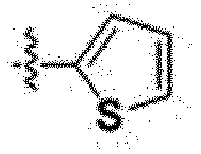
0 1H NMR (300 MHz, CDCl6) δ 8.79 (s, 1H), 7.95 (s, 1H), 7.41 (dd, J = 5.1, 1.0 Hz, 1H), 7.24 (dd, J = 3.6, 1.0 Hz, 1H), 7.07 (dd, J = 5.1, 3.7 Hz, 1H), 5.82 (dd, J = 10.7, 7.5 Hz, 1H), 4.02 (s, 3H), 3.79 (qd, J = 16.7, 9.1 Hz, 2H), 2.31 (s, 3H) 23 Et H NHAc CH OEt 0 24 Me H NHAc CH 
0 25 Me H NHAc CH 
0 26 Me H NHAc CH 
0 27 Me H NHAc CH C(O)OMe 0 28 Et H NHAc CH Br 0 1H NMR (300 MHz, CDCl6) δ 8.68 (s, 1H), 8.04 (brs, 1H), 5.71 (t, J = 9.2 Hz, 1 H), 4.47 (g, J = 7.1 Hz, 2 H), 3.64 (d, J = 9.2 Hz, 2 H), 2.31 (s, 3 H), 1.43 (t, J = 7.1 Hz, 3 H) 29 Bn H NHAc CH Br 0 1H NMR (300 MHz, CDCl6) δ 8.71 (s, 1H), 7.91 (brs, 1H), 7.30-7.52 (m, 5H), 5.64-5.79 (m, 1H), 5.44 (s, 2H), 3.53-373 (m, 2H), 2.29 (s, 3 H) 30 Me H NHAc CF Br 0 1H NMR (300 MHz, CDCl6) δ 7.40 (s, 1H), 6.00 (ddd, J = 11.1, 8.3, 1.2 Hz, 1H), 3.95-4.06 (m, 4H), 3.53 (dd, J = 17.2, 11.1 Hz, 1H), 2.31 (s, 3H) 31 Me H NHAc CF Cl 0 1H NMR (300 MHz, CDCl6) δ 7.43 (s, 1H), 6.05 (ddd, J = 11.1, 8.4, 1.4 Hz, 1H), 3.92-4.02 (m, 4H), 3.41-3.53 (m, 1H), 2.28-2.30 (s, 3H) 32 Bn H NHAc CF Br 0 1H NMR (300 MHz, CDCl6) δ 7.33-7.46 (m, 6H), 5.97 (ddd, J = 11.1, 7.8, 1.2 Hz, 1H), 5.42 (s, 2H), 4.00 (dd, J = 17.2, 7.8 Hz, 1H), 3.50 (dd, J = 17.2, 11.1 Hz, 1H), 2.27 (s, 3H) 33 Me H NH2 CH Br 0 1H NMR (300 MHz, CDCl6) δ 6.97 (s, 1H), 5.64 (dd, J = 11.1, 7.0 Hz, 1H), 4.90 (brs, 2H), 3.99 (s, 3H), 3.65 (dd, J = 17.5, 11.1 Hz, 1H), 3.43 (dd, J = 17.5, 7.0 Hz, 1H) 34 H H NHz CH Br 0 1H NMR (500 MHz, CD8OD) δ 6.94 (s, 1H), 5.66 (dd, J = 10.1, 7.6 Hz, 1H), 3.75 (dd, J = 17.4, 10.1 Hz, 1H), 3.43 (dd, J = 17.4, 7.6 Hz, 1H) 35 Me H NH2 CH Me 0 1H NMR (300 MHz, CDCl6) δ 7.00 (s, 1H), 5.58 (dd, J = 11.1, 5.6 Hz, 1H), 5.32 (brs, 2H), 3.99 (s, 3H), 3.43 (dd, J = 17.4, 11.1 Hz, 1H), 3.17 (dd, J = 17.4, 5.6 Hz, 1H), 2.01 (s, 3H) 36 H H NH2 CH Me 0 1H NMR (300 MHz, CD6OD) δ 6.95 (s, 1H), (dd, J = 11.1, 6.1 Hz, 1H), 3.56 (dd, J = 17.6, 11.1 Hz, 1H), 3.14 (dd, J = 17.6, 6.1 Hz, 1H), 2.02 (s, 3H) 37 Me H NH2 CH Cl 0 1H NMR (300 MHz, CDCl6) δ 6.98 (s, 1H), 5.73 (dd, J = 11.1, 7.0 Hz, 1H), 5.09 (brs, 2H), 3.98 (s, 3H), 3.64 (dd, J = 17.5, 11.1 Hz, 1H), 3.44 (dd, J = 17.5, 7.0 Hz, 1H) 38 H H NH2 CH Cl 0 1H NMR (500 MHz, CD6OD) δ 7.08 (s, 1H), 5.74 (dd, J = 10.1, 7.6 Hz, 1H), 3.74 (dd, J = 17.4, 10.1 Hz, 1H), 3.62 (dd, J = 17.4, 7.6 Hz, 1H) 39 Me H NHz CH CF6 0 1H NMR (300 MHz, CDCl6) δ 6.92 (s, 1H), 5.87 (dd, J = 11.1, 6.8 Hz, 1H), 4.92 (brs, 2H), 4.00 (s, 3H), 3.52-3.63 (m, 2H) 2.01 (s, 3H) 40 H H NH2 CH CF6 0 NMR (300 MHz, CD6OD) S 6.92 (s, 1H), 5.84 (dd, J = 11.6, 7.7 Hz, 1H), 3.76 (dd, J =17.8, 11.6 Hz, 1H), 3.48 (dd, J = 17.8, 7.7 Hz, 1H) 41 Me H NH2 CH t-Bu 0 1H NMR (300 MHz, CDCl6) δ 6.98 (s, 1H) 5.54 (dd, J = 10.1, 5.9 Hz, 1H), 4.85 (brs, 2H), 3.98 (s, 3H), 3.45 (dd, J = 17.0, 10.1 Hz, 1H), 3.17 (dd, J = 17.0, 5.9 Hz, 1H), 1.18 (s, 9H) 42 H H NH2 CH t-Bu 0 1H NMR (300 MHz, CD8OD) δ 6.90 (s, 1H), 5.57 (dd, J = 11.1, 6.2 Hz, 1H), 3.58 (dd, J = 17.4, 11.1 Hz, 1H), 3.18 (dd, J = 17.4, 6.2 Hz, 1H), 1.20 (s, 9H) 43 Me H NH2 CH H 0 1H NMR (300 MHz CD8OD) δ 7.31 (s, 1H), 6.91 (s, 1H), 5.40 (dd, J = 11.3, 6.8 Hz, 1H), 3.94 (s, 3H), 3.44 (ddd, J = 17.4, 11.4, 1.6 Hz, 1H), 3.19 (ddd, J = 17.4, 6.8, 1.6 Hz, 1H) 44 H H NH2 CH H 0 45 Me H NH2 CH Ph 0 1H NMR (300 MHz, CDCl8) δ 7.68-7.71 (m, 2H), 7.39-7.43 (m, 3H), 7.05 (s, 1H), 5.78 (dd, J = 11.2, 5.9 Hz, 1H), 4.84 (brs, 2H), 4.01 (s, 3H), 3.85 (dd, J = 17.0, 11.2 Hz, 1H), 3.62 (dd, J = 17.0, 5.9 Hz, 1H) 46 H H NH2 CH Ph 0 1H NMR (300 MHz, DMSO-d6) δ 13.43 (brs, 1H), 7.71-7.73 (m, 2H), 7.43-7.73 (m, 3H), 6.89 (s, 1 H), 6.73 (brs, 2H), 5.59 (m, 1H), 3.85 (m, 1H), 3.37 (m, 1H) 47 Me H NH2 CH 2-F-Ph 0 1H NMR (300 MHz, CDCl8) δ 7.79-7.85 (m, 1H), 7.35-7.45 (m, 1H), 7 .0 7-7.22 (m, 2H), 7 .05 (s, 1H), 5.78 (dd, J = 11.3, 6.0 Hz, 1H), 4.90 (brs, 2H), 4.00 (s, 3H), 3.93 (ddd, J = 17.3, 11.3, 2.6 Hz, 1H), 3.68 (ddd, J = 17.3, 6.0, 2.6 Hz, 1H) 48 H H NHz CH 2-F-Ph 0 1H NMR (300 MHz, DMSO-d6) δ 7.74-7.79 (m, 1H), 7.45-7.59 (m, 1H), 7.24-7.40 (m, 2H), 6.89 (s, 1H), 6.78 (brs, 2H), 5.62 (dd, J = 11.1, 6.0 Hz, 1H), 3.87 (dd, J = 17.1, 11.5 Hz, 1H), 3.59 (dd, J = 17.1, 6.0 Hz, 1H) 49 Me H NHz CH 2-F, 3-OMe, 4-Cl-Ph 0 1H NMR (300 MHz, CDCl8) δ 7.45 (dd, J = 8.7, 7.2 Hz, 1H), 7 .17 (dd. J= 8.7, 1.5 Hz, 1H), 7,01 (s, 1H), 5.76 (dd, J = 11.3, 6.0 Hz, 1H), 4.87 (brs, 2H), 3.99 (s, 3H), 3.96 (s, 3H), 3.88 (ddd, J = 17.7, 11.3, 2.3 Hz, 1H), 3.66 (ddd, J = 17.7, 6.0, 2.3 Hz, 1H) 50 H H NH2 CH 2-F, 3-OMe, 4-Cl-Ph 0 1H NMR (300 MHz CD8OD) δ 7.49 (dd, J = 8.7, 7.0 Hz, 1H), 7.29 (dd, J = 8.7, 1.5 Hz, 1H), 6.98 (s, 1H), 5.78 (dd, J = 11.3, 6.8 Hz, 1H), 3.98 (ddd, J = 17.6, 11.3, 2.1 Hz, 1H), 3.63 (ddd, J = 17.6, 6.8, 2.1 Hz, 1H) 51 Me Me NHz CH Cl 0 1H NMR (500 MHz, CDCl8) δ 7 .09 1H ), 4.09 (brs, 2H), 3.98 (s, 3H) 3.72 (d, J = 17.4 Hz, 1H), 3.22 (d, J = 17.4 Hz, 1H), 1.75 (s, 3H) 52 H Me NH2 CH Cl 0 1H NMR (500 MHz, CD6OD) δ 7.05 (s, 1H), 3.64 (d, J = 17.4 Hz, 1H), 3.39 (d, J = 17.4 Hz, 1H), 1.74 (s, 3H) 53 Me Me NH2 CH Br 0 1H NMR (500 MHz, CDCl6) δ 7.10 (s, 1H), 5.05 (brs, 2H), 3.98 (s, 3H), 3.77 (d, J = 17.4 Hz, 1H), 3.26 (d, J = 17.4 Hz, 1H), 1.75 (s, 3H) 54 H Me NH2 CH Br 0 1H NMR (500 MHz, CH6OD) δ 7.05 (s, 1H), 3.87 (d, J = 17.4 Hz, 1H), 3.43 (d, J = 17.4 Hz, 1H), 1.75 (s, 3H) 55 Me H NH2 CH Cl 1 1H NMR (300 MHz, CDCl6) δ 6.69 (s, 1H), 5.14 (m, 1H), 4.77 (brs, 2H), 3.99 (s, 3H), 3.20-3.32 (m, 1H), 2.95-3.15 (m, 3H) 56 H H NH2 CH Cl 1 1H NMR (300 MHz, CD8OD) δ 6.39 (s, 1H), 5.00-5.18 (m, 1H), 3:47 (m, 1H), 2.98-3.19 (m, 3H) 57 Me H NH2 CH 
0 1H NMR (300 MHz, CDCl8) δ 7.88 (s, 2H), 7.11 (s, 1H), 5.92 (dd, J = 11.0, 6.2 Hz, 1H), 4.94 (s, 2H), 4.21-4.09 (m, 1H), 4.05-3.93 (m, 4H) 58 H H NH2 CH 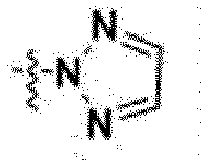
0 59 Me H NH2 CH 
0 1H NMR (300 MHz, CDCl8) δ 8.26 (d, J = 1.2 Hz, 1H), 7.81 (d, J = 1.2 Hz, 1H), 7.01 (s, 1H), 5.90(t, J = 8.9 Hz, 1H), 5.02 (s, 2H), 4.21 - 4.12 (m, 2H), 3.99 (s, 3H) 60 H H NH2 CH 
0 61 Me H NH2 CH OMe 0 1H NMR (300 MHz, CDCl8) δ 6.99 (d, J = 0.4 Hz, 1H), 5.68 (dd, J = 11.0, 6.3 Hz, 1H), 4.97 (s, 2H), 4.00 (s, 3H), 3.71 (dd, J = 17.6, 11.2 Hz, 1H), 3.49 (dd, J = 17.6, 6.4 Hz, 1H) 62 H H NH2 CH OMe 0 63 Me H NH2 CH SCN 0 64 H H NH2 CH SCN 0 65 Me H NH2 CH 
0 1H NMR (300 MHz, CDCl8) δ 7.10 (s, 1H), 5.54 (dd, J = 10.2, 5.0 Hz, 1H), 4.89 (s, 2H), 3.98 (s, 3H), 3.74-3.66 (m, 4H), 3.47 (dd, J = 15.8, 10.2 Hz, 1H), 3.31-3.23 (m, 1H), 3.23-3.15 (m, 4H) 66 H H NH2 CH 
0 1H NMR (300 MHz, DMSO-d6) δ 6.90 (s, 1H), 6.73 (s, 2H), 5.32 (dd, J= 10.2, 6.5 Hz, 1H), 3.66-3.53 (m, 4H), 3.45 (dd, J= 16.1, 10.3 Hz, 2H), 3.14-3.07 (m, 4H) 67 Me H NH2 CCl Cl 0 1H NMR (300 MHz, CDCl6) δ 6.02 (dd, J = 8.5, 11.0 Hz, 1H), 5.37 (brs, 2H), 4.12 (dd, J = 8.5, 17.3 Hz, 1H), 3.97 (s, 3H), 3.41 (dd, J = 11.00, 17.3 Hz, 1H) 68 H H NH2 CCl Cl 0 1H NMR (300 MHz, CD8OD) δ 6.08 (dd, J = 11.0, 8.2 Hz, 1H), 4.00 (dd, J = 17.3, 8.2 Hz, 1H), 3.54 (dd, J = 17.3, 11.0 Hz, 1H) 69 Me H NH2 CH 
0 70 H H NHz CH 
0 1H NMR (300 MHz, DMSO-d6) δ 8.67 (d. J = 6.0 Hz, 2H), 7.65 (d, J = 6.0 Hz, 2H), 6.63 (s, 1H), 6.17 (s, 2H), 5.61 (dd, J = 11.2, 7.8 Hz, 1H), 3.77 (dd, J = 17.2, 11.3 Hz, 1H), 3.58 (dd, J = 17.3, 7.7 Hz, 1H) 71 Me H NHz CH 
0 1H NMR (300 MHz, CDCl8) δ 7.42 (dd, J = 5.1, 1.0 Hz, 1H), 7.28 (s, 1H), 7.22 (dd, J = 3.6, 1.0 Hz, 1H), 7.07 (dd, J = 5.5, 3.2 Hz, 2H), 5.78 (dd, J = 11.1. 5.8 Hz, 1H), 4.93 (s, 2H), 4.01 (s, 3H), 3.87 (dd, J= 16.8, 11.1 Hz, 1H), 3.62 (dd, J = 16.8, 5.8 Hz, 1H) 72 H H NHz CH 
0 1H NMR (300 MHz, DMSO-d6) δ 7.76-7.68 (m, 1H), 7.49-7.42 (m, 1H), 7.16 (dd, J = 5.1, 3.7 Hz, 1H), 6.88 (s, 1H), 6.75 (s, 2H), 5.62 (dd, J = 11.1, 6.9 Hz, 1H), 3.85 (dd, J = 17.1, 11.1 Hz, 2H), 3.58 (dd, J = 17.0, 6.9 Hz, 2H) 73 Et H NH2 CH Br 0 1H NMR (300 MHz, CDCl6) δ 6.96 (s, 1H), 5.62 (dd, J = 11.1, 6.5 Hz, 1H), 5.00 (brs, 2H), 4.42 (q, J = 7.2 Hz, 2H), 3.63 (dd, J= 17.5, 11.1 Hz, 1H), 3.45 (dd, J= 17.4, 6.5 Hz, 1H), 1.42 (t, J = 7.2 Hz, 3H) 74 Et H NHz CH Cl 0 1H NMR (300 MHz, CDCl6) δ 6.96 (d, J= 0.5 Hz, 1H), 5.71-5.57 (m. 1H), 5.01 (s, -2H), 4.46 (q, J=7.1 Hz, 2H), 3.60 (ddd, J=24.1, 17.6, 8.8 Hz, 2H), 1.43 (t, J = 7.1 Hz, 3H) 75 Et H NH2 CH OEt 0 1H NMR (300 MHz, CDCl8) δ 7.10-7.04 (m, 1H), 5.58 (dd, J = 10.3, 5.9 Hz, 1H), 4.98 (s, 2H), 4.46 (q, J = 7.1 Hz, 2H), 4.18 (qd, J = 7.1, 3.8 Hz, 2H), 3.34 (ddd, J = 22.5, 16.6, 8.2 Hz, 2H), 1.42 (t, J = 7.1 Hz, 3H), 1.34 (t, J = 7.1 Hz, 3H) 76 Me H NH2 CH 
0 1H NMR (500 MHz, CDCl6) δ 7.19 (s, 1H), 5.51 (dd, J = 10.2, 5.1 H z, 1H), 5.22 (s, 2H), 3.97 (s, 3H), 3.56-3.41 (m, 1H), 3.24 (dd, J = 15.7, 5.1 Hz, 1H), 3.16 (s, 4H), 1.56 (s, 6H) 77 H H NH2 CH 
0 NMR (300 MHz, DMSO-d6) δ 7.02 (s, 1H), 5.52 (dd, J = 10.2, 5.8 Hz, 2H), 3.55 (dd, J = 16.2, 10.2 Hz, 1H), 3.26-3.17 (m, 1H), 3.13 (s, 4H), 1.51 (s, 6H) 78 Me H NH2 CH 
0 1H NMR (300 MHz, CDCl8) δ 7.54 (d, J = 1.2 Hz, 1H), 7.03 (s, 1H), 673 (d, J = 3.5 Hz, 1H), 6.50 (dd, J = 3.4, 1.8 Hz, 1H), 535 (dd, J = 11.1, 5.7 Hz, 1H), 4.85 (s, 2H), 4.01 (s, 3H), 3.81 (dd, J = 16.9, 11.1 Hz, 1H), 3.56 (dd, J = 16.9, 5.6 Hz, 1H) 79 H H NH2 CH 
0 1H NMR (300 MHz, DMSO-d6) δ 7.87 (d, J = 1.2 Hz, 1H), 6.96 (d, J= 3.3 Hz, 1H), 6.86 (s, 1H), 6.75 (s, 2H), 6.65 (dd, J=3.4, 1.8 Hz, 1H), 5.58 (dd, J = 11.1, 6.7 Hz, 1H), 3.76 (dd, J = 17.0, 11.1 Hz, 1H), 3.49 (dd, J = 17.0, 6.7 Hz, 1H) 80 Me H NH2 CH 
0 81 H H NH2 CH 
0 1H NMR (300 MHz, DMSO-d6) δ 9.18 (s, 1H), 8.32 (s, 1H), 6.93 (s, 1H), 6.85 (s, 2H), 5.80 (dd, J = 11.0, 7.5 Hz, 1H), 4.14-3.74 (m, 2H) 82 Me H NH2 CH C(O)OMe 0 1H NMR (300 MHz, CDCl6) S 6.96-6.92 (m, 1H), 5.80 (dd, J = 11.6, 6.9 Hz, 1H), 5.03 (s, 2H), 3.98 (s, 3H), 3.89 (s, 3H), 3.59 (ddd, J = 25.0, 18.1, 9.3 Hz, 2H) 83 iso-Pr H NH2 CH Br 0 1H NMR (300 MHz, CDCl6) δ 6.94 (s, 1H), 5.65 (dd, J = 11.1, 6.5 Hz, 1H), 5.32 (m, 1H), 5.00 (brs, 2H), 3.67 (dd, J = 17.5, 11.1 Hz, 1H), 3.51 (dd, J = 17.4, 6.5 Hz, 1H), 1.41 (d, J = 6.3 Hz, 6H) 84 iso-Bu H NH2 CH Br 0 1H NMR (500 MHz, CDCl6) δ 6.95 (s, 1H), 5.65 (dd, J = 11.1, 6.4 Hz, 1H), 4.95 (brs, 2H), 4.18 (d, J = 6.9 Hz, 2H), 3.67 (dd, J = 17.5, 11.1 Hz, 1H), 3.52 (dd, J = 17.4, 6.4 Hz, 1H), 2.09 (m, 1H), 1.02 (d, J = 6.4 Hz, 6H) 85 Ph H NH2 CH Br 0 1H NMR (500 MHz, CDCl6) δ 7.44 (m, 2H), 7.29 (m, 3H), 7.02 (s, 1H), 5.77 (dd, J = 11.2, 6.4 Hz, 1H), 5.00 (brs, 2H), 3.66 (dd, J = 17.6, 11.2 Hz, 1H), 3.53 (dd, J = 17.6, 6.4 Hz, 1H) 86 Bn H NH2 CH Br 0 1H NMR (500 MHz, CDCl6) δ 7.4- 7.46 (m, 2H), 7.32-7.39 (m, 3H), 6.93 (s, 1H), 5.61 (dd, J = 11.1, 6.5 Hz, 1H=, 5.42 (s, 2H), 4.93 (brs, 2H), 3.62 (dd, J = 17.5, 11.1 Hz, 1H), 3.47 (dd, J = 17.5, 6.5 Hz, 1H) 87 (4-Me-P h)CH2 H NH2 CH Br 0 1H NMR (500 MHz, CDCl6) δ 7.35 (d, J = 8.0 Hz, 2H), 7.18 (d, J = 8.0 Hz, 2H), 6.92 (s, 1H), 5.63 (dd, J = 11.1, 6.5 Hz, 1H), 5.38 (s, 2H), 4.88 (brs, 2H), 3.65 (dd, J = 17.5, 11.1 Hz, 1H), 3.48 (dd, J = 17.5, 6.5 Hz, 1H), 2.35 (s, 3H) 88 (4-CF8-Ph)CH2 H NH2 CH Br 0 1H NMR (500 MHz, CDCl6) δ 7.66 (d, J = 8.3 Hz, 2H), 7.59 (d, J = 8.3 Hz, 2H), 6.97 (s, 1H), 5.66 (dd, J = 11.1, 6.5 Hz, 1H), 5.48 (s, 2H), 4.88 (brs, 2H), 3.69 (dd, J = 17.5, 11.1 Hz, 1H), 3.50 (dd, J = 17.5, 6.5 Hz, 1H) 89 (4-OMe-Ph)CH2 H NH2 CH Br 0 1H NMR (500 MHz, CDCl6) δ 7.39 (d, J = 8.3 Hz, 2H), 6.91 (d, J = 8.3 Hz, 2H), 6.89 (s, 1H), 5.62 (dd, J = 11.1, 6.5 Hz, 1H), 5.35 (s, 2H), 4.90 (brs, 2H), 3.81(s, 3H), 3.65 (dd, J = 17.5, 11.1 Hz, 1H), 3.48 (dd, J = 17.5, 6.5 Hz, 1H) 90 (4-F-Ph) CH2 H NH2 CH Br 0 1H NMR (500 MHz, CDCl6) S 7.44 (m, 2H), 7.07 (m, 2H), 6.94 (s, 1 H), 5.63 (dd, J = 11.2, 6.4 Hz, 1H), 5.38 (s, 2H), 4.90 (brs, 2H), 3.66 (dd, J = 17.4, 11.2 Hz, 1H), 3.49 (dd, J = 17.4, 6.4 Hz, 1H) 91 (4-Br-Ph)CH2 H NH2 CH Br 0 1H NMR (500 MHz, CDCl6) δ 7.52 (d, J = 8.3 Hz, 2H), 7.34 (d, J = 8.3 Hz, 2H), 6.96 (s, 1H), 5.65 (dd, J = 11.2, 6.4 Hz, 1H), 5.37 (s, 2H), 4.91 (brs, 2H), 3.67 (dd, J = 17.4, 11.2 Hz, 1H), 3.50 (dd, J = 17.4, 6.4 Hz, 1H) 92 iso-Pr H NH2 CH Cl 0 1H NMR (300 MHz, CDCl6) δ 6.93 (s, 1H), 5.71 (dd, J = 11.1, 6.5 Hz, 1H), 5.32 (m, 1H), 4.97 (brs, 2H), 3.63 (dd, J = 17.5, 11.1 Hz, 1H), 3.47 (dd, J = 17.4, 6.5 Hz, 1H), 1.41 (d, J = 6.4 Hz, 6H) 93 iso-Bu H NH2 CH Cl 0 1H NMR (300 MHz, CDCl6) δ 6.96 (s, 1H), 5.72 (dd, J = 11.1, 6.4 Hz, 1H), 5.02 (brs, 2H), 4.18 (d, J = 6.8 Hz, 2H), 3.62 (dd, J = 17.5, 11.1 Hz, 1H), 3.48 (dd, J = 17.4, 6.4 Hz, 1H), 2.10 (m, 1H), 1.02 (d, J = 6.8 Hz, 6H) 94 Ph H NH2 CH Cl 0 1H NMR (500 MHz, CDCl6) δ 7.44 (m, 2H), 7.29 (m, 3H), 7.02 (s, 1H), 5.77 (dd, J = 11.2, 6.4 Hz, 1H), 5.00 (brs, 2H), 3.66 (dd, J = 17.6, 11.2 Hz, 1H), 3.53 (dd, J = 17.6, 6.4 Hz, 1H) 95 Bn H NH2 CH Cl 0 1H NMR (300 MHz, CDCl6) δ 7.42-7.51 (m, 2H), 7.30-7.42 (m, 3H), 6.96 (s, 1H), 5.72 (dd, J = 11.1, 6.5 Hz, 1H), 5.42 (s, 2H), 4.98 (brs, 2H), 3.63 (dd, J = 17.5, 11.1 Hz, 3.45 (dd, J = 17.5, - 6.5 Hz), 1H) 96 (4-Me-P h)CH2 H NH2 CH Cl 0 1H NMR (300 MHz, CDCl6) δ 7.34 (d, J = 7.9 Hz, 2H), 7.17 (d, J = 7.9 Hz, 2H), 6.91 (s, 1H), 5.68 (dd, J = 11.0, 6.5 Hz, 1H), 5.37 (s, 2H), 4.96 (brs, 2H), 3.59 (dd, J = 17.5, 11.0 Hz, 1H), 3.44 (dd, J = 17.5, 6.5 Hz, 1H), 2.34 (s, 3H) 97 (4-CF8-Ph)CH2 H NH2 CH Cl 0 1H NMR (300 MHz, CDCl6) δ 7.65 (d, J = 8.3 Hz, 2H), 7.58 (d, J = 8.3 Hz, 2H), 6.97 (s, 1H), 5.72 (dd, J = 11.1, 6.5 Hz, 1H), 5.47 (s, 2H), 4.90 (brs, 2H), 3.64 (dd, J = 17.5, 11.1 Hz, 1H), 3.46 (dd, J = 17.5, 6.5 Hz, 1H) 98 (4-OMe-Ph)CH2 H NH2 CH Cl 0 1H NMR (500 MHz, CDCl6) S 7.40 (d, J = 8.7 Hz, 2H), 6.93 (s, 1H), 6.90 (d, J= 8.7 Hz, 2H), 5.71 (dd, J = 11.1, 6.5 Hz, 1H), 5.36 (s, 2H), 4.86 (brs, 2H), 3.81(s, 3H), 3.62 (dd, J = 17.5, 11.1 Hz, 1H), 3.44 (dd, J = 17.5, 6.5 Hz, 1H) 99 (4-F-Ph) CH2 H NH2 CH Cl 0 1H NMR (500 MHz, CDCl6) δ 7.44 (m, 2H), 7.07 (m, 2H), 6.95 (s, 1H), 5.71 (dd, J = 11.2, 6.4 Hz, 1H), 5.38 (s, 2H), 4.90 (brs, 2H), 3.62 (dd, J = 17.4, 11.2 Hz, 1H), 3.45 (dd, J = 17.4, 6.4 Hz, 1H) 100 (4-Br-P h)CH2 H NH2 CH Cl 0 1H NMR (500 MHz, CDCl6) δ 7.50 (d, J = 8.3 Hz, 2H), 7.32 (d, J = 8.3 Hz, 2H), 6.95 (s, 1H), 5.69 (dd, J = 11.1, 6.4 Hz, 1H), 5.35 (s, 2H), 5.03 (brs, 2H), 3.61 (dd, J = 17.3, 11.1 Hz, 1H), 3.4 5 (dd, J = 17.3, 6.4 Hz, 1H) 101 Me H NH2 CF Cl 0 1H NMR (300 MHz, CDCl6) δ 5.97 (ddd, J = 11.1, 8.7, 1.4 Hz, 1H), 4.98 (brs, 2H), 3.97(s, 3H), 3.96 (dd, J = 17.0, 8.7 Hz, 1H), 3.41 (dd, J = 17.0, 11.3 Hz, 1H) 102 H H NH2 CF Cl 0 1H NMR (300 MHz, CD8OD) δ 6.00 (ddd, J = 11.3, 8.5, 1.4 Hz, 1H), 3.89 (dd, J = 17.0, 8.5 Hz, 1H), 3.53 (dd, J = 17.0, 11.3 Hz, 1H) 103 Bn H NH2 CF Cl 0 1H NMR (300 MHz, CDCl6) δ 7.51-7.42 (m, 2H), 7.42-7.30 (m, 3H), 5.89 (ddd, J = 11.1, 8.1, 1.4 Hz, 1H), 5.40 (s, 2H), 4.92 (brs, 2H), 4.00 (dd, J = 8.1, 17.3 Hz, 1H), 3.45 (dd, J = 11.1, 17.3 Hz, 1H) 104 Me H NHz N Cl 0 1H NMR (500 MHz, CDCl6) δ 6.28 (brs, 2H), 5.69 (dd, J = 11.5, 7.8 Hz, 1H), 3.99 (s, 3H), 3.66 (dd, J = 17.4, 11.5 Hz, 1H), 3.54 (dd, J = 17.4, 7.8 Hz, 1H) 105 H H NH2 N Cl 0 1H NMR (500 MHz, CD6OD) δ 5.61 (dd, J = 11.1, 7.8 Hz, 1H), 3.72 (dd, J = 17.4, 11.1 Hz, 1H), 3.59 (dd, J = 17.4, 7.8 Hz, 1H) 106 Me H NHz N Br 0 1H NMR (300 MHz, CDCl6 δ 6.38 (brs, 2H), 5.62 (dd, J = 11.1, 7.8 Hz, 1H), 3.99 (s, 3H), 3.70 (dd, J = 17.4, 11.1 Hz, 1H), 3.59 (dd, J = 17.4, 7.8 Hz, 1H) 107 H H NHz N Br 0 1H NMR (300 MHz, CD8OD) δ 5.53 (dd, J = 11.1, 7.7 Hz, 1H), 3.75 (dd, J = 17.4, 11.1 Hz, 1H), 3.62 (dd, J = 17.4, 7.7 Hz, 1H) 108 Na H NHz CH Cl 0 1H NMR (300 MHz, CD8OD) δ 6.78 (s, 1H), 5.55 (dd, J = 11.1, 7.5 Hz, 1H), 3.70 (dd, J = 17.4, 11.1 Hz, 1H), 3.46 (dd, J = 17.4, 7.5 Hz, 1H) 109 Li H NHz CH Cl 0 1H NMR (300 MHz, CD6OD) δ 6.77 (s, 1H), 5.53 (dd, J = 11.1, 7.5 Hz, 1H), 3.68 (dd, J = 17.4, 11.1 Hz, 1H), 3.44 (dd, J = 17.4, 7.5 Hz, 1H) 110 K H NH2 CH Cl 0 1H NMR (300 MHz, CD8OD) δ 6.76 (s, 1H), 5.53 (dd, J = 11.1, 7.5 Hz, 1H), 3.68 (dd, J = 17.4, 11.1 Hz, 1H), 3.44 (dd, J = 17.4, 7.5 Hz, 1H) 111 Me H Cl CH Br 0 1H NMR (300 MHz, CDCl6) δ 7.78 (s, 1H), 5.74 (dd, J = 11.1, 6.3 Hz, 1H), 4.01 (s,3H), 3.74 (dd, J = 17.6, 11.1 Hz, 1H), 3.53 (dd, J = 17.6, 6.3 Hz, 1H) 112 H H Cl CH Br 0 1H NMR (300 MHz, CD8OD) δ 7.81 (s, 1H), 5.76 (dd, J = 11.0, 7.1 Hz, 1H), 3.77 (dd, J = 17.5, 11.1 Hz, 1H), 3.61 (dd, J = 17.5, 7.1 Hz, 1H) 113 Me H Cl CH Cl 0 1H NMR (300 MHz, CDCl6) δ 7.79 (s, 1H), 5.82 (dd, J = 11.3, 6.3 Hz, 1H), 4.02 (s, 3H), 3.71 (dd, J = 17.6, 1 1.3 Hz, 1H), 3.50 (dd, J = 17.5, 6.3 Hz, 1H) 114 H H Cl CH CI 0 1H NMR (300 MHz, CD6OD) δ 7.82 (s, 1H), 5.85 (dd, J = 11.0, 7.4 Hz, 1H), 3.74 (dd, J = 17.5, 11.0 Hz, 1H), 3.58 (dd, J = 17.5, 7.3 Hz, 1H) 115 Me H NHMe CH Cl 0 1H NMR (300 MHz, CDCl6 δ 6.84 (s, 1H), 5.76 (dd, J = 11.1, 7.0 Hz, 1H), 5.22 (brs, 1H), 3.97 (s, 3H), 3.66 (dd, J = 17.5, 11.1 Hz, 1H), 3.48 (dd, J = 17.5, 7.0 Hz, 1H), 3.00 (d, J = 4.9 Hz, 3H) 116 Me H NMe2 CH Cl 0 1H NMR (300 MHz, CDCl6) δ 7.06 (s, 1H), 5.76 (dd, J = 11.0, 6.9 Hz, 1H), 3.98 (s, 3H), 3.64 (dd, J = 17.6, 11.0 Hz, 1H), 3.50 (dd, J = 17.6, 6.9 Hz, 1H), 3.03 (s, 6H) 117 H H NMe2 CH Cl 0 1H NMR (300 MHz, CD8OD) δ 7.08 (s, 1H), 5.76 (dd, J = 10.9; 7.9 Hz, 1H), 3.68 (dd, J = 17.3, 10.9 Hz, 1H), 3.52 (dd, J = 17.3, 7.9 Hz, 1 H), 3.08 (s, 6 H) -

- To a solution of methyl 4-acetamido-3,6-dichloropicolinate (10 g, 38.0 mmol) in EtOH (200 ml) were added potassium vinyltrifluoroborate (5.70 g, 41.8 mmol), [1,1'-bis(diphenylphosphino)ferrocene]dichloropalladium(II) (621 mg, 0.76 mmol), and triethylamine (5.83 ml, 41.8 mmol) at room temperature. The mixture was degassed with nitrogen for 1 hour and heated under reflux for 18 hours under nitrogen. The reaction mixture was cooled to room temperature, filtered, concentrated under reduced pressure, and partitioned between ethyl acetate and water. The aqueous layer was separated and extracted with ethyl acetate (x 3) and the combined organic layers were dried (MgSO4), filtered, and concentrated under reduced pressure. The residue was purified by silica gel column chromatography (30% EtOAc/hexane) to afford the title compound (9.6 g, 99%).
1H NMR(300MHz, CDCl3) δ 8.65(s, 1H), 7.93(brs, 1H), 6.81 (dd, J=17.5, 10.8Hz, 1H), 6.27(d, J=17.4Hz, 1H), 5.59(d, J=10.8Hz, 1H), 5.32(s, 1H), 4.02(s, 3H), 2.33(s, 3H) - To a solution of 2-(hydroxyimino)acetic acid (107 mg, 1.2 mmol) in DME(dimethoxyethane) (5 ml) was added N-chlorosuccinimide (320 mg, 2.4 mmol). And the reaction mixture was heated to 110 °C for 1 hour, cooled to room temperature and filtered. To the filtrate were added methyl 4-acetamido-3-chloro-6-vinylpicolinate (254 mg, 1.0 mmol) and a solution of sodium hydrogen carbonate (NaHCO3) (210 mg, 2.5 mmol) in water (0.5 ml) and the reaction mixture was heated at 80 °C under reflux for 18 hours. After completion of the reaction, the mixture was partitioned between ethyl acetate and water. The aqueous layer was separated and extracted with ethyl acetate (x 3) and the combined organic layers were dried (MgSO4), filtered, and concentrated under reduced pressure. The residue was purified by silica gel column chromatography (50% EtOAc/hexane) to afford the title compound (232 mg, 70%).
1H NMR(300MHz, CDCl3) δ8.77(s, 1H), 7.95(brs, 1H), 5.81 (t, J=9.3Hz, 1H), 4.02(s, 3H), 3.61 (d, J=9.3Hz, 2 H), 2.33(s, 3 H) - To a solution of methyl 4-acetamido-3-chloro-6-(3-chloro-4,5-dihydroisoxazol-5-yl)picolinate (730 mg, 2.20 mmol) in MeOH (10 ml) was slowly added acetyl chloride (1.3 ml, 17.58 mmol) at 0 °C and the reaction mixture was heated under reflux for 1 hour. After completion of the reaction, the mixture was cooled to room temperature and diluted with water. The solution was extracted with ethyl acetate (x 3) and the combined organic layers were dried (MgSO4), filtered, and concentrated under reduced pressure. The residue was purified by silica gel column chromatography (50% EtOAc/hexane) to afford the title compound (430 mg, 67%).
1H NMR(300MHz, CDCl3) δ6.99(s, 1H), 5.74(dd, J=11.1, 7.0Hz, 1H), 4.99(brs, 2H), 3.99(s, 3H), 3.66(dd, J=17.5, 11.1Hz, 1H), 3.45(dd, J=17.5, 7.0Hz, 1H) -

- To a solution of methyl 4-amino-3-chloro-6-(3-chloro-4,5-dihydroisoxazol-5-yl)picolinate (230 mg, 0.79 mmol) in THF(tetrahydrofuran)(3 ml) was added a solution of lithium hydroxide (40 mg, 0.95 mmol) in water (0.5 ml) and the reaction mixture was stirred at room temperature for 3 hours. After completion of the reaction, the mixture was acidified with 1N HCl, extracted with ethyl acetate and the organic layer was dried (MgSO4), filtered and concentrated under reduced pressure to afford the title compound (215 mg, 98%) without the purification by silica gel column chromatography.
1H NMR(500MHz, CD3OD) δ7.09(s, 1H), 5.75(dd, J=10.1, 7.7Hz, 1H), 3.75(dd, J=17.4, 10.1Hz, 1H), 3.63(dd, J=17.4, 7.7Hz, 1H) -

- To a solution of methyl 4-acetamido-3-chloro-6-vinylpicolinate (300 mg, 1.18 mmol) in benzene (5 ml) were added phenyl isocyanate(0.28 ml, 2.60 mmol), nitroethane (93 µℓ, 1.3 mmol) and triethylamine (8 µℓ, 0.06 mmol) at 0 °C, and the reaction mixture was heated at 90 °C under reflux for 18 hours. After completion of the reaction, the mixture was partitioned between ethyl acetate and water. The aqueous layer was separated and extracted with ethyl acetate (x 3) and the combined organic layers were dried (MgSO4), filtered, and concentrated under reduced pressure. The residue was purified by silica gel column chromatography (50% EtOAc/hexane) to afford the title compound (256 mg, 70%).
1H NMR(300MHz, CDCl3) δ8.73(s, 1H), 7.93(brs, 1H), 5.63(dd, J=10.1, 6.9Hz, 1H), 4.01 (s, 3H), 3.42(dd, J=17.3, 10.1 Hz, 1H), 3.27(dd, J=17.3, 6.9Hz, 1H), 2.31 (s, 3H), 2.03(s, 3H) - To a solution of methyl 4-acetamido-3-chloro-6-(3-methyl-4,5-dihydroisoxazol -5-yl)picolinate (220 mg, 0.71 mmol) in MeOH (4 ml) was slowly added acetyl chloride (0.42 ml, 5.65 mmol) at 0 °C and the reaction mixture was heated under reflux for 1 hour. After completion of the reaction, the mixture was cooled to room temperature and diluted with water. The solution was extracted with 10% MeOH/ dichloromethane (x 3) and the combined organic layers were dried (MgSO4), filtered, and concentrated under reduced pressure. The residue was purified by silica gel column chromatography (50% EtOAc/hexane) to afford the title compound (72 mg, 38%).
1H NMR(300MHz, CDCl3) δ7.00(s, 1H), 5.58(dd, J=11.1, 5.6Hz, 1H), 5.32(brs, 2H), 3.99(s, 3H), 3.43(dd, J=17.4, 11.1Hz, 1H), 3.17(dd, J=17.4, 5.6Hz, 1H), 2.01 (s, 3H) -

- To a solution of methyl 4-amino-3-chloro-6-(3-methyl-4,5-dihydroisoxazol-5-yl)picolinate (45 mg, 0.17 mmol) in THF (0.5 ml) was added a solution of lithium hydroxide (8.4 mg, 0.20 mmol) in water (0.25 ml) and the reaction mixture was stirred at room temperature for 3 hours. After completion of the reaction, the mixture was acidified with 1N HCl, extracted with ethyl acetate and the organic layer was dried (MgSO4), filtered and concentrated under reduced pressure to afford the title compound (32 mg, 75%) without the purification by silica gel column chromatography.
1H NMR(300MHz, CD3OD) δ6.95(s, 1H), 5.60(dd, J=11.1, 6.1Hz, 1H), 3.56(dd, J=17.6, 11.1Hz, 1H), 3.14(dd, J=17.6, 6.1Hz, 1H), 2.02(s, 3H) -

- To a solution of methyl 4-acetamido-3-chloro-6-vinylpicolinate (3.5 g, 13.74 mmol) in EtOAc (50 ml) were added dibromoaldoxime (4.18 g, 2.89 mmol) and a solution of sodium hydrogen carbonate (NaHCO3) (2.89 g, 34.36 mmol) in water (5 ml) and the reaction mixture was heated at 80 °C under reflux for 18 hours. After completion of the reaction, the mixture was partitioned between ethyl acetate and water. The aqueous layer was separated and extracted with ethyl acetate (x 3) and the combined organic layers were dried (MgSO4), filtered, and concentrated under reduced pressure. The residue was purified by silica gel column chromatography (50% EtOAc/hexane) to afford the title compound (4.2 g, 81%).
1H NMR(300MHz, CDCl3) δ8.74(s, 1H), 7.96(brs, 1H), 5.72(t, J=9.3Hz, 1 H), 4.00(s, 3H), 3.63(d, J=9.3Hz, 2H), 2.31 (s, 3H) - To a solution of methyl 4-acetamido-3-chloro-6-(3-bromo-4,5-dihydroisoxazol -5-yl)picolinate (3.54 g, 9.29 mmol) in MeOH (40 ml) was slowly added BF3-OEt2 (5.16 ml, 41.82 mmol) at 0 °C and the reaction mixture was heated under reflux for 1 hour. After completion of the reaction, the mixture was cooled to room temperature and diluted with water. The solution was extracted with ethyl acetate (x 3) and the combined organic layers were washed with saturated aqueous sodium hydrogen carbonate (NaHCO3) solution, dried (MgSO4), filtered, and concentrated under reduced pressure. The residue was purified by silica gel column chromatography (40% EtOAc/hexane) to afford the title compound (2.86 g, 92%).
1H NMR(300MHz, CDCl3) δ6.97(s, 1H), 5.64(dd, J=11.1, 7.0Hz, 1H), 4.90 (brs, 2H), 3.99(s, 3H), 3.65(dd, J=17.5, 11.1 Hz, 1H), 3.43(dd, J=17.5, 7.0Hz, 1H) -

- To a solution of methyl 4-amino-3-chloro-6-(3-bromo-4,5-dihydroisoxazol-5-yl)picolinate (2.5 g, 7.47 mmol) in THF (30 ml) was added a solution of lithium hydroxide (376 mg, 8.97 mmol) in water (10 ml) and the reaction mixture was stirred at room temperature for 1 hour. After completion of the reaction, the mixture was acidified with 1N HCl, extracted with ethyl acetate and the organic layer was dried (MgSO4), filtered and concentrated under reduced pressure to afford the title compound (2.2 g, 92%) without the purification by silica gel column chromatography.
1H NMR(500MHz, CD3OD) δ6.94(s, 1H), 5.66(dd, J=10.1, 7.6Hz, 1H), 3.75(dd, J=17.4, 10.1Hz, 1H), 3.43(dd, J=17.4, 7.6Hz, 1H) -

- To a solution of methyl 4-acetamido-3-chloro-6-vinylpicolinate (300 mg, 1.18 mmol) in EtOAc (5 ml) were added 2,2,2-trifluoro-N-hydroxyacetimidobromide (406 mg, 1.42 mmol) and a solution of sodium hydrogen carbonate (NaHCO3) (248 mg, 2.95 mmol) in water (0.5 ml) and the reaction mixture was heated at 80 °C under reflux for 18 hours. After completion of the reaction, the mixture was partitioned between ethyl acetate and water. The aqueous layer was separated and extracted with ethyl acetate (x 3) and the combined organic layers were dried (MgSO4), filtered, and concentrated under reduced pressure. The residue was purified by silica gel column chromatography (50% EtOAc/hexane) to afford the title compound (228 mg, 53%).
1H NMR(300MHz, CDCl3) δ 8.73(s, 1H), 7.95(brs, 1H), 5.89(dd, J=11.6, 7.7Hz, 1H), 4.00(s, 3H), 3.60-3.67(m, 2H), 2.32(s, 3H) - To a solution of methyl 4-acetamido-3-chloro-6-(3-trifluoromethyl-4,5-dihydroisoxazol-5-yl)picolinate (173 mg, 0.47 mmol) in MeOH (4 ml) was slowly added acetyl chloride (0.28 ml, 3.78 mmol) at 0 °C and the reaction mixture was heated under reflux for 1 hour. After completion of the reaction, the mixture was cooled to room temperature and diluted with water. The solution was extracted with 10% MeOH/dichloromethane (x 3) and the combined organic layers were dried (MgSO4), filtered, and concentrated under reduced pressure. The residue was purified by silica gel column chromatography (50% EtOAc/hexane) to afford the title compound (132 mg, 86%).
1H NMR(300MHz, CDCl3) δ 6.92(s, 1H), 5.87(dd, J=11.1, 6.8Hz, 1H), 4.92(brs, 2H), 4.00(s, 3H), 3.52-3.63(m, 2H) -

- To a solution of methyl 4-amino-3-chloro-6-(3-trifluoromethyl-4,5-dihydroisoxazol-5-yl)picolinate (94 mg, 0.29 mmol) in THF (1 ml) was added a solution of lithium hydroxide (14.6 mg, 0.35 mmol) in water (0.5 ml) and the reaction mixture was stirred at room temperature for 3 hours. After completion of the reaction, the mixture was acidified with 1N HCl, extracted with ethyl acetate and the organic layer was dried (MgSO4), filtered and concentrated under reduced pressure to afford the title compound (77 mg, 86%) without the purification by silica gel column chromatography.
1H NMR(300MHz, CD3OD) δ 6.92(s, 1H), 5.84(dd, J=11.6, 7.7Hz, 1H), 3.76(dd, J=17.8, 11.6Hz, 1H), 3.48(dd, J=17.8, 7.7Hz, 1H) -
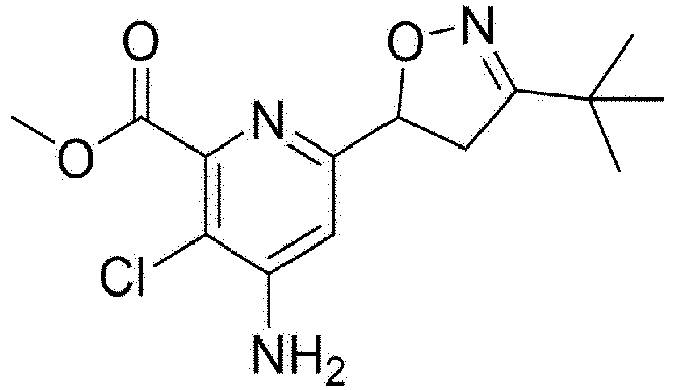
- To a solution of pivalaldehyde oxime (191 mg, 1.88 mmol) in dichloromethane (5 ml) were added N-chlorosuccinimide (273 mg, 2.04 mmol) and DMF (12 µℓ, 0.16 mmol) and the reaction mixture was heated to 35 °C. After pivalaldehyde oxime had been consumed, the reaction solution was cooled to 0 °C. And then, methyl 4-acetamido-3-chloro-6-vinylpicolinate (400 mg, 1.57 mmol) and sodium hydrogen carbonate (NaHCO3) (330 mg, 3.93 mmol) were added to the reaction mixture and the reaction mixture was stirred at 30 °C for 18 hours. After completion of the reaction, the mixture was partitioned between dichloromethane and water. The aqueous layer was separated and extracted with dichloromethane (x 3) and the combined organic layers were dried (MgSO4), filtered, and concentrated under reduced pressure. The residue was purified by silica gel column chromatography (30% EtOAc/hexane) to afford the title compound (380 mg, 68%).
1H NMR(300MHz, CDCl3) δ 8.69(s, 1H), 7.92(brs, 1H), 5.61 (dd, J=10.1, 6.6Hz, 1H), 4.01 (s, 3H), 3.43(dd, J=16.9, 10.1 Hz, 1H), 3.27(dd, J=16.9, 6.6Hz, 1H), 2.31 (s, 3H), 1.24(s, 9H) - To a solution of methyl 4-acetamido-3-chloro-6-(3-tert-butyl-4,5-dihydroisoxazol-5-yl)picolinate(320 mg, 0.90 mmol) in MeOH (6 ml) was slowly added acetyl chloride (0.54 ml, 7.24 mmol) at 0 °C and the reaction mixture was heated under reflux for 1 hour. After completion of the reaction, the mixture was cooled to room temperature and diluted with water. The solution was extracted with ethyl acetate (x 3) and the combined organic layers were dried (MgSO4), filtered, and concentrated under reduced pressure to afford the title compound (262 mg, 93%).
1H NMR(300MHz, CDCl3) δ 6.98(s, 1H), 5.54(dd, J=10.1, 5.9Hz, 1H), 4.85(brs, 2H), 3.98(s, 3H), 3.45(dd, J=17.0, 10.1Hz, 1H), 3.17(dd, J=17.0, 5.9Hz, 1H), 1.18(s, 9H) -

- To a solution of methyl 4-amino-3-chloro-6-(3- tert-butyl-4,5-dihydroisoxazol-5-yl)picolinate (198mg, 0.64 mmol) in THF (2 ml) was added a solution of lithium hydroxide (32 mg, 0.76 mmol) in water (1 ml) and the reaction mixture was stirred at room temperature for 3 hours. After completion of the reaction, the mixture was acidified with 1N HCl, extracted with ethyl acetate and the organic layer was dried (MgSO4), filtered and concentrated under reduced pressure to afford the title compound (163 mg, 86%) without the purification by silica gel column chromatography.
1H NMR(300MHz, CD3OD) δ 6.90(s, 1H), 5.57(dd, J=11.1, 6.2Hz, 1H), 3.58(dd, J=17.4, 11.1 Hz, 1H), 3.18(dd, J=17.4, 6.2Hz, 1H), 1.20(s, 9H) -

- To a solution of methyl 4-acetamido-3-chloro-6-vinylpicolinate (400 mg, 1.57 mmol) in benzene (6 ml) and dichloromethane (6 ml) were added nitromethane (0.17 ml. 3.14 mmol), triethylamine (0.66 ml, 4.71 mmol) and trimethylsilyl chloride (0.6 ml, 4.71 mmol) at 0 °C and the reaction mixture was heated at 60 °C for 2 hours. The mixture was filtered and concentrated under reduced pressure. The residue was dissolved in diethyl ether, and p-toluenesulfonic acid (65.6 mg, 0.35 mmol) was added to the solution. The reaction mixture was stirred at room temperature for 1 hour and washed with sodium hydrogen carbonate (NaHCO3) aqueous solution. The mixture was extracted with ethyl acetate (x 3), dried (MgSO4), filtered, and concentrated under reduced pressure. The residue was purified by silica gel column chromatography (50% EtOAc/hexane) to afford the title compound (610 mg, 77%).
1H NMR(300MHz, CDCl3) δ 8.67(s, 1H), 7.98(brs, 1H), 7.20(s, 1H), 5.60(dd, J=11.1, 7.1Hz, 1H), 3.99(s, 3H), 3.42(ddd, J=17.3, 11.1, 1.7Hz, 1H), 3.37(ddd, J=17.3, 7.1, 1.7Hz, 1H), 2.30(s, 3H) - To a solution of methyl 4-acetamido-3-chloro-6-(4,5-dihydroisoxazol-5-yl)picolinate (43 mg, 0.14 mmol) in MeOH (1 ml) was slowly added acetyl chloride (0.1 ml, 1.15 mmol) at 0 °C and the reaction mixture was heated under reflux for 1 hour. After completion of the reaction, the mixture was cooled to room temperature and diluted with water. The solution was extracted with ethyl acetate (x 3) and the combined organic layers were dried (MgSO4), filtered, and concentrated under reduced pressure to afford the title compound (13 mg, 92%).
1H NMR(300MHz CD3OD) δ 7.31 (s, 1H), 6.91 (s, 1H), 5.40(dd, J=11.3, 6.8Hz, 1H), 3.94(s, 3H), 3.44(ddd, J=17.4, 11.4, 1.6Hz, 1H), 3.19(ddd, J=17.4, 6.8, 1.6Hz, 1H) -

- To a solution of methyl 4-acetamido-3,6-dichloropicolinate (10 g, 38.01 mmol) in EtOH (130 ml) were added potassium trifluoro(prop-1-en-2-yl)borate (8.44 g, 57.02 mmol), [1,1'-bis(diphenylphosphino)ferrocene]dichloropalladium(II) (556mg, 0.76 mmol), and triethylamine (7.9 ml, 57.02 mmol) at room temperature. The mixture was degassed with nitrogen for 1 hour and heated under reflux for 18 hours under nitrogen. The reaction mixture was cooled to room temperature, filtered, concentrated under reduced pressure, and partitioned between ethyl acetate and water. The aqueous layer was separated and extracted with ethyl acetate (x 3) and the combined organic layers were dried (MgSO4), filtered, and concentrated under reduced pressure. The residue was purified by silica gel column chromatography (30% EtOAc/hexane) to afford the title compound (9.42 g, 92%).
1H NMR(500MHz, CDCl3) δ 8.83(s, 1H), 7.93(brs, 1H), 3.99(s, 3 H), 3.87(d, J=17.4Hz, 1H), 3.25(d, J=17.4Hz, 1H), 2.30(s, 3H), 1.78(s, 3H) - To a solution of methyl 4-acetamido-3-chloro-6-(prop-1-en-2-yl)picolinate (5 g, 18.61 mmol) in EtOAc (60 ml) were added dibromoaldoxime (5.66 g, 27.91 mmol) and a solution of sodium hydrogen carbonate (NaHCO3) (3.91 g, 46.52 mmol) in water (6 ml) and the reaction mixture was heated at 80 °C for 18 hours. After completion of the reaction, the mixture was partitioned between ethyl acetate and water. The aqueous layer was separated and extracted with ethyl acetate (x 3) and the combined organic layers were dried (MgSO4), filtered, and concentrated under reduced pressure. The residue was purified by silica gel column chromatography (40% EtOAc/hexane) to afford the title compound (5.1 g, 70%).
1H NMR(500MHz, CDCl3) δ 8.83(s, 1H), 7.93(brs, 1H), 3.99(s, 3H), 3.87(d, J=17.4Hz, 1H), 3.25(d, J=17.4Hz, 1H), 2.30(s, 3H), 1.78(s, 3H) - To a solution of methyl 4 -acetamido-3-chloro- 6 -(3-bromo-5-methyl-4,5-dihydroisoxazol-5-yl)picolinate (300 mg, 0.77 mmol) in MeOH (15 ml) was slowly added BF3-OEt2 (0.43 ml, 3.46 mmol) at 0 °C and the reaction mixture was heated under reflux for 1 hour. After completion of the reaction, the solution was extracted with ethyl acetate (x 3) and the combined organic layers were washed with saturated aqueous sodium hydrogen carbonate (NaHCO3) solution, dried (MgSO4), filtered, and concentrated under reduced pressure. The residue was purified by silica gel column chromatography (40% EtOAc/hexane) to afford the title compound (247 mg, 92%).
1H NMR(500MHz, CDCl3) δ 7.10(s, 1H), 5.05(brs, 2H), 3.98(s, 3H), 3.77(d, J=17.4Hz, 1H), 3.26(d, J=17.4Hz, 1H), 1.75(s, 3H) -

- To a solution of methyl 4-amino-3-chloro-6-(3-bromo-5-methyl-4,5-dihydroisoxazol-5-yl)picolinate (150 mg, 0.43 mmol) in THF (1 ml) was added a solution of lithium hydroxide (22 mg, 0.52 mmol) in water (0.5 ml) and the reaction mixture was stirred at room temperature for 1 hour. After completion of the reaction, the mixture was acidified to pH 3-4 with 1N HCl, extracted with ethyl acetate and the organic layer was dried (MgSO4), filtered and concentrated under reduced pressure to afford the title compound (88 mg, 92%) without the purification by silica gel column chromatography .
1H NMR(500MHz, CD3OD) δ 7.05(s, 1H), 3.67(d,J=17.4Hz, 1H), 3.43(d, J=17.4Hz, 1H), 1.75(s, 3H) -
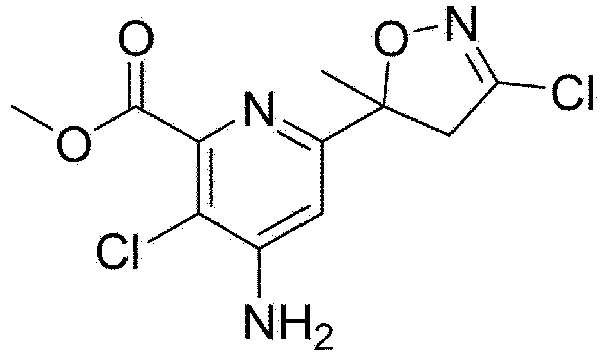
- To a solution of 2-(hydroxyimino)acetic acid (119 mg, 1. 34 mmol) in DME (5 ml) was added N-chlorosuccinimide (358 mg, 2.68 mmol) and the reaction mixture was heated to 110 °C for 1 hour, cooled to room temperature and filtered. To the filtrate were added methyl 4-acetamido-3-chloro-6-(prop-1-en-2-yl)picolinate (300 mg, 1.12 mmol) and a solution of sodium hydrogen carbonate (NaHCO3) (235 mg, 2.79 mmol) in water (0.5 ml) and the reaction mixture was heated at 80 °C under reflux for 18 hours. After completion of the reaction, the mixture was partitioned between ethyl acetate and water. The aqueous layer was separated and extracted with ethyl acetate (x 3) and the combined organic layers were dried (MgSO4), filtered, and concentrated under reduced pressure. The residue was purified by silica gel column chromatography (50% EtOAc/hexane) to afford the title compound (271 mg, 70%).
1H NMR(300MHz, CDCl3) δ 8.82(s, 1H), 7.98(brs, 1H), 3.99(s, 3H), 3.83(d, J=17.3Hz, 1H), 3.20(d, J=17.3Hz, 1H), 2.31 (s, 3H), 1.78(s, 3H) - To a solution of methyl 4-acetamido-3-chloro-6-(3-chloro-5-methyl-4,5-dihydroisoxazol-5-yl)picolinate (1.5 g, 4.33 mmol) in MeOH (15 ml) was slowly added acetyl chloride (2.47 ml, 34.67 mmol) at 0 °C and the reaction mixture was heated under reflux for 1 hour. After completion of the reaction, the mixture was cooled to room temperature and diluted with water. The solution was extracted with ethyl acetate (x 3) and the combined organic layers were dried (MgSO4), filtered, and concentrated under reduced pressure. The residue was purified by silica gel column chromatography (50% EtOAc/hexane) to afford the title compound (997 mg, 76%).
1H NMR(300MHz, CDCl3) δ 7.08(s, 1H), 4.87(brs, 2H), 3.98(s, 3H), 3.70(d, J=17.3Hz, 1H), 3.20(d, J=17.4Hz, 1H), 1.75(s, 3H) -

- To a solution of 2-(hydroxyimino)acetic acid (249 mg, 2.79 mmol) in DME (10 ml) was added N-chlorosuccinimide (745mg, 5.58 mmol), the reaction mixture was heated to 110 °C for 1 hour, cooled to room temperature and filtered. To the filtrate were added methyl 4-acetamido-3-chloro-6-allylpicolinate (500 mg, 1.86 mmol) and a solution of sodium hydrogen carbonate (NaHCO3) (391 mg, 4.6 mmol) in water (1 ml) and the reaction mixture was heated at 80 °C for 16 hours. After completion of the reaction, the mixture was partitioned between ethyl acetate and water. The aqueous layer was separated and extracted with ethyl acetate (x 3) and the combined organic layers were dried (MgSO4), filtered, and concentrated under reduced pressure. The residue was purified by silica gel column chromatography (40% EtOAc/hexane) to afford the title compound (300 mg, 47%).
1H NMR(300MHz, CDCl3) δ 8.48(s, 1H), 7.95(brs, 1H), 5.13-5.28(m, 1H), 4.00(s, 3H), 3.17-3.36(m, 2H), 2.99-3.17(m, 2H), 2.30(s, 3H) - To a solution of methyl 4-acetamido-3-chloro-6-((3-chloro-4,5-dihydroisoxazol-6-yl)methyl)picolinate (230 mg, 0.66 mmol) in MeOH (3 ml) was slowly added acetyl chloride (0.4 ml, 5.32 mmol) at 0 °C and the reaction mixture was heated under reflux for 1 hour. After completion of the reaction, the mixture was cooled to room temperature and diluted with water. The solution was extracted with ethyl acetate (x 3) and the combined organic layers were dried (MgSO4), filtered, and concentrated under reduced pressure. The residue was purified by silica gel column chromatography (50% EtOAc/hexane) to afford the title compound (141 mg, 76%).
1H NMR(300MHz, CDCl3) δ 6.68(s, 1H), 5.04-5.22(m, 1H), 4.85(brs, 2H), 3.97(s, 3H), 3.17-3.35(m, 1H), 2.89-3.16(m, 3H) -

- To a solution of methyl 4-amino-3-chloro-6-((3-chloro-4,5-dihydroisoxazol-6-yl)methyl)picolinate (90 mg, 0.29 mmol) in THF (1 ml) was added a solution of lithium hydroxide (15 mg, 0.45 mmol) in water (0.5 ml) and the reaction mixture was stirred at room temperature for 3 hours. After completion of the reaction, the mixture was acidified with 1N HCl, extracted with ethyl acetate and the organic layer was dried (MgSO4), filtered and concentrated under reduced pressure to afford the title compound (80 mg, 94%) without the purification by silica gel column chromatography.
1H NMR(300MHz, CD3OD) δ 6.87(s, 1H), 5.03-5.20(m, 1H), 3.47(m, 1H), 3.03-3.18(m, 3H) -

- To a solution of 4-amino-3-chloro-6-(3-chloro-4,5-dihydroisoxazol-5-yl)picolinic acid (250 mg, 0.91 mmol) in DMF (3 ml) were added potassium carbonate (K2CO3) (250mg, 1.81 mmol) and iodoethane (109 µℓ, 1.36 mmol). The reaction mixture was stirred at room temperature for 2 hours and partitioned between ethyl acetate and water. The aqueous layer was separated and extracted with ethyl acetate (x 3) and the combined organic layers were dried (MgSO4), filtered, and concentrated under reduced pressure. The residue was purified by silica gel column chromatography (40% EtOAc/hexane) to afford the title compound (209 mg, 76%).
1H NMR(500MHz, CDCl3) δ 6.96(s, 1H), 5.72(dd, J=11.0, 6.4Hz, 1H), 5.03(brs, 2H), 4.46(q, J=7.3Hz, 2H), 3.63(dd, J=17.4, 11.0Hz, 1H), 3.46(dd, J=17.4, 6.4Hz, 1H), 1.42(t, J=7.3Hz, 3H) -

- To 4-amino-3-chloro-6-(3-chloro-4,5-dihydroisoxazol-5-yl)picolinic acid (250 mg, 0.75 mmol) were added isopropyl alcohol (0.14 ml, 1.81 mmol) and titanium isopropoxide (54 ml, 0.18 mmol). The reaction mixture was heated under reflux for 18 hours. After completion of the reaction, the mixture was cooled to room temperature, and the combined organic layers were washed with brine, dried (MgSO4), filtered, and concentrated under reduced pressure. The residue was purified by silica gel column chromatography (40% EtOAc/hexane) to afford the title compound (198 mg, 69%).
1H NMR(300MHz, CDCl3) δ 6.93(s, 1H), 5.71 (dd, J=11.1, 6.5Hz, 1H), 5.32(m, 1H), 4.97(brs, 2H), 3.63(dd, J=17.5, 11.1Hz, 1H), 3.47(dd, J=17.4, 6.5Hz, 1H), 1.41 (d, J=6.4Hz, 6H) -
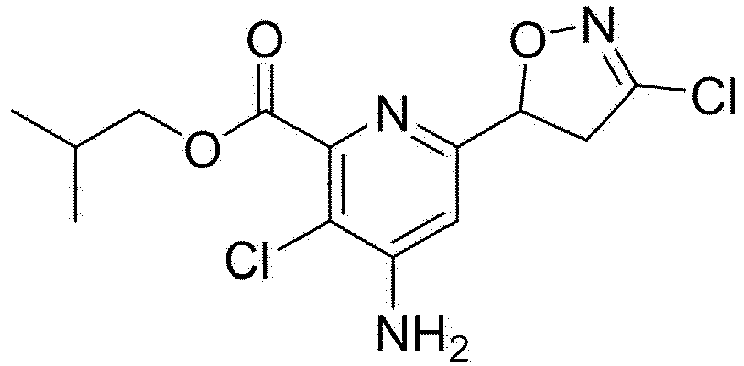
- To a solution of 4-amino-3-chloro-6-(3-chloro-4,5-dihydroisoxazol-5-yl)picolinic acid (150 mg, 0.54 mmol) in DMF (1.5 ml) were added potassium carbonate (K2CO3) (188 mg, 1.36 mmol) and 1-iodo-2-methylpropane (94 µℓ, 0.82 mmol). The reaction mixture was stirred at room temperature for 2 hours and the combined organic layers were washed with brine, dried (MgSO4), filtered, and concentrated under reduced pressure. The residue was purified by silica gel column chromatography (40% EtOAc/hexane) to afford the title compound (122 mg, 60%).
1H NMR(300MHz, CDCl3) δ 6.96(s, 1H), 5.72(dd, J=11.1, 6.4Hz, 1H), 5.02(brs, 2H), 4.18(d, J=6.8Hz, 2H), 3.62(dd, J=17.5, 11.1Hz, 1H), 3.48(dd, J=17.4, 6.4Hz, 1H), 2.10(m, 1H), 1.02(d, J=6.8Hz, 6H) -

- To a solution of 4-amino-3-chloro-6-(3-chloro-4,5-dihydroisoxazol-5-yl)picolinic acid (350 mg, 1.09 mmol) in DMF (5 ml) were added potassium carbonate (K2CO3) (302 mg, 2.18 mmol) and benzyl bromide (0.16 ml, 1.31 mmol). The reaction mixture was stirred at room temperature for 1 hour and partitioned between ethyl acetate and brine. The aqueous layer was separated and extracted with ethyl acetate (x 3) and the combined organic layers were dried (MgSO4), filtered, and concentrated under reduced pressure. The residue was purified by silica gel column chromatography (40% EtOAc/hexane) to afford the title compound (405 mg, 90%).
1H NMR(300MHz, CDCl3) δ 7.42-7.51 (m, 2H), 7.30-7.42(m, 3H), 6.96(s, 1H), 5.72(dd, J=11.1, 6.5Hz, 1H), 5.42(s, 2H), 4.98(brs, 2H), 3.63(dd, J=17.5, 11.1Hz, 1H), 3.45(dd, J=17.5, 6.5Hz, 1H) -

- To a solution of 4-amino-3-chloro-6-(3-chloro-4,5-dihydroisoxazol-5-yl)picolinic acid (250 mg, 0.91 mmol) in DMF (3 ml) were added potassium carbonate (K2CO3) (350 mg, 1.81 mmol) and 4-methylbenzyl chloride (180 µℓ, 1.36 mmol). The reaction mixture was stirred at room temperature for 3 hours and partitioned between ethyl acetate and brine. The aqueous layer was separated and extracted with ethyl acetate (x 3) and the combined organic layers were dried (MgSO4), filtered, and concentrated under reduced pressure. The residue was purified by silica gel column chromatography (40% EtOAc/hexane) to afford the title compound (229 mg, 66%).
1H NMR(300MHz, CDCl3) δ 7.34(d, J=7.9Hz, 2H), 7.17(d, J=7.9Hz, 2H), 6.91 (s, 1H), 5.68(dd, J=11.0, 6.5Hz, 1H), 5.37(s, 2H), 4.96(brs, 2H), 3.59(dd, J=17.5, 11.0Hz, 1H), 3.44(dd, J=17.5, 6.5Hz, 1H), 2.34(s, 3H) -

- To a solution of picolinic acid (50 mg, 0.18 mmol) in DMF (1 ml) were added potassium carbonate (K2CO3) (50 mg, 0.36 mmol) and 4-trifluoromethylbenzyl bromide(42 µℓ, 0.27 mmol). The reaction mixture was stirred at room temperature for 3 hours and partitioned between ethyl acetate and brine. The aqueous layer was separated and extracted with ethyl acetate (x 3) and the combined organic layers were dried (MgSO4), filtered, and concentrated under reduced pressure. The residue was purified by silica gel column chromatography (40% EtOAc/hexane) to afford the title compound (56 mg, 71%).
1H NMR(300MHz, CDCl3) δ 7.65(d, J=8.3Hz, 2H), 7.58(d, J=8.3Hz, 2H), 6.97(s, 1H), 5.72(dd, J=11.1, 6.5Hz, 1H), 5.47(s, 2H), 4.90(brs, 2H), 3.64(dd, J=17.5, 11.1 Hz, 1H), 3.46(dd, J=17.5, 6.5Hz, 1H) -

- To a solution of 4-amino-3-chloro-6-(3-chloro-4,5-dihydroisoxazol-5-yl)picolinic acid (50mg, 0.18mmol) in DMF (1 ml) were added potassium carbonate (K2CO3) (50 mg, 0.36 mmol) and 4-methoxybenzyl chloride (30 µℓ, 0.23 mmol). The reaction mixture was stirred at room temperature for 3 hours and partitioned between ethyl acetate and brine. The aqueous layer was separated and extracted with ethyl acetate (x 3) and the combined organic layers were dried (MgSO4), filtered, and concentrated under reduced pressure. The residue was purified by silica gel column chromatography (40% EtOAc/hexane) to afford the title compound (32 mg, 43%).
1H NMR(500MHz, CDCl3) δ 7.40(d, J=8.7Hz, 2H), 6.93(s, 1H), 6.90(d, J=8.7Hz, 2H), 5.71 (dd, J=11.1, 6.5Hz, 1H), 5.36(s, 2H), 4.86(brs, 2H), 3.81 (s, 3H), 3.62(dd, J=17.5, 11.1Hz, 1H), 3.44(dd, J=17.5, 6.5Hz, 1H) -

- To a solution of 4-amino-3-chloro-6-(3-chloro-4,5-dihydroisoxazol-5-yl)picolinic acid(250mg, 0.91 mmol) in DMF (3 ml) were added potassium carbonate (K2CO3) (250 mg, 1.81 mmol) and 4-bromobenzyl bromide (339 mg, 1.36 mmol). The reaction mixture was stirred at room temperature for 3 hours and partitioned between ethyl acetate and brine. The aqueous layer was separated and extracted with ethyl acetate (x 3) and the combined organic layers were dried (MgSO4), filtered, and concentrated under reduced pressure. The residue was purified by silica gel column chromatography (40% EtOAc/hexane) to afford the title compound (253 mg, 63%).
1H NMR(500MHz, CDCl3) δ 7.50(d, J=8.3Hz, 2H), 7.32(d, J=8.3Hz, 2H), 6.95(s, 1H), 5.69(dd, J=11.1, 6.4Hz, 1H), 5.35(s, 2H), 5.03(brs, 2H), 3.61(dd, J=17.3, 11.1Hz, 1H), 3.45(dd, J=17.3, 6.4Hz, 1H) -

- To a solution of 4-amino-3-chloro-6-(3-chloro-4,5-dihydroisoxazol-5-yl)picolinic acid(50 mg, 0.18 mmol) in DMF (1 ml) were added potassium carbonate (K2CO3) (50 mg, 0.36 mmol) and 4-fluorobenzyl bromide (27 µℓ, 0.22 mmol). The reaction mixture was stirred at room temperature for 3 hours and partitioned between ethyl acetate and brine. The aqueous layer was separated and extracted with ethyl acetate (x 3) and the combined organic layers were dried (MgSO4), filtered, and concentrated under reduced pressure. The residue was purified by silica gel column chromatography (40% EtOAc/hexane) to afford the title compound (41 mg, 60%).
1H NMR(500MHz, CDCl3) δ 7.44(m, 2H), 7.07(m, 2H), 6.95(s, 1H), 5.71 (dd, J=11.2, 6.4Hz, 1H), 5.38(s, 2H), 4.90(brs, 2H), 3.62(dd, J=17.4, 11.2Hz, 1H), 3.45(dd, J=17.4, 6.4Hz, 1H) -

- To a solution of 4-amino-3-chloro-6-(3-chloro-4,5-dihydroisoxazol-5-yl) picolinic acid (200 mg, 0.72 mmol) in tetrahydrofuran (3 ml) were added phenol (0.13 ml, 1.45 mmol), N-(3-dimethylaminopropyl)-N'-ethylcarboimide hydrochloride (278 mg, 1.45 mmol) and 4-(dimethylamino)pyridine (44 mg, 0.36 mmol). And the reaction mixture was stirred at room temperature for 16 hours. After completion of the reaction, the mixture was extracted with ethyl acetate (x 3) and the combined organic layers were washed with saturated aqueous sodium hydrogen carbonate (NaHCO3) solution, dried (MgSO4), filtered, and concentrated under reduced pressure. The residue was purified by silica gel column chromatography (40% EtOAc/hexane) to afford the title compound (65 mg, 26%).
1H NMR(500MHz, CDCl3) δ 7.44(m, 2H), 7.29(m, 3H), 7.02(s, 1H), 5.77(dd, J=11.2, 6.4Hz, 1H), 5.00(brs, 2H), 3.66(dd, J=17.6, 11.2Hz, 1H), 3.53(dd, J=17.6, 6.4Hz, 1H) -

- To a solution of 4-amino-3-chloro-6-(3-chloro-4,5-dihydroisoxazol-5-yl)picolinic acid (50 mg, 0.17 mmol) in tetrahydrofuran (1 ml) was added a solution of lithium hydroxide (8 mg, 0.19 mmol) in water (0.5 ml) and the reaction mixture was stirred at room temperature for 1 hour. After completion of the reaction, the mixture was concentrated under reduced pressure to afford the title compound (47 mg) without the purification by silica gel column chromatography.
1H NMR(500MHz, CD3OD) δ 6.78(s, 1H), 5.61 (dd, J=11.1, 7.3Hz, 1H), 3.63(dd, J=17.4, 1.11 Hz, 1H), 3.41 (dd, J=17.4, 7.3Hz, 1H) -

- To a solution of 4-amino-3-chloro-6-(3-chloro-4,5-dihydroisoxazol-5-yl)picolinic acid (50 mg, 0.17 mmol) in tetrahydrofuran (1 ml) was added a solution of sodium hydroxide (7.6 mg, 0.19 mmol) in water (0.5 ml) and the reaction mixture was stirred at room temperature for 1 hour. After completion of the reaction, the mixture was concentrated under reduced pressure to afford the title compound (51 mg) without the purification by silica gel column chromatography.
1H NMR(500MHz, CD3OD) δ 6.90(s, 1H), 5.26(dd, J=9.6, 7.3Hz, 1H), 3.16(dd, J=15.6, 9.6Hz, 1H), 2.69(dd, J=15.6, 7.3Hz, 1H) -

- To a solution of 4-amino-3-chloro-6-(3-bromo-4,5-dihydroisoxazol-5-yl)picolinic acid (100 mg, 0.31 mmol) in DMF (1 ml) were added potassium carbonate (K2CO3) (65 mg, 0.47 mmol) and iodoethane (38 µℓ, 0.47 mmol) and the reaction mixture was stirred at room temperature for 2 hours. After completion of the reaction, the mixture was extracted with ethyl acetate (x 3) and the combined organic layers were washed with brine, dried (MgSO4), filtered, and concentrated under reduced pressure. The residue was purified by silica gel column chromatography (40% EtOAc/hexane) to afford the title compound (105 mg, 97%).
1H NMR(300MHz, CDCl3) δ 6.96(s, 1H), 5.62(dd, J=11.1, 6.5Hz, 1H), 5.00(brs, 2H), 4.42(q, J=7.2Hz, 2H), 3.63(dd, J=17.5, 11.1Hz, 1H), 3.45(dd, J=17.4, 6.5Hz, 1H), 1.42(t, J=7.2Hz, 3H) -

- To a solution of 4-amino-3-chloro-6-(3-bromo-4,5-dihydroisoxazol-5-yl)picolinic acid (100 mg, 0.31 mmol) in DMF (1 ml) were added potassium carbonate (K2CO3) (65 mg, 0.47 mmol) and 2-bromopropane (44µℓ, 0.47 mmol) and the reaction mixture was stirred at room temperature for 2 hours. After completion of the reaction, the mixture was extracted with ethyl acetate (x 3) and the combined organic layers were washed with brine, dried (MgSO4), filtered, and concentrated under reduced pressure. The residue was purified by silica gel column chromatography (40% EtOAc/hexane) to afford the title compound (81 mg, 72%).
1H NMR(300MHz, CDCl3) δ 6.94(s, 1H), 5.65(dd, J=11.1, 6.5Hz, 1H), 5.32(m, 1H), 5.00(brs, 2H), 3.67(dd, J=17.5, 11.1Hz, 1H), 3.51 (dd, J=17.4, 6.5Hz, 1H), 1.41 (d, J=6.3Hz, 6H) -

- To a solution of 4-amino-3-chloro-6-(3-bromo-4,5-dihydroisoxazol-5-yl)picolinic acid (60 mg, 0.19 mmol) in DMF (1 ml) were added potassium carbonate (K2CO3) (65 mg, 0.47 mmol) and 1-iodo-2-methylpropane (32 µℓ, 0.28 mmol) and the reaction mixture was stirred at room temperature for 2 hours. After completion of the reaction, the mixture was diluted with water. The solution was extracted with ethyl acetate (x 3) and the combined organic layers were washed with brine, dried (MgSO4), filtered, and concentrated under reduced pressure. The residue was purified by silica gel column chromatography (40% EtOAc/hexane) to afford the title compound (65 mg, 92%).
1H NMR(500MHz, CDCl3) δ 6.95(s, 1H), 5.65(dd, J=11.1, 6.4Hz, 1H), 4.95(brs, 2H), 4.18(d, J=6.9Hz, 2H), 3.67(dd, J=17.5, 11.1Hz, 1H), 3.52(dd, J=17.4, 6.4Hz, 1H), 2.09(m, 1H), 1.02(d, J=6.4Hz, 6H) -

- To a solution of 4-amino-3-chloro-6-(3-bromo-4,5-dihydroisoxazol-5-yl)picolinic acid (200 mg, 0.62 mmol) in DMF (3 ml) were added potassium carbonate (K2CO3) (129 mg, 0.94 mmol) and benzyl bromide (0.11 ml, 0.94 mmol) and the reaction mixture was stirred at room temperature for 2 hours. After completion of the reaction, the mixture was diluted with water. The solution was extracted with ethyl acetate (x 3) and the combined organic layers were washed with brine, dried (MgSO4), filtered, and concentrated under reduced pressure. The residue was purified by silica gel column chromatography (40% EtOAc/hexane) to afford the title compound (211 mg, 82%).
1H NMR(500MHz, CDCl3) δ 7.4-7.46(m, 2H), 7.32-7.39(m, 3H), 6.93(s, 1H), 5.61 (dd, J=11.1, 6.5Hz, 1H), 5.42(s, 2H), 4.93(brs, 2H), 3.62(dd, J=17.5, 11.1Hz, 1H), 3.47(dd, J=17.5, 6.5Hz, 1H) -

- To a solution of 4-amino-3-chloro-6-(3-bromo-4,5-dihydroisoxazol-5-yl)picolinic acid (100 mg, 0.31 mmol) in DMF (1 ml) were added potassium carbonate (K2CO3) (65 mg, 0.47 mmol) and 4-methylbenzyl chloride (62 µℓ, 0.47 mmol) and the reaction mixture was stirred at room temperature for 4 hours. After completion of the reaction, the mixture was diluted with water. The solution was extracted with ethyl acetate (x 3) and the combined organic layers were washed with brine, dried (MgSO4), filtered, and concentrated under reduced pressure. The residue was purified by silica gel column chromatography (40% EtOAc/hexane) to afford the title compound (123 mg, 93%).
1H NMR(500MHz, CDCl3) δ 7.35(d, J=8.0Hz, 2H), 7.18(d, J=8.0Hz, 2H), 6.92(s, 1H), 5.63(dd, J=11.1, 6.5Hz, 1H), 5.38(s, 2H), 4.88(brs, 2H), 3.65(dd, J=17.5, 11.1 Hz, 1H), 3.48(dd, J=17.5, 6.5Hz, 1H), 2.35(s, 3H) -

- To a solution of 4-amino-3-chloro-6-(3-bromo-4,5-dihydroisoxazol-5-yl)picolinic acid (100 mg, 0.31 mmol) in DMF (1 ml) were added potassium carbonate (K2CO3) (65 mg, 0.47 mmol) and 4-trifluoromethylbenzyl bromide (72 µℓ, 0.47 mmol) and the reaction mixture was stirred at room temperature for 3 hours. After completion of the reaction, the mixture was diluted with water. The solution was extracted with ethyl acetate (x 3) and the combined organic layers were washed with brine, dried (MgSO4), filtered, and concentrated under reduced pressure. The residue was purified by silica gel column chromatography (40% EtOAc/hexane) to afford the title compound (100 mg, 67%).
1H NMR(500MHz, CDCl3) δ 7.66(d, J=8.3Hz, 2H), 7.59(d, J=8.3Hz, 2H), 6.97(s, 1H), 5.66(dd, J=11.1, 6.5Hz, 1H), 5.48(s, 2H), 4.88(brs, 2H), 3.69(dd, J=17.5, 11.1Hz, 1H), 3.50(dd, J=17.5, 6.5Hz, 1H) -

- To a solution of 4-amino-3-chloro-6-(3-bromo-4,5-dihydroisoxazol-5-yl)picolinic acid (100 mg, 0.31 mmol) in DMF (1 ml) were added potassium carbonate (K2CO3) (65 mg, 0.47 mmol) and 4-methoxybenzyl chloride (63 µℓ, 0.47 mmol) and the reaction mixture was stirred at room temperature for 3 hours. After completion of the reaction, the mixture was diluted with water. The solution was extracted with ethyl acetate (x 3) and the combined organic layers were washed with brine, dried (MgSO4), filtered, and concentrated under reduced pressure. The residue was purified by silica gel column chromatography (40% EtOAc/hexane) to afford the title compound (80 mg, 58%).
1H NMR(500MHz, CDCl3) δ 7.39(d,J=8.3Hz, 2H), 6.91(d, J=8.3Hz, 2H), 6.89(s, 1H), 5.62(dd, J=11.1, 6.5Hz, 1H), 5.35(s, 2H), 4.90(brs, 2H), 3.81(s, 3H), 3.65(dd, J=17.5, 11.1Hz, 1H), 3.48(dd, J=17.5, 6.5Hz, 1H) -

- To a solution of 4-amino-3-chloro-6-(3-bromo-4,5-dihydroisoxazol-5-yl)picolinic acid (60 mg, 0.19 mmol) in DMF (1 ml) were added potassium carbonate (K2CO3) (39 mg, 0.28 mmol) and 4-bromobenzyl bromide (70 mg, 0.47 mmol) and the reaction mixture was stirred at room temperature for 3 hours. After completion of the reaction, the mixture was diluted with water. The solution was extracted with ethyl acetate (x 3) and the combined organic layers were washed with brine, dried (MgSO4), filtered, and concentrated under reduced pressure. The residue was purified by silica gel column chromatography (40% EtOAc/hexane) to afford the title compound (70 mg, 76%).
1H NMR(500MHz, CDCl3) δ 7.52(d,J=8.3Hz, 2H), 7.34(d, J=8.3Hz, 2H), 6.96(s, 1H), 5.65(dd, J=11.2, 6.4Hz, 1H), 5.37(s, 2H), 4.91 (brs, 2H), 3.67(dd, J=17.4, 11.2Hz, 1H), 3.50(dd, J=17.4, 6.4Hz, 1H) -

- To a solution of 4-amino-3-chloro-6-(3-bromo-4,5-dihydroisoxazol-5-yl)picolinic acid (60 mg, 0.19 mmol) in DMF (1 ml) were added potassium carbonate (K2CO3) (39 mg, 0.28 mmol) and 4-fluorobenzyl bromide (35 µℓ, 0.47 mmol) and the reaction mixture was stirred at room temperature for 3 hours. After completion of the reaction, the mixture was diluted with water. The solution was extracted with ethyl acetate (x 3) and the combined organic layers were washed with brine, dried (MgSO4), filtered, and concentrated under reduced pressure. The residue was purified by silica gel column chromatography (40% EtOAc/hexane) to afford the title compound (63 mg, 77%).
1H NMR(500MHz, CDCl3) δ 7.44(m, 2H), 7.07(m, 2H), 6.94(s, 1H), 5.63(dd, J=11.2, 6.4Hz, 1H), 5.38(s, 2H), 4.90(brs, 2H), 3.66(dd, J=17.4, 11.2Hz, 1H), 3.49(dd, J=17.4, 6.4Hz, 1H) -

- To a solution of 4-acetamido-6-(3-bromo-4,5-dihydroisoxazol-5-yl)-3-chloropicolinic acid (390 mg, 1.08 mmol) in tetrahydrofuran (5 ml) were added phenol (0.19 ml, 2.15 mmol), N-(3-dimethylaminopropyl)-N'-ethylcarboimide hydrochloride (412 mg, 2.15 mmol), and 4-(dimethylamino)pyridine (197 mg, 1.61 mmol). And then the reaction mixture was stirred at room temperature for 16 hours. After completion of the reaction, the mixture was diluted with water. The solution was extracted with ethyl acetate (x 3) and the combined organic layers were washed with sodium hydrogen carbonate (NaHCO3) aqueous solution, dried (MgSO4), filtered, and concentrated under reduced pressure. The residue was purified by silica gel column chromatography (40% EtOAc/hexane) to afford the title compound (230 mg, 49%).
1H NMR(500MHz, CDCl3) δ 8.76(s,1H), 8.05(brs,1H), 7.45(m,2H), 7.28(m,3H), 5.75(dd, J=11.2, 6.4Hz, 1H), 3.70(dd, J=17.6, 11.2Hz, 1H), 3.67(dd, J=17.6, 6.4Hz, 1H), 2.31 (s, 3H) - To a solution of phenyl 4 -acetamido-3-chloro- 6 -(3-bromo-4,5-dihydroisoxazol-5-yl)picolinate (255 mg, 0.58 mmol) in MeOH (3 ml) was slowly added BF3-OEt2 (0.32 ml, 2.62 mmol) at 0 °C and the reaction mixture was heated under reflux for 1 hour. After completion of the reaction, the mixture was diluted with water. The solution was extracted with ethyl acetate (x 3) and the combined organic layers were washed with sodium hydrogen carbonate (NaHCO3) aqueous solution, dried (MgSO4), filtered, and concentrated under reduced pressure. The residue was purified by silica gel column chromatography (40% EtOAc/hexane) to afford the title compound (204 mg, 89%).
1H NMR(300MHz, CDCl3) δ 7.44(m,2H), 7.30(m,3H), 7.03(s,1H), 5.69(dd, J=11.2, 6.4Hz, 1H), 5.01(brs, 2H), 3.71(dd, J=17.6, 11.2Hz, 1H), 3.57(dd, J=17.6, 6.4Hz, 1H) -

- To 5-chloro-2,4-dihydroxy-6-methoxycarboxylpyrimidine (3 g, 14.67 mmol) was slowly added phosphoryl chloride (POCl3) (55 ml, 0.59 mol) at 10 °C. After cooling to 0 °C, N,N'-diethyl aniline (3.5 ml, 22 mmol) was slowly added to the mixture, and the reaction mixture was warmed to room temperature and heated under reflux 18 hours. After completion of the reaction, the mixture was cooled to room temperature and concentrated under reduced pressure. After pouring the residue to ice water, the mixture was extracted with ethyl acetate (x 3), dried (MgSO4), filtered, and concentrated under reduced pressure. The residue was purified by silica gel column chromatography (40% EtOAc/hexane) to afford the title compound (2.95 g, 83%).
1H NMR(500MHz, CDCl3) δ 4.04(s, 3H) - To a solution of 2,5,6-trichloro-pyrimidine-4-carboxylic acid methyl ester (100 mg, 0.41 mmol) in tetrahydrofuran (5 ml) was added 30% aqueous ammonia (0.04 ml, 2.07 mmol) at 0 °C and the reaction mixture was stirred for 1 hour. After completion of the reaction, the mixture was filtered and concentrated under reduced pressure. The residue was washed with hexane to afford the title compound (91 mg, 99%) without the purification by silica gel column chromatography.
1H NMR(500MHz, DMSO-d 6) δ 8.56(brs, 1H), 7.93(brs, 1H), 3.88(s, 3H) - To a solution of 6-amino-2,5-dichloro-pyrimidine-4-carboxylic acid methyl ester (1 g, 4.05 mmol) in MeOH were added potassium trifluoro(prop-1-ene-2-yl)borate (905 mg, 6.76 mmol), [1,1'-bis(diphenylphosphino)ferrocene]dichloropalladium(II) (74 mg, 0.09 mmol), and triethylamine (0.94 ml, 6.76 mmol) at room temperature. The mixture was degassed with nitrogen for 1 hour and heated under reflux for 16 hours under nitrogen. The reaction mixture was cooled to room temperature, filtered through celite, concentrated under reduced pressure, and partitioned between ethyl acetate and water. The aqueous layer was separated and extracted with ethyl acetate (x 3) and the combined organic layers were dried (MgSO4), filtered, and concentrated under reduced pressure. The residue was purified by silica gel column chromatography (30% EtOAc/hexane) to afford the title compound (667 mg, 69%).
1H NMR(500MHz, CDCl3) δ 6.69(dd, J=17.3, 10.45Hz, 1H), 6.50(dd, J=17.3, 1.92Hz, 1H), 5.74(brs, 2H), 5.69(dd, J=10.45, 1.29Hz, 1H), 3.99(s, 3H) - To a solution of 6-amino-5-chloro-2-vinyl-pyrimidine-4- carboxylic acid methyl ester (665 mg, 3.11 mmol) in ethyl acetate (8 ml) were added dibromoaldoxime (758 mg, 3.74 mmol) and a solution of sodium hydrogen carbonate (NaHCO3) (654 mg, 7.78 mmol) in water (4 ml), and the reaction mixture was heated at 80 °C under reflux for 18 hours. After completion of the reaction, the mixture was partitioned between ethyl acetate and water. The aqueous layer was separated and extracted with ethyl acetate (x 3) and the combined organic layers were dried (MgSO4), filtered, and concentrated under reduced pressure. The residue was purified by silica gel column chromatography (50% EtOAc/hexane) to afford the title compound (672 mg, 64%).
1H NMR(300MHz, CDCl3) δ 6.38(brs, 2H), 5.62(dd, J=11.1, 7.8Hz, 1H), 3.99(s, 3H), 3.70(dd, J=17.4, 11.1 Hz, 1H), 3.59(dd, J=17.4, 7.8Hz, 1H) -

- To a solution of 6-amino-2-(3-bromo-4,5-dihydroisoxazol-5-yl)-5-chloropyrimidine-4-carboxylic acid methyl ester (100 mg, 0.30 mmol) in tetrahydrofuran (2 ml) was added a solution of lithium hydroxide (19 mg, 0.45 mmol) in water (1 ml) and the reaction mixture was stirred at room temperature for 1 hour. After completion of the reaction, the mixture was acidified with 1N HCl, extracted with ethyl acetate and the organic layer was dried (MgSO4), filtered and concentrated under reduced pressure to afford the title compound (93 mg, 97%) without the purification by silica gel column chromatography.
1H NMR(300MHz, CD3OD) δ 5.53(dd, J=11.1, 7.7Hz, 1H), 3.75(dd, J=17.4, 11.1Hz, 1H), 3.62(dd, J=17.4, 7.7Hz, 1H) -

- To a solution of 6-amino-2-(3-bromo-4,5-dihydroisoxazol-5-yl)-5-chloropyrimidine-4-carboxylic acid methyl ester (300 mg, 0.89 mmol) in toluene (3 ml) and chloroform (1 ml) were added acetic anhydride (Ac2O) (0.10 ml, 1.07 mmol) and a catalytic amount of sulfuric acid (H2SO4) at room temperature, and the reaction mixture was heated at 60 °C for 16 hours. After completion of the reaction, the mixture was partitioned between ethyl acetate and water. The aqueous layer was separated and extracted with ethyl acetate (x 3) and the combined organic layers were washed with saturated aqueous sodium hydrogen carbonate (NaHCO3) solution, dried (MgSO4), filtered, and concentrated under reduced pressure. The residue was purified by silica gel column chromatography (30% EtOAc/hexane) to afford the title compound (203 mg, 60%).
1H NMR(300MHz, CDCl3) δ 8.28(brs, 1H), 5.71 (dd, J=10.2, 7.5Hz, 1H), 4.02(s, 3H), 3.65(m, 2H), 2.64(s, 3H) - To 6-acetylamino-2-(3-bromo-4,5-dihydroisoxazol-5-yl)-5-chloropyrimidine-4-carboxylic acid methyl ester (120 mg, 0.32 mmol) was added 4M HCl solution in dioxane (2.4 ml) and the reaction mixture was stirred at room temperature for 16 hours. After completion of the reaction, the mixture was partitioned between ethyl acetate and water. The combined organic layer was dried (MgSO4), filtered, and concentrated under reduced pressure to afford the title compound (105 mg, 99%) without the purification by silica gel column chromatography.
1H NMR(500MHz, CDCl3) δ 6.28(brs, 2H), 5.69(dd, J=11.5, 7.8Hz, 1H), 3.99(s, 3H), 3.66(dd, J=17.4, 11.5Hz, 1H), 3.54(dd, J=17.4, 7.8Hz, 1H) -

- To a solution of 6-amino-2-(3-chloro-4,5-dihydroisoxazol-5-yl)-5-chloropyrimidine-4-carboxylic acid methyl ester (35 mg, 0.12 mmol) in tetrahydrofuran (0.5 ml) was added a solution of lithium hydroxide (8 mg, 0.18 mmol) in water (0.25 ml) and the reaction mixture was stirred at room temperature for 1 hours. After completion of the reaction, the mixture was acidified with 1N HCl, extracted with ethyl acetate and the organic layer was dried (MgSO4), filtered and concentrated under reduced pressure to afford the title compound (30 mg, 90%) without the purification by silica gel column chromatography.
1H NMR(500MHz, CD3OD) δ 5.61(dd, J=11.1, 7.8Hz, 1H), 3.72(dd, J=17.4, 11.1Hz, 1H), 3.59(dd, J=17.4, 7.8Hz, 1H) -

- To a solution of methyl 4-amino-3-chloro-6-(3-chloro-4,5-dihydroisoxazol- 5 -yl)picolinate (150 mg, 0.45 mmol) in acetonitrile (5 ml) were added iodomethane (0.14 ml, 2.24 mmol), and cecium carbonate (Cs2CO3) (292 mg, 0.90 mmol) at room temperature. The mixture was heated to 80 °C under reflux for 15 hours. After completion of the reaction, the mixture was extracted with ethyl acetate and the organic layer was dried (MgSO4), filtered and concentrated under reduced pressure. The residue was purified by silica gel column chromatography (20% EtOAc/hexane) to afford the title compound (94 mg, 69%).
1H NMR(300MHz, CDCl3) δ 6.84(s, 1H), 5.76(dd, J=11.1, 7.0Hz, 1H), 5.22(brs, 1H), 3.97(s, 3H), 3.66(dd, J=17.5, 11.1 Hz, 1H), 3.48(dd, J=17.5, 7.0Hz, 1H), 3.00(d, J=4.9Hz, 3H) -

- To a solution of methyl 3-chloro-6-(3-chloro-4,5-dihydroisoxazol-5-yl)-4-(methylamino)picolinate (35 mg, 0.12 mmol) in acetonitrile (1 ml) were added iodomethane (11 µℓ), and cecium carbonate (Cs2CO3) (112 mg, 0.34 mmol) at room temperature. The mixture was heated to 80 °C under reflux for 16 hours. After completion of the reaction, the mixture was extracted with ethyl acetate and the organic layer was dried (MgSO4), filtered and concentrated under reduced pressure. The residue was purified by silica gel column chromatography (20% EtOAc/hexane) to afford the title compound (36 mg, 98%).
1H NMR(300MHz, CDCl3) δ 7.06(s, 1H), 5.76(dd, J=11.0, 6.9Hz, 1H), 3.98(s, 3H), 3.64(dd, J=17.6, 11.0Hz, 1H), 3.50(dd, J=17.6, 6.9Hz, 1H), 3.03(s, 6H) -

- To a solution of methyl 3-chloro-6-(3-chloro-4,5-dihydroisoxazol-5-yl)-4-(dimethylamino)picolinate (40 mg, 0.13 mmol) in tetrahydrofuran (1 ml) was added a solution of lithium hydroxide (6 mg, 0.15 mmol) in water (0.5 ml) and the reaction mixture was stirred at room temperature for 1 hour. After completion of the reaction, the mixture was acidified with 1N HCl, extracted with ethyl acetate and the organic layer was dried (MgSO4), filtered and concentrated under reduced pressure to afford the title compound (38 mg, 99%) without the purification by silica gel column chromatography.
1H NMR(300MHz, CD3OD) δ 7.08(s, 1H), 5.76(dd, J=10.9, 7.9Hz, 1H), 3.68(dd, J=17.3, 10.9Hz, 1H), 3.52(dd, J=17.3, 7.9Hz, 1H), 3.08(s, 6H) -

- To a solution of methyl 4-acetamido-3,5,6-trichloropicolinate (4.1 g, 16.05 mmol) in toluene (65 ml) and chloroform (5 ml) were added acetic anhydride (Ac2O) (1.8 ml, 19.26 mmol) and a catalytic amount of sulfuric acid (H2SO4) at room temperature, and the reaction mixture was heated at 60 °C for 16 hours. After completion of the reaction, the mixture was partitioned between ethyl acetate and water. The aqueous layer was separated and extracted with ethyl acetate (x 3) and the combined organic layers were washed with saturated aqueous sodium hydrogen carbonate (NaHCO3) solution, dried (MgSO4), filtered, and concentrated under reduced pressure. The residue was purified by silica gel column chromatography (30% EtOAc/hexane) to afford the title compound (4.15 g, 87%).
1H NMR(300MHz, CDCl3) δ 4.02(s, 3H), 2.33(s, 3H) - To a solution of methyl 4-acetamido-3,5,6-trichloropicolinate (4 g, 13.44 mmol) in EtOH were added potassium trifluoro(prop-1-ene-2-yl)borate (2.70 g, 20.17 mmol), [1,1'-bis(diphenylphosphino)ferrocene]dichloropalladium(II) (197 mg, 0.27 mmol), and triethylamine (2.81 ml, 20.17 mmol) at room temperature. The mixture was degassed with nitrogen for 1 hour and heated under reflux for 16 hours under nitrogen. The reaction mixture was cooled to room temperature, filtered through celite, concentrated under reduced pressure, and partitioned between ethyl acetate and water. The aqueous layer was separated and extracted with ethyl acetate (x 3) and the combined organic layers were dried (MgSO4), filtered, and concentrated under reduced pressure. The residue was purified by silica gel column chromatography (40% EtOAc/hexane) to afford the title compound (2.93 g, 75%).
1H NMR(300MHz, CDCl3) δ 7.53(brs, 1H), 7.15(dd, J=17.0Hz, 10.6Hz, 1H), 6.53(d, J=17.05Hz, 1H), 5.68(d, J=10.6Hz, 1H), 4.00(s, 3H), 2.25(s, 3H) - To a solution of 2-(hydroxyimino)acetic acid (739 mg, 8.30 mmol) in DME (5 ml) was added N-chlorosuccinimide (2.22 g, 16.60 mmol), and then the reaction mixture was heated to 110 °C for 1 hour and cooled to room temperature. To the reaction mixture were added methyl 4-acetamido-3,5-dichloro-6-vinylpicolinate (2 g, 6.92 mmol) and a solution of sodium hydrogen carbonate (NaHCO3) (1.45 g, 2.5 mmol) in water and the reaction mixture was heated at 80 °C under reflux for 18 hours. After completion of the reaction, the mixture was partitioned between ethyl acetate and water. The aqueous layer was separated and extracted with ethyl acetate (x 3) and the combined organic layers were dried (MgSO4), filtered, and concentrated under reduced pressure. The residue was purified by silica gel column chromatography (50% EtOAc/hexane) to afford the title compound (1.78 g, 70%).
1H NMR(300MHz, CDCl3)δ 7.62(s, 1H), 6.17(dd, J=11.0, 8.0Hz, 1H), 4.07(dd, J=17.3, 8.0Hz, 1H), 3.99(s, 3H), 3.43(dd, J=17.3, 11.0Hz, 1H), 2.28(s, 3H) - To a solution of methyl 4-acetamido-3,5-dichloro-6-(3-chloro-4,5-dihydroisoxazol-5-yl)picolinate (1 g, 2.73 mmol) in MeOH (10 ml) was slowly added acetyl chloride (1.6 ml, 21.82 mmol) at 0 °C and the reaction mixture was heated under reflux for 1 hour. After completion of the reaction, the mixture was cooled to room temperature and diluted with water. The solution was extracted with ethyl acetate (x 3) and the combined organic layers were dried (MgSO4), filtered, and concentrated under reduced pressure. The residue was purified by silica gel column chromatography (50% EtOAc/hexane) to afford the title compound (773 mg, 87%).
1H NMR(300MHz, CDCl3) δ 6.10(dd, J=11.0, 8.5Hz, 1H), 5.33(brs, 2H), 4.06(dd, J=17.3, 8.0Hz, 1H), 3.98(s, 3H), 3.43(dd, J=17.3, 11.0Hz, 1H) -

- To a solution of methyl 4-amino-3,5-dichloro-6-(3-chloro-4,5-dihydroisoxazol-5-yl)picolinate (150 mg, 0.46 mmol) in tetrahydrofuran (1 ml) was added a solution of lithium hydroxide (21 mg, 0.51 mmol) in water (0.5 ml) and the reaction mixture was stirred at room temperature for 1 hour. After completion of the reaction, the mixture was acidified with 1N HCl, extracted with ethyl acetate and the organic layer was dried (MgSO4), filtered and concentrated under reduced pressure to afford the title compound (142 mg, 98%) without the purification by silica gel column chromatography.
1H NMR(300MHz, CD3OD) δ 6.16(dd, J=11.0, 8.2Hz, 1H), 3.98(dd, J=17.3, 8.2Hz, 1H), 3.50(dd, J=17.3, 11.0Hz, 1H) -

- To a solution of methyl 4-amino-3,6-dichloropicolinate in acetonitrile (75 ml) was added selectfluor (12.0 g, 33.93 mmol) and the reaction mixture was heated at 70°C for 7 hours. After completion of the reaction, the mixture was cooled to room temperature and diluted with water. The aqueous layer was extracted with ethyl acetate (x 3) and the organic layer was dried (MgSO4), filtered and concentrated under reduced pressure. The residue was purified by silica gel column chromatography (30% EtOAc/hexane) to afford the title compound (3.74 g, 69%).
1H NMR(300MHz, CDCl3) δ 5.05(brs, 2H), 3.97(s, 3H) - To a solution of methyl 4-amino-3,6-dichloro-5-fluoropicolinate (3.1 g, 13.2 mmol) in toluene (40 ml) and chloroform (5 ml) were added acetic anhydride (Ac2O) (2.5 ml, 26.5 mmol) and a catalytic amount of sulfuric acid (H2SO4) at room temperature, and the reaction mixture was heated at 60 °C for 16 hours. After completion of the reaction, the mixture was partitioned between ethyl acetate and saturated aqueous sodium hydrogen carbonate (NaHCO3) solution. The organic layer was dried (MgSO4), filtered, and concentrated under reduced pressure. The residue was purified by silica gel column chromatography (30% EtOAc/hexane) to afford the title compound (2.7 g, 71%)
1H NMR(300MHz, CDCl3) δ 7.31 (brs, 1H), 4.01 (s, 3H), 2.31 (s, 3H) - To a solution of methyl 4-acetamido-3,6-dichloro-5-fluoropicolinate (2.63 g, 9.39 mmol) in EtOH (40 ml) were added potassium trifluoro(prop-1-ene-2-yl)borate (1.89 g, 14.09 mmol), [1,1'-bis(diphenylphosphino)ferrocene]dichloropalladium(II) (137 mg, 0.19 mmol), and triethylamine (1.96 ml, 14.09 mmol) at room temperature. The mixture was degassed with nitrogen for 1 hour and heated under reflux for 18 hours under nitrogen. The reaction mixture was cooled to room temperature, filtered through celite, concentrated under reduced pressure, and partitioned between ethyl acetate and water. The aqueous layer was separated and extracted with ethyl acetate (x 3) and the combined organic layers were dried (MgSO4), filtered, and concentrated under reduced pressure. The residue was purified by silica gel column chromatography (40% EtOAc/hexane) to afford the title compound (2.44 g, 95%).
1H NMR(300MHz, CDCl3) δ 7.29(brs, 1H), 6.94(ddd, J=17.3, 11.0, 1.6Hz, 1H), 6.48(dd, J=17.3, 1.6Hz, 1H), 3.50(dd, J=11.0, 1.6Hz, 1H), 4.00(s, 3H), 2.28(s, 3H) - To a solution of methyl 4-acetamido-3-chloro-5-fluoro-6-vinylpicolinate (500 mg, 1.83 mmol) in ethyl acetate (3 ml) were added dibromoaldoxime (558 mg, 2.75 mmol) and a solution of sodium hydrogen carbonate (NaHCO3) (385 mg, 4.58 mmol) in water (2 ml), and the reaction mixture was heated at 80 °C under reflux for 18 hours. After completion of the reaction, the mixture was partitioned between ethyl acetate and water. The aqueous layer was separated and extracted with ethyl acetate (x 3) and the combined organic layers were dried (MgSO4), filtered, and concentrated under reduced pressure. The residue was purified by silica gel column chromatography (40% EtOAc/hexane) to afford the title compound (325 mg, 45%).
1H NMR(300MHz, CDCl3) δ 7.40(brs, 1H), 6.00(ddd, J=11.1, 8.3, 1.2Hz, 1H), 3.95-4.06(m, 4H), 3.53(dd, J=17.1, 11.1 Hz, 1H), 2.31 (s, 3H) - To methyl 4-acetamido-6-(3-bromo-4,5-dihydroisoxazol-5-yl)-3-chloro-5-fluoropicolinate (310 mg, 0.79 mmol) was added 4M HCl solution in dioxane (5.9 ml) at room temperature, and the reaction mixture was heated at 40 °C for 18 hours. After completion of the reaction, the aqueous layer was separated and extracted with ethyl acetate (x 3) and the combined organic layers were dried (MgSO4), filtered, and concentrated under reduced pressure. The residue was purified by silica gel column chromatography (40% EtOAc/hexane) to afford the title compound (240 mg, 87%).
1H NMR(300MHz, CDCl3) δ 7.43(s, 1H), 6.05(ddd, J=11.1, 8.4, 1.4Hz, 1H), 3.92-4.02(m, 4H), 3.41-3.53(m, 1H), 2.28-2.30(s, 3H) - To a solution of methyl 4-acetamido-6-(3-chloro-4,5-dihydroisoxazol-5-yl)-3-chloro-5-fluoropicolinate (145 mg, 0.41 mmol) in MeOH (2 ml) was slowly added acetyl chloride (0.24 ml, 3.31 mmol) at 0 °C and the reaction mixture was heated under reflux for 1 hour. After completion of the reaction, the mixture was cooled to room temperature and diluted with water. The solution was extracted with ethyl acetate (x 3) and the combined organic layers were dried (MgSO4), filtered, and concentrated under reduced pressure. The residue was purified by silica gel column chromatography (40% EtOAc/hexane) to afford the title compound (88 mg, 69%).
1H NMR(300MHz, CDCl3) δ 5.97(dd, J=11.3, 9.3Hz, 1H), 5.04(brs, 2H), 3.97(s, 3H), 3. 42(dd, J=17.0, 9.3Hz, 1H), 3.42(dd, J=17.0, 11.3Hz, 1H) -

- To a solution of 4-amino-3-chloro-6-(3-chloro-4,5-dihydroisoxazol-5-yl)-5-fluoropicolinate (45 mg, 0.15 mmol) in tetrahydrofuran (1 ml) was added a solution of lithium hydroxide (6.7 mg, 0.16 mmol) in water (0.5 ml) and the reaction mixture was stirred at room temperature for 1 hour. After completion of the reaction, the mixture was acidified with 1N HCl, extracted with ethyl acetate and the organic layer was dried (MgSO4), filtered and concentrated under reduced pressure to afford the title compound (40 mg, 92%) without the purification by silica gel column chromatography.
1H NMR(300MHz, CD3OD) δ 6.00(ddd, J=11.1, 8.7, 1.1Hz, 1H), 3.88(dd, J=17.2, 8.7Hz, 1H), 3.55(dd, J=17.2, 11.1Hz, 1H) - The pyridine-based compound containing an isoxazoline ring represented by Formula 1 according to the present disclosure may be useful for use as a herbicide. Accordingly, a herbicide including, as an active ingredient, a compound selected from a compound represented by Formula 1 and an agrochemically acceptable salt thereof is included in the scope of the present disclosure.
- The herbicide according to the present disclosure may be applied to whole plants or parts of plants. The term 'plant' used herein refers to all plants and plant populations, such as wild plants or crops (including wild crops), which are wanted or unwanted. 'Crops' include plant varieties and transgenic plants that can be protected or not protected by plant breeding assurances, and may be plants that are obtainable by conventional breeding and optimization methods, biotechnological and recombinant methods, or a combination of these methods. The term 'part of a plant' refers to a part or organ of a plant above or under the ground, for example, buds, leaves, flowers, and roots. For example, the term 'part of a plant' may include leaves, needles, stalks, trunks, flowers, fruit bodies, fruits, seeds, roots, tubers, and rootstalks. Some of the plants also include nutritive and reproductive material, such as seedlings, tubers, rootstalks, grafting and seeds. The applying of the herbicide according to the present disclosure into whole plants or parts of a plant may be performed in a direct contact manner or a conventional process method, such as spray, incorporation, soaking, coating, or fumigation.
- In preparing a herbicidal composition including the compound represented by Formula 1 as an active ingredient, a carrier, a surfactant, a diluent, a dispersant, an adjuvant, and the like, which are conventionally used in formulating pesticides, are combined to provide a liquid or solid preparation. The liquid or solid preparation may be used directly or diluted in suitable media for treatment. The spray amount may be from several hundred liters to several thousand liters per hectare (ha).
- The herbicidal composition according to an embodiment of the present disclosure may include: at least one or two kinds selected from compounds represented by Formula 1 and agrochemically acceptable salts thereof as an active ingredient, in an amount of about 0.1 wt% to about 99.9 wt%; and at least one additive selected from a surfactant, a solid diluent, and a liquid diluent, in an amount of about 0.1 wt% to about 99.9 wt%. The herbicidal composition according to an embodiment of the present disclosure may be formulated in any one selected from wettable powder, suspensions, emulsions, fine suspensions, liquids, dispersible liquids, granular wettable powder, granules, powder, liquid wettable powder, floating granules, and tablets.
- Table 2 shows active ingredients and additives including surfactants and diluents, which constitute the herbicidal composition according to the present disclosure, and amounts thereof. However, the composition ratio of the herbicidal composition according to is not limited to Table 2.
[Table 2] Formulation Content (unit: wt%) Active ingredient Diluent Surfactant Wettable powder 10∼90 0∼80 1∼10 Suspensions 3∼50 40∼95 0∼15 Emulsions/Liquids 3∼50 40∼95 0∼15 Granules 0.1∼95 4∼98.9 1∼15 - The amount of the active ingredient of the herbicidal composition according to the present disclosure may be controlled according to use, and in some cases, the surfactant needs to be used in a greater amount than the active ingredient.
- The surfactant included in the herbicidal composition according to the present disclosure is a substance having a large surface activity and is an amphipathic substance having a hydrophilic molecular group and a lipophilic molecular group in the molecular structure thereof. The surfactant has excellent properties in terms of detergency, dispersibility, emulsifying characteristics, solubilization characteristics, wetting characteristics, sterilization characteristics, bubbling characteristics, and penetration characteristics, and accordingly, the surfactant may disintegrate, collapse, disperse, or emulsify the active ingredient to induce drug efficacy effectively. The surfactant may include an anionic surfactant selected from a sodium salt or calcium salt of a sulfonate, such as (C8 to C12 alkyl)benzenesulfonate, (C3 to C6 alkyl)naphthalene sulfonate, di(C3 to C6 alkyl)naphthalene sulfonate, di(C8 to C12 alkyl)sulfosuccinate, lignin sulfonate, naphthalene sulfosuccinate formalin condensate, (C8 to C12 alkyl)naphthalene sulfonate formalin condensate, polyoxyethylene(C8 to C12 alkyl)phenyl sulfonate; a sodium salt or calcium salt of sulfate, such as (C8 to C12 alkyl)sulfate, polyoxyethylene(C8 to C12 alkyl)sulfate, or polyoxyethylene(C8 to C12 alkyl)phenyl sulfate; and a sodium salt or calcium salt of polyoxy alkylene succinate. The surfactant may include a non-ionic surfactant, such as polyoxyethylene(C8 to C12 alkyl)ether, polyoxyethylene(C8 to C12 alkyl)phenylether, or polyoxyethylene(C8 to C12 alkyl)phenylpolymer. The surfactants described above may be used alone or in combination of two or more. Surfactants available for the present disclosure are not limited to those exemplified above.
- The diluent contained in the herbicidal composition according to the present disclosure may be classified as a solid diluent and a liquid diluent, depending on the nature of the diluent. As a solid diluent, a highly absorbing diluent is suitable for the preparation of a wetting agent. The liquid diluent and the solvent may retain their stability even at a temperature of 0 ° C without experiencing of phase separation. In one embodiment, the liquid diluent may be selected from water, toluene, xylene, petroleum ether, vegetable oil, acetone, methyl ethyl ketone, cyclohexanone, acid anhydride, acetonitrile, acetophenone, amyl acetate, 2-butanone, butyrin carbonate, chlorobenzene, cyclohexane, cyclohexanol, alkyl ester of acetic acid, diacetone alcohol, 1,2-dichloropropane, diethanolamine, p-diethyl benzene, diethylene glycol, diethylene glycol butyl ether, diethylene glycol ethyl ether, diethylene glycol methyl ether, N,N-dimethylformamide, dimethyl sulfoxide, 1,4-dioxane, dipropylene glycol, dipropylene glycol methyl ether, dipropylene glycol dibenzoate, diproxitol, alkyl pyrrolidone, ethyl acetate, 2-ethyl hexanol, ethylene carbonate, 1,1,1-trichloroethane, 2-heptanone, alpha-pinene, d-limonene, ethyl lactate, ethylene glycol, ethylene glycol butyl ether, ethylene glycol methyl ether, gamma-butyrolactone, glycerol, glycerol acetate, glycerol diacetate, glycerol triacetate, hexadecane, hexylene glycol, isoamyl acetate, isobornyl acetate, isooctane, isophorone, isopropyl benzene, isopropyl myristate, lactic acid, lauryl amine, mesityl oxide, methoxypropanol, methyl isoamyl ketone, methyl isobutyl ketone, methyl laurate, methyl octanoate, methyl olate, methylene chloride, m-xylene, n-hexane, n-octylamine, octadecanoic acid, octylamine acetate, oleic acid, oleylamine, o-xylene, phenol, polyethylene glycol(PEG 400), propionic acid, propyl lactate, propylene carbonate, propylene glycol, propylene glycol methyl ether, p-xylene, toluene, triethyl phosphate, triethylene glycol, xylene sulfonic acid, paraffin, mineral oil, trichloroethylene, perchloroethylene, ethyl acetate, amyl acetate, butyl acetate, propylene glycol methyl ether, diethylene glycol methyl ether, methanol, ethanol, isopropanol, and high molecular weight alcohol such as, amyl alcohol, tetrahydrofurfuryl alcohol, hexanol, octanol, ethylene glycol, propylene glycol, glycerol, and N-methyl-2-pyrrolidone. In one embodiment, the solid diluent may be selected from talc, titanium dioxide, pyroclastic clay, silica, ata perlite clay, diatomite, limestone, calcium carbonate, bentonite, calcium montmorillonite, cottonseed shell, wheatmeal, peas powder, peanuts, wood flour, walnut shells, and lignin.
- The herbicidal composition may further include a small amount of other additives to prevent bubbling, caking, corrosion, and microbial production, which occur during the preparation of the herbicidal composition. The preparation method is performed by using a conventional method. In the case of liquid preparations, it is sufficient to merely mix the constituents, and the fine solid phase composition may be mixed and pulverized in a hammer or a flow mill. Suspensions may be prepared by admixing in a wet mill, and granules may be prepared by spraying an active ingredient on a granular carrier.
- Preparation examples for the representative preparations using the compound according to the present disclosure will now be described in detail.
- The following components were completely mixed and the mixture was mixed with a liquid surfactant while the liquid surfactant was sprayed on solid components. The resultant mixture was crushed in a hammer mill to obtain a particle size of 100 µm or less.
- 20 wt% of active component
- 2 wt% of dodecylphenol polyethylene glycol ether
- 4 wt% of sodium lignin sulfonate
- 6 wt% of sodium silicon aluminate
- 68 wt% of montmorillonite
- The following components were mixed and crushed in a hammer mill until the particle size reached to 25 µm or less, and packaged.
- 80 wt% of active component
- 2 wt% of sodium alkyl naphthalene sulfonate
- 2 wt% of sodium lignin sulfonate
- 3 wt% of synthetic amorphous silica
- 13 wt% of kaolinite
- The following components were mixed and uniformly dissolved to prepare emulsions.
- 30 wt% of active component
- 20 wt% of cyclohexanone
- 11 wt% of polyoxyethylene alkylarylether
- 4 wt% of calcium alkylbenzene sulfonate
- 35 wt% of methylnaphthalene
- The following components were uniformly crashed, and then, 20 parts by weight of water was added to 100 parts by weight of the resultant mixture, followed by mixing. Then, the reactant was processed into granules by using the mesh of 14 to 32 by using an extruder, and then dried to produce granules.
- 5 wt% of active component
- 2 wt% of sodium lauryl alcohol sulfate ester salt
- 5 wt% of sodium lignin sulfonate
- 2 wt% of carboxy methyl cellulose
- 16 wt% of potassium sulfate
- 70 wt% of plaster
- The preparations according to the present disclosure were diluted to an appropriate concentration for practical use.
- The pyridine-based compound containing an isoxazoline ring according to the present disclosure has a high selectivity to rice, wheat, and maize during soil treatment and foliage treatment, and selectively controls weeds including Quamoclit pennata, Abutilon theophrasti Medicus, Aeschynomene indica, Xanthium strumarium, and Catchweed bedstraw. Accordingly, the pyridine-based compound containing an isoxazoline ring is useful for farming wheat, maize, and rice.
- The herbicidal composition according to the present disclosure may be used in an amount of about 10 g to about 1 kg per hectare (ha) based on the active ingredient, for example about 50 g to about 200 g, but the amount of the herbicidal composition is not limited thereto. The amount of the herbicidal composition may vary depending on factors such as the amount of weed, the degree of growth, and the preparation.
- In one embodiment, the herbicidal composition according to the present disclosure may include, as the active ingredient, the compound represented by Formula 1 alone or in combination with active ingredients that are known to be active as pesticides. In one embodiment, the herbicidal composition according to the present disclosure may include, in addition to the compound represented by Formula 1, at least one herbicidal active composition selected from an acetyl-CoA carboxylase (ACCase) inhibitor, an acetolactate synthase (ALS) inhibitor, an auxin herbicide, an auxin transport inhibitor, a carotenoid biosynthesis inhibitor, an 5-enolpyruvylshikimate 3-phosphate synthase(ESPS) inhibitor, a glutamine synthetase inhibitor, a lipid biosynthesis inhibitor, a mitotic inhibitor, a protoporphyrinogen IX oxidase inhibitor, a photosynthesis inhibitor, a synergist, a growth material, a cell wall biosynthesis inhibitor, and any known herbicide, which are examples of the active ingredients that are known to be active as pesticides.
- The acetyl-CoA carboxylase (ACCase) inhibitor may be cyclohexenone oxime, such as ether, alloxydim, clethodim, cloproximid, cycloxydim, cetoxydim, tralcoxydim, butroxydim, cleopoxidum, or tepaloxydim; or phenoxyphenoxypropionic acid ester, such as metamifop, cyhalofop-butyl, dichlofop-methyl, fenoxaprop-ethyl, fenoxaprop-P-ethyl, pentiaprop-ethyl, fluazifop-butyl, fluazifop-P-butyl, haloxyfop-ethoxyethyl, haloxyfop-methyl, haloxyfop-P-methyl, isoxapirifop, proppaquizafop, quizalofop-ethyl, quizalofop-P-ethyl, or quizalofop-tefuryl.
- The acetolactate synthase (ALS) inhibitor may be imidazolinone, such as imazapyr, imazaquin, imazamethabenz-methyl, imazamox, imazapic, imazethapyr, or imazamethapyr; pyrimidylether, such as pyrithiobac acid, pyrithiobac-sodium, bispyribac sodium or pyribenzoxim; sulfonamide, such as florasulam, flumetsulam, or methosulam; or sulfonylurea, such as amidosulfuron, azimulsulfuron, bensulfuron-methyl, chlorimuron-ethyl, chlorsulfuro, cinosulfuron, cyclosulfamuron, ethametsulfuron-methyl, ethoxysulfuron, flazasulfuron, halosulfuron-methyl, imazosulfuron, methsulfuron-methyl, nicosulfuron, primisulfuron-methyl, prosulfuron, pyrazosulfuron-ethyl, rimsulfuron, sulfometuron-methyl, thiophenesulfuron-methyl, triasulfuron, tribenuron-methyl, triflusulfuron-methyl, sulfosulfuron, flucetosulfuron, or iodosulfuron.
- For the oxine herbicide, as pyridine carboxylic acid, clofyralide, picloram, 2,4-D or benazolin may be used.
- The auxin transport inhibitor may be naptalam or diflufenzopyr, and the carotenoid biosynthesis inhibitor may be benzofenap, clomazone, diflufenican, fluorochloridone, fluridone, pyrazolinate, pyrazoxyfene, isoxaflutole, isoxachlortole, mesotrion, sulcotrion(chlormesulon), ketospyradox, flurtamone, norflurazone, or amitrole.
- The 5-enolpyruvylshikimate 3-phosphate synthase (ESPS) inhibitor may be glyphosate or sulfocate, and the glutamine synthetase may be bilanafos(bialafos) or glufosinate-ammonium.
- The lipid biosynthesis inhibitor may be anilide, such as anilofos or mefenacet; chloroacetanilide, such as dimethenamide, S-dimethenamide, acetochlor, alachlor, butachlor, buthenachlor, diethatyl-ethyl, dimethachlor, methazachlor, metholachlor, S-metholachlor, pretilachlor, propachlor, prinachlor, therbuchlor, thenylchlor or xylachlor; or thiourea, such as butylate, cycloate, dialate, dimepiperate, EPTC, esprocarb, molinate, febulate, prosulfocarb, thiobencarb(benthiocarb), tri-alate or bernolate, benfulecate, or perfluidone.
- The mitotic inhibitor may be carbamate, such as asulam, carbetamid, chloropropam, orbencarb, pronamide(propizamide), propam, or thiocarbzyl; dinitroanilin, such as benefin, butraline, dinitramine, ethalfluraline, fluchloralin, orizaline, pendimethalin, prodiamine, or trifluraline; or pyridine, such as dithiopyr, or thiazopyr, butamifos, chlortal-dimethyl(DCPA), or maletic hydrazid.
- The protoporphyrinogene IX oxidase inhibitor may be diphenyl ether, such as acifluorfen, acifluorfen-sodium, aclonifene, bifenox, chlornitropene (CNP), ethoxyphen, fluorodifen, fluoro glycophene-ethyl, fomesafen, furyloxyphen, lactophen, nitrofen, nitrofluorpen, or oxyfluorpen; oxadiazol, such as oxadiargyl or oxadiazon; cyclic imide, such as azaphenidine, butaphenacyl, carpentrazone-ethyl, cinidon-ethyl, flumicholac-pentyl, flumioxazin, flumipropin, flupropacyl, fluthiacet-methyl, sulpentrazon, or thidiazimin; or pyrazol, such as pyraflufen-ethyl.
- The photosynthesis inhibitor may be propanil, pyridate pyridapol; benzothiadiazinone, such as bentazone; dinitrophenol, such as bromofenoxim, dinoseb, dinoseb-acetate, dinoterb, or DNOC; dipyridylene, such as ciferquart-chloride, difenzoquat-methylsufate, diquat, or paraquat-dichloride; urea, such as chlorbromuron, chlorotoluron, diphenoxuron, dimefuron, diuron, ethidimuron, fenuron, fluometuron, isoproturon, isouron, linuron, methabenzthiazuron, methazole, methobenzuron, methoxuron, monolinuron, neburon, ciduron, or tebuthiuron; phenol, such as bromoxynil or ioxynil, chloridazon; triazine, such as ametrin, atrazine, cyanazine, desmethrin, dimethamethrin, hexazinone, prometone, promethrin, propazin, cimazine, cimetrin, terbumeton, terbutrin, terbutylazine, or trietazine; triazinone, such as metamitron or metribuzine; uracil, such as bromacil, lenacil, or terbacil; or biscarbamate, such as desmedipham or phenmedipham.
- The synergist may be oxyrane, such as tridipan, the growth material may be aryloxyalkansanic acid, such as 2,4-DB, chlomeprop, dichlorprop, dichlorprop-P(2,4-DP-P), fluoroxypyr, MCPA, MCPB, mecoprop, mecoprop-P, or trichlopyr; benzoic acid, such as chloramben, or dicamba; or quinolinecarboxylic acid, such as quinclorac or quinmerac, and the cell wall biosynthesis inhibitor may be isoxabene or dichlorbenil.
- The known herbicide may be dichloropropionic acid, such as dalapon; dihydrobenzofuran, such as ethofumesate; phenylacetic acid, such as chlorfenac (fenac); or aziprotrin, barban, vensulide, benzthiazuron, benzofluoro, buminafos, buthidazole, buturon, cafenstrole, chlorbufam, chlorfenprop-methyl, chloroxuron, cinmethylin, cumyluron, cycluron, cyprazine, cyprazole, dibenzyluron, dipropetryn, dymron, eglinazine-ethyl, endothal, ethiozin, flucarbazone, fluorbentranil, flupoxam, isocarbamid, isopropalin, carbutylate, mefluidide, monuron, napropamid, naproanilide, nitralin, oxacyclomefone, phenisopham, piperofos, procyazine, profluraline, pyributicarb, secbumeton, sulpharate (CDEC), terbucarb, triaziflam, triaphenamide or trimeturon, or an environmentally friendly salt of these.
- The compounds according to the present disclosure have significant herbicidal activities against harmful plants of dicotyledonous plants. There are several representative examples of weeds that can be controlled by the compounds. However, such weeds are not limited thereto.
- The following is specific examples of weed species that can be killed by herbicides according to the present disclosure.
- Examples of dicotyledonous weeds include Cyperaceae weeds, such as Cyperus amuricus, Cyperus microiria, Cyperus rotundus L., Cyperus serotinus Rottb., Eleocharis acicularis for. longiseta, Scirpus juncoides Roxb., Eleocharis Kuroguwai Ohwi, or Scirpus fluviatilis; Compositae weeds, such as Eclipta prostrata (L.) L., Siegesbeckia pubescens, Centipeda minima, Senecio vulgaris, Artemisia princeps Pampanini, Bidens frondosa L., Taraxacum officinale, Erigeron annuus (L.) Pers., Erigeron canadensis L., Galinsoga ciliata (Raf.) Blake, Hemistepta lyrata (Bunge) Fisch.&C.A.Mey., Lapsana humilis, Artemisia capillaris Thunb., Bidens bipinnata L., Siegesbeckia glabrescens MAKINO., Ambrosia trifida L., Ixeris dentata NAKAI, Crepidiastrum sonchifolium (Bunge) Pak & Kawano, Lactuca indica var. laciniata (O. Kuntze) Hara, Aster pilosus, Breea segeta, Taraxacum platycarpum, Ambrosia artemisiifolia var. elatior, or Helianthus tuberosus, Erechtites hieracifolia Raf.; Labiatae weeds, such as Elscholtzia patrini GARCK., Stachys japonica Miq., Mosla punctulata (J. F. Gmel.) Nakai, or Leonurus sibiricus L.; Euphorbiaceae weeds, such as Acalypha australis L., Euphorbia maculata L., or Chamaesyce supina MOLD.; Scrophulariaceae weeds, such as Mazus pumilus (Burm. fil.) van Steenis, or Lindernia procumbens (Krock.) Borbas; Solanaceae weeds, such as Solanum nigrum L., or Solanum americanum Mill.; Amaranthaceae weeds, such as Amaranthus lividus, or Amaranthus patulus Bertol.; Oxalidaceae weeds, such as Oxalis corniculata or Oxalis stricta; Geraniaceae weeds, such as Geranium sibiricum, or Geranium thunbergii Siebold & Zucc.; Malvaceae weeds, such as Hibiscus trionum, or Abutilon theophrasti Medicus; Cannabaceae weeds, such as Humulus japonicus Siebold & Zucc., or Cannabis sativa; Onagraceae weeds, such as Ludwigia prostrata Roxb. or Oenothera biennis L.; Portulacaceae weeds, such as Portulaca oleracea L.; Equisetaceae weeds, such as Equisetum arvense L.; Araceae weeds, such as Pinellia ternata; Umbelliferae/Apiaceae weeds, such as Torilis japonica (Houttuyn) DC.; Aizoaceae weeds, such as Mollugo pentaphylla; Commelinaceae weeds, such as Commelina communis; Crassulaceae weeds, such as Sedum sarmentosum; Papaveraceae weeds, such as Chelidonium majus var. asiat; Asclepiadaceae weeds, such as Metaplexis japonica; Violaceae weeds, such as Viola mandshurica; Caryophyllaceae weeds, such as Stellaria aquatica; Urticaceae weeds, such as Pilea mongolica; Boraginaceae weeds, such as Trigonotis peduncularis; Plantaginaceae weeds, such as Plantago asiatica L.; Rosaceae weeds, such as Potentilla supina; and Pontederiaceae weeds, such as Monochoria vaginalis var. plantaginea (Roxb.) Solms.
- A rectangular plastic pot with a surface area of 300 cm2 was filled with sandy loam soil and mixed soil at a ratio of 1:1, and four kinds of weeds including Quamoclit pennata, Abutilon theophrasti Medicus, and Aeschynomene indica, Xanthium strumarium were sown therein. In another pot made in the same way, three kinds of crop seeds including maize, wheat, and rice were sown. The pots were watered and one day later, a medicament was sprayed thereon. The spraying was performed by using a track sprayer (R&D Sprayer, USA) equipped with Teejet 8002EVS (Spraying Systems Co., USA) nozzle, and the spray amount was controlled to be 1000 L/ha. A spray solution was prepared by dissolving the compound of each example or a control material in acetone, and then, adding the same amount of 0.1%(v/v) tween 20 aqueous solution thereto. The spray amount was 200 g/ha. The pots were placed in a greenhouse in which the temperature was maintained at 25 °C to 30 °C during the day and 15 °C to 25 °C during the night, and was regularly watered. After 2 to 3 weeks from the spraying of the compounds or the control material, the efficacy and the damages on each weed and each crop were assessed according to the scale of 0-10 (0: no effect, 10: complete death) scale and the results are shown in Table 3 below. The compounds represented by formula 1 according to the present disclosure showed high selectivity to rice, wheat and maize and showed strong herbicidal activity on weeds.
[Table 3] Compound PRE ZEAMX TRZAW ORYSA IPOAN ABUTH AESIN XANST 1 0 1 0 9 8 10 9 3 0 0 0 8 10 10 8 4 0 0 0 7 6 8 6 7 0 0 0 9 6 9 9 37 0 0 0 10 10 10 10 38 0 2 7 10 10 10 10 39 0 0 1 6 4 8 6 fluroxypyr 3 3 8 9 7 9 9 ZEAMX: maize, TRZAW: wheat, ORYSA: rice, IPOAN: Quamoclit pennata, ABUTH: Abutilon theophrasti Medicus, AESIN: Aeschynomene indica, XANST: Xanthium strumarium - Pots for crops and weeds were prepared in the same manner as the test method illustrated in Table 3, and three kinds of weeds selected from Quamoclit pennata, Abutilon theophrasti Medicus, and Aeschynomene indica, Xanthium strumarium were used. The following treatment and evaluation methods were the same as described above and the results are shown in Table 4 below. The compounds represented by formula 1 according to the present disclosure showed high selectivity to rice, wheat and maize and showed strong herbicidal activity on weeds.
[Table 4] Compound PRE ZEAMX TRZAW ORYSA IPOAN ABUTH AESIN XANST 33 2 0 0 6 6 10 10 34 0 0 0 10 9 10 10 37 0 0 1 7 10 10 10 53 0 0 0 6 10 10 9 54 0 0 0 5 10 10 8 73 0 0 0 6 10 10 9 83 0 0 0 5 0 5 2 84 0 0 1 5 4 10 10 85 0 0 0 6 8 10 10 86 0 0 0 3 3 6 2 87 0 0 0 7 6 9 5 88 0 0 0 3 5 10 9 89 0 0 0 8 8 10 10 90 0 0 0 3 3 10 7 91 0 0 0 2 10 6 6 94 2 0 7 10 10 10 10 95 0 0 6 0 10 10 10 fluroxypyr 4 3 8 9 7 10 9 ZEAMX: maize, TRZAW: wheat, ORYSA: rice, IPOAN: Quamoclit pennata, ABUTH: Abutilon theophrasti Medicus, AESIN: Aeschynomene indica, XANST: Xanthium strumarium - Pots for crops and weeds were prepared in the same manner as in Experimental Example 1, and then, when the crops and the weeds were raised up to 2 weeks roughly on a third-leaf stage, the compounds and the control material were sprayed thereon in the same manner as described above. The spray amount was 200 g/ha. After 2 to 3 weeks from the spraying of the test substance or the control substance, the efficacy and the damages on each weed and each crop were assessed according to the scale of 0-10 (0: no effect, 10: complete death) scale. The results are shown in Table 5 below.
- The compounds represented by formula 1 according to the present disclosure showed high selectivity to rice, wheat and maize and showed strong herbicidal activity on weeds.
[Table 5] Compound POST ZEAMX TRZAW ORYSA IPOAN ABUTH AESIN XANST 1 0 1 1 8 8 10 10 3 0 0 0 6 3 10 10 4 0 0 0 3 3 10 8 7 0 0 0 4 2 5 6 37 0 1 1 8 10 10 10 38 1 0 3 9 10 10 10 39 0 0 0 4 3 10 10 fluroxypyr 0 3 4 8 10 10 10 ZEAMX: maize, TRZAW: wheat, ORYSA: rice, IPOAN: Quamoclit pennata, ABUTH: Abutilon theophrasti Medicus, AESIN: Aeschynomene indica, XANST: Xanthium strumarium - Pots for crops and weeds were prepared in the same manner as the test method illustrated in Table 5, and four kinds of weeds selected from Quamoclit pennata, Abutilon theophrasti Medicus, and Aeschynomene indica, Xanthium strumarium were used. The spray amount was 200 g/ha for crops and 50 g/ha for weeds. The following treatment and evaluation methods were the same as described above and the results are shown in Table 6 below. The compounds represented by formula 1 according to the present disclosure showed high selectivity to rice, wheat and maize and showed strong herbicidal activity on weeds.
[Table 6] Compound POST ZEAMX TRZAW ORYSA IPOAN ABUTH AESIN XANST 33 0 0 0 5 7 9 10 34 0 0 2 5 6 10 10 37 0 0 0 8 10 10 10 53 0 1 0 4 6 9 9 54 0 0 0 5 4 6 8 73 0 1 0 4 6 9 9 83 0 0 0 5 4 5 7 84 0 0 0 6 6 9 10 85 0 0 0 5 5 9 10 86 0 0 3 5 4 2 8 87 1 0 0 4 6 9 10 88 0 0 0 6 5 8 10 89 0 0 0 5 6 8 9 90 0 0 0 4 5 7 10 91 0 0 0 5 5 6 10 94 0 0 3 8 10 10 10 95 1 1 1 8 10 10 10 fluroxypyr 3 0 3 6 7 3 10 ZEAMX: maize, TRZAW: wheat, ORYSA: rice, IPOAN: Quamoclit pennata, ABUTH: Abutilon theophrasti Medicus, AESIN: Aeschynomene indica, XANST: Xanthium strumarium
Claims (12)
- A compound selected from a pyridine-based compound containing an isoxazoline ring represented by Formula 1 and an agrochemically acceptable salt thereof:
 wherein, in Formula 1, R1 is H, a C1 to C4 alkyl group, or a benzyl group;R2 is H or a C1 to C2 alkyl group;n is an integer of 0 to 3;X is a halogen or -NR3R4 wherein R3 and R4 are each independently H, a C1 to C2 alkyl group, or a C(O)methyl group;Y is CH, C-halogen, or N; andZ is H, halogen, a C1 to C4 alkyl group, a C1 to C4 halo alkyl group, a C1 to C4 alkoxy group, a C1 to C4 alkoxy carbonyl group, a phenyl group substituted with at least one R5 (wherein R5 is halogen, a C1 to C4 alkyl group, a C1 to C4 alkoxy group, or a C1 to C4 halo alkyl group), or a heterocyclic group wherein a heterocyclic group is a 5-membered or 6-membered saturated or unsaturated ring containing at least one selected from N, O, and S.
 - The compound of claim 1, wherein R1 is H, a methyl group, an ethyl group, or a benzyl group;R2 is H or a methyl group;n is an integer of 0 to 1;X is Cl or -NR3R4 wherein R3 and R4 are each independently H, a C1 to C2 alkyl group, or a C(O)methyl group;Y is CH, CCI, CF, or N; andZ is H, Br, Cl, a C1 to C4 alkyl group, a C1 to C4 halo alkyl group, a C1 to C4 alkoxy group, a C1 to C4 alkoxy carbonyl group, a phenyl group substituted with at least one R5 wherein R5 is F, Cl, or a methoxy group, or a heterocyclic group selected from

- The compound of claim 1, whereinR1 is H, a methyl group, an ethyl group, or a benzyl group;R2 is H or a methyl group;n is an integer of 0 to 1;X is -NR3R4 wherein R3 and R4 are each independently H, a methyl group, or a C(O)methyl group;Y is CH, CCI, CF, or N; andZ is H, Br, Cl, a methyl group, a tert-butyl group, or a trifluoromethyl group.
- The compound of claim 1, wherein the compound is any one compound selected frommethyl 4-amino-3-chloro-6-(3-chloro-4,5-dihydroisoxazol-5-yl)picolinate;4-amino-3-chloro-6-(3-chloro-4,5-dihydroisoxazol-5-yl)picolinic acid;methyl 4-amino-3-chloro-6-(3-methyl-4,5-dihydroisoxazol-5-yl)picolinate;4-amino-3-chloro-6-(3-methyl-4,5-dihydroisoxazol-5-yl)picolinic acid;methyl 4-amino-3-chloro-6-(3-bromo-4,5-dihydroisoxazol-5-yl)picolinate;4-amino-3-chloro-6-(3-bromo-4,5-dihydroisoxazol-5-yl)picolinic acid;methyl 4-amino-3-chloro-6-(3-trifluoromethyl-4,5-dihydroisoxazol-5-yl)picolinate;4-amino-3-chloro-6-(3-trifluoromethyl-4,5-dihydroisoxazol-5-yl)picolinic acid;methyl 4-amino-3-chloro-6-(3-tert-butyl-4,5-dihydroisoxazol-5-yl)picolinate;4-amino-3-chloro-6-(3-tert-butyl-4,5-dihydroisoxazol-5-yl)picolinic acid;methyl 4-amino-3-chloro-6-(4,5-dihydroisoxazol-5-yl)picolinate;methyl 4-amino-3-chloro-6-(3-bromo-5-methyl-4,5-dihydroisoxazol-5-yl)picolinate;4-amino-3-chloro-6-(3-bromo-5-methyl-4,5-dihydroisoxazol-5-yl)picolinic acid;methyl 4-amino-3-chloro-6-(3-chloro-5-methyl-4,5-dihydroisoxazol-5-yl)picolinate;methyl 4-amino-6-((3-chloro-4,5-dihydroisoxazol-5-yl)methyl)-3-chloropicolinate;4-amino-6-((3-chloro-4,5-dihydroisoxazol-5-yl)methyl)-3-chloropicolinic acid;ethyl 4-amino-3-chloro-6-(3-chloro-4,5-dihydroisoxazol-5-yl)picolinate;isopropyl 4-amino-3-chloro-6-(3-chloro-4,5-dihydroisoxazol-5-yl)picolinate;isobutyl 4-amino-3-chloro-6-(3-chloro-4,5-dihydroisoxazol-5-yl)picolinate;benzyl 4-amino-3-chloro-6-(3-chloro-4,5-dihydroisoxazol-5-yl)picolinate;4-methylbenzyl 4-amino-3-chloro-6-(3-chloro-4,5-dihydroisoxazol-5-yl)picolinate;4-trifluoromethylbenzyl 4-amino-3-chloro-6-(3-chloro-4,5-dihydroisoxazol-5-yl)picolinate;4-methoxybenzyl 4-amino-3-chloro-6-(3-chloro-4,5-dihydroisoxazol-5-yl)picolinate;4-bromobenzyl 4-amino-3-chloro-6-(3-chloro-4,5-dihydroisoxazol-5-yl)picolinate;4-fluorobenzyl 4-amino-3-chloro-6-(3-chloro-4,5-dihydroisoxazol-5-yl)picolinate;phenyl 4-amino-3-chloro-6-(3-chloro-4,5-dihydroisoxazol-5-yl) picolinate;lithium 4-amino-3-chloro-6-(3-chloro-4,5-dihydroisoxazol-5-yl)picolinate;sodium 4-amino-3-chloro-6-(3-chloro-4,5-dihydroisoxazol-5-yl)picolinate;ethyl 4-amino-6-(3-bromo-4,5-dihydroisoxazol-5-yl)-3-chloropicolinate;isopropyl 4-amino-6-(3-bromo-4,5-dihydroisoxazol-5-yl)-3-chloropicolinate;isobutyl 4-amino-6-(3-bromo-4,5-dihydroisoxazol-5-yl)-3-chloropicolinate;benzyl 4-amino-3-chloro-6-(3-bromo-4,5-dihydroisoxazol-5-yl)picolinate;4-methylbenzyl 4-amino-6-(3-bromo-4,5-dihydroisoxazol-5-yl)-3-chloropicolinate;4-trifluoromethylbenzyl 4-amino-6-(3-bromo-4,5-dihydroisoxazol-5-yl)-3-chloropicolinate;4-methoxybenzyl 4-amino-6-(3-bromo-4,5-dihydroisoxazol-5-yl)-3-chloropicolinate;4-bromobenzyl 4-amino-6-(3-bromo-4,5-dihydroisoxazol-5-yl)-3-chloropicolinate;4-fluorobenzyl 4-amino-6-(3-bromo-4,5-dihydroisoxazol-5-yl)-3-chloropicolinate;phenyl 4-amino-3-chloro-6-(3-bromo-4,5-dihydroisoxazol-5-yl)picolinate;methyl 6-amino-5-chloro-2-(3-bromo-4,5-dihydroisoxazol-5-yl)pyrimidine-4-carboxylate;6-amino-5-chloro-2-(3-bromo4,5-dihydroisoxazol-5-yl)pyrimidine-4-carboxylic acid;methyl 6-amino-5-chloro-2-(3-chloro-4,5-dihydroisoxazol-5-yl)pyrimidine-4-carboxylate;6-amino-5-chloro-2-(3-chloro-4,5-dihydroisoxazol-5-yl)pyrimidine-4-carboxylic acid;methyl 3-chloro-6-(3-chloro-4,5-dihydroisoxazol-5-yl)-4-(methylamino)picolinate;methyl 3-chloro-6-(3-chloro-4,5-dihydroisoxazol-5-yl)-4-(dimethylamino)picolinate;3-chloro-6-(3-chloro-4,5-dihydroisoxazol-5-yl)-4-(dimethylamino)picolinic acid;methyl 4-amino-3,5-dichloro-6-(3-chloro-4,5-dihydroisoxazol-5-yl)picolinate;4-amino-3,5-dichloro-6-(3-chloro-4,5-dihydroisoxazol-5-yl)picolinic acid;methyl 4-amino-3-chloro-6-(3-chloro-4,5-dihydroisoxazol-5-yl)-5-fluoropicolinate;4-amino-3-chloro-6-(3-chloro-4,5-dihydroisoxazol-5-yl)-5-fluoropicolinic acid; andagrochemically acceptable salts thereof.
- A herbicide comprising, as an active ingredient, the compound of any one of claims 1-4, the agrochemically acceptable salt thereof, or a combination of the compound and the agrochemically acceptable salt thereof.
- The herbicide of claim 5, wherein the herbicide has selectivity to a cultivated crop, and is used to remove a weed having broad leaves during pre-emergence of weeds or post-emergence of weeds.
- The herbicide of claim 6, wherein the cultivated crop is selected from maize, wheat, and rice, and the weed having broad leaves is selected from Quamoclit pennata, Abutilon theophrasti Medicus, Aeschynomene indica, Xanthium strumarium, and Catchweed bedstraw.
- A herbicide composition comprising, as an active ingredient, a compound selected from a pyridine-based compound containing an isoxazoline ring represented by Formula 1 and an agrochemically acceptable salt thereof, or a combination of the pyridine-based compound containing an isoxazoline ring represented by Formula 1 and the agrochemically acceptable salt thereof, in an amount of about 0.1 wt% to about 99.9 wt%; and
at least one additive selected from a surfactant, a solid diluent, and a liquid diluent, in an amount of about 0.1 wt% to about 99.9 wt%. wherein, in Formula 1, R1 is H, a C1 to C4 alkyl group, or a benzyl group;R2 is H or a C1 to C2 alkyl group;n is an integer of 0 to 3;X is a halogen or -NR3R4 wherein R3 and R4 are each independently H, a C1 to C2 alkyl group, or a C(O)methyl group;Y is CH, C-halogen, or N; andZ is H, halogen, a C1 to C4 alkyl group, a C1 to C4 halo alkyl group, a C1 to C4 alkoxy group, a C1 to C4 alkoxy carbonyl group, a phenyl group substituted with at least one R5 wherein R5 is halogen, a C1 to C4 alkyl group, a C1 to C4 alkoxy group, or a C1 to C4 halo alkyl group, or a heterocyclic group wherein a heterocyclic group is a 5-membered or 6-membered saturated or unsaturated ring containing at least one selected from N, O, and S.
 - The herbicide composition of claim 8, wherein the herbicidal composition is prepared into any one formulation selected from wettable powder, suspensions, emulsions, fine suspensions, liquids, dispersible liquids, granular wettable powder, granules, powder, liquid wettable powder, floating granules, and tablets.
- The herbicide composition of claim 8, further comprising, in addition to the active ingredient, at least one component selected from an acetyl-CoA carboxylase (ACCase) inhibitor, an acetolactate synthase (ALS) inhibitor, an auxin herbicide, an auxin transport inhibitor, a carotenoid biosynthesis inhibitor, an 5-enolpyruvylshikimate 3-phosphate synthase (ESPS) inhibitor, a glutamine synthetase inhibitor, a lipid biosynthesis inhibitor, a mitotic inhibitor, a protoporphyrinogen IX oxidase inhibitor, a photosynthesis inhibitor, a synergist, a growth material, a cell wall biosynthesis inhibitor, and any known herbicide.
- A method of preparing the pyridine-based compound containing an isoxazoline ring represented by Formula 1 by reacting a compound represented by Formula 2 with a compound represented by Formula 3,


- The method of claim 11, the method comprising Reaction Scheme 1 in which, under base conditions, a compound represented by Formula 2 in which a 6th position is substituted with a vinyl group or an allyl group is reacted with a bromo oxime compound represented by Formula 3:


Applications Claiming Priority (2)
| Application Number | Priority Date | Filing Date | Title |
|---|---|---|---|
| KR20160080169 | 2016-06-27 | ||
| PCT/KR2017/006738 WO2018004223A1 (en) | 2016-06-27 | 2017-06-27 | Pyridine-based compound including isoxazoline ring, and use thereof as herbicide |
Publications (3)
| Publication Number | Publication Date |
|---|---|
| EP3479696A1 EP3479696A1 (en) | 2019-05-08 |
| EP3479696A4 EP3479696A4 (en) | 2019-12-04 |
| EP3479696B1 true EP3479696B1 (en) | 2021-06-09 |
Family
ID=60786112
Family Applications (1)
| Application Number | Title | Priority Date | Filing Date |
|---|---|---|---|
| EP17820499.6A Active EP3479696B1 (en) | 2016-06-27 | 2017-06-27 | Pyridine-based compound including isoxazoline ring, and use thereof as herbicide |
Country Status (10)
| Country | Link |
|---|---|
| US (1) | US20190159450A1 (en) |
| EP (1) | EP3479696B1 (en) |
| JP (1) | JP6721723B2 (en) |
| KR (1) | KR102014320B1 (en) |
| CN (1) | CN109561682B (en) |
| AU (1) | AU2017287716B2 (en) |
| BR (1) | BR112018076990B1 (en) |
| CA (1) | CA3028949C (en) |
| IL (1) | IL263986B (en) |
| WO (1) | WO2018004223A1 (en) |
Families Citing this family (4)
| Publication number | Priority date | Publication date | Assignee | Title |
|---|---|---|---|---|
| WO2020183491A1 (en) * | 2019-03-11 | 2020-09-17 | National Institute Of Plant Genome Research | Method for extending shelf-life of agricultural produce |
| US11274082B2 (en) | 2019-05-31 | 2022-03-15 | Ikena Oncology, Inc. | Tead inhibitors and uses thereof |
| WO2020243423A1 (en) | 2019-05-31 | 2020-12-03 | Ikena Oncology, Inc. | Tead inhibitors and uses thereof |
| CA3154874C (en) * | 2019-10-21 | 2024-06-04 | Young Kwan Ko | Nicotinamide compound and herbicidal composition comprising compound |
Family Cites Families (21)
| Publication number | Priority date | Publication date | Assignee | Title |
|---|---|---|---|---|
| US5125961A (en) * | 1991-08-12 | 1992-06-30 | Monsanto Company | Substituted pyridine compounds |
| WO1999024409A1 (en) * | 1997-11-12 | 1999-05-20 | Novartis Ag | Isoxazole derivatives and their use as herbicides |
| DE19935218A1 (en) * | 1999-07-27 | 2001-02-01 | Aventis Cropscience Gmbh | Isoxazolyl-substituted benzoylcyclohexanediones, process for their preparation and their use as herbicides and plant growth regulators |
| DE19953136A1 (en) * | 1999-11-04 | 2001-05-10 | Aventis Cropscience Gmbh | Benzoylcyclohexanediones and benzoylpyrazoles, process for their preparation and their use as herbicides and plant growth regulators |
| DK1240163T3 (en) * | 1999-12-22 | 2004-06-07 | Basf Ag | 3- (4,5-dihydroisoxazol-5-yl) -benzoylpyrazoler |
| ATE273965T1 (en) * | 2000-05-18 | 2004-09-15 | Basf Ag | 3-(4,5-DIHYDROISOXAZOLE-5-YL)BENZOYLCYCLOHEXENONE AND THEIR USE AS HERBICIDES |
| UA82358C2 (en) * | 2003-04-02 | 2008-04-10 | Дау Агросайенсиз Ллс | 6-alkyl or alkenyl-4-amionopicolinates, herbicidal composition, method for controlling undesirable vegetation |
| WO2005034952A2 (en) * | 2003-10-07 | 2005-04-21 | The Feinstein Institute For Medical Research | Isoxazole and isothiazole compounds useful in the treatment of inflammation |
| CA2547600A1 (en) * | 2003-12-12 | 2005-06-30 | Syngenta Participations Ag | Novel herbicides |
| US8124565B2 (en) * | 2006-02-09 | 2012-02-28 | Syngenta Crop Protection, Inc. | Method of protecting a plant propagation material, a plant, and/or plant organs |
| GB0720232D0 (en) * | 2007-10-16 | 2007-11-28 | Syngenta Participations Ag | Insecticidal compounds |
| WO2010127976A1 (en) * | 2009-05-05 | 2010-11-11 | F. Hoffmann-La Roche Ag | Isoxazole-pyridine derivatives |
| TWI487486B (en) * | 2009-12-01 | 2015-06-11 | Syngenta Participations Ag | Insecticidal compound based on isoxazoline derivatives |
| BR102012016297A8 (en) | 2011-06-30 | 2018-07-31 | Dow Agrosciences Llc | 3-ALKOXY, THIOALKYL AND AMINO-4-AMINO-6-(REPLACED)PICOLINATES AND THEIR APPLICATION AS HERBICIDES |
| KR101093102B1 (en) * | 2011-10-04 | 2011-12-13 | (주)목우연구소 | Phenylisoxazolin-based compound having herbicidal activity and use thereof |
| US9113629B2 (en) | 2013-03-15 | 2015-08-25 | Dow Agrosciences Llc | 4-amino-6-(4-substituted-phenyl)-picolinates and 6-amino-2-(4-substituted-phenyl)-pyrimidine-4-carboxylates and their use as herbicides |
| WO2014151008A1 (en) | 2013-03-15 | 2014-09-25 | Dow Agrosciences Llc | 4-amino-6-(heterocyclic)picolinates and 6-amino-2-(heterocyclic)pyrimidine-4-carboxylates and their use as herbicides |
| EP2967057B1 (en) | 2013-03-15 | 2018-11-21 | Dow AgroSciences LLC | Novel 4-aminopyridine and 6-aminopyrimidine carboxylates as herbicides |
| US9637505B2 (en) | 2013-03-15 | 2017-05-02 | Dow Agrosciences Llc | 4-amino-6-(heterocyclic)picolinates and 6-amino-2-(heterocyclic)pyrimidine-4-carboxylates and their use as herbicides |
| EP2970186B1 (en) | 2013-03-15 | 2020-06-10 | Dow AgroSciences LLC | 4-amino-6-(heterocyclic)picolinates and 6-amino-2-(heterocyclic) pyrimidine-4-carboxylates and their use as herbicides |
| EP3080083A4 (en) | 2013-12-12 | 2017-04-19 | Dow AgroSciences LLC | 4-amino-6-(halo-substituted-alkyl)-picolinates and their use as herbicides |
-
2017
- 2017-06-27 EP EP17820499.6A patent/EP3479696B1/en active Active
- 2017-06-27 BR BR112018076990-8A patent/BR112018076990B1/en not_active IP Right Cessation
- 2017-06-27 US US16/313,283 patent/US20190159450A1/en not_active Abandoned
- 2017-06-27 CN CN201780040388.XA patent/CN109561682B/en active Active
- 2017-06-27 JP JP2018567926A patent/JP6721723B2/en not_active Expired - Fee Related
- 2017-06-27 KR KR1020170080861A patent/KR102014320B1/en active Active
- 2017-06-27 AU AU2017287716A patent/AU2017287716B2/en active Active
- 2017-06-27 WO PCT/KR2017/006738 patent/WO2018004223A1/en not_active Ceased
- 2017-06-27 CA CA3028949A patent/CA3028949C/en active Active
-
2018
- 2018-12-26 IL IL263986A patent/IL263986B/en unknown
Non-Patent Citations (1)
| Title |
|---|
| None * |
Also Published As
| Publication number | Publication date |
|---|---|
| IL263986B (en) | 2021-10-31 |
| CA3028949A1 (en) | 2018-01-04 |
| WO2018004223A1 (en) | 2018-01-04 |
| EP3479696A4 (en) | 2019-12-04 |
| KR20180001508A (en) | 2018-01-04 |
| EP3479696A1 (en) | 2019-05-08 |
| JP6721723B2 (en) | 2020-07-15 |
| US20190159450A1 (en) | 2019-05-30 |
| CA3028949C (en) | 2020-10-27 |
| CN109561682A (en) | 2019-04-02 |
| CN109561682B (en) | 2021-05-11 |
| AU2017287716B2 (en) | 2019-08-08 |
| IL263986A (en) | 2019-01-31 |
| BR112018076990B1 (en) | 2022-08-23 |
| KR102014320B1 (en) | 2019-08-26 |
| JP2019529337A (en) | 2019-10-17 |
| BR112018076990A2 (en) | 2019-04-16 |
| AU2017287716A1 (en) | 2019-02-07 |
Similar Documents
| Publication | Publication Date | Title |
|---|---|---|
| AU2009300571B2 (en) | Uracil-based compounds, and herbicides comprising same | |
| JP7673073B2 (en) | Iminoaryl compounds substituted with carboxylic acid derivatives, process for their preparation, herbicidal compositions and uses - Patents.com | |
| JP7840686B2 (en) | Condensed ring-substituted aromatic compounds, methods for producing the same, herbicides, and their uses | |
| CN107652217B (en) | Substituted benzoyl diketone nitrile compounds or its tautomer, salt, preparation method, Herbicidal combinations and application | |
| CN107629035A (en) | A kind of pyrazolone compound or its salt, herbicidal composition and purposes | |
| KR102276572B1 (en) | Pyrazole compounds or salts thereof, and methods for their preparation, herbicide compositions and uses thereof | |
| CA3154874C (en) | Nicotinamide compound and herbicidal composition comprising compound | |
| CN109535070A (en) | Pyridine oxygroup carboxylic ester derivative and preparation method thereof, Herbicidal combinations and application | |
| CN113149975A (en) | Isoxazoline oxime formate compound, preparation method thereof, weeding composition and application | |
| CA3028949C (en) | Pyridine-based compound including isoxazoline ring and use thereof as herbicide | |
| EP2424367A1 (en) | Method of controlling undesired vegetation | |
| CN109438333A (en) | A kind of pyridine oxygroup carboxylic ester derivative and preparation method thereof, Herbicidal combinations and application | |
| CN107759581B (en) | Substituted benzoyl isoxazole compound or tautomer, salt, preparation method, herbicidal composition and application thereof | |
| CN107353238B (en) | Substituted benzoylcyclohexan cyclohexadione compounds or its tautomer, salt, preparation method, Herbicidal combinations and application | |
| CN109400526B (en) | Pyridyloxy thioester derivative, preparation method thereof, herbicidal composition and application | |
| CN117050067B (en) | Heterocyclic substituted aromatic compound, preparation method thereof, weeding composition and application | |
| RU2828176C1 (en) | Substituted aromatic compound with condensed ring, method of producing, herbicidal composition and use thereof | |
| CN107629046A (en) | Pyrazolone compound or its salt, herbicidal composition and purposes | |
| CN109832277B (en) | Substituted nitrogen-containing heteroaromatic imine formate derivative, preparation method thereof, herbicidal composition and application | |
| JP2021006524A (en) | Heterocyclic compound |
Legal Events
| Date | Code | Title | Description |
|---|---|---|---|
| STAA | Information on the status of an ep patent application or granted ep patent |
Free format text: STATUS: THE INTERNATIONAL PUBLICATION HAS BEEN MADE |
|
| PUAI | Public reference made under article 153(3) epc to a published international application that has entered the european phase |
Free format text: ORIGINAL CODE: 0009012 |
|
| STAA | Information on the status of an ep patent application or granted ep patent |
Free format text: STATUS: REQUEST FOR EXAMINATION WAS MADE |
|
| 17P | Request for examination filed |
Effective date: 20190110 |
|
| AK | Designated contracting states |
Kind code of ref document: A1 Designated state(s): AL AT BE BG CH CY CZ DE DK EE ES FI FR GB GR HR HU IE IS IT LI LT LU LV MC MK MT NL NO PL PT RO RS SE SI SK SM TR |
|
| AX | Request for extension of the european patent |
Extension state: BA ME |
|
| DAV | Request for validation of the european patent (deleted) | ||
| DAX | Request for extension of the european patent (deleted) | ||
| REG | Reference to a national code |
Ref country code: DE Ref legal event code: R079 Ref document number: 602017040119 Country of ref document: DE Free format text: PREVIOUS MAIN CLASS: A01N0043340000 Ipc: C07D0413060000 |
|
| A4 | Supplementary search report drawn up and despatched |
Effective date: 20191104 |
|
| RIC1 | Information provided on ipc code assigned before grant |
Ipc: A01N 25/04 20060101ALI20191028BHEP Ipc: A01N 25/08 20060101ALI20191028BHEP Ipc: C07D 413/06 20060101AFI20191028BHEP Ipc: A01N 25/14 20060101ALI20191028BHEP Ipc: A01N 43/707 20060101ALI20191028BHEP Ipc: A01N 43/72 20060101ALI20191028BHEP Ipc: A01N 25/02 20060101ALI20191028BHEP Ipc: A01N 25/12 20060101ALI20191028BHEP Ipc: A01N 25/30 20060101ALI20191028BHEP Ipc: A01N 43/34 20060101ALI20191028BHEP |
|
| GRAP | Despatch of communication of intention to grant a patent |
Free format text: ORIGINAL CODE: EPIDOSNIGR1 |
|
| STAA | Information on the status of an ep patent application or granted ep patent |
Free format text: STATUS: GRANT OF PATENT IS INTENDED |
|
| GRAJ | Information related to disapproval of communication of intention to grant by the applicant or resumption of examination proceedings by the epo deleted |
Free format text: ORIGINAL CODE: EPIDOSDIGR1 |
|
| GRAP | Despatch of communication of intention to grant a patent |
Free format text: ORIGINAL CODE: EPIDOSNIGR1 |
|
| INTG | Intention to grant announced |
Effective date: 20201112 |
|
| GRAJ | Information related to disapproval of communication of intention to grant by the applicant or resumption of examination proceedings by the epo deleted |
Free format text: ORIGINAL CODE: EPIDOSDIGR1 |
|
| GRAP | Despatch of communication of intention to grant a patent |
Free format text: ORIGINAL CODE: EPIDOSNIGR1 |
|
| STAA | Information on the status of an ep patent application or granted ep patent |
Free format text: STATUS: REQUEST FOR EXAMINATION WAS MADE |
|
| GRAJ | Information related to disapproval of communication of intention to grant by the applicant or resumption of examination proceedings by the epo deleted |
Free format text: ORIGINAL CODE: EPIDOSDIGR1 |
|
| INTG | Intention to grant announced |
Effective date: 20201126 |
|
| INTC | Intention to grant announced (deleted) | ||
| GRAP | Despatch of communication of intention to grant a patent |
Free format text: ORIGINAL CODE: EPIDOSNIGR1 |
|
| STAA | Information on the status of an ep patent application or granted ep patent |
Free format text: STATUS: GRANT OF PATENT IS INTENDED |
|
| INTG | Intention to grant announced |
Effective date: 20210127 |
|
| GRAS | Grant fee paid |
Free format text: ORIGINAL CODE: EPIDOSNIGR3 |
|
| GRAA | (expected) grant |
Free format text: ORIGINAL CODE: 0009210 |
|
| STAA | Information on the status of an ep patent application or granted ep patent |
Free format text: STATUS: THE PATENT HAS BEEN GRANTED |
|
| AK | Designated contracting states |
Kind code of ref document: B1 Designated state(s): AL AT BE BG CH CY CZ DE DK EE ES FI FR GB GR HR HU IE IS IT LI LT LU LV MC MK MT NL NO PL PT RO RS SE SI SK SM TR |
|
| REG | Reference to a national code |
Ref country code: GB Ref legal event code: FG4D |
|
| REG | Reference to a national code |
Ref country code: CH Ref legal event code: EP Ref country code: AT Ref legal event code: REF Ref document number: 1400411 Country of ref document: AT Kind code of ref document: T Effective date: 20210615 |
|
| REG | Reference to a national code |
Ref country code: DE Ref legal event code: R096 Ref document number: 602017040119 Country of ref document: DE |
|
| REG | Reference to a national code |
Ref country code: IE Ref legal event code: FG4D |
|
| REG | Reference to a national code |
Ref country code: LT Ref legal event code: MG9D |
|
| PG25 | Lapsed in a contracting state [announced via postgrant information from national office to epo] |
Ref country code: LT Free format text: LAPSE BECAUSE OF FAILURE TO SUBMIT A TRANSLATION OF THE DESCRIPTION OR TO PAY THE FEE WITHIN THE PRESCRIBED TIME-LIMIT Effective date: 20210609 Ref country code: FI Free format text: LAPSE BECAUSE OF FAILURE TO SUBMIT A TRANSLATION OF THE DESCRIPTION OR TO PAY THE FEE WITHIN THE PRESCRIBED TIME-LIMIT Effective date: 20210609 Ref country code: HR Free format text: LAPSE BECAUSE OF FAILURE TO SUBMIT A TRANSLATION OF THE DESCRIPTION OR TO PAY THE FEE WITHIN THE PRESCRIBED TIME-LIMIT Effective date: 20210609 Ref country code: BG Free format text: LAPSE BECAUSE OF FAILURE TO SUBMIT A TRANSLATION OF THE DESCRIPTION OR TO PAY THE FEE WITHIN THE PRESCRIBED TIME-LIMIT Effective date: 20210909 |
|
| REG | Reference to a national code |
Ref country code: AT Ref legal event code: MK05 Ref document number: 1400411 Country of ref document: AT Kind code of ref document: T Effective date: 20210609 |
|
| REG | Reference to a national code |
Ref country code: NL Ref legal event code: MP Effective date: 20210609 |
|
| PG25 | Lapsed in a contracting state [announced via postgrant information from national office to epo] |
Ref country code: SE Free format text: LAPSE BECAUSE OF FAILURE TO SUBMIT A TRANSLATION OF THE DESCRIPTION OR TO PAY THE FEE WITHIN THE PRESCRIBED TIME-LIMIT Effective date: 20210609 Ref country code: RS Free format text: LAPSE BECAUSE OF FAILURE TO SUBMIT A TRANSLATION OF THE DESCRIPTION OR TO PAY THE FEE WITHIN THE PRESCRIBED TIME-LIMIT Effective date: 20210609 Ref country code: LV Free format text: LAPSE BECAUSE OF FAILURE TO SUBMIT A TRANSLATION OF THE DESCRIPTION OR TO PAY THE FEE WITHIN THE PRESCRIBED TIME-LIMIT Effective date: 20210609 Ref country code: NO Free format text: LAPSE BECAUSE OF FAILURE TO SUBMIT A TRANSLATION OF THE DESCRIPTION OR TO PAY THE FEE WITHIN THE PRESCRIBED TIME-LIMIT Effective date: 20210909 Ref country code: GR Free format text: LAPSE BECAUSE OF FAILURE TO SUBMIT A TRANSLATION OF THE DESCRIPTION OR TO PAY THE FEE WITHIN THE PRESCRIBED TIME-LIMIT Effective date: 20210910 |
|
| REG | Reference to a national code |
Ref country code: DE Ref legal event code: R119 Ref document number: 602017040119 Country of ref document: DE |
|
| PG25 | Lapsed in a contracting state [announced via postgrant information from national office to epo] |
Ref country code: ES Free format text: LAPSE BECAUSE OF FAILURE TO SUBMIT A TRANSLATION OF THE DESCRIPTION OR TO PAY THE FEE WITHIN THE PRESCRIBED TIME-LIMIT Effective date: 20210609 Ref country code: SK Free format text: LAPSE BECAUSE OF FAILURE TO SUBMIT A TRANSLATION OF THE DESCRIPTION OR TO PAY THE FEE WITHIN THE PRESCRIBED TIME-LIMIT Effective date: 20210609 Ref country code: SM Free format text: LAPSE BECAUSE OF FAILURE TO SUBMIT A TRANSLATION OF THE DESCRIPTION OR TO PAY THE FEE WITHIN THE PRESCRIBED TIME-LIMIT Effective date: 20210609 Ref country code: RO Free format text: LAPSE BECAUSE OF FAILURE TO SUBMIT A TRANSLATION OF THE DESCRIPTION OR TO PAY THE FEE WITHIN THE PRESCRIBED TIME-LIMIT Effective date: 20210609 Ref country code: PT Free format text: LAPSE BECAUSE OF FAILURE TO SUBMIT A TRANSLATION OF THE DESCRIPTION OR TO PAY THE FEE WITHIN THE PRESCRIBED TIME-LIMIT Effective date: 20211011 Ref country code: NL Free format text: LAPSE BECAUSE OF FAILURE TO SUBMIT A TRANSLATION OF THE DESCRIPTION OR TO PAY THE FEE WITHIN THE PRESCRIBED TIME-LIMIT Effective date: 20210609 Ref country code: CZ Free format text: LAPSE BECAUSE OF FAILURE TO SUBMIT A TRANSLATION OF THE DESCRIPTION OR TO PAY THE FEE WITHIN THE PRESCRIBED TIME-LIMIT Effective date: 20210609 Ref country code: EE Free format text: LAPSE BECAUSE OF FAILURE TO SUBMIT A TRANSLATION OF THE DESCRIPTION OR TO PAY THE FEE WITHIN THE PRESCRIBED TIME-LIMIT Effective date: 20210609 Ref country code: AT Free format text: LAPSE BECAUSE OF FAILURE TO SUBMIT A TRANSLATION OF THE DESCRIPTION OR TO PAY THE FEE WITHIN THE PRESCRIBED TIME-LIMIT Effective date: 20210609 |
|
| REG | Reference to a national code |
Ref country code: CH Ref legal event code: PL |
|
| PG25 | Lapsed in a contracting state [announced via postgrant information from national office to epo] |
Ref country code: PL Free format text: LAPSE BECAUSE OF FAILURE TO SUBMIT A TRANSLATION OF THE DESCRIPTION OR TO PAY THE FEE WITHIN THE PRESCRIBED TIME-LIMIT Effective date: 20210609 |
|
| REG | Reference to a national code |
Ref country code: BE Ref legal event code: MM Effective date: 20210630 |
|
| PG25 | Lapsed in a contracting state [announced via postgrant information from national office to epo] |
Ref country code: MC Free format text: LAPSE BECAUSE OF FAILURE TO SUBMIT A TRANSLATION OF THE DESCRIPTION OR TO PAY THE FEE WITHIN THE PRESCRIBED TIME-LIMIT Effective date: 20210609 Ref country code: LU Free format text: LAPSE BECAUSE OF NON-PAYMENT OF DUE FEES Effective date: 20210627 |
|
| PLBE | No opposition filed within time limit |
Free format text: ORIGINAL CODE: 0009261 |
|
| STAA | Information on the status of an ep patent application or granted ep patent |
Free format text: STATUS: NO OPPOSITION FILED WITHIN TIME LIMIT |
|
| PG25 | Lapsed in a contracting state [announced via postgrant information from national office to epo] |
Ref country code: LI Free format text: LAPSE BECAUSE OF NON-PAYMENT OF DUE FEES Effective date: 20210630 Ref country code: IE Free format text: LAPSE BECAUSE OF NON-PAYMENT OF DUE FEES Effective date: 20210627 Ref country code: DK Free format text: LAPSE BECAUSE OF FAILURE TO SUBMIT A TRANSLATION OF THE DESCRIPTION OR TO PAY THE FEE WITHIN THE PRESCRIBED TIME-LIMIT Effective date: 20210609 Ref country code: DE Free format text: LAPSE BECAUSE OF NON-PAYMENT OF DUE FEES Effective date: 20220101 Ref country code: CH Free format text: LAPSE BECAUSE OF NON-PAYMENT OF DUE FEES Effective date: 20210630 |
|
| 26N | No opposition filed |
Effective date: 20220310 |
|
| PG25 | Lapsed in a contracting state [announced via postgrant information from national office to epo] |
Ref country code: AL Free format text: LAPSE BECAUSE OF FAILURE TO SUBMIT A TRANSLATION OF THE DESCRIPTION OR TO PAY THE FEE WITHIN THE PRESCRIBED TIME-LIMIT Effective date: 20210609 |
|
| PG25 | Lapsed in a contracting state [announced via postgrant information from national office to epo] |
Ref country code: IT Free format text: LAPSE BECAUSE OF FAILURE TO SUBMIT A TRANSLATION OF THE DESCRIPTION OR TO PAY THE FEE WITHIN THE PRESCRIBED TIME-LIMIT Effective date: 20210609 Ref country code: BE Free format text: LAPSE BECAUSE OF NON-PAYMENT OF DUE FEES Effective date: 20210630 |
|
| PGFP | Annual fee paid to national office [announced via postgrant information from national office to epo] |
Ref country code: GB Payment date: 20220623 Year of fee payment: 6 |
|
| PGFP | Annual fee paid to national office [announced via postgrant information from national office to epo] |
Ref country code: FR Payment date: 20220622 Year of fee payment: 6 |
|
| PG25 | Lapsed in a contracting state [announced via postgrant information from national office to epo] |
Ref country code: CY Free format text: LAPSE BECAUSE OF FAILURE TO SUBMIT A TRANSLATION OF THE DESCRIPTION OR TO PAY THE FEE WITHIN THE PRESCRIBED TIME-LIMIT Effective date: 20210609 |
|
| PG25 | Lapsed in a contracting state [announced via postgrant information from national office to epo] |
Ref country code: HU Free format text: LAPSE BECAUSE OF FAILURE TO SUBMIT A TRANSLATION OF THE DESCRIPTION OR TO PAY THE FEE WITHIN THE PRESCRIBED TIME-LIMIT; INVALID AB INITIO Effective date: 20170627 |
|
| GBPC | Gb: european patent ceased through non-payment of renewal fee |
Effective date: 20230627 |
|
| PG25 | Lapsed in a contracting state [announced via postgrant information from national office to epo] |
Ref country code: MK Free format text: LAPSE BECAUSE OF FAILURE TO SUBMIT A TRANSLATION OF THE DESCRIPTION OR TO PAY THE FEE WITHIN THE PRESCRIBED TIME-LIMIT Effective date: 20210609 Ref country code: GB Free format text: LAPSE BECAUSE OF NON-PAYMENT OF DUE FEES Effective date: 20230627 |
|
| PG25 | Lapsed in a contracting state [announced via postgrant information from national office to epo] |
Ref country code: FR Free format text: LAPSE BECAUSE OF NON-PAYMENT OF DUE FEES Effective date: 20230630 |
|
| PG25 | Lapsed in a contracting state [announced via postgrant information from national office to epo] |
Ref country code: TR Free format text: LAPSE BECAUSE OF FAILURE TO SUBMIT A TRANSLATION OF THE DESCRIPTION OR TO PAY THE FEE WITHIN THE PRESCRIBED TIME-LIMIT Effective date: 20210609 |
|
| PG25 | Lapsed in a contracting state [announced via postgrant information from national office to epo] |
Ref country code: MT Free format text: LAPSE BECAUSE OF FAILURE TO SUBMIT A TRANSLATION OF THE DESCRIPTION OR TO PAY THE FEE WITHIN THE PRESCRIBED TIME-LIMIT Effective date: 20210609 |