EP3479249B1 - Technologies for managing application configurations and associated credentials - Google Patents
Technologies for managing application configurations and associated credentials Download PDFInfo
- Publication number
- EP3479249B1 EP3479249B1 EP17821303.9A EP17821303A EP3479249B1 EP 3479249 B1 EP3479249 B1 EP 3479249B1 EP 17821303 A EP17821303 A EP 17821303A EP 3479249 B1 EP3479249 B1 EP 3479249B1
- Authority
- EP
- European Patent Office
- Prior art keywords
- application
- integration
- computing device
- management platform
- credential
- Prior art date
- Legal status (The legal status is an assumption and is not a legal conclusion. Google has not performed a legal analysis and makes no representation as to the accuracy of the status listed.)
- Active
Links
Images


Classifications
-
- H—ELECTRICITY
- H04—ELECTRIC COMMUNICATION TECHNIQUE
- H04L—TRANSMISSION OF DIGITAL INFORMATION, e.g. TELEGRAPHIC COMMUNICATION
- H04L41/00—Arrangements for maintenance, administration or management of data switching networks, e.g. of packet switching networks
- H04L41/08—Configuration management of networks or network elements
- H04L41/0803—Configuration setting
- H04L41/0806—Configuration setting for initial configuration or provisioning, e.g. plug-and-play
-
- G—PHYSICS
- G06—COMPUTING OR CALCULATING; COUNTING
- G06F—ELECTRIC DIGITAL DATA PROCESSING
- G06F9/00—Arrangements for program control, e.g. control units
- G06F9/06—Arrangements for program control, e.g. control units using stored programs, i.e. using an internal store of processing equipment to receive or retain programs
- G06F9/44—Arrangements for executing specific programs
- G06F9/445—Program loading or initiating
- G06F9/44505—Configuring for program initiating, e.g. using registry, configuration files
-
- H—ELECTRICITY
- H04—ELECTRIC COMMUNICATION TECHNIQUE
- H04L—TRANSMISSION OF DIGITAL INFORMATION, e.g. TELEGRAPHIC COMMUNICATION
- H04L41/00—Arrangements for maintenance, administration or management of data switching networks, e.g. of packet switching networks
- H04L41/50—Network service management, e.g. ensuring proper service fulfilment according to agreements
- H04L41/508—Network service management, e.g. ensuring proper service fulfilment according to agreements based on type of value added network service under agreement
- H04L41/5096—Network service management, e.g. ensuring proper service fulfilment according to agreements based on type of value added network service under agreement wherein the managed service relates to distributed or central networked applications
-
- H—ELECTRICITY
- H04—ELECTRIC COMMUNICATION TECHNIQUE
- H04L—TRANSMISSION OF DIGITAL INFORMATION, e.g. TELEGRAPHIC COMMUNICATION
- H04L63/00—Network architectures or network communication protocols for network security
- H04L63/06—Network architectures or network communication protocols for network security for supporting key management in a packet data network
-
- H—ELECTRICITY
- H04—ELECTRIC COMMUNICATION TECHNIQUE
- H04L—TRANSMISSION OF DIGITAL INFORMATION, e.g. TELEGRAPHIC COMMUNICATION
- H04L63/00—Network architectures or network communication protocols for network security
- H04L63/06—Network architectures or network communication protocols for network security for supporting key management in a packet data network
- H04L63/062—Network architectures or network communication protocols for network security for supporting key management in a packet data network for key distribution, e.g. centrally by trusted party
-
- H—ELECTRICITY
- H04—ELECTRIC COMMUNICATION TECHNIQUE
- H04L—TRANSMISSION OF DIGITAL INFORMATION, e.g. TELEGRAPHIC COMMUNICATION
- H04L63/00—Network architectures or network communication protocols for network security
- H04L63/20—Network architectures or network communication protocols for network security for managing network security; network security policies in general
-
- H—ELECTRICITY
- H04—ELECTRIC COMMUNICATION TECHNIQUE
- H04L—TRANSMISSION OF DIGITAL INFORMATION, e.g. TELEGRAPHIC COMMUNICATION
- H04L67/00—Network arrangements or protocols for supporting network services or applications
- H04L67/34—Network arrangements or protocols for supporting network services or applications involving the movement of software or configuration parameters
-
- G—PHYSICS
- G06—COMPUTING OR CALCULATING; COUNTING
- G06F—ELECTRIC DIGITAL DATA PROCESSING
- G06F8/00—Arrangements for software engineering
- G06F8/60—Software deployment
- G06F8/61—Installation
-
- H—ELECTRICITY
- H04—ELECTRIC COMMUNICATION TECHNIQUE
- H04L—TRANSMISSION OF DIGITAL INFORMATION, e.g. TELEGRAPHIC COMMUNICATION
- H04L63/00—Network architectures or network communication protocols for network security
- H04L63/10—Network architectures or network communication protocols for network security for controlling access to devices or network resources
-
- H—ELECTRICITY
- H04—ELECTRIC COMMUNICATION TECHNIQUE
- H04L—TRANSMISSION OF DIGITAL INFORMATION, e.g. TELEGRAPHIC COMMUNICATION
- H04L67/00—Network arrangements or protocols for supporting network services or applications
- H04L67/01—Protocols
- H04L67/10—Protocols in which an application is distributed across nodes in the network
- H04L67/1097—Protocols in which an application is distributed across nodes in the network for distributed storage of data in networks, e.g. transport arrangements for network file system [NFS], storage area networks [SAN] or network attached storage [NAS]
Definitions
- Cloud services provide a means of delivering agile, elastic, and scalable access to cloud-based applications (i.e., as opposed to an on-premise solution), which are managed by a cloud service provider.
- Cloud service providers offer some component of cloud computing, typically an infrastructure as a service (IaaS), a platform as a service (PaaS), or a software as a service (SaaS), to individual consumers or to enterprises.
- IaaS infrastructure as a service
- PaaS platform as a service
- SaaS software as a service
- Such SaaS-based cloud service solutions may include web-based email services, hosted office suites, and document/interface collaboration services, to name a few examples.
- a user accesses a cloud service provider's application marketplace, which provides an online storefront for users to access cloud-based services and software applications.
- present management technologies typically do not allow configuration information and access credentials to be retained for use across more than a single application, which can make managing configurations and credentials burdensome, in particular when dealing with different integrations of a unified collaboration application. Accordingly, there exists a need for improvements in technologies for managing application configurations and associated credentials of a unified collaboration application.
- a request to initiate a remote execution procedure may be received at a first computing system.
- the first computing system may be controlled by a first entity and may be configured to provide on-demand computing services to a plurality of entities including a second entity.
- the remote execution procedure may include an instruction to perform a remote computing task capable of being performed by a second computing system.
- a request message may be transmitted from the first computing system to the second computing system, which may be controlled by the second entity.
- the request message may include an instruction to perform the remote computing task.
- a response message indicating a result of performing the remote computing task may be received from the second computing system.
- a method for managing application configurations and associated credentials of a unified collaboration application includes receiving, by an application integration management platform of a centralized computing device, an indication from an end-user computing device that an integration of a cloud application is to be installed and linked to a unified collaboration application; installing, by the application integration management platform, the integration; receiving, by the application integration management platform, configuration input for the integration from the end-user computing device; storing, by the application integration management platform, the configuration in an input application configuration database of the application integration management platform; receiving, by the application integration management platform, an enablement message from the end-user computing device indicating the integration is to be enabled; and transmitting, by the application integration management platform, an enablement notification to an application provider of the cloud application, wherein the enablement notification is usable to identify the integration.
- installing the integration includes generating a unique identifier of the integration and saving an application record that includes the unique identifier of the integration to an available applications database of the application integration management platform, wherein the available applications database is usable by a cloud application marketplace to identify available applications.
- the method additionally includes broadcasting, by the application integration management platform and subsequent to installing the integration, another notification to one or more services managed by the application integration management platform, wherein the other notification is usable to identify the installed integration and perform a subsequent action.
- the method additionally includes transmitting, by the application integration management platform, configuration setup information to the end-user computing device, wherein the configuration setup information is usable to display one or more user interface elements capable of requesting and receiving configuration input, and wherein receiving the configuration input for the integration from the end-user computing device comprises receiving the configuration input in response to the transmission of the configuration setup information.
- transmitting the configuration setup information includes transmitting at least one of environment resource configuration information, integration type configuration information, and access credential configuration information.
- the method includes storing, by the application integration management platform, the received configuration input in the application configuration database of the application integration management platform.
- the method additionally includes transmitting the enablement notification to the application provider of the cloud application includes transmitting the enablement notification with information usable to access the stored configuration input.
- transmitting the enablement notification to the application provider of the cloud application includes transmitting the enablement notification with information usable to identify credentials associated with the integration.
- the method additionally includes receiving, by the application integration management platform, a response to the enablement notification from the application provider of the cloud application; and performing, by the application integration management platform, one or more provisioning operations.
- the method additionally includes establishing, by the application integration management platform, one or more communication channels with the unified collaboration application; and transmitting, by the application integration management platform, one or more messages to the unified collaboration application via the one or more communication channels.
- the method additionally includes receiving, by a credential management platform of the centralized computing device, access credentials associated with the integration; storing, by the credential management platform, the received access credentials and an identifier of the integration in a credential database of the credential management platform; and transmitting, by the credential management platform, access credential information to the application provider of the cloud application, wherein the access credential information is usable to identify the access credentials associated with the integration.
- the method additionally includes receiving, by the credential management platform, an update to the access credentials; storing, by the credential management platform, the received update to the access credentials in the credential database of the credential management platform; transmitting, by the credential management platform, an updated credentials notification to one or more associated applications and one or more associated users, wherein the updated credentials notification includes a unique identifier usable to identify the updated credentials.
- the one or more processors are configured to execute the instructions to receive an indication from an end-user computing device that an integration of a cloud application is to be installed and linked to a unified collaboration application; install the integration at the centralized hub computing device; receive configuration input for the integration from the end-user computing device; store the configuration in an input application configuration database of the application integration management platform; receive a message from the end-user computing device indicating the integration is to be enabled; and transmit an enablement notification to an application provider of the cloud application, wherein the enablement notification is usable to identify the integration.
- installing the integration includes generating a unique identifier of the integration and saving an application record that includes the unique identifier of the integration to an available applications database of the application integration management platform, wherein the available applications database is usable by a cloud application marketplace to identify available applications.
- the one or more processors are further configured to execute the instructions to broadcasting, by the application integration management platform and subsequent to installing the integration, another notification to one or more services managed by the application integration management platform, wherein the other notification is usable to identify the installed integration and perform a subsequent action.
- the one or more processors are further configured to execute the instructions to transmitting, by the application integration management platform, configuration setup information to the end-user computing device, wherein the configuration setup information is usable to display one or more user interface elements capable of requesting and receiving configuration input, and wherein receiving the configuration input for the integration from the end-user computing device comprises receiving the configuration input in response to the transmission of the configuration setup information.
- transmitting the configuration setup information includes transmitting at least one of environment resource configuration information, integration type configuration information, and access credential configuration information.
- the one or more processors are further configured to execute the instructions to storing, by the application integration management platform, the received configuration input in the application configuration database of the application integration management platform.
- to transmit the enablement notification to the application provider of the cloud application includes to transmit the enablement notification with information usable to access the stored configuration input.
- to transmit the enablement notification to the application provider of the cloud application includes to transmit the enablement notification with information usable to identify credentials associated with the integration.
- the one or more processors are further configured to execute the instructions to receive a response to the enablement notification from the application provider of the cloud application; and perform one or more provisioning operations.
- the one or more processors are further configured to execute the instructions to establish one or more communication channels with the unified collaboration application; and transmit one or more messages to the unified collaboration application via the one or more communication channels.
- the one or more processors are further configured to execute the instructions to receive access credentials associated with the integration; store the received access credentials and an identifier of the integration in a credential database of the credential management platform; and transmit access credential information to the application provider of the cloud application, wherein the access credential information is usable to identify the access credentials associated with the integration.
- the one or more processors are further configured to execute the instructions to receive an update to the access credentials; store the received update to the access credentials in the credential database of the credential management platform; and transmit an updated credentials notification to one or more associated applications and one or more associated users, wherein the updated credentials notification includes a unique identifier usable to identify the updated credentials.
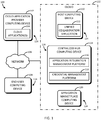
- FIG. 1 is an illustrative centralized management system 100 for managing application configurations and associated credentials of a unified collaboration application which includes a cloud application provider computing device 102 and an end-user computing device 108, each of which are communicatively coupled to a centralized hub computing device 114 via a network 106.
- the centralized hub computing device 114 is configured to coordinate the creation, configuration, and management of integrations between a unified collaboration application and other cloud-based applications/services.
- the coordination of such cloud-based applications e.g., the cloud application(s) 104) with unified collaboration applications (e.g., the unified collaboration application 112, commonly referred to as a unified communication application) can be performed in a central location (i.e., the centralized hub computing device 114) for ease of user access.
- a user e.g., via an end-user computing device 108 interacts with the centralized hub computing device 114 to specify how one or more cloud-based applications/services 104 are to connect with the unified collaboration application 112.
- the centralized hub computing device 114 is configured to establish (see, e.g., the method 400 of FIGS. 4A and 4B ) and manage a "link" between the cloud-based applications/services 104 and the unified collaboration application 112.
- the user can coordinate the creation, configuration, and management of integrations between the unified collaboration application 112 and one or more cloud-based applications/services, such as the cloud-based applications/services 104, via the centralized hub computing device 114, without navigating to different parts of the unified collaboration application to make such changes.
- the illustrative centralized management system 100 includes a cloud application provider computing device 102. It should be appreciated that, while only a single cloud application provider computing device 102 is illustratively shown, there may be any number of additional cloud application provider computing devices 102 in other arrangements. Additionally, while the cloud application provider computing device 102 is illustratively shown as a single computing device 124, it should be appreciated that, in other arrangements, the cloud application provider computing device 102 may be embodied as more than one computing device 124.
- the illustrative cloud application provider computing device 102 includes one or more cloud applications 104.
- the cloud applications 104 may be embodied as any type of cloud-based application or service, such as, but not limited to, customer relationship management applications, workforce management applications, web-based email services, hosted office suites, document/interface collaboration services, load-balancing services, etc. Accordingly, it should be appreciated that such cloud applications 104 may be licensed/delivered using a software as a service (SaaS) based model. It should be further appreciated that such cloud applications 104 may be accessed by users via a web-browser or other thin/zero client application residing on the respective user's end-user computing device 108.
- SaaS software as a service
- the illustrative centralized management system 100 additionally includes a host computing device 110 and a centralized hub computing device 114, as well as an application marketplace computing device 120 hosted in a cloud 122.
- the cloud 122 may be any network accessible cloud computing platform capable of facilitating the functions (e.g., hosting/deploying applications/services) described herein. Accordingly, the cloud 122 may be comprised of any number of compute/storage servers, as well as other network devices (e.g., switches, hubs, routers, access points, etc.), which may be housed in a data center, for example.
- the cloud marketplace computing device 120 is configured to provide a platform for marketing (e.g., displaying available applications/services) and managing the billing of any cloud-based applications and/or services that may be managed by a provider of the cloud 122 or a third party (e.g., the vendor of the cloud application(s) 104 of the cloud application provider computing device 102).
- the host computing device 110 is configured to host the unified collaboration application 112.
- the unified collaboration application 112 may be embodied as any set of integrated communication services (e.g., instant messaging, voice, audio, web/video conferencing, desktop sharing, data sharing, speech recognition, email, etc.) which can be configured to provide a consistent unified user interface/user experience across multiple devices/media types.
- Each of the cloud application provider computing device 102, the end-user computing device 108, the host computing device 110, the centralized hub computing device 114, and the cloud marketplace computing device 120 may be embodied as any type of computing device 124 capable of performing the respective functions described herein.
- end-user computing device 108 may be embodied as a desktop computer or a mobile computing device (e.g., a smartphone, a wearable, a tablet, a laptop, a notebook, etc.), while the cloud application provider computing device 102, the host computing device 110, and the centralized hub computing device 114 may be embodied as one or more servers (e.g., stand-alone, rack-mounted, etc.), compute devices, storage devices, and/or combination of compute blades and data storage devices (e.g., of a storage area network (SAN)) in a cloud architected network or data center.
- servers e.g., stand-alone, rack-mounted, etc.
- compute devices e.g., storage area network (SAN)
- SAN storage area network
- the host computing device 110, the centralized hub computing device 114, and the cloud marketplace computing device 120 may include more than one computing device 124 (e.g., in a distributed computing architecture of the cloud 122), each of which may be usable to perform at least a portion of the functions described herein of the respective computing device 124. Accordingly, in some arrangements, one or more functions of the centralized hub computing device 114 as described herein may be executed on one or more computing devices 124 of the cloud 122, while one or more same, additional, or alternative functions of the centralized hub computing device 114 described herein may be executed on one or more other computing devices 124.
- an illustrative computing device 124 (e.g., an illustrative one of the cloud application provider computing device 102, the end-user computing device 108, the host computing device 110, the centralized hub computing device 114, and the cloud marketplace computing device 120) includes a central processing unit (CPU) 200, an input/output (1/0) controller 202, a main memory 204, network communication circuitry 206, a data storage device 208, and, in some arrangements, one or more 1/0 peripherals 210.
- the computing device 124 may include additional, fewer, and/or alternative components to those of the illustrative computing device 124, such as a graphics processing unit (GPU). It should be appreciated that one or more of the illustrative components may be combined on a single system-on-a-chip (SoC) on a single integrated circuit (IC).
- SoC system-on-a-chip
- IC integrated circuit
- the type of components and/or hardware/software resources of the respective computing device 124 may be predicated upon the type and intended use of the respective computing device 124.
- the centralized hub computing device 114 may not include any peripheral devices 210; whereas the end-user computing device 108 may include multiple peripheral devices 210.
- the centralized hub computing device 114 may be comprised of more than one computing device 124. Accordingly, in such arrangements, it should be further appreciated that one or more of the computing devices 124 of the centralized hub computing device 114 may be configured as a database server with less compute capacity and more storage capacity relative to another of the computing devices 124 of the centralized hub computing device 114. Similarly, one or more other computing devices 124 of the centralized hub computing device 114 may be configured as an application server with more compute capacity relative and less storage capacity relative to another of the computing devices 124 of the centralized hub computing device 114.
- the CPU 200 may be embodied as any combination of hardware and circuitry capable of processing data.
- the computing device 124 may include more than one CPU 200.
- the CPU 200 may include one processing core (not shown), such as in a single-core processor architecture, or multiple processing cores, such as in a multi-core processor architecture. Irrespective of the number of processing cores and CPU s 200, the CPU 200 is capable of reading and executing program instructions.
- the CPU 200 may include cache memory (not shown) that may be integrated directly with the CPU 200 or placed on a separate chip with a separate interconnect to the CPU 200.
- pipeline logic may be used to perform software and/or hardware operations (e.g., network traffic processing operations), rather than commands issued to/from the CPU 200.
- the I/0 controller 202 may be embodied as any type of computer hardware or combination of circuitry capable of interfacing between input/output devices and the computing device 124.
- the I/0 controller 202 is configured to receive input/output requests from the CPU 200, and send control signals to the respective input/output devices, thereby managing the data flow to/from the computing device 124.
- the memory 204 may be embodied as any type of computer hardware or combination of circuitry capable of holding data and instructions for processing. Such memory 204 may be referred to as main or primary memory. It should be appreciated that, in some arrangements, one or more components of the computing device 124 may have direct access to memory, such that certain data may be stored via direct memory access (DMA) independently of the CPU 200.
- DMA direct memory access
- the network communication circuitry 206 may be embodied as any type of computer hardware or combination of circuitry capable of managmg network interfacing communications (e.g., messages, datagrams, packets, etc.) via wireless and/or wired communication modes. Accordingly, in some arrangements, the network communication circuitry 206 may include a network interface controller (NIC) capable of being configured to connect the computing device 124 to a computer network, as well as other devices, depending on the arrangement.
- NIC network interface controller
- the data storage device 208 may be embodied as any type of computer hardware capable of the non-volatile storage of data (e.g., semiconductor storage media, magnetic storage media, optical storage media, etc.). Such data storage devices 208 are commonly referred to as auxiliary or secondary storage, and are typically used to store a large amount of data relative to the memory 204 described above.
- auxiliary or secondary storage Such data storage devices 208 are commonly referred to as auxiliary or secondary storage, and are typically used to store a large amount of data relative to the memory 204 described above.
- the 1/0 peripherals 210 may be embodied as any type of auxiliary device configured to connect to and communicate with the computing device 124.
- the one or more 1/0 peripherals 210 may include a display, a microphone, a speaker, a mouse, a keyboard, a touchscreen, a camera, a printer, a scanner, etc. Accordingly, it should be appreciated that some 1/0 devices are capable of one function (i.e., input or output), or both functions (i.e., input and output).
- the 1/0 peripherals 210 may be connected to the computing device 124 via a cable (e.g., a ribbon cable, a wire, a universal serial bus (USB) cable, a high-definition multimedia interface (HDMI) cable, etc.) connected to a corresponding port (not shown) of the computing device 124 through which the communications made therebetween can be managed by the I/0 controller 202.
- the I/0 peripherals 210 may be connected to the computing device 124 via a wireless mode of communication (e.g., Bluetooth®, Wi-Fi®, etc.) which may be managed by the network communication circuitry 206.
- a wireless mode of communication e.g., Bluetooth®, Wi-Fi®, etc.
- the cloud application provider computing device 102 and the end-user computing device 108 are each communicatively coupled to the cloud 122, or more particularly to the centralized hub computing device 114 of the cloud 122, via the network 106.
- the network 106 may be implemented as any type of wired and/or wireless network, including a local area network (LAN), a wide area network (WAN), a global network (the Internet), etc. Accordingly, the network 106 may include one or more communicatively coupled network computing devices (not shown) for facilitating the flow and/or processing of network communication traffic via a series of wired and/or wireless interconnects.
- Such network computing devices may include, but are not limited, to one or more access points, routers, switches, servers, compute devices, storage devices, etc. It should be appreciated that the cloud application provider computing device 102, the end-user computing device 108, and the centralized hub computing device 114 may use different networks (e.g., LANs, provider networks, etc.) to connect to the backbone of the network 106 such that a number of communication channels can be established therein to enable communications therebetween.
- networks e.g., LANs, provider networks, etc.
- the illustrative centralized hub computing device 114 includes an application integration management platform 116 and a credential management platform 118, each of which may be embodied as any combination of hardware, firmware, software, or circuitry usable to perform the functions described herein.
- the application integration management platform 116 and the credential management platform 118 include or otherwise have access to one or more computer-readable medium (e.g., the memory 204, the data storage device 208, and/or any other media storage device) having instructions stored thereon and one or more processors (e.g., the CPU 200) coupled with the one or more computer-readable medium and configured to execute instructions to perform the functions described herein.
- one or more computer-readable medium e.g., the memory 204, the data storage device 208, and/or any other media storage device
- processors e.g., the CPU 200
- the application integration management platform 116 and/or the credential management platform 118 may be described herein as being performed by a particular component or set of components, it should be appreciated that, in other arrangements, the application integration management platform 116 and/or the credential management platform 118 may include additional and/or alternative components for performing the functions described herein.
- the illustrative environment 300 includes an available applications database 302, a user interface manager 304, and each of the application integration management platform 116 and the credential management platform 118.
- access to the data provided to and/or generated as described herein may require authorization and/or that such data is encrypted while in storage and/or transit.
- one or more authentication and/or encryption technologies known to those of skill in the art may be employed to ensure the storage and access to the data complies with any legal and/or contractual requirements.
- the data stored in the respective databases may not be mutually exclusive. In other words, certain data described herein as being stored in one database may additionally or alternatively be stored in another database described herein, or another database altogether. It should be further appreciated that, in some arrangements, the data may be stored in a single database, or an alternative database I data storage arrangement. Additionally, the illustrative databases described herein may be combined or further segregated, in other arrangements.
- the user interface manager 304 which may be embodied as any combination of hardware, firmware, software, or circuitry usable to perform the functions described herein, is configured to interface with users, independent software vendors, and/or cloud-based application/service providers. It should be appreciated that, in some arrangements, the user interface manager 304 may be located on another computing device 124 of the cloud 122 to which the centralized hub computing device 114 is capable of communicating with (e.g., to provide/receive relevant data).
- the user interface manager 304 is configured to generate, transmit, and receive network communications with code (e.g., hypertext markup language (HTML), JavaScript Object Notation (JSON), extensible markup language (XML), etc.) that is usable to render the user interface elements to a display of the user, such as may be used to provide information to and/or request feedback from the user, and receive requested feedback from the user.
- code e.g., hypertext markup language (HTML), JavaScript Object Notation (JSON), extensible markup language (XML), etc.
- the user interface manager 304 may be configured to provide information usable to display a list (e.g., text, icons, graphics, etc.) of all the cloud services/applications (e.g., the cloud applications 104 of FIG. 1 ) which are capable of being integrated with a particular unified collaboration application (e.g., the unified collaboration application 112 of FIG. 1 ).
- the user interface manager 304 may be configured to receive an indication from the user as to which cloud services/applications the user would like to install and/or configure.
- the cloud services/applications which are available to be installed may be stored in the available applications database 302.
- the cloud services/applications capable of being integrated with a particular unified collaboration application may be defined by the creator of each unified collaboration application.
- the supported cloud services/applications may be provided to the centralized hub computing device 114 in the form of a list of supported integration types (e.g., a file defining a name, description, and definition of a required configuration for each supported integration type), an indication of which may be stored in the available applications database 302.
- the application marketplace computing device 120 may be configured to read the contents of the available applications database 302 when marketing cloud services/applications in the marketplace.
- the user interface manager 304 may be configured to display one or more userinput receiving elements requesting input from a user that is required to install, configure, enable, or disable a cloud service/application. Accordingly, the user interface manager 304 is configured to receive such user input and provide the received input to the necessary component for subsequent action to be undertaken based thereon. Additionally, in another example, the user interface manager 304 may be configured to display a status of each cloud service/application integrated into the unified collaboration application.
- the illustrative application integration management platform 116 includes an application configuration database configured to store configurations (e.g., environment settings, identifiers, required resources, billing information, etc.) of the installed integrations.
- the illustrative application integration management platform 116 additionally includes an integration installer 308 configured to manage the installation of selected integrations, an integration configuration manager 310 configured to manage configuration of the installed integrations, and an integration enabler 312 configured to enable/disable installed and configured integrations.
- the application integration management platform 116 is configured to provide a central location for a user to install, configure, and enable integrations into a unified collaboration application.
- the configuration settings of the integrations may be stored in the application configuration database 306, in some arrangements.
- the illustrative credential management platform 118 includes a credential manager 316 configured to create, update, and delete credentials associated with each integration and a credential association manager configured to manage the associations of the credentials with the respective integration(s).
- the credential management platform 118 is configured to provide a central location for a user to create and manage credentials for integrations of a unified collaboration application.
- the credentials and the respective associations may be stored in the credential database 314, in some arrangements.
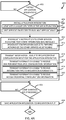
- an illustrative method 400 is provided for establishing a link between one or more cloud-based applications/services and a unified collaboration application which may be executed by the centralized hub computing device 114, or more particularly the application integration management platform 116 of the centralized hub computing device 114.
- the method 400 begins in block 402, in which the application integration management platform 116 determines whether a request to install an application integration was received (e.g., as may be initiated by a user as described previously). If so, the method 400 advances to block 404.
- the application integration management platform 116 installs the application integration. In doing so, in block 406, the application integration management platform 116 generates a unique identifier of the application integration. Additionally, in block 408, the application integration management platform 116 saves an application record to an available applications database (e.g., the available applications database 302 of FIG. 3 ).
- the application record may include any information relating to the installed application, such as an integration type, a friendly name, the unique identifier, etc.
- the application integration management platform 116 broadcasts a notification to other services indicating that a new integration was installed.
- the application integration management platform 116 may broadcast a notification that is usable by the receiving services to perform one or more actions, such as emailing or otherwise notifying an administrator that a new integration has been installed, collecting data associated with the integration, etc.
- the application integration management platform 116 transmits configuration setup information usable to display user interface elements capable of requesting and receiving configuration input from an end-user computing device (e.g., the end-user computing device 108 of FIG. 1 ) of that user.
- the application integration management platform 116 transmits information usable to receive environment resource configuration information.
- the application integration management platform 116 transmits information usable to receive integration type configuration information.
- the application integration management platform 116 transmits information usable to receive access credential information.
- the requested configuration information and associated user input elements may be displayed on an I/0 peripheral device of the end-user computing device of that user, such that the requested information can be received from a user for the application integration.
- the application integration management platform 116 determines whether the requested configuration input has been received. If the requested configuration input has been received, the method 400 advances to block 424, in which the application integration management platform 116 saves the application configuration information configuration input in an application configuration database (e.g., the application configuration database 306 of FIG. 3 ).
- the application integration management platform 116 determines whether to enable the application integration, such as may be initiated by a user (e.g., by clicking a user interface element). It should be appreciated that, under certain conditions, the user may not choose to enable the application integration at this time. Under such conditions, the method 400 may exit until the user indicates they would like to enable the configured application integration, at which time the method 400 may resume at block 426. If the application integration management platform 116 determines the application integration is to be enabled, the method 400 advances to block 428. In block 428, the application integration management platform 116 enables the application integration, such as by calling the corresponding REST API endpoint.
- the application integration management platform 116 transmits a notification (i.e., an enablement notification) to the application provider of the cloud application corresponding to the application integration indicating the application integration has been configured and enabled. Additionally, in block 432, the application integration management platform 116 transmits the notification with information usable to access the configuration of the application integration, such as the identifier of the application integration and the integration type. Further, in block 434, the application integration management platform 116 transmits the notification with information usable to identify the credentials associated with the application, such as may be identified using a unique identifier. It should be appreciated that additional and/or alternative information may be transmitted with the notification as well, in some arrangements, such as a uniform resource identifier (URI) or other such identifying information.
- URI uniform resource identifier
- the application integration management platform 116 determines whether the application integration has been enabled by the application provider. If so, in block 438, the application integration management platform 116 performs any necessary provisioning operations, such as the provisioning of one or more accounts, users, hardware resources, etc. In block 440, the application integration management platform 116 establishes one or more communication channels with the unified collaboration application. In block 442, the application integration management platform 116 transmits messages to the unified collaboration application via the established communication channels.
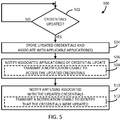
- an illustrative method 500 is provided for managing credentials associated with application integrations associated with a unified collaboration application, which may be executed by the centralized hub computing device 114, or more particularly the credential management platform 118 of the centralized hub computing device 114.
- the method 500 begins in block 502, in which the credential management platform 118 determines whether credentials have been updated. If so, the method 500 advances to block 504, in which the credential management platform 118 stores the updated credentials and associates the updated credentials with the applicable one or more applications.
- the credential management platform 118 notifies the one or more associated application(s) of the credential update.
- the credential management platform 118 transmits a notification (i.e., an updated credentials notification) usable to access the updated credentials.
- the updated credentials notification may include a URI and/or a unique identifier usable to identify the associated credentials, which can then be used (along with a well-known URI prefix) to construct a URI to call back into a REST endpoint (e.g., in the credential management platform 118) to obtain the appropriate credentials.
- subsequent requests made by the corresponding cloud application e.g., one of the cloud applications 104 of FIG.
- the credential management platform 118 notifies any users associated with the updated credentials of the update. To do so, in block 512, the credential management platform 118 transmits a notification usable to identify that the credentials were updated.
Landscapes
- Engineering & Computer Science (AREA)
- Computer Networks & Wireless Communication (AREA)
- Signal Processing (AREA)
- General Engineering & Computer Science (AREA)
- Computer Security & Cryptography (AREA)
- Computer Hardware Design (AREA)
- Computing Systems (AREA)
- Software Systems (AREA)
- Theoretical Computer Science (AREA)
- Physics & Mathematics (AREA)
- General Physics & Mathematics (AREA)
- Management, Administration, Business Operations System, And Electronic Commerce (AREA)
- Information Transfer Between Computers (AREA)
Description
- The present application is an international patent application and is related to, and claims the priority benefit of,
U.S. Provisional Patent Application Serial No. 62/356,095 filed June 29, 2016 U.S. Provisional Patent Application Serial No. 62/356,097 filed June 29, 2016 - Cloud services provide a means of delivering agile, elastic, and scalable access to cloud-based applications (i.e., as opposed to an on-premise solution), which are managed by a cloud service provider. Cloud service providers offer some component of cloud computing, typically an infrastructure as a service (IaaS), a platform as a service (PaaS), or a software as a service (SaaS), to individual consumers or to enterprises. Such SaaS-based cloud service solutions may include web-based email services, hosted office suites, and document/interface collaboration services, to name a few examples.
- Generally, to purchase and otherwise manage such cloud-based applications, a user accesses a cloud service provider's application marketplace, which provides an online storefront for users to access cloud-based services and software applications. However, present management technologies typically do not allow configuration information and access credentials to be retained for use across more than a single application, which can make managing configurations and credentials burdensome, in particular when dealing with different integrations of a unified collaboration application. Accordingly, there exists a need for improvements in technologies for managing application configurations and associated credentials of a unified collaboration application.
-
US 2012/209947 discloses techniques for integrating cloud applications and remote jobs. In some implementations, a request to initiate a remote execution procedure may be received at a first computing system. The first computing system may be controlled by a first entity and may be configured to provide on-demand computing services to a plurality of entities including a second entity. The remote execution procedure may include an instruction to perform a remote computing task capable of being performed by a second computing system. A request message may be transmitted from the first computing system to the second computing system, which may be controlled by the second entity. The request message may include an instruction to perform the remote computing task. A response message indicating a result of performing the remote computing task may be received from the second computing system. - The invention sets out a method for managing application configurations and associated credentials of a unified collaboration application according to claim 1 and a centralized hub computing device for managing application configurations and associated credentials of a unified collaboration application according to claim 11.
In one aspect, a method for managing application configurations and associated credentials of a unified collaboration application includes receiving, by an application integration management platform of a centralized computing device, an indication from an end-user computing device that an integration of a cloud application is to be installed and linked to a unified collaboration application; installing, by the application integration management platform, the integration; receiving, by the application integration management platform, configuration input for the integration from the end-user computing device; storing, by the application integration management platform, the configuration in an input application configuration database of the application integration management platform; receiving, by the application integration management platform, an enablement message from the end-user computing device indicating the integration is to be enabled; and transmitting, by the application integration management platform, an enablement notification to an application provider of the cloud application, wherein the enablement notification is usable to identify the integration. - According to the invention, installing the integration includes generating a unique identifier of the integration and saving an application record that includes the unique identifier of the integration to an available applications database of the application integration management platform, wherein the available applications database is usable by a cloud application marketplace to identify available applications.
- In some embodiments, the method additionally includes broadcasting, by the application integration management platform and subsequent to installing the integration, another notification to one or more services managed by the application integration management platform, wherein the other notification is usable to identify the installed integration and perform a subsequent action. In other embodiments, the method additionally includes transmitting, by the application integration management platform, configuration setup information to the end-user computing device, wherein the configuration setup information is usable to display one or more user interface elements capable of requesting and receiving configuration input, and wherein receiving the configuration input for the integration from the end-user computing device comprises receiving the configuration input in response to the transmission of the configuration setup information.
- In some embodiments, transmitting the configuration setup information includes transmitting at least one of environment resource configuration information, integration type configuration information, and access credential configuration information.According to the invetion, the method includes storing, by the application integration
management platform, the received configuration input in the application configuration database of the application integration management platform. In still other embodiments, the method additionally includes transmitting the enablement notification to the application provider of the cloud application includes transmitting the enablement notification with information usable to access the stored configuration input. - In some embodiments, transmitting the enablement notification to the application provider of the cloud application includes transmitting the enablement notification with information usable to identify credentials associated with the integration. In other embodiments, the method additionally includes receiving, by the application integration management platform, a response to the enablement notification from the application provider of the cloud application; and performing, by the application integration management platform, one or more provisioning operations.
- In some embodiments, the method additionally includes establishing, by the application integration management platform, one or more communication channels with the unified collaboration application; and transmitting, by the application integration management platform, one or more messages to the unified collaboration application via the one or more communication channels. In other embodiments, the method additionally includes receiving, by a credential management platform of the centralized computing device, access credentials associated with the integration; storing, by the credential management platform, the received access credentials and an identifier of the integration in a credential database of the credential management platform; and transmitting, by the credential management platform, access credential information to the application provider of the cloud application, wherein the access credential information is usable to identify the access credentials associated with the integration.
- In some embodiments, the method additionally includes receiving, by the credential management platform, an update to the access credentials; storing, by the credential management platform, the received update to the access credentials in the credential database of the credential management platform; transmitting, by the credential management platform, an updated credentials notification to one or more associated applications and one or more associated users, wherein the updated credentials notification includes a unique identifier usable to identify the updated credentials.
- In another aspect, a centralized hub computing device for managing application configurations and associated credentials of a unified collaboration application includes one or more computer-readable medium comprising instructions and one or more processors coupled with the one or more computer-readable medium. The one or more processors are configured to execute the instructions to receive an indication from an end-user computing device that an integration of a cloud application is to be installed and linked to a unified collaboration application; install the integration at the centralized hub computing device; receive configuration input for the integration from the end-user computing device; store the configuration in an input application configuration database of the application integration management platform; receive a message from the end-user computing device indicating the integration is to be enabled; and transmit an enablement notification to an application provider of the cloud application, wherein the enablement notification is usable to identify the integration.
- According to the invention, installing the integration includes generating a unique identifier of the integration and saving an application record that includes the unique identifier of the integration to an available applications database of the application integration management platform, wherein the available applications database is usable by a cloud application marketplace to identify available applications. In other e1mbodiments, the one or more processors are further configured to execute the instructions to broadcasting, by the application integration management platform and subsequent to installing the integration, another notification to one or more services managed by the application integration management platform, wherein the other notification is usable to identify the installed integration and perform a subsequent action.
- In some embodiments, the one or more processors are further configured to execute the instructions to transmitting, by the application integration management platform, configuration setup information to the end-user computing device, wherein the configuration setup information is usable to display one or more user interface elements capable of requesting and receiving configuration input, and wherein receiving the configuration input for the integration from the end-user computing device comprises receiving the configuration input in response to the transmission of the configuration setup information.
- In some embodiments, transmitting the configuration setup information includes transmitting at least one of environment resource configuration information, integration type configuration information, and access credential configuration information. According to the invention, the one or more processors are further configured to execute the instructions to storing, by the application integration management platform, the received configuration input in the application configuration database of the application integration management platform. In other embodiments, to transmit the enablement notification to the application provider of the cloud application includes to transmit the enablement notification with information usable to access the stored configuration input.
- In some embodiments, to transmit the enablement notification to the application provider of the cloud application includes to transmit the enablement notification with information usable to identify credentials associated with the integration. In other embodiments, the one or more processors are further configured to execute the instructions to receive a response to the enablement notification from the application provider of the cloud application; and perform one or more provisioning operations. In still other embodiments, the one or more processors are further configured to execute the instructions to establish one or more communication channels with the unified collaboration application; and transmit one or more messages to the unified collaboration application via the one or more communication channels.
- In some embodiments, the one or more processors are further configured to execute the instructions to receive access credentials associated with the integration; store the received access credentials and an identifier of the integration in a credential database of the credential management platform; and transmit access credential information to the application provider of the cloud application, wherein the access credential information is usable to identify the access credentials associated with the integration. In other embodiments, the one or more processors are further configured to execute the instructions to receive an update to the access credentials; store the received update to the access credentials in the credential database of the credential management platform; and transmit an updated credentials notification to one or more associated applications and one or more associated users, wherein the updated credentials notification includes a unique identifier usable to identify the updated credentials.
- The embodiments and other features, advantages and disclosures contained herein, and the manner of attaining them, will become apparent and the present disclosure will be better understood by reference to the following description of various exemplary embodiments and arrangements of the present disclosure taken in conjunction with the accompanying drawings, wherein:
-
FIG. 1 is a simplified block diagram of at least one embodiment of a system for managing application configurations and associated credentials of a unified collaboration application that includes an end-user computing device and a cloud application provider computing device communicatively coupled to a centralized hub computing device via a network; -
FIG. 2 is a simplified block diagram of at least one embodiment of the centralized hub computing device of the system ofFIG. 1 ; -
FIG. 3 is a simplified block diagram of at least one embodiment of an environment of the centralized hub computing device ofFIG. 1 ; -
FIGS. 4A and4B are a simplified flow diagram of at least one embodiment of a method for establishing a link between one or more cloud-based applications/services and a unified collaboration application that may be executed by the centralized hub computing device ofFIGS. 1 and3 ; and -
FIG. 5 is a simplified flow diagram of at least one embodiment of a method for managing credentials associated with application integrations associated with a unified collaboration application that may be executed by the centralized hub computing device ofFIGS. 1 and3 . - For the purposes of promoting an understanding of the principles of the present disclosure, reference will now be made to the embodiments illustrated in the drawings, and specific language will be used to describe the same. It will nevertheless be understood that no limitation of the scope of this disclosure is thereby intended.
-
FIG. 1 is an illustrative centralizedmanagement system 100 for managing application configurations and associated credentials of a unified collaboration application which includes a cloud application provider computing device 102 and an end-user computing device 108, each of which are communicatively coupled to a centralizedhub computing device 114 via anetwork 106. In use, as described in further detail below, the centralizedhub computing device 114 is configured to coordinate the creation, configuration, and management of integrations between a unified collaboration application and other cloud-based applications/services. In other words, unlike present technologies, the coordination of such cloud-based applications (e.g., the cloud application(s) 104) with unified collaboration applications (e.g., theunified collaboration application 112, commonly referred to as a unified communication application) can be performed in a central location (i.e., the centralized hub computing device 114) for ease of user access. - In an illustrative example, a user (e.g., via an end-user computing device 108) interacts with the centralized
hub computing device 114 to specify how one or more cloud-based applications/services 104 are to connect with theunified collaboration application 112. To do so, the centralizedhub computing device 114 is configured to establish (see, e.g., themethod 400 ofFIGS. 4A and4B ) and manage a "link" between the cloud-based applications/services 104 and theunified collaboration application 112. Accordingly, as a function of the link, the user can coordinate the creation, configuration, and management of integrations between theunified collaboration application 112 and one or more cloud-based applications/services, such as the cloud-based applications/services 104, via the centralizedhub computing device 114, without navigating to different parts of the unified collaboration application to make such changes. - As noted previously, the illustrative
centralized management system 100 includes a cloud application provider computing device 102. It should be appreciated that, while only a single cloud application provider computing device 102 is illustratively shown, there may be any number of additional cloud application provider computing devices 102 in other arrangements. Additionally, while the cloud application provider computing device 102 is illustratively shown as asingle computing device 124, it should be appreciated that, in other arrangements, the cloud application provider computing device 102 may be embodied as more than onecomputing device 124. - The illustrative cloud application provider computing device 102 includes one or more cloud applications 104. The cloud applications 104 may be embodied as any type of cloud-based application or service, such as, but not limited to, customer relationship management applications, workforce management applications, web-based email services, hosted office suites, document/interface collaboration services, load-balancing services, etc. Accordingly, it should be appreciated that such cloud applications 104 may be licensed/delivered using a software as a service (SaaS) based model. It should be further appreciated that such cloud applications 104 may be accessed by users via a web-browser or other thin/zero client application residing on the respective user's end-user computing device 108.
- In addition to the cloud application provider computing device 102 and the end-user computing device 108, the illustrative
centralized management system 100 additionally includes ahost computing device 110 and a centralizedhub computing device 114, as well as an applicationmarketplace computing device 120 hosted in acloud 122. Thecloud 122 may be any network accessible cloud computing platform capable of facilitating the functions (e.g., hosting/deploying applications/services) described herein. Accordingly, thecloud 122 may be comprised of any number of compute/storage servers, as well as other network devices (e.g., switches, hubs, routers, access points, etc.), which may be housed in a data center, for example. - The cloud
marketplace computing device 120 is configured to provide a platform for marketing (e.g., displaying available applications/services) and managing the billing of any cloud-based applications and/or services that may be managed by a provider of thecloud 122 or a third party (e.g., the vendor of the cloud application(s) 104 of the cloud application provider computing device 102). Thehost computing device 110 is configured to host theunified collaboration application 112. Theunified collaboration application 112 may be embodied as any set of integrated communication services (e.g., instant messaging, voice, audio, web/video conferencing, desktop sharing, data sharing, speech recognition, email, etc.) which can be configured to provide a consistent unified user interface/user experience across multiple devices/media types. - Each of the cloud application provider computing device 102, the end-user computing device 108, the
host computing device 110, the centralizedhub computing device 114, and the cloudmarketplace computing device 120 may be embodied as any type ofcomputing device 124 capable of performing the respective functions described herein. For example, in some arrangements, end-user computing device 108 may be embodied as a desktop computer or a mobile computing device (e.g., a smartphone, a wearable, a tablet, a laptop, a notebook, etc.), while the cloud application provider computing device 102, thehost computing device 110, and the centralizedhub computing device 114 may be embodied as one or more servers (e.g., stand-alone, rack-mounted, etc.), compute devices, storage devices, and/or combination of compute blades and data storage devices (e.g., of a storage area network (SAN)) in a cloud architected network or data center. - It should be appreciated that, in some arrangements, similar to the cloud application provider computing device 102, the
host computing device 110, the centralizedhub computing device 114, and the cloudmarketplace computing device 120 may include more than one computing device 124 (e.g., in a distributed computing architecture of the cloud 122), each of which may be usable to perform at least a portion of the functions described herein of therespective computing device 124. Accordingly, in some arrangements, one or more functions of the centralizedhub computing device 114 as described herein may be executed on one ormore computing devices 124 of thecloud 122, while one or more same, additional, or alternative functions of the centralizedhub computing device 114 described herein may be executed on one or moreother computing devices 124. - Referring now to
FIG. 2 , an illustrative computing device 124 (e.g., an illustrative one of the cloud application provider computing device 102, the end-user computing device 108, thehost computing device 110, the centralizedhub computing device 114, and the cloud marketplace computing device 120) includes a central processing unit (CPU) 200, an input/output (1/0)controller 202, amain memory 204,network communication circuitry 206, adata storage device 208, and, in some arrangements, one or more 1/0peripherals 210. In some alternative arrangements, thecomputing device 124 may include additional, fewer, and/or alternative components to those of theillustrative computing device 124, such as a graphics processing unit (GPU). It should be appreciated that one or more of the illustrative components may be combined on a single system-on-a-chip (SoC) on a single integrated circuit (IC). - Additionally, it should be appreciated that the type of components and/or hardware/software resources of the
respective computing device 124 may be predicated upon the type and intended use of therespective computing device 124. For example, the centralizedhub computing device 114 may not include anyperipheral devices 210; whereas the end-user computing device 108 may include multipleperipheral devices 210. Additionally, as described previously, the centralizedhub computing device 114 may be comprised of more than onecomputing device 124. Accordingly, in such arrangements, it should be further appreciated that one or more of thecomputing devices 124 of the centralizedhub computing device 114 may be configured as a database server with less compute capacity and more storage capacity relative to another of thecomputing devices 124 of the centralizedhub computing device 114. Similarly, one or moreother computing devices 124 of the centralizedhub computing device 114 may be configured as an application server with more compute capacity relative and less storage capacity relative to another of thecomputing devices 124 of the centralizedhub computing device 114. - The
CPU 200, or processor, may be embodied as any combination of hardware and circuitry capable of processing data. In some arrangements, thecomputing device 124 may include more than oneCPU 200. Depending on the arrangement, theCPU 200 may include one processing core (not shown), such as in a single-core processor architecture, or multiple processing cores, such as in a multi-core processor architecture. Irrespective of the number of processing cores andCPU s 200, theCPU 200 is capable of reading and executing program instructions. In some arrangements, theCPU 200 may include cache memory (not shown) that may be integrated directly with theCPU 200 or placed on a separate chip with a separate interconnect to theCPU 200. It should be appreciated that, in some arrangements, pipeline logic may be used to perform software and/or hardware operations (e.g., network traffic processing operations), rather than commands issued to/from theCPU 200. - The I/0
controller 202, or I/0 interface, may be embodied as any type of computer hardware or combination of circuitry capable of interfacing between input/output devices and thecomputing device 124. Illustratively, the I/0controller 202 is configured to receive input/output requests from theCPU 200, and send control signals to the respective input/output devices, thereby managing the data flow to/from thecomputing device 124. - The
memory 204 may be embodied as any type of computer hardware or combination of circuitry capable of holding data and instructions for processing.Such memory 204 may be referred to as main or primary memory. It should be appreciated that, in some arrangements, one or more components of thecomputing device 124 may have direct access to memory, such that certain data may be stored via direct memory access (DMA) independently of theCPU 200. - The
network communication circuitry 206 may be embodied as any type of computer hardware or combination of circuitry capable of managmg network interfacing communications (e.g., messages, datagrams, packets, etc.) via wireless and/or wired communication modes. Accordingly, in some arrangements, thenetwork communication circuitry 206 may include a network interface controller (NIC) capable of being configured to connect thecomputing device 124 to a computer network, as well as other devices, depending on the arrangement. - The
data storage device 208 may be embodied as any type of computer hardware capable of the non-volatile storage of data (e.g., semiconductor storage media, magnetic storage media, optical storage media, etc.). Suchdata storage devices 208 are commonly referred to as auxiliary or secondary storage, and are typically used to store a large amount of data relative to thememory 204 described above. - The 1/0
peripherals 210 may be embodied as any type of auxiliary device configured to connect to and communicate with thecomputing device 124. Depending on the arrangement, the one or more 1/0peripherals 210 may include a display, a microphone, a speaker, a mouse, a keyboard, a touchscreen, a camera, a printer, a scanner, etc. Accordingly, it should be appreciated that some 1/0 devices are capable of one function (i.e., input or output), or both functions (i.e., input and output). - In some arrangements, the 1/0
peripherals 210 may be connected to thecomputing device 124 via a cable (e.g., a ribbon cable, a wire, a universal serial bus (USB) cable, a high-definition multimedia interface (HDMI) cable, etc.) connected to a corresponding port (not shown) of thecomputing device 124 through which the communications made therebetween can be managed by the I/0controller 202. In alternative arrangements, the I/0peripherals 210 may be connected to thecomputing device 124 via a wireless mode of communication (e.g., Bluetooth®, Wi-Fi®, etc.) which may be managed by thenetwork communication circuitry 206. - Referring back to
FIG. 1 , as noted previously, the cloud application provider computing device 102 and the end-user computing device 108 are each communicatively coupled to thecloud 122, or more particularly to the centralizedhub computing device 114 of thecloud 122, via thenetwork 106. Thenetwork 106 may be implemented as any type of wired and/or wireless network, including a local area network (LAN), a wide area network (WAN), a global network (the Internet), etc. Accordingly, thenetwork 106 may include one or more communicatively coupled network computing devices (not shown) for facilitating the flow and/or processing of network communication traffic via a series of wired and/or wireless interconnects. Such network computing devices may include, but are not limited, to one or more access points, routers, switches, servers, compute devices, storage devices, etc. It should be appreciated that the cloud application provider computing device 102, the end-user computing device 108, and the centralizedhub computing device 114 may use different networks (e.g., LANs, provider networks, etc.) to connect to the backbone of thenetwork 106 such that a number of communication channels can be established therein to enable communications therebetween. - The illustrative centralized
hub computing device 114 includes an applicationintegration management platform 116 and acredential management platform 118, each of which may be embodied as any combination of hardware, firmware, software, or circuitry usable to perform the functions described herein. The applicationintegration management platform 116 and thecredential management platform 118 include or otherwise have access to one or more computer-readable medium (e.g., thememory 204, thedata storage device 208, and/or any other media storage device) having instructions stored thereon and one or more processors (e.g., the CPU 200) coupled with the one or more computer-readable medium and configured to execute instructions to perform the functions described herein. While the functionality of the applicationintegration management platform 116 and/or thecredential management platform 118 may be described herein as being performed by a particular component or set of components, it should be appreciated that, in other arrangements, the applicationintegration management platform 116 and/or thecredential management platform 118 may include additional and/or alternative components for performing the functions described herein. - Referring now to
FIG. 3 , anillustrative environment 300 of the centralizedhub computing device 114 is shown. Theillustrative environment 300 includes anavailable applications database 302, auser interface manager 304, and each of the applicationintegration management platform 116 and thecredential management platform 118. In some arrangements, access to the data provided to and/or generated as described herein may require authorization and/or that such data is encrypted while in storage and/or transit. Accordingly, in some arrangements, one or more authentication and/or encryption technologies known to those of skill in the art may be employed to ensure the storage and access to the data complies with any legal and/or contractual requirements. - It should be further appreciated that, in some arrangements, the data stored in the respective databases may not be mutually exclusive. In other words, certain data described herein as being stored in one database may additionally or alternatively be stored in another database described herein, or another database altogether. It should be further appreciated that, in some arrangements, the data may be stored in a single database, or an alternative database I data storage arrangement. Additionally, the illustrative databases described herein may be combined or further segregated, in other arrangements.
- The
user interface manager 304, which may be embodied as any combination of hardware, firmware, software, or circuitry usable to perform the functions described herein, is configured to interface with users, independent software vendors, and/or cloud-based application/service providers. It should be appreciated that, in some arrangements, theuser interface manager 304 may be located on anothercomputing device 124 of thecloud 122 to which the centralizedhub computing device 114 is capable of communicating with (e.g., to provide/receive relevant data). To provide the interfaces, theuser interface manager 304 is configured to generate, transmit, and receive network communications with code (e.g., hypertext markup language (HTML), JavaScript Object Notation (JSON), extensible markup language (XML), etc.) that is usable to render the user interface elements to a display of the user, such as may be used to provide information to and/or request feedback from the user, and receive requested feedback from the user. - For example, the
user interface manager 304 may be configured to provide information usable to display a list (e.g., text, icons, graphics, etc.) of all the cloud services/applications (e.g., the cloud applications 104 ofFIG. 1 ) which are capable of being integrated with a particular unified collaboration application (e.g., theunified collaboration application 112 ofFIG. 1 ). In furtherance of the example, theuser interface manager 304 may be configured to receive an indication from the user as to which cloud services/applications the user would like to install and/or configure. In some arrangements, the cloud services/applications which are available to be installed may be stored in theavailable applications database 302. - It should be appreciated that the cloud services/applications capable of being integrated with a particular unified collaboration application (i.e., the supported cloud services/applications) may be defined by the creator of each unified collaboration application. The supported cloud services/applications may be provided to the centralized
hub computing device 114 in the form of a list of supported integration types (e.g., a file defining a name, description, and definition of a required configuration for each supported integration type), an indication of which may be stored in theavailable applications database 302. It should be appreciated that the applicationmarketplace computing device 120 may be configured to read the contents of theavailable applications database 302 when marketing cloud services/applications in the marketplace. - In another example, upon a cloud service/application having been selected for configuration, the
user interface manager 304 may be configured to display one or more userinput receiving elements requesting input from a user that is required to install, configure, enable, or disable a cloud service/application. Accordingly, theuser interface manager 304 is configured to receive such user input and provide the received input to the necessary component for subsequent action to be undertaken based thereon. Additionally, in another example, theuser interface manager 304 may be configured to display a status of each cloud service/application integrated into the unified collaboration application. - The illustrative application
integration management platform 116 includes an application configuration database configured to store configurations (e.g., environment settings, identifiers, required resources, billing information, etc.) of the installed integrations. The illustrative applicationintegration management platform 116 additionally includes anintegration installer 308 configured to manage the installation of selected integrations, anintegration configuration manager 310 configured to manage configuration of the installed integrations, and anintegration enabler 312 configured to enable/disable installed and configured integrations. Accordingly, the applicationintegration management platform 116 is configured to provide a central location for a user to install, configure, and enable integrations into a unified collaboration application. The configuration settings of the integrations may be stored in theapplication configuration database 306, in some arrangements. - The illustrative
credential management platform 118 includes acredential manager 316 configured to create, update, and delete credentials associated with each integration and a credential association manager configured to manage the associations of the credentials with the respective integration(s). In other words, thecredential management platform 118 is configured to provide a central location for a user to create and manage credentials for integrations of a unified collaboration application. The credentials and the respective associations may be stored in thecredential database 314, in some arrangements. - Referring now to
FIGS. 4A and4B , anillustrative method 400 is provided for establishing a link between one or more cloud-based applications/services and a unified collaboration application which may be executed by the centralizedhub computing device 114, or more particularly the applicationintegration management platform 116 of the centralizedhub computing device 114. Themethod 400 begins inblock 402, in which the applicationintegration management platform 116 determines whether a request to install an application integration was received (e.g., as may be initiated by a user as described previously). If so, themethod 400 advances to block 404. - In
block 404, the applicationintegration management platform 116 installs the application integration. In doing so, inblock 406, the applicationintegration management platform 116 generates a unique identifier of the application integration. Additionally, inblock 408, the applicationintegration management platform 116 saves an application record to an available applications database (e.g., theavailable applications database 302 ofFIG. 3 ). The application record may include any information relating to the installed application, such as an integration type, a friendly name, the unique identifier, etc. - In
block 410, the applicationintegration management platform 116 broadcasts a notification to other services indicating that a new integration was installed. Inblock 412, the applicationintegration management platform 116 may broadcast a notification that is usable by the receiving services to perform one or more actions, such as emailing or otherwise notifying an administrator that a new integration has been installed, collecting data associated with the integration, etc. - In
block 414, the applicationintegration management platform 116 transmits configuration setup information usable to display user interface elements capable of requesting and receiving configuration input from an end-user computing device (e.g., the end-user computing device 108 ofFIG. 1 ) of that user. To do so, inblock 416, the applicationintegration management platform 116 transmits information usable to receive environment resource configuration information. Additionally, inblock 418, the applicationintegration management platform 116 transmits information usable to receive integration type configuration information. Further, inblock 420, the applicationintegration management platform 116 transmits information usable to receive access credential information. - It should be appreciated that the requested configuration information and associated user input elements may be displayed on an I/0 peripheral device of the end-user computing device of that user, such that the requested information can be received from a user for the application integration. In
block 422, the applicationintegration management platform 116 determines whether the requested configuration input has been received. If the requested configuration input has been received, themethod 400 advances to block 424, in which the applicationintegration management platform 116 saves the application configuration information configuration input in an application configuration database (e.g., theapplication configuration database 306 ofFIG. 3 ). - In
block 426 ofFIG. 4B , the applicationintegration management platform 116 determines whether to enable the application integration, such as may be initiated by a user (e.g., by clicking a user interface element). It should be appreciated that, under certain conditions, the user may not choose to enable the application integration at this time. Under such conditions, themethod 400 may exit until the user indicates they would like to enable the configured application integration, at which time themethod 400 may resume atblock 426. If the applicationintegration management platform 116 determines the application integration is to be enabled, themethod 400 advances to block 428. Inblock 428, the applicationintegration management platform 116 enables the application integration, such as by calling the corresponding REST API endpoint. - In
block 430, the applicationintegration management platform 116 transmits a notification (i.e., an enablement notification) to the application provider of the cloud application corresponding to the application integration indicating the application integration has been configured and enabled. Additionally, inblock 432, the applicationintegration management platform 116 transmits the notification with information usable to access the configuration of the application integration, such as the identifier of the application integration and the integration type. Further, inblock 434, the applicationintegration management platform 116 transmits the notification with information usable to identify the credentials associated with the application, such as may be identified using a unique identifier. It should be appreciated that additional and/or alternative information may be transmitted with the notification as well, in some arrangements, such as a uniform resource identifier (URI) or other such identifying information. - In
block 436, the applicationintegration management platform 116 determines whether the application integration has been enabled by the application provider. If so, inblock 438, the applicationintegration management platform 116 performs any necessary provisioning operations, such as the provisioning of one or more accounts, users, hardware resources, etc. Inblock 440, the applicationintegration management platform 116 establishes one or more communication channels with the unified collaboration application. Inblock 442, the applicationintegration management platform 116 transmits messages to the unified collaboration application via the established communication channels. - Referring now to
FIG. 5 , anillustrative method 500 is provided for managing credentials associated with application integrations associated with a unified collaboration application, which may be executed by the centralizedhub computing device 114, or more particularly thecredential management platform 118 of the centralizedhub computing device 114. Themethod 500 begins inblock 502, in which thecredential management platform 118 determines whether credentials have been updated. If so, themethod 500 advances to block 504, in which thecredential management platform 118 stores the updated credentials and associates the updated credentials with the applicable one or more applications. - In
block 506, thecredential management platform 118 notifies the one or more associated application(s) of the credential update. To do so, inblock 508, thecredential management platform 118 transmits a notification (i.e., an updated credentials notification) usable to access the updated credentials. Accordingly, in some arrangements, the updated credentials notification may include a URI and/or a unique identifier usable to identify the associated credentials, which can then be used (along with a well-known URI prefix) to construct a URI to call back into a REST endpoint (e.g., in the credential management platform 118) to obtain the appropriate credentials. Accordingly, subsequent requests made by the corresponding cloud application (e.g., one of the cloud applications 104 ofFIG. 1 ) and/or associated application(s) transmitting a request to that URI can be authenticated and authorized before being allowed access to those credentials. Inblock 510, thecredential management platform 118 notifies any users associated with the updated credentials of the update. To do so, inblock 512, thecredential management platform 118 transmits a notification usable to identify that the credentials were updated. - While the present disclosure has been illustrated and described in detail in the drawings and foregoing description, the same is to be considered as illustrative and not restrictive in character, it being understood that only certain embodiments and arrangements have been shown and described, and that all changes and modifications that come within scope the present invention as defined in the appended claims are desired to be protected.
Claims (20)
- A method for managing application configurations and associated credentials of a unified collaboration application (112), the method comprising:receiving, by an application integration management platform (116) of a centralized computing device, an indication from an end-user computing device (108) that an integration of a cloud application (104) is to be installed and linked to a unified collaboration application (112), the cloud application (104) running on a cloud application provider computing device (102) connected to the centralized computing device over a network, and the centralized computing device including a credential management platform (118) configured to provide a central location for a user to create and manage credentials for integrations of a unified collaboration application (112);installing, by the application integration management platform (116), the integration, wherein installing the integration includes generating a unique identifier of the integration and saving an application record that includes the unique identifier of the integration to an available applications database of the application integration management platform (116), wherein the available applications database is usable by a cloud application marketplace to identify available applications;receiving, by the application integration management platform (116), configuration input for the integration from the end-user computing device;storing, by the application integration management platform (116), the configuration input in an input application configuration database of the application integration management platform (116);receiving, by the application integration management platform (116), an enablement message from the end-user computing device (108) indicating the integration is to be enabled; andtransmitting, by the application integration management platform (116), an enablement notification to an application provider of the cloud application (104), wherein the enablement notification is usable to identify the integration.
- The method of claim 1, further comprising broadcasting, by the application integration management platform (116) and subsequent to installing the integration, another notification to one or more services managed by the application integration management platform (116), wherein the other notification is usable to identify the installed integration and perform a subsequent action.
- The method of claim 1, further comprising transmitting, by the application integration management platform (116), configuration setup information to the end-user computing device, wherein the configuration setup information is usable to display one or more user interface elements capable of requesting and receiving configuration input, and wherein receiving the configuration input for the integration from the end-user computing device (108) comprises receiving the configuration input in response to the transmission of the configuration setup information.
- The method of claim 3, wherein transmitting the configuration setup information includes transmitting at least one of environment resource configuration information, integration type configuration information, and access credential configuration information.
- The method of claim 1, wherein transmitting the enablement notification to the application provider of the cloud application (104) includes transmitting the enablement notification with information usable to access the stored configuration input.
- The method of claim 1, wherein transmitting the enablement notification to the application provider of the cloud application (104) includes transmitting the enablement notification with information usable to identify credentials associated with the integration.
- The method of claim 1, further comprising:receiving, by the application integration management platform (116), a response to the enablement notification from the application provider of the cloud application (104); andperforming, by the application integration management platform (116), one or more provisioning operations.
- The method of claim 7, further comprising:establishing, by the application integration management platform (116), one or more communication channels with the unified collaboration application (112); andtransmitting, by the application integration management platform (116), one or more messages to the unified collaboration application (112) via the one or more communication channels.
- The method of claim 1, further comprising:receiving, by the credential management platform (118) of the centralized computing device, access credentials associated with the integration;storing, by the credential management platform (118), the received access credentials and an identifier of the integration in a credential database of the credential management platform (118) ; andtransmitting, by the credential management platform (118), access credential information to the application provider of the cloud application (104), wherein the access credential information is usable to identify the access credentials associated with the integration.
- The method of claim 9, further comprising:receiving, by the credential management platform (118), an update to the access credentials;storing, by the credential management platform (118), the received update to the access credentials in the credential database of the credential management platform (118); and transmitting, by the credential management platform (118), an updated credentials notification to one or more associated applications and one or more associated users, wherein the updated credentials notification includes a unique identifier usable to identify the updated credentials.
- A centralized hub computing device (114) for managing application configurations and associated credentials of a unified collaboration application (112), the centralized hub computing device (114) comprising:one or more computer-readable medium comprising instructions; andone or more processors coupled with the one or more computer-readable medium and configured to execute the instructions to:receive an indication from an end-user computing device (108) that an integration of a cloud application (104) is to be installed and linked to a unified collaboration application (112), the cloud application (104) running on a cloud application provider computing device (102) connected to the centralized computing device over a network;install the integration at the centralized hub computing device (114), wherein installing the integration includes generating a unique identifier of the integration and saving an application record that includes the unique identifier of the integration to an available applications database of the application integration management platform (116), wherein the available applications database is usable by a cloud application marketplace to identify available applications;receive configuration input for the integration from the end-user computing device;store the configuration input in an input application configuration database of the application integration management platform (116);receive a message from the end-user computing device (108) indicating the integration is to be enabled; andtransmit an enablement notification to an application provider of the cloud application (104), wherein the enablement notification is usable to identify the integration.
- The centralized hub computing device (114) of claim 11, wherein the one or more processors are further configured to execute the instructions to broadcasting, by the application integration management platform (116) and subsequent to installing the integration, another notification to one or more services managed by the application integration management platform (116), wherein the other notification is usable to identify the installed integration and perform a subsequent action.
- The centralized hub computing device (114) of claim 11, wherein the one or more processors are further configured to execute the instructions to transmitting, by the application integration management platform (116), configuration setup information to the end-user computing device, wherein the configuration setup information is usable to display one or more user interface elements capable of requesting and receiving configuration input, and wherein receiving the configuration input for the integration from the end-user computing device (108) comprises receiving the configuration input in response to the transmission of the configuration setup information.
- The centralized hub computing device (114) of claim 13, wherein transmitting the configuration setup information includes transmitting at least one of environment resource configuration information, integration type configuration information, and access credential configuration information.
- The centralized hub computing device (114) of claim 11, wherein to transmit the enablement notification to the application provider of the cloud application (104) includes to transmit the enablement notification with information usable to access the stored configuration input.
- The centralized hub computing device (114) of claim 11, wherein to transmit the enablement notification to the application provider of the cloud application (104) includes to transmit the enablement notification with information usable to identify credentials associated with the integration.
- The centralized hub computing device (114) of claim 11, wherein the one or more processors are further configured to execute the instructions to:receive a response to the enablement notification from the application provider of the cloud application (104); andperform one or more provisioning operations.
- The centralized hub computing device (114) of claim 17, wherein the one or more processors are further configured to execute the instructions to:establish one or more communication channels with the unified collaboration application (112); andtransmit one or more messages to the unified collaboration application (112) via the one or more communication channels.
- The centralized hub computing device (114) of claim 11, wherein the one or more processors are further configured to execute the instructions to:receive access credentials associated with the integration;store the received access credentials and an identifier of the integration in a credential database of the credential management platform (118); andtransmit access credential information to the application provider of the cloud application (104), wherein the access credential information is usable to identify the access credentials associated with the integration.
- The centralized hub computing device (114) of claim 19, wherein the one or more processors are further configured to execute the instructions to:receive an update to the access credentials;store the received update to the access credentials in the credential database of the credential management platform (118); andtransmit an updated credentials notification to one or more associated applications and one or more associated users, wherein the updated credentials notification includes a unique identifier usable to identify the updated credentials.
Applications Claiming Priority (3)
| Application Number | Priority Date | Filing Date | Title |
|---|---|---|---|
| US201662356095P | 2016-06-29 | 2016-06-29 | |
| US201662356097P | 2016-06-29 | 2016-06-29 | |
| PCT/US2017/040128 WO2018005879A1 (en) | 2016-06-29 | 2017-06-29 | Technologies for managing application configurations and associated credentials |
Publications (3)
| Publication Number | Publication Date |
|---|---|
| EP3479249A1 EP3479249A1 (en) | 2019-05-08 |
| EP3479249A4 EP3479249A4 (en) | 2020-01-01 |
| EP3479249B1 true EP3479249B1 (en) | 2021-08-25 |
Family
ID=60787717
Family Applications (1)
| Application Number | Title | Priority Date | Filing Date |
|---|---|---|---|
| EP17821303.9A Active EP3479249B1 (en) | 2016-06-29 | 2017-06-29 | Technologies for managing application configurations and associated credentials |
Country Status (6)
| Country | Link |
|---|---|
| US (1) | US10812324B2 (en) |
| EP (1) | EP3479249B1 (en) |
| CN (1) | CN109844727B (en) |
| AU (1) | AU2017286888B2 (en) |
| CA (1) | CA3032883C (en) |
| WO (1) | WO2018005879A1 (en) |
Families Citing this family (13)
| Publication number | Priority date | Publication date | Assignee | Title |
|---|---|---|---|---|
| US10218803B2 (en) * | 2016-10-11 | 2019-02-26 | Sap Se | Integration of cloud services for consumption in cloud applications |
| US20180322273A1 (en) * | 2017-05-04 | 2018-11-08 | GM Global Technology Operations LLC | Method and apparatus for limited starting authorization |
| US10514935B2 (en) * | 2017-10-31 | 2019-12-24 | Salesforce.Com, Inc. | System and method for third party application enablement |
| US10693968B2 (en) | 2018-09-12 | 2020-06-23 | Pivotal Software, Inc. | Secure binding workflow |
| US11321446B2 (en) * | 2019-12-16 | 2022-05-03 | Dell Products L.P. | System and method to ensure secure and automatic synchronization of credentials across devices |
| CN111355800B (en) * | 2020-02-28 | 2022-05-20 | 中国建设银行股份有限公司 | Service processing method, device, equipment and storage medium |
| CN111585967A (en) * | 2020-04-08 | 2020-08-25 | 上海蓝云网络科技有限公司 | Cloud service authentication connection method, system, computer and storage medium |
| US11057381B1 (en) * | 2020-04-29 | 2021-07-06 | Snowflake Inc. | Using remotely stored credentials to access external resources |
| US12081979B2 (en) * | 2020-11-05 | 2024-09-03 | Visa International Service Association | One-time wireless authentication of an Internet-of-Things device |
| CN112968797B (en) * | 2021-02-03 | 2023-11-03 | 北京寄云鼎城科技有限公司 | Application configuration method, system and storage medium of cloud service software |
| US11188318B1 (en) | 2021-07-07 | 2021-11-30 | Instabase, Inc. | Systems and methods to configure customer-specific deployments of sets of enterprise software applications |
| US11379223B1 (en) * | 2021-10-14 | 2022-07-05 | Instabase, Inc. | Systems and methods for automatic self-configuration of customer-specific deployment of set of enterprise software applications |
| US11785070B2 (en) * | 2021-10-22 | 2023-10-10 | Slcket, Inc. | Connected cloud applications |
Family Cites Families (23)
| Publication number | Priority date | Publication date | Assignee | Title |
|---|---|---|---|---|
| EP1421464A4 (en) | 2001-08-06 | 2009-12-23 | Certco Inc Loew S Corp | System and method for trust in computer environments |
| US20030135507A1 (en) | 2002-01-17 | 2003-07-17 | International Business Machines Corporation | System and method for managing and securing meta data using central repository |
| US8402525B1 (en) | 2005-07-01 | 2013-03-19 | Verizon Services Corp. | Web services security system and method |
| US8566157B1 (en) * | 2007-09-06 | 2013-10-22 | Adobe Systems Incorporated | Media orchestration descriptor with an audit policy |
| US10372490B2 (en) | 2008-05-30 | 2019-08-06 | Red Hat, Inc. | Migration of a virtual machine from a first cloud computing environment to a second cloud computing environment in response to a resource or services in the second cloud computing environment becoming available |
| US9037692B2 (en) | 2008-11-26 | 2015-05-19 | Red Hat, Inc. | Multiple cloud marketplace aggregation |
| US8544068B2 (en) | 2010-11-10 | 2013-09-24 | International Business Machines Corporation | Business pre-permissioning in delegated third party authorization |
| US8903943B2 (en) * | 2011-02-15 | 2014-12-02 | Salesforce.Com, Inc. | Integrating cloud applications and remote jobs |
| US8789146B2 (en) * | 2011-04-14 | 2014-07-22 | Yubico Inc. | Dual interface device for access control and a method therefor |
| WO2013030629A1 (en) * | 2011-09-02 | 2013-03-07 | Voksporta Teknoloji Urunleri Sanayi Ve Ticaret Anonim Sirketi | A unified communications platform |
| US8918387B1 (en) | 2012-04-04 | 2014-12-23 | Symantec Corporation | Systems and methods for classifying applications configured for cloud-based platforms |
| US9413587B2 (en) | 2012-05-02 | 2016-08-09 | Box, Inc. | System and method for a third-party application to access content within a cloud-based platform |
| US20140122269A1 (en) * | 2012-10-31 | 2014-05-01 | Wal-Mart Stores, Inc. | Layaway apparatus and method |
| US20140181145A1 (en) * | 2012-12-26 | 2014-06-26 | Jafer S. KAMSAMOHIDEEN | Modular Software System for Use in an Integration Software Technology and Method of Use |
| US9430207B1 (en) * | 2013-03-13 | 2016-08-30 | MobileForce Software, Inc. | Automated cross-platform native mobile application generation with cloud driven user interface and workflow synthesis |
| US9832205B2 (en) * | 2013-03-15 | 2017-11-28 | International Business Machines Corporation | Cross provider security management functionality within a cloud service brokerage platform |
| US9270674B2 (en) * | 2013-03-29 | 2016-02-23 | Citrix Systems, Inc. | Validating the identity of a mobile application for mobile application management |
| US20140298182A1 (en) * | 2013-04-01 | 2014-10-02 | Infosys Limited | Centralized administration tool for operating with existing host system having non-centralized administrative functions |
| US9461870B2 (en) | 2013-05-14 | 2016-10-04 | Google Inc. | Systems and methods for providing third-party application specific storage in a cloud-based storage system |
| US9124569B2 (en) * | 2013-06-14 | 2015-09-01 | Microsoft Technology Licensing, Llc | User authentication in a cloud environment |
| US9628468B2 (en) * | 2013-09-20 | 2017-04-18 | Oracle International Corporation | Web-based single sign-on with form-fill proxy application |
| US20150341445A1 (en) * | 2014-05-23 | 2015-11-26 | Radoslav Nikolov | Hybrid applications operating between on-premise and cloud platforms |
| US9774587B2 (en) * | 2015-09-14 | 2017-09-26 | Yodlee, Inc. | Mobile application based account aggregation |
-
2017
- 2017-06-29 EP EP17821303.9A patent/EP3479249B1/en active Active
- 2017-06-29 AU AU2017286888A patent/AU2017286888B2/en active Active
- 2017-06-29 WO PCT/US2017/040128 patent/WO2018005879A1/en not_active Ceased
- 2017-06-29 US US15/638,214 patent/US10812324B2/en active Active
- 2017-06-29 CA CA3032883A patent/CA3032883C/en active Active
- 2017-06-29 CN CN201780051735.9A patent/CN109844727B/en active Active
Also Published As
| Publication number | Publication date |
|---|---|
| CA3032883C (en) | 2022-05-17 |
| US20180006883A1 (en) | 2018-01-04 |
| CN109844727B (en) | 2023-10-24 |
| EP3479249A4 (en) | 2020-01-01 |
| CA3032883A1 (en) | 2018-01-04 |
| WO2018005879A1 (en) | 2018-01-04 |
| CN109844727A (en) | 2019-06-04 |
| EP3479249A1 (en) | 2019-05-08 |
| NZ749831A (en) | 2020-05-29 |
| AU2017286888B2 (en) | 2020-04-09 |
| AU2017286888A1 (en) | 2019-01-31 |
| US10812324B2 (en) | 2020-10-20 |
Similar Documents
| Publication | Publication Date | Title |
|---|---|---|
| CA3032883C (en) | Technologies for managing application configurations and associated credentials | |
| US12206665B2 (en) | Technologies for securely extending cloud service APIs in a cloud service marketplace | |
| US10827008B2 (en) | Integrated user interface for consuming services across different distributed networks | |
| US20220337593A1 (en) | Access control in microservice architectures | |
| US10574644B2 (en) | Stateful session manager | |
| US9560037B2 (en) | Integrated APIs and UIs for consuming services across different distributed networks | |
| US11134083B2 (en) | User authorization and authentication accessing microservices across spaces | |
| US20180137296A1 (en) | Providing containers access to container daemon in multi-tenant environment | |
| US9753786B2 (en) | Client server communication system | |
| EP2947569A1 (en) | Hybrid applications operating between on-premise and cloud platforms | |
| US11700260B2 (en) | Method and apparatus for native authentication to cloud services with identity management of on-premise applications from the cloud | |
| EP3387816B1 (en) | Connecting and retrieving security tokens based on context | |
| US20260113369A1 (en) | Maintaining sessions information in multi-region cloud environment | |
| US9760412B2 (en) | Client server communication system | |
| US12401657B2 (en) | Aggregating certificate authority certificates for authenticating network entities located in different trust zones | |
| US9652285B2 (en) | Effective roaming for software-as-a-service infrastructure | |
| NZ749831B (en) | Technologies for managing application configurations and associated credentials |
Legal Events
| Date | Code | Title | Description |
|---|---|---|---|
| STAA | Information on the status of an ep patent application or granted ep patent |
Free format text: STATUS: THE INTERNATIONAL PUBLICATION HAS BEEN MADE |
|
| PUAI | Public reference made under article 153(3) epc to a published international application that has entered the european phase |
Free format text: ORIGINAL CODE: 0009012 |
|
| STAA | Information on the status of an ep patent application or granted ep patent |
Free format text: STATUS: REQUEST FOR EXAMINATION WAS MADE |
|
| 17P | Request for examination filed |
Effective date: 20190109 |
|
| AK | Designated contracting states |
Kind code of ref document: A1 Designated state(s): AL AT BE BG CH CY CZ DE DK EE ES FI FR GB GR HR HU IE IS IT LI LT LU LV MC MK MT NL NO PL PT RO RS SE SI SK SM TR |
|
| AX | Request for extension of the european patent |
Extension state: BA ME |
|
| DAV | Request for validation of the european patent (deleted) | ||
| DAX | Request for extension of the european patent (deleted) | ||
| A4 | Supplementary search report drawn up and despatched |
Effective date: 20191202 |
|
| RIC1 | Information provided on ipc code assigned before grant |
Ipc: H04L 29/08 20060101ALI20191126BHEP Ipc: H04L 12/24 20060101AFI20191126BHEP Ipc: G06F 9/445 20180101ALI20191126BHEP Ipc: G06F 8/61 20180101ALN20191126BHEP Ipc: H04L 29/06 20060101ALI20191126BHEP |
|
| STAA | Information on the status of an ep patent application or granted ep patent |
Free format text: STATUS: EXAMINATION IS IN PROGRESS |
|
| 17Q | First examination report despatched |
Effective date: 20201222 |
|
| REG | Reference to a national code |
Ref country code: DE Ref legal event code: R079 Ref document number: 602017044851 Country of ref document: DE Free format text: PREVIOUS MAIN CLASS: G06F0015160000 Ipc: H04L0012240000 |
|
| GRAP | Despatch of communication of intention to grant a patent |
Free format text: ORIGINAL CODE: EPIDOSNIGR1 |
|
| STAA | Information on the status of an ep patent application or granted ep patent |
Free format text: STATUS: GRANT OF PATENT IS INTENDED |
|
| GRAS | Grant fee paid |
Free format text: ORIGINAL CODE: EPIDOSNIGR3 |
|
| RIC1 | Information provided on ipc code assigned before grant |
Ipc: G06F 8/61 20180101ALN20210611BHEP Ipc: H04L 29/08 20060101ALI20210611BHEP Ipc: H04L 29/06 20060101ALI20210611BHEP Ipc: G06F 9/445 20180101ALI20210611BHEP Ipc: H04L 12/24 20060101AFI20210611BHEP |
|
| GRAA | (expected) grant |
Free format text: ORIGINAL CODE: 0009210 |
|
| STAA | Information on the status of an ep patent application or granted ep patent |
Free format text: STATUS: THE PATENT HAS BEEN GRANTED |
|
| INTG | Intention to grant announced |
Effective date: 20210630 |
|
| RIC1 | Information provided on ipc code assigned before grant |
Ipc: G06F 8/61 20180101ALN20210621BHEP Ipc: H04L 29/08 20060101ALI20210621BHEP Ipc: H04L 29/06 20060101ALI20210621BHEP Ipc: G06F 9/445 20180101ALI20210621BHEP Ipc: H04L 12/24 20060101AFI20210621BHEP |
|
| AK | Designated contracting states |
Kind code of ref document: B1 Designated state(s): AL AT BE BG CH CY CZ DE DK EE ES FI FR GB GR HR HU IE IS IT LI LT LU LV MC MK MT NL NO PL PT RO RS SE SI SK SM TR |
|
| REG | Reference to a national code |
Ref country code: CH Ref legal event code: EP |
|
| REG | Reference to a national code |
Ref country code: IE Ref legal event code: FG4D Ref country code: AT Ref legal event code: REF Ref document number: 1424942 Country of ref document: AT Kind code of ref document: T Effective date: 20210915 |
|
| REG | Reference to a national code |
Ref country code: DE Ref legal event code: R096 Ref document number: 602017044851 Country of ref document: DE |
|
| REG | Reference to a national code |
Ref country code: DE Ref legal event code: R079 Ref document number: 602017044851 Country of ref document: DE Free format text: PREVIOUS MAIN CLASS: H04L0012240000 Ipc: H04L0041000000 |
|
| REG | Reference to a national code |
Ref country code: LT Ref legal event code: MG9D |
|
| REG | Reference to a national code |
Ref country code: NL Ref legal event code: MP Effective date: 20210825 |
|
| REG | Reference to a national code |
Ref country code: AT Ref legal event code: MK05 Ref document number: 1424942 Country of ref document: AT Kind code of ref document: T Effective date: 20210825 |
|
| PG25 | Lapsed in a contracting state [announced via postgrant information from national office to epo] |
Ref country code: ES Free format text: LAPSE BECAUSE OF FAILURE TO SUBMIT A TRANSLATION OF THE DESCRIPTION OR TO PAY THE FEE WITHIN THE PRESCRIBED TIME-LIMIT Effective date: 20210825 Ref country code: FI Free format text: LAPSE BECAUSE OF FAILURE TO SUBMIT A TRANSLATION OF THE DESCRIPTION OR TO PAY THE FEE WITHIN THE PRESCRIBED TIME-LIMIT Effective date: 20210825 Ref country code: HR Free format text: LAPSE BECAUSE OF FAILURE TO SUBMIT A TRANSLATION OF THE DESCRIPTION OR TO PAY THE FEE WITHIN THE PRESCRIBED TIME-LIMIT Effective date: 20210825 Ref country code: SE Free format text: LAPSE BECAUSE OF FAILURE TO SUBMIT A TRANSLATION OF THE DESCRIPTION OR TO PAY THE FEE WITHIN THE PRESCRIBED TIME-LIMIT Effective date: 20210825 Ref country code: RS Free format text: LAPSE BECAUSE OF FAILURE TO SUBMIT A TRANSLATION OF THE DESCRIPTION OR TO PAY THE FEE WITHIN THE PRESCRIBED TIME-LIMIT Effective date: 20210825 Ref country code: NO Free format text: LAPSE BECAUSE OF FAILURE TO SUBMIT A TRANSLATION OF THE DESCRIPTION OR TO PAY THE FEE WITHIN THE PRESCRIBED TIME-LIMIT Effective date: 20211125 Ref country code: PT Free format text: LAPSE BECAUSE OF FAILURE TO SUBMIT A TRANSLATION OF THE DESCRIPTION OR TO PAY THE FEE WITHIN THE PRESCRIBED TIME-LIMIT Effective date: 20211227 Ref country code: AT Free format text: LAPSE BECAUSE OF FAILURE TO SUBMIT A TRANSLATION OF THE DESCRIPTION OR TO PAY THE FEE WITHIN THE PRESCRIBED TIME-LIMIT Effective date: 20210825 Ref country code: BG Free format text: LAPSE BECAUSE OF FAILURE TO SUBMIT A TRANSLATION OF THE DESCRIPTION OR TO PAY THE FEE WITHIN THE PRESCRIBED TIME-LIMIT Effective date: 20211125 Ref country code: LT Free format text: LAPSE BECAUSE OF FAILURE TO SUBMIT A TRANSLATION OF THE DESCRIPTION OR TO PAY THE FEE WITHIN THE PRESCRIBED TIME-LIMIT Effective date: 20210825 |
|
| PG25 | Lapsed in a contracting state [announced via postgrant information from national office to epo] |
Ref country code: PL Free format text: LAPSE BECAUSE OF FAILURE TO SUBMIT A TRANSLATION OF THE DESCRIPTION OR TO PAY THE FEE WITHIN THE PRESCRIBED TIME-LIMIT Effective date: 20210825 Ref country code: LV Free format text: LAPSE BECAUSE OF FAILURE TO SUBMIT A TRANSLATION OF THE DESCRIPTION OR TO PAY THE FEE WITHIN THE PRESCRIBED TIME-LIMIT Effective date: 20210825 Ref country code: GR Free format text: LAPSE BECAUSE OF FAILURE TO SUBMIT A TRANSLATION OF THE DESCRIPTION OR TO PAY THE FEE WITHIN THE PRESCRIBED TIME-LIMIT Effective date: 20211126 |
|
| PG25 | Lapsed in a contracting state [announced via postgrant information from national office to epo] |
Ref country code: NL Free format text: LAPSE BECAUSE OF FAILURE TO SUBMIT A TRANSLATION OF THE DESCRIPTION OR TO PAY THE FEE WITHIN THE PRESCRIBED TIME-LIMIT Effective date: 20210825 |
|
| PG25 | Lapsed in a contracting state [announced via postgrant information from national office to epo] |
Ref country code: DK Free format text: LAPSE BECAUSE OF FAILURE TO SUBMIT A TRANSLATION OF THE DESCRIPTION OR TO PAY THE FEE WITHIN THE PRESCRIBED TIME-LIMIT Effective date: 20210825 |
|
| REG | Reference to a national code |
Ref country code: DE Ref legal event code: R097 Ref document number: 602017044851 Country of ref document: DE |
|
| PG25 | Lapsed in a contracting state [announced via postgrant information from national office to epo] |
Ref country code: SM Free format text: LAPSE BECAUSE OF FAILURE TO SUBMIT A TRANSLATION OF THE DESCRIPTION OR TO PAY THE FEE WITHIN THE PRESCRIBED TIME-LIMIT Effective date: 20210825 Ref country code: SK Free format text: LAPSE BECAUSE OF FAILURE TO SUBMIT A TRANSLATION OF THE DESCRIPTION OR TO PAY THE FEE WITHIN THE PRESCRIBED TIME-LIMIT Effective date: 20210825 Ref country code: RO Free format text: LAPSE BECAUSE OF FAILURE TO SUBMIT A TRANSLATION OF THE DESCRIPTION OR TO PAY THE FEE WITHIN THE PRESCRIBED TIME-LIMIT Effective date: 20210825 Ref country code: EE Free format text: LAPSE BECAUSE OF FAILURE TO SUBMIT A TRANSLATION OF THE DESCRIPTION OR TO PAY THE FEE WITHIN THE PRESCRIBED TIME-LIMIT Effective date: 20210825 Ref country code: CZ Free format text: LAPSE BECAUSE OF FAILURE TO SUBMIT A TRANSLATION OF THE DESCRIPTION OR TO PAY THE FEE WITHIN THE PRESCRIBED TIME-LIMIT Effective date: 20210825 Ref country code: AL Free format text: LAPSE BECAUSE OF FAILURE TO SUBMIT A TRANSLATION OF THE DESCRIPTION OR TO PAY THE FEE WITHIN THE PRESCRIBED TIME-LIMIT Effective date: 20210825 |
|
| PLBE | No opposition filed within time limit |
Free format text: ORIGINAL CODE: 0009261 |
|
| STAA | Information on the status of an ep patent application or granted ep patent |
Free format text: STATUS: NO OPPOSITION FILED WITHIN TIME LIMIT |
|
| PG25 | Lapsed in a contracting state [announced via postgrant information from national office to epo] |
Ref country code: IT Free format text: LAPSE BECAUSE OF FAILURE TO SUBMIT A TRANSLATION OF THE DESCRIPTION OR TO PAY THE FEE WITHIN THE PRESCRIBED TIME-LIMIT Effective date: 20210825 |
|
| 26N | No opposition filed |
Effective date: 20220527 |
|
| PG25 | Lapsed in a contracting state [announced via postgrant information from national office to epo] |
Ref country code: SI Free format text: LAPSE BECAUSE OF FAILURE TO SUBMIT A TRANSLATION OF THE DESCRIPTION OR TO PAY THE FEE WITHIN THE PRESCRIBED TIME-LIMIT Effective date: 20210825 |
|
| PG25 | Lapsed in a contracting state [announced via postgrant information from national office to epo] |
Ref country code: MC Free format text: LAPSE BECAUSE OF FAILURE TO SUBMIT A TRANSLATION OF THE DESCRIPTION OR TO PAY THE FEE WITHIN THE PRESCRIBED TIME-LIMIT Effective date: 20210825 |
|
| REG | Reference to a national code |
Ref country code: CH Ref legal event code: PL |
|
| REG | Reference to a national code |
Ref country code: BE Ref legal event code: MM Effective date: 20220630 |
|
| PG25 | Lapsed in a contracting state [announced via postgrant information from national office to epo] |
Ref country code: LU Free format text: LAPSE BECAUSE OF NON-PAYMENT OF DUE FEES Effective date: 20220629 Ref country code: LI Free format text: LAPSE BECAUSE OF NON-PAYMENT OF DUE FEES Effective date: 20220630 Ref country code: CH Free format text: LAPSE BECAUSE OF NON-PAYMENT OF DUE FEES Effective date: 20220630 |
|
| PG25 | Lapsed in a contracting state [announced via postgrant information from national office to epo] |
Ref country code: BE Free format text: LAPSE BECAUSE OF NON-PAYMENT OF DUE FEES Effective date: 20220630 |
|
| P01 | Opt-out of the competence of the unified patent court (upc) registered |
Effective date: 20230510 |
|
| PG25 | Lapsed in a contracting state [announced via postgrant information from national office to epo] |
Ref country code: HU Free format text: LAPSE BECAUSE OF FAILURE TO SUBMIT A TRANSLATION OF THE DESCRIPTION OR TO PAY THE FEE WITHIN THE PRESCRIBED TIME-LIMIT; INVALID AB INITIO Effective date: 20170629 |
|
| PG25 | Lapsed in a contracting state [announced via postgrant information from national office to epo] |
Ref country code: MK Free format text: LAPSE BECAUSE OF FAILURE TO SUBMIT A TRANSLATION OF THE DESCRIPTION OR TO PAY THE FEE WITHIN THE PRESCRIBED TIME-LIMIT Effective date: 20210825 Ref country code: CY Free format text: LAPSE BECAUSE OF FAILURE TO SUBMIT A TRANSLATION OF THE DESCRIPTION OR TO PAY THE FEE WITHIN THE PRESCRIBED TIME-LIMIT Effective date: 20210825 |
|
| PG25 | Lapsed in a contracting state [announced via postgrant information from national office to epo] |
Ref country code: TR Free format text: LAPSE BECAUSE OF FAILURE TO SUBMIT A TRANSLATION OF THE DESCRIPTION OR TO PAY THE FEE WITHIN THE PRESCRIBED TIME-LIMIT Effective date: 20210825 |
|
| PG25 | Lapsed in a contracting state [announced via postgrant information from national office to epo] |
Ref country code: MT Free format text: LAPSE BECAUSE OF FAILURE TO SUBMIT A TRANSLATION OF THE DESCRIPTION OR TO PAY THE FEE WITHIN THE PRESCRIBED TIME-LIMIT Effective date: 20210825 |
|
| REG | Reference to a national code |
Ref country code: GB Ref legal event code: 732E Free format text: REGISTERED BETWEEN 20241003 AND 20241009 |
|
| REG | Reference to a national code |
Ref country code: DE Ref legal event code: R081 Ref document number: 602017044851 Country of ref document: DE Owner name: GENESYS CLOUD SERVICES, INC., MENLO PARK, US Free format text: FORMER OWNER: GENESYS CLOUD SERVICES HOLDINGS II, LLC (N.D.GES.D.STAATES DELAWARE), MENLO PARK, CA, US Ref country code: DE Ref legal event code: R081 Ref document number: 602017044851 Country of ref document: DE Owner name: GENESYS CLOUD SERVICES, INC., MENLO PARK, US Free format text: FORMER OWNER: GREENEDEN U.S. HOLDINGS II, LLC, DALY CITY, CA, US |
|
| PGFP | Annual fee paid to national office [announced via postgrant information from national office to epo] |
Ref country code: DE Payment date: 20250618 Year of fee payment: 9 |
|
| PGFP | Annual fee paid to national office [announced via postgrant information from national office to epo] |
Ref country code: GB Payment date: 20250604 Year of fee payment: 9 |
|
| PGFP | Annual fee paid to national office [announced via postgrant information from national office to epo] |
Ref country code: FR Payment date: 20250618 Year of fee payment: 9 |
|
| PGFP | Annual fee paid to national office [announced via postgrant information from national office to epo] |
Ref country code: IE Payment date: 20250603 Year of fee payment: 9 |