EP3477632A1 - Method and device for audio recognition - Google Patents
Method and device for audio recognition Download PDFInfo
- Publication number
- EP3477632A1 EP3477632A1 EP17819122.7A EP17819122A EP3477632A1 EP 3477632 A1 EP3477632 A1 EP 3477632A1 EP 17819122 A EP17819122 A EP 17819122A EP 3477632 A1 EP3477632 A1 EP 3477632A1
- Authority
- EP
- European Patent Office
- Prior art keywords
- audio
- frame
- audio data
- recognized
- frames
- Prior art date
- Legal status (The legal status is an assumption and is not a legal conclusion. Google has not performed a legal analysis and makes no representation as to the accuracy of the status listed.)
- Ceased
Links
Images



Classifications
-
- G—PHYSICS
- G10—MUSICAL INSTRUMENTS; ACOUSTICS
- G10L—SPEECH ANALYSIS TECHNIQUES OR SPEECH SYNTHESIS; SPEECH RECOGNITION; SPEECH OR VOICE PROCESSING TECHNIQUES; SPEECH OR AUDIO CODING OR DECODING
- G10L25/00—Speech or voice analysis techniques not restricted to a single one of groups G10L15/00 - G10L21/00
- G10L25/48—Speech or voice analysis techniques not restricted to a single one of groups G10L15/00 - G10L21/00 specially adapted for particular use
- G10L25/51—Speech or voice analysis techniques not restricted to a single one of groups G10L15/00 - G10L21/00 specially adapted for particular use for comparison or discrimination
-
- G—PHYSICS
- G06—COMPUTING OR CALCULATING; COUNTING
- G06F—ELECTRIC DIGITAL DATA PROCESSING
- G06F16/00—Information retrieval; Database structures therefor; File system structures therefor
-
- G—PHYSICS
- G06—COMPUTING OR CALCULATING; COUNTING
- G06F—ELECTRIC DIGITAL DATA PROCESSING
- G06F16/00—Information retrieval; Database structures therefor; File system structures therefor
- G06F16/60—Information retrieval; Database structures therefor; File system structures therefor of audio data
-
- G—PHYSICS
- G06—COMPUTING OR CALCULATING; COUNTING
- G06F—ELECTRIC DIGITAL DATA PROCESSING
- G06F17/00—Digital computing or data processing equipment or methods, specially adapted for specific functions
- G06F17/10—Complex mathematical operations
- G06F17/16—Matrix or vector computation, e.g. matrix-matrix or matrix-vector multiplication, matrix factorization
-
- G—PHYSICS
- G06—COMPUTING OR CALCULATING; COUNTING
- G06F—ELECTRIC DIGITAL DATA PROCESSING
- G06F40/00—Handling natural language data
- G06F40/20—Natural language analysis
- G06F40/279—Recognition of textual entities
-
- G—PHYSICS
- G10—MUSICAL INSTRUMENTS; ACOUSTICS
- G10L—SPEECH ANALYSIS TECHNIQUES OR SPEECH SYNTHESIS; SPEECH RECOGNITION; SPEECH OR VOICE PROCESSING TECHNIQUES; SPEECH OR AUDIO CODING OR DECODING
- G10L15/00—Speech recognition
- G10L15/02—Feature extraction for speech recognition; Selection of recognition unit
-
- G—PHYSICS
- G10—MUSICAL INSTRUMENTS; ACOUSTICS
- G10L—SPEECH ANALYSIS TECHNIQUES OR SPEECH SYNTHESIS; SPEECH RECOGNITION; SPEECH OR VOICE PROCESSING TECHNIQUES; SPEECH OR AUDIO CODING OR DECODING
- G10L15/00—Speech recognition
- G10L15/04—Segmentation; Word boundary detection
-
- G—PHYSICS
- G10—MUSICAL INSTRUMENTS; ACOUSTICS
- G10L—SPEECH ANALYSIS TECHNIQUES OR SPEECH SYNTHESIS; SPEECH RECOGNITION; SPEECH OR VOICE PROCESSING TECHNIQUES; SPEECH OR AUDIO CODING OR DECODING
- G10L15/00—Speech recognition
- G10L15/08—Speech classification or search
- G10L15/10—Speech classification or search using distance or distortion measures between unknown speech and reference templates
Definitions
- the present application belongs to the field of data processing technologies, and in particular, relates to a method and a device for audio recognition.
- smart terminals have been increasingly used in people's lives, such as interactive TV, audio recognition, and the like, which have recently emerged. For example, to find out the title of a song played in a car radio, what could have been done at most in the past was to record the song, and then to ask friends, or to listen to the lyrics and use the lyrics to search online.
- audio recognition can be achieved directly through smart terminals. As long as the music recognition function is turned on in a terminal, the title or singer of a song currently being played can be automatically recognized. The terminal can even directly connect to music software to play the song.
- FIG. 1 illustrates seven point pairs. During recognition, the presence of identical point pairs is treated as a correct matching.
- the objective of the present application is to provide a method and a device for audio recognition, which can effectively improve the matching success rate and the accuracy of recognition results.
- a device for audio recognition comprising:
- the method and the device for audio recognition according to the present application calculate, based on audio variation trends among frames and within each of the frames of audio data to be recognized, to obtain a characteristic value of each frame of the audio data to be recognized, and then match the characteristic value of each frame with a pre-established audio characteristic value comparison table to obtain a recognition result. Namely, no extremum points are extracted in a frequency domain. Instead, a comparative relationship between frames and within a frame is used to obtain a relatively stable encoding result, thereby effectively resisting the interference by noise, and leading to more accurate recognition results.
- the solution according to the present application can not only greatly improve the noise immunity, but also effectively improve the recognition success rate and the accuracy of recognition results.
- FIG. 2 is a flow chart of an exemplary method for audio recognition according to the present application.
- the present application provides operation steps of the method or device structure as shown in the following embodiments or accompanying drawings; however, more or fewer operation steps or modular units can be comprised in the method or device according to conventional practices or without creative effort.
- the execution sequence of these steps or the modular structure of the device are not limited by the execution sequence or the modular structure described in the embodiments or illustrated in the accompanying drawings of the present application.
- the method or the modular structures can be executed sequentially or in parallel according to the methods or the modular structures shown in the embodiments or accompanying drawings (e.g., by parallel processors or in a multithreading environment, or even in a distributed processing environment).
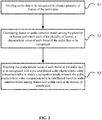
- a method for audio recognition can comprise: S1: dividing audio data to be recognized to obtain a plurality of frames of the audio data.
- the audio data to be recognized can be a segment of speech recorded by audio recognition software, or a segment of speech from interactive TV.
- the main purpose is typically to recognize the source of the segment of speech.
- the segment of speech can be divided into frames. For example, each 30 millisecond (ms) can be used as one frame of data.
- the number of ms selected as the length of one frame of audio data is not limited by the present application, and can be selected according to actual needs, which can be 20 ms, 25 ms, 40 ms, and the like. However, it should be guaranteed that the rules for frame division of the audio data to be recognized must be the same as the principles for frame division of the pre-established audio characteristic value comparison table.
- the frames need to be set to overlap with one another during frame division.
- the first frame is 0 to 30 ms
- the second frame is 16 ms to 45 ms
- the third frame is 30 ms to 60 ms.
- the audio data to be recognized is divided into frames according to a division rule that adjacent frames are set to have an overlap of a preset number of milliseconds. In other words, adjacent frames overlap, thereby avoiding the impact of the deviation caused by the frame division on matching results.
- each frame of the audio data can be processed through Fast Fourier Transform (FFT) transformation to transform the audio data to a frequency domain, and to analyze signals in the frequency domain.
- FFT Fast Fourier Transform
- S2 calculating, based on audio variation trends among the plurality of frames and within each of the plurality of frames, to obtain a characteristic value of each frame of the audio data to be recognized.
- a characteristic vector of a preset number of dimensions may be acquired by applying an MFCC characteristic parameter extraction algorithm on the frequency domain result obtained after the above-described FFT transformation.
- the MFCC characteristic parameter extraction algorithm is used because significant varying regions in signals can be extracted in speech recognition for the MFCC characteristic, allowing good differentiation.
- MFCC is an acronym of Mel Frequency Cepstral Coefficient, wherein Mel frequency is developed based on human hearing characteristics and has a nonlinear corresponding relationship with Hz frequency.
- Mel Frequency Cepstral Coefficients MFCCs
- MFCCs are Hz spectral characteristics obtained through calculation using the relationship between Mel frequency and Hz frequency. Due to the nonlinear corresponding relationship between Mel frequency and Hz frequency, MFCC calculation accuracy decreases as the frequency increases. Therefore, only low-frequency MFCC is typically used in applications, while medium to high-frequency MFCC is discarded.
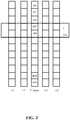
- signals in each frame are converted into a vector of a preset number of dimensions. Assuming that the vector is a 12-dimensional vector, then as shown in FIG. 3 , signals in the i th frame can be expressed as ( d i 0 ,d i 1 ... d i 10, d i 11 ), d being a float type data. Furthermore, to make subsequent comparison and matching simpler, the obtained vector can be encoded and converted to a binary sequence or a positive number corresponding to the binary sequence. For example, the expression of frame characteristic vector shown in FIG.
- each frame of the audio data to be recognized is first converted to vector data of a preset number of dimensions; then, the vector data of each frame of audio data is converted to a binary sequence according to vector values between adjacent dimensions and vector values of adjacent frames in the vector data of each frame of the audio data.
- the binary sequence is obtained according to vector values of two adjacent frames of data and adjacent vector values in the same frame. This way, the relationships between frames and within a frame are effectively included in the calculation of characteristic values.
- n, m can be selected as needed.
- n, m can have values of 2 and 3, respectively.
- diff -2* t 1 -t 2+ t 3+2 *t 4.
- two adjacent frames are used as a basis for calculation in the above examples and equations.
- adjacent three frames or four frames, or the like can also be used.
- a proper number of frames can be selected according to actual calculation accuracy and processing capabilities of processors.
- the above equations need to be adjusted accordingly.
- the concept of adjustment is similar, which is not limited in the present application.
- the digit of the binary sequence obtained through calculation is N-1. For example, if a 12-dimensional characteristic vector is obtained, then the obtained binary sequence has 11 digits.
- the obtained binary sequence can be used as the characteristic value.
- a decimal number corresponding to the binary sequence can be used as the characteristic value. For example, if the binary sequence of a frame of audio data is 00000000101, then 00000000101 can be used as the ultimate characteristic value, or 5 can be used as the ultimate characteristic value.
- coefficients of adjacent relationships within a frame can be compared, which is deemed as comparison of intra-frame coefficients. Then, the comparison information of two adjacent frames is obtained. The information of these two adjacent frames and information within each of the frames are used to form the ultimate value diff . A result of comparing the value diff with zero "0" constitutes the ultimate encoded value of the corresponding digit. For example, after signals of one frame are transformed to a 12-dimensional characteristic coefficient vector through MFCC, the vector is encoded to become a 11-digit binary sequence ( Bit i, 0 ,Bit i,1 ... Bit i, 10 ). If this binary sequence is converted to a decimal number, then the corresponding range is from 0 to 2 11 .
- an audio characteristic value comparison table needs to be pre-established, which records each frame of data and a characteristic value corresponding to the frame of data. If the characteristic values are expressed in a binary format in the audio characteristic value comparison table, then accordingly during audio recognition, the audio data to be recognized will be converted to a binary sequence as the characteristic value. If the characteristic values are expressed in a decimal format in the audio characteristic value comparison table, then accordingly during audio recognition, the audio data to be recognized will be converted to a decimal number as the characteristic value.
- the audio characteristic value comparison table can be established in the following manner:
- the process of characteristic value calculation and the principles and manners involved thereby are identical with those for obtaining characteristic values of the audio data to be recognized, and will not be repeated herein.
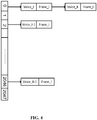
- the difference is in that, when the audio characteristic value comparison table is to be established, the characteristic value needs to be used as a root node, and according to the characteristic value of each frame of the each segment of sample audio, attaching each frame of the each segment of sample audio behind the corresponding root node to form a corresponding relationship. For example, assuming that the originally obtained vector is a 12-dimensional vector, then the ultimately obtained established audio characteristic value comparison table is shown in FIG. 4 .
- a characteristic array can be included, in addition to the audio characteristic value comparison table shown in FIG. 4 , to record characteristic values of all segments of the sample audio.
- the audio characteristic value comparison table has 2048 root nodes. All frames of audio data (i.e., a frame of a sound signal) having a characteristic value corresponding to each root node are subsequently stored behind the each root node. For example, the 0 th root node correspondingly has all fingerprint information with a characteristic value of 0 stored behind it. If the characteristic value corresponding to the j th frame of the i th sound is 0, and the characteristic value corresponding to the l th frame of the k th sound is 0, then these sound segments ( i, j )( k, l ) will be stored under the 0 th root node.
- the process can comprise establishing a voting matrix, wherein the voting matrix is established according to the number of the segments of sample audio and the number of frames of each segment of sample audio. That is, the voting matrix can be a 2-dimensional matrix, in which the number of dimensions of the 2-dimensional matrix represents the quantity of the segments of sample audio in a database, i.e., the number of sound signals in the database and the maximal number of data frames per sound signal.
- the following operations can be performed on each frame of the audio data to be recognized: looking up, in the audio characteristic value comparison table, one or more frames of audio data that have the same characteristic value as that of the current frame, and marking a voting label at positions in the voting matrix corresponding to the one or more frames of audio data that have the same audio characteristic value as that of the current frame; then, using the segment of sample audio having the highest number of voting labels that exceeds a preset threshold as a recognition result.
- a voting operation can be performed to the each frame sequentially according to the audio characteristic value comparison table. For example, for signals in each frame of the audio data to be recognized, the characteristic value "v" is found first, and a corresponding root node is found in a characteristic index table, and all sound signals having the characteristic value of "v" are stored under the node. For example, the characteristic value of the first frame of the audio data to be recognized is 2046, then the 2046 th root node in the audio characteristic value comparison table is found. Under this node, the l th frame of the ( k -1) th sound signal is stored, of which the characteristic is 2046.
- a "+1" operation is performed at position ( k -1, l ) in the voting matrix.
- the "+1" operation represents voting, and the meaning of the voting operation is that the segment of the audio data to be recognized may be from the vicinity of the l th frame of the ( k -1) th sound source.
- the final voting result can be counted to determine the frames of sound segments that obtain the most votes, indicating that the signal to be recognized is most similar to these sound segments in the database.
- the label position is also the 6 th frame of the 8 th sample audio. Namely, votes are cast at the first matched position of a sample audio for all matching results.
- each frame of the audio data to be recognized is directly matched to a sample audio, and ultimately a matching degree with each sample audio is statistically analyzed. This type of operation is also feasible. However, in comparison, the manner, in which a frame of a sample audio is matched as a starting frame, is obviously more accurate.
- a plurality of results that meet the conditions can sometimes be obtained through matching.
- a matching threshold T
- Subsequent accurate matching can be performed only when the threshold T is exceeded. For example, if the votes for the 3 rd frame of the i th sample sound is greater than the threshold, then comparison of segments' characteristic values starts from the 3 rd frame. As shown in FIG.
- the comparison is performed in the manner that f3 and f0 are converted into two binary sequences and then the number of different digits of the two binary sequences is counted.
- the comparison can be performed by looking up a table. For example, 11-digit binary sequences are compared. The 11-digit binary sequences each correspond to a decimal characteristic value. Therefore, for comparison of similarity between the two characteristic values, the characteristic values are first converted to binary sequences, and then the number of different digits of the two binary sequences is counted. Since the audio data to be recognized typically comprises multiple frames of data, the comparison results for the multiple frames can be added, and the voting position corresponding to the minimum value of the ultimate counting results is determined to be the recognition result.
- matching and recognition can be performed between the characteristic value of each frame of the audio data to be recognized and the pre-established audio characteristic value comparison table to find one or more segments of sample audio having a matching degree with the audio data to be recognized greater than the preset threshold. Then, the segment of sample audio having the highest matching degree is determined among the one or more segments of sample audio as the recognition result.
- the following operations can be performed on each of the one or more segments of sample audio: determining the number of the frames of the audio data to be recognized, acquiring a binary sequence for the each frame of the audio data to be recognized, and determining a number of digits having the same bit positions but different bit values between the binary sequence for each frame of the audio data to be recognized and a binary sequence for each frame of each segment of sample audio corresponding to the audio data to be recognized; and using the segment of sample audio having the least number of digits that have different bit values in the one or more segments of sample audio as the recognition result.
- the first binary sequence is 0010001
- the second binary sequence is 1010000
- the comparison result is 1.
- the method for audio recognition described in the example above has good robustness. Meanwhile, the proposed recognition method has a fast recognition speed and can be used subsequently in scenarios such as interactive TV and music recognition. In the present example, no extremum points are extracted in the frequency domain. Instead, a comparative relationship between frames and within a frame is used to obtain a relatively stable encoding result. Such an encoding manner can effectively resist the interference of noise, thereby achieving better audio recognition results.
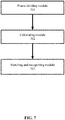
- FIG. 7 is a structural block diagram of a device for audio recognition according to some embodiments of the present application. As shown in FIG. 7 , the device can comprise: a frame dividing module 701, a calculating module 702, and a matching and recognizing module 703. This structure will be described below.
- the frame dividing module 701 is configured to divide audio data to be recognized to obtain a plurality of frames of the audio data.
- the calculating module 702 is configured to calculate, based on audio variation trends among the plurality of frames and within each of the plurality of frames, a characteristic value of each frame of the audio data to be recognized.
- the matching and recognizing module 703 is configured to match the characteristic value of each frame of the audio data to be recognized with a pre-established audio characteristic value comparison table to obtain a recognition result, wherein the audio characteristic value comparison table is established based on audio variation trends among frames and within a frame of sample data.
- the above-described device for audio recognition can further comprise: a comparison table establishing module configured to pre-establish an audio characteristic value comparison table, the comparison table establishing module comprising: an acquiring unit configured to acquire sample data, wherein the sample data comprises multiple segments of sample audio; a frame dividing unit configured to divide each of the multiple segments of sample audio to obtain a plurality of frames of audio data for each segment of the sample audio; a calculating unit configured to calculate, based on audio variation trends among the plurality of frames and within each of the plurality of frames, a characteristic value of each frame of each segment of the sample audio; a relationship determining unit configured to use the characteristic values as root nodes, and according to the characteristic value of each frame of each segment of the sample audio, attaching each frame of the each segment of the sample audio behind a corresponding one of the root nodes to form a corresponding relationship; and a generating unit configured to use the corresponding relationships as the audio characteristic value comparison table.
- a comparison table establishing module configured to pre-establish an audio characteristic value comparison
- the matching and recognizing module 703 can comprise: an establishing unit configured to establish a voting matrix, wherein the voting matrix is established according to the number of the segments of sample audio and the number of frames of each segment of sample audio; a performing unit configured to perform the following operations on each frame of the audio data to be recognized: looking up, in the audio characteristic value comparison table, one or more frames of audio data that have the same characteristic value as that of the current frame, and marking a voting label at positions in the voting matrix corresponding to the one or more frames of audio data that have the same audio characteristic value as that of the current frame; and a result generating unit configured to use the segment of sample audio having the highest number of voting labels that exceeds a preset threshold as a recognition result.
- the calculating module 702 can comprise: a first converting unit configured to convert each frame of the audio data to be recognized to vector data of a preset number of dimensions; a second converting unit configured to convert the vector data of each frame of the audio data to a binary sequence according to vector values between adjacent dimensions and vector values of adjacent frames in the vector data of each frame of audio data; and a characteristic value generating unit configured to use the binary sequence obtained from conversion as the characteristic value of a corresponding frame of audio data, or to use a decimal number corresponding to the binary sequence as the characteristic value of a corresponding frame of data.
- the first converting unit can be configured to convert, through an MCFF characteristic parameter extraction algorithm, each frame of the audio data to be recognized to a vector of a preset number of dimensions.
- the preset number of dimensions can be 12.
- the matching and recognizing module 703 can comprise: a recognizing unit configured to match the characteristic value of each frame of the audio data to be recognized with the pre-established audio characteristic value comparison table to find one or more segments of sample audio having a degree of matching with the audio data to be recognized greater than the preset threshold; and a matching unit configured to determine the segment of sample audio having the highest matching degree among the one or more segments of sample audio as the recognition result.
- the matching unit can comprise: a performing sub-unit configured to perform the following operations on each of the one or more segments of sample audio: determining the number of the frames of the audio data to be recognized, acquiring a binary sequence for the each frame of the audio data to be recognized, acquiring a binary sequence for each frame of the current segment of sample audio corresponding to the audio data to be recognized, and determining the number of digits having the same bit positions but different bit values between the binary sequence for each frame of the audio data to be recognized and the binary sequence for each frame of the current segment of sample audio corresponding to the audio data to be recognized; and a matching sub-unit configured to use the segment of sample audio having the least number of digits that have different bit values in the one or more segments of sample audio as the recognition result.
- the frame dividing module 701 can be configured to divide the audio data to be recognized into frames according to a division rule that adjacent frames are set to have an overlap of a preset number of milliseconds.
- the method and the device for audio recognition according to the present application calculate, based on audio variation trends among frames and within a frame, a characteristic value of each frame of the audio data to be recognized, and then match the characteristic value of each frame with a pre-established audio characteristic value comparison table to obtain a recognition result. Namely, no extremum points are extracted in the frequency domain. Instead, a comparative relationship between frames and within a frame is used to obtain a relatively stable encoding result, which can effectively resist the interference of noise, such that the recognition result is more accurate.
- the solution according to the present application can not only greatly improve noise immunity, but also effectively improve the recognition success rate and the accuracy of recognition results.
- the present application provides operating steps of the method as shown in the embodiments or flow charts; however, more or fewer operation steps can be comprised in the method according to conventional practices or without creative effort.
- the order of these steps listed in the embodiments is merely one of numerous step execution orders and does not represent the only execution order.
- the steps can be executed sequentially or in parallel according to the method as shown in the embodiments or accompanying drawings (e.g., through parallel processors or in a multithreading environment).
- the device or modules described in the above embodiments may be implemented by a computer chip or entity, or implemented by a product having a type of function.
- the above device has been divided into various modules according to functions for respective description.
- functions of the modules can be implemented in one or multiple pieces of software and/or hardware.
- a module of a function can also be embodied by combining a plurality of sub-modules or sub-units.
- a controller may be in a form of a microprocessor or processor, as well as a computer readable medium that stores computer readable program code (e.g. software or firmware) executable by the (micro) processor, a logic gate, a switch, an Application Specific Integrated Circuit (ASIC), a programmable logic controller and an embedded microcontroller.
- Examples of the controller include, but are not limited to, the following microcontrollers: ARC 625D, Atmel AT91SAM, Microchip PIC18F26K20, and Silicone Labs C8051F320.
- a memory controller may further be implemented as a part of a control logic of a memory.
- controller in addition to that a controller is implemented in a manner of pure computer readable program code, it is totally feasible to perform logic programming on steps of a method to enable a controller to achieve the same functions in the form of a logic gate, a switch, an ASIC, a programmable logic controller, and an embedded microcontroller. Therefore, such controller can be deemed as a hardware part, while devices comprised therein and configured to achieve various functions may also be deemed as structures inside the hardware part. Alternatively, devices configured to achieve various functions may even be deemed as either software modules to implement a method or structures inside a hardware part.
- modules in the device according to the present application may be described in a regular context of a computer executable instruction that is executed by a computer, e.g., may be program modules.
- a program module comprises a routine, a program, an object, a component, a data structure, and the like for executing a particular task or achieving a particular abstract data type.
- the present application may also be practiced in distributed computing environments. In these distributed computing environments, remote processing devices connected via communication networks carry out tasks.
- a program module can be located in local and remote computer storage media, including storage devices.
- the present application can be implemented by software plus necessary hardware. Based on such understanding, the technical solution of the present application can be embodied, in essence or with respect to the part contributing to current technologies, in the form of a software product, or can be embodied through a process of implementing data migration.
- the computer software product can be stored in a storage medium, such as ROM/RAM, magnetic disc, optical disc, and the like, and may comprise a number of instructions to enable a computer device (which may be a personal computer, a mobile terminal, a server, or a network device) to carry out the methods set forth in the embodiments or some parts of the embodiments of the present application.
Landscapes
- Engineering & Computer Science (AREA)
- Physics & Mathematics (AREA)
- Audiology, Speech & Language Pathology (AREA)
- Computational Linguistics (AREA)
- Health & Medical Sciences (AREA)
- Multimedia (AREA)
- Theoretical Computer Science (AREA)
- Human Computer Interaction (AREA)
- Acoustics & Sound (AREA)
- General Physics & Mathematics (AREA)
- Data Mining & Analysis (AREA)
- General Engineering & Computer Science (AREA)
- Databases & Information Systems (AREA)
- Computer Vision & Pattern Recognition (AREA)
- Mathematical Physics (AREA)
- Computational Mathematics (AREA)
- Mathematical Analysis (AREA)
- Mathematical Optimization (AREA)
- Pure & Applied Mathematics (AREA)
- Signal Processing (AREA)
- Computing Systems (AREA)
- Algebra (AREA)
- Software Systems (AREA)
- Artificial Intelligence (AREA)
- General Health & Medical Sciences (AREA)
- Information Retrieval, Db Structures And Fs Structures Therefor (AREA)
- Auxiliary Devices For Music (AREA)
- Telephonic Communication Services (AREA)
Abstract
Description
- The present application claims priority to the Chinese Patent Application No.
201610487584.9 filed on June 28, 2016 - The present application belongs to the field of data processing technologies, and in particular, relates to a method and a device for audio recognition.
- Along with the continuously improved level of intelligence, smart terminals have been increasingly used in people's lives, such as interactive TV, audio recognition, and the like, which have recently emerged. For example, to find out the title of a song played in a car radio, what could have been done at most in the past was to record the song, and then to ask friends, or to listen to the lyrics and use the lyrics to search online.
- However, along with continuous development of intellectualization and recognition technologies, audio recognition can be achieved directly through smart terminals. As long as the music recognition function is turned on in a terminal, the title or singer of a song currently being played can be automatically recognized. The terminal can even directly connect to music software to play the song.
- The above-described is a simple implementation scenario of audio fingerprint-based interactive TV or music recognition, which is, however, dependent on accurate audio recognition technologies. At present, primary audio recognition technologies are: extracting pairs of characteristic points, and using the characteristic points to recognize and determine audio. For example, as shown in
FIG. 1 , music is first converted to a sonogram, and several extremum points shown inFIG. 1 are extracted from the sonogram. To reduce the recognition difficulty and improve the recognition efficiency, recognition can be performed using point pairs, i.e., two extremum points forming one point pair.FIG. 1 illustrates seven point pairs. During recognition, the presence of identical point pairs is treated as a correct matching. - Due to impact of noise, however, extremum points do not necessarily occur at consistent locations, leading to a low probability of matching point pairs. In addition, these extremum points tend to be interfered by noise and are not very stable. Relatively stable recognition results cannot be obtained when noise is large.
- No effective solution has been proposed at present with regard to the problems in the existing audio recognition technologies, i.e., a low matching success rate and low recognition accuracy due to the poor noise immunity.
- The objective of the present application is to provide a method and a device for audio recognition, which can effectively improve the matching success rate and the accuracy of recognition results.
- The method and the device for audio recognition according to the present application are achieved as follows:
- a method for audio recognition, comprising:
- dividing audio data to be recognized to obtain a plurality of frames of the audio data;
- calculating, based on audio variation trends among the plurality of frames and within each of the plurality of frames, a characteristic value of each frame of the audio data to be recognized; and
- matching the characteristic value of each frame of the audio data to be recognized with a pre-established audio characteristic value comparison table to obtain a recognition result, wherein the audio characteristic value comparison table is established based on audio variation trends among frames and within each of the frames of sample data.
- A device for audio recognition, comprising:
- a frame dividing module configured to divide audio data to be recognized to obtain a plurality of frames of the audio data;
- a calculating module configured to calculate, based on audio variation trends among the plurality of frames and within each of the plurality of frames, to obtain a characteristic value of each frame of the audio data to be recognized; and
- a matching and recognizing module configured to match the characteristic value of each frame of the audio data to be recognized with a pre-established audio characteristic value comparison table to obtain a recognition result, wherein the audio characteristic value comparison table is established based on audio variation trends among frames and within each of the frames of sample data.
- The method and the device for audio recognition according to the present application calculate, based on audio variation trends among frames and within each of the frames of audio data to be recognized, to obtain a characteristic value of each frame of the audio data to be recognized, and then match the characteristic value of each frame with a pre-established audio characteristic value comparison table to obtain a recognition result. Namely, no extremum points are extracted in a frequency domain. Instead, a comparative relationship between frames and within a frame is used to obtain a relatively stable encoding result, thereby effectively resisting the interference by noise, and leading to more accurate recognition results. The solution according to the present application can not only greatly improve the noise immunity, but also effectively improve the recognition success rate and the accuracy of recognition results.
- To more clearly describe technical solutions in the embodiments of the present application or current technologies, the accompanying drawings used by the description of the embodiments or current technologies will be briefly described below. Obviously, the accompanying drawings in the following description are merely some embodiments of the present application. To a person skilled in the art, other drawings may be derived from these accompanying drawings without creative effort.
-
FIG. 1 is a schematic diagram of an existing method for audio recognition that is based on extraction of characteristic point pairs; -
FIG. 2 is a flow chart of an exemplary method for audio recognition according to the present application; -
FIG. 3 is a schematic diagram of a characteristic vector according to the present application; -
FIG. 4 is a schematic diagram of an audio characteristic value comparison table according to the present application; -
FIG. 5 is a schematic diagram of recognition and matching of audio data to be recognized according to the present application; -
FIG. 6 is a schematic diagram of binary bit summation according to the present application; -
FIG. 7 is a schematic diagram of a modular structure of a device for audio recognition according to the present application. - To enable a person skilled in the art to better understand the technical solutions in the present application, the technical solutions in the embodiments of the present application will be clearly and completely described below with reference to the accompanying drawings in the embodiments of the present application. Apparently, the described embodiments are merely some, but not all embodiments of the present application. All other embodiments obtainable by a person skilled in the art without creative effort and on the basis of the embodiments of the present application shall fall within the scope of the present application.
- To enable a person skilled in the art to better understand the technical solutions in the present application, the technical solutions in the embodiments of the present application will be clearly and completely described below with reference to the accompanying drawings in the embodiments of the present application. Apparently, the described embodiments are merely some, but not all embodiments of the present application. All other embodiments obtainable by a person skilled in the art without creative effort and on the basis of the embodiments of the present application shall fall within the scope of the present application.
-
FIG. 2 is a flow chart of an exemplary method for audio recognition according to the present application. The present application provides operation steps of the method or device structure as shown in the following embodiments or accompanying drawings; however, more or fewer operation steps or modular units can be comprised in the method or device according to conventional practices or without creative effort. In the steps or structures without necessary causal relationship in terms of logic, the execution sequence of these steps or the modular structure of the device are not limited by the execution sequence or the modular structure described in the embodiments or illustrated in the accompanying drawings of the present application. When applied in an exemplary device or terminal product, the method or the modular structures can be executed sequentially or in parallel according to the methods or the modular structures shown in the embodiments or accompanying drawings (e.g., by parallel processors or in a multithreading environment, or even in a distributed processing environment). - As shown in
FIG. 2 , a method for audio recognition according to some embodiments of the present application can comprise:
S1: dividing audio data to be recognized to obtain a plurality of frames of the audio data. - The audio data to be recognized can be a segment of speech recorded by audio recognition software, or a segment of speech from interactive TV. The main purpose is typically to recognize the source of the segment of speech. After being recorded, the segment of speech can be divided into frames. For example, each 30 millisecond (ms) can be used as one frame of data. The number of ms selected as the length of one frame of audio data is not limited by the present application, and can be selected according to actual needs, which can be 20 ms, 25 ms, 40 ms, and the like. However, it should be guaranteed that the rules for frame division of the audio data to be recognized must be the same as the principles for frame division of the pre-established audio characteristic value comparison table.
- Furthermore, deviation is inevitable during matching and recognition due to the impact of frame division. To reduce the impact of deviation, the frames need to be set to overlap with one another during frame division. Using 30 ms per frame as an example, the first frame is 0 to 30 ms, then the second frame is 16 ms to 45 ms, and the third frame is 30 ms to 60 ms. Namely, the audio data to be recognized is divided into frames according to a division rule that adjacent frames are set to have an overlap of a preset number of milliseconds. In other words, adjacent frames overlap, thereby avoiding the impact of the deviation caused by the frame division on matching results.
- Prior to subsequent data processing, each frame of the audio data can be processed through Fast Fourier Transform (FFT) transformation to transform the audio data to a frequency domain, and to analyze signals in the frequency domain.
- S2: calculating, based on audio variation trends among the plurality of frames and within each of the plurality of frames, to obtain a characteristic value of each frame of the audio data to be recognized.
- In a process of determining characteristics, a characteristic vector of a preset number of dimensions (e.g., 12 dimensions) may be acquired by applying an MFCC characteristic parameter extraction algorithm on the frequency domain result obtained after the above-described FFT transformation. The MFCC characteristic parameter extraction algorithm is used because significant varying regions in signals can be extracted in speech recognition for the MFCC characteristic, allowing good differentiation. MFCC is an acronym of Mel Frequency Cepstral Coefficient, wherein Mel frequency is developed based on human hearing characteristics and has a nonlinear corresponding relationship with Hz frequency. Mel Frequency Cepstral Coefficients (MFCCs) are Hz spectral characteristics obtained through calculation using the relationship between Mel frequency and Hz frequency. Due to the nonlinear corresponding relationship between Mel frequency and Hz frequency, MFCC calculation accuracy decreases as the frequency increases. Therefore, only low-frequency MFCC is typically used in applications, while medium to high-frequency MFCC is discarded.
- After the MFCC characteristic calculation, signals in each frame are converted into a vector of a preset number of dimensions. Assuming that the vector is a 12-dimensional vector, then as shown in
FIG. 3 , signals in the ith frame can be expressed as (d i0 ,d i1...d i10, d i11), d being a float type data. Furthermore, to make subsequent comparison and matching simpler, the obtained vector can be encoded and converted to a binary sequence or a positive number corresponding to the binary sequence. For example, the expression of frame characteristic vector shown inFIG. 3 can be encoded and converted in the following manner:


- It can be seen from the above equations that the binary sequence is obtained through calculation according to vector values between adjacent dimensions and vector values of adjacent frames of vector data of each frame of audio data. Namely, each frame of the audio data to be recognized is first converted to vector data of a preset number of dimensions; then, the vector data of each frame of audio data is converted to a binary sequence according to vector values between adjacent dimensions and vector values of adjacent frames in the vector data of each frame of the audio data.
- For example, in the equations, the binary sequence is obtained according to vector values of two adjacent frames of data and adjacent vector values in the same frame. This way, the relationships between frames and within a frame are effectively included in the calculation of characteristic values.
- However, it should be noted that the above-described n, m can be selected as needed. For example, n, m can have values of 2 and 3, respectively. Correspondingly, diff = -2*t1-
t 2+t3+ 2*t4. - Furthermore, two adjacent frames are used as a basis for calculation in the above examples and equations. In an exemplary implementation, adjacent three frames or four frames, or the like can also be used. A proper number of frames can be selected according to actual calculation accuracy and processing capabilities of processors. When different numbers of frames are selected, the above equations need to be adjusted accordingly. However, the concept of adjustment is similar, which is not limited in the present application.
- In the process of obtaining a binary sequence through calculation in the manner described above, if the original vector dimension is N, then the digit of the binary sequence obtained through calculation is N-1. For example, if a 12-dimensional characteristic vector is obtained, then the obtained binary sequence has 11 digits.
- In this example, the obtained binary sequence can be used as the characteristic value. Alternatively, a decimal number corresponding to the binary sequence can be used as the characteristic value. For example, if the binary sequence of a frame of audio data is 00000000101, then 00000000101 can be used as the ultimate characteristic value, or 5 can be used as the ultimate characteristic value.
- In summary, coefficients of adjacent relationships within a frame can be compared, which is deemed as comparison of intra-frame coefficients. Then, the comparison information of two adjacent frames is obtained. The information of these two adjacent frames and information within each of the frames are used to form the ultimate value diff . A result of comparing the value diff with zero "0" constitutes the ultimate encoded value of the corresponding digit. For example, after signals of one frame are transformed to a 12-dimensional characteristic coefficient vector through MFCC, the vector is encoded to become a 11-digit binary sequence (Bit i,0 ,Biti,1 ...Bit i,10). If this binary sequence is converted to a decimal number, then the corresponding range is from 0 to 211.
- S3: matching the characteristic value of each frame of the audio data to be recognized with a pre-established audio characteristic value comparison table to obtain a recognition result, wherein the audio characteristic value comparison table is established based on the audio variation trends among frames and within each of the frames of sample data.
- To achieve effective matching of audio data, an audio characteristic value comparison table needs to be pre-established, which records each frame of data and a characteristic value corresponding to the frame of data. If the characteristic values are expressed in a binary format in the audio characteristic value comparison table, then accordingly during audio recognition, the audio data to be recognized will be converted to a binary sequence as the characteristic value. If the characteristic values are expressed in a decimal format in the audio characteristic value comparison table, then accordingly during audio recognition, the audio data to be recognized will be converted to a decimal number as the characteristic value.
- For example, the audio characteristic value comparison table can be established in the following manner:
- Step 1: acquiring sample data, wherein the sample data comprises multiple segments of sample audio;
- Step 2: dividing each of the multiple segments of sample audio to obtain a plurality of frames of audio data for the each segment of sample audio;
- Step 3: calculating, based on audio variation trends among the plurality of frames and within each of the plurality of frames, a characteristic value of each frame of the each segment of sample audio;
- Step 4: using the characteristic values as root nodes, and according to the characteristic value of each frame of the each segment of sample audio, attaching each frame of the each segment of sample audio behind a corresponding one of the root nodes to form a corresponding relationship;
- Step 5: using the corresponding relationships as the audio characteristic value comparison table.
- In the above process of establishing the audio characteristic value comparison table, the process of characteristic value calculation and the principles and manners involved thereby are identical with those for obtaining characteristic values of the audio data to be recognized, and will not be repeated herein. The difference is in that, when the audio characteristic value comparison table is to be established, the characteristic value needs to be used as a root node, and according to the characteristic value of each frame of the each segment of sample audio, attaching each frame of the each segment of sample audio behind the corresponding root node to form a corresponding relationship. For example, assuming that the originally obtained vector is a 12-dimensional vector, then the ultimately obtained established audio characteristic value comparison table is shown in
FIG. 4 . - To enable quick recognition subsequently, a characteristic array can be included, in addition to the audio characteristic value comparison table shown in
FIG. 4 , to record characteristic values of all segments of the sample audio. - Since the vector is 12-dimensional, the characteristic value has 2048 (211) possibilities. Therefore, the audio characteristic value comparison table has 2048 root nodes. All frames of audio data (i.e., a frame of a sound signal) having a characteristic value corresponding to each root node are subsequently stored behind the each root node. For example, the 0th root node correspondingly has all fingerprint information with a characteristic value of 0 stored behind it. If the characteristic value corresponding to the j th frame of the ith sound is 0, and the characteristic value corresponding to the l th frame of the k th sound is 0, then these sound segments (i, j)(k, l) will be stored under the 0th root node.
- To achieve the ultimate retrieval and recognition, relatively accurate matching results can be determined by establishing a voting matrix. For example, the process can comprise establishing a voting matrix, wherein the voting matrix is established according to the number of the segments of sample audio and the number of frames of each segment of sample audio. That is, the voting matrix can be a 2-dimensional matrix, in which the number of dimensions of the 2-dimensional matrix represents the quantity of the segments of sample audio in a database, i.e., the number of sound signals in the database and the maximal number of data frames per sound signal. After the voting matrix is established, the following operations can be performed on each frame of the audio data to be recognized: looking up, in the audio characteristic value comparison table, one or more frames of audio data that have the same characteristic value as that of the current frame, and marking a voting label at positions in the voting matrix corresponding to the one or more frames of audio data that have the same audio characteristic value as that of the current frame; then, using the segment of sample audio having the highest number of voting labels that exceeds a preset threshold as a recognition result.
- For example, as shown in
FIG. 5 , after a characteristic value for each frame of the segment of the audio data to be recognized is obtained through calculation, a voting operation can be performed to the each frame sequentially according to the audio characteristic value comparison table. For example, for signals in each frame of the audio data to be recognized, the characteristic value "v" is found first, and a corresponding root node is found in a characteristic index table, and all sound signals having the characteristic value of "v" are stored under the node. For example, the characteristic value of the first frame of the audio data to be recognized is 2046, then the 2046th root node in the audio characteristic value comparison table is found. Under this node, the l th frame of the (k-1)th sound signal is stored, of which the characteristic is 2046. Therefore, a "+1" operation is performed at position (k-1,l) in the voting matrix. The "+1" operation represents voting, and the meaning of the voting operation is that the segment of the audio data to be recognized may be from the vicinity of the l th frame of the (k-1)th sound source. - After votes are cast on characteristic values of all frames of the audio data to be recognized, the final voting result can be counted to determine the frames of sound segments that obtain the most votes, indicating that the signal to be recognized is most similar to these sound segments in the database.
- However, it should be noted that there is a conversion process during voting, i.e., if the 1st frame of the audio data to be recognized and the 3rd frame of the 5th sample audio have the same characteristic value through matching, and when the 4th frame of the audio data to be recognized and the 6th frame of the 5th sample audio have the same characteristic value through subsequent matching, then the label position is also the 1st frame of the 5th sample audio. Namely, votes are cast at the first matched position of a sample audio for all matching results. In other words, if the 3rd frame of the audio data to be recognized and the 6th frame of the 8th sample audio have the same characteristic value through matching (which is the first time of matching with this sample audio), then when the 4th frame of the audio data to be recognized and the 7th frame of the 8th sample audio have the same characteristic value through subsequent matching, the label position is also the 6th frame of the 8th sample audio. Namely, votes are cast at the first matched position of a sample audio for all matching results.
- Other matching manners can be used. For example, the characteristic value of each frame of the audio data to be recognized is directly matched to a sample audio, and ultimately a matching degree with each sample audio is statistically analyzed. This type of operation is also feasible. However, in comparison, the manner, in which a frame of a sample audio is matched as a starting frame, is obviously more accurate.
- In an exemplary implementation, a plurality of results that meet the conditions can sometimes be obtained through matching. To make the final result more accurate, a matching threshold (T) can be set. Subsequent accurate matching can be performed only when the threshold T is exceeded. For example, if the votes for the 3rd frame of the i th sample sound is greater than the threshold, then comparison of segments' characteristic values starts from the 3rd frame. As shown in
FIG. 6 , assuming that the characteristic value of the 3rd frame of voice_i is f3 and the characteristic value of the 1st frame of the signal to be recognized is f0, then the comparison is performed in the manner that f3 and f0 are converted into two binary sequences and then the number of different digits of the two binary sequences is counted. The comparison can be performed by looking up a table. For example, 11-digit binary sequences are compared. The 11-digit binary sequences each correspond to a decimal characteristic value. Therefore, for comparison of similarity between the two characteristic values, the characteristic values are first converted to binary sequences, and then the number of different digits of the two binary sequences is counted. Since the audio data to be recognized typically comprises multiple frames of data, the comparison results for the multiple frames can be added, and the voting position corresponding to the minimum value of the ultimate counting results is determined to be the recognition result. - Namely, matching and recognition can be performed between the characteristic value of each frame of the audio data to be recognized and the pre-established audio characteristic value comparison table to find one or more segments of sample audio having a matching degree with the audio data to be recognized greater than the preset threshold. Then, the segment of sample audio having the highest matching degree is determined among the one or more segments of sample audio as the recognition result. For example, the following operations can be performed on each of the one or more segments of sample audio: determining the number of the frames of the audio data to be recognized, acquiring a binary sequence for the each frame of the audio data to be recognized, and determining a number of digits having the same bit positions but different bit values between the binary sequence for each frame of the audio data to be recognized and a binary sequence for each frame of each segment of sample audio corresponding to the audio data to be recognized; and using the segment of sample audio having the least number of digits that have different bit values in the one or more segments of sample audio as the recognition result.
- For example, the first binary sequence is 0010001, the second binary sequence is 1010000, and then the comparison result is 1.
- The method for audio recognition described in the example above has good robustness. Meanwhile, the proposed recognition method has a fast recognition speed and can be used subsequently in scenarios such as interactive TV and music recognition. In the present example, no extremum points are extracted in the frequency domain. Instead, a comparative relationship between frames and within a frame is used to obtain a relatively stable encoding result. Such an encoding manner can effectively resist the interference of noise, thereby achieving better audio recognition results.
- On the basis of the same concept, a device for audio recognition is further provided in the embodiments of the present invention, as described in the following embodiments. As the principle of the device for audio recognition to solve the problems is similar to that of the method for audio recognition, the implementation of the method for audio recognition can be referenced for the implementation of the device for audio recognition, and repetitions thereof will not be described herein. The term "unit" or "module" used below refers to a combination of software and/or hardware capable of achieving preset functions. The device described in the following embodiments is preferably achieved by software; however, it is also possible and can be conceived that the device is achieved by hardware or a combination of software and hardware.
FIG. 7 is a structural block diagram of a device for audio recognition according to some embodiments of the present application. As shown inFIG. 7 , the device can comprise: aframe dividing module 701, a calculatingmodule 702, and a matching and recognizingmodule 703. This structure will be described below. - The
frame dividing module 701 is configured to divide audio data to be recognized to obtain a plurality of frames of the audio data. - The calculating
module 702 is configured to calculate, based on audio variation trends among the plurality of frames and within each of the plurality of frames, a characteristic value of each frame of the audio data to be recognized. - The matching and recognizing
module 703 is configured to match the characteristic value of each frame of the audio data to be recognized with a pre-established audio characteristic value comparison table to obtain a recognition result, wherein the audio characteristic value comparison table is established based on audio variation trends among frames and within a frame of sample data. - In one implementation manner, the above-described device for audio recognition can further comprise: a comparison table establishing module configured to pre-establish an audio characteristic value comparison table, the comparison table establishing module comprising: an acquiring unit configured to acquire sample data, wherein the sample data comprises multiple segments of sample audio; a frame dividing unit configured to divide each of the multiple segments of sample audio to obtain a plurality of frames of audio data for each segment of the sample audio; a calculating unit configured to calculate, based on audio variation trends among the plurality of frames and within each of the plurality of frames, a characteristic value of each frame of each segment of the sample audio; a relationship determining unit configured to use the characteristic values as root nodes, and according to the characteristic value of each frame of each segment of the sample audio, attaching each frame of the each segment of the sample audio behind a corresponding one of the root nodes to form a corresponding relationship; and a generating unit configured to use the corresponding relationships as the audio characteristic value comparison table.
- In one implementation manner, the matching and recognizing
module 703 can comprise: an establishing unit configured to establish a voting matrix, wherein the voting matrix is established according to the number of the segments of sample audio and the number of frames of each segment of sample audio; a performing unit configured to perform the following operations on each frame of the audio data to be recognized: looking up, in the audio characteristic value comparison table, one or more frames of audio data that have the same characteristic value as that of the current frame, and marking a voting label at positions in the voting matrix corresponding to the one or more frames of audio data that have the same audio characteristic value as that of the current frame; and a result generating unit configured to use the segment of sample audio having the highest number of voting labels that exceeds a preset threshold as a recognition result. - In one implementation manner, the calculating
module 702 can comprise: a first converting unit configured to convert each frame of the audio data to be recognized to vector data of a preset number of dimensions; a second converting unit configured to convert the vector data of each frame of the audio data to a binary sequence according to vector values between adjacent dimensions and vector values of adjacent frames in the vector data of each frame of audio data; and a characteristic value generating unit configured to use the binary sequence obtained from conversion as the characteristic value of a corresponding frame of audio data, or to use a decimal number corresponding to the binary sequence as the characteristic value of a corresponding frame of data. - In one implementation manner, the second converting unit can be configured to convert, according to the following equation, the vector data of each frame of audio data to a binary sequence:


- In one implementation manner, the first converting unit can be configured to convert, through an MCFF characteristic parameter extraction algorithm, each frame of the audio data to be recognized to a vector of a preset number of dimensions.
- In one implementation manner, the preset number of dimensions can be 12.
- In one implementation manner, the matching and recognizing
module 703 can comprise: a recognizing unit configured to match the characteristic value of each frame of the audio data to be recognized with the pre-established audio characteristic value comparison table to find one or more segments of sample audio having a degree of matching with the audio data to be recognized greater than the preset threshold; and a matching unit configured to determine the segment of sample audio having the highest matching degree among the one or more segments of sample audio as the recognition result. - In one implementation manner, the matching unit can comprise: a performing sub-unit configured to perform the following operations on each of the one or more segments of sample audio: determining the number of the frames of the audio data to be recognized, acquiring a binary sequence for the each frame of the audio data to be recognized, acquiring a binary sequence for each frame of the current segment of sample audio corresponding to the audio data to be recognized, and determining the number of digits having the same bit positions but different bit values between the binary sequence for each frame of the audio data to be recognized and the binary sequence for each frame of the current segment of sample audio corresponding to the audio data to be recognized; and a matching sub-unit configured to use the segment of sample audio having the least number of digits that have different bit values in the one or more segments of sample audio as the recognition result.
- In one implementation manner, the
frame dividing module 701 can be configured to divide the audio data to be recognized into frames according to a division rule that adjacent frames are set to have an overlap of a preset number of milliseconds. - The method and the device for audio recognition according to the present application calculate, based on audio variation trends among frames and within a frame, a characteristic value of each frame of the audio data to be recognized, and then match the characteristic value of each frame with a pre-established audio characteristic value comparison table to obtain a recognition result. Namely, no extremum points are extracted in the frequency domain. Instead, a comparative relationship between frames and within a frame is used to obtain a relatively stable encoding result, which can effectively resist the interference of noise, such that the recognition result is more accurate. The solution according to the present application can not only greatly improve noise immunity, but also effectively improve the recognition success rate and the accuracy of recognition results.
- The above description of the embodiments of the present application is merely applications of some embodiments of the present application. The solutions of the above embodiments of the present application can also be performed in implementation manners with slight modifications based on some standards, models, and methods. Other non-creative variations of the steps in the processing methods set forth in the above embodiments of the present application can still achieve the same application, and will not be repeated herein.
- The present application provides operating steps of the method as shown in the embodiments or flow charts; however, more or fewer operation steps can be comprised in the method according to conventional practices or without creative effort. The order of these steps listed in the embodiments is merely one of numerous step execution orders and does not represent the only execution order. When applied in a device or client product, the steps can be executed sequentially or in parallel according to the method as shown in the embodiments or accompanying drawings (e.g., through parallel processors or in a multithreading environment).
- The device or modules described in the above embodiments may be implemented by a computer chip or entity, or implemented by a product having a type of function. For convenience of description, the above device has been divided into various modules according to functions for respective description. When implementing the present application, functions of the modules can be implemented in one or multiple pieces of software and/or hardware. A module of a function can also be embodied by combining a plurality of sub-modules or sub-units.
- The method, device or modules described in the present application can be implemented by a controller through computer readable program code in any proper manner. For example, a controller may be in a form of a microprocessor or processor, as well as a computer readable medium that stores computer readable program code (e.g. software or firmware) executable by the (micro) processor, a logic gate, a switch, an Application Specific Integrated Circuit (ASIC), a programmable logic controller and an embedded microcontroller. Examples of the controller include, but are not limited to, the following microcontrollers: ARC 625D, Atmel AT91SAM, Microchip PIC18F26K20, and Silicone Labs C8051F320. A memory controller may further be implemented as a part of a control logic of a memory. A person skilled in the art should also be aware that, in addition to that a controller is implemented in a manner of pure computer readable program code, it is totally feasible to perform logic programming on steps of a method to enable a controller to achieve the same functions in the form of a logic gate, a switch, an ASIC, a programmable logic controller, and an embedded microcontroller. Therefore, such controller can be deemed as a hardware part, while devices comprised therein and configured to achieve various functions may also be deemed as structures inside the hardware part. Alternatively, devices configured to achieve various functions may even be deemed as either software modules to implement a method or structures inside a hardware part.
- Some modules in the device according to the present application may be described in a regular context of a computer executable instruction that is executed by a computer, e.g., may be program modules. Generally, a program module comprises a routine, a program, an object, a component, a data structure, and the like for executing a particular task or achieving a particular abstract data type. The present application may also be practiced in distributed computing environments. In these distributed computing environments, remote processing devices connected via communication networks carry out tasks. In the distributed computing environments, a program module can be located in local and remote computer storage media, including storage devices.
- According to the above description of the manners of implementation, a person skilled in the art can clearly understand that the present application can be implemented by software plus necessary hardware. Based on such understanding, the technical solution of the present application can be embodied, in essence or with respect to the part contributing to current technologies, in the form of a software product, or can be embodied through a process of implementing data migration. The computer software product can be stored in a storage medium, such as ROM/RAM, magnetic disc, optical disc, and the like, and may comprise a number of instructions to enable a computer device (which may be a personal computer, a mobile terminal, a server, or a network device) to carry out the methods set forth in the embodiments or some parts of the embodiments of the present application.
- The embodiments in this specification have been described in a progressive manner. Each embodiment focuses on differences from other embodiments, and the embodiments may be mutually referenced for identical or similar parts thereof. All or a part of the present application can be used in numerous general or dedicated computer system environments or configurations, such as personal computers, server computers, handheld devices or portable devices, panel devices, mobile communication terminals, multi-processor systems, microprocessor-based systems, programmable electronic devices, network PC, small-scale computers, large-scale computers, a distributed computing environment comprising any of the above systems or devices, and the like.
- The present application has been described through the embodiments; however, a person skilled in the art should be aware that there are many variations and modifications of the present application without departing from the spirit of the present application. It is intended that the appended claims encompass these variations and modifications without departing from the spirit of the present application.
Claims (20)
- A method for audio recognition, comprising:dividing audio data to be recognized to obtain a plurality of frames of the audio data;calculating, based on audio variation trends among the plurality of frames and within each of the plurality of frames, a characteristic value of each frame of the audio data to be recognized; andmatching the characteristic value of each frame of the audio data to be recognized with a pre-established audio characteristic value comparison table to obtain a recognition result, wherein the audio characteristic value comparison table is established based on audio variation trends among frames and within each of the frames of sample data.
- The method according to claim 1, wherein pre-establishing the audio characteristic value comparison table comprises:acquiring sample data, wherein the sample data comprises multiple segments of sample audio;dividing each of the multiple segments of the sample audio to obtain a plurality of frames of audio data for the each segment of the sample audio;calculating, based on audio variation trends among the plurality of frames and within each of the plurality of frames, a characteristic value of each frame of the each segment of the sample audio;using the characteristic values as root nodes, and according to the characteristic value of each frame of the each segment of sample audio, attaching each frame of the each segment of sample audio behind a corresponding one of the root nodes to form a corresponding relationship; andusing the corresponding relationships as the audio characteristic value comparison table.
- The method according to claim 2, wherein matching the characteristic value of each frame of the audio data to be recognized with a pre-established audio characteristic value comparison table to obtain a recognition result comprises:establishing a voting matrix, wherein the voting matrix is established according to the number of the segments of sample audio and the number of frames of each segment of sample audio;performing the following operations on each frame of the audio data to be recognized: looking up, in the audio characteristic value comparison table, one or more frames of audio data that have the same characteristic value as that of the current frame, and marking a voting label at positions in the voting matrix corresponding to the one or more frames of audio data that have the same audio characteristic value as that of the current frame; andusing the segment of sample audio having the highest number of voting labels that exceeds a preset threshold as a recognition result.
- The method according to claim 1, wherein calculating, based on audio variation trends among the plurality of frames and within each of the plurality of frames, a characteristic value of each frame of the audio data to be recognized comprises:converting the each of the plurality of frames of the audio data to be recognized to vector data of a preset number of dimensions;converting the vector data of each frame of the audio data to be recognized to a binary sequence according to vector values between adjacent dimensions and vector values of adjacent frames in the vector data of each frame of the audio data; andusing the binary sequence obtained from conversion as the characteristic value of a corresponding frame of the audio data, or using a decimal number corresponding to the binary sequence as the characteristic value of a corresponding frame of the audio data.
- The method according to claim 4, wherein converting the vector data of each frame of the audio data to be recognized to a binary sequence according to vector values between adjacent dimensions and vector values of adjacent frames in the vector data of each frame of audio data comprises:converting, according to the following equations, the vector data of each frame of the audio data to be recognized to a binary sequence:


- The method according to claim 4, wherein converting each frame of the audio data to be recognized to vector data of a preset number of dimensions comprises:
converting, through an MFCC characteristic parameter extraction algorithm, each frame of the audio data to be recognized to vector data of a preset number of dimensions. - The method according to claim 4, wherein the preset number of dimensions is 12.
- The method according to claim 4, wherein matching the characteristic value of each frame of the audio data to be recognized with a pre-established audio characteristic value comparison table to obtain a recognition result comprises:matching the characteristic value of each frame of the audio data to be recognized with the pre-established audio characteristic value comparison table to find one or more segments of sample audio having a matching degree of matching with the audio data to be recognized greater than the preset threshold; anddetermining the segment of sample audio having the highest matching degree among the one or more segments of sample audio as the recognition result.
- The method according to claim 8, wherein determining the segment of sample audio having the highest matching degree among the one or more segments of sample audio as the recognition result comprises:performing the following operations on each of the one or more segments of sample audio: determining a number of the frames of the audio data to be recognized, acquiring a binary sequence for the each frame of the audio data to be recognized, acquiring a binary sequence for each frame of the current segment of sample audio corresponding to the audio data to be recognized, and determining the number of digits having the same bit positions but different bit values between the binary sequence for each frame of the audio data to be recognized and the binary sequence for each frame of the current segment of sample audio corresponding to the audio data to be recognized; andusing the segment of sample audio having the least number of digits that have different bit values in the one or more segments of sample audio as the recognition result.
- The method according to any one of claims 1-9, wherein dividing audio data to be recognized into frames comprises:
dividing the audio data to be recognized into frames according to a division rule that adjacent frames are set to have an overlap of a preset number of milliseconds. - A device for audio recognition, comprising:a frame dividing module configured to divide audio data to be recognized to obtain a plurality of frames of audio data;a calculating module configured to calculate, based on audio variation trends among the plurality of frames and within each of the plurality of frames, a characteristic value of each frame of the audio data to be recognized; anda matching and recognizing module configured to match the characteristic value of each frame of the audio data to be recognized with a pre-established audio characteristic value comparison table to obtain a recognition result, wherein the audio characteristic value comparison table is established based on audio variation trends among frames and within each of the frames of sample data.
- The device according to claim 11, further comprising: a comparison table establishing module configured to pre-establish an audio characteristic value comparison table, the comparison table establishing module comprising:an acquiring unit configured to acquire sample data, wherein the sample data comprises multiple segments of sample audio;a frame dividing unit configured to divide each of the multiple segments of the sample audio to obtain a plurality of frames of audio data for the each segment of the sample audio;a calculating unit configured to calculate, based on audio variation trends among the plurality of frames and within each of the plurality of frames, a characteristic value of each frame of the each segment of the sample audio;a relationship determining unit configured to use the characteristic values as root nodes, and according to the characteristic value of each frame of the each segment of sample audio, attach each frame of the each segment of sample audio behind a corresponding one of the root nodes to form a corresponding relationship; anda generating unit configured to use the corresponding relationships as the audio characteristic value comparison table.
- The device according to claim 12, wherein the matching and recognizing module comprises:an establishing unit configured to establish a voting matrix, wherein the voting matrix is established according to the number of the segments of sample audio and the number of frames of each segment of sample audio;a performing unit configured to perform the following operations on each frame of the audio data to be recognized: looking up, in the audio characteristic value comparison table, one or more frames of audio data that have the same characteristic value as that of the current frame, and marking a voting label at positions in the voting matrix corresponding to the one or more frames of audio data that have the same audio characteristic value as that of the current frame; anda result generating unit configured to use the segment of sample audio having the highest number of voting labels that exceeds a preset threshold as a recognition result.
- The device according to claim 11, wherein the calculating module comprises:a first converting unit configured to convert the each of the plurality of frames of the audio data to be recognized to vector data of a preset number of dimensions;a second converting unit configured to convert the vector data of each frame of the audio data to be recognized to a binary sequence according to vector values between adjacent dimensions and vector values of adjacent frames in the vector data of each frame of the audio data; anda characteristic value generating unit configured to use the binary sequence obtained from conversion as the characteristic value of a corresponding frame of the audio data, or use a decimal number corresponding to the binary sequence as the characteristic value of a corresponding frame of the audio data.
- The device according to claim 14, wherein the second converting unit is configured to convert, according to the following equations, the vector data of each frame of the audio data to be recognized to a binary sequence:
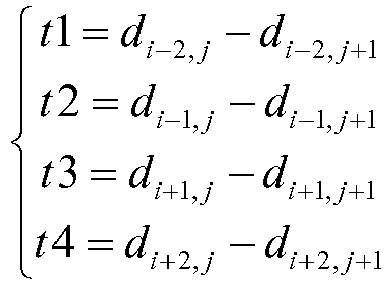


- The device according to claim 14, wherein the first converting unit is configured to convert, through an MFCC characteristic parameter extraction algorithm, each frame of the audio data to be recognized to vector data of a preset number of dimensions.
- The device according to claim 14, wherein the preset number of dimensions is 12.
- The device according to claim 14, wherein the matching and recognizing module comprises:a recognizing unit configured to match the characteristic value of each frame of the audio data to be recognized with the pre-established audio characteristic value comparison table to find one or more segments of sample audio having a matching degree of matching with the audio data to be recognized greater than the preset threshold; anda matching unit configured to determine the segment of sample audio having the highest matching degree among the one or more segments of sample audio as the recognition result.
- The device according to claim 18, wherein the matching unit comprises:a performing sub-unit configured to perform the following operations on each of the one or more segments of sample audio: determining a number of the frames of the audio data to be recognized, acquiring a binary sequence for the each frame of the audio data to be recognized, acquiring a binary sequence for each frame of the current segment of sample audio corresponding to the audio data to be recognized, and determining the number of digits having the same bit positions but different bit values between the binary sequence for each frame of the audio data to be recognized and the binary sequence for each frame of the current segment of sample audio corresponding to the audio data to be recognized; anda matching sub-unit configured to use the segment of sample audio having the least number of digits that have different bit values in the one or more segments of sample audio as the recognition result.
- The device according to any one of claims 11-19, wherein the frame dividing module is configured to divide the audio data to be recognized into frames according to a division rule that adjacent frames are set to have an overlap of a preset number of milliseconds.
Applications Claiming Priority (2)
| Application Number | Priority Date | Filing Date | Title |
|---|---|---|---|
| CN201610487584.9A CN106910494B (en) | 2016-06-28 | 2016-06-28 | Audio identification method and device |
| PCT/CN2017/088638 WO2018001125A1 (en) | 2016-06-28 | 2017-06-16 | Method and device for audio recognition |
Publications (2)
| Publication Number | Publication Date |
|---|---|
| EP3477632A1 true EP3477632A1 (en) | 2019-05-01 |
| EP3477632A4 EP3477632A4 (en) | 2020-01-08 |
Family
ID=59206235
Family Applications (1)
| Application Number | Title | Priority Date | Filing Date |
|---|---|---|---|
| EP17819122.7A Ceased EP3477632A4 (en) | 2016-06-28 | 2017-06-16 | METHOD AND DEVICE FOR DETECTING SOUND |
Country Status (7)
| Country | Link |
|---|---|
| US (2) | US10910000B2 (en) |
| EP (1) | EP3477632A4 (en) |
| JP (1) | JP6750048B2 (en) |
| KR (1) | KR102220964B1 (en) |
| CN (1) | CN106910494B (en) |
| TW (1) | TWI659410B (en) |
| WO (1) | WO2018001125A1 (en) |
Families Citing this family (7)
| Publication number | Priority date | Publication date | Assignee | Title |
|---|---|---|---|---|
| CN106910494B (en) * | 2016-06-28 | 2020-11-13 | 创新先进技术有限公司 | Audio identification method and device |
| CN111986698B (en) * | 2019-05-24 | 2023-06-30 | 腾讯科技(深圳)有限公司 | Audio fragment matching method and device, computer readable medium and electronic equipment |
| CN115376530A (en) * | 2021-05-17 | 2022-11-22 | 华为技术有限公司 | Three-dimensional audio signal coding method, device and coder |
| CN114519990B (en) * | 2022-02-10 | 2025-12-05 | 维沃移动通信有限公司 | Audio processing methods, apparatus, electronic devices and readable storage media |
| CN115294952B (en) * | 2022-05-23 | 2026-01-30 | 神盾股份有限公司 | Audio processing methods and apparatus, non-transitory computer-readable storage media |
| CN116614841B (en) * | 2023-07-17 | 2023-10-27 | 中汽智联技术有限公司 | Road side data quality assessment method and electronic equipment |
| CN119741942A (en) * | 2024-08-05 | 2025-04-01 | 北京罗克维尔斯科技有限公司 | Abnormal audio detection method, device, electronic device, computer-readable storage medium, and computer program product |
Family Cites Families (53)
| Publication number | Priority date | Publication date | Assignee | Title |
|---|---|---|---|---|
| US5748763A (en) | 1993-11-18 | 1998-05-05 | Digimarc Corporation | Image steganography system featuring perceptually adaptive and globally scalable signal embedding |
| US7013301B2 (en) | 2003-09-23 | 2006-03-14 | Predixis Corporation | Audio fingerprinting system and method |
| US7194752B1 (en) | 1999-10-19 | 2007-03-20 | Iceberg Industries, Llc | Method and apparatus for automatically recognizing input audio and/or video streams |
| US7853664B1 (en) | 2000-07-31 | 2010-12-14 | Landmark Digital Services Llc | Method and system for purchasing pre-recorded music |
| US6968337B2 (en) * | 2001-07-10 | 2005-11-22 | Audible Magic Corporation | Method and apparatus for identifying an unknown work |
| US7529659B2 (en) * | 2005-09-28 | 2009-05-05 | Audible Magic Corporation | Method and apparatus for identifying an unknown work |
| US7328153B2 (en) | 2001-07-20 | 2008-02-05 | Gracenote, Inc. | Automatic identification of sound recordings |
| US7505911B2 (en) | 2001-09-05 | 2009-03-17 | Roth Daniel L | Combined speech recognition and sound recording |
| CA2483104C (en) | 2002-04-25 | 2011-06-21 | Shazam Entertainment, Ltd. | Robust and invariant audio pattern matching |
| US7336890B2 (en) | 2003-02-19 | 2008-02-26 | Microsoft Corporation | Automatic detection and segmentation of music videos in an audio/video stream |
| US7323629B2 (en) | 2003-07-16 | 2008-01-29 | Univ Iowa State Res Found Inc | Real time music recognition and display system |
| KR20060118493A (en) * | 2003-11-18 | 2006-11-23 | 코닌클리케 필립스 일렉트로닉스 엔.브이. | Method and apparatus for matching data objects by matching derived fingerprints |
| KR20060135794A (en) * | 2004-02-26 | 2006-12-29 | 미디어 가이드, 인코포레이티드 | Automatic detection and identification of broadcast audio or video programming signals, and apparatus |
| DE102004023436B4 (en) | 2004-05-10 | 2006-06-14 | M2Any Gmbh | Apparatus and method for analyzing an information signal |
| GB2414369B (en) | 2004-05-21 | 2007-08-01 | Hewlett Packard Development Co | Processing audio data |
| US7567899B2 (en) | 2004-12-30 | 2009-07-28 | All Media Guide, Llc | Methods and apparatus for audio recognition |
| US7516074B2 (en) * | 2005-09-01 | 2009-04-07 | Auditude, Inc. | Extraction and matching of characteristic fingerprints from audio signals |
| WO2008083315A2 (en) | 2006-12-31 | 2008-07-10 | Personics Holdings Inc. | Method and device configured for sound signature detection |
| US8131083B2 (en) | 2007-04-09 | 2012-03-06 | Sharp Kabushiki Kaisha | Image processing apparatus, image forming apparatus, image processing system, and image processing method having storage section, divided into a plurality of regions, for storing identification information for identifying reference image |
| JP4436858B2 (en) * | 2007-04-09 | 2010-03-24 | シャープ株式会社 | Image processing apparatus, image forming apparatus, image transmitting apparatus, image reading apparatus, image processing system, image processing method, image processing program, and recording medium thereof |
| US8266142B2 (en) | 2007-06-06 | 2012-09-11 | Dolby Laboratories Licensing Corporation | Audio/Video fingerprint search accuracy using multiple search combining |
| US8990073B2 (en) | 2007-06-22 | 2015-03-24 | Voiceage Corporation | Method and device for sound activity detection and sound signal classification |
| US8140331B2 (en) | 2007-07-06 | 2012-03-20 | Xia Lou | Feature extraction for identification and classification of audio signals |
| CN101493918A (en) * | 2008-10-21 | 2009-07-29 | 深圳市牧笛科技有限公司 | On-line music pirate monitoring method and system |
| US8996538B1 (en) * | 2009-05-06 | 2015-03-31 | Gracenote, Inc. | Systems, methods, and apparatus for generating an audio-visual presentation using characteristics of audio, visual and symbolic media objects |
| JP4788810B2 (en) * | 2009-08-17 | 2011-10-05 | ソニー株式会社 | Music identification apparatus and method, music identification distribution apparatus and method |
| US9025428B2 (en) | 2010-04-14 | 2015-05-05 | Qualcomm Incorporated | Allocating and receiving tones for a frame |
| CN102959543B (en) * | 2010-05-04 | 2016-05-25 | 沙扎姆娱乐有限公司 | For the treatment of the method and system of the sample of Media Stream |
| US9093120B2 (en) * | 2011-02-10 | 2015-07-28 | Yahoo! Inc. | Audio fingerprint extraction by scaling in time and resampling |
| CN102314875B (en) * | 2011-08-01 | 2016-04-27 | 北京音之邦文化科技有限公司 | Audio file identification method and device |
| WO2013029838A1 (en) * | 2011-08-29 | 2013-03-07 | Telefonica, S.A. | A method to generate audio fingerprints |
| US9992745B2 (en) | 2011-11-01 | 2018-06-05 | Qualcomm Incorporated | Extraction and analysis of buffered audio data using multiple codec rates each greater than a low-power processor rate |
| CN103093761B (en) * | 2011-11-01 | 2017-02-01 | 深圳市世纪光速信息技术有限公司 | Audio fingerprint retrieval method and retrieval device |
| KR20130104878A (en) * | 2012-03-15 | 2013-09-25 | 주식회사 다이렉트미디어 | The music searching method using energy and statistical filtering, apparatus and system thereof |
| KR101315970B1 (en) * | 2012-05-23 | 2013-10-08 | (주)엔써즈 | Apparatus and method for recognizing content using audio signal |
| JP5994974B2 (en) | 2012-05-31 | 2016-09-21 | サターン ライセンシング エルエルシーSaturn Licensing LLC | Information processing apparatus, program, and information processing method |
| US20140074469A1 (en) * | 2012-09-11 | 2014-03-13 | Sergey Zhidkov | Apparatus and Method for Generating Signatures of Acoustic Signal and Apparatus for Acoustic Signal Identification |
| US9401153B2 (en) | 2012-10-15 | 2016-07-26 | Digimarc Corporation | Multi-mode audio recognition and auxiliary data encoding and decoding |
| US9305559B2 (en) * | 2012-10-15 | 2016-04-05 | Digimarc Corporation | Audio watermark encoding with reversing polarity and pairwise embedding |
| EP2731030A1 (en) | 2012-11-13 | 2014-05-14 | Samsung Electronics Co., Ltd | Music information searching method and apparatus thereof |
| US9183849B2 (en) * | 2012-12-21 | 2015-11-10 | The Nielsen Company (Us), Llc | Audio matching with semantic audio recognition and report generation |
| US9195649B2 (en) * | 2012-12-21 | 2015-11-24 | The Nielsen Company (Us), Llc | Audio processing techniques for semantic audio recognition and report generation |
| US9076459B2 (en) | 2013-03-12 | 2015-07-07 | Intermec Ip, Corp. | Apparatus and method to classify sound to detect speech |
| US9728205B2 (en) * | 2013-03-15 | 2017-08-08 | Facebook, Inc. | Generating audio fingerprints based on audio signal complexity |
| CN104252480B (en) * | 2013-06-27 | 2018-09-07 | 深圳市腾讯计算机系统有限公司 | A kind of method and apparatus of Audio Information Retrieval |
| CN103440313B (en) * | 2013-08-27 | 2018-10-16 | 复旦大学 | music retrieval system based on audio fingerprint feature |
| US9390727B2 (en) * | 2014-01-13 | 2016-07-12 | Facebook, Inc. | Detecting distorted audio signals based on audio fingerprinting |
| CN104050259A (en) * | 2014-06-16 | 2014-09-17 | 上海大学 | An Audio Fingerprint Extraction Method Based on SOM Algorithm |
| CN105513587B (en) * | 2014-09-22 | 2020-07-24 | 联想(北京)有限公司 | MFCC extraction method and device |
| CN104462537A (en) * | 2014-12-24 | 2015-03-25 | 北京奇艺世纪科技有限公司 | Method and device for classifying voice data |
| US9740775B2 (en) * | 2015-03-13 | 2017-08-22 | TCL Research America Inc. | Video retrieval based on optimized selected fingerprints |
| CN105118503A (en) * | 2015-07-13 | 2015-12-02 | 中山大学 | Ripped audio detection method |
| CN106910494B (en) * | 2016-06-28 | 2020-11-13 | 创新先进技术有限公司 | Audio identification method and device |
-
2016
- 2016-06-28 CN CN201610487584.9A patent/CN106910494B/en active Active
-
2017
- 2017-04-14 TW TW106112617A patent/TWI659410B/en not_active IP Right Cessation
- 2017-06-16 KR KR1020197002466A patent/KR102220964B1/en active Active
- 2017-06-16 WO PCT/CN2017/088638 patent/WO2018001125A1/en not_active Ceased
- 2017-06-16 EP EP17819122.7A patent/EP3477632A4/en not_active Ceased
- 2017-06-16 JP JP2018568770A patent/JP6750048B2/en active Active
-
2018
- 2018-12-11 US US16/216,771 patent/US10910000B2/en active Active
-
2021
- 2021-01-06 US US17/142,917 patent/US11133022B2/en active Active
Also Published As
| Publication number | Publication date |
|---|---|
| CN106910494A (en) | 2017-06-30 |
| WO2018001125A1 (en) | 2018-01-04 |
| CN106910494B (en) | 2020-11-13 |
| EP3477632A4 (en) | 2020-01-08 |
| US10910000B2 (en) | 2021-02-02 |
| KR20190021421A (en) | 2019-03-05 |
| TW201801066A (en) | 2018-01-01 |
| TWI659410B (en) | 2019-05-11 |
| JP6750048B2 (en) | 2020-09-02 |
| US20210125628A1 (en) | 2021-04-29 |
| JP2019526070A (en) | 2019-09-12 |
| KR102220964B1 (en) | 2021-03-02 |
| US11133022B2 (en) | 2021-09-28 |
| US20190115044A1 (en) | 2019-04-18 |
Similar Documents
| Publication | Publication Date | Title |
|---|---|---|
| US11133022B2 (en) | Method and device for audio recognition using sample audio and a voting matrix | |
| CN110600017B (en) | Training method of voice processing model, voice recognition method, system and device | |
| CN113257238B (en) | Training method for pre-training model, encoding feature acquisition method and related device | |
| CN109658921B (en) | Voice signal processing method, equipment and computer readable storage medium | |
| CN112949708A (en) | Emotion recognition method and device, computer equipment and storage medium | |
| CN114127849A (en) | Speech emotion recognition method and device | |
| CN113436633B (en) | Speaker recognition method, speaker recognition device, computer equipment and storage medium | |
| CN113793620A (en) | Speech noise reduction method, device, device and storage medium based on scene classification | |
| CN115565548A (en) | Abnormal sound detection method, device, storage medium and electronic equipment | |
| CN113889086A (en) | Training method of speech recognition model, speech recognition method and related device | |
| CN114664325A (en) | Abnormal sound identification method, system, terminal equipment and computer readable storage medium | |
| CN117037772A (en) | Voice audio segmentation method, device, computer equipment and storage medium | |
| JPWO2019244298A1 (en) | Attribute identification device, attribute identification method, and program | |
| CN116645981A (en) | A Deep Synthetic Speech Detection Method Based on Vocoder Trace Fingerprint Comparison | |
| CN113436621B (en) | GPU (graphics processing Unit) -based voice recognition method and device, electronic equipment and storage medium | |
| CN114882890A (en) | Deep learning model training method, voiceprint recognition method, device and equipment | |
| CN114333844A (en) | Voiceprint recognition method, device, medium and equipment | |
| CN116312559B (en) | Training method of cross-channel voiceprint recognition model, voiceprint recognition method and device | |
| CN119207426A (en) | Information identification method, device, equipment and storage medium thereof | |
| CN113421590B (en) | Abnormal behavior detection method, device, equipment and storage medium | |
| CN115346516A (en) | End-to-end voice confidence estimation method and device in cross-domain voice recognition | |
| CN114400008A (en) | Individual information confirmation method, device, equipment and medium based on audio recognition | |
| US20220277761A1 (en) | Impression estimation apparatus, learning apparatus, methods and programs for the same | |
| HK1238404A (en) | Audio recognition method and apparatus | |
| HK1238404A1 (en) | Audio recognition method and apparatus |
Legal Events
| Date | Code | Title | Description |
|---|---|---|---|
| STAA | Information on the status of an ep patent application or granted ep patent |
Free format text: STATUS: THE INTERNATIONAL PUBLICATION HAS BEEN MADE |
|
| PUAI | Public reference made under article 153(3) epc to a published international application that has entered the european phase |
Free format text: ORIGINAL CODE: 0009012 |
|
| STAA | Information on the status of an ep patent application or granted ep patent |
Free format text: STATUS: REQUEST FOR EXAMINATION WAS MADE |
|
| 17P | Request for examination filed |
Effective date: 20181213 |
|
| AK | Designated contracting states |
Kind code of ref document: A1 Designated state(s): AL AT BE BG CH CY CZ DE DK EE ES FI FR GB GR HR HU IE IS IT LI LT LU LV MC MK MT NL NO PL PT RO RS SE SI SK SM TR |
|
| AX | Request for extension of the european patent |
Extension state: BA ME |
|
| DAV | Request for validation of the european patent (deleted) | ||
| DAX | Request for extension of the european patent (deleted) | ||
| A4 | Supplementary search report drawn up and despatched |
Effective date: 20191210 |
|
| RIC1 | Information provided on ipc code assigned before grant |
Ipc: G10L 15/02 20060101AFI20191204BHEP Ipc: G10L 15/10 20060101ALI20191204BHEP Ipc: G10L 25/51 20130101ALI20191204BHEP |
|
| RAP1 | Party data changed (applicant data changed or rights of an application transferred) |
Owner name: ADVANCED NEW TECHNOLOGIES CO., LTD. |
|
| STAA | Information on the status of an ep patent application or granted ep patent |
Free format text: STATUS: EXAMINATION IS IN PROGRESS |
|
| 17Q | First examination report despatched |
Effective date: 20210607 |
|
| REG | Reference to a national code |
Ref country code: DE Ref legal event code: R003 |
|
| STAA | Information on the status of an ep patent application or granted ep patent |
Free format text: STATUS: THE APPLICATION HAS BEEN REFUSED |
|
| 18R | Application refused |
Effective date: 20230323 |