EP3476950A1 - Microrna-based methods and compositions for the diagnosis, prognosis and treatment of vulvar carcinoma and vulvar intraepithelial lesions - Google Patents
Microrna-based methods and compositions for the diagnosis, prognosis and treatment of vulvar carcinoma and vulvar intraepithelial lesions Download PDFInfo
- Publication number
- EP3476950A1 EP3476950A1 EP17460065.0A EP17460065A EP3476950A1 EP 3476950 A1 EP3476950 A1 EP 3476950A1 EP 17460065 A EP17460065 A EP 17460065A EP 3476950 A1 EP3476950 A1 EP 3476950A1
- Authority
- EP
- European Patent Office
- Prior art keywords
- mir
- expression level
- biomarker
- hsa
- vin
- Prior art date
- Legal status (The legal status is an assumption and is not a legal conclusion. Google has not performed a legal analysis and makes no representation as to the accuracy of the status listed.)
- Withdrawn
Links
- 238000000034 method Methods 0.000 title claims abstract description 48
- 108091070501 miRNA Proteins 0.000 title claims description 49
- 238000003745 diagnosis Methods 0.000 title claims description 9
- 206010047741 Vulval cancer Diseases 0.000 title description 17
- 201000004916 vulva carcinoma Diseases 0.000 title description 16
- 208000013013 vulvar carcinoma Diseases 0.000 title description 16
- 230000003902 lesion Effects 0.000 title description 14
- 238000011282 treatment Methods 0.000 title description 6
- 238000004393 prognosis Methods 0.000 title description 5
- 239000000203 mixture Substances 0.000 title 1
- 230000014509 gene expression Effects 0.000 claims abstract description 135
- 208000025337 Vulvar squamous cell carcinoma Diseases 0.000 claims abstract description 83
- 201000008190 vulva squamous cell carcinoma Diseases 0.000 claims abstract description 83
- 239000000090 biomarker Substances 0.000 claims abstract description 62
- 108091080321 miR-222 stem-loop Proteins 0.000 claims abstract description 32
- 108091091392 miR-222-1 stem-loop Proteins 0.000 claims abstract description 32
- 108091071617 miR-222-2 stem-loop Proteins 0.000 claims abstract description 32
- 108091086737 miR-630 stem-loop Proteins 0.000 claims abstract description 31
- 108091092722 miR-23b stem-loop Proteins 0.000 claims abstract description 30
- 238000012360 testing method Methods 0.000 claims abstract description 21
- 208000032124 Squamous Intraepithelial Lesions Diseases 0.000 claims abstract description 17
- 239000002679 microRNA Substances 0.000 claims description 56
- 239000000523 sample Substances 0.000 claims description 36
- 108700011259 MicroRNAs Proteins 0.000 claims description 23
- 108090000623 proteins and genes Proteins 0.000 claims description 23
- 210000002381 plasma Anatomy 0.000 claims description 22
- 108091070377 Homo sapiens miR-93 stem-loop Proteins 0.000 claims description 18
- 210000004369 blood Anatomy 0.000 claims description 17
- 239000008280 blood Substances 0.000 claims description 17
- 108091032103 Homo sapiens miR-425 stem-loop Proteins 0.000 claims description 16
- 108091068998 Homo sapiens miR-191 stem-loop Proteins 0.000 claims description 11
- 210000004027 cell Anatomy 0.000 claims description 11
- 208000015317 vulvar disease Diseases 0.000 claims description 10
- 239000012472 biological sample Substances 0.000 claims description 8
- 210000003905 vulva Anatomy 0.000 claims description 6
- 102000004169 proteins and genes Human genes 0.000 claims description 5
- 239000000091 biomarker candidate Substances 0.000 claims description 4
- 210000002966 serum Anatomy 0.000 claims description 4
- 230000003278 mimic effect Effects 0.000 claims description 3
- 239000008194 pharmaceutical composition Substances 0.000 claims description 3
- 230000008685 targeting Effects 0.000 claims description 3
- 239000003937 drug carrier Substances 0.000 claims description 2
- 230000002401 inhibitory effect Effects 0.000 claims description 2
- 210000003296 saliva Anatomy 0.000 claims description 2
- 210000002700 urine Anatomy 0.000 claims description 2
- 206010028980 Neoplasm Diseases 0.000 description 12
- 238000011529 RT qPCR Methods 0.000 description 9
- 206010008263 Cervical dysplasia Diseases 0.000 description 8
- 238000004458 analytical method Methods 0.000 description 7
- 239000002243 precursor Substances 0.000 description 7
- 208000018777 Vulvar intraepithelial neoplasia Diseases 0.000 description 6
- 208000037265 diseases, disorders, signs and symptoms Diseases 0.000 description 6
- 108091030146 MiRBase Proteins 0.000 description 5
- 201000011510 cancer Diseases 0.000 description 5
- 230000007170 pathology Effects 0.000 description 5
- 230000001105 regulatory effect Effects 0.000 description 5
- 238000012216 screening Methods 0.000 description 5
- 238000003491 array Methods 0.000 description 4
- 238000001574 biopsy Methods 0.000 description 4
- 238000001514 detection method Methods 0.000 description 4
- 238000007901 in situ hybridization Methods 0.000 description 4
- 230000009545 invasion Effects 0.000 description 4
- 230000003211 malignant effect Effects 0.000 description 4
- 239000002773 nucleotide Substances 0.000 description 4
- 108091032973 (ribonucleotides)n+m Proteins 0.000 description 3
- QTBSBXVTEAMEQO-UHFFFAOYSA-N Acetic acid Chemical compound CC(O)=O QTBSBXVTEAMEQO-UHFFFAOYSA-N 0.000 description 3
- 241001313288 Labia Species 0.000 description 3
- 201000010099 disease Diseases 0.000 description 3
- 208000035475 disorder Diseases 0.000 description 3
- 239000003112 inhibitor Substances 0.000 description 3
- 238000005259 measurement Methods 0.000 description 3
- 238000007481 next generation sequencing Methods 0.000 description 3
- 125000003729 nucleotide group Chemical group 0.000 description 3
- 238000011002 quantification Methods 0.000 description 3
- 238000003753 real-time PCR Methods 0.000 description 3
- 238000003757 reverse transcription PCR Methods 0.000 description 3
- 230000010473 stable expression Effects 0.000 description 3
- 201000009030 Carcinoma Diseases 0.000 description 2
- 108091068855 Homo sapiens miR-103a-1 stem-loop Proteins 0.000 description 2
- 108091068838 Homo sapiens miR-103a-2 stem-loop Proteins 0.000 description 2
- 108091070491 Homo sapiens miR-16-1 stem-loop Proteins 0.000 description 2
- 108091068927 Homo sapiens miR-16-2 stem-loop Proteins 0.000 description 2
- 108091032109 Homo sapiens miR-423 stem-loop Proteins 0.000 description 2
- 208000022361 Human papillomavirus infectious disease Diseases 0.000 description 2
- BAWFJGJZGIEFAR-NNYOXOHSSA-N NAD zwitterion Chemical compound NC(=O)C1=CC=C[N+]([C@H]2[C@@H]([C@H](O)[C@@H](COP([O-])(=O)OP(O)(=O)OC[C@@H]3[C@H]([C@@H](O)[C@@H](O3)N3C4=NC=NC(N)=C4N=C3)O)O2)O)=C1 BAWFJGJZGIEFAR-NNYOXOHSSA-N 0.000 description 2
- 238000000636 Northern blotting Methods 0.000 description 2
- 238000002123 RNA extraction Methods 0.000 description 2
- 230000002159 abnormal effect Effects 0.000 description 2
- 238000006243 chemical reaction Methods 0.000 description 2
- 230000003247 decreasing effect Effects 0.000 description 2
- 230000004069 differentiation Effects 0.000 description 2
- 230000002255 enzymatic effect Effects 0.000 description 2
- 238000009396 hybridization Methods 0.000 description 2
- 238000007689 inspection Methods 0.000 description 2
- 238000004020 luminiscence type Methods 0.000 description 2
- 108091079658 miR-142-1 stem-loop Proteins 0.000 description 2
- 108091071830 miR-142-2 stem-loop Proteins 0.000 description 2
- 108091078999 miR-56 stem-loop Proteins 0.000 description 2
- 238000003253 miRNA assay Methods 0.000 description 2
- 238000002493 microarray Methods 0.000 description 2
- 238000000386 microscopy Methods 0.000 description 2
- 238000012544 monitoring process Methods 0.000 description 2
- 230000001575 pathological effect Effects 0.000 description 2
- 239000011541 reaction mixture Substances 0.000 description 2
- 238000010839 reverse transcription Methods 0.000 description 2
- 230000002441 reversible effect Effects 0.000 description 2
- 208000024891 symptom Diseases 0.000 description 2
- 238000002560 therapeutic procedure Methods 0.000 description 2
- 238000013519 translation Methods 0.000 description 2
- 208000005623 Carcinogenesis Diseases 0.000 description 1
- 206010061818 Disease progression Diseases 0.000 description 1
- 206010058314 Dysplasia Diseases 0.000 description 1
- 241000282414 Homo sapiens Species 0.000 description 1
- 108091068999 Homo sapiens miR-144 stem-loop Proteins 0.000 description 1
- 108091069002 Homo sapiens miR-145 stem-loop Proteins 0.000 description 1
- 108091065981 Homo sapiens miR-155 stem-loop Proteins 0.000 description 1
- 108091069013 Homo sapiens miR-206 stem-loop Proteins 0.000 description 1
- 108091070493 Homo sapiens miR-21 stem-loop Proteins 0.000 description 1
- 108091067468 Homo sapiens miR-210 stem-loop Proteins 0.000 description 1
- 108091067573 Homo sapiens miR-222 stem-loop Proteins 0.000 description 1
- 108091063565 Homo sapiens miR-532 stem-loop Proteins 0.000 description 1
- 108091061636 Homo sapiens miR-630 stem-loop Proteins 0.000 description 1
- 206010024434 Lichen sclerosus Diseases 0.000 description 1
- 108091008065 MIR21 Proteins 0.000 description 1
- 108091007700 MIR543 Proteins 0.000 description 1
- 108091007772 MIRLET7C Proteins 0.000 description 1
- 238000012179 MicroRNA sequencing Methods 0.000 description 1
- 108091028043 Nucleic acid sequence Proteins 0.000 description 1
- 208000009608 Papillomavirus Infections Diseases 0.000 description 1
- 208000003251 Pruritus Diseases 0.000 description 1
- 108020003224 Small Nucleolar RNA Proteins 0.000 description 1
- 102000042773 Small Nucleolar RNA Human genes 0.000 description 1
- 208000025865 Ulcer Diseases 0.000 description 1
- 208000004354 Vulvar Neoplasms Diseases 0.000 description 1
- 230000004075 alteration Effects 0.000 description 1
- 230000008236 biological pathway Effects 0.000 description 1
- 230000031018 biological processes and functions Effects 0.000 description 1
- 230000000740 bleeding effect Effects 0.000 description 1
- 230000036765 blood level Effects 0.000 description 1
- 230000036952 cancer formation Effects 0.000 description 1
- 231100000504 carcinogenesis Toxicity 0.000 description 1
- 238000002512 chemotherapy Methods 0.000 description 1
- 210000003029 clitoris Anatomy 0.000 description 1
- 238000010367 cloning Methods 0.000 description 1
- 239000002299 complementary DNA Substances 0.000 description 1
- 238000002790 cross-validation Methods 0.000 description 1
- 230000034994 death Effects 0.000 description 1
- 231100000517 death Toxicity 0.000 description 1
- 238000011161 development Methods 0.000 description 1
- 238000003748 differential diagnosis Methods 0.000 description 1
- 230000005750 disease progression Effects 0.000 description 1
- 210000000981 epithelium Anatomy 0.000 description 1
- 238000011156 evaluation Methods 0.000 description 1
- 238000002474 experimental method Methods 0.000 description 1
- 238000000605 extraction Methods 0.000 description 1
- 239000012634 fragment Substances 0.000 description 1
- 210000004392 genitalia Anatomy 0.000 description 1
- 230000006872 improvement Effects 0.000 description 1
- 239000000411 inducer Substances 0.000 description 1
- 230000007794 irritation Effects 0.000 description 1
- 238000012332 laboratory investigation Methods 0.000 description 1
- 210000001165 lymph node Anatomy 0.000 description 1
- 230000036210 malignancy Effects 0.000 description 1
- 239000003550 marker Substances 0.000 description 1
- 108020004999 messenger RNA Proteins 0.000 description 1
- 108091028606 miR-1 stem-loop Proteins 0.000 description 1
- 108091028838 miR-2 stem-loop Proteins 0.000 description 1
- 108091076271 miR-543 stem-loop Proteins 0.000 description 1
- 230000017074 necrotic cell death Effects 0.000 description 1
- 230000009826 neoplastic cell growth Effects 0.000 description 1
- 230000001613 neoplastic effect Effects 0.000 description 1
- 108091027963 non-coding RNA Proteins 0.000 description 1
- 102000042567 non-coding RNA Human genes 0.000 description 1
- 238000010606 normalization Methods 0.000 description 1
- 231100000590 oncogenic Toxicity 0.000 description 1
- 230000002246 oncogenic effect Effects 0.000 description 1
- 210000000056 organ Anatomy 0.000 description 1
- 238000002559 palpation Methods 0.000 description 1
- 230000008506 pathogenesis Effects 0.000 description 1
- 238000012335 pathological evaluation Methods 0.000 description 1
- 210000002640 perineum Anatomy 0.000 description 1
- 108091033319 polynucleotide Proteins 0.000 description 1
- 102000040430 polynucleotide Human genes 0.000 description 1
- 239000002157 polynucleotide Substances 0.000 description 1
- 230000008569 process Effects 0.000 description 1
- 230000035755 proliferation Effects 0.000 description 1
- 238000001959 radiotherapy Methods 0.000 description 1
- 239000011535 reaction buffer Substances 0.000 description 1
- 230000001850 reproductive effect Effects 0.000 description 1
- 230000000717 retained effect Effects 0.000 description 1
- 238000005070 sampling Methods 0.000 description 1
- 230000035945 sensitivity Effects 0.000 description 1
- 238000012163 sequencing technique Methods 0.000 description 1
- 208000017520 skin disease Diseases 0.000 description 1
- 208000020077 squamous cell intraepithelial neoplasia Diseases 0.000 description 1
- 230000006641 stabilisation Effects 0.000 description 1
- 238000011105 stabilization Methods 0.000 description 1
- 238000003860 storage Methods 0.000 description 1
- 238000001356 surgical procedure Methods 0.000 description 1
- 230000004083 survival effect Effects 0.000 description 1
- 238000013518 transcription Methods 0.000 description 1
- 230000035897 transcription Effects 0.000 description 1
- 231100000397 ulcer Toxicity 0.000 description 1
- 238000012800 visualization Methods 0.000 description 1
- 201000005102 vulva cancer Diseases 0.000 description 1
- 238000010626 work up procedure Methods 0.000 description 1
Images
Classifications
-
- C—CHEMISTRY; METALLURGY
- C12—BIOCHEMISTRY; BEER; SPIRITS; WINE; VINEGAR; MICROBIOLOGY; ENZYMOLOGY; MUTATION OR GENETIC ENGINEERING
- C12Q—MEASURING OR TESTING PROCESSES INVOLVING ENZYMES, NUCLEIC ACIDS OR MICROORGANISMS; COMPOSITIONS OR TEST PAPERS THEREFOR; PROCESSES OF PREPARING SUCH COMPOSITIONS; CONDITION-RESPONSIVE CONTROL IN MICROBIOLOGICAL OR ENZYMOLOGICAL PROCESSES
- C12Q1/00—Measuring or testing processes involving enzymes, nucleic acids or microorganisms; Compositions therefor; Processes of preparing such compositions
- C12Q1/68—Measuring or testing processes involving enzymes, nucleic acids or microorganisms; Compositions therefor; Processes of preparing such compositions involving nucleic acids
- C12Q1/6876—Nucleic acid products used in the analysis of nucleic acids, e.g. primers or probes
- C12Q1/6883—Nucleic acid products used in the analysis of nucleic acids, e.g. primers or probes for diseases caused by alterations of genetic material
- C12Q1/6886—Nucleic acid products used in the analysis of nucleic acids, e.g. primers or probes for diseases caused by alterations of genetic material for cancer
-
- C—CHEMISTRY; METALLURGY
- C12—BIOCHEMISTRY; BEER; SPIRITS; WINE; VINEGAR; MICROBIOLOGY; ENZYMOLOGY; MUTATION OR GENETIC ENGINEERING
- C12Q—MEASURING OR TESTING PROCESSES INVOLVING ENZYMES, NUCLEIC ACIDS OR MICROORGANISMS; COMPOSITIONS OR TEST PAPERS THEREFOR; PROCESSES OF PREPARING SUCH COMPOSITIONS; CONDITION-RESPONSIVE CONTROL IN MICROBIOLOGICAL OR ENZYMOLOGICAL PROCESSES
- C12Q2600/00—Oligonucleotides characterized by their use
- C12Q2600/112—Disease subtyping, staging or classification
-
- C—CHEMISTRY; METALLURGY
- C12—BIOCHEMISTRY; BEER; SPIRITS; WINE; VINEGAR; MICROBIOLOGY; ENZYMOLOGY; MUTATION OR GENETIC ENGINEERING
- C12Q—MEASURING OR TESTING PROCESSES INVOLVING ENZYMES, NUCLEIC ACIDS OR MICROORGANISMS; COMPOSITIONS OR TEST PAPERS THEREFOR; PROCESSES OF PREPARING SUCH COMPOSITIONS; CONDITION-RESPONSIVE CONTROL IN MICROBIOLOGICAL OR ENZYMOLOGICAL PROCESSES
- C12Q2600/00—Oligonucleotides characterized by their use
- C12Q2600/166—Oligonucleotides used as internal standards, controls or normalisation probes
-
- C—CHEMISTRY; METALLURGY
- C12—BIOCHEMISTRY; BEER; SPIRITS; WINE; VINEGAR; MICROBIOLOGY; ENZYMOLOGY; MUTATION OR GENETIC ENGINEERING
- C12Q—MEASURING OR TESTING PROCESSES INVOLVING ENZYMES, NUCLEIC ACIDS OR MICROORGANISMS; COMPOSITIONS OR TEST PAPERS THEREFOR; PROCESSES OF PREPARING SUCH COMPOSITIONS; CONDITION-RESPONSIVE CONTROL IN MICROBIOLOGICAL OR ENZYMOLOGICAL PROCESSES
- C12Q2600/00—Oligonucleotides characterized by their use
- C12Q2600/178—Oligonucleotides characterized by their use miRNA, siRNA or ncRNA
Definitions
- This invention relates generally to the field of molecular biology and oncology. Certain aspects of the invention include application in diagnosis, prognosis follow-up and therapy of vulvar carcinoma and related disorders.
- the present disclosure provides methods pertaining to the identification of genes and gene regulators that modulate certain biological pathways in vulvar disorders; vulvar carcinoma (VC) and its precursors; vulvar squamous intraepithelial lesions (VIN).
- Vulvar carcinoma is a genital malignancy with age-standardized incidence rates ranging worldwide between 0.5 and 1.5 per 100,000.
- the current ASR in Poland is 1.13; 515 new cases of VC were diagnosed and 267 VC-related deaths were recorded in 2014 (age-standardized mortality rate 0.5) [Wojciechowska et al.].
- VSCC vulvar squamous cell carcinoma
- VIN vulvar squamous intraepithelial lesions
- vulvar precancerous lesions are divided into two types, differing in their pathogenesis and clinical significance: high grade-squamous intraepithelial lesion (HSIL) previously classified as VIN usual type (uVIN) and differentiated vulvar intraepithelial neoplasia (dVIN) [Bornstein J et al.].
- HSIL high grade-squamous intraepithelial lesion
- uVIN VIN usual type
- dVIN differentiated vulvar intraepithelial neoplasia
- the risk of progression from uVIN to VSCC is low and ranges from 3 to 16%, while for dVIN it reaches 32,8%.
- the incidence of VIN increased by 411% against 20% for invasive cancers [Akerman G et al.].
- Vulvar squamous cell carcinoma is the most common histological type of VC, representing approximately 90 % of lesions. Five-year survival rate for VC patients is approximately 90% for early stages and 20% for advanced stages of the disease (http://seer.cancer.gov/statfacts/html/vulva.html).
- VC and VIN are located in the labia majora, but other possible sites include the labia minora, clitoris, mons, or perineum.
- VC In patients with HPV-negative tumours, VC often presents as a single mass or ulcer on the labia majora or minora.
- HPV-positive tumours multifocal lesions and concurrent cervical neoplasia are more common.
- All suspicious lesions must be individually biopsied and examined histologically as cancer may be seen in areas with multifocal vulvar intraepithelial neoplasia.
- the biopsy should be taken from the areas of the lesion that appear most abnormal. If multiple abnormal areas are present, then multiple biopsies should be taken to "map" all potential sites of vulvar pathology.
- the object of the invention is a combined signature consisting of microRNA determined in plasma that serves to indicate which individuals among individuals with VIN are more likely to have VSCC and, at the same time, serves to rule out the presence of VSCC in the others.
- the combined signature is based, inter alia, on the identification of specific miRNAs that have altered expression levels in the blood as well as on the identification of specific miRNAs with stable expression, i.e. normalizers (reference molecules).
- the object of the invention is also treatment of VIN and VSCC, which includes miRNA mimics or inhibitors for use in the treatment of VIN or VSCC, and a pharmaceutical composition for treating vulvar disorders.
- the invention also provides a method identifying one or more biomarkers for VIN and VSCC.
- a kit for performing the method of assessing whether a subject has or is at risk of developing VSCC or VIN is also the subject of the invention.
- microRNA means a non-coding RNA that regulates the translation of the coding mRNA(s) and is between 18 and 25-nucleotide long. These molecules are generally considered to be negative regulators of gene expression [Guo H et al.], yet they may also function as inducers of translation [Vasudevan S. et al.]. miRNAs are involved in a variety of both normal and pathological biological processes.
- miRNAs are named using the "miR” prefix and a unique identifying number (e.g., miR-1, miR-2, ... miR-89, etc.).
- miRbase http://www.mirbase.org/cgi-bin/mirna_summary.
- Distinct precursor sequences and genomic loci that express identical mature sequences get names of the form such as hsa-mir-121-1 and hsa-mir-121-2.
- Lettered suffixes denote closely related mature sequences - for example hsa-miR-121a and hsa-miR-121b that would be expressed from precursors hsa-mir-121a and hsa-mir-121b, respectively.
- miRNA cloning studies sometimes identify two ⁇ 22nt sequences miRNAs which originate from the same predicted precursor. When the relative abundancies clearly indicate which is the predominantly expressed miRNA, the mature sequences are assigned names of the form miR-56 (the predominant product) and miR-56* (from the opposite arm of the precursor).
- VSCC refers to vulvar squamous cell carcinoma.
- VSCC refers to any primary or secondary non-neoplastic malignant condition affects squamous cell epithelia of the vulva.
- VSCC can be of any subtype, e.g., but not limited to warty, basaloid, keratinizing and non-keratinizing type.
- Variants of VSCC are classified based upon the microscopic findings, when examined by a pathologist under the microscope [ WHO Classification of Tumours of Female Reproductive Organs WHO/IARC Classification of Tumours, 4th Edition, Volume 6, Year: 2014. Edited by Kurman RJ, Carcangiu ML, Herrington CS, Young RH. ISBN-13 978-92-832-2435-8 ].
- VIN refers to vulvar intraepithelial neoplasia. VIN denotes a squamous intraepithelial lesion of the vulva that shows dysplasia with varying degrees of atypia.
- VIN comprises high-grade squamous intraepithelial lesion (HSIL, VIN usual type, uVIN), which is associated with developing into the warty and basaloid type carcinoma (which is associated with oncogenic HPV infection) and differentiated vulvar intraepithelial neoplasia, also known as dVIN, which is associated with vulvar dermatoses such as lichen sclerosus and also with atypia of the squamous epithelium. Therefore, the term VIN as used herein comprises both HSIL and dVIN lesions. The diagnosis of VIN is based on a careful inspection and a targeted biopsy of a visible vulvar lesion.
- measuring the expression level means measuring the expression level
- miRNA means measuring the level of miRNA gene product
- the expression level of miRNA can be measured using any technique that is suitable for detecting miRNA in a biological sample. Suitable techniques for determining miRNA expression level in cells from a biological sample are well known to those of skill in the art. In particular the following techniques may be applied: RT-PCR, quantitative RT-PCR (RT-qPCR), Northern blot analysis [ Várallyay E, Burgyán J, Nat Protoc. 2008;3(2):190-6 ], hybridization to microarrays [Chang-Gong Liu CG at el. Nature Protocols 2008; 3: 563 - 578 ], miRNA sequencing, in particular next generation sequencing (NGS) [ Tam S, de Borja R, Tsao MS and McPherson JD.
- NGS next generation sequencing
- ISH in situ hybridization
- Ct value relates to the value of threshold-cycle obtained in quantitative real-time PCR (qPCR) experiment.
- the normalized expression level is calculated by the 2 - ⁇ Ct method, quantitating relative microRNA expression.
- normalizer relates to reference molecule, which should demonstrate stable expression level, storage stability, extraction, and quantification efficiency equivalent to that of the target of interest. Normalizers are used in order to minimize differences that could arise from sample procurement, stabilization, RNA extraction or quantification methods, or sample-to-sample inconsistencies.
- An alteration in the level of the miRNA gene may be an increase or a decrease.
- Functional variant is understood as a miRNA which varies by one nucleotide.
- a method of assessing whether a subject has, or is at risk of developing a vulvar-related disorder, in particular premalignant or malignant, determining prognosis of a subject with vulvar disorder, and/or treating a vulvar disorder in a subject who has a vulvar related disorder comprising measuring at least one biomarker in a test sample.
- a method of assessing whether a subject has, or is at risk of developing vulvar squamous cell carcinoma (VSCC) or vulvar squamous intraepithelial lesions (VIN) comprises the steps of:
- the method preferably comprises the steps of:
- the normalizers are preferably one or more molecules selected from hsa-miR-93-5p, hsa-miR-425-5p, hsa-miR-191-5p or combination thereof, preferably the combination of hsa-miR-93-5p and hsa-miR-425-5p.
- the measured expression level can be normalized against more than one normalizer and the average normalized value is calculated, or the expression level can be normalized against a combination of reference molecules.
- Said reference expression level is one or more values established from one or more biological samples.
- the samples may be samples obtained from healthy subjects or subjects having or being at risk of developing VSCC or VIN.
- Reference expression levels may be expressed as reference intervals (RI) [ Jones G, Barker A. Clin Biochem Rev. 2008; 29 (Suppl 1): S93-S97 ].
- the current paradigm for pathology reference intervals is for each laboratory to determine its own interval for use with each test offered by the laboratory [ Jones GR, Barker A, Tate J, Lim CF and Robertson K. Clin Biochem Rev. 2004; 25(2): 99-104 ].
- the sample comprises one or more of serum or blood plasma or whole blood samples.
- the sample is blood fractions such as plasma, serum, blood cell fractions or platelets; urine or saliva, swabs from the vulva and vaginal introitus.
- the sample is blood plasma.
- At least one biomarker is differentially expressed in the plasma of the subject with tumour (VSCC) and preinvasive lesion (VIN), and is one or more of miR-222-3p, miR-23b-3p, miR-431-5p and miR-630, or variants thereof.
- the normalized value for miR-222-3p expression level in a range about 0.26 - 1.1 indicates VSCC
- the normalized value for miR-222-3p expression level in a range about 0.0 - 0.25 indicates VIN.
- the normalized value for miR-222-3p expression level larger than about 0.25 indicates VSCC.
- the normalized value for miR-222-3p expression level lower than about 0.25 indicates VIN.
- the normalized value for miR-431-5p expression level in a range about 0.0 - 0.4 indicates VSCC
- the normalized value for miR-431-5p expression level in a range about 0.5 - 1.3 indicates VIN.
- the normalized value for miR-431-5p expression level lower than about 0.5 indicates VSCC.
- the normalized value for miR-431-5p expression level larger than about 0.5 indicates VIN.
- the normalized value for miR-630 expression level in a range about 0.0 - 0.15 indicates VSCC, and/or the normalized value for miR-630 expression level in a range about 0.16 - 0.7 indicates VIN.
- the normalized value for miR-630 expression level lower than about 0.15 indicates VSCC.
- the normalized value for miR-630 expression level larger than about 0.15 indicates VIN.
- the normalized value for miR-23b-3p expression level in a range about 0.35 - 1.3 indicates VSCC, and/or the normalized value for miR-23b-3p expression level in a range about 0.1 - 0.34 indicates VIN.
- the normalized value for miR-23b-3p expression level larger than about 0.35 indicates VSCC.
- the normalized value for miR-23b-3p expression level lower than about 0.35 indicates VIN.
- the level of the biomarker in the blood sample of VSCC patient is greater or lower than the level of the corresponding biomarker in the blood sample of VIN patient.
- a method of screening for one or more biomarkers for VSCC or VIN in a subject comprising: obtaining a sample of blood plasma from a subject, measuring the expression level of at least one biomarker, wherein the biomarkers are selected from one or more of miR-222-3p, miR-23b-3p, miR-431-5p and miR-630, or functional variants thereof.
- the expression level of at least one said biomarker is preferably normalized against normalizer present in the sample to obtain the normalized value of the expression level of at least one said biomarker and the normalized value of the expression level is used for further analysis.
- the normalizers are preferably one or more molecules selected from hsa-miR-93-5p, hsa-miR-425-5p, hsa-miR-191-5p or a combination thereof, preferably the combination of hsa-miR-93-5p and hsa-miR-425-5p.
- a method of screening for one or more biomarkers for VSCC or VIN in a subject comprising: obtaining a sample of blood plasma from a subject, conducting reverse transcription quantitative real-time polymerase chain reaction (RT-qPCR), and quantifying one or more than one biomarkers differentially expressed between blood of VSCC patients and VIN patients, wherein the biomarkers are selected from one or more of miR-222-3p, miR-23b-3p, miR-431-5p and miR-630, or functional variants thereof.
- RT-qPCR reverse transcription quantitative real-time polymerase chain reaction
- the expression level of at least one said biomarker is preferably normalized against normalizer present in the sample to obtain the normalized value of the expression level of at least one said biomarker, and the normalized value of the expression level is used for further analysis.
- the normalizers are preferably one or more molecules selected from hsa-miR-93-5p, hsa-miR-425-5p, hsa-miR-191-5p or a combination thereof, preferably the combination of hsa-miR-93-5p and hsa-miR-425-5p.
- RT-qPCR is used for measuring the expression level of at least one biomarker selected from one or more of miR-222-3p, miR-23b-3p, miR-431-5p and miR-630, or functional variants thereof.
- Measuring the expression level of at least one biomarker selected from one or more of miR-222-3p, miR-23b-3p, miR-431-5p and miR-630, or functional variants thereof may be performed using a method comprising northern blotting, hybridization to microarrays, microRNA sequencing (e.g., next generation sequencing), single cell miRNA detection by microscopy with in situ hybridization (ISH), enzymatic luminescence miRNA assay. Furthermore, other methods of microRNA detection known in the art can be used for measuring the expression level of at least one said biomarker.
- a method for influencing transcript abundance and/or protein expression of target miR in the blood of the subject in need thereof comprising deregulating one or more microRNAs selected from one or more of miR-222-3p, miR-23b-3p, miR-431-5p and miR-630, or functional variants thereof.
- the method includes altering expression of one or more of miR-222-3p, miR-23b-3p, miR-431-5p and miR-630 to inhibit the protein expression of cancer-related genes.
- a blood sample microRNA signature for a vulvar related pathology comprising: one or more of: miR-222-3p, miR-23b-3p, miR-431-5p and miR-630, or a functional variants or combinations thereof that are up-regulated or that are down-regulated.
- a method for regulating one or more of genes expressed by VSCC or VIN cells comprising the step of altering expression of miR-222-3p, miR-23b-3p, miR-431-5p and miR-630 in vulvar cells.
- inhibitors of miR-222-3p and miR-23b-3p, or functional variants or combinations thereof as a microRNAs targeting at least one gene in vulvar cells and thus increasing protein expression of such gene.
- a method of treating vulvar disorders in a subject who has vulvar disorder in which at least one biomarker is down-regulated or up-regulated in the plasma, serum or whole blood of the subject with vulvar disorder administrating to the subject an effective amount of mimic or inhibitor of at least one biomarker, or a variant or biologically-active fragment thereof, such that proliferation of VSCC or VIN cells in the subject is inhibited, wherein the biomarker is selected from one or more of miR-222-3p, miR-23b-3p, miR-431-5p and miR-630, or functional variants thereof.
- a pharmaceutical composition for treating vulvar disorders comprising at least one isolated biomarker, and a pharmaceutically-acceptable carrier, wherein the biomarker is selected from one or more of miR-222-3p, miR-23b-3p, miR-431-5p and miR-630, or functional variants thereof.
- the invention also provides a method of assessing whether a subject has, or is at risk of developing a VIN or VSCC, comprising:
- the invention also provides a method of identifying one or more biomarkers for VIN or VSCC in a subject, comprising the steps of:
- the invention also provides a kit for performing a method of assessing whether a subject has, or is at risk of developing VSCC or VIN, comprising primers and probes specific to miRNA sequences of at least one of miR-222-3p, miR-23b-3p, miR-431-5p and miR-630.
- target nucleotide sequence or “target nucleotide” as used herein, refers to the polynucleotide sequence that is sought to be detected and/or quantified, i.e. the sequence that is targeted by the microRNA-specific primers and/or probes.
- the target miRNA nucleotide sequences are amplified and detected, thereby simultaneously detecting the expression levels of miR-222-3p, miR-23b-3p, miR-431-5p and miR-630.
- the methods may be applied directly on cDNA without the need for reverse transcription.
- the kit typically comprises specific primers and probes specific to miRNA sequences of at least one of miR-222-3p, miR-23b-3p, miR-431-5p and miR-630, dNTP, as well as polymerase, reaction buffer and Mg 2+ .
- the blood samples obtained from 44 patients with VIN and VSCC were included in the study. Among seventeen patients treated for VIN between December 2013 and October 2014 enrolled 12 and 5 were diagnosed with HSIL and d-VIN, respectively. The median age of patients treated for VIN was 58,4 years (range 33-79). Overall, twenty seven patients surgically treated for primary VSCC (T1-2, NO-2, M0) at the Maria Sklodowska-Curie Institute - Oncology Center in Warsaw (CO-I) between February 2005 and May 2011 were recruited. No patient received preoperative chemotherapy or radiotherapy. The median age of patients treated for VSCC was 75.4 years (range 54-92). The study was approved by the Independent Ethics Committee of all the institutions, CO-I (No. 44/2002, 16/2015), HCC (No. 15/2014) and WUM (No. 247/2015), and all patients gave their informed consent.
- Plasma samples were obtained from patients' blood before their surgical treatment and stored at - 70°C until RNA isolation.
- Expression levels of six candidate reference miRNAs i.e. hsa-miR-93-5p, hsa-miR-425-5p, hsa-miR-16-5p, hsa-miR- 103a-3p, hsa-miR-191-5p, hsa-miR-423-5p, were analysed by quantitative PCR (RT-qPCR) using the miScript miRNA Arrays (Qiagen) according to the manufacturer's protocol. The microRNA molecules in question served as candidate normalizers. Reactions were performed in 7500 Fast Real-Time PCR System (Applied Biosystems) in a final volume of 25 ⁇ l reaction mix, according to the arrays' manufacturer instructions (Qiagen).
- RNA samples of 23 patients 11 with VIN (9 diagnosed with HSIL and 2 with d-VIN) and 12 with VSCC.
- total RNA was isolated from 200 ⁇ l of plasma using miRNeasy Mini Kit (Qiagen) and miRNA was reverse transcribed using miScript II RT kit (Qiagen) according to the manufacturer's protocol.
- Expression levels of 20 microRNAs listed in Tab. 2 were analysed by quantitative RT-PCR (RT-qPCR) using the miScript miRNA Arrays (Qiagen) according to the manufacturer's protocol.
- RT-qPCR quantitative RT-PCR
- miScript miRNA Arrays Qiagen
- hsa-miR-93-5p (miRBase Accession No. MIMAT0000093, having mature sequence CAAAGUGCUGUUCGUGCAGGUAG) and hsa-miR-425-5p (miRBase Accession No. MIMAT0003393, having mature sequence AAUGACACGAUCACUCCCGUUGA) (Table 1, bolded font).
- Reactions were performed in 7500 Fast Real-Time PCR System (Applied Biosystems) in a final volume of 25 ⁇ l reaction mix, according to the arrays' manufacturer instructions (Qiagen). The collected data were analysed using threshold-cycle (Ct) values for the miRNAs with the SDS 2.1 software (Applied Biosystems).
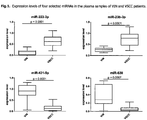
- Fig. 1 The results pointing at four microRNA molecules which levels were differentiating the tested samples (VSCC vs VIN) are depicted in Fig. 1 .
- the results identify four microRNA molecules that differentiated tested samples (VSCC vs VIN) and these differences were statistically significant.
- the current disclosure reveals that expression level of miR-222-3p, miR-23b-3p, miR-431-5p and miR-630 are circulating biomarkers for differential diagnosis of VIN and VSCC.
- the levels of miR-222-3p and miR-23b-3p were decreased in the blood of patients with VIN and increased in VSCC, whereas the levels of miR-431-5p and miR-630 were increased in the blood of patients with VIN and decreased in VSCC.
- the method of comparison of expression levels of miR-222-3p, miR-23b-3p, miR-431-5p and miR-630 is of high prediction value and is indicative for diagnosis of vulvar squamous cell carcinoma or vulvar squamous intraepithelial lesions, which was confirmed by ROC (receiver operating characteristics).
- AUCs (areas under the curve) for ROCs were as follows:
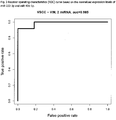
- the normalized expression levels miR-222-3p and miR-431-5p were used simultaneously to estimate the sensitivity and specificity of the sample classifier ( Fig. 3 ).
- This combination classifier had an AUC of 0.985 and accurately identified patients with VIN and VSCC, thus exhibited excellent performance.
- Predictor Score coeff ⁇ inverse logit of X + coeff ⁇ inverse logit of Y whereas
- the resulting score> 0.5 assigns the sample to the VSCC group, while the score ⁇ 0.5 assigns the sample to the VIN group.
Landscapes
- Chemical & Material Sciences (AREA)
- Life Sciences & Earth Sciences (AREA)
- Health & Medical Sciences (AREA)
- Organic Chemistry (AREA)
- Proteomics, Peptides & Aminoacids (AREA)
- Engineering & Computer Science (AREA)
- Immunology (AREA)
- Pathology (AREA)
- Analytical Chemistry (AREA)
- Zoology (AREA)
- Genetics & Genomics (AREA)
- Wood Science & Technology (AREA)
- Physics & Mathematics (AREA)
- Biotechnology (AREA)
- Microbiology (AREA)
- Molecular Biology (AREA)
- Hospice & Palliative Care (AREA)
- Biophysics (AREA)
- Oncology (AREA)
- Biochemistry (AREA)
- Bioinformatics & Cheminformatics (AREA)
- General Engineering & Computer Science (AREA)
- General Health & Medical Sciences (AREA)
- Measuring Or Testing Involving Enzymes Or Micro-Organisms (AREA)
Abstract
The subject of the invention is a method of assessing whether a subject has, or is at risk of developing vulvar squamous cell carcinoma (VSCC) or vulvar squamous intraepithelial lesions (VIN), comprising the steps of:
- measuring the expression level of at least one biomarker in a sample of the test subject, wherein the biomarkers are selected from a group comprising miR-222-3p, miR-23b-3p, miR-431-5p and miR-630 or functional variants thereof,
- comparing said expression level with reference expression level,
- wherein the comparison of said expression level of at least one said biomarker to said reference expression level is indicative to determine whether the subject has, or is at risk of developing vulvar squamous cell carcinoma or vulvar squamous intraepithelial lesions.
Description
- This invention relates generally to the field of molecular biology and oncology. Certain aspects of the invention include application in diagnosis, prognosis follow-up and therapy of vulvar carcinoma and related disorders. The present disclosure provides methods pertaining to the identification of genes and gene regulators that modulate certain biological pathways in vulvar disorders; vulvar carcinoma (VC) and its precursors; vulvar squamous intraepithelial lesions (VIN).
- Vulvar carcinoma (VC) is a genital malignancy with age-standardized incidence rates ranging worldwide between 0.5 and 1.5 per 100,000. The current ASR in Poland is 1.13; 515 new cases of VC were diagnosed and 267 VC-related deaths were recorded in 2014 (age-standardized mortality rate 0.5) [Wojciechowska et al.]. It is widely recognized that vulvar squamous cell carcinoma (VSCC) develops on the basis of vulvar squamous intraepithelial lesions (VIN). In the classification adopted in 2015 by the International Society for the Study of Vulvar Disease (ISSVD), vulvar precancerous lesions are divided into two types, differing in their pathogenesis and clinical significance: high grade-squamous intraepithelial lesion (HSIL) previously classified as VIN usual type (uVIN) and differentiated vulvar intraepithelial neoplasia (dVIN) [Bornstein J et al.]. The risk of progression from uVIN to VSCC is low and ranges from 3 to 16%, while for dVIN it reaches 32,8%. In the United States, between 1973 and 2000, the incidence of VIN increased by 411% against 20% for invasive cancers [Akerman G et al.]. Vulvar squamous cell carcinoma (VSCC) is the most common histological type of VC, representing approximately 90 % of lesions. Five-year survival rate for VC patients is approximately 90% for early stages and 20% for advanced stages of the disease (http://seer.cancer.gov/statfacts/html/vulva.html).
- Most VC and VIN are located in the labia majora, but other possible sites include the labia minora, clitoris, mons, or perineum. In patients with HPV-negative tumours, VC often presents as a single mass or ulcer on the labia majora or minora. In HPV-positive tumours, multifocal lesions and concurrent cervical neoplasia are more common.
- There is no specific screening method to detect VC and its precursor lesions. Although many cases may be asymptomatic, pruritus and pain, irritation is a common symptom; vulvar bleeding or discharge may also occur. Most patients present with early-stage (i.e. localized) disease. If symptoms are suspicious for VC, the diagnosis must be primarily based on the clinical work-up. The following methods are used to identify precancerous lesions and carcinomas:
- clinical examination, consisting of careful inspection and palpation of the area including the inguinal region;
- vulvoscopy with the application of acetic acid.
- All suspicious lesions must be individually biopsied and examined histologically as cancer may be seen in areas with multifocal vulvar intraepithelial neoplasia. The biopsy should be taken from the areas of the lesion that appear most abnormal. If multiple abnormal areas are present, then multiple biopsies should be taken to "map" all potential sites of vulvar pathology.
- There are several diagnostic and differential diagnostic considerations that come into play in the pathological evaluation of VC in general, and its precursor lesions in particular. Thorough sampling of VIN is important, because 3.2-18.8% of biopsies can have unsuspected stromal invasion and be finally diagnosed as cancer. Also the interobserver variability amongst pathologists for assessing invasion is suboptimal ranging from 0.24 for diagnosing invasion and 0.51 for measuring depth of invasion. Also pathologic evaluation may not be possible for specimens taken from areas of extensive necrosis.
- No molecular tests nor markers allowing precise and non-invasive diagnosis and/or differentiation of malignant and premalignant lesions of the vulva have been developed to date.
- To our knowledge, no one has, so far, conducted studies aiming at the identification of diagnostic or prognostic markers among the circulating microRNAs in VSCC and VIN. The identified microRNAs, demonstrating changes in blood levels likely related to prognosis, may provide basis for the development of a non-invasive test. Such test should allow diagnosis of VIN lesions and its differentiation from other benign conditions without malignant potential, early monitoring of the disease in patients with VIN, more precise VSCC staging, preoperative prognosis of lymph node status and ultimately serve as a prognostic and predictive marker for monitoring efficacy of therapy in VSCC patients.
- The constantly increasing number of new VIN and VC cases and unsatisfactory treatment outcomes are a significant societal problem. Therefore, there is a great need to develop an effective, minimally invasive test that would allow to stratify patients with VIN and VSCC and to determine the risk of progression from VIN to VSCC.
- It has now surprisingly been found that a biological test (a biomarker) measured/assessed in the blood could considerably contribute to the improvement of treatment outcomes in VIN and VSCC, as such test could be used as a screening method allowing to identify VIN patients at the high-risk of disease progression to VSCC.
- The object of the invention is a combined signature consisting of microRNA determined in plasma that serves to indicate which individuals among individuals with VIN are more likely to have VSCC and, at the same time, serves to rule out the presence of VSCC in the others.
- The combined signature is based, inter alia, on the identification of specific miRNAs that have altered expression levels in the blood as well as on the identification of specific miRNAs with stable expression, i.e. normalizers (reference molecules).
- The object of the invention is also treatment of VIN and VSCC, which includes miRNA mimics or inhibitors for use in the treatment of VIN or VSCC, and a pharmaceutical composition for treating vulvar disorders.
- The invention also provides a method identifying one or more biomarkers for VIN and VSCC.
- A kit for performing the method of assessing whether a subject has or is at risk of developing VSCC or VIN is also the subject of the invention.
-
-
Fig.1 . Expression levels of four selected miRNAs in plasma samples of VIN and VSCC patients. -
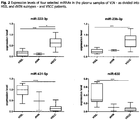
Fig. 2 . Expression levels of four selected miRNAs in the plasma samples of VIN - as divided into HSIL and dVIN subtypes - and VSCC patients. -
Fig. 3 . Receiver operating characteristics (ROC) curve based on the normalized expression levels of miR-222-3p and miR-431-5p. - The term "microRNA", "miRNA" or "miR" used herein means a non-coding RNA that regulates the translation of the coding mRNA(s) and is between 18 and 25-nucleotide long. These molecules are generally considered to be negative regulators of gene expression [Guo H et al.], yet they may also function as inducers of translation [Vasudevan S. et al.]. miRNAs are involved in a variety of both normal and pathological biological processes.
- Examples and sequences of 1881 Homo sapiens miRNAs have been identified and are found in the miRNA database known as miRbase (http://www.mirbase.org/cgi-bin/mirna_summary.pl?org=hsa). MicroRNAs are named using the "miR" prefix and a unique identifying number (e.g., miR-1, miR-2, ... miR-89, etc.). The names/identifiers in the database are of the form such as hsa-mir-121. The first three letters signify the organism. The mature miRNA is designated miR-121 in the database and in much of the literature, whilst mir-121 refers to the miRNA gene and also to the predicted stem-loop portion of the primary transcript. Distinct precursor sequences and genomic loci that express identical mature sequences get names of the form such as hsa-mir-121-1 and hsa-mir-121-2. Lettered suffixes denote closely related mature sequences - for example hsa-miR-121a and hsa-miR-121b that would be expressed from precursors hsa-mir-121a and hsa-mir-121b, respectively. miRNA cloning studies sometimes identify two ∼22nt sequences miRNAs which originate from the same predicted precursor. When the relative abundancies clearly indicate which is the predominantly expressed miRNA, the mature sequences are assigned names of the form miR-56 (the predominant product) and miR-56* (from the opposite arm of the precursor). When the data are not sufficient to determine which sequence is the predominant one, names like miR-142-5p (from the 5' arm) and miR-142-3p (from the 3' arm). Criteria and conventions for miRNA identification and naming are described by [V. Ambros et al. RNA 2003, 9(3):277-279].
- The term "VSCC" provided herein refers to vulvar squamous cell carcinoma. VSCC refers to any primary or secondary non-neoplastic malignant condition affects squamous cell epithelia of the vulva. VSCC can be of any subtype, e.g., but not limited to warty, basaloid, keratinizing and non-keratinizing type. Variants of VSCC are classified based upon the microscopic findings, when examined by a pathologist under the microscope [WHO Classification of Tumours of Female Reproductive Organs WHO/IARC Classification of Tumours, 4th Edition, Volume 6, Year: 2014. Edited by Kurman RJ, Carcangiu ML, Herrington CS, Young RH. ISBN-13 978-92-832-2435-8].
- The term "VIN" provided herein refers to vulvar intraepithelial neoplasia. VIN denotes a squamous intraepithelial lesion of the vulva that shows dysplasia with varying degrees of atypia. VIN comprises high-grade squamous intraepithelial lesion (HSIL, VIN usual type, uVIN), which is associated with developing into the warty and basaloid type carcinoma (which is associated with oncogenic HPV infection) and differentiated vulvar intraepithelial neoplasia, also known as dVIN, which is associated with vulvar dermatoses such as lichen sclerosus and also with atypia of the squamous epithelium. Therefore, the term VIN as used herein comprises both HSIL and dVIN lesions. The diagnosis of VIN is based on a careful inspection and a targeted biopsy of a visible vulvar lesion.
- The terms "measuring the expression level", "measuring the level of miRNA" or "measuring the level of miRNA gene product" are used interchangeably in the art. These terms concern measuring a number of transcript copies produced in gene transcription process. The measuring, as used herein, refers to any method of detection, quantification, identification, visualisation, assessment, profiling, abundance measurement or analysis of miRNA level.
- The expression level of miRNA can be measured using any technique that is suitable for detecting miRNA in a biological sample. Suitable techniques for determining miRNA expression level in cells from a biological sample are well known to those of skill in the art. In particular the following techniques may be applied: RT-PCR, quantitative RT-PCR (RT-qPCR), Northern blot analysis [Várallyay E, Burgyán J, Nat Protoc. 2008;3(2):190-6], hybridization to microarrays [Chang-Gong Liu CG at el. Nature Protocols 2008; 3: 563 - 578], miRNA sequencing, in particular next generation sequencing (NGS) [Tam S, de Borja R, Tsao MS and McPherson JD. Laboratory Investigation 2014, 94: 350-358], miRNA detection by microscopy with in situ hybridization (ISH) [Urbanek MA, Nawrocka AU and WJ. Int J Mol Sci. 2015; 16(6): 13259-13286], enzymatic luminescence miRNA assay [Sun Y, Gregory KJ, Chen NG, Golovlev V. Analytical Biochemistry 2012; 429(1):11-17].
- The term "Ct" value, as used herein, relates to the value of threshold-cycle obtained in quantitative real-time PCR (qPCR) experiment. The normalized expression level is calculated by the 2-ΔCt method, quantitating relative microRNA expression.
- The term "normalizer", as used herein, relates to reference molecule, which should demonstrate stable expression level, storage stability, extraction, and quantification efficiency equivalent to that of the target of interest. Normalizers are used in order to minimize differences that could arise from sample procurement, stabilization, RNA extraction or quantification methods, or sample-to-sample inconsistencies.
- The term "about", as used herein, refers to measurement uncertainty of the specified method and is used to reflect experimental deviations, which may be found for different measurements of the same sample.
- An alteration in the level of the miRNA gene may be an increase or a decrease.
- Functional variant is understood as a miRNA which varies by one nucleotide.
- In the first broad aspect, there is provided herein, a method of assessing whether a subject has, or is at risk of developing a vulvar-related disorder, in particular premalignant or malignant, determining prognosis of a subject with vulvar disorder, and/or treating a vulvar disorder in a subject who has a vulvar related disorder, comprising measuring at least one biomarker in a test sample.
- In one embodiment, a method of assessing whether a subject has, or is at risk of developing vulvar squamous cell carcinoma (VSCC) or vulvar squamous intraepithelial lesions (VIN), comprises the steps of:
- measuring the expression level of at least one biomarker in a sample of the test subject, wherein the biomarkers are selected from a group comprising miR-222-3p, miR-23b-3p, miR-431-5p and miR-630 or functional variants thereof;
- comparing said expression levels with reference expression levels,
- wherein the comparison of said expression level of at least one said biomarker to said reference expression level is indicative to determine whether the subject has, or is at risk of developing VSCC or VIN.
- The method preferably comprises the steps of:
- measuring the expression level of at least one normalizer in the sample of the test subject;
- normalizing the measured expression level of at least one said biomarker against normalizer to obtain normalized value of the expression level of at least one said biomarker;
- The normalizers are preferably one or more molecules selected from hsa-miR-93-5p, hsa-miR-425-5p, hsa-miR-191-5p or combination thereof, preferably the combination of hsa-miR-93-5p and hsa-miR-425-5p. The measured expression level can be normalized against more than one normalizer and the average normalized value is calculated, or the expression level can be normalized against a combination of reference molecules.
- Said reference expression level is one or more values established from one or more biological samples. The samples may be samples obtained from healthy subjects or subjects having or being at risk of developing VSCC or VIN. Reference expression levels may be expressed as reference intervals (RI) [Jones G, Barker A. Clin Biochem Rev. 2008; 29 (Suppl 1): S93-S97]. The current paradigm for pathology reference intervals is for each laboratory to determine its own interval for use with each test offered by the laboratory [Jones GR, Barker A, Tate J, Lim CF and Robertson K. Clin Biochem Rev. 2004; 25(2): 99-104].
- In certain embodiments, the sample comprises one or more of serum or blood plasma or whole blood samples. In another embodiments, the sample is blood fractions such as plasma, serum, blood cell fractions or platelets; urine or saliva, swabs from the vulva and vaginal introitus. In preferred embodiment, the sample is blood plasma.
- In certain embodiments, at least one biomarker is differentially expressed in the plasma of the subject with tumour (VSCC) and preinvasive lesion (VIN), and is one or more of miR-222-3p, miR-23b-3p, miR-431-5p and miR-630, or variants thereof.
- In one embodiment the normalized value for miR-222-3p expression level in a range about 0.26 - 1.1 indicates VSCC, and/or the normalized value for miR-222-3p expression level in a range about 0.0 - 0.25 indicates VIN. Preferably the normalized value for miR-222-3p expression level larger than about 0.25 indicates VSCC. Preferably the normalized value for miR-222-3p expression level lower than about 0.25 indicates VIN.
- In one embodiment the normalized value for miR-431-5p expression level in a range about 0.0 - 0.4 indicates VSCC, and/or the normalized value for miR-431-5p expression level in a range about 0.5 - 1.3 indicates VIN. Preferably the normalized value for miR-431-5p expression level lower than about 0.5 indicates VSCC. Preferably the normalized value for miR-431-5p expression level larger than about 0.5 indicates VIN.
- In one embodiment the normalized value for miR-630 expression level in a range about 0.0 - 0.15 indicates VSCC, and/or the normalized value for miR-630 expression level in a range about 0.16 - 0.7 indicates VIN. Preferably the normalized value for miR-630 expression level lower than about 0.15 indicates VSCC. Preferably the normalized value for miR-630 expression level larger than about 0.15 indicates VIN.
- In one embodiment the normalized value for miR-23b-3p expression level in a range about 0.35 - 1.3 indicates VSCC, and/or the normalized value for miR-23b-3p expression level in a range about 0.1 - 0.34 indicates VIN. Preferably the normalized value for miR-23b-3p expression level larger than about 0.35 indicates VSCC. Preferably the normalized value for miR-23b-3p expression level lower than about 0.35 indicates VIN.
- In certain embodiments, the level of the biomarker in the blood sample of VSCC patient is greater or lower than the level of the corresponding biomarker in the blood sample of VIN patient.
- In another broad aspect, there is provided herein, a method of screening for one or more biomarkers for VSCC or VIN in a subject, comprising: obtaining a sample of blood plasma from a subject, measuring the expression level of at least one biomarker, wherein the biomarkers are selected from one or more of miR-222-3p, miR-23b-3p, miR-431-5p and miR-630, or functional variants thereof. The expression level of at least one said biomarker is preferably normalized against normalizer present in the sample to obtain the normalized value of the expression level of at least one said biomarker and the normalized value of the expression level is used for further analysis. The normalizers are preferably one or more molecules selected from hsa-miR-93-5p, hsa-miR-425-5p, hsa-miR-191-5p or a combination thereof, preferably the combination of hsa-miR-93-5p and hsa-miR-425-5p.
- In another broad aspect, there is provided herein, a method of screening for one or more biomarkers for VSCC or VIN in a subject, comprising: obtaining a sample of blood plasma from a subject, conducting reverse transcription quantitative real-time polymerase chain reaction (RT-qPCR), and quantifying one or more than one biomarkers differentially expressed between blood of VSCC patients and VIN patients, wherein the biomarkers are selected from one or more of miR-222-3p, miR-23b-3p, miR-431-5p and miR-630, or functional variants thereof. The expression level of at least one said biomarker is preferably normalized against normalizer present in the sample to obtain the normalized value of the expression level of at least one said biomarker, and the normalized value of the expression level is used for further analysis. The normalizers are preferably one or more molecules selected from hsa-miR-93-5p, hsa-miR-425-5p, hsa-miR-191-5p or a combination thereof, preferably the combination of hsa-miR-93-5p and hsa-miR-425-5p.
- In preferred embodiment, RT-qPCR is used for measuring the expression level of at least one biomarker selected from one or more of miR-222-3p, miR-23b-3p, miR-431-5p and miR-630, or functional variants thereof.
- Measuring the expression level of at least one biomarker selected from one or more of miR-222-3p, miR-23b-3p, miR-431-5p and miR-630, or functional variants thereof may be performed using a method comprising northern blotting, hybridization to microarrays, microRNA sequencing (e.g., next generation sequencing), single cell miRNA detection by microscopy with in situ hybridization (ISH), enzymatic luminescence miRNA assay. Furthermore, other methods of microRNA detection known in the art can be used for measuring the expression level of at least one said biomarker.
- In another broad aspect, there is provided herein, a method for influencing transcript abundance and/or protein expression of target miR in the blood of the subject in need thereof, comprising deregulating one or more microRNAs selected from one or more of miR-222-3p, miR-23b-3p, miR-431-5p and miR-630, or functional variants thereof.
- In certain embodiments, the method includes altering expression of one or more of miR-222-3p, miR-23b-3p, miR-431-5p and miR-630 to inhibit the protein expression of cancer-related genes.
- In another broad aspect, there is provided herein, a method for screening for vulvar pathology in a subject in need thereof.
- In another broad aspect, there is provided herein, a method for follow-up after treatment for vulvar pathology in a subject in need thereof.
- In another broad aspect, there is provided herein, a blood sample microRNA signature for a vulvar related pathology comprising: one or more of: miR-222-3p, miR-23b-3p, miR-431-5p and miR-630, or a functional variants or combinations thereof that are up-regulated or that are down-regulated.
- In another broad aspect, there is provided herein, a method for regulating one or more of genes expressed by VSCC or VIN cells, comprising the step of altering expression of miR-222-3p, miR-23b-3p, miR-431-5p and miR-630 in vulvar cells.
- In another broad aspect, there is provided herein, use of mimics of miR-431-5p and miR-630, or functional variants or combinations thereof, as a microRNAs targeting at least one gene in vulvar cells and thus inhibiting protein expression of such gene.
- In another broad aspect, there is provided herein, use of inhibitors of miR-222-3p and miR-23b-3p, or functional variants or combinations thereof, as a microRNAs targeting at least one gene in vulvar cells and thus increasing protein expression of such gene.
- In another broad aspect, there is provided herein, a method of treating vulvar disorders in a subject who has vulvar disorder in which at least one biomarker is down-regulated or up-regulated in the plasma, serum or whole blood of the subject with vulvar disorder, administrating to the subject an effective amount of mimic or inhibitor of at least one biomarker, or a variant or biologically-active fragment thereof, such that proliferation of VSCC or VIN cells in the subject is inhibited, wherein the biomarker is selected from one or more of miR-222-3p, miR-23b-3p, miR-431-5p and miR-630, or functional variants thereof.
- In another broad aspect, there is provided herein, a pharmaceutical composition for treating vulvar disorders, comprising at least one isolated biomarker, and a pharmaceutically-acceptable carrier, wherein the biomarker is selected from one or more of miR-222-3p, miR-23b-3p, miR-431-5p and miR-630, or functional variants thereof.
- The invention also provides a method of assessing whether a subject has, or is at risk of developing a VIN or VSCC, comprising:
- measuring the expression level of at least one biomarker in a sample of the test subject,
- measuring the expression level of at least one normalizer in the sample of the test subject, wherein the normalizer is one or more molecules selected from the group of hsa-miR-93-5p, hsa-miR-425-5p, hsa-miR-191-5p;
- normalizing the measured expression level of at least one biomarker against normalizer to obtain a normalized value of the expression level of at least one said biomarker,
- comparing the normalized expression level with normalized reference expression level, wherein the comparison of said normalized expression level of at least one said biomarker to said normalized reference expression level is indicative to determine whether the subject has, or is at risk of developing VIN or VSCC,
- wherein said expression level is one or more values established from one or more biological samples.
- The invention also provides a method of identifying one or more biomarkers for VIN or VSCC in a subject, comprising the steps of:
- measuring the expression level of at least one candidate biomarker in a sample of the test subject,
- measuring the expression level of at least one normalizer in the sample of the test subject, wherein the normalizer is one or more molecules selected from hsa-miR-93-5p, hsa-miR-425-5p, hsa-miR-191-5p or combination thereof,
- normalizing the measured expression level of at least one said biomarker against normalizer to obtain the normalized value of the expression level of at least one said biomarker,
- comparing the normalized expression level with normalized reference expression level, wherein the comparison of said normalized expression level of at least one said biomarker to said normalized reference expression level is indicative to determine whether the candidate biomarker is a biomarker for VIN or VSCC,
- wherein said reference expression level is one or more values established from one or more biological samples.
- The invention also provides a kit for performing a method of assessing whether a subject has, or is at risk of developing VSCC or VIN, comprising primers and probes specific to miRNA sequences of at least one of miR-222-3p, miR-23b-3p, miR-431-5p and miR-630. The term "target nucleotide sequence" or "target nucleotide" as used herein, refers to the polynucleotide sequence that is sought to be detected and/or quantified, i.e. the sequence that is targeted by the microRNA-specific primers and/or probes. The target miRNA nucleotide sequences are amplified and detected, thereby simultaneously detecting the expression levels of miR-222-3p, miR-23b-3p, miR-431-5p and miR-630. Alternatively, the methods may be applied directly on cDNA without the need for reverse transcription.
- The kit typically comprises specific primers and probes specific to miRNA sequences of at least one of miR-222-3p, miR-23b-3p, miR-431-5p and miR-630, dNTP, as well as polymerase, reaction buffer and Mg2+.
- The blood samples obtained from 44 patients with VIN and VSCC were included in the study. Among seventeen patients treated for VIN between December 2013 and October 2014 enrolled 12 and 5 were diagnosed with HSIL and d-VIN, respectively. The median age of patients treated for VIN was 58,4 years (range 33-79). Overall, twenty seven patients surgically treated for primary VSCC (T1-2, NO-2, M0) at the Maria Sklodowska-Curie Institute - Oncology Center in Warsaw (CO-I) between February 2005 and May 2011 were recruited. No patient received preoperative chemotherapy or radiotherapy. The median age of patients treated for VSCC was 75.4 years (range 54-92). The study was approved by the Independent Ethics Committee of all the institutions, CO-I (No. 44/2002, 16/2015), HCC (No. 15/2014) and WUM (No. 247/2015), and all patients gave their informed consent.
- Plasma samples were obtained from patients' blood before their surgical treatment and stored at - 70°C until RNA isolation. Total RNA was isolated from 200 µl of plasma using miRNeasy Mini Kit (Qiagen) and miRNA was reverse transcribed using miScript II RT kit (Qiagen) according to the manufacturer's protocol.
- Expression levels of six candidate reference miRNAs, i.e. hsa-miR-93-5p, hsa-miR-425-5p, hsa-miR-16-5p, hsa-miR- 103a-3p, hsa-miR-191-5p, hsa-miR-423-5p, were analysed by quantitative PCR (RT-qPCR) using the miScript miRNA Arrays (Qiagen) according to the manufacturer's protocol. The microRNA molecules in question served as candidate normalizers. Reactions were performed in 7500 Fast Real-Time PCR System (Applied Biosystems) in a final volume of 25 µl reaction mix, according to the arrays' manufacturer instructions (Qiagen).
- Gene expression data were analysed using geNorm™ algorithm [https://genorm.cmgg.be/] integrated into DataAssist™ Software (Applied Biosystems, Thermo Fisher Scientific, Carlsbad, CA, USA). RefFinder, a web-based application which integrates three most commonly used normalization algorithms (geNorm, Normfinder and BestKeeper), was used for results cross-validation [Xie et al.].The algorithm used allowing to determine the most stable normalizers from a set of tested candidate normalizers in a given sample panel. It calculates a gene stability measure (M) according to formulas described by Vandesompele et al. Genes with the lowest M values (<1.5) have the most stable expression.
- Our analysis of miRNA expression data with the algorithm identified hsa-miR-93-5p (M= 1.3276) as the gene that retained the greatest robustness in all the plasma samples analysed, i.e. of both VIN and VSCC patients (Tab. 1, bolded font). We identified hsa-miR-93-5p (M=1. 4481) as the most stable reference miRNA (normalizer) for VIN. In plasma samples of patients with VSCC hsa-miR-425-5p (M=1.017) followed by hsa-miR-93-5p (M=1.044) and hsa-miR-191-5p (M=1.3937) were the most stable reference miRNA (normalizer).
- This finding enabled us to avoid the common error of using inadequate normalizers in qPCR analysis of microRNA expression, such as snoRNAs which have variable expression due to their involvement in carcinogenesis [Mannoor et al.].
Tab.1. Putative reference miRNAs (normalizers) and their expression stability values in plasma samples of VIN and VSCC patients. miRNA miRBase accession number Stability values for candidate reference genes in plasma calculated by the geNorm™ program VIN VSCC VSCC and VIN hsa-miR-93-5p MIMAT0000093 1.4481 1.044 1.3276 hsa-miR-425-5p MIMAT0003393 1.6850 1.017 1.3909 hsa-miR-16-5p MIMAT0000069 1.6182 1.4196 1.6871 hsa-miR-103a-3p MIMAT0000101 2.1591 1,4511 1.8671 hsa-miR-191-5p MIMAT0000440 2.5022 1.3937 2.0446 hsa-miR-423-5p MIMAT0004748 1.8651 1.4748 1.6876 - Next, we evaluated expression level of 20 microRNAs in the plasma samples of 23 patients: 11 with VIN (9 diagnosed with HSIL and 2 with d-VIN) and 12 with VSCC. Briefly, total RNA was isolated from 200 µl of plasma using miRNeasy Mini Kit (Qiagen) and miRNA was reverse transcribed using miScript II RT kit (Qiagen) according to the manufacturer's protocol. Expression levels of 20 microRNAs listed in Tab. 2, were analysed by quantitative RT-PCR (RT-qPCR) using the miScript miRNA Arrays (Qiagen) according to the manufacturer's protocol. To normalize the results we used the combination of the most stable reference microRNA (normalizer) i.e. hsa-miR-93-5p (miRBase Accession No. MIMAT0000093, having mature sequence CAAAGUGCUGUUCGUGCAGGUAG) and hsa-miR-425-5p (miRBase Accession No. MIMAT0003393, having mature sequence AAUGACACGAUCACUCCCGUUGA) (Table 1, bolded font). Reactions were performed in 7500 Fast Real-Time PCR System (Applied Biosystems) in a final volume of 25 µl reaction mix, according to the arrays' manufacturer instructions (Qiagen). The collected data were analysed using threshold-cycle (Ct) values for the miRNAs with the SDS 2.1 software (Applied Biosystems). The relative amounts of each miR in the plasma of patients with VIN and VSCC were calculated by the 2-ΔCt method using DataAssist™ Software (Applied Biosystems). Expression levels for the selected miRs were graphed using GraphPad Prism version 6.07.
Tab.2. List of microRNAs surveyed in the plasma samples of VIN and VSCC patients. Mature miRNA ID miRBase Accession No. Mature sequence hsa-miR-630 MIMAT0003299 AGUAUUCUGUACCAGGGAAGGU hsa-miR-19b MIMAT0000074 UGUGCAAAUCCAUGCAAAACUGA hsa-miR-130b MIMAT0000691 CAGUGCAAUGAUGAAAGGGCAU hsa-miR-21 MIMAT0000076 UAGCUUAUCAGACUGAUGUUGA hsa-miR-532-5p MIMAT0002888 CAUGCCUUGAGUGUAGGACCGU hsa-miR-210 MIMAT0026475 AGCCCCUGCCCACCGCACACUG hsa-miR-20a MIMAT0000075 UAAAGUGCUUAUAGUGCAGGUAG hsa-miR-222-3p MIMAT0000279 AGCUACAUCUGGCUACUGGGU hsa-miR-144 MIMAT0000436 UACAGUAUAGAUGAUGUACU hsa-miR-155 MIMAT0000646 UUAAUGCUAAUCGUGAUAGGGGU hsa-miR-133a MIMAT0026478 AGCUGGUAAAAUGGAACCAAAU hsa-miR-1 MIMAT0000416 UGGAAUGUAAAGAAGUAUGUAU hsa-miR-206 MIMAT0000462 UGGAAUGUAAGGAAGUGUGUGG hsa-miR-29b MIMAT0000100 UAGCACCAUUUGAAAUCAGUGUU hsa-miR-145* MIMAT0004601 GGAUUCCUGGAAAUACUGUUCU hsa-miR-7 MIMAT0000252 UGGAAGACUAGUGAUUUUGUUGU miR-23b-3p MIMAT0000418 AUCACAUUGCCAGGGAUUACC miR-431-5p MIMAT0001625 UGUCUUGCAGGCCGUCAUGCA miR-543 MIMAT0004954 AAACAUUCGCGGUGCACUUCUU let-7c MIMAT0000064 UGAGGUAGUAGGUUGUAUGGUU - The results pointing at four microRNA molecules which levels were differentiating the tested samples (VSCC vs VIN) are depicted in
Fig. 1 . - The results identify four microRNA molecules that differentiated tested samples (VSCC vs VIN) and these differences were statistically significant. The current disclosure reveals that expression level of miR-222-3p, miR-23b-3p, miR-431-5p and miR-630 are circulating biomarkers for differential diagnosis of VIN and VSCC. The levels of miR-222-3p and miR-23b-3p were decreased in the blood of patients with VIN and increased in VSCC, whereas the levels of miR-431-5p and miR-630 were increased in the blood of patients with VIN and decreased in VSCC.
- The method of comparison of expression levels of miR-222-3p, miR-23b-3p, miR-431-5p and miR-630 is of high prediction value and is indicative for diagnosis of vulvar squamous cell carcinoma or vulvar squamous intraepithelial lesions, which was confirmed by ROC (receiver operating characteristics). AUCs (areas under the curve) for ROCs were as follows:
- 0.970 for miR-222-3p,
- 0.939 for miR-23b-3p,
- 0.924 for miR-431-5p and
- 0.894 for miR-630.
- As an example, the normalized expression levels miR-222-3p and miR-431-5p were used simultaneously to estimate the sensitivity and specificity of the sample classifier (
Fig. 3 ). This combination classifier had an AUC of 0.985 and accurately identified patients with VIN and VSCC, thus exhibited excellent performance. - Moreover, our analysis revealed the possibility of building a sample type predictor according to the following formula:

- coeff is -1.836
- X is the value of normalized expression of miR-222-3p
- Y is the value of normalized expression of miR-431-5p
- The resulting score> 0.5 assigns the sample to the VSCC group, while the score < 0.5 assigns the sample to the VIN group.
-
- 1. Wojciechowska U, Didkowska J. Zachorowania i zgony na nowotwory zośliwe w Polsce. Krajowy Rejestr Nowotworów, Centrum Onkologii - Instytut im. Marii Sk
 odowskiej - Curie

- 2. Bornstein J, Bogliatto F, Haefner HK, Stockdale CK, Preti M, Bohl TG, Reutter J, Committee IT: The 2015 international society for the study of vulvovaginal disease (issvd) terminology of vulvar squamous intraepithelial lesions. J Low Genit Tract Dis 2016;20:11-14.
- 3. Ji T, Zheng ZG, Wang FM, Xu U, Li LF, Cheng QH, Guo JF, Ding XF: Differential microrna expression by solexa sequencing in the sera of ovarian cancer patients. Asian Pac J Cancer Prev 2014;15:1739-1743.Vasudevan S. et al.
- 4. V. Ambros et al. "A uniform system for microRNA annotation". RNA 2003 9(3):277-279.
- 5. WHO Classification of Tumours of Female Reproductive Organs WHO/IARC Classification of Tumours, 4th Edition, Volume 6, Year: 2014. Edited by Kurman RJ, Carcangiu ML, Herrington CS, Young RH. ISBN-13 978-92-832-2435-8
- 6. Várallyay E, Burgyán J, Havelda Z. MicroRNA detection by northern blotting using locked nucleic acid probes. Nat Protoc. 2008;3(2):190-6.
- 7. Chang-Gong Liu, George Adrian Calin, Stefano Volinia & Carlo M Croce MicroRNA expression profiling using microarrays Nature Protocols 3, 563 - 578 (2008)
- 8. Shirley Tam, Richard de Borja, Ming-Sound Tsao and John D McPherson, Robust global microRNA expression profiling using next-generation sequencing technologies, Laboratory Investigation (2014) 94, 350-358
- 9. Martyna O. Urbanek, Anna U. Nawrocka,and Wlodzimierz J. Krzyzosiak Small RNA Detection by in Situ Hybridization Methods Int J Mol Sci. 2015 Jun; 16(6): 13259-13286
- 10. YeSunKalvin J. GregoryNelson G. ChenValGolovlev Rapid and direct microRNA quantification by an enzymatic luminescence assay Analytical Biochemistry Volume 429, Issue 1, 1 October 2012, Pages 11-17
- 11. Graham Jones, Antony Barker Reference Intervals Clin Biochem Rev. 2008 Aug; 29 (Suppl 1): S93-S97.
- 12. Graham RD Jones, Antony Barker, Jill Tate, Chen-Fee Lim and Ken Robertson The Case for Common Reference Intervals Clin Biochem Rev. 2004 May; 25(2): 99-104.
- 13. Xie F, Xiao P, Chen D, et al. miRDeepFinder: a miRNA analysis tool for deep sequencing of plant small RNAs. Plant Mol Biol. Epub ahead of print 31 January 2012. DOI: 10.1007/s11103-012-9885-2
- 14. Vandesompele J, De Preter K, Pattyn F, et al. Accurate normalization of real-time quantitative RT-PCR data by geometric averaging of multiple internal control genes. Genome Biol 2002; 3: RESEARCH0034.
- 15. Mannoor K, Liao J, Jiang F.Small nucleolar RNAs in cancer. Biochim Biophys Acta. 2012;1826(1):121-8
Claims (15)
- A method of assessing whether a subject has, or is at risk of developing vulvar squamous cell carcinoma (VSCC) or vulvar squamous intraepithelial lesions (VIN), comprising the steps of:- measuring the expression level of at least one biomarker in a sample of the test subject, wherein the biomarkers are selected from a group comprising miR-222-3p, miR-23b-3p, miR-431-5p and miR-630 or functional variants thereof,- comparing said expression level with reference expression level,- wherein the comparison of said expression level of at least one said biomarker to said reference expression level is indicative to determine whether the subject has, or is at risk of developing vulvar squamous cell carcinoma or vulvar squamous intraepithelial lesions.
- The method according to claim 1, comprising the steps of:- measuring the expression level of at least one normalizer in the sample of the test subject,- normalizing the measured expression level of at least one said biomarker against normalizer to obtain a normalized value of the expression level of at least one said biomarker,and wherein the normalized value of the expression level of at least one said biomarker is used for comparison with normalized reference expression level.
- The method according to claim 1 or 2, wherein the normalizers are one or more molecules selected from hsa-miR-93-5p, hsa-miR-425-5p, hsa-miR-191-5p or combination thereof, preferably the combination of hsa-miR-93-5p and hsa-miR-425-5p.
- The method according to any of the previous claims, wherein the sample is whole blood; blood fraction such as plasma, serum, blood cell fractions or platelets; urine or saliva, swabs from the vulva and vaginal introitus; preferably blood fraction, more preferably blood plasma.
- The method according to any of the previous claims, wherein said reference expression level is one or more values established from one or more biological samples.
- The method according to any of the previous claims, wherein the comparison of said expression level of at least one said biomarker to said reference expression level is represented by normalized expression level values indicative for diagnosis of VIN or VSCC.
- The method according to claim 6, wherein the normalized value for miR-222-3p expression level in a range 0.26 - 1.1 indicates VSCC, and/or the normalized value for miR-222-3p expression level in a range 0.0 - 0.25 indicates VIN.
- The method according to claim 6, wherein the normalized value for miR-431-5p expression level in a range 0.0 - 0.4 indicates VSCC, and/or the normalized value for miR-431-5p expression level in a range 0.5 - 1.3 indicates VIN.
- The method according to claim 6, wherein the normalized value for miR-630 expression level in a range 0.0 - 0.15 indicates VSCC, and/or the normalized value for miR-630 expression level in a range 0.16 - 0.7 indicates VIN.
- The method according to claim 6, wherein the normalized value for miR-23b-3p expression level in a range 0.35 - 1.3 indicates VSCC, and/or the normalized value for miR-23b-3p expression level in a range 0.1 - 0.34 indicates VIN.
- A miRNA mimic for use as a microRNAs targeting at least one gene in vulvar cells and thus inhibiting protein expression of such gene, wherein miRNA is one or more of miR-431-5p and miR-630 or functional variants thereof.
- A pharmaceutical composition for treating vulvar disorders, comprising a mimic of at least one biomarker, and a pharmaceutically-acceptable carrier, wherein the biomarker is selected from one or more of miR-431-5p and miR-630 or functional variants thereof.
- A method of assessing whether a subject has, or is at risk of developing VIN or VSCC, comprising:- measuring the expression level of at least one biomarker in a sample of the test subject,- measuring the expression level of at least one normalizer in the sample of the test subject, wherein the normalizer is one or more molecules selected from the group of hsa-miR-93-5p, hsa-miR-425-5p, hsa-miR-191-5p or combination thereof,- normalizing the measured expression level at least one said biomarker against normalizer to obtain a normalized value of the expression level of at least one said biomarker,- comparing the normalized expression level with normalized reference expression level, wherein the comparison of said normalized expression level of at least one said biomarker to said normalized reference expression level is indicative to determine whether the subject has, or is at risk of developing VIN or VSCC,- wherein said reference expression level is one or more values established from one or more biological samples.
- A method of identifying one or more biomarkers for VIN or VSCC in a subject, comprising the steps of:- measuring the expression level of at least one candidate biomarker in a sample of the test subject,- measuring the expression level of at least one normalizer in the sample of the test subject, wherein the normalizer is one or more molecules selected from the group of hsa-miR-93-5p, hsa-miR-425-5p, hsa-miR-191-5p or combination thereof,- normalizing the measured expression level of at least one said biomarker against normalizer to obtain the normalized value of the expression level of at least one said biomarker,- comparing the normalized expression level with normalized reference expression level, wherein the comparison of said normalized expression level of at least one said biomarker to said normalized reference expression level is indicative to determine whether the candidate biomarker is a biomarker for VIN or VSCC.- wherein said reference expression level is one or more values established from one or more biological samples.
- A kit for performing a method of claim 1, comprising primers and probes specific to miRNA sequences of at least one of miR-222-3p, miR-23b-3p, miR-431-5p and miR-630.
Priority Applications (3)
| Application Number | Priority Date | Filing Date | Title |
|---|---|---|---|
| EP17460065.0A EP3476950A1 (en) | 2017-10-31 | 2017-10-31 | Microrna-based methods and compositions for the diagnosis, prognosis and treatment of vulvar carcinoma and vulvar intraepithelial lesions |
| EP18203885.1A EP3476951B1 (en) | 2017-10-31 | 2018-10-31 | Microrna-based methods and compositions for the diagnosis and prognosis of vulvar carcinoma and vulvar intraepithelial lesions |
| PL18203885.1T PL3476951T3 (en) | 2017-10-31 | 2018-10-31 | Microrna-based methods and compositions for the diagnosis and prognosis of vulvar carcinoma and vulvar intraepithelial lesions |
Applications Claiming Priority (1)
| Application Number | Priority Date | Filing Date | Title |
|---|---|---|---|
| EP17460065.0A EP3476950A1 (en) | 2017-10-31 | 2017-10-31 | Microrna-based methods and compositions for the diagnosis, prognosis and treatment of vulvar carcinoma and vulvar intraepithelial lesions |
Publications (1)
| Publication Number | Publication Date |
|---|---|
| EP3476950A1 true EP3476950A1 (en) | 2019-05-01 |
Family
ID=60421719
Family Applications (2)
| Application Number | Title | Priority Date | Filing Date |
|---|---|---|---|
| EP17460065.0A Withdrawn EP3476950A1 (en) | 2017-10-31 | 2017-10-31 | Microrna-based methods and compositions for the diagnosis, prognosis and treatment of vulvar carcinoma and vulvar intraepithelial lesions |
| EP18203885.1A Active EP3476951B1 (en) | 2017-10-31 | 2018-10-31 | Microrna-based methods and compositions for the diagnosis and prognosis of vulvar carcinoma and vulvar intraepithelial lesions |
Family Applications After (1)
| Application Number | Title | Priority Date | Filing Date |
|---|---|---|---|
| EP18203885.1A Active EP3476951B1 (en) | 2017-10-31 | 2018-10-31 | Microrna-based methods and compositions for the diagnosis and prognosis of vulvar carcinoma and vulvar intraepithelial lesions |
Country Status (2)
| Country | Link |
|---|---|
| EP (2) | EP3476950A1 (en) |
| PL (1) | PL3476951T3 (en) |
Citations (3)
| Publication number | Priority date | Publication date | Assignee | Title |
|---|---|---|---|---|
| US20090075258A1 (en) * | 2007-09-14 | 2009-03-19 | Latham Gary J | Methods of Normalization in microRNA Detection Assays |
| WO2013022786A2 (en) * | 2011-08-05 | 2013-02-14 | University Of Louisville Research Foundation, Inc. | Microrna biomarkers |
| WO2016178519A1 (en) * | 2015-05-06 | 2016-11-10 | 한국생명공학연구원 | Composition for inhibiting muscle aging or treating muscle aging related diseases |
-
2017
- 2017-10-31 EP EP17460065.0A patent/EP3476950A1/en not_active Withdrawn
-
2018
- 2018-10-31 PL PL18203885.1T patent/PL3476951T3/en unknown
- 2018-10-31 EP EP18203885.1A patent/EP3476951B1/en active Active
Patent Citations (3)
| Publication number | Priority date | Publication date | Assignee | Title |
|---|---|---|---|---|
| US20090075258A1 (en) * | 2007-09-14 | 2009-03-19 | Latham Gary J | Methods of Normalization in microRNA Detection Assays |
| WO2013022786A2 (en) * | 2011-08-05 | 2013-02-14 | University Of Louisville Research Foundation, Inc. | Microrna biomarkers |
| WO2016178519A1 (en) * | 2015-05-06 | 2016-11-10 | 한국생명공학연구원 | Composition for inhibiting muscle aging or treating muscle aging related diseases |
Non-Patent Citations (26)
| Title |
|---|
| "WHO Classification of Tumours of Female Reproductive Organs WHO/IARC Classification of Tumours", vol. 6, 2014 |
| BEATRIZ MAIA ET AL: "MiR-223-5p works as an oncomiR in vulvar carcinoma by TP63 suppression", ONCOTARGET, 9 November 2014 (2014-11-09), XP055463216, Retrieved from the Internet <URL:https://www.ncbi.nlm.nih.gov/pmc/articles/PMC5226502/pdf/oncotarget-07-49217.pdf> DOI: 10.18632/oncotarget.10247 * |
| BORNSTEIN J; BOGLIATTO F; HAEFNER HK; STOCKDALE CK; PRETI M; BOHL TG; REUTTER J; COMMITTEE IT: "The 2015 international society for the study of vulvovaginal disease (issvd) terminology of vulvar squamous intraepithelial lesions", J LOW GENIT TRACT DIS, vol. 20, 2016, pages 11 - 14 |
| CHANG-GONG LIU CG, NATURE PROTOCOLS, vol. 3, 2008, pages 563 - 578 |
| CHANG-GONG LIU; GEORGE ADRIAN CALIN; STEFANO VOLINIA; CARLO M: "Croce MicroRNA expression profiling using microarrays", NATURE PROTOCOLS, vol. 3, 2008, pages 563 - 578 |
| GRAHAM JONES; ANTONY BARKER: "Reference Intervals", CLIN BIOCHEM REV., vol. 29, no. 1, August 2008 (2008-08-01), pages S93 - S97 |
| GRAHAM RD JONES; ANTONY BARKER; JILL TATE; CHEN-FEE LIM; KEN ROBERTSON: "The Case for Common Reference Intervals", CLIN BIOCHEM REV., vol. 25, no. 2, May 2004 (2004-05-01), pages 99 - 104 |
| JI T; ZHENG ZG; WANG FM; XU U; LI LF; CHENG QH; GUO JF: "Ding XF: Differential microrna expression by solexa sequencing in the sera of ovarian cancer patients", ASIAN PAC J CANCER PREV, vol. 15, 2014, pages 1739 - 1743 |
| JONES G; BARKER A, CLIN BIOCHEM REV., vol. 29, no. 1, 2008, pages S93 - S97 |
| JONES GR; BARKER A; TATE J; LIM CF; ROBERTSON K, CLIN BIOCHEM REV., vol. 25, no. 2, 2004, pages 99 - 104 |
| LIEN N. HOANG ET AL: "Squamous precursor lesions of the vulva: current classification and diagnostic challenges", PATHOLOGY., vol. 48, no. 4, 20 July 2017 (2017-07-20), AU, pages 291 - 302, XP055463543, ISSN: 0031-3025, DOI: 10.1016/j.pathol.2016.02.015 * |
| MANNOOR K; LIAO J; JIANG F: "Small nucleolar RNAs in cancer", BIOCHIM BIOPHYS ACTA, vol. 1826, no. 1, 2012, pages 121 - 8, XP055037474, DOI: doi:10.1016/j.bbcan.2012.03.005 |
| MARTYNA O. URBANEK; ANNA U. NAWROCKA; WLODZIMIERZ J. KRZYZOSIAK: "Small RNA Detection", SITU HYBRIDIZATION METHODS INT J MOL SCI., vol. 16, no. 6, June 2015 (2015-06-01), pages 13259 - 13286 |
| SHIRLEY TAM; RICHARD DE BORJA; MING-SOUND TSAO; JOHN D MCPHERSON: "Robust global microRNA expression profiling using next-generation sequencing technologies", LABORATORY INVESTIGATION, vol. 94, 2014, pages 350 - 358 |
| SUN Y; GREGORY KJ; CHEN NG; GOLOVLEV V, ANALYTICAL BIOCHEMISTRY, vol. 429, no. 1, 2012, pages 11 - 17 |
| TAM S; BORJA R; TSAO MS; MCPHERSON JD, LABORATORY INVESTIGATION, vol. 94, 2014, pages 350 - 358 |
| URBANEK MA; NAWROCKA AU, WJ. INT J MOL SCI., vol. 16, no. 6, 2015, pages 13259 - 13286 |
| V. AMBROS ET AL., RNA, vol. 9, no. 3, 2003, pages 277 - 279 |
| V. AMBROS ET AL.: "A uniform system for microRNA annotation", RNA, vol. 9, no. 3, 2003, pages 277 - 279, XP009032091, DOI: doi:10.1261/rna.2183803 |
| VANDESOMPELE J; DE PRETER K; PATTYN F ET AL.: "Accurate normalization of real-time quantitative RT-PCR data by geometric averaging of multiple internal control genes", GENOME BIOL, 2002, pages 3 |
| VARALLYAY E; BURGYAN J, NAT PROTOC., vol. 3, no. 2, 2008, pages 190 - 6 |
| VARALLYAY E; BURGYAN J; HAVELDA Z: "MicroRNA detection by northern blotting using locked nucleic acid probes", NAT PROTOC., vol. 3, no. 2, 2008, pages 190 - 6 |
| WOJCIECHOWSKA U; DIDKOWSKA J: "Zachorowania i zgony na nowotwory ztosliwe w Polsce. Krajowy Rejestr Nowotworow", CENTRUM ONKOLOGII - INSTYTUT IM. MARII SKLODOWSKIEJ - CURIE |
| XIE F; XIAO P; CHEN D ET AL.: "miRDeepFinder: a miRNA analysis tool for deep sequencing of plant small RNAs", PLANT MOL BIOL. EPUB AHEAD OF PRINT, 31 January 2012 (2012-01-31) |
| XIUHUA YANG ET AL: "miRNA expression profile of vulvar squamous cell carcinoma and identification of the oncogenic role of miR-590-5p", ONCOLOGY REPORTS, vol. 35, no. 1, 22 October 2015 (2015-10-22), pages 398 - 408, XP055463468, ISSN: 1021-335X, DOI: 10.3892/or.2015.4344 * |
| YESUNKALVIN J.; GREGORYNELSON G.: "ChenValGolovlev Rapid and direct microRNA quantification by an enzymatic luminescence assay", ANALYTICAL BIOCHEMISTRY, vol. 429, no. 1, 1 October 2012 (2012-10-01), pages 11 - 17 |
Also Published As
| Publication number | Publication date |
|---|---|
| EP3476951C0 (en) | 2023-06-07 |
| PL3476951T3 (en) | 2023-10-09 |
| EP3476951B1 (en) | 2023-06-07 |
| EP3476951A1 (en) | 2019-05-01 |
Similar Documents
| Publication | Publication Date | Title |
|---|---|---|
| JP6203209B2 (en) | Plasma microRNA for detection of early colorectal cancer | |
| Xu et al. | Serum miR-483-5p: A novel diagnostic and prognostic biomarker for patients with oral squamous cell carcinoma | |
| Wang et al. | Correlation and quantitation of microRNA aberrant expression in tissues and sera from patients with breast tumor | |
| Jiang et al. | Serum microRNA expression signatures identified from genome‐wide microRNA profiling serve as novel noninvasive biomarkers for diagnosis and recurrence of bladder cancer | |
| Shin et al. | A three-miRNA signature as promising non-invasive diagnostic marker for gastric cancer | |
| EP2474627B1 (en) | New markers for cancer | |
| CN103562409B (en) | The biomarker of lung cancer | |
| US20170356055A1 (en) | Mirna expression signature in the classification of thyroid tumors | |
| Bansal et al. | Feasibility of microRNAs as biomarkers for Barrett's esophagus progression: a pilot cross-sectional, phase 2 biomarker study | |
| Eissa et al. | Evaluation of urinary miRNA-96 as a potential biomarker for bladder cancer diagnosis | |
| Wang et al. | Identification of a three-miRNA signature as a blood-borne diagnostic marker for early diagnosis of lung adenocarcinoma | |
| Villegas-Ruiz et al. | Heterogeneity of microRNAs expression in cervical cancer cells: over-expression of miR-196a | |
| CA2945531C (en) | Mirna expression signature in the classification of thyroid tumors | |
| WO2015071876A2 (en) | Use of microrna markers for diagnosis of thyroid tumors and a diagnostic panel containing such markers. | |
| WO2016097120A1 (en) | Method for the prognosis of hepatocellular carcinoma | |
| Sheervalilou et al. | Circulating MiR-10b, MiR-1 and MiR-30a expression profiles in lung cancer: possible correlation with clinico-pathologic characteristics and lung cancer detection | |
| CN101878313A (en) | Methods for Predicting Squamous Cell Lung Cancer | |
| JP2024020392A (en) | Composition for diagnosing liver cancer using CPG methylation changes in specific genes and its use | |
| KR102096498B1 (en) | MicroRNA-4732-5p for diagnosing or predicting recurrence of colorectal cancer and use thereof | |
| US20180230545A1 (en) | Method for the prediction of progression of bladder cancer | |
| US20160376661A1 (en) | A method for predicting responsiveness to a treatment with an egfr inhibitor | |
| KR20200002241A (en) | Biomarker microRNA-26b or microRNA-4449 for diagnosing obesity and use thereof | |
| EP2780476A1 (en) | Methods for diagnosis and/or prognosis of gynecological cancer | |
| KR102492149B1 (en) | MicroRNA-1246 for diagnosing of ovarian cancer and use thereof | |
| WO2020182106A1 (en) | Mirna markers for colorectal cancer |
Legal Events
| Date | Code | Title | Description |
|---|---|---|---|
| PUAI | Public reference made under article 153(3) epc to a published international application that has entered the european phase |
Free format text: ORIGINAL CODE: 0009012 |
|
| AK | Designated contracting states |
Kind code of ref document: A1 Designated state(s): AL AT BE BG CH CY CZ DE DK EE ES FI FR GB GR HR HU IE IS IT LI LT LU LV MC MK MT NL NO PL PT RO RS SE SI SK SM TR |
|
| AX | Request for extension of the european patent |
Extension state: BA ME |
|
| STAA | Information on the status of an ep patent application or granted ep patent |
Free format text: STATUS: THE APPLICATION IS DEEMED TO BE WITHDRAWN |
|
| 18D | Application deemed to be withdrawn |
Effective date: 20191105 |