EP3476479A1 - New metallic catalysts - Google Patents
New metallic catalysts Download PDFInfo
- Publication number
- EP3476479A1 EP3476479A1 EP17306469.2A EP17306469A EP3476479A1 EP 3476479 A1 EP3476479 A1 EP 3476479A1 EP 17306469 A EP17306469 A EP 17306469A EP 3476479 A1 EP3476479 A1 EP 3476479A1
- Authority
- EP
- European Patent Office
- Prior art keywords
- support
- solution
- mesostructured
- metal
- compound according
- Prior art date
- Legal status (The legal status is an assumption and is not a legal conclusion. Google has not performed a legal analysis and makes no representation as to the accuracy of the status listed.)
- Withdrawn
Links
- 239000003863 metallic catalyst Substances 0.000 title 1
- 229910052751 metal Inorganic materials 0.000 claims abstract description 80
- 239000002184 metal Substances 0.000 claims abstract description 80
- 150000001875 compounds Chemical class 0.000 claims abstract description 73
- 239000011148 porous material Substances 0.000 claims abstract description 51
- 238000000034 method Methods 0.000 claims abstract description 26
- 239000003054 catalyst Substances 0.000 claims abstract description 22
- 238000002360 preparation method Methods 0.000 claims abstract description 20
- 238000006555 catalytic reaction Methods 0.000 claims abstract description 12
- VYPSYNLAJGMNEJ-UHFFFAOYSA-N Silicium dioxide Chemical compound O=[Si]=O VYPSYNLAJGMNEJ-UHFFFAOYSA-N 0.000 claims description 77
- XLYOFNOQVPJJNP-UHFFFAOYSA-N water Substances O XLYOFNOQVPJJNP-UHFFFAOYSA-N 0.000 claims description 32
- KAKZBPTYRLMSJV-UHFFFAOYSA-N Butadiene Chemical compound C=CC=C KAKZBPTYRLMSJV-UHFFFAOYSA-N 0.000 claims description 24
- 239000000203 mixture Substances 0.000 claims description 24
- LFQSCWFLJHTTHZ-UHFFFAOYSA-N Ethanol Chemical compound CCO LFQSCWFLJHTTHZ-UHFFFAOYSA-N 0.000 claims description 19
- 239000007787 solid Substances 0.000 claims description 18
- 239000010936 titanium Substances 0.000 claims description 18
- 238000001027 hydrothermal synthesis Methods 0.000 claims description 17
- 230000015572 biosynthetic process Effects 0.000 claims description 15
- 238000003786 synthesis reaction Methods 0.000 claims description 14
- MHAJPDPJQMAIIY-UHFFFAOYSA-N Hydrogen peroxide Chemical compound OO MHAJPDPJQMAIIY-UHFFFAOYSA-N 0.000 claims description 12
- 239000010949 copper Substances 0.000 claims description 11
- 239000010955 niobium Substances 0.000 claims description 11
- 229910052723 transition metal Inorganic materials 0.000 claims description 11
- 239000000725 suspension Substances 0.000 claims description 10
- 229910052715 tantalum Inorganic materials 0.000 claims description 10
- 229910052719 titanium Inorganic materials 0.000 claims description 10
- 150000003624 transition metals Chemical class 0.000 claims description 10
- GUVRBAGPIYLISA-UHFFFAOYSA-N tantalum atom Chemical compound [Ta] GUVRBAGPIYLISA-UHFFFAOYSA-N 0.000 claims description 9
- RTAQQCXQSZGOHL-UHFFFAOYSA-N Titanium Chemical compound [Ti] RTAQQCXQSZGOHL-UHFFFAOYSA-N 0.000 claims description 8
- 238000001914 filtration Methods 0.000 claims description 8
- 239000002243 precursor Substances 0.000 claims description 7
- WFKWXMTUELFFGS-UHFFFAOYSA-N tungsten Chemical compound [W] WFKWXMTUELFFGS-UHFFFAOYSA-N 0.000 claims description 7
- 239000010937 tungsten Substances 0.000 claims description 7
- 229910052721 tungsten Inorganic materials 0.000 claims description 7
- RYGMFSIKBFXOCR-UHFFFAOYSA-N Copper Chemical compound [Cu] RYGMFSIKBFXOCR-UHFFFAOYSA-N 0.000 claims description 6
- GWEVSGVZZGPLCZ-UHFFFAOYSA-N Titan oxide Chemical compound O=[Ti]=O GWEVSGVZZGPLCZ-UHFFFAOYSA-N 0.000 claims description 6
- 230000032683 aging Effects 0.000 claims description 6
- 229910052802 copper Inorganic materials 0.000 claims description 6
- 238000005406 washing Methods 0.000 claims description 6
- ZOKXTWBITQBERF-UHFFFAOYSA-N Molybdenum Chemical compound [Mo] ZOKXTWBITQBERF-UHFFFAOYSA-N 0.000 claims description 5
- 230000018044 dehydration Effects 0.000 claims description 5
- 238000006297 dehydration reaction Methods 0.000 claims description 5
- 229910052750 molybdenum Inorganic materials 0.000 claims description 5
- 239000011733 molybdenum Substances 0.000 claims description 5
- MCMNRKCIXSYSNV-UHFFFAOYSA-N Zirconium dioxide Chemical compound O=[Zr]=O MCMNRKCIXSYSNV-UHFFFAOYSA-N 0.000 claims description 4
- 229910052758 niobium Inorganic materials 0.000 claims description 4
- -1 oxygen peroxide Chemical class 0.000 claims description 4
- 238000002156 mixing Methods 0.000 claims description 3
- GUCVJGMIXFAOAE-UHFFFAOYSA-N niobium atom Chemical compound [Nb] GUCVJGMIXFAOAE-UHFFFAOYSA-N 0.000 claims description 3
- 238000007248 oxidative elimination reaction Methods 0.000 claims description 3
- 235000015112 vegetable and seed oil Nutrition 0.000 claims description 3
- 239000008158 vegetable oil Substances 0.000 claims description 3
- 150000001336 alkenes Chemical class 0.000 claims description 2
- PNEYBMLMFCGWSK-UHFFFAOYSA-N aluminium oxide Inorganic materials [O-2].[O-2].[O-2].[Al+3].[Al+3] PNEYBMLMFCGWSK-UHFFFAOYSA-N 0.000 claims description 2
- 238000001354 calcination Methods 0.000 claims description 2
- 229910052752 metalloid Inorganic materials 0.000 claims description 2
- 150000002738 metalloids Chemical class 0.000 claims description 2
- 238000005649 metathesis reaction Methods 0.000 claims description 2
- 229910000510 noble metal Inorganic materials 0.000 claims description 2
- 238000007254 oxidation reaction Methods 0.000 claims description 2
- 239000001301 oxygen Substances 0.000 claims description 2
- 229910052760 oxygen Inorganic materials 0.000 claims description 2
- 229910001848 post-transition metal Inorganic materials 0.000 claims description 2
- 238000005063 solubilization Methods 0.000 claims description 2
- 230000007928 solubilization Effects 0.000 claims description 2
- 239000004408 titanium dioxide Substances 0.000 claims description 2
- 239000000243 solution Substances 0.000 description 57
- 239000000377 silicon dioxide Substances 0.000 description 31
- WGTYBPLFGIVFAS-UHFFFAOYSA-M tetramethylammonium hydroxide Chemical compound [OH-].C[N+](C)(C)C WGTYBPLFGIVFAS-UHFFFAOYSA-M 0.000 description 24
- 229910052681 coesite Inorganic materials 0.000 description 18
- 229910052906 cristobalite Inorganic materials 0.000 description 18
- 229910052682 stishovite Inorganic materials 0.000 description 18
- 229910052905 tridymite Inorganic materials 0.000 description 18
- 238000004458 analytical method Methods 0.000 description 14
- 238000003756 stirring Methods 0.000 description 14
- 238000006243 chemical reaction Methods 0.000 description 12
- 239000000126 substance Substances 0.000 description 10
- 239000003426 co-catalyst Substances 0.000 description 9
- 238000001816 cooling Methods 0.000 description 9
- 239000000376 reactant Substances 0.000 description 8
- 238000004627 transmission electron microscopy Methods 0.000 description 8
- 238000002441 X-ray diffraction Methods 0.000 description 7
- 239000006185 dispersion Substances 0.000 description 7
- 239000004094 surface-active agent Substances 0.000 description 7
- LZZYPRNAOMGNLH-UHFFFAOYSA-M Cetrimonium bromide Chemical compound [Br-].CCCCCCCCCCCCCCCC[N+](C)(C)C LZZYPRNAOMGNLH-UHFFFAOYSA-M 0.000 description 6
- 239000007864 aqueous solution Substances 0.000 description 6
- 230000003197 catalytic effect Effects 0.000 description 6
- 229910000069 nitrogen hydride Inorganic materials 0.000 description 6
- 239000011949 solid catalyst Substances 0.000 description 6
- 238000004833 X-ray photoelectron spectroscopy Methods 0.000 description 5
- 239000003570 air Substances 0.000 description 5
- WJLUBOLDZCQZEV-UHFFFAOYSA-M hexadecyl(trimethyl)azanium;hydroxide Chemical compound [OH-].CCCCCCCCCCCCCCCC[N+](C)(C)C WJLUBOLDZCQZEV-UHFFFAOYSA-M 0.000 description 5
- 238000005470 impregnation Methods 0.000 description 5
- 238000003780 insertion Methods 0.000 description 5
- 230000037431 insertion Effects 0.000 description 5
- 239000000843 powder Substances 0.000 description 5
- 239000003153 chemical reaction reagent Substances 0.000 description 4
- 239000000084 colloidal system Substances 0.000 description 4
- 239000000499 gel Substances 0.000 description 4
- ZKATWMILCYLAPD-UHFFFAOYSA-N niobium pentoxide Chemical compound O=[Nb](=O)O[Nb](=O)=O ZKATWMILCYLAPD-UHFFFAOYSA-N 0.000 description 4
- 239000000047 product Substances 0.000 description 4
- 229910052710 silicon Inorganic materials 0.000 description 4
- 238000001179 sorption measurement Methods 0.000 description 4
- PBCFLUZVCVVTBY-UHFFFAOYSA-N tantalum pentoxide Inorganic materials O=[Ta](=O)O[Ta](=O)=O PBCFLUZVCVVTBY-UHFFFAOYSA-N 0.000 description 4
- 229910009112 xH2O Inorganic materials 0.000 description 4
- 229910052726 zirconium Inorganic materials 0.000 description 4
- 239000000463 material Substances 0.000 description 3
- 230000007935 neutral effect Effects 0.000 description 3
- 239000010703 silicon Substances 0.000 description 3
- IKHGUXGNUITLKF-UHFFFAOYSA-N Acetaldehyde Chemical compound CC=O IKHGUXGNUITLKF-UHFFFAOYSA-N 0.000 description 2
- ZSJHOZAGPNIVAT-UHFFFAOYSA-N C=CC=C.C(C)=O.C=C Chemical compound C=CC=C.C(C)=O.C=C ZSJHOZAGPNIVAT-UHFFFAOYSA-N 0.000 description 2
- XUIMIQQOPSSXEZ-UHFFFAOYSA-N Silicon Chemical compound [Si] XUIMIQQOPSSXEZ-UHFFFAOYSA-N 0.000 description 2
- BQCADISMDOOEFD-UHFFFAOYSA-N Silver Chemical compound [Ag] BQCADISMDOOEFD-UHFFFAOYSA-N 0.000 description 2
- QCWXUUIWCKQGHC-UHFFFAOYSA-N Zirconium Chemical compound [Zr] QCWXUUIWCKQGHC-UHFFFAOYSA-N 0.000 description 2
- 229910052782 aluminium Inorganic materials 0.000 description 2
- WOWHHFRSBJGXCM-UHFFFAOYSA-M cetyltrimethylammonium chloride Chemical compound [Cl-].CCCCCCCCCCCCCCCC[N+](C)(C)C WOWHHFRSBJGXCM-UHFFFAOYSA-M 0.000 description 2
- 239000003795 chemical substances by application Substances 0.000 description 2
- 238000004090 dissolution Methods 0.000 description 2
- 238000000696 nitrogen adsorption--desorption isotherm Methods 0.000 description 2
- 239000004810 polytetrafluoroethylene Substances 0.000 description 2
- 229920001343 polytetrafluoroethylene Polymers 0.000 description 2
- 238000001556 precipitation Methods 0.000 description 2
- 229910052709 silver Inorganic materials 0.000 description 2
- 239000004332 silver Substances 0.000 description 2
- 241000894007 species Species 0.000 description 2
- 229940073455 tetraethylammonium hydroxide Drugs 0.000 description 2
- LRGJRHZIDJQFCL-UHFFFAOYSA-M tetraethylazanium;hydroxide Chemical compound [OH-].CC[N+](CC)(CC)CC LRGJRHZIDJQFCL-UHFFFAOYSA-M 0.000 description 2
- UBZYKBZMAMTNKW-UHFFFAOYSA-J titanium tetrabromide Chemical compound Br[Ti](Br)(Br)Br UBZYKBZMAMTNKW-UHFFFAOYSA-J 0.000 description 2
- NLXLAEXVIDQMFP-UHFFFAOYSA-N Ammonium chloride Substances [NH4+].[Cl-] NLXLAEXVIDQMFP-UHFFFAOYSA-N 0.000 description 1
- VHUUQVKOLVNVRT-UHFFFAOYSA-N Ammonium hydroxide Chemical compound [NH4+].[OH-] VHUUQVKOLVNVRT-UHFFFAOYSA-N 0.000 description 1
- 241000408939 Atalopedes campestris Species 0.000 description 1
- VYZAMTAEIAYCRO-UHFFFAOYSA-N Chromium Chemical compound [Cr] VYZAMTAEIAYCRO-UHFFFAOYSA-N 0.000 description 1
- 229910017610 Cu(NO3) Inorganic materials 0.000 description 1
- 229920002415 Pluronic P-123 Polymers 0.000 description 1
- 229910004298 SiO 2 Inorganic materials 0.000 description 1
- 229910003074 TiCl4 Inorganic materials 0.000 description 1
- IKHGUXGNUITLKF-XPULMUKRSA-N acetaldehyde Chemical compound [14CH]([14CH3])=O IKHGUXGNUITLKF-XPULMUKRSA-N 0.000 description 1
- 150000004703 alkoxides Chemical class 0.000 description 1
- XAGFODPZIPBFFR-UHFFFAOYSA-N aluminium Chemical compound [Al] XAGFODPZIPBFFR-UHFFFAOYSA-N 0.000 description 1
- 239000012080 ambient air Substances 0.000 description 1
- 235000011114 ammonium hydroxide Nutrition 0.000 description 1
- 125000000129 anionic group Chemical group 0.000 description 1
- 238000000779 annular dark-field scanning transmission electron microscopy Methods 0.000 description 1
- 239000007795 chemical reaction product Substances 0.000 description 1
- 229910052804 chromium Inorganic materials 0.000 description 1
- 239000011651 chromium Substances 0.000 description 1
- 230000000052 comparative effect Effects 0.000 description 1
- 238000007872 degassing Methods 0.000 description 1
- 238000002050 diffraction method Methods 0.000 description 1
- 239000012065 filter cake Substances 0.000 description 1
- 238000004817 gas chromatography Methods 0.000 description 1
- 229910052735 hafnium Inorganic materials 0.000 description 1
- VBJZVLUMGGDVMO-UHFFFAOYSA-N hafnium atom Chemical compound [Hf] VBJZVLUMGGDVMO-UHFFFAOYSA-N 0.000 description 1
- 238000007210 heterogeneous catalysis Methods 0.000 description 1
- 239000002638 heterogeneous catalyst Substances 0.000 description 1
- XLYOFNOQVPJJNP-UHFFFAOYSA-M hydroxide Chemical compound [OH-] XLYOFNOQVPJJNP-UHFFFAOYSA-M 0.000 description 1
- 150000002484 inorganic compounds Chemical group 0.000 description 1
- 238000005342 ion exchange Methods 0.000 description 1
- 230000001788 irregular Effects 0.000 description 1
- 238000002955 isolation Methods 0.000 description 1
- 229920002521 macromolecule Polymers 0.000 description 1
- WPBNNNQJVZRUHP-UHFFFAOYSA-L manganese(2+);methyl n-[[2-(methoxycarbonylcarbamothioylamino)phenyl]carbamothioyl]carbamate;n-[2-(sulfidocarbothioylamino)ethyl]carbamodithioate Chemical compound [Mn+2].[S-]C(=S)NCCNC([S-])=S.COC(=O)NC(=S)NC1=CC=CC=C1NC(=S)NC(=O)OC WPBNNNQJVZRUHP-UHFFFAOYSA-L 0.000 description 1
- 239000000320 mechanical mixture Substances 0.000 description 1
- 239000013335 mesoporous material Substances 0.000 description 1
- 229910001507 metal halide Inorganic materials 0.000 description 1
- 150000005309 metal halides Chemical class 0.000 description 1
- 150000002739 metals Chemical class 0.000 description 1
- 239000012229 microporous material Substances 0.000 description 1
- 238000005580 one pot reaction Methods 0.000 description 1
- 150000002894 organic compounds Chemical class 0.000 description 1
- 230000008520 organization Effects 0.000 description 1
- 150000003242 quaternary ammonium salts Chemical class 0.000 description 1
- 238000011160 research Methods 0.000 description 1
- 238000012552 review Methods 0.000 description 1
- 229910052702 rhenium Inorganic materials 0.000 description 1
- WUAPFZMCVAUBPE-UHFFFAOYSA-N rhenium atom Chemical compound [Re] WUAPFZMCVAUBPE-UHFFFAOYSA-N 0.000 description 1
- 150000003839 salts Chemical class 0.000 description 1
- 229910052706 scandium Inorganic materials 0.000 description 1
- SIXSYDAISGFNSX-UHFFFAOYSA-N scandium atom Chemical compound [Sc] SIXSYDAISGFNSX-UHFFFAOYSA-N 0.000 description 1
- 239000000741 silica gel Substances 0.000 description 1
- 229910002027 silica gel Inorganic materials 0.000 description 1
- 150000004760 silicates Chemical class 0.000 description 1
- 239000002002 slurry Substances 0.000 description 1
- 238000003980 solgel method Methods 0.000 description 1
- 229910052713 technetium Inorganic materials 0.000 description 1
- GKLVYJBZJHMRIY-UHFFFAOYSA-N technetium atom Chemical compound [Tc] GKLVYJBZJHMRIY-UHFFFAOYSA-N 0.000 description 1
- 238000012360 testing method Methods 0.000 description 1
- APSPVJKFJYTCTN-UHFFFAOYSA-N tetramethylazanium;silicate Chemical compound C[N+](C)(C)C.C[N+](C)(C)C.C[N+](C)(C)C.C[N+](C)(C)C.[O-][Si]([O-])([O-])[O-] APSPVJKFJYTCTN-UHFFFAOYSA-N 0.000 description 1
- XJDNKRIXUMDJCW-UHFFFAOYSA-J titanium tetrachloride Chemical compound Cl[Ti](Cl)(Cl)Cl XJDNKRIXUMDJCW-UHFFFAOYSA-J 0.000 description 1
- 230000007704 transition Effects 0.000 description 1
- 229920000428 triblock copolymer Polymers 0.000 description 1
- 229910052720 vanadium Inorganic materials 0.000 description 1
- GPPXJZIENCGNKB-UHFFFAOYSA-N vanadium Chemical compound [V]#[V] GPPXJZIENCGNKB-UHFFFAOYSA-N 0.000 description 1
- 229910052727 yttrium Inorganic materials 0.000 description 1
- VWQVUPCCIRVNHF-UHFFFAOYSA-N yttrium atom Chemical compound [Y] VWQVUPCCIRVNHF-UHFFFAOYSA-N 0.000 description 1
Images


Classifications
-
- B—PERFORMING OPERATIONS; TRANSPORTING
- B01—PHYSICAL OR CHEMICAL PROCESSES OR APPARATUS IN GENERAL
- B01J—CHEMICAL OR PHYSICAL PROCESSES, e.g. CATALYSIS OR COLLOID CHEMISTRY; THEIR RELEVANT APPARATUS
- B01J29/00—Catalysts comprising molecular sieves
- B01J29/03—Catalysts comprising molecular sieves not having base-exchange properties
- B01J29/0308—Mesoporous materials not having base exchange properties, e.g. Si-MCM-41
- B01J29/0341—Mesoporous materials not having base exchange properties, e.g. Si-MCM-41 containing arsenic, antimony, bismuth, vanadium, niobium, tantalum, polonium, chromium, molybdenum, tungsten, manganese, technetium or rhenium
-
- B—PERFORMING OPERATIONS; TRANSPORTING
- B01—PHYSICAL OR CHEMICAL PROCESSES OR APPARATUS IN GENERAL
- B01J—CHEMICAL OR PHYSICAL PROCESSES, e.g. CATALYSIS OR COLLOID CHEMISTRY; THEIR RELEVANT APPARATUS
- B01J29/00—Catalysts comprising molecular sieves
-
- B—PERFORMING OPERATIONS; TRANSPORTING
- B01—PHYSICAL OR CHEMICAL PROCESSES OR APPARATUS IN GENERAL
- B01J—CHEMICAL OR PHYSICAL PROCESSES, e.g. CATALYSIS OR COLLOID CHEMISTRY; THEIR RELEVANT APPARATUS
- B01J29/00—Catalysts comprising molecular sieves
- B01J29/03—Catalysts comprising molecular sieves not having base-exchange properties
- B01J29/0308—Mesoporous materials not having base exchange properties, e.g. Si-MCM-41
-
- B—PERFORMING OPERATIONS; TRANSPORTING
- B01—PHYSICAL OR CHEMICAL PROCESSES OR APPARATUS IN GENERAL
- B01J—CHEMICAL OR PHYSICAL PROCESSES, e.g. CATALYSIS OR COLLOID CHEMISTRY; THEIR RELEVANT APPARATUS
- B01J35/00—Catalysts, in general, characterised by their form or physical properties
- B01J35/30—Catalysts, in general, characterised by their form or physical properties characterised by their physical properties
- B01J35/391—Physical properties of the active metal ingredient
-
- B—PERFORMING OPERATIONS; TRANSPORTING
- B01—PHYSICAL OR CHEMICAL PROCESSES OR APPARATUS IN GENERAL
- B01J—CHEMICAL OR PHYSICAL PROCESSES, e.g. CATALYSIS OR COLLOID CHEMISTRY; THEIR RELEVANT APPARATUS
- B01J35/00—Catalysts, in general, characterised by their form or physical properties
- B01J35/60—Catalysts, in general, characterised by their form or physical properties characterised by their surface properties or porosity
- B01J35/61—Surface area
- B01J35/615—100-500 m2/g
-
- B—PERFORMING OPERATIONS; TRANSPORTING
- B01—PHYSICAL OR CHEMICAL PROCESSES OR APPARATUS IN GENERAL
- B01J—CHEMICAL OR PHYSICAL PROCESSES, e.g. CATALYSIS OR COLLOID CHEMISTRY; THEIR RELEVANT APPARATUS
- B01J35/00—Catalysts, in general, characterised by their form or physical properties
- B01J35/60—Catalysts, in general, characterised by their form or physical properties characterised by their surface properties or porosity
- B01J35/61—Surface area
- B01J35/617—500-1000 m2/g
-
- B—PERFORMING OPERATIONS; TRANSPORTING
- B01—PHYSICAL OR CHEMICAL PROCESSES OR APPARATUS IN GENERAL
- B01J—CHEMICAL OR PHYSICAL PROCESSES, e.g. CATALYSIS OR COLLOID CHEMISTRY; THEIR RELEVANT APPARATUS
- B01J35/00—Catalysts, in general, characterised by their form or physical properties
- B01J35/60—Catalysts, in general, characterised by their form or physical properties characterised by their surface properties or porosity
- B01J35/61—Surface area
- B01J35/618—Surface area more than 1000 m2/g
-
- C—CHEMISTRY; METALLURGY
- C07—ORGANIC CHEMISTRY
- C07C—ACYCLIC OR CARBOCYCLIC COMPOUNDS
- C07C11/00—Aliphatic unsaturated hydrocarbons
- C07C11/12—Alkadienes
- C07C11/16—Alkadienes with four carbon atoms
- C07C11/167—1, 3-Butadiene
-
- C—CHEMISTRY; METALLURGY
- C07—ORGANIC CHEMISTRY
- C07C—ACYCLIC OR CARBOCYCLIC COMPOUNDS
- C07C5/00—Preparation of hydrocarbons from hydrocarbons containing the same number of carbon atoms
- C07C5/32—Preparation of hydrocarbons from hydrocarbons containing the same number of carbon atoms by dehydrogenation with formation of free hydrogen
- C07C5/327—Formation of non-aromatic carbon-to-carbon double bonds only
- C07C5/333—Catalytic processes
-
- C—CHEMISTRY; METALLURGY
- C07—ORGANIC CHEMISTRY
- C07C—ACYCLIC OR CARBOCYCLIC COMPOUNDS
- C07C2521/00—Catalysts comprising the elements, oxides or hydroxides of magnesium, boron, aluminium, carbon, silicon, titanium, zirconium or hafnium
- C07C2521/06—Silicon, titanium, zirconium or hafnium; Oxides or hydroxides thereof
-
- C—CHEMISTRY; METALLURGY
- C07—ORGANIC CHEMISTRY
- C07C—ACYCLIC OR CARBOCYCLIC COMPOUNDS
- C07C2521/00—Catalysts comprising the elements, oxides or hydroxides of magnesium, boron, aluminium, carbon, silicon, titanium, zirconium or hafnium
- C07C2521/06—Silicon, titanium, zirconium or hafnium; Oxides or hydroxides thereof
- C07C2521/08—Silica
-
- C—CHEMISTRY; METALLURGY
- C07—ORGANIC CHEMISTRY
- C07C—ACYCLIC OR CARBOCYCLIC COMPOUNDS
- C07C2523/00—Catalysts comprising metals or metal oxides or hydroxides, not provided for in group C07C2521/00
- C07C2523/16—Catalysts comprising metals or metal oxides or hydroxides, not provided for in group C07C2521/00 of arsenic, antimony, bismuth, vanadium, niobium, tantalum, polonium, chromium, molybdenum, tungsten, manganese, technetium or rhenium
- C07C2523/20—Vanadium, niobium or tantalum
Definitions
- the present invention relates to the field of solid catalysts and provides a compound comprising a metal and a mesostructured support.
- the present invention also relates to a method of preparation of said compound, and its use as a catalyst in chemical reactions.
- Heterogeneous catalysts are well known and widely used in chemical reactions.
- the active sites may be defined as the part of the catalyst which interacts with a reactant in a catalyzed chemical reaction.
- Solid catalysts, and specifically their active sites and their surface, are well characterized.
- SACs single-atoms catalysts
- These solids typically comprise a metal and a support, the atoms of said metal being dispersed on the support.
- Said support may be a mesostructured support.
- each metal atom which is exposed to the reactant represents an active site. Accordingly, in comparison to usual solid catalysts which may comprise metallic clusters in which several metal atoms are not accessible, the SACs present more active sites. This presents evident advantages such as enhanced catalytic activity and higher selectivity control.
- the metal atoms comprised in these solids may aggregate and form clusters; or the metal atoms may lixiviate, leading to a decrease of the catalytic activity.
- An objective of the present invention is thus to provide a stable compound comprising metal atoms which do not aggregate or lixiviate.
- Another objective of the invention is to provide a method of preparation of this compound.
- One objective of the invention is also to provide a stable compound useful as a catalyst in chemical reactions.
- the present invention relates to a compound comprising a metal and a mesostructured support, wherein said mesostructured support comprises pores separated from each other by pore walls; and wherein said metal comprises atoms which are homogeneously and atomically dispersed at the surface and within the pore walls of said mesostructured support.
- the compound according to the invention is a solid catalyst which may be implemented in catalyzed reactions involving reactants. Subsequently, the compound may be designated as catalyst.
- the expression "mesostructured support” means that the support comprised in the compound has a long-range organization, principally characterized by hexagonal or cubic structures. These structures are characterized by XRD patterns with reflection lines at low 2- ⁇ angles lower than 10° as explained in J.S.Beck et al. from Mobil in J.Am.Chem.Soc. 1992, 114, 27, 10834 ).
- the "dispersion" of metal atoms on a support represents the number of metal atoms exposed to reactants with respect to the total number of metal atoms present on said support.
- the dispersion of a metal on a support may be expressed as a percentage.
- the tem "pores" designs the cavities which may be present on a solid compound.
- pores can have regular or irregular shapes and may be partly or fully connected between each other.
- pore walls designs the part of the compound located between two distinct pores.
- the expression "dispersed within the pore walls of the mesostructured support” means that the metal atoms are present in the bulk of the pore walls.
- the expression “atomically dispersed” means that the compound only comprises single metal atoms separated by each other.
- the metal atoms are not aggregated and do not form clusters.
- the expression “atomically dispersed” means that all the metal atoms comprised in the compound of the invention are exposed to reactants.
- the expression “homogenously dispersed” means that the atomic concentration of the metal atoms measured wherever on the surface and within the pore walls of the mesostructured support equals the average atomic concentration of metal atoms measured on the surface and within the pore walls of the mesostructured support.
- the “average atomic concentration” represents the average of all the atomic concentrations measured anywhere on the surface and within the pore walls of the mesostructured support.
- the atomic concentration may represent either the number of metal atoms at the surface of the pore walls of the mesostructured support with respect to the total number of atoms present at the surface of the pore walls of the mesostructured support (superficial atomic concentration) or the number of metal atoms within the pore walls of the mesostructured support with respect to the total number of atoms within the pore walls of the mesostructured support (bulk atomic concentration).
- the metal according to the invention is chosen from the group consisting of transition metals, noble metals, and mixtures thereof.
- the metal is a transition metal, and preferably the metal is an early d-block transition metal.
- Early d-block transition metals are metals selected from the group consisting of: scandium, yttrium, titanium, zirconium, hafnium, vanadium, niobium, tantalum, chromium, molybdenum, tungsten, manganese, technetium and rhenium.
- the metal is chosen from the group consisting of: tantalum, tungsten, niobium, molybdenum, titanium, and mixtures thereof.
- the metal is tantalum or tungsten.
- the metal atoms are dispersed on the surface and within the pore walls of the mesostructured support. Theses metal atoms represent the active sites of the compound. Thanks to the fact the metal atoms are dispersed within the pore walls of the mesostructured support, the compound presents an excellent stability. Specifically, the metal atoms present at the surface and within the pore walls do not aggregate or lixiviate. According to the invention, the term “stable" means that the metal atoms do not aggregate or form clusters, and do not lixiviate during their use as a catalyst.
- the diameter of the metal atoms is comprised between 1 nm and 1 A, advantageously between 5 A and 1 A.
- the diameter of the metal atoms is measured by Transmission Electron Microscopy (TEM) and High-Angle Annular Dark-Field Scanning Transmission Electron Microscopy (HAADF-STEM).
- HAADF-STEM is a STEM method which receives inelastically scattered electrons or thermal diffuse scattering at high angles using an annular dark-field detector.
- the superficial atomic concentration of the metal atoms is comprised between 0.1% and 5%.
- the superficial atomic concentration of the metal atoms is measured by X-ray photoelectron spectroscopy (XPS).
- the metal dispersion is higher than 99%, preferably the metal dispersion equals 100%.
- Metal dispersion is deduced from Transmission Electron Microscopy (TEM) analysis.
- the mesostructured support according to the invention may comprise an element chosen from the group consisting of: metalloids, post-transition metals, transition metals and mixtures thereof.
- the mesostructured support comprises an element chosen from the group consisting of: silicon, zirconium, aluminum and titanium.
- the mesostructured support is an oxide based mesostructured support.
- the mesostructured support is chosen from the group consisting of supports made of mesostructured silica, mesostructured zirconia, mesostructured alumina, and mesostructured titanium dioxide.
- the support is mesostructured silica.
- the support is chosen from the group consisting of: MCM-41, KIT-6 and SBA-15.
- the support is MCM-41 or SBA-15, and more preferably, the support is MCM-41.
- MCM-41, SBA-15 and KIT-6 are mesoporous silica materials presenting different pore geometries, pore wall thicknesses and pore diameters.
- the mesostructured support is mesoporous, meaning that the pores of the support are mesopores, i.e. the diameter of the pores is comprised between 2 nm and 50 nm, preferably between 3 nm and 15 nm.
- the thickness of the pore walls of the mesostructured support is comprised between 0.5 nm to 30 nm, preferably between 0.5 nm and 10 nm.
- the specific surface area of the mesostructured support according to the invention is comprised between 400 m 2 /g and 1,500 m 2 /g, more preferably between 600 m 2 /g and 1,400 m 2 /g.
- the specific surface area, or BET (Brunauer, Emmet and Teller) surface area, the pore size of the compound according to the invention are measured by N 2 adsorption-desorption isotherms, measured at 77 °K or (-196.15 °C) after degassing off said compound at 0.0001 bar.
- the pore wall thickness is measured by comparing the results obtained from XRD (X-ray diffraction) analysis and the results obtained from N 2 adsorption-desorption isotherms.
- the atomic ratio between the element of the support and the dispersed metal atoms is comprised between 20 and 400, preferably between 50 and 100.
- the atomic ratio between the element of the support and the dispersed metal atoms measured at the surface of the pore walls is equal to the atomic ratio between the element of the support and the dispersed metal atoms measured within the pore walls.
- the atomic ratio between the element of the support and the dispersed metal atoms within the pore walls is deduced from the chemical analysis of the element of support (Si, Zr, Al, Ti, etc.) and the chemical analysis of the metal.
- the atomic ratio between the element of the support and the dispersed metal atoms measured at the surface of the pore walls are measured by X-ray photoelectron spectroscopy (XPS).
- the compound according to the invention is doped with a metallic co-catalyst.
- Said metallic co-catalyst may be supported on silica.
- the metallic co-catalyst is copper supported on silica or silver supported on silica.
- the compound according to the invention may be doped with a metallic co-catalyst by mechanical mixture, or by impregnation.
- the amount of metal of the metallic co-catalyst comprised in the compound of the invention is comprised between 5% and 20% by weight with respect to the total weight of the compound.
- the amount of metal of the metallic co-catalyst comprised in the compound of the invention equals to 10% by weight with respect to the total weight of the compound.
- the present invention also relates to a process of preparation of the compound according to the invention, said process comprising the following steps:
- the process according to the invention is a one-pot process.
- the metallic peroxo-complex is added into suspension B, and is thus present during the synthesis of the mesostructured support.
- the metal atoms are dispersed on the surface and within the pore walls of the mesostructured support during the support synthesis.
- the aqueous H 2 O 2 solution comprises tetramethyl ammonium hydroxide (TMAOH) or tetraethyl ammonium hydroxide (TEAOH) as hydroxide source.
- TMAOH tetramethyl ammonium hydroxide
- TEAOH tetraethyl ammonium hydroxide
- the pH of the solution is about 13. The presence of these compounds enables the isolation of the metal element as monomeric species, and thus the formation of metallic clusters of the metal atoms is avoided.
- the metal precursor is a hydrated oxide-hydroxide of the metal, represented by the formula (I): MO x (OH) y (OH) 2 (I) wherein M represents the metal, x and y are comprised between 0 and 7.
- the metal precursor may be obtained by precipitation of a solution of a metal halide in an ammonia solution, which may comprise HBr.
- the metal precursor is advantageously prepared at the beginning of step i).
- the metal precursor which is totally soluble in aqueous H 2 O 2 solution, is added directly under vigorous stirring to the aqueous H 2 O 2 solution or after its dissolution in HBr when HBr is used.
- step i) is carried out at a temperature comprised between 0°C and 180°C.
- step i) is carried out at a temperature comprised between 0°C and 20°C, more preferably between 0°C and 10°C, and advantageously, the temperature of step i) equals 0°C.
- the source of the support is an inorganic or organic compound.
- the silicon source may be chosen amongst amorphous silica, silicates, silicon alkoxide, and mixtures thereof.
- the template is also named organic directing agent or templating agent.
- This template may be ionic or neutral.
- the template When the template is ionic, it may be chosen amongst quaternary ammonium salts such as cetyltrimethylammonium bromide or cetyltrimethylammonium chloride.
- An ionic template may be used to obtain a support such as MCM-41.
- the template When the template is neutral, it may be chosen amongst amphiphilic macromolecules such as triblock copolymer, for example Pluronic P123 (EO 20 PO 70 EO 20 ).
- a neutral template may be used to obtain a support such as SBA-15.
- suspension B may also comprise a surfactant.
- step ii) is carried out at a temperature comprised between 20°C and 80°C, preferably at a temperature of 60°C.
- Step iii) may be carried out under stirring in an autoclave.
- an autoclave it is closed immediately after the addition of solution A.
- solution C has the consistency of a "gel”.
- step iii) is carried out at a temperature comprised between 20°C and 50°C, preferably step iii) is carried out at 35°C.
- Step iv) may comprise two aging steps.
- the first aging step is preferably carried out during 0 to 48 hours, preferably during 24 hours, and at a temperature comprised between 20°C and 50°C, preferably at a temperature equal to 35°C.
- the second aging step is advantageously carried out during 0 to 48 hours, preferably during 24 hours, and at a temperature comprised between 50°C and 95°C, preferably at a temperature of 90°C.
- Step v) may be carried out at a temperature comprised between 100°C and 180°C, preferably at 150°C. Preferably, step v) is carried out during 48 hours.
- Steps iv) and v) represent the synthesis of the mesostructured support of the compound according to the invention.
- step vii) is carried out with water until the pH of the washing water equals 9.
- the solid may be dried under ambient air during 24 hours.
- step viii) is carried out under air at a temperature higher than 450°C and during more than 2 hours.
- step viii) is carried out at 550°C for 6h.
- the compound obtained with the process of the invention is not polluted with elements present such as salts, which may be present when the compound is prepared with the processes described in prior art.
- the process of the invention comprises a step ix) carried out after the step viii) in which the compound obtained at the end of step viii) is mechanically admixed with a metallic co-catalyst, said metallic co-catalyst being copper supported on silica or silver supported on silica.
- the amount of metal of the co-catalyst is comprised between 5% and 20%, and preferably 10% by weight with respect to the total weight of the compound.
- the present invention also relates to the use of the compound according to the invention as a catalyst in a catalyzed reaction.
- the reaction is an acid-catalyzed reaction.
- the catalyzed reaction is chosen from the group consisting of oxidation reaction, alcohol dehydration, and olefins metathesis.
- the catalyzed reaction is chosen from the group consisting of butadiene synthesis from ethanol dehydration, and oxidative cleavage of vegetable oils with oxygen peroxide.
- the metal comprised in said compound is preferably tantalum or tungsten.
- the metal comprised in said compound is preferably tantalum or titanium.
- said compound of the invention when used for butadiene synthesis from ethanol, said compound may be doped with copper.
- the compound according to the invention When the compound according to the invention is used for the butadiene synthesis and the starting reactive medium is an equimolar mixture of ethanol with acetaldehyde, the compound does not need to be doped.
- Si/M ratio represents an atomic ratio where M is a metal.
- CTMABr cetyltrimethylammonium bromide
- the aqueous solution of TMA 1.5 SiO 2 , 11.7%SiO 2 is obtained by mixing 150.20 g of an aqueous solution of TMA 0 ⁇ 5 SiO 2 (40% SiO 2 ), obtained from SACHEM ⁇ with 182.30 g of an aqueous solution of tetramethylammonium hydroxide (25%) (TMAOH) obtained from Aldrich®. The mixture is heated up in a PET bottle for 3 hours at 90°C in a water bath to achieve the complete depolymerization of TMA 0 ⁇ 5 SiO 2 . The aqueous solution of TMA 1.5 SiO 2 , 11.7%SiO 2 is heated up to approximately 60°C before use to obtain a clear solution.
- TMAOH tetramethylammonium hydroxide
- TiBr 4 solution (0.8663 mol/kg) is prepared starting from TiCl 4 solution, then precipitation of TiO 2 .xH 2 O with NH 3 solution and dissolution in HBr.
- the Ti peroxo complex is prepared by cooling a mixture of 8.75 g of H 2 O 2 70%, 65.63 g of tetramethyl ammonium hydroxide (TMAOH) 25% solution and 10 g of water in an ice bath. Under vigorous stirring and cooling, 34.63 g TiBr 4 solution is added. The Ti peroxo complex is forming an intense yellow solution, which is finally diluted with water to 129.23 g in total.
- TMAOH tetramethyl ammonium hydroxide
- a cetyltrimethylammonium hydroxide (CTMAOH) 7.89 % solution is prepared by anionic exchange from 750 mL of Amberlyst-26 OH obtained from Aldrich®, corresponding approximatively to 0.75 mol ion exchange capacity, and 640g of a cetyltrimethylammonium chloride 25% (CTMACI) aqueous solution diluted with water. 120.37 g CTMABr surfactant is dissolved at 35°C in 401.72 g of water and 458.63 g of cetyltrimethylammonium hydroxide (CTMAOH) 7.89% solution. To this mixture, 231.67 g TMA 1.5 SiO 2 solution is added in 5 min with a dropping funnel and vigorous stirring.
- TMA 1.5 SiO 2 solution must be heated up to approximately 60°C before use to obtain a solution again. After, 383.01 g Ludox AS40 SiO 2 colloid is added in 5 min. The white suspension is transferred into 2.4 L stirred autoclave pre-heated at 35°C. The Ti peroxo complex solution is added all at once while stirring at 180 rpm. The autoclave is closed immediately and the gel is aged for 24 h at 35°C followed by 24 h at 90°C. The autoclave is opened to vent the formed O 2 pressure. Hydrothermal synthesis is performed for 48 h at 150°C and 4 bars under stirring. After cooling to 50°C, the white powder is separated by filtration, washed with water until the washing water has a pH equal to 9 and dried at room temperature. The solid is calcined in air at 550°C for 360 min (1°C/min).
- the theoretical Ti proportion is equal to 1.31 wt%.
- the experimental Ti proportion measured by chemical analysis is equal to 1.44 wt%
- the Zr peroxo complex is prepared by cooling a mixture of 8.75 g of H 2 O 2 70% and 43.75 g of TMAOH 25% solution in an ice bath under vigorous stirring and cooling. 36.04 g ZrOBr 2 solution 0.8325 mol/kg) is added. The Zr peroxo complex is forming an almost colorless solution, which is finally diluted with water to 121.29 g in total.
- Hydrothermal synthesis is performed for 48 h at 150°C and 4 bars under stirring. After cooling to 50°C, the white powder is separated by filtration, washed with water until the washing water has a pH equal to 9 and dried at room temperature. The solid is calcined in air at 550°C for 360 min (1 °C/min).
- the theoretical Zr proportion is equal to 2.01 wt%.
- the experimental Zr proportion measured by chemical analysis is equal to 2.06 wt%.
- H[NbF 6 ] solution (1.6004 mol/kg) are diluted to 100 mL in a PTFE beaker and after addition of 30.45 mL NH 3 25% diluted to 100 mL, white Nb 2 O 5 .xH 2 O is precipitated.
- the fine powder is separated by filtration and washed with 500 mL water.
- the wet filter cake is transformed into a slurry with 43.75 g TMAOH 25% solution and additional water.
- the Nb 2 O 5 .xH 2 O is dissolved by addition of 11.67 g H 2 O 2 70% solution.
- the Nb peroxo complex is forming a light yellow solution.
- the solution is filled up with water to 117.77 g in total.
- the theoretical Nb proportion is equal to 2.16 wt%.
- the experimental Nb proportion measured by chemical analysis is equal to 2.35 wt%.
- H 2 [TaF 7 ] solution (0.7066 mol/kg) are diluted with water to 250 mL in a PTFE beaker, fresh Ta 2 O 5 .xH 2 O is precipitated by addition of 71.06 mL NH 3 25% and diluted with 250 mL of water. The solid is separated by filtration, washed with water, and dissolved in an ice cold mixture of 87.5 g of TMAOH 25% and 23.34 g of H 2 O 2 70% and some additional water. A colorless solution is obtained. A total weight of 186.57 g Ta reagent solution is obtained.
- the theoretical Ta proportion is equal to 6.85 wt%.
- the experimental Ta proportion measured by chemical analysis is equal to 7.32 wt%.
- the theoretical Ta proportion is equal to 3.55 wt%.
- the experimental Ta proportion measured by chemical analysis is equal to 3.70 wt%.
- the theoretical Ta proportion is equal to 1.81 wt%.
- the experimental Ta proportion measured by chemical analysis is equal to 1.91 wt%.
- the theoretical Ta proportion is equal to 0.91 wt%.
- the experimental Ta proportion measured by chemical analysis is equal to 1.04 wt%.
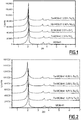
- Figures 1 and 2 show the low angles X-ray diffraction of the different compounds synthesized in examples 1-8.
- X-ray diffraction characterizes the support periodicity at the nanometric scale and therefore the mesostructuration of the support.
- the nature of the transition metal Ti, Zr, Nb or Ta
- Ti, Zr, Nb or Ta has a small influence on the position of the 2- ⁇ angle of the main peak which characterizes the periodicity ( figure 1 ). Insertion of the smallest transition elements (titanium) slightly shifts the peak angle position towards higher angles, indicating a small decrease of the pores diameter.
- insertion of largest elements zirconum, nobium, tantalum leads to a small shift of the diffraction peak towards lower angles, showing enlarged reticular distances leading to slight increased pore diameters.
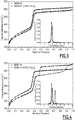
- N 2 isotherms of MCM-41 and Ta-MCM-41 with a Si/Ta atomic ratio of 50 and 100 show that upon Ta insertion, the mesostructuration of the silica support is still observed ( Figure 3 and Figure 4 ).
- the material prepared with a Si/Ta atomic ratio of 100 exhibits regular pores with pore diameters equivalent to that of metal free MCM-41, with pore diameters of 3 nm ( Figure 3 ).
- N 2 isotherm shows a hysteresis at higher partial pressure ( Figure 4 ) corresponding to the presence of larger pores with pores diameters of 3.7 nm in addition to the initial regular pores system characterized by pore apertures of 3 nm. This suggests that the insertion of the transition metal occurs within the silica framework.
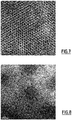
- Figure 5 shows the typical structuration of MCM-41 synthesized according to example 1
- Figures 6 and 7 respectively show the typical structuration of the compounds synthesized according to example 6 and 5 observed by TEM.
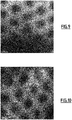
- Figures 8-11 show the typical structuration of the compound synthesized according to example 5 and analyzed by STEM-HAADF.
- STEM-HAADF of Ta-MCM-41 prepared with the highest amount of Ta shows the remarkable homogeneous and extreme dispersion of Ta element at the atomic scale ( Figures 8-11 ).
- the bulk composition is similar to the superficial composition of the different compounds.
- Example 13 (comparative): Butadiene synthesis with Ta/Si catalyst non-atomically dispersed
- the catalytic tests were carried out in a continuous flow reactor with a catalyst fixed bed (100 mg).
- the gaseous reaction products were analyzed online with a gas chromatography equipped with a column CP-PoraBOND Q obtained from Agilent®.
- the catalyst is synthesized by successive wetness impregnations of tantalum (6.8%) and Cu (10%) on commercial mesoporous silica gel. Copper allows the dehydration of ethanol into acetaldehyde which is itself transformed into butadiene over the Ta elements of the catalyst.
- Example 14 (according to the invention): Butadiene synthesis with Ta/MCM-41 compound of the invention
- the reaction conditions are similar to those of example 13.
- the catalyst Cu(10%)/Ta(6.8%)/MCM41 is prepared by incipient wetness impregnation of the Ta(6.8%)/MCM41 compound prepared following the example 5 and using Cu(NO 3 )2.5H 2 O precursor.
Landscapes
- Chemical & Material Sciences (AREA)
- Organic Chemistry (AREA)
- Chemical Kinetics & Catalysis (AREA)
- Engineering & Computer Science (AREA)
- Materials Engineering (AREA)
- Dispersion Chemistry (AREA)
- Catalysts (AREA)
Abstract
The present invention relates to a compound a metal and a mesostructured support, wherein said mesostructured support comprises pores separated from each other by pore walls; and wherein said metal comprises atoms which are homogeneously and atomically dispersed at the surface and within the pore walls of said mesostructured support. The present invention also relates to a method of preparation of this compound, and its use as catalyst in a catalyzed reaction.
Description
- The present invention relates to the field of solid catalysts and provides a compound comprising a metal and a mesostructured support. The present invention also relates to a method of preparation of said compound, and its use as a catalyst in chemical reactions.
- Heterogeneous catalysts are well known and widely used in chemical reactions. In heterogeneous catalysis, the active sites may be defined as the part of the catalyst which interacts with a reactant in a catalyzed chemical reaction. Solid catalysts, and specifically their active sites and their surface, are well characterized.
- One of the disadvantages of these solid catalysts lies in the heterogeneity of their surface, which often leads to a low catalytic efficiency when they are involved in chemical reactions. Many researches are carried out in order to increase the efficiency of such solids, notably by increasing the homogeneity of their surface.
- Recently, single-atoms catalysts (SACs) have been developed. These solids typically comprise a metal and a support, the atoms of said metal being dispersed on the support. Said support may be a mesostructured support. In SACs, each metal atom which is exposed to the reactant represents an active site. Accordingly, in comparison to usual solid catalysts which may comprise metallic clusters in which several metal atoms are not accessible, the SACs present more active sites. This presents evident advantages such as enhanced catalytic activity and higher selectivity control.
- Up to now, to disperse metal atoms on mesostructured supports, different methods of synthesis have been reported. All these methods aim obtaining a high dispersion of the metal and preserving the mesostructuration of the support. These methods of synthesis may be chosen amongst impregnation methods, post grafting synthesis, and one- step sol-gel methods based on the use of alkoxides. For instance, it is known to use peroxo-complexes of tungsten, molybdenum and titanium in order to prepare tungsten, molybdenum or titanium supported on mesostructured silica (Piquemal et al., Microporous and Mesoporous Materials 29 (1999) 291-304; Briot et al., New J. Chem., 2002, 26, 1443-1447; Chen et al., Applied Catalysis A: General 273 (2004) 195-191; and Cheng et al., Catalysis Communications 8 (2007) 1060-1064).
- All these solid catalysts described in the prior art present several drawbacks. Indeed, when they are employed in chemical reactions, the metal atoms comprised in these solids may aggregate and form clusters; or the metal atoms may lixiviate, leading to a decrease of the catalytic activity.
- Thus, there is a need to provide a stable catalyst, in other words, a catalyst comprising metal atoms which do not aggregate or form clusters when used in chemical reaction. Moreover, there is a need to provide a catalyst which does not lixiviate during chemical reactions.
- An objective of the present invention is thus to provide a stable compound comprising metal atoms which do not aggregate or lixiviate.
- Another objective of the invention is to provide a method of preparation of this compound.
- One objective of the invention is also to provide a stable compound useful as a catalyst in chemical reactions.
- Thus, the present invention relates to a compound comprising a metal and a mesostructured support, wherein said mesostructured support comprises pores separated from each other by pore walls; and wherein said metal comprises atoms which are homogeneously and atomically dispersed at the surface and within the pore walls of said mesostructured support.
- The compound according to the invention is a solid catalyst which may be implemented in catalyzed reactions involving reactants. Subsequently, the compound may be designated as catalyst.
- According to the invention, the expression "mesostructured support" means that the support comprised in the compound has a long-range organization, principally characterized by hexagonal or cubic structures. These structures are characterized by XRD patterns with reflection lines at low 2-θ angles lower than 10° as explained in J.S.Beck et al. from Mobil in J.Am.Chem.Soc. 1992, 114, 27, 10834).
- According to the invention, the "dispersion" of metal atoms on a support represents the number of metal atoms exposed to reactants with respect to the total number of metal atoms present on said support. The dispersion of a metal on a support may be expressed as a percentage.
- Within the present application, the tem "pores" designs the cavities which may be present on a solid compound. Typically, pores can have regular or irregular shapes and may be partly or fully connected between each other.
- Within the present application, the expression "pore walls" designs the part of the compound located between two distinct pores.
- Within the present application, the expression "dispersed within the pore walls of the mesostructured support" means that the metal atoms are present in the bulk of the pore walls.
- According to the invention, the expression "atomically dispersed" means that the compound only comprises single metal atoms separated by each other. The metal atoms are not aggregated and do not form clusters. In other words, the expression "atomically dispersed" means that all the metal atoms comprised in the compound of the invention are exposed to reactants.
- Within the present application, the expression "homogenously dispersed" means that the atomic concentration of the metal atoms measured wherever on the surface and within the pore walls of the mesostructured support equals the average atomic concentration of metal atoms measured on the surface and within the pore walls of the mesostructured support. Within the present application, the "average atomic concentration" represents the average of all the atomic concentrations measured anywhere on the surface and within the pore walls of the mesostructured support. The atomic concentration may represent either the number of metal atoms at the surface of the pore walls of the mesostructured support with respect to the total number of atoms present at the surface of the pore walls of the mesostructured support (superficial atomic concentration) or the number of metal atoms within the pore walls of the mesostructured support with respect to the total number of atoms within the pore walls of the mesostructured support (bulk atomic concentration).
- Subsequently, the expression "comprised between X and Y" means a range which includes X and Y.
- Preferably, the metal according to the invention is chosen from the group consisting of transition metals, noble metals, and mixtures thereof. Advantageously, the metal is a transition metal, and preferably the metal is an early d-block transition metal. Early d-block transition metals are metals selected from the group consisting of: scandium, yttrium, titanium, zirconium, hafnium, vanadium, niobium, tantalum, chromium, molybdenum, tungsten, manganese, technetium and rhenium.
- In a preferred embodiment, the metal is chosen from the group consisting of: tantalum, tungsten, niobium, molybdenum, titanium, and mixtures thereof. Advantageously, the metal is tantalum or tungsten.
- In the compound according to the invention, the metal atoms are dispersed on the surface and within the pore walls of the mesostructured support. Theses metal atoms represent the active sites of the compound. Thanks to the fact the metal atoms are dispersed within the pore walls of the mesostructured support, the compound presents an excellent stability. Specifically, the metal atoms present at the surface and within the pore walls do not aggregate or lixiviate. According to the invention, the term "stable" means that the metal atoms do not aggregate or form clusters, and do not lixiviate during their use as a catalyst.
- Preferably, in the compound according to the invention, the diameter of the metal atoms is comprised between 1 nm and 1 A, advantageously between 5 A and 1 A. The diameter of the metal atoms is measured by Transmission Electron Microscopy (TEM) and High-Angle Annular Dark-Field Scanning Transmission Electron Microscopy (HAADF-STEM). HAADF-STEM is a STEM method which receives inelastically scattered electrons or thermal diffuse scattering at high angles using an annular dark-field detector.
- In a preferred embodiment, the superficial atomic concentration of the metal atoms is comprised between 0.1% and 5%. The superficial atomic concentration of the metal atoms is measured by X-ray photoelectron spectroscopy (XPS).
- In a preferred embodiment, the metal dispersion is higher than 99%, preferably the metal dispersion equals 100%. Metal dispersion is deduced from Transmission Electron Microscopy (TEM) analysis.
- The mesostructured support according to the invention may comprise an element chosen from the group consisting of: metalloids, post-transition metals, transition metals and mixtures thereof. Advantageously, the mesostructured support comprises an element chosen from the group consisting of: silicon, zirconium, aluminum and titanium.
- According to a preferred embodiment, the mesostructured support is an oxide based mesostructured support. Advantageously, the mesostructured support is chosen from the group consisting of supports made of mesostructured silica, mesostructured zirconia, mesostructured alumina, and mesostructured titanium dioxide. Preferably, the support is mesostructured silica.
- Advantageously, the support is chosen from the group consisting of: MCM-41, KIT-6 and SBA-15. Preferably, the support is MCM-41 or SBA-15, and more preferably, the support is MCM-41.
- MCM-41, SBA-15 and KIT-6 are mesoporous silica materials presenting different pore geometries, pore wall thicknesses and pore diameters.
- Preferably, the mesostructured support is mesoporous, meaning that the pores of the support are mesopores, i.e. the diameter of the pores is comprised between 2 nm and 50 nm, preferably between 3 nm and 15 nm.
- Advantageously, the thickness of the pore walls of the mesostructured support is comprised between 0.5 nm to 30 nm, preferably between 0.5 nm and 10 nm.
- Particularly, the specific surface area of the mesostructured support according to the invention is comprised between 400 m2/g and 1,500 m2/g, more preferably between 600 m2/g and 1,400 m2/g.
- The specific surface area, or BET (Brunauer, Emmet and Teller) surface area, the pore size of the compound according to the invention are measured by N2 adsorption-desorption isotherms, measured at 77 °K or (-196.15 °C) after degassing off said compound at 0.0001 bar. The pore wall thickness is measured by comparing the results obtained from XRD (X-ray diffraction) analysis and the results obtained from N2 adsorption-desorption isotherms.
- Advantageously, in the compound according to the invention, the atomic ratio between the element of the support and the dispersed metal atoms is comprised between 20 and 400, preferably between 50 and 100.
- In a preferred embodiment, the atomic ratio between the element of the support and the dispersed metal atoms measured at the surface of the pore walls is equal to the atomic ratio between the element of the support and the dispersed metal atoms measured within the pore walls. This specific feature implies that the metal atoms do not aggregate, and are thus dispersed everywhere in the surface and within the pore walls of the support.
- The atomic ratio between the element of the support and the dispersed metal atoms within the pore walls is deduced from the chemical analysis of the element of support (Si, Zr, Al, Ti, etc.) and the chemical analysis of the metal. The atomic ratio between the element of the support and the dispersed metal atoms measured at the surface of the pore walls are measured by X-ray photoelectron spectroscopy (XPS).
- Advantageously, the compound according to the invention is doped with a metallic co-catalyst. Said metallic co-catalyst may be supported on silica. Preferably, the metallic co-catalyst is copper supported on silica or silver supported on silica. The compound according to the invention may be doped with a metallic co-catalyst by mechanical mixture, or by impregnation. Preferably, the amount of metal of the metallic co-catalyst comprised in the compound of the invention is comprised between 5% and 20% by weight with respect to the total weight of the compound. Preferably, the amount of metal of the metallic co-catalyst comprised in the compound of the invention equals to 10% by weight with respect to the total weight of the compound.
- The present invention also relates to a process of preparation of the compound according to the invention, said process comprising the following steps:
- i) solubilization of a metal precursor in an aqueous hydrogen peroxide solution at a temperature comprised between 0°C and 200°C, and obtaining a solution A of a metallic peroxo-complex;
- ii) mixing in water:
- a. a source of the support; and
- b. at least a template;
- iii) addition of solution A obtained at step i) into suspension B obtained at step ii), and obtaining a solution C;
- iv) aging of solution C obtained at step iii), and obtaining an aged solution;
- v) hydrothermal synthesis of the aged solution obtained at step iv), and obtaining a solution D;
- vi) filtration of solution D obtained at step v), and obtaining a filtered solid;
- vii) washing of the filtered solid obtained at step vi), and obtaining a washed and filtered solid;
- viii) calcination of the washed and filtered solid obtained at step vi), and obtaining a compound comprising metal atoms homogeneously and atomically dispersed on a mesostructured support.
- Advantageously, the process according to the invention is a one-pot process. In said process, the metallic peroxo-complex is added into suspension B, and is thus present during the synthesis of the mesostructured support. Thus, the metal atoms are dispersed on the surface and within the pore walls of the mesostructured support during the support synthesis.
- Preferably, during step i), the aqueous H2O2 solution comprises tetramethyl ammonium hydroxide (TMAOH) or tetraethyl ammonium hydroxide (TEAOH) as hydroxide source. The pH of the solution is about 13. The presence of these compounds enables the isolation of the metal element as monomeric species, and thus the formation of metallic clusters of the metal atoms is avoided.
- In a preferred embodiment, the metal precursor is a hydrated oxide-hydroxide of the metal, represented by the formula (I):
MOx(OH)y(OH)2 (I)
wherein M represents the metal, x and y are comprised between 0 and 7. - The metal precursor may be obtained by precipitation of a solution of a metal halide in an ammonia solution, which may comprise HBr. The metal precursor is advantageously prepared at the beginning of step i).
- Specifically, the metal precursor, which is totally soluble in aqueous H2O2 solution, is added directly under vigorous stirring to the aqueous H2O2 solution or after its dissolution in HBr when HBr is used.
- In solution A, the metallic peroxo-complexes are isolated, which means that they do not form cluster or polymeric species containing several metallic atoms. Detailed definitions of peroxo-complexes may be found in "D.Bayoy, M.Devillers Coordination Chemistry Reviews 250 (2006) 2610-2626 or in "V.S.Sergienko Crystallography Reports 53(1), 2008, 18-46".
- In a preferred embodiment, step i) is carried out at a temperature comprised between 0°C and 180°C. Preferably, step i) is carried out at a temperature comprised between 0°C and 20°C, more preferably between 0°C and 10°C, and advantageously, the temperature of step i) equals 0°C.
- In step ii), the source of the support is an inorganic or organic compound. When the support is mesostructured silica, the silicon source may be chosen amongst amorphous silica, silicates, silicon alkoxide, and mixtures thereof.
- The template is also named organic directing agent or templating agent. This template may be ionic or neutral. When the template is ionic, it may be chosen amongst quaternary ammonium salts such as cetyltrimethylammonium bromide or cetyltrimethylammonium chloride. An ionic template may be used to obtain a support such as MCM-41. When the template is neutral, it may be chosen amongst amphiphilic macromolecules such as triblock copolymer, for example Pluronic P123 (EO20PO70EO20). A neutral template may be used to obtain a support such as SBA-15. In step ii), suspension B may also comprise a surfactant. Typically, step ii) is carried out at a temperature comprised between 20°C and 80°C, preferably at a temperature of 60°C.
- Step iii) may be carried out under stirring in an autoclave. Preferably, when an autoclave is used, it is closed immediately after the addition of solution A. In a preferred embodiment, solution C has the consistency of a "gel". Particularly, step iii) is carried out at a temperature comprised between 20°C and 50°C, preferably step iii) is carried out at 35°C.
- Step iv) may comprise two aging steps. The first aging step is preferably carried out during 0 to 48 hours, preferably during 24 hours, and at a temperature comprised between 20°C and 50°C, preferably at a temperature equal to 35°C. The second aging step is advantageously carried out during 0 to 48 hours, preferably during 24 hours, and at a temperature comprised between 50°C and 95°C, preferably at a temperature of 90°C.
- Step v) may be carried out at a temperature comprised between 100°C and 180°C, preferably at 150°C. Preferably, step v) is carried out during 48 hours.
- Depending on the source of the support and of the template, different mesostructured supports may be prepared. Steps iv) and v) represent the synthesis of the mesostructured support of the compound according to the invention.
- Advantageously, step vii) is carried out with water until the pH of the washing water equals 9. After step vii), the solid may be dried under ambient air during 24 hours.
- Typically, step viii) is carried out under air at a temperature higher than 450°C and during more than 2 hours. Preferably, step viii) is carried out at 550°C for 6h.
- Preferably, the compound obtained with the process of the invention is not polluted with elements present such as salts, which may be present when the compound is prepared with the processes described in prior art.
- In a preferred embodiment, the process of the invention comprises a step ix) carried out after the step viii) in which the compound obtained at the end of step viii) is mechanically admixed with a metallic co-catalyst, said metallic co-catalyst being copper supported on silica or silver supported on silica.
- Preferably, in step ix), the amount of metal of the co-catalyst is comprised between 5% and 20%, and preferably 10% by weight with respect to the total weight of the compound.
- The present invention also relates to the use of the compound according to the invention as a catalyst in a catalyzed reaction. Advantageously, the reaction is an acid-catalyzed reaction. In a preferred embodiment, the catalyzed reaction is chosen from the group consisting of oxidation reaction, alcohol dehydration, and olefins metathesis.
- Preferably, the catalyzed reaction is chosen from the group consisting of butadiene synthesis from ethanol dehydration, and oxidative cleavage of vegetable oils with oxygen peroxide.
- When the compound of the invention is used in the butadiene synthesis, the metal comprised in said compound is preferably tantalum or tungsten. When the reaction is oxidative cleavage of vegetable oils, the metal comprised in said compound is preferably tantalum or titanium.
- When the compound of the invention is used for butadiene synthesis from ethanol, said compound may be doped with copper.
- When the compound according to the invention is used for the butadiene synthesis and the starting reactive medium is an equimolar mixture of ethanol with acetaldehyde, the compound does not need to be doped.
-
-
Figure 1 represents the low angles patterns of MCM-41 synthesized according to example 1 and of compounds synthesized according to examples 2-4 and 6. -
Figure 2 represents the low angles patterns of MCM-41 synthesized according to example 1 and of compounds synthesized according to examples 5-8. -
Figure 3 represents the N2 isotherm adsorption over MCM-41 synthesized according to example 1 and the compound synthesized according to example 6. -
Figure 4 represents the N2 isotherm adsorption over MCM-41 synthesized according to example 1 and the compound synthesized according to example 5. -
Figure 5 represents the typical structuration of MCM-41 synthesized according to example 1 analyzed by TEM -
Figure 6 represents the typical structuration of the compound synthesized according to example 6 and analyzed by TEM -
Figure 7 represents the typical structuration of the compound synthesized according to example 5 and analyzed by TEM -
Figures 8-11 represent different pictures of the typical structuration of the compound synthesized according to example 5 and analyzed by STEM-HAADF. - The different aspects of the invention are illustrated by the following examples, in which the Si/M ratio represents an atomic ratio where M is a metal.
- 164.01 g of cetyltrimethylammonium bromide (CTMABr) surfactant, obtained from Fluka™ or Aldrich®, is dissolved at 35°C in 896.83 g of water. To this mixture, 293.45 g of an aqueous solution of tetramethyl ammonium silicate (TMA15SiO2, 11.7% SiO2) is added in 5 min with a dropping funnel. The aqueous solution of TMA1.5SiO2, 11.7%SiO2 is obtained by mixing 150.20 g of an aqueous solution of TMA0·5SiO2 (40% SiO2), obtained from SACHEM © with 182.30 g of an aqueous solution of tetramethylammonium hydroxide (25%) (TMAOH) obtained from Aldrich®. The mixture is heated up in a PET bottle for 3 hours at 90°C in a water bath to achieve the complete depolymerization of TMA0·5SiO2. The aqueous solution of TMA1.5SiO2, 11.7%SiO2 is heated up to approximately 60°C before use to obtain a clear solution. After, 364.99 g Ludox® AS40 40% SiO2 colloid solution, provided by Aldrich® is added in 5 min. The white suspension is transferred into 2.4 L stirred autoclave pre-heated at 35°C. Aging is done for 24 h at 35°C followed by 24 h at 90°C. Finally, hydrothermal synthesis is performed for 48 h at 150°C and 4 bars under stirring 180 rpm. After cooling to 50°C, the white powder is separated by filtration, washed with water and dried at room temperature. The solid is calcined in air at 550°C for 360 min (1°C/min).
- TiBr4 solution (0.8663 mol/kg) is prepared starting from TiCl4 solution, then precipitation of TiO2.xH2O with NH3 solution and dissolution in HBr. The Ti peroxo complex is prepared by cooling a mixture of 8.75 g of H2O2 70%, 65.63 g of tetramethyl ammonium hydroxide (TMAOH) 25% solution and 10 g of water in an ice bath. Under vigorous stirring and cooling, 34.63 g TiBr4 solution is added. The Ti peroxo complex is forming an intense yellow solution, which is finally diluted with water to 129.23 g in total.
- A cetyltrimethylammonium hydroxide (CTMAOH) 7.89 % solution is prepared by anionic exchange from 750 mL of Amberlyst-26 OH obtained from Aldrich®, corresponding approximatively to 0.75 mol ion exchange capacity, and 640g of a cetyltrimethylammonium chloride 25% (CTMACI) aqueous solution diluted with water. 120.37 g CTMABr surfactant is dissolved at 35°C in 401.72 g of water and 458.63 g of cetyltrimethylammonium hydroxide (CTMAOH) 7.89% solution. To this mixture, 231.67 g TMA1.5SiO2 solution is added in 5 min with a dropping funnel and vigorous stirring. TMA1.5SiO2 solution must be heated up to approximately 60°C before use to obtain a solution again. After, 383.01 g Ludox AS40 SiO2 colloid is added in 5 min. The white suspension is transferred into 2.4 L stirred autoclave pre-heated at 35°C. The Ti peroxo complex solution is added all at once while stirring at 180 rpm. The autoclave is closed immediately and the gel is aged for 24 h at 35°C followed by 24 h at 90°C. The autoclave is opened to vent the formed O2 pressure. Hydrothermal synthesis is performed for 48 h at 150°C and 4 bars under stirring. After cooling to 50°C, the white powder is separated by filtration, washed with water until the washing water has a pH equal to 9 and dried at room temperature. The solid is calcined in air at 550°C for 360 min (1°C/min).
- The theoretical Ti proportion is equal to 1.31 wt%. The experimental Ti proportion measured by chemical analysis is equal to 1.44 wt%
- The Zr peroxo complex is prepared by cooling a mixture of 8.75 g of H2O2 70% and 43.75 g of TMAOH 25% solution in an ice bath under vigorous stirring and cooling. 36.04 g ZrOBr2 solution 0.8325 mol/kg) is added. The Zr peroxo complex is forming an almost colorless solution, which is finally diluted with water to 121.29 g in total.
- 142.14 g CTMABr surfactant is dissolved at 35°C in 603.84 g of water and 229.32 g of CTMAOH 7.89% solution. To this surfactant mixture, 252.26 g TMA1.5SiO2 solution is added in 5 min with a dropping funnel and vigorous stirring. After, 377.00 g Ludox AS40 SiO2 colloid is added in 5 min. The white suspension is transferred into 2.4 L stirred autoclave pre-heated at 35°C. The Zr peroxo complex solution is added all at once while stirring at 180 rpm. The autoclave is closed immediately and the gel is aged for 24 h at 35°C followed by 24 h at 90°C. The autoclave is opened to vent the formed O2 pressure. Hydrothermal synthesis is performed for 48 h at 150°C and 4 bars under stirring. After cooling to 50°C, the white powder is separated by filtration, washed with water until the washing water has a pH equal to 9 and dried at room temperature. The solid is calcined in air at 550°C for 360 min (1 °C/min).
- The theoretical Zr proportion is equal to 2.01 wt%. The experimental Zr proportion measured by chemical analysis is equal to 2.06 wt%.
- 18.75 g of H[NbF6] solution (1.6004 mol/kg) are diluted to 100 mL in a PTFE beaker and after addition of 30.45 mL NH3 25% diluted to 100 mL, white Nb2O5.xH2O is precipitated. The fine powder is separated by filtration and washed with 500 mL water. The wet filter cake is transformed into a slurry with 43.75 g TMAOH 25% solution and additional water. While cooling with ice, the Nb2O5.xH2O is dissolved by addition of 11.67 g H2O2 70% solution. The Nb peroxo complex is forming a light yellow solution. The solution is filled up with water to 117.77 g in total.
- 164.01 g CTMABr surfactant is dissolved at 35°C in 815.06g of water. To this surfactant solution, 252.26g TMA1.5SiO2 solution is added in 5 min with a dropping funnel and vigorous stirring. After, 377.00 g Ludox AS40 SiO2 colloid is added in 5 min. The white suspension is transferred into 2.4L stirred autoclave pre-heated at 35°C. The Nb peroxo complex solution is added all at once while stirring at 180rpm. The autoclave is closed immediately and the gel is aged for 24 h at 35°C followed by 24 h at 90°C. The autoclave is opened to vent the formed O2 pressure. Hydrothermal synthesis is performed for 48 h at 150°C and 4 bars under stirring. After cooling to 50°C, the white powder is separated by filtration, washed with water until the washing water has a pH equal to 9 and dried at room temperature. The solid is calcined in air at 550°C for 360 min (1°C/min).
- The theoretical Nb proportion is equal to 2.16 wt%. The experimental Nb proportion measured by chemical analysis is equal to 2.35 wt%.
- 84.91 g of H2[TaF7] solution (0.7066 mol/kg) are diluted with water to 250 mL in a PTFE beaker, fresh Ta2O5.xH2O is precipitated by addition of 71.06 mL NH3 25% and diluted with 250 mL of water. The solid is separated by filtration, washed with water, and dissolved in an ice cold mixture of 87.5 g of TMAOH 25% and 23.34 g of H2O2 70% and some additional water. A colorless solution is obtained. A total weight of 186.57 g Ta reagent solution is obtained.
- Similar procedure than for the hydrothermal synthesis of example 4 is applied with 837.5g of water.
- The theoretical Ta proportion is equal to 6.85 wt%. The experimental Ta proportion measured by chemical analysis is equal to 7.32 wt%.
- Similar procedure to the procedure of example 5 is followed using the following amounts of reactants: 42.46 g H2[TaF7], 35.5 mL NH3, 43.7 g TMAOH and 11.67 g H2O2. A total weight of 98.97 g Ta reagent solution is obtained.
- Similar procedure than for the hydrothermal synthesis of example 4 is applied.
- The theoretical Ta proportion is equal to 3.55 wt%. The experimental Ta proportion measured by chemical analysis is equal to 3.70 wt%.
- Similar procedure to the procedure of example 5 is applied using the following amounts of reactants: 21.23 g H2[TaF7], 17.76 mL NH3, 21.88 g TMAOH and 5.84 g H2O2. A total weight of 75.2 g Ta reagent solution is obtained.
- Similar procedure than for the hydrothermal synthesis of example 4 is applied.
- The theoretical Ta proportion is equal to 1.81 wt%. The experimental Ta proportion measured by chemical analysis is equal to 1.91 wt%.
- Similar procedure to the procedure of example 5 is applied using the following amounts of reactants: 10.61 g H2[TaF7], 8.88 mL NH3, 10.94 g TMAOH and 2.92 g H2O2. A total weight of 43.12 g Ta reagent solution is obtained.
- Similar procedure than for the hydrothermal synthesis of example 4 is applied.
- The theoretical Ta proportion is equal to 0.91 wt%. The experimental Ta proportion measured by chemical analysis is equal to 1.04 wt%.
-
Figures 1 and 2 show the low angles X-ray diffraction of the different compounds synthesized in examples 1-8. - X-ray diffraction characterizes the support periodicity at the nanometric scale and therefore the mesostructuration of the support. The nature of the transition metal (Ti, Zr, Nb or Ta) has a small influence on the position of the 2-θ angle of the main peak which characterizes the periodicity (
figure 1 ). Insertion of the smallest transition elements (titanium) slightly shifts the peak angle position towards higher angles, indicating a small decrease of the pores diameter. By contrast, insertion of largest elements (zirconum, nobium, tantalum) leads to a small shift of the diffraction peak towards lower angles, showing enlarged reticular distances leading to slight increased pore diameters. - Increased amounts of the largest earlier transition metal (tantalum) up to Si/Ta atomic ratio equal to 50, induces a linear decrease of the 2-θ angle position together with the broadening of the XRD diffraction peak (
figure 2 ). This indicates a small enlarging of the reticular distance, and therefore a small increase of the pores diameters, but this indicates also that insertion of high amounts of large transition metal element such as Ta, up to Si/Ta atomic ratio of 50, remains compatible with the mesostructuration of the silica support. - The textural features of Ta-MCM41 compounds synthesized according to examples 1 and 5-8 are reported in Table 1. It is shown that high BET surface areas are measured whatever the amount of Ta: the surface areas are comprised between 950 m2/g and 1080 m2/g.
Table 1: Textural characteristic deduced from N2 adsorption isotherms. Compound synthesized according to Ta2O5 (wt%) BET area (m2.g-1) Micro area (m2.g-1) Example 1 - 1079 0 Example 8 0.91 1017 - Example 7 1.81 976 - Example 6 3.5 1006 0 Example 5 6.85 952 0 - N2 isotherms of MCM-41 and Ta-MCM-41 with a Si/Ta atomic ratio of 50 and 100 show that upon Ta insertion, the mesostructuration of the silica support is still observed (
Figure 3 and Figure 4 ). The material prepared with a Si/Ta atomic ratio of 100 exhibits regular pores with pore diameters equivalent to that of metal free MCM-41, with pore diameters of 3 nm (Figure 3 ). For the highest Ta amount (Si/Ta atomic ratio of 50), N2 isotherm shows a hysteresis at higher partial pressure (Figure 4 ) corresponding to the presence of larger pores with pores diameters of 3.7 nm in addition to the initial regular pores system characterized by pore apertures of 3 nm. This suggests that the insertion of the transition metal occurs within the silica framework. -
Figure 5 shows the typical structuration of MCM-41 synthesized according to example 1, andFigures 6 and7 respectively show the typical structuration of the compounds synthesized according to example 6 and 5 observed by TEM. -
Figures 8-11 show the typical structuration of the compound synthesized according to example 5 and analyzed by STEM-HAADF. - By TEM, the typical structuration of MCM-41 with hexagonal array are observed on Ta-MCM-41 prepared with a Si/Ta atomic ratio of 100 (3.55% Ta2O5) or 50 (6.85% Ta2O5).
- STEM-HAADF of Ta-MCM-41 prepared with the highest amount of Ta (Si/Ta=50) shows the remarkable homogeneous and extreme dispersion of Ta element at the atomic scale (
Figures 8-11 ). - The bulk and superficial compositions of the catalysts prepared according to examples 2, 3, 4 and 6 are reported in table 2.
- Bulk compositions are measured by chemical analysis and superficial compositions are measured by XPS analysis.
Table 2: Bulk and superficial compositions Compound synthesized according to example Bulk composition Superficial composition % atomic M % atomic Si % atomic M % atomic Si 2 (Si/Ti=100) 1.02 98.9 1.58 98.4 3 (Si/Zr=100) 0.92 99.1 0.59 99.4 4 (Si/Nb=100) 0.97 99.0 0.83 99.2 6 (Si/Ta=100) 0.96 99.0 0.76 99.2 - The bulk composition is similar to the superficial composition of the different compounds.
- The catalytic tests were carried out in a continuous flow reactor with a catalyst fixed bed (100 mg). A stream of ethanol vapor (13 Torr), carried by N2 from a saturator (0 °C), is passed through the catalyst bed. The gaseous reaction products were analyzed online with a gas chromatography equipped with a column CP-PoraBOND Q obtained from Agilent®. The catalyst is synthesized by successive wetness impregnations of tantalum (6.8%) and Cu (10%) on commercial mesoporous silica gel. Copper allows the dehydration of ethanol into acetaldehyde which is itself transformed into butadiene over the Ta elements of the catalyst.
- The material is dried at 120ºC for 24 h and calcined at 550ºC for 5h (T program 1ºC.min-1). The catalyst is named Cu(10%)/Ta(6.8%)/SiO2. Results are presented in the Table 3 below:
Table 3: products distribution over Cu(10%)/Ta(6.8%)/SiO 2 prepared by conventional wetness impregnation as a function of the reaction temperature (100 mg of catalyst, 1,8L.h -1 total flow rate of ethanol (13 torr) in N 2 ). Temperature Products yields (mol%) ethylene acetaldehyde 1,3- butadiene others 300°C 18 34 17 4 350°C 47 14 4 2 400°C 72 9 5 2 450°C 92 5 2 1 - The catalytic results show that the butadiene yields remain below 20% in a large range of temperature, from 300 to 450°C.
- The reaction conditions are similar to those of example 13. The catalyst Cu(10%)/Ta(6.8%)/MCM41 is prepared by incipient wetness impregnation of the Ta(6.8%)/MCM41 compound prepared following the example 5 and using Cu(NO3)2.5H2O precursor.
- The results dare presented in table 4.
Table 4: Products yields over Cu(10%)/Ta(6.8%)/MCM41 (200mg catalyst, 0.4L.h -1 total flow rate of ethanol (13 torr) in N 2 ) Temperature Products yields (mol %) ethylene acetaldehyde 1,3 butadiene others 250° C 3 23 28 14 300°C 13 8 65 12 350°C 53 3 36 8 - Results show that butadiene yields higher than 20% can be obtained over a large range of temperature between 250°C and 350°C when a catalytic system based on copper dispersed on Ta atomically dispersed in mesostructured silica is used. The higher butadiene yield, greater than 60%, is obtained at 300°C.
Claims (15)
- A compound comprising a metal and a mesostructured support, wherein said mesostructured support comprises pores separated from each other by pore walls; and wherein said metal comprises atoms which are homogeneously and atomically dispersed at the surface and within the pore walls of said mesostructured support.
- The compound according to claim 1, wherein the mesostructured support comprises an element chosen from the group consisting of: metalloids, post-transition metals, transition metals and mixtures thereof.
- The compound according to claim 1 or 2, wherein the metal is chosen from the group consisting of transition metals, noble metals, and mixtures thereof.
- The compound according to any of the preceding claims, wherein the metal is chosen from the group consisting of: tantalum, tungsten, niobium, molybdenum, titanium, and mixtures thereof.
- The compound according to any of the preceding claims, wherein the diameter of the metal atoms is comprised between 1 nm and 1 A.
- The compound according to any of the preceding claims, wherein the specific surface area of the mesostructured support is comprised between 400 m2/g and 1,500 m2/g.
- The compound according to any of the preceding claims, wherein the support is chosen from the group consisting of supports made of mesostructured silica, mesostructured zirconia, mesostructured alumina, and mesostructured titanium dioxide.
- The compound according to any of the preceding claims, wherein the support is chosen from the group consisting of MCM-41, KIT-6 and SBA-15.
- The compound according to any of claims 2 to 8, wherein the atomic ratio between the element of the support and the dispersed metal atoms is comprised between 20 and 400, preferably between 50 and 100.
- The compound according to any of claims 2 to 9, wherein the atomic ratio between the element of the support and the dispersed metal atoms measured at the surface of the pore walls is equal to the atomic ratio between the element of the support and the dispersed metal atoms measured within the pore walls.
- A process of preparation of the compound according to any of the preceding claims comprising the following steps:i) solubilization of a metal atom precursor in an aqueous hydrogen peroxide solution at a temperature comprised between 0°C and 200°C, and obtaining a solution A of a metallic peroxo-complex;ii) mixing in water:a. a source of the support; andb. at least a template;for obtaining a suspension B;iii) addition of solution A obtained at step i) into suspension B obtained at step ii), and obtaining a solution C;iv) aging of solution C obtained at step iii), and obtaining an aged solution;v) hydrothermal synthesis of the aged solution obtained at step iv), and obtaining a solution D;vi) filtration of solution D obtained at step v), and obtaining a filtered solid;vii) washing of the filtered solid obtained at step vi), and obtaining a washed and filtered solid;viii) calcination of the washed and filtered solid obtained at step vi), and obtaining a compound comprising metal atoms homogeneously and atomically dispersed on a mesostructured support.
- The use of the compound according to any of claims 1 to 10 as a catalyst in a catalyzed reaction.
- The use according to claim 12, wherein the catalyzed reaction is chosen from the group consisting of oxidation reaction, alcohol dehydration, and olefins metathesis.
- The use according to claim 12 or 13, wherein the catalyzed reaction is chosen from the group consisting of butadiene synthesis from ethanol dehydration, and oxidative cleavage of vegetable oils with oxygen peroxide.
- The use according to any of claims 12 to 14, wherein the catalyzed reaction is butadiene synthesis from ethanol, and wherein the compound is doped with copper.
Priority Applications (2)
| Application Number | Priority Date | Filing Date | Title |
|---|---|---|---|
| EP17306469.2A EP3476479A1 (en) | 2017-10-25 | 2017-10-25 | New metallic catalysts |
| PCT/EP2018/079330 WO2019081665A1 (en) | 2017-10-25 | 2018-10-25 | New metallic catalysts |
Applications Claiming Priority (1)
| Application Number | Priority Date | Filing Date | Title |
|---|---|---|---|
| EP17306469.2A EP3476479A1 (en) | 2017-10-25 | 2017-10-25 | New metallic catalysts |
Publications (1)
| Publication Number | Publication Date |
|---|---|
| EP3476479A1 true EP3476479A1 (en) | 2019-05-01 |
Family
ID=60331532
Family Applications (1)
| Application Number | Title | Priority Date | Filing Date |
|---|---|---|---|
| EP17306469.2A Withdrawn EP3476479A1 (en) | 2017-10-25 | 2017-10-25 | New metallic catalysts |
Country Status (2)
| Country | Link |
|---|---|
| EP (1) | EP3476479A1 (en) |
| WO (1) | WO2019081665A1 (en) |
Cited By (3)
| Publication number | Priority date | Publication date | Assignee | Title |
|---|---|---|---|---|
| WO2021052968A1 (en) | 2019-09-16 | 2021-03-25 | Synthos Dwory 7 Spolka Z Ograniczona Odpowiedzialnoscia Spolka Jawna | Supported tantalum catalyst for the production of 1,3-butadiene |
| FR3156342A1 (en) | 2023-12-12 | 2025-06-13 | IFP Energies Nouvelles | Method for the aqueous preparation of a catalyst in the presence of an acid additive |
| WO2026096199A1 (en) * | 2024-10-28 | 2026-05-07 | Battelle Memorial Institute | Tantalum catalyst composition and method of using the same |
Families Citing this family (1)
| Publication number | Priority date | Publication date | Assignee | Title |
|---|---|---|---|---|
| CN119657141B (en) * | 2024-12-13 | 2026-04-17 | 南京师范大学 | Iron-based denitration catalyst and application thereof |
Citations (2)
| Publication number | Priority date | Publication date | Assignee | Title |
|---|---|---|---|---|
| US20130123554A1 (en) * | 2010-07-29 | 2013-05-16 | Obshchestvo S Ogranichennoy Otvetstvennostju "Unisit" | One-Step Method for Butadiene Production |
| WO2014061917A1 (en) * | 2012-10-19 | 2014-04-24 | 한국화학연구원 | Regular mesoporous silica-based catalyst for preparing 1,3-butadiene from ethanol, and method for preparing 1,3-butadiene using same |
-
2017
- 2017-10-25 EP EP17306469.2A patent/EP3476479A1/en not_active Withdrawn
-
2018
- 2018-10-25 WO PCT/EP2018/079330 patent/WO2019081665A1/en not_active Ceased
Patent Citations (2)
| Publication number | Priority date | Publication date | Assignee | Title |
|---|---|---|---|---|
| US20130123554A1 (en) * | 2010-07-29 | 2013-05-16 | Obshchestvo S Ogranichennoy Otvetstvennostju "Unisit" | One-Step Method for Butadiene Production |
| WO2014061917A1 (en) * | 2012-10-19 | 2014-04-24 | 한국화학연구원 | Regular mesoporous silica-based catalyst for preparing 1,3-butadiene from ethanol, and method for preparing 1,3-butadiene using same |
Non-Patent Citations (8)
| Title |
|---|
| BRIOT ET AL., NEW J. CHEM., vol. 26, 2002, pages 1443 - 1447 |
| CHEN ET AL., APPLIED CATALYSIS A: GENERAL, vol. 273, 2004, pages 195 - 191 |
| CHENG ET AL., CATALYSIS COMMUNICATIONS, vol. 8, 2007, pages 1060 - 1064 |
| D.BAYOY; M.DEVILLERS, COORDINATION CHEMISTRY REVIEWS, vol. 250, 2006, pages 2610 - 2626 |
| HO-JEONG CHAE ET AL: "Butadiene production from bioethanol and acetaldehyde over tantalum oxide-supported ordered mesoporous silica catalysts", APPLIED CATALYSIS B: ENVIRONMENTAL, vol. 150-151, 24 December 2013 (2013-12-24), AMSTERDAM, NL, pages 596 - 604, XP055276659, ISSN: 0926-3373, DOI: 10.1016/j.apcatb.2013.12.023 * |
| J. S. BECK ET AL., J.AM. CHEM. SOC., vol. 114, no. 27, 1992, pages 10834 |
| PIQUEMAL ET AL., MICROPOROUS AND MESOPOROUS MATERIALS, vol. 29, 1999, pages 291 - 304 |
| V.S.SERGIENKO, CRYSTALLOGRAPHY REPORTS, vol. 53, no. 1, 2008, pages 18 - 46 |
Cited By (5)
| Publication number | Priority date | Publication date | Assignee | Title |
|---|---|---|---|---|
| WO2021052968A1 (en) | 2019-09-16 | 2021-03-25 | Synthos Dwory 7 Spolka Z Ograniczona Odpowiedzialnoscia Spolka Jawna | Supported tantalum catalyst for the production of 1,3-butadiene |
| US12070738B2 (en) | 2019-09-16 | 2024-08-27 | Synthos Dwory 7 Spólka Z Ograniczona Odpowiedzialnoscia | Supported tantalum catalyst for the production of 1,3-butadiene |
| FR3156342A1 (en) | 2023-12-12 | 2025-06-13 | IFP Energies Nouvelles | Method for the aqueous preparation of a catalyst in the presence of an acid additive |
| WO2025125056A1 (en) | 2023-12-12 | 2025-06-19 | IFP Energies Nouvelles | Method for preparing a catalyst by aqueous means in the presence of an acid additive |
| WO2026096199A1 (en) * | 2024-10-28 | 2026-05-07 | Battelle Memorial Institute | Tantalum catalyst composition and method of using the same |
Also Published As
| Publication number | Publication date |
|---|---|
| WO2019081665A1 (en) | 2019-05-02 |
Similar Documents
| Publication | Publication Date | Title |
|---|---|---|
| Márquez‐Alvarez et al. | Synthesis, characterization and catalytic applications of organized mesoporous aluminas | |
| Zhang et al. | Synthesis of hierarchically porous zeolite TS-1 with small crystal size and its performance of 1-hexene epoxidation reaction | |
| Zhang et al. | Synthesis of anatase-free nano-sized hierarchical TS-1 zeolites and their excellent catalytic performance in alkene epoxidation | |
| US5786294A (en) | Crystalline mesoporous zirconia catalysts having stable tetragonal pore wall structure | |
| Jappar et al. | Oxidation activity of Ti-Beta synthesized by a dry-gel conversion method | |
| Huang et al. | Biosynthesized gold nanoparticles supported over TS-1 toward efficient catalyst for epoxidation of styrene | |
| Peng et al. | Preparation of lanthana-doped titania nanoparticles with anatase mesoporous walls and high photocatalytic activity | |
| Song et al. | Temperature-regulated construction of hierarchical titanosilicate zeolites | |
| Eimer et al. | Mesoporous titanosilicates synthesized from TS-1 precursors with enhanced catalytic activity in the α-pinene selective oxidation | |
| Lin et al. | Synthesis and catalytic activity of Ti-MCM-41 nanoparticles with highly active titanium sites | |
| Wang et al. | Hierarchical TS-1 synthesized via the dissolution-recrystallization process: Influence of ammonium salts | |
| Jin et al. | New mesoporous titanosilicate MCM-36 material synthesized by pillaring layered ERB-1 precursor | |
| Sreethawong et al. | Catalysis of nanocrystalline mesoporous TiO2 on cyclohexene epoxidation with H2O2: Effects of mesoporosity and metal oxide additives | |
| WO2019081665A1 (en) | New metallic catalysts | |
| Jin et al. | New Ti-incorporated MCM-36 as an efficient epoxidation catalyst prepared by pillaring MCM-22 layers with titanosilicate | |
| US8003567B2 (en) | Nanocomposite support materials | |
| Meng et al. | Synthesis of novel hierarchically porous NiMo/ZSM-5-KIT-5 catalysts and their superior performance in hydrodenitrogenation of quinoline | |
| Fei et al. | Selective synthesis of borated meso-macroporous and mesoporous spherical TiO2 with high photocatalytic activity | |
| Sachse et al. | Improved silica–titania catalysts by chitin biotemplating | |
| Liu et al. | Enhanced catalytic performance for metathesis reactions over ordered tungsten and aluminum co-doped mesoporous KIT-6 catalysts | |
| Ooi et al. | Mesostructured TUD-C supported molybdena doped titania as high selective oxidative catalyst for olefins epoxidation at ambient condition | |
| Zepeda et al. | Synthesis and characterization of Ga-modified Ti-HMS oxide materials with varying Ga content | |
| Bidaoui et al. | Citral hydrogenation on high surface area mesoporous TiO2–SiO2 supported Pt nanocomposites: Effect of titanium loading and reduction temperature on the catalytic performances | |
| Ketkaew et al. | Nanoceria-modified platinum supported on hierarchical zeolites for selective alcohol oxidation | |
| Miao et al. | Ordered mesoporous zirconium oxophosphate supported tungsten oxide solid acid catalysts: The improved Brønsted acidity for benzylation of anisole |
Legal Events
| Date | Code | Title | Description |
|---|---|---|---|
| PUAI | Public reference made under article 153(3) epc to a published international application that has entered the european phase |
Free format text: ORIGINAL CODE: 0009012 |
|
| AK | Designated contracting states |
Kind code of ref document: A1 Designated state(s): AL AT BE BG CH CY CZ DE DK EE ES FI FR GB GR HR HU IE IS IT LI LT LU LV MC MK MT NL NO PL PT RO RS SE SI SK SM TR |
|
| AX | Request for extension of the european patent |
Extension state: BA ME |
|
| STAA | Information on the status of an ep patent application or granted ep patent |
Free format text: STATUS: THE APPLICATION IS DEEMED TO BE WITHDRAWN |
|
| 18D | Application deemed to be withdrawn |
Effective date: 20191105 |