EP3475819B1 - Verfahren zur automatischen und dynamischen zuteilung der zuständigkeit für aufgaben an die verfügbaren rechenkomponenten in einem hochverteilten datenverarbeitungssystem - Google Patents
Verfahren zur automatischen und dynamischen zuteilung der zuständigkeit für aufgaben an die verfügbaren rechenkomponenten in einem hochverteilten datenverarbeitungssystem Download PDFInfo
- Publication number
- EP3475819B1 EP3475819B1 EP17735027.9A EP17735027A EP3475819B1 EP 3475819 B1 EP3475819 B1 EP 3475819B1 EP 17735027 A EP17735027 A EP 17735027A EP 3475819 B1 EP3475819 B1 EP 3475819B1
- Authority
- EP
- European Patent Office
- Prior art keywords
- components
- component
- task
- tasks
- processing system
- Prior art date
- Legal status (The legal status is an assumption and is not a legal conclusion. Google has not performed a legal analysis and makes no representation as to the accuracy of the status listed.)
- Active
Links
Images

Classifications
-
- G—PHYSICS
- G06—COMPUTING OR CALCULATING; COUNTING
- G06F—ELECTRIC DIGITAL DATA PROCESSING
- G06F9/00—Arrangements for program control, e.g. control units
- G06F9/06—Arrangements for program control, e.g. control units using stored programs, i.e. using an internal store of processing equipment to receive or retain programs
- G06F9/46—Multiprogramming arrangements
- G06F9/50—Allocation of resources, e.g. of the central processing unit [CPU]
- G06F9/5083—Techniques for rebalancing the load in a distributed system
-
- G—PHYSICS
- G06—COMPUTING OR CALCULATING; COUNTING
- G06F—ELECTRIC DIGITAL DATA PROCESSING
- G06F9/00—Arrangements for program control, e.g. control units
- G06F9/06—Arrangements for program control, e.g. control units using stored programs, i.e. using an internal store of processing equipment to receive or retain programs
- G06F9/46—Multiprogramming arrangements
- G06F9/50—Allocation of resources, e.g. of the central processing unit [CPU]
- G06F9/5005—Allocation of resources, e.g. of the central processing unit [CPU] to service a request
- G06F9/5027—Allocation of resources, e.g. of the central processing unit [CPU] to service a request the resource being a machine, e.g. CPUs, Servers, Terminals
-
- G—PHYSICS
- G06—COMPUTING OR CALCULATING; COUNTING
- G06F—ELECTRIC DIGITAL DATA PROCESSING
- G06F16/00—Information retrieval; Database structures therefor; File system structures therefor
- G06F16/20—Information retrieval; Database structures therefor; File system structures therefor of structured data, e.g. relational data
- G06F16/22—Indexing; Data structures therefor; Storage structures
- G06F16/2228—Indexing structures
- G06F16/2246—Trees, e.g. B+trees
-
- G—PHYSICS
- G06—COMPUTING OR CALCULATING; COUNTING
- G06F—ELECTRIC DIGITAL DATA PROCESSING
- G06F9/00—Arrangements for program control, e.g. control units
- G06F9/06—Arrangements for program control, e.g. control units using stored programs, i.e. using an internal store of processing equipment to receive or retain programs
- G06F9/46—Multiprogramming arrangements
- G06F9/48—Program initiating; Program switching, e.g. by interrupt
- G06F9/4806—Task transfer initiation or dispatching
- G06F9/4843—Task transfer initiation or dispatching by program, e.g. task dispatcher, supervisor, operating system
- G06F9/4881—Scheduling strategies for dispatcher, e.g. round robin, multi-level priority queues
-
- G—PHYSICS
- G06—COMPUTING OR CALCULATING; COUNTING
- G06F—ELECTRIC DIGITAL DATA PROCESSING
- G06F9/00—Arrangements for program control, e.g. control units
- G06F9/06—Arrangements for program control, e.g. control units using stored programs, i.e. using an internal store of processing equipment to receive or retain programs
- G06F9/46—Multiprogramming arrangements
- G06F9/50—Allocation of resources, e.g. of the central processing unit [CPU]
- G06F9/5061—Partitioning or combining of resources
- G06F9/5072—Grid computing
Definitions
- the invention relates to a method for allocating tasks to available computing components in a highly distributed data processing system.
- each request and each date i.e. each task, is assigned a unique number from a limited range of values (hash value) and a mapping of any hash value to a responsible component is defined. This component is then responsible for processing the request or storing the date. Due to the need to differentiate between different responsibilities, e.g. data and index, several sets of responsibilities are required in the system.
- All components of the data processing system must be able to determine the component responsible for a task in order to trigger the processing and storage there.
- the invention is based on the object of specifying a method with which the allocation of responsibility for certain subsets of the processed data (partitions, tasks) is automatically and dynamically adapted to the available computing components in a highly distributed data processing system. Another task is to partition tasks in such a way that efficient algorithms can be used to match (synchronize) redundant copies. According to the invention, this object is achieved with a method according to claim 1.
- this task is divided if necessary and part of the sub-tasks thus obtained are given to further computing components ZZ.
- a task (partition) division is triggered in the data processing system, for example, when a computing component has to be relieved because either the amount of data in the partition is too high or there are too many accesses.
- Each computing component is assigned a control unit that performs administrative tasks for a number of components.
- the control unit responsible for the source component is referred to below as the source manager QM. This is the trigger for a partition split.
- the target component which is to take over a task from the source component, is looked after by a further control unit, the target manager ZM. Since each control unit can look after several components, the source manager QM and target manager ZM can also be implemented by one control component.
- the components can be assigned to control units, for example, on the basis of the physical or virtual location of these components, so that, for example, one control unit is responsible for all components on a virtual or physical host.
- the number of components and their control units per server depends on the efficiency of the same.
- a potential target component ZZ is identified in a next step.
- the sources of information for the control components for detecting triggers are primarily the task routing table of the data processing system that is present in all components, for example based on the Gossip protocol, and the memory and CPU allocations reported by the components.
- the task routing table contains the partitions of all components and can therefore be sorted by size. In a component list sorted according to the total partition size, the largest can be compared with the smallest and it can then be decided whether a division of tasks is required.
- the division is only carried out when both components QZ, ZZ and also the control unit ZM responsible for the target component ZZ agree.
- the new task assignment is recorded in a task routing table and the process is thus ended.
- a change in the tasks / partition assignment of a component must be communicated to all components of the data processing system in the routing.
- This information is preferably exchanged on the basis of the so-called gossip protocol. Changes are only updated consistently in the system after a certain period of time, typically a few seconds, so that the old and new routing tables are used at the same time without causing processing errors.
- Only the responsible control unit may update changes to the partition assignment of a component in the routing in order to avoid inconsistencies and collisions of changes, i.e. the deletion of the partition of the source component QZ that was migrated during the partition division is distributed in the system by the source manager QM and this partition is added to the Target component ZZ is distributed in the system by the target manager ZM.
- this information of the partition must be transferred from the source component QZ to the target component ZZ.
- the responsibility for specific inquiries in the system is either still with the source component QZ or with the target component ZZ.
- requests from the target component ZZ to the source component QZ and vice versa must therefore be forwarded until the transfer has been completed and the task routing table has been updated.
- the components are responsible for a clear assignment and consistent changes to the data until the transfer has been completed.
- the running system can be expanded to include a further resource without manual intervention.
- the new resource starts empty components (blue-print) that have been provided with a separate login channel and authorization.
- the new components make themselves known to the system via the registration channel and are authorized.
- the current system records the new components in a Gossip table. In one of the next Gossi rounds to synchronize the system configuration, the new components will be integrated and provided with the current task routing tables.
- the new components are then assigned tasks using the method according to the invention.
- This binary partitioning is used to achieve efficient synchronization between redundant copies of partitions.
- Redundant copies of a database are realized by using the value range for its partitioning is provided multiple times (e.g. 3x). All accesses and data are carried out in parallel in these copies. Since there can be discrepancies between these copies when storing states and data, for example due to message transmission errors, these discrepancies must be repaired.
- a particularly advantageous embodiment of the method according to the invention can preferably be used for this repair.
- each task is assigned a characteristic value, and that the task is assigned to a computing component of the data processing system on the basis of the characteristic value.
- the characteristic value is determined from the content of each task, e.g. the name of a customer, the customer number or telephone number, and represented, for example, as a 64-bit binary value.
- the calculation of this value can be based on polynomial division, as is also provided for the cyclical redundancy check of data.
- the tasks are now assigned to the computing components on the basis of these characteristic values, with defined value ranges being assigned to each component.
- the definition takes place in a particularly simple manner in that certain parts of the characteristic values, for example a number of the most significant bits (prefix), define an address space, so 16 different computing components can be assigned using 4 bits; with 8-bit addressing there are 256 components, etc.
- the 64-bit binary value of the present example is also sufficient for very large data processing systems.
- a component with the prefix 010 * does not match the first 3 bits of the characteristic value, whereas a component with the prefix 01110 * does not match the first 5 bits. This component is therefore also responsible for this task.
- the binary tree structure of the partitioning can also be used for the above-mentioned repair of the discrepancies between copies by defining a synchronization method from any binary starting point (hash prefix) that identifies and repairs a discrepancy with logarithmic effort.
- a content parameter (digest) is calculated over each date and aggregated / combined in the tree up to the synchronization node in order to be able to decide at each level in the tree by comparing the two child digests (0 and 1) whether there is a discrepancy on the left (0) or right (1) Subtree side lies
- the first difference in the database can be identified with logarithmic effort in the dialog.
- the binary tree structure supports the division of tasks into two halves (partition division) according to the invention by replacing a partition entry in the binary task tree with two new entries whose prefix is extended by one bit became.
- the total range of values can therefore be seen like a cake, which is divided more and more finely by dividing parts in half.
- the resulting parts represent partitions that are distributed among components.
- the method according to the invention enables repartitioning in full operation and also at maximum load and thus results in an error-free operation even with inconsistent, distributed task trees, whereby the computer component to be relieved is not more heavily loaded than before while transferring half of its data from another component , as well as a completely repartitioned state after a limited time.
Landscapes
- Engineering & Computer Science (AREA)
- Theoretical Computer Science (AREA)
- Software Systems (AREA)
- Physics & Mathematics (AREA)
- General Engineering & Computer Science (AREA)
- General Physics & Mathematics (AREA)
- Mathematical Physics (AREA)
- Data Mining & Analysis (AREA)
- Databases & Information Systems (AREA)
- Information Retrieval, Db Structures And Fs Structures Therefor (AREA)
Description
- Die Erfindung betrifft ein Verfahren zur Zuteilung von Aufgaben an verfügbare Rechenkomponenten in einem hochverteilten Datenverarbeitungssystem.
- In einem verteilten Datenverarbeitungssystem, in dem eine Mehrzahl an Rechnerkomponenten ihren Teil zur Verarbeitung und Speicherung von Daten beiträgt, müssen den verschiedenen Komponenten eindeutige Zuständigkeiten für Teilmengen der zu verarbeitenden Anfragen und Teilmengen der zu speichernden Daten, d.h. der zu bewältigenden Aufgaben zugewiesen werden. Die Gesamtmenge der Daten und die Gesamtmenge der Anfragen wird daher mittels der sogenannten Partitionierung in Untermengen (Teile, Partitionen) zerlegt. Dabei wird jeder Anfrage und jedem Datum, d.h. jeder Aufgabe eine eindeutige Zahl aus einem begrenzten Wertebereich zugewiesen (hash-Wert) und eine Abbildung von einem beliebigen hash-Wert auf eine zuständige Komponente definiert. Diese Komponente ist dann für die Verarbeitung der Anfrage bzw. die Speicherung des Datums zuständig. Aufgrund der Notwendigkeit verschiedene Zuständigkeiten zu unterscheiden, z.B.: Daten und Index, werden mehrere Zuständigkeitsmengen im System benötigt.
- Alle Komponenten des Datenverarbeitungssystems müssen in der Lage sein, zu einer Aufgabe die zuständige Komponente zu bestimmen, um die Verarbeitung und Speicherung dort auszulösen.
- Es ist bekannt, Partitionen durch (von...bis) Wertebereiche zu definieren, was eine flexible und feine Partitionierung erlaubt. Der Nachteil ist die Notwendigkeit im System eine konsistente Routing-Tabelle in allen Komponenten zu halten, da Änderungen dieser Wertebereiche sonst zu Fehlzuordnungen führen würden.
- In einem hochverteilten System stellt eine solche konsistente Routing-Tabelle eine besondere Herausforderung dar. Um daher auch im Falle einer inkonsistenten Aktualisierung der Routingtabelle der beteiligten Komponenten konsistent Partitionen zuzuordnen, wird ein alternatives Partitionierungsverfahren benötigt.
- Die Veröffentlichungen
US 2016/055023 A1 ,DE 10 2007 018299 B3 und der Wikipedia -Eintrag "Consistent hashing" stellen relevanten Stand der Technik dar. - Der Erfindung liegt die Aufgabe zugrunde, ein Verfahren anzugeben, mit dem in einem hochverteilten Datenverarbeitungssystem die Zuteilung der Zuständigkeit für bestimmte Untermengen der verarbeiteten Daten (Partitionen, Aufgaben) automatisch und dynamisch an die verfügbaren Rechenkomponenten angepasst wird. Eine weitere Aufgabe liegt darin, Aufgaben auf eine Weise zu partitionieren, dass effiziente Algorithmen zum Abgleich (Synchronisation) redundanter Kopien angewendet werden können. Erfindungsgemäß wird diese Aufgabe gelöst mit einem Verfahren gemäß Anspruch 1.
- Vorteilhafte Ausgestaltungen der Erfindung ergeben sich aus den Unteransprüchen.
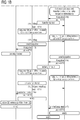
- Die Erfindung wird anhand eines in der Figur dargestellten Ausführungsbeispiels näher erläutert, welches schematisch den Ablauf des erfindungsgemäßen Verfahrens zeigt.
- Erfindungsgemäß wird bei einem Verfahren zur Zuteilung von Aufgaben in einem hochverteilten Datenverarbeitungssystem an die verfügbaren Rechenkomponenten durch eine mit einer Aufgabe befasste Quellkomponente QZ, diese Aufgabe bei Bedarf geteilt und ein Teil der so erhaltenen Unteraufgaben an weitere Rechenkomponenten ZZ abgegeben.
- Eine Aufgaben- (Partitions-)teilung wird im Datenverarbeitungssystem beispielsweise dann ausgelöst, wenn eine Rechenkomponente entlastet werden muss, weil entweder die Datenmenge in der Partition zu hoch ist, oder zu viele Zugriffe erfolgen.
- Die ordnungsgemäße Bearbeitung der betroffenen Aufgaben durch die beteiligten Rechnerkomponenten muss während des Überganges gewährleitet sein.
- Jeder Rechenkomponente ist eine Steuereinheit zugeordnet, die für jeweils mehrere Komponenten administrative Aufgaben erfüllt. Die für die Quellkomponente zuständige Steuereinheit wird in der Folge als Quellmanager QM bezeichnet. Dieser ist der Auslöser einer Partitionsteilung.
- Die Zielkomponente, welche von der Quellkomponente eine Aufgabe übernehmen soll, wird von einer weiteren Steuereinheit, dem Zielmanager ZM betreut. Da jede Steuereinheit mehrere Komponenten betreuen kann, können auch Quellmanager QM und Zielmanager ZM von einer Steuerkomponente verwirklicht werden.
- Die Zuordnung der Komponenten zu Steuereinheiten kann beispielsweise aufgrund der physikalischen oder virtuellen Lokation dieser Komponenten erfolgen, sodass beispielsweise für alle Komponenten auf einem virtuellen oder physikalischen Host eine Steuereinheit zuständig ist.
- Die Anzahl der Komponenten und ihrer Steuereinheiten pro Server hängt von der Leistungsfähigkeit desselben ab.
- Der Ablauf des erfindungsgemäßen Verfahrens ist wie folgt:
Der erste Schritt umfasst die Erkennung des Bedarfs einer Aufgabenteilung. Dazu sind verschiedene Auslöser denkbar: - die Existenz einer Zielkomponente ohne zugeordnete Partition,
- ein signifikanter Größenunterschied der zugeteilten Partitionen zwischen zwei Komponenten,
- eine Überlastung einer einzelnen Komponente durch Zugriffe (TPS-Last),
- eine Überbelegung einer einzelnen Komponente durch gespeicherte Objekte (Storage).
- Wenn ein derartiger Auslöser durch die zuständige Steuerkomponente, den Quell-Manager QM erkannt worden ist, wird in einem nächsten Schritt eine potentielle Zielkomponente ZZ identifiziert.
- Die Informationsquellen für die Steuerkomponenten zur Erkennung von Auslösern sind primär die in allen Komponenten vorhandene, beispielsweise auf der Grundlage des Gossip-Protokolls verteilte Aufgaben-Routing Tabelle des Datenverarbeitungssystems und die von den Komponenten gemeldeten Speicher und CPU Belegungen.
- In der Aufgaben-Routing Tabelle sind die Partitionen aller Komponenten enthalten und können somit nach Größe sortiert werden. In einer nach Partitonssummengröße sortierten Komponentenliste, kann die Größte mit der Kleinsten verglichen werden und daraufhin entschieden werden ob eine Aufgabenteilung benötigt wird.
- Damit dies parallel und verteilt erfolgt, werden dabei mehrere Komponenten mit großer Partitionssumme mit mehreren Komponenten mit kleiner Partitionssumme zugleich als potentielle Kandidaten untersucht, wobei immer die zuständige Steuereinheit QM der Quellkomponente QZ diesen Prozess einleitet.
- Wird damit beispielsweise eine Komponente ohne Aufgabe im System identifiziert, so wird ohne weitere Bedingung eine andere Komponente mit überdurchschnittlich großer Aufgabe(Partition) identifiziert und zur Teilung und Abgabe aufgefordert.
- Da einer Komponente mehrere Aufgaben zugeordnet werden können, ist die Summe aller zugeordneter Aufgaben relevant für einen Auslastungsvergleich. Damit wird letztendlich eine Aufgabe identifiziert, die für eine Balancierung geeignet ist und transferiert werden kann (Q -> Z).
- Danach wird das Einverständnis sowohl von der Quellkomponente QZ als auch von der ausgewählten Zielkomponente mit der vorgesehenen Teilung eingeholt und weitere gleichartige Anfragen vorerst blockiert.
- Dies gibt beiden Komponenten die Möglichkeit einer Teilung zu widersprechen. Gründe dafür könnten beispielsweise sein, dass bereits eine Partitionsteilung samt Transfer aktiv ist und die Komponenten diesen Prozess abwarten, oder dass die Applikationen auf der Komponente ihren Status (DB-Objekte oder States) aus technischen Gründen derzeit nicht transferieren können.
- Erst wenn beide Komponenten QZ, ZZ, sowie auch die für die Zielkomponente ZZ zuständige Steuereinheit ZM zustimmen, wird die Teilung durchgeführt.
- Nach Abschluss der Übergabe wird die neue Aufgabenzuordnung in einer Aufgaben-Routing Tabelle festgehalten und damit das Verfahren beendet.
- In der
Figur 1 wird die Kommunikation zwischen den vier beteiligten Komponenten Quellmanager QM, Quellkomponente QZ, Zielmanager ZM, Zielkomponente ZZ während des Verfahrens dargestellt. - Eine Änderung der Aufgaben/Partitionszuordnung einer Komponente muss im Routing allen Komponenten des Datenverarbeitungssystems mitgeteilt werden.
- Der Austausch dieser Information erfolgt vorzugsweise auf der Grundlage des sogenannten Gossip-Protokolls. Änderungen werden dabei erst nach einer gewissen Zeit, typisch einigen Sekunden im System konsistent aktualisiert, sodass bis dahin die alte und neue Routingtabelle gleichzeitig verwendet werden, ohne dass es dadurch zu Bearbeitungsfehlern kommt.
- Nur die jeweils zuständige Steuereinheit darf Änderungen der Partitionszuordnung einer Komponente im Routing aktualisieren, um Inkonsistenzen und Kollisionen von Änderungen zu vermeiden, d.h. das Herauslöschen der bei der Partitionsteilung migrierten Partition der Quellkomponente QZ wird vom Quellmanager QM im System verbreitet und das Hinzufügen dieser Partition zu der Zielkomponente ZZ wird vom Zielmanager ZM im System verbreitet.
- Existiert in der betroffenen Quellkomponente ein Zustand, der für die Verarbeitung wichtig ist, wie beispielsweise gespeicherte Daten, Index etc.., so müssen diese Informationen der Partition von der Quellkomponente QZ auf die Zielkomponente ZZ übertragen werden. Während dieser Übertragung ist die Zuständigkeit für konkrete Anfragen im System entweder noch bei der Quellkomponente QZ oder bereits bei der Zielkomponente ZZ. Daher muss in dieser Zeit eine Weiterleitung von Anfragen von der Zielkomponente ZZ zur Quellkomponente QZ und umgekehrt aktiv sein, bis der Transfer vollständig beendet wurde und die Aufgaben-Routing Tabelle aktualisiert wurde.
- Je nach Art der zu transferierenden Daten sind die Komponenten dabei für eine eindeutige Zuordnung und konsistente Änderung der Daten zuständig, bis der Transfer komplett abgeschlossen wurde.
- Mit dem erfindungsgemäßen Verfahren sind insbesondere Änderungen in der Konfiguration des Datenverarbeitungssystems durch Hinzufügen oder Herausnahme einer Ressource unter Volllast einfach zu handhaben.
- Eine Erweiterung des laufenden Systems um eine weitere Ressource erfolgt ohne manuelle Eingriffe. Die neue Ressource startet leere Komponenten (blue-print), die mit einem separaten Anmeldekanal und einer Autorisierung versehen wurden. Über den Anmeldekanal machen sich die neuen Komponenten dem System bekannt und werden autorisiert. Dabei nimmt das laufende System die neuen Komponenten in eine Gossiptabelle auf. In einer der nächsten Gossiprunden zu Synchronisation der Systemkonfiguration werden die neuen Komponenten integriert und mit den aktuellen Aufgaben-Routing Tabellen versehen.
- Den neuen Komponenten werden danach mit dem erfindungsgemäßen Verfahren Aufgaben zugewiesen.
- Es kann auch erforderlich sein, dass geteilte Aufgaben wieder zusammengeführt werden. Auslöser dafür sind beispielsweise:
- die Außerbetriebnahme einer Systemkomponente vor der alle Aufgaben dieser Komponente auf andere Komponenten übertragen werden müssen, oder
- die Konsolidierung eines fragmentierten Systems.
- Dabei sind zwei Verfahren denkbar:
- Die Migration von Partitionen auf andere Komponenten, ohne die Größe der Partitionen zu verändern. (Zusammenführung)
- Die Vereinigung von vorher geteilten Partitionen als Folgeschritt nach 1. (Vereinigung)
- Um eine gleichmäßiger Verteilung von Last und Daten zu erlauben, kann es vorteilhaft sein, die Aufgaben(Partitionen) auch innerhalb einer Komponente weiter zu unterteilen, z.B. die lokale Partition in 4 x ¼ Partitionen weiter zu untergliedern. Damit kann statt einer Partitionsteilung auch eine Migration einer dieser Partitionsfragmente durchgeführt werden. Der Auslöser für eine feinere Unterteilung ist dann abhängig von der Komponentenzahl die sich die Partitionen aufteilen (diese ist durch Gossip in allen Komponenten bekannt). Eine s-Stufige Partitionierung bedeutet dann:
- Nehme die Gesamtzahl der Komponenten dieser Partitionsgruppe
- Runde auf eine 2er-Potenz auf.
- Ermittle den 2er Logarithmus
- Addiere s zu diesem Wert.
- Unterteile auf diese Bittiefe im binären Aufgabenbaum
- Beispiel: 200 Komponenten und s=2, aufgerundet auf 2er Potenz = 256, 2er Logarithmus = 8, plus s=2,
damit 10 Bit Tiefe, also 1024 Partitionen. Jede Komponente hat dann 4-6 Unterpartitionen (um die 1024 /200). - Diese binäre Partitionierung wird genutzt, um zwischen redundanten Kopien von Partitionen eine effiziente Synchronisation zu realisieren.
- Redundante Kopien eines Datenbestandes werden dadurch realisiert, dass es für dessen Partitionierung der Wertebereich mehrfach (z.B. 3x) bereitgestellt wird. Alle Zugriffe und Daten werden parallel in diesen Kopien durchgeführt. Da es bei der Speicherung von Zuständen und Daten dabei zu Diskrepanzen zwischen diesen Kopien kommen kann, z.B. aufgrund von Nachrichtenübertragungsfehlern, ist eine Reparatur dieser Diskrepanzen notwendig.
- Für diese Reparatur kann vorzugsweise eine besonders vorteilhafte Ausgestaltung des erfindungsgemäßen Verfahrens genutzt werden.
- Diese besteht darin, dass jeder Aufgabe ein Kennwert zugeordnet wird, und dass aufgrund des Kennwertes die Zuweisung der Aufgabe zu einer Rechenkomponente des Datenverarbeitungssystems erfolgt.
- Der Kennwert wird aus dem Inhalt jeder Aufgabe z.B. dem Namen eines Kunden, der Kundenummer oder Telefonnummer, ermittelt und beispielsweise als 64 Bit Binärwert dargestellt. Die Berechnung dieses Wertes kann auf Polynomdivision beruhen, wie sie auch bei der zyklischen Redundanzprüfung von Daten vorgesehen ist.
- Die Zuordnung der Aufgaben zu den Rechenkomponenten erfolgt nun auf der Grundlage dieser Kennwerte, wobei jeder Komponente definierte Wertebereiche zugeordnet sind.
- Die Definition erfolgt in besonders einfacher Weise dadurch, dass bestimmte Teile der Kennwerte, also beispielsweise eine Anzahl der höchstwertigen Bits (Präfix) einen Adressraum festlegen, so können durch 4 Bit 16 unterschiedliche Rechenkomponenten zugeordnet werden, mit einer 8 Bit Adressierung sind es 256 Komponenten usw. Der 64 Bit Binärwert des vorliegenden Beispiels reicht also jedenfalls auch für sehr große Datenverarbeitungssysteme aus.
- Für den beispielhaften Kennwert 0×76912635011e355a lauten die obersten Bits der Binärdarstellung: 011101101001...
- Eine Komponente mit dem Präfix 010* stimmt mit den ersten 3 bit des Kennwertes nicht überein, hingegen aber eine Komponente mit dem Präfix 01110* mit den ersten 5 Bit. Diese Komponente ist daher auch für diese Aufgabe zuständig.
- Die Suche der zuständigen Rechenkomponente für eine bestimmte Aufgabe kann nun in besonders einfacher und schneller Weise mit einer binären Baumstruktur erfolgen, wobei beginnend mit dem höchstwertigen Bit, jedes Bit eine Verzweigung der Baumstruktur darstellt.
- Die binäre Baumstruktur der Partitionierung kann auch für die oben genannte Reparatur der Diskrepanzen zwischen Kopien werden, indem ab einem beliebigen binären Startpunkt (hash prefix) ein Synchronisationsverfahren definiert wird, das mit logarithmischem Aufwand eine Diskrepanz identifiziert und repariert.
- Dabei wird ein Inhaltskennwert (digest) über jedes Datum berechnet und im Baum bis zum Synchronisationsknoten aggregiert/kombiniert um auf jeder Ebene im Baum durch Vergleich der beiden Kinderdigests (0 und 1) entscheiden zu können ob eine Diskrepanz auf der linken (0) oder rechten (1) Subtree Seite liegt
- In einem Austausch der Synchronisationspartner über diese Kinderdigest Werte kann mit logarithmischem Aufwand im Dialog der erste Unterschied im Datenbestand identifiziert werden.
- Die binäre Baumstruktur unterstützt die erfindungsgemäße Teilung der Aufgaben in zwei Hälften (Partitionsteilung) durch das Ersetzen eines Partitionseintrages im binären Aufgabenbaum durch zwei neue Einträge, deren Präfix um ein Bit erweitert wurde.
- Der Gesamtwertebereich kann also wie ein Kuchen gesehen werden, der immer weiter durch Halbierung von Teilen feiner unterteilt wird. Die dabei entstehenden Teile repräsentieren Partitionen, die auf Komponenten verteilt werden.
- Das erfindungsgemäße Verfahren ermöglicht eine Neupartitionierung im vollen Betrieb und auch bei maximaler Last und bewirkt damit auch bei inkonsistentem, verteiltem Aufgabenbaum eine fehlerfreie Operation, wobei die zu entlastende Rechnerkomponente auch während der Übernahme der Hälfte ihrer Daten von einer anderen Komponente nicht stärker belastet wird als zuvor, sowie einen vollständig umpartitionierten Zustand nach begrenzter Zeit.
Claims (3)
- Verfahren zur Zuteilung von Aufgaben in einem hochverteilten Datenverarbeitungssystem an verfügbare Rechenkomponenten, wobei eine mit einer Aufgabe befasste Quellkomponente |QZ) diese Aufgabe bei Bedarf teilt und einen Teil der so erhaltenen Unteraufgaben an Zielkomponenten |ZZ) abgibt, wobei zu jeder Aufgabe ein Kennwert vergeben wird, und aufgrund des Kennwertes eine Zuweisung der Aufgabe zu einer Rechenkomponente des hochverteilten Datenverarbeitungssystems erfolgt, dadurch gekennzeichnet, dass eine binäre Darstellung des Kennwertes als Grundlage für eine Suche nach einer zuständigen Rechenkomponente dient,
wobei beginnend mit dem höchstwertigen Bit des Kennwertes in einer binären Baumstruktur nach einem Eintrag der zuständigen Rechenkomponente gesucht wird. - Verfahren nach Anspruch 1, dadurch gekennzeichnet, dass der Bedarf zur Teilung einer Aufgabe anhand der Auslastung der verfügbaren Rechenkomponenten des Datenverarbeitungssystems festgestellt wird.
- Verfahren nach Anspruch 1 oder 2, dadurch gekennzeichnet, dass eine Rechenkomponente mit mehreren Aufgaben befasst ist.
Applications Claiming Priority (2)
| Application Number | Priority Date | Filing Date | Title |
|---|---|---|---|
| AT505662016 | 2016-06-22 | ||
| PCT/EP2017/065375 WO2017220721A1 (de) | 2016-06-22 | 2017-06-22 | Verfahren zur automatischen und dynamischen zuteilung der zuständigkeit für aufgaben an die verfügbaren rechenkomponenten in einem hochverteilten datenverarbeitungssystem |
Publications (2)
| Publication Number | Publication Date |
|---|---|
| EP3475819A1 EP3475819A1 (de) | 2019-05-01 |
| EP3475819B1 true EP3475819B1 (de) | 2021-08-11 |
Family
ID=59276702
Family Applications (1)
| Application Number | Title | Priority Date | Filing Date |
|---|---|---|---|
| EP17735027.9A Active EP3475819B1 (de) | 2016-06-22 | 2017-06-22 | Verfahren zur automatischen und dynamischen zuteilung der zuständigkeit für aufgaben an die verfügbaren rechenkomponenten in einem hochverteilten datenverarbeitungssystem |
Country Status (4)
| Country | Link |
|---|---|
| US (1) | US11086689B2 (de) |
| EP (1) | EP3475819B1 (de) |
| CN (1) | CN109643248A (de) |
| WO (1) | WO2017220721A1 (de) |
Families Citing this family (3)
| Publication number | Priority date | Publication date | Assignee | Title |
|---|---|---|---|---|
| US9785480B2 (en) * | 2015-02-12 | 2017-10-10 | Netapp, Inc. | Load balancing and fault tolerant service in a distributed data system |
| EP3475819B1 (de) | 2016-06-22 | 2021-08-11 | Atos Convergence Creators GmbH | Verfahren zur automatischen und dynamischen zuteilung der zuständigkeit für aufgaben an die verfügbaren rechenkomponenten in einem hochverteilten datenverarbeitungssystem |
| US11411843B2 (en) * | 2019-08-14 | 2022-08-09 | Verizon Patent And Licensing Inc. | Method and system for packet inspection in virtual network service chains |
Family Cites Families (7)
| Publication number | Priority date | Publication date | Assignee | Title |
|---|---|---|---|---|
| GB0619644D0 (en) * | 2006-10-05 | 2006-11-15 | Ibm | Data processing system and method of handling requests |
| DE102007018299B3 (de) * | 2007-04-18 | 2008-10-23 | Siemens Ag | Verfahren zur Verteilung von Ressourcen auf Netzknoten in einem dezentralen Datennetz |
| CN101441557A (zh) * | 2008-11-08 | 2009-05-27 | 腾讯科技(深圳)有限公司 | 基于动态数据拆分的分布式并行计算的系统及其方法 |
| CN102959624B (zh) * | 2010-06-09 | 2015-04-22 | 阿德尔福伊有限公司 | 用于音频媒体识别的系统和方法 |
| US9606826B2 (en) | 2014-08-21 | 2017-03-28 | International Business Machines Corporation | Selecting virtual machines to be migrated to public cloud during cloud bursting based on resource usage and scaling policies |
| US20160179581A1 (en) * | 2014-12-19 | 2016-06-23 | Netapp, Inc. | Content-aware task assignment in distributed computing systems using de-duplicating cache |
| EP3475819B1 (de) | 2016-06-22 | 2021-08-11 | Atos Convergence Creators GmbH | Verfahren zur automatischen und dynamischen zuteilung der zuständigkeit für aufgaben an die verfügbaren rechenkomponenten in einem hochverteilten datenverarbeitungssystem |
-
2017
- 2017-06-22 EP EP17735027.9A patent/EP3475819B1/de active Active
- 2017-06-22 WO PCT/EP2017/065375 patent/WO2017220721A1/de not_active Ceased
- 2017-06-22 CN CN201780039386.9A patent/CN109643248A/zh active Pending
- 2017-06-22 US US16/312,968 patent/US11086689B2/en active Active
Also Published As
| Publication number | Publication date |
|---|---|
| EP3475819A1 (de) | 2019-05-01 |
| US11086689B2 (en) | 2021-08-10 |
| US20190227852A1 (en) | 2019-07-25 |
| WO2017220721A1 (de) | 2017-12-28 |
| CN109643248A (zh) | 2019-04-16 |
Similar Documents
| Publication | Publication Date | Title |
|---|---|---|
| DE60302876T2 (de) | Master-knotenauswahl in geclusterten knotenkonfigurationen | |
| DE60000471T2 (de) | Intelligenter datenspeicher-verwalter | |
| DE112012005533B4 (de) | Unterstützende Abfrage und ein Abfragen | |
| DE60016283T2 (de) | Arbeitsbelastungsverwaltung in einer rechnerumgebung | |
| DE112018004222T5 (de) | Datenbankaufteilung | |
| DE602004011890T2 (de) | Verfahren zur Neuverteilung von Objekten an Recheneinheiten | |
| DE112021003908T5 (de) | Föderales maschinenlernen durch verwenden von ortsabhängigem hashing | |
| DE102020113347A1 (de) | Ausführung von containerisierten prozessen innerhalb der beschränkungen der verfügbaren host-knoten | |
| DE112017005868T5 (de) | Verwaltung von e/a-abläufen für datenobjekte in einem speichersystem | |
| DE112018006769B4 (de) | Erweiterte zwischenspeicherzuweisung basierend auf virtuellen knotenressourcen | |
| DE102013215009A1 (de) | Verfahren und System zur Optimierung der Datenübertragung | |
| DE112012000282B4 (de) | Anwendungswiederherstellung in einem Dateisystem | |
| DE112011103497T5 (de) | Informationsverarbeitungssystem, Informationsverarbeitungsvorrichtung, Lastausgleichsverfahren, Planungsverfahren für die Datenbankbereitstellung und Programm zum Durchführen der Verbindungsverteilung für den Lastausgleich in einer verteilten Datenbank | |
| DE102004005128B3 (de) | Anordnung mehrerer Rechner und Verfahren zum Betreiben einer Anordnung mehrerer Rechner bei einem Rechnerausfall | |
| DE202015009784U1 (de) | Ressourcenmanagementsysteme | |
| DE112019000992T5 (de) | Verwaltung virtueller Speicherlaufwerke in einem Datenspeichersystem | |
| DE112013006646B4 (de) | Computer, System und computerlesbares Ablagemedium zum Identifizieren von Arbeitslast und Dimensionierung von Puffern zum Zweck der Volumenreplikation | |
| DE19822543A1 (de) | Verfahren zum Zuteilen von Aufträgen, Datenverarbeitssystem, Client-Datenbearbeitungsknoten und computerlesbares Speichermedium | |
| DE112019005038B4 (de) | Ressourcenzuweisung unter verwendung von guthaben mit verteilter segmentverarbeitung | |
| DE112014003699T5 (de) | Indexbaumsuchverfahren und Indexbaumsuchcomputer | |
| DE112018005135T5 (de) | Thin provisioning unter verwendung von speicherbänken auf cloud-grundlage | |
| DE102016219854A1 (de) | Computersystem und Verfahren zum dynamischen Anpassen eines software-definierten Netzwerks | |
| EP3475819A1 (de) | Verfahren zur automatischen und dynamischen zuteilung der zuständigkeit für aufgaben an die verfügbaren rechenkomponenten in einem hochverteilten datenverarbeitungssystem | |
| DE102022127497A1 (de) | Client-zuweisung von speicher über speicherserver hinweg | |
| DE102013108306A1 (de) | Verfahren und System zur Synchronisation von Daten |
Legal Events
| Date | Code | Title | Description |
|---|---|---|---|
| STAA | Information on the status of an ep patent application or granted ep patent |
Free format text: STATUS: UNKNOWN |
|
| STAA | Information on the status of an ep patent application or granted ep patent |
Free format text: STATUS: THE INTERNATIONAL PUBLICATION HAS BEEN MADE |
|
| PUAI | Public reference made under article 153(3) epc to a published international application that has entered the european phase |
Free format text: ORIGINAL CODE: 0009012 |
|
| STAA | Information on the status of an ep patent application or granted ep patent |
Free format text: STATUS: REQUEST FOR EXAMINATION WAS MADE |
|
| 17P | Request for examination filed |
Effective date: 20181213 |
|
| AK | Designated contracting states |
Kind code of ref document: A1 Designated state(s): AL AT BE BG CH CY CZ DE DK EE ES FI FR GB GR HR HU IE IS IT LI LT LU LV MC MK MT NL NO PL PT RO RS SE SI SK SM TR |
|
| AX | Request for extension of the european patent |
Extension state: BA ME |
|
| DAV | Request for validation of the european patent (deleted) | ||
| DAX | Request for extension of the european patent (deleted) | ||
| GRAP | Despatch of communication of intention to grant a patent |
Free format text: ORIGINAL CODE: EPIDOSNIGR1 |
|
| STAA | Information on the status of an ep patent application or granted ep patent |
Free format text: STATUS: GRANT OF PATENT IS INTENDED |
|
| INTG | Intention to grant announced |
Effective date: 20210330 |
|
| GRAS | Grant fee paid |
Free format text: ORIGINAL CODE: EPIDOSNIGR3 |
|
| GRAA | (expected) grant |
Free format text: ORIGINAL CODE: 0009210 |
|
| STAA | Information on the status of an ep patent application or granted ep patent |
Free format text: STATUS: THE PATENT HAS BEEN GRANTED |
|
| AK | Designated contracting states |
Kind code of ref document: B1 Designated state(s): AL AT BE BG CH CY CZ DE DK EE ES FI FR GB GR HR HU IE IS IT LI LT LU LV MC MK MT NL NO PL PT RO RS SE SI SK SM TR |
|
| REG | Reference to a national code |
Ref country code: CH Ref legal event code: EP |
|
| REG | Reference to a national code |
Ref country code: DE Ref legal event code: R096 Ref document number: 502017011183 Country of ref document: DE |
|
| REG | Reference to a national code |
Ref country code: IE Ref legal event code: FG4D Free format text: LANGUAGE OF EP DOCUMENT: GERMAN Ref country code: AT Ref legal event code: REF Ref document number: 1420072 Country of ref document: AT Kind code of ref document: T Effective date: 20210915 |
|
| REG | Reference to a national code |
Ref country code: LT Ref legal event code: MG9D |
|
| REG | Reference to a national code |
Ref country code: NL Ref legal event code: MP Effective date: 20210811 |
|
| PG25 | Lapsed in a contracting state [announced via postgrant information from national office to epo] |
Ref country code: SE Free format text: LAPSE BECAUSE OF FAILURE TO SUBMIT A TRANSLATION OF THE DESCRIPTION OR TO PAY THE FEE WITHIN THE PRESCRIBED TIME-LIMIT Effective date: 20210811 Ref country code: RS Free format text: LAPSE BECAUSE OF FAILURE TO SUBMIT A TRANSLATION OF THE DESCRIPTION OR TO PAY THE FEE WITHIN THE PRESCRIBED TIME-LIMIT Effective date: 20210811 Ref country code: HR Free format text: LAPSE BECAUSE OF FAILURE TO SUBMIT A TRANSLATION OF THE DESCRIPTION OR TO PAY THE FEE WITHIN THE PRESCRIBED TIME-LIMIT Effective date: 20210811 Ref country code: NO Free format text: LAPSE BECAUSE OF FAILURE TO SUBMIT A TRANSLATION OF THE DESCRIPTION OR TO PAY THE FEE WITHIN THE PRESCRIBED TIME-LIMIT Effective date: 20211111 Ref country code: PT Free format text: LAPSE BECAUSE OF FAILURE TO SUBMIT A TRANSLATION OF THE DESCRIPTION OR TO PAY THE FEE WITHIN THE PRESCRIBED TIME-LIMIT Effective date: 20211213 Ref country code: FI Free format text: LAPSE BECAUSE OF FAILURE TO SUBMIT A TRANSLATION OF THE DESCRIPTION OR TO PAY THE FEE WITHIN THE PRESCRIBED TIME-LIMIT Effective date: 20210811 Ref country code: ES Free format text: LAPSE BECAUSE OF FAILURE TO SUBMIT A TRANSLATION OF THE DESCRIPTION OR TO PAY THE FEE WITHIN THE PRESCRIBED TIME-LIMIT Effective date: 20210811 Ref country code: BG Free format text: LAPSE BECAUSE OF FAILURE TO SUBMIT A TRANSLATION OF THE DESCRIPTION OR TO PAY THE FEE WITHIN THE PRESCRIBED TIME-LIMIT Effective date: 20211111 Ref country code: LT Free format text: LAPSE BECAUSE OF FAILURE TO SUBMIT A TRANSLATION OF THE DESCRIPTION OR TO PAY THE FEE WITHIN THE PRESCRIBED TIME-LIMIT Effective date: 20210811 |
|
| PG25 | Lapsed in a contracting state [announced via postgrant information from national office to epo] |
Ref country code: PL Free format text: LAPSE BECAUSE OF FAILURE TO SUBMIT A TRANSLATION OF THE DESCRIPTION OR TO PAY THE FEE WITHIN THE PRESCRIBED TIME-LIMIT Effective date: 20210811 Ref country code: LV Free format text: LAPSE BECAUSE OF FAILURE TO SUBMIT A TRANSLATION OF THE DESCRIPTION OR TO PAY THE FEE WITHIN THE PRESCRIBED TIME-LIMIT Effective date: 20210811 Ref country code: GR Free format text: LAPSE BECAUSE OF FAILURE TO SUBMIT A TRANSLATION OF THE DESCRIPTION OR TO PAY THE FEE WITHIN THE PRESCRIBED TIME-LIMIT Effective date: 20211112 |
|
| PG25 | Lapsed in a contracting state [announced via postgrant information from national office to epo] |
Ref country code: NL Free format text: LAPSE BECAUSE OF FAILURE TO SUBMIT A TRANSLATION OF THE DESCRIPTION OR TO PAY THE FEE WITHIN THE PRESCRIBED TIME-LIMIT Effective date: 20210811 |
|
| PG25 | Lapsed in a contracting state [announced via postgrant information from national office to epo] |
Ref country code: DK Free format text: LAPSE BECAUSE OF FAILURE TO SUBMIT A TRANSLATION OF THE DESCRIPTION OR TO PAY THE FEE WITHIN THE PRESCRIBED TIME-LIMIT Effective date: 20210811 |
|
| REG | Reference to a national code |
Ref country code: DE Ref legal event code: R097 Ref document number: 502017011183 Country of ref document: DE |
|
| PG25 | Lapsed in a contracting state [announced via postgrant information from national office to epo] |
Ref country code: SM Free format text: LAPSE BECAUSE OF FAILURE TO SUBMIT A TRANSLATION OF THE DESCRIPTION OR TO PAY THE FEE WITHIN THE PRESCRIBED TIME-LIMIT Effective date: 20210811 Ref country code: SK Free format text: LAPSE BECAUSE OF FAILURE TO SUBMIT A TRANSLATION OF THE DESCRIPTION OR TO PAY THE FEE WITHIN THE PRESCRIBED TIME-LIMIT Effective date: 20210811 Ref country code: RO Free format text: LAPSE BECAUSE OF FAILURE TO SUBMIT A TRANSLATION OF THE DESCRIPTION OR TO PAY THE FEE WITHIN THE PRESCRIBED TIME-LIMIT Effective date: 20210811 Ref country code: EE Free format text: LAPSE BECAUSE OF FAILURE TO SUBMIT A TRANSLATION OF THE DESCRIPTION OR TO PAY THE FEE WITHIN THE PRESCRIBED TIME-LIMIT Effective date: 20210811 Ref country code: CZ Free format text: LAPSE BECAUSE OF FAILURE TO SUBMIT A TRANSLATION OF THE DESCRIPTION OR TO PAY THE FEE WITHIN THE PRESCRIBED TIME-LIMIT Effective date: 20210811 Ref country code: AL Free format text: LAPSE BECAUSE OF FAILURE TO SUBMIT A TRANSLATION OF THE DESCRIPTION OR TO PAY THE FEE WITHIN THE PRESCRIBED TIME-LIMIT Effective date: 20210811 |
|
| RAP2 | Party data changed (patent owner data changed or rights of a patent transferred) |
Owner name: BULL SAS |
|
| PLBE | No opposition filed within time limit |
Free format text: ORIGINAL CODE: 0009261 |
|
| STAA | Information on the status of an ep patent application or granted ep patent |
Free format text: STATUS: NO OPPOSITION FILED WITHIN TIME LIMIT |
|
| 26N | No opposition filed |
Effective date: 20220512 |
|
| PG25 | Lapsed in a contracting state [announced via postgrant information from national office to epo] |
Ref country code: IT Free format text: LAPSE BECAUSE OF FAILURE TO SUBMIT A TRANSLATION OF THE DESCRIPTION OR TO PAY THE FEE WITHIN THE PRESCRIBED TIME-LIMIT Effective date: 20210811 |
|
| PG25 | Lapsed in a contracting state [announced via postgrant information from national office to epo] |
Ref country code: SI Free format text: LAPSE BECAUSE OF FAILURE TO SUBMIT A TRANSLATION OF THE DESCRIPTION OR TO PAY THE FEE WITHIN THE PRESCRIBED TIME-LIMIT Effective date: 20210811 |
|
| PG25 | Lapsed in a contracting state [announced via postgrant information from national office to epo] |
Ref country code: MC Free format text: LAPSE BECAUSE OF FAILURE TO SUBMIT A TRANSLATION OF THE DESCRIPTION OR TO PAY THE FEE WITHIN THE PRESCRIBED TIME-LIMIT Effective date: 20210811 |
|
| REG | Reference to a national code |
Ref country code: CH Ref legal event code: PL |
|
| REG | Reference to a national code |
Ref country code: BE Ref legal event code: MM Effective date: 20220630 |
|
| PG25 | Lapsed in a contracting state [announced via postgrant information from national office to epo] |
Ref country code: LU Free format text: LAPSE BECAUSE OF NON-PAYMENT OF DUE FEES Effective date: 20220622 Ref country code: LI Free format text: LAPSE BECAUSE OF NON-PAYMENT OF DUE FEES Effective date: 20220630 Ref country code: IE Free format text: LAPSE BECAUSE OF NON-PAYMENT OF DUE FEES Effective date: 20220622 Ref country code: CH Free format text: LAPSE BECAUSE OF NON-PAYMENT OF DUE FEES Effective date: 20220630 |
|
| PG25 | Lapsed in a contracting state [announced via postgrant information from national office to epo] |
Ref country code: BE Free format text: LAPSE BECAUSE OF NON-PAYMENT OF DUE FEES Effective date: 20220630 |
|
| P01 | Opt-out of the competence of the unified patent court (upc) registered |
Effective date: 20230330 |
|
| REG | Reference to a national code |
Ref country code: AT Ref legal event code: MM01 Ref document number: 1420072 Country of ref document: AT Kind code of ref document: T Effective date: 20220622 |
|
| PG25 | Lapsed in a contracting state [announced via postgrant information from national office to epo] |
Ref country code: AT Free format text: LAPSE BECAUSE OF NON-PAYMENT OF DUE FEES Effective date: 20220622 |
|
| PG25 | Lapsed in a contracting state [announced via postgrant information from national office to epo] |
Ref country code: HU Free format text: LAPSE BECAUSE OF FAILURE TO SUBMIT A TRANSLATION OF THE DESCRIPTION OR TO PAY THE FEE WITHIN THE PRESCRIBED TIME-LIMIT; INVALID AB INITIO Effective date: 20170622 |
|
| PG25 | Lapsed in a contracting state [announced via postgrant information from national office to epo] |
Ref country code: MK Free format text: LAPSE BECAUSE OF FAILURE TO SUBMIT A TRANSLATION OF THE DESCRIPTION OR TO PAY THE FEE WITHIN THE PRESCRIBED TIME-LIMIT Effective date: 20210811 Ref country code: CY Free format text: LAPSE BECAUSE OF FAILURE TO SUBMIT A TRANSLATION OF THE DESCRIPTION OR TO PAY THE FEE WITHIN THE PRESCRIBED TIME-LIMIT Effective date: 20210811 |
|
| PG25 | Lapsed in a contracting state [announced via postgrant information from national office to epo] |
Ref country code: TR Free format text: LAPSE BECAUSE OF FAILURE TO SUBMIT A TRANSLATION OF THE DESCRIPTION OR TO PAY THE FEE WITHIN THE PRESCRIBED TIME-LIMIT Effective date: 20210811 |
|
| PG25 | Lapsed in a contracting state [announced via postgrant information from national office to epo] |
Ref country code: MT Free format text: LAPSE BECAUSE OF FAILURE TO SUBMIT A TRANSLATION OF THE DESCRIPTION OR TO PAY THE FEE WITHIN THE PRESCRIBED TIME-LIMIT Effective date: 20210811 |
|
| PGFP | Annual fee paid to national office [announced via postgrant information from national office to epo] |
Ref country code: DE Payment date: 20250618 Year of fee payment: 9 |
|
| PGFP | Annual fee paid to national office [announced via postgrant information from national office to epo] |
Ref country code: GB Payment date: 20250620 Year of fee payment: 9 |
|
| PGFP | Annual fee paid to national office [announced via postgrant information from national office to epo] |
Ref country code: FR Payment date: 20250626 Year of fee payment: 9 |