EP3474869B1 - Human tissue derived compositions and uses thereof - Google Patents
Human tissue derived compositions and uses thereof Download PDFInfo
- Publication number
- EP3474869B1 EP3474869B1 EP17816324.2A EP17816324A EP3474869B1 EP 3474869 B1 EP3474869 B1 EP 3474869B1 EP 17816324 A EP17816324 A EP 17816324A EP 3474869 B1 EP3474869 B1 EP 3474869B1
- Authority
- EP
- European Patent Office
- Prior art keywords
- matrix
- homogenized
- tissue
- amniotic
- chorionic
- Prior art date
- Legal status (The legal status is an assumption and is not a legal conclusion. Google has not performed a legal analysis and makes no representation as to the accuracy of the status listed.)
- Active
Links
Images





Classifications
-
- A—HUMAN NECESSITIES
- A61—MEDICAL OR VETERINARY SCIENCE; HYGIENE
- A61K—PREPARATIONS FOR MEDICAL, DENTAL OR TOILETRY PURPOSES
- A61K35/00—Medicinal preparations containing materials or reaction products thereof with undetermined constitution
- A61K35/12—Materials from mammals; Compositions comprising non-specified tissues or cells; Compositions comprising non-embryonic stem cells; Genetically modified cells
- A61K35/48—Reproductive organs
- A61K35/50—Placenta; Placental stem cells; Amniotic fluid; Amnion; Amniotic stem cells
-
- A—HUMAN NECESSITIES
- A61—MEDICAL OR VETERINARY SCIENCE; HYGIENE
- A61K—PREPARATIONS FOR MEDICAL, DENTAL OR TOILETRY PURPOSES
- A61K35/00—Medicinal preparations containing materials or reaction products thereof with undetermined constitution
- A61K35/12—Materials from mammals; Compositions comprising non-specified tissues or cells; Compositions comprising non-embryonic stem cells; Genetically modified cells
- A61K35/33—Fibroblasts
-
- A—HUMAN NECESSITIES
- A61—MEDICAL OR VETERINARY SCIENCE; HYGIENE
- A61K—PREPARATIONS FOR MEDICAL, DENTAL OR TOILETRY PURPOSES
- A61K35/00—Medicinal preparations containing materials or reaction products thereof with undetermined constitution
- A61K35/12—Materials from mammals; Compositions comprising non-specified tissues or cells; Compositions comprising non-embryonic stem cells; Genetically modified cells
- A61K35/48—Reproductive organs
- A61K35/51—Umbilical cord; Umbilical cord blood; Umbilical stem cells
-
- A—HUMAN NECESSITIES
- A61—MEDICAL OR VETERINARY SCIENCE; HYGIENE
- A61K—PREPARATIONS FOR MEDICAL, DENTAL OR TOILETRY PURPOSES
- A61K9/00—Medicinal preparations characterised by special physical form
- A61K9/0012—Galenical forms characterised by the site of application
- A61K9/0014—Skin, i.e. galenical aspects of topical compositions
-
- A—HUMAN NECESSITIES
- A61—MEDICAL OR VETERINARY SCIENCE; HYGIENE
- A61K—PREPARATIONS FOR MEDICAL, DENTAL OR TOILETRY PURPOSES
- A61K9/00—Medicinal preparations characterised by special physical form
- A61K9/0012—Galenical forms characterised by the site of application
- A61K9/0019—Injectable compositions; Intramuscular, intravenous, arterial, subcutaneous administration; Compositions to be administered through the skin in an invasive manner
-
- A—HUMAN NECESSITIES
- A61—MEDICAL OR VETERINARY SCIENCE; HYGIENE
- A61K—PREPARATIONS FOR MEDICAL, DENTAL OR TOILETRY PURPOSES
- A61K9/00—Medicinal preparations characterised by special physical form
- A61K9/0012—Galenical forms characterised by the site of application
- A61K9/0019—Injectable compositions; Intramuscular, intravenous, arterial, subcutaneous administration; Compositions to be administered through the skin in an invasive manner
- A61K9/0024—Solid, semi-solid or solidifying implants, which are implanted or injected in body tissue
-
- A—HUMAN NECESSITIES
- A61—MEDICAL OR VETERINARY SCIENCE; HYGIENE
- A61K—PREPARATIONS FOR MEDICAL, DENTAL OR TOILETRY PURPOSES
- A61K9/00—Medicinal preparations characterised by special physical form
- A61K9/06—Ointments; Bases therefor; Other semi-solid forms, e.g. creams, sticks, gels
-
- A—HUMAN NECESSITIES
- A61—MEDICAL OR VETERINARY SCIENCE; HYGIENE
- A61K—PREPARATIONS FOR MEDICAL, DENTAL OR TOILETRY PURPOSES
- A61K9/00—Medicinal preparations characterised by special physical form
- A61K9/14—Particulate form, e.g. powders, Processes for size reducing of pure drugs or the resulting products, Pure drug nanoparticles
- A61K9/19—Particulate form, e.g. powders, Processes for size reducing of pure drugs or the resulting products, Pure drug nanoparticles lyophilised, i.e. freeze-dried, solutions or dispersions
-
- A—HUMAN NECESSITIES
- A61—MEDICAL OR VETERINARY SCIENCE; HYGIENE
- A61L—METHODS OR APPARATUS FOR STERILISING MATERIALS OR OBJECTS IN GENERAL; DISINFECTION, STERILISATION OR DEODORISATION OF AIR; CHEMICAL ASPECTS OF BANDAGES, DRESSINGS, ABSORBENT PADS OR SURGICAL ARTICLES; MATERIALS FOR BANDAGES, DRESSINGS, ABSORBENT PADS OR SURGICAL ARTICLES
- A61L26/00—Chemical aspects of, or use of materials for, wound dressings or bandages in liquid, gel or powder form
- A61L26/0057—Ingredients of undetermined constitution or reaction products thereof
-
- A—HUMAN NECESSITIES
- A61—MEDICAL OR VETERINARY SCIENCE; HYGIENE
- A61L—METHODS OR APPARATUS FOR STERILISING MATERIALS OR OBJECTS IN GENERAL; DISINFECTION, STERILISATION OR DEODORISATION OF AIR; CHEMICAL ASPECTS OF BANDAGES, DRESSINGS, ABSORBENT PADS OR SURGICAL ARTICLES; MATERIALS FOR BANDAGES, DRESSINGS, ABSORBENT PADS OR SURGICAL ARTICLES
- A61L27/00—Materials for grafts or prostheses or for coating grafts or prostheses
- A61L27/36—Materials for grafts or prostheses or for coating grafts or prostheses containing ingredients of undetermined constitution or reaction products thereof, e.g. transplant tissue, natural bone, extracellular matrix
- A61L27/3604—Materials for grafts or prostheses or for coating grafts or prostheses containing ingredients of undetermined constitution or reaction products thereof, e.g. transplant tissue, natural bone, extracellular matrix characterised by the human or animal origin of the biological material, e.g. hair, fascia, fish scales, silk, shellac, pericardium, pleura, renal tissue, amniotic membrane, parenchymal tissue, fetal tissue, muscle tissue, fat tissue, enamel
-
- A—HUMAN NECESSITIES
- A61—MEDICAL OR VETERINARY SCIENCE; HYGIENE
- A61L—METHODS OR APPARATUS FOR STERILISING MATERIALS OR OBJECTS IN GENERAL; DISINFECTION, STERILISATION OR DEODORISATION OF AIR; CHEMICAL ASPECTS OF BANDAGES, DRESSINGS, ABSORBENT PADS OR SURGICAL ARTICLES; MATERIALS FOR BANDAGES, DRESSINGS, ABSORBENT PADS OR SURGICAL ARTICLES
- A61L27/00—Materials for grafts or prostheses or for coating grafts or prostheses
- A61L27/36—Materials for grafts or prostheses or for coating grafts or prostheses containing ingredients of undetermined constitution or reaction products thereof, e.g. transplant tissue, natural bone, extracellular matrix
- A61L27/38—Materials for grafts or prostheses or for coating grafts or prostheses containing ingredients of undetermined constitution or reaction products thereof, e.g. transplant tissue, natural bone, extracellular matrix containing added animal cells
- A61L27/3804—Materials for grafts or prostheses or for coating grafts or prostheses containing ingredients of undetermined constitution or reaction products thereof, e.g. transplant tissue, natural bone, extracellular matrix containing added animal cells characterised by specific cells or progenitors thereof, e.g. fibroblasts, connective tissue cells, kidney cells
- A61L27/3834—Cells able to produce different cell types, e.g. hematopoietic stem cells, mesenchymal stem cells, marrow stromal cells, embryonic stem cells
-
- A—HUMAN NECESSITIES
- A61—MEDICAL OR VETERINARY SCIENCE; HYGIENE
- A61P—SPECIFIC THERAPEUTIC ACTIVITY OF CHEMICAL COMPOUNDS OR MEDICINAL PREPARATIONS
- A61P17/00—Drugs for dermatological disorders
- A61P17/02—Drugs for dermatological disorders for treating wounds, ulcers, burns, scars, keloids, or the like
-
- A—HUMAN NECESSITIES
- A61—MEDICAL OR VETERINARY SCIENCE; HYGIENE
- A61P—SPECIFIC THERAPEUTIC ACTIVITY OF CHEMICAL COMPOUNDS OR MEDICINAL PREPARATIONS
- A61P19/00—Drugs for skeletal disorders
-
- A—HUMAN NECESSITIES
- A61—MEDICAL OR VETERINARY SCIENCE; HYGIENE
- A61P—SPECIFIC THERAPEUTIC ACTIVITY OF CHEMICAL COMPOUNDS OR MEDICINAL PREPARATIONS
- A61P19/00—Drugs for skeletal disorders
- A61P19/02—Drugs for skeletal disorders for joint disorders, e.g. arthritis, arthrosis
-
- A—HUMAN NECESSITIES
- A61—MEDICAL OR VETERINARY SCIENCE; HYGIENE
- A61P—SPECIFIC THERAPEUTIC ACTIVITY OF CHEMICAL COMPOUNDS OR MEDICINAL PREPARATIONS
- A61P19/00—Drugs for skeletal disorders
- A61P19/04—Drugs for skeletal disorders for non-specific disorders of the connective tissue
-
- A—HUMAN NECESSITIES
- A61—MEDICAL OR VETERINARY SCIENCE; HYGIENE
- A61P—SPECIFIC THERAPEUTIC ACTIVITY OF CHEMICAL COMPOUNDS OR MEDICINAL PREPARATIONS
- A61P19/00—Drugs for skeletal disorders
- A61P19/08—Drugs for skeletal disorders for bone diseases, e.g. rachitism, Paget's disease
- A61P19/10—Drugs for skeletal disorders for bone diseases, e.g. rachitism, Paget's disease for osteoporosis
-
- A—HUMAN NECESSITIES
- A61—MEDICAL OR VETERINARY SCIENCE; HYGIENE
- A61P—SPECIFIC THERAPEUTIC ACTIVITY OF CHEMICAL COMPOUNDS OR MEDICINAL PREPARATIONS
- A61P29/00—Non-central analgesic, antipyretic or antiinflammatory agents, e.g. antirheumatic agents; Non-steroidal antiinflammatory drugs [NSAID]
Definitions
- placental tissues for burns and other types of wounds originated more than 100 years ago.
- Placental tissues contain components that are present in skin and other tissues and required for wound healing or tissue regeneration such as extracellular matrix, growth factors, and cells, including MSCs that are responsible for orchestrating the healing process in different tissue types.
- MSCs including MSCs that are responsible for orchestrating the healing process in different tissue types.
- WO2011/031489A2 relates to umbilical cord amniotic membrane products
- WO2011/103446A1 relates to immunocompatible chorionic membrane products.
- placental tissues such as amniotic and chorionic membranes for bums, ocular wounds, orthopedic, and sports medicine surgical applications has been recorded in a number of published reports; however, the use of fresh placental tissues for a variety of indications is limited due to challenges of short shelf-life.
- the present invention provides the composition as claimed in the claims.
- An aspect of the present invention provides a composition comprising a non-homogenized chorionic matrix, a homogenized amniotic matrix and a homogenized umbilical cord (UC) matrix, wherein the non-homogenized chorionic matrix comprises viable, native cells.
- a composition comprising a non-homogenized chorionic matrix, a homogenized amniotic matrix and a homogenized umbilical cord (UC) matrix, wherein the non-homogenized chorionic matrix comprises viable, native cells.
- UC umbilical cord
- the composition further comprises a viscous modifier, for example, hyaluronic acid, methylcellulose, carboxymethylcellulose, xanthum gum, pluronics, thermally responsive polymers and proteins, fibronectins, laminins, collagens, chitosan, or chondroitin sulfate.
- a viscous modifier for example, hyaluronic acid, methylcellulose, carboxymethylcellulose, xanthum gum, pluronics, thermally responsive polymers and proteins, fibronectins, laminins, collagens, chitosan, or chondroitin sulfate.
- the composition further comprises viable, isolated amniotic cells.
- the homogenized amniotic matrix and/or the homogenized UC matrix are not decellularized and/or are devitalized.
- the non-homogenized chorionic matrix comprises viable cells that have not been culturally expanded.
- the homogenized amniotic matrix and homogenized UC matrix are derived from the same donor, and/or wherein the non-homogenized chorionic matrix and homogenized amniotic matrix are from the same donor, and/or wherein the non-homogenized chorionic matrix and homogenized UC matrix are from the same donor.
- the homogenized UC matrix comprises de-veined UC tissue.
- the composition is a pharmaceutical composition comprising a pharmaceutically acceptable carrier.
- compositions disclosed herein comprising preparing a non-homogenized chorionic matrix, preparing a homogenized amniotic matrix, preparing a homogenized UC matrix, and combining the non-homogenized chorionic matrix, the homogenized amniotic matrix, and the homogenized UC matrix further comprising prior to preparing a homogenized amniotic matrix, performing the step of isolating epithelial cells from the amniotic matrix.
- compositions disclosed herein comprising isolating chorionic tissue, isolating amniotic tissue, isolating and deveining UC tissue, rinsing each of the isolated chorionic tissue, isolated amniotic tissue, and deveined UC tissue individually, mincing or digesting the isolated chorionic tissue, combining and homogenizing the isolated amniotic tissue and the deveined UC tissue to form a placental matrix, and combining the minced or digested chorionic tissue with the placental matrix.
- each of the combinations A-E, A-F, B-D, B-E, B-F, C-D, C-E, and C-F are specifically contemplated and should be considered disclosed from disclosure of A, B, and C; D, E, and F; and the example combination A-D.
- any subset or combination of these is also specifically contemplated and disclosed.
- the sub-group of A-E, B-F, and C-E are specifically contemplated and should be considered disclosed from disclosure of A, B, and C; D, E, and F; and the example combination A-D.
- This concept applies to all aspects of this application including, but not limited to, steps in methods of making and using the disclosed compositions.
- steps in methods of making and using the disclosed compositions are if there are a variety of additional steps that can be performed it is understood that each of these additional steps can be performed with any specific embodiment or combination of embodiments of the disclosed methods, and that each such combination is specifically contemplated and should be considered disclosed.
- a “homogenized amniotic matrix” and “homogenized umbilical cord matrix” can mean that the amnion or umbilical cord samples have been processed to a point that the entire sample is comprised of particles smaller than 1 mm in diameter (hydrodynamic radius of 0.5 mm), and preferably small enough to pass through an 18-gauge needle (inner diameter of 0.838 mm) without requiring significant syringe plunger pressure, as well as soluble factors homogeneously distributed through the sample.
- chorionic matrix includes a plurality of such chorionic matrices
- the chorionic matrix is a reference to one or more chorionic matrices and equivalents thereof known to those skilled in the art, and so forth.
- Ranges may be expressed herein as from “about” one particular value, and/or to "about” another particular value. When such a range is expressed, also specifically contemplated and considered disclosed is the range from the one particular value and/or to the other particular value unless the context specifically indicates otherwise. Similarly, when values are expressed as approximations, by use of the antecedent "about,” it will be understood that the particular value forms another, specifically contemplated embodiment that should be considered disclosed unless the context specifically indicates otherwise. It will be further understood that the endpoints of each of the ranges are significant both in relation to the other endpoint, and independently of the other endpoint unless the context specifically indicates otherwise.
- compositions comprising a non-homogenized chorionic matrix, a homogenized amniotic matrix and a homogenized umbilical cord (UC) matrix, wherein the non-homogenized chorionic matrix comprises viable cells.
- Chorionic matrix is gently prepared in order to preserve cell viability of the chorionic cells.
- the chorionic matrix is a non-homogenized chorionic matrix.
- non-homogenized chorionic matrix can be minced.
- the homogenized amniotic matrix and homogenized UC matrix can be derived from the same donor. In some aspects, the non-homogenized chorionic matrix and homogenized amniotic matrix can be derived from the same donor. In some aspects, the non-homogenized chorionic matrix and homogenized UC matrix can be derived from the same donor. In some aspects, the non-homogenized chorionic matrix and homogenized amniotic matrix and homogenized UC matrix can be derived from the same donor. In some aspects, each of the non-homogenized chorionic matrix and homogenized amniotic matrix and homogenized UC matrix can be derived from different donors. In some aspects, at least one of the non-homogenized chorionic matrix and homogenized amniotic matrix and homogenized UC matrix is from a different donor than the other two matrices.
- the homogenized UC matrix comprises de-veined UC tissue.
- compositions can be cryopreserved.
- compositions comprising a non-homogenized chorionic matrix, a homogenized amniotic matrix and a homogenized UC (UC) matrix, wherein the non-homogenized chorionic matrix comprises viable cells and further comprising a cryopreservation solution.
- a cryopreservation solution can contain one or more non-cell permeating cryopreservatives.
- non-cell permeating cryopreservatives include but not limited to, polyvinyl pyrrolidione, a hydroxyethyl starch, a polysaccharide, a monosaccharide, an alginate, trehalose, raffinose, dextran, human serum albumin, Ficoll, lipoproteins, polyvinyl pyrrolidone, hydroxyethylstarch, autologous plasma or a mixture thereof.
- the cryopreservative does not contain DMSO or glycerol.
- a cryopreservation solution can contain serum albumin or other suitable proteins to stabilize the disclosed compositions during the freeze-thaw process and to reduce the damage to cells, thereby maintaining viability.
- a cryopreservation solution can contain a physiological solution, such as a physiological buffer or saline, for example phosphate buffer saline.
- a cryopreservation solution can comprise a lyoprotectant, such as trehalose or trehalose in combination with one or more antioxidants.
- compositions comprising a non-homogenized chorionic matrix, a homogenized amniotic matrix and a non-homogenized UC matrix, wherein the non-homogenized chorionic matrix comprises viable cells. Also disclosed herein but not claimed are compositions comprising a non-homogenized chorionic matrix, a homogenized amniotic matrix and a non-homogenized UC matrix, wherein the non- homogenized chorionic matrix comprises viable cells and wherein the composition further comprises viable, isolated amniotic cells. Also disclosed herein but not claimed, non-homogenized UC matrix can be minced.
- compositions comprising a non-homogenized chorionic matrix, a non-homogenized amniotic matrix and a non-homogenized UC matrix, wherein the non-homogenized chorionic matrix comprises viable cells. Also disclosed herein but not claimed are compositions comprising a non-homogenized chorionic matrix, a non- homogenized amniotic matrix and a non-homogenized UC matrix, wherein the non- homogenized chorionic matrix comprises viable cells and wherein the composition further comprises viable, isolated amniotic cells. Also disclosed herein but not claimed, non-homogenized amniotic matrix and/or the non-homogenized UC matrix can be minced.
- compositions can comprise a variety of components that include a non-homogenized chorionic matrix, a non-homogenized or homogenized amniotic matrix, a non-homogenized or homogenized UC matrix, wherein the non-homogenized chorionic matrix comprises viable cells. Also disclosed herein but not claimed compositions can comprise a variety of components that include a non-homogenized chorionic matrix, a non-homogenized or homogenized amniotic matrix, a non-homogenized or homogenized UC matrix, wherein the non- homogenized chorionic matrix comprises viable cells and wherein the composition further comprises viable, isolated amniotic cells.
- compositions can be lyophilized.
- compositions with a viscous modifier 1.
- compositions comprising a non-homogenized chorionic matrix, a homogenized amniotic matrix, a homogenized UC matrix and a viscous modifier, wherein the non-homogenized chorionic matrix comprises viable cells.
- the viscous modifier can be hyaluronic acid, methylcellulose, carboxymethylcellulose, xanthum gum, pluronics, thermally responsive polymers (e.g. PNIPAAM) and proteins, fibronectins, laminins, collagens, chitosan, or chondroitin sulfate.
- thermally responsive polymers e.g. PNIPAAM
- proteins fibronectins, laminins, collagens, chitosan, or chondroitin sulfate.
- a viscous modifier allows or helps the disclosed compositions to be formulated as a cream, gel, oil, ointment, or lotion.
- a scaffold helps provide a matrix or structure for the disclosed compositions wherein the compositions can then be used in surgical applications.
- scaffolds can help give the compositions a specific shape.
- compositions comprising any one of the compositions disclosed herein and a pharmaceutically acceptable carrier.
- compositions disclosed herein comprising preparing a non-homogenized chorionic matrix, preparing a homogenized amniotic matrix, preparing a homogenized UC matrix, and combining the non-homogenized chorionic matrix, the non-homogenized chorionic matrix, and the homogenized UC matrix, further comprising adding a scaffold.
- Additional scaffolds can be natural or synthetic.
- Suitable scaffolds include, but are not limited to, for example, allografts, autografts, xenografts, ceramics, bioglass, calcium sulphate, demineralized bone matrix, coral, collagen, graft composites, chondronic scaffolds, synthetic scaffolds of all types, natural/biological scaffolds of all types and the like (e.g., calcium phosphates, hydroxyapatite and tricalcium phosphate, collagen/ceramic composite, PCL, PLLA,PLGA, PEG, PGA, alginates, silk, collagen, dextran gelatin, elastin, agarose, chitosan, hyaluronan, HA-TCP-Collagen, GraftJacket ® , Alloderm ® , PriMatrix ® and others). Types thereof include, but are not limited to, other configurations such as sponges, foams, films, sheets, gels.
- the methods of making the compositions disclosed herein but not claimed further comprises combining viable, isolated amniotic cells to the composition.
- compositions disclosed herein comprising preparing a non-homogenized chorionic matrix, preparing a non- homogenized amniotic matrix, preparing a non-homogenized UC matrix, and combining the non-homogenized chorionic matrix, the non-homogenized amniotic matrix, and the non-homogenized UC matrix into a single composition.
- the methods of making the compositions disclosed herein may further comprise combining viable, isolated amniotic cells to the composition.
- compositions disclosed herein comprising preparing a non-homogenized chorionic matrix, preparing a homogenized amniotic matrix, preparing a non-homogenized UC matrix, and combining the non-homogenized chorionic matrix, the homogenized amniotic matrix, and the non-homogenized UC matrix into a single composition.
- the methods of making the compositions disclosed herein may further comprise combining viable, isolated amniotic cells to the composition.
- the chorionic tissue can be made immunocompatible by selective depletion of functional + macrophages, optionally resulting in depletion of TNFa upon stimulation, or a combination thereof.
- the chorionic tissue can be made immunocompatible by selective depletion of maternal blood cells.
- the chorionic tissue can be made immunocompatible by selective depletion of functional macrophages, trophoblasts, and vascularized tissue-derived cells.
- the chorionic tissue can be made immunocompatible by selective depletion of trophoblasts and/or macrophages, optionally resulting in depletion of TNFa upon stimulation.
- Trophoblasts are selectively depleted or removed from the chorionic tissue.
- trophoblast depleted chorionic tissue has one or more of the following superior features: is substantially non-immunogenic; and provides enhanced therapeutic efficacy.
- Trophoblasts can be removed in any suitable manner which substantially diminishes the trophoblast content of the chorionic tissue.
- the trophoblasts are selectively removed or otherwise removed without eliminating a substantial portion of one or more therapeutic components from the chorionic tissue (e.g. MSCs, chorionic factors, etc).
- a majority (e.g. substantially all) of the trophoblasts are removed.
- One method of removing trophoblasts comprises treating the chorionic membrane with dispase for about 30 to about 45 minutes separating the trophoblasts from the chorionic tissue.
- the dispase is provided in a solution of about less than about 1% (e.g. about 0.5%).
- the step of separating comprises mechanical separation such as peeling or scraping.
- scraping comprises scraping with a soft instrument such as a finger.
- trophoblasts are removed before cryopreservation or lyophilization.
- Functional macrophages may be selectively depleted or devitalized from the chorionic tissue.
- macrophage depleted chorionic tissue has one or more of the following superior features: is substantially non- immunogenic; provides remarkable healing time; and provides enhanced therapeutic efficacy.
- Functional macrophages can be removed in any suitable manner which substantially diminishes the macrophage content of the chorionic tissue.
- the macrophages are selectively depleted or devitalized without eliminating a substantial portion of one or more therapeutic components from the chorionic tissue (e.g. MSCs, chorionic factors, etc.).
- a majority (e.g. substantially all) of the macrophages are depleted or devitalized.
- One method of selectively depleting immune cells such as macrophages comprises depleting or devitalizing the immune cells by rapid freezing rates such as 60-100 °C/min. Although immune cells can be eliminated by rapid freezing rates, such a method can also be detrimental to therapeutic cells such as stromal cells (e.g. MSCs).
- a method of selectively depleting or devitalizing macrophages by refrigerating the chorionic tissue for a period of time (e.g. for at least about 10 min such as for about 30-60 mins) at a temperature above freezing (e.g. incubating at 2-8°C) and then freezing the chorionic tissue (e.g. incubating at -80°C ⁇ 5°C) .
- the step of freezing comprises freezing at a rate of less than 10°/min (e.g. less than about 5°/min such as at about 1°/min).
- Maternal blood cells from vascularized tissue are depleted or removed from the placental product.
- chorionic tissue depleted of maternal blood cells has one or more of the following superior features: is substantially non-immunogenic; provides remarkable healing time; and provides enhanced therapeutic efficacy.
- Removal of maternal blood cells may comprise separating the chorion from the placenta by cutting around the placental skirt on the side opposite of the UC.
- the chorion on the umbilical side of the placenta is not removed due to the vascularization on this side.
- Removal of maternal blood cells may comprise separating the chorion from the placenta by cutting around the placental skirt on the side opposite of the UC and treating the chorionic membrane with an anticoagulant (e.g. citrate dextrose solution).
- an anticoagulant e.g. citrate dextrose solution
- the removal of maternal blood cells can be done by the methods described herein but not claimed with regards to chorionic tissue.
- UC matrix for use in the disclosed methods and compositions can be prepared by homogenization.
- Homogenization can include, but is not limited to, those techniques that make the UC tissue uniform and identical throughout.
- homogenization can include blending, crushing dried or frozen tissue using a mortar and pestle, milling at room temperature, milling while frozen, and using a tissue homogenizer.
- homogenized UC matrix is not decellularized.
- the homogenized UC matrix can be devitalized. Preparing an UC matrix can result in the UC matrices disclosed herein.
- UC matrix comprises only UC issue and no placental tissue.
- the UC tissue for use in the disclosed methods and compositions may not be homogenized and therefore can be a non-homogenized UC matrix.
- Preparing a non-homogenized UC matrix can comprise mincing, dicing, chopping or digesting UC tissue to form a non-homogenized amniotic matrix.
- the disclosed but not claimed methods of making the disclosed compositions can further comprise, prior to preparing a homogenized or non- homogenized amniotic matrix, performing the step of isolating amniotic cells from the amniotic matrix.
- compositions disclosed herein comprising preparing a non-homogenized chorionic matrix, preparing a homogenized amniotic matrix, preparing a homogenized UC matrix, and combining the non-homogenized chorionic matrix, the homogenized amniotic matrix, and the homogenized UC matrix further comprising prior to preparing a homogenized amniotic matrix, performing the step of isolating amniotic cells from the amniotic matrix and further comprising combining the isolated amniotic cells to the combined non-homogenized chorionic matrix, the homogenized amniotic matrix, and the homogenized UC matrix.
- compositions disclosed herein comprising preparing a non-homogenized chorionic matrix, isolating amniotic cells from an amniotic tissue sample, preparing a homogenized amniotic matrix, preparing a homogenized UC matrix, and combining the non-homogenized chorionic matrix, the homogenized amniotic matrix, and the homogenized UC matrix.
- compositions comprising preparing a non-homogenized chorionic matrix, preparing a non-homogenized amniotic matrix, preparing a non-homogenized UC matrix, and combining the non-homogenized chorionic matrix, the non-homogenized amniotic matrix, and the non-homogenized UC matrix and further comprising, prior to preparing a non-homogenized amniotic matrix, performing the step of isolating amniotic cells from the amniotic matrix. It may be unnecessary to isolate amniotic cells from the amniotic tissue prior to preparing a non-homogenized amniotic matrix. Also disclosed herein but not claimed, the methods can further comprise combining the isolated amniotic cells to the combined non-homogenized chorionic matrix, the non-homogenized amniotic matrix, and the non-homogenized UC matrix.
- the chorionic tissue and amniotic tissue can be derived from the same donor. In some aspects, the chorionic tissue and UC tissue can be derived from the same donor. In some aspects, the amniotic tissue and UC tissue can be derived from the same donor. In some aspects, the chorionic tissue, amniotic tissue and UC tissue can be derived from the same donor. In some aspects, each of the chorionic tissue, amniotic tissue and UC tissue can be derived from different donors. In some aspects, at least one of chorionic tissue, amniotic tissue and UC tissue is from a different donor than the other two tissues.
- Isolating amniotic tissue can be performed using techniques well known in the art.
- isolating amniotic tissue includes separating the amnion from the remaining placental tissue.
- amniotic tissue only comprises the amnion or portions thereof.
- Isolating amniotic tissue includes depleting the amniotic tissue of immunogenic cells and factors. This can be done using the methods described herein.
- Isolating and deveining UC tissue can be performed using techniques well known in the art and those disclosed herein.
- Rinsing can include rinsing with a saline solution. Rinsing can include a red cell lysis solution. Rinsing can include a solution with an antibiotic.
- Rinsing can be for the sole purpose of cleaning each of the tissues and removing any excess components that are not part of the specific tissue sample. For example, rinsing can remove blood clots.
- the isolated chorionic tissue is handled delicately and not homogenized.
- the isolated chorionic tissue can be minced or digested.
- Minced or digested chorionic tissue can result in the chorionic matrices disclosed herein. For example, mincing or digesting the isolated chorionic tissue results in a chorionic matrix with at least 30%, 40%, 50%, 60%, 70%, 80%, 90%, or 95% native, viable cells.
- Isolated amniotic tissue and UC tissue can be homogenized to form an amniotic matrix and UC matrix, respectively.
- the amniotic tissue and UC tissue can be combined and then homogenized together to form a placental matrix.
- the amniotic tissue may be homogenized to an amniotic matrix and the UC tissue may be homogenized to an UC matrix and then the matrices may be combined together to form a placental matrix.
- a placental matrix can be the combination of homogenized amniotic tissue and UC tissue.
- Homogenizing the isolated amniotic tissue and the deveined UC tissue to form a placental matrix may comprise blending or milling the amniotic tissue and the deveined UC tissue together. Any known homogenization technique can be used.
- one or both of the isolated amniotic tissue and UC tissue can be non-homogenized to form an amniotic matrix and UC matrix, respectively.
- a placental matrix can be the combination of non-homogenized amniotic tissue and homogenized UC tissue, homogenized amniotic tissue and non-homogenized UC tissue, or non-homogenized amniotic tissue and non-homogenized UC tissue.
- the disclosed but not claimed methods of making the disclosed compositions can further comprise, prior to preparing a homogenized amniotic matrix, performing the step of isolating amniotic cells from the amniotic matrix.
- compositions disclosed herein comprising isolating chorionic tissue, isolating amniotic tissue, isolating and deveining UC tissue, rinsing each of the isolated chorionic tissue, isolated amniotic tissue, and deveined UC tissue individually, mincing or digesting the isolated chorionic tissue, combining and homogenizing the isolated amniotic tissue and the deveined UC tissue to form a placental matrix, and combining the minced or digested chorionic tissue with the placental matrix, further comprising isolating amniotic cells from the amniotic tissue prior to combining and homogenizing the isolated amniotic tissue and the deveined UC tissue to form a placental matrix and combining the isolated amniotic cells.
- the combining the isolated amniotic cells can occur after combining and mincing or digesting the isolated amniotic tissue and the deveined UC tissue to form a placental matrix.
- the combining the isolated amniotic cells can occur to the minced or digested chorionic tissue before combining the chorionic tissue with the placental matrix.
- tissue injury can be osteoarthritis, plantar fasciitis, carpal tunnel, tendonitis, synovitis, ruptured or torn Achilles tendon, critical limb ischemia, ulcers, pyoderma gangrenosum, epidermolysis bullosa, surgical adhesions, surgical applications or other wounds.
- any of the disclosed compositions can be administered by applying the composition topically to an area of a subject comprising the tissue injury or chronic pain.
- any of the disclosed compositions can be administered by implanting the composition to the area of a subject comprising a tissue injury.
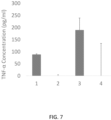
- Figure 7 demonstrates the lack of an immune response exhibited by the compositions, which is a result of the selective depleting or devitalizing of immunogenic cell types (lymphocytes, macrophages, endothelial cells, etc.) during the cryopreservation and/or lyophilization processes.
- immunogenic cell types lymphocytes, macrophages, endothelial cells, etc.
Landscapes
- Health & Medical Sciences (AREA)
- Life Sciences & Earth Sciences (AREA)
- Chemical & Material Sciences (AREA)
- Engineering & Computer Science (AREA)
- Veterinary Medicine (AREA)
- Public Health (AREA)
- General Health & Medical Sciences (AREA)
- Animal Behavior & Ethology (AREA)
- Medicinal Chemistry (AREA)
- Pharmacology & Pharmacy (AREA)
- Epidemiology (AREA)
- Biomedical Technology (AREA)
- Chemical Kinetics & Catalysis (AREA)
- Cell Biology (AREA)
- Developmental Biology & Embryology (AREA)
- Nuclear Medicine, Radiotherapy & Molecular Imaging (AREA)
- Physical Education & Sports Medicine (AREA)
- General Chemical & Material Sciences (AREA)
- Dermatology (AREA)
- Organic Chemistry (AREA)
- Bioinformatics & Cheminformatics (AREA)
- Zoology (AREA)
- Immunology (AREA)
- Rheumatology (AREA)
- Virology (AREA)
- Biotechnology (AREA)
- Orthopedic Medicine & Surgery (AREA)
- Reproductive Health (AREA)
- Hematology (AREA)
- Urology & Nephrology (AREA)
- Oral & Maxillofacial Surgery (AREA)
- Transplantation (AREA)
- Botany (AREA)
- Pregnancy & Childbirth (AREA)
- Molecular Biology (AREA)
- Pain & Pain Management (AREA)
- Neurosurgery (AREA)
- Materials Engineering (AREA)
- Medicines Containing Material From Animals Or Micro-Organisms (AREA)
Description
- The use of placental tissues for burns and other types of wounds originated more than 100 years ago. Placental tissues contain components that are present in skin and other tissues and required for wound healing or tissue regeneration such as extracellular matrix, growth factors, and cells, including MSCs that are responsible for orchestrating the healing process in different tissue types. For example,
WO2011/031489A2 relates to umbilical cord amniotic membrane products andWO2011/103446A1 relates to immunocompatible chorionic membrane products. The effectiveness of placental tissues such as amniotic and chorionic membranes for bums, ocular wounds, orthopedic, and sports medicine surgical applications has been recorded in a number of published reports; however, the use of fresh placental tissues for a variety of indications is limited due to challenges of short shelf-life. - What is needed in the art is a therapeutic product that provides the benefits of placental tissues yet can be applied in flowable forms that is compatible with delivery via injection or minimally invasive techniques such as arthroscopy, endoscopy, or laprascopy. Furthermore, a therapeutic product that contains matrix proteins, growth factors, and viable placental cells that will dynamically respond to the injury and aid in tissue regeneration is desired. Flowable forms of such therapeutics could be used to produce a solid matrix which can be prepared into most shapes and sizes. The methods and materials described herein can provide a solution to such needs.
- The present invention provides the composition as claimed in the claims.
- An aspect of the present invention provides a composition comprising a non-homogenized chorionic matrix, a homogenized amniotic matrix and a homogenized umbilical cord (UC) matrix, wherein the non-homogenized chorionic matrix comprises viable, native cells.
- In some embodiments, the composition further comprises a viscous modifier, for example, hyaluronic acid, methylcellulose, carboxymethylcellulose, xanthum gum, pluronics, thermally responsive polymers and proteins, fibronectins, laminins, collagens, chitosan, or chondroitin sulfate.
- In some embodiments, the homogenized umbilical cord (UC) matrix is devitalized, and wherein the composition does not comprise trophoblasts.
- In some embodiments, the composition further comprises viable, isolated amniotic cells.
- In some embodiments, the composition further comprises a scaffold, optionally wherein the scaffold is natural or synthetic, for example, derived from skin, hyaline cartilage, meniscus, intervertebral disc, or bone.
- In some embodiments, the homogenized amniotic matrix and/or the homogenized UC matrix are not decellularized and/or are devitalized.
- In some embodiments, the non-homogenized chorionic matrix comprises viable cells that have not been culturally expanded.
- In some embodiments, the composition comprises viable chorionic stem cells, amniotic stem cells, fibroblasts, epithelial cells or a combination thereof.
- In some embodiments, the homogenized amniotic matrix and homogenized UC matrix are derived from the same donor, and/or wherein the non-homogenized chorionic matrix and homogenized amniotic matrix are from the same donor, and/or wherein the non-homogenized chorionic matrix and homogenized UC matrix are from the same donor.
- In some embodiments, the homogenized UC matrix comprises de-veined UC tissue.
- In some embodiments, the composition is cryopreserved or is lyophilized.
- In a further aspect of the present invention, the composition according to the present invention is for use in a method of treating a tissue injury or chronic pain in a subject, said method comprising administering the composition to an area of the subject comprising a tissue injury, wherein the tissue injury preferably is osteoarthritis, cartilage repair, meniscus repair, intervertebral disc repair, plantar fasciitis, carpal tunnel, tendonitis, synovitis, ruptured or torn Achilles tendon, critical limb ischemia, ulcers, pyoderma gangrenosum, epidermolysis bullosa, surgical adhesions, plastic surgery or other wounds.
- In a further aspect of the present invention, the composition is a pharmaceutical composition comprising a pharmaceutically acceptable carrier.
- Aptly the pharmaceutical composition is for medical use.
- Disclosed herein but not claimed are methods of making the compositions disclosed herein comprising preparing a non-homogenized chorionic matrix, preparing a homogenized amniotic matrix, preparing a homogenized UC matrix, and combining the non-homogenized chorionic matrix, the homogenized amniotic matrix, and the homogenized UC matrix.
- Disclosed herein but not claimed are methods of making the compositions disclosed herein comprising preparing a non-homogenized chorionic matrix, preparing a homogenized amniotic matrix, preparing a homogenized UC matrix, and combining the non-homogenized chorionic matrix, the homogenized amniotic matrix, and the homogenized UC matrix further comprising prior to preparing a homogenized amniotic matrix, performing the step of isolating epithelial cells from the amniotic matrix.
- Disclosed herein but not claimed are methods of making one of the compositions disclosed herein comprising isolating chorionic tissue, isolating amniotic tissue, isolating and deveining UC tissue, rinsing each of the isolated chorionic tissue, isolated amniotic tissue, and deveined UC tissue individually, mincing or digesting the isolated chorionic tissue, combining and homogenizing the isolated amniotic tissue and the deveined UC tissue to form a placental matrix, and combining the minced or digested chorionic tissue with the placental matrix.
- Disclosed herein but not claimed are methods of making one of the compositions disclosed herein comprising isolating chorionic tissue, isolating amniotic tissue, isolating and deveining UC tissue, rinsing each of the isolated chorionic tissue, isolated amniotic tissue, and deveined UC tissue individually, mincing or digesting the isolated chorionic tissue, combining and homogenizing the isolated amniotic tissue and the deveined UC tissue to form a placental matrix, and combining the minced or digested chorionic tissue with the placental matrix, further comprising isolating epithelial cells from the amniotic tissue prior to combining and homogenizing the isolated amniotic tissue and the deveined UC tissue to form a placental matrix and combining the isolated amniotic epithelial cells.
- Disclosed herein but not claimed are methods of treating a tissue injury or chronic pain comprising administering any of the disclosed compositions to an area of a subject comprising a tissue injury.
- Additional advantages of the disclosed method and compositions will be set forth in part in the description which follows, and in part will be understood from the description, or may be learned by practice of the disclosed method and compositions. The advantages of the disclosed method and compositions will be realized and attained by means of the elements and combinations particularly pointed out in the appended claims. It is to be understood that both the foregoing general description and the following detailed description are exemplary and explanatory only and are not restrictive of the invention as claimed.
- The accompanying drawings, which are incorporated in and constitute a part of this specification, illustrate several embodiments of the disclosed method and compositions and together with the description, serve to explain the principles of the disclosed method and compositions.
-
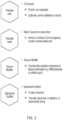
Figures 1A, 1B, and 1C are a schematic of the different compositions with their intended uses. A) Injectable - examples of indications are: knee osteoarthritis, plantar fasciitis, achilles tendon repair, critical limb ischemia, plastic procedures, diabetic foot ulcers (DFUs), venous leg ulcers (VLUs), pressure ulcers, pyoderma gangrenosum, epidermolysis bullosa, other wounds, plastic procedures. B) Topical-examples of indications are DFUs, VLUs, pressure ulcers, pyoderma gangrenosum, epidermolysis bullosa, other wounds, plastic procedures; C) Surgical - examples of indications are meniscus repair, disc repair, plastic reconstructions, cartilage repair, surgical adhesion barriers for laprascopic or open procedures in gynecology, urology, bariatrics, or similar fields, and bone repair. -
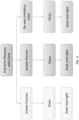
Figure 2 shows bioengineered platform building blocks. -
Figure 3 shows a composition/product for chronic wounds. The composition/product is a lyophilized flowable formulation of chorionic matrix containing viable tissue native cells mixed with umbilical cord and amniotic matrix. The composition/product was stored at room temperature and was reconstituted with saline solution prior to application. -
Figure 4 is a diagram of an example of how to process full-term placenta with UC. -
Figure 5 depicts the histological appearance of the individual placental tissues and the final compositions containing viable non-homogenized chorionic components and homogenized placental matrix. -
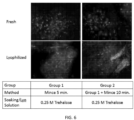
Figure 6 shows the high cell viability of the non-homogenized chorionic components of compositions before and after preservation by lyophilization. -
Figure 7 demonstrates the lack of an immunogenic response to the compositions due to the selective depletion or devitalization of immunogenic cell types. -
Figure 8 summarizes the FACS analysis of cells isolated from the non-homogenized viable chorionic component of the compositions. - The disclosed method and compositions may be understood more readily by reference to the following detailed description of particular embodiments and the Example included therein and to the Figures and their previous and following description.
- It is to be understood that the disclosed method and compositions are not limited to specific synthetic methods, specific analytical techniques, or to particular reagents unless otherwise specified, and, as such, may vary. It is also to be understood that the terminology used herein is for the purpose of describing particular embodiments only and is not intended to be limiting.
- Disclosed are materials, compositions, and components that can be used for, can be used in conjunction with, can be used in preparation for, or are products of the disclosed method and compositions. These and other materials are disclosed herein, and it is understood that when combinations, subsets, interactions, groups, etc. of these materials are disclosed that while specific reference of each various individual and collective combinations and permutation of these compounds may not be explicitly disclosed, each is specifically contemplated and described herein. Thus, if a class of molecules A, B, and C are disclosed as well as a class of molecules D, E, and F and an example of a combination molecule, A-Dis disclosed, then even if each is not individually recited, each is individually and collectively contemplated. Thus, is this example, each of the combinations A-E, A-F, B-D, B-E, B-F, C-D, C-E, and C-F are specifically contemplated and should be considered disclosed from disclosure of A, B, and C; D, E, and F; and the example combination A-D. Likewise, any subset or combination of these is also specifically contemplated and disclosed. Thus, for example, the sub-group of A-E, B-F, and C-E are specifically contemplated and should be considered disclosed from disclosure of A, B, and C; D, E, and F; and the example combination A-D. This concept applies to all aspects of this application including, but not limited to, steps in methods of making and using the disclosed compositions. Thus, if there are a variety of additional steps that can be performed it is understood that each of these additional steps can be performed with any specific embodiment or combination of embodiments of the disclosed methods, and that each such combination is specifically contemplated and should be considered disclosed.
- The phrase "isolated amniotic cells" refers to cells removed or isolated from amniotic tissue prior to homogenization of the amniotic tissue. Isolated amniotic cells can refer to a population of epithelial cells and/or stromal fibroblasts or stromal MSCs with at least 30%, 40%, 50%, 60%, 70%, 80%, 90%, or 95% cell viability.
- The term "homogenized" means to make substantially similar in size and composition. For example, if a portion of a homogenized tissue matrix was removed after homogenization, the overall morphology and macromolecular make up in the portion removed and in the remaining homogenized tissue matrix would be substantially similar in size and composition. For example, a "homogenized amniotic matrix" and "homogenized umbilical cord matrix" can mean that the amnion or umbilical cord samples have been processed to a point that the entire sample is comprised of particles smaller than 1 mm in diameter (hydrodynamic radius of 0.5 mm), and preferably small enough to pass through an 18-gauge needle (inner diameter of 0.838 mm) without requiring significant syringe plunger pressure, as well as soluble factors homogeneously distributed through the sample. In some aspects, a homogenized tissue can be a tissue that has been previously homogenized wherein the homogenized tissue can have particle sizes within the ranges of 10 nm to 1mm, or preferably 100 µm to 500 µm, 1 µm to 100 µm, 100 nm to 1 µm, or 10 nm to 100nm. Generally, methods used for homogenization apply more power (energy over time) to the compositions than non-homogenization methods, such as mincing.
- "Mincing" means to cut to make similar in size and composition; however mincing generally results in less uniformity and larger particles than homogenization or homogenized tissue (e.g. range of particle sizes is broader than the range of particle sizes of a homogenized tissue). "Minced tissue" refers to tissue that has been minced and is generally less uniform and has larger average particle sizes than homogenized tissue.
- "Selective depletion of immunogenicity" or "selective depletion of immunogenic cells or factors" or "selective depletion" means a tissue (e.g. chorion, amnion, UC) that retains live therapeutic cells and/or retains therapeutic efficacy for the treatment of tissue injury yet is free, substantially free, or depleted of at least one immune or immunogenic cell type (e.g. lymphocytes, macrophages, trophoblasts, and/or vascular-tissue derived cells) and/or immunogenic factor that are otherwise present in the native tissue.
- It must be noted that as used herein and in the appended claims, the singular forms "a", "an", and "the" include plural reference unless the context clearly dictates otherwise. Thus, for example, reference to "a chorionic matrix" includes a plurality of such chorionic matrices, reference to "the chorionic matrix" is a reference to one or more chorionic matrices and equivalents thereof known to those skilled in the art, and so forth.
- "Optional" or "optionally" means that the subsequently described event, circumstance, or material may or may not occur or be present, and that the description includes instances where the event, circumstance, or material occurs or is present and instances where it does not occur or is not present.
- Ranges may be expressed herein as from "about" one particular value, and/or to "about" another particular value. When such a range is expressed, also specifically contemplated and considered disclosed is the range from the one particular value and/or to the other particular value unless the context specifically indicates otherwise. Similarly, when values are expressed as approximations, by use of the antecedent "about," it will be understood that the particular value forms another, specifically contemplated embodiment that should be considered disclosed unless the context specifically indicates otherwise. It will be further understood that the endpoints of each of the ranges are significant both in relation to the other endpoint, and independently of the other endpoint unless the context specifically indicates otherwise. Finally, it should be understood that all of the individual values and sub-ranges of values contained within an explicitly disclosed range are also specifically contemplated and should be considered disclosed unless the context specifically indicates otherwise. The foregoing applies regardless of whether in particular cases some or all of these embodiments are explicitly disclosed.
- Unless defined otherwise, all technical and scientific terms used herein have the same meanings as commonly understood by one of skill in the art to which the disclosed method and compositions belong. Although any methods and materials similar or equivalent to those described herein can be used in the practice or testing of the present method and compositions, the particularly useful methods, devices, and materials are as described. Nothing herein is to be construed as an admission that the present invention is not entitled to antedate such disclosure by virtue of prior invention. No admission is made that any reference constitutes prior art. The discussion of references states what their authors assert, and applicants reserve the right to challenge the accuracy and pertinency of the cited documents. It will be clearly understood that, although a number of publications are referred to herein, such reference does not constitute an admission that any of these documents forms part of the common general knowledge in the art.
- Throughout the description and claims of this specification, the word "comprise" and variations of the word, such as "comprising" and "comprises," means "including but not limited to," and is not intended to exclude, for example, other additives, components, integers or steps. In particular, in methods stated as comprising one or more steps or operations it is specifically contemplated that each step comprises what is listed (unless that step includes a limiting term such as "consisting of'), meaning that each step is not intended to exclude, for example, other additives, components, integers or steps that are not listed in the step.
- Disclosed are compositions comprising a non-homogenized chorionic matrix, a homogenized amniotic matrix and a homogenized umbilical cord (UC) matrix, wherein the non-homogenized chorionic matrix comprises viable cells.
- Disclosed are compositions comprising a non-homogenized chorionic matrix, a homogenized amniotic matrix and a homogenized UC matrix, wherein the non-homogenized chorionic matrix comprises viable cells and further comprising viable, isolated amniotic cells. Thus, disclosed are compositions comprising a non-homogenized chorionic matrix, isolated, viable amniotic epithelial cells, a homogenized amniotic matrix and a homogenized UC matrix, wherein the non-homogenized chorionic matrix comprises viable cells. In some aspects, the isolated, viable amniotic epithelial cells are from the same amniotic tissue as the homogenized amniotic matrix. In some aspects, the isolated, viable amniotic epithelial cells are from a different amniotic tissue as the homogenized amniotic matrix.
- Chorionic matrix is gently prepared in order to preserve cell viability of the chorionic cells. Thus, the chorionic matrix is a non-homogenized chorionic matrix. In some aspects, non-homogenized chorionic matrix can be minced.
- The non-homogenized chorionic matrix comprises native, viable cells. In some aspects, the native, viable cells have not been culturally expanded. In some aspects, the native, viable cells have never been removed from the chorionic matrix. In some aspects, non-homogenized chorionic matrix can comprise viable cells that have not been culturally expanded. In some aspects, non- homogenized chorionic matrix is not substantially devitalized. Non-homogenized chorionic matrix can comprise some dead cells. In some aspects, non-homogenized chorionic matrix can comprise greater than 50%, 60%, 70%, 80%, 90%, 95% viable cells. In some aspects, the non-homogenized chorionic matrix can comprise greater than or equal to 100,000 viable cells/ml. In some aspects, the ratio of viable chorionic cells to all other nonviable cells in the composition can be 5:1, 2:1, 1:1, 1:2, 1:5, 1:10, 1:20, 1:30, 1:40, 1:50, 1:60, 1:70, 1:80, 1:90 or 1:100. In some aspects amniotic cells are isolated from the amniotic tissue prior to homogenizing or mincing and then the isolated amniotic cells are added back to the disclosed compositions. Thus, when isolated amniotic cells are added back into the composition, the ratio of viable chorionic cells to all other nonviable cells is higher because there are less nonviable cells because the amniotic cells can be still viable after being isolated and combined back into the composition.
- In some aspects, the homogenized amniotic matrix and/or the homogenized UC matrix are not decellularized. In some aspects, the homogenized amniotic matrix and/or the homogenized UC matrix are devitalized. Thus, the homogenized amniotic matrix and/or the homogenized UC matrix can comprise non-viable cells.
- In some aspects, the homogenized amniotic matrix and homogenized UC matrix can be derived from the same donor. In some aspects, the non-homogenized chorionic matrix and homogenized amniotic matrix can be derived from the same donor. In some aspects, the non-homogenized chorionic matrix and homogenized UC matrix can be derived from the same donor. In some aspects, the non-homogenized chorionic matrix and homogenized amniotic matrix and homogenized UC matrix can be derived from the same donor. In some aspects, each of the non-homogenized chorionic matrix and homogenized amniotic matrix and homogenized UC matrix can be derived from different donors. In some aspects, at least one of the non-homogenized chorionic matrix and homogenized amniotic matrix and homogenized UC matrix is from a different donor than the other two matrices.
- In some aspects, the disclosed compositions can comprise viable chorionic stem cells, fibroblasts, epithelial cells or a combination thereof.
- In some aspects, the homogenized UC matrix comprises de-veined UC tissue.
- In some aspects, the disclosed compositions can be cryopreserved. Thus, disclosed are compositions comprising a non-homogenized chorionic matrix, a homogenized amniotic matrix and a homogenized UC (UC) matrix, wherein the non-homogenized chorionic matrix comprises viable cells and further comprising a cryopreservation solution. In some aspects, a cryopreservation solution can contain one or more non-cell permeating cryopreservatives. Examples of non-cell permeating cryopreservatives, include but not limited to, polyvinyl pyrrolidione, a hydroxyethyl starch, a polysaccharide, a monosaccharide, an alginate, trehalose, raffinose, dextran, human serum albumin, Ficoll, lipoproteins, polyvinyl pyrrolidone, hydroxyethylstarch, autologous plasma or a mixture thereof. In some aspects, the cryopreservative does not contain DMSO or glycerol. Further, a cryopreservation solution can contain serum albumin or other suitable proteins to stabilize the disclosed compositions during the freeze-thaw process and to reduce the damage to cells, thereby maintaining viability. In some aspects, a cryopreservation solution can contain a physiological solution, such as a physiological buffer or saline, for example phosphate buffer saline. In some aspects, a cryopreservation solution can comprise a lyoprotectant, such as trehalose or trehalose in combination with one or more antioxidants.
- Disclosed herein but not claimed are compositions comprising a non-homogenized chorionic matrix, a non-homogenized amniotic matrix and a homogenized UC matrix, wherein the non-homogenized chorionic matrix comprises viable cells. Also disclosed but not claimed are compositions comprising a non-homogenized chorionic matrix, a non- homogenized amniotic matrix and a homogenized UC matrix, wherein the non- homogenized chorionic matrix comprises viable cells and wherein the composition further comprises viable, isolated amniotic cells. In some aspects, non-homogenized amniotic matrix can be minced.
- Disclosed herein but not claimed are compositions comprising a non-homogenized chorionic matrix, a homogenized amniotic matrix and a non-homogenized UC matrix, wherein the non-homogenized chorionic matrix comprises viable cells. Also disclosed herein but not claimed are compositions comprising a non-homogenized chorionic matrix, a homogenized amniotic matrix and a non-homogenized UC matrix, wherein the non- homogenized chorionic matrix comprises viable cells and wherein the composition further comprises viable, isolated amniotic cells. Also disclosed herein but not claimed, non-homogenized UC matrix can be minced.
- Disclosed herein but not claimed are compositions comprising a non-homogenized chorionic matrix, a non-homogenized amniotic matrix and a non-homogenized UC matrix, wherein the non-homogenized chorionic matrix comprises viable cells. Also disclosed herein but not claimed are compositions comprising a non-homogenized chorionic matrix, a non- homogenized amniotic matrix and a non-homogenized UC matrix, wherein the non- homogenized chorionic matrix comprises viable cells and wherein the composition further comprises viable, isolated amniotic cells. Also disclosed herein but not claimed, non-homogenized amniotic matrix and/or the non-homogenized UC matrix can be minced.
- Disclosed herein but not claimed compositions can comprise a variety of components that include a non-homogenized chorionic matrix, a non-homogenized or homogenized amniotic matrix, a non-homogenized or homogenized UC matrix, wherein the non-homogenized chorionic matrix comprises viable cells. Also disclosed herein but not claimed compositions can comprise a variety of components that include a non-homogenized chorionic matrix, a non-homogenized or homogenized amniotic matrix, a non-homogenized or homogenized UC matrix, wherein the non- homogenized chorionic matrix comprises viable cells and wherein the composition further comprises viable, isolated amniotic cells.
- The disclosed compositions can be lyophilized.
- In some aspects, a viscous modifier can be added to any of the disclosed compositions. Thus, disclosed are compositions comprising a non-homogenized chorionic matrix, a homogenized amniotic matrix, a homogenized UC matrix and a viscous modifier, wherein the non-homogenized chorionic matrix comprises viable cells.
- In some aspects, the viscous modifier can be hyaluronic acid, methylcellulose, carboxymethylcellulose, xanthum gum, pluronics, thermally responsive polymers (e.g. PNIPAAM) and proteins, fibronectins, laminins, collagens, chitosan, or chondroitin sulfate.
- In some aspects, a viscous modifier allows or helps the disclosed compositions to be formulated as a cream, gel, oil, ointment, or lotion.
- In some aspects, a scaffold can be added to any of the disclosed compositions. Thus, disclosed are compositions comprising a non-homogenized chorionic matrix, a homogenized amniotic matrix, a homogenized UC matrix and a scaffold, wherein the non-homogenized chorionic matrix comprises viable cells.
- In some aspects, the scaffold can be natural or synthetic. In some aspects, scaffold is a natural or synthetic polymer. In some aspects, the scaffold can be derived from skin, hyaline cartilage, meniscus, intervertebral disc, or bone. In some aspects, any type of tissue can be used as a scaffold. For example, tissue can be made into a matrix by mincing or homogenizing the tissue. In some aspects, placenta can be used as a scaffold.
- In some aspects, a scaffold helps provide a matrix or structure for the disclosed compositions wherein the compositions can then be used in surgical applications. In some aspects, scaffolds can help give the compositions a specific shape.
- Disclosed are pharmaceutical compositions comprising any one of the compositions disclosed herein and a pharmaceutically acceptable carrier.
- Disclosed herein but not claimed are methods of making the compositions disclosed herein comprising preparing a non-homogenized chorionic matrix, preparing a homogenized amniotic matrix, preparing a homogenized UC matrix, and combining the non-homogenized chorionic matrix, the homogenized amniotic matrix, and the homogenized UC matrix into a single composition. The methods of making the compositions disclosed herein further comprises combining viable, isolated amniotic cells to the composition.
- Disclosed herein but not claimed are methods of making the compositions disclosed herein comprising preparing a non-homogenized chorionic matrix, preparing a homogenized amniotic matrix, preparing a homogenized UC matrix, and combining the non-homogenized chorionic matrix, the non-homogenized chorionic matrix, and the homogenized UC matrix, further comprising adding a viscous modifier. Any of the viscous modifiers disclosed herein can be used.
- Disclosed herein but not claimed are methods of making the compositions disclosed herein comprising preparing a non-homogenized chorionic matrix, preparing a homogenized amniotic matrix, preparing a homogenized UC matrix, and combining the non-homogenized chorionic matrix, the non-homogenized chorionic matrix, and the homogenized UC matrix, further comprising adding a scaffold. Additional scaffolds can be natural or synthetic.
Suitable scaffolds include, but are not limited to, for example, allografts, autografts, xenografts, ceramics, bioglass, calcium sulphate, demineralized bone matrix, coral, collagen, graft composites, chondronic scaffolds, synthetic scaffolds of all types, natural/biological scaffolds of all types and the like (e.g., calcium phosphates, hydroxyapatite and tricalcium phosphate, collagen/ceramic composite, PCL, PLLA,PLGA, PEG, PGA, alginates, silk, collagen, dextran gelatin, elastin, agarose, chitosan, hyaluronan, HA-TCP-Collagen, GraftJacket®, Alloderm®, PriMatrix® and others). Types thereof include, but are not limited to, other configurations such as sponges, foams, films, sheets, gels. - The compositions disclosed herein can also be used with a carrier. In some aspects, the compositions disclosed herein can be applied to a carrier. It would be appreciated by one skilled in the art that any suitable biocompatible scaffold or carrier or bone grafting material may be used.
- In some aspects, the methods of making the compositions disclosed herein but not claimed, further comprises combining viable, isolated amniotic cells to the composition.
- Disclosed herein but not claimed are methods of making the compositions disclosed herein comprising preparing a non-homogenized chorionic matrix, preparing a non- homogenized amniotic matrix, preparing a homogenized UC matrix, and combining the non-homogenized chorionic matrix, the non-homogenized amniotic matrix, and the homogenized UC matrix into a single composition. The methods of making the compositions disclosed herein may further comprise combining viable, isolated amniotic cells to the composition.
- Disclosed herein but not claimed are methods of making the compositions disclosed herein comprising preparing a non-homogenized chorionic matrix, preparing a non- homogenized amniotic matrix, preparing a non-homogenized UC matrix, and combining the non-homogenized chorionic matrix, the non-homogenized amniotic matrix, and the non-homogenized UC matrix into a single composition. The methods of making the compositions disclosed herein may further comprise combining viable, isolated amniotic cells to the composition.
- Disclosed herein but not claimed are methods of making the compositions disclosed herein comprising preparing a non-homogenized chorionic matrix, preparing a homogenized amniotic matrix, preparing a non-homogenized UC matrix, and combining the non-homogenized chorionic matrix, the homogenized amniotic matrix, and the non-homogenized UC matrix into a single composition. The methods of making the compositions disclosed herein may further comprise combining viable, isolated amniotic cells to the composition.
- Chorionic matrix is gently prepared in order to preserve cell viability of the chorionic cells. Thus, the chorionic matrix is a non-homogenized chorionic matrix. Preparing a non-homogenized chorionic matrix can comprise mincing, dicing, chopping, or digesting chorionic tissue to form a non-homogenized chorionic matrix. Preparing a chorionic matrix can result in the chorionic matrices disclosed herein. In some aspects, chorionic matrix comprises only chorionic tissue and no other placental tissue or UC tissue.
- Immunogenic cells or factors can be removed from the non- homogenized chorionic matrix. Non-homogenized chorionic matrix can be made immunocompatible by selectively depleting it of functional immunogenic cells. A chorion, chorionic tissue, or chorionic matrix can be made immunocompatible by selectively removing immunogenic cells from the chorion relative to therapeutic cells. For example, immunogenic cells can be removed by depleting or devitalizing the immunogenic cells or by purification of chorionic tissue there from
- The chorionic tissue can be made immunocompatible by selectively depleting trophoblasts, for example, by removal of the trophoblast layer.
- The chorionic tissue can be made immunocompatible by selective depletion of functional + macrophages, optionally resulting in depletion of TNFa upon stimulation, or a combination thereof.
- The chorionic tissue can be made immunocompatible by selective depletion of maternal blood cells.
- The chorionic tissue can be made immunocompatible by selective depletion of functional macrophages, trophoblasts, and vascularized tissue-derived cells.
- The chorionic tissue can be made immunocompatible by selective depletion of trophoblasts and/or macrophages, optionally resulting in depletion of TNFa upon stimulation.
- Trophoblasts are selectively depleted or removed from the chorionic tissue. Surprisingly, trophoblast depleted chorionic tissue has one or more of the following superior features: is substantially non-immunogenic; and provides enhanced therapeutic efficacy.
- Trophoblasts can be removed in any suitable manner which substantially diminishes the trophoblast content of the chorionic tissue. Optionally, the trophoblasts are selectively removed or otherwise removed without eliminating a substantial portion of one or more therapeutic components from the chorionic tissue (e.g. MSCs, chorionic factors, etc). Optionally, a majority (e.g. substantially all) of the trophoblasts are removed.
- One method of removing trophoblasts comprises treating the chorionic tissue with a digestive enzyme such as dispase (e.g. dispase II) and separating the trophoblasts from the chorionic tissue. Optionally, the step of separating comprises mechanical separation such as peeling or scraping. Optionally, scraping comprises scraping with a soft instrument such as a finger.
- One method of removing trophoblasts comprises treating the chorionic membrane with dispase for about 30 to about 45 minutes separating the trophoblasts from the chorionic tissue. Optionally, the dispase is provided in a solution of about less than about 1% (e.g. about 0.5%). Optionally, the step of separating comprises mechanical separation such as peeling or scraping. Optionally, scraping comprises scraping with a soft instrument such as a finger.
- Useful methods of removing trophoblasts from a placenta (e.g. chorion) are described by Portmann-Lanz et al. ("Placental mesenchymal stem cells as potential autologous graft for pre- and perinatal neuroregeneration"; American Journal of Obstetrics and Gynecology (2006) 194, 664-73), ("Isolation and characterization of mesenchymal cells from human fetal membranes"; Journal Of Tissue Engineering And Regenerative Medicine 2007; 1: 296-305.), and (Concise Review: Isolation and Characterization of Cells from Human Term Placenta: Outcome of the First International Workshop on Placenta Derived Stem Cells").
- In some aspects, trophoblasts are removed before cryopreservation or lyophilization.
- Functional macrophages may be selectively depleted or devitalized from the chorionic tissue. Surprisingly, macrophage depleted chorionic tissue has one or more of the following superior features: is substantially non- immunogenic; provides remarkable healing time; and provides enhanced therapeutic efficacy.
- Functional macrophages can be removed in any suitable manner which substantially diminishes the macrophage content of the chorionic tissue. Optionally, the macrophages are selectively depleted or devitalized without eliminating a substantial portion of one or more therapeutic components from the chorionic tissue (e.g. MSCs, chorionic factors, etc.). Optionally, a majority (e.g. substantially all) of the macrophages are depleted or devitalized.
- One method of selectively depleting immune cells such as macrophages comprises depleting or devitalizing the immune cells by rapid freezing rates such as 60-100 °C/min. Although immune cells can be eliminated by rapid freezing rates, such a method can also be detrimental to therapeutic cells such as stromal cells (e.g. MSCs). Disclosed is a method of selectively depleting or devitalizing macrophages by refrigerating the chorionic tissue for a period of time (e.g. for at least about 10 min such as for about 30-60 mins) at a temperature above freezing (e.g. incubating at 2-8°C) and then freezing the chorionic tissue (e.g. incubating at -80°C ± 5°C). Optionally, the step of freezing comprises freezing at a rate of less than 10°/min (e.g. less than about 5°/min such as at about 1°/min).
- The step of refrigerating may comprise soaking the chorionic tissue in a cryopreservation medium for a period of time sufficient to allow the cryopreservation medium to penetrate (e.g. equilibrate with) the chorionic tissue. The cryopreservation solution used in the methods disclosed herein can comprise DMSO and/or glycerol. The cryopreservation solution may not comprise DMSO or glycerol. Optionally, the step of freezing comprises reducing the temperature at a rate of about 1°/min. Optionally, the step of freezing comprises freezing at a rate of less than 10°/min (e.g. less than about 5°/min such as at about 1°/min).
- The step of refrigerating may comprise soaking the chorionic tissue in a cryopreservation solution at a temperature of about -10-15°C (e.g. at 2- 80C) for at least about any of: 10 min, 20 min, 30 min, 40 min, or 50 min. The step of refrigerating may comprise soaking the chorionic tissue in a cryopreservation medium (e.g. containing DMSO) at a temperature of about -10- 15°C (e.g. at 2-8°C) for about any of: 10-120, 20-90 min, or 30-60 min. Optionally, the step of freezing comprises freezing at a rate of less than 10°/min (e.g. less than about 5°/min such as at about 1°/min).
- Maternal blood cells from vascularized tissue are depleted or removed from the placental product. Surprisingly, chorionic tissue depleted of maternal blood cells has one or more of the following superior features: is substantially non-immunogenic; provides remarkable healing time; and provides enhanced therapeutic efficacy.
- Maternal blood cells can be removed in any suitable manner which substantially diminishes such cell content of the chorionic tissue. Optionally, the maternal blood cells are selectively removed or otherwise removed without eliminating a substantial portion of one or more therapeutic components from the chorionic tissue (e.g. MSCs, chorionic factors, etc.).
- Removal of maternal blood cells may comprise separating the chorion from the placenta by cutting around the placental skirt on the side opposite of the UC. The chorion on the umbilical side of the placenta is not removed due to the vascularization on this side.
- Removal of maternal blood cells may comprise rinsing the chorionic membrane (e.g. with buffer such as PBS) to remove gross blood clots and any excess blood cells.
- Removal of maternal blood cells may comprise treating the chorionic membrane with an anticoagulant (e.g. citrate dextrose solution).
- Removal of maternal blood cells may comprise separating the chorion from the placenta by cutting around the placental skirt on the side opposite of the UC and rinsing the chorionic membrane (e.g. with buffer such as PBS) to remove gross blood clots and any excess blood cells.
- Removal of maternal blood cells may comprise separating the chorion from the placenta by cutting around the placental skirt on the side opposite of the UC and treating the chorionic membrane with an anticoagulant (e.g. citrate dextrose solution).
- Removal of maternal blood cells may comprise separating the chorion from the placenta by cutting around the placental skirt on the side opposite of the UC, rinsing the chorionic membrane (e.g. with buffer such as PBS) to remove gross blood clots and any excess blood cells, and treating the chorionic membrane with an anticoagulant (e.g. citrate dextrose solution).
- Amniotic matrix for use in the disclosed methods and compositions can be prepared by homogenization. Homogenization can include, but is not limited to, those techniques that make the amniotic tissue uniform and identical throughout. Thus, homogenization can include blending, crushing dried or frozen tissue using a mortar and pestle, milling at room temperature, milling while frozen (a.k.a cryomilling), and using a tissue homogenizer. In some aspects, homogenized amniotic matrix is not decellularized. In some aspects, the homogenized amniotic matrix can be devitalized. Preparing an amniotic matrix can result in the amniotic matrices disclosed herein. In some aspects, amniotic matrix comprises only amniotic tissue and no other placental tissue or UC tissue.
- The amniotic tissue for use in the disclosed but not claimed methods and compositions is not homogenized and therefore can be a non-homogenized amniotic matrix. Preparing a non-homogenized amniotic matrix can comprise mincing, dicing, chopping or digesting amniotic tissue to form a non- homogenized amniotic matrix.
- In some aspects, homogenized amniotic matrix can be made immunocompatible by selectively depleting it of functional immunogenic cells. An amnion, amniotic tissue, or amniotic matrix can be made immunocompatible by selectively removing immunogenic cells from the amnion relative to therapeutic cells. For example, immunogenic cells can be removed by depleting or devitalizing the immunogenic cells or by purification of amniotic tissue there from In some aspects, making the amniotic tissue immunocompatible by selectively depleting it of functional immunogenic cells is performed by making sure the amnion is isolated from the remaining placental tissue. The removal of trophoblasts can be done by the methods described herein with regards to chorionic tissue or simply making sure the amnion is not associated with the chorion which comprises the trophoblast layer.
- In some aspects, the selective depletion or devitalization of macrophages can be done by the methods described herein but not claimed with regards to chorionic tissue.
- In some aspects, the removal of maternal blood cells can be done by the methods described herein but not claimed with regards to chorionic tissue.
- UC matrix for use in the disclosed methods and compositions can be prepared by homogenization. Homogenization can include, but is not limited to, those techniques that make the UC tissue uniform and identical throughout. Thus, homogenization can include blending, crushing dried or frozen tissue using a mortar and pestle, milling at room temperature, milling while frozen, and using a tissue homogenizer. In some aspects, homogenized UC matrix is not decellularized. In some aspects, the homogenized UC matrix can be devitalized. Preparing an UC matrix can result in the UC matrices disclosed herein. In some aspects, UC matrix comprises only UC issue and no placental tissue.
- In some aspects, the homogenized UC matrix can comprise de-veined UC tissue. De-veining UC can be performed using techniques well known in the art. For example, an UC can be slit or cut longitudinally using, e.g., a scalpel and forceps, grooved director, or the like. This allows the UC membrane to be laid flat, allowing, e.g., removal of the Wharton's jelly, and/or one or more of the UC arteries, veins e.g., with a forceps. The UC membrane can also be processed further without cutting and opening the membrane. An UC vessel, for example, can be removed from the cord by grasping the vessels with a forceps and gently pulling and massaging until the vessel is removed, leaving the UC membrane as an intact tube. In a preferred embodiment of deveining, the umbilical vein of an UC can be canalized using the blunt probe of a vein stripper. The blunt probe can be replaced with a small bullet probe, and the vein can be tied to the probe with thread. The stripper can then be removed, and the process can be repeated with the umbilical arteries.
- Also disclosed herein but not claimed, the UC tissue for use in the disclosed methods and compositions may not be homogenized and therefore can be a non-homogenized UC matrix. Preparing a non-homogenized UC matrix can comprise mincing, dicing, chopping or digesting UC tissue to form a non-homogenized amniotic matrix.
- In some aspects, a UC matrix for use in the disclosed methods and compositions can be, but is not limited to, cut into pieces, pre-chilled, added to chilled-solution, dried in oven before cryomilling, etc. In some aspects, the UC matrix can be cut using scissors or minced into smaller pieces. In some aspects, the UC matrix can be cut using scissors or minced into smaller pieces prior to homogenizing (e.g. blending or milling).
- In some aspects, during blending, the tissue (e.g. the UC or amniotic tissue) can be submerged in chilled saline or PBS to maintain cool temperatures during homogenization. If milling, the UC matrix or amniotic matrix can be dried prior to cutting/mincing or after cutting/mincing. In some aspects, drying can be done at room temperature, using a warm oven, or using a lyophilizer (no freezing required). In some aspects, once dried, the tissue can be placed into a milling device (either a grinding mill or a ball-bearing based mill, or other such mill) to be ground into small particles and homogenized. If cryomilling, the tissue can be dried or not dried first, frozen by storage in a freezer overnight (slow freeze) or by application of liquid nitrogen (flash freeze), and then milled in a cooled chamber.
- In some aspects, an amniotic tissue and UC tissue can be combined as whole cord and membrane or as pre-cut/minced pieces prior to homogenization.
- In some aspects, non-homogenized chorionic matrix can be combined with a mixture of the homogenized amniotic matrix and the homogenized UC matrix. In some aspects, non-homogenized chorionic matrix can be combined with the homogenized amniotic matrix and then that combination can be combined with the homogenized UC matrix. In some aspects, non-homogenized chorionic matrix can be combined with the homogenized UC matrix and then that combination can be combined with the homogenized amniotic matrix. In some aspects, all of the non-homogenized chorionic matrix, homogenized amniotic matrix, and homogenized UC matrix can be combined simultaneously.
- In some aspects, the disclosed but not claimed methods of making the disclosed compositions can further comprise, prior to preparing a homogenized or non- homogenized amniotic matrix, performing the step of isolating amniotic cells from the amniotic matrix.
- Disclosed herein but not claimed are methods of making the compositions disclosed herein comprising preparing a non-homogenized chorionic matrix, preparing a homogenized amniotic matrix, preparing a homogenized UC matrix, and combining the non-homogenized chorionic matrix, the non-homogenized chorionic matrix, and the homogenized UC matrix further comprising prior to preparing a homogenized amniotic matrix, performing the step of isolating amniotic cells from the amniotic matrix.
- Disclosed herein but not claimed are methods of making the compositions disclosed herein comprising preparing a non-homogenized chorionic matrix, preparing a homogenized amniotic matrix, preparing a homogenized UC matrix, and combining the non-homogenized chorionic matrix, the homogenized amniotic matrix, and the homogenized UC matrix further comprising prior to preparing a homogenized amniotic matrix, performing the step of isolating amniotic cells from the amniotic matrix and further comprising combining the isolated amniotic cells to the combined non-homogenized chorionic matrix, the homogenized amniotic matrix, and the homogenized UC matrix.
- Thus, disclosed herein but not claimed are methods of making the compositions disclosed herein comprising preparing a non-homogenized chorionic matrix, isolating amniotic cells from an amniotic tissue sample, preparing a homogenized amniotic matrix, preparing a homogenized UC matrix, and combining the non-homogenized chorionic matrix, the homogenized amniotic matrix, and the homogenized UC matrix.
- Disclosed herein but not claimed are methods of making compositions comprising preparing a non-homogenized chorionic matrix, preparing a non-homogenized amniotic matrix, preparing a homogenized UC matrix, and combining the non-homogenized chorionic matrix, the non-homogenized amniotic matrix, and the homogenized UC matrix and further comprising, prior to preparing a non-homogenized amniotic matrix, performing the step of isolating amniotic cells from the amniotic matrix. It may be unnecessary to isolate amniotic cells from the amniotic tissue prior to preparing a non- homogenized amniotic matrix. Also disclosed herein but not claimed the methods can further comprise combining the isolated amniotic cells to the combined non-homogenized chorionic matrix, the non-homogenized amniotic matrix, and the homogenized UC matrix.
- Disclosed herein but not claimed are methods of making compositions comprising preparing a non-homogenized chorionic matrix, preparing a non-homogenized amniotic matrix, preparing a non-homogenized UC matrix, and combining the non-homogenized chorionic matrix, the non-homogenized amniotic matrix, and the non-homogenized UC matrix and further comprising, prior to preparing a non-homogenized amniotic matrix, performing the step of isolating amniotic cells from the amniotic matrix. It may be unnecessary to isolate amniotic cells from the amniotic tissue prior to preparing a non-homogenized amniotic matrix. Also disclosed herein but not claimed, the methods can further comprise combining the isolated amniotic cells to the combined non-homogenized chorionic matrix, the non-homogenized amniotic matrix, and the non-homogenized UC matrix.
- Disclosed herein but not claimed are methods of making compositions comprising preparing a non-homogenized chorionic matrix, preparing a homogenized amniotic matrix, preparing a non-homogenized UC matrix, and combining the non-homogenized chorionic matrix, the homogenized amniotic matrix, and the non-homogenized UC matrix and further comprising, prior to preparing a non-homogenized amniotic matrix, performing the step of isolating amniotic cells from the amniotic matrix. Also disclosed herein but not claimed, the methods can further comprise combining the isolated amniotic cells to the combined non- homogenized chorionic matrix, the homogenized amniotic matrix, and the non-homogenized UC matrix.
- In some aspects, the isolated amniotic cells from amniotic tissue are isolated from the same amniotic tissue used to prepare a homogenized amniotic matrix. In some aspects, the isolated amniotic cells from amniotic tissue are isolated from a different amniotic tissue used to prepare a homogenized amniotic matrix.
- In some aspects, amniotic cells can be isolated from amniotic tissue using known enzymatic or mechanical methods, such as treatment with an enzyme solution and/or mechanical scraping of the epithelial surface using commercially available cell scrapers. For example, amniotic stromal cells, either fibroblasts or MSCs, can be isolated from amniotic tissue using known enzymatic or mechanical methods.
- In some aspects, isolated epithelial or stromal cells from amniotic tissue can be present in small clusters of two or more cells still connected by cell-cell junction proteins or extracellular matrix proteins, or as single cells.
- The viable, isolated amniotic cells from amniotic tissue can be added to the non-homogenized chorionic matrix.
- Disclosed herein but not claimed are methods of making one of the compositions disclosed herein comprising isolating chorionic tissue, isolating amniotic tissue, isolating and deveining UC tissue, rinsing each of the isolated chorionic tissue, isolated amniotic tissue, and deveined UC tissue individually, mincing or digesting the isolated chorionic tissue, combining and homogenizing the isolated amniotic tissue and the deveined UC tissue to form a placental matrix, and combining the minced or digested (i.e. non-homogenized) chorionic tissue with the placental matrix.
- Disclosed herein but not claimed are methods of making one of the compositions disclosed herein comprising isolating chorionic tissue, isolating amniotic tissue, isolating and deveining UC tissue, rinsing each of the isolated chorionic tissue, isolated amniotic tissue, and deveined UC tissue individually, mincing or digesting the isolated chorionic tissue, mincing or digesting the isolated amniotic tissue; homogenizing the deveined UC tissue; combining the minced or digested (i.e. non-homogenized) amniotic tissue and the homogenized UC tissue to form a placental matrix, and combining the minced or digested chorionic tissue with the placental matrix.
- Disclosed herein but not claimed are methods of making one of the compositions disclosed herein comprising isolating chorionic tissue, isolating amniotic tissue, isolating and deveining UC tissue, rinsing each of the isolated chorionic tissue, isolated amniotic tissue, and deveined UC tissue individually, mincing or digesting the isolated chorionic tissue, mincing or digesting the isolated amniotic tissue; mincing or digesting the deveined UC tissue; combining the non-homogenized amniotic tissue and the non-homogenized UC tissue to form a placental matrix, and combining the minced or digested chorionic tissue with the placental matrix.
- Disclosed herein but not claimed are methods of making one of the compositions disclosed herein comprising isolating chorionic tissue, isolating amniotic tissue, isolating and deveining UC tissue, rinsing each of the isolated chorionic tissue, isolated amniotic tissue, and deveined UC tissue individually, mincing or digesting the isolated chorionic tissue, homogenizing the isolated amniotic tissue; mincing or digesting the deveined UC tissue; combining the homogenized amniotic tissue and the non- homogenized UC tissue to form a placental matrix, and combining the minced or digested chorionic tissue with the placental matrix.
- In some aspects, the chorionic tissue and amniotic tissue can be derived from the same donor. In some aspects, the chorionic tissue and UC tissue can be derived from the same donor. In some aspects, the amniotic tissue and UC tissue can be derived from the same donor. In some aspects, the chorionic tissue, amniotic tissue and UC tissue can be derived from the same donor. In some aspects, each of the chorionic tissue, amniotic tissue and UC tissue can be derived from different donors. In some aspects, at least one of chorionic tissue, amniotic tissue and UC tissue is from a different donor than the other two tissues.
- Isolating chorionic tissue can be performed using techniques well known in the art. Isolating chorionic tissue includes separating the chorion from the remaining placental tissue. Thus, chorionic tissue may only comprise the chorion or portions thereof.
- In some aspects, isolating chorionic tissue includes depleting the chorionic tissue of immunogenic cells and factors. This can be done using the methods described herein.
- Isolating amniotic tissue can be performed using techniques well known in the art. In some aspects, isolating amniotic tissue includes separating the amnion from the remaining placental tissue. Thus, in some aspects, amniotic tissue only comprises the amnion or portions thereof.
- Isolating amniotic tissue includes depleting the amniotic tissue of immunogenic cells and factors. This can be done using the methods described herein.
- Isolating and deveining UC tissue can be performed using techniques well known in the art and those disclosed herein.
- Each of the individual tissues (i.e. chorionic, amniotic, UC) can be rinsed. Rinsing can include rinsing with a saline solution. Rinsing can include a red cell lysis solution. Rinsing can include a solution with an antibiotic.
- Rinsing can be for the sole purpose of cleaning each of the tissues and removing any excess components that are not part of the specific tissue sample. For example, rinsing can remove blood clots.
- In order to keep as many cells viable as possible, the isolated chorionic tissue is handled delicately and not homogenized. In some aspects, the isolated chorionic tissue can be minced or digested.
- Minced or digested chorionic tissue can result in the chorionic matrices disclosed herein. For example, mincing or digesting the isolated chorionic tissue results in a chorionic matrix with at least 30%, 40%, 50%, 60%, 70%, 80%, 90%, or 95% native, viable cells.
- Isolated amniotic tissue and UC tissue can be homogenized to form an amniotic matrix and UC matrix, respectively. The amniotic tissue and UC tissue can be combined and then homogenized together to form a placental matrix. The amniotic tissue may be homogenized to an amniotic matrix and the UC tissue may be homogenized to an UC matrix and then the matrices may be combined together to form a placental matrix.
Thus, a placental matrix can be the combination of homogenized amniotic tissue and UC tissue. - Homogenizing the isolated amniotic tissue and the deveined UC tissue to form a placental matrix may comprise blending or milling the amniotic tissue and the deveined UC tissue together. Any known homogenization technique can be used.
- Also disclosed herein but not claimed, one or both of the isolated amniotic tissue and UC tissue can be non-homogenized to form an amniotic matrix and UC matrix, respectively.
- The amniotic tissue and UC tissue can be combined and then homogenized together to form a placental matrix. In some aspects, the amniotic tissue can be minced, diced, chopped or digest into an amniotic matrix and the UC tissue can be homogenized to an UC matrix and then the matrices can be combined together to form a placental matrix. The amniotic tissue can be homogenized to an amniotic matrix and the UC tissue can be minced, diced, chopped or digest into to an UC matrix and then the matrices are combined together to form a placental matrix. Also disclosed herein but not claimed, a placental matrix can be the combination of non-homogenized amniotic tissue and homogenized UC tissue, homogenized amniotic tissue and non-homogenized UC tissue, or non-homogenized amniotic tissue and non-homogenized UC tissue.
- In some aspects, the placental matrix can comprise viable and dead cells. In some aspects, the placental matrix is not decellularized. In some aspects, less than 50%, 40%, 30%, 20%, 10%, or 5% of the cells are viable in the placental matrix.
- The minced or digested chorionic tissue can be combined with the placental matrix. The combined minced or digested chorionic tissue with the placental matrix can comprise viable chorionic cells. In some aspects, 50%, 60%, 70%, 80%, 90% or 95% of the viable cells are native chorionic cells.
- The disclosed but not claimed methods of making the disclosed compositions can further comprise, prior to preparing a homogenized amniotic matrix, performing the step of isolating amniotic cells from the amniotic matrix.
- Disclosed herein but not claimed are methods of making one of the compositions disclosed herein comprising isolating chorionic tissue, isolating amniotic tissue, isolating and deveining UC tissue, rinsing each of the isolated chorionic tissue, isolated amniotic tissue, and deveined UC tissue individually, mincing or digesting the isolated chorionic tissue, combining and homogenizing the isolated amniotic tissue and the deveined UC tissue to form a placental matrix, and combining the minced or digested chorionic tissue with the placental matrix, further comprising isolating amniotic cells from the amniotic tissue prior to combining and homogenizing the isolated amniotic tissue and the deveined UC tissue to form a placental matrix and combining the isolated amniotic cells. The combining the isolated amniotic cells can occur after combining and homogenizing the isolated amniotic tissue and the deveined UC tissue to form a placental matrix. The combining the isolated amniotic cells can occur to the minced or digested chorionic tissue before combining the chorionic tissue with the placental matrix.
- Disclosed herein but not claimed are methods of making one of the compositions disclosed herein comprising isolating chorionic tissue, isolating amniotic tissue, isolating and deveining UC tissue, rinsing each of the isolated chorionic tissue, isolated amniotic tissue, and deveined UC tissue individually, mincing or digesting the isolated chorionic tissue, mincing or digesting the isolated amniotic tissue, homogenizing the deveined UC tissue, combining the non-homogenized amniotic tissue and homogenized UC tissue to form a placental matrix, and combining the minced or digested chorionic tissue with the placental matrix, further comprising isolating amniotic cells from the amniotic tissue prior to mincing or digesting the amniotic tissue and combining the isolated amniotic cells. The combining the isolated amniotic cells can occur after combining the non-homogenized amniotic tissue and homogenized UC tissue to form a placental matrix. Combining the isolated amniotic cells can occur to the minced or digested chorionic tissue before combining the chorionic tissue with the placental matrix.
- Disclosed herein but not claimed are methods of making one of the compositions disclosed herein comprising isolating chorionic tissue, isolating amniotic tissue, isolating and deveining UC tissue, rinsing each of the isolated chorionic tissue, isolated amniotic tissue, and deveined UC tissue individually, mincing or digesting the isolated chorionic tissue, combining and then mincing or digesting the isolated amniotic tissue and the deveined UC tissue to form a placental matrix, and combining the minced or digested chorionic tissue with the placental matrix, further comprising isolating amniotic cells from the amniotic tissue prior to combining and mincing or digesting the amniotic tissue and UC tissue to form a placental matrix and combining the isolated amniotic cells. The combining the isolated amniotic cells can occur after combining and mincing or digesting the isolated amniotic tissue and the deveined UC tissue to form a placental matrix. The combining the isolated amniotic cells can occur to the minced or digested chorionic tissue before combining the chorionic tissue with the placental matrix.
- Disclosed herein but not claimed are methods of making one of the compositions disclosed herein comprising isolating chorionic tissue, isolating amniotic tissue, isolating and deveining UC tissue, rinsing each of the isolated chorionic tissue, isolated amniotic tissue, and deveined UC tissue individually, mincing or digesting the isolated chorionic tissue, homogenizing the isolated amniotic tissue, mincing or digesting the deveined UC tissue, combining the homogenized amniotic tissue and non- homogenized UC tissue to form a placental matrix, and combining the minced or digested chorionic tissue with the placental matrix, further comprising isolating amniotic cells from the amniotic tissue prior to homogenizing the amniotic tissue and combining the isolated amniotic cells. The combining the isolated amniotic cells can occur after combining the homogenized amniotic tissue and non-homogenized UC tissue to form a placental matrix. The combining the isolated amniotic cells can occur to the minced or digested chorionic tissue before combining the chorionic tissue with the placental matrix.
- The disclosed herein but not claimed methods of making a composition comprising a non- homogenized chorionic matrix, a homogenized or non-homogenized amniotic matrix and a homogenized or non-homogenized UC matrix, wherein the non-homogenized chorionic matrix comprises viable cells can further comprise lyophilizing the combined chorionic tissue and placental matrix. In some aspects, each of the components of the disclosed compositions can be lyophilized separately and then mixed together. In some aspects, one or more of the components of the disclosed compositions can be lyophilized together. In some aspects, each of the non- homogenized chorionic matrix, homogenized or non-homogenized amniotic matrix, homogenized or non-homogenized UC matrix and isolated amniotic cells can be lyophilized separately. In some aspects, after lyophilizing each component separately, each can then be combined together.
- Any known lyophilization technique and equipment can be used. In some aspects, methods of lyophilizing the disclosed compositions can comprise contacting one of the disclosed compositions with a lyoprotectant solution, freezing the composition, performing a first drying step of the composition after freezing, and performing a second drying step of the composition after the first drying step.
- Methods of lyophilizing the disclosed compositions can comprise contacting one of the disclosed compositions with a lyoprotectant solution, freezing the composition, performing a first drying step of the composition after freezing, and performing a second drying step of the composition after the first drying step, and further comprising a step of reconstituting the lyophilized tissue.
- Contacting the composition with a lyoprotectant solution can include a short or prolonged contact. In some aspects, the first drying step of the composition after freezing occurs between -45°C and -15°C. The second drying step can be carried out at a temperature that is greater than the temperature of the freezing step. The second drying step can be carried out at a temperature that is greater than the temperature of the freezing step and the first drying step.
- Disclosed herein but not claimed are methods of treating a tissue injury or chronic pain comprising administering any of the disclosed compositions to an area of a subject comprising a tissue injury. The tissue injury can be osteoarthritis, plantar fasciitis, carpal tunnel, tendonitis, synovitis, ruptured or torn Achilles tendon, critical limb ischemia, ulcers, pyoderma gangrenosum, epidermolysis bullosa, surgical adhesions, surgical applications or other wounds.
- Also disclosed herein but not claimed, any of the disclosed compositions can be administered by injecting the composition to the area of a subject comprising a tissue injury or local region of chronic pain.
- Also disclosed herein but not claimed, any of the disclosed compositions can be administered by applying the composition topically to an area of a subject comprising the tissue injury or chronic pain.
- Also disclosed herein but not claimed, any of the disclosed compositions can be administered by implanting the composition to the area of a subject comprising a tissue injury.
- The subject may be a mammal. The subject may be human.
-
Figures 1-4 provide examples of the platform building blocks and how they form compositions. They also show an example of a method of processing a placenta and umbilical cord in order to produce an example of one of the disclosed compositions. -
Figure 5 shows the histological appearance of compositions. Representative pictures of H&E-stained sections of (A) Amnion (C) Chorion (E) Umbilical cord (G) the viable compositions (AM + CM+ UC). Representative pictures of Collagen IV stained sections of (B) Amnion (D) Chorion (F) Umbilical cord (H) the viable compositions (AM + CM + UC). All images were taken at 20X magnification. -
Figure 6 shows cell viability of the non-homogenized chorionic component of the compositions after mincing, both fresh and after preservation by lyophilization. All samples were treated with the same solutions and lyophilized in the same manner. Each group was processed from the same starting material and represents samples taken in succession during a mincing process. Cell viability of the lyophilized group was nearly equivalent -90% of the starting material viability, and estimated to be 80-85% total cell viability for both groups. -
Figure 7 demonstrates the lack of an immune response exhibited by the compositions, which is a result of the selective depleting or devitalizing of immunogenic cell types (lymphocytes, macrophages, endothelial cells, etc.) during the cryopreservation and/or lyophilization processes. -
Figure 8 is a table summarizing the FACS analysis of cells isolated from the non-homogenized viable chorionic component of the compositions for one lot. As shown, the cells are all negative (< 5% positive) for markers of immunogenic cell types (CD45, CD31, HLA-DR) and the majority of cells (>50%) are also positive for cell surface markers typical of MSCs (CD90, CD73, CD44, HLA-ABC). This demonstrates the presence of viable chorionic stem cells in the compositions. - It is understood that the disclosed compositions are not limited to the particular methodology, protocols, and reagents described as these may vary.It is also to be understood that the terminology used herein is for the purpose of describing particular embodiments only, and is not intended to limit the scope of the present invention which will be limited only by the appended claims.
- Those skilled in the art will recognize, or be able to ascertain using no more than routine experimentation, many equivalents to the specific embodiments of the method and compositions described herein. Such equivalents are intended to be encompassed by the following claims.
Claims (14)
- A composition comprising a non-homogenized chorionic matrix, a homogenized amniotic matrix and a homogenized umbilical cord (UC) matrix, wherein the non-homogenized chorionic matrix comprises viable, native cells.
- The composition according to claim 1, further comprising a viscous modifier, for example, hyaluronic acid, methylcellulose, carboxymethylcellulose, xanthum gum, pluronics, thermally responsive polymers and proteins, fibronectins, laminins, collagens, chitosan, or chondroitin sulfate.
- The composition according to claim 1 or 2, wherein the homogenized umbilical cord (UC) matrix is devitalized, and wherein the composition does not comprise trophoblasts.
- The composition of any one of claims 1-3 further comprising viable, isolated amniotic cells.
- The composition of any one of claims 1-4, further comprising a scaffold, optionally wherein the scaffold is natural or synthetic, for example, derived from skin, hyaline cartilage, meniscus, intervertebral disc, or bone.
- The composition of any one of claims 1-5, wherein the homogenized amniotic matrix and/or the homogenized UC matrix are not decellularized and/or are devitalized.
- The composition of any one of claims 1-6, wherein the non-homogenized chorionic matrix comprises viable cells that have not been culturally expanded.
- The composition of any one of claims 1-7, wherein the composition comprises viable chorionic stem cells, amniotic stem cells, fibroblasts, epithelial cells or a combination thereof.
- The composition of any one of claims 1-8, wherein the homogenized amniotic matrix and homogenized UC matrix are derived from the same donor, and/or wherein the non-homogenized chorionic matrix and homogenized amniotic matrix are from the same donor, and/or wherein the non-homogenized chorionic matrix and homogenized UC matrix are from the same donor.
- The composition of any one of claims 1-9, wherein the homogenized UC matrix comprises deveined UC tissue.
- The composition of any one of claims 1-10, wherein the composition is cryopreserved or is lyophilized.
- A composition of any one of claims 1-11 for use in a method of treating a tissue injury or chronic pain in a subject, said method comprising administering the composition of any one of claims 1-11 to an area of the subject comprising a tissue injury, wherein the tissue injury preferably is osteoarthritis, cartilage repair, meniscus repair, intervertebral disc repair, plantar fasciitis, carpal tunnel, tendonitis, synovitis, ruptured or torn Achilles tendon, critical limb ischemia, ulcers, pyoderma gangrenosum, epidermolysis bullosa, surgical adhesions, plastic surgery or other wounds.
- A pharmaceutical composition comprising the composition of any one of claims 1-11 and a pharmaceutically acceptable carrier.
- A pharmaceutical composition according to claim 13 for medical use.
Applications Claiming Priority (2)
| Application Number | Priority Date | Filing Date | Title |
|---|---|---|---|
| US201662354466P | 2016-06-24 | 2016-06-24 | |
| PCT/US2017/039075 WO2017223494A1 (en) | 2016-06-24 | 2017-06-23 | Human tissue derived compositions and uses thereof |
Publications (3)
| Publication Number | Publication Date |
|---|---|
| EP3474869A1 EP3474869A1 (en) | 2019-05-01 |
| EP3474869A4 EP3474869A4 (en) | 2020-01-08 |
| EP3474869B1 true EP3474869B1 (en) | 2025-04-09 |
Family
ID=60675403
Family Applications (1)
| Application Number | Title | Priority Date | Filing Date |
|---|---|---|---|
| EP17816324.2A Active EP3474869B1 (en) | 2016-06-24 | 2017-06-23 | Human tissue derived compositions and uses thereof |
Country Status (4)
| Country | Link |
|---|---|
| US (3) | US11318168B2 (en) |
| EP (1) | EP3474869B1 (en) |
| CA (1) | CA3029233A1 (en) |
| WO (1) | WO2017223494A1 (en) |
Families Citing this family (12)
| Publication number | Priority date | Publication date | Assignee | Title |
|---|---|---|---|---|
| CN101316602B (en) | 2005-09-27 | 2015-06-03 | 组织技术公司 | Amnion preparations and purified compositions and methods of use thereof |
| US9526770B2 (en) | 2011-04-28 | 2016-12-27 | Tissuetech, Inc. | Methods of modulating bone remodeling |
| EP2717888B1 (en) | 2011-06-10 | 2020-09-09 | Tissuetech, Inc. | Methods of processing fetal support tissues |
| TW201603818A (en) | 2014-06-03 | 2016-02-01 | 組織科技股份有限公司 | Composition and method |
| US20160243288A1 (en) | 2015-02-23 | 2016-08-25 | Tissuetech, Inc. | Apparatuses and methods for treating ophthalmic diseases and disorders |
| TWI720984B (en) | 2015-05-20 | 2021-03-11 | 美商帝聖工業公司 | Compositions and methods for preventing the proliferation and epithelial-mesenchymal transition of epithelial cells |
| TW201733600A (en) | 2016-01-29 | 2017-10-01 | 帝聖工業公司 | Fetal support tissue products and methods of use |
| CA3029233A1 (en) | 2016-06-24 | 2017-12-28 | Osiris Therapeutics, Inc. | Human tissue derived compositions and uses thereof |
| US20230021803A1 (en) * | 2019-11-21 | 2023-01-26 | Bioventus, Llc | Placental tissue particulate compositions and methods of use |
| WO2021183851A1 (en) * | 2020-03-12 | 2021-09-16 | Osiris Therapeutics, Inc. | Human tissue derived compositions and uses thereof |
| WO2022098774A1 (en) | 2020-11-06 | 2022-05-12 | Smith & Nephew, Inc. | Graft composite for hip labrum reconstruction |
| EP4514367A1 (en) | 2022-04-28 | 2025-03-05 | Iceta - Instituto De Ciências, Tecnologias E Agroambiente Da Universidade Do Porto | Process for preparation of human umbilical cord blood plasma and culture media for tissue regeneration |
Family Cites Families (19)
| Publication number | Priority date | Publication date | Assignee | Title |
|---|---|---|---|---|
| JPH10509610A (en) | 1994-11-09 | 1998-09-22 | クリ・ハークチ,ワリド | Wound repair dressings and their preservation methods |
| AU3214597A (en) | 1996-05-29 | 1998-01-05 | Universal Preservation Technologies, Inc. | Long-term shelf preservation by vitrification |
| CN101242862B (en) | 2005-07-25 | 2012-01-04 | 阿如布勒斯特有限公司 | Sheet-like composition |
| WO2008021391A1 (en) * | 2006-08-15 | 2008-02-21 | Anthrogenesis Corporation | Umbilical cord biomaterial for medical use |
| WO2008042441A1 (en) * | 2006-10-03 | 2008-04-10 | Anthrogenesis Corporation | Use of umbilical cord biomaterial for ocular surgery |
| CA2771908C (en) | 2009-08-25 | 2019-05-21 | Tissuetech, Inc. | Umbilical cord amniotic membrane products |
| EP2521444A2 (en) * | 2010-01-07 | 2012-11-14 | Core Dynamics Ltd | Method for preserving cancellous bone samples and preserved cancellous bone tissue |
| US20150010610A1 (en) * | 2010-02-18 | 2015-01-08 | Osiris Therapeutics, Inc. | Immunocompatible amniotic membrane products |
| US20150010506A1 (en) * | 2010-02-18 | 2015-01-08 | Osiris Therapeutics, Inc. | Therapeutic placental compositions, methods of making and methods of use |
| AR080219A1 (en) | 2010-02-18 | 2012-03-21 | Osiris Therapeutics Inc | IMMUNOCOMPATIBLE CORIONIC MEMBRANE PRODUCTS |
| PL3321355T3 (en) * | 2011-12-30 | 2021-12-27 | Amit Patel | Methods and compositions for the clinical recovery of allogeneic cells, and therapeutic uses |
| EP3476410B1 (en) | 2012-09-19 | 2021-08-18 | MicroVascular Tissues, Inc. | Compositions and methods for treating and preventing tissue injury and disease |
| US20140212499A1 (en) | 2013-01-25 | 2014-07-31 | Biomet Manufacturing, Llc | Compositions and methods for repairing bone |
| NO2975611T3 (en) | 2013-03-15 | 2018-06-09 | ||
| AU2015264025A1 (en) * | 2014-05-21 | 2016-12-01 | Mimedx Group, Inc. | Micronized Wharton's jelly |
| TW201603818A (en) * | 2014-06-03 | 2016-02-01 | 組織科技股份有限公司 | Composition and method |
| BR112017003905A2 (en) * | 2014-08-25 | 2018-03-06 | Hli Cellular Therapeutics, Llc. | extracellular matrix compositions |
| US10729809B2 (en) | 2014-09-19 | 2020-08-04 | Osiris Therapeutics, Inc. | Bone repair product and methods of use thereof |
| CA3029233A1 (en) | 2016-06-24 | 2017-12-28 | Osiris Therapeutics, Inc. | Human tissue derived compositions and uses thereof |
-
2017
- 2017-06-23 CA CA3029233A patent/CA3029233A1/en not_active Abandoned
- 2017-06-23 EP EP17816324.2A patent/EP3474869B1/en active Active
- 2017-06-23 WO PCT/US2017/039075 patent/WO2017223494A1/en not_active Ceased
- 2017-06-23 US US15/631,707 patent/US11318168B2/en active Active
-
2018
- 2018-12-21 US US16/229,823 patent/US12310993B2/en active Active
-
2025
- 2025-01-17 US US19/027,897 patent/US20250161370A1/en active Pending
Also Published As
| Publication number | Publication date |
|---|---|
| US12310993B2 (en) | 2025-05-27 |
| US20190134099A1 (en) | 2019-05-09 |
| US20170368105A1 (en) | 2017-12-28 |
| EP3474869A1 (en) | 2019-05-01 |
| US20250161370A1 (en) | 2025-05-22 |
| CA3029233A1 (en) | 2017-12-28 |
| EP3474869A4 (en) | 2020-01-08 |
| WO2017223494A1 (en) | 2017-12-28 |
| US11318168B2 (en) | 2022-05-03 |
Similar Documents
| Publication | Publication Date | Title |
|---|---|---|
| US20250161370A1 (en) | Human tissue derived compositions and uses thereof | |
| US11389565B2 (en) | Molded placental tissue compositions and methods of making and using the same | |
| EP3242672B1 (en) | Amnion derived therapeutic composition | |
| AU2014228022B9 (en) | Preparations derived from placental materials of making and using same | |
| EP2686419B1 (en) | Allogeneic microvascular tissue for soft tissue treatments | |
| Pereira et al. | Effects of human mesenchymal stem cells isolated from Wharton’s jelly of the umbilical cord and conditioned media on skeletal muscle regeneration using a myectomy model | |
| JP2009247276A (en) | Thawed organ or tissue or thawed cell group to be donated, transplanted, added, or administered to living body, method for producing the same, and supercooled solution used therefor, and production apparatus for the same | |
| KR20150042836A (en) | Adipose composition systems and methods | |
| WO2022261636A1 (en) | Tissue extracts and related methods | |
| Friel et al. | Amniotic fluid, cells, and membrane application | |
| Martins et al. | Wistar rat dermis recellularization | |
| US20210069257A1 (en) | Composition and method for treating skin condition | |
| US20230047934A1 (en) | Human tissue derived compositions and uses thereof | |
| WO2025133827A1 (en) | Compositions and methods of making placental tissue laminates | |
| WO2025133825A1 (en) | Placental tissue particulates and related methods | |
| Lee et al. | Platelet rich plasma and amnion-derived fluid as clinical options for regenerative medicine applications | |
| WO2025133826A1 (en) | Compositions and methods of making lyophilized birth tissues | |
| US20170136070A1 (en) | Acellular Regenerative Products and Methods of Their Manufacture | |
| WO2025085041A1 (en) | A method for the production of exosome-containing acellular skin patch | |
| US20200199512A1 (en) | Acellular Regenerative Products and Preservation Media | |
| US20250345485A1 (en) | Fibrous tissue derived material and compositions comprising same and methods for making and using same | |
| Larson et al. | Journal of Cell Science & Therapy | |
| US20190151508A1 (en) | System and method for extracting biological materials from harvested skin |
Legal Events
| Date | Code | Title | Description |
|---|---|---|---|
| STAA | Information on the status of an ep patent application or granted ep patent |
Free format text: STATUS: THE INTERNATIONAL PUBLICATION HAS BEEN MADE |
|
| PUAI | Public reference made under article 153(3) epc to a published international application that has entered the european phase |
Free format text: ORIGINAL CODE: 0009012 |
|
| STAA | Information on the status of an ep patent application or granted ep patent |
Free format text: STATUS: REQUEST FOR EXAMINATION WAS MADE |
|
| 17P | Request for examination filed |
Effective date: 20190111 |
|
| AK | Designated contracting states |
Kind code of ref document: A1 Designated state(s): AL AT BE BG CH CY CZ DE DK EE ES FI FR GB GR HR HU IE IS IT LI LT LU LV MC MK MT NL NO PL PT RO RS SE SI SK SM TR |
|
| AX | Request for extension of the european patent |
Extension state: BA ME |
|
| RIN1 | Information on inventor provided before grant (corrected) |
Inventor name: DANILKOVITCH, ALLA Inventor name: LERCH, ANNE ALLGOOD Inventor name: MELCHIORRI, ANTHONY JOHN Inventor name: KUANG, JIN-QIANG Inventor name: LO MORIELLO, MENA SCHIANO Inventor name: DHALL, SANDEEP Inventor name: MOORMAN, MATTHEW ROBERT Inventor name: SATHYAMOORTHY, MALATHI Inventor name: LIU, YISHAN Inventor name: SINCLAIR, STEVEN MICHAEL |
|
| DAV | Request for validation of the european patent (deleted) | ||
| DAX | Request for extension of the european patent (deleted) | ||
| A4 | Supplementary search report drawn up and despatched |
Effective date: 20191205 |
|
| RIC1 | Information provided on ipc code assigned before grant |
Ipc: A61K 31/731 20060101ALI20191130BHEP Ipc: C12N 5/073 20100101ALI20191130BHEP Ipc: A61K 35/50 20150101AFI20191130BHEP Ipc: A61K 31/728 20060101ALI20191130BHEP Ipc: A01N 1/02 20060101ALI20191130BHEP Ipc: A61K 38/57 20060101ALI20191130BHEP Ipc: A61K 31/722 20060101ALI20191130BHEP Ipc: A61K 31/717 20060101ALI20191130BHEP |
|
| STAA | Information on the status of an ep patent application or granted ep patent |
Free format text: STATUS: EXAMINATION IS IN PROGRESS |
|
| 17Q | First examination report despatched |
Effective date: 20220705 |
|
| GRAP | Despatch of communication of intention to grant a patent |
Free format text: ORIGINAL CODE: EPIDOSNIGR1 |
|
| STAA | Information on the status of an ep patent application or granted ep patent |
Free format text: STATUS: GRANT OF PATENT IS INTENDED |
|
| INTG | Intention to grant announced |
Effective date: 20241112 |
|
| GRAS | Grant fee paid |
Free format text: ORIGINAL CODE: EPIDOSNIGR3 |
|
| GRAA | (expected) grant |
Free format text: ORIGINAL CODE: 0009210 |
|
| STAA | Information on the status of an ep patent application or granted ep patent |
Free format text: STATUS: THE PATENT HAS BEEN GRANTED |
|
| AK | Designated contracting states |
Kind code of ref document: B1 Designated state(s): AL AT BE BG CH CY CZ DE DK EE ES FI FR GB GR HR HU IE IS IT LI LT LU LV MC MK MT NL NO PL PT RO RS SE SI SK SM TR |
|
| REG | Reference to a national code |
Ref country code: GB Ref legal event code: FG4D |
|
| REG | Reference to a national code |
Ref country code: CH Ref legal event code: EP |
|
| P01 | Opt-out of the competence of the unified patent court (upc) registered |
Free format text: CASE NUMBER: APP_11909/2025 Effective date: 20250311 |
|
| REG | Reference to a national code |
Ref country code: DE Ref legal event code: R096 Ref document number: 602017088838 Country of ref document: DE |
|
| REG | Reference to a national code |
Ref country code: IE Ref legal event code: FG4D |
|
| PGFP | Annual fee paid to national office [announced via postgrant information from national office to epo] |
Ref country code: DE Payment date: 20250402 Year of fee payment: 9 |
|
| PGFP | Annual fee paid to national office [announced via postgrant information from national office to epo] |
Ref country code: GB Payment date: 20250519 Year of fee payment: 9 |
|
| PGFP | Annual fee paid to national office [announced via postgrant information from national office to epo] |
Ref country code: FR Payment date: 20250508 Year of fee payment: 9 |
|
| REG | Reference to a national code |
Ref country code: NL Ref legal event code: MP Effective date: 20250409 |
|
| PG25 | Lapsed in a contracting state [announced via postgrant information from national office to epo] |
Ref country code: NL Free format text: LAPSE BECAUSE OF FAILURE TO SUBMIT A TRANSLATION OF THE DESCRIPTION OR TO PAY THE FEE WITHIN THE PRESCRIBED TIME-LIMIT Effective date: 20250409 |
|
| REG | Reference to a national code |
Ref country code: AT Ref legal event code: MK05 Ref document number: 1782956 Country of ref document: AT Kind code of ref document: T Effective date: 20250409 |
|
| PG25 | Lapsed in a contracting state [announced via postgrant information from national office to epo] |
Ref country code: FI Free format text: LAPSE BECAUSE OF FAILURE TO SUBMIT A TRANSLATION OF THE DESCRIPTION OR TO PAY THE FEE WITHIN THE PRESCRIBED TIME-LIMIT Effective date: 20250409 Ref country code: ES Free format text: LAPSE BECAUSE OF FAILURE TO SUBMIT A TRANSLATION OF THE DESCRIPTION OR TO PAY THE FEE WITHIN THE PRESCRIBED TIME-LIMIT Effective date: 20250409 Ref country code: PT Free format text: LAPSE BECAUSE OF FAILURE TO SUBMIT A TRANSLATION OF THE DESCRIPTION OR TO PAY THE FEE WITHIN THE PRESCRIBED TIME-LIMIT Effective date: 20250811 |
|
| REG | Reference to a national code |
Ref country code: LT Ref legal event code: MG9D |
|
| PG25 | Lapsed in a contracting state [announced via postgrant information from national office to epo] |
Ref country code: NO Free format text: LAPSE BECAUSE OF FAILURE TO SUBMIT A TRANSLATION OF THE DESCRIPTION OR TO PAY THE FEE WITHIN THE PRESCRIBED TIME-LIMIT Effective date: 20250709 Ref country code: GR Free format text: LAPSE BECAUSE OF FAILURE TO SUBMIT A TRANSLATION OF THE DESCRIPTION OR TO PAY THE FEE WITHIN THE PRESCRIBED TIME-LIMIT Effective date: 20250710 |
|
| PG25 | Lapsed in a contracting state [announced via postgrant information from national office to epo] |
Ref country code: PL Free format text: LAPSE BECAUSE OF FAILURE TO SUBMIT A TRANSLATION OF THE DESCRIPTION OR TO PAY THE FEE WITHIN THE PRESCRIBED TIME-LIMIT Effective date: 20250409 |
|
| PG25 | Lapsed in a contracting state [announced via postgrant information from national office to epo] |
Ref country code: BG Free format text: LAPSE BECAUSE OF FAILURE TO SUBMIT A TRANSLATION OF THE DESCRIPTION OR TO PAY THE FEE WITHIN THE PRESCRIBED TIME-LIMIT Effective date: 20250409 |
|
| PG25 | Lapsed in a contracting state [announced via postgrant information from national office to epo] |
Ref country code: HR Free format text: LAPSE BECAUSE OF FAILURE TO SUBMIT A TRANSLATION OF THE DESCRIPTION OR TO PAY THE FEE WITHIN THE PRESCRIBED TIME-LIMIT Effective date: 20250409 |
|
| PG25 | Lapsed in a contracting state [announced via postgrant information from national office to epo] |
Ref country code: AT Free format text: LAPSE BECAUSE OF FAILURE TO SUBMIT A TRANSLATION OF THE DESCRIPTION OR TO PAY THE FEE WITHIN THE PRESCRIBED TIME-LIMIT Effective date: 20250409 |
|
| PG25 | Lapsed in a contracting state [announced via postgrant information from national office to epo] |
Ref country code: RS Free format text: LAPSE BECAUSE OF FAILURE TO SUBMIT A TRANSLATION OF THE DESCRIPTION OR TO PAY THE FEE WITHIN THE PRESCRIBED TIME-LIMIT Effective date: 20250709 |
|
| PG25 | Lapsed in a contracting state [announced via postgrant information from national office to epo] |
Ref country code: IS Free format text: LAPSE BECAUSE OF FAILURE TO SUBMIT A TRANSLATION OF THE DESCRIPTION OR TO PAY THE FEE WITHIN THE PRESCRIBED TIME-LIMIT Effective date: 20250809 |
|
| PG25 | Lapsed in a contracting state [announced via postgrant information from national office to epo] |
Ref country code: LV Free format text: LAPSE BECAUSE OF FAILURE TO SUBMIT A TRANSLATION OF THE DESCRIPTION OR TO PAY THE FEE WITHIN THE PRESCRIBED TIME-LIMIT Effective date: 20250409 |
|
| REG | Reference to a national code |
Ref country code: DE Ref legal event code: R097 Ref document number: 602017088838 Country of ref document: DE |
|
| PG25 | Lapsed in a contracting state [announced via postgrant information from national office to epo] |
Ref country code: SM Free format text: LAPSE BECAUSE OF FAILURE TO SUBMIT A TRANSLATION OF THE DESCRIPTION OR TO PAY THE FEE WITHIN THE PRESCRIBED TIME-LIMIT Effective date: 20250409 Ref country code: DK Free format text: LAPSE BECAUSE OF FAILURE TO SUBMIT A TRANSLATION OF THE DESCRIPTION OR TO PAY THE FEE WITHIN THE PRESCRIBED TIME-LIMIT Effective date: 20250409 |
|
| PG25 | Lapsed in a contracting state [announced via postgrant information from national office to epo] |
Ref country code: CZ Free format text: LAPSE BECAUSE OF FAILURE TO SUBMIT A TRANSLATION OF THE DESCRIPTION OR TO PAY THE FEE WITHIN THE PRESCRIBED TIME-LIMIT Effective date: 20250409 |
|
| PG25 | Lapsed in a contracting state [announced via postgrant information from national office to epo] |
Ref country code: EE Free format text: LAPSE BECAUSE OF FAILURE TO SUBMIT A TRANSLATION OF THE DESCRIPTION OR TO PAY THE FEE WITHIN THE PRESCRIBED TIME-LIMIT Effective date: 20250409 |
|
| PG25 | Lapsed in a contracting state [announced via postgrant information from national office to epo] |
Ref country code: RO Free format text: LAPSE BECAUSE OF FAILURE TO SUBMIT A TRANSLATION OF THE DESCRIPTION OR TO PAY THE FEE WITHIN THE PRESCRIBED TIME-LIMIT Effective date: 20250409 Ref country code: SK Free format text: LAPSE BECAUSE OF FAILURE TO SUBMIT A TRANSLATION OF THE DESCRIPTION OR TO PAY THE FEE WITHIN THE PRESCRIBED TIME-LIMIT Effective date: 20250409 |
|
| REG | Reference to a national code |
Ref country code: CH Ref legal event code: H13 Free format text: ST27 STATUS EVENT CODE: U-0-0-H10-H13 (AS PROVIDED BY THE NATIONAL OFFICE) Effective date: 20260127 |
|
| PG25 | Lapsed in a contracting state [announced via postgrant information from national office to epo] |
Ref country code: IT Free format text: LAPSE BECAUSE OF FAILURE TO SUBMIT A TRANSLATION OF THE DESCRIPTION OR TO PAY THE FEE WITHIN THE PRESCRIBED TIME-LIMIT Effective date: 20250409 |
|
| PG25 | Lapsed in a contracting state [announced via postgrant information from national office to epo] |
Ref country code: MC Free format text: LAPSE BECAUSE OF FAILURE TO SUBMIT A TRANSLATION OF THE DESCRIPTION OR TO PAY THE FEE WITHIN THE PRESCRIBED TIME-LIMIT Effective date: 20250409 |
|
| PLBE | No opposition filed within time limit |
Free format text: ORIGINAL CODE: 0009261 |
|
| STAA | Information on the status of an ep patent application or granted ep patent |
Free format text: STATUS: NO OPPOSITION FILED WITHIN TIME LIMIT |
|
| PG25 | Lapsed in a contracting state [announced via postgrant information from national office to epo] |
Ref country code: LU Free format text: LAPSE BECAUSE OF NON-PAYMENT OF DUE FEES Effective date: 20250623 |
|
| REG | Reference to a national code |
Ref country code: CH Ref legal event code: L10 Free format text: ST27 STATUS EVENT CODE: U-0-0-L10-L00 (AS PROVIDED BY THE NATIONAL OFFICE) Effective date: 20260218 |
|
| REG | Reference to a national code |
Ref country code: BE Ref legal event code: MM Effective date: 20250630 |
|
| 26N | No opposition filed |
Effective date: 20260112 |
|
| PG25 | Lapsed in a contracting state [announced via postgrant information from national office to epo] |
Ref country code: IE Free format text: LAPSE BECAUSE OF NON-PAYMENT OF DUE FEES Effective date: 20250623 |
|
| PG25 | Lapsed in a contracting state [announced via postgrant information from national office to epo] |
Ref country code: BE Free format text: LAPSE BECAUSE OF NON-PAYMENT OF DUE FEES Effective date: 20250630 |
|
| PG25 | Lapsed in a contracting state [announced via postgrant information from national office to epo] |
Ref country code: CH Free format text: LAPSE BECAUSE OF NON-PAYMENT OF DUE FEES Effective date: 20250630 |