EP3474170A1 - User account access management - Google Patents
User account access management Download PDFInfo
- Publication number
- EP3474170A1 EP3474170A1 EP18179631.9A EP18179631A EP3474170A1 EP 3474170 A1 EP3474170 A1 EP 3474170A1 EP 18179631 A EP18179631 A EP 18179631A EP 3474170 A1 EP3474170 A1 EP 3474170A1
- Authority
- EP
- European Patent Office
- Prior art keywords
- user device
- account
- user
- user account
- hardware processor
- Prior art date
- Legal status (The legal status is an assumption and is not a legal conclusion. Google has not performed a legal analysis and makes no representation as to the accuracy of the status listed.)
- Granted
Links
Images







Classifications
-
- H—ELECTRICITY
- H04—ELECTRIC COMMUNICATION TECHNIQUE
- H04L—TRANSMISSION OF DIGITAL INFORMATION, e.g. TELEGRAPHIC COMMUNICATION
- H04L63/00—Network architectures or network communication protocols for network security
- H04L63/06—Network architectures or network communication protocols for network security for supporting key management in a packet data network
-
- G—PHYSICS
- G06—COMPUTING OR CALCULATING; COUNTING
- G06F—ELECTRIC DIGITAL DATA PROCESSING
- G06F21/00—Security arrangements for protecting computers, components thereof, programs or data against unauthorised activity
- G06F21/10—Protecting distributed programs or content, e.g. vending or licensing of copyrighted material ; Digital rights management [DRM]
- G06F21/101—Protecting distributed programs or content, e.g. vending or licensing of copyrighted material ; Digital rights management [DRM] by binding digital rights to specific entities
- G06F21/1015—Protecting distributed programs or content, e.g. vending or licensing of copyrighted material ; Digital rights management [DRM] by binding digital rights to specific entities to users
-
- G—PHYSICS
- G06—COMPUTING OR CALCULATING; COUNTING
- G06F—ELECTRIC DIGITAL DATA PROCESSING
- G06F21/00—Security arrangements for protecting computers, components thereof, programs or data against unauthorised activity
- G06F21/60—Protecting data
- G06F21/62—Protecting access to data via a platform, e.g. using keys or access control rules
-
- H—ELECTRICITY
- H04—ELECTRIC COMMUNICATION TECHNIQUE
- H04L—TRANSMISSION OF DIGITAL INFORMATION, e.g. TELEGRAPHIC COMMUNICATION
- H04L63/00—Network architectures or network communication protocols for network security
- H04L63/08—Network architectures or network communication protocols for network security for authentication of entities
- H04L63/083—Network architectures or network communication protocols for network security for authentication of entities using passwords
-
- H—ELECTRICITY
- H04—ELECTRIC COMMUNICATION TECHNIQUE
- H04L—TRANSMISSION OF DIGITAL INFORMATION, e.g. TELEGRAPHIC COMMUNICATION
- H04L63/00—Network architectures or network communication protocols for network security
- H04L63/08—Network architectures or network communication protocols for network security for authentication of entities
- H04L63/083—Network architectures or network communication protocols for network security for authentication of entities using passwords
- H04L63/0838—Network architectures or network communication protocols for network security for authentication of entities using passwords using one-time-passwords
-
- H—ELECTRICITY
- H04—ELECTRIC COMMUNICATION TECHNIQUE
- H04L—TRANSMISSION OF DIGITAL INFORMATION, e.g. TELEGRAPHIC COMMUNICATION
- H04L63/00—Network architectures or network communication protocols for network security
- H04L63/08—Network architectures or network communication protocols for network security for authentication of entities
- H04L63/0853—Network architectures or network communication protocols for network security for authentication of entities using an additional device, e.g. smartcard, SIM or a different communication terminal
-
- H—ELECTRICITY
- H04—ELECTRIC COMMUNICATION TECHNIQUE
- H04L—TRANSMISSION OF DIGITAL INFORMATION, e.g. TELEGRAPHIC COMMUNICATION
- H04L63/00—Network architectures or network communication protocols for network security
- H04L63/10—Network architectures or network communication protocols for network security for controlling access to devices or network resources
- H04L63/102—Entity profiles
-
- G—PHYSICS
- G06—COMPUTING OR CALCULATING; COUNTING
- G06F—ELECTRIC DIGITAL DATA PROCESSING
- G06F21/00—Security arrangements for protecting computers, components thereof, programs or data against unauthorised activity
- G06F21/10—Protecting distributed programs or content, e.g. vending or licensing of copyrighted material ; Digital rights management [DRM]
- G06F21/101—Protecting distributed programs or content, e.g. vending or licensing of copyrighted material ; Digital rights management [DRM] by binding digital rights to specific entities
- G06F21/1012—Protecting distributed programs or content, e.g. vending or licensing of copyrighted material ; Digital rights management [DRM] by binding digital rights to specific entities to domains
-
- G—PHYSICS
- G06—COMPUTING OR CALCULATING; COUNTING
- G06F—ELECTRIC DIGITAL DATA PROCESSING
- G06F2221/00—Indexing scheme relating to security arrangements for protecting computers, components thereof, programs or data against unauthorised activity
- G06F2221/21—Indexing scheme relating to G06F21/00 and subgroups addressing additional information or applications relating to security arrangements for protecting computers, components thereof, programs or data against unauthorised activity
- G06F2221/2117—User registration
-
- G—PHYSICS
- G06—COMPUTING OR CALCULATING; COUNTING
- G06F—ELECTRIC DIGITAL DATA PROCESSING
- G06F2221/00—Indexing scheme relating to security arrangements for protecting computers, components thereof, programs or data against unauthorised activity
- G06F2221/21—Indexing scheme relating to G06F21/00 and subgroups addressing additional information or applications relating to security arrangements for protecting computers, components thereof, programs or data against unauthorised activity
- G06F2221/2149—Restricted operating environment
Definitions
- a primary account holder may wish to enable other members of a group to have access to selected assets of the primary account.
- one person often a parent, is a primary account holder who owns and manages access to digital content, such as digital movie content. Access to the digital content is typically attached to that primary account holder's credentials. Sharing the digital content with other members of the family often involves giving full access to the primary account holder's credentials on devices used by other family members.
- third-party Identity Providers such as Facebook® or Google® are used to authenticate a user
- enabling access to the primary account may undesirably include providing full access to those third-party accounts as well.
- the present application discloses systems and methods for managing user account access.
- the user account access management solution of the present disclosure links a device used by a group or family member to a secondary account of a primary user account, without granting full access to the primary user account or disclosing third-party identity credentials.
- the user account access management solution of the present disclosure also provides for the ability to lock access to assets of the primary user account by the device used by the group or family member based on restrictions included in secondary account profile data used to generate the secondary account.
- the linking process involves one device that is authenticated on the primary user account (hereinafter “first user device”), one or more non-authenticated device or devices (hereinafter “second user device(s)”), and a system for coordinating and managing account access.
- An authentication token which may include a unique sequence of numbers, letters, and/or symbols is generated remotely by a user account access software code executed by a hardware processor of the system, and is transmitted to one of the first and second user devices.
- the authentication token may then be transferred between the first and second user devices via manual entry, or through other means such as optical character recognition, barcode scanning, or even wirelessly, using technologies such as WiFi-Direct, Bluetooth, and near-field communication (NFC), to name a few examples.
- Transfer of the authentication token between the first and second user devices, and subsequent communication with the remote system enables the user account access software code to associate the first and second user devices with each other.
- the appropriate authorization credentials can then be transferred to the second user device, thereby linking the second user device to a secondary account generated specifically for the user of the second user device.
- FIG. 1 shows a diagram of exemplary user account access management system 100, according to one implementation.
- User account access management system 100 includes computing platform 102 having hardware processor 104 and system memory 106 implemented as a non-transitory memory.
- system memory 106 stores user account access software code 108, primary user application 112, secondary user application 114, and user account database 116.
- user account database 116 includes primary user accounts 118 and 120, and secondary accounts 122 and 124 associated with primary user account 120.
- Figure 1 shows first user device 130 utilized by owner 150 of primary user account 120, and one or more second user device(s) 140a and 140b utilized by respective one or more secondary user(s) 152a and 152b.
- first user device 130 and one or more second user device(s) 140a and 140b are in communication with computing platform 102 via communication network 126 and network communication links 128.
- owner 150 of primary user account 120 may utilize first user device 130 and communication network 126 to interact with user account software code 108 stored on system memory 106. Such an interaction may include providing, using first user device 130, secondary account profile data 154 for generating secondary account 122 and/or 124 associated with primary user account 120.
- user account access management system 100 may correspond to one or more web servers providing a web based service, such as a digital movie service or other web based service providing digital content, for example.
- primary user account 120 may be registered with the web based service, and may enable owner 150 of primary user account 120 to access all movies or other digital content to which owner 150 holds digital rights through primary user account 120.
- user account access management system 100 may include one or more computing platforms 102, such as computer servers for example, which may be co-located, or may form an interactively linked but distributed system, such as a cloud based system, for instance.
- computing platforms 102 such as computer servers for example, which may be co-located, or may form an interactively linked but distributed system, such as a cloud based system, for instance.
- hardware processor 104 and system memory 106 may correspond to distributed processor and memory resources within user account access management system 100.
- user account access software code 108 and/or primary user application 112 and/or secondary user application 114 and/or user account database 116 may be stored remotely from one another within the distributed memory resources of user account access management system 100.
- first user device 130 is depicted as a personal computer (PC) in Figure 1
- second user devices 140a and 140b are depicted as a smartphone and smart television (smart TV), respectively, those representations are also merely exemplary.
- any or all of first user device 130 and second user devices 140a and 140b may be implemented as any suitable mobile or stationary computing device or system.
- first user device 130 and second user devices 140a and 140b may take the form of any of a laptop computer, tablet computer, smartphone, or smart TV, or smartwatch to name a few exemplary devices.
- displays 138, 148a, and 148b of respective first user device 130 and second user devices 140a and 140b may take the form of liquid crystal displays (LCDs), light-emitting diode (LED) displays, organic light-emitting diode (OLED) displays, or other suitable display screens that performs a physical transformation of signals to light.
- LCDs liquid crystal displays
- LED light-emitting diode
- OLED organic light-emitting diode
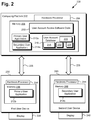
- FIG. 2 shows another exemplary implementation of user account access management system 200, in combination with a more detailed exemplary representation of first user device 230 and second user device 240.
- User account access management system 200 includes computing platform 202, which is shown to be interactively coupled to first user device 230 and second user device 240 over network communication links 228.
- Computing platform 202 includes hardware processor 204, and system memory 206 storing user account access software code 208, primary user application 212a, secondary user application 214a, and user account database 216.
- user account database 216 includes primary user accounts 218 and 220, and secondary accounts 222 and 224 associated with primary user account 220.
- first user device 230 includes hardware processor 234, memory 236 storing primary user application 212b, and display 238.
- second user device 240 including hardware processor 244, memory 246 storing secondary user application 214b, and display 248.
- user account access software code 208, primary user application 212a, secondary user application 214a, user account database 216, primary user accounts 218 and 220, and secondary accounts 222 and 224, in Figure 2 correspond in general to user account access software code 108, primary user application 112, secondary user application 114, user account database 116, primary user accounts 118 and 120, and secondary accounts 122 and 124, in Figure 1 .
- those corresponding features may share any of the characteristics attributed to either corresponding feature by the present disclosure.
- First user device 230 having display 238 corresponds in general to first user device 130 having display 138, in Figure 1 , and those corresponding features may share any of the characteristics attributed to either corresponding feature by the present disclosure. That is to say, although not shown in Figure 1 , first user device 130 may include features corresponding respectively to hardware processor 234 and memory 236 storing primary user application 212b, while display 238 may take the form of an LCD, an LED display, an OLED display, or another suitable display screen that performs a physical transformation of signals to light. Moreover, primary user application 212b corresponds in general to primary user application 112/212a, and any of those corresponding features may share the characteristics attributed to any corresponding feature by the present disclosure.
- Second user device 240 having display 248 corresponds in general to either or both of second user devices 140a and 140b having respective displays 148a and 148b, in Figure 1 , and those corresponding features may share any of the characteristics attributed to either corresponding feature by the present disclosure.
- second use devices 140a and 140b may include features corresponding respectively to hardware processor 244 and memory 246 storing secondary user application 214b
- display 248 may take the form of an LCD, an LED display, an OLED display, or another suitable display screen that performs a physical transformation of signals to light.
- secondary user application 214b corresponds in general to secondary user application 114/214a, and each of those corresponding features may share the characteristics attributed to any corresponding feature by the present disclosure.
- primary user application 212b is located in memory 236 of first user device 130/230, having been received from user account access management system 100/200 via network communication link 128/228.
- network communication link 128/228 corresponds to transfer of primary user application 212b over a packet-switched network, for example, such as the Internet.
- primary user application 212b may be persistently stored in memory 236 and may be executed locally on first user device 130/230 by hardware processor 234, to facilitate interaction with user account access software code 108/208. That is to say, first user device 130/230 can utilize primary user application 212b to communicate with user account access software code 108/208 so as to provide secondary account profile data 154, and/or to receive authentication token 158.
- secondary user application 214b is located in memory 246 of second user device 140a/140b/230, having been received from user account access management system 100/200 via network communication link 128/228.
- network communication link 128/228 corresponds to transfer of secondary user application 214b over a packet-switched network such as the Internet. Once transferred, for instance by being downloaded over network communication link 128/228, secondary user application 214b may be persistently stored in memory 246 and may be executed locally on second user device 140a/140b/240 by hardware processor 244, to facilitate interaction with user account access software code 108/208.
- FIG. 3 shows exemplary system 360 and a computer-readable non-transitory medium including instructions for managing user account access, according to one implementation.
- System 360 includes computing platform 362 having hardware processor 364 and system memory 366, interactively linked to display 368.
- Display 368 may take the form of an LCD, an LED display, an OLED display, or another suitable display screen that performs a physical transformation of signals to light.
- System 360 including computing platform 362 having hardware processor 364 and system memory 366 corresponds in general to user account access management system 100/200 including computing platform 102/202 having hardware processor 104/204 and system memory 106/206, in Figure 1 / 2 , and those corresponding features may share the characteristics attributed to any of the corresponding features by the present disclosure.
- Computer-readable non-transitory medium 310 having user account access software code 308 stored thereon.
- a computer-readable non-transitory medium may correspond to various types of media, such as volatile media and non-volatile media, for example.
- Volatile media may include dynamic memory, such as dynamic random access memory (dynamic RAM), while non-volatile memory may include optical, magnetic, or electrostatic storage devices.
- Common forms of computer-readable non-transitory media include, for example, optical discs, RAM, programmable read-only memory (PROM), erasable PROM (EPROM), and FLASH memory.
- computer-readable non-transitory medium 310 provides user account access software code 308 for execution by hardware processor 364 of system 360.
- User account access software code 308 corresponds in general to user account access software code 108/208, in Figures 1 and 2 , and is capable of performing all of the operations attributed to those corresponding features by the present disclosure.
- Figure 4 presents flowchart 400 outlining an exemplary method for use by a system to manage user account access.
- Flowchart 400 begins with receiving, from first user device 130/230, secondary account profile data 154 for generating secondary account 122/222 or 124/224 associated with primary user account 120/220 registered with a web based service (action 470).
- user account access management system 100/200 may correspond to one or more web servers providing a web based service, such as a digital movie service or other web based service providing digital content, for example.
- primary user account 120/220 may be registered with the web based service, and may enable owner 150 of primary user account 120/220 to access all movies or other digital content to which owner 150 holds digital rights through primary user account 120/220.
- Secondary account profile data 154 may include identification data for secondary account 122/222 or 124/224, such as data selecting a name for the secondary account, and/or an avatar or other representative image for the secondary account.
- secondary account profile data 154 may include one or more content filters for restricting access to some of the content held in primary user account 120/220. For example, where content held in primary user account 120/220 includes movie content, secondary account profile data 154 may include restrictions based on Motion Picture Association of America (MPAA) ratings, or other criteria identified by owner 150.
- MPAA Motion Picture Association of America
- secondary account profile data 154 may include restrictions on purchase features and/or access to social functions available through primary user account 120/220.
- secondary account profile data 154 may include restrictions enabling a second user device linked to secondary account 122/222 or 124/224, such as second user device 140a/140b/240, limited access to content presently held in primary user account 120/220, and may further prevent second user device 140a/140b/240 from engaging in commercial transactions using secondary account 122/222 or 124/224, such as the purchase of new content.
- Secondary account profile data 154 may be received by user account access software code 108/208/308 of system 100/200/360, executed by hardware processor 104/204/364. As shown in Figures 1 and 2 , secondary account profile data 154 may be received by user account access software code 108/208/308 from primary user application 212b of first user device 130/230 via communication network 126 and network communication links 128/228.
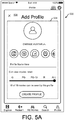
- Figure 5A depicts an exemplary input screen shown on display 538 of first user device 530 for entering secondary account profile data 554, according to one implementation.
- Secondary account profile data 554 corresponds in general to secondary account profile data 154, in Figure 1 , and those corresponding features may share any of the characteristics attributed to either corresponding feature by the present disclosure.
- first user device 530 including display 538 corresponds in general to first user device 130/230 including display 138/238, in Figures 1 and 2 , and those corresponding features may share any of the characteristics attributed to either corresponding feature by the present disclosure.
- secondary account profile data 154/554 can be provided by inputs from owner 150 to first user device 130/230/530 selecting an avatar and profile name for secondary account 122/222 or 124/224.
- secondary account profile data 154/554 can include access restrictions to movie content held in primary user account 120/220 based on MPAA ratings.
- a user of secondary account 122/222 or 124/224 has unrestricted access to the movie content held in primary user account 120/220.
- the interactive screen shown on display 138/238/538 of first user device 130/230/530 in Figure 5A may be provided by primary user application 212b, executed by hardware processor 234 of first user device 130/230/530.
- Flowchart 400 continues with receiving, from second user device 140a/140b/240, sign up request 156 for using the web based service with which primary user account 120/220 is registered (action 472).
- Sign up request 156 may be received by user account access software code 108/208/308 of system 100/200/360, executed by hardware processor 104/204/364.
- sign up request 156 may be received by user account access software code 108/208/308 from second user device 140a/140b/240 via communication network 126 and network communication links 128/228.
- Figure 5B depicts an exemplary login screen shown on display 548 of second user device 540 for submitting sign up request 556, according to one implementation.
- Sign up request 556 corresponds in general to sign up request 156, in Figure 1 , and those corresponding features may share any of the characteristics attributed to either corresponding feature by the present disclosure.
- second user device 540 including display 548 corresponds in general to second user device 140a/140b/240 including display 148a/148b/248, in Figures 1 and 2 , and each of those corresponding features may share the characteristics attributed to any of the corresponding features by the present disclosure.
- the login screen shown on display 148a/148b/248/548 of second user device 140a/140b/240/540 includes options for a primary user account holder, such as owner 150, to login of second user device 140a/140b/240/540 using a third-party IDP such as Facebook® or Google®, for example, or to login via email.
- a primary user account holder such as owner 150
- a third-party IDP such as Facebook® or Google®
- the login screen shown on display 148a/148b/248/548 enables a secondary user, such as one of secondary users 152a and 152b, to submit sign up request 156/556 for accessing content held in primary user account 120/220.
- Flowchart 400 continues with transmitting authentication token 158 to one of first user device 130/230/530 and second user device 140a/140b/240/540 (action 474).
- Authentication token 158 may be transmitted to first user device 130/230/530 or second user device 140a/140b/240/540 by user account access software code 108/208/308 of system 100/200/360, executed by hardware processor 104/204/364.
- authentication token 158 may be transmitted to first user device 130/230/530 or second user device 140a/140b/240/540 via communication network 126 and network communication links 128/228.
- FIG. 5C depicts exemplary authentication token 558 shown on display 148a/148b/248/548 of second user device 140a/140b/240/540 after transmission of authentication token 558 to second user device 140a/140b/240/540, according to one implementation.
- Authentication token 558 corresponds in general to authentication token 158, in Figure 1 , and those corresponding features may share any of the characteristics attributed to either corresponding feature by the present disclosure.
- authentication token 158/558 may be a unique sequence of numbers. However, in other implementations, authentication token 158/558 may be a unique sequence of symbols and/or alphanumeric characters.
- Figure 5C as well as subsequent Figures 5D , 5E , 5F , 5G , and 5H correspond to implementations in which authentication token 158/558 is transmitted to second user device 140a/140b/240/540 in action 474, that representation is merely by way of example. In other implementations, authentication token 158/558 may be transmitted to first user device 130/230/530 in action 474.
- Flowchart 400 continues with receiving authentication token 158/558 from the other of first user device 130/230/530 and second user device 140a/140b/240/540 (action 476). That is to say, where authentication token 158/558 is transmitted to second user device 140a/140b/240/540 in action 474, authentication token 158/558 is received from first user device 130/230/530 in action 476. By analogy, where authentication token 158/558 is transmitted to first user device 130/230/530 in action 474, authentication token 158/558 is received from second user device 140a/140b/240/540 in action 476.
- Authentication token 158/558 may be received by user account access software code 108/208/308 of system 100/200/360, executed by hardware processor 104/204/364. As shown in Figure 1 , authentication token 158/558 may be received by user account access software code 108/208/308 via communication network 126 and network communication links 128/228.
- authentication token 158/558 in order for authentication token 158/558 to be transmitted to one of first user device 130/230/530 and second user device 140a/140b/240/540, and then to be subsequently received from the other of first user device 130/230/530 and second user device 140a/140b/240/540, authentication token 158/558 must be transferred between first user device 130/230/530 and second user device 140a/140b/240/540.
- authentication token 158/558 may be transferred locally between first user device 130/230/530 and second user device 140a/140b/240/540, or may be entered manually into the one of first user device 130/230/530 and second user device 140a/140b/240/540 to which authentication token 158/558 was not transmitted in action 474.
- authentication token 158/558 may be transferred locally to first user device 130/230/530, or input manually to first user device 130/230/530.
- authentication token 158/558 may be input to first user device 130/230/530 via optical character recognition, barcode scanning, or via a wireless technology.
- local transfer of authentication token 158/558 may be performed wirelessly using WiFi-Direct, Bluetooth, ZigBee, NFC, or 60 GHz wireless communication methods, among others.
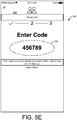
- Figure 5D depicts exemplary display 138/238/538 of first user device 130/230/530 requesting entry of authentication token 158/558
- Figure 5E shows display 138/238/538 of first user device 130/230/530 after entry of authentication token 158/558, according to one implementation.
- Figures 5D and 5E correspond to an exemplary implementation in which authentication token 158/558 is entered manually into first user device 130/230/530.
- the interactive screens shown on display 138/238/538 of first user device 130/230/530 in Figures 5D and 5E may be provided by primary user application 212b, executed by hardware processor 234 of first user device 130/230/530.
- Flowchart 400 can conclude with linking secondary account 122/222 or 124/224 with second user device 140a/140b/240/540 based on receiving authentication token 158/558 in action 476 (action 478).
- Linking of secondary account 122/222 or 124/224 with second user device 140a/140b/240/540 may be performed by user account access software code 108/208/308 of system 100/200/360, executed by hardware processor 104/204/364.
- linking of secondary account 122/222 or 124/224 with second user device 140a/140b/240/540 may include providing secondary user application 214b for execution by hardware processor 244 of second user device 140a/140b/240/540.
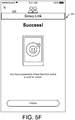
- Figure 5F depicts an exemplary success screen shown on display 138/238/538 of first user device 130/230/530 confirming the linking of secondary account 122/222 or 124/224 with second user device 140a/140b/240/540
- Figure 5G shows an analogous success screen on display 148a/148b/248/548 of second user device 140a/140b/240/540, according to one implementation.
- linking secondary account 122/222 or 124/224 with second user device 140a/140b/240/540 includes locking access to assets of primary user account 120/220 by second user device 140a/140b/240/540 based on restrictions included in secondary account profile data 154/554.
- the restrictions included in secondary account profile data 154/554 may restrict access to media content to which owner 150 of primary user account 120/220 holds digital rights, and/or may restrict commercial transactions by second user device 140a/140b/240/540 utilizing secondary account 122/222 or 124/224.
- primary user account 120/220 may be associated with more than one secondary account.
- primary user account 120/220 may be associated with secondary account 122/222 and may be independently associated with another secondary account 124/224.
- hardware processor 104/204/364 of system 100/200/360 may further execute user account access software code 108/208/308 to receive identification data identifying which of secondary account 122/222 or 124/224 to link with second user device 140a/140b/240/540.
- Figure 5H depicts an exemplary input screen shown on display 138/238/538 of first user device 130/230/530 for identifying the secondary account for linking with the second user device 140a/140b/240/540, according to one implementation.
- the interactive screen shown on display 138/238/538 of first user device 130/230/530, in Figure 5H may be provided by primary user application 212b, executed by hardware processor 234 of first user device 130/230/530.
- owner 150 utilizes first user device 130/230/530 to send identification data 524 identifying secondary account 124/224 for linking with second user device 140a/140b/240/540. Also shown in Figure 5H is identification data 522 identifying secondary account 122/222. Identification data 524 may be received by user account access software code 108/208/308 from primary user application 212b of first user device 130/230/530, via communication network 126 and network communication links 128/228.
- linking a particular secondary account with the second user device may include preventing linking of the second user device with another secondary account associated with the primary user account. For example, where identification data 524 is used to identify secondary account 124/224 for linking with second user device 140a/140b/240/540, and where linking occurs in action 478, that linking may prevent concurrent linking of second user device 140a/140b/240/540 with secondary account 122/222.
- the user account access management solutions described above may be adapted to meet a variety of different use cases.
- the method of flowchart 400 can be adapted to enable linking of a secondary account with two primary user accounts, such as primary user accounts 118 and 120.
- primary user accounts 118 and 120 may be linked to one another, thereby enabling the respective owners of primary user accounts 118 and 120 to enjoy restricted or unrestricted access to the assets of the other primary user account.
- a secondary account associated with primary user account 120 for example, is linked with a device utilized by a secondary user, i.e., second user device 140a/140b/240/540, that second user device may have access to the assets of both of primary user accounts 118 and 120, subject to the restrictions imposed by the owner of primary user account 120.
- the present application discloses systems and methods for managing user account access.
- the present user account access management solution links a device used by a group or family member to a secondary account of a primary user account owned and controlled by a primary account holder, without granting full access to the primary user account or disclosing third-party identity credentials of the primary account holder.
- the present user account access management solution also advantageously provides for the ability to lock access to assets of the primary account by the device used by the group or family member based on restrictions included in secondary account profile data used to generate the secondary account.
Landscapes
- Engineering & Computer Science (AREA)
- Computer Hardware Design (AREA)
- Computer Security & Cryptography (AREA)
- General Engineering & Computer Science (AREA)
- Computing Systems (AREA)
- Computer Networks & Wireless Communication (AREA)
- Signal Processing (AREA)
- Theoretical Computer Science (AREA)
- Software Systems (AREA)
- General Physics & Mathematics (AREA)
- Physics & Mathematics (AREA)
- Multimedia (AREA)
- Technology Law (AREA)
- General Health & Medical Sciences (AREA)
- Bioethics (AREA)
- Health & Medical Sciences (AREA)
- Information Transfer Between Computers (AREA)
- Telephonic Communication Services (AREA)
Abstract
Description
- There are situations in which a primary account holder may wish to enable other members of a group to have access to selected assets of the primary account. For example, in many households, one person, often a parent, is a primary account holder who owns and manages access to digital content, such as digital movie content. Access to the digital content is typically attached to that primary account holder's credentials. Sharing the digital content with other members of the family often involves giving full access to the primary account holder's credentials on devices used by other family members. Moreover, in instances where third-party Identity Providers (IDPs) such as Facebook® or Google® are used to authenticate a user, enabling access to the primary account may undesirably include providing full access to those third-party accounts as well.
- There are provided systems and methods for managing user account access, substantially as shown in and/or described in connection with at least one of the figures, and as set forth more completely in the claims.
-
-
Figure 1 shows a diagram of an exemplary user account access management system, according to one implementation; -
Figure 2 shows another exemplary implementation of a user account access management system; -
Figure 3 shows an exemplary system and a computer-readable non-transitory medium including instructions for managing user account access; -
Figure 4 is a flowchart presenting an exemplary method for use by a system to manage user account access; -
Figure 5A shows an exemplary input screen of a first user device for entering secondary account profile data for generating a secondary account associated with a primary user account, according to one implementation; -
Figure 5B shows an exemplary login screen of a second user device for entering a sign up request for accessing assets held in the primary user account, according to one implementation; -
Figure 5C depicts an exemplary display screen of the second user device displaying an authentication token received from a system for managing user account access, according to one implementation; -
Figure 5D shows another exemplary input screen of the first user device for entering the authentication token ofFigure 5C , according to one implementation; -
Figure 5E shows the exemplary input screen ofFigure 5D after entry of the authentication token, according to one implementation; -
Figure 5F shows an exemplary success screen of the first user device confirming the linking of the secondary account with the second user device, according to one implementation; -
Figure 5G shows an exemplary success screen of the second user device confirming the linking of the secondary account with the second user device, according to one implementation; and -
Figure 5H shows yet another exemplary input screen of the first user device for identifying the secondary account for linking with the second user device, according to one implementation. - The following description contains specific information pertaining to implementations in the present disclosure. One skilled in the art will recognize that the present disclosure may be implemented in a manner different from that specifically discussed herein. The drawings in the present application and their accompanying detailed description are directed to merely exemplary implementations. Unless noted otherwise, like or corresponding elements among the figures may be indicated by like or corresponding reference numerals. Moreover, the drawings and illustrations in the present application are generally not to scale, and are not intended to correspond to actual relative dimensions.
- The present application discloses systems and methods for managing user account access. The user account access management solution of the present disclosure links a device used by a group or family member to a secondary account of a primary user account, without granting full access to the primary user account or disclosing third-party identity credentials. The user account access management solution of the present disclosure also provides for the ability to lock access to assets of the primary user account by the device used by the group or family member based on restrictions included in secondary account profile data used to generate the secondary account.
- The linking process involves one device that is authenticated on the primary user account (hereinafter "first user device"), one or more non-authenticated device or devices (hereinafter "second user device(s)"), and a system for coordinating and managing account access. An authentication token, which may include a unique sequence of numbers, letters, and/or symbols is generated remotely by a user account access software code executed by a hardware processor of the system, and is transmitted to one of the first and second user devices.
- The authentication token may then be transferred between the first and second user devices via manual entry, or through other means such as optical character recognition, barcode scanning, or even wirelessly, using technologies such as WiFi-Direct, Bluetooth, and near-field communication (NFC), to name a few examples. Transfer of the authentication token between the first and second user devices, and subsequent communication with the remote system enables the user account access software code to associate the first and second user devices with each other. The appropriate authorization credentials can then be transferred to the second user device, thereby linking the second user device to a secondary account generated specifically for the user of the second user device.
-
Figure 1 shows a diagram of exemplary user accountaccess management system 100, according to one implementation. User accountaccess management system 100 includescomputing platform 102 havinghardware processor 104 andsystem memory 106 implemented as a non-transitory memory. As shown inFigure 1 ,system memory 106 stores user accountaccess software code 108,primary user application 112,secondary user application 114, anduser account database 116. - As further shown in
Figure 1 ,user account database 116 includesprimary user accounts secondary accounts primary user account 120. In addition,Figure 1 showsfirst user device 130 utilized byowner 150 ofprimary user account 120, and one or more second user device(s) 140a and 140b utilized by respective one or more secondary user(s) 152a and 152b. As shown inFigure 1 ,first user device 130 and one or more second user device(s) 140a and 140b are in communication withcomputing platform 102 viacommunication network 126 andnetwork communication links 128. Also shown inFigure 1 are secondaryaccount profile data 154, sign uprequest 156,authentication token 158, and displays 138, 148a, and 148b of respectivefirst user device 130 andsecond user devices - According to the implementation shown in
Figure 1 ,owner 150 ofprimary user account 120 may utilizefirst user device 130 andcommunication network 126 to interact with useraccount software code 108 stored onsystem memory 106. Such an interaction may include providing, usingfirst user device 130, secondaryaccount profile data 154 for generatingsecondary account 122 and/or 124 associated withprimary user account 120. - In some implementations, user account
access management system 100 may correspond to one or more web servers providing a web based service, such as a digital movie service or other web based service providing digital content, for example. In those implementations,primary user account 120 may be registered with the web based service, and may enableowner 150 ofprimary user account 120 to access all movies or other digital content to whichowner 150 holds digital rights throughprimary user account 120. - It is noted that, although
Figure 1 depicts user accountaccess software code 108,primary user application 112,secondary user application 114, anduser account database 116 as being mutually co-located insystem memory 106, that representation is merely provided as an aid to conceptual clarity. More generally, user accountaccess management system 100 may include one ormore computing platforms 102, such as computer servers for example, which may be co-located, or may form an interactively linked but distributed system, such as a cloud based system, for instance. As a result,hardware processor 104 andsystem memory 106 may correspond to distributed processor and memory resources within user accountaccess management system 100. Thus, it is to be understood that user accountaccess software code 108 and/orprimary user application 112 and/orsecondary user application 114 and/oruser account database 116 may be stored remotely from one another within the distributed memory resources of user accountaccess management system 100. - It is further noted that, although
first user device 130 is depicted as a personal computer (PC) inFigure 1 , whilesecond user devices first user device 130 andsecond user devices first user device 130 andsecond user devices displays first user device 130 andsecond user devices -
Figure 2 shows another exemplary implementation of user accountaccess management system 200, in combination with a more detailed exemplary representation offirst user device 230 andsecond user device 240. User accountaccess management system 200 includescomputing platform 202, which is shown to be interactively coupled tofirst user device 230 andsecond user device 240 overnetwork communication links 228. -
Computing platform 202 includeshardware processor 204, andsystem memory 206 storing user accountaccess software code 208,primary user application 212a,secondary user application 214a, anduser account database 216. As shown inFigure 2 ,user account database 216 includesprimary user accounts secondary accounts primary user account 220. As further shown inFigure 2 ,first user device 230 includeshardware processor 234,memory 236 storingprimary user application 212b, anddisplay 238. Also shown inFigure 2 issecond user device 240 includinghardware processor 244,memory 246 storingsecondary user application 214b, anddisplay 248. -
Network communication links 228, and user accountaccess management system 200 includingcomputing platform 202 havinghardware processor 204 andsystem memory 206, correspond in general tonetwork communication links 128, and user accountaccess management system 100 includingcomputing platform 102 havinghardware processor 104 andsystem memory 106, inFigure 1 , and those corresponding features may share any of the characteristics attributed to either corresponding feature by the present disclosure. In addition, user accountaccess software code 208,primary user application 212a,secondary user application 214a,user account database 216,primary user accounts secondary accounts Figure 2 , correspond in general to user accountaccess software code 108,primary user application 112,secondary user application 114,user account database 116,primary user accounts secondary accounts Figure 1 . In other words, those corresponding features may share any of the characteristics attributed to either corresponding feature by the present disclosure. -
First user device 230 havingdisplay 238 corresponds in general tofirst user device 130 havingdisplay 138, inFigure 1 , and those corresponding features may share any of the characteristics attributed to either corresponding feature by the present disclosure. That is to say, although not shown inFigure 1 ,first user device 130 may include features corresponding respectively tohardware processor 234 andmemory 236 storingprimary user application 212b, whiledisplay 238 may take the form of an LCD, an LED display, an OLED display, or another suitable display screen that performs a physical transformation of signals to light. Moreover,primary user application 212b corresponds in general toprimary user application 112/212a, and any of those corresponding features may share the characteristics attributed to any corresponding feature by the present disclosure. -
Second user device 240 havingdisplay 248 corresponds in general to either or both ofsecond user devices respective displays Figure 1 , and those corresponding features may share any of the characteristics attributed to either corresponding feature by the present disclosure. Thus, although not shown inFigure 1 ,second use devices hardware processor 244 andmemory 246 storingsecondary user application 214b, whiledisplay 248 may take the form of an LCD, an LED display, an OLED display, or another suitable display screen that performs a physical transformation of signals to light. Furthermore,secondary user application 214b corresponds in general tosecondary user application 114/214a, and each of those corresponding features may share the characteristics attributed to any corresponding feature by the present disclosure. - According to the exemplary implementation shown in
Figure 2 ,primary user application 212b is located inmemory 236 offirst user device 130/230, having been received from user accountaccess management system 100/200 vianetwork communication link 128/228. In one implementation,network communication link 128/228 corresponds to transfer ofprimary user application 212b over a packet-switched network, for example, such as the Internet. Once transferred, for instance by being downloaded overnetwork communication link 128/228,primary user application 212b may be persistently stored inmemory 236 and may be executed locally onfirst user device 130/230 byhardware processor 234, to facilitate interaction with user accountaccess software code 108/208. That is to say,first user device 130/230 can utilizeprimary user application 212b to communicate with user accountaccess software code 108/208 so as to provide secondaryaccount profile data 154, and/or to receiveauthentication token 158. - Also according to the exemplary implementation shown in
Figure 2 ,secondary user application 214b is located inmemory 246 ofsecond user device 140a/140b/230, having been received from user accountaccess management system 100/200 vianetwork communication link 128/228. As noted above by reference toprimary user application 212b, in one implementation,network communication link 128/228 corresponds to transfer ofsecondary user application 214b over a packet-switched network such as the Internet. Once transferred, for instance by being downloaded overnetwork communication link 128/228,secondary user application 214b may be persistently stored inmemory 246 and may be executed locally onsecond user device 140a/140b/240 byhardware processor 244, to facilitate interaction with user accountaccess software code 108/208. -
Figure 3 showsexemplary system 360 and a computer-readable non-transitory medium including instructions for managing user account access, according to one implementation.System 360 includescomputing platform 362 havinghardware processor 364 andsystem memory 366, interactively linked todisplay 368.Display 368 may take the form of an LCD, an LED display, an OLED display, or another suitable display screen that performs a physical transformation of signals to light.System 360 includingcomputing platform 362 havinghardware processor 364 andsystem memory 366 corresponds in general to user accountaccess management system 100/200 includingcomputing platform 102/202 havinghardware processor 104/204 andsystem memory 106/206, inFigure 1 /2 , and those corresponding features may share the characteristics attributed to any of the corresponding features by the present disclosure. - Also shown in
Figure 3 is computer-readable non-transitory medium 310 having user accountaccess software code 308 stored thereon. The expression "computer-readable non-transitory medium," as used in the present application, refers to any medium, excluding a carrier wave or other transitory signal, that provides instructions tohardware processor 364 ofcomputing platform 362. Thus, a computer-readable non-transitory medium may correspond to various types of media, such as volatile media and non-volatile media, for example. Volatile media may include dynamic memory, such as dynamic random access memory (dynamic RAM), while non-volatile memory may include optical, magnetic, or electrostatic storage devices. Common forms of computer-readable non-transitory media include, for example, optical discs, RAM, programmable read-only memory (PROM), erasable PROM (EPROM), and FLASH memory. - According to the implementation shown in
Figure 3 , computer-readable non-transitory medium 310 provides user accountaccess software code 308 for execution byhardware processor 364 ofsystem 360. User accountaccess software code 308 corresponds in general to user accountaccess software code 108/208, inFigures 1 and2 , and is capable of performing all of the operations attributed to those corresponding features by the present disclosure. - The systems for managing user account access discussed above by reference to
Figures 1 ,2 , and3 , will be further described below with reference toFigure 4. Figure 4 presentsflowchart 400 outlining an exemplary method for use by a system to manage user account access. -
Flowchart 400 begins with receiving, fromfirst user device 130/230, secondaryaccount profile data 154 for generatingsecondary account 122/222 or 124/224 associated withprimary user account 120/220 registered with a web based service (action 470). As noted above, user accountaccess management system 100/200 may correspond to one or more web servers providing a web based service, such as a digital movie service or other web based service providing digital content, for example. In those implementations,primary user account 120/220 may be registered with the web based service, and may enableowner 150 ofprimary user account 120/220 to access all movies or other digital content to whichowner 150 holds digital rights throughprimary user account 120/220. - Secondary
account profile data 154 may include identification data forsecondary account 122/222 or 124/224, such as data selecting a name for the secondary account, and/or an avatar or other representative image for the secondary account. In addition, secondaryaccount profile data 154 may include one or more content filters for restricting access to some of the content held inprimary user account 120/220. For example, where content held inprimary user account 120/220 includes movie content, secondaryaccount profile data 154 may include restrictions based on Motion Picture Association of America (MPAA) ratings, or other criteria identified byowner 150. - Moreover, in some implementations, secondary
account profile data 154 may include restrictions on purchase features and/or access to social functions available throughprimary user account 120/220. Thus, secondaryaccount profile data 154 may include restrictions enabling a second user device linked tosecondary account 122/222 or 124/224, such assecond user device 140a/140b/240, limited access to content presently held inprimary user account 120/220, and may further preventsecond user device 140a/140b/240 from engaging in commercial transactions usingsecondary account 122/222 or 124/224, such as the purchase of new content. - Secondary
account profile data 154 may be received by user accountaccess software code 108/208/308 ofsystem 100/200/360, executed byhardware processor 104/204/364. As shown inFigures 1 and2 , secondaryaccount profile data 154 may be received by user accountaccess software code 108/208/308 fromprimary user application 212b offirst user device 130/230 viacommunication network 126 andnetwork communication links 128/228. -
Figure 5A depicts an exemplary input screen shown ondisplay 538 offirst user device 530 for entering secondaryaccount profile data 554, according to one implementation. Secondaryaccount profile data 554 corresponds in general to secondaryaccount profile data 154, inFigure 1 , and those corresponding features may share any of the characteristics attributed to either corresponding feature by the present disclosure. In addition,first user device 530 includingdisplay 538 corresponds in general tofirst user device 130/230 includingdisplay 138/238, inFigures 1 and2 , and those corresponding features may share any of the characteristics attributed to either corresponding feature by the present disclosure. - According to the exemplary implementation shown in
Figure 5A , secondaryaccount profile data 154/554 can be provided by inputs fromowner 150 tofirst user device 130/230/530 selecting an avatar and profile name forsecondary account 122/222 or 124/224. As also shown byFigure 5A , secondaryaccount profile data 154/554 can include access restrictions to movie content held inprimary user account 120/220 based on MPAA ratings. For example, in the exemplary implementation ofFigure 5A , a user ofsecondary account 122/222 or 124/224 has unrestricted access to the movie content held inprimary user account 120/220. The interactive screen shown ondisplay 138/238/538 offirst user device 130/230/530 inFigure 5A may be provided byprimary user application 212b, executed byhardware processor 234 offirst user device 130/230/530. -
Flowchart 400 continues with receiving, fromsecond user device 140a/140b/240, sign uprequest 156 for using the web based service with whichprimary user account 120/220 is registered (action 472). Sign uprequest 156 may be received by user accountaccess software code 108/208/308 ofsystem 100/200/360, executed byhardware processor 104/204/364. As shown inFigures 1 and2 , sign uprequest 156 may be received by user accountaccess software code 108/208/308 fromsecond user device 140a/140b/240 viacommunication network 126 andnetwork communication links 128/228. -
Figure 5B depicts an exemplary login screen shown ondisplay 548 ofsecond user device 540 for submitting sign uprequest 556, according to one implementation. Sign uprequest 556 corresponds in general to sign uprequest 156, inFigure 1 , and those corresponding features may share any of the characteristics attributed to either corresponding feature by the present disclosure. In addition,second user device 540 includingdisplay 548 corresponds in general tosecond user device 140a/140b/240 includingdisplay 148a/148b/248, inFigures 1 and2 , and each of those corresponding features may share the characteristics attributed to any of the corresponding features by the present disclosure. - According to the exemplary implementation shown in
Figure 5B , the login screen shown ondisplay 148a/148b/248/548 ofsecond user device 140a/140b/240/540 includes options for a primary user account holder, such asowner 150, to login ofsecond user device 140a/140b/240/540 using a third-party IDP such as Facebook® or Google®, for example, or to login via email. In addition, the login screen shown ondisplay 148a/148b/248/548 enables a secondary user, such as one ofsecondary users request 156/556 for accessing content held inprimary user account 120/220. -
Flowchart 400 continues with transmittingauthentication token 158 to one offirst user device 130/230/530 andsecond user device 140a/140b/240/540 (action 474).Authentication token 158 may be transmitted tofirst user device 130/230/530 orsecond user device 140a/140b/240/540 by user accountaccess software code 108/208/308 ofsystem 100/200/360, executed byhardware processor 104/204/364. As shown inFigure 1 ,authentication token 158 may be transmitted tofirst user device 130/230/530 orsecond user device 140a/140b/240/540 viacommunication network 126 andnetwork communication links 128/228. -
Figure 5C depicts exemplary authentication token 558 shown ondisplay 148a/148b/248/548 ofsecond user device 140a/140b/240/540 after transmission ofauthentication token 558 tosecond user device 140a/140b/240/540, according to one implementation.Authentication token 558 corresponds in general toauthentication token 158, inFigure 1 , and those corresponding features may share any of the characteristics attributed to either corresponding feature by the present disclosure. As shown inFigure 5C , in oneimplementation authentication token 158/558 may be a unique sequence of numbers. However, in other implementations,authentication token 158/558 may be a unique sequence of symbols and/or alphanumeric characters. - It is noted that, although
Figure 5C , as well as subsequentFigures 5D ,5E ,5F ,5G , and5H correspond to implementations in whichauthentication token 158/558 is transmitted tosecond user device 140a/140b/240/540 inaction 474, that representation is merely by way of example. In other implementations,authentication token 158/558 may be transmitted tofirst user device 130/230/530 inaction 474. -
Flowchart 400 continues with receivingauthentication token 158/558 from the other offirst user device 130/230/530 andsecond user device 140a/140b/240/540 (action 476). That is to say, whereauthentication token 158/558 is transmitted tosecond user device 140a/140b/240/540 inaction 474,authentication token 158/558 is received fromfirst user device 130/230/530 inaction 476. By analogy, whereauthentication token 158/558 is transmitted tofirst user device 130/230/530 inaction 474,authentication token 158/558 is received fromsecond user device 140a/140b/240/540 inaction 476. -
Authentication token 158/558 may be received by user accountaccess software code 108/208/308 ofsystem 100/200/360, executed byhardware processor 104/204/364. As shown inFigure 1 ,authentication token 158/558 may be received by user accountaccess software code 108/208/308 viacommunication network 126 andnetwork communication links 128/228. - It is noted that, in order for
authentication token 158/558 to be transmitted to one offirst user device 130/230/530 andsecond user device 140a/140b/240/540, and then to be subsequently received from the other offirst user device 130/230/530 andsecond user device 140a/140b/240/540,authentication token 158/558 must be transferred betweenfirst user device 130/230/530 andsecond user device 140a/140b/240/540. According to various implementations of the present inventive principles,authentication token 158/558 may be transferred locally betweenfirst user device 130/230/530 andsecond user device 140a/140b/240/540, or may be entered manually into the one offirst user device 130/230/530 andsecond user device 140a/140b/240/540 to whichauthentication token 158/558 was not transmitted inaction 474. - Continuing the example implementation in which
authentication token 158/558 is transmitted tosecond user device 140a/140b/240/540 inaction 474 and received fromfirst user device 130/230/530 inaction 476,authentication token 158/558 may be transferred locally tofirst user device 130/230/530, or input manually tofirst user device 130/230/530. - When transferred locally, for example,
authentication token 158/558 may be input tofirst user device 130/230/530 via optical character recognition, barcode scanning, or via a wireless technology. For example, local transfer ofauthentication token 158/558 may be performed wirelessly using WiFi-Direct, Bluetooth, ZigBee, NFC, or 60 GHz wireless communication methods, among others. -
Figure 5D depictsexemplary display 138/238/538 offirst user device 130/230/530 requesting entry ofauthentication token 158/558, whileFigure 5E showsdisplay 138/238/538 offirst user device 130/230/530 after entry ofauthentication token 158/558, according to one implementation. It is noted thatFigures 5D and5E correspond to an exemplary implementation in whichauthentication token 158/558 is entered manually intofirst user device 130/230/530. It is further noted that the interactive screens shown ondisplay 138/238/538 offirst user device 130/230/530 inFigures 5D and5E , as well as in subsequentFigure 5F , may be provided byprimary user application 212b, executed byhardware processor 234 offirst user device 130/230/530. -
Flowchart 400 can conclude with linkingsecondary account 122/222 or 124/224 withsecond user device 140a/140b/240/540 based on receivingauthentication token 158/558 in action 476 (action 478). Linking ofsecondary account 122/222 or 124/224 withsecond user device 140a/140b/240/540 may be performed by user accountaccess software code 108/208/308 ofsystem 100/200/360, executed byhardware processor 104/204/364. Moreover, in some implementations, as shown inFigure 2 , linking ofsecondary account 122/222 or 124/224 withsecond user device 140a/140b/240/540 may include providingsecondary user application 214b for execution byhardware processor 244 ofsecond user device 140a/140b/240/540. -
Figure 5F depicts an exemplary success screen shown ondisplay 138/238/538 offirst user device 130/230/530 confirming the linking ofsecondary account 122/222 or 124/224 withsecond user device 140a/140b/240/540, whileFigure 5G shows an analogous success screen ondisplay 148a/148b/248/548 ofsecond user device 140a/140b/240/540, according to one implementation. - In some implementations, as discussed above, linking
secondary account 122/222 or 124/224 withsecond user device 140a/140b/240/540 includes locking access to assets ofprimary user account 120/220 bysecond user device 140a/140b/240/540 based on restrictions included in secondaryaccount profile data 154/554. Moreover, and as also discussed above, the restrictions included in secondaryaccount profile data 154/554 may restrict access to media content to whichowner 150 ofprimary user account 120/220 holds digital rights, and/or may restrict commercial transactions bysecond user device 140a/140b/240/540 utilizingsecondary account 122/222 or 124/224. - In some implementations,
primary user account 120/220 may be associated with more than one secondary account. For example, as shown inFigures 1 and2 ,primary user account 120/220 may be associated withsecondary account 122/222 and may be independently associated with anothersecondary account 124/224. In those implementations,hardware processor 104/204/364 ofsystem 100/200/360 may further execute user accountaccess software code 108/208/308 to receive identification data identifying which ofsecondary account 122/222 or 124/224 to link withsecond user device 140a/140b/240/540. -
Figure 5H depicts an exemplary input screen shown ondisplay 138/238/538 offirst user device 130/230/530 for identifying the secondary account for linking with thesecond user device 140a/140b/240/540, according to one implementation. The interactive screen shown ondisplay 138/238/538 offirst user device 130/230/530, inFigure 5H , may be provided byprimary user application 212b, executed byhardware processor 234 offirst user device 130/230/530. - According to the exemplary implementation shown in
Figure 5H ,owner 150 utilizesfirst user device 130/230/530 to sendidentification data 524 identifyingsecondary account 124/224 for linking withsecond user device 140a/140b/240/540. Also shown inFigure 5H isidentification data 522 identifyingsecondary account 122/222.Identification data 524 may be received by user accountaccess software code 108/208/308 fromprimary user application 212b offirst user device 130/230/530, viacommunication network 126 andnetwork communication links 128/228. - It is noted that in implementations in which
primary user account 120/220 is associated with more than on secondary account, linking a particular secondary account with the second user device may include preventing linking of the second user device with another secondary account associated with the primary user account. For example, whereidentification data 524 is used to identifysecondary account 124/224 for linking withsecond user device 140a/140b/240/540, and where linking occurs inaction 478, that linking may prevent concurrent linking ofsecond user device 140a/140b/240/540 withsecondary account 122/222. - It is further noted that the user account access management solutions described above may be adapted to meet a variety of different use cases. For example, the method of
flowchart 400 can be adapted to enable linking of a secondary account with two primary user accounts, such as primary user accounts 118 and 120. As a specific example, primary user accounts 118 and 120 may be linked to one another, thereby enabling the respective owners of primary user accounts 118 and 120 to enjoy restricted or unrestricted access to the assets of the other primary user account. In those implementations, where a secondary account associated withprimary user account 120, for example, is linked with a device utilized by a secondary user, i.e.,second user device 140a/140b/240/540, that second user device may have access to the assets of both of primary user accounts 118 and 120, subject to the restrictions imposed by the owner ofprimary user account 120. - Thus, the present application discloses systems and methods for managing user account access. The present user account access management solution links a device used by a group or family member to a secondary account of a primary user account owned and controlled by a primary account holder, without granting full access to the primary user account or disclosing third-party identity credentials of the primary account holder. The present user account access management solution also advantageously provides for the ability to lock access to assets of the primary account by the device used by the group or family member based on restrictions included in secondary account profile data used to generate the secondary account.
- From the above description it is manifest that various techniques can be used for implementing the concepts described in the present application without departing from the scope of those concepts. Moreover, while the concepts have been described with specific reference to certain implementations, a person of ordinary skill in the art would recognize that changes can be made in form and detail without departing from the scope of those concepts. As such, the described implementations are to be considered in all respects as illustrative and not restrictive. It should also be understood that the present application is not limited to the particular implementations described herein, but many rearrangements, modifications, and substitutions are possible without departing from the scope of the present disclosure.
Claims (15)
- A user account access management system, the system comprising:a computing platform having a hardware processor and a system memory storing a user account access software code;the hardware processor configured to execute the user account access software code to:receive, from a first user device, a secondary account profile data for generating a secondary account associated with a primary user account registered with a web based service;receive, from a second user device, a sign up request for using the web based service;transmit an authentication token to one of the first user device and the second user device;receive the authentication token from an other of the first user device and the second user device; andlink the secondary account with the second user device based on receiving the authentication code from the other of the first user device and the second user device.
- The user account access management system of claim 1, wherein linking the secondary account with the second user device includes locking access to assets of the primary user account by the second user device based on restrictions included in the secondary account profile data.
- The user account access management system of claim 2, wherein the restrictions restrict access to media content to which an owner of the primary user account holds digital rights.
- The user account access management system of claim 2 or 3, wherein the restrictions restrict commercial transactions by the secondary account.
- The user account access management system of any of the preceding claims, wherein the secondary account is one of a plurality of secondary accounts associated with the primary user account.
- The user account access management system of claim 5, wherein the hardware processor is further configured to execute the user account access software code to receive an identification data identifying the secondary account for linking with the second user device.
- The user account access management system of claim 5 or 6, wherein linking the secondary account with the second user device includes preventing linking of the second user device with another of the plurality of secondary accounts associated with the primary user account.
- A method for use by a user account access management system including a hardware processor and a system memory storing a user account access software code, the method comprising:receiving from a first user device, using the hardware processor, a secondary account profile data for generating a secondary account associated with a primary user account registered with a web based service;receiving from a second user device, using the hardware processor, a sign up request for using the web based service;transmitting, using the hardware processor, an authentication token to one of the first user device and the second user device;receiving, using the hardware processor, the authentication token from an other of the first user device and the second user device; andlinking, using the hardware processor, the secondary account with the second user device based on receiving the authentication code from the other of the first user device and the second user device.
- The method of claim 8, wherein linking the secondary account with the second user device includes locking access to assets of the primary user account by the second user device based on restrictions included in the secondary account profile data.
- The method of claim 9, wherein the restrictions restrict access to media content to which an owner of the primary user account holds digital rights.
- The method of claim 9 or 10, wherein the restrictions restrict commercial transactions by the secondary account.
- The method according to any of the claims 8 to 11, wherein the secondary account is one of a plurality of secondary accounts associated with the primary user account.
- The method of claim 12, further comprising receiving an identification data identifying the secondary account for linking with the second user device.
- The method of claim 12 or 13, wherein linking the secondary account with the second user device includes preventing linking of the second user device with another of the plurality of secondary accounts associated with the primary user account.
- A computer-readable non-transitory medium having stored thereon instructions, which when executed by a hardware processor of a user account access management system, instantiate a method according to any of the claims 8 to 14.
Applications Claiming Priority (1)
| Application Number | Priority Date | Filing Date | Title |
|---|---|---|---|
| US15/791,143 US10536440B2 (en) | 2017-10-23 | 2017-10-23 | User account access management |
Publications (2)
| Publication Number | Publication Date |
|---|---|
| EP3474170A1 true EP3474170A1 (en) | 2019-04-24 |
| EP3474170B1 EP3474170B1 (en) | 2021-03-24 |
Family
ID=62778830
Family Applications (1)
| Application Number | Title | Priority Date | Filing Date |
|---|---|---|---|
| EP18179631.9A Active EP3474170B1 (en) | 2017-10-23 | 2018-06-25 | User account access management |
Country Status (2)
| Country | Link |
|---|---|
| US (2) | US10536440B2 (en) |
| EP (1) | EP3474170B1 (en) |
Families Citing this family (9)
| Publication number | Priority date | Publication date | Assignee | Title |
|---|---|---|---|---|
| US11206267B2 (en) | 2018-01-31 | 2021-12-21 | T-Mobile Usa, Inc. | Fine grained digital experience controls |
| US11627137B2 (en) | 2018-01-31 | 2023-04-11 | T-Mobile Usa, Inc. | Virtual profile instantiations via an access privilege control system |
| US11523276B2 (en) * | 2019-06-28 | 2022-12-06 | Bank Of America Corporation | Utilizing a high generation cellular network to authorize an event |
| US11140154B2 (en) * | 2019-09-26 | 2021-10-05 | Bank Of America Corporation | User authentication using tokens |
| US11329823B2 (en) | 2019-09-26 | 2022-05-10 | Bank Of America Corporation | User authentication using tokens |
| US11303629B2 (en) | 2019-09-26 | 2022-04-12 | Bank Of America Corporation | User authentication using tokens |
| US11611877B2 (en) | 2020-07-08 | 2023-03-21 | T-Mobile Usa, Inc. | User authentication |
| US12133081B2 (en) | 2022-08-04 | 2024-10-29 | Capital One Services, Llc | Computer-based systems configured for adding a secondary electronic profile to a primary electronic profile and methods of use thereof |
| US11797662B1 (en) * | 2022-12-01 | 2023-10-24 | Starbucks Corporation | Computer interfaces and authentication protocols for securely linking and transferring content between online accounts |
Citations (2)
| Publication number | Priority date | Publication date | Assignee | Title |
|---|---|---|---|---|
| US20080086764A1 (en) * | 2006-10-06 | 2008-04-10 | Rajandra Luxman Kulkarni | Single-Party, Secured Multi-Channel Authentication |
| WO2015189833A1 (en) * | 2014-06-13 | 2015-12-17 | Altech Multimedia (Pty) Limited | Streaming of secure content in a home network |
Family Cites Families (40)
| Publication number | Priority date | Publication date | Assignee | Title |
|---|---|---|---|---|
| US20020049806A1 (en) * | 2000-05-16 | 2002-04-25 | Scott Gatz | Parental control system for use in connection with account-based internet access server |
| US8388440B2 (en) * | 2003-10-20 | 2013-03-05 | Sony Computer Entertainment America Llc | Network account linking |
| US20050228680A1 (en) | 2004-04-08 | 2005-10-13 | Malik Dale W | Guest account architecture |
| US7669246B2 (en) * | 2004-06-16 | 2010-02-23 | Hewlett-Packard Development Company, L.P. | System and method for linking user accounts to business entitlement objects |
| US20080305832A1 (en) | 2007-06-07 | 2008-12-11 | Microsoft Corporation | Sharing profile mode |
| MX2010007993A (en) * | 2008-01-24 | 2010-12-21 | Visa Usa Inc | System and method for conducting transactions with a financial presentation device linked to multiple accounts. |
| US20100125652A1 (en) | 2008-11-14 | 2010-05-20 | Olli Rantapuska | Method, Apparatus, and Computer Program for Binding Local Devices to User Accounts |
| US9351193B2 (en) | 2009-01-28 | 2016-05-24 | Headwater Partners I Llc | Intermediate networking devices |
| US9578182B2 (en) | 2009-01-28 | 2017-02-21 | Headwater Partners I Llc | Mobile device and service management |
| US9557889B2 (en) | 2009-01-28 | 2017-01-31 | Headwater Partners I Llc | Service plan design, user interfaces, application programming interfaces, and device management |
| US9785988B2 (en) * | 2010-11-24 | 2017-10-10 | Digital River, Inc. | In-application commerce system and method with fraud prevention, management and control |
| US8718633B2 (en) | 2011-07-13 | 2014-05-06 | Qualcomm Incorporated | Intelligent parental controls for wireless devices |
| US20130159121A1 (en) | 2011-12-14 | 2013-06-20 | Darrell Reginald May | System and method for controlling access to an electronic account |
| WO2013112642A2 (en) | 2012-01-23 | 2013-08-01 | Headwater Partners I Llc | Service plan design, user interfaces, application programming interfaces, and device management |
| CN103294965B (en) * | 2012-02-16 | 2016-06-15 | 克利特股份有限公司 | Parent-child guidance support for social networks |
| US10223687B2 (en) * | 2012-03-23 | 2019-03-05 | International Business Machines Corporation | Link of mobile devices to facilitate mobile commerce transactions |
| US9230076B2 (en) | 2012-08-30 | 2016-01-05 | Microsoft Technology Licensing, Llc | Mobile device child share |
| US8874770B2 (en) | 2013-01-09 | 2014-10-28 | Evernym, Inc. | Systems and methods for access-controlled interactions |
| US9264412B1 (en) * | 2013-01-22 | 2016-02-16 | Facebook, Inc. | Social network based mobile access |
| US20140214640A1 (en) | 2013-01-29 | 2014-07-31 | Apple Inc. | Parental management of digital assets |
| US20150081837A1 (en) * | 2013-09-13 | 2015-03-19 | Google Inc. | Provisioning a plurality of computing devices |
| US9626720B2 (en) * | 2013-11-25 | 2017-04-18 | Apple Inc. | Linked user accounts |
| US9565175B1 (en) * | 2014-01-16 | 2017-02-07 | Microstrategy Incorporated | Sharing document information |
| US10255449B2 (en) * | 2014-05-30 | 2019-04-09 | Apple Inc. | Permission request |
| US10789642B2 (en) * | 2014-05-30 | 2020-09-29 | Apple Inc. | Family accounts for an online content storage sharing service |
| US20150350220A1 (en) * | 2014-05-30 | 2015-12-03 | Apple Inc. | Control settings |
| US10108950B2 (en) * | 2014-08-12 | 2018-10-23 | Capital One Services, Llc | System and method for providing a group account |
| US10445739B1 (en) * | 2014-08-14 | 2019-10-15 | Wells Fargo Bank, N.A. | Use limitations for secondary users of financial accounts |
| US9491176B1 (en) | 2014-08-28 | 2016-11-08 | Google Inc. | Monitoring content consumption by restricted account |
| US9516099B1 (en) * | 2014-09-23 | 2016-12-06 | Amazon Technologies, Inc. | Controlling access to digital items based on weather conditions |
| US9742767B1 (en) * | 2014-09-25 | 2017-08-22 | Google Inc. | Systems, methods, and media for authenticating multiple devices |
| US10412232B2 (en) * | 2015-05-21 | 2019-09-10 | Verizon Patent And Licensing Inc. | Converged family network usage insights and actions |
| US20160358133A1 (en) * | 2015-06-05 | 2016-12-08 | Apple Inc. | User interface for loyalty accounts and private label accounts for a wearable device |
| US10237280B2 (en) | 2015-06-25 | 2019-03-19 | Websafety, Inc. | Management and control of mobile computing device using local and remote software agents |
| US20170186008A1 (en) * | 2015-12-29 | 2017-06-29 | Ca, Inc. | Methods and apparatus for authenticating and authorizing secondary accounts |
| US10475036B2 (en) * | 2016-01-08 | 2019-11-12 | Ca, Inc. | Restricting account use by controlled replenishment |
| US10158628B2 (en) * | 2016-06-08 | 2018-12-18 | Bank Of America Corporation | Preventing unauthorized access to secured information systems based on contextual login information |
| US20190141398A1 (en) * | 2017-11-06 | 2019-05-09 | Rovi Guides, Inc. | Systems and methods for sharing content service provider subscriptions for media asset recommendations |
| US11075914B2 (en) * | 2018-12-28 | 2021-07-27 | Kinzoo Technologies, Inc. | Social networking platform with adult drop-in review |
| US11699150B2 (en) * | 2019-07-25 | 2023-07-11 | Paypal, Inc. | Systems and methods for two-way account onboarding and linking across multiple service providers |
-
2017
- 2017-10-23 US US15/791,143 patent/US10536440B2/en active Active
-
2018
- 2018-06-25 EP EP18179631.9A patent/EP3474170B1/en active Active
-
2019
- 2019-12-09 US US16/708,210 patent/US11212266B2/en active Active
Patent Citations (2)
| Publication number | Priority date | Publication date | Assignee | Title |
|---|---|---|---|---|
| US20080086764A1 (en) * | 2006-10-06 | 2008-04-10 | Rajandra Luxman Kulkarni | Single-Party, Secured Multi-Channel Authentication |
| WO2015189833A1 (en) * | 2014-06-13 | 2015-12-17 | Altech Multimedia (Pty) Limited | Streaming of secure content in a home network |
Also Published As
| Publication number | Publication date |
|---|---|
| US20200120076A1 (en) | 2020-04-16 |
| US10536440B2 (en) | 2020-01-14 |
| EP3474170B1 (en) | 2021-03-24 |
| US11212266B2 (en) | 2021-12-28 |
| US20190124056A1 (en) | 2019-04-25 |
Similar Documents
| Publication | Publication Date | Title |
|---|---|---|
| US11212266B2 (en) | User account access management | |
| US20240086496A1 (en) | Machine learned feature recommendation engine in a digital transaction management platform | |
| KR101362818B1 (en) | Secure media application setup using nfc | |
| KR102846678B1 (en) | systems and methods for data access control using a short-range transceiver | |
| US10454912B2 (en) | Method and system for user authentication | |
| US11847252B2 (en) | Feature access control in a digital transaction management platform | |
| US20150081538A1 (en) | Systems and methods for providing secure digital identification | |
| US11184400B2 (en) | Authorizations associated with externally shared communication resources | |
| CN103365922A (en) | Method and device for associating images with personal information | |
| US11283728B2 (en) | Authorizations associated with externally shared communication resources | |
| KR101783339B1 (en) | Maintaining a limited user profile for social networking system users unable to establish a user profile | |
| US12282536B2 (en) | Secure authentication | |
| KR102680336B1 (en) | Chatbot operation server and its operation method that automatically performs the functions requested by the user in conjunction with the LLM server and external servers | |
| US20250061757A1 (en) | Mutable, configurable device | |
| JP2023538860A (en) | System and method for verified messaging over short-range transceivers | |
| US11704657B2 (en) | Presence verification for electronic transactions | |
| US9674203B2 (en) | File and bit location authentication | |
| KR102276349B1 (en) | System for managing ID sharing and method thereof | |
| HK40056157A (en) | Systems and methods for data access control using a short-range transceiver |
Legal Events
| Date | Code | Title | Description |
|---|---|---|---|
| PUAI | Public reference made under article 153(3) epc to a published international application that has entered the european phase |
Free format text: ORIGINAL CODE: 0009012 |
|
| STAA | Information on the status of an ep patent application or granted ep patent |
Free format text: STATUS: THE APPLICATION HAS BEEN PUBLISHED |
|
| AK | Designated contracting states |
Kind code of ref document: A1 Designated state(s): AL AT BE BG CH CY CZ DE DK EE ES FI FR GB GR HR HU IE IS IT LI LT LU LV MC MK MT NL NO PL PT RO RS SE SI SK SM TR |
|
| AX | Request for extension of the european patent |
Extension state: BA ME |
|
| STAA | Information on the status of an ep patent application or granted ep patent |
Free format text: STATUS: REQUEST FOR EXAMINATION WAS MADE |
|
| 17P | Request for examination filed |
Effective date: 20190729 |
|
| RBV | Designated contracting states (corrected) |
Designated state(s): AL AT BE BG CH CY CZ DE DK EE ES FI FR GB GR HR HU IE IS IT LI LT LU LV MC MK MT NL NO PL PT RO RS SE SI SK SM TR |
|
| GRAP | Despatch of communication of intention to grant a patent |
Free format text: ORIGINAL CODE: EPIDOSNIGR1 |
|
| STAA | Information on the status of an ep patent application or granted ep patent |
Free format text: STATUS: GRANT OF PATENT IS INTENDED |
|
| INTG | Intention to grant announced |
Effective date: 20201202 |
|
| GRAS | Grant fee paid |
Free format text: ORIGINAL CODE: EPIDOSNIGR3 |
|
| GRAA | (expected) grant |
Free format text: ORIGINAL CODE: 0009210 |
|
| STAA | Information on the status of an ep patent application or granted ep patent |
Free format text: STATUS: THE PATENT HAS BEEN GRANTED |
|
| AK | Designated contracting states |
Kind code of ref document: B1 Designated state(s): AL AT BE BG CH CY CZ DE DK EE ES FI FR GB GR HR HU IE IS IT LI LT LU LV MC MK MT NL NO PL PT RO RS SE SI SK SM TR |
|
| REG | Reference to a national code |
Ref country code: GB Ref legal event code: FG4D |
|
| REG | Reference to a national code |
Ref country code: CH Ref legal event code: EP |
|
| REG | Reference to a national code |
Ref country code: IE Ref legal event code: FG4D |
|
| REG | Reference to a national code |
Ref country code: AT Ref legal event code: REF Ref document number: 1375205 Country of ref document: AT Kind code of ref document: T Effective date: 20210415 Ref country code: DE Ref legal event code: R096 Ref document number: 602018014256 Country of ref document: DE |
|
| REG | Reference to a national code |
Ref country code: LT Ref legal event code: MG9D |
|
| PG25 | Lapsed in a contracting state [announced via postgrant information from national office to epo] |
Ref country code: HR Free format text: LAPSE BECAUSE OF FAILURE TO SUBMIT A TRANSLATION OF THE DESCRIPTION OR TO PAY THE FEE WITHIN THE PRESCRIBED TIME-LIMIT Effective date: 20210324 Ref country code: FI Free format text: LAPSE BECAUSE OF FAILURE TO SUBMIT A TRANSLATION OF THE DESCRIPTION OR TO PAY THE FEE WITHIN THE PRESCRIBED TIME-LIMIT Effective date: 20210324 Ref country code: GR Free format text: LAPSE BECAUSE OF FAILURE TO SUBMIT A TRANSLATION OF THE DESCRIPTION OR TO PAY THE FEE WITHIN THE PRESCRIBED TIME-LIMIT Effective date: 20210625 Ref country code: BG Free format text: LAPSE BECAUSE OF FAILURE TO SUBMIT A TRANSLATION OF THE DESCRIPTION OR TO PAY THE FEE WITHIN THE PRESCRIBED TIME-LIMIT Effective date: 20210624 Ref country code: NO Free format text: LAPSE BECAUSE OF FAILURE TO SUBMIT A TRANSLATION OF THE DESCRIPTION OR TO PAY THE FEE WITHIN THE PRESCRIBED TIME-LIMIT Effective date: 20210624 |
|
| PG25 | Lapsed in a contracting state [announced via postgrant information from national office to epo] |
Ref country code: RS Free format text: LAPSE BECAUSE OF FAILURE TO SUBMIT A TRANSLATION OF THE DESCRIPTION OR TO PAY THE FEE WITHIN THE PRESCRIBED TIME-LIMIT Effective date: 20210324 Ref country code: LV Free format text: LAPSE BECAUSE OF FAILURE TO SUBMIT A TRANSLATION OF THE DESCRIPTION OR TO PAY THE FEE WITHIN THE PRESCRIBED TIME-LIMIT Effective date: 20210324 Ref country code: SE Free format text: LAPSE BECAUSE OF FAILURE TO SUBMIT A TRANSLATION OF THE DESCRIPTION OR TO PAY THE FEE WITHIN THE PRESCRIBED TIME-LIMIT Effective date: 20210324 |
|
| REG | Reference to a national code |
Ref country code: NL Ref legal event code: MP Effective date: 20210324 |
|
| REG | Reference to a national code |
Ref country code: AT Ref legal event code: MK05 Ref document number: 1375205 Country of ref document: AT Kind code of ref document: T Effective date: 20210324 |
|
| PG25 | Lapsed in a contracting state [announced via postgrant information from national office to epo] |
Ref country code: NL Free format text: LAPSE BECAUSE OF FAILURE TO SUBMIT A TRANSLATION OF THE DESCRIPTION OR TO PAY THE FEE WITHIN THE PRESCRIBED TIME-LIMIT Effective date: 20210324 |
|
| PG25 | Lapsed in a contracting state [announced via postgrant information from national office to epo] |
Ref country code: LT Free format text: LAPSE BECAUSE OF FAILURE TO SUBMIT A TRANSLATION OF THE DESCRIPTION OR TO PAY THE FEE WITHIN THE PRESCRIBED TIME-LIMIT Effective date: 20210324 Ref country code: EE Free format text: LAPSE BECAUSE OF FAILURE TO SUBMIT A TRANSLATION OF THE DESCRIPTION OR TO PAY THE FEE WITHIN THE PRESCRIBED TIME-LIMIT Effective date: 20210324 Ref country code: CZ Free format text: LAPSE BECAUSE OF FAILURE TO SUBMIT A TRANSLATION OF THE DESCRIPTION OR TO PAY THE FEE WITHIN THE PRESCRIBED TIME-LIMIT Effective date: 20210324 Ref country code: SM Free format text: LAPSE BECAUSE OF FAILURE TO SUBMIT A TRANSLATION OF THE DESCRIPTION OR TO PAY THE FEE WITHIN THE PRESCRIBED TIME-LIMIT Effective date: 20210324 Ref country code: AT Free format text: LAPSE BECAUSE OF FAILURE TO SUBMIT A TRANSLATION OF THE DESCRIPTION OR TO PAY THE FEE WITHIN THE PRESCRIBED TIME-LIMIT Effective date: 20210324 |
|
| PG25 | Lapsed in a contracting state [announced via postgrant information from national office to epo] |
Ref country code: PL Free format text: LAPSE BECAUSE OF FAILURE TO SUBMIT A TRANSLATION OF THE DESCRIPTION OR TO PAY THE FEE WITHIN THE PRESCRIBED TIME-LIMIT Effective date: 20210324 Ref country code: PT Free format text: LAPSE BECAUSE OF FAILURE TO SUBMIT A TRANSLATION OF THE DESCRIPTION OR TO PAY THE FEE WITHIN THE PRESCRIBED TIME-LIMIT Effective date: 20210726 Ref country code: RO Free format text: LAPSE BECAUSE OF FAILURE TO SUBMIT A TRANSLATION OF THE DESCRIPTION OR TO PAY THE FEE WITHIN THE PRESCRIBED TIME-LIMIT Effective date: 20210324 Ref country code: SK Free format text: LAPSE BECAUSE OF FAILURE TO SUBMIT A TRANSLATION OF THE DESCRIPTION OR TO PAY THE FEE WITHIN THE PRESCRIBED TIME-LIMIT Effective date: 20210324 Ref country code: IS Free format text: LAPSE BECAUSE OF FAILURE TO SUBMIT A TRANSLATION OF THE DESCRIPTION OR TO PAY THE FEE WITHIN THE PRESCRIBED TIME-LIMIT Effective date: 20210724 |
|
| REG | Reference to a national code |
Ref country code: DE Ref legal event code: R097 Ref document number: 602018014256 Country of ref document: DE |
|
| PG25 | Lapsed in a contracting state [announced via postgrant information from national office to epo] |
Ref country code: ES Free format text: LAPSE BECAUSE OF FAILURE TO SUBMIT A TRANSLATION OF THE DESCRIPTION OR TO PAY THE FEE WITHIN THE PRESCRIBED TIME-LIMIT Effective date: 20210324 Ref country code: DK Free format text: LAPSE BECAUSE OF FAILURE TO SUBMIT A TRANSLATION OF THE DESCRIPTION OR TO PAY THE FEE WITHIN THE PRESCRIBED TIME-LIMIT Effective date: 20210324 Ref country code: AL Free format text: LAPSE BECAUSE OF FAILURE TO SUBMIT A TRANSLATION OF THE DESCRIPTION OR TO PAY THE FEE WITHIN THE PRESCRIBED TIME-LIMIT Effective date: 20210324 Ref country code: MC Free format text: LAPSE BECAUSE OF FAILURE TO SUBMIT A TRANSLATION OF THE DESCRIPTION OR TO PAY THE FEE WITHIN THE PRESCRIBED TIME-LIMIT Effective date: 20210324 |
|
| REG | Reference to a national code |
Ref country code: CH Ref legal event code: PL |
|
| PLBE | No opposition filed within time limit |
Free format text: ORIGINAL CODE: 0009261 |
|
| STAA | Information on the status of an ep patent application or granted ep patent |
Free format text: STATUS: NO OPPOSITION FILED WITHIN TIME LIMIT |
|
| PG25 | Lapsed in a contracting state [announced via postgrant information from national office to epo] |
Ref country code: SI Free format text: LAPSE BECAUSE OF FAILURE TO SUBMIT A TRANSLATION OF THE DESCRIPTION OR TO PAY THE FEE WITHIN THE PRESCRIBED TIME-LIMIT Effective date: 20210324 |
|
| 26N | No opposition filed |
Effective date: 20220104 |
|
| REG | Reference to a national code |
Ref country code: BE Ref legal event code: MM Effective date: 20210630 |
|
| PG25 | Lapsed in a contracting state [announced via postgrant information from national office to epo] |
Ref country code: LU Free format text: LAPSE BECAUSE OF NON-PAYMENT OF DUE FEES Effective date: 20210625 |
|
| PG25 | Lapsed in a contracting state [announced via postgrant information from national office to epo] |
Ref country code: LI Free format text: LAPSE BECAUSE OF NON-PAYMENT OF DUE FEES Effective date: 20210630 Ref country code: IE Free format text: LAPSE BECAUSE OF NON-PAYMENT OF DUE FEES Effective date: 20210625 Ref country code: CH Free format text: LAPSE BECAUSE OF NON-PAYMENT OF DUE FEES Effective date: 20210630 |
|
| PG25 | Lapsed in a contracting state [announced via postgrant information from national office to epo] |
Ref country code: IS Free format text: LAPSE BECAUSE OF FAILURE TO SUBMIT A TRANSLATION OF THE DESCRIPTION OR TO PAY THE FEE WITHIN THE PRESCRIBED TIME-LIMIT Effective date: 20210724 |
|
| PG25 | Lapsed in a contracting state [announced via postgrant information from national office to epo] |
Ref country code: BE Free format text: LAPSE BECAUSE OF NON-PAYMENT OF DUE FEES Effective date: 20210630 |
|
| PG25 | Lapsed in a contracting state [announced via postgrant information from national office to epo] |
Ref country code: IT Free format text: LAPSE BECAUSE OF FAILURE TO SUBMIT A TRANSLATION OF THE DESCRIPTION OR TO PAY THE FEE WITHIN THE PRESCRIBED TIME-LIMIT Effective date: 20210324 |
|
| P01 | Opt-out of the competence of the unified patent court (upc) registered |
Effective date: 20230524 |
|
| PG25 | Lapsed in a contracting state [announced via postgrant information from national office to epo] |
Ref country code: CY Free format text: LAPSE BECAUSE OF FAILURE TO SUBMIT A TRANSLATION OF THE DESCRIPTION OR TO PAY THE FEE WITHIN THE PRESCRIBED TIME-LIMIT Effective date: 20210324 |
|
| PG25 | Lapsed in a contracting state [announced via postgrant information from national office to epo] |
Ref country code: HU Free format text: LAPSE BECAUSE OF FAILURE TO SUBMIT A TRANSLATION OF THE DESCRIPTION OR TO PAY THE FEE WITHIN THE PRESCRIBED TIME-LIMIT; INVALID AB INITIO Effective date: 20180625 |
|
| PG25 | Lapsed in a contracting state [announced via postgrant information from national office to epo] |
Ref country code: MK Free format text: LAPSE BECAUSE OF FAILURE TO SUBMIT A TRANSLATION OF THE DESCRIPTION OR TO PAY THE FEE WITHIN THE PRESCRIBED TIME-LIMIT Effective date: 20210324 |
|
| PG25 | Lapsed in a contracting state [announced via postgrant information from national office to epo] |
Ref country code: MT Free format text: LAPSE BECAUSE OF FAILURE TO SUBMIT A TRANSLATION OF THE DESCRIPTION OR TO PAY THE FEE WITHIN THE PRESCRIBED TIME-LIMIT Effective date: 20210324 |
|
| PGFP | Annual fee paid to national office [announced via postgrant information from national office to epo] |
Ref country code: DE Payment date: 20250520 Year of fee payment: 8 |
|
| PGFP | Annual fee paid to national office [announced via postgrant information from national office to epo] |
Ref country code: GB Payment date: 20250520 Year of fee payment: 8 |
|
| PGFP | Annual fee paid to national office [announced via postgrant information from national office to epo] |
Ref country code: FR Payment date: 20250520 Year of fee payment: 8 |
|
| PG25 | Lapsed in a contracting state [announced via postgrant information from national office to epo] |
Ref country code: TR Free format text: LAPSE BECAUSE OF FAILURE TO SUBMIT A TRANSLATION OF THE DESCRIPTION OR TO PAY THE FEE WITHIN THE PRESCRIBED TIME-LIMIT Effective date: 20210324 |