EP3474108A1 - Autonomous driving system - Google Patents
Autonomous driving system Download PDFInfo
- Publication number
- EP3474108A1 EP3474108A1 EP18194320.0A EP18194320A EP3474108A1 EP 3474108 A1 EP3474108 A1 EP 3474108A1 EP 18194320 A EP18194320 A EP 18194320A EP 3474108 A1 EP3474108 A1 EP 3474108A1
- Authority
- EP
- European Patent Office
- Prior art keywords
- operation instruction
- response
- timing
- autonomous driving
- driver
- Prior art date
- Legal status (The legal status is an assumption and is not a legal conclusion. Google has not performed a legal analysis and makes no representation as to the accuracy of the status listed.)
- Granted
Links
Images




Classifications
-
- G—PHYSICS
- G05—CONTROLLING; REGULATING
- G05D—SYSTEMS FOR CONTROLLING OR REGULATING NON-ELECTRIC VARIABLES
- G05D1/00—Control of position, course, altitude or attitude of land, water, air or space vehicles, e.g. using automatic pilots
- G05D1/0055—Control of position, course, altitude or attitude of land, water, air or space vehicles, e.g. using automatic pilots with safety arrangements
- G05D1/0061—Control of position, course, altitude or attitude of land, water, air or space vehicles, e.g. using automatic pilots with safety arrangements for transition from automatic pilot to manual pilot and vice versa
-
- B—PERFORMING OPERATIONS; TRANSPORTING
- B60—VEHICLES IN GENERAL
- B60W—CONJOINT CONTROL OF VEHICLE SUB-UNITS OF DIFFERENT TYPE OR DIFFERENT FUNCTION; CONTROL SYSTEMS SPECIALLY ADAPTED FOR HYBRID VEHICLES; ROAD VEHICLE DRIVE CONTROL SYSTEMS FOR PURPOSES NOT RELATED TO THE CONTROL OF A PARTICULAR SUB-UNIT
- B60W60/00—Drive control systems specially adapted for autonomous road vehicles
- B60W60/005—Handover processes
- B60W60/0053—Handover processes from vehicle to occupant
-
- B—PERFORMING OPERATIONS; TRANSPORTING
- B60—VEHICLES IN GENERAL
- B60W—CONJOINT CONTROL OF VEHICLE SUB-UNITS OF DIFFERENT TYPE OR DIFFERENT FUNCTION; CONTROL SYSTEMS SPECIALLY ADAPTED FOR HYBRID VEHICLES; ROAD VEHICLE DRIVE CONTROL SYSTEMS FOR PURPOSES NOT RELATED TO THE CONTROL OF A PARTICULAR SUB-UNIT
- B60W30/00—Purposes of road vehicle drive control systems not related to the control of a particular sub-unit, e.g. of systems using conjoint control of vehicle sub-units
- B60W30/02—Control of vehicle driving stability
-
- B—PERFORMING OPERATIONS; TRANSPORTING
- B60—VEHICLES IN GENERAL
- B60K—ARRANGEMENT OR MOUNTING OF PROPULSION UNITS OR OF TRANSMISSIONS IN VEHICLES; ARRANGEMENT OR MOUNTING OF PLURAL DIVERSE PRIME-MOVERS IN VEHICLES; AUXILIARY DRIVES FOR VEHICLES; INSTRUMENTATION OR DASHBOARDS FOR VEHICLES; ARRANGEMENTS IN CONNECTION WITH COOLING, AIR INTAKE, GAS EXHAUST OR FUEL SUPPLY OF PROPULSION UNITS IN VEHICLES
- B60K35/00—Instruments specially adapted for vehicles; Arrangement of instruments in or on vehicles
- B60K35/20—Output arrangements, i.e. from vehicle to user, associated with vehicle functions or specially adapted therefor
- B60K35/28—Output arrangements, i.e. from vehicle to user, associated with vehicle functions or specially adapted therefor characterised by the type of the output information, e.g. video entertainment or vehicle dynamics information; characterised by the purpose of the output information, e.g. for attracting the attention of the driver
-
- B—PERFORMING OPERATIONS; TRANSPORTING
- B60—VEHICLES IN GENERAL
- B60K—ARRANGEMENT OR MOUNTING OF PROPULSION UNITS OR OF TRANSMISSIONS IN VEHICLES; ARRANGEMENT OR MOUNTING OF PLURAL DIVERSE PRIME-MOVERS IN VEHICLES; AUXILIARY DRIVES FOR VEHICLES; INSTRUMENTATION OR DASHBOARDS FOR VEHICLES; ARRANGEMENTS IN CONNECTION WITH COOLING, AIR INTAKE, GAS EXHAUST OR FUEL SUPPLY OF PROPULSION UNITS IN VEHICLES
- B60K35/00—Instruments specially adapted for vehicles; Arrangement of instruments in or on vehicles
- B60K35/20—Output arrangements, i.e. from vehicle to user, associated with vehicle functions or specially adapted therefor
- B60K35/29—Instruments characterised by the way in which information is handled, e.g. showing information on plural displays or prioritising information according to driving conditions
-
- B—PERFORMING OPERATIONS; TRANSPORTING
- B60—VEHICLES IN GENERAL
- B60W—CONJOINT CONTROL OF VEHICLE SUB-UNITS OF DIFFERENT TYPE OR DIFFERENT FUNCTION; CONTROL SYSTEMS SPECIALLY ADAPTED FOR HYBRID VEHICLES; ROAD VEHICLE DRIVE CONTROL SYSTEMS FOR PURPOSES NOT RELATED TO THE CONTROL OF A PARTICULAR SUB-UNIT
- B60W50/00—Details of control systems for road vehicle drive control not related to the control of a particular sub-unit, e.g. process diagnostic or vehicle driver interfaces
- B60W50/08—Interaction between the driver and the control system
-
- B—PERFORMING OPERATIONS; TRANSPORTING
- B60—VEHICLES IN GENERAL
- B60W—CONJOINT CONTROL OF VEHICLE SUB-UNITS OF DIFFERENT TYPE OR DIFFERENT FUNCTION; CONTROL SYSTEMS SPECIALLY ADAPTED FOR HYBRID VEHICLES; ROAD VEHICLE DRIVE CONTROL SYSTEMS FOR PURPOSES NOT RELATED TO THE CONTROL OF A PARTICULAR SUB-UNIT
- B60W50/00—Details of control systems for road vehicle drive control not related to the control of a particular sub-unit, e.g. process diagnostic or vehicle driver interfaces
- B60W50/08—Interaction between the driver and the control system
- B60W50/082—Selecting or switching between different modes of propelling
-
- B—PERFORMING OPERATIONS; TRANSPORTING
- B60—VEHICLES IN GENERAL
- B60W—CONJOINT CONTROL OF VEHICLE SUB-UNITS OF DIFFERENT TYPE OR DIFFERENT FUNCTION; CONTROL SYSTEMS SPECIALLY ADAPTED FOR HYBRID VEHICLES; ROAD VEHICLE DRIVE CONTROL SYSTEMS FOR PURPOSES NOT RELATED TO THE CONTROL OF A PARTICULAR SUB-UNIT
- B60W50/00—Details of control systems for road vehicle drive control not related to the control of a particular sub-unit, e.g. process diagnostic or vehicle driver interfaces
- B60W50/08—Interaction between the driver and the control system
- B60W50/14—Means for informing the driver, warning the driver or prompting a driver intervention
-
- G—PHYSICS
- G05—CONTROLLING; REGULATING
- G05D—SYSTEMS FOR CONTROLLING OR REGULATING NON-ELECTRIC VARIABLES
- G05D1/00—Control of position, course, altitude or attitude of land, water, air or space vehicles, e.g. using automatic pilots
- G05D1/0088—Control of position, course, altitude or attitude of land, water, air or space vehicles, e.g. using automatic pilots characterized by the autonomous decision making process, e.g. artificial intelligence, predefined behaviours
-
- G—PHYSICS
- G05—CONTROLLING; REGULATING
- G05D—SYSTEMS FOR CONTROLLING OR REGULATING NON-ELECTRIC VARIABLES
- G05D1/00—Control of position, course, altitude or attitude of land, water, air or space vehicles, e.g. using automatic pilots
- G05D1/80—Arrangements for reacting to or preventing system or operator failure
- G05D1/81—Handing over between on-board automatic and on-board manual control
-
- B—PERFORMING OPERATIONS; TRANSPORTING
- B60—VEHICLES IN GENERAL
- B60K—ARRANGEMENT OR MOUNTING OF PROPULSION UNITS OR OF TRANSMISSIONS IN VEHICLES; ARRANGEMENT OR MOUNTING OF PLURAL DIVERSE PRIME-MOVERS IN VEHICLES; AUXILIARY DRIVES FOR VEHICLES; INSTRUMENTATION OR DASHBOARDS FOR VEHICLES; ARRANGEMENTS IN CONNECTION WITH COOLING, AIR INTAKE, GAS EXHAUST OR FUEL SUPPLY OF PROPULSION UNITS IN VEHICLES
- B60K2360/00—Indexing scheme associated with groups B60K35/00 or B60K37/00 relating to details of instruments or dashboards
- B60K2360/16—Type of output information
- B60K2360/175—Autonomous driving
-
- B—PERFORMING OPERATIONS; TRANSPORTING
- B60—VEHICLES IN GENERAL
- B60K—ARRANGEMENT OR MOUNTING OF PROPULSION UNITS OR OF TRANSMISSIONS IN VEHICLES; ARRANGEMENT OR MOUNTING OF PLURAL DIVERSE PRIME-MOVERS IN VEHICLES; AUXILIARY DRIVES FOR VEHICLES; INSTRUMENTATION OR DASHBOARDS FOR VEHICLES; ARRANGEMENTS IN CONNECTION WITH COOLING, AIR INTAKE, GAS EXHAUST OR FUEL SUPPLY OF PROPULSION UNITS IN VEHICLES
- B60K2360/00—Indexing scheme associated with groups B60K35/00 or B60K37/00 relating to details of instruments or dashboards
- B60K2360/18—Information management
- B60K2360/186—Displaying information according to relevancy
-
- B—PERFORMING OPERATIONS; TRANSPORTING
- B60—VEHICLES IN GENERAL
- B60W—CONJOINT CONTROL OF VEHICLE SUB-UNITS OF DIFFERENT TYPE OR DIFFERENT FUNCTION; CONTROL SYSTEMS SPECIALLY ADAPTED FOR HYBRID VEHICLES; ROAD VEHICLE DRIVE CONTROL SYSTEMS FOR PURPOSES NOT RELATED TO THE CONTROL OF A PARTICULAR SUB-UNIT
- B60W50/00—Details of control systems for road vehicle drive control not related to the control of a particular sub-unit, e.g. process diagnostic or vehicle driver interfaces
- B60W2050/0062—Adapting control system settings
- B60W2050/007—Switching between manual and automatic parameter input, and vice versa
- B60W2050/0072—Controller asks driver to take over
-
- B—PERFORMING OPERATIONS; TRANSPORTING
- B60—VEHICLES IN GENERAL
- B60W—CONJOINT CONTROL OF VEHICLE SUB-UNITS OF DIFFERENT TYPE OR DIFFERENT FUNCTION; CONTROL SYSTEMS SPECIALLY ADAPTED FOR HYBRID VEHICLES; ROAD VEHICLE DRIVE CONTROL SYSTEMS FOR PURPOSES NOT RELATED TO THE CONTROL OF A PARTICULAR SUB-UNIT
- B60W50/00—Details of control systems for road vehicle drive control not related to the control of a particular sub-unit, e.g. process diagnostic or vehicle driver interfaces
- B60W2050/0062—Adapting control system settings
- B60W2050/0075—Automatic parameter input, automatic initialising or calibrating means
- B60W2050/009—Priority selection
- B60W2050/0091—Priority selection of control inputs
-
- B—PERFORMING OPERATIONS; TRANSPORTING
- B60—VEHICLES IN GENERAL
- B60W—CONJOINT CONTROL OF VEHICLE SUB-UNITS OF DIFFERENT TYPE OR DIFFERENT FUNCTION; CONTROL SYSTEMS SPECIALLY ADAPTED FOR HYBRID VEHICLES; ROAD VEHICLE DRIVE CONTROL SYSTEMS FOR PURPOSES NOT RELATED TO THE CONTROL OF A PARTICULAR SUB-UNIT
- B60W2540/00—Input parameters relating to occupants
- B60W2540/215—Selection or confirmation of options
Definitions
- the present invention relates to an autonomous driving system.
- JP-A-2013-544695 discloses an autonomous driving system.
- the autonomous driving system detects a zone, such as a lane junction and a construction site zone, where autonomous driving is difficult.
- a zone such as a lane junction and a construction site zone
- the autonomous driving system requires the driver to control steering, acceleration, and deceleration.
- an operation instruction is an instruction that sends a request or a proposal to the driver and that requests the driver to perform a response operation in response to the request or the proposal.
- a plurality of operation instructions may be sent consecutively within a short period of time.
- the amount of information and the number of operations that a human (driver) can process concurrently are limited. Therefore, when a plurality of operation instructions is sent consecutively in a short period of time, the driver feels impatient and uncomfortable.
- the driver cannot perform the response operation accurately.
- the present invention For use in an autonomous driving system that sends an operation instruction to the driver during autonomous driving, the present invention provides a technology that can reduce driver's impatience and discomfort.
- An aspect of the invention provides an autonomous driving system.
- the autonomous driving system includes a control device configured to control autonomous driving of a vehicle, present a first operation instruction to a driver of the vehicle during the autonomous driving, the first operation instruction requesting the driver to perform a first response operation performed in response to a first request or a first proposal by presenting the first request or the first proposal to the driver, and prohibit presenting a second operation instruction different from the first operation instruction to the driver after the first operation instruction is presented and until the first response operation is completed or until a timing at which the first response operation is predicted to be completed, the second operation instruction requesting the driver to perform a second response operation performed in response to a second request or a second proposal by presenting the second request or the second proposal to the driver.
- control device may be configured to plan a first operation instruction timing and a second operation instruction timing, the first operation instruction timing being a timing at which the first operation instruction is to be presented, the second operation instruction timing being a timing at which the second operation instruction is to be presented, predict a first response operation period and a second response operation period based on the first operation instruction timing and the second operation instruction timing, the first response operation period being a period from the first operation instruction timing to a first response operation completion timing at which the first response operation is predicted to be completed, the second response operation period being a period from the second operation instruction timing to a second response operation completion timing at which the second response operation is predicted to be completed, and adjust at least one of the first operation instruction timing and the second operation instruction timing such that the first response operation period and the second response operation period do not overlap, when the first response operation period and the second response operation period are predicted to overlap.
- control device may be configured to determine, as a preceding operation instruction, one of the first operation instruction and the second operation instruction whichever is to be presented first.
- the first operation instruction may be an operation instruction related to a first event and the second operation instruction may be an operation instruction related to a second event
- the control device may be configured to determine, as a preceding event, one of the first event and the second event whichever exists nearer to a current position of the vehicle, and determine an operation instruction related to the preceding event, as the preceding operation instruction, among the first operation instruction and the second operation instruction.
- a priority operation instruction may be an operation instruction for which a response operation needs to be performed before the vehicle arrives at a particular position
- the control device may be configured to determine the priority operation instruction as the preceding operation instruction when one of the first operation instruction and the second operation instruction is the priority operation instruction and when the other is not the priority operation instruction.
- control device may be configured to adjust at least one of the first operation instruction timing and the second operation instruction timing such that an operation instruction timing including a preceding operation instruction timing at which the preceding operation instruction is to be presented becomes earlier than the other operation instruction timing among the first operation instruction timing and the second operation instruction timing.
- a following operation instruction may be an operation instruction that is one of the first operation instruction and the second operation instruction and is not the preceding operation instruction and a preceding response operation is the response operation that is performed in response to the preceding operation instruction and the control device may be configured to present the following operation instruction to the driver after the control device confirms that the preceding response operation is completed.
- the autonomous driving system may include a Human Machine Interface unit configured to accept the first response operation and the second response operation, wherein the control device may be configured to present the first operation instruction and the second operation instruction to the driver via the Human Machine Interface unit, acquire response operation information about the first response operation via the Human Machine Interface unit, and determine that the first response operation is completed, based on the response operation information.
- the response operation information may include information about whether the driver has approved the first request or the first proposal.
- the sending of the next operation instruction is prohibited until the response operation to an operation instruction is completed or until the time at which at which the response operation is predicted to be completed. Therefore, the amount of information to be processed, and the number of operations to be executed, concurrently by the driver are reduced. As a result, the driver's impatience and anxiety are reduced. In addition, the driver who is given enough time can easily perform the response operation accurately. These allow a vehicle to travel smoothly and increase the reliability of the autonomous driving system.
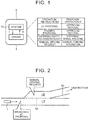
- FIG. 1 is a conceptual diagram showing an autonomous driving system 10 according to an embodiment.
- the autonomous driving system 10 is mounted on a vehicle 1 for controlling the autonomous driving of the vehicle 1.
- the autonomous driving system 10 For smooth traveling of the vehicle, the autonomous driving system 10 sometimes sends an "operation instruction I" to the driver during autonomous driving.
- the operation instruction I is an instruction that makes a request or a proposal to the driver and that requests the driver to perform a "response operation R" in response to the request or the proposal.
- the autonomous driving system 10 proposes a lane change (LC: Lane Chang) so that the vehicle arrives at the destination.
- a lane change is required, for example, in a situation where there is a lane branch or a lane merge.
- the driver is required to approve or refuse the lane change proposal (hereinafter referred to as an "LC proposal"). That is, the "LC proposal" is an operation instruction I, and the response operation R that is performed in response to the LC proposal is an "approval/refusal".
- the autonomous driving system 10 proposes passing a preceding vehicle. Passing can be thought of as one type of the LC proposal.
- the driver is required to approve or refuse the passing proposal. That is, the "passing proposal" is an operation instruction I, and the response operation R that is performed in response to the passing proposal is "approval/refusal".
- the autonomous driving system 10 requests the driver to hold the steering wheel. Holding the steering wheel is hereinafter referred to as "steering wheel holding”. For example, when there is a sharp curve ahead of the vehicle 1 during autonomous driving, the autonomous driving system 10 requests the driver to hold the steering wheel considering the possibility of lane departure. In response to such a request, the driver holds the steering wheel. That is, the "steering wheel holding request" is an operation instruction I, and the response operation R that is performed in response to the steering holding request is "steering wheel holding".
- the autonomous driving system 10 requests the driver to start manual driving.
- Manual driving is required, for example, in a situation when the vehicle 1 arrives near the destination, when the autonomous driving permitted zone ends, or when there is an event where autonomous driving is not suitable (for example, road work zone, complex terrain).
- the driver performs the manual driving operation (for example, steering wheel holding, steering operation, accelerator operation, brake operation). That is, the "manual driving request" is an operation instruction I, and the response operation R that is performed in response to the manual driving request is a "manual driving operation".
- the driver When the autonomous driving system 10 sends an operation instruction I, the driver is required to understand the contents of the operation instruction I and, in addition, perform the response operation R.
- the amount of information and the number of operations that a human (driver) can process concurrently are limited. Therefore, when a plurality of operation instructions I is sent consecutively in a short period of time, the driver cannot process them and may feel impatient and uncomfortable.
- FIG. 2 is a conceptual diagram showing an example of the situation in which a plurality of operation instructions I is consecutively sent in a short period of time.
- the vehicle 1 is traveling in lane L1, and there is a lane branch ahead of the vehicle 1.
- the autonomous driving system 10 plans to change the lane from lane L1 to branch lane LB at position XA.
- position XB immediately after entering branch lane LB, manual driving is required.
- the autonomous driving system 10 sends the "branching LC proposal" before position XA and sends the "manual driving request" before position XB.
- FIG. 3 is a conceptual diagram showing another situation.
- the vehicle 1 is traveling in a merging lane LM.
- the merging lane LM merges into lane L1, there is lane L2 adjacent to lane L1 and, in addition, branch lane LB branches from lane L2.
- the autonomous driving system 10 plans to change the lane from the merging lane LM to lane L1 at position XA.
- the autonomous driving system 10 plans to enter branch lane LB to arrive at the destination.
- To enter branch lane LB it is necessary to change the lane to lane L2 in advance. Therefore, at position XB immediately after entering lane L1, the autonomous driving system 10 plans to change the lane from lane L1 to lane L2 in advance. In this case, the autonomous driving system 10 sends the "merging LC proposal" before position XA, and the "pre-sending LC proposal" before position XB.
- FIG. 4 is a conceptual diagram showing still another situation.
- the autonomous driving system 10 requests the driver to hold the steering wheel considering the possibility of lane departure. More specifically, the autonomous driving system 10 sends the "steering wheel holding request" before the position XA where the sharp curve starts.
- the autonomous driving system 10 sends the "manual driving request" before position XB.
- the autonomous driving system 10 positively adjusts the sending of operation instructions I. More specifically, after an operation instruction I is sent and until the response operation R is completed or until the time comes at which the response operation R is expected to be completed, the autonomous driving system 10 prohibits the sending of the next operation instruction I.
- FIG. 5 is a conceptual diagram schematically showing the embodiment described above.
- the operation instruction time TI is the time at which an operation instruction I is sent.
- the response operation completion time TR is the time at which the response operation R that is performed in response to the operation instruction I is completed, or the time at which the response operation R is predicted to be completed.
- the response operation period PR is a period from the operation instruction time TI to the response operation completion time TR. During this response operation period PR, it is prohibited to send the next operation instruction I to the driver.
- the sending of the next operation instruction I is prohibited as described above until the response operation R that is performed in response to an operation instruction I is completed, or until the time at which the response operation R is expected to be completed. Therefore, the amount of information to be processed, and the number of operations to be executed, concurrently by the driver are reduced. As a result, the driver's impatience and anxiety are reduced. In addition, the driver who is given enough time can perform the response operation R accurately. These allow a vehicle to travel smoothly and to increase the reliability of the autonomous driving system 10.
- FIG. 6 is a block diagram showing a configuration example of the autonomous driving system 10 according to this embodiment.
- the autonomous driving system 10 includes a Global Positioning System (GPS) receiver 20, a map database 30, sensors 40, a communication device 50, a Human Machine Interface (HMI) unit 60, a response operation sensor 70, a traveling device 80, and a control device 100.
- GPS Global Positioning System
- HMI Human Machine Interface
- the GPS receiver 20 receives signals sent from a plurality of GPS satellites and calculates the position and orientation of the vehicle 1 based on the received signals.
- the map database 30 records map information therein.
- the map information includes the information on the lane arrangement, lane attribute, autonomous driving permitted zone, location of facilities (for example, a toll booth), and so on.
- the sensors 40 detect the surrounding situation of the vehicle 1 and the traveling state of the vehicle 1.
- Examples of the sensors 40 include Lidar (LIDAR: Laser Imaging Detection and Ranging), a radar, a camera, and a vehicle speed sensor.
- Lidar uses light to detect a target around the vehicle 1.
- the radar uses radio waves to detect a target around the vehicle 1.
- the camera captures the situation around the vehicle 1.
- the vehicle speed sensor detects the speed of the vehicle 1.
- the communication device 50 communicates with the outside of the vehicle 1. For example, the communication device 50 performs V2I communication (road-vehicle communication) with the surrounding infrastructures. The communication device 50 may perform V2V communication (vehicle-to-vehicle communication) with the surrounding vehicles. The communication device 50 can also communicate with the management server that manages the autonomous driving service via a communication network.
- V2I communication road-vehicle communication
- V2V communication vehicle-to-vehicle communication
- the communication device 50 can also communicate with the management server that manages the autonomous driving service via a communication network.
- the HMI unit 60 is an interface for providing information to the driver and for accepting information from the driver. More specifically, the HMI unit 60 has an input device and an output device. Examples of the input device include a touch panel, a switch, and a microphone. Examples of the output device include a display device and a speaker. The output device is used for notifying an operation instruction I to the driver. The input device is used by the driver to enter the response operation R (in particular approval/refusal).
- the response operation R performed by the driver is not limited to "approval/refusal".
- the response operation R may be "steering wheel holding” or “manual driving request operation” in some cases.
- the response operation sensor 70 is a sensor for detecting the response operation R other than "approval/refusal".
- the response operation sensor 70 includes a steering touch sensor for detecting whether the driver is holding the steering wheel.
- the response operation sensor 70 may also include sensors for detecting the steering operation, the accelerator operation, and the brake operation, respectively.
- the traveling device 80 includes a steering device, a driving device, and a braking device.
- the steering device steers the wheels.
- the driving device is a power source that generates a driving force. Examples of the driving device include an electric motor and an engine.
- the braking device generates a braking force.
- the control device 100 controls the autonomous driving of the vehicle 1.
- the control device 100 is a microcomputer including a processor 110 and a storage device 120.
- the control device 100 is also called an Electronic Control Unit (ECU).
- the processor 110 executes the control programs, stored in the storage device 120, to cause the control device 100 to perform autonomous driving control.
- the control device 100 acquires information necessary for autonomous driving control.
- the information necessary for the autonomous driving control is hereinafter referred to as "driving environment information 200".
- the driving environment information 200 stored in the storage device 120, is read as necessary.
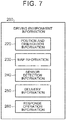
- FIG. 7 shows an example of the driving environment information 200 in this embodiment.
- the driving environment information 200 includes position and orientation information 220, map information 230, sensor detection information 240, delivery information 250, and response operation information 260.
- the position and orientation information 220 indicates the position and orientation of the vehicle 1.
- the control device 100 acquires the position and orientation information 220 from the GPS receiver 20.
- the map information 230 includes the information on the lane arrangement, lane attribute, autonomous driving permitted zone, location of facilities (for example, a toll booth), and so on.
- the control device 100 acquires the map information 230 around the vehicle 1 based on the position and orientation information 220 and the map database 30.
- the control device 100 can collect information on lane merging, lane branching, intersections, and lane curvatures based on the lane arrangement and the lane attributes indicated by the map information 230.
- the sensor detection information 240 is the information obtained from the detection result of the sensors 40. More specifically, the sensor detection information 240 includes the target information on the targets around the vehicle 1. Examples of the targets around the vehicle 1 are surrounding vehicles, pedestrians, roadside objects, white lines, signs, and so on. In addition, the sensor detection information 240 includes the vehicle speed detected by the vehicle speed sensor. The control device 100 acquires the sensor detection information 240 based on the detection result of the sensors 40.
- the delivery information 250 is the information obtained through the communication device 50.
- the delivery information 250 includes the road traffic information (congestion information, road work zone information, accident information, traffic regulation information, etc.) delivered from the infrastructure.
- the delivery information 250 may include the information delivered from the management server that manages the autonomous driving service.
- the control device 100 acquires the delivery information 250 by communicating with the outside using the communication device 50.
- the response operation information 260 is the information indicating whether the response operation R has been performed by the driver.
- the control device 100 acquires the response operation information 260 on approval/refusal through the HMI unit 60.
- the control device 100 also acquires the response operation information 260 on the response operation R other than approval/refusal from the response operation sensor 70.
- the control device 100 controls the autonomous driving of the vehicle 1 based on the driving environment information 200 such as the one described above. More specifically, the control device 100 generates a travel plan of the vehicle 1 based on the driving environment information 200. Then, the control device 100 controls the traveling device 80 and causes the vehicle 1 to travel according to the travel plan.
- control device 100 plans the sending of an operation instruction I as needed during autonomous driving. Then, the control device 100 sends (notifies) the operation instruction I to the driver using the HMI unit 60. The driver performs the response operation R in response to the operation instruction I. The control device 100 confirms that the response operation R has been performed by the driver, based on the response operation information 260. For example, if the operation instruction I is an "LC proposal" and the "LC proposal" is approved by the driver, the control device 100 controls the traveling device 80 to cause the vehicle to change the lane.
- the control device 100 prohibits the sending the next operation instruction I after an operation instruction I is sent and until the response operation R is completed, or until the response operation R is expected to be completed.
- the processing performed by the control device 100 to send an operation instruction I is called the "operation instruction sending processing" in the description below.
- An example of the operation instruction sending processing in this embodiment will be described in detail below.
- FIG. 8 is a flowchart showing the operation instruction sending processing according to this embodiment. The processing flow shown in FIG. 8 is repeatedly executed for each predetermined cycle.
- the control device 100 detects an event related to an operation instruction I based on the driving environment information 200.
- An event related to an operation instruction I is an event for which the control device 100 plans to send an operation instruction I.
- events related to the "LC proposal" are lane branching, lane merging, and so on. These events can be detected based on the map information 230.
- events related to the "passing proposal" are a low-speed preceding vehicles and so on.
- a low-speed preceding vehicle can be detected based on the sensor detection information 240 (target information and vehicle speed information).
- events related to the "steering wheel holding request" are a sharp curve ahead of the vehicle 1 and so on.
- a sharp curve can be detected based on the map information 230 (lane arrangement information).
- events related to the "manual driving request" are a pre-set destination, a toll booth, and the end of an autonomous driving permitted zone, and so on. These events can be detected based on the map information 230.
- an event that is difficult to be handled during autonomous driving such as a road work zone, a traffic congestion zone, and a complex terrain, can be thought of as an event related to the "manual driving request".
- a road work zone and a traffic congestion zone can be recognized based on the delivery information 250.
- a complex terrain is recognizable based on the map information 230.
- step S10 If an event related to an operation instruction I is detected (step S10; Yes), the processing proceeds to step S20. Otherwise (step S10; No), the processing proceeds to step S50.
- the control device 100 plans an operation instruction I according to the event detected in step S10. More specifically, the control device 100 determines the type of the operation instruction I according to the detected event and, in addition, plans an operation instruction time TI at which the operation instruction I is to be sent.
- the operation instruction time TI is earlier than the time at which the vehicle 1 will arrive at the detected event.
- the control device 100 calculates the time at which the vehicle 1 will arrive at the detected event, based on the position and orientation information 220, the map information 230, and the sensor detection information 240 (vehicle speed information) and, as necessary, plans the operation instruction time TI. After that, the processing proceeds to step S30.
- the control device 100 determines whether the response operation period PR (see FIG. 5 ) for the operation instruction I, planned in step S20, overlaps the response operation period PR for an existing operation instruction I that has already been planned.
- FIG. 9 is a conceptual diagram showing the processing in step S30.
- first operation instruction I1 and “second operation instruction I2”, as the candidate for the operation instruction I.
- the first operation instruction time TI1 is the time at which the first operation instruction I1 is sent.
- the first response operation R1 is the response operation R that is performed in response to the first operation instruction I1.
- the first response operation completion time TR1 a time later than the first operation instruction time TI1 by the first predicted time ⁇ T1, is the time at which the first response operation R1 is predicted to be completed.
- the first response operation period PR1 is a period from the first operation instruction timeTI1 to the first response operation completion time TR1.
- the second operation instruction time TI2 is the time at which the second operation instruction I2 is sent.
- the second response operation R2 is the response operation R that is performed in response to the second operation instruction 12.
- the second response operation completion time TR2 a time later than the second operation instruction time TI2 by the second predicted time ⁇ T2, is the time at which the second response operation R2 is predicted to be completed.
- the second response operation period PR2 is a period from the second operation instruction time TI2 to the second response operation completion time TR2.
- the predicted time ⁇ T from the operation instruction time TI to the response operation completion time TR is predetermined for each type of the operation instruction I. For example, when the operation instruction I is the "LC proposal" or the "passing proposal”, the predicted time ⁇ T is set to 8 seconds. When the operation instruction I is the "steering wheel holding request”, the predicted time ⁇ T is set to 6 seconds. When the operation instruction I is the "manual driving request”, the predicted time ⁇ T is set to 6 seconds.
- the setting information on the predicted times ⁇ T is pre-stored in the storage device 120. The control device 100 can acquire the predicted time ⁇ T according to an operation instruction I by referring to the setting information.
- the control device 100 predicts the first response operation completion time TR1, that is, the first response operation period PR1, by adding the first predicted time ⁇ T1 to the first operation instruction time TI1 planned in step S20. Similarly, the control device 100 predicts the second response operation completion time TR2, that is, the second response operation period PR2, by adding the second predicted time ⁇ T2 to the second operation instruction time TI2 planned in step S20.
- the control device 100 determines whether the predicted first response operation period PR1 and the predicted second response operation period PR2 overlap. In the example shown in FIG. 9 , the first response operation period PR1 and the second response operation period PR2 overlap. If the first response operation period PR1 and the second response operation period PR2 overlap (step S30; Yes), the processing proceeds to step S40. Otherwise (step S30; No), the processing proceeds to step S50.
- the control device 100 adjusts at least one of the first operation instruction time TI1 and the second operation instruction time TI2 so that the first response operation period PR1 and the second response operation period PR2 do not overlap.
- first operation instruction I1 If neither the first operation instruction I1 nor the second operation instruction I2 has been sent, it is first necessary to determine which one of the first operation instruction I1 and the second operation instruction I2 is to be sent first.
- the control device 100 determines the preceding operation instruction IA, based on the combination of the first operation instruction I1 and the second operation instruction 12.
- a method for determining which operation instruction, either first operation instruction I1 or second operation instruction 12 is the preceding operation instruction IA, various examples can be considered as will be described later.
- FIG. 10 is a conceptual diagram showing the processing in step S40.
- the preceding operation instruction time TIA is the time at which the preceding operation instruction IA is sent.
- the preceding response operation RA is the response operation R that is performed in response to the preceding operation instruction IA.
- the preceding response operation completion time TRA is the time at which the preceding response operation RA is predicted to be completed.
- the preceding response operation period PRA is a period from the preceding operation instruction time TIA to the preceding response operation completion time TRA.
- the following operation instruction time TIB is time at which the following operation instruction IB is sent.
- the following response operation RB is the response operation R that is performed in response to the following operation instruction IB.
- the following response operation completion time TRB is the time at which the following response operation RB is predicted to be completed.
- the following response operation period PRB is a period from the following operation instruction time TIB to the following response operation completion time TRB.
- the control device 100 adjusts at least one of the preceding operation instruction time TIA and the following operation instruction time TIB so that the preceding response operation period PRA and the following response operation period PRB do not overlap. For example, the control device 100 sets the preceding operation instruction time TIA to a time earlier than the planned time. Alternatively, the control device 100 sets the following operation instruction time TIB to a time later than the planned time.
- the following operation instruction time TIB is too late, there is a possibility that the vehicle 1 will arrive at an event related to the following operation instruction IB before the following operation instruction IB is sent. That is, the following operation instruction IB may be too late (meaningless). In that sense, it is safer to set the preceding operation instruction time TIA to an earlier time rather than to set the following operation instruction time TIB to a later time.
- the control device 100 sets the following operation instruction time TIB to a later time so that the preceding response operation period PRA and the following response operation period PRB do not overlap.
- step S40 the processing proceeds to step S50.
- the control device 100 determines whether the "instruction sending condition" is satisfied (step S50).
- the instruction sending condition is a condition under which an operation instruction I, planned by the control device 100, is actually sent to the driver. If the instruction sending condition is satisfied (step S50; Yes), the control device 100 sends the operation instruction I to the driver via the HMI unit 60 (step S60). If the instruction sending condition is not satisfied (step S50; No), the current processing cycle ends and the processing returns to step S10.
- the instruction sending condition is the condition that the "operation instruction time TI has come". For example, in the example shown in FIG. 10 , when the preceding operation instruction time TIA has come, the control device 100 sends the preceding operation instruction IA. After that, when the following operation instruction time TIB has come, the control device 100 sends the following operation instruction IB.
- the instruction sending condition for the following operation instruction IB may be the condition that the "preceding response operation RA has completed".
- the control device 100 can confirm the completion of the preceding response operation RA based on the response operation information 260. If the completion of the preceding response operation RA cannot be confirmed when the following operation instruction time TIB has come, the control device 100 sets the following operation instruction time TIB to a later time. Conversely, if the following operation instruction time TIB has not yet come when the completion of the preceding response operation RA can be confirmed, the control device 100 may set the following operation instruction time TIB to an early time. In any case, the control device 100 sends the following operation instruction IB after confirming that the preceding response operation RA has been completed. In this way, by finely adjusting the following operation instruction time TIB through the monitoring of the actual preceding response operation RA, the accuracy is improved than when the following operation instruction time TIB that is based only on the predicted value is used.
- step S40 described above the control device 100 determines the first operation instruction I1 or the second operation instruction I2, whichever is sent first, as the "preceding operation instruction IA". At this time, the control device 100 determines the preceding operation instruction IA, based on the combination of the first operation instruction I1 and the second operation instruction I2. There are various examples for determining the preceding operation instruction IA.
- FIG. 11 is a conceptual diagram showing a first example for determining the preceding operation instruction IA.
- FIG. 11 shows the same situation as that in FIG. 2 described above. That is, there are two operation instructions I, "branching LC proposal" and “manual driving request”, as the candidate for the operation instruction I.
- the "branching LC proposal” is an operation instruction I related to the event "lane branching”.
- the “manual driving request” is an operation instruction I related to an event in which manual driving is required (example: there is a toll booth ahead of the vehicle, autonomous driving permitted zone is ended).
- the control device 100 determines the "branching LC proposal" as the preceding operation instruction IA.
- FIG. 12 is a conceptual diagram showing a second example for determining the preceding operation instruction IA.
- FIG. 12 shows the same situation as that in FIG. 3 described above. That is, there are two operation instructions I, "merging LC proposal” and “pre-sending LC proposal", as the candidate for the operation instruction I.
- the “merging LC proposal” is an operation instruction I related to the event “lane merging”.
- the "pre-sending LC proposal” is an operation instruction I related to the event "lane branching”.
- the event "lane merging" one of the two events, is nearer to the current position of the vehicle 1. Therefore, the control device 100 determines the "merging LC proposal" as the preceding operation instruction IA.
- FIG. 13 is a conceptual diagram showing a third example for determining the preceding operation instruction IA.
- FIG. 13 shows the same situation as that in FIG. 4 described above. That is, there are two operation instructions I, "steering wheel holding request” and “manual driving request", as the candidate for the operation instruction I.
- the "steering wheel holding request” is an operation instruction I related to the event “sharp curve”.
- the “manual driving request” is an operation instruction I related to the event in which manual driving is required (for example: the vehicle is approaching the destination or a road work zone).
- the event "sharp curve" one of the two events, is nearer to the current position of the vehicle 1. Therefore, the control device 100 determines the "steering wheel holding request" as the preceding operation instruction IA.
- the above first to third examples are generalized as follows.
- the first operation instruction I1 is related to the first event
- the second operation instruction I2 is related to the second event.
- One of the first event and the second event, whichever is nearer to the current position of the vehicle 1, is a "preceding event".
- the control device 100 determines an operation instruction I that is one of the first operation instruction I1 and the second operation instruction I2 and that is related to the preceding event as the preceding operation instruction IA. Since the operation instructions I are sent in the order in which the events are detected, it is easy for the driver to understand the flow of driving.
- FIG. 14 is a conceptual diagram showing a fourth example for determining the preceding operation instruction IA.
- the vehicle 1 is traveling in the right side lane L2.
- the control device 100 plans to send a "keep-left LC proposal" that proposes to change the lane to the left lane L1 to keep to the left.
- the control device 100 plans to send the "steering wheel holding request" before position XA where the sharp curve starts.
- the lane change for keeping to the left which is not so urgent, may be performed at any time (for example, at position XB after the sharp curve ends). That is, even if the lane change for keeping to the left is delayed to some extent, there is no particular effect on vehicle traveling.
- the fourth example is generalized as follows.
- An operation instruction I that requires that the response operation R be performed before the vehicle 1 arrives at a specific point is hereinafter referred to as a "priority operation instruction IP".
- priority operation instructions IP include not only the "steering wheel holding request” described above but also the "manual driving request”, “branching LC proposal”, and “merging LC proposal”. From the viewpoint of vehicle traveling, safety, and the arrival at the destination, the priority of the priority operation instruction IP is high. On the other hand, the above-mentioned "keep-left LC proposal” and "passing proposal” are not a priority operation instruction IP and have a higher degree of freedom.
- the control device 100 determines the priority operation instruction IP as the preceding operation instruction IA. This makes it possible to reduce the amount of information to be processed, and the number of operations to be executed, by the driver concurrently while at the same time sending a high-priority operation instruction I without delay.
- FIG. 15 is a conceptual diagram showing a fifth example for determining the preceding operation instruction IA.
- the fifth example also relates to the priority operation instruction IP.
- the vehicle 1 is traveling in lane L1. In the same lane L1 and ahead of the vehicle 1, there is a low-speed preceding vehicle 2.
- the control device 100 detects the low-speed preceding vehicle 2 based on the sensor detection information 240. Then, the control device 100 plans to start the passing operation at position XA and plans to send the "passing proposal" before position XA.
- the control device 100 plans to send the "manual driving request" before position XB.
- the manual driving request is a priority operation instruction IP, and the passing proposal is not. Therefore, the control device 100 determines the manual driving request as the preceding operation instruction IA, and the passing proposal as the following operation instruction IB. This makes it possible to send a high priority manual driving request without delay.
- the control device 100 determines the priority operation instruction IP as the preceding operation instruction IA. At this time, the control device 100 may discard the operation instruction that is not a priority operation instruction IP. Even in this case, the next operation instruction is prohibited until the response operation R, which is performed in response to the operation instruction I, is completed. That is, this makes it possible to reduce the amount of information to be processed, and the number of operations to be executed, by the driver concurrently and, as a result, reduces the driver's impatience and anxiety.
Landscapes
- Engineering & Computer Science (AREA)
- Automation & Control Theory (AREA)
- Transportation (AREA)
- Mechanical Engineering (AREA)
- Human Computer Interaction (AREA)
- Aviation & Aerospace Engineering (AREA)
- Radar, Positioning & Navigation (AREA)
- Remote Sensing (AREA)
- Physics & Mathematics (AREA)
- General Physics & Mathematics (AREA)
- Chemical & Material Sciences (AREA)
- Combustion & Propulsion (AREA)
- Business, Economics & Management (AREA)
- Evolutionary Computation (AREA)
- Game Theory and Decision Science (AREA)
- Medical Informatics (AREA)
- Artificial Intelligence (AREA)
- Health & Medical Sciences (AREA)
- Traffic Control Systems (AREA)
- Control Of Driving Devices And Active Controlling Of Vehicle (AREA)
Abstract
Description
- The present invention relates to an autonomous driving system.
- Published Japanese Translation of
PCT Application No. 2013-544695 JP-A-2013-544695 - As exemplified in Published Japanese Translation of
PCT Application No. 2013-544695 JP-A-2013-544695 - In some circumstances, a plurality of operation instructions may be sent consecutively within a short period of time. However, the amount of information and the number of operations that a human (driver) can process concurrently are limited. Therefore, when a plurality of operation instructions is sent consecutively in a short period of time, the driver feels impatient and uncomfortable. In addition, due to the shortage of time, there is a possibility that the driver cannot perform the response operation accurately. These inhibit the smooth traveling of the vehicle and reduce the reliability of the autonomous driving system.
- For use in an autonomous driving system that sends an operation instruction to the driver during autonomous driving, the present invention provides a technology that can reduce driver's impatience and discomfort.
- An aspect of the invention provides an autonomous driving system. The autonomous driving system according to the aspect includes a control device configured to control autonomous driving of a vehicle, present a first operation instruction to a driver of the vehicle during the autonomous driving, the first operation instruction requesting the driver to perform a first response operation performed in response to a first request or a first proposal by presenting the first request or the first proposal to the driver, and prohibit presenting a second operation instruction different from the first operation instruction to the driver after the first operation instruction is presented and until the first response operation is completed or until a timing at which the first response operation is predicted to be completed, the second operation instruction requesting the driver to perform a second response operation performed in response to a second request or a second proposal by presenting the second request or the second proposal to the driver.
- In the aspect, the control device may be configured to plan a first operation instruction timing and a second operation instruction timing, the first operation instruction timing being a timing at which the first operation instruction is to be presented, the second operation instruction timing being a timing at which the second operation instruction is to be presented, predict a first response operation period and a second response operation period based on the first operation instruction timing and the second operation instruction timing, the first response operation period being a period from the first operation instruction timing to a first response operation completion timing at which the first response operation is predicted to be completed, the second response operation period being a period from the second operation instruction timing to a second response operation completion timing at which the second response operation is predicted to be completed, and adjust at least one of the first operation instruction timing and the second operation instruction timing such that the first response operation period and the second response operation period do not overlap, when the first response operation period and the second response operation period are predicted to overlap.
- In the aspect, the control device may be configured to determine, as a preceding operation instruction, one of the first operation instruction and the second operation instruction whichever is to be presented first.
- In the aspect, the first operation instruction may be an operation instruction related to a first event and the second operation instruction may be an operation instruction related to a second event, and the control device may be configured to determine, as a preceding event, one of the first event and the second event whichever exists nearer to a current position of the vehicle, and determine an operation instruction related to the preceding event, as the preceding operation instruction, among the first operation instruction and the second operation instruction.
- In the aspect, a priority operation instruction may be an operation instruction for which a response operation needs to be performed before the vehicle arrives at a particular position, and the control device may be configured to determine the priority operation instruction as the preceding operation instruction when one of the first operation instruction and the second operation instruction is the priority operation instruction and when the other is not the priority operation instruction.
- In the aspect, the control device may be configured to adjust at least one of the first operation instruction timing and the second operation instruction timing such that an operation instruction timing including a preceding operation instruction timing at which the preceding operation instruction is to be presented becomes earlier than the other operation instruction timing among the first operation instruction timing and the second operation instruction timing.
- In the aspect, a following operation instruction may be an operation instruction that is one of the first operation instruction and the second operation instruction and is not the preceding operation instruction and a preceding response operation is the response operation that is performed in response to the preceding operation instruction and the control device may be configured to present the following operation instruction to the driver after the control device confirms that the preceding response operation is completed.
- In the aspect, the autonomous driving system may include a Human Machine Interface unit configured to accept the first response operation and the second response operation, wherein the control device may be configured to present the first operation instruction and the second operation instruction to the driver via the Human Machine Interface unit, acquire response operation information about the first response operation via the Human Machine Interface unit, and determine that the first response operation is completed, based on the response operation information.
- In the aspect, the response operation information may include information about whether the driver has approved the first request or the first proposal.
- According to the present invention, the sending of the next operation instruction is prohibited until the response operation to an operation instruction is completed or until the time at which at which the response operation is predicted to be completed. Therefore, the amount of information to be processed, and the number of operations to be executed, concurrently by the driver are reduced. As a result, the driver's impatience and anxiety are reduced. In addition, the driver who is given enough time can easily perform the response operation accurately. These allow a vehicle to travel smoothly and increase the reliability of the autonomous driving system.
- Features, advantages, and technical and industrial significance of exemplary embodiments of the invention will be described below with reference to the accompanying drawings, in which like numerals denote like elements, and wherein:
-
FIG. 1 is a conceptual diagram showing an autonomous driving system according to an embodiment of the present invention; -
FIG. 2 is a conceptual diagram showing an example of a situation in which a plurality of operation instructions is sent consecutively within a short period of time; -
FIG. 3 is a conceptual diagram showing another example of a situation in which a plurality of operation instructions is sent consecutively within a short period of time; -
FIG. 4 is a conceptual diagram showing yet another example of a situation in which a plurality of operation instructions is sent consecutively within a short period of time; -
FIG. 5 is a conceptual diagram schematically showing the embodiment of the present invention; -
FIG. 6 is a block diagram showing a configuration example of an autonomous driving system according to the embodiment of the present invention; -
FIG. 7 is a block diagram showing an example of driving environment information used in the autonomous driving system according to the embodiment of the present invention; -
FIG. 8 is a flowchart showing the operation instruction sending processing performed by the autonomous driving system according to the embodiment of the present invention; -
FIG. 9 is a conceptual diagram showing the processing in step S30 in the operation instruction sending processing according to the embodiment of the present invention; -
FIG. 10 is a conceptual diagram showing the processing in step S40 in the operation instruction sending processing according to the embodiment of the present invention embodiment; -
FIG. 11 is a conceptual diagram showing a first example of the determination of a preceding operation instruction in the operation instruction sending processing according to the embodiment of the present invention; -
FIG. 12 is a conceptual diagram showing a second example of the determination of a preceding operation instruction in the operation instruction sending processing according to the embodiment of the present invention; -
FIG. 13 is a conceptual diagram showing a third example of the determination of a preceding operation instruction in the operation instruction sending processing according to the embodiment of the present invention; -
FIG. 14 is a conceptual diagram showing a fourth example of the determination of a preceding operation instruction in the operation instruction sending processing according to the embodiment of the present invention; and -
FIG. 15 is a conceptual diagram showing a fifth example of the determination of a preceding operation instruction in the operation instruction sending processing according to the embodiment of the present invention; - An embodiment of the present invention will be described below with reference to the attached drawings.
-
FIG. 1 is a conceptual diagram showing anautonomous driving system 10 according to an embodiment. Theautonomous driving system 10 is mounted on avehicle 1 for controlling the autonomous driving of thevehicle 1. For smooth traveling of the vehicle, theautonomous driving system 10 sometimes sends an "operation instruction I" to the driver during autonomous driving. The operation instruction I is an instruction that makes a request or a proposal to the driver and that requests the driver to perform a "response operation R" in response to the request or the proposal. - For example, the
autonomous driving system 10 proposes a lane change (LC: Lane Chang) so that the vehicle arrives at the destination. Such a lane change is required, for example, in a situation where there is a lane branch or a lane merge. When a lane change is proposed, the driver is required to approve or refuse the lane change proposal (hereinafter referred to as an "LC proposal"). That is, the "LC proposal" is an operation instruction I, and the response operation R that is performed in response to the LC proposal is an "approval/refusal". - As another example, the
autonomous driving system 10 proposes passing a preceding vehicle. Passing can be thought of as one type of the LC proposal. When passing is proposed, the driver is required to approve or refuse the passing proposal. That is, the "passing proposal" is an operation instruction I, and the response operation R that is performed in response to the passing proposal is "approval/refusal". - As yet another example, the
autonomous driving system 10 requests the driver to hold the steering wheel. Holding the steering wheel is hereinafter referred to as "steering wheel holding". For example, when there is a sharp curve ahead of thevehicle 1 during autonomous driving, theautonomous driving system 10 requests the driver to hold the steering wheel considering the possibility of lane departure. In response to such a request, the driver holds the steering wheel. That is, the "steering wheel holding request" is an operation instruction I, and the response operation R that is performed in response to the steering holding request is "steering wheel holding". - As yet another example, the
autonomous driving system 10 requests the driver to start manual driving. Manual driving is required, for example, in a situation when thevehicle 1 arrives near the destination, when the autonomous driving permitted zone ends, or when there is an event where autonomous driving is not suitable (for example, road work zone, complex terrain). When manual driving is requested, the driver performs the manual driving operation (for example, steering wheel holding, steering operation, accelerator operation, brake operation). That is, the "manual driving request" is an operation instruction I, and the response operation R that is performed in response to the manual driving request is a "manual driving operation". - When the
autonomous driving system 10 sends an operation instruction I, the driver is required to understand the contents of the operation instruction I and, in addition, perform the response operation R. However, the amount of information and the number of operations that a human (driver) can process concurrently are limited. Therefore, when a plurality of operation instructions I is sent consecutively in a short period of time, the driver cannot process them and may feel impatient and uncomfortable. -
FIG. 2 is a conceptual diagram showing an example of the situation in which a plurality of operation instructions I is consecutively sent in a short period of time. Thevehicle 1 is traveling in lane L1, and there is a lane branch ahead of thevehicle 1. To arrive at the destination, theautonomous driving system 10 plans to change the lane from lane L1 to branch lane LB at position XA. In addition, at position XB immediately after entering branch lane LB, manual driving is required. For example, there is a toll booth beyond position XB, or the autonomous driving permitted zone (for example, an express way) ends at a position ahead of position XB. In this case, theautonomous driving system 10 sends the "branching LC proposal" before position XA and sends the "manual driving request" before position XB. -
FIG. 3 is a conceptual diagram showing another situation. Thevehicle 1 is traveling in a merging lane LM. The merging lane LM merges into lane L1, there is lane L2 adjacent to lane L1 and, in addition, branch lane LB branches from lane L2. In this situation, theautonomous driving system 10 plans to change the lane from the merging lane LM to lane L1 at position XA. In addition, theautonomous driving system 10 plans to enter branch lane LB to arrive at the destination. To enter branch lane LB, it is necessary to change the lane to lane L2 in advance. Therefore, at position XB immediately after entering lane L1, theautonomous driving system 10 plans to change the lane from lane L1 to lane L2 in advance. In this case, theautonomous driving system 10 sends the "merging LC proposal" before position XA, and the "pre-sending LC proposal" before position XB. -
FIG. 4 is a conceptual diagram showing still another situation. There is a sharp curve ahead of thevehicle 1. Theautonomous driving system 10 requests the driver to hold the steering wheel considering the possibility of lane departure. More specifically, theautonomous driving system 10 sends the "steering wheel holding request" before the position XA where the sharp curve starts. In addition, at position XB ahead of position XA, manual driving is required. For example, there is the destination or a road work zone beyond position XB. In this case, theautonomous driving system 10 sends the "manual driving request" before position XB. - As exemplified above, there are cases where a plurality of operation instructions I is sent consecutively within a short period of time. Since the amount of information and the number of operations that a human (driver) can process concurrently are limited, the driver feels impatient and uncomfortable when a plurality of operation instructions I is sent consecutively in a short period of time. In addition, due to the shortage of time, there is a possibility that the driver cannot perform the response operation R accurately. These inhibit the smooth traveling of the vehicle and reduce the reliability of the
autonomous driving system 10. - To solve such a problem, the
autonomous driving system 10 according to this embodiment positively adjusts the sending of operation instructions I. More specifically, after an operation instruction I is sent and until the response operation R is completed or until the time comes at which the response operation R is expected to be completed, theautonomous driving system 10 prohibits the sending of the next operation instruction I. -
FIG. 5 is a conceptual diagram schematically showing the embodiment described above. The operation instruction time TI is the time at which an operation instruction I is sent. The response operation completion time TR is the time at which the response operation R that is performed in response to the operation instruction I is completed, or the time at which the response operation R is predicted to be completed. The response operation period PR is a period from the operation instruction time TI to the response operation completion time TR. During this response operation period PR, it is prohibited to send the next operation instruction I to the driver. - According to this embodiment, the sending of the next operation instruction I is prohibited as described above until the response operation R that is performed in response to an operation instruction I is completed, or until the time at which the response operation R is expected to be completed. Therefore, the amount of information to be processed, and the number of operations to be executed, concurrently by the driver are reduced. As a result, the driver's impatience and anxiety are reduced. In addition, the driver who is given enough time can perform the response operation R accurately. These allow a vehicle to travel smoothly and to increase the reliability of the
autonomous driving system 10. - The configuration and processing of the
autonomous driving system 10 according to this embodiment will be described in more detail. -
FIG. 6 is a block diagram showing a configuration example of theautonomous driving system 10 according to this embodiment. Theautonomous driving system 10 includes a Global Positioning System (GPS)receiver 20, amap database 30,sensors 40, acommunication device 50, a Human Machine Interface (HMI)unit 60, aresponse operation sensor 70, a travelingdevice 80, and acontrol device 100. - The
GPS receiver 20 receives signals sent from a plurality of GPS satellites and calculates the position and orientation of thevehicle 1 based on the received signals. - The
map database 30 records map information therein. The map information includes the information on the lane arrangement, lane attribute, autonomous driving permitted zone, location of facilities (for example, a toll booth), and so on. - The
sensors 40 detect the surrounding situation of thevehicle 1 and the traveling state of thevehicle 1. Examples of thesensors 40 include Lidar (LIDAR: Laser Imaging Detection and Ranging), a radar, a camera, and a vehicle speed sensor. Lidar uses light to detect a target around thevehicle 1. The radar uses radio waves to detect a target around thevehicle 1. The camera captures the situation around thevehicle 1. The vehicle speed sensor detects the speed of thevehicle 1. - The
communication device 50 communicates with the outside of thevehicle 1. For example, thecommunication device 50 performs V2I communication (road-vehicle communication) with the surrounding infrastructures. Thecommunication device 50 may perform V2V communication (vehicle-to-vehicle communication) with the surrounding vehicles. Thecommunication device 50 can also communicate with the management server that manages the autonomous driving service via a communication network. - The
HMI unit 60 is an interface for providing information to the driver and for accepting information from the driver. More specifically, theHMI unit 60 has an input device and an output device. Examples of the input device include a touch panel, a switch, and a microphone. Examples of the output device include a display device and a speaker. The output device is used for notifying an operation instruction I to the driver. The input device is used by the driver to enter the response operation R (in particular approval/refusal). - The response operation R performed by the driver is not limited to "approval/refusal". The response operation R may be "steering wheel holding" or "manual driving request operation" in some cases. The
response operation sensor 70 is a sensor for detecting the response operation R other than "approval/refusal". For example, theresponse operation sensor 70 includes a steering touch sensor for detecting whether the driver is holding the steering wheel. Theresponse operation sensor 70 may also include sensors for detecting the steering operation, the accelerator operation, and the brake operation, respectively. - The traveling
device 80 includes a steering device, a driving device, and a braking device. The steering device steers the wheels. The driving device is a power source that generates a driving force. Examples of the driving device include an electric motor and an engine. The braking device generates a braking force. - The
control device 100 controls the autonomous driving of thevehicle 1. Thecontrol device 100 is a microcomputer including a processor 110 and astorage device 120. Thecontrol device 100 is also called an Electronic Control Unit (ECU). The processor 110 executes the control programs, stored in thestorage device 120, to cause thecontrol device 100 to perform autonomous driving control. - In more detail, the
control device 100 acquires information necessary for autonomous driving control. The information necessary for the autonomous driving control is hereinafter referred to as "drivingenvironment information 200". The drivingenvironment information 200, stored in thestorage device 120, is read as necessary. -
FIG. 7 shows an example of the drivingenvironment information 200 in this embodiment. The drivingenvironment information 200 includes position andorientation information 220,map information 230,sensor detection information 240,delivery information 250, andresponse operation information 260. - The position and
orientation information 220 indicates the position and orientation of thevehicle 1. Thecontrol device 100 acquires the position andorientation information 220 from theGPS receiver 20. - The
map information 230 includes the information on the lane arrangement, lane attribute, autonomous driving permitted zone, location of facilities (for example, a toll booth), and so on. Thecontrol device 100 acquires themap information 230 around thevehicle 1 based on the position andorientation information 220 and themap database 30. Thecontrol device 100 can collect information on lane merging, lane branching, intersections, and lane curvatures based on the lane arrangement and the lane attributes indicated by themap information 230. - The
sensor detection information 240 is the information obtained from the detection result of thesensors 40. More specifically, thesensor detection information 240 includes the target information on the targets around thevehicle 1. Examples of the targets around thevehicle 1 are surrounding vehicles, pedestrians, roadside objects, white lines, signs, and so on. In addition, thesensor detection information 240 includes the vehicle speed detected by the vehicle speed sensor. Thecontrol device 100 acquires thesensor detection information 240 based on the detection result of thesensors 40. - The
delivery information 250 is the information obtained through thecommunication device 50. For example, thedelivery information 250 includes the road traffic information (congestion information, road work zone information, accident information, traffic regulation information, etc.) delivered from the infrastructure. Thedelivery information 250 may include the information delivered from the management server that manages the autonomous driving service. Thecontrol device 100 acquires thedelivery information 250 by communicating with the outside using thecommunication device 50. - The
response operation information 260 is the information indicating whether the response operation R has been performed by the driver. For example, thecontrol device 100 acquires theresponse operation information 260 on approval/refusal through theHMI unit 60. Thecontrol device 100 also acquires theresponse operation information 260 on the response operation R other than approval/refusal from theresponse operation sensor 70. - The
control device 100 controls the autonomous driving of thevehicle 1 based on the drivingenvironment information 200 such as the one described above. More specifically, thecontrol device 100 generates a travel plan of thevehicle 1 based on the drivingenvironment information 200. Then, thecontrol device 100 controls the travelingdevice 80 and causes thevehicle 1 to travel according to the travel plan. - In addition, the
control device 100 plans the sending of an operation instruction I as needed during autonomous driving. Then, thecontrol device 100 sends (notifies) the operation instruction I to the driver using theHMI unit 60. The driver performs the response operation R in response to the operation instruction I. Thecontrol device 100 confirms that the response operation R has been performed by the driver, based on theresponse operation information 260. For example, if the operation instruction I is an "LC proposal" and the "LC proposal" is approved by the driver, thecontrol device 100 controls the travelingdevice 80 to cause the vehicle to change the lane. - According to this embodiment, the
control device 100 prohibits the sending the next operation instruction I after an operation instruction I is sent and until the response operation R is completed, or until the response operation R is expected to be completed. The processing performed by thecontrol device 100 to send an operation instruction I is called the "operation instruction sending processing" in the description below. An example of the operation instruction sending processing in this embodiment will be described in detail below. -
FIG. 8 is a flowchart showing the operation instruction sending processing according to this embodiment. The processing flow shown inFIG. 8 is repeatedly executed for each predetermined cycle. - The
control device 100 detects an event related to an operation instruction I based on the drivingenvironment information 200. An event related to an operation instruction I is an event for which thecontrol device 100 plans to send an operation instruction I. - For example, events related to the "LC proposal" are lane branching, lane merging, and so on. These events can be detected based on the
map information 230. - As another example, events related to the "passing proposal" are a low-speed preceding vehicles and so on. A low-speed preceding vehicle can be detected based on the sensor detection information 240 (target information and vehicle speed information).
- As a still another example, events related to the "steering wheel holding request" are a sharp curve ahead of the
vehicle 1 and so on. A sharp curve can be detected based on the map information 230 (lane arrangement information). - As a still another example, events related to the "manual driving request" are a pre-set destination, a toll booth, and the end of an autonomous driving permitted zone, and so on. These events can be detected based on the
map information 230. In addition, an event that is difficult to be handled during autonomous driving, such as a road work zone, a traffic congestion zone, and a complex terrain, can be thought of as an event related to the "manual driving request". A road work zone and a traffic congestion zone can be recognized based on thedelivery information 250. A complex terrain is recognizable based on themap information 230. - If an event related to an operation instruction I is detected (step S10; Yes), the processing proceeds to step S20. Otherwise (step S10; No), the processing proceeds to step S50.
- The
control device 100 plans an operation instruction I according to the event detected in step S10. More specifically, thecontrol device 100 determines the type of the operation instruction I according to the detected event and, in addition, plans an operation instruction time TI at which the operation instruction I is to be sent. The operation instruction time TI is earlier than the time at which thevehicle 1 will arrive at the detected event. Thecontrol device 100 calculates the time at which thevehicle 1 will arrive at the detected event, based on the position andorientation information 220, themap information 230, and the sensor detection information 240 (vehicle speed information) and, as necessary, plans the operation instruction time TI. After that, the processing proceeds to step S30. - The
control device 100 determines whether the response operation period PR (seeFIG. 5 ) for the operation instruction I, planned in step S20, overlaps the response operation period PR for an existing operation instruction I that has already been planned. -
FIG. 9 is a conceptual diagram showing the processing in step S30. In the description below, consider the case where there are two operation instructions, "first operation instruction I1" and "second operation instruction I2", as the candidate for the operation instruction I. - The first operation instruction time TI1 is the time at which the first operation instruction I1 is sent. The first response operation R1 is the response operation R that is performed in response to the first operation instruction I1. The first response operation completion time TR1, a time later than the first operation instruction time TI1 by the first predicted time ΔT1, is the time at which the first response operation R1 is predicted to be completed. The first response operation period PR1 is a period from the first operation instruction timeTI1 to the first response operation completion time TR1.
- The second operation instruction time TI2 is the time at which the second operation instruction I2 is sent. The second response operation R2 is the response operation R that is performed in response to the
second operation instruction 12. The second response operation completion time TR2, a time later than the second operation instruction time TI2 by the second predicted time ΔT2, is the time at which the second response operation R2 is predicted to be completed. The second response operation period PR2 is a period from the second operation instruction time TI2 to the second response operation completion time TR2. - The predicted time ΔT from the operation instruction time TI to the response operation completion time TR is predetermined for each type of the operation instruction I. For example, when the operation instruction I is the "LC proposal" or the "passing proposal", the predicted time ΔT is set to 8 seconds. When the operation instruction I is the "steering wheel holding request", the predicted time ΔT is set to 6 seconds. When the operation instruction I is the "manual driving request", the predicted time ΔT is set to 6 seconds. The setting information on the predicted times ΔT is pre-stored in the
storage device 120. Thecontrol device 100 can acquire the predicted time ΔT according to an operation instruction I by referring to the setting information. - The
control device 100 predicts the first response operation completion time TR1, that is, the first response operation period PR1, by adding the first predicted time ΔT1 to the first operation instruction time TI1 planned in step S20. Similarly, thecontrol device 100 predicts the second response operation completion time TR2, that is, the second response operation period PR2, by adding the second predicted time ΔT2 to the second operation instruction time TI2 planned in step S20. - Then, the
control device 100 determines whether the predicted first response operation period PR1 and the predicted second response operation period PR2 overlap. In the example shown inFIG. 9 , the first response operation period PR1 and the second response operation period PR2 overlap. If the first response operation period PR1 and the second response operation period PR2 overlap (step S30; Yes), the processing proceeds to step S40. Otherwise (step S30; No), the processing proceeds to step S50. - The
control device 100 adjusts at least one of the first operation instruction time TI1 and the second operation instruction time TI2 so that the first response operation period PR1 and the second response operation period PR2 do not overlap. - If neither the first operation instruction I1 nor the second operation instruction I2 has been sent, it is first necessary to determine which one of the first operation instruction I1 and the second operation instruction I2 is to be sent first. One of the first operation instruction I1 and the
second operation instruction 12, whichever is sent first, is hereinafter called a "preceding operation instruction IA" and the other is called a "following operation instruction IB". Thecontrol device 100 determines the preceding operation instruction IA, based on the combination of the first operation instruction I1 and thesecond operation instruction 12. As a method for determining which operation instruction, either first operation instruction I1 orsecond operation instruction 12, is the preceding operation instruction IA, various examples can be considered as will be described later. -
FIG. 10 is a conceptual diagram showing the processing in step S40. The preceding operation instruction time TIA is the time at which the preceding operation instruction IA is sent. The preceding response operation RA is the response operation R that is performed in response to the preceding operation instruction IA. The preceding response operation completion time TRA is the time at which the preceding response operation RA is predicted to be completed. The preceding response operation period PRA is a period from the preceding operation instruction time TIA to the preceding response operation completion time TRA. - The following operation instruction time TIB is time at which the following operation instruction IB is sent. The following response operation RB is the response operation R that is performed in response to the following operation instruction IB. The following response operation completion time TRB is the time at which the following response operation RB is predicted to be completed. The following response operation period PRB is a period from the following operation instruction time TIB to the following response operation completion time TRB.
- The
control device 100 adjusts at least one of the preceding operation instruction time TIA and the following operation instruction time TIB so that the preceding response operation period PRA and the following response operation period PRB do not overlap. For example, thecontrol device 100 sets the preceding operation instruction time TIA to a time earlier than the planned time. Alternatively, thecontrol device 100 sets the following operation instruction time TIB to a time later than the planned time. - If the following operation instruction time TIB is too late, there is a possibility that the
vehicle 1 will arrive at an event related to the following operation instruction IB before the following operation instruction IB is sent. That is, the following operation instruction IB may be too late (meaningless). In that sense, it is safer to set the preceding operation instruction time TIA to an earlier time rather than to set the following operation instruction time TIB to a later time. - In the situation where one of the first operation instruction I1 and the second operation instruction I2 has already been sent and the
control device 100 is waiting for the response operation R, the already sent operation instruction I becomes the preceding operation instruction IA and the other instruction becomes the following operation instruction IB. In such a case, thecontrol device 100 sets the following operation instruction time TIB to a later time so that the preceding response operation period PRA and the following response operation period PRB do not overlap. - The
control device 100 determines whether the "instruction sending condition" is satisfied (step S50). The instruction sending condition is a condition under which an operation instruction I, planned by thecontrol device 100, is actually sent to the driver. If the instruction sending condition is satisfied (step S50; Yes), thecontrol device 100 sends the operation instruction I to the driver via the HMI unit 60 (step S60). If the instruction sending condition is not satisfied (step S50; No), the current processing cycle ends and the processing returns to step S10. - Typically, the instruction sending condition is the condition that the "operation instruction time TI has come". For example, in the example shown in
FIG. 10 , when the preceding operation instruction time TIA has come, thecontrol device 100 sends the preceding operation instruction IA. After that, when the following operation instruction time TIB has come, thecontrol device 100 sends the following operation instruction IB. - As another example, the instruction sending condition for the following operation instruction IB may be the condition that the "preceding response operation RA has completed". The
control device 100 can confirm the completion of the preceding response operation RA based on theresponse operation information 260. If the completion of the preceding response operation RA cannot be confirmed when the following operation instruction time TIB has come, thecontrol device 100 sets the following operation instruction time TIB to a later time. Conversely, if the following operation instruction time TIB has not yet come when the completion of the preceding response operation RA can be confirmed, thecontrol device 100 may set the following operation instruction time TIB to an early time. In any case, thecontrol device 100 sends the following operation instruction IB after confirming that the preceding response operation RA has been completed. In this way, by finely adjusting the following operation instruction time TIB through the monitoring of the actual preceding response operation RA, the accuracy is improved than when the following operation instruction time TIB that is based only on the predicted value is used. - In step S40 described above, the
control device 100 determines the first operation instruction I1 or the second operation instruction I2, whichever is sent first, as the "preceding operation instruction IA". At this time, thecontrol device 100 determines the preceding operation instruction IA, based on the combination of the first operation instruction I1 and the second operation instruction I2. There are various examples for determining the preceding operation instruction IA. -
FIG. 11 is a conceptual diagram showing a first example for determining the preceding operation instruction IA.FIG. 11 shows the same situation as that inFIG. 2 described above. That is, there are two operation instructions I, "branching LC proposal" and "manual driving request", as the candidate for the operation instruction I. The "branching LC proposal" is an operation instruction I related to the event "lane branching". On the other hand, the "manual driving request" is an operation instruction I related to an event in which manual driving is required (example: there is a toll booth ahead of the vehicle, autonomous driving permitted zone is ended). In the situation shown inFIG. 11 , the event "lane branching", one of the two events, is nearer to the current position of thevehicle 1. Therefore, thecontrol device 100 determines the "branching LC proposal" as the preceding operation instruction IA. -
FIG. 12 is a conceptual diagram showing a second example for determining the preceding operation instruction IA.FIG. 12 shows the same situation as that inFIG. 3 described above. That is, there are two operation instructions I, "merging LC proposal" and "pre-sending LC proposal", as the candidate for the operation instruction I. The "merging LC proposal" is an operation instruction I related to the event "lane merging". On the other hand, the "pre-sending LC proposal" is an operation instruction I related to the event "lane branching". In the situation shown inFIG. 12 , the event "lane merging", one of the two events, is nearer to the current position of thevehicle 1. Therefore, thecontrol device 100 determines the "merging LC proposal" as the preceding operation instruction IA. -
FIG. 13 is a conceptual diagram showing a third example for determining the preceding operation instruction IA.FIG. 13 shows the same situation as that inFIG. 4 described above. That is, there are two operation instructions I, "steering wheel holding request" and "manual driving request", as the candidate for the operation instruction I. The "steering wheel holding request" is an operation instruction I related to the event "sharp curve". On the other hand, the "manual driving request" is an operation instruction I related to the event in which manual driving is required (for example: the vehicle is approaching the destination or a road work zone). In the situation shown inFIG. 13 , the event "sharp curve", one of the two events, is nearer to the current position of thevehicle 1. Therefore, thecontrol device 100 determines the "steering wheel holding request" as the preceding operation instruction IA. - The above first to third examples are generalized as follows. The first operation instruction I1 is related to the first event, and the second operation instruction I2 is related to the second event. One of the first event and the second event, whichever is nearer to the current position of the
vehicle 1, is a "preceding event". In this case, thecontrol device 100 determines an operation instruction I that is one of the first operation instruction I1 and the second operation instruction I2 and that is related to the preceding event as the preceding operation instruction IA. Since the operation instructions I are sent in the order in which the events are detected, it is easy for the driver to understand the flow of driving. -
FIG. 14 is a conceptual diagram showing a fourth example for determining the preceding operation instruction IA. Thevehicle 1 is traveling in the right side lane L2. Thecontrol device 100 plans to send a "keep-left LC proposal" that proposes to change the lane to the left lane L1 to keep to the left. In addition, since there is a sharp curve ahead of thevehicle 1, thecontrol device 100 plans to send the "steering wheel holding request" before position XA where the sharp curve starts. - In this situation, the lane change for keeping to the left, which is not so urgent, may be performed at any time (for example, at position XB after the sharp curve ends). That is, even if the lane change for keeping to the left is delayed to some extent, there is no particular effect on vehicle traveling. On the other hand, from the viewpoint of vehicle traveling, it is desired to complete "steering wheel holding" before position XA where the sharp curve starts. That is, the priority (importance) of "steering wheel holding" is high, whereas the priority of lane change for keeping to the left is not so high and its degree of freedom is high. Therefore, the
control device 100 determines the "steering wheel holding request" as the preceding operation instruction IA, and the "keep-left LC proposal" as the following operation instruction IB. - The fourth example is generalized as follows. An operation instruction I that requires that the response operation R be performed before the
vehicle 1 arrives at a specific point is hereinafter referred to as a "priority operation instruction IP". Examples of priority operation instructions IP include not only the "steering wheel holding request" described above but also the "manual driving request", "branching LC proposal", and "merging LC proposal". From the viewpoint of vehicle traveling, safety, and the arrival at the destination, the priority of the priority operation instruction IP is high. On the other hand, the above-mentioned "keep-left LC proposal" and "passing proposal" are not a priority operation instruction IP and have a higher degree of freedom. If one of the first operation instruction I1 and the second operation instruction I2 is a priority operation instruction IP and the other is not, thecontrol device 100 determines the priority operation instruction IP as the preceding operation instruction IA. This makes it possible to reduce the amount of information to be processed, and the number of operations to be executed, by the driver concurrently while at the same time sending a high-priority operation instruction I without delay. -
FIG. 15 is a conceptual diagram showing a fifth example for determining the preceding operation instruction IA. The fifth example also relates to the priority operation instruction IP. - The
vehicle 1 is traveling in lane L1. In the same lane L1 and ahead of thevehicle 1, there is a low-speed preceding vehicle 2. Thecontrol device 100 detects the low-speed preceding vehicle 2 based on thesensor detection information 240. Then, thecontrol device 100 plans to start the passing operation at position XA and plans to send the "passing proposal" before position XA. In addition, at position XB beyond position XA, manual driving is required. For example, there is the destination or a road work zone beyond position XB. Therefore, thecontrol device 100 plans to send the "manual driving request" before position XB. - The manual driving request is a priority operation instruction IP, and the passing proposal is not. Therefore, the
control device 100 determines the manual driving request as the preceding operation instruction IA, and the passing proposal as the following operation instruction IB. This makes it possible to send a high priority manual driving request without delay. - When the driver starts manual driving in response to a manual driving request, the result is that the "passing proposal" is not sent from the autonomous driving system 10 (control device 100). Even in this case, the next operation instruction is prohibited until the response operation R, which is performed in response to the operation instruction I, is completed. That is, this makes it possible to reduce the amount of information to be processed, and the number of operations to be executed, by the driver concurrently and, as a result, reduces the driver's impatience and anxiety.
- As described above, if one of the first operation instruction I1 and the second operation instruction I2 is a priority operation instruction IP and the other is not, the
control device 100 determines the priority operation instruction IP as the preceding operation instruction IA. At this time, thecontrol device 100 may discard the operation instruction that is not a priority operation instruction IP. Even in this case, the next operation instruction is prohibited until the response operation R, which is performed in response to the operation instruction I, is completed. That is, this makes it possible to reduce the amount of information to be processed, and the number of operations to be executed, by the driver concurrently and, as a result, reduces the driver's impatience and anxiety.
Claims (9)
- An autonomous driving system comprising
a control device (100) configured tocontrol autonomous driving of a vehicle,present a first operation instruction to a driver of the vehicle during the autonomous driving, the first operation instruction requesting the driver to perform a first response operation performed in response to a first request or a first proposal by presenting the first request or the first proposal to the driver, andprohibit presenting a second operation instruction different from the first operation instruction to the driver after the first operation instruction is presented and until the first response operation is completed or until a timing at which the first response operation is predicted to be completed, the second operation instruction requesting the driver to perform a second response operation performed in response to a second request or a second proposal by presenting the second request or the second proposal to the driver. - The autonomous driving system according to claim 1, wherein
the control device (100) is configured toplan a first operation instruction timing and a second operation instruction timing, the first operation instruction timing being a timing at which the first operation instruction is to be presented, the second operation instruction timing being a timing at which the second operation instruction is to be presented,predict a first response operation period and a second response operation period based on the first operation instruction timing and the second operation instruction timing, the first response operation period being a period from the first operation instruction timing to a first response operation completion timing at which the first response operation is predicted to be completed, the second response operation period being a period from the second operation instruction timing to a second response operation completion timing at which the second response operation is predicted to be completed, andadjust at least one of the first operation instruction timing and the second operation instruction timing such that the first response operation period and the second response operation period do not overlap, when the first response operation period and the second response operation period are predicted to overlap. - The autonomous driving system according to claim 2, wherein
the control device (100) is configured to determine, as a preceding operation instruction, one of the first operation instruction and the second operation instruction whichever is to be presented first. - The autonomous driving system according to claim 3, wherein
the first operation instruction is an operation instruction related to a first event and the second operation instruction is an operation instruction related to a second event, and
the control device (100) is configured todetermine, as a preceding event, one of the first event and the second event whichever exists nearer to a current position of the vehicle, anddetermine an operation instruction related to the preceding event, as the preceding operation instruction, among the first operation instruction and the second operation instruction. - The autonomous driving system according to claim 3, wherein
a priority operation instruction is an operation instruction for which a response operation needs to be performed before the vehicle arrives at a particular position, and
the control device (100) is configured to determine the priority operation instruction as the preceding operation instruction when one of the first operation instruction and the second operation instruction is the priority operation instruction and when the other is not the priority operation instruction. - The autonomous driving system according to any one of claims 3 to 5, wherein
the control device (100) is configured to adjust at least one of the first operation instruction timing and the second operation instruction timing such that an operation instruction timing including a preceding operation instruction timing at which the preceding operation instruction is to be presented becomes earlier than the other operation instruction timing among the first operation instruction timing and the second operation instruction timing. - The autonomous driving system according to any one of claims 3 to 6, wherein
a following operation instruction is an operation instruction that is one of the first operation instruction and the second operation instruction and is not the preceding operation instruction and a preceding response operation is the response operation that is performed in response to the preceding operation instruction and
the control device (100) is configured to present the following operation instruction to the driver after the control device (100) confirms that the preceding response operation is completed. - The autonomous driving system according to claim 1, further comprising
a Human Machine Interface unit (60) configured to accept the first response operation and the second response operation, wherein
the control device (100) is configured topresent the first operation instruction and the second operation instruction to the driver via the Human Machine Interface unit (60),acquire response operation information about the first response operation via the Human Machine Interface unit (60), anddetermine that the first response operation is completed, based on the response operation information. - The autonomous driving system according to claim 8, wherein
the response operation information includes information about whether the driver has approved the first request or the first proposal.
Applications Claiming Priority (1)
| Application Number | Priority Date | Filing Date | Title |
|---|---|---|---|
| JP2017197031A JP6939376B2 (en) | 2017-10-10 | 2017-10-10 | Autonomous driving system |
Publications (2)
| Publication Number | Publication Date |
|---|---|
| EP3474108A1 true EP3474108A1 (en) | 2019-04-24 |
| EP3474108B1 EP3474108B1 (en) | 2021-01-27 |
Family
ID=63722141
Family Applications (1)
| Application Number | Title | Priority Date | Filing Date |
|---|---|---|---|
| EP18194320.0A Active EP3474108B1 (en) | 2017-10-10 | 2018-09-13 | Autonomous driving system |
Country Status (4)
| Country | Link |
|---|---|
| US (4) | US10788825B2 (en) |
| EP (1) | EP3474108B1 (en) |
| JP (1) | JP6939376B2 (en) |
| CN (1) | CN109649375B (en) |
Families Citing this family (12)
| Publication number | Priority date | Publication date | Assignee | Title |
|---|---|---|---|---|
| JP6939376B2 (en) | 2017-10-10 | 2021-09-22 | トヨタ自動車株式会社 | Autonomous driving system |
| JP7008217B2 (en) * | 2018-03-28 | 2022-01-25 | パナソニックIpマネジメント株式会社 | Abnormality notification device, vehicle, abnormality notification method, and program |
| US11074824B2 (en) * | 2018-12-20 | 2021-07-27 | T-Mobile Usa, Inc. | Smart drive testing for mobile network and radio frequency verification |
| US11072342B2 (en) * | 2019-02-19 | 2021-07-27 | Toyota Research Institute, Inc. | Actively adapting to driving environments based on human interactions |
| US11447136B2 (en) * | 2019-05-15 | 2022-09-20 | Nissan Motor Co., Ltd. | Traveling control method and traveling control device for vehicle |
| CN113811934B (en) * | 2019-05-15 | 2022-11-04 | 日产自动车株式会社 | Vehicle travel control method and travel control device |
| JP7355049B2 (en) | 2021-03-03 | 2023-10-03 | トヨタ自動車株式会社 | Vehicle control method, vehicle control system, and information processing device |
| JP2022143212A (en) * | 2021-03-17 | 2022-10-03 | トヨタ自動車株式会社 | Traffic lane priority setting device, setting method of traffic lane priority and computer program for setting traffic lane priority |
| JP7550811B2 (en) * | 2022-03-30 | 2024-09-13 | 本田技研工業株式会社 | Vehicle control device, vehicle control method, and program |
| CN115092143A (en) * | 2022-06-27 | 2022-09-23 | 重庆长安汽车股份有限公司 | Vehicle recommended lane changing method and system based on driving assistance and readable storage medium |
| JP7817679B2 (en) | 2023-05-09 | 2026-02-19 | トヨタ自動車株式会社 | Vehicle control device |
| JP7834128B2 (en) * | 2024-03-28 | 2026-03-23 | 本田技研工業株式会社 | Control device, control method, and program |
Citations (4)
| Publication number | Priority date | Publication date | Assignee | Title |
|---|---|---|---|---|
| JP2013544695A (en) | 2010-10-05 | 2013-12-19 | グーグル・インク | Zone driving |
| US20140156133A1 (en) * | 2012-11-30 | 2014-06-05 | Google Inc. | Engaging and disengaging for autonomous driving |
| WO2016113926A1 (en) * | 2015-01-13 | 2016-07-21 | 日産自動車株式会社 | Travel control system |
| WO2017056224A1 (en) * | 2015-09-30 | 2017-04-06 | 日産自動車株式会社 | Information presenting device and information presenting method |
Family Cites Families (109)
| Publication number | Priority date | Publication date | Assignee | Title |
|---|---|---|---|---|
| US7979173B2 (en) * | 1997-10-22 | 2011-07-12 | Intelligent Technologies International, Inc. | Autonomous vehicle travel control systems and methods |
| US7979172B2 (en) * | 1997-10-22 | 2011-07-12 | Intelligent Technologies International, Inc. | Autonomous vehicle travel control systems and methods |
| US8108092B2 (en) * | 2006-07-14 | 2012-01-31 | Irobot Corporation | Autonomous behaviors for a remote vehicle |
| US20120041633A1 (en) * | 2010-08-16 | 2012-02-16 | Ford Global Technologies, Llc | Systems and methods for regulating control of a vehicle infotainment system |
| US8750853B2 (en) * | 2010-09-21 | 2014-06-10 | Cellepathy Ltd. | Sensor-based determination of user role, location, and/or state of one or more in-vehicle mobile devices and enforcement of usage thereof |
| US20120089291A1 (en) * | 2010-10-12 | 2012-04-12 | Halder Bibhrajit | Autonomous machine control system |
| US8924067B2 (en) * | 2010-10-12 | 2014-12-30 | Caterpillar Inc. | Autonomous machine control system |
| CA2847234C (en) * | 2011-09-01 | 2020-02-25 | L-3 Communications Corporation | Adaptive training system, method and apparatus |
| US20150168174A1 (en) * | 2012-06-21 | 2015-06-18 | Cellepathy Ltd. | Navigation instructions |
| US9789869B2 (en) * | 2012-11-02 | 2017-10-17 | Toyota Jidosha Kabushiki Kaisha | Driving support apparatus and driving support method |
| US9096267B2 (en) * | 2013-01-21 | 2015-08-04 | GM Global Technology Operations LLC | Efficient data flow algorithms for autonomous lane changing, passing and overtaking behaviors |
| US9536427B2 (en) * | 2013-03-15 | 2017-01-03 | Carnegie Mellon University | Methods and software for managing vehicle priority in a self-organizing traffic control system |
| EP2987153A4 (en) * | 2013-04-15 | 2016-09-21 | Autoconnect Holdings Llc | Central network for automated control of vehicular traffic |
| GB201314152D0 (en) * | 2013-08-07 | 2013-09-18 | Jaguar Land Rover Ltd | Vehicle speed control system and method |
| EP2857276B1 (en) * | 2013-08-20 | 2018-12-12 | Harman International Industries, Incorporated | Driver assistance system |
| US10154130B2 (en) * | 2013-08-23 | 2018-12-11 | Cellepathy Inc. | Mobile device context aware determinations |
| US20170279957A1 (en) * | 2013-08-23 | 2017-09-28 | Cellepathy Inc. | Transportation-related mobile device context inferences |
| US20150066282A1 (en) * | 2013-09-05 | 2015-03-05 | Ford Global Technologeis, Llc | Autonomous driving in areas for non-drivers |
| US9707942B2 (en) * | 2013-12-06 | 2017-07-18 | Elwha Llc | Systems and methods for determining a robotic status of a driving vehicle |
| MX343922B (en) * | 2014-02-20 | 2016-11-29 | Ford Global Tech Llc | Fault handling in an autonomous vehicle. |
| US9290186B2 (en) * | 2014-03-10 | 2016-03-22 | Ford Global Technologies, Llc | Messaging via vehicle steering wheel |
| GB201411309D0 (en) * | 2014-06-25 | 2014-08-06 | Tomtom Int Bv | Vehicular human machine interfaces |
| JP6233237B2 (en) * | 2014-08-11 | 2017-11-22 | トヨタ自動車株式会社 | Driving assistance device |
| US10377303B2 (en) * | 2014-09-04 | 2019-08-13 | Toyota Motor Engineering & Manufacturing North America, Inc. | Management of driver and vehicle modes for semi-autonomous driving systems |
| US9997077B2 (en) * | 2014-09-04 | 2018-06-12 | Honda Motor Co., Ltd. | Vehicle operation assistance |
| US9494935B2 (en) * | 2014-11-13 | 2016-11-15 | Toyota Motor Engineering & Manufacturing North America, Inc. | Remote operation of autonomous vehicle in unexpected environment |
| EP3029655B1 (en) * | 2014-12-02 | 2019-09-25 | Sikorsky Aircraft Corporation | Human machine interface system |
| US10571911B2 (en) * | 2014-12-07 | 2020-02-25 | Toyota Motor Engineering & Manufacturing North America, Inc. | Mixed autonomous and manual control of a vehicle |
| US10101742B2 (en) * | 2014-12-07 | 2018-10-16 | Toyota Motor Engineering & Manufacturing North America, Inc. | Mixed autonomous and manual control of autonomous vehicles |
| EP3230142B1 (en) * | 2014-12-12 | 2022-03-16 | Sony Group Corporation | Method for switching modes for operating a vehicle |
| US10160436B2 (en) * | 2014-12-15 | 2018-12-25 | Polaris Industries Inc. | Autonomous ready vehicle |
| US9701306B2 (en) * | 2014-12-23 | 2017-07-11 | Toyota Motor Engineering & Manufacturing North America, Inc. | Risk mitigation for autonomous vehicles relative to turning objects |
| US9573592B2 (en) * | 2014-12-23 | 2017-02-21 | Toyota Motor Engineering & Manufacturing North America, Inc. | Risk mitigation for autonomous vehicles relative to oncoming objects |
| US10589751B2 (en) * | 2014-12-31 | 2020-03-17 | Robert Bosch Gmbh | Autonomous maneuver notification for autonomous vehicles |
| US9684306B2 (en) * | 2015-01-09 | 2017-06-20 | Qualcomm Incorporated | Transitioning from autonomous vehicle control to operator vehicle control |
| EP3045867B1 (en) * | 2015-01-16 | 2018-05-30 | Volvo Car Corporation | A navigation unit and method for providing navigation instructions for an autonomous vehicle |
| US10846799B2 (en) * | 2015-01-28 | 2020-11-24 | Arity International Limited | Interactive dashboard display |
| US9649979B2 (en) * | 2015-01-29 | 2017-05-16 | Toyota Motor Engineering & Manufacturing North America, Inc. | Autonomous vehicle operation in view-obstructed environments |
| JP2017001597A (en) * | 2015-06-15 | 2017-01-05 | トヨタ自動車株式会社 | Automatic driving device |
| US9604641B2 (en) * | 2015-06-16 | 2017-03-28 | Honda Motor Co., Ltd. | System and method for providing vehicle collision avoidance at an intersection |
| US20160371987A1 (en) * | 2015-06-17 | 2016-12-22 | Verizon Patent And Licensing Inc. | Command and control interface for uavs communication through a mobile wireless network |
| EP3115942B1 (en) * | 2015-07-10 | 2019-10-16 | Volvo Car Corporation | Method and system for smart use of in-car time with advanced pilot assist and autonomous drive |
| US9588517B2 (en) * | 2015-07-14 | 2017-03-07 | Delphi Technologies, Inc. | Automated vehicle control take-over alert timing based on infotainment activation |
| US9846495B2 (en) * | 2015-07-23 | 2017-12-19 | Denso International America, Inc. | Human machine interface system for controlling vehicular graphical user interface display |
| US9764736B2 (en) * | 2015-08-14 | 2017-09-19 | Toyota Motor Engineering & Manufacturing North America, Inc. | Autonomous vehicle operation relative to unexpected dynamic objects |
| US10139828B2 (en) * | 2015-09-24 | 2018-11-27 | Uber Technologies, Inc. | Autonomous vehicle operated with safety augmentation |
| US9834224B2 (en) * | 2015-10-15 | 2017-12-05 | International Business Machines Corporation | Controlling driving modes of self-driving vehicles |
| US9612123B1 (en) * | 2015-11-04 | 2017-04-04 | Zoox, Inc. | Adaptive mapping to navigate autonomous vehicles responsive to physical environment changes |
| JP6815724B2 (en) * | 2015-11-04 | 2021-01-20 | トヨタ自動車株式会社 | Autonomous driving system |
| US9840252B2 (en) * | 2015-12-03 | 2017-12-12 | International Business Machines Corporation | System and method for vehicle assisted response to road conditions |
| US10198954B2 (en) * | 2015-12-30 | 2019-02-05 | Motorola Solutions, Inc. | Method and apparatus for positioning an unmanned robotic vehicle |
| US10386835B2 (en) * | 2016-01-04 | 2019-08-20 | GM Global Technology Operations LLC | System and method for externally interfacing with an autonomous vehicle |
| US10134278B1 (en) * | 2016-01-22 | 2018-11-20 | State Farm Mutual Automobile Insurance Company | Autonomous vehicle application |
| US9940834B1 (en) * | 2016-01-22 | 2018-04-10 | State Farm Mutual Automobile Insurance Company | Autonomous vehicle application |
| JP6508072B2 (en) * | 2016-01-26 | 2019-05-08 | 株式会社デンソー | Notification control apparatus and notification control method |
| US20170217445A1 (en) * | 2016-01-29 | 2017-08-03 | GM Global Technology Operations LLC | System for intelligent passenger-vehicle interactions |
| KR102464926B1 (en) * | 2016-02-11 | 2022-11-08 | 삼성전자주식회사 | Apparatus and Method for controlling a vehicle thereof |
| JP6658146B2 (en) * | 2016-03-15 | 2020-03-04 | 株式会社デンソー | Approval control device and approval control method |
| US10705519B2 (en) * | 2016-04-25 | 2020-07-07 | Transportation Ip Holdings, Llc | Distributed vehicle system control system and method |
| JP6355111B2 (en) * | 2016-04-28 | 2018-07-11 | 本田技研工業株式会社 | Vehicle control system |
| JP2017214035A (en) * | 2016-06-02 | 2017-12-07 | 本田技研工業株式会社 | Vehicle control system, vehicle control method, and vehicle control program |
| US9969404B2 (en) * | 2016-06-03 | 2018-05-15 | Toyota Motor Engineering & Manufacturing North America, Inc. | Conveyance of required driver behaviors using persistent patterned sound |
| US10572141B2 (en) * | 2016-06-10 | 2020-02-25 | Cnh Industrial America Llc | Autonomous agricultural system user interface interlock |
| JP6686871B2 (en) * | 2016-12-26 | 2020-04-22 | トヨタ自動車株式会社 | Automatic driving system |
| AU2017396987A1 (en) * | 2017-02-02 | 2019-09-12 | Yosef Mintz | Integrative system and methods to apply predictive dynamic city-traffic load balancing and perdictive parking control that may further contribute to cooperative safe driving |
| WO2019040929A1 (en) * | 2017-08-25 | 2019-02-28 | Cubic Corporation | Remote operation of non-driving functionality autonomous vehicles |
| US10599138B2 (en) * | 2017-09-08 | 2020-03-24 | Aurora Flight Sciences Corporation | Autonomous package delivery system |
| JP6939376B2 (en) | 2017-10-10 | 2021-09-22 | トヨタ自動車株式会社 | Autonomous driving system |
| US10787174B2 (en) * | 2017-10-13 | 2020-09-29 | Toyota Motor Engineering & Manufacutring North America, Inc. | Automatic vehicle driving mode system |
| US11866046B2 (en) * | 2017-12-10 | 2024-01-09 | Anatoly S. Weiser | Smart traffic control devices and beacons, methods of their operation, and use by vehicles of information provided by the devices and beacons |
| KR102567973B1 (en) * | 2017-12-14 | 2023-08-17 | 삼성전자주식회사 | Autonomous driving vehicle providing driving information and method thereof |
| US10845209B2 (en) * | 2017-12-19 | 2020-11-24 | Uatc, Llc | System and method for presenting autonomy switching directions |
| US10661799B2 (en) * | 2017-12-27 | 2020-05-26 | Motorola Solutions, Inc. | Device, system and method for autonomous tactical vehicle control |
| US11252545B2 (en) * | 2018-01-17 | 2022-02-15 | Ad Connected, Inc. | Apparatus and method for using connected vehicles as an advertisement platform |
| JP6841248B2 (en) * | 2018-02-13 | 2021-03-10 | トヨタ自動車株式会社 | Autonomous driving system |
| US11142205B2 (en) * | 2018-04-25 | 2021-10-12 | Aptiv Technologies Limited | System and method to notify operator of host-vehicle of takeover-event in another-vehicle |
| US10899364B2 (en) * | 2018-07-02 | 2021-01-26 | International Business Machines Corporation | Autonomous vehicle system |
| US11299149B2 (en) * | 2018-07-23 | 2022-04-12 | Denso International America, Inc. | Considerate driving system |
| JP7086798B2 (en) * | 2018-09-12 | 2022-06-20 | 本田技研工業株式会社 | Vehicle control devices, vehicle control methods, and programs |
| WO2020112213A2 (en) * | 2018-09-13 | 2020-06-04 | Nvidia Corporation | Deep neural network processing for sensor blindness detection in autonomous machine applications |
| US20200089241A1 (en) * | 2018-09-13 | 2020-03-19 | GM Global Technology Operations LLC | Intelligent motor vehicles, systems, and control logic for real-time eco-routing and adaptive driving control |
| JP2020052559A (en) * | 2018-09-25 | 2020-04-02 | 本田技研工業株式会社 | Vehicle control device, vehicle control method, and program |
| KR20210088565A (en) * | 2018-11-15 | 2021-07-14 | 소니 세미컨덕터 솔루션즈 가부시키가이샤 | Information processing devices, mobile devices and methods, and programs |
| US11578986B2 (en) * | 2018-12-20 | 2023-02-14 | Here Global B.V. | Autonomous driving instructions |
| US11042619B2 (en) * | 2019-01-17 | 2021-06-22 | Toyota Motor North America, Inc. | Vehicle occupant tracking and trust |
| US20200255028A1 (en) * | 2019-02-08 | 2020-08-13 | Cartica Ai Ltd | Autonomous driving using an adjustable autonomous driving pattern |
| JP7043450B2 (en) * | 2019-03-28 | 2022-03-29 | 本田技研工業株式会社 | Vehicle control devices, vehicle control methods, and programs |
| DE112020001897T5 (en) | 2019-04-12 | 2021-12-30 | Nvidia Corporation | Training of neural networks using basic truth data supplemented with map information for autonomous machine applications |
| CN113424151B (en) * | 2019-05-09 | 2024-09-06 | 谷歌有限责任公司 | Automated assistant recommendations for third-party vehicle computing devices with constrained architecture |
| KR102678197B1 (en) * | 2019-05-20 | 2024-06-26 | 현대모비스 주식회사 | Autonomous driving apparatus and method |
| JP7084896B2 (en) * | 2019-07-11 | 2022-06-15 | 本田技研工業株式会社 | Vehicle control devices, vehicle control methods, and programs |
| US11292457B2 (en) * | 2019-07-31 | 2022-04-05 | Toyota Research Institute, Inc. | Autonomous vehicle user interface with predicted trajectories |
| US11222527B2 (en) * | 2019-08-16 | 2022-01-11 | Here Global B.V. | Method, apparatus, and system for vehicle map data update |
| US11788861B2 (en) * | 2019-08-31 | 2023-10-17 | Nvidia Corporation | Map creation and localization for autonomous driving applications |
| US11538259B2 (en) * | 2020-02-06 | 2022-12-27 | Honda Motor Co., Ltd. | Toward real-time estimation of driver situation awareness: an eye tracking approach based on moving objects of interest |
| JP7610340B2 (en) * | 2020-02-19 | 2025-01-08 | エヌビディア コーポレーション | Processor and method for selecting a trajectory for an autonomous machine performed by the processor - Patents.com |
| US11961243B2 (en) * | 2020-02-26 | 2024-04-16 | Nvidia Corporation | Object detection using image alignment for autonomous machine applications |
| JP7465705B2 (en) * | 2020-03-31 | 2024-04-11 | 本田技研工業株式会社 | Vehicle control device, vehicle control method, and program |
| JP7085598B2 (en) * | 2020-08-27 | 2022-06-16 | 本田技研工業株式会社 | Information presentation device for autonomous vehicles |
| US12030501B2 (en) * | 2020-10-02 | 2024-07-09 | Magna Electronics Inc. | Vehicular control system with enhanced vehicle passing maneuvering |
| DE102020126677A1 (en) * | 2020-10-12 | 2022-04-14 | Bayerische Motoren Werke Aktiengesellschaft | Vehicle guidance system and method for operating a driving function depending on the expected stopping time |
| US11518401B2 (en) * | 2020-10-14 | 2022-12-06 | Magna Electronics Inc. | Vehicular driving assist with driver monitoring |
| WO2022090903A1 (en) * | 2020-10-26 | 2022-05-05 | Allstate Insurance Company | Automated driving based on driver frustration |
| US11987177B2 (en) * | 2020-10-30 | 2024-05-21 | J-QuAD DYNAMICS INC. | Travel controller, method for controlling traveling, and computer readable storage medium storing travel control program |
| US12459532B2 (en) * | 2020-12-02 | 2025-11-04 | Micron Technology, Inc. | Sunlight processing for autonomous vehicle control |
| JP2022152607A (en) * | 2021-03-29 | 2022-10-12 | 本田技研工業株式会社 | Driving support device, driving support method, and program |
| KR20230027342A (en) * | 2021-08-18 | 2023-02-28 | 현대자동차주식회사 | Advanced Driver Assistance System, and Vehicle having the same |
| US20230058508A1 (en) * | 2021-08-19 | 2023-02-23 | GM Global Technology Operations LLC | System amd method for providing situational awareness interfaces for a vehicle occupant |
| AU2021105935A4 (en) * | 2021-08-19 | 2021-12-02 | Bhargava, Harita MS | System for determining physiological condition of driver in autonomous driving and alarming the driver using machine learning model |
-
2017
- 2017-10-10 JP JP2017197031A patent/JP6939376B2/en active Active
-
2018
- 2018-09-10 CN CN201811050780.5A patent/CN109649375B/en active Active
- 2018-09-13 EP EP18194320.0A patent/EP3474108B1/en active Active
- 2018-09-14 US US16/131,293 patent/US10788825B2/en active Active
-
2020
- 2020-08-26 US US17/003,367 patent/US11449053B2/en active Active
-
2021
- 2021-12-29 US US17/564,957 patent/US11797002B2/en active Active
-
2022
- 2022-12-08 US US18/063,420 patent/US12032372B2/en active Active
Patent Citations (4)
| Publication number | Priority date | Publication date | Assignee | Title |
|---|---|---|---|---|
| JP2013544695A (en) | 2010-10-05 | 2013-12-19 | グーグル・インク | Zone driving |
| US20140156133A1 (en) * | 2012-11-30 | 2014-06-05 | Google Inc. | Engaging and disengaging for autonomous driving |
| WO2016113926A1 (en) * | 2015-01-13 | 2016-07-21 | 日産自動車株式会社 | Travel control system |
| WO2017056224A1 (en) * | 2015-09-30 | 2017-04-06 | 日産自動車株式会社 | Information presenting device and information presenting method |
Also Published As
| Publication number | Publication date |
|---|---|
| US20230111387A1 (en) | 2023-04-13 |
| US20200393830A1 (en) | 2020-12-17 |
| JP6939376B2 (en) | 2021-09-22 |
| US12032372B2 (en) | 2024-07-09 |
| US20220121199A1 (en) | 2022-04-21 |
| US11449053B2 (en) | 2022-09-20 |
| CN109649375B (en) | 2022-06-28 |
| JP2019069711A (en) | 2019-05-09 |
| US11797002B2 (en) | 2023-10-24 |
| US10788825B2 (en) | 2020-09-29 |
| US20190107835A1 (en) | 2019-04-11 |
| CN109649375A (en) | 2019-04-19 |
| EP3474108B1 (en) | 2021-01-27 |
Similar Documents
| Publication | Publication Date | Title |
|---|---|---|
| US12032372B2 (en) | Autonomous driving system | |
| US11970159B2 (en) | Vehicle control system | |
| US10392028B1 (en) | Autonomous driving system | |
| JP6422812B2 (en) | Driving support device and driving support method | |
| JP6206120B2 (en) | Confluence support system | |
| US12103568B2 (en) | Vehicle driving support system, server apparatus for the vehicle driving support system, and vehicle for the vehicle driving support system | |
| JP6693548B2 (en) | Driving support device | |
| US20220223038A1 (en) | Vehicle control system and server device | |
| CN120792860A (en) | Automatic driving device and vehicle control method | |
| US11091170B2 (en) | Autonomous driving system | |
| CN112208535B (en) | Vehicle control device, vehicle control method and storage medium | |
| CN111373456B (en) | Vehicle and information processing device | |
| CN114954513B (en) | Remote support system and remote support method | |
| JP6692935B2 (en) | Vehicle control device, vehicle control method, and vehicle control program | |
| CN103065500A (en) | Highway merge assistant and control | |
| US20220266865A1 (en) | Remote support system and remote support method | |
| US11735041B2 (en) | Route-specific services for connected automated vehicle highway systems | |
| JP2018077085A (en) | Information display device, information display method, and information display program | |
| US20190308622A1 (en) | Vehicle travel control system |
Legal Events
| Date | Code | Title | Description |
|---|---|---|---|
| PUAI | Public reference made under article 153(3) epc to a published international application that has entered the european phase |
Free format text: ORIGINAL CODE: 0009012 |
|
| STAA | Information on the status of an ep patent application or granted ep patent |
Free format text: STATUS: REQUEST FOR EXAMINATION WAS MADE |
|
| 17P | Request for examination filed |
Effective date: 20180913 |
|
| AK | Designated contracting states |
Kind code of ref document: A1 Designated state(s): AL AT BE BG CH CY CZ DE DK EE ES FI FR GB GR HR HU IE IS IT LI LT LU LV MC MK MT NL NO PL PT RO RS SE SI SK SM TR |
|
| AX | Request for extension of the european patent |
Extension state: BA ME |
|
| STAA | Information on the status of an ep patent application or granted ep patent |
Free format text: STATUS: EXAMINATION IS IN PROGRESS |
|
| 17Q | First examination report despatched |
Effective date: 20200211 |
|
| GRAP | Despatch of communication of intention to grant a patent |
Free format text: ORIGINAL CODE: EPIDOSNIGR1 |
|
| STAA | Information on the status of an ep patent application or granted ep patent |
Free format text: STATUS: GRANT OF PATENT IS INTENDED |
|
| INTG | Intention to grant announced |
Effective date: 20201116 |
|
| GRAS | Grant fee paid |
Free format text: ORIGINAL CODE: EPIDOSNIGR3 |
|
| GRAA | (expected) grant |
Free format text: ORIGINAL CODE: 0009210 |
|
| STAA | Information on the status of an ep patent application or granted ep patent |
Free format text: STATUS: THE PATENT HAS BEEN GRANTED |
|
| AK | Designated contracting states |
Kind code of ref document: B1 Designated state(s): AL AT BE BG CH CY CZ DE DK EE ES FI FR GB GR HR HU IE IS IT LI LT LU LV MC MK MT NL NO PL PT RO RS SE SI SK SM TR |
|
| REG | Reference to a national code |
Ref country code: GB Ref legal event code: FG4D |
|
| REG | Reference to a national code |
Ref country code: CH Ref legal event code: EP |
|
| REG | Reference to a national code |
Ref country code: AT Ref legal event code: REF Ref document number: 1358940 Country of ref document: AT Kind code of ref document: T Effective date: 20210215 |
|
| REG | Reference to a national code |
Ref country code: IE Ref legal event code: FG4D |
|
| REG | Reference to a national code |
Ref country code: DE Ref legal event code: R096 Ref document number: 602018012223 Country of ref document: DE |
|
| REG | Reference to a national code |
Ref country code: NL Ref legal event code: MP Effective date: 20210127 |
|
| REG | Reference to a national code |
Ref country code: LT Ref legal event code: MG9D |
|
| REG | Reference to a national code |
Ref country code: AT Ref legal event code: MK05 Ref document number: 1358940 Country of ref document: AT Kind code of ref document: T Effective date: 20210127 |
|
| PG25 | Lapsed in a contracting state [announced via postgrant information from national office to epo] |
Ref country code: FI Free format text: LAPSE BECAUSE OF FAILURE TO SUBMIT A TRANSLATION OF THE DESCRIPTION OR TO PAY THE FEE WITHIN THE PRESCRIBED TIME-LIMIT Effective date: 20210127 Ref country code: HR Free format text: LAPSE BECAUSE OF FAILURE TO SUBMIT A TRANSLATION OF THE DESCRIPTION OR TO PAY THE FEE WITHIN THE PRESCRIBED TIME-LIMIT Effective date: 20210127 Ref country code: GR Free format text: LAPSE BECAUSE OF FAILURE TO SUBMIT A TRANSLATION OF THE DESCRIPTION OR TO PAY THE FEE WITHIN THE PRESCRIBED TIME-LIMIT Effective date: 20210428 Ref country code: BG Free format text: LAPSE BECAUSE OF FAILURE TO SUBMIT A TRANSLATION OF THE DESCRIPTION OR TO PAY THE FEE WITHIN THE PRESCRIBED TIME-LIMIT Effective date: 20210427 Ref country code: LT Free format text: LAPSE BECAUSE OF FAILURE TO SUBMIT A TRANSLATION OF THE DESCRIPTION OR TO PAY THE FEE WITHIN THE PRESCRIBED TIME-LIMIT Effective date: 20210127 Ref country code: NO Free format text: LAPSE BECAUSE OF FAILURE TO SUBMIT A TRANSLATION OF THE DESCRIPTION OR TO PAY THE FEE WITHIN THE PRESCRIBED TIME-LIMIT Effective date: 20210427 Ref country code: PT Free format text: LAPSE BECAUSE OF FAILURE TO SUBMIT A TRANSLATION OF THE DESCRIPTION OR TO PAY THE FEE WITHIN THE PRESCRIBED TIME-LIMIT Effective date: 20210527 |
|
| PG25 | Lapsed in a contracting state [announced via postgrant information from national office to epo] |
Ref country code: AT Free format text: LAPSE BECAUSE OF FAILURE TO SUBMIT A TRANSLATION OF THE DESCRIPTION OR TO PAY THE FEE WITHIN THE PRESCRIBED TIME-LIMIT Effective date: 20210127 Ref country code: LV Free format text: LAPSE BECAUSE OF FAILURE TO SUBMIT A TRANSLATION OF THE DESCRIPTION OR TO PAY THE FEE WITHIN THE PRESCRIBED TIME-LIMIT Effective date: 20210127 Ref country code: PL Free format text: LAPSE BECAUSE OF FAILURE TO SUBMIT A TRANSLATION OF THE DESCRIPTION OR TO PAY THE FEE WITHIN THE PRESCRIBED TIME-LIMIT Effective date: 20210127 Ref country code: RS Free format text: LAPSE BECAUSE OF FAILURE TO SUBMIT A TRANSLATION OF THE DESCRIPTION OR TO PAY THE FEE WITHIN THE PRESCRIBED TIME-LIMIT Effective date: 20210127 Ref country code: SE Free format text: LAPSE BECAUSE OF FAILURE TO SUBMIT A TRANSLATION OF THE DESCRIPTION OR TO PAY THE FEE WITHIN THE PRESCRIBED TIME-LIMIT Effective date: 20210127 |
|
| PG25 | Lapsed in a contracting state [announced via postgrant information from national office to epo] |
Ref country code: IS Free format text: LAPSE BECAUSE OF FAILURE TO SUBMIT A TRANSLATION OF THE DESCRIPTION OR TO PAY THE FEE WITHIN THE PRESCRIBED TIME-LIMIT Effective date: 20210527 |
|
| REG | Reference to a national code |
Ref country code: DE Ref legal event code: R097 Ref document number: 602018012223 Country of ref document: DE |
|
| PG25 | Lapsed in a contracting state [announced via postgrant information from national office to epo] |
Ref country code: EE Free format text: LAPSE BECAUSE OF FAILURE TO SUBMIT A TRANSLATION OF THE DESCRIPTION OR TO PAY THE FEE WITHIN THE PRESCRIBED TIME-LIMIT Effective date: 20210127 Ref country code: CZ Free format text: LAPSE BECAUSE OF FAILURE TO SUBMIT A TRANSLATION OF THE DESCRIPTION OR TO PAY THE FEE WITHIN THE PRESCRIBED TIME-LIMIT Effective date: 20210127 Ref country code: SM Free format text: LAPSE BECAUSE OF FAILURE TO SUBMIT A TRANSLATION OF THE DESCRIPTION OR TO PAY THE FEE WITHIN THE PRESCRIBED TIME-LIMIT Effective date: 20210127 |
|
| PG25 | Lapsed in a contracting state [announced via postgrant information from national office to epo] |
Ref country code: DK Free format text: LAPSE BECAUSE OF FAILURE TO SUBMIT A TRANSLATION OF THE DESCRIPTION OR TO PAY THE FEE WITHIN THE PRESCRIBED TIME-LIMIT Effective date: 20210127 Ref country code: RO Free format text: LAPSE BECAUSE OF FAILURE TO SUBMIT A TRANSLATION OF THE DESCRIPTION OR TO PAY THE FEE WITHIN THE PRESCRIBED TIME-LIMIT Effective date: 20210127 Ref country code: SK Free format text: LAPSE BECAUSE OF FAILURE TO SUBMIT A TRANSLATION OF THE DESCRIPTION OR TO PAY THE FEE WITHIN THE PRESCRIBED TIME-LIMIT Effective date: 20210127 |
|
| PLBE | No opposition filed within time limit |
Free format text: ORIGINAL CODE: 0009261 |
|
| STAA | Information on the status of an ep patent application or granted ep patent |
Free format text: STATUS: NO OPPOSITION FILED WITHIN TIME LIMIT |
|
| 26N | No opposition filed |
Effective date: 20211028 |
|
| PG25 | Lapsed in a contracting state [announced via postgrant information from national office to epo] |
Ref country code: AL Free format text: LAPSE BECAUSE OF FAILURE TO SUBMIT A TRANSLATION OF THE DESCRIPTION OR TO PAY THE FEE WITHIN THE PRESCRIBED TIME-LIMIT Effective date: 20210127 Ref country code: ES Free format text: LAPSE BECAUSE OF FAILURE TO SUBMIT A TRANSLATION OF THE DESCRIPTION OR TO PAY THE FEE WITHIN THE PRESCRIBED TIME-LIMIT Effective date: 20210127 |
|
| PG25 | Lapsed in a contracting state [announced via postgrant information from national office to epo] |
Ref country code: SI Free format text: LAPSE BECAUSE OF FAILURE TO SUBMIT A TRANSLATION OF THE DESCRIPTION OR TO PAY THE FEE WITHIN THE PRESCRIBED TIME-LIMIT Effective date: 20210127 |
|
| PG25 | Lapsed in a contracting state [announced via postgrant information from national office to epo] |
Ref country code: IT Free format text: LAPSE BECAUSE OF FAILURE TO SUBMIT A TRANSLATION OF THE DESCRIPTION OR TO PAY THE FEE WITHIN THE PRESCRIBED TIME-LIMIT Effective date: 20210127 |
|
| REG | Reference to a national code |
Ref country code: CH Ref legal event code: PL |
|
| REG | Reference to a national code |
Ref country code: BE Ref legal event code: MM Effective date: 20210930 |
|
| PG25 | Lapsed in a contracting state [announced via postgrant information from national office to epo] |
Ref country code: IS Free format text: LAPSE BECAUSE OF FAILURE TO SUBMIT A TRANSLATION OF THE DESCRIPTION OR TO PAY THE FEE WITHIN THE PRESCRIBED TIME-LIMIT Effective date: 20210527 Ref country code: MC Free format text: LAPSE BECAUSE OF FAILURE TO SUBMIT A TRANSLATION OF THE DESCRIPTION OR TO PAY THE FEE WITHIN THE PRESCRIBED TIME-LIMIT Effective date: 20210127 |
|
| PG25 | Lapsed in a contracting state [announced via postgrant information from national office to epo] |
Ref country code: LU Free format text: LAPSE BECAUSE OF NON-PAYMENT OF DUE FEES Effective date: 20210913 Ref country code: IE Free format text: LAPSE BECAUSE OF NON-PAYMENT OF DUE FEES Effective date: 20210913 Ref country code: BE Free format text: LAPSE BECAUSE OF NON-PAYMENT OF DUE FEES Effective date: 20210930 |
|
| PG25 | Lapsed in a contracting state [announced via postgrant information from national office to epo] |
Ref country code: LI Free format text: LAPSE BECAUSE OF NON-PAYMENT OF DUE FEES Effective date: 20210930 Ref country code: CH Free format text: LAPSE BECAUSE OF NON-PAYMENT OF DUE FEES Effective date: 20210930 |
|
| P01 | Opt-out of the competence of the unified patent court (upc) registered |
Effective date: 20230427 |
|
| PG25 | Lapsed in a contracting state [announced via postgrant information from national office to epo] |
Ref country code: NL Free format text: LAPSE BECAUSE OF NON-PAYMENT OF DUE FEES Effective date: 20210127 Ref country code: CY Free format text: LAPSE BECAUSE OF FAILURE TO SUBMIT A TRANSLATION OF THE DESCRIPTION OR TO PAY THE FEE WITHIN THE PRESCRIBED TIME-LIMIT Effective date: 20210127 |
|
| PG25 | Lapsed in a contracting state [announced via postgrant information from national office to epo] |
Ref country code: HU Free format text: LAPSE BECAUSE OF FAILURE TO SUBMIT A TRANSLATION OF THE DESCRIPTION OR TO PAY THE FEE WITHIN THE PRESCRIBED TIME-LIMIT; INVALID AB INITIO Effective date: 20180913 |
|
| PG25 | Lapsed in a contracting state [announced via postgrant information from national office to epo] |
Ref country code: MK Free format text: LAPSE BECAUSE OF FAILURE TO SUBMIT A TRANSLATION OF THE DESCRIPTION OR TO PAY THE FEE WITHIN THE PRESCRIBED TIME-LIMIT Effective date: 20210127 |
|
| PG25 | Lapsed in a contracting state [announced via postgrant information from national office to epo] |
Ref country code: MT Free format text: LAPSE BECAUSE OF FAILURE TO SUBMIT A TRANSLATION OF THE DESCRIPTION OR TO PAY THE FEE WITHIN THE PRESCRIBED TIME-LIMIT Effective date: 20210127 |
|
| REG | Reference to a national code |
Ref country code: DE Ref legal event code: R084 Ref document number: 602018012223 Country of ref document: DE |
|
| PGFP | Annual fee paid to national office [announced via postgrant information from national office to epo] |
Ref country code: DE Payment date: 20250730 Year of fee payment: 8 |
|
| PGFP | Annual fee paid to national office [announced via postgrant information from national office to epo] |
Ref country code: GB Payment date: 20250731 Year of fee payment: 8 |
|
| PGFP | Annual fee paid to national office [announced via postgrant information from national office to epo] |
Ref country code: FR Payment date: 20250808 Year of fee payment: 8 |
|
| PG25 | Lapsed in a contracting state [announced via postgrant information from national office to epo] |
Ref country code: TR Free format text: LAPSE BECAUSE OF FAILURE TO SUBMIT A TRANSLATION OF THE DESCRIPTION OR TO PAY THE FEE WITHIN THE PRESCRIBED TIME-LIMIT Effective date: 20210127 |
|
| REG | Reference to a national code |
Ref country code: GB Ref legal event code: 746 Effective date: 20260112 |