EP3471107A1 - Medical device and computer-implemented method of predicting risk, occurrence or progression of adverse health conditions in test subjects in subpopulations arbitrarily selected from a total population - Google Patents
Medical device and computer-implemented method of predicting risk, occurrence or progression of adverse health conditions in test subjects in subpopulations arbitrarily selected from a total population Download PDFInfo
- Publication number
- EP3471107A1 EP3471107A1 EP17196137.8A EP17196137A EP3471107A1 EP 3471107 A1 EP3471107 A1 EP 3471107A1 EP 17196137 A EP17196137 A EP 17196137A EP 3471107 A1 EP3471107 A1 EP 3471107A1
- Authority
- EP
- European Patent Office
- Prior art keywords
- health condition
- adverse health
- characterizing features
- occurrence
- progression
- Prior art date
- Legal status (The legal status is an assumption and is not a legal conclusion. Google has not performed a legal analysis and makes no representation as to the accuracy of the status listed.)
- Withdrawn
Links
- 230000036541 health Effects 0.000 title claims abstract description 98
- 230000002411 adverse Effects 0.000 title claims abstract description 95
- 238000000034 method Methods 0.000 title claims abstract description 94
- 238000012360 testing method Methods 0.000 title description 12
- 230000009286 beneficial effect Effects 0.000 claims abstract description 11
- 230000000694 effects Effects 0.000 claims description 16
- 238000002560 therapeutic procedure Methods 0.000 claims description 13
- 238000000605 extraction Methods 0.000 claims description 11
- 238000002405 diagnostic procedure Methods 0.000 claims description 8
- 230000008569 process Effects 0.000 claims description 8
- 230000008859 change Effects 0.000 claims description 7
- 230000009471 action Effects 0.000 claims description 6
- 230000037213 diet Effects 0.000 claims description 5
- 235000005911 diet Nutrition 0.000 claims description 5
- 238000012512 characterization method Methods 0.000 claims description 3
- 238000003058 natural language processing Methods 0.000 claims description 3
- 238000012015 optical character recognition Methods 0.000 claims description 3
- 238000012545 processing Methods 0.000 claims description 3
- 238000004458 analytical method Methods 0.000 description 14
- 230000000875 corresponding effect Effects 0.000 description 11
- 238000013179 statistical model Methods 0.000 description 7
- 238000010586 diagram Methods 0.000 description 6
- 208000020832 chronic kidney disease Diseases 0.000 description 5
- 238000004891 communication Methods 0.000 description 5
- 238000004590 computer program Methods 0.000 description 5
- 201000010099 disease Diseases 0.000 description 5
- 208000037265 diseases, disorders, signs and symptoms Diseases 0.000 description 5
- 238000011282 treatment Methods 0.000 description 5
- 230000000391 smoking effect Effects 0.000 description 3
- 102000009027 Albumins Human genes 0.000 description 2
- 108010088751 Albumins Proteins 0.000 description 2
- 206010001580 Albuminuria Diseases 0.000 description 2
- 208000023275 Autoimmune disease Diseases 0.000 description 2
- 206010007558 Cardiac failure chronic Diseases 0.000 description 2
- 208000006545 Chronic Obstructive Pulmonary Disease Diseases 0.000 description 2
- 208000020401 Depressive disease Diseases 0.000 description 2
- LFQSCWFLJHTTHZ-UHFFFAOYSA-N Ethanol Chemical compound CCO LFQSCWFLJHTTHZ-UHFFFAOYSA-N 0.000 description 2
- WQZGKKKJIJFFOK-GASJEMHNSA-N Glucose Natural products OC[C@H]1OC(O)[C@H](O)[C@@H](O)[C@@H]1O WQZGKKKJIJFFOK-GASJEMHNSA-N 0.000 description 2
- 206010020772 Hypertension Diseases 0.000 description 2
- 108090001005 Interleukin-6 Proteins 0.000 description 2
- 206010028980 Neoplasm Diseases 0.000 description 2
- 229910019142 PO4 Inorganic materials 0.000 description 2
- 238000013459 approach Methods 0.000 description 2
- 230000006399 behavior Effects 0.000 description 2
- 201000011510 cancer Diseases 0.000 description 2
- 230000007211 cardiovascular event Effects 0.000 description 2
- 208000026106 cerebrovascular disease Diseases 0.000 description 2
- 238000006243 chemical reaction Methods 0.000 description 2
- 208000029078 coronary artery disease Diseases 0.000 description 2
- 238000009795 derivation Methods 0.000 description 2
- 206010012601 diabetes mellitus Diseases 0.000 description 2
- 238000003745 diagnosis Methods 0.000 description 2
- 230000006870 function Effects 0.000 description 2
- 230000002068 genetic effect Effects 0.000 description 2
- 239000008103 glucose Substances 0.000 description 2
- 238000003384 imaging method Methods 0.000 description 2
- 208000019423 liver disease Diseases 0.000 description 2
- 239000003550 marker Substances 0.000 description 2
- 239000000203 mixture Substances 0.000 description 2
- 238000012986 modification Methods 0.000 description 2
- 230000004048 modification Effects 0.000 description 2
- 238000012544 monitoring process Methods 0.000 description 2
- 230000003287 optical effect Effects 0.000 description 2
- 208000030613 peripheral artery disease Diseases 0.000 description 2
- NBIIXXVUZAFLBC-UHFFFAOYSA-K phosphate Chemical compound [O-]P([O-])([O-])=O NBIIXXVUZAFLBC-UHFFFAOYSA-K 0.000 description 2
- 239000010452 phosphate Substances 0.000 description 2
- 239000000955 prescription drug Substances 0.000 description 2
- 238000007639 printing Methods 0.000 description 2
- 201000001474 proteinuria Diseases 0.000 description 2
- 238000012552 review Methods 0.000 description 2
- 150000003626 triacylglycerols Chemical class 0.000 description 2
- 230000001960 triggered effect Effects 0.000 description 2
- 229940116269 uric acid Drugs 0.000 description 2
- 208000009304 Acute Kidney Injury Diseases 0.000 description 1
- 208000017667 Chronic Disease Diseases 0.000 description 1
- -1 HsTNT Chemical compound 0.000 description 1
- 208000001953 Hypotension Diseases 0.000 description 1
- 208000019693 Lung disease Diseases 0.000 description 1
- 208000034906 Medical device complication Diseases 0.000 description 1
- 208000033626 Renal failure acute Diseases 0.000 description 1
- 206010060872 Transplant failure Diseases 0.000 description 1
- LEHOTFFKMJEONL-UHFFFAOYSA-N Uric Acid Chemical compound N1C(=O)NC(=O)C2=C1NC(=O)N2 LEHOTFFKMJEONL-UHFFFAOYSA-N 0.000 description 1
- TVWHNULVHGKJHS-UHFFFAOYSA-N Uric acid Natural products N1C(=O)NC(=O)C2NC(=O)NC21 TVWHNULVHGKJHS-UHFFFAOYSA-N 0.000 description 1
- 208000027418 Wounds and injury Diseases 0.000 description 1
- 201000011040 acute kidney failure Diseases 0.000 description 1
- 238000013473 artificial intelligence Methods 0.000 description 1
- 238000003556 assay Methods 0.000 description 1
- 230000008901 benefit Effects 0.000 description 1
- 230000005540 biological transmission Effects 0.000 description 1
- 238000004587 chromatography analysis Methods 0.000 description 1
- 230000000295 complement effect Effects 0.000 description 1
- 238000002591 computed tomography Methods 0.000 description 1
- 230000002596 correlated effect Effects 0.000 description 1
- 230000006378 damage Effects 0.000 description 1
- 238000013479 data entry Methods 0.000 description 1
- 238000013075 data extraction Methods 0.000 description 1
- 238000013500 data storage Methods 0.000 description 1
- 238000000502 dialysis Methods 0.000 description 1
- 239000003814 drug Substances 0.000 description 1
- 229940079593 drug Drugs 0.000 description 1
- 238000002001 electrophysiology Methods 0.000 description 1
- 230000007831 electrophysiology Effects 0.000 description 1
- 208000028208 end stage renal disease Diseases 0.000 description 1
- 201000000523 end stage renal failure Diseases 0.000 description 1
- 238000005516 engineering process Methods 0.000 description 1
- 230000002708 enhancing effect Effects 0.000 description 1
- 230000007613 environmental effect Effects 0.000 description 1
- 230000007717 exclusion Effects 0.000 description 1
- 238000007489 histopathology method Methods 0.000 description 1
- 230000036543 hypotension Effects 0.000 description 1
- 238000003018 immunoassay Methods 0.000 description 1
- 238000003365 immunocytochemistry Methods 0.000 description 1
- 230000006872 improvement Effects 0.000 description 1
- 208000015181 infectious disease Diseases 0.000 description 1
- 208000014674 injury Diseases 0.000 description 1
- 238000002595 magnetic resonance imaging Methods 0.000 description 1
- 238000002483 medication Methods 0.000 description 1
- 230000000877 morphologic effect Effects 0.000 description 1
- 230000000737 periodic effect Effects 0.000 description 1
- 230000003449 preventive effect Effects 0.000 description 1
- 238000004393 prognosis Methods 0.000 description 1
- 238000003127 radioimmunoassay Methods 0.000 description 1
- 238000012959 renal replacement therapy Methods 0.000 description 1
- 210000002966 serum Anatomy 0.000 description 1
- 239000000126 substance Substances 0.000 description 1
- 238000012546 transfer Methods 0.000 description 1
- 238000002054 transplantation Methods 0.000 description 1
Images



Classifications
-
- G—PHYSICS
- G16—INFORMATION AND COMMUNICATION TECHNOLOGY [ICT] SPECIALLY ADAPTED FOR SPECIFIC APPLICATION FIELDS
- G16H—HEALTHCARE INFORMATICS, i.e. INFORMATION AND COMMUNICATION TECHNOLOGY [ICT] SPECIALLY ADAPTED FOR THE HANDLING OR PROCESSING OF MEDICAL OR HEALTHCARE DATA
- G16H50/00—ICT specially adapted for medical diagnosis, medical simulation or medical data mining; ICT specially adapted for detecting, monitoring or modelling epidemics or pandemics
- G16H50/70—ICT specially adapted for medical diagnosis, medical simulation or medical data mining; ICT specially adapted for detecting, monitoring or modelling epidemics or pandemics for mining of medical data, e.g. analysing previous cases of other patients
-
- G—PHYSICS
- G16—INFORMATION AND COMMUNICATION TECHNOLOGY [ICT] SPECIALLY ADAPTED FOR SPECIFIC APPLICATION FIELDS
- G16H—HEALTHCARE INFORMATICS, i.e. INFORMATION AND COMMUNICATION TECHNOLOGY [ICT] SPECIALLY ADAPTED FOR THE HANDLING OR PROCESSING OF MEDICAL OR HEALTHCARE DATA
- G16H50/00—ICT specially adapted for medical diagnosis, medical simulation or medical data mining; ICT specially adapted for detecting, monitoring or modelling epidemics or pandemics
- G16H50/50—ICT specially adapted for medical diagnosis, medical simulation or medical data mining; ICT specially adapted for detecting, monitoring or modelling epidemics or pandemics for simulation or modelling of medical disorders
-
- G—PHYSICS
- G16—INFORMATION AND COMMUNICATION TECHNOLOGY [ICT] SPECIALLY ADAPTED FOR SPECIFIC APPLICATION FIELDS
- G16H—HEALTHCARE INFORMATICS, i.e. INFORMATION AND COMMUNICATION TECHNOLOGY [ICT] SPECIALLY ADAPTED FOR THE HANDLING OR PROCESSING OF MEDICAL OR HEALTHCARE DATA
- G16H10/00—ICT specially adapted for the handling or processing of patient-related medical or healthcare data
- G16H10/60—ICT specially adapted for the handling or processing of patient-related medical or healthcare data for patient-specific data, e.g. for electronic patient records
-
- G—PHYSICS
- G16—INFORMATION AND COMMUNICATION TECHNOLOGY [ICT] SPECIALLY ADAPTED FOR SPECIFIC APPLICATION FIELDS
- G16H—HEALTHCARE INFORMATICS, i.e. INFORMATION AND COMMUNICATION TECHNOLOGY [ICT] SPECIALLY ADAPTED FOR THE HANDLING OR PROCESSING OF MEDICAL OR HEALTHCARE DATA
- G16H20/00—ICT specially adapted for therapies or health-improving plans, e.g. for handling prescriptions, for steering therapy or for monitoring patient compliance
- G16H20/30—ICT specially adapted for therapies or health-improving plans, e.g. for handling prescriptions, for steering therapy or for monitoring patient compliance relating to physical therapies or activities, e.g. physiotherapy, acupressure or exercising
-
- G—PHYSICS
- G16—INFORMATION AND COMMUNICATION TECHNOLOGY [ICT] SPECIALLY ADAPTED FOR SPECIFIC APPLICATION FIELDS
- G16H—HEALTHCARE INFORMATICS, i.e. INFORMATION AND COMMUNICATION TECHNOLOGY [ICT] SPECIALLY ADAPTED FOR THE HANDLING OR PROCESSING OF MEDICAL OR HEALTHCARE DATA
- G16H20/00—ICT specially adapted for therapies or health-improving plans, e.g. for handling prescriptions, for steering therapy or for monitoring patient compliance
- G16H20/40—ICT specially adapted for therapies or health-improving plans, e.g. for handling prescriptions, for steering therapy or for monitoring patient compliance relating to mechanical, radiation or invasive therapies, e.g. surgery, laser therapy, dialysis or acupuncture
-
- G—PHYSICS
- G16—INFORMATION AND COMMUNICATION TECHNOLOGY [ICT] SPECIALLY ADAPTED FOR SPECIFIC APPLICATION FIELDS
- G16H—HEALTHCARE INFORMATICS, i.e. INFORMATION AND COMMUNICATION TECHNOLOGY [ICT] SPECIALLY ADAPTED FOR THE HANDLING OR PROCESSING OF MEDICAL OR HEALTHCARE DATA
- G16H20/00—ICT specially adapted for therapies or health-improving plans, e.g. for handling prescriptions, for steering therapy or for monitoring patient compliance
- G16H20/60—ICT specially adapted for therapies or health-improving plans, e.g. for handling prescriptions, for steering therapy or for monitoring patient compliance relating to nutrition control, e.g. diets
-
- G—PHYSICS
- G16—INFORMATION AND COMMUNICATION TECHNOLOGY [ICT] SPECIALLY ADAPTED FOR SPECIFIC APPLICATION FIELDS
- G16H—HEALTHCARE INFORMATICS, i.e. INFORMATION AND COMMUNICATION TECHNOLOGY [ICT] SPECIALLY ADAPTED FOR THE HANDLING OR PROCESSING OF MEDICAL OR HEALTHCARE DATA
- G16H50/00—ICT specially adapted for medical diagnosis, medical simulation or medical data mining; ICT specially adapted for detecting, monitoring or modelling epidemics or pandemics
- G16H50/30—ICT specially adapted for medical diagnosis, medical simulation or medical data mining; ICT specially adapted for detecting, monitoring or modelling epidemics or pandemics for calculating health indices; for individual health risk assessment
-
- G—PHYSICS
- G16—INFORMATION AND COMMUNICATION TECHNOLOGY [ICT] SPECIALLY ADAPTED FOR SPECIFIC APPLICATION FIELDS
- G16H—HEALTHCARE INFORMATICS, i.e. INFORMATION AND COMMUNICATION TECHNOLOGY [ICT] SPECIALLY ADAPTED FOR THE HANDLING OR PROCESSING OF MEDICAL OR HEALTHCARE DATA
- G16H50/00—ICT specially adapted for medical diagnosis, medical simulation or medical data mining; ICT specially adapted for detecting, monitoring or modelling epidemics or pandemics
- G16H50/80—ICT specially adapted for medical diagnosis, medical simulation or medical data mining; ICT specially adapted for detecting, monitoring or modelling epidemics or pandemics for detecting, monitoring or modelling epidemics or pandemics, e.g. flu
Definitions
- the present method and apparatus relates to predicting occurrence or progression of adverse health conditions in test subjects.
- Medical-related information may originate from a plurality of different sources, such as clinical data or non-clinical data. Medical-related information may be used by health care professionals for the prescription and analysis of tests and/or for the diagnosis and treatment of diseases or medical events or, more generally, adverse health conditions. Medical-related information may also be used for assessing the risk of acquiring diseases, of existing diseases to aggravate, or of suffering from an adverse medical event.
- Health Risk Forecasting is a procedure aiming to analyze the probability of occurrence of a certain type of medical risk based on certain types of medical-related information. For example, Health Risk Forecasting can be used to analyze the probability of acquiring a lung disease based on whether or not a person is a smoker.
- Some algorithms suffer from being based on data obtained from peer groups that are not representatively selected across the entire population. Thus, their predictive potential for test subjects whose medical and other parameters do not correspond to those of the peer group is limited. Additionally, certain current algorithms cannot promptly or easily be directly updated with emerging scientific evidence concerning certain medical-related information.
- the expression first adverse health condition is used herein to describe one or more from the non-exclusive list comprising cardiovascular event (CVE), chronic kidney disease (CKD), all cause hospitalizations, fractures, injuries, falls, infections, need for renal replacement therapy (e.g. dialysis or transplantation), end-stage renal disease, acute kidney injury, graft failure, vascular access complications, other disease outcome, etc.
- CVE cardiovascular event
- CKD chronic kidney disease
- all cause hospitalizations e.g. dialysis or transplantation
- end-stage renal disease e.g. dialysis or transplantation
- acute kidney injury graft failure
- vascular access complications other disease outcome, etc.
- the expression first subpopulation as used herein refers to an individual having traits, attributes, or other characterizing features which allow distinguishing the individual from other members of a total population. Instead of referring to an individual it may also refer to a group of individuals sharing the same traits, attributes, or other characterizing features, distinguishing the group from other members of the total population.
- the total population comprises a plurality of second subpopulations, e.g., subpopulations considered in respective scientific studies, in literature or the like.
- the total population may comprise all second subpopulations for which data is available for analysis. Different second subpopulations may or may not share one or more traits, attributes or other characterizing features with the first subpopulation or other second subpopulations. However, each subpopulation will differ in at least one trait from any other subpopulation. Second subpopulations separately analyzed in individual studies or pieces of literature in respect to the same adverse health conditions may be partially overlapping or may even be identical.
- characterizing features refers to traits, attributes, which allow distinguishing an individual or group of individuals from other individuals or groups of individuals. Characterizing features may include general information characterizing individuals or a population, genetic information, e.g. obtained from genetic marker analysis systems, medical events and states, treatments, diagnosis, and prognosis characterizations, etc.
- the characterizing features may further include demographic data, e.g., age, race, sex, work place, environmental factors, residence, life style, etc., self-reported data, e.g., from surveys captured intermittently from individuals or members of a population, prescription drug information, e.g., types and/or amount of prescription drugs taken by an individual or a population, data obtained from diagnostic records, e.g., clinical tests and results, and treatment data, e.g., illness, treatment, hospital, and/or doctor, etc. Medical data may be obtained from any kind of routine or advanced diagnostic test including but not limited to any imaging technique (e.g.
- the characterizing features may be time-invariant or relate to current and/or past time instants.
- the data may also be provided as a time series or as a derivative thereof, indicating a change over time.
- the method of generating a generalized model for adaptively predicting occurrence or progression of a first adverse health condition arbitrarily selected from a total population described herein includes extracting information about characterizing features of a plurality of second subpopulations, about occurrences and/or severity of the first adverse health condition found therein and/or about corresponding prognostic results, from a plurality of publications and/or primary clinical data recorded in electronic databases and elaborated according to probabilistic statistical models.
- One or more characterizing features e.g. those known to be useful in the respective context, may be provided as further input for initializing the extraction, but this is not a strict requirement, since the extraction itself may identify other or further characterizing features as also or equally relevant, or even or more relevant.
- Such properties include but are not limited to age, gender, height, weight, BMI, use of substances or alcohol, smoking, history of hypertension or hypotension, diabetes, CKD stage, history of cerebrovascular disease, coronary artery disease, peripheral artery disease, chronic heart failure, chronic obstructive pulmonary disease, autoimmune disorders, anxiety/depression, cancer, liver disease, BMI, albumin, glucose, HDL, LDL, Triglycerides, CRP, IL-6, serum uric acid, HsTNT, Phosphate, iPTH, proteinuria and albuminuria, other known chronic diseases, past cured diseases, behavior or lifestyle, psychological profiles, morphological characteristics assessed via any imaging technique, or functional characteristics assessed via any appropriate diagnostic testing.
- the information about characterizing features extracted from the plurality of publications and/or primary clinical data recorded in electronic databases and elaborated according to probabilistic statistical models may comprise those patient's properties which show a positive or negative correlation with regard to the first adverse health condition.
- the method further includes associating, based on data from each of the plurality of publications and/or primary clinical data recorded in electronic databases and elaborated according to probabilistic statistical models, one or more of the characterizing features identified therein with corresponding first factors indicating a relation with an adverse or beneficial contribution of the characterizing feature to the occurrence or progression of the first adverse health condition.
- the first factors may represent, e.g., effect size measures such as odds ratios, hazard ratios, relative risks.
- the method further includes associating, from each of the plurality of publications and/or primary clinical data recorded in electronic databases and elaborated according to probabilistic statistical models, one or more of the characterizing features identified therein with corresponding second factors indicating the relative frequency of occurrence, or prevalence, in the respective second subpopulation considered in the respective publication.
- the combination of data on characterizing features and associated first and second factors over a plurality of publications and/or primary clinical data recorded in electronic databases and elaborated according to probabilistic statistical models may provide an indication for a likelihood of occurrence or progression in the total population.
- the relation indicated by the first factor may express a risk increase or decrease for occurrence or progression of the first adverse health condition in a patient, e.g. expressed with respect to a reference population, or as an absolute risk.
- the method further includes combining the characterizing features and their first and second factors into a generalized model for the total population, wherein combining includes calculating a baseline risk of a patient and estimating the conditional probability of a first adverse health condition for all the potential configurations of known health states contributing to the first adverse health event risk.
- a baseline risk may be considered a general risk for a patient in which all identified and known risk factors are absent.
- effect size measures In the case of effect sizes expressed as odds ratios, input to the process is adverse outcome incidence I risk factor prevalence P 1 , P 2 , ..., P n effect size measures: OR 1 , OR 2 , ..., OR n
- Output of the process is conditional probabilities of risk factors P RF_1 , P RF_2 , ... P RF_n for a given outcome
- the method further includes storing the generalized model in a retrievable manner on a computer accessible and readable medium.
- the aspect of the method presented above selects the most relevant information from a vast array of available publications and/or primary clinical data recorded in electronic databases and elaborated according to probabilistic statistical models, like clinical and patient-reported data, assesses the contribution of patient-specific health-state attributes to future risk, creates a generalized model including a baseline reference, and stores the model for future application using a subpopulation's attributes as input values.
- weights are derived and associated with the first and/or second factors.
- the weights may be derived from data from a single publication or with respect to a plurality of publications, or a mixture of a plurality of publications and primary clinical data recorded in multiple electronic databases and elaborated according to probabilistic statistical models.
- extracting includes automatic extraction using one or more of electronic text processing, optical character recognition, natural language processing, but also manual data entry.
- automatic extraction of characterizing features rule-based extraction or extraction assisted by artificial intelligence as well as other methods may be used.
- the characterizing features and the associated factors are adjusted, ranked and/or selected for the quality of the publication prior to generating the generalized model.
- the quality of the publication and the primary dataset source may be assessed by considering the number of participants analyzed, the risk of bias through standardized procedures, the absence of conflict of interests by the authors, and the like.
- the characterizing features and the associated factors are adjusted, ranked and/or selected for the conditional probability of an outcome associated with a single characterizing feature across the plurality of publications.
- a summary view of the significance of same characterizing feature across the plurality of publications and/or a mixture of publications and probabilistic analyses of primary clinical data is provided.
- the plurality of publications subjected to the method described above may be limited to those publications in which the adverse health condition has been mentioned, or considered, irrespective of whether a positive, negative or no correlation between the first adverse health condition and the patient's properties analyzed in the publication has been found. This may serve as a pre-selection for enhancing the quality of the prediction, or for accelerating the execution of the method.
- the result of a first run of the method e.g. a characterizing features correlated with an adverse health condition, including those found across the plurality of the publications that was not apparent from any single publication taken alone, may be taken as an input for re-running the method including those publications that had previously not been considered, e.g. in order to find an unlikely and previously unknown correlation between an adverse health condition and a further characterizing feature.
- a periodic or event-triggered check for new publications is executed, e.g. by scanning publications for the occurrence of a term or expression or synonym for the adverse health condition or one or more of the characterizing features previously identified, which are related to the adverse health condition.
- data is extracted in the way described further above, and the data is input to the method for re-running the steps for generating the generalized model.
- the method allows for easy iterative improvement by adding new aggregate data to the initial evidence base extracted from clinical studies, real world evidence, or pieces of literature. Such continuous fine-tuning of the existing model is feasible because the model generation process can be solely based on population summary measures.
- the prominent advantage of this literature-based analysis approach compared traditional data-driven approaches is that it is optimized to fully rely on published, publicly available aggregated data for model derivation or update and does not need enumerating and following up a new cohort for model derivation or update, an expensive, time-consuming and often unfeasible endeavor.
- analysis of primary clinical data may optionally be used to complement the model obtained through literature review.
- the model parameters can be easily re-calculated using the same methods as described in the sections above, by simply adding the new aggregate data measure extracted from any eligible new study to the full evidence base previously used to derive the model.
- this method includes receiving one or more characterizing features from a generalized model generated and stored in a computer accessible and readable memory in accordance with the method of generating a generalized model for adaptively predicting occurrence or progression of a first adverse health condition arbitrarily selected from a total population described further above.
- the characterizing features may be those identified as risk factors, which have at least some correlation with the adverse health condition, either beneficial or aggravating.
- the method of adaptively predicting occurrence or progression of a first adverse health condition for an arbitrarily selectable first subpopulation of a total population further includes receiving data characterizing the first subpopulation.
- the data characterizing the first subpopulation may comprise all or a subset of the characterizing features required, provided, used, analyzed or considered in the generation of the generalized model.
- the data characterizing the first subpopulation may thus include data representing physiological features, demographic information, comorbidities, complications and medications, e.g.
- the first subpopulation for this method need not be the same first subpopulation that was referred to in the method for generating the generalized model, and that not all characterizing data need to be used or even available.
- the method further includes providing the one or more received characterizing features from the generalized model and the data characterizing the subpopulation to a computing module implementing a probabilistic model.
- the computing module may be implemented as a computer executing corresponding software, either exclusively or in a dedicated thread that runs in parallel to other tasks on the computer.
- the probabilistic model may be one of a plurality of known models, e.g. a Bayesian network.
- the probabilistic model produces, or calculates, as an output signal, a summary score indicating a risk, or a probability, of occurrence or progression of the adverse health condition for the first subpopulation.
- the risk, or probability may be provided as an absolute value, or as a relative value, e.g. over a population in which all risk factors are absent.
- the output signal is provided to a user or a computer.
- Providing may include displaying the result on a display screen, printing the result, acoustically providing the result, e.g. over a loudspeaker after text-to-speech conversion, and the like.
- Providing may also include transmitting the result over a digital communication channel to a user's computer.
- the method may include providing data signals representing positive or negative effect of one or more characterizing features on the summary score, or the probability of occurrence or progression of the adverse health condition.
- the ranking may be by absolute or relative contribution.
- the contribution of a characterizing factor may be either beneficial, i.e. reducing the risk, or adverse, i.e. increasing the risk, and the ranking by significance may be by the absolute significance, irrespective of being beneficial or adverse, or grouped into beneficial and adverse characterizing factors.
- characterizing features having positive or negative effect on the risk determined for the adverse health condition which are modifiable through one or more responsive actions from the non-exclusive list comprising therapy, change of lifestyle, change of diet and medical intervention, are highlighted.
- Highlighting may include printing in bold letters, italics, different font, different font or background color.
- Selective highlighting may be applied, e.g. in accordance with a ranking of how difficult a modification of a diet or a lifestyle will be for the subpopulation, or how likely an enduring adherence to the modified diet or lifestyle is.
- Other rankings for the highlighting may include an estimated cost for the modification, e.g. in connection with a selection of possible therapies or medical interventions.
- the method further includes providing information about how much the risk or the probability of occurrence or progression of the adverse health condition is modified by a responsive action, e.g. by indicating that stopping smoking will reduce the risk by a certain percentage.
- the method further includes providing a selection of therapy recommendations based on the kind of adverse health condition and/or the risk score.
- the selection of therapy recommendations may, for example, include closer monitoring of a patient or a subpopulation, e.g., by means of telemedicine, portable devices for monitoring bodily functions, more frequent visits to a physician or a clinic and the like.
- the method further includes suggesting a selection of additional diagnostic testing and/or therapy that could produce data related to or describing further characterizing features, results or data relating to which can be provided as an input to the method, i.e. the software module, for improving the accuracy of the summary score.
- the selection of additional testing may be provided in a ranked order, e.g. in accordance with their level of invasiveness to a patient and/or cost, their availability in a region or location, a time until test results can be expected, and the like.
- the medical device may include a display and a user interface, an interface for receiving digital data, and one or more microprocessors and associated volatile and/or non-volatile memory.
- the interface for receiving digital data may be of conventional type and may provide connection with wired or wireless networks such as Ethernet (LAN), according to standards of the IEEE 802.11 family, also known under the trademark name 'WiFi', according to standards of the IEEE802.15 family, also known under the registered brand name 'Bluetooth', but also with portable data storage devices connected through serial or parallel connections, such as Universal Serial Bus (USB) or a connection according to IEEE 1394 (FireWire).
- LAN Ethernet
- IEEE 802.11 also known under the trademark name 'WiFi'
- IEEE802.15 also known under the registered brand name 'Bluetooth'
- USB Universal Serial Bus
- IEEE 1394 IEEE 1394
- the medical device may further include a database containing data records associating a plurality of medical risks and a plurality of health parameters and/or characterizing features, as well as other data describing the total population and/or a plurality of subpopulations.
- the data base may further provide access to a plurality of publications and other medical documentation.
- the medical device when the processor executes the computer program instructions, may be configured to generate a generalized model for adaptively predicting occurrence or progression of a first adverse health condition for a first subpopulation arbitrarily selected from a total population.
- the generalized model may represent interrelationships between a plurality of medical risks and a plurality of health parameters.
- the medical device is configured to extract information about characterizing features of a plurality of second subpopulations, about occurrences and/or severity of the first adverse health condition and/or about corresponding prognostic results found in a plurality of publications.
- the publications may, e.g., be obtained through accessing one or more databases.
- the medical device may further be configured to associate, from each of the plurality of publications, one or more of the characterizing features identified therein with corresponding first factors indicating a relation with an adverse or beneficial contribution of the characterizing feature to the occurrence or progression of the first adverse health condition, and further to associate one or more of the characterizing features with corresponding second factors indicating the relative frequency of occurrence in the respective second subpopulation considered in the respective publication.
- the medical device may yet further be configured to combine the characterizing features and their first and second factors into a generalized model for the total population, wherein combining includes calculating a baseline risk of patient, and to store the generalized model in a retrievable manner on a computer accessible and readable medium.
- the medical device may be configured to perform automatic extraction of information from publications using one or more of electronic text processing, optical character recognition, and natural language processing.
- the medical device may be configured to adjust, rank and/or select characterizing features and the associated factors for the quality of the publication prior to generating the generalized model. Adjusting, ranking and/or selecting may be executed in accordance with the quality of the publication, or in accordance with the conditional probability of an outcome associated with a single characterizing feature across the plurality of publications.
- the medical device may be configured to, in a first run of the method, limit the plurality of publications to those considering the first adverse health condition and, in a second run of the method, to use the result of the first run as an input to the method, along with one or more publications not considering the first adverse health condition.
- the medical device when the processor executes the computer program instructions, may be configured to adaptively predict occurrence or progression of a first adverse health condition for an arbitrarily selectable first subpopulation of a total population.
- the medical device is configured to receive one or more characterizing features from a generalized model generated and stored in a computer accessible and readable memory, e.g. in accordance with the method described further above.
- the medical device is further configured to receive data characterizing the first subpopulation and to provide the one or more received characterizing features from the generalized model and the data characterizing the subpopulation to a software module implementing a probabilistic model.
- the medical device is yet further configured to provide a summary score output from the software module, indicating a risk or probability of occurrence or progression of the adverse health condition for the first subpopulation, and to provide, to a user, one or more characterizing features and their positive or negative effect on the risk or the probability of occurrence or progression of the adverse health condition.
- the medical device may be configured to provide the one or more characterizing features and their positive or negative effect on the risk or the probability of occurrence or progression of the adverse health condition in a ranked order according to their significance of their contribution to the summary score.
- the medical device may be configured to highlight those characterizing features having positive or negative effect on the risk or the probability of occurrence or progression of the adverse health condition which can be modified or influenced through one or more responsive actions from the non-exclusive list comprising therapy, change of lifestyle, change of diet and medical intervention.
- the medical device may be configured to provide information about how much the risk or the probability of occurrence or progression of the adverse health condition is modified by a responsive action.
- the medical device may be configured to provide a selection of therapy recommendations based on the kind of adverse health condition and/or the risk score.
- the medical device may be configured to provide a selection of additional diagnostic tests and/or therapy that could produce data related to or describing further characterizing features, results or data relating to which can be provided to the software module for improving the accuracy of the summary score.
- the selection of additional diagnostic tests and/or therapy may be provided in a ranked order, e.g. in accordance with their cost, availability within a region or location, a time until test results are available or visible effects can be expected, and the like.
- Another aspect of the present disclosure includes a computer-readable medium for use on a computer system configured to perform generating a generalized model for adaptively predicting occurrence or progression of a first adverse health condition for a first subpopulation arbitrarily selected from a total population.
- the computer-readable medium according to this aspect may have computer-executable instructions for performing a method including extracting information about characterizing features of a plurality of second subpopulations, about occurrences and/or severity of the first adverse health condition found therein and/or about corresponding prognostic results, from a plurality of publications, associating one or more of the characterizing features identified in each of the plurality of publications with corresponding first factors indicating a relation with an adverse or beneficial contribution of the characterizing feature to the occurrence or progression of the first adverse health condition, further associating one or more of the characterizing features with corresponding second factors indicating the relative frequency of occurrence in the respective second subpopulation considered in the respective publication, combining the characterizing features and their first and second factors into a generalized model
- Yet another aspect of the present disclosure includes a computer-readable medium for use on a computer system configured to perform adaptively predicting occurrence or progression of a first adverse health condition for an arbitrarily selectable first subpopulation of a total population.
- the computer-readable medium may have computer-executable instructions for performing a method including receiving one or more characterizing features from a generalized model generated and stored in a computer accessible and readable memory, receiving data characterizing the first subpopulation, providing the one or more received characterizing features from the generalized model and the data characterizing the subpopulation to a software module implementing a probabilistic model, providing a summary score from the software module, indicating a risk or probability of occurrence or progression of the adverse health condition for the first subpopulation and providing, to a user, one or more characterizing features and their positive or negative effect on the risk or the probability of occurrence or progression of the adverse health condition.
- Storing, receiving and/or providing as used throughout this specification may include establishing a physical and/or logical digital communication channel between a processor and a memory, between a first and a second computer over a digital communication connection or network, or combinations thereof.
- the present medical devices and methods may provide efficient and accurate prediction of adverse health conditions for an arbitrarily selected subpopulation or individual based on health information obtained from publications, literature and the like that focus on a limited or selected subpopulation. Such technology may be used to predict and manage individual health risks as well as to analyze and manage health risks of a group or a population.
- Patient-specific or subpopulation-specific ranking of risk factors and beneficial factors by their impact on the absolute or relative risk allows for a physician or other medical caregiver to provide more focused and more effective treatments or preventive measures.
- Individual users may use the disclosed medical devices and methods to predict occurrence or progression of potential adverse health conditions based on their own health data or characterizing features.
- the individual users may also obtain information for reducing the risks or the likelihood of occurrence or progression of an adverse health condition changing relevant behavior, e.g., lifestyle, corresponding to its contribution to the risk or likelihood.
- Group or institutional users may use the disclosed medical devices and methods to calculate health risks among a population, such as a particular distribution among the population.
- the institutional users may also optimize the distribution to reduce the health risks of a population and to promote healthy lifestyle.
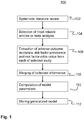
- Figure 1 illustrates a flowchart diagram of an exemplary method of generating a generalized model for adaptively predicting occurrence or progression of a first adverse health condition for a first subpopulation arbitrarily selected from a total population.
- literature or other publications including medical records from hospitals or other health institutions, are systematically reviewed, and in step 104 the most reliable articles or meta analyses from the literature or publications are selected.
- characterizing features e.g., adverse outcome incidence, risk factor prevalence and risk factor odds ratios
- the merged information is then used in step 110 to compute model parameters for the generalized model, which are stored in step 112.
- the model parameters may be computed using any appropriate type of probabilistic model, e.g., exponential family functions.
- FIG. 2 describes a more detailed, exemplary embodiment of steps 102-106 shown in figure 1 .
- steps 202 and 204 the target population and the endpoint of the prognostic reasoning tool are defined and forwarded as input to step 206, in which inclusion and exclusion criteria for the publications are defined.
- steps 208 to 216 entail defining the sources of evidence, and search terms defining the target population, endpoints of interest, and characterizing features.
- the literature is qualitatively assessed in order to identify potential new exposure/risk factors.
- the publications are screened and graded in steps 218 and 220, respectively, and a final selection of publications for analysis and extraction is made in step 222.
- the extraction of characterizing features etc. is then performed in step 224.
- Figure 3 illustrates a more detailed, exemplary embodiment of merging and computation steps 108 and 110, respectively, shown in figure 1 .
- step 302 an assessment is performed to generate a theory representing the process of causation linking the exposure and the outcome of interest.
- steps 304 and 306 the measures of association extracted from the literature are consolidated into a common effect size measure. This may include scaling for different sample sizes, different discretization and the like.
- different meta-analytic techniques can be performed for each independent risk factor or marker in step 308.
- Figure 4 depicts a data and results flow diagram of an exemplary method of predicting occurrence or progression of a first adverse health condition for an arbitrarily selectable first subpopulation of a total population.
- the subpopulation is a single patient.
- Data 402 from a patient record is provided to the generalized probabilistic model 404.
- Running the analysis using the generalized probabilistic model 404 provides one or more of a suggestion 406 for additional diagnostic testing, an indication representing a patient risk for an adverse health condition 408 and an indication 410 how big the impact of each characterizing feature, or risk factor, is on the patient risk for acquiring or progress of an adverse health condition.
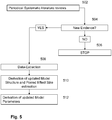
- Figure 5 shows a flowchart diagram of one exemplary aspect of the method of generating a generalized model for adaptively predicting occurrence or progression of a first adverse health condition for a first subpopulation arbitrarily selected from a total population, in which the generalized model is updated by analyzing new publications.
- Periodical or event-triggered check for new publications is executed in step 502. The review may be performed in the same way as in step 102 of figure 1 , and appropriate keywords may be determined in the same way as explained with reference to figure 2 .
- Whenever a publication is found in step 504 that promises to provide new evidence or generally new data in respect of an adverse health condition e.g.
- the method follows the "yes"-path to step 508, in which the data extraction is executed, e.g. in the way discussed with reference to figure 1 .
- the following steps 510 and 512 likewise may correspond to one or more of steps 106 to 110 discussed with reference to figure 1 . Updating the generalized model using new publications allows for the model to become more accurate or effective in predicting without having to derive again the full model generation process that was initially required and thus saves time and effort.
- Figure 6 shows an exemplary computer system 600 adapted to perform one or more aspects of the present method.
- Computer system 600 may include a processor 602, a random access memory (RAM) 604, a read-only memory (ROM) 606, a console 608, input devices 610, network interfaces 612, database 614, and a storage 616. It is understood that the type and number of listed devices are exemplary only and not intended to be limiting. The number of listed devices may be changed and other devices may be added.
- Processor 602 may include any appropriate type of general purpose microprocessor, digital signal processor, or microcontroller. Processor 602 may execute sequences of computer program instructions to perform various processes or method steps as explained above. The computer program instructions may be loaded into RAM 604 for execution by processor 602 from a read-only memory (ROM), or from storage 616.
- Storage 616 may include any appropriate type of mass storage provided to store any type of information that processor 602 may need to perform the processes.
- storage 616 may include one or more hard disk devices, optical disk devices, or other storage devices to provide storage space.
- Console 608 may provide a graphic user interface (GUI) to display information to users of computer system 600.
- GUI graphic user interface
- Console 608 may include any appropriate type of computer display device or computer monitor.
- Input devices 610 may be provided for users to input information into computer system 600.
- Input devices 610 may include a keyboard, a mouse, or other optical or wireless computer input devices, etc.
- network interfaces 612 may provide communication connections such that computer system 600 may be accessed remotely through computer networks via various communication protocols, such as transmission control protocol/internet protocol (TCP/IP), hyper text transfer protocol (HTTP), etc.
- TCP/IP transmission control protocol/internet protocol
- HTTP hyper text transfer protocol
- Database 614 may contain model data and/or any information related to data records under analysis, such as model parameters and testing data.
- Databases 614 may include any type of commercial or customized databases.
- Databases 614 may also include analysis tools for analyzing the information in the database.
- Processor 602 may also use databases 614 to determine and store performance characteristics of the generalized model.
Landscapes
- Health & Medical Sciences (AREA)
- Engineering & Computer Science (AREA)
- Public Health (AREA)
- Medical Informatics (AREA)
- Epidemiology (AREA)
- Primary Health Care (AREA)
- General Health & Medical Sciences (AREA)
- Data Mining & Analysis (AREA)
- Databases & Information Systems (AREA)
- Pathology (AREA)
- Biomedical Technology (AREA)
- Nutrition Science (AREA)
- Nuclear Medicine, Radiotherapy & Molecular Imaging (AREA)
- Surgery (AREA)
- Urology & Nephrology (AREA)
- Life Sciences & Earth Sciences (AREA)
- Biophysics (AREA)
- Physical Education & Sports Medicine (AREA)
- Medical Treatment And Welfare Office Work (AREA)
- Measuring And Recording Apparatus For Diagnosis (AREA)
Abstract
A computer-implemented method of generating a generalized model for adaptively predicting occurrence or progression of a first adverse health condition for a first subpopulation arbitrarily selected from a total population, includes extracting information about characterizing features of a plurality of second subpopulations, about occurrences and/or severity of the first adverse health condition found therein and/or about corresponding prognostic results, from a plurality of publications. One or more of the characterizing features are associated with corresponding first factors indicating a relation with an adverse or beneficial contribution of the characterizing feature to the occurrence or progression of the first adverse health condition, and with corresponding second factors indicating the relative frequency of occurrence in the respective second subpopulation considered in the respective publication. The characterizing features and their first and second factors are combined into a generalized model for the total population, including calculating a baseline risk of patient. The generalized model is stored on a computer accessible and readable medium in a retrievable manner.
Description
- The present method and apparatus relates to predicting occurrence or progression of adverse health conditions in test subjects.
- Medical-related information may originate from a plurality of different sources, such as clinical data or non-clinical data. Medical-related information may be used by health care professionals for the prescription and analysis of tests and/or for the diagnosis and treatment of diseases or medical events or, more generally, adverse health conditions. Medical-related information may also be used for assessing the risk of acquiring diseases, of existing diseases to aggravate, or of suffering from an adverse medical event. Health Risk Forecasting is a procedure aiming to analyze the probability of occurrence of a certain type of medical risk based on certain types of medical-related information. For example, Health Risk Forecasting can be used to analyze the probability of acquiring a lung disease based on whether or not a person is a smoker.
- A number of studies and clinical tests have been published in which the progression of adverse health conditions and their ultimate outcome has been recorded along with various medical and other parameters characterizing the studied subjects. Some of the studies tried to find numerical algorithms for predicting the occurrence and progression of adverse health conditions and their ultimate outcome by aligning the medical and other parameters of a test subject with those that have been recorded earlier.
- Some algorithms suffer from being based on data obtained from peer groups that are not representatively selected across the entire population. Thus, their predictive potential for test subjects whose medical and other parameters do not correspond to those of the peer group is limited. Additionally, certain current algorithms cannot promptly or easily be directly updated with emerging scientific evidence concerning certain medical-related information.
- It is, therefore, desirable to provide a computer-implemented method of generating a generalized model for adaptively predicting occurrence or progression of a first adverse health condition for a first subpopulation arbitrarily selected from a total population. Further, it is desirable to provide a computer-implemented method of adaptively predicting occurrence or progression of a first adverse health condition for a first subpopulation arbitrarily selected from a total population. Yet further it is desirable to provide a medical device implementing the computer-implemented method of generating a generalized model and a medical device implementing the computer-implemented method of adaptively predicting occurrence or progression of a first adverse health condition for a first subpopulation arbitrarily selected from a total population.
- The expression first adverse health condition is used herein to describe one or more from the non-exclusive list comprising cardiovascular event (CVE), chronic kidney disease (CKD), all cause hospitalizations, fractures, injuries, falls, infections, need for renal replacement therapy (e.g. dialysis or transplantation), end-stage renal disease, acute kidney injury, graft failure, vascular access complications, other disease outcome, etc.
- The expression first subpopulation as used herein refers to an individual having traits, attributes, or other characterizing features which allow distinguishing the individual from other members of a total population. Instead of referring to an individual it may also refer to a group of individuals sharing the same traits, attributes, or other characterizing features, distinguishing the group from other members of the total population. The total population comprises a plurality of second subpopulations, e.g., subpopulations considered in respective scientific studies, in literature or the like. The total population may comprise all second subpopulations for which data is available for analysis. Different second subpopulations may or may not share one or more traits, attributes or other characterizing features with the first subpopulation or other second subpopulations. However, each subpopulation will differ in at least one trait from any other subpopulation. Second subpopulations separately analyzed in individual studies or pieces of literature in respect to the same adverse health conditions may be partially overlapping or may even be identical.
- As stated above the expression characterizing features as used herein refers to traits, attributes, which allow distinguishing an individual or group of individuals from other individuals or groups of individuals. Characterizing features may include general information characterizing individuals or a population, genetic information, e.g. obtained from genetic marker analysis systems, medical events and states, treatments, diagnosis, and prognosis characterizations, etc. The characterizing features may further include demographic data, e.g., age, race, sex, work place, environmental factors, residence, life style, etc., self-reported data, e.g., from surveys captured intermittently from individuals or members of a population, prescription drug information, e.g., types and/or amount of prescription drugs taken by an individual or a population, data obtained from diagnostic records, e.g., clinical tests and results, and treatment data, e.g., illness, treatment, hospital, and/or doctor, etc. Medical data may be obtained from any kind of routine or advanced diagnostic test including but not limited to any imaging technique (e.g. magnetic resonance imaging, sonography, x-ray, CT scan, scintigraphy, etc), electrophysiology testing, physical examination results, immunoassays and radioimmunoassay systems, biochemistry, polymerase (PCR) chain reaction analysis systems, chromatography analysis systems, and/or receptor assay systems, etc. Data from other analysis systems, such as tissue analysis systems, cytology and tissue typing systems, and immunocytochemistry and histopathological analysis systems may also be included. The characterizing features may be time-invariant or relate to current and/or past time instants. The data may also be provided as a time series or as a derivative thereof, indicating a change over time.
- In accordance with an aspect the method of generating a generalized model for adaptively predicting occurrence or progression of a first adverse health condition arbitrarily selected from a total population described herein includes extracting information about characterizing features of a plurality of second subpopulations, about occurrences and/or severity of the first adverse health condition found therein and/or about corresponding prognostic results, from a plurality of publications and/or primary clinical data recorded in electronic databases and elaborated according to probabilistic statistical models. One or more characterizing features, e.g. those known to be useful in the respective context, may be provided as further input for initializing the extraction, but this is not a strict requirement, since the extraction itself may identify other or further characterizing features as also or equally relevant, or even or more relevant.
- The term publication is used herein to describe scientific studies and papers, general literature or literature with a focus on health issues, data sets correlating health issues with patient's properties that can be unambiguously linked with one or more patients: Such properties include but are not limited to age, gender, height, weight, BMI, use of substances or alcohol, smoking, history of hypertension or hypotension, diabetes, CKD stage, history of cerebrovascular disease, coronary artery disease, peripheral artery disease, chronic heart failure, chronic obstructive pulmonary disease, autoimmune disorders, anxiety/depression, cancer, liver disease, BMI, albumin, glucose, HDL, LDL, Triglycerides, CRP, IL-6, serum uric acid, HsTNT, Phosphate, iPTH, proteinuria and albuminuria, other known chronic diseases, past cured diseases, behavior or lifestyle, psychological profiles, morphological characteristics assessed via any imaging technique, or functional characteristics assessed via any appropriate diagnostic testing.
- The information about characterizing features extracted from the plurality of publications and/or primary clinical data recorded in electronic databases and elaborated according to probabilistic statistical models may comprise those patient's properties which show a positive or negative correlation with regard to the first adverse health condition.
- The method further includes associating, based on data from each of the plurality of publications and/or primary clinical data recorded in electronic databases and elaborated according to probabilistic statistical models, one or more of the characterizing features identified therein with corresponding first factors indicating a relation with an adverse or beneficial contribution of the characterizing feature to the occurrence or progression of the first adverse health condition. The first factors may represent, e.g., effect size measures such as odds ratios, hazard ratios, relative risks.
- The method further includes associating, from each of the plurality of publications and/or primary clinical data recorded in electronic databases and elaborated according to probabilistic statistical models, one or more of the characterizing features identified therein with corresponding second factors indicating the relative frequency of occurrence, or prevalence, in the respective second subpopulation considered in the respective publication. The combination of data on characterizing features and associated first and second factors over a plurality of publications and/or primary clinical data recorded in electronic databases and elaborated according to probabilistic statistical models may provide an indication for a likelihood of occurrence or progression in the total population.
- The relation indicated by the first factor may express a risk increase or decrease for occurrence or progression of the first adverse health condition in a patient, e.g. expressed with respect to a reference population, or as an absolute risk.
- The method further includes combining the characterizing features and their first and second factors into a generalized model for the total population, wherein combining includes calculating a baseline risk of a patient and estimating the conditional probability of a first adverse health condition for all the potential configurations of known health states contributing to the first adverse health event risk. A baseline risk may be considered a general risk for a patient in which all identified and known risk factors are absent.
- The combination of the characterizing features and their first and second factors may follow the steps exemplarily described hereafter.
- In the case of effect sizes expressed as odds ratios, input to the process is
adverse outcome incidence I
risk factor prevalence P1, P2, ..., Pn
effect size measures: OR1, OR2, ..., ORn - Output of the process is conditional probabilities of risk factors
PRF_1, PRF_2, ... PRF_n
for a given outcome - The procedure may be briefly summarized as
- 1. Get I
- 2. Get P1, P2, ..., Pn
- 3. Get OR1, OR2, ..., ORn
- 4. Compute for each risk factor the contribution to the outcome risk as

- 5. Compute base risk as λ = -In((1-I)/I) -∑iW_RFi
- 6. Compute the probability of the outcome given each risk factor as

- 7. Compute the joint probability of outcome and each risk factor as

- 8. Compute the probability of each risk factor given the outcome as

- The method further includes storing the generalized model in a retrievable manner on a computer accessible and readable medium.
- In other words, the aspect of the method presented above selects the most relevant information from a vast array of available publications and/or primary clinical data recorded in electronic databases and elaborated according to probabilistic statistical models, like clinical and patient-reported data, assesses the contribution of patient-specific health-state attributes to future risk, creates a generalized model including a baseline reference, and stores the model for future application using a subpopulation's attributes as input values.
- In an aspect of the method weights are derived and associated with the first and/or second factors. The weights may be derived from data from a single publication or with respect to a plurality of publications, or a mixture of a plurality of publications and primary clinical data recorded in multiple electronic databases and elaborated according to probabilistic statistical models.
- In an aspect of the method extracting includes automatic extraction using one or more of electronic text processing, optical character recognition, natural language processing, but also manual data entry. In case of automatic extraction of characterizing features rule-based extraction or extraction assisted by artificial intelligence as well as other methods may be used.
- In an aspect of the method the characterizing features and the associated factors are adjusted, ranked and/or selected for the quality of the publication prior to generating the generalized model. The quality of the publication and the primary dataset source may be assessed by considering the number of participants analyzed, the risk of bias through standardized procedures, the absence of conflict of interests by the authors, and the like.
- In an aspect of the method the characterizing features and the associated factors are adjusted, ranked and/or selected for the conditional probability of an outcome associated with a single characterizing feature across the plurality of publications. In other words, a summary view of the significance of same characterizing feature across the plurality of publications and/or a mixture of publications and probabilistic analyses of primary clinical data is provided.
- The plurality of publications subjected to the method described above may be limited to those publications in which the adverse health condition has been mentioned, or considered, irrespective of whether a positive, negative or no correlation between the first adverse health condition and the patient's properties analyzed in the publication has been found. This may serve as a pre-selection for enhancing the quality of the prediction, or for accelerating the execution of the method. Thus, in an aspect of the method, as a further step, the result of a first run of the method, e.g. a characterizing features correlated with an adverse health condition, including those found across the plurality of the publications that was not apparent from any single publication taken alone, may be taken as an input for re-running the method including those publications that had previously not been considered, e.g. in order to find an unlikely and previously unknown correlation between an adverse health condition and a further characterizing feature.
- Similarly, in an aspect of the method described above a periodic or event-triggered check for new publications is executed, e.g. by scanning publications for the occurrence of a term or expression or synonym for the adverse health condition or one or more of the characterizing features previously identified, which are related to the adverse health condition. Whenever such new publication is found data is extracted in the way described further above, and the data is input to the method for re-running the steps for generating the generalized model.
- The method allows for easy iterative improvement by adding new aggregate data to the initial evidence base extracted from clinical studies, real world evidence, or pieces of literature. Such continuous fine-tuning of the existing model is feasible because the model generation process can be solely based on population summary measures. The prominent advantage of this literature-based analysis approach compared traditional data-driven approaches is that it is optimized to fully rely on published, publicly available aggregated data for model derivation or update and does not need enumerating and following up a new cohort for model derivation or update, an expensive, time-consuming and often unfeasible endeavor. Even though not strictly necessary, analysis of primary clinical data may optionally be used to complement the model obtained through literature review. The model parameters can be easily re-calculated using the same methods as described in the sections above, by simply adding the new aggregate data measure extracted from any eligible new study to the full evidence base previously used to derive the model.
- Several aspects of the method described hereinbefore may be combined with each other and/or may be integrated in the underlying method. E.g., the two-run aspect may be combined with adjusting, ranking and/or selecting characterizing features.
- Once the generalized model has been generated it may be used in a computer-implemented method of adaptively predicting occurrence or progression of a first adverse health condition for an arbitrarily selectable first subpopulation of a total population. In an aspect this method includes receiving one or more characterizing features from a generalized model generated and stored in a computer accessible and readable memory in accordance with the method of generating a generalized model for adaptively predicting occurrence or progression of a first adverse health condition arbitrarily selected from a total population described further above. The characterizing features may be those identified as risk factors, which have at least some correlation with the adverse health condition, either beneficial or aggravating.
- The method of adaptively predicting occurrence or progression of a first adverse health condition for an arbitrarily selectable first subpopulation of a total population further includes receiving data characterizing the first subpopulation. The data characterizing the first subpopulation may comprise all or a subset of the characterizing features required, provided, used, analyzed or considered in the generation of the generalized model. The data characterizing the first subpopulation may thus include data representing physiological features, demographic information, comorbidities, complications and medications, e.g. age, sex, intake of alcohol, smoking, BMI, history of hypertension, diabetes, CKD stage, history of cerebrovascular disease, coronary artery disease, peripheral artery disease, chronic heart failure, chronic obstructive pulmonary disease, autoimmune disorders, anxiety/depression, cancer, liver disease, levels of Albumin, Glucose, HDL, LDL, Triglycerides, CRP, IL-6, S-Uric Acid, HsTNT, Phosphate, iPTH, proteinuria and Albuminuria. It is to be noted that the first subpopulation for this method need not be the same first subpopulation that was referred to in the method for generating the generalized model, and that not all characterizing data need to be used or even available.
- The method further includes providing the one or more received characterizing features from the generalized model and the data characterizing the subpopulation to a computing module implementing a probabilistic model. The computing module may be implemented as a computer executing corresponding software, either exclusively or in a dedicated thread that runs in parallel to other tasks on the computer. The probabilistic model may be one of a plurality of known models, e.g. a Bayesian network. The probabilistic model produces, or calculates, as an output signal, a summary score indicating a risk, or a probability, of occurrence or progression of the adverse health condition for the first subpopulation. The risk, or probability, may be provided as an absolute value, or as a relative value, e.g. over a population in which all risk factors are absent.
- The output signal is provided to a user or a computer. Providing may include displaying the result on a display screen, printing the result, acoustically providing the result, e.g. over a loudspeaker after text-to-speech conversion, and the like. Providing may also include transmitting the result over a digital communication channel to a user's computer.
- In an aspect the method may include providing data signals representing positive or negative effect of one or more characterizing features on the summary score, or the probability of occurrence or progression of the adverse health condition.
- In an aspect of the method, in case multiple characterizing features and their effect on the summary score or probability are provided, these are provided in a ranked order according to the significance of their respective contribution to the summary score for the first subpopulation under assessment, i.e. for a single patient or for a group of patients. The ranking may be by absolute or relative contribution. The contribution of a characterizing factor may be either beneficial, i.e. reducing the risk, or adverse, i.e. increasing the risk, and the ranking by significance may be by the absolute significance, irrespective of being beneficial or adverse, or grouped into beneficial and adverse characterizing factors.
- In an aspect of the method characterizing features having positive or negative effect on the risk determined for the adverse health condition, which are modifiable through one or more responsive actions from the non-exclusive list comprising therapy, change of lifestyle, change of diet and medical intervention, are highlighted. Highlighting may include printing in bold letters, italics, different font, different font or background color. Selective highlighting may be applied, e.g. in accordance with a ranking of how difficult a modification of a diet or a lifestyle will be for the subpopulation, or how likely an enduring adherence to the modified diet or lifestyle is. Other rankings for the highlighting may include an estimated cost for the modification, e.g. in connection with a selection of possible therapies or medical interventions.
- In an aspect the method further includes providing information about how much the risk or the probability of occurrence or progression of the adverse health condition is modified by a responsive action, e.g. by indicating that stopping smoking will reduce the risk by a certain percentage.
- In an aspect the method further includes providing a selection of therapy recommendations based on the kind of adverse health condition and/or the risk score. The selection of therapy recommendations may, for example, include closer monitoring of a patient or a subpopulation, e.g., by means of telemedicine, portable devices for monitoring bodily functions, more frequent visits to a physician or a clinic and the like.
- In an aspect the method further includes suggesting a selection of additional diagnostic testing and/or therapy that could produce data related to or describing further characterizing features, results or data relating to which can be provided as an input to the method, i.e. the software module, for improving the accuracy of the summary score. The selection of additional testing may be provided in a ranked order, e.g. in accordance with their level of invasiveness to a patient and/or cost, their availability in a region or location, a time until test results can be expected, and the like.
- Another aspect of the present disclosure includes a medical device, e.g. implemented by a computer system executing computer program instructions which implement one or more aspects of the methods describe hereinbefore. The medical device may include a display and a user interface, an interface for receiving digital data, and one or more microprocessors and associated volatile and/or non-volatile memory. The interface for receiving digital data may be of conventional type and may provide connection with wired or wireless networks such as Ethernet (LAN), according to standards of the IEEE 802.11 family, also known under the trademark name 'WiFi', according to standards of the IEEE802.15 family, also known under the registered brand name 'Bluetooth', but also with portable data storage devices connected through serial or parallel connections, such as Universal Serial Bus (USB) or a connection according to IEEE 1394 (FireWire). Each of these interfaces comprises a physical transmitter and receiver part as well as a logical transmitter and receiver part, some of which may be similar in structure and operation across the various standards. The medical device may further include a database containing data records associating a plurality of medical risks and a plurality of health parameters and/or characterizing features, as well as other data describing the total population and/or a plurality of subpopulations. The data base may further provide access to a plurality of publications and other medical documentation.
- According to one aspect of the present disclosure the medical device, when the processor executes the computer program instructions, may be configured to generate a generalized model for adaptively predicting occurrence or progression of a first adverse health condition for a first subpopulation arbitrarily selected from a total population. The generalized model may represent interrelationships between a plurality of medical risks and a plurality of health parameters. In accordance with this aspect, the medical device is configured to extract information about characterizing features of a plurality of second subpopulations, about occurrences and/or severity of the first adverse health condition and/or about corresponding prognostic results found in a plurality of publications. The publications may, e.g., be obtained through accessing one or more databases. The medical device may further be configured to associate, from each of the plurality of publications, one or more of the characterizing features identified therein with corresponding first factors indicating a relation with an adverse or beneficial contribution of the characterizing feature to the occurrence or progression of the first adverse health condition, and further to associate one or more of the characterizing features with corresponding second factors indicating the relative frequency of occurrence in the respective second subpopulation considered in the respective publication. The medical device may yet further be configured to combine the characterizing features and their first and second factors into a generalized model for the total population, wherein combining includes calculating a baseline risk of patient, and to store the generalized model in a retrievable manner on a computer accessible and readable medium.
- In an aspect of the present disclosure the medical device may be configured to perform automatic extraction of information from publications using one or more of electronic text processing, optical character recognition, and natural language processing.
- In an aspect of the present disclosure the medical device may be configured to adjust, rank and/or select characterizing features and the associated factors for the quality of the publication prior to generating the generalized model. Adjusting, ranking and/or selecting may be executed in accordance with the quality of the publication, or in accordance with the conditional probability of an outcome associated with a single characterizing feature across the plurality of publications.
- In an aspect of the present disclosure the medical device may be configured to, in a first run of the method, limit the plurality of publications to those considering the first adverse health condition and, in a second run of the method, to use the result of the first run as an input to the method, along with one or more publications not considering the first adverse health condition.
- According to one aspect of the of the present disclosure the medical device, when the processor executes the computer program instructions, may be configured to adaptively predict occurrence or progression of a first adverse health condition for an arbitrarily selectable first subpopulation of a total population. In accordance with this aspect, the medical device is configured to receive one or more characterizing features from a generalized model generated and stored in a computer accessible and readable memory, e.g. in accordance with the method described further above. The medical device is further configured to receive data characterizing the first subpopulation and to provide the one or more received characterizing features from the generalized model and the data characterizing the subpopulation to a software module implementing a probabilistic model. The medical device is yet further configured to provide a summary score output from the software module, indicating a risk or probability of occurrence or progression of the adverse health condition for the first subpopulation, and to provide, to a user, one or more characterizing features and their positive or negative effect on the risk or the probability of occurrence or progression of the adverse health condition.
- In an aspect of the present disclosure the medical device may be configured to provide the one or more characterizing features and their positive or negative effect on the risk or the probability of occurrence or progression of the adverse health condition in a ranked order according to their significance of their contribution to the summary score.
- In an aspect of the present disclosure the medical device may be configured to highlight those characterizing features having positive or negative effect on the risk or the probability of occurrence or progression of the adverse health condition which can be modified or influenced through one or more responsive actions from the non-exclusive list comprising therapy, change of lifestyle, change of diet and medical intervention.
- In an aspect of the present disclosure the medical device may be configured to provide information about how much the risk or the probability of occurrence or progression of the adverse health condition is modified by a responsive action.
- In an aspect of the present disclosure the medical device may be configured to provide a selection of therapy recommendations based on the kind of adverse health condition and/or the risk score.
- In an aspect of the present disclosure the medical device may be configured to provide a selection of additional diagnostic tests and/or therapy that could produce data related to or describing further characterizing features, results or data relating to which can be provided to the software module for improving the accuracy of the summary score. The selection of additional diagnostic tests and/or therapy may be provided in a ranked order, e.g. in accordance with their cost, availability within a region or location, a time until test results are available or visible effects can be expected, and the like.
- Another aspect of the present disclosure includes a computer-readable medium for use on a computer system configured to perform generating a generalized model for adaptively predicting occurrence or progression of a first adverse health condition for a first subpopulation arbitrarily selected from a total population. The computer-readable medium according to this aspect may have computer-executable instructions for performing a method including extracting information about characterizing features of a plurality of second subpopulations, about occurrences and/or severity of the first adverse health condition found therein and/or about corresponding prognostic results, from a plurality of publications, associating one or more of the characterizing features identified in each of the plurality of publications with corresponding first factors indicating a relation with an adverse or beneficial contribution of the characterizing feature to the occurrence or progression of the first adverse health condition, further associating one or more of the characterizing features with corresponding second factors indicating the relative frequency of occurrence in the respective second subpopulation considered in the respective publication, combining the characterizing features and their first and second factors into a generalized model for the total population, wherein combining includes calculating a baseline risk of patient, and storing the generalized model in a retrievable manner on a computer accessible and readable medium.
- Yet another aspect of the present disclosure includes a computer-readable medium for use on a computer system configured to perform adaptively predicting occurrence or progression of a first adverse health condition for an arbitrarily selectable first subpopulation of a total population. The computer-readable medium according to this aspect may have computer-executable instructions for performing a method including receiving one or more characterizing features from a generalized model generated and stored in a computer accessible and readable memory, receiving data characterizing the first subpopulation, providing the one or more received characterizing features from the generalized model and the data characterizing the subpopulation to a software module implementing a probabilistic model, providing a summary score from the software module, indicating a risk or probability of occurrence or progression of the adverse health condition for the first subpopulation and providing, to a user, one or more characterizing features and their positive or negative effect on the risk or the probability of occurrence or progression of the adverse health condition.
- Storing, receiving and/or providing as used throughout this specification may include establishing a physical and/or logical digital communication channel between a processor and a memory, between a first and a second computer over a digital communication connection or network, or combinations thereof.
- The present medical devices and methods may provide efficient and accurate prediction of adverse health conditions for an arbitrarily selected subpopulation or individual based on health information obtained from publications, literature and the like that focus on a limited or selected subpopulation. Such technology may be used to predict and manage individual health risks as well as to analyze and manage health risks of a group or a population.
- Patient-specific or subpopulation-specific ranking of risk factors and beneficial factors by their impact on the absolute or relative risk allows for a physician or other medical caregiver to provide more focused and more effective treatments or preventive measures.
- Individual users may use the disclosed medical devices and methods to predict occurrence or progression of potential adverse health conditions based on their own health data or characterizing features. The individual users may also obtain information for reducing the risks or the likelihood of occurrence or progression of an adverse health condition changing relevant behavior, e.g., lifestyle, corresponding to its contribution to the risk or likelihood.
- Group or institutional users may use the disclosed medical devices and methods to calculate health risks among a population, such as a particular distribution among the population. The institutional users may also optimize the distribution to reduce the health risks of a population and to promote healthy lifestyle.
- In the following section the method will be described with reference to the drawings. In the drawings
- Fig. 1
- illustrates a flowchart diagram of an
exemplary method 100 of generating a generalized model for adaptively predicting occurrence or progression of a first adverse health condition for a first subpopulation arbitrarily selected from a total population, - Fig. 2
- describes a more detailed, exemplary embodiment of the selection step shown in
figure 1 , - Fig. 3
- illustrates a more detailed, exemplary embodiment of the merging and computation steps shown in
figure 1 , - Fig. 4
- depicts a data and results flow diagram of an exemplary method of predicting occurrence or progression of a first adverse health condition for an arbitrarily selectable first subpopulation of a total population,
- Fig. 5
- shows a flowchart diagram of one exemplary aspect of the method of generating a generalized model for adaptively predicting occurrence or progression of a first adverse health condition for a first subpopulation arbitrarily selected from a total population, in which the generalized model is updated by analyzing new publications, and
- Fig. 6
- shows an exemplary computer system adapted to perform one or more aspects of the present method.
- Reference will now be made in detail to exemplary embodiments, which are illustrated in the accompanying drawings. Wherever possible, the same reference numbers will be used throughout the drawings to refer to the same or like parts.
-
Figure 1 illustrates a flowchart diagram of an exemplary method of generating a generalized model for adaptively predicting occurrence or progression of a first adverse health condition for a first subpopulation arbitrarily selected from a total population. In step 102 literature or other publications, including medical records from hospitals or other health institutions, are systematically reviewed, and in step 104 the most reliable articles or meta analyses from the literature or publications are selected. From these selected documents characterizing features, e.g., adverse outcome incidence, risk factor prevalence and risk factor odds ratios, are extracted instep 106 and merged instep 108. The merged information is then used instep 110 to compute model parameters for the generalized model, which are stored instep 112. The model parameters may be computed using any appropriate type of probabilistic model, e.g., exponential family functions. -
Figure 2 describes a more detailed, exemplary embodiment of steps 102-106 shown infigure 1 . Insteps Steps 208 to 216, entail defining the sources of evidence, and search terms defining the target population, endpoints of interest, and characterizing features. At the end of each cycle the literature is qualitatively assessed in order to identify potential new exposure/risk factors. - Once the search strategy and all required definitions are made the publications are screened and graded in
steps step 222. The extraction of characterizing features etc. is then performed instep 224. -
Figure 3 illustrates a more detailed, exemplary embodiment of merging andcomputation steps figure 1 . Instep 302 an assessment is performed to generate a theory representing the process of causation linking the exposure and the outcome of interest. Insteps step 308. -
Figure 4 depicts a data and results flow diagram of an exemplary method of predicting occurrence or progression of a first adverse health condition for an arbitrarily selectable first subpopulation of a total population. In the example the subpopulation is a single patient.Data 402 from a patient record is provided to the generalizedprobabilistic model 404. Running the analysis using the generalizedprobabilistic model 404 provides one or more of asuggestion 406 for additional diagnostic testing, an indication representing a patient risk for anadverse health condition 408 and anindication 410 how big the impact of each characterizing feature, or risk factor, is on the patient risk for acquiring or progress of an adverse health condition. -
Figure 5 shows a flowchart diagram of one exemplary aspect of the method of generating a generalized model for adaptively predicting occurrence or progression of a first adverse health condition for a first subpopulation arbitrarily selected from a total population, in which the generalized model is updated by analyzing new publications. Periodical or event-triggered check for new publications is executed instep 502. The review may be performed in the same way as in step 102 offigure 1 , and appropriate keywords may be determined in the same way as explained with reference tofigure 2 . Whenever a publication is found instep 504 that promises to provide new evidence or generally new data in respect of an adverse health condition, e.g. new subpopulations, new characteristic features, etc., the method follows the "yes"-path to step 508, in which the data extraction is executed, e.g. in the way discussed with reference tofigure 1 . The followingsteps steps 106 to 110 discussed with reference tofigure 1 . Updating the generalized model using new publications allows for the model to become more accurate or effective in predicting without having to derive again the full model generation process that was initially required and thus saves time and effort. -
Figure 6 shows anexemplary computer system 600 adapted to perform one or more aspects of the present method.Computer system 600 may include aprocessor 602, a random access memory (RAM) 604, a read-only memory (ROM) 606, aconsole 608,input devices 610, network interfaces 612,database 614, and astorage 616. It is understood that the type and number of listed devices are exemplary only and not intended to be limiting. The number of listed devices may be changed and other devices may be added. -
Processor 602 may include any appropriate type of general purpose microprocessor, digital signal processor, or microcontroller.Processor 602 may execute sequences of computer program instructions to perform various processes or method steps as explained above. The computer program instructions may be loaded intoRAM 604 for execution byprocessor 602 from a read-only memory (ROM), or fromstorage 616.Storage 616 may include any appropriate type of mass storage provided to store any type of information thatprocessor 602 may need to perform the processes. For example,storage 616 may include one or more hard disk devices, optical disk devices, or other storage devices to provide storage space. -
Console 608 may provide a graphic user interface (GUI) to display information to users ofcomputer system 600.Console 608 may include any appropriate type of computer display device or computer monitor.Input devices 610 may be provided for users to input information intocomputer system 600.Input devices 610 may include a keyboard, a mouse, or other optical or wireless computer input devices, etc. Further, network interfaces 612 may provide communication connections such thatcomputer system 600 may be accessed remotely through computer networks via various communication protocols, such as transmission control protocol/internet protocol (TCP/IP), hyper text transfer protocol (HTTP), etc. -
Database 614 may contain model data and/or any information related to data records under analysis, such as model parameters and testing data.Databases 614 may include any type of commercial or customized databases.Databases 614 may also include analysis tools for analyzing the information in the database.Processor 602 may also usedatabases 614 to determine and store performance characteristics of the generalized model. - Other embodiments, features, aspects, and principles of the disclosed exemplary medical devices and methods will be apparent to those skilled in the art and may be implemented in various environments and systems.
Claims (14)
- A computer-implemented method of generating a generalized model for adaptively predicting occurrence or progression of a first adverse health condition for a first subpopulation arbitrarily selected from a total population, including:- extracting information about characterizing features of a plurality of second subpopulations, about occurrences and/or severity of the first adverse health condition found therein and/or about corresponding prognostic results, from a plurality of publications and/or primary clinical data sources;- from each of the plurality of publications and/or primary clinical data sources, associating one or more of the characterizing features identified therein with corresponding first factors indicating a relation with an adverse or beneficial contribution of the characterizing feature to the occurrence or progression of the first adverse health condition, and further associating one or more of the characterizing features with corresponding second factors indicating the relative frequency of occurrence in the respective second subpopulation considered in the respective publication;- combining the characterizing features and their first and second factors into a generalized model for the total population, wherein combining includes calculating a baseline risk of patient; and- storing the generalized model in a retrievable manner on a computer accessible and readable medium.
- The method of claim 1, wherein extracting includes controlling an automatic extraction module implementing one or more of electronic text processing, optical character recognition, and natural language processing.
- The method of claim 1 or 2, further including adjusting, ranking and/or selecting the characterizing features and the associated factors in accordance with a value representing a quality of the publication and/or primary clinical data source prior to generating the generalized model.
- The method of any one of claims 1 to 3, further including adjusting, ranking and/or selecting the characterizing features and the associated factors in accordance with a value representing the conditional probability of an outcome associated with a single characterizing feature across the plurality of publications and/or primary clinical data sources.
- The method of any one of claims 1 to 4, further including, in a first run of the method, limiting the plurality of publications and/or primary clinical data sources to those considering the first adverse health condition and, in a second run of the method, using the result of the first run as an input to the method, along with one or more publications and/or primary clinical data sources not considering the first adverse health condition.
- A computer-implemented method of adaptively predicting occurrence or progression of a first adverse health condition for an arbitrarily selectable first subpopulation of a total population, including:- receiving one or more characterizing features from a generalized model generated and stored in a computer accessible and readable memory in accordance with the method of one or more of claims 1 to 7;- receiving data characterizing the first subpopulation;- providing the one or more received characterizing features from the generalized model and the data characterizing the subpopulation to a software module implementing a probabilistic model;- providing a summary score from the software module, indicating a risk or probability of occurrence or progression of the adverse health condition for the first subpopulation; and- providing, to a user, one or more characterizing features and their positive or negative effect on the risk or the probability of occurrence or progression of the adverse health condition.
- The method of claim 6, further including providing the one or more characterizing features and their positive or negative effect on the risk or the probability of occurrence or progression of the adverse health condition in a ranked order according to their significance of their contribution to the summary score.
- The method of claim 7, further including highlighting those characterizing features having positive or negative effect on the risk or the probability of occurrence or progression of the adverse health condition which can be modified or influenced through one or more responsive actions from the non-exclusive list comprising therapy, change of lifestyle, change of diet and medical intervention.
- The method of claim 8, further including providing information about how much the risk or the probability of occurrence or progression of the adverse health condition is modified by a responsive action.
- The method of any one of claims 6 to 9, further including providing a selection of therapy recommendations based on the kind of adverse health condition and/or the risk score.
- The method of any one of claims 6 to 10, further including providing a selection of additional diagnostic tests and/or therapy that could produce data related to or describing further characterizing features, results or data relating to which can be provided to the software module for improving the accuracy of the summary score.
- The method of claim 10 or 11, further including providing the selection of additional diagnostic tests and/or therapy in a ranked order.
- A system for generating a generalized model for adaptively predicting occurrence or progression of a first adverse health condition for a first subpopulation arbitrarily selected from a total population, including:- an extraction module configured to receive first data signals representing a plurality of publications and/or primary clinical data sources, to extract, from the data signals, information about characterizing features of a plurality of second subpopulations, about occurrences and/or severity of the first adverse health condition found therein and/or about corresponding prognostic results, from the plurality of publications and/or primary clinical data sources, and to generate corresponding second data signals;- an association module configured to receive the second data signals, to associate one or more of the characterizing features identified in each of the plurality of publications and/or primary clinical data sources and represented by the second data signals with corresponding first factors indicating a relation with an adverse or beneficial contribution of the characterizing feature to the occurrence or progression of the first adverse health condition, to generate corresponding third data signals, further to associate one or more of the characterizing features with corresponding second factors indicating the relative frequency of occurrence in the respective second subpopulation considered in the respective publication and/or primary clinical data source, and to generate corresponding fourth data signals;- a combination module configured to receive the second, third and fourth data signals, to combine the characterizing features and their first and second factors, represented by the second, third and fourth data signals, into a generalized model for the total population, wherein combining includes calculating a baseline risk of patient, and to provide a fifth data signal representing the generalized model; and- a data access module configured to access a computer accessible and readable medium and to store the fifth data signal representing the generalized model therein in a retrievable manner.
- A system for adaptively predicting occurrence or progression of a first adverse health condition for an arbitrarily selectable first subpopulation of a total population, including:- a first data receiver module configured to receive data signals representing one or more characterizing features from a generalized model generated and stored in a computer accessible and readable memory in accordance with the method of one or more of claims 1 to 7;- a second data receiver module configured to receive data signals representing a characterization of the first subpopulation;- a software module configured to receive and process the data signals representing the one or more received characterizing features from the generalized model and the data signals representing a characterization of the subpopulation, the software module including an implementation of a probabilistic model, and configured to provide a summary score from the software module, indicating a risk or probability of occurrence or progression of the adverse health condition for the first subpopulation; and- a providing module configured to provide, to a user or a further medical device, one or more characterizing features and their positive or negative effect on the risk or the probability of occurrence or progression of the adverse health condition.
Priority Applications (6)
| Application Number | Priority Date | Filing Date | Title |
|---|---|---|---|
| EP17196137.8A EP3471107A1 (en) | 2017-10-12 | 2017-10-12 | Medical device and computer-implemented method of predicting risk, occurrence or progression of adverse health conditions in test subjects in subpopulations arbitrarily selected from a total population |
| JP2020519260A JP7245236B2 (en) | 2017-10-12 | 2018-10-05 | A medical device and computer-implemented method for predicting the risk, occurrence or progression of an unhealthy condition in a subject within a randomly selected subpopulation of the total population |
| EP18785897.2A EP3695418A1 (en) | 2017-10-12 | 2018-10-05 | Medical device and computer-implemented method of predicting risk, occurrence or progression of adverse health conditions in test subjects in subpopulations arbitrarily selected from a total population |
| US16/754,579 US20200258639A1 (en) | 2017-10-12 | 2018-10-05 | Medical device and computer-implemented method of predicting risk, occurrence or progression of adverse health conditions in test subjects in subpopulations arbitrarily selected from a total population |
| CN201880064463.0A CN111164705B (en) | 2017-10-12 | 2018-10-05 | Medical device and computer-implemented method for predicting risk, occurrence or development of adverse health conditions of test subjects in arbitrarily selected sub-populations from a population |
| PCT/EP2018/077069 WO2019072692A1 (en) | 2017-10-12 | 2018-10-05 | Medical device and computer-implemented method of predicting risk, occurrence or progression of adverse health conditions in test subjects in subpopulations arbitrarily selected from a total population |
Applications Claiming Priority (1)
| Application Number | Priority Date | Filing Date | Title |
|---|---|---|---|
| EP17196137.8A EP3471107A1 (en) | 2017-10-12 | 2017-10-12 | Medical device and computer-implemented method of predicting risk, occurrence or progression of adverse health conditions in test subjects in subpopulations arbitrarily selected from a total population |
Publications (1)
| Publication Number | Publication Date |
|---|---|
| EP3471107A1 true EP3471107A1 (en) | 2019-04-17 |
Family
ID=60117510
Family Applications (2)
| Application Number | Title | Priority Date | Filing Date |
|---|---|---|---|
| EP17196137.8A Withdrawn EP3471107A1 (en) | 2017-10-12 | 2017-10-12 | Medical device and computer-implemented method of predicting risk, occurrence or progression of adverse health conditions in test subjects in subpopulations arbitrarily selected from a total population |
| EP18785897.2A Pending EP3695418A1 (en) | 2017-10-12 | 2018-10-05 | Medical device and computer-implemented method of predicting risk, occurrence or progression of adverse health conditions in test subjects in subpopulations arbitrarily selected from a total population |
Family Applications After (1)
| Application Number | Title | Priority Date | Filing Date |
|---|---|---|---|
| EP18785897.2A Pending EP3695418A1 (en) | 2017-10-12 | 2018-10-05 | Medical device and computer-implemented method of predicting risk, occurrence or progression of adverse health conditions in test subjects in subpopulations arbitrarily selected from a total population |
Country Status (5)
| Country | Link |
|---|---|
| US (1) | US20200258639A1 (en) |
| EP (2) | EP3471107A1 (en) |
| JP (1) | JP7245236B2 (en) |
| CN (1) | CN111164705B (en) |
| WO (1) | WO2019072692A1 (en) |
Cited By (7)
| Publication number | Priority date | Publication date | Assignee | Title |
|---|---|---|---|---|
| US11026625B2 (en) | 2017-08-08 | 2021-06-08 | Fresenius Medical Care Holdings, Inc. | Systems and methods for treating and estimating progression of chronic kidney disease |
| US11527313B1 (en) * | 2019-11-27 | 2022-12-13 | Clarify Health Solutions, Inc. | Computer network architecture with machine learning and artificial intelligence and care groupings |
| US11605465B1 (en) | 2018-08-16 | 2023-03-14 | Clarify Health Solutions, Inc. | Computer network architecture with machine learning and artificial intelligence and patient risk scoring |
| US11621085B1 (en) | 2019-04-18 | 2023-04-04 | Clarify Health Solutions, Inc. | Computer network architecture with machine learning and artificial intelligence and active updates of outcomes |
| US11625789B1 (en) | 2019-04-02 | 2023-04-11 | Clarify Health Solutions, Inc. | Computer network architecture with automated claims completion, machine learning and artificial intelligence |
| US11636497B1 (en) | 2019-05-06 | 2023-04-25 | Clarify Health Solutions, Inc. | Computer network architecture with machine learning and artificial intelligence and risk adjusted performance ranking of healthcare providers |
| US12079230B1 (en) | 2024-01-31 | 2024-09-03 | Clarify Health Solutions, Inc. | Computer network architecture and method for predictive analysis using lookup tables as prediction models |
Families Citing this family (10)
| Publication number | Priority date | Publication date | Assignee | Title |
|---|---|---|---|---|
| US11177024B2 (en) * | 2017-10-31 | 2021-11-16 | International Business Machines Corporation | Identifying and indexing discriminative features for disease progression in observational data |
| WO2020185556A1 (en) * | 2019-03-08 | 2020-09-17 | Musara Mubayiwa Cornelious | Adaptive interactive medical training program with virtual patients |
| US20220189590A1 (en) * | 2020-12-16 | 2022-06-16 | Intervention Insights, Inc. | System and method for determining testing and treatment |
| EP4109464A1 (en) | 2021-06-22 | 2022-12-28 | Fresenius Medical Care Deutschland GmbH | Value-based advanced clinical benchmarking |
| CN114334125B (en) * | 2021-11-30 | 2025-02-11 | 讯飞医疗科技股份有限公司 | Diagnostic prediction method and related device, electronic device and storage medium |
| JP7864629B2 (en) * | 2022-12-28 | 2026-05-25 | 株式会社日立製作所 | Generation apparatus, generation method, and generation program |
| CN117727456B (en) * | 2023-12-28 | 2024-05-24 | 江苏智慧智能软件科技有限公司 | Obstetrical psychological assessment model modeling system and method based on artificial intelligence |
| CN117958763B (en) * | 2024-03-29 | 2024-05-31 | 四川互慧软件有限公司 | 360-Degree index detection method for patient based on time axis |
| CN118095871B (en) * | 2024-04-28 | 2024-07-12 | 安徽省立医院(中国科学技术大学附属第一医院) | A surgical patient safety control system based on digital medicine |
| US12475982B1 (en) * | 2024-08-05 | 2025-11-18 | Auggie Holdings, Inc. | Systems and methods for personalized treatment |
Citations (2)
| Publication number | Priority date | Publication date | Assignee | Title |
|---|---|---|---|---|
| EP0563654A1 (en) * | 1992-03-18 | 1993-10-06 | Hoechst-Roussel Pharmaceuticals Incorporated | Risk determination for drug treatment |
| US20140095201A1 (en) * | 2012-09-28 | 2014-04-03 | Siemens Medical Solutions Usa, Inc. | Leveraging Public Health Data for Prediction and Prevention of Adverse Events |
Family Cites Families (14)
| Publication number | Priority date | Publication date | Assignee | Title |
|---|---|---|---|---|
| US6059724A (en) * | 1997-02-14 | 2000-05-09 | Biosignal, Inc. | System for predicting future health |
| US20020128860A1 (en) * | 2001-01-04 | 2002-09-12 | Leveque Joseph A. | Collecting and managing clinical information |
| WO2006087854A1 (en) * | 2004-11-25 | 2006-08-24 | Sharp Kabushiki Kaisha | Information classifying device, information classifying method, information classifying program, information classifying system |
| AU2005321925A1 (en) | 2004-12-30 | 2006-07-06 | Proventys, Inc. | Methods, systems, and computer program products for developing and using predictive models for predicting a plurality of medical outcomes, for evaluating intervention strategies, and for simultaneously validating biomarker causality |
| US8190451B2 (en) * | 2005-03-29 | 2012-05-29 | Group Health Plan, Inc. | Method and computer program product for predicting and minimizing future behavioral health-related hospital admissions |
| JP2011501276A (en) * | 2007-10-12 | 2011-01-06 | ペイシェンツライクミー, インコーポレイテッド | Self-improvement methods using online communities to predict health-related outcomes |
| US8121860B2 (en) * | 2008-05-01 | 2012-02-21 | Siemens Medical Solutions Usa, Inc. | Patient care and treatment data structure and processing system |
| EP2335217A4 (en) * | 2008-10-10 | 2014-02-05 | Gen Electric | Automated management of medical data using expert knowledge and applied complexity science for risk assessment and diagnoses |
| CA2702720A1 (en) * | 2010-05-04 | 2011-11-04 | Mor Research Applications Ltd | A multi-phase anchor-based diagnostic decision-support method and system |
| US20120231959A1 (en) * | 2011-03-04 | 2012-09-13 | Kew Group Llc | Personalized medical management system, networks, and methods |
| US9839360B2 (en) * | 2012-05-11 | 2017-12-12 | Optica, Inc. | Systems, methods, and apparatuses for monitoring end stage renal disease |
| US20140081652A1 (en) * | 2012-09-14 | 2014-03-20 | Risk Management Solutions Llc | Automated Healthcare Risk Management System Utilizing Real-time Predictive Models, Risk Adjusted Provider Cost Index, Edit Analytics, Strategy Management, Managed Learning Environment, Contact Management, Forensic GUI, Case Management And Reporting System For Preventing And Detecting Healthcare Fraud, Abuse, Waste And Errors |
| WO2014105752A1 (en) * | 2012-12-28 | 2014-07-03 | Revon Systems, Llc | Systems and methods for using electronic medical records in conjunction with patient apps |
| JP6734582B2 (en) | 2015-12-22 | 2020-08-05 | 国立研究開発法人理化学研究所 | Risk evaluation method, risk evaluation device, and risk evaluation program |
-
2017
- 2017-10-12 EP EP17196137.8A patent/EP3471107A1/en not_active Withdrawn
-
2018
- 2018-10-05 US US16/754,579 patent/US20200258639A1/en active Pending
- 2018-10-05 EP EP18785897.2A patent/EP3695418A1/en active Pending
- 2018-10-05 JP JP2020519260A patent/JP7245236B2/en active Active
- 2018-10-05 WO PCT/EP2018/077069 patent/WO2019072692A1/en not_active Ceased
- 2018-10-05 CN CN201880064463.0A patent/CN111164705B/en active Active
Patent Citations (2)
| Publication number | Priority date | Publication date | Assignee | Title |
|---|---|---|---|---|
| EP0563654A1 (en) * | 1992-03-18 | 1993-10-06 | Hoechst-Roussel Pharmaceuticals Incorporated | Risk determination for drug treatment |
| US20140095201A1 (en) * | 2012-09-28 | 2014-04-03 | Siemens Medical Solutions Usa, Inc. | Leveraging Public Health Data for Prediction and Prevention of Adverse Events |
Non-Patent Citations (3)
| Title |
|---|
| CARLO DAVILA-PAYAN ET AL: "Estimating Prevalence of Overweight or Obese Children and Adolescents in Small Geographic Areas Using Publicly Available Data", PREVENTING CHRONIC DISEASE, vol. 12, 1 January 2015 (2015-01-01), pages 140229, XP055461131, DOI: 10.5888/pcd12.140229 * |
| M. CHOY ET AL: "Estimating disease prevalence using census data", EPIDEMIOLOGY AND INFECTION., vol. 136, no. 09, 30 November 2007 (2007-11-30), GB, XP055460540, ISSN: 0950-2688, DOI: 10.1017/S0950268807009752 * |
| SUHAIL A. R. DOI AND GAIL M. WILLIAMS: "Methods of Clinical Epidemiology", 14 May 2014, SPRINGER, ISBN: 9783642371318, XP002779161 * |
Cited By (12)
| Publication number | Priority date | Publication date | Assignee | Title |
|---|---|---|---|---|
| US11026625B2 (en) | 2017-08-08 | 2021-06-08 | Fresenius Medical Care Holdings, Inc. | Systems and methods for treating and estimating progression of chronic kidney disease |
| US12471843B2 (en) | 2017-08-08 | 2025-11-18 | Fresenius Medical Care Holdings, Inc. | Systems and methods for treating and estimating progression of chronic kidney disease |
| US11605465B1 (en) | 2018-08-16 | 2023-03-14 | Clarify Health Solutions, Inc. | Computer network architecture with machine learning and artificial intelligence and patient risk scoring |
| US11763950B1 (en) | 2018-08-16 | 2023-09-19 | Clarify Health Solutions, Inc. | Computer network architecture with machine learning and artificial intelligence and patient risk scoring |
| US11625789B1 (en) | 2019-04-02 | 2023-04-11 | Clarify Health Solutions, Inc. | Computer network architecture with automated claims completion, machine learning and artificial intelligence |
| US11748820B1 (en) | 2019-04-02 | 2023-09-05 | Clarify Health Solutions, Inc. | Computer network architecture with automated claims completion, machine learning and artificial intelligence |
| US11621085B1 (en) | 2019-04-18 | 2023-04-04 | Clarify Health Solutions, Inc. | Computer network architecture with machine learning and artificial intelligence and active updates of outcomes |
| US11742091B1 (en) | 2019-04-18 | 2023-08-29 | Clarify Health Solutions, Inc. | Computer network architecture with machine learning and artificial intelligence and active updates of outcomes |
| US11636497B1 (en) | 2019-05-06 | 2023-04-25 | Clarify Health Solutions, Inc. | Computer network architecture with machine learning and artificial intelligence and risk adjusted performance ranking of healthcare providers |
| US11527313B1 (en) * | 2019-11-27 | 2022-12-13 | Clarify Health Solutions, Inc. | Computer network architecture with machine learning and artificial intelligence and care groupings |
| US12079230B1 (en) | 2024-01-31 | 2024-09-03 | Clarify Health Solutions, Inc. | Computer network architecture and method for predictive analysis using lookup tables as prediction models |
| US12271387B1 (en) | 2024-01-31 | 2025-04-08 | Clarify Health Solutions, Inc. | Computer network architecture and method for predictive analysis using lookup tables as prediction models |
Also Published As
| Publication number | Publication date |
|---|---|
| JP7245236B2 (en) | 2023-03-23 |
| WO2019072692A1 (en) | 2019-04-18 |
| JP2020537232A (en) | 2020-12-17 |
| CN111164705A (en) | 2020-05-15 |
| EP3695418A1 (en) | 2020-08-19 |
| CN111164705B (en) | 2025-07-08 |
| US20200258639A1 (en) | 2020-08-13 |
Similar Documents
| Publication | Publication Date | Title |
|---|---|---|
| US20200258639A1 (en) | Medical device and computer-implemented method of predicting risk, occurrence or progression of adverse health conditions in test subjects in subpopulations arbitrarily selected from a total population | |
| Islam et al. | Likelihood prediction of diabetes at early stage using data mining techniques | |
| US11881293B2 (en) | Methods for automatic cohort selection in epidemiologic studies and clinical trials | |
| JP6127160B2 (en) | Personalized healthcare system and method | |
| JP6782802B2 (en) | Computer system, methods and programs executed by the computer system | |
| JP6915282B2 (en) | Systems and methods for assessing patient treatment risk using open data and clinician input | |
| US10541052B2 (en) | Retroactive extraction of clinically relevant information from patient sequencing data for clinical decision support | |
| Huang et al. | A probabilistic topic model for clinical risk stratification from electronic health records | |
| US20080033894A1 (en) | Prognosis Modeling From One or More Sources of Information | |
| EP2628113A1 (en) | Healthcare information technology system for predicting development of cardiovascular conditions | |
| JP2008532104A (en) | A method, system, and computer program product for generating and applying a prediction model capable of predicting a plurality of medical-related outcomes, evaluating an intervention plan, and simultaneously performing biomarker causality verification | |
| Bigdeli et al. | Predicting gestational diabetes mellitus in the first trimester using machine learning algorithms: a cross-sectional study at a hospital fertility health center in Iran | |
| US20190147993A1 (en) | Clinical report retrieval and/or comparison | |
| JP2020501278A (en) | System and method for facilitating computational analysis of health status | |
| Neuvirth et al. | Toward personalized care management of patients at risk: the diabetes case study | |
| US20200286599A1 (en) | Experience Engine-Method and Apparatus of Learning from Similar Patients | |
| US20220319650A1 (en) | Method and System for Providing Information About a State of Health of a Patient | |
| Wang et al. | A cross‐sectional study on factors associated with patient–physician discordance in global assessment of patients with axial spondyloarthritis: an Asian perspective | |
| Choi et al. | Automated and code-free development of a risk calculator using ChatGPT-4 for predicting diabetic retinopathy and macular edema without retinal imaging | |
| CN117936092A (en) | Disease risk assessment system, method and related equipment | |
| Garg et al. | Performance of emergency heart failure mortality risk grade in the emergency department | |
| Singarathnam et al. | Machine learning-based predictive models for cardiovascular risk assessment in data analysis, model development, and clinical implications | |
| Gingele et al. | Fluid status assessment in heart failure patients: pilot validation of the Maastricht Decompensation Questionnaire | |
| Shi et al. | Clinical decision modeling system | |
| US20240087756A1 (en) | Systems and methods for susceptibility modelling and screening based on multi-domain data analysis |
Legal Events
| Date | Code | Title | Description |
|---|---|---|---|
| PUAI | Public reference made under article 153(3) epc to a published international application that has entered the european phase |
Free format text: ORIGINAL CODE: 0009012 |
|
| AK | Designated contracting states |
Kind code of ref document: A1 Designated state(s): AL AT BE BG CH CY CZ DE DK EE ES FI FR GB GR HR HU IE IS IT LI LT LU LV MC MK MT NL NO PL PT RO RS SE SI SK SM TR |
|
| AX | Request for extension of the european patent |
Extension state: BA ME |
|
| STAA | Information on the status of an ep patent application or granted ep patent |
Free format text: STATUS: THE APPLICATION IS DEEMED TO BE WITHDRAWN |
|
| 18D | Application deemed to be withdrawn |
Effective date: 20191018 |