EP3471037A1 - Systems and methods for use in authenticating users in connection with network transactions - Google Patents
Systems and methods for use in authenticating users in connection with network transactions Download PDFInfo
- Publication number
- EP3471037A1 EP3471037A1 EP18198489.9A EP18198489A EP3471037A1 EP 3471037 A1 EP3471037 A1 EP 3471037A1 EP 18198489 A EP18198489 A EP 18198489A EP 3471037 A1 EP3471037 A1 EP 3471037A1
- Authority
- EP
- European Patent Office
- Prior art keywords
- transaction
- aav
- dsn
- merchant
- issuer
- Prior art date
- Legal status (The legal status is an assumption and is not a legal conclusion. Google has not performed a legal analysis and makes no representation as to the accuracy of the status listed.)
- Granted
Links
Images
Classifications
-
- G—PHYSICS
- G06—COMPUTING OR CALCULATING; COUNTING
- G06Q—INFORMATION AND COMMUNICATION TECHNOLOGY [ICT] SPECIALLY ADAPTED FOR ADMINISTRATIVE, COMMERCIAL, FINANCIAL, MANAGERIAL OR SUPERVISORY PURPOSES; SYSTEMS OR METHODS SPECIALLY ADAPTED FOR ADMINISTRATIVE, COMMERCIAL, FINANCIAL, MANAGERIAL OR SUPERVISORY PURPOSES, NOT OTHERWISE PROVIDED FOR
- G06Q20/00—Payment architectures, schemes or protocols
- G06Q20/38—Payment protocols; Details thereof
- G06Q20/385—Payment protocols; Details thereof using an alias or single-use codes
-
- G—PHYSICS
- G06—COMPUTING OR CALCULATING; COUNTING
- G06F—ELECTRIC DIGITAL DATA PROCESSING
- G06F21/00—Security arrangements for protecting computers, components thereof, programs or data against unauthorised activity
- G06F21/30—Authentication, i.e. establishing the identity or authorisation of security principals
- G06F21/31—User authentication
-
- G—PHYSICS
- G06—COMPUTING OR CALCULATING; COUNTING
- G06Q—INFORMATION AND COMMUNICATION TECHNOLOGY [ICT] SPECIALLY ADAPTED FOR ADMINISTRATIVE, COMMERCIAL, FINANCIAL, MANAGERIAL OR SUPERVISORY PURPOSES; SYSTEMS OR METHODS SPECIALLY ADAPTED FOR ADMINISTRATIVE, COMMERCIAL, FINANCIAL, MANAGERIAL OR SUPERVISORY PURPOSES, NOT OTHERWISE PROVIDED FOR
- G06Q40/00—Finance; Insurance; Tax strategies; Processing of corporate or income taxes
- G06Q40/04—Trading; Exchange, e.g. stocks, commodities, derivatives or currency exchange
-
- G—PHYSICS
- G06—COMPUTING OR CALCULATING; COUNTING
- G06Q—INFORMATION AND COMMUNICATION TECHNOLOGY [ICT] SPECIALLY ADAPTED FOR ADMINISTRATIVE, COMMERCIAL, FINANCIAL, MANAGERIAL OR SUPERVISORY PURPOSES; SYSTEMS OR METHODS SPECIALLY ADAPTED FOR ADMINISTRATIVE, COMMERCIAL, FINANCIAL, MANAGERIAL OR SUPERVISORY PURPOSES, NOT OTHERWISE PROVIDED FOR
- G06Q20/00—Payment architectures, schemes or protocols
- G06Q20/04—Payment circuits
-
- G—PHYSICS
- G06—COMPUTING OR CALCULATING; COUNTING
- G06Q—INFORMATION AND COMMUNICATION TECHNOLOGY [ICT] SPECIALLY ADAPTED FOR ADMINISTRATIVE, COMMERCIAL, FINANCIAL, MANAGERIAL OR SUPERVISORY PURPOSES; SYSTEMS OR METHODS SPECIALLY ADAPTED FOR ADMINISTRATIVE, COMMERCIAL, FINANCIAL, MANAGERIAL OR SUPERVISORY PURPOSES, NOT OTHERWISE PROVIDED FOR
- G06Q20/00—Payment architectures, schemes or protocols
- G06Q20/04—Payment circuits
- G06Q20/06—Private payment circuits, e.g. involving electronic currency used among participants of a common payment scheme
- G06Q20/065—Private payment circuits, e.g. involving electronic currency used among participants of a common payment scheme using e-cash
-
- G—PHYSICS
- G06—COMPUTING OR CALCULATING; COUNTING
- G06Q—INFORMATION AND COMMUNICATION TECHNOLOGY [ICT] SPECIALLY ADAPTED FOR ADMINISTRATIVE, COMMERCIAL, FINANCIAL, MANAGERIAL OR SUPERVISORY PURPOSES; SYSTEMS OR METHODS SPECIALLY ADAPTED FOR ADMINISTRATIVE, COMMERCIAL, FINANCIAL, MANAGERIAL OR SUPERVISORY PURPOSES, NOT OTHERWISE PROVIDED FOR
- G06Q20/00—Payment architectures, schemes or protocols
- G06Q20/08—Payment architectures
- G06Q20/12—Payment architectures specially adapted for electronic shopping systems
-
- G—PHYSICS
- G06—COMPUTING OR CALCULATING; COUNTING
- G06Q—INFORMATION AND COMMUNICATION TECHNOLOGY [ICT] SPECIALLY ADAPTED FOR ADMINISTRATIVE, COMMERCIAL, FINANCIAL, MANAGERIAL OR SUPERVISORY PURPOSES; SYSTEMS OR METHODS SPECIALLY ADAPTED FOR ADMINISTRATIVE, COMMERCIAL, FINANCIAL, MANAGERIAL OR SUPERVISORY PURPOSES, NOT OTHERWISE PROVIDED FOR
- G06Q20/00—Payment architectures, schemes or protocols
- G06Q20/08—Payment architectures
- G06Q20/14—Payment architectures specially adapted for billing systems
-
- G—PHYSICS
- G06—COMPUTING OR CALCULATING; COUNTING
- G06Q—INFORMATION AND COMMUNICATION TECHNOLOGY [ICT] SPECIALLY ADAPTED FOR ADMINISTRATIVE, COMMERCIAL, FINANCIAL, MANAGERIAL OR SUPERVISORY PURPOSES; SYSTEMS OR METHODS SPECIALLY ADAPTED FOR ADMINISTRATIVE, COMMERCIAL, FINANCIAL, MANAGERIAL OR SUPERVISORY PURPOSES, NOT OTHERWISE PROVIDED FOR
- G06Q20/00—Payment architectures, schemes or protocols
- G06Q20/38—Payment protocols; Details thereof
- G06Q20/382—Payment protocols; Details thereof insuring higher security of transaction
- G06Q20/3821—Electronic credentials
- G06Q20/38215—Use of certificates or encrypted proofs of transaction rights
-
- G—PHYSICS
- G06—COMPUTING OR CALCULATING; COUNTING
- G06Q—INFORMATION AND COMMUNICATION TECHNOLOGY [ICT] SPECIALLY ADAPTED FOR ADMINISTRATIVE, COMMERCIAL, FINANCIAL, MANAGERIAL OR SUPERVISORY PURPOSES; SYSTEMS OR METHODS SPECIALLY ADAPTED FOR ADMINISTRATIVE, COMMERCIAL, FINANCIAL, MANAGERIAL OR SUPERVISORY PURPOSES, NOT OTHERWISE PROVIDED FOR
- G06Q20/00—Payment architectures, schemes or protocols
- G06Q20/38—Payment protocols; Details thereof
- G06Q20/382—Payment protocols; Details thereof insuring higher security of transaction
- G06Q20/3823—Payment protocols; Details thereof insuring higher security of transaction combining multiple encryption tools for a transaction
-
- G—PHYSICS
- G06—COMPUTING OR CALCULATING; COUNTING
- G06Q—INFORMATION AND COMMUNICATION TECHNOLOGY [ICT] SPECIALLY ADAPTED FOR ADMINISTRATIVE, COMMERCIAL, FINANCIAL, MANAGERIAL OR SUPERVISORY PURPOSES; SYSTEMS OR METHODS SPECIALLY ADAPTED FOR ADMINISTRATIVE, COMMERCIAL, FINANCIAL, MANAGERIAL OR SUPERVISORY PURPOSES, NOT OTHERWISE PROVIDED FOR
- G06Q20/00—Payment architectures, schemes or protocols
- G06Q20/38—Payment protocols; Details thereof
- G06Q20/382—Payment protocols; Details thereof insuring higher security of transaction
- G06Q20/3829—Payment protocols; Details thereof insuring higher security of transaction involving key management
-
- G—PHYSICS
- G06—COMPUTING OR CALCULATING; COUNTING
- G06Q—INFORMATION AND COMMUNICATION TECHNOLOGY [ICT] SPECIALLY ADAPTED FOR ADMINISTRATIVE, COMMERCIAL, FINANCIAL, MANAGERIAL OR SUPERVISORY PURPOSES; SYSTEMS OR METHODS SPECIALLY ADAPTED FOR ADMINISTRATIVE, COMMERCIAL, FINANCIAL, MANAGERIAL OR SUPERVISORY PURPOSES, NOT OTHERWISE PROVIDED FOR
- G06Q20/00—Payment architectures, schemes or protocols
- G06Q20/38—Payment protocols; Details thereof
- G06Q20/40—Authorisation, e.g. identification of payer or payee, verification of customer or shop credentials; Review and approval of payers, e.g. check credit lines or negative lists
- G06Q20/401—Transaction verification
-
- G—PHYSICS
- G06—COMPUTING OR CALCULATING; COUNTING
- G06Q—INFORMATION AND COMMUNICATION TECHNOLOGY [ICT] SPECIALLY ADAPTED FOR ADMINISTRATIVE, COMMERCIAL, FINANCIAL, MANAGERIAL OR SUPERVISORY PURPOSES; SYSTEMS OR METHODS SPECIALLY ADAPTED FOR ADMINISTRATIVE, COMMERCIAL, FINANCIAL, MANAGERIAL OR SUPERVISORY PURPOSES, NOT OTHERWISE PROVIDED FOR
- G06Q20/00—Payment architectures, schemes or protocols
- G06Q20/38—Payment protocols; Details thereof
- G06Q20/40—Authorisation, e.g. identification of payer or payee, verification of customer or shop credentials; Review and approval of payers, e.g. check credit lines or negative lists
- G06Q20/401—Transaction verification
- G06Q20/4014—Identity check for transactions
-
- G—PHYSICS
- G06—COMPUTING OR CALCULATING; COUNTING
- G06Q—INFORMATION AND COMMUNICATION TECHNOLOGY [ICT] SPECIALLY ADAPTED FOR ADMINISTRATIVE, COMMERCIAL, FINANCIAL, MANAGERIAL OR SUPERVISORY PURPOSES; SYSTEMS OR METHODS SPECIALLY ADAPTED FOR ADMINISTRATIVE, COMMERCIAL, FINANCIAL, MANAGERIAL OR SUPERVISORY PURPOSES, NOT OTHERWISE PROVIDED FOR
- G06Q20/00—Payment architectures, schemes or protocols
- G06Q20/38—Payment protocols; Details thereof
- G06Q20/42—Confirmation, e.g. check or permission by the legal debtor of payment
-
- H—ELECTRICITY
- H04—ELECTRIC COMMUNICATION TECHNIQUE
- H04L—TRANSMISSION OF DIGITAL INFORMATION, e.g. TELEGRAPHIC COMMUNICATION
- H04L65/00—Network arrangements, protocols or services for supporting real-time applications in data packet communication
-
- H—ELECTRICITY
- H04—ELECTRIC COMMUNICATION TECHNIQUE
- H04L—TRANSMISSION OF DIGITAL INFORMATION, e.g. TELEGRAPHIC COMMUNICATION
- H04L9/00—Cryptographic mechanisms or cryptographic arrangements for secret or secure communications; Network security protocols
- H04L9/32—Cryptographic mechanisms or cryptographic arrangements for secret or secure communications; Network security protocols including means for verifying the identity or authority of a user of the system or for message authentication, e.g. authorization, entity authentication, data integrity or data verification, non-repudiation, key authentication or verification of credentials
Definitions
- the present disclosure generally relates to systems and methods for use in authenticating users in connection with network transactions and, in particular, to systems and methods for use in providing authentication values for transactions by users, in connection with tokenization services, where the authentication values are based on authentication of the users and validation codes for cryptograms associated with the transactions.
- Payment account transactions typically involve payment accounts associated with consumers, where the payment accounts are used to fund purchases of one or more products.
- various mechanisms are often provided to inhibit and/or prevent fraudulent or unauthorized transactions.
- EMV technology has been employed where chips included in payment cards, used to perform the payment account transactions, cooperate with point-of-sale (POS) terminals to generate cryptograms for the transactions, which are then validated prior to approval of the transactions by issuers of the corresponding payment accounts (or by parties on behalf of the issuers). While usually designed for card present transactions, EMV technology is suitable for use in online transactions as well.
- payment networks also often provide enhanced authentication techniques, commonly referred to as 3-D SecureTM protocol, which rely on merchant plug-ins, or MPIs, at merchants involved in the payment account transactions, and on access control servers, or ACSs, associated with the issuers.
- 3-D SecureTM protocol is commonly employed for online transactions to permit cardholders to authenticate themselves when they are not physically present at the merchants, when performing the transactions.
- Mastercard® provides the Mastercard SecureCodeTM service, which is based on the 3-D SecureTM protocol.
- authentication values e.g ., accountholder authentication values or AAVs, etc.
- UCAF universal cardholder authentication field
- this information is communicated to support the issuers in connection with payment authorization requests and to provide explicit evidence that authentication was completed by the issuers.
- Other payment networks utilize similar authentication services, which are generally based on the 3-D SecureTM protocol. And, each of these services typically requires the merchants' acquirers (or banks) to add the resulting authentication values into their standard authorization messages.
- Payment accounts are widely used by consumers to fund transactions for products at merchants (e.g ., transactions for goods, services, etc.). To avoid issues related to fraudulent and/or unauthorized transactions, issuers associated with the payment accounts and payment networks associated with processing the transactions often impose added authentication and validation techniques/services for the consumers initiating the transactions. Traditionally, though, such authentication and validation techniques are only utilized in card-present transactions.
- the systems and methods herein uniquely permit different ones of the added authentication and validation techniques to be utilized for e-commerce transactions, which are more generally card-not-present, or CNP, transactions.
- the directory server when an authentication request is received at a directory server for a given transaction, the directory server provides a token and (optionally) a cryptogram, as included in the request, to a digital service server, or DSS, which maps the token to a primary account number (PAN) associated with the corresponding payment account used in the transaction, and further either validates the cryptogram or stores it securely for later validation and generates a validation code.
- PAN primary account number
- the directory server then communicates the request (with the PAN) to an access control server, or ACS, which provides an Issuer Authentication Value (IAV) code for the transaction after authentication of the consumer initiating the transaction.
- IAV Issuer Authentication Value
- the IAV is then compiled into a full accountholder authentication value, or AAV, for the transaction, along with another cryptogram (e.g., a message authentication code (MAC), etc.), and is provided to the merchant for inclusion in an authorization request for the transaction at a specified location therein (e.g., at a universal cardholder authentication field, or UCAF, of the authorization request; etc.).
- the payment network validates the cryptogram in the AAV, and based on such validation permits the transaction to proceed, or not. In this manner, both the enhanced authentication provided through the ACS and the security provided by the cryptogram are imposed on the given transaction by the directory server ( e.g., as part of the payment network involved in validating the cryptogram, etc.).
- the illustrated system 100 includes a plurality of entities that interact with each other by exchanging multiple, specifically formatted messages over secure communication channels (e.g., as defined in the EMV® 3-D SecureTM protocol/specification (see, e.g., https://www.emvco.com/emv-technologies/3d-secure/), etc.).
- secure communication channels e.g., as defined in the EMV® 3-D SecureTM protocol/specification (see, e.g., https://www.emvco.com/emv-technologies/3d-secure/), etc.
- the system 100 includes a consumer 102 associated with a payment account, where the payment account is issued to the consumer 102 by an issuer 104 and is useable by the consumer 102 to fund purchase transactions with one or more merchants ( e.g ., merchant 106, etc.).
- the consumer 102 is also associated with a computing device 108, which is configured to access one or more virtual merchant locations.
- the computing device 108 may include, for example, a tablet, a smartphone, a laptop, a desktop, or other device, which enables the consumer 102 to interact and/or communicate with the one or more merchants ( e.g ., via websites and/or network-based applications provided by the merchants, etc.).
- the computing device 108 includes a wallet application (not shown), which is configured to provide payment account credentials for the consumer's payment account, for example, in connection with payment account transactions.
- the wallet application includes a virtual wallet application, which may include, without limitation, Masterpass® from Mastercard®, Apple Pay® from Apple®, Visa Checkout®, etc.
- the wallet application Upon installation and/or activation, the wallet application, and more generally, the computing device 108, is provided with and/or provisioned with a public/private key pair or one or more symmetric keys for use as described below, to generate cryptograms per transaction performed by the consumer 102 using his/her payment account (through the wallet application).
- the keys may be provided by a digital service server (DSS) (e.g., DSS 110, etc.), or a payment network (e.g., payment network 136, etc.), or otherwise, etc.
- DSS digital service server
- a payment network e.g., payment network 136, etc.
- Details of the computing device 108 and other computing devices identified herein are described more fully below, with reference to FIG. 2 .
- the merchant 106 in the system 100 includes, in this exemplary embodiment, a virtual merchant having a virtual merchant location, such as, for example, a website, a network-based application, etc., which is accessible by the consumer 102 via the computing device 108.
- the merchant virtual location may be managed and/or provided directly by the merchant 106, or by another entity on behalf of the merchant 106, etc.
- the consumer 102 has previously accessed and/or interacted with the merchant 106 at the virtual merchant location, whereby the merchant 106 includes a profile for the consumer 102, which includes payment credentials for the consumer's payment account.
- the merchant 106 or other entity, is configured to request a token from DSS 110 (e.g ., which may be embodied in and/or include a token service provider (TSP), etc.) in connection with generating the profile for the consumer 102, for example, for later use in connection with a payment account transaction by the consumer 102 at the merchant 106.
- DSS 110 e.g ., which may be embodied in and/or include a token service provider (TSP), etc.
- the DSS 110 includes, in this exemplary embodiment, the MastercardTM Digital Enablement Service (MDES) server, but may include one or more other servers in other embodiments, etc.
- MDES MastercardTM Digital Enablement Service
- the DSS 110 in response to such token request, the DSS 110 generates the token specific to the consumer's payment account and maps the token to a primary account number (PAN) for the payment account (e.g., in a data structure associated with the DSS 110, etc.).
- PAN primary account number
- the DSS 110 further returns the token to the merchant 106, directly or via the virtual wallet application at the computing device 108, whereby the merchant 106 then stores the token in association with the consumer's profile for later use by the consumer 102 in future transactions with the merchant 106 ( e.g., "on file,” etc.).
- the merchant 106 may then use the token to identify the funding payment account for the transaction.
- the DSS 110 may generate and provide a token to the virtual wallet application in the computing device 108, which in turn, stores the token therein. Then, for a subsequent transaction, the virtual wallet application provides the token as stored therein, rather than relying on the token "on-file” at the merchant 106. Further, for subsequent transactions, the consumer 102, or the virtual wallet application in the computing device 108, may directly provide an account number (e.g ., a PAN, etc.) to fund the further transaction, instead of relying on the token "on-file” at the merchant 106 or the token provisioned to the virtual wallet application.
- an account number e.g ., a PAN, etc.
- transactions between the consumer 102 and the merchant 106 may include one or more tokens, or an account number (e.g ., a PAN, etc.) provided by the consumer 102.
- an account number e.g ., a PAN, etc.
- Each type of transaction is processed as described below, albeit somewhat differently, as indicated.
- the consumer 102 when the consumer 102 browses one or more products (e.g ., goods, services, etc.) at the merchant 106, via the computing device 108 and at the merchant's virtual location, the consumer 102 may select to purchase a product and further provide details related to the transaction and an input at the computing device 108 to then checkout, via path 112.
- the checkout details and input, received from the consumer 102 may include, for example, a selection of the payment account corresponding to the token already received and stored at the merchant 106.
- the checkout details and input may include the consumer 102 providing a token, an account number for the same payment account (for which the token has already been received), or an account number for a different payment account, and/or other details of the transaction.
- the merchant 106 is configured to interact with the computing device 108, whereby the computing device 108, as configured by the wallet application (not shown), generates a cryptogram based on the public-private key pair, or on the symmetric key (e.g., a secret key generated by a symmetric algorithm, etc.), which is associated with the consumer's payment account and wallet application (and known to or shared with the DSS 110, for example).
- the computing device 108 as configured by the wallet application (not shown)
- the wallet application not shown
- the computing device 108 generates a cryptogram based on the public-private key pair, or on the symmetric key (e.g., a secret key generated by a symmetric algorithm, etc.), which is associated with the consumer's payment account and wallet application (and known to or shared with the DSS 110, for example).
- the cryptogram may be generated by the virtual wallet application, locally at the computing device 108 (e.g., a digital secure remote payment (DSRP) generated by the wallet), or it may be generated based on one or more interactions with other systems (e.g ., a digital secure remote payment (DSRP) service incorporated into the DSS 110, or other system(s), etc.) ( e.g., via cloud service(s), etc.) and provided to the merchant 106 via the virtual wallet application.
- the cryptogram is a token cryptogram, and specifically, is a DSRP cryptogram. That said, however, it should be appreciated that other token cryptograms may be generated and/or employed in other system embodiments.
- the computing device 108 as configured by the wallet application, then transmits the DSRP cryptogram to the merchant 106.
- the wallet application (either locally at the computing device 108 or at one or more backend servers) maintains an application transaction count (ATC) and increments the ATC for every DSRP cryptogram generated for the consumer's payment account
- the ATC is specific to the token, whereby even when a payment account has multiple tokens, each of the tokens would be associated with a particular ATC, for example, to inhibit reply attacks associated therewith.
- a merchant server plug-in (MPI) 114 associated with the merchant 106 is configured to compile an authentication request (AReq) for the transaction.
- AReq an authentication request
- the AReq includes at least the token and the DSRP cryptogram received from the computing device 108.
- the AReq includes at least an account number for the consumer's payment account, such as, for example, the PAN, etc., and the DSRP cryptogram.
- the MPI 114 is configured to then transmit the AReq, via path 116, to a directory server 118 included in the system 100.
- the MPI 114 may be one or more other servers and/or services as is suitable to the particular enhanced authentication included herein (e.g ., whereby the MPI 114 may be referred to as a 3DS server (for EMV 3DS specification), etc.), or otherwise.
- the directory server 118 is configured to receive the AReq and to transmit the token and the DSRP cryptogram, from the AReq, to the DSS 110, via path 120.
- the DSS 110 is configured to map the received token to the account number (e.g ., the PAN, etc.) for the consumer's payment account and to generate to a directory server nonce (DSN).
- the DSN may include a number, for example, an unpredictable number, utilized to provide entropy into the AAV and/or an issuer authentication value (IAV) associated therewith.
- the DSS 110 is configured to validate the received DSRP cryptogram for the transaction (i.e., perform a cryptographic key validation).
- the DSS 110 is also configured to return the account number and the DSN back to the directory server 118, again via path 120.
- the directory server 118 may generate the DSN, rather than receiving the DSN from the DSS 110.
- the directory server 118 may be configured to compress certain data associated with the transaction. For example, the directory server 118 may be configured to determine a logarithm of the transaction amount (i.e., a log amount), thereby compressing data used to present the amount (e.g. , a six byte value for the amount may be encoded in two bytes with a potential error of less than +/- 0.02%, etc.). The directory server 118 may further be configured to determine a truncated hash of the merchant ID for the merchant 106, again, thereby compressing the data used to represent the merchant ID. With that said, it should be appreciated that the directory server 118 may be configured to apply one or more different techniques to compress data to be used herein, or not, in other embodiments.
- a logarithm of the transaction amount i.e., a log amount
- the directory server 118 may further be configured to determine a truncated hash of the merchant ID for the merchant 106, again, thereby compressing the data used to represent
- the directory server 118 is configured to then provide, for example, the AReq, with the account number, the DSN, the log amount, and the truncated hash of the merchant ID, via path 122, to an access control server (ACS) 124 of the system 100.
- the ACS 124 is a server operated by the issuer 104, or on behalf of the issuer 104, as defined by the 3-D SecureTM specification implemented in this exemplary embodiment.
- the ACS 124 is configured to assess a risk of the transaction (e.g., based on the amount of the transaction, the merchant type involved, the consumer 102, the consumer's device information ( e.g. , a recurring device, etc.), etc.). If the risk is not acceptable (based on the above analysis/authentication), the ACS 124 may be configured to further provide a challenge question, consistent with conventional techniques, to authenticate the consumer 102, decline the transaction, or proceed otherwise, etc.
- a risk of the transaction e.g., based on the amount of the transaction, the merchant type involved, the consumer 102, the consumer's device information (e.g. , a recurring device, etc.), etc.
- the ACS 124 may be configured to further provide a challenge question, consistent with conventional techniques, to authenticate the consumer 102, decline the transaction, or proceed otherwise, etc.
- the ACS 124 is configured to then generate the IAV based on a key(s) shared with the issuer 104, a cryptographic technique (e.g. , a keyed hash (HMAC) function, etc.), and one or more of the account number, the DSN, the log amount, and the truncated hash of the merchant ID, or other data, etc.
- a cryptographic technique e.g. , a keyed hash (HMAC) function, etc.
- the IAV is specific to the consumer 102, the merchant 106 and also the transaction ( e.g ., by the log amount, etc.), thereby inhibiting, generally, the IAV from being generated for one transaction and submitted in an authorization request for another transaction to the same or different merchant.
- the ACS 124 is configured to then transmit the IAV to the directory server 118, again, via path 122, as an authentication response (ARes).
- ARes authentication response
- the ACS 124 may further authenticate the consumer 102 through a challenge question when the risk based authentication suggests it.
- the ACS 124 may be configured to respond with the ARes to the directory server 118, along path 126, where the ARes further includes a challenge indicator (e.g ., a network address to be called by the merchant 106, etc.).
- the directory server 118 may be configured to then receive the ARes from the ACS 124 and transmit the ARes to the merchant 106 (via the MPI 114 or 3DS server, etc.), via path 128.
- the directory server 118 initially receives, at 302, an AReq from the MPI 114 (or 3DS server) associated with the merchant 106.
- the AReq includes a token, in this exemplary embodiment, for the payment account of the consumer 102 (as used in the transaction), and also a DSRP cryptogram (referred to as a "crypto" in FIG. 3 ) for the transaction.
- the directory server 118 transmits, at 304, the token and the DSRP cryptogram to the DSS 110.
- the directory server 118 does so, in this example, because the token is within a token range (or a BIN range for a PAN) associated with the methods described herein.
- the DSS 110 maps the token to the account number for the consumer's payment account, i.e., the PAN in this example, at 306. And, the DSS 110 also (optionally) validates the DSRP cryptogram, at 308. The validation of the DSRP cryptogram, in this embodiment, is based on the symmetric key, which is shared between the consumer's payment account and/or the wallet application provisioned with the token for the payment account, and the DSS 110.
- the DSS 110 diversifies a master key from the issuer master symmetric key (e.g., generated by the DSS 110 for the issuer 104, etc.) and then diversifies one or more session keys from the master key ( e.g., based on the ATC maintained by the DSS 110, etc.). The DSS 110 then employs the session key(s) to validate to the DSRP cryptogram.
- a master key from the issuer master symmetric key (e.g., generated by the DSS 110 for the issuer 104, etc.) and then diversifies one or more session keys from the master key (e.g., based on the ATC maintained by the DSS 110, etc.).
- the DSS 110 then employs the session key(s) to validate to the DSRP cryptogram.
- the DSS 110 When the DSRP cryptogram validation fails, the DSS 110 responds to the directory server 118 with a transaction failed message, which in turn may be provided back to the merchant 106 and/or MPI 114 (or 3DS server) (whereby the transaction may be halted) or processed otherwise as directed by the issuer 104 (e.g., the issuer 104 may permit the transaction to proceed without validation, etc.). Conversely, when the DSRP cryptogram validation succeeds, the DSS 110 generates, at 310, a DSN.
- the DSN includes, for example, a concatenation of the ATC, or part thereof ( e.g., the least significant byte, etc.), and an unpredictable value (e.g., a randomly generated value, a hash function based on a private key of the DSS 110, or MAC calculation based on the private key, or other suitable value, etc.). While the DSN may be of any suitable length and/or format, in the exemplary embodiment of FIG. 3 , the DSN includes a four byte format ( i.e., 32 bits) ( e.g., the least significant byte of the ATC and three bytes of a randomly generated value, etc.). Notwithstanding the above, optionally, the DSS 110 may generate the DSN, at 310, when the DSRP cryptogram is stored rather than validated, at 308, in the method 300.
- an unpredictable value e.g., a randomly generated value, a hash function based on a private key of the DSS 110, or MAC calculation based on the
- the DSS 110 When the DSRP cryptogram is validated, at 308, the DSS 110 further designates the ATC as used or "in flight,” whereby it may be used moving forward in method 300 in a later authorization request, as provided below, but not for any other purpose (e.g. , prevents another AReq with the same DSRP cryptogram, etc.). Then in the method 300, the DSS 110 transmits the DSN and the account number associated with the token, at 312, to the directory server 118.
- the directory server 118 calculates the logarithm of the amount of the transaction (i.e., a log amount) and, at 316, also calculates a truncated hash of the merchant ID (e.g., name and/or location, etc.). While a logarithm of the amount is calculated (e.g., thereby reducing 4-6 bytes representative of the amount down to 2 bytes in the log amount, etc.), it should be appreciated that other techniques may be used in other embodiments to compress the amount, or not. Likewise, the merchant ID may be compressed in other embodiments, or not, by one or more techniques beyond or apart from truncation and/or hashing. In general, however, the compressed amount and merchant ID, if any, will provide data (or space) reduction over providing the uncompressed amount and/or merchant ID.
- the directory server 118 transmits the AReq, including the account number for the consumer's payment account, the DSN, the calculated log amount, and truncated hash of the merchant ID to the ACS 124, at 318.
- the directory server 118 identifies the specific ACS 124 based on the consumer's account number and, in particular, based on the BIN of the account number being within a particular range, or based on other indicators included in whole or in part in the AReq.
- the AReq may further include a detokenization flag, indicating to the ACS 124 that the AReq includes the account number (as converted by the DSS 110 from the token).
- the ACS 124 will in turn perform a risk-based financial assessment for the transaction, whereby the ACS 124 will authenticate or not authenticate the consumer 102.
- the ACS 124 may use the directory server 118 to initiate a challenge question with the consumer 102, whereby the consumer 102 is authenticated through interaction with the ACS 124. Then, once the consumer 102 is authenticated, regardless of whether by risk-based assessment, challenge question, or otherwise, the ACS 124 generates, at 320, an IAV for the transaction, which includes, for example, the log or the uncompressed amount, the truncated hash of the merchant ID, and a currency code for the transaction, etc.
- the IAV will contain 4 bytes of value comprising a cryptographically generated HMAC value. That said, it should be appreciated that other cryptographic techniques may be employed to generate the IAV in other embodiments.
- the IAV is then transmitted, by the ACS 124, to the directory server 118, at 322 (whereby the directory server 118 receives the IAV).
- the ACS 124 communicates an authentication failure to the directory server 118 (or, potentially, responds otherwise, as prescribed by the issuer 104, for example), which is passed to the MPI 114 (or 3DS server) and the merchant 106 (whereby the merchant 106 may halt or decline the transaction, etc.).
- the directory server 118 generates, at 324, a MAC and compiles, at 326, a full AAV for the transaction.
- the directory server 118 combines the IAV (received from the ACS 124), the DSN, the log amount, the currency code, and the truncated hash of the merchant ID (and potentially other management data), and then generates the MAC ( e.g., based on the above data, a symmetric key and a cryptographic function, etc.), etc.
- the directory server 118 compiles the above data and the MAC into the full AAV.
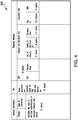
- FIG. 4 illustrates a block diagram of an exemplary full AAV 400, which includes 21 bytes of binary data.
- the full AAV 400 may include the same or different data in other embodiments, in one or more different formats and/or in one or more different sizes, but will generally include at least the IAV and DSN to facilitate further operations (as described below).
- the directory server 118 then transmits, at 328, the full AAV to the merchant 106, and specifically, to the MPI 114 (or the 3DS server).
- the payment network 136 validates, at 332, the full AAV by, specifically, validating the MAC included in the full AAV.
- the payment network 136 locates the shared key upon which the MAC was generated by the directory server 118, based on the key ID in the full AAV.
- the payment network 136 then generates the MAC based on the shared key and data included in the full AAV (consistent with the data relied on by the directory server 118 to generate the MAC at 324).
- the payment network 136 matches the MAC to the MAC included in the full AAV, thereby validating the MAC and/or the full AAV.
- the MAC is validated, in this embodiment, before permitting the authorization request to pass to the issuer 104. That said, it should be appreciated that further validation and/or testing of the full AAV may be included here in other embodiments ( e.g., based on the version information in the full AAV, etc.).
- the payment network 136 transmits the authorization request, including the token (or account number, as applicable) and the DSN, or optionally, the full AAV, to the DSS 110, at 334.
- the DSS 110 either confirms the validation of the DSRP cryptogram, based on the DSN (when validated at 308), or validates the DSRP cryptogram, based on the DSRP data included in memory ( e.g., in memory 204, etc.) and located based on the DSN, at 336.
- the DSS 110 maps the token included in the authorization request to the associated account number (e.g., PAN, etc.), at 338.
- the DSS 110 returns the account number and a result of the validation to the payment network 136, at 340.
- the payment network 136 sends the authorization request to the issuer 104, at 342, including at least the account number, a confirmation of validation of the DSRP cryptogram, and data from the full AAV including the IAV.
- the issuer 104 validates the IAV based on a shared key between the issuer 104 and the ACS 124 (i.e., the key used to generated the IAV), and, potentially, performs one or more financial assessments for the transaction, at 344.
- the additional financial assessments may be provided on any conventional or other basis (e.g., based on whether the consumer's payment account is in good standing, whether the payment account includes sufficient funds/credit, fraud scoring, etc.).
- the issuer 104 compiles an authorization response for the transaction and transmits the authorization response, at 346, back to the payment network 136.
- the payment network 136 then transmits, at 348, the authorization response to the merchant 106, via the acquirer 132.
- the issuer 104 may decide to assume the risk and proceed in the transaction, via the appropriate authorization response, or decline the transaction, again, through the authorization response, transmitted back to the merchant 106, as described above.
- the method 300 is described with reference to use of the token in the transaction, it should be appreciated that the method 300 is also applicable to transactions wherein the authorization request includes a PAN or other account number in place of a token, whereby certain steps related specifically to handling of the token and/or mapping of the token to an account in the method 300 may be omitted. What's more, when the token is unknown or unregistered to the directory server 118 and/or the DSS 110, thereby precluding token-account number mapping, the issuer 104 and/or the ACS 124 may instead handle the token.
- the ACS 124 will communicate with another DSS associated with the given token (not shown) to perform cryptogram validation and other token services.
- the ACS 124 may generate the DSN (rather than relying on the directory server 118), which is then returned to the directory server 118 along with the IAV, for use as described herein.
- the systems and methods herein provide validation in two different domains through the full AAV.
- the AAV is segregated into the IAV, which is generated and validated in an ACS/issuer domain, and into other data, which is generated and validated in a payment network domain.
- the systems and methods herein permit the issuer 104 and ACS 124 to inhibit fraudulent transactions through the IAV, which is independent of operations performed to generate and validate the other data associated with the AAV.
- one or more aspects of the present disclosure transform a general-purpose computing device into a special-purpose computing device when configured to perform the functions, methods, and/or processes described herein.
- the above-described embodiments of the disclosure may be implemented using computer programming or engineering techniques including computer software, firmware, hardware or any combination or subset thereof, wherein the technical effect may be achieved by performing at least one of the following operations: (a) receiving, by at least one computing device, an authentication request for a transaction associated with a payment account, the authentication request including a token associated with the payment account and a cryptogram; (b) mapping, by the at least one computing device, the token to a primary account number (PAN) for the payment account; (c) validating, by the at least one computing device, the cryptogram; (d) generating, by the at least one computing device, a directory server nonce (DSN) for the authentication request; (e) transmitting, by the at least one computing device, the DSN and the account number to an access control server (ACS) associated with an issuer of the payment account; (f) in response to an issuer authentication value (IAV), compiling, by the at least one computing device, an accountholder
- first, second, third, etc. may be used herein to describe various features, these features should not be limited by these terms. These terms may be only used to distinguish one feature from another. Terms such as “first,” “second,” and other numerical terms when used herein do not imply a sequence or order unless clearly indicated by the context. Thus, a first feature discussed herein could be termed a second feature without departing from the teachings of the example embodiments.
Landscapes
- Business, Economics & Management (AREA)
- Engineering & Computer Science (AREA)
- Accounting & Taxation (AREA)
- Theoretical Computer Science (AREA)
- General Physics & Mathematics (AREA)
- Physics & Mathematics (AREA)
- Strategic Management (AREA)
- General Business, Economics & Management (AREA)
- Finance (AREA)
- Computer Security & Cryptography (AREA)
- Economics (AREA)
- Computer Networks & Wireless Communication (AREA)
- Signal Processing (AREA)
- Development Economics (AREA)
- General Engineering & Computer Science (AREA)
- Marketing (AREA)
- Technology Law (AREA)
- Software Systems (AREA)
- Computer Hardware Design (AREA)
- Multimedia (AREA)
- Financial Or Insurance-Related Operations Such As Payment And Settlement (AREA)
Abstract
Description
- The present disclosure generally relates to systems and methods for use in authenticating users in connection with network transactions and, in particular, to systems and methods for use in providing authentication values for transactions by users, in connection with tokenization services, where the authentication values are based on authentication of the users and validation codes for cryptograms associated with the transactions.
- This section provides background information related to the present disclosure which is not necessarily prior art.
- Payment account transactions typically involve payment accounts associated with consumers, where the payment accounts are used to fund purchases of one or more products. In connection therewith, various mechanisms are often provided to inhibit and/or prevent fraudulent or unauthorized transactions. For example, EMV technology has been employed where chips included in payment cards, used to perform the payment account transactions, cooperate with point-of-sale (POS) terminals to generate cryptograms for the transactions, which are then validated prior to approval of the transactions by issuers of the corresponding payment accounts (or by parties on behalf of the issuers). While usually designed for card present transactions, EMV technology is suitable for use in online transactions as well.
- In addition to the above, payment networks also often provide enhanced authentication techniques, commonly referred to as 3-D Secure™ protocol, which rely on merchant plug-ins, or MPIs, at merchants involved in the payment account transactions, and on access control servers, or ACSs, associated with the issuers. The 3-D Secure™ protocol is commonly employed for online transactions to permit cardholders to authenticate themselves when they are not physically present at the merchants, when performing the transactions. As an example, Mastercard® provides the Mastercard SecureCode™ service, which is based on the 3-D Secure™ protocol. Within this service, authentication values (e.g., accountholder authentication values or AAVs, etc.) are generated by card issuers and include results of authentication. These values are then placed into a particular field in authorization messages for the underlying transactions, known as the universal cardholder authentication field, or UCAF. In turn, this information is communicated to support the issuers in connection with payment authorization requests and to provide explicit evidence that authentication was completed by the issuers. Other payment networks utilize similar authentication services, which are generally based on the 3-D Secure™ protocol. And, each of these services typically requires the merchants' acquirers (or banks) to add the resulting authentication values into their standard authorization messages.
- The drawings described herein are for illustrative purposes only of selected embodiments and not all possible implementations, and are not intended to limit the scope of the present disclosure:
-
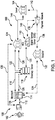
FIG. 1 illustrates an exemplary system for use in providing full accountholder authentication values (AAVs) for transactions, based on authentication of consumers in connection with the transactions and based on validation codes for associated cryptograms, and including one or more aspects of the present disclosure; -
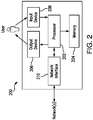
FIG. 2 is a block diagram of an exemplary computing device that may be used in the system ofFIG. 1 ; -
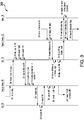
FIG. 3 illustrates an exemplary method that may be implemented via the system ofFIG. 1 for use in providing a full AAV, including an issuer authentication value (IAV), for a transaction, based on authentication of a consumer; and -
FIG. 4 is a block diagram of an exemplary format of a full AAV, including an IAV, that may be used in connection with the system ofFIG. 1 and/or the method ofFIG. 3 . - Corresponding reference numerals indicate corresponding parts throughout the several views of the drawings.
- Exemplary embodiments will now be described more fully with reference to the accompanying drawings. The description and specific examples included herein are intended for purposes of illustration only and are not intended to limit the scope of the present disclosure.
- Payment accounts are widely used by consumers to fund transactions for products at merchants (e.g., transactions for goods, services, etc.). To avoid issues related to fraudulent and/or unauthorized transactions, issuers associated with the payment accounts and payment networks associated with processing the transactions often impose added authentication and validation techniques/services for the consumers initiating the transactions. Traditionally, though, such authentication and validation techniques are only utilized in card-present transactions.
- With that said, the systems and methods herein uniquely permit different ones of the added authentication and validation techniques to be utilized for e-commerce transactions, which are more generally card-not-present, or CNP, transactions. In particular herein, when an authentication request is received at a directory server for a given transaction, the directory server provides a token and (optionally) a cryptogram, as included in the request, to a digital service server, or DSS, which maps the token to a primary account number (PAN) associated with the corresponding payment account used in the transaction, and further either validates the cryptogram or stores it securely for later validation and generates a validation code. The directory server then communicates the request (with the PAN) to an access control server, or ACS, which provides an Issuer Authentication Value (IAV) code for the transaction after authentication of the consumer initiating the transaction. The IAV is then compiled into a full accountholder authentication value, or AAV, for the transaction, along with another cryptogram (e.g., a message authentication code (MAC), etc.), and is provided to the merchant for inclusion in an authorization request for the transaction at a specified location therein (e.g., at a universal cardholder authentication field, or UCAF, of the authorization request; etc.). In connection with the authorization request, the payment network validates the cryptogram in the AAV, and based on such validation permits the transaction to proceed, or not. In this manner, both the enhanced authentication provided through the ACS and the security provided by the cryptogram are imposed on the given transaction by the directory server (e.g., as part of the payment network involved in validating the cryptogram, etc.).
-
FIG. 1 illustrates anexemplary system 100 for implementing a process that may be utilized for authenticating and verifying a consumer in connection with a transaction by the consumer, and which is consistent with the EMV® 3-D Secure™ protocol /specification, for example. It should be appreciated, however, that not all details of the EMV® 3-D Secure™ protocol /specification are discussed herein, since a complete detailed disclosure of such information may be readily understood by referencing the EMV® 3-D Secure™ protocol/specification and or discussions thereof. In addition, the illustratedsystem 100 includes a plurality of entities that interact with each other by exchanging multiple, specifically formatted messages over secure communication channels (e.g., as defined in the EMV® 3-D Secure™ protocol/specification (see, e.g., https://www.emvco.com/emv-technologies/3d-secure/), etc.). Accordingly, and as can be appreciated, the authentication illustrated inFIG. 1 is complex given the number and extent of entities, messages, and other requirements necessarily involved. - In the illustrated embodiment, the
system 100 includes aconsumer 102 associated with a payment account, where the payment account is issued to theconsumer 102 by anissuer 104 and is useable by theconsumer 102 to fund purchase transactions with one or more merchants (e.g.,merchant 106, etc.). Theconsumer 102 is also associated with acomputing device 108, which is configured to access one or more virtual merchant locations. Thecomputing device 108 may include, for example, a tablet, a smartphone, a laptop, a desktop, or other device, which enables theconsumer 102 to interact and/or communicate with the one or more merchants (e.g., via websites and/or network-based applications provided by the merchants, etc.). Also, thecomputing device 108 includes a wallet application (not shown), which is configured to provide payment account credentials for the consumer's payment account, for example, in connection with payment account transactions. In this embodiment, the wallet application includes a virtual wallet application, which may include, without limitation, Masterpass® from Mastercard®, Apple Pay® from Apple®, Visa Checkout®, etc. Upon installation and/or activation, the wallet application, and more generally, thecomputing device 108, is provided with and/or provisioned with a public/private key pair or one or more symmetric keys for use as described below, to generate cryptograms per transaction performed by theconsumer 102 using his/her payment account (through the wallet application). The keys may be provided by a digital service server (DSS) (e.g., DSS 110, etc.), or a payment network (e.g.,payment network 136, etc.), or otherwise, etc. Details of thecomputing device 108 and other computing devices identified herein (e.g., servers, etc.) are described more fully below, with reference toFIG. 2 . - The
merchant 106 in thesystem 100 includes, in this exemplary embodiment, a virtual merchant having a virtual merchant location, such as, for example, a website, a network-based application, etc., which is accessible by theconsumer 102 via thecomputing device 108. The merchant virtual location may be managed and/or provided directly by themerchant 106, or by another entity on behalf of themerchant 106, etc. - In general in the
system 100, theconsumer 102 has previously accessed and/or interacted with themerchant 106 at the virtual merchant location, whereby themerchant 106 includes a profile for theconsumer 102, which includes payment credentials for the consumer's payment account. In connection therewith, themerchant 106, or other entity, is configured to request a token from DSS 110 (e.g., which may be embodied in and/or include a token service provider (TSP), etc.) in connection with generating the profile for theconsumer 102, for example, for later use in connection with a payment account transaction by theconsumer 102 at themerchant 106. The DSS 110 includes, in this exemplary embodiment, the Mastercard™ Digital Enablement Service (MDES) server, but may include one or more other servers in other embodiments, etc. In any case, in response to such token request, the DSS 110 generates the token specific to the consumer's payment account and maps the token to a primary account number (PAN) for the payment account (e.g., in a data structure associated with the DSS 110, etc.). The DSS 110 further returns the token to themerchant 106, directly or via the virtual wallet application at thecomputing device 108, whereby themerchant 106 then stores the token in association with the consumer's profile for later use by theconsumer 102 in future transactions with the merchant 106 (e.g., "on file," etc.). For subsequent transactions with theconsumer 102, themerchant 106 may then use the token to identify the funding payment account for the transaction. - Alternatively, the DSS 110 may generate and provide a token to the virtual wallet application in the
computing device 108, which in turn, stores the token therein. Then, for a subsequent transaction, the virtual wallet application provides the token as stored therein, rather than relying on the token "on-file" at themerchant 106. Further, for subsequent transactions, theconsumer 102, or the virtual wallet application in thecomputing device 108, may directly provide an account number (e.g., a PAN, etc.) to fund the further transaction, instead of relying on the token "on-file" at themerchant 106 or the token provisioned to the virtual wallet application. - As such, transactions between the
consumer 102 and themerchant 106 may include one or more tokens, or an account number (e.g., a PAN, etc.) provided by theconsumer 102. Each type of transaction is processed as described below, albeit somewhat differently, as indicated. - Specifically, in the
system 100, when theconsumer 102 browses one or more products (e.g., goods, services, etc.) at themerchant 106, via thecomputing device 108 and at the merchant's virtual location, theconsumer 102 may select to purchase a product and further provide details related to the transaction and an input at thecomputing device 108 to then checkout, viapath 112. The checkout details and input, received from theconsumer 102, may include, for example, a selection of the payment account corresponding to the token already received and stored at themerchant 106. Or, the checkout details and input may include theconsumer 102 providing a token, an account number for the same payment account (for which the token has already been received), or an account number for a different payment account, and/or other details of the transaction. - In response to the checkout input (and/or details provided in connection therewith), the
merchant 106 is configured to interact with thecomputing device 108, whereby thecomputing device 108, as configured by the wallet application (not shown), generates a cryptogram based on the public-private key pair, or on the symmetric key (e.g., a secret key generated by a symmetric algorithm, etc.), which is associated with the consumer's payment account and wallet application (and known to or shared with the DSS 110, for example). The cryptogram may be generated by the virtual wallet application, locally at the computing device 108 (e.g., a digital secure remote payment (DSRP) generated by the wallet), or it may be generated based on one or more interactions with other systems (e.g., a digital secure remote payment (DSRP) service incorporated into the DSS 110, or other system(s), etc.) (e.g., via cloud service(s), etc.) and provided to themerchant 106 via the virtual wallet application. In this exemplary embodiment, the cryptogram is a token cryptogram, and specifically, is a DSRP cryptogram. That said, however, it should be appreciated that other token cryptograms may be generated and/or employed in other system embodiments. - The
computing device 108, as configured by the wallet application, then transmits the DSRP cryptogram to themerchant 106. - In addition, the wallet application (either locally at the
computing device 108 or at one or more backend servers) maintains an application transaction count (ATC) and increments the ATC for every DSRP cryptogram generated for the consumer's payment account - (i.e., either specific to the token for the payment account, or not). In the illustrated embodiment, the ATC is specific to the token, whereby even when a payment account has multiple tokens, each of the tokens would be associated with a particular ATC, for example, to inhibit reply attacks associated therewith.
- When the DSRP cryptogram is received at the
merchant 106, a merchant server plug-in (MPI) 114 associated with themerchant 106 is configured to compile an authentication request (AReq) for the transaction. When the transaction involves a token provisioned to themerchant 106, the AReq includes at least the token and the DSRP cryptogram received from thecomputing device 108. Alternately, when the transaction does not include the token (or other token), the AReq includes at least an account number for the consumer's payment account, such as, for example, the PAN, etc., and the DSRP cryptogram. TheMPI 114 is configured to then transmit the AReq, viapath 116, to adirectory server 118 included in thesystem 100. While theexemplary system 100 includes theMPI 114, it should be appreciated that theMPI 114 may be one or more other servers and/or services as is suitable to the particular enhanced authentication included herein (e.g., whereby theMPI 114 may be referred to as a 3DS server (for EMV 3DS specification), etc.), or otherwise. - In this exemplary embodiment, when the AReq includes the token provisioned to the
merchant 106, thedirectory server 118 is configured to receive the AReq and to transmit the token and the DSRP cryptogram, from the AReq, to theDSS 110, viapath 120. - The
DSS 110, in turn, is configured to map the received token to the account number (e.g., the PAN, etc.) for the consumer's payment account and to generate to a directory server nonce (DSN). The DSN may include a number, for example, an unpredictable number, utilized to provide entropy into the AAV and/or an issuer authentication value (IAV) associated therewith. In addition, theDSS 110 is configured to validate the received DSRP cryptogram for the transaction (i.e., perform a cryptographic key validation). Specifically, theDSS 110 is configured to diversify a master key from the issuer master symmetric key (e.g., a key generated, by theDSS 110, for theissuer 104, etc.) and then to diversify one or more session keys from the master key (e.g., based on the ATC maintained by theDSS 110, etc.). TheDSS 110 is configured to use the session key(s) to validate the DSRP cryptogram received from thedirectory server 118. Further, when the cryptogram is validated, theDSS 110 is configured to increment the ATC, for example, by recording the ATC value as a used value (thereby potentially preventing its repeated use), etc. Additionally, or alternatively, when the DSRP cryptogram is not validated, theDSS 110 is configured to store the DSRP data in memory in association with the ATC and/or the DSN (whereby the DSRP cryptogram is validated later, as described below). - The
DSS 110 is also configured to return the account number and the DSN back to thedirectory server 118, again viapath 120. In at least one embodiment, for example, where the AReq includes neither a token nor a cryptogram, thedirectory server 118 may generate the DSN, rather than receiving the DSN from theDSS 110. - Thereafter, when the
directory server 118 receives the account number from theDSS 110, or when the original AReq includes the account number, thedirectory server 118 may be configured to compress certain data associated with the transaction. For example, thedirectory server 118 may be configured to determine a logarithm of the transaction amount (i.e., a log amount), thereby compressing data used to present the amount (e.g., a six byte value for the amount may be encoded in two bytes with a potential error of less than +/- 0.02%, etc.). Thedirectory server 118 may further be configured to determine a truncated hash of the merchant ID for themerchant 106, again, thereby compressing the data used to represent the merchant ID. With that said, it should be appreciated that thedirectory server 118 may be configured to apply one or more different techniques to compress data to be used herein, or not, in other embodiments. - The
directory server 118 is configured to then provide, for example, the AReq, with the account number, the DSN, the log amount, and the truncated hash of the merchant ID, viapath 122, to an access control server (ACS) 124 of thesystem 100. TheACS 124 is a server operated by theissuer 104, or on behalf of theissuer 104, as defined by the 3-D Secure™ specification implemented in this exemplary embodiment. - In this manner, the
ACS 124 is configured to assess a risk of the transaction (e.g., based on the amount of the transaction, the merchant type involved, theconsumer 102, the consumer's device information (e.g., a recurring device, etc.), etc.). If the risk is not acceptable (based on the above analysis/authentication), theACS 124 may be configured to further provide a challenge question, consistent with conventional techniques, to authenticate theconsumer 102, decline the transaction, or proceed otherwise, etc. When theconsumer 102 is authenticated, through the above risk-based assessment, or through the additional challenge question, or otherwise, theACS 124 is configured to then generate the IAV based on a key(s) shared with theissuer 104, a cryptographic technique (e.g., a keyed hash (HMAC) function, etc.), and one or more of the account number, the DSN, the log amount, and the truncated hash of the merchant ID, or other data, etc. In this manner, for example, the IAV is specific to theconsumer 102, themerchant 106 and also the transaction (e.g., by the log amount, etc.), thereby inhibiting, generally, the IAV from being generated for one transaction and submitted in an authorization request for another transaction to the same or different merchant. - The
ACS 124 is configured to then transmit the IAV to thedirectory server 118, again, viapath 122, as an authentication response (ARes). - Optionally, the
ACS 124 may further authenticate theconsumer 102 through a challenge question when the risk based authentication suggests it. In particular, as indicated by the dotted paths inFIG. 1 , theACS 124 may be configured to respond with the ARes to thedirectory server 118, alongpath 126, where the ARes further includes a challenge indicator (e.g., a network address to be called by themerchant 106, etc.). In this example, thedirectory server 118 may be configured to then receive the ARes from theACS 124 and transmit the ARes to the merchant 106 (via theMPI 114 or 3DS server, etc.), viapath 128. In turn, themerchant 106, and in particular, the virtual merchant location (e.g., the website, etc.) may identify the challenge indicator and call or otherwise invoke the challenge, thereby providing interaction, viapath 130, between the consumer'scomputing device 108 and theACS 124. The interaction generally includes the presentation of a challenge question (e.g., Enter Your Personal Code, etc.), whereupon theconsumer 102 provides a response, viapath 130. And, theACS 124 is configured to confirm the response of theconsumer 102. Thereafter, when confirmed, theACS 124 is configured, consistent with the above, to generate the IAV, and then generate a response including the IAV and transmit the response to thedirectory server 118, viapath 126. - Upon receipt of the IAV from the
ACS 124, thedirectory server 118 is configured to generate a message authentication code (MAC) for the full AAV (i.e., the data to be included in the AAV (e.g., the DSN, the log amount, the truncated hash of the merchant ID, a currency code, a key ID, etc.), and then to compile a full AAV. The full AAV includes the IAV, the DSN, the amount and merchant information, and the signature information (e.g., the key ID and the MAC), etc. It should be appreciated that data included in the full AAV may vary based on the particular implementation thereof, whereby the full AAV may include more or less data, but will generally include the IAV from theACS 124. - Thereafter, the
directory server 118 is configured to provide the full AAV to the MPI 114 (or 3DS server), again viapath 116. - In turn, the
merchant 106 is configured to compile an authorization request for the transaction, which includes the token or the account number for the consumer's payment account, as appropriate, and also the full AAV. Themerchant 106 is configured to then transmit the authorization request toacquirer 132, viapath 134. Theacquirer 132, in turn, is configured to transmit the authorization request topayment network 136, viapath 138. - Upon receipt of the authorization request, the
payment network 136 may be configured to interact with theDSS 110, via path 140 (although this is not required in all embodiments (e.g. where thepayment network 136 knows the appropriate key(s), etc.)). Specifically, thepayment network 136 may be configured to validate the MAC included in the full AAV and/or the full AAV itself. Thepayment network 136 may further be configured to otherwise validate and/or confirm the full AAV, or part thereof, for example, based on version information included in the full AAV. - Once validated, the
payment network 136 is configured to provide the authorization request, or parts thereof, to theDSS 110. TheDSS 110 is configured to confirm the validation of the DSRP cryptogram based on the DSN, when the DSRP cryptogram was previously validated by theDSS 110. Conversely, theDSS 110 is configured to locate the DSRP data for the transaction, by use of the DSN (or the ATC included therein) and to validate the DSRP data, as described above. In addition, theDSS 110 is also configured to map the token included in the authorization request, if any, to the corresponding account number (e.g., PAN, etc.). - The
DSS 110 is configured to then return the account number and a validation result to thepayment network 136, viapath 140. In connection with the above, thepayment network 136 and/or theDSS 110 may be further configured to provide additional services to the transaction based on the payment account and/or theconsumer 102. For example, theDSS 110 may be configured to determine if one or more usage requirements of the token is satisfied (e.g., the token is permitted to be used in e-commerce, etc.), or, optionally, to check the transaction amount, name of the merchant, and currency, etc. - Thereafter, the
payment network 136 is configured to provide the authorization request (including the account number and the validation result) to theissuer 104, alongpath 142. - Then, the
issuer 104 is configured to determine if the transaction should be approved or declined, and to respond accordingly, through thepayment network 136. To do so, theissuer 104 is configured to validate the IAV based on one or more shared key(s) with theACS 124. The IAV, more specifically, may be validated in the same manner it was generated above, for example, based on a secret key, the same cryptographic technique used by theACS 124, and the account number, the DSN, the log amount, and the truncated hash of the merchant ID, or other data, etc. Additionally, or alternatively, theissuer 104 may be configured to leverage one or more network services (via thepayment network 136, for example) that has already validated the AAV (as indicated by the validation result), in order to approve the transaction. What's more, theissuer 104 may be configured to validate the transaction amount (i.e., the amount indicated in the authorization request) based on the log amount from the AAV (or, optionally, the uncompressed amount), and also the transaction merchant (i.e., the merchant indicated in the authorization request) based on the truncated hash of the merchant ID from the AAV, etc. Once a determination is made, theissuer 104 is configured to transmit an authorization response (including the consumer's account number) back to thepayment network 136, alongpath 142. In turn, thepayment network 136 is configured to route the authorization response (including the token or the account number) back to theacquirer 132, viapath 138. Theacquirer 132, in turn, is configured to provide the authorization response (including the token or the account number) back to themerchant 106, directly or via theMPI 114, alongpath 134. - At this point, the transaction is approved (in this example) and the
merchant 106 may direct the selected product to be delivered to theconsumer 102. - It should be appreciated that each of the
issuer 104, themerchant 106, thecomputing device 108, theDSS 110, theMPI 114, thedirectory server 118, theACS 124, theacquirer 132, and thepayment network 136, etc., are implemented herein in one or more computing devices, such ascomputing device 200 illustrated inFIG. 2 . In connection therewith, the one or more computing devices are each in communication with one or more other entities via at least one network. In general, each of the paths included inFIG. 1 , along which, or via which, messages are exchanged in the above description are representative of the network(s). The network(s) may include, without limitation, one or more local area networks (LANs), wide area networks (WANs) (e.g., the Internet, etc.), mobile networks, virtual networks, other networks as described herein, and/or other suitable public and/or private networks capable of supporting communication among two or more of the illustrated parts, or even combinations thereof. In one example, a network includes multiple networks, where different ones of the multiple networks are accessible to different ones of the illustrated components inFIG. 1 . In particular, thepayment network 136 and theDSS 110 may be connected via a private network and, separately, themerchant 106 and thecomputing device 108 may be connected through a public network, such as the Internet. -
FIG. 2 illustrates theexemplary computing device 200, which may include, for example, one or more servers, workstations, personal computers, laptops, tablets, smartphones, other suitable computing devices, etc. In addition, thecomputing device 200 may include a single computing device, or it may include multiple computing devices located in close proximity, or multiple computing devices distributed over a geographic region, so long as the computing devices are specifically configured to function as described herein. In at least one embodiment, thecomputing device 200 is accessed (for use as described herein) as a cloud, fog and/or mist type computing device. With that said, thesystem 100 should not be considered to be limited to thecomputing device 200, as described below, as different computing devices and/or arrangements of computing devices may be used. In addition, different components and/or arrangements of components may be used in other computing devices. - Referring to
FIG. 2 , theexemplary computing device 200 includes aprocessor 202 and amemory 204 coupled to (and in communication with) theprocessor 202. Theprocessor 202 may include one or more processing units (e.g., in a multi-core configuration, etc.). For example, theprocessor 202 may include, without limitation, a central processing unit (CPU), a microcontroller, a reduced instruction set computer (RISC) processor, an application specific integrated circuit (ASIC), a programmable logic device (PLD), a gate array, and/or any other circuit or processor capable of the functions described herein. - The
memory 204, as described herein, is one or more devices that permits data, instructions, etc., to be stored therein and retrieved therefrom. Thememory 204 may include one or more computer-readable storage media, such as, without limitation, dynamic random access memory (DRAM), static random access memory (SRAM), read only memory (ROM), erasable programmable read only memory (EPROM), solid state devices, flash drives, CD-ROMs, thumb drives, floppy disks, tapes, hard disks, and/or any other type of volatile or nonvolatile physical or tangible computer-readable media. Thememory 204 may be configured to store, without limitation, IAVs, AAVs, authentication requests, keys, MACs, DSRP cryptograms, tokens, account numbers (e.g., PANs, etc.), and/or other types of data (and/or data structures) suitable for use as described herein. Furthermore, in various embodiments, computer-executable instructions may be stored in thememory 204 for execution by theprocessor 202 to cause theprocessor 202 to perform one or more of the functions described herein, such that thememory 204 is a physical, tangible, and non-transitory computer readable storage media. Such instructions often improve the efficiencies and/or performance of theprocessor 202 and/or other computer system components configured to perform one or more of the various operations herein. It should be appreciated that thememory 204 may include a variety of different memories, each implemented in one or more of the functions or processes described herein. - In the exemplary embodiment, the
computing device 200 also includes anoutput device 206 that is coupled to (and that is in communication with) theprocessor 202. Theoutput device 206 outputs information, such as confirmations of purchases, challenge questions, etc., visually, for example, to theconsumer 102 or other information to other users associated with any of the entities illustrated inFIG. 1 , at a respective computing device, etc. Theoutput device 206 may include, without limitation, a liquid crystal display (LCD), a light-emitting diode (LED) display, an organic LED (OLED) display, an "electronic ink" display, speakers, etc. In some embodiments, theoutput device 206 may include multiple devices. - In addition, the
computing device 200 includes aninput device 208 that receives inputs from the user (i.e., user inputs) such as, for example, responses to challenge questions, checkout inputs, payment account credentials, etc., from theconsumer 102 or other information from other users in the system, etc. Theinput device 208 may include a single input device or multiple input devices. Theinput device 208 is coupled to (and is in communication with) theprocessor 202 and may include, for example, one or more of a keyboard, a pointing device, a mouse, a touch sensitive panel (e.g., a touch pad or a touch screen, etc.), another computing device, and/or an audio input device. Further, in various exemplary embodiments, a touch screen, such as that included in a tablet, a smartphone, or similar device, may behave as both theoutput device 206 and theinput device 208. - Further, the illustrated
computing device 200 also includes anetwork interface 210 coupled to (and in communication with) theprocessor 202 and thememory 204. Thenetwork interface 210 may include, without limitation, a wired network adapter, a wireless network adapter, a mobile network adapter, or other device capable of communicating to one or more different networks and/or one or more other computing devices herein. -
FIG. 3 illustrates anexemplary method 300 for providing services for a consumer in connection with a transaction by the consumer at a merchant, and in further combination with enhanced authentication of the consumer. Theexemplary method 300 is described (with reference toFIG. 1 ) as generally implemented in theDSS 110, thedirectory server 118, and thepayment network 136 of thesystem 100, and with further reference to thecomputing device 200. As should be appreciated, however, the methods herein should not be understood to be limited to theexemplary system 100 or theexemplary computing device 200, and the systems and the computing devices herein should not be understood to be limited to theexemplary method 300. - In the illustrated
method 300, for a transaction initiated by theconsumer 102 with themerchant 106, thedirectory server 118 initially receives, at 302, an AReq from the MPI 114 (or 3DS server) associated with themerchant 106. The AReq includes a token, in this exemplary embodiment, for the payment account of the consumer 102 (as used in the transaction), and also a DSRP cryptogram (referred to as a "crypto" inFIG. 3 ) for the transaction. In response, thedirectory server 118 transmits, at 304, the token and the DSRP cryptogram to theDSS 110. Thedirectory server 118 does so, in this example, because the token is within a token range (or a BIN range for a PAN) associated with the methods described herein. - The
DSS 110, in turn, maps the token to the account number for the consumer's payment account, i.e., the PAN in this example, at 306. And, theDSS 110 also (optionally) validates the DSRP cryptogram, at 308. The validation of the DSRP cryptogram, in this embodiment, is based on the symmetric key, which is shared between the consumer's payment account and/or the wallet application provisioned with the token for the payment account, and theDSS 110. More specifically, theDSS 110 diversifies a master key from the issuer master symmetric key (e.g., generated by theDSS 110 for theissuer 104, etc.) and then diversifies one or more session keys from the master key (e.g., based on the ATC maintained by theDSS 110, etc.). TheDSS 110 then employs the session key(s) to validate to the DSRP cryptogram. - Alternatively, rather than validating the DSRP cryptogram, the
DSS 110 may store the DSRP cryptogram in memory (e.g.,memory 204, etc.) for recall, as described below (e.g., based on the DSN, etc.). - When the DSRP cryptogram validation fails, the
DSS 110 responds to thedirectory server 118 with a transaction failed message, which in turn may be provided back to themerchant 106 and/or MPI 114 (or 3DS server) (whereby the transaction may be halted) or processed otherwise as directed by the issuer 104 (e.g., theissuer 104 may permit the transaction to proceed without validation, etc.). Conversely, when the DSRP cryptogram validation succeeds, theDSS 110 generates, at 310, a DSN. The DSN includes, for example, a concatenation of the ATC, or part thereof (e.g., the least significant byte, etc.), and an unpredictable value (e.g., a randomly generated value, a hash function based on a private key of theDSS 110, or MAC calculation based on the private key, or other suitable value, etc.). While the DSN may be of any suitable length and/or format, in the exemplary embodiment ofFIG. 3 , the DSN includes a four byte format (i.e., 32 bits) (e.g., the least significant byte of the ATC and three bytes of a randomly generated value, etc.). Notwithstanding the above, optionally, theDSS 110 may generate the DSN, at 310, when the DSRP cryptogram is stored rather than validated, at 308, in themethod 300. - When the DSRP cryptogram is validated, at 308, the
DSS 110 further designates the ATC as used or "in flight," whereby it may be used moving forward inmethod 300 in a later authorization request, as provided below, but not for any other purpose (e.g., prevents another AReq with the same DSRP cryptogram, etc.). Then in themethod 300, theDSS 110 transmits the DSN and the account number associated with the token, at 312, to thedirectory server 118. - At 314, the
directory server 118 calculates the logarithm of the amount of the transaction (i.e., a log amount) and, at 316, also calculates a truncated hash of the merchant ID (e.g., name and/or location, etc.). While a logarithm of the amount is calculated (e.g., thereby reducing 4-6 bytes representative of the amount down to 2 bytes in the log amount, etc.), it should be appreciated that other techniques may be used in other embodiments to compress the amount, or not. Likewise, the merchant ID may be compressed in other embodiments, or not, by one or more techniques beyond or apart from truncation and/or hashing. In general, however, the compressed amount and merchant ID, if any, will provide data (or space) reduction over providing the uncompressed amount and/or merchant ID. - Thereafter, the
directory server 118 transmits the AReq, including the account number for the consumer's payment account, the DSN, the calculated log amount, and truncated hash of the merchant ID to theACS 124, at 318. In so doing, thedirectory server 118 identifies thespecific ACS 124 based on the consumer's account number and, in particular, based on the BIN of the account number being within a particular range, or based on other indicators included in whole or in part in the AReq. In various embodiments, the AReq may further include a detokenization flag, indicating to theACS 124 that the AReq includes the account number (as converted by theDSS 110 from the token). - The
ACS 124, as described above, will in turn perform a risk-based financial assessment for the transaction, whereby theACS 124 will authenticate or not authenticate theconsumer 102. Optionally, as is conventional, theACS 124 may use thedirectory server 118 to initiate a challenge question with theconsumer 102, whereby theconsumer 102 is authenticated through interaction with theACS 124. Then, once theconsumer 102 is authenticated, regardless of whether by risk-based assessment, challenge question, or otherwise, theACS 124 generates, at 320, an IAV for the transaction, which includes, for example, the log or the uncompressed amount, the truncated hash of the merchant ID, and a currency code for the transaction, etc. In general, in this exemplary embodiment, the IAV will contain 4 bytes of value comprising a cryptographically generated HMAC value. That said, it should be appreciated that other cryptographic techniques may be employed to generate the IAV in other embodiments. And, the IAV is then transmitted, by theACS 124, to thedirectory server 118, at 322 (whereby thedirectory server 118 receives the IAV). - Conversely, if the authentication of the
consumer 102 fails, theACS 124 communicates an authentication failure to the directory server 118 (or, potentially, responds otherwise, as prescribed by theissuer 104, for example), which is passed to the MPI 114 (or 3DS server) and the merchant 106 (whereby themerchant 106 may halt or decline the transaction, etc.). - Next, the
directory server 118 generates, at 324, a MAC and compiles, at 326, a full AAV for the transaction. Specifically, in this exemplary embodiment, thedirectory server 118 combines the IAV (received from the ACS 124), the DSN, the log amount, the currency code, and the truncated hash of the merchant ID (and potentially other management data), and then generates the MAC (e.g., based on the above data, a symmetric key and a cryptographic function, etc.), etc. Thedirectory server 118 compiles the above data and the MAC into the full AAV.FIG. 4 illustrates a block diagram of an exemplaryfull AAV 400, which includes 21 bytes of binary data. Specifically, the IAV includes 4 bytes, the DSN includes 4 bytes, the log amount includes 2 bytes, the truncated hash of the merchant ID includes 4 bytes, the currency code includes 1.5 bytes, the key ID (i.e., the identifier of the shared key used to generate the MAC) includes 0.5 bytes, and the MAC includes 3 bytes. Thefull AAV 400 further includes 2 bytes of version information, which indicates, for example, the type of the IAV as being fully authenticated, merchant attempt and format, or otherwise, etc. With that said, it should be appreciated that thefull AAV 400 may include the same or different data in other embodiments, in one or more different formats and/or in one or more different sizes, but will generally include at least the IAV and DSN to facilitate further operations (as described below). - The
directory server 118 then transmits, at 328, the full AAV to themerchant 106, and specifically, to the MPI 114 (or the 3DS server). - In turn, although not shown in
FIG. 3 , themerchant 106 compiles and transmits an authorization request for the transaction to theacquirer 132, with the full AAV included therein. In one particular example, the full AAV is included in the UCAF, which is at data element (DE) 48 of the ISO 8583 authorization request. The compiled authorization request generally includes other data conventionally found in an authorization request (e.g., merchant ID, consumer name, transaction amount, payment account credential(s), etc.). The authorization request is then passed from theacquirer 132, and received at thepayment network 136, at 330. - Upon receipt of the authorization request, the
payment network 136 validates, at 332, the full AAV by, specifically, validating the MAC included in the full AAV. In particular, thepayment network 136 locates the shared key upon which the MAC was generated by thedirectory server 118, based on the key ID in the full AAV. Thepayment network 136 then generates the MAC based on the shared key and data included in the full AAV (consistent with the data relied on by thedirectory server 118 to generate the MAC at 324). Once generated, thepayment network 136 matches the MAC to the MAC included in the full AAV, thereby validating the MAC and/or the full AAV. The MAC is validated, in this embodiment, before permitting the authorization request to pass to theissuer 104. That said, it should be appreciated that further validation and/or testing of the full AAV may be included here in other embodiments (e.g., based on the version information in the full AAV, etc.). - Once validated, the
payment network 136 transmits the authorization request, including the token (or account number, as applicable) and the DSN, or optionally, the full AAV, to theDSS 110, at 334. Upon receipt, theDSS 110 either confirms the validation of the DSRP cryptogram, based on the DSN (when validated at 308), or validates the DSRP cryptogram, based on the DSRP data included in memory (e.g., inmemory 204, etc.) and located based on the DSN, at 336. In addition, theDSS 110 maps the token included in the authorization request to the associated account number (e.g., PAN, etc.), at 338. Thereafter, theDSS 110 returns the account number and a result of the validation to thepayment network 136, at 340. In turn, thepayment network 136 sends the authorization request to theissuer 104, at 342, including at least the account number, a confirmation of validation of the DSRP cryptogram, and data from the full AAV including the IAV. - In response, the
issuer 104 validates the IAV based on a shared key between theissuer 104 and the ACS 124 (i.e., the key used to generated the IAV), and, potentially, performs one or more financial assessments for the transaction, at 344. The additional financial assessments may be provided on any conventional or other basis (e.g., based on whether the consumer's payment account is in good standing, whether the payment account includes sufficient funds/credit, fraud scoring, etc.). Once the transaction is validated and/or approved, theissuer 104 compiles an authorization response for the transaction and transmits the authorization response, at 346, back to thepayment network 136. Thepayment network 136 then transmits, at 348, the authorization response to themerchant 106, via theacquirer 132. Conversely, if the validation of the transaction fails, theissuer 104 may decide to assume the risk and proceed in the transaction, via the appropriate authorization response, or decline the transaction, again, through the authorization response, transmitted back to themerchant 106, as described above. - While the
method 300 is described with reference to use of the token in the transaction, it should be appreciated that themethod 300 is also applicable to transactions wherein the authorization request includes a PAN or other account number in place of a token, whereby certain steps related specifically to handling of the token and/or mapping of the token to an account in themethod 300 may be omitted. What's more, when the token is unknown or unregistered to thedirectory server 118 and/or theDSS 110, thereby precluding token-account number mapping, theissuer 104 and/or theACS 124 may instead handle the token. In this variation, while generally consistent with the description above, once the cryptogram is provided, theACS 124 will communicate with another DSS associated with the given token (not shown) to perform cryptogram validation and other token services. In addition, theACS 124 may generate the DSN (rather than relying on the directory server 118), which is then returned to thedirectory server 118 along with the IAV, for use as described herein. - In view of the above, the systems and methods herein provide validation in two different domains through the full AAV. In particular, for example, the AAV is segregated into the IAV, which is generated and validated in an ACS/issuer domain, and into other data, which is generated and validated in a payment network domain. By segregating the AAV in this manner, the systems and methods herein permit the
issuer 104 andACS 124 to inhibit fraudulent transactions through the IAV, which is independent of operations performed to generate and validate the other data associated with the AAV. As such, thepayment network 136,directory server 118, and/orDSS 110 may be changed to alter and/or improve security and/or functionality herein, generally, without affecting the operation and/or interaction of theissuer 104 and the ACS 124 (e.g., insulating the IAV from format changes or other details of the UCAF, etc.). What's more, thepayment network 136 is able to provide validation of the transactions, as described above, and provide such validation to theissuer 104 as further data associated with approval or decline of the transactions. - It should be appreciated that the above is a departure from a conventional AAV, where the
ACS 124 generates the entire AAV, which could then be validated by theissuer 104 only (as the ACS used issuer keys for such generation). Also, as is apparent from the description above, the shared key(s) used to generate and validate the IAV (i.e., the issuer and ACS keys) are not required to be shared with the directory server 118 (or the payment network 136), and conversely, the key(s) used by thedirectory server 118 and/or thepayment network 136 to generate and validate the MAC do not need to be shared with theACS 124 and/or theissuer 104. In this way, key management in the systems and methods herein is streamlined and simplified. - Again, and as previously described, it should be appreciated that the functions described herein, in some embodiments, may be described in computer executable instructions stored on a computer-readable media, and executable by one or more processors. The computer-readable media is a non-transitory computer-readable storage medium. By way of example, and not limitation, such computer-readable media can include RAM, ROM, EEPROM, CD-ROM or other optical disk storage, magnetic disk storage or other magnetic storage devices, or any other medium that can be used to carry or store desired program code in the form of instructions or data structures and that can be accessed by a computer. Combinations of the above should also be included within the scope of computer-readable media.
- It should also be appreciated that one or more aspects of the present disclosure transform a general-purpose computing device into a special-purpose computing device when configured to perform the functions, methods, and/or processes described herein.
- As will be appreciated based on the foregoing specification, the above-described embodiments of the disclosure may be implemented using computer programming or engineering techniques including computer software, firmware, hardware or any combination or subset thereof, wherein the technical effect may be achieved by performing at least one of the following operations: (a) receiving, by at least one computing device, an authentication request for a transaction associated with a payment account, the authentication request including a token associated with the payment account and a cryptogram; (b) mapping, by the at least one computing device, the token to a primary account number (PAN) for the payment account; (c) validating, by the at least one computing device, the cryptogram; (d) generating, by the at least one computing device, a directory server nonce (DSN) for the authentication request; (e) transmitting, by the at least one computing device, the DSN and the account number to an access control server (ACS) associated with an issuer of the payment account; (f) in response to an issuer authentication value (IAV), compiling, by the at least one computing device, an accountholder authentication value (AAV), the AAV including the IAV, the DSN, and an amount of the transaction; (g) transmitting the AAV to one of a merchant and a server, thereby permitting the merchant to compile and transmit an authorization request for the transaction including the AAV, and permitting the issuer to validate the IAV prior to approving the transaction; (h) compressing at least one of an amount of the transaction and a merchant ID associated with the merchant; (i) generating, by the at least one computing device, a message authentication code (MAC), the AAV including the MAC; (j) validating the MAC in response to an authorization request including the AAV; (k) mapping the token to the PAN after validating the MAC, and transmitting the authorization request with the PAN and a validation result to the issuer of the payment account; (1) generating, by the ACS, the IAV based on a key and at least the PAN and the DSN; and (m) validating, by an issuer computing device, the IAV based on the shared key and at least the PAN and the DSN.
- Exemplary embodiments are provided so that this disclosure will be thorough, and will fully convey the scope to those who are skilled in the art. Numerous specific details are set forth, such as examples of specific components, devices, and methods, to provide a thorough understanding of embodiments of the present disclosure. It will be apparent to those skilled in the art that specific details need not be employed, that example embodiments may be embodied in many different forms, and that neither should be construed to limit the scope of the disclosure. In some example embodiments, well-known processes, well-known device structures, and well-known technologies are not described in detail.
- The terminology used herein is for the purpose of describing particular exemplary embodiments only and is not intended to be limiting. As used herein, the singular forms "a," "an," and "the" may be intended to include the plural forms as well, unless the context clearly indicates otherwise. The terms "comprises," "comprising," "including," and "having," are inclusive and therefore specify the presence of stated features, integers, steps, operations, elements, and/or components, but do not preclude the presence or addition of one or more other features, integers, steps, operations, elements, components, and/or groups thereof. The method steps, processes, and operations described herein are not to be construed as necessarily requiring their performance in the particular order discussed or illustrated, unless specifically identified as an order of performance. It is also to be understood that additional or alternative steps may be employed.
- When a feature is referred to as being "on," "engaged to," "connected to," "coupled to," "associated with," "included with," or "in communication with" another feature, it may be directly on, engaged, connected, coupled, associated, included, or in communication to or with the other feature, or intervening features may be present. As used herein, the term "and/or" includes any and all combinations of one or more of the associated listed items.
- Although the terms first, second, third, etc. may be used herein to describe various features, these features should not be limited by these terms. These terms may be only used to distinguish one feature from another. Terms such as "first," "second," and other numerical terms when used herein do not imply a sequence or order unless clearly indicated by the context. Thus, a first feature discussed herein could be termed a second feature without departing from the teachings of the example embodiments.
- None of the elements recited in the claims are intended to be a means-plus-function element within the meaning of 35 U.S.C. §112(f) unless an element is expressly recited using the phrase "means for," or in the case of a method claim using the phrases "operation for" or "step for."
- The foregoing description of exemplary embodiments has been provided for purposes of illustration and description. It is not intended to be exhaustive or to limit the disclosure. Individual elements or features of a particular embodiment are generally not limited to that particular embodiment, but, where applicable, are interchangeable and can be used in a selected embodiment, even if not specifically shown or described. The same may also be varied in many ways. Such variations are not to be regarded as a departure from the disclosure, and all such modifications are intended to be included within the scope of the disclosure.
Claims (15)
- A system for use in authenticating users to accounts in connection with network transactions, the system comprising:a directory server; anda digital service server (DSS) coupled in communication with the directory server;wherein the directory server is configured to:receive an authentication request for a transaction associated with a payment account, the payment account associated with an account number, the authentication request including at least one of a token associated with the payment account and the account number; andtransmit the at least one of the token and the account number to the DSS;wherein the DSS is configured to:generate a directory server nonce (DSN) for the authentication request; andtransmit the DSN and the account number for the account to the directory server;wherein the directory server is configured to:transmit the DSN and the account number to an access controller server (ACS) associated with an issuer of the payment account;in response to an issuer authentication value (IAV), compile an accountholder authentication value (AAV), the AAV including the IAV, the DSN, and an amount of the transaction; andtransmit the AAV to a server associated with an entity involved in the transaction, whereby the entity is permitted to include the AAV in an authorization request and the issuer is permitted to validate the IAV, prior to approving the transaction.
- The system of claim 1, wherein the authentication request includes the token for the account; and
wherein the DSS is further configured to map the token to the account number for the account, prior to transmitting the account number to the directory server. - The system of claim 1, wherein the authentication request includes a cryptogram; and
wherein the DSS is configured to validate the cryptogram prior to transmitting the DSN to the directory server. - The system of claim 1, wherein the authentication request includes a cryptogram; and
wherein the DSS is configured to:store the cryptogram in memory prior to transmitting the DSN to the directory server;locate the cryptogram in the memory based on the DSN; andvalidate the cryptogram in response to an authorization request including the full AAV. - The system of claim 1, wherein the amount of the transaction includes a logarithmic amount of the transaction; and
wherein the AAV further includes a merchant ID. - The system of claim 1, wherein the directory server is further configured to generate a message authentication code (MAC) based on at least the DSN, the AAV including the MAC; and
wherein the system further comprises a payment network configured to:receive the authorization request including the AAV;validate the MAC based on a shared key with the directory server; andtransmit the authorization request, or part thereof, to the DSS, and preferably the DSS is further configured to validate a digital secure remote payment (DSRP) cryptogram included in the authentication request and to provide a validation result for the DSRP cryptogram to the payment network; andwherein the payment network is configured to transmit the authorization request, including the validation result, to the issuer of the payment account. - The system of claim 1, wherein the DSN includes at least an application transaction count (ATC) and a randomly generated value.
- The system of claim 1, wherein the amount of the transaction includes a logarithmic amount of the transaction; and
wherein the AAV includes the IAV, the DSN, the logarithmic amount, a truncated hash of a merchant ID for the entity, a currency code, a key ID for a shared key and a MAC generated by the shared key. - A computer-implemented method for use in authenticating a user to a payment account in connection with a transaction, the method comprising:receiving, by at least one computing device, an authentication request for a transaction associated with a payment account, the authentication request including a token associated with the payment account and a cryptogram;mapping, by the at least one computing device, the token to a primary account number (PAN) for the payment account;validating, by the at least one computing device, the cryptogram;generating, by the at least one computing device, a directory server nonce (DSN) for the authentication request;transmitting, by the at least one computing device, the DSN and the account number to an access control server (ACS) associated with an issuer of the payment account;in response to an issuer authentication value (IAV), compiling, by the at least one computing device, an accountholder authentication value (AAV), the AAV including the IAV, the DSN, and an amount of the transaction; andtransmitting the AAV to one of a merchant and a server, thereby permitting the merchant to compile and transmit an authorization request for the transaction including the AAV, and permitting the issuer to validate the IAV prior to approving the transaction.
- The computer-implemented method of claim 9, further comprising compressing at least one of an amount of the transaction and a merchant ID associated with the merchant; and
wherein the AAV includes the compressed at least one of the amount and the merchant ID. - The computer-implemented method of claim 9, further comprising generating, by the at least one computing device, a message authentication code (MAC), the AAV including the MAC; and
validating the MAC in response to an authorization request including the AAV. - The computer-implemented method of claim 9, wherein the DSN includes at least an application transaction count (ATC) and a randomly generated value and further comprising mapping the token to the PAN after validating the MAC, and transmitting the authorization request with the PAN and a validation result to the issuer of the payment account.
- The computer-implemented method of claim 12, further comprising:generating, by the ACS, the IAV based on a key and at least the PAN and the DSN; andvalidating, by an issuer computing device, the IAV based on the shared key and at least the PAN and the DSN.
- A system for use in authenticating a user to an account in connection with a network transaction, the system comprising:a directory server configured to:receive an authentication request for a transaction associated with a payment account, the payment account identified by a primary account number (PAN), the authentication request including a cryptogram and at least one of a token and the PAN;transmit the PAN, a DSN for the transaction and an amount for the transaction to an access controller server (ACS) associated with an issuer of the account;receive an issuer authentication value (IAV) from the ACS;compile an accountholder authentication value (AAV), the AAV including the IAV, the DSN, and the amount of the transaction; andtransmit the AAV to a server associated with a merchant involved in the transaction and/or the merchant, whereby an issuer is permitted to validate the IAV, based on a shared key, upon receipt of an authorization request including the AAV for the transaction, prior to approving the transaction.
- The system of claim 14, wherein the directory server is configured to receive the DSN from a digital service server (DSS) prior to transmitting the DSN to the ACS, and preferably the directory server is configured to generate a message authentication code (MAC) for the transaction based on at least the DSN and to compile the MAC into the AAV; and
wherein the system further includes a server configured to validate the MAC, when the AAV is received in the authorization request for the transaction, prior to permitting the authorization request to pass to the issuer, and preferably the directory server is further configured to determine a logarithmic value for an amount of the transaction and to determine a truncated hash for a merchant ID for the merchant;
wherein the amount for the transaction includes the logarithmic value; and
wherein the AAV includes the logarithmic value and the truncated hash of the merchant ID.
Applications Claiming Priority (1)
| Application Number | Priority Date | Filing Date | Title |
|---|---|---|---|
| US15/725,893 US11080697B2 (en) | 2017-10-05 | 2017-10-05 | Systems and methods for use in authenticating users in connection with network transactions |
Publications (2)
| Publication Number | Publication Date |
|---|---|
| EP3471037A1 true EP3471037A1 (en) | 2019-04-17 |
| EP3471037B1 EP3471037B1 (en) | 2026-02-11 |
Family
ID=63762309
Family Applications (1)
| Application Number | Title | Priority Date | Filing Date |
|---|---|---|---|
| EP18198489.9A Active EP3471037B1 (en) | 2017-10-05 | 2018-10-03 | Systems and methods for use in authenticating users in connection with network transactions |
Country Status (10)
| Country | Link |
|---|---|
| US (3) | US11080697B2 (en) |
| EP (1) | EP3471037B1 (en) |
| JP (1) | JP6615297B2 (en) |
| CN (1) | CN109636593B (en) |
| AU (2) | AU2018241186A1 (en) |
| BR (1) | BR102018070400A2 (en) |
| CA (1) | CA3019776C (en) |
| MX (1) | MX2018012075A (en) |
| RU (1) | RU2699409C1 (en) |
| SG (1) | SG10201808702UA (en) |
Cited By (1)
| Publication number | Priority date | Publication date | Assignee | Title |
|---|---|---|---|---|
| WO2024020508A1 (en) | 2022-07-21 | 2024-01-25 | Visa International Service Association | Authentication data validation |
Families Citing this family (21)
| Publication number | Priority date | Publication date | Assignee | Title |
|---|---|---|---|---|
| US11080697B2 (en) | 2017-10-05 | 2021-08-03 | Mastercard International Incorporated | Systems and methods for use in authenticating users in connection with network transactions |
| US11483308B2 (en) * | 2018-06-26 | 2022-10-25 | Visa International Service Association | System, method, and apparatus for aggregated authentication |
| CN112889241B (en) * | 2018-10-23 | 2024-05-07 | 维萨国际服务协会 | Verification services for account verification |
| US12159279B2 (en) * | 2019-07-03 | 2024-12-03 | Visa International Service Association | Mobile-OTP based authorisation of transactions |
| EP3809352A1 (en) | 2019-10-18 | 2021-04-21 | Mastercard International Incorporated | Authentication for secure transactions in a multi-server environment |
| EP3809350A1 (en) * | 2019-10-18 | 2021-04-21 | Mastercard International Incorporated | Enchanced security in sensitive data transfer over a network |
| US11283621B1 (en) * | 2019-11-13 | 2022-03-22 | Worldpay, Llc | Methods and systems for enhanced endpoint identity validation in electronic transactions |
| EP3832968B1 (en) | 2019-12-04 | 2023-08-30 | Mastercard International Incorporated | Method for secure transaction by masking sensitive data transmitted over a network |
| US11075905B2 (en) * | 2019-12-09 | 2021-07-27 | Google Llc | Requesting and transmitting data for related accounts |
| US11631070B2 (en) * | 2020-01-24 | 2023-04-18 | Visa International Service Association | System, method, and computer program product for processing a transaction as a push payment transaction |
| EP3872733A1 (en) | 2020-02-26 | 2021-09-01 | Mastercard International Incorporated | Communication of sensitive data in restricted data channel |
| EP4158576A4 (en) * | 2020-05-29 | 2024-02-14 | Mastercard International Incorporated | Systems and methods for linking authentications in connection with network interactions |
| US11509481B2 (en) * | 2020-07-01 | 2022-11-22 | Visa International Service Association | Token processing with selective de-tokenization for proximity based access device interactions |
| GB2598108A (en) | 2020-08-17 | 2022-02-23 | Mastercard International Inc | Card reader, smart card and method for processing a transaction |
| US12488125B2 (en) * | 2020-09-21 | 2025-12-02 | Visa International Service Association | Alias directory |
| US12380431B2 (en) | 2021-05-24 | 2025-08-05 | Mastercard International Incorporated | Systems, methods and computer program products for asynchronous authentication of digital wallet based payment transactions |
| US12288213B2 (en) | 2022-03-16 | 2025-04-29 | Mastercard International Incorporated | Systems, methods and computer program products for secure contactless payment transactions |
| WO2024026135A1 (en) * | 2022-07-29 | 2024-02-01 | Visa International Service Association | Method, system, and computer program product for cryptogram-based transactions |
| US12354104B2 (en) * | 2022-08-09 | 2025-07-08 | Capital One Services, Llc | Methods and arrangements for proof of purchase |
| EP4728460A4 (en) * | 2023-06-15 | 2026-08-19 | Visa Int Service Ass | RANDOMIZED APPLICATION TRANSACTION COUNTER |
| US20250356350A1 (en) * | 2024-05-14 | 2025-11-20 | Visa International Service Association | Method and system for transaction risk screening |
Citations (3)
| Publication number | Priority date | Publication date | Assignee | Title |
|---|---|---|---|---|
| US20080154770A1 (en) * | 2003-06-04 | 2008-06-26 | Bruce Rutherford | Customer Authentication In E-Commerce Transactions |
| US20150161608A1 (en) * | 2013-12-09 | 2015-06-11 | Mastercard International Incorporated | Systems, apparatus and methods for improved authentication |
| US20160321652A1 (en) * | 2015-04-30 | 2016-11-03 | James Dimmick | Tokenization Capable Authentication Framework |
Family Cites Families (47)
| Publication number | Priority date | Publication date | Assignee | Title |
|---|---|---|---|---|
| US5809144A (en) * | 1995-08-24 | 1998-09-15 | Carnegie Mellon University | Method and apparatus for purchasing and delivering digital goods over a network |
| US20010047335A1 (en) * | 2000-04-28 | 2001-11-29 | Martin Arndt | Secure payment method and apparatus |
| US7499889B2 (en) * | 2000-10-23 | 2009-03-03 | Cyota Inc. | Transaction system |
| GB2372367A (en) | 2001-02-17 | 2002-08-21 | Ericsson Telefon Ab L M | Electronic coupons |
| ATE345619T1 (en) * | 2001-03-08 | 2006-12-15 | Rsa Security Inc | TRANSACTION SYSTEM |
| WO2003001866A1 (en) * | 2001-06-27 | 2003-01-09 | Snapcount Limited | Transcation processing |
| US6898568B2 (en) * | 2001-07-13 | 2005-05-24 | Innomedia Pte Ltd | Speaker verification utilizing compressed audio formants |
| JP2007517272A (en) | 2003-06-10 | 2007-06-28 | マスターカード インターナシヨナル インコーポレーテツド | Guaranteed transaction system and method using a formatted data structure |
| US7653602B2 (en) * | 2003-11-06 | 2010-01-26 | Visa U.S.A. Inc. | Centralized electronic commerce card transactions |
| US20110208659A1 (en) * | 2006-08-15 | 2011-08-25 | Last Mile Technologies, Llc | Method and apparatus for making secure transactions using an internet accessible device and application |
| US9105027B2 (en) * | 2009-05-15 | 2015-08-11 | Visa International Service Association | Verification of portable consumer device for secure services |
| US20110191247A1 (en) * | 2010-01-29 | 2011-08-04 | Ben Dominguez | Authentication framework extension to verify identification information |
| US10089683B2 (en) * | 2010-02-08 | 2018-10-02 | Visa International Service Association | Fraud reduction system for transactions |
| US10255601B2 (en) * | 2010-02-25 | 2019-04-09 | Visa International Service Association | Multifactor authentication using a directory server |
| RU2595885C2 (en) | 2010-09-24 | 2016-08-27 | Виза Интернэшнл Сервис Ассосиэйшн | Method and system using universal identifier and biometric data |
| US10360561B2 (en) * | 2010-12-14 | 2019-07-23 | Lime Light RM, Inc. | System and method for secured communications between a mobile device and a server |
| US20120284187A1 (en) * | 2011-03-15 | 2012-11-08 | Ayman Hammad | System and method for processing payment transactions |
| RU114800U1 (en) | 2011-06-03 | 2012-04-10 | Виктор Никифорович Сараев | AUTHENTICATION SYSTEM OF USERS IN CONTACTLESS SERVICE SYSTEMS |
| WO2013019519A1 (en) | 2011-08-02 | 2013-02-07 | Rights Over Ip, Llc | Rights-based system |
| US20140372319A1 (en) | 2011-09-28 | 2014-12-18 | Lionel Wolovitz | Methods and apparatus for brokering a transaction |
| US8757478B2 (en) * | 2012-07-09 | 2014-06-24 | Izettle Merchant Services Ab | Method for hub and spokes pan entry and payment verification |
| EP2907095A1 (en) * | 2012-10-11 | 2015-08-19 | Bull SAS | E-payment architecture preserving privacy |
| KR101316489B1 (en) * | 2012-11-23 | 2013-10-10 | 신한카드 주식회사 | Method for processing transaction using variable pan |
| US9076167B2 (en) * | 2013-06-27 | 2015-07-07 | Sparo Corporation | Method and system for automated online merchant charity donations |
| EP3025293A4 (en) * | 2013-07-24 | 2017-03-29 | Visa International Service Association | Systems and methods for communicating risk using token assurance data |
| WO2015021420A1 (en) * | 2013-08-08 | 2015-02-12 | Visa International Service Association | Methods and systems for provisioning mobile devices with payment credentials |
| CN103489104A (en) * | 2013-09-18 | 2014-01-01 | 俞强华 | Security payment method and system |
| CN105745678B (en) * | 2013-09-20 | 2022-09-20 | 维萨国际服务协会 | Secure remote payment transaction processing including consumer authentication |
| RU2587423C2 (en) | 2013-09-26 | 2016-06-20 | Закрытое акционерное общество "Лаборатория Касперского" | System and method of providing safety of online transactions |
| US10515358B2 (en) | 2013-10-18 | 2019-12-24 | Visa International Service Association | Contextual transaction token methods and systems |
| US20150161602A1 (en) * | 2013-12-06 | 2015-06-11 | Mastercard International Incorporated | Method and system for split-hashed payment account processing |
| JP2015194796A (en) | 2014-03-31 | 2015-11-05 | ウェブペイ株式会社 | Electronic settlement system, electronic settlement method, electronic settlement terminal, and program |
| US20150317630A1 (en) | 2014-04-30 | 2015-11-05 | MasterCard Incorporated International | Method and system for authentication token generation |
| US10891622B2 (en) | 2014-11-13 | 2021-01-12 | Mastercard International Incorporated | Providing online cardholder authentication services on-behalf-of issuers |
| US10977657B2 (en) * | 2015-02-09 | 2021-04-13 | Visa International Service Association | Token processing utilizing multiple authorizations |
| CA2977427A1 (en) * | 2015-04-10 | 2016-10-13 | Visa International Service Association | Browser integration with cryptogram |
| US9972011B2 (en) * | 2015-08-13 | 2018-05-15 | Mastercard International Incorporated | Systems and methods for monitoring authentication of transactions to payment networks |
| US20170069003A1 (en) * | 2015-09-08 | 2017-03-09 | Mastercard International Incorporated | Systems and Methods for Permitting Merchants to Manage Fraud Prevention Rules |
| US20170083914A1 (en) | 2015-09-17 | 2017-03-23 | Mastercard International Incorporated | Method and system for managing authentication services customer data |
| US11232453B2 (en) * | 2015-09-30 | 2022-01-25 | Mastercard International Incorporated | Method and system for authentication data collection and reporting |
| US20170109752A1 (en) * | 2015-10-15 | 2017-04-20 | Mastercard International Incorporated | Utilizing enhanced cardholder authentication token |
| US10673839B2 (en) * | 2015-11-16 | 2020-06-02 | Mastercard International Incorporated | Systems and methods for authenticating network messages |
| US10592907B2 (en) * | 2016-05-16 | 2020-03-17 | Mastercard International Incorporated | System and method for authenticating a transaction |
| SG11201808737YA (en) * | 2016-06-24 | 2018-11-29 | Visa Int Service Ass | Unique token authentication cryptogram |
| US10504095B2 (en) * | 2016-08-05 | 2019-12-10 | Mastercard International Incorporated | System and method for processing a transaction using account information on file |
| US10607220B2 (en) * | 2016-08-25 | 2020-03-31 | Mastercard International Incorporated | Systems and methods for consolidated message processing |
| US11080697B2 (en) | 2017-10-05 | 2021-08-03 | Mastercard International Incorporated | Systems and methods for use in authenticating users in connection with network transactions |
-
2017
- 2017-10-05 US US15/725,893 patent/US11080697B2/en active Active
-
2018
- 2018-10-02 SG SG10201808702UA patent/SG10201808702UA/en unknown
- 2018-10-02 JP JP2018187650A patent/JP6615297B2/en active Active
- 2018-10-03 MX MX2018012075A patent/MX2018012075A/en unknown
- 2018-10-03 BR BR102018070400-1A patent/BR102018070400A2/en active Search and Examination
- 2018-10-03 EP EP18198489.9A patent/EP3471037B1/en active Active
- 2018-10-04 RU RU2018134960A patent/RU2699409C1/en active
- 2018-10-04 CA CA3019776A patent/CA3019776C/en active Active
- 2018-10-05 AU AU2018241186A patent/AU2018241186A1/en not_active Abandoned
- 2018-10-08 CN CN201811169342.0A patent/CN109636593B/en active Active
-
2020
- 2020-07-15 AU AU2020205279A patent/AU2020205279B2/en active Active
-
2021
- 2021-08-02 US US17/391,667 patent/US11810107B2/en active Active
-
2023
- 2023-11-06 US US18/387,440 patent/US12567062B2/en active Active
Patent Citations (3)
| Publication number | Priority date | Publication date | Assignee | Title |
|---|---|---|---|---|
| US20080154770A1 (en) * | 2003-06-04 | 2008-06-26 | Bruce Rutherford | Customer Authentication In E-Commerce Transactions |
| US20150161608A1 (en) * | 2013-12-09 | 2015-06-11 | Mastercard International Incorporated | Systems, apparatus and methods for improved authentication |
| US20160321652A1 (en) * | 2015-04-30 | 2016-11-03 | James Dimmick | Tokenization Capable Authentication Framework |
Cited By (2)
| Publication number | Priority date | Publication date | Assignee | Title |
|---|---|---|---|---|
| WO2024020508A1 (en) | 2022-07-21 | 2024-01-25 | Visa International Service Association | Authentication data validation |
| EP4559144A4 (en) * | 2022-07-21 | 2025-11-05 | Visa Int Service Ass | AUTHENTICATION DATA VALIDATION |
Also Published As
| Publication number | Publication date |
|---|---|
| AU2020205279B2 (en) | 2022-01-20 |
| US12567062B2 (en) | 2026-03-03 |
| RU2699409C1 (en) | 2019-09-05 |
| US20210357922A1 (en) | 2021-11-18 |
| MX2018012075A (en) | 2019-07-04 |
| US11080697B2 (en) | 2021-08-03 |
| US20190108515A1 (en) | 2019-04-11 |
| US20240112182A1 (en) | 2024-04-04 |
| BR102018070400A2 (en) | 2019-04-24 |
| AU2020205279A1 (en) | 2020-08-06 |
| CN109636593A (en) | 2019-04-16 |
| JP2019071052A (en) | 2019-05-09 |
| AU2018241186A1 (en) | 2019-05-02 |
| US11810107B2 (en) | 2023-11-07 |
| EP3471037B1 (en) | 2026-02-11 |
| CA3019776C (en) | 2023-08-08 |
| CN109636593B (en) | 2023-07-18 |
| CA3019776A1 (en) | 2019-04-05 |
| SG10201808702UA (en) | 2019-05-30 |
| JP6615297B2 (en) | 2019-12-04 |
Similar Documents
| Publication | Publication Date | Title |
|---|---|---|
| US12567062B2 (en) | Systems and methods for use in authenticating users in connection with network transactions | |
| US12170730B2 (en) | Unique token authentication verification value | |
| US11055705B2 (en) | Systems and methods for domain restriction with remote authentication | |
| CN108476227B (en) | System and method for device push provisioning | |
| CN107438992B (en) | Browser and Password Integration | |
| US11823187B2 (en) | Systems and methods for linking authentications in connection with network interactions | |
| AU2015214271B2 (en) | Token verification using limited use certificates | |
| CN111523884B (en) | Method and system for generating advanced storage keys in mobile devices without secure elements | |
| US12192346B2 (en) | Enhanced security in sensitive data transfer over a network | |
| US11716200B2 (en) | Techniques for performing secure operations |
Legal Events
| Date | Code | Title | Description |
|---|---|---|---|
| PUAI | Public reference made under article 153(3) epc to a published international application that has entered the european phase |
Free format text: ORIGINAL CODE: 0009012 |
|
| STAA | Information on the status of an ep patent application or granted ep patent |
Free format text: STATUS: REQUEST FOR EXAMINATION WAS MADE |
|
| 17P | Request for examination filed |
Effective date: 20181003 |
|
| AK | Designated contracting states |
Kind code of ref document: A1 Designated state(s): AL AT BE BG CH CY CZ DE DK EE ES FI FR GB GR HR HU IE IS IT LI LT LU LV MC MK MT NL NO PL PT RO RS SE SI SK SM TR |
|
| AX | Request for extension of the european patent |
Extension state: BA ME |
|
| STAA | Information on the status of an ep patent application or granted ep patent |
Free format text: STATUS: EXAMINATION IS IN PROGRESS |
|
| 17Q | First examination report despatched |
Effective date: 20210407 |
|
| GRAP | Despatch of communication of intention to grant a patent |
Free format text: ORIGINAL CODE: EPIDOSNIGR1 |
|
| STAA | Information on the status of an ep patent application or granted ep patent |
Free format text: STATUS: GRANT OF PATENT IS INTENDED |
|
| INTG | Intention to grant announced |
Effective date: 20250911 |
|
| GRAS | Grant fee paid |
Free format text: ORIGINAL CODE: EPIDOSNIGR3 |
|
| GRAA | (expected) grant |
Free format text: ORIGINAL CODE: 0009210 |
|
| STAA | Information on the status of an ep patent application or granted ep patent |
Free format text: STATUS: THE PATENT HAS BEEN GRANTED |
|
| AK | Designated contracting states |
Kind code of ref document: B1 Designated state(s): AL AT BE BG CH CY CZ DE DK EE ES FI FR GB GR HR HU IE IS IT LI LT LU LV MC MK MT NL NO PL PT RO RS SE SI SK SM TR |
|
| REG | Reference to a national code |
Ref country code: CH Ref legal event code: F10 Free format text: ST27 STATUS EVENT CODE: U-0-0-F10-F00 (AS PROVIDED BY THE NATIONAL OFFICE) Effective date: 20260211 Ref country code: GB Ref legal event code: FG4D |
|
| REG | Reference to a national code |
Ref country code: DE Ref legal event code: R096 Ref document number: 602018089043 Country of ref document: DE |
|
| REG | Reference to a national code |
Ref country code: IE Ref legal event code: FG4D |
|
| REG | Reference to a national code |
Ref country code: NL Ref legal event code: FP |
|
| PG25 | Lapsed in a contracting state [announced via postgrant information from national office to epo] |
Ref country code: RS Free format text: LAPSE BECAUSE OF FAILURE TO SUBMIT A TRANSLATION OF THE DESCRIPTION OR TO PAY THE FEE WITHIN THE PRESCRIBED TIME-LIMIT Effective date: 20260511 |
|
| PG25 | Lapsed in a contracting state [announced via postgrant information from national office to epo] |
Ref country code: ES Free format text: LAPSE BECAUSE OF FAILURE TO SUBMIT A TRANSLATION OF THE DESCRIPTION OR TO PAY THE FEE WITHIN THE PRESCRIBED TIME-LIMIT Effective date: 20260211 |
|
| PG25 | Lapsed in a contracting state [announced via postgrant information from national office to epo] |
Ref country code: PL Free format text: LAPSE BECAUSE OF FAILURE TO SUBMIT A TRANSLATION OF THE DESCRIPTION OR TO PAY THE FEE WITHIN THE PRESCRIBED TIME-LIMIT Effective date: 20260211 |
|
| PG25 | Lapsed in a contracting state [announced via postgrant information from national office to epo] |
Ref country code: GR Free format text: LAPSE BECAUSE OF FAILURE TO SUBMIT A TRANSLATION OF THE DESCRIPTION OR TO PAY THE FEE WITHIN THE PRESCRIBED TIME-LIMIT Effective date: 20260512 |
|
| REG | Reference to a national code |
Ref country code: LT Ref legal event code: MG9D |
|
| PG25 | Lapsed in a contracting state [announced via postgrant information from national office to epo] |
Ref country code: LT Free format text: LAPSE BECAUSE OF FAILURE TO SUBMIT A TRANSLATION OF THE DESCRIPTION OR TO PAY THE FEE WITHIN THE PRESCRIBED TIME-LIMIT Effective date: 20260211 |
|
| PG25 | Lapsed in a contracting state [announced via postgrant information from national office to epo] |
Ref country code: NO Free format text: LAPSE BECAUSE OF FAILURE TO SUBMIT A TRANSLATION OF THE DESCRIPTION OR TO PAY THE FEE WITHIN THE PRESCRIBED TIME-LIMIT Effective date: 20260511 |
|
| PG25 | Lapsed in a contracting state [announced via postgrant information from national office to epo] |
Ref country code: SE Free format text: LAPSE BECAUSE OF FAILURE TO SUBMIT A TRANSLATION OF THE DESCRIPTION OR TO PAY THE FEE WITHIN THE PRESCRIBED TIME-LIMIT Effective date: 20260211 Ref country code: FI Free format text: LAPSE BECAUSE OF FAILURE TO SUBMIT A TRANSLATION OF THE DESCRIPTION OR TO PAY THE FEE WITHIN THE PRESCRIBED TIME-LIMIT Effective date: 20260211 Ref country code: AT Free format text: LAPSE BECAUSE OF FAILURE TO SUBMIT A TRANSLATION OF THE DESCRIPTION OR TO PAY THE FEE WITHIN THE PRESCRIBED TIME-LIMIT Effective date: 20260211 |
|
| REG | Reference to a national code |
Ref country code: AT Ref legal event code: MK05 Ref document number: 1886355 Country of ref document: AT Kind code of ref document: T Effective date: 20260211 |
|
| PG25 | Lapsed in a contracting state [announced via postgrant information from national office to epo] |
Ref country code: HR Free format text: LAPSE BECAUSE OF FAILURE TO SUBMIT A TRANSLATION OF THE DESCRIPTION OR TO PAY THE FEE WITHIN THE PRESCRIBED TIME-LIMIT Effective date: 20260211 |
|
| PG25 | Lapsed in a contracting state [announced via postgrant information from national office to epo] |
Ref country code: IS Free format text: LAPSE BECAUSE OF FAILURE TO SUBMIT A TRANSLATION OF THE DESCRIPTION OR TO PAY THE FEE WITHIN THE PRESCRIBED TIME-LIMIT Effective date: 20260611 Ref country code: PT Free format text: LAPSE BECAUSE OF FAILURE TO SUBMIT A TRANSLATION OF THE DESCRIPTION OR TO PAY THE FEE WITHIN THE PRESCRIBED TIME-LIMIT Effective date: 20260611 |
|
| PG25 | Lapsed in a contracting state [announced via postgrant information from national office to epo] |
Ref country code: LV Free format text: LAPSE BECAUSE OF FAILURE TO SUBMIT A TRANSLATION OF THE DESCRIPTION OR TO PAY THE FEE WITHIN THE PRESCRIBED TIME-LIMIT Effective date: 20260211 |
|
| PG25 | Lapsed in a contracting state [announced via postgrant information from national office to epo] |
Ref country code: BG Free format text: LAPSE BECAUSE OF FAILURE TO SUBMIT A TRANSLATION OF THE DESCRIPTION OR TO PAY THE FEE WITHIN THE PRESCRIBED TIME-LIMIT Effective date: 20260211 |