EP3469763B1 - A method for unified network and service authentication based on id-based cryptography - Google Patents
A method for unified network and service authentication based on id-based cryptography Download PDFInfo
- Publication number
- EP3469763B1 EP3469763B1 EP17720253.8A EP17720253A EP3469763B1 EP 3469763 B1 EP3469763 B1 EP 3469763B1 EP 17720253 A EP17720253 A EP 17720253A EP 3469763 B1 EP3469763 B1 EP 3469763B1
- Authority
- EP
- European Patent Office
- Prior art keywords
- authentication
- provider network
- key
- type
- sig
- Prior art date
- Legal status (The legal status is an assumption and is not a legal conclusion. Google has not performed a legal analysis and makes no representation as to the accuracy of the status listed.)
- Active
Links
Images





Classifications
-
- H—ELECTRICITY
- H04—ELECTRIC COMMUNICATION TECHNIQUE
- H04L—TRANSMISSION OF DIGITAL INFORMATION, e.g. TELEGRAPHIC COMMUNICATION
- H04L9/00—Cryptographic mechanisms or cryptographic arrangements for secret or secure communications; Network security protocols
- H04L9/08—Key distribution or management, e.g. generation, sharing or updating, of cryptographic keys or passwords
- H04L9/0861—Generation of secret information including derivation or calculation of cryptographic keys or passwords
-
- H—ELECTRICITY
- H04—ELECTRIC COMMUNICATION TECHNIQUE
- H04L—TRANSMISSION OF DIGITAL INFORMATION, e.g. TELEGRAPHIC COMMUNICATION
- H04L63/00—Network architectures or network communication protocols for network security
- H04L63/06—Network architectures or network communication protocols for network security for supporting key management in a packet data network
- H04L63/061—Network architectures or network communication protocols for network security for supporting key management in a packet data network for key exchange, e.g. in peer-to-peer networks
-
- H—ELECTRICITY
- H04—ELECTRIC COMMUNICATION TECHNIQUE
- H04L—TRANSMISSION OF DIGITAL INFORMATION, e.g. TELEGRAPHIC COMMUNICATION
- H04L9/00—Cryptographic mechanisms or cryptographic arrangements for secret or secure communications; Network security protocols
- H04L9/08—Key distribution or management, e.g. generation, sharing or updating, of cryptographic keys or passwords
- H04L9/0861—Generation of secret information including derivation or calculation of cryptographic keys or passwords
- H04L9/0869—Generation of secret information including derivation or calculation of cryptographic keys or passwords involving random numbers or seeds
-
- H—ELECTRICITY
- H04—ELECTRIC COMMUNICATION TECHNIQUE
- H04L—TRANSMISSION OF DIGITAL INFORMATION, e.g. TELEGRAPHIC COMMUNICATION
- H04L9/00—Cryptographic mechanisms or cryptographic arrangements for secret or secure communications; Network security protocols
- H04L9/30—Public key, i.e. encryption algorithm being computationally infeasible to invert or user's encryption keys not requiring secrecy
-
- H—ELECTRICITY
- H04—ELECTRIC COMMUNICATION TECHNIQUE
- H04L—TRANSMISSION OF DIGITAL INFORMATION, e.g. TELEGRAPHIC COMMUNICATION
- H04L9/00—Cryptographic mechanisms or cryptographic arrangements for secret or secure communications; Network security protocols
- H04L9/30—Public key, i.e. encryption algorithm being computationally infeasible to invert or user's encryption keys not requiring secrecy
- H04L9/3066—Public key, i.e. encryption algorithm being computationally infeasible to invert or user's encryption keys not requiring secrecy involving algebraic varieties, e.g. elliptic or hyper-elliptic curves
- H04L9/3073—Public key, i.e. encryption algorithm being computationally infeasible to invert or user's encryption keys not requiring secrecy involving algebraic varieties, e.g. elliptic or hyper-elliptic curves involving pairings, e.g. identity based encryption [IBE], bilinear mappings or bilinear pairings, e.g. Weil or Tate pairing
-
- H—ELECTRICITY
- H04—ELECTRIC COMMUNICATION TECHNIQUE
- H04L—TRANSMISSION OF DIGITAL INFORMATION, e.g. TELEGRAPHIC COMMUNICATION
- H04L9/00—Cryptographic mechanisms or cryptographic arrangements for secret or secure communications; Network security protocols
- H04L9/32—Cryptographic mechanisms or cryptographic arrangements for secret or secure communications; Network security protocols including means for verifying the identity or authority of a user of the system or for message authentication, e.g. authorization, entity authentication, data integrity or data verification, non-repudiation, key authentication or verification of credentials
- H04L9/3236—Cryptographic mechanisms or cryptographic arrangements for secret or secure communications; Network security protocols including means for verifying the identity or authority of a user of the system or for message authentication, e.g. authorization, entity authentication, data integrity or data verification, non-repudiation, key authentication or verification of credentials using cryptographic hash functions
- H04L9/3242—Cryptographic mechanisms or cryptographic arrangements for secret or secure communications; Network security protocols including means for verifying the identity or authority of a user of the system or for message authentication, e.g. authorization, entity authentication, data integrity or data verification, non-repudiation, key authentication or verification of credentials using cryptographic hash functions involving keyed hash functions, e.g. message authentication codes [MACs], CBC-MAC or HMAC
-
- H—ELECTRICITY
- H04—ELECTRIC COMMUNICATION TECHNIQUE
- H04L—TRANSMISSION OF DIGITAL INFORMATION, e.g. TELEGRAPHIC COMMUNICATION
- H04L9/00—Cryptographic mechanisms or cryptographic arrangements for secret or secure communications; Network security protocols
- H04L9/32—Cryptographic mechanisms or cryptographic arrangements for secret or secure communications; Network security protocols including means for verifying the identity or authority of a user of the system or for message authentication, e.g. authorization, entity authentication, data integrity or data verification, non-repudiation, key authentication or verification of credentials
- H04L9/3247—Cryptographic mechanisms or cryptographic arrangements for secret or secure communications; Network security protocols including means for verifying the identity or authority of a user of the system or for message authentication, e.g. authorization, entity authentication, data integrity or data verification, non-repudiation, key authentication or verification of credentials involving digital signatures
-
- H—ELECTRICITY
- H04—ELECTRIC COMMUNICATION TECHNIQUE
- H04W—WIRELESS COMMUNICATION NETWORKS
- H04W12/00—Security arrangements; Authentication; Protecting privacy or anonymity
- H04W12/04—Key management, e.g. using generic bootstrapping architecture [GBA]
- H04W12/041—Key generation or derivation
-
- H—ELECTRICITY
- H04—ELECTRIC COMMUNICATION TECHNIQUE
- H04W—WIRELESS COMMUNICATION NETWORKS
- H04W12/00—Security arrangements; Authentication; Protecting privacy or anonymity
- H04W12/06—Authentication
- H04W12/069—Authentication using certificates or pre-shared keys
-
- H—ELECTRICITY
- H04—ELECTRIC COMMUNICATION TECHNIQUE
- H04L—TRANSMISSION OF DIGITAL INFORMATION, e.g. TELEGRAPHIC COMMUNICATION
- H04L2209/00—Additional information or applications relating to cryptographic mechanisms or cryptographic arrangements for secret or secure communication H04L9/00
- H04L2209/80—Wireless
Definitions
- This invention relates to a method and system of an authentication framework between an operator provider and a service provider. Particularly, this invention relates to a method and system of a unified authentication framework between an operator provider and a service provider based on ID-Based cryptography.
- 3G/4G cellular networks mutual authentications are employed between User Equipment (UE) and networks, to protect mobile devices and networks from being eavesdropped or manipulated during data communication.
- the current mutual authentication protocol employed by 3G/4G is Authentication and Key Agreement (AKA).
- AKA Authentication and Key Agreement
- CN Core Network
- the credentials are kept in servers named Home Subscriber Server (HSS); while at the UE side, the credentials are kept in an isolated device named Universal Subscriber Identity Module (USIM) card.
- the USIM card is a computing device embedded in a USIM slot inside a UE. USIM and UE can exchange information via a special interface.
- 3G/4G networks use symmetric keys in the mutual authentication. Hence, for a given International Mobile Subscriber Identification (IMSI), the credentials kept in the corresponding USIM and HSS are the same.
- IMSI International Mobile Subscriber Identification
- the AKA procedure illustrated in figure 1 is referred to as the network access authentication.
- the UE first sends an Attach Request to the Mobility Management Entity (MME).
- MME Mobility Management Entity
- the MME forwards the Attach Request to the HSS which subsequently generates an authentication vector based on the credentials shared with the UE.
- the authentication vectors are sent to MME which subsequently sends an authentication data response containing authentication material to the UE.
- the UE authenticates the network and then sends a user authentication containing authentication code to the MME.
- the MME verifies the authentication code and authenticates the UE.
- UE exchanges key material with MME and eNB to further generate session keys for control and data plane.
- US 7 542 569 B1 discloses the authentication of a telephone system to the leg between two private data networks connected via an arbitrating network.
- the private network connected to the telephone system forwards the authenticated subscriber identity to the other private network.
- the message containing the identity is signed.
- the message is encrypted using a public key method.
- the second private network generates a session key to be used in the connection. This key is signed and encrypted using a public key method and sent to the first private network.
- a symmetrical encryption method with the session key is used.
- COLIN BOYD ET AL Key Agreement Using Statically Keyed Authenticators, APPLIED CRYPTOGRAPHY AND NETWORK SECURITY; [LECTURE NOTES IN COMPUTER SCIENCE;;LNCS], SPRINGER-VERLAG, BERLIN/HEIDELBERG, PAGE(S) 248 - 262, (20040515), ISBN 978-3-540-22217-0 , identifies a family of authenticators based on static shared keys.
- the authenticators can be used in a variety of settings, including identity-based ones. Application of the authenticators to Diffie-Hellman variants in appropriate groups leads to authenticated key agreement protocols which have attractive properties in comparison with other proven-secure protocols.
- SMART N P "Identity-based authenticated key agreement protocol based on Weil pairing", ELECTRONICS LET, IEE STEVENAGE, GB, (20020620), vol. 38, no. 13, doi:10.1049/EL:20020387, ISSN 0013-5194, pages 630 - 632 , presents an ID-based authenticated two pass key agreement protocol which makes use of the Weil. The protocol is described and its properties are discussed, including the ability to add key confirmation.
- KENNETH G PATERSON "ID-based Signatures from Pairings on Elliptic Curves", INTERNATIONAL ASSOCIATION FOR CRYPTOLOGIC RESEARCH, (20020122), vol. 20020122:154510, pages 1 - 4 , presents an efficient identity-based signature scheme which makes use of bilinear pairings on elliptic curves. This scheme is similar to the generalised ElGamal signature scheme. The security of the scheme is considered.
- a first advantage of embodiments of systems and methods in accordance with the invention is that only one authentication message is required to authenticate both the cellular network and the service provider, which greatly facilitates the user and reduces the network overhead.
- a second advantage of embodiments of systems and methods in accordance with the invention is that the unified network and service authentication framework achieves the same security level as the network authentication, which is much higher than the service authentication.
- This invention relates to a method and system of an authentication framework between an operator provider and a service provider. Particularly, this invention relates to a method and system of a unified authentication framework between an operator provider and a service provider based on ID-Based cryptography.
- the current operator provider network access authentication is separate from the service provider network authentication.
- the end-devices have to go through two authentication procedures to get access to both the operator provider network and service provider network.
- the current service provider network authentication is usually based on "user name + password".
- users need to remember multiple sets of "user name + password” in order to get access to multiple services. This is inconvenient and cumbersome.
- the service provider network authentication can be done together with the operator provider network authentication and through the operator provider network authentication method. This means that the users do not need to remember any passwords and this brings great convenience to the users.
- MNO Mobile Network Operator
- a unified first provider network and a second provider network authentication scheme based on ID-based cryptography is proposed.
- the concept is to use one authentication message to successfully achieve both first provider network access authentication and the second provider network authentication.
- the first network is an operator provider network and the second network is a service provider network.
- a new parameter referred to as Authentication Type is introduced.
- the Authentication Type serves as an indicator to identify which types of authentication (such as operator provider network access only, service provider network access only, or a unified authentication) that the users wish to proceed. Further, we propose several different ways to protect the random number that is used to generate the session key.
- IBC Identity-based cryptography
- a public key is a known string such as an email address, phone number, domain name, or a physical IP address.
- a public key generator can generate a private key (SKID) for any given ID based on a given Global Public Key (GPK) and Global Secret Key (GSK).
- GPK Global Public Key
- GSK Global Secret Key
- the generated private key SKID is distributed to an entity (Alice or Bob) together with GPK and the ID.
- the IBC includes identity-based encryption (IBE) and identity-based signature (IBS).
- IBE is mainly used for encryption while IBS is mainly used for signing messages.
- IBE is mainly used for encryption while IBS is mainly used for signing messages.
- IBS is mainly used for signing messages.
- Alice wants to send secret messages to Bob she encrypts the message with Bob's ID.
- Bob receives the message Bob decrypts the message with its private key.
- Alice wants Bob to authenticate itself Alice generates a random number first and further generates a signature for the random number with the SKID and GPK based on a known algorithm. Then Alice sends a message with the random number, the signature and its ID to the other entity, Bob.
- Bob authenticates Alice with the received random number, signature ID, and the GPK based on a known algorithm.
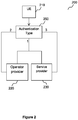
- Figure 2 illustrates the use of an Authentication Type 250 to indicate the type of authentication to proceed with the authentication.
- this disclosure discloses a unified operator provider network and service provider network authentication scheme based on ID-based cryptography. While it is possible for a UE 210 to authenticate with both operator and service providers 220 and 230, the authentication procedure as proposed in this disclosure also allows a user to authenticate with operator and service providers separately.
- the Authentication Type 250 is used for identifying the type of authentication to proceed. For purpose of this disclosure, if the Authentication Type 250 is a first type 1, the UE authenticate with both operator and service providers 220 and 230. If the Authentication Type 250 is a second type 2, the UE authenticate with operator provider 220 for operator network access. If the Authentication Type 250 is a third type 3, the UE authenticate with service provider 230 for service level access.
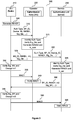
- Figure 3 illustrates a process 300 of a unified operator provider and service provider authentication procedure to encrypt a random number used for deriving key. Particularly, the IBE is used to encrypt the random number.
- Process 300 begins with step 305 with the device 210 generating a random number (RAND1).
- the device 210 then sends an Authentication Message to an Authentication Node (AN) of the operator provider 220 in step 310.
- the Authentication Message includes Authentication Type (Auth. Type) 250, Service Provider network's ID (SP_ID), Device's ID (Device_ID), RAND1, and the device's signature (Sig_De).
- a possible message format is given as follows: (Auth. Type, SP_ID, Device_ID, RAND1, Sig_De, ).
- the device's signature is generated by the device by IBS using a secret key (SKID) of the device and a GPK. Since the process 300 is a unified operator provider and service provider authentication procedure, the Authentication Type 250 for process 300 is the first type of authentication 1.
- the Authentication Node in response to receiving the Authentication Message, the Authentication Node first identifies the Authentication Type. If Authentication Type is unified authentication, the authentication node verifies the signature of the device (Sig_De) using the device's ID (Device_ID) based on IBS. Particularly, the authentication node verifies the signature of the device (Sig_De) using the device's ID (Device_ID) and a GPK. If verification is successful, the AN generates a random number (RAND2). Thereafter, the AN derives a key (denoted as K_com) using a pre-defined key derivation function (KDF).
- step 320 the AN forwards the Authentication Message to the Authentication Unit of the service provider.
- the Authentication Node In step 325, the Authentication Node generates an encrypted message m1 and sends an Authentication Response Message to the device 210.
- the Authentication Response Message includes the AN's ID (denoted by AN_ID), the random number received from the device (RAND1), the encrypted message m1, and the AN's signature (denoted by Sig_AN).
- the AN's signature is generated by the AN by IBS using a secret key (SKID) of the AN and a GPK.
- the device 210 authenticates the AN by verifying AN's signature (Sig_AN). Particularly, the device verifies the signature of the AN (Sig_AN) using the AN's ID (AN_ID) and a GPK. If verification is successful, it decrypts the message m1 with its private key, SKID of the device, to get RAND2. Then, it derives the key (K_com) using the pre-defined KDF.
- the device 210 then saves the key, K_com, in its memory.
- RAND1 is also included in the Authentication Response Message to prevent replay attack.
- step 335 the device 210 generates a Message Authentication Code (MAC1) using a MAC generation function with RAND2 and K_com as the input.
- the device sends the MAC1 to the AN.
- MAC1 Message Authentication Code
- step 340 in response to receiving MAC1 from the device 210, the AN verifies MAC1.
- the AN generates a MAC using the same MAC generation function with RAND2 and K_com as the input, and see whether MAC1 is equal to MAC. If verification is successful, the AN saves the key, K_com, in its memory.
- the AN unit may derive the key (denoted as K-com) in this step instead of step 315. Particularly, upon receipt of MAC 1, the AN derives the key (denoted as K-com) prior to verifying MAC1.
- step 345 in response to receiving the Authentication Message from the AN, the authentication unit of the service provider 230 first verifies the signature of the device (Sig_De) using the device's ID (Device_ID) based on IBS. Particularly, the authentication unit verifies the signature of the device (Sig_De) using the device's ID (Device_ID) and a GPK. If verification is successful, the authentication unit generates a random number (RAND3). Then, the authentication unit derives a key (denoted as K_ser) using a pre-defined key derivation function (KDF).
- KDF key derivation function
- the authentication unit In step 350, the authentication unit generates an encrypted message m2 and sends an Authentication Response Message to the device 210.
- the Authentication Response Message includes the authentication unit's ID (denoted by SP_ID), the random number received from the device (RAND1), the encrypted message m2, and the authentication unit's signature (denoted by Sig_SP).
- the authentication unit's signature is generated by the authentication unit by IBS using a secret key (SKID) of the authentication unit and a GPK.
- step 355 in response to receiving the Authentication Response Message from the service provider 230, the device 210 authenticates the authentication unit by verifying its signature (Sig_SP). Then, the device decrypts the message m2 with its private key to get RAND3. Then, the device 210 derives the key (K_ser) using the pre-defined KDF.
- step 360 the device generates a Message Authentication Code (MAC2) using a MAC generation function with RAND3 and K_ser as the input.
- the device 210 sends the MAC2 to the authentication unit of the service provider 230.
- MAC2 Message Authentication Code
- step 365 in response to receiving MAC2, the authentication unit verifies MAC2. To verify the MAC2, the authentication unit generates a MAC using the same MAC generation function with RAND3 and K_ser as the input, and see whether MAC2 is equal to MAC. If verification is successful, the authentication unit then saves the key, K ser, in its memory.
- the authentication unit may derive the key (denoted as K-ser) in this step instead of step 345. Particularly, upon receipt of MAC2, the authentication derives the key (denoted as K-ser) prior to verifying MAC2.
- Process 300 ends after step 365. It is important to note that the steps illustrated in process 300 may be performed in the order shown, or in a different order.
- the authentication data package, i.e. Authentication Message, in step 310 may be sent to service provider instead of the operator provider.
- the authentication data package, i.e. Authentication Message, in step 310 may be sent to both the service provider and operator provider.
- two or more of the steps may be performed in parallel rather than sequentially. For example, steps 315, 325-340 may be performed in parallel with steps 345-365 without departing from the disclosure.
- the devices 210 are assumed to be equipped with multiple sets of public and private keys and at least one set of key is used for IBS, and at least one set of key is used for IBE. If multiple sets of public and private keys are used, an index to indicate the set of public and private keys used is also indicated in the Authentication Message sent to the operator and service providers so that the operator and service providers know the set of public and private keys to be used for the authentication.
- One network element of the MNO is depicted here, namely, the authentication node.
- a further network element may be provided by the MNO known as a black list server.
- the function of the authentication node is to authenticate devices before granting their access.
- the black list server is used to store the compromised devices' ID.
- the authentication node should first make sure a device's ID is not in the black list server before authenticating the device.
- One network element of the service provider is also depicted here, namely the authentication unit.
- a further network element may be provided by the service provider known as an identity management server.
- the function of the authentication unit is to authenticate devices before granting their access to its service.
- the identity management server is used to generate and manage the identity of the devices.
- FIG. 4 illustrates alternative process 400 of a unified operator provider and service provider authentication procedure to encrypt a random number used for deriving key using symmetric key method.
- Process 400 is similar to process 300 except the encryption of the random number. Particularly, a symmetric key is further used to encrypt the random number.
- Process 400 begins with step 405 with the device 210 generating a random number (RAND1) and deriving a first symmetric key (K_C) and a second symmetric key (K_S).
- the device 210 then sends an Authentication Message to an Authentication Node (AN) of the operator provider 220 in step 410.
- the Authentication Message includes Authentication Type (Auth. Type) 250, Service Provider network's ID (SP_ID), Device's ID (Device_ID), RAND1, and the device's signature (Sig_De).
- Auth. Type Authentication Type 250
- SP_ID Service Provider network's ID
- Device's ID Device's ID
- RAND1 the device's signature
- a possible message format is given as follows: (Auth. Type, SP_ID, Device_ID, RAND1, Sig_De, ).
- the device's signature is generated by the device by IBS using a secret key (SKID) of the device and a GPK. This is similar to step 310 of process 300.
- the Authentication Node in response to receiving the Authentication Message, the Authentication Node first identifies the Authentication Type. If Authentication Type is unified authentication, the authentication node verifies the signature of the device (Sig_De) using the device's ID (Device_ID) based on IBS. Particularly, the authentication node verifies the signature of the device (Sig_De) using the device's ID (Device_ID) and a GPK. If verification is successful, the AN generates a random number (RAND2). Thereafter, the AN derives a key (denoted as K_com) using a pre-defined key derivation function (KDF).
- KDF key derivation function
- step 420 the AN forwards the Authentication Message to the Authentication Unit of the service provider.
- the Authentication Node In step 425, the Authentication Node generates an encrypted message m1 and sends an Authentication Response Message to the device 210.
- the Authentication Response Message includes the AN's ID (denoted by AN_ID), the random number received from the device (RAND1), the encrypted message m1, and the AN's signature (denoted by Sig_AN).
- the AN's signature is generated by the AN by IBS using a secret key (SKID) of the AN and a GPK.
- the device 210 authenticates the AN by verifying AN's signature (Sig_AN). Particularly, the device verifies the signature of the AN (Sig_AN) using the AN's ID (AN_ID) and a GPK. If verification is successful, it decrypts the message m1 with K_C to get RAND2. Then, it derives the key (K_com) using the pre-defined KDF.
- the device saves the key, K_com, in its memory.
- the device 210 generates a Message Authentication Code (MAC1) using a MAC generation function with RAND2 and K_com as the input. The device sends the MAC1 to the AN.
- MAC1 Message Authentication Code
- step 440 in response to receiving MAC1 from the device 210, the AN verifies MAC1. To verify the MAC1, the AN generates a MAC using the same MAC generation function with RAND2 and K_com as the input, and see whether MAC1 is equal to MAC. If verification is successful, the AN saves the key, K_com, in its memory.
- step 445 in response to receiving the Authentication Message from the AN, the authentication unit of the service provider 230 first verifies the signature of the device (Sig_De) using the device's ID (Device_ID) based on IBS. Particularly, the authentication unit verifies the signature of the device (Sig_De) using the device's ID (Device_ID) and a GPK. If verification is successful, the authentication unit generates a random number (RAND3). Then, the authentication unit derives a key (denoted as K_ser) using a pre-defined key derivation function (KDF).
- KDF key derivation function
- the authentication unit generates an encrypted message m2 and sends an Authentication Response Message to the device 210.
- the Authentication Response Message includes the authentication unit's ID (denoted by SP_ID), the random number received from the device (RAND1), the encrypted message m2, and the authentication unit's signature (denoted by Sig_SP).
- the authentication unit's signature is generated by the authentication unit by IBS using a secret key (SKID) of the authentication unit and a GPK.
- step 455 in response to receiving the Authentication Response Message from the service provider 230, the device 210 authenticates the authentication unit by verifying its signature (Sig_SP). Then, the device decrypts the message m2 with K_S key to get RAND3. Then, the device 210 derives the key (K_ser) using the pre-defined KDF.
- step 460 the device generates a Message Authentication Code (MAC2) using a MAC generation function with RAND3 and K_ser as the input.
- the device 210 sends the MAC2 to the authentication unit of the service provider 230.
- MAC2 Message Authentication Code
- step 465 in response to receiving MAC2, the authentication unit verifies MAC2. To verify the MAC2, the authentication unit generates a MAC using the same MAC generation function with RAND3 and K_ser as the input, and see whether MAC2 is equal to MAC. If verification is successful, the authentication unit then saves the key, K ser, in its memory.
- Process 400 ends after step 465.
- Figure 5 illustrates an alternative process 500 of a unified operator provider and service provider authentication procedure to encrypt a random number used for deriving key using Diffie-Hellman. Process 500 is similar to process 300 except the encryption of the random number. Particularly, Diffie-Hellman is used to encrypt the random number.
- Process 500 begins with step 505 with the device 210 generating a random number (RAND1) and deriving a DH public key (A).
- the device 210 then sends an Authentication Message to an Authentication Node (AN) of the operator provider 220 in step 510.
- the Authentication Message includes Authentication Type (Auth. Type) 250, Service Provider network's ID (SP_ID), Device's ID (Device_ID), device's DH public key (A), and the device's signature (Sig_De).
- Auth. Type Service Provider network's ID
- SP_ID Service Provider network's ID
- Device_ID Device's ID
- A device's signature
- a possible message format is given as follows: (Auth. Type, SP_ID, Device_ID, A, Sig_De, ).
- the device's signature is generated by the device by IBS using a secret key (SKID) of the device and a GPK.
- SKID secret key
- step 520 the AN forwards the Authentication Message to the Authentication Unit of the service provider.
- the Authentication Node sends an Authentication Response Message to the device 210.
- the Authentication Response Message includes the AN's ID (denoted by AN_ID), the device's DH public key received from the device (A), the authentication node's DH public key (B), and the AN's signature (denoted by Sig_AN).
- the AN's signature is generated by the AN by IBS using a secret key (SKID) of the AN and a GPK.
- step 535 the device 210 generates a Message Authentication Code (MAC1) using a MAC generation function with B and K_com as the input.
- the device sends the MAC1 to the AN.
- MAC1 Message Authentication Code
- step 540 in response to receiving MAC1 from the device 210, the AN verifies MAC1. To verify the MAC1, the AN generates a MAC using the same MAC generation function with B and K_com as the input, and see whether MAC1 is equal to MAC. If verification is successful, the AN saves the key, K_com, in its memory.
- C DH public key
- the authentication unit sends an Authentication Response Message to the device 210.
- the Authentication Response Message includes the authentication unit's ID (denoted by SP_ID), the device's DH public key received from the device (A), the authentication unit's DH public key (C), and the authentication unit's signature (denoted by Sig_SP).
- the authentication unit's signature is generated by the authentication unit by IBS using a secret key (SKID) of the authentication unit and a GPK.
- step 560 the device generates a Message Authentication Code (MAC2) using a MAC generation function with C and K_ser as the input.
- the device 210 sends the MAC2 to the authentication unit of the service provider 230.
- MAC2 Message Authentication Code
- step 565 in response to receiving MAC2, the authentication unit verifies MAC2. To verify the MAC2, the authentication unit generates a MAC using the same MAC generation function with C and K_ser as the input, and see whether MAC2 is equal to MAC. If verification is successful, the authentication unit then saves the key, K ser, in its memory.
- Process 500 ends after step 565.
- a standard Diffie-Hellman key agreement procedure between two parties, namely, Alice and Bob is illustrated in figure 6 .
- both parties must have agreed on an arbitrary number that does not need to be kept secret.
- 'g' and 'p' are known while 'a' and 'b' are unknown and
- Alice For Alice to exchange key with Bob, Alice first selects a random number for 'a' and determines 'A'. Alice then sends Bob 'g', 'p' and 'A'.
- Figure 7 illustrates an alternative process 700 of a unified operator provider and service provider authentication procedure to encrypt a random number used for deriving key. Particularly, process 700 illustrates the Authentication Node authenticating with the service provider on behalf of the device 210.
- Process 700 begins with step 705 with the device 210 generating a random number (RAND1).
- the device 210 then sends an Authentication Message to an Authentication Node (AN) of the operator provider 220 in step 710.
- the Authentication Message includes Authentication Type (Auth. Type) 250, Service Provider network's ID (SP_ID), Device's ID (Device_ID), RAND1, and the device's signature (Sig_De).
- a possible message format is given as follows: (Auth. Type, SP_ID, Device_ID, RAND1, Sig_De, ).
- the device's signature is generated by the device by IBS using a secret key (SKID) of the device and a GPK.
- SKID secret key
- the Authentication Node in response to receiving the Authentication Message, the Authentication Node first identifies the Authentication Type. If Authentication Type is unified authentication, the authentication node verifies the signature of the device (Sig_De) using the device's ID (Device_ID) based on IBS. Particularly, the authentication node verifies the signature of the device (Sig_De) using the device's ID (Device_ID) and a GPK. If verification is successful, the AN generates a random number (RAND2). Thereafter, the AN derives a key (denoted as K_com) using a pre-defined key derivation function (KDF).
- step 720 the AN forwards the Authentication Message to the Authentication Unit of the service provider.
- step 725 in response to receiving the Authentication Message from the AN, the authentication unit of the service provider 230 first verifies the signature of the device (Sig_De) using the device's ID (Device_ID) based on IBS. Particularly, the authentication unit verifies the signature of the device (Sig_De) using the device's ID (Device_ID) and a GPK. If verification is successful, the authentication unit generates a random number (RAND3). Then, the authentication unit derives a key (denoted as K_ser) using a pre-defined key derivation function (KDF).
- KDF key derivation function
- the authentication unit In step 730, the authentication unit generates and sends an authentication response message (m2) to the AN.
- the Authentication Response Message (m2) includes the authentication unit's ID (denoted by SP_ID), the random number received from the device (RAND1), the encrypted message m1, and the authentication unit's signature (denoted by Sig_SP).
- the authentication unit's signature is generated by the authentication unit by IBS using a secret key (SKID) of the authentication unit and a GPK.
- the Authentication Node in response to receiving m2, the Authentication Node generates an encrypted message m3 and sends an Authentication Response Message to the device 210.
- the Authentication Response Message includes the m2, AN's ID (denoted by AN_ID), the random number received from the device (RAND1), the encrypted message m3, and the AN's signature (denoted by Sig_AN).
- the AN's signature is generated by the AN by IBS using a secret key (SKID) of the AN and a GPK.
- the device 210 authenticates the AN by verifying AN's signature (Sig_AN). Particularly, the device verifies the signature of the AN (Sig_AN) using the AN's ID (AN_ID) and a GPK. If verification is successful, it decrypts the message m3 with its private key, SKID of the device, to get RAND2. Then, it derives the key (K_com) using the pre-defined KDF.
- the device 210 then authenticates the authentication unit using the obtained Authentication Response Message from the service provider.
- the device 210 verifies the service provider's signature (Sig_SP).
- the device decrypts the message m1 with its private key to get RAND3.
- the device 210 derives the key (K_ser) using the pre-defined KDF.
- the device 210 then saves the key, K_ser, in its memory.
- the device 210 In step 745, the device 210 generates a first Message Authentication Code (MAC1) using a MAC generation function with RAND2 and K_com as the input, and a second a Message Authentication Code (MAC2) using a MAC generation function with RAND3 and K_ser as the input.
- the device sends the MAC1 and MAC2 to the AN.
- step 750 in response to receiving MAC1 and MAC2 from the device 210, the AN verifies MAC1. To verify the MAC1, the AN generates a MAC using the same MAC generation function with RAND2 and K_com as the input, and see whether MAC1 is equal to MAC. If verification is successful, the AN saves the key, K_com, in its memory.
- the AN may derive the key (denoted as K-com) in this step instead of step 715. Particularly, upon receipt of MAC1, the AN derives the key (denoted as K-com) prior to verifying MAC1.
- step 755 the AN forwards MAC2 to the service provider.
- step 760 in response to receiving MAC from the AN, the authentication unit verifies MAC2. To verify the MAC2, the authentication unit generates a MAC using the same MAC generation function with RAND3 and K_ser as the input, and see whether MAC2 is equal to MAC. If verification is successful, the authentication unit saves the key, K ser, in its memory.
- the authentication unit may derive the key (denoted as K-ser) in this step instead of step 725. Particularly, upon receipt of MAC2, the authentication derives the key (denoted as K-ser) prior to verifying MAC2.
- Process 700 ends after step 760.
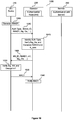
- Figure 8 illustrates an alternative process 800 of a unified operator provider and service provider authentication procedure to encrypt a random number used for deriving key.
- process 800 illustrates the sequential process of authenticating with the operator provider 220 first before authenticating with the service provider.
- Process 800 begins with step 805 with the device 210 generating a random number (RAND1).
- the device 210 then sends an Authentication Message to an Authentication Node (AN) of the operator provider 220 in step 810.
- the Authentication Message includes Authentication Type (Auth. Type) 250, Service Provider network's ID (SP_ID), Device's ID (Device_ID), RAND1, and the device's signature (Sig_De).
- SP_ID Service Provider network's ID
- Device_ID Device's ID
- Sig_De the device's signature
- a possible message format is given as follows: (Auth. Type, SP_ID, Device_ID, RAND1, Sig_De, ).
- the device's signature is generated by the device by IBS using a secret key (SKID) of the device and a GPK.
- SKID secret key
- the Authentication Node in response to receiving the Authentication Message, the Authentication Node first identifies the Authentication Type. If Authentication Type is unified authentication, the authentication node verifies the signature of the device (Sig_De) using the device's ID (Device_ID) based on IBS. Particularly, the authentication node verifies the signature of the device (Sig_De) using the device's ID (Device_ID) and a GPK. If verification is successful, the AN generates a random number (RAND2). Thereafter, the AN derives a key (denoted as K_com) using a pre-defined key derivation function (KDF).
- the Authentication Node In step 820, the Authentication Node generates an encrypted message m1 and sends an Authentication Response Message to the device 210.
- the Authentication Response Message includes the AN's ID (denoted by AN_ID), the random number received from the device (RAND1), the encrypted message m1, and the AN's signature (denoted by Sig_AN).
- the AN's signature is generated by the AN by IBS using a secret key (SKID) of the AN and a GPK.
- the device 210 authenticates the AN by verifying AN's signature (Sig_AN). Particularly, the device verifies the signature of the AN (Sig_AN) using the AN's ID (AN_ID) and a GPK. If verification is successful, it decrypts the message m1 with its private key, SKID of the device, to get RAND2. Then, it derives the key (K_com) using the pre-defined KDF.
- the device 210 then saves the key, K_com, in its memory.
- the device 210 generates a Message Authentication Code (MAC1) using a MAC generation function with RAND2 and K_com as the input. The device sends the MAC1 to the AN.
- MAC1 Message Authentication Code
- step 835 in response to receiving MAC1 from the device 210, the AN verifies MAC1.
- the AN To verify the MAC1, the AN generates a MAC using the same MAC generation function with RAND2 and K_com as the input, and see whether MAC1 is equal to MAC. If verification is successful, the AN then saves the key, K com, in its memory.
- the AN may derive the key (denoted as K-com) in this step instead of step 815. Particularly, upon receipt of MAC1, the AN derives the key (denoted as K-com) prior to verifying MAC1.
- the AN forwards a device Authentication Message to the Authentication Unit of the service provider.
- the Authentication Message includes the device's ID (Device_ID), an indicator that indicates that the device has successfully authenticated with the operator provider (Auth_Succ), the random number received from the device (RAND 1), the signature of the authentication node (Sig AN).
- step 845 in response to receiving the Authentication Message from the AN, the authentication unit of the service provider 230 first verifies the signature of the AN's signature (Sig_AN). Particularly, the authentication unit verifies the signature of the device (Sig_De) using the device's ID (Device_ID) and a GPK. If verification is successful, the authentication unit generates a random number (RAND3). Then, the authentication unit derives a key (denoted as K_ser) using a pre-defined key derivation function (KDF).
- KDF key derivation function
- the authentication unit In step 850, the authentication unit generates an encrypted message m2 and sends an Authentication Response Message to the AN.
- the Authentication Response Message includes the authentication unit's ID (denoted by SP_ID), the random number received from the device (RAND1), the encrypted message m2, and the authentication unit's signature (denoted by Sig_SP).
- the authentication unit's signature is generated by the authentication unit by IBS using a secret key (SKID) of the authentication unit and a GPK.
- step 855 in response to receiving the Authentication Response Message from the service provider 230, the AN authenticates the authentication unit by verifying its signature (Sig_SP). If authentication is successful, the AN generates a message authentication code MAC2 and sends a message to the device.
- the message includes the encrypted message m2, an indicator (SP_Auth) that indicates that the service provider is successfully authenticated, and MAC2.
- SP_Auth an indicator
- step 865 in response to receiving the message from the AN, the device verifies MAC2. To verify the MAC2, the device generates a MAC using the same MAC generation function, and see whether MAC2 is equal to MAC. If verification is successful, the device decrypts the message m2 with its private key to get RAND3. Then, the device 210 derives the key (K_ser) using the pre-defined KDF.
- Process 800 ends after step 865.
- Figure 9 illustrates a process 900 of a service provider authentication procedure to encrypt a random number used for deriving key. This is applicable only when the device already has network connection with the operator provider.
- Process 900 begins with step 905 with the device 210 generating a random number (RAND1).
- the device 210 then sends an Authentication Message to an Authentication Node (AN) of the operator provider 220 in step 910.
- the Authentication Message includes Authentication Type (Auth. Type) 250, Service Provider network's ID (SP_ID), Device's ID (Device_ID), RAND1, and the device's signature (Sig_De).
- a possible message format is given as follows: (Auth. Type, SP_ID, Device_ID, RAND1, Sig_De, ).
- the device's signature is generated by the device by IBS using a secret key (SKID) of the device and a GPK. Since the process 900 is a service provider authentication procedure, the Authentication Type 250 for process 900 is the third type of authentication 3.
- the Authentication Node in response to receiving the Authentication Message, the Authentication Node first identifies the Authentication Type. If Authentication Type is the third type of authentication 3, the authentication node forwards the Authentication Message to the Authentication Unit of the service provider in step 920.
- step 925 in response to receiving the Authentication Message from the AN, the authentication unit of the service provider 230 first verifies the signature of the device (Sig_De) using the device's ID (Device_ID) based on IBS. Particularly, the authentication unit verifies the signature of the device (Sig_De) using the device's ID (Device_ID) and a GPK. If verification is successful, the authentication unit generates a random number (RAND2). Then, the authentication unit derives a key (denoted as K_ser) using a pre-defined key derivation function (KDF).
- KDF key derivation function
- the authentication unit In step 930, the authentication unit generates an encrypted message (m) and sends an Authentication Response Message to the device 210.
- the Authentication Response Message includes the authentication unit's ID (denoted by SP_ID), the random number received from the device (RAND1), the encrypted message m, and the authentication unit's signature (denoted by Sig_SP).
- the authentication unit's signature is generated by the authentication unit by IBS using a secret key (SKID) of the authentication unit and a GPK.
- step 935 in response to receiving the Authentication Response Message from the service provider 230, the device 210 authenticates the authentication unit by verifying its signature (Sig_SP). Then, the device decrypts the message m with its private key to get RAND2. Then, the device 210 derives the key (K_ser) using the pre-defined KDF.
- step 940 the device generates a Message Authentication Code (MAC1) using a MAC generation function with RAND2 and K_ser as the input.
- the device 210 sends the MAC1 to the authentication unit of the service provider 230.
- MAC1 Message Authentication Code
- step 945 in response to receiving MAC1, the authentication unit verifies MAC1.
- the authentication unit To verify the MAC1, the authentication unit generates a MAC using the same MAC generation function with RAND2 and K_ser as the input, and see whether MAC1 is equal to MAC. If verification is successful, the authentication unit then saves the key, K ser, in its memory.
- the authentication unit may derive the key (denoted as K-ser) in this step instead of step 925. Particularly, upon receipt of MAC1, the authentication derives the key (denoted as K-ser) prior to verifying MAC1.
- Process 900 ends after step 945.
- Figure 10 illustrates a process 1000 of an operator provider authentication procedure to encrypt a random number used for deriving key. This is applicable when the device wishes to access the network of the operator provider.
- Process 1000 begins with step 1005 with the device 210 generating a random number (RAND1).
- the device 210 then sends an Authentication Message to an Authentication Node (AN) of the operator provider 220 in step 1010.
- the Authentication Message includes Authentication Type (Auth. Type) 250, Device's ID (Device_ID), RAND1, and the device's signature (Sig_De).
- Auth. Type Authentication Type 250
- Device's ID Device's ID
- RAND1 Device's signature
- Sig_De the device's signature
- a possible message format is given as follows: (Auth. Type, Device_ID, RAND1, Sig_De, ).
- the device's signature is generated by the device by IBS using a secret key (SKID) of the device and a GPK. Since the process 300 is a unified operator provider and service provider authentication procedure, the Authentication Type 250 for process 300 is the second type of authentication 2.
- the Authentication Node in response to receiving the Authentication Message, the Authentication Node first identifies the Authentication Type. If Authentication Type is the second type of authentication, the authentication node verifies the signature of the device (Sig_De) using the device's ID (Device_ID) based on IBS. Particularly, the authentication node verifies the signature of the device (Sig_De) using the device's ID (Device_ID) and a GPK. If verification is successful, the AN generates a random number (RAND2). Thereafter, the AN derives a key (denoted as K_com) using a pre-defined key derivation function (KDF).
- the Authentication Node In step 1025, the Authentication Node generates an encrypted message m1 and sends an Authentication Response Message to the device 210.
- the Authentication Response Message includes the AN's ID (denoted by AN_ID), the random number received from the device (RAND1), the encrypted message m1, and the AN's signature (denoted by Sig_AN).
- the AN's signature is generated by the AN by IBS using a secret key (SKID) of the AN and a GPK.
- the device 210 authenticates the AN by verifying AN's signature (Sig_AN). Particularly, the device verifies the signature of the AN (Sig_AN) using the AN's ID (AN_ID) and a GPK. If verification is successful, it decrypts the message m1 with its private key, SKID of he device, to get RAND2. Then, it derives the key (K_com) using the pre-defined KDF.
- step 1035 the device 210 generates a Message Authentication Code (MAC1) using a MAC generation function with RAND2 and K_com as the input.
- the device sends the MAC1 to the AN.
- MAC1 Message Authentication Code
- step 1040 in response to receiving MAC1 from the device 210, the AN verifies MAC1.
- the AN generates a MAC using the same MAC generation function with RAND2 and K com as the input, and see whether MAC1 is equal to MAC. If verification is successful, the AN then saves the key, K com, in its memory.
- the AN may derive the key (denoted as K-com) in this step instead of step 1015. Particularly, upon receipt of MAC1, the authentication derives the key (denoted as K-com) prior to verifying MAC 1.
- Process 1000 ends after step 1040.
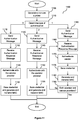
- FIG 11 illustrates a process 1100 performed by the device 110 in accordance with this disclosure.
- Process 1100 proceeds with step 1105 by generating a random number (RAND1).
- step 1105 may be modified to further derive a first symmetric key (K_C) and a second symmetric key (K_S).
- step 1105 may be modified to further derive a DH public key (A).
- process 1100 determines the type of authentication. If the authentication is for a unified authentication involving both operator provider and the service provider, process 1100 indicates 1 for the first type of authentication and proceeds to step 1160 thereafter. If the authentication is for an authentication involving only operator provider, process 1100 indicates 2 for the second type of authentication and proceeds to step 1140 thereafter. If the authentication is for an authentication involving only the service provider, process 1100 indicates 3 for the third type of authentication and proceeds to step 1115 thereafter.
- process 1100 sends an Authentication Message to an Authentication Node (AN) of the operator provider 220.
- the Authentication Message includes Authentication Type (Auth. Type) 250, Service Provider network's ID (SP_ID), Device's ID (Device_ID), RAND1, and the device's signature (Sig_De).
- Auth. Type Authentication Type 250
- SP_ID Service Provider network's ID
- Device_ID Device's ID
- RAND1 the device's signature
- the possible message format is given as follows: (Auth. Type, SP_ID, Device_ID, RAND1, Sig_De, ).
- the device's signature is generated by the device by IBS using a secret key (SKID) of the device and a GPK.
- SKID secret key
- step 1115 may be modified such that the Authentication Message includes Authentication Type (Auth. Type) 250, Service Provider network's ID (SP_ID), Device's ID (Device_ID), device's DH public key (A), and the device's signature (Sig_De).
- Auth. Type Authentication Type 250
- SP_ID Service Provider network's ID
- Device_ID Device's ID
- A device's DH public key
- Sig_De device's signature
- a possible message format is given as follows: (Auth. Type, SP_ID, Device ID, A, Sig_De, .
- process 1100 receives an Authentication Response Message from the service provider 230.
- the Authentication Response Message includes the authentication unit's ID (denoted by SP_ID), the random number received from the device (RAND1), an encrypted message m, and the authentication unit's signature (denoted by Sig_SP).
- process 1100 authenticates the service provider 230 by verifying its signature (Sig_SP). If authentication is successful, process 1100 decrypts the message m with the device's private key to get RAND2 and derives the key (K_ser) using the pre-defined KDF.
- process 1100 saves the key (K-ser), RAND1 and RAND2 in the memory. Then process 1100 generates and transmits Message Authentication Code (MAC) to the service provider 230.
- the MAC is generated by using a MAC generation function with RAND2 and K_ser as the input.
- Steps 1115-1130 pertain to the third type of authentication where the device authenticates with the service provider 230.
- process 1100 sends an Authentication Message to an Authentication Node (AN) of the operator provider 220.
- the Authentication Message includes Authentication Type (Auth. Type) 250, Device's ID (Device_ID), RAND1, and the device's signature (Sig_De).
- Auth. Type Authentication Type 250
- Device's ID Device's ID
- Sig_De device's signature
- a possible message format is given as follows: (Auth. Type, Device_ID, RAND1, Sig_De, ).
- the device's signature is generated by the device by IBS using a secret key (SKID) of the device and a GPK.
- process 1100 receives an Authentication Response Message from the operator provider 220.
- the Authentication Response Message includes the AN's ID (denoted by AN_ID), the random number received from the device (RAND1), an encrypted message m, and the AN's signature (denoted by Sig_AN).
- step 1150 in response to receiving the Authentication Response Message from the AN, process 1100 authenticates the AN by verifying AN's signature (Sig_AN). Particularly, the device verifies the signature of the AN (Sig_AN) using the AN's ID (AN_ID) and a GPK. If authentication is successful, process 1100 decrypts the message m with the device's private key to get RAND2 and derives the key (K_com) using the pre-defined KDF.
- process 1100 saves the key (K-com), RAND1 and RAND2 in the memory. Then process 1100 generates and transmits Message Authentication Code (MAC) to the service provider 230.
- the MAC is generated by using a MAC generation function with RAND2 and K com as the input.
- Steps 1140-1155 pertain to the second type of authentication where the device authenticates with the operator provider 220.
- process 1100 sends an Authentication Message to an Authentication Node (AN) of the operator provider 220.
- the Authentication Message includes Authentication Type (Auth. Type) 250, Service Provider network's ID (SP_ID), Device's ID (Device_ID), RAND1, and the device's signature (Sig_De).
- Auth. Type Authentication Type 250
- SP_ID Service Provider network's ID
- Device_ID Device's ID
- RAND1 the device's signature
- Sig_De device's signature
- a possible message format is given as follows: (Auth. Type, SP_ID, Device_ID, RAND1, Sig_De, .
- process 1100 receives a first Authentication Response Message from either the operator provider 220 or the service provider 230.
- first Authentication Response Message is from the operator provider 220 and a second Authentication Response Message is from the service provider 230.
- the first Authentication Response Message includes the AN's ID (denoted by AN_ID), the random number received from the device (RAND1), an encrypted message m1, and the AN's signature (denoted by Sig_AN).
- step 1165 may be modified such that the first Authentication Response Message includes the AN's ID (denoted by AN_ID), the random number received from the device (RAND1), an encrypted message m1, and the AN's signature (denoted by Sig_AN).
- step 1165 may be modified such that the first Authentication Response Message includes the AN's ID (denoted by AN_ID), the device's DH public key received from the device (A), the authentication node's DH public key (B), and the AN's signature (denoted by Sig_AN).
- the second Authentication Response Message includes the authentication unit's ID (denoted by SP_ID), the random number received from the device (RAND1), an encrypted message m2, and the authentication unit's signature (denoted by Sig_SP).
- step 1165 may be modified such that the second Authentication Response Message includes the authentication unit's ID (denoted by SP_ID), the random number received from the device (RAND1), an encrypted message m2, and the authentication unit's signature (denoted by Sig_SP).
- step 1165 may be modified such that the second Authentication Response Message includes the authentication unit's ID (denoted by SP_ID), the device's DH public key received from the device (A), the authentication unit's DH public key (C), and the authentication unit's signature (denoted by Sig_SP).
- step 1170 in response to receiving the first Authentication Response Message from the operator provider 220, process 1100 authenticates the operator provider 220 by verifying AN's signature (Sig_AN). Particularly, the device verifies the signature of the AN (Sig_AN) using the AN's ID (AN_ID) and a GPK. If authentication is successful, process 1100 decrypts the message m1 with the device's private key to obtain RAND2 and derives the key (K_com) using the pre-defined KDF.
- step 1170 may be modified such that after process 1100 successfully authenticates with the AN by verifying AN's signature (Sig_AN), process 1100 decrypts the message m1 with K_C to get RAND2. Then, process 1100 derives the key (K com) using the pre-defined KDF.
- step 1170 in response to receiving the second Authentication Response Message from the operator provider 220 or directly from the service provider 230, process 1100 authenticates the service provider 230 by verifying its signature (Sig_SP). If authentication is successful, process 1100 decrypts the message m2 with its private key to get RAND3 and derives the key (K_ser) using the pre-defined KDF.
- step 1170 may be modified such that after process 1100 successfully authenticates with the service provider 230 by verifying its signature (Sig_SP), process 1100 decrypts the message m2 with its private key to get RAND3 and derives the key (K ser) using the pre-defined KDF.
- process 1100 saves a first credential for the operator provider 220 or a second credential for the service provider 230 in the memory depending on whether the device receives a first or second Authentication Response Message in step 1165.
- the first credential includes key (K_com).
- the second credential includes key (K_ser).
- process 1100 generates and transmits a first Message Authentication Code (MAC1) to the operator provider 220 and a second Message Authentication Code MAC2 to the service provider 230 depending on whether the device receives a first or second Authentication Response Message in step 1165.
- the MAC1 is generated using a MAC generation function with RAND2 and K_com as the input.
- the MAC2 is generated using a MAC generation function with RAND3 and K_ser as the input.
- process 1100 determines whether two Authentication Response Messages have been received. If both Authentication Response Messages have been received, process 1100 ends. Otherwise, process 1100 repeats from step 1165 and awaits for the second Authentication Response.
- FIG. 12 illustrates a process 1200 performed by the Authentication Node of the operator provider 220.
- Process 1200 begins with step 1205 by receiving an Authentication Message from the device 210.
- process 1200 determines the type of authentication based on Authentication Type (Auth. Type) 250. If the Auth. Type indicates 1, process 1200 determines the first type of authentication and proceeds to step 1260 thereafter. If the Auth. Type indicates 2, process 1200 determines the second type of authentication and proceeds to step 1240 thereafter. If the Auth. Type indicates 3, process 1200 determines the third type of authentication and proceeds to step 1215 thereafter.
- Auth. Type Authentication Type 250.
- step 1215 process 1200 forwards the Authentication Message to the Authentication Unit of the service provider 230.
- process 1200 verifies the signature of the device (Sig_De) using the device's ID (Device_ID) based on IBS. Particularly, the authentication node verifies the signature of the device (Sig_De) using the device's ID (Device_ID) and a GPK. If verification is successful, process 1200 generates a random number (RAND2) and derives a key (denoted as K com) using a pre-defined key derivation function (KDF) in step 1245.
- process 1200 generates an encrypted message m1 and sends an Authentication Response Message to the device 210.
- the Authentication Response Message includes the AN's ID (denoted by AN_ID), the random number received from the device (RAND1), the encrypted message m1, and the AN's signature (denoted by Sig_AN).
- the AN's signature is generated by the AN by IBS using a secret key (SKID) of the AN and a GPK.
- process 1200 receives a MAC1 from the device 210.
- process 1200 verifies the MAC1 by generating a MAC using the same MAC generation function with RAND2 and K_com as the input, and see whether MAC1 is equal to MAC. If MAC is equal to MAC1, process 1200 saves K_com, RAND1 and RAND2 in the memory in step 1258.
- the Authentication Node may derive the key (denoted as K-com) in this step instead of step 1245. Particularly, upon receipt of MAC1, the Authentication Node derives the key (denoted as K-com) prior to verifying MAC1.
- process 1200 verifies the signature of the device (Sig_De) using the device's ID (Device_ID) based on IBS. Particularly, the authentication node verifies the signature of the device (Sig_De) using the device's ID (Device_ID) and a GPK. If verification is successful, process 1200 generates a random number (RAND2) and derives a key (denoted as K_com) using a pre-defined key derivation function (KDF).
- step 1265 process 1200 forwards the Authentication Message to the Authentication Unit of the service provider.
- step 1265 may take place before step 1260 without departing from this disclosure.
- process 1200 generates an encrypted message m1 and sends an Authentication Response Message to the device 210.
- the Authentication Response Message includes the AN's ID (denoted by AN_ID), the random number received from the device (RAND1), the encrypted message m1, and the AN's signature (denoted by Sig_AN).
- the AN's signature is generated by the AN by IBS using a secret key (SKID) of the AN and a GPK.
- process 1200 receives MAC1 from the device 210. In response, process 1200 verifies MAC1. To verify the MAC1, the AN generates a MAC using the same MAC generation function with RAND2 and K_com as the input, and see whether MAC1 is equal to MAC. If MAC1 is equal to MAC, process 1200 saves K-com in the memory in step 1280.
- the Authentication Node may derive the key (denoted as K-com) in this step instead of step 1260. Particularly, upon receipt of MAC1, the Authentication Node derives the key (denoted as K-com) prior to verifying MAC1.
- Process 1200 ends after step 1280.
- FIG. 13 illustrates a process 1300 performed by the Authentication Unit of the service provider 230.
- Process 1300 begins with step 1305 by receiving an Authentication Message from the AN.
- the Authentication Message includes Authentication Type (Auth. Type) 250, Service Provider network's ID (SP_ID), Device's ID (Device_ID), RAND1, and the device's signature (Sig_De).
- Auth. Type Authentication Type 250
- SP_ID Service Provider network's ID
- Device_ID Device's ID
- RAND1 the device's signature
- a possible message format is given as follows: (Auth. Type, SP_ID, Device_ID, RAND1, Sig_De, .
- process 1300 verifies the signature of the device (Sig_De) using the device's ID (Device_ID) based on IBS. Particularly, the authentication unit verifies the signature of the device (Sig_De) using the device's ID (Device_ID) and a GPK. If verification is successful, process 1300 generates a random number (RAND2) and derives a key (denoted as K ser) using a pre-defined key derivation function (KDF) in step 1315.
- process 1300 generates an encrypted message (m) and sends an Authentication Response Message to the device 210.
- the Authentication Response Message includes the authentication unit's ID (denoted by SP_ID), the random number received from the device (RAND1), the encrypted message m, and the authentication unit's signature (denoted by Sig_SP).
- the authentication unit's signature is generated by the authentication unit by IBS using a secret key (SKID) of the authentication unit and a GPK.
- process 1300 receives MAC1 from the device 210. In response, process 1300 verifies MAC1. To verify the MAC1, process 1300 generates a MAC using the same MAC generation function with RAND2 and K_ser as the input, and see whether MAC1 is equal to MAC. If MAC1 is equal to MAC, process 1300 saves the credential comprising K_ser in the memory in step 1330.
- the Authentication Unit may derive the key (denoted as K-ser) in this step instead of step 1315. Particularly, upon receipt of MAC1, the Authentication Unit derives the key (denoted as K-ser) prior to verifying MAC1.
- Process 1300 ends after step 1330.
- a device 210 wants to authenticate with operator and/or service provider networks, the device generates and transmits an authentication data package to the operator provider network.
- the authentication data package includes the Authentication Message comprising Authentication Type (Auth. Type), Service Provider network's ID (SP_ID), Device's ID (Device_ID), RAND1, and the device's signature (Sig_De).
- the operator provider network determines the type of authentication. If the authentication is the first or third type, the operator provider network would forward the authentication data package to the service provider network. Both operator and network provider networks would handle the authentication data package accordingly by first authenticating the device by verifying the device's signature (Sig_De). Particularly, the operator and network provider networks verify the signature of the device (Sig_De) using the Device's ID (Device_ID) and a GPK. If verification is successful, the operator and network provider networks generate RAND2 and RAND3 respectively. Thereafter, the operator and network provider networks generate K_com (using KDF with RAND1 and RAND2) and K-ser (using KDF with RAND1 and RAND3) respectively.
- the random numbers (RAND2 and RAND3) are encrypted by IBE using the device's ID and transmitted to the device with respectively signatures (Sig_AN and Sig_SP).
- the session keys, K-com and K-ser may be generated after the operator and network provider receives MAC1 and MAC2.
- the device In response to receiving the encrypted random number from the operator and service provider networks, the device verifies the signatures using the respective identity (Sig_ID and SP_ID). If verification is successful, the device decrypts the random numbers (RAND2 and RAND3) and derives a first session key for the operator provider network using RAND2 and RAND1, and a second session key for the service provider network using RAND3 and RAND 1. The device then generates a first Message Authentication Code (MAC1) using a MAC generation function with RAND2 and K_com as the input to the operator provider network and a second Message Authentication Code (MAC2) using a MAC generation function with RAND3 and K_ser as the input to the service provider network. MAC1 and MAC2 are then transmitted to the operator provider network.
- MAC1 and MAC2 are then transmitted to the operator provider network.
- the operator provider network In response to receiving MAC1 and MAC2, the operator provider network first verifies the MAC1. In the alternative embodiment, the operator and network provider networks generate K com and K-ser prior to verifying MAC1 and MAC2 respectively. If verification is successful, the operator provider network saves the first session key and forwards MAC2 to the service provider network. In response to receiving MAC2, the service provider network verifies MAC2. If verification is successful, the operator provider network saves the second session key.
- the first and second session keys, K-com and K-ser are used by the device to communicate with the operator and service provider networks respectively.
- the proposed method can be applied to all communication systems that require both network access authentication and service authentication, including all three major application scenarios of the 5G communication systems: eMBB (enhanced Mobile BroadBand), mIoT (massive Internet of Things), uRLLC (Ultra Reliable Low Latency Communication).
- eMBB enhanced Mobile BroadBand
- mIoT massive Internet of Things
- uRLLC Ultra Reliable Low Latency Communication
- the proposed unified network and service authentication uses one authentication data package for generating two sets of session keys (one set for network, another set for service) which can effectively separate the information between the network operator and the service provider.
- the UEs, devices, various elements of the operator provider network and various elements of the service provider network are widely known. Hence, for brevity, the operating systems, configurations, structures, assemblies, etc of each of the UEs, devices, elements of the operator provider network and elements of the service provider network are omitted.
- the method and system in accordance with embodiments of the invention is provided in the form of instructions stored on storage medium and executable by processors of respective UE, devices, elements of the operator provider network such as the Authentication Node and elements of the service provider network such a Authentication Unit.
Landscapes
- Engineering & Computer Science (AREA)
- Computer Security & Cryptography (AREA)
- Computer Networks & Wireless Communication (AREA)
- Signal Processing (AREA)
- Computing Systems (AREA)
- Theoretical Computer Science (AREA)
- Computer Hardware Design (AREA)
- General Engineering & Computer Science (AREA)
- Algebra (AREA)
- General Physics & Mathematics (AREA)
- Mathematical Analysis (AREA)
- Mathematical Optimization (AREA)
- Mathematical Physics (AREA)
- Pure & Applied Mathematics (AREA)
- Physics & Mathematics (AREA)
- Power Engineering (AREA)
- Mobile Radio Communication Systems (AREA)
- Data Exchanges In Wide-Area Networks (AREA)
Description
- This invention relates to a method and system of an authentication framework between an operator provider and a service provider. Particularly, this invention relates to a method and system of a unified authentication framework between an operator provider and a service provider based on ID-Based cryptography.
- In current 3G/4G cellular networks, mutual authentications are employed between User Equipment (UE) and networks, to protect mobile devices and networks from being eavesdropped or manipulated during data communication. The current mutual authentication protocol employed by 3G/4G is Authentication and Key Agreement (AKA). To perform AKA, the UE and the Core Network (CN) are required to have some pre-shared confidential information kept on both sides.
- In 3G/4G networks, at the network side, the credentials are kept in servers named Home Subscriber Server (HSS); while at the UE side, the credentials are kept in an isolated device named Universal Subscriber Identity Module (USIM) card. The USIM card is a computing device embedded in a USIM slot inside a UE. USIM and UE can exchange information via a special interface. Currently, 3G/4G networks use symmetric keys in the mutual authentication. Hence, for a given International Mobile Subscriber Identification (IMSI), the credentials kept in the corresponding USIM and HSS are the same.
- When UE wants to access network and transmits and receives data, the UE has to perform mutual authentication with the CN based on AKA. The AKA procedure illustrated in
figure 1 is referred to as the network access authentication. In the AKA procedure, the UE first sends an Attach Request to the Mobility Management Entity (MME). In response to receiving the Attach Request, the MME forwards the Attach Request to the HSS which subsequently generates an authentication vector based on the credentials shared with the UE. The authentication vectors are sent to MME which subsequently sends an authentication data response containing authentication material to the UE. The UE authenticates the network and then sends a user authentication containing authentication code to the MME. The MME then verifies the authentication code and authenticates the UE. After authentication, UE exchanges key material with MME and eNB to further generate session keys for control and data plane. - In conventional communication systems, when a user wants to use any 3rd party service, it has to do the service authentication. Usually, the service authentication is based on "username +password", whose security level is much lower than the network access authentication. A user must first do the network access authentication and then do the service authentication in order to use the service. Thus, two authentication systems must be maintained to provide such kind of authentication services.
- Hence, those skilled in the art are striving to provide a better authentication system and method for a user to authenticate with both operator provider and service provider.
-
US 7 542 569 B1 discloses the authentication of a telephone system to the leg between two private data networks connected via an arbitrating network. When establishing the connection, the private network connected to the telephone system forwards the authenticated subscriber identity to the other private network. To provide the identity forwarded with authenticity, the message containing the identity is signed. To provide encryption of the subscriber identity, the message is encrypted using a public key method. In response the second private network generates a session key to be used in the connection. This key is signed and encrypted using a public key method and sent to the first private network. During the connection, a symmetrical encryption method with the session key is used. - COLIN BOYD ET AL, Key Agreement Using Statically Keyed Authenticators, APPLIED CRYPTOGRAPHY AND NETWORK SECURITY; [LECTURE NOTES IN COMPUTER SCIENCE;;LNCS], SPRINGER-VERLAG, BERLIN/HEIDELBERG, PAGE(S) 248 - 262, (20040515), ISBN 978-3-540-22217-0, identifies a family of authenticators based on static shared keys. The authenticators can be used in a variety of settings, including identity-based ones. Application of the authenticators to Diffie-Hellman variants in appropriate groups leads to authenticated key agreement protocols which have attractive properties in comparison with other proven-secure protocols.
- SMART N P, "Identity-based authenticated key agreement protocol based on Weil pairing", ELECTRONICS LET, IEE STEVENAGE, GB, (20020620), vol. 38, no. 13, doi:10.1049/EL:20020387, ISSN 0013-5194, pages 630 - 632, presents an ID-based authenticated two pass key agreement protocol which makes use of the Weil. The protocol is described and its properties are discussed, including the ability to add key confirmation. KENNETH G PATERSON, "ID-based Signatures from Pairings on Elliptic Curves", INTERNATIONAL ASSOCIATION FOR CRYPTOLOGIC RESEARCH,, (20020122), vol. 20020122:154510, pages 1 - 4, presents an efficient identity-based signature scheme which makes use of bilinear pairings on elliptic curves. This scheme is similar to the generalised ElGamal signature scheme. The security of the scheme is considered.
- Dan Boneh ET AL, "Identity-Based Encryption from the Weil Pairing", SIAM Journal on Computing, Philadelphia, doi:10.1137/S0097539701398521, (20030101), pages 586 - 615, URL: https://crypto.stanford.edu/-dabo/papers/bfibe.pdf, proposes a fully functional identity-based encryption (IBE) scheme. The scheme has chosen ciphertext security in the random oracle model assuming a variant of the computational Diffie-Hellman problem. The system is based on bilinear maps between groups. The Weil pairing on elliptic curves is an example of such a map. Precise definitions for secure IBE schemes and several applications for such systems are given.
- The above and other problems are solved and an advance in the art is made by systems and methods provided by embodiments in accordance with the invention. A first advantage of embodiments of systems and methods in accordance with the invention is that only one authentication message is required to authenticate both the cellular network and the service provider, which greatly facilitates the user and reduces the network overhead. A second advantage of embodiments of systems and methods in accordance with the invention is that the unified network and service authentication framework achieves the same security level as the network authentication, which is much higher than the service authentication.
- The invention is defined by the appended claims.
- The above advantages and features in accordance with this invention are described in the following detailed description and are shown in the following drawings:
-
Figure 1 illustrating an AKA procedure; -
Figure 2 illustrating a use of an Authentication Type to indicate the type of authentication to proceed with the authentication in accordance with this disclosure; -
Figure 3 illustrating aprocess 300 of a unified operator provider and service provider authentication procedure to encrypt a random number used for deriving key in accordance with this disclosure; -
Figure 4 illustratingalternative process 400 of a unified operator provider and service provider authentication procedure to encrypt a random number used for deriving key using symmetric key method in accordance with this disclosure; -
Figure 5 illustrating analternative process 500 of a unified operator provider and service provider authentication procedure to encrypt a random number used for deriving key using Diffie-Hellman in accordance with an embodiment of this disclosure; -
Figure 6 illustrating a standard Diffie-Hellman key agreement procedure between two parties; -
Figure 7 illustrating analternative process 700 of a unified operator provider and service provider authentication procedure to encrypt a random number used for deriving key in accordance with an embodiment of this disclosure; -
Figure 8 illustrating analternative process 800 of a unified operator provider and service provider authentication procedure to encrypt a random number used for deriving key in accordance with an embodiment of this disclosure; -
Figure 9 illustrating aprocess 900 of a service provider authentication procedure to encrypt a random number used for deriving key in accordance with an embodiment of this disclosure; -
Figure 10 illustrating aprocess 1000 of an operator provider authentication procedure to encrypt a random number used for deriving key in accordance with an embodiment of this disclosure; -
Figure 11 illustrating aprocess 1100 performed by the device 110 in accordance with this disclosure; -
Figure 12 illustrating aprocess 1200 performed by the Authentication Node of theoperator provider 220 in accordance with an embodiment of this disclosure; and -
Figure 13 illustrating aprocess 1300 performed by the Authentication Unit of theservice provider 230 in accordance with an embodiment of this disclosure. - This invention relates to a method and system of an authentication framework between an operator provider and a service provider. Particularly, this invention relates to a method and system of a unified authentication framework between an operator provider and a service provider based on ID-Based cryptography.
- There are essentially three problems that can be solved with the system and method in accordance with this disclosure. First, the current operator provider network access authentication is separate from the service provider network authentication. Thus, the end-devices have to go through two authentication procedures to get access to both the operator provider network and service provider network.
- Secondly, the current service provider network authentication is usually based on "user name + password". In other words, users need to remember multiple sets of "user name + password" in order to get access to multiple services. This is inconvenient and cumbersome. By using the unified authentication as proposed, the service provider network authentication can be done together with the operator provider network authentication and through the operator provider network authentication method. This means that the users do not need to remember any passwords and this brings great convenience to the users.
- Lastly, another problem that can be overcome is to guarantee the privacy of users when the unified authentication is adopted. Particularly, the message between the user and the service provider should not be exposed to the Mobile Network Operator (MNO) and the message between the user and the MNO should not be exposed to the service provider.
- In this disclosure, a unified first provider network and a second provider network authentication scheme based on ID-based cryptography is proposed. Essentially, the concept is to use one authentication message to successfully achieve both first provider network access authentication and the second provider network authentication. For purpose of this disclosure, the first network is an operator provider network and the second network is a service provider network. Further, a new parameter referred to as Authentication Type is introduced. The Authentication Type serves as an indicator to identify which types of authentication (such as operator provider network access only, service provider network access only, or a unified authentication) that the users wish to proceed. Further, we propose several different ways to protect the random number that is used to generate the session key.
- Identity-based cryptography (IBC) is a type of public-key cryptography in which a public key is a known string such as an email address, phone number, domain name, or a physical IP address. For an IBC-based system, a public key generator can generate a private key (SKID) for any given ID based on a given Global Public Key (GPK) and Global Secret Key (GSK). The generated private key SKID is distributed to an entity (Alice or Bob) together with GPK and the ID.
- The IBC includes identity-based encryption (IBE) and identity-based signature (IBS). IBE is mainly used for encryption while IBS is mainly used for signing messages. For example, when Alice wants to send secret messages to Bob, she encrypts the message with Bob's ID. When Bob receives the message, Bob decrypts the message with its private key. When Alice wants Bob to authenticate itself, Alice generates a random number first and further generates a signature for the random number with the SKID and GPK based on a known algorithm. Then Alice sends a message with the random number, the signature and its ID to the other entity, Bob. After receiving the message, Bob authenticates Alice with the received random number, signature ID, and the GPK based on a known algorithm. If the verification is successful, Bob subsequently authenticates with Alice. Similarly, Alice can also authenticate entity Bob with Bob's signature and ID. With the above example, we can see that the advantage of the IBC-based authentication is that it does not need a centralized server to preserve the credentials of devices in authentication.
-
Figure 2 illustrates the use of anAuthentication Type 250 to indicate the type of authentication to proceed with the authentication. As mentioned above, this disclosure discloses a unified operator provider network and service provider network authentication scheme based on ID-based cryptography. While it is possible for aUE 210 to authenticate with both operator andservice providers Authentication Type 250 is used for identifying the type of authentication to proceed. For purpose of this disclosure, if theAuthentication Type 250 is afirst type 1, the UE authenticate with both operator andservice providers Authentication Type 250 is asecond type 2, the UE authenticate withoperator provider 220 for operator network access. If theAuthentication Type 250 is athird type 3, the UE authenticate withservice provider 230 for service level access. - We will first discuss the
first type 1 ofAuthentication Type 250, followed bysecond type 2 andthird type 3. -
Figure 3 illustrates aprocess 300 of a unified operator provider and service provider authentication procedure to encrypt a random number used for deriving key. Particularly, the IBE is used to encrypt the random number. -
Process 300 begins withstep 305 with thedevice 210 generating a random number (RAND1). Thedevice 210 then sends an Authentication Message to an Authentication Node (AN) of theoperator provider 220 instep 310. The Authentication Message includes Authentication Type (Auth. Type) 250, Service Provider network's ID (SP_ID), Device's ID (Device_ID), RAND1, and the device's signature (Sig_De). A possible message format is given as follows: (Auth. Type, SP_ID, Device_ID, RAND1, Sig_De, ...). The device's signature is generated by the device by IBS using a secret key (SKID) of the device and a GPK. Since theprocess 300 is a unified operator provider and service provider authentication procedure, theAuthentication Type 250 forprocess 300 is the first type ofauthentication 1. - In
step 315, in response to receiving the Authentication Message, the Authentication Node first identifies the Authentication Type. If Authentication Type is unified authentication, the authentication node verifies the signature of the device (Sig_De) using the device's ID (Device_ID) based on IBS. Particularly, the authentication node verifies the signature of the device (Sig_De) using the device's ID (Device_ID) and a GPK. If verification is successful, the AN generates a random number (RAND2). Thereafter, the AN derives a key (denoted as K_com) using a pre-defined key derivation function (KDF). The input parameters of the KDF include RAND1 and RAND2, and can be expressed in the following manner: K_com=KDF(RAND1, RAND2, ...). - In
step 320, the AN forwards the Authentication Message to the Authentication Unit of the service provider. - In
step 325, the Authentication Node generates an encrypted message m1 and sends an Authentication Response Message to thedevice 210. The encrypted message m1 is obtained by encrypting RAND2 using Device_ID based on IBE and can be expressed in the following manner: m1=En(RAND2, Device_ID). The Authentication Response Message includes the AN's ID (denoted by AN_ID), the random number received from the device (RAND1), the encrypted message m1, and the AN's signature (denoted by Sig_AN). The AN's signature is generated by the AN by IBS using a secret key (SKID) of the AN and a GPK. - In
step 330, in response to receiving the Authentication Response Message from the AN, thedevice 210 authenticates the AN by verifying AN's signature (Sig_AN). Particularly, the device verifies the signature of the AN (Sig_AN) using the AN's ID (AN_ID) and a GPK. If verification is successful, it decrypts the message m1 with its private key, SKID of the device, to get RAND2. Then, it derives the key (K_com) using the pre-defined KDF. The input parameters of the KDF shall include RAND1 and RAND2, and can be expressed in the following manner: K_com=KDF(RAND1, RAND2, ...). Thedevice 210 then saves the key, K_com, in its memory. RAND1 is also included in the Authentication Response Message to prevent replay attack. - In
step 335, thedevice 210 generates a Message Authentication Code (MAC1) using a MAC generation function with RAND2 and K_com as the input. The device sends the MAC1 to the AN. - In
step 340, in response to receiving MAC1 from thedevice 210, the AN verifies MAC1. To verify the MAC1, the AN generates a MAC using the same MAC generation function with RAND2 and K_com as the input, and see whether MAC1 is equal to MAC. If verification is successful, the AN saves the key, K_com, in its memory. One skilled in the art will recognise that the AN unit may derive the key (denoted as K-com) in this step instead ofstep 315. Particularly, upon receipt ofMAC 1, the AN derives the key (denoted as K-com) prior to verifying MAC1. - In
step 345, in response to receiving the Authentication Message from the AN, the authentication unit of theservice provider 230 first verifies the signature of the device (Sig_De) using the device's ID (Device_ID) based on IBS. Particularly, the authentication unit verifies the signature of the device (Sig_De) using the device's ID (Device_ID) and a GPK. If verification is successful, the authentication unit generates a random number (RAND3). Then, the authentication unit derives a key (denoted as K_ser) using a pre-defined key derivation function (KDF). The input parameters of the KDF shall include RAND1 and RAND3, and can be expressed in the following manner: K_ser=KDF(RAND1, RAND3, ...). - In
step 350, the authentication unit generates an encrypted message m2 and sends an Authentication Response Message to thedevice 210. The encrypted message m2 is obtained by encrypting RAND3 using Device_ID based on IBE, and can be expressed in the following manner: m2=En(RAND3, Device_ID). The Authentication Response Message includes the authentication unit's ID (denoted by SP_ID), the random number received from the device (RAND1), the encrypted message m2, and the authentication unit's signature (denoted by Sig_SP). The authentication unit's signature is generated by the authentication unit by IBS using a secret key (SKID) of the authentication unit and a GPK. - In
step 355, in response to receiving the Authentication Response Message from theservice provider 230, thedevice 210 authenticates the authentication unit by verifying its signature (Sig_SP). Then, the device decrypts the message m2 with its private key to get RAND3. Then, thedevice 210 derives the key (K_ser) using the pre-defined KDF. The input parameters of the KDF shall include RAND1 and RAND3, and can be expressed in the following manner: K_ser=KDF(RAND1, RAND3, ...). The device then saves the key, K_ser, in its memory. - In
step 360, the device generates a Message Authentication Code (MAC2) using a MAC generation function with RAND3 and K_ser as the input. Thedevice 210 sends the MAC2 to the authentication unit of theservice provider 230. - In
step 365, in response to receiving MAC2, the authentication unit verifies MAC2. To verify the MAC2, the authentication unit generates a MAC using the same MAC generation function with RAND3 and K_ser as the input, and see whether MAC2 is equal to MAC. If verification is successful, the authentication unit then saves the key, K ser, in its memory. One skilled in the art will recognise that the authentication unit may derive the key (denoted as K-ser) in this step instead ofstep 345. Particularly, upon receipt of MAC2, the authentication derives the key (denoted as K-ser) prior to verifying MAC2. -
Process 300 ends afterstep 365. It is important to note that the steps illustrated inprocess 300 may be performed in the order shown, or in a different order. For example, the authentication data package, i.e. Authentication Message, instep 310 may be sent to service provider instead of the operator provider. Alternatively, the authentication data package, i.e. Authentication Message, instep 310 may be sent to both the service provider and operator provider. Further, two or more of the steps may be performed in parallel rather than sequentially. For example, steps 315, 325-340 may be performed in parallel with steps 345-365 without departing from the disclosure. - For purpose of this disclosure, the
devices 210 are assumed to be equipped with multiple sets of public and private keys and at least one set of key is used for IBS, and at least one set of key is used for IBE. If multiple sets of public and private keys are used, an index to indicate the set of public and private keys used is also indicated in the Authentication Message sent to the operator and service providers so that the operator and service providers know the set of public and private keys to be used for the authentication. - For purpose of this disclosure, only three parties are considered namely, device, operator provider such as the MNO, and the service provider. One network element of the MNO is depicted here, namely, the authentication node. A further network element may be provided by the MNO known as a black list server. The function of the authentication node is to authenticate devices before granting their access. The black list server is used to store the compromised devices' ID. The authentication node should first make sure a device's ID is not in the black list server before authenticating the device. One network element of the service provider is also depicted here, namely the authentication unit. A further network element may be provided by the service provider known as an identity management server. The function of the authentication unit is to authenticate devices before granting their access to its service. The identity management server is used to generate and manage the identity of the devices.
-
Figure 4 illustratesalternative process 400 of a unified operator provider and service provider authentication procedure to encrypt a random number used for deriving key using symmetric key method.Process 400 is similar to process 300 except the encryption of the random number. Particularly, a symmetric key is further used to encrypt the random number. -
Process 400 begins withstep 405 with thedevice 210 generating a random number (RAND1) and deriving a first symmetric key (K_C) and a second symmetric key (K_S). The first symmetric key (K_C) is derive with the device's private key (xH(Device_ID)) and the AN's ID (BS_ID), and can be expressed in the following manner: K_C=e(xH(Device_ID), H(BS_ID)). The second symmetric key (K_S) is derived with the device's private key (xH(Device_ID)) and the authentication unit's ID (SP_ID), and can be expressed in the following manner: K_S=e(xH(Device_ID), H(SP_ID)). - The
device 210 then sends an Authentication Message to an Authentication Node (AN) of theoperator provider 220 instep 410. The Authentication Message includes Authentication Type (Auth. Type) 250, Service Provider network's ID (SP_ID), Device's ID (Device_ID), RAND1, and the device's signature (Sig_De). A possible message format is given as follows: (Auth. Type, SP_ID, Device_ID, RAND1, Sig_De, ...). The device's signature is generated by the device by IBS using a secret key (SKID) of the device and a GPK. This is similar to step 310 ofprocess 300. - In
step 415, in response to receiving the Authentication Message, the Authentication Node first identifies the Authentication Type. If Authentication Type is unified authentication, the authentication node verifies the signature of the device (Sig_De) using the device's ID (Device_ID) based on IBS. Particularly, the authentication node verifies the signature of the device (Sig_De) using the device's ID (Device_ID) and a GPK. If verification is successful, the AN generates a random number (RAND2). Thereafter, the AN derives a key (denoted as K_com) using a pre-defined key derivation function (KDF). The input parameters of the KDF include RAND1 and RAND2, and can be expressed in the following manner: K_com=KDF(RAND1, RAND2, ...). Subsequently, the AN derives another symmetric key (K C) with its private key (xH(BS_ID)) and the device's ID (Device_ID), and can be expressed in the following manner: K_C=e(xH(BS_ID), H(Device_ID)). - In
step 420, the AN forwards the Authentication Message to the Authentication Unit of the service provider. - In
step 425, the Authentication Node generates an encrypted message m1 and sends an Authentication Response Message to thedevice 210. The encrypted message m1 is obtained by encrypting RAND2 using K_C and can be expressed in the following manner: m1=En(RAND2, K C). The Authentication Response Message includes the AN's ID (denoted by AN_ID), the random number received from the device (RAND1), the encrypted message m1, and the AN's signature (denoted by Sig_AN). The AN's signature is generated by the AN by IBS using a secret key (SKID) of the AN and a GPK. - In
step 430, in response to receiving the Authentication Response Message from the AN, thedevice 210 authenticates the AN by verifying AN's signature (Sig_AN). Particularly, the device verifies the signature of the AN (Sig_AN) using the AN's ID (AN_ID) and a GPK. If verification is successful, it decrypts the message m1 with K_C to get RAND2. Then, it derives the key (K_com) using the pre-defined KDF. The input parameters of the KDF shall include RAND1 and RAND2, and can be expressed in the following manner: K_com=KDF(RAND1, RAND2, ...). The device saves the key, K_com, in its memory. Instep 435, thedevice 210 generates a Message Authentication Code (MAC1) using a MAC generation function with RAND2 and K_com as the input. The device sends the MAC1 to the AN. - In
step 440, in response to receiving MAC1 from thedevice 210, the AN verifies MAC1. To verify the MAC1, the AN generates a MAC using the same MAC generation function with RAND2 and K_com as the input, and see whether MAC1 is equal to MAC. If verification is successful, the AN saves the key, K_com, in its memory. - In
step 445, in response to receiving the Authentication Message from the AN, the authentication unit of theservice provider 230 first verifies the signature of the device (Sig_De) using the device's ID (Device_ID) based on IBS. Particularly, the authentication unit verifies the signature of the device (Sig_De) using the device's ID (Device_ID) and a GPK. If verification is successful, the authentication unit generates a random number (RAND3). Then, the authentication unit derives a key (denoted as K_ser) using a pre-defined key derivation function (KDF). The input parameters of the KDF shall include RAND1 and RAND3, and can be expressed in the following manner: K_ser=KDF(RAND1, RAND3, ...). Subsequently, the AN derives another symmetric key (K_S) with its private key (xH(SP_ID)) and the device's ID (Device_ID), and can be expressed in the following manner: K_S=e(xH(SP_ID), H(Device_ID)). Instep 450, the authentication unit generates an encrypted message m2 and sends an Authentication Response Message to thedevice 210. The encrypted message m2 is obtained by encrypting RAND3 using K_S and can be expressed in the following manner: m2=En(RAND3, K_S). The Authentication Response Message includes the authentication unit's ID (denoted by SP_ID), the random number received from the device (RAND1), the encrypted message m2, and the authentication unit's signature (denoted by Sig_SP). The authentication unit's signature is generated by the authentication unit by IBS using a secret key (SKID) of the authentication unit and a GPK. - In
step 455, in response to receiving the Authentication Response Message from theservice provider 230, thedevice 210 authenticates the authentication unit by verifying its signature (Sig_SP). Then, the device decrypts the message m2 with K_S key to get RAND3. Then, thedevice 210 derives the key (K_ser) using the pre-defined KDF. The input parameters of the KDF shall include RAND1 and RAND3, and can be expressed in the following manner: K_ser=KDF(RAND1, RAND3, ...). Thedevice 210 then saves the key, K_ser, in its memory. - In
step 460, the device generates a Message Authentication Code (MAC2) using a MAC generation function with RAND3 and K_ser as the input. Thedevice 210 sends the MAC2 to the authentication unit of theservice provider 230. - In
step 465, in response to receiving MAC2, the authentication unit verifies MAC2. To verify the MAC2, the authentication unit generates a MAC using the same MAC generation function with RAND3 and K_ser as the input, and see whether MAC2 is equal to MAC. If verification is successful, the authentication unit then saves the key, K ser, in its memory. -
Process 400 ends afterstep 465. Inprocess 400, the use of symmetric keys K_C and K_S is based on an important feature of the IBS scheme, which is: for ID1_SK=xH(ID1) and ID2_SK=xH(ID2); a symmetric key K=e(xH(ID1),H(ID2)) is equal to K=e(H(ID1),xH(ID2)).Figure 5 illustrates analternative process 500 of a unified operator provider and service provider authentication procedure to encrypt a random number used for deriving key using Diffie-Hellman.Process 500 is similar to process 300 except the encryption of the random number. Particularly, Diffie-Hellman is used to encrypt the random number. -
Process 500 begins withstep 505 with thedevice 210 generating a random number (RAND1) and deriving a DH public key (A). The DH public key (A) is derived by A=gRAND1 mod p, where mod denotes the modulo operation. - The
device 210 then sends an Authentication Message to an Authentication Node (AN) of theoperator provider 220 instep 510. The Authentication Message includes Authentication Type (Auth. Type) 250, Service Provider network's ID (SP_ID), Device's ID (Device_ID), device's DH public key (A), and the device's signature (Sig_De). A possible message format is given as follows: (Auth. Type, SP_ID, Device_ID, A, Sig_De, ...). The device's signature is generated by the device by IBS using a secret key (SKID) of the device and a GPK. - In
step 515, in response to receiving the Authentication Message, the Authentication Node first identifies the Authentication Type. If Authentication Type is unified authentication, the authentication node verifies the signature of the device (Sig_De) using the device's ID (Device_ID) based on IBS. Particularly, the authentication node verifies the signature of the device (Sig_De) using the device's ID (Device_ID) and a GPK. If verification is successful, the AN generates a random number (RAND2). Thereafter, the AN computes its DH public key (B) and derives a key (denoted as K_com). The DH public key (B) is computed by B=gRAND2 mod p while the key is derived by K_com=ARAND2 mod p. - In
step 520, the AN forwards the Authentication Message to the Authentication Unit of the service provider. - In
step 525, the Authentication Node sends an Authentication Response Message to thedevice 210. The Authentication Response Message includes the AN's ID (denoted by AN_ID), the device's DH public key received from the device (A), the authentication node's DH public key (B), and the AN's signature (denoted by Sig_AN). The AN's signature is generated by the AN by IBS using a secret key (SKID) of the AN and a GPK. - In
step 530, in response to receiving the Authentication Response Message from the AN, thedevice 210 authenticates the AN by verifying AN's signature (Sig_AN). Particularly, the device verifies the signature of the AN (Sig_AN) using the AN's ID (AN_ID) and a GPK. If verification is successful, it derives the key (K_com) using the received DH public key, i.e., K_com=BRAND2 mod p. Thedevice 210 then saves the key, K_com, in its memory. - In
step 535, thedevice 210 generates a Message Authentication Code (MAC1) using a MAC generation function with B and K_com as the input. The device sends the MAC1 to the AN. - In
step 540, in response to receiving MAC1 from thedevice 210, the AN verifies MAC1. To verify the MAC1, the AN generates a MAC using the same MAC generation function with B and K_com as the input, and see whether MAC1 is equal to MAC. If verification is successful, the AN saves the key, K_com, in its memory. - In
step 545, in response to receiving the Authentication Message from the AN, the authentication unit of theservice provider 230 first verifies the signature of the device (Sig_De) using the device's ID (Device_ID) based on IBS. Particularly, the authentication unit verifies the signature of the device (Sig_De) using the device's ID (Device_ID) and a GPK. If verification is successful, the authentication unit generates a random number (RAND3). Then, the authentication unit computes its DH public key (C) by C=gRAND3 mod p, and derives a key by K_ser=ARAND3 mod p. - In
step 550, the authentication unit sends an Authentication Response Message to thedevice 210. The Authentication Response Message includes the authentication unit's ID (denoted by SP_ID), the device's DH public key received from the device (A), the authentication unit's DH public key (C), and the authentication unit's signature (denoted by Sig_SP). The authentication unit's signature is generated by the authentication unit by IBS using a secret key (SKID) of the authentication unit and a GPK. - In
step 555, in response to receiving the Authentication Response Message from theservice provider 230, thedevice 210 authenticates the authentication unit by verifying its signature (Sig_SP). Then, the device derives the key (K_ser) using the received DH public key, i.e., K_ser=CRAND1 mod p. Thedevice 210 then saves the key, K_ser, in its memory - In
step 560, the device generates a Message Authentication Code (MAC2) using a MAC generation function with C and K_ser as the input. Thedevice 210 sends the MAC2 to the authentication unit of theservice provider 230. - In
step 565, in response to receiving MAC2, the authentication unit verifies MAC2. To verify the MAC2, the authentication unit generates a MAC using the same MAC generation function with C and K_ser as the input, and see whether MAC2 is equal to MAC. If verification is successful, the authentication unit then saves the key, K ser, in its memory. -
Process 500 ends afterstep 565. A standard Diffie-Hellman key agreement procedure between two parties, namely, Alice and Bob is illustrated infigure 6 . First, both parties must have agreed on an arbitrary number that does not need to be kept secret. In this example, 'g' and 'p' are known while 'a' and 'b' are unknown and K = Ab mod p = (gb mod p)b = gab mod p = (gb mod p)a = Ba mod p. For Alice to exchange key with Bob, Alice first selects a random number for 'a' and determines 'A'. Alice then sends Bob 'g', 'p' and 'A'. Bob, in response to receiving the information from Alice, selects 'b' and determines 'B'. Bob then sends 'B' to Alice. For Alice, with 'B' is able to determine K since K = Ba mod p. For Bob, with 'A' is able to determine K since K = Ab mod p. K is the shared secret key and only known to both Alice and Bob. -
Figure 7 illustrates analternative process 700 of a unified operator provider and service provider authentication procedure to encrypt a random number used for deriving key. Particularly,process 700 illustrates the Authentication Node authenticating with the service provider on behalf of thedevice 210. -
Process 700 begins withstep 705 with thedevice 210 generating a random number (RAND1). Thedevice 210 then sends an Authentication Message to an Authentication Node (AN) of theoperator provider 220 instep 710. The Authentication Message includes Authentication Type (Auth. Type) 250, Service Provider network's ID (SP_ID), Device's ID (Device_ID), RAND1, and the device's signature (Sig_De). A possible message format is given as follows: (Auth. Type, SP_ID, Device_ID, RAND1, Sig_De, ...). The device's signature is generated by the device by IBS using a secret key (SKID) of the device and a GPK. - In
step 715, in response to receiving the Authentication Message, the Authentication Node first identifies the Authentication Type. If Authentication Type is unified authentication, the authentication node verifies the signature of the device (Sig_De) using the device's ID (Device_ID) based on IBS. Particularly, the authentication node verifies the signature of the device (Sig_De) using the device's ID (Device_ID) and a GPK. If verification is successful, the AN generates a random number (RAND2). Thereafter, the AN derives a key (denoted as K_com) using a pre-defined key derivation function (KDF). The input parameters of the KDF include RAND1 and RAND2, and can be expressed in the following manner: K_com=KDF(RAND1, RAND2, ...). - In
step 720, the AN forwards the Authentication Message to the Authentication Unit of the service provider. - In
step 725, in response to receiving the Authentication Message from the AN, the authentication unit of theservice provider 230 first verifies the signature of the device (Sig_De) using the device's ID (Device_ID) based on IBS. Particularly, the authentication unit verifies the signature of the device (Sig_De) using the device's ID (Device_ID) and a GPK. If verification is successful, the authentication unit generates a random number (RAND3). Then, the authentication unit derives a key (denoted as K_ser) using a pre-defined key derivation function (KDF). The input parameters of the KDF shall include RAND1 and RAND3, and can be expressed in the following manner: K_ser=KDF(RAND1, RAND3, ...). - In
step 730, the authentication unit generates and sends an authentication response message (m2) to the AN. The Authentication Response Message (m2) includes the authentication unit's ID (denoted by SP_ID), the random number received from the device (RAND1), the encrypted message m1, and the authentication unit's signature (denoted by Sig_SP). The authentication unit's signature is generated by the authentication unit by IBS using a secret key (SKID) of the authentication unit and a GPK. The encrypted message m1 is obtained by encrypting RAND3 using Device_ID based on IBE, and can be expressed in the following manner: m1=En(RAND3, Device_ID). - In
step 735, in response to receiving m2, the Authentication Node generates an encrypted message m3 and sends an Authentication Response Message to thedevice 210. The encrypted message m3 is obtained by encrypting RAND2 using Device_ID based on IBE and can be expressed in the following manner: m3=En(RAND2, Device_ID). The Authentication Response Message includes the m2, AN's ID (denoted by AN_ID), the random number received from the device (RAND1), the encrypted message m3, and the AN's signature (denoted by Sig_AN). The AN's signature is generated by the AN by IBS using a secret key (SKID) of the AN and a GPK. Instep 740, in response to receiving the Authentication Response Message from the AN, thedevice 210 authenticates the AN by verifying AN's signature (Sig_AN). Particularly, the device verifies the signature of the AN (Sig_AN) using the AN's ID (AN_ID) and a GPK. If verification is successful, it decrypts the message m3 with its private key, SKID of the device, to get RAND2. Then, it derives the key (K_com) using the pre-defined KDF. The input parameters of the KDF shall include RAND1 and RAND2, and can be expressed in the following manner: K_com=KDF(RAND1, RAND2, ...). Thedevice 210 then saves the key, K_com, in its memory. Thedevice 210 then authenticates the authentication unit using the obtained Authentication Response Message from the service provider. Thedevice 210 then verifies the service provider's signature (Sig_SP). Then, the device decrypts the message m1 with its private key to get RAND3. Then, thedevice 210 derives the key (K_ser) using the pre-defined KDF. The input parameters of the KDF shall include RAND1 and RAND3, and can be expressed in the following manner: K_ser=KDF(RAND1, RAND3, ...). Thedevice 210 then saves the key, K_ser, in its memory. - In
step 745, thedevice 210 generates a first Message Authentication Code (MAC1) using a MAC generation function with RAND2 and K_com as the input, and a second a Message Authentication Code (MAC2) using a MAC generation function with RAND3 and K_ser as the input. The device sends the MAC1 and MAC2 to the AN. - In
step 750, in response to receiving MAC1 and MAC2 from thedevice 210, the AN verifies MAC1. To verify the MAC1, the AN generates a MAC using the same MAC generation function with RAND2 and K_com as the input, and see whether MAC1 is equal to MAC. If verification is successful, the AN saves the key, K_com, in its memory. One skilled in the art will recognise that the AN may derive the key (denoted as K-com) in this step instead ofstep 715. Particularly, upon receipt of MAC1, the AN derives the key (denoted as K-com) prior to verifying MAC1. - In
step 755, the AN forwards MAC2 to the service provider. - In
step 760, in response to receiving MAC from the AN, the authentication unit verifies MAC2. To verify the MAC2, the authentication unit generates a MAC using the same MAC generation function with RAND3 and K_ser as the input, and see whether MAC2 is equal to MAC. If verification is successful, the authentication unit saves the key, K ser, in its memory. One skilled in the art will recognise that the authentication unit may derive the key (denoted as K-ser) in this step instead ofstep 725. Particularly, upon receipt of MAC2, the authentication derives the key (denoted as K-ser) prior to verifying MAC2. -
Process 700 ends afterstep 760. -
Figure 8 illustrates analternative process 800 of a unified operator provider and service provider authentication procedure to encrypt a random number used for deriving key. Particularly,process 800 illustrates the sequential process of authenticating with theoperator provider 220 first before authenticating with the service provider. -
Process 800 begins withstep 805 with thedevice 210 generating a random number (RAND1). Thedevice 210 then sends an Authentication Message to an Authentication Node (AN) of theoperator provider 220 instep 810. The Authentication Message includes Authentication Type (Auth. Type) 250, Service Provider network's ID (SP_ID), Device's ID (Device_ID), RAND1, and the device's signature (Sig_De). A possible message format is given as follows: (Auth. Type, SP_ID, Device_ID, RAND1, Sig_De, ...). The device's signature is generated by the device by IBS using a secret key (SKID) of the device and a GPK. - In
step 815, in response to receiving the Authentication Message, the Authentication Node first identifies the Authentication Type. If Authentication Type is unified authentication, the authentication node verifies the signature of the device (Sig_De) using the device's ID (Device_ID) based on IBS. Particularly, the authentication node verifies the signature of the device (Sig_De) using the device's ID (Device_ID) and a GPK. If verification is successful, the AN generates a random number (RAND2). Thereafter, the AN derives a key (denoted as K_com) using a pre-defined key derivation function (KDF). The input parameters of the KDF include RAND1 and RAND2, and can be expressed in the following manner: K_com=KDF(RAND1, RAND2, ...). - In
step 820, the Authentication Node generates an encrypted message m1 and sends an Authentication Response Message to thedevice 210. The encrypted message m1 is obtained by encrypting RAND2 using Device_ID based on IBE and can be expressed in the following manner: m1=En(RAND2, Device_ID). The Authentication Response Message includes the AN's ID (denoted by AN_ID), the random number received from the device (RAND1), the encrypted message m1, and the AN's signature (denoted by Sig_AN). The AN's signature is generated by the AN by IBS using a secret key (SKID) of the AN and a GPK. - In
step 825, in response to receiving the Authentication Response Message from the AN, thedevice 210 authenticates the AN by verifying AN's signature (Sig_AN). Particularly, the device verifies the signature of the AN (Sig_AN) using the AN's ID (AN_ID) and a GPK. If verification is successful, it decrypts the message m1 with its private key, SKID of the device, to get RAND2. Then, it derives the key (K_com) using the pre-defined KDF. The input parameters of the KDF shall include RAND1 and RAND2, and can be expressed in the following manner: K_com=KDF(RAND1, RAND2, ...). Thedevice 210 then saves the key, K_com, in its memory. Instep 830, thedevice 210 generates a Message Authentication Code (MAC1) using a MAC generation function with RAND2 and K_com as the input. The device sends the MAC1 to the AN. - In
step 835, in response to receiving MAC1 from thedevice 210, the AN verifies MAC1. To verify the MAC1, the AN generates a MAC using the same MAC generation function with RAND2 and K_com as the input, and see whether MAC1 is equal to MAC. If verification is successful, the AN then saves the key, K com, in its memory. One skilled in the art will recognise that the AN may derive the key (denoted as K-com) in this step instead ofstep 815. Particularly, upon receipt of MAC1, the AN derives the key (denoted as K-com) prior to verifying MAC1. - In
step 840, the AN forwards a device Authentication Message to the Authentication Unit of the service provider. The Authentication Message includes the device's ID (Device_ID), an indicator that indicates that the device has successfully authenticated with the operator provider (Auth_Succ), the random number received from the device (RAND 1), the signature of the authentication node (Sig AN). - In
step 845, in response to receiving the Authentication Message from the AN, the authentication unit of theservice provider 230 first verifies the signature of the AN's signature (Sig_AN). Particularly, the authentication unit verifies the signature of the device (Sig_De) using the device's ID (Device_ID) and a GPK. If verification is successful, the authentication unit generates a random number (RAND3). Then, the authentication unit derives a key (denoted as K_ser) using a pre-defined key derivation function (KDF). The input parameters of the KDF shall include RAND1 and RAND3, and can be expressed in the following manner: K_ser=KDF(RAND1, RAND3, ...). The authentication unit then saves the key, K_ser, in its memory. - In
step 850, the authentication unit generates an encrypted message m2 and sends an Authentication Response Message to the AN. The encrypted message m2 is obtained by encrypting RAND3 using Device_ID based on IBE, and can be expressed in the following manner: m2=En(RAND3, Device_ID). The Authentication Response Message includes the authentication unit's ID (denoted by SP_ID), the random number received from the device (RAND1), the encrypted message m2, and the authentication unit's signature (denoted by Sig_SP). The authentication unit's signature is generated by the authentication unit by IBS using a secret key (SKID) of the authentication unit and a GPK. - In
step 855, in response to receiving the Authentication Response Message from theservice provider 230, the AN authenticates the authentication unit by verifying its signature (Sig_SP). If authentication is successful, the AN generates a message authentication code MAC2 and sends a message to the device. The message includes the encrypted message m2, an indicator (SP_Auth) that indicates that the service provider is successfully authenticated, and MAC2. MAC2 is generated by the AN with m2, SP_Auth, K_com and can be expressed in the following manner: MAC2=MAC(m2, SP_Auth, K_com). - In
step 865, in response to receiving the message from the AN, the device verifies MAC2. To verify the MAC2, the device generates a MAC using the same MAC generation function, and see whether MAC2 is equal to MAC. If verification is successful, the device decrypts the message m2 with its private key to get RAND3. Then, thedevice 210 derives the key (K_ser) using the pre-defined KDF. The input parameters of the KDF shall include RAND1 and RAND3, and can be expressed in the following manner: K_ser=KDF(RAND1, RAND3, ...). Thedevice 210 then saves the key, K ser, in its memory. -
Process 800 ends afterstep 865. -
Figure 9 illustrates aprocess 900 of a service provider authentication procedure to encrypt a random number used for deriving key. This is applicable only when the device already has network connection with the operator provider. -
Process 900 begins withstep 905 with thedevice 210 generating a random number (RAND1). Thedevice 210 then sends an Authentication Message to an Authentication Node (AN) of theoperator provider 220 instep 910. The Authentication Message includes Authentication Type (Auth. Type) 250, Service Provider network's ID (SP_ID), Device's ID (Device_ID), RAND1, and the device's signature (Sig_De). A possible message format is given as follows: (Auth. Type, SP_ID, Device_ID, RAND1, Sig_De, ...). The device's signature is generated by the device by IBS using a secret key (SKID) of the device and a GPK. Since theprocess 900 is a service provider authentication procedure, theAuthentication Type 250 forprocess 900 is the third type ofauthentication 3. - In
step 915, in response to receiving the Authentication Message, the Authentication Node first identifies the Authentication Type. If Authentication Type is the third type ofauthentication 3, the authentication node forwards the Authentication Message to the Authentication Unit of the service provider instep 920. - In
step 925, in response to receiving the Authentication Message from the AN, the authentication unit of theservice provider 230 first verifies the signature of the device (Sig_De) using the device's ID (Device_ID) based on IBS. Particularly, the authentication unit verifies the signature of the device (Sig_De) using the device's ID (Device_ID) and a GPK. If verification is successful, the authentication unit generates a random number (RAND2). Then, the authentication unit derives a key (denoted as K_ser) using a pre-defined key derivation function (KDF). The input parameters of the KDF shall include RAND1 and RAND2, and can be expressed in the following manner: K_ser=KDF(RAND1, RAND2, ...). - In
step 930, the authentication unit generates an encrypted message (m) and sends an Authentication Response Message to thedevice 210. The encrypted message m is obtained by encrypting RAND2 using Device_ID based on IBE, and can be expressed in the following manner: m=En(RAND2, Device_ID). The Authentication Response Message includes the authentication unit's ID (denoted by SP_ID), the random number received from the device (RAND1), the encrypted message m, and the authentication unit's signature (denoted by Sig_SP). The authentication unit's signature is generated by the authentication unit by IBS using a secret key (SKID) of the authentication unit and a GPK. - In
step 935, in response to receiving the Authentication Response Message from theservice provider 230, thedevice 210 authenticates the authentication unit by verifying its signature (Sig_SP). Then, the device decrypts the message m with its private key to get RAND2. Then, thedevice 210 derives the key (K_ser) using the pre-defined KDF. The input parameters of the KDF shall include RAND1 and RAND2, and can be expressed in the following manner: K_ser=KDF(RAND1, RAND2, ...). Thedevice 210 then saves the key, K_ser, in its memory. - In
step 940, the device generates a Message Authentication Code (MAC1) using a MAC generation function with RAND2 and K_ser as the input. Thedevice 210 sends the MAC1 to the authentication unit of theservice provider 230. - In
step 945, in response to receiving MAC1, the authentication unit verifies MAC1. To verify the MAC1, the authentication unit generates a MAC using the same MAC generation function with RAND2 and K_ser as the input, and see whether MAC1 is equal to MAC. If verification is successful, the authentication unit then saves the key, K ser, in its memory. One skilled in the art will recognise that the authentication unit may derive the key (denoted as K-ser) in this step instead ofstep 925. Particularly, upon receipt of MAC1, the authentication derives the key (denoted as K-ser) prior to verifying MAC1. -
Process 900 ends afterstep 945. -
Figure 10 illustrates aprocess 1000 of an operator provider authentication procedure to encrypt a random number used for deriving key. This is applicable when the device wishes to access the network of the operator provider. -
Process 1000 begins withstep 1005 with thedevice 210 generating a random number (RAND1). Thedevice 210 then sends an Authentication Message to an Authentication Node (AN) of theoperator provider 220 instep 1010. The Authentication Message includes Authentication Type (Auth. Type) 250, Device's ID (Device_ID), RAND1, and the device's signature (Sig_De). A possible message format is given as follows: (Auth. Type, Device_ID, RAND1, Sig_De, ...). The device's signature is generated by the device by IBS using a secret key (SKID) of the device and a GPK. Since theprocess 300 is a unified operator provider and service provider authentication procedure, theAuthentication Type 250 forprocess 300 is the second type ofauthentication 2. - In
step 1015, in response to receiving the Authentication Message, the Authentication Node first identifies the Authentication Type. If Authentication Type is the second type of authentication, the authentication node verifies the signature of the device (Sig_De) using the device's ID (Device_ID) based on IBS. Particularly, the authentication node verifies the signature of the device (Sig_De) using the device's ID (Device_ID) and a GPK. If verification is successful, the AN generates a random number (RAND2). Thereafter, the AN derives a key (denoted as K_com) using a pre-defined key derivation function (KDF). The input parameters of the KDF include RAND1 and RAND2, and can be expressed in the following manner: K_com=KDF(RAND1, RAND2, ...). - In
step 1025, the Authentication Node generates an encrypted message m1 and sends an Authentication Response Message to thedevice 210. The encrypted message m1 is obtained by encrypting RAND2 using Device_ID based on IBE and can be expressed in the following manner: m1=En(RAND2, Device_ID). The Authentication Response Message includes the AN's ID (denoted by AN_ID), the random number received from the device (RAND1), the encrypted message m1, and the AN's signature (denoted by Sig_AN). The AN's signature is generated by the AN by IBS using a secret key (SKID) of the AN and a GPK. - In
step 1030, in response to receiving the Authentication Response Message from the AN, thedevice 210 authenticates the AN by verifying AN's signature (Sig_AN). Particularly, the device verifies the signature of the AN (Sig_AN) using the AN's ID (AN_ID) and a GPK. If verification is successful, it decrypts the message m1 with its private key, SKID of he device, to get RAND2. Then, it derives the key (K_com) using the pre-defined KDF. The input parameters of the KDF shall include RAND1 and RAND2, and can be expressed in the following manner: K_com=KDF(RAND1, RAND2, ...). Thedevice 210 then saves the key, K_com, in its memory. - In
step 1035, thedevice 210 generates a Message Authentication Code (MAC1) using a MAC generation function with RAND2 and K_com as the input. The device sends the MAC1 to the AN. - In
step 1040, in response to receiving MAC1 from thedevice 210, the AN verifies MAC1. To verify the MAC1, the AN generates a MAC using the same MAC generation function with RAND2 and K com as the input, and see whether MAC1 is equal to MAC. If verification is successful, the AN then saves the key, K com, in its memory. One skilled in the art will recognise that the AN may derive the key (denoted as K-com) in this step instead ofstep 1015. Particularly, upon receipt of MAC1, the authentication derives the key (denoted as K-com) prior to verifyingMAC 1. -
Process 1000 ends afterstep 1040. -
Figure 11 illustrates aprocess 1100 performed by the device 110 in accordance with this disclosure.Process 1100 proceeds with step 1105 by generating a random number (RAND1). - In another embodiment as described in
process 400, step 1105 may be modified to further derive a first symmetric key (K_C) and a second symmetric key (K_S). The first symmetric key (K_C) is derived with the device's private key (xH(Device_ID)) and the AN's ID (BS_ID), and can be expressed in the following manner: K_C=e(xH(Device_ID), H(BS_ID)). The second symmetric key (K_S) is derived with the device's private key (xH(Device_ID)) and the authentication unit's ID (SP_ID), and can be expressed in the following manner: K_S=e(xH(Device_ID), H(SP_ID)). In another embodiment as described inprocess 500, step 1105 may be modified to further derive a DH public key (A). The DH public key (A) is derived by A=gRAND1 mod p, where mod denotes the modulo operation. - In step 1110,
process 1100 determines the type of authentication. If the authentication is for a unified authentication involving both operator provider and the service provider,process 1100 indicates 1 for the first type of authentication and proceeds to step 1160 thereafter. If the authentication is for an authentication involving only operator provider,process 1100 indicates 2 for the second type of authentication and proceeds to step 1140 thereafter. If the authentication is for an authentication involving only the service provider,process 1100 indicates 3 for the third type of authentication and proceeds to step 1115 thereafter. - In
step 1115,process 1100 sends an Authentication Message to an Authentication Node (AN) of theoperator provider 220. The Authentication Message includes Authentication Type (Auth. Type) 250, Service Provider network's ID (SP_ID), Device's ID (Device_ID), RAND1, and the device's signature (Sig_De). The possible message format is given as follows: (Auth. Type, SP_ID, Device_ID, RAND1, Sig_De, ...). The device's signature is generated by the device by IBS using a secret key (SKID) of the device and a GPK. - In another embodiment as described in
process 500,step 1115 may be modified such that the Authentication Message includes Authentication Type (Auth. Type) 250, Service Provider network's ID (SP_ID), Device's ID (Device_ID), device's DH public key (A), and the device's signature (Sig_De). A possible message format is given as follows: (Auth. Type, SP_ID, Device ID, A, Sig_De, ...). - In step 1120,
process 1100 receives an Authentication Response Message from theservice provider 230. The Authentication Response Message includes the authentication unit's ID (denoted by SP_ID), the random number received from the device (RAND1), an encrypted message m, and the authentication unit's signature (denoted by Sig_SP). The encrypted message m is derived by the authentication unit of theservice provider 230 by encrypting RAND2 using Device_ID based on IBE, and can be expressed in the following manner: m=En(RAND2, Device_ID). - In step 1125,
process 1100 authenticates theservice provider 230 by verifying its signature (Sig_SP). If authentication is successful,process 1100 decrypts the message m with the device's private key to get RAND2 and derives the key (K_ser) using the pre-defined KDF. The input parameters of the KDF include RAND1 and RAND2, and can be expressed in the following manner: K_ser=KDF(RAND1, RAND2, ...). - In
step 1130,process 1100 saves the key (K-ser), RAND1 and RAND2 in the memory. Thenprocess 1100 generates and transmits Message Authentication Code (MAC) to theservice provider 230. The MAC is generated by using a MAC generation function with RAND2 and K_ser as the input. - Steps 1115-1130 pertain to the third type of authentication where the device authenticates with the
service provider 230. - In
step 1140,process 1100 sends an Authentication Message to an Authentication Node (AN) of theoperator provider 220. The Authentication Message includes Authentication Type (Auth. Type) 250, Device's ID (Device_ID), RAND1, and the device's signature (Sig_De). A possible message format is given as follows: (Auth. Type, Device_ID, RAND1, Sig_De, ...). The device's signature is generated by the device by IBS using a secret key (SKID) of the device and a GPK. Instep 1145,process 1100 receives an Authentication Response Message from theoperator provider 220. The Authentication Response Message includes the AN's ID (denoted by AN_ID), the random number received from the device (RAND1), an encrypted message m, and the AN's signature (denoted by Sig_AN). The encrypted message m is derived by the operator provider by encrypting RAND2 using Device_ID based on IBE and can be expressed in the following manner: m1=En(RAND2, Device_ID). - In
step 1150, in response to receiving the Authentication Response Message from the AN,process 1100 authenticates the AN by verifying AN's signature (Sig_AN). Particularly, the device verifies the signature of the AN (Sig_AN) using the AN's ID (AN_ID) and a GPK. If authentication is successful,process 1100 decrypts the message m with the device's private key to get RAND2 and derives the key (K_com) using the pre-defined KDF. The input parameters of the KDF shall include RAND1 and RAND2, and can be expressed in the following manner: K_com=KDF(RAND1, RAND2, ...). - In
step 1155,process 1100 saves the key (K-com), RAND1 and RAND2 in the memory. Thenprocess 1100 generates and transmits Message Authentication Code (MAC) to theservice provider 230. The MAC is generated by using a MAC generation function with RAND2 and K com as the input. - Steps 1140-1155 pertain to the second type of authentication where the device authenticates with the
operator provider 220. - In
step 1160,process 1100 sends an Authentication Message to an Authentication Node (AN) of theoperator provider 220. The Authentication Message includes Authentication Type (Auth. Type) 250, Service Provider network's ID (SP_ID), Device's ID (Device_ID), RAND1, and the device's signature (Sig_De). A possible message format is given as follows: (Auth. Type, SP_ID, Device_ID, RAND1, Sig_De, ...). - In
step 1165,process 1100 receives a first Authentication Response Message from either theoperator provider 220 or theservice provider 230. For purpose of this discussion, we shall assume that the first Authentication Response Message is from theoperator provider 220 and a second Authentication Response Message is from theservice provider 230. - The first Authentication Response Message includes the AN's ID (denoted by AN_ID), the random number received from the device (RAND1), an encrypted message m1, and the AN's signature (denoted by Sig_AN). The encrypted message m1 is derived by the
operator provider 220 by encrypting RAND2 using Device_ID based on IBE and can be expressed in the following manner: m1=En(RAND2, Device_ID). - In another embodiment as described in
process 400,step 1165 may be modified such that the first Authentication Response Message includes the AN's ID (denoted by AN_ID), the random number received from the device (RAND1), an encrypted message m1, and the AN's signature (denoted by Sig_AN). The encrypted message m1 is obtained by encrypting RAND2 using K_C and can be expressed in the following manner: m1=En(RAND2, K_C). - In another embodiment as described in
process 500,step 1165 may be modified such that the first Authentication Response Message includes the AN's ID (denoted by AN_ID), the device's DH public key received from the device (A), the authentication node's DH public key (B), and the AN's signature (denoted by Sig_AN). - The second Authentication Response Message includes the authentication unit's ID (denoted by SP_ID), the random number received from the device (RAND1), an encrypted message m2, and the authentication unit's signature (denoted by Sig_SP). The encrypted message m2 is derived by the authentication unit by encrypting RAND3 using Device_ID based on IBE, and can be expressed in the following manner: m2=En(RAND3, Device_ID).
- In another embodiment as described in
process 400,step 1165 may be modified such that the second Authentication Response Message includes the authentication unit's ID (denoted by SP_ID), the random number received from the device (RAND1), an encrypted message m2, and the authentication unit's signature (denoted by Sig_SP). The encrypted message m2 is obtained by encrypting RAND3 using K_S and can be expressed in the following manner: m2=En(RAND3, K_S). - In another embodiment as described in
process 500,step 1165 may be modified such that the second Authentication Response Message includes the authentication unit's ID (denoted by SP_ID), the device's DH public key received from the device (A), the authentication unit's DH public key (C), and the authentication unit's signature (denoted by Sig_SP). - In
step 1170, in response to receiving the first Authentication Response Message from theoperator provider 220,process 1100 authenticates theoperator provider 220 by verifying AN's signature (Sig_AN). Particularly, the device verifies the signature of the AN (Sig_AN) using the AN's ID (AN_ID) and a GPK. If authentication is successful,process 1100 decrypts the message m1 with the device's private key to obtain RAND2 and derives the key (K_com) using the pre-defined KDF. The input parameters of the KDF shall include RAND1 and RAND2, and can be expressed in the following manner: K_com=KDF(RAND1, RAND2, ...). - In another embodiment as described in
process 400,step 1170 may be modified such that afterprocess 1100 successfully authenticates with the AN by verifying AN's signature (Sig_AN),process 1100 decrypts the message m1 with K_C to get RAND2. Then,process 1100 derives the key (K com) using the pre-defined KDF. The input parameters of the KDF include RAND1 and RAND2, and can be expressed in the following manner: K_com=KDF(RAND1, RAND2, ...). In another embodiment as described inprocess 500,step 1170 may be modified such that afterprocess 1100 successfully authenticates with the AN by verifying AN's signature (Sig_AN),process 1100 derives the key (K_com) using the received DH public key, i.e., K_com=BRAND2 mod p. - In
step 1170, in response to receiving the second Authentication Response Message from theoperator provider 220 or directly from theservice provider 230,process 1100 authenticates theservice provider 230 by verifying its signature (Sig_SP). If authentication is successful,process 1100 decrypts the message m2 with its private key to get RAND3 and derives the key (K_ser) using the pre-defined KDF. The input parameters of the KDF shall include RAND1 and RAND3, and can be expressed in the following manner: K_ser=KDF(RAND1, RAND3, ...). - In another embodiment as described in
process 400,step 1170 may be modified such that afterprocess 1100 successfully authenticates with theservice provider 230 by verifying its signature (Sig_SP),process 1100 decrypts the message m2 with its private key to get RAND3 and derives the key (K ser) using the pre-defined KDF. The input parameters of the KDF shall include RAND1 and RAND3, and can be expressed in the following manner: K_ser=KDF(RAND1, RAND3, ...). - In another embodiment as described in
process 500,step 1170 may be modified such that afterprocess 1100 successfully authenticates with theservice provider 230 by verifying its signature (Sig_SP),process 1100 derives the key (K_ser) using the received DH public key, i.e., K_ser=CRAND1 mod p. - In
step 1175,process 1100 saves a first credential for theoperator provider 220 or a second credential for theservice provider 230 in the memory depending on whether the device receives a first or second Authentication Response Message instep 1165. The first credential includes key (K_com). The second credential includes key (K_ser). - In
step 1180,process 1100 generates and transmits a first Message Authentication Code (MAC1) to theoperator provider 220 and a second Message Authentication Code MAC2 to theservice provider 230 depending on whether the device receives a first or second Authentication Response Message instep 1165. The MAC1 is generated using a MAC generation function with RAND2 and K_com as the input. The MAC2 is generated using a MAC generation function with RAND3 and K_ser as the input. - In
step 1185,process 1100 determines whether two Authentication Response Messages have been received. If both Authentication Response Messages have been received,process 1100 ends. Otherwise,process 1100 repeats fromstep 1165 and awaits for the second Authentication Response. -
Figure 12 illustrates aprocess 1200 performed by the Authentication Node of theoperator provider 220.Process 1200 begins with step 1205 by receiving an Authentication Message from thedevice 210. - In step 1210,
process 1200 determines the type of authentication based on Authentication Type (Auth. Type) 250. If the Auth. Type indicates 1,process 1200 determines the first type of authentication and proceeds to step 1260 thereafter. If the Auth. Type indicates 2,process 1200 determines the second type of authentication and proceeds to step 1240 thereafter. If the Auth. Type indicates 3,process 1200 determines the third type of authentication and proceeds to step 1215 thereafter. - In
step 1215,process 1200 forwards the Authentication Message to the Authentication Unit of theservice provider 230. - In
step 1240,process 1200 verifies the signature of the device (Sig_De) using the device's ID (Device_ID) based on IBS. Particularly, the authentication node verifies the signature of the device (Sig_De) using the device's ID (Device_ID) and a GPK. If verification is successful,process 1200 generates a random number (RAND2) and derives a key (denoted as K com) using a pre-defined key derivation function (KDF) instep 1245. The input parameters of the KDF include RAND1 and RAND2, and can be expressed in the following manner: K_com=KDF(RAND1, RAND2, ...). - In
step 1250,process 1200 generates an encrypted message m1 and sends an Authentication Response Message to thedevice 210. The encrypted message m1 is obtained by encrypting RAND2 using Device_ID based on IBE and can be expressed in the following manner: m1=En(RAND2, Device_ID). The Authentication Response Message includes the AN's ID (denoted by AN_ID), the random number received from the device (RAND1), the encrypted message m1, and the AN's signature (denoted by Sig_AN). The AN's signature is generated by the AN by IBS using a secret key (SKID) of the AN and a GPK. - In
step 1255,process 1200 receives a MAC1 from thedevice 210. In response,process 1200 verifies the MAC1 by generating a MAC using the same MAC generation function with RAND2 and K_com as the input, and see whether MAC1 is equal to MAC. If MAC is equal to MAC1,process 1200 saves K_com, RAND1 and RAND2 in the memory instep 1258. One skilled in the art will recognise that the Authentication Node may derive the key (denoted as K-com) in this step instead ofstep 1245. Particularly, upon receipt of MAC1, the Authentication Node derives the key (denoted as K-com) prior to verifying MAC1. - In
step 1260,process 1200 verifies the signature of the device (Sig_De) using the device's ID (Device_ID) based on IBS. Particularly, the authentication node verifies the signature of the device (Sig_De) using the device's ID (Device_ID) and a GPK. If verification is successful,process 1200 generates a random number (RAND2) and derives a key (denoted as K_com) using a pre-defined key derivation function (KDF). The input parameters of the KDF includeRAND 1 and RAND2, and can be expressed in the following manner: K_com=KDF(RAND1, RAND2, ...). - In
step 1265,process 1200 forwards the Authentication Message to the Authentication Unit of the service provider. One skilled in the art will recognise thatstep 1265 may take place beforestep 1260 without departing from this disclosure. - In
step 1270,process 1200 generates an encrypted message m1 and sends an Authentication Response Message to thedevice 210. The encrypted message m1 is obtained by encrypting RAND2 using Device_ID based on IBE and can be expressed in the following manner: m1=En(RAND2, Device_ID). The Authentication Response Message includes the AN's ID (denoted by AN_ID), the random number received from the device (RAND1), the encrypted message m1, and the AN's signature (denoted by Sig_AN). The AN's signature is generated by the AN by IBS using a secret key (SKID) of the AN and a GPK. - In
step 1275,process 1200 receives MAC1 from thedevice 210. In response,process 1200 verifies MAC1. To verify the MAC1, the AN generates a MAC using the same MAC generation function with RAND2 and K_com as the input, and see whether MAC1 is equal to MAC. If MAC1 is equal to MAC,process 1200 saves K-com in the memory instep 1280. One skilled in the art will recognise that the Authentication Node may derive the key (denoted as K-com) in this step instead ofstep 1260. Particularly, upon receipt of MAC1, the Authentication Node derives the key (denoted as K-com) prior to verifying MAC1. -
Process 1200 ends afterstep 1280. -
Figure 13 illustrates aprocess 1300 performed by the Authentication Unit of theservice provider 230.Process 1300 begins with step 1305 by receiving an Authentication Message from the AN. The Authentication Message includes Authentication Type (Auth. Type) 250, Service Provider network's ID (SP_ID), Device's ID (Device_ID), RAND1, and the device's signature (Sig_De). A possible message format is given as follows: (Auth. Type, SP_ID, Device_ID, RAND1, Sig_De, ...). - In step 1310,
process 1300 verifies the signature of the device (Sig_De) using the device's ID (Device_ID) based on IBS. Particularly, the authentication unit verifies the signature of the device (Sig_De) using the device's ID (Device_ID) and a GPK. If verification is successful,process 1300 generates a random number (RAND2) and derives a key (denoted as K ser) using a pre-defined key derivation function (KDF) in step 1315. The input parameters of the KDF shall include RAND1 and RAND2, and can be expressed in the following manner: K_ser=KDF(RAND1, RAND2, ...). - In step 1320,
process 1300 generates an encrypted message (m) and sends an Authentication Response Message to thedevice 210. The encrypted message m is obtained by encrypting RAND2 using Device_ID based on IBE, and can be expressed in the following manner: m=En(RAND2, Device_ID). The Authentication Response Message includes the authentication unit's ID (denoted by SP_ID), the random number received from the device (RAND1), the encrypted message m, and the authentication unit's signature (denoted by Sig_SP). The authentication unit's signature is generated by the authentication unit by IBS using a secret key (SKID) of the authentication unit and a GPK. - In step 1325,
process 1300 receives MAC1 from thedevice 210. In response,process 1300 verifies MAC1. To verify the MAC1,process 1300 generates a MAC using the same MAC generation function with RAND2 and K_ser as the input, and see whether MAC1 is equal to MAC. If MAC1 is equal to MAC,process 1300 saves the credential comprising K_ser in the memory in step 1330. One skilled in the art will recognise that the Authentication Unit may derive the key (denoted as K-ser) in this step instead of step 1315. Particularly, upon receipt of MAC1, the Authentication Unit derives the key (denoted as K-ser) prior to verifying MAC1. -
Process 1300 ends after step 1330. - To summarise, if a
device 210 wants to authenticate with operator and/or service provider networks, the device generates and transmits an authentication data package to the operator provider network. The authentication data package includes the Authentication Message comprising Authentication Type (Auth. Type), Service Provider network's ID (SP_ID), Device's ID (Device_ID), RAND1, and the device's signature (Sig_De). - In response to receiving the authentication data package, the operator provider network determines the type of authentication. If the authentication is the first or third type, the operator provider network would forward the authentication data package to the service provider network. Both operator and network provider networks would handle the authentication data package accordingly by first authenticating the device by verifying the device's signature (Sig_De). Particularly, the operator and network provider networks verify the signature of the device (Sig_De) using the Device's ID (Device_ID) and a GPK. If verification is successful, the operator and network provider networks generate RAND2 and RAND3 respectively. Thereafter, the operator and network provider networks generate K_com (using KDF with RAND1 and RAND2) and K-ser (using KDF with RAND1 and RAND3) respectively. The random numbers (RAND2 and RAND3) are encrypted by IBE using the device's ID and transmitted to the device with respectively signatures (Sig_AN and Sig_SP). Alternatively, the session keys, K-com and K-ser, may be generated after the operator and network provider receives MAC1 and MAC2.
- In response to receiving the encrypted random number from the operator and service provider networks, the device verifies the signatures using the respective identity (Sig_ID and SP_ID). If verification is successful, the device decrypts the random numbers (RAND2 and RAND3) and derives a first session key for the operator provider network using RAND2 and RAND1, and a second session key for the service provider network using RAND3 and
RAND 1. The device then generates a first Message Authentication Code (MAC1) using a MAC generation function with RAND2 and K_com as the input to the operator provider network and a second Message Authentication Code (MAC2) using a MAC generation function with RAND3 and K_ser as the input to the service provider network. MAC1 and MAC2 are then transmitted to the operator provider network. - In response to receiving MAC1 and MAC2, the operator provider network first verifies the MAC1. In the alternative embodiment, the operator and network provider networks generate K com and K-ser prior to verifying MAC1 and MAC2 respectively. If verification is successful, the operator provider network saves the first session key and forwards MAC2 to the service provider network. In response to receiving MAC2, the service provider network verifies MAC2. If verification is successful, the operator provider network saves the second session key.
- The first and second session keys, K-com and K-ser, are used by the device to communicate with the operator and service provider networks respectively.
- The proposed method can be applied to all communication systems that require both network access authentication and service authentication, including all three major application scenarios of the 5G communication systems: eMBB (enhanced Mobile BroadBand), mIoT (massive Internet of Things), uRLLC (Ultra Reliable Low Latency Communication).
- The proposed unified network and service authentication uses one authentication data package for generating two sets of session keys (one set for network, another set for service) which can effectively separate the information between the network operator and the service provider.
- It is noted that the UEs, devices, various elements of the operator provider network and various elements of the service provider network are widely known. Hence, for brevity, the operating systems, configurations, structures, assemblies, etc of each of the UEs, devices, elements of the operator provider network and elements of the service provider network are omitted. Importantly, the method and system in accordance with embodiments of the invention is provided in the form of instructions stored on storage medium and executable by processors of respective UE, devices, elements of the operator provider network such as the Authentication Node and elements of the service provider network such a Authentication Unit.
- The above is a description of embodiments of a method and system of a unified authentication framework for authenticating with an operator provider and/or a service provider. It is foreseeable that those skilled in the art can and will design alternative method and system based on this disclosure that infringe upon this invention as set forth in the following claims.
Claims (4)
- A unified authentication method for a device to authenticate a first provider network and a second provider network based on Identity-Based Cryptography where each of the device, first provider network and the second provider network has a different private key and a same Global Public Key (GPK), all issued by a public key generator, the unified authentication method comprising:the device, generating and transmitting an authentication data package to the first provider network, the authentication data package includes an Authentication Type (Auth. Type), and the second provider network's ID (SP_ID) wherein the Auth. Type comprises a first type where authentication involves an element of the first provider network and an element of the second provider network, a second type where authentication involves the element of the first provider network, and a third type where authentication involves the element of the second provider network; the authentication data package further includes a first random number (RAND1), an identity of the device (Device_ID) and a device's signature (Sig_De);the element of the first provider network, in response to receiving the authentication data package, determining a type of authentication based on the Authentication Type;the element of the first provider network, in response to determining the first type of authentication, generating and transmitting a first Authentication Response Message to the device and transmitting the authentication data package to the element of the second provider network based on the SP_ID; andthe element of the second provider network, in response to receiving the authentication data package, generating and transmitting a second Authentication Response Message to the device;
in response to the Auth. Type being the first or second type of authentication, the step of generating and transmitting, by the element of the first provider network, the first Authentication Response Message to the device comprises:verifying the Sig_De using the Device_ID and the GPK; andin response to verification being successful, generating a second random number (RAND2); andgenerating a first encrypted message (m1) containing the RAND2 using the Device_ID based on Identity Based Encryption (IBE);generating a signature (Sig_AN) using the secret key of the first provider network and a GPK;transmitting the first Authentication Response Message to the device, wherein the first Authentication Response Message includes an identity of the first provider network (AN_ID), the RAND1, the m1, and the Sig_AN; andthe device, in response to receiving the first Authentication Response Message,performing the following steps:authenticating the first provider network by verifying the Sig_AN using AN_ID and the GPK;in response to authentication being successful, decrypting m1 with the secret key of the device to obtain RAND2;deriving a first session key (K_com) using the pre-defined KDF with input parameters being the RAND1 and the RAND2;saving the first session key in the memory of the device;generating a first Message Authentication Code (MAC1) using a MAC generation function with the RAND2 and K_com as the input; and transmitting MAC1 to the element of the first provider network;in response to the Auth. Type being the first or third type of authentication,the step of generating and transmitting, by the element of the second provider network, the second Authentication Response Message to the device comprises:verifying the Sig_De using the Device_ID and the GPK; andin response to verification being successful, generating a third random number (RAND3); andgenerating a second encrypted message (m2) containing RAND3 using the Device_ID based on IBE;generating a signature (Sig_SP) using the secret key of the second provider network and the GPK;transmitting the second Authentication Response Message to the device, wherein the second Authentication Response Message includes an identity of the second provider network (SP_ID), the RAND1, the m2, and the Sig_SP;the device, in response to receiving the second Authentication Response Message, performing the following steps:authenticating the second provider network by verifying Sig_SP using SP_ID and the GPK;in response to authentication being successful, decrypting m2 with the secret key of the device to obtain RAND3;deriving a second session key (K_ser) using the pre-defined KDF with input parameters being RAND1 and RAND3;saving the second session key in the memory of the device;generating a second Message Authentication Code (MAC2) using a MAC generation function with RAND3 and K_ser as the input; and transmitting MAC2 to the element of the second provider network. - The unified authentication method according to claim 1 further comprising:
the element of the first provider network, in response to receiving the MAC1, performing the following steps:deriving the first session key (K_com) using a pre-defined Key Derivation Function (KDF) with input parameters being the RAND1 and RAND2;generating a MAC using the same MAC generation function with the RAND2 and K_com as the input;determining whether MAC1 is equal to MAC; andin response to MAC1 being equal to MAC, saving the first session key, K_com, in a memory of the element of the first provider network. - The unified authentication method according to claim 1 further comprising:the element of the second provider network, in response to receiving the MAC2, performing the following steps:deriving the second session key (K_ser) using the pre-defined Key Derivation Function (KDF) with input parameters being RAND1 and RAND3;generating a MAC using the same MAC generation function with RAND3 and K_ser as the input;determining whether MAC2 is equal to MAC; andin response to MAC2 being equal to MAC, saving the second session key, K_ser, in a memory of the element of the second provider network.
- A device for an authentication framework involving the device, a first provider network and a second provider network based on an Identity-Based Cryptography where each of the device, an element of the first provider network and an element of the second provider network has a different private key and a same Global Public Key (GPK), all issued by a public key generator, the device comprising:
a processor, a memory, and instructions stored on the memory and executable by the processor to:generate an Authentication Type (Auth. Type) wherein the Auth. Type comprises a first type where authentication involves the element of the first provider network and the element of the second provider network, a second type where authentication involves the element of the first provider network, and a third type where authentication involves the element of the second provider network;generate an authentication data package, wherein the authentication data package includes , Auth. Type, and the second provider network's ID; andtransmit the authentication data package to the element of the first provider network, wherein the instructions further comprises instructions to:generate first random number (RAND1);generate a device's signature (Sig_De), wherein the authentication data package further includes RAND1, an identity of the device (Device_ID) and Sig_De, wherein the instructions further comprises, in response to the Auth. Type being the first or second type of authentication, instructions to:receive a first Authentication Response Message from the element of the first provider network, wherein the first Authentication Response Message includes an identity of the first provider network (AN_ID), RAND1, a first encrypted message (m1) generated by the element of the first provider network containing a second random number (RAND2) using the Device_ID based on Identity Based Encryption (IBE), and a signature (Sig_AN) using the secret key of the first provider network and the GPK;authenticate the first provider network by verifying Sig_AN using AN_ID and the GPK;in response to authentication being successful, decrypt m1 with the secret key of the device to obtain RAND2;derive the first session key (K_com) using the pre-defined KDF with input parameters being RAND1 and RAND2;save the first session key in the memory of the device;generate a first Message Authentication Code (MAC1) using a MAC generation function with RAND2 and K_com as the input; andtransmit MAC1 to the element of the first provider network, wherein the instructions further comprises, in response to the Auth. Type being the first or third type of authentication, instructions to:receive a second Authentication Response Message from the element of the second provider network, wherein the second Authentication Response Message includes an identity of the second provider network (SP_ID), RAND1, a second encrypted message (m2) generated by the element of the second provider network containing a third random number (RAND3) using the Device_ID based on Identity Based Encryption (IBE), and a signature (Sig_SP) using the secret key of the second provider network and the GPK;authenticate the second provider network by verifying Sig_SP using SP_ID and the GPK;in response to authentication being successful, decrypt m2 with the secret key of the device to obtain RAND3;derive the second session key (K_ser) using the pre-defined KDF with input parameters being RAND1 and RAND3;save the second session key in the memory of the device;generate a second Message Authentication Code (MAC2) using a MAC generation function with RAND3 and K_ser as the input; andtransmit MAC2 to the element of the second provider network.
Applications Claiming Priority (2)
| Application Number | Priority Date | Filing Date | Title |
|---|---|---|---|
| SG10201606061PA SG10201606061PA (en) | 2016-07-22 | 2016-07-22 | A method for unified network and service authentication based on id-based cryptography |
| PCT/SG2017/050162 WO2018017013A1 (en) | 2016-07-22 | 2017-03-28 | A method for unified network and service authentication based on id-based cryptography |
Publications (2)
| Publication Number | Publication Date |
|---|---|
| EP3469763A1 EP3469763A1 (en) | 2019-04-17 |
| EP3469763B1 true EP3469763B1 (en) | 2021-06-09 |
Family
ID=58640966
Family Applications (1)
| Application Number | Title | Priority Date | Filing Date |
|---|---|---|---|
| EP17720253.8A Active EP3469763B1 (en) | 2016-07-22 | 2017-03-28 | A method for unified network and service authentication based on id-based cryptography |
Country Status (5)
| Country | Link |
|---|---|
| US (1) | US11044084B2 (en) |
| EP (1) | EP3469763B1 (en) |
| CN (1) | CN109075973B (en) |
| SG (1) | SG10201606061PA (en) |
| WO (1) | WO2018017013A1 (en) |
Families Citing this family (10)
| Publication number | Priority date | Publication date | Assignee | Title |
|---|---|---|---|---|
| CN107592281B (en) * | 2016-07-06 | 2022-04-05 | 华为技术有限公司 | Protection system, method and device for transmission data |
| SG10201606061PA (en) * | 2016-07-22 | 2018-02-27 | Huawei Int Pte Ltd | A method for unified network and service authentication based on id-based cryptography |
| CN110120927B (en) * | 2018-02-05 | 2022-03-25 | 华为技术有限公司 | Method and device for generating private key |
| IL283346B2 (en) * | 2018-11-26 | 2024-04-01 | Forticode Ltd | Mutual authentication of computer systems over an insecure network |
| CN113287335B (en) | 2019-01-15 | 2023-03-10 | 中兴通讯股份有限公司 | Method and device, storage medium and electronic device for preventing user tracking |
| WO2021112603A1 (en) * | 2019-12-06 | 2021-06-10 | Samsung Electronics Co., Ltd. | Method and electronic device for managing digital keys |
| CN113452660B (en) | 2020-03-27 | 2023-07-25 | 瑞昱半导体股份有限公司 | Communication method of mesh network and cloud server, mesh network system and node device thereof |
| JP7458348B2 (en) * | 2021-07-05 | 2024-03-29 | 株式会社東芝 | Communication systems, access point devices, communication methods and programs |
| CN113242554B (en) * | 2021-07-12 | 2021-09-24 | 北京电信易通信息技术股份有限公司 | Mobile terminal authentication method and system based on certificate-free signature |
| CN115776672B (en) * | 2021-09-08 | 2025-04-25 | 大唐移动通信设备有限公司 | Satellite communication system, authentication method and device |
Family Cites Families (23)
| Publication number | Priority date | Publication date | Assignee | Title |
|---|---|---|---|---|
| US6373946B1 (en) * | 1996-05-31 | 2002-04-16 | Ico Services Ltd. | Communication security |
| FI974341A7 (en) * | 1997-11-26 | 1999-05-27 | Nokia Telecommunications Oy | Data connection privacy |
| US20050135610A1 (en) * | 2003-11-01 | 2005-06-23 | Liqun Chen | Identifier-based signcryption |
| US10339791B2 (en) * | 2007-06-12 | 2019-07-02 | Icontrol Networks, Inc. | Security network integrated with premise security system |
| US7266435B2 (en) * | 2004-05-14 | 2007-09-04 | General Motors Corporation | Wireless operation of a vehicle telematics device |
| GB2416282B (en) * | 2004-07-15 | 2007-05-16 | Hewlett Packard Development Co | Identifier-based signcryption with two trusted authorities |
| US7594261B2 (en) * | 2005-02-08 | 2009-09-22 | Microsoft Corporation | Cryptographic applications of the Cartier pairing |
| CA2703719C (en) * | 2007-10-26 | 2014-07-08 | Telcordia Technologies, Inc. | Method and system for secure session establishment using identity-based encryption (vdtls) |
| EP2343916B1 (en) * | 2010-01-12 | 2018-05-09 | Koninklijke KPN N.V. | Secure coupling of hardware components |
| CN102480354A (en) | 2010-11-30 | 2012-05-30 | 北大方正集团有限公司 | A unified authentication service system and unified authentication method |
| CN102487379A (en) * | 2010-12-01 | 2012-06-06 | 李洪伟 | Identity-based grid authentication protocol |
| WO2012146282A1 (en) * | 2011-04-27 | 2012-11-01 | Telefonaktiebolaget L M Ericsson (Publ) | Authenticating a device in a network |
| CN102420808B (en) | 2011-06-30 | 2014-07-23 | 南京中兴软创科技股份有限公司 | Method for realizing single signon on telecom on-line business hall |
| CN103188080B (en) * | 2011-12-31 | 2018-02-09 | 中兴通讯股份有限公司 | A kind of machinery of consultation of key authentication end to end of identity-based mark and system |
| CN103259667B (en) | 2013-06-07 | 2016-05-18 | 北京邮电大学 | The method and system of eID authentication on mobile terminal |
| CN103532720A (en) * | 2013-10-22 | 2014-01-22 | 杭州华三通信技术有限公司 | Transmission method and equipment of CAPWAP message |
| CN104717648B (en) | 2013-12-12 | 2018-08-17 | 中国移动通信集团公司 | A kind of uniform authentication method and equipment based on SIM card |
| CN105530099A (en) * | 2015-12-11 | 2016-04-27 | 捷德(中国)信息科技有限公司 | Anti-fake verification method, device and system and anti-fake certificate based on IBC (Identity-Base Cryptography) |
| CN105743646B (en) * | 2016-02-03 | 2019-05-10 | 四川长虹电器股份有限公司 | A kind of Identity based encryption method and system |
| CN105790941B (en) * | 2016-04-22 | 2019-08-16 | 北京迪曼森科技有限公司 | A kind of combination key generation divided with domain and authentication method based on mark |
| CN107317674B (en) * | 2016-04-27 | 2021-08-31 | 华为技术有限公司 | Key distribution, authentication method, device and system |
| SG10201606061PA (en) * | 2016-07-22 | 2018-02-27 | Huawei Int Pte Ltd | A method for unified network and service authentication based on id-based cryptography |
| JP2019041321A (en) * | 2017-08-28 | 2019-03-14 | ルネサスエレクトロニクス株式会社 | Data receiving apparatus, data transmission system, and key generation apparatus |
-
2016
- 2016-07-22 SG SG10201606061PA patent/SG10201606061PA/en unknown
-
2017
- 2017-03-28 CN CN201780028149.2A patent/CN109075973B/en active Active
- 2017-03-28 EP EP17720253.8A patent/EP3469763B1/en active Active
- 2017-03-28 WO PCT/SG2017/050162 patent/WO2018017013A1/en not_active Ceased
-
2019
- 2019-01-22 US US16/254,205 patent/US11044084B2/en active Active
Non-Patent Citations (1)
| Title |
|---|
| None * |
Also Published As
| Publication number | Publication date |
|---|---|
| CN109075973A (en) | 2018-12-21 |
| CN109075973B (en) | 2022-04-05 |
| US20190158283A1 (en) | 2019-05-23 |
| SG10201606061PA (en) | 2018-02-27 |
| EP3469763A1 (en) | 2019-04-17 |
| US11044084B2 (en) | 2021-06-22 |
| WO2018017013A1 (en) | 2018-01-25 |
Similar Documents
| Publication | Publication Date | Title |
|---|---|---|
| US11044084B2 (en) | Method for unified network and service authentication based on ID-based cryptography | |
| Li et al. | Group-based authentication and key agreement with dynamic policy updating for MTC in LTE-A networks | |
| EP2181521B1 (en) | Method of and apparatus for sharing secret information between devices in home network | |
| Karuppiah et al. | A secure authentication scheme with user anonymity for roaming service in global mobility networks | |
| KR101394730B1 (en) | Identity based authenticated key agreement protocol | |
| EP3676987B1 (en) | Secure key transmission protocol without certificates or pre-shared symmetrical keys | |
| US7814320B2 (en) | Cryptographic authentication, and/or establishment of shared cryptographic keys, using a signing key encrypted with a non-one-time-pad encryption, including (but not limited to) techniques with improved security against malleability attacks | |
| CN110087240B (en) | Wireless network security data transmission method and system based on WPA2-PSK mode | |
| Fan et al. | Complete EAP method: User efficient and forward secure authentication protocol for IEEE 802.11 wireless LANs | |
| Claeys et al. | Securing complex IoT platforms with token based access control and authenticated key establishment | |
| CN101296107B (en) | Safe communication method and device based on identity identification encryption technique in communication network | |
| WO2007028328A1 (en) | Method, system and device for negotiating about cipher key shared by ue and external equipment | |
| Singh et al. | Elliptic curve cryptography based mechanism for secure Wi-Fi connectivity | |
| GB2543359A (en) | Methods and apparatus for secure communication | |
| Ambareen et al. | LEES: a hybrid lightweight elliptic ElGamal-Schnorr-based cryptography for secure D2D communications | |
| Fatemi et al. | Anonymous roaming in universal mobile telecommunication system mobile networks | |
| Prasad et al. | A robust secure DS-AKA with mutual authentication for LTE-A | |
| Shim | Security analysis of various authentication schemes based on three types of digital signature schemes | |
| Nyangaresi et al. | Temporary symmetric key based message verification protocol for smart energy networks | |
| Mora-Afonso et al. | Using identity-based cryptography in mobile applications | |
| Mulkey et al. | Towards an efficient protocol for privacy and authentication in wireless networks | |
| Ara et al. | Multifactor authentication and key management protocol for WSN-assisted IoT communication | |
| KR20080056055A (en) | Roaming authentication method and key setting method between communication providers and recording medium storing program including the method | |
| Dhanasekaran | Hierarchical Hash-based Mutual Trust Authentication Framework for Secure and Scalable Vehicular Cloud Communication in Dynamic Environments. | |
| Wan et al. | Access control protocols with two-layer architecture for wireless networks |
Legal Events
| Date | Code | Title | Description |
|---|---|---|---|
| STAA | Information on the status of an ep patent application or granted ep patent |
Free format text: STATUS: UNKNOWN |
|
| STAA | Information on the status of an ep patent application or granted ep patent |
Free format text: STATUS: THE INTERNATIONAL PUBLICATION HAS BEEN MADE |
|
| PUAI | Public reference made under article 153(3) epc to a published international application that has entered the european phase |
Free format text: ORIGINAL CODE: 0009012 |
|
| STAA | Information on the status of an ep patent application or granted ep patent |
Free format text: STATUS: REQUEST FOR EXAMINATION WAS MADE |
|
| 17P | Request for examination filed |
Effective date: 20190111 |
|
| AK | Designated contracting states |
Kind code of ref document: A1 Designated state(s): AL AT BE BG CH CY CZ DE DK EE ES FI FR GB GR HR HU IE IS IT LI LT LU LV MC MK MT NL NO PL PT RO RS SE SI SK SM TR |
|
| AX | Request for extension of the european patent |
Extension state: BA ME |
|
| DAV | Request for validation of the european patent (deleted) | ||
| DAX | Request for extension of the european patent (deleted) | ||
| STAA | Information on the status of an ep patent application or granted ep patent |
Free format text: STATUS: EXAMINATION IS IN PROGRESS |
|
| 17Q | First examination report despatched |
Effective date: 20191204 |
|
| GRAP | Despatch of communication of intention to grant a patent |
Free format text: ORIGINAL CODE: EPIDOSNIGR1 |
|
| STAA | Information on the status of an ep patent application or granted ep patent |
Free format text: STATUS: GRANT OF PATENT IS INTENDED |
|
| INTG | Intention to grant announced |
Effective date: 20210126 |
|
| GRAS | Grant fee paid |
Free format text: ORIGINAL CODE: EPIDOSNIGR3 |
|
| GRAA | (expected) grant |
Free format text: ORIGINAL CODE: 0009210 |
|
| STAA | Information on the status of an ep patent application or granted ep patent |
Free format text: STATUS: THE PATENT HAS BEEN GRANTED |
|
| AK | Designated contracting states |
Kind code of ref document: B1 Designated state(s): AL AT BE BG CH CY CZ DE DK EE ES FI FR GB GR HR HU IE IS IT LI LT LU LV MC MK MT NL NO PL PT RO RS SE SI SK SM TR |
|
| REG | Reference to a national code |
Ref country code: GB Ref legal event code: FG4D |
|
| REG | Reference to a national code |
Ref country code: CH Ref legal event code: EP Ref country code: AT Ref legal event code: REF Ref document number: 1401380 Country of ref document: AT Kind code of ref document: T Effective date: 20210615 |
|
| REG | Reference to a national code |
Ref country code: DE Ref legal event code: R096 Ref document number: 602017039982 Country of ref document: DE |
|
| REG | Reference to a national code |
Ref country code: IE Ref legal event code: FG4D |
|
| REG | Reference to a national code |
Ref country code: LT Ref legal event code: MG9D |
|
| PG25 | Lapsed in a contracting state [announced via postgrant information from national office to epo] |
Ref country code: LT Free format text: LAPSE BECAUSE OF FAILURE TO SUBMIT A TRANSLATION OF THE DESCRIPTION OR TO PAY THE FEE WITHIN THE PRESCRIBED TIME-LIMIT Effective date: 20210609 Ref country code: FI Free format text: LAPSE BECAUSE OF FAILURE TO SUBMIT A TRANSLATION OF THE DESCRIPTION OR TO PAY THE FEE WITHIN THE PRESCRIBED TIME-LIMIT Effective date: 20210609 Ref country code: BG Free format text: LAPSE BECAUSE OF FAILURE TO SUBMIT A TRANSLATION OF THE DESCRIPTION OR TO PAY THE FEE WITHIN THE PRESCRIBED TIME-LIMIT Effective date: 20210909 Ref country code: HR Free format text: LAPSE BECAUSE OF FAILURE TO SUBMIT A TRANSLATION OF THE DESCRIPTION OR TO PAY THE FEE WITHIN THE PRESCRIBED TIME-LIMIT Effective date: 20210609 |
|
| REG | Reference to a national code |
Ref country code: AT Ref legal event code: MK05 Ref document number: 1401380 Country of ref document: AT Kind code of ref document: T Effective date: 20210609 |
|
| REG | Reference to a national code |
Ref country code: NL Ref legal event code: MP Effective date: 20210609 |
|
| PG25 | Lapsed in a contracting state [announced via postgrant information from national office to epo] |
Ref country code: NO Free format text: LAPSE BECAUSE OF FAILURE TO SUBMIT A TRANSLATION OF THE DESCRIPTION OR TO PAY THE FEE WITHIN THE PRESCRIBED TIME-LIMIT Effective date: 20210909 Ref country code: RS Free format text: LAPSE BECAUSE OF FAILURE TO SUBMIT A TRANSLATION OF THE DESCRIPTION OR TO PAY THE FEE WITHIN THE PRESCRIBED TIME-LIMIT Effective date: 20210609 Ref country code: SE Free format text: LAPSE BECAUSE OF FAILURE TO SUBMIT A TRANSLATION OF THE DESCRIPTION OR TO PAY THE FEE WITHIN THE PRESCRIBED TIME-LIMIT Effective date: 20210609 Ref country code: LV Free format text: LAPSE BECAUSE OF FAILURE TO SUBMIT A TRANSLATION OF THE DESCRIPTION OR TO PAY THE FEE WITHIN THE PRESCRIBED TIME-LIMIT Effective date: 20210609 Ref country code: GR Free format text: LAPSE BECAUSE OF FAILURE TO SUBMIT A TRANSLATION OF THE DESCRIPTION OR TO PAY THE FEE WITHIN THE PRESCRIBED TIME-LIMIT Effective date: 20210910 |
|
| PG25 | Lapsed in a contracting state [announced via postgrant information from national office to epo] |
Ref country code: AT Free format text: LAPSE BECAUSE OF FAILURE TO SUBMIT A TRANSLATION OF THE DESCRIPTION OR TO PAY THE FEE WITHIN THE PRESCRIBED TIME-LIMIT Effective date: 20210609 Ref country code: EE Free format text: LAPSE BECAUSE OF FAILURE TO SUBMIT A TRANSLATION OF THE DESCRIPTION OR TO PAY THE FEE WITHIN THE PRESCRIBED TIME-LIMIT Effective date: 20210609 Ref country code: CZ Free format text: LAPSE BECAUSE OF FAILURE TO SUBMIT A TRANSLATION OF THE DESCRIPTION OR TO PAY THE FEE WITHIN THE PRESCRIBED TIME-LIMIT Effective date: 20210609 Ref country code: ES Free format text: LAPSE BECAUSE OF FAILURE TO SUBMIT A TRANSLATION OF THE DESCRIPTION OR TO PAY THE FEE WITHIN THE PRESCRIBED TIME-LIMIT Effective date: 20210609 Ref country code: NL Free format text: LAPSE BECAUSE OF FAILURE TO SUBMIT A TRANSLATION OF THE DESCRIPTION OR TO PAY THE FEE WITHIN THE PRESCRIBED TIME-LIMIT Effective date: 20210609 Ref country code: RO Free format text: LAPSE BECAUSE OF FAILURE TO SUBMIT A TRANSLATION OF THE DESCRIPTION OR TO PAY THE FEE WITHIN THE PRESCRIBED TIME-LIMIT Effective date: 20210609 Ref country code: PT Free format text: LAPSE BECAUSE OF FAILURE TO SUBMIT A TRANSLATION OF THE DESCRIPTION OR TO PAY THE FEE WITHIN THE PRESCRIBED TIME-LIMIT Effective date: 20211011 Ref country code: SM Free format text: LAPSE BECAUSE OF FAILURE TO SUBMIT A TRANSLATION OF THE DESCRIPTION OR TO PAY THE FEE WITHIN THE PRESCRIBED TIME-LIMIT Effective date: 20210609 Ref country code: SK Free format text: LAPSE BECAUSE OF FAILURE TO SUBMIT A TRANSLATION OF THE DESCRIPTION OR TO PAY THE FEE WITHIN THE PRESCRIBED TIME-LIMIT Effective date: 20210609 |
|
| PG25 | Lapsed in a contracting state [announced via postgrant information from national office to epo] |
Ref country code: PL Free format text: LAPSE BECAUSE OF FAILURE TO SUBMIT A TRANSLATION OF THE DESCRIPTION OR TO PAY THE FEE WITHIN THE PRESCRIBED TIME-LIMIT Effective date: 20210609 |
|
| REG | Reference to a national code |
Ref country code: DE Ref legal event code: R097 Ref document number: 602017039982 Country of ref document: DE |
|
| PLBE | No opposition filed within time limit |
Free format text: ORIGINAL CODE: 0009261 |
|
| STAA | Information on the status of an ep patent application or granted ep patent |
Free format text: STATUS: NO OPPOSITION FILED WITHIN TIME LIMIT |
|
| PG25 | Lapsed in a contracting state [announced via postgrant information from national office to epo] |
Ref country code: DK Free format text: LAPSE BECAUSE OF FAILURE TO SUBMIT A TRANSLATION OF THE DESCRIPTION OR TO PAY THE FEE WITHIN THE PRESCRIBED TIME-LIMIT Effective date: 20210609 |
|
| 26N | No opposition filed |
Effective date: 20220310 |
|
| PG25 | Lapsed in a contracting state [announced via postgrant information from national office to epo] |
Ref country code: AL Free format text: LAPSE BECAUSE OF FAILURE TO SUBMIT A TRANSLATION OF THE DESCRIPTION OR TO PAY THE FEE WITHIN THE PRESCRIBED TIME-LIMIT Effective date: 20210609 |
|
| PG25 | Lapsed in a contracting state [announced via postgrant information from national office to epo] |
Ref country code: IT Free format text: LAPSE BECAUSE OF FAILURE TO SUBMIT A TRANSLATION OF THE DESCRIPTION OR TO PAY THE FEE WITHIN THE PRESCRIBED TIME-LIMIT Effective date: 20210609 |
|
| REG | Reference to a national code |
Ref country code: DE Ref legal event code: R119 Ref document number: 602017039982 Country of ref document: DE |
|
| PG25 | Lapsed in a contracting state [announced via postgrant information from national office to epo] |
Ref country code: MC Free format text: LAPSE BECAUSE OF FAILURE TO SUBMIT A TRANSLATION OF THE DESCRIPTION OR TO PAY THE FEE WITHIN THE PRESCRIBED TIME-LIMIT Effective date: 20210609 |
|
| REG | Reference to a national code |
Ref country code: CH Ref legal event code: PL |
|
| REG | Reference to a national code |
Ref country code: BE Ref legal event code: MM Effective date: 20220331 |
|
| PG25 | Lapsed in a contracting state [announced via postgrant information from national office to epo] |
Ref country code: LU Free format text: LAPSE BECAUSE OF NON-PAYMENT OF DUE FEES Effective date: 20220328 Ref country code: LI Free format text: LAPSE BECAUSE OF NON-PAYMENT OF DUE FEES Effective date: 20220331 Ref country code: IE Free format text: LAPSE BECAUSE OF NON-PAYMENT OF DUE FEES Effective date: 20220328 Ref country code: FR Free format text: LAPSE BECAUSE OF NON-PAYMENT OF DUE FEES Effective date: 20220331 Ref country code: DE Free format text: LAPSE BECAUSE OF NON-PAYMENT OF DUE FEES Effective date: 20221001 Ref country code: CH Free format text: LAPSE BECAUSE OF NON-PAYMENT OF DUE FEES Effective date: 20220331 |
|
| PG25 | Lapsed in a contracting state [announced via postgrant information from national office to epo] |
Ref country code: BE Free format text: LAPSE BECAUSE OF NON-PAYMENT OF DUE FEES Effective date: 20220331 |
|
| PG25 | Lapsed in a contracting state [announced via postgrant information from national office to epo] |
Ref country code: HU Free format text: LAPSE BECAUSE OF FAILURE TO SUBMIT A TRANSLATION OF THE DESCRIPTION OR TO PAY THE FEE WITHIN THE PRESCRIBED TIME-LIMIT; INVALID AB INITIO Effective date: 20170328 |
|
| PG25 | Lapsed in a contracting state [announced via postgrant information from national office to epo] |
Ref country code: MK Free format text: LAPSE BECAUSE OF FAILURE TO SUBMIT A TRANSLATION OF THE DESCRIPTION OR TO PAY THE FEE WITHIN THE PRESCRIBED TIME-LIMIT Effective date: 20210609 Ref country code: CY Free format text: LAPSE BECAUSE OF FAILURE TO SUBMIT A TRANSLATION OF THE DESCRIPTION OR TO PAY THE FEE WITHIN THE PRESCRIBED TIME-LIMIT Effective date: 20210609 |
|
| PG25 | Lapsed in a contracting state [announced via postgrant information from national office to epo] |
Ref country code: TR Free format text: LAPSE BECAUSE OF FAILURE TO SUBMIT A TRANSLATION OF THE DESCRIPTION OR TO PAY THE FEE WITHIN THE PRESCRIBED TIME-LIMIT Effective date: 20210609 |
|
| PG25 | Lapsed in a contracting state [announced via postgrant information from national office to epo] |
Ref country code: MT Free format text: LAPSE BECAUSE OF FAILURE TO SUBMIT A TRANSLATION OF THE DESCRIPTION OR TO PAY THE FEE WITHIN THE PRESCRIBED TIME-LIMIT Effective date: 20210609 |
|
| PGFP | Annual fee paid to national office [announced via postgrant information from national office to epo] |
Ref country code: GB Payment date: 20260209 Year of fee payment: 10 |