EP3468141A1 - Network request handling based on optically-transmitted codes - Google Patents
Network request handling based on optically-transmitted codes Download PDFInfo
- Publication number
- EP3468141A1 EP3468141A1 EP18194621.1A EP18194621A EP3468141A1 EP 3468141 A1 EP3468141 A1 EP 3468141A1 EP 18194621 A EP18194621 A EP 18194621A EP 3468141 A1 EP3468141 A1 EP 3468141A1
- Authority
- EP
- European Patent Office
- Prior art keywords
- mobile device
- network request
- light fixtures
- computing device
- approving
- Prior art date
- Legal status (The legal status is an assumption and is not a legal conclusion. Google has not performed a legal analysis and makes no representation as to the accuracy of the status listed.)
- Granted
Links
Images

Classifications
-
- H—ELECTRICITY
- H05—ELECTRIC TECHNIQUES NOT OTHERWISE PROVIDED FOR
- H05B—ELECTRIC HEATING; ELECTRIC LIGHT SOURCES NOT OTHERWISE PROVIDED FOR; CIRCUIT ARRANGEMENTS FOR ELECTRIC LIGHT SOURCES, IN GENERAL
- H05B44/00—Circuit arrangements for operating electroluminescent light sources
-
- H—ELECTRICITY
- H04—ELECTRIC COMMUNICATION TECHNIQUE
- H04L—TRANSMISSION OF DIGITAL INFORMATION, e.g. TELEGRAPHIC COMMUNICATION
- H04L63/00—Network architectures or network communication protocols for network security
- H04L63/08—Network architectures or network communication protocols for network security for authentication of entities
- H04L63/0853—Network architectures or network communication protocols for network security for authentication of entities using an additional device, e.g. smartcard, SIM or a different communication terminal
-
- H—ELECTRICITY
- H04—ELECTRIC COMMUNICATION TECHNIQUE
- H04L—TRANSMISSION OF DIGITAL INFORMATION, e.g. TELEGRAPHIC COMMUNICATION
- H04L63/00—Network architectures or network communication protocols for network security
- H04L63/08—Network architectures or network communication protocols for network security for authentication of entities
-
- F—MECHANICAL ENGINEERING; LIGHTING; HEATING; WEAPONS; BLASTING
- F21—LIGHTING
- F21S—NON-PORTABLE LIGHTING DEVICES; SYSTEMS THEREOF; VEHICLE LIGHTING DEVICES SPECIALLY ADAPTED FOR VEHICLE EXTERIORS
- F21S8/00—Lighting devices intended for fixed installation
- F21S8/08—Lighting devices intended for fixed installation with a standard
- F21S8/085—Lighting devices intended for fixed installation with a standard of high-built type, e.g. street light
- F21S8/086—Lighting devices intended for fixed installation with a standard of high-built type, e.g. street light with lighting device attached sideways of the standard, e.g. for roads and highways
-
- H—ELECTRICITY
- H04—ELECTRIC COMMUNICATION TECHNIQUE
- H04L—TRANSMISSION OF DIGITAL INFORMATION, e.g. TELEGRAPHIC COMMUNICATION
- H04L63/00—Network architectures or network communication protocols for network security
- H04L63/04—Network architectures or network communication protocols for network security for providing a confidential data exchange among entities communicating through data packet networks
- H04L63/0428—Network architectures or network communication protocols for network security for providing a confidential data exchange among entities communicating through data packet networks wherein the data content is protected, e.g. by encrypting or encapsulating the payload
- H04L63/0492—Network architectures or network communication protocols for network security for providing a confidential data exchange among entities communicating through data packet networks wherein the data content is protected, e.g. by encrypting or encapsulating the payload by using a location-limited connection, e.g. near-field communication or limited proximity of entities
-
- H—ELECTRICITY
- H05—ELECTRIC TECHNIQUES NOT OTHERWISE PROVIDED FOR
- H05B—ELECTRIC HEATING; ELECTRIC LIGHT SOURCES NOT OTHERWISE PROVIDED FOR; CIRCUIT ARRANGEMENTS FOR ELECTRIC LIGHT SOURCES, IN GENERAL
- H05B47/00—Circuit arrangements for operating light sources in general, i.e. where the type of light source is not relevant
- H05B47/10—Controlling the light source
-
- H—ELECTRICITY
- H04—ELECTRIC COMMUNICATION TECHNIQUE
- H04L—TRANSMISSION OF DIGITAL INFORMATION, e.g. TELEGRAPHIC COMMUNICATION
- H04L63/00—Network architectures or network communication protocols for network security
- H04L63/08—Network architectures or network communication protocols for network security for authentication of entities
- H04L63/0892—Network architectures or network communication protocols for network security for authentication of entities by using authentication-authorization-accounting [AAA] servers or protocols
Definitions
- the present disclosure generally relates to determining whether or not to authorize network requests received from mobile devices, and more particularly relates to controlling light fixtures to transmit codes that a mobile device uses to have a network request approved.
- Network nodes commonly receive network requests from a wide variety of devices. For example, a network node may receive a request from a remote computer requesting a particular network service or access to a particular network. In some networks, a particular network node is responsible for determining whether to approve or reject such network requests.
- Various aspects of the present disclosure generally relate to methods, computing devices, systems, computer readable media, computer program products, carriers, signals, hardware and/or software that determines whether or not to authorize a network request.
- a computing device comprising interface circuitry and processing circuitry.
- the interface circuitry is configured to exchange signals with a plurality of light fixtures and a mobile device.
- the processing circuitry is communicatively coupled to the interface circuitry and configured to, responsive to receiving, via the interface circuitry, a network request from the mobile device, control, via the interface circuitry, the plurality of light fixtures to each optically transmit a respective challenge code.
- the processing circuitry is further configured to approve or reject the network request based respectively on whether or not a group of the challenge codes is received from the mobile device via the interface circuitry, each challenge code in the group being optically receivable at a location authorized for approving the network request.
- the network request is a request to gain access to an in-vehicle network.
- the network request is a request to control a device at, or substantially near, the location authorized for approving the network request.
- the processing circuitry is further configured to, in response to approving the network request, track movement of the mobile device relative to the plurality of light fixtures.
- the processing circuitry is configured to receive, via the interface circuitry, different groups of challenge codes transmitted by the plurality of light fixtures at different times, and for each group received, determine a corresponding location of the mobile device from the challenge codes in the group.
- the processing circuitry is further configured to control, via the interface circuitry, a lighting system comprising the plurality of light fixtures to illuminate the determined locations of the mobile device as the movement of the mobile device is tracked.
- the lighting system is comprised within a vehicle, and to track movement of the mobile device relative to the plurality of light fixtures, the processing circuitry is configured to track movement of the mobile device within the vehicle.
- the processing circuitry is configured to approve or reject the network request further based respectively on whether or not the mobile device is recognized as a trusted device.
- the processing circuitry is configured to control the plurality of light fixtures to each optically transmit using pulse-width modulation at or above a flicker fusion threshold.
- the processing circuitry is further configured to notify a user, via the interface circuitry, that the mobile device is at the location authorized for approving the network request.
- Other aspects include a method, implemented in a computing device, for determining whether or not to authorize a network request. The method comprises, responsive to receiving the network request from a mobile device, controlling a plurality of light fixtures to each optically transmit a respective challenge code. The method further comprises approving or rejecting the network request based respectively on whether or not a group of the challenge codes is received from the mobile device, each challenge code in the group being optically receivable at a location authorized for approving the network request.
- the network request is a request to gain access to an in-vehicle network.
- the network request is a request to control a device at, or substantially near, the location authorized for approving the network request.
- the method further comprises, in response to approving the network request, tracking movement of the mobile device relative to the plurality of light fixtures.
- the tracking comprises receiving different groups of challenge codes transmitted by the plurality of light fixtures at different times, and for each group received, determining a corresponding location of the mobile device from the challenge codes in the group.
- the method further comprises controlling a lighting system comprising the plurality of light fixtures to illuminate the determined locations of the mobile device as the movement of the mobile device is tracked.
- the lighting system is comprised within a vehicle, and tracking movement of the mobile device relative to the plurality of light fixtures comprises tracking movement of the mobile device within the vehicle.
- approving or rejecting the network request is further based respectively on whether or not the mobile device is recognized as a trusted device.
- controlling the plurality of light fixtures to each optically transmit comprises controlling the plurality of light fixtures to each optically transmit using pulse-width modulation at or above a flicker fusion threshold.
- the method further comprises notifying a user that the mobile device is at the location authorized for approving the network request.
- aspects include a non-transitory computer readable medium storing a computer program product for controlling a programmable computing device.
- the computer program product comprises software instructions that, when run on processing circuitry of the programmable computing device, cause the programmable computing device to perform any of the aspects described herein.
- aspects of the present disclosure are directed to methods, computing devices, systems, computer readable media, computer program products, carriers, signals, hardware and/or software that determines whether or not to authorize a network request.
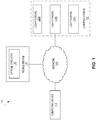
- FIG. 1 illustrates an example network environment 100 according to one or more such aspects.
- the example network environment 100 includes a computing device 110, a mobile device 115, a plurality of light fixtures 120a-c, and a network 105.
- the computing device 110 receives a network request from the mobile device 115, and in response, controls the light fixtures 120a-c to each optically transmit a respective challenge code.
- the mobile device 115 detects one or more of the challenge codes, and transmits the detected challenge codes to the computing device 110.
- the computing device 110 approves or rejects the network request based respectively on whether or not a particular group of the challenge codes is received from the mobile device 115.
- the computing device 110 approves the network request if each challenge code in the group is optically receivable at a location authorized for approving the network request. Otherwise, the computing device 110 rejects the network request. Thus, the computing device 110 approves the network request in response to the mobile device 115 being at a location authorized for that request, as evidenced by the mobile device 115 returning codes that are receivable from the authorized location.
- any or all of the network environment 100 may be comprised within a vehicle and/or structure (not shown).
- the vehicle is capable of being manned.
- the vehicle is capable of operating unmanned.
- the vehicle is an aircraft, spacecraft, rotorcraft, satellite, rocket, terrestrial vehicle, surface water borne vehicle, sub-surface water borne vehicle, subterranean vehicle, or any combination thereof.
- the structure is designed to house, store, and/or dock one or more such vehicles.
- the structure is a residential, commercial, and/or industrial building.
- the network 105 includes one or more physical devices and/or signaling mediums capable of exchanging communication signals between the computing device 110, mobile device 115, and light fixtures 120a-c.
- Examples of such a network 105 include (but are not limited to) one or more signaling mediums; one or more in-vehicle networks (e.g., of an aircraft, spacecraft, rotorcraft, ship, one or more local area networks; one or more wireless networks; one or more Internet Protocol-based networks; one or more Ethernet networks; one or more optical networks; one or more ad hoc networks; and/or one or more electrical buses.
- Such a network 105 may comprise any number of networking devices such as routers, gateways, switches, hubs, firewalls, multiplexers, controllers, and the like (not shown), supporting the exchange of such communication signals.
- the light fixtures 120a-c each provide electrical power to one or more solid state light sources, each of which may be of any type, including (but not limited to) light emitting diode (LED), quantum dot LED, and/or organic LED-based lighting.
- Each of the light fixtures 120a-c is also configured to be controllable to optically transmit, by appropriate signaling from the computing device 110, using its corresponding light source.
- one or more of the light fixtures 120a-c may be comprised in one or more lighting systems 130.
- Such a lighting system 130 may include one or more intermediate devices (not shown) through which control signaling is exchanged with the computing device 110 for controlling the light fixture(s) 120 in the lighting system 130.
- any or all of the lighting systems 130 in the network environment 100 may be comprised within a vehicle and/or structure.
- the lighting system 130 includes a cabin lighting system of an aircraft, a deck lighting system of a ship, and/or an interior lighting system of an airport facility.
- Other aspects may include other kinds of lighting systems 130.
- three light fixtures 120a-c are illustrated in Figure 1 , other aspects may include additional or fewer light fixtures 120.
- the computing device 110 may be any computing platform capable of exchanging signaling with one or more other devices in the network environment 100.
- Examples of the computing device 110 include (but are not limited to) a server computer, a workstation, a personal computer, a network router, a network gateway, and/or a network access point.
- the mobile device 115 may be any computing device that may be operated without a wired connection to an external power source, is capable of wireless communication with one or more other devices in the network environment 100, and comprises optical circuitry 135 (e.g., a charge-coupled device and/or complementary metal-oxide semiconductor) configured to detect a challenge code optically transmitted from one or more of the light fixtures 120a-c.
- optical circuitry 135 e.g., a charge-coupled device and/or complementary metal-oxide semiconductor
- Examples of the mobile device 115 include (but are not limited to) a smartphone, a laptop, a tablet computer, and/or a wearable computer.
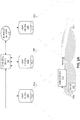
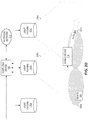
- Figure 2A illustrates an example in which light fixtures 120a-c each optically transmit light 230a-c, respectively, that is receivable from respective locations.
- light 230a-b respectively transmitted from light fixtures 120a-b is receivable, e.g., due to a line of sight from the location 220a to each of the light fixtures 120a-b.
- light 230b-c respectively transmitted from light fixtures 120b-c is receivable at location 220b.
- light 230a-c is receivable from only one of the light fixtures 120a-c, if any at all.
- the mobile device 115 is at location 220a and transmits a network request to the computing device 110.
- the network request may take various forms.
- the network request includes a request to gain access to an in-vehicle network 210 and/or other network such as the Internet (not shown).
- the network request includes a request to control a device 240 at location 220a, the location 220a being an authorized location for approving such a network request.
- Other examples include other requests of the network, including (but not limited to) requests for one or more particular network resources, such as a service, device, bandwidth, processing time, and/or spectrum.
- Other examples also include a request to control a device 240 substantially near the location 220a.
- the device 240 may be attached to, abutting, or connected to the opposite side of a surface bordering the location 220a.
- the device 240 may share a housing or compartment with one or more of the light fixtures 120a-c.
- the computing device 110 controls a plurality of light fixtures 120a-c to each optically transmit a respective challenge code.
- the computing device 110 controls light fixture 120a to optically transmit the challenge code "1100.”
- the computing device 110 further controls light fixture 120b to optically transmit the challenge code "0101.”
- the computing device 110 controls light fixture 120c to optically transmit the challenge code "0110.”
- the challenge codes may be determined by the computing device 110 based on the network request.
- controlling the plurality of light fixtures 120a-c to each optically transmit comprises controlling the plurality of light fixtures 120a-c to each optically transmit using pulse-width modulation at or above a flicker fusion threshold, e.g., so that the optical transmissions are not detectable to the human eye despite being transmitted within the visible light spectrum.
- the mobile device 115 From location 220a, the mobile device 115 is able to receive optical transmissions from light fixtures 120a-b, and is not able to receive optical transmissions from light fixture 120c. Accordingly, in this example, the mobile device 115 receives challenge codes "1100" and "0101" (e.g., via optical circuitry of the mobile device 115), and transmits the received challenge codes as a group of challenge codes to the computing device 110 (e.g., via radio circuitry of the mobile device 115). Challenge code "0110" is not received by the mobile device 115, at least because this code is not optically receivable from location 220a. Accordingly, the mobile device 115 does not transmit challenge code "0110" in the group of challenge codes to the computing device 110.
- a group of challenge codes for purposes of this disclosure, is to be interpreted as those challenge codes transmitted or received as part of the same request or response using one or more messages and/or signaling packets.
- the computing device 110 approves or rejects the network request based respectively on whether or not a group of the challenge codes is received from the mobile device 115, each challenge code in the group being optically receivable at a location 220 authorized for approving the network request.
- location 220a may be a location authorized for approving network requests to control device 240.
- the computing device 110 approves or rejects the network request based respectively on whether or not a group of the challenge codes is received from the mobile device 115, each of which is optically receivable at location 220a.
- the computing device 110 receives a group of challenge codes including "1100" and "0101," each of which is optically receivable at location 220a, and location 220a is a location authorized for approving the request. Accordingly, the computing device 110 approves the network request.
- the computing device 110 would have rejected the network request instead of approving it, since challenge code "0110" is not optically receivable at location 220a (which is the location 220a authorized for approving the network request in the example of Figure 2A ). Rather, the ability of the mobile device 115 to detect and transmit challenge code "0110” implies that the mobile device is outside of location 220a, and is instead somewhere that is able to optically receive the light 230c transmitted by light fixture 120c, such as location 220b. The computing device 110 would have also rejected the network request had the computing device 110 received either one or none of the challenge codes optically receivable from location 220a, according to other examples.
- the computing device 110 may approve or reject the network request based respectively on whether or not additional criteria are also met. For example, in a particular aspect, approving or rejecting the network request is further based respectively on whether or not the mobile device is recognized as a trusted device. Other aspects additionally or alternatively include consideration of other criteria.
- the computing device 110 approves the network request in at least some aspects.
- the computing device 110 tracks movement of the mobile device 115 relative to the plurality of light fixtures 120a-c. For example, in an aspect, the mobile device 115 moves according to a path 250 from one location 220a to another location 220b.
- the computing device 110 receives different groups of challenge codes transmitted by the plurality of light fixtures 120a-c at different times, and for each group received, determines a corresponding location 220a-b of the mobile device from the challenge codes in the group.
- tracking movement of the mobile device 115 relative to the plurality of light fixtures 120a-c comprises tracking movement of the mobile device 115 within the vehicle (e.g., as the mobile device 115 moves throughout the cabin of an aircraft or train).
- the computing device 110 may, in some aspects, notify a user that the mobile device 115 is at a location 220 authorized for approving a particular network request.
- the computing device 110 may notify a user (e.g., via text message or other signaling) that the mobile device 115 is at a location authorized for approving access to (e.g., control of) device 240.
- the computing device may additionally or alternatively control the plurality of light fixtures 120a-c (via one or more lighting systems 130, in some aspects) to illuminate the determined locations 220a-b of the mobile device 115 as the movement of the mobile device 115 is tracked.
- the computing device 110 may receive, from the mobile device 115, challenge codes "1100" and "0101" that were respectively transmitted from light fixtures 120a-b (e.g., under the control of the computing device 110) at a first time instance.
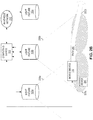
- the computing device 110 may determine from these received challenge codes that the mobile device 115 is within location 220a, and may correspondingly control light fixtures 120a-b to illuminate, and/or control light fixture 120c to extinguish, as shown in Figure 2B .
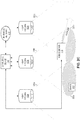
- the mobile device 115 may progress along the path 250, leaving location 220a and entering location 220b, as shown in Figure 2C .
- the computing device 110 may then receive, from the mobile device 115, challenge codes "0000” and "1001" that were respectively transmitted from light fixtures 120b-c (e.g., under the control of the computing device 110) at a second time instance.
- Challenge code "1111” transmitted by light fixture 120a, not being optically receivable at location 220b, is not received by mobile device 115, and is correspondingly not included along with challenge codes "0000" and "1001” in the group of challenge codes transmitted to the computing device 110.
- the computing device 110 may determine from these subsequently received challenge codes "0000" and "1001" that the mobile device 115 is now at location 220b, and may correspondingly control light fixture 120a to extinguish and/or control light fixtures 120b-c to illuminate, as shown in Figure 2D .
- the visible light emitted from the plurality of light fixtures 120a-c may, in some aspects, appear to follow the movement of the mobile device 115 along the path 250.
- the computing device 110 may control the light fixtures 120a-c to optically transmit challenge codes periodically, and may additionally or alternatively change the challenge codes, e.g., to prevent the mobile device 115 from learning the challenge codes and attempting to misrepresent where it is located.
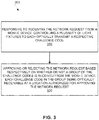
- aspects of the present disclosure include a method 300, implemented by a computing device 110, of determining whether or not to authorize a network request.
- the method 300 comprises, responsive to receiving the network request from a mobile device 115, controlling a plurality of light fixtures 120a-c to each optically transmit a respective challenge code (block 310).
- the method 300 further comprises approving or rejecting the network request based respectively on whether or not a group of the challenge codes is received from the mobile device 115, each challenge code in the group being optically receivable at a location 220 authorized for approving the network request (block 320).
- the method 400 comprises receiving a network request from a mobile device 115 (block 405).
- the network request includes a request to gain access to an in-vehicle network and/or a request to control a device 240 at, or substantially near, the location 220a authorized for approving the network request.
- the method 400 further comprises controlling a plurality of light fixtures 120a-c to each optically transmit a respective challenge code (block 410).
- controlling the plurality of light fixtures 120a-c to each optically transmit comprises controlling the plurality of light fixtures 120a-c to each optically transmit using pulse-width modulation at or above a flicker fusion threshold.
- the method 400 further comprises approving or rejecting the network request based respectively on whether or not a group of the challenge codes is received from the mobile device 115, each challenge code in the group being optically receivable at a location 220a authorized for approving the network request (block 415). In some aspects, approving or rejecting the network request is further based respectively on whether or not the mobile device 115 is recognized as a trusted device. In response to rejecting the network request (block 415, reject), the method 400 ends (block 420).
- the method 400 further comprises, in response to approving the network request (block 415, approve), tracking movement of the mobile device 115 relative to the plurality of light fixtures 120a-c (block 425).
- the tracking comprises receiving different groups of challenge codes transmitted by the plurality of light fixtures 120a-c at different times (block 430), and for each group received, determining a corresponding location 220 of the mobile device 115 from the challenge codes in the group (block 435).
- the plurality of light fixtures 120a-c are comprised in a lighting system 130 comprised within a vehicle, and tracking movement of the mobile device 115 relative to the plurality of light fixtures 120a-c comprises tracking movement of the mobile device 115 within the vehicle.
- the method 400 further comprises controlling a lighting system 130 comprising the plurality of light fixtures 120a-c to illuminate the determined locations 220 of the mobile device 115 as the movement of the mobile device 115 is tracked (block 440). The method 400 then ends (block 420).
- the hardware 500 comprises processing circuitry 510 and interface circuitry 530, which are communicatively coupled to each other, e.g., via one or more buses.
- the processing circuitry 510 may comprise one or more microprocessors, microcontrollers, hardware circuits, discrete logic circuits, hardware registers, digital signal processors (DSPs), field-programmable gate arrays (FPGAs), application-specific integrated circuits (ASICs), or a combination thereof.
- DSPs digital signal processors
- FPGAs field-programmable gate arrays
- ASICs application-specific integrated circuits
- the processing circuitry 510 may be programmable hardware capable of executing software instructions 560 stored as a machine-readable computer program in memory circuitry 520 of the processing circuitry 510.
- the memory circuitry 520 of the various aspects may comprise any non-transitory machine-readable media known in the art or that may be developed, whether volatile or non-volatile, including but not limited to solid state media (e.g., SRAM, DRAM, DDRAM, ROM, PROM, EPROM, flash memory, solid state drive, etc.), removable storage devices (e.g., Secure Digital (SD) card, miniSD card, microSD card, memory stick, thumb-drive, USB flash drive, ROM cartridge, Universal Media Disc), fixed drive (e.g., magnetic hard disk drive), or the like, wholly or in any combination.
- solid state media e.g., SRAM, DRAM, DDRAM, ROM, PROM, EPROM, flash memory, solid state drive, etc.
- removable storage devices e.g., Secure Digital (SD) card, miniSD card, microSD card, memory stick, thumb-drive, USB flash drive, ROM cartridge, Universal Media Disc
- fixed drive e.g., magnetic hard disk drive
- the interface circuitry 530 may be a controller hub configured to control the input and output (I/O) data paths of the hardware 500. Such I/O data paths may include data paths for exchanging signals over a communications network 105 and/or data paths for exchanging signals with a user.
- the interface circuitry 530 may comprise a transceiver configured to send and receive communication signals over one or more of a wireless medium, wired medium, electrical medium, electromagnetic medium, and/or optical medium.
- the interface circuitry 530 may also comprise one or more of a graphics adapter, display port, video bus, touchscreen, graphical processing unit (GPU), display port, Liquid Crystal Display (LCD), and Light Emitting Diode (LED) display, for presenting visual information to a user.
- GPU graphical processing unit
- LCD Liquid Crystal Display
- LED Light Emitting Diode
- the interface circuitry 530 may also comprise one or more of a pointing device (e.g., a mouse, stylus, touchpad, trackball, pointing stick, joystick), touchscreen, microphone for speech input, optical sensor for optical recognition of gestures, and keyboard for text entry.
- a pointing device e.g., a mouse, stylus, touchpad, trackball, pointing stick, joystick
- the interface circuitry 530 may be implemented as a unitary physical component, or as a plurality of physical components that are contiguously or separately arranged, any of which may be communicatively coupled to any other, or may communicate with any other via the processing circuitry 510.
- the interface circuitry 530 may comprise output circuitry 540 (e.g., transmitter circuitry configured to send communication signals over the communications network 105) and input circuitry 550 (e.g., receiver circuitry configured to receive communication signals over the communications network 105).
- the output circuitry 540 may comprise a display
- the input circuitry 550 may comprise a keyboard.
- Other examples, permutations, and arrangements of the above and their equivalents are included according to various aspects of the present disclosure.
- the interface circuitry 530 is configured to exchange signals with a plurality of light fixtures 120a-c and a mobile device 115.
- the processing circuitry 510 is configured to, responsive to receiving, via the interface circuitry 530, a network request from the mobile device 115, control, via the interface circuitry 530, the plurality of light fixtures 120a-c to each optically transmit a respective challenge code.
- the processing circuitry 510 is further configured to approve or reject the network request based respectively on whether or not a group of the challenge codes is received from the mobile device 115 via the interface circuitry 530, each challenge code in the group being optically receivable at a location authorized for approving the network request.
- the hardware 500 may additionally or alternatively be configured to perform any of the methods and/or functions described herein, according to various aspects.
- the hardware 500 may be configured with a plurality of components. These components may include a plurality of communicatively coupled hardware units and/or software modules. One or more of the hardware units may be comprised in the processing circuitry 510 and/or interface circuitry 530. One or more of the software modules may be stored in the memory circuitry 520 and executed by the processing circuitry 510.
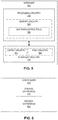
- the hardware 500 may be comprised in the computing device 110 and configured with the example components 600 illustrated in Figure 6 .
- the components 600 include a control unit and/or module 610 and a decision unit and/or module 620.
- the control unit and/or module 610 is configured to, responsive to receiving a network request from a mobile device 115, control a plurality of light fixtures 120a-c to each optically transmit a respective challenge code.
- the decision unit and/or module 620 is configured to approve or reject the network request based respectively on whether or not a group of the challenge codes is received from the mobile device 115, each challenge code in the group being optically receivable at a location 220 authorized for approving the network request.
- the hardware 500 may additionally or alternatively comprise further units and/or modules configured to perform any of the methods and/or functions described herein, according to various aspects.
- a non-transitory computer readable medium e.g., memory circuitry 520
- the computer program product comprises software instructions 560 that, when run on the programmable computing device 110, cause the programmable computing device 110 to perform any of the methods and/or functions described herein.
Landscapes
- Engineering & Computer Science (AREA)
- General Engineering & Computer Science (AREA)
- Computer Security & Cryptography (AREA)
- Signal Processing (AREA)
- Computing Systems (AREA)
- Computer Networks & Wireless Communication (AREA)
- Computer Hardware Design (AREA)
- Physics & Mathematics (AREA)
- Microelectronics & Electronic Packaging (AREA)
- Optics & Photonics (AREA)
- Optical Communication System (AREA)
- Circuit Arrangement For Electric Light Sources In General (AREA)
- Optical Radar Systems And Details Thereof (AREA)
- Data Exchanges In Wide-Area Networks (AREA)
Abstract
Description
- The present disclosure generally relates to determining whether or not to authorize network requests received from mobile devices, and more particularly relates to controlling light fixtures to transmit codes that a mobile device uses to have a network request approved.
- Network nodes commonly receive network requests from a wide variety of devices. For example, a network node may receive a request from a remote computer requesting a particular network service or access to a particular network. In some networks, a particular network node is responsible for determining whether to approve or reject such network requests.
- Various aspects of the present disclosure generally relate to methods, computing devices, systems, computer readable media, computer program products, carriers, signals, hardware and/or software that determines whether or not to authorize a network request.
- Particular aspects include a computing device comprising interface circuitry and processing circuitry. The interface circuitry is configured to exchange signals with a plurality of light fixtures and a mobile device. The processing circuitry is communicatively coupled to the interface circuitry and configured to, responsive to receiving, via the interface circuitry, a network request from the mobile device, control, via the interface circuitry, the plurality of light fixtures to each optically transmit a respective challenge code. The processing circuitry is further configured to approve or reject the network request based respectively on whether or not a group of the challenge codes is received from the mobile device via the interface circuitry, each challenge code in the group being optically receivable at a location authorized for approving the network request.
- In some aspects, the network request is a request to gain access to an in-vehicle network.
- In some aspects, the network request is a request to control a device at, or substantially near, the location authorized for approving the network request.
- In some aspects, the processing circuitry is further configured to, in response to approving the network request, track movement of the mobile device relative to the plurality of light fixtures. To track the movement of the mobile device, the processing circuitry is configured to receive, via the interface circuitry, different groups of challenge codes transmitted by the plurality of light fixtures at different times, and for each group received, determine a corresponding location of the mobile device from the challenge codes in the group. In some such aspects, the processing circuitry is further configured to control, via the interface circuitry, a lighting system comprising the plurality of light fixtures to illuminate the determined locations of the mobile device as the movement of the mobile device is tracked. In particular of such aspects, the lighting system is comprised within a vehicle, and to track movement of the mobile device relative to the plurality of light fixtures, the processing circuitry is configured to track movement of the mobile device within the vehicle.
- In some aspects, the processing circuitry is configured to approve or reject the network request further based respectively on whether or not the mobile device is recognized as a trusted device.
- In some aspects, to control the plurality of light fixtures to each optically transmit, the processing circuitry is configured to control the plurality of light fixtures to each optically transmit using pulse-width modulation at or above a flicker fusion threshold.
- In some aspects, the processing circuitry is further configured to notify a user, via the interface circuitry, that the mobile device is at the location authorized for approving the network request. Other aspects include a method, implemented in a computing device, for determining whether or not to authorize a network request. The method comprises, responsive to receiving the network request from a mobile device, controlling a plurality of light fixtures to each optically transmit a respective challenge code. The method further comprises approving or rejecting the network request based respectively on whether or not a group of the challenge codes is received from the mobile device, each challenge code in the group being optically receivable at a location authorized for approving the network request.
- In some aspects, the network request is a request to gain access to an in-vehicle network.
- In some aspects, the network request is a request to control a device at, or substantially near, the location authorized for approving the network request.
- In some aspects, the method further comprises, in response to approving the network request, tracking movement of the mobile device relative to the plurality of light fixtures. The tracking comprises receiving different groups of challenge codes transmitted by the plurality of light fixtures at different times, and for each group received, determining a corresponding location of the mobile device from the challenge codes in the group. In some such aspects, the method further comprises controlling a lighting system comprising the plurality of light fixtures to illuminate the determined locations of the mobile device as the movement of the mobile device is tracked. In particular of such aspects, the lighting system is comprised within a vehicle, and tracking movement of the mobile device relative to the plurality of light fixtures comprises tracking movement of the mobile device within the vehicle.
- In some aspects, approving or rejecting the network request is further based respectively on whether or not the mobile device is recognized as a trusted device.
- In some aspects, controlling the plurality of light fixtures to each optically transmit comprises controlling the plurality of light fixtures to each optically transmit using pulse-width modulation at or above a flicker fusion threshold.
- In some aspects, the method further comprises notifying a user that the mobile device is at the location authorized for approving the network request.
- Other aspects include a non-transitory computer readable medium storing a computer program product for controlling a programmable computing device. The computer program product comprises software instructions that, when run on processing circuitry of the programmable computing device, cause the programmable computing device to perform any of the aspects described herein.
- Aspects of the present disclosure are illustrated by way of example and are not limited by the accompanying figures with like references indicating like elements. In general, the use of a reference numeral should be regarded as referring to the depicted subject matter generally, whereas discussion of a specific instance of an illustrated element will append a letter designation thereto (e.g., discussion of a light fixture 120, generally, as opposed to discussion of particular instances of
light fixtures -
Figure 1 is a block diagram of an example network environment, according to one or more aspects of the present disclosure. -
Figures 2A-2D are block diagrams illustrating examples in which light fixtures optically transmit light that is receivable from respective locations, according to one or more aspects of the present disclosure. -
Figure 3 is a flow diagram illustrating an example method, according to one or more aspects of the present disclosure. -
Figure 4 is a flow diagram illustrating a more detailed example method, according to one or more aspects of the present disclosure. -
Figure 5 is a block diagram illustrating example hardware, according to one or more aspects of the present disclosure. -
Figure 6 is a block diagram illustrating example components, according to one or more aspects of the present disclosure. - Aspects of the present disclosure are directed to methods, computing devices, systems, computer readable media, computer program products, carriers, signals, hardware and/or software that determines whether or not to authorize a network request.
-
Figure 1 illustrates anexample network environment 100 according to one or more such aspects. Theexample network environment 100 includes acomputing device 110, amobile device 115, a plurality oflight fixtures 120a-c, and anetwork 105. As will be discussed in greater detail below, thecomputing device 110 receives a network request from themobile device 115, and in response, controls thelight fixtures 120a-c to each optically transmit a respective challenge code. Themobile device 115 detects one or more of the challenge codes, and transmits the detected challenge codes to thecomputing device 110. Thecomputing device 110 approves or rejects the network request based respectively on whether or not a particular group of the challenge codes is received from themobile device 115. Specifically, thecomputing device 110 approves the network request if each challenge code in the group is optically receivable at a location authorized for approving the network request. Otherwise, thecomputing device 110 rejects the network request. Thus, thecomputing device 110 approves the network request in response to themobile device 115 being at a location authorized for that request, as evidenced by themobile device 115 returning codes that are receivable from the authorized location. - According to particular aspects, any or all of the
network environment 100 may be comprised within a vehicle and/or structure (not shown). In at least some aspects that include a vehicle, the vehicle is capable of being manned. In at least some aspects that include a vehicle, the vehicle is capable of operating unmanned. According to particular aspects herein, the vehicle is an aircraft, spacecraft, rotorcraft, satellite, rocket, terrestrial vehicle, surface water borne vehicle, sub-surface water borne vehicle, subterranean vehicle, or any combination thereof. In at least some of the aspects that include a structure, the structure is designed to house, store, and/or dock one or more such vehicles. In some aspects, the structure is a residential, commercial, and/or industrial building. - The
network 105 includes one or more physical devices and/or signaling mediums capable of exchanging communication signals between thecomputing device 110,mobile device 115, andlight fixtures 120a-c. Examples of such anetwork 105 include (but are not limited to) one or more signaling mediums; one or more in-vehicle networks (e.g., of an aircraft, spacecraft, rotorcraft, ship, one or more local area networks; one or more wireless networks; one or more Internet Protocol-based networks; one or more Ethernet networks; one or more optical networks; one or more ad hoc networks; and/or one or more electrical buses. Such anetwork 105 may comprise any number of networking devices such as routers, gateways, switches, hubs, firewalls, multiplexers, controllers, and the like (not shown), supporting the exchange of such communication signals. - The
light fixtures 120a-c each provide electrical power to one or more solid state light sources, each of which may be of any type, including (but not limited to) light emitting diode (LED), quantum dot LED, and/or organic LED-based lighting. Each of thelight fixtures 120a-c is also configured to be controllable to optically transmit, by appropriate signaling from thecomputing device 110, using its corresponding light source. In some aspects, one or more of thelight fixtures 120a-c may be comprised in one ormore lighting systems 130. Such alighting system 130 may include one or more intermediate devices (not shown) through which control signaling is exchanged with thecomputing device 110 for controlling the light fixture(s) 120 in thelighting system 130. According to particular aspects, any or all of thelighting systems 130 in thenetwork environment 100 may be comprised within a vehicle and/or structure. For example, in some aspects, thelighting system 130 includes a cabin lighting system of an aircraft, a deck lighting system of a ship, and/or an interior lighting system of an airport facility. Other aspects may include other kinds oflighting systems 130. Although threelight fixtures 120a-c are illustrated inFigure 1 , other aspects may include additional or fewer light fixtures 120. - The
computing device 110 may be any computing platform capable of exchanging signaling with one or more other devices in thenetwork environment 100. Examples of thecomputing device 110 include (but are not limited to) a server computer, a workstation, a personal computer, a network router, a network gateway, and/or a network access point. - The
mobile device 115 may be any computing device that may be operated without a wired connection to an external power source, is capable of wireless communication with one or more other devices in thenetwork environment 100, and comprises optical circuitry 135 (e.g., a charge-coupled device and/or complementary metal-oxide semiconductor) configured to detect a challenge code optically transmitted from one or more of thelight fixtures 120a-c. Examples of themobile device 115 include (but are not limited to) a smartphone, a laptop, a tablet computer, and/or a wearable computer. -
Figure 2A illustrates an example in whichlight fixtures 120a-c each optically transmit light 230a-c, respectively, that is receivable from respective locations. In particular, atlocation 220a, light 230a-b respectively transmitted fromlight fixtures 120a-b is receivable, e.g., due to a line of sight from thelocation 220a to each of thelight fixtures 120a-b. Similarly, light 230b-c respectively transmitted fromlight fixtures 120b-c is receivable atlocation 220b. According to this example, outside of thelocations 220a-b, light 230a-c is receivable from only one of thelight fixtures 120a-c, if any at all. - According to this example, the
mobile device 115 is atlocation 220a and transmits a network request to thecomputing device 110. Various aspects of the network request may take various forms. For example, in some aspects, the network request includes a request to gain access to an in-vehicle network 210 and/or other network such as the Internet (not shown). In yet another example, the network request includes a request to control adevice 240 atlocation 220a, thelocation 220a being an authorized location for approving such a network request. Other examples include other requests of the network, including (but not limited to) requests for one or more particular network resources, such as a service, device, bandwidth, processing time, and/or spectrum. - Other examples also include a request to control a
device 240 substantially near thelocation 220a. According to one such example, thedevice 240 may be attached to, abutting, or connected to the opposite side of a surface bordering thelocation 220a. According to another such example, thedevice 240 may share a housing or compartment with one or more of thelight fixtures 120a-c. - Responsive to receiving the request from the
mobile device 115, thecomputing device 110 controls a plurality oflight fixtures 120a-c to each optically transmit a respective challenge code. According to this example, thecomputing device 110 controlslight fixture 120a to optically transmit the challenge code "1100." Thecomputing device 110 further controlslight fixture 120b to optically transmit the challenge code "0101." Further, thecomputing device 110 controlslight fixture 120c to optically transmit the challenge code "0110." In some aspects, the challenge codes may be determined by thecomputing device 110 based on the network request. - Other examples include challenge codes that are different from those shown in the present example, and may be of different lengths and/or take any of a variety of signaling forms that are appropriate for optical transmission. For example, in a particular aspect, controlling the plurality of
light fixtures 120a-c to each optically transmit comprises controlling the plurality oflight fixtures 120a-c to each optically transmit using pulse-width modulation at or above a flicker fusion threshold, e.g., so that the optical transmissions are not detectable to the human eye despite being transmitted within the visible light spectrum. - From
location 220a, themobile device 115 is able to receive optical transmissions fromlight fixtures 120a-b, and is not able to receive optical transmissions fromlight fixture 120c. Accordingly, in this example, themobile device 115 receives challenge codes "1100" and "0101" (e.g., via optical circuitry of the mobile device 115), and transmits the received challenge codes as a group of challenge codes to the computing device 110 (e.g., via radio circuitry of the mobile device 115). Challenge code "0110" is not received by themobile device 115, at least because this code is not optically receivable fromlocation 220a. Accordingly, themobile device 115 does not transmit challenge code "0110" in the group of challenge codes to thecomputing device 110. - To be clear, a group of challenge codes, for purposes of this disclosure, is to be interpreted as those challenge codes transmitted or received as part of the same request or response using one or more messages and/or signaling packets. The
computing device 110 approves or rejects the network request based respectively on whether or not a group of the challenge codes is received from themobile device 115, each challenge code in the group being optically receivable at a location 220 authorized for approving the network request. For example,location 220a may be a location authorized for approving network requests to controldevice 240. In such an example, thecomputing device 110 approves or rejects the network request based respectively on whether or not a group of the challenge codes is received from themobile device 115, each of which is optically receivable atlocation 220a. - In the example of
Figure 2A , thecomputing device 110 receives a group of challenge codes including "1100" and "0101," each of which is optically receivable atlocation 220a, andlocation 220a is a location authorized for approving the request. Accordingly, thecomputing device 110 approves the network request. - Had the
computing device 110 instead received a group of challenge codes that included the challenge code "0110" transmitted bylight fixture 120c (e.g., in another aspect), the computing device would have rejected the network request instead of approving it, since challenge code "0110" is not optically receivable atlocation 220a (which is thelocation 220a authorized for approving the network request in the example ofFigure 2A ). Rather, the ability of themobile device 115 to detect and transmit challenge code "0110" implies that the mobile device is outside oflocation 220a, and is instead somewhere that is able to optically receive the light 230c transmitted bylight fixture 120c, such aslocation 220b. Thecomputing device 110 would have also rejected the network request had thecomputing device 110 received either one or none of the challenge codes optically receivable fromlocation 220a, according to other examples. - Note that in some aspects, the
computing device 110 may approve or reject the network request based respectively on whether or not additional criteria are also met. For example, in a particular aspect, approving or rejecting the network request is further based respectively on whether or not the mobile device is recognized as a trusted device. Other aspects additionally or alternatively include consideration of other criteria. - In view of the above, the
computing device 110 approves the network request in at least some aspects. In some such aspects, thecomputing device 110 tracks movement of themobile device 115 relative to the plurality oflight fixtures 120a-c. For example, in an aspect, themobile device 115 moves according to apath 250 from onelocation 220a to anotherlocation 220b. To track movement of themobile device 115 relative to the plurality oflight fixtures 120a-c, thecomputing device 110 receives different groups of challenge codes transmitted by the plurality oflight fixtures 120a-c at different times, and for each group received, determines acorresponding location 220a-b of the mobile device from the challenge codes in the group. According to a particular aspect in which the plurality oflight fixtures 120a-c are part of alighting system 130 comprised in a vehicle, tracking movement of themobile device 115 relative to the plurality oflight fixtures 120a-c comprises tracking movement of themobile device 115 within the vehicle (e.g., as themobile device 115 moves throughout the cabin of an aircraft or train). Additionally or alternatively, thecomputing device 110 may, in some aspects, notify a user that themobile device 115 is at a location 220 authorized for approving a particular network request. For example, responsive to determining that themobile device 115 is atlocation 220a, thecomputing device 110 may notify a user (e.g., via text message or other signaling) that themobile device 115 is at a location authorized for approving access to (e.g., control of)device 240. - Further, according to particular aspects, the computing device may additionally or alternatively control the plurality of
light fixtures 120a-c (via one ormore lighting systems 130, in some aspects) to illuminate thedetermined locations 220a-b of themobile device 115 as the movement of themobile device 115 is tracked. For example, thecomputing device 110 may receive, from themobile device 115, challenge codes "1100" and "0101" that were respectively transmitted fromlight fixtures 120a-b (e.g., under the control of the computing device 110) at a first time instance. Thecomputing device 110 may determine from these received challenge codes that themobile device 115 is withinlocation 220a, and may correspondingly controllight fixtures 120a-b to illuminate, and/or controllight fixture 120c to extinguish, as shown inFigure 2B . - Subsequently, the
mobile device 115 may progress along thepath 250, leavinglocation 220a and enteringlocation 220b, as shown inFigure 2C . Thecomputing device 110 may then receive, from themobile device 115, challenge codes "0000" and "1001" that were respectively transmitted fromlight fixtures 120b-c (e.g., under the control of the computing device 110) at a second time instance. Challenge code "1111" transmitted bylight fixture 120a, not being optically receivable atlocation 220b, is not received bymobile device 115, and is correspondingly not included along with challenge codes "0000" and "1001" in the group of challenge codes transmitted to thecomputing device 110. - The
computing device 110 may determine from these subsequently received challenge codes "0000" and "1001" that themobile device 115 is now atlocation 220b, and may correspondingly controllight fixture 120a to extinguish and/or controllight fixtures 120b-c to illuminate, as shown inFigure 2D . Thus, the visible light emitted from the plurality oflight fixtures 120a-c may, in some aspects, appear to follow the movement of themobile device 115 along thepath 250. In support of tracking themobile device 115, thecomputing device 110 may control thelight fixtures 120a-c to optically transmit challenge codes periodically, and may additionally or alternatively change the challenge codes, e.g., to prevent themobile device 115 from learning the challenge codes and attempting to misrepresent where it is located. - In view of the above, aspects of the present disclosure include a
method 300, implemented by acomputing device 110, of determining whether or not to authorize a network request. Themethod 300 comprises, responsive to receiving the network request from amobile device 115, controlling a plurality oflight fixtures 120a-c to each optically transmit a respective challenge code (block 310). Themethod 300 further comprises approving or rejecting the network request based respectively on whether or not a group of the challenge codes is received from themobile device 115, each challenge code in the group being optically receivable at a location 220 authorized for approving the network request (block 320). - Aspects of the present disclosure include a more
detailed method 400, implemented by acomputing device 110. Themethod 400 comprises receiving a network request from a mobile device 115 (block 405). In some aspects, the network request includes a request to gain access to an in-vehicle network and/or a request to control adevice 240 at, or substantially near, thelocation 220a authorized for approving the network request. - The
method 400 further comprises controlling a plurality oflight fixtures 120a-c to each optically transmit a respective challenge code (block 410). In some aspects, controlling the plurality oflight fixtures 120a-c to each optically transmit comprises controlling the plurality oflight fixtures 120a-c to each optically transmit using pulse-width modulation at or above a flicker fusion threshold. - The
method 400 further comprises approving or rejecting the network request based respectively on whether or not a group of the challenge codes is received from themobile device 115, each challenge code in the group being optically receivable at alocation 220a authorized for approving the network request (block 415). In some aspects, approving or rejecting the network request is further based respectively on whether or not themobile device 115 is recognized as a trusted device. In response to rejecting the network request (block 415, reject), themethod 400 ends (block 420). - The
method 400 further comprises, in response to approving the network request (block 415, approve), tracking movement of themobile device 115 relative to the plurality oflight fixtures 120a-c (block 425). The tracking comprises receiving different groups of challenge codes transmitted by the plurality oflight fixtures 120a-c at different times (block 430), and for each group received, determining a corresponding location 220 of themobile device 115 from the challenge codes in the group (block 435). In some aspects, the plurality oflight fixtures 120a-c are comprised in alighting system 130 comprised within a vehicle, and tracking movement of themobile device 115 relative to the plurality oflight fixtures 120a-c comprises tracking movement of themobile device 115 within the vehicle. - The
method 400 further comprises controlling alighting system 130 comprising the plurality oflight fixtures 120a-c to illuminate the determined locations 220 of themobile device 115 as the movement of themobile device 115 is tracked (block 440). Themethod 400 then ends (block 420). - Other aspects of the present disclosure include a
computing device 110, light fixture 120, and/ormobile device 115 implemented according to theexample hardware 500 illustrated inFigure 5 . Thehardware 500 comprisesprocessing circuitry 510 andinterface circuitry 530, which are communicatively coupled to each other, e.g., via one or more buses. Theprocessing circuitry 510 may comprise one or more microprocessors, microcontrollers, hardware circuits, discrete logic circuits, hardware registers, digital signal processors (DSPs), field-programmable gate arrays (FPGAs), application-specific integrated circuits (ASICs), or a combination thereof. For example, theprocessing circuitry 510 may be programmable hardware capable of executingsoftware instructions 560 stored as a machine-readable computer program inmemory circuitry 520 of theprocessing circuitry 510. - The
memory circuitry 520 of the various aspects may comprise any non-transitory machine-readable media known in the art or that may be developed, whether volatile or non-volatile, including but not limited to solid state media (e.g., SRAM, DRAM, DDRAM, ROM, PROM, EPROM, flash memory, solid state drive, etc.), removable storage devices (e.g., Secure Digital (SD) card, miniSD card, microSD card, memory stick, thumb-drive, USB flash drive, ROM cartridge, Universal Media Disc), fixed drive (e.g., magnetic hard disk drive), or the like, wholly or in any combination. - The
interface circuitry 530 may be a controller hub configured to control the input and output (I/O) data paths of thehardware 500. Such I/O data paths may include data paths for exchanging signals over acommunications network 105 and/or data paths for exchanging signals with a user. For example, theinterface circuitry 530 may comprise a transceiver configured to send and receive communication signals over one or more of a wireless medium, wired medium, electrical medium, electromagnetic medium, and/or optical medium. Theinterface circuitry 530 may also comprise one or more of a graphics adapter, display port, video bus, touchscreen, graphical processing unit (GPU), display port, Liquid Crystal Display (LCD), and Light Emitting Diode (LED) display, for presenting visual information to a user. Theinterface circuitry 530 may also comprise one or more of a pointing device (e.g., a mouse, stylus, touchpad, trackball, pointing stick, joystick), touchscreen, microphone for speech input, optical sensor for optical recognition of gestures, and keyboard for text entry. - The
interface circuitry 530 may be implemented as a unitary physical component, or as a plurality of physical components that are contiguously or separately arranged, any of which may be communicatively coupled to any other, or may communicate with any other via theprocessing circuitry 510. For example, theinterface circuitry 530 may comprise output circuitry 540 (e.g., transmitter circuitry configured to send communication signals over the communications network 105) and input circuitry 550 (e.g., receiver circuitry configured to receive communication signals over the communications network 105). Similarly, theoutput circuitry 540 may comprise a display, whereas theinput circuitry 550 may comprise a keyboard. Other examples, permutations, and arrangements of the above and their equivalents are included according to various aspects of the present disclosure. - According to particular aspects of the
hardware 500 illustrated inFigure 5 , theinterface circuitry 530 is configured to exchange signals with a plurality oflight fixtures 120a-c and amobile device 115. Theprocessing circuitry 510 is configured to, responsive to receiving, via theinterface circuitry 530, a network request from themobile device 115, control, via theinterface circuitry 530, the plurality oflight fixtures 120a-c to each optically transmit a respective challenge code. Theprocessing circuitry 510 is further configured to approve or reject the network request based respectively on whether or not a group of the challenge codes is received from themobile device 115 via theinterface circuitry 530, each challenge code in the group being optically receivable at a location authorized for approving the network request. Thehardware 500 may additionally or alternatively be configured to perform any of the methods and/or functions described herein, according to various aspects. - According to particular aspects, the
hardware 500 may be configured with a plurality of components. These components may include a plurality of communicatively coupled hardware units and/or software modules. One or more of the hardware units may be comprised in theprocessing circuitry 510 and/orinterface circuitry 530. One or more of the software modules may be stored in thememory circuitry 520 and executed by theprocessing circuitry 510. - For example, the
hardware 500 may be comprised in thecomputing device 110 and configured with theexample components 600 illustrated inFigure 6 . Thecomponents 600 include a control unit and/ormodule 610 and a decision unit and/ormodule 620. According to this example, the control unit and/ormodule 610 is configured to, responsive to receiving a network request from amobile device 115, control a plurality oflight fixtures 120a-c to each optically transmit a respective challenge code. Further, the decision unit and/ormodule 620 is configured to approve or reject the network request based respectively on whether or not a group of the challenge codes is received from themobile device 115, each challenge code in the group being optically receivable at a location 220 authorized for approving the network request. Thehardware 500 may additionally or alternatively comprise further units and/or modules configured to perform any of the methods and/or functions described herein, according to various aspects. Further aspects of the present disclosure a non-transitory computer readable medium (e.g., memory circuitry 520) storing a computer program product for controlling aprogrammable computing device 110. The computer program product comprisessoftware instructions 560 that, when run on theprogrammable computing device 110, cause theprogrammable computing device 110 to perform any of the methods and/or functions described herein. - The present invention may, of course, be carried out in other ways than those specifically set forth herein without departing from essential characteristics of the invention. The present aspects are to be considered in all respects as illustrative and not restrictive, and all changes coming within the meaning and equivalency range of the appended claims are intended to be embraced therein.
- Further, the disclosure comprises embodiments according to the following clauses:
- Clause 1. A computing device (110) comprising:
- interface circuitry (530) configured to exchange signals with a plurality of light fixtures (120a-c) and a mobile device (115);
- processing circuitry (520) communicatively coupled to the interface circuitry (530) and configured to:
- responsive to receiving, via the interface circuitry (530), a network request from the mobile device (115), control, via the interface circuitry (530), the plurality of light fixtures (120a-c) to each optically transmit a respective challenge code;
- approve or reject the network request based respectively on whether or not a group of the challenge codes is received from the mobile device (115) via the interface circuitry (530), each challenge code in the group being optically receivable at a location (220a) authorized for approving the network request.
- Clause 2. The computing device (110) of clause 1, wherein the network request is a request to gain access to an in-vehicle network (210).
- Clause 3. The computing device (110) of clause 1 or 2, wherein the network request is a request to control a device (240) at, or substantially near, the location (220a) authorized for approving the network request.
- Clause 4. The computing device (110) of clause 1-3, wherein:
- the processing circuitry is further configured to, in response to approving the network request, track movement of the mobile device (115) relative to the plurality of light fixtures (120a-c);
- to track the movement of the mobile device (115), the processing circuitry is configured to receive, via the interface circuitry (530), different groups of challenge codes transmitted by the plurality of light fixtures (120a-c) at different times, and for each group received, determine a corresponding location (220a-b) of the mobile device (115) from the challenge codes in the group.
- Clause 5. The computing device (110) of clause 4, wherein the processing circuitry is further configured to control, via the interface circuitry (530), a lighting system (130) comprising the plurality of light fixtures (120a-c) to illuminate the determined locations (220a-b) of the mobile device (115) as the movement of the mobile device (115) is tracked.
- Clause 6. The computing device (110) of clause 5, wherein the lighting system (130) is comprised within a vehicle, and to track movement of the mobile device (115) relative to the plurality of light fixtures (120a-c), the processing circuitry is configured to track movement of the mobile device (115) within the vehicle.
- Clause 7. The computing device (110) of any one of clauses 1-6, wherein the processing circuitry is configured to approve or reject the network request further based respectively on whether or not the mobile device (115) is recognized as a trusted device.
- Clause 8. The computing device (110) of any one of clauses 1-7, wherein to control the plurality of light fixtures (120a-c) to each optically transmit, the processing circuitry is configured to control the plurality of light fixtures (120a-c) to each optically transmit using pulse-width modulation at or above a flicker fusion threshold.
- Clause 9. The computing device (110) of any one of clauses 1-8, wherein the processing circuitry is further configured to notify a user, via the interface circuitry (530), that the mobile device (115) is at the location (220a) authorized for approving the network request.
- Clause 10. A method (300, 400), implemented in a computing device (110), of determining whether or not to authorize a network request, the method (300, 400) comprising:
- responsive to receiving (310) the network request from a mobile device (115), controlling a plurality of light fixtures (120a-c) to each optically transmit a respective challenge code;
- approving or rejecting (320) the network request based respectively on whether or not a group of the challenge codes is received from the mobile device (115), each challenge code in the group being optically receivable at a location (220a) authorized for approving the network request.
- Clause 11. The method (300, 400) of clause 10, wherein the network request is a request to gain access to an in-vehicle network.
- Clause 12. The method (300, 400) of clause 10 or 11, wherein the network request is a request to control a device (240) at, or substantially near, the location (220a) authorized for approving the network request.
- Clause 13. The method (300, 400) of clause 10, 11, or 12, further comprising, in response to approving the network request, tracking movement of the mobile device (115) relative to the plurality of light fixtures (120a-c), the tracking comprising receiving different groups of challenge codes transmitted by the plurality of light fixtures (120a-c) at different times, and for each group received, determining a corresponding location (220a-b) of the mobile device (115) from the challenge codes in the group.
- Clause 14. The method (300, 400) of clause 13, further comprising controlling a lighting system (130) comprising the plurality of light fixtures (120a-c) to illuminate the determined locations (220a-b) of the mobile device (115) as the movement of the mobile device (115) is tracked.
- Clause 15. The method (300, 400) of clause 14, wherein the lighting system (130) is comprised within a vehicle, and tracking movement of the mobile device (115) relative to the plurality of light fixtures (120a-c) comprises tracking movement of the mobile device (115) within the vehicle.
- Clause 16. The method (300, 400) of any one of clauses 10-15, wherein approving or rejecting the network request is further based respectively on whether or not the mobile device (115) is recognized as a trusted device.
- Clause 17. The method (300, 400) of any one of clauses 10-16, wherein controlling the plurality of light fixtures (120a-c) to each optically transmit comprises controlling the plurality of light fixtures (120a-c) to each optically transmit using pulse-width modulation at or above a flicker fusion threshold.
- Clause 18. The method (300, 400) of any one of clauses 10-17, further comprising notifying a user that the mobile device (115) is at the location (220a) authorized for approving the network request.
- Clause 19. A non-transitory computer readable medium storing a computer program product for controlling a programmable computing device (110), the computer program product comprising software instructions (560) that, when run on processing circuitry (510) of the programmable computing device (110), cause the programmable computing device (110) to:
- responsive to receiving a network request from a mobile device (115), control the plurality of light fixtures (120a-c) to each optically transmit a respective challenge code;
- approve or reject the network request based respectively on whether or not a group of the challenge codes is received from the mobile device (115), each challenge code in the group being optically receivable at a location (220a) authorized for approving the network request.
Claims (15)
- A computing device (110) comprising:interface circuitry (530) configured to exchange signals with a plurality of light fixtures (120a-c) and a mobile device (115);processing circuitry (520) communicatively coupled to the interface circuitry (530) and configured to:responsive to receiving, via the interface circuitry (530), a network request from the mobile device (115), control, via the interface circuitry (530), the plurality of light fixtures (120a-c) to each optically transmit a respective challenge code;approve or reject the network request based respectively on whether or not a group of the challenge codes is received from the mobile device (115) via the interface circuitry (530), each challenge code in the group being optically receivable at a location (220a) authorized for approving the network request.
- The computing device (110) of claim 1, wherein the network request is a request to gain access to an in-vehicle network (210).
- The computing device (110) of claim 1 or 2, wherein the network request is a request to control a device (240) at, or substantially near, the location (220a) authorized for approving the network request.
- The computing device (110) of claim 1-3, wherein:the processing circuitry is further configured to, in response to approving the network request, track movement of the mobile device (115) relative to the plurality of light fixtures (120a-c);to track the movement of the mobile device (115), the processing circuitry is configured to receive, via the interface circuitry (530), different groups of challenge codes transmitted by the plurality of light fixtures (120a-c) at different times, and for each group received, determine a corresponding location (220a-b) of the mobile device (115) from the challenge codes in the group.
- The computing device (110) of claim 4, wherein the processing circuitry is further configured to control, via the interface circuitry (530), a lighting system (130) comprising the plurality of light fixtures (120a-c) to illuminate the determined locations (220a-b) of the mobile device (115) as the movement of the mobile device (115) is tracked.
- The computing device (110) of claim 5, wherein the lighting system (130) is comprised within a vehicle, and to track movement of the mobile device (115) relative to the plurality of light fixtures (120a-c), the processing circuitry is configured to track movement of the mobile device (115) within the vehicle.
- The computing device (110) of any one of claims 1-6, wherein the processing circuitry is configured to approve or reject the network request further based respectively on whether or not the mobile device (115) is recognized as a trusted device.
- The computing device (110) of any one of claims 1-7, wherein to control the plurality of light fixtures (120a-c) to each optically transmit, the processing circuitry is configured to control the plurality of light fixtures (120a-c) to each optically transmit using pulse-width modulation at or above a flicker fusion threshold.
- The computing device (110) of any one of claims 1-8, wherein the processing circuitry is further configured to notify a user, via the interface circuitry (530), that the mobile device (115) is at the location (220a) authorized for approving the network request.
- A method (300, 400), implemented in a computing device (110), of determining whether or not to authorize a network request, the method (300, 400) comprising:responsive to receiving (310) the network request from a mobile device (115), controlling a plurality of light fixtures (120a-c) to each optically transmit a respective challenge code;approving or rejecting (320) the network request based respectively on whether or not a group of the challenge codes is received from the mobile device (115), each challenge code in the group being optically receivable at a location (220a) authorized for approving the network request.
- The method (300, 400) of claim 10, wherein the network request is a request to gain access to an in-vehicle network.
- The method (300, 400) of claim 10 or 11, wherein the network request is a request to control a device (240) at, or substantially near, the location (220a) authorized for approving the network request.
- The method (300, 400) of claim 10, 11, or 12, further comprising, in response to approving the network request, tracking movement of the mobile device (115) relative to the plurality of light fixtures (120a-c), the tracking comprising receiving different groups of challenge codes transmitted by the plurality of light fixtures (120a-c) at different times, and for each group received, determining a corresponding location (220a-b) of the mobile device (115) from the challenge codes in the group.
- The method (300, 400) of claim 13, further comprising controlling a lighting system (130) comprising the plurality of light fixtures (120a-c) to illuminate the determined locations (220a-b) of the mobile device (115) as the movement of the mobile device (115) is tracked.
- The method (300, 400) of claim 14, wherein the lighting system (130) is comprised within a vehicle, and tracking movement of the mobile device (115) relative to the plurality of light fixtures (120a-c) comprises tracking movement of the mobile device (115) within the vehicle.
Applications Claiming Priority (1)
| Application Number | Priority Date | Filing Date | Title |
|---|---|---|---|
| US15/727,210 US11258787B2 (en) | 2017-10-06 | 2017-10-06 | Network request handling based on optically-transmitted codes |
Publications (2)
| Publication Number | Publication Date |
|---|---|
| EP3468141A1 true EP3468141A1 (en) | 2019-04-10 |
| EP3468141B1 EP3468141B1 (en) | 2022-03-09 |
Family
ID=63787684
Family Applications (1)
| Application Number | Title | Priority Date | Filing Date |
|---|---|---|---|
| EP18194621.1A Active EP3468141B1 (en) | 2017-10-06 | 2018-09-14 | Network request handling based on optically-transmitted codes |
Country Status (6)
| Country | Link |
|---|---|
| US (1) | US11258787B2 (en) |
| EP (1) | EP3468141B1 (en) |
| JP (1) | JP7377600B2 (en) |
| CN (1) | CN109640431B (en) |
| CA (1) | CA3017922C (en) |
| RU (1) | RU2018130814A (en) |
Families Citing this family (4)
| Publication number | Priority date | Publication date | Assignee | Title |
|---|---|---|---|---|
| US12169854B2 (en) | 2020-03-16 | 2024-12-17 | Lyft, Inc. | Aligning provider-device axes with transportation-vehicle axes to generate driving-event scores |
| US11387902B2 (en) | 2020-04-10 | 2022-07-12 | The Boeing Company | Wireless control of a passenger service unit using a personal device of a passenger |
| US11176810B2 (en) | 2020-04-10 | 2021-11-16 | The Boeing Company | Wireless control of a passenger service unit |
| US12133139B2 (en) * | 2020-10-14 | 2024-10-29 | Lyft, Inc. | Detecting handheld device movements utilizing a handheld-movement-detection model |
Citations (2)
| Publication number | Priority date | Publication date | Assignee | Title |
|---|---|---|---|---|
| WO2007095740A1 (en) * | 2006-02-23 | 2007-08-30 | Tir Technology Lp | System and method for light source identification |
| US20130279697A1 (en) * | 2010-12-30 | 2013-10-24 | Koninklijke Philips N.V. | Lighting system, a light source, a device and a method of authorizing the device by the light source |
Family Cites Families (17)
| Publication number | Priority date | Publication date | Assignee | Title |
|---|---|---|---|---|
| EP1732247A4 (en) | 2004-03-03 | 2011-05-04 | Nec Corp | Positioning system, positioning method, and program thereof |
| US8560457B2 (en) * | 2006-09-30 | 2013-10-15 | Pitney Bowes Inc. | Enhanced network server authentication using a physical out-of-band channel |
| US8890773B1 (en) * | 2009-04-01 | 2014-11-18 | Federal Law Enforcement Development Services, Inc. | Visible light transceiver glasses |
| US9444547B2 (en) * | 2011-07-26 | 2016-09-13 | Abl Ip Holding Llc | Self-identifying one-way authentication method using optical signals |
| US9538616B2 (en) * | 2012-08-07 | 2017-01-03 | Philips Lighting Holding B.V. | Timed lighting control |
| US9277401B2 (en) * | 2013-01-22 | 2016-03-01 | Qualcomm Incorporated | Device utilizing an optical signal to access an access point |
| US20150341113A1 (en) * | 2014-05-20 | 2015-11-26 | The Boeing Company | Lighting and data communication system using a remotely located lighting array |
| RU2695510C2 (en) * | 2014-06-13 | 2019-07-23 | Филипс Лайтинг Холдинг Б.В. | Localization based on network of wireless nodes |
| JP6454493B2 (en) * | 2014-08-13 | 2019-01-16 | 株式会社野村総合研究所 | Authentication system, authentication method, and authentication program |
| GB201415867D0 (en) * | 2014-09-08 | 2014-10-22 | Purelifi Ltd | Cyber Security |
| FR3036913A1 (en) * | 2015-05-28 | 2016-12-02 | Orange | METHOD FOR CONTROLLING ACCESS TO A SERVICE |
| MX391289B (en) * | 2015-08-05 | 2025-03-21 | Lutron Electronics Co | LOAD CONTROL SYSTEM SENSITIVE TO THE LOCATION OF AN OCCUPANT AND/OR MOBILE DEVICE. |
| US20170047994A1 (en) * | 2015-08-10 | 2017-02-16 | Stmicroelectronics, Inc. | Visible light and power-line communication-based system with location-based services |
| US9847020B2 (en) * | 2015-10-10 | 2017-12-19 | Videx, Inc. | Visible light communication of an access credential in an access control system |
| TWI791236B (en) * | 2015-12-30 | 2023-02-01 | 美商艾倫神火公司 | Optical narrowcasting |
| US20170294130A1 (en) * | 2016-04-08 | 2017-10-12 | Uber Technologies, Inc. | Rider-vehicle handshake |
| CN109716827B (en) * | 2016-12-16 | 2021-07-23 | 松下电器(美国)知识产权公司 | Terminal and communication method |
-
2017
- 2017-10-06 US US15/727,210 patent/US11258787B2/en active Active
-
2018
- 2018-08-27 RU RU2018130814A patent/RU2018130814A/en unknown
- 2018-09-14 EP EP18194621.1A patent/EP3468141B1/en active Active
- 2018-09-19 CA CA3017922A patent/CA3017922C/en active Active
- 2018-09-26 CN CN201811124726.0A patent/CN109640431B/en active Active
- 2018-10-05 JP JP2018189599A patent/JP7377600B2/en active Active
Patent Citations (2)
| Publication number | Priority date | Publication date | Assignee | Title |
|---|---|---|---|---|
| WO2007095740A1 (en) * | 2006-02-23 | 2007-08-30 | Tir Technology Lp | System and method for light source identification |
| US20130279697A1 (en) * | 2010-12-30 | 2013-10-24 | Koninklijke Philips N.V. | Lighting system, a light source, a device and a method of authorizing the device by the light source |
Also Published As
| Publication number | Publication date |
|---|---|
| RU2018130814A3 (en) | 2021-12-03 |
| JP2019083516A (en) | 2019-05-30 |
| CN109640431B (en) | 2023-10-24 |
| RU2018130814A (en) | 2020-02-27 |
| US11258787B2 (en) | 2022-02-22 |
| JP7377600B2 (en) | 2023-11-10 |
| EP3468141B1 (en) | 2022-03-09 |
| US20190109843A1 (en) | 2019-04-11 |
| CA3017922A1 (en) | 2019-04-06 |
| CN109640431A (en) | 2019-04-16 |
| CA3017922C (en) | 2023-11-07 |
Similar Documents
| Publication | Publication Date | Title |
|---|---|---|
| Almadani et al. | Visible light communications for industrial applications—Challenges and potentials | |
| US11876858B1 (en) | Cloud-based fleet and asset management for edge computing of machine learning and artificial intelligence workloads | |
| CA3017922C (en) | Network request handling based on optically-transmitted codes | |
| US11907093B1 (en) | Cloud-based fleet and asset management for edge computing of machine learning and artificial intelligence workloads | |
| US12033006B1 (en) | Edge deployment of cloud-originated machine learning and artificial intelligence workloads | |
| US9927807B1 (en) | Command and control of unmanned vehicles using cellular and IP mesh technologies for data convergence | |
| US12131242B1 (en) | Fleet and asset management for edge computing of machine learning and artificial intelligence workloads deployed from cloud to edge | |
| Al Hasnawi et al. | A survey of vehicular VLC methodologies | |
| US11508362B2 (en) | Voice recognition method of artificial intelligence robot device | |
| US20250131827A1 (en) | Fleet and asset management and interfaces thereof associated with edge computing deployments | |
| US20170278406A1 (en) | Drone coordination | |
| CA2972698C (en) | Local positioning with communication tags | |
| US12014219B1 (en) | Cloud-based fleet and asset management for edge computing of machine learning and artificial intelligence workloads | |
| US20250156244A1 (en) | Containerized data center apparatus for resilient and self-contained high-performance computing at the edge | |
| US20130273839A1 (en) | Method and Apparatus for Providing a Communications Pathway with High Reliability | |
| US20180299279A1 (en) | Routing a vehicle to avoid emergency vehicles | |
| US11012869B1 (en) | Dynamic light fidelity (LIFI) extenders routing | |
| Awasthi et al. | Micro UAV Swarm for industrial applications in indoor environment: A systematic literature review | |
| Ponnusamy et al. | Traffic monitoring in smart cities using internet of things assisted robotics | |
| CA3103801A1 (en) | Integrated system for communication and sensing for distributed antenna systems | |
| Siergiejczyk et al. | Companion robot communication with road infrastructure as part of IoRT | |
| Rabah et al. | Empowering UAV communications with AI-Assisted Software-defined networks: A review on performance, security, and efficiency | |
| US11463165B2 (en) | Systems and methods for optical wireless communications | |
| Yin et al. | Multichannel adaptive deployment and reliable communication design for unmanned surface vessel | |
| KR20220152915A (en) | Take-off/landing modem of autonomous flying vehicle and logistics transport system using the same |
Legal Events
| Date | Code | Title | Description |
|---|---|---|---|
| PUAI | Public reference made under article 153(3) epc to a published international application that has entered the european phase |
Free format text: ORIGINAL CODE: 0009012 |
|
| STAA | Information on the status of an ep patent application or granted ep patent |
Free format text: STATUS: REQUEST FOR EXAMINATION WAS MADE |
|
| 17P | Request for examination filed |
Effective date: 20180914 |
|
| AK | Designated contracting states |
Kind code of ref document: A1 Designated state(s): AL AT BE BG CH CY CZ DE DK EE ES FI FR GB GR HR HU IE IS IT LI LT LU LV MC MK MT NL NO PL PT RO RS SE SI SK SM TR |
|
| AX | Request for extension of the european patent |
Extension state: BA ME |
|
| RBV | Designated contracting states (corrected) |
Designated state(s): AL AT BE BG CH CY CZ DE DK EE ES FI FR GB GR HR HU IE IS IT LI LT LU LV MC MK MT NL NO PL PT RO RS SE SI SK SM TR |
|
| GRAP | Despatch of communication of intention to grant a patent |
Free format text: ORIGINAL CODE: EPIDOSNIGR1 |
|
| STAA | Information on the status of an ep patent application or granted ep patent |
Free format text: STATUS: GRANT OF PATENT IS INTENDED |
|
| INTG | Intention to grant announced |
Effective date: 20210512 |
|
| GRAJ | Information related to disapproval of communication of intention to grant by the applicant or resumption of examination proceedings by the epo deleted |
Free format text: ORIGINAL CODE: EPIDOSDIGR1 |
|
| STAA | Information on the status of an ep patent application or granted ep patent |
Free format text: STATUS: REQUEST FOR EXAMINATION WAS MADE |
|
| GRAP | Despatch of communication of intention to grant a patent |
Free format text: ORIGINAL CODE: EPIDOSNIGR1 |
|
| STAA | Information on the status of an ep patent application or granted ep patent |
Free format text: STATUS: GRANT OF PATENT IS INTENDED |
|
| INTC | Intention to grant announced (deleted) | ||
| INTG | Intention to grant announced |
Effective date: 20211005 |
|
| GRAS | Grant fee paid |
Free format text: ORIGINAL CODE: EPIDOSNIGR3 |
|
| GRAA | (expected) grant |
Free format text: ORIGINAL CODE: 0009210 |
|
| STAA | Information on the status of an ep patent application or granted ep patent |
Free format text: STATUS: THE PATENT HAS BEEN GRANTED |
|
| AK | Designated contracting states |
Kind code of ref document: B1 Designated state(s): AL AT BE BG CH CY CZ DE DK EE ES FI FR GB GR HR HU IE IS IT LI LT LU LV MC MK MT NL NO PL PT RO RS SE SI SK SM TR |
|
| REG | Reference to a national code |
Ref country code: CH Ref legal event code: EP Ref country code: AT Ref legal event code: REF Ref document number: 1475079 Country of ref document: AT Kind code of ref document: T Effective date: 20220315 |
|
| REG | Reference to a national code |
Ref country code: IE Ref legal event code: FG4D |
|
| REG | Reference to a national code |
Ref country code: DE Ref legal event code: R096 Ref document number: 602018031884 Country of ref document: DE |
|
| REG | Reference to a national code |
Ref country code: LT Ref legal event code: MG9D |
|
| REG | Reference to a national code |
Ref country code: NL Ref legal event code: MP Effective date: 20220309 |
|
| PG25 | Lapsed in a contracting state [announced via postgrant information from national office to epo] |
Ref country code: SE Free format text: LAPSE BECAUSE OF FAILURE TO SUBMIT A TRANSLATION OF THE DESCRIPTION OR TO PAY THE FEE WITHIN THE PRESCRIBED TIME-LIMIT Effective date: 20220309 Ref country code: RS Free format text: LAPSE BECAUSE OF FAILURE TO SUBMIT A TRANSLATION OF THE DESCRIPTION OR TO PAY THE FEE WITHIN THE PRESCRIBED TIME-LIMIT Effective date: 20220309 Ref country code: NO Free format text: LAPSE BECAUSE OF FAILURE TO SUBMIT A TRANSLATION OF THE DESCRIPTION OR TO PAY THE FEE WITHIN THE PRESCRIBED TIME-LIMIT Effective date: 20220609 Ref country code: LT Free format text: LAPSE BECAUSE OF FAILURE TO SUBMIT A TRANSLATION OF THE DESCRIPTION OR TO PAY THE FEE WITHIN THE PRESCRIBED TIME-LIMIT Effective date: 20220309 Ref country code: HR Free format text: LAPSE BECAUSE OF FAILURE TO SUBMIT A TRANSLATION OF THE DESCRIPTION OR TO PAY THE FEE WITHIN THE PRESCRIBED TIME-LIMIT Effective date: 20220309 Ref country code: BG Free format text: LAPSE BECAUSE OF FAILURE TO SUBMIT A TRANSLATION OF THE DESCRIPTION OR TO PAY THE FEE WITHIN THE PRESCRIBED TIME-LIMIT Effective date: 20220609 |
|
| REG | Reference to a national code |
Ref country code: AT Ref legal event code: MK05 Ref document number: 1475079 Country of ref document: AT Kind code of ref document: T Effective date: 20220309 |
|
| PG25 | Lapsed in a contracting state [announced via postgrant information from national office to epo] |
Ref country code: LV Free format text: LAPSE BECAUSE OF FAILURE TO SUBMIT A TRANSLATION OF THE DESCRIPTION OR TO PAY THE FEE WITHIN THE PRESCRIBED TIME-LIMIT Effective date: 20220309 Ref country code: GR Free format text: LAPSE BECAUSE OF FAILURE TO SUBMIT A TRANSLATION OF THE DESCRIPTION OR TO PAY THE FEE WITHIN THE PRESCRIBED TIME-LIMIT Effective date: 20220610 Ref country code: FI Free format text: LAPSE BECAUSE OF FAILURE TO SUBMIT A TRANSLATION OF THE DESCRIPTION OR TO PAY THE FEE WITHIN THE PRESCRIBED TIME-LIMIT Effective date: 20220309 |
|
| PG25 | Lapsed in a contracting state [announced via postgrant information from national office to epo] |
Ref country code: NL Free format text: LAPSE BECAUSE OF FAILURE TO SUBMIT A TRANSLATION OF THE DESCRIPTION OR TO PAY THE FEE WITHIN THE PRESCRIBED TIME-LIMIT Effective date: 20220309 |
|
| PG25 | Lapsed in a contracting state [announced via postgrant information from national office to epo] |
Ref country code: SM Free format text: LAPSE BECAUSE OF FAILURE TO SUBMIT A TRANSLATION OF THE DESCRIPTION OR TO PAY THE FEE WITHIN THE PRESCRIBED TIME-LIMIT Effective date: 20220309 Ref country code: SK Free format text: LAPSE BECAUSE OF FAILURE TO SUBMIT A TRANSLATION OF THE DESCRIPTION OR TO PAY THE FEE WITHIN THE PRESCRIBED TIME-LIMIT Effective date: 20220309 Ref country code: RO Free format text: LAPSE BECAUSE OF FAILURE TO SUBMIT A TRANSLATION OF THE DESCRIPTION OR TO PAY THE FEE WITHIN THE PRESCRIBED TIME-LIMIT Effective date: 20220309 Ref country code: PT Free format text: LAPSE BECAUSE OF FAILURE TO SUBMIT A TRANSLATION OF THE DESCRIPTION OR TO PAY THE FEE WITHIN THE PRESCRIBED TIME-LIMIT Effective date: 20220711 Ref country code: ES Free format text: LAPSE BECAUSE OF FAILURE TO SUBMIT A TRANSLATION OF THE DESCRIPTION OR TO PAY THE FEE WITHIN THE PRESCRIBED TIME-LIMIT Effective date: 20220309 Ref country code: EE Free format text: LAPSE BECAUSE OF FAILURE TO SUBMIT A TRANSLATION OF THE DESCRIPTION OR TO PAY THE FEE WITHIN THE PRESCRIBED TIME-LIMIT Effective date: 20220309 Ref country code: CZ Free format text: LAPSE BECAUSE OF FAILURE TO SUBMIT A TRANSLATION OF THE DESCRIPTION OR TO PAY THE FEE WITHIN THE PRESCRIBED TIME-LIMIT Effective date: 20220309 Ref country code: AT Free format text: LAPSE BECAUSE OF FAILURE TO SUBMIT A TRANSLATION OF THE DESCRIPTION OR TO PAY THE FEE WITHIN THE PRESCRIBED TIME-LIMIT Effective date: 20220309 |
|
| PG25 | Lapsed in a contracting state [announced via postgrant information from national office to epo] |
Ref country code: PL Free format text: LAPSE BECAUSE OF FAILURE TO SUBMIT A TRANSLATION OF THE DESCRIPTION OR TO PAY THE FEE WITHIN THE PRESCRIBED TIME-LIMIT Effective date: 20220309 Ref country code: IS Free format text: LAPSE BECAUSE OF FAILURE TO SUBMIT A TRANSLATION OF THE DESCRIPTION OR TO PAY THE FEE WITHIN THE PRESCRIBED TIME-LIMIT Effective date: 20220709 Ref country code: AL Free format text: LAPSE BECAUSE OF FAILURE TO SUBMIT A TRANSLATION OF THE DESCRIPTION OR TO PAY THE FEE WITHIN THE PRESCRIBED TIME-LIMIT Effective date: 20220309 |
|
| REG | Reference to a national code |
Ref country code: DE Ref legal event code: R097 Ref document number: 602018031884 Country of ref document: DE |
|
| PLBE | No opposition filed within time limit |
Free format text: ORIGINAL CODE: 0009261 |
|
| STAA | Information on the status of an ep patent application or granted ep patent |
Free format text: STATUS: NO OPPOSITION FILED WITHIN TIME LIMIT |
|
| PG25 | Lapsed in a contracting state [announced via postgrant information from national office to epo] |
Ref country code: DK Free format text: LAPSE BECAUSE OF FAILURE TO SUBMIT A TRANSLATION OF THE DESCRIPTION OR TO PAY THE FEE WITHIN THE PRESCRIBED TIME-LIMIT Effective date: 20220309 |
|
| 26N | No opposition filed |
Effective date: 20221212 |
|
| PG25 | Lapsed in a contracting state [announced via postgrant information from national office to epo] |
Ref country code: SI Free format text: LAPSE BECAUSE OF FAILURE TO SUBMIT A TRANSLATION OF THE DESCRIPTION OR TO PAY THE FEE WITHIN THE PRESCRIBED TIME-LIMIT Effective date: 20220309 |
|
| PG25 | Lapsed in a contracting state [announced via postgrant information from national office to epo] |
Ref country code: MC Free format text: LAPSE BECAUSE OF FAILURE TO SUBMIT A TRANSLATION OF THE DESCRIPTION OR TO PAY THE FEE WITHIN THE PRESCRIBED TIME-LIMIT Effective date: 20220309 |
|
| REG | Reference to a national code |
Ref country code: CH Ref legal event code: PL |
|
| REG | Reference to a national code |
Ref country code: BE Ref legal event code: MM Effective date: 20220930 |
|
| P01 | Opt-out of the competence of the unified patent court (upc) registered |
Effective date: 20230516 |
|
| PG25 | Lapsed in a contracting state [announced via postgrant information from national office to epo] |
Ref country code: LU Free format text: LAPSE BECAUSE OF NON-PAYMENT OF DUE FEES Effective date: 20220914 |
|
| PG25 | Lapsed in a contracting state [announced via postgrant information from national office to epo] |
Ref country code: LI Free format text: LAPSE BECAUSE OF NON-PAYMENT OF DUE FEES Effective date: 20220930 Ref country code: IT Free format text: LAPSE BECAUSE OF FAILURE TO SUBMIT A TRANSLATION OF THE DESCRIPTION OR TO PAY THE FEE WITHIN THE PRESCRIBED TIME-LIMIT Effective date: 20220309 Ref country code: IE Free format text: LAPSE BECAUSE OF NON-PAYMENT OF DUE FEES Effective date: 20220914 Ref country code: CH Free format text: LAPSE BECAUSE OF NON-PAYMENT OF DUE FEES Effective date: 20220930 |
|
| PG25 | Lapsed in a contracting state [announced via postgrant information from national office to epo] |
Ref country code: BE Free format text: LAPSE BECAUSE OF NON-PAYMENT OF DUE FEES Effective date: 20220930 |
|
| PG25 | Lapsed in a contracting state [announced via postgrant information from national office to epo] |
Ref country code: HU Free format text: LAPSE BECAUSE OF FAILURE TO SUBMIT A TRANSLATION OF THE DESCRIPTION OR TO PAY THE FEE WITHIN THE PRESCRIBED TIME-LIMIT; INVALID AB INITIO Effective date: 20180914 |
|
| PG25 | Lapsed in a contracting state [announced via postgrant information from national office to epo] |
Ref country code: CY Free format text: LAPSE BECAUSE OF FAILURE TO SUBMIT A TRANSLATION OF THE DESCRIPTION OR TO PAY THE FEE WITHIN THE PRESCRIBED TIME-LIMIT Effective date: 20220309 |
|
| PG25 | Lapsed in a contracting state [announced via postgrant information from national office to epo] |
Ref country code: MK Free format text: LAPSE BECAUSE OF FAILURE TO SUBMIT A TRANSLATION OF THE DESCRIPTION OR TO PAY THE FEE WITHIN THE PRESCRIBED TIME-LIMIT Effective date: 20220309 |
|
| PG25 | Lapsed in a contracting state [announced via postgrant information from national office to epo] |
Ref country code: MT Free format text: LAPSE BECAUSE OF FAILURE TO SUBMIT A TRANSLATION OF THE DESCRIPTION OR TO PAY THE FEE WITHIN THE PRESCRIBED TIME-LIMIT Effective date: 20220309 |
|
| PGFP | Annual fee paid to national office [announced via postgrant information from national office to epo] |
Ref country code: DE Payment date: 20250929 Year of fee payment: 8 |
|
| PGFP | Annual fee paid to national office [announced via postgrant information from national office to epo] |
Ref country code: GB Payment date: 20250929 Year of fee payment: 8 |
|
| PGFP | Annual fee paid to national office [announced via postgrant information from national office to epo] |
Ref country code: FR Payment date: 20250925 Year of fee payment: 8 |
|
| PG25 | Lapsed in a contracting state [announced via postgrant information from national office to epo] |
Ref country code: TR Free format text: LAPSE BECAUSE OF FAILURE TO SUBMIT A TRANSLATION OF THE DESCRIPTION OR TO PAY THE FEE WITHIN THE PRESCRIBED TIME-LIMIT Effective date: 20220309 |