EP3467987A1 - Converter scheme - Google Patents
Converter scheme Download PDFInfo
- Publication number
- EP3467987A1 EP3467987A1 EP18154444.6A EP18154444A EP3467987A1 EP 3467987 A1 EP3467987 A1 EP 3467987A1 EP 18154444 A EP18154444 A EP 18154444A EP 3467987 A1 EP3467987 A1 EP 3467987A1
- Authority
- EP
- European Patent Office
- Prior art keywords
- converter
- pole
- positive
- voltage
- negative
- Prior art date
- Legal status (The legal status is an assumption and is not a legal conclusion. Google has not performed a legal analysis and makes no representation as to the accuracy of the status listed.)
- Granted
Links
Images




Classifications
-
- H—ELECTRICITY
- H02—GENERATION; CONVERSION OR DISTRIBUTION OF ELECTRIC POWER
- H02J—ELECTRIC POWER NETWORKS; CIRCUIT ARRANGEMENTS OR SYSTEMS FOR SUPPLYING OR DISTRIBUTING ELECTRIC POWER; SYSTEMS FOR STORING ELECTRIC ENERGY
- H02J3/00—Circuit arrangements for AC mains or AC distribution networks
- H02J3/36—Arrangements for transfer of electric power between AC networks via high-voltage DC [HVDC] links; Arrangements for transfer of electric power between generators and networks via HVDC links
-
- H—ELECTRICITY
- H02—GENERATION; CONVERSION OR DISTRIBUTION OF ELECTRIC POWER
- H02M—APPARATUS FOR CONVERSION BETWEEN AC AND AC, BETWEEN AC AND DC, OR BETWEEN DC AND DC, AND FOR USE WITH MAINS OR SIMILAR POWER SUPPLY SYSTEMS; CONVERSION OF DC OR AC INPUT POWER INTO SURGE OUTPUT POWER; CONTROL OR REGULATION THEREOF
- H02M1/00—Details of apparatus for conversion
- H02M1/0067—Converter structures employing plural converter units, other than for parallel operation of the units on a single load
- H02M1/007—Plural converter units in cascade
-
- H—ELECTRICITY
- H02—GENERATION; CONVERSION OR DISTRIBUTION OF ELECTRIC POWER
- H02M—APPARATUS FOR CONVERSION BETWEEN AC AND AC, BETWEEN AC AND DC, OR BETWEEN DC AND DC, AND FOR USE WITH MAINS OR SIMILAR POWER SUPPLY SYSTEMS; CONVERSION OF DC OR AC INPUT POWER INTO SURGE OUTPUT POWER; CONTROL OR REGULATION THEREOF
- H02M5/00—Conversion of AC power input into AC power output, e.g. for change of voltage, for change of frequency, for change of number of phases
- H02M5/40—Conversion of AC power input into AC power output, e.g. for change of voltage, for change of frequency, for change of number of phases with intermediate conversion into DC
- H02M5/42—Conversion of AC power input into AC power output, e.g. for change of voltage, for change of frequency, for change of number of phases with intermediate conversion into DC by static converters
-
- H—ELECTRICITY
- H02—GENERATION; CONVERSION OR DISTRIBUTION OF ELECTRIC POWER
- H02M—APPARATUS FOR CONVERSION BETWEEN AC AND AC, BETWEEN AC AND DC, OR BETWEEN DC AND DC, AND FOR USE WITH MAINS OR SIMILAR POWER SUPPLY SYSTEMS; CONVERSION OF DC OR AC INPUT POWER INTO SURGE OUTPUT POWER; CONTROL OR REGULATION THEREOF
- H02M7/00—Conversion of AC power input into DC power output; Conversion of DC power input into AC power output
- H02M7/42—Conversion of DC power input into AC power output without possibility of reversal
- H02M7/44—Conversion of DC power input into AC power output without possibility of reversal by static converters
- H02M7/48—Conversion of DC power input into AC power output without possibility of reversal by static converters using discharge tubes with control electrode or semiconductor devices with control electrode
- H02M7/483—Converters with outputs that each can have more than two voltages levels
-
- H—ELECTRICITY
- H02—GENERATION; CONVERSION OR DISTRIBUTION OF ELECTRIC POWER
- H02M—APPARATUS FOR CONVERSION BETWEEN AC AND AC, BETWEEN AC AND DC, OR BETWEEN DC AND DC, AND FOR USE WITH MAINS OR SIMILAR POWER SUPPLY SYSTEMS; CONVERSION OF DC OR AC INPUT POWER INTO SURGE OUTPUT POWER; CONTROL OR REGULATION THEREOF
- H02M7/00—Conversion of AC power input into DC power output; Conversion of DC power input into AC power output
- H02M7/42—Conversion of DC power input into AC power output without possibility of reversal
- H02M7/44—Conversion of DC power input into AC power output without possibility of reversal by static converters
- H02M7/48—Conversion of DC power input into AC power output without possibility of reversal by static converters using discharge tubes with control electrode or semiconductor devices with control electrode
- H02M7/493—Conversion of DC power input into AC power output without possibility of reversal by static converters using discharge tubes with control electrode or semiconductor devices with control electrode the static converters being arranged for operation in parallel
-
- H—ELECTRICITY
- H02—GENERATION; CONVERSION OR DISTRIBUTION OF ELECTRIC POWER
- H02M—APPARATUS FOR CONVERSION BETWEEN AC AND AC, BETWEEN AC AND DC, OR BETWEEN DC AND DC, AND FOR USE WITH MAINS OR SIMILAR POWER SUPPLY SYSTEMS; CONVERSION OF DC OR AC INPUT POWER INTO SURGE OUTPUT POWER; CONTROL OR REGULATION THEREOF
- H02M7/00—Conversion of AC power input into DC power output; Conversion of DC power input into AC power output
- H02M7/66—Conversion of AC power input into DC power output; Conversion of DC power input into AC power output with possibility of reversal
- H02M7/68—Conversion of AC power input into DC power output; Conversion of DC power input into AC power output with possibility of reversal by static converters
- H02M7/72—Conversion of AC power input into DC power output; Conversion of DC power input into AC power output with possibility of reversal by static converters using discharge tubes with control electrode or semiconductor devices with control electrode
- H02M7/75—Conversion of AC power input into DC power output; Conversion of DC power input into AC power output with possibility of reversal by static converters using discharge tubes with control electrode or semiconductor devices with control electrode using devices of a thyratron or thyristor type requiring extinguishing means
- H02M7/757—Conversion of AC power input into DC power output; Conversion of DC power input into AC power output with possibility of reversal by static converters using discharge tubes with control electrode or semiconductor devices with control electrode using devices of a thyratron or thyristor type requiring extinguishing means using semiconductor devices only
- H02M7/7575—Conversion of AC power input into DC power output; Conversion of DC power input into AC power output with possibility of reversal by static converters using discharge tubes with control electrode or semiconductor devices with control electrode using devices of a thyratron or thyristor type requiring extinguishing means using semiconductor devices only for high voltage direct transmission link
-
- Y—GENERAL TAGGING OF NEW TECHNOLOGICAL DEVELOPMENTS; GENERAL TAGGING OF CROSS-SECTIONAL TECHNOLOGIES SPANNING OVER SEVERAL SECTIONS OF THE IPC; TECHNICAL SUBJECTS COVERED BY FORMER USPC CROSS-REFERENCE ART COLLECTIONS [XRACs] AND DIGESTS
- Y02—TECHNOLOGIES OR APPLICATIONS FOR MITIGATION OR ADAPTATION AGAINST CLIMATE CHANGE
- Y02E—REDUCTION OF GREENHOUSE GAS [GHG] EMISSIONS, RELATED TO ENERGY GENERATION, TRANSMISSION OR DISTRIBUTION
- Y02E60/00—Enabling technologies; Technologies with a potential or indirect contribution to GHG emissions mitigation
- Y02E60/60—Arrangements for transfer of electric power between AC networks or generators via a high voltage DC link [HVCD]
Definitions
- This invention relates to a converter scheme comprising a plurality of converters, in particular a converter scheme having a high impedance conductor between neutral pole and ground, preferably for use in high voltage direct current power transmission and distribution.
- a converter scheme comprising a plurality of poles and a plurality of converters, the plurality of poles including at least one positive pole, at least one negative pole and a neutral pole, the plurality of converters including at least one first converter and at least one second converter, the or each first converter connected to the neutral pole and the or the respective positive pole, the or each first converter operable to control a converter voltage across the neutral pole and the corresponding positive pole, the or each second converter connected to the neutral pole and the or the respective negative pole, the or each second converter operable to control a converter voltage across the neutral pole and the corresponding negative pole, wherein the converter scheme includes a controller programmed to perform a voltage control mode when there is an imbalance between power or current levels of the positive and negative poles and when the neutral pole is at a non-zero potential, the controller programmed to perform the voltage control mode to operate each converter to control the corresponding converter voltage so that a pole-to-ground voltage of the corresponding positive or negative pole is equal to or
- the converter scheme of the invention may include, but is not limited to, a bipolar converter arrangement for use in a bipolar power transmission scheme.
- the converter scheme of the invention may include, but is not limited to, a multi-terminal converter arrangement which comprises multiple first converters connected in parallel and/or multiple second converters connected in parallel.
- the voltage rating of each of the positive and negative poles may be defined by the voltage rating of power transmission equipment connected thereto or associated therewith.
- each of the first and second converters is operated to control the respective converter voltage across the neutral pole and the corresponding positive or negative pole in order to facilitate power transmission under balanced operating conditions in which the power or current levels of the positive and negative poles are balanced and in which the neutral pole is at a zero potential.
- the converter voltages provided by the first and second converters are typically defined by user requirements which include maintenance of constant levels of the converter voltages throughout the power transmission.
- the inclusion of the controller in the converter scheme of the invention improves the reliability and availability of the converter scheme by enabling the converter scheme to facilitate power transmission under unbalanced operating conditions in which the power or current levels of the positive and negative poles are unbalanced and in which the neutral pole is at a non-zero potential. This is because, although the unbalanced operating conditions create the risk of exceeding the voltage rating of at least one positive or negative pole, the controller is able to automatically perform the voltage control mode during the unbalanced operating conditions to ensure that the voltage ratings of the positive and negative poles are not exceeded.
- the performance of the voltage control mode enables the converter scheme to employ converter voltages which have the effect of optimising operating losses of the converter scheme arising from the unbalanced operating conditions when compared to the unoptimized scenario in which the converter scheme under the unbalanced operating conditions continues to employ the converter voltages which were also used during the balanced operating conditions.
- a change in the imbalance between the power or current levels of the positive and negative poles may arise as a result of, for example, a change in one or more operating parameters or a change in configuration of the converter scheme. It may be that the converter voltages used in the voltage control mode under the previous unbalanced operating conditions may result in a suboptimal performance of the converter scheme (such as higher losses, higher voltage stress and reduced lifetime) under the new unbalanced operating conditions.
- the change in configuration of the converter scheme may arise as a result of a change in the number of in-service conductors associated with the neutral pole (which changes the impedance of the neutral pole) and/or a change in the number of parallel-connected converters.
- the controller may be programmed to perform the voltage control mode to operate each converter to update the corresponding converter voltage in real-time in response to a change in the imbalance between the power or current levels of the positive and negative poles so that the pole-to-ground voltage of the corresponding positive or negative pole is equal to or lower than the voltage rating of the corresponding positive or negative pole.
- Programming the controller in the above manner enables the controller to operate each converter to dynamically control the corresponding converter voltage to maintain the pole-to-ground voltage of the corresponding positive or negative pole at a level that is equal to or lower than the voltage rating of the corresponding positive or negative pole even during a change in the unbalanced operating conditions of the converter scheme.
- the controller may be programmed to perform the voltage control mode to operate at least one of the converters to reduce the corresponding converter voltage and increase a current of the corresponding positive or negative pole so that the pole-to-ground voltage of the corresponding positive or negative pole is equal to or lower than the voltage rating of the corresponding positive or negative pole. This ensures that the ability of the converter scheme to deliver the required power via the corresponding positive or negative pole is not affected by the reduction in the corresponding converter voltage.
- the voltage control mode may vary depending on the number of first converters and the number of second converters. It will be appreciated that the number of first converters ranges from one to many and that the number of second converters ranges from one to many.
- the number of first converters may be equal to the number of second converters.
- the controller may be programmed to perform the voltage control mode when there is an imbalance between:
- the above unbalanced operating conditions may arise when it is necessary to operate the positive and negative poles at different power levels for a period of time during, for example, testing/commissioning and/or maintenance of the converter scheme.
- the above unbalanced operating conditions may also arise when the power capability of at least one of the first and second converters is reduced due to, for example, an outage in the associated cooling system or derating of the associated equipment because of partial outage etc.
- the number of first converters may be unequal to the number of second converters.
- the controller may be programmed to perform the voltage control mode when there is an imbalance between:
- the above unbalanced operating conditions may arise when one or more poles are out of service due to a breakdown or due to maintenance.
- the above unbalanced operating conditions may also arise when the requirements of the converter scheme include different power demands between the first converter(s) and the second converter(s).
- the controller may be programmed to perform the voltage control mode to operate at least one of the converters to vary the corresponding converter voltage during a change in power or current level of at least one of the positive and negative poles and when there is an imbalance between the power or current levels of the positive and negative poles during the change in power or current level of the at least one of the positive and negative poles.
- the above unbalanced operating conditions may arise when the at least one of the positive and negative poles is undergoing a change in power or current level which creates a temporary imbalance between the power or current levels of the positive and negative poles.
- the change in power or current level of the at least one of the positive and negative poles may take the form of an increase in power or current level of the at least one of the positive and negative poles after the corresponding converter is deblocked, or a decrease in power or current level of the at least one of the positive and negative poles before the corresponding converter is to be blocked.
- the converter scheme of the invention is therefore able to perform the voltage control mode to facilitate power transmission across a wide range of unbalanced operating conditions.
- the controller may be programmed to use the non-zero potential of the neutral pole as a reference value in the voltage control mode to operate at least one of the converters to control the corresponding converter voltage so that the pole-to-ground voltage of the corresponding positive or negative pole is equal to or lower than the voltage rating of the corresponding positive or negative pole.
- the controller may be programmed to obtain or determine one or more operating parameters of the neutral pole and to use the or each obtained or determined operating parameter of the neutral pole to determine the non-zero potential of the neutral pole.
- a given operating parameter may be received from a measuring device that is configured to directly measure the given operating parameter of the neutral pole, or a given operating parameter of the neutral pole may be calculated, predicted or modelled by the controller based on the operating parameters of the converter scheme.
- the determination of the non-zero potential of the neutral pole may be carried out by way of calculation, prediction or modelling.
- the operating parameter of the neutral pole may relate to the impedance of the conductor(s) associated with the neutral pole, which is dependent on the number of parallel-connected conductors in service, conductor temperature, and current flowing through the conductor(s).
- the impedance of the conductor(s) associated with the neutral pole may be chosen from a periodically updated lookup table or may be calculated in real time.
- a change in the non-zero potential of the neutral pole may arise as a result of, for example, a change in one or more operating parameters of the neutral pole.
- the controller may be programmed to update the determined non-zero potential of the neutral pole in real-time in response to at least one change in operating parameter of the neutral pole. This ensures that the reference value accurately reflects the actual non-zero potential of the neutral pole in order to reliably achieve the desired control of the converter voltages in the voltage control mode, thus enabling the controller to operate the converters to dynamically control the converter voltages in the voltage control mode in response to the at least one change in operating parameter of the neutral pole.
- the controller may be programmed to obtain or determine a current of the neutral pole and to use the obtained or determined current of the neutral pole to determine the non-zero potential of the neutral pole.
- the converter scheme may further include a conductor connected to the neutral pole, where the conductor may be connected to ground potential. More specifically, the converter scheme may include at least one conductor connected to the neutral pole, where the or each conductor is in the form of, for example, a dedicated metallic return or an electrode line. Furthermore the converter scheme may include multiple conductors connected to the neutral pole and connected in parallel, with the converter scheme being operable with one or multiple conductors in service.
- the controller may be programmed to obtain or determine a resistance or impedance of the conductor and to use the obtained or determined resistance or impedance of the conductor to determine the non-zero potential of the neutral pole.
- a change in the resistance or impedance of the conductor may arise as a result of, for example, a change in one or more operating parameters of the conductor.
- the controller may be programmed to update the obtained or determined resistance or impedance of the conductor in real-time in response to at least one change in operating parameter of the conductor. This ensures that the reference value accurately reflects the actual non-zero potential of the neutral pole in order to reliably achieve the desired control of the converter voltages in the voltage control mode, thus enabling the controller to dynamically control the converter voltages in the voltage control mode in response to the at least one change in operating parameter of the conductor.
- the converter scheme may further include a measurement device configured to measure an electrical characteristic (e.g. voltage or current) of the conductor to obtain the resistance or impedance of the conductor.
- the controller may be programmed to use the obtained resistance or impedance of the conductor to update a procedure of determining the resistance or impedance of the conductor. This provides the controller with an intelligent learning mechanism which ensures accurate determination of the non-zero potential of the neutral pole based on the obtained or determined resistance or impedance of the conductor.
- the controller may be programmed to obtain or determine a maximum resistance or impedance of the conductor and to use the obtained or determined maximum resistance or impedance of the conductor to determine the non-zero potential of the neutral pole.
- a method of operating a converter scheme comprising a plurality of poles and a plurality of converters, the plurality of poles including at least one positive pole, at least one negative pole and a neutral pole, the plurality of converters including at least one first converter and at least one second converter, the or each first converter connected to the neutral pole and the or the respective positive pole, the or each second converter connected to the neutral pole and the or the respective negative pole, wherein the method includes the steps of:
- the method of the invention may include the step of performing the voltage control mode to operate each converter to update the corresponding converter voltage in real-time in response to a change in the imbalance between the power or current levels of the positive and negative poles so that the pole-to-ground voltage of the corresponding positive or negative pole is equal to or lower than the voltage rating of the corresponding positive or negative pole.
- the method of the invention may include the step of performing the voltage control mode to operate at least one of the converters to reduce the corresponding converter voltage, and optionally increase a current of the corresponding positive or negative pole, so that:
- the increase in current of the corresponding positive or negative pole is to maintain a desired level of power from the or each corresponding converter.
- the number of first converters may be equal to the number of second converters.
- the method of the invention may include the step of performing the voltage control mode when there is an imbalance between:
- the number of first converters may be unequal to the number of second converters.
- the method of the invention may include the step of performing the voltage control mode when there is an imbalance between:
- the method of the invention may include the step of performing the voltage control mode to operate at least one of the converters to vary the corresponding converter voltage during a change in power or current level of at least one of the positive and negative poles and when there is an imbalance between the power or current levels of the positive and negative poles during the change in power or current level of the at least one of the positive and negative poles.
- the method of the invention may include the step of using the non-zero potential of the neutral pole as a reference value in the voltage control mode to operate at least one of the converters to control the corresponding converter voltage so that the pole-to-ground voltage of the corresponding positive or negative pole is equal to or lower than the voltage rating of the corresponding positive or negative pole.
- the method of the invention may include the steps of: obtaining or determining one or more operating parameters of the neutral pole; and using the or each obtained or determined operating parameter of the neutral pole to determine the non-zero potential of the neutral pole.
- the method of the invention may include the step of updating the determined non-zero potential of the neutral pole in real-time in response to at least one change in operating parameter of the neutral pole.
- the method of the invention may include the steps of: obtaining or determining a current of the neutral pole; and using the obtained or determined current of the neutral pole to determine the non-zero potential of the neutral pole.
- the method of the invention may include the steps of: obtaining or determining a resistance or impedance of the conductor; and using the obtained or determined resistance or impedance of the conductor to determine the non-zero potential of the neutral pole.
- the method of the invention may include the step of updating the obtained or determined resistance or impedance of the conductor in real-time in response to at least one change in operating parameter of the conductor.
- the method of the invention may include the step of using the obtained resistance or impedance of the conductor to update a procedure of determining the resistance or impedance of the conductor.
- the method of the invention may include the steps of: obtaining or determining a maximum resistance or impedance of the conductor; and using the obtained or determined maximum resistance or impedance of the conductor to determine the non-zero potential of the neutral pole.
- first and second in this patent specification is merely intended to distinguish between similar features (e.g. the first and second converters), and is not intended to indicate the relative importance of one feature over another feature, unless otherwise specified.
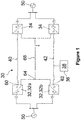
- a bipolar converter scheme according to a first embodiment of the invention is shown in Figure 1 , and is designated generally by the reference numeral 30.
- the bipolar converter scheme is rated for use in high voltage direct current transmission.
- the bipolar converter scheme 30 comprises a plurality of poles, a plurality of first and second converters 32, a plurality of third converters 34, and a controller 36.
- each first converter is also labelled as 32a and each second converter is also labelled as 32b in the figures.
- the controller 36 of the bipolar converter scheme of Figure 1 is exemplarily described with reference to its implementation as a single control unit 38.
- the configuration of the controller 36 may vary depending on specific requirements of the bipolar converter scheme 30.
- the controller 36 may include a global control unit for controlling a plurality of converters 32,34, at least one local control unit for controlling the bipolar converter scheme 30, at least one local control unit for controlling at least one converter 32,34, or a combination thereof.
- the global control unit may be located remotely from each converter 32,34 and may be configured to communicate with each converter 32,34 via telecommunications links.
- the or each local control unit may be located in the vicinity of at least one converter 32,34.
- the global control unit may be configured to communicate with at least one local control unit via telecommunications links. In the case of multiple local control units, each local control unit may be configured to communicate with at least one other local control unit via telecommunications links
- the bipolar converter scheme 30 includes a first DC power transmission line 40 extending between first and second ends, and a second DC power transmission line 42 extending between first and second ends.
- Each converter 32,34 includes a first DC terminal 44 and a second DC terminal 46.
- each converter 32,34 shown in Figure 1 includes a plurality of AC terminals 48, each of which in use is connected to a respective phase of a respective multi-phase AC network 50.
- each converter 32,34 shown in Figure 1 defines an AC/DC voltage source converter 32,34 which includes a plurality of converter limbs 52, each of which is arranged as shown in Figure 2 .
- each voltage source converter 32,34 may be replaced by a line commutated converter.
- Each converter limb 52 extends between the first and second DC terminals 44,46, and includes a first limb portion 54 that extends between the first DC terminal 44 and the AC terminal 48, and a second limb portion 56 which extends between the second DC terminal 46 and the AC terminal 48.
- Each limb portion 54,56 includes a plurality of series-connected switching elements 58, each of which is in the form of a thyristor. It is envisaged that, in other embodiments of the invention, the plurality of series-connected switching elements in each limb portion may be replaced by one or more other types of semiconductor switches, such as insulated gate bipolar transistors (IGBT).
- IGBT insulated gate bipolar transistors
- each converter 32,34 is merely chosen to help illustrate the operation of the invention, and that each converter 32,34 may be replaced by another converter with a different topology.
- each converter 32,34 may be configured as a chain-link converter, such as the Modular Multilevel Converter (MMC) or the Alternate Arm Converter (AAC).
- MMC Modular Multilevel Converter
- AAC Alternate Arm Converter
- the plurality of poles includes a positive DC pole 60, a negative DC pole 62 and a neutral pole 64.
- the first DC terminal 44 of the first converter 32a is connected to the positive DC pole 60
- the first DC terminal 44 of the second converter 32b is connected to the negative DC pole 62
- the second DC terminals 46 of the first and second converters 32a,32b are connected to the neutral pole 64.
- the first end of the first DC power transmission line 40 is operatively connected to the positive DC pole 60, and the second end of the first DC power transmission line 40 is operatively connected to the first DC terminal 44 of one of the plurality of third converters 34.
- the first end of the second DC power transmission line 42 is operatively connected to the negative DC pole 62, and the second end of the second DC power transmission line 42 is operatively connected to the first DC terminal 44 of another of the plurality of third converters 34.
- the neutral pole 64 is operatively connected to a first end of a high impedance current return path 66, while a second end of the current return path 66 is connected to the second DC terminals 46 of the plurality of third converters 34.
- the current return path 66 is shown in Figure 1 as being grounded at its second end, but in other embodiments may be grounded at its first end.
- the current return path 66 may include a single conductor or multiple parallel-connected conductors, where the or each conductor is in the form of an electrode line or a dedicated metallic return. When the current return path 66 includes multiple parallel-connected conductors, the bipolar converter scheme 30 is operable with one or multiple conductors in service.
- the controller 36 is programmed to operate each converter 32,34 to facilitate power transmission between the first and second converters 32a,32b and the third converters 34. More particularly, the controller 36 is programmed to operate each converter 32 to control a respective converter voltage across the corresponding DC terminals 44,46 such that the first converter 32a is able to control a converter voltage across the positive DC and neutral poles 60,64 and that the second converter 32b is able to control a converter voltage across the negative DC and neutral poles 62,64. Also, the controller 36 is programmed to selectively operate each converter 32,34 to change between blocked and deblocked states to control the flow of DC power between the converters 32a,34a and the flow of DC power between the converters 32b,34b.
- each of the first and second converters 32a,32b is operated to control the respective converter voltage across the neutral pole 64 and the corresponding positive or negative DC pole 60,62 in order to facilitate power transmission under balanced operating conditions in which the power and current levels of the positive and negative DC poles 60,62 are balanced and in which the neutral pole 64 is at a zero potential V n .
- the converter voltages are maintained at equal and constant levels throughout the power transmission, and are defined to ensure that the pole-to-ground voltages of the positive and negative DC poles 60,62 do not exceed the voltage ratings of the positive and negative DC poles 60,62 respectively.
- the voltage ratings of the positive and negative DC poles 60,62 are set at 800kV,but it will be understood that each voltage rating of the positive and negative DC poles 60,62 may have a different value other than 800kV.
- Figure 3 illustrates an example of unbalanced operating conditions of the bipolar converter scheme 30.
- the positive DC pole 60 is operating at a maximum power level of 1650MW with an operator-defined converter voltage of 800kV applied across the positive DC and neutral poles 60,64
- the second DC pole 62 is operating at a minimum power level of 150MW with an operator-defined converter voltage of 800kV applied across the negative DC and neutral poles 62,64.
- a current of 2.0625kA flows through the first DC power transmission line 40, while a current of 0.1974kA flows through the second DC power transmission line 42.
- the presence of the non-zero potential V n of -55kV of the neutral pole 64 means that the pole-to-ground voltages of the positive and negative DC poles 60,62 are modified to 745kV and -855kV respectively.
- the increase in the pole-to-ground voltage of the negative DC pole 62 to -855kV means that the voltage rating of the negative DC pole 62 is exceeded.
- the pole-to-ground voltages of the positive and negative DC poles 60,62 are modified to 855kV and -745kV respectively, which results in the voltage rating of the positive DC pole 60 being exceeded.
- the controller 36 operates in a voltage control mode which is described as follows with reference to Figure 4 .
- the current flowing in the current return path 66 can be calculated, predicted or modelled. Based on the configuration of the current return path 66 (i.e. whether one or multiple conductors are in service), the resistance of the current return path 66 can be measured, calculated, predicted or modelled. The non-zero potential V n of the neutral pole 64 can then be calculated from the determined current flowing in the current return path 66 and the determined resistance of the current return path 66.
- the imbalance between the power and current levels of the positive and negative DC poles 60,62 are then evaluated by comparing the power difference ⁇ P between the power levels of the positive and negative DC poles 60,62 or by comparing the current difference ⁇ I between the absolute values of the currents flowing at the positive and negative DC poles 60,62, which are the currents flowing through the first and second DC power transmission lines 40,42 respectively.
- the first converter 32a is operated to control the converter voltage across the positive DC and neutral poles 60,64 to be the operator-defined converter voltage (e.g. 800kV) while the second converter 32b is operated to control the converter voltage across the negative DC and neutral poles 62,64 to be the lower of: (i) the operator-defined converter voltage and (ii) the difference between a pole-to-ground voltage limit Vdc_limit and the non-zero potential V n of the neutral pole 64.
- the pole-to-ground voltage limit Vdc_limit is defined by the voltage rating of the negative DC pole 62.
- the first converter 32a is operated to control the converter voltage across the positive DC and neutral poles 60,64 to be the lower of: (i) the operator-defined converter voltage (e.g. 800kV) and (ii) the difference between a pole-to-ground voltage limit Vdc_limit and the non-zero potential V n of the neutral pole 64 while the second converter 32b is operated to control the converter voltage across the negative DC and neutral poles 62,64 to be the operator-defined converter voltage.
- the pole-to-ground voltage limit Vdc_limit is defined by the voltage rating of the positive DC pole 60.
- the direction of current in the current return path 66 can be used to identify which converter 32a,32b is to be operated to control the corresponding converter voltage to be the lower of: (i) the operator-defined converter voltage and (ii) the difference between a pole-to-ground voltage limit Vdc_limit and the non-zero potential V n of the neutral pole 64. More particularly, the second converter 32b is controlled in this manner if the current is flowing towards the first end of the current return path 66, and the first converter 32a is controlled in this manner if the current is flowing towards the second end of the current return path 66.
- Figure 4 illustrates the performance of the voltage control mode during the above unbalanced operating conditions of the bipolar converter scheme 30.
- the positive DC pole 60 is operating at a maximum power level of 1650MW with the operator-defined converter voltage of 800kV applied across the positive DC and neutral poles 60,64
- the second DC pole 62 is operating at a minimum power level of 150MW with the controller-defined converter voltage of -745kV applied across the negative DC and neutral poles 62,64.
- the controller-defined converter voltage here is the difference between the voltage rating of the negative DC pole 62 of -800kV and the non-zero potential V n of the neutral pole 64 of 55kV.
- a current of 2.0625kA flows through the first DC power transmission line 40, while an increased current of 0.2013kA flows through the second DC power transmission line 42.
- the pole-to-ground voltages of the positive and negative DC poles 60,62 are 745kV and -799.9kV respectively.
- the performance of the voltage control mode during unbalanced operating conditions of the bipolar converter scheme 30 therefore avoids the risk of exceeding the pole-to-ground voltages of the positive and negative DC poles 60,62, and thereby improves the reliability and availability of the bipolar converter scheme 30 by enabling the bipolar converter scheme 30 to facilitate power transmission under the unbalanced operating conditions.
- the performance of the voltage control mode enables the bipolar converter scheme 30 to employ converter voltages which have the effect of optimising operating losses of the bipolar converter scheme 30 arising from the unbalanced operating conditions when compared to the unoptimized scenario in which the bipolar converter scheme 30 under the unbalanced operating conditions continues to employ the converter voltages which were also used during the balanced operating conditions.
- the controller 36 may be programmed to periodically update the resistance of the current return path 66 to take into account changes in operating parameters of the current return path 66, such as the temperature of the current return path 66 and the current flowing through the current return path 66. This may be done by dividing the difference in voltages at both ends of the current return path 66 by the current flowing through the current return path 66. This enables the voltage control mode to be implemented on the basis of a non-zero potential reference value which accurately reflects the actual non-zero potential V n of the neutral pole 64.
- controller 36 may be programmed to use the obtained resistance of the current return path 66 to update a resistance calculation equation or lookup table so that the controller 36 is equipped with an intelligent learning mechanism which ensures a more accurate determination of the non-zero potential V n of the neutral pole 64.
- controller 36 in the voltage control mode may be programmed to use the maximum resistance of the current return path 66 with respect to ambient temperature and for a given conductor configuration of the current return path 66, which can be modelled using software as a precalculated lookup table or equation. This has the benefit of simplifying the determination of the non-zero potential V n of the neutral pole 64 for use as a reference value in the voltage control mode.
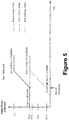
- Figure 5 illustrates another example of unbalanced operating conditions of the bipolar converter scheme 30.
- the positive DC pole 60 is operating at a maximum power level of 1650MW with an operator-defined converter voltage of 800kV applied across the positive DC and neutral poles 60,64, and the second converter 32b and therefore the negative DC pole 62 are initially blocked.
- the power level of the negative DC pole 62 is instantaneously raised to 150MW before being ramped up to 1650MW at a ramp rate of 60MW per minute to achieve the desired bipole power level of 3300MW and restore the bipolar converter scheme 30 to balanced operating conditions.
- the controller 36 operates in a voltage control mode which is described as follows with reference to Figure 7 .
- the current flowing in the current return path 66 can be calculated, predicted or modelled. Based on the configuration of the current return path 66 (i.e. whether one or multiple conductors are in service), the resistance of the current return path 66 can be measured, calculated, predicted or modelled. The non-zero potential V n of the neutral pole 66 can then be calculated from the determined current flowing in the current return path 66 and the determined resistance of the current return path 66.
- the first converter 32a is operated to control the converter voltage across the positive DC and neutral poles 60,64 to be the operator-defined converter voltage (e.g. 800kV).
- the second converter 32b is operated to control the converter voltage across the negative DC and neutral poles 62,64 to be the lower of: (i) the operator-defined converter voltage and (ii) the difference between a pole-to-ground voltage limit Vdc_limit and the non-zero potential V n of the neutral pole 64.
- the pole-to-ground voltage limit Vdc_limit is defined by the voltage rating of the negative DC pole 62.
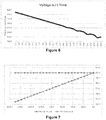
- Figure 7 illustrates the performance of the voltage control mode during the above unbalanced operating conditions of the bipolar converter scheme 30.
- the magnitude of the pole-to-neutral of the negative DC pole 62 (i.e. the converter voltage across the negative and neutral DC poles 62,64) is controlled to vary from 745kV to 800kV during the ramp up of the power level of the negative DC pole 62 from 150MW to 1650MW, while the magnitude of the pole-to-ground voltage of the negative DC pole 62 stays at a constant level of 800kV.
- the controller 36 in the voltage control mode operates the second converter 32b to dynamically vary its converter voltage during the ramp up of the power level of the negative DC pole 62 to maintain the pole-to-ground voltage of the negative DC pole 62 to be equal to or lower than the voltage rating of the negative DC pole 62.
- This not only enables optimisation of the power transmission performance of the bipolar converter scheme 30 during the ramp up of the power level of the negative DC pole 62, but enables gradual restoration of the bipolar converter scheme 30 to the balanced operating conditions.
- the described voltage control mode applies mutatis mutandis to unbalanced operating conditions in which the negative DC pole 62 is operating at a maximum power level of 1650MW with an operator-defined converter voltage of 800kV applied across the negative DC and neutral poles 62,64, and the first converter 32a and therefore the positive DC pole 60 are initially blocked and then deblocked before ramping up the power level of the positive DC pole 150MW to 1650MW.
- the first converter 32a may be replaced by a plurality of parallel-connected first converters while the positive DC pole 60 may be replaced by a plurality of positive DC poles, with each of the first converters being connected to a respective one of the plurality of positive DC poles, and/or the second converter 32b may be replaced by a plurality of parallel-connected second converters while the negative DC pole 62 may be replaced by a plurality of negative DC poles, with each of the second converters being connected to a respective one of the plurality of negative DC poles.
- each third converter 34 may be replaced by a plurality of parallel-connected third converters.
- the controller may be programmed to perform the voltage control mode when there is an imbalance between a sum of power or current levels of the positive poles and a sum of power or current levels of the negative poles.
- a bipolar converter scheme according to a second embodiment of the invention is shown in Figure 8 and is designated generally by the reference numeral 130.
- the bipolar converter scheme 130 of Figure 8 is similar in structure and configuration to the bipolar converter scheme 30 of Figure 1 , and like features share the same reference numerals.
- the bipolar converter scheme 130 of Figure 8 differs from the bipolar converter scheme of Figure 1 in that the bipolar converter scheme 130 of Figure 8 includes a plurality of parallel-connected first converters 32a and a plurality of positive DC poles 60a,60b. Each of the parallel-connected first converters 32a is connected to a respective one of the positive DC poles 60a,60b. Each first converter 32 is connected to a respective multi-phase AC network 50.
- FIG 9 illustrates an example of unbalanced operating conditions of the bipolar converter scheme 130.
- each of the positive DC poles 60a,60b is operating at a power level of 1500MW with an operator-defined converter voltage of 800kV applied across the positive DC and neutral poles 60a,60b,64
- the second DC pole 62 is operating at a power level of 1500MW with an operator-defined converter voltage of 800kV applied across the negative DC and neutral poles 62,64.
- a current of 3.75kA flows through the first DC power transmission line 40, while a current of 1.875kA flows through the second DC power transmission line 42.
- the presence of the non-zero potential V n of -55kV of the neutral pole 64 means that the pole-to-ground voltages of the positive DC poles are modified to 747.5kV while the pole-to-ground voltage of the negative DC pole 62 is modified to -855kV.
- the increase in the pole-to-ground voltage of the negative DC pole 62 to -855kV means that the voltage rating of the negative DC pole 62 is exceeded.
- the controller 36 operates in a voltage control mode which is described as follows with reference to Figure 10 .
- the current flowing in the current return path 66 can be calculated, predicted or modelled. Based on the configuration of the current return path 66 (i.e. whether one or multiple conductors are in service), the resistance of the current return path 66 can be measured, calculated, predicted or modelled. The non-zero potential V n of the neutral pole 64 can then be calculated from the determined current flowing in the current return path 66 and the determined resistance of the current return path 66.
- the imbalance between the power and current levels of the positive and negative DC poles 60a,60b,62 are then evaluated by either comparing the power difference ⁇ P between the sum of the power levels of the positive DC poles 60a,60b and the power level of the negative DC pole 62 or comparing the current difference ⁇ I between the absolute values of the currents flowing at the positive and negative DC poles 60a,60b,62, which are the currents flowing through the first and second DC power transmission lines 40,42 respectively.
- each first converter 32a is operated to control the converter voltage across the corresponding positive DC and neutral poles 60a,60b,64 to be the operator-defined converter voltage (e.g. 800kV) while the second converter 32b is operated to control the converter voltage across the negative DC and neutral poles 62,64 to be the lower of: (i) the operator-defined converter voltage and (ii) the difference between a pole-to-ground voltage limit Vdc_limit and the non-zero potential V n of the neutral pole 64.
- the pole-to-ground voltage limit Vdc_limit is defined by the voltage rating of the negative DC pole 62.
- each first converter 32a is operated to control the converter voltage across the corresponding positive DC and neutral poles 60,60b,64 to be the lower of: (i) the operator-defined converter voltage (e.g. 800kV) and (ii) the difference between a pole-to-ground voltage limit Vdc_limit and the non-zero potential V n of the neutral pole 64 while the second converter 32b is operated to control the converter voltage across the negative DC and neutral poles 62,64 to be the operator-defined converter voltage.
- the pole-to-ground voltage limit Vdc_limit is defined by the voltage rating of the positive DC pole 60a,60b.
- FIG 10 illustrates the performance of the voltage control mode during the above unbalanced operating conditions of the bipolar converter scheme 130.
- each positive DC pole 60a,60b is operating at a power level of 1500MW with the operator-defined converter voltage of 800kV applied across the corresponding positive DC and neutral poles 60a,60b,64
- the second DC pole 62 is operating at a power level of 150MW with the controller-defined converter voltage of -747.5kV applied across the negative DC and neutral poles 62,64.
- the non-zero potential V n of the neutral pole 64 is -52.5kV.
- the controller-defined converter voltage here is the difference between the voltage rating of the negative DC pole 62 of 800kV and the non-zero potential V n of the neutral pole 64 of -52.5kV.
- a current of 3.75kA flows through the first DC power transmission line 40, while an increased current of 1.974kA flows through the second DC power transmission line 42.
- the pole-to-ground voltages of the positive and negative DC poles 60,62 are 747.5kV and -800kV respectively.
- the performance of the voltage control mode during unbalanced operating conditions of the bipolar converter scheme '30 therefore avoids the risk of exceeding the pole-to-ground voltages of the positive and negative DC poles 60a,60b,62.
- the bipolar converter scheme includes a single first converter connected to a single positive DC pole, and includes multiple second converters respectively connected to multiple negative DC poles.
- the bipolar converter scheme includes multiple first converters respectively connected to multiple positive DC poles, and includes multiple second converters respectively connected to multiple negative DC poles, where the number of first converters is unequal to the number of second converters.
Landscapes
- Engineering & Computer Science (AREA)
- Power Engineering (AREA)
- Inverter Devices (AREA)
- Supply And Distribution Of Alternating Current (AREA)
- Direct Current Feeding And Distribution (AREA)
Abstract
Description
- This invention relates to a converter scheme comprising a plurality of converters, in particular a converter scheme having a high impedance conductor between neutral pole and ground, preferably for use in high voltage direct current power transmission and distribution.
- It is known to operate a converter scheme comprising a plurality of converters.
- According to a first aspect of the invention, there is provided a converter scheme comprising a plurality of poles and a plurality of converters, the plurality of poles including at least one positive pole, at least one negative pole and a neutral pole, the plurality of converters including at least one first converter and at least one second converter, the or each first converter connected to the neutral pole and the or the respective positive pole, the or each first converter operable to control a converter voltage across the neutral pole and the corresponding positive pole, the or each second converter connected to the neutral pole and the or the respective negative pole, the or each second converter operable to control a converter voltage across the neutral pole and the corresponding negative pole, wherein the converter scheme includes a controller programmed to perform a voltage control mode when there is an imbalance between power or current levels of the positive and negative poles and when the neutral pole is at a non-zero potential, the controller programmed to perform the voltage control mode to operate each converter to control the corresponding converter voltage so that a pole-to-ground voltage of the corresponding positive or negative pole is equal to or lower than a voltage rating of the corresponding positive or negative pole.
- The converter scheme of the invention may include, but is not limited to, a bipolar converter arrangement for use in a bipolar power transmission scheme. Alternatively or additionally the converter scheme of the invention may include, but is not limited to, a multi-terminal converter arrangement which comprises multiple first converters connected in parallel and/or multiple second converters connected in parallel.
- The voltage rating of each of the positive and negative poles may be defined by the voltage rating of power transmission equipment connected thereto or associated therewith.
- In use, each of the first and second converters is operated to control the respective converter voltage across the neutral pole and the corresponding positive or negative pole in order to facilitate power transmission under balanced operating conditions in which the power or current levels of the positive and negative poles are balanced and in which the neutral pole is at a zero potential. The converter voltages provided by the first and second converters are typically defined by user requirements which include maintenance of constant levels of the converter voltages throughout the power transmission.
- The inclusion of the controller in the converter scheme of the invention improves the reliability and availability of the converter scheme by enabling the converter scheme to facilitate power transmission under unbalanced operating conditions in which the power or current levels of the positive and negative poles are unbalanced and in which the neutral pole is at a non-zero potential. This is because, although the unbalanced operating conditions create the risk of exceeding the voltage rating of at least one positive or negative pole, the controller is able to automatically perform the voltage control mode during the unbalanced operating conditions to ensure that the voltage ratings of the positive and negative poles are not exceeded. Otherwise omission of the controller from the converter scheme would require a shutdown of the converter scheme until the balanced operating conditions are restored, since operation of the converter scheme under unbalanced operating conditions cannot be permitted due to the risk of exceeding the voltage rating of at least one positive or negative pole, or would require a reduction in power of the pole operating at the higher power level to be the same as the power of the pole operating at the lower power level, thus adversely affecting the overall power capability of the converter scheme.
- In addition the performance of the voltage control mode enables the converter scheme to employ converter voltages which have the effect of optimising operating losses of the converter scheme arising from the unbalanced operating conditions when compared to the unoptimized scenario in which the converter scheme under the unbalanced operating conditions continues to employ the converter voltages which were also used during the balanced operating conditions.
- A change in the imbalance between the power or current levels of the positive and negative poles may arise as a result of, for example, a change in one or more operating parameters or a change in configuration of the converter scheme. It may be that the converter voltages used in the voltage control mode under the previous unbalanced operating conditions may result in a suboptimal performance of the converter scheme (such as higher losses, higher voltage stress and reduced lifetime) under the new unbalanced operating conditions. The change in configuration of the converter scheme may arise as a result of a change in the number of in-service conductors associated with the neutral pole (which changes the impedance of the neutral pole) and/or a change in the number of parallel-connected converters.
- In embodiments of the invention, the controller may be programmed to perform the voltage control mode to operate each converter to update the corresponding converter voltage in real-time in response to a change in the imbalance between the power or current levels of the positive and negative poles so that the pole-to-ground voltage of the corresponding positive or negative pole is equal to or lower than the voltage rating of the corresponding positive or negative pole.
- Programming the controller in the above manner enables the controller to operate each converter to dynamically control the corresponding converter voltage to maintain the pole-to-ground voltage of the corresponding positive or negative pole at a level that is equal to or lower than the voltage rating of the corresponding positive or negative pole even during a change in the unbalanced operating conditions of the converter scheme.
- In further embodiments of the invention, the controller may be programmed to perform the voltage control mode to operate at least one of the converters to reduce the corresponding converter voltage and increase a current of the corresponding positive or negative pole so that the pole-to-ground voltage of the corresponding positive or negative pole is equal to or lower than the voltage rating of the corresponding positive or negative pole. This ensures that the ability of the converter scheme to deliver the required power via the corresponding positive or negative pole is not affected by the reduction in the corresponding converter voltage.
- The voltage control mode may vary depending on the number of first converters and the number of second converters. It will be appreciated that the number of first converters ranges from one to many and that the number of second converters ranges from one to many.
- In embodiments of the invention, the number of first converters may be equal to the number of second converters. In such embodiments, the controller may be programmed to perform the voltage control mode when there is an imbalance between:
- a power or current level of the positive pole and a power or current level of the negative pole when there are a single positive pole and a single negative pole; or
- a sum of power or current levels of the positive poles and a sum of power or current levels of the negative poles when there are multiple positive poles and multiple negative poles.
- The above unbalanced operating conditions may arise when it is necessary to operate the positive and negative poles at different power levels for a period of time during, for example, testing/commissioning and/or maintenance of the converter scheme. The above unbalanced operating conditions may also arise when the power capability of at least one of the first and second converters is reduced due to, for example, an outage in the associated cooling system or derating of the associated equipment because of partial outage etc.
- In other embodiments of the invention, the number of first converters may be unequal to the number of second converters. In such embodiments, the controller may be programmed to perform the voltage control mode when there is an imbalance between:
- a sum of power or current levels of the positive poles and a power or current level of the negative pole when there are multiple positive poles and a single negative pole;
- a power or current level of the positive pole and a sum of power or current levels of the negative poles when there are a single positive pole and multiple negative poles; or
- a sum of power or current levels of the positive poles and a sum of power or current levels of the negative poles when there are multiple positive poles and multiple negative poles.
- The above unbalanced operating conditions may arise when one or more poles are out of service due to a breakdown or due to maintenance. The above unbalanced operating conditions may also arise when the requirements of the converter scheme include different power demands between the first converter(s) and the second converter(s).
- The controller may be programmed to perform the voltage control mode to operate at least one of the converters to vary the corresponding converter voltage during a change in power or current level of at least one of the positive and negative poles and when there is an imbalance between the power or current levels of the positive and negative poles during the change in power or current level of the at least one of the positive and negative poles.
- The above unbalanced operating conditions may arise when the at least one of the positive and negative poles is undergoing a change in power or current level which creates a temporary imbalance between the power or current levels of the positive and negative poles. The change in power or current level of the at least one of the positive and negative poles may take the form of an increase in power or current level of the at least one of the positive and negative poles after the corresponding converter is deblocked, or a decrease in power or current level of the at least one of the positive and negative poles before the corresponding converter is to be blocked.
- The converter scheme of the invention is therefore able to perform the voltage control mode to facilitate power transmission across a wide range of unbalanced operating conditions.
- In a preferred embodiment of the invention, the controller may be programmed to use the non-zero potential of the neutral pole as a reference value in the voltage control mode to operate at least one of the converters to control the corresponding converter voltage so that the pole-to-ground voltage of the corresponding positive or negative pole is equal to or lower than the voltage rating of the corresponding positive or negative pole.
- Programming the controller in this manner provides a reliable means of controlling the converter voltages in the voltage control mode to avoid the risk of exceeding the voltage rating of the corresponding positive or negative pole.
- The controller may be programmed to obtain or determine one or more operating parameters of the neutral pole and to use the or each obtained or determined operating parameter of the neutral pole to determine the non-zero potential of the neutral pole. For example, a given operating parameter may be received from a measuring device that is configured to directly measure the given operating parameter of the neutral pole, or a given operating parameter of the neutral pole may be calculated, predicted or modelled by the controller based on the operating parameters of the converter scheme. The determination of the non-zero potential of the neutral pole may be carried out by way of calculation, prediction or modelling. The operating parameter of the neutral pole may relate to the impedance of the conductor(s) associated with the neutral pole, which is dependent on the number of parallel-connected conductors in service, conductor temperature, and current flowing through the conductor(s). The impedance of the conductor(s) associated with the neutral pole may be chosen from a periodically updated lookup table or may be calculated in real time.
- A change in the non-zero potential of the neutral pole may arise as a result of, for example, a change in one or more operating parameters of the neutral pole. The controller may be programmed to update the determined non-zero potential of the neutral pole in real-time in response to at least one change in operating parameter of the neutral pole. This ensures that the reference value accurately reflects the actual non-zero potential of the neutral pole in order to reliably achieve the desired control of the converter voltages in the voltage control mode, thus enabling the controller to operate the converters to dynamically control the converter voltages in the voltage control mode in response to the at least one change in operating parameter of the neutral pole.
- The controller may be programmed to obtain or determine a current of the neutral pole and to use the obtained or determined current of the neutral pole to determine the non-zero potential of the neutral pole.
- The converter scheme may further include a conductor connected to the neutral pole, where the conductor may be connected to ground potential. More specifically, the converter scheme may include at least one conductor connected to the neutral pole, where the or each conductor is in the form of, for example, a dedicated metallic return or an electrode line. Furthermore the converter scheme may include multiple conductors connected to the neutral pole and connected in parallel, with the converter scheme being operable with one or multiple conductors in service.
- When the converter scheme includes a conductor connected to the neutral pole, the controller may be programmed to obtain or determine a resistance or impedance of the conductor and to use the obtained or determined resistance or impedance of the conductor to determine the non-zero potential of the neutral pole.
- A change in the resistance or impedance of the conductor may arise as a result of, for example, a change in one or more operating parameters of the conductor. The controller may be programmed to update the obtained or determined resistance or impedance of the conductor in real-time in response to at least one change in operating parameter of the conductor. This ensures that the reference value accurately reflects the actual non-zero potential of the neutral pole in order to reliably achieve the desired control of the converter voltages in the voltage control mode, thus enabling the controller to dynamically control the converter voltages in the voltage control mode in response to the at least one change in operating parameter of the conductor.
- The converter scheme may further include a measurement device configured to measure an electrical characteristic (e.g. voltage or current) of the conductor to obtain the resistance or impedance of the conductor. The controller may be programmed to use the obtained resistance or impedance of the conductor to update a procedure of determining the resistance or impedance of the conductor. This provides the controller with an intelligent learning mechanism which ensures accurate determination of the non-zero potential of the neutral pole based on the obtained or determined resistance or impedance of the conductor.
- The controller may be programmed to obtain or determine a maximum resistance or impedance of the conductor and to use the obtained or determined maximum resistance or impedance of the conductor to determine the non-zero potential of the neutral pole.
- Using the maximum resistance or impedance of the conductor simplifies the determination of the non-zero potential of the neutral pole for use in the voltage control mode, while using the actual resistance or impedance of the conductor allows for a more optimal power transmission performance of the converter scheme but requires a more complex determination of the non-zero potential of the neutral pole for use in the voltage control mode.
- According to a second aspect of the invention, there is provided a method of operating a converter scheme, the converter scheme comprising a plurality of poles and a plurality of converters, the plurality of poles including at least one positive pole, at least one negative pole and a neutral pole, the plurality of converters including at least one first converter and at least one second converter, the or each first converter connected to the neutral pole and the or the respective positive pole, the or each second converter connected to the neutral pole and the or the respective negative pole, wherein the method includes the steps of:
- operating the or each first converter to control a converter voltage across the neutral pole and the corresponding positive pole;
- operating the or each second converter to control a converter voltage across the neutral pole and the corresponding negative pole; and
- when there is an imbalance between power or current levels of the positive and negative poles and when the neutral pole is at a non-zero potential, performing a voltage control mode to operate each converter to control the corresponding converter voltage so that a pole-to-ground voltage of the corresponding positive or negative pole is equal to or lower than a voltage rating of the corresponding positive or negative pole.
- The advantages of the converter scheme of the first aspect of the invention and its embodiments apply mutatis mutandis to the method of the second aspect of the invention and its embodiments.
- The method of the invention may include the step of performing the voltage control mode to operate each converter to update the corresponding converter voltage in real-time in response to a change in the imbalance between the power or current levels of the positive and negative poles so that the pole-to-ground voltage of the corresponding positive or negative pole is equal to or lower than the voltage rating of the corresponding positive or negative pole.
- The method of the invention may include the step of performing the voltage control mode to operate at least one of the converters to reduce the corresponding converter voltage, and optionally increase a current of the corresponding positive or negative pole, so that:
- the pole-to-ground voltage of the corresponding positive or negative pole is equal to or lower than the voltage rating of the corresponding positive or negative pole; and/or
- a current in the neutral pole is equal to or lower than the current rating of a conductor of the neutral pole.
- The increase in current of the corresponding positive or negative pole is to maintain a desired level of power from the or each corresponding converter.
- In embodiments of the method of the invention, the number of first converters may be equal to the number of second converters. In such embodiments, the method of the invention may include the step of performing the voltage control mode when there is an imbalance between:
- a power or current level of the positive pole and a power or current level of the negative pole when there are a single positive pole and a single negative pole; or
- a sum of power or current levels of the positive poles and a sum of power or current levels of the negative poles when there are multiple positive poles and multiple negative poles.
- In other embodiments of the method of the invention, the number of first converters may be unequal to the number of second converters. In such embodiments, the method of the invention may include the step of performing the voltage control mode when there is an imbalance between:
- a sum of power or current levels of the positive poles and a power or current level of the negative pole when there are multiple positive poles and a single negative pole;
- a power or current level of the positive pole and a sum of power or current levels of the negative poles when there are a single positive pole and multiple negative poles; or
- a sum of power or current levels of the positive poles and a sum of power or current levels of the negative poles when there are multiple positive poles and multiple negative poles.
- The method of the invention may include the step of performing the voltage control mode to operate at least one of the converters to vary the corresponding converter voltage during a change in power or current level of at least one of the positive and negative poles and when there is an imbalance between the power or current levels of the positive and negative poles during the change in power or current level of the at least one of the positive and negative poles.
- The method of the invention may include the step of using the non-zero potential of the neutral pole as a reference value in the voltage control mode to operate at least one of the converters to control the corresponding converter voltage so that the pole-to-ground voltage of the corresponding positive or negative pole is equal to or lower than the voltage rating of the corresponding positive or negative pole.
- The method of the invention may include the steps of: obtaining or determining one or more operating parameters of the neutral pole; and using the or each obtained or determined operating parameter of the neutral pole to determine the non-zero potential of the neutral pole.
- The method of the invention may include the step of updating the determined non-zero potential of the neutral pole in real-time in response to at least one change in operating parameter of the neutral pole.
- The method of the invention may include the steps of: obtaining or determining a current of the neutral pole; and using the obtained or determined current of the neutral pole to determine the non-zero potential of the neutral pole.
- When the converter scheme further includes a conductor connected to the neutral pole, the method of the invention may include the steps of: obtaining or determining a resistance or impedance of the conductor; and using the obtained or determined resistance or impedance of the conductor to determine the non-zero potential of the neutral pole.
- The method of the invention may include the step of updating the obtained or determined resistance or impedance of the conductor in real-time in response to at least one change in operating parameter of the conductor.
- When the converter scheme further includes a measurement device configured to measure an electrical characteristic of the conductor to obtain the resistance or impedance of the conductor, the method of the invention may include the step of using the obtained resistance or impedance of the conductor to update a procedure of determining the resistance or impedance of the conductor.
- The method of the invention may include the steps of: obtaining or determining a maximum resistance or impedance of the conductor; and using the obtained or determined maximum resistance or impedance of the conductor to determine the non-zero potential of the neutral pole.
- It will be appreciated that the use of the terms "first" and "second", and the like, in this patent specification is merely intended to distinguish between similar features (e.g. the first and second converters), and is not intended to indicate the relative importance of one feature over another feature, unless otherwise specified.
- Preferred embodiments of the invention will now be described, by way of nonlimiting examples, with reference to the accompanying drawings in which:
-
Figure 1 shows schematically a converter scheme according to a first embodiment of the invention; -
Figure 2 shows schematically an exemplary converter of the converter scheme ofFigure 1 ; -
Figure 3 illustrates an exemplary operation of the converter scheme ofFigure 1 under unbalanced operating conditions when a voltage control mode of the invention is not carried out; -
Figure 4 illustrates an exemplary operation of the converter scheme ofFigure 1 under unbalanced operating conditions when a voltage control mode of the invention is carried out; -
Figure 5 illustrates an example of unbalanced operating conditions of the converter scheme ofFigure 1 ; -
Figure 6 illustrates an exemplary operation of the converter scheme ofFigure 1 under the unbalanced operating conditions ofFigure 5 when a voltage control mode of the invention is not carried out; -
Figure 7 illustrates an exemplary operation of the converter scheme ofFigure 1 under the unbalanced operating conditions ofFigure 5 when a voltage control mode of the invention is carried out; -
Figure 8 shows schematically a converter scheme according to a second embodiment of the invention; -
Figure 9 illustrates an exemplary operation of the converter scheme ofFigure 8 under unbalanced operating conditions when a voltage control mode of the invention is not carried out; and -
Figure 10 illustrates an exemplary operation of the converter scheme ofFigure 8 under unbalanced operating conditions when a voltage control mode of the invention is carried out. - A bipolar converter scheme according to a first embodiment of the invention is shown in
Figure 1 , and is designated generally by thereference numeral 30. Preferably the bipolar converter scheme is rated for use in high voltage direct current transmission. - The
bipolar converter scheme 30 comprises a plurality of poles, a plurality of first and second converters 32, a plurality ofthird converters 34, and acontroller 36. For clarity, each first converter is also labelled as 32a and each second converter is also labelled as 32b in the figures. - For the purposes of simplicity, the
controller 36 of the bipolar converter scheme ofFigure 1 is exemplarily described with reference to its implementation as asingle control unit 38. The configuration of thecontroller 36 may vary depending on specific requirements of thebipolar converter scheme 30. For example, thecontroller 36 may include a global control unit for controlling a plurality ofconverters 32,34, at least one local control unit for controlling thebipolar converter scheme 30, at least one local control unit for controlling at least oneconverter 32,34, or a combination thereof. The global control unit may be located remotely from eachconverter 32,34 and may be configured to communicate with eachconverter 32,34 via telecommunications links. The or each local control unit may be located in the vicinity of at least oneconverter 32,34. The global control unit may be configured to communicate with at least one local control unit via telecommunications links. In the case of multiple local control units, each local control unit may be configured to communicate with at least one other local control unit via telecommunications links - The
bipolar converter scheme 30 includes a first DCpower transmission line 40 extending between first and second ends, and a second DCpower transmission line 42 extending between first and second ends. - Each
converter 32,34 includes afirst DC terminal 44 and asecond DC terminal 46. In addition eachconverter 32,34 shown inFigure 1 includes a plurality ofAC terminals 48, each of which in use is connected to a respective phase of a respectivemulti-phase AC network 50. More particularly, eachconverter 32,34 shown inFigure 1 defines an AC/DCvoltage source converter 32,34 which includes a plurality of converter limbs 52, each of which is arranged as shown inFigure 2 . In other embodiments, it is envisaged that eachvoltage source converter 32,34 may be replaced by a line commutated converter. - Each converter limb 52 extends between the first and
second DC terminals first limb portion 54 that extends between thefirst DC terminal 44 and theAC terminal 48, and asecond limb portion 56 which extends between thesecond DC terminal 46 and theAC terminal 48. - Each
limb portion switching elements 58, each of which is in the form of a thyristor. It is envisaged that, in other embodiments of the invention, the plurality of series-connected switching elements in each limb portion may be replaced by one or more other types of semiconductor switches, such as insulated gate bipolar transistors (IGBT). - It will be appreciated that the topology of each
converter 32,34 is merely chosen to help illustrate the operation of the invention, and that eachconverter 32,34 may be replaced by another converter with a different topology. For example, eachconverter 32,34 may be configured as a chain-link converter, such as the Modular Multilevel Converter (MMC) or the Alternate Arm Converter (AAC). - The plurality of poles includes a
positive DC pole 60, anegative DC pole 62 and aneutral pole 64. - The
first DC terminal 44 of the first converter 32a is connected to thepositive DC pole 60, thefirst DC terminal 44 of the second converter 32b is connected to thenegative DC pole 62, and thesecond DC terminals 46 of the first and second converters 32a,32b are connected to theneutral pole 64. - The first end of the first DC
power transmission line 40 is operatively connected to thepositive DC pole 60, and the second end of the first DCpower transmission line 40 is operatively connected to thefirst DC terminal 44 of one of the plurality ofthird converters 34. The first end of the second DCpower transmission line 42 is operatively connected to thenegative DC pole 62, and the second end of the second DCpower transmission line 42 is operatively connected to thefirst DC terminal 44 of another of the plurality ofthird converters 34. - The
neutral pole 64 is operatively connected to a first end of a high impedancecurrent return path 66, while a second end of thecurrent return path 66 is connected to thesecond DC terminals 46 of the plurality ofthird converters 34. Thecurrent return path 66 is shown inFigure 1 as being grounded at its second end, but in other embodiments may be grounded at its first end. Thecurrent return path 66 may include a single conductor or multiple parallel-connected conductors, where the or each conductor is in the form of an electrode line or a dedicated metallic return. When thecurrent return path 66 includes multiple parallel-connected conductors, thebipolar converter scheme 30 is operable with one or multiple conductors in service. - The
controller 36 is programmed to operate eachconverter 32,34 to facilitate power transmission between the first and second converters 32a,32b and thethird converters 34. More particularly, thecontroller 36 is programmed to operate each converter 32 to control a respective converter voltage across the correspondingDC terminals neutral poles neutral poles controller 36 is programmed to selectively operate eachconverter 32,34 to change between blocked and deblocked states to control the flow of DC power between the converters 32a,34a and the flow of DC power between the converters 32b,34b. - In use, each of the first and second converters 32a,32b is operated to control the respective converter voltage across the
neutral pole 64 and the corresponding positive ornegative DC pole negative DC poles neutral pole 64 is at a zero potential Vn. Meanwhile the converter voltages are maintained at equal and constant levels throughout the power transmission, and are defined to ensure that the pole-to-ground voltages of the positive andnegative DC poles negative DC poles negative DC poles negative DC poles -
Figure 3 illustrates an example of unbalanced operating conditions of thebipolar converter scheme 30. InFigure 3 , thepositive DC pole 60 is operating at a maximum power level of 1650MW with an operator-defined converter voltage of 800kV applied across the positive DC andneutral poles second DC pole 62 is operating at a minimum power level of 150MW with an operator-defined converter voltage of 800kV applied across the negative DC andneutral poles power transmission line 40, while a current of 0.1974kA flows through the second DCpower transmission line 42. As a result of the imbalance of the power and current levels between the positive andnegative DC poles current return path 66, which has a maximum resistance of 29.5Ω, such that the neutral pole operates at a non-zero potential Vn of -55kV. - The presence of the non-zero potential Vn of -55kV of the
neutral pole 64 means that the pole-to-ground voltages of the positive andnegative DC poles negative DC pole 62 to -855kV means that the voltage rating of thenegative DC pole 62 is exceeded. - Similarly, if the
positive DC pole 60 is operating at a minimum power level of 150MW with a converter voltage of 800kV applied across the positive DC andneutral poles second DC pole 62 is operating at a maximum power level of 1650MW with a converter voltage of 800kV applied across the negative DC andneutral poles negative DC poles positive DC pole 60 being exceeded. - To avoid exceeding the voltage ratings of the positive and
negative DC poles controller 36 operates in a voltage control mode which is described as follows with reference toFigure 4 . - Based on the imbalance of power and current levels between the positive and
negative DC poles current return path 66 can be calculated, predicted or modelled. Based on the configuration of the current return path 66 (i.e. whether one or multiple conductors are in service), the resistance of thecurrent return path 66 can be measured, calculated, predicted or modelled. The non-zero potential Vn of theneutral pole 64 can then be calculated from the determined current flowing in thecurrent return path 66 and the determined resistance of thecurrent return path 66. - The imbalance between the power and current levels of the positive and
negative DC poles negative DC poles negative DC poles power transmission lines - If the power difference ΔP or the current difference ΔI is equal to or higher than a predefined threshold, then the first converter 32a is operated to control the converter voltage across the positive DC and
neutral poles neutral poles neutral pole 64. In this case the pole-to-ground voltage limit Vdc_limit is defined by the voltage rating of thenegative DC pole 62. - If the power difference ΔP or the current difference ΔI is lower than a predefined threshold, then the first converter 32a is operated to control the converter voltage across the positive DC and
neutral poles neutral pole 64 while the second converter 32b is operated to control the converter voltage across the negative DC andneutral poles positive DC pole 60. - It will be understood that the direction of current in the
current return path 66 can be used to identify which converter 32a,32b is to be operated to control the corresponding converter voltage to be the lower of: (i) the operator-defined converter voltage and (ii) the difference between a pole-to-ground voltage limit Vdc_limit and the non-zero potential Vn of theneutral pole 64. More particularly, the second converter 32b is controlled in this manner if the current is flowing towards the first end of thecurrent return path 66, and the first converter 32a is controlled in this manner if the current is flowing towards the second end of thecurrent return path 66. -
Figure 4 illustrates the performance of the voltage control mode during the above unbalanced operating conditions of thebipolar converter scheme 30. InFigure 4 , thepositive DC pole 60 is operating at a maximum power level of 1650MW with the operator-defined converter voltage of 800kV applied across the positive DC andneutral poles second DC pole 62 is operating at a minimum power level of 150MW with the controller-defined converter voltage of -745kV applied across the negative DC andneutral poles negative DC pole 62 of -800kV and the non-zero potential Vn of theneutral pole 64 of 55kV. A current of 2.0625kA flows through the first DCpower transmission line 40, while an increased current of 0.2013kA flows through the second DCpower transmission line 42. The pole-to-ground voltages of the positive andnegative DC poles - The performance of the voltage control mode during unbalanced operating conditions of the
bipolar converter scheme 30 therefore avoids the risk of exceeding the pole-to-ground voltages of the positive andnegative DC poles bipolar converter scheme 30 by enabling thebipolar converter scheme 30 to facilitate power transmission under the unbalanced operating conditions. - In addition the performance of the voltage control mode enables the
bipolar converter scheme 30 to employ converter voltages which have the effect of optimising operating losses of thebipolar converter scheme 30 arising from the unbalanced operating conditions when compared to the unoptimized scenario in which thebipolar converter scheme 30 under the unbalanced operating conditions continues to employ the converter voltages which were also used during the balanced operating conditions. - Optionally the
controller 36 may be programmed to periodically update the resistance of thecurrent return path 66 to take into account changes in operating parameters of thecurrent return path 66, such as the temperature of thecurrent return path 66 and the current flowing through thecurrent return path 66. This may be done by dividing the difference in voltages at both ends of thecurrent return path 66 by the current flowing through thecurrent return path 66. This enables the voltage control mode to be implemented on the basis of a non-zero potential reference value which accurately reflects the actual non-zero potential Vn of theneutral pole 64. - Further optionally the
controller 36 may be programmed to use the obtained resistance of thecurrent return path 66 to update a resistance calculation equation or lookup table so that thecontroller 36 is equipped with an intelligent learning mechanism which ensures a more accurate determination of the non-zero potential Vn of theneutral pole 64. - Even more further optionally the
controller 36 in the voltage control mode may be programmed to use the maximum resistance of thecurrent return path 66 with respect to ambient temperature and for a given conductor configuration of thecurrent return path 66, which can be modelled using software as a precalculated lookup table or equation. This has the benefit of simplifying the determination of the non-zero potential Vn of theneutral pole 64 for use as a reference value in the voltage control mode. -
Figure 5 illustrates another example of unbalanced operating conditions of thebipolar converter scheme 30. InFigure 5 , thepositive DC pole 60 is operating at a maximum power level of 1650MW with an operator-defined converter voltage of 800kV applied across the positive DC andneutral poles negative DC pole 62 are initially blocked. After the second converter 32b and therefore thenegative DC pole 62 are deblocked, the power level of thenegative DC pole 62 is instantaneously raised to 150MW before being ramped up to 1650MW at a ramp rate of 60MW per minute to achieve the desired bipole power level of 3300MW and restore thebipolar converter scheme 30 to balanced operating conditions. However, before thebipolar converter scheme 30 is restored to balanced operating conditions, the imbalance between the power levels of the positive andnegative DC poles negative DC pole 62 from 150MW to 1650MW results in the pole-to-ground voltage of thenegative DC pole 62 exceeding the voltage rating of thenegative DC pole 62 of 800kV, as shown inFigure 6 . - To avoid exceeding the voltage ratings of the positive and
negative DC poles controller 36 operates in a voltage control mode which is described as follows with reference toFigure 7 . - Again, based on the imbalance of power and current levels between the positive and
negative DC poles current return path 66 can be calculated, predicted or modelled. Based on the configuration of the current return path 66 (i.e. whether one or multiple conductors are in service), the resistance of thecurrent return path 66 can be measured, calculated, predicted or modelled. The non-zero potential Vn of theneutral pole 66 can then be calculated from the determined current flowing in thecurrent return path 66 and the determined resistance of thecurrent return path 66. - The first converter 32a is operated to control the converter voltage across the positive DC and
neutral poles neutral poles neutral pole 64. In this case the pole-to-ground voltage limit Vdc_limit is defined by the voltage rating of thenegative DC pole 62. -
Figure 7 illustrates the performance of the voltage control mode during the above unbalanced operating conditions of thebipolar converter scheme 30. InFigure 7 , the magnitude of the pole-to-neutral of thenegative DC pole 62, (i.e. the converter voltage across the negative andneutral DC poles 62,64) is controlled to vary from 745kV to 800kV during the ramp up of the power level of thenegative DC pole 62 from 150MW to 1650MW, while the magnitude of the pole-to-ground voltage of thenegative DC pole 62 stays at a constant level of 800kV. In other words, thecontroller 36 in the voltage control mode operates the second converter 32b to dynamically vary its converter voltage during the ramp up of the power level of thenegative DC pole 62 to maintain the pole-to-ground voltage of thenegative DC pole 62 to be equal to or lower than the voltage rating of thenegative DC pole 62. This not only enables optimisation of the power transmission performance of thebipolar converter scheme 30 during the ramp up of the power level of thenegative DC pole 62, but enables gradual restoration of thebipolar converter scheme 30 to the balanced operating conditions. - The described voltage control mode applies mutatis mutandis to unbalanced operating conditions in which the
negative DC pole 62 is operating at a maximum power level of 1650MW with an operator-defined converter voltage of 800kV applied across the negative DC andneutral poles positive DC pole 60 are initially blocked and then deblocked before ramping up the power level of the positive DC pole 150MW to 1650MW. - It is envisaged that, in other embodiments of the invention, the first converter 32a may be replaced by a plurality of parallel-connected first converters while the
positive DC pole 60 may be replaced by a plurality of positive DC poles, with each of the first converters being connected to a respective one of the plurality of positive DC poles, and/or the second converter 32b may be replaced by a plurality of parallel-connected second converters while thenegative DC pole 62 may be replaced by a plurality of negative DC poles, with each of the second converters being connected to a respective one of the plurality of negative DC poles. Optionally eachthird converter 34 may be replaced by a plurality of parallel-connected third converters. In such embodiments, the controller may be programmed to perform the voltage control mode when there is an imbalance between a sum of power or current levels of the positive poles and a sum of power or current levels of the negative poles. - A bipolar converter scheme according to a second embodiment of the invention is shown in
Figure 8 and is designated generally by thereference numeral 130. Thebipolar converter scheme 130 ofFigure 8 is similar in structure and configuration to thebipolar converter scheme 30 ofFigure 1 , and like features share the same reference numerals. - The
bipolar converter scheme 130 ofFigure 8 differs from the bipolar converter scheme ofFigure 1 in that thebipolar converter scheme 130 ofFigure 8 includes a plurality of parallel-connected first converters 32a and a plurality ofpositive DC poles positive DC poles multi-phase AC network 50. -
Figure 9 illustrates an example of unbalanced operating conditions of thebipolar converter scheme 130. InFigure 9 , each of thepositive DC poles neutral poles second DC pole 62 is operating at a power level of 1500MW with an operator-defined converter voltage of 800kV applied across the negative DC andneutral poles power transmission line 40, while a current of 1.875kA flows through the second DCpower transmission line 42. As a result of the imbalance of the power and current levels between the positive andnegative DC poles current return path 66, which has a maximum resistance of 29.5Ω, such that the neutral pole operates at a non-zero potential Vn of -55kV. - The presence of the non-zero potential Vn of -55kV of the
neutral pole 64 means that the pole-to-ground voltages of the positive DC poles are modified to 747.5kV while the pole-to-ground voltage of thenegative DC pole 62 is modified to -855kV. The increase in the pole-to-ground voltage of thenegative DC pole 62 to -855kV means that the voltage rating of thenegative DC pole 62 is exceeded. - To avoid exceeding the voltage rating of the positive and
negative DC poles controller 36 operates in a voltage control mode which is described as follows with reference toFigure 10 . - Based on the imbalance of power and current levels between the positive and
negative DC poles current return path 66 can be calculated, predicted or modelled. Based on the configuration of the current return path 66 (i.e. whether one or multiple conductors are in service), the resistance of thecurrent return path 66 can be measured, calculated, predicted or modelled. The non-zero potential Vn of theneutral pole 64 can then be calculated from the determined current flowing in thecurrent return path 66 and the determined resistance of thecurrent return path 66. - The imbalance between the power and current levels of the positive and
negative DC poles positive DC poles negative DC pole 62 or comparing the current difference ΔI between the absolute values of the currents flowing at the positive andnegative DC poles power transmission lines - If the power difference ΔP or the current difference ΔI is equal to or higher than a predefined threshold, then each first converter 32a is operated to control the converter voltage across the corresponding positive DC and
neutral poles neutral poles neutral pole 64. In this case the pole-to-ground voltage limit Vdc_limit is defined by the voltage rating of thenegative DC pole 62. - If the power difference ΔP or the current difference ΔI is lower than a predefined threshold, then each first converter 32a is operated to control the converter voltage across the corresponding positive DC and
neutral poles neutral pole 64 while the second converter 32b is operated to control the converter voltage across the negative DC andneutral poles positive DC pole -
Figure 10 illustrates the performance of the voltage control mode during the above unbalanced operating conditions of thebipolar converter scheme 130. InFigure 10 , eachpositive DC pole neutral poles second DC pole 62 is operating at a power level of 150MW with the controller-defined converter voltage of -747.5kV applied across the negative DC andneutral poles neutral pole 64 is -52.5kV. The controller-defined converter voltage here is the difference between the voltage rating of thenegative DC pole 62 of 800kV and the non-zero potential Vn of theneutral pole 64 of -52.5kV. A current of 3.75kA flows through the first DCpower transmission line 40, while an increased current of 1.974kA flows through the second DCpower transmission line 42. The pole-to-ground voltages of the positive andnegative DC poles - The performance of the voltage control mode during unbalanced operating conditions of the bipolar converter scheme '30 therefore avoids the risk of exceeding the pole-to-ground voltages of the positive and
negative DC poles - The described voltage control mode applies mutatis mutandis to other variations of the
bipolar converter scheme 130. In one such variation, the bipolar converter scheme includes a single first converter connected to a single positive DC pole, and includes multiple second converters respectively connected to multiple negative DC poles. In another such variation, the bipolar converter scheme includes multiple first converters respectively connected to multiple positive DC poles, and includes multiple second converters respectively connected to multiple negative DC poles, where the number of first converters is unequal to the number of second converters. - It will be appreciated that each of the numerical values used to describe the above embodiments are merely chosen to help illustrate the working of the invention, and may be replaced by another suitable numerical value. It will be further appreciated that the topologies of the converter schemes are merely chosen to help illustrate the working of the invention, and may be replaced by other suitable topologies.
Claims (15)
- A converter scheme (30,130) comprises a plurality of poles and a plurality of converters (32), the plurality of poles including at least one positive pole (60,60a,60b), at least one negative pole (62) and a neutral pole (64), the plurality of converters (32) including at least one first converter (32a) and at least one second converter (32b), the or each first converter (32a) connected to the neutral pole (64) and the or the respective positive pole (60,60a,60b), the or each first converter (32a) operable to control a converter voltage across the neutral pole (64) and the corresponding positive pole (60,60a,60b), the or each second converter (32b) connected to the neutral pole (64) and the or the respective negative pole (62), the or each second converter (32b) operable to control a converter voltage across the neutral pole (64) and the corresponding negative pole (62), wherein the converter scheme (30,130) includes a controller (36) programmed to perform a voltage control mode when there is an imbalance between power or current levels of the positive and negative poles (60,60a,60b,62) and when the neutral pole (64) is at a non-zero potential (Vn), the controller (36) programmed to perform the voltage control mode to operate each converter (32a,32b) to control the corresponding converter voltage so that a pole-to-ground voltage of the corresponding positive or negative pole (60,60a,60b,62) is equal to or lower than a voltage rating of the corresponding positive or negative pole (60,60a,60b,62).
- A converter scheme (30,130) according to Claim 1 wherein the controller (36) is programmed to perform the voltage control mode to operate each converter (32a,32b,34) to update the corresponding converter voltage in real-time in response to a change in the imbalance between the power or current levels of the positive and negative poles (60,60a,60b,62) so that the pole-to-ground voltage of the corresponding positive or negative pole (60,60a,60b,62) is equal to or lower than the voltage rating of the corresponding positive or negative pole (60,60a,60b,62).
- A converter scheme (30,130) according to any one of the preceding claims wherein the controller (36) is programmed to perform the voltage control mode to operate at least one of the converters (32a,32b,34) to reduce the corresponding converter voltage, and optionally increase a current of the corresponding positive or negative pole (60,60a,60b,62), so that:the pole-to-ground voltage of the corresponding positive or negative pole (60,60a,60b,62) is equal to or lower than the voltage rating of the corresponding positive or negative pole (60,60a,60b,62); and/ora current in the neutral pole (66) is equal to or lower than the current rating of a conductor of the neutral pole (66).
- A converter scheme (30) according to any one of the preceding claims wherein the number of first converters (32a) is equal to the number of second converters (32b), and wherein the controller (36) is programmed to perform the voltage control mode when there is an imbalance between:a power or current level of the positive pole (60) and a power or current level of the negative pole (62); ora sum of power or current levels of the positive poles (60) and a sum of power or current levels of the negative poles (62)
- A converter scheme (30,130) according to any one of Claims 1 to 3 wherein the number of first converters (32a) is unequal to the number of second converters (32b), and wherein the controller (36) is programmed to perform the voltage control mode when there is an imbalance between:a sum of power or current levels of the positive poles (60a,60b) and a power or current level of the negative pole (62);a power or current level of the positive pole and a sum of power or current levels of the negative poles; ora sum of power or current levels of the positive poles and a sum of power or current levels of the negative poles.
- A converter scheme (30,130) according to any one of the preceding claims wherein the controller (36) is programmed to perform the voltage control mode to operate at least one of the converters (32a,32b) to vary the corresponding converter voltage during a change in power or current level of at least one of the positive and negative poles (60,62) and when there is an imbalance between the power or current levels of the positive and negative poles (60,62) during the change in power or current level of the at least one of the positive and negative poles (60,62).
- A converter scheme (30,130) according to any one of the preceding claims wherein the controller (36) is programmed to use the non-zero potential (Vn) of the neutral pole (64) as a reference value in the voltage control mode to operate at least one of the converters (32a,32b,34) to control the corresponding converter voltage so that the pole-to-ground voltage of the corresponding positive or negative pole (60,60a,60b,62) is equal to or lower than the voltage rating of the corresponding positive or negative pole (60,60a,60b,62).
- A converter scheme (30,130) according to any one of the preceding claims wherein the controller (36) is programmed to obtain or determine one or more operating parameters of the neutral pole (64) and to use the or each obtained or determined operating parameter of the neutral pole (64) to determine the non-zero potential (Vn) of the neutral pole (64).
- A converter scheme (30,130) according to Claim 8 wherein the controller is programmed to update the determined non-zero potential (Vn) of the neutral pole (64) in real-time in response to at least one change in operating parameter of the neutral pole (64).
- A converter scheme (30,130) according to Claim 8 or Claim 9 wherein the controller is programmed to obtain or determine a current of the neutral pole (64) and to use the obtained or determined current of the neutral pole (64) to determine the non-zero potential (Vn) of the neutral pole (64).
- A converter scheme (30,130) according to any one of Claims 8 to 10 further including a conductor connected to the neutral pole (64), wherein the controller is programmed to obtain or determine a resistance or impedance of the conductor and to use the obtained or determined resistance or impedance of the conductor to determine the non-zero potential (Vn) of the neutral pole (64).
- A converter scheme (30,130) according to Claim 11 wherein the controller is programmed to update the obtained or determined resistance or impedance of the conductor in real-time in response to at least one change in operating parameter of the conductor.
- A converter scheme (30,130) according to Claim 11 or Claim 12 further including a measurement device configured to measure an electrical characteristic of the conductor to obtain the resistance or impedance of the conductor, wherein the controller is programmed to use the obtained resistance or impedance of the conductor to update a procedure of determining the resistance or impedance of the conductor.
- A converter scheme (30,130) according to any one of Claims 11 to 13 wherein the controller is programmed to obtain or determine a maximum resistance or impedance of the conductor and to use the obtained or determined maximum resistance or impedance of the conductor to determine the non-zero potential (Vn) of the neutral pole (64).
- A method of operating a converter scheme (30,130), the converter scheme comprising a plurality of poles and a plurality of converters (32), the plurality of poles (60,62,64) including at least one positive pole (60), at least one negative pole (62) and a neutral pole (64), the plurality of converters (32) including at least one first converter (32a) and at least one second converter (32b), the or each first converter (32a) connected to the neutral pole (64) and the or the respective positive pole (60), the or each second converter (32b) connected to the neutral pole (64) and the or the respective negative pole (62), wherein the method includes the steps of:operating the or each first converter (32a) to control a converter voltage across the neutral pole (64) and the corresponding positive pole (60,60a,60b);operating the or each second converter (32b) to control a converter voltage across the neutral pole (64) and the corresponding negative pole (62); andwhen there is an imbalance between power or current levels of the positive and negative poles (60,60a,60b,62) and when the neutral pole (64) is at a non-zero potential (Vn), performing a voltage control mode to operate each converter (62a,62b) to control the corresponding converter voltage so that a pole-to-ground voltage of the corresponding positive or negative pole (60,60a,60b,62) is equal to or lower than a voltage rating of the corresponding positive or negative pole (60,60a,60b,62).
Applications Claiming Priority (1)
| Application Number | Priority Date | Filing Date | Title |
|---|---|---|---|
| IN201741035540 | 2017-10-06 |
Publications (2)
| Publication Number | Publication Date |
|---|---|
| EP3467987A1 true EP3467987A1 (en) | 2019-04-10 |
| EP3467987B1 EP3467987B1 (en) | 2023-12-20 |
Family
ID=61132175
Family Applications (1)
| Application Number | Title | Priority Date | Filing Date |
|---|---|---|---|
| EP18154444.6A Active EP3467987B1 (en) | 2017-10-06 | 2018-01-31 | Converter scheme |
Country Status (7)
| Country | Link |
|---|---|
| US (1) | US11251722B2 (en) |
| EP (1) | EP3467987B1 (en) |
| JP (1) | JP7143406B2 (en) |
| KR (1) | KR102638418B1 (en) |
| CN (1) | CN111433995B (en) |
| BR (1) | BR112020006802B1 (en) |
| WO (1) | WO2019068874A1 (en) |
Cited By (2)
| Publication number | Priority date | Publication date | Assignee | Title |
|---|---|---|---|---|
| CN112731192A (en) * | 2020-12-14 | 2021-04-30 | 中车永济电机有限公司 | Protection method and test verification method for active power of locomotive traction converter |
| EP4311061A4 (en) * | 2021-03-30 | 2024-05-29 | Huawei Digital Power Technologies Co., Ltd. | Bipolar power supply system and control method |
Families Citing this family (6)
| Publication number | Priority date | Publication date | Assignee | Title |
|---|---|---|---|---|
| EP3561985B1 (en) | 2018-04-27 | 2023-05-31 | General Electric Technology GmbH | Hvdc transmission schemes |
| CN112544024A (en) * | 2018-08-24 | 2021-03-23 | 通用电器技术有限公司 | HVDC transmission scheme |
| EP3965243B1 (en) * | 2020-09-04 | 2025-11-26 | GE Vernova Technology GmbH | Improvements in or relating to bipole power transmission schemes |
| CN113346780B (en) * | 2021-05-28 | 2023-09-26 | 西安交通大学 | A multi-frequency three-port modular multi-level converter |
| KR102595965B1 (en) * | 2021-07-13 | 2023-10-30 | 숭실대학교산학협력단 | Multilevel converter |
| EP4254706A1 (en) * | 2022-03-29 | 2023-10-04 | General Electric Technology GmbH | Improvements in or relating to bipole power transmission networks |
Citations (3)
| Publication number | Priority date | Publication date | Assignee | Title |
|---|---|---|---|---|
| WO2012013248A1 (en) * | 2010-07-30 | 2012-02-02 | Areva T&D Uk Limited | Hvdc converter comprising fullbridge cells for handling a dc side short circuit |
| US20130128631A1 (en) * | 2011-11-22 | 2013-05-23 | General Electric Company | Neutral point clamped converter control systems and methods |
| WO2015148977A1 (en) * | 2014-03-27 | 2015-10-01 | General Electric Company | System and method for direct current power transmission |
Family Cites Families (23)
| Publication number | Priority date | Publication date | Assignee | Title |
|---|---|---|---|---|
| JP2839661B2 (en) * | 1990-07-09 | 1998-12-16 | 株式会社東芝 | Control device of AC / DC converter |
| JP4783174B2 (en) * | 2006-02-16 | 2011-09-28 | 三菱電機株式会社 | Power converter |
| FR2977994A1 (en) * | 2011-07-13 | 2013-01-18 | Valeo Sys Controle Moteur Sas | AC / DC CONVERSION DEVICE |
| CN104115391A (en) * | 2012-02-16 | 2014-10-22 | 阿尔斯通技术有限公司 | Modular multilevel converter using asymmetry |
| US9431918B2 (en) * | 2012-09-28 | 2016-08-30 | General Electric Company | Grounding scheme for modular embedded multilevel converter |
| US9559611B2 (en) * | 2012-09-28 | 2017-01-31 | General Electric Company | Multilevel power converter system and method |
| US9356536B2 (en) * | 2013-01-11 | 2016-05-31 | ABBI Research Ltd. | Bidirectional power conversion with fault-handling capability |
| US9496702B2 (en) | 2013-07-15 | 2016-11-15 | General Electric Company | Method and system for control and protection of direct current subsea power systems |
| US9515565B2 (en) * | 2014-03-07 | 2016-12-06 | General Electric Company | Hybrid high voltage direct current converter systems |
| CA2942007A1 (en) * | 2014-03-19 | 2015-09-24 | General Electric Company | Hybrid three-level npc thyristor converter with chain-link strings as inner ac switches |
| CN105098812B (en) * | 2014-05-22 | 2018-03-30 | 南京南瑞继保电气有限公司 | A kind of three pole flexible direct current power transmission systems and method |
| CN104065287A (en) * | 2014-05-30 | 2014-09-24 | 许继电气股份有限公司 | Balance control method for voltage source type symmetric bipolar converters |
| GB2536894B (en) * | 2015-03-30 | 2021-06-23 | General Electric Technology Gmbh | Converters |
| GB2537850B (en) * | 2015-04-28 | 2019-09-11 | General Electric Technology Gmbh | Bipolar DC power transmission scheme |
| GB2537851B (en) * | 2015-04-28 | 2017-08-09 | General Electric Technology Gmbh | Bipolar DC power transmission scheme |
| CN204794073U (en) * | 2015-07-09 | 2015-11-18 | 南方电网科学研究院有限责任公司 | Main Circuit Structure of Bipolar DC Transmission System Without Grounding Pole |
| CN105162155B (en) * | 2015-08-26 | 2017-10-27 | 浙江大学 | A kind of series hybrid bipolar direct current transmission system with DC Line Fault ride-through capability |
| JP6161774B2 (en) * | 2016-08-02 | 2017-07-12 | 三菱電機株式会社 | Power transmission system, power converter and switch |
| CN106451517A (en) * | 2016-09-30 | 2017-02-22 | 华北电力大学 | Multi-terminal feed-in system for ultrahigh-voltage DC transmission |
| CN106921155B (en) * | 2017-03-10 | 2019-04-05 | 上海交通大学 | Control Method of Voltage Unbalance in DC Bipolar Power Supply System |
| JP6831037B2 (en) * | 2017-08-03 | 2021-02-17 | アー・ベー・ベー・パワー・グリッズ・スウィツァーランド・アクチェンゲゼルシャフトAbb Power Grids Switzerland Ag | Controlling the voltage source transducer in a DC system |
| CN212033989U (en) * | 2017-09-01 | 2020-11-27 | 西门子股份公司 | Converter device |
| CN109905048B (en) * | 2017-12-08 | 2021-01-26 | 台达电子企业管理(上海)有限公司 | Neutral point voltage balance control method for three-level circuit |
-
2018
- 2018-01-31 EP EP18154444.6A patent/EP3467987B1/en active Active
- 2018-10-05 CN CN201880079061.8A patent/CN111433995B/en active Active
- 2018-10-05 KR KR1020207012715A patent/KR102638418B1/en active Active
- 2018-10-05 BR BR112020006802-0A patent/BR112020006802B1/en active IP Right Grant
- 2018-10-05 US US16/754,010 patent/US11251722B2/en active Active
- 2018-10-05 JP JP2020519133A patent/JP7143406B2/en active Active
- 2018-10-05 WO PCT/EP2018/077154 patent/WO2019068874A1/en not_active Ceased
Patent Citations (3)
| Publication number | Priority date | Publication date | Assignee | Title |
|---|---|---|---|---|
| WO2012013248A1 (en) * | 2010-07-30 | 2012-02-02 | Areva T&D Uk Limited | Hvdc converter comprising fullbridge cells for handling a dc side short circuit |
| US20130128631A1 (en) * | 2011-11-22 | 2013-05-23 | General Electric Company | Neutral point clamped converter control systems and methods |
| WO2015148977A1 (en) * | 2014-03-27 | 2015-10-01 | General Electric Company | System and method for direct current power transmission |
Cited By (3)
| Publication number | Priority date | Publication date | Assignee | Title |
|---|---|---|---|---|
| CN112731192A (en) * | 2020-12-14 | 2021-04-30 | 中车永济电机有限公司 | Protection method and test verification method for active power of locomotive traction converter |
| CN112731192B (en) * | 2020-12-14 | 2024-04-19 | 中车永济电机有限公司 | Protection method and test verification method for active power of locomotive traction converter |
| EP4311061A4 (en) * | 2021-03-30 | 2024-05-29 | Huawei Digital Power Technologies Co., Ltd. | Bipolar power supply system and control method |
Also Published As
| Publication number | Publication date |
|---|---|
| US11251722B2 (en) | 2022-02-15 |
| CN111433995B (en) | 2023-08-29 |
| EP3467987B1 (en) | 2023-12-20 |
| JP2020537472A (en) | 2020-12-17 |
| US20200266721A1 (en) | 2020-08-20 |
| KR20200070285A (en) | 2020-06-17 |
| KR102638418B1 (en) | 2024-02-19 |
| BR112020006802A2 (en) | 2020-10-06 |
| JP7143406B2 (en) | 2022-09-28 |
| WO2019068874A1 (en) | 2019-04-11 |
| CN111433995A (en) | 2020-07-17 |
| BR112020006802B1 (en) | 2024-02-15 |
Similar Documents
| Publication | Publication Date | Title |
|---|---|---|
| US11251722B2 (en) | Converter scheme | |
| US11024474B1 (en) | Circuit breakers with integrated safety, control, monitoring, and protection features | |
| EP2589127B1 (en) | A multi-terminal dc transmission system and method and means for control thereof | |
| KR20200125997A (en) | Phase change type 3-phase current imbalance automatic regulation device | |
| US9755528B2 (en) | AC-DC converter with output power suppression | |
| MX2014002137A (en) | Optimized protection coordination of electronic-trip circuit breaker by short circuit current availability monitoring. | |
| US20150333525A1 (en) | High-voltage direct current transmission system control device | |
| US11837865B2 (en) | Hybrid circuit breakers | |
| EP3926812A1 (en) | Power conversion device and power conversion system | |
| US10243484B2 (en) | Current flow control assembly | |
| JP2010016990A (en) | Electric power supply system and control method therefor | |
| US10270250B2 (en) | Insulation design apparatus of high voltage direct current transmission system | |
| JP2015220986A (en) | HVDC system | |
| KR20260002443A (en) | Automatic protective corrdination method based on serial relationshiips of protective devices of the distribution system using diagram | |
| KR20240127315A (en) | Replacement auxiliary device for spark arrestor | |
| CN113474997A (en) | Electronic switch with current regulation | |
| CN110568276A (en) | Phase-missing judgment system and method for distribution transformer | |
| US10209308B2 (en) | MV switching device of the electromagnetic type having an improved power drive circuit | |
| US20220393611A1 (en) | Condition Monitoring Of Semiconductor Devices In A Converter | |
| KR102593406B1 (en) | converter scheme | |
| US20250355033A1 (en) | System and method for ground fault monitoring | |
| Hairi et al. | An Investigation of Short Circuit Analysis in Komag Sarawak Operations (KSO) Factory | |
| Meuser et al. | Improved grid integration of distributed generation in existing network structures | |
| RU2450401C1 (en) | DEVICE OF SELECTIVE SIGNALING OF INSULATION RESISTANCE REDUCTION IN CABLE NETWORK WITH INSULATED NEUTRAL OF 0,4 kV FOR ESSENTIAL SERVICES |
Legal Events
| Date | Code | Title | Description |
|---|---|---|---|
| PUAI | Public reference made under article 153(3) epc to a published international application that has entered the european phase |
Free format text: ORIGINAL CODE: 0009012 |
|
| STAA | Information on the status of an ep patent application or granted ep patent |
Free format text: STATUS: THE APPLICATION HAS BEEN PUBLISHED |
|
| AK | Designated contracting states |
Kind code of ref document: A1 Designated state(s): AL AT BE BG CH CY CZ DE DK EE ES FI FR GB GR HR HU IE IS IT LI LT LU LV MC MK MT NL NO PL PT RO RS SE SI SK SM TR |
|
| AX | Request for extension of the european patent |
Extension state: BA ME |
|
| STAA | Information on the status of an ep patent application or granted ep patent |
Free format text: STATUS: REQUEST FOR EXAMINATION WAS MADE |
|
| 17P | Request for examination filed |
Effective date: 20191009 |
|
| RBV | Designated contracting states (corrected) |
Designated state(s): AL AT BE BG CH CY CZ DE DK EE ES FI FR GB GR HR HU IE IS IT LI LT LU LV MC MK MT NL NO PL PT RO RS SE SI SK SM TR |
|
| STAA | Information on the status of an ep patent application or granted ep patent |
Free format text: STATUS: EXAMINATION IS IN PROGRESS |
|
| 17Q | First examination report despatched |
Effective date: 20200130 |
|
| GRAP | Despatch of communication of intention to grant a patent |
Free format text: ORIGINAL CODE: EPIDOSNIGR1 |
|
| STAA | Information on the status of an ep patent application or granted ep patent |
Free format text: STATUS: GRANT OF PATENT IS INTENDED |
|
| INTG | Intention to grant announced |
Effective date: 20230302 |
|
| GRAJ | Information related to disapproval of communication of intention to grant by the applicant or resumption of examination proceedings by the epo deleted |
Free format text: ORIGINAL CODE: EPIDOSDIGR1 |
|
| P01 | Opt-out of the competence of the unified patent court (upc) registered |
Effective date: 20230522 |
|
| STAA | Information on the status of an ep patent application or granted ep patent |
Free format text: STATUS: EXAMINATION IS IN PROGRESS |
|
| GRAP | Despatch of communication of intention to grant a patent |
Free format text: ORIGINAL CODE: EPIDOSNIGR1 |
|
| STAA | Information on the status of an ep patent application or granted ep patent |
Free format text: STATUS: GRANT OF PATENT IS INTENDED |
|
| INTC | Intention to grant announced (deleted) | ||
| INTG | Intention to grant announced |
Effective date: 20230719 |
|
| GRAS | Grant fee paid |
Free format text: ORIGINAL CODE: EPIDOSNIGR3 |
|
| GRAA | (expected) grant |
Free format text: ORIGINAL CODE: 0009210 |
|
| STAA | Information on the status of an ep patent application or granted ep patent |
Free format text: STATUS: THE PATENT HAS BEEN GRANTED |
|
| AK | Designated contracting states |
Kind code of ref document: B1 Designated state(s): AL AT BE BG CH CY CZ DE DK EE ES FI FR GB GR HR HU IE IS IT LI LT LU LV MC MK MT NL NO PL PT RO RS SE SI SK SM TR |
|
| REG | Reference to a national code |
Ref country code: GB Ref legal event code: FG4D |
|
| REG | Reference to a national code |
Ref country code: DE Ref legal event code: R096 Ref document number: 602018062801 Country of ref document: DE |
|
| REG | Reference to a national code |
Ref country code: CH Ref legal event code: EP |
|
| REG | Reference to a national code |
Ref country code: IE Ref legal event code: FG4D |
|
| REG | Reference to a national code |
Ref country code: NL Ref legal event code: FP |
|
| REG | Reference to a national code |
Ref country code: SE Ref legal event code: TRGR |
|
| PG25 | Lapsed in a contracting state [announced via postgrant information from national office to epo] |
Ref country code: GR Free format text: LAPSE BECAUSE OF FAILURE TO SUBMIT A TRANSLATION OF THE DESCRIPTION OR TO PAY THE FEE WITHIN THE PRESCRIBED TIME-LIMIT Effective date: 20240321 |
|
| REG | Reference to a national code |
Ref country code: LT Ref legal event code: MG9D |
|
| PG25 | Lapsed in a contracting state [announced via postgrant information from national office to epo] |
Ref country code: LT Free format text: LAPSE BECAUSE OF FAILURE TO SUBMIT A TRANSLATION OF THE DESCRIPTION OR TO PAY THE FEE WITHIN THE PRESCRIBED TIME-LIMIT Effective date: 20231220 |
|
| PG25 | Lapsed in a contracting state [announced via postgrant information from national office to epo] |
Ref country code: ES Free format text: LAPSE BECAUSE OF FAILURE TO SUBMIT A TRANSLATION OF THE DESCRIPTION OR TO PAY THE FEE WITHIN THE PRESCRIBED TIME-LIMIT Effective date: 20231220 |
|
| PG25 | Lapsed in a contracting state [announced via postgrant information from national office to epo] |
Ref country code: LT Free format text: LAPSE BECAUSE OF FAILURE TO SUBMIT A TRANSLATION OF THE DESCRIPTION OR TO PAY THE FEE WITHIN THE PRESCRIBED TIME-LIMIT Effective date: 20231220 Ref country code: GR Free format text: LAPSE BECAUSE OF FAILURE TO SUBMIT A TRANSLATION OF THE DESCRIPTION OR TO PAY THE FEE WITHIN THE PRESCRIBED TIME-LIMIT Effective date: 20240321 Ref country code: FI Free format text: LAPSE BECAUSE OF FAILURE TO SUBMIT A TRANSLATION OF THE DESCRIPTION OR TO PAY THE FEE WITHIN THE PRESCRIBED TIME-LIMIT Effective date: 20231220 Ref country code: ES Free format text: LAPSE BECAUSE OF FAILURE TO SUBMIT A TRANSLATION OF THE DESCRIPTION OR TO PAY THE FEE WITHIN THE PRESCRIBED TIME-LIMIT Effective date: 20231220 Ref country code: BG Free format text: LAPSE BECAUSE OF FAILURE TO SUBMIT A TRANSLATION OF THE DESCRIPTION OR TO PAY THE FEE WITHIN THE PRESCRIBED TIME-LIMIT Effective date: 20240320 |
|
| REG | Reference to a national code |
Ref country code: AT Ref legal event code: MK05 Ref document number: 1643289 Country of ref document: AT Kind code of ref document: T Effective date: 20231220 |
|
| PG25 | Lapsed in a contracting state [announced via postgrant information from national office to epo] |
Ref country code: RS Free format text: LAPSE BECAUSE OF FAILURE TO SUBMIT A TRANSLATION OF THE DESCRIPTION OR TO PAY THE FEE WITHIN THE PRESCRIBED TIME-LIMIT Effective date: 20231220 Ref country code: NO Free format text: LAPSE BECAUSE OF FAILURE TO SUBMIT A TRANSLATION OF THE DESCRIPTION OR TO PAY THE FEE WITHIN THE PRESCRIBED TIME-LIMIT Effective date: 20240320 Ref country code: LV Free format text: LAPSE BECAUSE OF FAILURE TO SUBMIT A TRANSLATION OF THE DESCRIPTION OR TO PAY THE FEE WITHIN THE PRESCRIBED TIME-LIMIT Effective date: 20231220 Ref country code: HR Free format text: LAPSE BECAUSE OF FAILURE TO SUBMIT A TRANSLATION OF THE DESCRIPTION OR TO PAY THE FEE WITHIN THE PRESCRIBED TIME-LIMIT Effective date: 20231220 |
|
| PG25 | Lapsed in a contracting state [announced via postgrant information from national office to epo] |
Ref country code: IS Free format text: LAPSE BECAUSE OF FAILURE TO SUBMIT A TRANSLATION OF THE DESCRIPTION OR TO PAY THE FEE WITHIN THE PRESCRIBED TIME-LIMIT Effective date: 20240420 |
|
| PG25 | Lapsed in a contracting state [announced via postgrant information from national office to epo] |
Ref country code: AT Free format text: LAPSE BECAUSE OF FAILURE TO SUBMIT A TRANSLATION OF THE DESCRIPTION OR TO PAY THE FEE WITHIN THE PRESCRIBED TIME-LIMIT Effective date: 20231220 Ref country code: CZ Free format text: LAPSE BECAUSE OF FAILURE TO SUBMIT A TRANSLATION OF THE DESCRIPTION OR TO PAY THE FEE WITHIN THE PRESCRIBED TIME-LIMIT Effective date: 20231220 |
|
| PG25 | Lapsed in a contracting state [announced via postgrant information from national office to epo] |
Ref country code: SK Free format text: LAPSE BECAUSE OF FAILURE TO SUBMIT A TRANSLATION OF THE DESCRIPTION OR TO PAY THE FEE WITHIN THE PRESCRIBED TIME-LIMIT Effective date: 20231220 |
|
| PG25 | Lapsed in a contracting state [announced via postgrant information from national office to epo] |
Ref country code: SM Free format text: LAPSE BECAUSE OF FAILURE TO SUBMIT A TRANSLATION OF THE DESCRIPTION OR TO PAY THE FEE WITHIN THE PRESCRIBED TIME-LIMIT Effective date: 20231220 Ref country code: SK Free format text: LAPSE BECAUSE OF FAILURE TO SUBMIT A TRANSLATION OF THE DESCRIPTION OR TO PAY THE FEE WITHIN THE PRESCRIBED TIME-LIMIT Effective date: 20231220 Ref country code: RO Free format text: LAPSE BECAUSE OF FAILURE TO SUBMIT A TRANSLATION OF THE DESCRIPTION OR TO PAY THE FEE WITHIN THE PRESCRIBED TIME-LIMIT Effective date: 20231220 Ref country code: IT Free format text: LAPSE BECAUSE OF FAILURE TO SUBMIT A TRANSLATION OF THE DESCRIPTION OR TO PAY THE FEE WITHIN THE PRESCRIBED TIME-LIMIT Effective date: 20231220 Ref country code: IS Free format text: LAPSE BECAUSE OF FAILURE TO SUBMIT A TRANSLATION OF THE DESCRIPTION OR TO PAY THE FEE WITHIN THE PRESCRIBED TIME-LIMIT Effective date: 20240420 Ref country code: EE Free format text: LAPSE BECAUSE OF FAILURE TO SUBMIT A TRANSLATION OF THE DESCRIPTION OR TO PAY THE FEE WITHIN THE PRESCRIBED TIME-LIMIT Effective date: 20231220 Ref country code: CZ Free format text: LAPSE BECAUSE OF FAILURE TO SUBMIT A TRANSLATION OF THE DESCRIPTION OR TO PAY THE FEE WITHIN THE PRESCRIBED TIME-LIMIT Effective date: 20231220 Ref country code: AT Free format text: LAPSE BECAUSE OF FAILURE TO SUBMIT A TRANSLATION OF THE DESCRIPTION OR TO PAY THE FEE WITHIN THE PRESCRIBED TIME-LIMIT Effective date: 20231220 |
|
| PG25 | Lapsed in a contracting state [announced via postgrant information from national office to epo] |
Ref country code: PT Free format text: LAPSE BECAUSE OF FAILURE TO SUBMIT A TRANSLATION OF THE DESCRIPTION OR TO PAY THE FEE WITHIN THE PRESCRIBED TIME-LIMIT Effective date: 20240422 Ref country code: PL Free format text: LAPSE BECAUSE OF FAILURE TO SUBMIT A TRANSLATION OF THE DESCRIPTION OR TO PAY THE FEE WITHIN THE PRESCRIBED TIME-LIMIT Effective date: 20231220 |
|
| PG25 | Lapsed in a contracting state [announced via postgrant information from national office to epo] |
Ref country code: PT Free format text: LAPSE BECAUSE OF FAILURE TO SUBMIT A TRANSLATION OF THE DESCRIPTION OR TO PAY THE FEE WITHIN THE PRESCRIBED TIME-LIMIT Effective date: 20240422 Ref country code: PL Free format text: LAPSE BECAUSE OF FAILURE TO SUBMIT A TRANSLATION OF THE DESCRIPTION OR TO PAY THE FEE WITHIN THE PRESCRIBED TIME-LIMIT Effective date: 20231220 |
|
| REG | Reference to a national code |
Ref country code: CH Ref legal event code: PL |
|
| PG25 | Lapsed in a contracting state [announced via postgrant information from national office to epo] |
Ref country code: LU Free format text: LAPSE BECAUSE OF NON-PAYMENT OF DUE FEES Effective date: 20240131 |
|
| REG | Reference to a national code |
Ref country code: DE Ref legal event code: R097 Ref document number: 602018062801 Country of ref document: DE |
|
| PG25 | Lapsed in a contracting state [announced via postgrant information from national office to epo] |
Ref country code: LU Free format text: LAPSE BECAUSE OF NON-PAYMENT OF DUE FEES Effective date: 20240131 Ref country code: MC Free format text: LAPSE BECAUSE OF FAILURE TO SUBMIT A TRANSLATION OF THE DESCRIPTION OR TO PAY THE FEE WITHIN THE PRESCRIBED TIME-LIMIT Effective date: 20231220 |
|
| PG25 | Lapsed in a contracting state [announced via postgrant information from national office to epo] |
Ref country code: DK Free format text: LAPSE BECAUSE OF FAILURE TO SUBMIT A TRANSLATION OF THE DESCRIPTION OR TO PAY THE FEE WITHIN THE PRESCRIBED TIME-LIMIT Effective date: 20231220 |
|
| PG25 | Lapsed in a contracting state [announced via postgrant information from national office to epo] |
Ref country code: BE Free format text: LAPSE BECAUSE OF NON-PAYMENT OF DUE FEES Effective date: 20240131 |
|
| PG25 | Lapsed in a contracting state [announced via postgrant information from national office to epo] |
Ref country code: CH Free format text: LAPSE BECAUSE OF NON-PAYMENT OF DUE FEES Effective date: 20240131 |
|
| PLBE | No opposition filed within time limit |
Free format text: ORIGINAL CODE: 0009261 |
|
| STAA | Information on the status of an ep patent application or granted ep patent |
Free format text: STATUS: NO OPPOSITION FILED WITHIN TIME LIMIT |
|
| PG25 | Lapsed in a contracting state [announced via postgrant information from national office to epo] |
Ref country code: SI Free format text: LAPSE BECAUSE OF FAILURE TO SUBMIT A TRANSLATION OF THE DESCRIPTION OR TO PAY THE FEE WITHIN THE PRESCRIBED TIME-LIMIT Effective date: 20231220 |
|
| PG25 | Lapsed in a contracting state [announced via postgrant information from national office to epo] |
Ref country code: SI Free format text: LAPSE BECAUSE OF FAILURE TO SUBMIT A TRANSLATION OF THE DESCRIPTION OR TO PAY THE FEE WITHIN THE PRESCRIBED TIME-LIMIT Effective date: 20231220 Ref country code: DK Free format text: LAPSE BECAUSE OF FAILURE TO SUBMIT A TRANSLATION OF THE DESCRIPTION OR TO PAY THE FEE WITHIN THE PRESCRIBED TIME-LIMIT Effective date: 20231220 Ref country code: CH Free format text: LAPSE BECAUSE OF NON-PAYMENT OF DUE FEES Effective date: 20240131 Ref country code: BE Free format text: LAPSE BECAUSE OF NON-PAYMENT OF DUE FEES Effective date: 20240131 |
|
| REG | Reference to a national code |
Ref country code: BE Ref legal event code: MM Effective date: 20240131 |
|
| 26N | No opposition filed |
Effective date: 20240923 |
|
| PG25 | Lapsed in a contracting state [announced via postgrant information from national office to epo] |
Ref country code: IE Free format text: LAPSE BECAUSE OF NON-PAYMENT OF DUE FEES Effective date: 20240131 |
|
| PG25 | Lapsed in a contracting state [announced via postgrant information from national office to epo] |
Ref country code: IE Free format text: LAPSE BECAUSE OF NON-PAYMENT OF DUE FEES Effective date: 20240131 |
|
| PG25 | Lapsed in a contracting state [announced via postgrant information from national office to epo] |
Ref country code: CY Free format text: LAPSE BECAUSE OF FAILURE TO SUBMIT A TRANSLATION OF THE DESCRIPTION OR TO PAY THE FEE WITHIN THE PRESCRIBED TIME-LIMIT; INVALID AB INITIO Effective date: 20180131 |
|
| PG25 | Lapsed in a contracting state [announced via postgrant information from national office to epo] |
Ref country code: HU Free format text: LAPSE BECAUSE OF FAILURE TO SUBMIT A TRANSLATION OF THE DESCRIPTION OR TO PAY THE FEE WITHIN THE PRESCRIBED TIME-LIMIT; INVALID AB INITIO Effective date: 20180131 |
|
| PG25 | Lapsed in a contracting state [announced via postgrant information from national office to epo] |
Ref country code: TR Free format text: LAPSE BECAUSE OF FAILURE TO SUBMIT A TRANSLATION OF THE DESCRIPTION OR TO PAY THE FEE WITHIN THE PRESCRIBED TIME-LIMIT Effective date: 20231220 |
|
| PGFP | Annual fee paid to national office [announced via postgrant information from national office to epo] |
Ref country code: GB Payment date: 20251217 Year of fee payment: 9 |
|
| PGFP | Annual fee paid to national office [announced via postgrant information from national office to epo] |
Ref country code: NL Payment date: 20251217 Year of fee payment: 9 Ref country code: FR Payment date: 20251217 Year of fee payment: 9 |
|
| PGFP | Annual fee paid to national office [announced via postgrant information from national office to epo] |
Ref country code: SE Payment date: 20251217 Year of fee payment: 9 |
|
| PGFP | Annual fee paid to national office [announced via postgrant information from national office to epo] |
Ref country code: DE Payment date: 20251217 Year of fee payment: 9 |