EP3467692A1 - Message permission management method and device, and storage medium - Google Patents
Message permission management method and device, and storage medium Download PDFInfo
- Publication number
- EP3467692A1 EP3467692A1 EP17802158.0A EP17802158A EP3467692A1 EP 3467692 A1 EP3467692 A1 EP 3467692A1 EP 17802158 A EP17802158 A EP 17802158A EP 3467692 A1 EP3467692 A1 EP 3467692A1
- Authority
- EP
- European Patent Office
- Prior art keywords
- message
- target user
- user
- service request
- identifier
- Prior art date
- Legal status (The legal status is an assumption and is not a legal conclusion. Google has not performed a legal analysis and makes no representation as to the accuracy of the status listed.)
- Granted
Links
Images







Classifications
-
- G—PHYSICS
- G06—COMPUTING OR CALCULATING; COUNTING
- G06F—ELECTRIC DIGITAL DATA PROCESSING
- G06F21/00—Security arrangements for protecting computers, components thereof, programs or data against unauthorised activity
- G06F21/30—Authentication, i.e. establishing the identity or authorisation of security principals
- G06F21/31—User authentication
-
- H—ELECTRICITY
- H04—ELECTRIC COMMUNICATION TECHNIQUE
- H04L—TRANSMISSION OF DIGITAL INFORMATION, e.g. TELEGRAPHIC COMMUNICATION
- H04L51/00—User-to-user messaging in packet-switching networks, transmitted according to store-and-forward or real-time protocols, e.g. e-mail
- H04L51/21—Monitoring or handling of messages
- H04L51/23—Reliability checks, e.g. acknowledgments or fault reporting
-
- H—ELECTRICITY
- H04—ELECTRIC COMMUNICATION TECHNIQUE
- H04L—TRANSMISSION OF DIGITAL INFORMATION, e.g. TELEGRAPHIC COMMUNICATION
- H04L63/00—Network architectures or network communication protocols for network security
- H04L63/08—Network architectures or network communication protocols for network security for authentication of entities
- H04L63/083—Network architectures or network communication protocols for network security for authentication of entities using passwords
-
- G—PHYSICS
- G06—COMPUTING OR CALCULATING; COUNTING
- G06F—ELECTRIC DIGITAL DATA PROCESSING
- G06F21/00—Security arrangements for protecting computers, components thereof, programs or data against unauthorised activity
- G06F21/30—Authentication, i.e. establishing the identity or authorisation of security principals
- G06F21/31—User authentication
- G06F21/41—User authentication where a single sign-on provides access to a plurality of computers
-
- G—PHYSICS
- G06—COMPUTING OR CALCULATING; COUNTING
- G06F—ELECTRIC DIGITAL DATA PROCESSING
- G06F21/00—Security arrangements for protecting computers, components thereof, programs or data against unauthorised activity
- G06F21/60—Protecting data
- G06F21/62—Protecting access to data via a platform, e.g. using keys or access control rules
- G06F21/6218—Protecting access to data via a platform, e.g. using keys or access control rules to a system of files or objects, e.g. local or distributed file system or database
-
- H—ELECTRICITY
- H04—ELECTRIC COMMUNICATION TECHNIQUE
- H04L—TRANSMISSION OF DIGITAL INFORMATION, e.g. TELEGRAPHIC COMMUNICATION
- H04L51/00—User-to-user messaging in packet-switching networks, transmitted according to store-and-forward or real-time protocols, e.g. e-mail
- H04L51/21—Monitoring or handling of messages
- H04L51/212—Monitoring or handling of messages using filtering or selective blocking
-
- H—ELECTRICITY
- H04—ELECTRIC COMMUNICATION TECHNIQUE
- H04L—TRANSMISSION OF DIGITAL INFORMATION, e.g. TELEGRAPHIC COMMUNICATION
- H04L51/00—User-to-user messaging in packet-switching networks, transmitted according to store-and-forward or real-time protocols, e.g. e-mail
- H04L51/21—Monitoring or handling of messages
- H04L51/214—Monitoring or handling of messages using selective forwarding
-
- H—ELECTRICITY
- H04—ELECTRIC COMMUNICATION TECHNIQUE
- H04L—TRANSMISSION OF DIGITAL INFORMATION, e.g. TELEGRAPHIC COMMUNICATION
- H04L51/00—User-to-user messaging in packet-switching networks, transmitted according to store-and-forward or real-time protocols, e.g. e-mail
- H04L51/52—User-to-user messaging in packet-switching networks, transmitted according to store-and-forward or real-time protocols, e.g. e-mail for supporting social networking services
-
- H—ELECTRICITY
- H04—ELECTRIC COMMUNICATION TECHNIQUE
- H04L—TRANSMISSION OF DIGITAL INFORMATION, e.g. TELEGRAPHIC COMMUNICATION
- H04L63/00—Network architectures or network communication protocols for network security
- H04L63/08—Network architectures or network communication protocols for network security for authentication of entities
- H04L63/0815—Network architectures or network communication protocols for network security for authentication of entities providing single-sign-on or federations
-
- H—ELECTRICITY
- H04—ELECTRIC COMMUNICATION TECHNIQUE
- H04L—TRANSMISSION OF DIGITAL INFORMATION, e.g. TELEGRAPHIC COMMUNICATION
- H04L63/00—Network architectures or network communication protocols for network security
- H04L63/08—Network architectures or network communication protocols for network security for authentication of entities
- H04L63/0892—Network architectures or network communication protocols for network security for authentication of entities by using authentication-authorization-accounting [AAA] servers or protocols
-
- H—ELECTRICITY
- H04—ELECTRIC COMMUNICATION TECHNIQUE
- H04L—TRANSMISSION OF DIGITAL INFORMATION, e.g. TELEGRAPHIC COMMUNICATION
- H04L63/00—Network architectures or network communication protocols for network security
- H04L63/10—Network architectures or network communication protocols for network security for controlling access to devices or network resources
-
- H—ELECTRICITY
- H04—ELECTRIC COMMUNICATION TECHNIQUE
- H04W—WIRELESS COMMUNICATION NETWORKS
- H04W12/00—Security arrangements; Authentication; Protecting privacy or anonymity
- H04W12/08—Access security
-
- H—ELECTRICITY
- H04—ELECTRIC COMMUNICATION TECHNIQUE
- H04W—WIRELESS COMMUNICATION NETWORKS
- H04W4/00—Services specially adapted for wireless communication networks; Facilities therefor
- H04W4/12—Messaging; Mailboxes; Announcements
-
- H—ELECTRICITY
- H04—ELECTRIC COMMUNICATION TECHNIQUE
- H04W—WIRELESS COMMUNICATION NETWORKS
- H04W4/00—Services specially adapted for wireless communication networks; Facilities therefor
- H04W4/20—Services signaling; Auxiliary data signalling, i.e. transmitting data via a non-traffic channel
- H04W4/21—Services signaling; Auxiliary data signalling, i.e. transmitting data via a non-traffic channel for social networking applications
Definitions
- This application relates to the communications technologies, and in particular, to a message right management method, device and storage medium.
- a user installs a client for sending and receiving messages, and sends messages to a user or a group by using the client.
- messages are exchanged with a user in a social platform in various manners (such as cellular communications, and wireless local area network communications) by using a social application.
- a message may be sent to a group (such as a multi-user session, and WeChat Moments).
- the message carries a text and voice to realize communication between users.
- the message can further realize a sharing function in the group.
- the message may carry a shared video, a picture, and other media information.
- the message may include a shared webpage, or other types of information.
- the related technology provides a solution of sending the message to users in the group. Once the message is sent, a user sending the message cannot control rights possessed by the users receiving the message with respect to the received message.
- Embodiments of the present invention provide a message right management method, device and storage medium, to control rights possessed by users in a social platform with respect to a received message.
- an embodiment of the present invention provides a message right management method, including:
- an embodiment of the present invention provides a message right management method, including:
- an embodiment of the present invention provides a server, including:
- an embodiment of the present invention provides a terminal that includes: a receiving module, a logon module and a service request module, where the receiving module is configured to receive, from a social platform, a message notification corresponding to a message created by a source user; the logon module is configured to: when receiving a logon instruction of a target user, initiate a request for logging onto a message page to a server; where the request for logging onto the message page is used for triggering the server to verify the target user, and control, based on a verification result, logon of the target user to the message page; and the service request module is configured to: when receiving a service request instruction of the target user, initiate a service request for the message on the message page to which the target user logs on, where the service request is used for triggering the server to determine, based on a message right control policy, whether the target user has a right corresponding to a service requested by the service request, and control a response to the service request according to a determining result.
- an embodiment of the present invention provides a server, including:
- an embodiment of the present invention provides a terminal, including:
- an embodiment of the present invention provides a storage medium, storing an executable program, where the executable program implements the message right management method according to the second aspect of the embodiments of the present invention when being executed by a processor.
- an embodiment of the present invention provides a storage medium, storing an executable program, where the executable program implements the message right management method according to the second aspect of the present invention when being executed by a processor.
- a source user shares content with a target user by using a message.
- the message is sent to a single or a multi-user session in the social platform or sent to Moments, so as to share the message.
- the message may further carry an address of a HyperText Markup Language 5 (HTML5) page.
- HTML5 HyperText Markup Language 5
- the target user may view the specific content by using the address, so as to complete display and interaction of rich media carried in the message.
- the messages are categorized into the following types (definitely, types of general messages herein are not limited to the following examples):
- optional sending objects of a message mainly includes: a single user, a multi-user session, and Moments.
- the user may randomly replicate and forward the message after receiving the message.
- any user in the multi-user session to which the message is sent can read message content, and can also replicate and forward the message.
- the situation is similar to that of a message sent to a multi-user session.
- the source user hopes to control message rights of the target users (namely, rights possessed by the target users with respect to the message) after the message is sent, and carry out targeted control at a user-based granularity. For example, if the message is uniformly sent to clients of the users in the group, the source user allows some users in the group to have a right to view the message, and some users to have a right to forward the message.
- the embodiments of the present invention provide a message right management method, a device using the message right management method, and a storage medium.
- Any type of information (such as a text, an audio, and a file mentioned above) is encapsulated in a message, and then rights (such as accessibility, a reading right, and a forwarding right) of the message are limited, to achieve the purpose of controlling message rights.
- rights such as accessibility, a reading right, and a forwarding right
- a function of controlling access to a message of a specific type such as a message carrying a file. Implementation of message right control and types of rights will be described in detail below.
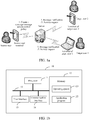
- FIG. 1a is a schematic diagram of an optional scenario of a message right management method according to an embodiment of the present invention.
- a message right management device may be implemented as a server and a terminal shown in FIG. 1a .
- a source user terminal runs a social client to support a source user to create messages, for example, various types of messages described above, and send a message notification to users in a group by using the server.
- FIG. 1a shows a target user 1 and a target user 2.
- a terminal device of the target user also runs a social client, so as to actively obtain a message notification or receive a message notification pushed by the server.
- the message notification carries a digest of the message created by the source user, for example, including a message source user, a picture carried in the message, a keyword of a text carried in the message, and an address of a message page.
- the target user 1 and the target user 2 After receiving the message notification, the target user 1 and the target user 2 send service requests for the message to the server by using their social clients.
- the server determines, according to a message right control policy, respective rights (also referred to as message rights herein) possessed by the target user 1 and the target user 2 with regard to the message, and specifically responds to the service requests of the target user 1 and the target user 2.
- FIG. 1b is a schematic diagram of an optional hardware structure of a server/terminal for message right management according to an embodiment of the present invention.
- the hardware structure shown in FIG. 1b includes: at least one processor 11, a memory 12, at least one communication interface 14, and a user interface 13.
- the shown components are coupled together by means of a bus system 15.
- the bus system 15 is configured to implement connection communication between these components.
- the bus system 15 further includes a power bus, a control bus, a status signal bus.
- various buses in FIG. 1b are all marked as the bus system 15.
- the user interface 13 may include a display, a keyboard, a mouse, a track ball, a click wheel, a press key, a press button, a touch panel, a touch screen, or the like.
- the memory 12 may be a volatile memory or a non-volatile memory, and may also include both a volatile and a non-volatile memory.
- the memory 12 described in this embodiment of the present invention is intended to include, but not limited to, these and any other appropriate types of memories.
- the memory 12 in this embodiment of the present invention is configured to store various types of data, so as to support operations of the server/terminal.
- Examples of the data include: any computer program used for operation, such as an operating system 121 and an application program 122; contact data of a social platform, and the like.
- the operating system 121 includes various system programs such as a framework layer, a core library layer, and a driver layer, to implement various basic services and process hardware-based tasks.
- the application program 122 may include various application programs, and a program for implementing the message right management method in this embodiment of the present invention may be included in the application program 122.
- the message right method disclosed in this embodiment of the present invention may be applied in the processor 11 or implemented by the processor 11.
- the processor 11 may be an integrated circuit chip having a signal processing capability. In an implementation process, steps in the foregoing method may be completed by using a hardware integrated logic circuit in the processor 11 or a software instruction.
- the processor 11 may be a general-purpose processor, a digital signal processor (DSP), or another programmable logic device (PLD), a discrete gate, a transistor logic device, a discrete hardware component, or the like.
- DSP digital signal processor
- PLD programmable logic device
- the processor 11 may implement or execute the methods, steps and logic block diagrams described in the embodiments of the present invention.
- the general-purpose processor may be a microprocessor, any conventional processor, or the like.
- the method steps described with reference to the embodiments of the present invention may be directly accomplished by a hardware decoding processor, or accomplished by a combination of hardware in a decoding processor and a software module.
- the software module may be located in a storage medium.
- the storage medium is located in the memory 12.
- the processor 11 reads information in the memory 12, and accomplishes steps in the foregoing message right management method together with hardware.
- the hardware structure shown in FIG. 1b may be implemented by one or more application specific integrated circuits (ASICs), a DSP, a PLD, a complex programmable logic device (CPLD), a field-programmable gate array (FPGA), a general-purpose processor, a controller, a micro controller unit (MCU), a microprocessor, or another electronic element, for executing the foregoing message right management method.
- ASICs application specific integrated circuits
- DSP digital signal processor
- PLD complex programmable logic device
- FPGA field-programmable gate array
- MCU micro controller unit
- microprocessor or another electronic element, for executing the foregoing message right management method.
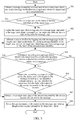
- FIG. 2 is a schematic flowchart of a message right management method according to an embodiment of the present invention.
- the message right management method in this embodiment of the present invention includes the following steps: Step 101: Obtain a message created by a source user from a source user client, and send a message notification to a target user client of a target user in a social platform.
- the source user creates a to-be-sent message in a client.
- the client sends a message notification to a target user client by using a server, so that a target user knows that there is a message to be read.
- there may be one or more target user clients receiving the message For example, when the source user specifies in the client that the message is sent to a group including multiple users, multiple target user clients will receive the message.
- a message right control policy may be set when the user creates the message, before the user creates the message or after the user creates the message.
- the message right control policy is used for controlling an access right with respect to the message.
- the message right management policy set by the source user is only valid for a current message sent by the source user; or the message right control policy set by the source user may be valid with respect to one or more messages created by the source user, or valid for messages created within a preset period of time after the source user sets the message right control policy.
- the message right control policy may also be valid with respect to global messages. That is, after the source user sets the message control policy, the policy is valid with respect to all messages that are created and sent by the source user.
- the server may also obtain a message right control policy with respect to the message, so as to perform access control over the message on the basis of the policy.
- the server may obtain a global message right control policy before obtaining messages, so as to perform, based on the policy, access control on all messages sent by the source user.
- the server obtains the message right control policy from the source user client includes: the server obtains at least one of the following types of message rights set by the source user with respect to the message from the source user client: a right to view the message, and a right to forward the message; and obtains the type of the message right set by the source user from the source user client, and a user having the message right of the corresponding type, that is, a user identifier corresponding to the message right of the corresponding type.
- the type includes at least one of the following: a user identifier having an access right with respect to the message; a user identifier having no access right with respect to the message; and only the source user has the message right with respect to the message.
- the user identifier is denoted as UserID, which is a unique identifier for verifying the access right of the target user with respect to the message, and corresponds to a device ID of a terminal of the target user in a one-to-one manner.
- the device ID of the terminal of the target user is a character string that identifies the uniqueness of the device.
- the source user sets a list of users allowed to view and/or forward messages created by the source user.
- the server may obtain UserIDs of specified users who have no access right with respect to the message, which is equivalent to that the source user sets a view blacklist for the message, that is, none of the users in the blacklist can view the message.
- the server may obtain UserIDs of specified users who have the access right with respect to the message, which is equivalent to that the source user sets a white list with for the message, that is, all the users in the white list can view and forward the message.
- Step 102 In response to a request for logging onto a message page that is initiated by the target user on the basis of the target user client, verify the target user on the basis of identity information of the target user, and control, based on a verification result, logon of the target user client to the message page.
- the target user when receiving the message notification by means of the target user client, the target user wants to access the message.
- the identity of the target user needs to be verified, that is, request for logging onto the message page is sent to the server.
- the page may be an App page, a PC webpage, or an H5 page within a social client.
- the request carries at least one of the following identity information of the target user client: a social platform identifier of the target user, and a device identifier of the target user.
- the social platform identifier is a unique identifier of a user in the social platform, or is a unique identifier that a user uses for message login.
- the identifier may include a WeChat identifier of the user, that is, a Union ID; a WeChat account registered by the user, which may be obtained by invoking an application programming interface (API) of WeChat; and so on.
- the device identifier of the target user is a device ID of a target user terminal of the target user, and may be obtained by calculation using a preset algorithm.
- the server determines whether the target user has already registered with the social platform; if yes, the server determines that the target user is a legal user of the social platform; if no, the server determines that the target user is an illegal user of the social platform. For example, when it is determined that the user login information stored in the database includes the social platform identifier of the target user, the target user is considered as a legal user of the social platform; otherwise, the target user is an illegal user.
- a social platform identifier such as a WeChat account
- the server determines whether the target user has already registered with the social platform; if no, the server determines that the target user is an illegal user of the social platform; and if yes, the server determines, based on the device ID of the target user terminal, whether device ID of the target user terminal is an ID of a terminal that the target user uses to log onto the social platform. If yes, the server determines that the target user is a legal user of the social platform, otherwise the server determines that the target user is an illegal user of the social platform. For example, when it is determined that the user login data stored in the database includes the device ID of the target user terminal, the target user is considered as a legal user of the social platform; otherwise, the target user is an illegal user.
- a user identifier for logging onto the message page is allocated to the target user client on the basis of the social platform identifier of the target user, and the message page is logged onto for the target user client by using the allocated user identifier.
- the target user client is forbidden to log onto the message page, and a prompt that the target user does not have a right to log onto the message page is sent to the target user client.
- the target user receives, in a third-party APP, a message notification sent by the source user, and authorizes, on an H5 page of the third-party APP, login to a WeChat account to view the message.
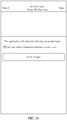
- An implementation process of logging onto a message page in WeChat is shown in FIG. 3a to FIG. 3c .
- the target user clicks the message notification to trigger logon to the message page by using a WeChat account of the target user.
- the server presents a prompt of obtaining authorization for login to the WeChat account from the target user.
- the server logs onto the message page for the target user after verifying the target user successfully.
- the message page displays a digest of the message, such as a source user, the type of file included in an attachment, a sending time point, and the quantity of users who have already read the message.
- FIG. 3a to FIG. 3c show that the target user receives a message notification in a third-party APP, authorizes login to the WeChat account, and logs onto the message page. It should be noted that, when the target user logs onto the message page by using an H5 page in a social client (such as WeChat) of the target user, a WeChat authorization interface will be directly presented while skipping the logon interface that displays the prompt of obtaining authorization from the target user as shown in FIG. 3a .
- a WeChat authorization interface will be directly presented while skipping the logon interface that displays the prompt of obtaining authorization from the target user as shown in FIG. 3a .
- the message created by the source user reaches the target user by means of the message notification, and a method of performing verification during logon to the message page is provided, so that it is difficult for a non-target user to log onto the message page to view specific content of the message, preventing the non-target user from viewing the specific content of the message by means of the message notification when the message notification is forwarded to the non-target user, and ensuring information security.
- Step 103 In response to a service request with respect to the message that is initiated by the target user after logging onto the page by means of the target user client, determine, based on a message right control policy obtained from the source user client, whether the target user has a right corresponding to a service requested by the service request, and control a response to the service request with respect to the message on the basis of a determining result.
- the service request includes: a view request for viewing specific content of the message, and a forward request for forwarding the message notification.
- the target user client may send a view request and/or forward request with respect to the message to the server, and the server makes a judgment on a message right of the target user.
- the server determines whether the target user has a right corresponding to a service requested by the service request. For example, a user identifier that is used for logging onto the page and that is allocated to the target user client in the logon process is matched with the user identifier in the message right control policy. If the matching fails, it indicates that the user does not have any right.
- a type of a right associated with the identifier in the message right control policy is matched with the right corresponding to the service requested by the service request; if the matching succeeds, it is determined that the target user has the right corresponding to the service requested by the service request; if the matching fails, it is determined that the target user does not have the right corresponding to the service requested by the service request.
- a view right with respect to the message as well as a user identifier of a user having the view right are set in the message right control policy.
- a user identifier that is allocated to the target user client for logging on to the page is matched with the user identifier of the user having the view right.
- the matching succeeds, it is determined that the target user has the right to view the message; if the matching fails, it is determined that the target user does not have the right to view the message.
- FIG. 4a is a schematic diagram in which the service request of the target user succeeds.
- the server verifies that the target user has the view right, and then sends specific content of the message to the target user client.
- FIG. 4b is a schematic diagram in which the service request of the target user client fails.
- the server verifies that the target user does not have the view right, and then returns a prompt that the target user does not having the view right to the target user client.
- a right of each target user with respect to the requested service is verified based on a message right management policy.
- a response is controlled according to a determining result, realizing a technical effect of targeted control over the service request of the target user.
- the source user can still control an access right with respect to the message after sending the message, thereby effectively ensuring information security.
- FIG. 5 is a schematic flowchart of a message right management method according to an embodiment of the present invention, including the following steps:
- the message status includes a visible state and an invisible state; if the message is in a visible state, it is determined that the target user has the right corresponding to the service requested by the service request with respect to the message (step 507 is performed correspondingly). Alternatively, it is continuously determined whether a correspondence between a right type and a user identifier in the control policy matches a correspondence between a type of the right corresponding to the service requested by the target user and an identifier of the target user (corresponding to step 506).
- the source user sets a visible state and an invisible state of the message, and this is equivalent to setting, for the message, a switch for enabling the target user to have the message right or disabling the target user from having the message right. Therefore, when the message is in an invisible state, even if the target user passes the identify verification and logs onto the message page successfully, the target user does not have the right corresponding to the service requested by the service request with respect to the message, that is, the target user cannot view/forward the message.
- This manner is applicable to a scenario in which the source user needs to view/forward the message.
- the source user has sent the message, the message can only be regarded as information stored in a manner similar to a cloud storage created by the source user, to prevent the information from being lost.
- the message status includes: whether the message is in a withdraw state.
- step 507 it is determined that the target user has the right corresponding to the service requested by the service request with respect to the message.
- step 507 it is continuously determined whether a correspondence between a right type and a user identifier in the control policy matches a correspondence between a type of the right corresponding to the service requested by the target user and an identifier of the target user (corresponding to step 506).
- the target user does not have the right corresponding to the service requested by the service request with respect to the message.
- the state of the message may be set by the user.
- the server can inform the target user in time that the target user does not have the requested right (view and/or forward), achieving a technical effect t hat the source user can withdraw the message at any time after the message is sent out.
- Step 506 Determine, according to a type of a right set by the source user in the message right control policy with respect to the message as well as a user identifier corresponding to the type, whether the target user has the right corresponding to the service requested by the service request; if yes, perform step 507; otherwise, perform step 508.
- Step 507 Return, to the target user client, data of the service requested by the service request with respect to the message, and end processing.
- Step 508 Block the response to the service request with respect to the message, and send an illegal service request prompt to the target user client.
- step 505 when the determining result in step 505 is yes and then step 506 is performed, it means whether the target user has the right corresponding to the requested service is determined by using the message status as well as the correspondence between the right type and the user identifier; when the determining result in step 505 is yes and then step 507 is performed, it means whether the user has the right corresponding to the requested service is determined by using the message status only.
- step 507 is performed while step 506 is not performed
- the message status is a predetermined state (such as a visible state, or a non-withdraw state)
- step 506 When whether the user has the right corresponding to the requested service is determined by using the message status in combination with the correspondence between the right type and the user identifier (that is, when the determining result in step 505 is yes, step 506 is performed), a function of enabling and disabling the allocation of the message right is implemented, thereby supporting the source user to flexibly control whether the message is visible and withdraw the message at any time after sending the message.
- FIG. 6 is a schematic flowchart of a message right management method in this embodiment.
- a source user namely, a message sender, creates a WeChat message, sets a message right control policy with respect to the message, and sends, based on a source user client, a WeChat message notification to a target user client by means of a server.
- the source user client sends the WeChat message and the message right control policy to the server.
- the WeChat message includes the following types: graphic and text message, audio message, file message, announcement message, and task message.
- the message right control policy includes: a message right with respect to the WeChat message, a type corresponding to the message right, and a user identifier (namely, User ID) corresponding to the message right of the corresponding type.
- the message right includes at least one of the following: a right to view the message; and a right to forward the message.
- the type includes at least one of the following: a user identifier of a user having an access right with respect to the message; a user identifier of a user having no access right with respect to the message; and only the source user has the message right with respect to the message.
- any user can view and/or forward the message, or only users in a white list (including white list user identifiers) are allowed to view and/or forward the message while the message is invisible to users not on the list, or forbid users in a blacklist (including blacklist user identifiers) to view and/or forward the message while users not on the list can view and/or forward the message, or only the source user is allowed to view and/or forward the message.
- a white list including white list user identifiers
- blacklist including blacklist user identifiers
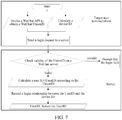
- FIG. 7 is a schematic flowchart of a target user client performing a logon operation to get a legal identity credential in return according to this embodiment.
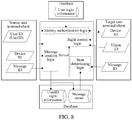
- FIG. 8 is a schematic structural diagram of composition of a message right management system according to this embodiment.
- the source user client invokes an API of the WeChat APP to obtain a WeChat Union ID, calculates a device ID of the source user terminal by using a preset algorithm for associating a Union ID and a device ID, and then sends a logon request carrying the Union ID and the device ID to the server.
- the server checks validity of the Union ID on the basis of a database storing user logon information (identity authentication logic in FIG. 8 ). When it is determined that the Union ID is invalid, the server prompts the target user that the logon fails. When it is determined that the Union ID is valid, the server allocates a User ID to the target user on the basis of the Union ID, and at the same time may record a correspondence between the User ID and the device ID.
- the target user implements message logon by using the target user client.
- FIG. 3a is a schematic diagram of a logon interface
- FIG. 3b is a schematic diagram of a WeChat authorization interface
- FIG. 3b is a schematic diagram of an interface after the logon succeeds.
- a WeChat authorization interface will be directly presented while skipping the logon interface as shown in FIG. 3a . If the user is not a user object to which the message is shared, the user cannot log on, that is, the user is an illegal user in this case.
- a message status of the WeChat message is checked on the basis of a message ID of the WeChat message (state determining logic in FIG. 8 ) is checked, to determine whether the WeChat message is withdrawn by the source user. If the WeChat message is withdrawn, the server prompts the target user that the target user does not have the access right. If the WeChat message is not withdrawn, it is determined whether the target user has a right corresponding to a service requested by a service request (message view request and/or message forward request) (right control logic in FIG. 8 ).
- FIG. 4a A schematic diagram of successful access to the WeChat message is shown in FIG. 4a .
- the server prompts the target user that the target user does not have the access right.
- FIG. 4b A schematic diagram of failed access to the WeChat message is shown in FIG. 4b .
- the server determines whether the target user has the access right
- the process of checking the message status of the WeChat message is an optional step. After the target user client logs on successfully, it is directly determined, based on the User ID and device ID (optional), whether the target user has the access right, as shown in FIG. 9 .
- the purpose of querying a buffer is to determine whether the message page is logged on to currently.
- FIG. 10 is a schematic structural diagram of composition of a server 20 according to an embodiment of the present invention.
- the composition of the server 20 in this embodiment of the present invention includes: an obtaining module 21, a verification module 22, and a control module 23.
- the obtaining module 21 is configured to obtain a message created by a source user from a source user client, and send a message notification to a target user client of a target user in a social platform.
- the verification module 22 is configured to: in response to a request for logging onto a message page that is initiated by the target user on the basis of the target user client, verify the target user on the basis of identity information of the target user, and control, based on a verification result, logon of the target user client to the message page.
- the control module 23 is configured to: in response to a service request with respect to the message that is initiated by the target user after logging onto the page by means of the target user client, determine, based on a message right control policy obtained from the source user client, whether the target user has a right corresponding to a service requested by the service request, and control a response to the service request with respect to the message according to a determining result.
- the obtaining module 21 is specifically configured to: obtain at least one of the following types of message rights set by the source user with respect to the message from the source user client: a right to view the message, and a right to forward the message; and obtain the type of the message right set by the source user from the source user client, and a user identifier corresponding to the message right of the corresponding type.
- the type includes at least one of the following: a user identifier of a user having an access right with respect to the message; a user identifier of a user having no access right with respect to the message; and only the source user has the message right with respect to the message.
- the verification module 22 is specifically configured to obtain at least one of the following identity information of the target user client: a social platform identifier of the target user, and a device identifier of the target user.
- the target user client is an identifier of a legal terminal used by the target user to log into the social platform; if yes, it is determined that the target user is a legal of the social platform; if no, it is determined that the target user is an illegal user of the social platform.
- the verification module 22 is specifically configured to: when the verification result represents that the target user is a legal user of the social platform, allocate a user identifier for logging onto the message page to the target user client on the basis of the social platform identifier of the target user, and log onto the message page by using the allocated user identifier for the target user client; and when the verification result represents that the target user is an illegal user of the social platform, forbid the target user to log onto the message page, and send, to the target user client, a prompt that the target user does not have a right to log onto the message page.
- control module 23 is specifically configured to determine, based on the type of the message right set in the message right control policy by the source user with respect to the message as well as the user identifier corresponding to the type, whether the target user has a right corresponding to a service requested by the service request.
- control module 23 is specifically configured to: obtain, from the message right control policy, a message status set by the source user with respect to the message, where the message status includes a visible state and an invisible state; if the message is in a visible state, determine that the target user has the right corresponding to the service requested by the service request with respect to the message; and if the message is in an invisible state, determine that the target user does not have the right corresponding to the service requested by the service request with respect to the message.
- control module 23 is specifically configured to: obtain, from the message right control policy, a message status set by the source user with respect to the message, where the message status includes: whether the message is set to be in a withdraw state by the source user; if the source user does not set the message to be in a withdraw state, determine that the target user has the right corresponding to the service requested by the service request with respect to the message; and if the source user sets the message to be in a withdraw state, determine that the target user does not have the right corresponding to the service requested by the service request with respect to the message.
- control module 23 is specifically configured to: when the target user has the right corresponding to the service requested by the service request with respect to the message, return, to the target user client, data of the service requested by the service request with respect to the message; and when the target user does not have the right corresponding to the service requested by the service request with respect to the message, block the response to the service request with respect to the message, and send an illegal service request prompt to the target user client.
- FIG. 11 is a schematic structural diagram of composition of a terminal 20 according to an embodiment of the present invention.
- the composition of the terminal 30 in this embodiment of the present invention includes: a receiving module 31, a logon module 32, and a service request module 33.
- the receiving module 31 is configured to receive, from a social platform, a message notification corresponding to a message created by a source user.
- the logon module 32 is configured to: in response to a logon instruction of the target user, initiate a request for logging onto a message page, so as to trigger verification on the target user on the basis of identity information of the target user, and control logon of a target user client to the message page on the basis of a verification result.
- the service request module 33 is configured to: in response to a service request instruction of the target user, initiate a service request with respect to the message on the basis of the logged on page, so as to trigger determining, based on a message right control policy, whether the target user has a right corresponding to a service requested by the service request, and control a response to the service request according to a determining result.
- the logon module 32 is further configured to: when the verification result represents that the target user is a legal user of the social platform, log onto the message page on the basis of an allocated user identifier, the user identifier being allocated on the basis of a social platform identifier of the target user in a one-to-one corresponding manner; and when the verification result represents that the target user is an illegal user of the social platform, present a prompt that the target user does not have a right to log onto the message page.
- the service request module 33 is further configured to: when the target user has the right corresponding to the service requested by the service request with respect to the message, present returned data of the service requested by the service request with respect to the message; and when the target user does not have the right corresponding to the service requested by the service request with respect to the message, present an illegal service request prompt to the target user.
- An embodiment of the present invention further provides a computer readable medium, which may be a ROM (such as a read-only memory, a flash memory, or a transfer apparatus), a magnetic storage medium (such as a magnetic tape, or a magnetic disk drive), an optical storage medium (such as a CD-ROM, a DVD-ROM, a paper card, or a paper tape), or other well-known types of program memories.
- the computer storage medium may store a computer executable instruction. When the instruction is executed, at least one processor is caused to perform the message right management methods according to the embodiments of the present invention, for example, the message right management method shown in FIG. 2 and FIG. 5 .
Landscapes
- Engineering & Computer Science (AREA)
- Computer Security & Cryptography (AREA)
- Computer Networks & Wireless Communication (AREA)
- Signal Processing (AREA)
- Theoretical Computer Science (AREA)
- Computer Hardware Design (AREA)
- General Engineering & Computer Science (AREA)
- Computing Systems (AREA)
- Software Systems (AREA)
- Physics & Mathematics (AREA)
- General Physics & Mathematics (AREA)
- Databases & Information Systems (AREA)
- Health & Medical Sciences (AREA)
- Bioethics (AREA)
- General Health & Medical Sciences (AREA)
- Business, Economics & Management (AREA)
- Accounting & Taxation (AREA)
- Information Transfer Between Computers (AREA)
Abstract
Description
- This application is proposed based on and claims priority to China Patent Application No.
201610364005.1 filed on May 27, 2016 - This application relates to the communications technologies, and in particular, to a message right management method, device and storage medium.
- With the development of the mobile Internet, mobile terminals (such as mobile phones, tablet computers, and note computers) are widely used. A user installs a client for sending and receiving messages, and sends messages to a user or a group by using the client.
- For example, messages are exchanged with a user in a social platform in various manners (such as cellular communications, and wireless local area network communications) by using a social application. Particularly, a message may be sent to a group (such as a multi-user session, and WeChat Moments). The message carries a text and voice to realize communication between users. In addition, the message can further realize a sharing function in the group. For example, the message may carry a shared video, a picture, and other media information. For another example, the message may include a shared webpage, or other types of information.
- In a scenario of sending a message to a group, the related technology provides a solution of sending the message to users in the group. Once the message is sent, a user sending the message cannot control rights possessed by the users receiving the message with respect to the received message.
- Embodiments of the present invention provide a message right management method, device and storage medium, to control rights possessed by users in a social platform with respect to a received message.
- Technical solutions of the embodiments of the present invention are implemented as follows:
- According to a first aspect, an embodiment of the present invention provides a message right management method, including:
- obtaining a message created by a source user, and sending a message notification to a target user in a social platform;
- verifying the target user when receiving a request for logging onto a message page from the target user;
- controlling logon of the target user to the message page on the basis of a verification result;
- when receiving a service request of the target user with respect to the message, determining, based on a message right control policy, whether the target user has a right corresponding to a service requested by the service request; and
- controlling a response to the service request according to a determining result.
- According to a second aspect, an embodiment of the present invention provides a message right management method, including:
- receiving, from a social platform, a message notification corresponding to a message created by a source user;
- when receiving a logon instruction of a target user, initiating a request for logging onto a message page to a server;
- where the request for logging onto the message page is used for triggering the server to verify the target user, and control, based on a verification result, logon of the target user to the message page; and
- when receiving a service request instruction of the target user, initiating a service request for the message on the message page to which the target user logs on,
- where the service request is used for triggering the server to determine, based on a message right control policy, whether the target user has a right corresponding to a service requested by the service request, and control a response to the service request according to a determining result.
- According to a third aspect, an embodiment of the present invention provides a server, including:
- an obtaining module, configured to obtain a message created by a source user, and send a message notification to a target user in a social platform;
- a verification module, configured to verify the target user when receiving a request for logging onto a message page from the target user, and control logon of the target user to the message page on the basis of a verification result; and
- a control module, configured to: when receiving a service request of the target user with respect to the message, determine, based on a message right control policy, whether the target user has a right corresponding to a service requested by the service request; and control a response to the service request according to a determining result.
- According to a fourth aspect, an embodiment of the present invention provides a terminal that includes: a receiving module, a logon module and a service request module, where
the receiving module is configured to receive, from a social platform, a message notification corresponding to a message created by a source user;
the logon module is configured to: when receiving a logon instruction of a target user, initiate a request for logging onto a message page to a server;
where the request for logging onto the message page is used for triggering the server to verify the target user, and control, based on a verification result, logon of the target user to the message page; and
the service request module is configured to: when receiving a service request instruction of the target user, initiate a service request for the message on the message page to which the target user logs on,
where the service request is used for triggering the server to determine, based on a message right control policy, whether the target user has a right corresponding to a service requested by the service request, and control a response to the service request according to a determining result. - According to a fifth aspect, an embodiment of the present invention provides a server, including:
- a memory, configured to store an executable program; and
- a processor, configured to implement the message right management method according to the first aspect of the embodiments of the present invention when executing the executable program stored in the memory.
- According to a sixth aspect, an embodiment of the present invention provides a terminal, including:
- a memory, configured to store an executable program; and
- a processor, configured to implement the message right management method according to the first aspect of the embodiments of the present invention when executing the executable program stored in the memory.
- According to a seventh aspect, an embodiment of the present invention provides a storage medium, storing an executable program, where the executable program implements the message right management method according to the second aspect of the embodiments of the present invention when being executed by a processor.
- According to an eighth aspect, an embodiment of the present invention provides a storage medium, storing an executable program, where the executable program implements the message right management method according to the second aspect of the present invention when being executed by a processor.
- The embodiments of the present invention have the following beneficial effects:
- 1) A message created by a source user reaches a target user by means of a message notification, and a method of performing verification during logon to the message page is provided, so that it is difficult for a non-target user to log onto the message page to view specific content of the message, preventing the non-target user from viewing the specific content of the message by means of the message notification when the message notification is forwarded to the non-target user, and ensuring information security.
- 2) A right of each target user with respect to a requested service is verified based on a message right management policy. A response is controlled according to a determining result, realizing a technical effect of targeted control over the service request of the target user. For a message created by the source user, the source user can still control an access right with respect to the message after sending the message, thereby effectively ensuring information security.
-
-
FIG. 1a is a schematic diagram of an optional scenario of a message right management method according to an embodiment of the present invention; -
FIG. 1b is a schematic diagram of an optional hardware structure of a server for message right management according to an embodiment of the present invention; -
FIG. 2 is a first schematic flowchart of a message right management method according to an embodiment of the present invention; -
FIG. 3a is a first schematic diagram of a target user performing message logon by using a target user client according to an embodiment of the present invention; -
FIG. 3b is a second schematic diagram of a target user performing message logon by using a target user client according to an embodiment of the present invention; -
FIG. 3c is a third schematic diagram of a target user performing message logon by using a target user client according to an embodiment of the present invention; -
FIG. 4a is a first schematic diagram of a request result obtained after a target user requests a service by using a target user client according to an embodiment of the present invention; -
FIG. 4b is a second schematic diagram of a request result obtained after a target user requests a service by using a target user client according to an embodiment of the present invention; -
FIG. 5 is a second schematic flowchart of a message right management method according to an embodiment of the present invention; -
FIG. 6 is a third schematic flowchart of a message right management method according to an embodiment of the present invention; -
FIG. 7 is a schematic flowchart of a target user client performing a logon operation to get a legal identity credential in return according to an embodiment of the present invention; -
FIG. 8 is a schematic structural diagram of composition of a message right management system according to an embodiment of the present invention; -
FIG. 9 is a fourth schematic flowchart of a message right management method according to an embodiment of the present invention; -
FIG. 10 is a schematic diagram of a functional structure of a server for performing message right management according to an embodiment of the present invention; and -
FIG. 11 is a schematic diagram of a functional structure of a terminal according to an embodiment of the present invention. - The present disclosure is described in detail below with reference to the accompanying drawings and embodiments. It should be understood that, the specific embodiments described herein are merely used for illustrating the present disclosure, but are not intended to limit the present disclosure.
- Before the embodiments of the present invention are described in detail, nouns and terms related to the embodiments of the present invention are described. The nouns and terms related to the embodiments of the present invention apply to the illustration as follows.
- 1) A terminal includes a device running a client that supports sending and receiving messages in a social platform, for example, a smart phone or a tablet computer. The client includes many forms, for example: a mobile application (App), a webpage-based mobile App (i.e., Web App), a personal PC App, and an in-vehicle terminal App.
- 2) A source user and a target user are a sender and a receiver of a corresponding message. It can be understood that, the source user and the target user are relative concepts. For example, a source user of one message may be a target user of another message.
- 3) A message right management policy is a policy used by the source user to control an access right of the target user with respect to the message, and includes a user identifier of the target user as well as rights of the target user with respect to the message.
- 4) A message is used for carrying various forms of multimedia information (or media information addresses) such as a text, a video, and an audio. An access manner of viewing the message by means of a message page is provided for the target user.
- 5) A message notification carries a digest of the message, and carries information of a message page (such as an address of the message page). The message notification reaches the target user, so as to indicate that the source user has created a message and the target user can log onto the message page to view the message.
- 6) A group is, for example, a multi-user session formed in the social platform for sharing messages; for another example, a group is an information aggregation function (also referred to as news) for aggregating news of specific users in the social platform, such as friends and followed users, and when the group is used for aggregating news of friends, it is also referred to as Moments.
- Using a social client as an example, a source user shares content with a target user by using a message. The message is sent to a single or a multi-user session in the social platform or sent to Moments, so as to share the message. The message may further carry an address of a HyperText Markup Language 5 (HTML5) page. The target user may view the specific content by using the address, so as to complete display and interaction of rich media carried in the message. According to types of content carried in messages, the messages are categorized into the following types (definitely, types of general messages herein are not limited to the following examples):
- graphic and text message: including pictures and texts;
- audio message: including an audio;
- file message: including a file;
- announcement message: sent content includes an announcement; and
- task message: sent content includes a task used for instructing to complete a specific operation in a network, for example, performing operations such as noting, purchasing, and commenting on a specified webpage.
- Currently, optional sending objects of a message mainly includes: a single user, a multi-user session, and Moments. For a message sent to a single user, the user may randomly replicate and forward the message after receiving the message. For a message sent to a multi-user session, any user in the multi-user session to which the message is sent can read message content, and can also replicate and forward the message. For a message sent to Moments, the situation is similar to that of a message sent to a multi-user session.
- It can be seen that, once a message is sent out, a user sending the message can no longer control the message, and the following problems may be incurred:
- 1) A message originally intended to be obtained by a specified user may be disclosed by the receiving user to others, affecting information security.
- 2) When a user sends a message to a multi-user session, there may be a user who does not need/want to receive the message in the multi-user session, while it increases sending costs and affects communication efficiency to specifically establish a temporary multi-user session. It makes management inconvenient if too many temporary multi-user sessions are established.
- 3) Once a message is sent, a user cannot withdraw the message after a period of time.
- In a scenario in which a source user sends a message to users (namely, target users) in a group according to an embodiment of the present invention, the source user hopes to control message rights of the target users (namely, rights possessed by the target users with respect to the message) after the message is sent, and carry out targeted control at a user-based granularity. For example, if the message is uniformly sent to clients of the users in the group, the source user allows some users in the group to have a right to view the message, and some users to have a right to forward the message.
- In view of the foregoing problem, the embodiments of the present invention provide a message right management method, a device using the message right management method, and a storage medium. Any type of information (such as a text, an audio, and a file mentioned above) is encapsulated in a message, and then rights (such as accessibility, a reading right, and a forwarding right) of the message are limited, to achieve the purpose of controlling message rights. On the other hand, in a specific scenario, a function of controlling access to a message of a specific type, such as a message carrying a file. Implementation of message right control and types of rights will be described in detail below.
- Referring to
FIG. 1a, FIG. 1a is a schematic diagram of an optional scenario of a message right management method according to an embodiment of the present invention. A message right management device may be implemented as a server and a terminal shown inFIG. 1a . A source user terminal runs a social client to support a source user to create messages, for example, various types of messages described above, and send a message notification to users in a group by using the server. -
FIG. 1a shows atarget user 1 and atarget user 2. A terminal device of the target user also runs a social client, so as to actively obtain a message notification or receive a message notification pushed by the server. The message notification carries a digest of the message created by the source user, for example, including a message source user, a picture carried in the message, a keyword of a text carried in the message, and an address of a message page. - After receiving the message notification, the
target user 1 and thetarget user 2 send service requests for the message to the server by using their social clients. The server determines, according to a message right control policy, respective rights (also referred to as message rights herein) possessed by thetarget user 1 and thetarget user 2 with regard to the message, and specifically responds to the service requests of thetarget user 1 and thetarget user 2. - Referring to
FIG. 1b, FIG. 1b is a schematic diagram of an optional hardware structure of a server/terminal for message right management according to an embodiment of the present invention. The hardware structure shown inFIG. 1b includes: at least oneprocessor 11, amemory 12, at least onecommunication interface 14, and auser interface 13. The shown components are coupled together by means of abus system 15. It can be understood that, thebus system 15 is configured to implement connection communication between these components. In addition to a data bus, thebus system 15 further includes a power bus, a control bus, a status signal bus. However, for the purpose of clear description, various buses inFIG. 1b are all marked as thebus system 15. - The
user interface 13 may include a display, a keyboard, a mouse, a track ball, a click wheel, a press key, a press button, a touch panel, a touch screen, or the like. - It can be understood that, the
memory 12 may be a volatile memory or a non-volatile memory, and may also include both a volatile and a non-volatile memory. Thememory 12 described in this embodiment of the present invention is intended to include, but not limited to, these and any other appropriate types of memories. - The
memory 12 in this embodiment of the present invention is configured to store various types of data, so as to support operations of the server/terminal. Examples of the data include: any computer program used for operation, such as anoperating system 121 and anapplication program 122; contact data of a social platform, and the like. Theoperating system 121 includes various system programs such as a framework layer, a core library layer, and a driver layer, to implement various basic services and process hardware-based tasks. Theapplication program 122 may include various application programs, and a program for implementing the message right management method in this embodiment of the present invention may be included in theapplication program 122. - The message right method disclosed in this embodiment of the present invention may be applied in the
processor 11 or implemented by theprocessor 11. Theprocessor 11 may be an integrated circuit chip having a signal processing capability. In an implementation process, steps in the foregoing method may be completed by using a hardware integrated logic circuit in theprocessor 11 or a software instruction. Theprocessor 11 may be a general-purpose processor, a digital signal processor (DSP), or another programmable logic device (PLD), a discrete gate, a transistor logic device, a discrete hardware component, or the like. Theprocessor 11 may implement or execute the methods, steps and logic block diagrams described in the embodiments of the present invention. The general-purpose processor may be a microprocessor, any conventional processor, or the like. The method steps described with reference to the embodiments of the present invention may be directly accomplished by a hardware decoding processor, or accomplished by a combination of hardware in a decoding processor and a software module. The software module may be located in a storage medium. The storage medium is located in thememory 12. Theprocessor 11 reads information in thememory 12, and accomplishes steps in the foregoing message right management method together with hardware. - In an exemplary embodiment, the hardware structure shown in
FIG. 1b may be implemented by one or more application specific integrated circuits (ASICs), a DSP, a PLD, a complex programmable logic device (CPLD), a field-programmable gate array (FPGA), a general-purpose processor, a controller, a micro controller unit (MCU), a microprocessor, or another electronic element, for executing the foregoing message right management method. -
FIG. 2 is a schematic flowchart of a message right management method according to an embodiment of the present invention. With reference toFIG. 1a , the message right management method in this embodiment of the present invention includes the following steps:
Step 101: Obtain a message created by a source user from a source user client, and send a message notification to a target user client of a target user in a social platform. - The source user creates a to-be-sent message in a client. The client sends a message notification to a target user client by using a server, so that a target user knows that there is a message to be read. According to the quantity of target users of the message set by the source user, there may be one or more target user clients receiving the message. For example, when the source user specifies in the client that the message is sent to a group including multiple users, multiple target user clients will receive the message.
- In this embodiment of the present invention, a message right control policy may be set when the user creates the message, before the user creates the message or after the user creates the message. The message right control policy is used for controlling an access right with respect to the message.
- For example, the message right management policy set by the source user is only valid for a current message sent by the source user; or the message right control policy set by the source user may be valid with respect to one or more messages created by the source user, or valid for messages created within a preset period of time after the source user sets the message right control policy.
- Definitely, the message right control policy may also be valid with respect to global messages. That is, after the source user sets the message control policy, the policy is valid with respect to all messages that are created and sent by the source user.
- In an optional embodiment of the present invention, while obtaining the message created by the source user from the source user client, the server may also obtain a message right control policy with respect to the message, so as to perform access control over the message on the basis of the policy. Alternatively, the server may obtain a global message right control policy before obtaining messages, so as to perform, based on the policy, access control on all messages sent by the source user.
- For example, that the server obtains the message right control policy from the source user client includes:
the server obtains at least one of the following types of message rights set by the source user with respect to the message from the source user client: a right to view the message, and a right to forward the message; and obtains the type of the message right set by the source user from the source user client, and a user having the message right of the corresponding type, that is, a user identifier corresponding to the message right of the corresponding type. - The type includes at least one of the following: a user identifier having an access right with respect to the message; a user identifier having no access right with respect to the message; and only the source user has the message right with respect to the message. The user identifier is denoted as UserID, which is a unique identifier for verifying the access right of the target user with respect to the message, and corresponds to a device ID of a terminal of the target user in a one-to-one manner. The device ID of the terminal of the target user is a character string that identifies the uniqueness of the device. As such, it is equivalent to that the source user sets a list of users allowed to view and/or forward messages created by the source user.
- For example, while obtaining a view right set by the source user with respect to the message from the source user client, the server may obtain UserIDs of specified users who have no access right with respect to the message, which is equivalent to that the source user sets a view blacklist for the message, that is, none of the users in the blacklist can view the message. In another embodiment, when obtaining a forward right and view right that are set by the source user with respect to the message from the source user client, the server may obtain UserIDs of specified users who have the access right with respect to the message, which is equivalent to that the source user sets a white list with for the message, that is, all the users in the white list can view and forward the message.
- Step 102: In response to a request for logging onto a message page that is initiated by the target user on the basis of the target user client, verify the target user on the basis of identity information of the target user, and control, based on a verification result, logon of the target user client to the message page.
- Herein, when receiving the message notification by means of the target user client, the target user wants to access the message. First, the identity of the target user needs to be verified, that is, request for logging onto the message page is sent to the server. The page may be an App page, a PC webpage, or an H5 page within a social client. The request carries at least one of the following identity information of the target user client: a social platform identifier of the target user, and a device identifier of the target user. The social platform identifier is a unique identifier of a user in the social platform, or is a unique identifier that a user uses for message login. For example, if the social client is WeChat, the identifier may include a WeChat identifier of the user, that is, a Union ID; a WeChat account registered by the user, which may be obtained by invoking an application programming interface (API) of WeChat; and so on. The device identifier of the target user is a device ID of a target user terminal of the target user, and may be obtained by calculation using a preset algorithm.
- As an example of determining whether the target user is a legal user, according to user login information stored in a database and based on a social platform identifier (such as a WeChat account) of the target user, the server determines whether the target user has already registered with the social platform; if yes, the server determines that the target user is a legal user of the social platform; if no, the server determines that the target user is an illegal user of the social platform. For example, when it is determined that the user login information stored in the database includes the social platform identifier of the target user, the target user is considered as a legal user of the social platform; otherwise, the target user is an illegal user.
- As another example of determining whether the target user is a legal user, according to user login information stored in a database and based on a social platform identifier of the target user, the server determines whether the target user has already registered with the social platform; if no, the server determines that the target user is an illegal user of the social platform; and if yes, the server determines, based on the device ID of the target user terminal, whether device ID of the target user terminal is an ID of a terminal that the target user uses to log onto the social platform. If yes, the server determines that the target user is a legal user of the social platform, otherwise the server determines that the target user is an illegal user of the social platform. For example, when it is determined that the user login data stored in the database includes the device ID of the target user terminal, the target user is considered as a legal user of the social platform; otherwise, the target user is an illegal user.
- It can be understood that, one of the foregoing manners for determining whether the user is a legal user can be used, or the manners can be used in combination.
- In an optional embodiment of the present invention, when the verification result represents that the target user is a legal user of the social platform, a user identifier for logging onto the message page is allocated to the target user client on the basis of the social platform identifier of the target user, and the message page is logged onto for the target user client by using the allocated user identifier.
- When the verification result represents that the target user is an illegal user of the social platform, the target user client is forbidden to log onto the message page, and a prompt that the target user does not have a right to log onto the message page is sent to the target user client.
- For example, the target user receives, in a third-party APP, a message notification sent by the source user, and authorizes, on an H5 page of the third-party APP, login to a WeChat account to view the message. An implementation process of logging onto a message page in WeChat is shown in
FIG. 3a to FIG. 3c . InFIG. 3a , after receiving a message notification in a third-party APP, the target user clicks the message notification to trigger logon to the message page by using a WeChat account of the target user. InFIG. 3b , the server presents a prompt of obtaining authorization for login to the WeChat account from the target user. InFIG. 3c , the server logs onto the message page for the target user after verifying the target user successfully. The message page displays a digest of the message, such as a source user, the type of file included in an attachment, a sending time point, and the quantity of users who have already read the message. -
FIG. 3a to FIG. 3c show that the target user receives a message notification in a third-party APP, authorizes login to the WeChat account, and logs onto the message page. It should be noted that, when the target user logs onto the message page by using an H5 page in a social client (such as WeChat) of the target user, a WeChat authorization interface will be directly presented while skipping the logon interface that displays the prompt of obtaining authorization from the target user as shown inFIG. 3a . - It can be seen that, the message created by the source user reaches the target user by means of the message notification, and a method of performing verification during logon to the message page is provided, so that it is difficult for a non-target user to log onto the message page to view specific content of the message, preventing the non-target user from viewing the specific content of the message by means of the message notification when the message notification is forwarded to the non-target user, and ensuring information security.
- Step 103: In response to a service request with respect to the message that is initiated by the target user after logging onto the page by means of the target user client, determine, based on a message right control policy obtained from the source user client, whether the target user has a right corresponding to a service requested by the service request, and control a response to the service request with respect to the message on the basis of a determining result.
- Herein, the service request includes: a view request for viewing specific content of the message, and a forward request for forwarding the message notification. After passing identity information verification performed by the server, the target user client may send a view request and/or forward request with respect to the message to the server, and the server makes a judgment on a message right of the target user.
- In actual implementation, based on the type of the right set in the message right control policy by the source user with respect to the message as well as the user identifier corresponding to the type, the server determines whether the target user has a right corresponding to a service requested by the service request. For example, a user identifier that is used for logging onto the page and that is allocated to the target user client in the logon process is matched with the user identifier in the message right control policy. If the matching fails, it indicates that the user does not have any right. If a corresponding identifier is found in the message right control policy during matching, a type of a right associated with the identifier in the message right control policy is matched with the right corresponding to the service requested by the service request; if the matching succeeds, it is determined that the target user has the right corresponding to the service requested by the service request; if the matching fails, it is determined that the target user does not have the right corresponding to the service requested by the service request.
- For example, a view right with respect to the message as well as a user identifier of a user having the view right are set in the message right control policy. A user identifier that is allocated to the target user client for logging on to the page is matched with the user identifier of the user having the view right. When the matching succeeds, it is determined that the target user has the right to view the message; if the matching fails, it is determined that the target user does not have the right to view the message.
- For example, when the target user has the right corresponding to the service requested by the service request, the server returns data of the service requested by the service request to the target user client.
FIG. 4a is a schematic diagram in which the service request of the target user succeeds. When the target user clicks a message on the message page, the server verifies that the target user has the view right, and then sends specific content of the message to the target user client. - For example, when the target user does not have the right corresponding to the service requested by the service request, the service request with respect to the message is blocked, and an illegal service request prompt is sent to the target user client.
FIG. 4b is a schematic diagram in which the service request of the target user client fails. When clicks a message on the message page, the server verifies that the target user does not have the view right, and then returns a prompt that the target user does not having the view right to the target user client. - A right of each target user with respect to the requested service is verified based on a message right management policy. A response is controlled according to a determining result, realizing a technical effect of targeted control over the service request of the target user. For a message created by the source user, the source user can still control an access right with respect to the message after sending the message, thereby effectively ensuring information security.
- In an optional embodiment of the present invention, in addition to determining, according to the type of the right included in the message right control policy as well as the corresponding user identifier having the right, whether the user has the right of the requested service with respect to the message, the determining may also be performed with reference to a message status in the message right control policy. A description is made with reference to a specific example. Referring to
FIG. 5, FIG. 5 is a schematic flowchart of a message right management method according to an embodiment of the present invention, including the following steps: - Step 501: Obtain a message created by a source user from a source user client, and send a message notification to a target user client of a target user in a social platform.
- Step 502: In response to a request for logging onto a message page that is initiated by the target user on the basis of the target user client, verify the target user on the basis of identity information of the target user, to determine whether the target user passes the verification; if the target user does not pass the verification, perform
step 503; and if the target user passes the verification, performstep 504. - Step 503: Forbid the target user client to log onto the message page, send, to the target user client, a prompt that the target user does not have a right to log onto the message page, and end processing.
- Step 504: Allocate a user identifier for logging onto the message page to the target user client on the basis of a social platform identifier of the target user, so that the target user client logs onto the message page on the basis of the allocated user identifier.
- Step 505: In response to a service request initiated by the target user client with respect to the message, obtain, from a message right control policy set by the source user client, a message status set by the source user with respect to the message; determine, according to the message status, whether the target user has a right corresponding to a service requested by the service request with respect to the message; if yes, perform
step 506 or step 507; otherwise, performstep 508. - As an example, the message status includes a visible state and an invisible state; if the message is in a visible state, it is determined that the target user has the right corresponding to the service requested by the service request with respect to the message (step 507 is performed correspondingly). Alternatively, it is continuously determined whether a correspondence between a right type and a user identifier in the control policy matches a correspondence between a type of the right corresponding to the service requested by the target user and an identifier of the target user (corresponding to step 506).
- Herein, the source user sets a visible state and an invisible state of the message, and this is equivalent to setting, for the message, a switch for enabling the target user to have the message right or disabling the target user from having the message right. Therefore, when the message is in an invisible state, even if the target user passes the identify verification and logs onto the message page successfully, the target user does not have the right corresponding to the service requested by the service request with respect to the message, that is, the target user cannot view/forward the message. This manner is applicable to a scenario in which the source user needs to view/forward the message. Although the source user has sent the message, the message can only be regarded as information stored in a manner similar to a cloud storage created by the source user, to prevent the information from being lost.
- In another example, the message status includes: whether the message is in a withdraw state.
- If the source user does not set the message to be in a withdraw state, it is determined that the target user has the right corresponding to the service requested by the service request with respect to the message (step 507 is performed correspondingly). Alternatively, it is continuously determined whether a correspondence between a right type and a user identifier in the control policy matches a correspondence between a type of the right corresponding to the service requested by the target user and an identifier of the target user (corresponding to step 506).
- If the message is in the withdraw state set by the source user, it is determined that the target user does not have the right corresponding to the service requested by the service request with respect to the message.
- Herein, the state of the message may be set by the user. As such, when the source user sends out and then withdraws the message by using the source user client, the server can inform the target user in time that the target user does not have the requested right (view and/or forward), achieving a technical effect t hat the source user can withdraw the message at any time after the message is sent out.
- Step 506: Determine, according to a type of a right set by the source user in the message right control policy with respect to the message as well as a user identifier corresponding to the type, whether the target user has the right corresponding to the service requested by the service request; if yes, perform
step 507; otherwise, performstep 508. - Step 507: Return, to the target user client, data of the service requested by the service request with respect to the message, and end processing.
- Step 508: Block the response to the service request with respect to the message, and send an illegal service request prompt to the target user client.
- It can be understood that, when the determining result in
step 505 is yes and then step 506 is performed, it means whether the target user has the right corresponding to the requested service is determined by using the message status as well as the correspondence between the right type and the user identifier; when the determining result instep 505 is yes and then step 507 is performed, it means whether the user has the right corresponding to the requested service is determined by using the message status only. - It is easy to understand that, when whether the user has the right corresponding to the requested service is determined by using the message status only (that is, when the determining result in
step 505 is yes, step 507 is performed whilestep 506 is not performed), as long as the message status is a predetermined state (such as a visible state, or a non-withdraw state), the target user has the right corresponding to the requested service. When whether the user has the right corresponding to the requested service is determined by using the message status in combination with the correspondence between the right type and the user identifier (that is, when the determining result instep 505 is yes, step 506 is performed), a function of enabling and disabling the allocation of the message right is implemented, thereby supporting the source user to flexibly control whether the message is visible and withdraw the message at any time after sending the message. - Further referring to
FIG. 6, FIG. 6 is a schematic flowchart of a message right management method in this embodiment. A source user, namely, a message sender, creates a WeChat message, sets a message right control policy with respect to the message, and sends, based on a source user client, a WeChat message notification to a target user client by means of a server. - First, the source user client sends the WeChat message and the message right control policy to the server.
- Herein, the WeChat message includes the following types: graphic and text message, audio message, file message, announcement message, and task message.
- The message right control policy includes: a message right with respect to the WeChat message, a type corresponding to the message right, and a user identifier (namely, User ID) corresponding to the message right of the corresponding type.
- The message right includes at least one of the following: a right to view the message; and a right to forward the message.
- The type includes at least one of the following: a user identifier of a user having an access right with respect to the message; a user identifier of a user having no access right with respect to the message; and only the source user has the message right with respect to the message.
- For example, it is specified in the message right control policy that any user can view and/or forward the message, or only users in a white list (including white list user identifiers) are allowed to view and/or forward the message while the message is invisible to users not on the list, or forbid users in a blacklist (including blacklist user identifiers) to view and/or forward the message while users not on the list can view and/or forward the message, or only the source user is allowed to view and/or forward the message.
- The server sends a notification corresponding to the WeChat message to the target user client. The target user clicks to trigger the target user client to send a logon request to the server, so that the server verifies the identity of the target user.
FIG. 7 is a schematic flowchart of a target user client performing a logon operation to get a legal identity credential in return according to this embodiment.FIG. 8 is a schematic structural diagram of composition of a message right management system according to this embodiment. - In
FIG. 7 , the source user client invokes an API of the WeChat APP to obtain a WeChat Union ID, calculates a device ID of the source user terminal by using a preset algorithm for associating a Union ID and a device ID, and then sends a logon request carrying the Union ID and the device ID to the server. - The server checks validity of the Union ID on the basis of a database storing user logon information (identity authentication logic in
FIG. 8 ). When it is determined that the Union ID is invalid, the server prompts the target user that the logon fails. When it is determined that the Union ID is valid, the server allocates a User ID to the target user on the basis of the Union ID, and at the same time may record a correspondence between the User ID and the device ID. The target user implements message logon by using the target user client.FIG. 3a is a schematic diagram of a logon interface,FIG. 3b is a schematic diagram of a WeChat authorization interface, andFIG. 3b is a schematic diagram of an interface after the logon succeeds. It should be noted that, when the target user logs on by using an H5 page in WeChat on the target user client, a WeChat authorization interface will be directly presented while skipping the logon interface as shown inFIG. 3a . If the user is not a user object to which the message is shared, the user cannot log on, that is, the user is an illegal user in this case. - In
FIG. 8 , after the target user client logs on successfully, that is, after the target user passes the validity check performed by the server, a message status of the WeChat message is checked on the basis of a message ID of the WeChat message (state determining logic inFIG. 8 ) is checked, to determine whether the WeChat message is withdrawn by the source user. If the WeChat message is withdrawn, the server prompts the target user that the target user does not have the access right. If the WeChat message is not withdrawn, it is determined whether the target user has a right corresponding to a service requested by a service request (message view request and/or message forward request) (right control logic inFIG. 8 ). When it is determined that the target user has the right corresponding to the service requested by the service request, corresponding service content is returned. A schematic diagram of successful access to the WeChat message is shown inFIG. 4a . When it is determined that the target user does not have the right corresponding to the service requested by the service request, the server prompts the target user that the target user does not have the access right. A schematic diagram of failed access to the WeChat message is shown inFIG. 4b . - It can be understood that, when the server determines whether the target user has the access right, the process of checking the message status of the WeChat message is an optional step. After the target user client logs on successfully, it is directly determined, based on the User ID and device ID (optional), whether the target user has the access right, as shown in
FIG. 9 . The purpose of querying a buffer is to determine whether the message page is logged on to currently. -
FIG. 10 is a schematic structural diagram of composition of aserver 20 according to an embodiment of the present invention. As shown inFIG. 10 , the composition of theserver 20 in this embodiment of the present invention includes: an obtainingmodule 21, averification module 22, and acontrol module 23. - The obtaining
module 21 is configured to obtain a message created by a source user from a source user client, and send a message notification to a target user client of a target user in a social platform. - The
verification module 22 is configured to: in response to a request for logging onto a message page that is initiated by the target user on the basis of the target user client, verify the target user on the basis of identity information of the target user, and control, based on a verification result, logon of the target user client to the message page. - The
control module 23 is configured to: in response to a service request with respect to the message that is initiated by the target user after logging onto the page by means of the target user client, determine, based on a message right control policy obtained from the source user client, whether the target user has a right corresponding to a service requested by the service request, and control a response to the service request with respect to the message according to a determining result. - In an embodiment, the obtaining
module 21 is specifically configured to: obtain at least one of the following types of message rights set by the source user with respect to the message from the source user client: a right to view the message, and a right to forward the message; and obtain the type of the message right set by the source user from the source user client, and a user identifier corresponding to the message right of the corresponding type. The type includes at least one of the following: a user identifier of a user having an access right with respect to the message; a user identifier of a user having no access right with respect to the message; and only the source user has the message right with respect to the message. - In an embodiment, the
verification module 22 is specifically configured to obtain at least one of the following identity information of the target user client: a social platform identifier of the target user, and a device identifier of the target user. - It is determined, based on the social platform identifier of the target user, whether the target user is a legal user who has already registered with the social platform; if yes, it is determined that the target user is a legal of the social platform; if no, it is determined that the target user is an illegal user of the social platform.
- It is determined, based on the device identifier, whether the target user client is an identifier of a legal terminal used by the target user to log into the social platform; if yes, it is determined that the target user is a legal of the social platform; if no, it is determined that the target user is an illegal user of the social platform.
- In an embodiment, the
verification module 22 is specifically configured to: when the verification result represents that the target user is a legal user of the social platform, allocate a user identifier for logging onto the message page to the target user client on the basis of the social platform identifier of the target user, and log onto the message page by using the allocated user identifier for the target user client; and when the verification result represents that the target user is an illegal user of the social platform, forbid the target user to log onto the message page, and send, to the target user client, a prompt that the target user does not have a right to log onto the message page. - In an embodiment, the
control module 23 is specifically configured to determine, based on the type of the message right set in the message right control policy by the source user with respect to the message as well as the user identifier corresponding to the type, whether the target user has a right corresponding to a service requested by the service request. - In an embodiment, the
control module 23 is specifically configured to: obtain, from the message right control policy, a message status set by the source user with respect to the message, where the message status includes a visible state and an invisible state; if the message is in a visible state, determine that the target user has the right corresponding to the service requested by the service request with respect to the message; and if the message is in an invisible state, determine that the target user does not have the right corresponding to the service requested by the service request with respect to the message. - In an embodiment, the
control module 23 is specifically configured to: obtain, from the message right control policy, a message status set by the source user with respect to the message, where the message status includes: whether the message is set to be in a withdraw state by the source user; if the source user does not set the message to be in a withdraw state, determine that the target user has the right corresponding to the service requested by the service request with respect to the message; and if the source user sets the message to be in a withdraw state, determine that the target user does not have the right corresponding to the service requested by the service request with respect to the message. - In an embodiment, the
control module 23 is specifically configured to: when the target user has the right corresponding to the service requested by the service request with respect to the message, return, to the target user client, data of the service requested by the service request with respect to the message; and when the target user does not have the right corresponding to the service requested by the service request with respect to the message, block the response to the service request with respect to the message, and send an illegal service request prompt to the target user client. -
FIG. 11 is a schematic structural diagram of composition of a terminal 20 according to an embodiment of the present invention. As shown inFIG. 11 , the composition of the terminal 30 in this embodiment of the present invention includes: a receivingmodule 31, alogon module 32, and aservice request module 33. - The receiving
module 31 is configured to receive, from a social platform, a message notification corresponding to a message created by a source user. - The
logon module 32 is configured to: in response to a logon instruction of the target user, initiate a request for logging onto a message page, so as to trigger verification on the target user on the basis of identity information of the target user, and control logon of a target user client to the message page on the basis of a verification result. - The
service request module 33 is configured to: in response to a service request instruction of the target user, initiate a service request with respect to the message on the basis of the logged on page, so as to trigger determining, based on a message right control policy, whether the target user has a right corresponding to a service requested by the service request, and control a response to the service request according to a determining result. - In an embodiment, the
logon module 32 is further configured to: when the verification result represents that the target user is a legal user of the social platform, log onto the message page on the basis of an allocated user identifier, the user identifier being allocated on the basis of a social platform identifier of the target user in a one-to-one corresponding manner; and when the verification result represents that the target user is an illegal user of the social platform, present a prompt that the target user does not have a right to log onto the message page. - In an embodiment, the
service request module 33 is further configured to: when the target user has the right corresponding to the service requested by the service request with respect to the message, present returned data of the service requested by the service request with respect to the message; and when the target user does not have the right corresponding to the service requested by the service request with respect to the message, present an illegal service request prompt to the target user. - An embodiment of the present invention further provides a computer readable medium, which may be a ROM (such as a read-only memory, a flash memory, or a transfer apparatus), a magnetic storage medium (such as a magnetic tape, or a magnetic disk drive), an optical storage medium (such as a CD-ROM, a DVD-ROM, a paper card, or a paper tape), or other well-known types of program memories. The computer storage medium may store a computer executable instruction. When the instruction is executed, at least one processor is caused to perform the message right management methods according to the embodiments of the present invention, for example, the message right management method shown in
FIG. 2 andFIG. 5 . - The embodiments of the present invention have the following technical effects:
- 1) A message created by a source user reaches a target user by means of a message notification, and a method of performing verification during logon to the message page is provided, so that it is difficult for a non-target user to log onto the message page to view specific content of the message, preventing the non-target user from viewing the specific content of the message by means of the message notification when the message notification is forwarded to the non-target user, and ensuring information security.
- 2) A right of each target user with respect to a requested service is verified based on a message right management policy. A response is controlled according to a determining result, realizing a technical effect of targeted control over the service request of the target user. For a message created by the source user, the source user can still control an access right with respect to the message after sending the message, thereby effectively ensuring information security.
- 3) The right possessed by the target user with respect to the message is controlled by using a message status, so that the message sent by the source user can be withdrawn at any time, eliminating the restriction that the message can only be withdrawn within a specific period of time. When the message is sent out, whether the message is visible can also be set and switched.
- The foregoing descriptions are merely specific embodiments of the present invention, but are not intended to limit the protection scope of the present invention. Any variation or replacement readily figured out by a person skilled in the art within the technical scope disclosed in the present invention shall fall within the protection scope of the present invention. Therefore, the protection scope of the present invention shall be subject to the appended claims.
Claims (26)
- A message right management method, comprising:obtaining a message created by a source user, and sending a message notification to a target user in a social platform;verifying the target user when receiving a request for logging onto a message page from the target user;controlling logon of the target user to the message page on the basis of a verification result;when receiving a service request of the target user with respect to the message, determining, based on a message right control policy, whether the target user has a right corresponding to a service requested by the service request; andcontrolling a response to the service request according to a determining result.
- The method according to claim 1, further comprising:obtaining at least one of the following types of message rights set by the source user: a right to view the message; and a right to forward the message;obtaining the type of the message right set by the source user, and a user identifier corresponding to the message right, whereinthe type comprises at least one of the following: a user identifier having an access right with respect to the message; a user identifier having no access right with respect to the message; and only the source user has the message right with respect to the message.
- The method according to claim 1, wherein the verifying the target user comprises:obtaining at least one of the following identity information of a client of the target user: a social platform identifier of the target user; and a device identifier of the target user; andverifying whether the target user is a legal user in at least one of the following manners:determining, based on the social platform identifier of the target user, whether the target user is a legal user who has already registered with the social platform; anddetermining, based on the device identifier, whether the client of the target user is an identifier of a legal terminal used by the target user to log into the social platform.
- The method according to claim 1, wherein controlling logon of the target user to the message page on the basis of a verification result comprises:when the verification result represents that the target user is a legal user, allocating a user identifier for logging onto the message page to the client of the target user on the basis of the social platform identifier of the target user, and logging onto the message page by using the allocated user identifier; andwhen the verification result represents that the target user is an illegal user of the social platform, forbidding the target user to log onto the message page, and sending, to the target user, a prompt that the target user does not have a right to log onto the message page.
- The method according to claim 1, wherein the determining, based on a message right control policy, whether the target user has a right corresponding to a service requested by the service request comprises:obtaining, from the message right control policy, a type of a message right set by the source user with respect to the message, and a user identifier corresponding to a control right of a corresponding type; anddetermining, according to the set type and the user identifier, whether a user identifier of the target user matches a type of the service requested by the service request.
- The method according to claim 1, wherein the determining, based on a message right control policy, whether the target user has a right corresponding to a service requested by the service request comprises:obtaining, from the message right control policy, a message status set by the source user with respect to the message, the message status comprising a visible state and an invisible state;when the message is in a visible state, determining that the target user has the right corresponding to the service requested by the service request; andwhen the message is in an invisible state, determining that the target user does not have the right corresponding to the service requested by the service request.
- The method according to claim 1, wherein the determining, based on a message right control policy, whether the target user has a right corresponding to a service requested by the service request comprises:obtaining, from the message right control policy, a message status set by the source user with respect to the message, the message status comprising whether the message is in a withdraw state;when the message is not set to be in a withdraw state, determining that the target user has the right corresponding to the service requested by the service request; andwhen the message is set to be in a withdraw state, determining that the target user does not have the right corresponding to the service requested by the service request.
- The method according to claim 1, wherein the controlling a response to the service request according to a determining result comprises:when the target user has the right corresponding to the service requested by the service request, returning data of the service requested by the service request to the target user; andwhen the target user does not have the right corresponding to the service requested by the service request, blocking the response to the service request, and sending an illegal service request prompt to the target user.
- A message right management method, comprising:receiving, from a social platform, a message notification corresponding to a message created by a source user;when receiving a logon instruction of a target user, initiating a request for logging onto a message page to a server;wherein the request for logging onto the message page is used for triggering the server to verify the target user, and control, based on a verification result, logon of the target user to the message page; andwhen receiving a service request instruction of the target user, initiating a service request for the message on the message page to which the target user logs on,wherein the service request is used for triggering the server to determine, based on a message right control policy, whether the target user has a right corresponding to a service requested by the service request, and control a response to the service request according to a determining result.
- The method according to claim 9, further comprising:when the verification result represents that the target user is a legal user, logging onto the message page on the basis of an allocated user identifier, the user identifier being allocated correspondingly by the server on the basis of a social platform identifier of the target user;when the verification result represents that the target user is an illegal user, presenting a prompt that the target user does not have a right to log onto the message page.
- The method according to claim 9, further comprising:when the target user has the right corresponding to the service requested by the service request, receiving data of the requested service, the data being sent by the server;when the target user does not have the right corresponding to the service requested by the service request, presenting an illegal service request prompt.
- A server, comprising:an obtaining module, configured to obtain a message created by a source user, and send a message notification to a target user in a social platform;a verification module, configured to verify the target user when receiving a request for logging onto a message page from the target user, and control logon of the target user to the message page on the basis of a verification result; anda control module, configured to: when receiving a service request of the target user with respect to the message, determine, based on a message right control policy, whether the target user has a right corresponding to a service requested by the service request; and control a response to the service request according to a determining result.
- The server according to claim 12, wherein
the obtaining module is specifically configured to obtain at least one of the following types of message rights set by the source user: a right to view the message, and a right to forward the message; and obtain the type of the message right set by the source user, and a user identifier corresponding to the message right of the corresponding type, wherein
the type comprises at least one of the following: a user identifier having an access right with respect to the message; a user identifier having no access right with respect to the message; and only the source user has the message right with respect to the message. - The server according to claim 12, wherein the verification module is specifically configured to obtain at least one of the following identity information of a client of the target user: a social platform identifier of the target user; and a device identifier of the target user; and verify whether the target user is a legal user in at least one of the following manners:determining, based on the social platform identifier of the target user, whether the target user is a legal user who has already registered with the social platform; anddetermining, based on the device identifier, whether the client of the target user is an identifier of a legal terminal used by the target user to log into the social platform.
- The server according to claim 12, wherein
the verification module is specifically configured to: when the verification result represents that the target user is a legal user, allocate a user identifier for logging onto the message page to the client of the target user on the basis of the social platform identifier of the target user, and log onto the message page for the target user by using the allocated user identifier; and
when the verification result represents that the target user is an illegal user of the social platform, forbid the target user to log onto the message page, and send, to the target user, a prompt that the target user does not have a right to log onto the message page. - The server according to claim 12, wherein the control module is specifically configured to obtain, from the message right control policy, a type of a message right set by the source user with respect to the message, and a user identifier corresponding to a control right of a corresponding type; and determine, according to the set type and the user identifier, whether a user identifier of the target user matches a type of the service requested by the service request.
- The server according to claim 12, wherein
the control module is specifically configured to obtain, from the message right control policy, a message status set by the source user with respect to the message, the message status comprising a visible state and an invisible state;
when the message is in a visible state, determine that the target user has the right corresponding to the service requested by the service request; and
when the message is in an invisible state, determine that the target user does not have the right corresponding to the service requested by the service request. - The server according to claim 12, wherein
the control module is specifically configured to obtain, from the message right control policy, a message status set by the source user with respect to the message, the message status comprising whether the message is in a withdraw state;
when the message is not set to be in a withdraw state, determine that the target user has the right corresponding to the service requested by the service request; and
when the message is set to be in a withdraw state, determine that the target user does not have the right corresponding to the service requested by the service request. - The server according to claim 12, wherein
the control module is specifically configured to when the target user has the right corresponding to the service requested by the service request, return data of the service requested by the service request to the target user; and
when the target user does not have the right corresponding to the service requested by the service request, block the response to the service request, and send an illegal service request prompt to the target user. - A terminal, comprising:a receiving module, configured to receive, from a social platform, a message notification corresponding to a message created by a source user;a logon module, configured to: when receiving a logon instruction of a target user, initiate a request for logging onto a message page to a server;wherein the request for logging onto the message page is used for triggering the server to verify the target user, and control, based on a verification result, logon of the target user to the message page; anda service request module, configured to: when receiving a service request instruction of the target user, initiate a service request for the message on the message page to which the target user logs on,wherein the service request is used for triggering the server to determine, based on a message right control policy, whether the target user has a right corresponding to a service requested by the service request, and control a response to the service request according to a determining result.
- The terminal according to claim 20, wherein
the logon module is further configured to: when the verification result represents that the target user is a legal user, logging onto the message page on the basis of an allocated user identifier, the user identifier being allocated correspondingly by the server on the basis of a social platform identifier of the target user; and
when the verification result represents that the target user is an illegal user, present a prompt that the target user does not have a right to log onto the message page. - The terminal according to claim 20, wherein
the service request module is further configured to: when the target user has the right corresponding to the service requested by the service request, receive data of the requested service, the data being sent by the server; and
when the target user does not have the right corresponding to the service requested by the service request, present an illegal service request prompt. - A server, comprising:a memory, configured to store an executable program; anda processor, configured to implement the message right management method according to any one of claims 1 to 8 when executing the executable program stored in the memory.
- A terminal, comprising:a memory, configured to store an executable program; anda processor, configured to implement the message right management method according to any one of claims 9 to 11 when executing the executable program stored in the memory.
- A storage medium, storing an executable program, wherein the executable program implements the message right management method according to any one of claims 1 to 8 when being executed by a processor.
- A storage medium, storing an executable program, wherein the executable program implements the message right management method according to any one of claims 9 to 11 when being executed by a processor.
Applications Claiming Priority (2)
| Application Number | Priority Date | Filing Date | Title |
|---|---|---|---|
| CN201610364005.1A CN106096343B (en) | 2016-05-27 | 2016-05-27 | Message access control method and equipment |
| PCT/CN2017/085570 WO2017202312A1 (en) | 2016-05-27 | 2017-05-23 | Message permission management method and device, and storage medium |
Publications (3)
| Publication Number | Publication Date |
|---|---|
| EP3467692A1 true EP3467692A1 (en) | 2019-04-10 |
| EP3467692A4 EP3467692A4 (en) | 2019-11-27 |
| EP3467692B1 EP3467692B1 (en) | 2022-09-14 |
Family
ID=57230824
Family Applications (1)
| Application Number | Title | Priority Date | Filing Date |
|---|---|---|---|
| EP17802158.0A Active EP3467692B1 (en) | 2016-05-27 | 2017-05-23 | Message permission management method and device, and storage medium |
Country Status (5)
| Country | Link |
|---|---|
| US (2) | US10791112B2 (en) |
| EP (1) | EP3467692B1 (en) |
| KR (1) | KR102047902B1 (en) |
| CN (1) | CN106096343B (en) |
| WO (1) | WO2017202312A1 (en) |
Families Citing this family (27)
| Publication number | Priority date | Publication date | Assignee | Title |
|---|---|---|---|---|
| CN106096343B (en) * | 2016-05-27 | 2019-09-13 | 腾讯科技(深圳)有限公司 | Message access control method and equipment |
| CN109120598B (en) * | 2018-07-19 | 2021-03-02 | 北京达佳互联信息技术有限公司 | Information sharing method and device, computer equipment and storage medium |
| CN116513688A (en) | 2018-09-26 | 2023-08-01 | 北京极智嘉科技股份有限公司 | Warehouse management system and method |
| CN109951373A (en) * | 2019-01-10 | 2019-06-28 | 维沃移动通信有限公司 | A kind of document sending method and terminal device |
| CN109857577B (en) * | 2019-01-28 | 2021-10-22 | 北京三快在线科技有限公司 | Access control method, device, medium, and electronic apparatus |
| CN112019487B (en) * | 2019-05-31 | 2021-09-24 | 浙江口碑网络技术有限公司 | Offline activity permission confirmation method, device, storage medium and computer equipment |
| CN110427747B (en) * | 2019-06-20 | 2021-12-14 | 中国科学院信息工程研究所 | A kind of identity authentication method and device supporting service security mark |
| CN110324338B (en) * | 2019-06-28 | 2023-07-18 | 深圳前海微众银行股份有限公司 | Data interaction method, device, bastion host, and computer-readable storage medium |
| CN110489663B (en) * | 2019-08-05 | 2023-08-29 | 腾讯科技(深圳)有限公司 | Social content control method and device and computer equipment |
| JP7301669B2 (en) * | 2019-08-07 | 2023-07-03 | キヤノン株式会社 | system, authorization server, control method, program |
| CN111177252B (en) * | 2019-11-26 | 2023-07-25 | 腾讯云计算(北京)有限责任公司 | Service data processing method and device |
| CN111177672A (en) * | 2019-12-20 | 2020-05-19 | 北京淇瑀信息科技有限公司 | A page access control method, device and electronic device |
| CN111404788A (en) * | 2020-03-09 | 2020-07-10 | 维沃移动通信有限公司 | Equipment sharing method and server |
| CN111708852A (en) * | 2020-05-14 | 2020-09-25 | 泰斗微电子科技有限公司 | An information processing method, device, management platform and storage medium |
| CN111711689B (en) * | 2020-06-16 | 2023-06-23 | 深圳市思迪信息技术股份有限公司 | Method, system, equipment and storage medium for live image-text of consultation system |
| CN112073670B (en) * | 2020-07-13 | 2023-04-07 | 长沙市到家悠享网络科技有限公司 | Data processing method and system and server equipment |
| CN112069475B (en) * | 2020-09-14 | 2023-10-24 | 杭州领信数科信息技术有限公司 | An identity security management system |
| CN112348553A (en) * | 2020-09-27 | 2021-02-09 | 北京淇瑀信息科技有限公司 | Identity authentication-based business task construction method and device and electronic equipment |
| CN112333081A (en) * | 2020-10-28 | 2021-02-05 | 维沃软件技术有限公司 | Message processing method and electronic equipment |
| CN112650999A (en) * | 2020-12-29 | 2021-04-13 | 北京字节跳动网络技术有限公司 | User identity authentication control method, device and system |
| CN113486344B (en) * | 2021-07-14 | 2023-09-05 | 北京奇艺世纪科技有限公司 | Interface anti-brushing method and device, server side and storage medium |
| CN113536183A (en) * | 2021-07-15 | 2021-10-22 | 福勤智能科技(昆山)有限公司 | Page access method and device, storage medium and electronic equipment |
| CN115706670A (en) * | 2021-08-10 | 2023-02-17 | 中国联合网络通信集团有限公司 | Identity verification method and equipment |
| CN113687962A (en) * | 2021-08-20 | 2021-11-23 | 济南浪潮数据技术有限公司 | Request processing method, device, equipment and storage medium |
| US12367320B2 (en) * | 2021-09-22 | 2025-07-22 | Ridgeline, Inc. | Mechanism for real-time identity resolution in a distributed system |
| CN114969834B (en) * | 2022-07-29 | 2022-12-27 | 广州市千钧网络科技有限公司 | Page authority control method, device, storage medium and equipment |
| CN116760648B (en) * | 2023-08-22 | 2023-11-17 | 上海金电网安科技有限公司 | Security service methods, devices, electronic equipment and storage media |
Family Cites Families (30)
| Publication number | Priority date | Publication date | Assignee | Title |
|---|---|---|---|---|
| JP2003116181A (en) * | 2001-10-05 | 2003-04-18 | Nec Corp | Remote control system, control server and remote control program |
| CN1832393B (en) * | 2005-03-10 | 2010-09-29 | 华为技术有限公司 | Digital content dissemination method based on digital rights management system |
| US8989778B2 (en) * | 2006-06-01 | 2015-03-24 | Green Dot Corporation | Secure and private location sharing for location-aware mobile communication devices |
| CN100542140C (en) * | 2006-12-15 | 2009-09-16 | 华为技术有限公司 | Method for accessing user data and user file management server |
| US8843997B1 (en) * | 2009-01-02 | 2014-09-23 | Resilient Network Systems, Inc. | Resilient trust network services |
| WO2012083093A1 (en) * | 2010-12-15 | 2012-06-21 | Visa International Service Association | Social media payment platform apparatuses, methods and systems |
| WO2012131430A1 (en) * | 2011-03-29 | 2012-10-04 | Yogesh Chunilal Rathod | A method and system for customized, contextual, dynamic & unified communication, zero click advertisement, dynamic e-commerce and prospective customers search engine |
| US10129211B2 (en) * | 2011-09-15 | 2018-11-13 | Stephan HEATH | Methods and/or systems for an online and/or mobile privacy and/or security encryption technologies used in cloud computing with the combination of data mining and/or encryption of user's personal data and/or location data for marketing of internet posted promotions, social messaging or offers using multiple devices, browsers, operating systems, networks, fiber optic communications, multichannel platforms |
| US9311679B2 (en) * | 2011-10-31 | 2016-04-12 | Hearsay Social, Inc. | Enterprise social media management platform with single sign-on |
| US9301016B2 (en) * | 2012-04-05 | 2016-03-29 | Facebook, Inc. | Sharing television and video programming through social networking |
| EP2698955A1 (en) * | 2012-08-13 | 2014-02-19 | Wildfire Pte Ltd | Method and system for sending an alert message to a user |
| US8850531B1 (en) * | 2013-03-07 | 2014-09-30 | Geofeedia, Inc. | System and method for targeted messaging, workflow management, and digital rights management for geofeeds |
| US20140297770A1 (en) * | 2013-03-29 | 2014-10-02 | Rakus Co., Ltd. | Electronic message system for soliciting reply |
| US9450904B2 (en) * | 2013-07-15 | 2016-09-20 | Dropbox, Inc. | Coordinated notifications across multiple channels |
| CN103491080A (en) * | 2013-09-12 | 2014-01-01 | 深圳市文鼎创数据科技有限公司 | Information safety protecting method and system |
| CN103824013B (en) * | 2013-09-23 | 2016-12-07 | 杭州优能通信系统有限公司 | A kind of mobile terminal operating system method for safe operation |
| KR102104385B1 (en) * | 2013-10-04 | 2020-04-24 | 삼성전자주식회사 | Instant message transmitting and receiveing system, terminal device and controlling method thereof |
| WO2015103085A1 (en) * | 2014-01-03 | 2015-07-09 | Mcafee, Inc. | Social drive for sharing data |
| US9225742B2 (en) * | 2014-03-24 | 2015-12-29 | Airwatch Llc | Managed real-time communications between user devices |
| CN104618217B (en) * | 2014-03-24 | 2018-09-04 | 腾讯科技(北京)有限公司 | Share method, terminal, server and the system of resource |
| CN105099686B (en) * | 2014-05-13 | 2019-08-23 | 腾讯科技(深圳)有限公司 | Data synchronous method, server, terminal and system |
| US9361476B2 (en) * | 2014-05-16 | 2016-06-07 | Safe Text Ltd. | Messaging systems and methods |
| JP6240032B2 (en) * | 2014-06-20 | 2017-11-29 | 株式会社日立ソリューションズ | Message file integration system |
| CN104410680A (en) * | 2014-11-20 | 2015-03-11 | 北京奇虎科技有限公司 | Method, client terminal, server and system of sharing file/file folder |
| US10417613B1 (en) * | 2015-03-17 | 2019-09-17 | Quest Software Inc. | Systems and methods of patternizing logged user-initiated events for scheduling functions |
| US20170041408A1 (en) * | 2015-08-05 | 2017-02-09 | Facebook, Inc. | Systems and methods for managing shared content |
| US10425392B2 (en) * | 2015-08-05 | 2019-09-24 | Facebook, Inc. | Managing a device cloud |
| CN105530175B (en) * | 2016-01-29 | 2020-03-20 | 腾讯科技(深圳)有限公司 | Message processing method, device and system |
| CN106096343B (en) * | 2016-05-27 | 2019-09-13 | 腾讯科技(深圳)有限公司 | Message access control method and equipment |
| US10623783B2 (en) * | 2016-11-01 | 2020-04-14 | Facebook, Inc. | Targeted content during media downtimes |
-
2016
- 2016-05-27 CN CN201610364005.1A patent/CN106096343B/en active Active
-
2017
- 2017-05-23 WO PCT/CN2017/085570 patent/WO2017202312A1/en not_active Ceased
- 2017-05-23 EP EP17802158.0A patent/EP3467692B1/en active Active
- 2017-05-23 KR KR1020187016023A patent/KR102047902B1/en active Active
-
2018
- 2018-05-17 US US15/982,481 patent/US10791112B2/en active Active
-
2020
- 2020-08-05 US US16/985,721 patent/US11539687B2/en active Active
Also Published As
| Publication number | Publication date |
|---|---|
| CN106096343A (en) | 2016-11-09 |
| US10791112B2 (en) | 2020-09-29 |
| US11539687B2 (en) | 2022-12-27 |
| CN106096343B (en) | 2019-09-13 |
| KR20180081113A (en) | 2018-07-13 |
| US20200366663A1 (en) | 2020-11-19 |
| EP3467692B1 (en) | 2022-09-14 |
| KR102047902B1 (en) | 2019-11-22 |
| EP3467692A4 (en) | 2019-11-27 |
| US20180270217A1 (en) | 2018-09-20 |
| WO2017202312A1 (en) | 2017-11-30 |
Similar Documents
| Publication | Publication Date | Title |
|---|---|---|
| US11539687B2 (en) | Message right management method, device and storage medium | |
| US12034713B2 (en) | Secure authentication for accessing remote resources | |
| US10554655B2 (en) | Method and system for verifying an account operation | |
| US10063547B2 (en) | Authorization authentication method and apparatus | |
| US10009355B2 (en) | Bootstrapping user authentication on devices | |
| US9887965B2 (en) | Method and system for browser identity | |
| US9571282B1 (en) | Authentication on a computing device | |
| CN111355726B (en) | Identity authorization login method and device, electronic equipment and storage medium | |
| US11323528B2 (en) | Systems and methods for push notification service for SAAS applications | |
| US9225744B1 (en) | Constrained credentialed impersonation | |
| WO2017080385A1 (en) | Webpage application acquiring method, device and system | |
| CN110602216A (en) | Method and device for using single account by multiple terminals, cloud server and storage medium | |
| CN106254319B (en) | Light application login control method and device | |
| CN106331003A (en) | A method and device for accessing an application portal system on a cloud desktop | |
| CN116055151A (en) | Service authority token acquisition method, system, electronic device and storage medium | |
| KR20220096846A (en) | Method and apparatus for managing user profile | |
| US8635692B2 (en) | System and method for user friendly detection of spammers | |
| CN115943623A (en) | Technology for managing phone number-based user accounts | |
| CN106559305A (en) | By the method and device of Information Sharing to third party's social networkies | |
| CN116723029A (en) | An access control method, device, equipment and storage medium | |
| HK40070370B (en) | Information processing method and apparatus for light application and device | |
| CN116644404A (en) | Applet login method and device and related equipment |
Legal Events
| Date | Code | Title | Description |
|---|---|---|---|
| STAA | Information on the status of an ep patent application or granted ep patent |
Free format text: STATUS: THE INTERNATIONAL PUBLICATION HAS BEEN MADE |
|
| PUAI | Public reference made under article 153(3) epc to a published international application that has entered the european phase |
Free format text: ORIGINAL CODE: 0009012 |
|
| STAA | Information on the status of an ep patent application or granted ep patent |
Free format text: STATUS: REQUEST FOR EXAMINATION WAS MADE |
|
| 17P | Request for examination filed |
Effective date: 20180508 |
|
| AK | Designated contracting states |
Kind code of ref document: A1 Designated state(s): AL AT BE BG CH CY CZ DE DK EE ES FI FR GB GR HR HU IE IS IT LI LT LU LV MC MK MT NL NO PL PT RO RS SE SI SK SM TR |
|
| AX | Request for extension of the european patent |
Extension state: BA ME |
|
| DAV | Request for validation of the european patent (deleted) | ||
| DAX | Request for extension of the european patent (deleted) | ||
| A4 | Supplementary search report drawn up and despatched |
Effective date: 20191028 |
|
| RIC1 | Information provided on ipc code assigned before grant |
Ipc: G06F 21/31 20130101AFI20191022BHEP |
|
| STAA | Information on the status of an ep patent application or granted ep patent |
Free format text: STATUS: EXAMINATION IS IN PROGRESS |
|
| 17Q | First examination report despatched |
Effective date: 20201027 |
|
| GRAP | Despatch of communication of intention to grant a patent |
Free format text: ORIGINAL CODE: EPIDOSNIGR1 |
|
| STAA | Information on the status of an ep patent application or granted ep patent |
Free format text: STATUS: GRANT OF PATENT IS INTENDED |
|
| INTG | Intention to grant announced |
Effective date: 20220622 |
|
| RAP3 | Party data changed (applicant data changed or rights of an application transferred) |
Owner name: TENCENT TECHNOLOGY (SHENZHEN) COMPANY LIMITED |
|
| GRAS | Grant fee paid |
Free format text: ORIGINAL CODE: EPIDOSNIGR3 |
|
| GRAA | (expected) grant |
Free format text: ORIGINAL CODE: 0009210 |
|
| STAA | Information on the status of an ep patent application or granted ep patent |
Free format text: STATUS: THE PATENT HAS BEEN GRANTED |
|
| AK | Designated contracting states |
Kind code of ref document: B1 Designated state(s): AL AT BE BG CH CY CZ DE DK EE ES FI FR GB GR HR HU IE IS IT LI LT LU LV MC MK MT NL NO PL PT RO RS SE SI SK SM TR |
|
| REG | Reference to a national code |
Ref country code: GB Ref legal event code: FG4D |
|
| REG | Reference to a national code |
Ref country code: CH Ref legal event code: EP |
|
| REG | Reference to a national code |
Ref country code: DE Ref legal event code: R096 Ref document number: 602017061829 Country of ref document: DE |
|
| REG | Reference to a national code |
Ref country code: IE Ref legal event code: FG4D |
|
| REG | Reference to a national code |
Ref country code: AT Ref legal event code: REF Ref document number: 1519160 Country of ref document: AT Kind code of ref document: T Effective date: 20221015 |
|
| REG | Reference to a national code |
Ref country code: LT Ref legal event code: MG9D |
|
| REG | Reference to a national code |
Ref country code: NL Ref legal event code: MP Effective date: 20220914 |
|
| PG25 | Lapsed in a contracting state [announced via postgrant information from national office to epo] |
Ref country code: SE Free format text: LAPSE BECAUSE OF FAILURE TO SUBMIT A TRANSLATION OF THE DESCRIPTION OR TO PAY THE FEE WITHIN THE PRESCRIBED TIME-LIMIT Effective date: 20220914 Ref country code: RS Free format text: LAPSE BECAUSE OF FAILURE TO SUBMIT A TRANSLATION OF THE DESCRIPTION OR TO PAY THE FEE WITHIN THE PRESCRIBED TIME-LIMIT Effective date: 20220914 Ref country code: NO Free format text: LAPSE BECAUSE OF FAILURE TO SUBMIT A TRANSLATION OF THE DESCRIPTION OR TO PAY THE FEE WITHIN THE PRESCRIBED TIME-LIMIT Effective date: 20221214 Ref country code: LV Free format text: LAPSE BECAUSE OF FAILURE TO SUBMIT A TRANSLATION OF THE DESCRIPTION OR TO PAY THE FEE WITHIN THE PRESCRIBED TIME-LIMIT Effective date: 20220914 Ref country code: LT Free format text: LAPSE BECAUSE OF FAILURE TO SUBMIT A TRANSLATION OF THE DESCRIPTION OR TO PAY THE FEE WITHIN THE PRESCRIBED TIME-LIMIT Effective date: 20220914 Ref country code: FI Free format text: LAPSE BECAUSE OF FAILURE TO SUBMIT A TRANSLATION OF THE DESCRIPTION OR TO PAY THE FEE WITHIN THE PRESCRIBED TIME-LIMIT Effective date: 20220914 |
|
| REG | Reference to a national code |
Ref country code: AT Ref legal event code: MK05 Ref document number: 1519160 Country of ref document: AT Kind code of ref document: T Effective date: 20220914 |
|
| PG25 | Lapsed in a contracting state [announced via postgrant information from national office to epo] |
Ref country code: HR Free format text: LAPSE BECAUSE OF FAILURE TO SUBMIT A TRANSLATION OF THE DESCRIPTION OR TO PAY THE FEE WITHIN THE PRESCRIBED TIME-LIMIT Effective date: 20220914 Ref country code: GR Free format text: LAPSE BECAUSE OF FAILURE TO SUBMIT A TRANSLATION OF THE DESCRIPTION OR TO PAY THE FEE WITHIN THE PRESCRIBED TIME-LIMIT Effective date: 20221215 |
|
| PG25 | Lapsed in a contracting state [announced via postgrant information from national office to epo] |
Ref country code: SM Free format text: LAPSE BECAUSE OF FAILURE TO SUBMIT A TRANSLATION OF THE DESCRIPTION OR TO PAY THE FEE WITHIN THE PRESCRIBED TIME-LIMIT Effective date: 20220914 Ref country code: RO Free format text: LAPSE BECAUSE OF FAILURE TO SUBMIT A TRANSLATION OF THE DESCRIPTION OR TO PAY THE FEE WITHIN THE PRESCRIBED TIME-LIMIT Effective date: 20220914 Ref country code: PT Free format text: LAPSE BECAUSE OF FAILURE TO SUBMIT A TRANSLATION OF THE DESCRIPTION OR TO PAY THE FEE WITHIN THE PRESCRIBED TIME-LIMIT Effective date: 20230116 Ref country code: ES Free format text: LAPSE BECAUSE OF FAILURE TO SUBMIT A TRANSLATION OF THE DESCRIPTION OR TO PAY THE FEE WITHIN THE PRESCRIBED TIME-LIMIT Effective date: 20220914 Ref country code: CZ Free format text: LAPSE BECAUSE OF FAILURE TO SUBMIT A TRANSLATION OF THE DESCRIPTION OR TO PAY THE FEE WITHIN THE PRESCRIBED TIME-LIMIT Effective date: 20220914 Ref country code: AT Free format text: LAPSE BECAUSE OF FAILURE TO SUBMIT A TRANSLATION OF THE DESCRIPTION OR TO PAY THE FEE WITHIN THE PRESCRIBED TIME-LIMIT Effective date: 20220914 |
|
| PG25 | Lapsed in a contracting state [announced via postgrant information from national office to epo] |
Ref country code: SK Free format text: LAPSE BECAUSE OF FAILURE TO SUBMIT A TRANSLATION OF THE DESCRIPTION OR TO PAY THE FEE WITHIN THE PRESCRIBED TIME-LIMIT Effective date: 20220914 Ref country code: PL Free format text: LAPSE BECAUSE OF FAILURE TO SUBMIT A TRANSLATION OF THE DESCRIPTION OR TO PAY THE FEE WITHIN THE PRESCRIBED TIME-LIMIT Effective date: 20220914 Ref country code: IS Free format text: LAPSE BECAUSE OF FAILURE TO SUBMIT A TRANSLATION OF THE DESCRIPTION OR TO PAY THE FEE WITHIN THE PRESCRIBED TIME-LIMIT Effective date: 20230114 Ref country code: EE Free format text: LAPSE BECAUSE OF FAILURE TO SUBMIT A TRANSLATION OF THE DESCRIPTION OR TO PAY THE FEE WITHIN THE PRESCRIBED TIME-LIMIT Effective date: 20220914 |
|
| REG | Reference to a national code |
Ref country code: DE Ref legal event code: R097 Ref document number: 602017061829 Country of ref document: DE |
|
| PG25 | Lapsed in a contracting state [announced via postgrant information from national office to epo] |
Ref country code: NL Free format text: LAPSE BECAUSE OF FAILURE TO SUBMIT A TRANSLATION OF THE DESCRIPTION OR TO PAY THE FEE WITHIN THE PRESCRIBED TIME-LIMIT Effective date: 20220914 Ref country code: AL Free format text: LAPSE BECAUSE OF FAILURE TO SUBMIT A TRANSLATION OF THE DESCRIPTION OR TO PAY THE FEE WITHIN THE PRESCRIBED TIME-LIMIT Effective date: 20220914 |
|
| PLBE | No opposition filed within time limit |
Free format text: ORIGINAL CODE: 0009261 |
|
| STAA | Information on the status of an ep patent application or granted ep patent |
Free format text: STATUS: NO OPPOSITION FILED WITHIN TIME LIMIT |
|
| PG25 | Lapsed in a contracting state [announced via postgrant information from national office to epo] |
Ref country code: DK Free format text: LAPSE BECAUSE OF FAILURE TO SUBMIT A TRANSLATION OF THE DESCRIPTION OR TO PAY THE FEE WITHIN THE PRESCRIBED TIME-LIMIT Effective date: 20220914 |
|
| 26N | No opposition filed |
Effective date: 20230615 |
|
| PG25 | Lapsed in a contracting state [announced via postgrant information from national office to epo] |
Ref country code: SI Free format text: LAPSE BECAUSE OF FAILURE TO SUBMIT A TRANSLATION OF THE DESCRIPTION OR TO PAY THE FEE WITHIN THE PRESCRIBED TIME-LIMIT Effective date: 20220914 |
|
| REG | Reference to a national code |
Ref country code: CH Ref legal event code: PL |
|
| PG25 | Lapsed in a contracting state [announced via postgrant information from national office to epo] |
Ref country code: MC Free format text: LAPSE BECAUSE OF FAILURE TO SUBMIT A TRANSLATION OF THE DESCRIPTION OR TO PAY THE FEE WITHIN THE PRESCRIBED TIME-LIMIT Effective date: 20220914 |
|
| REG | Reference to a national code |
Ref country code: BE Ref legal event code: MM Effective date: 20230531 |
|
| PG25 | Lapsed in a contracting state [announced via postgrant information from national office to epo] |
Ref country code: MC Free format text: LAPSE BECAUSE OF FAILURE TO SUBMIT A TRANSLATION OF THE DESCRIPTION OR TO PAY THE FEE WITHIN THE PRESCRIBED TIME-LIMIT Effective date: 20220914 Ref country code: LU Free format text: LAPSE BECAUSE OF NON-PAYMENT OF DUE FEES Effective date: 20230523 Ref country code: LI Free format text: LAPSE BECAUSE OF NON-PAYMENT OF DUE FEES Effective date: 20230531 Ref country code: CH Free format text: LAPSE BECAUSE OF NON-PAYMENT OF DUE FEES Effective date: 20230531 |
|
| REG | Reference to a national code |
Ref country code: IE Ref legal event code: MM4A |
|
| PG25 | Lapsed in a contracting state [announced via postgrant information from national office to epo] |
Ref country code: IE Free format text: LAPSE BECAUSE OF NON-PAYMENT OF DUE FEES Effective date: 20230523 |
|
| PG25 | Lapsed in a contracting state [announced via postgrant information from national office to epo] |
Ref country code: IE Free format text: LAPSE BECAUSE OF NON-PAYMENT OF DUE FEES Effective date: 20230523 |
|
| PG25 | Lapsed in a contracting state [announced via postgrant information from national office to epo] |
Ref country code: IT Free format text: LAPSE BECAUSE OF FAILURE TO SUBMIT A TRANSLATION OF THE DESCRIPTION OR TO PAY THE FEE WITHIN THE PRESCRIBED TIME-LIMIT Effective date: 20220914 Ref country code: BE Free format text: LAPSE BECAUSE OF NON-PAYMENT OF DUE FEES Effective date: 20230531 |
|
| PG25 | Lapsed in a contracting state [announced via postgrant information from national office to epo] |
Ref country code: BG Free format text: LAPSE BECAUSE OF FAILURE TO SUBMIT A TRANSLATION OF THE DESCRIPTION OR TO PAY THE FEE WITHIN THE PRESCRIBED TIME-LIMIT Effective date: 20220914 |
|
| PG25 | Lapsed in a contracting state [announced via postgrant information from national office to epo] |
Ref country code: BG Free format text: LAPSE BECAUSE OF FAILURE TO SUBMIT A TRANSLATION OF THE DESCRIPTION OR TO PAY THE FEE WITHIN THE PRESCRIBED TIME-LIMIT Effective date: 20220914 |
|
| PGFP | Annual fee paid to national office [announced via postgrant information from national office to epo] |
Ref country code: DE Payment date: 20250519 Year of fee payment: 9 |
|
| PGFP | Annual fee paid to national office [announced via postgrant information from national office to epo] |
Ref country code: FR Payment date: 20250516 Year of fee payment: 9 |
|
| PG25 | Lapsed in a contracting state [announced via postgrant information from national office to epo] |
Ref country code: CY Free format text: LAPSE BECAUSE OF FAILURE TO SUBMIT A TRANSLATION OF THE DESCRIPTION OR TO PAY THE FEE WITHIN THE PRESCRIBED TIME-LIMIT; INVALID AB INITIO Effective date: 20170523 |
|
| PG25 | Lapsed in a contracting state [announced via postgrant information from national office to epo] |
Ref country code: HU Free format text: LAPSE BECAUSE OF FAILURE TO SUBMIT A TRANSLATION OF THE DESCRIPTION OR TO PAY THE FEE WITHIN THE PRESCRIBED TIME-LIMIT; INVALID AB INITIO Effective date: 20170523 |
|
| PG25 | Lapsed in a contracting state [announced via postgrant information from national office to epo] |
Ref country code: TR Free format text: LAPSE BECAUSE OF FAILURE TO SUBMIT A TRANSLATION OF THE DESCRIPTION OR TO PAY THE FEE WITHIN THE PRESCRIBED TIME-LIMIT Effective date: 20220914 |
|
| PGFP | Annual fee paid to national office [announced via postgrant information from national office to epo] |
Ref country code: GB Payment date: 20260324 Year of fee payment: 10 |