EP3467635A1 - Data writing and reading method and apparatus, and distributed object storage cluster - Google Patents
Data writing and reading method and apparatus, and distributed object storage cluster Download PDFInfo
- Publication number
- EP3467635A1 EP3467635A1 EP16902961.8A EP16902961A EP3467635A1 EP 3467635 A1 EP3467635 A1 EP 3467635A1 EP 16902961 A EP16902961 A EP 16902961A EP 3467635 A1 EP3467635 A1 EP 3467635A1
- Authority
- EP
- European Patent Office
- Prior art keywords
- data
- sub
- written
- network hard
- accessed
- Prior art date
- Legal status (The legal status is an assumption and is not a legal conclusion. Google has not performed a legal analysis and makes no representation as to the accuracy of the status listed.)
- Ceased
Links
Images


Classifications
-
- G—PHYSICS
- G06—COMPUTING OR CALCULATING; COUNTING
- G06F—ELECTRIC DIGITAL DATA PROCESSING
- G06F3/00—Input arrangements for transferring data to be processed into a form capable of being handled by the computer; Output arrangements for transferring data from processing unit to output unit, e.g. interface arrangements
- G06F3/06—Digital input from, or digital output to, record carriers, e.g. RAID, emulated record carriers or networked record carriers
- G06F3/0601—Interfaces specially adapted for storage systems
- G06F3/0602—Interfaces specially adapted for storage systems specifically adapted to achieve a particular effect
- G06F3/0604—Improving or facilitating administration, e.g. storage management
- G06F3/0605—Improving or facilitating administration, e.g. storage management by facilitating the interaction with a user or administrator
-
- G—PHYSICS
- G06—COMPUTING OR CALCULATING; COUNTING
- G06F—ELECTRIC DIGITAL DATA PROCESSING
- G06F3/00—Input arrangements for transferring data to be processed into a form capable of being handled by the computer; Output arrangements for transferring data from processing unit to output unit, e.g. interface arrangements
- G06F3/06—Digital input from, or digital output to, record carriers, e.g. RAID, emulated record carriers or networked record carriers
- G06F3/0601—Interfaces specially adapted for storage systems
- G06F3/0668—Interfaces specially adapted for storage systems adopting a particular infrastructure
- G06F3/0671—In-line storage system
- G06F3/0673—Single storage device
- G06F3/068—Hybrid storage device
-
- G—PHYSICS
- G06—COMPUTING OR CALCULATING; COUNTING
- G06F—ELECTRIC DIGITAL DATA PROCESSING
- G06F3/00—Input arrangements for transferring data to be processed into a form capable of being handled by the computer; Output arrangements for transferring data from processing unit to output unit, e.g. interface arrangements
- G06F3/06—Digital input from, or digital output to, record carriers, e.g. RAID, emulated record carriers or networked record carriers
- G06F3/0601—Interfaces specially adapted for storage systems
- G06F3/0602—Interfaces specially adapted for storage systems specifically adapted to achieve a particular effect
- G06F3/0608—Saving storage space on storage systems
-
- G—PHYSICS
- G06—COMPUTING OR CALCULATING; COUNTING
- G06F—ELECTRIC DIGITAL DATA PROCESSING
- G06F3/00—Input arrangements for transferring data to be processed into a form capable of being handled by the computer; Output arrangements for transferring data from processing unit to output unit, e.g. interface arrangements
- G06F3/06—Digital input from, or digital output to, record carriers, e.g. RAID, emulated record carriers or networked record carriers
- G06F3/0601—Interfaces specially adapted for storage systems
- G06F3/0602—Interfaces specially adapted for storage systems specifically adapted to achieve a particular effect
- G06F3/0604—Improving or facilitating administration, e.g. storage management
-
- G—PHYSICS
- G06—COMPUTING OR CALCULATING; COUNTING
- G06F—ELECTRIC DIGITAL DATA PROCESSING
- G06F3/00—Input arrangements for transferring data to be processed into a form capable of being handled by the computer; Output arrangements for transferring data from processing unit to output unit, e.g. interface arrangements
- G06F3/06—Digital input from, or digital output to, record carriers, e.g. RAID, emulated record carriers or networked record carriers
- G06F3/0601—Interfaces specially adapted for storage systems
- G06F3/0602—Interfaces specially adapted for storage systems specifically adapted to achieve a particular effect
- G06F3/0614—Improving the reliability of storage systems
- G06F3/0619—Improving the reliability of storage systems in relation to data integrity, e.g. data losses, bit errors
-
- G—PHYSICS
- G06—COMPUTING OR CALCULATING; COUNTING
- G06F—ELECTRIC DIGITAL DATA PROCESSING
- G06F3/00—Input arrangements for transferring data to be processed into a form capable of being handled by the computer; Output arrangements for transferring data from processing unit to output unit, e.g. interface arrangements
- G06F3/06—Digital input from, or digital output to, record carriers, e.g. RAID, emulated record carriers or networked record carriers
- G06F3/0601—Interfaces specially adapted for storage systems
- G06F3/0628—Interfaces specially adapted for storage systems making use of a particular technique
- G06F3/0638—Organizing or formatting or addressing of data
-
- G—PHYSICS
- G06—COMPUTING OR CALCULATING; COUNTING
- G06F—ELECTRIC DIGITAL DATA PROCESSING
- G06F3/00—Input arrangements for transferring data to be processed into a form capable of being handled by the computer; Output arrangements for transferring data from processing unit to output unit, e.g. interface arrangements
- G06F3/06—Digital input from, or digital output to, record carriers, e.g. RAID, emulated record carriers or networked record carriers
- G06F3/0601—Interfaces specially adapted for storage systems
- G06F3/0628—Interfaces specially adapted for storage systems making use of a particular technique
- G06F3/0638—Organizing or formatting or addressing of data
- G06F3/064—Management of blocks
-
- G—PHYSICS
- G06—COMPUTING OR CALCULATING; COUNTING
- G06F—ELECTRIC DIGITAL DATA PROCESSING
- G06F3/00—Input arrangements for transferring data to be processed into a form capable of being handled by the computer; Output arrangements for transferring data from processing unit to output unit, e.g. interface arrangements
- G06F3/06—Digital input from, or digital output to, record carriers, e.g. RAID, emulated record carriers or networked record carriers
- G06F3/0601—Interfaces specially adapted for storage systems
- G06F3/0668—Interfaces specially adapted for storage systems adopting a particular infrastructure
- G06F3/067—Distributed or networked storage systems, e.g. storage area networks [SAN], network attached storage [NAS]
-
- G—PHYSICS
- G06—COMPUTING OR CALCULATING; COUNTING
- G06F—ELECTRIC DIGITAL DATA PROCESSING
- G06F9/00—Arrangements for program control, e.g. control units
- G06F9/06—Arrangements for program control, e.g. control units using stored programs, i.e. using an internal store of processing equipment to receive or retain programs
- G06F9/46—Multiprogramming arrangements
- G06F9/50—Allocation of resources, e.g. of the central processing unit [CPU]
- G06F9/5005—Allocation of resources, e.g. of the central processing unit [CPU] to service a request
- G06F9/5011—Allocation of resources, e.g. of the central processing unit [CPU] to service a request the resources being hardware resources other than CPUs, Servers and Terminals
- G06F9/5016—Allocation of resources, e.g. of the central processing unit [CPU] to service a request the resources being hardware resources other than CPUs, Servers and Terminals the resource being the memory
-
- H—ELECTRICITY
- H04—ELECTRIC COMMUNICATION TECHNIQUE
- H04L—TRANSMISSION OF DIGITAL INFORMATION, e.g. TELEGRAPHIC COMMUNICATION
- H04L67/00—Network arrangements or protocols for supporting network services or applications
- H04L67/01—Protocols
- H04L67/10—Protocols in which an application is distributed across nodes in the network
- H04L67/1097—Protocols in which an application is distributed across nodes in the network for distributed storage of data in networks, e.g. transport arrangements for network file system [NFS], storage area networks [SAN] or network attached storage [NAS]
Definitions
- the present application relates to the technical field of cloud storage, and in particular, to a data writing method and apparatus, a data reading method and apparatus, and a distributed object storage cluster.
- a storage space in a storage device is pre-divided into a plurality of sub-storage spaces with a specific size, for example, a 100 M storage space is divided into 30 M, 30 M, and 40 M sub-storage spaces.
- the data in writing data into the storage device, the data can be written into a certain storage space of the storage device, for example, the 10 M of data is written into the 30 M sub-storage space of the storage device.
- the 10 M of data will occupy the 30 M storage space, and other data cannot be written into the 30 M storage space, thereby causing waste of resources.
- the object of the embodiments of the present application is to provide a data writing method and apparatus, a data reading method and apparatus, and a distributed object storage cluster, so as to improve the efficiency of writing and reading data.
- an embodiment of the present application discloses a data writing method, which is applicable to a storage server in a distributed object storage cluster, wherein the distributed object storage cluster at least further includes network hard disks, and the method includes:
- dividing the to-be-written data into a plurality of pieces of sub-data may include: equally dividing the to-be-written data into a plurality of pieces of sub-data.
- equally dividing the to-be-written data into a plurality of pieces sub-data may include:
- equally dividing the to-be-written data into a plurality of pieces sub-data may include:
- the method may further include:
- an embodiment of the present application discloses a data reading method, which is applicable to a storage server in a distributed object storage cluster, wherein the distributed object storage cluster at least further includes network hard disks, and the method includes:
- the data access request further carries a target data amount of the to-be-accessed data.
- Sending the combined to-be-accessed data to the client includes:
- the data access request further carries a correspondence between validation data and the to-be-accessed data, and a correspondence between the validation data and identification information of a network hard disk into which the validation data is written.
- Sending the combined to-be-accessed data to the client includes:
- an embodiment of the present application discloses a data writing apparatus, which is applicable to a storage server in a distributed object storage cluster, wherein the distributed object storage cluster at least further includes network hard disks, and the apparatus includes:
- the division module may be configured for: equally dividing the to-be-written data into a plurality of pieces of sub-data.
- the division module may include:
- the division module may include:
- the apparatus may further include:
- an embodiment of the present application further discloses a distributed object storage cluster, including a client, a metadata server, network hard disks, and the above storage server (or a storage server including the above data writing apparatus), wherein, the client is configured for sending a data write request to the metadata server; and sending to-be-written data to a storage server specified by the metadata server; the metadata server is configured for specifying a storage server that receives the to-be-written data sent by the client according to the data write request sent by the client; the storage server is configured for receiving the to-be-written data sent by the client; dividing the to-be-written data into a plurality of pieces of sub-data, and determining a sequence number of each piece of sub-data; writing each piece of sub-data into a corresponding network hard disk; and for each piece of sub-data of the to-be-written data, sending a correspondence between the sequence number of the piece of sub-data and identification information of a network hard disk into which the piece of sub-data is written to
- an embodiment of the present application discloses a data reading apparatus, which is applicable to a storage server in a distributed object storage cluster, wherein the distributed object storage cluster at least further includes network hard disks, and the method includes:
- the data access request further carries a target data amount of the to-be-accessed data.
- the third sending module may include:
- the data access request further carries a correspondence between validation data and the to-be-accessed data, and a correspondence between the validation data and identification information of a network hard disk into which the validation data is written.
- the third sending module may include:
- an embodiment of the present application further discloses a distributed object storage cluster, including a client, a metadata server, a network hard disk, and the above storage server (or a storage server including the above data reading apparatus), wherein, the client is configured for sending a data read request to the metadata server; and sending a data access request to a storage server determined by the metadata server; the metadata server is configured for determining a storage server that receives the data access request sent by the client according to the data read request sent by the client; the storage server is configured for receiving the data access request sent by the client, wherein the data access request carries a correspondence between a sequence number of each piece of sub-data of the to-be-accessed data and identification information of a network hard disk; reading sub-data in respective network hard disks that store the respective pieces of sub-data according to the correspondence between a sequence number of each piece of sub-data of the to-be-accessed data and identification information of a network hard disk, and combining the read sub-data into to-be-accessed data;
- an embodiment of the present application further discloses a storage server, including a housing, a processor, a memory, a circuit board, and a power circuit, wherein the circuit board is disposed within a space enclosed by the housing; the processor and the memory are disposed on the circuit board; the power circuit is configured for supplying power to various circuits or devices of the storage server; the memory is configured for storing an executable program code; and the processor is configured for executing a program corresponding to the executable program code by reading the executable program code stored in the memory, so as to perform the above data writing method.
- an embodiment of the present application further provides an executable program code, wherein the executable program code is performs the data writing method when being executed.
- an embodiment of the present application further provides a storage medium that stores an executable program code, wherein the executable program code performs the above data writing method when being executed.
- an embodiment of the present application further discloses a storage server, including a housing, a processor, a memory, a circuit board, and a power circuit, wherein the circuit board is disposed within a space enclosed by the housing; the processor and the memory are disposed on the circuit board; the power circuit is configured for supplying power to various circuits or devices of the storage server; the memory is configured for storing an executable program code; and the processor is configured for executing a program corresponding to the executable program code by reading the executable program code stored in the memory, so as to perform the above data reading method.
- an embodiment of the present application further provides an executable program code, wherein the executable program code performs the data reading method when being executed.
- an embodiment of the present application further provides a storage medium that stores an executable program code, wherein the executable program code performs the above data reading method when being executed.
- the storage server receives the to-be-written data sent by the client, and divides the to-be-written data into a plurality of pieces of sub-data; and writes each piece of sub-data into a corresponding network hard disk; for each piece of sub-data, sends a correspondence between a sequence number of the sub-data and identification information of a network hard disk into which the sub-data is written to the metadata server in the distributed object storage cluster.
- each of pieces of sub-data into which the to-be-written data is divided is written into a corresponding network hard disk.
- the storage characteristic of the network hard disk is that the space occupied by the stored data is the same as the size of the data itself.
- the plurality of pieces of sub-data into which the to-be-written data is divided are written into respective network hard disks, which does not occupy redundant space, thereby avoiding the waste of resources. Furthermore, there is no need to wait for merging the data with other data, thereby improving the efficiency of reading and writing data.
- an embodiment of the present application provides a data writing and reading method, an apparatus, and a distributed object storage cluster. It should be noted that the data writing and reading method and apparatus provided by the embodiment of the present application are preferably applicable to a storage server in a distributed object storage cluster, and the distributed object storage cluster may further include a client, a metadata server, and a network hard disk.
- the network hard disk has the main function of data storage.
- the storage server has the main functions of caching data, operating data protection algorithm, writing data into and reading data from the network hard disk.
- the metadata server has the main functions of managing the name space of a file system, controlling the interaction between the client and the storage server, caching and synchronizing distributed metadata.
- the client can be understood as a user who needs to write or access data.
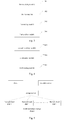
- Fig. 1 is a schematic flowchart of a data writing method provided in an embodiment of the present application, including the following operations.
- S101 receiving to-be-written data sent by a client in a distributed object storage cluster.
- the to-be-written data is sent by the client to a storage server specified by the metadata server after the client sends a data write request to the metadata server in the distributed object storage cluster.
- the process of sending to-be-written data by a client may include:
- S102 dividing the to-be-written data into a plurality of pieces of sub-data, and determining a sequence number of each piece of sub-data.
- the to-be-written data is S
- S is divided into a plurality of pieces of sub-data, and the sequence number of each piece of sub-data is determined.
- the to-be-written data may be equally divided into a plurality of pieces of sub-data.
- the equal division is beneficial to balance storage resources of the network hard disks.
- the to-be-written data may also be divided according to other ways, which is not limited here.
- the equal division of the to-be-written data into a plurality of pieces of sub-data may include:
- the number of pieces of sub-data into which the to-be-written data is to be divided may be determined according to the number of network hard disks in the distributed object storage cluster, and the to-be-written data is equally divided into the determined number of pieces of sub-data.
- the to-be-written data S may be equally divided into 4 pieces of sub-data.
- the to-be-written data S it is determined whether the to-be-written data S can be equally divided. If so, the to-be-written data S is equally divided into 4 pieces of sub-data directly. If not, a supplementary bit is added at the end of the to-be-written data S, so that the to-be-written data S with the supplemental bit added can be equally divided; and the to-be-written data S with the supplemental bit added is equally divided into 4 pieces of sub-data.
- the supplement bit may be "0" or others, which is not limited here.
- sequence numbers of all pieces of sub-data are assumed to be determined respectively as: S1, S2, S3, S4.
- S1 is written into a network hard disk A1
- S2 is written into a network hard disk A2
- S3 is written into a network hard disk A3,
- S4 is written into a network hard disk A4.
- A1, A2, A3, and A4 are identification information of four network hard disks, respectively.
- S104 for each piece of sub-data of the to-be-written data, sending a correspondence between the sequence number of the piece of sub-data and the identification information of a network hard disk into which the piece of sub-data is written to the metadata server in the distributed object storage cluster.
- S1-A1, S2-A2, S3-A3, and S4-A4 is sent to the metadata server.
- the correspondence between the sequence number of the piece of the sub-data and the identification information of the network hard disk into which the piece of sub-data is written belongs to the metadata information of the to-be-written data.
- the metadata server may store identification information of data, metadata information of the data, and a correspondence of address information of a storage server and the data.
- a preset data protection algorithm may be performed on the plurality of pieces of sub-data to determine the validation data of the to-be-written data; and the validation data is written into a corresponding network hard disk.
- a correspondence between the validation data and the to-be-written data, and a correspondence between the validation data and the identification information of the network hard disk into which the validation data is written are sent to the metadata server.
- the EC algorithm is performed on the plurality of sub-data, to obtain the validation data. It should be noted that, in order to perform the EC algorithm, it is required to ensure that the data amounts of the pieces of sub-data are equal, that is, it is required to equally divide the data. Further, the number of the divided pieces of sub-data and the number of the obtained pieces of validation data are preset. It is assumed that there are preset 5 divided pieces of sub-data and 2 obtained pieces of validation data.
- the validation data is written into the corresponding network hard disk, that is, the sum of the number of the divided pieces of sub-data and the preset number of the pieces of validation data cannot be greater than the number of network hard disks in the distributed object storage cluster.
- the distributed object storage cluster includes 10 network hard disks, the to-be-written data S is equally divided into 5 pieces of sub-data, and 2 pieces of validation data is SX and SY, wherein SX is written into the network hard disk A9, and SY is written into the network hard disk A10.
- the correspondence between the validation data and the to-be-written data, and the correspondence between the validation data and the identification information of the network hard disk into which the validation data is written are sent to the metadata server.
- an Object information table, a Strip information table, and a network hard disk information table may be stored in the metadata server.
- the Object information table can record Object_key (that is, identification information of data) and strip_id (strip_id indicating the sequence number of the sub-data) written by the Object data.
- the Strip information table can record strip id and its corresponding network hard disk wwn (that is, the correspondence between the sequence number of the piece of sub-data and the identification information of the network hard disk; the network hard disk wwn indicates the identification information of the network hard disk) and unit_key (reading the specified data in the network hard disk according to the unit key).
- the network hard disk information table can record the network hard disk wwn and the address of the network hard disk. Additionally, the address information of the storage server may also be obtained by the metadata server.
- Table 1 Field Key Remark object_key indicating identification information of data a set of strip_ids recording sequence numbers of the pieces of sub-data into which the data is divided object_size indicating the size of the data
- the format of the Strip information table may be shown in Table 2.
- Table 2 Field Key Remark strip_id indicating identification information of data a set of unit_keys unit_key a key on a network hard disk, the specified data in the network hard disk can be accessed according to this key wwn indicating identification information of the network hard disk
- EC_mode EC calculation mode M pieces of validation data is obtained according to N pieces of sub-data (the number of the pieces of sub-data and the number of the pieces of validation data are recorded)
- the format of the network hard disk information table may be shown in Table 3.
- the above formats of the Object information table, the Strip information table, and the network hard disk information table are only an exemplary description of partial content stored in the metadata server, and does not limit to the present application.
- a network hard disk is used.
- the characteristic of storing data in a network hard disk is that the space occupied by the stored data is the size of the data itself, for example, the space occupied by 100 KB of data in the network hard disk is 100 KB. Therefore, the waste of resources is avoided.
- the storage server receives the to-be-written data sent by the client, and divides the to-be-written data into a plurality of pieces of sub-data; and writes each piece of sub-data into a corresponding network hard disk, for each piece of sub-data, sends the correspondence between the sequence number of the piece of sub-data and the identification information of the network hard disk into which the piece of sub-data is written to the metadata server in the distributed object storage cluster.
- each of pieces of sub-data into which the to-be-written data is divided is written into a corresponding network hard disk.
- the storage characteristic of the network hard disk is that the space occupied by the stored data is the same as the size of the data itself.
- the plurality of pieces of sub-data in which the to-be-written data is divided are written into respective network hard disks, and do not occupy redundant space, thereby avoiding the waste of resources. Furthermore, there is no need to wait for the data merging with other data, thereby improving the efficiency of reading and writing data.
- Fig. 2 is a schematic flowchart of a data reading method provided in an embodiment of the present application, including: S101: receiving a data access request sent by a client in a distributed object storage cluster.
- the data access request carries a correspondence between the sequence numbers of each piece of sub-data of the to-be-accessed data and the identification information of a network hard disk.
- the data access request is sent by the client to a storage server determined by a metadata server in the distributed object storage cluster after the client sends a data read request to the metadata server.
- the process of sending a data access request by a client may include:
- S202 reading sub-data in respective network hard disks that store the respective pieces of sub-data according to the correspondence between the sequence number of each piece of sub-data of the to-be-accessed data and the identification information of a network hard disk, and combining the read sub-data into to-be-accessed data.
- the sub-data S1, S2, S3 and S4 are read in four network hard disks A1, A2, A3 and A4, and the read sub-data S1, S2, S3 and S4 are combined into the to-be-accessed data.
- S203 sending the combined to-be-accessed data to the client.
- the data access request may further carry the target data amount of the to-be-accessed data.
- the S203 may include determining whether there is a supplemental bit in the combined to-be-accessed data according to a difference between the data amount of the combined to-be-accessed data and the target data amount. If so, the data of the data amount corresponding to the difference is removed from the end of the combined to-be-accessed data; the to-be-accessed data with the data of the data amount corresponding to the difference removed is sent to the client.
- the target data amount of the to-be-accessed data S is assumed to be 398 KB. After combining the read sub-data S1, S2, S3, and S4 into the to-be-accessed data, the difference between the data amount of the combined to-be-accessed data and the target data amount is calculated.
- the supplementary bit is added at the end of the data S in order to be able to divide the data S equally, the difference between the data amount of the combined to-be-accessed data and the target data amount of S is not 0. Therefore, whether there is a supplemental bit in the combined to-be-accessed data may be determined according to the difference between the data amount of the combined to-be-accessed data and the target data amount.
- the data of the data amount corresponding to the difference is removed from the end of the combined to-be-accessed data, and the to-be-accessed data with the data of the data amount corresponding to the difference removed is sent to the client.
- the data access request may further carry a correspondence between the validation data and the to-be-accessed data, and a correspondence between the validation data and the identification information of a network hard disk into which the validation data is written.
- the S203 may include: according to the correspondence between the validation data and the to-be-accessed data and the correspondence between the validation data and the identification information of the network hard disk into which the validation data is written, obtaining the validation data of the to-be-accessed data stored in the network hard disk; determining whether the combined to-be-accessed data is complete according to the validation data; if so, sending the combined to-be-accessed data to the client; if not, generating sub-data that is missed in the to-be-accessed data by the validation data, combining the generated sub-data with the read sub-data into complete to-be-accessed data, and sending the complete to-be-accessed data to the client.
- the metadata server stores the correspondence between SX, SY and the to-be-written data S, and SX-A9 and SY-A10, wherein A9 is identification information of a network hard disk into which the validation data SX is written, and A10 is identification information of a network hard disk into which the validation data SY is written.
- the validation data SX and SY of the to-be-accessed data S stored in the network hard disk is obtained according to the correspondence between the validation data and the to-be-accessed data, and the correspondence between the validation data and the identification information of the network hard disks into which the validation data is written, that is, the correspondence between SX, SY and the to-be-written data S, SX -A9 and SY-A10.
- the combined to-be-accessed data is sent to the client; if not, the missing sub-data is generated by the validation data SX and SY, the generated sub-data and the sub-data read from the network hard disk are combined into complete to-be-accessed data S, and the complete to-be-accessed data S is sent to the client.
- the storage server receives the data access request sent by the client, wherein the data access request carries the correspondence between the sequence number of each piece of sub-data of the to-be-accessed data and the identification information of a network hard disk; according to the correspondence between the sequence number of each piece of sub-data of the to-be-accessed data and the identification information of a network hard disk, reads sub-data in respective network hard disks that store the respective pieces of sub-data, and combines the read sub-data into the to-be-accessed data; and sends the combined to-be-accessed data to the client.
- the storage server reads each piece of sub-data of the to-be-accessed data from the network hard disks according to the data access request from the client.
- the storage characteristic of the network hard disk is that the space occupied by the stored data is the same as the size of the data itself. Therefore, the application of the network hard disk to store data does not occupy the redundant space, thereby avoiding the waste of resources. Furthermore, there is no need to wait for merging the data with other data, thereby improving the efficiency of reading and writing data.
- an embodiment of the present application further provides a data writing apparatus and reading apparatus.
- Fig. 3 is a schematic structural diagram of a data writing apparatus provided in an embodiment of the present application, including the following modules.
- a first receiving module 301 is configured for receiving to-be-written data sent by a client in the distributed object storage cluster, wherein the to-be-written data is sent by the client to a storage server specified by a metadata server in the distributed object storage cluster after the client sends a data write request to the metadata server.
- a division module 302 is configured for dividing the to-be-written data into a plurality of pieces of sub-data, and determining a sequence number of each piece of sub-data.
- the division module 302 is specifically configured for equally dividing the to-be-written data into a plurality of pieces of sub-data.
- the division module 302 may include a determination submodule and a first division submodule (not shown).
- the determination submodule is configured for determining the number of pieces of sub-data into which the to-be-written data is to be equally divided, according to the number of the network hard disks in the distributed object storage cluster.
- the first division submodule is configured for equally dividing the to-be-written data into the determined number of pieces of sub-data.
- the division module 302 may include a first determination submodule, an adding submodule and a second division submodule (not shown).
- the first determination submodule is configured for determining whether the to-be-written data can be equally divided; if the to-be-written data cannot be equally divided, triggering an adding submodule; or if the to-be-written data can be equally divided, triggering the first division submodule.
- the adding submodule is configured for adding a supplemental bit at the end of the to-be-written data, so that the to-be-written data with the supplemental bit added can be equally divided.
- the second division submodule is configured for equally dividing the to-be-written data with the supplemental bit added into the plurality of pieces of sub-data.
- a first writing module 303 is configured for writing each piece of sub-data into a corresponding network hard disk.
- a first sending module 304 is configured for, for each piece of sub-data of the to-be-written data, sending a correspondence between the sequence number of the piece of sub-data and identification information of a network hard disk into which the piece of sub-data is written to the metadata server in the distributed object storage cluster.
- the apparatus may further include an operation module, a second writing module, and a second sending module (not shown).
- the operation module is configured for performing a preset data protection algorithm on the plurality of pieces of sub-data, to determine validation data of the to-be-written data.
- the second writing module is configured for writing the validation data into a corresponding network hard disk.
- the second sending module is configured for sending to the metadata server a correspondence between the validation data and the to-be-written data, and a correspondence between the validation data and identification information of a network hard disk into which the validation data is written.
- the storage server receives the to-be-written data sent by the client, and divides the to-be-written data into a plurality of pieces of sub-data; and writes each piece of sub-data into a corresponding network hard disk; for each piece of sub-data, sends a correspondence between a sequence number of the piece of sub-data and identification information of a network hard disk into which the piece of sub-data is written to the metadata server in the distributed object storage cluster.
- each of pieces of sub-data into which the to-be-written data is divided is written into a corresponding network hard disk.
- the storage characteristic of the network hard disk is that the space occupied by the stored data is the same as the size of the data itself.
- the plurality of pieces of sub-data into which the to-be-written data is divided are written into respective network hard disks, which does not occupy redundant space, thereby avoiding the waste of resources. Furthermore, there is no need to wait for merging the data with other data, thereby improving the efficiency of reading and writing data.
- Fig. 4 is a schematic structural diagram of a data reading apparatus provided in an embodiment of the present application, including the following modules.
- a second receiving module 401 is configured for receiving a data access request sent by a client in the distributed object storage cluster, wherein the data access request carries a correspondence between a sequence number of each piece of sub-data of to-be-accessed data and identification information of a network hard disk, wherein the data access request is sent by the client to a storage server specified by a metadata server in the distributed object storage cluster after the client sends a data read request to the metadata server;
- a combination module 402 is configured for reading sub-data in respective network hard disks that store the respective pieces of sub-data according to the correspondence between a sequence number of each piece of sub-data of the to-be-accessed data and identification information of a network hard disk, and combining the read sub-data into to-be-accessed data;
- a third sending module 403 is configured for sending the combined to-be-accessed data to the client.
- the data access request further carries a target data amount of the to-be-accessed data.
- the third sending module 403 may include a second determination submodule, a removing submodule, and a first sending submodule (not shown).
- the second determination submodule is configured for determining whether a supplemental bit exists in the combined to-be-accessed data according to a difference between a data amount of the combined to-be-accessed data and the target data amount; if the supplemental bit exists in the combined to-be-accessed data, triggering a removing submodule.
- the removing submodule is configured for removing data of a data amount corresponding to the difference from the end of the combined to-be-accessed data.
- the first sending submodule is configured for sending to-be-accessed data with the data of the data amount corresponding to the difference removed to the client.
- the data access request may further carry a correspondence between validation data and the to-be-accessed data, and a correspondence between the validation data and the identification information of a network hard disk into which the validation data is written.
- the third sending module 403 may include an obtaining submodule, a third determination submodule, a second sending submodule, and a third sending submodule (not shown).
- the obtaining submodule is configured for obtaining the validation data of the to-be-accessed data stored in a network hard disk according to the correspondence between the validation data and the to-be-accessed data, and the correspondence between the validation data and the identification information of the network hard disk into which the validation data is written.
- the third determination sub-module is configured for determining whether the combined to-be-accessed data is complete according to the validation data; if the combined to-be-accessed data is complete, triggering a second sending submodule, or if the combined to-be-accessed data is not complete, triggering a third sending submodule.
- the second sending module is configured for sending the combined to-be-accessed data to the client.
- the third sending submodule is configured for generating sub-data that is missed in the to-be-accessed data by the validation data, combining the generated sub-data and the read sub-data into complete to-be-accessed data, and sending the complete to-be-accessed data to the client.
- the storage server receives a data access request sent by the client, wherein the data access request carries a correspondence between a sequence number of each piece of sub-data of the to-be-accessed data and identification information of a network hard disk; according to the correspondence between a sequence number of each piece of sub-data of the to-be-accessed data and identification information of a network hard disk, reads sub-data in respective network hard disks that store the respective pieces of sub-data, and combines the read sub-data into the to-be-accessed data; sends the combined to-be-accessed data to the client.
- the storage server reads each piece of sub-data of the to-be-accessed data from the network hard disks according to the data access request from the client.
- the storage characteristic of the network hard disk is that the space occupied by the stored data is the same as the size of the data itself. Therefore, the application of the network hard disk to store data does not occupy redundant space, thereby avoiding the waste of resources. Futhermore, there is no need to wait for merging the data with other data, thereby improving the efficiency of reading and writing data.
- Fig. 5 is a schematic structural diagram of a distributed object storage cluster provided by an embodiment of the present disclosure.
- the distributed object storage cluster includes a storage server, a client, a metadata server, and N network hard disks (network hard disk 1, network hard disk 2isingnetwork hard drive N).
- the client is configured for sending a data write request to the metadata server; and sending the to-be-written data to a storage server specified by the metadata server.
- the metadata server is configured for specifying a storage server that receives the to-be-written data sent by the client according to the data write request sent by the client.
- the storage server is configured for receiving the to-be-written data sent by the client; dividing the to-be-written data into a plurality of pieces of sub-data, and determining a sequence number of each piece of sub-data; writing each piece of sub-data into a corresponding network hard disk; and for each piece of sub-data of the to-be-written data, sending a correspondence between the sequence number of the piece of sub-data and identification information of a network hard disk into which the piece of sub-data is written to the metadata server.
- the network hard disk is configured for writing each piece of sub-data of the to-be-written data.
- the storage server receives the to-be-written data sent by the client, and divides the to-be-written data into a plurality of pieces of sub-data; and writes each piece of sub-data into a corresponding network hard disk; for each piece of sub-data, sends the correspondence between the sequence number of the piece of sub-data and the identification information of a network hard disk into which the piece of sub-data is written to the metadata server in the distributed object storage cluster.
- each of pieces of sub-data into which the to-be-written data is divided is written into a corresponding network hard disk.
- the storage characteristic of the network hard disk is that the space occupied by the stored data is the same as the size of the data itself.
- the plurality of pieces of sub-data into which the to-be-written data is divided are written into a plurality of network hard disks, which does not occupy redundant space, thereby avoiding the waste of resources. Futhermore, there is no need to wait for merging the data with other data, thereby improving the efficiency of reading and writing data.
- the client in the distributed object storage cluster provided in Fig. 5 , is configured for sending a data read request to the metadata server; and sending a data access request to a storage server determined by the metadata server.
- the metadata server is configured for determining a storage server that receives the data access request sent by the client according to the data read request sent by the client.
- the storage server is configured for receiving the data access request sent by the client, wherein the data access request carries a correspondence between a sequence number of each piece of sub-data of the to-be-accessed data and identification information of a network hard disk; reading sub-data in respective network hard disks that store the respective pieces of sub-data according to the correspondence between a sequence number of each piece of sub-data of the to-be-accessed data and identification information of a network hard disk, and combining the read sub-data into to-be-accessed data; sending the combined to-be-accessed data to the client.
- the network hard disk is configured for storing each piece of sub-data of the to-be-accessed data.
- the storage server receives the data access request sent by the client, the data access request carries a correspondence between a sequence number of each piece of sub-data of the to-be-accessed data and identification information of a network hard disk; according to the correspondence between a sequence number of each piece of sub-data of the to-be-accessed data and identification information of a network hard disk, reads sub-data in respective network hard disks that store the respective pieces of sub-data, and combines the read sub-data into the to-be-accessed data; sends the combined to-be-accessed data to the client.
- the storage server reads each piece of sub-data of the to-be-accessed data from the network hard disk according to the data access request from the client.
- the storage characteristic of the network hard disk is that the space occupied by the stored data is the same as the size of the data itself. Therefore, the application of the network hard disk to store data does not occupy redundant space, thereby avoiding the waste of resources. Furthermore, there is no need to wait for merging the data with other data, thereby improving the efficiency of reading and writing data.
- An embodiment of the present application further provides a storage server, as shown in Fig. 6 , including a housing 601, a processor 602, a memory 603, a circuit board 604, and a power circuit 605, wherein the circuit board 604 is disposed within a space enclosed by the housing 601; the processor 602 and the memory 603 are disposed on the circuit board 604; the power circuit 605 is configured for supplying power to various circuits or devices of the storage server; the memory 603 is configured for storing an executable program code; and the processor 602 is configured for executing a program corresponding to the executable program code by reading the executable program code stored in the memory 603, so as to execute the data writing method including:
- the storage server receives the to-be-written data sent by the client, and divides the to-be-written data into a plurality of pieces of sub-data; and writes each piece of sub-data into a corresponding network hard disk; for each piece of sub-data, sends a correspondence between a sequence number of the piece of sub-data and identification information of a network hard disk into which the piece of sub-data is written to the metadata server in the distributed object storage cluster.
- each of pieces of sub-data into which the to-be-written data is divided is written into a corresponding network hard disk.
- the storage characteristic of the network hard disk is that the space occupied by the stored data is the same as the size of the data itself.
- the plurality of pieces of sub-data into which the to-be-written data is divided are written into respective network hard disks, which does not occupy redundant space, thereby avoiding the waste of resources. Furthermore, there is no need to wait for merging the data with other data, thereby improving the efficiency of reading and writing data.
- An embodiment of the present application further provides executable a program code, wherein the executable program code performs a data writing method when being executed.
- the method includes:
- the storage server receives the to-be-written data sent by the client, and divides the to-be-written data into a plurality of pieces of sub-data; and writes each piece of sub-data into a corresponding network hard disk; for each piece of sub-data, sends a correspondence between a sequence number of the piece of sub-data and identification information of a network hard disk into which the piece of sub-data is written to the metadata server in the distributed object storage cluster.
- each of pieces of sub-data into which the to-be-written data is divided is written into a corresponding network hard disk.
- the storage characteristic of the network hard disk is that the space occupied by the stored data is the same as the size of the data itself.
- the plurality of pieces of sub-data into which the to-be-written data is divided are written into respective network hard disks, which does not occupy redundant space, thereby avoiding the waste of resources. Furthermore, there is no need to wait for merging the data with other data, thereby improving the efficiency of reading and writing data.
- An embodiment of the present application further provides a storage medium, wherein the storage medium is configured for storing an executable program code that performs a data writing method when being executed.
- the method includes:
- the storage server receives the to-be-written data sent by the client, and divides the to-be-written data into a plurality of pieces of sub-data; and writes each piece of sub-data into a corresponding network hard disk; for each piece of sub-data, sends a correspondence between a sequence number of the piece of sub-data and identification information of a network hard disk into which the piece of sub-data is written to the metadata server in the distributed object storage cluster.
- each of pieces of sub-data into which the to-be-written data is divided is written into a corresponding network hard disk.
- the storage characteristic of the network hard disk is that the space occupied by the stored data is the same as the size of the data itself.
- the plurality of pieces of sub-data into which the to-be-written data is divided are written into respective network hard disks, which does not occupy redundant space, thereby avoiding the waste of resources. Furthermore, there is no need to wait for merging the data with other data, thereby improving the efficiency of reading and writing data.
- An embodiment of the present application further provides a storage server, as shown in Fig. 6 , including a housing 601, a processor 602, a memory 603, a circuit board 604, and a power circuit 605, wherein the circuit board 604 is disposed within a space enclosed by the housing 601, the processor 602 and the memory 603 are disposed on the circuit board 604; the power circuit 605 is configured for supplying power to various circuits or devices of the storage server; the memory 603 is configured for storing executable program code; and the processor 602 is configured for executing a program corresponding to the executable program code by reading the executable program code stored in the memory 603, so as to execute the data reading method, the method including:
- the storage server receives the to-be-written data sent by the client, and divides the to-be-written data into a plurality of pieces of sub-data; and writes each piece of sub-data into a corresponding network hard disk; for each piece of sub-data, sends a correspondence between a sequence number of the piece of sub-data and identification information of a network hard disk into which the piece of sub-data is written to the metadata server in the distributed object storage cluster.
- each of pieces of sub-data into which the to-be-written data is divided is written into a corresponding network hard disk.
- the storage characteristic of the network hard disk is that the space occupied by the stored data is the same as the size of the data itself.
- the plurality of pieces of sub-data into which the to-be-written data is divided are written into respective network hard disks, which does not occupy redundant space, thereby avoiding the waste of resources. Furthermore, there is no need to wait for merging the data with other data, thereby improving the efficiency of reading and writing data.
- An embodiment of the present application further provides an executable program code, wherein the executable program code performs a data reading method when being executed.
- the method includes:
- the storage server receives the to-be-written data sent by the client, and divides the to-be-written data into a plurality of pieces of sub-data; and writes each piece of sub-data into a corresponding network hard disk; for each piece of sub-data, sends a correspondence between a sequence number of the piece of sub-data and identification information of a network hard disk into which the piece of sub-data is written to the metadata server in the distributed object storage cluster.
- each of pieces of sub-data into which the to-be-written data is divided is written into a corresponding network hard disk.
- the storage characteristic of the network hard disk is that the space occupied by the stored data is the same as the size of the data itself.
- the plurality of pieces of sub-data into which the to-be-written data is divided are written into respective network hard disks, which does not occupy redundant space, thereby avoiding the waste of resources. Furthermore, there is no need to wait for merging the data with other data, thereby improving the efficiency of reading and writing data.
- An embodiment of the present application further provides a storage medium, wherein the storage medium is configured for storing an executable program code that performs a data reading method when being executed.
- the method includes:
- the storage server receives the to-be-written data sent by the client, and divides the to-be-written data into a plurality of pieces of sub-data; and writes each piece of sub-data into a corresponding network hard disk; for each piece of sub-data, sends a correspondence between a sequence number of the piece of sub-data and identification information of a network hard disk into which the piece of sub-data is written to the metadata server in the distributed object storage cluster.
- each of pieces of sub-data into which the to-be-written data is divided is written into a corresponding network hard disk.
- the storage characteristic of the network hard disk is that the space occupied by the stored data is the same as the size of the data itself.
- the plurality of pieces of sub-data into which the to-be-written data is divided are written into respective network hard disks, which does not occupy redundant space, thereby avoiding the waste of resources. Furthermore, there is no need to wait for merging the data with other data, thereby improving the efficiency of reading and writing data.
Landscapes
- Engineering & Computer Science (AREA)
- Theoretical Computer Science (AREA)
- Physics & Mathematics (AREA)
- General Engineering & Computer Science (AREA)
- General Physics & Mathematics (AREA)
- Human Computer Interaction (AREA)
- Software Systems (AREA)
- Computer Networks & Wireless Communication (AREA)
- Signal Processing (AREA)
- Computer Security & Cryptography (AREA)
- Information Retrieval, Db Structures And Fs Structures Therefor (AREA)
- Computer And Data Communications (AREA)
Abstract
Description
- The present application claims the priority to a Chinese Patent Application No.
201610351615.8 - The present application relates to the technical field of cloud storage, and in particular, to a data writing method and apparatus, a data reading method and apparatus, and a distributed object storage cluster.
- Generally, a storage space in a storage device is pre-divided into a plurality of sub-storage spaces with a specific size, for example, a 100 M storage space is divided into 30 M, 30 M, and 40 M sub-storage spaces. In this case, in writing data into the storage device, the data can be written into a certain storage space of the storage device, for example, the 10 M of data is written into the 30 M sub-storage space of the storage device. However, during the writing process, the 10 M of data will occupy the 30 M storage space, and other data cannot be written into the 30 M storage space, thereby causing waste of resources.
- In view of above drawbacks, in writing data currently, multiple small amounts of data are usually merged into one large amount of data and then written, for example, three 10 M files are merged and written into a 30 M sub-storage space, thereby avoiding the waste of resources. However, with this method, the writing of a 10 M file into a 30 M sub-storage space needs to wait for other files that can be merged. If there are no other files to be written yet, or currently the data sizes of other files to be written are not suitable, the efficiency of writing data will be very low.
- The object of the embodiments of the present application is to provide a data writing method and apparatus, a data reading method and apparatus, and a distributed object storage cluster, so as to improve the efficiency of writing and reading data.
- In order to achieve the above object, an embodiment of the present application discloses a data writing method, which is applicable to a storage server in a distributed object storage cluster, wherein the distributed object storage cluster at least further includes network hard disks, and the method includes:
- receiving to-be-written data sent by a client in the distributed object storage cluster, wherein the to-be-written data is sent by the client to a storage server specified by a metadata server in the distributed object storage cluster after the client sends a data write request to the metadata server;
- dividing the to-be-written data into a plurality of pieces of sub-data, and determining a sequence number of each piece of sub-data;
- writing each piece of sub-data into a corresponding network hard disk; and
- for each piece of sub-data of the to-be-written data, sending a correspondence between the sequence number of the piece of sub-data and identification information of a network hard disk into which the piece of sub-data is written to the metadata server in the distributed object storage cluster.
- Optionally, dividing the to-be-written data into a plurality of pieces of sub-data may include:
equally dividing the to-be-written data into a plurality of pieces of sub-data. - Optionally, equally dividing the to-be-written data into a plurality of pieces sub-data may include:
- determining the number of pieces of sub-data into which the to-be-written data is to be equally divided, according to the number of the network hard disks in the distributed object storage cluster; and
- equally dividing the to-be-written data into the determined number of pieces of sub-data.
- Optionally, equally dividing the to-be-written data into a plurality of pieces sub-data may include:
- determining whether the to-be-written data can be equally divided; and
- if the to-be-written data cannot be equally divided, adding a supplemental bit at the end of the to-be-written data, so that the to-be-written data with the supplemental bit added can be equally divided, and equally dividing the to-be-written data with the supplemental bit added into the plurality of pieces of sub-data.
- Optionally, the method may further include:
- performing a preset data protection algorithm on the plurality of pieces of sub-data, to determine validation data of the to-be-written data;
- writing the validation data into a corresponding network hard disk;
- sending to the metadata server a correspondence between the validation data and the to-be-written data, and a correspondence between the validation data and identification information of a network hard disk into which the validation data is written.
- In order to achieve the above object, an embodiment of the present application discloses a data reading method, which is applicable to a storage server in a distributed object storage cluster, wherein the distributed object storage cluster at least further includes network hard disks, and the method includes:
- receiving a data access request sent by a client in the distributed object storage cluster, wherein the data access request carries a correspondence between a sequence number of each piece of sub-data of to-be-accessed data and identification information of a network hard disk, wherein the data access request is sent by the client to a storage server determined by a metadata server in the distributed object storage cluster after the client sends a data read request to the metadata server;
- reading sub-data in respective network hard disks that store the respective pieces of sub-data according to the correspondence between a sequence number of each piece of sub-data of the to-be-accessed data and identification information of a network hard disk, and combining the read sub-data into to-be-accessed data; and
- sending the combined to-be-accessed data to the client.
- Optionally, the data access request further carries a target data amount of the to-be-accessed data.
- Sending the combined to-be-accessed data to the client includes:
- determining whether a supplemental bit exists in the combined to-be-accessed data according to a difference between a data amount of the combined to-be-accessed data and the target data amount;
- if the supplemental bit exists in the combined to-be-accessed data, removing data of a data amount corresponding to the difference from the end of the combined to-be-accessed data; and
- sending to-be-accessed data with the data of the data amount corresponding to the difference removed to the client.
- Optionally, the data access request further carries a correspondence between validation data and the to-be-accessed data, and a correspondence between the validation data and identification information of a network hard disk into which the validation data is written.
- Sending the combined to-be-accessed data to the client includes:
- obtaining the validation data of the to-be-accessed data stored in a network hard disk according to the correspondence between the validation data and the to-be-accessed data, and the correspondence between the validation data and the identification information of the network hard disk into which the validation data is written;
- determining whether the combined to-be-accessed data is complete according to the validation data;
- if the combined to-be-accessed data is complete, sending the combined to-be-accessed data to the client; and
- if the combined to-be-accessed data is not complete, generating sub-data that is missed in the to-be-accessed data by the validation data, combining the generated sub-data and the read sub-data into complete to-be-accessed data, and sending the complete to-be-accessed data to the client.
- In order to achieve the above object, an embodiment of the present application discloses a data writing apparatus, which is applicable to a storage server in a distributed object storage cluster, wherein the distributed object storage cluster at least further includes network hard disks, and the apparatus includes:
- a first receiving module, configured for receiving to-be-written data sent by a client in the distributed object storage cluster, wherein the to-be-written data is sent by the client to a storage server specified by a metadata server in the distributed object storage cluster after the client sends a data write request to the metadata server;
- a division module, configured for dividing the to-be-written data into a plurality of pieces of sub-data, and determining a sequence number of each piece of sub-data;
- a first writing module, configured for writing each piece of sub-data into a corresponding network hard disk; and
- a first sending module, configured for, for each piece of sub-data of the to-be-written data, sending a correspondence between the sequence number of the piece of sub-data and identification information of a network hard disk into which the piece of sub-data is written to the metadata server in the distributed object storage cluster.
- Optionally, the division module may be configured for:
equally dividing the to-be-written data into a plurality of pieces of sub-data. - Optionally, the division module may include:
- a determination submodule, configured for determining the number of pieces of sub-data into which the to-be-written data is to be equally divided, according to the number of the network hard disks in the distributed object storage cluster;
- a first division submodule, configured for equally dividing the to-be-written data into the determined number of pieces of sub-data.
- Optionally, the division module may include:
- a first determination submodule, configured for determining whether the to-be-written data can be equally divided; if the to-be-written data cannot be equally divided, triggering an adding submodule;
- the adding submodule, configured for adding a supplemental bit at the end of the to-be-written data, so that the to-be-written data with the supplemental bit added can be equally divided; and
- a second division submodule, configured for equally dividing the to-be-written data with the supplemental bit added into the plurality of pieces of sub-data.
- Optionally, the apparatus may further include:
- an operation module, configured for performing a preset data protection algorithm on the plurality of pieces of sub-data, to determine validation data of the to-be-written data;
- a second writing module, configured for writing the validation data into a corresponding network hard disk; and
- a second sending module, configured for sending to the metadata server a correspondence between the validation data and the to-be-written data, and a correspondence between the validation data and identification information of a network hard disk into which the validation data is written.
- In order to achieve the above object, an embodiment of the present application further discloses a distributed object storage cluster, including a client, a metadata server, network hard disks, and the above storage server (or a storage server including the above data writing apparatus), wherein,
the client is configured for sending a data write request to the metadata server; and sending to-be-written data to a storage server specified by the metadata server;
the metadata server is configured for specifying a storage server that receives the to-be-written data sent by the client according to the data write request sent by the client;
the storage server is configured for receiving the to-be-written data sent by the client; dividing the to-be-written data into a plurality of pieces of sub-data, and determining a sequence number of each piece of sub-data; writing each piece of sub-data into a corresponding network hard disk; and for each piece of sub-data of the to-be-written data, sending a correspondence between the sequence number of the piece of sub-data and identification information of a network hard disk into which the piece of sub-data is written to the metadata server; and
the network hard disk is configured for writing each piece of sub-data of the to-be-written data. - In order to achieve the above object, an embodiment of the present application discloses a data reading apparatus, which is applicable to a storage server in a distributed object storage cluster, wherein the distributed object storage cluster at least further includes network hard disks, and the method includes:
- a second receiving module, configured for receiving a data access request sent by a client in the distributed object storage cluster, wherein the data access request carries a correspondence between a sequence number of each piece of sub-data of to-be-accessed data and identification information of a network hard disk, wherein the data access request is sent by the client to a storage server specified by a metadata server in the distributed object storage cluster after the client sends a data read request to the metadata server;
- a combination module, configured for reading sub-data in respective network hard disks that store the respective pieces of sub-data according to the correspondence between a sequence number of each piece of sub-data of the to-be-accessed data and identification information of a network hard disk, and combining the read sub-data into to-be-accessed data; and
- a third sending module, configured for sending the combined to-be-accessed data to the client.
- Optionally, the data access request further carries a target data amount of the to-be-accessed data.
- The third sending module may include:
- a second determination submodule, configured for determining whether a supplemental bit exists in the combined to-be-accessed data according to a difference between a data amount of the combined to-be-accessed data and the target data amount; if the supplemental bit exists in the combined to-be-accessed data, triggering a removing submodule;
- the removing submodule, configured for removing data of a data amount corresponding to the difference from the end of the combined to-be-accessed data; and
- a first sending submodule, configured for sending to-be-accessed data with the data of the data amount corresponding to the difference removed to the client.
- Optionally, the data access request further carries a correspondence between validation data and the to-be-accessed data, and a correspondence between the validation data and identification information of a network hard disk into which the validation data is written.
- The third sending module may include:
- an obtaining submodule, configured for obtaining the validation data of the to-be-accessed data stored in a network hard disk according to the correspondence between the validation data and the to-be-accessed data, and the correspondence between the validation data and the identification information of the network hard disk into which the validation data is written;
- a third determination submodule, configured for determining whether the combined to-be-accessed data is complete according to the validation data; if the combined to-be-accessed data is complete, triggering a second sending submodule, or if the combined to-be-accessed data is not complete, triggering a third sending submodule;
- the second sending submodule, configured for sending the combined to-be-accessed data to the client; and
- the third sending submodule, configured for generating sub-data that is missed in the to-be-accessed data by the validation data, combining the generated sub-data and the read sub-data into complete to-be-accessed data, and sending the complete to-be-accessed data to the client.
- In order to achieve the above object, an embodiment of the present application further discloses a distributed object storage cluster, including a client, a metadata server, a network hard disk, and the above storage server (or a storage server including the above data reading apparatus), wherein,
the client is configured for sending a data read request to the metadata server; and sending a data access request to a storage server determined by the metadata server;
the metadata server is configured for determining a storage server that receives the data access request sent by the client according to the data read request sent by the client;
the storage server is configured for receiving the data access request sent by the client, wherein the data access request carries a correspondence between a sequence number of each piece of sub-data of the to-be-accessed data and identification information of a network hard disk; reading sub-data in respective network hard disks that store the respective pieces of sub-data according to the correspondence between a sequence number of each piece of sub-data of the to-be-accessed data and identification information of a network hard disk, and combining the read sub-data into to-be-accessed data; sending the combined to-be-accessed data to the client; and
the network hard disk is configured for storing each piece of sub-data of the to-be-accessed data. - In order to achieve the above object, an embodiment of the present application further discloses a storage server, including a housing, a processor, a memory, a circuit board, and a power circuit, wherein the circuit board is disposed within a space enclosed by the housing; the processor and the memory are disposed on the circuit board; the power circuit is configured for supplying power to various circuits or devices of the storage server; the memory is configured for storing an executable program code; and the processor is configured for executing a program corresponding to the executable program code by reading the executable program code stored in the memory, so as to perform the above data writing method.
- In order to achieve the above object, an embodiment of the present application further provides an executable program code, wherein the executable program code is performs the data writing method when being executed.
- In order to achieve the above object, an embodiment of the present application further provides a storage medium that stores an executable program code, wherein the executable program code performs the above data writing method when being executed.
- In order to achieve the above object, an embodiment of the present application further discloses a storage server, including a housing, a processor, a memory, a circuit board, and a power circuit, wherein the circuit board is disposed within a space enclosed by the housing; the processor and the memory are disposed on the circuit board; the power circuit is configured for supplying power to various circuits or devices of the storage server; the memory is configured for storing an executable program code; and the processor is configured for executing a program corresponding to the executable program code by reading the executable program code stored in the memory, so as to perform the above data reading method.
- In order to achieve the above object, an embodiment of the present application further provides an executable program code, wherein the executable program code performs the data reading method when being executed.
- In order to achieve the above object, an embodiment of the present application further provides a storage medium that stores an executable program code, wherein the executable program code performs the above data reading method when being executed.
- It can be seen from the above technical solutions, the storage server receives the to-be-written data sent by the client, and divides the to-be-written data into a plurality of pieces of sub-data; and writes each piece of sub-data into a corresponding network hard disk; for each piece of sub-data, sends a correspondence between a sequence number of the sub-data and identification information of a network hard disk into which the sub-data is written to the metadata server in the distributed object storage cluster. In the embodiments shown in the present application, each of pieces of sub-data into which the to-be-written data is divided is written into a corresponding network hard disk. The storage characteristic of the network hard disk is that the space occupied by the stored data is the same as the size of the data itself. Therefore, the plurality of pieces of sub-data into which the to-be-written data is divided are written into respective network hard disks, which does not occupy redundant space, thereby avoiding the waste of resources. Furthermore, there is no need to wait for merging the data with other data, thereby improving the efficiency of reading and writing data.
- Of course, the implementation of any product or method of the present application may not necessarily to achieve all of the advantages described above at the same time.
- In order to more clearly describe the technical solutions of the embodiments of the present application and in the prior art, drawings that need to be used in embodiments and the prior art will be briefly described below. Obviously, the drawings provided below are for only some embodiments of the present application; those skilled in the art can also obtain other drawings based on these drawings without any creative efforts.
-
Fig. 1 is a schematic flowchart of a data writing method provided in an embodiment of the present application; -
Fig. 2 is a schematic flowchart of a data reading method provided in an embodiment of the present application; -
Fig. 3 is a schematic structural diagram of a data writing apparatus provided in an embodiment of the present application; -
Fig. 4 is a schematic structural diagram of a data reading apparatus provided in an embodiment of the present application; -
Fig. 5 is a schematic structural view of a distributed object storage cluster provided in an embodiment of the present application; -
Fig. 6 is a schematic structural view of a storage server provided in an embodiment of the present application. - In order to make the objectives, technical solutions, and advantages of the present application clearer and more understandable, the present application will be described in more detail below with reference to the appended drawings and embodiments. Obviously, the described embodiments are only some, and not all, of the embodiments of the present application. All other embodiments obtained based on the embodiments of the present application by those skilled in the art without any creative efforts fall into the scope of protection defined by the present application.
- In order to solve the above technical problems, an embodiment of the present application provides a data writing and reading method, an apparatus, and a distributed object storage cluster. It should be noted that the data writing and reading method and apparatus provided by the embodiment of the present application are preferably applicable to a storage server in a distributed object storage cluster, and the distributed object storage cluster may further include a client, a metadata server, and a network hard disk.
- The network hard disk has the main function of data storage. The storage server has the main functions of caching data, operating data protection algorithm, writing data into and reading data from the network hard disk. The metadata server has the main functions of managing the name space of a file system, controlling the interaction between the client and the storage server, caching and synchronizing distributed metadata. The client can be understood as a user who needs to write or access data.
-
Fig. 1 is a schematic flowchart of a data writing method provided in an embodiment of the present application, including the following operations. - S101: receiving to-be-written data sent by a client in a distributed object storage cluster.
- The to-be-written data is sent by the client to a storage server specified by the metadata server after the client sends a data write request to the metadata server in the distributed object storage cluster.
- In an actual application, the process of sending to-be-written data by a client may include:
- 1. The client sends a data write request to the metadata server, wherein the data write request includes identification information of the to-be-written data.
Specifically, the identification information may be information that uniquely identifies the to-be-written data, such as a name, an ID number, and the like of the to-be-written data. - 2. The metadata server determines address information of a storage server according to the data write request sent by the client, and sends the determined address information of the storage server to the client (the process of specifying a storage server).
Specifically, the address information may be an IP address. The metadata server can specify a storage server based on information such as resource utilization of the storage server. - 3. The client sends the to-be-written data to the storage server according to the address information of the storage server determined by the metadata server.
- S102: dividing the to-be-written data into a plurality of pieces of sub-data, and determining a sequence number of each piece of sub-data.
- It is assumed that the to-be-written data is S, S is divided into a plurality of pieces of sub-data, and the sequence number of each piece of sub-data is determined.
- In the embodiment shown in the present application, the to-be-written data may be equally divided into a plurality of pieces of sub-data. The equal division is beneficial to balance storage resources of the network hard disks. Of course, the to-be-written data may also be divided according to other ways, which is not limited here.
- In the embodiment shown in the present application, the equal division of the to-be-written data into a plurality of pieces of sub-data may include:
- determining whether the to-be-written data can be equally divided;
- if so, equally dividing the to-be-written data into a plurality of pieces of sub-data directly;
- if not, adding a supplemental bit at the end of the to-be-written data, so that the to-be-written data with the supplemental bit added can be equally divided; and equally dividing the to-be-written data with the supplemental bit added into a plurality of pieces of sub-data.
- Specifically, in order to equally divide the to-be-written data S into a plurality of pieces of sub-data, the number of pieces of sub-data into which the to-be-written data is to be divided may be determined according to the number of network hard disks in the distributed object storage cluster, and the to-be-written data is equally divided into the determined number of pieces of sub-data.
- Assuming that the distributed object storage cluster includes 4 network hard disks, the to-be-written data S may be equally divided into 4 pieces of sub-data.
- First, it is determined whether the to-be-written data S can be equally divided. If so, the to-be-written data S is equally divided into 4 pieces of sub-data directly. If not, a supplementary bit is added at the end of the to-be-written data S, so that the to-be-written data S with the supplemental bit added can be equally divided; and the to-be-written data S with the supplemental bit added is equally divided into 4 pieces of sub-data. The supplement bit may be "0" or others, which is not limited here.
- The sequence numbers of all pieces of sub-data are assumed to be determined respectively as: S1, S2, S3, S4.
- S103: writing each piece of sub-data into a corresponding network hard disk.
- It is assumed that S1 is written into a network hard disk A1, S2 is written into a network hard disk A2, S3 is written into a network hard disk A3, and S4 is written into a network hard disk A4. A1, A2, A3, and A4 are identification information of four network hard disks, respectively.
- S104: for each piece of sub-data of the to-be-written data, sending a correspondence between the sequence number of the piece of sub-data and the identification information of a network hard disk into which the piece of sub-data is written to the metadata server in the distributed object storage cluster.
- The correspondence of S1-A1, S2-A2, S3-A3, and S4-A4 is sent to the metadata server.
- The correspondence between the sequence number of the piece of the sub-data and the identification information of the network hard disk into which the piece of sub-data is written belongs to the metadata information of the to-be-written data. The metadata server may store identification information of data, metadata information of the data, and a correspondence of address information of a storage server and the data.
- In practical applications, data loss often occurs due to a failure of a device. In this case, some data protection algorithms, such as an EC (Erasure Coding) algorithm, are usually performed on original data to obtain validation data. With this method, even if partial data is missed, the original data can be complemented based on the validation data.
- In another embodiment shown in the present application, a preset data protection algorithm may be performed on the plurality of pieces of sub-data to determine the validation data of the to-be-written data; and the validation data is written into a corresponding network hard disk. A correspondence between the validation data and the to-be-written data, and a correspondence between the validation data and the identification information of the network hard disk into which the validation data is written are sent to the metadata server.
- Assuming that the preset data protection algorithm is an EC algorithm, the EC algorithm is performed on the plurality of sub-data, to obtain the validation data. It should be noted that, in order to perform the EC algorithm, it is required to ensure that the data amounts of the pieces of sub-data are equal, that is, it is required to equally divide the data. Further, the number of the divided pieces of sub-data and the number of the obtained pieces of validation data are preset. It is assumed that there are preset 5 divided pieces of sub-data and 2 obtained pieces of validation data.
- The validation data is written into the corresponding network hard disk, that is, the sum of the number of the divided pieces of sub-data and the preset number of the pieces of validation data cannot be greater than the number of network hard disks in the distributed object storage cluster.
- It is assumed that the distributed object storage cluster includes 10 network hard disks, the to-be-written data S is equally divided into 5 pieces of sub-data, and 2 pieces of validation data is SX and SY, wherein SX is written into the network hard disk A9, and SY is written into the network hard disk A10.
- The correspondence between the validation data and the to-be-written data, and the correspondence between the validation data and the identification information of the network hard disk into which the validation data is written are sent to the metadata server.
- The correspondence between SX, SY and the to-be-written data S, and SX-A9 and SY-A10 are sent to the metadata server.
- In an actual application, an Object information table, a Strip information table, and a network hard disk information table may be stored in the metadata server. The Object information table can record Object_key (that is, identification information of data) and strip_id (strip_id indicating the sequence number of the sub-data) written by the Object data. The Strip information table can record strip id and its corresponding network hard disk wwn (that is, the correspondence between the sequence number of the piece of sub-data and the identification information of the network hard disk; the network hard disk wwn indicates the identification information of the network hard disk) and unit_key (reading the specified data in the network hard disk according to the unit key). The network hard disk information table can record the network hard disk wwn and the address of the network hard disk. Additionally, the address information of the storage server may also be obtained by the metadata server.
- The format of the Object information table may be shown in Table 1.
Table 1 Field Key Remark object_key indicating identification information of data a set of strip_ids recording sequence numbers of the pieces of sub-data into which the data is divided object_size indicating the size of the data - The format of the Strip information table may be shown in Table 2.
Table 2 Field Key Remark strip_id indicating identification information of data a set of unit_keys unit_key a key on a network hard disk, the specified data in the network hard disk can be accessed according to this key wwn indicating identification information of the network hard disk EC_mode EC calculation mode: M pieces of validation data is obtained according to N pieces of sub-data (the number of the pieces of sub-data and the number of the pieces of validation data are recorded) - The format of the network hard disk information table may be shown in Table 3.
Table 3 Field Key Remark wwn indicating identification information of a network hard disk IP address information of a network hard disk - It should be noted that the above formats of the Object information table, the Strip information table, and the network hard disk information table are only an exemplary description of partial content stored in the metadata server, and does not limit to the present application.
- In the solution provided by the present application, a network hard disk is used. The characteristic of storing data in a network hard disk is that the space occupied by the stored data is the size of the data itself, for example, the space occupied by 100 KB of data in the network hard disk is 100 KB. Therefore, the waste of resources is avoided.
- In the embodiment shown in
Fig. 1 , the storage server receives the to-be-written data sent by the client, and divides the to-be-written data into a plurality of pieces of sub-data; and writes each piece of sub-data into a corresponding network hard disk, for each piece of sub-data, sends the correspondence between the sequence number of the piece of sub-data and the identification information of the network hard disk into which the piece of sub-data is written to the metadata server in the distributed object storage cluster. In the embodiment shown in the present application, each of pieces of sub-data into which the to-be-written data is divided, is written into a corresponding network hard disk. The storage characteristic of the network hard disk is that the space occupied by the stored data is the same as the size of the data itself. Therefore, the plurality of pieces of sub-data in which the to-be-written data is divided are written into respective network hard disks, and do not occupy redundant space, thereby avoiding the waste of resources. Furthermore, there is no need to wait for the data merging with other data, thereby improving the efficiency of reading and writing data. -
Fig. 2 is a schematic flowchart of a data reading method provided in an embodiment of the present application, including:
S101: receiving a data access request sent by a client in a distributed object storage cluster. - The data access request carries a correspondence between the sequence numbers of each piece of sub-data of the to-be-accessed data and the identification information of a network hard disk. The data access request is sent by the client to a storage server determined by a metadata server in the distributed object storage cluster after the client sends a data read request to the metadata server.
- In an actual application, the process of sending a data access request by a client may include:
- 1. The client sends a data read request to the metadata server, wherein the data read request includes identification information of the to-be-accessed data.
Specifically, the identification information may be information that uniquely identifies the to-be-accessed data, such as a name, an ID number, and the like of the to-be-accessed data. - 2. The metadata server searches for the metadata information of the to-be-accessed data and the address information of a storage server corresponding to the to-be-accessed data according to the identification information of the to-be-accessed data in the data read request sent by the client, and sends the metadata information of the to-be-accessed data and the address information of the storage server corresponding to the to-be-accessed data to the client (the process of determining a storage server).
Specifically, the metadata server stores identification information of data, metadata information of the data, and a correspondence between address information of a storage server and the data. The metadata information may include a correspondence between the sequence number of each piece of sub-data of the to-be-accessed data and the identification information of a network hard disk, wherein the network hard disk is a network hard disk into which the sub-data is written. - 3. The client sends a data access request to the storage server corresponding to the to-be-accessed data according to the metadata information of the to-be-accessed data and the address information of the storage server corresponding to the to-be-accessed data returned by the metadata server.
Specifically, the data access request carries the correspondence between the sequence number of each piece of sub-data of the to-be-accessed data and the identification information of a network hard disk. It is assumed that the to-be-accessed data is S, and the metadata information of S includes the correspondences of S1-A1, S2-A2, S3-A3 and S4-A4, wherein S1, S2, S3, and S4 are the sequence number of all pieces of sub-data, respectively, and A1, A2, A3, and A4 are identification information of four network hard disks, respectively. - S202: reading sub-data in respective network hard disks that store the respective pieces of sub-data according to the correspondence between the sequence number of each piece of sub-data of the to-be-accessed data and the identification information of a network hard disk, and combining the read sub-data into to-be-accessed data.
- According to the correspondences of S1-A1, S2-A2, S3-A3 and S4-A4, the sub-data S1, S2, S3 and S4 are read in four network hard disks A1, A2, A3 and A4, and the read sub-data S1, S2, S3 and S4 are combined into the to-be-accessed data.
- S203: sending the combined to-be-accessed data to the client.
- As an implementation of the present application, the data access request may further carry the target data amount of the to-be-accessed data. In this case, the S203 may include determining whether there is a supplemental bit in the combined to-be-accessed data according to a difference between the data amount of the combined to-be-accessed data and the target data amount. If so, the data of the data amount corresponding to the difference is removed from the end of the combined to-be-accessed data; the to-be-accessed data with the data of the data amount corresponding to the difference removed is sent to the client.
- The target data amount of the to-be-accessed data S is assumed to be 398 KB. After combining the read sub-data S1, S2, S3, and S4 into the to-be-accessed data, the difference between the data amount of the combined to-be-accessed data and the target data amount is calculated.
- If in the process of writing the data S, the supplementary bit is added at the end of the data S in order to be able to divide the data S equally, the difference between the data amount of the combined to-be-accessed data and the target data amount of S is not 0. Therefore, whether there is a supplemental bit in the combined to-be-accessed data may be determined according to the difference between the data amount of the combined to-be-accessed data and the target data amount. When there is a supplemental bit in the combined to-be-accessed data, the data of the data amount corresponding to the difference is removed from the end of the combined to-be-accessed data, and the to-be-accessed data with the data of the data amount corresponding to the difference removed is sent to the client.
- Assuming that in the process of writing data S, a 2 KB data amount is added at the end of the data S, and the data amount of the combined to-be-accessed data is 400 KB, and the difference between the data amount of the combined to-be-accessed data and the target data amount is 2 KB. According to this difference, the 2 KB of data is removed from the end of the data S. The data S with the 2 KB of data removed is sent to the client.
- As an implementation of the present application, when the to-be-accessed data has corresponding validation data, the data access request may further carry a correspondence between the validation data and the to-be-accessed data, and a correspondence between the validation data and the identification information of a network hard disk into which the validation data is written.
- In this case, the S203 may include: according to the correspondence between the validation data and the to-be-accessed data and the correspondence between the validation data and the identification information of the network hard disk into which the validation data is written, obtaining the validation data of the to-be-accessed data stored in the network hard disk; determining whether the combined to-be-accessed data is complete according to the validation data; if so, sending the combined to-be-accessed data to the client; if not, generating sub-data that is missed in the to-be-accessed data by the validation data, combining the generated sub-data with the read sub-data into complete to-be-accessed data, and sending the complete to-be-accessed data to the client.
- It is assumed that there are 2 pieces of validation data SX and SY in the to-be-accessed data S, the metadata server stores the correspondence between SX, SY and the to-be-written data S, and SX-A9 and SY-A10, wherein A9 is identification information of a network hard disk into which the validation data SX is written, and A10 is identification information of a network hard disk into which the validation data SY is written.
- The validation data SX and SY of the to-be-accessed data S stored in the network hard disk is obtained according to the correspondence between the validation data and the to-be-accessed data, and the correspondence between the validation data and the identification information of the network hard disks into which the validation data is written, that is, the correspondence between SX, SY and the to-be-written data S, SX -A9 and SY-A10.
- It is determined whether the combined to-be-accessed data is complete according to the validation data SX and SY. Specifically, the EC algorithm, the cyclic check code and the like may be used to check whether the original data is complete.
- If so, the combined to-be-accessed data is sent to the client; if not, the missing sub-data is generated by the validation data SX and SY, the generated sub-data and the sub-data read from the network hard disk are combined into complete to-be-accessed data S, and the complete to-be-accessed data S is sent to the client.
- In the embodiment shown in
Fig. 2 of the present application, the storage server receives the data access request sent by the client, wherein the data access request carries the correspondence between the sequence number of each piece of sub-data of the to-be-accessed data and the identification information of a network hard disk; according to the correspondence between the sequence number of each piece of sub-data of the to-be-accessed data and the identification information of a network hard disk, reads sub-data in respective network hard disks that store the respective pieces of sub-data, and combines the read sub-data into the to-be-accessed data; and sends the combined to-be-accessed data to the client. In the embodiment shown in the present application, the storage server reads each piece of sub-data of the to-be-accessed data from the network hard disks according to the data access request from the client. The storage characteristic of the network hard disk is that the space occupied by the stored data is the same as the size of the data itself. Therefore, the application of the network hard disk to store data does not occupy the redundant space, thereby avoiding the waste of resources. Furthermore, there is no need to wait for merging the data with other data, thereby improving the efficiency of reading and writing data. - Corresponding to the above method embodiments, an embodiment of the present application further provides a data writing apparatus and reading apparatus.
-
Fig. 3 is a schematic structural diagram of a data writing apparatus provided in an embodiment of the present application, including the following modules. - A
first receiving module 301 is configured for receiving to-be-written data sent by a client in the distributed object storage cluster, wherein the to-be-written data is sent by the client to a storage server specified by a metadata server in the distributed object storage cluster after the client sends a data write request to the metadata server. - A
division module 302 is configured for dividing the to-be-written data into a plurality of pieces of sub-data, and determining a sequence number of each piece of sub-data. - In the embodiment shown in the present application, the
division module 302 is specifically configured for equally dividing the to-be-written data into a plurality of pieces of sub-data. - In the embodiment shown in the present application, the
division module 302 may include a determination submodule and a first division submodule (not shown). - The determination submodule is configured for determining the number of pieces of sub-data into which the to-be-written data is to be equally divided, according to the number of the network hard disks in the distributed object storage cluster.
- The first division submodule is configured for equally dividing the to-be-written data into the determined number of pieces of sub-data.
- In the embodiment shown in the present application, the
division module 302 may include a first determination submodule, an adding submodule and a second division submodule (not shown). - The first determination submodule is configured for determining whether the to-be-written data can be equally divided; if the to-be-written data cannot be equally divided, triggering an adding submodule; or if the to-be-written data can be equally divided, triggering the first division submodule.
- The adding submodule is configured for adding a supplemental bit at the end of the to-be-written data, so that the to-be-written data with the supplemental bit added can be equally divided.
- The second division submodule is configured for equally dividing the to-be-written data with the supplemental bit added into the plurality of pieces of sub-data.
- A
first writing module 303 is configured for writing each piece of sub-data into a corresponding network hard disk. - A
first sending module 304 is configured for, for each piece of sub-data of the to-be-written data, sending a correspondence between the sequence number of the piece of sub-data and identification information of a network hard disk into which the piece of sub-data is written to the metadata server in the distributed object storage cluster. - In the embodiment shown in the present application, the apparatus may further include an operation module, a second writing module, and a second sending module (not shown).
- The operation module is configured for performing a preset data protection algorithm on the plurality of pieces of sub-data, to determine validation data of the to-be-written data.
- The second writing module is configured for writing the validation data into a corresponding network hard disk.
- The second sending module is configured for sending to the metadata server a correspondence between the validation data and the to-be-written data, and a correspondence between the validation data and identification information of a network hard disk into which the validation data is written.
- In the embodiment shown in
Fig. 3 , the storage server receives the to-be-written data sent by the client, and divides the to-be-written data into a plurality of pieces of sub-data; and writes each piece of sub-data into a corresponding network hard disk; for each piece of sub-data, sends a correspondence between a sequence number of the piece of sub-data and identification information of a network hard disk into which the piece of sub-data is written to the metadata server in the distributed object storage cluster. In the embodiments shown in the present application, each of pieces of sub-data into which the to-be-written data is divided is written into a corresponding network hard disk. The storage characteristic of the network hard disk is that the space occupied by the stored data is the same as the size of the data itself. Therefore, the plurality of pieces of sub-data into which the to-be-written data is divided are written into respective network hard disks, which does not occupy redundant space, thereby avoiding the waste of resources. Furthermore, there is no need to wait for merging the data with other data, thereby improving the efficiency of reading and writing data. -
Fig. 4 is a schematic structural diagram of a data reading apparatus provided in an embodiment of the present application, including the following modules. - A
second receiving module 401 is configured for receiving a data access request sent by a client in the distributed object storage cluster, wherein the data access request carries a correspondence between a sequence number of each piece of sub-data of to-be-accessed data and identification information of a network hard disk, wherein the data access request is sent by the client to a storage server specified by a metadata server in the distributed object storage cluster after the client sends a data read request to the metadata server;
acombination module 402 is configured for reading sub-data in respective network hard disks that store the respective pieces of sub-data according to the correspondence between a sequence number of each piece of sub-data of the to-be-accessed data and identification information of a network hard disk, and combining the read sub-data into to-be-accessed data;
athird sending module 403 is configured for sending the combined to-be-accessed data to the client. - In the embodiment shown in the present application, the data access request further carries a target data amount of the to-be-accessed data. The
third sending module 403 may include a second determination submodule, a removing submodule, and a first sending submodule (not shown). - The second determination submodule is configured for determining whether a supplemental bit exists in the combined to-be-accessed data according to a difference between a data amount of the combined to-be-accessed data and the target data amount; if the supplemental bit exists in the combined to-be-accessed data, triggering a removing submodule.
- The removing submodule is configured for removing data of a data amount corresponding to the difference from the end of the combined to-be-accessed data.
- The first sending submodule is configured for sending to-be-accessed data with the data of the data amount corresponding to the difference removed to the client.
- In the embodiment shown in the present application, the data access request may further carry a correspondence between validation data and the to-be-accessed data, and a correspondence between the validation data and the identification information of a network hard disk into which the validation data is written. The
third sending module 403 may include an obtaining submodule, a third determination submodule, a second sending submodule, and a third sending submodule (not shown). - The obtaining submodule is configured for obtaining the validation data of the to-be-accessed data stored in a network hard disk according to the correspondence between the validation data and the to-be-accessed data, and the correspondence between the validation data and the identification information of the network hard disk into which the validation data is written.
- The third determination sub-module is configured for determining whether the combined to-be-accessed data is complete according to the validation data; if the combined to-be-accessed data is complete, triggering a second sending submodule, or if the combined to-be-accessed data is not complete, triggering a third sending submodule.
- The second sending module is configured for sending the combined to-be-accessed data to the client.
- The third sending submodule is configured for generating sub-data that is missed in the to-be-accessed data by the validation data, combining the generated sub-data and the read sub-data into complete to-be-accessed data, and sending the complete to-be-accessed data to the client.
- In the embodiment shown in
Fig. 4 of the present application, the storage server receives a data access request sent by the client, wherein the data access request carries a correspondence between a sequence number of each piece of sub-data of the to-be-accessed data and identification information of a network hard disk; according to the correspondence between a sequence number of each piece of sub-data of the to-be-accessed data and identification information of a network hard disk, reads sub-data in respective network hard disks that store the respective pieces of sub-data, and combines the read sub-data into the to-be-accessed data; sends the combined to-be-accessed data to the client. In the embodiment shown in the present application, the storage server reads each piece of sub-data of the to-be-accessed data from the network hard disks according to the data access request from the client. The storage characteristic of the network hard disk is that the space occupied by the stored data is the same as the size of the data itself. Therefore, the application of the network hard disk to store data does not occupy redundant space, thereby avoiding the waste of resources. Futhermore, there is no need to wait for merging the data with other data, thereby improving the efficiency of reading and writing data. -
Fig. 5 is a schematic structural diagram of a distributed object storage cluster provided by an embodiment of the present disclosure. The distributed object storage cluster includes a storage server, a client, a metadata server, and N network hard disks (networkhard disk 1, networkhard disk 2......network hard drive N). - In an embodiment of the present application, the client is configured for sending a data write request to the metadata server; and sending the to-be-written data to a storage server specified by the metadata server.
- The metadata server is configured for specifying a storage server that receives the to-be-written data sent by the client according to the data write request sent by the client.
- The storage server is configured for receiving the to-be-written data sent by the client; dividing the to-be-written data into a plurality of pieces of sub-data, and determining a sequence number of each piece of sub-data; writing each piece of sub-data into a corresponding network hard disk; and for each piece of sub-data of the to-be-written data, sending a correspondence between the sequence number of the piece of sub-data and identification information of a network hard disk into which the piece of sub-data is written to the metadata server.
- The network hard disk is configured for writing each piece of sub-data of the to-be-written data.
- The flow of the data writing method in the above embodiment includes:
- 1. The client sends a data write request to the metadata server. The data write request includes identification information of the to-be-written data.
- 2. The metadata server specifies a storage server that receives the to-be-written data sent by the client according to the data write request sent by the client.
The specific process may include: determining, by the metadata server, address information of a storage server according to the data write request sent by the client, and sending the determined address information of the storage server to the client. - 3. The client sends the to-be-written data to the storage server specified by the metadata server.
The specific process may include: sending, by the client, the to-be-written data to the storage server corresponding to the address information of the storage server determined by the metadata server. - 4. The storage server receives the to-be-written data sent by the client; divides the to-be-written data into a plurality of pieces of sub-data and determines the sequence number of each piece of sub-data; writes each piece of sub-data into a corresponding network hard disk; for each piece of sub-data of the to-be-written data, sends the correspondence between the sequence number of the piece of sub-data and the identification information of a network hard disk into which the piece of sub-data is written to the metadata server.
- In the above embodiment, the storage server receives the to-be-written data sent by the client, and divides the to-be-written data into a plurality of pieces of sub-data; and writes each piece of sub-data into a corresponding network hard disk; for each piece of sub-data, sends the correspondence between the sequence number of the piece of sub-data and the identification information of a network hard disk into which the piece of sub-data is written to the metadata server in the distributed object storage cluster. In the embodiment shown in the present application, each of pieces of sub-data into which the to-be-written data is divided is written into a corresponding network hard disk. The storage characteristic of the network hard disk is that the space occupied by the stored data is the same as the size of the data itself. Therefore, the plurality of pieces of sub-data into which the to-be-written data is divided are written into a plurality of network hard disks, which does not occupy redundant space, thereby avoiding the waste of resources. Futhermore, there is no need to wait for merging the data with other data, thereby improving the efficiency of reading and writing data.
- In another embodiment of the present application, in the distributed object storage cluster provided in
Fig. 5 , the client is configured for sending a data read request to the metadata server; and sending a data access request to a storage server determined by the metadata server. - The metadata server is configured for determining a storage server that receives the data access request sent by the client according to the data read request sent by the client.
- The storage server is configured for receiving the data access request sent by the client, wherein the data access request carries a correspondence between a sequence number of each piece of sub-data of the to-be-accessed data and identification information of a network hard disk; reading sub-data in respective network hard disks that store the respective pieces of sub-data according to the correspondence between a sequence number of each piece of sub-data of the to-be-accessed data and identification information of a network hard disk, and combining the read sub-data into to-be-accessed data; sending the combined to-be-accessed data to the client.
- The network hard disk is configured for storing each piece of sub-data of the to-be-accessed data.
- The flow of the data read method in the above embodiment includes:
- 1. The client sends a data read request to the metadata server. The data read request includes identification information of the to-be-accessed data.
- 2. The metadata server determines a storage server that receives the data access request sent by the client according to the data read request sent by the client.
The specific process may include: searching for, by the metadata server, metadata information of the to-be-accessed data and address information of a storage server corresponding to the to-be-accessed data according to the identification information of the to-be-accessed data in the data read request sent by the client, and sending the metadata information of the to-be-accessed data and the address information of the storage server corresponding to the to-be-accessed data to the client. The metadata information includes the correspondence between the sequence number of each piece of sub-data of the to-be-accessed data and the identification information of the network hard disk. - 3. The client sends the data access request to the storage server determined by the metadata server.
The specific process may include: sending, by the client, a data access request to a storage server corresponding to the to-be-accessed data according to the metadata information of the to-be-accessed data and the address information of the storage server corresponding to the to-be-accessed data returned by the metadata server. - 4. The storage server receives the data access request sent by the client, wherein the data access request carries a correspondence between a sequence number of each piece of sub-data of the to-be-accessed data and identification information of a network hard disk; according to the correspondence between a sequence number of each piece of sub-data of the to-be-accessed data and identification information of a network hard disk, reads sub-data in respective network hard disks that store the respective pieces of sub-data, and combines the read sub-data into the to-be-accessed data; and sends the combined to-be-accessed data to the client.
- In the above embodiment, the storage server receives the data access request sent by the client, the data access request carries a correspondence between a sequence number of each piece of sub-data of the to-be-accessed data and identification information of a network hard disk; according to the correspondence between a sequence number of each piece of sub-data of the to-be-accessed data and identification information of a network hard disk, reads sub-data in respective network hard disks that store the respective pieces of sub-data, and combines the read sub-data into the to-be-accessed data; sends the combined to-be-accessed data to the client. In the embodiment shown in the present application, the storage server reads each piece of sub-data of the to-be-accessed data from the network hard disk according to the data access request from the client. The storage characteristic of the network hard disk is that the space occupied by the stored data is the same as the size of the data itself. Therefore, the application of the network hard disk to store data does not occupy redundant space, thereby avoiding the waste of resources. Furthermore, there is no need to wait for merging the data with other data, thereby improving the efficiency of reading and writing data.
- An embodiment of the present application further provides a storage server, as shown in
Fig. 6 , including ahousing 601, aprocessor 602, amemory 603, acircuit board 604, and apower circuit 605, wherein thecircuit board 604 is disposed within a space enclosed by thehousing 601; theprocessor 602 and thememory 603 are disposed on thecircuit board 604; thepower circuit 605 is configured for supplying power to various circuits or devices of the storage server; thememory 603 is configured for storing an executable program code; and theprocessor 602 is configured for executing a program corresponding to the executable program code by reading the executable program code stored in thememory 603, so as to execute the data writing method including: - receiving to-be-written data sent by a client in the distributed object storage cluster, wherein the to-be-written data is sent by the client to a storage server specified by a metadata server in the distributed object storage cluster after the client sends a data write request to the metadata server;
- dividing the to-be-written data into a plurality of pieces of sub-data, and determining a sequence number of each piece of sub-data;
- writing each piece of sub-data into a corresponding network hard disk; and
- for each piece of sub-data of the to-be-written data, sending a correspondence between the sequence number of the piece of sub-data and identification information of a network hard disk into which the piece of sub-data is written to the metadata server in the distributed object storage cluster.
- In the embodiment shown in
Fig. 6 of the present application, the storage server receives the to-be-written data sent by the client, and divides the to-be-written data into a plurality of pieces of sub-data; and writes each piece of sub-data into a corresponding network hard disk; for each piece of sub-data, sends a correspondence between a sequence number of the piece of sub-data and identification information of a network hard disk into which the piece of sub-data is written to the metadata server in the distributed object storage cluster. In the embodiment shown in the present application, each of pieces of sub-data into which the to-be-written data is divided is written into a corresponding network hard disk. The storage characteristic of the network hard disk is that the space occupied by the stored data is the same as the size of the data itself. Therefore, the plurality of pieces of sub-data into which the to-be-written data is divided are written into respective network hard disks, which does not occupy redundant space, thereby avoiding the waste of resources. Furthermore, there is no need to wait for merging the data with other data, thereby improving the efficiency of reading and writing data. - An embodiment of the present application further provides executable a program code, wherein the executable program code performs a data writing method when being executed. The method includes:
- receiving to-be-written data sent by a client in the distributed object storage cluster, wherein the to-be-written data is sent by the client to a storage server specified by a metadata server in the distributed object storage cluster after the client sends a data write request to the metadata server;
- dividing the to-be-written data into a plurality of pieces of sub-data, and determining a sequence number of each piece of sub-data;
- writing each piece of sub-data into a corresponding network hard disk; and
- for each piece of sub-data of the to-be-written data, sending a correspondence between the sequence number of the piece of sub-data and identification information of a network hard disk into which the piece of sub-data is written to the metadata server in the distributed object storage cluster.
- In the embodiment shown in the present application, the storage server receives the to-be-written data sent by the client, and divides the to-be-written data into a plurality of pieces of sub-data; and writes each piece of sub-data into a corresponding network hard disk; for each piece of sub-data, sends a correspondence between a sequence number of the piece of sub-data and identification information of a network hard disk into which the piece of sub-data is written to the metadata server in the distributed object storage cluster. In the embodiment shown in the present application, each of pieces of sub-data into which the to-be-written data is divided is written into a corresponding network hard disk. The storage characteristic of the network hard disk is that the space occupied by the stored data is the same as the size of the data itself. Therefore, the plurality of pieces of sub-data into which the to-be-written data is divided are written into respective network hard disks, which does not occupy redundant space, thereby avoiding the waste of resources. Furthermore, there is no need to wait for merging the data with other data, thereby improving the efficiency of reading and writing data.
- An embodiment of the present application further provides a storage medium, wherein the storage medium is configured for storing an executable program code that performs a data writing method when being executed. The method includes:
- receiving to-be-written data sent by a client in the distributed object storage cluster, wherein the to-be-written data is sent by the client to a storage server specified by a metadata server in the distributed object storage cluster after the client sends a data write request to the metadata server;
- dividing the to-be-written data into a plurality of pieces of sub-data, and determining a sequence number of each piece of sub-data;
- writing each piece of sub-data into a corresponding network hard disk; and
- for each piece of sub-data of the to-be-written data, sending a correspondence between the sequence number of the piece of sub-data and identification information of a network hard disk into which the piece of sub-data is written to the metadata server in the distributed object storage cluster.
- In the embodiment shown in the present application, the storage server receives the to-be-written data sent by the client, and divides the to-be-written data into a plurality of pieces of sub-data; and writes each piece of sub-data into a corresponding network hard disk; for each piece of sub-data, sends a correspondence between a sequence number of the piece of sub-data and identification information of a network hard disk into which the piece of sub-data is written to the metadata server in the distributed object storage cluster. In the embodiment shown in the present application, each of pieces of sub-data into which the to-be-written data is divided is written into a corresponding network hard disk. The storage characteristic of the network hard disk is that the space occupied by the stored data is the same as the size of the data itself. Therefore, the plurality of pieces of sub-data into which the to-be-written data is divided are written into respective network hard disks, which does not occupy redundant space, thereby avoiding the waste of resources. Furthermore, there is no need to wait for merging the data with other data, thereby improving the efficiency of reading and writing data.
- An embodiment of the present application further provides a storage server, as shown in
Fig. 6 , including ahousing 601, aprocessor 602, amemory 603, acircuit board 604, and apower circuit 605, wherein thecircuit board 604 is disposed within a space enclosed by thehousing 601, theprocessor 602 and thememory 603 are disposed on thecircuit board 604; thepower circuit 605 is configured for supplying power to various circuits or devices of the storage server; thememory 603 is configured for storing executable program code; and theprocessor 602 is configured for executing a program corresponding to the executable program code by reading the executable program code stored in thememory 603, so as to execute the data reading method, the method including: - receiving a data access request sent by a client in the distributed object storage cluster, wherein the data access request carries a correspondence between a sequence number of each piece of sub-data of to-be-accessed data and identification information of a network hard disk, wherein the data access request is sent by the client to a storage server determined by a metadata server in the distributed object storage cluster after the client sends a data read request to the metadata server;
- reading sub-data in respective network hard disks that store the respective pieces of sub-data according to the correspondence between a sequence number of each piece of sub-data of the to-be-accessed data and identification information of a network hard disk, and combining the read sub-data into to-be-accessed data; and
- sending the combined to-be-accessed data to the client.
- In the embodiment shown in
Fig. 6 of the present application, the storage server receives the to-be-written data sent by the client, and divides the to-be-written data into a plurality of pieces of sub-data; and writes each piece of sub-data into a corresponding network hard disk; for each piece of sub-data, sends a correspondence between a sequence number of the piece of sub-data and identification information of a network hard disk into which the piece of sub-data is written to the metadata server in the distributed object storage cluster. In the embodiment shown in the present application, each of pieces of sub-data into which the to-be-written data is divided is written into a corresponding network hard disk. The storage characteristic of the network hard disk is that the space occupied by the stored data is the same as the size of the data itself. Therefore, the plurality of pieces of sub-data into which the to-be-written data is divided are written into respective network hard disks, which does not occupy redundant space, thereby avoiding the waste of resources. Furthermore, there is no need to wait for merging the data with other data, thereby improving the efficiency of reading and writing data. - An embodiment of the present application further provides an executable program code, wherein the executable program code performs a data reading method when being executed. The method includes:
- receiving a data access request sent by a client in the distributed object storage cluster, wherein the data access request carries a correspondence between a sequence number of each piece of sub-data of to-be-accessed data and identification information of a network hard disk, wherein the data access request is sent by the client to a storage server determined by a metadata server in the distributed object storage cluster after the client sends a data read request to the metadata server;
- reading sub-data in respective network hard disks that store the respective pieces of sub-data according to the correspondence between a sequence number of each piece of sub-data of the to-be-accessed data and identification information of a network hard disk, and combining the read sub-data into to-be-accessed data; and
- sending the combined to-be-accessed data to the client.
- In the embodiment shown in the present application, the storage server receives the to-be-written data sent by the client, and divides the to-be-written data into a plurality of pieces of sub-data; and writes each piece of sub-data into a corresponding network hard disk; for each piece of sub-data, sends a correspondence between a sequence number of the piece of sub-data and identification information of a network hard disk into which the piece of sub-data is written to the metadata server in the distributed object storage cluster. In the embodiment shown in the present application, each of pieces of sub-data into which the to-be-written data is divided is written into a corresponding network hard disk. The storage characteristic of the network hard disk is that the space occupied by the stored data is the same as the size of the data itself. Therefore, the plurality of pieces of sub-data into which the to-be-written data is divided are written into respective network hard disks, which does not occupy redundant space, thereby avoiding the waste of resources. Furthermore, there is no need to wait for merging the data with other data, thereby improving the efficiency of reading and writing data.
- An embodiment of the present application further provides a storage medium, wherein the storage medium is configured for storing an executable program code that performs a data reading method when being executed. The method includes:
- receiving a data access request sent by a client in the distributed object storage cluster, wherein the data access request carries a correspondence between a sequence number of each piece of sub-data of to-be-accessed data and identification information of a network hard disk, wherein the data access request is sent by the client to a storage server determined by a metadata server in the distributed object storage cluster after the client sends a data read request to the metadata server;
- reading sub-data in respective network hard disks that store the respective pieces of sub-data according to the correspondence between a sequence number of each piece of sub-data of the to-be-accessed data and identification information of a network hard disk, and combining the read sub-data into to-be-accessed data; and
- sending the combined to-be-accessed data to the client.
- In the embodiment shown in the present application, the storage server receives the to-be-written data sent by the client, and divides the to-be-written data into a plurality of pieces of sub-data; and writes each piece of sub-data into a corresponding network hard disk; for each piece of sub-data, sends a correspondence between a sequence number of the piece of sub-data and identification information of a network hard disk into which the piece of sub-data is written to the metadata server in the distributed object storage cluster. In the embodiment shown in the present application, each of pieces of sub-data into which the to-be-written data is divided is written into a corresponding network hard disk. The storage characteristic of the network hard disk is that the space occupied by the stored data is the same as the size of the data itself. Therefore, the plurality of pieces of sub-data into which the to-be-written data is divided are written into respective network hard disks, which does not occupy redundant space, thereby avoiding the waste of resources. Furthermore, there is no need to wait for merging the data with other data, thereby improving the efficiency of reading and writing data.
- It should be noted that the relationship terms used here, such as "first," "second," and the like are only used to distinguish one entity or operation from another entity or operation, but do not necessarily require or imply that there is actual relationship or order between these entities or operations. Moreover, the terms "include," "comprise," or any variants thereof are intended to cover a non-exclusive inclusion, such that processes, methods, articles, or devices, including a series of elements, include not only those elements that have been listed, but also other elements that have not specifically been listed or the elements intrinsic to these processes, methods, articles, or devices. Without further limitations, elements limited by the wording "comprise(s) a/an..." and "include()" do not exclude additional identical elements in the processes, methods, articles, or devices, including the listed elements.
- All of the embodiments in the description are described in a correlated manner, and identical or similar parts in various embodiments can refer to one another. In addition, the description for each embodiment focuses on the differences from other embodiments. In particular, the embodiment of the apparatus is described briefly, since it is substantially similar to the embodiment of the method, and the related contents can refer to the description of the embodiment of the method.
- It can be understood by a person skilled in the art that all or a part of steps in the implementations of the above method can be accomplished by instructing related hardware through programs, which can be stored in a computer-readable storage medium, such as in ROM/RAM, a disk, an optical disk, and so on.
- The embodiments described above are simply preferable embodiments of the present application, and are not intended to limit the scope of protection of the present application. Any modifications, alternatives, improvements, or the like within the spirit and principle of the present application shall be included within the scope of protection of the present application.
Claims (24)
- A data writing method, which is applicable to a storage server in a distributed object storage cluster, wherein the distributed object storage cluster at least further comprises network hard disks, and the method comprises:receiving to-be-written data sent by a client in the distributed object storage cluster, wherein the to-be-written data is sent by the client to a storage server specified by a metadata server in the distributed object storage cluster after the client sends a data write request to the metadata server;dividing the to-be-written data into a plurality of pieces of sub-data, and determining a sequence number of each piece of sub-data;writing each piece of sub-data into a corresponding network hard disk; andfor each piece of sub-data of the to-be-written data, sending a correspondence between the sequence number of the piece of sub-data and identification information of a network hard disk into which the piece of sub-data is written to the metadata server in the distributed object storage cluster.
- The method of claim 1, wherein dividing the to-be-written data into a plurality of pieces of sub-data comprises:
equally dividing the to-be-written data into a plurality of pieces of sub-data. - The method of claim 2, wherein equally dividing the to-be-written data into a plurality of pieces of sub-data comprises:determining the number of pieces of sub-data into which the to-be-written data is to be equally divided, according to the number of the network hard disks in the distributed object storage cluster; andequally dividing the to-be-written data into the determined number of pieces of sub-data.
- The method of claim 2, wherein equally dividing the to-be-written data into a plurality of pieces of sub-data comprises:determining whether the to-be-written data can be equally divided; andif the to-be-written data cannot be equally divided, adding a supplemental bit at the end of the to-be-written data, so that the to-be-written data with the supplemental bit added can be equally divided, and equally dividing the to-be-written data with the supplemental bit added into the plurality of pieces of sub-data.
- The method of claim 1, further comprising:performing a preset data protection algorithm on the plurality of pieces of sub-data, to determine validation data of the to-be-written data;writing the validation data into a corresponding network hard disk;sending to the metadata server a correspondence between the validation data and the to-be-written data, and a correspondence between the validation data and identification information of a network hard disk into which the validation data is written.
- A data reading method, which is applicable to a storage server in a distributed object storage cluster, wherein the distributed object storage cluster at least further comprises network hard disks, and the method comprises:receiving a data access request sent by a client in the distributed object storage cluster, wherein the data access request carries a correspondence between a sequence number of each piece of sub-data of to-be-accessed data and identification information of a network hard disk, wherein the data access request is sent by the client to a storage server determined by a metadata server in the distributed object storage cluster after the client sends a data read request to the metadata server;reading sub-data in respective network hard disks that store the respective pieces of sub-data according to the correspondence between a sequence number of each piece of sub-data of the to-be-accessed data and identification information of a network hard disk, and combining the read sub-data into to-be-accessed data; andsending the combined to-be-accessed data to the client.
- The method of claim 6, wherein the data access request further carries a target data amount of the to-be-accessed data;
wherein sending the combined to-be-accessed data to the client comprises:determining whether a supplemental bit exists in the combined to-be-accessed data according to a difference between a data amount of the combined to-be-accessed data and the target data amount;if the supplemental bit exists in the combined to-be-accessed data, removing data of a data amount corresponding to the difference from the end of the combined to-be-accessed data;sending to-be-accessed data with the data of the data amount corresponding to the difference removed to the client. - The method of claim 6, wherein the data access request further carries a correspondence between validation data and the to-be-accessed data, and a correspondence between the validation data and identification information of a network hard disk into which the validation data is written;
wherein sending the combined to-be-accessed data to the client comprises:obtaining the validation data of the to-be-accessed data stored in a network hard disk according to the correspondence between the validation data and the to-be-accessed data, and the correspondence between the validation data and the identification information of the network hard disk into which the validation data is written;determining whether the combined to-be-accessed data is complete according to the validation data;if the combined to-be-accessed data is complete, sending the combined to-be-accessed data to the client; andif the combined to-be-accessed data is not complete, generating sub-data that is missed in the to-be-accessed data by the validation data, combining the generated sub-data and the read sub-data into complete to-be-accessed data, and sending the complete to-be-accessed data to the client. - A data writing apparatus, which is applicable to a storage server in a distributed object storage cluster, wherein the distributed object storage cluster at least further comprises network hard disks, and the apparatus comprises:a first receiving module, configured for receiving to-be-written data sent by a client in the distributed object storage cluster, wherein the to-be-written data is sent by the client to a storage server specified by a metadata server in the distributed object storage cluster after the client sends a data write request to the metadata server;a division module, configured for dividing the to-be-written data into a plurality of pieces of sub-data, and determining a sequence number of each piece of sub-data;a first writing module, configured for writing each piece of sub-data into a corresponding network hard disk; anda first sending module, configured for, for each piece of sub-data of the to-be-written data, sending a correspondence between the sequence number of the piece of sub-data and identification information of a network hard disk into which the piece of sub-data is written to the metadata server in the distributed object storage cluster.
- The apparatus of claim 9, wherein the division module is further configured for:
equally dividing the to-be-written data into a plurality of pieces of sub-data. - The apparatus of claim 10, wherein the division module comprises:a determination submodule, configured for determining the number of pieces of sub-data into which the to-be-written data is to be equally divided, according to the number of the network hard disks in the distributed object storage cluster;a first division submodule, configured for equally dividing the to-be-written data into the determined number of pieces of sub-data.
- The apparatus of claim 10, wherein the division module comprises:a first determination submodule, configured for determining whether the to-be-written data can be equally divided; if the to-be-written data cannot be equally divided, triggering an adding submodule;the adding submodule, configured for adding a supplemental bit at the end of the to-be-written data, so that the to-be-written data with the supplemental bit added can be equally divided;a second division submodule, configured for equally dividing the to-be-written data with the supplemental bit added into the plurality of pieces of sub-data.
- The apparatus of claim 9, further comprising:an operation module, configured for performing a preset data protection algorithm on the plurality of pieces of sub-data, to determine validation data of the to-be-written data;a second writing module, configured for writing the validation data into a corresponding network hard disk;a second sending module, configured for sending to the metadata server a correspondence between the validation data and the to-be-written data, and a correspondence between the validation data and identification information of a network hard disk into which the validation data is written.
- A distributed object storage cluster, comprising a client, a metadata server, network hard disks, and the storage server of any one of claims 9-13, wherein
the client is configured for sending a data write request to the metadata server; and sending to-be-written data to a storage server specified by the metadata server;
the metadata server is configured for specifying a storage server that receives the to-be-written data sent by the client according to the data write request sent by the client;
the storage server is configured for receiving the to-be-written data sent by the client; dividing the to-be-written data into a plurality of pieces of sub-data, and determining a sequence number of each piece of sub-data; writing each piece of sub-data into a corresponding network hard disk; and for each piece of sub-data of the to-be-written data, sending a correspondence between the sequence number of the piece of sub-data and identification information of a network hard disk into which the piece of sub-data is written to the metadata server; and
the network hard disk is configured for writing each piece of sub-data of the to-be-written data. - A data reading apparatus, which is applicable to a storage server in a distributed object storage cluster, wherein the distributed object storage cluster at least further comprises network hard disks, and the apparatus comprises:a second receiving module, configured for receiving a data access request sent by a client in the distributed object storage cluster, wherein the data access request carries a correspondence between a sequence number of each piece of sub-data of to-be-accessed data and identification information of a network hard disk, wherein the data access request is sent by the client to a storage server specified by a metadata server in the distributed object storage cluster after the client sends a data read request to the metadata server;a combination module, configured for reading sub-data in respective network hard disks that store the respective pieces of sub-data according to the correspondence between a sequence number of each piece of sub-data of the to-be-accessed data and identification information of a network hard disk, and combining the read sub-data into to-be-accessed data; anda third sending module, configured for sending the combined to-be-accessed data to the client.
- The apparatus of claim 15, wherein the data access request further carries a target data amount of the to-be-accessed data;
wherein the third sending module comprises:a second determination submodule, configured for determining whether a supplemental bit exists in the combined to-be-accessed data according to a difference between a data amount of the combined to-be-accessed data and the target data amount; if the supplemental bit exists in the combined to-be-accessed data, triggering a removing submodule;the removing submodule, configured for removing data of a data amount corresponding to the difference from the end of the combined to-be-accessed data;a first sending submodule, configured for sending to-be-accessed data with the data of the data amount corresponding to the difference removed to the client. - The apparatus of claim 15, wherein the data access request further carries a correspondence between validation data and the to-be-accessed data, and a correspondence between the validation data and identification information of a network hard disk into which the validation data is written;
wherein the third sending module comprises:an obtaining submodule, configured for obtaining the validation data of the to-be-accessed data stored in a network hard disk according to the correspondence between the validation data and the to-be-accessed data, and the correspondence between the validation data and the identification information of the network hard disk into which the validation data is written;a third determination submodule, configured for determining whether the combined to-be-accessed data is complete according to the validation data; if the combined to-be-accessed data is complete, triggering a second sending submodule, or if the combined to-be-accessed data is not complete, triggering a third sending submodule;the second sending submodule, configured for sending the combined to-be-accessed data to the client;the third sending submodule, configured for generating sub-data that is missed in the to-be-accessed data by the validation data, combining the generated sub-data and the read sub-data into complete to-be-accessed data, and sending the complete to-be-accessed data to the client. - A distributed object storage cluster, comprising a client, a metadata server, network hard disks, and the storage server of any one of claims 15-17, wherein
the client is configured for sending a data read request to the metadata server; and sending a data access request to a storage server determined by the metadata server;
the metadata server is configured for determining a storage server that receives the data access request sent by the client according to the data read request sent by the client;
the storage server is configured for receiving the data access request sent by the client, wherein the data access request carries a correspondence between a sequence number of each piece of sub-data of the to-be-accessed data and identification information of a network hard disk; reading sub-data in respective network hard disks that store the respective pieces of sub-data according to the correspondence between a sequence number of each piece of sub-data of the to-be-accessed data and identification information of a network hard disk, and combining the read sub-data into to-be-accessed data; sending the combined to-be-accessed data to the client;
the network hard disk is configured for storing each piece of sub-data of the to-be-accessed data. - A storage server, comprising a housing, a processor, a memory, a circuit board, and a power circuit, wherein the circuit board is disposed within a space enclosed by the housing; the processor and the memory are disposed on the circuit board; the power circuit is configured for supplying power to various circuits or devices of the storage server; the memory is configured for storing an executable program code; and the processor is configured for executing a program corresponding to the executable program code by reading the executable program code stored in the memory, so as to perform the data writing method of any of claims 1-5.
- An executable program code, which performs the data writing method of any of claims 1-5 when being executed.
- A storage medium for storing an executable program code, wherein the executable program code performs the data writing method of any of claims 1-5 when being executed.
- A storage server, comprising a housing, a processor, a memory, a circuit board, and a power circuit, wherein the circuit board is disposed within a space enclosed by the housing; the processor and the memory are disposed on the circuit board; the power circuit is configured for supplying power to various circuits or devices of the storage server; the memory is configured for storing an executable program code; and the processor is configured for executing a program corresponding to the executable program code by reading the executable program code stored in the memory, so as to perform the data reading method of any of claims 6-8.
- An executable program code, which performs the data reading method of any of claims 6-8 when being executed.
- A storage medium for storing an executable program code, wherein the executable program code performs the data reading method of any of claims 6-8 when being executed.
Applications Claiming Priority (2)
| Application Number | Priority Date | Filing Date | Title |
|---|---|---|---|
| CN201610351615.8A CN107436725B (en) | 2016-05-25 | 2016-05-25 | Data writing and reading methods and devices and distributed object storage cluster |
| PCT/CN2016/105175 WO2017201977A1 (en) | 2016-05-25 | 2016-11-09 | Data writing and reading method and apparatus, and distributed object storage cluster |
Publications (2)
| Publication Number | Publication Date |
|---|---|
| EP3467635A1 true EP3467635A1 (en) | 2019-04-10 |
| EP3467635A4 EP3467635A4 (en) | 2019-04-24 |
Family
ID=60411032
Family Applications (1)
| Application Number | Title | Priority Date | Filing Date |
|---|---|---|---|
| EP16902961.8A Ceased EP3467635A4 (en) | 2016-05-25 | 2016-11-09 | METHOD AND APPARATUS FOR WRITING AND READING DATA, AND DISTRIBUTED OBJECT STORAGE CLUSTER |
Country Status (4)
| Country | Link |
|---|---|
| US (1) | US11216187B2 (en) |
| EP (1) | EP3467635A4 (en) |
| CN (1) | CN107436725B (en) |
| WO (1) | WO2017201977A1 (en) |
Families Citing this family (23)
| Publication number | Priority date | Publication date | Assignee | Title |
|---|---|---|---|---|
| CN110244903B (en) * | 2018-03-09 | 2021-08-13 | 杭州海康威视系统技术有限公司 | Data storage method and device |
| CN110209341B (en) * | 2018-03-23 | 2022-02-01 | 腾讯科技(深圳)有限公司 | Data writing method and device and storage equipment |
| CN108646981B (en) * | 2018-04-28 | 2021-09-03 | 深圳市茁壮网络股份有限公司 | Data cache node management method, data cache method and cache management node |
| CN108710702A (en) * | 2018-05-25 | 2018-10-26 | 吴卓航 | A method of data safety storage is realized based on frament reassembling technology |
| CN109085999B (en) * | 2018-06-15 | 2022-04-22 | 华为技术有限公司 | Data processing method and processing system |
| CN109508143B (en) * | 2018-08-17 | 2022-04-22 | 郑州云海信息技术有限公司 | Data storage method and device |
| CN109359144A (en) * | 2018-08-24 | 2019-02-19 | 中国建设银行股份有限公司 | Date storage method and system, device and storage medium |
| CN109286624B (en) * | 2018-09-27 | 2021-05-18 | 北京锐安科技有限公司 | Communication method, device, terminal and storage medium |
| EP3889752B1 (en) | 2018-12-25 | 2024-09-25 | Huawei Cloud Computing Technologies Co., Ltd. | Data storage method and apparatus in distributed storage system, and computer program product |
| CN110245129B (en) * | 2019-04-23 | 2022-05-13 | 平安科技(深圳)有限公司 | Distributed global data deduplication method and device |
| CN110290171A (en) * | 2019-05-15 | 2019-09-27 | 陈菡 | A kind of data managing method and device, electronic equipment |
| CN110602159A (en) * | 2019-07-30 | 2019-12-20 | 广州力挚网络科技有限公司 | Data processing method and system |
| CN111045598B (en) * | 2019-10-10 | 2023-08-15 | 深圳市金泰克半导体有限公司 | Data storage method and device |
| CN110730185A (en) * | 2019-10-22 | 2020-01-24 | 张瑞 | Block chain big data processing method and system based on distributed computation |
| CN111026709B (en) * | 2019-12-10 | 2024-03-12 | 中盈优创资讯科技有限公司 | Data processing method and device based on cluster access |
| WO2021189311A1 (en) * | 2020-03-25 | 2021-09-30 | Beijing Didi Infinity Technology And Development Co., Ltd. | Read operation in object storage system using enhanced meta structure |
| CN112130999B (en) * | 2020-09-23 | 2024-02-13 | 南方电网科学研究院有限责任公司 | A power heterogeneous data processing method based on edge computing |
| CN112596952B (en) * | 2020-12-25 | 2022-07-12 | 苏州浪潮智能科技有限公司 | Cluster data processing method, system, device and medium |
| CN112711382B (en) * | 2020-12-31 | 2024-04-26 | 百果园技术(新加坡)有限公司 | Data storage method and device based on distributed system and storage node |
| CN113126920B (en) * | 2021-04-02 | 2025-02-07 | 深圳市杉岩数据技术有限公司 | Object storage batch reading and writing methods, clients, storage gateways and media |
| CN113238716B (en) * | 2021-06-08 | 2024-10-15 | 北京金山云网络技术有限公司 | Data access request processing method and device and electronic equipment |
| CN114936010B (en) * | 2022-07-20 | 2022-12-27 | 阿里巴巴(中国)有限公司 | Data processing method, device, equipment and medium |
| CN115686884A (en) * | 2022-10-31 | 2023-02-03 | 重庆长安汽车股份有限公司 | Data transmission method for interprocess communication, electronic equipment and medium |
Family Cites Families (15)
| Publication number | Priority date | Publication date | Assignee | Title |
|---|---|---|---|---|
| US20030233455A1 (en) * | 2002-06-14 | 2003-12-18 | Mike Leber | Distributed file sharing system |
| CN100579016C (en) * | 2006-01-24 | 2010-01-06 | 华为技术有限公司 | System, device and method for distributed storage and download of network data |
| CN101681282A (en) * | 2006-12-06 | 2010-03-24 | 弗森多系统公司(dba弗森-艾奥) | Apparatus, system and method for shared, front-end, distributed RAID |
| CN101504670A (en) * | 2009-03-04 | 2009-08-12 | 成都市华为赛门铁克科技有限公司 | Data operation method, system, client terminal and data server |
| US8671265B2 (en) * | 2010-03-05 | 2014-03-11 | Solidfire, Inc. | Distributed data storage system providing de-duplication of data using block identifiers |
| US8370600B2 (en) | 2010-03-12 | 2013-02-05 | Cleversafe, Inc. | Dispersed storage unit and method for configuration thereof |
| CN102004797A (en) * | 2010-12-24 | 2011-04-06 | 深圳市同洲电子股份有限公司 | Method, device and system for processing data |
| US9069471B2 (en) * | 2011-09-30 | 2015-06-30 | Hitachi, Ltd. | Passing hint of page allocation of thin provisioning with multiple virtual volumes fit to parallel data access |
| CN103942112B (en) * | 2013-01-22 | 2018-06-15 | 深圳市腾讯计算机系统有限公司 | Disk tolerance method, apparatus and system |
| CN103608784B (en) * | 2013-06-26 | 2015-06-10 | 华为技术有限公司 | Network volume creation method, data storage method, storage device and storage system |
| CN103955528B (en) | 2014-05-09 | 2015-09-23 | 北京华信安天信息科技有限公司 | The method of writing in files data, the method for file reading data and device |
| US20170277477A1 (en) * | 2014-10-03 | 2017-09-28 | Agency For Science, Technology And Research | Distributed Active Hybrid Storage System |
| CN105260136B (en) | 2015-09-24 | 2019-04-05 | 北京百度网讯科技有限公司 | Data reading and writing method and distributed storage system |
| CN105242881B (en) * | 2015-10-12 | 2018-02-16 | 创新科软件技术(深圳)有限公司 | Distributed memory system and its data read-write method |
| CN105468300B (en) * | 2015-11-20 | 2018-08-14 | 华为技术有限公司 | The management method and device of IP hard disks |
-
2016
- 2016-05-25 CN CN201610351615.8A patent/CN107436725B/en active Active
- 2016-11-09 EP EP16902961.8A patent/EP3467635A4/en not_active Ceased
- 2016-11-09 US US16/304,471 patent/US11216187B2/en active Active
- 2016-11-09 WO PCT/CN2016/105175 patent/WO2017201977A1/en not_active Ceased
Also Published As
| Publication number | Publication date |
|---|---|
| CN107436725A (en) | 2017-12-05 |
| US11216187B2 (en) | 2022-01-04 |
| US20190146681A1 (en) | 2019-05-16 |
| EP3467635A4 (en) | 2019-04-24 |
| CN107436725B (en) | 2019-12-20 |
| WO2017201977A1 (en) | 2017-11-30 |
Similar Documents
| Publication | Publication Date | Title |
|---|---|---|
| US11216187B2 (en) | Data writing and reading method and apparatus, and distributed object storage cluster | |
| US10127233B2 (en) | Data processing method and device in distributed file storage system | |
| US11269902B2 (en) | Time series data management method, device, and apparatus | |
| CN104462225B (en) | The method, apparatus and system of a kind of digital independent | |
| CN112262379B (en) | Stores data items and identifies the stored data items | |
| EP3037988A1 (en) | Configuration method and device for hash database | |
| US11934371B2 (en) | Data processing method and apparatus, and computer-readable storage medium | |
| CN107562915A (en) | Read the method, apparatus and equipment and computer-readable recording medium of small documents | |
| CN105468642A (en) | Data storage method and apparatus | |
| CN103049355B (en) | Method and equipment for database system recovery | |
| CN102725753A (en) | Method and apparatus for optimizing data access, method and apparatus for optimizing data storage | |
| CN110147203B (en) | File management method and device, electronic equipment and storage medium | |
| CN107092686A (en) | A kind of file management method and device based on cloud storage platform | |
| CN114138193A (en) | A data writing method, device and device for partition namespace solid state hard disk | |
| CN108363727B (en) | Data storage method and device based on ZFS file system | |
| EP3522040A1 (en) | Method and device for file storage | |
| US10803109B2 (en) | Method and device for reading and writing video data in NAS device | |
| CN104778252A (en) | Index storage method and index storage device | |
| WO2019072088A1 (en) | File management method, file management device, electronic equipment and storage medium | |
| CN106682047B (en) | A kind of data lead-in method and relevant apparatus | |
| CN102301369A (en) | Data storage device access method and device | |
| CN103544254A (en) | Method and device for managing data | |
| US20130218851A1 (en) | Storage system, data management device, method and program | |
| CN112394876A (en) | Large file storage/reading method, storage/reading device and computer equipment | |
| CN106469174B (en) | Method for reading data and device |
Legal Events
| Date | Code | Title | Description |
|---|---|---|---|
| STAA | Information on the status of an ep patent application or granted ep patent |
Free format text: STATUS: THE INTERNATIONAL PUBLICATION HAS BEEN MADE |
|
| PUAI | Public reference made under article 153(3) epc to a published international application that has entered the european phase |
Free format text: ORIGINAL CODE: 0009012 |
|
| STAA | Information on the status of an ep patent application or granted ep patent |
Free format text: STATUS: REQUEST FOR EXAMINATION WAS MADE |
|
| 17P | Request for examination filed |
Effective date: 20181212 |
|
| AK | Designated contracting states |
Kind code of ref document: A1 Designated state(s): AL AT BE BG CH CY CZ DE DK EE ES FI FR GB GR HR HU IE IS IT LI LT LU LV MC MK MT NL NO PL PT RO RS SE SI SK SM TR |
|
| AX | Request for extension of the european patent |
Extension state: BA ME |
|
| A4 | Supplementary search report drawn up and despatched |
Effective date: 20190326 |
|
| RIC1 | Information provided on ipc code assigned before grant |
Ipc: G06F 3/06 20060101AFI20190320BHEP |
|
| DAV | Request for validation of the european patent (deleted) | ||
| DAX | Request for extension of the european patent (deleted) | ||
| STAA | Information on the status of an ep patent application or granted ep patent |
Free format text: STATUS: EXAMINATION IS IN PROGRESS |
|
| 17Q | First examination report despatched |
Effective date: 20200306 |
|
| REG | Reference to a national code |
Ref country code: DE Ref legal event code: R003 |
|
| STAA | Information on the status of an ep patent application or granted ep patent |
Free format text: STATUS: THE APPLICATION HAS BEEN REFUSED |
|
| 18R | Application refused |
Effective date: 20211125 |