EP3467503A1 - Lung cancer detection method and detection kit - Google Patents
Lung cancer detection method and detection kit Download PDFInfo
- Publication number
- EP3467503A1 EP3467503A1 EP17799242.7A EP17799242A EP3467503A1 EP 3467503 A1 EP3467503 A1 EP 3467503A1 EP 17799242 A EP17799242 A EP 17799242A EP 3467503 A1 EP3467503 A1 EP 3467503A1
- Authority
- EP
- European Patent Office
- Prior art keywords
- lung cancer
- amount
- linked
- value
- putative
- Prior art date
- Legal status (The legal status is an assumption and is not a legal conclusion. Google has not performed a legal analysis and makes no representation as to the accuracy of the status listed.)
- Granted
Links
Images

Classifications
-
- G—PHYSICS
- G01—MEASURING; TESTING
- G01N—INVESTIGATING OR ANALYSING MATERIALS BY DETERMINING THEIR CHEMICAL OR PHYSICAL PROPERTIES
- G01N33/00—Investigating or analysing materials by specific methods not covered by groups G01N1/00 - G01N31/00
- G01N33/48—Biological material, e.g. blood, urine; Haemocytometers
- G01N33/50—Chemical analysis of biological material, e.g. blood, urine; Testing involving biospecific ligand binding methods; Immunological testing
- G01N33/53—Immunoassay; Biospecific binding assay; Materials therefor
- G01N33/575—Immunoassay; Biospecific binding assay; Materials therefor for cancer
- G01N33/5756—Immunoassay; Biospecific binding assay; Materials therefor for cancer involving tumour-associated glycolinkage [TAG]
-
- G—PHYSICS
- G01—MEASURING; TESTING
- G01N—INVESTIGATING OR ANALYSING MATERIALS BY DETERMINING THEIR CHEMICAL OR PHYSICAL PROPERTIES
- G01N33/00—Investigating or analysing materials by specific methods not covered by groups G01N1/00 - G01N31/00
- G01N33/48—Biological material, e.g. blood, urine; Haemocytometers
- G01N33/50—Chemical analysis of biological material, e.g. blood, urine; Testing involving biospecific ligand binding methods; Immunological testing
- G01N33/53—Immunoassay; Biospecific binding assay; Materials therefor
- G01N33/575—Immunoassay; Biospecific binding assay; Materials therefor for cancer
-
- G—PHYSICS
- G01—MEASURING; TESTING
- G01N—INVESTIGATING OR ANALYSING MATERIALS BY DETERMINING THEIR CHEMICAL OR PHYSICAL PROPERTIES
- G01N33/00—Investigating or analysing materials by specific methods not covered by groups G01N1/00 - G01N31/00
- G01N33/48—Biological material, e.g. blood, urine; Haemocytometers
- G01N33/50—Chemical analysis of biological material, e.g. blood, urine; Testing involving biospecific ligand binding methods; Immunological testing
- G01N33/53—Immunoassay; Biospecific binding assay; Materials therefor
- G01N33/575—Immunoassay; Biospecific binding assay; Materials therefor for cancer
- G01N33/5752—Immunoassay; Biospecific binding assay; Materials therefor for cancer of the lungs
-
- C—CHEMISTRY; METALLURGY
- C12—BIOCHEMISTRY; BEER; SPIRITS; WINE; VINEGAR; MICROBIOLOGY; ENZYMOLOGY; MUTATION OR GENETIC ENGINEERING
- C12N—MICROORGANISMS OR ENZYMES; COMPOSITIONS THEREOF; PROPAGATING, PRESERVING, OR MAINTAINING MICROORGANISMS; MUTATION OR GENETIC ENGINEERING; CULTURE MEDIA
- C12N9/00—Enzymes; Proenzymes; Compositions thereof; Processes for preparing, activating, inhibiting, separating or purifying enzymes
- C12N9/14—Hydrolases (3)
- C12N9/16—Hydrolases (3) acting on ester bonds (3.1)
-
- G—PHYSICS
- G01—MEASURING; TESTING
- G01N—INVESTIGATING OR ANALYSING MATERIALS BY DETERMINING THEIR CHEMICAL OR PHYSICAL PROPERTIES
- G01N2400/00—Assays, e.g. immunoassays or enzyme assays, involving carbohydrates
-
- G—PHYSICS
- G01—MEASURING; TESTING
- G01N—INVESTIGATING OR ANALYSING MATERIALS BY DETERMINING THEIR CHEMICAL OR PHYSICAL PROPERTIES
- G01N2440/00—Post-translational modifications [PTMs] in chemical analysis of biological material
- G01N2440/38—Post-translational modifications [PTMs] in chemical analysis of biological material addition of carbohydrates, e.g. glycosylation, glycation
Definitions
- the present invention relates to a method for detecting lung cancer and a kit for detecting the same. More particularly, the present invention relates to a method for detecting lung cancer by measuring the presence or absence of a glycan chain linked to a site capable of being modified by an N-glycan chain in pancreatic ribonuclease 1 (referred to as "RNase 1" hereinbelow) and a detecting kit thereof.
- RNase 1 pancreatic ribonuclease 1
- Non-Patent Document 1 and Non-Patent Document 2 A large number of patients are suffering from lung cancer. According to Non-Patent Document 1 and Non-Patent Document 2, the number of these patients suffered in 2011 was about 110,000 in Japan, and was the second largest after gastric cancer. The death toll was about 70,000 and was the largest. Lung cancer is often detected and diagnosed by imaging diagnostic methods represented by X-ray imaging. The detection limit and sensitivity thereof depend on the skill of the radiographer and the image capturing device. The detection of a small tumor tissue such as early cancer is considered difficult. Blood tumor markers used in the clinical practice of lung cancer are not used for the detection of lung cancer due to the low positive rates thereof, but are exclusively used for the monitoring of therapeutic effects.
- RNase 1 in the blood is considered to be a protein which is produced mainly in the pancreas and secreted into the bloodstream. There are also some reports which suggest the expression thereof in tissue other than the pancreas. However, the expression of RNase 1 in lung tissue has remained to be elucidated in detail.
- Patent Document 1 demonstrates that glycosylation, which is not observed in healthy individuals, is increased at specific asparagine residues of RNase 1 in the blood obtained from patients with pancreatic cancer, and discloses a method for the detection of pancreatic cancer.
- Patent Document 2 describes a method for accurately measuring the amount of glycosylation at 88th asparagine residue (hereinafter, referred to sometimes as "Asn88") of RNase 1 described previously and the results of measurements in pancreatic cancer, gastric cancer, and cholangio carcinoma.
- Asn88 asparagine residue
- these Patent Documents do not describe the expression of RNase 1 in lung cancer, let alone the detection of glycosylation at Asn88 of RNase 1 in lung cancer.
- RNase 1 in the blood and a change in glycosylation at a specific asparagine residue have not been measured for the purpose of the detection of lung cancer.
- Chest radiography is a popular detection technique in Japan, but there is a risk of exposure to radiation, and chest radiography is a detection method which is highly invasive compared to blood testing, etc. In order to overcome lung cancer, a marker which can be detected regardless of the tissue type is considered to be necessary.
- An object of the present invention is to provide a method for detecting lung cancer by focusing on putative N-glycosylation sites of RNase 1.
- the inventor of the present invention found that cases in which glycan chains are linked to putative N-glycosylation sites of RNase 1 increase in lung cancer patients in comparison with healthy individuals, thereby leading to completion of the present invention. Namely, the present invention is as indicated below.
- the present invention detects lung cancer by measuring the amount of a putative N-glycosylation site in RNase 1 linked with an N-glycan chain or not linked with an N-glycan chain. At this time, the amount of the putative N-glycosylation "site” in RNase 1 linked with the N-glycan chain or the amount of the "site” not linked with an N-glycan chain is measured, while the amount of a "glycan chain" linked to the putative N-glycosylation site is not measured.
- RNase 1 as a subject of measurement is preferably derived from a human biological sample.
- human lung cancer can be detected.
- lung cancer can be detected by using this as an indicator.
- the present invention is a method for detecting lung cancer that includes the determination of the ratio of the value of A to the value of B for A and B as indicated below:
- a method is preferably used in which A represents the amount of the site not linked with an N-glycan chain, and the value of A/B is smaller in comparison with healthy individuals.
- a method is also preferably used in which A represents the amount of the site where N-glycan chain is bound, and the value of A/B is larger in comparison with healthy individuals.
- B represents the amount of a putative N-glycosylation site of RNase 1
- the amount of RNase 1 can be determined followed by converting that value to use as the value of B. More specifically, since RNase 1 has three putative N-glycosylation sites (asparagine residues at positions 34, 76 and 88 of SEQ ID NO: 1), when the amount of any one, two or all of these sites is used as the measurement subject, the amount of the putative N-glycosylation site of RNase 1 represented by B can be respectively converted to 1 time, 2 times or 3 times the amount of RNase 1 corresponding thereto. Furthermore, the amount of RNase 1 can be determined by method such as that using an immunological assay method or mass spectrometry.
- RNase 1 has three putative N-glycosylation sites (asparagine residues at positions 34, 76 and 88 of SEQ ID NO: 1) as previously described. Since a remarkable difference in values is observed between lung cancer patients and healthy individuals if the aforementioned amount is measured as the amount of the putative N-glycosylation site with respect to the asparagine residue at position 88 of SEQ ID NO: 1 in particular, this is preferable as a method for detecting lung cancer.
- the method and the kit of the present invention can detect all of the four tissue types (adenocarcinoma, non-small cell carcinoma, small cell carcinoma, and squamous cell carcinoma) of lung cancer, and can detect lung cancer regardless of the tissue type.
- tissue types adenocarcinoma, non-small cell carcinoma, small cell carcinoma, and squamous cell carcinoma
- lung cancer When lung cancer is detected by the present invention, it is preferable that a treatment thereof be appropriately performed.
- the treatment method is not particularly limited and may be appropriately selected from methods for the treatment of lung cancer.
- lung cancer can be detected.
- all of four tissue types of lung cancer can be detected.
- Example 1 Amount of Asn88 at which an N- glycan chain is linked, amount of Asn88, and ratio thereof in serum samples derived from patients with lung cancer
- the putative N-glycosylation site to be measured was designated Asn88.
- the amount of Asn88 at which an N- glycan chain is linked (G3), and the amount of Asn88 (t) were measured using the immunological assay reagents and the assay described in Examples 3 and 4 of Patent Document 2, respectively.
- Thirty-five serum samples obtained from healthy individuals and 40 serum samples obtained from patients with lung cancer were measured using the above immunological assay reagents.
- the amount of the putative N-glycosylation site Asn 88 can be calculated as a value which is one time the total amount of RNase 1. The results are shown in Table 1 and FIG. 1 .
- both of the G3 and the G3/t ratio of the lung cancer patient serum were significantly higher than those of healthy individual group (p ⁇ 0.05 in both cases). These results demonstrated that lung cancer can be detected by measuring G3 or the G3/t ratio.
- Example 3 Analysis of the distributions of G3/t ratios of tissue types of lung cancer
- the 40 serum samples (which were able to be histologically diagnosed) obtained from patients with lung cancer were measured using the immunological assay reagents and the assay described in Example 1.
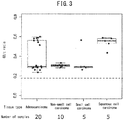
- the results are plotted for each tissue type in FIG. 3 .
- all of the ratios of each of the four tissue types exceeded the cut-off value 0.184.
Landscapes
- Health & Medical Sciences (AREA)
- Life Sciences & Earth Sciences (AREA)
- Immunology (AREA)
- Engineering & Computer Science (AREA)
- Molecular Biology (AREA)
- Biomedical Technology (AREA)
- Chemical & Material Sciences (AREA)
- Hematology (AREA)
- Urology & Nephrology (AREA)
- Food Science & Technology (AREA)
- Biochemistry (AREA)
- Cell Biology (AREA)
- Biotechnology (AREA)
- Medicinal Chemistry (AREA)
- Physics & Mathematics (AREA)
- Analytical Chemistry (AREA)
- Microbiology (AREA)
- General Health & Medical Sciences (AREA)
- General Physics & Mathematics (AREA)
- Pathology (AREA)
- Measuring Or Testing Involving Enzymes Or Micro-Organisms (AREA)
- Investigating Or Analysing Biological Materials (AREA)
- Hospice & Palliative Care (AREA)
- Oncology (AREA)
Abstract
Description
- The present invention relates to a method for detecting lung cancer and a kit for detecting the same. More particularly, the present invention relates to a method for detecting lung cancer by measuring the presence or absence of a glycan chain linked to a site capable of being modified by an N-glycan chain in pancreatic ribonuclease 1 (referred to as "RNase 1" hereinbelow) and a detecting kit thereof.
- A large number of patients are suffering from lung cancer. According to Non-Patent Document 1 and Non-Patent Document 2, the number of these patients suffered in 2011 was about 110,000 in Japan, and was the second largest after gastric cancer. The death toll was about 70,000 and was the largest. Lung cancer is often detected and diagnosed by imaging diagnostic methods represented by X-ray imaging. The detection limit and sensitivity thereof depend on the skill of the radiographer and the image capturing device. The detection of a small tumor tissue such as early cancer is considered difficult. Blood tumor markers used in the clinical practice of lung cancer are not used for the detection of lung cancer due to the low positive rates thereof, but are exclusively used for the monitoring of therapeutic effects.
- RNase 1 in the blood is considered to be a protein which is produced mainly in the pancreas and secreted into the bloodstream. There are also some reports which suggest the expression thereof in tissue other than the pancreas. However, the expression of RNase 1 in lung tissue has remained to be elucidated in detail. Patent Document 1 demonstrates that glycosylation, which is not observed in healthy individuals, is increased at specific asparagine residues of RNase 1 in the blood obtained from patients with pancreatic cancer, and discloses a method for the detection of pancreatic cancer. Patent Document 2 describes a method for accurately measuring the amount of glycosylation at 88th asparagine residue (hereinafter, referred to sometimes as "Asn88") of RNase 1 described previously and the results of measurements in pancreatic cancer, gastric cancer, and cholangio carcinoma. However, these Patent Documents do not describe the expression of RNase 1 in lung cancer, let alone the detection of glycosylation at Asn88 of RNase 1 in lung cancer. As described above, RNase 1 in the blood and a change in glycosylation at a specific asparagine residue have not been measured for the purpose of the detection of lung cancer.
- There are four types (adenocarcinoma, non-small cell carcinoma, small cell carcinoma, and squamous cell carcinoma) of cancer occurring in the lung, depending on the tissue type. There are markers used for the respective tissue types in low-invasive blood testing for the detection of lung cancer. However, due to the low positive rates thereof, they are not used for screening, etc. The measurement of these markers is not recommended as the "first step for the purpose of the detection of lung cancer" in the "Clinical Guidelines for the Management of Lung Cancer 2016" by the Japan Lung Cancer Society. The "first step for the purpose of the detection of lung cancer" recommended in the "Clinical Guidelines for the Management of Lung Cancer 2016" is a chest radiograph. Chest radiography is a popular detection technique in Japan, but there is a risk of exposure to radiation, and chest radiography is a detection method which is highly invasive compared to blood testing, etc. In order to overcome lung cancer, a marker which can be detected regardless of the tissue type is considered to be necessary.
-
- Patent Document 1 :
WO2013/187371 - Patent Document 2 :
JP2016-042083A -
- Non-Patent Document 1: Vital Statistics, Statistics and Information Dept., Minister's Secretariat, Ministry of Health, Labour and Welfare, September 6, 2012
- Non-Patent Document 2: Japanese Journal of Clinical Oncology, 44(4): 388-396, 2013, Cancer Information Service, National Cancer Center, Japan, "Cancer Registry and Statistics"
- An object of the present invention is to provide a method for detecting lung cancer by focusing on putative N-glycosylation sites of RNase 1.
- As a result of conducting extensive studies to solve the aforementioned problems of the present invention, the inventor of the present invention found that cases in which glycan chains are linked to putative N-glycosylation sites of RNase 1 increase in lung cancer patients in comparison with healthy individuals, thereby leading to completion of the present invention. Namely, the present invention is as indicated below.
- (1) A method for detecting lung cancer, characterized by measuring the amount of a putative N-glycosylation site of RNase 1 linked with an N-glycan chain or not linked with an N-glycan chain.
- (2) The method according to (1), wherein the amount of the site linked with the N-glycan chain is increased in comparison with healthy individuals.
- (3) A method for detecting lung cancer, comprising: determining the ratio of the value of A to the value of B for A and B indicated below:
- A: amount of putative N-glycosylation site of RNase 1 linked with an N-glycan chain or not linked with an N-glycan chain; and,
- B: amount of putative N-glycosylation site of RNase 1.
- (4) The method according to (3), wherein A represents the amount of the site not linked with an N-glycan chain, and the value of A/B is smaller in comparison with healthy individuals.
- (5) The method according to (3), wherein A represents the amount of the site linked with an N-glycan chain, and the value of A/B is larger in comparison with healthy individuals.
- (6) The method according to any of (3) to (5), wherein the amount of RNase 1 is determined and that value is converted to use as the value of B.
- (7) The method according to any of (1) to (6), wherein the putative N-glycosylation site is asparagine residue at position 88 of the sequence indicated in SEQ ID NO: 1.
- (8) A kit for detecting lung cancer, comprising monoclonal antibody, or fragment thereof, recognizing a putative N-glycosylation site of RNase 1 as a portion of the antigen recognition site thereof.
- The following provides a more detailed explanation of the present invention. The present invention detects lung cancer by measuring the amount of a putative N-glycosylation site in RNase 1 linked with an N-glycan chain or not linked with an N-glycan chain. At this time, the amount of the putative N-glycosylation "site" in RNase 1 linked with the N-glycan chain or the amount of the "site" not linked with an N-glycan chain is measured, while the amount of a "glycan chain" linked to the putative N-glycosylation site is not measured.
- RNase 1 as a subject of measurement is preferably derived from a human biological sample. As a result of using this as a measurement subject, human lung cancer can be detected. At this time, since there are many cases in which an N-glycan chain is linked to a putative N-glycosylation site in lung cancer patients in comparison with healthy individuals, and there is an increase in the amount of the putative N-glycosylation site linked with the N-glycan chain, lung cancer can be detected by using this as an indicator.
- In addition, the present invention is a method for detecting lung cancer that includes the determination of the ratio of the value of A to the value of B for A and B as indicated below:
- A: amount of putative N-glycosylation site in RNase 1 linked with an N-glycan chain or not linked with an N-glycan chain; and,
- B: amount of putative N-glycosylation site in the RNase 1.
- In addition, a method is preferably used in which A represents the amount of the site not linked with an N-glycan chain, and the value of A/B is smaller in comparison with healthy individuals. In addition, a method is also preferably used in which A represents the amount of the site where N-glycan chain is bound, and the value of A/B is larger in comparison with healthy individuals.
- In the case B represents the amount of a putative N-glycosylation site of RNase 1, there are no particular limitations on the determination method thereof, and for example, the amount of RNase 1 can be determined followed by converting that value to use as the value of B. More specifically, since RNase 1 has three putative N-glycosylation sites (asparagine residues at positions 34, 76 and 88 of SEQ ID NO: 1), when the amount of any one, two or all of these sites is used as the measurement subject, the amount of the putative N-glycosylation site of RNase 1 represented by B can be respectively converted to 1 time, 2 times or 3 times the amount of RNase 1 corresponding thereto. Furthermore, the amount of RNase 1 can be determined by method such as that using an immunological assay method or mass spectrometry.
- Furthermore, RNase 1 has three putative N-glycosylation sites (asparagine residues at positions 34, 76 and 88 of SEQ ID NO: 1) as previously described. Since a remarkable difference in values is observed between lung cancer patients and healthy individuals if the aforementioned amount is measured as the amount of the putative N-glycosylation site with respect to the asparagine residue at position 88 of SEQ ID NO: 1 in particular, this is preferable as a method for detecting lung cancer.
- Further, the method and the kit of the present invention can detect all of the four tissue types (adenocarcinoma, non-small cell carcinoma, small cell carcinoma, and squamous cell carcinoma) of lung cancer, and can detect lung cancer regardless of the tissue type.
- When lung cancer is detected by the present invention, it is preferable that a treatment thereof be appropriately performed. The treatment method is not particularly limited and may be appropriately selected from methods for the treatment of lung cancer.
- According to the present invention, lung cancer can be detected. In addition, all of four tissue types of lung cancer can be detected.
-
- [
FIG. 1 ] is a graph illustrating the distributions of G3/t ratios of healthy individuals and patients with lung cancer, wherein the dashed line represents a cut-off value, 0.184. - [
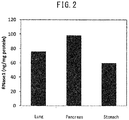
FIG. 2 ] is a drawing illustrating the results of total RNase 1 amounts in extracts from normal human tissue. - [
FIG. 3 ] is a drawing illustrating the distributions of G3/t ratios of tissue types of lung cancer, wherein the dashed line represents a cut-off value, 0.184. - The putative N-glycosylation site to be measured was designated Asn88. The amount of Asn88 at which an N- glycan chain is linked (G3), and the amount of Asn88 (t) were measured using the immunological assay reagents and the assay described in Examples 3 and 4 of Patent Document 2, respectively. Thirty-five serum samples obtained from healthy individuals and 40 serum samples obtained from patients with lung cancer were measured using the above immunological assay reagents. In this Example, the amount of the putative N-glycosylation site Asn 88 can be calculated as a value which is one time the total amount of RNase 1. The results are shown in Table 1 and
FIG. 1 .[Table 1] Healthy individuals (average and distribution range) Patients with lung cancer (average and distribution range) P value Number of samples 35 40 Age Distribution 38 (27 to 62) 69 (48 to 78) Amount (t) of Asn88 256.09 (151.91 to 369.48) 250.95 (122.12 to 846.88) 0.54 Amount (G3) of Asn88 at which an N-glycan chain is linked 29.44 (16.1 to 48.13) 93.02 (49.49 to 259.49) < 0.05 G3/t ratio 0.11 (0.1 to 0.13) 0.3 (0.24 to 0.6) < 0.05 - As shown in Table 1 and
FIG. 1 , both of the G3 and the G3/t ratio of the lung cancer patient serum were significantly higher than those of healthy individual group (p < 0.05 in both cases). These results demonstrated that lung cancer can be detected by measuring G3 or the G3/t ratio. - Homogenates of normal human lung tissue, tissue extracts of normal human pancreatic tissue, tissue extracts of normal human stomach tissue were obtained from BioChain, Inc. The total RNase 1 amounts of these extracts were measured by the above immunological assay. As illustrated in
FIG. 2 , the expression of RNase 1 was verified even in normal human lung tissue. Thus, the reason that the cancerous change of lung tissue changed the level of the linkage of N- glycan chain at Asn88 of RNase 1 in the bloodstream was considered to be the enhancement of the linkage of N- glycan chain at Asn88 during the novel biosynthetic process of RNase 1 expressed in lung cancer cells. - The 40 serum samples (which were able to be histologically diagnosed) obtained from patients with lung cancer were measured using the immunological assay reagents and the assay described in Example 1. The results are plotted for each tissue type in
FIG. 3 . As is clear fromFIG. 3 , all of the ratios of each of the four tissue types exceeded the cut-off value 0.184. These results in combination with the results illustrated inFIG. 1 demonstrated that all of the four types of lung cancer were uniformly detected without a deviation in the four tissue types using the above mentioned immunological assay reagents and the assay, and thus, suggested that the immunological assay reagents and the assay are excellent in the detection of a wide variety of types of lung cancer. - The contents of the specification, sequence listing, claims, drawings, and abstract of the Japanese Patent Application No.
2016-099312 filed on May 18, 2016 
Claims (8)
- A method for detecting lung cancer, characterized by measuring the amount of a putative N-glycosylation site of pancreatic ribonuclease 1 linked with an N-glycan chain or not linked with an N-glycan chain.
- The method according to claim 1, wherein the amount of the site linked with the N-glycan chain is increased in comparison with healthy individuals.
- A method for detecting lung cancer, comprising: determining the ratio of the value of A to the value of B for A and B indicated below:A: amount of putative N-glycosylation site of pancreatic ribonuclease 1 linked with an N-glycan chain or not linked with an N-glycan chain; and,B: amount of putative N-glycosylation site of pancreatic ribonuclease 1.
- The method according to claim 3, wherein A represents the amount of the site not linked with an N-glycan chain, and the value of A/B is smaller in comparison with healthy individuals.
- The method according to claim 3, wherein A represents the amount of the site linked with an N-glycan chain, and the value of A/B is larger in comparison with healthy individuals.
- The method according to any of claims 3 to 5, wherein the amount of pancreatic ribonuclease 1 is determined and that value is converted to use as the value of B.
- The method according to any of claims 1 to 6, wherein the putative N-glycosylation site is asparagine residue at position 88 of the sequence indicated in SEQ ID NO: 1.
- A kit for detecting lung cancer, comprising monoclonal antibody, or fragment thereof, recognizing a putative N-glycosylation site of pancreatic ribonuclease 1 as a portion of the antigen recognition site thereof.
Applications Claiming Priority (2)
| Application Number | Priority Date | Filing Date | Title |
|---|---|---|---|
| JP2016099312 | 2016-05-18 | ||
| PCT/JP2017/017723 WO2017199817A1 (en) | 2016-05-18 | 2017-05-10 | Lung cancer detection method and detection kit |
Publications (3)
| Publication Number | Publication Date |
|---|---|
| EP3467503A1 true EP3467503A1 (en) | 2019-04-10 |
| EP3467503A4 EP3467503A4 (en) | 2020-02-05 |
| EP3467503B1 EP3467503B1 (en) | 2025-04-09 |
Family
ID=60325884
Family Applications (1)
| Application Number | Title | Priority Date | Filing Date |
|---|---|---|---|
| EP17799242.7A Active EP3467503B1 (en) | 2016-05-18 | 2017-05-10 | Lung cancer detection method and detection kit |
Country Status (5)
| Country | Link |
|---|---|
| US (1) | US11137405B2 (en) |
| EP (1) | EP3467503B1 (en) |
| JP (1) | JP6834747B2 (en) |
| CN (1) | CN109154615B (en) |
| WO (1) | WO2017199817A1 (en) |
Families Citing this family (2)
| Publication number | Priority date | Publication date | Assignee | Title |
|---|---|---|---|---|
| JP7271989B2 (en) * | 2019-02-15 | 2023-05-12 | 東ソー株式会社 | Cardiac disease detection method and detection reagent |
| CN115993453B (en) * | 2022-07-22 | 2025-03-25 | 四川大学 | Methods and kits for diagnosis and treatment of RDAA-positive diseases |
Family Cites Families (10)
| Publication number | Priority date | Publication date | Assignee | Title |
|---|---|---|---|---|
| KR100475642B1 (en) | 2001-12-29 | 2005-03-10 | 한국생명공학연구원 | A method for the diagnosis of cancers by measuring the changes of glycosylation of proteins related to tumorigenesis and metastasis and kit for diagnosis of cancers using the same |
| EP1886144A1 (en) | 2005-04-26 | 2008-02-13 | Raymond A. Dwek | Glycosylation markers for cancer diagnosing and monitoring |
| FI20055417A0 (en) * | 2005-07-20 | 2005-07-20 | Glykos Finland Oy | Cancer specific glycans and their use |
| KR100767018B1 (en) * | 2006-05-15 | 2007-10-12 | 한국생명공학연구원 | How to measure sugar chain changes in glycoproteins involved in tumor development and metastasis |
| US20090324617A1 (en) | 2008-01-24 | 2009-12-31 | Glykos Finland Ltd. | Cancer specific glycans and use thereof |
| KR101289454B1 (en) * | 2009-12-28 | 2013-07-24 | (주) 프로탄바이오 | Complement C9 as markers for the diagnosis of small cell lung cancer and non-small cell lung cancer |
| EP2617730B1 (en) * | 2010-09-17 | 2018-03-07 | National Institute of Advanced Industrial Science And Technology | Lung cancer differential marker |
| JP6236864B2 (en) * | 2012-06-11 | 2017-11-29 | 東ソー株式会社 | Method for detecting cancer and antibody recognizing pancreatic ribonuclease 1 |
| JP6604081B2 (en) * | 2014-08-13 | 2019-11-13 | 東ソー株式会社 | Method for measuring pancreatic ribonuclease 1 to which an N-type sugar chain is added |
| TWI608011B (en) * | 2014-10-16 | 2017-12-11 | 中央研究院 | Lung cancer biomarker |
-
2017
- 2017-04-25 JP JP2017085787A patent/JP6834747B2/en active Active
- 2017-05-10 CN CN201780030653.6A patent/CN109154615B/en active Active
- 2017-05-10 EP EP17799242.7A patent/EP3467503B1/en active Active
- 2017-05-10 US US16/302,413 patent/US11137405B2/en active Active
- 2017-05-10 WO PCT/JP2017/017723 patent/WO2017199817A1/en not_active Ceased
Also Published As
| Publication number | Publication date |
|---|---|
| US20190277853A1 (en) | 2019-09-12 |
| EP3467503A4 (en) | 2020-02-05 |
| JP2017211373A (en) | 2017-11-30 |
| CN109154615B (en) | 2021-11-12 |
| WO2017199817A1 (en) | 2017-11-23 |
| CN109154615A (en) | 2019-01-04 |
| US11137405B2 (en) | 2021-10-05 |
| EP3467503B1 (en) | 2025-04-09 |
| JP6834747B2 (en) | 2021-02-24 |
Similar Documents
| Publication | Publication Date | Title |
|---|---|---|
| Jenner | Serum free light chains in clinical laboratory diagnostics | |
| Kissel et al. | On the presence of HLA-SE alleles and ACPA-IgG variable domain glycosylation in the phase preceding the development of rheumatoid arthritis | |
| Navarro et al. | Colorectal cancer population screening programs worldwide in 2016: An update | |
| AU2011241174B2 (en) | Method and kit for cancer diagnosis | |
| AU2019205010A1 (en) | Multiplex biomarker for use in evaluation of state of accumulation of amyloid B in brain, and analysis method for said evaluation | |
| AU2016270686B2 (en) | Quantifying Her2 protein for optimal cancer therapy | |
| Delmonico et al. | Proteomic profile of saliva and plasma from women with impalpable breast lesions | |
| US20250075273A1 (en) | Method of detecting cancer using genome-wide cfdna fragmentation profiles | |
| US11137405B2 (en) | Lung cancer detection method and detection kit | |
| Castellani et al. | Reference ranges for neuroprotein S-100B: from infants to adolescents. | |
| WO2018223121A1 (en) | Predicting cancer treatment outcome with t-dm1 | |
| KR101223270B1 (en) | Method for determining low―mass ions to screen colorectal cancer, method for providing information to screen colorectal cancer by using low―mass ions, and operational unit therefor | |
| Ito et al. | Skeletal muscle atrophy and short-term mortality in patients with acute exacerbation of idiopathic pulmonary fibrosis: an observational cohort study | |
| EP3819639B1 (en) | Sugar chain specific to prostate cancer, and test method using same | |
| Marron et al. | Diagnostic utility of measuring free light chains in the cerebrospinal fluid of patients with multiple myeloma | |
| EP2856166B1 (en) | Method for the diagnosis of mammals | |
| Leithold et al. | Diagnostic work-up for the detection of malnutrition in hospitalized cancer patients | |
| ALakkad et al. | Prevalence of Anemia and Contributing Factors among Patients at MZH: A Crosssectional Study | |
| US20220389510A1 (en) | Systems and methods for multimodal analysis of surgical drain fluid using interchangeable and customizable nucleic acid based tests | |
| RU2821893C1 (en) | Method for differential lifetime diagnosis of alzheimer's disease | |
| Firkin | Screening for multiple myeloma | |
| KR20250179302A (en) | Disease diagnosis system and method using mass spectrum | |
| JP2019066239A (en) | Biomarkers for refractory nocturia and nocturnal polyuria, testing method using the same, and method of screening for prophylactic or therapeutic agents for refractory nocturia and nocturnal polyuria | |
| Thach et al. | Confirming the reference interval of several biochemical testing value | |
| Poyet et al. | HOW ACCURATE IS THE PSA TEST? A PREVALENCE STUDY OF DISTURBED PSA VALUES IN A TERTIARY REFERRAL HOSPITAL: MP21-03 |
Legal Events
| Date | Code | Title | Description |
|---|---|---|---|
| STAA | Information on the status of an ep patent application or granted ep patent |
Free format text: STATUS: THE INTERNATIONAL PUBLICATION HAS BEEN MADE |
|
| PUAI | Public reference made under article 153(3) epc to a published international application that has entered the european phase |
Free format text: ORIGINAL CODE: 0009012 |
|
| STAA | Information on the status of an ep patent application or granted ep patent |
Free format text: STATUS: REQUEST FOR EXAMINATION WAS MADE |
|
| 17P | Request for examination filed |
Effective date: 20181206 |
|
| AK | Designated contracting states |
Kind code of ref document: A1 Designated state(s): AL AT BE BG CH CY CZ DE DK EE ES FI FR GB GR HR HU IE IS IT LI LT LU LV MC MK MT NL NO PL PT RO RS SE SI SK SM TR |
|
| AX | Request for extension of the european patent |
Extension state: BA ME |
|
| DAV | Request for validation of the european patent (deleted) | ||
| DAX | Request for extension of the european patent (deleted) | ||
| A4 | Supplementary search report drawn up and despatched |
Effective date: 20200109 |
|
| RIC1 | Information provided on ipc code assigned before grant |
Ipc: G01N 33/574 20060101AFI20200102BHEP Ipc: C12N 9/16 20060101ALI20200102BHEP |
|
| STAA | Information on the status of an ep patent application or granted ep patent |
Free format text: STATUS: EXAMINATION IS IN PROGRESS |
|
| 17Q | First examination report despatched |
Effective date: 20220310 |
|
| GRAP | Despatch of communication of intention to grant a patent |
Free format text: ORIGINAL CODE: EPIDOSNIGR1 |
|
| STAA | Information on the status of an ep patent application or granted ep patent |
Free format text: STATUS: GRANT OF PATENT IS INTENDED |
|
| INTG | Intention to grant announced |
Effective date: 20241220 |
|
| GRAS | Grant fee paid |
Free format text: ORIGINAL CODE: EPIDOSNIGR3 |
|
| GRAA | (expected) grant |
Free format text: ORIGINAL CODE: 0009210 |
|
| STAA | Information on the status of an ep patent application or granted ep patent |
Free format text: STATUS: THE PATENT HAS BEEN GRANTED |
|
| P01 | Opt-out of the competence of the unified patent court (upc) registered |
Free format text: CASE NUMBER: APP_6760/2025 Effective date: 20250210 |
|
| AK | Designated contracting states |
Kind code of ref document: B1 Designated state(s): AL AT BE BG CH CY CZ DE DK EE ES FI FR GB GR HR HU IE IS IT LI LT LU LV MC MK MT NL NO PL PT RO RS SE SI SK SM TR |
|
| REG | Reference to a national code |
Ref country code: GB Ref legal event code: FG4D |
|
| REG | Reference to a national code |
Ref country code: CH Ref legal event code: EP |
|
| REG | Reference to a national code |
Ref country code: DE Ref legal event code: R096 Ref document number: 602017088830 Country of ref document: DE |
|
| REG | Reference to a national code |
Ref country code: IE Ref legal event code: FG4D |
|
| PGFP | Annual fee paid to national office [announced via postgrant information from national office to epo] |
Ref country code: DE Payment date: 20250528 Year of fee payment: 9 |
|
| PGFP | Annual fee paid to national office [announced via postgrant information from national office to epo] |
Ref country code: GB Payment date: 20250425 Year of fee payment: 9 |
|
| PGFP | Annual fee paid to national office [announced via postgrant information from national office to epo] |
Ref country code: FR Payment date: 20250602 Year of fee payment: 9 |
|
| REG | Reference to a national code |
Ref country code: NL Ref legal event code: MP Effective date: 20250409 |
|
| PG25 | Lapsed in a contracting state [announced via postgrant information from national office to epo] |
Ref country code: NL Free format text: LAPSE BECAUSE OF FAILURE TO SUBMIT A TRANSLATION OF THE DESCRIPTION OR TO PAY THE FEE WITHIN THE PRESCRIBED TIME-LIMIT Effective date: 20250409 |
|
| REG | Reference to a national code |
Ref country code: AT Ref legal event code: MK05 Ref document number: 1783952 Country of ref document: AT Kind code of ref document: T Effective date: 20250409 |
|
| PG25 | Lapsed in a contracting state [announced via postgrant information from national office to epo] |
Ref country code: FI Free format text: LAPSE BECAUSE OF FAILURE TO SUBMIT A TRANSLATION OF THE DESCRIPTION OR TO PAY THE FEE WITHIN THE PRESCRIBED TIME-LIMIT Effective date: 20250409 Ref country code: ES Free format text: LAPSE BECAUSE OF FAILURE TO SUBMIT A TRANSLATION OF THE DESCRIPTION OR TO PAY THE FEE WITHIN THE PRESCRIBED TIME-LIMIT Effective date: 20250409 Ref country code: PT Free format text: LAPSE BECAUSE OF FAILURE TO SUBMIT A TRANSLATION OF THE DESCRIPTION OR TO PAY THE FEE WITHIN THE PRESCRIBED TIME-LIMIT Effective date: 20250811 |
|
| REG | Reference to a national code |
Ref country code: LT Ref legal event code: MG9D |
|
| PG25 | Lapsed in a contracting state [announced via postgrant information from national office to epo] |
Ref country code: GR Free format text: LAPSE BECAUSE OF FAILURE TO SUBMIT A TRANSLATION OF THE DESCRIPTION OR TO PAY THE FEE WITHIN THE PRESCRIBED TIME-LIMIT Effective date: 20250710 Ref country code: NO Free format text: LAPSE BECAUSE OF FAILURE TO SUBMIT A TRANSLATION OF THE DESCRIPTION OR TO PAY THE FEE WITHIN THE PRESCRIBED TIME-LIMIT Effective date: 20250709 |
|
| PG25 | Lapsed in a contracting state [announced via postgrant information from national office to epo] |
Ref country code: PL Free format text: LAPSE BECAUSE OF FAILURE TO SUBMIT A TRANSLATION OF THE DESCRIPTION OR TO PAY THE FEE WITHIN THE PRESCRIBED TIME-LIMIT Effective date: 20250409 |
|
| PG25 | Lapsed in a contracting state [announced via postgrant information from national office to epo] |
Ref country code: BG Free format text: LAPSE BECAUSE OF FAILURE TO SUBMIT A TRANSLATION OF THE DESCRIPTION OR TO PAY THE FEE WITHIN THE PRESCRIBED TIME-LIMIT Effective date: 20250409 |
|
| PG25 | Lapsed in a contracting state [announced via postgrant information from national office to epo] |
Ref country code: HR Free format text: LAPSE BECAUSE OF FAILURE TO SUBMIT A TRANSLATION OF THE DESCRIPTION OR TO PAY THE FEE WITHIN THE PRESCRIBED TIME-LIMIT Effective date: 20250409 |
|
| PG25 | Lapsed in a contracting state [announced via postgrant information from national office to epo] |
Ref country code: AT Free format text: LAPSE BECAUSE OF FAILURE TO SUBMIT A TRANSLATION OF THE DESCRIPTION OR TO PAY THE FEE WITHIN THE PRESCRIBED TIME-LIMIT Effective date: 20250409 |
|
| PG25 | Lapsed in a contracting state [announced via postgrant information from national office to epo] |
Ref country code: RS Free format text: LAPSE BECAUSE OF FAILURE TO SUBMIT A TRANSLATION OF THE DESCRIPTION OR TO PAY THE FEE WITHIN THE PRESCRIBED TIME-LIMIT Effective date: 20250709 |
|
| PG25 | Lapsed in a contracting state [announced via postgrant information from national office to epo] |
Ref country code: IS Free format text: LAPSE BECAUSE OF FAILURE TO SUBMIT A TRANSLATION OF THE DESCRIPTION OR TO PAY THE FEE WITHIN THE PRESCRIBED TIME-LIMIT Effective date: 20250809 |
|
| PG25 | Lapsed in a contracting state [announced via postgrant information from national office to epo] |
Ref country code: LV Free format text: LAPSE BECAUSE OF FAILURE TO SUBMIT A TRANSLATION OF THE DESCRIPTION OR TO PAY THE FEE WITHIN THE PRESCRIBED TIME-LIMIT Effective date: 20250409 |
|
| REG | Reference to a national code |
Ref country code: DE Ref legal event code: R079 Ref document number: 602017088830 Country of ref document: DE Free format text: PREVIOUS MAIN CLASS: G01N0033574000 Ipc: G01N0033575000 |
|
| REG | Reference to a national code |
Ref country code: CH Ref legal event code: H13 Free format text: ST27 STATUS EVENT CODE: U-0-0-H10-H13 (AS PROVIDED BY THE NATIONAL OFFICE) Effective date: 20251223 |
|
| REG | Reference to a national code |
Ref country code: DE Ref legal event code: R097 Ref document number: 602017088830 Country of ref document: DE |
|
| PG25 | Lapsed in a contracting state [announced via postgrant information from national office to epo] |
Ref country code: DK Free format text: LAPSE BECAUSE OF FAILURE TO SUBMIT A TRANSLATION OF THE DESCRIPTION OR TO PAY THE FEE WITHIN THE PRESCRIBED TIME-LIMIT Effective date: 20250409 Ref country code: SM Free format text: LAPSE BECAUSE OF FAILURE TO SUBMIT A TRANSLATION OF THE DESCRIPTION OR TO PAY THE FEE WITHIN THE PRESCRIBED TIME-LIMIT Effective date: 20250409 |
|
| PG25 | Lapsed in a contracting state [announced via postgrant information from national office to epo] |
Ref country code: LU Free format text: LAPSE BECAUSE OF NON-PAYMENT OF DUE FEES Effective date: 20250510 |
|
| PG25 | Lapsed in a contracting state [announced via postgrant information from national office to epo] |
Ref country code: CH Free format text: LAPSE BECAUSE OF NON-PAYMENT OF DUE FEES Effective date: 20250531 |
|
| PG25 | Lapsed in a contracting state [announced via postgrant information from national office to epo] |
Ref country code: CZ Free format text: LAPSE BECAUSE OF FAILURE TO SUBMIT A TRANSLATION OF THE DESCRIPTION OR TO PAY THE FEE WITHIN THE PRESCRIBED TIME-LIMIT Effective date: 20250409 |
|
| PG25 | Lapsed in a contracting state [announced via postgrant information from national office to epo] |
Ref country code: EE Free format text: LAPSE BECAUSE OF FAILURE TO SUBMIT A TRANSLATION OF THE DESCRIPTION OR TO PAY THE FEE WITHIN THE PRESCRIBED TIME-LIMIT Effective date: 20250409 |
|
| PG25 | Lapsed in a contracting state [announced via postgrant information from national office to epo] |
Ref country code: SK Free format text: LAPSE BECAUSE OF FAILURE TO SUBMIT A TRANSLATION OF THE DESCRIPTION OR TO PAY THE FEE WITHIN THE PRESCRIBED TIME-LIMIT Effective date: 20250409 Ref country code: RO Free format text: LAPSE BECAUSE OF FAILURE TO SUBMIT A TRANSLATION OF THE DESCRIPTION OR TO PAY THE FEE WITHIN THE PRESCRIBED TIME-LIMIT Effective date: 20250409 |
|
| PG25 | Lapsed in a contracting state [announced via postgrant information from national office to epo] |
Ref country code: IT Free format text: LAPSE BECAUSE OF FAILURE TO SUBMIT A TRANSLATION OF THE DESCRIPTION OR TO PAY THE FEE WITHIN THE PRESCRIBED TIME-LIMIT Effective date: 20250409 |
|
| REG | Reference to a national code |
Ref country code: BE Ref legal event code: MM Effective date: 20250531 |
|
| PG25 | Lapsed in a contracting state [announced via postgrant information from national office to epo] |
Ref country code: MC Free format text: LAPSE BECAUSE OF FAILURE TO SUBMIT A TRANSLATION OF THE DESCRIPTION OR TO PAY THE FEE WITHIN THE PRESCRIBED TIME-LIMIT Effective date: 20250409 |
|
| PLBE | No opposition filed within time limit |
Free format text: ORIGINAL CODE: 0009261 |
|
| STAA | Information on the status of an ep patent application or granted ep patent |
Free format text: STATUS: NO OPPOSITION FILED WITHIN TIME LIMIT |
|
| REG | Reference to a national code |
Ref country code: CH Ref legal event code: L10 Free format text: ST27 STATUS EVENT CODE: U-0-0-L10-L00 (AS PROVIDED BY THE NATIONAL OFFICE) Effective date: 20260218 |
|
| 26N | No opposition filed |
Effective date: 20260112 |
|
| PG25 | Lapsed in a contracting state [announced via postgrant information from national office to epo] |
Ref country code: IE Free format text: LAPSE BECAUSE OF NON-PAYMENT OF DUE FEES Effective date: 20250510 |
|
| PG25 | Lapsed in a contracting state [announced via postgrant information from national office to epo] |
Ref country code: BE Free format text: LAPSE BECAUSE OF NON-PAYMENT OF DUE FEES Effective date: 20250531 |