EP3467012A1 - Polymer electrolyte membrane and method for preparing same - Google Patents
Polymer electrolyte membrane and method for preparing same Download PDFInfo
- Publication number
- EP3467012A1 EP3467012A1 EP17809566.7A EP17809566A EP3467012A1 EP 3467012 A1 EP3467012 A1 EP 3467012A1 EP 17809566 A EP17809566 A EP 17809566A EP 3467012 A1 EP3467012 A1 EP 3467012A1
- Authority
- EP
- European Patent Office
- Prior art keywords
- membrane
- molecular sieve
- polymer
- polymer electrolyte
- slurry
- Prior art date
- Legal status (The legal status is an assumption and is not a legal conclusion. Google has not performed a legal analysis and makes no representation as to the accuracy of the status listed.)
- Pending
Links
Classifications
-
- H—ELECTRICITY
- H01—ELECTRIC ELEMENTS
- H01M—PROCESSES OR MEANS, e.g. BATTERIES, FOR THE DIRECT CONVERSION OF CHEMICAL ENERGY INTO ELECTRICAL ENERGY
- H01M10/00—Secondary cells; Manufacture thereof
- H01M10/05—Accumulators with non-aqueous electrolyte
- H01M10/056—Accumulators with non-aqueous electrolyte characterised by the materials used as electrolytes, e.g. mixed inorganic/organic electrolytes
- H01M10/0564—Accumulators with non-aqueous electrolyte characterised by the materials used as electrolytes, e.g. mixed inorganic/organic electrolytes the electrolyte being constituted of organic materials only
- H01M10/0565—Polymeric materials, e.g. gel-type or solid-type
-
- C—CHEMISTRY; METALLURGY
- C08—ORGANIC MACROMOLECULAR COMPOUNDS; THEIR PREPARATION OR CHEMICAL WORKING-UP; COMPOSITIONS BASED THEREON
- C08J—WORKING-UP; GENERAL PROCESSES OF COMPOUNDING; AFTER-TREATMENT NOT COVERED BY SUBCLASSES C08B, C08C, C08F, C08G or C08H
- C08J7/00—Chemical treatment or coating of shaped articles made of macromolecular substances
-
- C—CHEMISTRY; METALLURGY
- C08—ORGANIC MACROMOLECULAR COMPOUNDS; THEIR PREPARATION OR CHEMICAL WORKING-UP; COMPOSITIONS BASED THEREON
- C08J—WORKING-UP; GENERAL PROCESSES OF COMPOUNDING; AFTER-TREATMENT NOT COVERED BY SUBCLASSES C08B, C08C, C08F, C08G or C08H
- C08J5/00—Manufacture of articles or shaped materials containing macromolecular substances
- C08J5/18—Manufacture of films or sheets
-
- C—CHEMISTRY; METALLURGY
- C08—ORGANIC MACROMOLECULAR COMPOUNDS; THEIR PREPARATION OR CHEMICAL WORKING-UP; COMPOSITIONS BASED THEREON
- C08J—WORKING-UP; GENERAL PROCESSES OF COMPOUNDING; AFTER-TREATMENT NOT COVERED BY SUBCLASSES C08B, C08C, C08F, C08G or C08H
- C08J5/00—Manufacture of articles or shaped materials containing macromolecular substances
- C08J5/20—Manufacture of shaped structures of ion-exchange resins
- C08J5/22—Films, membranes or diaphragms
-
- C—CHEMISTRY; METALLURGY
- C08—ORGANIC MACROMOLECULAR COMPOUNDS; THEIR PREPARATION OR CHEMICAL WORKING-UP; COMPOSITIONS BASED THEREON
- C08J—WORKING-UP; GENERAL PROCESSES OF COMPOUNDING; AFTER-TREATMENT NOT COVERED BY SUBCLASSES C08B, C08C, C08F, C08G or C08H
- C08J5/00—Manufacture of articles or shaped materials containing macromolecular substances
- C08J5/20—Manufacture of shaped structures of ion-exchange resins
- C08J5/22—Films, membranes or diaphragms
- C08J5/2206—Films, membranes or diaphragms based on organic and/or inorganic macromolecular compounds
- C08J5/2218—Synthetic macromolecular compounds
- C08J5/2231—Synthetic macromolecular compounds based on macromolecular compounds obtained by reactions involving unsaturated carbon-to-carbon bonds
- C08J5/2237—Synthetic macromolecular compounds based on macromolecular compounds obtained by reactions involving unsaturated carbon-to-carbon bonds containing fluorine
-
- H—ELECTRICITY
- H01—ELECTRIC ELEMENTS
- H01M—PROCESSES OR MEANS, e.g. BATTERIES, FOR THE DIRECT CONVERSION OF CHEMICAL ENERGY INTO ELECTRICAL ENERGY
- H01M10/00—Secondary cells; Manufacture thereof
- H01M10/05—Accumulators with non-aqueous electrolyte
- H01M10/052—Li-accumulators
-
- H—ELECTRICITY
- H01—ELECTRIC ELEMENTS
- H01M—PROCESSES OR MEANS, e.g. BATTERIES, FOR THE DIRECT CONVERSION OF CHEMICAL ENERGY INTO ELECTRICAL ENERGY
- H01M10/00—Secondary cells; Manufacture thereof
- H01M10/05—Accumulators with non-aqueous electrolyte
- H01M10/056—Accumulators with non-aqueous electrolyte characterised by the materials used as electrolytes, e.g. mixed inorganic/organic electrolytes
- H01M10/0564—Accumulators with non-aqueous electrolyte characterised by the materials used as electrolytes, e.g. mixed inorganic/organic electrolytes the electrolyte being constituted of organic materials only
- H01M10/0566—Liquid materials
- H01M10/0568—Liquid materials characterised by the solutes
-
- H—ELECTRICITY
- H01—ELECTRIC ELEMENTS
- H01M—PROCESSES OR MEANS, e.g. BATTERIES, FOR THE DIRECT CONVERSION OF CHEMICAL ENERGY INTO ELECTRICAL ENERGY
- H01M50/00—Constructional details or processes of manufacture of the non-active parts of electrochemical cells other than fuel cells, e.g. hybrid cells
- H01M50/40—Separators; Membranes; Diaphragms; Spacing elements inside cells
- H01M50/403—Manufacturing processes of separators, membranes or diaphragms
-
- H—ELECTRICITY
- H01—ELECTRIC ELEMENTS
- H01M—PROCESSES OR MEANS, e.g. BATTERIES, FOR THE DIRECT CONVERSION OF CHEMICAL ENERGY INTO ELECTRICAL ENERGY
- H01M50/00—Constructional details or processes of manufacture of the non-active parts of electrochemical cells other than fuel cells, e.g. hybrid cells
- H01M50/40—Separators; Membranes; Diaphragms; Spacing elements inside cells
- H01M50/409—Separators, membranes or diaphragms characterised by the material
- H01M50/411—Organic material
- H01M50/414—Synthetic resins, e.g. thermoplastics or thermosetting resins
-
- H—ELECTRICITY
- H01—ELECTRIC ELEMENTS
- H01M—PROCESSES OR MEANS, e.g. BATTERIES, FOR THE DIRECT CONVERSION OF CHEMICAL ENERGY INTO ELECTRICAL ENERGY
- H01M50/00—Constructional details or processes of manufacture of the non-active parts of electrochemical cells other than fuel cells, e.g. hybrid cells
- H01M50/40—Separators; Membranes; Diaphragms; Spacing elements inside cells
- H01M50/409—Separators, membranes or diaphragms characterised by the material
- H01M50/44—Fibrous material
-
- H—ELECTRICITY
- H01—ELECTRIC ELEMENTS
- H01M—PROCESSES OR MEANS, e.g. BATTERIES, FOR THE DIRECT CONVERSION OF CHEMICAL ENERGY INTO ELECTRICAL ENERGY
- H01M50/00—Constructional details or processes of manufacture of the non-active parts of electrochemical cells other than fuel cells, e.g. hybrid cells
- H01M50/40—Separators; Membranes; Diaphragms; Spacing elements inside cells
- H01M50/409—Separators, membranes or diaphragms characterised by the material
- H01M50/446—Composite material consisting of a mixture of organic and inorganic materials
-
- C—CHEMISTRY; METALLURGY
- C08—ORGANIC MACROMOLECULAR COMPOUNDS; THEIR PREPARATION OR CHEMICAL WORKING-UP; COMPOSITIONS BASED THEREON
- C08J—WORKING-UP; GENERAL PROCESSES OF COMPOUNDING; AFTER-TREATMENT NOT COVERED BY SUBCLASSES C08B, C08C, C08F, C08G or C08H
- C08J2327/00—Characterised by the use of homopolymers or copolymers of compounds having one or more unsaturated aliphatic radicals, each having only one carbon-to-carbon double bond, and at least one being terminated by a halogen; Derivatives of such polymers
- C08J2327/02—Characterised by the use of homopolymers or copolymers of compounds having one or more unsaturated aliphatic radicals, each having only one carbon-to-carbon double bond, and at least one being terminated by a halogen; Derivatives of such polymers not modified by chemical after-treatment
- C08J2327/12—Characterised by the use of homopolymers or copolymers of compounds having one or more unsaturated aliphatic radicals, each having only one carbon-to-carbon double bond, and at least one being terminated by a halogen; Derivatives of such polymers not modified by chemical after-treatment containing fluorine atoms
- C08J2327/16—Homopolymers or copolymers of vinylidene fluoride
-
- C—CHEMISTRY; METALLURGY
- C08—ORGANIC MACROMOLECULAR COMPOUNDS; THEIR PREPARATION OR CHEMICAL WORKING-UP; COMPOSITIONS BASED THEREON
- C08K—Use of inorganic or non-macromolecular organic substances as compounding ingredients
- C08K2201/00—Specific properties of additives
- C08K2201/011—Nanostructured additives
-
- C—CHEMISTRY; METALLURGY
- C08—ORGANIC MACROMOLECULAR COMPOUNDS; THEIR PREPARATION OR CHEMICAL WORKING-UP; COMPOSITIONS BASED THEREON
- C08K—Use of inorganic or non-macromolecular organic substances as compounding ingredients
- C08K3/00—Use of inorganic substances as compounding ingredients
- C08K3/34—Silicon-containing compounds
-
- C—CHEMISTRY; METALLURGY
- C08—ORGANIC MACROMOLECULAR COMPOUNDS; THEIR PREPARATION OR CHEMICAL WORKING-UP; COMPOSITIONS BASED THEREON
- C08K—Use of inorganic or non-macromolecular organic substances as compounding ingredients
- C08K7/00—Use of ingredients characterised by shape
- C08K7/22—Expanded, porous or hollow particles
- C08K7/24—Expanded, porous or hollow particles inorganic
- C08K7/26—Silicon- containing compounds
-
- C—CHEMISTRY; METALLURGY
- C08—ORGANIC MACROMOLECULAR COMPOUNDS; THEIR PREPARATION OR CHEMICAL WORKING-UP; COMPOSITIONS BASED THEREON
- C08L—COMPOSITIONS OF MACROMOLECULAR COMPOUNDS
- C08L2203/00—Applications
- C08L2203/16—Applications used for films
-
- C—CHEMISTRY; METALLURGY
- C08—ORGANIC MACROMOLECULAR COMPOUNDS; THEIR PREPARATION OR CHEMICAL WORKING-UP; COMPOSITIONS BASED THEREON
- C08L—COMPOSITIONS OF MACROMOLECULAR COMPOUNDS
- C08L2203/00—Applications
- C08L2203/20—Applications use in electrical or conductive gadgets
-
- H—ELECTRICITY
- H01—ELECTRIC ELEMENTS
- H01M—PROCESSES OR MEANS, e.g. BATTERIES, FOR THE DIRECT CONVERSION OF CHEMICAL ENERGY INTO ELECTRICAL ENERGY
- H01M10/00—Secondary cells; Manufacture thereof
- H01M10/05—Accumulators with non-aqueous electrolyte
- H01M10/052—Li-accumulators
- H01M10/0525—Rocking-chair batteries, i.e. batteries with lithium insertion or intercalation in both electrodes; Lithium-ion batteries
-
- H—ELECTRICITY
- H01—ELECTRIC ELEMENTS
- H01M—PROCESSES OR MEANS, e.g. BATTERIES, FOR THE DIRECT CONVERSION OF CHEMICAL ENERGY INTO ELECTRICAL ENERGY
- H01M2300/00—Electrolytes
- H01M2300/0017—Non-aqueous electrolytes
- H01M2300/0025—Organic electrolyte
- H01M2300/0028—Organic electrolyte characterised by the solvent
-
- H—ELECTRICITY
- H01—ELECTRIC ELEMENTS
- H01M—PROCESSES OR MEANS, e.g. BATTERIES, FOR THE DIRECT CONVERSION OF CHEMICAL ENERGY INTO ELECTRICAL ENERGY
- H01M2300/00—Electrolytes
- H01M2300/0017—Non-aqueous electrolytes
- H01M2300/0065—Solid electrolytes
- H01M2300/0082—Organic polymers
-
- H—ELECTRICITY
- H01—ELECTRIC ELEMENTS
- H01M—PROCESSES OR MEANS, e.g. BATTERIES, FOR THE DIRECT CONVERSION OF CHEMICAL ENERGY INTO ELECTRICAL ENERGY
- H01M50/00—Constructional details or processes of manufacture of the non-active parts of electrochemical cells other than fuel cells, e.g. hybrid cells
- H01M50/40—Separators; Membranes; Diaphragms; Spacing elements inside cells
- H01M50/489—Separators, membranes, diaphragms or spacing elements inside the cells, characterised by their physical properties, e.g. swelling degree, hydrophilicity or shut down properties
- H01M50/491—Porosity
-
- H—ELECTRICITY
- H01—ELECTRIC ELEMENTS
- H01M—PROCESSES OR MEANS, e.g. BATTERIES, FOR THE DIRECT CONVERSION OF CHEMICAL ENERGY INTO ELECTRICAL ENERGY
- H01M50/00—Constructional details or processes of manufacture of the non-active parts of electrochemical cells other than fuel cells, e.g. hybrid cells
- H01M50/40—Separators; Membranes; Diaphragms; Spacing elements inside cells
- H01M50/489—Separators, membranes, diaphragms or spacing elements inside the cells, characterised by their physical properties, e.g. swelling degree, hydrophilicity or shut down properties
- H01M50/497—Ionic conductivity
-
- Y—GENERAL TAGGING OF NEW TECHNOLOGICAL DEVELOPMENTS; GENERAL TAGGING OF CROSS-SECTIONAL TECHNOLOGIES SPANNING OVER SEVERAL SECTIONS OF THE IPC; TECHNICAL SUBJECTS COVERED BY FORMER USPC CROSS-REFERENCE ART COLLECTIONS [XRACs] AND DIGESTS
- Y02—TECHNOLOGIES OR APPLICATIONS FOR MITIGATION OR ADAPTATION AGAINST CLIMATE CHANGE
- Y02E—REDUCTION OF GREENHOUSE GAS [GHG] EMISSIONS, RELATED TO ENERGY GENERATION, TRANSMISSION OR DISTRIBUTION
- Y02E60/00—Enabling technologies; Technologies with a potential or indirect contribution to GHG emissions mitigation
- Y02E60/10—Energy storage using batteries
Definitions
- the invention relates to a lithium ion secondary battery, particularly to a polymer electrolyte membrane and a method for preparing the same.
- Lithium ion secondary batteries using non-aqueous electrolyte have been widely used in mobile communications, portable computers and various mobile electronic terminals due to their high specific energy.
- a liquid organic electrolyte there are two types, one uses a liquid organic electrolyte, and the other uses a solid or gel polymer electrolyte.
- the latter lithium ion battery is simple in terms of manufacturing process, has a shape flexibility (variable shape), can be made into a battery with a thickness of less than 1mm and without liquid leakage, and has a long shell time, etc.
- a lithium ion battery and a metal lithium battery are referred to collectively as a lithium battery.
- a copolymer of polyvinylidene fluoride (PVDF) and hexafluoropropylene (HFP), and a mixture comprising lithium salt LiPF 6 , propylene carbonate (PC) and ethylene carbonate (EC) are used to prepare a gel polymer electrolyte membrane.
- PVDF polyvinylidene fluoride
- HPFP hexafluoropropylene
- EC ethylene carbonate
- polyacrylonitrile, polyvinyl chloride, and polyethylene oxides (PEO) colloidal polymer electrolytes are also used in lithium batteries.
- they are poor in conductivity at normal temperature, and are relatively complicated in preparation process or demanding on ambient humidity, and the charge/discharge property of batteries under high current cannot meet the requirements of modern electrical appliances.
- Fluorine-containing polymers generally have good mechanical property and electrochemical stability.
- fluorine-containing gel polymer electrolyte mainly use porous polyvinylidene fluoride as a matrix, and the porous electrolyte impregnated with an electrolyte solution has a high charge and discharge rate, and exhibits better electrochemical stability and better mechanical property than porous polyolefin separator; however, it has poor affinity to electrolyte solution, and thus has poor electrolyte absorptivity and poor ion conductivity. Moreover, the electrolyte solution tends to leak during use of the battery.
- the invention aims to provide a method for preparing a novel polymer electrolyte membrane.
- the invention provides a method for preparing a polymer electrolyte membrane, the method comprising the steps of:
- the molecular sieve material is one or more selected from the group consisting of nano 5A molecular sieve, 10X molecular sieve, and Y-type molecular sieve.
- the weight ratio of the molecular sieve material to the polymer is preferably 1:20 to 1:200, more preferably 1:30 to 1:100, and most preferably 1:40 to 1:60.
- the molecular sieve material is present in an amount of 0.1-3.3 wt% based on the total weight of the slurry obtained in the step (1).
- the polymer is selected from polyvinylidene fluoride (PVDF), poly(vinylidene fluoride-co-hexafluoropropylene) copolymer (P(VDF-HFP)), polymethyl methacrylate (PMMA), or a mixture thereof.
- PVDF polyvinylidene fluoride
- PVDF-HFP poly(vinylidene fluoride-co-hexafluoropropylene) copolymer
- PMMA polymethyl methacrylate
- the polymer is a mixture of poly(vinylidene fluoride-co-hexafluoropropylene) copolymer (P(VDF-HFP)) and polymethyl methacrylate (PMMA), wherein the weight ratio of poly(vinylidene fluoride-co-hexafluoropropylene) copolymer (P(VDF-HFP)) : polymethyl methacrylate (PMMA) is 1:0.1 to 1:5, more preferably 1:0.2 to 1:4, and most preferably 1:0.3 to 1:3.
- the solvent is one or more selected from the group consisting of acetone, N-methyl-2-pyrrolidone, N,N-dimethylformamide, N,N-dimethyl acetamide, dimethyl sulfoxide, ethanol, and isopropanol.
- the concentration of the lithium salt solute in the lithium salt electrolyte solution is 0.5-1.5 mol/L; the solute is preferably lithium hexafluorophosphate.
- the solvent of the lithium salt electrolyte solution is ethylene carbonate and dimethyl carbonate, wherein the volume ratio of ethylene carbonate to dimethyl carbonate is 1:1 to 1:2.
- the invention provides a polymer electrolyte membrane comprising a base film layer and a coating layer, the coating layer comprises a molecular sieve material, a polymer, and a lithium salt electrolyte solution.
- the polymer is selected from polyvinylidene fluoride (PVDF), poly(vinylidene fluoride-co-hexafluoropropylene) copolymer (P(VDF-HFP)), polymethyl methacrylate (PMMA), or a mixture thereof; and the weight ratio of the molecular sieve material to the polymer is 1:20 to 1:200.
- the invention provides a technique for preparing a polymer electrolyte material and a membrane thereof which have good liquid absorptivity and excellent ion conductivity.
- a polymer electrolyte membrane having good liquid absorptivity and excellent ion conductivity can be obtained by using an inorganic compound having a microporous structure (e.g. a molecular sieve material) and a polymer to form a porous membrane, and infiltrating an electrolyte solution into the microporous network of the porous membrane.
- an inorganic compound having a microporous structure e.g. a molecular sieve material
- base film refers to a PP, PE, or PET base film or a PET nonwoven fabric base film.
- PET Polyethylene terephthalate, chemical formula COC 6 H 4 COOCH 2 CH 2 O
- Nonwoven fabrics Non Woven Fabric or Nonwoven Cloth, also nonwovens
- PET nonwoven fabric is produced by using PET material aggregates as raw materials.
- the PET material has a tensile strength of 35-52 MPa, a flexural modulus of 200-10343 MPa, a melting point of 254-265°C, a density of 1.27-1.67 g/cm 3 , and a relative molecular mass of 20000-30000.
- PE polyethylene
- Polyethylene is a thermoplastic resin obtained by polymerizing ethylene. Polyethylene is widely used, mainly for the production of thin films and the like. PE material has a tensile strength of 30-42 MPa, a flexural modulus of 500-760 MPa, a melting point of 130-136°C, a density of 0.93-0.96 g/cm 3 , and a relative molecular mass of 1 million to 4 millions.
- PP polypropylene
- PP base film is a polypropylene film.
- PP material has a tensile strength of 21-39 MPa, a flexural modulus of 800 MPa, a melting point of 164-170°C, a density of 0.89-0.91 g/cm 3 , and a relative molecular mass of 80000-150000.
- the molecular sieve material in the invention is selected from the group consisting of nano 5A molecular sieves, 10X molecular sieves, and Y-type molecular sieves.
- 5A molecular sieve is a chemical substance with a molecular formula of Ca 34 Na 28 [(AlO 2 ) 96 (SiO 2 ) 96 ] • 216H 2 O.
- 10X molecular sieve is a chemical substance with a molecular formula of Ca 35 Na 16 [(AlO 2 ) 86 (SiO 2 ) 106 ] • 264H 2 O.
- Y-type molecular sieve is a chemical substance with a molecular formula of Na 56 [(AlO 2 ) 56 (SiO 2 ) 136 ] • 264H 2 O.
- a method for preparing a polymer electrolyte membrane according to invention comprises the following steps:
- the weight ratio of the molecular sieve material to the polymer is preferably 1:20 to 1:200, more preferably 1:30 to 1:100, most preferably 1:40 to 1:60; the molecular sieve material is present in an amount of 0.1-3.3% by weight based on the total weight of the slurry.
- the mixing in above step 1 comprises dissolving a molecular sieve material and a polymer in a solvent and stirring thoroughly to make the resulting slurry uniform.
- the molecular sieve material in above step 1 is selected from the group consisting of nano 5A molecular sieve, 10X molecular sieve, and Y-type molecular sieve.
- the polymer in above step 1 is selected from polyvinylidene fluoride (PVDF), poly(vinylidene fluoride-co-hexafluoropropylene) copolymer (P(VDF-HFP)), polymethyl methacrylate (PMMA), or a mixture thereof.
- PVDF polyvinylidene fluoride
- P(VDF-HFP) poly(vinylidene fluoride-co-hexafluoropropylene) copolymer
- PMMA polymethyl methacrylate
- the polymer preferably a mixture of poly(vinylidene fluoride-co-hexafluoropropylene) copolymer (P(VDF-HFP))) and polymethyl methacrylate (PMMA), wherein the weight ratio of polyvinylidene fluoride and hexafluoropropylene (P(VDF-HFP)) : polymethyl methacrylate (PMMA) is 1:0.1 to 1:5, preferably 1:0.2 to 1:4, more preferably 1:0.3 to 1:3 .
- the solvent in above step 1 is selected from the group consisting of: acetone, N-methyl-2-pyrrolidone, N,N-dimethylformamide, N,N-dimethyl acetamide, dimethyl sulfoxide, ethanol, and isopropanol.
- the solvent is preferably N,N-dimethyl acetamide.
- the base film in above step 2 includes a PP, PE, PET base film and a PET nonwoven base film; and a PET nonwoven base film is preferred.
- the wet membrane in above step 3, is dried at 85-95°C for 10-20 min.
- step 4 the immersion is performed in a dry environment for 25-35 sec.
- step 4 after the membrane is taken out, the liquid on the surface of the membrane is removed.
- the concentration of the lithium salt solute in the lithium salt electrolyte solution is 0.5-1.5 mol/L; the lithium salt solute is preferably lithium hexafluorophosphate; and the solvent is a mixed solvent of ethylene carbonate (EC) and dimethyl carbonate (DMC).
- EC ethylene carbonate
- DMC dimethyl carbonate
- the lithium salt electrolyte solution may be abbreviated as LiPF6/(EC+DMC), wherein EC+DMC represents a mixed solvent of ethylene carbonate and dimethyl carbonate, in which the volume ratio of ethylene carbonate (EC) to dimethyl carbonate (DMC) is 1:1.
- the mass fraction of the polymer in the polymer electrolyte membrane obtained by the preparation method of the invention is 30-70%; the polymer electrolyte membrane has an ion conductivity of 1.0x10 -3 S cm -1 at 25°C.
- the invention also provides the use of a molecular sieve material, together with a polymer, for preparing a polymer electrolyte membrane.
- the molecular sieve material is one or more selected from the group consisting of nano 5A molecular sieve, 10X molecular sieve, and Y-type molecular sieve.
- the polymer is selected from polyvinylidene fluoride (PVDF), poly(vinylidene fluoride-co-hexafluoropropylene) copolymer (P(VDF-HFP)), polymethyl methacrylate (PMMA), or a mixture thereof.
- the polymer is preferably a mixture of poly(vinylidene fluoride-co-hexafluoropropylene) copolymer (P(VDF-HFP)) and polymethyl methacrylate (PMMA).
- Measurement of membrane thickness the thicknesses of various membrane samples are measured by using a micrometer (with an accuracy of 0.01 mm); and the thicknesses are measured at random 5 points on the sample and averaged.
- the pressure corresponding to the first opened pore is bubble point pressure, and the pore size corresponding to this pressure is the maximum pore size; during this process, the pressure and the flow rate are real-time recorded to obtain a pressure-flow curve; the pressure reflects the information about pore size, and the flow reflects the information about the number of the pores of certain pore size; then the pressure-flow rate curve of the dry membrane is tested, and the average pore size of the membrane sample can be calculated according to related formula.
- the membrane sample was placed in an electrolyte solution at a temperature of 23 ⁇ 2°C, and immersed for 2 h while sealing.
- the electrolyte solution was injected into a mold for resistance test, and the mold was connected to a chemical station and test parameters were set.
- a layer of the membrane was introduced and its impedance spectrum was measured; and then another layer of the membrane was introduced and its impedance spectrum was measured, up to 4 layers of the membrane were introduced and four impedance spectrums were measured.
- the resistance values R1, R2, R3 and R4 for the 1, 2, 3 and 4 layers were read from the impedance spectrums respectively.
- 0.05 g of nano 5A molecular sieve and 2 g of polyvinylidene fluoride were dissolved in acetone.
- the mixed solution was stirred thoroughly to form a uniform slurry.
- the slurry was coated on a PP base film to form a wet membrane.
- the wet membrane was dried at 90°C for 15 min, and then the membrane was immersed in a lithium salt electrolyte solution of 1M LiPF 6 + EC:DMC (1:1) in a dry environment for 30 sec and then taken out; and the liquid on the surface of the membrane was removed using a filter paper.
- the concentration of the lithium salt electrolyte solution was 1 mol/L.
- the solute is lithium hexafluorophosphate (LiPF 6 )
- the solvent is ethylene carbonate (EC) and dimethyl carbonate (DMC), which may also be abbreviated as LiPF 6 /(EC+DMC), wherein EC+DMC represents a mixed solvent of ethylene carbonate and dimethyl carbonate (same in the following examples), and the volume ratio of EC to DMC was 1:1.
- the wet membrane was dried at 90°C for 15 min, and then the membrane was immersed in a lithium salt electrolyte solution of 1M LiPF 6 + EC:DMC (1:1) in a dry environment for 30 sec and then taken out; and the liquid on the surface of the membrane was removed using a filter paper.
- nano 5A molecular sieve 0.5 g of poly(vinylidene fluoride-co-hexafluoropropylene) copolymer (P(VDF-HFP)) and 1.5 g of polymethyl methacrylate (PMMA) were dissolved in N,N-dimethyl acetamide. The mixed solution was stirred thoroughly to form a uniform slurry. The slurry was coated on a PET base film to form a wet membrane.
- PVDF-HFP poly(vinylidene fluoride-co-hexafluoropropylene) copolymer
- PMMA polymethyl methacrylate
- the wet membrane was dried at 90°C for 15 min, and then the membrane was immersed in a lithium salt electrolyte solution of 1M LiPF 6 + EC:DMC (1:1) in a dry environment for 30 sec and then taken out; and the liquid on the surface of the membrane was removed using a filter paper.
- the wet membrane was dried at 90°C for 15 min, and then the membrane was immersed in a lithium salt electrolyte solution of 1M LiPF 6 + EC:DMC (1:1) in a dry environment for 30 sec and then taken out; and the liquid on the surface of the membrane was removed using a filter paper.
- the wet membrane was dried at 90°C for 15 min, and then the membrane was immersed in a lithium salt electrolyte solution of 1M LiPF 6 + EC:DMC (1:1) in a dry environment for 30 sec and then taken out; and the liquid on the surface of the membrane was removed using a filter paper.
- the wet membrane was dried at 90°C for 15 min, and then the membrane was immersed in a lithium salt electrolyte solution of 1M LiPF 6 + EC:DMC (1:1) in a dry environment for 30 sec and then taken out; and the liquid on the surface of the membrane was removed using a filter paper.
- Y-type molecular sieve 0.5 g of poly(vinylidene fluoride-co-hexafluoropropylene) copolymer (P(VDF-HFP)) and 1.5 g of polymethyl methacrylate (PMMA) were dissolved in N,N-dimethyl acetamide. The mixed solution was stirred thoroughly to form a uniform slurry. The slurry was coated on a PET nonwoven fabric base film to form a wet membrane.
- the wet membrane was dried at 90°C for 15 min, and then the membrane was immersed in a lithium salt electrolyte solution of 1M LiPF 6 + EC:DMC (1:1) in a dry environment for 30 sec and then taken out; and the liquid on the surface of the membrane was removed using a filter paper.
- 0.05 g of nano 5A molecular sieve, 0.5 g of poly(vinylidene fluoride-co-hexafluoropropylene) copolymer (P(VDF-HFP)) and 0.5 g of polymethyl methacrylate (PMMA) were dissolved in N,N-dimethyl acetamide. The mixed solution was stirred thoroughly to form a uniform slurry. The slurry was coated on a PET nonwoven fabric base film to form a wet membrane.
- the wet membrane was dried at 90°C for 15 min, and then the membrane was immersed in a lithium salt electrolyte solution of 1M LiPF 6 + EC:DMC (1:1) in a dry environment for 30 sec and then taken out; and the liquid on the surface of the membrane was removed using a filter paper.
- nano 5A molecular sieve 2.0 g of poly(vinylidene fluoride-co-hexafluoropropylene) copolymer (P(VDF-HFP)) and 2.5 g of polymethyl methacrylate (PMMA) were dissolved in N,N-dimethyl acetamide. The mixed solution was stirred thoroughly to form a uniform slurry. The slurry was coated on a PET nonwoven fabric base film to form a wet membrane.
- PVDF-HFP poly(vinylidene fluoride-co-hexafluoropropylene) copolymer
- PMMA polymethyl methacrylate
- the wet membrane was dried at 90°C for 15 min, and then the membrane was immersed in a lithium salt electrolyte solution of 1M LiPF 6 + EC:DMC (1:1) in a dry environment for 30 sec and then taken out; and the liquid on the surface of the membrane was removed using a filter paper.
- the wet membrane was dried at 90°C for 15 min, and then the membrane was immersed in a lithium salt electrolyte solution of 1M LiPF 6 + EC:DMC (1:1) in a dry environment for 30 sec and then taken out; and the liquid on the surface of the membrane was removed using a filter paper.
- nano 5A molecular sieve 0.5 g of poly(vinylidene fluoride-co-hexafluoropropylene) copolymer (P(VDF-HFP)) and 1.5 g of polymethyl methacrylate (PMMA) were dissolved in N,N-dimethyl acetamide. The mixed solution was stirred thoroughly to form a uniform slurry. The slurry was coated on a PET nonwoven fabric base film to form a wet membrane.
- PVDF-HFP poly(vinylidene fluoride-co-hexafluoropropylene) copolymer
- PMMA polymethyl methacrylate
- the wet membrane was dried at 90°C for 15 min, and then the membrane was immersed in a lithium salt electrolyte solution of 1M LiPF 6 + EC:DMC (1:1) in a dry environment for 30 sec and then taken out; and the liquid on the surface of the membrane was removed using a filter paper.
- the polymer electrolyte membranes prepared in Examples 1-12 all have a high liquid absorption.
- the polymer electrolyte membranes with molecular sieve prepared in Examples 1-12 exhibit significantly improved ion conductivity, as compared with Comparative example 1-2, indicating that the addition of molecular sieve can significantly improve the ion conductivity of the polymer electrolyte membrane.
Landscapes
- Chemical & Material Sciences (AREA)
- Engineering & Computer Science (AREA)
- Chemical Kinetics & Catalysis (AREA)
- Manufacturing & Machinery (AREA)
- Electrochemistry (AREA)
- General Chemical & Material Sciences (AREA)
- Materials Engineering (AREA)
- Health & Medical Sciences (AREA)
- Medicinal Chemistry (AREA)
- Organic Chemistry (AREA)
- Polymers & Plastics (AREA)
- Inorganic Chemistry (AREA)
- Condensed Matter Physics & Semiconductors (AREA)
- General Physics & Mathematics (AREA)
- Physics & Mathematics (AREA)
- Dispersion Chemistry (AREA)
- Composite Materials (AREA)
- Compositions Of Macromolecular Compounds (AREA)
- Cell Separators (AREA)
- Laminated Bodies (AREA)
- Manufacture Of Macromolecular Shaped Articles (AREA)
- Treatments Of Macromolecular Shaped Articles (AREA)
- Secondary Cells (AREA)
Abstract
Description
- The invention relates to a lithium ion secondary battery, particularly to a polymer electrolyte membrane and a method for preparing the same.
- Lithium ion secondary batteries using non-aqueous electrolyte have been widely used in mobile communications, portable computers and various mobile electronic terminals due to their high specific energy. Currently, there are two types of lithium ion batteries, one uses a liquid organic electrolyte, and the other uses a solid or gel polymer electrolyte. The latter lithium ion battery is simple in terms of manufacturing process, has a shape flexibility (variable shape), can be made into a battery with a thickness of less than 1mm and without liquid leakage, and has a long shell time, etc. In the invention, a lithium ion battery and a metal lithium battery are referred to collectively as a lithium battery. With the development of electric vehicles and power tools, people have put forward higher demand for the performance of lithium-ion batteries, i.e. high energy density, high power, long cycle life, good safety and small size. Obviously, the first generation of liquid lithium ion batteries can no longer meet the demand. In recent years, a new generation of polymer lithium ion secondary batteries has become a research focus in the field of lithium batteries. Polymer electrolytes have the characteristics of light weight, good elasticity, easy film-forming, etc., which are characteristic of polymeric materials, thus conform to the development trend of chemical power supply to some extent, which requires light weight, safety, high-efficiency and environment protection. Thus, polymer electrolytes have become a research and development focus of chemical power supply in recent years.
- In prior art, a copolymer of polyvinylidene fluoride (PVDF) and hexafluoropropylene (HFP), and a mixture comprising lithium salt LiPF6, propylene carbonate (PC) and ethylene carbonate (EC) are used to prepare a gel polymer electrolyte membrane. In addition, polyacrylonitrile, polyvinyl chloride, and polyethylene oxides (PEO) colloidal polymer electrolytes are also used in lithium batteries. However, they are poor in conductivity at normal temperature, and are relatively complicated in preparation process or demanding on ambient humidity, and the charge/discharge property of batteries under high current cannot meet the requirements of modern electrical appliances.
- Fluorine-containing polymers generally have good mechanical property and electrochemical stability. Currently, the reports on fluorine-containing gel polymer electrolyte mainly use porous polyvinylidene fluoride as a matrix, and the porous electrolyte impregnated with an electrolyte solution has a high charge and discharge rate, and exhibits better electrochemical stability and better mechanical property than porous polyolefin separator; however, it has poor affinity to electrolyte solution, and thus has poor electrolyte absorptivity and poor ion conductivity. Moreover, the electrolyte solution tends to leak during use of the battery.
- Therefore, there is an urgent need in the art to provide a technique for preparing a polymer electrolyte material and a membrane thereof which have good electrolyte solution absorptivity and excellent ion conductivity.
- The invention aims to provide a method for preparing a novel polymer electrolyte membrane.
- In a first aspect, the invention provides a method for preparing a polymer electrolyte membrane, the method comprising the steps of:
- (1) mixing a molecular sieve material, a polymer and a solvent to obtain a slurry;
- (2) coating the slurry on a base film to form a wet membrane;
- (3) drying the wet membrane to obtain a dry membrane; and
- (4) immersing the dry membrane in a lithium salt electrolyte solution and taking out to obtain a polymer electrolyte membrane.
- In an embodiment, the molecular sieve material is one or more selected from the group consisting of nano 5A molecular sieve, 10X molecular sieve, and Y-type molecular sieve.
- In an embodiment, the weight ratio of the molecular sieve material to the polymer is preferably 1:20 to 1:200, more preferably 1:30 to 1:100, and most preferably 1:40 to 1:60.
- In another preferred embodiment, the molecular sieve material is present in an amount of 0.1-3.3 wt% based on the total weight of the slurry obtained in the step (1).
- In another preferred embodiment, the polymer is selected from polyvinylidene fluoride (PVDF), poly(vinylidene fluoride-co-hexafluoropropylene) copolymer (P(VDF-HFP)), polymethyl methacrylate (PMMA), or a mixture thereof.
- In another preferred embodiment, the polymer is a mixture of poly(vinylidene fluoride-co-hexafluoropropylene) copolymer (P(VDF-HFP)) and polymethyl methacrylate (PMMA), wherein the weight ratio of poly(vinylidene fluoride-co-hexafluoropropylene) copolymer (P(VDF-HFP)) : polymethyl methacrylate (PMMA) is 1:0.1 to 1:5, more preferably 1:0.2 to 1:4, and most preferably 1:0.3 to 1:3.
- In another preferred embodiment, the solvent is one or more selected from the group consisting of acetone, N-methyl-2-pyrrolidone, N,N-dimethylformamide, N,N-dimethyl acetamide, dimethyl sulfoxide, ethanol, and isopropanol.
- In another preferred embodiment, the concentration of the lithium salt solute in the lithium salt electrolyte solution is 0.5-1.5 mol/L; the solute is preferably lithium hexafluorophosphate.
- In another preferred embodiment, the solvent of the lithium salt electrolyte solution is ethylene carbonate and dimethyl carbonate, wherein the volume ratio of ethylene carbonate to dimethyl carbonate is 1:1 to 1:2.
- In a second aspect, the invention provides a polymer electrolyte membrane comprising a base film layer and a coating layer, the coating layer comprises a molecular sieve material, a polymer, and a lithium salt electrolyte solution. The polymer is selected from polyvinylidene fluoride (PVDF), poly(vinylidene fluoride-co-hexafluoropropylene) copolymer (P(VDF-HFP)), polymethyl methacrylate (PMMA), or a mixture thereof; and the weight ratio of the molecular sieve material to the polymer is 1:20 to 1:200.
- Therefore, the invention provides a technique for preparing a polymer electrolyte material and a membrane thereof which have good liquid absorptivity and excellent ion conductivity.
- The inventors have found through extensive and intensive research that a polymer electrolyte membrane having good liquid absorptivity and excellent ion conductivity can be obtained by using an inorganic compound having a microporous structure (e.g. a molecular sieve material) and a polymer to form a porous membrane, and infiltrating an electrolyte solution into the microporous network of the porous membrane. On such a basis, the invention has been completed.
- In the invention, "base film" refers to a PP, PE, or PET base film or a PET nonwoven fabric base film.
- PET (Polyethylene terephthalate, chemical formula COC6H4COOCH2CH2O) is a crystalline saturated polyester, which is a milky white or yellowish, highly crystalline polymer with a smooth and shiny surface. Nonwoven fabrics (Non Woven Fabric or Nonwoven Cloth, also nonwovens) are made directly by using polymer chips, short fibers or filaments to form web of fibers mechanically or by passing the fibers through airflow, and then hydroentangled, needled or hot-rolled, and finally conditioned. PET nonwoven fabric is produced by using PET material aggregates as raw materials. The PET material has a tensile strength of 35-52 MPa, a flexural modulus of 200-10343 MPa, a melting point of 254-265°C, a density of 1.27-1.67 g/cm3, and a relative molecular mass of 20000-30000.
- PE (polyethylene) is a thermoplastic resin obtained by polymerizing ethylene. Polyethylene is widely used, mainly for the production of thin films and the like. PE material has a tensile strength of 30-42 MPa, a flexural modulus of 500-760 MPa, a melting point of 130-136°C, a density of 0.93-0.96 g/cm3, and a relative molecular mass of 1 million to 4 millions.
- PP (polypropylene) is a thermoplastic resin obtained by polymerizing propylene. PP base film is a polypropylene film. PP material has a tensile strength of 21-39 MPa, a flexural modulus of 800 MPa, a melting point of 164-170°C, a density of 0.89-0.91 g/cm3, and a relative molecular mass of 80000-150000.
- The molecular sieve material in the invention is selected from the group consisting of nano 5A molecular sieves, 10X molecular sieves, and Y-type molecular sieves.
- 5A molecular sieve is a chemical substance with a molecular formula of Ca34Na28[(AlO2)96(SiO2)96] • 216H2O.
- 10X molecular sieve is a chemical substance with a molecular formula of Ca35Na16[(AlO2)86(SiO2)106] • 264H2O.
- Y-type molecular sieve is a chemical substance with a molecular formula of Na56[(AlO2)56(SiO2)136] • 264H2O.
- A method for preparing a polymer electrolyte membrane according to invention comprises the following steps:
- Step 1: mixing a molecular sieve material, a polymer and a solvent to obtain a slurry;
- Step 2: coating the slurry on a base film to form a wet membrane;
- Step 3: drying the wet membrane to obtain a dry membrane; and
- Step 4: immersing the dry membrane in a lithium salt electrolyte solution, and taking out to obtain a polymer electrolyte membrane according to the invention.
- In above step 1, the weight ratio of the molecular sieve material to the polymer is preferably 1:20 to 1:200, more preferably 1:30 to 1:100, most preferably 1:40 to 1:60; the molecular sieve material is present in an amount of 0.1-3.3% by weight based on the total weight of the slurry.
- In an embodiment of the invention, the mixing in above step 1 comprises dissolving a molecular sieve material and a polymer in a solvent and stirring thoroughly to make the resulting slurry uniform.
- The molecular sieve material in above step 1 is selected from the group consisting of nano 5A molecular sieve, 10X molecular sieve, and Y-type molecular sieve.
- The polymer in above step 1 is selected from polyvinylidene fluoride (PVDF), poly(vinylidene fluoride-co-hexafluoropropylene) copolymer (P(VDF-HFP)), polymethyl methacrylate (PMMA), or a mixture thereof. The polymer preferably a mixture of poly(vinylidene fluoride-co-hexafluoropropylene) copolymer (P(VDF-HFP))) and polymethyl methacrylate (PMMA), wherein the weight ratio of polyvinylidene fluoride and hexafluoropropylene (P(VDF-HFP)) : polymethyl methacrylate (PMMA) is 1:0.1 to 1:5, preferably 1:0.2 to 1:4, more preferably 1:0.3 to 1:3 .
- The solvent in above step 1 is selected from the group consisting of: acetone, N-methyl-2-pyrrolidone, N,N-dimethylformamide, N,N-dimethyl acetamide, dimethyl sulfoxide, ethanol, and isopropanol. The solvent is preferably N,N-dimethyl acetamide. The base film in above step 2 includes a PP, PE, PET base film and a PET nonwoven base film; and a PET nonwoven base film is preferred.
- In an embodiment of the invention, in above step 3, the wet membrane is dried at 85-95°C for 10-20 min.
- In an embodiment of the invention, in above step 4, the immersion is performed in a dry environment for 25-35 sec.
- In a preferred embodiment of the invention, in above step 4, after the membrane is taken out, the liquid on the surface of the membrane is removed.
- In above step 4, the concentration of the lithium salt solute in the lithium salt electrolyte solution is 0.5-1.5 mol/L; the lithium salt solute is preferably lithium hexafluorophosphate; and the solvent is a mixed solvent of ethylene carbonate (EC) and dimethyl carbonate (DMC).
- In a preferred embodiment of the invention, the lithium salt electrolyte solution may be abbreviated as LiPF6/(EC+DMC), wherein EC+DMC represents a mixed solvent of ethylene carbonate and dimethyl carbonate, in which the volume ratio of ethylene carbonate (EC) to dimethyl carbonate (DMC) is 1:1.
- The mass fraction of the polymer in the polymer electrolyte membrane obtained by the preparation method of the invention is 30-70%; the polymer electrolyte membrane has an ion conductivity of 1.0x10⁻³ S cm-1 at 25°C.
- The invention also provides the use of a molecular sieve material, together with a polymer, for preparing a polymer electrolyte membrane. The molecular sieve material is one or more selected from the group consisting of nano 5A molecular sieve, 10X molecular sieve, and Y-type molecular sieve. The polymer is selected from polyvinylidene fluoride (PVDF), poly(vinylidene fluoride-co-hexafluoropropylene) copolymer (P(VDF-HFP)), polymethyl methacrylate (PMMA), or a mixture thereof. The polymer is preferably a mixture of poly(vinylidene fluoride-co-hexafluoropropylene) copolymer (P(VDF-HFP)) and polymethyl methacrylate (PMMA).
- The features of present invention mentioned above or the features mentioned in the examples may be used in any combination. All the features described in the specification can be used in combination with any form of composition, and the various features described in the specification can be substituted by any alternative features that provide the same, equal or similar purpose. Therefore, unless otherwise specified, the described features are only general examples of equivalent or similar features.
- The main advantages of the invention are as follows:
- (1) The polymer electrolyte membrane according to the invention has a strong absorptivity of electrolyte solution and retention ability of electrolyte solution.
- (2) The polymer electrolyte membrane according to the invention already comprises electrolyte solutions within the pores of the molecular sieves, and the absorption effect will not lower the lithium ion transport efficiency due to reduction of electrolyte solutions, thus a conductivity comparable to that of a liquid electrolyte can be achieved when a small amount of lithium salt is added to the battery, and thus it is easy to industrialization.
- The invention will be further illustrated below in combination with specific examples. It is to be understood that these examples are used only for illustrating the invention but not intended to limit the scope of the invention. The experimental methods in the following examples which do not specify the specific conditions are usually carried out under conventional conditions or the conditions recommended by the manufacturers. All percentages, ratios, proportions, or parts are based on weight, unless otherwise specified. The unit of percent weight in volume in present invention is well known to those skilled in the art and, for example, refers to the weight of the solute in a 100 ml solution. Unless otherwise defined, all the professional and scientific terms used herein have the same meanings as used in the art. In addition, any methods and materials that are similar or equivalent to those described may be employed in the methods of the invention. The preferred embodiments and materials described herein are for illustrative purposes only.
- In the following examples and comparative examples, various membrane samples were tested and characterized in terms of properties.
- Measurement of membrane thickness: the thicknesses of various membrane samples are measured by using a micrometer (with an accuracy of 0.01 mm); and the thicknesses are measured at random 5 points on the sample and averaged.
- Measurement of porosity: the membrane sample is immersed in n-butanol for 10 h, and then the porosity is calculated according to the formula:

- Measurement of absorptive amount: the membrane sample is immersed in a electrolyte solution for 10 h so that the electrolyte solution in the membrane sample achieves saturation, and the mass of the membrane sample before and after absorbing the electrolyte solution was tested, respectively, and the absorptive amount was calculated according to the following formula:

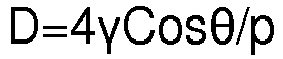
- Measurement of average pore size: the pressure corresponding to the first opened pore is bubble point pressure, and the pore size corresponding to this pressure is the maximum pore size; during this process, the pressure and the flow rate are real-time recorded to obtain a pressure-flow curve; the pressure reflects the information about pore size, and the flow reflects the information about the number of the pores of certain pore size; then the pressure-flow rate curve of the dry membrane is tested, and the average pore size of the membrane sample can be calculated according to related formula. The relationship between pore size and pressure is represented by Washburn formula:
- Measurement of ion conductivity: the membrane sample was placed in an electrolyte solution at a temperature of 23±2°C, and immersed for 2 h while sealing. The electrolyte solution was injected into a mold for resistance test, and the mold was connected to a chemical station and test parameters were set. A layer of the membrane was introduced and its impedance spectrum was measured; and then another layer of the membrane was introduced and its impedance spectrum was measured, up to 4 layers of the membrane were introduced and four impedance spectrums were measured. The resistance values R1, R2, R3 and R4 for the 1, 2, 3 and 4 layers were read from the impedance spectrums respectively. A curve was drawn by using the number of layers as abscissa and the resistance of the membrane samples as ordinate; and the slope and linearity of the curve were calculated. When the linearity was greater than 0.99, the ion conductivity of the membrane sample was calculated according to the following formula:

- wherein: σ-the ion conductivity of the sample, in Siemens/meter (S/cm)
- d-the thickness of the sample, in micrometers (µm)
- k-the slope of the curve
- S-the test area of the membrane sample, in square centimeters (cm2).
- 0.05 g of nano 5A molecular sieve and 2 g of polyvinylidene fluoride were dissolved in acetone. The mixed solution was stirred thoroughly to form a uniform slurry. The slurry was coated on a PP base film to form a wet membrane. The wet membrane was dried at 90°C for 15 min, and then the membrane was immersed in a lithium salt electrolyte solution of 1M LiPF6 + EC:DMC (1:1) in a dry environment for 30 sec and then taken out; and the liquid on the surface of the membrane was removed using a filter paper.
- The concentration of the lithium salt electrolyte solution was 1 mol/L. In the lithium salt electrolyte solution, the solute is lithium hexafluorophosphate (LiPF6), and the solvent is ethylene carbonate (EC) and dimethyl carbonate (DMC), which may also be abbreviated as LiPF6/(EC+DMC), wherein EC+DMC represents a mixed solvent of ethylene carbonate and dimethyl carbonate (same in the following examples), and the volume ratio of EC to DMC was 1:1.
- 0.02 g of nano 5A molecular sieve and 2 g of poly(vinylidene fluoride-co-hexafluoropropylene) copolymer (P(VDF-HFP)) were dissolved in N-methylpyrrolidone (NMP). The mixed solution was stirred thoroughly to form a uniform slurry. The slurry was coated on a PE base film to form a wet membrane. The wet membrane was dried at 90°C for 15 min, and then the membrane was immersed in a lithium salt electrolyte solution of 1M LiPF6 + EC:DMC (1:1) in a dry environment for 30 sec and then taken out; and the liquid on the surface of the membrane was removed using a filter paper.
- 0.07 g of nano 5A molecular sieve, 1 g of poly(vinylidene fluoride-co-hexafluoropropylene) copolymer (P(VDF-HFP)) and 1 g of polymethyl methacrylate (PMMA) were dissolved in N,N-dimethyl acetamide. The mixed solution was stirred thoroughly to form a uniform slurry. The slurry was coated on a PET base film to form a wet membrane. The wet membrane was dried at 90°C for 15 min, and then the membrane was immersed in a lithium salt electrolyte solution of 1M LiPF6 + EC:DMC (1:1) in a dry environment for 30 sec and then taken out; and the liquid on the surface of the membrane was removed using a filter paper.
- 0.05 g of nano 5A molecular sieve, 0.5 g of poly(vinylidene fluoride-co-hexafluoropropylene) copolymer (P(VDF-HFP)) and 1.5 g of polymethyl methacrylate (PMMA) were dissolved in N,N-dimethyl acetamide. The mixed solution was stirred thoroughly to form a uniform slurry. The slurry was coated on a PET base film to form a wet membrane. The wet membrane was dried at 90°C for 15 min, and then the membrane was immersed in a lithium salt electrolyte solution of 1M LiPF6 + EC:DMC (1:1) in a dry environment for 30 sec and then taken out; and the liquid on the surface of the membrane was removed using a filter paper.
- 0.07 g of nano 5A molecular sieve, 0.85 g of poly(vinylidene fluoride-co-hexafluoropropylene) copolymer (P(VDF-HFP)) and 1 g of polymethyl methacrylate (PMMA) were dissolved in N,N-dimethyl acetamide. The mixed solution was stirred thoroughly to form a uniform slurry. The slurry was coated on a PE base film to form a wet membrane. The wet membrane was dried at 90°C for 15 min, and then the membrane was immersed in a lithium salt electrolyte solution of 1M LiPF6 + EC:DMC (1:1) in a dry environment for 30 sec and then taken out; and the liquid on the surface of the membrane was removed using a filter paper.
- 0.02 g of nano 5A molecular sieve, 3 g of poly(vinylidene fluoride-co-hexafluoropropylene) copolymer (P(VDF-HFP)) and 1 g of polymethyl methacrylate (PMMA) were dissolved in N,N-dimethyl acetamide. The mixed solution was stirred thoroughly to form a uniform slurry. The slurry was coated on a PE base film to form a wet membrane. The wet membrane was dried at 90°C for 15 min, and then the membrane was immersed in a lithium salt electrolyte solution of 1M LiPF6 + EC:DMC (1:1) in a dry environment for 30 sec and then taken out; and the liquid on the surface of the membrane was removed using a filter paper.
- 1 g of poly(vinylidene fluoride-co-hexafluoropropylene) copolymer (P(VDF-HFP)) was dissolved in N,N-dimethyl acetamide. The mixed solution was stirred thoroughly to form a uniform slurry. The slurry was coated on a PET base film to form a wet membrane. The wet membrane was dried at 90°C for 15 min, and then the membrane was immersed in a lithium salt electrolyte solution of 1M LiPF6 + EC:DMC (1:1) in a dry environment for 30 sec and then taken out; and the liquid on the surface of the membrane was removed using a filter paper.
- 0.5 g of poly(vinylidene fluoride-co-hexafluoropropylene) copolymer (P(VDF-HFP)) and 1.5 g of polymethyl methacrylate (PMMA) were dissolved in N,N-dimethyl acetamide. The mixed solution was stirred thoroughly to form a uniform slurry. The slurry was coated on a PET nonwoven fabric base film to form a wet membrane. The wet membrane was dried at 90°C for 15 min, and then the membrane was immersed in a lithium salt electrolyte solution of 1M LiPF6 + EC:DMC (1:1) in a dry environment for 30 sec and then taken out; and the liquid on the surface of the membrane was removed using a filter paper.
- 0.05 g of 10X molecular sieve, 0.5 g of poly(vinylidene fluoride-co-hexafluoropropylene) copolymer (P(VDF-HFP)) and 1.5 g of polymethyl methacrylate (PMMA) were dissolved in N,N-dimethyl acetamide. The mixed solution was stirred thoroughly to form a uniform slurry. The slurry was coated on a PET nonwoven fabric base film to form a wet membrane. The wet membrane was dried at 90°C for 15 min, and then the membrane was immersed in a lithium salt electrolyte solution of 1M LiPF6 + EC:DMC (1:1) in a dry environment for 30 sec and then taken out; and the liquid on the surface of the membrane was removed using a filter paper.
- 0.05 g of Y-type molecular sieve, 0.5 g of poly(vinylidene fluoride-co-hexafluoropropylene) copolymer (P(VDF-HFP)) and 1.5 g of polymethyl methacrylate (PMMA) were dissolved in N,N-dimethyl acetamide. The mixed solution was stirred thoroughly to form a uniform slurry. The slurry was coated on a PET nonwoven fabric base film to form a wet membrane. The wet membrane was dried at 90°C for 15 min, and then the membrane was immersed in a lithium salt electrolyte solution of 1M LiPF6 + EC:DMC (1:1) in a dry environment for 30 sec and then taken out; and the liquid on the surface of the membrane was removed using a filter paper.
- 0.05 g of nano 5A molecular sieve, 0.5 g of poly(vinylidene fluoride-co-hexafluoropropylene) copolymer (P(VDF-HFP)) and 0.5 g of polymethyl methacrylate (PMMA) were dissolved in N,N-dimethyl acetamide. The mixed solution was stirred thoroughly to form a uniform slurry. The slurry was coated on a PET nonwoven fabric base film to form a wet membrane. The wet membrane was dried at 90°C for 15 min, and then the membrane was immersed in a lithium salt electrolyte solution of 1M LiPF6 + EC:DMC (1:1) in a dry environment for 30 sec and then taken out; and the liquid on the surface of the membrane was removed using a filter paper.
- 0.05 g of nano 5A molecular sieve, 2.0 g of poly(vinylidene fluoride-co-hexafluoropropylene) copolymer (P(VDF-HFP)) and 2.5 g of polymethyl methacrylate (PMMA) were dissolved in N,N-dimethyl acetamide. The mixed solution was stirred thoroughly to form a uniform slurry. The slurry was coated on a PET nonwoven fabric base film to form a wet membrane. The wet membrane was dried at 90°C for 15 min, and then the membrane was immersed in a lithium salt electrolyte solution of 1M LiPF6 + EC:DMC (1:1) in a dry environment for 30 sec and then taken out; and the liquid on the surface of the membrane was removed using a filter paper.
- 0.125 g of nano 5A molecular sieve, 0.5 g of poly(vinylidene fluoride-co-hexafluoropropylene) copolymer (P(VDF-HFP)) and 1.5 g of polymethyl methacrylate (PMMA) were dissolved in N,N-dimethyl acetamide. The mixed solution was stirred thoroughly to form a uniform slurry. The slurry was coated on a PET nonwoven fabric base film to form a wet membrane. The wet membrane was dried at 90°C for 15 min, and then the membrane was immersed in a lithium salt electrolyte solution of 1M LiPF6 + EC:DMC (1:1) in a dry environment for 30 sec and then taken out; and the liquid on the surface of the membrane was removed using a filter paper.
- 0.008 g of nano 5A molecular sieve, 0.5 g of poly(vinylidene fluoride-co-hexafluoropropylene) copolymer (P(VDF-HFP)) and 1.5 g of polymethyl methacrylate (PMMA) were dissolved in N,N-dimethyl acetamide. The mixed solution was stirred thoroughly to form a uniform slurry. The slurry was coated on a PET nonwoven fabric base film to form a wet membrane. The wet membrane was dried at 90°C for 15 min, and then the membrane was immersed in a lithium salt electrolyte solution of 1M LiPF6 + EC:DMC (1:1) in a dry environment for 30 sec and then taken out; and the liquid on the surface of the membrane was removed using a filter paper.
- The basic properties and liquid absorption properties of the examples, comparative examples, and base films were shown in Table 1.
Table 1 physical and chemical properties of samples Cases Thickness (dry) Thickness (after absorbing liquid) Porosity (%) Average pore size (nm) Liquid absorption (%) Ion conductivity (10-4Scm-1) PP base film 15 15 42 32 240 1.2 PE base film 15 15 40 35 220 1.1 PET nonwoven fabric film 15 15 60 50 300 1.3 Example 1 18 19 40 30 280 2.5 Example 2 18 19 39 33 295 4.2 Example 3 18 19 50 43 386 7.5 Example 4 18 20 56 47 400 10.0 Example 5 18 19 52 44 400 10.0 Example 6 18 30 35 47 525 4.0 Comparative example 1 17 18 56 48 330 1.3 Comparative example 2 17 18 58 48 345 1.8 Example 7 18 19 54 45 370 7.9 Example 8 18 20 51 41 360 7.2 Example 9 16 17 59 45 330 4.3 Example 10 19 21 50 39 460 9.1 Example 11 18 20 49 35 470 8.3 Example 12 16 16 60 49 330 2.1 Note: the liquid absorption (%) of the membrane sample = (W-W0) / W0 × 100; W and Wo are the weights of the membrane samples before and after absorbing liquid, respectively. - As can be seen from above results of physical and chemical properties, the polymer electrolyte membranes prepared in Examples 1-12 all have a high liquid absorption. In addition, the polymer electrolyte membranes with molecular sieve prepared in Examples 1-12 exhibit significantly improved ion conductivity, as compared with Comparative example 1-2, indicating that the addition of molecular sieve can significantly improve the ion conductivity of the polymer electrolyte membrane.
- The above are only preferred examples of the invention and are not intended to limit the scope of the substantive technical content of the invention. The substantive technical content of the invention is broadly defined in the scope of the claims of the application. Any technical entity or method that is completed by others, if it is exactly the same as defined in the scope of the claims of the application, or an equivalent change, is considered to be within the scope of the claims.
Claims (12)
- A preparation method for a polymer electrolyte membrane, wherein the method comprises the steps of:(1) mixing a molecular sieve material, a polymer and a solvent to obtain a slurry;(2) coating the slurry on a base film to form a wet membrane;(3) drying the wet membrane to obtain a dry membrane; and(4) immersing the dry membrane in a lithium salt electrolyte solution, and taking out to obtain a polymer electrolyte membrane.
- The preparation method according to claim 1, wherein the molecular sieve material is one or more selected from the group consisting of nano 5A molecular sieve, 10X molecular sieve, and Y-type molecular sieve.
- The preparation method according to claim 1, wherein the weight ratio of the molecular sieve material to the polymer is 1:20 to 1:200.
- The preparation method according to claim 1, wherein the molecular sieve material is present in an amount of 0.1-3.3 wt% based on the total weight of the slurry obtained in the step (1).
- The preparation method according to claim 1, wherein the polymer is selected from polyvinylidene fluoride (PVDF), poly(vinylidene fluoride-co-hexafluoropropylene) copolymer (P(VDF-HFP)), polymethyl methacrylate (PMMA), or a mixture thereof.
- The preparation method according to claim 5, wherein the polymer is a mixture of poly(vinylidene fluoride-co-hexafluoropropylene) copolymer (P(VDF-HFP)) and polymethyl methacrylate (PMMA), wherein the weight ratio of polyvinylidene fluoride and hexafluoropropylene copolymer: polymethyl methacrylate is 1:0.1 to 1:5.
- The preparation method according to claim 1, wherein the solvent is one or more selected from the group consisting of acetone, N-methyl-2-pyrrolidone, N,N-dimethylformamide, N,N-dimethyl acetamide, dimethyl sulfoxide, ethanol, and isopropanol.
- The preparation method according to claim 1, wherein the concentration of the lithium salt solute in the lithium salt electrolyte solution is 0.5-1.5 mol/L.
- A polymer electrolyte membrane, wherein the polymer electrolyte membrane comprises a base film layer and a coating layer, the coating layer comprises a molecular sieve material, a polymer, and a lithium salt electrolyte solution.
- The polymer electrolyte membrane according to claim 9, wherein the molecular sieve material is one or more selected from the group consisting of nano 5A molecular sieve, 10X molecular sieve, and Y-type molecular sieve.
- The polymer electrolyte membrane according to claim 9, wherein the polymer is selected from polyvinylidene fluoride (PVDF), poly(vinylidene fluoride-co-hexafluoropropylene) copolymer (P(VDF-HFP)), and polymethyl methacrylate (PMMA), or a mixture thereof.
- The polymer electrolyte membrane according to claim 9, wherein the weight ratio of the molecular sieve material to the polymer is 1:20 to 1:200.
Applications Claiming Priority (2)
| Application Number | Priority Date | Filing Date | Title |
|---|---|---|---|
| CN201610398348.XA CN107474270B (en) | 2016-06-07 | 2016-06-07 | Preparation method of polymer electrolyte membrane |
| PCT/CN2017/080247 WO2017211126A1 (en) | 2016-06-07 | 2017-04-12 | Polymer electrolyte membrane and method for preparing same |
Publications (2)
| Publication Number | Publication Date |
|---|---|
| EP3467012A1 true EP3467012A1 (en) | 2019-04-10 |
| EP3467012A4 EP3467012A4 (en) | 2020-01-29 |
Family
ID=60578323
Family Applications (1)
| Application Number | Title | Priority Date | Filing Date |
|---|---|---|---|
| EP17809566.7A Pending EP3467012A4 (en) | 2016-06-07 | 2017-04-12 | POLYMER ELECTROLYTE MEMBRANE AND METHOD FOR PRODUCING THE SAME |
Country Status (6)
| Country | Link |
|---|---|
| US (1) | US10938065B2 (en) |
| EP (1) | EP3467012A4 (en) |
| JP (1) | JP6961626B2 (en) |
| KR (1) | KR102432479B1 (en) |
| CN (1) | CN107474270B (en) |
| WO (1) | WO2017211126A1 (en) |
Families Citing this family (14)
| Publication number | Priority date | Publication date | Assignee | Title |
|---|---|---|---|---|
| KR20210073078A (en) * | 2019-12-10 | 2021-06-18 | 한국과학기술원 | Reinforced composite polymer electrolyte for flexible lithium ion secondary battery and methode of manufacturing the same |
| CN110931844B (en) * | 2019-12-25 | 2022-12-23 | 西安大工迅驰材料科技有限公司 | All-solid-state composite polymer electrolyte containing modified molecular sieve |
| CN113346190A (en) * | 2020-02-18 | 2021-09-03 | 南京大学 | Porous material self-supporting membrane and preparation method and application thereof |
| CN112259914A (en) * | 2020-09-02 | 2021-01-22 | 江西师范大学 | A molecular sieve-coated porous composite material and its preparation method and application |
| CN113675008A (en) * | 2021-08-12 | 2021-11-19 | 上海奥威科技开发有限公司 | Polymer-based solid supercapacitor and preparation method and application thereof |
| CN113851730A (en) * | 2021-08-20 | 2021-12-28 | 佛山(华南)新材料研究院 | A kind of high temperature resistant polymer electrolyte membrane and preparation method thereof |
| CN113889663B (en) * | 2021-10-09 | 2024-05-28 | 北京化工大学 | A composite structure gel polymer electrolyte for lithium battery and its preparation method and use |
| CN114292552B (en) * | 2021-12-31 | 2023-03-31 | 蜂巢能源科技(无锡)有限公司 | Polyolefin diaphragm modification liquid, modified polyolefin diaphragm and preparation method and application thereof |
| CN115036568B (en) * | 2022-05-25 | 2024-09-27 | 济南大学 | Preparation method of P (VDF-co-MAF) -based single-ion polymer electrolyte membrane for lithium battery |
| CN115157518B (en) * | 2022-06-30 | 2023-12-01 | 蜂巢能源科技股份有限公司 | Electrolyte membrane preparation system, sulfide electrolyte membrane preparation method and application thereof |
| CN115832417B (en) * | 2022-09-09 | 2025-08-29 | 湖北百信慈材料股份有限公司 | A gel electrolyte membrane and its preparation method and application |
| CN116779956A (en) * | 2023-06-20 | 2023-09-19 | 杭州师范大学 | Preparation method and application of polymer gel electrolyte |
| CN119852500A (en) * | 2023-10-18 | 2025-04-18 | 中国石油化工股份有限公司 | Composite solid electrolyte, preparation method and solid lithium battery containing composite solid electrolyte |
| CN119627206A (en) * | 2024-12-04 | 2025-03-14 | 中国第一汽车股份有限公司 | A composite solid electrolyte containing modified molecular sieve and its preparation and application |
Family Cites Families (26)
| Publication number | Priority date | Publication date | Assignee | Title |
|---|---|---|---|---|
| JP2001229976A (en) * | 2000-02-16 | 2001-08-24 | Matsushita Electric Ind Co Ltd | Non-aqueous secondary battery and method of manufacturing the same |
| EP1290749A4 (en) | 2000-05-24 | 2004-09-22 | Finecell Co Ltd | MICROPOROUS MINERAL SOLID ELECTROLYTES AND METHODS OF PREPARATION |
| US6630265B1 (en) * | 2002-08-13 | 2003-10-07 | Hoku Scientific, Inc. | Composite electrolyte for fuel cells |
| TWI267220B (en) * | 2005-05-24 | 2006-11-21 | Univ Tsinghua | Manufacturing process of high gas permeability-resistance and heat-resistance conductive polymer composite bipolar plate for fuel cell |
| JP4845609B2 (en) * | 2005-06-28 | 2011-12-28 | 三星エスディアイ株式会社 | Polymer electrolyte membrane for fuel cell, membrane-electrode assembly for fuel cell including the same, and fuel cell system including the same |
| CN1331935C (en) * | 2005-08-01 | 2007-08-15 | 厦门大学 | Composite microporous polymer electrolyte and its preparing method |
| TWI293998B (en) * | 2006-04-17 | 2008-03-01 | Nat Univ Tsing Hua | Manufacturing process of high performance conductive polymer composite bipolar plate for fuel cell |
| KR100925643B1 (en) * | 2006-04-28 | 2009-11-06 | 주식회사 엘지화학 | Separator for battery with gel polymer layer |
| CN101153084B (en) | 2006-09-28 | 2010-12-08 | 万向电动汽车有限公司 | Polyalcohol microporous barrier for high ratio polyalcohol lithium ion power cell |
| WO2009002566A1 (en) * | 2007-06-26 | 2008-12-31 | The Board Of Trustees Of The Leland Stanford Junior University | Integrated dry gasification fuel cell system for conversion of solid carbonaceous fuels |
| TW201101560A (en) * | 2009-02-24 | 2011-01-01 | Teijin Ltd | Porous membrane for nonaqueous secondary battery, separator for nonaqueous secondary battery, adsorbent for nonaqueous secondary battery, and nonaqueous secondary battery |
| JP5640324B2 (en) * | 2009-04-23 | 2014-12-17 | 株式会社豊田中央研究所 | Lithium sulfur battery |
| CN101552359A (en) * | 2009-05-12 | 2009-10-07 | 湖南大学 | Micro-nano porous structure polymer electrolyte membrane used for lithium ion battery and method of producing the same |
| CN102005609B (en) | 2010-10-20 | 2013-01-16 | 浙江工业大学 | Composite gel polymer electrolyte membrane and application thereof |
| JP2012221565A (en) * | 2011-04-04 | 2012-11-12 | Mitsubishi Paper Mills Ltd | Separator for nonaqueous secondary battery and nonaqueous secondary battery |
| CN103450498A (en) | 2012-05-31 | 2013-12-18 | 海洋王照明科技股份有限公司 | Preparation method of polymethyl methacrylate gel electrolyte membrane, polymethyl methacrylate gel electrolyte, and preparation method of the electrolyte |
| US20150140440A1 (en) | 2012-06-29 | 2015-05-21 | Mingjie Zhou | Method for preparing polyacrylonitrile-methyl methacrylate gel electrolyte film, corresponding electrolyte and preparation method thereof |
| KR101794264B1 (en) * | 2012-07-31 | 2017-12-01 | 삼성에스디아이 주식회사 | Separator, Lithium battery comprising the separator, and method of preparing the separator |
| CN103665678B (en) | 2012-08-28 | 2017-06-16 | 苏州宝时得电动工具有限公司 | Polymer film and preparation method thereof, electrolyte and battery with polymer film |
| CN103682423A (en) * | 2012-09-06 | 2014-03-26 | 海洋王照明科技股份有限公司 | Gel polymer electrolyte and preparation method thereof |
| CN103834153A (en) | 2012-11-27 | 2014-06-04 | 海洋王照明科技股份有限公司 | Gel polymer electrolyte and preparation method thereof |
| CN102983357A (en) * | 2012-12-17 | 2013-03-20 | 天津工业大学 | Polyolefin non-woven fabric enhanced gel polymer electrolyte membrane and preparation method thereof |
| CN107248563B (en) | 2013-02-05 | 2022-03-15 | 三菱制纸株式会社 | Nonwoven fabric base material for lithium ion secondary battery separator, and lithium ion secondary battery separator |
| KR101601787B1 (en) * | 2013-02-28 | 2016-03-09 | 제일모직주식회사 | Separator having high-tensile strength and method for manufacturing the same |
| CN104177738B (en) * | 2013-05-24 | 2016-08-17 | 苏州宝时得电动工具有限公司 | Polymeric film and preparation method thereof, has electrolyte and the battery of polymeric film |
| CN104140545B (en) | 2014-05-14 | 2017-10-03 | 北京大学 | A kind of ionic liquid/polymer electrolyte film and preparation method thereof |
-
2016
- 2016-06-07 CN CN201610398348.XA patent/CN107474270B/en active Active
-
2017
- 2017-04-12 KR KR1020197000298A patent/KR102432479B1/en active Active
- 2017-04-12 WO PCT/CN2017/080247 patent/WO2017211126A1/en not_active Ceased
- 2017-04-12 EP EP17809566.7A patent/EP3467012A4/en active Pending
- 2017-04-12 US US16/307,283 patent/US10938065B2/en active Active
- 2017-04-12 JP JP2018563893A patent/JP6961626B2/en active Active
Also Published As
| Publication number | Publication date |
|---|---|
| CN107474270B (en) | 2021-01-12 |
| US10938065B2 (en) | 2021-03-02 |
| KR20190039067A (en) | 2019-04-10 |
| US20190140319A1 (en) | 2019-05-09 |
| JP2019521479A (en) | 2019-07-25 |
| JP6961626B2 (en) | 2021-11-05 |
| WO2017211126A1 (en) | 2017-12-14 |
| KR102432479B1 (en) | 2022-08-12 |
| EP3467012A4 (en) | 2020-01-29 |
| CN107474270A (en) | 2017-12-15 |
Similar Documents
| Publication | Publication Date | Title |
|---|---|---|
| US10938065B2 (en) | Polymer electrolyte membrane and method for preparing same | |
| EP3776691B1 (en) | Coating slurries for preparing separators, separators for electrochemical devices and preparation methods therefor | |
| Li et al. | Effects of an electrospun fluorinated poly (ether ether ketone) separator on the enhanced safety and electrochemical properties of lithium ion batteries | |
| EP2052426B1 (en) | Heat resisting ultrafine fibrous separator and secondary battery using the same | |
| CN113839005B (en) | Gel composite positive electrode for solid-state battery and preparation method thereof | |
| Zhang et al. | Enhanced wettability and thermal stability of nano-SiO2/poly (vinyl alcohol)-coated polypropylene composite separators for lithium-ion batteries | |
| CN101621134B (en) | Gel polymer lithium ion battery electrolyte, preparation method and application thereof | |
| Wei et al. | Cross-linked porous polymer separator using vinyl-modified aluminum oxide nanoparticles as cross-linker for lithium-ion batteries | |
| US20160351876A1 (en) | Heat resisting separator having ultrafine fibrous layer and secondary battery having the same | |
| Tabani et al. | High electrochemical stability of polyvinylidene fluoride (PVDF) porous membranes using phase inversion methods for lithium-ion batteries | |
| KR20210060611A (en) | Modified solid electrolyte membrane and its manufacturing method and lithium battery | |
| JP7621383B2 (en) | Separator for electrochemical device and method for producing same | |
| BRPI0620590A2 (en) | organic / inorganic composite separator having morphology gradient, method of manufacture and electrochemical device containing the same | |
| Zhang et al. | Radiation-crosslinked nanofiber membranes with well-designed core–shell structure for high performance of gel polymer electrolytes | |
| Sun et al. | The improved effect of co-doping with nano-SiO 2 and nano-Al 2 O 3 on the performance of poly (methyl methacrylate-acrylonitrile-ethyl acrylate) based gel polymer electrolyte for lithium ion batteries | |
| CN101651234A (en) | Lithium-ion secondary battery | |
| CN112086611A (en) | Composite diaphragm and preparation method and application thereof | |
| Hwang et al. | Poly (vinylidene fluoride-hexafluoropropylene)-based membranes for lithium batteries | |
| Wu et al. | Unveiling high-power and high-safety lithium-ion battery separator based on interlayer of ZIF-67/cellulose nanofiber with electrospun poly (vinyl alcohol)/melamine nonwoven membranes | |
| Chen et al. | Fabrication and application of TiO2-modified PMIA separators with strong mechanical properties in lithium-ion batteries | |
| Tang et al. | Study of the effect of a novel high-performance gel polymer electrolyte based on thermoplastic polyurethane/poly (vinylidene fluoride)/polystyrene and formed using an electrospinning technique | |
| CN108428844A (en) | A kind of new modified isolation film | |
| CN116565306A (en) | High-migration-number composite solid electrolyte and preparation method and application thereof | |
| CN1331935C (en) | Composite microporous polymer electrolyte and its preparing method | |
| CN106356487A (en) | Coating membrane for high energy density rechargeable lithium batteries |
Legal Events
| Date | Code | Title | Description |
|---|---|---|---|
| STAA | Information on the status of an ep patent application or granted ep patent |
Free format text: STATUS: THE INTERNATIONAL PUBLICATION HAS BEEN MADE |
|
| PUAI | Public reference made under article 153(3) epc to a published international application that has entered the european phase |
Free format text: ORIGINAL CODE: 0009012 |
|
| STAA | Information on the status of an ep patent application or granted ep patent |
Free format text: STATUS: REQUEST FOR EXAMINATION WAS MADE |
|
| 17P | Request for examination filed |
Effective date: 20181210 |
|
| AK | Designated contracting states |
Kind code of ref document: A1 Designated state(s): AL AT BE BG CH CY CZ DE DK EE ES FI FR GB GR HR HU IE IS IT LI LT LU LV MC MK MT NL NO PL PT RO RS SE SI SK SM TR |
|
| AX | Request for extension of the european patent |
Extension state: BA ME |
|
| DAV | Request for validation of the european patent (deleted) | ||
| DAX | Request for extension of the european patent (deleted) | ||
| REG | Reference to a national code |
Ref country code: DE Ref legal event code: R079 Free format text: PREVIOUS MAIN CLASS: C08J0005180000 Ipc: C08J0005220000 |
|
| A4 | Supplementary search report drawn up and despatched |
Effective date: 20200108 |
|
| RIC1 | Information provided on ipc code assigned before grant |
Ipc: H01M 10/056 20100101ALI20191220BHEP Ipc: C08K 3/34 20060101ALN20191220BHEP Ipc: C08K 7/26 20060101ALN20191220BHEP Ipc: C08J 5/22 20060101AFI20191220BHEP Ipc: H01M 10/052 20100101ALI20191220BHEP Ipc: H01M 2/16 20060101ALI20191220BHEP Ipc: H01M 10/0525 20100101ALN20191220BHEP Ipc: H01M 2/14 20060101ALI20191220BHEP |
|
| STAA | Information on the status of an ep patent application or granted ep patent |
Free format text: STATUS: EXAMINATION IS IN PROGRESS |
|
| 17Q | First examination report despatched |
Effective date: 20230307 |