EP3466934A1 - Sulfonamide compound or salt thereof - Google Patents
Sulfonamide compound or salt thereof Download PDFInfo
- Publication number
- EP3466934A1 EP3466934A1 EP17806708.8A EP17806708A EP3466934A1 EP 3466934 A1 EP3466934 A1 EP 3466934A1 EP 17806708 A EP17806708 A EP 17806708A EP 3466934 A1 EP3466934 A1 EP 3466934A1
- Authority
- EP
- European Patent Office
- Prior art keywords
- group
- optionally substituted
- atom
- oxo
- dihydro
- Prior art date
- Legal status (The legal status is an assumption and is not a legal conclusion. Google has not performed a legal analysis and makes no representation as to the accuracy of the status listed.)
- Granted
Links
- 0 Cc(cc1)c(C)c([C@@](*)[C@@](C(O)=O)N)c1F Chemical compound Cc(cc1)c(C)c([C@@](*)[C@@](C(O)=O)N)c1F 0.000 description 24
- HGUYBLVGLMAUFF-UHFFFAOYSA-N COc1cc(N)ccc1N Chemical compound COc1cc(N)ccc1N HGUYBLVGLMAUFF-UHFFFAOYSA-N 0.000 description 3
- GPXLKKCTOPEXEX-UHFFFAOYSA-N CC(C)(C(C(O)=O)N)c1c(C)c(C)ccc1F Chemical compound CC(C)(C(C(O)=O)N)c1c(C)c(C)ccc1F GPXLKKCTOPEXEX-UHFFFAOYSA-N 0.000 description 1
- WYLCTOOSPZKYPM-UHFFFAOYSA-N CC(C)(C1)Oc(c(Br)ccc2)c2C1=O Chemical compound CC(C)(C1)Oc(c(Br)ccc2)c2C1=O WYLCTOOSPZKYPM-UHFFFAOYSA-N 0.000 description 1
- QHUMEBIXLGOVBF-UHFFFAOYSA-N CC(c(c(N)ccc1N)c1OC)=O Chemical compound CC(c(c(N)ccc1N)c1OC)=O QHUMEBIXLGOVBF-UHFFFAOYSA-N 0.000 description 1
- PEBRLVFWNHIWDE-UHFFFAOYSA-N CC(c(cc1)c(C)c(C)c1F)Br Chemical compound CC(c(cc1)c(C)c(C)c1F)Br PEBRLVFWNHIWDE-UHFFFAOYSA-N 0.000 description 1
- SIWMRTIWGXDBBH-UHFFFAOYSA-N CC(c1cccc2c1OCC2)Br Chemical compound CC(c1cccc2c1OCC2)Br SIWMRTIWGXDBBH-UHFFFAOYSA-N 0.000 description 1
- ZHWIZWNYOSGXSR-UHFFFAOYSA-N CC1(C)OB(c(cc2Cl)cnc2OC)OC1(C)C Chemical compound CC1(C)OB(c(cc2Cl)cnc2OC)OC1(C)C ZHWIZWNYOSGXSR-UHFFFAOYSA-N 0.000 description 1
- NBAJZOJKXOSUNZ-BSNVRXNXSA-N CCc(c(C)c1[C@@H](C)[C@@H](C(O2)=NNC2=O)NS(c(c(OCC2)c3C2O)ccc3Cl)(=O)=O)ccc1F Chemical compound CCc(c(C)c1[C@@H](C)[C@@H](C(O2)=NNC2=O)NS(c(c(OCC2)c3C2O)ccc3Cl)(=O)=O)ccc1F NBAJZOJKXOSUNZ-BSNVRXNXSA-N 0.000 description 1
- VSOCKTWBYUTTOC-YJYMSZOUSA-N CCc1c([C@@H](C)[C@@H](C(O2)=NNC2=O)NS(c(ccc(Cl)c2)c2OC)(=O)=O)cccc1C Chemical compound CCc1c([C@@H](C)[C@@H](C(O2)=NNC2=O)NS(c(ccc(Cl)c2)c2OC)(=O)=O)cccc1C VSOCKTWBYUTTOC-YJYMSZOUSA-N 0.000 description 1
- CVFDLVIWIUKZBI-UHFFFAOYSA-N COC(c(cc(cc1)Cl)c1S(Cl)(=O)=O)=O Chemical compound COC(c(cc(cc1)Cl)c1S(Cl)(=O)=O)=O CVFDLVIWIUKZBI-UHFFFAOYSA-N 0.000 description 1
- JAPJUTZFHULGFG-UHFFFAOYSA-N COC(c(cc(cn1)Cl)c1Br)=O Chemical compound COC(c(cc(cn1)Cl)c1Br)=O JAPJUTZFHULGFG-UHFFFAOYSA-N 0.000 description 1
- WEQNSONLVQEQGQ-UHFFFAOYSA-N COc(cc(cn1)Cl)c1Br Chemical compound COc(cc(cn1)Cl)c1Br WEQNSONLVQEQGQ-UHFFFAOYSA-N 0.000 description 1
- MPUULPRRPNZGAE-OQPBUACISA-N C[C@@H]([C@@H](C(O)=O)N)c(c(C)c(C1CC1)cc1)c1F Chemical compound C[C@@H]([C@@H](C(O)=O)N)c(c(C)c(C1CC1)cc1)c1F MPUULPRRPNZGAE-OQPBUACISA-N 0.000 description 1
- QDUFPNPTMRUTCP-KOLCDFICSA-N C[C@@H]([C@@H](C(O)=O)N)c1c(C)c(C)ccc1 Chemical compound C[C@@H]([C@@H](C(O)=O)N)c1c(C)c(C)ccc1 QDUFPNPTMRUTCP-KOLCDFICSA-N 0.000 description 1
- AEYMHOJFKMHCQV-XCBNKYQSSA-N C[C@@H]([C@@H](C(O)=O)N)c1c(C)cccc1F Chemical compound C[C@@H]([C@@H](C(O)=O)N)c1c(C)cccc1F AEYMHOJFKMHCQV-XCBNKYQSSA-N 0.000 description 1
- MVXSMIZKUIMREE-OQPBUACISA-N C[C@@H]([C@@H](C(O)=O)N)c1c2c(F)cccc2ccc1 Chemical compound C[C@@H]([C@@H](C(O)=O)N)c1c2c(F)cccc2ccc1 MVXSMIZKUIMREE-OQPBUACISA-N 0.000 description 1
- TWBUPZYLSNRMLC-HQJQHLMTSA-N C[C@@H]([C@@H](C(O)=O)N)c1cccc2c1CCO2 Chemical compound C[C@@H]([C@@H](C(O)=O)N)c1cccc2c1CCO2 TWBUPZYLSNRMLC-HQJQHLMTSA-N 0.000 description 1
- QOGAZUHCUDAQTR-XCBNKYQSSA-N C[C@@H]([C@@H](C(O)=O)N)c1cccc2c1OCC2 Chemical compound C[C@@H]([C@@H](C(O)=O)N)c1cccc2c1OCC2 QOGAZUHCUDAQTR-XCBNKYQSSA-N 0.000 description 1
- KRSSVVQBGXUHGH-LDWIPMOCSA-N C[C@@H]([C@@H](C(O1)=NNC1=O)N)c(c(C)c(cc1)Cl)c1F Chemical compound C[C@@H]([C@@H](C(O1)=NNC1=O)N)c(c(C)c(cc1)Cl)c1F KRSSVVQBGXUHGH-LDWIPMOCSA-N 0.000 description 1
- CSJSNXBQSVPPSN-PXAZEXFGSA-N C[C@@H]([C@@H](C(O1)=NNC1=O)NS(c([s]cc1C(OC)=O)c1OC)(=O)=O)c1c(CCCC2)c2ccc1 Chemical compound C[C@@H]([C@@H](C(O1)=NNC1=O)NS(c([s]cc1C(OC)=O)c1OC)(=O)=O)c1c(CCCC2)c2ccc1 CSJSNXBQSVPPSN-PXAZEXFGSA-N 0.000 description 1
- NHROIYUYMFCEQK-ZMZPIMSZSA-N C[C@@H]([C@@H](C(O1)=NNC1=O)NS(c(c(F)c1C(OC)=O)ccc1F)(=O)=O)c1c(C)c(C)ccc1F Chemical compound C[C@@H]([C@@H](C(O1)=NNC1=O)NS(c(c(F)c1C(OC)=O)ccc1F)(=O)=O)c1c(C)c(C)ccc1F NHROIYUYMFCEQK-ZMZPIMSZSA-N 0.000 description 1
- HQQZMWSGDGFMAD-DIFFPNOSSA-N C[C@@H]([C@@H](C(O1)=NNC1=O)NS(c(c(N)c1)ccc1Cl)(=O)=O)c1c(C)c(C)ccc1F Chemical compound C[C@@H]([C@@H](C(O1)=NNC1=O)NS(c(c(N)c1)ccc1Cl)(=O)=O)c1c(C)c(C)ccc1F HQQZMWSGDGFMAD-DIFFPNOSSA-N 0.000 description 1
- UGFAARINNJXHTQ-XCLFUZPHSA-N C[C@@H]([C@@H](C(O1)=NNC1=O)NS(c(c(OC)c1)ccc1[N+]([O-])=O)(=O)=O)c1c(CCCC2)c2ccc1 Chemical compound C[C@@H]([C@@H](C(O1)=NNC1=O)NS(c(c(OC)c1)ccc1[N+]([O-])=O)(=O)=O)c1c(CCCC2)c2ccc1 UGFAARINNJXHTQ-XCLFUZPHSA-N 0.000 description 1
- BDHJGNMIOKDXBI-YJYMSZOUSA-N C[C@@H]([C@@H](C(O1)=NNC1=O)NS(c(c(OC)c1C(C)(C)O)ccc1Cl)(=O)=O)c1c(C)c(C)ccc1F Chemical compound C[C@@H]([C@@H](C(O1)=NNC1=O)NS(c(c(OC)c1C(C)(C)O)ccc1Cl)(=O)=O)c1c(C)c(C)ccc1F BDHJGNMIOKDXBI-YJYMSZOUSA-N 0.000 description 1
- VAVAMZWIHKTIFJ-IYRHBAIHSA-N C[C@@H]([C@@H](C(O1)=NNC1=O)NS(c(c(OC)c1C(C)O)ccc1Cl)(=O)=O)c1c(C)c(C)ccc1F Chemical compound C[C@@H]([C@@H](C(O1)=NNC1=O)NS(c(c(OC)c1C(C)O)ccc1Cl)(=O)=O)c1c(C)c(C)ccc1F VAVAMZWIHKTIFJ-IYRHBAIHSA-N 0.000 description 1
- MJUQLGDPJKYTLP-BDQNRJTFSA-N C[C@@H]([C@@H](C(O1)=NNC1=O)NS(c(c(OCC1)c2C1(C)O)ccc2F)(=O)=O)c1c(C)c(Cl)ccc1F Chemical compound C[C@@H]([C@@H](C(O1)=NNC1=O)NS(c(c(OCC1)c2C1(C)O)ccc2F)(=O)=O)c1c(C)c(Cl)ccc1F MJUQLGDPJKYTLP-BDQNRJTFSA-N 0.000 description 1
- ZXMNYBKMHVSGDY-BLVKFPJESA-N C[C@@H]([C@@H](C(O1)=NNC1=O)NS(c(cc(c(OC)c1)OC)c1C(N)=O)(=O)=O)c1c(C)c(C)ccc1F Chemical compound C[C@@H]([C@@H](C(O1)=NNC1=O)NS(c(cc(c(OC)c1)OC)c1C(N)=O)(=O)=O)c1c(C)c(C)ccc1F ZXMNYBKMHVSGDY-BLVKFPJESA-N 0.000 description 1
- GXLBEEGSWNFNGE-ASSNKEHSSA-N C[C@@H]([C@@H](C(O1)=NNC1=O)NS(c(cc1)ncc1Br)(=O)=O)c(cccc1C2)c1-c1c2cccc1 Chemical compound C[C@@H]([C@@H](C(O1)=NNC1=O)NS(c(cc1)ncc1Br)(=O)=O)c(cccc1C2)c1-c1c2cccc1 GXLBEEGSWNFNGE-ASSNKEHSSA-N 0.000 description 1
- IAQJZWMVUYJDAF-NKLMGCQCSA-N C[C@@H]([C@@H](C(O1)=NNC1=O)NS(c(cc12)ccc1OCCC2(C)O)(=O)=O)c1c(C)c(C)ccc1F Chemical compound C[C@@H]([C@@H](C(O1)=NNC1=O)NS(c(cc12)ccc1OCCC2(C)O)(=O)=O)c1c(C)c(C)ccc1F IAQJZWMVUYJDAF-NKLMGCQCSA-N 0.000 description 1
- PELMUKWGVIFILM-DIFFPNOSSA-N C[C@@H]([C@@H](C(O1)=NNC1=O)NS(c(cc1C(N2)=O)ccc1C2=O)(=O)=O)c1c(C)c(C)ccc1F Chemical compound C[C@@H]([C@@H](C(O1)=NNC1=O)NS(c(cc1C(N2)=O)ccc1C2=O)(=O)=O)c1c(C)c(C)ccc1F PELMUKWGVIFILM-DIFFPNOSSA-N 0.000 description 1
- ZZLXMAVIXOPGOF-BLVKFPJESA-N C[C@@H]([C@@H](C(O1)=NNC1=O)NS(c(cc1OCCOc1c1)c1C(O)=O)(=O)=O)c1c(C)c(C)ccc1F Chemical compound C[C@@H]([C@@H](C(O1)=NNC1=O)NS(c(cc1OCCOc1c1)c1C(O)=O)(=O)=O)c1c(C)c(C)ccc1F ZZLXMAVIXOPGOF-BLVKFPJESA-N 0.000 description 1
- MDKNFGIUESSZGG-BLVKFPJESA-N C[C@@H]([C@@H](C(O1)=NNC1=O)NS(c(cc1S(C)(=O)=O)ccc1F)(=O)=O)c1c(CCC2)c2ccc1 Chemical compound C[C@@H]([C@@H](C(O1)=NNC1=O)NS(c(cc1S(C)(=O)=O)ccc1F)(=O)=O)c1c(CCC2)c2ccc1 MDKNFGIUESSZGG-BLVKFPJESA-N 0.000 description 1
- SPKUCVZRLVPSOG-DIFFPNOSSA-N C[C@@H]([C@@H](C(O1)=NNC1=O)NS(c(cc1S(N)(=O)=O)ccc1Cl)(=O)=O)c1c(C)c(C)ccc1F Chemical compound C[C@@H]([C@@H](C(O1)=NNC1=O)NS(c(cc1S(N)(=O)=O)ccc1Cl)(=O)=O)c1c(C)c(C)ccc1F SPKUCVZRLVPSOG-DIFFPNOSSA-N 0.000 description 1
- GCUKWJUJMLWMQG-MYYSRTQBSA-N C[C@@H]([C@@H](C(O1)=NNC1=O)NS(c(ccc(Cl)c1)c1OC)(=O)=O)c1c(C)c(-c2cnc3N(C)CCOc3c2)ccc1F Chemical compound C[C@@H]([C@@H](C(O1)=NNC1=O)NS(c(ccc(Cl)c1)c1OC)(=O)=O)c1c(C)c(-c2cnc3N(C)CCOc3c2)ccc1F GCUKWJUJMLWMQG-MYYSRTQBSA-N 0.000 description 1
- HRGIERSXZSTSCW-BLVKFPJESA-N C[C@@H]([C@@H](C(O1)=NNC1=O)NS(c(ccc(Cl)c1)c1[N+]([O-])=O)(=O)=O)c1cccc2c1CCCC2 Chemical compound C[C@@H]([C@@H](C(O1)=NNC1=O)NS(c(ccc(Cl)c1)c1[N+]([O-])=O)(=O)=O)c1cccc2c1CCCC2 HRGIERSXZSTSCW-BLVKFPJESA-N 0.000 description 1
- ZQQSQOHXEYAAHO-XIKOKIGWSA-N C[C@@H]([C@@H](C(O1)=NNC1=O)NS(c(cccc1)c1OC(F)F)(=O)=O)c1c(CCC2)c2ccc1 Chemical compound C[C@@H]([C@@H](C(O1)=NNC1=O)NS(c(cccc1)c1OC(F)F)(=O)=O)c1c(CCC2)c2ccc1 ZQQSQOHXEYAAHO-XIKOKIGWSA-N 0.000 description 1
- HFBJHLOSPZYUBV-DTTOPDMNSA-N C[C@@H]([C@@H](C(O1)=NNC1=O)NS(c(nc1C(C)OC(C)=O)ccc1Cl)(=O)=O)c1c(CCC2)c2ccc1 Chemical compound C[C@@H]([C@@H](C(O1)=NNC1=O)NS(c(nc1C(C)OC(C)=O)ccc1Cl)(=O)=O)c1c(CCC2)c2ccc1 HFBJHLOSPZYUBV-DTTOPDMNSA-N 0.000 description 1
- GJQXVCBDQDENLY-KUHUBIRLSA-N C[C@@H]([C@@H](C(O1)=NNC1=O)NS(c(nc1C(N2CCCC2)=O)ccc1Cl)(=O)=O)c1c(C)c(C)ccc1F Chemical compound C[C@@H]([C@@H](C(O1)=NNC1=O)NS(c(nc1C(N2CCCC2)=O)ccc1Cl)(=O)=O)c1c(C)c(C)ccc1F GJQXVCBDQDENLY-KUHUBIRLSA-N 0.000 description 1
- FZEUWUYLWAXAHL-BZNIZROVSA-N C[C@@H]([C@@H](C(O1)=NNC1=O)NS(c(nc1C(OC)=O)ccc1Cl)(=O)=O)c1c(C)c(C)ccc1F Chemical compound C[C@@H]([C@@H](C(O1)=NNC1=O)NS(c(nc1C(OC)=O)ccc1Cl)(=O)=O)c1c(C)c(C)ccc1F FZEUWUYLWAXAHL-BZNIZROVSA-N 0.000 description 1
- WBJWKXMRVRYDQU-BZNIZROVSA-N C[C@@H]([C@@H](C(O1)=NNC1=O)NS(c(ncc(Cl)c1)c1C(OC)=O)(=O)=O)c1c(C)c(C)ccc1F Chemical compound C[C@@H]([C@@H](C(O1)=NNC1=O)NS(c(ncc(Cl)c1)c1C(OC)=O)(=O)=O)c1c(C)c(C)ccc1F WBJWKXMRVRYDQU-BZNIZROVSA-N 0.000 description 1
- ZVQQZWRKFZQEMI-BZNIZROVSA-N C[C@@H]([C@@H](C(O1)=NNC1=O)NS(c(ncc(Cl)c1)c1OC)(=O)=O)c1c(C)c(C)ccc1F Chemical compound C[C@@H]([C@@H](C(O1)=NNC1=O)NS(c(ncc(Cl)c1)c1OC)(=O)=O)c1c(C)c(C)ccc1F ZVQQZWRKFZQEMI-BZNIZROVSA-N 0.000 description 1
- XUJYIQJVTCUDPS-SHAVTQDWSA-N C[C@@H]([C@@H](C(O1)=NNC1=O)NS(c1ccc(C(F)(F)F)c2c1OCCC2O)(=O)=O)c1c(C)c(C)ccc1F Chemical compound C[C@@H]([C@@H](C(O1)=NNC1=O)NS(c1ccc(C(F)(F)F)c2c1OCCC2O)(=O)=O)c1c(C)c(C)ccc1F XUJYIQJVTCUDPS-SHAVTQDWSA-N 0.000 description 1
- IWFKXZPHPSDANY-VFNWGFHPSA-N C[C@@H]([C@@H](C(O1)=NNC1=O)NS(c1cccc2cc(C)cnc12)(=O)=O)c1c(CCC2)c2ccc1 Chemical compound C[C@@H]([C@@H](C(O1)=NNC1=O)NS(c1cccc2cc(C)cnc12)(=O)=O)c1c(CCC2)c2ccc1 IWFKXZPHPSDANY-VFNWGFHPSA-N 0.000 description 1
- UFFZIYCKOBRYQC-DIFFPNOSSA-N C[C@@H]([C@@H](C(O1)=NNC1=O)NS(c1cccc2n[s]nc12)(=O)=O)c1c(CCC2)c2ccc1 Chemical compound C[C@@H]([C@@H](C(O1)=NNC1=O)NS(c1cccc2n[s]nc12)(=O)=O)c1c(CCC2)c2ccc1 UFFZIYCKOBRYQC-DIFFPNOSSA-N 0.000 description 1
- QXUSWFXBNRJNHB-YJYMSZOUSA-N C[C@@H]([C@@H](C(O1)=NNC1=O)NS(c1ccccc1OC)(=O)=O)c1c(CCC2)c2ccc1 Chemical compound C[C@@H]([C@@H](C(O1)=NNC1=O)NS(c1ccccc1OC)(=O)=O)c1c(CCC2)c2ccc1 QXUSWFXBNRJNHB-YJYMSZOUSA-N 0.000 description 1
- RQLMHWKMCQOUBF-VLIAUNLRSA-N C[C@@H]([C@@H](C(O1)=NNC1=S)NS(c(cc1)ccc1Br)(=O)=O)c1c(CCCC2(C)C)c2ccc1 Chemical compound C[C@@H]([C@@H](C(O1)=NNC1=S)NS(c(cc1)ccc1Br)(=O)=O)c1c(CCCC2(C)C)c2ccc1 RQLMHWKMCQOUBF-VLIAUNLRSA-N 0.000 description 1
- CZKLKFHCKZAYEM-BLVKFPJESA-N C[C@@H]([C@@H](C(O1)=NNC1=S)NS(c(cc1C(OC)=O)ccc1Cl)(=O)=O)c1c(CCC2)c2ccc1 Chemical compound C[C@@H]([C@@H](C(O1)=NNC1=S)NS(c(cc1C(OC)=O)ccc1Cl)(=O)=O)c1c(CCC2)c2ccc1 CZKLKFHCKZAYEM-BLVKFPJESA-N 0.000 description 1
- MXZXYEFIOADJMW-UHFFFAOYSA-N Cc(c(F)c1C=O)ccc1F Chemical compound Cc(c(F)c1C=O)ccc1F MXZXYEFIOADJMW-UHFFFAOYSA-N 0.000 description 1
- FKEURBCLFHOBDM-UHFFFAOYSA-N Cc(cc(c(F)c1)F)c1Br Chemical compound Cc(cc(c(F)c1)F)c1Br FKEURBCLFHOBDM-UHFFFAOYSA-N 0.000 description 1
- GCHDMDPUBFJLNC-UHFFFAOYSA-N Cc(cc1)ccc1S(NC(Cc1ccccc1)c([o]1)nnc1S)(=O)=O Chemical compound Cc(cc1)ccc1S(NC(Cc1ccccc1)c([o]1)nnc1S)(=O)=O GCHDMDPUBFJLNC-UHFFFAOYSA-N 0.000 description 1
- JXNOKDMGEKYNJR-UHFFFAOYSA-N Cc1c(C)c(C=O)cc(F)c1 Chemical compound Cc1c(C)c(C=O)cc(F)c1 JXNOKDMGEKYNJR-UHFFFAOYSA-N 0.000 description 1
- OQKGRTJBHGYOLR-KRWDZBQOSA-N Cc1cccc2cccc(C[C@@H](C(O3)=NNC3=O)NS(c(ccc(Cl)c3)c3OC)(=O)=O)c12 Chemical compound Cc1cccc2cccc(C[C@@H](C(O3)=NNC3=O)NS(c(ccc(Cl)c3)c3OC)(=O)=O)c12 OQKGRTJBHGYOLR-KRWDZBQOSA-N 0.000 description 1
- SQNYSXIZCRUTLT-UHFFFAOYSA-N O=Cc1c(cccc2)c2cc(F)c1 Chemical compound O=Cc1c(cccc2)c2cc(F)c1 SQNYSXIZCRUTLT-UHFFFAOYSA-N 0.000 description 1
- WDJLPQCBTBZTRH-UHFFFAOYSA-N O=Cc1c[s]c2c1cccc2 Chemical compound O=Cc1c[s]c2c1cccc2 WDJLPQCBTBZTRH-UHFFFAOYSA-N 0.000 description 1
Images

Classifications
-
- C—CHEMISTRY; METALLURGY
- C07—ORGANIC CHEMISTRY
- C07D—HETEROCYCLIC COMPOUNDS
- C07D249/00—Heterocyclic compounds containing five-membered rings having three nitrogen atoms as the only ring hetero atoms
- C07D249/02—Heterocyclic compounds containing five-membered rings having three nitrogen atoms as the only ring hetero atoms not condensed with other rings
- C07D249/04—1,2,3-Triazoles; Hydrogenated 1,2,3-triazoles
-
- A—HUMAN NECESSITIES
- A61—MEDICAL OR VETERINARY SCIENCE; HYGIENE
- A61P—SPECIFIC THERAPEUTIC ACTIVITY OF CHEMICAL COMPOUNDS OR MEDICINAL PREPARATIONS
- A61P35/00—Antineoplastic agents
-
- C—CHEMISTRY; METALLURGY
- C07—ORGANIC CHEMISTRY
- C07D—HETEROCYCLIC COMPOUNDS
- C07D271/00—Heterocyclic compounds containing five-membered rings having two nitrogen atoms and one oxygen atom as the only ring hetero atoms
- C07D271/02—Heterocyclic compounds containing five-membered rings having two nitrogen atoms and one oxygen atom as the only ring hetero atoms not condensed with other rings
- C07D271/06—1,2,4-Oxadiazoles; Hydrogenated 1,2,4-oxadiazoles
- C07D271/07—1,2,4-Oxadiazoles; Hydrogenated 1,2,4-oxadiazoles with oxygen, sulfur or nitrogen atoms, directly attached to ring carbon atoms, the nitrogen atoms not forming part of a nitro radical
-
- A—HUMAN NECESSITIES
- A61—MEDICAL OR VETERINARY SCIENCE; HYGIENE
- A61K—PREPARATIONS FOR MEDICAL, DENTAL OR TOILETRY PURPOSES
- A61K31/00—Medicinal preparations containing organic active ingredients
- A61K31/33—Heterocyclic compounds
- A61K31/395—Heterocyclic compounds having nitrogen as a ring hetero atom, e.g. guanethidine or rifamycins
- A61K31/41—Heterocyclic compounds having nitrogen as a ring hetero atom, e.g. guanethidine or rifamycins having five-membered rings with two or more ring hetero atoms, at least one of which being nitrogen, e.g. tetrazole
- A61K31/4245—Oxadiazoles
-
- A—HUMAN NECESSITIES
- A61—MEDICAL OR VETERINARY SCIENCE; HYGIENE
- A61K—PREPARATIONS FOR MEDICAL, DENTAL OR TOILETRY PURPOSES
- A61K31/00—Medicinal preparations containing organic active ingredients
- A61K31/33—Heterocyclic compounds
- A61K31/395—Heterocyclic compounds having nitrogen as a ring hetero atom, e.g. guanethidine or rifamycins
- A61K31/41—Heterocyclic compounds having nitrogen as a ring hetero atom, e.g. guanethidine or rifamycins having five-membered rings with two or more ring hetero atoms, at least one of which being nitrogen, e.g. tetrazole
- A61K31/425—Thiazoles
- A61K31/428—Thiazoles condensed with carbocyclic rings
-
- A—HUMAN NECESSITIES
- A61—MEDICAL OR VETERINARY SCIENCE; HYGIENE
- A61K—PREPARATIONS FOR MEDICAL, DENTAL OR TOILETRY PURPOSES
- A61K31/00—Medicinal preparations containing organic active ingredients
- A61K31/33—Heterocyclic compounds
- A61K31/395—Heterocyclic compounds having nitrogen as a ring hetero atom, e.g. guanethidine or rifamycins
- A61K31/41—Heterocyclic compounds having nitrogen as a ring hetero atom, e.g. guanethidine or rifamycins having five-membered rings with two or more ring hetero atoms, at least one of which being nitrogen, e.g. tetrazole
- A61K31/433—Thidiazoles
-
- A—HUMAN NECESSITIES
- A61—MEDICAL OR VETERINARY SCIENCE; HYGIENE
- A61K—PREPARATIONS FOR MEDICAL, DENTAL OR TOILETRY PURPOSES
- A61K31/00—Medicinal preparations containing organic active ingredients
- A61K31/33—Heterocyclic compounds
- A61K31/395—Heterocyclic compounds having nitrogen as a ring hetero atom, e.g. guanethidine or rifamycins
- A61K31/435—Heterocyclic compounds having nitrogen as a ring hetero atom, e.g. guanethidine or rifamycins having six-membered rings with one nitrogen as the only ring hetero atom
- A61K31/44—Non condensed pyridines; Hydrogenated derivatives thereof
- A61K31/4427—Non condensed pyridines; Hydrogenated derivatives thereof containing further heterocyclic ring systems
- A61K31/4439—Non condensed pyridines; Hydrogenated derivatives thereof containing further heterocyclic ring systems containing a five-membered ring with nitrogen as a ring hetero atom, e.g. omeprazole
-
- A—HUMAN NECESSITIES
- A61—MEDICAL OR VETERINARY SCIENCE; HYGIENE
- A61K—PREPARATIONS FOR MEDICAL, DENTAL OR TOILETRY PURPOSES
- A61K31/00—Medicinal preparations containing organic active ingredients
- A61K31/33—Heterocyclic compounds
- A61K31/395—Heterocyclic compounds having nitrogen as a ring hetero atom, e.g. guanethidine or rifamycins
- A61K31/435—Heterocyclic compounds having nitrogen as a ring hetero atom, e.g. guanethidine or rifamycins having six-membered rings with one nitrogen as the only ring hetero atom
- A61K31/44—Non condensed pyridines; Hydrogenated derivatives thereof
- A61K31/4427—Non condensed pyridines; Hydrogenated derivatives thereof containing further heterocyclic ring systems
- A61K31/444—Non condensed pyridines; Hydrogenated derivatives thereof containing further heterocyclic ring systems containing a six-membered ring with nitrogen as a ring heteroatom, e.g. amrinone
-
- A—HUMAN NECESSITIES
- A61—MEDICAL OR VETERINARY SCIENCE; HYGIENE
- A61K—PREPARATIONS FOR MEDICAL, DENTAL OR TOILETRY PURPOSES
- A61K31/00—Medicinal preparations containing organic active ingredients
- A61K31/33—Heterocyclic compounds
- A61K31/395—Heterocyclic compounds having nitrogen as a ring hetero atom, e.g. guanethidine or rifamycins
- A61K31/435—Heterocyclic compounds having nitrogen as a ring hetero atom, e.g. guanethidine or rifamycins having six-membered rings with one nitrogen as the only ring hetero atom
- A61K31/44—Non condensed pyridines; Hydrogenated derivatives thereof
- A61K31/445—Non condensed piperidines, e.g. piperocaine
- A61K31/4523—Non condensed piperidines, e.g. piperocaine containing further heterocyclic ring systems
- A61K31/454—Non condensed piperidines, e.g. piperocaine containing further heterocyclic ring systems containing a five-membered ring with nitrogen as a ring hetero atom, e.g. pimozide, domperidone
-
- A—HUMAN NECESSITIES
- A61—MEDICAL OR VETERINARY SCIENCE; HYGIENE
- A61K—PREPARATIONS FOR MEDICAL, DENTAL OR TOILETRY PURPOSES
- A61K31/00—Medicinal preparations containing organic active ingredients
- A61K31/33—Heterocyclic compounds
- A61K31/395—Heterocyclic compounds having nitrogen as a ring hetero atom, e.g. guanethidine or rifamycins
- A61K31/435—Heterocyclic compounds having nitrogen as a ring hetero atom, e.g. guanethidine or rifamycins having six-membered rings with one nitrogen as the only ring hetero atom
- A61K31/47—Quinolines; Isoquinolines
- A61K31/4709—Non-condensed quinolines and containing further heterocyclic rings
-
- A—HUMAN NECESSITIES
- A61—MEDICAL OR VETERINARY SCIENCE; HYGIENE
- A61K—PREPARATIONS FOR MEDICAL, DENTAL OR TOILETRY PURPOSES
- A61K31/00—Medicinal preparations containing organic active ingredients
- A61K31/33—Heterocyclic compounds
- A61K31/395—Heterocyclic compounds having nitrogen as a ring hetero atom, e.g. guanethidine or rifamycins
- A61K31/435—Heterocyclic compounds having nitrogen as a ring hetero atom, e.g. guanethidine or rifamycins having six-membered rings with one nitrogen as the only ring hetero atom
- A61K31/47—Quinolines; Isoquinolines
- A61K31/472—Non-condensed isoquinolines, e.g. papaverine
- A61K31/4725—Non-condensed isoquinolines, e.g. papaverine containing further heterocyclic rings
-
- A—HUMAN NECESSITIES
- A61—MEDICAL OR VETERINARY SCIENCE; HYGIENE
- A61K—PREPARATIONS FOR MEDICAL, DENTAL OR TOILETRY PURPOSES
- A61K31/00—Medicinal preparations containing organic active ingredients
- A61K31/33—Heterocyclic compounds
- A61K31/395—Heterocyclic compounds having nitrogen as a ring hetero atom, e.g. guanethidine or rifamycins
- A61K31/495—Heterocyclic compounds having nitrogen as a ring hetero atom, e.g. guanethidine or rifamycins having six-membered rings with two or more nitrogen atoms as the only ring heteroatoms, e.g. piperazine or tetrazines
- A61K31/498—Pyrazines or piperazines ortho- and peri-condensed with carbocyclic ring systems, e.g. quinoxaline, phenazine
-
- A—HUMAN NECESSITIES
- A61—MEDICAL OR VETERINARY SCIENCE; HYGIENE
- A61K—PREPARATIONS FOR MEDICAL, DENTAL OR TOILETRY PURPOSES
- A61K31/00—Medicinal preparations containing organic active ingredients
- A61K31/33—Heterocyclic compounds
- A61K31/395—Heterocyclic compounds having nitrogen as a ring hetero atom, e.g. guanethidine or rifamycins
- A61K31/495—Heterocyclic compounds having nitrogen as a ring hetero atom, e.g. guanethidine or rifamycins having six-membered rings with two or more nitrogen atoms as the only ring heteroatoms, e.g. piperazine or tetrazines
- A61K31/505—Pyrimidines; Hydrogenated pyrimidines, e.g. trimethoprim
- A61K31/506—Pyrimidines; Hydrogenated pyrimidines, e.g. trimethoprim not condensed and containing further heterocyclic rings
-
- C—CHEMISTRY; METALLURGY
- C07—ORGANIC CHEMISTRY
- C07D—HETEROCYCLIC COMPOUNDS
- C07D249/00—Heterocyclic compounds containing five-membered rings having three nitrogen atoms as the only ring hetero atoms
- C07D249/02—Heterocyclic compounds containing five-membered rings having three nitrogen atoms as the only ring hetero atoms not condensed with other rings
- C07D249/08—1,2,4-Triazoles; Hydrogenated 1,2,4-triazoles
- C07D249/10—1,2,4-Triazoles; Hydrogenated 1,2,4-triazoles with hetero atoms or with carbon atoms having three bonds to hetero atoms with at the most one bond to halogen, e.g. ester or nitrile radicals, directly attached to ring carbon atoms
-
- C—CHEMISTRY; METALLURGY
- C07—ORGANIC CHEMISTRY
- C07D—HETEROCYCLIC COMPOUNDS
- C07D271/00—Heterocyclic compounds containing five-membered rings having two nitrogen atoms and one oxygen atom as the only ring hetero atoms
- C07D271/02—Heterocyclic compounds containing five-membered rings having two nitrogen atoms and one oxygen atom as the only ring hetero atoms not condensed with other rings
- C07D271/10—1,3,4-Oxadiazoles; Hydrogenated 1,3,4-oxadiazoles
-
- C—CHEMISTRY; METALLURGY
- C07—ORGANIC CHEMISTRY
- C07D—HETEROCYCLIC COMPOUNDS
- C07D271/00—Heterocyclic compounds containing five-membered rings having two nitrogen atoms and one oxygen atom as the only ring hetero atoms
- C07D271/02—Heterocyclic compounds containing five-membered rings having two nitrogen atoms and one oxygen atom as the only ring hetero atoms not condensed with other rings
- C07D271/10—1,3,4-Oxadiazoles; Hydrogenated 1,3,4-oxadiazoles
- C07D271/113—1,3,4-Oxadiazoles; Hydrogenated 1,3,4-oxadiazoles with oxygen, sulfur or nitrogen atoms, directly attached to ring carbon atoms, the nitrogen atoms not forming part of a nitro radical
-
- C—CHEMISTRY; METALLURGY
- C07—ORGANIC CHEMISTRY
- C07D—HETEROCYCLIC COMPOUNDS
- C07D413/00—Heterocyclic compounds containing two or more hetero rings, at least one ring having nitrogen and oxygen atoms as the only ring hetero atoms
- C07D413/02—Heterocyclic compounds containing two or more hetero rings, at least one ring having nitrogen and oxygen atoms as the only ring hetero atoms containing two hetero rings
- C07D413/06—Heterocyclic compounds containing two or more hetero rings, at least one ring having nitrogen and oxygen atoms as the only ring hetero atoms containing two hetero rings linked by a carbon chain containing only aliphatic carbon atoms
-
- C—CHEMISTRY; METALLURGY
- C07—ORGANIC CHEMISTRY
- C07D—HETEROCYCLIC COMPOUNDS
- C07D413/00—Heterocyclic compounds containing two or more hetero rings, at least one ring having nitrogen and oxygen atoms as the only ring hetero atoms
- C07D413/02—Heterocyclic compounds containing two or more hetero rings, at least one ring having nitrogen and oxygen atoms as the only ring hetero atoms containing two hetero rings
- C07D413/10—Heterocyclic compounds containing two or more hetero rings, at least one ring having nitrogen and oxygen atoms as the only ring hetero atoms containing two hetero rings linked by a carbon chain containing aromatic rings
-
- C—CHEMISTRY; METALLURGY
- C07—ORGANIC CHEMISTRY
- C07D—HETEROCYCLIC COMPOUNDS
- C07D413/00—Heterocyclic compounds containing two or more hetero rings, at least one ring having nitrogen and oxygen atoms as the only ring hetero atoms
- C07D413/02—Heterocyclic compounds containing two or more hetero rings, at least one ring having nitrogen and oxygen atoms as the only ring hetero atoms containing two hetero rings
- C07D413/12—Heterocyclic compounds containing two or more hetero rings, at least one ring having nitrogen and oxygen atoms as the only ring hetero atoms containing two hetero rings linked by a chain containing hetero atoms as chain links
-
- C—CHEMISTRY; METALLURGY
- C07—ORGANIC CHEMISTRY
- C07D—HETEROCYCLIC COMPOUNDS
- C07D413/00—Heterocyclic compounds containing two or more hetero rings, at least one ring having nitrogen and oxygen atoms as the only ring hetero atoms
- C07D413/14—Heterocyclic compounds containing two or more hetero rings, at least one ring having nitrogen and oxygen atoms as the only ring hetero atoms containing three or more hetero rings
-
- C—CHEMISTRY; METALLURGY
- C07—ORGANIC CHEMISTRY
- C07D—HETEROCYCLIC COMPOUNDS
- C07D417/00—Heterocyclic compounds containing two or more hetero rings, at least one ring having nitrogen and sulfur atoms as the only ring hetero atoms, not provided for by group C07D415/00
- C07D417/02—Heterocyclic compounds containing two or more hetero rings, at least one ring having nitrogen and sulfur atoms as the only ring hetero atoms, not provided for by group C07D415/00 containing two hetero rings
- C07D417/06—Heterocyclic compounds containing two or more hetero rings, at least one ring having nitrogen and sulfur atoms as the only ring hetero atoms, not provided for by group C07D415/00 containing two hetero rings linked by a carbon chain containing only aliphatic carbon atoms
-
- C—CHEMISTRY; METALLURGY
- C07—ORGANIC CHEMISTRY
- C07D—HETEROCYCLIC COMPOUNDS
- C07D417/00—Heterocyclic compounds containing two or more hetero rings, at least one ring having nitrogen and sulfur atoms as the only ring hetero atoms, not provided for by group C07D415/00
- C07D417/02—Heterocyclic compounds containing two or more hetero rings, at least one ring having nitrogen and sulfur atoms as the only ring hetero atoms, not provided for by group C07D415/00 containing two hetero rings
- C07D417/12—Heterocyclic compounds containing two or more hetero rings, at least one ring having nitrogen and sulfur atoms as the only ring hetero atoms, not provided for by group C07D415/00 containing two hetero rings linked by a chain containing hetero atoms as chain links
-
- C—CHEMISTRY; METALLURGY
- C07—ORGANIC CHEMISTRY
- C07D—HETEROCYCLIC COMPOUNDS
- C07D491/00—Heterocyclic compounds containing in the condensed ring system both one or more rings having oxygen atoms as the only ring hetero atoms and one or more rings having nitrogen atoms as the only ring hetero atoms, not provided for by groups C07D451/00 - C07D459/00, C07D463/00, C07D477/00 or C07D489/00
- C07D491/02—Heterocyclic compounds containing in the condensed ring system both one or more rings having oxygen atoms as the only ring hetero atoms and one or more rings having nitrogen atoms as the only ring hetero atoms, not provided for by groups C07D451/00 - C07D459/00, C07D463/00, C07D477/00 or C07D489/00 in which the condensed system contains two hetero rings
- C07D491/10—Spiro-condensed systems
- C07D491/107—Spiro-condensed systems with only one oxygen atom as ring hetero atom in the oxygen-containing ring
-
- C—CHEMISTRY; METALLURGY
- C07—ORGANIC CHEMISTRY
- C07D—HETEROCYCLIC COMPOUNDS
- C07D498/00—Heterocyclic compounds containing in the condensed system at least one hetero ring having nitrogen and oxygen atoms as the only ring hetero atoms
- C07D498/02—Heterocyclic compounds containing in the condensed system at least one hetero ring having nitrogen and oxygen atoms as the only ring hetero atoms in which the condensed system contains two hetero rings
- C07D498/04—Ortho-condensed systems
-
- C—CHEMISTRY; METALLURGY
- C07—ORGANIC CHEMISTRY
- C07D—HETEROCYCLIC COMPOUNDS
- C07D498/00—Heterocyclic compounds containing in the condensed system at least one hetero ring having nitrogen and oxygen atoms as the only ring hetero atoms
- C07D498/02—Heterocyclic compounds containing in the condensed system at least one hetero ring having nitrogen and oxygen atoms as the only ring hetero atoms in which the condensed system contains two hetero rings
- C07D498/08—Bridged systems
Definitions
- the present invention relates to a novel sulfonamide compound having a ribonucleotide reductase inhibitory activity or a salt thereof, and a pharmaceutical composition containing the same as an active ingredient.
- Ribonucleotide reductase (hereinafter also referred to as RNR) is composed of a hetero-oligomer of a large subunit M1 and a small subunit M2, and expression of both is required for enzyme activity.
- RNR recognizes ribonucleoside 5'-diphosphate (hereinafter also referred to as NDP) as a substrate and catalyzes a reduction reaction to 2'-deoxyribonucleoside 5'-diphosphate (hereinafter also referred to as dNDP). Since RNR is a rate-limiting enzyme in the de novo dNTP synthesis pathway, RNR plays an essential role in DNA synthesis and repair (Non-Patent Document 1).
- Non-Patent Document 2 The enzymatic activity of RNR is closely related to cell proliferation, and there is a report that the enzymatic activity is particularly high in cancer. Indeed, in various types of solid tumors and blood cancers, numerous correlations have been reported with overexpression of M2, a subunit of RNR, and their prognosis (Non-Patent Documents 3 and 4). In addition, cell growth inhibition by inhibiting RNR and anti-tumor effect in vivo have been reported in cell lines derived from several cancer types and in nonclinical models (Non-Patent Documents 5 and 6), thus it is strongly suggested that RNR is one of important target molecules for cancer treatment.
- hydroxyurea hereinafter also referred to as HU
- 3-aminopyridine-2-carboxaldehyde thiosemicarbazone hereinafter also referred to as 3-AP
- HU hydroxyurea
- 3-AP 3-aminopyridine-2-carboxaldehyde thiosemicarbazone
- 3-AP has a structure having the capability to chelate to metal ions, and it has been known that 3-AP chelates mainly to iron ions, thereby inhibiting RNR (Non-Patent Document 9).
- 3-AP has been suggested as having an off-target effect to various other iron-ion-requiring proteins, and it has been known that side effects such as hypoxia, dyspnea, methemoglobinemia and the like are caused in clinical cases (Non-Patent Document 10).
- RNR inhibitor which has a better RNR inhibitory activity and a structure which does not chelate with metal ions and is useful for diseases associated with RNR, such as tumors.
- Non-Patent Document 11 discloses a compound (4a-e) having the following formula: (wherein, R represents CH 2 Ph, and R' represents Me).
- the compound (4a-e) is a production intermediate for obtaining the 5-benzylthio-1,3,4-oxadiazole derivatives as an objective compound having an anti-HIV activity.
- Non-Patent Document 11 does not disclose a physiological activity of the compound (4a-e), and does not suggest an RNR inhibition activity and antitumor effects of the compound (4a-e).
- An object of the present invention is to provide a novel compound which selectively and strongly inhibits RNR and is useful as an antitumor agent and a therapeutic agent for other diseases involving RNR.
- the present invention provides the following: [1] to [33].
- novel sulfonamide compounds represented by the above formula (I) or salts thereof useful as RNR inhibitors are provided.
- the compounds of the present invention or a salt thereof have an excellent RNR-inhibiting activity, and show a growth inhibitory effect for cancer cell lines. Accordingly, the compounds of the present invention or a salt thereof are useful as an anti-tumor agent and a therapeutic agent for other diseases where RNR are involved.
- the compounds of the present invention represented by formula (I) are compounds having a sulfonamide structure, and are novel compounds which are not described in the prior art literature described hereinafter.
- CA-CB refers to a group having a carbon number of A-B in the present specification.
- C1-C6 alkyl group represents an alkyl group having 1 to 6 carbon atoms.
- A-B members indicates that the number of atoms constituting the ring (ring members) is A-B.
- “5-10 membered unsaturated heterocyclic group” means an unsaturated heterocyclic group whose ring member is 5-10.
- Substituent refers to a halogen atom, a hydroxy group, an amino group, an oxo group, a cyano group, a nitro group, a carboxyl group, an aminocarbonyl group, a thioamide group, a C1-C6 alkyl group, a C2-C6 alkynyl group, a C3-C6 cycloalkyl group, a C1-C6 alkoxy group, a C1-C6 alkoxy C1-C6 alkoxy group, a halogeno C1-C6 alkyl group, a halogeno C1-C6 alkoxy group, a C6-C14 aromatic hydrocarbon group, an unsaturated heterocyclic group, a saturated heterocyclic group, a nitrogen-containing saturated heterocyclic group, a nitrogen-containing saturated heterocyclic carbonyl group, a C1-C14 acyl group, a C1-C14 acylamin
- Halogen atom refers to a fluorine atom, a chlorine atom, a bromine atom, and an iodine atom.
- C1-C6 alkyl group refers to a straight or branched saturated hydrocarbon group having 1 to 6 carbon atoms, such as a methyl group, an ethyl group, an n-propyl group, an isopropyl group, an n-butyl group, an isobutyl group, a tert-butyl group, an n-pentyl group, an isopentyl group, a hexyl group and the like.
- C2-C6 alkynyl group refers to an unsaturated straight-chain or branched hydrocarbon group having 2 to 6 carbon atoms and at least one triple bond, e.g., ethynyl, 1- or 2-propynyl group, 1-, 2- or 3-butynyl group, 1-methyl-2-propynyl group and the like.
- C3-C6 cycloalkyl group refers to a saturated cyclic hydrocarbon group having 3 to 6 carbon atoms, for example, a cyclopropyl group, a cyclobutyl group, a cyclopentyl group, a cyclohexyl group and the like.
- C1-C6 alkoxy group refers to an oxy group to which a straight-chain or branched saturated hydrocarbon group having 1 to 6 carbon atoms is bonded, for example, a methoxy group, an ethoxy group, a propoxy group, an isopropoxy group, an n-butoxy group, an isobutoxy group, a tert-butoxy group, a pentyloxy group, an isopentyloxy group, a hexyloxy group and the like.
- C1-C6 alkoxy C1-C6 alkoxy group refers to a C1-C6 alkoxy group in which one of the hydrogen atom of the C1-C6 alkoxy group is substituted with a C1-C6 alkoxy group, for example, a methoxymethoxy group, a methoxyethoxy group, a methoxy propoxy group, an ethoxymethoxy group, an ethoxyethoxy group, a propoxy methoxy group and the like.
- halogeno C1-C6 alkyl group refers to a C1-C6 alkyl group in which one or more hydrogen atoms are substituted with a halogen atom, for example, a fluoromethyl group, a difluoromethyl group, a trifluoromethyl group, a trichloromethyl group, a fluoroethyl group, 1,1,1-trifluoroethyl group, a mono fluoro-n-propyl group, a perfluoro-n-propyl group, a perfluoro isopropyl group and the like.
- C6-C14 aromatic hydrocarbon group refers to a monocyclic or polycyclic aromatic hydrocarbon group having 6 to 14 carbon atoms, for example, a phenyl group, a naphthyl group, an anthracenyl group, a phenanthryl group, a fluorenyl group and the like.
- Unsaturated heterocyclic group refers to a monocyclic or polycyclic unsaturated heterocyclic group having at least one hetero atom selected from a nitrogen atom, a sulfur atom and an oxygen atom (preferably 1 to 4, more preferably 1 to 3).
- the unsaturated heterocyclic group includes a fully unsaturated heterocyclic group (a fully unsaturated heterocyclic group) and a partially unsaturated heterocyclic group (a partially unsaturated heterocyclic group).
- a fully unsaturated heterocyclic group includes, for example, a pyrrolyl group, an imidazolyl group, a pyrazolyl group, a triazolyl group, a tetrazolyl, a furanyl (a furyl group), an oxazolyl group, an isoxazolyl group, an oxadiazolyl group, a thiophenyl group (a thienyl group), a thiazolyl group, an isothiazolyl group, a thiadiazolyl group, a pyridinyl group (a pyridyl group), a pyrimidinyl group (pyrimidyl group), a pyrazinyl group (a pyrazyl group), a pyridazinyl group, an indolyl group, an isoindolyl group, an indazolyl group (a benzpyrazol group), a benzimidazolyl group,
- a partially unsaturated heterocyclic group includes, for example, a dihydropyranyl group, a dihydro triazolyl group, a dihydrofuranyl group, a dihydrooxadiazolyl group, a dihydroquinolyl group, a dihydroquinazolinyl group, an indolinyl group, a tetrahydroisoquinolyl group, a methylenedioxyphenyl group, an ethylenedioxy phenyl group, a dihydrobenzofuranyl group, a dihydro-benzoxazolyl group, a dihydropyridooxazinyl group and the like.
- “Saturated heterocyclic group” as used herein refers to a single or polycyclic fully saturated heterocyclic group having at least one hetero atom selected from a nitrogen atom, a sulfur atom and an oxygen atom (preferably 1 to 4, more preferably 1 to 3), and includes, for example, an azetidinyl group, a pyrrolidinyl group, a piperidinyl group, a piperazinyl group, a hexamethyleneimino group, a morpholino group, a thiomorpholino group, a homopiperazinyl group, a tetrahydrofuranyl group, a tetrahydropyranyl group, a tetrahydrothiophenyl group, a thiazolidinyl group, an oxazolidinyl group and the like.
- Neitrogen-containing saturated heterocyclic group refers to a saturated heterocyclic group having one or more nitrogen atoms, which optionally includes a hetero atom other than nitrogen atom, and includes, for example, a morpholino group.
- Neitrogen-containing saturated heterocyclic carbonyl group refers to a carbonyl group to which a nitrogen-containing saturated heterocyclic group is bonded, and includes, for example, a morpholinocarbonyl group.
- C1-C14 acyl group refers to a carbonyl group to which a hydrogen atom, a C1-C6 alkyl group, a C6-C14 aromatic hydrocarbon group or an unsaturated heterocyclic group is bonded, and includes, for example: a formyl group; a (C1-C6 alkyl) carbonyl group such as an acetyl group, a propanoyl group, a butanoyl group; a (C3-C6 cycloalkyl) carbonyl group such as a cyclopropanoyl group, a cyclobutanoyl group; or a (C6-C13) arylcarbonyl group such as a benzoyl group, a naphthyl carbonyl group, a fluorenylcarbonyl group.
- C1-C14 acylamino group refers to an amino group in which one or two hydrogen atoms are substituted with a C1-C14 acyl group, and includes, for example, an acetylamino group, a propanoylamino group, a butanoylamino group, a cyclopropanoyl amino group.
- C2-C7 alkoxycarbonyl group refers to a carbonyl group to which a C1-C6 alkoxy group is bonded, and includes, for example, a methoxycarbonyl group, an ethoxycarbonyl group, an n-propoxycarbonyl group, an isopropoxycarbonyl group, an n-butoxycarbonyl group, a tert-butoxycarbonyl group and the like.
- C1-C14 acyloxy group refers to, for example, a formyloxy group; a (C1-C6 alkyl)carbonyloxy group such as a methyl carbonyloxy group, an ethyl carbonyloxy group, an n-propyl carbonyloxy group, an isopropylcarbonyloxy group, an n-butylcarbonyloxy group, an iso-butylcarbonyloxy group, a tert-butylcarbonyloxy group, an n-pentylcarbonyloxy group, an iso-pentylcarbonyloxy group, a hexylcarbonyloxy group and the like; a (C3-C6 cycloalkyl)carbonyloxy group such as a cyclopropanoyloxy group, a cyclobutanoyloxy group and the like; a (C6-C13 aryl)carbonyloxy group such as a
- C7-C13 aralkyloxy group refers to an alkylloxy group in which one hydrogen atom is substituted with an aryl group, and includes, for example, a benzyloxy group, a phenethyloxy group, a naphthylmethyloxy group, a fluorenylmethyloxy group and the like.
- “Saturated or partially unsaturated hydrocarbon ring” as used herein refers to a monocyclic or polycyclic saturated or partially unsaturated hydrocarbon ring, and includes, for example, a cyclopropane ring, a cyclobutane ring, a cyclopentane ring, a cyclohexane ring, a cycloheptane ring, a cyclooctane ring, a cyclobutene ring, a cyclopentene ring, a cyclohexene ring, a cycloheptene ring, a cyclooctadiene ring and the like.
- “Saturated or partially unsaturated heterocyclic ring” as used herein refers to a monocyclic or polycyclic saturated or partially unsaturated heterocyclic a ring having a hetero atom selected from a nitrogen atoms a sulfur atom and an oxygen atom, and includes, for example, an oxirane ring, an azetidine ring, a pyrrolidine ring, an imidazolidine ring, a piperidine ring, a piperazine ring, a morpholine ring, a tetrahydrofuran ring, a tetrahydropyran ring, a dioxane ring, a tetrahydrothiophene ring, a dihydropyran ring, a dihydrofuran ring and the like.
- Spiro heterocyclic group refers to a saturated or unsaturated spiro heterocyclic group having a spiro carbon atom and a hetero atom selected from a nitrogen atom, a sulfur atom and an oxygen atom, and includes, for example, a 2-oxa-6-azaspiro[3.4]octanyl group, a 2-oxa-7-azaspiro[3.5]nonanyl group and the like.
- Bridged heterocyclic group refers to a bridged heterocyclic group having more than one ring, which have two bridgehead carbons and a hetero atom selected from a nitrogen atom, a sulfur atom and an oxygen atom, and includes, for example, a 3-oxa-8-azabicyclo[3.2.1]octanyl group, an 8-oxa-3-azabicyclo[3.2.1]octanyl group and the like.
- X 1 is an oxygen atom or a sulfur atom.
- X 1 is preferably an oxygen atom.
- X 2 is an oxygen atom or -NH-.
- X 2 is preferably an oxygen atom.
- X 3 is -NH- or an oxygen atom.
- X 3 is preferably -NH-.
- X 4 is a hydrogen atom or a C1-C6 alkyl group.
- C1-C6 alkyl group represented by X 4 is preferably a C1-C3 alkyl group, more preferably a methyl group.
- X 4 is preferably a hydrogen atom or a methyl group, more preferably a hydrogen atom.
- R 11 and R 12 are the same or different, and are a hydrogen atom, a halogen atom, a hydroxy group, or a C1-C6 alkyl group, alternatively taken together with the carbon atoms to which they attach to form a saturated hydrocarbon ring having 3 to 8 carbon atoms.
- Halogen atom represented by R 11 and R 12 is preferably a fluorine atom, a chlorine atom, a bromine atom, more preferably a fluorine atom.
- C1-C6 alkyl group indicated in R 11 and R 12 is preferably a C1-C3 alkyl group, more preferably a methyl group or an ethyl group, more preferably a methyl group.
- “Saturated hydrocarbon ring having 3 to 8 carbon atoms”, which is formed by combining R 11 and R 12 together with the carbon atoms to which they attached, is preferably a monocyclic saturated hydrocarbon ring of 3 to 6 carbon atoms, and more preferably a cyclopropane ring.
- R 11 is a halogen atom, a hydroxy group, or a C1-C6 alkyl group
- R 12 is a hydrogen atom, a halogen atom, a hydroxy group, or a C1-C6 alkyl group
- R 11 and R 12 are taken together with the carbon atoms to which they are attached to form a saturated hydrocarbon ring having 3 to 8 carbon atoms.
- R 11 is a C1-C6 alkyl group
- R 12 is a hydrogen atom, and more preferably R 11 is a methyl group, and R 12 is a hydrogen atom.
- R 1 is preferably -C(R 11 )(R 12 )-, R 11 is a halogen atom, a hydroxy group, or a C1-C6 alkyl group, and R 12 is a hydrogen atom, a halogen atom, hydroxy group, or a C1-C6 alkyl group, alternatively R 11 and R 12 are taken together with the carbon atoms to which they are attached to form a saturated hydrocarbon ring having 3 to 8 carbon atoms. More preferably, -C(R 11 )(R 12 )-, and, R 11 is a C1-C6 alkyl group, R 12 is a hydrogen atom. Even more preferably, it is -CH(CH 3 )-.
- R 2 is a C6-C14 aromatic hydrocarbon group or a 9-10 membered fully unsaturated heterocyclic group.
- C6-C14 aromatic hydrocarbon group represented by R 2 is preferably a C6-C10 aromatic hydrocarbon group, more preferably a phenyl group or a naphthyl group, even more preferably a phenyl group.
- "fully unsaturated heterocyclic group having 9-10 membered" represented by R 2 is preferably a bicyclic 9-10 membered fully unsaturated heterocyclic group having 1-3 heteroatoms selected from a nitrogen atom, a sulfur atom and an oxygen atom, more preferably a bicyclic 9-10 membered fully unsaturated heterocyclic group having 1-2 hetero atoms selected from a nitrogen atom and a sulfur atom, even more preferably a benzothiophenyl group, a benzothiazolyl group, a quinolyl group.
- R 2 may be unsubstituted or may have a substituent. Further, when R 2 has two substituents on the carbon atoms adjacent each other on the aromatic hydrocarbon ring, R 2 may form a 4 to 8-membered saturated or partially unsaturated hydrocarbon ring or a heterocyclic ring having substituent(s), wherein the substitutes are fused to form a ring together with the carbon atom to which they are attached.
- the substituted position of the substituent is not particularly limited, but, for example, preferably 2, 3, 5, or 6-position when R 2 is a phenyl group.
- the number of substituent is not particularly limited, but preferably zero, i.e. it is unsubstituted or 1-4, and more preferably 1-4 or 1-3. When the number of substituents is two or more, the types of the substituent may be the same or different.
- R 2 may be substituted with the "substituent", more preferably, R 2 may be substituted with R 21 . Also, preferably, when R 2 has two substituents on the carbon atoms adjacent each other on the aromatic hydrocarbon ring, the substituents may be fused together with the carbon atom to which they are attached to form a saturated or partially unsaturated 4-8 membered hydrocarbon ring or heterocyclic ring optionally substituted with Rz.
- R 21 which can be substituted at R 2 , is a halogen atom, an aminocarbonyl group, a cyano group, a C1-C6 alkyl group which may be substituted with Rx, a C3-C6 cycloalkyl group which may be substituted with Rx, a C2-C6 alkynyl group which may be substituted with Rx, a C6-C14 aromatic hydrocarbon group which may be substituted with Ry, or an unsaturated 5-10 membered heterocyclic ring which may be substituted with Rz.
- the position at which R 21 is a substituted is not particularly limited, but, for example, preferably 2, 3, 5, or 6-position when R 2 is a phenyl group.
- the number of the substituent R 21 is not particularly limited, but preferably zero, i.e. it is unsubstituted, or 1-4, more preferably 1-4 or 1-3.
- the types of the substituent may be the same or different.
- Halogen atom indicated in R 21 is preferably a fluorine atom, a chlorine atom, or a bromine atom.
- C1-C6 alkyl group in the "C1-C6 alkyl group which may be substituted with Rx" indicated in R 21 is preferably a C1-C3 alkyl group, more preferably a methyl group or an ethyl group.
- the substituent Rx in the "C1-C6 alkyl group which may be substituted with Rx" indicated in R 21 is a halogen atom or a C6-C14 aromatic hydrocarbon group.
- the substituent Rx is preferably a halogen atom, more preferably a fluorine atom.
- the number of Rx which is substituted at C1-C6 alkyl group is not particularly limited, but preferably zero, i.e., unsubstituted, or 1-3. When the number of substituent Rx is 2 or more, the types of the substituent may be the same or different.
- C3-C6 cycloalkyl group in the "C3-C6 cycloalkyl group which may be substituted with Rx" indicated in R 21 is preferably a cyclopropyl group.
- Rx in the "C3-C6 cycloalkyl group which may be substituted with Rx" indicated in R 21 is a halogen atom as mentioned above, or a C6-C14 aromatic hydrocarbon group, preferably a halogen atom, more preferably a fluorine atom.
- the number of Rx substituted at the C3-C6 cycloalkyl group is not particularly limited, but preferably zero, i.e. it is unsubstituted, or 1, more preferably 0. When the number of substituents Rx is 2 or more, the types of the substituent may be the same or different.
- C2-C6 alkynyl group in the "C2-C6 alkynyl group which may be substituted with Rx" indicated in R 21 is preferably a C2-C4 alkynyl group, more preferably an ethynyl group.
- the substituent Rx in the "C2-C6 alkynyl group may be substituted with Rx" indicated in R 21 is a halogen atom as mentioned above, or a C6-C14 aromatic hydrocarbon group, preferably a C6-C14 aromatic hydrocarbon group, more preferably a C6-C10 aromatic hydrocarbon group, more preferably a phenyl group.
- the number of Rx substituted at the C2-C6 alkynyl group is not particularly limited, but preferably zero, i.e. it is unsubstituted, or 1, more preferably 1.
- the types of the substituent may be the same or different.
- C6-C14 aromatic hydrocarbon group in the "C6-C14 aromatic hydrocarbon group which may be substituted with Ry” indicated in R 21 is preferably a C6-C10 aromatic hydrocarbon group, more preferably a phenyl group.
- the substituent Ry in the "C6-C14 aromatic hydrocarbon group which may be substituted with Ry" indicated in R 21 is a halogen atom or a C1-C6 alkoxy group.
- a halogen atom indicated in Ry is preferably a fluorine atom or chlorine atom.
- a C1-C6 alkoxy group indicated in Ry is preferably a C1-C3 alkoxy group, more preferably a methoxy group.
- the substituent Ry in the "C6-C14 aromatic hydrocarbon group which may be substituted with Ry" indicated in R 21 is preferably a fluorine atom, a chlorine atom, or a C1-C3 alkoxy group, more preferably a fluorine atom, a chlorine atom or a methoxy group.
- the number of Ry substituted in the C6-C14 aromatic hydrocarbon group is not particularly limited, but preferably zero, i.e. unsubstituted, or it is 1 or 2. When the number of the substituents Ry is 2 or more, the types of substituent may be the same or different.
- "5 to 10-membered unsaturated heterocyclic group” in the "5 to 10-membered unsaturated heterocyclic group optionally substituted with Rz" indicated in R 21 is preferably a fully or partially unsaturated monocyclic or bicyclic 5-10 membered heterocyclic group having 1-3 hetero atoms selected from a nitrogen atom, a sulfur atom and an oxygen atom, more preferably a monocyclic or bicyclic 5 to 10-membered unsaturated heterocyclic group having 1 to 3 hetero atoms selected from a nitrogen atom, a sulfur atom or an oxygen atom, more preferably a monocyclic 5-6 membered unsaturated heterocyclic group having 1-3 nitrogen atoms or an oxygen atom.
- it is a pyrrolyl group, an imidazolyl group, a pyrazolyl group, a pyridyl group, a pyrimidyl group, an oxazolyl group, a dihydropyridooxazinyl group, more preferably, a pyrazolyl group, a pyridyl group, a pyrimidyl group, an oxazolyl group, a dihydropyridooxazinyl group, more preferably a pyrazolyl group.
- the substituent Rz in the "5 to 10-membered unsaturated heterocyclic group optionally substituted with Rz" indicated in R 21 is a halogen atom, a C1-C6 alkyl group, a halogeno C1-C6 alkyl group, a C3-C6 cycloalkyl group, a C1-C6 alkoxy group, a C6-C14 aromatic hydrocarbon group, a nitrogen-containing saturated heterocyclic group, or a nitrogen-containing saturated heterocyclic carbonyl group.
- Halogen atom indicated in Rz is preferably a fluorine atom or a chlorine atom.
- C1-C6 alkyl group indicated in Rz is preferably a C1-C3 alkyl group, more preferably a methyl group, or an ethyl group.
- Halogeno C1-C6 alkyl group indicated in Rz is preferably a halogeno C1-C3 alkyl group, more preferably a difluoromethyl group or a trifluoromethyl group.
- C3-C6 cycloalkyl group indicated in Rz is preferably a cyclopropyl group or a cyclobutyl group.
- C1-C6 alkoxy group indicated in Rz is preferably a C1-C3 alkoxy group, more preferably a methoxy group.
- C6-C14 aromatic hydrocarbon group indicated in Rz is preferably a phenyl group.
- Nitrogen-containing saturated heterocyclic group represented by Rz is preferably a morpholino group or a piperidinyl group.
- Nitrogen-containing saturated heterocyclic carbonyl group indicated in Rz is preferably a morpholinocarbonyl group.
- the substituent Rz in the "5 to 10-membered unsaturated heterocyclic group optionally substituted with Rz" is preferably a halogen atom, a C1-C6 alkyl group, a halogeno C1-C6 alkyl group, a C3-C6 cycloalkyl group, a C1-C6 alkoxy group, a phenyl group, a morpholino group, a piperidinyl group, or a morpholinocarbonyl group, more preferably a C1-C6 alkyl group, more preferably a methyl group.
- the number of Rz which is substituted at the 5 to 10-membered unsaturated heterocyclic group is not particularly limited, but preferably zero, i.e. unsubstituted, or preferably 1 or 2.
- the number of the substituent Rz is 2 or more, the type of the substituent may be the same or different.
- R 21 which can be substituted at R 2 , is preferably, a halogen atom, an aminocarbonyl group, a cyano group, a C1-C6 alkyl group (optionally substituted with a halogen atom), a C3-C6 cycloalkyl group, a C2-C6 alkynyl group (optionally substituted with a C6-C14 aromatic hydrocarbon group) a C6-C14 aromatic hydrocarbon group (optionally substituted with a group selected from a halogen atom and a C1-C6 alkoxy group), or a monocyclic or bicyclic 5 to 10-membered unsaturated heterocyclic group having 1 to 3 hetero atoms selected from a nitrogen atom, a sulfur atom and an oxygen atom (optionally substituted with a group selected from a halogen atom, a C1-C6 alkyl group, a halogeno C1-C6 alkyl group, a C3-C6
- a halogen atom a C1-C6 alkyl group, or a monocyclic 5 or 6-membered unsaturated heterocyclic group having 1 to 3 of a nitrogen atom(s) (optionally substituted with a C1-C6 alkyl group).
- a halogen atom or a C1-C6 alkyl group More preferably, a halogen atom or a C1-C6 alkyl group.
- the substituent Rz in the "4 to 8-membered saturated or partially unsaturated hydrocarbon ring or heterocyclic ring optionally substituted with Rz" is, as mentioned above, a halogen atom, a C1-C6 alkyl group, a halogeno C1-C6 alkyl group, a C3-C6 cycloalkyl group, a C1-C6 alkoxy group, a C6-C14 aromatic hydrocarbon group, a nitrogen-containing saturated heterocyclic group, or a nitrogen-containing saturated heterocyclic carbonyl group, preferably a C1-C6 alkyl group, and more preferably, a C1-C3 alkyl group, and even more preferably, a methyl group.
- the number of Rz which substitutes at a saturated or partially unsaturated hydrocarbon ring or heterocyclic ring is not particularly limited, but preferably zero, i.e., unsubstituted, or it is one, more preferably it is zero, i.e., unsubstituted.
- the type of substituent may be the same or different.
- “Saturated or partially unsaturated 4-8 membered hydrocarbon ring or heterocyclic ring optionally substituted with Rz" is preferably a monocyclic saturated or partially unsaturated hydrocarbon ring having 4 to 8 carbon atoms, which is optionally substituted with Rz, or a monocyclic 4-8 membered saturated or partially unsaturated heterocyclic ring having 1 to 3 hetero atoms selected from a nitrogen atom, a sulfur atom, and an oxygen atom, more preferably a monocyclic saturated or partially unsaturated hydrocarbon ring having 4 to 8 carbon atoms (which may be substituted with a C1-C6 alkyl group) or a monocyclic saturated or partially unsaturated 4-8 membered heterocyclic ring having 1-3 heteroatoms selected from a nitrogen atom, a sulfur atom and an oxygen atom (optionally substituted with a C1-C6 alkyl group), more preferably a saturated or partially unsaturated monocyclic hydrocarbon ring having 4 to 8 carbon atoms
- a fused ring which is formed when the compound has two substituents on the carbon atoms adjacent each other on the aromatic hydrocarbon ring of R 2 , is for example, a dihydro-indene ring, a tetrahydronaphthalene ring, a dihydrobenzofuran ring.
- R 2 is preferably a C6-C14 aromatic hydrocarbon group or a bicyclic fully unsaturated 9-10 membered heterocyclic group having 1 to 3 heteroatoms selected from a nitrogen atom, a sulfur atom and an oxygen atoms, and R 2 may be substituted with R 21 , and when R 2 has two substituents on the carbon atom adjacent each other on the aromatic hydrocarbon ring, R 2 may be a monocyclic saturated or partially unsaturated hydrocarbon ring having 4 to 8 carbon atoms (optionally substituted with a C1-C6 alkyl group) wherein the substituents are fused together with the carbon atom to which each of the substituent is bonded, or a monocyclic 4-8 membered saturated or partially unsaturated heterocyclic ring having 1 to 3 hetero atoms selected from a nitrogen atom, a sulfur atom and an oxygen atoms (optionally substituted with a C1-C6 alkyl group); and
- R 21 is a halogen atom, an aminocarbonyl group, a cyano group, a C1-C6 alkyl group (optionally substituted with a halogen atom), a C3-C6 cycloalkyl group, a C2-C6 alkynyl group (optionally substituted with a C6-C14 aromatic hydrocarbon group), a C6-C14 aromatic hydrocarbon group (optionally substituted with a group selected from the group consisting of a halogen atom and a C1-C6 alkoxy group), or a monocyclic or bicyclic 5-10 membered unsaturated heterocyclic ring having 1 to 3 hetero atoms selected from a nitrogen atom, a sulfur atom, and an oxygen atom (optionally substituted with a group selected from the group consisting of a halogen atom, a C1-C6 alkyl group, a halogeno C1-C6 alkyl group, a C3-C6 cyclo
- R 2 is more preferably a C6-C14 aromatic hydrocarbon group, wherein R 2 may be substituted with R 21 , and when R 2 has two substituents on the carbon atom adjacent each other on the aromatic hydrocarbon ring, R 2 may form a monocyclic saturated or partially unsaturated hydrocarbon ring having 4 to 8 carbon atoms (optionally substituted with a C1-C6 alkyl group) wherein the substituents are fused together with the carbon atom to which each of the substituent is bonded;
- R 21 is a halogen atom, a cyano group, a C1-C6 alkyl group (optionally substituted with a halogen atom), a C3-C6 cycloalkyl group, a phenyl group (optionally substituted with a group selected from the group consisting of a halogen atom a C1-C6 alkoxy group), or a monocyclic or bicyclic 5-10 membered unsaturated heterocyclic ring having 1 to 3 hetero atoms selected from a nitrogen atom, a sulfur atom and an oxygen atom (optionally substituted with a group selected from the group consisting of a halogen atom, a C1-C6 alkyl group, a halogeno C1-C6 alkyl group, a C3-C6 cycloalkyl group, a C1-C6 alkoxy group, a morpholino group, a piperidinyl group and a morpholinocarbonyl
- R 2 is more preferably a C6-C10 aromatic hydrocarbon group, wherein R 2 may be substituted with R 21 , and when R 2 has two substituents on the carbon atom adjacent each other on the aromatic hydrocarbon ring, R 2 may form a monocyclic saturated or partially unsaturated hydrocarbon ring having 5 or 6 carbon atoms (optionally substituted with a C1-C6 alkyl group) wherein the substituents are fused together with the carbon atom to which each of the substituents is bonded; and
- R 21 is a halogen atom, a C1-C6 alkyl group, or a monocyclic 5 or 6-membered unsaturated heterocyclic ring having 1-3 nitrogen atom(s) (optionally substituted with a C1-C6 alkyl group).
- R 2 is especially preferably a phenyl group or a naphthyl group (optionally substituted with a group selected from the group consisting of a halogen atom and a C1-C6 alkyl group); an indanyl group (2,3-dihydro-1H-indenyl group); or a tetrahydronaphthyl group.
- R 3 is a C6-C14 aromatic hydrocarbon group or a 5 to 10-membered fully unsaturated heterocyclic group.
- C6-C14 aromatic hydrocarbon group indicated in R 3 is preferably a C6-C10 aromatic hydrocarbon group, more preferably a phenyl group, or a naphthyl group, particularly preferably a phenyl group.
- "5 to 10-membered fully unsaturated heterocyclic group" indicated in R 3 is a monocyclic or bicyclic 5 to 10-membered fully unsaturated heterocyclic group having 1-3 hetero atoms selected from a nitrogen atom, a sulfur atom and an oxygen atom, more preferably, a monocyclic or bicyclic 5 to 7-membered fully unsaturated heterocyclic group having 1-3 heteroatoms selected from a nitrogen atom, a sulfur atom and an oxygen atom, particularly preferably a monocyclic 5 to 6-membered fully unsaturated heterocyclic ring having 1-3 heteroatoms selected from a nitrogen atom, a sulfur atom and an oxygen atoms.
- R 3 may be unsubstituted or may have a substituent. Also, when R 3 has two substituents on the carbon atoms adjacent each other on the aromatic hydrocarbon ring, R 3 may form a 4 to 8-membered saturated or partially unsaturated hydrocarbon ring or heterocyclic ring, which may be substituted, wherein the substituents are fused together with the carbon atom to which each of the substituents is bonded; and
- R 3 has a substituent
- the position of the substituent is not particularly limited.
- the number of the substituent is not limited, it is particularly preferably 0, i.e. unsubstituted.
- the number of the substituent is 1 to 4, more preferably 1 to 3.
- the types of the substituent may be the same or different.
- R 3 may be substituted with the "substituent", more preferably R 3 may be substituted with R 31 .
- R 3 may form a 4 to 8-membered saturated or partially unsaturated hydrocarbon ring or heterocyclic ring, which may be substituted with Rc, wherein the substituents are fused together with the carbon atom to which each of the substituents is bonded.
- the number of the substituent is not limited, it is particularly preferably 0, i.e. unsubstituted.
- the number of the substituent is 1 to 4, more preferably 1 to 3.
- the types of the substituent may be the same or different.
- Halogen atom indicated in R 31 is preferably a fluorine atom, a chlorine atom, or a bromine atom, more preferably a chlorine atom, or a bromine atom.
- C1-C6 alkyl group of "a C1-C6 alkyl group which may be substituted with Ra" indicated in R 31 is preferably a C1-C3 alkyl group, more preferably a methyl group.
- the substituent Ra of "a C1-C6 alkyl group which may be substituted with Ra" indicated in R 31 is a halogen atom, a hydroxy group, a C1-C14 acyl group, a C1-C14 acyloxy group, a C2-C6 alkynyl group, or a C1-C6 alkoxy C1-C6 alkoxy group.
- Halogen atom indicated in Ra is preferably a fluorine atom.
- C1-C14 acyl group indicated in Ra is preferably an acetyl group.
- C1-C14 acyloxy group indicated in Ra is preferably an acetyloxy group.
- C2-C6 alkynyl group indicated in Ra is preferably an ethynyl group, 1-propynyl group.
- C1-C6 alkoxy C1-C6 alkoxy group indicated in Ra is preferably a methoxymethoxy group.
- the substituent Ra of "a C1-C6 alkyl group may be substituted with Ra" indicated in R 31 is preferably a halogen atom, a hydroxy group, a C1-C6 acyloxy group, a C2-C6 alkynyl group, or a C1-C6 alkoxy C1-C6 alkoxy group, more preferably a halogen atom, or a hydroxy group.
- the number of Ra which is substituted at the C1-C6 alkyl is not particularly limited, preferably zero, i.e. unsubstituted, or one or more. When the number of the substituents Ra is 2 or more, the types of the substituent may be the same or different.
- Ra of "an amino group optionally substituted with Ra" indicated in R 31 is a halogen atom, a hydroxy group, a C1-C14 acyl group, a C1-C14 acyloxy group, a C2-C6 alkynyl group, or a C1-C6 alkoxy C1-C6 alkoxy group, preferably a C1-C14 acyl group, more preferably an acetyl group.
- the number of Ra substituted at the amino group is not particularly limited, preferably zero, i.e. unsubstituted, or is 1, more preferably 0.
- C3-C6 cycloalkyl group in the “C3-C6 cycloalkyl group optionally substituted with Rb" indicated in R 31 is preferably a cyclopropyl group.
- Rb in the "C3-C6 cycloalkyl group optionally substituted with Rb" indicated in R 31 is a halogen atom, an amino group, or a C1-C6 alkoxy group.
- Halogen atom indicated in Rb is preferably a fluorine atom.
- C1-C6 alkoxy group indicated in Rb is preferably a C1-C3 alkoxy group, more preferably a methoxy group.
- Rb in the "C3-C6 cycloalkyl group optionally substituted with Rb" indicated in R 31 is preferably an amino group.
- the number of Rb substituting at the C3-C6 cycloalkyl group is not particularly limited, preferably zero, i.e. unsubstituted, or is 1, more preferably 0.
- the types of the substituent may be the same or different.
- C1-C6 alkoxy group in the "C1-C6 alkoxy group optionally substituted with Rb" indicated in R 31 is preferably a C1-C3 alkoxy group, more preferably a methoxy group.
- Rb in the "C1-C6 alkoxy group optionally substituted with Rb" indicated in R 31 is, as mentioned above, a halogen atom, an amino group, or a C1-C6 alkoxy group, preferably a halogen atom, more preferably a fluorine atom.
- number of Rb substituent to a C1-C6 alkoxy group is not limited, it is zero, i.e. unsubstituted, or one or two. When the number of substituent Rb is two or more, the types of the substituent may be the same or different.
- C2-C7 alkoxycarbonyl group indicated in R 31 is preferably a C2-C4 alkoxycarbonyl group, more preferably a methoxycarbonyl group.
- C1-C14 acyl group in the “C1-C14 acyl group optionally substituted with Rb" indicated in R 31 is preferably an acetyl group.
- Rb in the "C1-C14 acyl group optionally substituted with Rb" indicated in R 31 is, as mentioned above, a halogen atom, an amino group, or a C1-C6 alkoxy group, preferably a halogen atom, more preferably a fluorine atom.
- number of Rb substituent at a C1-C14 acyl group is not limited, it may be zero, i.e. unsubstituted, or one to three. When the number of substituents Rb is two or more, the types of the substituent may be the same or different.
- C6-C14 aromatic hydrocarbon group in the "C6-C14 aromatic hydrocarbon group optionally substituted with Rb" indicated in R 31 is preferably a C6-C10 aromatic hydrocarbon group, and more preferably a phenyl group.
- the substituent Rb in the "C6-C14 aromatic hydrocarbon group optionally substituted with Rb" indicated in R 31 is, as mentioned above, a halogen atom, an amino group, or a C1-C6 alkoxy group, and preferably a halogen atom or a C1-C3 alkoxy group, and more preferably a halogen atom, and more preferably a fluorine atom.
- Rb substituting at a C6-C14 aromatic hydrocarbon group is not particularly limited, it is preferably zero, i.e. unsubstituted, or it is one.
- the type of groups may be the same or different.
- "5 to 10-membered unsaturated heterocyclic group” in the "5 to 10-membered unsaturated heterocyclic group optionally substituted with Rc" indicated in R 31 is preferably a monocyclic or bicyclic 5-10 membered fully or partially unsaturated heterocyclic group having 1 to 4 hetero atoms selected from a nitrogen atom, a sulfur atom and an oxygen atom, more preferably a monocyclic 5 to 6-membered unsaturated heterocyclic group having 1 to 4 hetero atoms selected from a nitrogen atom, a sulfur atom and an oxygen atom.
- it is a pyrrolyl group, an imidazolyl group, a pyrazolyl group, a tetrazolyl group, an isoxazolyl group, an oxadiazolyl group, a dihydro oxadiazolyl group, preferably a pyrazolyl group, a 1,3,4-oxadiazolyl group, a 2,3-dihydro-1,3,4-oxazolyl group.
- the substituent Rc in the "5-10 membered unsaturated heterocyclic group optionally substituted with one or more of Rc" indicated in R 31 is a halogen atom, a hydroxy group, an amino group, an oxo group, a C1-C6 alkyl group optionally substituted with a hydroxy group, a halogeno C1-C6 alkyl group, a C1-C14 acyl, or a C1-C14 acylamino group, a C1-C14 acyloxy group, or a C7-C13 aralkyloxy group.
- Halogen atom indicated in Rc is preferably a fluorine atom.
- C1-C6 alkyl groups optionally substituted with a hydroxy group is preferably a C1-C3 alkyl group optionally substituted with a hydroxy group, and more preferably a methyl group or a hydroxyethyl group.
- Halogeno C1-C6 alkyl group represented by Rc is preferably a halogeno C1-C3 alkyl group, more preferably a trifluoromethyl group, a difluoroethyl group.
- C1-C14 acyl group indicated in Rc is preferably an acetyl group or a cyclopropanoyl group.
- C1-C14 acylamino group indicated in Rc is preferably an acetylamino group.
- C1-C14 acyloxy group indicated in Rc is preferably an acetyloxy group.
- C7-C13 aralkyloxy group indicated in Rc is preferably a benzyloxy group.
- Rc in the "5 to 10-membered unsaturated heterocyclic group optionally substituted with Rc" indicated in R 31 is preferably a halogen atom, a C1-C6 alkyl group, or an oxo group, more preferably a C1-C6 alkyl group or an oxo group, more preferably a C1-C6 alkyl group.
- the number of Rc substituting at 5 to 10-membered unsaturated heterocyclic group is not particularly limited, it is preferably zero, i.e. unsubstituted, or preferably it is one or more than 2, more preferably it iszero. When the number of the substituents Rc is 2 or more, the type of groups may be the same or different.
- Rd and Re are the same or different and represent: a hydrogen atom; a hydroxy group; a C7-C13 aralkyloxy group; or C1-C6 alkyl group optionally substituted with hydroxyl groups; alternatively taken together with a nitrogen atom which is adjacent to Rd and Re to form a saturated or unsaturated 4 to 10-membered heterocyclic ring group optionally substituted with an amino group, a spiro heterocyclic ring group, or a bridged heterocyclic ring group.
- C7-C13 aralkyloxy group indicated in Rd or Re is preferably a benzyloxy group.
- C1-C6 alkyl group optionally substituted with hydroxy groups is preferably a C1-C3 alkyl group optionally substituted with a hydroxy group, more preferably a methyl group, or a hydroxyethyl group.
- a saturated heterocyclic group" in the "4 to 10-membered saturated heterocyclic group optionally substituted with an amino group” in Rd or Re is preferably a monocyclic or bicyclic 4 to 10-membered saturated heterocyclic group having 1 to 3 heteroatoms selected from a nitrogen atom, a sulfur atom, and an oxygen atom, preferably a 5 to 6-membered monocyclic saturated heterocyclic group having 1 to 3 heteroatoms selected from a nitrogen atom, a sulfur atom, and an oxygen atom, more preferably an azetidinyl group, a pyrrolidinyl group, a piperidino group, a piperazinyl group, a morpholino group.
- An unsaturated heterocyclic group in the "4 to 10-membered saturated or unsaturated heterocyclic group optionally substituted with an amino group", which is formed together with Rd or Re and the adjacent nitrogen atoms, is preferably a monocyclic or bicyclic or 5 to 10-membered unsaturated heterocyclic group having 1 to 3 hetero atoms selected from a nitrogen atom, a sulfur atom, an oxygen atom, more preferably a monocyclic 5 to 6-membered unsaturated heterocyclic group having 1 to 3 hetero atoms selected from a nitrogen atom, a sulfur atom, an oxygen atom, particularly preferably a pyrrolyl group.
- Spiroheterocyclic group formed together with Rd or Re and the adjacent nitrogen atom is preferably a monosupiro heterocyclic group, more preferably an oxoazaspirononanylcarbamoyl group, or an azasupirooctanylcarbamoyl group.
- “Bridged heterocyclic group” formed together with Rd or Re and the adjacent nitrogen atom indicated is preferably a bicyclic bridged heterocyclic group, more preferably an oxoazabicyclooctanylcarbamoyl group.
- the substituents Rd and Re in the "aminocarbonyl group optionally substituted with Rd and Re" indicated in R 31 are preferably the same or different, and present a hydroxy group or a C1-C6 alkyl group, alternatively taken together with the adjacent nitrogen atom to form a monocyclic 5 to 6-membered saturated heterocyclic group, which may be substituted with an amino group, having 1 to 3 heteroatoms selected from a nitrogen atom, a sulfur atom and an oxygen atom, a monosupiro heterocyclic group or a bicyclic bridged heterocyclic group.
- An amino carbonyl group optionally substituted with Rd and Re is preferably a -CONH 2 group, (a mono or di-C1-C6 alkyl)aminocarbonyl group, a hydroxyamino group, a (C7-C13 aralkyl)oxyaminocarbonyl group, or a cyclicaminocarbonyl group, more preferably a - CONH 2 group, (a mono or di-C1-C3 alkyl)aminocarbonyl group, a hydroxyaminocarbonyl group, a benzyloxycarbonylgroup, a pyrrolidin-1-ylcarbonyl group, a piperidin-1-ylcarbonyl group, a piperazin-1-ylcarbonyl group, a morpholin-4-ylcarbonyl group, an azetidin-1-ylcarbonyl group, an oxo azabicyclooctanylcarbonyl group,
- C1-C6 alkyl group indicated in Rf is preferably a C1-C3 alkyl group, more preferably a methyl group.
- a 4 to 10-membered saturated heterocyclic group indicated in Rf is preferably a monocyclic or bicyclic 4 to 10-membered saturated heterocyclic group having 1 to 3 heteroatoms selected from a nitrogen atom, a sulfur atom and an oxygen atom, more preferably a monocyclic 5 to 6-membered saturated heterocyclic group having 1 to 3 heteroatoms selected from a nitrogen atom, a sulfur atom, and an oxygen atom, more preferably a pyrrolidinyl group, a piperidino group, or a piperazinyl group.
- R 31 is preferably an aminosulfonyl group, a methylsulfonyl group, or a piperidinosulfonyl group.
- R 31 which may be substituted with R 3 is preferably a halogen atom, a cyano group, a nitro group, a carboxyl group, a thioamide group, a C1-C6 alkyl group (which may be substituted with a group selected from the group consisting of a halogen atom, a hydroxy group, a C1-C14 acyl group, a C1-C14 acyloxy group, a C2-C6 alkynyl and a C1-C6 alkoxy C1-C6 alkoxy group), an amino group (which may be substituted with a C1-C14 acyl group), a C3-C6 cycloalkyl group (which may be substituted with an amino group), a C1-C6 alkoxy group (which may be substituted with halogen atoms), a C2-C7 alkoxycarbonyl group, a C1-C14 acyl group (which may be substituted with hal
- halogen atom a cyano group, a nitro group, a carboxyl group, a thioamide group, a C1-C6 alkyl group (which may be substituted with a group selected from the group consisting of a halogen atom, a hydroxy group, a C1-C14 acyloxy group, a C2-C6 alkynyl group and a C1-C6 alkoxy C1-C6 alkoxy group), an amino group, a C3-C6 cycloalkyl group (which may be substituted with an amino group), a C1-C6 alkoxy group (which may be substituted with a halogen atom), a C2-C7 alkoxycarbonyl group, a C1-C14 acyl group (which may be substituted with a halogen atom), C6-C10 aromatic hydrocarbon group (which may be substituted with a halogen atom), a monocyclic or
- halogen atom an amino group, a C1-C6 alkyl group (which may be substituted with a group selected from the group consisting of a halogen atom and a hydroxy group) a C1-C6 alkoxy group (which may be substituted with halogen atoms), a monocyclic 5 or 6-membered unsaturated heterocyclic group having 1 to 4 hetero atoms selected from a nitrogen atom, a sulfur atom and an oxygen atom, a -CONH 2 group, a (mono or di C1-C6 alkyl) aminocarbonyl group, or a hydroxyamino group.
- it is a halogen atom, an amino group, a C1-C6 alkoxy group, or a -CONH 2 group.
- the "4 to 8-membered saturated or partially unsaturated hydrocarbon ring or heterocyclic ring which may be substituted" which is formed with the carbon atoms to which they are attached, is the ring, such as a ring fused to a benzene ring.
- “4 to 8-membered saturated or partially unsaturated hydrocarbon ring or heterocyclic ring” in the “4 to 8-membered saturated or partially unsaturated hydrocarbon ring or heterocyclic ring which may be substituted” is preferably a monocyclic saturated or partially unsaturated hydrocarbon ring having 4 to 8 carbon atoms, or 4 to 8-membered saturated or partially unsaturated hetero ring having 1 to 4 hetero atoms selected from the group consisting of a nitrogen atom, a sulfur atom and an oxygen atom, more preferably, a monocyclic 4 to 6-membered saturated or partially unsaturated heterocyclic ring having 1 to 3 hetero atoms selected from the group consisting of a nitrogen atom, a sulfur atom and an oxygen atom, more preferably a monocyclic 6-membered saturated or partially unsaturated heterocyclic ring having one or two oxygen atom(s).
- Substituent Rc in the "4 to 8-membered saturated or partially unsaturated hydrocarbon ring or heterocyclic ring which is optionally substituted with Rc" is a halogen atom, a hydroxy group, an amino group, an oxo group, a C1-C6 alkyl group which is optionally substituted with a hydroxy group, a halogeno C1-C6 alkyl group, a C1-C14 acyl group, a C1-C14 acylamino group, a C1-C14 acyloxy group, or a C7-C13 aralkyloxy group, preferably a hydroxy group, an amino group, an oxo group, or a C1-C6 alkyl group which is optionally substituted with a hydroxy group, a halogeno C1-C6 alkyl group, a C1-C14 acyl group, a C1-C14 acyloxy group, more preferably a
- "4 to 8-membered saturated or partially unsaturated hydrocarbon ring or heterocyclic ring which is optionally substituted with Rc" is preferably a monocyclic saturated or partially unsaturated hydrocarbon ring (which is optionally substituted with a group selected from the group consisting of a halogen atom, a hydroxy group, an amino group, an oxo group, a C1-C6 alkyl group optionally substituted with a hydroxy group, a halogeno C1-C6 alkyl group, a C1-C14 acyl group, a C1-C14 acylamino group, a C1-C14 acyloxy group and a C7-C13 aralkyloxy group), a monocyclic 4 to 8-membered saturated or partially unsaturated heterocyclic ring having 1 to 4 hetero atoms selected from a nitrogen atom, a sulfur atom, and an oxygen atom from sulfur atom and an oxygen atom (which is optionally substituted with
- a monocyclic saturated or partially unsaturated hydrocarbon ring having 4 to 8 carbon atoms (which is optionally substituted with a group selected from the group consisting of a halogen atom, a hydroxy group, an amino group, an oxo group, and a C1-C6 alkyl group optionally substituted with a hydroxy group, a halogeno C1-C6 alkyl group a C1-C14 acyl group, a C1-C14 acylamino group, and a C1-C14 acyloxy group), or a monocyclic 4 to 8-membered saturated or partially unsaturated heterocyclic ring having 1 to 3 hetero atoms selected from a nitrogen atom, a sulfur atom and an oxygen atom (which is optionally substituted with a group selected from the group consisting of a halogen atom, a hydroxy group, an amino group, an oxo group, a C1-C6 alkyl group optionally substitute
- a monocyclic 6-membered saturated or partially unsaturated heterocyclic ring having 1 or two oxygen atom(s) (which is optionally substituted with a group selected from the group consisting of a hydroxyl group and a C1-C6 alkyl group).
- a fused ring which is formed when there are two substituents on the carbon atoms adjacent each other on the aromatic hydrocarbon ring of R 3 is for example, a chroman ring, a dihydrobenzoxazine ring, a dihydroindene ring, an indoline ring, a tetrahydroquinoxaline ring, a dihydrobenzodioxane ring, a tetrahydronaphthalene ring, a tetrahydroquinoline ring, a tetrahydroisoquinoline ring, a dihydrobenzothiophene ring, an isoindoline ring, a dihydroisobenzofuran ring, a dihydrobenzoimidazole ring, and the like.
- R 3 is preferably a C6-C14 aromatic hydrocarbon group, or a monocyclic or bicyclic 5 to 10-membered fully unsaturated heterocyclic group having 1 to 3 heteroatom(s) selected from a nitrogen atom, a sulfur atom and an oxygen atom, wherein R 3 may be substituted with R 31 , or when R 3 has two substituents on the carbon atoms which are adjacent each other on the aromatic hydrocarbon ring, the substituents may be fused together with carbon atoms to which the substituents are attached to form a monocyclic saturated or partially unsaturated hydrocarbon ring having 4 to 8 carbon atoms (which is optionally substituted with a group consisting of the group selected from a halogen atom, a hydroxy group, an amino group, an oxo group, a C1-C6 alkyl group optionally substituted with a hydroxy group, a halogeno C1-C6 alkyl group, a C1-C14
- R 31 is a halogen atom, a cyano group, a nitro group, a carboxyl group, a thioamide group, a C1-C6 alkyl group (optionally substituted with a group selected from the group consisting of a halogen atom, a hydroxy group, a C1-C14 acyl group, a C1-C14 acyloxy group, a C2-C6 alkynyl group and a C1-C6 alkoxy C1-C6 alkoxy group), an amino group (optionally substituted with a C1-C14 acyl group), a C3-C6 cycloalkyl group (optionally substituted with an amino group), a C1-C6 alkoxy group (optionally substituted with halogen atoms), a C2-C7 alkoxycarbonyl group, a C1-C14 acyl group (optionally substituted with a halogen atom), a C6-C14 aromatic
- R 3 is more preferably a C6-C10 aromatic hydrocarbon group, or a monocyclic or bicyclic 5 to 10-membered fully unsaturated heterocyclic group having 1 to 3 hetero atoms selected from a nitrogen atom, a sulfur atom and an oxygen atom, wherein R 3 is optionally substituted with R 31 , and when it has two substituents on the carbon atoms which are adjacent each other on the aromatic hydrocarbon ring, the substituents may be fused together with carbon atoms to which the substituents are attached to form a monocyclic saturated or partially unsaturated hydrocarbon ring having 4 to 8 carbon atoms (which is optionally substituted with a group consisting of the group selected from a halogen atom, a hydroxy group, an amino group, an oxo group, a C1-C6 alkyl group optionally substituted with a hydroxy group, a halogeno C1-C6 alkyl group, a C1-C14
- R 31 is a halogen atom, a cyano group, a nitro group, a carboxyl group, thioamide group, a C1-C6 alkyl group (optionally substituted with a group selected from the group consisting of a halogen atom, a hydroxy group, a C1-C14 acyloxy group, a C2-C6 alkynyl group and a C1-C6 alkoxy C1-C6 alkoxy group), an amino group, a C3-C6 cycloalkyl group (optionally substituted with an amino group), a C1-C6 alkoxy group (optionally substituted with a halogen atom), a C2-C7 alkoxycarbonyl group, a C1-C14 acyl group (optionally substituted with a halogen atom), C6-C10 aromatic hydrocarbon group (which may be substituted with a halogen atom), a monocyclic or bicyclic 5 to 10-membere
- R 3 is more preferably a C6-C10 aromatic hydrocarbon group (wherein the C6-C10 aromatic hydrocarbon group is optionally substituted with R 31 , and when a C6-C10 aromatic hydrocarbon group has two substituents on the carbon atoms which are adjacent each other on the aromatic hydrocarbon ring, the substituents may be fused together with carbon atoms to which the substituents are attached to form a monocyclic 4 to 6-membered saturated or partially unsaturated hetero ring having 1 to 3 hetero atoms (which is optionally substituted with a group consisting of a hydroxy group, an amino group, an oxo group, a C1-C6 alkyl group, a halogeno C1-C6 alkyl group, a C1-C14 acylamino group, and a C1-C14 acyloxy group), or a monocyclic 5 to 6-membered fully unsaturated heterocyclic group having 1 to 3 hetero atoms selected
- R 31 is a halogen atom, an amino group, a C1-C6 alkyl group (which is optionally substituted with a group selected from the group consisting of a halogen atom and a hydroxy group), a C1-C6 alkoxy group (which is optionally substituted with a halogen atom), a 5 or 6-membered unsaturated heterocyclic group having 1 to 4 hetero atoms selected from a nitrogen atom, a sulfur atom and an oxygen atom, a -CONH 2 group, a (mono or di-C1-C6 alkyl) aminocarbonyl group, or a hydroxyamino group.
- R 3 is particularly preferably a phenyl group (wherein the phenyl group may be substituted with R 31 , and when a phenyl group has two substituents on the carbon atoms which are adjacent each other on a benzene ring, the substituents may be fused together with carbon atoms to which the substituents are attached to form a monocyclic 6-membered saturated or partially unsaturated hetero ring having one or two oxygen atoms (which is optionally substituted with a group selected from the group consisting of a hydroxy group and a C1-C6 alkyl group)), or a pyridyl group (optionally substituted with a -CONH 2 group, a (mono or di C1-C6 alkyl) aminocarbonyl group, or a pyrrolidin-1-yl carbonyl group);
- R 31 is a halogen atom, an amino group, a C1-C6 alkoxy group, or a -CONH 2 group.
- R 4 is a hydrogen atom, or a C1-C6 alkyl group.
- C1-C6 alkyl group indicated in R 4 is preferably a C1-C3 alkyl group, more preferably a methyl group.
- R 4 is preferably a hydrogen atom, or a methyl group, more preferably a hydrogen atom.
- preferred compounds include the following.
- X 1 represents an oxygen atom or a sulfur atom
- X 2 represents an oxygen atom
- X 3 represents -NH-
- X 4 represents a hydrogen atom or a methyl group
- R 1 represents -C(R 11 )(R 12 ) (wherein R 11 and R 12 are the same or different, and a hydrogen atom or C1-C6 alkyl group)
- R 2 represents a C6-C14 aromatic hydrocarbon group, wherein R 2 may be substituted with R 21 , and when R 2 has two substituents on the carbon atoms which are adjacent each other on the aromatic hydrocarbon ring, the substituents may be fused together with carbon atoms to which the substituents are attached to form a monocyclic saturated or partially unsaturated hydrocarbon ring having 4 to 8 carbons (which is optionally substituted with a C1-C6 alkyl group);
- R 21 is a halogen atom, a cyano group, C1-C6 alkyl group (which
- more preferable compounds include the following.
- X 1 represents an oxygen atom
- X 2 represents an oxygen atom
- X 3 represents -NH-
- X 4 represents a hydrogen atom
- R 1 represents -C(R 11 )(R 12 ) (wherein R 11 represents a C1-C6 alkyl group, and R 12 represents a hydrogen atom)
- R 2 represents a C6-C10 aromatic hydrocarbon group, wherein R 2 may be substituted with R 21 , and when R 2 has two substituents on the carbon atoms which are adjacent each other on the aromatic hydrocarbon ring, the substituents may be fused together with carbon atoms to which the substituents are attached to form a monocyclic saturated or partially unsaturated hydrocarbon ring having 5 or 6 carbons (which is optionally substituted with a C1-C6 alkyl group);
- R 21 is a halogen atom, a C1-C6 alkyl group or a monocyclic 5 to 6-menbered unsaturated heterocyclic group having 1 to
- more preferable compounds include the following.
- X 1 represents an oxygen atom
- X 2 represents an oxygen atom
- X 3 represents -NH-
- X 4 represents a hydrogen atom
- R 1 represents -C(R 11 )(R 12 ) (wherein R 11 represents a methyl group, and R 12 represents a hydrogen atom)
- R 2 represents a phenyl group or a naphthyl group, wherein R 2 may be substituted with R 21 , and when R 2 has two substituents on the carbon atoms which are adjacent each other on the aromatic hydrocarbon ring, the substituents may be fused together with carbon atoms to which the substituents are attached to form a monocyclic saturated or partially unsaturated hydrocarbon ring having 5 or 6 carbons (which is optionally substituted with a C1-C6 alkyl group);
- R 21 is a halogen atom or a C1-C6 alkyl group;
- R 3 is a phenyl group (wherein the phenyl group is
- Particularly preferable compounds of the present invention include the following.
- a method of preparing the compound according to the present invention is described by giving examples.
- the compounds of the formula (I) of the present invention can be prepared by the following production method. However, the present invention is not limited to this method. [wherein, L 1 represents a leaving group. The symbols have the same meanings as defined above.]
- a compound represented by general formula (4) can be prepared by reacting a compound represented by general formula (1) with an organometallic reagent (3) such as Grignard reagent represented by R 11 MgHal.
- Hal represents a halogen atom.
- the amount of Grignard reagent (3) 0.8 to 20 equivalents relative to compound (1), preferably 1.0 to 10 equivalents.
- the reaction temperature is -80 °C to 100 °C, preferably -78 °C to 50 °C.
- the reaction time is 0.1 to 24 hours, preferably 0.1 to 3 hours.
- a compound represented by general formula (4), wherein R 11 is H can be prepared by reacting the compound represented by formula (1) with a well-known reducing agent instead of Grignard reagent (3).
- the reducing agents to be used include, for example, sodium borohydride, lithium borohydride, lithium aluminum hydride, diethoxy aluminum lithium hydride, triethoxy lithium aluminum hydride, tri-t-butoxy aluminum lithium hydride, aluminum magnesium hydride, aluminum hydride magnesium chloride, sodium aluminum hydride, sodium triethoxyaluminum hydride, bis(2-methoxyethoxy) aluminum sodium hydride, diisobutylaluminum hydride (hereinafter DIBAL-H) and the like, and preferably sodium borohydride.
- DIBAL-H diisobutylaluminum hydride
- the reaction solvent to be used is not particularly limited as long as it does not affect the reaction, for example, ethers (diethyl ether, tetrahydrofuran, 1,4-dioxane, 1,2-dimethoxyethane, and the like), alcohols (methanol, ethanol, and the like), and water, and preferably methanol.
- ethers diethyl ether, tetrahydrofuran, 1,4-dioxane, 1,2-dimethoxyethane, and the like
- alcohols methanol, ethanol, and the like
- water and preferably methanol.
- the amount of reducing agent used is 0.8 to 10 equivalents relative to the compound (1), preferably 1 to 5 equivalents.
- the reaction temperature is from 0 °C to the boiling point temperature of the solvent, preferably 0 to 40 °C.
- the reaction time is from 0.05 to 24 hours, preferably 0.2 to 2 hours.
- a compound represented by general formula (4) can be prepared by reacting a compound represented by general formula (2) with well-known reducing agents,
- the reducing agents to be used include sodium borohydride.
- reaction solvents to be used are not particularly limited as long as they do not affect the reaction, and, for example, ethers (diethyl ether, tetrahydrofuran, 1,4-dioxane, 1,2-dimethoxyethane, etc.), alcohols (methanol, ethanol, 2-propanol, tert-butanol, ethylene glycol, etc.), water and the like, preferably methanol or ethanol.
- ethers diethyl ether, tetrahydrofuran, 1,4-dioxane, 1,2-dimethoxyethane, etc.
- alcohols methanol, ethanol, 2-propanol, tert-butanol, ethylene glycol, etc.
- water and the like preferably methanol or ethanol.
- the amount of reducing agent is 0.8 to 10 equivalents relative to the compound (2), preferably 1 to 5 equivalents.
- the reaction temperature is between 0 °C and the boiling point temperature of the solvent, preferably 0 to 40 °C.
- the reaction time is from 0.05 to 24 hours, preferably 0.2 to 2 hours.
- a compound represented by general formula (5) can be prepared by reacting a compound represented by general formula (4) with a halogenating agent or sulfonyl halide hydrocarbons.
- Leaving groups represented by L 1 are, for example, a halogen atom such as a chlorine atom, a bromine atom or an iodine atom, a methylsulfonyloxy group, a trifluoromethylsulfonyloxy group, an organic sulfonyloxy group such as a p-tolylsulfonyloxy group.
- a halogen atom such as a chlorine atom, a bromine atom or an iodine atom
- a methylsulfonyloxy group a trifluoromethylsulfonyloxy group
- an organic sulfonyloxy group such as a p-tolylsulfonyloxy group.
- reaction solvents to be used are not particularly limited as long as they do not affect the reaction, for example, ethers (diethyl ether, tetrahydrofuran, 1,4-dioxane, 1,2-dimethoxyethane, etc.), halogenated hydrocarbons (dichloromethane, chloroform, 1,2-dichloroethane, carbon tetrachloride, etc.), aromatic hydrocarbons (benzene, toluene, xylene, pyridine, etc.), and preferably ethers.
- ethers diethyl ether, tetrahydrofuran, 1,4-dioxane, 1,2-dimethoxyethane, etc.
- halogenated hydrocarbons diichloromethane, chloroform, 1,2-dichloroethane, carbon tetrachloride, etc.
- aromatic hydrocarbons benzene, toluene, xylene, pyridine, etc.
- the halogenating agents to be used are, for example, thionyl chloride, oxalyl chloride, phosphorus pentachloride, phosphorus trichloride, thionyl bromide, phosphorus tribromide and the like. Preferably, it is thionyl chloride or phosphorus tribromide.
- the sulfonyl halide hydrocarbons are, for example, methanesulfonyl chloride, ethanesulfonyl chloride, p- toluenesulfonyl chloride or phenylsulfonyl chloride and the like.
- reaction solvents to be used are not particularly limited as long as they do not affect the reaction, and, for example, ethers (diethyl ether, tetrahydrofuran, 1,4-dioxane, 1,2-dimethoxyethane, etc.), halogenated hydrocarbons (dichloromethane, chloroform, 1,2-dichloroethane, carbon tetrachloride), aromatic hydrocarbons (benzene, toluene, xylene, etc.), and preferably dichloromethane.
- ethers diethyl ether, tetrahydrofuran, 1,4-dioxane, 1,2-dimethoxyethane, etc.
- halogenated hydrocarbons diichloromethane, chloroform, 1,2-dichloroethane, carbon tetrachloride
- aromatic hydrocarbons benzene, toluene, xylene, etc.
- dichloromethane preferably dichlor
- the amount of the halogenating agent or sulfonyl halide hydrocarbons is 0.3 equivalents to 20 equivalents relative to the compound (4), preferably 0.3 to 4 equivalents.
- the reaction temperature is -20 °C to 100 °C, preferably from 0 °C to 100 °C.
- the reaction time is generally 0.01 to 200 hours, preferably 0.5 hour to 24 hours.
- a nickel complex represented by general formula (7) is prepared by reacting a compound represented by general formula (1) or (5) with a readily available compound represented by formula (6).
- reaction solvents to be used are not particularly limited as long as they do not affect the reaction, and for example, organic solvents or mixtures thereof such as ethers (diethyl ether, tetrahydrofuran, 1,4-dioxane, 1,2-dimethoxyethane, etc.), halogenated hydrocarbons (dichloromethane, chloroform, 1,2-dichloroethane, carbon tetrachloride), aromatic hydrocarbons (benzene, toluene, xylene, etc.), aliphatic hydrocarbons (hexane, pentane, cyclohexane, etc.), nitriles (acetonitrile, propionitrile etc.), amides (N,N-dimethylformamide (hereinafter, also referred to as DMF), N,N-dimethylacetamide, N-methylpyrrolidinone, and preferably DMF.
- organic solvents or mixtures thereof such as ethers (dieth
- the bases to be used are, for example: organic amines such as triethylamine, tripropylamine, diisopropylethylamine, N-methylmorpholine, pyridine, lutidine, or collidine; alkali metal salts such as sodium carbonate, potassium carbonate, cesium carbonate, sodium phosphate, potassium phosphate, sodium hydroxide, potassium hydroxide; alkali metal alkoxides such as sodium methoxide, sodium ethoxide, sodium tert-butoxide, potassium tert-butoxide; a strong base lithium amide such as lithium diisopropylamide; a strong base hexamethyldisilazane such as lithium hexamethyl disilazane, sodium hexamethyldisilazane, potassium hexamethyldisilazane; and preferably sodium hydroxide, potassium hydroxide, potassium tert- butoxide and the like.
- organic amines such as triethyl
- the amount of the base to be used is usually 0.1 to 100 equivalents relative to compound (6), preferably 1 to 20 equivalents.
- the amount of compound (1) or (5) is 0.5 to 10 equivalents relative to compound (6), preferably 1 to 5 equivalents.
- the reaction temperature is -80 to 50 °C, preferably -60 to 40 °C.
- the reaction time is 0.2 to 24 hours, preferably 0.5 to 6 hours.
- the pressure used in the above preparing method may not be particularly limited, and examples thereof include, about 0.1 to 10 atm.
- a nickel complex represented by general formula (7) which is obtained in this method can be subjected to the next step with or without isolation and purification by well-known separation and purification means described below.
- an amino acid represented by general formula (8) can be prepared by reacting the nickel complex or a salt thereof with an acid represented by general formula (7).
- the acids to be used are not particularly limited but include publicly known acids.
- the acids may be an inorganic acid or an organic acid.
- the inorganic acids include such as hydrochloric acid, nitric acid, sulfuric acid, and perchloric acid.
- the organic acids include such as acetic acid, trifluoroacetic acid, methanesulfonic acid, trifluoromethanesulfonic acid, oxalic acid, propionic acid, butyric acid, valeric acid, and the like.
- the acid is hydrochloric acid, sulfuric acid, trifluoroacetic acid, or methanesulfonic acid, more preferably, it is hydrochloric acid, or methanesulfonic acid.
- the amount of the acid is not particularly limited, and usually 0.1 to 50 equivalents relative to the nickel complex represented by general formula (7), and preferably 0.3 to 10 equivalents.
- the solvent to be used is preferably alcohol, more preferable to methanol or ethanol.
- the reaction temperature is usually 0 °C to 100 °C, and preferably 40 to 80 °C.
- the reaction time is usually 0.1 to 72 hours, and preferably 0.1 to 10 hours.
- the pressure used in the above preparing method is not particularly limited, and examples thereof include, 0.1 to 10 atm.
- the amino acid represented by general formula (8) obtained in the present method can be subjected to the next process with or without a separation and purification means by well-known separation and purification means described below or transformation between protection and deprotection.
- a compound represented by general formula (10) can be prepared by reacting a compound represented by general formula (9) with a well-known reducing agent.
- the reducing agent is tri(ethoxy) aluminum lithium hydride, tri(sec-butyl)boron lithium hydride, or DIBAL-H, and the like, and preferably DIBAL-H.
- the amount of the reducing agent is usually 1 to 10 equivalents relative to the compound (9), preferably 2.0 to 10 equivalents.
- the solvent to be used is ether type solvents (tetrahydrofuran, 1,4-dioxane, etc.), aprotic polar solvents (N,N-dimethylformamide, dimethyl sulfoxide, acetonitrile, etc.), halogen solvents (dichloromethane, chloroform, etc.), aromatic hydrocarbon solvents (toluene, xylene, etc.) or a mixed solvent thereof and the like, and preferably dichloromethane.
- ether type solvents tetrahydrofuran, 1,4-dioxane, etc.
- aprotic polar solvents N,N-dimethylformamide, dimethyl sulfoxide, acetonitrile, etc.
- halogen solvents diichloromethane, chloroform, etc.
- aromatic hydrocarbon solvents toluene, xylene, etc.
- a mixed solvent thereof and the like and preferably dichloromethane.
- the reaction temperature is -100 °C to 50 °C, preferably -100 to 10 °C.
- the reaction time is 0.1 to 24 hours, preferably 0.2 to 5 hours.
- the pressure used in the above preparing method may not be particularly limited, and examples thereof include, from about 0.1 to 10 atm.
- the compound represented by general formula (9) can be prepared by the methods described in the reference (international publication No. WO2011/071,565 ), or, if necessary, combining the methods described in the reference examples and examples.
- a compound represented by general formula (11) is prepared by reacting with a compound represented by general formula (10) with a cyanide agent and ammonia.
- the cyanide agent to be used is, for example, hydrogen cyanide, metal cyanides, cyanohydrin compounds, acyl cyanides, halogenated cyanides and the like.
- the metal cyanides are, for example, alkali metal cyanides such as sodium cyanides, potassium cyanides; alkaline earth metal cyanides such as calcium cyanide; transition metal cyanides such as copper cyanide.
- it is potassium cyanide.
- the ammonia used in in the present step can be ammonia gas, liquid ammonia or an aqueous ammonia solution, and an aqueous ammonia solution is desirable in terms of that it does not require complicated reaction apparatus.
- the solvent to be used is not particularly limited as long as it does not affect the reaction, and it includes ethers (tetrahydrofuran, 1,4-dioxane, etc.), aprotic polar solvents (N,N-dimethylformamide, dimethyl sulfoxides, acetonitrile, etc.), halogen solvents (dichloromethane, chloroform, etc.), aromatic hydrocarbon solvents such as toluene, alcohol solvents (methanol, ethanol, etc.), water, and a mixed solvent thereof, and preferably water and a mixed solvent of methanol.
- ethers tetrahydrofuran, 1,4-dioxane, etc.
- aprotic polar solvents N,N-dimethylformamide, dimethyl sulfoxides, acetonitrile, etc.
- halogen solvents diichloromethane, chloroform, etc.
- aromatic hydrocarbon solvents such as toluene, alcohol solvents
- the amount of cyanide agent to be used is generally 1 to 10 equivalents relative to compound (10), preferably 2.0 to 5.0 equivalents.
- the amount of ammonia used in the reaction is preferably 1.5 to 10 equivalents relative to the compound (10), and more preferably 1.8 to 2.5 equivalents.
- Ammonium chloride is added as needed. Its amount is usually 0.2 to 2.0 equivalents relative to the compound of (10), preferably 0.1 to 0.5 equivalent.
- the reaction temperature is -100 °C to 100 °C, preferably 0 to 60 °C.
- the reaction time is 0.1 to 24 hours, preferably 0.2 to 5 hours.
- the pressure used in the above preparing method may not be particularly limited, and examples thereof include, from about 0.1 to 10 atm.
- the compound represented by general formula (11) can be subjected to the next step with or without isolation and purification by well-known separation and purification means as described below.
- the compound represented by general formula (12) is prepared in the same manner as [B-2] described above using the compound represented by general formula (11).
- the compound represented by general formula (12) can be subjected to the next step with or without isolation and purification by well-known separation and purification means as described below.
- post process for the compounds represented by general formulae (8) and (12) are described as an example.
- R 1 and R 2 can be converted to the structures corresponding to protection/deprotection groups or the present invention.
- L 2 represents a leaving group. The symbols have the same meanings as defined above.
- a carboxylic acid represented by general formula (14) can be prepared by reacting an amino acid represented by general formula (12) with a sulfonic acid halide represented by general formula (13) in the presence of a base.
- the base to be used is alkali metal salts such as sodium carbonate, potassium carbonate, cesium carbonate, sodium phosphate, potassium phosphate, sodium hydroxide, or organic amines such as trimethylamine or potassium hydroxide, triethylamine, tripropylamine, diisopropylethylamine, N-methylmorpholine, pyridine, lutidine, and collidine are exemplified, and preferably triethylamine.
- alkali metal salts such as sodium carbonate, potassium carbonate, cesium carbonate, sodium phosphate, potassium phosphate, sodium hydroxide, or organic amines such as trimethylamine or potassium hydroxide, triethylamine, tripropylamine, diisopropylethylamine, N-methylmorpholine, pyridine, lutidine, and collidine are exemplified, and preferably triethylamine.
- the reaction solvent to be used is not particularly limited as long as it does not affect the reaction, and it is organic solvents or water, etc. such as ethers (diethyl ether, tetrahydrofuran, 1,4-dioxane, 1,2-dimethoxyethane, etc.), halogenated hydrocarbons (dichloromethane, chloroform, 1,2-dichloroethane, carbon tetrachloride), aromatic hydrocarbons (benzene, toluene, xylene, etc.), aliphatic hydrocarbons (hexane, pentane, cyclohexane, etc.), nitriles (acetonitrile, propionitrile etc.), amides (DMF, N,N-dimethylacetamide, N-methylpyrrolidinone and the like. These solvents may be used in a mixture at an appropriate ratio.
- ethers diethyl ether, tetrahydrofuran, 1,4-
- the number of equivalents of base and an amine is from 0.5 to 10 equivalents, respectively, preferably 1.0 to 5.0 equivalents.
- the amount of the sulfonic acid halide is appropriately set by the compounds represented by general formula (12), but is not limited to, and usually, is 1.0 to 5.0 equivalents relative to the compound represented by general formula (12), more preferably 1.0 to 2.5 equivalents.
- the reaction temperature is appropriately by the compounds represented by general formula (12), but is not limited to, and, for example, a -20 to 70 °C, preferably 0 to 40 °C.
- the reaction time is generally 0.1 to 24 hours, preferably 0.2 to 6.0 hours.
- the compound represented by general formula (14) can be subjected to the next step with or without isolation and purification by well-known separation and purification means as described below.
- the compound represented by general formula (13) can be prepared by the methods described in the reference ( Tetrahedoron Lett. 51,418-421 (2010 )), or, if necessary, combining the methods described in the reference examples and examples.
- a compound represented by general formula (15) can be prepared by reacting a carboxylic acid represented by general formula (14) with a condensing agent and hydrazine.
- it can be prepared by reacting hydrazine derivative having an appropriate protecting group with the carboxylic acid represented by general formula (14) in the same manner, and then carrying out the reaction for eliminating the protecting group.
- the condensing agent is, for example 1,1'-carbonyldiimidazole (hereinafter, CDI), dicyclohexylcarbodiimide, 1-ethyl-3-(3-dimethylaminopropyl)carbodiimide hydrochloride and the like, preferably CDI.
- CDI 1,1'-carbonyldiimidazole
- dicyclohexylcarbodiimide 1,1'-carbonyldiimidazole
- 1-ethyl-3-(3-dimethylaminopropyl)carbodiimide hydrochloride preferably CDI.
- the solvent to be used is not particularly limited as long as it does not affect the reaction, for example, organic solvents such as ethers (diethyl ether, tetrahydrofuran, 1,4-dioxane, 1,2-dimethoxyethane, etc.), halogenated hydrocarbons (dichloromethane, chloroform, 1,2-dichloroethane, carbon tetrachloride), aromatic hydrocarbons (benzene, toluene, xylene, etc.), aliphatic hydrocarbons (hexane, pentane, cyclohexane, etc.), nitriles (acetonitrile, propionitrile etc.), and amides (DMF, N,N-dimethylacetamide, N-methylpyrrolidinone, and they can be used alone or in combination.
- organic solvents such as ethers (diethyl ether, tetrahydrofuran, 1,4-dioxane,
- the amount of the condensing agent with respect to the compound represented by Formula (14) is generally 1 to 50 equivalents, preferably about 1 to 5.
- the amount of hydrazine relative to the compound represented by general formula (14) is generally 1 to 100 equivalents, preferably 1-5 equivalents.
- the base is organic bases such as triethylamine, pyridine, 4-dimethylaminopyridine, diazabicycloundecene and the like.
- the reaction temperature is -20 to 80 °C, preferably 0 to 40 °C.
- the reaction time is usually from 0.05 to 24 hours, more preferably 0.05 to 6 hours.
- the compound represented by general formula (15) can be subjected to the next step with or without isolation and purification by well-known separation and purification means as described below.
- a compound represented by general formula (16) of the present invention can be prepared by cyclization of the compound represented by general formula (15) with the acylating agent.
- the acylating agent is, for example isobutyl chloroformate, CDI, phosgene, triphosgene and the like, preferably CDI.
- the base is, organic bases such as triethylamine, N,N-diisopropylethylamine, pyridine, 4-dimethylaminopyridine, and like diazabicycloundecene and the like.
- the amount of the acylating agent with respect to the compound represented by Formula (15) is typically preferably 1 to 50 equivalents, and more preferably 1 to 5 equivalents.
- the solvent to be used is not particularly limited as long as it does not affect the reaction, for example, organic solvents such as ethers (diethyl ether, tetrahydrofuran, 1,4-dioxane, 1,2-dimethoxyethane, etc.), halogenated hydrocarbons (dichloromethane, chloroform, 1,2-dichloroethane, carbon tetrachloride), aromatic hydrocarbons (benzene, toluene, xylene, etc.), aliphatic hydrocarbons (hexane, pentane, cyclohexane, etc.), nitriles (acetonitrile, propionitrile etc.), amides (DMF, N,N-dimethylacetamide, N-methylpyrrolidinone, etc.) and the like, and they may be used singly or as a mixture.
- organic solvents such as ethers (diethyl ether, tetrahydrofuran, 1,
- the reaction temperature is -20 to 80 °C, preferably 0 to 50 °C.
- the reaction time is generally 0.5 to 24 hours, preferably 0.5 to 8 hours.
- the compound represented by general formula (16) can be subjected to the next step with or without isolation and purification by well-known separation and purification means as described below.
- the compound represented by general formula (16) of the present invention can be synthesized by 1) protecting the amino group of the amino acid of the compound represented by above general formula (12) with a well-known suitable protecting group, 2) converting the carboxylic acid moiety to the oxadiazolone ring in the same method as [D-2], 3) deprotecting the protective group in a well-known method, 4) sulfonamidation in the same manner as [D-1].
- the symbols have the same meanings as defined above.]
- a compound represented by general formula (17) of the present invention can be prepared by reacting the compound represented by general formula (15) with carbon disulfide.
- the base used in this reaction is, for example, alkali metal salts such as sodium hydroxide, potassium hydroxide, organic amines such as triethylamine, alkali metal alkoxides, such as sodium methoxide, sodium ethoxide, sodium tert- butoxide, potassium tert-butoxide, metal amides such as lithium diisopropylamide, and preferably potassium hydroxide.
- alkali metal salts such as sodium hydroxide, potassium hydroxide
- organic amines such as triethylamine
- alkali metal alkoxides such as sodium methoxide, sodium ethoxide, sodium tert- butoxide, potassium tert-butoxide
- metal amides such as lithium diisopropylamide
- the amount of the base to be used is, with respect to the compound represented by Formula (15), generally 1 to 20 equivalents, preferably 1 to 5 equivalents.
- the amount of carbon disulfide is, with respect to the compound represented by Formula (15), generally 1 to 20 equivalents, preferably 1 to 5 equivalents.
- the solvent to be used is not particularly limited as long as it does not affect the reaction, for example, organic solvents, water such as alcohols (methanol, ethanol, propanol), ethers (diethyl ether, tetrahydrofuran, 1,4-dioxane, 1,2-dimethoxyethane), halogenated hydrocarbons (dichloromethane, chloroform, 1,2-dichloroethane, carbon tetrachloride), aromatic hydrocarbons (benzene, toluene, xylene, etc.), aliphatic hydrocarbons (hexane, pentane, cyclohexane), amides (DMF, N,N-dimethylacetamide, N-methylpyrrolidinone, and the like, and they can be used singly or as a mixture.
- organic solvents water such as alcohols (methanol, ethanol, propanol), ethers (diethyl ether, tetrahydrofur
- the reaction temperature is 0 to 150 °C, preferably between 20 to 100 °C.
- the reaction time is generally from 0.5 to 24 hours, preferably 1.0 to 12 hours.
- the compound represented by general formula (17) of the present invention can be isolated and purified by well-known separation and purification means. [In the formula, the symbols have the same meanings as defined above.]
- a compound of general formula (18) can be prepared by condensation and simultaneously cyclization of the compound represented by general formula (14) and thiosemicarbazide.
- the condensing agent is, for example CDI, dicyclohexylcarbodiimide, 1-ethyl-3-(3-dimethylaminopropyl)carbodiimide hydrochloride and the like, preferably 1-ethyl-3-(3-dimethylaminopropyl)carbodiimide hydrochloride.
- the solvent to be used is not particularly limited as long as it does not affect the reaction, for example, organic solvents such as ethers (diethyl ether, tetrahydrofuran, 1,4-dioxane, 1,2-dimethoxyethane, etc.), halogenated hydrocarbons (dichloromethane, chloroform, 1,2-dichloroethane, carbon tetrachloride), aromatic hydrocarbons (benzene, toluene, xylene, etc.), aliphatic hydrocarbons (hexane, pentane, cyclohexane, etc.), nitriles (acetonitrile, propionitrile etc.), amides (DMF, N,N-dimethylacetamide, N-methylpyrrolidinone and the like. They may be used singly or as a mixture.
- organic solvents such as ethers (diethyl ether, tetrahydrofuran, 1,4-dio
- the amount of the condensing agent is, with respect to the compound represented by general formula (14), 1.0 to 50 equivalents, preferably 1 to 5 equivalents.
- the amount of thiosemicarbazide is, with respect to the compound represented by general formula (14), generally 1 to 100 equivalents, preferably 1.0 to 5.0 equivalents.
- the base is organic bases such as triethylamine, N,N-diisopropylethylamine, pyridine, 4-dimethylaminopyridine, diazabicycloundecene and the like.
- the reaction temperature is -20 to 180 °C, preferably 0 to 100 °C.
- the reaction time is usually 0.05 to 24 hours, preferably 0.05 to 6 hours.
- the compound represented by formula (18) of the present invention can be isolated and purified by well-known separation and purification means as described below. [In the formula, the symbols have the same meanings as defined above.]
- a compound represented by general formula (19) can be prepared by reacting the carboxylic acid represented by general formula (14) with a condensation agent and ammonia.
- the condensing agent is, for example, 1,1'-carbonyldiimidazole (hereinafter, CDI), dicyclohexylcarbodiimide, 1-ethyl-3-(3-dimethylaminopropyl)carbodiimide hydrochloride and the like, preferably CDI.
- CDI 1,1'-carbonyldiimidazole
- dicyclohexylcarbodiimide 1,1'-carbonyldiimidazole
- 1-ethyl-3-(3-dimethylaminopropyl)carbodiimide hydrochloride preferably CDI.
- the solvent to be used is not particularly limited as long as it does not affect the reaction, for example, organic solvents such as ethers (diethyl ether, tetrahydrofuran, 1,4-dioxane, 1,2-dimethoxyethane, etc.), halogenated hydrocarbons (dichloromethane, chloroform, 1,2-dichloroethane, carbon tetrachloride), aromatic hydrocarbons (benzene, toluene, xylene, etc.), aliphatic hydrocarbons (hexane, pentane, cyclohexane, etc.), nitriles (acetonitrile, propionitrile etc.), amides (DMF, N,N-dimethylacetamide, N-methylpyrrolidinone and the like. They may be used singly or as a mixture.
- organic solvents such as ethers (diethyl ether, tetrahydrofuran, 1,4-dio
- the amount of the condensing agent with respect to the compound represented by general formula (14) is generally 1 to 50 equivalents, preferably 1 to 5 equivalents.
- Ammonia is used as an aqueous solution or hydrochloric acid salt, and its amount relative to the compound represented by general formula (14) is generally 1 to 100 equivalents, preferably 1.0 to 5.0 equivalents.
- the bases include, for example, organic bases such as triethylamine, pyridine, 4-dimethylaminopyridine, diazabicycloundecene and the like.
- the reaction temperature is -20 to 80 °C, preferably 0 to 40 °C.
- the reaction time is usually from 0.05 to 24 hours, preferably 0.05 to 6 hours.
- the compound represented by general formula (19) can be subjected to the next step with or without isolation and purification by well-known separation and purification means as described below.
- a nitrile represented by general formula (20) can be prepared from the amide compound represented by general formula (19).
- Dehydrating agents include, for example, oxalyl chloride, thionyl chloride, cyanuric chloride and the like, preferably cyanuric chloride.
- the solvent to be used is not particularly limited as long as it does not affect the reaction, for example, organic solvents such as ethers (diethyl ether, tetrahydrofuran, 1,4-dioxane, 1,2-dimethoxyethane, etc.), halogenated hydrocarbons (dichloromethane, chloroform, 1,2-dichloroethane, carbon tetrachloride), aromatic hydrocarbons (benzene, toluene, xylene, etc.), aliphatic hydrocarbons (hexane, pentane, cyclohexane, etc.), nitriles (acetonitrile, propionitrile etc.), amides (DMF, N,N-dimethylacetamide, N-methylpyrrolidinone and the like. They may be used singly or as a mixture.
- organic solvents such as ethers (diethyl ether, tetrahydrofuran, 1,4-dio
- the amount of dehydrating agent with respect to the compound represented by general formula (19) is usually 1 to 50 equivalents.
- the reaction temperature is -20 to 80 °C, preferably between 0 to 40 °C.
- the reaction time is usually from 0.05 to 24 hours, preferably from 0.05 to 3 hours.
- the compound represented by general formula (20) can be subjected to the next step with or without isolation and purification by well-known separation and purification means as described below.
- an amidoxime compound is obtained from the nitrile compound represented by general formula (20) by adding hydroxylamine, and then it reacts with an acylating agent followed by cyclization reaction with application of heat to produce a compound represented by general formula (21).
- the amount of the hydroxylamine to be used for preparing amidoxime is generally 1 to 50 equivalents in reaction to the compound represented by general formula (20).
- the solvent to be used is not particularly limited as long as it does not affect the reaction, for example, organic solvent such as ethers (diethyl ether, tetrahydrofuran, 1,4-dioxane, 1,2-dimethoxyethane, etc.), halogenated hydrocarbons (dichloromethane, chloroform, 1,2-dichloroethane, carbon tetrachloride), aromatic hydrocarbons (benzene, toluene, xylene, etc.), aliphatic hydrocarbons (hexane, pentane, cyclohexane, etc.), nitriles (acetonitrile, propionitrile etc.), amides (DMF, N,N-dimethylacetamide, N-methylpyrrolidinone and the like). They may be used singly or as a mixture.
- organic solvent such as ethers (diethyl ether, tetrahydrofuran, 1,4-dioxan
- the reaction temperature is -20 to 100 °C, preferably 0 to 60 °C.
- the reaction time is generally from 0.05 to 3 days, preferably 0.05 to 12 hours.
- the obtained amidoxime compound represented by general formula (20) can be subjected to the next step with or without isolation and purification by well-known separation and purification means as described below.
- the acylating agent used for amide oxime is, for example, chloroformate, 2-ethylhexyl, CDI, phosgene, triphosgene and the like, preferably chloroformate 2-ethylhexyl.
- the base to be used includes organic bases such triethylamine, N,N-diisopropylethylamine, pyridine, 4-dimethylaminopyridine, diazabicycloundecene and the like.
- the amount of the acylating agent is usually 1 to 50 equivalents relative to the amide oxime compound, and more preferably about 1 to 3 equivalents.
- the solvent to be used is not particularly limited as long as it does not affect the reaction, for example, organic solvents such as ethers (diethyl ether, tetrahydrofuran, 1,4-dioxane, 1,2-dimethoxyethane, etc.), halogenated hydrocarbons (dichloromethane, chloroform, 1,2-dichloroethane, carbon tetrachloride), aromatic hydrocarbons (benzene, toluene, xylene, etc.), aliphatic hydrocarbons (hexane, pentane, cyclohexane, etc.), nitriles (acetonitrile, propionitrile etc.), amides (DMF, N,N-dimethylacetamide, N-methylpyrrolidinone, etc.) and the like), and they can be used singly or as a mixture, and they can be switched to other solvents during the reaction.
- organic solvents such as ethers (diethyl
- the reaction temperature with the acylating agent is to -20, 80 °C, preferably 0 to 40 °C.
- the reaction time is generally 0.5 to 24 hours, preferably 0.5 to 3 hours.
- the reaction temperature used for cyclization reaction of the obtained acylated compound is 0 to 150 °C, preferably 0 to 120 °C.
- the reaction time is generally from 0.5 to 24 hours, preferably 0.5 to 12 hours.
- the obtained compound represented by general formula (21) can be subjected to the next step with or without isolation and purification by well-known separation and purification means as described below.
- the compound represented by formula (I) of the present invention and intermediates thereof can be isolated and purified by well-known separation and purification means such as recrystallization, crystallization, distillation, or column chromatography.
- the compound of the present invention and synthetic intermediates are usually possible to form a pharmacologically acceptable salt thereof in a well-known manner, and also can be converted to each other.
- the compound of the present invention encompasses these isomers or the mixture thereof.
- racemate and an optical isomer resolved from a racemate are also encompassed in the compound of the present invention.
- isomers can be obtained by a well-known synthetic method, separation means (concentration, solvent extraction, column chromatography, recrystallization and the like) respectively with a single compound.
- X 1 oxygen atom
- X 2 oxygen atom
- X 3 NH
- any of the isomers are also included in the present invention.
- the compound of the present invention or a salt thereof may be amorphous (amorphous) or a crystalline form, and the crystalline form may be a single crystalline form or polymorphic mixture, which are encompassed by the compound of the present invention or a salt thereof.
- the crystals can be prepared by applying a well-known crystallization method.
- the compound of the present invention or a salt thereof can be a solvate (e.g., hydrate etc.) or a non-solvate, both of which are encompassed in the compound of the present invention or a salt thereof.
- the compounds labeled with isotopes e.g., deuterium, 3 H, 14 C, 35 S, 125 I, etc.
- isotopes e.g., deuterium, 3 H, 14 C, 35 S, 125 I, etc.
- the prodrugs of the compound of the present invention or a salt thereof are also included in the present invention
- the prodrugs refer to the compounds which convert into the compound of the present invention or a salt thereof by a reaction with an enzyme or gastric acid under the physiological condition in the living body, i.e., the compounds which convert into the compound of the present invention or a salt thereof by enzymatic oxidation, reduced, or hydrolysis and the like or the compounds which convert into the compound of the present invention or a salt thereof by gastric acid.
- a prodrug of the compound of the present invention or a salt thereof may be the compounds which convert into the compound of the present invention or a salt thereof under physiological conditions as described in Hirokawa Shoten 1990 annual “Development of Pharmaceuticals” Volume 7 Molecular Design pages 163-198 .
- a salt of the compound of the present invention means a salt that is pharmaceutically acceptable.
- the compound of the present invention or a salt thereof has an inhibitory activity against RNR.
- the compound of the present invention or a salt thereof is useful as a medicament for prevention or treatment of RNR-related diseases without causing side effects based on the off-target effects of the iron ions requiring protein due to its excellent RNR inhibitory activity and its structure that does not chelate to metal ions.
- the "RNR-related disease” includes diseases whose incidence can be decreased or whose symptom is in remission or alleviated and/or completely cured by deleting or suppressing and/or inhibiting functions of RNR. Such diseases are, for example, malignant tumors.
- Malignant tumors of interest is not particularly limited, head and neck cancer, gastrointestinal cancer (esophageal cancer, gastric cancer, duodenal cancer, liver cancer, biliary tract cancer (gallbladder ⁇ bile duct cancer, etc.), pancreatic cancer, colorectal cancer (colon cancer, rectal cancer etc.), etc.), lung cancer (non-small cell lung cancer, small cell lung cancer, mesothelioma, etc.), breast cancer, genital cancer (ovarian cancer, uterine cancer (cervical cancer, endometrial cancer, etc.), etc.), urinary cancer (kidney cancer, bladder cancer, prostate cancer, testicular tumor, etc.), hematopoietic tumors (leukemia, malignant lymphoma, multiple myeloma, etc.), bone and soft tissue tumors, skin cancer, brain tumor and the like.
- gastrointestinal cancer esophageal cancer, gastric cancer, duodenal cancer, liver cancer, biliary tract cancer (
- RNR herein includes a human or non-human RNR, preferably a human RNR.
- the present invention provides an RNR inhibitor including the compound of the present invention or a salt thereof as an active ingredient. Furthermore, the present invention relates to the use of the compound of the present invention or a salt thereof for the manufacture of the RNR inhibitors. The present invention also provides the use of the compound of the present invention or a salt thereof as RNR inhibitors. Furthermore, the present invention provides the compound of the present invention or a salt thereof for use as RNR inhibitors.
- the present invention provides a medicament containing the compound of the present invention or a salt thereof as an active ingredient. Furthermore, the present invention relates to use of the compound of the present invention or a salt thereof for the manufacture of a medicament. Further, the present invention provides the use as medicaments of the compound of the present invention or a salt thereof. Further, the present invention provides the compound of the present invention or a salt thereof for use as a medicament.
- the present invention provides a pharmaceutical composition
- a pharmaceutical composition comprising the compound of the present invention or a salt thereof and a pharmaceutically acceptable carrier.
- the medicament or pharmaceutical composition is a therapeutic agent for the RNR-related diseases, in a more preferred embodiment, the medicament or pharmaceutical composition is an antitumor agent.
- the present invention comprises administering an effective amount of the compound of the present invention or a salt thereof to a subject to provide an RNR activity suppression method. Further, the present invention comprises administering an effective amount of the compound of the present invention or a salt thereof to a subject to provide a method of treating RNR-related diseases. In a preferred embodiment, a method of treating RNR-related diseases is a method of treating tumors. In the treatment method, the subjects include human or non-human animal in need of the method.
- the compound of the present invention or a salt thereof When using the compound of the present invention or a salt thereof as a pharmaceutical, it is optionally formulated with a pharmaceutically acceptable carrier, and various dosage forms can be adopted depending on the prevention or therapeutic purposes, and as the dosage forms include, for example, oral agents, injections, suppositories, ointments, and any of such patches. Since the compound of the present invention or a salt thereof has an excellent oral absorbability, oral agents are preferable. These dosage forms can be prepared by preparation methods commonly known by a person with ordinary skill in the art.
- conventional various organic or inorganic carrier substances are used as pharmaceutical materials, and it is formulated as: excipients, binders, disintegrating agents, lubricants, coloring agents for solid preparations; and solvents, solubilizing agents, suspending agents, isotonizing agents, buffers, soothing agent for liquid preparations and the like.
- pharmaceutical additives can also be used, which include such as preservative agents, antioxidants, coloring agents, sweetening agents, flavoring agents, stabilizing agents.
- the pharmaceutically acceptable carriers and the pharmaceutical additives include, for example, as the excipient, lactose, sucrose, sodium chloride, glucose, starch, calcium carbonate, kaolin, microcrystalline cellulose, silicic acid and the like; as are binders, water, ethanol, propanol, simple syrup, a glucose solution, a starch solution, a gelatin solution, carboxymethyl cellulose, hydroxypropyl cellulose, hydroxypropyl starch, methyl cellulose, ethyl cellulose, shellac, calcium phosphate, polyvinylpyrrolidone, and the like; as disintegrants, dry starch, sodium alginate, agar powder, sodium hydrogen carbonate, calcium carbonate, sodium lauryl sulfate, stearic acid monoglyceride, lactose and the like; as lubricants, purified talc stearate, borax, polyethylene glycol and the like; as colorant, titanium oxide, iron oxide and
- an oral solid preparation When preparing an oral solid preparation, it can be prepared by adding an excipient to the compound of the present invention, and if necessary, further adding binders, disintegrants, lubricants, colorants, or flavoring agents and the like, followed by formulating into tablets, coated tablets, granules, powders, capsules and the like.
- injectable forms When preparing injectable forms, it can be prepared by adding pH control agents, buffers, stabilizers, isotonic agents, local anesthetic agents and the like to the compound of the present invention, followed by formulating into subcutaneous, intramuscular and intravenous injections with a conventional manner.
- each dosage unit form described above can be, in general, per dosage unit form, 0.05 to 1000 mg for the oral dosage, about 0.01 to 500 mg for injection, 1 to 1000 mg for suppositories with the proviso that they may be altered depending on the symptoms of the patients to be applied or its dosage forms.
- the daily dose of a drug with the dosage form is, with respect to the compound of the present invention, 0.05 to 5000 mg per day for adult (body weight 50 kg), preferably 0.1 to 2000 mg, and preferably the aforementioned amount is administered once or 2 to 3 times a day with the proviso that they may be altered depending on symptoms of the patients, weight, age, or gender and the like.
- LCMS spectra were measured under the following conditions using a Waters made ACQUITY SQD (quadrupole).
- Injection amount 1 ⁇ L
- Gradient table 1) Time (min) Water Acetonitrile 0 95 5 0.1 95 5 2.1 5 95 3.0 STOP
- the reaction solution was filtered through CELITE, and the filtrate was separated after the residue was washed with hexane.
- the organic layer was washed twice with saturated saline (100 mL), and after being dried over anhydrous sodium sulfate, it was concentrated under reduced pressure.
- the residue was purified by silica gel column chromatography (eluent: hexane / ethyl acetate), and 3-ethyl-6-fluoro-2-methylbenzaldehyde (8.4 g) was obtained.
- a DMF solution (50 mL) of 2-(1-bromoethyl)-1-fluoro-3,4-dimethylbenzene (14.0 g) obtained in Reference Example A1 was added dropwise to a DMF solution (50 mL) of (S)-2-[o-[(N-benzylprolyl)amino]phenyl]-benzylideneamino-acetate (2-)-N,N,N-nickel (II) (14.5g), and potassium hydroxide (16.3 g), and the mixture was stirred at the same temperature for 1 hour.
- a saturated ammonium chloride solution (50 mL) and ethyl acetate (50 mL) were added to the reaction solution, the layers were separated, and the aqueous layer was extracted twice with ethyl acetate (50 mL).
- the combined organic layers were washed successively with water (50 mL) and saturated saline (50 mL), dried over anhydrous sodium sulfate, and concentrated under reduced pressure.
- the residue was purified by silica gel column chromatography (eluent: ethyl acetate / hexane).
- the title compound was synthesized according to the method of Reference Example D59, using 1-(6-fluoro-2,3-dimethylphenyl)cyclopropanecarbonitrile instead of 2-(6-fluoro-2,3-dimethylphenyl)-2-methylpropanenitrile.
- THF (50 mL) was added to a diethyl ethyl ether solution (1.0 M, 63 mL) of methyl iodide-d3-magnesium, and a THF solution (50 mL) of 8-bromo-5-chlorochroman-4-one (7.5 g) was added dropwise at room temperature.
- the reaction solution was stirred for 10 minutes at the same temperature, in an ice bath, hydrochloric acid (1M, 50 mL) was slowly added dropwise, and ethyl acetate (50 mL) was added to separate layers.
- Step 2 8-bromo-5-chloro-4-methyl-d3-chroman-4-yl acetate
- the aqueous layer was extracted with ethyl acetate (100 mL), and the combined organic layers were washed twice with a saturated aqueous sodium hydrogen carbonate solution (100 mL) and once with saturated saline (100 mL). The organic layer was dried over anhydrous sodium sulfate and concentrated under reduced pressure. The residue was purified by silica gel column chromatography (eluent: hexane / ethyl acetate) to obtain 8-bromo-5-chloro-4-methyl-d3-chroman-4-yl acetate (8.9 g).
- 6-(benzylthio)-3-chloro-picolinic acid (100 mg) obtained in the above Step 2 was dissolved in DMF (2.5 mL), CDI (the 116 mg) was added, the reaction solution was stirred at room temperature for 10 minutes, and then triethylamine (150 ⁇ L) and pyrrolidine (60 ⁇ L) were added, and the reaction solution was stirred for 12 hours at 50 °C.
- the reaction solution was added to water (20 mL) and extracted with ethyl acetate (20 mL). The organic layer was washed with saturated saline (20 mL), dried over anhydrous sodium sulfate, and concentrated under reduced pressure.
- Step 2 1-(3-bromo-6-chloro-2-methoxyphenyl)ethyl acetate
- the title compound was synthesized from 1-bromo-4-chloro-2-(2,2-difluoroethoxy)benzene obtained in the above Step 1 according to the method of Reference Examples E1 Steps 3 and 4.
- N-(benzyloxy)-2-(benzylthio)-5-chlorobenzamide was synthesized from N-(benzyloxy)-2-bromo-5-chlorobenzamide.
- CDI (310 mg) was added to a THF (6.0 mL) suspension of 2-bromo-5-chlorobenzoic acid (300 mg), and the reaction solution was stirred at room temperature for 20 minutes.
- the reaction solution was ice-cooled, hydrazine ⁇ monohydrate (160 ⁇ L) was added, and the reaction solution was stirred at the same temperature for 20 minutes.
- the reaction solution was added to water (15 mL) and extracted with ethyl acetate (15 mL). The organic layer was washed with saturated saline (20 mL), dried over anhydrous sodium sulfate, and concentrated under reduced pressure.
- the obtained residue was dissolved in 1,4-dioxane (6.0 mL), CDI (310 mg) was added, and the reaction solution was stirred at 45 °C for 2 hours.
- the reaction solution was added to water (15 mL) and extracted with ethyl acetate (15 mL).
- the organic layer was washed with saturated saline (20 mL), dried over anhydrous sodium sulfate, and concentrated under reduced pressure.
- the resulting residue was purified by silica gel column chromatography (eluent: hexane / ethyl acetate) to obtain5-(2-bromo-5-chlorophenyl)-1,3,4-oxadiazol-2(3H)-one (300 mg).
- boron trifluoride diethyl ether complex (1.1 mL) was added, and the mixture was further stirred at room temperature for 1 hour, and then water (5 mL) and an aqueous sodium hydroxide solution (1 M, 5 mL) were added to separate layers, the aqueous layer was extracted with diethyl ether (20 mL). The combined organic layers were washed with saturated saline (20 mL), dried over anhydrous magnesium sulfate, and concentrated under reduced pressure.
- Step 2 tert-butyl N-[1-(2-benzylsulfanyl-5-chloro-phenyl)-cyclopropyl]-N-tert-butoxycarbonyl-carbamate
- 1,2-dibromoethane (500 ⁇ L) and potassium carbonate (3.0 g) were added to a DMF solution (6 mL) of 2-amino-6-bromo-3-chlorophenol (1.3 g), and the reaction solution was stirred for 12 hours at 100 °C.
- the reaction solution was allowed to cool to room temperature, a saturated aqueous ammonium chloride solution (10 mL) and ethyl acetate (10 mL) were added to the reaction solution, the layers were separated, and the aqueous layer was extracted with ethyl acetate (20 mL).
- the combined organic layer was washed with saturated saline (10 mL), dried over anhydrous sodium sulfate, and concentrated under reduced pressure.
- reaction solution was concentrated under reduced pressure, and the residue was purified by column chromatography (eluent: hexane / ethyl acetate) to obtain tert-butyl 8-bromo-5-chloro-2H-benzo [b][1,4]oxazin-4(3H)-carboxylate (140 mg).
- Step 2 8-bromo-5-chloro-4-(2,2-difluoroethyl)-2H-benzo[b][1,4]oxazin-3(4H)-one
- Step 1 8-(benzylthio)-5-chloro-4-(2,2-difluoroethyl)-3,4-dihydro-2H-benzo[b][1,4]oxazine
- Ethyl 3-(benzylthio)-4-cyanobenzoate was obtained from ethyl 3-bromo-4-cyanobenzoate according to the method of Reference Example E1 Step 3.
- Step 2 tert-butyl ((1 S,2R)-2-(6-fluoro-2,3-dimethylphenyl)-1-(5-oxo-4,5-dihydro-1,3,4-oxadiazol-2-yl)propyl)carbamate
- the obtained residue was purified by silica gel column chromatography by purification (eluent: hexane / ethyl acetate) to obtain tert-butyl ((1S,2R)-2-(6-fluoro-2,3-dimethylphenyl)-1-(5-oxo-4,5-dihydro-1,3,4-oxadiazol-2-yl)propyl)carbamate (356 mg).
- CDI (211 mg) was added to a 1,4-dioxane (4.0 mL) solution of the obtained residue, and the reaction solution was stirred at 45 ° C for 1 hour.
- the reaction solution was added to water (20 mL) and extracted with ethyl acetate (20 mL). The organic layer was washed with saturated saline (20 mL), dried over anhydrous sodium sulfate, and concentrated under reduced pressure.
- Example Starting Material ArSO2Cl Name of the Synthesized Compound 2 Reference Example D10 E22 6-Chloro-3-(N-((1S,2R)-2-(2,3-dihydro-1H-inden-4-yl)-1-(5-oxo-4, 5-dihydro-1,3,4-oxadiazol-2-yl)propyl)sulfamoyl)picolinamide 3 Reference Example D6 5-chloro-2-(N-((1S,2R)-2-(2,3-dimethylphenyl)-1-(5-oxo-4,5-dihydro-1,3,4-oxadiazol-2-yl)propyl)sulfamoyl)benzamide 4 Reference Example D6 5-bromo
- reaction solution was concentrated under reduced pressure, and the obtained residue was purified by silica gel column chromatography (eluent: hexane / ethyl acetate) to obtain the title compound (59 mg) as a 1: 1 diastereomer mixture.
- Example Starting Material ArSO2Cl Name of the Synthesized Compound 130
- Reference Example F6 5-bromo-N-((1S,2R)-1-(5-oxo-4,5-dihydro-1,3,4-oxadiazol-2-yl)-2-(quinoline-8-yl)propyl)pyridine-2-sulfonamide 131
- a saturated ammonium chloride aqueous solution (10 mL) was added dropwise in an ice bath, ethyl acetate (10 mL) was added, and the layers were separated.
- the organic layer was washed successively with hydrochloric acid (1 M, 10 mL), water (10 mL) and saturated saline (10 mL), dried over anhydrous magnesium sulfate, and concentrated under reduced pressure.
- the residue was purified by silica gel column chromatography (eluent: hexane / ethyl acetate) to obtain the title compound.
- Example Starting Material ArSO2Cl Name of the Synthesized Compound 187
- Reference Example F5 4-chloro-N-((1S,2R)-2-(2,3-dihydro-1H-inden-4-yl)-1-(5-oxo-4,5-dihydro-1,3,4-oxadiazol-2-yl)propyl)-2-(2-hydroxypropan-2-yl)benzenesulfonamide 188
- Reference Example F5 4-bromo-N-((1S,2R)-2-(2,3-dihydro-1H-inden-4-yl)-1-(5-oxo-4,5-dihydro-1,3,4-oxadiazol-2-yl)propyl)-3-(2-hydroxypropan-2-yl)benzenesulfonamide 189
- Example 186 Step 2 Example 1 Step 3
- the following compounds of Examples 197 to 199 were synthesized.
- the necessary raw materials are listed in the following table.
- Example 199 the synthesis was carried out using 1-propynyl magnesium bromide instead of methyl magnesium bromide.
- Example 200 According to the method of Example 200, the following compounds of Examples 201 to 229 were synthesized. In the case of separating the diastereomers, the previously eluted compound was designated as A and the later eluted compound as B. The ratio of diastereomers is 1: 1 mixture unless otherwise specified. The necessary raw materials are listed in the following table.
- the combined organic layer was washed with saturated saline (10 mL), dried over anhydrous sodium sulfate, and concentrated under reduced pressure.
- the residue was purified by reverse phase HPLC (water / acetonitrile), and the fractions were concentrated to obtain each of two diastereomeric products.
- the substance eluted first was designated as Compound A, and the substance eluted later was designated as Compound B.
- Example 129 and Example 230 Step 2 the compounds of Examples 231 to 244 shown below were synthesized.
- the first eluted compound was designated as A and the later eluted compound as B.
- the ratio of diastereomers is 1: 1 mixture unless otherwise specified.
- the necessary raw materials are listed in the following table.
- the THF (2.0 mL) solution of the residue was slowly added dropwise to 28% aqueous ammonia solution (1.0 mL) at -10 °C, and the reaction solution was stirred at room temperature for 30 min.
- the reaction solution was added to hydrochloric acid (1 M, 10 mL) and extracted with ethyl acetate (10 mL).
- the organic layer was washed with saturated saline (10 mL), dried over anhydrous sodium sulfate, and concentrated under reduced pressure.
- the residue was purified by silica gel column chromatography (eluent: hexane / ethyl acetate) to give the title compound.
- Example Starting Material ArSO2Cl Amine Name of the Synthesized Compound 246 Reference Example D1 5-chloro-2-(N-((1S,2R)-2-(6-fluoro-2,3-dimethylphenyl)-1-(5-oxo-4,5-dihydro-1,3,4-oxadiazol-2-yl)propyl)sulfamoyl)-N,N-dimethylbenzamide 247 Reference Example D1 2-(azetidine-1-carbonyl)-4-chloro-N-((1S,2R)-2-(6-fluoro-2,3-dimethylphenyl)-1-(5-oxo-4,5-dihydro-1,3,4-oxadiazol-2-yl)propyl)benzenesulf
- Example Starting Material ArSO2Cl Name of the Synthesized Compound 266 Reference Example D21 4-amino-N-((1S,2R)-1-(5-oxo-4,5-dihydro-1,3,4-oxadiazol-2-yl)-2-(5,6,7,8-tetrahydronaphthalen-1-yl)propyl)benzenesulfonamide 267 Reference Example D10 4-amino-N-((1S,2R)-2-(2,3-dihydro-1H-inden-4-yl)-1-(5-oxo-4,5-dihydro-1,3,4-oxadiazol-2-yl)propyl)-2-methylbenzenesulfonamide 268 Reference Example D10 5-amino-N-((1S,2R)
- the residue was purified by silica gel column chromatography (eluent: hexane / ethyl acetate) to obtain the title compound.
- reaction solution was concentrated under reduced pressure, and the obtained residue was purified by reversed phase HPLC (water / acetonitrile) to obtain 5-chloro-N-((1S,2R)-2-(3-chloro-6-fluoro-2-methylphenyl)-1-(5-oxo-4,5-dihydro-1,3,4-oxadiazol-2-yl)propyl)-3,4-dihydro-2H-benzo[b][1,4]oxazine-8-sulfonamide (15.2 mg).
- the organic layer was washed with saturated saline (20 mL), dried over anhydrous sodium sulfate, and concentrated under reduced pressure.
- the residue was dissolved in methanol (10 mL) and THF (2.0 mL), potassium carbonate (1.0 g) and water (2.0 mL) were added, and the reaction solution was stirred at room temperature for 2 hours.
- the organic layer was washed with saturated saline (20 mL), dried over anhydrous sodium sulfate, and concentrated under reduced pressure.
- Example 233 From 5-chloro-N-((1S,2R)-2-(2-fluoronaphthalen-1-yl)-1-(5-oxo-4,5-dihydro-1,3,4-oxadiazol-2-yl)propyl)-4-hydroxychroman-8-sulfonamide (13 mg) obtained in Example 233, according to the method of Example 291, the title compound was obtained as a 1: 1 diastereomeric mixture.
- Example 204 From 4-chloro-N-((1S,2R)-2-(6-fluoro-2,3-dimethylphenyl)-1-(5-oxo-4,5-dihydro-1,3,4-oxadiazol-2-yl)propyl)-3-(1-hydroxyethyl)-2-methoxybenzenesulfonamide obtained in Example 204, the title compound was obtained according to the method of Reference Example E46 Step 1.
- the combined filtrate was concentrated under reduced pressure, and the obtained residue was purified by reverse phase HPLC (water / acetonitrile) to give the title compound.
- the combined filtrate was concentrated under reduced pressure, and the obtained residue was purified by reverse phase HPLC (water / acetonitrile) to give the title compound.
- the combined filtrate was concentrated under reduced pressure, and the obtained residue was purified by reverse phase HPLC (water / acetonitrile) to give the title compound.
- the reaction solution was concentrated under reduced pressure, the obtained residue was purified by reverse phase HPLC (water / acetonitrile), and the fractions were concentrated to give each of two diastereomeric products.
- the substance eluted first was designated Compound A, and the substance eluted later was designated as Compound B.
- the obtained Compounds A and B were each dissolved in hydrochloric acid-dioxane (4 M, 2.0 mL), and the reaction solution was stirred at 70 °C for 4 hours. The reaction solution was allowed to cool to room temperature and concentrated under reduced pressure.
- the substance obtained from compound A was designated as compound 330A, and the substance obtained from compound B as compound 330B.
- reaction solution was added to hydrochloric acid (1 M, 10 mL) and extracted with ethyl acetate (10 mL). The organic layer was washed with saturated saline(10 mL), dried over anhydrous magnesium sulfate, and concentrated under reduced pressure. The residue was purified by silica gel column chromatography (eluent: hexane / ethyl acetate) to give the title compound.
- Example Starting Material ArSO2Cl Name of the Synthesized Compound 333 Reference Example D10 methyl 2,6-dichloro-3-(N-((1S,2R)-2-(2,3-dihydro-1H-inden-4-yl)-1-(5-thioxo-4,5-dihydro-1,3,4-oxadiazol-2-yl)propyl)sulfamoyl)benzoate 334 Reference Example D10 methyl 2-chloro-5-(N-((1S,2R)-2-(2,3-dihydro-1H-inden-4-yl)-1-(5-thioxo-4,5-dihydro-1,3,4-oxadiazol-2-yl)propyl)sulfamoyl)benzoate 335 Reference Example D26 4-bromo-N-(
- (2S,3R)-2-amino-3-(6-fluoro-2,3-dimethylphenyl)butanoic acid (530 mg) obtained from Reference Example D1 and 4-chloro-2-cyanobenzene-1-sulfonyl chloride (660 mg), according to the method of Example 1 Step 1, (2S,3R)-2-(4-chloro-2-cyanophenylsulfonamido)-3-(6-fluoro-2,3-dimethylphenyl)butanoic acid (777 mg) was obtained.
- Example 342 From 4-cyano-N-((1S,2R)-(6-fluoro-2,3-dimethylphenyl)-1-(5-oxo-4,5-dihydro-1,3,4-oxadiazol-2-yl)propyl)-2-methoxybenzenesulfonamide obtained in Example 342, the title compound was obtained according to the method of Example 1 Step 3.
- the organic layer was washed with saturated saline (15 mL), dried over anhydrous magnesium sulfate, and concentrated under reduced pressure.
- the residue was purified by silica gel column chromatography (eluent: hexane / ethyl acetate).
- the obtained residue was dissolved in ethanol (1.5 mL), a 20% aqueous sodium hydroxide solution (2.0 mL) was added, and the reaction solution was stirred at 80 ° C for 12 hours.
- the reaction solution was added to hydrochloric acid (1 M, 5.0 mL) and extracted with ethyl acetate (10 mL).
- the compound according to the present invention was evaluated using the following test method.
- the inhibitory activity against the ribonucleotide reduction reaction (hereinafter referred to as RNR reaction) of the test compound was determined by measuring the formation of deoxycytidine diphosphate (hereinafter referred to as dCDP) from cytidine diphosphate (hereinafter referred to as CDP) by the following method.
- dCDP deoxycytidine diphosphate
- CDP cytidine diphosphate
- Human M1 subunit and human M2 subunit (mutant lacking amino terminal 59 amino acids), which are fused a histidine tag at the amino terminus, are overexpressed in Escherichia coli and are solubilized after collection, and histidine tagged human M1 and M2 proteins were purified on a nickel chelate column.
- test compounds were serially diluted with DMSO.
- human M1 protein and human M2 protein were added to an aqueous albumin solution derived from 0.02% fetal bovine serum, a DMSO solution of the compound of the present invention or the control DMSO solution (final concentration of DMSO was 1%) was added, and the mixture was allowed to stand for 20 minutes.
- reaction buffer [50 mM HEPES buffer (pH 7.2) at the final concentration, 4 mM magnesium acetate at the final concentration, 100 mM potassium chloride at the final concentration, 6 mM dithiothreitol at the final concentration, 2 mM adenosine triphosphate at the final concentration, 0.24 mM nicotinamide adenine dinucleotide phosphate at final concentration] and 10 ⁇ M CDP at the final concentration were added and incubated at 37 °C for 30 minutes to perform RNR reaction. Immediately after the reaction, the reaction was stopped by heating at 100°C for 15 minutes, followed by centrifugation at 10,000 rpm for 10 minutes.
- Elution was carried out at a measurement wavelength of 265 nm at a flow rate of 0.5 mL/min by a 9-minute concentration gradient from the 12:13 mixture of mobile phase A (10 mM potassium dihydrogen phosphate (pH 6.7), 10 mM tetrabutylammonium, 0.25% methanol) and mobile phase B (50 mM potassium dihydrogen phosphate (pH 6.7), 5.6 mM tetrabutylammonium, 30% methanol) to the same 2: 3 mixture to measure the substrate CDP (RT 5.9 min) and the reaction product dCDP (RT 6.2 min).
- mobile phase A 10 mM potassium dihydrogen phosphate (pH 6.7), 10 mM tetrabutylammonium, 0.25% methanol
- mobile phase B 50 mM potassium dihydrogen phosphate (pH 6.7), 5.6 mM tetrabutylammonium, 30% methanol
- the inhibitory activity of the test compound was determined by the following equation, and the concentrations of test compounds inhibiting the RNR reaction by 50% are shown as IC 50 ( ⁇ M) in Tables 19-1 to 19-3.
- Inhibition rate % 1 ⁇ Amount produced dCDP where test compound added pmol Amount of produced dCDP of control pmol ⁇ 100
- the compound of the present invention has an excellent RNR inhibitory action.
- the compound of Comparative Example 1 had an IC 50 of 43 ⁇ M, and showed no inhibitory activity against RNR as found in the example compounds of the present invention.
- Example Number RNR Enzyme inhibitory activity IC 50 ( ⁇ M) Example Number RNR Enzyme inhibitory activity IC 50 ( ⁇ M) Example Number RNR Enzyme inhibitory activity IC 50 ( ⁇ M) Example Number RNR Enzyme inhibitory activity IC 50 ( ⁇ M) 1 0.06 39 0.04 100 0.30 152 0.71 3 0.30 40 0.13 101 0.13 153 0.11 4 0.38 41 0.10 102 0.14 155 0.13 5 0.14 42 0.20 103 0.41 156 0.08 6 0.11 43 0.08 104 0.84 157 0.10 7 0.45 46 0.84 105 0.16 158 0.45 9 0.60 48 0.60 106 0.27 159 0.16 10 0.14 49 0.80 107 0.24 161 0.28 11 0.18 50 0.85 108 0.43 162 0.74 12 0.17 52 0.77 109 0.06 164 0.33 13 0.14 60 0.99 110 0.96 165 0.83 14 0.25 67 0.70 111 0.27 167 0.08 15 0.10 71 0.24 112 0.15 169 0.19 16
- HCC 1806 cells Human derived breast cancer cell line HCC 1806 cells were daily passaged at a cell density not exceeding 80% in ATCC recommended Roswell Park Memorial Institute medium (RPMI-1640) containing 10% fetal bovine serum (FBS). In order to start the test of cell proliferation inhibitory activity, HCC 1806 cells were suspended in the above medium, after seeing at 180 ⁇ L in each well of a 96-well flat bottom plate so that the number of cells per well was 2,000, the cells were cultured at 37°C for 1 day in an incubator containing 5% carbon dioxide gas.
- RPMI-1640 Roswell Park Memorial Institute medium
- FBS fetal bovine serum
- test compound was dissolved in DMSO, and 20 ⁇ L of a drug additive solution diluted serially with distilled water to 10 times of the final concentration was added to each well of the culture plate of the cells, and the cells were cultured at 37°C for 72 hours in an incubator containing 5% carbon dioxide gas. After culturing for 72 hours, 20 ⁇ L of glutaraldehyde was added to each well and allowed to stand for 30 minutes, then the plate was washed 10 times with water and was dried. 100 ⁇ L of a stain solution (0.05% crystal violet in a 20% methanol solution) was added to each well and allowed to stand for 30 minutes, then the plate was washed 10 times with water and was dried.
- a stain solution 0.05% crystal violet in a 20% methanol solution
- Example Number Cell growth suppression IC 50 ( ⁇ M) Example Number Cell growth suppression IC 50 ( ⁇ M) Example Number Cell growth suppression IC 50 ( ⁇ M) Example Number Cell growth suppression IC 50 ( ⁇ M) 1 0.16 113 0.60 216 0.67 257 0.20 5 0.20 114 0.37 220A 0.37 258 0.58 6 0.29 116 0.32 220B 0.50 259 0.35 10 0.56 117 0.31 222A 0.06 261 0.72 11 0.64 123 0.17 222B 0.67 262 0.17 12 0.50 129 0.08 224A 0.10 264 0.76 13 0.31 144 0.96 224B 0.77 273 0.81 14 0.56 146 0.83 225A 0.60 275 0.37 15 0.40 147 0.65 226A 0.08 278 0.59 18 0.58 148 0.40 226B 0.30 288 0.15 19 0.94 153 0.91 227A 0.19
- a human-derived blood cancer cell line MV-4-11 was transplanted subcutaneously into a nude mouse, and at the time when the tumor volume of the nude mouse on which the engrafted tumor reached about 100 to 300 mm 3 , four mice were assigned to each group by random stratification so that the average of the tumor volumes of each group was uniform (day 0), and the compound of the present invention was orally administered daily at 100 mg/kg/day once per day for 14 days.
- RTV tumor volume at the day of tumor volume measurement / tumor volume at the time of the grouping
- the average RTV value of the compound-administered group of the present invention on the final evaluation day is smaller than the average RTV value of the control group, and when a statistically significant difference (Student-t test) is shown, the compound of the present invention was determined to be significantly effective, and the statically significant difference is marked with * in the figure (*: p ⁇ 0.05).
- the compound of the present invention shows a significant antitumor effect.
Landscapes
- Chemical & Material Sciences (AREA)
- Organic Chemistry (AREA)
- Health & Medical Sciences (AREA)
- Life Sciences & Earth Sciences (AREA)
- Pharmacology & Pharmacy (AREA)
- Animal Behavior & Ethology (AREA)
- General Health & Medical Sciences (AREA)
- Public Health (AREA)
- Veterinary Medicine (AREA)
- Medicinal Chemistry (AREA)
- Epidemiology (AREA)
- General Chemical & Material Sciences (AREA)
- Chemical Kinetics & Catalysis (AREA)
- Nuclear Medicine, Radiotherapy & Molecular Imaging (AREA)
- Pharmaceuticals Containing Other Organic And Inorganic Compounds (AREA)
- Plural Heterocyclic Compounds (AREA)
- Acyclic And Carbocyclic Compounds In Medicinal Compositions (AREA)
- Nitrogen Condensed Heterocyclic Rings (AREA)
- Heterocyclic Carbon Compounds Containing A Hetero Ring Having Nitrogen And Oxygen As The Only Ring Hetero Atoms (AREA)
- Nitrogen And Oxygen Or Sulfur-Condensed Heterocyclic Ring Systems (AREA)
Abstract
Description
- The present invention relates to a novel sulfonamide compound having a ribonucleotide reductase inhibitory activity or a salt thereof, and a pharmaceutical composition containing the same as an active ingredient.
- Ribonucleotide reductase (hereinafter also referred to as RNR) is composed of a hetero-oligomer of a large subunit M1 and a small subunit M2, and expression of both is required for enzyme activity. RNR recognizes ribonucleoside 5'-diphosphate (hereinafter also referred to as NDP) as a substrate and catalyzes a reduction reaction to 2'-deoxyribonucleoside 5'-diphosphate (hereinafter also referred to as dNDP). Since RNR is a rate-limiting enzyme in the de novo dNTP synthesis pathway, RNR plays an essential role in DNA synthesis and repair (Non-Patent Document 1).
- The enzymatic activity of RNR is closely related to cell proliferation, and there is a report that the enzymatic activity is particularly high in cancer (Non-Patent Document 2). Indeed, in various types of solid tumors and blood cancers, numerous correlations have been reported with overexpression of M2, a subunit of RNR, and their prognosis (
Non-Patent Documents 3 and 4). In addition, cell growth inhibition by inhibiting RNR and anti-tumor effect in vivo have been reported in cell lines derived from several cancer types and in nonclinical models (Non-Patent Documents 5 and 6), thus it is strongly suggested that RNR is one of important target molecules for cancer treatment. - Conventionally, hydroxyurea (hereinafter also referred to as HU) and 3-aminopyridine-2-carboxaldehyde thiosemicarbazone (hereinafter also referred to as 3-AP) are known as compounds having an RNR inhibitory activity. These compounds differ in structure from the sulfonamide compounds of the present invention. Although HU has been used clinically for over 30 years, its RNR inhibitory activity is very weak and its effect is limited (Non-Patent Document 7). In addition, tolerance to the use of HU is also considered a problem (Non-Patent Document 8). Meanwhile, 3-AP has a structure having the capability to chelate to metal ions, and it has been known that 3-AP chelates mainly to iron ions, thereby inhibiting RNR (Non-Patent Document 9). However, 3-AP has been suggested as having an off-target effect to various other iron-ion-requiring proteins, and it has been known that side effects such as hypoxia, dyspnea, methemoglobinemia and the like are caused in clinical cases (Non-Patent Document 10).
- Therefore, it has been strongly desired to develop an RNR inhibitor which has a better RNR inhibitory activity and a structure which does not chelate with metal ions and is useful for diseases associated with RNR, such as tumors.
- Meanwhile, as a compound having a sulfonamide structure, Non-Patent
Document 11 discloses a compound (4a-e) having the following formula:
Document 11 does not disclose a physiological activity of the compound (4a-e), and does not suggest an RNR inhibition activity and antitumor effects of the compound (4a-e). -
- [Non-Patent Document 1] Annu. Rev. Biochem. 67, 71-98. (1998)
- [Non-Patent Document 2] J. Biol. Chem. 245, 5228-5233. (1970)
- [Non-Patent Document 3] Nat. Commun. 5, 3128 doi: 10.1038/ncomms 4128 (2014)
- [Non-Patent Document 4] Clin. Sci. 124, 567-578. (2013)
- [Non-Patent Document 5] Expert. Opin. Ther. Targets 17, 1423 - 1437 (2013)
- [Non-Patent Document 6] Biochem. Pharmacol. 59, 983-991 (2000)
- [Non-Patent Document 7] Biochem. Pharmacol. 78, 1178- 11 85 (2009)
- [Non-Patent Document 8] Cancer Res. 54, 3686-3691 (1994)
- [Non-Patent Document 9] Pharmacol. Rev. 57, 547-583 (2005)
- [Non-Patent Document 10] Future Oncol. 8, 145-150 (2012)
- [Non-Patent Document 11] J. Enzym. Inhib. Med. Chem. 26, 5, 668-680 (2011)
- An object of the present invention is to provide a novel compound which selectively and strongly inhibits RNR and is useful as an antitumor agent and a therapeutic agent for other diseases involving RNR.
- As a result of extensive studies to solve the above-mentioned problems, the inventors of the present invention have found that a group of compounds having a sulfonamide structure represented by the following formula (I) has excellent RNR inhibitory activity, and is useful as an antitumor agent etc., and completed the present invention.
- The present invention provides the following: [1] to [33].
- [1] A compound represented by the following formula (I):


- X1 represents an oxygen atom or a sulfur atom;
- X2 represents an oxygen atom or -NH-;
- X3 represents -NH- or an oxygen atom;
- X4 represents a hydrogen atom or a C1-C6 alkyl group;
- R1 represents -C(R11)(R12)- or -C(=CH2)-;
- R11 and R12 are the same or different and represent a hydrogen atom, a halogen atom, or a hydroxy group, or a C1-C6 alkyl group, alternatively may be taken together with carbon atoms to which R11 and R12 are attached to form a saturated hydrocarbon ring having 3 to 8 carbon atoms;
- R2 represents a C6-C14 aromatic hydrocarbon group or a 9 or 10 membered fully unsaturated heterocyclic group,
- wherein R2 may have substituents, and when R2 has two substituents on the carbon atoms which are adjacent each other on the aromatic hydrocarbon ring, the substituents may be fused together with carbon atoms to which the substituents are attached to form a saturated or partially unsaturated 4-8 membered hydrocarbon ring or heterocyclic ring, either of which may have substituents,
- R3 represents a C6-C14 aromatic hydrocarbon group or a 5-10 membered fully unsaturated heterocyclic group,
- wherein R3 may have substituents, and when R3 has two substituents on carbon atoms which are adjacent each other on the aromatic hydrocarbon ring, the substituents may be fused together with carbon atoms to which the substituents are attached to form a saturated or partially unsaturated 4-8 membered hydrocarbon ring or heterocyclic ring, either of which may have substituents; and
- R4 represents a hydrogen atom or a C1-C6 alkyl group;
- (with the proviso that X1 is an oxygen atom when X2 represents an oxygen atom, X3 represents -NH-, X4 represents a hydrogen atom, R1 represents -CH2-, R2 represents a phenyl group, R3 represents 4-methylphenyl group, and R4 represents a hydrogen atom)]
- or a salt thereof.
- [2] The compound or a salt thereof according to [1], wherein in formula (I):
- R11 represents a halogen atom, a hydroxy group, or a C1-C6 alkyl group;
- R12 represents a hydrogen atom, a halogen atom, a hydroxy group, or a C1-C6 alkyl group; or
- R11 and R12 may be taken together with carbon atoms to which R11 and R12 are attached to form a saturated hydrocarbon ring having 3 to 8 carbon atoms.
- [3] The compound or a salt thereof according to [1] or [2], wherein in formula (I), X1 represents an oxygen atom.
- [4] The compound or a salt thereof according to any one of [1]-[3], wherein in formula (I), X2 represents an oxygen atom.
- [5] The compound or a salt thereof according to any one of [1]-[4], wherein in formula (I), X3 represents -NH-.
- [6] The compound or a salt thereof according to any one of [1]-[5], wherein in formula (I), X4 represents a hydrogen atom.
- [7] The compound or a salt thereof according to any one of [1]-[6], wherein in formula (I), R1 represents -C(R11)(R12)- (in which R11 represents a C1-C6 alkyl group, and R12 represents a hydrogen atom).
- [8] The compound or a salt thereof according to any one of [1]-[7], wherein in formula (I):
- R2 represents a C6-C14 aromatic hydrocarbon group or a 9-10 membered fully unsaturated heterocyclic group, wherein R2 may be substituted with R21, and when R2 has two substituents on the carbon atoms which are adjacent each other on the aromatic hydrocarbon ring, the substituents may be fused together with carbon atoms to which the substituents are attached to form a saturated or partially unsaturated 4-8 membered hydrocarbon ring or heterocyclic ring, either of which may be substituted with Rz;
- R21 represents: a halogen atom; an amino carbonyl group; a cyano group; a C1-C6 alkyl group optionally substituted with Rx; a C3-C6 cycloalkyl group optionally substituted with Rx; a C2-C6 alkynyl group optionally substituted with Rx; a C6-C14 aromatic hydrocarbon group optionally substituted with Ry; or a 5-10 membered unsaturated heterocyclic group optionally substituted with Rz;
- Rx represents a halogen atom or a C6-C14 aromatic hydrocarbon group;
- Ry represents a halogen atom or a C1-C6 alkoxy group;
- Rz represents a halogen atom, a C1-C6 alkyl group, a halogeno C1-C6 alkyl group, a C3-C6 cycloalkyl group, a C1-C6 alkoxy group, a C6-C14 aromatic hydrocarbon group, a nitrogen-containing saturated heterocyclic group, or a nitrogen-containing saturated heterocyclic carbonyl group.
- [9] The compound or a salt thereof according to any one of [1]-[8], wherein in formula (I):
- R3 represents a C6-C14 aromatic hydrocarbon group or a 5-10 membered fully unsaturated heterocyclic group, wherein R3 may be substituted with R31, and when R3 has two substituents on the carbon atoms which are adjacent each other on the aromatic hydrocarbon ring, the substituent may be fused together with carbon atoms to which the substituents are attached to form a saturated or partially unsaturated 4-8 membered hydrocarbon ring or heterocyclic ring, either of which may be substituted with Rc;
- R31 represents: a halogen atom; a cyano group; a nitro group; a carboxyl group; a thioamide group; a C1-C6 alkyl group optionally substituted with Ra; an amino group optionally substituted with Ra; a C3-C6 cycloalkyl group optionally substituted with Rb; a C1-C6 alkoxy group optionally substituted with Rb; a C2-C7 alkoxycarbonyl group; a C1-C14 acyl group optionally substituted with Rb; a C6-C14 aromatic hydrocarbon group optionally substituted with Rb; a 5-10 membered unsaturated heterocyclic group optionally substituted with Rc; an amino carbonyl group optionally substituted with Rd and Re; or -S(=O)2Rf;
- Ra represents a halogen atom, a hydroxy group, a C1-C14 acyl group, a C1-C14 acyloxy group, a C2-C6 alkynyl group, or a C1-C6 alkoxy C1-C6 alkoxy group;
- Rb represents a halogen atom, an amino group, or a C1-C6 alkoxy group;
- Rc represents: a halogen atom; a hydroxy group; an amino group; an oxo group; a C1-C6 alkyl group optionally substituted with a hydroxy group; a halogeno C1-C6 alkyl groups; a C1-C14 acyl groups; a C1-C14 acylamino group; a C1-C14 acyloxy group; or a C7-C13 aralkyloxy group;
- Rd and Re are the same or different and represent: a hydrogen atom; a hydroxy group; a C7-C13 aralkyloxy group; or C1-C6 alkyl group optionally substituted with a hydroxyl group; alternatively taken together with nitrogen atom which is adjacent to Rd and Re to form a saturated or unsaturated 4-10 membered heterocyclic ring group optionally substituted with an amino group, a spiro heterocyclic ring group, or a bridged heterocyclic ring group; and
- Rf represents an amino group, a C1-C6 alkyl group, or a 4-10 membered saturated heterocyclic group.
- [10] The compound or a salt thereof according to any one of [1]-[9], wherein in formula (I):
- R2 represents a C6-C14 aromatic hydrocarbon group or a bicyclic 9-10 membered fully unsaturated heterocyclic ring group having 1-3 heteroatoms selected from the group consisting of a nitrogen atom, a sulfur atom, and an oxygen atom, wherein R2 may be substituted with R21, and when R2 has two substituents on the carbon atoms which are adjacent each other on the aromatic hydrocarbon ring, the substituents may be fused together with carbon atoms to which the substituents are attached to form a saturated or partially unsaturated monocyclic hydrocarbon ring having 4-8 carbon atoms (optionally substituted with a C1-C6 alkyl group) or a saturated or partially unsaturated monocyclic 4-8 membered heterocyclic ring having 1-3 heteroatoms selected from a nitrogen atom, a sulfur atom and an oxygen atom (optionally substituted with a C1-C6 alkyl group);
- R21 represents a halogen atom, an amino carbonyl group, a cyano group, a C1-C6 alkyl group (optionally substituted with halogen atoms), a C3-C6 cycloalkyl group, a C2-C6 alkynyl group (optionally substituted with C6-C14 aromatic hydrocarbons groups), a C6-C14 aromatic hydrocarbon group (optionally substituted with group selected from a halogen atom and a C1-C6 alkoxy group), or an unsaturated monocyclic or bicyclic 5-10 membered heterocyclic group having 1-3 hetero atoms selected from the group consisting of a nitrogen atom, a sulfur atom, and an oxygen atom (optionally substituted with a group selected from the group consisting of a halogen atom, a C1-C6 alkyl group, a halogeno C1-C6 alkyl group, a C3-C6 cycloalkyl group, a C1-C6 alkoxy group, a C6-C14 aromatic hydrocarbon group, a nitrogen-containing saturated heterocyclic group, and nitrogen-containing saturated heterocyclic carbonyl group).
- [11] The compound or a salt thereof according to any one of [1]-[10], wherein in formula (I):
- R2 represents a C6-C14 aromatic hydrocarbon group, wherein R2 may be substituted with R21, and when R2 has two substituents on the carbon atoms which are adjacent each other on the aromatic hydrocarbon ring, the substituents may be fused together with carbon atoms to which the substituents are attached to form a saturated or partially unsaturated monocyclic hydrocarbon ring having 4-8 carbon atoms (optionally substituted with a C1-C6 alkyl group);
- R21 represents a halogen atom, a cyano group, a C1-C6 alkyl group (optionally substituted with a halogen atom), a C3-C6 cycloalkyl group, a phenyl group (optionally substituted with a group selected from the group consisting of a halogen atom and a C1-C6 alkoxy group), or an unsaturated monocyclic or bicyclic 5-10 membered heterocyclic group having 1-3 hetero atoms selected from the group consisting of a nitrogen atom, a sulfur atom, and an oxygen atom (optionally substituted with a group selected from the group consisting of a halogen atom, a C1-C6 alkyl group, a halogeno C1-C6 alkyl group, a C3-C6 cycloalkyl group, a C1-C6 alkoxy group, a morpholino group, a piperidinyl group and a morpholinocarbonyl group).
- [12] The compound or a salt thereof according to any one of [1]-[11], wherein in formula (I):
- R2 represents a C6-C10 aromatic hydrocarbon group, wherein R2 may be substituted with R21, and when R2 has two substituents on the carbon atoms which are adjacent each other on the aromatic hydrocarbon ring, the substituents may be fused together with carbon atoms to which the substituents are attached to form a saturated or partially unsaturated monocyclic hydrocarbon ring having 5 or 6 carbon atoms (optionally substituted with a C1-C6 alkyl group);
- R21 represents a halogen atom, a C1-C6 alkyl group, or a monocyclic 5 or 6 membered unsaturated heterocyclic group having 1-3 nitrogen atom(s) (optionally substituted with a C1-C6 alkyl group).
- [13] The compound or a salt thereof according to any one of [1]-[12], wherein in formula (I):
- R3 represents a C6-C14 aromatic hydrocarbon group, or a monocyclic or bicyclic 5-10 membered fully unsaturated heterocyclic group having 1-3 hetero atoms selected from, a nitrogen atom, a sulfur atom and an oxygen atom, wherein R3 may be substituted with R31, and when R3 has two substituents on the carbon atoms which are adjacent each other on the aromatic hydrocarbon ring, the substituents may be fused together with carbon atoms to which the substituents are attached to form a saturated or partially unsaturated monocyclic hydrocarbon ring having 4-8 carbon atoms (optionally substituted with a group selected from the group consisting of a halogen atom; a hydroxy group; an amino group; an oxo group; a C1-C6 alkyl group optionally substituted with a hydroxy group; a halogeno C1-C6 alkyl group; a C1-C14 acyl group; a C1-C14 acylamino group; a C1-C14 acyloxy group; and a C7-C13 aralkyloxy group), or a saturated or partially unsaturated monocyclic 4-8 membered heterocyclic ring having 1-4 heteroatoms selected from a nitrogen atom, a sulfur atom and an oxygen atom (optionally substituted with a group selected from the group consisting of a halogen atom, a hydroxy group, an amino group, an oxo group, a C1-C6 alkyl group optionally substituted with a hydroxy group; a halogeno C1-C6 alkyl group; a C1-C14 acyl group; a C1-C14 acylamino group; a C1-C14 acyloxy group and a C7-C13 aralkyloxy group);
- R31 represents a halogen atom, a cyano group, a nitro group, a carboxyl group, a thioamide group, a C1-C6 alkyl group (optionally substituted with a group selected from the group consisting of a halogen atom, a hydroxy group, a C1-C14 acyl group, C1-C14 acyloxy group, a C2-C6 alkynyl group, and a C1-C6 alkoxy C1-C6 alkoxy group), an amino group (optionally substituted with a C1-C14 acyl group), a C3-C6 cycloalkyl group (optionally substituted with an amino group), a C1-C6 alkoxy group (optionally substituted with a halogen atom), a C2-C7 alkoxycarbonyl group, a C1-C14 acyl group (optionally substituted with a halogen atom), a C6-C14 aromatic hydrocarbon group (optionally substituted with a group selected from the group consisting of a halogen atom, an amino group and a C1-C6 alkoxy group), a monocyclic or bicyclic 5-10 membered unsaturated heterocyclic group having 1-4 heteroatoms selected from a nitrogen atom, a sulfur atom and an oxygen atom (optionally substituted a group selected from with the group consisting of a halogen atom, an oxo group and a C1-C6 alkyl group), an amino carbonyl group optionally substituted with Rd and Re (wherein Rd and Re are the same or different, and present a hydrogen atom, a hydroxy group, a C7-C13 aralkyloxy group, or a C1-C6 alkyl group optionally substituted with a hydroxy group, alternatively taken together with the adjacent nitrogen atom to form: a saturated or unsaturated monocyclic or bicyclic 4-10 membered heterocyclic group, optionally substituted with an amino group, having 1-3 hetero atoms selected from a nitrogen atom, a sulfur atom, and an oxygen atom; a spiro heterocyclic group; or a bridged heterocyclic group), or -S(=O)2Rf (wherein Rf represents an amino group, a C1-C6 alkyl group, or a 4-10 membered saturated heterocyclic group).
- [14] The compound or a salt thereof according to any one of [1]-[13], wherein in formula (I):
- R3 represents a C6-C10 aromatic hydrocarbon group or a fully unsaturated monocyclic or bicyclic 5-10 membered heterocyclic group having 1-3 heteroatoms selected from a nitrogen atom, a sulfur atom and an oxygen atom, wherein R3 may be substituted with R31, when R3 has two substituents on the carbon atoms which are adjacent each other on the aromatic hydrocarbon ring, R3 may be fused together with carbon atoms to which the substituents are attached to form a saturated or partially unsaturated monocyclic hydrocarbon having 4-8 carbon atoms (optionally substituted with groups selected from the group consisting of a halogen atom, a hydroxy group, an amino group, an oxo group, a C1-C6 alkyl group (which is optionally substituted with a hydroxy group), a halogeno C1-C6 alkyl group, a C1-C14 acyl group, a C1-C14 acylamino group, and a C1-C14 acyloxy group), or a saturated or partially unsaturated monocyclic 4-8 membered heterocyclic ring having 1-3 heteroatoms selected from the group consisting of a nitrogen atom, a sulfur atom and an oxygen atom (optionally substituted with a group selected from the group consisting of: a halogen atom; a hydroxy group; an amino group; an oxo group; and a C1-C6 alkyl group optionally substituted with a hydroxy group; a halogeno C1-C6 alkyl group; a C1-C14 acyl group; a C1-C14 acylamino group; and a C1-C14 acyloxy group);
- R31 represents a halogen atom, a cyano group, a nitro group, a carboxyl group, a thioamide group, a C1-C6 alkyl group (optionally substituted with a group selected from the group consisting of a halogen atom, a hydroxy group, a C1-C14 acyl group,a C1-C14 acyloxy group, a C2-C6 alkynyl group, and a C1-C6 alkoxy C1-C6 alkoxy group), an amino group, a C3-C6 cycloalkyl group (optionally substituted with an amino group), a C1-C6 alkoxy group (optionally substituted with a halogen atom), a C2-C7 alkoxycarbonyl group, a C1-C14 acyl group (optionally substituted with a halogen atom), a C6-C10 aromatic hydrocarbon group (optionally substituted with a halogen atom), an unsaturated monocyclic or bicyclic 5-10 membered heterocyclic group having 1 to 4 hetero atoms selected from a nitrogen atom, a sulfur atom and an oxygen atom (optionally substituted with a group consisting of a C1-C6 alkyl group and an oxo group), a -CONH2 group, a (mono- or di-C1-C6 alkyl)aminocarbonyl group, a hydroxyamino carbonyl group, (C7-C13 aralkyloxy)oxyaminocarbonyl group, an aminosulfonyl group, a C1-C6 alkylsulfonyl group, or a piperidinosulfonyl group.
- [15] The compound or a salt thereof according to any one of [1]-[14], wherein in formula (I):
- R3 represents a C6-C10 aromatic hydrocarbon group (wherein the C6-C10 aromatic hydrocarbon group may be substituted with R31, and when a C6-C10 aromatic hydrocarbon group has two substituents on the carbon atoms which are adjacent each other on the aromatic hydrocarbon ring, the substituents may be fused together with carbon atoms to which the substituents are attached to form a saturated or partially unsaturated monocyclic 4-6 membered heterocyclic ring having 1-3 heteroatoms selected from a nitrogen atom, a sulfur atom and an oxygen atoms (optionally substituted with a group selected from the group consisting of a hydroxy group, an amino group, an oxo group, a C1-C6 alkyl group, a halogeno C1-C6 alkyl group; a C1-C14 acyl amino group and a C1-C14 acyloxy group)), alternatively presents a fully unsaturated monocyclic 5 or 6 membered heterocyclic ring having 1-3 heteroatoms selected from a nitrogen atom, a sulfur atom and an oxygen atom (optionally substituted with a group selected from the group consisting of: a halogen atom; a C1-C6 alkyl group optionally substituted with a hydroxy group; a C1-C6 alkoxy group; a C2-C7 alkoxycarbonyl group; a -CONH2 group; a (mono- or di-C1-C6 alkyl)aminocarbonyl group; a pyrrolidin-1-ylcarbonyl group; a morpholin-4-ylcarbonyl group; a 2-oxa-7-azaspiro[3.5]nonanyl group; a 3-oxa-8-azabicyclo[3.2.1]octanyl group; and an 8-oxa-3-azabicyclo[3.2.1]octanyl group),
- R31 represents a halogen atom, an amino group, a C1-C6 alkyl group (optionally substituted with a group selected from the group consisting of a halogen atom and a hydroxy group), a C1-C6 alkoxy group (optionally substituted with a halogen atom), an unsaturated monocyclic 5 or 6 membered heterocyclic group having 1 to 4 hetero atoms selected from a nitrogen atom, a sulfur atom and an oxygen atom, a -CONH2 group, a (mono or di-C1-C6 alkyl) aminocarbonyl group, or a hydroxyamino carbonyl group.
- [16] The compound or a salt thereof according to any one of [1]-[15], wherein in formula (I):
- X1 represents an oxygen atom,
- X2 represents an oxygen atom,
- X3 represents -NH-,
- X4 represents a hydrogen atom,
- R1 represents -C(R11)(R12)- (wherein R11 represents a C1-C6 alkyl group, and R12 represents a hydrogen atom), and
- R2 represents a C6-C10 aromatic hydrocarbon group, wherein R2 may be substituted with R21, and when R2 has two substituents on the carbon atoms which are adjacent each other on the aromatic hydrocarbon ring, the substituents may be fused together with carbon atoms to which the substituents are attached to form a saturated or partially unsaturated monocyclic hydrocarbon ring having 5 or 6 carbon atoms (optionally substituted with a C1-C6 alkyl group); and
- R21 represents a halogen atom, a C1-C6 alkyl group, or a monocyclic 5 or 6 membered unsaturated heterocyclic group having 1-3 nitrogen atom(s) (optionally substituted with a C1-C6 alkyl group);
- R3 represents a C6-C10 aromatic hydrocarbon group (wherein the C6-C10 aromatic hydrocarbon group may be substituted with R31, and when a C6-C10 aromatic hydrocarbon group has two substituents on the carbon atoms which are adjacent each other on the aromatic hydrocarbon ring, the substitutes may be fused together with carbon atoms to which the substituents are attached to form a saturated or partially unsaturated monocyclic 4-6 membered heterocyclic ring having 1-3 heteroatoms selected from a nitrogen atom, a sulfur atom and an oxygen atom (optionally substituted with a group selected from the group consisting of a hydroxy group, an amino group, an oxo group, a C1-C6 alkyl group, a halogeno C1-C6 alkyl group, a C1-C14 acyl amino group, and a C1-C14 acyloxy group)), alternatively presents a fully unsaturated monocyclic 5 or 6 membered heterocyclic ring having 1-3 heteroatoms selected from a nitrogen atom, a sulfur atom and an oxygen atom (optionally substituted with a group selected from the group consisting of a halogen atom, a C1-C6 alkyl group optionally substituted with a hydroxy group, a C1-C6 alkoxy group, a C2-C7 alkoxycarbonyl group, a -CONH2 group, a (mono- or di-C1-C6 alkyl)aminocarbonyl group, a pyrrolidin-1-ylcarbonyl group, a morpholin-4-ylcarbonyl group, a 2-oxa-7-azaspiro[3.5]nonanyl group, a 3-oxa-8-azabicyclo[3.2.1]octanyl group and an 8-oxa-3-azabicyclo[3.2.1]octanyl group),
- R31 represents a halogen atom, an amino group, a C1-C6 alkyl group (optionally substituted with a group selected from the group consisting of a halogen atom and a hydroxy group), a C1-C6 alkoxy group (optionally substituted with a halogen atom), a monocyclic 5 or 6 membered unsaturated heterocyclic group having 1 to 4 hetero atoms selected from a nitrogen atom, a sulfur atom and an oxygen atom, a -CONH2 group, a (mono or di-C1-C6 alkyl) aminocarbonyl group, or a hydroxyamino carbonyl group.
- R4 represents a hydrogen atom.
- [17] The compound or a salt thereof according to any one of [1]-[16], wherein in formula (I):
- X1 represents an oxygen atom,
- X2 represents an oxygen atom,
- X3 represents -NH-,
- X4 represents a hydrogen atom,
- R1 represents -C(R11)(R12)- (wherein R11 represents a methyl group, and R12 represents a hydrogen atom), and
- R2 represents a phenyl group, or a naphthyl group, wherein R2 may be substituted with R21, and when R2 has two substituents on the carbon atoms which are adjacent each other on the aromatic hydrocarbon ring, the substituents may be fused together with carbon atoms to which the substituents are attached, to form a saturated or partially unsaturated monocyclic hydrocarbon ring having 5 or 6 carbon atoms (optionally substituted with a C1-C6 alkyl group); and
- R21 represents a halogen atom or a C1-C6 alkyl group;
- R3 represents a phenyl group (wherein the phenyl group may be substituted with R31, and when a phenyl group has two substituents on the carbon atoms which are adjacent each other on a benzene ring, the substitutes may be fused together with carbon atoms to which the substituents are attached to form a saturated or partially unsaturated monocyclic 6 membered heterocyclic ring having 1 or 2 oxygen atom(s) (optionally substituted with a group selected from the group consisting of a hydroxy group and a C1-C6 alkyl group)), or a pyridyl group (optionally substituted with a - CONH2 group, a (mono- or di-C1-C6 alkyl)aminocarbonyl group, or a pyrrolidin-1-ylcarbonyl group);
- R31 represents a halogen atom, an amino group, a C1-C6 alkyl group or a -CONH2 group;
- R4 represent a hydrogen atom.
- [18] The compound or a salt thereof according to any one of claims 1-17, wherein the compound is selected from the following compounds (1)-(19):
- (1) 5-bromo-2-(N-((1S,2R)-2-(6-fluoro-2,3-dimethylphenyl)-1-(5-oxo-4,5-dihydro-1,3,4-oxadiazol-2-yl)propyl)sulfamoyl)benzamide;
- (2) 5-chloro-2-(N-((1S,2R)-2-(2,3-dimethylphenyl)-1-(5-oxo-4,5-dihydro-1,3,4-oxadiazol-2-yl)propyl)sulfamoyl)benzamide;
- (3) 5-bromo-2-(N-((1S,2R)-2-(2,3-dimethylphenyl)-1-(5-oxo-4,5-dihydro-1,3,4-oxadiazol-2-yl)propyl)sulfamoyl)benzamide;
- (4) 5-chloro-2-(N-((1S,2R)-2-(6-fluoro-2,3-dimethylphenyl)-1-(5-oxo-4,5-dihydro-1,3,4-oxadiazol-2-yl)propyl)sulfamoyl)benzamide
- (5) 5-chloro-2-(N-((1S,2R)-2-(2-fluoronaphthalen-1-yl)-1-(5-oxo-4,5-dihydro-1,3,4-oxadiazol-2-yl)propyl)sulfamoyl)benzamide;
- (6) 5-chloro-2-(N-((1S,2R)-2-(3-ethyl-6-fluoro-2-methylphenyl)-1-(5-oxo-4,5-dihydro-1,3,4-oxadiazol-2-yl)propyl)sulfamoyl)benzamide;
- (7) 5-chloro-2-(N-((1S,2R)-2-(3-chloro-6-fluoro-2-methylphenyl)-1-(5-oxo-4,5-dihydro-1,3,4-oxadiazol-2-yl)propyl)sulfamoyl)benzamide;
- (8) 5-bromo-2-(N-((1S,2R)-2-(3-chloro-6-fluoro-2-methylphenyl)-1-(5-oxo-4,5-dihydro-1,3,4-oxadiazol-2-yl)propyl)sulfamoyl)benzamide;
- (9) 2-(N-((1S,2R)-2-(3-bromo-6-fluoro-2-methylphenyl)-1-(5-oxo-4,5-dihydro-1,3,4-oxadiazol-2-yl)propyl)sulfamoyl)-5-chloro-benzamide;
- (10) 5-chloro-N-((1S,2R)-2-(6-fluoro-2,3-dimethylphenyl)-1-(5-oxo-4,5-dihydro-1,3,4-oxadiazol-2-yl)propyl)-6-(pyrrolidine-1-carbonyl)pyridine-2-sulfonamide;
- (11) 5-chloro-N-((1S,2R)-2-(6-fluoro-2,3-dimethylphenyl)-1-(5-oxo-4,5-dihydro-1,3,4-oxadiazol-2-yl)propyl)-4-hydroxy-4-methyl-d3-chroman-8-sulfonamide;
- (12) 5-chloro-N-((1S,2R)-2-(3-chloro-6-fluoro-2-methylphenyl)-1-(5-oxo-4,5-dihydro-1,3,4-oxadiazol-2-yl)propyl)-4-hydroxy-4-methyl-chroman-8-sulfonamide;
- (13) N-((1S,2R)-2-(3-bromo-6-fluoro-2-methylphenyl)-1-(5-oxo-4,5-dihydro-1,3,4-oxadiazol-2-yl)propyl)-5-chloro-4-hydroxy-4-methylchroman-8-sulfonamide;
- (14) 5-Chloro-N-((1S,2R)-2-(3-chloro-6-fluoro-2-methylphenyl)-1-(5-oxo-4,5-dihydro-1,3,4-oxadiazol-2-yl)propyl)-4-hydroxy-4-methyl-d3-chroman-8-sulfonamide;
- (15) 5-chloro-N-((1S,2R)-2-(6-fluoro-2,3-dimethylphenyl)-1-(5-oxo-4,5-dihydro-1,3,4oxadiazol-2-yl)propyl)-4-hydroxychroman-8-sulfonamide;
- (16) 3-Chloro-6-(N-((1S,2R)-2-(6-fluoro-2,3-dimethylphenyl)-1-(5-oxo-4,5-dihydro-1,3,4-oxadiazol-2-yl)propyl)sulfamoyl)-N,N-dimethylpicolinamide;
- (17) 4-Amino-2-methoxy-N-((1S,2R)-2-(8-methylnaphthalen-1-yl)-1-(5-oxo-4,5-dihydro-1,3,4-oxadiazol-2-yl)propyl)benzenesulfonamide;
- (18) 4-Amino-N-((1S,2R)-2-(2,3-dihydro-1H-inden-4-yl)-1-(5-oxo-4,5-dihydro-1,3,4-oxadiazol-2-yl)propyl)-2-methoxybenzenesulfonamide; or
- (19) 5-chloro-2-((1S,2R)-methyl-d3-2-(6-fluoro-2,3-dimethylphenyl)-1-(5-oxo-4,5-dihydro-1,3,4-oxadiazol-2-yl)propyl)sulfamoyl)benzamide.
- [19] A ribonucleotide reductase inhibitor comprising the compound or a salt thereof according to any one of [1]-[16] as an active ingredient.
- [20] A medicament comprising the compound or a salt thereof according to any one of [1]-[18].
- [21] A pharmaceutical composition comprising the compound or a salt thereof according to any one of [1]-[18] and a pharmaceutically acceptable carrier.
- [22] An anti-tumor agent comprising the compound or a salt thereof according to any one of [1]-[18] as an active ingredient.
- [23] An anti-tumor agent for oral administration comprising the compound or a salt thereof according to any one of [1]-[18] as an active ingredient.
- [24] Use of the compound or a salt thereof according to any one of [1]-[18] for manufacturing a ribonucleotide reductase inhibitor.
- [25] Use of the compound or a salt thereof according to any one of [1]-[18] for manufacturing a pharmaceutical composition.
- [26] Use of the compound or a salt thereof according to any one of [1]-[18] for manufacturing an anti-tumor agent.
- [27] Use of the compound or a salt thereof according to any one of [1]-[18] for manufacturing anantitumor agent for oral administration.
- [28] The compound or a salt thereof according to any one of [1]-[18] for use for inhibiting ribonucleotide reductase.
- [29] The compound or a salt thereof according to any one of [1]-[18] for use as a medicament.
- [30] The compound or a salt thereof according to any one of [1]-[18] for use for preventing and/or treating tumors.
- [31] The compound or a salt thereof according to any one of [1]-[18] for use for preventing and/or treating tumors by oral administration.
- [32] A method of inhibiting ribonucleotide reductase comprising administering an effective amount of the compound or a salt thereof according to any one of [1]-[18] to a subject in need thereof.
- [33] A method of preventing and/or treating tumors comprising administering an effective amount of the compound or a salt thereof according to any one of [1]-[18] to a subject in need thereof.
- According to the present invention, the novel sulfonamide compounds represented by the above formula (I) or salts thereof useful as RNR inhibitors are provided.
- The compounds of the present invention or a salt thereof have an excellent RNR-inhibiting activity, and show a growth inhibitory effect for cancer cell lines. Accordingly, the compounds of the present invention or a salt thereof are useful as an anti-tumor agent and a therapeutic agent for other diseases where RNR are involved.
-
- [
FIGURE 1 ] It is a diagram illustrating daily variation of relative tumor volume (hereinafter also referred to as "RTV") with the compound according to the present invention. - [
FIGURE 2 ] It is a diagram showing daily variation of RTV with the compound according to the present invention. - [
FIGURE 3 ] It is a diagram showing daily variation of RTV with the compound according to the present invention. - [
FIGURE 4 ] It is a diagram showing daily variation of RTV with the compound according to the present invention. - The compounds of the present invention represented by formula (I) are compounds having a sulfonamide structure, and are novel compounds which are not described in the prior art literature described hereinafter.
- "CA-CB" as used herein refers to a group having a carbon number of A-B in the present specification. For example, "C1-C6 alkyl group" represents an alkyl group having 1 to 6 carbon atoms. The term "A-B members" indicates that the number of atoms constituting the ring (ring members) is A-B. For example, "5-10 membered unsaturated heterocyclic group" means an unsaturated heterocyclic group whose ring member is 5-10.
- "Substituent" as used herein refers to a halogen atom, a hydroxy group, an amino group, an oxo group, a cyano group, a nitro group, a carboxyl group, an aminocarbonyl group, a thioamide group, a C1-C6 alkyl group, a C2-C6 alkynyl group, a C3-C6 cycloalkyl group, a C1-C6 alkoxy group, a C1-C6 alkoxy C1-C6 alkoxy group, a halogeno C1-C6 alkyl group, a halogeno C1-C6 alkoxy group, a C6-C14 aromatic hydrocarbon group, an unsaturated heterocyclic group, a saturated heterocyclic group, a nitrogen-containing saturated heterocyclic group, a nitrogen-containing saturated heterocyclic carbonyl group, a C1-C14 acyl group, a C1-C14 acylamino group, a C2-C7 alkoxycarbonyl group, a C1-C14 acyloxy group, C7-C13 aralkyloxy group and the like.
- "Halogen atom" as used herein refers to a fluorine atom, a chlorine atom, a bromine atom, and an iodine atom.
- "C1-C6 alkyl group" as used herein refers to a straight or branched saturated hydrocarbon group having 1 to 6 carbon atoms, such as a methyl group, an ethyl group, an n-propyl group, an isopropyl group, an n-butyl group, an isobutyl group, a tert-butyl group, an n-pentyl group, an isopentyl group, a hexyl group and the like.
- "C2-C6 alkynyl group" as used herein refers to an unsaturated straight-chain or branched hydrocarbon group having 2 to 6 carbon atoms and at least one triple bond, e.g., ethynyl, 1- or 2-propynyl group, 1-, 2- or 3-butynyl group, 1-methyl-2-propynyl group and the like.
- "C3-C6 cycloalkyl group" as used herein refers to a saturated cyclic hydrocarbon group having 3 to 6 carbon atoms, for example, a cyclopropyl group, a cyclobutyl group, a cyclopentyl group, a cyclohexyl group and the like.
- "C1-C6 alkoxy group" as used herein refers to an oxy group to which a straight-chain or branched saturated hydrocarbon group having 1 to 6 carbon atoms is bonded, for example, a methoxy group, an ethoxy group, a propoxy group, an isopropoxy group, an n-butoxy group, an isobutoxy group, a tert-butoxy group, a pentyloxy group, an isopentyloxy group, a hexyloxy group and the like.
- "C1-C6 alkoxy C1-C6 alkoxy group" as used herein refers to a C1-C6 alkoxy group in which one of the hydrogen atom of the C1-C6 alkoxy group is substituted with a C1-C6 alkoxy group, for example, a methoxymethoxy group, a methoxyethoxy group, a methoxy propoxy group, an ethoxymethoxy group, an ethoxyethoxy group, a propoxy methoxy group and the like.
- "halogeno C1-C6 alkyl group" as used herein refers to a C1-C6 alkyl group in which one or more hydrogen atoms are substituted with a halogen atom, for example, a fluoromethyl group, a difluoromethyl group, a trifluoromethyl group, a trichloromethyl group, a fluoroethyl group, 1,1,1-trifluoroethyl group, a mono fluoro-n-propyl group, a perfluoro-n-propyl group, a perfluoro isopropyl group and the like.
- "C6-C14 aromatic hydrocarbon group" as used herein refers to a monocyclic or polycyclic aromatic hydrocarbon group having 6 to 14 carbon atoms, for example, a phenyl group, a naphthyl group, an anthracenyl group, a phenanthryl group, a fluorenyl group and the like.
- "Unsaturated heterocyclic group" as used herein refers to a monocyclic or polycyclic unsaturated heterocyclic group having at least one hetero atom selected from a nitrogen atom, a sulfur atom and an oxygen atom (preferably 1 to 4, more preferably 1 to 3). The unsaturated heterocyclic group includes a fully unsaturated heterocyclic group (a fully unsaturated heterocyclic group) and a partially unsaturated heterocyclic group (a partially unsaturated heterocyclic group).
- A fully unsaturated heterocyclic group includes, for example, a pyrrolyl group, an imidazolyl group, a pyrazolyl group, a triazolyl group, a tetrazolyl, a furanyl (a furyl group), an oxazolyl group, an isoxazolyl group, an oxadiazolyl group, a thiophenyl group (a thienyl group), a thiazolyl group, an isothiazolyl group, a thiadiazolyl group, a pyridinyl group (a pyridyl group), a pyrimidinyl group (pyrimidyl group), a pyrazinyl group (a pyrazyl group), a pyridazinyl group, an indolyl group, an isoindolyl group, an indazolyl group (a benzpyrazol group), a benzimidazolyl group, a benzotriazolyl group, an azaindolyl group, a pyrrolopyridinyl group, an imidazopyridinyl group, a pyrazolopyridinyl group, a triazolopyridinyl group, a pyrrolopyrimidinyl group, an imidazopyrimidinyl group, a pyrazolopyrimidinyl group, a benzofuranyl group, a benzoxazolyl group, a benzothiophenyl group (a benzothienyl group), a benzothiazolyl group, a benzothiadiazolyl group, a benzofuranyl group (a benzofuryl group), a quinolyl group, an isoquinolyl group, a quinazolinyl group, a quinoxalyl group and the like.
- A partially unsaturated heterocyclic group includes, for example, a dihydropyranyl group, a dihydro triazolyl group, a dihydrofuranyl group, a dihydrooxadiazolyl group, a dihydroquinolyl group, a dihydroquinazolinyl group, an indolinyl group, a tetrahydroisoquinolyl group, a methylenedioxyphenyl group, an ethylenedioxy phenyl group, a dihydrobenzofuranyl group, a dihydro-benzoxazolyl group, a dihydropyridooxazinyl group and the like.
- "Saturated heterocyclic group" as used herein refers to a single or polycyclic fully saturated heterocyclic group having at least one hetero atom selected from a nitrogen atom, a sulfur atom and an oxygen atom (preferably 1 to 4, more preferably 1 to 3), and includes, for example, an azetidinyl group, a pyrrolidinyl group, a piperidinyl group, a piperazinyl group, a hexamethyleneimino group, a morpholino group, a thiomorpholino group, a homopiperazinyl group, a tetrahydrofuranyl group, a tetrahydropyranyl group, a tetrahydrothiophenyl group, a thiazolidinyl group, an oxazolidinyl group and the like.
- "Nitrogen-containing saturated heterocyclic group" as used herein refers to a saturated heterocyclic group having one or more nitrogen atoms, which optionally includes a hetero atom other than nitrogen atom, and includes, for example, a morpholino group.
- "Nitrogen-containing saturated heterocyclic carbonyl group" as used herein refers to a carbonyl group to which a nitrogen-containing saturated heterocyclic group is bonded, and includes, for example, a morpholinocarbonyl group.
- "C1-C14 acyl group", as used herein refers to a carbonyl group to which a hydrogen atom, a C1-C6 alkyl group, a C6-C14 aromatic hydrocarbon group or an unsaturated heterocyclic group is bonded, and includes, for example: a formyl group; a (C1-C6 alkyl) carbonyl group such as an acetyl group, a propanoyl group, a butanoyl group; a (C3-C6 cycloalkyl) carbonyl group such as a cyclopropanoyl group, a cyclobutanoyl group; or a (C6-C13) arylcarbonyl group such as a benzoyl group, a naphthyl carbonyl group, a fluorenylcarbonyl group.
- "C1-C14 acylamino group" as used herein refers to an amino group in which one or two hydrogen atoms are substituted with a C1-C14 acyl group, and includes, for example, an acetylamino group, a propanoylamino group, a butanoylamino group, a cyclopropanoyl amino group.
- "C2-C7 alkoxycarbonyl group", as used herein refers to a carbonyl group to which a C1-C6 alkoxy group is bonded, and includes, for example, a methoxycarbonyl group, an ethoxycarbonyl group, an n-propoxycarbonyl group, an isopropoxycarbonyl group, an n-butoxycarbonyl group, a tert-butoxycarbonyl group and the like.
- "C1-C14 acyloxy group" as used herein refers to, for example, a formyloxy group; a (C1-C6 alkyl)carbonyloxy group such as a methyl carbonyloxy group, an ethyl carbonyloxy group, an n-propyl carbonyloxy group, an isopropylcarbonyloxy group, an n-butylcarbonyloxy group, an iso-butylcarbonyloxy group, a tert-butylcarbonyloxy group, an n-pentylcarbonyloxy group, an iso-pentylcarbonyloxy group, a hexylcarbonyloxy group and the like; a (C3-C6 cycloalkyl)carbonyloxy group such as a cyclopropanoyloxy group, a cyclobutanoyloxy group and the like; a (C6-C13 aryl)carbonyloxy group such as a phenylcarbonyloxy group, naphthylcarbonyloxy group, a fluorenylcarbonyloxy group and the like.
- "C7-C13 aralkyloxy group" as used herein refers to an alkylloxy group in which one hydrogen atom is substituted with an aryl group, and includes, for example, a benzyloxy group, a phenethyloxy group, a naphthylmethyloxy group, a fluorenylmethyloxy group and the like.
- "Saturated or partially unsaturated hydrocarbon ring" as used herein refers to a monocyclic or polycyclic saturated or partially unsaturated hydrocarbon ring, and includes, for example, a cyclopropane ring, a cyclobutane ring, a cyclopentane ring, a cyclohexane ring, a cycloheptane ring, a cyclooctane ring, a cyclobutene ring, a cyclopentene ring, a cyclohexene ring, a cycloheptene ring, a cyclooctadiene ring and the like.
- "Saturated or partially unsaturated heterocyclic ring" as used herein refers to a monocyclic or polycyclic saturated or partially unsaturated heterocyclic a ring having a hetero atom selected from a nitrogen atoms a sulfur atom and an oxygen atom, and includes, for example, an oxirane ring, an azetidine ring, a pyrrolidine ring, an imidazolidine ring, a piperidine ring, a piperazine ring, a morpholine ring, a tetrahydrofuran ring, a tetrahydropyran ring, a dioxane ring, a tetrahydrothiophene ring, a dihydropyran ring, a dihydrofuran ring and the like.
- "Spiro heterocyclic group" as used herein refers to a saturated or unsaturated spiro heterocyclic group having a spiro carbon atom and a hetero atom selected from a nitrogen atom, a sulfur atom and an oxygen atom, and includes, for example, a 2-oxa-6-azaspiro[3.4]octanyl group, a 2-oxa-7-azaspiro[3.5]nonanyl group and the like.
- "Bridged heterocyclic group" as used herein refers to a bridged heterocyclic group having more than one ring, which have two bridgehead carbons and a hetero atom selected from a nitrogen atom, a sulfur atom and an oxygen atom, and includes, for example, a 3-oxa-8-azabicyclo[3.2.1]octanyl group, an 8-oxa-3-azabicyclo[3.2.1]octanyl group and the like.
- In the compounds represented by the formula (I) of the present specification, X1 is an oxygen atom or a sulfur atom. X1 is preferably an oxygen atom.
- In the compounds represented by the formula (I) of the present specification, X2 is an oxygen atom or -NH-. X2 is preferably an oxygen atom.
- In the compounds represented by the formula (I) of the present specification, X3 is -NH- or an oxygen atom. X3 is preferably -NH-.
- In the compounds of the formula (I), X4 is a hydrogen atom or a C1-C6 alkyl group.
- "C1-C6 alkyl group" represented by X4 is preferably a C1-C3 alkyl group, more preferably a methyl group.
- X4 is preferably a hydrogen atom or a methyl group, more preferably a hydrogen atom.
- In the compounds of the formula (I), R1 is, -C(R11)(R12)- or -C(=CH2)-.
- In -C(R11)(R12)-, R11 and R12 are the same or different, and are a hydrogen atom, a halogen atom, a hydroxy group, or a C1-C6 alkyl group, alternatively taken together with the carbon atoms to which they attach to form a saturated hydrocarbon ring having 3 to 8 carbon atoms.
- "Halogen atom" represented by R11 and R12 is preferably a fluorine atom, a chlorine atom, a bromine atom, more preferably a fluorine atom.
- "C1-C6 alkyl group" indicated in R11 and R12 is preferably a C1-C3 alkyl group, more preferably a methyl group or an ethyl group, more preferably a methyl group.
- "Saturated hydrocarbon ring having 3 to 8 carbon atoms", which is formed by combining R11 and R12 together with the carbon atoms to which they attached, is preferably a monocyclic saturated hydrocarbon ring of 3 to 6 carbon atoms, and more preferably a cyclopropane ring.
- Preferably, R11 is a halogen atom, a hydroxy group, or a C1-C6 alkyl group, and R12 is a hydrogen atom, a halogen atom, a hydroxy group, or a C1-C6 alkyl group, alternatively R11 and R12 are taken together with the carbon atoms to which they are attached to form a saturated hydrocarbon ring having 3 to 8 carbon atoms. More preferably, R11 is a C1-C6 alkyl group, and R12 is a hydrogen atom, and more preferably R11 is a methyl group, and R12 is a hydrogen atom.
- R1 is preferably -C(R11)(R12)-, R11 is a halogen atom, a hydroxy group, or a C1-C6 alkyl group, and R12 is a hydrogen atom, a halogen atom, hydroxy group, or a C1-C6 alkyl group, alternatively R11 and R12 are taken together with the carbon atoms to which they are attached to form a saturated hydrocarbon ring having 3 to 8 carbon atoms. More preferably, -C(R11)(R12)-, and, R11 is a C1-C6 alkyl group, R12 is a hydrogen atom. Even more preferably, it is -CH(CH3)-.
- In the compounds of the formula (I), R2 is a C6-C14 aromatic hydrocarbon group or a 9-10 membered fully unsaturated heterocyclic group.
- "C6-C14 aromatic hydrocarbon group" represented by R2 is preferably a C6-C10 aromatic hydrocarbon group, more preferably a phenyl group or a naphthyl group, even more preferably a phenyl group.
- Furthermore, "fully unsaturated heterocyclic group having 9-10 membered" represented by R2 is preferably a bicyclic 9-10 membered fully unsaturated heterocyclic group having 1-3 heteroatoms selected from a nitrogen atom, a sulfur atom and an oxygen atom, more preferably a bicyclic 9-10 membered fully unsaturated heterocyclic group having 1-2 hetero atoms selected from a nitrogen atom and a sulfur atom, even more preferably a benzothiophenyl group, a benzothiazolyl group, a quinolyl group.
- In the compounds of the formula (I), R2 may be unsubstituted or may have a substituent. Further, when R2 has two substituents on the carbon atoms adjacent each other on the aromatic hydrocarbon ring, R2 may form a 4 to 8-membered saturated or partially unsaturated hydrocarbon ring or a heterocyclic ring having substituent(s), wherein the substitutes are fused to form a ring together with the carbon atom to which they are attached.
- When R2 has a substituent, the substituted position of the substituent is not particularly limited, but, for example, preferably 2, 3, 5, or 6-position when R2 is a phenyl group. Furthermore, the number of substituent is not particularly limited, but preferably zero, i.e. it is unsubstituted or 1-4, and more preferably 1-4 or 1-3. When the number of substituents is two or more, the types of the substituent may be the same or different.
- In the compounds of formula (I), preferably, R2 may be substituted with the "substituent", more preferably, R2 may be substituted with R21. Also, preferably, when R2 has two substituents on the carbon atoms adjacent each other on the aromatic hydrocarbon ring, the substituents may be fused together with the carbon atom to which they are attached to form a saturated or partially unsaturated 4-8 membered hydrocarbon ring or heterocyclic ring optionally substituted with Rz.
- R21, which can be substituted at R2, is a halogen atom, an aminocarbonyl group, a cyano group, a C1-C6 alkyl group which may be substituted with Rx, a C3-C6 cycloalkyl group which may be substituted with Rx, a C2-C6 alkynyl group which may be substituted with Rx, a C6-C14 aromatic hydrocarbon group which may be substituted with Ry, or an unsaturated 5-10 membered heterocyclic ring which may be substituted with Rz.
- The position at which R21 is a substituted is not particularly limited, but, for example, preferably 2, 3, 5, or 6-position when R2 is a phenyl group. Furthermore, the number of the substituent R21 is not particularly limited, but preferably zero, i.e. it is unsubstituted, or 1-4, more preferably 1-4 or 1-3. When the number of the substituent R21 is two or more, the types of the substituent may be the same or different.
- "Halogen atom" indicated in R21 is preferably a fluorine atom, a chlorine atom, or a bromine atom.
- "C1-C6 alkyl group" in the "C1-C6 alkyl group which may be substituted with Rx" indicated in R21 is preferably a C1-C3 alkyl group, more preferably a methyl group or an ethyl group.
- The substituent Rx in the "C1-C6 alkyl group which may be substituted with Rx" indicated in R21 is a halogen atom or a C6-C14 aromatic hydrocarbon group. The substituent Rx is preferably a halogen atom, more preferably a fluorine atom. The number of Rx which is substituted at C1-C6 alkyl group is not particularly limited, but preferably zero, i.e., unsubstituted, or 1-3. When the number of substituent Rx is 2 or more, the types of the substituent may be the same or different.
- "C3-C6 cycloalkyl group" in the "C3-C6 cycloalkyl group which may be substituted with Rx" indicated in R21 is preferably a cyclopropyl group.
- Rx in the "C3-C6 cycloalkyl group which may be substituted with Rx" indicated in R21 is a halogen atom as mentioned above, or a C6-C14 aromatic hydrocarbon group, preferably a halogen atom, more preferably a fluorine atom. The number of Rx substituted at the C3-C6 cycloalkyl group is not particularly limited, but preferably zero, i.e. it is unsubstituted, or 1, more preferably 0. When the number of substituents Rx is 2 or more, the types of the substituent may be the same or different.
- "C2-C6 alkynyl group" in the "C2-C6 alkynyl group which may be substituted with Rx" indicated in R21 is preferably a C2-C4 alkynyl group, more preferably an ethynyl group.
- The substituent Rx in the "C2-C6 alkynyl group may be substituted with Rx" indicated in R21 is a halogen atom as mentioned above, or a C6-C14 aromatic hydrocarbon group, preferably a C6-C14 aromatic hydrocarbon group, more preferably a C6-C10 aromatic hydrocarbon group, more preferably a phenyl group.
- The number of Rx substituted at the C2-C6 alkynyl group is not particularly limited, but preferably zero, i.e. it is unsubstituted, or 1, more preferably 1. When the number of the substituents Rx is 2 or more, the types of the substituent may be the same or different.
- "C6-C14 aromatic hydrocarbon group" in the "C6-C14 aromatic hydrocarbon group which may be substituted with Ry" indicated in R21 is preferably a C6-C10 aromatic hydrocarbon group, more preferably a phenyl group.
- The substituent Ry in the "C6-C14 aromatic hydrocarbon group which may be substituted with Ry" indicated in R21 is a halogen atom or a C1-C6 alkoxy group.
- A halogen atom indicated in Ry is preferably a fluorine atom or chlorine atom. Also, a C1-C6 alkoxy group indicated in Ry is preferably a C1-C3 alkoxy group, more preferably a methoxy group. The substituent Ry in the "C6-C14 aromatic hydrocarbon group which may be substituted with Ry" indicated in R21 is preferably a fluorine atom, a chlorine atom, or a C1-C3 alkoxy group, more preferably a fluorine atom, a chlorine atom or a methoxy group. The number of Ry substituted in the C6-C14 aromatic hydrocarbon group is not particularly limited, but preferably zero, i.e. unsubstituted, or it is 1 or 2. When the number of the substituents Ry is 2 or more, the types of substituent may be the same or different.
- "5 to 10-membered unsaturated heterocyclic group" in the "5 to 10-membered unsaturated heterocyclic group optionally substituted with Rz" indicated in R21 is preferably a fully or partially unsaturated monocyclic or bicyclic 5-10 membered heterocyclic group having 1-3 hetero atoms selected from a nitrogen atom, a sulfur atom and an oxygen atom, more preferably a monocyclic or bicyclic 5 to 10-membered unsaturated heterocyclic group having 1 to 3 hetero atoms selected from a nitrogen atom, a sulfur atom or an oxygen atom, more preferably a monocyclic 5-6 membered unsaturated heterocyclic group having 1-3 nitrogen atoms or an oxygen atom. Preferably, it is a pyrrolyl group, an imidazolyl group, a pyrazolyl group, a pyridyl group, a pyrimidyl group, an oxazolyl group, a dihydropyridooxazinyl group, more preferably, a pyrazolyl group, a pyridyl group, a pyrimidyl group, an oxazolyl group, a dihydropyridooxazinyl group, more preferably a pyrazolyl group.
- The substituent Rz in the "5 to 10-membered unsaturated heterocyclic group optionally substituted with Rz" indicated in R21 is a halogen atom, a C1-C6 alkyl group, a halogeno C1-C6 alkyl group, a C3-C6 cycloalkyl group, a C1-C6 alkoxy group, a C6-C14 aromatic hydrocarbon group, a nitrogen-containing saturated heterocyclic group, or a nitrogen-containing saturated heterocyclic carbonyl group.
- "Halogen atom" indicated in Rz is preferably a fluorine atom or a chlorine atom.
- "C1-C6 alkyl group" indicated in Rz is preferably a C1-C3 alkyl group, more preferably a methyl group, or an ethyl group.
- "Halogeno C1-C6 alkyl group" indicated in Rz is preferably a halogeno C1-C3 alkyl group, more preferably a difluoromethyl group or a trifluoromethyl group.
- "C3-C6 cycloalkyl group" indicated in Rz is preferably a cyclopropyl group or a cyclobutyl group.
- "C1-C6 alkoxy group" indicated in Rz is preferably a C1-C3 alkoxy group, more preferably a methoxy group.
- "C6-C14 aromatic hydrocarbon group" indicated in Rz is preferably a phenyl group.
- "Nitrogen-containing saturated heterocyclic group" represented by Rz is preferably a morpholino group or a piperidinyl group.
- "Nitrogen-containing saturated heterocyclic carbonyl group" indicated in Rz is preferably a morpholinocarbonyl group.
- The substituent Rz in the "5 to 10-membered unsaturated heterocyclic group optionally substituted with Rz" is preferably a halogen atom, a C1-C6 alkyl group, a halogeno C1-C6 alkyl group, a C3-C6 cycloalkyl group, a C1-C6 alkoxy group, a phenyl group, a morpholino group, a piperidinyl group, or a morpholinocarbonyl group, more preferably a C1-C6 alkyl group, more preferably a methyl group. The number of Rz which is substituted at the 5 to 10-membered unsaturated heterocyclic group is not particularly limited, but preferably zero, i.e. unsubstituted, or preferably 1 or 2. When the number of the substituent Rz is 2 or more, the type of the substituent may be the same or different.
- R21, which can be substituted at R2, is preferably, a halogen atom, an aminocarbonyl group, a cyano group, a C1-C6 alkyl group (optionally substituted with a halogen atom), a C3-C6 cycloalkyl group, a C2-C6 alkynyl group (optionally substituted with a C6-C14 aromatic hydrocarbon group) a C6-C14 aromatic hydrocarbon group (optionally substituted with a group selected from a halogen atom and a C1-C6 alkoxy group), or a monocyclic or bicyclic 5 to 10-membered unsaturated heterocyclic group having 1 to 3 hetero atoms selected from a nitrogen atom, a sulfur atom and an oxygen atom (optionally substituted with a group selected from a halogen atom, a C1-C6 alkyl group, a halogeno C1-C6 alkyl group, a C3-C6 cycloalkyl group, a C1-C6 alkoxy group, a C6-C14 aromatic hydrocarbon group, a nitrogen-containing saturated heterocyclic group, and a nitrogen-containing saturated heterocyclic carbonyl group).
- More preferably, a halogen atom, a cyano group, a C1-C6 alkyl group (optionally substituted with a halogen atom), a C3-C6 cycloalkyl group, a phenyl group (optionally substituted with a group selected from the group consisting of a halogen atom or a C1-C6 alkoxy group), or monocyclic or bicyclic 5 to 10-membered unsaturated heterocyclic group having 1 to 3 hetero atom(s) selected from a nitrogen atom, a sulfur atom and an oxygen atom (optionally substituted with a group selected from a halogen atom, a C1-C6 alkyl group, a halogeno C1-C6 alkyl group, a C3-C6 cycloalkyl group, a C1-C6 alkoxy group, a morpholino group, a piperidinyl group and a morpholinocarbonyl group).
- More preferably, a halogen atom, a C1-C6 alkyl group, or a monocyclic 5 or 6-membered unsaturated heterocyclic group having 1 to 3 of a nitrogen atom(s) (optionally substituted with a C1-C6 alkyl group).
- More preferably, a halogen atom or a C1-C6 alkyl group.
- In the compounds of the formula (I), when the number of the substituents at R2 is 2 or more, and there are two substituents at the carbons which are adjacent each other on the aromatic hydrocarbon ring, "4 to 8-membered saturated or partially unsaturated hydrocarbon ring or heterocyclic ring which may have substituent(s)", which is formed by combining the substituents and the carbon atom to which they are attached, is a ring, for example a ring fused to a benzene ring." Saturated or partially unsaturated 4 to 8-membered hydrocarbon ring or heterocyclic ring" in the "4-8 membered saturated or partially unsaturated hydrocarbon ring or heterocyclic ring, which may have substituent(s)" is preferably a monocyclic saturated or partially unsaturated hydrocarbon ring, or a monocyclic 4 to 8-membered saturated or partially unsaturated heterocyclic ring having 1 to 3 hetero atoms selected from a nitrogen atom, a sulfur atom and an oxygen atoms, more preferably, a saturated or partially unsaturated hydrocarbon ring having 4 to 8 carbon atoms, more preferably, a monocyclic saturated or partially unsaturated hydrocarbon ring having 4 to 6 carbon atoms, or a monocyclic 4-6 membered saturated or partially unsaturated heterocyclic ring having 1 to 3 heteroatoms selected from nitrogen atom, a sulfur atom, and an oxygen atom, and even more preferably, a monocyclic saturated or partially unsaturated hydrocarbon ring having 5 or 6 carbon atoms, more preferably a saturated hydrocarbon ring having 5 carbon atoms.
- The substituent Rz in the "4 to 8-membered saturated or partially unsaturated hydrocarbon ring or heterocyclic ring optionally substituted with Rz" is, as mentioned above, a halogen atom, a C1-C6 alkyl group, a halogeno C1-C6 alkyl group, a C3-C6 cycloalkyl group, a C1-C6 alkoxy group, a C6-C14 aromatic hydrocarbon group, a nitrogen-containing saturated heterocyclic group, or a nitrogen-containing saturated heterocyclic carbonyl group, preferably a C1-C6 alkyl group, and more preferably, a C1-C3 alkyl group, and even more preferably, a methyl group. The number of Rz which substitutes at a saturated or partially unsaturated hydrocarbon ring or heterocyclic ring is not particularly limited, but preferably zero, i.e., unsubstituted, or it is one, more preferably it is zero, i.e., unsubstituted. When the number of the substituents Rz is 2 or more, the type of substituent may be the same or different.
- "Saturated or partially unsaturated 4-8 membered hydrocarbon ring or heterocyclic ring optionally substituted with Rz" is preferably a monocyclic saturated or partially unsaturated hydrocarbon ring having 4 to 8 carbon atoms, which is optionally substituted with Rz, or a monocyclic 4-8 membered saturated or partially unsaturated heterocyclic ring having 1 to 3 hetero atoms selected from a nitrogen atom, a sulfur atom, and an oxygen atom, more preferably a monocyclic saturated or partially unsaturated hydrocarbon ring having 4 to 8 carbon atoms (which may be substituted with a C1-C6 alkyl group) or a monocyclic saturated or partially unsaturated 4-8 membered heterocyclic ring having 1-3 heteroatoms selected from a nitrogen atom, a sulfur atom and an oxygen atom (optionally substituted with a C1-C6 alkyl group), more preferably a saturated or partially unsaturated monocyclic hydrocarbon ring having 4 to 8 carbon atoms (optionally substituted with a C1-C6 alkyl group), more preferably a monocyclic saturated or partially unsaturated hydrocarbon ring having 5 or 6 carbon atoms (optionally substituted with a C1-C6 alkyl group).
- In the compounds represented by formula (I), a fused ring, which is formed when the compound has two substituents on the carbon atoms adjacent each other on the aromatic hydrocarbon ring of R2, is for example, a dihydro-indene ring, a tetrahydronaphthalene ring, a dihydrobenzofuran ring.
- In the compounds represented by formula (I), R2 is preferably a C6-C14 aromatic hydrocarbon group or a bicyclic fully unsaturated 9-10 membered heterocyclic group having 1 to 3 heteroatoms selected from a nitrogen atom, a sulfur atom and an oxygen atoms, and R2 may be substituted with R21, and when R2 has two substituents on the carbon atom adjacent each other on the aromatic hydrocarbon ring, R2 may be a monocyclic saturated or partially unsaturated hydrocarbon ring having 4 to 8 carbon atoms (optionally substituted with a C1-C6 alkyl group) wherein the substituents are fused together with the carbon atom to which each of the substituent is bonded, or a monocyclic 4-8 membered saturated or partially unsaturated heterocyclic ring having 1 to 3 hetero atoms selected from a nitrogen atom, a sulfur atom and an oxygen atoms (optionally substituted with a C1-C6 alkyl group); and
- R21 is a halogen atom, an aminocarbonyl group, a cyano group, a C1-C6 alkyl group (optionally substituted with a halogen atom), a C3-C6 cycloalkyl group, a C2-C6 alkynyl group (optionally substituted with a C6-C14 aromatic hydrocarbon group), a C6-C14 aromatic hydrocarbon group (optionally substituted with a group selected from the group consisting of a halogen atom and a C1-C6 alkoxy group), or a monocyclic or bicyclic 5-10 membered unsaturated heterocyclic ring having 1 to 3 hetero atoms selected from a nitrogen atom, a sulfur atom, and an oxygen atom (optionally substituted with a group selected from the group consisting of a halogen atom, a C1-C6 alkyl group, a halogeno C1-C6 alkyl group, a C3-C6 cycloalkyl group, a C1-C6 alkoxy group, a C6-C14 aromatic hydrocarbon group, a nitrogen-containing saturated heterocyclic group, and a nitrogen-containing saturated heterocyclic carbonyl group).
- In the compounds represented by formula (I), R2 is more preferably a C6-C14 aromatic hydrocarbon group, wherein R2 may be substituted with R21, and when R2 has two substituents on the carbon atom adjacent each other on the aromatic hydrocarbon ring, R2 may form a monocyclic saturated or partially unsaturated hydrocarbon ring having 4 to 8 carbon atoms (optionally substituted with a C1-C6 alkyl group) wherein the substituents are fused together with the carbon atom to which each of the substituent is bonded;
- R21 is a halogen atom, a cyano group, a C1-C6 alkyl group (optionally substituted with a halogen atom), a C3-C6 cycloalkyl group, a phenyl group (optionally substituted with a group selected from the group consisting of a halogen atom a C1-C6 alkoxy group), or a monocyclic or bicyclic 5-10 membered unsaturated heterocyclic ring having 1 to 3 hetero atoms selected from a nitrogen atom, a sulfur atom and an oxygen atom (optionally substituted with a group selected from the group consisting of a halogen atom, a C1-C6 alkyl group, a halogeno C1-C6 alkyl group, a C3-C6 cycloalkyl group, a C1-C6 alkoxy group, a morpholino group, a piperidinyl group and a morpholinocarbonyl group).
- Also, in the compounds represented by formula (I), R2 is more preferably a C6-C10 aromatic hydrocarbon group, wherein R2 may be substituted with R21, and when R2 has two substituents on the carbon atom adjacent each other on the aromatic hydrocarbon ring, R2 may form a monocyclic saturated or partially unsaturated hydrocarbon ring having 5 or 6 carbon atoms (optionally substituted with a C1-C6 alkyl group) wherein the substituents are fused together with the carbon atom to which each of the substituents is bonded; and
- R21 is a halogen atom, a C1-C6 alkyl group, or a monocyclic 5 or 6-membered unsaturated heterocyclic ring having 1-3 nitrogen atom(s) (optionally substituted with a C1-C6 alkyl group).
- Also, in the compounds represented by formula (I), R2 is especially preferably a phenyl group or a naphthyl group (optionally substituted with a group selected from the group consisting of a halogen atom and a C1-C6 alkyl group); an indanyl group (2,3-dihydro-1H-indenyl group); or a tetrahydronaphthyl group.
- In the compounds represented by formula (I), R3 is a C6-C14 aromatic hydrocarbon group or a 5 to 10-membered fully unsaturated heterocyclic group.
- "C6-C14 aromatic hydrocarbon group" indicated in R3 is preferably a C6-C10 aromatic hydrocarbon group, more preferably a phenyl group, or a naphthyl group, particularly preferably a phenyl group.
- "5 to 10-membered fully unsaturated heterocyclic group" indicated in R3 is a monocyclic or bicyclic 5 to 10-membered fully unsaturated heterocyclic group having 1-3 hetero atoms selected from a nitrogen atom, a sulfur atom and an oxygen atom, more preferably, a monocyclic or bicyclic 5 to 7-membered fully unsaturated heterocyclic group having 1-3 heteroatoms selected from a nitrogen atom, a sulfur atom and an oxygen atom, particularly preferably a monocyclic 5 to 6-membered fully unsaturated heterocyclic ring having 1-3 heteroatoms selected from a nitrogen atom, a sulfur atom and an oxygen atoms. Preferably, an imidazolyl group, a pyridyl group, a thiophenyl group, an indolyl group, an indazolyl group, a benzopyranyl group, a benzotriazolyl group, a benzothiadiazolyl group, an isoxazolyl group, a quinolyl group, more preferably an imidazolyl group, a pyridyl group, a thiophenyl group, an indolyl group, an indazolyl group, a benzopyranyl group, a benzotriazolyl group, a benzothiadiazolyl group, a quinolyl group, more preferably a pyridyl group, a thiophenyl group, an indolyl group, an indazolyl group, a benzopyranyl group, a benzotriazolyl group, a quinolyl group, more preferably a pyridyl group.
- In the compounds represented by formula (I), R3 may be unsubstituted or may have a substituent. Also, when R3 has two substituents on the carbon atoms adjacent each other on the aromatic hydrocarbon ring, R3 may form a 4 to 8-membered saturated or partially unsaturated hydrocarbon ring or heterocyclic ring, which may be substituted, wherein the substituents are fused together with the carbon atom to which each of the substituents is bonded; and
- When R3 has a substituent, the position of the substituent is not particularly limited. Although the number of the substituent is not limited, it is particularly preferably 0, i.e. unsubstituted. Alternatively, the number of the substituent is 1 to 4, more preferably 1 to 3. When the number of substituent is two or more, the types of the substituent may be the same or different.
- In the compounds represented by formula (I), preferably R3 may be substituted with the "substituent", more preferably R3 may be substituted with R31. Also, preferably, when R3 has two substituents on the carbon atoms adjacent each other on the aromatic hydrocarbon ring, R3 may form a 4 to 8-membered saturated or partially unsaturated hydrocarbon ring or heterocyclic ring, which may be substituted with Rc, wherein the substituents are fused together with the carbon atom to which each of the substituents is bonded.
- R31, which can be substituted at R3, is a halogen atom, a cyano group, a nitro group, a carboxyl group, a thioamide group, a C1-C6 alkyl group which may be substituted with Ra, an amino group which may be substituted with Ra, a C3-C6 cycloalkyl group which may be substituted with Rb, a C1-C6 alkoxy group which may be substituted with Rb, a C2-C7 alkoxycarbonyl group, a C1-C14 acyl group which may be substituted with Rb, a C6-C14 aromatic hydrocarbon ring which may be substituted with Rb, an 5 to 10-membered unsaturated heterocyclic ring which may be substituted with Rc, an aminocarbonyl group which may be substituted with Rd and Re, or -S(=O)2Rf.
- Although the number of the substituent is not limited, it is particularly preferably 0, i.e. unsubstituted. Alternatively, the number of the substituent is 1 to 4, more preferably 1 to 3. When the number of substituent is two or more, the types of the substituent may be the same or different.
- "Halogen atom" indicated in R31 is preferably a fluorine atom, a chlorine atom, or a bromine atom, more preferably a chlorine atom, or a bromine atom.
- "C1-C6 alkyl group" of "a C1-C6 alkyl group which may be substituted with Ra" indicated in R31 is preferably a C1-C3 alkyl group, more preferably a methyl group.
- The substituent Ra of "a C1-C6 alkyl group which may be substituted with Ra" indicated in R31 is a halogen atom, a hydroxy group, a C1-C14 acyl group, a C1-C14 acyloxy group, a C2-C6 alkynyl group, or a C1-C6 alkoxy C1-C6 alkoxy group.
- "Halogen atom" indicated in Ra is preferably a fluorine atom.
- "C1-C14 acyl group" indicated in Ra is preferably an acetyl group.
- "C1-C14 acyloxy group" indicated in Ra is preferably an acetyloxy group.
- "C2-C6 alkynyl group" indicated in Ra is preferably an ethynyl group, 1-propynyl group.
- "C1-C6 alkoxy C1-C6 alkoxy group" indicated in Ra is preferably a methoxymethoxy group.
- The substituent Ra of "a C1-C6 alkyl group may be substituted with Ra" indicated in R31 is preferably a halogen atom, a hydroxy group, a C1-C6 acyloxy group, a C2-C6 alkynyl group, or a C1-C6 alkoxy C1-C6 alkoxy group, more preferably a halogen atom, or a hydroxy group. Although the number of Ra which is substituted at the C1-C6 alkyl is not particularly limited, preferably zero, i.e. unsubstituted, or one or more. When the number of the substituents Ra is 2 or more, the types of the substituent may be the same or different.
- Ra of "an amino group optionally substituted with Ra" indicated in R31 is a halogen atom, a hydroxy group, a C1-C14 acyl group, a C1-C14 acyloxy group, a C2-C6 alkynyl group, or a C1-C6 alkoxy C1-C6 alkoxy group, preferably a C1-C14 acyl group, more preferably an acetyl group.
- The number of Ra substituted at the amino group is not particularly limited, preferably zero, i.e. unsubstituted, or is 1, more preferably 0.
- "C3-C6 cycloalkyl group" in the "C3-C6 cycloalkyl group optionally substituted with Rb" indicated in R31 is preferably a cyclopropyl group.
- Rb in the "C3-C6 cycloalkyl group optionally substituted with Rb" indicated in R31 is a halogen atom, an amino group, or a C1-C6 alkoxy group.
- "Halogen atom" indicated in Rb is preferably a fluorine atom.
- "C1-C6 alkoxy group" indicated in Rb is preferably a C1-C3 alkoxy group, more preferably a methoxy group.
- Rb in the "C3-C6 cycloalkyl group optionally substituted with Rb" indicated in R31 is preferably an amino group. The number of Rb substituting at the C3-C6 cycloalkyl group is not particularly limited, preferably zero, i.e. unsubstituted, or is 1, more preferably 0. When the number of substituents Rb is two or more, the types of the substituent may be the same or different.
- "C1-C6 alkoxy group" in the "C1-C6 alkoxy group optionally substituted with Rb" indicated in R31 is preferably a C1-C3 alkoxy group, more preferably a methoxy group.
- Rb in the "C1-C6 alkoxy group optionally substituted with Rb" indicated in R31 is, as mentioned above, a halogen atom, an amino group, or a C1-C6 alkoxy group, preferably a halogen atom, more preferably a fluorine atom. Although number of Rb substituent to a C1-C6 alkoxy group is not limited, it is zero, i.e. unsubstituted, or one or two. When the number of substituent Rb is two or more, the types of the substituent may be the same or different.
- "C2-C7 alkoxycarbonyl group" indicated in R31 is preferably a C2-C4 alkoxycarbonyl group, more preferably a methoxycarbonyl group.
- "C1-C14 acyl group" in the "C1-C14 acyl group optionally substituted with Rb" indicated in R31 is preferably an acetyl group.
- Rb in the "C1-C14 acyl group optionally substituted with Rb" indicated in R31 is, as mentioned above, a halogen atom, an amino group, or a C1-C6 alkoxy group, preferably a halogen atom, more preferably a fluorine atom. Although number of Rb substituent at a C1-C14 acyl group is not limited, it may be zero, i.e. unsubstituted, or one to three. When the number of substituents Rb is two or more, the types of the substituent may be the same or different.
- "Thioamide group" indicated in R31 is preferably -C(=S)-NH2.
- "C6-C14 aromatic hydrocarbon group" in the "C6-C14 aromatic hydrocarbon group optionally substituted with Rb" indicated in R31 is preferably a C6-C10 aromatic hydrocarbon group, and more preferably a phenyl group.
- The substituent Rb in the "C6-C14 aromatic hydrocarbon group optionally substituted with Rb" indicated in R31 is, as mentioned above, a halogen atom, an amino group, or a C1-C6 alkoxy group, and preferably a halogen atom or a C1-C3 alkoxy group, and more preferably a halogen atom, and more preferably a fluorine atom. Although the number of Rb substituting at a C6-C14 aromatic hydrocarbon group is not particularly limited, it is preferably zero, i.e. unsubstituted, or it is one. When the number of the substituents Rb is 2 or more, the type of groups may be the same or different.
- "5 to 10-membered unsaturated heterocyclic group" in the "5 to 10-membered unsaturated heterocyclic group optionally substituted with Rc" indicated in R31 is preferably a monocyclic or bicyclic 5-10 membered fully or partially unsaturated heterocyclic group having 1 to 4 hetero atoms selected from a nitrogen atom, a sulfur atom and an oxygen atom, more preferably a monocyclic 5 to 6-membered unsaturated heterocyclic group having 1 to 4 hetero atoms selected from a nitrogen atom, a sulfur atom and an oxygen atom. Preferably it is a pyrrolyl group, an imidazolyl group, a pyrazolyl group, a tetrazolyl group, an isoxazolyl group, an oxadiazolyl group, a dihydro oxadiazolyl group, preferably a pyrazolyl group, a 1,3,4-oxadiazolyl group, a 2,3-dihydro-1,3,4-oxazolyl group.
- The substituent Rc in the "5-10 membered unsaturated heterocyclic group optionally substituted with one or more of Rc" indicated in R31 is a halogen atom, a hydroxy group, an amino group, an oxo group, a C1-C6 alkyl group optionally substituted with a hydroxy group, a halogeno C1-C6 alkyl group, a C1-C14 acyl, or a C1-C14 acylamino group, a C1-C14 acyloxy group, or a C7-C13 aralkyloxy group.
- "Halogen atom" indicated in Rc is preferably a fluorine atom.
- "C1-C6 alkyl groups optionally substituted with a hydroxy group" indicated in Rc is preferably a C1-C3 alkyl group optionally substituted with a hydroxy group, and more preferably a methyl group or a hydroxyethyl group.
- "Halogeno C1-C6 alkyl group" represented by Rc is preferably a halogeno C1-C3 alkyl group, more preferably a trifluoromethyl group, a difluoroethyl group.
- "C1-C14 acyl group" indicated in Rc is preferably an acetyl group or a cyclopropanoyl group.
- "C1-C14 acylamino group" indicated in Rc is preferably an acetylamino group.
- "C1-C14 acyloxy group" indicated in Rc is preferably an acetyloxy group.
- "C7-C13 aralkyloxy group" indicated in Rc is preferably a benzyloxy group.
- Rc in the "5 to 10-membered unsaturated heterocyclic group optionally substituted with Rc" indicated in R31 is preferably a halogen atom, a C1-C6 alkyl group, or an oxo group, more preferably a C1-C6 alkyl group or an oxo group, more preferably a C1-C6 alkyl group. Although the number of Rc substituting at 5 to 10-membered unsaturated heterocyclic group is not particularly limited, it is preferably zero, i.e. unsubstituted, or preferably it is one or more than 2, more preferably it iszero. When the number of the substituents Rc is 2 or more, the type of groups may be the same or different.
- "An amino carbonyl group optionally substituted with Rd and Re" indicated in R31 is specifically represented by the following group (II).

- Rd and Re are the same or different and represent: a hydrogen atom; a hydroxy group; a C7-C13 aralkyloxy group; or C1-C6 alkyl group optionally substituted with hydroxyl groups; alternatively taken together with a nitrogen atom which is adjacent to Rd and Re to form a saturated or unsaturated 4 to 10-membered heterocyclic ring group optionally substituted with an amino group, a spiro heterocyclic ring group, or a bridged heterocyclic ring group.
- "C7-C13 aralkyloxy group" indicated in Rd or Re is preferably a benzyloxy group.
- "C1-C6 alkyl group optionally substituted with hydroxy groups" indicated in Rd or Re is preferably a C1-C3 alkyl group optionally substituted with a hydroxy group, more preferably a methyl group, or a hydroxyethyl group.
- "A saturated heterocyclic group" in the "4 to 10-membered saturated heterocyclic group optionally substituted with an amino group" in Rd or Re is preferably a monocyclic or bicyclic 4 to 10-membered saturated heterocyclic group having 1 to 3 heteroatoms selected from a nitrogen atom, a sulfur atom, and an oxygen atom, preferably a 5 to 6-membered monocyclic saturated heterocyclic group having 1 to 3 heteroatoms selected from a nitrogen atom, a sulfur atom, and an oxygen atom, more preferably an azetidinyl group, a pyrrolidinyl group, a piperidino group, a piperazinyl group, a morpholino group.
- "An unsaturated heterocyclic group" in the "4 to 10-membered saturated or unsaturated heterocyclic group optionally substituted with an amino group", which is formed together with Rd or Re and the adjacent nitrogen atoms, is preferably a monocyclic or bicyclic or 5 to 10-membered unsaturated heterocyclic group having 1 to 3 hetero atoms selected from a nitrogen atom, a sulfur atom, an oxygen atom, more preferably a monocyclic 5 to 6-membered unsaturated heterocyclic group having 1 to 3 hetero atoms selected from a nitrogen atom, a sulfur atom, an oxygen atom, particularly preferably a pyrrolyl group.
- "Spiroheterocyclic group" formed together with Rd or Re and the adjacent nitrogen atom is preferably a monosupiro heterocyclic group, more preferably an oxoazaspirononanylcarbamoyl group, or an azasupirooctanylcarbamoyl group.
- "Bridged heterocyclic group" formed together with Rd or Re and the adjacent nitrogen atom indicated is preferably a bicyclic bridged heterocyclic group, more preferably an oxoazabicyclooctanylcarbamoyl group.
- The substituents Rd and Re in the "aminocarbonyl group optionally substituted with Rd and Re" indicated in R31 are preferably the same or different, and present a hydroxy group or a C1-C6 alkyl group, alternatively taken together with the adjacent nitrogen atom to form a monocyclic 5 to 6-membered saturated heterocyclic group, which may be substituted with an amino group, having 1 to 3 heteroatoms selected from a nitrogen atom, a sulfur atom and an oxygen atom, a monosupiro heterocyclic group or a bicyclic bridged heterocyclic group.
- "An amino carbonyl group optionally substituted with Rd and Re" indicated in R31 is preferably a -CONH2 group, (a mono or di-C1-C6 alkyl)aminocarbonyl group, a hydroxyamino group, a (C7-C13 aralkyl)oxyaminocarbonyl group, or a cyclicaminocarbonyl group, more preferably a - CONH2 group, (a mono or di-C1-C3 alkyl)aminocarbonyl group, a hydroxyaminocarbonyl group, a benzyloxycarbonylgroup, a pyrrolidin-1-ylcarbonyl group, a piperidin-1-ylcarbonyl group, a piperazin-1-ylcarbonyl group, a morpholin-4-ylcarbonyl group, an azetidin-1-ylcarbonyl group, an oxo azabicyclooctanylcarbonyl group, an oxo azaspiro nonanylcarbonyl group, an azaspirooctanylcarbonyl group, more preferably a -CONH2 group, a dimethylaminocarbonyl group, or a pyrrolidin-1-ylcarbonyl group.
- Rf of "-S(=O)2Rf" indicated in R31 is an amino group, a C1-C6 alkyl group, or a 4 to 10-membered saturated heterocyclic group.
- C1-C6 alkyl group indicated in Rf is preferably a C1-C3 alkyl group, more preferably a methyl group.
- A 4 to 10-membered saturated heterocyclic group indicated in Rf is preferably a monocyclic or bicyclic 4 to 10-membered saturated heterocyclic group having 1 to 3 heteroatoms selected from a nitrogen atom, a sulfur atom and an oxygen atom, more preferably a monocyclic 5 to 6-membered saturated heterocyclic group having 1 to 3 heteroatoms selected from a nitrogen atom, a sulfur atom, and an oxygen atom, more preferably a pyrrolidinyl group, a piperidino group, or a piperazinyl group.
- "-S(=O)2Rf" indicated in R31 is preferably an aminosulfonyl group, a methylsulfonyl group, or a piperidinosulfonyl group.
- R31 which may be substituted with R3 is preferably a halogen atom, a cyano group, a nitro group, a carboxyl group, a thioamide group, a C1-C6 alkyl group (which may be substituted with a group selected from the group consisting of a halogen atom, a hydroxy group, a C1-C14 acyl group, a C1-C14 acyloxy group, a C2-C6 alkynyl and a C1-C6 alkoxy C1-C6 alkoxy group), an amino group (which may be substituted with a C1-C14 acyl group), a C3-C6 cycloalkyl group (which may be substituted with an amino group), a C1-C6 alkoxy group (which may be substituted with halogen atoms), a C2-C7 alkoxycarbonyl group, a C1-C14 acyl group (which may be substituted with halogen atoms), a C6-C14 aromatic hydrocarbon group (which may be substituted with a group selected from the group consisting of a halogen atom, an amino group and a C1-C6 alkoxy group), monocyclic or bicyclic 5 to 10 membered unsaturated heterocyclic ring having 1 to 4 hetero atoms selected from a nitrogen atom, a sulfur atom and an oxygen atom (which may be substituted with a group consisting of a halogen atom, an oxo group, and a C1-C6 alkyl group), an aminocarbonyl group optionally substituted with Rd and Re (wherein, Rd and Re are the same or different, and present a hydrogen atom, a hydroxy group, a C7-C13 aralkyloxy group, or a C1-C6 alkyl group which may be substituted with a hydroxyl group, alternatively they are taken together with the adjacent nitrogen atom to form a monocyclic or bicyclic 4-10 membered saturated or unsaturated heterocyclic group having 1 to 3 hetero atoms selected from a nitrogen atom, a sulfur atom and an oxygen atom, a spiro heterocyclic group, or a bridged heterocyclic group), or -S(=O)2Rf (wherein Rf is an amino group, a C1-C6 alkyl group, or a 4-10 membered saturated heterocyclic group).
- More preferably, it is a halogen atom, a cyano group, a nitro group, a carboxyl group, a thioamide group, a C1-C6 alkyl group (which may be substituted with a group selected from the group consisting of a halogen atom, a hydroxy group, a C1-C14 acyloxy group, a C2-C6 alkynyl group and a C1-C6 alkoxy C1-C6 alkoxy group), an amino group, a C3-C6 cycloalkyl group (which may be substituted with an amino group), a C1-C6 alkoxy group (which may be substituted with a halogen atom), a C2-C7 alkoxycarbonyl group, a C1-C14 acyl group (which may be substituted with a halogen atom), C6-C10 aromatic hydrocarbon group (which may be substituted with a halogen atom), a monocyclic or bicyclic 5 to 10-membered unsaturated heterocyclic group having 1 to 4 hetero atoms selected from a nitrogen atom, a sulfur atom and an oxygen atom (which may be substituted with a group selected from the group consisting of a C1-C6 alkyl group and an oxo group), a -CONH2 group, a (mono- or di-C1-C6 alkyl)aminocarbonyl group, a hydroxyaminocarbonyl group, a (C7-C13 aralkyl)oxyaminocarbonyl group, a cyclic aminocarbonyl group, an aminosulfonyl group, a C1-C6 alkylsulfonyl group, or a piperidinosulfonyl a group.
- More preferably, it is a halogen atom, an amino group, a C1-C6 alkyl group (which may be substituted with a group selected from the group consisting of a halogen atom and a hydroxy group) a C1-C6 alkoxy group (which may be substituted with halogen atoms), a monocyclic 5 or 6-membered unsaturated heterocyclic group having 1 to 4 hetero atoms selected from a nitrogen atom, a sulfur atom and an oxygen atom, a -CONH2 group, a (mono or di C1-C6 alkyl) aminocarbonyl group, or a hydroxyamino group.
- More preferably, it is a halogen atom, an amino group, a C1-C6 alkoxy group, or a -CONH2 group.
- When the compound of the formula (I) has two or more substituents on R3 and two substituents on the carbon atoms adjacent each other on the aromatic hydrocarbon ring of R3, the "4 to 8-membered saturated or partially unsaturated hydrocarbon ring or heterocyclic ring which may be substituted", which is formed with the carbon atoms to which they are attached, is the ring, such as a ring fused to a benzene ring. "4 to 8-membered saturated or partially unsaturated hydrocarbon ring or heterocyclic ring" in the "4 to 8-membered saturated or partially unsaturated hydrocarbon ring or heterocyclic ring which may be substituted" is preferably a monocyclic saturated or partially unsaturated hydrocarbon ring having 4 to 8 carbon atoms, or 4 to 8-membered saturated or partially unsaturated hetero ring having 1 to 4 hetero atoms selected from the group consisting of a nitrogen atom, a sulfur atom and an oxygen atom, more preferably, a monocyclic 4 to 6-membered saturated or partially unsaturated heterocyclic ring having 1 to 3 hetero atoms selected from the group consisting of a nitrogen atom, a sulfur atom and an oxygen atom, more preferably a monocyclic 6-membered saturated or partially unsaturated heterocyclic ring having one or two oxygen atom(s).
- Substituent Rc in the "4 to 8-membered saturated or partially unsaturated hydrocarbon ring or heterocyclic ring which is optionally substituted with Rc" is a halogen atom, a hydroxy group, an amino group, an oxo group, a C1-C6 alkyl group which is optionally substituted with a hydroxy group, a halogeno C1-C6 alkyl group, a C1-C14 acyl group, a C1-C14 acylamino group, a C1-C14 acyloxy group, or a C7-C13 aralkyloxy group, preferably a hydroxy group, an amino group, an oxo group, or a C1-C6 alkyl group which is optionally substituted with a hydroxy group, a halogeno C1-C6 alkyl group, a C1-C14 acyl group, a C1-C14 acyloxy group, more preferably a hydroxy group, or a C1-C6 alkyl group. The number of Rc which substitutes at a saturated or partially unsaturated hydrocarbon ring or heterocyclic ring is not particularly limited, but is preferably 1 to 3. When the number of substituent Rc is 2 or more, the type of groups may be the same or different.
- "4 to 8-membered saturated or partially unsaturated hydrocarbon ring or heterocyclic ring which is optionally substituted with Rc" is preferably a monocyclic saturated or partially unsaturated hydrocarbon ring (which is optionally substituted with a group selected from the group consisting of a halogen atom, a hydroxy group, an amino group, an oxo group, a C1-C6 alkyl group optionally substituted with a hydroxy group, a halogeno C1-C6 alkyl group, a C1-C14 acyl group, a C1-C14 acylamino group, a C1-C14 acyloxy group and a C7-C13 aralkyloxy group), a monocyclic 4 to 8-membered saturated or partially unsaturated heterocyclic ring having 1 to 4 hetero atoms selected from a nitrogen atom, a sulfur atom, and an oxygen atom from sulfur atom and an oxygen atom (which is optionally substituted with a group selected from the group consisting of a halogen atom, a hydroxy group, an amino group, an oxo group, a C1-C6 alkyl group optionally substituted with a hydroxy group, a halogeno C1-C6 alkyl group, a C1-C14 acyl group, a C1-C14 acylamino group, a C1-C14 acyloxy group and a C7-C13 aralkyloxy group).
- More preferably, a monocyclic saturated or partially unsaturated hydrocarbon ring having 4 to 8 carbon atoms (which is optionally substituted with a group selected from the group consisting of a halogen atom, a hydroxy group, an amino group, an oxo group, and a C1-C6 alkyl group optionally substituted with a hydroxy group, a halogeno C1-C6 alkyl group a C1-C14 acyl group, a C1-C14 acylamino group, and a C1-C14 acyloxy group), or a monocyclic 4 to 8-membered saturated or partially unsaturated heterocyclic ring having 1 to 3 hetero atoms selected from a nitrogen atom, a sulfur atom and an oxygen atom (which is optionally substituted with a group selected from the group consisting of a halogen atom, a hydroxy group, an amino group, an oxo group, a C1-C6 alkyl group optionally substituted with a hydroxy group, a halogeno C1-C6 alkyl group, a C1-C14 acyl group, a C1-C14 acylamino group, and a C1-C14 acyloxy group).
- More preferably, a monocyclic 4 to 6-membered heterocyclic ring having 1 to 3 heteroatoms selected from a nitrogen atom, a sulfur atom and an oxygen atom, (which is optionally substituted with a group selected from the group consisting of a hydroxy group, an amino group, an oxo group, a C1-C6 alkyl group, a halogeno C1-C6 alkyl group, a C1-C14 acylamino group and a C1-C14 acyloxy group).
- More preferably, a monocyclic 6-membered saturated or partially unsaturated heterocyclic ring having 1 or two oxygen atom(s) (which is optionally substituted with a group selected from the group consisting of a hydroxyl group and a C1-C6 alkyl group).
- In the compounds represented by the formula (I), a fused ring which is formed when there are two substituents on the carbon atoms adjacent each other on the aromatic hydrocarbon ring of R3, is for example, a chroman ring, a dihydrobenzoxazine ring, a dihydroindene ring, an indoline ring, a tetrahydroquinoxaline ring, a dihydrobenzodioxane ring, a tetrahydronaphthalene ring, a tetrahydroquinoline ring, a tetrahydroisoquinoline ring, a dihydrobenzothiophene ring, an isoindoline ring, a dihydroisobenzofuran ring, a dihydrobenzoimidazole ring, and the like.
- In the compounds represented by the formula (I), R3 is preferably a C6-C14 aromatic hydrocarbon group, or a monocyclic or bicyclic 5 to 10-membered fully unsaturated heterocyclic group having 1 to 3 heteroatom(s) selected from a nitrogen atom, a sulfur atom and an oxygen atom, wherein R3 may be substituted with R31, or when R3 has two substituents on the carbon atoms which are adjacent each other on the aromatic hydrocarbon ring, the substituents may be fused together with carbon atoms to which the substituents are attached to form a monocyclic saturated or partially unsaturated hydrocarbon ring having 4 to 8 carbon atoms (which is optionally substituted with a group consisting of the group selected from a halogen atom, a hydroxy group, an amino group, an oxo group, a C1-C6 alkyl group optionally substituted with a hydroxy group, a halogeno C1-C6 alkyl group, a C1-C14 acyl group, a C1-C14 acylamino group, a C1-C14 acyloxy group, and a C7-C13 aralkyloxy group), or, a monocyclic 4 to 8-membered saturated or partially unsaturated heterocyclic ring having 1 to 4 hetero atoms selected from a nitrogen atom, a sulfur atom or an oxygen atom (optionally substituted with a group selected from the group consisting of a halogen atom, a hydroxy group, an amino group, an oxo group, a C1-C6 alkyl group optionally substituted with a hydroxy group, a halogeno C1-C6 alkyl groups, a C1-C14 acyl group, a C1-C14 acylamino group, a C1-C14 acyloxy group, a C7-C13 aralkyloxy group);
- R31 is a halogen atom, a cyano group, a nitro group, a carboxyl group, a thioamide group, a C1-C6 alkyl group (optionally substituted with a group selected from the group consisting of a halogen atom, a hydroxy group, a C1-C14 acyl group, a C1-C14 acyloxy group, a C2-C6 alkynyl group and a C1-C6 alkoxy C1-C6 alkoxy group), an amino group (optionally substituted with a C1-C14 acyl group), a C3-C6 cycloalkyl group (optionally substituted with an amino group), a C1-C6 alkoxy group (optionally substituted with halogen atoms), a C2-C7 alkoxycarbonyl group, a C1-C14 acyl group (optionally substituted with a halogen atom), a C6-C14 aromatic hydrocarbon group (optionally substituted with a group selected from the group consisting of a halogen atom, an amino group and a C1-C6 alkoxy group), a monocyclic or bicyclic 5 to 10-membered unsaturated heterocyclic group having 1 to 4 heteroatoms selected from a nitrogen atom, a sulfur atom and an oxygen atom (optionally substituted with a group selected from the group consisting of a halogen atom, an oxo group, and a C1-C6 alkyl group), an amino carbonyl group optionally substituted with Rd and Re (wherein Rd and Re are the same or different, and are a hydrogen atom, hydroxy group, a C7-C13 aralkyloxy group, a C1-C6 alkyl group which is optionally substituted with a hydroxyl group, alternatively taken together with the adjacent nitrogen atom to form a monocyclic or bicyclic 4 to 10-membered saturated or unsaturated heterocyclic group having 1 to 3 heteroatoms selected from a nitrogen, a sulfur and an oxygen atom, which may be substituted with an amino group, a spiro heterocyclic group, or a bridged heterocyclic group), or -S(=O)2Rf (wherein Rf is an amino group, a C1-C6 alkyl group, or a 4 to 10-membered saturated heterocyclic group).
- In the compounds represented by the formula (I), R3 is more preferably a C6-C10 aromatic hydrocarbon group, or a monocyclic or bicyclic 5 to 10-membered fully unsaturated heterocyclic group having 1 to 3 hetero atoms selected from a nitrogen atom, a sulfur atom and an oxygen atom, wherein R3 is optionally substituted with R31, and when it has two substituents on the carbon atoms which are adjacent each other on the aromatic hydrocarbon ring, the substituents may be fused together with carbon atoms to which the substituents are attached to form a monocyclic saturated or partially unsaturated hydrocarbon ring having 4 to 8 carbon atoms (which is optionally substituted with a group consisting of the group selected from a halogen atom, a hydroxy group, an amino group, an oxo group, a C1-C6 alkyl group optionally substituted with a hydroxy group, a halogeno C1-C6 alkyl group, a C1-C14 acyl group, a C1-C14 acylamino group, and a C1-C14 acyloxy group), or a monocyclic 4 to 8-membered saturated or partially unsaturated heterocyclic ring having 1 to 3 hetero atoms selected from a nitrogen atom, a sulfur atom and an oxygen atom (optionally substituted with a group selected from the group consisting of a halogen atom, a hydroxy group, an amino group, an oxo group, a C1-C6 alkyl group optionally substituted with a hydroxy group; a halogeno C1-C6 alkyl groups; a C1-C14 acyl group; a C1-C14 acylamino group; a C1-C14 acyloxy group);
- R31 is a halogen atom, a cyano group, a nitro group, a carboxyl group, thioamide group, a C1-C6 alkyl group (optionally substituted with a group selected from the group consisting of a halogen atom, a hydroxy group, a C1-C14 acyloxy group, a C2-C6 alkynyl group and a C1-C6 alkoxy C1-C6 alkoxy group), an amino group, a C3-C6 cycloalkyl group (optionally substituted with an amino group), a C1-C6 alkoxy group (optionally substituted with a halogen atom), a C2-C7 alkoxycarbonyl group, a C1-C14 acyl group (optionally substituted with a halogen atom), C6-C10 aromatic hydrocarbon group (which may be substituted with a halogen atom), a monocyclic or bicyclic 5 to 10-membered unsaturated heterocyclic group having 1 to 4 hetero atoms selected from a nitrogen atom, a sulfur atom, and an oxygen atom (optionally substituted with a group selected from the group consisting of a C1-C6 alkyl group or an oxo group), -CONH2 group, (mono- or di-C1-C6 alkyl) aminocarbonyl group, a hydroxyamino group, (C7-C13 aralkyl) oxy aminocarbonyl group, a cyclic amino carbonyl group, an aminosulfonyl group, a C1-C6 alkylsulfonyl group, or a piperidinosulfonyl group.
- In the compounds represented by the formula (I), R3 is more preferably a C6-C10 aromatic hydrocarbon group (wherein the C6-C10 aromatic hydrocarbon group is optionally substituted with R31, and when a C6-C10 aromatic hydrocarbon group has two substituents on the carbon atoms which are adjacent each other on the aromatic hydrocarbon ring, the substituents may be fused together with carbon atoms to which the substituents are attached to form a monocyclic 4 to 6-membered saturated or partially unsaturated hetero ring having 1 to 3 hetero atoms (which is optionally substituted with a group consisting of a hydroxy group, an amino group, an oxo group, a C1-C6 alkyl group, a halogeno C1-C6 alkyl group, a C1-C14 acylamino group, and a C1-C14 acyloxy group), or a monocyclic 5 to 6-membered fully unsaturated heterocyclic group having 1 to 3 hetero atoms selected from a nitrogen atom, a sulfur atom and an oxygen atom (which is optionally substituted with a group selected from the group consisting of a halogen atom, a C1-C6 alkyl group optionally substituted with a hydroxyl group, a C1-C6 alkoxy group, a C2-C7 alkoxycarbonyl group, a - CONH2 group (mono- or di-C1-C6 alkyl) aminocarbonyl group, a pyrrolidin-1-ylcarbonyl group, a morpholin-4-ylcarbonyl group, a 2-oxa-7-azaspiro[3.5]nonanyl group, a 3-oxa-8-azabicyclo[3.2.1]octanyl group, and an 8-oxa-3-azabicyclo[3.2.1]octanyl group);
- R31 is a halogen atom, an amino group, a C1-C6 alkyl group (which is optionally substituted with a group selected from the group consisting of a halogen atom and a hydroxy group), a C1-C6 alkoxy group (which is optionally substituted with a halogen atom), a 5 or 6-membered unsaturated heterocyclic group having 1 to 4 hetero atoms selected from a nitrogen atom, a sulfur atom and an oxygen atom, a -CONH2 group, a (mono or di-C1-C6 alkyl) aminocarbonyl group, or a hydroxyamino group.
- Also, in the compounds represented by formula (I), R3 is particularly preferably a phenyl group (wherein the phenyl group may be substituted with R31, and when a phenyl group has two substituents on the carbon atoms which are adjacent each other on a benzene ring, the substituents may be fused together with carbon atoms to which the substituents are attached to form a monocyclic 6-membered saturated or partially unsaturated hetero ring having one or two oxygen atoms (which is optionally substituted with a group selected from the group consisting of a hydroxy group and a C1-C6 alkyl group)), or a pyridyl group (optionally substituted with a -CONH2 group, a (mono or di C1-C6 alkyl) aminocarbonyl group, or a pyrrolidin-1-yl carbonyl group);
- R31 is a halogen atom, an amino group, a C1-C6 alkoxy group, or a -CONH2 group.
- In the compounds represented by the formula (I), R4 is a hydrogen atom, or a C1-C6 alkyl group.
- "C1-C6 alkyl group" indicated in R4 is preferably a C1-C3 alkyl group, more preferably a methyl group.
- R4 is preferably a hydrogen atom, or a methyl group, more preferably a hydrogen atom.
- In the compounds of formula (I) of present invention, preferred compounds include the following.
- In formula (I),
X1 represents an oxygen atom or a sulfur atom;
X2 represents an oxygen atom;
X3 represents -NH-;
X4 represents a hydrogen atom or a methyl group;
R1 represents -C(R11)(R12) (wherein R11 and R12 are the same or different, and a hydrogen atom or C1-C6 alkyl group);
R2 represents a C6-C14 aromatic hydrocarbon group, wherein R2 may be substituted with R21, and when R2 has two substituents on the carbon atoms which are adjacent each other on the aromatic hydrocarbon ring, the substituents may be fused together with carbon atoms to which the substituents are attached to form a monocyclic saturated or partially unsaturated hydrocarbon ring having 4 to 8 carbons (which is optionally substituted with a C1-C6 alkyl group);
R21 is a halogen atom, a cyano group, C1-C6 alkyl group (which is optionally substituted with a halogen atom), a C3-C6 cycloalkyl group, a phenyl group (which is optionally substituted with a group selected from the group consisting of a halogen atom and a C1-C6 alkoxy group), or a monocyclic or bicyclic 5 to 10-membered unsaturated heterocyclic group having 1 to 3 hetero atoms selected from a nitrogen atom, a sulfur atom and an oxygen atom (which is optionally substituted with a group selected from the group consisting of a halogen atom, a C1-C6 alkyl group, a halogeno C1-C6 alkyl group, a C3-C6 cycloalkyl group, a C1-C6 alkoxy group, a morpholino group, a piperidinyl group and a morpholinocarbonyl group);
R3 is a C6-C10 aromatic hydrocarbon group, or a monocyclic or bicyclic 5 to 10-membered fully unsaturated heterocyclic group having 1 to 3 hetero atoms selected from a nitrogen atom, a sulfur atom and an oxygen atom, wherein R3 is optionally substituted with R31, and when R3 has two substituents on the carbon atoms which are adjacent each other on the aromatic hydrocarbon ring, the substituents may be fused together with carbon atoms to which the substituents are attached to form a monocyclic saturated or partially unsaturated hydrocarbon ring having 4 to 8 carbon atoms (which is optionally substituted with a group consisting of the group selected from a halogen atom, a hydroxy group, an amino group, an oxo group, a C1-C6 alkyl group optionally substituted with a hydroxy group, a halogeno C1-C6 alkyl group, a C1-C14 acyl group, a C1-C14 acylamino group, and a C1-C14 acyloxy group), or a monocyclic 4 to 8-membered saturated or partially unsaturated heterocyclic ring having 1 to 3 hetero atoms selected from a nitrogen atom, a sulfur atom and an oxygen atom (optionally substituted with a group selected from the group consisting of a halogen atom, a hydroxy group, an amino group, an oxo group, a C1-C6 alkyl group optionally substituted with a hydroxy group; a halogeno C1-C6 alkyl group; a C1-C14 acyl group; a C1-C14 acylamino group; and C1-C14 acyloxy group);
R31 is a halogen atom, a cyano group, a nitro group, a carboxyl group, a thioamide group, a C1-C6 alkyl group (optionally substituted with a group selected from the group consisting of a halogen atom, a hydroxy group, a C1-C14 acyloxy group, a C2-C6 alkynyl group and a C1-C6 alkoxy C1-C6 alkoxy group), an amino group, a C3-C6 cycloalkyl group (optionally substituted with an amino group), a C1-C6 alkoxy group (optionally substituted with a halogen atom), a C2-C7 alkoxycarbonyl group, a C1-C14 acyl group (optionally substituted with a halogen atom), a C6-C10 aromatic hydrocarbon ring (optionally substituted with a halogen atom), a monocyclic or bicyclic 5 to 10-membered unsaturated heterocyclic group having 1 to 4 hetero atoms selected from a nitrogen atom, a sulfur atom, and an oxygen atom (optionally substituted with a group selected from the group consisting of a C1-C6 alkyl group and an oxo group), -CONH2 group, a (mono- or di-C1-C6 alkyl)aminocarbonyl group, a hydroxyaminocarbonyl group, a (C7-C13 aralkyloxy)oxyaminocarbonyl group, a cyclic aminocarbonyl group, an aminosulfonyl group, a C1-C6 alkylsulfonyl group, or a piperidinosulfonyl group; and
R4 represents a hydrogen atom;
or a salt thereof. - Furthermore, in the compounds of formula (I) of the present invention, more preferable compounds include the following.
- In formula (I),
X1 represents an oxygen atom;
X2 represents an oxygen atom;
X3 represents -NH-;
X4 represents a hydrogen atom;
R1 represents -C(R11)(R12) (wherein R11 represents a C1-C6 alkyl group, and R12 represents a hydrogen atom);
R2 represents a C6-C10 aromatic hydrocarbon group, wherein R2 may be substituted with R21, and when R2 has two substituents on the carbon atoms which are adjacent each other on the aromatic hydrocarbon ring, the substituents may be fused together with carbon atoms to which the substituents are attached to form a monocyclic saturated or partially unsaturated hydrocarbon ring having 5 or 6 carbons (which is optionally substituted with a C1-C6 alkyl group);
R21 is a halogen atom, a C1-C6 alkyl group or a monocyclic 5 to 6-menbered unsaturated heterocyclic group having 1 to 3 nitrogen atom(s) (which is optionally substituted with a C1-C6 alkyl group);
R3 is a C6-C10 aromatic hydrocarbon group (wherein the C6-C10 aromatic hydrocarbon group is optionally substituted with R31, and when a C6-C10 aromatic hydrocarbon group has two substituents on the carbon atoms which are adjacent each other on the aromatic hydrocarbon ring, the substituents may be fused together with carbon atoms to which the substituents are attached to form a monocyclic 4 to 6-membered saturated or partially unsaturated heterocyclic ring having 1 to 3 hetero atoms selected from a nitrogen atom, a sulfur atom and an oxygen atom (optionally substituted with a group selected from the group consisting of a hydroxy group, an amino group, an oxo group, a C1-C6 alkyl group, a halogeno C1-C6 alkyl group, a C1-C14 acyl group, a C1-C14 acylamino group, and C1-C14 acyloxy group) or a monocyclic 5 to 6-membered fully unsaturated heterocyclic group having 1 to 3 hetero atoms selected from a nitrogen atom, a sulfur atom and an oxygen atom (which is optionally substituted with a group selected from the group consisting of a halogen atom, a C1-C6 alkyl group optionally substituted with a hydroxyl group, a C1-C6 alkoxy group, a C2-C7 alkoxycarbonyl group, a -CONH2 group, (mono- or di-C1-C6 alkyl) aminocarbonyl group, a pyrrolidin-1-ylcarbonyl group, a morpholin-4-ylcarbonyl group, a 2-oxa-7-azaspiro[3.5]nonanyl group, a 3-oxa-8-azabicyclo[3.2.1]octanyl group, and an 8-oxa-3-azabicyclo[3.2.1]octanyl group);
R31 is a halogen atom, an amino group, a C1-C6 alkyl group (optionally substituted with a group selected from the group consisting of a halogen atom and a hydroxy group), a C1-C6 alkoxy group (optionally substituted with a halogen atom), a monocyclic 5 to 6-membered unsaturated heterocyclic group having 1 to 4 hetero atoms selected from a nitrogen atom, a sulfur atom, and an oxygen atom, a -CONH2 group, (mono- or di-C1-C6 alkyl)aminocarbonyl group, a hydroxyaminocarbonyl group; and
R4 represents a hydrogen atom;
or a salt thereof. - In the compounds of formula (I) of the present invention, more preferable compounds include the following.
- In formula (I),
X1 represents an oxygen atom;
X2 represents an oxygen atom;
X3 represents -NH-;
X4 represents a hydrogen atom;
R1 represents -C(R11)(R12) (wherein R11 represents a methyl group, and R12 represents a hydrogen atom);
R2 represents a phenyl group or a naphthyl group, wherein R2 may be substituted with R21, and when R2 has two substituents on the carbon atoms which are adjacent each other on the aromatic hydrocarbon ring, the substituents may be fused together with carbon atoms to which the substituents are attached to form a monocyclic saturated or partially unsaturated hydrocarbon ring having 5 or 6 carbons (which is optionally substituted with a C1-C6 alkyl group);
R21 is a halogen atom or a C1-C6 alkyl group;
R3 is a phenyl group (wherein the phenyl group is optionally substituted with R31, and when a phenyl group has two substituents on the carbon atoms which are adjacent each other on a benzene ring, the substituents may be fused together with carbon atoms to which the substituents are attached to form a monocyclic 6-membered saturated or partially unsaturated heterocyclic ring having 1 or 2 oxygen atom(s) (optionally substituted with a group selected from the group consisting of a hydroxyl group and a C1-C6 alkyl group), or a pyridyl group (optionally substituted with a - CONH2 group, a (mono- or di-C1-C6 alkyl) aminocarbonyl group, a pyrrolidin-1-ylcarbonyl group)
R31 is a halogen atom, an amino group, a C1-C6 alkoxy group, a -CONH2 group; and
R4 represents a hydrogen atom;
or a salt thereof. - Particularly preferable compounds of the present invention include the following.
- (1) 5-bromo-2-(N-((1S,2R)-2-(6-fluoro-2,3-dimethylphenyl)-1-(5-oxo-4,5-dihydro-1,3,4-oxadiazol-2-yl)propyl)sulfamoyl)benzamide;
- (2) 5-chloro-2-(N-((1S,2R)-2-(2,3-dimethylphenyl)-1-(5-oxo-4,5-dihydro-1,3,4-oxadiazol-2-yl)propyl)sulfamoyl)benzamide;
- (3) 5-bromo-2-(N-((1S,2R)-2-(2,3-dimethylphenyl)-1-(5-oxo-4,5-dihydro-1,3,4-oxadiazol-2-yl)propyl)sulfamoyl)benzamide;
- (4) 5-chloro-2-(N-((1S,2R)-2-(6-fluoro-2,3-dimethylphenyl)-1-(5-oxo-4,5-dihydro-1,3,4-oxadiazol-2-yl)propyl)sulfamoyl)benzamide;
- (5) 5-chloro-2-(N-((1S,2R)-2-(2-fluoronaphtalen-1-yl)-1-(5-oxo-4,5-dihydro-1,3,4-oxadiazol-2-yl)propyl)sulfamoyl)benzamide;
- (6) 5-chloro-2-(N-((1S,2R)-2-(3-ethyl-6-fluoro-2-methylphenyl)-1-(5-oxo-4,5-dihydro-1,3,4-oxadiazol-2-yl)propyl)sulfamoyl)benzamide;
- (7) 5-chloro-2-(N-((1S,2R)-2-(3-chloro-6-fluoro-2-methylphenyl)-1-(5-oxo-4,5-dihydro-1,3,4-oxadiazol-2-yl)propyl)sulfamoyl)benzamide;
- (8) 5-bromo-2-(N-((1S,2R)-2-(3-chloro-6-fluoro-2-methylphenyl)-1-(5-oxo-4,5-dihydro-1,3,4-oxadiazol-2-yl)propyl)sulfamoyl)benzamide;
- (9) 2-(N-((1S,2R)-2-(3-bromo-6-fluoro-2-methylphenyl)-1-(5-oxo-4,5-dihydro-1,3,4-oxadiazol-2-yl)propyl)sulfamoyl)-5-chloro-benzamide;
- (10) 5-chloro-N-((1S,2R)-2-(6-fluoro-2,3-dimethylphenyl)-1-(5-oxo-4,5-dihydro-1,3,4-oxadiazol-2-yl)propyl)-6-(pyrrolidine-1-carbonyl)pyridine-2-sulfonamide;
- (11) 5-chloro-N-((1S,2R)-2-(6-fluoro-2,3-dimethylphenyl)-1-(5-oxo-4,5-dihydro-1,3,4-oxadiazol-2-yl)propyl)-4-hydroxy-4-methyl-d3-chroman-8-sulfonamide;
- (12) 5-chloro-N-((1S,2R)-2-(3-chloro-6-fluoro-2-methylphenyl)-1-(5-oxo-4,5-dihydro-1,3,4-oxadiazol-2-yl)propyl)-4-hydroxy-4-methyl-chroman-8-sulfonamide;
- (13) N-((1S,2R)-2-(3-bromo-6-fluoro-2-methylphenyl)-1-(5-oxo-4,5-dihydro-1,3,4-oxadiazol-2-yl)propyl)-5-chloro-4-hydroxy-4-methyl-chroman-8-sulfonamide;
- (14) 5-chloro-N-((1S,2R)-2-(3-chloro-6-fluoro-2-methylphenyl)-1-(5-oxo-4,5-dihydro-1,3,4-oxadiazol-2-yl)propyl)-4-hydroxy-4-methyl-d3-chroman-8-sulfonamide;
- (15) 5-chloro-N-((1S,2R)-2-(6-fluoro-2,3-dimethylphenyl)-1-(5-oxo-4,5-dihydro-1,3,4-oxadiazol-2-yl)propyl)-4-hydroxychroman-8-sulfonamide;
- (16) 3-chloro-6-(N-((1S,2R)-2-(6-fluoro-2,3-dimethylphenyl)-1-(5-oxo-4,5-dihydro-1,3,4-oxadiazol-2-yl)propyl)sulfamoyl)-N,N-dimethylpicolinamide;
- (17) 4-amino-2-methoxy-N-((1S,2R)-2-(8-methylnaphthalen-1-yl)-1-(5-oxo-4,5-dihydro-1,3,4-oxadiazol-2-yl)propyl)benzenesulfonamide;
- (18) 4-amino-N-((1S,2R)-2-(2,3-dihydro-1H-inden-4-yl)-1-(5-oxo-4,5-dihydro-1,3,4-oxadiazol-2-yl)propyl)-2-methoxybenzenesulfonamide; and
- (19) 5-chloro-2-((1S,2R)-methyl-d3-2-(6-fluoro-2,3-dimethylphenyl)-1-(5-oxo-4,5-dihydro-1,3,4-oxadiazol-2-yl)propyl)sulfamoyl)benzamide.
- A method of preparing the compound according to the present invention is described by giving examples. The compounds of the formula (I) of the present invention, for example, can be prepared by the following production method. However, the present invention is not limited to this method.

- In this process, a compound represented by general formula (4) can be prepared by reacting a compound represented by general formula (1) with an organometallic reagent (3) such as Grignard reagent represented by R11MgHal.
- Hal represents a halogen atom.
- The amount of Grignard reagent (3) 0.8 to 20 equivalents relative to compound (1), preferably 1.0 to 10 equivalents. The reaction temperature is -80 °C to 100 °C, preferably -78 °C to 50 °C. The reaction time is 0.1 to 24 hours, preferably 0.1 to 3 hours.
- In this step, a compound represented by general formula (4), wherein R11 is H, can be prepared by reacting the compound represented by formula (1) with a well-known reducing agent instead of Grignard reagent (3).
- The reducing agents to be used include, for example, sodium borohydride, lithium borohydride, lithium aluminum hydride, diethoxy aluminum lithium hydride, triethoxy lithium aluminum hydride, tri-t-butoxy aluminum lithium hydride, aluminum magnesium hydride, aluminum hydride magnesium chloride, sodium aluminum hydride, sodium triethoxyaluminum hydride, bis(2-methoxyethoxy) aluminum sodium hydride, diisobutylaluminum hydride (hereinafter DIBAL-H) and the like, and preferably sodium borohydride.
- The reaction solvent to be used is not particularly limited as long as it does not affect the reaction, for example, ethers (diethyl ether, tetrahydrofuran, 1,4-dioxane, 1,2-dimethoxyethane, and the like), alcohols (methanol, ethanol, and the like), and water, and preferably methanol.
- The amount of reducing agent used is 0.8 to 10 equivalents relative to the compound (1), preferably 1 to 5 equivalents.
- The reaction temperature is from 0 °C to the boiling point temperature of the solvent, preferably 0 to 40 °C. The reaction time is from 0.05 to 24 hours, preferably 0.2 to 2 hours. Thus, the compound represented by general formula (4) obtained in the above manner can be subjected to the next step with or without isolation and purification by a well-known separation and purification means described below
- In this step, a compound represented by general formula (4) can be prepared by reacting a compound represented by general formula (2) with well-known reducing agents,
- The reducing agents to be used include sodium borohydride.
- The reaction solvents to be used are not particularly limited as long as they do not affect the reaction, and, for example, ethers (diethyl ether, tetrahydrofuran, 1,4-dioxane, 1,2-dimethoxyethane, etc.), alcohols (methanol, ethanol, 2-propanol, tert-butanol, ethylene glycol, etc.), water and the like, preferably methanol or ethanol.
- The amount of reducing agent is 0.8 to 10 equivalents relative to the compound (2), preferably 1 to 5 equivalents.
- The reaction temperature is between 0 °C and the boiling point temperature of the solvent, preferably 0 to 40 °C. The reaction time is from 0.05 to 24 hours, preferably 0.2 to 2 hours. Thus, the obtained compound represented by general formula (4) can be subjected to the next step with or without isolation and purification by well-known separation and purification means described below.
- In this process, a compound represented by general formula (5) can be prepared by reacting a compound represented by general formula (4) with a halogenating agent or sulfonyl halide hydrocarbons.
- Leaving groups represented by L1 are, for example, a halogen atom such as a chlorine atom, a bromine atom or an iodine atom, a methylsulfonyloxy group, a trifluoromethylsulfonyloxy group, an organic sulfonyloxy group such as a p-tolylsulfonyloxy group.
- The reaction solvents to be used are not particularly limited as long as they do not affect the reaction, for example, ethers (diethyl ether, tetrahydrofuran, 1,4-dioxane, 1,2-dimethoxyethane, etc.), halogenated hydrocarbons (dichloromethane, chloroform, 1,2-dichloroethane, carbon tetrachloride, etc.), aromatic hydrocarbons (benzene, toluene, xylene, pyridine, etc.), and preferably ethers.
- The halogenating agents to be used are, for example, thionyl chloride, oxalyl chloride, phosphorus pentachloride, phosphorus trichloride, thionyl bromide, phosphorus tribromide and the like. Preferably, it is thionyl chloride or phosphorus tribromide. The sulfonyl halide hydrocarbons are, for example, methanesulfonyl chloride, ethanesulfonyl chloride, p- toluenesulfonyl chloride or phenylsulfonyl chloride and the like.
- The reaction solvents to be used are not particularly limited as long as they do not affect the reaction, and, for example, ethers (diethyl ether, tetrahydrofuran, 1,4-dioxane, 1,2-dimethoxyethane, etc.), halogenated hydrocarbons (dichloromethane, chloroform, 1,2-dichloroethane, carbon tetrachloride), aromatic hydrocarbons (benzene, toluene, xylene, etc.), and preferably dichloromethane.
- The amount of the halogenating agent or sulfonyl halide hydrocarbons is 0.3 equivalents to 20 equivalents relative to the compound (4), preferably 0.3 to 4 equivalents.
- The reaction temperature is -20 °C to 100 °C, preferably from 0 °C to 100 °C. The reaction time is generally 0.01 to 200 hours, preferably 0.5 hour to 24 hours. Thus, the obtained compound represented by general formula (5) can be subjected to the next step with or without isolation and purification by well-known separation and purification means described below.


- [Symbols in the formula are as defined above.]
- In this process, a nickel complex represented by general formula (7) is prepared by reacting a compound represented by general formula (1) or (5) with a readily available compound represented by formula (6).
- The reaction solvents to be used are not particularly limited as long as they do not affect the reaction, and for example, organic solvents or mixtures thereof such as ethers (diethyl ether, tetrahydrofuran, 1,4-dioxane, 1,2-dimethoxyethane, etc.), halogenated hydrocarbons (dichloromethane, chloroform, 1,2-dichloroethane, carbon tetrachloride), aromatic hydrocarbons (benzene, toluene, xylene, etc.), aliphatic hydrocarbons (hexane, pentane, cyclohexane, etc.), nitriles (acetonitrile, propionitrile etc.), amides (N,N-dimethylformamide (hereinafter, also referred to as DMF), N,N-dimethylacetamide, N-methylpyrrolidinone, and preferably DMF.
- The bases to be used are, for example: organic amines such as triethylamine, tripropylamine, diisopropylethylamine, N-methylmorpholine, pyridine, lutidine, or collidine; alkali metal salts such as sodium carbonate, potassium carbonate, cesium carbonate, sodium phosphate, potassium phosphate, sodium hydroxide, potassium hydroxide; alkali metal alkoxides such as sodium methoxide, sodium ethoxide, sodium tert-butoxide, potassium tert-butoxide; a strong base lithium amide such as lithium diisopropylamide; a strong base hexamethyldisilazane such as lithium hexamethyl disilazane, sodium hexamethyldisilazane, potassium hexamethyldisilazane; and preferably sodium hydroxide, potassium hydroxide, potassium tert- butoxide and the like.
- The amount of the base to be used is usually 0.1 to 100 equivalents relative to compound (6), preferably 1 to 20 equivalents.
- The amount of compound (1) or (5) is 0.5 to 10 equivalents relative to compound (6), preferably 1 to 5 equivalents.
- The reaction temperature is -80 to 50 °C, preferably -60 to 40 °C. The reaction time is 0.2 to 24 hours, preferably 0.5 to 6 hours. The pressure used in the above preparing method may not be particularly limited, and examples thereof include, about 0.1 to 10 atm. A nickel complex represented by general formula (7) which is obtained in this method can be subjected to the next step with or without isolation and purification by well-known separation and purification means described below.
- In this step, an amino acid represented by general formula (8) can be prepared by reacting the nickel complex or a salt thereof with an acid represented by general formula (7).
- The acids to be used are not particularly limited but include publicly known acids. The acids may be an inorganic acid or an organic acid. The inorganic acids include such as hydrochloric acid, nitric acid, sulfuric acid, and perchloric acid. The organic acids include such as acetic acid, trifluoroacetic acid, methanesulfonic acid, trifluoromethanesulfonic acid, oxalic acid, propionic acid, butyric acid, valeric acid, and the like. Preferably, the acid is hydrochloric acid, sulfuric acid, trifluoroacetic acid, or methanesulfonic acid, more preferably, it is hydrochloric acid, or methanesulfonic acid.
- The amount of the acid is not particularly limited, and usually 0.1 to 50 equivalents relative to the nickel complex represented by general formula (7), and preferably 0.3 to 10 equivalents.
- The solvent to be used is preferably alcohol, more preferable to methanol or ethanol.
- The reaction temperature is usually 0 °C to 100 °C, and preferably 40 to 80 °C. The reaction time is usually 0.1 to 72 hours, and preferably 0.1 to 10 hours. The pressure used in the above preparing method is not particularly limited, and examples thereof include, 0.1 to 10 atm. The amino acid represented by general formula (8) obtained in the present method can be subjected to the next process with or without a separation and purification means by well-known separation and purification means described below or transformation between protection and deprotection.

- In this step, a compound represented by general formula (10) can be prepared by reacting a compound represented by general formula (9) with a well-known reducing agent.
- The reducing agent is tri(ethoxy) aluminum lithium hydride, tri(sec-butyl)boron lithium hydride, or DIBAL-H, and the like, and preferably DIBAL-H.
- The amount of the reducing agent is usually 1 to 10 equivalents relative to the compound (9), preferably 2.0 to 10 equivalents.
- The solvent to be used is ether type solvents (tetrahydrofuran, 1,4-dioxane, etc.), aprotic polar solvents (N,N-dimethylformamide, dimethyl sulfoxide, acetonitrile, etc.), halogen solvents (dichloromethane, chloroform, etc.), aromatic hydrocarbon solvents (toluene, xylene, etc.) or a mixed solvent thereof and the like, and preferably dichloromethane.
- The reaction temperature is -100 °C to 50 °C, preferably -100 to 10 °C. The reaction time is 0.1 to 24 hours, preferably 0.2 to 5 hours.
- The pressure used in the above preparing method may not be particularly limited, and examples thereof include, from about 0.1 to 10 atm.
- The compound represented by general formula (10) which is the obtained in this method can be subjected to the next step with or without isolation and purification by well-known separation and purification means described below.
- The compound represented by general formula (9) can be prepared by the methods described in the reference (international publication No.
WO2011/071,565 ), or, if necessary, combining the methods described in the reference examples and examples. - In this step, a compound represented by general formula (11) is prepared by reacting with a compound represented by general formula (10) with a cyanide agent and ammonia. The cyanide agent to be used is, for example, hydrogen cyanide, metal cyanides, cyanohydrin compounds, acyl cyanides, halogenated cyanides and the like. The metal cyanides are, for example, alkali metal cyanides such as sodium cyanides, potassium cyanides; alkaline earth metal cyanides such as calcium cyanide; transition metal cyanides such as copper cyanide. Preferably, it is potassium cyanide.
- The ammonia used in in the present step can be ammonia gas, liquid ammonia or an aqueous ammonia solution, and an aqueous ammonia solution is desirable in terms of that it does not require complicated reaction apparatus.
- The solvent to be used is not particularly limited as long as it does not affect the reaction, and it includes ethers (tetrahydrofuran, 1,4-dioxane, etc.), aprotic polar solvents (N,N-dimethylformamide, dimethyl sulfoxides, acetonitrile, etc.), halogen solvents (dichloromethane, chloroform, etc.), aromatic hydrocarbon solvents such as toluene, alcohol solvents (methanol, ethanol, etc.), water, and a mixed solvent thereof, and preferably water and a mixed solvent of methanol.
- The amount of cyanide agent to be used is generally 1 to 10 equivalents relative to compound (10), preferably 2.0 to 5.0 equivalents. The amount of ammonia used in the reaction is preferably 1.5 to 10 equivalents relative to the compound (10), and more preferably 1.8 to 2.5 equivalents. Ammonium chloride is added as needed. Its amount is usually 0.2 to 2.0 equivalents relative to the compound of (10), preferably 0.1 to 0.5 equivalent.
- The reaction temperature is -100 °C to 100 °C, preferably 0 to 60 °C. The reaction time is 0.1 to 24 hours, preferably 0.2 to 5 hours. The pressure used in the above preparing method may not be particularly limited, and examples thereof include, from about 0.1 to 10 atm. The compound represented by general formula (11) can be subjected to the next step with or without isolation and purification by well-known separation and purification means as described below.
- In this process, the compound represented by general formula (12) is prepared in the same manner as [B-2] described above using the compound represented by general formula (11). The compound represented by general formula (12) can be subjected to the next step with or without isolation and purification by well-known separation and purification means as described below. Hereinafter, post process for the compounds represented by general formulae (8) and (12) are described as an example.
- Furthermore, in the present process, R1 and R2 can be converted to the structures corresponding to protection/deprotection groups or the present invention.

- In this step, a carboxylic acid represented by general formula (14) can be prepared by reacting an amino acid represented by general formula (12) with a sulfonic acid halide represented by general formula (13) in the presence of a base.
- The base to be used is alkali metal salts such as sodium carbonate, potassium carbonate, cesium carbonate, sodium phosphate, potassium phosphate, sodium hydroxide, or organic amines such as trimethylamine or potassium hydroxide, triethylamine, tripropylamine, diisopropylethylamine, N-methylmorpholine, pyridine, lutidine, and collidine are exemplified, and preferably triethylamine.
- The reaction solvent to be used is not particularly limited as long as it does not affect the reaction, and it is organic solvents or water, etc. such as ethers (diethyl ether, tetrahydrofuran, 1,4-dioxane, 1,2-dimethoxyethane, etc.), halogenated hydrocarbons (dichloromethane, chloroform, 1,2-dichloroethane, carbon tetrachloride), aromatic hydrocarbons (benzene, toluene, xylene, etc.), aliphatic hydrocarbons (hexane, pentane, cyclohexane, etc.), nitriles (acetonitrile, propionitrile etc.), amides (DMF, N,N-dimethylacetamide, N-methylpyrrolidinone and the like. These solvents may be used in a mixture at an appropriate ratio.
- The number of equivalents of base and an amine is from 0.5 to 10 equivalents, respectively, preferably 1.0 to 5.0 equivalents.
- The amount of the sulfonic acid halide is appropriately set by the compounds represented by general formula (12), but is not limited to, and usually, is 1.0 to 5.0 equivalents relative to the compound represented by general formula (12), more preferably 1.0 to 2.5 equivalents.
- The reaction temperature is appropriately by the compounds represented by general formula (12), but is not limited to, and, for example, a -20 to 70 °C, preferably 0 to 40 °C. The reaction time is generally 0.1 to 24 hours, preferably 0.2 to 6.0 hours. The compound represented by general formula (14) can be subjected to the next step with or without isolation and purification by well-known separation and purification means as described below.
- The compound represented by general formula (13) can be prepared by the methods described in the reference (Tetrahedoron Lett. 51,418-421 (2010)), or, if necessary, combining the methods described in the reference examples and examples.
- In this step, a compound represented by general formula (15) can be prepared by reacting a carboxylic acid represented by general formula (14) with a condensing agent and hydrazine. Alternatively, it can be prepared by reacting hydrazine derivative having an appropriate protecting group with the carboxylic acid represented by general formula (14) in the same manner, and then carrying out the reaction for eliminating the protecting group.
- The condensing agent is, for example 1,1'-carbonyldiimidazole (hereinafter, CDI), dicyclohexylcarbodiimide, 1-ethyl-3-(3-dimethylaminopropyl)carbodiimide hydrochloride and the like, preferably CDI.
- The solvent to be used is not particularly limited as long as it does not affect the reaction, for example, organic solvents such as ethers (diethyl ether, tetrahydrofuran, 1,4-dioxane, 1,2-dimethoxyethane, etc.), halogenated hydrocarbons (dichloromethane, chloroform, 1,2-dichloroethane, carbon tetrachloride), aromatic hydrocarbons (benzene, toluene, xylene, etc.), aliphatic hydrocarbons (hexane, pentane, cyclohexane, etc.), nitriles (acetonitrile, propionitrile etc.), and amides (DMF, N,N-dimethylacetamide, N-methylpyrrolidinone, and they can be used alone or in combination.
- The amount of the condensing agent with respect to the compound represented by Formula (14) is generally 1 to 50 equivalents, preferably about 1 to 5. The amount of hydrazine relative to the compound represented by general formula (14) is generally 1 to 100 equivalents, preferably 1-5 equivalents. The base is organic bases such as triethylamine, pyridine, 4-dimethylaminopyridine, diazabicycloundecene and the like.
- The reaction temperature is -20 to 80 °C, preferably 0 to 40 °C. The reaction time is usually from 0.05 to 24 hours, more preferably 0.05 to 6 hours. The compound represented by general formula (15) can be subjected to the next step with or without isolation and purification by well-known separation and purification means as described below.
- In this step, a compound represented by general formula (16) of the present invention can be prepared by cyclization of the compound represented by general formula (15) with the acylating agent.
- The acylating agent is, for example isobutyl chloroformate, CDI, phosgene, triphosgene and the like, preferably CDI. The base is, organic bases such as triethylamine, N,N-diisopropylethylamine, pyridine, 4-dimethylaminopyridine, and like diazabicycloundecene and the like.
- The amount of the acylating agent with respect to the compound represented by Formula (15) is typically preferably 1 to 50 equivalents, and more preferably 1 to 5 equivalents.
- The solvent to be used is not particularly limited as long as it does not affect the reaction, for example, organic solvents such as ethers (diethyl ether, tetrahydrofuran, 1,4-dioxane, 1,2-dimethoxyethane, etc.), halogenated hydrocarbons (dichloromethane, chloroform, 1,2-dichloroethane, carbon tetrachloride), aromatic hydrocarbons (benzene, toluene, xylene, etc.), aliphatic hydrocarbons (hexane, pentane, cyclohexane, etc.), nitriles (acetonitrile, propionitrile etc.), amides (DMF, N,N-dimethylacetamide, N-methylpyrrolidinone, etc.) and the like, and they may be used singly or as a mixture.
- The reaction temperature is -20 to 80 °C, preferably 0 to 50 °C. The reaction time is generally 0.5 to 24 hours, preferably 0.5 to 8 hours. The compound represented by general formula (16) can be subjected to the next step with or without isolation and purification by well-known separation and purification means as described below.
- The compound represented by general formula (16) of the present invention can be synthesized by 1) protecting the amino group of the amino acid of the compound represented by above general formula (12) with a well-known suitable protecting group, 2) converting the carboxylic acid moiety to the oxadiazolone ring in the same method as [D-2], 3) deprotecting the protective group in a well-known method, 4) sulfonamidation in the same manner as [D-1].
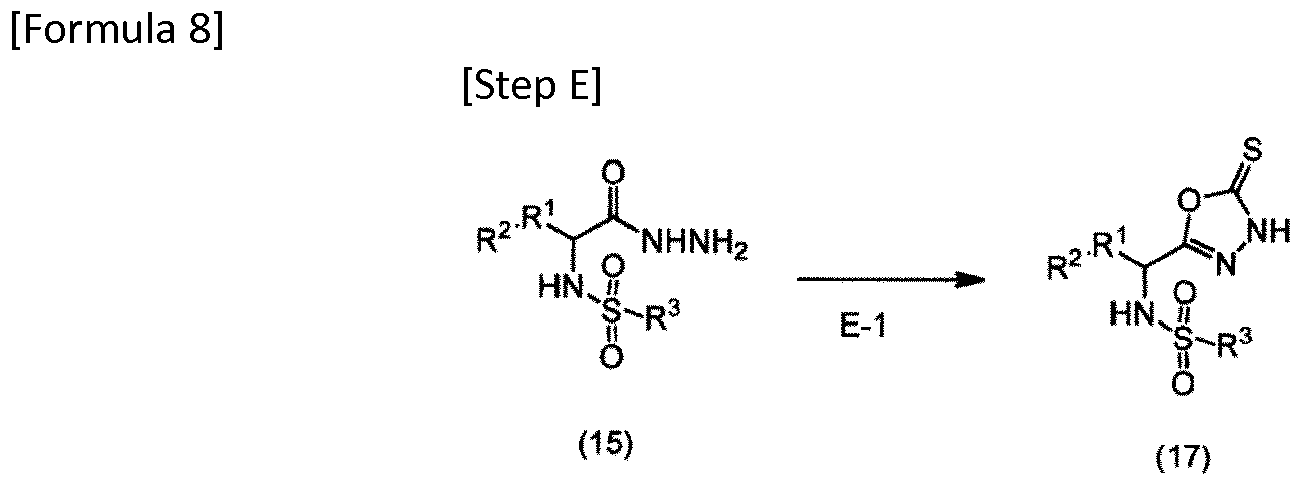
- In this step, a compound represented by general formula (17) of the present invention can be prepared by reacting the compound represented by general formula (15) with carbon disulfide.
- The base used in this reaction is, for example, alkali metal salts such as sodium hydroxide, potassium hydroxide, organic amines such as triethylamine, alkali metal alkoxides, such as sodium methoxide, sodium ethoxide, sodium tert- butoxide, potassium tert-butoxide, metal amides such as lithium diisopropylamide, and preferably potassium hydroxide.
- The amount of the base to be used is, with respect to the compound represented by Formula (15), generally 1 to 20 equivalents, preferably 1 to 5 equivalents. The amount of carbon disulfide is, with respect to the compound represented by Formula (15), generally 1 to 20 equivalents, preferably 1 to 5 equivalents.
- The solvent to be used is not particularly limited as long as it does not affect the reaction, for example, organic solvents, water such as alcohols (methanol, ethanol, propanol), ethers (diethyl ether, tetrahydrofuran, 1,4-dioxane, 1,2-dimethoxyethane), halogenated hydrocarbons (dichloromethane, chloroform, 1,2-dichloroethane, carbon tetrachloride), aromatic hydrocarbons (benzene, toluene, xylene, etc.), aliphatic hydrocarbons (hexane, pentane, cyclohexane), amides (DMF, N,N-dimethylacetamide, N-methylpyrrolidinone, and the like, and they can be used singly or as a mixture.
- The reaction temperature is 0 to 150 °C, preferably between 20 to 100 °C. The reaction time is generally from 0.5 to 24 hours, preferably 1.0 to 12 hours. The compound represented by general formula (17) of the present invention can be isolated and purified by well-known separation and purification means.

- In this step, a compound of general formula (18) can be prepared by condensation and simultaneously cyclization of the compound represented by general formula (14) and thiosemicarbazide.
- The condensing agent is, for example CDI, dicyclohexylcarbodiimide, 1-ethyl-3-(3-dimethylaminopropyl)carbodiimide hydrochloride and the like, preferably 1-ethyl-3-(3-dimethylaminopropyl)carbodiimide hydrochloride.
- The solvent to be used is not particularly limited as long as it does not affect the reaction, for example, organic solvents such as ethers (diethyl ether, tetrahydrofuran, 1,4-dioxane, 1,2-dimethoxyethane, etc.), halogenated hydrocarbons (dichloromethane, chloroform, 1,2-dichloroethane, carbon tetrachloride), aromatic hydrocarbons (benzene, toluene, xylene, etc.), aliphatic hydrocarbons (hexane, pentane, cyclohexane, etc.), nitriles (acetonitrile, propionitrile etc.), amides (DMF, N,N-dimethylacetamide, N-methylpyrrolidinone and the like. They may be used singly or as a mixture.
- The amount of the condensing agent is, with respect to the compound represented by general formula (14), 1.0 to 50 equivalents, preferably 1 to 5 equivalents. The amount of thiosemicarbazide is, with respect to the compound represented by general formula (14), generally 1 to 100 equivalents, preferably 1.0 to 5.0 equivalents. The base is organic bases such as triethylamine, N,N-diisopropylethylamine, pyridine, 4-dimethylaminopyridine, diazabicycloundecene and the like.
- The reaction temperature is -20 to 180 °C, preferably 0 to 100 °C. The reaction time is usually 0.05 to 24 hours, preferably 0.05 to 6 hours. The compound represented by formula (18) of the present invention can be isolated and purified by well-known separation and purification means as described below.

- In this step, a compound represented by general formula (19) can be prepared by reacting the carboxylic acid represented by general formula (14) with a condensation agent and ammonia.
- The condensing agent is, for example, 1,1'-carbonyldiimidazole (hereinafter, CDI), dicyclohexylcarbodiimide, 1-ethyl-3-(3-dimethylaminopropyl)carbodiimide hydrochloride and the like, preferably CDI.
- The solvent to be used is not particularly limited as long as it does not affect the reaction, for example, organic solvents such as ethers (diethyl ether, tetrahydrofuran, 1,4-dioxane, 1,2-dimethoxyethane, etc.), halogenated hydrocarbons (dichloromethane, chloroform, 1,2-dichloroethane, carbon tetrachloride), aromatic hydrocarbons (benzene, toluene, xylene, etc.), aliphatic hydrocarbons (hexane, pentane, cyclohexane, etc.), nitriles (acetonitrile, propionitrile etc.), amides (DMF, N,N-dimethylacetamide, N-methylpyrrolidinone and the like. They may be used singly or as a mixture.
- The amount of the condensing agent with respect to the compound represented by general formula (14) is generally 1 to 50 equivalents, preferably 1 to 5 equivalents. Ammonia is used as an aqueous solution or hydrochloric acid salt, and its amount relative to the compound represented by general formula (14) is generally 1 to 100 equivalents, preferably 1.0 to 5.0 equivalents. The bases include, for example, organic bases such as triethylamine, pyridine, 4-dimethylaminopyridine, diazabicycloundecene and the like.
- The reaction temperature is -20 to 80 °C, preferably 0 to 40 °C. The reaction time is usually from 0.05 to 24 hours, preferably 0.05 to 6 hours. The compound represented by general formula (19) can be subjected to the next step with or without isolation and purification by well-known separation and purification means as described below.
- In this step, a nitrile represented by general formula (20) can be prepared from the amide compound represented by general formula (19).
- Dehydrating agents include, for example, oxalyl chloride, thionyl chloride, cyanuric chloride and the like, preferably cyanuric chloride.
- The solvent to be used is not particularly limited as long as it does not affect the reaction, for example, organic solvents such as ethers (diethyl ether, tetrahydrofuran, 1,4-dioxane, 1,2-dimethoxyethane, etc.), halogenated hydrocarbons (dichloromethane, chloroform, 1,2-dichloroethane, carbon tetrachloride), aromatic hydrocarbons (benzene, toluene, xylene, etc.), aliphatic hydrocarbons (hexane, pentane, cyclohexane, etc.), nitriles (acetonitrile, propionitrile etc.), amides (DMF, N,N-dimethylacetamide, N-methylpyrrolidinone and the like. They may be used singly or as a mixture.
- The amount of dehydrating agent with respect to the compound represented by general formula (19) is usually 1 to 50 equivalents.
- The reaction temperature is -20 to 80 °C, preferably between 0 to 40 °C. The reaction time is usually from 0.05 to 24 hours, preferably from 0.05 to 3 hours. The compound represented by general formula (20) can be subjected to the next step with or without isolation and purification by well-known separation and purification means as described below.
- In this step, an amidoxime compound is obtained from the nitrile compound represented by general formula (20) by adding hydroxylamine, and then it reacts with an acylating agent followed by cyclization reaction with application of heat to produce a compound represented by general formula (21).
- The amount of the hydroxylamine to be used for preparing amidoxime is generally 1 to 50 equivalents in reaction to the compound represented by general formula (20).
- The solvent to be used is not particularly limited as long as it does not affect the reaction, for example, organic solvent such as ethers (diethyl ether, tetrahydrofuran, 1,4-dioxane, 1,2-dimethoxyethane, etc.), halogenated hydrocarbons (dichloromethane, chloroform, 1,2-dichloroethane, carbon tetrachloride), aromatic hydrocarbons (benzene, toluene, xylene, etc.), aliphatic hydrocarbons (hexane, pentane, cyclohexane, etc.), nitriles (acetonitrile, propionitrile etc.), amides (DMF, N,N-dimethylacetamide, N-methylpyrrolidinone and the like). They may be used singly or as a mixture.
- The reaction temperature is -20 to 100 °C, preferably 0 to 60 °C. The reaction time is generally from 0.05 to 3 days, preferably 0.05 to 12 hours. The obtained amidoxime compound represented by general formula (20) can be subjected to the next step with or without isolation and purification by well-known separation and purification means as described below.
- The acylating agent used for amide oxime is, for example, chloroformate, 2-ethylhexyl, CDI, phosgene, triphosgene and the like, preferably chloroformate 2-ethylhexyl. The base to be used includes organic bases such triethylamine, N,N-diisopropylethylamine, pyridine, 4-dimethylaminopyridine, diazabicycloundecene and the like.
- The amount of the acylating agent is usually 1 to 50 equivalents relative to the amide oxime compound, and more preferably about 1 to 3 equivalents.
- The solvent to be used is not particularly limited as long as it does not affect the reaction, for example, organic solvents such as ethers (diethyl ether, tetrahydrofuran, 1,4-dioxane, 1,2-dimethoxyethane, etc.), halogenated hydrocarbons (dichloromethane, chloroform, 1,2-dichloroethane, carbon tetrachloride), aromatic hydrocarbons (benzene, toluene, xylene, etc.), aliphatic hydrocarbons (hexane, pentane, cyclohexane, etc.), nitriles (acetonitrile, propionitrile etc.), amides (DMF, N,N-dimethylacetamide, N-methylpyrrolidinone, etc.) and the like), and they can be used singly or as a mixture, and they can be switched to other solvents during the reaction.
- The reaction temperature with the acylating agent is to -20, 80 °C, preferably 0 to 40 °C. The reaction time is generally 0.5 to 24 hours, preferably 0.5 to 3 hours. The reaction temperature used for cyclization reaction of the obtained acylated compound is 0 to 150 °C, preferably 0 to 120 °C. The reaction time is generally from 0.5 to 24 hours, preferably 0.5 to 12 hours. The obtained compound represented by general formula (21) can be subjected to the next step with or without isolation and purification by well-known separation and purification means as described below.
- The compound represented by formula (I) of the present invention and intermediates thereof can be isolated and purified by well-known separation and purification means such as recrystallization, crystallization, distillation, or column chromatography. The compound of the present invention and synthetic intermediates are usually possible to form a pharmacologically acceptable salt thereof in a well-known manner, and also can be converted to each other.
- When optical isomers, stereoisomers, tautomers, or rotary isomers are present in the compound of the present invention, the compound of the present invention encompasses these isomers or the mixture thereof. For example, when an optical isomer in the compound of the present invention is present, unless otherwise stated, racemate and an optical isomer resolved from a racemate are also encompassed in the compound of the present invention. These isomers can be obtained by a well-known synthetic method, separation means (concentration, solvent extraction, column chromatography, recrystallization and the like) respectively with a single compound. In the compound of the present invention, for example, when X1 = oxygen atom, X2 = oxygen atom, X3 = NH, there are tautomers as shown below, any of the isomers are also included in the present invention.

- The compound of the present invention or a salt thereof may be amorphous (amorphous) or a crystalline form, and the crystalline form may be a single crystalline form or polymorphic mixture, which are encompassed by the compound of the present invention or a salt thereof. The crystals can be prepared by applying a well-known crystallization method.
- Furthermore, the compound of the present invention or a salt thereof can be a solvate (e.g., hydrate etc.) or a non-solvate, both of which are encompassed in the compound of the present invention or a salt thereof. The compounds labeled with isotopes (e.g., deuterium, 3H, 14C, 35S, 125I, etc.) and the like are also encompassed by the compound of the present invention or a salt thereof.
- Although the prodrugs of the compound of the present invention or a salt thereof are also included in the present invention, the prodrugs refer to the compounds which convert into the compound of the present invention or a salt thereof by a reaction with an enzyme or gastric acid under the physiological condition in the living body, i.e., the compounds which convert into the compound of the present invention or a salt thereof by enzymatic oxidation, reduced, or hydrolysis and the like or the compounds which convert into the compound of the present invention or a salt thereof by gastric acid. Furthermore, a prodrug of the compound of the present invention or a salt thereof may be the compounds which convert into the compound of the present invention or a salt thereof under physiological conditions as described in Hirokawa Shoten 1990 annual "Development of Pharmaceuticals" .
- A salt of the compound of the present invention means a salt that is pharmaceutically acceptable.
- The compound of the present invention or a salt thereof has an inhibitory activity against RNR. The compound of the present invention or a salt thereof is useful as a medicament for prevention or treatment of RNR-related diseases without causing side effects based on the off-target effects of the iron ions requiring protein due to its excellent RNR inhibitory activity and its structure that does not chelate to metal ions. The "RNR-related disease" includes diseases whose incidence can be decreased or whose symptom is in remission or alleviated and/or completely cured by deleting or suppressing and/or inhibiting functions of RNR. Such diseases are, for example, malignant tumors. Malignant tumors of interest is not particularly limited, head and neck cancer, gastrointestinal cancer (esophageal cancer, gastric cancer, duodenal cancer, liver cancer, biliary tract cancer (gallbladder · bile duct cancer, etc.), pancreatic cancer, colorectal cancer (colon cancer, rectal cancer etc.), etc.), lung cancer (non-small cell lung cancer, small cell lung cancer, mesothelioma, etc.), breast cancer, genital cancer (ovarian cancer, uterine cancer (cervical cancer, endometrial cancer, etc.), etc.), urinary cancer (kidney cancer, bladder cancer, prostate cancer, testicular tumor, etc.), hematopoietic tumors (leukemia, malignant lymphoma, multiple myeloma, etc.), bone and soft tissue tumors, skin cancer, brain tumor and the like.
- "RNR" herein includes a human or non-human RNR, preferably a human RNR.
- Accordingly, the present invention provides an RNR inhibitor including the compound of the present invention or a salt thereof as an active ingredient. Furthermore, the present invention relates to the use of the compound of the present invention or a salt thereof for the manufacture of the RNR inhibitors. The present invention also provides the use of the compound of the present invention or a salt thereof as RNR inhibitors. Furthermore, the present invention provides the compound of the present invention or a salt thereof for use as RNR inhibitors.
- In yet another embodiment, the present invention provides a medicament containing the compound of the present invention or a salt thereof as an active ingredient. Furthermore, the present invention relates to use of the compound of the present invention or a salt thereof for the manufacture of a medicament. Further, the present invention provides the use as medicaments of the compound of the present invention or a salt thereof. Further, the present invention provides the compound of the present invention or a salt thereof for use as a medicament.
- In yet another embodiment, the present invention provides a pharmaceutical composition comprising the compound of the present invention or a salt thereof and a pharmaceutically acceptable carrier.
- In a preferred embodiment, the medicament or pharmaceutical composition is a therapeutic agent for the RNR-related diseases, in a more preferred embodiment, the medicament or pharmaceutical composition is an antitumor agent.
- In yet another embodiment, the present invention comprises administering an effective amount of the compound of the present invention or a salt thereof to a subject to provide an RNR activity suppression method. Further, the present invention comprises administering an effective amount of the compound of the present invention or a salt thereof to a subject to provide a method of treating RNR-related diseases. In a preferred embodiment, a method of treating RNR-related diseases is a method of treating tumors. In the treatment method, the subjects include human or non-human animal in need of the method.
- When using the compound of the present invention or a salt thereof as a pharmaceutical, it is optionally formulated with a pharmaceutically acceptable carrier, and various dosage forms can be adopted depending on the prevention or therapeutic purposes, and as the dosage forms include, for example, oral agents, injections, suppositories, ointments, and any of such patches. Since the compound of the present invention or a salt thereof has an excellent oral absorbability, oral agents are preferable. These dosage forms can be prepared by preparation methods commonly known by a person with ordinary skill in the art.
- With respect to pharmaceutically acceptable carriers, conventional various organic or inorganic carrier substances are used as pharmaceutical materials, and it is formulated as: excipients, binders, disintegrating agents, lubricants, coloring agents for solid preparations; and solvents, solubilizing agents, suspending agents, isotonizing agents, buffers, soothing agent for liquid preparations and the like. Further, if necessary, pharmaceutical additives can also be used, which include such as preservative agents, antioxidants, coloring agents, sweetening agents, flavoring agents, stabilizing agents.
- With respect to the pharmaceutically acceptable carriers and the pharmaceutical additives, in general, they include, for example, as the excipient, lactose, sucrose, sodium chloride, glucose, starch, calcium carbonate, kaolin, microcrystalline cellulose, silicic acid and the like; as are binders, water, ethanol, propanol, simple syrup, a glucose solution, a starch solution, a gelatin solution, carboxymethyl cellulose, hydroxypropyl cellulose, hydroxypropyl starch, methyl cellulose, ethyl cellulose, shellac, calcium phosphate, polyvinylpyrrolidone, and the like; as disintegrants, dry starch, sodium alginate, agar powder, sodium hydrogen carbonate, calcium carbonate, sodium lauryl sulfate, stearic acid monoglyceride, lactose and the like; as lubricants, purified talc stearate, borax, polyethylene glycol and the like; as colorant, titanium oxide, iron oxide and the like; as flavoring agents, sucrose, orange peel, citric acid, tartaric acid and the like.
- When preparing an oral solid preparation, it can be prepared by adding an excipient to the compound of the present invention, and if necessary, further adding binders, disintegrants, lubricants, colorants, or flavoring agents and the like, followed by formulating into tablets, coated tablets, granules, powders, capsules and the like.
- When preparing injectable forms, it can be prepared by adding pH control agents, buffers, stabilizers, isotonic agents, local anesthetic agents and the like to the compound of the present invention, followed by formulating into subcutaneous, intramuscular and intravenous injections with a conventional manner.
- The amount of the compound of the present invention to be formulated in each dosage unit forms described above can be, in general, per dosage unit form, 0.05 to 1000 mg for the oral dosage, about 0.01 to 500 mg for injection, 1 to 1000 mg for suppositories with the proviso that they may be altered depending on the symptoms of the patients to be applied or its dosage forms.
- Further, the daily dose of a drug with the dosage form is, with respect to the compound of the present invention, 0.05 to 5000 mg per day for adult (body weight 50 kg), preferably 0.1 to 2000 mg, and preferably the aforementioned amount is administered once or 2 to 3 times a day with the proviso that they may be altered depending on symptoms of the patients, weight, age, or gender and the like.
- The present invention is described below in more detail with examples and test examples, but the present invention is not intended to be limited to these examples.
- Various reagents used in the examples were commercially available products, unless otherwise stated. Biotage Ltd. SNAP-ULTRA (registered trademark) Silica prepacked column was used for a silica gel column chromatography, or Biotage made SNAP KP-C18-HS (registered trademark) Silica prepacked column was used for a reverse phase silica gel column chromatography. HPLC purified by preparative reverse phase column chromatography was performed under the following conditions. Injection volume and gradient was carried out appropriately.
Column: YMC-Actus Triart C18, 30 × 50 mm, 5 µm
UV detection: 254 nm
Column flow rate: 40 mL / min
Mobile phase: water / acetonitrile (0.1% formic acid)
Injection amount: 1.0 mL
Gradient: water / acetonitrile (10 % to 90 %)
AL400 (400MHz; JEOL (JEOL)) and Mercury400 (400MHz; Agilent Technologies) were used for NMR spectra, and tetramethylsilane was used as an internal standard when tetramethylsilane was included in the heavy solvent, otherwise it was measured using NMR solvent as an internal standard, showing all δ value in ppm. Furthermore, LCMS spectra were measured under the following conditions using a Waters made ACQUITY SQD (quadrupole).
Column: Waters made ACQUITY UPLC (registered trademark) BEH C18, 2.1 x 50 mm, 1.7 µm
MS detection: ESI negative
UV detection: 254 and 280 nm
Column flow rate: 0.5 mL / min
Mobile phase: water / acetonitrile (0.1 % formic acid)
Injection amount: 1 µLGradient (table 1) Time (min) Water Acetonitrile 0 95 5 0.1 95 5 2.1 5 95 3.0 STOP - The meanings of the abbreviations are shown below.
s: singlet
d: doublet
t: triplet
q: quartet
dd: double doublet
dt: double triplet
td: triple doublet
tt: triple triplet
ddd: double double doublet
ddt: double double triplet
dtd: double triple doublet
tdd: triple-double doublet
m: multiplet
br: broad
brs: broad singlet
DMSO-d6: deuterated dimethyl sulfoxide
CDCl3: heavy chloroform
CD3OD: heavy methanol
CDI: 1,1'-carboxymethyl sulfonyl diimidazole
DAST: N,N-diethylaminosulfur trifluoride
DIBAL-H: diisobutylaluminum hydride
DMF: dimethylformamide
DMSO: dimethylsulfoxide
THF: Tetrahydrofuran
WSC = EDCI = 1- ethyl-3-(3-dimethylaminopropyl)carbodiimide
HOBt = 1-hydroxybenzotriazole -


- After dropping a diethyl ether solution of methylmagnesium bromide (3.0 M, 70 mL) to a THF solution of 6-fluoro-2,3-dimethyl-benzaldehyde (22.0g) (300mL) at 0 °C, the reaction mixture was stirred at room temperature for 1 hour. Under ice-bath condition, a saturated aqueous ammonium chloride solution (150 mL) was added dropwise, and ethyl acetate (200 mL) was added, and the resultant was separated into different layers. The organic layer was successively washed with HCl (1M, 200 mL), water (200 mL) and saline (200 mL), and then dried over anhydrous magnesium sulfate, and concentrated under reduced pressure to obtain 1-(6-fluoro-2,3 dimethylphenyl)ethanol (23.7 g).
- Phosphorus tribromide (26.5 mL) was added dropwise at 0 °C to a chloroform solution (120 mL) of 1-(6-fluoro-2,3-dimethylphenyl)ethanol (23.7 g) obtained in the
above Step 1, and the reaction solution was stirred for 30 minutes at 0 °C. The reaction mixture was added to an ice-cold saturated aqueous sodium bicarbonate (1L). After chloroform (500 mL) was added to the mixture, the resultant was separated into different layers, and the organic layer was successively washed with water (200 mL) and saline (200 mL). The organic layer was dried over anhydrous magnesium sulfate to give the title compound (29.5 g) by concentrating under reduced pressure. - Aldehyde and methylmagnesium bromide were reacted together as starting materials in the same manner as in Reference Example A1,
Step 1 andStep 2, and then the resultant was reacted with phosphorus tribromide to obtain the compounds of Reference Examples A2 to A41. However, the compounds of Reference Examples A40 and A41 were obtained in the same procedure using ethylmagnesium bromide and methyl iodide-d3-magnesium respectively instead of methylmagnesium bromide.[Table 1-1] Reference Example Starting Material Synthesized Compound Reference Example Starting Material Synthesized Compound A2 

A9 

A3 

A10 

A4 

A11 

A5 
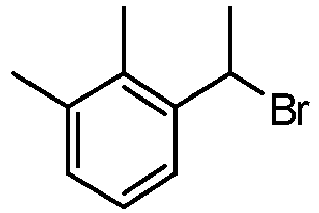
A12 

A6 

A13 

A7 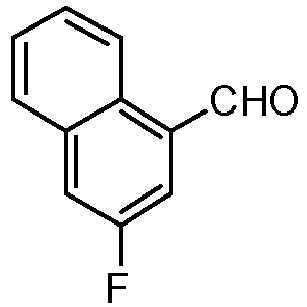
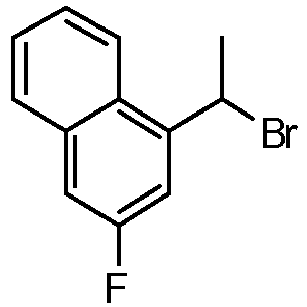
A14 

A8 

A15 
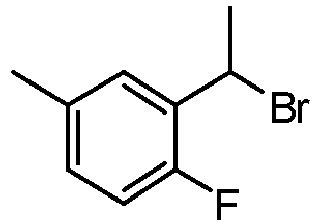
[Table 1-2] Reference Example Starting Material Synthesized Compound Reference Example Starting Material Synthesized Compound A16 

A23 

A17 

A24 

A18 

A25 

A19 

A26 

A20 

A27 

A21 

A28 

A22 

A29 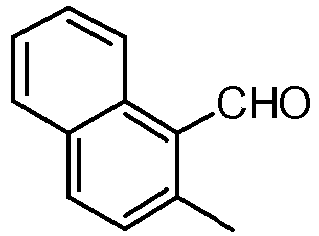
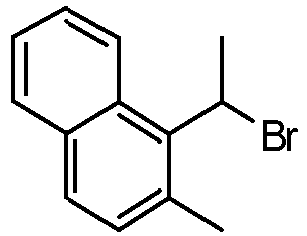
[Table 1-3] Reference Example Starting Material Synthesized Compound Reference Example Starting Material Synthesized Compound A30 

A37 

A31 
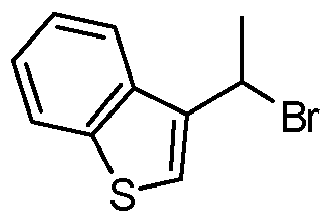
A38 

A32 

A39 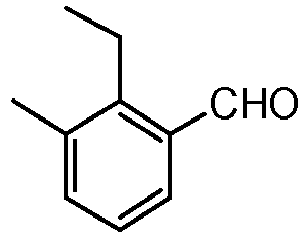

A33 

A40 

A34 

A41 

A35 
A36 
-

- To a THF solution (150 mL) of 2-bromo-1-ethyl-4-fluorobenzene (14.4 g), a THF solution of lithium diisopropylamide (1.5 M, 54 mL) was added dropwise at -78 °C. After stirring the reaction solution for 30 minutes, DMF (6.5 mL) was added and the mixture was further stirred for 20 minutes. Water (50 mL) and hydrochloric acid (6 M, 50 mL) were successively added dropwise to the reaction solution, and the mixture was extracted twice with hexane (100 mL). The combined organic layer was washed with saturated saline (50 mL) twice, dried over anhydrous sodium sulfate, and concentrated under reduced pressure, and 2-bromo-3-ethyl-6-fluorobenzaldehyde (14.5 g) was obtained.
- To a 1,4-dioxane solution (200 mL) of 2-bromo-3-ethyl-6-fluorobenzaldehyde obtained from
Step 1 above (14.5 g), water (90 mL), tripotassium phosphate (32.0 g), methylboronic acid (6.4 g) and [bis (diphenylphosphino) ferrocene] palladium (II) dichloride dichloromethane additive (1.75 g) were added, and the reaction solution was heated under reflux at 110 °C for 2 hours. The reaction solution was allowed to cool to room temperature, and the mixture was further stirred for 2 hours after hexane (90 mL) was added. The reaction solution was filtered through CELITE, and the filtrate was separated after the residue was washed with hexane. The organic layer was washed twice with saturated saline (100 mL), and after being dried over anhydrous sodium sulfate, it was concentrated under reduced pressure. The residue was purified by silica gel column chromatography (eluent: hexane / ethyl acetate), and 3-ethyl-6-fluoro-2-methylbenzaldehyde (8.4 g) was obtained. - According to the methods of Reference Example A1 Steps 1 and 2, using 3-ethyl-6-fluoro-2-methylbenzaldehyde (8.4 g) obtained in the
above Step 2, the same operation was carried out to obtain the title compound. - According to the methods of Reference Example B1 Steps 1 and 2 and Reference Example A1 Steps 1 and 2, the following compounds of Reference Examples B2 to B5 were synthesized. Also, according to the methods of Reference
Example B1 Step 1, and Reference Example A1 Steps 1 and 2, the compound of Reference Example B6 was synthesized.[Table 2] Reference Example Starting Material Synthesized Compound Reference Example Starting Material Synthesized Compound B2 

B5 

B3 

B6 

B4 

-

- Sodium borohydride (261 mg) was added to a methanol solution (5.0 mL) of 1-(3-methyl-2,3-dihydro-1H-inden-4-yl)ethanone (1.0 g), and the mixture was stirred at room temperature for 30 minutes. The reaction solution was added to water (10 mL) and then extracted twice with ethyl acetate (20 mL). The combined organic layer was washed with saturated saline (20 mL), dried over anhydrous sodium sulfate, and concentrated under reduced pressure. The obtained residue was dissolved in dichloromethane (5.0 mL), thionyl chloride (2.0 mL) was added at room temperature, and the reaction solution was stirred at 50 °C for 30 minutes. Water was added to the reaction solution, and the mixture was extracted twice with ethyl acetate (20 mL). The combined organic layer was washed with saturated saline (20 mL), dried over anhydrous sodium sulfate, and concentrated under reduced pressure to give the title compound (1.1g).
- According to the method of Reference Example C1, the following compounds of Reference Examples C2 to C4 were synthesized.
[Table 3] Reference Example Starting Material Synthesized Compound C2 
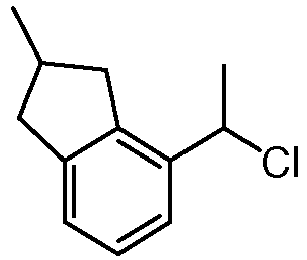
C3 

C4 
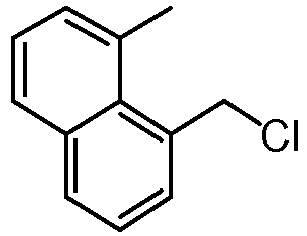
-
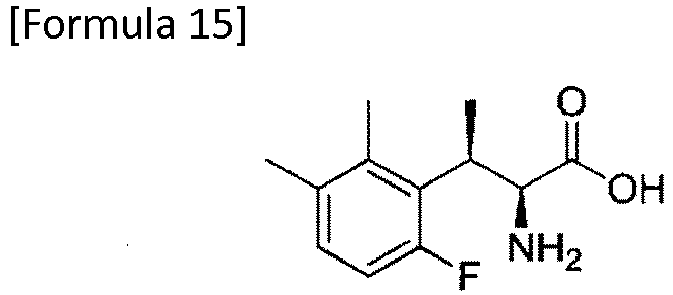
- A DMF solution (50 mL) of 2-(1-bromoethyl)-1-fluoro-3,4-dimethylbenzene (14.0 g) obtained in Reference Example A1 was added dropwise to a DMF solution (50 mL) of (S)-2-[o-[(N-benzylprolyl)amino]phenyl]-benzylideneamino-acetate (2-)-N,N,N-nickel (II) (14.5g), and potassium hydroxide (16.3 g), and the mixture was stirred at the same temperature for 1 hour. A saturated ammonium chloride solution (50 mL) and ethyl acetate (50 mL) were added to the reaction solution, the layers were separated, and the aqueous layer was extracted twice with ethyl acetate (50 mL). The combined organic layers were washed successively with water (50 mL) and saturated saline (50 mL), dried over anhydrous sodium sulfate, and concentrated under reduced pressure. The residue was purified by silica gel column chromatography (eluent: ethyl acetate / hexane). The obtained compound was dissolved in methanol (120 mL), hydrochloric acid (3 M, 90 mL) was added, and the mixture was stirred at 80 °C for 45 minutes. Methanol was distilled off under reduced pressure, and chloroform (50 mL) and water (50 mL) were added to the residue. The aqueous layer was washed with chloroform (50 m L) and concentrated under reduced pressure. The residue was purified by reverse phase silica gel column chromatography (methanol / water) to give the title compound (2.0 g). 1H NMR (CD3OD) δ: 7.03 (dd, J=8.2, 5.7 Hz, 1H), 6.79 (dd, J=11.7, 8.4 Hz, 1H), 3.74-3.87 (m, 2H), 2.29 (s, 3H), 2.25 (s, 3H), 1.40 (dd, J=6.8, 2.4 Hz, 3H)
- After the alkylating agent obtained in Reference Examples A2 to A41, Reference Examples B1 to B6, and Reference Examples C1 to C4 and (S)-2-[o-[(N-benzylprolyl)amino]phenyl]-benzylideneamino-acetate (2-)-N,N,N-nickel (II) were reacted, the compounds of Reference Examples D2 to D58 shown below were prepared by acid hydrolysis. However, for the compound of Reference Example D56, 6-fluoro-2,3-dimethylbenzaldehyde was used as a starting material, and the compounds of Reference Examples D57 and 58 were prepared by the same method by using (R)-2-[o-[(N-benzylprolyl)amino] phenyl]-benzylideneamino-acetate (2-)-N,N,N-nickel (II) instead of (S)-2-[o-[(N-benzylprolyl)amino]phenyl]-benzylideneamino-acetate (2-)-N,N,N-nickel (II).
[Table 4-1] Reference Example Starting Material (Reference example number or structural formula) Synthesized Compound Reference Example Starting Material (Reference example number or structural formula) Synthesized Compound D2 A1 
D8 A7 
D3 A2 
D9 A8 
D4 A3 
D10 A9 
D5 A4 
D11 A10 
D6 A5 
D12 A11 
D7 A6 
D13 A12 
[Table 4-2] Reference Example Starting Material (Reference example number or structural formula) Synthesized Compound Reference Example Starting Material (Reference example number or structural formula) Synthesized Compound D14 A13 
D20 A18 
D15 A14 
D21 A19 
D16 A15 
D22 A20 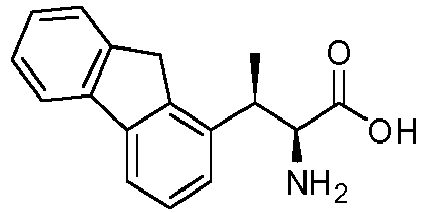
D17 A16 
D23 A21 
D18 A16 
D24 A22 
D19 A17 
D25 A23 
[Table 4-3] Reference Example Starting Material (Reference example number or structural formula) Synthesized Compound Reference Example Starting Material (Reference example number or structural formula) Synthesized Compound D26 A24 
D32 A30 
D27 A25 
D33 A31 
D28 A26 
D34 A32 
D29 A27 
D35 A33 
D30 A28 
D36 A33 
D31 A29 
D37 A34 
[Table 4-4] Reference Example Starting Material (Reference example number or structural formula) Synthesized Compound Reference Example Starting Material (Reference example number or structural formula) Synthesized Compound D38 A35 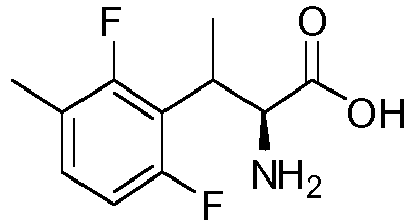
D45 B1 
D39 A36 
D46 B2 
D40 A37 
D47 B3 
D41 A38 
D48 B4 
D42 A39 
D49 B5 
D43 A40 
D50 B6 
D44 A41 
D51 C1 
[Table 4-5] Reference Example Starting Material (Reference example number or structural formula) Synthesized Compound Reference Example Starting Material (Reference example number or structural formula) Synthesized Compound D52 C1 
D58 A1 
D53 C2 
D54 C3 
D55 C4 
D56 

D57 A1 
-

- 2-(6-fluoro-2,3-dimethylphenyl)-2-methylpropanenitrile (700 mg) was dissolved in dichloromethane (35 mL) and cooled to -78 °C. A toluene solution (1.0 M, 10 mL) of diisobutylaluminum hydride was added, and the reaction solution was stirred for 1 hour at the same temperature. Methanol (5.0 mL) and CELITE (20 g) were sequentially added, and the mixture was stirred at room temperature for 1 hour. The reaction solution was filtered through CELITE, washed with hexane / ethyl acetate = 1/1 (30 mL), and the filtrate was concentrated under reduced pressure. The residue was purified by silica gel column chromatography (eluent: Hexane / ethyl acetate) to obtain 2-(6-fluoro-2,3-dimethylphenyl)-2-methylpropanal (400 mg).
- 2-(6-fluoro-2,3-dimethylphenyl)-2-methylpropanal (400 mg) obtained in the
above Step 1 was dissolved in methanol (7.0 mL) and water (10 ml), 28% aqueous ammonia (280 µL), potassium cyanide (130 mg), and ammonium chloride (110 mg) were added, and the reaction solution was stirred for 12 hours at 70 °C. A saturated aqueous sodium hydrogen carbonate solution (5.0 mL) was added to the reaction solution, and the mixture was extracted with ethyl acetate (20 mL). The organic layer was washed with saturated saline (20 mL), dried over anhydrous sodium sulfate, and concentrated under reduced pressure. The residue was purified by silica gel column chromatography (eluent: hexane / ethyl acetate) to obtain 2-amino-3-(6-fluoro-2,3-dimethylphenyl)-3-methylbutanonitrile (380 mg). - 2-amino-3-(6-fluoro-2,3-dimethylphenyl)-3-methylbutanonitrile (380 mg) obtained from the
above Step 2 was dissolved in hydrochloric acid (12M, 5.0 mL), and the reaction solution was stirred for 12 hours at 100 °C. The reaction solution was cooled to room temperature and was concentrated under reduced pressure to obtain the title compound (300 mg). -

- The title compound was synthesized according to the method of Reference Example D59, using 1-(6-fluoro-2,3-dimethylphenyl)cyclopropanecarbonitrile instead of 2-(6-fluoro-2,3-dimethylphenyl)-2-methylpropanenitrile.
-

- In dichloromethane (20 mL) solution of 1-(6-fluoro-2,3-dimethylphenyl)ethanone (1.3 g), zinc iodide (480 mg) and trimethylsilyl cyanide (2.0 mL) were added, and the reaction mixture was stirred for 12 hours at room temperature. An aqueous solution of sodium hydroxide (2 M, 10 mL) was added to the reaction solution, and the mixture was extracted with ethyl acetate / hexane = 1/1 (20 mL). The organic layer was washed with hydrochloric acid (2 M, 20 mL) and saturated saline (20 mL) in this order, dried over anhydrous sodium sulfate, and concentrated under reduced pressure. The residue was purified by silica gel column chromatography (eluent: hexane / ethyl acetate) to obtain 2-(6-fluoro-2,3-dimethyl)-2-hydroxy-propanenitrile (1.4 g).
- To dichloromethane solution (5.0 mL) of 2-(6-fluoro-2,3-dimethyl)-2-hydroxy-propanenitrile (170 mg) obtained from the
above Step 1, DAST (150 µL) was added, and the reaction solution was stirred at room temperature for 12 hours. A saturated aqueous sodium hydrogen carbonate solution (10 mL) was added to the reaction solution, and the mixture was extracted with ethyl acetate / hexane = 1/1 (20 mL). The organic layer was washed with saturated saline (10 mL), dried over anhydrous sodium sulfate, and concentrated under reduced pressure. The residue was purified by silica gel column chromatography (eluent: hexane / ethyl acetate) to obtain 2-fluoro-2-(6-fluoro-2,3-dimethylphenyl)propanenitrile (100 mg). - From 2-fluoro-2-(6-fluoro-2,3-dimethylphenyl)propanenitrile obtained in the
above Step 2, according to the method of Reference Example D59 Steps 1-2, 2-amino-3-fluoro-3-(6-fluoro-2,3-dimethylphenyl)-butanenitrile was obtained. - 2-Amino-3-fluoro-3-(6-fluoro-2,3-dimethylphenyl)-butanenitrile (460 mg) obtained in the
above Step 3 was dissolved in hydrochloric acid (12 M, 3.0 mL), and the mixture was stirred for 12 hours at 100 °C. The mixture was cooled to room temperature and concentrated under reduced pressure to obtain the title compound. -

- THF (50 mL) was added to a diethyl ethyl ether solution (1.0 M, 63 mL) of methyl iodide-d3-magnesium, and a THF solution (50 mL) of 8-bromo-5-chlorochroman-4-one (7.5 g) was added dropwise at room temperature. The reaction solution was stirred for 10 minutes at the same temperature, in an ice bath, hydrochloric acid (1M, 50 mL) was slowly added dropwise, and ethyl acetate (50 mL) was added to separate layers. The aqueous layer was extracted with ethyl acetate (50 mL), and the combined organic layer was washed with saturated saline (50 mL), dried over anhydrous sodium sulfate, and concentrated under reduced pressure. The residue was purified by silica gel column chromatography (eluent: hexane / ethyl acetate) to obtain 8-bromo-5-chloro-4-methylchroman-4-ol (7.7 g).
- To an anhydrous acetic acid solution (100 mL) of 8-bromo-5-chloro-4-methylchroman-4-ol (7.7 g) obtained in the
above Step 1, an acetonitrile solution (12 mL) of scandium trifluoromethanesulfonate (III) (340 mg) was added dropwise at -40 °C, and the reaction solution was stirred for 30 minutes at the same temperature. A saturated aqueous sodium hydrogen carbonate solution (100 mL) and ethyl acetate (100 mL) were sequentially added to the reaction solution, and the layers were separated. The aqueous layer was extracted with ethyl acetate (100 mL), and the combined organic layers were washed twice with a saturated aqueous sodium hydrogen carbonate solution (100 mL) and once with saturated saline (100 mL). The organic layer was dried over anhydrous sodium sulfate and concentrated under reduced pressure. The residue was purified by silica gel column chromatography (eluent: hexane / ethyl acetate) to obtain 8-bromo-5-chloro-4-methyl-d3-chroman-4-yl acetate (8.9 g). - To a 1,4-dioxane solution (70 mL) of 8-bromo-5-chloro-4-methyl-d3 -chroman-4-yl acetate (6.7 g) obtained in the
above Step - To an acetonitrile solution (100 mL) of 8-(benzylthio)-5-chloro-4-methyl-d3-chroman-4-yl acetate (6.3 g) obtained in the
above Step 3, water (3 mL), acetic acid (4.3 mL) and 1,3-dichloro-5,5-dimethylhydantoin (7.2 g) were each added, and the reaction solution was stirred for 30 minutes at the same temperature. A saturated aqueous sodium hydrogen carbonate solution (70 mL) and ethyl acetate (70 mL) were added to the reaction solution, and the layers were separated. The aqueous layer was extracted with ethyl acetate (70 mL). The combined organic layer was washed with saturated saline (70 mL), dried over anhydrous sodium sulfate, and concentrated under reduced pressure. The residue was purified by silica gel column chromatography (eluent: hexane / ethyl acetate) to obtain the title compound (5.3 g). -

- To a THF solution (4 mL) of 8-bromo-5-chloro-chromanon-4-one (398.2 mg), cesium fluoride (340.2 mg) and trifluoromethyltrimethylsilane (0.68 mL) were added at room temperature, and the reaction solution was stirred for 4 hours. An ammonium chloride aqueous solution (5 mL) was added to the reaction solution, and the mixture was extracted with ethyl acetate / hexane = 1/1 (15 mL). The organic layer was washed with saturated saline (10 mL), dried over anhydrous sodium sulfate, and concentrated under reduced pressure. The residue was purified by column chromatography (eluent: hexane / ethyl acetate) to obtain 8-bromo-5-chloro-4-(trifluoromethyl)chromanone-4-ol (139.2 mg).
- From 8-bromo-5-chloro-4-(trifluoromethyl)chroman-4-ol obtained from the
above Step 1, the title compound was obtained according to the method of Reference Example E1 Step 2-4. - According to the method of Reference Example E5 Steps 1 and 2, the compound of Reference Example E6 was synthesized.
- According to the method of Reference Example E1 Steps 1-4, the compounds of Reference Examples E2 to E4 were synthesized. According to the method of Reference
Examples E1 Step [Table 5-1] Reference Example Starting Material Synthesized Compound Reference Example Starting Material Synthesized Compound E2 

E9 

E3 
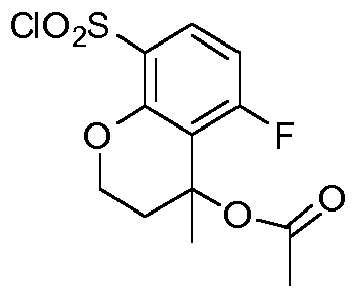
E10 

E4 

E11 

E7 

E12 

E8 

E13 

E14 

E15 
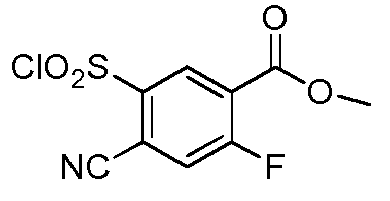
[Table 5-2] Reference Example Starting Material Synthesized Compound Reference Example Starting Material Synthesized Compound E16 

E23 

E17 

E24 

E18 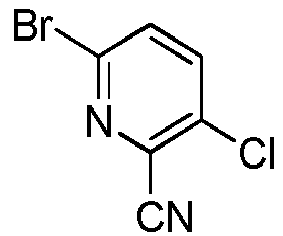

E25 

E19 

E26 

E20 
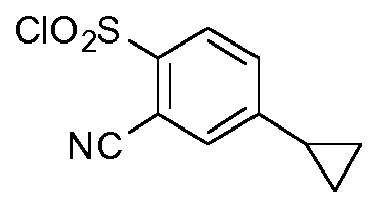
E27 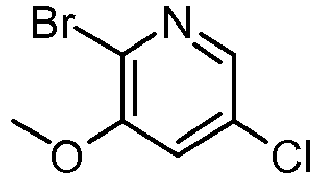

E21 

E28 

E22 

E29 

[Table 5-3] Reference Example Starting Material Synthesized Compound Reference Example Starting Material Synthesized Compound E30 E33 

E31 E34 

E32 -

- According to the method of Reference
Example E1 Step 3, methyl 6-(benzylthio)-3-chloropicolinate was obtained from methyl 6-bromo-3-chloropicolinate. - Methyl 6-(benzylthio)-3-chloropicolinate (1.0 g) obtained in the
above Step 1 was dissolved in THF (5.0 mL) and water (1.0 ml), lithium hydroxide (165 mg) was added, and the reaction solution was stirred at room temperature for 16 hours. The reaction solution was added to hydrochloric acid (1 M, 10 mL) and extracted twice with ethyl acetate (20 mL). The organic layer was washed with saturated saline (10 mL), dried over anhydrous sodium sulfate, and concentrated under reduced pressure to obtain 6-(benzylthio)-3-chloropicolinic acid (920 mg). - 6-(benzylthio)-3-chloro-picolinic acid (100 mg) obtained in the
above Step 2 was dissolved in DMF (2.5 mL), CDI (the 116 mg) was added, the reaction solution was stirred at room temperature for 10 minutes, and then triethylamine (150 µL) and pyrrolidine (60 µL) were added, and the reaction solution was stirred for 12 hours at 50 °C. The reaction solution was added to water (20 mL) and extracted with ethyl acetate (20 mL). The organic layer was washed with saturated saline (20 mL), dried over anhydrous sodium sulfate, and concentrated under reduced pressure. The residue was purified by silica gel column chromatography (eluent: hexane / ethyl acetate) to obtain (6-(benzylthio)-3-chloropyridin-2-yl)(pyrrolidin-1-yl)methanone (105 mg). - The title compound was obtained from (6-(benzylthio)-3-chloropyridin-2-yl)(pyrrolidin-1-yl)methanone obtained in the
above Step 3 according to the method of ReferenceExample E1 Step 4. - According to the method of Reference
Examples E35 Step 3 andE1 Step 4, the compounds of Reference Examples E36 to E43 shown below were synthesized from 6-(benzylthio)-3-chloropicolinic acid obtained from Reference Example E35 Step 2[Table 5-4] Reference Example Synthesized Compound Reference Example Synthesized Compound E36 E40 E37 E41 E38 E42 E39 E43 -

- According to the method of Reference
Example B1 Step 1, 3-bromo-6-chloro-2-methoxybenzaldehyde was obtained from 1-bromo-4-chloro-2-methoxybenzene. - From 3-bromo-6-chloro-2-methoxybenzaldehyde obtained in the
above Step 1, 1-(3-bromo-6-chloro-2-methoxyphenyl)ethanol was obtained according to the method of ReferenceExample A1 Step 1. - 1-(3-bromo-6-chloro-2-methoxyphenyl)ethanol (1.9 g) obtained in the
above Step 2 was dissolved in dichloromethane (20 mL), triethylamine (2.0 mL), N,N-dimethyl-4-aminopyridine (100 mg), and acetic acid anhydride (1.2 mL) were successively added, and the reaction solution was stirred for 30 minutes at room temperature. The reaction solution was concentrated under reduced pressure, and the residue was purified by silica gel column chromatography (eluent: hexane / ethyl acetate) to obtain 1-(3-bromo-6-chloro-2-methoxyphenyl)ethyl acetate)(2.2g). - From the 1-(3-bromo-6-chloro-2-methoxyphenyl)ethyl acetate obtained in the
above Step 3, the title compound was obtained according to the method of Reference Examples E1 Steps 3 and 4. -

- According to each of the methods of Reference
Example B1 Step 1, ReferenceExample A1 Step 1, ReferenceExample E44 Step 3 and Reference Example E1 Steps 3 and 4, the title compound was obtained using 2-bromo -5-chloro-3-methoxypyridine instead of 1-bromo-4-chloro-2-methoxybenzene. -

- To a dichloromethane solution (30 mL) of 1-(3-bromo-6-chloro-2-methoxyphenyl)ethanol (2.8 g) obtained by Reference
Example E44 Step - From 1-(3-bromo-6-chloro-2-methoxyphenyl)ethanone obtained in the
above Step 1, 1-(3-bromo-6-chloro-2-methoxyphenyl)ethyl acetate was obtained according to the method of Reference Example E1 Steps 1 and 2. - From the 1-(3-bromo-6-chloro-2-methoxyphenyl)ethyl acetate (500 mg) obtained in the
above Step 2, the title compound was obtained according to the method of Reference Examples E1 steps 3 and 4. -

- To a DMF solution (5 mL) of 2-bromo-5-chlorophenol (244mg), potassium carbonate (325 mg) and 2,2-difluoroethyl 4-methylbenzenesulfonate (320 mg) were added, and the reaction solution was stirred for 3 hours at 95 °C. The reaction solution was added to an aqueous sodium hydroxide solution (1 M, 20 mL) and extracted with toluene / ethyl acetate = 1/1 (20 mL). The organic layer was washed with saturated saline (20 mL), dried over anhydrous sodium sulfate, and concentrated under reduced pressure. The residue was purified by silica gel column chromatography (eluent: hexane / ethyl acetate) to obtain 1-bromo-4-chloro-2-(2,2-difluoroethoxy)benzene (315 mg).
- The title compound was synthesized from 1-bromo-4-chloro-2-(2,2-difluoroethoxy)benzene obtained in the
above Step 1 according to the method of Reference Examples E1 Steps 3 and 4. - According to the methods of Reference
Example E47 Step 1 and Reference Example E1 Steps 3 and 4, the compounds of Reference Examples E48 and 49 shown below were synthesized. However, regarding Reference Example 48, sodium chlorodifluoroacetate was used instead of 2,2-difluoroethyl 4-methylbenzenesulfonate.[Table 5-5] Reference Example Starting Material Synthesized Compound E48 

E49 

-

- An N,N-dimethylformamide dimethyl acetal solution (6.0 mL) of 1-(2-bromo-5-chlorophenyl)ethanone (400 mg) was stirred for 16 hours at 140 °C. After cooling to room temperature, the reaction mixture was concentrated under reduced pressure, and the resulting residue was purified by silica gel column chromatography (eluent: hexane / ethyl acetate). The obtained compound was dissolved in methanol (4.0 mL), hydroxylamine hydrochloride (175 mg) was added, and the reaction solution was stirred at room temperature for 16 hours. The reaction solution was added to an aqueous sodium bicarbonate solution (20 mL) and extracted with ethyl acetate (20mL). The organic layer was washed with saturated saline (20 mL), dried over anhydrous sodium sulfate, and concentrated under reduced pressure. The residue was purified by silica gel column chromatography to purify (eluent: hexane / ethyl acetate) to obtain 5-(2-bromo-5-chlorophenyl)isoxazole (430 mg).
- From 5-(2-bromo-5-chlorophenyl)isoxazole obtained in the
above Step 1, the title compound was obtained according to the method of ReferenceExample E1 Steps -


- According to the method of Reference
Example E1 Step 3, N-(benzyloxy)-2-(benzylthio)-5-chlorobenzamide was synthesized from N-(benzyloxy)-2-bromo-5-chlorobenzamide. - To a dichloromethane (10 mL) solution of N-(benzyloxy)-2-(benzylthio)-5-chlorobenzamide (433 mg) obtained from Reference Example 1, N,N-dimethyl-4-aminopyridine (280 mg) and di-tert-butyl dicarbonate (740 mg) were added, and the reaction solution was stirred for 16 hours at 55 °C. The reaction solution was concentrated under reduced pressure, and the resulting residue was purified by silica gel column chromatography (eluent: hexane / ethyl acetate) to obtain tert-butylbenzyloxy (2-(benzylthio)-5-chlorobenzoyl)carbamate (549 mg).
- From the tert-butylbenzyloxy (2-(benzylthio)-5-chlorobenzoyl)carbamate obtained in the
above Step 2, the title compound was obtained according to the method of ReferenceExample E1 Step 4. -

- From 2-bromo-5-chlorobenzoic acid and methylamine, 2-bromo-5-chloro-N-methylbenzamide was obtained according to the method of Reference
Example E35 Step 3. - (2-bromo-5-chlorobenzoyl)(methyl)carbamate was obtained from 2-bromo-5-chloro-N-methylbenzamide obtained in the
above step 1 according to the method of ReferenceExample E51 Step 2. - From the tert-butyl (2-bromo-5-chlorobenzoyl)(methyl)carbamate obtained in the
above Step 2, the title compound was obtained according to the method of Reference Examples E1 steps 3 and 4. -

- To a 2-methyl-2-propanol solution (5 mL) of 1-bromo-4-chloro-2-methyl-5-nitrobenzene (1.0 g), water (5 mL), anisole (2.5 mL), and potassium permanganate (1.6 g) were added, and the reaction solution was stirred at 100 ° C for 20 hours. The reaction solution was cooled to room temperature, filtered through CELITE, and washed with water (10 mL) and ethyl acetate (10 mL). The combined filtrates were added to hydrochloric acid (1 M, 20 mL), and the layers were separated. The aqueous layer was extracted three times with ethyl acetate (20 mL). The combined organic layer was washed with saturated saline (20 mL), dried over anhydrous sodium sulfate, and concentrated under reduced pressure. The obtained residue was dissolved in methanol (5.0 mL), dichloromethane (10 mL) and a hexane solution of trimethylsilyldiazomethane (0.6 M, 6.0 mL) were added, and the reaction solution was stirred at room temperature for 20 minutes. The reaction solution was concentrated under reduced pressure, and the residue was purified by silica gel column chromatography (eluent: hexane / ethyl acetate) to obtain methyl 2-bromo-5-chloro-4-nitrobenzoate (529 mg).
- From the methyl 2-bromo-5-chloro-4-nitrobenzoate obtained in the
above Step 1, the title compound was obtained according to the method of Reference Example E1 Steps 3 and 4. -

- CDI (310 mg) was added to a THF (6.0 mL) suspension of 2-bromo-5-chlorobenzoic acid (300 mg), and the reaction solution was stirred at room temperature for 20 minutes. The reaction solution was ice-cooled, hydrazine · monohydrate (160 µL) was added, and the reaction solution was stirred at the same temperature for 20 minutes. The reaction solution was added to water (15 mL) and extracted with ethyl acetate (15 mL). The organic layer was washed with saturated saline (20 mL), dried over anhydrous sodium sulfate, and concentrated under reduced pressure. The obtained residue was dissolved in 1,4-dioxane (6.0 mL), CDI (310 mg) was added, and the reaction solution was stirred at 45 °C for 2 hours. The reaction solution was added to water (15 mL) and extracted with ethyl acetate (15 mL). The organic layer was washed with saturated saline (20 mL), dried over anhydrous sodium sulfate, and concentrated under reduced pressure. The resulting residue was purified by silica gel column chromatography (eluent: hexane / ethyl acetate) to obtain5-(2-bromo-5-chlorophenyl)-1,3,4-oxadiazol-2(3H)-one (300 mg).
- From the 5-(2-bromo-5-chlorophenyl)-1,3,4-oxadiazol-2(3H)-one obtained in the
above Step 1, the title compound is obtained in accordance with the method ofSteps -
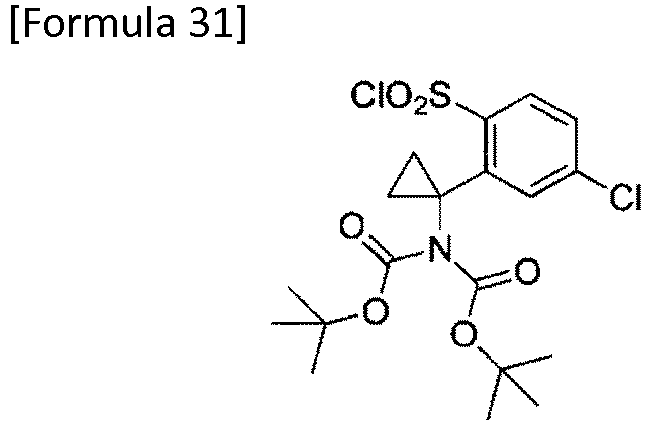
- To a THF (10 mL) suspension of 2-(benzylthio)-5-chlorobenzonitrile (1.0 g) and titanium tetraisopropoxide (1.3 mL), a diethyl ether solution (3.0 M, 3.0 mL) of methylmagnesium bromide was added dropwise at -78 ° C, and the reaction solution was stirred at the same temperature for 10 minutes. To the reaction solution, boron trifluoride diethyl ether complex (1.1 mL) was added, and the mixture was further stirred at room temperature for 1 hour, and then water (5 mL) and an aqueous sodium hydroxide solution (1 M, 5 mL) were added to separate layers, the aqueous layer was extracted with diethyl ether (20 mL). The combined organic layers were washed with saturated saline (20 mL), dried over anhydrous magnesium sulfate, and concentrated under reduced pressure. The residue was purified by silica gel column chromatography (eluent: hexane / ethyl acetate) to obtain 1-(2-benzylsulfanyl-5-chloro-phenyl)cyclopropanamine (490 mg).
- To a 1,2-dichloroethane solution (10 mL) of 1-(2-benzylsulfanyl-5-chlorophenyl)cyclopropanamine (490 mg) obtained in the
above Step 1, N,N-dimethyl-4-aminopyridine (210 mg) and di-tert-butyl dicarbonate (1.8 g) were added, and the reaction solution was stirred at 50 ° C for 16 hours. The reaction solution was added to hydrochloric acid (1 M, 10 mL) and extracted with ethyl acetate (15 mL). The organic layer was washed with saturated saline (20 mL), dried over anhydrous magnesium sulfate, and concentrated under reduced pressure. The residue was purified by silica gel column chromatography (eluent: hexane) to obtain tert-butyl N-[1-(2-benzylsulfanyl-5-chloro-phenyl)cyclopropyl]-N-tert-butoxycarbonyl-carbamate (502 mg). - From tert-butyl N-[1-(2-benzylsulfanyl-5-chloro-phenyl)cyclopropyl]-N-tert-butoxycarbonyl-carbamate obtained in the
above Step 2, the title compound is obtained in accordance with the method of ReferenceExample E1 step 4. -


- From methyl 6-amino-3-bromo-2-methoxybenzoate, methyl 6-(bis(tert-butoxycarbonyl)amino)-3-bromo-2-methoxybenzoate was obtained according to the method of Reference
Example E55 Step 2. - The title compound was obtained from methyl 6-(bis(tert-butoxycarbonyl)amino)-3-bromo-2-methoxybenzoate obtained in the
above step 1 according to the method of Reference Examples E1 Steps 3 and 4. -

- From 8-bromo-5-chlorochroman-4-one, 8-(benzylthio)-5-chlorochroman-4-one was obtained according to the method of Reference
Example E1 Step 3. - From 8-(benzylthio)-5-chlorochroman-4-one (125 mg) obtained in the
above Step 1, 8-(benzylthio)-5-chloro-4,4-difluorochroman was obtained according to the method of ReferenceExample D61 Step 2. - From the 8-(benzylthio)-5-chloro-4,4-difluorochroman obtained in the
above Step 2, the title compound was obtained according to the method of ReferenceExample E1 Step 4. -

- 1,2-dibromoethane (500 µL) and potassium carbonate (3.0 g) were added to a DMF solution (6 mL) of 2-amino-6-bromo-3-chlorophenol (1.3 g), and the reaction solution was stirred for 12 hours at 100 °C. The reaction solution was allowed to cool to room temperature, a saturated aqueous ammonium chloride solution (10 mL) and ethyl acetate (10 mL) were added to the reaction solution, the layers were separated, and the aqueous layer was extracted with ethyl acetate (20 mL). The combined organic layer was washed with saturated saline (10 mL), dried over anhydrous sodium sulfate, and concentrated under reduced pressure. The residue was purified by silica gel column chromatography (eluent: hexane / ethyl acetate) to obtain 8-bromo-5-chloro-3, 4-dihydro-2H-benzoxazine (400 mg).
- To dioxane solution (5 mL) of 8-bromo-5-chloro-3,4-dihydro-2H-1,4-benzoxazine (223 mg), 4-dimethylaminopyridine (44 mg), triethylamine (0.25 mL) and di-tert-butyl dicarbamate (458 mg) were added at room temperature, and the reaction solution was stirred for 2 hours. The reaction solution was concentrated under reduced pressure, and the residue was purified by column chromatography (eluent: hexane / ethyl acetate) to obtain tert-butyl 8-bromo-5-chloro-2H-benzo [b][1,4]oxazin-4(3H)-carboxylate (140 mg).
- From tert-butyl 8-bromo-5-chloro-2H-benzo [b][1,4]oxazin-4(3H)-carboxylate obtained in the
above Step 2, the title compound is obtained according to the method ofSteps -

- From 8-bromo-3,4-dihydro-2H-benzo[b][1,4]oxazine, tert-butyl 8-bromo-2H-benzo[b][1,4]oxazin-4(3H)-carboxylate was obtained according to the method of Reference
Example E58 Step 2. - From tert-butyl 8-bromo-2H-benzo[b][1,4]oxazin-4(3H)-carboxylate obtained in the
above Step 1, the title compound was obtained, in accordance with Reference Example E1 Steps 3 and 4. -


- From the commercially available tert-butyl 4-bromo-1H-indole-1-carboxylate (Ark Pharm, Inc.), the title compound was obtained according to the method of Reference Example E1 steps 3 and 4.
-

- To a DMSO solution (2.0 mL) of 8-bromo-5-chloro-3,4-dihydro-2H-benzoxazine (380 mg) obtained in Reference
Example E58 Step 1, potassium hydroxide (120 mg) and ethyl iodide (100 µL) were added, and the reaction solution was stirred at 100 ° C for 2 hours. The reaction solution was allowed to cool to room temperature, a saturated aqueous solution of ammonium chloride(10 mL) and ethyl acetate (10 mL) were added to separate layers, and the aqueous layer was extracted with ethyl acetate (10 mL). The combined organic layer was washed with saturated saline (10 mL), dried over anhydrous sodium sulfate, and concentrated under reduced pressure. The reaction solution was concentrated under reduced pressure, and the residue was purified by silica gel column chromatography (eluent: hexane / ethyl acetate) to obtain 8-bromo-5-chloro-4-ethyl-2,3-dihydro-1,4-benzoxazine (105 mg). - From the 8-bromo-5-chloro-4-ethyl-2,3-dihydro-1,4-benzoxazine obtained in the
above Step 1, the title compound was obtained according to the method of Reference Examples E1 Steps 3 and 4. -

- Sodium hydride (18 mg) was added to a THF solution (2.0 mL) of 8-bromo-3,4-dihydro-2H-benzo[b][1,4]oxazine (62 mg) at 0 ° C, and the reaction solution was stirred for 30 minutes. Cyclopropanecarbonyl chloride (170 µL) was added to the reaction solution, and the mixture was further stirred at room temperature for 2 hours. A saturated ammonium chloride aqueous solution (10 mL) and ethyl acetate (10 mL) were sequentially added to the reaction solution to separate layers, and the aqueous layer was extracted with ethyl acetate (10 mL). The combined organic layer was washed with saturated saline (10 mL), dried over anhydrous sodium sulfate, and concentrated under reduced pressure. The resulting residue was purified by silica gel column chromatography (eluent: hexane / ethyl acetate) to give (8-bromo-2H-benzo[b][1,4]oxazin-4(3H)-yl)(cyclopropyl)methanone (87 mg).
- From (8-bromo-2H-benzo[b][1,4]oxazin-4(3H)-yl)(cyclopropyl)methanone obtained in the
above Step 1 according to the method ofSteps -

- 2-amino-6-bromo-3-chlorophenol (140 mg) was dissolved in THF (2.0 mL), chloroacetyl chloride (100 µL) and sodium hydrogencarbonate (240 mg) were added and the reaction solution was stirred at room temperature for 3 hours. Potassium carbonate (440 mg) was added to the reaction solution, and the mixture was further stirred at 80 ° C for 5 hours. The reaction solution was allowed to cool to room temperature, and a saturated aqueous solution of ammonium chloride (10 mL) and ethyl acetate (10 mL) were added to separate layers, and the aqueous layer was extracted with ethyl acetate (20 mL). The combined organic layer was washed with saturated saline (10 mL), dried over anhydrous sodium sulfate, and concentrated under reduced pressure to give 8-bromo-5-chloro-2H-benzo[b][1,4]oxazin-3(4H)-one (160 mg).
- To a DMF (2.5 mL) solution of 8-bromo-5-chloro-2H-benzo[b][1,4]oxazin-3(4H)-one (69 mg) obtained in the
above Step 1, potassium carbonate (420 mg) and 2,2-difluoroethyl paratoluene sulfonate (500 mg) were sequentially added, and the reaction solution was stirred at 100 ° C for 3 hours. The reaction solution was allowed to cool to room temperature, and a saturated aqueous solution of ammonium chloride (10 mL) and ethyl acetate (10 mL) were added to separate layers, and the aqueous layer was extracted with ethyl acetate (10 mL). The combined organic layer was washed with saturated saline (10 mL), dried over anhydrous sodium sulfate, and concentrated under reduced pressure. The obtained residue was purified by silica gel column chromatography (eluent: hexane / ethyl acetate) to give 8-bromo-5-chloro-4-(2,2-difluoroethyl)-2H-benzo[b][1,4]oxazin-3(4H)-one (85 mg). - From 8-bromo-5-chloro-4-(2,2-difluoroethyl)-2H-benzo[b][1,4]oxazin-3(4H)-one obtained in the
above Step 2, 8-(benzylthio)-5-chloro-4-(2,2-difluoroethyl)-2H-benzo[b][1,4]oxazin-3 (4H)-one was obtained according to the method of ReferenceExample E1 Step 3. - From the 8-(benzylthio)-5-chloro-4-(2,2-difluoroethyl)-2H-benzo[b][1,4]oxazin-3(4H)-one, the title compound was obtained in the
above Step 3, according to the method of ReferenceExample E1 Step 4. - From 8-bromo-5-chloro-2H-benzo[b][1,4]oxazin-3(4H)-one obtained from Reference
Example E63 Step 1, the following compounds of reference examples E64 and E65 are synthesized according to method of ReferenceExample E63 Step 2, and Reference Example E1 Steps 3 and 4.[Table 5-6] Reference Example Alkylating agent Synthesized Compound E64 Mel E65 
-

- To a THF solution (5 mL) of 8-(benzylthio)-5-chloro-4-(2,2-difluoroethyl)-2H-benzo[b][1,4]oxazin-3(4H)-one (270 mg) obtained from Reference Example 63
Step 3, dimethylsulfide borane (1.0 mL) was added, and the reaction solution was stirred at 70 °C for 4 hours. The reaction solution was allowed to cool to room temperature, methanol (5 mL), ethyl acetate (10 mL), and water (10 mL) were added in order to separate layers, and the aqueous layer was extracted with ethyl acetate (10 mL). The combined organic layer was washed with saturated saline (10 mL), dried over anhydrous sodium sulfate, and concentrated under reduced pressure. The residue was purified by silica gel column chromatography (eluent: hexane / ethyl acetate) to obtain 8-(benzylthio)-5-chloro-4-(2,2-difluoroethyl)-3,4-dihydro-2H-benzo[b][1,4]oxazine (154 mg). - From the 8-(benzylthio)-5-chloro-4-(2,2-difluoroethyl)-3,4-dihydro-2H-benzo[b][1,4]oxazine obtained in the
above Step 1, the title compound was obtained according to the method of ReferenceExample E1 Step 4. -

- Ethyl 3-(benzylthio)-4-cyanobenzoate was obtained from ethyl 3-bromo-4-cyanobenzoate according to the method of Reference
Example E1 Step 3. - An aqueous sodium hydroxide solution (3 M, 4.0 mL) was added to a THF (4.0 mL) solution of ethyl 3-(benzylthio)-4-cyanobenzoate (344 mg) obtained in the
above Step 1, and the reaction solution was stirred at room temperature for 16 hours. The reaction solution was added to hydrochloric acid (1 M, 15 mL) and extracted twice with ethyl acetate (20 mL). The combined organic layer was washed with saturated saline (10 mL), dried over anhydrous sodium sulfate, and concentrated under reduced pressure to obtain 6-(benzylthio)-4-cyanobenzoic acid (210 mg). - Using 6-(benzylthio)-4-cyano-benzoic acid obtained from the
above Step 2 and morpholine, 2-(benzylthio)-4-(morpholine-4-carbonyl)benzonitrile was obtained according to ReferenceExample E35 Step 3. - From the 2-(benzylthio)-4-(morpholine-4-carbonyl)benzonitrile obtained in the
above Step 3, the title compound was obtained according to the method of ReferenceExample E1 Step 4. -
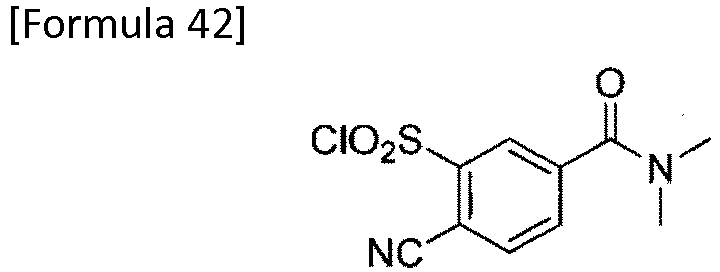
- According to the method of Reference
Example E35 Step 3, from 6-(benzylthio)-4-cyanobenzoic acid obtained in ReferenceExample E67 Step 2 and dimethylamine, 2-(benzylthio)-4-cyano-N,N-dimethylbenzamide was obtained. - From the 2-(benzylthio)-4-cyano-N,N-dimethylbenzamide obtained in the
above Step 1, the title compound was obtained according to the method of ReferenceExample E1 Step 4. -
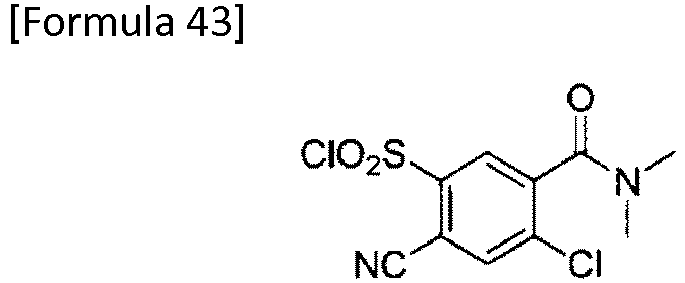
- The title compound was synthesized from methyl 5-bromo-2-chloro-4-cyanobenzoate according to each of the methods of Reference
Example E1 Step 3, ReferenceExample E67 Step 2, ReferenceExample E35 Step 3 and ReferenceExample E1 Step 4. -
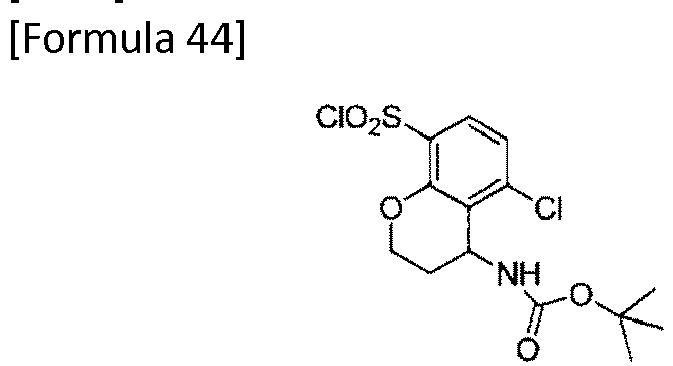
- From 8-bromo-5-chlorochroman-4-one, 8-benzylsulfanyl-5-chlorochroman-4-one was obtained according to the method of Reference
Example E1 Step 3. - 8-benzylsulfanyl-5-chlorochroman-4-one (460 mg) obtained in the
above Step 1 was dissolved in methanol (3.0 mL), ammonium chloride (1.2 g) was added, and the reaction solution was stirred at room temperature for 2 hours. Sodium cyanoborohydride (670 mg) was added to the reaction solution, and the mixture was further stirred at 80 ° C for 14 hours. A saturated aqueous sodium hydrogen carbonate solution (10 mL), an aqueous sodium hydroxide solution (5 M, 10 mL) and chloroform (20 mL) were added successively to the reaction solution to separate layers, and the aqueous layer was extracted twice with chloroform (20 mL). The combined organic layer was washed with saturated saline (10 mL), dried over anhydrous sodium sulfate, and concentrated under reduced pressure. The residue was purified by silica gel column chromatography (ethyl acetate) to obtain 8-benzylsulfanyl-5-chlorochroman-4-amine (216 mg). - From 8-benzylsulfanyl-5-chloro-chroman-4-amine (216 mg) obtained in the
above Step 2, tert-butyl (8-(benzylthio)-5-chlorochroman-4-yl)carbamate was obtained according to ReferenceExample E58 Step 2. - From the tert-butyl (8-(benzylthio)-5-chlorochroman-4-yl)carbamate obtained in the
above Step 3, the title compound was obtained according to the method of ReferenceExample E1 Step 4. -


- 8-Bromo-5-chlorochromanon-4-amine (250 mg) was dissolved in DMF (2.0 mL) and THF (7.0 mL), N,N-dimethyl-4-aminopyridine (45 mg), triethylamine (400 µL) and acetic anhydride (200 µL) were sequentially added, and the mixture was stirred at room temperature for 2 hours. Water (10 mL) was added to the reaction solution, and the mixture was extracted with ethyl acetate (10 mL). The organic layer was washed with saturated saline (20 mL), dried over anhydrous sodium sulfate, and concentrated under reduced pressure. The residue was purified by silica gel column chromatography (eluent: hexane / ethyl acetate) to obtain N-(8-bromo-5-chlorochromanon-4-yl)acetamide (260 mg).
- From the N-(8-bromo-5-chlorochromanon-4-yl)acetamide obtained in the
above Step 1, the title compound was obtained according to the method of Reference Examples E1 steps 3 and 4. -

- Cesium fluoride (700 mg) and (trifluoromethyl)trimethylsilane (700 µL) were added to a THF (10 mL) solution of 6-bromo-3-chloropicolinaldehyde (770 mg), and the reaction solution was stirred at room temperature for 4 hours. A saturated aqueous sodium hydrogen carbonate solution (10 mL) was added to the reaction solution, and the mixture was extracted with ethyl acetate (20 mL). The organic layer was washed with saturated saline (10 mL), dried over anhydrous sodium sulfate, and concentrated under reduced pressure. The residue was purified by silica gel column chromatography (eluent: hexane / ethyl acetate) to obtain 1-(6-bromo-3-chloropyridin-2-yl)-2,2,2-trifluoroethanol (600mg).
- From 1-(6-bromo-3-chloropyridin-2-yl)-2,2,2-trifluoroethanol obtained in the
above Step 1, according to the method of ReferenceExamples E44 Step 3 andE1 Steps 3 to 4, the title compound was obtained. -


- Sodium hydride (285 mg) was added to a THF (5.0 mL) solution of benzyl mercaptan (700 µL) at 0 ° C, and the reaction solution was stirred at room temperature for 15 min. A THF (3.0 mL) solution of
methyl 2,5-dibromonicotinate (1.59 g) was added dropwise to the reaction solution, and the mixture was stirred at 0 ° C for 20 minutes. The reaction solution was added to water (10 mL) and extracted with ethyl acetate (20 mL). The organic layer was washed with saturated saline (10 mL), dried over anhydrous sodium sulfate, and concentrated under reduced pressure. The residue was purified by silica gel column chromatography (eluent: hexane / ethyl acetate) to obtain methyl 2-(benzylthio)-5-bromonicotinate (1.5 g). - From the methyl 2-(benzylthio)-5-bromonicotinate obtained in the
above Step 1, the title compound was obtained according to the method of ReferenceExample E1 Step 4. -

- Water (9 mL), 1,4-dioxane (9 mL) and triethylamine (955 µL) were sequentially added to (2S, 3R)-2-amino-3-(6-fluoro-2,3-dimethylphenyl)butanoic acid (515 mg) obtained in Reference Example D1, and the mixture was cooled to 0 ° C. Di-tert-butyl dicarbonate (650 mg) was added to the reaction solution at the same temperature, and the mixture was stirred for 45 minutes. The reaction solution was added to hydrochloric acid (1 M, 20 mL) and extracted with ethyl acetate (20 mL). The organic layer was washed with saturated saline (20 mL), dried over anhydrous magnesium sulfate, and concentrated under reduced pressure. The residue is purified by silica gel column chromatography (eluent: hexane / ethyl acetate / 2% acetic acid) to obtain (2S, 3R)-2-((tert-butoxycarbonyl)amino)-3-(6-fluoro-2,3-dimethylphenyl)butanoic acid (745 mg).
- To a THF solution (14.0 mL) of (2S, 3R)-2-(tert-butoxycarbonylamino)-3-(6-fluoro-2,3-dimethylphenyl)butanoic acid (440 mg) obtained in the
above Step 1, CDI (302 mg) was added, and the reaction solution was stirred at room temperature for 20 minutes. The reaction solution was cooled to 0 ° C, hydrazine · monohydrate (200 µL) was added, and the mixture was stirred at the same temperature for 30 minutes. The reaction solution was added to water (20 mL) and extracted with ethyl acetate (20 mL). The organic layer was washed with saturated saline (20 mL), dried over anhydrous sodium sulfate, and concentrated under reduced pressure. CDI (560 mg) was added to a 1,4-dioxane (14 mL) solution of the obtained residue, and the reaction solution was stirred at room temperature for 30 minutes. The reaction solution was added to water (20 mL) and extracted with ethyl acetate (20 mL). The organic layer was washed with saturated saline (20 mL), dried over anhydrous sodium sulfate, and concentrated under reduced pressure. The obtained residue was purified by silica gel column chromatography by purification (eluent: hexane / ethyl acetate) to obtain tert-butyl ((1S,2R)-2-(6-fluoro-2,3-dimethylphenyl)-1-(5-oxo-4,5-dihydro-1,3,4-oxadiazol-2-yl)propyl)carbamate (356 mg). - tert-butyl ((1S,2R)-2-(6-fluoro-2,3-dimethylphenyl)-1-(5-oxo-4,5-dihydro-1,3,4-oxadiazol-2-yl)propyl)carbamate (550 mg) obtained in the
above Step 2 was dissolved in hydrochloric acid-1,4-dioxane (4 M, 5.0 mL), and the reaction solution was stirred at room temperature for 1.5 hours. The reaction solution was concentrated under reduced pressure to obtain the title compound. - According to the method of Reference
Example F1 Steps 1 to 3, the following compounds of Reference Examples F2 to F10 were synthesized.[Table 6] Reference Example Starting Material (Reference example number or structural formula) Synthesized Compound Reference Example Starting Material (Reference example number or structural formula) Synthesized Compound F2 Reference Example D6 
F7 Reference Example D4 
F3 Reference Example D3 
F8 Reference Example D5 
F4 Reference Example D13 
F9 Reference Example D45 
F5 Reference Example D10 
F10 Reference Example D61 
F6 Reference Example D41 
- To a 1,4-dioxane (5.0 mL) solution and water (5.0 mL) of (2S, 3R)-2-amino-3-(6-fluoro-2,3-dimethylphenyl)butanoic acid (300 mg) obtained in Reference Example D1, triethylamine (570 µL) was added and then cooled to 0 ° C. 4-Bromo-2-cyanobenzene-1-sulfonyl chloride (362 mg) was added to the reaction solution, and the mixture was stirred at the same temperature for 45 minutes. The reaction solution was added to hydrochloric acid (1 M, 15 mL) and extracted with ethyl acetate (15 mL). The organic layer was washed with saturated saline (20 mL), dried over anhydrous magnesium sulfate, and concentrated under reduced pressure. The residue was purified by silica gel column chromatography (eluent: hexane / ethyl acetate / 2% acetic acid) to obtain (2S, 3R)-2-(4-bromo-2-cyanophenylsulfonamido)-3-(6-fluoro-2,3-dimethylphenyl)butanoic acid (465 mg).
- To a THF (5.0 mL) solution of (2S, 3R)-2-(4-bromo-2-cyanophenylsulfonamido)-3-(6-fluoro-2,3-dimethylphenyl)butanoic acid (465 mg) obtained in the
above Step 1, CDI (210 mg) was added, and the reaction solution was stirred at room temperature for 20 minutes. The reaction solution was cooled to 0 ° C, hydrazine · monohydrate (200 µL) was added, and the mixture was stirred at the same temperature for 20 minutes. The reaction solution was added to water (20 mL) and extracted with ethyl acetate (20 mL). The organic layer was washed with saturated saline (20 mL), dried over anhydrous sodium sulfate, and concentrated under reduced pressure. - CDI (211 mg) was added to a 1,4-dioxane (4.0 mL) solution of the obtained residue, and the reaction solution was stirred at 45 ° C for 1 hour. The reaction solution was added to water (20 mL) and extracted with ethyl acetate (20 mL). The organic layer was washed with saturated saline (20 mL), dried over anhydrous sodium sulfate, and concentrated under reduced pressure. The obtained residue was purified by silica gel column chromatography (eluent: hexane / ethyl acetate) to obtain 4-bromo-2-cyano-N-((1S,2R)-2-(6-fluoro-2,3-dimethylphenyl)-1-(5-oxo-4,5-dihydro-1,3,4-oxadiazol-2-yl)propyl)benzenesulfonamide (386 mg).
- To a DMSO (5.0 mL) solution of 4-bromo-2-cyano-N-((1S,2R)-2-(6-fluoro-2,3-dimethylphenyl)-1-(5-oxo-4,5-dihydro-1,3,4-oxadiazol-2-yl)propyl)benzenesulfonamide (386 mg) obtained in the
above Step 2, hydrogen peroxide water (1.0 mL) and potassium carbonate (420 mg) were added sequentially in an ice bath, and the reaction solution was stirred at 60 ° C for 2.5 hours. The reaction solution was slowly added to hydrochloric acid (1 M, 15 mL) in an ice bath and then extracted with ethyl acetate (15 mL). The organic layer was washed with saturated saline (20 mL), dried over anhydrous sodium sulfate, and concentrated under reduced pressure. The residue was purified by silica gel column chromatography (eluent: hexane / ethyl acetate) to give the title compound. - Compounds of Examples 2 to 43 were synthesized according to the method of Example 1
Steps 1 to 3. Compounds of Examples 44 to 128 were synthesized according to the method of Example 1Step [Table 7-1] Example Starting Material ArSO2Cl Name of the Synthesized Compound 2 Reference Example D10 E22 6-Chloro-3-(N-((1S,2R)-2-(2,3-dihydro-1H-inden-4-yl)-1-(5-oxo-4, 5-dihydro-1,3,4-oxadiazol-2-yl)propyl)sulfamoyl)picolinamide 3 Reference Example D6 
5-chloro-2-(N-((1S,2R)-2-(2,3-dimethylphenyl)-1-(5-oxo-4,5-dihydro-1,3,4-oxadiazol-2-yl)propyl)sulfamoyl)benzamide 4 Reference Example D6 
5-bromo-2-(N-((1S,2R)-2-(2,3-dimethylphenyl)-1-(5-oxo-4,5-dihydro-1,3,4-oxadiazol-2-yl)propyl)sulfamoyl)benzamide 5 Reference Example D1 
5-chloro-2-(N-((1S,2R)-2-(6-fluoro-2,3-dimethylphenyl)-1-(5-oxo-4,5-dihydro-1,3,4-oxadiazol-2-yl)propyl)sulfamoyl)benzamide 6 Reference Example D3 
5-chloro-2-(N-((1S,2R)-2-(2-fluoronaphthalen-1-yl)-1-(5-oxo-4,5-dihydro-1, 3,4-oxadiazol-2-yl)propyl)sulfamoyl)benzamide 7 Reference Example D7 
5-chloro-2-(N-((1S,2R)-2-(5-fluoro-2,3-dimethylphenyl)-1-(5-oxo-4, 5-dihydro-1,3,4-oxadiazol-2-yl)propyl)sulfamoyl)benzamide 8 Reference Example D20 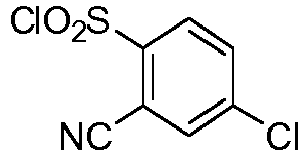
5-chloro-2-(N-((1S,2R)-2-(8-fluoronaphthalen-1-yl)-1-(5-oxo-4, 5-dihydro-1, 3,4-oxadiazol-2-yl)propyl)sulfamoyl)benzamide 9 Reference Example D8 
5-chloro-2-(N-((1S,2R)-2-(3-fluoronaphthalen-1-yl)-1-(5-oxo-4,5-dihydro-1, 3,4-oxadiazol-2-yl)propyl)sulfamoyl)benzamide 10 Reference Example D1 
2-(N-((1S,2R)-2-(3-6-fluoro-2,3-dimethylphenyl)-1-(5-oxo-4,5-dihydro-1,3,4-oxadiazol-2-yl)propyl)sulfamoyl)-5-methylbenzamide 11 Reference Example D45 
5-chloro-2-(N-((1S,2R)-2-(3-ethyl-6-fluoro-2-methylphenyl)-1-(5-oxo-4,5-dihydro-1,3,4-oxadiazol-2-yl)propyl)sulfamoyl)benzamide [Table 7-2] Example Starting Material ArSO2Cl Name of the Synthesized Compound 12 Reference Example D3 
2-(N-((1S,2R)-2-(2-Fluoronaphthalen-1-yl)-1-(5-oxo-4,5-dihydro-1,3,4-oxadiazol-2-yl)propyl)sulfamoyl)-5-methylbenzamide 13 Reference Example D46 
5-chloro-2-(N-((1S,2R)-2-(2,3-difluoro-5,6-dimethylphenyl)-1-(5-oxo-4,5-dihydro-1,3,4-oxadiazol-2-yl)propyl)sulfamoyl)benzamide 14 Reference Example D4 
5-chloro-2-(N-((1S,2R)-2-(3-chloro-6-fluoro-2-methylphenyl)-1-(5-oxo-4,5-dihydro-1,3,4-oxadiazol-2-yl)propyl)sulfamoyl)benzamide 15 Reference Example D3 
5-bromo-2-(N-((1S,2R)-2-(2-fluoronaphthalen-1-yl)-1-(5-oxo-4,5-dihydro-1,3,4-oxadiazol-2-yl)propyl)sulfamoyl)benzamide 16 Reference Example D1 Reference Example E20 5-Cyclopropyl-2-(N-((1S,2R)-2-(6-Fluoro-2,3-dimethylphenyl)-1-(5-oxo-4,5-dihydro-1,3,4-oxadiazol-2-yl)propyl)sulfamoyl)benzamide 17 Reference Example D15 
5-chloro-2-(N-((1S)-2-(2-chloro-6-fluoro-3-methylphenyl)-1-(5-oxo-4,5-dihydro-1,3,4-oxadiazol-2-yl)propyl)sulfamoyl)benzamide 18 Reference Example D1 Reference Example E21 5-Ethyl-2-(N-((1S,2R)-2-(6-fluoro-2,3-dimethylphenyl)-1-(5-oxo-4,5-dihydro-1,3,4-oxadiazol-2-yl)propyl)sulfamoyl)benzamide 19 Reference Example D1 Reference Example E22 6-Chloro-3-(N-((1S,2R)-2-(6-fluoro-2,3-dimethylphenyl)-1-(5-oxo-4,5-dihydro-1,3,4-oxadiazol-2-yl)propyl)sulfamoyl)picolinamide 20 Reference Example D1 
2-(N-((1S,2R)-2-(6-fluoro-2,3-dimethylphenyl)-1-(5-oxo-4,5-dihydro-1,3,4-oxadiazol-2-yl)propyl)sulfamoyl)benzamide 21 Reference Example D16 
5-chloro-2-(N-((1S,2R)-2-(2-fluoro-5-methylphenyl)-1-(5-oxo-4,5-dihydro-1,3,4-oxadiazol-2-yl)propyl)sulfamoyl)benzamide 22 Reference Example D17 
5-chloro-2-(N-((1S,2R)-2-(2-fluoro-6-methylphenyl)-1-(5-oxo-4,5-dihydro-1,3,4-oxadiazol-2-yl)propyl)sulfamoyl)benzamide [Table 7-3] Example Starting Material ArSO2Cl Name of the Synthesized Compound 23 Reference Example D18 
5-chloro-2-(N-((1S, 2S)-2-(2-fluoro-6-methylphenyl)-1-(5-oxo-4,5-dihydro-1,3,4-oxadiazol-2-yl)propyl)sulfamoyl)benzamide 24 Reference Example D37 
5-chloro-2-(N-((1S,2R)-1-(5-oxo-4,5-dihydro-1,3,4-oxadiazol-2-yl)-2-(o-tolyl)propyl)sulfamoyl)benzamide 25 Reference Example D4 
5-bromo-2-(N-((1S,2R)-2-(3-chloro-6-fluoro-2-methylphenyl)-1-(5-oxo-4,5-dihydro-1,3,4-oxadiazol-2-yl)propyl)sulfamoyl)benzamide 26 Reference Example D47 
5-chloro-2-(N-((15,2R)-2-(3-cyclopropyl-6-fluoro-2-methylphenyl)-1-(5-oxo-4,5-dihydro-1,3,4-oxadiazol-2-yl)propyl)sulfamoyl)benzamide 27 Reference Example D48 
5-chloro-2-(N-((1S,2R)-2-(6-fluoro-2-methyl-3-(trifluoromethyl)phenyl)-1-(5-oxo-4,5-dihydro-1,3,4-oxadiazol-2-yl)propyl)sulfamoyl)benzamide 28 Reference Example D19 
5-chloro-2-(N-((1S,2R)-2-(3,6-difluoro-2-methylphenyl)-1-(5-oxo-4,5-dihydro-1,3,4-oxadiazol-2-yl)propyl)sulfamoyl)benzamide 29 Reference Example D49 
3-((1S,2R)-1-(4-chloro-2-methoxyphenylsulfonamido)-1-(5-oxo-4,5-dihydro-1,3,4-oxadiazol-2-yl)propan-2-yl)-4-fluoro-2-methylbenzamide 30 Reference Example D5 
2-(N-((1S,2R)-2-(3-bromo-6-fluoro-2-methylphenyl)-1-(5-oxo-4,5-dihydro-1,3,4-oxadiazol-2-yl)propyl)sulfamoyl)-5-chlorobenzamide 31 Reference Example D1 Reference Example E18 3-chloro-6-(N-((1S,2R)-2-(6-fluoro-2,3-dimethylphenyl)-1-(5-oxo-4,5-dihydro-1,3,4-oxadiazol-2-yl)propyl)sulfamoyl)picolinamide 32 Reference Example D2 
5-chloro-2-(N-((1S,2S)-2-(6-fluoro-2,3-dimethylphenyl)-1-(5-oxo-4,5-dihydro-1,3,4-oxadiazol-2-yl)propyl)sulfamoyl)benzamide 33 Reference Example D57 
5-chloro-2-(N-((1R,2S)-2-(6-fluoro-2,3-dimethylphenyl)-1-(5-oxo-4,5-dihydro-1,3,4-oxadiazol-2-yl)propyl)sulfamoyl)benzamide [Table 7-4] 34 Reference Example D58 
5-chloro-2-(N-((1R,2R)-2-(6-fluoro-2,3-dimethylphenyl)-1-(5-oxo-4,5-dihydro-1,3,4-oxadiazol-2-yl)propyl)sulfamoyl)benzamide 35 Reference Example D5 
5-bromo-2-(N-((1S,2R)-2-(3-bromo-6-fluoro-2-methylphenyl)-1-(5-oxo-4,5-dihydro-1,3,4-oxadiazol-2-yl)propyl)sulfamoyl)benzamide 36 Reference Example D1 Reference Example E67 2-(N-((1S,2R)-2-(6-fluoro-2,3-dimethylphenyl)-1-(5-oxo-4,5-dihydro-1,3,4-oxadiazol-2-yl)propyl)sulfamoyl)-4-(morpholine-4-carbonyl)benzamide 37 Reference Example D1 Reference Example E68 3-(N-((1S,2R)-2-(6-fluoro-2,3-dimethylphenyl)-1-(5-oxo-4,5-dihydro-1,3,4-oxadiazol-2-yl)propyl)sulfamoyl)-N1,N1-dimethylterephthalamide 38 Reference Example D1 Reference Example E16 4-carbamoyl-2-chloro-5-(N-((1S,2R)-2-(6-fluoro-2,3-dimethylphenyl)-1-(5-oxo-4,5-dihydro-1,3,4-oxadiazol-2-yl)propyl)sulfamoyl)benzoic acid 39 Reference Example D1 Reference Example E69 2-chloro-5-(N-((1S,2R)-2-(6-fluoro-2,3-dimethylphenyl)-1-(5-oxo-4,5-dihydro-1,3,4-oxadiazol-2-yl)propyl)sulfamoyl)-N1,N1-dimethyl terephthalamide 40 Reference Example D1 Reference Example E32 2-chloro-5-(N-((1S,2R)-2-(6-fluoro-2,3-dimethylphenyl)-1-(5-oxo-4,5-dihydro-1,3,4-oxadiazol-2-yl)propyl)sulfamoyl)isonicotinamide 41 Reference Example D1 
2-(N-((1S,2R)-2-(6-fluoro-2,3-dimethylphenyl)-1-(5-oxo-4,5-dihydro-1,3,4-oxadiazol-2-yl)propyl)sulfamoyl)-5-(trifluoromethyl)benzamide 42 Reference Example D5 
2-(N-((1S,2R)-2-(3-bromo-6-fluoro-2-methylphenyl)-1-(5-oxo-4,5-dihydro-1,3,4-oxadiazol-2-yl)propyl)sulfamoyl)-5-(trifluoromethyl)benzamide 43 Reference Example D44 
5-chloro-2-((1S,2R)-methyl-d3-2-(6-fluoro-2,3-dimethylphenyl)-1-(5-oxo-4,5-dihydro-1,3,4-oxadiazol-2-yl)propyl)sulfamoyl)benzamide 44 Reference Example D11 
4-bromo-N-((1S,2R)-2-(naphthalen-1-yl)-1-(5-oxo-4,5-dihydro-1,3,4-oxadiazol-2-yl)propyl)benzenesulfonamide [Table 7-5] Example Starting Material ArSO2Cl Name of the Synthesized Compound 45 Reference Example D27 
N-((1S,2R)-2-(benzo[b]thiophen-4-yl)-1-(5-oxo-4,5-dihydro-1,3,4-oxadiazol-2-yl)propyl)-4-bromobenzenesulfonamide 46 Reference Example D11 
2,4-dichloro-N-((1S,2R)-2-(naphthalen-1-yl)-1-(5-oxo-4,5-dihydro-1,3,4-oxadiazol-2-yl)propyl)benzenesulfonamide 47 Reference Example D21 
2-chloro-4-cyclopropyl-N-((1S,2R)-1-(5-oxo-4,5-dihydro-1,3,4-oxadiazol-2-yl)-2-(5,6,7,8-tetrahydronaphthalen-1-yl)propyl)benzenesulfonamide 48 Reference Example D51 
5-bromo-N-((1S)-2-(3-methyl-2,3-dihydro-1 H-inden-4-yl)-1-(5-oxo-4,5-dihydro-1,3,4-oxadiazol-2-yl)propyl)pyridine-2-sulfonamide 49 Reference Example D22 
N-((1S,2R)-2-(9H-fluoren-1-yl)-1-(5-oxo-4,5-dihydro-1,3,4-oxadiazol-2-yl)propyl)-5-bromopyridine-2-sulfonamide 50 Reference Example D23 
N-((1S,2R)-2-(9H-fluoren-4-yl)-1-(5-oxo-4,5-dihydro-1,3,4-oxadiazol-2-yl)propyl)-5-bromopyridine-2-sulfonamide 51 Reference Example D11 
N-((1S,2R)-2-(naphthalen-1-yl)-1-(5-oxo-4,5-dihydro-1,3,4-oxadiazol-2-yl)propyl)-4-nitrobenzene sulfonamide 52 Reference Example D21 
5-chloro-N-((1S,2R)-1-(5-oxo-4,5-dihydro-1,3,4-oxadiazol-2-yl)-2-(5,6,7,8-tetrahydronaphthalen-1-yl)propyl)pyridine-2-sulfonamide 53 Reference Example D21 
4-bromo-3-methoxy-N-((1S,2R)-1-(5-oxo-4,5-dihydro-1,3,4-oxadiazol-2-yl)-2-(5,6,7,8-tetrahydronaphthalen- 1-yl)propyl)benzene sulfonamide 54 Reference Example D21 
4-chloro-2-nitro-N-((1S,2R)-1-(5-oxo-4,5-dihydro-1,3,4-oxadiazol-2-yl)-2-(5,6,7,8-tetrahydronaphthalen-1-yl)propyl)benzene sulfonamide 55 Reference Example D21 
2,4-dimethoxy-N-((1S,2R)-1-(5-oxo-4,5-dihydro-1,3,4-oxadiazol-2-yl)-2-(5,6,7,8-tetrahydronaphthalen-1-yl)propyl)benzene sulfonamide [Table 7-6] Example Starting Material ArSO2Cl Name of the Synthesized Compound 56 Reference Example D24 
4-chloro-N-((1S,2R)-2-(6-fluoro-naphthalen-1-yl)-1-(5-oxo-4,5-dihydro-1,3,4-oxadiazol-2-yl)propyl)-2-methoxybenzenesulfonamide 57 Reference Example D21 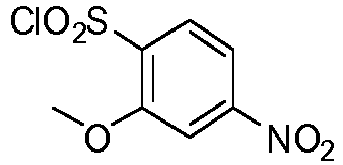
2-methoxy-4-nitro-N-((1S,2R)-1-(5-oxo-4,5-dihydro-1,3,4-oxadiazol-2-yl)-2-(5,6,7,8-tetrahydronaphthalen-1-yl)propyl)benzenesulfonamide 58 Reference Example D21 
methyl 4-methoxy-5-(N-((1S,2R)-1-(5-oxo-4,5-dihydro-1,3,4-oxadiazol-2-yl)-2-(5,6,7,8-tetrahydronaphthalen-1-yl)propyl)sulfamoyl)thiophene-3-carboxylate 59 Reference Example D10 
N-((1S,2R)-2-(2,3-dihydro-1H-inden-4-yl)-1-(5-oxo-4,5-dihydro-1,3,4-oxadiazol-2yl)propyl)benzo[c][1,2,5]thiadiazole-4-sulfonamide 60 Reference Example D10 
4-bromo-N-((1S,2R)-2-(2,3-dihydro-1H-inden-4-yl)-1-(5-oxo-4,5-dihydro-1,3,4-oxadiazol-2-yl)propyl)-2-fluorobenzenesulfonamide 61 Reference Example D10 
3-chloro-N-((1S,2R)-2-(2,3-dihydro-1H-inden-4-yl)-1-(5-oxo-4,5-dihydro-1,3,4-oxadiazol-2-yl)propyl)-2-fluorobenzenesulfonamide 62 Reference Example D33 
N-((1S,2R)-2-(benzo[b]thiophen-3-yl)-1-(5-oxo-4,5-dihydro-1,3,4-oxadiazol-2-yl)propyl)-4-chloro-2-methoxybenzenesulfonamide 63 Reference Example D40 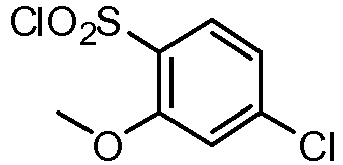
N-((1S,2R)-2-(benzo[d]thiazol-4-yl)-1-(5-oxo-4,5-dihydro-1,3,4-oxadiazol-2-yl)propyl)-4-chloro-2-methoxybenzenesulfonamide 64 Reference Example D30 
4-chloro-N-((1S,2R)-2-(2,3-dihydrobenzofuran-7-yl)-1-(5-oxo-4,5-dihydro-1,3,4-oxadiazol-2-yl)propyl)-2-methoxybenzenesulfonamide 65 Reference Example D31 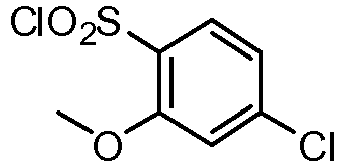
4-chloro-2-methoxy-N-((1S,2R)-2-(2-methylnaphthalen-1-yl)-1-(5-oxo-4,5-dihydro-1,3,4-oxadiazol-2-yl)propyl)benzenesulfonamide 66 Reference Example D29 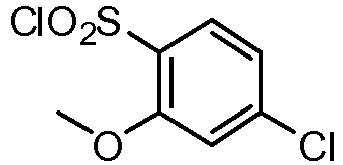
4-chloro-N-((1S,2R)-2-(2,3-dihydrobenzofuran-4-yl)-1-(5-oxo-4,5-dihydro-1,3,4-oxadiazol-2-yl)propyl)-2-methoxybenzenesulfonamide [Table 7-7] Example Starting Material ArSO2Cl Name of the Synthesized Compound 67 Reference Example D53 
4-chloro-2-methoxy-N-((1S,2R)-2-(2-methyl-2,3-dihydro-1H-inden-4-yl)-1-(5-oxo-4,5-dihydro-1,3,4-oxadiazol-2-yl)propyl)benzenesulfonamide 68 Reference Example D10 
N-((1S,2R)-2-(2,3-dihydro-1H-inden-4-yl)-1-(5-oxo-4,5-dihydro-1,3,4-oxadiazol-2-yl)propyl)naphthalene-1-sulfonamide 69 Reference Example D52 
4-chloro-2-methoxy-N-((1S,2S)-2-(3-methyl-2,3-dihydro-1H-inden-4-yl)-1-(5-oxo-4,5-dihydro-1,3,4-oxadiazol-2-yl)propyl)benzenesulfonamide 70 Reference Example D28 
4-chloro-2-methoxy-N-((1S,2R)-2-(2-methyl-[1,1'-biphenyl]-3-yl)-1-(5-oxo-4,5-dihydro-1,3,4-oxadiazol-2-yl)propyl)benzenesulfonamide 71 Reference Example D13 
4-chloro-2-methoxy-N-((1S,2R)-2-(8-methylnaphthalen-1-yl)-1-(5-oxo-4,5-dihydro-1,3,4-oxadiazol-2-yl)propyl)benzenesulfonamide 72 Reference Example D35 
4-chloro-2-methoxy-N-((1S,2R)-2-(3-methyl-2,3-dihydrobenzofuran-4-yl)-1-(5-oxo-4,5-dihydro-1,3,4-oxadiazol-2-yl)propyl)benzenesulfonamide 73 Reference Example D36 
4-chloro-2-methoxy-N-((1S,2S)-2-(3-methyl-2,3-dihydrobenzofuran-4-yl)-1-(5-oxo-4,5-dihydro-1,3,4-oxadiazol-2-yl)propyl)benzenesulfonamide 74 Reference Example D34 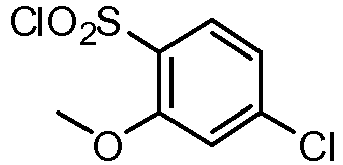
4-chloro-N-((1S)-2-(2,3-difluorophenyl)-1-(5-oxo-4,5-dihydro-1,3,4-oxadiazol-2-yl)propyl)-2-methoxybenzenesulfonamide 75 Reference Example D32 
4-chloro-N-((1S,2R)-2-(3-fluoro-2-methylphenyl)-1-(5-oxo-4,5-dihydro-1,3,4-oxadiazol-2-yl)propyl)-2-methoxybenzenesulfonamide 76 Reference Example D3 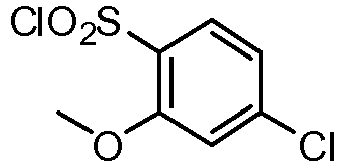
4-chloro-N-((1S,2R)-2-(2-fluoronaphthalen-1-yl)-1-(5-oxo-4,5-dihydro-1,3,4-oxadiazol-2-yl)propyl)-2-methoxybenzenesulfonamide 77 Reference Example D9 
4-chloro-N-((1S,2R)-2-(4-fluoro-2,3-dimethylphenyl)-1-(5-oxo-4,5-dihydro-1,3,4-oxadiazol-2-yl)propyl)-2-methoxybenzenesulfonamide [Table 7-8] Example Starting Material ArSO2Cl Name of the Synthesized Compound 78 Reference Example D55 
(S)-4-chloro-2-methoxy-N-(2-(8-methylnaphthalen-1-yl)-1-(5-oxo-4,5-dihydro-1,3,4-oxadiazol-2-yl)ethyl)benzenesulfonamide 79 Reference Example D38 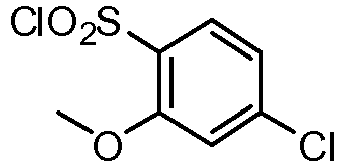
4-chloro-N-((1S)-2-(2,6-difluoro-3-methylphenyl)-1-(5-oxo-4,5-dihydro-1,3,4-oxadiazol-2-yl)propyl)-2-methoxybenzenesulfonamide 80 Reference Example D39 
4-chloro-N-((1S)-2-(2-fluoro-3-methylphenyl)-1-(5-oxo-4,5-dihydro-1,3,4-oxadiazol-2-yl)propyl)-2-methoxybenzenesulfonamide 81 Reference Example D13 Reference Example E57 5-chloro-4,4-difluoro-N-((1S,2R)-2-(8-methylnaphthalen-1-yl)-1-(5-oxo-4,5-dihydro-1,3,4-oxadiazol-2-yl)propyl)chroman-8-sulfonamide 82 Reference Example D25 
4-chloro-N-((1S,2R)-2-(5-fluoronaphthalen-1-yl)-1-(5-oxo-4,5-dihydro-1,3,4-oxadiazol-2-yl)propyl)-2-methoxybenzenesulfonamide 83 Reference Example D1 
4-chloro-N-((1S,2R)-2-(6-fluoro-2,3-dimethylphenyl)-1-(5-oxo-4,5-dihydro-1,3,4-oxadiazol-2-yl)propyl)-2-methoxybenzenesulfonamide 84 Reference Example D1 
4-chloro-2-cyano-N-((1S,2R)-2-(6-fluoro-2,3-dimethylphenyl)-1-(5-oxo-4,5-dihydro-1,3,4-oxadiazol-2-yl)propyl)benzenesulfonamide 85 Reference Example D14 
4-chloro-N-((1S,2R)-2-(2-isopropyl-3-methylphenyl)-1-(5-oxo-4,5-dihydro-1,3,4-oxadiazol-2-yl)propyl)-2-methoxybenzenesulfonamide 86 Reference Example D12 
4-chloro-N-((1S,2R)-2-(3-ethyl-2-methylphenyl)-1-(5-oxo-4,5-dihydro-1,3,4-oxadiazol-2-yl)propyl)-2-methoxybenzenesulfonamide 87 Reference Example D42 
4-chloro-N-((1S,2R)-2-(2-ethyl-3-methylphenyl)-1-(5-oxo-4,5-dihydro-1,3,4-oxadiazol-2-yl)propyl)-2-methoxybenzenesulfonamide 88 Reference Example D1 Reference Example E7 5-chloro-N-((1S,2R)-2-(6-fluoro-2,3-dimethylphenyl)-1-(5-oxo-4,5-dihydro-1,3,4-oxadiazol-2-yl)propyl)-4-oxochroman-8-sulfonamide [Table 7-9] Example Starting Material ArSO2Cl Name of the Synthesized Compound 89 Reference Example D50 
N-((1S)-2-(2-bromo-5,6-difluoro-3-methylphenyl)-1-(5-oxo-4,5-dihydro-1,3,4-oxadiazol-2-yl)propyl)-4-chloro-2-methoxybenzenesulfonamide 90 Reference Example D46 
4-chloro-N-((1S,2R)-2-(2,3-difluoro-5,6-dimethylphenyl)-1-(5-oxo-4,5-dihydro-1,3,4-oxadiazol-2-yl)propyl)-2-methoxybenzenesulfonamide 91 Reference Example D1 Reference Example E50 4-chloro-N-((1S,2R)-2-(6-fluoro-2,3-dimethylphenyl)-1-(5-oxo-4,5-dihydro-1,3,4-oxadiazol-2-yl)propyl)-2-(isoxazol-5-yl)benzenesulfonamide 92 Reference Example D1 
4-bromo-2-cyano-N-((1S,2R)-2-(6-fluoro-2,3-dimethylphenyl)-1-(5-oxo-4,5-dihydro-1,3,4-oxadiazol-2-yl)propyl)benzenesulfonamide 93 Reference Example D1 Reference Example E64 5-chloro-N-((1S,2R)-2-(6-fluoro-2,3-dimethylphenyl)-1-(5-oxo-4,5-dihydro-1,3,4-oxadiazol-2-yl)propyl)-4-methyl-3-oxo-3,4-dihydro-2H-benzo[b][1,4]oxazine-8-sulfonamide 94 Reference Example D1 Reference Example E61 5-chloro-4-ethyl-N-((1S,2R)-2-(6-fluoro-2,3-dimethylphenyl)-1-(5-oxo-4,5-dihydro-1,3,4-oxadiazol-2-yl)propyl)-3,4-dihydro-2H-benzo[b][1,4]oxazine-8-sulfonamide 95 Reference Example D1 Reference Example E2 5-chloro-8-(N-((1S,2R)-2-(6-fluoro-2,3-dimethylphenyl)-1-(5-oxo-4,5-dihydro-1,3,4-oxadiazol-2-yl)propyl)sulfamoyl)-4-methylchroman-4-yl acetate 96 Reference Example D45 
5-bromo-2-(N-((1S,2R)-2-(3-ethyl-6-fluoro-2-methylphenyl)-1-(5-oxo-4,5-dihydro-1,3,4-oxadiazol-2-yl)propyl)sulfamoyl)benzamide 97 Reference Example D1 Reference Example E23 N-((1S,2R)-2-(6-fluoro-2,3-dimethylphenyl)-1-(5-oxo-4,5-dihydro-1,3,4-oxadiazol-2-yl)propyl)-2,2-dimethyl-4-oxochroman-8-sulfonamide 98 Reference Example D1 
2-cyano-N-((1S,2R)-2-(6-fluoro-2,3-dimethylphenyl)-1-(5-oxo-4,5-dihydro-1,3,4-oxadiazol-2-yl)propyl)benzenesulfonamide [Table 7-10] Example Starting Material ArSO2Cl Name of the Synthesized Compound 99 Reference Example D1 Reference Example E62 4-(cyclopropanecarbonyl)-N-((1S,2R)-2-(6-fluoro-2,3-dimethylphenyl)-1-(5-oxo-4,5-dihydro-1,3,4-oxadiazol-2-yl)propyl)-3,4-dihydro-2H-benzo[b][1,4]oxazine-8-sulfonamide 100 Reference Example D4 Reference Example E2 5-chloro-8-(N-((1S,2R)-2-(3-chloro-6-fluoro-2-methylphenyl)-1-(5-oxo-4,5-dihydro-1,3,4-oxadiazol-2-yl)propyl)sulfamoyl)-4-methylchroman-4-yl acetate 101 Reference Example D1 Reference Example E63 5-chloro-4-(2,2-difluoroethyl)-N-((1S,2R)-2-(6-fluoro-2,3-dimethylphenyl)-1-(5-oxo-4,5-dihydro-1,3,4-oxadiazol-2-yl)propyl)-3-oxo-3,4-dihydro-2H-benzo[b][1,4]oxazine-8-sulfonamide 102 Reference Example D1 Reference Example E66 5-chloro-4-(2,2-difluoroethyl)-N-((1S,2R)-2-(6-fluoro-2,3-dimethylphenyl)-1-(5-oxo-4,5-dihydro-1,3,4-oxadiazol-2-yl)propyl)-3,4-dihydro-2H-benzo[b][1,4]oxazine-8-sulfonamide 103 Reference Example D1 
methyl5-chloro-2-(N-((1S,2R)-2-(6-fluoro-2,3-dimethylphenyl)-1-(5-oxo-4,5-dihydro-1,3,4-oxadiazol-2-yl)propyl)sulfamoyl)benzoate 104 Reference Example D49 
4-chloro-N-((1S,2R)-2-(3-cyano-6-fluoro-2-methylphenyl)-1-(5-oxo-4,5-dihydro-1,3,4-oxadiazol-2-yl)propyl)-2-methoxybenzenesulfonamide 105 Reference Example D1 Reference Example E18 5-chloro-6-cyano-N-((1S,2R)-2-(6-fluoro-2,3-dimethylphenyl)-1-(5-oxo-4,5-dihydro-1,3,4-oxadiazol-2-yl)propyl)pyridine-2-sulfonamide 106 Reference Example D1 Reference Example E6 8-(N-((1S,2R)-2-(6-fluoro-2,3-dimethylphenyl)-1-(5-oxo-4,5-dihydro-1,3,4-oxadiazol-2-yl)propyl)sulfamoyl)-4-(tifluoromethyl)chroman-4-yl acetate 107 Reference Example D1 Reference Example E25 4-chloro-N-((1S,2R)-2-(6-fluoro-2,3-dimethylphenyl)-1-(5-oxo-4,5-dihydro-1,3,4-oxadiazol-2-yl)propyl)-8-oxo-5,6,7,8-tetrahydronaphthalene-1-sulfonamide 108 Reference Example D1 Reference Example E46 2-(6-chloro-3-(N-((1S,2R)-2-(6-fluoro-2,3-dimethylphenyl)-1-(5-oxo-4,5-dihydro-1,3,4-oxadiazol-2-yl)propyl)sulfamoyl)-2-methoxyphenyl)propan-2-yl acetate [Table 7-11] Example Starting Material ArSO2Cl Name of the Synthesized Compound 109 Reference Example D1 Reference Example E10 methyl 3-chloro-6-(N-((1S,2R)-2-(6-fluoro-2,3-dimethylphenyl)-1-(5-oxo-4,5-dihydro-1,3,4-oxadiazol-2-yl)propyl)sulfamoyl)picolinate 110 Reference Example D1 
2,6-difluoro-N-((1S,2R)-2-(6-fluoro-2,3-dimethylphenyl)-1-(5-oxo-4,5-dihydro-1,3,4-oxadiazol-2-yl)propyl)benzenesulfonamide 111 Reference Example D1 
4-chloro-2,6-difluoro-N-((1S,2R)-2-(6-fluoro-2,3-dimethylphenyl)-1-(5-oxo-4,5-dihydro-1,3,4-oxadiazol-2-yl)propyl)benzenesulfonamide 112 Reference Example D1 Reference Example E27 5-chloro-N-((1S,2R)-2-(6-fluoro-2,3-dimethylphenyl)-1-(5-oxo-4,5-dihydro-1,3,4-oxadiazol-2-yl)propyl)-3-methoxypyridine-2-sulfonamide 113 Reference Example D1 Reference Example E37 5-chloro-N-((1S,2R)-2-(6-fluoro-2,3-dimethylphenyl)-1-(5-oxo-4,5-dihydro-1,3,4-oxadiazol-2-yl)propyl)-6-(morpholine-4-carbonyl)pyridine-2-sulfonamide 114 Reference Example D1 Reference Example E35 5-chloro-N-((1S,2R)-2-(6-fluoro-2,3-dimethylphenyl)-1-(5-oxo-4,5-dihydro-1,3,4-oxadiazol-2-yl)propyl)-6-(pyrrolidine-1-carbonyl)pyridine-2-sulfonamide 115 Reference Example D1 Reference Example E43 5-chloro-N-((1S,2R)-2-(6-fluoro-2,3-dimethylphenyl)-1-(5-oxo-4,5-dihydro-1,3,4-oxadiazol-2-yl)propyl)-6-(6-azaspiro[3.4]octane-6-carbonyl)pyridine-2-sulfonamide 116 Reference Example D1 Reference Example E39 6-(3-oxa-8-azabicyclo[3.2.1]octane-8-carbonyl)-5-chloro-N-((1S,2R)-2-(6-fluoro-2,3-dimethylphenyl)-1-(5-oxo-4,5-dihydro-1,3,4-oxadiazol-2-yl)propyl)pyridine-2-sulfonamide 117 Reference Example D1 Reference Example E40 6-(8-oxa-3-azabicyclo[3.2.1]octane-3-carbonyl)-5-chloro-N-((1S,2R)-2-(6-fluoro-2,3-dimethylphenyl)-1-(5-oxo-4,5-dihydro-1,3,4-oxadiazol-2-yl)propyl)pyridine-2-sulfonamide 118 Reference Example D1 Reference Example E11 methyl 5-chloro-2-(N-((1S,2R)-2-(6-fluoro-2,3-dimethylphenyl)-1-(5-oxo-4,5-dihydro-1,3,4-oxadiazol-2-yl)propyl)sulfamoyl)nicotinate [Table 7-12] Example Starting Material ArSO2Cl Name of the Synthesized Compound 119 Reference Example D1 Reference Example E73 methyl 5-bromo-2-(N-((1S,2R)-2-(6-fluoro-2,3-dimethylphenyl)-1-(5-oxo-4,5-dihydro-1,3,4-oxadiazol-2-yl)propyl)sulfamoyl)nicotinate 120 Reference Example D1 Reference Example E45 1-(5-chloro-2-(N-((1S,2R)-2-(6-fluoro-2,3-dimethylphenyl)-1-(5-oxo-4,5-dihydro-1,3,4-oxadiazol-2-yl)propyl)sulfamoyl)-3-methoxypyridin-4-yl)ethyl acetate 121 Reference Example D1 Reference Example E28 methyl 5-chloro-4-fluoro-2-(N-((1S,2R)-2-(6-fluoro-2,3-dimethylphenyl)-1-(5-oxo-4,5-dihydro-1,3,4-oxadiazol-2-yl)propyl)sulfamoyl)benzoate 122 Reference Example D1 Reference Example E14 methyl 5-chloro-2-(N-((1S,2R)-2-(6-fluoro-2,3-dimethylphenyl)-1-(5-oxo-4,5-dihydro-1,3,4-oxadiazol-2-yl)propyl)sulfamoyl)-4-methoxybenzoate 123 Reference Example D1 Reference Example E5 5-chloro-8-(N-((1S,2R)-2-(6-fluoro-2,3-dimethylphenyl)-1-(5-oxo-4,5-dihydro-1,3,4-oxadiazol-2-yl)propyl)sulfamoyl)-4-(trifluoromethyl)chroman-4-yl acetate 124 Reference Example D5 Reference Example E7 N-((1S,2R)-2-(3-bromo-6-fluoro-2-methylphenyl)-1-(5-oxo-4,5-dihydro-1,3,4-oxadiazol-2-yl)propyl)-5-chloro-4-oxochroman-8-sulfonamide 125 Reference Example D59 
(S)-4-chloro-N-(2-(6-fluoro-2,3-dimethylphenyl)-2-methyl-1-(5-oxo-4,5-dihydro-1,3,4-oxadiazol-2-yl)propyl)-2-methoxybenzenesulfonamide 126 Reference Example D54 
(S)-4-chloro-N-(2-(6-fluoro-2,3-dimethylphenyl)-1-(5-oxo-4,5-dihydro-1,3,4-oxadiazol-2-yl)ethyl)-2-methoxybenzenesulfonamide 127 Reference Example D60 
(S)-4-chloro-N-((1-(6-fluoro-2,3-dimethylphenyl)cyclopropyl)(5-oxo-4,5-dihydro-1,3,4-oxadiazol-2-yl)methyl)-2-methoxybenzenesulfonamide 128 Reference Example D43 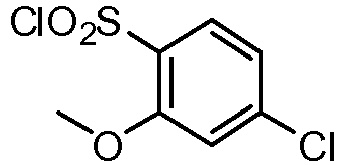
4-chloro-N-((1S,2R)-2-(6-fluoro-2,3-dimethylphenyl)-1-(5-oxo-4,5-dihydro-1,3,4-oxadiazol-2-yl)butyl)-2-methoxybenzenesulfonamide - To a pyridine (1.5 mL) solution of 5-((1S,2R)-1-amino-2-(6-fluoro-2,3-dimethylphenyl)propyl)-1,3,4-oxadiazol-2(3H)-one monohydrochloride (45 mg) obtained from Reference Example F1, 5-chloro-8-(chlorosulfonyl)-4-methyl-d3-chroman-4-ylacetate (80 mg) obtained in Reference Example E1 was added, and the reaction solution was stirred at room temperature for 12 hours. The reaction solution was concentrated under reduced pressure, and the obtained residue was purified by silica gel column chromatography (eluent: hexane / ethyl acetate) to obtain the title compound (59 mg) as a 1: 1 diastereomer mixture.
- According to the method of Example 129, the following compounds of Examples 130 to 185 were synthesized. The necessary raw materials are listed in the following table.
[Table 8-1] Example Starting Material ArSO2Cl Name of the Synthesized Compound 130 Reference Example F6 
5-bromo-N-((1S,2R)-1-(5-oxo-4,5-dihydro-1,3,4-oxadiazol-2-yl)-2-(quinoline-8-yl)propyl)pyridine-2-sulfonamide 131 Reference Example F5 
N-((1S,2R)-2-(2,3-dihydro-1H-inden-4-yl)-1-(5-oxo-4,5-dihydro-1,3,4-oxadiazol-2-yl)propyl)-4-fluoro-3-(methylsulfonyl)benzenesulfonamide 132 Reference Example F5 
N-((1S,2R)-2-(2,3-dihydro-1H-inden-4-yl)-1-(5-oxo-4,5-dihydro-1,3,4-oxadiazol-2-yl)propyl)quinoline-8-sulfonamide 133 Reference Example F5 
N-((1S,2R)-2-(2,3-dihydro-1H-inden-4-yl)-1-(5-oxo-4,5-dihydro-1,3,4-oxadiazol-2-yl)propyl)-2-(isoxazol-4-yl)benzenesulfonamide 134 Reference Example F5 
N-((1S,2R)-2-(2,3-dihydro-1H-inden-4-yl)-1-(5-oxo-4,5-dihydro-1,3,4-oxadiazol-2-yl)propyl)-2-methoxybenzenesulfonamide 135 Reference Example F5 
4-bromo-N-((1S,2R)-2-(2,3-dihydro-1H-inden-4-yl)-1-(5-oxo-4,5-dihydro-1,3,4-oxadiazol-2-yl)propyl)-2-ethylbenzenesulfonamide 136 Reference Example F5 
N-((1S,2R)-2-(2,3-dihydro-1H-inden-4-yl)-1-(5-oxo-4,5-dihydro-1,3,4-oxadiazol-2-yl)propyl)-3-methylquinoline-8-sulfonamide 137 Reference Example F5 
4-bromo-N-((1S,2R)-2-(2,3-dihydro-1H-inden-4-yl)-1-(5-oxo-4,5-dihydro-1,3,4-oxadiazol-2-yl)propyl)-2-methoxybenzenesulfonamide 138 Reference Example F5 
2-(difluoromethoxy)-N-((1S,2R)-2-(2,3-dihydro-1H-inden-4-yl)-1-(5-oxo-4,5-dihydro-1,3,4-oxadiazol-2-yl)propyl)benzenesulfonamide [Table 8-2] Example Starting Material ArSO2Cl Name of the Synthesized Compound 139 Reference Example F5 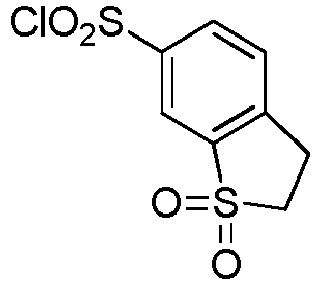
N-((1S,2R)-2-(2,3-dihydro-1H-inden-4-yl)-1-(5-oxo-4,5-dihydro-1,3,4-oxadiazol-2-yl)propyl)-2,3-dihydrobenzo[b]thiophene-6-sulfonamide 1,1-dioxide 140 Reference Example F5 
N-((1S,2R)-2-(2,3-dihydro-1H-inden-4-yl)-1-(5-oxo-4,5-dihydro-1,3,4-oxadiazol-2-yl)propyl)-5,6,7,8-tetrahydronaphthalene-1-sulfonamide 141 Reference Example F5 
N-((1S,2R)-2-(2,3-dihydro-1H-inden-4-yl)-1-(5-oxo-4,5-dihydro-1,3,4-oxadiazol-2-yl)propyl)-2-methoxypyridine-3-sulfonamide 142 Reference Example F5 E34 1-(3-chloro-6-(N-((1S,2R)-2-(2,3-dihydro-1H-inden-4-yl)-1-(5-oxo-4,5-dihydro-1,3,4-oxadiazol-2-yl)propyl)sulfamoyl)pyridin-2-yl)ethylacetate 143 Reference Example F5 
N-((1S,2R)-2-(2,3-dihydro-1H-inden-4-yl)-1-(5-oxo-4,5-dihydro-1,3,4-oxadiazol-2-yl)propyl)-5-nitroquinoline-8-sulfonamide 144 Reference Example F1 Reference Example E44 1-(6-chloro-3-(N-((1S,2R)-2-(6-fluoro-2,3-dimethylphenyl)-1-(5-oxo-4,5-dihydro-1,3,4-oxadiazol-2-yl)propyl)sulfamoyl)-2-methoxyphenyl)ethyl acetate 145 Reference Example F1 Reference Example E47 4-chloro-2-(2,2-difluoroethoxy)-N-((1S,2R)-2-(6-fluoro-2,3-dimethylphenyl)-1-(5-oxo-4,5-dihydro-1,3,4-oxadiazo1-2-yl)propyl)benzenesulfonamide 146 Reference Example F1 Reference Example E48 4-chloro-2-(difluoromethoxy)-N-((1S,2R)-2-(6-fluoro-2,3-dimethylphenyl)-1-(5-oxo-4,5-dihydro-1,3,4-oxadiazol-2-yl)propyl)benzenesulfonamide 147 Reference Example F1 Reference Example E19 2-acetyl-4-chloro-N-((1S,2R)-2-(6-fluoro-2,3-dimethylphenyl)-1-(5-oxo-4,5-dihydro-1,3,4-oxadiazol-2-yl)propyl)benzenesulfonamide 148 Reference Example F1 
6-chloro-N-((1S,2R)-2-(6-fluoro-2,3-dimethylphenyl)-1-(5-oxo-4,5-dihydro-1,3,4-oxadiazol-2-yl)propyl)-2-methoxypyridine-3-sulfonamide [Table 8-3] Example Starting Material ArSO2Cl Name of the Synthesized Compound 149 Reference Example F1 E54 4-chloro-N-((1S,2R)-2-(6-fluoro-2,3-dimethylphenyl)-1-(5-oxo-4,5-dihydro-1,3,4-oxadiazol-2-yl)propyl)-2-(5-oxo-4,5-dihydro-1,3,4-oxadiazol-2-yl)benzenesulfonamide 150 Reference Example F2 
N-((1S,2R)-2-(2,3-dimethylphenyl)-1-(5-oxo-4,5-dihydro-1,3,4-oxadiazol-2-yl)propyl)-4-methylbenzenesulfonamide 151 Reference Example F1 
N-((1S,2R)-2-(6-fluoro-2,3-dimethylphenyl)-1-(5-oxo-4,5-dihydro-1,3,4-oxadiazol-2-yl)propyl)-4-methylbenzenesulfonamide 152 Reference Example F1 E60 N-((1S,2R)-2-(6-fluoro-2,3-dimethylphenyl)-1-(5-oxo-4,5-dihydro-1,3,4-oxadiazol-2-yl)propyl)-1H-indole-4-sulfonamide 153 Reference Example F1 
5-chloro-N-((1S,2R)-2-(6-fluoro-2,3-dimethylphenyl)-1-(5-oxo-4,5-dihydro-1,3,4-oxadiazol-2-yl)propyl)quinoline-8-sulfonamide 154 Reference Example F1 
6-chloro-N-((1S,2R)-2-(6-fluoro-2,3-dimethylphenyl)-1-(5-oxo-4,5-dihydro-1,3,4-oxadiazol-2-yl)propyl)-4-methoxypyridine-3-sulfonamide 155 Reference Example F1 Reference Example E38 5-chloro-N-((1S,2R)-2-(6-fluoro-2,3-dimethylphenyl)-1-(5-oxo-4,5-dihydro-1,3,4-oxadiazol-2-yl)propyl)-6-(2-oxa-6-azaspiro[3.4]octane-6-carbonyl)pyridine-2-sulfonamide 156 Reference Example F1 Reference Example E42 5-chloro-N-((1S,2R)-2-(6-fluoro-2,3-dimethylphenyl)-1-(5-oxo-4,5-dihydro-1,3,4-oxadiazol-2-yl)propyl)-6-(2-oxa-7-azaspiro[3.5]nonane-7-carbonyl)pyridine-2-sulfonamide 157 Reference Example F1 Reference Example E71 N-(5-chloro-8-(N-((1S,2R)-2-(6-fluoro-2,3-dimethylphenyl)-1-(5-oxo-4,5-dihydro-1,3,4-oxadiazol-2-yl)propyl)sulfamoyl)chroman-4-yl)acetamide 158 Reference Example F1 
5-chloro-N-((1S,2R)-2-(6-fluoro-2,3-dimethylphenyl)-1-(5-oxo-4,5-dihydro-1,3,4-oxadiazol-2-yl)propyl)thiophene-2-sulfonamide [Table 8-4] Example Starting Material ArSO2Cl Name of the Synthesized Compound 159 Reference Example F1 Reference Example E8 5-fluoro-N-((1S,2R)-2-(6-fluoro-2,3-dimethylphenyl)-1-(5-oxo-4,5-dihydro-1,3,4-oxadiazol-2-yl)propyl)-4-oxochroman-8-sulfonamide 160 Reference Example F1 
2-chloro-N-((1S,2R)-2-(6-fluoro-2,3-dimethylphenyl)-1-(5-oxo-4,5-dihydro-1,3,4-oxadiazol-2-yl)propyl)-1-methyl-1H-imidazole-4-sulfonamide 161 Reference Example F1 
4-chloro-N-((1S,2R)-2-(6-fluoro-2,3-dimethylphenyl)-1-(5-oxo-4,5-dihydro-1,3,4-oxadiazol-2-yl)propyl)-3-(1H-tetrazol-5-yl)benzenesulfonamide 162 Reference Example F1 
N-((1S,2R)-2-(6-fluoro-2,3-dimethylphenyl)-1-(5-oxo-4,5-dihydro-1,3,4-oxadiazol-2-yl)propyl)-2-oxoindoline-5-sulfonamide 163 Reference Example F1 
N-((1S,2R)-2-(6-fluoro-2,3-dimethylphenyl)-1-(5-oxo-4,5-dihydro-1,3,4-oxadiazol-2-yl)propyl)-1,3-dioxoisoindoline-5-sulfonamide 164 Reference Example F1 
N-((1S,2R)-2-(6-fluoro-2,3-dimethylphenyl)-1-(5-oxo-4,5-dihydro-1,3,4-oxadiazol-2-yl)propyl)-2,3-dihydrobenzo[b][1,4]dioxin-5-sulfonamide 165 Reference Example F1 
N-((1S,2R)-2-(6-fluoro-2,3-dimethylphenyl)-1-(5-oxo-4,5-dihydro-1,3,4-oxadiazol-2-yl)propyl)-2-oxo-2,3-dihydro-1H-benzo[d]imidazole-5-sulfonamide 166 Reference Example F1 
N-((1S,2R)-2-(6-fluoro-2,3-dimethylphenyl)-1-(5-oxo-4,5-dihydro-1,3,4-oxadiazol-2-yl)propyl)-2,3-dihydrobenzo[b]thiophene-6-sulfonamide 1,1-dioxide 167 Reference Example F8 Reference Example E2 8-(N-((1S,2R)-2-(3-bromo-6-fluoro-2-methylphenyl)-1-(5-oxo-4,5-dihydro-1,3,4-oxadiazol-2-yl)propyl)sulfamoyl)-5-chloro-4-methylchroman-4-yl acetate [Table 8-5] Example Starting Material ArSO2Cl Name of the Synthesized Compound 168 Reference Example F1 
N-((1S,2R)-2-(6-fluoro-2,3-dimethylphenyl)-1-(5-oxo-4,5-dihydro-1,3,4-oxadiazol-2-yl)propyl)-3-oxo-3,4-dihydro-2H-benzo[b][1,4]oxazine-5-sulfonamide 169 Reference Example F1 
4-fluoro-N-((1S,2R)-2-(6-fluoro-2,3-dimethylphenyl)-1-(5-oxo-4,5-dihydro-1,3,4-oxadiazol-2-yl)propyl)-3-(methylsulfonyl)benzenesulfonamide 170 Reference Example F1 
2,4-difluoro-N-((1S,2R)-2-(6-fluoro-2,3-dimethylphenyl)-1-(5-oxo-4,5-dihydro-1,3,4-oxadiazol-2-yl)propyl)-6-methoxybenzenesulfonamide 171 Reference Example F1 
N-((1S,2R)-2-(6-fluoro-2,3-dimethylphenyl)-1-(5-oxo-4,5-dihydro-1,3,4-oxadiazol-2-yl)propyl)-4-methyl-3-(piperidin-1-ylsulfonyl)benzenesulfonamide 172 Reference Example F1 
N-((1S,2R)-2-(6-fluoro-2,3-dimethylphenyl)-1-(5-oxo-4,5-dihydro-1,3,4-oxadiazol-2-yl)propyl)-2,3-dioxo-1,2,3,4-tetrahydroquinoxaline-6-sulfonamide 173 Reference Example F1 
N-((1S,2R)-2-(6-fluoro-2,3-dimethylphenyl)-1-(5-oxo-4,5-dihydro-1,3,4-oxadiazol-2-yl)propyl)-2,3-dihydrobenzo[b][1,4]dioxin-6-sulfonamide 174 Reference Example F1 
N-((1S,2R)-2-(6-fluoro-2,3-dimethylphenyl)-1-(5-oxo-4,5-dihydro-1,3,4-oxadiazol-2-yl)propyl)-8-oxo-5,6,7,8-tetrahydronaphthalene-2-sulfonamide 175 Reference Example F1 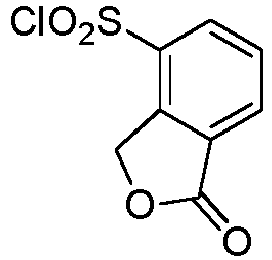
N-((1S,2R)-2-(6-fluoro-2,3-dimethylphenyl)-1-(5-oxo-4,5-dihydro-1,3,4-oxadiazol-2-yl)propyl)-1-oxo-1,3-dihydroisobenzofuran-4-sulfonamide 176 Reference Example F1 
4-chloro-N1-((1S,2R)-2-(6-fluoro-2,3-dimethylphenyl)-1-(5-oxo-4,5-dihydro-1,3,4-oxadiazol-2-yl)propyl)benzene-1,3-disulfonamide [Table 8-6] Example Starting Material ArSO2Cl Name of the Synthesized Compound 177 Reference Example F1 
N-((1S,2R)-2-(6-fluoro-2,3-dimethylphenyl)-1-(5-oxo-4,5-dihydro-1,3,4-oxadiazol-2-yl)propyl)benzenesulfonamide 178 Reference Example F1 
methyl 2,6-difluoro-3-(N-((1S,2R)-2-(6-fluoro-2,3-dimethylphenyl)-1-(5-oxo-4,5-dihydro-1,3,4-oxadiazol-2-yl)propyl)sulfamoyl)benzoate 179 Reference Example F1 
N-((1S,2R)-2-(6-fluoro-2,3-dimethylphenyl)-1-(5-oxo-4,5-dihydro-1,3,4-oxadiazol-2-yl)propyl)-4-oxochroman-6-sulfonamide 180 Reference Example F1 Reference Example E53 methyl 5-chloro-2-(N-((1S,2R)-2-(6-fluoro-2,3-dimethylphenyl)-1-(5-oxo-4,5-dihydro-1,3,4-oxadiazol-2-yl)propyl)sulfamoyl)-4-nitrobenzoate 181 Reference Example F1 
N-((1S,2R)-2-(6-fluoro-2,3-dimethylphenyl)-1-(5-oxo-4,5-dihydro-1,3,4-oxadiazol-2-yl)propyl)-1H-benzo[d][1,2,3]triazole-5-sulfonamide 182 Reference Example F1 
N-((1S,2R)-2-(6-fluoro-2,3-dimethylphenyl)-1-(5-oxo-4,5-dihydro-1,3,4-oxadiazol-2-yl)propyl)-1H-indazole-5-sulfonamide 183 Reference Example F1 
N-((1S,2R)-2-(6-fluoro-2,3-dimethylphenyl)-1-(5-oxo-4,5-dihydro-1,3,4-oxadiazol-2-yl)propyl)chroman-6-sulfonamide 184 Reference Example F1 
N-((1S,2R)-2-(6-fluoro-2,3-dimethylphenyl)-1-(5-oxo-4,5-dihydro-1,3,4-oxadiazol-2-yl)propyl)-1-methyl-1,2,3,4-tetrahydroquinoline-7-sulfonamide 185 Reference Example F10 
(S)-4-chloro-N-(2-(6-fluoro-2,3-dimethylphenyl)-1-(5-oxo-4,5-dihydro-1,3,4-oxadiazol-2-yl)allyl)-2-methoxybenzenesulfonamide [Table 8-7] Example Starting Material ArSO2Cl Name of the Synthesized Compound 338 Reference Example F1 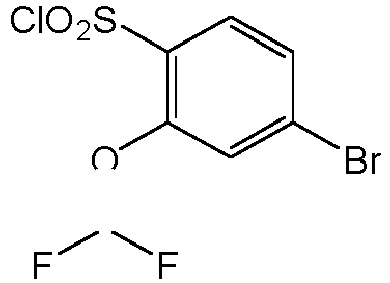
4-bromo-N-((1S,2R)-(6-fluoro-2,3-dimethylphenyl)-1-(5-oxo-4,5-dihydro-1,3,4-oxadiazol-2-yl)propyl)-2-(trifluoromethoxy)benzenesulfonamide 339 Reference Example F1 
4-bromo-2,5-difluoro-N-((1S,2R)-(6-fluoro-2,3-dimethylphenyl)-1-(5-oxo-4,5-dihydro-1,3,4-oxadiazol-2-yl)propyl)benzenesulfonamide 340 Reference Example F1 
N-((1S,2R)-(6-fluoro-2,3-dimethylphenyl)-1-(5-oxo-4,5-dihydro-1,3,4-oxadiazol-2-yl)propyl)-4-nitrobenzenesulfonamide 341 Reference Example F1 
4-cyano-N-((1S,2R)-(6-fluoro-2,3-dimethylphenyl)-1-(5-oxo-4,5-dihydro-1,3,4-oxadiazol-2-yl)propyl)benzenesulfonamide 342 Reference Example F1 
4-cyano-N-((1S,2R)-(6-fluoro-2,3-dimethylphenyl)-1-(5-oxo-4,5-dihydro-1,3,4-oxadiazol-2-yl)propyl)-2-methoxybenzenesulfonamide 343 Reference Example F1 
4-bromo-3-cyano-N-((1S,2R)-(6-fluoro-2,3-dimethylphenyl)-1-(5-oxo-4,5-dihydro-1,3,4-oxadiazol-2-yl)propyl)benzenesulfonamide - Methyl 3-(chlorosulfonyl)-2,6-difluorobenzoate (33 mg) was added to a pyridine (1.0 mL) solution of 5-((1S,2R)-1-amino-2-(6-fluoro-2,3-dimethylphenyl)propyl)-1,3,4-oxadiazol-2(3H)-one monohydrochloride (20 mg) obtained from Reference Example F1, and the reaction solution was stirred for 12 hours at room temperature. The reaction solution was concentrated under reduced pressure, and the obtained residue was purified by silica gel column chromatography (eluent: hexane / ethyl acetate) to obtain
methyl 2,6-difluoro-3-(N-((1S,2R)-2-(6-fluoro-2,3-dimethylphenyl)-1-(5-oxo-4,5-dihydro-1,3,4-oxadiazol-2-yl)propyl)sulfamoyl)benzoate (12.5 mg). - To a THF (2.0 mL) solution of
methyl 2,6-difluoro-3-(N-((1S,2R)-2-(6-fluoro-2,3-dimethylphenyl)-1-(5-oxo-4,5-dihydro-1,3,4-oxadiazol-2-yl)propyl)sulfamoyl)benzoate (12.5 mg) obtained from theabove Step 1, a diethyl ether (3.0 M, 84 µL) solution of methylmagnesium bromide was added dropwise at 0 ° C, and the reaction solution was stirred for 1 hour at room temperature. A saturated ammonium chloride aqueous solution (10 mL) was added dropwise in an ice bath, ethyl acetate (10 mL) was added, and the layers were separated. The organic layer was washed successively with hydrochloric acid (1 M, 10 mL), water (10 mL) and saturated saline (10 mL), dried over anhydrous magnesium sulfate, and concentrated under reduced pressure. The residue was purified by silica gel column chromatography (eluent: hexane / ethyl acetate) to obtain the title compound. - According to the method of Example 186, the following compounds of Examples 187 to 195 were synthesized. The necessary raw materials are listed in the following table.
[Table 9] Example Starting Material ArSO2Cl Name of the Synthesized Compound 187 Reference Example F5 
4-chloro-N-((1S,2R)-2-(2,3-dihydro-1H-inden-4-yl)-1-(5-oxo-4,5-dihydro-1,3,4-oxadiazol-2-yl)propyl)-2-(2-hydroxypropan-2-yl)benzenesulfonamide 188 Reference Example F5 
4-bromo-N-((1S,2R)-2-(2,3-dihydro-1H-inden-4-yl)-1-(5-oxo-4,5-dihydro-1,3,4-oxadiazol-2-yl)propyl)-3-(2-hydroxypropan-2-yl)benzenesulfonamide 189 Reference Example F5 
N-((1S,2R)-2-(2,3-dihydro-1H-inden-4-yl)-1-(5-oxo-4,5-dihydro-1,3,4-oxadiazol-2-yl)propyl)-2,4-difluoro-3-(2-hydroxypropan-2-yl)benzenesulfonamide 190 Reference Example F5 
N-((1S,2R)-2-(2,3-dihydro-1H-inden-4-yl)-1-(5-oxo-4,5-dihydro-1,3,4-oxadiazol-2-yl)propyl)-4-(2-hydroxypropan-2-yl)-3-methoxythiophene-2-sulfonamide 191 Reference Example F5 
N-((1S,2R)-2-(2,3-dihydro-1H-inden-4-yl)-1-(5-oxo-4,5-dihydro-1,3,4-oxadiazol-2-yl)propyl)-3-(2-hydroxypropan-2-yl)-2,4-dimethoxybenzenesulfonamide 192 Reference Example F5 Reference Example E10 5-chloro-N-((1S,2R)-2-(2,3-dihydro-1H-inden-4-yl)-1-(5-oxo-4,5-dihydro-1,3,4-oxadiazol-2-yl)propyl)-6-(2-hydroxypropan-2-yl)pyridine-2-sulfonamide 193 Reference Example F1 Reference Example E10 5-chloro-N-((1S,2R)-2-(6-fluoro-2,3-dimethylphenyl)-1-(5-oxo-4,5-dihydro-1,3,4-oxadiazol-2-yl)propyl)-6-(2-hydroxypropan-2-yl)pyridine-2-sulfonamide 194 Reference Example F1 
N-((1S,2R)-2-(6-fluoro-2,3-dimethylphenyl)-1-(5-oxo-4,5-dihydro-1,3,4-oxadiazol-2-yl)propyl)-8-hydroxy-8-methyl-5,6,7,8-tetrahydronaphthalene-2-sulfonamide 195 Reference Example F1 
N-((1S,2R)-2-(6-fluoro-2,3-dimethylphenyl)-1-(5-oxo-4,5-dihydro-1,3,4-oxadiazol-2-yl)propyl)-4-hydroxy-4-methylchroman-6-sulfonamide - From 5-((1S,2R)-1-amino-2-(6-fluoro-2,3-dimethylphenyl)propyl)-1,3,4-oxadiazol-2(3H)-one monohydrochloride (60 mg) obtained from Reference Example F1 and methyl 2-fluoro-5-(chlorosulfonyl)-4-cyanobenzoate (94 mg) obtained in Reference Example E15, in accordance with the method of Example 129, methyl 4-(cyano-2-fluoro-5 (N-((1S,2R)-2-(6-fluoro-2,3-dimethylphenyl)-1-(5-oxo-4,5-dihydro-1,3,4-oxadiazol-2-yl)propyl)sulfamoyl)benzoate (49 mg) was obtained.
- From methyl 4-cyano-2-fluoro-5-(N-((1S,2R)-2-(6-fluoro-2,3-dimethylphenyl)-1-(5-oxo-4,5-dihydro-1,3,4-oxadiazol-2-yl)propyl)sulfamoyl)benzoate (49 mg) obtained from the
above Step 1, according to the method of Example 186Step 2, 2-cyano-4-fluoro-N-((1S,2R)-2-(6-fluoro-2,3-dimethylphenyl)-1-(5-oxo-4,5-dihydro-1,3,4-oxadiazol-2-yl)propyl)-5-(2-hydroxypropan-2-yl)benzenesulfonamide (27.5 mg) was obtained. - From 2-cyano-4-fluoro-N-((1S,2R)-2-(6-fluoro-2,3-dimethylphenyl)-1-(5-oxo-4,5-dihydro-1,3,4-oxadiazol-2-yl)propyl)-5-(2-hydroxypropan-2-yl)benzenesulfonamide (27.5 mg) obtained from the
above Step 2, according to the method of Example 1Step 3, the title compound was obtained. - According to the method of Example 129, Example 186
Step 2, Example 1Step 3, the following compounds of Examples 197 to 199 were synthesized. The necessary raw materials are listed in the following table. However, for Example 199, the synthesis was carried out using 1-propynyl magnesium bromide instead of methyl magnesium bromide.[Table 10] Example Starting Material ArSO2Cl Name of the Synthesized Compound 197 Reference Example F1 Reference Example E13 2-(N-((1S,2R)-2-(6-fluoro-2,3-dimethylphenyl)-1-(5-oxo-4,5-dihydro-1,3,4-oxadiazol-2-yl)propyl)sulfamoyl)-4-(2-hydroxypropan-2-yl)benzamide 198 Reference Example F1 Reference Example E16 5-chloro-2-(N-((1S,2R)-2-(6-fluoro-2,3-dimethylphenyl)-1-(5-oxo-4,5-dihydro-1,3,4-oxadiazol-2-yl)propyl)sulfamoyl)-4-(2-hydroxypropan-2-yl)benzamide 199 Reference Example F1 Reference Example E13 2-(N-((1S,2R)-2-(6-fluoro-2,3-dimethylphenyl)-1-(5-oxo-4,5-dihydro-1,3,4-oxadiazol-2-yl)propyl)sulfamoyl)-4-(hydroxyhepta-2,5-diyn-4-yl)benzamide - 1 : 1 diastereomer mixture of 5-chloro-8-(N-((1S,2R)-2-(6-fluoro-2,3-dimethylphenyl)-1-(5-oxo-4,5-dihydro-1,3,4-oxadiazol-2-yl)propyl)sulfamoyl)-4-methyl-d3-chroman-4-yl acetate (59 mg) obtained from Example 129 was dissolved in methanol (2.0 mL) and water (1.0 mL), lithium hydroxide (5 mg) was added, and the reaction solution was stirred at 55 ° C for 1 hour. After concentrating the reaction solution, hydrochloric acid (1 M, 10 mL) and ethyl acetate (10 mL) were added to the residue, and the layers were separated. The aqueous layer was extracted with ethyl acetate (10 mL), and the combined organic layers were washed with saturated saline (10 mL). The organic layer was dried over anhydrous sodium sulfate and concentrated under reduced pressure. The residue was purified by reverse phase HPLC (water / acetonitrile), and the fractions were concentrated to give each of two diastereomeric products. The substance eluted first was designated Compound A, and the substance eluted later was designated as Compound B.
- According to the method of Example 200, the following compounds of Examples 201 to 229 were synthesized. In the case of separating the diastereomers, the previously eluted compound was designated as A and the later eluted compound as B. The ratio of diastereomers is 1: 1 mixture unless otherwise specified. The necessary raw materials are listed in the following table.
[Table 11-1] Example Starting Material ArSO2Cl Name of the Synthesized Compound 201 Reference Example F5 Reference Example E33 2,4-dichloro-N-((1S,2R)-2-(2,3-dihydro-1H-inden-4-yl)-1-(5-oxo-4,5-dihydro-1,3,4-oxadiazol-2-yl)propyl)-3-(1-hydroxyethyl)benzenesulfonamide (diastereomer mixture) 202 Reference Example F5 Reference Example E34 5-chloro-N-((1S,2R)-2-(2,3-dihydro-1H-inden-4-yl)-1-(5-oxo-4,5-dihydro-1,3,4-oxadiazol-2-yl)propyl)-6-(1-hydroxyethyl)pyridine-2-sulfonamide (diastereomer mixture) 203 Reference Example F2 Reference Example E44 4-chloro-N-((1S,2R)-2-(2,3-dimethylphenyl)-1-(5-oxo-4,5-dihydro-1,3,4-oxadiazol-2-yl)propyl)-3-(1-hydroxyethyl)-2-methoxybenzenesulfonamide (diastereomer mixture) 204 Reference Example F1 Reference Example E44 4-chloro-N-((1S,2R)-2-(6-fluoro-2,3-dimethylphenyl)-1-(5-oxo-4,5-dihydro-1,3,4-oxadiazol-2-yl)propyl)-3-(1-hydroxyethyl)-2-methoxybenzenesulfonamide (diastereomer mixture) 205 Reference Example F3 Reference Example E44 4-chloro-N-((1S,2R)-2-(2-fluoronaphthalene-1-yl)-1-(5-oxo-4,5-dihydro-1,3,4-oxadiazol-2-yl)propyl)-3-(1-hydroxyethyl)-2-methoxybenzenesulfonamide (diastereomer mixture) 206A Reference Example F9 Reference Example E44 4-chloro-N-((1S,2R)-2-(3-ethyl-6-fluoro-2-methylphenyl)-1-(5-oxo-4,5-dihydro-1,3,4-oxadiazol-2-yl)propyl)-3-(1-hydroxyethyl)-2-methoxybenzenesulfonamide 207-A 207-B Reference F1 Example F1 Reference Example E2 5-chloro-N-((1S,2R)-2-(6-fluoro-2,3-dimethylphenyl)-1-(5-oxo-4,5-dihydro-1,3,4-oxadiazol-2-yl)propyl)-4-hydroxy-4-methylchroman-8-sulfonamide 208A 208-B Reference Example F1 Reference Example E44 4-chloro-N-((1S,2R)-2-(6-fluoro-2,3-dimethylphenyl)-1-(5-oxo-4,5-dihydro-1,3,4-oxadiazol-2-yl)propyl)-3-(1-hydroxyethyl)-2-methoxybenzenesulfonamide 209A 209-B Reference Example F7 Reference Example E2 5-chloro-N-((1S,2R)-2-(3-chloro-6-fluoro-2-methylphenyl)-1-(5-oxo-4,5-dihydro-1,3,4-oxadiazol-2-yl)propyl)-4-hydroxy-4-methylchroman-8-sulfonamide 210 Reference Example F1 
5-chloro-2-(N-((1S,2R)-2-(6-fluoro-2,3-dimethylphenyl)-1-(5-oxo-4,5-dihydro-1,3,4-oxadiazol-2-yl)propyl)sulfamoyl)benzoic acid [Table 11-2] Example Starting Material ArSO2Cl Name of the Synthesized Compound 211A Reference Example F1 Reference Example E6 N-((1S,2R)-2-(6-fluoro-2,3-dimethylphenyl)-1-(5-oxo-4,5-dihydro-1,3,4-oxadiazol-2-yl)propyl)-4-hydroxy-4-(tifluoromethyl)chroman-8-sulfonamide 212 Reference Example F1 Reference Example E46 4-chloro-N-((1S,2R)-2-(6-fluoro-2,3-dimethylphenyl)-1-(5-oxo-4,5-dihydro-1,3,4-oxadiazol-2-yl)propyl)-3-(2-hydroxypropan-2-yl)-2-methoxybenzenesulfonamide 213 Reference Example F1 Reference Example E11 5-chloro-2-(N-((1S,2R)-2-(6-fluoro-2,3-dimethylphenyl)-1-(5-oxo-4,5-dihydro-1,3,4-oxadiazol-2-yl)propyl)sulfamoyl)nicotinic acid 214 Reference Example F1 Reference Example E73 5-bromo-2-(N-((1S,2R)-2-(6-fluoro-2,3-dimethylphenyl)-1-(5-oxo-4,5-dihydro-1,3,4-oxadiazol-2-yl)propyl)sulfamoyl)nicotinic acid 215 Reference Example F1 Reference Example E10 3-chloro-6-(N-((1S,2R)-2-(6-fluoro-2,3-dimethylphenyl)-1-(5-oxo-4,5-dihydro-1,3,4-oxadiazol-2-yl)propyl)sulfamoyl)picolinic acid 216 Reference Example F1 Reference Example E45 5-chloro-N-((1S,2R)-2-(6-fluoro-2,3-dimethylphenyl)-1-(5-oxo-4,5-dihydro-1,3,4-oxadiazol-2-yl)propyl)-4-(1-hydroxyethyl)-3-methoxypyridine-2-sulfonamide (diastereomer mixture) 217 Reference Example F1 Reference Example E28 5-chloro-4-fluoro-2-(N-((1S,2R)-2-(6-fluoro-2,3-dimethylphenyl)-1-(5-oxo-4,5-dihydro-1,3,4-oxadiazol-2-yl)propyl)sulfamoyl)benzoic acid 218 Reference Example F1 Reference Example E12 5-chloro-2-(N-((1S,2R)-2-(6-fluoro-2,3-dimethylphenyl)-1-(5-oxo-4,5-dihydro-1,3,4-oxadiazol-2-yl)propyl)sulfamoyl)-4-methylbenzoic acid 219 Reference Example F1 Reference Example E29 5-chloro-3-fluoro-2-(N-((1S,2R)-2-(6-fluoro-2,3-dimethylphenyl)-1-(5-oxo-4,5-dihydro-1,3,4-oxadiazol-2-yl)propyl)sulfamoyl)benzoic acid 220A 220-B Reference Example F1 Reference Example E5 5-chloro-N-((1S,2R)-2-(6-fluoro-2,3-dimethylphenyl)-1-(5-oxo-4,5-dihydro-1,3,4-oxadiazol-2-yl)propyl)-4-hydroxy-4-(tifluoromethyl)chroman-8-sulfonamide 221 Reference Example F1 Reference Example E72 5-chloro-N-((1S,2R)-2-(6-fluoro-2,3-dimethylphenyl)-1-(5-oxo-4,5-dihydro-1,3,4-oxadiazol-2-yl)propyl)-6-(2,2,2-trifluoro-1-hydroxyethyl)pyridine-2-sulfonamide (diastereomer mixture) [Table 11-3] Example Starting Material ArSO2Cl Name of the Synthesized Compound 222A 222-B Reference Example F8 Reference Example E2 N-((1S,2R)-2-(3-bromo-6-fluoro-2-methylphenyl)-1-(5-oxo-4,5-dihydro-1,3,4-oxadiazol-2-yl)propyl)-5-chloro-4-hydroxy-4-methylchroman-8-sulfonamide 223 Reference Example F1 Reference Example E17 7-(N-((1S,2R)-2-(6-fluoro-2,3-dimethylphenyl)-1-(5-oxo-4,5-dihydro-1,3,4-oxadiazol-2-yl)propyl)sulfamoyl)-2,3-dihydrobenzo[b][1,4]dioxin-6-Carboxylic Acid 224A 224-B Reference Example F1 Reference Example E3 5-fluoro-N-((1S,2R)-2-(6-fluoro-2,3-dimethylphenyl)-1-(5-oxo-4,5-dihydro-1,3,4-oxadiazol-2-yl)propyl)-4-hydroxy-4-methylchroman-8-sulfonamide 225A Reference Example F1 Reference Example E4 N-((1S,2R)-2-(6-fluoro-2,3-dimethylphenyl)-1-(5-oxo-4,5-dihydro-1,3,4-oxadiazol-2-yl)propyl)-4-hydroxy-4-methyl-5-(tifluoromethyl)chroman-8-sulfonamide 226A 226-B Reference Example F8 Reference Example E1 N-((1S,2R)-2-(3-bromo-6-fluoro-2-methylphenyl)-1-(5-oxo-4,5-dihydro-1,3,4-oxadiazol-2-yl)propyl)-5-chloro-4-hydroxy-4-methyl-d3-chroman-8-sulfonamide [Table 11-4] Example Starting Material ArSO2Cl Name of the Synthesized Compound 227A 227-B Reference Example F8 Reference Example E3 N-((1S,2R)-2-(3-bromo-6-fluoro-2-methylphenyl)-1-(5-oxo-4,5-dihydro-1,3,4-oxadiazol-2-yl)propyl)-5-fluoro-4-hydroxy-4-methyl-d3-chroman-8-sulfonamide 228A 228-B Reference Example F7 Reference Example E1 5-chloro-N-((1S,2R)-2-(3-chloro-6-fluoro-2-methylphenyl)-1-(5-oxo-4,5-dihydro-1,3,4-oxadiazol-2-yl)propyl)-4-hydroxy-4-methyl-d3-chroman-8-sulfonamide 229A 229-B Reference Example F7 Reference Example E3 N-((1S,2R)-2-(3-chloro-6-fluoro-2-methylphenyl)-1-(5-oxo-4,5-dihydro-1,3,4-oxadiazol-2-yl)propyl)-5-fluoro-4-hydroxy-4-methylchroman-8-sulfonamide - Using 5-((1S,2R)-1-amino-2-(6-fluoro-2,3-dimethylphenyl)propyl)-1,3,4-oxadiazol-2(3 H)-one monohydrochloride (40 mg) obtained from Reference Example F1 and 5-fluoro-4-oxochroman-8-sulfonyl chloride (60 mg) obtained from Reference Example E8, 5-fluoro-N-((1S,2R)-2-(6-fluoro-2,3-dimethylphenyl)-1-(5-oxo-4,5-dihydro-1,3,4-oxadiazol-2-yl)propyl)-4-oxochroman-8-sulfonamide (44 mg) was obtained in accordance with the method of Example 129.
- Sodium borohydride (13.5 mg) was added to an ethanol (2.0 mL) solution of 5-fluoro-N-((1S,2R)-2-(6-fluoro-2,3-dimethylphenyl)-1-(5-oxo-4,5-dihydro-1,3,4-oxadiazol-2-yl)propyl)-4-oxochroman-8-sulfonamide (44 mg) obtained from the
above Step 1 and the reaction solution was stirred at room temperature for 30 minutes. After concentrating the reaction solution under reduced pressure, water (10 mL) and ethyl acetate (10 mL) were added to the residue, separated, and the aqueous layer was extracted with ethyl acetate (10 mL). The combined organic layer was washed with saturated saline (10 mL), dried over anhydrous sodium sulfate, and concentrated under reduced pressure. The residue was purified by reverse phase HPLC (water / acetonitrile), and the fractions were concentrated to obtain each of two diastereomeric products. The substance eluted first was designated as Compound A, and the substance eluted later was designated as Compound B. - According to the method of Example 129 and Example 230
Step 2, the compounds of Examples 231 to 244 shown below were synthesized. In the case of separating the diastereomers, the first eluted compound was designated as A and the later eluted compound as B. The ratio of diastereomers is 1: 1 mixture unless otherwise specified. The necessary raw materials are listed in the following table.[Table 12-1] Example Starting Material ArSO2Cl Name of the Synthesized Compound 231 Reference Example F5 
4-chloro-N-((1S,2R)-2-(2,3-dihydro-1H-inden-4-yl)-1-(5-oxo-4,5-dihydro-1,3,4-oxadiazol-2-yl)propyl)-3-(1-hydroxyethyl)benzenesulfonamide (diastereomer mixture) 232 Reference Example F4 Reference Example E7 5-chloro-4-hydroxy-N-((1S,2R)-2-(8-methylnaphthalene-1-yl)-1-(5-oxo-4,5-dihydro-1,3,4-oxadiazol-2-yl)propyl)chroman-8-sulfonamide (diastereomer mixture) 233 Reference Example F3 Reference Example E7 5-chloro-N-((1S,2R)-2-(2-fluoronaphthalene-1-yl)-1-(5-oxo-4,5-dihydro-1,3,4-oxadiazol-2-yl)propyl)-4-hydroxychroman-8-sulfonamide (diastereomer mixture) 234A Reference Example F3 Reference Example E7 5-chloro-N-((1S,2R)-2-(2-fluoronaphthalene-1-yl)-1-(5-oxo-4,5-dihydro-1,3,4-oxadiazol-2-yl)propyl)-4-hydroxychroman-8-sulfonamide 235A 235-B Reference Example F1 Reference Example E7 5-chloro-N-((1S,2R)-2-(6-fluoro-2,3-dimethylphenyl)-1-(5-oxo-4,5-dihydro-1,3,4-oxadiazol-2-yl)propyl)-4-hydroxychroman-8-sulfonamide 236 Reference Example F1 Reference Example E19 4-chloro-N-((1S,2R)-2-(6-fluoro-2,3-dimethylphenyl)-1-(5-oxo-4,5-dihydro-1,3,4-oxadiazol-2-yl)propyl)-2-(1-hydroxyethyl)benzenesulfonamide (diastereomer mixture) 237A Reference Example F1 Reference Example E23 N-((1S,2R)-2-(6-fluoro-2,3-dimethylphenyl)-1-(5-oxo-4,5-dihydro-1,3,4-oxadiazol-2-yl)propyl)-4-hydroxy-2,2-dimethylchroman-8-sulfonamide 238A Reference Example F7 Reference Example E7 5-chloro-N-((1S,2R)-2-(3-chloro-6-fluoro-2-methylphenyl)-1-(5-oxo-4,5-dihydro-1,3,4-oxadiazol-2-yl)propyl)-4-hydroxychroman-8-sulfonamide 239A Reference Example F9 Reference Example E7 5-chloro-N-((1S,2R)-2-(3-ethyl-6-fluoro-2-methylphenyl)-1-(5-oxo-4,5-dihydro-1,3,4-oxadiazol-2-yl)propyl)-4-hydroxychroman-8-sulfonamide [Table 12-2] Example Starting Material ArSO2Cl Name of the Synthesized Compound 240 Reference Example F1 Reference Example E25 4-chloro-N-((1S,2R)-2-(6-fluoro-2,3-dimethylphenyl)-1-(5-oxo-4,5-dihydro-1,3,4-oxadiazol-2-yl)propyl)-8-hydroxy-5,6,7,8-tetrahydronaphthalene-1-sulfonamide (diastereomer mixture) 241 Reference Example F1 Reference Example E8 5-fluoro-N-((1S,2R)-2-(6-fluoro-2,3-dimethylphenyl)-1-(5-oxo-4,5-dihydro-1,3,4-oxadiazol-2-yl)propyl)-4-hydroxychroman-8-sulfonamide (diastereomer mixture) 242 Reference Example F1 Reference Example E30 5,7-difluoro-N-((1S,2R)-2-(6-fluoro-2,3-dimethylphenyl)-1-(5-oxo-4,5-dihydro-1,3,4-oxadiazol-2-yl)propyl)-4-hydroxychroman-8-sulfonamide (diastereomer mixture) 243A 243-B Reference Example F8 Reference Example E7 N-((1S,2R)-2-(3-bromo-6-fluoro-2-methylphenyl)-1-(5-oxo-4,5-dihydro-1,3,4-oxadiazol-2-yl)propyl)-5-chloro-4-hydroxychroman-8-sulfonamide 244A 244-B Reference Example F1 Reference Example E9 N-((1S,2R)-2-(6-fluoro-2,3-dimethylphenyl)-1-(5-oxo-4,5-dihydro-1,3,4-oxadiazol-2-yl)propyl)-4-hydroxy-5-(tifluoromethyl)chroman-8-sulfonamide - Using (2S,3R)-2-amino-3-(6-fluoro-2,3-dimethylphenyl)butanoic acid (100 mg) obtained from Reference Example D1 and methyl 5-chloro-2-(chlorosulfonyl)nicotinate (140 mg) obtained from Reference Example E11, according to the method of Example 1
Steps - Methyl 5-chloro-2-(N-((1S,2R)-2-(6-fluoro-2,3-dimethylphenyl)-1-(5-oxo-4,5-dihydro-1,3,4-oxadiazol-2-yl)propyl)sulfamoyl)nicotinate (174 mg) obtained from the
above Step 1 was dissolved in THF (2.5 mL) and water (2.5 mL), lithium hydroxide (30 mg) was added, and the reaction solution was stirred at 50 ° C for 16 hours. The reaction solution was added to hydrochloric acid (1 M, 15 mL) and extracted with ethyl acetate (15 mL). The organic layer was washed with saturated saline (20 mL), dried over anhydrous magnesium sulfate, and concentrated under reduced pressure. The residue was purified by silica gel column chromatography (eluent: hexane / ethyl acetate / 2% acetic acid) to obtain 5-chloro-2-(N-((1S,2R)-2-(6-fluoro-2,3-dimethylphenyl)-1-(5-oxo-4,5-dihydro-1,3,4-oxadiazol-2-yl)propyl)sulfamoyl)nicotinic acid (145 mg). - To a toluene (1.2 mL) solution of 5-chloro-2-(N-((1S,2R)-2-(6-fluoro-2,3-dimethylphenyl)-1-(5-oxo-4,5-dihydro-1,3,4-oxadiazol-2-yl)propyl)sulfamoyl)nicotinic acid (10 mg) obtained from the
above Step 2, DMF (30 µL) and thionyl chloride (60 µL) were sequentially added, and the reaction solution was stirred at 95 °C for 40 minutes. The reaction solution was allowed to cool to room temperature and then concentrated under reduced pressure. The THF (2.0 mL) solution of the residue was slowly added dropwise to 28% aqueous ammonia solution (1.0 mL) at -10 °C, and the reaction solution was stirred at room temperature for 30 min. The reaction solution was added to hydrochloric acid (1 M, 10 mL) and extracted with ethyl acetate (10 mL). The organic layer was washed with saturated saline (10 mL), dried over anhydrous sodium sulfate, and concentrated under reduced pressure. The residue was purified by silica gel column chromatography (eluent: hexane / ethyl acetate) to give the title compound. - Compounds of Examples 246 to 264 shown below were synthesized according to the procedures of Example 1
Steps Step [Table 13-1] Example Starting Material ArSO2Cl Amine Name of the Synthesized Compound 246 Reference Example D1 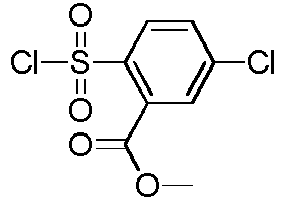

5-chloro-2-(N-((1S,2R)-2-(6-fluoro-2,3-dimethylphenyl)-1-(5-oxo-4,5-dihydro-1,3,4-oxadiazol-2-yl)propyl)sulfamoyl)-N,N-dimethylbenzamide 247 Reference Example D1 

2-(azetidine-1-carbonyl)-4-chloro-N-((1S,2R)-2-(6-fluoro-2,3-dimethylphenyl)-1-(5-oxo-4,5-dihydro-1,3,4-oxadiazol-2-yl)propyl)benzenesulfonamide 248 Reference Example D1 

5-chloro-2-(N-((1S,2R)-2-(6-fluoro-2,3-dimethylphenyl)-1-(5-oxo-4,5-dihydro-1,3,4-oxadiazol-2-yl)propyl)sulfamoyl)-N-(2-hydroxyethyl)benzamide 249 Reference Example D4 Reference Example E11 NH3 5-chloro-2-(N-((1S,2R)-2-(3-chloro-6-fluoro-2-methylphenyl)-1-(5-oxo-4,5-dihydro-1,3,4-oxadiazo1-2-yl)propyl)sulfamoyl)nicotinamide 250 Reference Example D1 Reference Example E73 NH3 5-bromo-2-(N-((1S,2R)-2-(6-fluoro-2,3-dimethylphenyl)-1-(5-oxo-4,5-dihydro-1,3,4-oxadiazol-2-yl)propyl)sulfamoyl)nicotinamide 251 Reference Example D1 Reference Example E73 MeNH2 5-bromo-2-(N-((1S,2R)-2-(6-fluoro-2,3-dimethylphenyl)-1-(5-oxo-4,5-dihydro-1,3,4-oxadiazol-2-yl)propyl)sulfamoyl)-N-methylnicotinamide 252 Reference Example D1 Reference Example E10 MeNH2 3-chloro-6-(N-((1S,2R)-2-(6-fluoro-2,3-dimethylphenyl)-1-(5-oxo-4,5-dihydro-1,3,4-oxadiazol-2-yl)propyl)sulfamoyl)-N-methylpicolinamide 253 Reference Example D1 Reference Example E10 
3-chloro-6-(N-((15,2R)-2-(6-fluoro-2,3-dimethylphenyl)-1-(5-oxo-4,5-dihydro-1,3,4-oxadiazol-2-yl)propyl)sulfamoyl)-N,N-dimethylpicolinamide [Table 13-2] Example Starting Material ArSO2Cl Amine Name of the Synthesized Compound 254 Reference Example D4 Reference Example E73 NH3 5-bromo-2-(N-((15,2R)-2-(3-chloro-6-fluoro-2-methylphenyl)-1-(5-oxo-4,5-dihydro-1,3,4-oxadiazol-2-yl)propyl)sulfamoyl)nicotinamide 255 Reference Example D1 Reference Example E28 NH3 5-chloro-4-fluoro-2-(N-((1S,2R)-2-(6-fluoro-2,3-dimethylphenyl)-1-(5-oxo-4,5-dihydro-1,3,4-oxadiazol-2-yl)propyl)sulfamoyl)benzamide 256 Reference Example D1 
NH3 3,5-dichloro-2-(N-((1S,2R)-2-(6-fluoro-2,3-dimethylphenyl)-1-(5-oxo-4,5-dihydro-1,3,4-oxadiazol-2-yl)propyl)sulfamoyl)benzamide 257 Reference Example D1 Reference Example E12 NH3 5-chloro-2-(N-((1S,2R)-2-(6-fluoro-2,3-dimethylphenyl)-1-(5-oxo-4,5-dihydro-1,3,4-oxadiazol-2-yl)propyl)sulfamoyl)-4-methylbenzamide 258 Reference Example D1 Reference Example E29 NH3 5-chloro-3-fluoro-2-(N-((1S,2R)-2-(6-fluoro-2,3-dimethylphenyl)-1-(5-oxo-4,5-dihydro-1,3,4-oxadiazol-2-yl)propyl)sulfamoyl)benzamide 259 Reference Example D1 Reference Example E14 NH3 5-chloro-2-(N-((1S,2R)-2-(6-fluoro-2,3-dimethylphenyl)-1-(5-oxo-4,5-dihydro-1,3,4-oxadiazol-2-yl)propyl)sulfamoyl)-4-methoxybenzamide 260 Reference Example D1 Reference Example E31 NH3 2-(N-((1S,2R)-2-(6-fluoro-2,3-dimethylphenyl)-1-(5-oxo-4,5-dihydro-1,3,4-oxadiazol-2-yl)propyl)sulfamoyl)-4,5-dimethoxybenzamide 261 Reference Example D1 Reference Example E17 NH3 7-(N-((1S,2R)-2-(6-fluoro-2,3-dimethylphenyl)-1-(5-oxo-4,5-dihydro-1,3,4-oxadiazol-2-yl)propyl)sulfamoyl)-2,3-dihydrobenzo[b][1,4]dioxin-6-carboxamide [Table 13-3] Example Starting Material ArSO2Cl Amine Name of the Synthesized Compound 262 Reference Example D1 Reference Example E53 NH3 5-chloro-2-(N-((1S,2R)-2-(6-fluoro-2,3-dimethylphenyl)-1-(5-oxo-4,5-dihydro-1,3,4-oxadiazol-2-yl)propyl)sulfamoyl)-4-nitrobenzamide 263 Reference Example D1 Reference Example E47 NH3 4-(2,2-difluoroethoxy)-2-(N-((1S,2R)-2-(6-fluoro-2,3-dimethylphenyl)-1-(5-oxo-4,5-dihydro-1,3,4-oxadiazol-2-yl)propyl)sulfamoyl)benzamide 264 Reference Example D5 Reference Example E11 NH3 2-(N-((1S,2R)-2-(3-bromo-6-fluoro-2-methylphenyl)-1-(5-oxo-4,5-dihydro-1,3,4-oxadiazol-2-yl)propyl)sulfamoyl)-5-chloronicotinamide - Using (2S,3R)-2-amino-3-(2-fluoronaphthalen-1-yl)butanoic acid (45 mg) obtained in Reference Example D3 and 2-methoxy-4-nitrobenzene-1-sulfonyl chloride (60 mg), according to the method of Example 1,
Steps - N-((1S,2R)-2-(2-fluoronaphthalen-1-yl)-1-(5-oxo-4,5-dihydro-1,3,4-oxadiazol-2-yl)propyl)-2-methoxy-4-nitrobenzenesulfonamide (32 mg) obtained from the
above Step 1 was dissolved in ethanol (2.0 mL) and water (1.0 mL), iron (30 mg) and ammonium chloride (20mg) were sequentially added, and the reaction solution was stirred at 80°C for 1 hour. The reaction solution was filtered through CELITE, and the residue was washed with ethyl acetate (10 mL). The combined filtrates were concentrated and the residue was purified by silica gel column chromatography (eluent: hexane / ethyl acetate) to give the title compound. - Compounds of Examples 266 to 272 shown below were synthesized according to the method of Example 1
Steps Step 2. The necessary raw materials are listed in the following table.[Table 14] Example Starting Material ArSO2Cl Name of the Synthesized Compound 266 Reference Example D21 
4-amino-N-((1S,2R)-1-(5-oxo-4,5-dihydro-1,3,4-oxadiazol-2-yl)-2-(5,6,7,8-tetrahydronaphthalen-1-yl)propyl)benzenesulfonamide 267 Reference Example D10 
4-amino-N-((1S,2R)-2-(2,3-dihydro-1H-inden-4-yl)-1-(5-oxo-4,5-dihydro-1,3,4-oxadiazol-2-yl)propyl)-2-methylbenzenesulfonamide 268 Reference Example D10 
5-amino-N-((1S,2R)-2-(2,3-dihydro-1H-inden-4-yl)-1-(5-oxo-4,5-dihydro-1,3,4-oxadiazol-2-yl)propyl)quinoline-8-sulfonamide 269 Reference Example D13 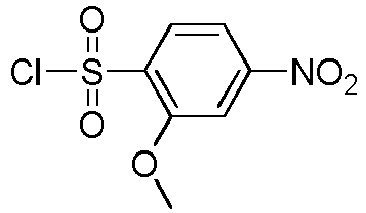
4-amino-2-methoxy-N-((1S,2R)-2-(8-methylnaphthalen-1-yl)-1-(5-oxo-4,5-dihydro-1,3,4-oxadiazol-2-yl)propyl)benzenesulfonamide 270 Reference Example D10 
4-amino-N-((1S,2R)-2-(2,3-dihydro-1H-inden-4-yl)-1-(5-oxo-4,5-dihydro-1,3,4-oxadiazol-2-yl)propyl)-2-methoxybenzenesulfonamide 271 Reference Example D1 
2-amino-4-chloro-N-((1S,2R)-2-(6-fluoro-2,3-dimethylphenyl)-1-(5-oxo-4,5-dihydro-1,3,4-oxadiazol-2-yl)propyl)benzenesulfonamide 272 Reference Example D1 Reference Example E53 methyl 4-amino-5-chloro-2-(N-((1S,2R)-2-(6-fluoro-2,3-dimethylphenyl)-1-(5-oxo-4,5-dihydro-1,3,4-oxadiazol-2-yl)propyl)sulfamoyl)benzoate - Using (2S,3R)-2-amino-3-(6-fluoro-2,3-dimethylphenyl)butanoic acid (50 mg) obtained in Reference Example D1 and 4-(2-(benzyloxy)ethyl)-5-chloro-3,4-dihydro-2H-benzo[b][1,4]oxazine-8-sulfonyl chloride (142 mg) obtained in Reference Example E65, according to the method of Example 1
Steps - To a THF (1.5 mL) solution of 4-(2-(benzyloxy)ethyl)-5-chloro-N-((1S,2R)-2-(6-fluoro-2,3-dimethylphenyl)-1-(5-oxo-4,5-dihydro-1,3,4-oxadiazol-2-yl)propyl)-3-oxo-3,4-dihydro-2H-benzo[b][1,4]oxazine-8-sulfonamide (20 mg) obtained from the
above Step 1, 20 wt% palladium hydroxide (30 mg) was added, and the reaction mixture was stirred at room temperature for 30 minutes under hydrogen atmosphere. The reaction solution was filtered through CELITE, and the residue was washed with hexane / ethyl acetate = 1/1 (10 mL), and the combined filtrate was concentrated under reduced pressure. The residue was purified by silica gel column chromatography (eluent: hexane / ethyl acetate) to obtain the title compound. - To a dichloromethane (1.0 mL) solution of 2-Amino-4-chloro-N-((1S,2R)-2-(6-fluoro-2,3-dimethylphenyl)-1-(5-oxo-4,5-dihydro-1,3,4-oxadiazol-2-yl)propyl)benzenesulfonamide (5.0 mg) obtained from Example 271, Pyridine (5.0 µL) and acetic anhydride (4.0 µL) were sequentially added, and the reaction solution was stirred at room temperature for 3 hours. The reaction solution was added to hydrochloric acid (1 M, 5.0 mL) and extracted with ethyl acetate (10 mL). The organic layer was washed with saturated saline (10 mL), dried over anhydrous sodium sulfate, and concentrated under reduced pressure. The residue was purified by silica gel column chromatography (eluent: hexane / ethyl acetate) to give the title compound.
- From 5-((1S,2R)-1-amino-2-(6-fluoro-2,3-dimethylphenyl)propyl)-1,3,4-oxadiazol-2(3H)-one monohydrochloride (14.3 mg) obtained in Reference Example F1 and tert-butyl 5-chloro-8-(chlorosulfonyl)-2H-benzo[b][1,4]oxazin-4(3H)-carboxylate (25.3 mg) obtained in Reference Example E58, according to the method of Example 129, tert-butyl 5-chloro-8-(N-((1S,2R)-2-(6-fluoro-2,3-dimethylphenyl)-1-(5-oxo-4,5-dihydro-1,3,4-oxadiazol-2-yl)propyl)sulfamoyl)-2H-benzo[b][1,4]oxazine-4(3H)-carboxylate (30.4 mg) was obtained.
- To tert-butyl 5-chloro-8-(N-((1S,2R)-2-(6-fluoro-2,3-dimethylphenyl)-1-(5-oxo-4,5-dihydro-1,3,4-oxadiazol-2-yl)propyl)sulfamoyl)-2H-benzo[b][1,4]oxazin-4(3H)-carboxylate (30.4 mg) obtained from the
above Step 1, hydrochloric acid -1, 4-dioxane (4 M, 5.0 mL) was added, and the reaction solution was stirred at room temperature for 1 hour. The reaction solution was concentrated under reduced pressure, and the obtained residue was purified by reversed phase HPLC (water / acetonitrile) to obtain the title compound. - Compounds of Examples 276 to 283 shown below were synthesized according to the method of Example 129 and Example 275
Step 2. The necessary raw materials are listed in the following table.[Table 15] Example Starting Material ArSO2Cl Name of the Synthesized Compound 276 Reference Example D10 Reference Example E56 methyl 6-amino-3-(N-((1S,2R)-2-(2,3-dihydro-1H-inden-4-yl)-1-(5-oxo-4,5-dihydro-1,3,4-oxadiazol-2-yl)propyl)sulfamoyl)-2-methoxybenzoate 277 Reference Example D1 Reference Example E52 5-chloro-2-(N-((1S,2R)-2-(6-fluoro-2,3-dimethylphenyl)-1-(5-oxo-4,5-dihydro-1,3,4-oxadiazol-2-yl)propyl)sulfamoyl)-N-methylbenzamide 278 Reference Example D1 Reference Example E70 4-amino-5-chloro-N-((1S,2R)-2-(6-fluoro-2,3-dimethylphenyl)-1-(5-oxo-4,5-dihydro-1,3,4-oxadiazol-2-yl)propyl)chroman-8-sulfonamide 279 Reference Example D1 Reference Example E55 2-(1-aminocyclopropyl)-4-chloro-N-((1S,2R)-2-(6-fluoro-2,3-dimethylphenyl)-1-(5-oxo-4,5-dihydro-1,3,4-oxadiazol-2-yl)propyl)benzenesulfonamide 280 Reference Example D1 Reference Example E59 N-((1S,2R)-2-(6-fluoro-2,3-dimethylphenyl)-1-(5-oxo-4,5-dihydro-1,3,4-oxadiazol-2-yl)propyl)-3,4-dihydro-2H-benzo[b][1,4]oxazine-8-sulfonamide 281 Reference Example D1 Reference Example E24 N-((1S,2R)-2-(6-fluoro-2,3-dimethylphenyl)-1-(5-oxo-4,5-dihydro-1,3,4-oxadiazol-2-yl)propyl)-1,2,3,4-tetrahydroisoquinoline-5-sulfonamide 282 Reference Example D1 Reference Example E51 N-(benzyloxy)-5-chloro-2-(N-((1S,2R)-2-(6-fluoro-2,3-dimethylphenyl)-1-(5-oxo-4,5-dihydro-1,3,4-oxadiazol-2-yl)propyl)sulfamoyl)benzamide 283 Reference Example D1 Reference Example E41 6-(3-aminopyrrolidine-1-carbonyl)-5-chloro-N-((1S,2R)-2-(6-fluoro-2,3-dimethylphenyl)-1-(5-oxo-4,5-dihydro-1,3,4-oxadiazol-2-yl)propyl)pyridine-2-sulfonamide - To a dichloromethane (1.0 mL) solution of 5-chloro-N-((1S,2R)-2-(6-fluoro-2,3-dimethylphenyl)-1-(5-oxo-4,5-dihydro-1,3,4-oxadiazol-2-yl)propyl)-3,4-dihydro-2H-benzo[b][1,4]oxazine-8-sulfonamide (31.5 mg) obtained in Example 275, triethylamine (40 µL) and acetic anhydride (20 µL) were sequentially added, and the reaction solution was stirred at room temperature for 2 hours. The reaction solution was concentrated under reduced pressure, and the obtained residue was purified by reversed phase HPLC (water / acetonitrile) to obtain the title compound.
- Using (2S,3R)-2-amino-3-(6-fluoro-2,3-dimethylphenyl)butanoic acid (125 mg) obtained in Reference Example D1 and tert-butylbenzyloxy (5-chloro-2-(chlorosulfonyl)benzoyl)carbamate (280 mg) obtained in Reference Example E51 as a starting material, according to the method of Example 1
Step 1, (2S,3R)-2-(2-((benzyloxy)(tert-butoxycarbonyl)carbamoyl)-4-chlorophenylsulfonamido)-3-(6-fluoro-2,3-dimethylphenyl)butanoic acid (250 mg) was synthesized. - (2S,3R)-2-(2-((benzyloxy)(tert-butoxycarbonyl)carbamoyl)-4-chlorophenylsulfonamido)-3-(6-fluoro-2,3-dimethylphenyl)butanoic acid (250 mg) obtained in the
above Step 1 was dissolved in hydrochloric acid-1,4-dioxane (4 M, 4 mL), and the reaction solution was stirred at 45°C for 2.5 hours. The reaction solution was concentrated under reduced pressure and the residue was purified by silica gel column chromatography (eluent: hexane / ethyl acetate / 2% acetic acid) to give (2S,3R)-2-(2-((benzyloxy)carbamoyl)-4-chlorophenylsulfonamido)-3-(6-fluoro-2,3-dimethylphenyl)butanoic acid (215 mg). - From (2S,3R)-2-(2-((benzyloxy)carbamoyl)-4-chlorophenylsulfonamido)-3-(6-fluoro-2,3-dimethylphenyl)butanoic acid (215 mg) obtained from the
above Step 2, according to the method of Example 1Step 2, N-(benzyloxy)-5-chloro-2-(N-((1S,2R)-2-(6-fluoro-2,3-dimethylphenyl)-1-(5-oxo-4,5-dihydro-1,3,4-oxadiazol-2-yl)propyl)sulfamoyl)benzamide (75 mg) was given. - To a methanol (4.0 mL) solution of N-(benzyloxy)-5-chloro-2-(N-((1S,2R)-2-(6-fluoro-2,3-dimethylphenyl)-1-(5-oxo-4,5-dihydro-1,3,4-oxadiazol-2-yl)propyl)sulfamoyl)benzamide (75 mg) obtained from the
above Step - To dichloromethane (3.0 mL) solution of N-(benzyloxy)-5-chloro-2-(N-((1S,2R)-2-(6-fluoro-2,3-dimethylphenyl)-1-(5-oxo-4,5-dihydro-1,3,4-oxadiazol-2-yl)propyl)sulfamoyl)benzamide (66 mg) obtained from Example 285
Step 3, boron tribromide (1.0 M, 170 µL) was added at -60 °C, and the reaction solution was stirred at 0 °C for 1 hour. Methanol (1.0 mL) was added to the reaction solution, and the mixture was concentrated under reduced pressure. The residue was purified by silica gel column chromatography (eluent: hexane / ethyl acetate / 2% acetic acid) to obtain the title compound. - To a toluene (500 µL) solution of 5-chloro-2-((1S,2R)-2-(6-fluoro-2,3-dimethylphenyl)-1-(2-oxo-3H-1,3,4-oxadiazol-5-yl)propyl)sulfamoyl)benzamide (15 mg) obtained in Example 5, Lawesson's reagent (20 mg) was added at room temperature, and the reaction solution was stirred at 100 ° C for 12 hours. After allowing to cool to room temperature and concentrating under reduced pressure, the obtained residue was purified by silica gel column chromatography (eluent: hexane / ethyl acetate) to obtain the title compound.
- To a methanol (1.0 mL) solution of 5-chloro-N-((1S,2R)-2-(6-fluoro-2,3-dimethylphenyl)-1-(5-oxo-4,5-dihydro-1,3,4-oxadiazol-2-yl)propyl)-3,4-dihydro-2H-benzo[b][1,4]oxazine-8-sulfonamide (48 mg) obtained in Example 275, acetic acid (20 µL) and aqueous 37% formaldehyde solution (30 µL) were added successively, and the reaction solution was stirred at room temperature for 30 minutes. Sodium borohydride (12 mg) was added to the reaction solution, and the mixture was further stirred for 20 minutes. Water (15 mL) was added to the reaction solution, and the mixture was extracted with ethyl acetate / hexane = 1/1 (15 mL). The organic layer was washed with saturated saline (10 mL), dried over anhydrous sodium sulfate, and concentrated under reduced pressure. The residue was purified by reverse phase HPLC (water / acetonitrile) to give the title compound.
- From 5-((1S,2R)-1-amino-2-(3-chloro-6-fluoro-2-methylphenyl)propyl)-1,3,4-oxadiazol-2(3H)-one monohydrochloride (10.3 mg) obtained in Reference Example F7 and tert-butyl 5-chloro-8-(chlorosulfonyl)-2H-benzo[b][1,4]oxazin-4 (3H)-carboxylate (25.3 mg) obtained from Reference Example E58, according to the method of Example 129, tert-butyl 5-chloro-8-(N-((1S,2R)-2-(3-chloro-6-fluoro-2-methylphenyl)-1-(5-oxo-4,5-dihydro-1,3,4-oxadiazol-2-yl)propyl)sulfamoyl)-2H-benzo[b][1,4]oxazin-4(3H)-carboxylate (25.4 mg) was obtained.
- To tert-butyl 5-chloro-8-(N-((1S,2R)-2-(3-chloro-6-fluoro-2-methylphenyl)-1-(5-oxo-4,5-dihydro-1,3,4-oxadiazol-2-yl)propyl)sulfamoyl)-2H-benzo[b][1,4]oxazin-4(3H)-carboxylate (25.4 mg) obtained from the
above Step 1, hydrochloric acid-1,4-dioxane (4 M, 5.0 mL) was added, and the reaction solution was stirred at room temperature for 1 hour. The reaction solution was concentrated under reduced pressure, and the obtained residue was purified by reversed phase HPLC (water / acetonitrile) to obtain 5-chloro-N-((1S,2R)-2-(3-chloro-6-fluoro-2-methylphenyl)-1-(5-oxo-4,5-dihydro-1,3,4-oxadiazol-2-yl)propyl)-3,4-dihydro-2H-benzo[b][1,4]oxazine-8-sulfonamide (15.2 mg). - From 5-chloro-N-((1S,2R)-2-(3-chloro-6-fluoro-2-methylphenyl)-1-(5-oxo-4,5-dihydro-1,3,4-oxadiazol-2-yl)propyl)-3,4-dihydro-2H-benzo[b][1,4]oxazine-8-sulfonamide (15.2 mg) obtained from the
above Step 2, according to the method of Example 288, the title compound was synthesized. - Using (2S)-2-amino-3-(6-fluoro-2,3-dimethylphenyl)-3-hydroxypropionic acid (139 mg) obtained from Reference Example D56 and 4-chloro-2-methoxybenzenesulfonyl chloride (175 mg), according to the method of Example 1
Step 1, (2S)-2-(4-chloro-2-methoxyphenylsulfonamido)-3-(6-fluoro-2,3-dimethylphenyl)-3-hydroxypropionic acid (163 mg) was synthesized. - To a DMF (10 mL) solution of (2S)-2-(4-chloro-2-methoxyphenylsulfonamido)-3-(6-fluoro-2,3-dimethylphenyl)-3-hydroxypropionic acid (163 mg) obtained from the
above Step 1, Imidazole (753 mg) and tert-butyldimethylchlorosilane (563 mg) were sequentially added, and the reaction solution was stirred at 60 °C for 12 hours. The reaction solution was added to water (20 mL) and extracted with ethyl acetate / hexane = 1/1 (30 mL). The organic layer was washed with saturated saline (20 mL), dried over anhydrous sodium sulfate, and concentrated under reduced pressure. The residue was dissolved in methanol (10 mL) and THF (2.0 mL), potassium carbonate (1.0 g) and water (2.0 mL) were added, and the reaction solution was stirred at room temperature for 2 hours. The reaction solution was added to hydrochloric acid (1 M, 20 mL) and extracted with ethyl acetate / hexane = 1/1 (30 mL). The organic layer was washed with saturated saline (20 mL), dried over anhydrous sodium sulfate, and concentrated under reduced pressure. The residue was purified by silica gel column chromatography (eluent: hexane / ethyl acetate) to obtain (2S)-3-((tertbutyldimethylsilyl)oxy)-2-(4-chloro-2-methoxyphenylsulfonamido)-3-(6-fluoro-2,3-dimethylphenyl)propionic acid (175 mg). - From (2S)-3-((tert-butyldimethylsilyl)oxy)-2-(4-chloro-2-methoxyphenylsulfonamido)-3-(6-fluoro-2,3-dimethylphenyl)propionic acid (175 mg) obtained from the
above Step 2, according to the method of Example 1Step 2, N-((1S)-2-((tert-butyldimethylsilyl)oxy)-2-(6-fluoro-2,3-dimethylphenyl)-1-(5-oxo-4,5-dihydro-1,3,4-oxadiazol-2-yl)ethyl)-4-chloro-2-methoxybenzenesulfonamide (126 mg) was obtained. - To a THF (6.0 mL) solution of N-((1S)-2-((tert-butyldimethylsilyl)oxy)-2-(6-fluoro-2,3-dimethylphenyl)-1-(5-oxo-4,5-dihydro-1,3,4-oxadiazol-2-yl)ethyl)-4-chloro-2-methoxybenzenesulfonamide (126 mg) obtained in the
above Step 3, acetic acid (600 µL) and tetra-n-butylammonium fluoride (6.0 mL) were sequentially added, and the mixture was stirred at room temperature for 2 hours. The reaction solution was added to water (20 mL) and extracted with ethyl acetate / hexane = 1/1 (30 mL). The organic layer was washed with saturated saline (20 mL), dried over anhydrous sodium sulfate, and concentrated under reduced pressure. The residue was purified by silica gel column chromatography (eluent: hexane / ethyl acetate) to give the title compound as a diastereomeric mixture. - To a dichloromethane (200 µL) solution of 4-chloro-N-((1S)-2-(6-fluoro-2,3-dimethylphenyl)-2-hydroxy-1-(5-oxo-4,5-dihydro-1,3,4-oxadiazol-2-yl)ethyl)-2-methoxybenzenesulfonamide (5.6 mg) obtained from Example 290, DAST (10 µL) was added, and the mixture was stirred at room temperature for 2 hours. Saturated aqueous sodium hydrogen carbonate solution (5.0 mL) was added to the reaction solution, and the mixture was extracted with ethyl acetate / hexane = 1/1 (10 mL). The organic layer was washed with saturated saline (5.0 mL), dried over anhydrous sodium sulfate, and concentrated under reduced pressure. The residue was purified by reverse phase HPLC (water / acetonitrile) to obtain the title compound as a diastereomeric mixture.
- From 5-chloro-N-((1S,2R)-2-(2-fluoronaphthalen-1-yl)-1-(5-oxo-4,5-dihydro-1,3,4-oxadiazol-2-yl)propyl)-4-hydroxychroman-8-sulfonamide (13 mg) obtained in Example 233, according to the method of Example 291, the title compound was obtained as a 1: 1 diastereomeric mixture.
- From 5-chloro-N-((1S,2R)-2-(6-fluoro-2,3-dimethylphenyl)-1-(5-oxo-4,5-dihydro-1,3,4-oxadiazol-2-yl)propyl)-6-(2,2,2-trifluoro-1-hydroxyethyl)pyridine-2-sulfonamide (15.6 mg) obtained in Example 221, according to the method of Reference
Example E46 Step 1, the title compound was obtained. - From 4-chloro-N-((1S,2R)-2-(6-fluoro-2,3-dimethylphenyl)-1-(5-oxo-4,5-dihydro-1,3,4-oxadiazol-2-yl)propyl)-3-(1-hydroxyethyl)-2-methoxybenzenesulfonamide obtained in Example 204, the title compound was obtained according to the method of Reference
Example E46 Step 1. - From (2S,3R)-2-amino-3-(2,3-dimethylphenyl)butanoic acid (58 mg) obtained in Reference Example D6 and 5-chloro-4-oxochroman-8-sulfonyl chloride (88 mg) obtained in Reference Example E7, in accordance with the procedures of
Example Steps - From 5-chloro-N-((1S,2R)-2-(2,3-dimethylphenyl)-1-(5-oxo-4,5-dihydro-1,3,4-oxadiazol-2-yl)propyl)-4-oxochroman-8-sulfonamide (63.4 mg) obtained from the
Step 1 above, according to the method of Example 230Step 2, 5-chloro-N-((1S,2R)-2-(2,3-dimethylphenyl)-1-(5-oxo-4,5-dihydro-1,3,4-oxadiazol-2-yl)propyl)-4-hydroxychroman-8-sulfonamide (48 mg) was obtained as a diastereomeric mixture. - To a toluene (2.0 mL) solution of 5-chloro-N-((1S,2R)-2-(2,3-dimethylphenyl)-1-(5-oxo-4,5-dihydro-1,3,4-oxadiazol-2-yl)propyl)-4-hydroxychroman-8-sulfonamide (10 mg) obtained from the
above Step 2, p-toluenesulfonic acid monohydrate (2.0 mg) was added, and the reaction solution was stirred at 110 ° C for 30 minutes. The reaction solution was added to water (5 mL) and extracted with ethyl acetate (10 mL). The organic layer was washed with saturated saline (10 mL), dried over anhydrous sodium sulfate, and concentrated under reduced pressure. The residue was purified by silica gel column chromatography (eluent: hexane / ethyl acetate) to give the title compound. - Using (2S,3R)-2-amino-3-(2,3-dihydro-1H-inden-4-yl)butanoic acid (50 mg) obtained from Reference Example D10 and methyl 5-chloro-2-(chlorosulfonyl)benzoate (71 mg), according to the method of
steps - To a THF (2.0 mL) solution of methyl 5-chloro-2-(N-((1S,2R)-2-(2,3-dihydro-1H-inden-4-yl)-1-(5-oxo-4,5-dihydro-1,3,4-oxadiazol-2-yl)propyl)sulfamoyl)benzoate (15 mg) obtained in the
above Step 1, a THF solution of lithium borohydride (2 M, 100 µL) was added, and the reaction solution was stirred at 60 °C for 1 hour. The reaction solution was added to water (10 mL) and extracted with ethyl acetate (15 mL). The organic layer was washed with saturated saline (10 mL), dried over anhydrous sodium sulfate, and concentrated under reduced pressure. The residue was purified by silica gel column chromatography (eluent: hexane / ethyl acetate) to give the title compound. - To a toluene (1.5 mL) solution of 4-chloro-N-((1S,2R)-2-(6-fluoro-2,3-dimethylphenyl)-1-(5-oxo-4,5-dihydro-1,3,4-oxadiazol-2-yl)propyl)-3-(1-hydroxyethyl)-2-methoxybenzenesulfonamide (10 mg) obtained from Example 204, N, N-diisopropylethylamine (25 µL) and chloromethyl methyl ether (10 µL) were sequentially added, and the reaction solution was stirred at room temperature for 3 hours. The reaction solution was concentrated under reduced pressure, and the residue was purified by silica gel column chromatography (eluent: hexane / ethyl acetate) to obtain the title compound.
- Using (2S,3R)-2-amino-3-(3-bromo-6-fluoro-2-methylphenyl)butanoic acid (200 mg) obtained in Reference Example D5 and 4-chloro-2-methoxybenzenesulfonyl chloride (280 mg), according to the method of
steps - To a 1,4-dioxane (1.0 mL) solution of N-((1S,2R)-2-(3-bromo-6-fluoro-2-methylphenyl)-1-(5-oxo-4,5-dihydro-1,3,4-oxadiazol-2-yl)propyl)-4-chloro-2-methoxybenzenesulfonamide (11 mg), 4-methoxyphenylboronic acid (5.0 mg), [1,1'-bis (diphenylphosphino) ferrocene] palladium (II) dichloride dichloromethane adduct (4.0 mg), and a sodium carbonate aqueous solution (2 M, 100 µL) was added sequentially at room temperature, and the reaction solution was stirred at 100 ° C for 1 hour. The reaction solution was allowed to cool to room temperature, insoluble matter was removed by CELITE filtration, and the residue was washed with hexane / ethyl acetate = 1/1 (10 mL). The combined filtrate was concentrated under reduced pressure, and the obtained residue was purified by reverse phase HPLC (water / acetonitrile) to give the title compound.
- Using N-((1S,2R)-2-(3-bromo-6-fluoro-2-methylphenyl)-1-(5-oxo-4,5-dihydro-1,3,4-oxadiazol-2-yl)propyl)-4-chloro-2-methoxybenzenesulfonamide obtained from Example 298
Step 1, according to the method of Example 298,Step 2, compounds of Examples 299 to 324 shown below were synthesized. The boronic acids or boronic acid esters used are listed in the following table.[Table 16-1] Example Reagent ArSO2Cl 299 
4-chloro-2-methoxy-N-((1S,2R)-1-(5-oxo-4,5-dihydro-1,3,4-oxadiazol-2-yl)-2-(3',4,5'-trifluoro-2-methyl-[1,1'-biphenyl]-3-yl)propyl)benzensulfonamide 300 
4-chloro-N-((1S,2R)-2-(6-fluoro-2-methyl-3-(pyridin-3-yl)phenyl)-1-(5-oxo-4,5-dihydro-1,3,4-oxadiazol-2-yl)propyl)-2-methoxybenzenesulfonamide 301 
4-chloro-N-((1S,2R)-2-(6-fluoro-2-methyl-3-(1H-pyrazol-3-yl)phenyl)-1-(5-oxo-4,5-dihydro-1,3,4-oxadiazol-2-yl)propyl)-2-methoxybenzenesulfonamid e 302 
4-chloro-N-((1S,2R)-2-(4'-chloro-4-fluoro-2-methyl-[1,1'-biphenyl]-3-yl)-1-(5-oxo-4,5-dihydro-1,3,4-oxadiazol-2-yl)propyl)-2-methoxybenzenesulfonamide 303 
4-chloro-N-((1S,2R)-2-(6-fluoro-2-methyl-3-(1H-pyrazol-4-yl)phenyl)-1-(5-oxo-4,5-dihydro-1,3,4-oxadiazol-2-yl)propyl)-2-methoxybenzenesulfonamide 304 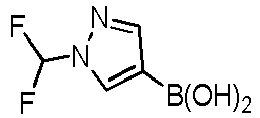
4-chloro-N-((1S,2R)-2-(3-(1-(difluoromethyl)-1H-pyrazol-4-yl)-6-fluoro-2-methylphenyl)-1-(5-oxo-4,5-dihydro-1,3,4-oxadiazol-2-yl)propyl)-2-methoxybenzenesulfonamide 305 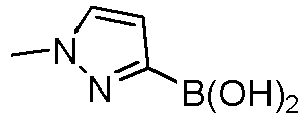
4-chloro-N-((1S,2R)-2-(6-fluoro-2-methyl-3-(1-methyl-1H-pyrazol-3-yl)phenyl)-1-(5-oxo-4,5-dihydro-1,3,4-oxadiazol-2-yl)propyl)-2-methoxybenzenesulfonamide 306 
4-chloro-N-((1S,2R)-2-(6-fluoro-2-methyl-3-(1-methyl-1H-pyrazol-4-yl)phenyl)-1-(5-oxo-4,5-dihydro-1,3,4-oxadiazol-2-yl)propyl)-2-methoxybenzenesulfonamide 307 
4-chloro-N-((1S,2R)-2-(6-fluoro-2-methyl-3-(1-methyl-1H-pyrazol-5-yl)phenyl)-1-(5-oxo-4,5-dihydro-1,3,4-oxadiazol-2-yl)propyl)-2-methoxybenzenesulfonamide 308 
4-chloro-N-((1S,2R)-2-(6-fluoro-2-methyl-3-(3-methyl-1H-pyrazol-4-yl)phenyl)-1-(5-oxo-4,5-dihydro-1,3,4-oxadiazol-2-yl)propyl)-2-methoxybenzenesulfonamide [Table 16-2] Example Reagent ArSO2Cl 309 
4-chloro-N-((1S,2R)-2-(6-fluoro-2-methyl-3-(2-phenyloxazol-5-yl)phenyl)-1-(5-oxo-4,5-dihydro-1,3,4-oxadiazol-2-yl)propyl)-2-methoxybenzenesulfonamide 310 
4-chloro-N-((1S,2R)-2-(3-(1-ethyl-1H-pyrazol-4-yl)-6-fluoro-2-methylphenyl)-1-(5-oxo-4,5-dihydro-1,3,4-oxadiazol-2-yl)propyl)-2-methoxybenzenesulfonamide 311 
4-chloro-N-((1S,2R)-2-(3-(1-cyclopropyl-1H-pyrazol-4-yl)-6-fluoro-2-methylphenyl)-1-(5-oxo-4,5-dihydro-1,3,4-oxadiazol-2-yl)propyl)-2-methoxybenzenesulfonamide 312 
4-chloro-N-((1S,2R)-2-(3-(1-cyclobutyl-1H-pyrazol-4-yl)-6-fluoro-2-methylphenyl)-1-(5-oxo-4,5-dihydro-1,3,4-oxadiazol-2-yl)propyl)-2-methoxybenzenesulfonamide 313 
4-chloro-N-((1S,2R)-2-(3-(6-chloropyridin-3-yl)-6-fluoro-2-methylphenyl)-1-(5-oxo-4,5-dihydro-1,3,4-oxadiazol-2-yl)propyl)-2-methoxybenzenesulfonamide 314 
4-chloro-N-((1S,2R)-2-(6-fluoro-3-(6-methoxypyridin-3-yl)-2-methylphenyl)-1-(5-oxo-4,5-dihydro-1,3,4-oxadiazol-2-yl)propyl)-2-methoxybenzenesulfonamide 315 
4-chloro-N-((1S,2R)-2-(6-fluoro-2-methyl-3-(6-morpholinopyridin-3-yl)phenyl)-1-(5-oxo-4,5-dihydro-1,3,4-oxadiazol-2-yl)propyl)-2-methoxybenzenesulfonamide 316 
4-chloro-N-((1S,2R)-2-(6-fluoro-2-methyl-3-(3-(tifluoromethyl)-1H-pyrazol-4-yl)phenyl)-1-(5-oxo-4,5-dihydro-1,3,4-oxadiazol-2-yl)propyl)-2-methoxybenzenesulfonamide 317 
4-chloro-N-((1S,2R)-2-(3-(1,3-dimethyl-1H-pyrazol-4-yl)-6-fluoro-2-methylphenyl)-1-(5-oxo-4,5-dihydro-1,3,4-oxadiazol-2-yl)propyl)-2-methoxybenzenesulfonamide 318 
4-chloro-N-((1S,2R)-2-(6-fluoro-2-methyl-3-(pyrimidin-5-yl)phenyl)-1-(5-oxo-4,5-dihydro-1,3,4-oxadiazol-2-yl)propyl)-2-methoxybenzenesulfonamide 319 
4-chloro-N-((1S,2R)-2-(6-fluoro-3-(2-methoxypyrimidin-5-yl)-2-methylphenyl)-1-(5-oxo-4,5-dihydro-1,3,4-oxadiazol-2-yl)propyl)-2-methoxybenzenesulfonamide [Table 16-3] Example Reagent ArSO2Cl 320 
4-chloro-N-((1S,2R)-2-(6-fluoro-2-methyl-3-(6-(piperidin-1-yl)pyridin-3-yl)phenyl)-1-(5-oxo-4,5-dihydro-1,3,4-oxadiazol-2-yl)propyl)-2-methoxybenzenesulfonamide 321 
4-chloro-N-((1S,2R)-2-(3-(5-chloro-6-methoxypyridin-3-yl)-6-fluoro-2-methylphenyl)-1-(5-oxo-4,5-dihydro-1,3,4-oxadiazol-2-yl)propyl)-2-methoxybenzenesulfonamide 322 
4-chloro-N-((1S,2R)-2-(6-fluoro-2-methyl-3-(4-methyl-3,4-dihydro-2H-pyrido[3,2-b][1,4]oxazine-7-yl)phenyl)-1-(5-oxo-4,5-dihydro-1,3,4-oxadiazol-2-yl)propyl)-2-methoxybenzenesulfonamide 323 
4-chloro-N-((1S,2R)-2-(6-fluoro-2-methyl-3-(5-(morpholine-4-carbonyl)pyridin-3-yl)phenyl)-1-(5-oxo-4,5-dihydro-1,3,4-oxadiazol-2-yl)propyl)-2-methoxybenzenesulfonamide 324 
5-chloro-2-(N-((1S,2R)-2-(6-fluoro-2-methyl-3-(1-methyl-1H-pyrazol-4-yl)phenyl)-1-(5-oxo-4,5-dihydro-1,3,4-oxadiazol-2-yl)propyl)sulfamoyl)benzamide - From (2S,3R)-2-amino-3-(6-fluoro-2,3-dimethylphenyl)butanoic acid (200 mg) obtained from Reference Example D1 and 3-bromo-4-chlorobenzenesulfonyl chloride (306 mg), according to the method of
Steps - To a 1,4-dioxane (0.7 ml) solution of 3-bromo-4-chloro-N-((1S,2R)-2-(6-fluoro-2,3-dimethylphenyl)-1-(5-oxo-4,5-dihydro-1,3,4-oxadiazol-2-yl)propyl)benzenesulfonamide (5.6 mg) obtained from the
above Step 1, (1-methyl-1H-pyrazol-4-yl)boronic acid (6.2 mg), [1,1'-bis(diphenylphosphino)ferrocene] palladium (II) dichloride dichloromethane adduct (5.0 mg), a sodium carbonate aqueous solution (2 M, 100 µL) were added sequentially at room temperature, and the reaction solution was stirred for 4 hours at 100 ° C. The reaction solution was allowed to cool to room temperature, insoluble matter was removed by CELITE filtration, and the residue was washed with hexane / ethyl acetate = 1/1 (10 mL). The combined filtrate was concentrated under reduced pressure, and the obtained residue was purified by reverse phase HPLC (water / acetonitrile) to give the title compound. - Using 3-bromo-4-chloro-N-((1S,2R)-2-(6-fluoro-2,3-dimethylphenyl)-1-(5-oxo-4,5-dihydro-1,3,4-oxadiazol-2-yl)propyl)benzenesulfonamide obtained from Example 325
Step 1 and (2-fluorophenyl)boronic acid, the title compound was synthesized according to the method of Example 325Step 2. - To a DMF (1.0 mL) solution of N-((1S,2R)-2-(3-bromo-6-fluoro-2-methylphenyl)-1-(5-oxo-4,5-dihydro-1,3,4-oxadiazol-2-yl)propyl)-4-chloro-2-methoxybenzenesulfonamide (10.9 mg) obtained from Example 298
Step 1, dichlorobis (triphenylphosphine) palladium (II) (1.5 mg), copper (I) iodide (1.5 mg), triethylamine (30 µL) and ethynylbenzene (20 µL) were sequentially added at room temperature, the reaction solution was added at 100 ° C, and the mixture was stirred for 4 hours. The reaction solution was allowed to cool to room temperature, and insoluble matter was removed by CELITE filtration, and the residue was washed with hexane / ethyl acetate = 1/1 (10 mL). The combined filtrate was concentrated under reduced pressure, and the obtained residue was purified by reverse phase HPLC (water / acetonitrile) to give the title compound. - To a benzene (1.5ml) solution of 5-chloro-N-((1S,2R)-2-(3-chloro-6-fluoro-2-methylphenyl)-1-(5-oxo-4,5-dihydro-1,3,4-oxadiazol-2-yl)propyl)-4-hydroxy-4-methylchroman-8-sulfonamide (17 mg) obtained from Example 209A, trimethylsilylazide (50 µL), boron trifluoride-dimethylethercomplex (100 µL) were sequentially added, and the reaction solution was stirred for 1 hour at room temperature. To the reaction solution, a saturated sodium bicarbonate aqueous solution (10 mL) was added, and the mixture was extracted with ethyl acetate/hexane=1/1 (10 mL). The organic layer was washed with saturated saline (10 mL), dried with anhydride sodium sulfate, and concentrated under reduced pressure. The obtained residue was dissolved in THF (1.5 ml) and water (50 µL). Triphenylphosphine (15 mg) was added to the residue, and the reaction solution was stirred for 2 hours at room temperature. Insoluble matter was removed by CELITE filtration, and the residue was washed with ethyl acetate / hexane = 1/1 (10 mL). The combined filtrate was concentrated under reduced pressure, and the obtained residue was purified by reverse phase HPLC (water / acetonitrile) to give the title compound as a 1:1 diastereomeric mixture.
- The title compound was prepared using N-((1S,2R)-2-(3-bromo-6-fluoro-2-methylphenyl)-1-(5-oxo-4,5-dihydro-1,3,4-oxadiazol-2-yl)propyl)-5-chloro-4-hydroxy-4-methylchroman-8-sulfonamide obtained in Example 222A according to the method of example 328.
- To a 1,4-dioxane solution (1.0 mL) of a diastereomeric mixture of 4-amino-5-chloro-N-((1S,2R)-2-(3-chloro-6-fluoro-2-methylphenyl)-1-(5-oxo-4,5-dihydro-1,3,4-oxadiazol-2-yl)propyl)-4-methylchroman-8-sulfonamide (6.4 mg) obtained in Example 328, triethylamine (100 µL) and di-tert-butyl dicarbonate (54 mg) were added at room temperature, and the reaction solution was stirred for 4 hours. The reaction solution was concentrated under reduced pressure, the obtained residue was purified by reverse phase HPLC (water / acetonitrile), and the fractions were concentrated to give each of two diastereomeric products. The substance eluted first was designated Compound A, and the substance eluted later was designated as Compound B. The obtained Compounds A and B were each dissolved in hydrochloric acid-dioxane (4 M, 2.0 mL), and the reaction solution was stirred at 70 °C for 4 hours. The reaction solution was allowed to cool to room temperature and concentrated under reduced pressure. The substance obtained from compound A was designated as compound 330A, and the substance obtained from compound B as compound 330B.
- Using (2S,3R)-2-amino-3-(6-fluoro-2,3-dimethylphenyl)butanoic acid (80 mg) obtained in Reference Example D1 and ethyl 3-(chlorosulfonyl)-4-cyanobenzoate (146 mg) obtained in Reference Example E13, according to the method of
steps - To a DMSO (1 mL) solution of ethyl 4-cyano-3-(N-((1S,2R)-2-(6-fluoro-2,3-dimethylphenyl)-1-(5-oxo-4,5-dihydro-1,3,4-oxadiazol-2-yl)propyl)sulfamoyl)benzoate (40 mg) obtained from the
above Step 1, 30% hydrogen peroxide water (0.5 ml) and potassium carbonate (20 mg) were added, and the reaction solution was stirred at 70 ° C for 1 hour. 1M hydrochloric acid was added to the reaction solution, and the mixture was extracted with ethyl acetate. The organic layer was washed with saturated saline, dried over anhydrous magnesium sulfate, concentrated under reduced pressure, and the obtained residue was purified by reversed phase HPLC (water / acetonitrile) to give 4-carbamoyl-3-(N-((1S,2R)-2-(6-fluoro-2,3-dimethylphenyl)-1-(5-oxo-4,5-dihydro-1,3,4-oxadiazol-2-yl)propyl)sulfamoyl)benzoic acid (8.9 mg). - To a dichloromethane (1.5 mL) solution of 4-carbamoyl-3-(N-((1S,2R)-2-(6-fluoro-2,3-dimethylphenyl)-1-(5-oxo-4,5-dihydro-1,3,4-oxadiazol-2-yl)propyl)sulfamoyl)benzoic acid (16 mg) obtained from the
above Step 2, (isocyanoimino) triphenylphosphorane (36 mg) was added thereto, and the reaction solution was stirred at room temperature for 72 hours. The reaction solution was concentrated under reduced pressure, and the obtained residue was purified by reversed phase HPLC (water / acetonitrile) to obtain the title compound (1.1 mg). - (2S,3R)-2-amino-3-(6-fluoro-2,3-dimethylphenyl)butanoic acid (300 mg) obtained from Reference Example D1 was dissolved in water (5.0 mL) and 1,4-dioxane (5.0 mL), triethylamine (570 µL) was added, and it was cooled to 0 ° C. 4-Bromo-2-cyanobenzene-1-sulfonyl chloride (362 mg) was added to the reaction solution, and the mixture was stirred at the same temperature for 45 minutes. The reaction solution was added to hydrochloric acid (1 M, 15 mL) and extracted with ethyl acetate (15 mL). The organic layer was washed with saturated saline (20 mL), dried over anhydrous magnesium sulfate, and concentrated under reduced pressure. The residue was purified by silica gel column chromatography (eluent: hexane / ethyl acetate / 2% acetic acid) to give (2S,3R)-2-(4-bromo-2-cyanophenylsulfonamido)-3-(6-fluoro-2,3-dimethylphenyl)butanoic acid (465 mg).
- To a THF (1.5 mL) solution of (2S,3R)-2-(4-bromo-2-cyanophenylsulfonamido)-3-(6-fluoro-2,3-dimethylphenyl)butanoic acid (22 mg) obtained from the
above Step 1, CDI (13 mg) was added, the reaction solution was stirred at room temperature for 30 minutes, then hydrazine · monohydrate (12 µL) was added and the mixture was stirred for 20 minutes. The reaction solution was concentrated under reduced pressure, and the obtained residue was dissolved in ethanol (1.2 mL), carbon disulfide (10 µL) and potassium hydroxide (10 mg) were sequentially added, and the reaction solution was stirred at 90 ° C for 12 hours. The reaction solution was added to hydrochloric acid (1 M, 10 mL) and extracted with ethyl acetate (10 mL). The organic layer was washed with saturated saline(10 mL), dried over anhydrous magnesium sulfate, and concentrated under reduced pressure. The residue was purified by silica gel column chromatography (eluent: hexane / ethyl acetate) to give the title compound. - According to the method of Example 332
steps [Table 17] Example Starting Material ArSO2Cl Name of the Synthesized Compound 333 Reference Example D10 
methyl 2,6-dichloro-3-(N-((1S,2R)-2-(2,3-dihydro-1H-inden-4-yl)-1-(5-thioxo-4,5-dihydro-1,3,4-oxadiazol-2-yl)propyl)sulfamoyl)benzoate 334 Reference Example D10 
methyl 2-chloro-5-(N-((1S,2R)-2-(2,3-dihydro-1H-inden-4-yl)-1-(5-thioxo-4,5-dihydro-1,3,4-oxadiazol-2-yl)propyl)sulfamoyl)benzoate 335 Reference Example D26 
4-bromo-N-((1S,2R)-2-(5,5-dimethyl-5,6,7,8-tetrahydronaphthalen-1-yl)-1-(5-thioxo-4,5-dihydro-1,3,4-oxadiazol-2-yl)propyl)benzenesulfonamide - Using (2S,3R)-2-amino-3-(2,3-dihydro-1H-inden-4-yl)butanoic acid (20 mg) and 3-acetyl-4-chlorobenzene-1-sulfonyl chloride (20 mg) obtained in Reference Example D10, according to the method of Example 332
steps - From 3-acetyl-4-chloro-N-((1S,2R)-2-(2,3-dihydro-1H-inden-4-yl)-1-(5-thioxo-4,5-dihydro-1,3,4-oxadiazol-2-yl)propyl)benzenesulfonamide (12 mg) obtained from the
above Step 1, the title compound was obtained according to the method of Example 186Step 2. - Using (2S,3R)-2-amino-3-(6-fluoro-2,3-dimethylphenyl)butanoic acid (530 mg) obtained from Reference Example D1 and 4-chloro-2-cyanobenzene-1-sulfonyl chloride (660 mg), according to the method of Example 1
Step 1, (2S,3R)-2-(4-chloro-2-cyanophenylsulfonamido)-3-(6-fluoro-2,3-dimethylphenyl)butanoic acid (777 mg) was obtained. - To a THF (500 µL) solution of (2S,3R)-2-(4-chloro-2-cyanophenylsulfonamido)-3-(6-fluoro-2,3-dimethylphenyl)butanoic acid (11 mg) obtained from the
above Step 1, CDI (15 mg) was added, and the reaction solution was stirred for 1 hour at room temperature. Methanol (1.0 mL) was added to the reaction solution, and the mixture was further stirred for 16 hours. The reaction solution was added to water (10 mL) and extracted with diethyl ether (15 mL). The organic layer was washed with saturated saline (10 mL), dried over anhydrous magnesium sulfate, and concentrated under reduced pressure to give methyl (2S,3R)-2-(4-chloro-2-cyanophenyl)-3-(6-fluoro-2,3-dimethylphenyl)butanoate (12 mg). - To methyl (2S,3R)-2-(4-chloro-2-cyanophenylsulfonamido)-3-(6-fluoro-2,3-dimethylphenyl)butanoate (100 mg) obtained from the
above Step 2, Methanol (2 mL), dichloromethane (2 mL), and a hexane solution of trimethylsilyl diazomethane (0.6 M, 800 µL) were sequentially added, and the reaction solution was stirred at room temperature for 1 hour. By concentrating the reaction solution under reduced pressure, methyl (2S,3R)-2-(4-chloro-2-cyano-N-methylphenylsulfonamido)-3-(6-fluoro-2,3-dimethylphenyl)butanoate (101 mg) was obtained. - Methyl (2S,3R)-2-(4-chloro-2-cyano-N-methylphenylsulfonamido)-3-(6-fluoro-2,3-dimethylphenyl)butanoate (101 mg) obtained from the
Step 3 above, according to the method of Example 245Step 2, (2S,3R)-2-(4-chloro-2-cyano-N-methylphenylsulfonamido)-3-(6-fluoro-2,3-dimethylphenyl)butanoic acid (8.5 mg) was obtained. - To (2S,3R)-2-(4-chloro-2-cyano-N-methylphenylsulfonamide) -3-(6-fluoro-2,3-dimethylphenyl)butanoic acid (8.5 mg) obtained from the
above Step 4, according to the method of Example 1Step 2, 4-chloro-2-cyano-N-((1S,2R)-2-(6-fluoro-2,3-dimethylphenyl)-1-(5-oxo-4,5-dihydro-1,3,4-oxadiazol-2-yl)propyl)-N-methylbenzenesulfonamide (6.0 mg) was obtained. - From 4-chloro-2-cyano-N-((1S,2R)-2-(6-fluoro-2,3-dimethylphenyl)-1-(5-oxo-4,5-dihydro-1,3,4-oxadiazol-2-yl)propyl)-N-methylbenzenesulfonamide (6.0 mg) obtained from the
above Step 5, according to the method of Example 1Step 3, the title compound was obtained. - Using 3-bromo-4-chloro-N-((1S,2R)-2-(6-fluoro-2,3-dimethylphenyl)-1-(5-oxo-4,5-dihydro-1,3,4-oxadiazol-2-yl)propyl)benzenesulfonamide and (4-methoxyphenyl)boronic acid obtained from Example 325
step 1, the title compound was synthesized according to the method of Example 325Step 2. - From (2S,3R)-2-amino-3-(6-fluoro-2,3-dimethylphenyl)butanoic acid obtained from Reference Example D1 and 5-bromo-2-cyanobenzenesulfonyl chloride, according to the method of
steps - Using 5-bromo-2-cyano-N-((1S,2R)-2-(6-fluoro-2,3-dimethylphenyl)-1-(5-oxo-4,5-dihydro-1,3,4-oxadiazol-2-yl)propyl)benzenesulfonamide obtained from the
above Step 1 and 2-methoxyphenylboronic acid, according to the method of Example 325Step 2 andExample Step 3, the title compound was obtained. - From 4-cyano-N-((1S,2R)-(6-fluoro-2,3-dimethylphenyl)-1-(5-oxo-4,5-dihydro-1,3,4-oxadiazol-2-yl)propyl)-2-methoxybenzenesulfonamide obtained in Example 342, the title compound was obtained according to the method of Example 1
Step 3. - From 4-cyano-N-((1S,2R)-(6-fluoro-2,3-dimethylphenyl)-1-(5-oxo-4,5-dihydro-1,3,4-oxadiazol-2-yl)propyl)benzenesulfonamide obtained in Example 341, according to the method of Example 1
Step 3, the title compound was obtained. - Using (2S,3R)-2-amino-3-(naphthalen-1-yl)butanoic acid obtained in Reference Example D11 and 4-bromobenzenesulfonyl chloride, according to the method of
Step 1 of Example 1, (2S,3R)-2-((4-bromophenyl)sulfonamido)-3-(naphthalen-1-yl)butanoic acid was obtained. - To a DMF (2.5 ml) solution of (2S,3R)-2-((4-bromophenyl)sulfonamido)-3-(naphthalen-1-yl)butanoic acid (283 mg) obtained from the
above Step 1, ammonium chloride (41 mg), HOBt (103 mg), triethylamine (0.264 ml) and WSC (146 mg) were added, and the reaction solution was stirred at room temperature for 3 hours. The reaction solution was added to water and extracted with ethyl acetate. The organic layer was washed with saturated saline, dried over anhydrous magnesium sulfate and concentrated under reduced pressure to obtain (2S,3R)-2-((4-bromophenyl)sulfonamido)-3-(naphthalen-1-yl)butanamide as a crude product. - To a DMF (2 ml) solution of (2S,3R)-2-((4-bromophenyl)sulfonamido)-3-(naphthalen-1-yl)butanamide obtained from the
above Step 2, cyanuric chloride (59 mg) was added at 0 ° C, and the reaction solution was stirred at room temperature for 1 hour. The reaction solution was added to water and extracted with a mixed solvent of ethyl acetate / toluene. The organic layer was washed with saturated saline, dried over anhydrous sodium sulfate, and concentrated under reduced pressure. The residue was purified by silica gel column chromatography (eluent: hexane / ethyl acetate) to give 4-bromo-N-((1S,2R)-1-cyano-2-(naphthalen-1-yl)propyl)benzene sulfonamide (137 mg). - To an ethanol (2 ml) solution of 4-bromo-N-((1S,2R)-1-cyano-2-(naphthalen-1-yl)propyl)benzenesulfonamide (137 mg) obtained from the
above Step 3, water (0.66 ml) and a 50% aqueous solution of hydroxylamine (0.060 ml) were added, and the reaction solution was stirred at room temperature overnight. The reaction solution was concentrated under reduced pressure, added to water and extracted with ethyl acetate. The organic layer was washed with saturated saline, dried over anhydrous sodium sulfate and concentrated under reduced pressure to give (2S,3R)-2-((4-bromophenyl)sulfonamido)-N-hydroxy-(3-naphthalen-1-yl)butanamide (130 mg) as a crude product. - To a DMF (1.0 ml) solution of (2S,3R)-2-((4-bromophenyl)sulfonamido)-N-hydroxy-3-(naphthalen-1-yl)butanamide (20 mg) obtained from the
above Step 4, Pyridine (0.004 ml) and 2-ethylhexyl chloroformate (0.009 ml) were added, and the reaction solution was stirred at room temperature for 1 hour. Further, xylene was added, and the reaction solution was stirred overnight at 100 ° C. Water was added to the reaction solution, and the mixture was extracted with a mixed solvent of ethyl acetate / hexane. The organic layer was washed with saturated saline, dried over anhydrous sodium sulfate, and concentrated under reduced pressure. The obtained residue was subjected to silica gel column chromatography (eluent: hexane / ethyl acetate) to give the title compound (37 mg). - Using (2S,3R)-2-amino-3-(6-fluoro-2,3-dimethylphenyl)butanoic acid obtained in Reference Example D1 and 4-chloro-2-methoxybenzenesulfonyl chloride, according to the method of Example 1
Step 1, (2S,3R)-2-((4-chloro-2-methoxyphenyl)sulfonamido)-3-(6-fluoro-2,3-dimethylphenyl)butanoic acid was obtained. - From (2S,3R)-2-((4-chloro-2-methoxyphenyl)sulfonamido)-3-(6-fluoro-2,3-dimethylphenyl)butanoic acid obtained from the
above Step 1, the titled compound was obtained according to the method of Example 348Step 2 toStep 5. - (2S,3R)-2-((4-chloro-2-methoxyphenyl)sulfonamido)-3-(6-fluoro-2,3-dimethylphenyl)butanoic acid (142 mg) obtained from Example 348
Step 1 was dissolved in a DMF (3.3 mL), and WSC (130 mg), HOBt (100 mg), N, N-diisopropylethylamine (200 µL) and thiosemicarbazide (70 mg) were sequentially added, and the reaction solution was stirred at 80 ° C for 4 hours. The reaction solution was added to a saturated aqueous solution of ammonium chloride (15 mL) and extracted with ethyl acetate (20 mL). The organic layer was washed with saturated saline (15 mL), dried over anhydrous magnesium sulfate, and concentrated under reduced pressure. The residue was purified by silica gel column chromatography (eluent: hexane / ethyl acetate). The obtained residue was dissolved in ethanol (1.5 mL), a 20% aqueous sodium hydroxide solution (2.0 mL) was added, and the reaction solution was stirred at 80 ° C for 12 hours. The reaction solution was added to hydrochloric acid (1 M, 5.0 mL) and extracted with ethyl acetate (10 mL). The organiclayer was washed with saturated saline (5.0 mL), dried over anhydrous sodium sulfate, and concentrated under reduced pressure. The residue was purified by silica gel column chromatography (eluent: hexane / ethyl acetate) to give the title compound. - According to the method described in
Non-Patent Document 11, a compound of the following formula was obtained.
- 1H NMR (CD3OD) δ: 7.54 (d, J=8.4 Hz, 2H), 7.17-7.29 (m, 5H), 7.08-7.14 (m, 2H), 4.55-4.61 (m, 1H), 3.00-3.13 (m, 2H), 2.39 (s, 3H)
Hereinafter, the structural formulas and physical properties of Example Compounds 1 to 350 are shown.[Table 18-1] Example Structural Formula Physical Property Value 1 
1H NMR (CD3OD) δ: 7.74-7.78 (m, 3H), 6.97 (dd, J=8.2, 5.7 Hz, 1H), 6.71 (dd, J=11.7, 8.4 Hz, 1H), 4.78-4.81 (m, 1H), 3.51-3.61 (m, 1H), 2.20 (s, 3H), 2.17 (s, 3H), 1.44 (d, J=7.0 Hz, 3H); LC/MS RT 1.67min, m/z [M-H]- 525,527 2 
1H NMR (CD3OD) δ: 8.20 (1H, d, J = 8.1 Hz), 7.65 (1H, d, J = 8.4 Hz), 7.03-7.00 (1H, m), 6.98-6.96 (2H, m), 4.63-4.61 (1H, m), 3.40-3.36 (1H, m), 2.91-2.82 (4H, m), 2.03-1.99 (2H, m), 1.41 (3H, d, J = 7.0 Hz); LC/MS RT 1.66min, m/z [M-H]- 476,478 3 
1H NMR (CD3OD) δ: 7.77 (d, J=8.4 Hz, 1H), 7.59 (d, J=2.2 Hz, 1H), 7.53 (dd, J=8.4, 2.2 Hz, 1H), 7.03 (dd, J=7.0, 2.2 Hz, 1H), 6.90-6.99 (m, 2H), 4.53 (d, J=9.5 Hz, 1H), 3.52-3.61 (m, 1H), 2.20 (s, 3H), 2.18 (s, 3H), 1.35 (d, J=7.0 Hz, 3H); LC/MS RT 1.63min, m/z [M-H]- 463,465 4 
1H NMR (CD3OD) δ: 7.74 (s, 1H), 7.67-7.69 (m, 2H), 7.01-7.07 (m, J=6.2 Hz, 1H), 6.91-6.99 (m, 2H), 4.54 (d, J=9.5 Hz, 1H), 3.51-3.65 (m, 1H), 2.20 (s, 3H), 2.17 (s, 3H), 1.35 (d, J=7.0 Hz, 3H); LC/MS RT 1.65min, m/z [M-H]- 507,509 5 
1H NMR (CD3OD) δ: 7.84 (d, J=8.4 Hz, 1H), 7.62 (d, J=2.2 Hz, 1H), 7.58 (dd, J=8.4, 2.2 Hz, 1H), 6.98 (dd, J=8.2, 5.7 Hz, 1H), 6.72 (dd, J=11.7, 8.4 Hz, 1H), 4.82 (d, J=11.4 Hz, 1H), 3.50-3.60 (m, 1H), 2.20 (s, 3H), 2.17 (s, 3H), 1.45 (d, J=7.0 Hz, 3H); LC/MS RT 1.65min, m/z [M-H]- 481,483 [Table 18-2] Example Structural Formula Physical Property Value 6 
1H NMR (CD3OD) δ: 8.11 (d, J=8.8 Hz, 1H), 7.76-7.89 (m, 3H), 7.62 (d, J=2.2 Hz, 1H), 7.51-7.59 (m, 2H), 7.40-7.47 (m, 1H), 7.22 (dd, J=11.5, 9.0 Hz, 1H), 4.90-4.98 (m, 1H), 4.09-4.18 (m, 1H), 1.60 (d, J=7.0 Hz, 3H); LC/MS RT 1.66min, m/z [M-H]- 503,505 7 
1H NMR (CD3OD) δ: 7.75 (d, J=8.4 Hz, 1H), 7.59 (d, J=2.2 Hz, 1H), 7.53 (dd, J=8.4, 2.2 Hz, 1H), 6.80 (dd, J=10.4, 2.7 Hz, 1H), 6.69 (dd, J=9.2, 2.7 Hz, 1H), 4.55 (d, J=8.8 Hz, 1H), 3.53-3.65 (m, 1H), 2.21 (s, 3H), 2.15 (s, 3H), 1.33 (d, J=7.0 Hz, 3H); LC/MS RT 1.65min, m/z [M-H]- 481,483 8 
1H NMR (CD3OD) δ: 7.62-7.79 (m, 2H), 7.46-7.52 (m, 2H), 7.38-7.45 (m, 2H), 7.29-7.35 (m, 1H), 7.20-7.28 (m, 2H), 4.82-4.86 (m, 1H), 4.44-4.62 (m, 1H), 1.50 (d, J=7.0 Hz, 3H); LC/MS RT 1.64min, m/z [M-H]- 503,505 9 
1H NMR (CD3OD) δ: 8.01-8.11 (m, 1H), 7.75-7.85 (m, 1H), 7.43-7.59 (m, 4H), 7.22-7.38 (m, 3H), 4.78 (d, J=7.3 Hz, 1H), 4.20 (t, J=7.0 Hz, 1H), 1.52 (d, J=7.0 Hz, 3H); LC/MS RT 1.67min, m/z [M-H]- 503,505 10 
1H-NMR (CDCl3) δ: 7.85 (1H, d, J = 7.7 Hz), 7.67 (1H, s), 7.36-7.33 (1H, m), 6.92-6.88 (2H, m), 6.69 (1H, dd, J = 11.7, 8.4 Hz), 6.00 (1H, s), 5.87 (1H, s), 4.89 (1H, t, J = 10.1 Hz), 3.45 (1H, s), 2.42 (3H, s), 2.17-2.15 (6H, m), 1.44 (3H, d, J = 6.6 Hz); LC/MS RT 1.59min, m/z [M-H]- 461 [Table 18-3] Example Structural Formula Physical Property Value 11 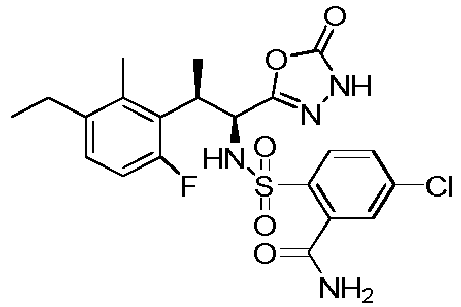
1H NMR (CD3OD) δ: 7.84 (d, J=8.4 Hz, 1H), 7.62 (d, J=2.2 Hz, 1H), 7.58 (dd, J=8.4, 2.2 Hz, 1H), 6.98 (dd, J=8.4, 5.9 Hz, 1H), 6.75 (dd, J=11.7, 8.8 Hz, 1H), 4.78 (d, J=11.0 Hz, 1H), 3.50-3.60 (m, 1H), 2.52-2.59 (m, 2H), 2.24 (s, 3H), 1.46 (d, J=7.0 Hz, 3H), 1.06 (t, J=7.5 Hz, 3H),; LC/MS RT 1.73min, m/z [M-H]- 495,497 12 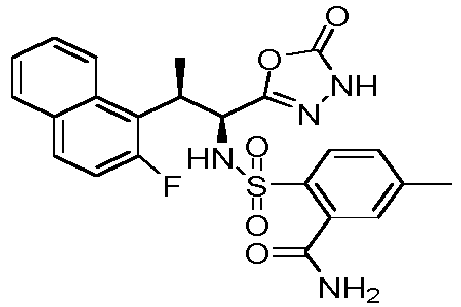
1H NMR (CD3OD) δ: 8.10 (br d, J=8.8 Hz, 1H), 7.76-7.84 (m, 2H), 7.72 (d, J=8.1 Hz, 1H), 7.54 (t, J=7.5 Hz, 1H), 7.39-7.45 (m, 2H), 7.33 (d, J=8.1 Hz, 1H), 7.21 (dd, J=11.4, 9.2 Hz, 1H), 4.91 (d, J=11.7 Hz, 1H), 4.07-4.21 (m, 1H), 2.39 (s, 3H), 1.60 (d, J=6.6 Hz, 3H); LC/MS RT 1.61min, m/z [M-H]- 483 13 
1H NMR (CD3OD) δ: 7.86 (d, J=8.4 Hz, 1H), 7.63 (d, J=1.8 Hz, 1H), 7.57-7.61 (m, 1H), 6.91 (dd, J=11.0, 8.4 Hz, 1H), 4.78 (d, J=11.0 Hz, 1H), 3.55-3.66 (m, 1H), 2.18 (s, 3H), 2.16 (s, 3H), 1.47 (d, J=7.0 Hz, 3H); LC/MS RT 1.68min, m/z [M-H]- 499,501 14 
1H NMR (CD3OD) δ: 7.86 (d, J=8.4 Hz, 1H), 7.63 (d, J=1.8 Hz, 1H), 7.59 (dd, J=8.4, 2.2 Hz, 1H), 7.25 (dd, J=8.8, 5.1 Hz, 1H), 6.88 (t, J=10.0 Hz, 1H), 4.80 (d, J=11.4 Hz, 1H), 3.55-3.65 (m, 1H), 2.37 (s, 3H), 1.47 (d, J=7.0 Hz, 3H); LC/MS RT 1.68min, m/z [M-H]- 501,503 15 
1H NMR (CD3OD) δ: 8.11 (d, J=8.8 Hz, 1H), 7.69-7.92 (m, 5H), 7.54 (br t, J=7.7 Hz, 1H), 7.42 (t, J=7.2 Hz, 1H), 7.21 (dd, J=11.4, 9.2 Hz, 1H), 4.89-5.01 (m, 1H), 4.10-4.24 (m, 1H), 1.60 (br d, J=6.6 Hz, 3H); LC/MS RT 1.68min, m/z [M-H]- 547,549 [Table 18-4] Example Structural Formula Physical Property Value 16 
1H NMR (CD3OD) δ: 7.69 (d, J=8.1 Hz, 1H), 7.29 (d, J=1.8 Hz, 1H), 7.21 (dd, J=8.2, 2.0 Hz, 1H), 6.97 (dd, J=8.4, 5.9 Hz, 1H), 6.71 (dd, J=12.1, 8.4 Hz, 1H), 4.76 (d, J=11.4 Hz, 1H), 3.46-3.60 (m, 1H), 2.18 (s, 3H), 2.16 (s, 3H), 1.95-2.04 (m, 1H), 1.45 (d, J=7.0 Hz, 3H), 1.06 (dd, J=8.4, 1.8 Hz, 2H), 0.72-0.90 (m, 2H); LC/MS RT 1.67min, m/z [M-H]- 487 17 
1H NMR (CD3OD) δ: 7.84 (d, J=8.4 Hz, 1H), 7.53-7.66 (m, 2H), 7.12-7.22 (m, 1H), 6.89-7.03 (m, 1H), 4.71-4.82 (m, 1H), 3.86-4.04 (m, 1H), 2.28 (s, 3H), 1.47 (br d, J=6.2 Hz, 3H); LC/MS RT 1.66min, m/z [M-H]- 501,503 18 
1H NMR (CD3OD) δ: 7.74 (d, J=8.4 Hz, 1H), 7.45 (d, J=1.8 Hz, 1H), 7.37 (dd, J=8.2, 1.6 Hz, 1H), 6.97 (dd, J=8.4, 5.9 Hz, 1H), 6.71 (dd, J=11.7, 8.4 Hz, 1H), 4.78 (d, J=11.0 Hz, 1H), 3.47-3.63 (m, 1H), 2.71 (q, J=7.7 Hz, 2H), 2.18 (s, 3H), 2.16 (s, 3H), 1.45 (d, J=7.0 Hz, 3H), 1.21-1.28 (m, 3H); LC/MS RT 1.66min, m/z [M-H]- 475 19 
1H NMR (CD3OD) δ: 8.32 (d, J=8.4 Hz, 1H), 7.70 (d, J=8.4 Hz, 1H), 6.98 (dd, J=8.4, 5.9 Hz, 1H), 6.72 (dd, J=12.1, 8.4 Hz, 1H), 4.84 (d, J=11.4 Hz, 1H), 3.55-3.68 (m, 1H), 2.22 (s, 3H), 2.18 (s, 3H), 1.48 (d, J=7.0 Hz, 3H); LC/MS RT 1.65min, m/z [M-H]- 482,484 20 
1H NMR (CD3OD) δ: 7.87 (d, J=7.6 Hz, 1H), 7.53-7.70 (m, 3H), 6.97 (dd, J=8.2, 5.7 Hz, 1H), 6.71 (dd, J=11.7, 8.4 Hz, 1H), 4.80 (d, J=11.0 Hz, 1H), 3.50-3.52 (m, 1H), 2.19 (s, 3H), 2.17 (s, 3H), 1.44 (d, J=6.6 Hz, 3H); LC/MS RT 1.54min, m/z [M-H]- 447 [Table 18-5] Example Structural Formula Physical Property Value 21 
1H NMR (CD3OD) δ: 7.76 (d, J=8.4 Hz, 1H), 7.61 (d, J=2.2 Hz, 1H), 7.52-7.55 (m, 1H), 6.96-7.05 (m, 2H), 6.83 (s, 1H), 4.59 (d, J=9.5 Hz, 1H), 3.37-3.44 (m, 1H), 2.22 (s, 3H), 1.41 (d, J=7.0 Hz, 3H); LC/MS RT 1.60min, m/z [M-H]- 467,469 22 
LC/MS RT 1.6min, m/z [M-H]- 467,469 23 
1H NMR (CD3OD) δ: 7.73 (d, J=8.4 Hz, 1H), 7.52-7.59 (m, 2H), 7.07 (td, J=7.9, 5.5 Hz, 1H), 6.90-6.97 (m, 1H), 6.66-6.77 (m, 1H), 4.77 (d, J=11.4 Hz, 1H), 3.43-3.59 (m, 1H), 2.38 (s, 3H), 1.46 (d, J=7.0 Hz, 3H); LC/MS RT 1.58min, m/z [M-H]- 467,469 24 
1H NMR (cdcl3) δ: 7.73 (d, J=8.4 Hz, 1H), 7.55 (d, J=1.8 Hz, 1H), 7.43 (d, J=8.4 Hz, 1H), 7.00-7.16 (m, 4H), 4.56 (dd, J=15.8, 7.7 Hz, 1H), 3.37-3.62 (m, 1H), 2.29 (s, 3H), 1.38 (d, J=7.0 Hz, 3H); LC/MS RT 1.56min, m/z [M-H]- 449,451 25 
1H NMR (CD3OD) δ: 7.74-7.79 (m, 3H), 7.25 (dd, J=8.9, 5.0 Hz, 1H), 6.85-6.94 (m, 1H), 4.77-4.83 (m, 1H), 3.55-3.65 (m, 1H), 2.37 (s, 3H), 1.47 (d, J=7.0 Hz, 3H); LC/MS RT 1.70min, m/z [M-H]- 545,547 [Table 18-6] Example Structural Formula Physical Property Value 26 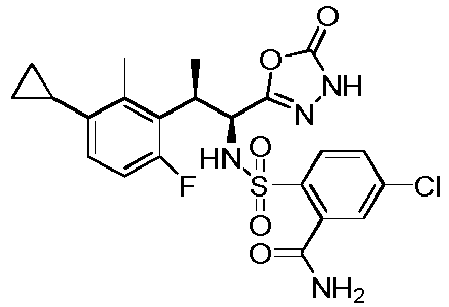
1H NMR (CD3OD) δ: 7.84 (d, J=8.4 Hz, 1H), 7.62 (d, J=2.2 Hz, 1H), 7.58 (dd, J=8.4, 2.2 Hz, 1H), 6.94(dd, J=8.5, 5.9 Hz, 1H), 6.73 (dd, J=11.9, 8.5 Hz, 1H), 4.77 (d, J=11.4 Hz, 1H), 3.50-3.65 (m, 1H), 2.39 (s, 3H), 1.73-1.83 (m, 1H), 1.46 (d, J=7.0 Hz, 3H), 0.80-0.98 (m, 2H), 0.37-0.55 (m, 2H); LC/MS RT 1.76min, m/z [M-H]- 507,509 27 
1H-NMR (CDCl3) δ:8.26 (1H, br s), 7.94 (1H, d, J = 8.1 Hz), 7.55-7.47 (3H, m), 6.90 (2H, t, J = 9.7 Hz), 6.19-6.14 (1H, m), 4.90 (1H, t, J = 10.1 Hz), 3.56 (1H, br s), 2.39 (3H, s), 1.48 (3H, d, J = 7.0 Hz), 1.24 (1H, s).; LC/MS RT 1.73min, m/z [M-H]- 535,537 28 
1H NMR (CD3OD) δ: 7.86 (d, J=8.4 Hz, 1H), 7.63 (d, J=2.2 Hz, 1H), 7.59 (dd, J=8.4, 2.2 Hz, 1H), 6.83-6.95 (m, 2H), 4.78 (d, J=11.0 Hz, 1H), 3.45-3.56 (m, 1H), 2.20 (d, J=2.2 Hz, 3H), 1.46 (d, J=7.0 Hz, 3H); LC/MS RT 1.60min, m/z [M-H]- 485,487 29 
1H-NMR (CDCl3) δ: 8.88 (1H, s), 7.80 (1H, d, J = 8.4 Hz), 7.24-7.21 (1H, m), 7.03-7.01 (1H, m), 6.94-6.93 (1H, m), 6.84 (1H, dd, J = 11.4, 8.4 Hz), 6.02-5.95 (2H, m), 5.89 (1H, s), 4.80 (1H, t, J = 10.8 Hz), 3.93 (3H, s), 3.46 (1H, s), 2.35 (3H, s), 1.49 (3H, d, J = 59 Hz).; LC/MS RT 1.38min, m/z [M-H]- 497,499 30 
1H NMR (CD3OD) δ: 7.85 (d, J=8.4 Hz, 1H), 7.63 (d, J=2.2 Hz, 1H), 7.57-7.61 (m, 1H), 7.44 (dd, J=8.8, 5.1 Hz, 1H), 6.80-6.86 (m, 1H), 4.79 (d, J=11.0 Hz, 1H), 3.55-3.65 (m, 1H), 2.43 (s, 3H), 1.47 (d,J=7.0 Hz, 3H); LC/MS RT 1.70min, m/z [M-H]- 545,547 [Table 18-7] Example Structural Formula Physical Property Value 31 
1H NMR (CD3OD) δ: 8.16 (d, J=8.4 Hz, 1H), 8.02 (d, J=8.1 Hz, 1H), 6.98 (dd, J=8.6, 5.3 Hz, 1H), 6.65-6.80 (m, 1H), 4.83-4.91 (m, 1H), 3.55-3.65 (m, 1H), 2.22 (s, 3H), 2.18 (s, 3H), 1.47 (d, J=7.3 Hz, 3H); LC/MS RT 1.52min, m/z [M-H]- 482,484 32 
1H NMR (CD3OD) δ: 7.67 (1H, d, J = 8.8 Hz), 7.54-7.52 (2H, m), 6.95-6.92 (1H, m), 6.59-6.53 (1H, m), 4.79 (1H, d, J = 11.0 Hz), 3.56-3.54 (1H, m), 2.24 (3H, s), 2.19 (3H, s), 1.15 (3H, d, J = 7.0 Hz); LC/MS RT 1.66min, m/z [M-H]- 481,483 33 
1H NMR (CD3OD) δ: 7.84 (d, J=8.4 Hz, 1H), 7.53-7.70 (m, 2H), 6.98 (dd, J=8.2, 5.7 Hz, 1H), 6.72 (dd, J=12.1, 8.4 Hz, 1H), 4.79 (d, J=114 Hz, 1H), 3.48-3.61 (m, 1H), 2.20 (s, 3H), 2.17 (s, 3H), 1.45 (d, J=7.0 Hz, 3H); LC/MS RT 1.66min, m/z [M-H]- 481,483 34 
1H NMR (CD3OD) δ: 7.68 (dd, J=7.9, 0.9 Hz, 1H), 7.51-7.58 (m, 2H), 6.94 (dd, J=8.2, 6.0 Hz, 1H), 6.52-6.66 (m, 1H), 4.80 (d, J=11.0 Hz, 1H), 3.51-3.68 (m, 1H), 2.25 (s, 3H), 2.20 (s, 3H), 1.16 (d, J=6.6 Hz, 3H); LC/MS RT 1.66min, m/z [M-H]- 481,483 35 
1H NMR (CD3OD) δ: 7.77 (s, 3H), 7.41-7.51 (m, 1H), 6.72-6.91 (m, 1H), 4.79 (d, J=11.0 Hz, 1H), 3.52-3.73 (m, 1H), 2.43 (s, 3H), 1.47 (d, J=7.0 Hz, 3H); LC/MS RT 1.73min, m/z [M-H]- 589,591 [Table 18-8] Example Structural Formula Physical Property Value 36 
1H-NMR (CDCl3) δ: 9.73 (1H, br s), 7.87 (1H, s), 7.64-7.56 (2H, m), 7.06-7.04 (1H, m), 6.91 (1H, dd, J = 8.2,5.7 Hz), 6.70-6.65 (2H, m), 6.47 (1H, s), 4.87 (1H, t, J = 10.6 Hz), 3.78-3.76 (4H, m), 3.64-3.62 (2H, m), 3.48-3.46 (1H, m), 3.41-3.39 (2H, m), 2.16-2.14 (6H, m), 1.46 (3H, d, J = 6.6 Hz).; LC/MS RT 1.50min, m/z [M-H]- 560 37 
1H-NMR (CDCl3) δ: 7.86(1H, s), 7.65-7.55 (2H, m), 7.06-7.03 (1H, m), 6.93-6.89 (1H, m), 6.71-6.66 (1H, m), 6.14 (1H, s), 6.03 (1H, s), 4.96 (1H, t, J = 10.3 Hz), 3.43-3.41 (1H, m), 3.11 (3H, s), 2.94 (3H, s), 2.15 (6H, s), 1.51 (3H, d, J = 7.0 Hz); LC/MS RT 1.51min, m/z [M-H]- 518 38 
1H NMR (CD3OD) δ: 8.18 (1H, s), 7.67 (1H, s), 6.96 (1H, dd, J = 8.4, 5.9 Hz), 6.71 (1H, dd, J = 11.7, 8.4 Hz), 4.81 (1H, d, J = 11.0 Hz), 3.56 (1H, s), 3.33 (1H, s), 2.20 (3H, s), 2.16 (3H, s), 1.45 (3H, d, J = 6.6 Hz).;LC/MS RT 1.46min, m/z [M-H]- 525,527 39 
1H NMR (CD3OD) δ: 7.88 (1H, s), 7.72 (1H, s), 6.99-6.94 (1H, m), 6.70 (1H, dd, J = 11.7, 8.4 Hz), 4.77 (1H, d, J = 11.0 Hz), 3.58 (1H, s), 3.13 (3H, s), 2.90 (3H, s), 2.22 (3H, s), 2.17 (3H, s), 1.44-1.42 (3H, m); LC/MS RT 1.58min, m/z [M-H]- 552,554 40 
1H NMR (CD3OD) δ: 8.76 (s, 1H), 7.62 (s, 1H), 6.98 (dd, J=8.2, 6.0 Hz, 1H), 6.73 (dd, J=11.9, 8.6 Hz, 1H), 4.83-4.86 (m, 1H), 3.51-3.73 (m, 1H), 2.22 (s, 3H), 2.18 (s, 3H), 1.45 (d, J=6.6 Hz, 3H); LC/MS RT 1.61min, m/z [M-H]- 482,484 [Table 18-9] Example Structural Formula Physical Property Value 41 
1H NMR (CD3OD) δ: 8.06 (d, J=9.2 Hz, 1H), 7.87-7.91 (m, 2H), 6.97 (dd, J=8.3, 5.7 Hz, 1H), 6.72 (dd, J=11.7, 8.3 Hz, 1H), 4.83 (d, J=11.0 Hz, 1H), 3.49-3.66 (m, 1H), 2.20 (s, 3H), 2.17 (s, 3H), 1.45 (d, J=7.0 Hz, 3H); LC/MS RT 1.72min, m/z [M-H]- 515 42 
1H NMR (CD3OD) δ: 8.08 (d, J=8.1 Hz, 1H), 7.88-7.94 (m, 2H), 7.44 (dd, J=8.8, 5.1 Hz, 1H), 6.82 (dd, J=11.4, 8.8 Hz, 1H), 4.79-4.85 (m, 1H), 3.56-3.71 (m, 1H), 2.18 (s, 3H), 1.47 (d, J=7.0 Hz, 3H); LC/MS RT 1.78min, m/z [M-H]- 579,581 43 
1H NMR (CD3OD) δ: 7.84 (d, J=8.4 Hz, 1H), 7.55-7.65 (m, 2H), 6.98 (dd, J=8.4, 5.9 Hz, 1H), 6.72 (dd, J=11.7, 8.4 Hz, 1H), 4.79 (d, J=11.0 Hz, 1H), 3.54 (brd, J=11.4 Hz, 1H), 2.20 (s, 3H), 2.17 (s, 3H); LC/MS RT 1.64min, m/z [M-H]- 484,486 44 
1H NMR (CD3OD) δ: 8.01 (d, J=8.4 Hz, 1H), 7.78-7.86 (m, 1H), 7.71 (dd, J=8.6, 2.0 Hz, 1H), 7.50 (s, 4H), 7.37-7.47 (m, 3H), 7.09-7.25 (m, 1H), 4.57 (d, J=9.2 Hz, 1H), 4.05-4.23 (m, 1H), 1.54 (d, J=6.6 Hz, 3H); LC/MS RT 1.82min, m/z [M-H]- 486,488 45 
1H NMR (CD3OD) δ: 7.76-7.85 (m, 1H), 7.65-7.74 (m, 2H), 7.54 (s, 2H), 7.51 (d, J=5.5 Hz, 1H), 7.34 (d, J=5.5 Hz, 1H), 7.29 (t, J=7.7 Hz, 1H), 7.14 7.23 (m, 1H), 4.67 (d, J=9.5 Hz, 1H), 3.44-3.58 (m, 1H), 1.55 (d, J=7.0 Hz, 3H); LC/MS RT 1.78min, m/z [M-H]- 492,494 [Table 18-10] Example Structural Formula Physical Property Value 46 
LC/MS RT 1.89min, m/z [M-H]- 476,478 47 
1H NMR (CD3OD) δ: 7.83 (d, J=8.4 Hz, 1H), 7.15 (d, J=1.8 Hz, 1H), 7.08 (dd, J=8.1, 1.8 Hz, 1H), 6.90-7.00 (m, 2H), 6.83 (d, J=7.0 Hz, 1H), 4.29 (d, J=10.6 Hz, 1H), 3.54-3.63 (m, 1H), 2.59-2.83 (m, 4H), 1.90-1.98 (m, 1H), 1.61-1.82 (m, 4H), 1.37 (d, J=7.0 Hz, 3H), 1.03-1.12 (m, 2H), 0.76-0.87 (m, 2H); LC/MS RT 1.97min, m/z [M-H]- 486 48 
1H NMR (CD3OD) δ: 8.58-8.67 (m, 1H), 8.08-8.34 (m, 1H), 7.78-7.96 (m, 1H), 6.89-7.18 (m, 3H), 4.72 (d, J=10.3 Hz, 0.5H), 4.41 (d, J=11.0 Hz, 0.5H), 3.36-3.50 (m, 2H), 2.93-3.10 (m, 1H), 2.70 (dt, J=15.9, 8.2 Hz, 1H), 1.98-2.27 (m, 1H), 1.67-1.85 (m, 1H), 1.46 (d, J=6.6 Hz, 1.5H), 1.35 (d, J=6.6 Hz, 1.5H), 1.15 (d, J=7.0 Hz, 1.5H), 1.10 (d, J=7.0 Hz, 1.5H); LC/MS RT 1.79min, m/z [M-H]- 491,493 49 
1H NMR (CD3OD) δ: 8.53 (dd, J=2.2, 0.7 Hz, 1H), 8.11 (dd, J=8.2, 2.4 Hz, 1H), 7.76 (d, J=7.3 Hz, 1H), 7.64 (d, J=7.3 Hz, 1H), 7.55 (d, J=7.3 Hz, 1H), 7.26-7.41 (m, 4H), 7.16 (d, J=7.7 Hz, 1H), 4.68 (d, J=9.9 Hz, 1H), 3.87 (s, 2H), 3.49-3.61 (m, 1H), 1.50 (d, J=7.0 Hz, 3H); LC/MS RT 1.83min, m/z [M-H]- 525,527 50 
1H NMR (CD3OD) δ: 8.44 (d, J=2.2 Hz, 1H), 8.02-8.09 (m, 2H), 7.68 (d, J=8.4 Hz, 1H), 7.57 (d, J=7.3 Hz, 1H), 7.09-7.46 (m, 5H), 4.83-4.85 (m, 1H), 4.30-4.442 (m, 1H), 3.65 (s, 2H), 1.51 (d, J=7.0 Hz, 3H); LC/MS RT 1.82min, m/z [M-H]- 525,527 [Table 18-11] Example Structural Formula Physical Property Value 51 
1H NMR (CD3OD) δ: 8.07-8.19 (m, 2H), 8.00 (d, J=8.8 Hz, 1H), 7.76 (d, J=8.4 Hz, 3H), 7.63-7.70 (m, 1H), 7.47-7.54 (m, 1H), 7.34-7.45 (m, 3H), 4.63 (d, J=8.1 Hz, 1H), 4.06-4.21 (m, 1H), 1.54 (d, J=7.0 Hz, 3H); LC/MS RT 1.73min, m/z [M-H]- 453 52 
1H NMR (CD3OD) δ: 8.52 (d, J=2.6 Hz, 1H), 8.01 (dd, J=8.4, 2.6 Hz, 1H), 7.90 (d, J=8.4 Hz, 1H), 6.97 (d, J=4.8 Hz, 2H), 6.83-6.91 (m, 1H), 4.50 (d, J=10.3 Hz, 1H), 3.51-3.61 (m, 1H), 2.55-2.96 (m, 4H), 1.54-1.91 (m, 4H), 1.36 (d, J=6.6 Hz, 3H); LC/MS RT 1.77min, m/z [M-H]- 447,449 53 
1H NMR (CD3OD) δ: 7.94 (d, J=8.4 Hz, 1H), 7.91 (d, J=2.2 Hz, 1H), 7.72 (dd, J=8.4, 2.2 Hz, 1H), 6.99-7.02 (m, 1H), 6.91-6.97 (m, 1H), 6.84 (d, J=7.3 Hz, 1H), 4.54 (d, J=9.5 Hz, 1H), 3.58-3.69 (m, 4H), 2.63-2.85 (m, 4H), 1.64-1.88 (m, 4H), 1.32 (d, J=6.6 Hz, 3H); LC/MS RT 1.92min, m/z [M-H]- 520,522 54 
LC/MS RT 1.94min, m/z [M-H]- 491,493 55 
1H NMR (CD3OD) δ: 7.66 (d, J=8.7 Hz, 1H), 6.93-7.00 (m, 2H), 6.83 (d, J=7.0 Hz, 1H), 6.51-6.56 (m, 2H), 4.25 (d, J=11.0 Hz, 1H), 3.91 (s, 3H), 3.82 (s, 3H), 3.47-3.61 (m, 1H), 2.60-2.79 (m, 4H), 1.59-1.85 (m, 4H), 1.40 (d, J=7.0 Hz, 3H); LC/MS RT 1.77min, m/z [M-H]- 472 [Table 18-12] Example Structural Formula Physical Property Value 56 
1H NMR (CD3OD) δ: 8.13 (dd, J=9.5, 5.5 Hz, 1H), 7.67 (d, J=8.4 Hz, 2H), 7.37-7.53 (m, 3H), 7.30 (td, J=8.8, 2.6 Hz, 1H), 7.08 (d, J=1.8 Hz, 1H), 6.97 (dd, J=8.4, 1.8 Hz, 1H), 4.48 (d, J=10.3 Hz, 1H), 4.11-4.21 (m, 1H), 3.94 (s, 3H), 1.60 (d, J=7.0 Hz, 3H); LC/MS RT 1.80min, m/z [M-H]- 490,492 57 
1H NMR (CD3OD) δ: 8.00 (d, J=8.4 Hz, 1H), 7.83-7.91 (m, 2H), 6.91-7.02 (m, 2H), 6.78-6.86 (m, 1H), 4.36 (d, J=10.6 Hz, 1H), 4.05 (s, 3H), 3.53-3.63 (m, 1H), 2.59-2.87 (m, 4H), 1.62-1.87 (m, 4H), 1.40 (d, J=7.0 Hz, 3H); LC/MS RT 1.83min, m/z [M-H]- 487,489 58 
1H NMR (CD3OD) δ: 8.28-8.34 (m, 1H), 6.92-7.00 (m, 2H), 6.80-6.89 (m, 1H), 4.43 (d, J=10.6 Hz, 1H), 3.95 (s, 3H), 3.84 (s, 3H), 3.47-3.60 (m, 1H), 2.60-2.85 (m, 4H), 1.60-1.87 (m, 4H), 1.33 (d, J=6.6 Hz, 3H); LC/MS RT 1.80min, m/z [M-H]- 506 59 
1H NMR (CD3OD) δ: 8.12-8.30 (m, 2H), 7.74 (dd, J=8.8, 7.3 Hz, 1H), 6.72-7.02 (m, 3H), 4.52 (d, J=10.3 Hz, 1H), 3.30-3.40 (m, 1H), 2.68-2.92 (m, 4H), 1.88-2.01 (m, 2H), 1.38 (d, J=7.0 Hz, 3H); LC/MS RT 1.69min, m/z [M-H]- 456 60 
1H NMR (cdcl3) δ: 7.60 (t, J=8.1 Hz, 1H), 7.31-7.37 (m, 1H), 7.20-7.26 (m, 1H), 7.06-7.10 (m, 1H), 7.01-7.06 (m, 1H), 6.88 (d, J=7.3 Hz, 1H), 5.46 (br s, 1H), 4.52 (br t, J=7.9 Hz, 1H), 3.29-3.41 (m, 1H), 2.70-2.90 (m, 4H), 1.95-2.07 (m, 2H), 1.38 (d, J=7.0 Hz, 3H); LC/MS RT 1.87min, m/z [M-H]- 494,496 [Table 18-13] Example Structural Formula Physical Property Value 61 
1H NMR (cdcl3) δ: 7.62-7.69 (m, 1H), 7.52-7.59 (m, 1H), 7.15 (t, J=8.1 Hz, 1H), 7.03 (s, 2H), 6.86-6.92 (m, 1H), 5.46 (br s, 1H), 4.54 (br t, J=8.1 Hz, 1H), 3.30-3.46 (m, 1H), 2.72-2.91 (m, 4H), 1.96-2.09 (m, 2H), 1.37-1.42 (m, 1H), 1.40 (d, J=7.0 Hz, 2H); LC/MS RT 1.82min, m/z [M-H]- 450,452 62 
1H NMR (CD3OD) δ: 7.79-7.87 (m, 1H), 7.73 (d, J=7.7 Hz, 1H), 7.65 (d, J=8.4 Hz, 1H), 7.40 (s, 1H), 7.27-7.36 (m, 2H), 7.07 (d, J=1.8 Hz, 1H), 6.95 (dd, J=8.4, 2.2 Hz, 1H), 4.46 (d, J=9.9 Hz, 1H), 3.93 (s, 3H), 3.70-3.78 (m, 1H), 1.59 (d, J=7.0 Hz, 3H); LC/MS RT 1.77min, m/z [M-H]- 478,480 63 
1H NMR (CD3OD) δ: 9.16 (1H, s), 7.91-7.88 (1H, m), 7.66 (1H, d, J = 8.4 Hz), 7.39-7.31 (2H, m), 7.07-7.07 (1H, m), 6.99-6.97 (1H, m), 3.95 (3H, s), 3.49-3.48 (1H, m), 3.15-3.13 (1H, m), 1.66 (3H, d, J = 7.0 Hz); LC/MS RT 1.62min, m/z [M-H]- 479,481 64 
1H NMR (CD3OD) δ: 7.70 (d, J=8.4 Hz, 1H), 7.24 (d, J=1.8 Hz, 1H), 7.08-7.11 (m, 1H), 6.99-7.04 (m, 1H), 6.80 (d, J=7.0 Hz, 1H), 6.61-6.73 (m, 1H), 4.55 (d, J=10.6 Hz, 1H), 4.44-4.51 (m, 2H), 3.94 (s, 3H), 3.19-3.28 (m, 1H), 3.09 (t, J=8.6 Hz, 2H), 1.45 (d, J=7.0 Hz, 3H); LC/MS RT 1.68min, m/z [M-H]- 464,466 65 
1H NMR (CD3OD) δ: 8.07-8.21 (m, 1H), 7.74 (d, J=8.4 Hz, 2H), 7.58 (d, J=8.4 Hz, 1H), 7.44-7.53 (m, 1H), 7.31-7.42 (m, 1H), 7.20 (d, J=8.4 Hz, 1H), 7.10 (d, J=1.8 Hz, 1H), 6.96-7.06 (m, 1H), 5.16 (d, J=11.7 Hz, 1H), 4.07-4.15 (m, 1H), 3.95 (s, 3H), 2.49 (s, 3H), 1.77 (d, J=7.3 Hz, 2.3H), 1.66 (d, J=7.3 Hz, 0.7H); LC/MS RT 1.82min, m/z [M-H]- 486,488 [Table 18-14] Example Structural Formula Physical Property Value 66 
1H NMR (CD3OD) δ: 7.67-7.77 (m, 1H), 7.10-7.15 (m, 1H), 7.01-7.05 (m, 1H), 6.97-7.01 (m, 1H), 6.63 (d, J=7.7 Hz, 1H), 6.52 (d, J=7.7 Hz, 1H), 4.36-4.56 (m, 2H), 4.30 (d, J=11.4 Hz, 1H), 3.94 (s, 3H), 3.21-3.29 (m, 1H), 3.13 (t, J=8.6 Hz, 2H), 1.46 (d, J=7.0 Hz, 3H); LC/MS RT 1.62min, m/z [M-H]- 464,466 67 
1H NMR (CD3OD) δ: 7.71 (dd, J=8.4, 0.7 Hz, 1H), 7.10 (d, J=1.8 Hz, 1H), 7.02 (dd, J=8.2, 1.6 Hz, 2H), 6.91-6.99 (m, 2H), 4.29 (dd, J=11.2, 1.6 Hz, 1H), 3.94 (s, 3H), 3.30-3.36 (m, 1H), 2.91-3.16 (m, 2H), 2.28-2.55 (m, 3H), 1.44 (d, J=7.0 Hz, 3H), 1.11 (d, J=6.4 Hz, 1.5H), 1.0 (d, J=6.4 Hz, 1.5H); LC/MS RT 1.89min, m/z [M-H]- 476,478 68 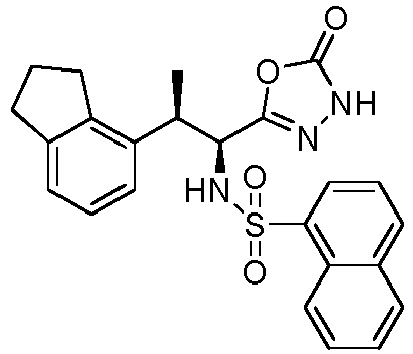
1H NMR (CD3OD) δ: 8.62 (d, J=8.8 Hz, 1H), 8.19 (dd, J=7.3, 1.1 Hz, 1H), 8.09 (d, J=8.4 Hz, 1H), 7.95 (d, J=8.4 Hz, 1H), 7.64-7.71 (m, 1H), 7.56-7.62 (m, 1H), 7.48-7.56 (m, 1H), 6.92 (d, J=4.8 Hz, 2H), 6.83 (d, J=4.4 Hz, 1H), 4.20 (d, J=10.6 Hz, 1H), 3.20-3.30 (m, 1H), 2.68-2.83 (m, 4H), 1.83-1.89 (m, 2H), 1.33 (d, J=7.0 Hz, 3H); LC/MS RT 1.82min, m/z [M-H]- 448 69 
LC/MS RT 1.86min, m/z [M-H]- 476,478 70 
1H NMR (CD3OD) δ: 7.75 (d, J=8.4 Hz, 1H), 7.26-7.43 (m, 3H), 7.09-7.21 (m, 5H), 7.04 (dd, J=8.4, 1.8 Hz, 1H), 6.96 (dd, J=7.1, 1.6 Hz, 1H), 4.37 (d, J=10.6 Hz, 1H), 3.95 (s, 3H), 3.61-3.68 (m, 1H), 2.13 (s, 3H), 1.49 (d, J=7.0 Hz, 3H); LC/MS RT 1.93min, m/z [M-H]- 512,514 [Table 18-15] Example Structural Formula Physical Property Value 71 
1H NMR (CD3OD) δ: 7.72 (d, J=8.4 Hz, 1H), 7.64 (d, J=7.3 Hz, 1H), 7.59-7.62 (m, 1H), 7.46 (d, J=6.2 Hz, 1H), 7.31-7.37 (m, 1H), 7.21-7.29 (m, 2H), 7.06 (d, J=1.8 Hz, 1H), 7.00 (dd, J=8.4, 1.8 Hz, 1H), 4.61-4.74 (m, 1H), 4.37 (d, J=10.6 Hz, 1H), 3.90 (s, 3H), 2.96 (s, 3H), 1.67 (d, J=7.0 Hz, 3H); LC/MS RT 1.81min, m/z [M-H]- 486,488 72 
1H NMR (CD3OD) δ: 7.72 (d, J=8.4 Hz, 1H), 7.11 (d, J=1.8 Hz, 1H), 7.01-7.09 (m, 2H), 6.71 (d, J=7.7 Hz, 1H), 6.52 (d, J=8.1 Hz, 1H), 4.28-4.33 (m, 1H), 4.23 (d, J=11.0 Hz, 1H), 4.07-4.15 (m, 1H), 3.94 (s, 3H), 3.41-3.50 (m, 1H), 3.33-3.39 (m, 1H), 1.51 (d, J=7.0 Hz, 3H), 1.21 (d, J=7.0 Hz, 3H); LC/MS RT 1.69min, m/z [M-H]- 478,480 73 
1H NMR (CD3OD) δ: 7.76 (d, J=8.4 Hz, 1H), 7.10-7.14 (m, 1H), 6.97-7.09 (m, 2H), 6.62-6.67 (m, 1H), 6.51-6.62 (m, 1H), 4.50-4.57 (m, 1H), 4.38-4.48 (m, 1H), 4.11-4.16 (m, 1H), 3.94 (s, 3H), 3.33-3.46 (m, 2H), 1.41 (d, J=7.0 Hz, 3H), 1.20-1.24 (m, 3H); LC/MS RT 1.66min, m/z [M-H]- 478,480 74 
1H NMR (CD3OD) δ: 7.71 (d, J=8.4 Hz, 1H), 6.98-7.17 (m, 5H), 4.54 (d, J=11.0 Hz, 0.34H), (d, J=11.0 Hz, 0.68H), 3.95 (s, 1H), 3.85 (s, 2H), 3.48-3.59 (m, 1H), 1.51 (d, J=7.0 Hz, 2H), 1.17 (d, J=7.0 Hz, 1H), ; LC/MS RT 1.67min, m/z [M-H]- 458,460 75 
1H NMR (CD3OD) δ: 7.72 (d, J=8.4 Hz, 1H), 7.08-7014 (m, 2H), 6.95-7.06 (m, 1H), 6.95-7.06 (m, 1H), 6.84 (t, J=9.0 Hz, 1H), 4.34 (d, J=11.0 Hz, 1H), 3.94 (s, 3H), 3.52-3.63 (m, 1H), 2.17 (d, J=2.2 Hz, 3H), 1.44 (d, J=7.0 Hz, 3H); LC/MS RT 1.70min, m/z [M-H]- 454,456 [Table 18-16] Example Structural Formula Physical Property Value 76 
LC/MS RT 1.78min, m/z [M-H]- 490,492 77 
1H NMR (CD3OD) δ: 7.71 (d, J=8.4 Hz, 1H), 7.11 (d, J=1.8 Hz, 1H), 6.94-7.06 (m, 2H), 6.73-6.86 (m, 1H), 4.30 (d, J=10.6 Hz, 1H), 3.94 (s, 3H), 3.54-3.64 (m, 1H), 2.20 (s, 3H), 2.10 (s, 3H), 1.41 (d, J=7.0 Hz, 3H); LC/MS RT 1.78min, m/z [M-H]- 468,470 78 
1H NMR (CD3OD) δ: 7.68 (d, J=7.3 Hz, 2H), 7.51 (d, J=8.4 Hz, 1H), 7.28-7.37 (m, 2H), 7.20 (t, J=7.6 Hz, 1H), 7.09-7.15 (m, 1H), 7.02 (d, J=1.8 Hz, 1H), 6.88 (dd, J=8.4, 1.8 Hz, 1H), 4.39 (dd, J=9.0, 6.4 Hz, 1H), 3.89-3.99 (m, 1H), 3.88 (s, 3H), 3.62-3.69 (m, 1H), 2.89 (s, 3H); LC/MS RT 1.80min, m/z [M-H]- 472,474 79 
1H NMR (CD3OD) δ: 7.73 (d, J=8.4 Hz, 0.5H), 7.66 (d, J=8.4 Hz, 0.5H), 6.98-7.17 (m, 3H), 6.75 (t, J=9.3 Hz, 1H), 4.66 (d, J=11.0 Hz, 0.5H), 4.57 (d, J=11.4 Hz, 0.5H), 3.95 (s, 1.5H), 3.82 (s, 1.5H), 3.61-3.78 (m, 1H), 2.15 (s, 3H), 1.52 (d, J=7.0 Hz, 1.5H), 1.15 (d, J=7.0 Hz, 1.5H); LC/MS RT 1.76min, m/z [M-H]- 472,474 80 
1H NMR (CD3OD) δ: 7.61-7.80 (m, 1H), 6.76-7.19 (m, 5H), 4.55 (d, J=11.0 Hz, 0.33H), 4.40 (d, J=11.0 Hz, 0.67H), 3.94 (s, 2H), 3.80 (s, 1H), 3.39-3.49 (m, 1H), 2.15-2.20 (m, 3H), 1.48 (d, J=7.0 Hz, 2H), 1.14 (d, J=7.0 Hz, 1H); LC/MS RT 1.73, 1.76min, m/z [M-H]- 454,456 [Table 18-17] Example Structural Formula Physical Property Value 81 
1H NMR (CD3OD) δ: 7.80 (d, J=8.4 Hz, 1H), 7.64 (d, J=8.5 Hz, 1H), 7.61 (d, J=7.4 Hz, 1H), 7.43-7.50 (m, 1H), 7.34 (t, J=7.3 Hz, 1H), 7.22-7.29 (m, 2H), 7.12 (d, J=8.4 Hz, 1H), 4.64-4.76 (m, 1H), 4.36-4.49 (m, 3H), 2.96 (s, 3H), 2.47-2.58 (m, 2H), 1.68 (d, J=7.0 Hz, 3H); LC/MS RT 1.88min, m/z [M-H]- 548,550 82 
1H NMR (DMSO-d6) δ: 11.63 (br s, 1H), 7.31 (br dd, J=8.1 Hz, 1H), 7.88 (d, J=8.1 Hz, 1H), 7.80 (d, J=8.8 Hz, 1H), 7.46-7.62 (m, J=8.4 Hz, 4H), 7.30 (dd, J=10.4, 7.9 Hz, 1H), 7.10-7.26 (m, 2H), 7.01 (dd, J=8.6, 1.6 Hz, 1H), 4.33-4.50 (m, 1H), 4.06-4.22 (m, 1H), 3.86 (s, 3H), 1.45 (d, J=6.6 Hz, 3H); LC/MS RT 1.82min, m/z [M-H]- 490,492 83 
1H NMR (CD3OD) δ: 7.74 (d, J=8.4 Hz, 1H), 7.11 (d, J=1.8 Hz, 1H), 7.03-7.07 (m, 1H), 6.96 (dd, J=8.2, 5.7 Hz, 1H), 6.69 (dd, J=11.7, 8.4 Hz, 1H), 4.68 (br d, J=11.0 Hz, 1H), 3.95 (s, 3H), 3.61-3.68 (m, 1H), 2.21 (s, 3H), 2.17 (s, 3H), 1.47 (d, J=6.6 Hz, 3H); LC/MS RT 1.77min, m/z [M-H]- 468,470 84 
1H NMR (CD3OD) δ: 7.87 (d, J=8.4 Hz, 1H), 7.62 (dd, J=8.4, 1.8 Hz, 1H), 7.54 (d, J=2.2 Hz, 1H), 6.98 (dd, J=8.4, 5.9 Hz, 1H), 6.72 (dd, J=11.7, 8.4 Hz, 1H), 4.80 (d, J=11.4 Hz, 1H), 3.52-3.63 (m, 1H), 2.22 (s, 3H), 2.17 (s, 3H), 1.45 (d, J=7.0 Hz, 3H); LC/MS RT 1.77min, m/z [M-H]- 463,465 85 
1H NMR (CD3OD) δ: 7.73 (d, J=8.1 Hz, 1H), 7.08-7.16 (m, 1H), 6.89-7.07 (m, 4H), 4.40 (d, J=10.3 Hz, 1H), 3.95 (s, 3H), 3.71-3.83 (m, 1H), 3.45-3.58 (m, 1H), 2.33 (s, 3H), 1.43 (d, J=6.6 Hz, 3H), 1.24 (d, J=7.3 Hz, 6H); LC/MS RT 1.88min, m/z [M-H]- 478,480 [Table 18-18] Example Structural Formula Physical Property Value 86 
1H NMR (CD3OD) δ: 7.73 (d, J=8.4 Hz, 1H), 7.11 (d, J=1.8 Hz, 1H), 6.92-7.05 (m, 4H), 4.35 (d, J=11.0 Hz, 1H), 3.95 (s, 3H), 3.52-3.62 (m, 1H), 2.55-2.78 (m, 2H), 2.24 (s, 3H), 1.44 (d, J=6.6 Hz, 3H), 1.08 (t, J=7.3 Hz, 3H); LC/MS RT 1.82min, m/z [M-H]- 464,466 87 
1H NMR (CD3OD) δ: 7.72 (d, J=8.4 Hz, 1H), 7.10 (d, J=1.8 Hz, 1H), 6.98-7.06 (m, 3H), 6.94 (d, J=2.2 Hz, 1H), 4.29 (d, J=10.6 Hz, 1H), 3.94 (s, 3H), 3.58-3.63 (m, 1H), 2.51-2.66 (m, 2H), 2.21 (s, 3H), 1.43 (d, J=6.6 Hz, 3H), 1.08 (t, J=7.5 Hz, 3H); LC/MS RT 1.84min, m/z [M-H]- 464,466 88 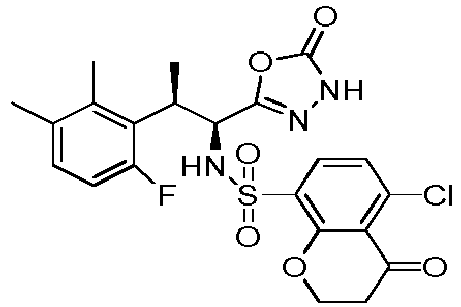
1H NMR (CD3OD) δ: 7.88 (d, J=8.4 Hz, 1H), 7.14 (d, J=8.4 Hz, 1H), 6.87-7.06 (m, 1H), 6.67-6.77 (m, 1H), 4.70-4.78 (m, 3H), 3.63-3.71 (m, 1H), 2.84-2.95 (m, 2H), 2.22 (s, 3H), 2.17 (s, 3H), 1.51 (d, J=7.0 Hz, 3H); LC/MS RT 1.71min, m/z [M-H]- 508,510 89 
1H NMR (CD3OD) δ: 7.74 (d, J=8.4 Hz, 1H), 7.10-7.27 (m, 2H), 7.04 (dd, J=8.4, 1.8 Hz, 1H), 4.64-4.75 (m, 1H), 4.06-4.22 (m, 1H), 3.96 (s, 3H), 2.32 (s, 3H), 1.51 (d, J=7.0 Hz, 3H); LC/MS RT 1.84min, m/z [M-H]- 550,552 90 
1H NMR (CD3OD) δ: 7.75 (d, J=8.4 Hz, 1H), 7.12 (d, J=2.2 Hz, 1H), 7.05 (dd, J=8.4, 1.8 Hz, 1H), 6.89 (dd, J=9.8 Hz, 1H), 4.66 (d, J=11.4 Hz, 1H), 3.95 (s, 3H), 3.63-3.72 (m, 1H), 2.18 (s, 3H), 2.17 (s, 3H), 1.50 (d, J=6.6 Hz, 3H); LC/MS RT 1.80min, m/z [M-H]- 486,488 [Table 18-19] Example Structural Formula Physical Property Value 91 
1H NMR (CD3OD) δ: 8.51 (d, J=1.8 Hz, 1H), 8.09-8.21 (m, 1H), 7.768-7.73 (m, 2H), 6.92-7.01 (m, 2H), 6.63-6.78 (m, 1H), 4.61-4.71 (m, 1H), 3.53-3.75 (m, 1H), 2.19 (s, 3H), 2.17 (s, 3H), 1.38 (d, J=7.0 Hz, 3H); LC/MS RT 1.82min, m/z [M-H]- 505,507 92 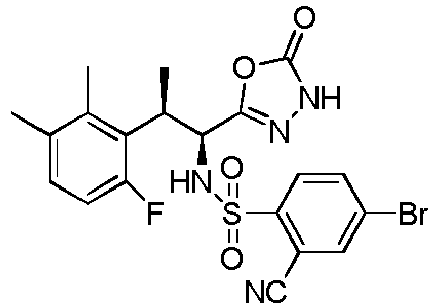
LC/MS RT 1.79min, m/z [M-H]- 507,509 93 
1H NMR (CD3OD) δ: 7.45 (1H, d, J = 8.4 Hz), 7.21 (1H, d, J = 8.4 Hz),6.96 (1H, dd, J = 8.6, 5.9 Hz), 6.70 (1H, dd, J = 12.1, 8.6 Hz), 4.66-4.80 (4H, m), 3.46 (3H, s), 2.19 (3H, s), 2.16 (3H, s), 1.49 (3H, d, J = 6.6 Hz); LC/MS RT 1.71min, m/z [M-H]- 523,525 94 
1H-NMR (CDCl3) δ: 7.77 (1H, s), 7.42 (1H, d, J = 8.4 Hz), 7.00 (1H, d, J = 8.4 Hz), 6.93 (1H, dd, J = 8.3, 5.9 Hz), 6.69 (1H, dd, J = 11.5, 8.3 Hz), 5.43 (1H, d, J = 10.6 Hz), 4.86 (1H, t, J = 10.6 Hz), 4.34-4.29 (1H, m), 4.23-4.19 (1H, m), 3.41 (1H, br s), 3.10-3.07 (2H, m), 2.98-2.83 (2H, m), 2.18-2.17 (6H, m), 1.56-1.53 (3H, m), 1.27-1.23 (3H, m).; LC/MS RT 1.85min, m/z [M-H]- 523,525 95 
1H-NMR (CDCl3) δ: 8.88 (1H, s), 7.68-7.64 (1H, m), 6.98-6.92 (2H, m), 6.73-6.68 (1H, m), 5.48-5.43 (1H, m), 4.95-4.81 (1H, m), 4.55-4.49 (1H, m), 4.34-4.20 (1H, m), 3.45 (1H, s), 2.92-2.82 (1H, m), 2.20-2.18 (6H, m), 2.08 (2H, s), 2.02 (1H, s), 1.98-1.93 (1H, m), 1.86 (1H, s), 1.76 (2H, s), 1.57-1.51 (3H, m).; LC/MS RT 1.82, 1.87min, m/z [M-H]- 566,568 [Table 18-20] Example Structural Formula Physical Property Value 96 
1H NMR (CD3OD) δ: 7.74-7.78 (m, 3H), 6.98 (dd, J=8.4, 5.9 Hz, 1H), 6.75 (dd, J=11.7, 8.4 Hz, 1H), 4.79 (d, J=11.0 Hz, 1H), 3.51-3.63 (m, 1H), 2.47-2.68 (m, 2H), 2.24 (s, 3H), 1.45 (d, J=7.0 Hz, 3H), 1.06 (t, J=7.5 Hz, 3H); LC/MS RT 1.75min, m/z [M-H]- 539,541 97 
1H-NMR (CDCl3) δ: 8.06-7.99 (2H, m), 7.80 (1H, s), 7.07 (1H, t, J = 7.7 Hz), 6.93 (1H, dd, J = 8.5, 5.9 Hz), 6.69 (1H, dd, J = 11.5, 8.5 Hz), 5.28 (1H, d, J = 10.6 Hz), 4.86 (1H, t, J = 10.6 Hz), 3.46 (1H, br s), 2.92 (1H, d, J = 16.9 Hz), 2.69 (1H, d, J = 16.9 Hz), 2.20 (3H, s), 2.18 (3H, s), 1.64 (3H, s), 1.58-1.56 (3H, m), 1.46 (3H, s).; LC/MS RT 1.77min, m/z [M-H]- 502 98 
LC/MS RT 1.66min, m/z [M-H]- 429 99 
1H-NMR (CDCl3) δ: 8.11 (1H, br s), 7.66-7.63 (2H, m), 6.98-6.90 (2H, m), 6.71-6.66 (1H, m), 5.44 (1H, d, J = 10.5 Hz), 4.82 (1H, t, J = 10.5 Hz), 4.56-4.52 (1H, m), 4.47-4.42 (1H, m), 4.01-3.95 (1H, m), 3.44-3.37 (1H, m), 2.17-2.16 (6H, m), 1.89 (1H, br s), 1.55 (3H, d, J = 7.0 Hz), 1.21-1.10 (2H, m), 0.92-0.89 (2H, m); LC/MS RT 1.69min, m/z [M-H]- 529 100 
LC/MS RT 1.83, 1.90min, m/z [M-H]- 586,588 [Table 18-21] Example Structural Formula Physical Property Value 101 
1H NMR (CD3OD) δ: 7.51 (1H, d, J = 8.6 Hz), 7.24 (1H, d, J = 8.6 Hz), 6.97 (1H, dd, J = 8.2, 5.7 Hz), 6.71 (1H, dd, J = 11.9, 8.2 Hz), 6.04 (1H, tt, J = 55.5, 3.9 Hz), 4.82-4.58 (7H, m), 3.67-3.62 (1H, m), 2.19 (3H, s), 2.16 (3H, s), 1.47 (3H, d, J = 7.0 Hz); LC/MS RT 1.76min, m/z [M-H]- 573,575 102 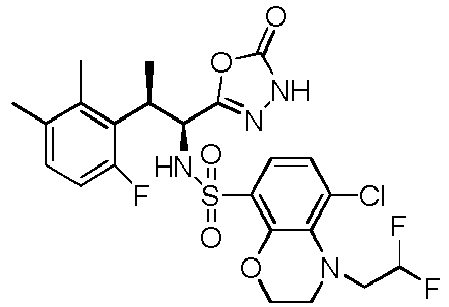
1H-NMR (CDCl3) δ: 7.67 (1H, br s), 7.46(1H, d, J = 8.4 Hz), 7.01 (1H, d, J = 8.4 Hz), 6.94 (1H, dd, J = 8.4, 5.5 Hz), 6.70 (1H, dd, J = 11.4, 8.4 Hz), 6.24 (1H, tt, J = 56.3, 4.5 Hz), 5.41 (1H, d, J = 10.5 Hz), 4.88 (1H, t, J = 10.5 Hz), 4.42-4.37 (1H, m), 4.29-4.25 (1H, m), 3.42 (1H, br s), 3.32-3.17 (4H, m), 2.19-2.17 (6H, m), 1.55-1.54 (3H, m).; LC/MS RT 1.87min, m/z [M-H]- 559,561 103 
LC/MS RT 1.87min, m/z [M-H]- 496,498 104 
1H-NMR (CDCl3) δ: 8.21 (1H, br s), 7.79 (1H, d, J = 8.4 Hz), 7.49 (1H, dd, J = 8.6, 5.3 Hz), 7.04-7.01 (1H, m), 6.96-6.92 (2H, m), 5.60-5.56 (1H, m), 4.79 (1H, t, J = 10.6 Hz), 3.95 (3H, s), 3.43 (1H, br s), 2.53 (3H, s), 1.55 (3H, d, J = 7.0 Hz).; LC/MS RT 1.64min, m/z [M-H]- 479,481 105 
LC/MS RT 1.71min, m/z [M-H]- 464,466 [Table 18-22] Example Structural Formula Physical Property Value 106 
1H-NMR (CDCl3) δ: 7.92-7.86 (1H, m), 7.56-7.46 (1H, m), 7.08-7.00 (1H, m), 6.97-6.92 (1H, m), 6.73-6.67 (1H, m), 5.52-5.45 (1H, m), 4.96-4.83 (1H, m), 4.61-4.37 (3H, m), 3.49 (1H, br s), 2.90-2.82 (1H, m), 2.54-2.48 (1H, m), 2.19-2.16 (6H, m), 2.09-2.09 (3H, m), 1.57-1.50 (2H, m); LC/MS RT 1.81 1.85min, m/z [M-H]- 586 107 
LC/MS RT 1.90min, m/z [M-H]- 506,508 108 
LC/MS RT 1.98min, m/z [M-H]- 568,570 109 
LC/MS RT 1.71min, m/z [M-H]- 497,499 110 
1H NMR (CD3OD) δ: 7.53-7.63 (m, 1H), 7.02-7.19 (m, 2H), 6.95-7.01 (m, 1H), 6.72 (dd, J=11.9, 8.6 Hz, 1H), 4.82-4.98 (m, 1H), 3.65-3.74 (m, 1H), 2.24 (s, 3H), 2.18 (s, 3H), 1.46 (d, J=7.0 Hz, 3H); LC/MS RT 1.69min, m/z [M-H]- 440 [Table 18-23] Example Structural Formula Physical Property Value 111 
LC/MS RT 1.79min, m/z [M-H]- 474,476 112 
1H NMR (CD3OD) δ: 8.05 (d, J=1.8 Hz, 1H), 7.76 (d, J=1.8 Hz, 1H), 6.97 (dd, J=8.2, 5.7 Hz, 1H), 6.70 (dd, J=11.7, 8.4 Hz, 1H), 4.82 (d, J=11.4 Hz, 1H), 3.99 (s, 3H), 3.66-3.76 (m, 1H), 2.25 (s, 3H), 2.18 (s, 3H), 1.51 (d, J=7.0 Hz, 3H); LC/MS RT 1.62min, m/z [M-H]- 469,471 113 
1H NMR (CD3OD) δ: 8.16 (d, J=8.4 Hz, 1H), 7.97 (d, J=8.4 Hz, 1H), 6.99 (dd, J=8.6, 6.0 Hz, 1H), 6.73 (dd, J=11.9, 8.6 Hz, 1H), 4.94 (d, J=11.4 Hz, 1H), 3.75-3.83 (m, 4H), 3.63-3.72 (m, 2H), 3.55-3.62 (m, 1H), 3.22-3.27 (m, 2H), 2.21 (s, 3H), 2.19 (s, 3H), 1.47 (d, J=7.3 Hz, 3H); LC/MS RT 1.57min, m/z [M-H]- 552,554 114 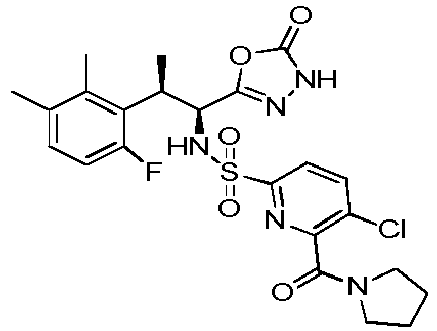
1H NMR (CD3OD) δ: 8.17 (d, J=8.4 Hz, 1H), 7.98 (d, J=8.4 Hz, 1H), 6.99 (dd, J=8.4, 5.9 Hz, 1H), 6.73 (dd, J=11.7, 8.4 Hz, 1H), 4.94 (d, J=11.4 Hz, 1H), 3.58-3.66 (m, 3H), 3.21-3.29 (m, 2H), 2.21 (s, 3H), 2.19 (s, 3H), 1.94-2.01 (m, 4H), 1.46 (d, J=7.0 Hz, 3H); LC/MS RT 1.65min, m/z [M-H]- 536,538 115 
1H NMR (CD3OD) δ: 8.16 (d, J=8.4 Hz, 1H), 7.93-8.02 (m, 1H), 6.99 (dd, J=8.2, 6.0 Hz, 1H), 6.72 (dd, J=11.7, 8.4 Hz, 1H), 4.94 (dd, J=11.2, 3.1 Hz, 1H), 3.53-3.64 (m, 3H), 3.29-3.36 (m, 2H), 3.23-3.29 (m, 2H), 2.21 (s, 3H), 2.18 (s, 3H), 1.92-2.08 (m, 6H), 1.46 (br d, J=7.0 Hz, 3H); LC/MS RT 1.83min, m/z [M-H]- 576,578 [Table 18-24] Example Structural Formula Physical Property Value 116 
1H NMR (CD3OD) δ: 8.16 (dd, J=8.4, 5.1 Hz, 1H), 7.97 (dd, J=11.7, 8.4 Hz, 1H), 6.96-7.02 (m, 1H), 6.73 (dd, J=11.5, 8.4 Hz, 1H), 4.88-4.99 (m, 1H), 4.43-4.50 (m, 1H), 4.21-4.28 (m, 2H), 3.56-3.64 (m, 1H), 3.37-3.49 (m, 1H), 3.16 (d, J=12.8 Hz, 1H), 2.96 (d, J=12.8 Hz, 1H), 2.21 (s, 3H), 2.18 (s, 3H), 1.88-2.07 (m, 4H), 1.47 (d, J=7.0 Hz, 3H); LC/MS RT 1.61min, m/z [M-H]- 578,580 117 
1H NMR (CD3OD) δ: 8.17 (dd, J=8.4, 2.6 Hz, 1H), 7.97 (dd, J=8.4, 2.2 Hz, 1H), 6.99 (dd, J=8.4, 5.7 Hz, 1H), 6.73 (dd, J=11.5, 8.4 Hz, 1H), 4.91-4.97 (m, 1H), 4.66-4.73 (m, 1H), 3.80-3.90 (m, 2H), 3.54-3.77 (m, 4H), 2.19-2.22 (m, 3H), 2.18 (s, 3H), 2.03-2.12 (m, 4H), 1.46 (d, J=7.0 Hz, 3H); LC/MS RT 1.62min, m/z [M-H]- 578,580 118 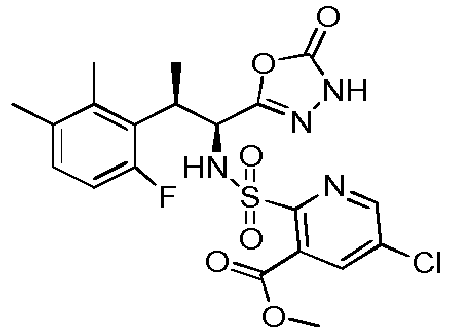
LC/MS RT 1.72min, m/z[M-H]- 497,499 119 
LC/MS RT 1.73min, m/z [M-H]- 541,543 120 
LC/MS RT 1.80min, m/z [M-H]- 555,557 [Table 18-25] Example Structural Formula Physical Property Value 121 
LC/MS RT 1.93min, m/z [M-H]- 514,516 122 
LC/MS RT 1.91min, m/z [M-H]- 526,528 123 
1H-NMR (CDCl3) δ: 8.56 (0.5H, s), 8.04 (0.5H, s), 7.83-7.78 (1H, m), 7.07-7.04 (1H, m), 6.96-6.93 (1H, m), 6.74-6.68 (1H, m), 5.43-5.40 (1H, m), 4.97-4.91 (0.5H, m), 4.84-4.79 (0.5H, m), 4.60-4.42 (2H, m), 3.51 (1H, s), 2.94 (1H, s), 2.53-2.44 (1H, m), 2.22-2.17 (9H, m), 1.57-1.50 (3H, m).; LC/MS RT 1.89, 1.94min, m/z [M-H]- 620,622 124 
1H NMR (CD3OD) δ: 7.88 (d, J=8.4 Hz, 1H), 7.43 (dd, J=8.8, 5.5 Hz, 1H), 7.15 (d, J=8.4 Hz, 1H), 6.82 (dd, J=11.2, 9.0 Hz, 1H), 4.69-4.80 (m, 3H), 3.63-3.79 (m, 1H), 2.85-2.92 (m, 2H), 2.44 (s, 3H), 1.54 (d, J=7.0 Hz, 3H); LC/MS RT 1.77min, m/z [M-H]- 572,574 125 
1H-NMR (CDCl3) δ: 8.47 (1H, br s), 7.67 (1H, d, J = 8.4 Hz), 6.96-6.93 (2H, m), 6.82-6.82 (1H, m), 6.65 (1H, dd, J = 14.5, 8.2 Hz), 5.67 (1H, d, J = 9.6 Hz), 5.01 (1H, dd, J = 9.6, 1.6 Hz), 3.88 (3H, s), 2.29 (3H, s), 2.15 (3H, s), 1.66 (3H, d, J = 4.0 Hz), 1.58 (3H, d, J = 3.7 Hz).; LC/MS RT 1.87min, m/z [M-H]- 482,484 [Table 18-26] Example Structural Formula Physical Property Value 126 
1H NMR (CD3OD) δ: 7.63 (1H, d, J = 8.4 Hz), 7.07 (1H, s), 6.986.94 (2H, m), 6.70-6.66 (1H, m), 4.40 (1H, t, J = 7.7 Hz), 3.94 (3H, s), 3.26-3.23 (1H, m), 3.16-3.11 (1H, m), 2.17 (3H, s), 2.14 (3H, s); LC/MS RT 1.76min, m/z [M-H]- 454,456 127 
1H NMR (CD3OD) δ: 7.72 (1H, dd, J = 14.3, 8.4 Hz), 7.12-7.06 (1H, m), 7.05-6.99 (2H, m), 6.72-6.63 (1H, m), 4.34-4.16 (1H, m), 3.86-3.81 (3H, m), 2.37-2.30 (3H, m), 2.19 (3H, s), 1.57-1.54 (1H, m), 1.35-1.28 (1H, m), 0.93-0.87 (1H, m), 0.72-0.67 (1H, m); LC/MS RT 1.85min, m/z [M-H]- 480,482 128 
1H-NMR (CDCl3) δ: 7.84 (1H, br s), 7.78 (1H, d, J = 8.1 Hz), 7.00(1H, dd, J = 8.4, 1.8 Hz), 6.95-6.91 (2H, m), 6.68 (1H, dd, J = 11.7, 8.4 Hz), 5.46 (1H, d, J = 10.3 Hz), 4.82 (1H, t, J = 10.6 Hz), 3.94 (3H, s), 3.283.22 (1H, m), 2.27-2.25 (1H, m), 2.19-2.16 (6H, m), 1.96-1.87 (1H, m), 0.79 (3H, t, J = 7.3 Hz).; LC/MS RT 1.85min, m/z [M-H]- 482,484 129 
1H NMR (CD3OD) δ: 7.58-7.73 (m, 1H), 6.91-7.11 (m, 2H), 6.62-6.81 (m, 1H), 4.71-4.82 (m, 1H), 4.49-4.61 (m, 2H), 3.57-3.79 (m, 1H), 2.70-2.95 (m, 1H), 2.28-2.38 (m, 0.5H), 2.20-2.25 (m, 3H), 2.16-2.24 (m, 3H), 2.08-2.14 (m, 0.5H), 1.98-2.02 (m, 3H), 1.42-1.56 (m, 3H); LC/MS RT 1.81, 1.87min, m/z [M-H]- 569,571 130 
1H NMR (CD3OD) δ: 8.87 (dd, J=4.2, 1.6 Hz, 1H), 8.39 (d, J=2.6 Hz, 1H), 8.12-8.36 (m, 1H), 7.98 (dd, J=8.2, 2.4 Hz, 1H), 7.69-7.86 (m, 1H), 7.55-7.68 (m, 2H), 7.42-7.51 (m, 2H), 5.21 (d, J=7.7 Hz, 1H), 4.40-4.53 (m, 1H), 1.55 (d, J=7.3 Hz, 3H); LC/MS RT 1.82min, m/z [M-H]- 488,490 [Table 18-27] Example Structural Formula Physical Property Value 131 
1H NMR (CD3OD) δ: 8.28 (dd, J=6.2, 2.6 Hz, 1H), 8.08 (ddd, J=8.7, 4.5, 2.6 Hz, 1H), 7.43-7.54 (m, 1H), 7.00-7.09 (m, 2H), 6.98 (d, J=2.2 Hz, 1H), 4.42 (d, J=10.6 Hz, 1H), 3.31-3.41 (m, 1H), 3.28 (s, 3H), 2.79-2.87 (m, 4H), 1.92-2.07 (m, 2H), 1.42 (d, J=7.0 Hz, 3H); LC/MS RT 1.67min, m/z [M-H]- 494 132 
1H NMR (CD3OD) δ: 9.01 (dd, J=4.2, 1.6 Hz, 1H), 8.28-8.45 (m, 2H), 8.15 (d, J=7.0 Hz, 1H), 7.64-7.71 (m, 1H), 7.57-7.63 (m, 1H), 6.91-7.00 (m, 2H), 6.85-6.91 (m, 1H), 4.45 (d, J=10.6 Hz, 1H), 3.28-3.42 (m, 1H), 2.68-2.94 (m, 4H), 1.78-2.08 (m, 2H), 1.45 (d, J=7.0 Hz, 3H); LC/MS RT 1.72min, m/z [M-H]- 449 133 
1H NMR (CD3OD) δ: 8.88 (s, 1H), 8.59 (s, 1H), 8.01-8.08 (m, 1H), 7.56-7.65 (m, 1H), 7.45-7.54 (m, 1H), 7.36-7.42 (m, 1H), 6.98-7.06 (m, 2H), 6.85-6.93 (m, 1H), 4.23 (d, J=11.0 Hz, 1H), 3.19-3.31 (m, 1H), 2.75-2.82 (m, 4H), 1.82-2.08 (m, 2H), 1.35 (d, J=7.0 Hz, 3H); LC/MS RT 1.76min, m/z [M-H]- 465 134 
1H NMR (cdcl3) δ: 7.81 (dd, J=7.7, 1.8 Hz, 1H), 7.73 (br s, 1H), 7.43-7.50 (m, 1H), 7.03-7.07 (m, 2H), 7.00 (t, J=7.7 Hz, 1H), 6.90-6.95 (m, 2H), 5.48 (d, J=10.6 Hz, 1H), 4.47 (t, J=10.3 Hz, 1H), 3.95 (s, 3H), 3.14-3.33 (m, 1H), 2.77-2.88 (m, 4H), 1.95-2.10 (m, 2H), 1.49 (d, J=7.0 Hz, 3H); LC/MS RT 1.69min, m/z [M-H]- 428 135 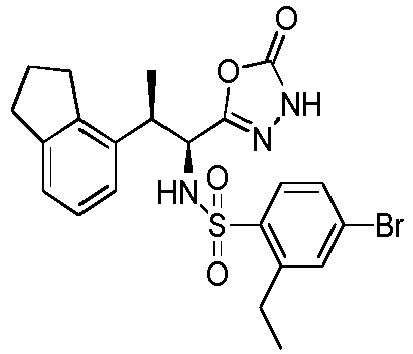
1H NMR (CD3OD) δ: 7.72 (d, J=8.4 Hz, 1H), 7.47 (d, J=1.8 Hz, 1H), 7.42 (dd, J=8.4, 2.2 Hz, 1H), 6.98-7.03 (m, 2H), 6.89-6.95 (m, 1H), 4.28 (d, J=10.3 Hz, 1H), 3.25-3.33 (m, 1H), 2.88-3.11 (m, 2H), 2.75-2.85 (m, 4H), 1.84-2.10 (m, 2H), 1.39 (d, J=7.0 Hz, 3H), 1.25 (t, J=7.5 Hz, 3H); LC/MS RT 2.02min, m/z [M-H]- 506,508 [Table 18-28] Example Structural Formula Physical Property Value 136 
1H NMR (CD3OD) δ: 8.86 (d, J=2.2 Hz, 1H), 8.24 (dd, J=7.3, 1.5 Hz, 1H), 8.12 (s, 1H), 8.06 (dd, J=8.1, 1.5 Hz, 1H), 7.61 (t, J=7.6 Hz, 1H), 6.82-7.03 (m, 3H), 4.40 (d, J=11.0 Hz, 1H), 3.32-3.40 (m, 1H), 2.70-2.89 (m, 4H), 2.54 (s, 3H), 1.79-2.13 (m, 2H), 1.45 (d, J=7.0 Hz, 3H); LC/MS RT 1.79min, m/z [M-H]- 463 137 
1H NMR (CD3OD) δ: 7.64 (d, J=8.4 Hz, 1H), 7.24 (d, J=1.5 Hz, 1H), 7.18 (dd, J=8.4, 1.8 Hz, 1H), 6.97-7.07 (m, 2H), 6.90-6.96 (m, 1H), 4.30 (d, J=11.0 Hz, 1H), 3.94 (s, 3H), 3.32-3.38 (m, 1H), 2.78-2.89 (m, 4H), 1.90-2.11 (m, 2H), 1.44 (d, J=7.0 Hz, 3H); LC/MS RT 1.82min, m/z [M-H]- 506,508 138 
1H NMR (CD3OD) δ: 7.89 (dd, J=7.9, 1.6 Hz, 1H), 7.59 (td, J=8.0, 1.6 Hz, 1H), 7.26-7.33 (m, 3H), 6.99-7.05 (m, 2H), 6.92-6.96 (m, 1H), 4.41 (d, J=10.6 Hz, 1H), 3.36-3.42 (m, 1H), 2.78-2.91 (m, 4H), 1.91-2.04 (m, 2H), 1.40 (d, J=7.0 Hz, 3H); LC/MS RT 1.78min, m/z [M-H]- 464 139 
1H NMR (CD3OD) δ: 8.00 (d, J=1.8 Hz, 1H), 7.94 (dd, J=8.1, 1.8 Hz, 1H), 7.58 (d, J=8.1 Hz, 1H), 6.99-7.07 (m, 2H), 6.94-6.99 (m, 1H), 4.41 (d, J=10.3 Hz, 1H), 3.56-3.60 (m, 2H), 3.39-3.46 (m, 2H), 3.25-3.29 (m, 1H), 2.78-2.87 (m, 4H), 1.93-2.06 (m, 2H), 1.40 (d, J=7.0 Hz, 3H); LC/MS RT 1.60min, m/z [M-H]- 488 140 
1H NMR (CD3OD) δ: 7.39-7.43 (m, 1H), 7.36-3.38 (m, 1H), 7.10 (d, J=8.1 Hz, 1H), 7.00-7.06 (m, 2H), 6.93-6.98 (m, 1H), 4.30 (d, J=11.0 Hz, 1H), 3.30-3.35 (m, 1H), 2.74-2.87 (m, 8H), 1.91-2.10 (m, 2H), 1.77-1.82 (m, 4H), 1.41 (d, J=6.6 Hz, 3H); LC/MS RT 1.91min, m/z [M-H]- 452 [Table 18-29] Example Structural Formula Physical Property Value 141 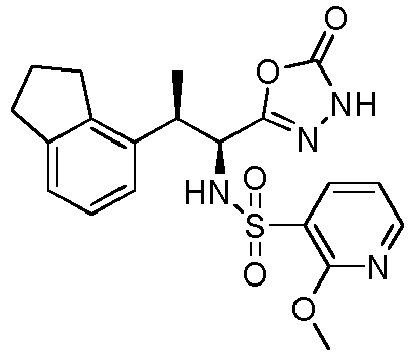
1H NMR (CD3OD) δ: 8.53-8.55 (m, 1H), 8.23-8.31 (m, 1H), 8.10 (dd, J=7.5, 2.0 Hz, 1H), 7.39-7.50 (m, 1H), 7.00-7.05 (m, 2H), 4.32 (d, J=10.6 Hz, 1H), 4.03 (s, 3H), 3.45-3.52 (m, 1H), 2.76-2.93 (m, 4H), 1.93-2.12 (m, 2H), 1.44 (d, J=7.0 Hz, 3H); LC/MS RT 1.65min, m/z [M-H]- 429 142 
LC/MS RT 1.80min, m/z [M-H]- 519,521 143 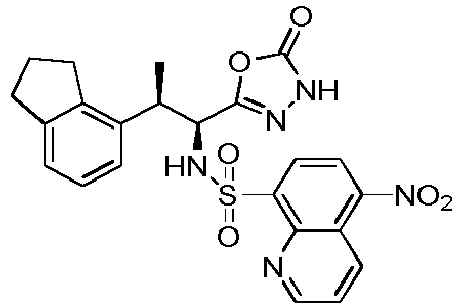
1H NMR (CD3OD) δ: 8.86-9.01 (m, 1H), 8.29-8.55 (m, 1H), 7.95-8.24 (m, 1H), 7.37-7.52 (m, 1H), 6.63-7.24 (m, 4H), 4.26-4.46 (m, 1H), 3.14-3.39 (m, 1H), 2.71-2.88 (m, 4H), 1.81-2.10 (m, 2H), 1.43 (d, J=7.0 Hz, 3H); LC/MS RT 1.80min, m/z [M-H]- 494 144 
LC/MS RT 1.92min, m/z [M-H]- 554,556 145 
LC/MS RT 1.86min, m/z [M-H]- 518,520 [Table 18-30] Example Structural Formula Physical Property Value 146 
1H NMR (CD3OD) δ: 7.90 (d, J=8.4 Hz, 1H), 7.37 (dd, J=8.4, 1.8 Hz, 1H), 7.33-7.35 (m, 1H), 6.88-7.05 (m, 1H), 6.70 (dd, J=11.7, 8.4 Hz, 1H), 5.29-5.43 (m, 1H), 4.74 (d, J=11.4 Hz, 1H), 3.59-3.75 (m, 1H), 2.22 (s, 3H), 2.18 (s, 3H), 1.45 (d, J=7.0Hz, 3H); LC/MS RT 1.86min, m/z [M-H]- 504,506 147 
LC/MS RT 1.83min, m/z [M-H]- 480,482 148 
1H NMR (CD3OD) δ: 8.10 (d, J=8.1 Hz, 1H), 7.10 (d, J=8.1 Hz, 1H), 6.97 (dd, J=8.4, 5.9 Hz, 1H), 6.70 (dd, J=11.7, 8.4 Hz, 1H), 4.69 (d, J=11.4 Hz, 1H), 4.03 (s, 3H), 3.60-3.74 (m, 1H), 2.22 (s, 3H), 2.18 (s, 3H), 1.47 (d, J=7.0 Hz, 3H); LC/MS RT 1.77min, m/z [M-H]- 469,471 149 
1H NMR (CD3OD) δ: 8.14-8.23 (m, 2H), 8.05-8.10 (m, 1H), 6.99 (dd, J=8.4, 6.0 Hz, 1H), 6.75 (dd, J=11.9, 8.4 Hz, 1H), 5.40 (d, J=11.4 Hz, 1H), 3.65-3.77 (m, 1H), 2.23 (s, 3H), 2.20 (s, 3H), 1.40 (d, J=7.0 Hz, 3H); LC/MS RT 1.66min, m/z [M-H]- 522,524 150 
1H NMR (cdcl3) δ: 8.28-8.53 (m, 1H), 7.54 (br d, J=8.1 Hz, 2H), 7.18 (br d, J=8.1 Hz, 2H), 6.90-7.08 (m, 3H), 5.17 (br d, J=9.2 Hz, 1H), 4.40 (t, J=9.9 Hz, 1H), 3.49 (s, 2H), 3.44-3.61 (m, 1H), 2.38 (s, 3H), 2.20 (s, 3H), 2.11 (s, 3H), 1.34 (d, J=7.0 Hz, 3H); LC/MS RT 1.72min, m/z [M-H]- 400 [Table 18-31] Example Structural Formula Physical Property Value 151 
1H NMR (cdcl3) δ: 5.27 (d, J=9.9 Hz, 1H), 7.69 (d, J=8.4 Hz, 2H), 7.26 (d, J=7.7 Hz, 4H), 6.94 (dd, J=8.1, 5.9 Hz, 1H), 6.71 (dd, J=11.4, 8.4 Hz, 1H), 5.27 (br d, J=9.9 Hz, 1H), 4.79 (t, J=10.3 Hz, 1H), 3.31-3.48 (m, 1H), 2.38 (s, 3H), 2.17 (s, 3H), 2.15 (s, 3H), 1.42 (br d, J=7.0 Hz, 3H); LC/MS RT 1.72min, m/z [M-H]- 418 152 
1H-NMR (CDCl3) δ: 8.75 (1H, s), 7.72 (1H, d, J = 7.7 Hz), 7.55 (1H, d, J = 8.1 Hz), 7.38-7.37 (1H, m), 7.22 (1H, t, J = 7.9 Hz), 6.91-6.86 (2H, m), 6.66-6.61 (1H, m), 5.48 (1H, d, J = 10.4 Hz), 4.74 (1H, t, J = 10.4 Hz), 3.34 (1H, br s), 2.12 (3H, s), 2.08 (3H, s), 1.36 (3H, d, J = 6.6 Hz); LC/MS RT 1.60min, m/z [M-H]- 443 153 
1H NMR (CD3OD) δ: 9.09 (dd, J=4.2, 1.6 Hz, 1H), 8.69 (d, J=8.9 Hz, 1H), 8.34 (d, J=8.1 Hz, 1H), 7.82 (d, J=8.1 Hz, 1H), 7.70-7.76 (m, 1H), 6.91 (dd, J=8.4, 5.9 Hz, 1H), 6.55-6.68 (m, 1H), 4.80 (d, J=11.4 Hz, 1H), 3.62-3.70 (m, 1H), 2.18 (s, 3H), 2.13 (s, 3H), 1.49 (d, J=6.6 Hz, 3H); LC/MS RT 1.80min, m/z [M-H]- 489,491 154 
1H-NMR (CDCl3) δ: 8.63 (1H, s), 6.98-6.93 (1H, m), 6.92 (1H, s), 6.71 (1H, dd, J = 11.7, 8.4 Hz), 5.57 (1H, br s), 4.94-4.90 (1H, m), 4.03 (3H, s), 3.45 (1H, s), 2.18 (6H, s), 1.53 (3H, d, J = 7.0 Hz); LC/MS RT 1.65min, m/z [M-H]- 469,471 155 
1H-NMR (CDCl3) δ: 7.95-7.91 (2H, m), 6.96-6.92 (1H, m), 6.70 (1H, dd, J = 11.5, 8.4 Hz), 4.98 (1H, t, J = 11.5 Hz), 4.76 (1H, d, J = 6.2 Hz), 4.62 (2H, t, J = 6.2 Hz), 4.58-4.55 (1H, m), 4.05-3.77 (1H, m), 3.70-3.66 (2H, m), 3.52-3.25 (4H, m), 2.31-2.21 (2H, m), 2.18 (3H, s), 2.14 (3H, d, J = 9.2 Hz), 1.53 (3H, d, J = 6.6 Hz).; LC/MS RT 1.54min, m/z [M-H]- 578,580 [Table 18-32] Example Structural Formula Physical Property Value 156 
1H-NMR (CDCl3) δ: 7.95-7.92 (2H, m), 6.94 (1H, dd, J = 8.3, 5.9 Hz), 6.68 (1H, dd, J = 11.4, 8.3 Hz), 4.95 (1H, d, J = 10.6 Hz), 4.51-4.45 (4H, m), 3.82-3.80 (1H, m), 3.58-3.51 (1H, m), 3.44 (1H, br s), 3.16-3.03 (2H, m), 2.18 (3H, s), 2.15 (3H, s), 2.02-1.98 (2H, m), 1.92-1.88 (2H, m), 1.53 (3H, d, J = 7.0 Hz); LC/MS RT 1.56min, m/z [M-H]- 592,594 157 
1H-NMR (CDCl3) δ: 10.23 (1H, s), 7.64 (1H, d, J = 8.4 Hz), 7.02 (1H, d, J = 8.4 Hz), 6.92 (1H, dd, J = 8.4, 5.9 Hz), 6.68 (1H, dd, J =11.7, 8.4 Hz), 6.30 (1H, d, J = 6.2 Hz), 5.58 (1H, d, J = 10.3 Hz), 5.23 (1H, s), 4.79 (1H, t, J = 10.4 Hz), 4.54-4.51 (1H, m), 4.21-4.17 (1H, m), 3.54 (1H, s), 3.48 (1H, s), 2.19 (3H, s), 2.18 (3H, s), 1.96 (3H, s), 1.53 (3H, d, J = 7.0 Hz); LC/MS RT 1.61min, m/z [M-H]- 551,553 158 
1H-NMR (CDCl3) δ: 8.12 (1H, br s), 7.37 (1H, d, J = 4.0 Hz), 6.97 (1H, dd, J = 8.3, 5.7 Hz), 6.86 (1H, d, J = 4.0 Hz), 6.72 (1H, dd, J = 11.7, 8.3 Hz), 5.24 (1H, br s), 4.84 (1H, t, J = 10.1 Hz), 3.48-3.43 (1H, m), 2.19 (3H, s), 2.17 (3H, s), 1.45 (3H, d, J = 7.0 Hz).; LC/MS RT 1.79min, m/z [M-H]- 444,446 159 
; LC/MS RT 1.65min, m/z [M-H]- 492 160 
1H-NMR (CDCl3) δ: 8.52 (1H, br s), 7.48 (1H, s), 6.96-6.92 (1H, m), 6.73-6.68 (1H, m), 5.53 (1H, d, J = 9.5 Hz), 4.80 (1H, t,J = 9.5 Hz), 3.66 (3H, s), 3.48 (1H, br s), 2.21 (3H, s), 2.19 (3H, s), 1.56-1.55 (3H, m).; LC/MS RT 1.53min, m/z [M-H]- 442,444 [Table 18-33] Example Structural Formula Physical Property Value 161 
1H-NMR (CDCl3) δ: 8.34-8.54 (1H, m), 7.98 (1H, dd, J = 8.5, 2.4 Hz), 7.65 (1H, d, J = 8.5 Hz), 6.93-6.89 (1H, m), 6.67 (1H, dd, J = 11.4, 8.4 Hz), 6.16-6.14 (1H, m), 4.91 (1H, t, J = 10.3 Hz), 3.51 (2H, br s), 2.16 (1H, s), 2.14 (3H, s), 2.12 (3H, s), 1.53 (3H, d, J = 7.0 Hz).; LC/MS RT 1.58min, m/z [M-H]- 506,508 162 
1H NMR (CD3OD) δ: 7.64 (dd, J=8.1, 1.8 Hz, 1H), 7.60 (s, 1H), 6.97 (dd, J=8.4, 5.5 Hz, 1H), 6.92 (d, J=8.1 Hz, 1H), 6.71 (dd, J=11.9, 8.1 Hz, 1H), 4.67 (d, J=11.0 Hz, 1H), 3.53-3.56 (m, 3H), 2.17 (s, 3H), 2.16 (s, 3H), 1.46 (d, J=6.6 Hz, 3H); LC/MS RT 1.49min, m/z [M-H]- 459 163 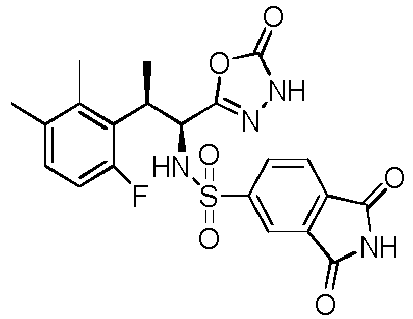
1H NMR (CD3OD) δ: 8.11-8.21 (m, 2H), 7.90-7.98 (m, 1H), 6.97 (dd, J=8.4, 5.9 Hz, 1H), 6.72 (dd, J=11.7, 8.4 Hz, 1H), 4.77 (d, J=11.0 Hz, 1H), 3.53-3.72 (m, 1H), 2.18 (s, 3H), 2.16 (s, 3H), 1.47 (d, J=7.0 Hz, 3H); LC/MS RT 1.58min, m/z [M-H]- 473 164 
1H NMR (CD3OD) δ: 7.30 (dd, J=8.1, 1.5 Hz, 1H), 7.01 (dd, J=8.1, 1.5 Hz, 1H), 6.96 (dd, J=8.4, 5.9 Hz, 1H), 6.86 (t, J=8.0 Hz, 1H), 6.70 (dd, J=11.9, 8.6 Hz, 1H), 4.74 (d, J=11.0 Hz, 1H), 4.37-4.45 (m, 2H), 4.19-4.34 (m, 2H), 3.61-3.77 (m, 1H), 2.21 (s, 3H), 2.17 (s, 3H), 1.49 (d, J=6.6 Hz, 3H); LC/MS RT 1.67min, m/z [M-H]- 462 165 
1H NMR (CD3OD) δ: 7.47 (dd, J=8.4, 1.8 Hz, 1H), 7.43 (d, J=1.8 Hz, 1H), 7.07 (d, J=8.3 Hz, 1H), 6.96 (dd, J=8.3, 5.7 Hz, 1H), 6.70 (dd, J=11.7, 8.4 Hz, 1H), 4.68 (d, J=11.4 Hz, 1H), 3.53 (br dd, J=10.8, 7.1 Hz, 1H), 2.17 (s, 3H), 2.15 (s, 3H), 1.43 (d, J=6.6 Hz, 3H); LC/MS RT 1.42min, m/z [M-H]- 460 [Table 18-34] Example Structural Formula Physical Property Value 166 
LC/MS RT 1.59min, m/z [M-H]- 494 167 
LC/MS RT 1.87, 1.92min, m/z [M-H]- 630,632 168 
1H NMR (CD3OD) δ: 7.40 (dd, J=8.1, 1.5 Hz, 1H), 7.16 (dd, J=8.1, 1.1 Hz, 1H), 7.04 (t, J=8.2 Hz, 1H), 6.98 (dd, J=8.4, 5.7 Hz, 1H), 6.72 (dd, J=11.5, 8.4 Hz, 1H), 4.68 (d, J=11.4 Hz, 1H), 4.63-4.66 (m, 2H), 3.50-3.59 (m, 1H), 2.17 (s, 6H), 1.45 (d, J=7.0 Hz, 3H); LC/MS RT 1.65min, m/z [M-H]- 475 169 
1H NMR (CD3OD) δ: 8.30 (dd, J=6.2, 2.2 Hz, 1H), 8.12 (ddd, J=8.7, 4.5, 2.6 Hz, 1H), 7.52 (t, J=9.1 Hz, 1H), 6.98 (dd, J=8.4, 5.9 Hz, 1H), 6.73 (dd, J=11.7, 8.4 Hz, 1H), 4.75 (d, J=11.4 Hz, 1H), 3.52-3.64 (m, 1H), 3.28(s, 3H), 2.20 (s, 3H), 2.17 (s, 3H), 1.47 (d, J=6.6 Hz, 3H); LC/MS RT 1.65min, m/z [M-H]- 500 170 
1H NMR (CD3OD) δ: 6.97 (dd, J=8.4, 5.9 Hz, 1H), 6.68-6.78 (m, 2H), 6.59-6.67 (m, 1H), 4.80 (d, J=11.4 Hz, 1H), 3.94 (s, 3H), 3.63-3.75 (m, 1H), 2.23 (s, 3H), 2.18 (s, 3H), 1.50 (d, J=6.6 Hz, 3H); LC/MS RT 1.71min, m/z [M-H]- 470 [Table 18-35] Example Structural Formula Physical Property Value 171 
1H NMR (CD3OD) δ: 8.22 (d, J=1.8 Hz, 1H), 7.83 (dd, J=8.1, 2.2 Hz, 1H), 7.51 (d, J=8.1 Hz, 1H), 6.93-7.03 (m, 1H), 6.66-6.80 (m, 1H), 4.71 (d, J=11.3 Hz, 1H), 3.51-3.64 (m, 1H), 3.07-3.26 (m, 4H), 2.64 (s, 3H), 2.18 (s, 3H), 2.17 (s, 3H), 1.55-1.71 (m, 6H), 1.43 (d, J=6.6 Hz, 3H); LC/MS RT 1.89min, m/z [M-H]- 565 172 
1H NMR (CD3OD) δ: 7.59 (d, J=1.9 Hz, 1H), 7.50 (dd, J=8.6, 1.9Hz, 1H), 7.21 (d, J=8.3 Hz, 1H), 6.97 (dd, J=8.3, 5.7 Hz, 1H), 6.71 (dd, J=11.7, 8.4 Hz, 1H), 4.70 (d, J=11.0 Hz, 1H), 3.51-3.58 (m, 1H), 2.17 (s, 3H), 2.16 (s, 3H), 1.45 (d, J=7.0 Hz, 3H); LC/MS RT 1.39min, m/z [M-H]- 488 173 
1H NMR (CD3OD) δ: 7.19-7.25 (m, 2H), 6.97 (dd, J=8.4, 5.9 Hz, 1H), 6.87 (d, J=8.4 Hz, 1H), 6.72 (dd, J=11.7, 8.4 Hz, 1H), 4.66 (d, J=11.4 Hz, 1H), 4.22-4.31 (m, 4H), 3.40-3.65 (m, 1H), 2.16 (s, 6H), 1.44 (d, J=7.3 Hz, 3H); LC/MS RT 1.67min, m/z [M-H]- 462 174 
LC/MS RT 1.68min, m/z [M-H]- 472 175 
1H NMR (CD3OD) δ: 8.05 (dd, J=7.5, 2.0 Hz, 2H), 7.73 (t, J=7.7 Hz, 1H), 6.97 (dd, J=8.6, 5.9 Hz, 1H), 6.72 (dd, J=11.7, 8.6 Hz, 1H), 5.52-5.71 (m, 2H), 4.72-4.79 (m, 1H), 3.54-3.61 (m, 1H), 2.17 (s, 3H), 2.16 (s, 3H), 1.46 (d, J=7.0 Hz, 3H); LC/MS RT 1.65min, m/z [M-H]- 460 [Table 18-36] Example Structural Formula Physical Property Value 176 
1H NMR (CD3OD) δ: 8.43 (d, J=2.2 Hz, 1H), 7.88-7.95 (m, 1H), 7.72 (d, J=8.1 Hz, 1H), 6.98 (dd, J=8.4, 5.9 Hz, 1H), 6.73 (dd, J=11.4, 8.4 Hz, 1H), 4.23 (d, J=10.6 Hz, 1H), 3.43-3.55 (m, 1H), 2.25 (s, 3H), 2.20 (s, 3H), 1.46 (d, J=7.0 Hz, 3H); LC/MS RT 1.61min, m/z [M-H]- 517,519 177 
1H NMR (cdcl3) δ: 8.27 (brs, 1H), 7.77-7.89 (m, 2H), 7.40-7.59 (m, 3H), 6.94 (dd, J=8.3, 5.7 Hz, 1H), 6.71 (dd, J=11.7, 8.3 Hz, 1H), 5.31 (br d, J=10.3 Hz, 1H), 4.82 (t, J=10.3 Hz, 1H), 3.36-3.47 (m, 1H), 2.17 (s, 3H), 2.15 (s, 3H), 1.43 (d, J=5.9 Hz, 3H); LC/MS RT 1.66min, m/z [M-H]- 404 178 
LC/MS RT 1.75min, m/z [M-H]- 498 179 
LC/MS RT 1.64min, m/z [M-H]- 474 180 
LC/MS RT 1.90min, m/z [M-H]- 541,543 [Table 18-37] Example Structural Formula Physical Property Value 181 
1H NMR (CD3OD) δ: 8.38 (s, 1H), 7.93 (d, J=9.0 Hz, 1H), 7.83 (dd, J=8.8, 1.8 Hz, 1H), 6.95 (dd, J=8.3, 5.7 Hz, 1H), 6.70 (dd, J=11.7, 8.3Hz, 1H), 4.75 (d, J=11.0 Hz, 1H), 3.50-3.65 (m, 1H), 2.16 (s, 3H), 2.14 (s, 3H), 1.45 (d, J=7.0 Hz, 3H); LC/MS RT 1.50min, m/z [M-H]- 445 182 
1H NMR (CD3OD) δ: 8.28 (s, 1H), 8.19 (s, 1H), 7.73 (dd, J=8.8, 1.5 Hz, 1H), 7.61 (d, J=8.8 Hz, 1H), 6.94 (dd, J=8.4, 5.9 Hz, 1H), 6.69 (dd, J=11.7, 8.4 Hz, 1H), 4.72 (d, J=11.4 Hz, 1H), 3.47-3.65 (m, 1H), 2.16 (s, 3H), 2.14 (s, 3H), 1.43 (d, J=7.0 Hz, 3H); LC/MS RT 1.53min, m/z [M-H]- 444 183 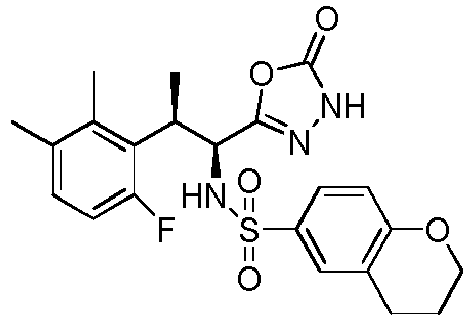
1H NMR (CD3OD) δ: 7.40-7.48 (m, 2H), 6.97 (dd, J=8.4, 5.9 Hz, 1H), 6.69-6.79 (m, 2H), 4.65 (d, J=11.4 Hz, 1H), 4.16-4.22 (m, 2H), 3.48-3.60 (m, 1H), 2.78 (t, J=6.2 Hz, 2H), 2.17 (s, 6H), 1.94-2.04 (m, 2H), 1.45 (d, J=7.0 Hz, 3H); LC/MS RT 1.72min, m/z [M-H]- 460 184 
1H NMR (CD3OD) δ: 6.84-7.00 (m, 4H), 6.71 (dd, J=11.7, 8.4 Hz, 1H), 4.66 (d, J=11.4 Hz, 1H), 3.47-3.56 (m, 1H), 3.20-3.28 (m, 2H), 2.89 (s, 3H), 2.72 (t, J=6.4 Hz, 2H), 2.15-2.18 (m, 6H), 1.85-1.99 (m, 2H), 1.44 (d, J=7.0 Hz, 3H); LC/MS RT 1.73min, m/z [M-H]- 473 185 
1H-NMR (CDCl3) δ: 8.47 (1H, br s), 7.70 (1H, d, J = 8.8 Hz), 7.02 (1H, dd, J = 8.2, 6.0 Hz), 6.97 (1H, dd, J = 8.4, 1.8 Hz), 6.90-6.89 (1H, m), 6.72 (1H, t, J = 8.8 Hz), 5.74-5.73 (1H, m), 5.67 (1H, br s), 5.30-5.30 (1H, m), 5.14 (1H, d, J = 9.2 Hz), 3.92 (3H, s), 2.19 (3H, s), 2.11 (3H, s).; LC/MS RT 1.80min, m/z [M-H]- 466,468 [Table 18-38] Example Structural Formula Physical Property Value 186 
1H NMR (CD3OD) δ: 7.69-7.82 (m, 1H), 6.91-7.10 (m, 2H), 6.71 (dd, J=11.7, 8.4 Hz, 1H), 4.74 (d, J=11.0 Hz, 1H), 3.59-3.71 (m, 1H), 2.21 (s, 3H), 2.18 (s, 3H), 1.66 (s, 6H), 1.46 (d, J=6.6 Hz, 3H); LC/MS RT 1.68min, m/z [M-H]- 498 187 
1H NMR (CD3OD) δ: 7.94 (d, J=8.8 Hz, 1H), 7.49 (d, J=2.2 Hz, 1H), 7.32 (d, J=8.8 Hz, 1H), 6.98-7.07 (m, 2H), 6.90-6.98 (m, 1H), 4.43 (d, J=10.3 Hz, 1H), 3.19-3.27 (m, 1H), 2.74-2.91 (m, 4H), 1.90-2.08 (m, 2H), 1.71 (s, 3H), 1.65 (s, 3H), 1.42 (d, J=7.0 Hz, 3H); LC/MS RT 1.93min, m/z [M-H]- 490,492 188 
1H NMR (CD3OD) δ: 8.29 (d, J=2.6 Hz, 1H), 7.67 (d, J=8.1 Hz, 1H), 7.45 (dd, J=8.2, 2.4 Hz, 1H), 6.90-7.10 (m, 3H), 4.34 (d, J=10.6 Hz, 1H), 3.24-3.31 (m, 1H), 2.79-2.84 (m, 4H), 1.90-2.09 (m, 2H), 1.70 (s, 6H), 1.39 (d, J=7.0 Hz, 3H); LC/MS RT 1.8min, m/z [M-H]- 534,536 189 
1H NMR (CD3OD) δ: 7.69-7.76 (m, 1H), 6.89-7.14 (m, 4H), 4.39 (d, J=11.0 Hz, 1H), 3.24-3.31 (m, 1H), 2.77-2.97 (m, 4H), 1.91-2.07 (m, 2H), 1.67 (s, 6H), 1.44 (d, J=7.0 Hz, 3H); LC/MS RT 1.7min, m/z [M-H]- 492 190 
1H NMR (CD3OD) δ: 7.37-7.50 (m, 1H), 7.03 (s, 2H), 6.91-6.99 (m, 1H), 4.41 (d, J=10.6 Hz, 1H), 4.06 (s, 3H), 3.32-3.36 (m, 1H), 2.77-2.96 (m, 4H), 1.93-2.06 (m, 2H), 1.54 (s, 3H), 1.50 (s, 3H), 1.35 (d, J=7.0 Hz, 3H); LC/MS RT 1.67min, m/z [M-H]- 492 [Table 18-39] Example Structural Formula Physical Property Value 191 
1H NMR (CD3OD) δ: 7.76 (d, J=9.2 Hz, 1H), 6.97-7.08 (m, 2H), 6.81-6.95 (m, 2H), 4.32 (d, J=11.0 Hz, 1H), 3.91 (s, 6H), 3.33-3.40 (m, 1H), 2.70-2.98 (m, 4H), 1.91-2.13 (m, 2H), 1.66 (s, 3H), 1.65 (s, 3H), 1.41 (d, J=7.0 Hz, 3H); LC/MS RT 1.78min, m/z [M-H]- 516 192 
1H NMR (CD3OD) δ: 8.45-8.43 (2H, m), 8.02 (1H, d, J = 8.1 Hz), 7.82 (1H, d, J = 8.1 Hz), 7.04-7.02 (2H, m), 6.98-6.95 (1H, m), 4.63 (1H, s), 4.51 (1H, d, J = 11.0 Hz), 2.92-2.82 (4H, m), 2.05-1.97 (2H, m), 1.69 (3H, s), 1.68 (3H, s), 1.42 (3H, d, J = 7.0 Hz); LC/MS RT 1.74min, m/z [M-H]- 491,493 193 
1H NMR (CD3OD) δ: 8.04 (d, J=8.3 Hz, 1H), 8.02 (d, J=8.3 Hz, 1H), 6.98 (dd, J=8.4, 5.9 Hz, 1H), 6.71 (dd, J=11.7, 8.4 Hz, 1H), 4.83 (d, J=11.4 Hz, 1H), 3.55-3.68 (m, 1H), 2.23 (s, 3H), 2.18 (s, 3H), 1.67 (d, J=6.6 Hz, 6H), 1.46 (d, J=7.0 Hz, 3H); LC/MS RT 1.71min, m/z [M-H]- 497,499 194 
1H NMR (CD3OD) δ: 8.01-8.15 (m, 1H), 7.46-7.69 (m, 1H), 7.14 (d, J=8.1 Hz, 1H), 6.93-7.01 (m, 1H), 6.66-6.76 (m, 1H), 4.69 (d, J=11.4 Hz, 1H), 3.47-3.61 (m, 1H), 2.72-2.88 (m, 2H), 2.07-2.25 (m, 6H), 1.76-1.94 (m, 4H), 1.39-1.52 (m, 6H); LC/MS RT 1.66min, m/z [M-H]- 488 195 
1H NMR (CD3OD) δ: 7.96 (dd, J=6.8, 2.4 Hz, 1H), 7.50 (dt, J=8.7, 2.6 Hz, 1H), 6.97 (dd, J=8.4, 5.9 Hz, 1H), 6.77-6.83 (m, 1H), 6.68-6.76 (m, 1H), 4.67 (dd, J=11.2, 3.1 Hz, 1H), 4.29-4.38 (m, 1H), 4.21-4.28 (m, 1H), 3.47-3.62 (m, 1H), 2.13-2.24 (m, 6H), 2.02-2.11 (m, 2H), 1.58 (d, J=11.0 Hz, 3H), 1.39-1.49 (m, 3H); LC/MS RT 1.60min, m/z [M-H]- 490 [Table 18-40] Example Structural Formula Physical Property Value 196 
1H NMR (CD3OD) δ: 8.25 (d, J=7.3 Hz, 1H), 7.31 (d, J=11.0 Hz, 1H), 6.97 (dd, J=8.4, 5.9 Hz, 1H), 6.71 (dd, J=11.7, 8.4 Hz, 1H), 4.79 (d, J=11.0 Hz, 1H), 3.51-3.62 (m, 1H), 2.21 (s, 3H), 2.17 (s, 3H), 1.57 (s, 6H), 1.46 (d, J=7.0 Hz, 3H); LC/MS RT 1.56min, m/z [M-H]- 523 197 
1H NMR (CD3OD) δ: 8.02 (d, J=1.8 Hz, 1H), 7.74 (dd, J=8.1, 1.8 Hz, 1H), 7.58 (d, J=8.1 Hz, 1H), 6.97 (dd, J=8.3, 5.7 Hz, 1H), 6.71 (dd, J=11.7, 8.3 Hz, 1H), 4.80 (d, J=11.0 Hz, 1H), 3.49-3.62 (m, 1H), 2.20 (s, 3H), 2.17 (s, 3H), 1.53 (s, 6H), 1.44 (d, J=6.6 Hz, 3H); LC/MS RT 1.52min, m/z [M-H]- 505 198 
1H NMR (CD3OD) δ: 8.41 (s, 1H), 7.60 (s, 1H), 6.97 (dd, J=8.3, 6.0 Hz, 1H), 6.71 (dd, J=11.7, 8.3 Hz, 1H), 4.80 (d, J=11.0 Hz, 1H), 3.52-3.64 (m, 1H), 2.20 (s, 3H), 2.17 (s, 3H), 1.68 (s, 6H), 1.45 (d, J=7.0 Hz, 3H); LC/MS RT 1.61min, m/z [M-H]- 539,541 199 
1H NMR (CD3OD) δ: 8.25 (d, J=1.8 Hz, 1H), 7.95 (dd, J=7.9, 2.0 Hz, 1H), 7.61 (d, J=8.1 Hz, 1H), 6.93-7.02 (m, 1H), 6.66-6.75 (m, 1H), 4.75-4.85 (m, 1H), 3.52-3.62 (m, 1H), 2.20 (s, 3H), 2.17 (s, 3H), 1.88 (s, 6H), 1.40 (d, J=6.2 Hz, 3H); LC/MS RT 1.63min, m/z [M-H]- 553 200A 
1H NMR (CD3OD) δ: 7.61 (d, J=8.4 Hz, 1H), 7.02 (d, J=8.5 Hz, 1H), 6.96 (dd, J=8.2, 5.7 Hz, 1H), 6.70 (dd, J=11.7, 8.4 Hz, 1H), 4.71 (d, J=11.4 Hz, 1H), 4.40-4.46 (m, 1H), 4.26 (td, J=10.8, 2.6 Hz, 1H), 3.62-3.71 (m, 1H), 2.23 (s, 3H), 2.17 (s, 3H), 2.05-2.13 (m, 2H), 1.50 (d, J=7.0 Hz, 3H); LC/MS RT 1.64min, m/z [M-H]- 527,529 [Table 18-41] Example Structural Formula Physical Property Value 200B 
1H NMR (CD3OD) δ: 7.59 (d, J=8.8 Hz, 1H), 7.02 (d, J=8.4 Hz, 1H), 6.97 (dd, J=8.4, 5.9 Hz, 1H), 6.71 (dd, J=11.7, 8.4 Hz, 1H), 4.75 (d, J=11.4 Hz, 1H), 4.41-4.48 (m, 1H), 4.32 (td, J=10.7, 2.7 Hz, 1H), 3.63-3.73 (m, 1H), 2.22 (s, 3H), 2.18 (s, 3H), 2.05-2.13 (m, 2H), 1.48 (d, J=7.0 Hz, 3H); LC/MS RT 1.71min, m/z [M-H]- 527,529 201 
1H NMR (CD3OD) δ: 7.90 (dd, J=8.6, 2.7 Hz, 1H), 7.47 (dd, J=8.4, 2.2 Hz, 1H), 6.98-7.05 (m, 2H), 6.91-6.95 (m, 1H), 5.67 (dd, J=6.8, 5.3 Hz, 1H), 4.34 (d, J=11.0 Hz, 1H), 3.39-3.48 (m, 1H), 2.75-2.95 (m, 4H), 1.92-2.05 (m, 2H), 1.57 (d, J=7.0 Hz, 3H), 1.44 (dd, J=6.6, 1.5 Hz, 3H); LC/MS RT 1.74min, m/z [M-H]- 510,512 202 
1H NMR (CD3OD) δ: 7.98 (d, J=8.4 Hz, 1H), 7.79 (d, J=8.8 Hz, 1H), 7.00-7.04 (m, 2H), 6.93-6.98 (m 1H), 5.19-5.29 (m, 1H), 4.48-4.54 (m, 1H), 3.33-3.42 (m, 1H), 2.70-3.01 (m, 4H), 1.97-2.10 (m, 2H), 1.38-1.52 (m, 6H); LC/MS RT 1.66min, m/z [M-H]- 477,479 203 
1H NMR (CD3OD) δ: 7.64-7.72 (m, 1H), 7.27 (dd, J=8.4, 1.5 Hz, 1H), 6.95-7.02 (m, 2H), 6.90-6.94 (m, 1H), 5.34-5.48 (m, 1H), 4.38 (d, J=11.0 Hz, 1H), 4.00 (s, 3H), 3.60-3.76 (m, 1H), 2.20 (s, 3H), 2.19 (s, 3H), 1.57-1.65 (m, 3H), 1.37 (d, J=7.0 Hz, 3H); LC/MS RT 1.68, 1.74min, m/z [M-H]- 494,496 204 
1H NMR (CD3OD) δ: 7.69 (dd, J=8.4, 7.0 Hz, 1H), 7.28 (dd, J=8.8, 2.6 Hz, 1H), 6.96 (dd, J=8.5, 5.7 Hz, 1H), 6.69 (dd, J=11.7, 8.5 Hz, 1H), 5.30-5.52 (m, 1H), 4.70-4.77 (m, 1H), 4.01 (d, J=1.5 Hz, 3H), 3.61-3.74 (m, 1H), 2.21 (s, 3H), 2.17 (s, 3H), 1.57-1.64 (m, 3H), 1.41-1.48 (m, 3H); LC/MS RT 1.70, 1.75min, m/z [M-H]- 512,514 [Table 18-42] Example Structural Formula Physical Property Value 205 
1H NMR (CD3OD) δ: 8.09-8.21 (m, 1H), 7.74-7.92 (m, 2H), 7.68-7.73 (m, 1H), 7.39-7.64 (m, 2H), 7.24-7.30 (m, 1H), 7.15-7.23 (m, 1H), 5.30-5.55 (m, 1H), 4.16-4.35 (m, 1H), 4.03 (d, J=2.6 Hz, 3H), 3.80 (d, J=9.5 Hz, 1H), 1.55-1.67 (m, 3H), 1.27-1.41 (m, 3H); LC/MS RT 1.72 1.77min, m/z [M-H]- 534,536 206A 
1H NMR (CD3OD) δ: 7.69 (d, J=8.5 Hz, 1H), 7.28 (d, J=8.5 Hz, 1H), 6.97 (dd, J=8.4, 5.7 Hz, 1H), 6.73 (dd, J=11.7, 8.3 Hz, 1H), 5.40-5.48 (m, 1H), 4.72 (d, J=11.5 Hz, 1H), 4.01 (s, 3H), 3.64-3.75 (m, 1H), 2.51-2.60 (m, 2H), 2.25 (s, 3H), 1.62 (d, J=6.8 Hz, 3H), 1.46 (d, J=6.1 Hz, 3H), 1.06 (t, J=7.4 Hz, 3H); LC/MS RT 1.78min, m/z [M-H]- 526,528 207A 
1H-NMR (CDCl3) δ: 7.78 (1H, br s), 7.67 (1H, d, J = 8.4 Hz), 6.99 (1H, d, J = 8.4 Hz), 6.93 (1H, dd, J = 8.3, 5.9 Hz), 6.70 (1H, dd, J = 11.5, 8.3 Hz), 5.41 (1H, d, J = 10.4 Hz), 4.89 (1H, t, J = 10.4 Hz), 4.49-4.44 (1H, m), 4.32-4.25 (1H, m), 3.46 (1H, br s), 3.25 (1H, s), 2.36-2.29 (1H, m), 2.19 (3H, s), 2.18 (3H, s), 2.10-2.05 (1H, m), 1.79 (3H, s), 1.55-1.53 (3H, m); LC/MS RT 1.64min, m/z [M-H]- 524,526 207B 
1H-NMR (CDCl3) δ: 8.41 (1H, s), 7.64 (1H, d, J = 8.4 Hz), 7.00 (1H, d, J = 8.4 Hz), 6.93 (1H, dd, J = 8.2, 5.9 Hz), 6.70 (1H, dd, J = 11.5, 8.2 Hz), 5.40 (1H, d, J = 11.0 Hz), 4.85 (1H, t, J = 11.0 Hz), 4.45-4.44 (1H, m), 4.33-4.30 (1H, m), 3.48 (1H, s), 3.40 (1H, s), 2.32-2.30 (1H, m), 2.19-2.16 (6H, m), 2.14-2.12 (1H, m), 1.78 (3H, s), 1.57-1.55 (3H, m); LC/MS RT 1.71min, m/z [M-H]- 524,526 208A 
1H NMR (cd3od) δ: 7.75 (d, J=8.4 Hz, 1H), 7.33 (d, J=8.4 Hz, 1H), 6.96 (dd, J=8.3, 6.0 Hz, 1H), 6.69 (dd, J=11.7, 8.3 Hz, 1H), 5.49 (q, J=6.6 Hz, 1H), 4.73 (d, J=11.4 Hz, 1H), 4.00 (s, 3H), 3.60-3.74 (m, 1H), 2.21 (s, 3H), 2.17 (s, 3H), 1.66 (d, J=7.0 Hz, 3H), 1.44 (d, J=7.0 Hz, 3H); LC/MS RT 1.70min, m/z [M-H]- 512,514 [Table 18-43] Example Structural Formula Physical Property Value 208B 
1H NMR (CD3OD) δ: 7.70 (d, J=8.8 Hz, 1H), 7.30 (d, J=8.4 Hz, 1H), 6.96 (dd, J=8.3, 6.0 Hz, 1H), 6.69 (dd, J=11.7, 8.3 Hz, 1H), 5.38 (q, J=6.6 Hz, 1H), 4.73 (d, J=11.4 Hz, 1H), 4.00 (s, 3H), 3.60-3.74 (m, 1H), 2.21 (s, 3H), 2.17 (s, 3H), 1.58 (d, J=7.0 Hz, 3H), 1.44 (d, J=7.0 Hz, 3H); LC/MS RT 1.76min, m/z [M-H]- 512,514 209A 
1H-NMR (CDCl3) δ: 8.15 (1H, s), 7.66 (1H, d, J = 8.4 Hz), 7.19 (1H, dd, J = 8.6, 5.1 Hz), 6.99 (1H, d, J = 8.6 Hz), 6.78 (1H, dd, J = 10.8, 9.0 Hz), 5.52 (1H, d, J = 11.0 Hz), 4.87 (1H, t, J = 10.4 Hz), 4.47-4.44 (1H, m), 4.28-4.25 (1H, m), 3.48 (1H, s), 3.29 (1H, s), 2.37 (3H, s), 2.32-2.28 (1H, m), 2.09-2.06 (1H, m), 1.78 (3H, s), 1.54 (3H, d, J = 7.0 Hz).; LC/MS RT 1.68min, m/z [M-H]- 544,546 209B 
1H-NMR (CDCl3) δ: 8.68 (1H, br s), 7.64 (1H, d, J = 8.8 Hz), 7.19 (1H, dd, J = 8.8, 4.9 Hz), 7.01 (1H, d, J = 8.8 Hz), 6.78 (1H, dd, J = 10.8, 8.8 Hz), 5.47-5.42 (1H, m), 4.81 (1H, t, J = 10.9 Hz), 4.45-4.42 (1H, m), 4.32 (1H, t, J = 10.9 Hz), 3.53 (1H, br s), 3.40 (1H, br s), 2.35 (3H, s), 2.33-2.27 (1H, m), 2.15-2.10 (1H, m), 1.78 (3H, s), 1.59-1.58 (3H, m).; LC/MS RT 1.74min, m/z [M-H]- 544,546 210 
LC/MS RT 1.66min, m/z [M-H]- 482,484 211A 
1H-NMR (CDCl3) δ: 8.04 (1H, s), 7.86 (1H, dd, J = 8.2, 1.5 Hz), 7.77 (1H, d, J = 8.2 Hz), 7.03 (1H, t, J = 8.2 Hz), 6.92 (1H,dd, J = 8.3, 5.9 Hz), 6.68 (1H, dd, J = 11.5, 8.3 Hz), 5.58 (1H, d, J = 10.2 Hz), 4.86 (1H, t, J = 10.2 Hz), 4.48-4.43 (2H, m), 3.60 (1H, s), 3.25 (1H, s), 2.40-2.33 (1H, m), 2.24-2.20 (1H, m), 2.20 (3H, s), 2.18 (3H, s), 1.53 (3H, d, J = 7.0 Hz).; LC/MS RT 1.67min, m/z [M-H]- 544 [Table 18-44] Example Structural Formula Physical Property Value 212 
1H NMR (CD3OD) δ: 7.68 (d, J=8.4 Hz, 1H), 7.31 (d, J=8.4 Hz, 1H), 6.94-7.06 (m, 1H), 6.67-6.76 (m, 1H), 4.73-4.80 (m, 1H), 3.92 (s, 3H), 3.67-3.77 (m, 1H), 2.22 (s, 3H), 2.17 (s, 3H), 1.83 (s, 3H), 1.78 (s, 3H), 1.47 (d, J=7.0 Hz, 3H); LC/MS RT 1.84min, m/z [M-H]- 526,528 213 
LC/MS RT 1.47min, m/z [M-H]- 483,485 214 
LC/MS RT 1.49min, m/z [M-H]- 527,529 215 
LC/MS RT 1.49min, m/z [M-H]- 483,485 216 
1H NMR (CD3OD) δ: 8.19 (d, J=5.9 Hz, 1H), 6.98 (dd, J=8.1, 5.9 Hz, 1H), 6.71 (dd, J=11.7, 8.4 Hz, 1H), 5.35-5.44 (m, 1H), 4.86-4.91 (m, 1H), 4.03-4.06 (m, 3H), 3.66-3.77 (m, 1H), 2.27 (s, 3H), 2.20 (s, 3H), 1.56-1.63 (m, 3H), 1.51 (d, J=6.6 Hz, 3H); LC/MS RT 1.62min, m/z [M-H]- 513,515 [Table 18-45] Example Structural Formula Physical Property Value 217 
LC/MS RT 1.73min, m/z [M-H]- 500,502 218 
LC/MS RT 1.74min, m/z [M-H]- 496,498 219 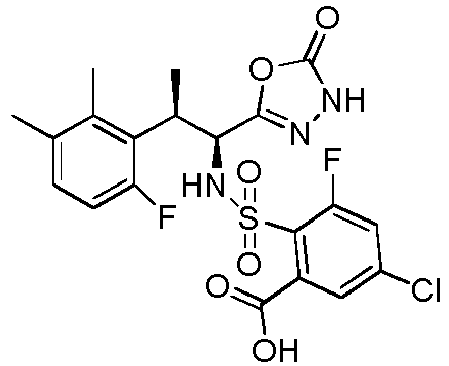
LC/MS RT 1.59min, m/z [M-H]- 500,502 220A 
1H-NMR (CDCl3) δ: 8.07 (1H, s), 7.86 (1H, d, J = 8.8 Hz), 7.07 (1H, d, J = 8.8 Hz), 6.94 (1H, dd, J = 8.3, 5.7 Hz), 6.70 (1H, dd, J = 11.7, 8.3 Hz), 5.49 (1H, d, J = 9.9 Hz), 4.86 (1H, t, J = 10.1 Hz), 4.74 (1H, s), 4.61-4.51 (1H, m), 4.39 (1H, t, J = 12.5 Hz), 3.49 (1H, s), 2.57-2.53 (1H, m), 2.36-2.34 (1H, m), 2.20-2.17 (6H, m), 1.52 (3H, d, J = 7.0 Hz).; LC/MS RT 1.74min, m/z [M-H]- 578,580 220B 
1H-NMR (CDCl3) δ: 8.26 (1H, s), 7.79 (1H, d, J = 8.6 Hz), 7.06 (1H, d, J = 8.6 Hz), 6.96-6.93 (1H, m), 6.73-6.68 (1H, m), 5.40 (1H, d, J = 10.6 Hz), 4.86 (1H, t, J = 10.6 Hz), 4.53-4.46 (3H, m), 3.41 (1H, s), 2.61-2.57 (1H, m), 2.37-2.34 (1H, m), 2.19-2.16 (6H, m), 1.52 (3H, d, J = 7.0 Hz).; LC/MS RT 1.80min, m/z [M-H]- 578,580 [Table 18-46] Example Structural Formula Physical Property Value 221 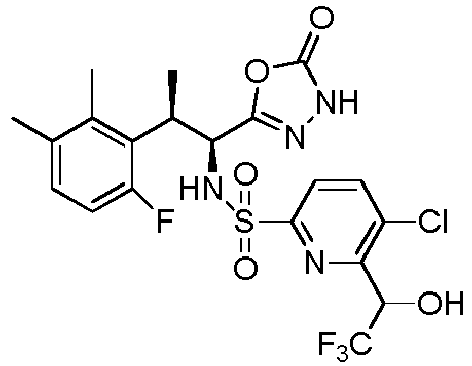
1H-NMR (CDCl3) δ: 8.51-8.51 (1H, m), 8.28-8.27 (1H, m), 6.93 (1H, dd, J = 8.4, 5.9 Hz), 6.71-6.64 (1H, m), 6.05 (1H, br s), 5.60-5.55 (1H, m), 5.03-4.98 (1H, m), 3.54 (1H, s), 2.17 (6H, d, J = 3.7 Hz), 1.49 (3H, d, J = 7.0 Hz); LC/MS RT 1.72min, m/z [M-H]- 537,539 222A 
1H NMR (CD3OD) δ: 7.61 (d, J=8.4 Hz, 1H), 7.42 (dd, J=9.0, 5.3 Hz, 1H), 7.03 (d, J=8.4 Hz, 1H), 6.81 (dd, J=11.2, 9.0 Hz, 1H), 4.69 (d, J=11.4 Hz, 1H), 4.39-4.47 (m, 1H), 4.22-4.33 (m, 1H), 3.63-3.78 (m, 1H), 2.44 (s, 3H), 2.17-2.24 (m, 1H), 2.05-2.15 (m, 1H), 1.75 (s, 3H), 1.52 (d, J=6.6 Hz, 3H); LC/MS RT 1.70min, m/z [M-H]- 588,590 222B 
1H NMR (CD3OD) δ: 7.60 (d, J=8.6 Hz, 1H), 7.43 (dd, J=8.9, 5.1 Hz, 1H), 7.02 (d, J=8.6 Hz, 1H), 6.82 (dd, J=11.2, 8.9 Hz, 1H), 4.74 (d, J=11.4 Hz, 1H), 4.39-4.47 (m, 1H), 4.33 (td, J=10.8, 2.6 Hz, 1H), 3.65-3.77 (m, 1H), 2.44 (s, 3H), 2.22-2.31 (m, 1H), 2.05-2.12 (m, 1H), 1.75 (s, 3H), 1.50 (d, J=7.0 Hz, 3H); LC/MS RT 1.76min, m/z [M-H]- 588,590 223 
LC/MS RT 1.61min, m/z [M-H]- 506 224A 
1H NMR (CD3OD) δ: 7.70 (dd, J=8.6, 5.9 Hz, 1H), 6.96 (dd, J=8.6, 5.9 Hz, 1H), 6.61-6.82 (m, 2H), 4.70 (d, J=11.4 Hz, 1H), 4.29-4.49 (m, 2H), 3.60-3.79 (m, 1H), 2.22 (s, 3H), 2.17 (s, 3H), 2.04-2.12 (m, 2H), 1.67 (d, J=1.8 Hz, 3H), 1.50 (d, J=7.0 Hz, 3H); LC/MS RT 1.6min, m/z [M-H]- 508 [Table 18-47] Example Structural Formula Physical Property Value 224B 
1H NMR (CD3OD) δ: 7.70 (dd, J=8.8, 5.9 Hz, 1H), 6.97 (dd, J=8.4, 5.9 Hz, 1H), 6.68-6.75 (m, 2H), 4.74 (d, J=11.4 Hz, 1H), 4.38 (t, J=5.5 Hz, 2H), 3.63-3.71 (m, 1H), 2.21 (s, 3H), 2.18 (s, 3H), 2.03-2.12 (m, 2H), 1.66 (d, J=1.8 Hz, 3H), 1.48 (d, J=7.0 Hz, 3H); LC/MS RT 1.65min, m/z [M-H]- 508 225A 
1H NMR (CD3OD) δ: 7.79 (d, J=8.4 Hz, 1H), 7.36 (d, J=8.8 Hz, 1H), 6.97 (dd, J=8.4, 5.9 Hz, 1H), 6.71 (dd, J=11.7, 8.4 Hz, 1H), 4.79 (d, J=11.4 Hz, 1H), 4.64-4.69 (m, 1H), 4.42-4.49 (m, 1H), 3.61-3.76 (m, 1H), 2.25-2.41 (m, 1H), 2.21 (s, 3H), 2.17 (s, 3H), 2.01-2.11 (m, 1H), 1.62 (s, 3H), 1.48 (d, J=7.0 Hz, 3H); LC/MS RT 1.72min, m/z [M-H]- 558 226A 
1H NMR (CD3OD) δ: 7.61 (d, J=8.6 Hz, 1H), 7.42 (dd, J=8.6, 5.1 Hz, 1H), 7.03 (d, J=8.6 Hz, 1H), 6.81 (dd, J=11.4, 8.6 Hz, 1H), 4.69 (d, J=11.0 Hz, 1H), 4.35-4.46 (m, 1H), 4.26 (td, J=10.9, 2.7 Hz, 1H), 3.66-3.75 (m, 1H), 2.44 (s, 3H), 2.15-2.26 (m, 1H), 2.05-2.13 (m, 1H), 1.52 (d, J=6.6 Hz, 3H); LC/MS RT 1.70min, m/z [M-H]- 591,593 226B 
LC/MS RT 1.76min, m/z [M-H]- 591,593 227A 
1H NMR (CD3OD) δ: 7.70 (dd, J=8.8, 5.9 Hz, 1H), 7.42 (dd, J=8.8, 5.1 Hz, 1H), 6.80 (dd, J=11.0, 9.0 Hz, 1H), 6.72 (dd, J=11.0, 9.0 Hz, 1H), 4.68 (d, J=11.4 Hz, 1H), 4.31-4.42 (m, 2H), 3.66-3.74 (m, 1H), 2.42 (s, 3H), 2.04-2.15 (m, 2H), 1.67 (d, J=1.8 Hz, 3H), 1.52 (d, J=7.0 Hz, 3H); LC/MS RT 1.66min, m/z [M-H]- 572,574 [Table 18-48] Example Structural Formula Physical Property Value 227B 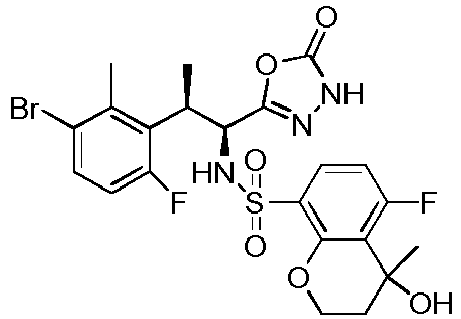
1H NMR (CD3OD) δ: 7.71 (dd, J=8.8, 5.9 Hz, 1H), 7.43 (dd, J=9.0, 5.3 Hz, 1H), 6.82 (dd, J=11.4, 8.8 Hz, 1H), 6.73 (dd, J=10.6, 8.8 Hz, 1H), 4.73 (d, J=11.4 Hz, 1H), 4.38 (t, J=5.5 Hz, 2H), 3.65-3.72 (m, 1H), 2.44 (s, 3H), 2.05-2.13 (m, 2H), 1.66 (d, J=1.8 Hz, 3H), 1.50 (d, J=6.6 Hz, 3H); LC/MS RT 1.71min, m/z [M-H]- 572,574 228A 
1H NMR (CD3OD) δ: 7.61 (d, J=8.4 Hz, 1H), 7.24 (dd, J=8.8, 5.1 Hz, 1H), 7.03 (d, J=8.8 Hz, 1H), 6.87 (dd, J=11.0, 8.8 Hz, 1H), 4.69 (d, J=11.4 Hz, 1H), 4.41-4.47 (m, 1H), 4.26 (td, J=10.9, 2.4 Hz, 1H), 3.65-3.72 (m, 1H), 2.39 (s, 3H), 2.15-2.25 (m, 1H), 2.05-2.13 (m, 1H), 1.52 (d, J=6.6 Hz, 3H); LC/MS RT 1.68min, m/z [M-H]- 547,549 228B 
1H NMR (CD3OD) δ: 7.60 (d, J=8.4 Hz, 1H), 7.24 (dd, J=9.0, 4.9 Hz, 1H), 7.02 (d, J=8.4 Hz, 1H), 6.87 (dd, J=11.2, 9.0 Hz, 1H), 4.74 (d, J=11.4 Hz, 1H), 4.41-4.46 (m, 1H), 4.29-4.36 (m, 1H), 3.64-3.74 (m, 1H), 2.38 (s, 3H), 2.22-2.29 (m, 1H), 2.05-2.13 (m, 1H), 1.50 (d, J=7.0 Hz, 3H); LC/MS RT 1.74min, m/z [M-H]- 547,549 229A 
1H NMR (CD3OD) δ: 7.70 (dd, J=8.8, 5.9 Hz, 1H), 7.42 (dd, J=8.8, 5.1 Hz, 1H), 6.80 (dd, J=11.2, 9.0 Hz, 1H), 6.72 (dd, J=10.8, 9.0 Hz, 1H), 4.68 (d, J=11.4 Hz, 1H), 4.31-4.42 (m, 2H), 3.66-3.74 (m, 1H), 2.44 (s, 3H), 2.05-2.11 (m, 2H), 1.67 (d, J=1.8 Hz, 3H), 1.52 (d, J=7.0 Hz, 3H); LC/MS RT 1.64min, m/z [M-H]- 528,530 229B 
1H NMR (CD3OD) δ: 7.71 (dd, J=8.9, 5.9 Hz, 1H), 7.43 (dd, J=8.9, 5.3 Hz, 1H), 6.82 (dd, J=11.4, 8.8 Hz, 1H), 6.73 (dd, J=10.6, 8.8 Hz, 1H), 4.73 (d, J=11.4 Hz, 1H), 4.38 (t, J=5.5 Hz, 2H), 3.63-3.78 (m, 1H), 2.44 (s, 3H), 2.04-2.16 (m, 2H), 1.66 (d, J=1.8 Hz, 3H), 1.50 (d, J=6.6 Hz, 3H); LC/MS RT 1.69min, m/z [M-H]- 528,530 [Table 18-49] Example Structural Formula Physical Property Value 230A 
1H NMR (CD3OD) δ: 7.73 (dd, J=8.8, 6.2 Hz, 1H), 6.96 (dd, J=8.4, 5.9 Hz, 1H), 6.66-6.77 (m, 2H), 4.69 (d, J=11.4 Hz, 1H), 4.84-4.90 (m, 1H), 4.53-4.60 (m, 1H), 4.35 (ddd, J=13.1, 10.9, 2.4 Hz, 1H), 3.62-3.71 (m, 1H), 2.21 (s, 3H), 2.17 (s, 3H), 1.95-2.12 (m, 2H), 1.49 (d, J=7.0 Hz, 3H); LC/MS RT 1.57min, m/z [M-H]- 494 230B 
1H NMR (CD3OD) δ: 7.77 (dd, J=8.8, 6.2 Hz, 1H), 6.97 (dd, J=8.2, 5.7 Hz, 1H), 6.68-6.78 (m, 2H), 4.85-4.93 (m, 1H), 4.74 (d, J=11.4 Hz, 1H), 4.51-4.60 (m, 1H), 4.33 (td, J=11.5, 3.3 Hz, 1H), 3.62-3.71 (m, 1H), 2.22 (s, 3H), 2.18 (s, 3H), 1.96-2.09 (m, 2H), 1.47 (d, J=6.6 Hz, 3H); LC/MS RT 1.61min, m/z [M-H]- 494 231 
1H NMR (CD3OD) δ: 8.04-8.10 (m, 1H), 7.54-7.61 (m, 1H), 7.38-7.46 (m, 1H), 6.94-7.09 (m, 3H), 5.17 (q, J=6.5 Hz, 1H), 4.36 (dd, J=10.6, 5.1 Hz, 1H), 3.24-3.33 (m, 1H), 2.77-2.91 (m, 4H), 1.90-2.07 (m, 2H), 1.38-1.42 (m, 6H); LC/MS RT 1.72min, m/z [M-H]- 476,478 232 
1H NMR (CD3OD) δ: 7.59-7.69 (m, 3H), 7.46 (dd, J=7.3, 1.1 Hz, 1H), 7.30-7.38 (m, 1H), 7.22-7.29 (m, 2H), 7.02 (d, J=8.4 Hz, 1H), 4.85-4.90 (m, 1H), 4.63-4.72 (m, 1H), 4.50-4.59 (m, 1H), 4.39 (d, J=10.6 Hz, 1H), 4.26-4.35 (m, 1H), 2.96 (s, 3H), 1.97-2.05 (m, 2H), 1.68 (d, J=6.6 Hz, 3H); LC/MS RT 1.65min, m/z [M-H]- 528,530 233 
1H NMR (CD3OD) δ: 8.10 (d, J=8.4 Hz, 1H), 7.75-7.93 (m, 2H), 7.63-7.75 (m, 1H), 7.51-7.60 (m, 1H), 7.39-7.48 (m, 1H), 7.16-7.29 (m, 1H), 7.05 (t, J=9.0 Hz, 1H), 4.91-4.93 (m, 1H), 4.56-4.64 (m, 2H), 4.28-4.45 (m, 1H), 4.17-4.27 (m, 1H), 1.98-2.13 (m, 2H), 1.64 (d, J=6.6 Hz, 3H); LC/MS RT 1.63, 1.68min, m/z [M-H]- 532,534 [Table 18-50] Example Structural Formula Physical Property Value 234A 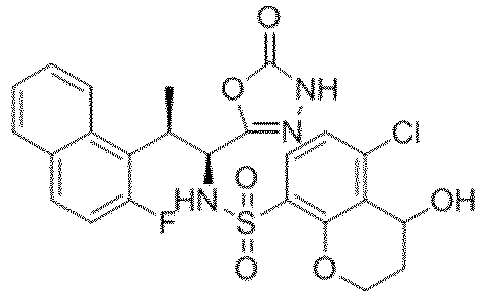
1H-NMR (CDCl3) δ: 7.99 (1H, d, J = 8.8 Hz), 7.78 (1H, d, J =8.1 Hz), 7.72-7.68 (2H, m), 7.65 (1H, s), 7.56 (1H, t, J = 7.9 Hz), 7.43 (1H, t, J = 7.3 Hz), 7.18-7.12 (1H, m), 6.99 (1H, d, J = 8.4 Hz), 5.57 (1H, d, J = 10.6 Hz), 5.05-5.00 (1H, m), 4.93 (1H, s), 4.51-4.48 (1H, m), 4.40-4.33 (1H, m), 4.00 (1H, s), 2.47 (1H, s), 2.16-2.07 (2H, m), 1.69-1.68 (3H, m).; LC/MS RT 1.63min, m/z [M-H]- 532,534 235A 
1H NMR (CD3OD) δ: 7.66 (d, J=8.4 Hz, 1H), 7.05 (d, J=8.4 Hz, 1H), 6.96 (dd, J=8.1, 5.5 Hz, 1H), 6.69 (dd, J=11.7, 8.4 Hz, 1H), 4.86-4.93 (m, 1H), 4.71 (d, J=11.4 Hz, 1H), 4.53-4.61 (m, 1H), 4.29-4.39 (m, 1H), 3.63-3.71 (m, 1H), 2.21 (s, 3H), 2.17 (s, 3H), 2.01-2.06 (m, 2H), 1.49 (d, J=7.0 Hz, 3H); LC/MS RT 1.61min, m/z [M-H]- 510,512 235B 
1H NMR (CD3OD) δ: 7.70 (d, J=8.4 Hz, 1H), 7.07 (d, J=8.4 Hz, 1H), 6.97 (dd, J=8.3, 5.7 Hz, 1H), 6.71 (dd, J=11.7, 8.3 Hz, 1H), 4.92-4.95 (m, 1H), 4.75 (d, J=11.4 Hz, 1H), 4.53-4.60 (m, 1H), 4.26-4.39 (m, 1H), 3.58-3.75 (m, 1H), 2.22 (s, 3H), 2.18 (s, 3H), 1.95-2.14 (m, 2H), 1.47 (d, J=7.0 Hz, 3H); LC/MS RT 1.67min, m/z [M-H]- 510,512 236 
1H NMR (CD3OD) δ: 7.71-7.88 (m, 2H), 7.31-7.42 (m, 1H), 6.93-7.04 (m, 1H), 6.65-6.77 (m, 1H), 5.53-5.80 (m, 1H), 4.72-4.89 (m, 1H), 3.54-3.66 (m, 1H), 2.20 (d, J=2.2 Hz, 3H), 2.17 (s, 3H), 1.48 (d, J=7.0 Hz, 3H), 1.42-1.47 (m, 3H); LC/MS RT1.70, 1.75min, m/z [M-H]- 482,484 237A 
1H-NMR (CDCl3) δ: 7.72-7.69 (1H, m), 7.61-7.59 (1H, m), 7.45 (1H, s), 6.99-6.90 (2H, m), 6.70-6.65 (1H, m), 5.34-5.32 (1H, m), 4.89-4.81 (2H, m), 3.49 (1H, br s), 2.35 (1H, s), 2.25 (1H, dd, J = 14.4, 6.0 Hz), 2.19(3H, s), 2.17 (3H, s), 1.97 (1H, dd, J = 14.4, 7.3 Hz), 1.55-1.54 (6H, m), 1.48 (3H, s).; LC/MS RT 1.66min, m/z [M-H]- 504,506 [Table 18-51] Example Structural Formula Physical Property Value 238A 
1H NMR (CD3OD) δ: 7.67 (d, J=8.5 Hz, 1H), 7.08-7.17 (m, 1H), 7.04-7.07 (m, 1H), 6.86 (dd, J=11.1, 8.9 Hz, 1H), 4.70 (d, J=11.5 Hz, 1H), 4.89-4.94 (m, 1H), 4.53-4.61 (m, 1H), 4.29-4.40 (m, 1H), 3.64-3.77 (m, 1H), 2.38 (s, 3H), 2.00-2.12 (m, 2H), 1.51 (d, J=7.6 Hz, 3H); LC/MS RT 1.65min, m/z [M-H]- 530,532 239A 
1H NMR (CD3OD) δ: 7.67 (d, J=8.4 Hz, 1H), 7.05 (d, J=8.4 Hz, 1H), 6.96 (dd, J=8.4, 5.9 Hz, 1H), 6.73 (dd, J=11.7, 8.4 Hz, 1H), 4.89-4.94 (m, 1H), 4.69 (d, J=11.4 Hz, 1H), 4.51-4.61 (m, 1H), 4.27-4.43 (m, 1H), 3.59-3.77 (m, 1H), 2.47-2.68 (m, 2H), 2.25 (s, 3H), 2.03-2.13 (m, 2H), 1.50 (d, J=7.0 Hz, 3H), 1.05 (t, J=7.5 Hz, 3H); LC/MS RT 1.7min, m/z [M-H]- 524,526 240 
1H NMR (CD3OD) δ: 7.76 (d, J=8.4 Hz, 1H), 7.46 (d, J=8.8 Hz, 1H), 6.96 (dd, J=8.3, 6.0 Hz, 1H), 6.70 (dd, J=11.7, 8.3 Hz, 1H), 5.60 (t, J=3.1 Hz, 1H), 4.67 (d, J=11.0 Hz, 1H), 3.44-3.51 (m, 1H), 2.96-3.06 (m, 1H), 2.52-2.65 (m, 1H), 2.18 (s, 3H), 2.16 (s, 3H), 1.97-2.10 (m, 2H), 1.78-1.84 (m, 1H), 1.66-1.77 (m, 1H), 1.41 (d, J=7.0 Hz, 3H); LC/MS RT 1.89min, m/z [M-H]- 508,510 241 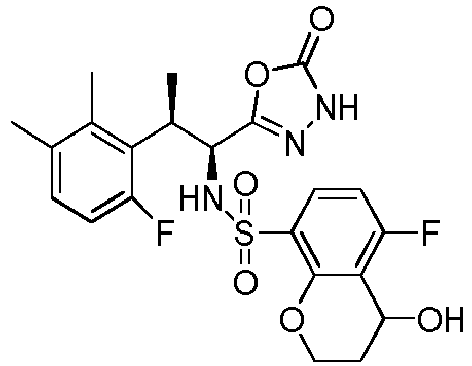
1H NMR (CD3OD) δ: 7.69-7.88 (m, 1H), 6.93-7.11 (m, 1H), 6.66-6.84 (m, 2H), 4.88-4.93 (m, 1H), 4.64-4.80 (m, 1H), 4.48-4.64 (m, 1H), 4.22-4.43 (m, 1H), 3.62-3.69 (m, 1H), 2.22 (s, 3H), 2.17 (s, 3H), 1.93-2.09 (2H, m), 1.44-1.52 (m, 3H); LC/MS RT 1.57, 1.61min, m/z [M-H]- 494 242 
1H NMR (CD3OD) δ: 6.94-7.02 (m, 1H), 6.67-6.78 (m, 1H), 6.53-6.65 (m, 1H), 4.79-4.87 (m, 1H), 4.48-4.71 (m, 2H), 4.25-4.42 (m, 1H), 3.57-3.82 (m, 1H), 2.23 (s, 3H), 2.18 (s, 3H), 1.95-2.11 (m, 2H), 1.50 (d, J=6.2 Hz, 3H); LC/MS RT 1.59, 1.62min, m/z [M-H]- 512 [Table 18-52] Example Structural Formula Physical Property Value 243A 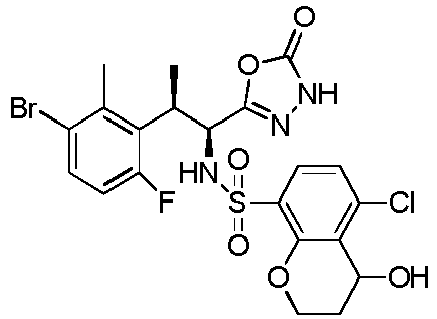
1H NMR (CD3OD) δ: 7.67 (d, J=8.4 Hz, 1H), 7.42 (dd, J=8.8, 5.1 Hz, 1H), 7.06 (d, J=8.4 Hz, 1H), 6.80 (dd, J=11.0, 8.8 Hz, 1H), 4.90-4.95 (m, 1H), 4.69 (d, J=11.4 Hz, 1H), 4.54-4.59 (m, 1H), 4.30-4.37 (m, 1H), 3.63-3.78 (m, 1H), 2.43 (s, 3H), 2.03-2.19 (m, 2H), 1.51 (d, J=7.0 Hz, 3H); LC/MS RT 1.67min, m/z [M-H]- 574,576 243B 
1H NMR (CD3OD) δ: 7.70 (d, J=8.7 Hz, 1H), 7.43 (dd, J=8.8, 5.1 Hz, 1H), 7.07 (d, J=8.7 Hz, 1H), 6.82 (dd, J=11.2, 8.8 Hz, 1H), 4.92-4.95 (m, 1H), 4.75 (d, J=11.4 Hz, 1H), 4.53-4.58 (m, 1H), 4.28-4.37 (m, 1H), 3.65-3.75 (m, 1H), 2.44 (s, 3H), 1.95-2.13 (m, 2H), 1.49 (d, J=7.0 Hz, 3H); LC/MS RT 1.72min, m/z [M-H]- 574,576 244A 
1H NMR (CD3OD) δ: 7.85 (d, J=8.3 Hz, 1H), 7.30 (d, J=8.3 Hz, 1H), 6.96 (dd, J=8.4, 5.9 Hz, 1H), 6.69 (dd, J=11.7, 8.4 Hz, 1H), 5.00-5.04 (m, 1H), 4.74 (d, J=11.4 Hz, 1H), 4.59-4.68 (m, 1H), 4.49-4.56 (m, 1H), 3.64-3.72 (m, 1H), 2.21 (s, 3H), 2.17 (s, 3H), 2.00-2.13 (m, 2H), 1.51 (d, J=6.6 Hz, 3H); LC/MS RT 1.7min, m/z [M-H]- 544 244B 
1H NMR (CD3OD) δ: 7.89 (d, J=8.4 Hz, 1H), 7.33 (d, J=8.4 Hz, 1H), 6.97 (dd, J=8.3, 5.7 Hz, 1H), 6.71 (dd, J=11.7, 8.3 Hz, 1H), 5.04-5.07 (m, 1H), 4.79 (d, J=11.0 Hz, 1H), 4.46-4.65 (m, 2H), 3.63-3.77 (m, 1H), 2.22 (s, 3H), 2.18 (s, 3H), 1.95-2.14 (m, 2H), 1.47 (d, J=6.6 Hz, 3H); LC/MS RT 1.76min, m/z [M-H]- 544 245 
1H NMR (CD3OD) δ: 8.51 (d, J=2.6 Hz, 1H), 8.06 (d, J=2.6 Hz, 1H), 6.98 (dd, J=8.3, 6.0 Hz, 1H), 6.71 (dd, J=11.7, 8.3 Hz, 1H), 4.89-4.94 (m, 1H), 3.63-3.70 (m, 1H), 2.26 (s, 3H), 2.20 (s, 3H), 1.49 (d, J=6.6 Hz, 3H); LC/MS RT 1.47min, m/z [M-H]- 482,484 [Table 18-53] Example Structural Formula Physical Property Value 246 
1H NMR (CD3OD) δ: 7.73-7.97 (m, 1H), 7.51-7.68 (m, 1H), 7.46 (s, 1H), 6.99 (dd, J=8.4, 5.7 Hz, 1H), 6.73 (dd, J=11.8, 8.4 Hz, 1H), 4.80 (d, J=11.2 Hz, 1H), 3.54-3.66 (m, 1H), 3.11(s, 3H), 2.88 (s, 3H), 2.23 (s, 3H), 2.19 (s, 3H), 1.44-1.54 (m, 3H); LC/MS RT 1.79min, m/z [M-H]- 509,511 247 
1H NMR (CD3OD) δ: 7.84 (d, J=8.1 Hz, 1H), 7.58 (dd, J=8.4, 2.2 Hz, 1H), 7.52 (d, J=2.2 Hz, 1H), 6.96-7.01 (m, 1H), 6.71-6.75 (m, 1H), 4.74-4.85 (m, 1H), 3.93-4.32 (m, 4H), 3.53-3.67 (m, 1H), 2.32-2.46 (m, 2H), 2.21 (s, 3H), 2.18 (s, 3H), 1.43 (d, J=7.3 Hz, 3H); LC/MS RT 1.81min, m/z [M-H]- 521,523 248 
1H NMR (CD3OD) δ: 7.52-7.89 (m, 3H), 6.94-7.03 (m, 1H), 6.66-6.78 (m, 1H), 4.79 (d, J=11.4 Hz, 1H), 3.43-3.88 (m, 5H), 2.21 (s, 3H), 2.15 (s, 3H), 1.49 (d, J=7.7 Hz, 3H),; LC/MS RT 1.61, 1.66min, m/z [M-H]- 525,527 249 
1H NMR (CD3OD) δ: 8.51 (d, J=2.2 Hz, 1H), 8.06 (d, J=2.2 Hz, 1H), 7.26 (dd, J=8.9, 5.1 Hz, 1H), 6.88 (dd, J=11.2, 8.9 Hz, 1H), 4.92 (d, J=11.4 Hz, 1H), 3.61-3.74 (m, 1H), 2.42 (s, 3H), 1.50 (d, J=7.0 Hz, 3H); LC/MS RT 1.51min, m/z [M-H]- 502,504 250 
1H NMR (CD3OD) δ: 8.61 (d, J=1.8 Hz, 1H), 8.20 (d, J=2.2 Hz, 1H), 6.98 (dd, J=8.4, 5.9 Hz, 1H), 6.71 (dd, J=11.7, 8.4 Hz, 1H), 4.92 (d, J=11.0 Hz, 1H), 3.56-3.83 (m, 1H), 2.25 (s, 3H), 2.20 (s, 3H), 1.48 (d, J=6.6 Hz, 3H); LC/MS RT 1.49min, m/z [M-H]- 526,528 [Table 18-54] Example Structural Formula Physical Property Value 251 
1H NMR (CD3OD) δ: 8.60 (d, J=2.2 Hz, 1H), 8.16 (d, J=2.2 Hz, 1H), 6.99 (dd, J=8.2, 5.7 Hz, 1H), 6.71 (dd, J=11.7, 8.4 Hz, 1H), 4.88-4.93 (m, 1H), 3.55-3.75 (m, 1H), 2.93 (s, 3H), 2.26 (s, 3H), 2.23 (s, 3H), 1.48 (d, J=7.0 Hz, 3H); LC/MS RT 1.56min, m/z [M-H]- 542,544 252 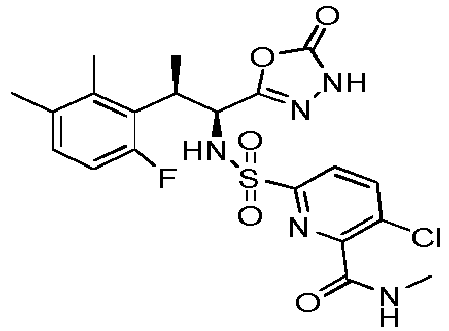
1H NMR (CD3OD) δ: 8.17 (d, J=8.4 Hz, 1H), 8.02 (d, J=8.4 Hz, 1H), 6.98 (dd, J=8.6, 5.7 Hz, 1H), 6.66-6.79 (m, 1H), 4.83-4.90 (m, 1H), 3.56-3.71 (m, 1H), 2.94 (s, 3H), 2.23 (s, 3H), 2.18 (s, 3H), 1.48 (d, J=7.0 Hz, 3H); LC/MS RT 1.57min, m/z [M-H]- 496,498 253 
1H NMR (CD3OD) δ: 8.16 (d, J=8.4 Hz, 1H), 7.98 (d, J=8.4 Hz, 1H), 6.96-7.18 (m, 1H), 6.73 (dd, J=11.7, 8.8 Hz, 1H), 4.92-4.98 (m, 1H), 3.57-3.67 (m, 1H), 3.12 (s, 3H), 2.85 (s, 3H), 2.21 (s, 3H), 2.19 (s, 3H), 1.46 (d, J=7.0 Hz, 3H); LC/MS RT 1.56min, m/z [M-H]- 510,512 254 
1H NMR (CD3OD) δ: 8.61 (d, J=2.2 Hz, 1H), 8.20 (d, J=2.2 Hz, 1H), 7.26 (dd, J=9.0, 4.9 Hz, 1H), 6.88 (dd, J=11.2, 9.0 Hz, 1H), 4.91 (d, J=11.0 Hz, 1H), 3.61-3.76 (m, 1H), 2.42 (s, 3H), 1.50 (d, J=7.0 Hz, 3H); LC/MS RT 1.53min, m/z [M-H]- 546,548 255 
1H NMR (CD3OD) δ: 7.76-7.80 (m, 1H), 7.69-7.73 (m, 1H), 6.98 (dd, J=8.3, 5.9 Hz, 1H), 6.73 (dd, J=11.7, 8.3 Hz, 1H), 4.82 (d, J=11.0 Hz, 1H), 3.51-3.65 (m, 1H), 2.22 (s, 3H), 2.18 (s, 3H), 1.46 (d, J=7.0 Hz, 3H); LC/MS RT 1.71min, m/z [M-H]- 499,501 [Table 18-55] Example Structural Formula Physical Property Value 256 
1H NMR (CD3OD) δ: 7.66 (d, J=2.2 Hz, 1H), 7.41 (d, J=2.2 Hz, 1H), 6.98 (dd, J=8.3, 5.9 Hz, 1H), 6.70 (dd, J=11.5, 8.3 Hz, 1H), 4.92-5.00 (m, 1H), 3.67-3.79 (m, 1H), 2.25 (s, 3H), 2.18 (s, 3H), 1.47 (d, J=7.0 Hz, 3H); LC/MS RT 1.55min, m/z [M-H]- 515,517 257 
1H NMR (CD3OD) δ: 7.73 (s, 1H), 7.61 (s, 1H), 6.98 (dd, J=8.1, 5.9 Hz, 1H), 6.68-6.77 (m, 1H), 4.79-4.85 (m, 1H), 3.52-3.65 (m, 1H), 2.42 (s, 3H), 2.19 (s, 3H), 2.17 (s, 3H), 1.46 (d, J=7.0 Hz, 3H); LC/MS RT 1.7min, m/z [M-H]- 495,497 258 
1H NMR (CD3OD) δ: 7.43 (dd, J=10.3, 2.2 Hz, 1H), 7.30 (d, J=1.1 Hz, 1H), 6.98 (dd, J=8.3, 5.7 Hz, 1H), 6.71 (dd, J=11.7, 8.3 Hz, 1H), 4.94 (d, J=11.4 Hz, 1H), 3.60-3.75 (m, 1H), 2.23 (s, 3H), 2.18 (s, 3H), 1.45 (d, J=7.0 Hz, 3H); LC/MS RT 1.55min, m/z [M-H]- 499,501 259 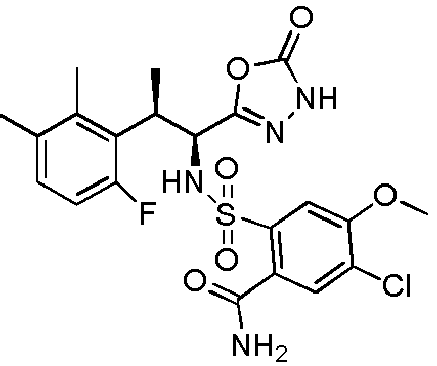
1H NMR (CD3OD) δ: 7.66 (s, 1H), 7.48 (s, 1H), 6.98 (dd, J=8.3, 5.9 Hz, 1H), 6.72 (dd, J=11.9, 8.3 Hz, 1H), 4.80-4.85 (m, 1H), 3.97 (s, 3H), 3.52-3.60 (m, 1H), 2.20 (s, 3H), 2.17 (s, 3H), 1.46-1.50 (m, 3H); LC/MS RT 1.67min, m/z [M-H]- 511,513 260 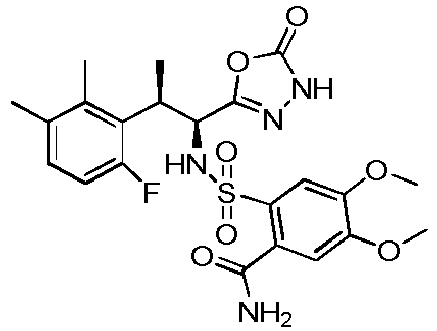
1H NMR (CD3OD) δ: 7.35 (s, 1H), 7.16 (s, 1H), 6.97 (dd, J=8.5, 5.7 Hz, 1H), 6.72 (dd, J=11.7, 8.5 Hz, 1H), 4.79 (d, J=11.0 Hz, 1H), 3.90 (s, 3H), 3.88 (s, 3H), 3.47-3.56 (m, 1H), 2.20 (s, 3H), 2.17 (s, 3H), 1.48 (d, J=7.0 Hz, 3H); LC/MS RT 1.55min, m/z [M-H]- 507 [Table 18-56] Example Structural Formula Physical Property Value 261 
1H NMR (CD3OD) δ: 7.26(s, 1H), 7.10(s, 1H), 6.97 (dd, J=8.4, 5.9 Hz, 1H), 6.72 (dd, J=12.1, 8.4 Hz, 1H), 4.75 (d, J=11.4 Hz, 1H), 4.29-4.32 (m, 4H), 3.44-3.60 (m, 1H), 2.19 (s, 3H), 2.17 (s, 3H), 1.47 (d, J=7.0 Hz, 3H); LC/MS RT 1.61min, m/z [M-H]- 505 262 
1H NMR (CD3OD) δ: 8.36 (s, 1H), 7.90 (s, 1H), 6.98 (dd, J=8.3, 5.9 Hz, 1H), 6.73 (dd, J=11.9, 8.3 Hz, 1H), 4.82-4.86 (m, 1H), 3.55-3.65 (m, 1H), 2.22 (s, 3H), 2.18 (s, 3H), 1.47 (d, J=7.0 Hz, 3H); LC/MS RT 1.72min, m/z [M-H]- 526,528 263 
1H NMR (CD3OD) δ: 7.60 (d, J=8.4 Hz, 1H), 7.42 (d, J=2.6 Hz, 1H), 7.21 (dd, J=8.6, 2.7 Hz, 1H), 6.98 (dd, J=8.4, 5.9 Hz, 1H), 6.72 (dd, J=11.7, 8.4 Hz, 1H), 6.20 (tt, J=55.0, 3.7 Hz, 1H), 4.80 (d, J=11.0 Hz, 1H), 4.31 (tdd, J=13.6, 3.7, 2.6 Hz, 2H), 3.51-3.58 (m, 1H), 2.20 (s, 3H), 2.17 (s, 3H), 1.46 (d, J=6.6 Hz, 3H); LC/MS RT 1.67min, m/z [M-H]- 527 264 
1H NMR (CD3OD) δ: 8.51 (d, J=2.2 Hz, 1H), 8.07 (d, J=2.2 Hz, 1H), 7.45 (dd, J=8.8, 5.5 Hz, 1H), 6.77-6.91 (m, 1H), 4.89-4.95 (m, 1H), 3.65-3.75 (m, 1H), 2.48 (s, 3H), 1.50 (d, J=7.0 Hz, 3H); LC/MS RT 1.54min, m/z [M-H]- 546,548 265 
1H NMR (CD3OD) δ: 8.10 (d, J=8.8 Hz, 1H), 7.81 (d, J=8.6 Hz, 1H), 7.75-7.79 (m, 1H), 7.54 (t, J=7.7 Hz, 1H), 7.39-7.45 (m, 2H), 7.20 (dd, J=11.7, 9.2 Hz, 1H), 6.11-6.24 (m, 2H), 4.73 (d, J=11.4 Hz, 1H), 4.12-4.30 (m, 1H), 3.85 (s, 3H), 1.62 (d, J=6.6 Hz, 3H); LC/MS RT 1.56min, m/z [M-H]- 471 [Table 18-57] Example Structural Formula Physical Property Value 266 
1H NMR (CD3OD) δ: 7.37-7.45 (m, 2H), 6.94-7.08 (m, 2H), 6.85 (d, J=6.6 Hz, 1H), 6.51-6.62 (m, 2H), 4.24 (d, J=10.6 Hz, 1H), 3.36-3.48 (m, 1H), 2.59-2.75 (m, 4H), 1.59-1.85 (m, 4H), 1.29-1.44 (d, J=6.6 Hz, 3H); LC/MS RT 1.61min, m/z [M-H]- 427 267 
1H NMR (CD3OD) δ: 7.52 (d, J=9.2 Hz, 1H), 7.01 (s, 2H), 6.87-6.96 (m, 1H), 6.35-6.48 (m, 2H), 4.17 (d, J=10.6 Hz, 1H), 3.20-3.35 (m, 1H), 2.75-2.84 (m, 4H), 2.42 (s, 3H), 1.85-2.09 (m, 2H), 1.38 (d, J=7.0 Hz, 3H); LC/MS RT 1.58min, m/z [M-H]- 427 268 
1H NMR (CD3OD) δ: 8.82-8.91 (m, 1H), 8.48 (d, J=8.4 Hz, 1H), 8.00 (d, J=8.4 Hz, 1H), 7.36-7.45 (m, 1H), 6.83-7.06 (m, 3H), 6.68 (d, J=8.4 Hz, 1H), 4.31 (d, J=10.3 Hz, 1H), 3.34-3.46 (m, 1H), 2.72-2.82 (m, 4H), 1.81-2.10 (m, 2H), 1.43 (d, J=6.6 Hz, 3H); LC/MS RT 1.57min, m/z [M-H]- 464 269 
1H NMR (CD3OD) δ: 7.64 (d, J=8.0 Hz, 1H), 7.60 (dd, J=7.6, 1.9 Hz, 1H), 7.43-7.47 (m, 1H), 7.38(d, J=8.5 Hz, 1H), 7.34 (t, J=7.8 Hz, 1H), 7.21-7.27 (m, 2H), 6.12-6.16 (m, 2H), 4.59-4.66 (m, 1H), 4.26 (d, J=10.9 Hz, 1H), 3.80 (s, 3H), 2.95 (s, 3H), 1.66 (d, J=6.6 Hz, 3H); LC/MS RT 1.58min, m/z [M-H]- 467 270 
1H NMR (CD3OD) 7.38 (d, J=8.4 Hz, 1H), 6.98-7.07 (m, 2H), 6.91-6.95 (m, 1H), 6.20 (d, J=1.8 Hz, 1H), 6.16 (dd, J=8.6, 2.0 Hz, 1H), 4.57-4.63 (m, 1H), 4.21 (d, J=11.0 Hz, 1H), 3.83 (s, 3H), 2.73-2.91 (m, 4H), 1.89-2.04 (m, 2H), 1.43 (d, J=6.6 Hz, 3H); LC/MS RT 1.55min, m/z [M-H]- 443 [Table 18-58] Example Structural Formula Physical Property Value 271 
LC/MS RT 1.75min, m/z [M-H]- 453,455 272 
LC/MS RT 1.8min, m/z [M-H]- 511,513 273 
1H NMR (CD30D) δ: 7.46 (1H, d, J = 8.6 Hz), 7.21 (1H, d, J = 8.6 Hz), 6.98 6.95 (1H, m), 6.71 (1H, dd,J = 11.9, 8.2 Hz), 4.79-4.66 (3H, m), 4.41-4.34 (1H, m), 4.24-4.18 (1H, m), 3.75-3.62 (3H, m), 2.19 (3H, s), 2.16 (3H, s), 1.49 (3H, d, J = 6.6 Hz); LC/MS RT 1.61min, m/z [M-H]- 553,555 274 
1H NMR (CD30D) δ: 7.53 (d, J=8.8 Hz, 1H), 6.96-7.04 (m, 1H), 6.71-6.81 (m, 2H), 6.55-6.60 (m, 1H), 4.66 (d, J=11.4 Hz, 1H), 3.50-3.66 (m, 1H), 2.23 (s, 3H), 2.21 (s, 3H), 2.17 (s, 3H), 1.45 (d, J=6.6 Hz, 3H); LC/MS RT 1.92min, m/z [M-H]- 495,497 275 
1H-NMR (CDCl3) δ: 7.63 (1H, s), 7.10 (1H, d, J = 8.4 Hz),6.94-6.88 (2H, m), 6.69 (1H, dd, J = 11.5, 8.6 Hz), 5.38 (1H, d, J = 10.6 Hz), 4.86 (1H, t, J = 10.8 Hz), 4.41-4.40 (4H, m), 3.53-3.52 (2H, m), 2.18-2.17 (6H, m), 1.57-1.54 (3H, m).; LC/MS RT 1.71min, m/z [M-H]- 495,497 [Table 18-59] Example Structural Formula Physical Property Value 276 
1H-NMR (CDCl3) δ: 8.07 (1H, br s), 7.64 (1H, d, J = 8.8 Hz), 7.07-7.06 (2H, m), 6.95-6.93 (1H, m), 6.38 (1H, d, J = 8.8 Hz), 5.68 (2H, s), 5.45 (1H, d, J = 10.4 Hz), 4.37 (1H, t, J = 10.4 Hz), 3.95 (3H, s),3.88 (3H, s), 3.28-3.21 (1H, m), 2.88-2.83 (4H, m), 2.04-1.99 (2H, m), 1.49 (3H, d, J = 7.0 Hz).; LC/MS RT 1.67min, m/z [M-H]- 501 277 
1H NMR (CD30D) δ: 7.83 (d, J=8.4 Hz, 1H), 7.58-7.60 (m, 1H), 7.55-7.57 (m, 1H), 6.94-7.02 (m, 1H), 6.67-6.77 (m, 1H), 4.76-4.82 (m, 1H), 3.57-3.76 (m, 1H), 2.92 (s, 3H), 2.21 (s, 3H), 2.17 (s, 3H), 1.46 (d, J=7.0 Hz, 3H); LC/MS RT 1.74min, m/z [M-H]- 495,497 278 
LC/MS RT 1.34min, m/z [M-H]- 509,511 279 
LC/MS RT 1.4min, m/z [M-H]- 493,495 280 
1H-NMR (CDCl3) δ: 8.12 (1H, br s), 7.15-7.13 (1H, m), 6.93-6.90 (1H, m), 6.75-6.64 (3H, m), 5.51 (1H, d, J = 10.6 Hz), 4.87 (1H, t, J = 10.6 Hz), 4.37-4.35 (2H, m), 3.93 (1H, br s), 3.43-3.40 (3H, m), 2.19 (3H, s), 2.17 (3H, s), 1.54 (3H, d, J = 7.0 Hz).; LC/MS RT 1.6min, m/z [M-H]- 461 [Table 18-60] Example Structural Formula Physical Property Value 281 
1H NMR (CD30D) δ: 7.90 (d, J=1.0 Hz, 1H), 7.35-7.49 (m, 2H), 6.97 (t, J=1.0 Hz, 1H), 6.73 (dd, J=1.0 Hz, 1H), 4.70 (br d, J=11.4 Hz, 1H), 4.28-4.52 (m, 2H), 3.38-3.83 (m, 5H), 2.17 (s, 5H), 1.49 (d, J=1.0 Hz, 3H); LC/MS RT 1.29min, m/z [M-H]- 459 282 
LC/MS RT 1.94min, m/z [M-H]- 587,589 283 
1H NMR (CD30D) δ: 7.94-7.99 (m, 1H), 7.84-7.91 (m, 1H), 6.81-6.93 (m, 1H), 6.61 (dd, J=11.5, 8.6 Hz, 1H), 4.75 (d, J=10.3 Hz, 1H), 3.37-3.89 (m, 5H), 2.88-3.03 (m, 1H), 2.24 (s, 3H), 2.14 (s, 3H), 1.75-1.85 (m, 1H), 1.36-1.53 (m, 4H); LC/MS RT 1.25min, m/z [M-H]- 551,553 284 
1H-NMR (CDCl3) δ: 7.08 (1H, d, J = 8.8 Hz), 7.02-6.97 (3H, m), 6.88 (1H, d, J = 8.4 Hz), 5.42 (1H, d, J = 10.8 Hz), 4.56 (1H, t, J = 10.8 Hz), 4.47-4.36 (3H, m), 3.55-3.44 (3H, m), 2.24 (3H, s), 2.22 (3H, s), 2.17 (3H, s), 1.47 (3H, d, J = 7.0 Hz).; LC/MS RT 1.88min, m/z [M-H]- 519,521 285 
1H NMR (CD30D) δ: 7.84-7.95 (m, 1H), 7.50-7.66 (m, 3H), 6.97 (dd, J=8.4, 5.9 Hz, 1H), 6.71 (dd, J=11.7, 8.4 Hz, 1H), 4.80 (d, J=11.0 Hz, 1H), 3.50-3.63 (m, 1H), 2.20 (s, 3H), 2.17 (s, 3H), 1.44 (d, J=6.6 Hz, 3H); LC/MS RT 1.48min, m/z [[M-H]- 463 [Table 18-61] Example Structural Formula Physical Property Value 286 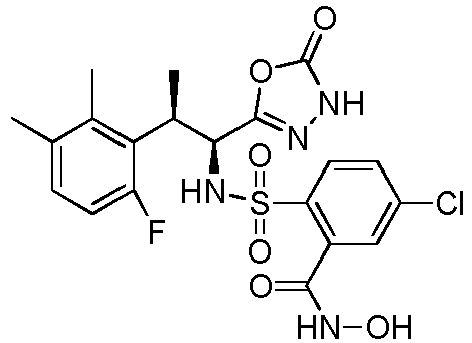
1H NMR (CD30D) δ: 7.87 (d, J=8.4 Hz, 1H), 7.62 (dd, J=8.8, 2.2 Hz, 1H), 7.54 (d, J=2.2 Hz, 1H), 6.98 (dd, J=8.2, 5.7 Hz, 1H), 6.72 (dd, J=11.9, 8.2 Hz, 1H), 4.80 (d, J=11.0 Hz, 1H), 3.53-3.63 (m, 1H), 2.21 (s, 3H), 2.17 (s, 3H), 1.45 (d, J=7.0 Hz, 3H); LC/MS RT 1.59min, m/z [M-H]- 497,499 287 
1H-NMR (CDCl3) δ: 8.70 (1H, s), 8.51-8.48 (1H, m), 7.87-7.84 (2H, m), 7.44 (1H, dd, J = 8.6, 2.1 Hz), 7.39 (1H, d, J = 2.1 Hz), 6.93 (1H, dd, J = 8.4, 5.9 Hz), 6.71-6.65 (2H, m), 4.87 (1H, t, J = 10.1 Hz), 3.53-3.48 (1H, m), 2.18-2.17 (6H, m), 1.43 (3H, d, J = 7.0 Hz).; LC/MS RT 1.72min, m/z [M-H]- 497,499 288 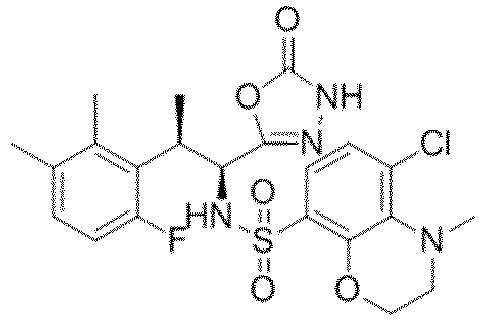
LC/MS RT 1.76min, m/z [M-H]- 509,511 289 
LC/MS RT 1.8min, m/z [M-H]- 529,531 290 
1H NMR (CD30D) δ: 7.73 (1H, d, J = 8.1 Hz), 7.16-7.15 (1H, m), 7.06-7.01 (2H, m), 6.71 (1H, dd, J = 10.6, 8.4 Hz), 5.38 (1H, d, J 9.5 Hz), 4.68 (1H, d, J = 9.5 Hz), 3.96 (3H, s), 3.33 (1H, s), 2.25 (3H, s), 2.16 (3H, s); LC/MS RT 1.53min, m/z [M-H]- 470,472 [Table 18-62] Example Structural Formula Physical Property Value 291 
LC/MS RT 1.75, 1.76min, m/z [M-H]- 472,474 292 
1H-NMR (CDCl3) δ: 7.98 (1H, d, J = 8.8 Hz), 7.94 (1H, s), 7.86-7.84 (1H, m), 7.78 (1H, d, J = 8.1 Hz), 7.72-7.70 (1H, m), 7.55 (1H, t, J = 7.7 Hz), 7.42 (1H, t, J 7.3 Hz), 7.17-7.12 (1H, m), 7.08 (1H, d, J 8.4 Hz), 5.79-5.67 (1H, m), 5.62 (1H, d, J = 10.4 Hz), 4.94 (1H, t, J = 10.4 Hz), 4.604.56 (1H, m), 4.23-4.20 (1H, m), 3.99 (1H, s), 3.67-3.51 (1H, m), 2.38-2.35 (1H, m), 1.69 (3H, d, J = 5.9 Hz).; LC/MS RT 1.8min, m/z [M-H]- 534,536 293 
1H-NMR (CDCl3) δ: 8.56-8.54 (1H, m), 8.37-8.35 (1H, m), 8.10 (1H, s), 6.97-6.90 (1H, m), 6.71-6.64 (1H, m), 5.82 (1H, br s), 5.03-4.97 (1H, m), 3.54-3.52 (1H, m), 2.19-2.17 (6H, m), 1.53-1.44 (3H, m).; LC/MS RT 1.64min, m/z [M-H]- 535,537 294 
LC/MS RT 1.83min, m/z [M-H]- 510,512 295 
1H NMR (CD30D) δ: 7.48 (d, J=8.8 Hz, 1H), 6.91-7.03 (m, 4H), 6.70 (dt, J=10.3, 2.0 Hz, 1H), 6.01 (dt, J=10.3, 3.7 Hz, 1H), 4.98-5.04 (m, 2H), 4.33 (d, J=10.6 Hz, 1H), 3.60-3.68 (m, 1H), 2.20 (s, 3H), 2.19 (s, 3H), 1.42 (d, J=6.6 Hz, 3H); LC/MS RT 1.82min, m/z [M-H]- 474,476 [Table 18-63] Example Structural Formula Physical Property Value 296 
LC/MS RT 1.73min, m/z [M-H]- 462,464 297 
1H NMR (CD30D) δ: 7.69-7.80 (m, 1H), 7.30-7.40 (m, 1H), 6.93-7.06 (m, 1H), 6.69-6.82 (m, 1H), 5.38-5.49 (m, 1H), 4.77 (d, J=11.2 Hz, 1H), 4.66 (d, J=11.7 Hz, 1H), 4.50 (d, J=11.7 Hz, 1H), 4.02 (s, 3H), 3.683.75 (m, 1H), 2.86 (s, 3H), 2.24 (s, 3H), 2.18(s, 3H), 1.64 (d, J=6.6 Hz, 3H), 1.48 (d, J=7.1 Hz, 3H); LC/MS RT 1.92min, m/z [M-H]- 556,558 298 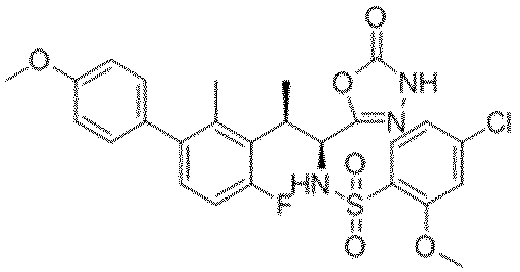
1H-NMR (CDCl3) δ: 7.81 (1H, d, J = 8.4 Hz), 7.06-6.88 (7H, m), 6.82 (1H, dd, J = 11.4, 8.4 Hz), 5.40 (1H, d, J 10.4 Hz), 4.86 (1H, t, J 10.4 Hz), 3.96 (3H, s), 3.83 (3H, s), 3.42 (1H, br s), 2.16 (3H, s), 1.59 (3H, d, J = 7.0 Hz); LC/MS RT 1.93min, m/z [M-H]- 560,562 299 
1H-NMR (CDCl3) δ: 7.89 (1H, br s), 7.81 (1H, d, J = 8.4 Hz), 7.046.98 (2H, m), 6.93 (1H, s), 6.88-6.75 (2H, m), 6.68-6.66 (2H, m), 5.44 (1H, d, J 10.7 Hz), 4.85 (1H, t, J = 10.7 Hz), 3.96 (3H, s), 3.41 (1H, br s), 2.16 (3H, s), 1.59-1.57 (3H, m).; LC/MS RT 1.96min, m/z [M-H]- 566,568 300 
1H-NMR (CDCl3) δ: 8.57-8.55 (1H, m), 8.45-8.43 (1H, m), 7.82 (1H, d, J = 8.4 Hz), 7.64-7.61 (1H, m), 7.44-7.41 (1H, m), 7.05-7.00 (2H, m), 6.94-6.88 (2H, m), 5.60-5.57 (1H, m), 4.82 (1H, t, J = 10.4 Hz), 3.96 (3H, s), 3.92 (1H, s), 3.46 (1H, s), 2.15 (3H, s), 1.61 (3H, d, J = 6.6 Hz).; LC/MS RT 1.4min, m/z [M-H]- 531,533 [Table 18-64] Example Structural Formula Physical Property Value 301 
1H-NMR (CDCl3) δ: 7.82 (1H, d, J = 8.1 Hz), 7.59 (1H, s), 7.19-7.16 (1H, m), 7.02 (1H, d, J = 8.8 Hz), 6.92 (1H, s), 6.87-6.82 (1H, m), 6.28 (1H, s), 5.85 (1H, br s), 4.84 (1H, t, J = 10.1 Hz), 3.90 (3H, s), 3.45 (1H, br s), 2.24 (3H, s), 1.56 (3H, d, J = 6.6 Hz); LC/MS RT 1.56min, m/z [M-H]- 520,522 302 
1H-NMR (CDCl3) δ: 7.91 (1H, br s), 7.81 (1H, d, J = 8.4 Hz), 7.34 (2H, d, J = 8.4 Hz), 7.07-6.97 (4H, m), 6.86-6.81 (1H, m), 6.84 (1H, t, J = 9.9 Hz), 5.44 (1H, d, J = 10.6 Hz), 4.86 (1H, t, J = 10.6 Hz), 3.96 (3H, s), 3.41 (1H, br s), 2.14 (3H, s), 1.58 (3H, d, J = 7.0 Hz).; LC/MS RT 2.05min, m/z [M-H]- 564,566 303 
1H-NMR (CDCl3) δ: 7.81 (1H, d, J = 8.4 Hz), 7.52-7.51 (2H, m), 7.09-6.99 (4H, m), 6.93-6.93 (1H, m), 6.85-6.80 (1H, m), 5.49-5.46 (1H, m), 4.88-4.83 (1H, m), 3.96 (3H, s), 3.43 (1H, br s), 2.27 (3H, s), 1.58 (3H, d, J = 7.0 Hz).; LC/MS RT 1.54min, m/z [M-H]- 520,522 304 
1H-NMR (CDCl3) δ: 8.06 (1H, br s), 7.81 (1H, d, J =8.4 Hz), 7.73 (1H, s), 7.59 (1H, s), 7.57-7.54 (1H, m), 7.41-7.36 (1H, m), 7.03-7.00 (1H, m), 6.93-6.92 (1H, m), 6.84 (1H, dd, J = 11.0, 8.4 Hz), 5.45 (1H, d, J = 10.4 Hz), 4.86 (1H, t, J = 10.4 Hz), 3.96 (3H, s), 3.44 (1H, br s), 2.27 (3H, s), 1.58 (3H, d, J = 9.5 Hz).; LC/MS RT 1.75min, m/z [M-H]- 570,572 305 
1H-NMR (CDCl3) δ: 8.81 (1H, br s), 7.80 (1H, d, J = 8.8 Hz), 7.36 (1H, s), 7.23-7.20 (1H, m), 7.01 (1H, d, J = 8.4 Hz), 6.93 (1H, s), 6.82 (1H, t, J = 9.7 Hz), 6.19 (1H, s), 5.50 (1H, d, J = 10.4Hz), 4.86 (1H, t, J = 10.4 Hz), 3.95 (3H, s), 3.90 (3H, s), 3.45 (1H, br s), 2.30 (3H, s), 1.56 (3H, d, J = 6.6 Hz).; LC/MS RT 1.64min, m/z [M-H]- 534,536 [Table 18-65] Example Structural Formula Physical Property Value 306 
1H-NMR (CDCl3) δ: 8.48 (1H, s), 7.80 (1H, d, J = 8.4 Hz), 7.39 (1H, s), 7.28 (1H, s), 7.06-6.99 (2H, m), 6.92-6.92 (1H, m), 6.80 (1H, dd, J = 11.2, 8.6 Hz), 5.56 (1H, d, J = 10.6 Hz), 4.84 (1H, t, J = 10.6 Hz), 3.94 (3H, s), 3.91 (3H, s), 3.44 (1H, s), 2.27 (3H, s), 1.57 (3H, d, J = 7.0 Hz).; LC/MS RT 1.62min, m/z [M-H]- 534,536 307 
LC/MS RT 1.65min, m/z [M-H]- 534,536 308 
LC/MS RT 1.82min, m/z [M-H]- 534,536 309 
LC/MS RT 1.94min, m/z [M-H]- 597,599 310 
1H-NMR (CDCl3) δ: 8.50 (1H, s), 7.80 (1H, d, J = 8.4 Hz),7.40 (1H, s), 7.32 (1H, s), 7.05 (1H, dd, J = 8.5, 5.9 Hz), 7.01 (1H, dd, J = 8.4, 1.5 Hz), 6.92 (1H, d, J = 1.8 Hz), 6.80 (1H, dd, J = 11.2, 8.5 Hz), 5.56 (1H, d, J = 10.3 Hz), 4.85 (1H, t, J = 10.8 Hz), 4.18 (2H, q, J = 7.3 Hz), 3.94 (3H, s), 3.44 (1H, br s), 2.28 (3H, s), 1.57 (3H, d, J = 7.0 Hz), 1.50 (3H, t, J = 7.3 Hz).; LC/MS RT 1.68min, m/z [M-H]- 548,550 [Table 18-66] Example Structural Formula Physical Property Value 311 
LC/MS RT 1.71min, m/z [M-H]- 560,562 312 
1H-NMR (CDCl3) δ: 7.80 (1H, d, J = 8.4 Hz), 7.42 (1H, s), 7.36 (1H, s), 7.06-6.99 (2H, m), 6.92 (1H, s), 6.82-6.77 (1H, m), 5.53 (1H, d, J = 10.7 Hz), 4.85 (1H, t, J = 10.7 Hz), 4.75 (1H, t, J = 8.4 Hz), 3.94 (3H, s), 3.44 (1H, br s), 2.55-2.46 (4H, m), 2.28 (3H, s), 1.89-1.82 (2H, m), 1.56 (3H, d, J = 7.0 Hz); LC/MS RT 1.8min, m/z [M-H]- 574,576 313 
1H-NMR (CDCl3) δ: 8.20 (1H, d, J = 2.0 Hz), 7.81 (1H, d, J = 8.4 Hz), 7.47-7.44 (1H, m), 7.35 (1H, d, J = 8.4 Hz), 7.05-7.02 (1H, m), 7.01-6.99 (1H, m), 6.94 (1H, d, J = 2.0 Hz), 6.92-6.87 (1H, m), 5.43 (1H, d, J = 10.6 Hz), 4.86 (1H, t, J = 10.6 Hz), 3.96 (3H, s), 3.42 (1H, br s), 2.16 (3H, s), 1.59 (3H, d, J = 7.0 Hz); LC/MS RT 1.82min, m/z [M-H]- 565,567 314 
1H-NMR (CDCl3) δ: 8.94 (1H, br s), 7.91 (1H, d, J = 2.0 Hz), 7.80 (1H, d, J = 8.4 Hz), 7.39-7.36 (1H, m), 7.01-6.97 (2H, m), 6.93 (1H, d, J = 1.0 Hz), 6.85 (1H, dd, J = 11.4, 8.4 Hz), 6.76 (1H, d, J 8.4 Hz), 5.60 (1H, d, J = 10.4 Hz), 4.84 (1H, t, J = 10.4 Hz), 3.94 (3H, s), 3.93 (3H, s), 3.44 (1H, br s), 2.16 (3H, s), 1.58 (3H, d, J = 7.0 Hz).; LC/MS RT 1.82min, m/z [M-H]- 561,563 315 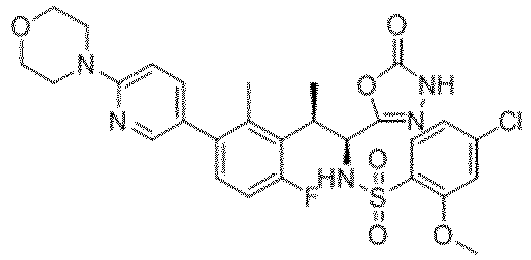
1H-NMR (CDCl3) δ: 7.95 (1H, d, J = 2.0 Hz), 7.79 (1H, d, J = 8.5 Hz), 7.32 (1H, dd, J = 8.5, 2.4 Hz), 7.00-6.95 (2H, m), 6.92 (1H, d, J = 2.0 Hz), 6.83 (1H, dd, J = 11.2, 8.7 Hz), 6.65 (1H, d, J = 8.7 Hz), 5.61 (1H, d, J = 10.5 Hz), 4.84 (1H, t, J = 10.5 Hz), 3.93 (3H, s), 3.84-3.80 (4H, m), 3.51-3.44 (5H, m), 2.17 (3H, s), 1.57 (3H, d, J = 7.0 Hz); LC/MS RT 1.48min, m/z [M-H]- 616,618 [Table 18-67] Example Structural Formula Physical Property Value 316 
1H NMR (CD30D) δ: 8.53 (1H, s), 7.74 (1H, d, J = 8.4 Hz), 7.61 (1H, s), 7.12-7.09 (1H, m), 7.05-6.98 (2H, m), 6.88-6.83 (1H, m), 4.70-4.60 (2H, m), 3.94 (3H, s), 2.08 (3H, s), 1.52 (3H, d, J = 7.0 Hz); LC/MS RT 1.68min, m/z [M-H]- 588,590 317 
1H NMR (CD30D) δ: 8.27 (1H, br s), 7.75 (1H, d, J = 8.4 Hz), 7.34 (1H, s), 7.12 (1H, d, J = 1.8 Hz), 7.04 (1H, dd, J = 8.4, 1.8 Hz), 6.96 (1H, dd, J = 8.4, 5.9 Hz), 6.84 (1H, dd, J = 11.4, 8.4 Hz), 4.68 (1H, d, J = 11.4 Hz), 3.94 (3H, s), 3.82 (3H, s), 3.67-3.62 (1H, m), 2.13 (3H, s), 1.88 (3H, s), 1.52 (3H, d, J = 7.0 Hz); LC/MS RT 1.63min, m/z [M-H]- 548,550 318 
1H-NMR (CDCl3) δ: 9.20 (1H, s), 8.60 (2H, s), 8.02 (1H, br s), 7.82 (1H, d, J = 8.1 Hz), 7.05-7.03 (2H, m), 6.97-6.92 (2H, m), 5.53 (1H, d, J = 11.1 Hz), 4.87 (1H, t, J = 11.1 Hz), 3.96 (3H, s), 3.45 (1H, br s), 2.20 (3H, s), 1.61 (3H, d, J = 7.0 Hz).; LC/MS RT 1.55min, m/z [M-H]- 532,534 319 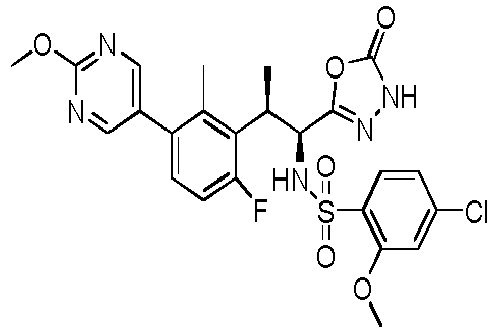
1H-NMR (CDCl3) δ: 8.34 (2H, s), 7.81 (1H, d, J = 8.4 Hz),7.03-6.88 (4H, m), 5.57 (1H, d, J = 10.6 Hz), 4.85 (1H, t, J = 10.6 Hz), 4.04 (3H, s), 3.95 (3H, s), 3.44 (1H, br s), 2.18 (3H, s), 1.59 (3H, d, J = 7.0 Hz); LC/MS RT 1.66min, m/z [M-H]- 562,564 320 
1H-NMR (CDCl3) δ: 8.12 (1H, br s), 7.99 (1H, s), 7.80(1H, d, J = 7.7 Hz), 7.35 (1H, d, J = 8.8 Hz), 7.03-6.93 (3H, m), 6.87-6.81 (1H, m), 6.72 (1H, d, J = 8.4 Hz), 5.52 (1H, d, J = 10.6 Hz), 4.79 (1H, t, J = 10.6 Hz), 3.94 (3H, s), 3.57-3.55 (4H, m), 3.45 (1H, br s), 2.17 (3H, s), 1.69-1.66 (6H, m), 1.59 (3H, d, J = 6.6 Hz).; LC/MS RT 1.49min, m/z [M-H]- 614,616 [Table 18-68] Example Structural Formula Physical Property Value 321 
1H-NMR (CDCl3) δ: 8.19-8.08 (2H, m), 7.80 (1H, d, J = 8.4 Hz), 7.37-7.27 (1H, m), 7.02 (1H, d, J = 8.4 Hz), 6.95-6.92 (2H, m), 6.88-6.83 (1H, m), 5.50 (1H, d, J = 10.3 Hz), 4.83 (1H, t, J = 11.0 Hz), 3.95-3.94 (3H, m), 3.77 (3H, s), 3.42 (1H, br s), 2.04-2.03 (3H, m), 1.58 (3H, d, J = 6.6 Hz).; LC/MS RT 1.96min, m/z [M-H]- 595,597 322 
1H-NMR (CDCl3) δ: 8.08-8.05 (2H, m), 7.80 (1H, d, J = 8.1 Hz), 7.53 (1H, s), 7.02-6.93 (2H, m), 6.85-6.81 (2H, m), 5.55 (1H, d, J = 10.9 Hz), 4.80 (1H, t, J = 10.9 Hz), 4.28-4.25 (2H, m), 3.94 (3H, s), 3.51 (2H, s), 3.44 (1H, br s), 3.14 (3H, s), 2.17 (3H, s), 1.59 (3H, d,J = 6.2 Hz).; LC/MS RT 1.44min, m/z [M-H]- 602,604 323 
1H NMR (CD30D) δ: 8.60 (1H, s), 8.45 (1H, s), 7.76 (1H, d, J = 8.4 Hz), 7.68 (1H, s), 7.14-7.10 (2H, m), 7.05 (1H, dd, J = 8.4, 1.8 Hz), 6.97 (1H, dd, J = 11.2, 8.4 Hz), 4.70 (1H, d, J = 11.2 Hz), 3.94 (3H, s), 3.77-3.74 (4H, m), 3.69-3.63 (4H, m), 3.48-3.46 (1H, m), 2.20 (3H, s), 1.55 (3H, d, J = 7.0 Hz); LC/MS RT 1.52min, m/z [M-H]- 644,646 324 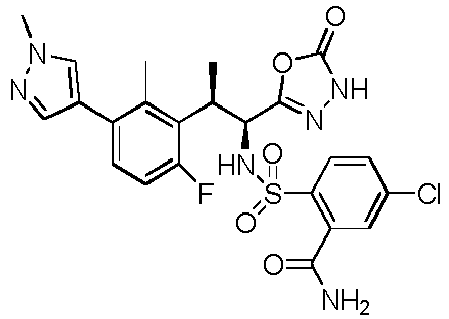
1H-NMR (CDCl3) δ: 7.96 (1H, d, J = 8.1 Hz), 7.55-7.51 (2H, m), 7.40 (1H, s), 7.28 (1H, s), 7.04 (1H, dd, J = 8.4, 5.9 Hz), 6.84-6.79 (2H, m), 6.05-6.03 (1H, m), 5.98-5.96 (1H, m), 4.95-4.90 (1H, m), 3.92 (3H, s), 3.50 (1H, br s), 2.28 (3H, s), 1.49 (3H, d, J = 7.3 Hz); LC/MS RT 1.46min, m/z [M-H]- 547,549 325 
1H-NMR (CDCl3) δ: 9.65 (1H, br s), 7.81-7.79 (2H, m), 7.74 (1H, s), 7.60-7.59 (1H, m), 7.50-7.48 (1H, m), 6.95-6.91 (1H, m), 6.73-6.68 (1H, m), 6.20 (1H, d, J = 10.0 Hz), 4.90 (1H, t, J = 10.0 Hz), 3.92 (3H, s), 3.47 (1H, br s), 2.15 (3H, s), 2.13 (3H, s), 1.50 (3H, d, J = 6.6 Hz).; LC/MS RT 1.69min m/z [M-H]- 518,520 [Table 18-69] Example Structural Formula Physical Property Value 326 
1H-NMR (CDCl3) δ: 7.81-7.79 (2H, m), 7.76 (1H, dd, J = 8.5, 2.2 Hz), 7.58 (1H, d, J = 8.3 Hz), 7.46-7.42 (1H, m), 7.31-7.28 (2H, m), 7.17 (1H, t, J = 8.8 Hz), 6.97-6.93 (1H, m), 6.71 (1H, dd, J = 11.7, 8.3 Hz), 5.05 (1H, d, J = 10.0 Hz), 4.85 (1H, t, J = 10.0 Hz), 3.43 (1H, br s), 2.18 (3H, s), 2.16 (3H, s), 1.47 (3H, d, J = 5.9 Hz).; LC/MS RT 1.96min, m/z [M-H]- 532,534 327 
1H-NMR (CDCl3) δ: 7.80(1H, d, J = 8.1 Hz), 7.50-7.47 (2H, m), 7.36-7.33 (5H, m), 7.02 (1H, dd, J = 8.4, 1.8 Hz), 6.93 (1H, d, J = 1.5 Hz), 6.81 (1H, dd, J = 11.4, 8.4 Hz), 5.41 (1H, d, J = 10.5 Hz), 4.82 (1H, t, J = 10.5 Hz), 3.97 (3H, s), 3.42 (1H, br s), 2.51 (3H, s), 1.57-1.54 (3H, m).; LC/MS RT 2.06min, m/z [M-H]- 554,556 328 
1H NMR (CD30D) δ: 8.34 (1H, br s), 7.76-7.65 (1H, m), 7.25-7.22 (1H, m), 7.17-7.09 (1H, m), 6.90-6.85 (1H, m), 4.79-4.70 (2H, m), 4.59-4.51 (2H, m), 4.41-4.26 (2H, m), 3.72-3.66 (1H, m), 2.38-2.37 (6H, m), 2.33-2.23 (2H, m), 1.86 (3H, d, J = 28.2 Hz).; LC/MS RT 1.39min, m/z [M-H]- 543,545 329 
1H NMR (CD30D) δ: 7.68-7.79 (m, 1H), 7.42-7.46 (m, 1H), 7.12-7.20 (m, 1H), 6.79-6.88 (m, 1H), 4.71-4.82 (m, 1H), 4.54-4.65 (m, 1H), 4.25-4.46 (m, 1H), 3.63-3.77 (m, 1H), 2.44 (s, 3H), 2.32-2.38 (m, 2H), 1.89-1.94 (m, 3H), 1.51-1.56 (m, 3H); LC/MS RT 1.39min, m/z [M-H]- 587,589 330A 
LC/MS RT 1.37min, m/z [M-H]- 543,545 [Table 18-70] Example Structural Formula Physical Property Value 330B 
LC/MS RT 1.37min, m/z [M-H]- 543,545 331 
1H-NMR (CDCl3) δ: 8.54 (2H, s), 8.42 (1H, s), 8.32-8.30 (1H, m), 7.75 (1H, d, J = 8.1 Hz), 6.96-6.88 (2H, m), 6.67 (1H, dd, J = 11.4, 8.4 Hz), 6.30 (1H, s), 6.10 (1H, s), 4.97 (1H, t, J = 10.3 Hz), 3.48 (1H, s), 2.16 (3H, s), 2.15 (3H, s), 1.48 (3H, d, J = 7.0 Hz).; LC/MS RT 1.5min, m/z [M-H]- 515 332 
1H NMR (CD30D) δ: 7.68-7.79 (m, 3H), 6.97 (dd, J=8.5, 5.7 Hz, 1H), 6.71 (dd, J=11.7, 8.5 Hz, 1H), 4.89-5.02 (m, 1H), 3.58-3.65 (m, 1H), 2.20 (s, 3H), 2.15 (s, 3H), 1.47 (d, J=7.3 Hz, 3H); LC/MS RT 1.75min, m/z [M-H]- 541,543 333 
1H NMR (CD30D) δ: 7.73 (d, J=8.8 Hz, 1H), 7.39 (d, J=8.6 Hz, 1H), 6.81-6.99 (m, 3H), 4.15 (d, J=6.2 Hz, 1H), 3.98 (s, 3H), 3.38-3.43 (m, 1H), 2.75-2.92 (m, 4H), 1.92-2.13 (m, 2H), 1.27 (d, J=7.0 Hz, 3H); LC/MS RT 1.95min, m/z [M-H]- 540,542 334 
LC/MS RT 1.89min, m/z [M-H]- 506,508 [Table 18-71] Example Structural Formula Physical Property Value 335 
1H NMR (CD30D) δ: 7.65-7.74 (m, 2H), 7.57-7.64 (m, 1H), 7.50 (d, J=3.3 Hz, 1H), 6.98-7.18 (m, 2H), 6.79-6.84 (m, 1H), 3.99 (d, J=9.9 Hz, 1H), 3.40-3.50 (m 1H), 2.70-2.86 (m, 1H), 2.57-2.66 (m, 1H), 2.32-2.51 (m, 2H), 1.82 (s, 3H), 1.45-1.54 (m, 2H), 1.44 (s, 3H), 1.26 (d, J=7.0 Hz, 3H); LC/MS RT 2.11min, m/z [M-H]- 534,536 336 
1H NMR (CD30D) δ: 8.02 (d, J=8.4 Hz, 1H), 7.56 (d, J=8.8 Hz, 1H), 6.97-6.99 (m, 3H), 6.88-6.90 (m, 1H), 4.31 (d, J=10.3 Hz, 1H), 3.34-3.46 (m, 1H), 2.71-2.97 (m, 4H), 2.14 (s, 6H), 1.93-2.02 (m, 2H), 1.40 (d, J=7.0 Hz, 3H); LC/MS RT 1.87min, m/z [M-H]- 506,508 337 
1H NMR : 7.93 (d, J=8.8 Hz, 1H), 7.62 (dd, J=8.8, 2.2 Hz, 1H), 7.51 (d, J=2.2 Hz, 1H), 7.01 (dd, J=8.1, 5.9 Hz, 1H), 6.76 (dd, J=11.9, 8.6 Hz, 1H), 5.58 (dd, J=11.7, 1.8 Hz, 1H), 3.76-3.90 (m, 1H), 3.06 (s, 3H), 2.27 (s, 3H), 2.20 (s, 3H), 1.33 (d, J=7.0 Hz, 3H); LC/MS RT 1.64min, m/z [M-H]- 495,497 338 
1H-NMR (CDCl3) δ: 8.15 (1H, s), 7.86 (1H, d, J = 8.4 Hz), 7.52 (1H, dd, J = 8.4, 1.5 Hz), 7.48-7.47 (1H, m), 6.94 (1H, dd, J = 8.2, 5.7 Hz), 6.69 (1H, dd, J = 11.7, 8.4 Hz), 5.33 (1H, d, J = 9.9 Hz), 4.85 (1H, t, J = 10.3 Hz), 3.50-3.45 (1H, m), 2.18 (6H, s), 1.47 (3H, d, J = 7.0 Hz).; LC/MS RT 1.95min, m/ [M-H]-566,568 339 
1H-NMR (CDCl3) δ: 7.97 (1H, s), 7.64-7.61 (1H, m), 7.40 (1H, dd, J = 8.8, 5.1 Hz), 6.96 (1H, dd, J = 8.1, 5.9 Hz), 6.70 (1H, dd, J = 11.4, 8.4 Hz), 5.40 (1H, d, J = 9.2 Hz), 4.89 (1H, t, J = 9.3 Hz), 3.52-3.47 (1H, m), 2.19 (6H, s), 1.48 (3H, d, J = 7.3 Hz).; LC/MS RT 1.86min, m/ [M-H]-519,521 [Table 18-72] Example Structural Formula Physical Property Value 340 
1H-NMR (CDCl3) δ: 8.31-8.28 (2H, m), 8.13 (1H, s), 8.02-7.98 (2H, m), 6.95 (1H, dd, J = 8.4, 5.9 Hz), 6.70 (1H, dd, J = 11.7, 8.4 Hz), 5.32-5.29 (1H, m), 4.87 (1H, t, J = 9.9 Hz), 3.48-3.44 (1H, m), 2.17 (3H, s), 2.16 (3H, s), 1.43 (3H, d, J = 7.0 Hz).; LC/MS RT 1.73min, m/ [M-H]-449 341 
1H-NMR (CDCl3) δ: 8.42 (1H, s), 7.94-7.92 (2H, m), 7.77-7.75 (2H, m), 6.95 (1H, dd, J = 8.4, 5.9 Hz), 6.70 (1H, dd, J = 11.7, 8.4 Hz), 5.45 (1H, d, J = 9.5 Hz), 4.84 (1H, t, J = 9.7 Hz), 3.48-3.42 (1H, m), 2.18 (3H, s), 2.15 (3H, s), 1.42 (3H, d, J = 7.0 Hz).; LC/MS RT 1.67min, m/ [M-H]-429 342 
1H-NMR (CDCl3) δ: 8.62 (1H, br s), 7.98 (1H, d, J = 8.1 Hz), 7.33 (1H, dd, J = 8.1, 1.1 Hz), 7.20 (1H, d, J = 1.1 Hz), 6.93 (1H, dd, J = 8.4, 5.9 Hz), 6.68 (1H, dd, J = 11.7, 8.4 Hz), 5.55 (1H, d, J = 10.3 Hz), 4.84 (1H, t, J = 10.6 Hz), 4.01 (3H, s), 3.43 (1H, br s), 2.17 (6H, s), 1.52 (3H, d, J = 7.0 Hz).; LC/MS RT 1.71min, m/ [M-H]-459,461 343 
1H-NMR δ: 8.25 (1H, s), 8.09 (1H, d, J = 2.2 Hz), 7.95-7.86 (2H, m), 7.00-6.96 (1H, m), 6.72 (1H, dd, J = 11.5, 8.2 Hz), 4.74 (1H, d, J = 11.4 Hz), 3.57-3.54 (1H, m), 2.18 (3H, s), 2.17 (3H, s), 1.45 (3H, d, J = 7.0 Hz).; LC/MS RT 1.78min, m/ [M-H]-507,509 [Table 18-73] Example Structural Formula Physical Property Value 344 
1H-NMR (CDCl3) δ: 7.98 (1H, s), 7.77 (1H, d, J = 2.6 Hz), 7.65 (1H, dd, J = 8.4, 2.6 Hz), 7.52 (1H, d, J = 8.4 Hz), 7.36-7.34 (2H, m), 6.99-6.92 (4H, m), 6.70 (1H, dd, J = 11.7, 8.4 Hz), 5.11 (1H, d, J = 10.0 Hz), 4.85 (1H, t, J = 10.1 Hz), 3.85 (3H, s), 3.43-3.41 (1H, m), 2.17 (3H, s), 2.15 (3H, s), 1.45 (3H, d, J = 6.2 Hz).; LC/MS RT 1.97min, m/ [M-H]-544,546 345 
1H-NMR (CDCl3) δ: 8.08 (1H, d, J = 1.8 Hz), 7.71 (2H, dd, J = 7.9, 1.6 Hz), 7.60 (1H, d, J = 8.1 Hz), 7.39-7.35 (1H, m), 7.28-7.26 (2H, m), 7.19 (1H, d, J = 10.3 Hz), 7.07-7.03 (1H, m), 7.00-6.98 (1H, m), 6.89 (1H, dd, J = 8.4, 5.9 Hz), 6.67 (1H, dd, J = 11.4, 8.4 Hz), 6.06 (1H, s), 5.90 (1H, s), 4.95 (1H, t, J = 10.6 Hz), 3.85 (3H, s), 3.46-3.44 (1H, m), 2.16 (3H, s), 2.15 (3H, s), 1.50 (3H, d, J = 7.0 Hz).; LC/MS RT 1.8min, m/ [M-H]-553,555 346 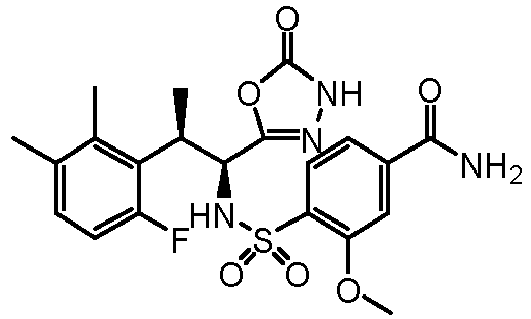
1H-NMR (CDCl3) δ: 10.58 (1H, s), 7.93 (1H, d, J = 8.4 Hz), 7.36-7.34 (2H, m), 6.91 (1H, dd, J = 8.2,5.7 Hz), 6.68 (1H, dd, J = 11.7, 8.4 Hz), 6.44 (2H, s), 5.56 (1H, d, J = 10.3 Hz), 4.84 (1H, t, J = 11.0 Hz), 4.02 (3H, s), 3.42 (1H, br s), 2.17-2.16 (6H, m), 1.56 (3H, d, J = 7.0 Hz).; LC/MS RT 1.51min, m/ [M-H]-477 347 
1H-NMR (CD3OD) δ: 7.96-7.93 (2H, m), 7.86-7.83 (2H, m), 6.96 (1H, dd, J = 8.4,5.9 Hz), 6.71 (1H, dd, J = 11.7, 8.4 Hz), 4.74 (1H, d, J = 11.0 Hz), 3.57-3.53 (1H, m), 2.17 (3H, s), 2.15 (3H, s), 1.42 (3H, d, J = 7.0 Hz).; LC/MS RT 1.46min, m/[M-H]-447 [Table 18-74] Example Structural Formula Physical Property Value 348 
LC/MS RT min, m/ [M-H]-486,488 349 
1H-NMR (CDCl3) δ: 7.80 (1H, d, J = 8.4 Hz), 7.05 (1H, dd, J = 8.4,1.8 Hz), 6.96-6.93 (2H, m), 6.68 (1H, dd, J = 11.7, 8.4 Hz), 5.96 (1H, d, J = 9.9 Hz), 4.78 (1H, t, J = 9.7 Hz), 3.91 (3H, s), 3.54-3.49 (1H, m), 2.17 (3H, s), 2.13 (3H, s), 2.49 (3H, d, J = 7.0 Hz).; LC/MS RT 1.77min, m/ [M-H]-468,470 350 
1H-NMR (CDCl3) δ: 11.70 (1H, s), 11.48 (1H, s), 7.75 (1H, d, J = 8.4 Hz), 6.92-6.89 (2H, m), 6.73-6.68 (1H, m), 6.62 (1H, d, J = 8.4 Hz), 6.16 (1H, d, J = 9.2 Hz), 4.89 (1H, t, J = 10.3 Hz), 3.85 (3H, s), 3.60-3.58 (1H, m), 2.16 (3H, s), 2.13 (3H, s), 1.47 (3H, d, J = 6.6 Hz).; LC/MS RT 1.6min, m/ [M-H]-483,485 - The compound according to the present invention was evaluated using the following test method.
- The inhibitory activity against the ribonucleotide reduction reaction (hereinafter referred to as RNR reaction) of the test compound was determined by measuring the formation of deoxycytidine diphosphate (hereinafter referred to as dCDP) from cytidine diphosphate (hereinafter referred to as CDP) by the following method.
- Human M1 subunit and human M2 subunit (mutant lacking amino terminal 59 amino acids), which are fused a histidine tag at the amino terminus, are overexpressed in Escherichia coli and are solubilized after collection, and histidine tagged human M1 and M2 proteins were purified on a nickel chelate column.
- For measuring the inhibitory activity of the test compound against the RNR reaction, the method described in the document [CANCER RESEARCH 64, 1 - 6, 2004] was referred to.
- First, test compounds were serially diluted with DMSO. Next, human M1 protein and human M2 protein were added to an aqueous albumin solution derived from 0.02% fetal bovine serum, a DMSO solution of the compound of the present invention or the control DMSO solution (final concentration of DMSO was 1%) was added, and the mixture was allowed to stand for 20 minutes. Thereafter, the reaction buffer [50 mM HEPES buffer (pH 7.2) at the final concentration, 4 mM magnesium acetate at the final concentration, 100 mM potassium chloride at the final concentration, 6 mM dithiothreitol at the final concentration, 2 mM adenosine triphosphate at the final concentration, 0.24 mM nicotinamide adenine dinucleotide phosphate at final concentration] and 10 µM CDP at the final concentration were added and incubated at 37 °C for 30 minutes to perform RNR reaction. Immediately after the reaction, the reaction was stopped by heating at 100°C for 15 minutes, followed by centrifugation at 10,000 rpm for 10 minutes. After the centrifugation, a portion (5 µL) of the resulting supernatant was analyzed with a high performance liquid chromatography (Shimadzu Corporation, Prominence) using Shim-pack XR-ODS (manufactured by Shimadzu GLC Co., 3.0 × 100 mm). Elution was carried out at a measurement wavelength of 265 nm at a flow rate of 0.5 mL/min by a 9-minute concentration gradient from the 12:13 mixture of mobile phase A (10 mM potassium dihydrogen phosphate (pH 6.7), 10 mM tetrabutylammonium, 0.25% methanol) and mobile phase B (50 mM potassium dihydrogen phosphate (pH 6.7), 5.6 mM tetrabutylammonium, 30% methanol) to the same 2: 3 mixture to measure the substrate CDP (RT 5.9 min) and the reaction product dCDP (RT 6.2 min).
- The inhibitory activity of the test compound was determined by the following equation, and the concentrations of test compounds inhibiting the RNR reaction by 50% are shown as IC50 (µM) in Tables 19-1 to 19-3.

- As a result, it is apparent from the following table that the compound of the present invention has an excellent RNR inhibitory action. In contrast, the compound of Comparative Example 1 had an IC50 of 43 µM, and showed no inhibitory activity against RNR as found in the example compounds of the present invention.
[Table 19-1] Example Number RNR Enzyme inhibitory activity IC50 (µM) Example Number RNR Enzyme inhibitory activity IC50 (µM) Example Number RNR Enzyme inhibitory activity IC50 (µM) Example Number RNR Enzyme inhibitory activity IC50 (µM) 1 0.06 39 0.04 100 0.30 152 0.71 3 0.30 40 0.13 101 0.13 153 0.11 4 0.38 41 0.10 102 0.14 155 0.13 5 0.14 42 0.20 103 0.41 156 0.08 6 0.11 43 0.08 104 0.84 157 0.10 7 0.45 46 0.84 105 0.16 158 0.45 9 0.60 48 0.60 106 0.27 159 0.16 10 0.14 49 0.80 107 0.24 161 0.28 11 0.18 50 0.85 108 0.43 162 0.74 12 0.17 52 0.77 109 0.06 164 0.33 13 0.14 60 0.99 110 0.96 165 0.83 14 0.25 67 0.70 111 0.27 167 0.08 15 0.10 71 0.24 112 0.15 169 0.19 16 0.13 76 0.20 113 0.06 171 0.47 17 0.50 81 0.28 114 0.06 172 0.82 18 0.13 83 0.14 115 0.18 173 0.13 19 0.19 84 0.36 116 0.07 174 0.35 20 0.26 85 0.84 117 0.03 176 0.81 21 0.24 86 0.40 118 0.34 178 0.17 22 0.34 87 0.84 119 0.45 179 0.28 23 0.74 88 0.15 120 0.43 181 0.66 25 0.15 89 0.42 123 0.11 182 0.41 26 0.16 90 0.16 124 0.09 183 0.32 27 0.55 91 0.23 129 0.10 184 0.22 28 0.50 92 0.20 137 0.59 185 0.60 30 0.15 93 0.10 142 0.21 186 0.09 31 0.10 94 0.11 144 0.17 188 0.64 32 0.79 95 0.14 145 0.44 189 0.55 35 0.13 96 0.10 146 0.26 192 0.44 36 0.11 97 0.24 147 0.27 193 0.09 37 0.14 98 0.64 148 0.10 194 0.36 38 0.19 99 0.29 151 0.41 195 0.18 [Table 19-2] Example Number RNR Enzyme inhibitory activity IC50 (µM) Example Number RNR Enzyme inhibitory activity IC50 (µM) Example Number RNR Enzyme inhibitory activity IC50 (µM) Example Number RNR Enzyme inhibitory activity IC50 (µM) 196 0.08 224A 0.09 247 0.41 283 0.15 197 0.06 224B 0.10 248 0.27 284 0.56 198 0.06 225A 0.12 249 0.10 285 0.31 199 0.35 226A 0.05 250 0.02 286 0.07 200A 0.03 226B 0.07 251 0.25 287 0.05 200B 0.08 227A 0.05 252 0.06 288 0.06 201 0.17 227B 0.09 253 0.08 289 0.13 202 0.40 228A 0.08 254 0.07 290 0.84 203 0.18 228B 0.14 255 0.12 292 0.16 204 0.15 229A 0.06 256 0.42 294 0.11 205 0.08 229B 0.11 257 0.10 295 0.79 206A 0.15 230A 0.12 258 0.14 298 0.30 207A 0.13 230B 0.05 259 0.10 299 0.94 207B 0.09 231 0.65 260 0.36 300 0.34 208A 0.10 232 0.23 261 0.09 301 0.29 208B 0.06 233 0.13 262 0.13 302 0.49 209A 0.10 234A 0.31 263 0.07 303 0.16 209B 0.18 235A 0.08 264 0.06 304 0.16 210 0.18 235B 0.07 265 0.26 305 0.24 211A 0.12 236 0.38 266 0.85 306 0.09 212 0.11 237A 0.29 269 0.51 308 0.18 213 0.50 238A 0.11 270 0.73 310 0.17 214 0.99 239A 0.20 271 0.23 311 0.22 215 0.19 240 0.91 272 0.66 312 0.22 216 0.20 241 0.14 273 0.13 313 0.34 217 0.96 242 0.23 274 0.44 314 0.26 219 0.27 243A 0.07 275 0.10 315 0.19 220A 0.06 243B 0.10 277 0.37 317 0.28 220B 0.08 244A 0.09 278 0.13 318 0.54 222A 0.08 244B 0.22 280 0.42 319 0.28 222B 0.06 245 0.04 281 0.76 320 0.60 223 0.79 246 0.50 282 0.91 322 0.22 [Table 19-3] Example Number RNR Enzyme inhibitory activity IC50 (µM) Example Number RNR Enzyme inhibitory activity IC50 (µM) Example Number RNR Enzyme inhibitory activity IC50 (µM) Example Number RNR Enzyme inhibitory activity IC50 (µM) 323 0.42 338 0.10 324 0.17 339 0.51 325 0.22 340 0.27 328 0.11 341 0.41 329 0.06 342 0.09 330A 0.12 343 0.64 330B 0.46 344 0.72 331 0.09 345 0.25 332 0.13 346 0.42 333 0.31 349 0.25 334 0.83 350 0.46 337 0.08 - Human derived breast cancer cell line HCC 1806 cells were daily passaged at a cell density not exceeding 80% in ATCC recommended Roswell Park Memorial Institute medium (RPMI-1640) containing 10% fetal bovine serum (FBS). In order to start the test of cell proliferation inhibitory activity, HCC 1806 cells were suspended in the above medium, after seeing at 180 µL in each well of a 96-well flat bottom plate so that the number of cells per well was 2,000, the cells were cultured at 37°C for 1 day in an incubator containing 5% carbon dioxide gas. On the next day, the test compound was dissolved in DMSO, and 20 µL of a drug additive solution diluted serially with distilled water to 10 times of the final concentration was added to each well of the culture plate of the cells, and the cells were cultured at 37°C for 72 hours in an incubator containing 5% carbon dioxide gas. After culturing for 72 hours, 20 µL of glutaraldehyde was added to each well and allowed to stand for 30 minutes, then the plate was washed 10 times with water and was dried. 100 µL of a stain solution (0.05% crystal violet in a 20% methanol solution) was added to each well and allowed to stand for 30 minutes, then the plate was washed 10 times with water and was dried. 100 µL of an extract solution (0.1 N NaH2 PO4: 100% ethanol = 1: 1) was added to each well and mixed, and the mixture was measured at a wavelength of 540 nm using a plate reader (MTP-450 manufactured by Corona Electric Co., Ltd.). The growth inhibition rate was calculated from the following formula, and the concentration (IC50 (µM]] of a test compound inhibiting 50% was determined. The results are shown in Table 20.

- T: Absorbance of well to which test compound was added
- C: Absorbance of wells to which no test compound was added
- B: Absorbance of wells to which no cell suspension was added
- As a result, as is clear from the following table, it was revealed that the compounds of the present invention have growth inhibitory activity against cancer cells.
[Table 20] Example Number Cell growth suppression IC50 (µM) Example Number Cell growth suppression IC50 (µM) Example Number Cell growth suppression IC50 (µM) Example Number Cell growth suppression IC50 (µM) 1 0.16 113 0.60 216 0.67 257 0.20 5 0.20 114 0.37 220A 0.37 258 0.58 6 0.29 116 0.32 220B 0.50 259 0.35 10 0.56 117 0.31 222A 0.06 261 0.72 11 0.64 123 0.17 222B 0.67 262 0.17 12 0.50 129 0.08 224A 0.10 264 0.76 13 0.31 144 0.96 224B 0.77 273 0.81 14 0.56 146 0.83 225A 0.60 275 0.37 15 0.40 147 0.65 226A 0.08 278 0.59 18 0.58 148 0.40 226B 0.30 288 0.15 19 0.94 153 0.91 227A 0.19 289 0.60 25 0.59 156 0.87 228A 0.14 292 0.75 26 0.98 157 0.37 229A 0.31 294 0.39 30 0.80 167 0.14 230A 0.29 303 0.99 35 0.67 186 0.64 230B 0.78 304 0.94 37 0.82 193 0.11 232 0.33 308 0.87 39 0.23 196 0.32 233 0.28 310 0.35 40 0.59 197 0.41 234A 0.57 311 0.52 41 0.40 198 0.05 235A 0.13 312 0.87 43 0.28 200A 0.05 235B 0.40 315 0.93 71 0.79 200B 0.46 238A 0.44 328 0.41 76 0.44 203 0.81 239A 0.72 329 0.24 83 0.50 204 0.15 241 0.49 330A 0.24 91 0.98 205 0.25 243A 0.29 337 0.30 93 0.28 206A 0.57 243B 0.70 94 0.48 207A 0.07 244A 0.72 95 0.14 207B 0.25 245 0.15 96 0.95 208A 0.33 249 0.14 100 0.39 208B 0.05 250 0.12 101 0.81 209A 0.06 252 0.74 102 0.66 209B 0.82 253 0.23 106 0.38 211A 0.85 254 0.25 109 0.40 212 0.26 255 0.48 - According to the method of Test Example 2, the cell proliferation inhibitory effect on various cancer cell lines as described in Table 21 was evaluated.
- As a result, as is clear from the following table, it was revealed that the compounds of the present invention have growth inhibitory activity against various types of cancer cells derived from humans.
[Table 21] cell line NUGC-3 NCI-H460 CFPAC-1 A673 GB-1 HLE MSTO-211H DU145 Carcinoma type Stomach Cancer Lung Cancer Pancreatic Cancer Ewing's sarcoma Glioblastoma Liver Cancer Mesothelioma Prostate Cancer Culture medium RPMI-1640 +10% FBS ATCC recommended RPMI-1640 + 10% FBS IMDM + 10% FBS DMEM + 10% FBS DMEM +10% FBS DMEM +10% FBS ATCC recommended RPMI-1640 + 10% FBS EMEM + 0.1 mM non-essential amino acid + 1 mM sodium pyruvate + 10% FBS cell number (cell/well) 2000 1000 2000 2000 3000 3000 6000 5000 Example 5 1.22 0.73 0.94 1.09 1.57 0.79 0.70 1.04 Example 235A 0.71 0.35 0.35 0.61 1.12 0.42 0.39 0.53 Example 11 3.11 1.50 1.71 2.56 5.22 1.74 1.54 1.84 Example 1 1.12 0.57 0.54 0.92 1.56 0.56 0.65 0.73 Example 14 2.83 1.35 1.42 1.85 4.60 1.30 1.58 2.22 Example 209A 0.40 0.25 0.33 0.32 0.64 0.26 0.32 0.31 Example 222A 0.36 0.18 0.23 0.25 0.46 0.20 0.27 0.26 Example 200A 0.27 0.13 0.17 0.18 0.37 0.14 0.17 0.17 Example 228A 0.51 0.31 0.36 0.40 0.85 0.29 0.37 0.34 cell line A2780 ACHN HCT116 RPMI7932 NCI-H2228 NCI-H2170 Carcinoma type Ovarian Cancer Kidney Cancer Colorectal Cancer Melanoma Lung Cancer Lung Cancer Culture medium RPMI-1640 + 10% FBS EMEM + 10% FBS McCoy's 5A + 10% FBS RPMI-1640 + 10% FBS ATCC recommended RPMI-1640 + 10% FBS ATCC recommended RPMI-1640 + 10% FBS cell number (cell/well) 2000 2000 1000 4000 5000 5000 Example 5 0.83 0.75 0.91 2.67 1.27 1.89 Example 235A 0.40 0.38 0.48 1.23 0.88 1.10 Example 11 2.08 1.50 2.30 4.74 3.21 3.90 Example 1 0.63 0.68 0.75 1.74 1.35 1.41 Example 14 1.71 0.98 2.20 3.21 3.53 4.18 Example 209A 0.30 0.22 0.28 0.72 0.73 0.57 Example 222A 0.19 0.17 0.27 0.51 0.48 0.52 Example 200A 0.13 0.13 0.22 0.43 0.50 0.49 Example 228A 0.38 0.32 0.38 0.65 0.74 0.88 - A human-derived blood cancer cell line MV-4-11 was transplanted subcutaneously into a nude mouse, and at the time when the tumor volume of the nude mouse on which the engrafted tumor reached about 100 to 300 mm3, four mice were assigned to each group by random stratification so that the average of the tumor volumes of each group was uniform (day 0), and the compound of the present invention was orally administered daily at 100 mg/kg/day once per day for 14 days.
- In order to compare the chronological transition of proliferation of tumor for the administration of each test compound, relative tumor volume (RTV) setting the tumor volume at the time of grouping as 1 as the tumor proliferation rate was calculated according to the following formula, and the transition of the average value of RTV of each individual are shown in
Figs. 1 to 4 .
- The average RTV value of the compound-administered group of the present invention on the final evaluation day is smaller than the average RTV value of the control group, and when a statistically significant difference (Student-t test) is shown, the compound of the present invention was determined to be significantly effective, and the statically significant difference is marked with * in the figure (*: p<0.05).
- As a result, it was revealed that the compound of the present invention shows a significant antitumor effect.
Claims (33)
- A compound represented by the following formula (I):
 wherein X1 represents an oxygen atom or a sulfur atom;X2 represents an oxygen atom or -NH-;X3 represents -NH- or an oxygen atom;X4 represents a hydrogen atom or a C1-C6 alkyl group;R1 represents -C(R11)(R12)- or -C(=CH2)-;R11 and R12 are the same or different and represent a hydrogen atom, a halogen atom, or a hydroxy group, or a C1-C6 alkyl group, alternatively may be taken together with the carbon atoms to which R11 and R12 are attached to form a saturated hydrocarbon ring having 3 to 8 carbon atoms;R2 represents a C6-C14 aromatic hydrocarbon group or a 9 or 10 membered fully unsaturated heterocyclic group,wherein R2 may have substituents, and when R2 has two substituents on carbon atoms which are adjacent to each other on the aromatic hydrocarbon ring, the substituents may be fused together with carbon atoms to which the substituents bind to form a saturated or partially unsaturated 4-8 membered hydrocarbon ring or heterocyclic ring, either of which may have substituents,R3 represents a C6-C14 aromatic hydrocarbon group or a 5-10 membered fully unsaturated heterocyclic group,wherein R3 may have substituents, and when R3 has two substituents on the carbon atoms which are adjacent to each other on the aromatic hydrocarbon ring, the substituents may be fused together with carbon atoms to which the substituents bind to form a saturated or partially unsaturated 4-8 membered hydrocarbon ring or heterocyclic ring, either of which may have substituents; andR4 represents a hydrogen atom or a C1-C6 alkyl group;(with the proviso that X1 is an oxygen atom when X2 represents an oxygen atom, X3 represents -NH-, X4 represents a hydrogen atom, R1 represents -CH2-, R2 represents a phenyl group, R3 represents 4-methylphenyl group, and R4 represents a hydrogen atom)or a salt thereof.
 - The compound or a salt thereof according to claim 1, wherein in formula (I):R11 represents a halogen atom, a hydroxy group, or a C1-C6 alkyl group;R12 represents a hydrogen atom, a halogen atom, a hydroxy group, or a C1-C6 alkyl group; orR11 and R12 may be taken together with carbon atoms to which R11 and R12 bind to form a saturated hydrocarbon ring having 3 to 8 carbon atoms.
- The compound or a salt thereof according to claim 1 or 2, wherein in formula (I), X1 represents an oxygen atom.
- The compound or a salt thereof according to any one of claims 1-3, wherein in formula (I), X2 represents an oxygen atom.
- The compound or a salt thereof according to any one of claims 1-4, wherein in formula (I), X3 represents -NH-.
- The compound or a salt thereof according to any one of claims 1-5, wherein in formula (I), X4 represents a hydrogen atom.
- The compound or a salt thereof according to any one of claims 1-6, wherein in formula (I), R1 represents -C(R11)(R12)- (in which R11 represents a C1-C6 alkyl group, and R12 represents a hydrogen atom).
- The compound or a salt thereof according to any one of claims 1-7, wherein in formula (I):R2 represents a C6-C14 aromatic hydrocarbon group or a 9-10 membered fully unsaturated heterocyclic group, wherein R2 may be substituted with R21, and when R2 has two substituents on the carbon atoms which are adjacent to each other on the aromatic hydrocarbon ring, the substituents may be fused together with carbon atoms to which the substituents bind to form a saturated or partially unsaturated 4-8 membered hydrocarbon ring or heterocyclic ring, either of which may be substituted with Rz;R21 represents: a halogen atom; an amino carbonyl group; a cyano group; a C1-C6 alkyl group optionally substituted with Rx; a C3-C6 cycloalkyl group optionally substituted with Rx; a C2-C6 alkynyl group optionally substituted with Rx; a C6-C14 aromatic hydrocarbon group optionally substituted with Ry; or a 5-10 membered unsaturated heterocyclic group optionally substituted with Rz;Rx represents a halogen atom or a C6-C14 aromatic hydrocarbon group;Ry represents a halogen atom or a C1-C6 alkoxy group;Rz represents a halogen atom, a C1-C6 alkyl group, a halogeno C1-C6 alkyl group, a C3-C6 cycloalkyl group, a C1-C6 alkoxy group, a C6-C14 aromatic hydrocarbon group, a nitrogen-containing saturated heterocyclic group, or a nitrogen-containing saturated heterocyclic carbonyl group.
- The compound or a salt thereof according to any one of claims 1-8, wherein in formula (I):R3 represents a C6-C14 aromatic hydrocarbon group or a 5-10 membered fully unsaturated heterocyclic group, wherein R3 may be substituted with R31, and when R3 has two substituents on the carbon atoms which are adjacent to each other on the aromatic hydrocarbon ring, the substituent may be fused together with carbon atoms to which the substituents bind to form a saturated or partially unsaturated 4-8 membered hydrocarbon ring or heterocyclic ring, either of which may be substituted with Rc;R31 represents: a halogen atom; a cyano group; a nitro group; a carboxyl group; a thioamide group; a C1-C6 alkyl group optionally substituted with Ra; an amino group optionally substituted with Ra; a C3-C6 cycloalkyl group optionally substituted with Rb; a C1-C6 alkoxy group optionally substituted with Rb; a C2-C7 alkoxycarbonyl group; a C1-C14 acyl group optionally substituted with Rb; a C6-C14 aromatic hydrocarbon group optionally substituted with Rb; a 5-10 membered unsaturated heterocyclic group optionally substituted with Rc; an amino carbonyl group optionally substituted with Rd and Re; or -S(=O)2Rf;Ra represents a halogen atom, a hydroxy group, a C1-C14 acyl group, a C1-C14 acyloxy group, a C2-C6 alkynyl group, or a C1-C6 alkoxy C1-C6 alkoxy group;Rb represents a halogen atom, an amino group, or a C1-C6 alkoxy group;Rc represents: a halogen atom; a hydroxy group; an amino group; an oxo group; a C1-C6 alkyl group optionally substituted with a hydroxy group; a halogeno C1-C6 alkyl groups; a C1-C14 acyl groups; a C1-C14 acylamino group; a C1-C14 acyloxy group; or a C7-C13 aralkyloxy group;Rd and Re are the same or different and represents: a hydrogen atom; a hydroxy group; a C7-C13 aralkyloxy group; or a C1-C6 alkyl group optionally substituted with a hydroxy group; alternatively combine with nitrogen atom which is adjacent to Rd and Re to form a saturated or unsaturated 4-10 membered heterocyclic ring group optionally substituted with an amino group, a spiro heterocyclic ring group, or a bridged heterocyclic ring group; andRf represents an amino group, a C1-C6 alkyl group, or a 4-10 membered saturated heterocyclic group.
- The compound or a salt thereof according to any one of claims 1-9, wherein in formula (I):R2 represents a C6-C14 aromatic hydrocarbon group or a bicyclic 9-10 membered fully unsaturated heterocyclic ring group having 1-3 heteroatoms selected from the group consisting of a nitrogen atom, a sulfur atom, and an oxygen atom, wherein R2 may be substituted with R21, and when R2 has two substituents on the carbon atoms which are adjacent to each other on the aromatic hydrocarbon ring, the substituents may be fused together with carbon atoms to which the substituents bind to form a saturated or partially unsaturated monocyclic hydrocarbon ring having 4-8 carbon atoms (optionally substituted with a C1-C6 alkyl group) or a saturated or partially unsaturated monocyclic 4-8 membered heterocyclic ring having 1-3 heteroatoms selected from a nitrogen atom, a sulfur atom and an oxygen atom (optionally substituted with a C1-C6 alkyl group);R21 represents a halogen atom, an amino carbonyl group, a cyano group, a C1-C6 alkyl group (optionally substituted with a halogen atom), a C3-C6 cycloalkyl group, a C2-C6 alkynyl group (optionally substituted with a C6-C14 aromatic hydrocarbons group), a C6-C14 aromatic hydrocarbon group (optionally substituted with a group selected from a halogen atom and a C1-C6 alkoxy group), or an unsaturated monocyclic or bicyclic 5-10 membered heterocyclic group having 1-3 hetero atoms selected from the group consisting of a nitrogen atom, a sulfur atom, and an oxygen atom (optionally substituted with a group selected from the group consisting of a halogen atom, a C1-C6 alkyl group, a halogeno C1-C6 alkyl group, a C3-C6 cycloalkyl group, a C1-C6 alkoxy group, a C6-C14 aromatic hydrocarbon group, a nitrogen-containing saturated heterocyclic group, and nitrogen-containing saturated heterocyclic carbonyl group).
- The compound or a salt thereof according to any one of claims 1-10, wherein in formula (I):R2 represents a C6-C14 aromatic hydrocarbon group, wherein R2 may be substituted with R21, and when R2 has two substituents on the carbon atoms which are adjacent to each other on the aromatic hydrocarbon ring, the substituents may be fused together with carbon atoms to which the substituents bind to form a saturated or partially unsaturated monocyclic hydrocarbon ring having 4-8 carbon atoms (optionally substituted with a C1-C6 alkyl group);R21 represents a halogen atom, a cyano group, a C1-C6 alkyl group (optionally substituted with a halogen atom), a C3-C6 cycloalkyl group, a phenyl group (optionally substituted with a group selected from the group consisting of a halogen atom and a C1-C6 alkoxy group), or an unsaturated monocyclic or bicyclic 5-10 membered heterocyclic group having 1-3 hetero atoms selected from the group consisting of a nitrogen atom, a sulfur atom, and an oxygen atom (optionally substituted with a group selected from the group consisting of a halogen atom, a C1-C6 alkyl group, a halogeno C1-C6 alkyl group, a C3-C6 cycloalkyl group, a C1-C6 alkoxy group, a morpholino group, a piperidinyl group and a morpholinocarbonyl group).
- The compound or a salt thereof according to any one of claims 1-11, wherein in formula (I):R2 represents a C6-C10 aromatic hydrocarbon group, wherein R2 may be substituted with R21, and when R2 has two substituents on the carbon atoms which are adjacent to each other on the aromatic hydrocarbon ring, the substituents may be fused together with carbon atoms to which the substituents bind to form a saturated or partially unsaturated monocyclic hydrocarbon ring having 5 or 6 carbon atoms (optionally substituted with a C1-C6 alkyl group);R21 represents a halogen atom, a C1-C6 alkyl group, or a monocyclic 5 or 6 membered unsaturated heterocyclic group having 1-3 nitrogen atom(s) (optionally substituted with a C1-C6 alkyl group).
- The compound or a salt thereof according to any one of claims 1-12, wherein in formula (I):R3 represents a C6-C14 aromatic hydrocarbon group, or a monocyclic or bicyclic 5-10 membered fully unsaturated heterocyclic group having 1-3 hetero atoms selected from a nitrogen atom, a sulfur atom and an oxygen atom, wherein R3 may be substituted with R31, and when R3 has two substituents on the carbon atoms which are adjacent to each other on the aromatic hydrocarbon ring, the substituents may be fused together with carbon atoms to form a saturated or partially unsaturated monocyclic hydrocarbon ring having 4-8 carbon atoms (optionally substituted with a group selected from the group consisting of: a halogen atom; a hydroxyl group; an amino group; an oxo group; a C1-C6 alkyl group optionally substituted with a hydroxy group; a halogeno C1-C6 alkyl group; a C1-C14 acyl group; a C1-C14 acylamino group; a C1-C14 acyloxyl group; and a C7-C13 aralkyloxy group), or a saturated or partially unsaturated monocyclic 4-8 membered heterocyclic ring having 1-4 heteroatoms selected from a nitrogen atom, a sulfur atom and an oxygen atom (optionally substituted with a group selected from the group consisting of a halogen atom, a hydroxy group, an amino group, an oxo group, a C1-C6 alkyl group optionally substituted with a hydroxy group; a halogeno C1-C6 alkyl group; a C1-C14 acyl group; a C1-C14 acylamino group; a C1-C14 acyloxy group and a C7-C13 aralkyloxy group);R31 represents a halogen atom, a cyano group, a nitro group, a carboxyl group, thioamide group, C1-C6 alkyl group (optionally substituted with a group selected from the group consisting of a halogen atom, a hydroxy group, a C1-C14 acyl group, C1-C14 acyloxy group, C2-C6 alkynyl group, and C1-C6 alkoxy C1-C6 alkoxy group), an amino group (optionally substituted with a C1-C14 acyl group), a C3-C6 cycloalkyl group (optionally substituted with an amino group), a C1-C6 alkoxy group (optionally substituted with a halogen atom), a C2-C7 alkoxycarbonyl group, a C1-C14 acyl group (optionally substituted with a halogen atom), a C6-C14 aromatic hydrocarbon group (optionally substituted with a group selected from the group consisting of a halogen atom, an amino group and a C1-C6 alkoxy group), a monocyclic or bicyclic 5-10 membered unsaturated heterocyclic group having 1-4 heteroatoms selected from a nitrogen atom, a sulfur atom and an oxygen atom (optionally substituted with a group selected from the group consisting of a halogen atom, an oxo group and a C1-C6 alkyl group), an amino carbonyl group optionally substituted with Rd and Re (wherein Rd and Re are the same or different, and present a hydrogen atom, a hydroxy group, a C7-C13 aralkyloxy group, or a C1-C6 alkyl group optionally substituted with a hydroxy group, alternatively combine with the adjacent nitrogen atom to form: a saturated or unsaturated monocyclic or bicyclic 4-10 membered heterocyclic group, optionally substituted with an amino group, having 1-3 hetero atoms selected from a nitrogen atom, a sulfur atom, and an oxygen atom; a spiroheterocyclic group; or a bridged heterocyclic group), or -S(=O)2Rf (wherein Rf represents an amino group, a C1-C6 alkyl group, or a 4-10 membered saturated heterocyclic group).
- The compound or a salt thereof according to any one of claims 1-13, wherein in formula (I):R3 represents a C6-C10 aromatic hydrocarbon group or a monocyclic or bicyclic 5-10 membered fully unsaturated heterocyclic group having 1-3 heteroatoms selected from a nitrogen atom, a sulfur atom and an oxygen atom, wherein R3 may be substituted with R31, when R3 has two substituents on the carbon atoms which are adjacent to each other on the aromatic hydrocarbon ring, R3 may be fused together with carbon atoms to which the substituents bind to form a saturated or partially unsaturated monocyclic hydrocarbon having 4-8 carbon atoms (optionally substituted with a group selected from the group consisting of a halogen atom, a hydroxy group, an amino group, an oxo group, C1-C6 alkyl groups (which are optionally substituted with a hydroxy group), a halogeno C1-C6 alkyl group, a C1-C14 acyl group, a C1-C14 acylamino group, and a C1-C14 acyloxy group), or a saturated or partially unsaturated monocyclic 4-8 membered heterocyclic ring having 1-3 heteroatoms selected from the group consisting of a nitrogen atom, a sulfur atom and an oxygen atom (optionally substituted with a group selected from the group consisting of a halogen atom; a hydroxy group; an amino group; an oxo group; and a C1-C6 alkyl group which is optionally substituted with a hydroxy group; a halogeno C1-C6 alkyl group; a C1-C14 acyl group; a C1-C14 acylamino group; a C1-C14 acyloxy group);R31 represents a halogen atom, a cyano group, a nitro group, a carboxyl group, thioamide group, C1-C6 alkyl group (optionally substituted with a group selected from the group consisting of a halogen atom, a hydroxy group, a C1-C14 acyl group, a C1-C14 acyloxy group, a C2-C6 alkynyl group, and a C1-C6 alkoxy C1-C6 alkoxy group), an amino group (optionally substituted with a C1-C14 acyl group), a C3-C6 cycloalkyl group (optionally substituted with an amino group), a C1-C6 alkoxy group (optionally substituted with a halogen atom), a C2-C7 alkoxycarbonyl group, a C1-C14 acyl group (optionally substituted with a halogen atom), a C6-C10 aromatic hydrocarbon group (optionally substituted with a group selected from the group consisting of an amino group and a halogen atom), an unsaturated monocyclic or bicyclic 5-10 membered heterocyclic group having 1 to 4 hetero atoms selected from a nitrogen atom, a sulfur atom and an oxygen atom (optionally substituted with a group selected from the group consisting of a C1-C6 alkyl group and an oxo group), a -CONH2 group, a (mono- or di-C1-C6 alkyl)aminocarbonyl group, a hydroxyamino carbonyl group, (C7-C13 aralkyl)oxyaminocarbonyl group, a cyclic aminocarbonyl group, an aminosulfonyl group, a C1-C6 alkylsulfonyl group, or a piperidinosulfonyl group.
- The compound or a salt thereof as in any of one of claims 1-14, wherein in formula (I):R3 represents a C6-C10 aromatic hydrocarbon group (wherein the C6-C10 aromatic hydrocarbon group may be substituted with R31, and when a C6-C10 aromatic hydrocarbon group has two substituents on the carbon atoms which are adjacent to each other on the aromatic hydrocarbon ring, the substituents may be fused together with carbon atoms to which the substituents bind to form a saturated or partially unsaturated monocyclic 4-6 membered heterocyclic ring having 1-3 heteroatoms selected from the group consisting of a nitrogen atom, a sulfur atom and an oxygen atom (optionally substituted with a group selected from the group consisting of a hydroxy group, an amino group, an oxo group, a C1-C6 alkyl group, a halogeno C1-C6 alkyl group, a C1-C14 acyl amino group and a C1-C14 acyloxy group)), alternatively presents a fully unsaturated monocyclic 5 or 6 membered heterocyclic ring having 1-3 heteroatoms selected from a nitrogen atom, a sulfur atom and an oxygen atom (optionally substituted with a group selected from the group consisting of a halogen atom, a C1-C6 alkyl group optionally substituted with a hydroxy group, a C1-C6 alkoxy group, a C2-C7 alkoxycarbonyl group, a -CONH2 group, a (mono- or di-C1-C6 alkyl)aminocarbonyl group, a pyrrolidin-1-ylcarbonyl group, a morpholin-4-ylcarbonyl group, a 2-oxa-7-azaspiro[3.5]nonanyl group, a 3-oxa-8-azabicyclo[3.2.1]octanyl group and an 8-oxa-3-azabicyclo[3.2.1]octanyl group),R31 represents a halogen atom, an amino group, a C1-C6 alkyl group (optionally substituted with a group selected from the group consisting of a halogen atom and a hydroxy group), C1-C6 alkoxy group (optionally substituted with a halogen atom), a monocyclic 5 or 6 membered unsaturated heterocyclic group having 1 to 4 hetero atoms selected from a nitrogen atom, a sulfur atom and an oxygen atom, a -CONH2 group, a (mono- or di-C1-C6 alkyl) aminocarbonyl group, or a hydroxyamino carbonyl group.
- The compound or a salt thereof according to any one of claims 1-15, wherein in formula (I):X1 represents an oxygen atom,X2 represents an oxygen atom,X3 represents -NH-,X4 represents a hydrogen atom,R1 represents -C(R11)(R12)- (wherein R11 represents a C1-C6 alkyl group, and R12 represents a hydrogen atom), andR2 represents a C6-C10 aromatic hydrocarbon group, wherein R2 may be substituted with R21, and when R2 has two substituents on the carbon atoms which are adjacent to each other on the aromatic hydrocarbon ring, the substituent may be fused together with carbon atoms to which the substituents bind to form a saturated or partially unsaturated monocyclic hydrocarbon ring having 5 or 6 carbon atoms (optionally substituted with a C1-C6 alkyl group); andR21 represents a halogen atom, a C1-C6 alkyl group, or a monocyclic 5 or 6 membered unsaturated heterocyclic group having 1-3 nitrogen atom(s) (optionally substituted with a C1-C6 alkyl group);R3 represents a C6-C10 aromatic hydrocarbon group (wherein the C6-C10 aromatic hydrocarbon group may be substituted with R31, and when a C6-C10 aromatic hydrocarbon group has two substituents on the carbon atoms which are adjacent to each other on the aromatic hydrocarbon ring, the substitutes may be fused together with carbon atoms to which the substituents bind to form a saturated or partially unsaturated monocyclic 4-6 membered heterocyclic ring having 1-3 heteroatoms selected from a nitrogen atom, a sulfur atom and an oxygen atom (optionally substituted with a group selected from the group consisting of a hydroxy group, an amino group, an oxo group, a C1-C6 alkyl group, a halogeno C1-C6 alkyl group; a C1-C14 acyl amino group and a C1-C14 acyloxy group)), alternatively presents a fully unsaturated monocyclic 5 or 6 membered heterocyclic ring having 1-3 heteroatoms selected from a nitrogen atom, a sulfur atom and an oxygen atom (optionally substituted with a group selected from the group consisting of a halogen atom, a C1-C6 alkyl group optionally substituted with a hydroxy group, a C1-C6 alkoxy group, a C2-C7 alkoxycarbonyl group, a -CONH2 group, a (mono- or di-C1-C6 alkyl)aminocarbonyl group, a pyrrolidin-1-ylcarbonyl group, a morpholin-4-ylcarbonyl group, a 2-oxa-7-azaspiro[3.5]nonanyl group, a 3-oxa-8-azabicyclo[3.2.1]octanyl group and an 8-oxa-3-azabicyclo[3.2.1]octanyl group),R31 represents a halogen atom, an amino group, a C1-C6 alkyl group (optionally substituted with a group selected from the group consisting of a halogen atom and a hydroxy group), a C1-C6 alkoxy group (optionally substituted with a halogen atom), a monocyclic 5 or 6 membered unsaturated heterocyclic group having 1 to 4 hetero atoms selected from a nitrogen atom, a sulfur atom and an oxygen atom, a -CONH2 group, a (mono- or di-C1-C6 alkyl) aminocarbonyl group, or a hydroxyamino carbonyl group.R4 represents a hydrogen atom.
- The compound or a salt thereof according to any one of claims 1-16, wherein in formula (I):X1 represents an oxygen atom,X2 represents an oxygen atom,X3 represents -NH-,X4 represents a hydrogen atom,R1 represents -C(R11)(R12)- (wherein R11 represents a methyl group, and R12 represents a hydrogen atom), andR2 represents a phenyl group, or a naphthyl group, wherein R2 may be substituted with R21, and when R2 has two substituents on the carbon atoms which are adjacent to each other on the aromatic hydrocarbon ring, the substituents may be fused together with carbon atoms to which the substituents bind, to form a saturated or partially unsaturated monocyclic hydrocarbon ring having 5 or 6 carbon atoms (optionally substituted with a C1-C6 alkyl group); andR21 represents a halogen atom or a C1-C6 alkyl group;R3 represents a phenyl group (wherein the phenyl group may be substituted with R31, and when a phenyl group has two substituents on the carbon atoms which are adjacent to each other on a benzene ring, the substitutes may be fused together with carbon atoms to which the substituents bind, to form a saturated or partially unsaturated monocyclic 6 membered heterocyclic ring having 1 or 2 oxygen atom(s) (optionally substituted with a group selected from the group consisting of a hydroxy group and a C1-C6 alkyl group)), or a pyridyl group (optionally substituted with a -CONH2 group, a (mono- or di-C1-C6 alkyl)aminocarbonyl group, or a pyrrolidin-1-ylcarbonyl group);R31 represents a halogen atom, an amino group, a C1-C6 alkyl group or a -CONH2 group;R4 represent a hydrogen atom.
- The compound or a salt thereof according to any one of claims 1-17, wherein the compound is selected from the following compounds (1)-(19):(1) 5-bromo-2-(N-((1S,2R)-2-(6-fluoro-2,3-dimethylphenyl)-1-(5-oxo-4,5-dihydro-1,3,4-oxadiazol-2-yl)propyl)sulfamoyl)benzamide(2) 5-chloro-2-(N-((1S,2R)-2-(2,3-dimethylphenyl)-1-(5-oxo-4,5-dihydro-1,3,4-oxadiazol-2-yl)propyl)sulfamoyl)benzamide(3) 5-bromo-2-(N-((1S,2R)-2-(2,3-dimethylphenyl)-1-(5-oxo-4,5-dihydro-1,3,4-oxadiazol-2-yl)propyl)sulfamoyl)benzamide(4) 5-chloro-2-(N-((1S,2R)-2-(6-fluoro-2,3-dimethylphenyl)-1-(5-oxo-4,5-dihydro-1,3,4-oxadiazol-2-yl)propyl)sulfamoyl)benzamide(5) 5-chloro-2-(N-((1S,2R)-2-(2-fluoronaphtalen-1-yl)-1-(5-oxo-4,5-dihydro-1,3,4-oxadiazol-2-yl)propyl)sulfamoyl)benzamide(6) 5-chloro-2-(N-((1S,2R)-2-(3-ethyl-6-fluoro-2-methylphenyl)-1-(5-oxo-4,5-dihydro-1,3,4-oxadiazol-2-yl)propyl)sulfamoyl)benzamide(7) 5-chloro-2-(N-((1S,2R)-2-(3-chloro-6-fluoro-2-methylphenyl)-1-(5-oxo-4,5-dihydro-1,3,4-oxadiazol-2-yl)propyl)sulfamoyl)benzamide(8) 5-bromo-2-(N-((1S,2R)-2-(3-chloro-6-fluoro-2-methylphenyl)-1-(5-oxo-4,5-dihydro-1,3,4-oxadiazol-2-yl)propyl)sulfamoyl)benzamide(9) 2-(N-((1S,2R)-2-(3-bromo-6-fluoro-2-methylphenyl)-1-(5-oxo-4,5-dihydro-1,3,4-oxadiazol-2-yl)propyl)sulfamoyl)-5-chloro-benzamide(10) 5-chloro-N-((1S,2R)-2-(6-fluoro-2,3-dimethylphenyl)-1-(5-oxo-4,5-dihydro-1,3,4-oxadiazol-2-yl)propyl)-6-(pyrrolidine-1-carbonyl)pyridine-2-sulfonamide(11) 5-chloro-N-((1S,2R)-2-(6-fluoro-2,3-dimethylphenyl)-1-(5-oxo-4,5-dihydro-1,3,4-oxadiazol-2-yl)propyl)-4-hydroxy-4-methyl-d3-chroman-8-sulfonamide(12) 5-chloro-N-((1S,2R)-2-(3-chloro-6-fluoro-2-methylphenyl)-1-(5-oxo-4,5-dihydro-1,3,4-oxadiazol-2-yl)propyl)-4-hydroxy-4-methyl-chroman-8-sulfonamide(13) N-((1S,2R)-2-(3-bromo-6-fluoro-2-methylphenyl)-1-(5-oxo-4,5-dihydro-1,3,4-oxadiazol-2-yl)propyl)-5-chloro-4-hydroxy-4-methyl-chroman-8-sulfonamide(14) 5-chloro-N-((1S,2R)-2-(3-chloro-6-fluoro-2-methylphenyl)-1-(5-oxo-4,5-dihydro-1,3,4-oxadiazol-2-yl)propyl)-4-hydroxy-4-methyl-d3-chroman-8-sulfonamide(15) 5-chloro-N-((1S,2R)-2-(6-fluoro-2,3-dimethylphenyl)-1-(5-oxo-4,5-dihydro-1,3,4-oxadiazol-2-yl)propyl)-4-hydroxychroman-8-sulfonamide(16) 3-chloro-6-(N-((1S,2R)-2-(6-fluoro-2,3-dimethylphenyl)-1-(5-oxo-4,5-dihydro-1,3,4-oxadiazol-2-yl)propyl)sulfamoyl)-N,N-dimethylpicolinamide(17) 4-amino-2-methoxy-N-((1S,2R)-2-(8-methylnaphthalen-1-yl)-1-(5-oxo-4,5-dihydro-1,3,4-oxadiazol-2-yl)propyl)benzenesulfonamide(18) 4-amino-N-((1S,2R)-2-(2,3-dihydro-1H-inden-4-yl)-1-(5-oxo-4,5-dihydro-1,3,4-oxadiazol-2-yl)propyl)-2-methoxybenzenesulfonamide, and(19) 5-chloro-2-((1S,2R)-methyl-d3-2-(6-fluoro-2,3-dimethylphenyl)-1-(5-oxo-4,5-dihydro-1,3,4-oxadiazol-2-yl)propyl)sulfamoyl)benzamide
- A ribonucleotide reductase inhibitor comprising the compound or a salt thereof according to any one of claims 1-18 as an active ingredient.
- A medicament comprising the compound or a salt thereof according to any one of claims 1-18.
- A pharmaceutical composition comprising the compound or a salt thereof according to any one of claims 1-18 and a pharmaceutically acceptable carrier.
- An anti-tumor agent comprising the compound or a salt thereof according to any one of claims 1-18 as an active ingredient.
- An anti-tumor agent for oral administration comprising the compound or a salt thereof according to any one of claims 1-18 as an active ingredient.
- Use of the compound or a salt thereof according to any one of claims 1-18 for manufacturing a ribonucleotide reductase inhibitor.
- Use of the compound or a salt thereof according to any one of claims 1-18 for manufacturing a pharmaceutical composition.
- Use of the compound or a salt thereof according to any one of claims 1-18 for manufacturing an anti-tumor agent.
- Use of the compound or a salt thereof according to any one of claims 1-18 for manufacturing an antitumor agent for oral administration.
- The compound or a salt thereof according to any one of claims 1-18 for use for inhibiting ribonucleotide reductase.
- The compound or a salt thereof according to any one of claims 1-18 for use as a medicament.
- The compound or a salt thereof according to any one of claims 1-18 for use for preventing and/or treating tumors.
- The compound or a salt thereof according to any one of claims 1-18 for use for preventing and/or treating tumors by oral administration .
- A method of inhibiting ribonucleotide reductase comprising administering an effective amount of the compound or a salt thereof according to any one of claims 1-18 to a subject in need thereof.
- A method of preventing and/or treating tumors comprising administering aneffective amount of the compound or a salt thereof according to any one of claims 1-18 to a subject in need thereof.
Applications Claiming Priority (2)
| Application Number | Priority Date | Filing Date | Title |
|---|---|---|---|
| JP2016109609 | 2016-05-31 | ||
| PCT/JP2017/020166 WO2017209155A1 (en) | 2016-05-31 | 2017-05-30 | Sulfonamide compound or salt thereof |
Publications (3)
| Publication Number | Publication Date |
|---|---|
| EP3466934A1 true EP3466934A1 (en) | 2019-04-10 |
| EP3466934A4 EP3466934A4 (en) | 2019-12-11 |
| EP3466934B1 EP3466934B1 (en) | 2024-03-27 |
Family
ID=60478546
Family Applications (1)
| Application Number | Title | Priority Date | Filing Date |
|---|---|---|---|
| EP17806708.8A Active EP3466934B1 (en) | 2016-05-31 | 2017-05-30 | Sulfonamide compounds or salt thereof as ribonucleotide reductase inhibitors for treating cancer |
Country Status (21)
| Country | Link |
|---|---|
| US (1) | US11634395B2 (en) |
| EP (1) | EP3466934B1 (en) |
| JP (1) | JP6532607B2 (en) |
| KR (2) | KR102543559B1 (en) |
| CN (1) | CN109563057B (en) |
| AU (1) | AU2017275209C1 (en) |
| CA (1) | CA3025887C (en) |
| DK (1) | DK3466934T3 (en) |
| ES (1) | ES2982299T3 (en) |
| FI (1) | FI3466934T3 (en) |
| HU (1) | HUE067028T2 (en) |
| MA (1) | MA45185A (en) |
| MX (1) | MX385269B (en) |
| MY (1) | MY194676A (en) |
| PH (1) | PH12018502513A1 (en) |
| PL (1) | PL3466934T3 (en) |
| PT (1) | PT3466934T (en) |
| RU (1) | RU2732572C2 (en) |
| SG (1) | SG11201810704WA (en) |
| TW (1) | TWI746562B (en) |
| WO (1) | WO2017209155A1 (en) |
Cited By (3)
| Publication number | Priority date | Publication date | Assignee | Title |
|---|---|---|---|---|
| KR20220015430A (en) * | 2019-05-29 | 2022-02-08 | 다이호야쿠힌고교 가부시키가이샤 | Cancer Combination Therapy Using Sulfonamide Compounds and Immunomodulators |
| US11634395B2 (en) | 2016-05-31 | 2023-04-25 | Taiho Pharmaceutial Co., Ltd. | Sulfonamide compound or salt thereof |
| US12344588B2 (en) | 2017-11-29 | 2025-07-01 | Taiho Pharmaceutical Co., Ltd. | Sulfonamide compounds and use thereof |
Families Citing this family (10)
| Publication number | Priority date | Publication date | Assignee | Title |
|---|---|---|---|---|
| US20200405697A1 (en) * | 2017-11-29 | 2020-12-31 | Taiho Pharmaceutical Co., Ltd. | Antitumor Agent |
| WO2020109039A1 (en) | 2018-11-28 | 2020-06-04 | Basf Se | Pesticidal compounds |
| CN109608352A (en) * | 2018-12-28 | 2019-04-12 | 凯瑞斯德生化(苏州)有限公司 | A kind of preparation method of 2,6- dimethyl-l-tyrosine |
| CN110066308B (en) * | 2019-04-26 | 2022-05-27 | 上海药明康德新药开发有限公司 | Synthetic method of On-DNA sulfonamide compound for constructing DNA coding compound library |
| CN115443267B (en) | 2020-04-28 | 2025-09-05 | 巴斯夫欧洲公司 | Insecticidal compounds |
| WO2022187200A1 (en) * | 2021-03-02 | 2022-09-09 | Boundless Bio, Inc. | Ribonucleotide reductase (rnr) inhibitors and uses thereof |
| TW202328121A (en) * | 2021-09-17 | 2023-07-16 | 美商無界生物公司 | Cyclic sulfonamide ribonucleotide reductase (rnr) inhibitors and uses thereof |
| WO2023043938A1 (en) * | 2021-09-17 | 2023-03-23 | Boundless Bio, Inc. | Sulfamide ribonucleotide reductase (rnr) inhibitors and uses thereof |
| JP2025531147A (en) * | 2022-09-13 | 2025-09-19 | バウンドレス バイオ,インク. | Cyclic sulfonamide ribonucleotide reductase (RNR) inhibitors and uses thereof |
| CN117024616B (en) * | 2023-07-10 | 2025-01-21 | 张琦 | Preparation and application of a kind of nano micelles of brown algae polysaccharide derivatives |
Family Cites Families (24)
| Publication number | Priority date | Publication date | Assignee | Title |
|---|---|---|---|---|
| GB9721437D0 (en) | 1997-10-10 | 1997-12-10 | Glaxo Group Ltd | Heteroaromatic compounds and their use in medicine |
| US6689762B1 (en) * | 1998-02-09 | 2004-02-10 | Enzon Pharmaceuticals, Inc. | Composition and methods for treatment of HIV infection |
| AU1182300A (en) * | 1998-11-17 | 2000-06-05 | Fuji Photo Film Co., Ltd. | Bisaryl compounds and cancer remedies containing the same |
| AU6894400A (en) * | 1999-08-06 | 2001-03-05 | Enzon Pharmaceuticals Inc. | Composition and methods for treatment of HIV infection |
| CA2407799A1 (en) | 2000-05-02 | 2001-11-08 | Sugen, Inc. | (2-oxindol-3-ylidenyl)acetic acid derivatives and their use as protein kinase inhibitors |
| EP1313742A1 (en) | 2000-08-31 | 2003-05-28 | Dr. Reddy's Laboratories Ltd. | Process for preparation of hydrates of olanzapine and their conversion into crystalline forms of olanzapine |
| PT1537878E (en) | 2002-07-03 | 2010-11-18 | Ono Pharmaceutical Co | IMMUNOPOTENTIAL COMPOSITIONS |
| US20060128783A1 (en) * | 2002-08-09 | 2006-06-15 | Dinsmore Christopher J | Tyrosine kinase inhibitors |
| RU2383536C2 (en) * | 2004-08-04 | 2010-03-10 | Тайсо Фармасьютикал Ко., Лтд. | Triazole derivative |
| MY142304A (en) | 2005-01-31 | 2010-11-15 | Taiho Pharmaceutical Co Ltd | Novel pyrimidine nucleoside compound or salt thereof |
| TW200736234A (en) * | 2006-01-17 | 2007-10-01 | Astrazeneca Ab | Chemical compounds |
| ES2458615T3 (en) * | 2006-02-03 | 2014-05-06 | Taisho Pharmaceutical Co., Ltd. | Triazole derivative |
| KR20100031528A (en) * | 2007-06-01 | 2010-03-22 | 더 트러스티즈 오브 프린스턴 유니버시티 | Treatment of viral infections by modulation of host cell metabolic pathways |
| WO2009023509A2 (en) * | 2007-08-09 | 2009-02-19 | Vertex Pharmaceuticals Incorporated | Therapeutic combinations useful in treating cftr related diseases |
| JP2012508215A (en) | 2008-11-11 | 2012-04-05 | ノバルティス アーゲー | Organic compounds |
| WO2011071565A1 (en) | 2009-12-11 | 2011-06-16 | Exelixis, Inc. | Tgr5 agonists |
| EP2552453A2 (en) | 2010-03-30 | 2013-02-06 | Clavis Pharma ASA | Methods and compositions for treating or ameliorating cancer using gemcitabine-5'-elaidate |
| TWI623316B (en) | 2015-12-22 | 2018-05-11 | Taiho Pharmaceutical Co Ltd | Antitumor effect enhancer derived from pyrrolopyrimidine compound |
| US11883404B2 (en) | 2016-03-04 | 2024-01-30 | Taiho Pharmaceuticals Co., Ltd. | Preparation and composition for treatment of malignant tumors |
| EP3424505A4 (en) | 2016-03-04 | 2019-10-16 | Taiho Pharmaceutical Co., Ltd. | PREPARATION AND COMPOSITION FOR TREATING MALIGNANT TUMORS |
| AU2017275209C1 (en) | 2016-05-31 | 2020-01-23 | Taiho Pharmaceutical Co., Ltd. | Sulfonamide compound or salt thereof |
| US10889555B2 (en) | 2016-05-31 | 2021-01-12 | Taiho Pharmaceutical Co., Ltd. | Sulfonamide compound or salt thereof |
| US20200405697A1 (en) | 2017-11-29 | 2020-12-31 | Taiho Pharmaceutical Co., Ltd. | Antitumor Agent |
| AU2018377036B2 (en) | 2017-11-29 | 2022-04-14 | Taiho Pharmaceutical Co., Ltd. | Sulfonamide compounds and use thereof |
-
2017
- 2017-05-30 AU AU2017275209A patent/AU2017275209C1/en active Active
- 2017-05-30 PL PL17806708.8T patent/PL3466934T3/en unknown
- 2017-05-30 MX MX2018014762A patent/MX385269B/en unknown
- 2017-05-30 EP EP17806708.8A patent/EP3466934B1/en active Active
- 2017-05-30 PT PT178067088T patent/PT3466934T/en unknown
- 2017-05-30 SG SG11201810704WA patent/SG11201810704WA/en unknown
- 2017-05-30 CA CA3025887A patent/CA3025887C/en active Active
- 2017-05-30 JP JP2018520941A patent/JP6532607B2/en active Active
- 2017-05-30 FI FIEP17806708.8T patent/FI3466934T3/en active
- 2017-05-30 MY MYPI2018002215A patent/MY194676A/en unknown
- 2017-05-30 HU HUE17806708A patent/HUE067028T2/en unknown
- 2017-05-30 KR KR1020217023222A patent/KR102543559B1/en active Active
- 2017-05-30 ES ES17806708T patent/ES2982299T3/en active Active
- 2017-05-30 RU RU2018145761A patent/RU2732572C2/en active
- 2017-05-30 KR KR1020187038233A patent/KR102311737B1/en active Active
- 2017-05-30 MA MA045185A patent/MA45185A/en unknown
- 2017-05-30 WO PCT/JP2017/020166 patent/WO2017209155A1/en not_active Ceased
- 2017-05-30 CN CN201780045742.8A patent/CN109563057B/en active Active
- 2017-05-30 DK DK17806708.8T patent/DK3466934T3/en active
- 2017-05-31 TW TW106117994A patent/TWI746562B/en active
-
2018
- 2018-11-28 PH PH12018502513A patent/PH12018502513A1/en unknown
-
2020
- 2020-08-24 US US17/000,807 patent/US11634395B2/en active Active
Cited By (4)
| Publication number | Priority date | Publication date | Assignee | Title |
|---|---|---|---|---|
| US11634395B2 (en) | 2016-05-31 | 2023-04-25 | Taiho Pharmaceutial Co., Ltd. | Sulfonamide compound or salt thereof |
| US12344588B2 (en) | 2017-11-29 | 2025-07-01 | Taiho Pharmaceutical Co., Ltd. | Sulfonamide compounds and use thereof |
| KR20220015430A (en) * | 2019-05-29 | 2022-02-08 | 다이호야쿠힌고교 가부시키가이샤 | Cancer Combination Therapy Using Sulfonamide Compounds and Immunomodulators |
| EP3978017A4 (en) * | 2019-05-29 | 2023-06-28 | Taiho Pharmaceutical Co., Ltd. | Combination cancer therapy using sulfonamide compound and immunomodulatory |
Also Published As
Similar Documents
| Publication | Publication Date | Title |
|---|---|---|
| EP3466934B1 (en) | Sulfonamide compounds or salt thereof as ribonucleotide reductase inhibitors for treating cancer | |
| US10889555B2 (en) | Sulfonamide compound or salt thereof | |
| EP4121421B1 (en) | Biaryl derivatives as yap/taz-tead protein-protein interaction inhibitors | |
| AU2018376310B2 (en) | Antitumor agent | |
| CN114787159B (en) | BRM targeted compounds and related methods of use | |
| US12377083B2 (en) | Lysophosphatidic acid receptor antagonist and preparation method therefor | |
| AU2020213376A1 (en) | Compounds and methods for the targeted degradation of the androgen receptor | |
| US11254663B2 (en) | Substituted bicyclic compounds as farnesoid X receptor modulators | |
| US20170001990A1 (en) | Piperidine-dione derivatives | |
| WO2012095781A1 (en) | Indazole derivatives as sodium channel inhibitors | |
| KR20240124324A (en) | Compounds containing bis(azanirylidene)sulfonyl structure and their use in pharmaceuticals | |
| JP6050238B2 (en) | Novel spiroindoline compound and pharmaceutical containing the same | |
| US12202817B2 (en) | Cycloalkyl pyrimidines as ferroportin inhibitors | |
| WO2024230586A1 (en) | New use of compound containing diazepine sulfonyl structure as pkm2 agonist | |
| WO2024213101A1 (en) | Substituted heterocyclic compound | |
| HK40000205B (en) | Sulfonamide compound or salt thereof | |
| HK40000205A (en) | Sulfonamide compound or salt thereof | |
| BR112018074646B1 (en) | SULFONAMIDE COMPOUND OR SALT THEREOF, ITS USES, RIBONUCLEOTIDE REDUCTASE INHIBITOR, MEDICINE, PHARMACEUTICAL COMPOSITION, AND ANTITUMOR AGENT | |
| CA3036195A1 (en) | Di-substituted pyrazole compounds for the treatment of diseases | |
| WO2009145718A1 (en) | Isoindoline derivatives comprising an additional heterocyclic group and their use in the treatment of pain disorders |
Legal Events
| Date | Code | Title | Description |
|---|---|---|---|
| STAA | Information on the status of an ep patent application or granted ep patent |
Free format text: STATUS: THE INTERNATIONAL PUBLICATION HAS BEEN MADE |
|
| PUAI | Public reference made under article 153(3) epc to a published international application that has entered the european phase |
Free format text: ORIGINAL CODE: 0009012 |
|
| STAA | Information on the status of an ep patent application or granted ep patent |
Free format text: STATUS: REQUEST FOR EXAMINATION WAS MADE |
|
| 17P | Request for examination filed |
Effective date: 20181228 |
|
| AK | Designated contracting states |
Kind code of ref document: A1 Designated state(s): AL AT BE BG CH CY CZ DE DK EE ES FI FR GB GR HR HU IE IS IT LI LT LU LV MC MK MT NL NO PL PT RO RS SE SI SK SM TR |
|
| AX | Request for extension of the european patent |
Extension state: BA ME |
|
| A4 | Supplementary search report drawn up and despatched |
Effective date: 20191111 |
|
| RIC1 | Information provided on ipc code assigned before grant |
Ipc: A61K 31/428 20060101ALI20191105BHEP Ipc: C07D 271/113 20060101ALI20191105BHEP Ipc: C07D 249/10 20060101ALI20191105BHEP Ipc: A61K 31/4245 20060101ALI20191105BHEP Ipc: C07D 249/04 20060101AFI20191105BHEP |
|
| STAA | Information on the status of an ep patent application or granted ep patent |
Free format text: STATUS: EXAMINATION IS IN PROGRESS |
|
| 17Q | First examination report despatched |
Effective date: 20220413 |
|
| P01 | Opt-out of the competence of the unified patent court (upc) registered |
Effective date: 20230626 |
|
| REG | Reference to a national code |
Ref country code: DE Ref legal event code: R079 Free format text: PREVIOUS MAIN CLASS: C07D0249040000 Ipc: C07D0413060000 Ref country code: DE Ref legal event code: R079 Ref document number: 602017080415 Country of ref document: DE Free format text: PREVIOUS MAIN CLASS: C07D0249040000 Ipc: C07D0413060000 |
|
| GRAP | Despatch of communication of intention to grant a patent |
Free format text: ORIGINAL CODE: EPIDOSNIGR1 |
|
| STAA | Information on the status of an ep patent application or granted ep patent |
Free format text: STATUS: GRANT OF PATENT IS INTENDED |
|
| RIC1 | Information provided on ipc code assigned before grant |
Ipc: C07D 413/14 20060101ALI20231011BHEP Ipc: A61K 31/428 20060101ALI20231011BHEP Ipc: A61K 31/4245 20060101ALI20231011BHEP Ipc: C07D 271/113 20060101ALI20231011BHEP Ipc: C07D 249/10 20060101ALI20231011BHEP Ipc: C07D 498/08 20060101ALI20231011BHEP Ipc: C07D 498/04 20060101ALI20231011BHEP Ipc: C07D 491/107 20060101ALI20231011BHEP Ipc: C07D 417/12 20060101ALI20231011BHEP Ipc: A61P 35/00 20060101ALI20231011BHEP Ipc: C07D 417/06 20060101ALI20231011BHEP Ipc: C07D 413/12 20060101ALI20231011BHEP Ipc: C07D 413/10 20060101ALI20231011BHEP Ipc: C07D 413/06 20060101AFI20231011BHEP |
|
| INTG | Intention to grant announced |
Effective date: 20231025 |
|
| GRAS | Grant fee paid |
Free format text: ORIGINAL CODE: EPIDOSNIGR3 |
|
| GRAA | (expected) grant |
Free format text: ORIGINAL CODE: 0009210 |
|
| STAA | Information on the status of an ep patent application or granted ep patent |
Free format text: STATUS: THE PATENT HAS BEEN GRANTED |
|
| AK | Designated contracting states |
Kind code of ref document: B1 Designated state(s): AL AT BE BG CH CY CZ DE DK EE ES FI FR GB GR HR HU IE IS IT LI LT LU LV MC MK MT NL NO PL PT RO RS SE SI SK SM TR |
|
| REG | Reference to a national code |
Ref country code: GB Ref legal event code: FG4D |
|
| REG | Reference to a national code |
Ref country code: CH Ref legal event code: EP |
|
| REG | Reference to a national code |
Ref country code: DK Ref legal event code: T3 Effective date: 20240409 |
|
| REG | Reference to a national code |
Ref country code: DE Ref legal event code: R096 Ref document number: 602017080415 Country of ref document: DE |
|
| REG | Reference to a national code |
Ref country code: FI Ref legal event code: FGE |
|
| REG | Reference to a national code |
Ref country code: IE Ref legal event code: FG4D |
|
| REG | Reference to a national code |
Ref country code: PT Ref legal event code: SC4A Ref document number: 3466934 Country of ref document: PT Date of ref document: 20240430 Kind code of ref document: T Free format text: AVAILABILITY OF NATIONAL TRANSLATION Effective date: 20240424 |
|
| REG | Reference to a national code |
Ref country code: SE Ref legal event code: TRGR |
|
| REG | Reference to a national code |
Ref country code: NL Ref legal event code: FP |
|
| REG | Reference to a national code |
Ref country code: GR Ref legal event code: EP Ref document number: 20240401008 Country of ref document: GR Effective date: 20240611 |
|
| PG25 | Lapsed in a contracting state [announced via postgrant information from national office to epo] |
Ref country code: LT Free format text: LAPSE BECAUSE OF FAILURE TO SUBMIT A TRANSLATION OF THE DESCRIPTION OR TO PAY THE FEE WITHIN THE PRESCRIBED TIME-LIMIT Effective date: 20240327 |
|
| REG | Reference to a national code |
Ref country code: LT Ref legal event code: MG9D |
|
| PG25 | Lapsed in a contracting state [announced via postgrant information from national office to epo] |
Ref country code: HR Free format text: LAPSE BECAUSE OF FAILURE TO SUBMIT A TRANSLATION OF THE DESCRIPTION OR TO PAY THE FEE WITHIN THE PRESCRIBED TIME-LIMIT Effective date: 20240327 Ref country code: RS Free format text: LAPSE BECAUSE OF FAILURE TO SUBMIT A TRANSLATION OF THE DESCRIPTION OR TO PAY THE FEE WITHIN THE PRESCRIBED TIME-LIMIT Effective date: 20240627 |
|
| PG25 | Lapsed in a contracting state [announced via postgrant information from national office to epo] |
Ref country code: RS Free format text: LAPSE BECAUSE OF FAILURE TO SUBMIT A TRANSLATION OF THE DESCRIPTION OR TO PAY THE FEE WITHIN THE PRESCRIBED TIME-LIMIT Effective date: 20240627 Ref country code: LT Free format text: LAPSE BECAUSE OF FAILURE TO SUBMIT A TRANSLATION OF THE DESCRIPTION OR TO PAY THE FEE WITHIN THE PRESCRIBED TIME-LIMIT Effective date: 20240327 Ref country code: HR Free format text: LAPSE BECAUSE OF FAILURE TO SUBMIT A TRANSLATION OF THE DESCRIPTION OR TO PAY THE FEE WITHIN THE PRESCRIBED TIME-LIMIT Effective date: 20240327 Ref country code: BG Free format text: LAPSE BECAUSE OF FAILURE TO SUBMIT A TRANSLATION OF THE DESCRIPTION OR TO PAY THE FEE WITHIN THE PRESCRIBED TIME-LIMIT Effective date: 20240327 |
|
| PG25 | Lapsed in a contracting state [announced via postgrant information from national office to epo] |
Ref country code: LV Free format text: LAPSE BECAUSE OF FAILURE TO SUBMIT A TRANSLATION OF THE DESCRIPTION OR TO PAY THE FEE WITHIN THE PRESCRIBED TIME-LIMIT Effective date: 20240327 |
|
| REG | Reference to a national code |
Ref country code: HU Ref legal event code: AG4A Ref document number: E067028 Country of ref document: HU |
|
| PG25 | Lapsed in a contracting state [announced via postgrant information from national office to epo] |
Ref country code: IS Free format text: LAPSE BECAUSE OF FAILURE TO SUBMIT A TRANSLATION OF THE DESCRIPTION OR TO PAY THE FEE WITHIN THE PRESCRIBED TIME-LIMIT Effective date: 20240727 |
|
| VS25 | Lapsed in a validation state [announced via postgrant information from nat. office to epo] |
Ref country code: MD Free format text: LAPSE BECAUSE OF FAILURE TO SUBMIT A TRANSLATION OF THE DESCRIPTION OR TO PAY THE FEE WITHIN THE PRESCRIBED TIME-LIMIT Effective date: 20240327 |
|
| PG25 | Lapsed in a contracting state [announced via postgrant information from national office to epo] |
Ref country code: SM Free format text: LAPSE BECAUSE OF FAILURE TO SUBMIT A TRANSLATION OF THE DESCRIPTION OR TO PAY THE FEE WITHIN THE PRESCRIBED TIME-LIMIT Effective date: 20240327 |
|
| REG | Reference to a national code |
Ref country code: ES Ref legal event code: FG2A Ref document number: 2982299 Country of ref document: ES Kind code of ref document: T3 Effective date: 20241015 |
|
| PG25 | Lapsed in a contracting state [announced via postgrant information from national office to epo] |
Ref country code: EE Free format text: LAPSE BECAUSE OF FAILURE TO SUBMIT A TRANSLATION OF THE DESCRIPTION OR TO PAY THE FEE WITHIN THE PRESCRIBED TIME-LIMIT Effective date: 20240327 |
|
| PG25 | Lapsed in a contracting state [announced via postgrant information from national office to epo] |
Ref country code: SK Free format text: LAPSE BECAUSE OF FAILURE TO SUBMIT A TRANSLATION OF THE DESCRIPTION OR TO PAY THE FEE WITHIN THE PRESCRIBED TIME-LIMIT Effective date: 20240327 |
|
| PG25 | Lapsed in a contracting state [announced via postgrant information from national office to epo] |
Ref country code: SM Free format text: LAPSE BECAUSE OF FAILURE TO SUBMIT A TRANSLATION OF THE DESCRIPTION OR TO PAY THE FEE WITHIN THE PRESCRIBED TIME-LIMIT Effective date: 20240327 Ref country code: SK Free format text: LAPSE BECAUSE OF FAILURE TO SUBMIT A TRANSLATION OF THE DESCRIPTION OR TO PAY THE FEE WITHIN THE PRESCRIBED TIME-LIMIT Effective date: 20240327 Ref country code: IS Free format text: LAPSE BECAUSE OF FAILURE TO SUBMIT A TRANSLATION OF THE DESCRIPTION OR TO PAY THE FEE WITHIN THE PRESCRIBED TIME-LIMIT Effective date: 20240727 Ref country code: EE Free format text: LAPSE BECAUSE OF FAILURE TO SUBMIT A TRANSLATION OF THE DESCRIPTION OR TO PAY THE FEE WITHIN THE PRESCRIBED TIME-LIMIT Effective date: 20240327 |
|
| VS25 | Lapsed in a validation state [announced via postgrant information from nat. office to epo] |
Ref country code: MD Free format text: LAPSE BECAUSE OF FAILURE TO SUBMIT A TRANSLATION OF THE DESCRIPTION OR TO PAY THE FEE WITHIN THE PRESCRIBED TIME-LIMIT Effective date: 20240327 |
|
| REG | Reference to a national code |
Ref country code: AT Ref legal event code: UEP Ref document number: 1669817 Country of ref document: AT Kind code of ref document: T Effective date: 20240327 |
|
| REG | Reference to a national code |
Ref country code: DE Ref legal event code: R097 Ref document number: 602017080415 Country of ref document: DE |
|
| PG25 | Lapsed in a contracting state [announced via postgrant information from national office to epo] |
Ref country code: MC Free format text: LAPSE BECAUSE OF FAILURE TO SUBMIT A TRANSLATION OF THE DESCRIPTION OR TO PAY THE FEE WITHIN THE PRESCRIBED TIME-LIMIT Effective date: 20240327 |
|
| PG25 | Lapsed in a contracting state [announced via postgrant information from national office to epo] |
Ref country code: LU Free format text: LAPSE BECAUSE OF NON-PAYMENT OF DUE FEES Effective date: 20240530 |
|
| PG25 | Lapsed in a contracting state [announced via postgrant information from national office to epo] |
Ref country code: MC Free format text: LAPSE BECAUSE OF FAILURE TO SUBMIT A TRANSLATION OF THE DESCRIPTION OR TO PAY THE FEE WITHIN THE PRESCRIBED TIME-LIMIT Effective date: 20240327 Ref country code: LU Free format text: LAPSE BECAUSE OF NON-PAYMENT OF DUE FEES Effective date: 20240530 |
|
| PLBE | No opposition filed within time limit |
Free format text: ORIGINAL CODE: 0009261 |
|
| STAA | Information on the status of an ep patent application or granted ep patent |
Free format text: STATUS: NO OPPOSITION FILED WITHIN TIME LIMIT |
|
| 26N | No opposition filed |
Effective date: 20250103 |
|
| PG25 | Lapsed in a contracting state [announced via postgrant information from national office to epo] |
Ref country code: SI Free format text: LAPSE BECAUSE OF FAILURE TO SUBMIT A TRANSLATION OF THE DESCRIPTION OR TO PAY THE FEE WITHIN THE PRESCRIBED TIME-LIMIT Effective date: 20240327 |
|
| PGFP | Annual fee paid to national office [announced via postgrant information from national office to epo] |
Ref country code: NL Payment date: 20250409 Year of fee payment: 9 |
|
| PGFP | Annual fee paid to national office [announced via postgrant information from national office to epo] |
Ref country code: FI Payment date: 20250513 Year of fee payment: 9 |
|
| PGFP | Annual fee paid to national office [announced via postgrant information from national office to epo] |
Ref country code: PL Payment date: 20250414 Year of fee payment: 9 Ref country code: DE Payment date: 20250402 Year of fee payment: 9 |
|
| PGFP | Annual fee paid to national office [announced via postgrant information from national office to epo] |
Ref country code: ES Payment date: 20250602 Year of fee payment: 9 Ref country code: DK Payment date: 20250516 Year of fee payment: 9 |
|
| PGFP | Annual fee paid to national office [announced via postgrant information from national office to epo] |
Ref country code: HU Payment date: 20250429 Year of fee payment: 9 Ref country code: NO Payment date: 20250509 Year of fee payment: 9 |
|
| PGFP | Annual fee paid to national office [announced via postgrant information from national office to epo] |
Ref country code: IT Payment date: 20250422 Year of fee payment: 9 Ref country code: BE Payment date: 20250410 Year of fee payment: 9 |
|
| PGFP | Annual fee paid to national office [announced via postgrant information from national office to epo] |
Ref country code: PT Payment date: 20250529 Year of fee payment: 9 |
|
| PGFP | Annual fee paid to national office [announced via postgrant information from national office to epo] |
Ref country code: FR Payment date: 20250401 Year of fee payment: 9 |
|
| PGFP | Annual fee paid to national office [announced via postgrant information from national office to epo] |
Ref country code: GR Payment date: 20250416 Year of fee payment: 9 |
|
| PGFP | Annual fee paid to national office [announced via postgrant information from national office to epo] |
Ref country code: CH Payment date: 20250601 Year of fee payment: 9 |
|
| PGFP | Annual fee paid to national office [announced via postgrant information from national office to epo] |
Ref country code: AT Payment date: 20250425 Year of fee payment: 9 Ref country code: RO Payment date: 20250415 Year of fee payment: 9 |
|
| PGFP | Annual fee paid to national office [announced via postgrant information from national office to epo] |
Ref country code: TR Payment date: 20250529 Year of fee payment: 9 |
|
| PGFP | Annual fee paid to national office [announced via postgrant information from national office to epo] |
Ref country code: CZ Payment date: 20250521 Year of fee payment: 9 |
|
| PGFP | Annual fee paid to national office [announced via postgrant information from national office to epo] |
Ref country code: IE Payment date: 20250402 Year of fee payment: 9 |
|
| PGFP | Annual fee paid to national office [announced via postgrant information from national office to epo] |
Ref country code: SE Payment date: 20250411 Year of fee payment: 9 |
|
| PG25 | Lapsed in a contracting state [announced via postgrant information from national office to epo] |
Ref country code: CY Free format text: LAPSE BECAUSE OF FAILURE TO SUBMIT A TRANSLATION OF THE DESCRIPTION OR TO PAY THE FEE WITHIN THE PRESCRIBED TIME-LIMIT; INVALID AB INITIO Effective date: 20170530 |
|
| VS25 | Lapsed in a validation state [announced via postgrant information from nat. office to epo] |
Ref country code: MA Free format text: FAILURE TO ELECT DOMICILE IN THE NATIONAL COUNTRY Effective date: 20240628 |
|
| VS25 | Lapsed in a validation state [announced via postgrant information from nat. office to epo] |
Ref country code: MA Free format text: LAPSE BECAUSE OF FAILURE TO SUBMIT A TRANSLATION OF THE DESCRIPTION OR TO PAY THE FEE WITHIN THE PRESCRIBED TIME-LIMIT Effective date: 20240327 |
|
| PGFP | Annual fee paid to national office [announced via postgrant information from national office to epo] |
Ref country code: GB Payment date: 20260323 Year of fee payment: 10 |