EP3465675B1 - Portable speaker system for electric string instruments - Google Patents
Portable speaker system for electric string instruments Download PDFInfo
- Publication number
- EP3465675B1 EP3465675B1 EP17805979.6A EP17805979A EP3465675B1 EP 3465675 B1 EP3465675 B1 EP 3465675B1 EP 17805979 A EP17805979 A EP 17805979A EP 3465675 B1 EP3465675 B1 EP 3465675B1
- Authority
- EP
- European Patent Office
- Prior art keywords
- speaker system
- portable
- portable speaker
- audio signal
- guitar
- Prior art date
- Legal status (The legal status is an assumption and is not a legal conclusion. Google has not performed a legal analysis and makes no representation as to the accuracy of the status listed.)
- Active
Links
Images







Classifications
-
- H—ELECTRICITY
- H04—ELECTRIC COMMUNICATION TECHNIQUE
- H04R—LOUDSPEAKERS, MICROPHONES, GRAMOPHONE PICK-UPS OR LIKE ACOUSTIC ELECTROMECHANICAL TRANSDUCERS; ELECTRIC HEARING AIDS; PUBLIC ADDRESS SYSTEMS
- H04R1/00—Details of transducers, loudspeakers or microphones
- H04R1/02—Casings; Cabinets ; Supports therefor; Mountings therein
- H04R1/026—Supports for loudspeaker casings
-
- G—PHYSICS
- G10—MUSICAL INSTRUMENTS; ACOUSTICS
- G10H—ELECTROPHONIC MUSICAL INSTRUMENTS; INSTRUMENTS IN WHICH THE TONES ARE GENERATED BY ELECTROMECHANICAL MEANS OR ELECTRONIC GENERATORS, OR IN WHICH THE TONES ARE SYNTHESISED FROM A DATA STORE
- G10H1/00—Details of electrophonic musical instruments
- G10H1/32—Constructional details
-
- G—PHYSICS
- G10—MUSICAL INSTRUMENTS; ACOUSTICS
- G10H—ELECTROPHONIC MUSICAL INSTRUMENTS; INSTRUMENTS IN WHICH THE TONES ARE GENERATED BY ELECTROMECHANICAL MEANS OR ELECTRONIC GENERATORS, OR IN WHICH THE TONES ARE SYNTHESISED FROM A DATA STORE
- G10H3/00—Instruments in which the tones are generated by electromechanical means
- G10H3/12—Instruments in which the tones are generated by electromechanical means using mechanical resonant generators, e.g. strings or percussive instruments, the tones of which are picked up by electromechanical transducers, the electrical signals being further manipulated or amplified and subsequently converted to sound by a loudspeaker or equivalent instrument
- G10H3/14—Instruments in which the tones are generated by electromechanical means using mechanical resonant generators, e.g. strings or percussive instruments, the tones of which are picked up by electromechanical transducers, the electrical signals being further manipulated or amplified and subsequently converted to sound by a loudspeaker or equivalent instrument using mechanically actuated vibrators with pick-up means
- G10H3/18—Instruments in which the tones are generated by electromechanical means using mechanical resonant generators, e.g. strings or percussive instruments, the tones of which are picked up by electromechanical transducers, the electrical signals being further manipulated or amplified and subsequently converted to sound by a loudspeaker or equivalent instrument using mechanically actuated vibrators with pick-up means using a string, e.g. electric guitar
- G10H3/186—Means for processing the signal picked up from the strings
-
- H—ELECTRICITY
- H03—ELECTRONIC CIRCUITRY
- H03F—AMPLIFIERS
- H03F3/00—Amplifiers with only discharge tubes or only semiconductor devices as amplifying elements
- H03F3/181—Low-frequency amplifiers, e.g. audio preamplifiers
-
- G—PHYSICS
- G10—MUSICAL INSTRUMENTS; ACOUSTICS
- G10H—ELECTROPHONIC MUSICAL INSTRUMENTS; INSTRUMENTS IN WHICH THE TONES ARE GENERATED BY ELECTROMECHANICAL MEANS OR ELECTRONIC GENERATORS, OR IN WHICH THE TONES ARE SYNTHESISED FROM A DATA STORE
- G10H2220/00—Input/output interfacing specifically adapted for electrophonic musical tools or instruments
- G10H2220/461—Transducers, i.e. details, positioning or use of assemblies to detect and convert mechanical vibrations or mechanical strains into an electrical signal, e.g. audio, trigger or control signal
-
- G—PHYSICS
- G10—MUSICAL INSTRUMENTS; ACOUSTICS
- G10H—ELECTROPHONIC MUSICAL INSTRUMENTS; INSTRUMENTS IN WHICH THE TONES ARE GENERATED BY ELECTROMECHANICAL MEANS OR ELECTRONIC GENERATORS, OR IN WHICH THE TONES ARE SYNTHESISED FROM A DATA STORE
- G10H2230/00—General physical, ergonomic or hardware implementation of electrophonic musical tools or instruments, e.g. shape or architecture
- G10H2230/005—Device type or category
- G10H2230/015—PDA [personal digital assistant] or palmtop computing devices used for musical purposes, e.g. portable music players, tablet computers, e-readers or smart phones in which mobile telephony functions need not be used
-
- H—ELECTRICITY
- H03—ELECTRONIC CIRCUITRY
- H03F—AMPLIFIERS
- H03F2200/00—Indexing scheme relating to amplifiers
- H03F2200/03—Indexing scheme relating to amplifiers the amplifier being designed for audio applications
-
- H—ELECTRICITY
- H04—ELECTRIC COMMUNICATION TECHNIQUE
- H04R—LOUDSPEAKERS, MICROPHONES, GRAMOPHONE PICK-UPS OR LIKE ACOUSTIC ELECTROMECHANICAL TRANSDUCERS; ELECTRIC HEARING AIDS; PUBLIC ADDRESS SYSTEMS
- H04R2201/00—Details of transducers, loudspeakers or microphones covered by H04R1/00 but not provided for in any of its subgroups
- H04R2201/02—Details casings, cabinets or mounting therein for transducers covered by H04R1/02 but not provided for in any of its subgroups
- H04R2201/028—Structural combinations of loudspeakers with built-in power amplifiers, e.g. in the same acoustic enclosure
-
- H—ELECTRICITY
- H04—ELECTRIC COMMUNICATION TECHNIQUE
- H04R—LOUDSPEAKERS, MICROPHONES, GRAMOPHONE PICK-UPS OR LIKE ACOUSTIC ELECTROMECHANICAL TRANSDUCERS; ELECTRIC HEARING AIDS; PUBLIC ADDRESS SYSTEMS
- H04R2420/00—Details of connection covered by H04R, not provided for in its groups
- H04R2420/01—Input selection or mixing for amplifiers or loudspeakers
-
- H—ELECTRICITY
- H04—ELECTRIC COMMUNICATION TECHNIQUE
- H04R—LOUDSPEAKERS, MICROPHONES, GRAMOPHONE PICK-UPS OR LIKE ACOUSTIC ELECTROMECHANICAL TRANSDUCERS; ELECTRIC HEARING AIDS; PUBLIC ADDRESS SYSTEMS
- H04R2420/00—Details of connection covered by H04R, not provided for in its groups
- H04R2420/07—Applications of wireless loudspeakers or wireless microphones
-
- H—ELECTRICITY
- H04—ELECTRIC COMMUNICATION TECHNIQUE
- H04R—LOUDSPEAKERS, MICROPHONES, GRAMOPHONE PICK-UPS OR LIKE ACOUSTIC ELECTROMECHANICAL TRANSDUCERS; ELECTRIC HEARING AIDS; PUBLIC ADDRESS SYSTEMS
- H04R2420/00—Details of connection covered by H04R, not provided for in its groups
- H04R2420/09—Applications of special connectors, e.g. USB, XLR, in loudspeakers, microphones or headphones
Definitions
- the present invention relates to musical instrument accessories and in particular to a portable speaker system for electric string instruments.
- Electric string instruments such as electric guitars, electric bass guitars, and the like, are restricted in their portability by the requirement that an amplifier and speaker system is required for generating output sound from the instrument when the instrument is played.
- Known amplifiers and speaker systems are not easily portable because of their typically large size and their requirement to be connected to an electric power source. Users of electric string instruments have therefore not enjoyed the portability of their acoustic counterparts.
- Electric string instruments with built-in speaker systems and power supplies exist do not help the user who wishes to portably use one's own preferred electric string instrument of choice. Retrofitting a preferred electric string instrument of choice with built-in speakers is expensive, burdensome, and drastically alters the instrument. Such drastic alterations are especially not preferred for high-quality collectible instruments.
- Separate portable speaker units provide some degree of portability to a user, but the user is still tethered to the speaker unit while playing, and is unable to be mobile with the separate speaker unit while playing the instrument.
- the portability challenge is compounded by the requirement of the guitar, the speaker, and the portable computing device to remain connected while playing the instrument.
- US2014/373702A1 discloses a timbre processing adapter socket for an electric guitar, including a socket body and a fixing unit.
- the socket body includes a groove seat and an assembling seat connected with each other.
- the groove seat has an accommodation groove, and a signal transmitter is arranged on an inner end portion of the accommodation groove.
- a timbre processor is accommodated in the accommodation groove and further electrically connected to the signal transmitter.
- the assembling seat is provided with an audio input hole, a timbre processing signal output hole, at least one speaker and at least one battery connected with each other electrically.
- the fixing unit fixes the socket body detachably on an external end portion of the electric guitar.
- a portable speaker system for an electric string instrument includes a housing, which includes an audio jack for receiving an audio plug, the audio plug providing a raw audio signal generated by the electric string instrument when played by a user, an amplifier coupled to the audio jack and configured to receive an audio signal and amplify the audio signal to generate an amplified audio signal, the audio signal comprising one of the raw audio signal and a processed raw audio signal, a speaker coupled to the amplifier and configured to receive the amplified audio signal and generate output sound from the amplified audio signal, and a power supply coupled to the amplifier and speaker for powering the amplifier and speaker.
- the portable speaker system also includes a button connector disposed on the housing for releasably attaching to a strap button of the electric string instrument to attach the portable speaker system to a body of the electric string instrument, and a stabilizer extending from the attachment module for inhibiting rotation of the portable speaker system when the portable speaker system is attached to the electric string instrument.
- the portable speaker system further includes a mounting mechanism mount attached to the housing of the portable speaker system, the mounting mechanism including a holder for securely holding a portable computing device therein, wherein the mounting mechanism is detachable from the housing of the portable speaker system.
- the portable speaker system may further include a supplementary audio connection coupled to the amplifier and the portable computing device, the supplementary audio connection for receiving a supplementary audio signal from the portable computing device, wherein the amplifier is configured to receive the audio signal comprising the raw audio signal and the supplementary audio signal.
- the portable speaker system may further include a supplementary audio connection coupled to the amplifier and a portable computing device, the supplementary audio connection for forwarding the raw audio signal to the portable computing device for processing, and for receiving the processed raw audio signal from the portable computing device, wherein the audio signal comprises the processed raw audio signal.
- the portable speaker system may further include an electrical bypass for selectively providing one of the raw audio signal and the processed raw audio signal to the amplifier.
- the mounting mechanism may be integral with the stabilizer, and the stabilizer extends along a portion of the body of the when the portable speaker system is attached to the guitar.
- the button connector may be disposed on a bottom of the housing, the stabilizer may be pivotally connected to the housing, the stabilizer may be pivotable between an open position which the stabilizer overlaps a portion of the body of the guitar to inhibit rotation of the portable speaker system when the portable speaker system is attached to the guitar, and a closed position in which the supporting member is adjacent to the housing of the portable speaker system when the portable speaker system is not attached to the guitar.
- the stabilizer provides a stand for the portable speaker system when the stabilizer is in its closed position.
- the stabilizer may be elastically biased against the portion of the body of the guitar when the portable speaker system is attached to the guitar.
- the supplementary audio connection may comprise a wireless audio connection.
- the portable speaker system may include a button connector on the housing for releasably attaching to a strap button of the guitar to attach the portable speaker system to a body of the guitar, and a supporting member extending from the portable speaker system for inhibiting rotation of the portable speaker system when the portable speaker system is attached to the guitar.
- the present disclosure generally relates to a portable speaker system for attachment to a body of an electric string instrument, such as for example, an electric guitar (hereinafter referred to simply as a guitar) without interfering with the ability of a user to play the electric string instrument.
- the portable speaker system can be connected to an output plug of the electrical string instrument using, for example, an audio cable, to receive raw audio signals from the electric string instrument to the portable speaker system when the electric string instrument is played.
- the portable speaker system also includes an amplifier configured to amplify raw audio signals received from the electric string instrument when the electric string instrument is played by a user, and one or more speakers configured to receive the amplified audio signals and generate sound from the amplified audio signals.
- the portable speaker system may also include a mount for a portable computing device for receiving raw audio signals from the portable speaker system, and for optionally providing supplemental audio to the portable speaker system that can be combined with the raw audio signals received from the electric string instrument when played.
- the portable speaker system may also be connected to the portable computing device, using for example, an electrical cable, to route raw audio signals received from the electric string instrument when played to the portable computing device.
- the portable computing device processes the raw audio signals or modulates the raw audio signals to add supplementary audio the raw audio signals and transmits the processed raw audio signals, or the modulated to the portable speaker for amplification by the amplifier and generating sound using the one or more speakers.
- Figs. 1 to 5 show an example embodiment of a portable speaker system 100 for attachment to an electrical string instrument.
- the portable speaker system 100 (referred to hereinafter as system 100) is attachable to an electric guitar 200 (referred to hereinafter as guitar 200) as shown in Fig. 6 and 7 .
- the system 100 may be attachable to and used with any suitable electric string instrument, such as for example, an electric bass guitar, a hybrid electric-acoustic guitar, an electric ukulele, and the like.
- the system 100 includes a housing 102 having a top 104, a bottom 106, a front 108, and a back 110.
- the bottom 106 of the housing 102 includes a guitar attachment portion 112 comprising a guitar attachment mechanism 114 for releasably attaching the system 100 to a body 202 of the guitar 200.
- the guitar attachment mechanism 114 is a button connector that includes a recess 116 shaped and sized to receive and retain a strap button 201 of the guitar 200 therein.
- the strap button 201 has a shaft 203 and a flange 205, as shown in Fig. 12 .
- the recess 116 is key-shaped and includes an enlarged portion 118 having a first diameter, and a narrow portion 120 having a second diameter that is less than the first diameter of the enlarged portion 118.
- the diameter of the enlarged portion 118 of the recess 116 is greater than a diameter of the flange 205 of the strap button 201 so that the strap button 201 passes through the enlarged portion 118 of the recess 116.
- the diameter of the narrow portion 120 of the recess 116 is less than the diameter of the flange 205 of the strap button 201.
- the narrow portion 120 of the recess 116 is shaped and size to engage with the shaft 203 of the strap button 201 to securely attach the housing 102 of the system 100 to the guitar 200.
- the system 100 also includes a stabilizer 122 for inhibiting rotation of the system 100 when the system 100 is attached to the guitar 200 as described in further detail below.
- the stabilizer 122 includes a base 126, a spring hinge 128, and a plate 130.
- the base 126 is coupled to the bottom 106 of the housing 102 proximate the back 110 of the housing 102 and extends away from the bottom 106 of the housing 102.
- the plate 130 is pivotally connected to the base 126 by the spring hinge 128.
- the plate 130 of the stabilizer 122 pivots between an open position ( Fig.
- the spring hinge 128 provides a spring force that biases the plate 130 into the closed position.
- the plate 130 when the plate 130 is in the closed position, the front surface 132 of the plate 130 is spaced from the guitar attachment portion 112. In alternative embodiments, when the plate 130 is in the closed position, the front surface 132 of the plate 130 abuts or rests against the guitar attachment portion 112. Also, in some embodiments, when the plate 130 is in the closed position, the plate 130 covers the recess 116 in the guitar attachment portion 112.
- the plate 130 includes a compressible soft material 134, such as for example, rubber for engaging with the body 202 ( Fig. 6 ) of the guitar 200 and for protecting the body 202 of the guitar 200 from scratching when the system 100 is attached to the guitar 200.
- the compressible soft material 134 is mounted on the front face of the plate 130 and may be any suitable material that protects the body 202 of the guitar 200 from scratching, such as, for example, rubber.
- the system 100 also includes a mounting mechanism 150 for attaching a portable computing device 300 ( Fig. 7 ) to the system 100.
- the mounting mechanism 150 is attachable to the bottom 106 of the housing 102 of the system 100 and detachable therefrom as described in further detail below.
- the mounting mechanism 150 includes an articulating arm 152 and a holder 154.
- the articulating arm 152 includes a fixed portion 156 and a rotating portion 158 that is coupled to the fixed portion 156 and rotates about an axis that extends along the fixed portion 156 to adjust a position of the holder 154 of the mounting mechanism 150 relative to the housing 102 of the system 100.
- the holder 154 is coupled to the rotating portion 158 of the articulating arm 152.
- the holder 154 is shaped and dimensioned to receive and securely retain the portable computing device 300 therein.
- the holder 154 includes a fixed end 159 and a gripper 161 for securing retaining the portable computing device 300 in the holder 154.
- the gripper 161 is moveable relative to the fixed end 159 to adjust a distance between the fixed end 159 and the gripper 161 to enable portable computing devices of varying size to be inserted into the holder 154 and to securely retained therein.
- the gripper 161 can be spring-loaded to apply a force against an edge of a portable computing device 300 when the portable computing device 300 is interested into the holder 154 to securely retain the portable computing device 300 in the holder 154.
- the articulating arm 152 also including a locking mechanism 165 for locking the rotating portion 158 to the fixed portion 156 when the holder 154 is in a desired position relative to the housing 102 of the system 100.
- the locking mechanism 165 may be any suitable locking mechanism, such as for example, a thumb screw that applies friction to lock the rotating portion 158 to the fixed portion 156.
- the mounting mechanism 150 is attachable to and detachable from the housing 102.
- the bottom 106 of the housing 102 includes a first mounting slot 160 and a second mounting slot 162.
- the first mounting slot 160 is shaped and dimensioned to receive a first end 164 of the fixed portion 156 of the articulating arm 152 and to attach the mounting mechanism 150 to the housing 102.
- the mounting mechanism 150 is shown inserted into the second mounting slot 162 which, on right-handed guitars, is closer to a user when the system 100 is attached to the guitar 200 and the guitar 200 is being played by a user.
- the mounting mechanism 150 can be detached from the second mounting slot 162 by disengaging the first end 164 of the fixed portion 156 from the second mounting slot 162 and inserting the first end 164 of the fixed portion 156 into the first mounting slot 160.
- the first mounting slot 160 and the second mounting slot 162 enable a user to adjust a position of the mounting mechanism 150 on the system 100 so that when the system 100 is attached to the guitar 200, the holder 154 can positioned over the body 202 of the guitar 200 so as to not interfere with the user's ability to play the guitar 200.
- the system 100 also includes an audio port 166 disposed on the bottom 106 of the housing 102 for electrically coupling the system 100 to the guitar 200 as described in further detail below.
- the system 100 also includes a supplemental audio port 168 for electrically coupling the system 100 to the portable electronic device 300 as described in further detail below.
- the system 100 also includes multiple internal components that are disposed in the housing 102, including an amplifier 170, speakers 172-1, 172-2 (referred to generically hereinafter as speaker 172 and collectively as speakers 172), an electrical bypass 176, a communication interface 178, and a battery 180.
- the electrical bypass 176 is coupled to a bypass switch 182, the audio port 166 and a bypass switch 182.
- the amplifier 170 is also coupled to supplemental audio port 168, and the speakers 172.
- the amplifier is configured to receive audio signals and amplify the audio signals as described in further detail below.
- the speakers 172 are configured to receive amplified audio signals from the amplifier 170 and generate output sound from the amplified audio signals as described in further detail below.
- the communication interface 178 is coupled to a communication interface switch 184 and amplifier 170.
- the battery 180 is coupled to the amplifier 170, the speakers 172, and the communication interface 178 to supply power to these components of the system 100.
- the battery 180 can be a rechargeable battery and is coupled to a charging port 186 for attachment to an external power supply for charging the battery 180.
- the charging port 186 can be a universal serial bus (USB) charging port or any other suitable charging port for supplying power to the battery 180.
- the system 100 may include a power indicator light (not shown), for displaying a power level of the battery 180.
- the guitar 200 includes a body 202 that has a curved shaped.
- the body 202 includes a front surface 204, a back surface 206 ( Fig. 7 ), a first end 208, a second end 210, and an audio output port 212 into which a first audio plug 402 of an audio cable 400 can be inserted into.
- the audio cable 400 also includes a second audio plug 404 for insertion into the audio port 166 of the system 100 (see Fig. 3 ) to electrically couple the system 100 to the guitar 200.
- a supplemental audio cable 410 that includes a first audio plug 412 for insertion into the supplemental audio port 168 of the system 100 and a second audio plug 414 for insertion into an audio port 302 of the portable computing device 300 to electrically couple the system 100 to the portable computing device 300.
- the system 100 attaches to the guitar 200 via a strap button 201 ( Fig. 12 ) of the guitar 200.
- the system 100 can be attached to guitars of various sizes and shapes.
- the plate 130 of the stabilizer 122 is pivoted to the open position such that the front surface 132 of the plate 130 is generally parallel with the back 110 of the housing 102.
- the first end 208 of the guitar 200 is inserted between the front surface 132 of the stabilizer 122 and the mounting mechanism 150 such that the stabilizer 122 rests against the back surface 206 of the guitar 200 and the articulating arm 152 of the mounting mechanism 150 is adjacent to the front surface 204 of the guitar 200.
- the strap button 201 which is disposed on the first end 208 of the guitar 200, is inserted into the enlarged portion 118 of the recess 116 and the shaft 203 of the snap button 203 is slid into the narrow portion 120 of the recess 116 to engage therewith.
- the system 100 With the strap button 201 engaged with the narrow portion 120 of the recess 116, and the plate 130 of the stabilizer 122 extending along and biased against the back surface 206 of the guitar 200, the system 100 is attached to the guitar 200 and inhibited from rotation about the strap button 201.
- the shape of the recess 116 inhibits the shaft 203 of the strap button 201 from slipping out of the narrow portion 120 of the recess 116.
- the stabilizer 122 when resting against the back surface 206 of the guitar 200, inhibits rotation of the system 100 because the plate 130 abuts the back surface 206 of the guitar 200 when the system 100 rotates about the strap button 201.
- the system 100 can be attached to the guitar 200 using one hand with the other hand holding the guitar 200.
- the system 100 can be detached from the guitar 200 by angling the guitar 200 relative to the system 100 such that the strap button 201 is withdrawn from the enlarged portion 118 of the recess 116.
- the plate 130 of the stabilizer 122 can then be pivoted into the closed position for compact storage or to be used as a stand. It will be appreciated that the shape of the housing 102 enables the system 100 to be attachable to a wide variety of electric string instruments of different shapes and sizes.
- the guitar 200 When the guitar 200 is played by a user, the guitar 200 generates raw audio signals that are output on the audio output port 212 of the guitar 200, transmitted to the system 100 over the audio cable 400, and received at the system 100 at the audio port 166.
- the system 100 can be configured to operate in three different configurations: raw configuration, wired configuration, and wireless configuration.
- raw audio signals generated by guitar 200 are received at audio port 166 via the audio cable 400 when the guitar 200 is played.
- the raw audio signal passes through the electrical bypass 176, which allows raw audio signals to pass directly to the amplifier 170.
- the raw audio signals are amplified by the amplifier 170.
- the amplified raw audio signals are received by the speaker 172 which generate output sound from the amplified raw audio signals.
- the system 100 operates without an electrical connection to the portable computing device 300 to produce a clean unaltered sound from the guitar 200.
- Raw configuration can be activated by actuation of the bypass switch 182, which configures the electrical bypass to route the raw audio signals directly to the amplifier 170.
- the raw audio signals generated by the guitar when played are amplified and output without the need for the portable computing device 300.
- raw audio signals are generated by guitar 200 are received at audio port 166 via the audio cable 400 when the guitar 200 is played.
- electrical bypass 176 routes the raw audio signals to the supplemental audio port 168 for transmission to the portable computing device 300.
- the portable computing device 300 receives the raw audio signals at the audio port 302.
- the portable computing device 300 can execute an audio processing application to process, modulate, or otherwise modified the raw audio signals by executing instructions of an audio processing application running on the portable computing device 300.
- instructions of the audio processing application running on the portable computing device 300 may add supplementary audio stored in the portable computing device 300, such as a background drum beat or support instrumentals to the raw audio signals to form processed raw audio signals.
- the processed raw audio signals are then transmitted from the portable computing device 300 and received at the supplemental audio port 168 and provided to the amplifier 170.
- the processed raw audio signals are amplified by the amplifier into amplified audio signals, which are then routed to the speakers 172 to generate output sound.
- the portable computing device 300 can record and store in memory the raw audio signals received from the system 100.
- a raw audio signal generated by guitar 200 when the guitar is played is received at audio jack 138.
- the communication interface 178 establishes a wireless connection with the portable computing device 300, which serves as a supplementary audio connection comprising a wireless audio connection.
- a supplementary audio signal is generated by the portable computing device 300 and received by communication interface 178.
- the raw audio signal received from the guitar 200 and the supplementary audio signal received from the portable computing device 300 are then combined into the processed raw audio signal, and amplified by the amplifier 170 into an amplified audio signal, which is then provided to the speakers 172 to generate output sound.
- wireless configuration can be reversibly activated by use of the communication interface switch 184, which when actuated, establishes a Bluetooth® connection.
- the Bluetooth® pairing could take place automatically when a paired device is nearby, obviating the need for the communication interface switch 184.
- the system 100 also includes a headphone port 188 disposed on the top 104 of the housing 102. Audio signals output from the amplifier 170 can be routed to the headphone port 188 instead of speakers 172, thereby allowing a user to listen to the output sound for quiet operation
- the portable computing device 300 can be any suitable portable electronic computing device having audio input and output capability and having an input device such as a touch screen for user interaction with the portable computing device 300, running an audio processing application or software for processing raw audio signal received from the system 100 and/or for supplying supplementary audio signals to the system 100 via the supplemental audio cable 410 and the supplemental audio port 168.
- the portable computing device 300 can also run an application or software that assists a user in playing the instrument, such as, for example, software that displays, on the touchscreen display of the portable computing device, tabulature or musical notation of the song being played.
- the portable computing device 300 may be a smartphone running an operating system such as, for example, Android®, iPhone®, Windows® mobile, BB 10, or a suitably sized tablet, a personal digital assistant (PDA), and the like.
- PDA personal digital assistant
- the portable computing device 300 is shown as being electrically coupled to the system 100 using the supplemental audio cable 410, specifically a one-eighth inch audio cable as is commonly used by portable computing devices, the portable computing device 300 can also be connected to the system 100 through other wired means such as USB, or through a wireless connection, such as a Bluetooth® connection, Wi-Fi connection, or other suitable means for transfer of audio signals.
- the supplemental audio cable 410 specifically a one-eighth inch audio cable as is commonly used by portable computing devices
- the portable computing device 300 can also be connected to the system 100 through other wired means such as USB, or through a wireless connection, such as a Bluetooth® connection, Wi-Fi connection, or other suitable means for transfer of audio signals.
- the guitar 200 is shown as being electrically coupled to the portable speaker system 100 using the audio cable 400, specifically a one-fourth inch audio cable as is commonly used in electric guitars and electric bass guitars, it is contemplated that other means for transferring raw audio signals from the guitar 200 to the system 100 may be employed and made compatible with the system 100.
- the audio cable 400 specifically a one-fourth inch audio cable as is commonly used in electric guitars and electric bass guitars, it is contemplated that other means for transferring raw audio signals from the guitar 200 to the system 100 may be employed and made compatible with the system 100.
- the front 108 includes a speaker grill which covers the front 106 of the housing 102.
- the speaker grill can include108 a brand logo or other message viewable to an audience when the system 100 is attached to the guitar 200.
- the system 100 also includes a volume control knob 190 for controlling a volume of sound generated by the system 100 and for serving as an on/off switch for the system 100.
- the housing 102 and the guitar attachment portion 112 of the portable speaker system 100 are shaped to conform around an upper strap button (not shown) positioned near an upper edge 214 of the guitar 200.
- the system 100 be shaped to conform to the less angular contours of the body 202 of the guitar 200 near the strap button 201 at a lower edge 216 of the guitar 200.
- the housing 102 is generally shaped as a rectangular prism.
- the shape of the housing 102 may be any other suitable shape, provided the shape is compatible with the contours of the body 202 of the guitar 200 around the strap button to which the portable speaker system 100 is attached.
- guitar attachment mechanisms 114 having button connectors such as clasps and sockets are contemplated, and other stabilizers such as support rods, brackets, and grips, are contemplated.
- the stabilizer may not be engaged against the body of the guitar, such as, for example, in the case of a thumb screw or other means for impinging on the strap button to inhibit rotation of the portable speaker system.
- FIG. 8 to 10 another example alternative of a portable speaker system 500 not covered by the scope of the appended claims is shown.
- reference numerals which are in common with those used with respect to the portable speaker system 100, are considered to refer to elements which are the same as those described in those embodiments.
- the portable speaker system 500 includes an integrated stabilizer and portable computing device holder 516 (hereinafter referred to as holder 516).
- the holder 516 extends away from the bottom 106 of the housing 102 and is integral with the top 104 of the housing 102 of the portable speaker system 500.
- the holder 516 comprises base plates 510, a slideable tab 512, and track 514. Between the base plates 510 and the slideable tab 512 is a space for inserting the portable computing device 300. A distance between the slideable tab 512 and base plates 510 is adjustable by moving the slideable tab 512 along the track 514 to enable variously sized portable computing devices 300 to be inserted into the holder 516.
- the slideable tab 512 slides along the track 514, and is biased by a biasing means, such as a spring, toward the base plates 510, such that when the portable computing device 300 is inserted between the slideable tab 512, the slideable tab 512 applies a force against edges of the portable computing device 300 when the portable computing device 300 is inserted in the space therebetween.
- the holder 516 inhibits rotation of the portable speaker system 500 when the portable speaker system 500 is attached to the guitar 200 while simultaneously providing a mounting mechanism for attaching a portable computing device.
- the portable speaker system 500 also includes locking arms 518 disposed within recess 502 for attaching to a strap button 201 of a guitar 200.
- the locking arms 518 provide a variation of button connector 140 for releasably attaching with strap button 201 of the guitar 200 to attach the portable speaker system 500 to the guitar 200.
- the holder 516 extends along a portion of the body 202 of the guitar 200, in this case the front surface 204 of the guitar 200, generally in parallel with the front surface 204 of the guitar, when the portable speaker system 500 is attached to the guitar 200.
- the holder 516 inhibits rotation of the portable speaker system 500 when the portable speaker system 500 is attached to the guitar 200 because the holder 516 abuts the front surface 204 of the guitar 200 when the portable speaker system 500 rotates about the strap button 201.
- the portable speaker system 500 further comprises padding 504 situated on the bottom 106 of the housing 102 to cushion contact of the portable speaker system 500 against the guitar 200 when the portable speaker system 500 is attached to the guitar 200.
- the padding 504 can be made of suitably soft material, such as rubber, for protecting the guitar 200 from scratching when the portable speaker system 500 is attached to the guitar 200.
- FIGs. 11 and 12 showing another example embodiment of the portable speaker system 600.
- reference numerals which are in common with those used with respect to the portable speaker system 100 are considered to refer to elements which are the same or similar to those described in those embodiments.
- the portable speaker system 600 comprises a guitar attachment mechanism 114 that includes a button connector 640 which releasably attaches with strap button 201 of the guitar 200 in a similar manner as described above.
- the button connector 640 comprises enlarged portion 642 and a narrowed portion 644.
- the button connector 640 further comprises a flared portion 646 for accommodating larger sizes of strap buttons 201, and for ease of insertion of the strap button 201 into the enlarged portion 642.
- Fig. 12 illustrates a strap button 201 (with the guitar 200 omitted) received within the narrowed portion 644.
- circuitry in the portable speaker system has been omitted for brevity, and that circuitry may be inferred to provide the functionality described herein, for example, the functionality of the volume control knob 190 to control volume and the on/off state of the portable speaker system 100, and the circuitry of the electrical bypass 176, and the audio signal pathways.
- guitar attachment mechanisms 114 may be employed which attach the system 100 directly to body 202 of the guitar 200 without attaching with a strap button 201, such as by being clamped to the body 202 of the guitar 200, or the neck of the guitar 200, provided that the attachment mechanism releasably attaches the system 100 to the guitar 200 without interfering with a user's ability to play the guitar and inhibits rotation of system 100 when the system 100 is attached to the guitar 200.
- the portable speaker system 100, 500, 600 of the present disclosure is attachable to an electric string instrument allowing the instrument to be played without being tethered to an amplifier and speaker.
- a portable computing device 300 can be coupled with the portable speaker system 100, 500, 600 for processing raw audio signals received from a guitar 200 when played and for providing supplemental audio.
- the portable speaker system 100, 500, 600 of the present disclosure enables a user to attach the portable speaker system to an electric string instrument of their choice and a portable computing device, and portably play the electric string instrument, and have the raw audio signal from the guitar processed, modulated, or have supplementary audio added by the portable computing device, for output through the speakers.
Landscapes
- Engineering & Computer Science (AREA)
- Physics & Mathematics (AREA)
- Acoustics & Sound (AREA)
- Multimedia (AREA)
- Signal Processing (AREA)
- Power Engineering (AREA)
- Electrophonic Musical Instruments (AREA)
- Details Of Audible-Bandwidth Transducers (AREA)
- Stringed Musical Instruments (AREA)
Description
- This application claims priority to
US 62/343,039, filed May 30, 2016 US 62/411,760, filed Oct. 24, 2016 - The present invention relates to musical instrument accessories and in particular to a portable speaker system for electric string instruments.
- Electric string instruments such as electric guitars, electric bass guitars, and the like, are restricted in their portability by the requirement that an amplifier and speaker system is required for generating output sound from the instrument when the instrument is played. Known amplifiers and speaker systems are not easily portable because of their typically large size and their requirement to be connected to an electric power source. Users of electric string instruments have therefore not enjoyed the portability of their acoustic counterparts.
- Electric string instruments with built-in speaker systems and power supplies exist, however, do not help the user who wishes to portably use one's own preferred electric string instrument of choice. Retrofitting a preferred electric string instrument of choice with built-in speakers is expensive, burdensome, and drastically alters the instrument. Such drastic alterations are especially not preferred for high-quality collectible instruments. Separate portable speaker units provide some degree of portability to a user, but the user is still tethered to the speaker unit while playing, and is unable to be mobile with the separate speaker unit while playing the instrument.
- For users wishing to add supplementary audio or processing to the sound of one's preferred electric string instrument, by means of a portable computing device, the portability challenge is compounded by the requirement of the guitar, the speaker, and the portable computing device to remain connected while playing the instrument.
-
US2014/373702A1 discloses a timbre processing adapter socket for an electric guitar, including a socket body and a fixing unit. The socket body includes a groove seat and an assembling seat connected with each other. The groove seat has an accommodation groove, and a signal transmitter is arranged on an inner end portion of the accommodation groove. A timbre processor is accommodated in the accommodation groove and further electrically connected to the signal transmitter. The assembling seat is provided with an audio input hole, a timbre processing signal output hole, at least one speaker and at least one battery connected with each other electrically. The fixing unit fixes the socket body detachably on an external end portion of the electric guitar. - The present invention is defined in independent claim 1, to which reference should now be made. Optional embodiments are defined in the dependent claims. According to an embodiment, a portable speaker system for an electric string instrument is provided. The portable speaker system includes a housing, which includes an audio jack for receiving an audio plug, the audio plug providing a raw audio signal generated by the electric string instrument when played by a user, an amplifier coupled to the audio jack and configured to receive an audio signal and amplify the audio signal to generate an amplified audio signal, the audio signal comprising one of the raw audio signal and a processed raw audio signal, a speaker coupled to the amplifier and configured to receive the amplified audio signal and generate output sound from the amplified audio signal, and a power supply coupled to the amplifier and speaker for powering the amplifier and speaker. The portable speaker system also includes a button connector disposed on the housing for releasably attaching to a strap button of the electric string instrument to attach the portable speaker system to a body of the electric string instrument, and a stabilizer extending from the attachment module for inhibiting rotation of the portable speaker system when the portable speaker system is attached to the electric string instrument. The portable speaker system further includes a mounting mechanism mount attached to the housing of the portable speaker system, the mounting mechanism including a holder for securely holding a portable computing device therein, wherein the mounting mechanism is detachable from the housing of the portable speaker system..
- The portable speaker system may further include a supplementary audio connection coupled to the amplifier and the portable computing device, the supplementary audio connection for receiving a supplementary audio signal from the portable computing device, wherein the amplifier is configured to receive the audio signal comprising the raw audio signal and the supplementary audio signal.
- The portable speaker system may further include a supplementary audio connection coupled to the amplifier and a portable computing device, the supplementary audio connection for forwarding the raw audio signal to the portable computing device for processing, and for receiving the processed raw audio signal from the portable computing device, wherein the audio signal comprises the processed raw audio signal.
- The portable speaker system may further include an electrical bypass for selectively providing one of the raw audio signal and the processed raw audio signal to the amplifier.
- The mounting mechanism may be integral with the stabilizer, and the stabilizer extends along a portion of the body of the when the portable speaker system is attached to the guitar.
- The button connector may be disposed on a bottom of the housing, the stabilizer may be pivotally connected to the housing, the stabilizer may be pivotable between an open position which the stabilizer overlaps a portion of the body of the guitar to inhibit rotation of the portable speaker system when the portable speaker system is attached to the guitar, and a closed position in which the supporting member is adjacent to the housing of the portable speaker system when the portable speaker system is not attached to the guitar.
- The stabilizer provides a stand for the portable speaker system when the stabilizer is in its closed position.
- The stabilizer may be elastically biased against the portion of the body of the guitar when the portable speaker system is attached to the guitar.
- The supplementary audio connection may comprise a wireless audio connection.
- The portable speaker system may include a button connector on the housing for releasably attaching to a strap button of the guitar to attach the portable speaker system to a body of the guitar, and a supporting member extending from the portable speaker system for inhibiting rotation of the portable speaker system when the portable speaker system is attached to the guitar.
- Non-limiting embodiments of the present invention will now be described, by way of example only, with reference to the attached Figures, wherein:
-
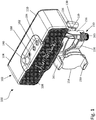
Fig. 1 is a front perspective view of a portable speaker system for attachment to an electric string instrument in accordance with an embodiment; -
Fig. 2 is a bottom view of the portable speaker system ofFig. 1 ; -
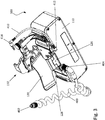
Fig. 3 is a rear perspective view of the portable speaker system ofFig. 1 ; -
Fig. 4 is a top view of the portable speaker system ofFig. 1 ; -
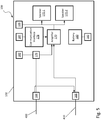
Fig. 5 is a schematic diagram of the portable speaker system ofFig. 1 ; -
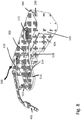
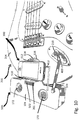
Fig. 6 is a front view of the portable speaker system ofFig. 1 attached to a guitar and coupled with a portable computing device, according to a non-limiting embodiment; -
Fig. 7 is a partial rear view of the portable speaker system ofFig. 1 , attached to the guitar shown inFig. 6 and coupled with the portable computing device shown inFig. 6 ; -
Fig. 8 is a perspective view of an alternative, not covered by the appended claims, for the portable speaker system ofFig. 7 ; -
Fig. 9 is a top plan view of a portable speaker system in accordance with another alternative not covered by the appended claims; -
Fig. 10 is a partial perspective view of another alternative, not covered by the appended claims, of a portable speaker system attached to a guitar and coupled with a portable computing device; -
Fig. 11 is a perspective view of another embodiment of a portable speaker system; and -
Fig. 12 is a partial perspective view of the portable speaker system ofFig. 11 having a strap button from a guitar inserted therein. - For simplicity and clarity of illustration, reference numerals may be repeated among the figures to indicate corresponding or analogous elements. Numerous details are set forth to provide an understanding of the embodiments described herein. The embodiments may be practiced without these details. In other instances, well-known methods, procedures, and components have not been described in detail to avoid obscuring the embodiments described. The description is not to be considered as limited to the scope of the embodiments described herein.
- The present disclosure generally relates to a portable speaker system for attachment to a body of an electric string instrument, such as for example, an electric guitar (hereinafter referred to simply as a guitar) without interfering with the ability of a user to play the electric string instrument. The portable speaker system can be connected to an output plug of the electrical string instrument using, for example, an audio cable, to receive raw audio signals from the electric string instrument to the portable speaker system when the electric string instrument is played. The portable speaker system also includes an amplifier configured to amplify raw audio signals received from the electric string instrument when the electric string instrument is played by a user, and one or more speakers configured to receive the amplified audio signals and generate sound from the amplified audio signals.
- The portable speaker system may also include a mount for a portable computing device for receiving raw audio signals from the portable speaker system, and for optionally providing supplemental audio to the portable speaker system that can be combined with the raw audio signals received from the electric string instrument when played. The portable speaker system may also be connected to the portable computing device, using for example, an electrical cable, to route raw audio signals received from the electric string instrument when played to the portable computing device. The portable computing device processes the raw audio signals or modulates the raw audio signals to add supplementary audio the raw audio signals and transmits the processed raw audio signals, or the modulated to the portable speaker for amplification by the amplifier and generating sound using the one or more speakers.
-
Figs. 1 to 5 show an example embodiment of aportable speaker system 100 for attachment to an electrical string instrument. In the following description, the portable speaker system 100 (referred to hereinafter as system 100) is attachable to an electric guitar 200 (referred to hereinafter as guitar 200) as shown inFig. 6 and7 . Thesystem 100, however, may be attachable to and used with any suitable electric string instrument, such as for example, an electric bass guitar, a hybrid electric-acoustic guitar, an electric ukulele, and the like. - The
system 100 includes ahousing 102 having atop 104, abottom 106, afront 108, and aback 110. Thebottom 106 of thehousing 102 includes aguitar attachment portion 112 comprising aguitar attachment mechanism 114 for releasably attaching thesystem 100 to abody 202 of theguitar 200. In the embodiment shown inFig. 1 to Fig. 5 , theguitar attachment mechanism 114 is a button connector that includes arecess 116 shaped and sized to receive and retain astrap button 201 of theguitar 200 therein. Thestrap button 201 has a shaft 203 and a flange 205, as shown inFig. 12 . Therecess 116 is key-shaped and includes anenlarged portion 118 having a first diameter, and anarrow portion 120 having a second diameter that is less than the first diameter of theenlarged portion 118. The diameter of theenlarged portion 118 of therecess 116 is greater than a diameter of the flange 205 of thestrap button 201 so that thestrap button 201 passes through theenlarged portion 118 of therecess 116. The diameter of thenarrow portion 120 of therecess 116 is less than the diameter of the flange 205 of thestrap button 201. Thenarrow portion 120 of therecess 116 is shaped and size to engage with the shaft 203 of thestrap button 201 to securely attach thehousing 102 of thesystem 100 to theguitar 200. - The
system 100 also includes astabilizer 122 for inhibiting rotation of thesystem 100 when thesystem 100 is attached to theguitar 200 as described in further detail below. In the embodiment shown inFig. 1 to Fig. 5 , thestabilizer 122 includes abase 126, aspring hinge 128, and aplate 130. Thebase 126 is coupled to thebottom 106 of thehousing 102 proximate the back 110 of thehousing 102 and extends away from thebottom 106 of thehousing 102. Theplate 130 is pivotally connected to thebase 126 by thespring hinge 128. Theplate 130 of thestabilizer 122 pivots between an open position (Fig. 3 ) in which theplate 130 extends away from the bottom of thehousing 102 substantially perpendicular to thebottom 106 of thehousing 102, and a closed position (Fig. 4 ) in which theplate 130 is adjacent to theguitar attachment portion 112 and a front surface 132 of theplate 130 faces theguitar attachment portion 112. Thespring hinge 128 provides a spring force that biases theplate 130 into the closed position. - In some embodiments, when the
plate 130 is in the closed position, the front surface 132 of theplate 130 is spaced from theguitar attachment portion 112. In alternative embodiments, when theplate 130 is in the closed position, the front surface 132 of theplate 130 abuts or rests against theguitar attachment portion 112. Also, in some embodiments, when theplate 130 is in the closed position, theplate 130 covers therecess 116 in theguitar attachment portion 112. - In some embodiments, the
plate 130 includes a compressiblesoft material 134, such as for example, rubber for engaging with the body 202 (Fig. 6 ) of theguitar 200 and for protecting thebody 202 of theguitar 200 from scratching when thesystem 100 is attached to theguitar 200. The compressiblesoft material 134 is mounted on the front face of theplate 130 and may be any suitable material that protects thebody 202 of theguitar 200 from scratching, such as, for example, rubber. - Referring again to
Fig. 1 to Fig. 5 , thesystem 100 also includes amounting mechanism 150 for attaching a portable computing device 300 (Fig. 7 ) to thesystem 100. The mountingmechanism 150 is attachable to thebottom 106 of thehousing 102 of thesystem 100 and detachable therefrom as described in further detail below. The mountingmechanism 150 includes an articulating arm 152 and aholder 154. The articulating arm 152 includes a fixedportion 156 and arotating portion 158 that is coupled to the fixedportion 156 and rotates about an axis that extends along the fixedportion 156 to adjust a position of theholder 154 of the mountingmechanism 150 relative to thehousing 102 of thesystem 100. - The
holder 154 is coupled to therotating portion 158 of the articulating arm 152. Theholder 154 is shaped and dimensioned to receive and securely retain theportable computing device 300 therein. Theholder 154 includes afixed end 159 and agripper 161 for securing retaining theportable computing device 300 in theholder 154. Thegripper 161 is moveable relative to thefixed end 159 to adjust a distance between thefixed end 159 and thegripper 161 to enable portable computing devices of varying size to be inserted into theholder 154 and to securely retained therein. Thegripper 161 can be spring-loaded to apply a force against an edge of aportable computing device 300 when theportable computing device 300 is interested into theholder 154 to securely retain theportable computing device 300 in theholder 154. - The articulating arm 152 also including a
locking mechanism 165 for locking therotating portion 158 to the fixedportion 156 when theholder 154 is in a desired position relative to thehousing 102 of thesystem 100. Thelocking mechanism 165 may be any suitable locking mechanism, such as for example, a thumb screw that applies friction to lock therotating portion 158 to the fixedportion 156. - As mentioned above, the mounting
mechanism 150 is attachable to and detachable from thehousing 102. Referring toFig. 2 , thebottom 106 of thehousing 102 includes afirst mounting slot 160 and asecond mounting slot 162. Thefirst mounting slot 160 is shaped and dimensioned to receive a first end 164 of the fixedportion 156 of the articulating arm 152 and to attach themounting mechanism 150 to thehousing 102. - In
Fig. 2 , the mountingmechanism 150 is shown inserted into thesecond mounting slot 162 which, on right-handed guitars, is closer to a user when thesystem 100 is attached to theguitar 200 and theguitar 200 is being played by a user. Thus, when the first end 164 of the fixedportion 156 of the mountingmechanism 150 is attached to thesecond mounting slot 162. In the present embodiment, the mountingmechanism 150 can be detached from thesecond mounting slot 162 by disengaging the first end 164 of the fixedportion 156 from thesecond mounting slot 162 and inserting the first end 164 of the fixedportion 156 into thefirst mounting slot 160. Thefirst mounting slot 160 and thesecond mounting slot 162 enable a user to adjust a position of the mountingmechanism 150 on thesystem 100 so that when thesystem 100 is attached to theguitar 200, theholder 154 can positioned over thebody 202 of theguitar 200 so as to not interfere with the user's ability to play theguitar 200. - The
system 100 also includes anaudio port 166 disposed on thebottom 106 of thehousing 102 for electrically coupling thesystem 100 to theguitar 200 as described in further detail below. Thesystem 100 also includes asupplemental audio port 168 for electrically coupling thesystem 100 to the portableelectronic device 300 as described in further detail below. - Referring to
Fig. 5 , thesystem 100 also includes multiple internal components that are disposed in thehousing 102, including anamplifier 170, speakers 172-1, 172-2 (referred to generically hereinafter asspeaker 172 and collectively as speakers 172), anelectrical bypass 176, acommunication interface 178, and a battery 180. - The
electrical bypass 176 is coupled to abypass switch 182, theaudio port 166 and abypass switch 182. Theamplifier 170 is also coupled tosupplemental audio port 168, and thespeakers 172. The amplifier is configured to receive audio signals and amplify the audio signals as described in further detail below. Thespeakers 172 are configured to receive amplified audio signals from theamplifier 170 and generate output sound from the amplified audio signals as described in further detail below. - The
communication interface 178 is coupled to acommunication interface switch 184 andamplifier 170. The battery 180 is coupled to theamplifier 170, thespeakers 172, and thecommunication interface 178 to supply power to these components of thesystem 100. The battery 180 can be a rechargeable battery and is coupled to a charging port 186 for attachment to an external power supply for charging the battery 180. The charging port 186 can be a universal serial bus (USB) charging port or any other suitable charging port for supplying power to the battery 180. Optionally, thesystem 100 may include a power indicator light (not shown), for displaying a power level of the battery 180. - Reference is now made to
Fig. 6 andFig. 7 to describe the attachment of thesystem 100 to theguitar 200. As shown inFig. 6 andFig. 7 , theguitar 200 includes abody 202 that has a curved shaped. Thebody 202 includes afront surface 204, a back surface 206 (Fig. 7 ), afirst end 208, asecond end 210, and anaudio output port 212 into which afirst audio plug 402 of anaudio cable 400 can be inserted into. Theaudio cable 400 also includes asecond audio plug 404 for insertion into theaudio port 166 of the system 100 (seeFig. 3 ) to electrically couple thesystem 100 to theguitar 200. Asupplemental audio cable 410 that includes afirst audio plug 412 for insertion into thesupplemental audio port 168 of thesystem 100 and asecond audio plug 414 for insertion into an audio port 302 of theportable computing device 300 to electrically couple thesystem 100 to theportable computing device 300. - To accommodate a wide variety of shapes and contours in the
body 202, thesystem 100 attaches to theguitar 200 via a strap button 201 (Fig. 12 ) of theguitar 200. Thesystem 100 can be attached to guitars of various sizes and shapes. To attach thesystem 100 to theguitar 200, theplate 130 of thestabilizer 122 is pivoted to the open position such that the front surface 132 of theplate 130 is generally parallel with the back 110 of thehousing 102. Thefirst end 208 of theguitar 200 is inserted between the front surface 132 of thestabilizer 122 and the mountingmechanism 150 such that thestabilizer 122 rests against theback surface 206 of theguitar 200 and the articulating arm 152 of the mountingmechanism 150 is adjacent to thefront surface 204 of theguitar 200. Thestrap button 201, which is disposed on thefirst end 208 of theguitar 200, is inserted into theenlarged portion 118 of therecess 116 and the shaft 203 of the snap button 203 is slid into thenarrow portion 120 of therecess 116 to engage therewith. With thestrap button 201 engaged with thenarrow portion 120 of therecess 116, and theplate 130 of thestabilizer 122 extending along and biased against theback surface 206 of theguitar 200, thesystem 100 is attached to theguitar 200 and inhibited from rotation about thestrap button 201. The shape of therecess 116 inhibits the shaft 203 of thestrap button 201 from slipping out of thenarrow portion 120 of therecess 116. Also, thestabilizer 122, when resting against theback surface 206 of theguitar 200, inhibits rotation of thesystem 100 because theplate 130 abuts theback surface 206 of theguitar 200 when thesystem 100 rotates about thestrap button 201. Thesystem 100 can be attached to theguitar 200 using one hand with the other hand holding theguitar 200. - The
system 100 can be detached from theguitar 200 by angling theguitar 200 relative to thesystem 100 such that thestrap button 201 is withdrawn from theenlarged portion 118 of therecess 116. Theplate 130 of thestabilizer 122 can then be pivoted into the closed position for compact storage or to be used as a stand. It will be appreciated that the shape of thehousing 102 enables thesystem 100 to be attachable to a wide variety of electric string instruments of different shapes and sizes. - The operation of the
system 100 will now be described in detail. When theguitar 200 is played by a user, theguitar 200 generates raw audio signals that are output on theaudio output port 212 of theguitar 200, transmitted to thesystem 100 over theaudio cable 400, and received at thesystem 100 at theaudio port 166. In the present embodiment, thesystem 100 can be configured to operate in three different configurations: raw configuration, wired configuration, and wireless configuration. - In the raw configuration, raw audio signals generated by
guitar 200 are received ataudio port 166 via theaudio cable 400 when theguitar 200 is played. The raw audio signal passes through theelectrical bypass 176, which allows raw audio signals to pass directly to theamplifier 170. The raw audio signals are amplified by theamplifier 170. The amplified raw audio signals are received by thespeaker 172 which generate output sound from the amplified raw audio signals. In raw configuration, thesystem 100 operates without an electrical connection to theportable computing device 300 to produce a clean unaltered sound from theguitar 200. Raw configuration can be activated by actuation of thebypass switch 182, which configures the electrical bypass to route the raw audio signals directly to theamplifier 170. In the raw configuration, the raw audio signals generated by the guitar when played are amplified and output without the need for theportable computing device 300. - In wired configuration, raw audio signals are generated by
guitar 200 are received ataudio port 166 via theaudio cable 400 when theguitar 200 is played. In wired configuration,electrical bypass 176 routes the raw audio signals to thesupplemental audio port 168 for transmission to theportable computing device 300. Theportable computing device 300 receives the raw audio signals at the audio port 302. Theportable computing device 300 can execute an audio processing application to process, modulate, or otherwise modified the raw audio signals by executing instructions of an audio processing application running on theportable computing device 300. For example, instructions of the audio processing application running on theportable computing device 300 may add supplementary audio stored in theportable computing device 300, such as a background drum beat or support instrumentals to the raw audio signals to form processed raw audio signals. The processed raw audio signals are then transmitted from theportable computing device 300 and received at thesupplemental audio port 168 and provided to theamplifier 170. The processed raw audio signals are amplified by the amplifier into amplified audio signals, which are then routed to thespeakers 172 to generate output sound. Theportable computing device 300 can record and store in memory the raw audio signals received from thesystem 100. - In wireless configuration, a raw audio signal generated by
guitar 200 when the guitar is played is received at audio jack 138. Thecommunication interface 178 establishes a wireless connection with theportable computing device 300, which serves as a supplementary audio connection comprising a wireless audio connection. A supplementary audio signal is generated by theportable computing device 300 and received bycommunication interface 178. The raw audio signal received from theguitar 200 and the supplementary audio signal received from theportable computing device 300 are then combined into the processed raw audio signal, and amplified by theamplifier 170 into an amplified audio signal, which is then provided to thespeakers 172 to generate output sound. In some embodiments in which thecommunication interface 178 comprises a Bluetooth® module, wireless configuration can be reversibly activated by use of thecommunication interface switch 184, which when actuated, establishes a Bluetooth® connection. However, in some embodiments, the Bluetooth® pairing could take place automatically when a paired device is nearby, obviating the need for thecommunication interface switch 184. - The
system 100 also includes aheadphone port 188 disposed on the top 104 of thehousing 102. Audio signals output from theamplifier 170 can be routed to theheadphone port 188 instead ofspeakers 172, thereby allowing a user to listen to the output sound for quiet operation - The
portable computing device 300 can be any suitable portable electronic computing device having audio input and output capability and having an input device such as a touch screen for user interaction with theportable computing device 300, running an audio processing application or software for processing raw audio signal received from thesystem 100 and/or for supplying supplementary audio signals to thesystem 100 via thesupplemental audio cable 410 and thesupplemental audio port 168. In addition to sound processing, theportable computing device 300 can also run an application or software that assists a user in playing the instrument, such as, for example, software that displays, on the touchscreen display of the portable computing device, tabulature or musical notation of the song being played. Theportable computing device 300 may be a smartphone running an operating system such as, for example, Android®, iPhone®, Windows® mobile, BB 10, or a suitably sized tablet, a personal digital assistant (PDA), and the like. - Although in the embodiment shown in
Fig. 6 andFig. 7 , theportable computing device 300 is shown as being electrically coupled to thesystem 100 using thesupplemental audio cable 410, specifically a one-eighth inch audio cable as is commonly used by portable computing devices, theportable computing device 300 can also be connected to thesystem 100 through other wired means such as USB, or through a wireless connection, such as a Bluetooth® connection, Wi-Fi connection, or other suitable means for transfer of audio signals. - Although in the embodiment shown in
Fig. 6 andFig. 7 , theguitar 200 is shown as being electrically coupled to theportable speaker system 100 using theaudio cable 400, specifically a one-fourth inch audio cable as is commonly used in electric guitars and electric bass guitars, it is contemplated that other means for transferring raw audio signals from theguitar 200 to thesystem 100 may be employed and made compatible with thesystem 100. - In some embodiments, the front 108 includes a speaker grill which covers the
front 106 of thehousing 102. The speaker grill can include108 a brand logo or other message viewable to an audience when thesystem 100 is attached to theguitar 200. - Referring again to
Fig. 1 to Fig. 5 , thesystem 100 also includes avolume control knob 190 for controlling a volume of sound generated by thesystem 100 and for serving as an on/off switch for thesystem 100. - In other embodiments, the
housing 102 and theguitar attachment portion 112 of theportable speaker system 100 are shaped to conform around an upper strap button (not shown) positioned near anupper edge 214 of theguitar 200. However, given the contours of conventional guitar around this upper strap button, thesystem 100 be shaped to conform to the less angular contours of thebody 202 of theguitar 200 near thestrap button 201 at alower edge 216 of theguitar 200. In the present embodiment, therefore, thehousing 102 is generally shaped as a rectangular prism. However, in other embodiments, whether connecting to thestrap button 201 or another strap button, the shape of thehousing 102 may be any other suitable shape, provided the shape is compatible with the contours of thebody 202 of theguitar 200 around the strap button to which theportable speaker system 100 is attached. - In addition to the embodiments shown in the Figures, other
guitar attachment mechanisms 114 having button connectors such as clasps and sockets are contemplated, and other stabilizers such as support rods, brackets, and grips, are contemplated. In some embodiments, the stabilizer may not be engaged against the body of the guitar, such as, for example, in the case of a thumb screw or other means for impinging on the strap button to inhibit rotation of the portable speaker system. - Referring now to
Figs. 8 to 10 , another example alternative of aportable speaker system 500 not covered by the scope of the appended claims is shown. In the description below, reference numerals which are in common with those used with respect to theportable speaker system 100, are considered to refer to elements which are the same as those described in those embodiments. - In the alternative shown in
Fig. 8 to Fig. 10 , theportable speaker system 500 includes an integrated stabilizer and portable computing device holder 516 (hereinafter referred to as holder 516). Theholder 516 extends away from thebottom 106 of thehousing 102 and is integral with the top 104 of thehousing 102 of theportable speaker system 500. - The
holder 516 comprisesbase plates 510, aslideable tab 512, andtrack 514. Between thebase plates 510 and theslideable tab 512 is a space for inserting theportable computing device 300. A distance between theslideable tab 512 andbase plates 510 is adjustable by moving theslideable tab 512 along thetrack 514 to enable variously sizedportable computing devices 300 to be inserted into theholder 516. Theslideable tab 512 slides along thetrack 514, and is biased by a biasing means, such as a spring, toward thebase plates 510, such that when theportable computing device 300 is inserted between theslideable tab 512, theslideable tab 512 applies a force against edges of theportable computing device 300 when theportable computing device 300 is inserted in the space therebetween. In use, theholder 516 inhibits rotation of theportable speaker system 500 when theportable speaker system 500 is attached to theguitar 200 while simultaneously providing a mounting mechanism for attaching a portable computing device. - The
portable speaker system 500 also includes lockingarms 518 disposed withinrecess 502 for attaching to astrap button 201 of aguitar 200. The lockingarms 518 provide a variation of button connector 140 for releasably attaching withstrap button 201 of theguitar 200 to attach theportable speaker system 500 to theguitar 200. - The
holder 516 extends along a portion of thebody 202 of theguitar 200, in this case thefront surface 204 of theguitar 200, generally in parallel with thefront surface 204 of the guitar, when theportable speaker system 500 is attached to theguitar 200. Theholder 516 inhibits rotation of theportable speaker system 500 when theportable speaker system 500 is attached to theguitar 200 because theholder 516 abuts thefront surface 204 of theguitar 200 when theportable speaker system 500 rotates about thestrap button 201. - The
portable speaker system 500 further comprises padding 504 situated on thebottom 106 of thehousing 102 to cushion contact of theportable speaker system 500 against theguitar 200 when theportable speaker system 500 is attached to theguitar 200. Thepadding 504 can be made of suitably soft material, such as rubber, for protecting theguitar 200 from scratching when theportable speaker system 500 is attached to theguitar 200. -
Figs. 11 and12 showing another example embodiment of theportable speaker system 600. In the description below, reference numerals which are in common with those used with respect to theportable speaker system 100 are considered to refer to elements which are the same or similar to those described in those embodiments. - The
portable speaker system 600 comprises aguitar attachment mechanism 114 that includes abutton connector 640 which releasably attaches withstrap button 201 of theguitar 200 in a similar manner as described above. In the present embodiment, thebutton connector 640 comprisesenlarged portion 642 and a narrowedportion 644. Thebutton connector 640 further comprises a flaredportion 646 for accommodating larger sizes ofstrap buttons 201, and for ease of insertion of thestrap button 201 into theenlarged portion 642.Fig. 12 illustrates a strap button 201 (with theguitar 200 omitted) received within the narrowedportion 644. - It will be understood by the person skilled in the art that variations to the embodiments described herein may be made without departing from the scope of the invention. For example, a single speaker may be used instead of two, modifications to the shape of the
housing 102 may be made, modifications to the design of the mountingmechanism 150 for holding theportable computing device 300 may be made, thecommunication interface switch 184 may be omitted in place of an automated wireless connection, different elastic biasing means other than springs may be employed, and different kinds of buttons, switches, ports, jacks, and peripherals of the portable speaker system may be employed. Furthermore, it is understood that circuitry in the portable speaker system has been omitted for brevity, and that circuitry may be inferred to provide the functionality described herein, for example, the functionality of thevolume control knob 190 to control volume and the on/off state of theportable speaker system 100, and the circuitry of theelectrical bypass 176, and the audio signal pathways. - It is further contemplated that, in other alternatives of the
system 100, not covered by the appended claims, otherguitar attachment mechanisms 114 may be employed which attach thesystem 100 directly tobody 202 of theguitar 200 without attaching with astrap button 201, such as by being clamped to thebody 202 of theguitar 200, or the neck of theguitar 200, provided that the attachment mechanism releasably attaches thesystem 100 to theguitar 200 without interfering with a user's ability to play the guitar and inhibits rotation ofsystem 100 when thesystem 100 is attached to theguitar 200. - The
portable speaker system portable computing device 300 can be coupled with theportable speaker system guitar 200 when played and for providing supplemental audio. Theportable speaker system - The scope of the claims should not be limited by the embodiments set forth in the above examples, but should be given the broadest interpretation consistent with the description as a whole.
Claims (7)
- A portable speaker system (100; 500; 600) for attachment to an electric string instrument (200), the portable speaker system comprising:a housing (102) comprising:an audio jack (166) for receiving an audio plug (404), the audio plug providing a raw audio signal generated by the electric string instrument (200);an amplifier (170) coupled to the audio jack (166) and configured to receive an audio signal and amplify the audio signal to generate an amplified audio signal, the audio signal comprising one of the raw audio signal and a processed raw audio signal;a speaker (172) coupled to the amplifier (170) and configured to receive the amplified audio signal and generate output sound from the amplified audio signal; anda power supply (180) coupled to the amplifier (170) and speaker (172) for powering the amplifier and speaker;a button connector (114) disposed on the housing (102), the button connector configured to receive a strap button (201) of the electric string instrument (200), the strap button extending outward from a body (202) of the electric string instrument, to attach the portable speaker system (100) to the body of the electric string instrument; anda stabilizer (122) extending from the housing (102) for inhibiting rotation of the portable speaker system (100) when the portable speaker system is attached to the electric string instrument (200);characterized by a mounting mechanism (150) attached to the housing (102), the mounting mechanism including a holder (154) for retaining a portable computing device (300) therein, wherein the mounting mechanism is detachable from the housing.
- The portable speaker system of claim 1, wherein the portable speaker system (100) further comprises a supplementary audio connection (168) configured to be coupled to the amplifier (170) and the portable computing device (300), the supplementary audio connection for forwarding the raw audio signal to the portable computing device for processing, and for receiving the processed raw audio signal from the portable computing device, and wherein the audio signal comprises the processed raw audio signal.
- The portable speaker system of claim 1 or 2, wherein the mounting mechanism (150) is integral with the stabilizer (122) of the portable speaker system, and wherein the mounting mechanism extends along a portion of the body (202) of the electric string instrument (200) when the portable speaker system (100) is attached to the electric string instrument.
- The portable speaker system of any one of claims 1 to 3, wherein the button connector (114) is disposed on a bottom (106) of the housing (102), the stabilizer (122) is pivotally connected to the housing, the stabilizer is pivotable between an open position in which the stabilizer overlaps a portion of the body (202) of the electric string instrument (200) to inhibit rotation of the portable speaker system (100) when the portable speaker system is attached to the electric string instrument, and a closed position in which the stabilizer is adjacent to the housing (102) of the portable speaker system (100) when the portable speaker system is not attached to the electric string instrument.
- The portable speaker system of any one of claims 1 to 4, wherein the stabilizer (122) is elastically biased against a portion of the body (202) of the electric string instrument (200) when the portable speaker system is attached to the electric string instrument.
- The portable speaker system of any one of claims 1 to 5, further comprising the portable computing device (300).
- The portable speaker system of any one of claims 1 to 6, further comprising an electrical bypass (176) for selectively providing one of the raw audio signal and the processed raw audio signal to the amplifier (170).
Applications Claiming Priority (3)
| Application Number | Priority Date | Filing Date | Title |
|---|---|---|---|
| US201662343039P | 2016-05-30 | 2016-05-30 | |
| US201662411760P | 2016-10-24 | 2016-10-24 | |
| PCT/IB2017/053186 WO2017208159A1 (en) | 2016-05-30 | 2017-05-30 | Portable speaker system for electric string instruments |
Publications (3)
| Publication Number | Publication Date |
|---|---|
| EP3465675A1 EP3465675A1 (en) | 2019-04-10 |
| EP3465675A4 EP3465675A4 (en) | 2020-02-12 |
| EP3465675B1 true EP3465675B1 (en) | 2021-03-31 |
Family
ID=60478178
Family Applications (1)
| Application Number | Title | Priority Date | Filing Date |
|---|---|---|---|
| EP17805979.6A Active EP3465675B1 (en) | 2016-05-30 | 2017-05-30 | Portable speaker system for electric string instruments |
Country Status (9)
| Country | Link |
|---|---|
| US (2) | US9998810B2 (en) |
| EP (1) | EP3465675B1 (en) |
| JP (1) | JP2019522409A (en) |
| CN (1) | CN109863552B (en) |
| AU (1) | AU2017275897B2 (en) |
| BR (1) | BR112018074610A2 (en) |
| CA (1) | CA3025759C (en) |
| MX (1) | MX392263B (en) |
| WO (1) | WO2017208159A1 (en) |
Families Citing this family (10)
| Publication number | Priority date | Publication date | Assignee | Title |
|---|---|---|---|---|
| USD835605S1 (en) * | 2015-12-03 | 2018-12-11 | Bose Corporation | Soundbar |
| USD906286S1 (en) | 2019-06-24 | 2020-12-29 | Bose Corporation | Soundbar |
| US11521586B2 (en) * | 2019-10-08 | 2022-12-06 | Marat Gabdullin | Self-contained enhanced string instrument |
| US20240347028A1 (en) * | 2019-10-14 | 2024-10-17 | Elmore Pedal Company, LLC | Computer accessory for optimizing musical instruction |
| USD932461S1 (en) | 2019-12-24 | 2021-10-05 | Bose Corporation | Soundbar |
| US20210225342A1 (en) * | 2020-01-17 | 2021-07-22 | Aaron Thomas | Protective cover for electronic music equipment |
| US20210319776A1 (en) * | 2020-03-21 | 2021-10-14 | Robert John Williams | Device, system, and methods for batteries replacement in electrical instruments |
| US20220038800A1 (en) * | 2020-08-03 | 2022-02-03 | Jamstack | Quick release mounting mechanism for a portable speaker system |
| IT202100001259A1 (en) * | 2021-01-25 | 2022-07-25 | Visual Note Srl | DEVICE FOR DISPLAYING LIGHT EFFECTS ON A STRINGED MUSICAL INSTRUMENT |
| USD997904S1 (en) * | 2022-09-09 | 2023-09-05 | Shenzhen Xunweijia Technology Development Co., Ltd. | Speaker |
Family Cites Families (28)
| Publication number | Priority date | Publication date | Assignee | Title |
|---|---|---|---|---|
| US3939751A (en) * | 1974-09-16 | 1976-02-24 | Motorola, Inc. | Tunable electrical musical instrument |
| US4495640A (en) * | 1982-06-28 | 1985-01-22 | Frey Douglas R | Adjustable distortion guitar amplifier |
| US5121668A (en) * | 1990-01-19 | 1992-06-16 | Segan Marc H | Electronic guitar |
| US5442986A (en) * | 1994-05-23 | 1995-08-22 | Cota; Jose G. | Integrated collapsible guitar, sound studio and case |
| IT1317295B1 (en) | 1997-06-09 | 2003-05-28 | Ik Multimedia Production S R L | PROCEDURE FOR THE CREATION OF SOUNDPROOFINGS AND MUSICAL BASES, PARTICULARLY FOR RECREATIONAL PURPOSE IN ENVIRONMENTS SUCH AS DISCOTECHE AND |
| IT1314626B1 (en) | 2000-04-21 | 2002-12-20 | Ik Multimedia Production Srl | PROCEDURE FOR THE CODING AND DECODING OF DATA FLOWS, SOUND REPRESENTATIVES IN DIGITAL FORM, WITHIN A |
| JP3899905B2 (en) * | 2001-11-19 | 2007-03-28 | ヤマハ株式会社 | Electric guitar |
| CN2603989Y (en) * | 2003-02-12 | 2004-02-18 | 武汉艾立卡电子有限公司 | Digital sound effect amplifier for electric guitar |
| CN100433140C (en) * | 2004-06-21 | 2008-11-12 | 圆创科技股份有限公司 | Portable video and audio vocal accompaniment equipment |
| US7060889B2 (en) * | 2004-07-01 | 2006-06-13 | Peter Roy Bellak | Strap amplifier |
| US20060159291A1 (en) * | 2005-01-14 | 2006-07-20 | Fliegler Richard H | Portable multi-functional audio sound system and method therefor |
| CN1881463A (en) * | 2005-06-17 | 2006-12-20 | 北京华旗资讯数码科技有限公司 | Portable audio playing apparatus |
| ITMO20060109A1 (en) | 2006-03-29 | 2007-09-30 | Ik Multimedia Production Srl | "AUDIO CARD, PARTICULARLY FOR CONNECTION BETWEEN A COMPUTER AND A MUSICAL STEREO" |
| EP2686843A4 (en) * | 2011-03-17 | 2014-11-26 | Charles Moncavage | System and method for recording and sharing music |
| US20110211713A1 (en) * | 2011-04-26 | 2011-09-01 | Eric Cavallo-Romano | Attachable guitar amplifier and effects apparatus |
| WO2013170410A1 (en) * | 2012-05-14 | 2013-11-21 | 华为技术有限公司 | Group communication method and system, group server and group member device |
| US9117431B1 (en) * | 2012-06-11 | 2015-08-25 | Michael D. Rudes | Guitar accessory for personal electronic equipment |
| BR102012028587A2 (en) * | 2012-11-08 | 2014-06-24 | Marcus Reis Esselin Biancardini | PORTABLE SOUND DEVICE FOR SOUND AMPLIFICATION OF ROPE AND SIMILAR MUSICAL INSTRUMENTS |
| KR102140357B1 (en) * | 2013-05-30 | 2020-07-31 | 슈어 애쿼지션 홀딩스, 인코포레이티드 | Stabilizer for microphone diaphragm |
| TWM465647U (en) * | 2013-06-21 | 2013-11-11 | Microtips Technology Inc | Tone color processing adapting seat of electric guitar |
| US9093057B2 (en) * | 2013-09-03 | 2015-07-28 | Luis Mejia | All in one guitar |
| WO2015054242A1 (en) * | 2013-10-09 | 2015-04-16 | Mophie, Inc. | Dock station with movable support |
| US20150195633A1 (en) * | 2014-01-04 | 2015-07-09 | Fugoo Corporation | Configurable portable sound systems with interchangeable enclosures |
| US9699539B2 (en) | 2014-09-03 | 2017-07-04 | Ik Multimedia Production Srl | Stereo microphone for mobile devices |
| US20160140946A1 (en) * | 2014-11-18 | 2016-05-19 | James W. Kendall, SR. | Guitar Feedback Device and Method |
| US9318080B1 (en) * | 2015-02-11 | 2016-04-19 | Walter Medeiros | Guitar having a compartment to ergonomically hold portable computing devices |
| CN107615373A (en) * | 2015-04-23 | 2018-01-19 | 融合音乐科技Ip私人有限公司 | Electric stringed instrument |
| ITUB20153633A1 (en) | 2015-09-15 | 2017-03-15 | Ik Multimedia Production Srl | SOUND RECEIVER, PARTICULARLY FOR ACOUSTIC GUITARS. |
-
2017
- 2017-05-30 MX MX2018014705A patent/MX392263B/en unknown
- 2017-05-30 AU AU2017275897A patent/AU2017275897B2/en not_active Ceased
- 2017-05-30 WO PCT/IB2017/053186 patent/WO2017208159A1/en not_active Ceased
- 2017-05-30 CA CA3025759A patent/CA3025759C/en active Active
- 2017-05-30 CN CN201780047201.9A patent/CN109863552B/en not_active Expired - Fee Related
- 2017-05-30 JP JP2018563118A patent/JP2019522409A/en active Pending
- 2017-05-30 EP EP17805979.6A patent/EP3465675B1/en active Active
- 2017-05-30 BR BR112018074610-0A patent/BR112018074610A2/en not_active Application Discontinuation
- 2017-06-01 US US15/610,978 patent/US9998810B2/en active Active
-
2018
- 2018-05-10 US US15/976,715 patent/US10469926B2/en active Active
Non-Patent Citations (1)
| Title |
|---|
| None * |
Also Published As
| Publication number | Publication date |
|---|---|
| EP3465675A1 (en) | 2019-04-10 |
| US10469926B2 (en) | 2019-11-05 |
| BR112018074610A2 (en) | 2019-06-04 |
| US20180262822A1 (en) | 2018-09-13 |
| JP2019522409A (en) | 2019-08-08 |
| EP3465675A4 (en) | 2020-02-12 |
| US20170347173A1 (en) | 2017-11-30 |
| CN109863552A (en) | 2019-06-07 |
| MX2018014705A (en) | 2019-11-11 |
| CA3025759C (en) | 2025-06-17 |
| WO2017208159A1 (en) | 2017-12-07 |
| MX392263B (en) | 2025-03-24 |
| AU2017275897B2 (en) | 2022-05-19 |
| AU2017275897A1 (en) | 2019-01-17 |
| CA3025759A1 (en) | 2017-12-07 |
| US9998810B2 (en) | 2018-06-12 |
| CN109863552B (en) | 2023-08-22 |
Similar Documents
| Publication | Publication Date | Title |
|---|---|---|
| US10469926B2 (en) | Portable speaker system for electric string instruments | |
| US9118195B2 (en) | Mobile communication device housing | |
| US7272420B2 (en) | Mobile device interface and adaptation system | |
| US8432124B2 (en) | Portable electronic device carrier with charging system | |
| US9117431B1 (en) | Guitar accessory for personal electronic equipment | |
| US9158337B2 (en) | Docking station with speakers for media player | |
| KR100952697B1 (en) | Intel Rex Station | |
| KR101391547B1 (en) | Chargible smart phone cradle for car | |
| US11570917B2 (en) | Portable monitor and peripherals hub system | |
| US20090154740A1 (en) | Personal Speaker System with Detachable Control Module | |
| US20160277052A1 (en) | Modular Portable Power Device | |
| GB2451894A (en) | Two-part dock for an MP3 device, including a base unit housing low frequency bass speaker | |
| US20210286410A1 (en) | Computer | |
| JP2014508353A (en) | Display device that can be combined with mobile terminals | |
| JPWO2004099958A1 (en) | Electronics | |
| JP2016504613A (en) | Portable acoustic equipment for sound amplification of stringed and similar instruments | |
| US8325966B2 (en) | Detachable loudspeaker structure having both audio and supporting functions | |
| US20050079904A1 (en) | Detachable display unit for portable video player device | |
| TW202201945A (en) | Portable monitor and peripherals hub system | |
| KR101002162B1 (en) | Portable digital multimedia amplifier | |
| JP3189463U (en) | Bluetooth swivel holder | |
| TWM456735U (en) | Protecting folder with slim speaker for mobile phone | |
| US11166116B2 (en) | Systems, devices, and methods for converting artwork or photographs into audio-enhanced exhibits | |
| CN210983800U (en) | A teaching recitation player | |
| TW201228557A (en) | Bracket and electronic apparatus applying with the bracket |
Legal Events
| Date | Code | Title | Description |
|---|---|---|---|
| STAA | Information on the status of an ep patent application or granted ep patent |
Free format text: STATUS: THE INTERNATIONAL PUBLICATION HAS BEEN MADE |
|
| PUAI | Public reference made under article 153(3) epc to a published international application that has entered the european phase |
Free format text: ORIGINAL CODE: 0009012 |
|
| STAA | Information on the status of an ep patent application or granted ep patent |
Free format text: STATUS: REQUEST FOR EXAMINATION WAS MADE |
|
| 17P | Request for examination filed |
Effective date: 20181220 |
|
| AK | Designated contracting states |
Kind code of ref document: A1 Designated state(s): AL AT BE BG CH CY CZ DE DK EE ES FI FR GB GR HR HU IE IS IT LI LT LU LV MC MK MT NL NO PL PT RO RS SE SI SK SM TR |
|
| AX | Request for extension of the european patent |
Extension state: BA ME |
|
| DAV | Request for validation of the european patent (deleted) | ||
| DAX | Request for extension of the european patent (deleted) | ||
| A4 | Supplementary search report drawn up and despatched |
Effective date: 20200113 |
|
| RIC1 | Information provided on ipc code assigned before grant |
Ipc: G10H 3/18 20060101AFI20200107BHEP Ipc: H04R 1/02 20060101ALI20200107BHEP Ipc: G10H 1/32 20060101ALI20200107BHEP |
|
| GRAP | Despatch of communication of intention to grant a patent |
Free format text: ORIGINAL CODE: EPIDOSNIGR1 |
|
| STAA | Information on the status of an ep patent application or granted ep patent |
Free format text: STATUS: GRANT OF PATENT IS INTENDED |
|
| INTG | Intention to grant announced |
Effective date: 20201023 |
|
| GRAS | Grant fee paid |
Free format text: ORIGINAL CODE: EPIDOSNIGR3 |
|
| GRAA | (expected) grant |
Free format text: ORIGINAL CODE: 0009210 |
|
| STAA | Information on the status of an ep patent application or granted ep patent |
Free format text: STATUS: THE PATENT HAS BEEN GRANTED |
|
| AK | Designated contracting states |
Kind code of ref document: B1 Designated state(s): AL AT BE BG CH CY CZ DE DK EE ES FI FR GB GR HR HU IE IS IT LI LT LU LV MC MK MT NL NO PL PT RO RS SE SI SK SM TR |
|
| REG | Reference to a national code |
Ref country code: GB Ref legal event code: FG4D Ref country code: CH Ref legal event code: EP |
|
| REG | Reference to a national code |
Ref country code: AT Ref legal event code: REF Ref document number: 1377827 Country of ref document: AT Kind code of ref document: T Effective date: 20210415 |
|
| REG | Reference to a national code |
Ref country code: DE Ref legal event code: R096 Ref document number: 602017035852 Country of ref document: DE |
|
| REG | Reference to a national code |
Ref country code: IE Ref legal event code: FG4D |
|
| REG | Reference to a national code |
Ref country code: LT Ref legal event code: MG9D |
|
| PG25 | Lapsed in a contracting state [announced via postgrant information from national office to epo] |
Ref country code: BG Free format text: LAPSE BECAUSE OF FAILURE TO SUBMIT A TRANSLATION OF THE DESCRIPTION OR TO PAY THE FEE WITHIN THE PRESCRIBED TIME-LIMIT Effective date: 20210630 Ref country code: FI Free format text: LAPSE BECAUSE OF FAILURE TO SUBMIT A TRANSLATION OF THE DESCRIPTION OR TO PAY THE FEE WITHIN THE PRESCRIBED TIME-LIMIT Effective date: 20210331 Ref country code: HR Free format text: LAPSE BECAUSE OF FAILURE TO SUBMIT A TRANSLATION OF THE DESCRIPTION OR TO PAY THE FEE WITHIN THE PRESCRIBED TIME-LIMIT Effective date: 20210331 Ref country code: NO Free format text: LAPSE BECAUSE OF FAILURE TO SUBMIT A TRANSLATION OF THE DESCRIPTION OR TO PAY THE FEE WITHIN THE PRESCRIBED TIME-LIMIT Effective date: 20210630 |
|
| PG25 | Lapsed in a contracting state [announced via postgrant information from national office to epo] |
Ref country code: RS Free format text: LAPSE BECAUSE OF FAILURE TO SUBMIT A TRANSLATION OF THE DESCRIPTION OR TO PAY THE FEE WITHIN THE PRESCRIBED TIME-LIMIT Effective date: 20210331 Ref country code: LV Free format text: LAPSE BECAUSE OF FAILURE TO SUBMIT A TRANSLATION OF THE DESCRIPTION OR TO PAY THE FEE WITHIN THE PRESCRIBED TIME-LIMIT Effective date: 20210331 Ref country code: SE Free format text: LAPSE BECAUSE OF FAILURE TO SUBMIT A TRANSLATION OF THE DESCRIPTION OR TO PAY THE FEE WITHIN THE PRESCRIBED TIME-LIMIT Effective date: 20210331 |
|
| REG | Reference to a national code |
Ref country code: NL Ref legal event code: MP Effective date: 20210331 |
|
| REG | Reference to a national code |
Ref country code: AT Ref legal event code: MK05 Ref document number: 1377827 Country of ref document: AT Kind code of ref document: T Effective date: 20210331 |
|
| PG25 | Lapsed in a contracting state [announced via postgrant information from national office to epo] |
Ref country code: AT Free format text: LAPSE BECAUSE OF FAILURE TO SUBMIT A TRANSLATION OF THE DESCRIPTION OR TO PAY THE FEE WITHIN THE PRESCRIBED TIME-LIMIT Effective date: 20210331 Ref country code: NL Free format text: LAPSE BECAUSE OF FAILURE TO SUBMIT A TRANSLATION OF THE DESCRIPTION OR TO PAY THE FEE WITHIN THE PRESCRIBED TIME-LIMIT Effective date: 20210331 Ref country code: SM Free format text: LAPSE BECAUSE OF FAILURE TO SUBMIT A TRANSLATION OF THE DESCRIPTION OR TO PAY THE FEE WITHIN THE PRESCRIBED TIME-LIMIT Effective date: 20210331 Ref country code: LT Free format text: LAPSE BECAUSE OF FAILURE TO SUBMIT A TRANSLATION OF THE DESCRIPTION OR TO PAY THE FEE WITHIN THE PRESCRIBED TIME-LIMIT Effective date: 20210331 Ref country code: CZ Free format text: LAPSE BECAUSE OF FAILURE TO SUBMIT A TRANSLATION OF THE DESCRIPTION OR TO PAY THE FEE WITHIN THE PRESCRIBED TIME-LIMIT Effective date: 20210331 Ref country code: EE Free format text: LAPSE BECAUSE OF FAILURE TO SUBMIT A TRANSLATION OF THE DESCRIPTION OR TO PAY THE FEE WITHIN THE PRESCRIBED TIME-LIMIT Effective date: 20210331 |
|
| PG25 | Lapsed in a contracting state [announced via postgrant information from national office to epo] |
Ref country code: IS Free format text: LAPSE BECAUSE OF FAILURE TO SUBMIT A TRANSLATION OF THE DESCRIPTION OR TO PAY THE FEE WITHIN THE PRESCRIBED TIME-LIMIT Effective date: 20210731 Ref country code: PT Free format text: LAPSE BECAUSE OF FAILURE TO SUBMIT A TRANSLATION OF THE DESCRIPTION OR TO PAY THE FEE WITHIN THE PRESCRIBED TIME-LIMIT Effective date: 20210802 Ref country code: PL Free format text: LAPSE BECAUSE OF FAILURE TO SUBMIT A TRANSLATION OF THE DESCRIPTION OR TO PAY THE FEE WITHIN THE PRESCRIBED TIME-LIMIT Effective date: 20210331 Ref country code: SK Free format text: LAPSE BECAUSE OF FAILURE TO SUBMIT A TRANSLATION OF THE DESCRIPTION OR TO PAY THE FEE WITHIN THE PRESCRIBED TIME-LIMIT Effective date: 20210331 Ref country code: RO Free format text: LAPSE BECAUSE OF FAILURE TO SUBMIT A TRANSLATION OF THE DESCRIPTION OR TO PAY THE FEE WITHIN THE PRESCRIBED TIME-LIMIT Effective date: 20210331 |
|
| REG | Reference to a national code |
Ref country code: CH Ref legal event code: PL |
|
| REG | Reference to a national code |
Ref country code: DE Ref legal event code: R097 Ref document number: 602017035852 Country of ref document: DE |
|
| PG25 | Lapsed in a contracting state [announced via postgrant information from national office to epo] |
Ref country code: MC Free format text: LAPSE BECAUSE OF FAILURE TO SUBMIT A TRANSLATION OF THE DESCRIPTION OR TO PAY THE FEE WITHIN THE PRESCRIBED TIME-LIMIT Effective date: 20210331 Ref country code: LI Free format text: LAPSE BECAUSE OF NON-PAYMENT OF DUE FEES Effective date: 20210531 Ref country code: LU Free format text: LAPSE BECAUSE OF NON-PAYMENT OF DUE FEES Effective date: 20210530 Ref country code: DK Free format text: LAPSE BECAUSE OF FAILURE TO SUBMIT A TRANSLATION OF THE DESCRIPTION OR TO PAY THE FEE WITHIN THE PRESCRIBED TIME-LIMIT Effective date: 20210331 Ref country code: CH Free format text: LAPSE BECAUSE OF NON-PAYMENT OF DUE FEES Effective date: 20210531 Ref country code: AL Free format text: LAPSE BECAUSE OF FAILURE TO SUBMIT A TRANSLATION OF THE DESCRIPTION OR TO PAY THE FEE WITHIN THE PRESCRIBED TIME-LIMIT Effective date: 20210331 Ref country code: ES Free format text: LAPSE BECAUSE OF FAILURE TO SUBMIT A TRANSLATION OF THE DESCRIPTION OR TO PAY THE FEE WITHIN THE PRESCRIBED TIME-LIMIT Effective date: 20210331 |
|
| PLBE | No opposition filed within time limit |
Free format text: ORIGINAL CODE: 0009261 |
|
| STAA | Information on the status of an ep patent application or granted ep patent |
Free format text: STATUS: NO OPPOSITION FILED WITHIN TIME LIMIT |
|
| REG | Reference to a national code |
Ref country code: BE Ref legal event code: MM Effective date: 20210531 |
|
| 26N | No opposition filed |
Effective date: 20220104 |
|
| PG25 | Lapsed in a contracting state [announced via postgrant information from national office to epo] |
Ref country code: IE Free format text: LAPSE BECAUSE OF NON-PAYMENT OF DUE FEES Effective date: 20210530 |
|
| PG25 | Lapsed in a contracting state [announced via postgrant information from national office to epo] |
Ref country code: IS Free format text: LAPSE BECAUSE OF FAILURE TO SUBMIT A TRANSLATION OF THE DESCRIPTION OR TO PAY THE FEE WITHIN THE PRESCRIBED TIME-LIMIT Effective date: 20210731 |
|
| PG25 | Lapsed in a contracting state [announced via postgrant information from national office to epo] |
Ref country code: IT Free format text: LAPSE BECAUSE OF FAILURE TO SUBMIT A TRANSLATION OF THE DESCRIPTION OR TO PAY THE FEE WITHIN THE PRESCRIBED TIME-LIMIT Effective date: 20210331 Ref country code: BE Free format text: LAPSE BECAUSE OF NON-PAYMENT OF DUE FEES Effective date: 20210531 |
|
| PGFP | Annual fee paid to national office [announced via postgrant information from national office to epo] |
Ref country code: FR Payment date: 20220525 Year of fee payment: 6 |
|
| PG25 | Lapsed in a contracting state [announced via postgrant information from national office to epo] |
Ref country code: CY Free format text: LAPSE BECAUSE OF FAILURE TO SUBMIT A TRANSLATION OF THE DESCRIPTION OR TO PAY THE FEE WITHIN THE PRESCRIBED TIME-LIMIT Effective date: 20210331 |
|
| PG25 | Lapsed in a contracting state [announced via postgrant information from national office to epo] |
Ref country code: HU Free format text: LAPSE BECAUSE OF FAILURE TO SUBMIT A TRANSLATION OF THE DESCRIPTION OR TO PAY THE FEE WITHIN THE PRESCRIBED TIME-LIMIT; INVALID AB INITIO Effective date: 20170530 Ref country code: GR Free format text: LAPSE BECAUSE OF FAILURE TO SUBMIT A TRANSLATION OF THE DESCRIPTION OR TO PAY THE FEE WITHIN THE PRESCRIBED TIME-LIMIT Effective date: 20210331 |
|
| P01 | Opt-out of the competence of the unified patent court (upc) registered |
Effective date: 20230710 |
|
| PG25 | Lapsed in a contracting state [announced via postgrant information from national office to epo] |
Ref country code: MK Free format text: LAPSE BECAUSE OF FAILURE TO SUBMIT A TRANSLATION OF THE DESCRIPTION OR TO PAY THE FEE WITHIN THE PRESCRIBED TIME-LIMIT Effective date: 20210331 |
|
| PG25 | Lapsed in a contracting state [announced via postgrant information from national office to epo] |
Ref country code: FR Free format text: LAPSE BECAUSE OF NON-PAYMENT OF DUE FEES Effective date: 20230531 |
|
| PG25 | Lapsed in a contracting state [announced via postgrant information from national office to epo] |
Ref country code: TR Free format text: LAPSE BECAUSE OF FAILURE TO SUBMIT A TRANSLATION OF THE DESCRIPTION OR TO PAY THE FEE WITHIN THE PRESCRIBED TIME-LIMIT Effective date: 20210331 |
|
| PGFP | Annual fee paid to national office [announced via postgrant information from national office to epo] |
Ref country code: GB Payment date: 20240521 Year of fee payment: 8 |
|
| PGFP | Annual fee paid to national office [announced via postgrant information from national office to epo] |
Ref country code: DE Payment date: 20240522 Year of fee payment: 8 |
|
| PG25 | Lapsed in a contracting state [announced via postgrant information from national office to epo] |
Ref country code: MT Free format text: LAPSE BECAUSE OF FAILURE TO SUBMIT A TRANSLATION OF THE DESCRIPTION OR TO PAY THE FEE WITHIN THE PRESCRIBED TIME-LIMIT Effective date: 20210331 |
|
| REG | Reference to a national code |
Ref country code: DE Ref legal event code: R119 Ref document number: 602017035852 Country of ref document: DE |
|
| GBPC | Gb: european patent ceased through non-payment of renewal fee |
Effective date: 20250530 |
|
| PG25 | Lapsed in a contracting state [announced via postgrant information from national office to epo] |
Ref country code: GB Free format text: LAPSE BECAUSE OF NON-PAYMENT OF DUE FEES Effective date: 20250530 |
|
| PG25 | Lapsed in a contracting state [announced via postgrant information from national office to epo] |
Ref country code: DE Free format text: LAPSE BECAUSE OF NON-PAYMENT OF DUE FEES Effective date: 20251202 |