EP3464330B1 - Method for producing self-assembling paramyxoviral nucleocapsid-like particles and their uses - Google Patents
Method for producing self-assembling paramyxoviral nucleocapsid-like particles and their uses Download PDFInfo
- Publication number
- EP3464330B1 EP3464330B1 EP17729091.3A EP17729091A EP3464330B1 EP 3464330 B1 EP3464330 B1 EP 3464330B1 EP 17729091 A EP17729091 A EP 17729091A EP 3464330 B1 EP3464330 B1 EP 3464330B1
- Authority
- EP
- European Patent Office
- Prior art keywords
- rna
- particles
- peptide
- virus
- nucleocapsid
- Prior art date
- Legal status (The legal status is an assumption and is not a legal conclusion. Google has not performed a legal analysis and makes no representation as to the accuracy of the status listed.)
- Active
Links
Images




Classifications
-
- C—CHEMISTRY; METALLURGY
- C07—ORGANIC CHEMISTRY
- C07K—PEPTIDES
- C07K14/00—Peptides having more than 20 amino acids; Gastrins; Somatostatins; Melanotropins; Derivatives thereof
- C07K14/005—Peptides having more than 20 amino acids; Gastrins; Somatostatins; Melanotropins; Derivatives thereof from viruses
-
- C—CHEMISTRY; METALLURGY
- C12—BIOCHEMISTRY; BEER; SPIRITS; WINE; VINEGAR; MICROBIOLOGY; ENZYMOLOGY; MUTATION OR GENETIC ENGINEERING
- C12N—MICROORGANISMS OR ENZYMES; COMPOSITIONS THEREOF; PROPAGATING, PRESERVING, OR MAINTAINING MICROORGANISMS; MUTATION OR GENETIC ENGINEERING; CULTURE MEDIA
- C12N7/00—Viruses; Bacteriophages; Compositions thereof; Preparation or purification thereof
-
- G—PHYSICS
- G01—MEASURING; TESTING
- G01N—INVESTIGATING OR ANALYSING MATERIALS BY DETERMINING THEIR CHEMICAL OR PHYSICAL PROPERTIES
- G01N33/00—Investigating or analysing materials by specific methods not covered by groups G01N1/00 - G01N31/00
- G01N33/48—Biological material, e.g. blood, urine; Haemocytometers
- G01N33/50—Chemical analysis of biological material, e.g. blood, urine; Testing involving biospecific ligand binding methods; Immunological testing
- G01N33/53—Immunoassay; Biospecific binding assay; Materials therefor
- G01N33/569—Immunoassay; Biospecific binding assay; Materials therefor for microorganisms, e.g. protozoa, bacteria, viruses
- G01N33/56983—Viruses
-
- C—CHEMISTRY; METALLURGY
- C07—ORGANIC CHEMISTRY
- C07K—PEPTIDES
- C07K2319/00—Fusion polypeptide
-
- C—CHEMISTRY; METALLURGY
- C12—BIOCHEMISTRY; BEER; SPIRITS; WINE; VINEGAR; MICROBIOLOGY; ENZYMOLOGY; MUTATION OR GENETIC ENGINEERING
- C12N—MICROORGANISMS OR ENZYMES; COMPOSITIONS THEREOF; PROPAGATING, PRESERVING, OR MAINTAINING MICROORGANISMS; MUTATION OR GENETIC ENGINEERING; CULTURE MEDIA
- C12N2760/00—MICROORGANISMS OR ENZYMES; COMPOSITIONS THEREOF; PROPAGATING, PRESERVING, OR MAINTAINING MICROORGANISMS; MUTATION OR GENETIC ENGINEERING; CULTURE MEDIA ssRNA viruses negative-sense
- C12N2760/00011—Details
- C12N2760/18011—Paramyxoviridae
- C12N2760/18411—Morbillivirus, e.g. Measles virus, canine distemper
- C12N2760/18423—Virus like particles [VLP]
-
- C—CHEMISTRY; METALLURGY
- C12—BIOCHEMISTRY; BEER; SPIRITS; WINE; VINEGAR; MICROBIOLOGY; ENZYMOLOGY; MUTATION OR GENETIC ENGINEERING
- C12N—MICROORGANISMS OR ENZYMES; COMPOSITIONS THEREOF; PROPAGATING, PRESERVING, OR MAINTAINING MICROORGANISMS; MUTATION OR GENETIC ENGINEERING; CULTURE MEDIA
- C12N2760/00—MICROORGANISMS OR ENZYMES; COMPOSITIONS THEREOF; PROPAGATING, PRESERVING, OR MAINTAINING MICROORGANISMS; MUTATION OR GENETIC ENGINEERING; CULTURE MEDIA ssRNA viruses negative-sense
- C12N2760/00011—Details
- C12N2760/18011—Paramyxoviridae
- C12N2760/18411—Morbillivirus, e.g. Measles virus, canine distemper
- C12N2760/18433—Use of viral protein as therapeutic agent other than vaccine, e.g. apoptosis inducing or anti-inflammatory
-
- C—CHEMISTRY; METALLURGY
- C12—BIOCHEMISTRY; BEER; SPIRITS; WINE; VINEGAR; MICROBIOLOGY; ENZYMOLOGY; MUTATION OR GENETIC ENGINEERING
- C12N—MICROORGANISMS OR ENZYMES; COMPOSITIONS THEREOF; PROPAGATING, PRESERVING, OR MAINTAINING MICROORGANISMS; MUTATION OR GENETIC ENGINEERING; CULTURE MEDIA
- C12N2760/00—MICROORGANISMS OR ENZYMES; COMPOSITIONS THEREOF; PROPAGATING, PRESERVING, OR MAINTAINING MICROORGANISMS; MUTATION OR GENETIC ENGINEERING; CULTURE MEDIA ssRNA viruses negative-sense
- C12N2760/00011—Details
- C12N2760/18011—Paramyxoviridae
- C12N2760/18411—Morbillivirus, e.g. Measles virus, canine distemper
- C12N2760/18434—Use of virus or viral component as vaccine, e.g. live-attenuated or inactivated virus, VLP, viral protein
-
- C—CHEMISTRY; METALLURGY
- C12—BIOCHEMISTRY; BEER; SPIRITS; WINE; VINEGAR; MICROBIOLOGY; ENZYMOLOGY; MUTATION OR GENETIC ENGINEERING
- C12N—MICROORGANISMS OR ENZYMES; COMPOSITIONS THEREOF; PROPAGATING, PRESERVING, OR MAINTAINING MICROORGANISMS; MUTATION OR GENETIC ENGINEERING; CULTURE MEDIA
- C12N2760/00—MICROORGANISMS OR ENZYMES; COMPOSITIONS THEREOF; PROPAGATING, PRESERVING, OR MAINTAINING MICROORGANISMS; MUTATION OR GENETIC ENGINEERING; CULTURE MEDIA ssRNA viruses negative-sense
- C12N2760/00011—Details
- C12N2760/18011—Paramyxoviridae
- C12N2760/18411—Morbillivirus, e.g. Measles virus, canine distemper
- C12N2760/18451—Methods of production or purification of viral material
Definitions
- the invention pertains to the domain of virology of Paramyxoviruses.
- the invention concerns a method for producing self-assembling paramyxoviral particles and a method for identifying a compound able to inhibit the replication or the transcription of a Paramyxovirus.
- the invention also pertains to the nucleocapsid-like particles obtainable by the method of the invention and their use for biotechnological and pharmaceutical applications.
- Paramyxoviridae comprise dangerous human pathogens, for example Measles, an important human pathogen that is responsible for 150000 deaths per year, but also Nipah and Hendra viruses, whose infection of humans has been exacerbated by urbanization of the natural hosts (fruitbats) due to the destruction of their natural habitats (deforestation).
- Paramyxoviruses, and the closely related filoviruses (including Ebola) therefore present an increasingly serious risk to human health.
- Paramyxoviruses are non-segmented negative strand RNA viruses that express their own machinery for transcription and replication.
- nucleocapsids comprising a multitude of copies of the nucleoprotein (N) that bind the entire sequence of the viral genome 1 .
- the N-RNA complex provides the template for replication and transcription by the viral polymerase complex consisting of the large protein (L) carrying the enzymatic activity and its co-factor phosphoprotein (P).
- N is a two-domain protein, comprising an RNA binding domain (N CORE ), approximately 400 amino acids (aa), and a 125 aa intrinsically disordered C-terminal domain (N TAIL ) 2 .
- Paramyxoviral NCs have been studied in great detail using structural biology techniques such as electron microscopy 3-7 , X-ray crystallography 8, 14 and nuclear magnetic resonance spectroscopy 9,10 . They are now understood quite well in terms of three-dimensional structure. While knowledge of the three dimensional structures can help in rational drug design, successful attempts to crystallize monomeric nucleoproteins of paramyxoviruses have required the cleavage of flexible regions of the protein 8 , to enhance packing in a crystalline lattice. However, these constructs do not assemble into NCs.
- NC-like assemblies have been purified from paramyxoviruses, or expressed in E. coli or insect cells 11-13, 15, 16 . These expressed particles do not specifically encapsulate a given RNA of interest but they assemble on cellular RNA. It has not yet been possible to reproduce the assembly process in vitro. The mechanism of assembly of NCs from these viral families remains one of the outstanding questions and potentially most exciting avenues for pharmaceutical intervention. The rational development of inhibitors of NC assembly is not possible if one cannot observe the process of assembly.
- N°P complex a complex comprising elements from N and P, that can be solubilized in a heterodimeric form in vitro ( Figure 1 ), and subsequently used to assemble supramolecular NCs by controlled addition of RNA.
- NMR nuclear magnetic resonance
- the present invention thus holds great promise for the development of targeted drugs against paramyxoviral diseases and also provides NC-like particles that could be useful in the development of vaccines.
- the present invention relates to the process of assembling NCs of Paramyxoviruses in vitro.
- the inventors have successfully produced the N°P complex, a molecular association of N with a peptide derived from the P protein, in vitro. They have demonstrated that, provided that monomeric N is stabilized in an appropriate soluble form, NC-like particles can be assembled from recombinantly-expressed protein and RNA alone, in the absence of other viral or cellular partners.
- NC-like particles from paramyxoviruses can be purified by over-expressing N in recombinant systems, 4 for example in E. coli, where N assembles on cellular RNA, the rational development of inhibitors of replication or transcription has been severely hampered by the inability to solubilize N°P and subsequently assemble supramolecular NC-like particles in vitro as multiple copies of N bind to the RNA.
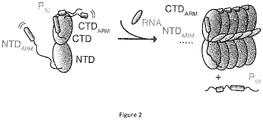
- the present invention relies on the demonstration that the 300 aa disordered N-terminal domain of P binds N CORE , to chaperone monomeric RNA-free N prior to NC assembly on the RNA genome in the so-called N°P complex ( Figure 2 ).
- monomeric N is insoluble in the absence of this chaperone.
- the inventors have identified a minimal N-binding sequence of P.
- a first object of the present invention consists of a method for producing self-assembling paramyxoviral NC-like particles.
- the method for producing self-assembling paramyxoviral NC-like particles of the invention comprises the steps of:
- CTD arm and the NTD arm are required to interact with the neighboring N molecules within the NC and thus, the presence of the two arms of the N CORE protein is crucial for assembly of the N proteins into NC-like particles.
- the invention relates to the method for producing self-assembling paramyxoviral NC-like particles as described above, wherein the recombinant N peptide comprises the full-length nucleoprotein or at least the amino acids 1-405 corresponding to the N CORE domain of the nucleoprotein.
- the recombinant N peptide is from 405 to 532 amino acids in length, preferably from 405 to 525 amino acids in length.
- the recombinant N peptide comprises at least the N CORE domain of the nucleoprotein and has a length of 405, 410, 420, 430, 440, 450, 460, 470, 480, 490, 500, 510, 520, 525, 530 or 532 amino acids.
- the invention relates to the method for producing self-assembling paramyxoviral NC-like particles as described above, wherein the recombinant P peptide comprises the full-length phosphoprotein or at least the amino 1-50 of the phosphoprotein.
- the recombinant P peptide is from 50 to 709 amino acids, preferably from 50 to 507 amino acids in length, more preferably from 50 to 300 amino acids in length.
- the recombinant P peptide comprises at least the amino 1-50 of the phosphoprotein and has a length of 50, 60, 70, 80, 90, 100, 150, 200, 250, 300, 307, 350, 375, 400, 450, 500, 507, 550, 600, 650, 700 or 709 amino acids.
- the N°P complexes are purified before adding RNA.
- the NC-like particles contain a chosen RNA.
- the addition of RNA to the N°P complex is not achieved in cells since RNA is added to a solution of the purified N°P complex.
- This embodiment is appropriate for any application wherein the nature of RNA has to be controlled, including any method requiring NC-like particles with known RNA-content.
- the method of the invention will comprise a step of purification of N°P complexes for applications using analytical methods or where clearly defined NC-like particles are desired, as for instance for biotechnological applications.
- step (a) further comprises the purification of N°P complexes.
- the term "coexpression of N and P proteins” refers to the simultaneous expression of the two proteins in order to allow the formation of the N°P complex and consequently to avoid the formation of aggregates of insoluble N proteins.
- the coexpression of N and P also encompasses situations where N is expressed in a medium where P is already present, provided that N will not form aggregates but N°P complexes with the available P proteins.
- RNA length is not a determinant parameter as long as 6 nucleotides are present.
- a preferred RNA molecule corresponds to the 6 first nucleotides of the 5' end of the viral RNA.
- the RNA molecule is not the native RNA of the virus.
- the RNA terminates by a protecting group both on the 3' and 5' ends.
- the RNA terminates by OH groups both on the 3' and 5' ends.
- the RNA molecule can for example be tagged at one extremity and bear an OH group at the other extremity. Appropriate tags are known by the skilled person in the art, as for example fluorescein.
- the invention relates to the method for producing self-assembling paramyxoviral NC-like particles as described above, wherein the RNA molecules comprises at least 6 nucleotides, preferably from 6 to 100 nucleotides, more preferably from 6 to 60 nucleotides.
- the RNA molecules has a length of 6, 7, 8, 9, 10, 20, 30, 40, 50, 60, 70, 80, 90 or 100 nucleotides.
- N comprises at least the N CORE domain including the CTD arm and NTD arm, which corresponds to the folded domain of N and is represented by SEQ ID NO: 5.
- N comprises at least the amino acids 1-405 of SEQ ID NO: 4.
- N comprises the full-length N protein including the folded domain and the disordered C-terminal domain (N TAIL ) and is represented by SEQ ID NO: 4.
- P comprises at least the minimal N-binding sequence, which is represented by SEQ ID NO: 2.
- P consists of SEQ ID NO:2.
- P comprises at least the amino acids 1-50 of SEQ ID NO: 1.
- the RNA molecule comprises a sequence selected from the group comprising:
- the RNA molecule consists of a sequence selected from the group comprising: SEQ ID NO: 8, SEQ ID NO: 18, SEQ ID NO: 19, ACCAGA, AAAAAA, ACCUGA, UCCAGA, ACUAGA, and AUCAGA.
- the invention relates to the method for producing self-assembling paramyxoviral NC-like particles as described above, wherein the RNA molecules are not poly-U homopolymers, in particular not UUUUUU.
- NC-like particles from measles virus is illustrated in the experimental part.
- the method is directly applicable to the production of other Paramyxoviruses since viruses of this family are strongly related in terms of nucleoprotein/nucleocapsid sequence and architecture.
- viruses being highly infectious pathogens, such as Nipah and Hendra viruses, the demonstration of the mechanism is safer with the measles virus.
- Paramyxoviruses examples include Nipah, Hendra, Mumps and human Parainfluenza viruses. Table 1 lists the paramyxoviruses for which the claimed method is directly applicable.
- the claimed method can be carried out using the following sequences:
- N peptide the full-length protein corresponds to SEQ ID NO: 15.
- P peptide one can use a peptide including at least the minimal N-binding domain which corresponds to residues 1-50 of the total P peptide represented by SEQ ID NO: 16.
- the peptide consisting of the residues 1-50 of the P peptide is represented by SEQ ID NO: 17.
- Another object of the invention consists of a NC-like viral particle derived from a Paramyxovirus which comprises only one RNA of interest, wherein said particle comprises:
- control of the RNA refers to the situation wherein the nature of the RNA that is embedded into the particles is known or predictable. It is indeed a specific characteristic of the invention to be able to control the nature of RNA that is embedded into NC particles. It is of great interest to be able to determine the conditions of entry of the RNA and thus the nature of the RNA. In particular, when the nature of the RNA is controlled, the sequence of the RNA embedded into the particles is known. The sequence of the RNA is chosen depending on the application of the NC-like particles. In order to obtain a homogenous population of NC-like particles with one type of RNA, the N°P complex can be purified to eliminate any contamination with cellular RNA, before adding the RNA of interest to a solution of N°P complex.
- the NC-like particles contain a synthetic RNA molecule.
- the NC-like particles contain only one given RNA molecule, in particular which is not viral RNA.
- the NC-like particles contain only one given RNA molecule, in particular which is not cellular RNA.
- the NC-like particles are obtainable by the method of production described above using recombinant N and P peptides and an RNA molecule of interest.
- Required for this assembly (i) the N peptide comprising at least the N CORE domain including the CTD arm and NTD arm, (ii) a P peptide comprising at least the N-binding domain and (iii) an RNA molecule comprising at least 6 nucleotides.
- the P peptide dissociates as the NC-like particle assembles, the latter comprises N peptide and RNA.
- Table 1 Paramyxoviruses for which this method is directly applicable GENUS SPECIES VIRUS (ABBREVIATION) Aquaparamyxovirus Atlantic salmon paramyxovirus Atlantic salmon paramyxovirus (AsaPV) Avulavirus Avian paramyxovirus 2 avian paramyxovirus 2 (APMV-2) Avian paramyxovirus 3 avian paramyxovirus 3 (APMV-3) Avian paramyxovirus 4 avian paramyxovirus 4 (APMV-4) Avian paramyxovirus 5 avian paramyxovirus 5 (APMV-5) Avian paramyxovirus 6 avian paramyxovirus 6 (APMV-6) Avian paramyxovirus 7 avian paramyxovirus 7 (APMV-7) Avian paramyxovirus 8 avian paramyxovirus 8 (APMV-8) Avian paramyxovirus
- RNA molecule it is contemplated to use any RNA of interest.
- RNA of interest refers to any RNA molecule of known sequence that allows the formation of the NC-like particles. Such RNA of interest can be chosen depending on the desired application of the NC-like particles. It can thus correspond to a viral RNA from foreign virus, or to a non-viral RNA.
- the invention consists of NC-like viral particles as previously defined wherein the N protein comprises a disordered N-terminal domain (N TAIL ) which is functionalized.
- the functionalized group can be any biological molecule, any chemical compound or any group that provides a particular function to the particle. It can be one or more diversity elements to promote interactions with different protein targets in cells either for inducing a reaction or for tagging purposes.
- Examples of functionalized groups include ligands for a receptor, a dye compound, a photoreactive group for UV light-induced covalent cross-linking to interacting proteins, an alkyne handle for reporter tag conjugation to visualize and identify cross-linked proteins, a protein chimerically attached to N TAIL ...
- the skilled person in the art is familiar with collection of functionalized groups that can be added to a particular molecule or particles depending on the desired effect.
- a functionalized particle is useful for numerous applications, in particular to target the particle to a desired organ or cellular type, for example to cancer cells, or to include domains of proteins attached to the flexible domain for the raising of antibodies for the development of vaccines.
- NC-like particles containing the same RNA molecule It is indeed one of the aspects of the invention to be able to produce NC-like particles containing the same RNA molecule. This result could not have been achieved previously since NC particles obtained in cells, for example in E. coli or insects cells, have integrated the cellular RNA leading to a heterogeneous population of particles bearing each a particular RNA molecule. Providing NC-like particles with a defined RNA permits to better understand the replication cycle of Paramyxoviruses. It is indeed necessary to have a homogenous sample of particles to study the interaction between the RNA and the nucleocapsid for example by solid state NMR or high resolution cryo-electron microscopy. The present invention thus opens the way for new discovery regarding the mechanism of replication and transcription of these viruses.
- Another object relates to a composition comprising NC-like viral particles as previously defined.
- said composition comprises a homogeneous population of particles bearing the same RNA.
- Another object of the invention consists in the use of a NC-like viral particle as previously defined, as a medicament in the form of a drug or a vaccine.
- Another object of the invention consists of a method for identifying a compound able to inhibit the replication or transcription of a Paramyxovirus, wherein such compound is identified by its ability to abrogate the assembly of the NC-like particles.
- Such screening method comprises the steps of:
- the screening method consists in the method as defined above wherein step (a) further comprises the purification of N°P complexes. It can, however, also be performed on cell lysates containing N°P.
- NC-like particles can be observed by any appropriate method including NMR or electron microscopy. Fluorescence based assays are appropriate for the development of rapid and efficient high-throughput assays.
- dyes can be placed at the 3' terminus of an RNA molecule in a way that does not perturb assembly.
- This could be a 10-base RNA conjugated with a fluorescein derivative ( Figure 6 ).
- the assembly of the NC-like particles can be followed by fluorescence anisotropy. If a NC particle is formed, fluorescence anisotropy increases over time.
- the principle of this methodology is illustrated in Figure 6 .
- Such unambiguous read-out assays would be compatible with 96 (or higher) well plates for high-throughput screening of potential inhibitors of NC assembly, allowing for straightforward scaling to thousands or tens of thousands of compounds.
- Figure 6 also shows the example of unsuccessful assembly as an unambiguous read out for capsid formation. In a fluorescence based assay, all samples would contain the same labelled RNAs. Only those wells that do not show an increase in anisotropy in the presence of a small molecule indicate successful NC formation inhibition and therefore a candidate for a drug.
- the absence of NC-like particles or the decrease in quantity of NC-like particles produced directly results from the presence of a compound able to inhibit the assembly of the NC-like particles of Paramyxoviruses.
- the "inhibition of the assembly of NC-like particles" may correspond to a total or partial inhibition.
- the measles virus (Edmonston strain; UniProt Q83623) phosphoprotein (also called P) used in this work corresponds to SEQ ID NO: 1.
- the first 50 amino acids of the P 1-50 corresponds to SEQ ID NO 2.
- DNA of first 100 amino acids of measles virus P protein were cloned into a pET41c (+) vector between Ndel and Xhol sites resulting in a C-terminal His-tagged construct.
- Escherichia coli RosettaTM ( ⁇ DE3)/pRARE strain (Novagen) were used for the production of P 1-100 .
- the protein was purified by nickel resin chromatography, followed by size exclusion chromatography.
- NMR backbone resonances from the first 300 amino acids of P were assigned using standard three-dimensional heteronuclear NMR.
- the majority of the chain exhibits conformational propensities that are characteristic of an unfolded chain, with the exception of the first 40 amino acids, that shows a slightly elevated additional ⁇ -helical propensity.
- sequence homology is negligible, this N-terminal localization coincides with the position of a P peptide that was recently co-crystallised with an N and C-terminal deleted N protein from Nipah virus by the inventors. 8
- This region was targeted as the putative N-binding site.
- the inventors therefore co-expressed MeV P 1-100 with N, resulting in a soluble and stable complex N CORE °P 1-100 .
- the binding site was then delineated more precisely by titrating 15 N/ 13 C labeled P 1-160 into N CORE °P 1-100 , showing localized exchange in the region comprising residues 1-50.
- Example 2 In vitro co-expression of N and P proteins as a heterodimeric complex
- the measles virus nucleoprotein also called N (Edmonston strain; UniProt Q89933) used in this work comprises 525 amino acids and corresponds to SEQ ID NO: 4.
- Escherichia coli RosettaTM ( ⁇ DE3)/pRARE strain (Novagen) were also used for the production of N 1-525 0 P 1-50 and N 1-405 0 P 1-50 .
- TEV cleavage was set up overnight and at the same time the protein was dialyzed against 20mM Tris pH 8, 150mM NaCl, 5mM beta-mercaptoethanol (BME). The protein was then purified by gel filtration (Superdex 200 column, GE Healthcare TM ) equilibrated with either the same buffer or the NMR buffer (50mM phosphate pH 7, 150mM NaCl, 5mM BME).
- RNA was added to the N°P complexes by titrating a solution of the two following particular RNA sequence:
- NC-like particles can then be further purified using the methods described in reference 4.
- NC-like particles was followed by real-time NMR using a series of SOFAST 1 H- 15 N HMQC experiments using a sample of 200 ⁇ M N°P complex (N 1-405 °P 1-50 or N 1-525 °P 1-50 ).
- the formation of NC-like particles was initiated by addition of RNA 6 or RNA 60 (SEQ ID NO: 8) reaching a total concentration of 20 ⁇ M (RNA 60 ) or 150 ⁇ M (RNA 6 ).
- SEQ ID NO: 8 SEQ ID NO: 8
- a series of SOFAST HMQC experiments were recorded with 100 complex points in the indirect dimension, a 200ms recycling delay and 4 transients providing a time resolution of 4 minutes.
- NC-like particles were followed by negative staining electron microscopy. Initially, a control measurement was performed of the N 1-405 °P 1-50 complex in the absence of RNA 6 showing no formation of NC-like particles. The N 1-405 °P 1-50 was then mixed with RNA6 and the sample was visualized by electron microscopy. The sample contained 20 ⁇ M of N 1-405 °P 1-50 and 50 ⁇ M of RNA 6 in the same buffer as used for the NMR experiments (see above).
- N 1-405 0 P 1-50 or N 1-525 0 P 1-50 was diluted to the desired concentration into 50 mM Na-phosphate pH 7, 150 mM NaCl, 5 mM ⁇ -mercaptoethanol ( ⁇ ME) directly into the fluorescence cuvette.
- RNA 10 -FAM SEQ ID NO: 14 was added to N°P immediately to a final concentration of 500 nM prior to kinetics acquisition, mixed quickly through pipetting and fluorescence kinetics were recorded at an emission wavelength of 520 nm upon excitation with 470 nm light.
- the claimed method can be carried out using the following sequences:
- NMR spectroscopy the inventors were able to follow the evolution in real time of the NMR spectra as the P 1-50 peptide is released from the N°P complex and the NC-like particles are formed. This result is observed either by following the increasing intensity of peaks corresponding to the P 1-50 peptide, or by observing the reduction in intensity of peaks associated with the N- and C-terminal tails of the N protein that become immobile upon assembly of the NC-like particles, according to the mechanism illustrated in Figure 2 .
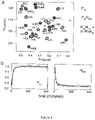
- a time trace of the formation of the NC-like particles was obtained by extracting the NMR signal intensities from each of the SOFAST HMQC spectra and plotted as function of time after addition of the RNA ( Figure 3B and 3C). After a rapid growth phase ( ⁇ 30 minutes) the assembly process is nearly complete within approximately 400 minutes. This result demonstrates that NMR allows to follow the formation of NC-like particles in vitro using only short RNA molecules and the N°P complex.
- Electron microscopy was carried out on samples immobilized at increasing times after addition of small (6 or 60 nucleotides in length) RNA molecules.
- Fluorescence anisotropy also reports on assembly, using fluorescein labeled RNA (SEQ ID NO: 14). Fluorescein attached to the RNA alone undergoes fast rotation, and exhibits a small fluorescence anisotropy when the RNA is unbound. Upon binding to N, NC-like particle formation and subsequent elongation, its rotational freedom is significantly hindered, and fluorescence anisotropy increases gradually, giving rise to anisotropy curves that describe the NC-like particle assembly.
- RNA sequences were tested for their ability to facilitate NC-like particle assembly in vitro from P 1-50 N 1-405 .
- Homopolymers comprising purines or pyrimidines alone, UUUUUU (polyU-RNA 6 ), AAAAAA (polyA-RNA 6 ) were compared, as well as genomic 5'-RNA 6 .
- efficiency of assembly is sequence-dependent ( Figure 6 ). No assembly is observed for the polyU-RNA 6 samples ( Figure 6c, f ), while regular NC-like particles are obtained for 5'-RNA 6 and polyA-RNA 6 ( Figure 6a, d and 6b, e respectively) with lengths reaching 1-2 ⁇ m. This differential ability to form NC-like particles was verified by NMR (data not shown).
- the inventors have also noted that the 5' sequences of both genome and anti-genome of paramyxovirinae shows strong conservation of ACCA in the first four nucleotides, followed by positions 5 and 6 occupied mainly by A/G. Indeed, the 5' sequence of the measles genome leads to formation of NCs with high efficiency.
Landscapes
- Health & Medical Sciences (AREA)
- Life Sciences & Earth Sciences (AREA)
- Chemical & Material Sciences (AREA)
- Organic Chemistry (AREA)
- Engineering & Computer Science (AREA)
- Virology (AREA)
- Genetics & Genomics (AREA)
- Immunology (AREA)
- Biochemistry (AREA)
- General Health & Medical Sciences (AREA)
- Medicinal Chemistry (AREA)
- Molecular Biology (AREA)
- Biomedical Technology (AREA)
- Bioinformatics & Cheminformatics (AREA)
- Wood Science & Technology (AREA)
- Zoology (AREA)
- Biotechnology (AREA)
- Microbiology (AREA)
- Hematology (AREA)
- Urology & Nephrology (AREA)
- Biophysics (AREA)
- Gastroenterology & Hepatology (AREA)
- Proteomics, Peptides & Aminoacids (AREA)
- General Engineering & Computer Science (AREA)
- Cell Biology (AREA)
- Tropical Medicine & Parasitology (AREA)
- Food Science & Technology (AREA)
- Physics & Mathematics (AREA)
- Analytical Chemistry (AREA)
- General Physics & Mathematics (AREA)
- Pathology (AREA)
- Peptides Or Proteins (AREA)
- Micro-Organisms Or Cultivation Processes Thereof (AREA)
- Medicines That Contain Protein Lipid Enzymes And Other Medicines (AREA)
Description
- The invention pertains to the domain of virology of Paramyxoviruses. The invention concerns a method for producing self-assembling paramyxoviral particles and a method for identifying a compound able to inhibit the replication or the transcription of a Paramyxovirus. The invention also pertains to the nucleocapsid-like particles obtainable by the method of the invention and their use for biotechnological and pharmaceutical applications.
- Paramyxoviridae comprise dangerous human pathogens, for example Measles, an important human pathogen that is responsible for 150000 deaths per year, but also Nipah and Hendra viruses, whose infection of humans has been exacerbated by urbanization of the natural hosts (fruitbats) due to the destruction of their natural habitats (deforestation). Paramyxoviruses, and the closely related filoviruses (including Ebola) therefore present an increasingly serious risk to human health. Paramyxoviruses are non-segmented negative strand RNA viruses that express their own machinery for transcription and replication. Paramyxoviral genomes are packaged into large helical nucleoprotein assemblies, termed nucleocapsids (NC), comprising a multitude of copies of the nucleoprotein (N) that bind the entire sequence of the viral genome 1. The N-RNA complex provides the template for replication and transcription by the viral polymerase complex consisting of the large protein (L) carrying the enzymatic activity and its co-factor phosphoprotein (P). N is a two-domain protein, comprising an RNA binding domain (NCORE), approximately 400 amino acids (aa), and a 125 aa intrinsically disordered C-terminal domain (NTAIL) 2.
- Paramyxoviral NCs have been studied in great detail using structural biology techniques such as electron microscopy 3-7, X-ray crystallography 8, 14 and nuclear magnetic resonance spectroscopy 9,10. They are now understood quite well in terms of three-dimensional structure. While knowledge of the three dimensional structures can help in rational drug design, successful attempts to crystallize monomeric nucleoproteins of paramyxoviruses have required the cleavage of flexible regions of the protein 8, to enhance packing in a crystalline lattice. However, these constructs do not assemble into NCs.
- NC-like assemblies have been purified from paramyxoviruses, or expressed in E. coli or insect cells11-13, 15, 16. These expressed particles do not specifically encapsulate a given RNA of interest but they assemble on cellular RNA. It has not yet been possible to reproduce the assembly process in vitro. The mechanism of assembly of NCs from these viral families remains one of the outstanding questions and potentially most exciting avenues for pharmaceutical intervention. The rational development of inhibitors of NC assembly is not possible if one cannot observe the process of assembly.
- The inventors have now described an in vitro system wherein the self-assembling of the NC can be observed. They have designed new constructs of the so-called "N°P complex", a complex comprising elements from N and P, that can be solubilized in a heterodimeric form in vitro (
Figure 1 ), and subsequently used to assemble supramolecular NCs by controlled addition of RNA. Using these constructs, it is possible to detect and then follow the NC assembly process in real time using nuclear magnetic resonance (NMR) spectroscopy, fluorescence spectroscopy and electron microscopy. With this invention, the rational development of inhibitors of paramyxoviral NC assembly is now possible. - The present invention thus holds great promise for the development of targeted drugs against paramyxoviral diseases and also provides NC-like particles that could be useful in the development of vaccines.
- The present invention relates to the process of assembling NCs of Paramyxoviruses in vitro.
- The inventors have successfully produced the N°P complex, a molecular association of N with a peptide derived from the P protein, in vitro. They have demonstrated that, provided that monomeric N is stabilized in an appropriate soluble form, NC-like particles can be assembled from recombinantly-expressed protein and RNA alone, in the absence of other viral or cellular partners.
- Although NC-like particles from paramyxoviruses can be purified by over-expressing N in recombinant systems,4 for example in E. coli, where N assembles on cellular RNA, the rational development of inhibitors of replication or transcription has been severely hampered by the inability to solubilize N°P and subsequently assemble supramolecular NC-like particles in vitro as multiple copies of N bind to the RNA.
- The present invention relies on the demonstration that the 300 aa disordered N-terminal domain of P binds NCORE, to chaperone monomeric RNA-free N prior to NC assembly on the RNA genome in the so-called N°P complex (
Figure 2 ). Crucially for this invention, monomeric N is insoluble in the absence of this chaperone. Further, the inventors have identified a minimal N-binding sequence of P. - The invention is as defined in
claims 1 to 10. - A first object of the present invention consists of a method for producing self-assembling paramyxoviral NC-like particles.
- The method for producing self-assembling paramyxoviral NC-like particles of the invention comprises the steps of:
- (a) co-expressing recombinant N and P peptides in order to allow the formation of N°P complexes where the N peptide comprises at least the NCORE domain including the CTD arm and NTD arm, and the P peptide comprises at least the N-binding domain, and purifying N°P complexes;
- (b) adding a given RNA molecule of interest to the N°P complex, wherein said RNA molecule comprises at least 6 nucleotides and is not a poly-U homopolymer; and
- (c) recovering the resulting NC-like particles.
- As demonstrated by the inventors, CTD arm and the NTD arm are required to interact with the neighboring N molecules within the NC and thus, the presence of the two arms of the NCORE protein is crucial for assembly of the N proteins into NC-like particles.
- In an embodiment, the invention relates to the method for producing self-assembling paramyxoviral NC-like particles as described above, wherein the recombinant N peptide comprises the full-length nucleoprotein or at least the amino acids 1-405 corresponding to the NCORE domain of the nucleoprotein.
- In particular, the recombinant N peptide is from 405 to 532 amino acids in length, preferably from 405 to 525 amino acids in length. For example, the recombinant N peptide comprises at least the NCORE domain of the nucleoprotein and has a length of 405, 410, 420, 430, 440, 450, 460, 470, 480, 490, 500, 510, 520, 525, 530 or 532 amino acids.
- In an embodiment, the invention relates to the method for producing self-assembling paramyxoviral NC-like particles as described above, wherein the recombinant P peptide comprises the full-length phosphoprotein or at least the amino 1-50 of the phosphoprotein.
- In particular, the recombinant P peptide is from 50 to 709 amino acids, preferably from 50 to 507 amino acids in length, more preferably from 50 to 300 amino acids in length. For example, the recombinant P peptide comprises at least the amino 1-50 of the phosphoprotein and has a length of 50, 60, 70, 80, 90, 100, 150, 200, 250, 300, 307, 350, 375, 400, 450, 500, 507, 550, 600, 650, 700 or 709 amino acids.
- The N°P complexes are purified before adding RNA. In this case, the NC-like particles contain a chosen RNA. The addition of RNA to the N°P complex is not achieved in cells since RNA is added to a solution of the purified N°P complex. This embodiment is appropriate for any application wherein the nature of RNA has to be controlled, including any method requiring NC-like particles with known RNA-content. Thus, the method of the invention will comprise a step of purification of N°P complexes for applications using analytical methods or where clearly defined NC-like particles are desired, as for instance for biotechnological applications.
- Thus, the method for producing self-assembling paramyxoviral NC-like particles as described above is defined as a method wherein step (a) further comprises the purification of N°P complexes.
- As used herein, the term "coexpression of N and P proteins" refers to the simultaneous expression of the two proteins in order to allow the formation of the N°P complex and consequently to avoid the formation of aggregates of insoluble N proteins. In the context of the present invention, the coexpression of N and P also encompasses situations where N is expressed in a medium where P is already present, provided that N will not form aggregates but N°P complexes with the available P proteins.
- Concerning the length of the RNA molecule, it can vary, as the inventors have shown that both a short version of RNA with 6 nucleotides or a long molecule with 60 nucleotides allow the formation of the NC-like particles. Thus, the RNA length is not a determinant parameter as long as 6 nucleotides are present. A preferred RNA molecule corresponds to the 6 first nucleotides of the 5' end of the viral RNA. In a particular embodiment, the RNA molecule is not the native RNA of the virus. Further, in another preferred embodiment, the RNA terminates by a protecting group both on the 3' and 5' ends. In a more preferred embodiment, the RNA terminates by OH groups both on the 3' and 5' ends. Alternatively, the RNA molecule can for example be tagged at one extremity and bear an OH group at the other extremity. Appropriate tags are known by the skilled person in the art, as for example fluorescein.
- The invention relates to the method for producing self-assembling paramyxoviral NC-like particles as described above, wherein the RNA molecules comprises at least 6 nucleotides, preferably from 6 to 100 nucleotides, more preferably from 6 to 60 nucleotides.
- For example, the RNA molecules has a length of 6, 7, 8, 9, 10, 20, 30, 40, 50, 60, 70, 80, 90 or 100 nucleotides.
- In an embodiment, the method applies to the production of NC-like particles derived from measles virus. In this particular embodiment, N comprises at least the NCORE domain including the CTD arm and NTD arm, which corresponds to the folded domain of N and is represented by SEQ ID NO: 5. In other words, N comprises at least the amino acids 1-405 of SEQ ID NO: 4. Alternatively, N comprises the full-length N protein including the folded domain and the disordered C-terminal domain (NTAIL) and is represented by SEQ ID NO: 4. Further, P comprises at least the minimal N-binding sequence, which is represented by SEQ ID NO: 2. In a particular embodiment, P consists of SEQ ID NO:2. In other words, P comprises at least the amino acids 1-50 of SEQ ID NO: 1.
- Still regarding measles virus, in a particular embodiment, the RNA molecule comprises a sequence selected from the group comprising:
- ACCAGACAAA GCUGGGAAUA GAAACUUCGU AUUUUCAAAG UUUUCUUUAA UAUAUUGCAA (SEQ ID NO: 8), which corresponds to the first 60 nucleotides of the native RNA of the virus,
- ACCAGACAAA (SEQ ID NO: 18), which corresponds to the first 10 nucleotides of the native RNA of the virus,
- ACCAGA which corresponds to the first 6 nucleotides of the native RNA of the virus,
- AAAAAAAAAA (SEQ ID NO: 19),
- AAAAAA,
- ACCUGA,
- UCCAGA,
- ACUAGA, and
- AUCAGA.
- In a further embodiment, the RNA molecule consists of a sequence selected from the group comprising: SEQ ID NO: 8, SEQ ID NO: 18, SEQ ID NO: 19, ACCAGA, AAAAAA, ACCUGA, UCCAGA, ACUAGA, and AUCAGA.
- The invention relates to the method for producing self-assembling paramyxoviral NC-like particles as described above, wherein the RNA molecules are not poly-U homopolymers, in particular not UUUUUU.
- The production of NC-like particles from measles virus is illustrated in the experimental part. However, the method is directly applicable to the production of other Paramyxoviruses since viruses of this family are strongly related in terms of nucleoprotein/nucleocapsid sequence and architecture. However, it will be understood that other viruses being highly infectious pathogens, such as Nipah and Hendra viruses, the demonstration of the mechanism is safer with the measles virus.
- Examples of other Paramyxoviruses are Nipah, Hendra, Mumps and human Parainfluenza viruses. Table 1 lists the paramyxoviruses for which the claimed method is directly applicable.
- For Nipah, the claimed method can be carried out using the following sequences:
For N peptide, the full-length protein corresponds to SEQ ID NO: 15. One can use either the amino acids 1-532 of the full-length protein or at least the amino acids 1-400 corresponding to the folded domain. For P peptide, one can use a peptide including at least the minimal N-binding domain which corresponds to residues 1-50 of the total P peptide represented by SEQ ID NO: 16. The peptide consisting of the residues 1-50 of the P peptide is represented by SEQ ID NO: 17. - Another object of the invention consists of a NC-like viral particle derived from a Paramyxovirus which comprises only one RNA of interest, wherein said particle comprises:
- a. N peptide comprising at least the N-core domain including the CTD arm and NTD arm, and
- b. An RNA molecule comprising at least 6 nucleotides which is not a poly-U homopolymer and is not the native RNA of the virus,
- As used herein, the "control of the RNA" refers to the situation wherein the nature of the RNA that is embedded into the particles is known or predictable. It is indeed a specific characteristic of the invention to be able to control the nature of RNA that is embedded into NC particles. It is of great interest to be able to determine the conditions of entry of the RNA and thus the nature of the RNA. In particular, when the nature of the RNA is controlled, the sequence of the RNA embedded into the particles is known. The sequence of the RNA is chosen depending on the application of the NC-like particles. In order to obtain a homogenous population of NC-like particles with one type of RNA, the N°P complex can be purified to eliminate any contamination with cellular RNA, before adding the RNA of interest to a solution of N°P complex.
- In an embodiment, the NC-like particles contain a synthetic RNA molecule.
- In an embodiment, the NC-like particles contain only one given RNA molecule, in particular which is not viral RNA.
- In an embodiment, the NC-like particles contain only one given RNA molecule, in particular which is not cellular RNA.
- In a preferred embodiment, the NC-like particles are obtainable by the method of production described above using recombinant N and P peptides and an RNA molecule of interest. Required for this assembly: (i) the N peptide comprising at least the NCORE domain including the CTD arm and NTD arm, (ii) a P peptide comprising at least the N-binding domain and (iii) an RNA molecule comprising at least 6 nucleotides.
- The P peptide dissociates as the NC-like particle assembles, the latter comprises N peptide and RNA.
Table 1 : Paramyxoviruses for which this method is directly applicable GENUS SPECIES VIRUS (ABBREVIATION) Aquaparamyxovirus Atlantic salmon paramyxovirus Atlantic salmon paramyxovirus (AsaPV) Avulavirus Avian paramyxovirus 2 avian paramyxovirus 2 (APMV-2) Avian paramyxovirus 3 avian paramyxovirus 3 (APMV-3) Avian paramyxovirus 4 avian paramyxovirus 4 (APMV-4) Avian paramyxovirus 5 avian paramyxovirus 5 (APMV-5) Avian paramyxovirus 6 avian paramyxovirus 6 (APMV-6) Avian paramyxovirus 7 avian paramyxovirus 7 (APMV-7) Avian paramyxovirus 8 avian paramyxovirus 8 (APMV-8) Avian paramyxovirus 9 avian paramyxovirus 9 (APMV-9) Avian paramyxovirus 10 avian paramyxovirus 10 (APMV-10) Avian paramyxovirus 11 avian paramyxovirus 11 (APMV-11) Avian paramyxovirus 12 avian paramyxovirus 12 (APMV-12) Newcastle disease virus avian paramyxovirus 1 (APMV-1) Ferlavirus Fer-de-Lance paramyxovirus Fer-de-Lance virus (FDLV) Henipavirus Cedar henipavirus Cedar virus (CedV) Ghanaian bat henipavirus Kumasi virus (KV) Hendra virus Hendra virus (HeV) Mojiang henipavirus Mo'jiang virus (MojV) Nipah virus Nipah virus (NiV) Morbillivirus Canine distemper virus canine distemper virus (CDV) Cetacean morbillivirus cetacean morbillivirus (CeMV) Feline morbillivirus feline morbillivirus (FeMV) Measles virus∗ measles virus (MeV) Peste-des-petits-ruminants virus peste-des-petits-ruminants virus (PPRV) Phocine distemper virus Phocine distemper virus (PDV) Rinderpest virus rinderpest virus (RPV) Respirovirus Bovine parainfluenza virus 3 bovine parainfluenza virus 3 (BPIV-3) Human parainfluenza virus 1 human parainfluenza virus 1 (HPIV-1) Human parainfluenza virus 3 human parainfluenza virus 3 (HPIV-3) Porcine parainfluenza virus 1 porcine parainfluenza virus 1 (PPIV-1) Sendai virus∗ Sendai virus (SeV) Rubulavirus Human parainfluenza virus 2 human parainfluenza virus 2 (HPIV-2) Human parainfluenza virus 4 human parainfluenza virus 4a (HPIV-4a) human parainfluenza virus 4b (HPIV-4b) Mapuera virus Mapuera virus (MapV) Mumps virus mumps virus (MuV) bat mumps virus (BMV) Parainfluenza virus 5 parainfluenza virus 5 (PIV-5) Porcine rubulavirus La Piedad Michoaca'n Mexico virus (LPMV) Simian virus 41 simian virus 41 (SV-41) - Regarding the nature of the RNA molecule, it is contemplated to use any RNA of interest.
- As used herein, the term "RNA of interest" refers to any RNA molecule of known sequence that allows the formation of the NC-like particles. Such RNA of interest can be chosen depending on the desired application of the NC-like particles. It can thus correspond to a viral RNA from foreign virus, or to a non-viral RNA. In a particular embodiment, the invention consists of NC-like viral particles as previously defined wherein the N protein comprises a disordered N-terminal domain (NTAIL) which is functionalized.
- The functionalized group can be any biological molecule, any chemical compound or any group that provides a particular function to the particle. It can be one or more diversity elements to promote interactions with different protein targets in cells either for inducing a reaction or for tagging purposes. Examples of functionalized groups include ligands for a receptor, a dye compound, a photoreactive group for UV light-induced covalent cross-linking to interacting proteins, an alkyne handle for reporter tag conjugation to visualize and identify cross-linked proteins, a protein chimerically attached to NTAIL... The skilled person in the art is familiar with collection of functionalized groups that can be added to a particular molecule or particles depending on the desired effect.
- A functionalized particle is useful for numerous applications, in particular to target the particle to a desired organ or cellular type, for example to cancer cells, or to include domains of proteins attached to the flexible domain for the raising of antibodies for the development of vaccines.
- It is indeed one of the aspects of the invention to be able to produce NC-like particles containing the same RNA molecule. This result could not have been achieved previously since NC particles obtained in cells, for example in E. coli or insects cells, have integrated the cellular RNA leading to a heterogeneous population of particles bearing each a particular RNA molecule. Providing NC-like particles with a defined RNA permits to better understand the replication cycle of Paramyxoviruses. It is indeed necessary to have a homogenous sample of particles to study the interaction between the RNA and the nucleocapsid for example by solid state NMR or high resolution cryo-electron microscopy. The present invention thus opens the way for new discovery regarding the mechanism of replication and transcription of these viruses.
- Another object relates to a composition comprising NC-like viral particles as previously defined.
- In a particular embodiment, said composition comprises a homogeneous population of particles bearing the same RNA.
- Another object of the invention consists in the use of a NC-like viral particle as previously defined, as a medicament in the form of a drug or a vaccine.
- Moreover, the ability to isolate integral N°P in a stable heterodimeric state that can be triggered to initiate NC-like assembly in the presence of RNA provides a powerful physico-chemical tool, not only to the study of the molecular basis of assembly, including the dynamics of NC-like assembly and possible dependence on RNA sequence and length, but more importantly to establish a tool for the development and testing of inhibitors of viral replication and transcription.
- Another object of the invention consists of a method for identifying a compound able to inhibit the replication or transcription of a Paramyxovirus, wherein such compound is identified by its ability to abrogate the assembly of the NC-like particles.
- Such screening method comprises the steps of:
- a. Co-expressing recombinant N and P peptides in order to allow the formation of N°P complexes wherein:
- i. N peptide comprises at least the N-core domain including the CTD arm and NTD arm, and
- ii. P peptide comprises at least the N-binding domain;
- b. Adding a compound to be tested;
- c. Adding an RNA molecule wherein said the RNA molecule comprises at least 6 nucleotides and is not a poly-U homopolymer;
- d. Detecting the presence of NC-like particles in comparison with a control wherein no compound is present;
- e. Identifying a compound able to inhibit the replication or transcription of a Paramyxovirus, where the assembly of the NC-like particles is inhibited in the presence of such compound, compared to control.
- In a particular embodiment, the screening method consists in the method as defined above wherein step (a) further comprises the purification of N°P complexes. It can, however, also be performed on cell lysates containing N°P.
- The quantification of assembled NC-like particles can be observed by any appropriate method including NMR or electron microscopy. Fluorescence based assays are appropriate for the development of rapid and efficient high-throughput assays.
- For example, in a particular embodiment, dyes can be placed at the 3' terminus of an RNA molecule in a way that does not perturb assembly. This could be a 10-base RNA conjugated with a fluorescein derivative (
Figure 6 ). The assembly of the NC-like particles can be followed by fluorescence anisotropy. If a NC particle is formed, fluorescence anisotropy increases over time. The principle of this methodology is illustrated inFigure 6 . Such unambiguous read-out assays would be compatible with 96 (or higher) well plates for high-throughput screening of potential inhibitors of NC assembly, allowing for straightforward scaling to thousands or tens of thousands of compounds.Figure 6 also shows the example of unsuccessful assembly as an unambiguous read out for capsid formation. In a fluorescence based assay, all samples would contain the same labelled RNAs. Only those wells that do not show an increase in anisotropy in the presence of a small molecule indicate successful NC formation inhibition and therefore a candidate for a drug. - In these kind of assays, the absence of NC-like particles or the decrease in quantity of NC-like particles produced directly results from the presence of a compound able to inhibit the assembly of the NC-like particles of Paramyxoviruses. As used herein, the "inhibition of the assembly of NC-like particles" may correspond to a total or partial inhibition.
- The invention is further illustrated by the following examples that should not be considered as limiting the scope of the invention.
-
-
Figure 1 : Characterization of the N1-405°P1-50 complex. (a) SDS-PAGE gel (Coomassie blue staining) showing the purity of N1-405°P1-50 after cleavage by the TEV protease, Ni-affinity and size exclusion chromatography. P1-50 being very small and weakly stained, only N is visible on the gel. Left lane shows molecular weight markers and numbers indicate the size of the respective bands (kDa). (b) Gel filtration profile of N1-405 0P1-50 showing the UV absorption profiles at 260 and 280 nm demonstrating that the complex does not contain RNA. (c) Size exclusion chromatography combined with detection by multi-angle laser light scattering (MALLS) and refractometry of N1-405 0P1-50 showing a mass of 53.7 kDa (expected mass for a heterodimeric complex: 52.6 kDa). -
Figure 2 : Cartoon illustrating NMR signals that appear or disappear upon assembly of NC-like particles. In the N°P complex, both NTDARM and CTDARM of N are flexible, giving rise to observable backbone resonances in 1H-15N NMR spectra. P1-50 is bound to N so that peaks are too weak to be observed. As N assembles, NTDARM and CTDARM stabilize the NC-like particles so that these peaks disappear, while resonances from P1-50 grow as more N proteins associate. -
Figure 3: a ) Part of the 1H-15N spectrum of N1-405°P1-50, P1-50 and N1-405°P1-50 after incubation with 5'-RNA60 for 24 hours at 25°C. Assignments are shown for the N1-405°P1-50 and P1-50 resonances. Subscript T refers to residues associated with cleavage or affinity tags. b) Assembly of NC-like particles from N1-405°P1-50 with 5'-RNA6 was initiated from 209 µM N1-405°P1-50, adding 5'-RNA6 to 471 µM. Circles: intensities measured in SOFAST HMQC NMR spectra and summed over appearing P1-50 (left) or disappearing N1-405 (right) resonances (P1-50: 4, 5, 6, 22, 25, 38, N1-405: 28, 385, 386, 387, 388, 389, 404, 405), lines: simultaneous fit to a double-exponential with common assembly rates. -
Figure 4 : Following NC assembly by electron microscopy. Negative staining electron micrographs of N1-405°P1-50 in the presence of a 6 nucleotide RNA from the 5' end of the measles virus genome. Images were taken at different time points following mixing of the two components in vitro. -
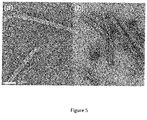
Figure 5 : NC assembly in vitro reproduces NC assembly in vivo. (A) Negative staining electron micrograph of N1-405°P1-50 in the presence of a 6 nucleotide RNA from the 5' end of the measles virus genome (negative staining). (B) Electron micrographs of trypsin digested nucleocapsids purified from E.coli genetically engineered to overexpress N protein. -
Figure 6 : Dependence of NC-like particles assembly on RNA sequence. (a-c) N1-405°P1-50 was incubated with different RNAs for 24 hours at room temperature and visualized by negative stain electron microscopy. Assembly of NC-like particles is observed for a) 5'-RNA6, b) polyA-RNA6, while no assembly is observed for c) polyU-RNA6 ; (d-f) Fluorescence anisotropy during 2000 seconds after addition of 500 nM for d) 5'-RNA10-FAM (ACCAGACAAA, SEQ ID NO: 18), e) polyA10-FAM (AAAAAAAAAA, SEQ ID NO: 19) and f) polyU10-FAM (UUUUUUUUUU, SEQ ID NO: 20) to 23 µM N1-405°P1-50. -
Figure 7 . NC assembly in vitro. N1-405°P1-50 was incubated with different RNAs for >12 hours at room temperature and visualized by electron microscopy. Assembly of NC-like particles is observed for 5'-RNA6ACCAGA, 5'-RNA60 (SEQ ID NO: 8), AAAAAA, ACCUGA, UCCAGA, ACUAGA and AUCAGA while no assembly is observed for UUUUUU. - The measles virus (Edmonston strain; UniProt Q83623) phosphoprotein (also called P) used in this work corresponds to SEQ ID NO: 1. The first 50 amino acids of the P1-50 corresponds to SEQ ID NO 2.
- P1-100: DNA of first 100 amino acids of measles virus P protein were cloned into a pET41c (+) vector between Ndel and Xhol sites resulting in a C-terminal His-tagged construct.
- Escherichia coli RosettaTM (λDE3)/pRARE strain (Novagen) were used for the production of P1-100. The protein was purified by nickel resin chromatography, followed by size exclusion chromatography.
- NMR backbone resonances from the first 300 amino acids of P were assigned using standard three-dimensional heteronuclear NMR. The majority of the chain exhibits conformational propensities that are characteristic of an unfolded chain, with the exception of the first 40 amino acids, that shows a slightly elevated additional α-helical propensity. Although sequence homology is negligible, this N-terminal localization coincides with the position of a P peptide that was recently co-crystallised with an N and C-terminal deleted N protein from Nipah virus by the inventors.8 This region was targeted as the putative N-binding site. The inventors therefore co-expressed MeV P1-100 with N, resulting in a soluble and stable complex NCORE°P1-100. The binding site was then delineated more precisely by titrating 15N/13C labeled P1-160 into NCORE°P1-100, showing localized exchange in the region comprising residues 1-50.
- This entire procedure resulted in identification of the minimal P peptide (P1-50 of SEQ ID NO: 2) required to form the complex.
- The measles virus nucleoprotein (also called N) (Edmonston strain; UniProt Q89933) used in this work comprises 525 amino acids and corresponds to SEQ ID NO: 4.
-
- The first 50 amino acids of measles virus phosphoprotein (Edmonston strain; UniProt Q83623) in fusion with the 525 or 405 amino acids of measles virus nucleoprotein (Edmonston strain; UniProt Q89933) with a TEV protease cleavage site inserted between the two (ENLYFQG) were cloned into a pET41c (+) vector following a two step PCR reaction:
- Step 1: The PCR products for P peptide and N peptide were obtained separately using the following amplification primers.
- For P1-50:
- Forward: 5'-GGAATTCCATATGGCAGAGGAGCAGGCACGCCATGTCA-3' (SEQ ID NO : 9 )
- Reverse: 5'-CATGCCCTGAAAATACAGGTTTTCGCAGGTGGCTCGCTCC-3' (SEQ ID NO : 10)
- For N1-525:
- Forward: 5'-GCCACCTGCGAAAACCTGTATTTTCAGGGCATGGCCACACTTTTAAG-3' (SEQ ID NO : 11)
- Reverse: 5'-CCGGTCGACGTCTAGAAGATTTCTGTCATTGTACACTATAGGGGTG-3' (SEQ ID NO : 12)
- For N1-405:
- Forward primer identical to SEQ ID NO : 11.
- Reverse N: 5'-GCGTCGACCTTGTCCTCAGTAGTATGCATTGCAATCTCTG-3' (SEQ ID NO : 13) The resulting PCR products were purified on an agarose gel.
- For P1-50:
- Step 2: The purified PCR products obtained at
step 1 were mixed in a stoichiometric ratio (about lOng of N with about 50ng of P), heated to 95°C during 5min and cooled down to 20°C during 30min. The mix was supplemented with 2x MasterMix (Fermentas™) and submitted to 5 cycles: 95°C 45s - 72°C 1.5min. - The combined product was then purified (PCR purification kit - Qiagen™) and PCR amplified with the external primers used previously:
- Forward: 5'- (SEQ ID NO : 9) and Reverse: 5'- (SEQ ID NO : 12) to yield N1-525 0P1-50. For N1-405 0P1-50, SEQ ID NO : 12 was replaced by SEQ ID NO : 13 in the final amplification step.
- The resulting products were purified on an agarose gel, digested with Ndel and Sall enzymes and inserted between the Ndel and Xhol sites of a digested pET41c (+) plasmid.
- Escherichia coli RosettaTM (λDE3)/pRARE strain (Novagen) were also used for the production of N1-525 0P1-50 and N1-405 0P1-50.
- For protein expression, cultures were grown at 37°C in LB until OD600 = 0.6 was observed, then the temperature was lowered to 20°C and expression induced with 1 mM IPTG. Cells were harvested after 12-14 hours. For expression of labelled protein, initial 4 liter cultures were grown in LB medium and the cells transferred into 1 liter M9 medium at an OD600 of 0.6. The cells were then grown for an additional 1 hour at 20°C before induction.
- For protein purification, cells were lysed in 20
mM Tris pH 8, 150 mM NaCl, 1 tablet Roche complete EDTA-free protease inhibitors, 1 spatula tip of lysozyme by sonication. Cell debris was harvested by centrifugation and supernatant loaded on Ni-beads (His-select, Sigma Aldrich™). The flow through was discarded and beads were washed with 20mM Tris pH 8, 150 mM NaCl, 8 mM imidazole. The protein was eluted from the beads in 20mM Tris pH 8, 150 mM NaCl, 400 mM imidazol. TEV cleavage was set up overnight and at the same time the protein was dialyzed against 20mM Tris pH 8, 150mM NaCl, 5mM beta-mercaptoethanol (BME). The protein was then purified by gel filtration (Superdex 200 column, GE Healthcare™) equilibrated with either the same buffer or the NMR buffer (50mM phosphate pH 7, 150mM NaCl, 5mM BME). - Cleavage with TEV gave the following proteins in complex N°P for N1-525 0P1-50 :
- P1-50 with a TEV peptide amino acid sequence is represented by SEQ ID NO : 3.
- N1-525 with an Histidine tag is represented by SEQ ID NO : 6.
- And for N1-405 0P1-50, cleavage with TEV gave the following proteins:
- P1-50 with a TEV peptide amino acid sequence is represented by SEQ ID NO : 3.
- N1-405 with an Histidine tag is represented by SEQ ID NO : 7.
- Coexpression of constructs containing the P1-50 peptide and either full length N (N1-525) or the folded domain of N (N1-405), separated by a TEV cleavage site resulted in high yield, heterodimeric, soluble and stable N°P complex. Small angle X-ray scattering and multi-angle laser light scattering (MALLS) of N1-405°P1-50 or N1-525°P1-50 demonstrate that both constructs contain a heterodimer of monomers of P1-50 and N1-525 or N1-405 (
Figure 1 ). - This result demonstrates that the inventors have successfully produced a heterodimeric, soluble and stable N°P complex. It constitutes a rational basis for the design of a tool with which to mimic the initial steps of the viral replication cycle, by stabilizing for the first time the chaperoned state of N that precedes NC formation in solution, while respecting the integral native sequence of N. In order to demonstrate the potential of such a tool, the inventors have further investigated the interaction of this complex with RNA as described thereafter.
- RNA was added to the N°P complexes by titrating a solution of the two following particular RNA sequence:
- 6 nucleotide long RNA: 5' OH-ACCAGA-OH 3' (RNA6)
- 60 nucleotide long RNA: 5' OH-ACCAGACAAAGCUGGGAAUAGAAACUUCGUAUUUUCAAAGUUUUCUUUAAUAUAUUGCAA-OH 3' (naked RNA corresponds to SEQ ID NO: 8)
- 10 nucleotide long RNA containing a fluorescein attached at its 3'end: 5' OH-ACCAGACAAA-FAM (naked RNA corresponds to SEQ ID NO: 14).
- NC-like particles can then be further purified using the methods described in reference 4.
- The assembly of NC-like particles was followed by real-time NMR using a series of SOFAST 1H-15N HMQC experiments using a sample of 200µM N°P complex (N1-405°P1-50 or N1-525°P1-50). The formation of NC-like particles was initiated by addition of RNA6 or RNA60 (SEQ ID NO: 8) reaching a total concentration of 20µM (RNA60) or 150µM (RNA6). A series of SOFAST HMQC experiments were recorded with 100 complex points in the indirect dimension, a 200ms recycling delay and 4 transients providing a time resolution of 4 minutes. The spectra were recorded on a Bruker spectrometer operating at a 1H frequency of 950MHz at 25°C in a buffer consisting of 50mM phosphate buffer, 150mM NaCl, 5mM BME at pH 7.0. In addition, two additional SOFAST HMQC experiments were recorded in the absence of RNA and at the end of the time course (after 24h) with 256 complex points in the indirect dimension and 16 transients (
Figure 3A ). - The formation of NC-like particles was followed by negative staining electron microscopy. Initially, a control measurement was performed of the N1-405°P1-50 complex in the absence of RNA6 showing no formation of NC-like particles. The N1-405°P1-50 was then mixed with RNA6 and the sample was visualized by electron microscopy. The sample contained 20 µM of N1-405°P1-50 and 50 µM of RNA6 in the same buffer as used for the NMR experiments (see above).
- N1-405 0P1-50 or N1-525 0P1-50 was diluted to the desired concentration into 50 mM Na-
phosphate pH 7, 150 mM NaCl, 5 mM β-mercaptoethanol (βME) directly into the fluorescence cuvette. RNA10-FAM (SEQ ID NO: 14) was added to N°P immediately to a final concentration of 500 nM prior to kinetics acquisition, mixed quickly through pipetting and fluorescence kinetics were recorded at an emission wavelength of 520 nm upon excitation with 470 nm light. Parallel and perpendicular polarization directions were recorded alternatingly and used pairwise to calculate the fluorescence anisotropy r
- For Nipah, the claimed method can be carried out using the following sequences:
- For N peptide, the full-length protein (1-532) corresponds to SEQ ID NO: 15.
- One could use either the amino acids 1-532 of the full-length protein or the amino acids 1-400 corresponding to the folded domain. For P peptide, one could use a peptide including the minimal N-binding domain which corresponds to residues 1-50 of the total P peptide represented by SEQ ID NO: 16. The peptide consisting of the residues 1-50 of the P peptide is represented by SEQ ID NO: 17.
- Using NMR spectroscopy, the inventors were able to follow the evolution in real time of the NMR spectra as the P1-50 peptide is released from the N°P complex and the NC-like particles are formed. This result is observed either by following the increasing intensity of peaks corresponding to the P1-50 peptide, or by observing the reduction in intensity of peaks associated with the N- and C-terminal tails of the N protein that become immobile upon assembly of the NC-like particles, according to the mechanism illustrated in
Figure 2 . A time trace of the formation of the NC-like particles was obtained by extracting the NMR signal intensities from each of the SOFAST HMQC spectra and plotted as function of time after addition of the RNA (Figure 3B and 3C). After a rapid growth phase (<30 minutes) the assembly process is nearly complete within approximately 400 minutes. This result demonstrates that NMR allows to follow the formation of NC-like particles in vitro using only short RNA molecules and the N°P complex. - Electron microscopy was carried out on samples immobilized at increasing times after addition of small (6 or 60 nucleotides in length) RNA molecules.
- The N1-405°P1-50 mixed with RNA6 was visualized by electron microscopy after 25 minutes and 67 minutes as well as after 24 hours showing the presence of NC-like particles of increasing lengths (
Figure 4 ). These results confirmed the NMR-detected time course. Remarkably, even in the presence of relatively short RNA, NC-like particles were formed whose electron micrographs were indistinguishable from NC-like particles purified from E. coli (Figure 5 ). These results demonstrate that EM allows to follow the formation of NC-like particles in vitro using only short RNA molecules and the N°P complex. - Fluorescence anisotropy also reports on assembly, using fluorescein labeled RNA (SEQ ID NO: 14). Fluorescein attached to the RNA alone undergoes fast rotation, and exhibits a small fluorescence anisotropy when the RNA is unbound. Upon binding to N, NC-like particle formation and subsequent elongation, its rotational freedom is significantly hindered, and fluorescence anisotropy increases gradually, giving rise to anisotropy curves that describe the NC-like particle assembly.
- Different RNA sequences were tested for their ability to facilitate NC-like particle assembly in vitro from P1-50N1-405. Homopolymers comprising purines or pyrimidines alone, UUUUUU (polyU-RNA6), AAAAAA (polyA-RNA6) were compared, as well as genomic 5'-RNA6. Remarkably, efficiency of assembly is sequence-dependent (
Figure 6 ). No assembly is observed for the polyU-RNA6 samples (Figure 6c, f ), while regular NC-like particles are obtained for 5'-RNA6 and polyA-RNA6 (Figure 6a, d and 6b, e respectively) with lengths reaching 1-2 µm. This differential ability to form NC-like particles was verified by NMR (data not shown). With this respect, the inventors have also noted that the 5' sequences of both genome and anti-genome of paramyxovirinae shows strong conservation of ACCA in the first four nucleotides, followed bypositions 5 and 6 occupied mainly by A/G. Indeed, the 5' sequence of the measles genome leads to formation of NCs with high efficiency. - Conclusion: It is therefore possible, using the described method, to both detect and monitor NC assembly in vitro from recombinantly-expressed protein and RNA alone, in the absence of other viral or cellular partners.
-
- (1) Curran, J., and Kolakofsky, D. (1999) Replication of paramyxoviruses. Adv. Virus Res. 54, 403-422.
- (2) Communie, G., Ruigrok, R. W., Jensen, M. R., and Blackledge, M. (2014) Intrinsically disordered proteins implicated in paramyxoviral replication machinery. Curr. Opin. Virol. 5C, 72-81.
- (3) Bhella, D., Ralph, A., Murphy, L. B., and Yeo, R. P. (2002) Significant differences in nucleocapsid morphology within the Paramyxoviridae. J. Gen. Virol. 83, 1831-1839.
- (4) Schoehn, G., Mavrakis, M., Albertini, A., Wade, R., Hoenger, A., and Ruigrok, R. W. H. (2004) The 12 A structure of trypsin-treated measles virus N-RNA. J. Mol. Biol. 339, 301-312.
- (5) Loney, C., Mottet-Osman, G., Roux, L., and Bhella, D. (2009) Paramyxovirus ultrastructure and genome packaging: cryo-electron tomography of sendai virus. J. Virol. 83, 8191-8197.
- (6) Desfosses, A., Goret, G., Farias Estrozi, L., Ruigrok, R. W. H., and Gutsche, I. (2011) Nucleoprotein-RNA orientation in the measles virus nucleocapsid by three-dimensional electron microscopy. J. Virol. 85, 1391-1395.
- (7) Gutsche, I., Desfosses, A., Effantin, G., Ling, W. L., Haupt, M., Ruigrok, R. W. H., Sachse, C., and Schoehn, G. (2015) Near-atomic cryo-EM structure of the helical measles virus nucleocapsid. Science, 348, 6235, 704-707.
- (8) Yabukarski, F., Lawrence, P., Tarbouriech, N., Bourhis, J.-M., Delaforge, E., Jensen, M. R., Ruigrok, R. W. H., Blackledge, M., Volchkov, V., and Jamin, M. (2014) Structure of Nipah virus unassembled nucleoprotein in complex with its viral chaperone. Nat. Struct. Mol. Biol. 21, 754-759.
- (9) Jensen, M. R., Communie, G., Ribeiro, E. A., Jr, Martinez, N., Desfosses, A., Salmon, L., Mollica, L., Gabel, F., Jamin, M., Longhi, S., Ruigrok, R. W. H., and Blackledge, M. (2011) Intrinsic disorder in measles virus nucleocapsids. Proc. Natl. Acad. Sci. U. S. A. 108, 9839-9844.
- (10) Communie, G., Habchi, J., Yabukarski, F., Blocquel, D., Schneider, R., Tarbouriech, N., Papageorgiou, N., Ruigrok, R. W. H., Jamin, M., Jensen, M. R., Longhi, S., and Blackledge, M. (2013) Atomic resolution description of the interaction between the nucleoprotein and phosphoprotein of Hendra virus. PLoS Pathog. 9, e1003631.
- (11) Spehner, D., Drillien, R., and Howley, P. M. (1997) The assembly of the measles virus nucleoprotein into nucleocapsid-like particles is modulated by the phosphoprotein. Virology 232(2), 260-268.
- (12) Cox, R., Green, T. J., Qiu, S., Kang, J., Tsao, J., Prevelige, P. E., He, B., and Luo M. (2009) Characterization of a mumps virus nucleocapsidlike particle. J Virol. 83, 11402-11406.
- (13) Juozapaitis, M., Slibinskas, R., Staniulis, J., Sakaguchi, T., Sasnauskas, K. (2005) Generation of Sendai virus nucleocapsid-like particles in yeast. Virus Res. 108(1-2), 221-224.
- (14) Renner, M., Bertinelli, M., Leyrat, C., Paesen, G. C., Saraiva de Oliveira, L. F., Huiskonen, J. T., & Grimes, J. M. (2016). Nucleocapsid assembly in pneumoviruses is regulated by conformational switching of the N protein. eLife. 5, e12627.
- (15) Moore, P. M., Hayes, E. C., Miller, S. E, Wright, L. L., Machamer, C. E., Zweerink, H.J. (1978) Measles virus nucleocapsids: large-scale purification and use in radioimmunoassays. Infect Immun. 20(3), 842-846.
- (16) Guryanov, S. G., Liljeroos, Lassi, L., Kasaragod, P., Kajander, T., Butcher, S. (2015). Crystal Structure of the Measles Virus Nucleoprotein Core in Complex with an N-Terminal Region of Phosphoprotein. Journal of Virology. 90(6), 2849-2857.
-
- <110> COMMISARIAT A L'ENERGIE ATOMIQUE ET AUX ENERGIES ALTERNATIVES
- <120> METHOD FOR PRODUCING SELF-ASSEMBLING PARAMYXOVIRAL NUCLEOCAPSID-LIKE PARTICLES AND THEIR USES
- <130> F263-636 ERBI/SAPL
- <150>
EP 16305658.3
<151> 2016-06-06 - <160> 20
- <170> PatentIn version 3.5
- <210> 1
<211> 507
<212> PRT
<213> Measles virus - <400> 1


<211> 50
<212> PRT
<213> Measles virus <400> 2

<211> 57
<212> PRT
<213> artificial <220>
<223> Measles virus P with TEV cleavage peptide <400> 3


<211> 525
<212> PRT
<213> Measles virus <400> 4


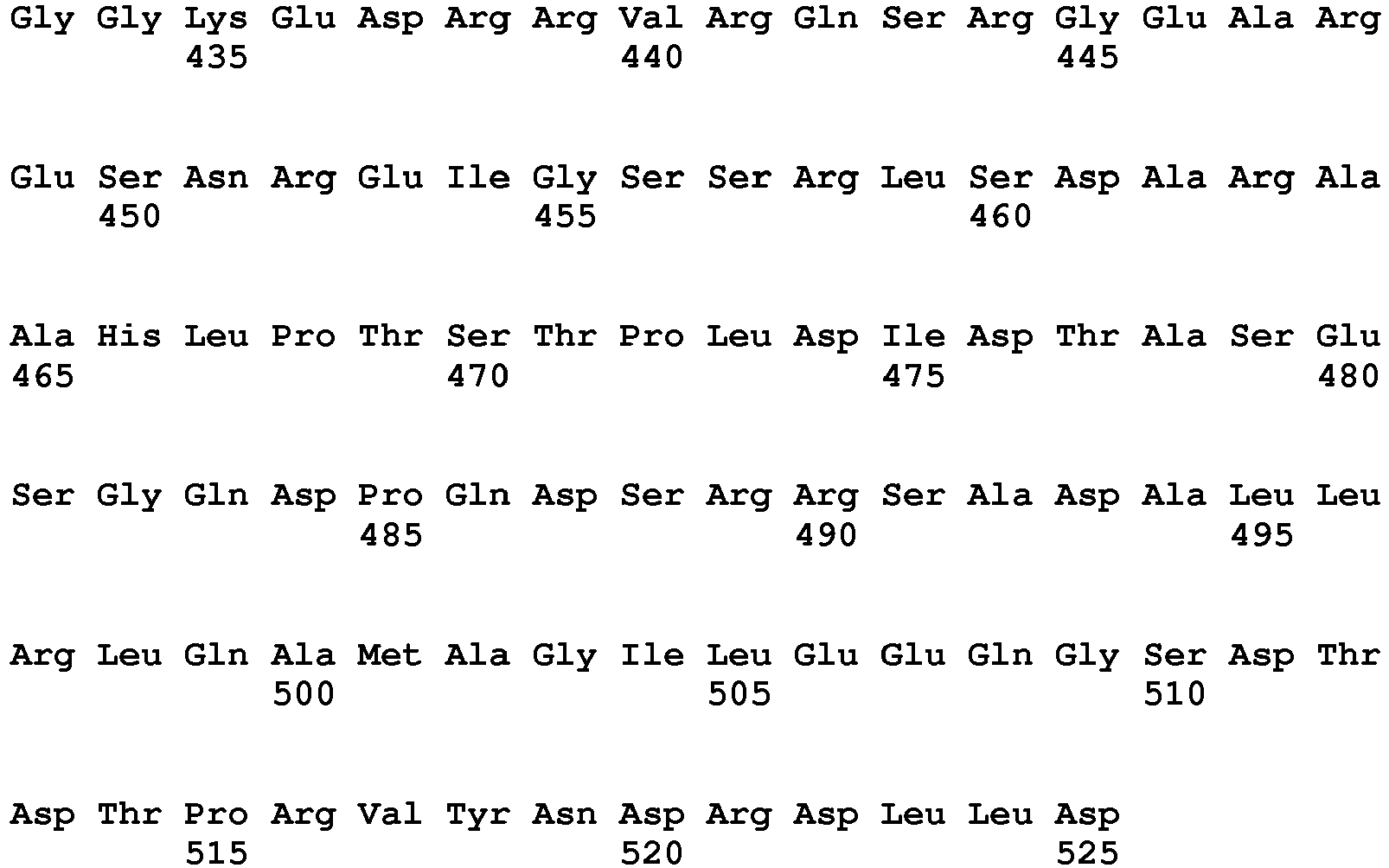
<211> 405
<212> PRT
<213> Measles virus <400> 5


<211> 536
<212> PRT
<213> artificial <220>
<223> Measles virus N with His tag <400> 6


<211> 416
<212> PRT
<213> artificial <220>
<223> Measles virus N folded domain with His tag <400> 7


<211> 60
<212> RNA
<213> Measles virus <400> 8
accagacaaa gcugggaaua gaaacuucgu auuuucaaag uuuucuuuaa uauauugcaa 60 <210> 9
<211> 38
<212> DNA
<213> artificial <220>
<223> primer <400> 9
ggaattccat atggcagagg agcaggcacg ccatgtca 38 <210> 10
<211> 40
<212> DNA
<213> artificial <220>
<223> primer <400> 10
catgccctga aaatacaggt tttcgcaggt ggctcgctcc 40 <210> 11
<211> 47
<212> DNA
<213> artificial <220>
<223> primer <400> 11
gccacctgcg aaaacctgta ttttcagggc atggccacac ttttaag 47 <210> 12
<211> 46
<212> DNA
<213> artificial <220>
<223> primer <400> 12
ccggtcgacg tctagaagat ttctgtcatt gtacactata ggggtg 46 <210> 13
<211> 40
<212> DNA
<213> artificial <220>
<223> primer <400> 13
gcgtcgacct tgtcctcagt agtatgcatt gcaatctctg 40 <210> 14
<211> 10
<212> RNA
<213> Measles virus <400> 14
<211> 532
<212> PRT
<213> Nipah virus <400> 15


<211> 709
<212> PRT
<213> Nipah virus <400> 16


<211> 50
<212> PRT
<213> Nipah virus <400> 17


<211> 10
<212> RNA
<213> Measles virus <400> 18
<211> 10
<212> RNA
<213> Artificial Sequence <220>
<223> Synthetic oligonucleotide <400> 19
<211> 10
<212> RNA
<213> Artificial Sequence <220>
<223> Synthetic oligonucleotide <400> 20
Claims (10)
- Method for producing self-assembling paramyxoviral nucleocapsid-like particles comprising the steps of :a. Co-expressing recombinant N and P peptides in order to allow the formation of N°P complexes wherein:i. N peptide comprises at least the NCORE domain including the CTD arm and NTD arm, andii. P peptide comprises at least the N-binding domain, and purifying N°P complexes;b. Adding a given specific RNA molecule of interest to N°P complexes wherein said RNA molecule comprises at least 6 nucleotides and is not a poly-U homopolymer; andc. Recovering the resulting nucleocapsid-like particles.
- The method of claim 1 wherein the N and P peptides correspond to either:- peptides from measles virus wherein N peptide corresponds to SEQ ID NO.4 or SEQ ID NO.5 and P peptide comprises SEQ ID NO.2; or- peptides from another virus of the paramyxovirus family paramyxoviruses wherein the N and P peptides sequences are homologous to the sequences of corresponding proteins in measles virus.
- Nucleocapsid-like viral particle derived from a Paramyxovirus comprising only one specific RNA of interest, wherein said particle comprises:a. N peptide comprising at least the N-core domain including the CTD arm and NTD arm, andb. An RNA molecule comprising at least 6 nucleotides which is not a poly-U homopolymer and is not the native RNA of the virus,the N peptide comprising a disordered C-terminal domain which is functionalized with a group selected from a ligand for a receptor, a dye compound, a photoreactive group for UV light-induced covalent cross-linking to interacting proteins, an alkyne handle for reporter tag conjugation to visualize and identify cross-linked proteins and a protein chimerically attached to NTAlL.
- A nucleocapsid-like particle as defined in claim 3, for use as a medicament.
- The nucleocapsid-like particle for its use according to claim 4, said medicament being in the form of a vaccine.
- Use of the nucleocapsid-like particle of claim 3 to raise antibodies for vaccine or for an antiviral drug development.
- Method for identifying a compound able to inhibit the replication or transcription of a Paramyxovirus comprising the steps of:a. Co-expressing recombinant N and P peptides in order to allow the formation of N°P complex wherein:i. N peptide comprises at least the N-core domain including the CTD arm and NTD arm, andii. P peptide comprises at least the N-binding domain;b. Adding a compound to be tested;c. Adding a given specific RNA molecule of interest wherein said RNA molecule comprises at least 6 nucleotides and is not a poly-U homopolymer;d. Detecting the presence of nucleocapsid-like particles in comparison with a control wherein no compound is present;e. Identifying a compound able to inhibit the replication or transcription of a Paramyxovirus, where the assembly of NC-like particles is inhibited in the presence of such compound, compared to control.
- The method of claim 7 wherein step (a) further comprises the purification of N°P complexes.
- The method of claim 7 or 8 wherein the step e) of identification of the compound is performed using a fluorescent read-out assay, in particular a high-throughput assay.
- A composition comprising a homogeneous population of nucleocapsid-like viral particles derived from a Paramyxovirus bearing the same RNA molecule, which is not viral RNA, wherein said particles comprise:a. N peptide comprising at least the N-core domain including the CTD arm and NTD arm, andb. An RNA molecule comprising at least 6 nucleotides which is not a poly-U homopolymer.
Applications Claiming Priority (2)
| Application Number | Priority Date | Filing Date | Title |
|---|---|---|---|
| EP16305658.3A EP3255056A1 (en) | 2016-06-06 | 2016-06-06 | Method for producing self-assemblying paramyxoviral nucleocapsid-like particles and their uses |
| PCT/EP2017/063735 WO2017211846A1 (en) | 2016-06-06 | 2017-06-06 | Method for producing self-assembling paramyxoviral nucleocapsid-like particles and their uses |
Publications (2)
| Publication Number | Publication Date |
|---|---|
| EP3464330A1 EP3464330A1 (en) | 2019-04-10 |
| EP3464330B1 true EP3464330B1 (en) | 2022-08-03 |
Family
ID=56418469
Family Applications (2)
| Application Number | Title | Priority Date | Filing Date |
|---|---|---|---|
| EP16305658.3A Ceased EP3255056A1 (en) | 2016-06-06 | 2016-06-06 | Method for producing self-assemblying paramyxoviral nucleocapsid-like particles and their uses |
| EP17729091.3A Active EP3464330B1 (en) | 2016-06-06 | 2017-06-06 | Method for producing self-assembling paramyxoviral nucleocapsid-like particles and their uses |
Family Applications Before (1)
| Application Number | Title | Priority Date | Filing Date |
|---|---|---|---|
| EP16305658.3A Ceased EP3255056A1 (en) | 2016-06-06 | 2016-06-06 | Method for producing self-assemblying paramyxoviral nucleocapsid-like particles and their uses |
Country Status (3)
| Country | Link |
|---|---|
| US (1) | US11319350B2 (en) |
| EP (2) | EP3255056A1 (en) |
| WO (1) | WO2017211846A1 (en) |
Families Citing this family (5)
| Publication number | Priority date | Publication date | Assignee | Title |
|---|---|---|---|---|
| MX2018015755A (en) | 2016-06-15 | 2019-08-29 | Icahn School Med Mount Sinai | Influenza virus hemagglutinin proteins and uses thereof. |
| CA3058652A1 (en) | 2017-04-07 | 2018-10-11 | Icahn School Of Medicine At Mount Sinai | Anti-influenza b virus neuraminidase antibodies and uses thereof |
| US12364746B2 (en) | 2018-06-21 | 2025-07-22 | Icahn School Of Medicine At Mount Sinai | Mosaic influenza virus hemagglutinin polypeptides and uses thereof |
| CA3137160A1 (en) | 2019-04-24 | 2020-10-29 | Icahn School Of Medicine At Mount Sinai | Anti-influenza b virus neuraminidase antibodies and uses thereof |
| MX2022004711A (en) * | 2019-10-22 | 2022-06-14 | Icahn School Med Mount Sinai | Recombinant neuraminidase and uses thereof. |
Family Cites Families (4)
| Publication number | Priority date | Publication date | Assignee | Title |
|---|---|---|---|---|
| FR2885139B1 (en) | 2005-04-29 | 2010-12-24 | Agronomique Inst Nat Rech | PREPARATION OF SOLUBLE COMPLEXES PROTEIN N-PROTEIN P TRUNCATED OR SOLUBLE N-PROTEIN OF A VIRUS OF THE FAMILY OF PARAMYXOVIRIDAE AND THEIR VACCINE USES |
| US7951384B2 (en) * | 2005-08-05 | 2011-05-31 | University Of Massachusetts | Virus-like particles as vaccines for paramyxovirus |
| EP1939214B1 (en) * | 2006-12-22 | 2013-07-10 | Institut Pasteur | Cells and methodology to generate non-segmented negative-strand RNA viruses |
| CA2955124C (en) * | 2014-07-18 | 2024-01-02 | Institut National De La Sante Et De La Recherche Medicale (Inserm) | Peptides including a binding domain of the viral phosphoprotein (p) subunit to the viral rna free nucleoprotein (n0) |
-
2016
- 2016-06-06 EP EP16305658.3A patent/EP3255056A1/en not_active Ceased
-
2017
- 2017-06-06 WO PCT/EP2017/063735 patent/WO2017211846A1/en not_active Ceased
- 2017-06-06 US US16/306,843 patent/US11319350B2/en active Active
- 2017-06-06 EP EP17729091.3A patent/EP3464330B1/en active Active
Also Published As
| Publication number | Publication date |
|---|---|
| EP3464330A1 (en) | 2019-04-10 |
| US11319350B2 (en) | 2022-05-03 |
| EP3255056A1 (en) | 2017-12-13 |
| US20190292229A1 (en) | 2019-09-26 |
| WO2017211846A1 (en) | 2017-12-14 |
Similar Documents
| Publication | Publication Date | Title |
|---|---|---|
| US11319350B2 (en) | Method for producing self-assembling paramyxoviral nucleocapsid-like particles and their uses | |
| Kingston et al. | Characterization of nucleocapsid binding by the measles virus and mumps virus phosphoproteins | |
| Bourhis et al. | The C-terminal domain of measles virus nucleoprotein belongs to the class of intrinsically disordered proteins that fold upon binding to their physiological partner | |
| CURRAN et al. | Paramyxovirus phosphoproteins form homotrimers as determined by an epitope dilution assay, via predicted coiled coils | |
| Milles et al. | Self‐assembly of measles virus nucleocapsid‐like particles: kinetics and RNA sequence dependence | |
| Karger et al. | Recombinant bovine respiratory syncytial virus with deletions of the G or SH genes: G and F proteins bind heparin | |
| Legen et al. | A prion-like domain is required for phase separation and chloroplast RNA processing during cold acclimation in Arabidopsis | |
| CN112899253B (en) | Polypeptide with DNA polymerase activity, recombinant vector, preparation method and application thereof | |
| AU2023229501A1 (en) | Methods and kits for quantifying the removal of mock virus particles from a purified solution | |
| Sari‐Ak et al. | VLP‐factory™ and addomer©: Self‐assembling Virus‐Like particle (VLP) technologies for multiple protein and peptide epitope display | |
| CN113584228A (en) | Quality control product for nucleic acid detection of seven RNA viruses and preparation method thereof | |
| CN110951778B (en) | Infectious cDNA clone of canine distemper virus CDV-3 strain and its construction method and application | |
| CN106755089B (en) | Cell line for expressing goat lymphocyte activating molecules and construction method and application thereof | |
| Yacoub et al. | Development of a novel real-time PCR-based strategy for simple and rapid molecular pathotyping of Newcastle disease virus | |
| Liu et al. | Six-helix bundle assembly and analysis of the central core of mumps virus fusion protein | |
| CN116554350B (en) | Biosensor based on human sweet taste receptor protein and application thereof | |
| CN105349700A (en) | HRM detection method and primer for fasting identifying parvovirus MVM strains and MPV strains of mice | |
| Zhu et al. | Design and analysis of post‐fusion 6‐helix bundle of heptad repeat regions from Newcastle disease virus F protein | |
| US9625466B2 (en) | Signal amplification methods for the imaging of protein synthesis and neurotransmitter transport | |
| CN112538469A (en) | Restriction endonuclease DpnI preparation and preparation method thereof | |
| Zhu et al. | Biochemical and biophysical analysis of heptad repeat regions from the fusion protein of Menangle virus, a newly emergent paramyxovirus | |
| JP5704481B2 (en) | Nucleic acid detection kit | |
| WO2010040134A2 (en) | Independently inducible system of gene expression | |
| Turan et al. | A Simplified method for the extraction of recombinant Taq DNA polymerase from Escherichia coli | |
| CN109851662B (en) | Foot-and-mouth disease virus recombinant protein and related biological material and application thereof |
Legal Events
| Date | Code | Title | Description |
|---|---|---|---|
| STAA | Information on the status of an ep patent application or granted ep patent |
Free format text: STATUS: UNKNOWN |
|
| STAA | Information on the status of an ep patent application or granted ep patent |
Free format text: STATUS: THE INTERNATIONAL PUBLICATION HAS BEEN MADE |
|
| PUAI | Public reference made under article 153(3) epc to a published international application that has entered the european phase |
Free format text: ORIGINAL CODE: 0009012 |
|
| STAA | Information on the status of an ep patent application or granted ep patent |
Free format text: STATUS: REQUEST FOR EXAMINATION WAS MADE |
|
| 17P | Request for examination filed |
Effective date: 20181126 |
|
| AK | Designated contracting states |
Kind code of ref document: A1 Designated state(s): AL AT BE BG CH CY CZ DE DK EE ES FI FR GB GR HR HU IE IS IT LI LT LU LV MC MK MT NL NO PL PT RO RS SE SI SK SM TR |
|
| AX | Request for extension of the european patent |
Extension state: BA ME |
|
| DAV | Request for validation of the european patent (deleted) | ||
| DAX | Request for extension of the european patent (deleted) | ||
| STAA | Information on the status of an ep patent application or granted ep patent |
Free format text: STATUS: EXAMINATION IS IN PROGRESS |
|
| 17Q | First examination report despatched |
Effective date: 20201007 |
|
| GRAP | Despatch of communication of intention to grant a patent |
Free format text: ORIGINAL CODE: EPIDOSNIGR1 |
|
| STAA | Information on the status of an ep patent application or granted ep patent |
Free format text: STATUS: GRANT OF PATENT IS INTENDED |
|
| INTG | Intention to grant announced |
Effective date: 20220224 |
|
| GRAS | Grant fee paid |
Free format text: ORIGINAL CODE: EPIDOSNIGR3 |
|
| GRAA | (expected) grant |
Free format text: ORIGINAL CODE: 0009210 |
|
| STAA | Information on the status of an ep patent application or granted ep patent |
Free format text: STATUS: THE PATENT HAS BEEN GRANTED |
|
| AK | Designated contracting states |
Kind code of ref document: B1 Designated state(s): AL AT BE BG CH CY CZ DE DK EE ES FI FR GB GR HR HU IE IS IT LI LT LU LV MC MK MT NL NO PL PT RO RS SE SI SK SM TR |
|
| REG | Reference to a national code |
Ref country code: AT Ref legal event code: REF Ref document number: 1508681 Country of ref document: AT Kind code of ref document: T Effective date: 20220815 Ref country code: CH Ref legal event code: EP |
|
| REG | Reference to a national code |
Ref country code: DE Ref legal event code: R096 Ref document number: 602017060157 Country of ref document: DE |
|
| REG | Reference to a national code |
Ref country code: IE Ref legal event code: FG4D |
|
| REG | Reference to a national code |
Ref country code: LT Ref legal event code: MG9D |
|
| REG | Reference to a national code |
Ref country code: NL Ref legal event code: MP Effective date: 20220803 |
|
| PG25 | Lapsed in a contracting state [announced via postgrant information from national office to epo] |
Ref country code: SE Free format text: LAPSE BECAUSE OF FAILURE TO SUBMIT A TRANSLATION OF THE DESCRIPTION OR TO PAY THE FEE WITHIN THE PRESCRIBED TIME-LIMIT Effective date: 20220803 Ref country code: RS Free format text: LAPSE BECAUSE OF FAILURE TO SUBMIT A TRANSLATION OF THE DESCRIPTION OR TO PAY THE FEE WITHIN THE PRESCRIBED TIME-LIMIT Effective date: 20220803 Ref country code: PT Free format text: LAPSE BECAUSE OF FAILURE TO SUBMIT A TRANSLATION OF THE DESCRIPTION OR TO PAY THE FEE WITHIN THE PRESCRIBED TIME-LIMIT Effective date: 20221205 Ref country code: NO Free format text: LAPSE BECAUSE OF FAILURE TO SUBMIT A TRANSLATION OF THE DESCRIPTION OR TO PAY THE FEE WITHIN THE PRESCRIBED TIME-LIMIT Effective date: 20221103 Ref country code: NL Free format text: LAPSE BECAUSE OF FAILURE TO SUBMIT A TRANSLATION OF THE DESCRIPTION OR TO PAY THE FEE WITHIN THE PRESCRIBED TIME-LIMIT Effective date: 20220803 Ref country code: LV Free format text: LAPSE BECAUSE OF FAILURE TO SUBMIT A TRANSLATION OF THE DESCRIPTION OR TO PAY THE FEE WITHIN THE PRESCRIBED TIME-LIMIT Effective date: 20220803 Ref country code: LT Free format text: LAPSE BECAUSE OF FAILURE TO SUBMIT A TRANSLATION OF THE DESCRIPTION OR TO PAY THE FEE WITHIN THE PRESCRIBED TIME-LIMIT Effective date: 20220803 Ref country code: FI Free format text: LAPSE BECAUSE OF FAILURE TO SUBMIT A TRANSLATION OF THE DESCRIPTION OR TO PAY THE FEE WITHIN THE PRESCRIBED TIME-LIMIT Effective date: 20220803 Ref country code: ES Free format text: LAPSE BECAUSE OF FAILURE TO SUBMIT A TRANSLATION OF THE DESCRIPTION OR TO PAY THE FEE WITHIN THE PRESCRIBED TIME-LIMIT Effective date: 20220803 |
|
| REG | Reference to a national code |
Ref country code: AT Ref legal event code: MK05 Ref document number: 1508681 Country of ref document: AT Kind code of ref document: T Effective date: 20220803 |
|
| PG25 | Lapsed in a contracting state [announced via postgrant information from national office to epo] |
Ref country code: PL Free format text: LAPSE BECAUSE OF FAILURE TO SUBMIT A TRANSLATION OF THE DESCRIPTION OR TO PAY THE FEE WITHIN THE PRESCRIBED TIME-LIMIT Effective date: 20220803 Ref country code: IS Free format text: LAPSE BECAUSE OF FAILURE TO SUBMIT A TRANSLATION OF THE DESCRIPTION OR TO PAY THE FEE WITHIN THE PRESCRIBED TIME-LIMIT Effective date: 20221203 Ref country code: HR Free format text: LAPSE BECAUSE OF FAILURE TO SUBMIT A TRANSLATION OF THE DESCRIPTION OR TO PAY THE FEE WITHIN THE PRESCRIBED TIME-LIMIT Effective date: 20220803 Ref country code: GR Free format text: LAPSE BECAUSE OF FAILURE TO SUBMIT A TRANSLATION OF THE DESCRIPTION OR TO PAY THE FEE WITHIN THE PRESCRIBED TIME-LIMIT Effective date: 20221104 |
|
| PG25 | Lapsed in a contracting state [announced via postgrant information from national office to epo] |
Ref country code: SM Free format text: LAPSE BECAUSE OF FAILURE TO SUBMIT A TRANSLATION OF THE DESCRIPTION OR TO PAY THE FEE WITHIN THE PRESCRIBED TIME-LIMIT Effective date: 20220803 Ref country code: RO Free format text: LAPSE BECAUSE OF FAILURE TO SUBMIT A TRANSLATION OF THE DESCRIPTION OR TO PAY THE FEE WITHIN THE PRESCRIBED TIME-LIMIT Effective date: 20220803 Ref country code: DK Free format text: LAPSE BECAUSE OF FAILURE TO SUBMIT A TRANSLATION OF THE DESCRIPTION OR TO PAY THE FEE WITHIN THE PRESCRIBED TIME-LIMIT Effective date: 20220803 Ref country code: CZ Free format text: LAPSE BECAUSE OF FAILURE TO SUBMIT A TRANSLATION OF THE DESCRIPTION OR TO PAY THE FEE WITHIN THE PRESCRIBED TIME-LIMIT Effective date: 20220803 Ref country code: AT Free format text: LAPSE BECAUSE OF FAILURE TO SUBMIT A TRANSLATION OF THE DESCRIPTION OR TO PAY THE FEE WITHIN THE PRESCRIBED TIME-LIMIT Effective date: 20220803 |
|
| REG | Reference to a national code |
Ref country code: DE Ref legal event code: R097 Ref document number: 602017060157 Country of ref document: DE |
|
| PG25 | Lapsed in a contracting state [announced via postgrant information from national office to epo] |
Ref country code: SK Free format text: LAPSE BECAUSE OF FAILURE TO SUBMIT A TRANSLATION OF THE DESCRIPTION OR TO PAY THE FEE WITHIN THE PRESCRIBED TIME-LIMIT Effective date: 20220803 Ref country code: EE Free format text: LAPSE BECAUSE OF FAILURE TO SUBMIT A TRANSLATION OF THE DESCRIPTION OR TO PAY THE FEE WITHIN THE PRESCRIBED TIME-LIMIT Effective date: 20220803 |
|
| PLBE | No opposition filed within time limit |
Free format text: ORIGINAL CODE: 0009261 |
|
| STAA | Information on the status of an ep patent application or granted ep patent |
Free format text: STATUS: NO OPPOSITION FILED WITHIN TIME LIMIT |
|
| PG25 | Lapsed in a contracting state [announced via postgrant information from national office to epo] |
Ref country code: AL Free format text: LAPSE BECAUSE OF FAILURE TO SUBMIT A TRANSLATION OF THE DESCRIPTION OR TO PAY THE FEE WITHIN THE PRESCRIBED TIME-LIMIT Effective date: 20220803 |
|
| 26N | No opposition filed |
Effective date: 20230504 |
|
| PGFP | Annual fee paid to national office [announced via postgrant information from national office to epo] |
Ref country code: FR Payment date: 20230626 Year of fee payment: 7 Ref country code: DE Payment date: 20230620 Year of fee payment: 7 |
|
| PG25 | Lapsed in a contracting state [announced via postgrant information from national office to epo] |
Ref country code: SI Free format text: LAPSE BECAUSE OF FAILURE TO SUBMIT A TRANSLATION OF THE DESCRIPTION OR TO PAY THE FEE WITHIN THE PRESCRIBED TIME-LIMIT Effective date: 20220803 |
|
| PGFP | Annual fee paid to national office [announced via postgrant information from national office to epo] |
Ref country code: GB Payment date: 20230622 Year of fee payment: 7 |
|
| PG25 | Lapsed in a contracting state [announced via postgrant information from national office to epo] |
Ref country code: MC Free format text: LAPSE BECAUSE OF FAILURE TO SUBMIT A TRANSLATION OF THE DESCRIPTION OR TO PAY THE FEE WITHIN THE PRESCRIBED TIME-LIMIT Effective date: 20220803 |
|
| PG25 | Lapsed in a contracting state [announced via postgrant information from national office to epo] |
Ref country code: MC Free format text: LAPSE BECAUSE OF FAILURE TO SUBMIT A TRANSLATION OF THE DESCRIPTION OR TO PAY THE FEE WITHIN THE PRESCRIBED TIME-LIMIT Effective date: 20220803 |
|
| REG | Reference to a national code |
Ref country code: CH Ref legal event code: PL |
|
| REG | Reference to a national code |
Ref country code: BE Ref legal event code: MM Effective date: 20230630 |
|
| PG25 | Lapsed in a contracting state [announced via postgrant information from national office to epo] |
Ref country code: LU Free format text: LAPSE BECAUSE OF NON-PAYMENT OF DUE FEES Effective date: 20230606 |
|
| REG | Reference to a national code |
Ref country code: IE Ref legal event code: MM4A |
|
| PG25 | Lapsed in a contracting state [announced via postgrant information from national office to epo] |
Ref country code: LU Free format text: LAPSE BECAUSE OF NON-PAYMENT OF DUE FEES Effective date: 20230606 |
|
| PG25 | Lapsed in a contracting state [announced via postgrant information from national office to epo] |
Ref country code: IE Free format text: LAPSE BECAUSE OF NON-PAYMENT OF DUE FEES Effective date: 20230606 |
|
| PG25 | Lapsed in a contracting state [announced via postgrant information from national office to epo] |
Ref country code: IE Free format text: LAPSE BECAUSE OF NON-PAYMENT OF DUE FEES Effective date: 20230606 Ref country code: CH Free format text: LAPSE BECAUSE OF NON-PAYMENT OF DUE FEES Effective date: 20230630 |
|
| PG25 | Lapsed in a contracting state [announced via postgrant information from national office to epo] |
Ref country code: IT Free format text: LAPSE BECAUSE OF FAILURE TO SUBMIT A TRANSLATION OF THE DESCRIPTION OR TO PAY THE FEE WITHIN THE PRESCRIBED TIME-LIMIT Effective date: 20220803 Ref country code: BE Free format text: LAPSE BECAUSE OF NON-PAYMENT OF DUE FEES Effective date: 20230630 |
|
| PG25 | Lapsed in a contracting state [announced via postgrant information from national office to epo] |
Ref country code: BG Free format text: LAPSE BECAUSE OF FAILURE TO SUBMIT A TRANSLATION OF THE DESCRIPTION OR TO PAY THE FEE WITHIN THE PRESCRIBED TIME-LIMIT Effective date: 20220803 |
|
| PG25 | Lapsed in a contracting state [announced via postgrant information from national office to epo] |
Ref country code: BG Free format text: LAPSE BECAUSE OF FAILURE TO SUBMIT A TRANSLATION OF THE DESCRIPTION OR TO PAY THE FEE WITHIN THE PRESCRIBED TIME-LIMIT Effective date: 20220803 |
|
| REG | Reference to a national code |
Ref country code: DE Ref legal event code: R119 Ref document number: 602017060157 Country of ref document: DE |
|
| GBPC | Gb: european patent ceased through non-payment of renewal fee |
Effective date: 20240606 |
|
| PG25 | Lapsed in a contracting state [announced via postgrant information from national office to epo] |
Ref country code: DE Free format text: LAPSE BECAUSE OF NON-PAYMENT OF DUE FEES Effective date: 20250101 |
|
| PG25 | Lapsed in a contracting state [announced via postgrant information from national office to epo] |
Ref country code: FR Free format text: LAPSE BECAUSE OF NON-PAYMENT OF DUE FEES Effective date: 20240630 |
|
| PG25 | Lapsed in a contracting state [announced via postgrant information from national office to epo] |
Ref country code: GB Free format text: LAPSE BECAUSE OF NON-PAYMENT OF DUE FEES Effective date: 20240606 |
|
| PG25 | Lapsed in a contracting state [announced via postgrant information from national office to epo] |
Ref country code: CY Free format text: LAPSE BECAUSE OF FAILURE TO SUBMIT A TRANSLATION OF THE DESCRIPTION OR TO PAY THE FEE WITHIN THE PRESCRIBED TIME-LIMIT; INVALID AB INITIO Effective date: 20170606 |
|
| PG25 | Lapsed in a contracting state [announced via postgrant information from national office to epo] |
Ref country code: HU Free format text: LAPSE BECAUSE OF FAILURE TO SUBMIT A TRANSLATION OF THE DESCRIPTION OR TO PAY THE FEE WITHIN THE PRESCRIBED TIME-LIMIT; INVALID AB INITIO Effective date: 20170606 |
|
| PG25 | Lapsed in a contracting state [announced via postgrant information from national office to epo] |
Ref country code: TR Free format text: LAPSE BECAUSE OF FAILURE TO SUBMIT A TRANSLATION OF THE DESCRIPTION OR TO PAY THE FEE WITHIN THE PRESCRIBED TIME-LIMIT Effective date: 20220803 |