EP3460735A1 - Method of managing a nfc transaction - Google Patents
Method of managing a nfc transaction Download PDFInfo
- Publication number
- EP3460735A1 EP3460735A1 EP17306263.9A EP17306263A EP3460735A1 EP 3460735 A1 EP3460735 A1 EP 3460735A1 EP 17306263 A EP17306263 A EP 17306263A EP 3460735 A1 EP3460735 A1 EP 3460735A1
- Authority
- EP
- European Patent Office
- Prior art keywords
- nfc
- software application
- indicator
- application
- controller
- Prior art date
- Legal status (The legal status is an assumption and is not a legal conclusion. Google has not performed a legal analysis and makes no representation as to the accuracy of the status listed.)
- Withdrawn
Links
Images


Classifications
-
- G—PHYSICS
- G06—COMPUTING OR CALCULATING; COUNTING
- G06Q—INFORMATION AND COMMUNICATION TECHNOLOGY [ICT] SPECIALLY ADAPTED FOR ADMINISTRATIVE, COMMERCIAL, FINANCIAL, MANAGERIAL OR SUPERVISORY PURPOSES; SYSTEMS OR METHODS SPECIALLY ADAPTED FOR ADMINISTRATIVE, COMMERCIAL, FINANCIAL, MANAGERIAL OR SUPERVISORY PURPOSES, NOT OTHERWISE PROVIDED FOR
- G06Q20/00—Payment architectures, schemes or protocols
- G06Q20/30—Payment architectures, schemes or protocols characterised by the use of specific devices or networks
- G06Q20/32—Payment architectures, schemes or protocols characterised by the use of specific devices or networks using wireless devices
- G06Q20/322—Aspects of commerce using mobile devices [M-devices]
- G06Q20/3227—Aspects of commerce using mobile devices [M-devices] using secure elements embedded in M-devices
-
- G—PHYSICS
- G06—COMPUTING OR CALCULATING; COUNTING
- G06F—ELECTRIC DIGITAL DATA PROCESSING
- G06F1/00—Details not covered by groups G06F3/00 - G06F13/00 and G06F21/00
- G06F1/16—Constructional details or arrangements
- G06F1/1613—Constructional details or arrangements for portable computers
- G06F1/1633—Constructional details or arrangements of portable computers not specific to the type of enclosures covered by groups G06F1/1615 - G06F1/1626
- G06F1/1684—Constructional details or arrangements related to integrated I/O peripherals not covered by groups G06F1/1635 - G06F1/1675
-
- G—PHYSICS
- G06—COMPUTING OR CALCULATING; COUNTING
- G06Q—INFORMATION AND COMMUNICATION TECHNOLOGY [ICT] SPECIALLY ADAPTED FOR ADMINISTRATIVE, COMMERCIAL, FINANCIAL, MANAGERIAL OR SUPERVISORY PURPOSES; SYSTEMS OR METHODS SPECIALLY ADAPTED FOR ADMINISTRATIVE, COMMERCIAL, FINANCIAL, MANAGERIAL OR SUPERVISORY PURPOSES, NOT OTHERWISE PROVIDED FOR
- G06Q20/00—Payment architectures, schemes or protocols
- G06Q20/30—Payment architectures, schemes or protocols characterised by the use of specific devices or networks
- G06Q20/32—Payment architectures, schemes or protocols characterised by the use of specific devices or networks using wireless devices
- G06Q20/322—Aspects of commerce using mobile devices [M-devices]
- G06Q20/3223—Realising banking transactions through M-devices
-
- G—PHYSICS
- G06—COMPUTING OR CALCULATING; COUNTING
- G06Q—INFORMATION AND COMMUNICATION TECHNOLOGY [ICT] SPECIALLY ADAPTED FOR ADMINISTRATIVE, COMMERCIAL, FINANCIAL, MANAGERIAL OR SUPERVISORY PURPOSES; SYSTEMS OR METHODS SPECIALLY ADAPTED FOR ADMINISTRATIVE, COMMERCIAL, FINANCIAL, MANAGERIAL OR SUPERVISORY PURPOSES, NOT OTHERWISE PROVIDED FOR
- G06Q20/00—Payment architectures, schemes or protocols
- G06Q20/30—Payment architectures, schemes or protocols characterised by the use of specific devices or networks
- G06Q20/32—Payment architectures, schemes or protocols characterised by the use of specific devices or networks using wireless devices
- G06Q20/327—Short range or proximity payments by means of M-devices
- G06Q20/3278—RFID or NFC payments by means of M-devices
Definitions
- the present invention relates to methods of managing NFC transactions. It relates particularly to methods of securely authorizing the conduct of a NFC transaction.
- the NFC (Near Field Communication) technology is based on the exchanging of data via a magnetic field.
- a NFC device may work according to a mode called "card emulation mode". In card emulation mode, the NFC device behaves like an existing contactless card.
- a NFC reader has an antenna which is able to modulate the magnetic field and to provide energy to other NFC devices.
- a NFC device working in card emulation mode can communicate with a NFC reader thanks to an inductive coupling in a field frequency equal to 13.56 MHz.
- the ISO14443 and ISO18092 standards provide modulation technologies and communication protocols which may be used in NFC domain.
- NFC devices comprising a NFC controller and a secure element or an emulated secure element.
- the ability of a smart phone to work as a NFC device can be disabled by the user via dedicated settings (i.e. NFC turned OFF at the device level). As a result, no NFC transaction can be conducted by the smartphone. Disabling NFC feature of a smartphone can be done by the user in order to save power or for avoiding unwanted NFC transactions.
- a user may want to use a service provided via a specific NFC application. Manually changing the setting to enable then disable NFC feature of the handset each time the service is needed is not convenient for the user.
- the invention aims at solving the above mentioned technical problem.
- An object of the present invention is a method for managing a NFC transaction between a device and a NFC reader.
- the device includes a software application and a NFC controller having an ability to communicate in contactless mode which is deactivated.
- the device includes an indicator uniquely associated with the software application. The indicator is set to either a first or a second value.
- the NFC controller sends a first message to the software application.
- the software application checks said indicator and activates the NFC controller ability to communicate in contactless mode only if said indicator is set to the first value.
- the NFC transaction is performed through the NFC controller and when the NFC transaction is ended the NFC controller sends a second message to request the software application to deactivate the NFC controller ability to communicate in contactless mode.
- the device may include an embedded secure element storing a NFC application and the NFC transaction may be performed between the NFC application and the NFC reader.
- the device may include a software execution environment in which said software application is installed, the software execution environment may comprise a NFC application and the NFC transaction may be performed between the NFC application and the NFC reader.
- the indicator may be set during installation of the software application and any attempt to update the indicator may be denied after the software application installation.
- Another object of the invention is a device including a software application and a NFC controller having an ability to communicate in contactless mode which can be deactivated.
- the device includes an indicator which is uniquely associated with the software application. The indicator is set to either a first or a second value.
- the NFC controller is configured to send a first message to the software application as soon as the NFC controller is awakened by the electromagnetic field generated by a NFC reader.
- the software application is configured to check said indicator on receipt of the first message and to activate the NFC controller ability to communicate in contactless mode only if said indicator is set to the first value.
- the NFC controller is configured to send a second message to request the software application to deactivate the NFC controller ability to communicate in contactless mode when the NFC transaction is ended.
- the NFC controller may be configured to send said first message as an interrupt.
- the device may include an embedded secure element storing a NFC application and the NFC transaction may be performed between the NFC application and the NFC reader.
- the device may include a software execution environment in which said software application is installed.
- the software execution environment may comprise a NFC application and the NFC transaction may be performed between the NFC application and the NFC reader.
- the indicator may be set during installation of the software application and the device may be configured to deny any attempt to update the indicator once the software application has been installed.
- the device may be a mobile phone, an electronic ring, a connected watch, a tablet, a gaming machine, a Personal Digital Assistant or an electronic device embedded in a Computer.
- a NFC controller is a hardware module also named ContactLess Front-end chip or Contactless Frontend (CLF).
- a Contactless Frontend is a circuitry which handles the analogue part of the contactless communication, handles the communication protocol layers of the contactless transmission link and exchanges data with a Universal Integrated Circuit Card (UICC) or a secure element.
- UICC Universal Integrated Circuit Card
- a NFC device comprises at least one NFC controller.
- the invention applies to any kind of NFC equipment intended to carry out a NFC transaction with a NFC reader.
- NFC equipment for example, it applies to a terminal equipment or portable devices like mobile phones, tablets, connected watches, personal computers, electronic rings, gaming machines, Personal Digital Assistants (PDA) or Electronic Funds Transfer Terminals for payment. It may apply to a device or a box embedded in computer.
- PDA Personal Digital Assistants
- Electronic Funds Transfer Terminals for payment. It may apply to a device or a box embedded in computer.
- Figure 1 shows an example of a system comprising a NFC reader 50 and a NFC device 10 according to a first embodiment of the invention.
- the NFC device 10 may be a Mobile phone equipped with a NFC controller 60 connected to both an antenna (not shown) and a secure element 70.
- the ability to communicate in contactless mode of the NFC controller 60 can be activated and deactivated.
- the secure element 70 comprises an NFC application 71 able to conduct a NFC transaction with the NFC reader 50.
- the NFC application 71 may provide a payment service, access to a specific area or access to a transport network.
- the secure element 70 is an embedded secure element (eSE) comprising a processor, a non-volatile memory and an operating system.
- eSE embedded secure element
- the secure element 70 may be a Secure Digital (SD) card, a miniSD card, a microSD card, an embedded Universal Integrated Circuit Card (eUICC), a smart card or an integrated secure element (iSE) .
- SD Secure Digital
- eUICC embedded Universal Integrated Circuit Card
- iSE integrated secure element
- the NFC controller 60 and the secure element 70 are linked by a direct single wire link which allows a communication in contact mode between the NFC controller 60 and the secure element 70.
- both the NFC controller 60 and the secure element 70 use the Single Wire protocol (SWP) as defined by ETSI TS 102.613.
- SWP Single Wire protocol
- the NFC device 10 comprises a software execution environment 30 which may be supported by an Application Processor (AP) allowing to run both the operating system and software applications for example.
- the software execution environment 30 may comprises both a Rich Execution Environment (REE) and a Trusted Execution Environment (TEE) as defined by Global Platform Device Technology - TEE System Architecture GPD_SPE_009 standard.
- REE Rich Execution Environment
- TEE Trusted Execution Environment
- a software application 20 has been installed in the software execution environment 30.
- an indicator 40 - uniquely associated with the software application 20 - has been recorded in the software execution environment 30.
- the indicator 40 can be defined by the end-user as a dedicated parameter managed by the software execution environment 30.
- the indicator 40 can be defined in the software execution environment 30 before installation of software application 20.
- the software application 20 is a wallet able to manage several other applications.
- the indicator 40 is set to either a first value (ex: "authorized”) or a second value (ex: “forbidden”). These values can be implemented with any symbol/digit/alphabetic/numeral data provided that the indicator 40 can be set to only two values.
- the NFC controller 60 is configured to send a first message 61 to the software application 20 as soon as the NFC controller 60 is awakened by the electromagnetic field generated by a NFC reader 50. It is to be noted that when the NFC feature is set to OFF on the NFC device 10, the electromagnetic field generated by the NFC reader 50 provides energy to the NFC controller 60 and wakes up the NFC controller 60.
- the link between the software application 20 and the NFC application 71 may be implemented via the Contactless Registry Service (CRS) as defined by GlobalPlatform Card Specification V2.2 - Amendment C version 1.1.1 for example.
- CRM Contactless Registry Service
- the NFC controller 60 asks for activation of the NFC feature of the device 10. Then the NFC feature of the device 10 is turned ON if and only if the indicator 40 contains the first value (ex: "authorized").
- the message 61 is used to notify the software application 20 that the NFC feature of the device 10 shall be forced to ON if the indicator is set to the first value (ex: "authorized”).
- the message 61 can be an interrupt conveyed through a General Purpose Input/Output (GPIO) connected to the Application Processor (AP).
- GPIO General Purpose Input/Output
- AP Application Processor
- the interrupt targets the software application 20.
- any physical interface connected to both the NFC controller 60 and the AP can be used.
- the message 61 is sent by the NFC controller 60 only if the NFC feature of the device 10 has been turned OFF.
- the NFC controller 60 is agnostic to the indicator 40 content.
- the NFC controller 60 sends the message 61 whatever the setting selected by the user for the indicator 40. It is the software application 20 which is in charge of triggering activation (or not) of NFC feature of the device 10 according to the content of the indicator 40.
- the NFC controller 60 is also configured to send a second message 62 to request the software application 20 to deactivate the NFC controller ability to communicate in contactless mode when a NFC transaction is ended (i.e. either has been completed or aborted).
- the NFC controller 60 may receive a specific event from the secure element 70 notifying the end of the NFC transaction as defined at ⁇ 10.2.4.2 of the ETSI TS 102 622 V13.0.0 (2016-10). Upon receipt of this specific event, the NFC controller 60 sends the second message 62.
- the second message 62 can be conveyed through any communication channel usually available between a CLF and a software application.
- the NFC controller 60 is able to communicate in the usual way with the software application 20 since the NFC feature has been reactivated on the device 10.
- the second message 62 is sent by the CLF only if the first message 61 has been sent before the last NFC transaction.
- the NFC controller 60 manages its own context by tracking message sending.
- the software application 20 is designed to check the content of the indicator 40 on receipt of the first message 61 and to request the activation of the NFC controller 60 ability to communicate in contactless mode only if the indicator 40 is set to the first value (ex: "authorized").
- the software application 20 is also designed to request the disabling of the NFC controller 60 ability to communicate in contactless mode (i.e. turn OFF NFC feature of the device 10) on receipt of the second message 62.
- the software application 20 has the right to trigger activation and deactivation of NFC controller 60 ability to communicate in contactless mode.
- the indicator 40 is set during the installation of the software application 20 and cannot be updated after.
- the updating of the indicator 40 may be allowed only to set its content to the second value (ex: "forbidden").
- Figure 4 shows an example of a system comprising a NFC reader 50 and a NFC device 10 according to a second embodiment of the invention.
- the NFC device 10 is similar to the one of Figure 1 , with the following differences.
- the device 10 does not include a secure element (nevertheless it includes a UICC or equivalent in the case of a phone).
- the NFC device 10 comprises an NFC application 31 able to conduct a NFC transaction with the NFC reader 50.
- the NFC application 31 may provide a reading of NFC tags, loyalty service, payment service, building access or transport access.
- the software application 20 and the NFC application 31 may be merged in a single application.
- Figure 2 shows a flow chart of the installation of the software application 20 according to an example of the invention.
- the software application 20 is installed on the NFC device 10 of Figure 1 .
- the software application 20 is installed in the software execution environment 30 of the device 10.
- the indicator 40 is created and set to a first value (ex: "authorized”). This first value means that the software application 20 is allowed to "force NFC transaction” even if NFC feature has been turned OFF on the device 10.
- the indicator 40 is uniquely associated to the application 20.
- the software application 20 may access the indicator 40 thanks to data provided by the REE or through a dedicated flag handling the indicator 40.
- the indicator 40 may be set during an additional mandatory step after the installation of the software application.
- the user of the NFC device 10 turns the NFC feature of the device 10 OFF. This may be done through the general settings of the NFC device 10.
- the NFC feature of the device 10 may have been deactivated before the installation of the software application 20.
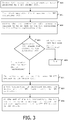
- Figure 3 shows a flow chart of the management of a NFC transaction according to an example of the invention.
- the users approaches his device 10 from the NFC reader 50.
- the user accepts that a NFC transaction is performed.
- the NFC device 10 enters the electromagnetic field generated by the NFC reader 50.
- the NFC controller 60 is woken by the electromagnetic field of the NFC reader 50 at step S21.
- the waking of the NFC controller 60 causes a first message 61 (an interruption for instance) to be sent by the NFC controller 60 to the software application 20 at step S22.
- the software application 20 checks the content of the indicator 40 at step S23.
- Step S29 If the indicator 40 has been set to the second value (ex: "forbidden"), the process is stopped. (Step S29) .
- step S24 the software application 20 turns ON the NFC feature of the device 10.
- the software application 20 can call a NFC ON service provided by the operating system of the device 10.
- the NFC feature of the device 10 has been activated and a NFC transaction can be carried out through the NFC controller 60.
- a NFC transaction is performed between the device 10 and the reader 50 using the CLF 60 at step S25.
- the NFC transaction is conducted between the reader 50 and the NFC application 71.
- the NFC controller 60 Once the NFC controller 60 has detected the end of the NFC transaction, it sends a second message 62 to request the software application 20 to turn OFF the NFC feature of the device 10. On receipt of the second message 62 the software application 20 deactivates the NFC feature of the device 10. For instance, the software application 20 can call a NFC OFF service provided by the operating system of the device 10.
- the device 10 is in a state similar to the beginning of the process of Figure 3 : NFC feature is disabled for the device 10. In other words, the ability to communicate in contactless mode of the NFC controller 60 is deactivated.
- the invention allows to prevent unauthorized NFC transactions by coming back to the initial state of NFC settings of the NFC device just after the end of the authorized NFC transaction.
- the user keeps control of authorized NFC transactions for his own NFC device.
- a possible NFC transaction really wanted by the user can be done automatically whatever the status of the device NFC feature. (I.e. NFC ON or NFC OFF)
- the invention is not restricted to NFC devices comprising a single NFC application.
- the software application 20 may be in charge of selecting one NFC application to conduct the NFC transaction according to predefined rules: type of transaction (e.g. transport, payment, or access), current date/time or current location for example.
- the architecture of the NFC device 10 shown at Figure 1 & 4 is provided as examples only. These architectures may be different.
Landscapes
- Engineering & Computer Science (AREA)
- Business, Economics & Management (AREA)
- Theoretical Computer Science (AREA)
- Physics & Mathematics (AREA)
- General Physics & Mathematics (AREA)
- General Business, Economics & Management (AREA)
- Strategic Management (AREA)
- Accounting & Taxation (AREA)
- Computer Networks & Wireless Communication (AREA)
- Computer Hardware Design (AREA)
- Human Computer Interaction (AREA)
- General Engineering & Computer Science (AREA)
- Telephone Function (AREA)
Abstract
Method for managing a NFC transaction between a NFC reader and a device including an application and a NFC controller having an ability to communicate in contactless mode which is deactivated. The device includes an indicator uniquely associated with the application. This indicator is set to either a first or a second value. When the NFC controller is awakened by the electromagnetic field generated by the NFC reader, it sends a first message to the application. On receipt of the first message, the application checks the indicator and activates the NFC controller ability to communicate in contactless mode only if the indicator is set to the first value. The NFC transaction is performed through the NFC controller and when the NFC transaction is ended the NFC controller sends a second message to request the application to deactivate the NFC controller ability to communicate in contactless mode.
Description
- The present invention relates to methods of managing NFC transactions. It relates particularly to methods of securely authorizing the conduct of a NFC transaction.
- The NFC (Near Field Communication) technology is based on the exchanging of data via a magnetic field. A NFC device may work according to a mode called "card emulation mode". In card emulation mode, the NFC device behaves like an existing contactless card. A NFC reader has an antenna which is able to modulate the magnetic field and to provide energy to other NFC devices.
- A NFC device working in card emulation mode can communicate with a NFC reader thanks to an inductive coupling in a field frequency equal to 13.56 MHz. In particular, the ISO14443 and ISO18092 standards provide modulation technologies and communication protocols which may be used in NFC domain.
- Many smartphones are kind of NFC devices comprising a NFC controller and a secure element or an emulated secure element. The ability of a smart phone to work as a NFC device can be disabled by the user via dedicated settings (i.e. NFC turned OFF at the device level). As a result, no NFC transaction can be conducted by the smartphone. Disabling NFC feature of a smartphone can be done by the user in order to save power or for avoiding unwanted NFC transactions.
- Nevertheless, a user may want to use a service provided via a specific NFC application. Manually changing the setting to enable then disable NFC feature of the handset each time the service is needed is not convenient for the user.
- There is a need for allowing a NFC transaction to be conducted with a specific NFC application even if the NFC feature has been deactivated on the smart phone.
- The invention aims at solving the above mentioned technical problem.
- An object of the present invention is a method for managing a NFC transaction between a device and a NFC reader. The device includes a software application and a NFC controller having an ability to communicate in contactless mode which is deactivated. The device includes an indicator uniquely associated with the software application. The indicator is set to either a first or a second value. As soon as the NFC controller is awakened by the electromagnetic field generated by the NFC reader, the NFC controller sends a first message to the software application. On receipt of the first message, the software application checks said indicator and activates the NFC controller ability to communicate in contactless mode only if said indicator is set to the first value. The NFC transaction is performed through the NFC controller and when the NFC transaction is ended the NFC controller sends a second message to request the software application to deactivate the NFC controller ability to communicate in contactless mode.
- Advantageously, the device may include an embedded secure element storing a NFC application and the NFC transaction may be performed between the NFC application and the NFC reader.
- Advantageously, the device may include a software execution environment in which said software application is installed, the software execution environment may comprise a NFC application and the NFC transaction may be performed between the NFC application and the NFC reader.
- Advantageously, the indicator may be set during installation of the software application and any attempt to update the indicator may be denied after the software application installation.
- Another object of the invention is a device including a software application and a NFC controller having an ability to communicate in contactless mode which can be deactivated. The device includes an indicator which is uniquely associated with the software application. The indicator is set to either a first or a second value. The NFC controller is configured to send a first message to the software application as soon as the NFC controller is awakened by the electromagnetic field generated by a NFC reader. The software application is configured to check said indicator on receipt of the first message and to activate the NFC controller ability to communicate in contactless mode only if said indicator is set to the first value. The NFC controller is configured to send a second message to request the software application to deactivate the NFC controller ability to communicate in contactless mode when the NFC transaction is ended.
- Advantageously, the NFC controller may be configured to send said first message as an interrupt.
- Advantageously, the device may include an embedded secure element storing a NFC application and the NFC transaction may be performed between the NFC application and the NFC reader.
- Advantageously, the device may include a software execution environment in which said software application is installed. The software execution environment may comprise a NFC application and the NFC transaction may be performed between the NFC application and the NFC reader.
- Advantageously, the indicator may be set during installation of the software application and the device may be configured to deny any attempt to update the indicator once the software application has been installed.
- Advantageously, the device may be a mobile phone, an electronic ring, a connected watch, a tablet, a gaming machine, a Personal Digital Assistant or an electronic device embedded in a Computer.
- Other characteristics and advantages of the present invention will emerge more clearly from a reading of the following description of a number of preferred embodiments of the invention with reference to the corresponding accompanying drawings in which:
-
Figure 1 depicts schematically an example of a system comprising a NFC reader and a NFC device according to a first embodiment of the invention; -
Figure 2 shows a flow chart of the installation of a software application according to an example of the invention; -
Figure 3 shows a flow chart of the management of a NFC transaction according to an example of the invention; and -
Figure 4 depicts schematically an example of a system comprising a NFC reader and a NFC device according to a second embodiment of the invention. - A NFC controller is a hardware module also named ContactLess Front-end chip or Contactless Frontend (CLF). Typically, a Contactless Frontend is a circuitry which handles the analogue part of the contactless communication, handles the communication protocol layers of the contactless transmission link and exchanges data with a Universal Integrated Circuit Card (UICC) or a secure element.
- A NFC device comprises at least one NFC controller.
- The invention applies to any kind of NFC equipment intended to carry out a NFC transaction with a NFC reader. For example, it applies to a terminal equipment or portable devices like mobile phones, tablets, connected watches, personal computers, electronic rings, gaming machines, Personal Digital Assistants (PDA) or Electronic Funds Transfer Terminals for payment. It may apply to a device or a box embedded in computer.
- In this document when an action is said to be performed by a device, it is in fact executed by a processor located in this device and controlled by instruction codes recorded in a memory of this device.
-
Figure 1 shows an example of a system comprising aNFC reader 50 and aNFC device 10 according to a first embodiment of the invention. - The
NFC device 10 may be a Mobile phone equipped with aNFC controller 60 connected to both an antenna (not shown) and asecure element 70. The ability to communicate in contactless mode of theNFC controller 60 can be activated and deactivated. - The
secure element 70 comprises anNFC application 71 able to conduct a NFC transaction with theNFC reader 50. For instance, the NFCapplication 71 may provide a payment service, access to a specific area or access to a transport network. - In a preferred embodiment, the
secure element 70 is an embedded secure element (eSE) comprising a processor, a non-volatile memory and an operating system. - Alternatively, the
secure element 70 may be a Secure Digital (SD) card, a miniSD card, a microSD card, an embedded Universal Integrated Circuit Card (eUICC), a smart card or an integrated secure element (iSE) . - The
NFC controller 60 and thesecure element 70 are linked by a direct single wire link which allows a communication in contact mode between theNFC controller 60 and thesecure element 70. In a preferred embodiment, both theNFC controller 60 and thesecure element 70 use the Single Wire protocol (SWP) as defined by ETSI TS 102.613. - The
NFC device 10 comprises asoftware execution environment 30 which may be supported by an Application Processor (AP) allowing to run both the operating system and software applications for example. Thesoftware execution environment 30 may comprises both a Rich Execution Environment (REE) and a Trusted Execution Environment (TEE) as defined by Global Platform Device Technology - TEE System Architecture GPD_SPE_009 standard. - A
software application 20 has been installed in thesoftware execution environment 30. During the installation of thesoftware application 20, an indicator 40 - uniquely associated with the software application 20 - has been recorded in thesoftware execution environment 30. - The
indicator 40 can be defined by the end-user as a dedicated parameter managed by thesoftware execution environment 30. - Alternatively the
indicator 40 can be defined in thesoftware execution environment 30 before installation ofsoftware application 20. - In a preferred embodiment, the
software application 20 is a wallet able to manage several other applications. - The
indicator 40 is set to either a first value (ex: "authorized") or a second value (ex: "forbidden"). These values can be implemented with any symbol/digit/alphabetic/numeral data provided that theindicator 40 can be set to only two values. - The
NFC controller 60 is configured to send afirst message 61 to thesoftware application 20 as soon as theNFC controller 60 is awakened by the electromagnetic field generated by aNFC reader 50. It is to be noted that when the NFC feature is set to OFF on theNFC device 10, the electromagnetic field generated by theNFC reader 50 provides energy to theNFC controller 60 and wakes up theNFC controller 60. - The link between the
software application 20 and theNFC application 71 may be implemented via the Contactless Registry Service (CRS) as defined by GlobalPlatform Card Specification V2.2 - Amendment C version 1.1.1 for example. - The
NFC controller 60 asks for activation of the NFC feature of thedevice 10. Then the NFC feature of thedevice 10 is turned ON if and only if theindicator 40 contains the first value (ex: "authorized"). - The
message 61 is used to notify thesoftware application 20 that the NFC feature of thedevice 10 shall be forced to ON if the indicator is set to the first value (ex: "authorized"). - The
message 61 can be an interrupt conveyed through a General Purpose Input/Output (GPIO) connected to the Application Processor (AP). The interrupt targets thesoftware application 20. Alternatively any physical interface connected to both theNFC controller 60 and the AP can be used. - Preferably, the
message 61 is sent by theNFC controller 60 only if the NFC feature of thedevice 10 has been turned OFF. - Preferably, the
NFC controller 60 is agnostic to theindicator 40 content. TheNFC controller 60 sends themessage 61 whatever the setting selected by the user for theindicator 40. It is thesoftware application 20 which is in charge of triggering activation (or not) of NFC feature of thedevice 10 according to the content of theindicator 40. - The
NFC controller 60 is also configured to send asecond message 62 to request thesoftware application 20 to deactivate the NFC controller ability to communicate in contactless mode when a NFC transaction is ended (i.e. either has been completed or aborted). - For example, the
NFC controller 60 may receive a specific event from thesecure element 70 notifying the end of the NFC transaction as defined at §10.2.4.2 of the ETSI TS 102 622 V13.0.0 (2016-10). Upon receipt of this specific event, theNFC controller 60 sends thesecond message 62. - The
second message 62 can be conveyed through any communication channel usually available between a CLF and a software application. At this time, theNFC controller 60 is able to communicate in the usual way with thesoftware application 20 since the NFC feature has been reactivated on thedevice 10. - The
second message 62 is sent by the CLF only if thefirst message 61 has been sent before the last NFC transaction. TheNFC controller 60 manages its own context by tracking message sending. - The
software application 20 is designed to check the content of theindicator 40 on receipt of thefirst message 61 and to request the activation of theNFC controller 60 ability to communicate in contactless mode only if theindicator 40 is set to the first value (ex: "authorized"). - The
software application 20 is also designed to request the disabling of theNFC controller 60 ability to communicate in contactless mode (i.e. turn OFF NFC feature of the device 10) on receipt of thesecond message 62. - It is to be noted that the
software application 20 has the right to trigger activation and deactivation ofNFC controller 60 ability to communicate in contactless mode. Preferably, theindicator 40 is set during the installation of thesoftware application 20 and cannot be updated after. Alternatively, the updating of theindicator 40 may be allowed only to set its content to the second value (ex: "forbidden"). -
Figure 4 shows an example of a system comprising aNFC reader 50 and aNFC device 10 according to a second embodiment of the invention. - The
NFC device 10 is similar to the one ofFigure 1 , with the following differences. Thedevice 10 does not include a secure element (nevertheless it includes a UICC or equivalent in the case of a phone). TheNFC device 10 comprises anNFC application 31 able to conduct a NFC transaction with theNFC reader 50. For instance, theNFC application 31 may provide a reading of NFC tags, loyalty service, payment service, building access or transport access. - In another embodiment, the
software application 20 and theNFC application 31 may be merged in a single application. -
Figure 2 shows a flow chart of the installation of thesoftware application 20 according to an example of the invention. - In this example, the
software application 20 is installed on theNFC device 10 ofFigure 1 . - At step S10, the
software application 20 is installed in thesoftware execution environment 30 of thedevice 10. During this installation phase, theindicator 40 is created and set to a first value (ex: "authorized"). This first value means that thesoftware application 20 is allowed to "force NFC transaction" even if NFC feature has been turned OFF on thedevice 10. Theindicator 40 is uniquely associated to theapplication 20. - The
software application 20 may access theindicator 40 thanks to data provided by the REE or through a dedicated flag handling theindicator 40. - Alternatively, the
indicator 40 may be set during an additional mandatory step after the installation of the software application. - In all cases, once the indicator has been set, any further attempts to update the indicator is denied.
- At step S12, the user of the
NFC device 10, turns the NFC feature of thedevice 10 OFF. This may be done through the general settings of theNFC device 10. - Of course, the NFC feature of the
device 10 may have been deactivated before the installation of thesoftware application 20. -
Figure 3 shows a flow chart of the management of a NFC transaction according to an example of the invention. - This example is based on the
NFC device 10 ofFigure 1 and assumes that the steps described atFigure 2 have been carried out. - At step S20, the users approaches his
device 10 from theNFC reader 50. By doing this gesture, the user accepts that a NFC transaction is performed. Hence theNFC device 10 enters the electromagnetic field generated by theNFC reader 50. - The
NFC controller 60 is woken by the electromagnetic field of theNFC reader 50 at step S21. - The waking of the
NFC controller 60 causes a first message 61 (an interruption for instance) to be sent by theNFC controller 60 to thesoftware application 20 at step S22. - On receipt of the
first message 61, thesoftware application 20 checks the content of theindicator 40 at step S23. - If the
indicator 40 has been set to the second value (ex: "forbidden"), the process is stopped. (Step S29) . - If the
indicator 40 has been set to the first value (ex: "authorized"), the process continues to step S24 where thesoftware application 20 turns ON the NFC feature of thedevice 10. For instance, thesoftware application 20 can call a NFC ON service provided by the operating system of thedevice 10. - At this time, the NFC feature of the
device 10 has been activated and a NFC transaction can be carried out through theNFC controller 60. - In a usual way, a NFC transaction is performed between the
device 10 and thereader 50 using theCLF 60 at step S25. In this example, the NFC transaction is conducted between thereader 50 and theNFC application 71. - Once the
NFC controller 60 has detected the end of the NFC transaction, it sends asecond message 62 to request thesoftware application 20 to turn OFF the NFC feature of thedevice 10. On receipt of thesecond message 62 thesoftware application 20 deactivates the NFC feature of thedevice 10. For instance, thesoftware application 20 can call a NFC OFF service provided by the operating system of thedevice 10. - At this time, the
device 10 is in a state similar to the beginning of the process ofFigure 3 : NFC feature is disabled for thedevice 10. In other words, the ability to communicate in contactless mode of theNFC controller 60 is deactivated. - The invention allows to prevent unauthorized NFC transactions by coming back to the initial state of NFC settings of the NFC device just after the end of the authorized NFC transaction.
- Thanks to the invention the user keeps control of authorized NFC transactions for his own NFC device.
- Since the invention is managed at the software application level, it remains independent of the operating system of the NFC device.
- Thanks to the invention, a possible NFC transaction really wanted by the user can be done automatically whatever the status of the device NFC feature. (I.e. NFC ON or NFC OFF)
- The invention is not restricted to NFC devices comprising a single NFC application. When several NFC application are embedded in a NFC device, the
software application 20 may be in charge of selecting one NFC application to conduct the NFC transaction according to predefined rules: type of transaction (e.g. transport, payment, or access), current date/time or current location for example. - It must be understood, within the scope of the invention, that the above-described embodiments are provided as non-limitative examples.
- The invention is not limited to the described embodiments or examples. In particular, the features described in the presented embodiments and examples may be combined.
- The architecture of the
NFC device 10 shown atFigure 1 &4 is provided as examples only. These architectures may be different.
Claims (10)
- A method for managing a NFC transaction between a device (10) and a NFC reader (50), said device including a software application (20) and a NFC controller (60) having an ability to communicate in contactless mode which is deactivated,
characterized in that said device includes an indicator (40) uniquely associated with the software application, said indicator being set to either a first or a second value,
in that as soon as the NFC controller is awakened by the electromagnetic field generated by the NFC reader, the NFC controller sends a first message (61) to the software application,
in that on receipt of the first message, the software application checks said indicator and activates the NFC controller ability to communicate in contactless mode only if said indicator is set to said first value, and
in that the NFC transaction is performed through the NFC controller and when the NFC transaction is ended the NFC controller sends a second message (62) to request the software application to deactivate the NFC controller ability to communicate in contactless mode. - The method according to claim 1, wherein said device includes an embedded secure element (70) storing a NFC application (71) and wherein the NFC transaction is performed between the NFC application (71) and the NFC reader.
- The method according to claim 1, wherein said device includes a software execution environment (30) in which said software application (20) is installed, wherein the software execution environment comprises a NFC application (31) and wherein the NFC transaction is performed between the NFC application (31) and the NFC reader.
- The method according to claim 1, wherein said indicator is set during installation of the software application and wherein any attempt to update the indicator is denied after the software application installation.
- A device (10) including a software application (20) and a NFC controller (60) having an ability to communicate in contactless mode which can be deactivated,
characterized in that said device includes an indicator (40) uniquely associated with the software application, said indicator being set to either a first or a second value,
in that the NFC controller is configured to send a first message (61) to the software application as soon as the NFC controller is awakened by the electromagnetic field generated by a NFC reader (50),
in that the software application is configured to check said indicator on receipt of the first message and to activate the NFC controller ability to communicate in contactless mode only if said indicator is set to said first value, and
in that the NFC controller is configured to send a second message (62) to request the software application to deactivate the NFC controller ability to communicate in contactless mode when the NFC transaction is ended. - The device according to claim 5, wherein the NFC controller is configured to send said first message (61) as an interrupt.
- The device according to claim 5, wherein said device includes an embedded secure element (70) storing a NFC application (71) and wherein the NFC transaction is performed between the NFC application (71) and the NFC reader.
- The device according to claim 5, wherein said device includes a software execution environment (30) in which said software application (20) is installed, wherein the software execution environment comprises a NFC application (31) and wherein the NFC transaction is performed between the NFC application (31) and the NFC reader.
- The device according to claim 5, wherein said indicator is set during installation of the software application and wherein the device is configured to deny any attempt to update the indicator once the software application has been installed.
- The device according to claim 5, wherein the device is a mobile phone, an electronic ring, a connected watch, a tablet, a gaming machine, a Personal Digital Assistant or an electronic device embedded in a Computer.
Priority Applications (2)
| Application Number | Priority Date | Filing Date | Title |
|---|---|---|---|
| EP17306263.9A EP3460735A1 (en) | 2017-09-26 | 2017-09-26 | Method of managing a nfc transaction |
| PCT/EP2018/074040 WO2019063262A1 (en) | 2017-09-26 | 2018-09-06 | Method of managing a nfc transaction |
Applications Claiming Priority (1)
| Application Number | Priority Date | Filing Date | Title |
|---|---|---|---|
| EP17306263.9A EP3460735A1 (en) | 2017-09-26 | 2017-09-26 | Method of managing a nfc transaction |
Publications (1)
| Publication Number | Publication Date |
|---|---|
| EP3460735A1 true EP3460735A1 (en) | 2019-03-27 |
Family
ID=60574488
Family Applications (1)
| Application Number | Title | Priority Date | Filing Date |
|---|---|---|---|
| EP17306263.9A Withdrawn EP3460735A1 (en) | 2017-09-26 | 2017-09-26 | Method of managing a nfc transaction |
Country Status (2)
| Country | Link |
|---|---|
| EP (1) | EP3460735A1 (en) |
| WO (1) | WO2019063262A1 (en) |
Families Citing this family (1)
| Publication number | Priority date | Publication date | Assignee | Title |
|---|---|---|---|---|
| CN119887195B (en) * | 2024-10-23 | 2025-12-30 | 支付宝(杭州)数字服务技术有限公司 | NFC service processing method, device and equipment for intelligent wearable equipment |
Citations (3)
| Publication number | Priority date | Publication date | Assignee | Title |
|---|---|---|---|---|
| US20120094603A1 (en) * | 2010-10-19 | 2012-04-19 | Vodafone Holding Gmbh | Device and method for contactless short range communication |
| US20150161587A1 (en) * | 2013-12-06 | 2015-06-11 | Apple Inc. | Provisioning and authenticating credentials on an electronic device |
| EP3160166A1 (en) * | 2015-10-19 | 2017-04-26 | Gemalto Sa | Method for managing applications in a secure element |
-
2017
- 2017-09-26 EP EP17306263.9A patent/EP3460735A1/en not_active Withdrawn
-
2018
- 2018-09-06 WO PCT/EP2018/074040 patent/WO2019063262A1/en not_active Ceased
Patent Citations (3)
| Publication number | Priority date | Publication date | Assignee | Title |
|---|---|---|---|---|
| US20120094603A1 (en) * | 2010-10-19 | 2012-04-19 | Vodafone Holding Gmbh | Device and method for contactless short range communication |
| US20150161587A1 (en) * | 2013-12-06 | 2015-06-11 | Apple Inc. | Provisioning and authenticating credentials on an electronic device |
| EP3160166A1 (en) * | 2015-10-19 | 2017-04-26 | Gemalto Sa | Method for managing applications in a secure element |
Also Published As
| Publication number | Publication date |
|---|---|
| WO2019063262A1 (en) | 2019-04-04 |
Similar Documents
| Publication | Publication Date | Title |
|---|---|---|
| EP4148615B1 (en) | Near field communication (nfc) method and apparatus, and electronic device | |
| JP5605733B2 (en) | Smart card remote control method and system | |
| CN103370954B (en) | Mobile wireless communications device having a near field communication (NFC) device and providing memory erasure and related methods | |
| EP2689614B1 (en) | Method and apparatus for battery with secure element | |
| US8768300B2 (en) | Remote control method and system for smart card | |
| US20150271677A1 (en) | Secure nfc routing | |
| EP2445170B1 (en) | Device and method for contactless short range communication | |
| US10091652B2 (en) | Relay device | |
| CN105590201A (en) | Mobile payment device and mobile payment system | |
| SG173004A1 (en) | Portable mobile communication device and method of controlling near field communication | |
| KR20190064792A (en) | Electronic device and method for processing remote payment | |
| JP5839598B2 (en) | Smart card remote control method and system | |
| US12260385B2 (en) | Multi-use near field communication front end on a point of sale system | |
| EP3065097B1 (en) | Device and method for facilitating a transaction | |
| AU2021273648B2 (en) | Multi-use near field communication front end on a point of sale system | |
| WO2019063262A1 (en) | Method of managing a nfc transaction | |
| EP3376458B1 (en) | Nfc device and initialization method | |
| KR20050053557A (en) | Selection device of rf antenna in mobile telecommunication terminal | |
| EP3751749B1 (en) | Multi-use near field communication front end on a point of sale system | |
| CN205847259U (en) | A kind of bluetooth equipment and bluetooth system | |
| WO2026012745A1 (en) | Factory reset applet | |
| KR20140075976A (en) | Terminal and controlling method operation thereof | |
| EP3836503A1 (en) | Access control for near field communication functions | |
| KR200391617Y1 (en) | Selection Device of RF Antenna in Mobile Telecommunication Terminal | |
| HK1224879A1 (en) | Nfc-based communication device and method |
Legal Events
| Date | Code | Title | Description |
|---|---|---|---|
| PUAI | Public reference made under article 153(3) epc to a published international application that has entered the european phase |
Free format text: ORIGINAL CODE: 0009012 |
|
| STAA | Information on the status of an ep patent application or granted ep patent |
Free format text: STATUS: THE APPLICATION HAS BEEN PUBLISHED |
|
| AK | Designated contracting states |
Kind code of ref document: A1 Designated state(s): AL AT BE BG CH CY CZ DE DK EE ES FI FR GB GR HR HU IE IS IT LI LT LU LV MC MK MT NL NO PL PT RO RS SE SI SK SM TR |
|
| AX | Request for extension of the european patent |
Extension state: BA ME |
|
| STAA | Information on the status of an ep patent application or granted ep patent |
Free format text: STATUS: THE APPLICATION IS DEEMED TO BE WITHDRAWN |
|
| 18D | Application deemed to be withdrawn |
Effective date: 20190928 |