EP3460657A1 - Method for validating a medical application, end user device and medical system - Google Patents
Method for validating a medical application, end user device and medical system Download PDFInfo
- Publication number
- EP3460657A1 EP3460657A1 EP17192247.9A EP17192247A EP3460657A1 EP 3460657 A1 EP3460657 A1 EP 3460657A1 EP 17192247 A EP17192247 A EP 17192247A EP 3460657 A1 EP3460657 A1 EP 3460657A1
- Authority
- EP
- European Patent Office
- Prior art keywords
- user device
- validation
- application
- software
- end user
- Prior art date
- Legal status (The legal status is an assumption and is not a legal conclusion. Google has not performed a legal analysis and makes no representation as to the accuracy of the status listed.)
- Granted
Links
Images


Classifications
-
- G—PHYSICS
- G06—COMPUTING OR CALCULATING; COUNTING
- G06F—ELECTRIC DIGITAL DATA PROCESSING
- G06F11/00—Error detection; Error correction; Monitoring
- G06F11/36—Prevention of errors by analysis, debugging or testing of software
- G06F11/3668—Testing of software
- G06F11/3672—Test management
- G06F11/3688—Test management for test execution, e.g. scheduling of test suites
-
- G—PHYSICS
- G06—COMPUTING OR CALCULATING; COUNTING
- G06F—ELECTRIC DIGITAL DATA PROCESSING
- G06F21/00—Security arrangements for protecting computers, components thereof, programs or data against unauthorised activity
- G06F21/50—Monitoring users, programs or devices to maintain the integrity of platforms, e.g. of processors, firmware or operating systems
- G06F21/51—Monitoring users, programs or devices to maintain the integrity of platforms, e.g. of processors, firmware or operating systems at application loading time, e.g. accepting, rejecting, starting or inhibiting executable software based on integrity or source reliability
-
- G—PHYSICS
- G06—COMPUTING OR CALCULATING; COUNTING
- G06F—ELECTRIC DIGITAL DATA PROCESSING
- G06F21/00—Security arrangements for protecting computers, components thereof, programs or data against unauthorised activity
- G06F21/50—Monitoring users, programs or devices to maintain the integrity of platforms, e.g. of processors, firmware or operating systems
- G06F21/57—Certifying or maintaining trusted computer platforms, e.g. secure boots or power-downs, version controls, system software checks, secure updates or assessing vulnerabilities
- G06F21/577—Assessing vulnerabilities and evaluating computer system security
-
- G—PHYSICS
- G06—COMPUTING OR CALCULATING; COUNTING
- G06F—ELECTRIC DIGITAL DATA PROCESSING
- G06F8/00—Arrangements for software engineering
- G06F8/60—Software deployment
- G06F8/61—Installation
-
- G—PHYSICS
- G16—INFORMATION AND COMMUNICATION TECHNOLOGY [ICT] SPECIALLY ADAPTED FOR SPECIFIC APPLICATION FIELDS
- G16H—HEALTHCARE INFORMATICS, i.e. INFORMATION AND COMMUNICATION TECHNOLOGY [ICT] SPECIALLY ADAPTED FOR THE HANDLING OR PROCESSING OF MEDICAL OR HEALTHCARE DATA
- G16H40/00—ICT specially adapted for the management or administration of healthcare resources or facilities; ICT specially adapted for the management or operation of medical equipment or devices
- G16H40/40—ICT specially adapted for the management or administration of healthcare resources or facilities; ICT specially adapted for the management or operation of medical equipment or devices for the management of medical equipment or devices, e.g. scheduling maintenance or upgrades
-
- G—PHYSICS
- G16—INFORMATION AND COMMUNICATION TECHNOLOGY [ICT] SPECIALLY ADAPTED FOR SPECIFIC APPLICATION FIELDS
- G16H—HEALTHCARE INFORMATICS, i.e. INFORMATION AND COMMUNICATION TECHNOLOGY [ICT] SPECIALLY ADAPTED FOR THE HANDLING OR PROCESSING OF MEDICAL OR HEALTHCARE DATA
- G16H40/00—ICT specially adapted for the management or administration of healthcare resources or facilities; ICT specially adapted for the management or operation of medical equipment or devices
- G16H40/60—ICT specially adapted for the management or administration of healthcare resources or facilities; ICT specially adapted for the management or operation of medical equipment or devices for the operation of medical equipment or devices
- G16H40/67—ICT specially adapted for the management or administration of healthcare resources or facilities; ICT specially adapted for the management or operation of medical equipment or devices for the operation of medical equipment or devices for remote operation
-
- H—ELECTRICITY
- H04—ELECTRIC COMMUNICATION TECHNIQUE
- H04L—TRANSMISSION OF DIGITAL INFORMATION, e.g. TELEGRAPHIC COMMUNICATION
- H04L9/00—Cryptographic mechanisms or cryptographic arrangements for secret or secure communications; Network security protocols
- H04L9/32—Cryptographic mechanisms or cryptographic arrangements for secret or secure communications; Network security protocols including means for verifying the identity or authority of a user of the system or for message authentication, e.g. authorization, entity authentication, data integrity or data verification, non-repudiation, key authentication or verification of credentials
- H04L9/3247—Cryptographic mechanisms or cryptographic arrangements for secret or secure communications; Network security protocols including means for verifying the identity or authority of a user of the system or for message authentication, e.g. authorization, entity authentication, data integrity or data verification, non-repudiation, key authentication or verification of credentials involving digital signatures
-
- A—HUMAN NECESSITIES
- A61—MEDICAL OR VETERINARY SCIENCE; HYGIENE
- A61B—DIAGNOSIS; SURGERY; IDENTIFICATION
- A61B5/00—Measuring for diagnostic purposes; Identification of persons
- A61B5/0002—Remote monitoring of patients using telemetry, e.g. transmission of vital signals via a communication network
-
- A—HUMAN NECESSITIES
- A61—MEDICAL OR VETERINARY SCIENCE; HYGIENE
- A61B—DIAGNOSIS; SURGERY; IDENTIFICATION
- A61B5/00—Measuring for diagnostic purposes; Identification of persons
- A61B5/145—Measuring characteristics of blood in vivo, e.g. gas concentration or pH-value ; Measuring characteristics of body fluids or tissues, e.g. interstitial fluid or cerebral tissue
- A61B5/14532—Measuring characteristics of blood in vivo, e.g. gas concentration or pH-value ; Measuring characteristics of body fluids or tissues, e.g. interstitial fluid or cerebral tissue for measuring glucose, e.g. by tissue impedance measurement
-
- G—PHYSICS
- G06—COMPUTING OR CALCULATING; COUNTING
- G06F—ELECTRIC DIGITAL DATA PROCESSING
- G06F21/00—Security arrangements for protecting computers, components thereof, programs or data against unauthorised activity
- G06F21/60—Protecting data
- G06F21/62—Protecting access to data via a platform, e.g. using keys or access control rules
- G06F21/6218—Protecting access to data via a platform, e.g. using keys or access control rules to a system of files or objects, e.g. local or distributed file system or database
- G06F21/6245—Protecting personal data, e.g. for financial or medical purposes
-
- G—PHYSICS
- G16—INFORMATION AND COMMUNICATION TECHNOLOGY [ICT] SPECIALLY ADAPTED FOR SPECIFIC APPLICATION FIELDS
- G16H—HEALTHCARE INFORMATICS, i.e. INFORMATION AND COMMUNICATION TECHNOLOGY [ICT] SPECIALLY ADAPTED FOR THE HANDLING OR PROCESSING OF MEDICAL OR HEALTHCARE DATA
- G16H40/00—ICT specially adapted for the management or administration of healthcare resources or facilities; ICT specially adapted for the management or operation of medical equipment or devices
- G16H40/60—ICT specially adapted for the management or administration of healthcare resources or facilities; ICT specially adapted for the management or operation of medical equipment or devices for the operation of medical equipment or devices
- G16H40/63—ICT specially adapted for the management or administration of healthcare resources or facilities; ICT specially adapted for the management or operation of medical equipment or devices for the operation of medical equipment or devices for local operation
-
- H—ELECTRICITY
- H04—ELECTRIC COMMUNICATION TECHNIQUE
- H04L—TRANSMISSION OF DIGITAL INFORMATION, e.g. TELEGRAPHIC COMMUNICATION
- H04L2209/00—Additional information or applications relating to cryptographic mechanisms or cryptographic arrangements for secret or secure communication H04L9/00
- H04L2209/88—Medical equipments
Definitions
- the present disclosure refers to a method for validating a medical application on an end user device configured for data communication with a medical device by the medical application, an end user device and a medical system.
- Users of a medical device may employ end user devices on which a medical application is running for communicating with medical device.
- the medical application can be used to manage data communication between the medical device of the end user device, such as transmitting measurement data acquired by the medical device to the end user device or sending commands generated from user input from the end user device to the medical device.
- a smartphone of a diabetes patient may be configured to run a medical application that collects glucose values from a glucose meter and is also used to configure the glucose meter.
- safety and security of medical application is an important issue.
- Document US 2017/0147313 A1 discloses systems and methods for application software system installation in a user device, wherein the desired App includes App configuration data to be entered by the intended user through a user interface.
- An App configuration data validation processor verifies that the user has correctly entered the desired App configuration data.
- the system digitally signs the App with the validated embedded data in an App configuration file, which digital signature must be validated by the intended device before installation of the App is accepted on the device. After both validation of the configuration data and the digital signature, the user is then permitted to execute the App on the intended device.
- a server is in communication with appliances.
- the server is also coupled to databases which include appliance information, as well as application data.
- a user may authenticate using the appliance.
- a set of permissions may be associated with the user.
- the server then supervises information exchanged between the appliance and the server, as well as application functionality upon the appliance, by supplementing the applications downloaded to the appliance with supplemental code, referred to as an AppGuard.
- the AppGuard is tailored, using information related to the appliance, to the appliance type in order to ensure proper functionality.
- the AppGuard is executed upon installation, and collects device information for validation. After validation, the application may be run. Additionally, management of the applications may include augmenting, deleting, disabling or authorizing the application.
- Document US 6,775,536 B1 describes a method in which a wireless domain sets a security policy for all mobile communication devices within the domain by use of a system entry proxy server.
- a developer makes an application or code segment available at a developer station.
- the application is certified by a certificate defining a developer security setting.
- the user of the mobile communication device initiates a download of the application so that it can be installed onto the mobile communication device.
- the application is downloaded through the system entry proxy server which authenticates the application, then re-certifies it with a compact certificate including an operator defined security policy. In this way the operator can control which resources of the mobile communication device are accessed by all applications coming into the wireless domain.
- a method for validating a medical application on an end user device configured for data communication with a medical device by the medical application.
- the method comprises: receiving a medical application in an end user device, the medical application being a software-implemented application and configured to provide for data communication between the end user device and a medical device; receiving a validation application in the end user device, the validation application being a software-implemented application; and at least in case of a first execution of the medical application in the end user device, executing the validation application.
- Executing the validation application comprises: determining a software environment provided to the user device; determining a hardware environment provided to the user device; in response to the software and hardware environment determined, setting up a validation process for testing the software and hardware environment to be compatible with execution requirements for executing the medical application in the end user device; and testing the software and hardware environment according to the validation process.
- the method for validating a medical application further comprises executing the medical application in the end user device, if the software and hardware environment are tested compatible with the execution requirements by the validation application, and blocking the medical application from execution in the end user device, if the software and hardware environment are tested not compatible with the execution requirements by the validation application.
- an end user device for data communication with a medical device by a medical application.
- the end user device is having one or more processors; a medical application, the medical application being a software-implemented application and configured to provide for data communication between the end user device and a medical device; and a validation application.
- the validation application is a software-implemented application and is configured, at least in case of a first execution of the medical application in the end user device, to: determine a software environment provided to the user device; determine a hardware environment provided to the user device; in response to the software and hardware environment determined, set up a validation process for testing the software and hardware environment to be compatible with execution requirements for executing the medical application in the end user device; and test the software and hardware environment according to the validation process.
- the medical application is further configured to be executed by the one or more processors, if the software and hardware environment are tested compatible with the execution requirements by the validation application, and to be blocked from execution by the one or more processors, if the software and hardware environment are tested not compatible with the execution requirements by the validation application.
- a medical system comprises a medical device and the end user device.
- a hardware and software environment provided to an end user device are tested to be compatible with execution requirements for executing a medical application using a validation application.
- the validation application allows executing the medical application or blocks the medical application from execution in response to the testing.
- the validation application may be understood or referred to as enveloping the medical application and screening it from the outside, i.e. interaction with software and hardware components external to the medical application itself.
- the validation application may therefore also be referred to as an Envelope App. If the software and hardware environment are tested compatible with the execution requirements by the Envelope App, the envelope is opened, i.e. execution the medical application is allowed.
- the receiving the medical application may be performed prior to or after the receiving the validation application.
- the receiving the medical application and the receiving the validation application may be performed, at least partly, at the same time.
- the receiving the medical application may be performed prior to or after the executing the validation application.
- the receiving the medical application may be performed while executing the validation application.
- part of the testing the software and hardware environment which may also respectively be referred to as a software and a hardware configuration, may be performed before the receiving the medical application and another part of the testing the software and hardware environment may be performed after the receiving the medical application.
- the end user device may be a smart phone, personal computer, tablet computer, diabetes management device or any other end user device that may be communicatively coupled to a medical device to transmit data to or receive data from the medical device.
- the medical application and the validation application are received in the end user device.
- the executing of the validation application may therefore be referred to as an in field validation.
- the validation application is executed at least in case of a first execution of the medical application, the executing the validation application may be referred to as an on demand validation.
- the executing of the medical application may further comprise generating a validation report in the end user device, the validation report indicating the medical application to be validated, and transmitting the validation report to a server device.
- the validation report may comprise information on the hardware and / or software environment provided to the user device and / or information on test results determined testing the software and / or hardware environment.
- the method may further comprise storing the validation report in a non-editable data format in at least one of the end user device and the server.
- the validation report may include a security signature and may only be accessed using a secure code.
- the validation report may be encrypted using a security signature and a secure code may be needed to decrypt the validation report.
- the validation report may serve as proof that a validation process has taken place, for example in front of official bodies.
- the validation report may be encrypted by the validation application using a public key supplied by an official body, such as a government agency concerned with the safety of medical devices, and then transmitted to the official body. The official body may then decrypt the validation report using a private key that is not known outside the official body and analyze the validation report to ensure that official requirements regarding validation were fulfilled.
- the blocking of the medical application from execution may comprise generating a non-validation notification in the end user device, the non-validation notification indicating the medical application not to be validated, and outputting the non-validation notification through an output device of the end user device.
- the non-validation notification may comprise audio and / or video data.
- the non-validation notification may comprise an alarm tone played through a speaker of the user device and a text message indicating non-validation displayed on a display of the user device.
- the blocking of the medical application from execution may comprise generating a validation report in the end user device, the validation report indicating the medical application to not be validated, and transmitting the validation report to a server device.
- the validation report may comprise information on the hardware and / or software environment provided to the user device and / or information on test results determined testing the software and / or hardware environment.
- the validation report may be stored in a non-editable data format in at least one of the end user device and the server. Additional features described above with regard to the validation report indicating the medical application to be validated may apply to the validation report indicating the medical application to not be validated, accordingly.
- the setting up of the validation process may comprise selecting the validation process from a plurality of pre-defined validation processes, each of the pre-defined validation processes assigned to at least one software environment and / or at least one hardware environment. Pre-defined validation processes from which the validation process may be selected may be provided in the end user device and / or a server.
- the pre-defined validation processes may be different from each other with regard to the software environment and / or the hardware environment that they are assigned to. For example, different pre-defined validation processes may be assigned to a certain model of end user device, a certain version of an operating system and a certain version of an operating system running on a certain model of end user device, respectively, each of the pre-defined validation processes being adapted to the respective model of end user device, version of an operating system or combination thereof.
- the setting up of the validation process may comprise assembling the validation process from one or more pre-defined validation process modules.
- Each of the pre-defined validation process modules may be assigned to at least one software environment and / or at least one hardware environment.
- different pre-defined validation process modules may each be assigned to a certain type of user interface (such as a touchscreen, a speaker or a display) provided to a user device. If it is determined that the hardware environment provided to the user device includes such a type of user interface, the corresponding pre-defined validation process module may be included in the assembly of the validation process or may be added to a pre-defined validation process.
- a pre-selection of pre-defined validation processes and / or pre-defined validation process modules may be made at the time of receiving the validation application and / or the medical application.
- the pre-selection of pre-defined validation processes and / or pre-defined validation process modules may be received from a server together with the validation application and / or the medical application and stored in the end use device.
- the validation process may be selected and / or assembled from the pre-selection of pre-defined validation processes and / or pre-defined validation process modules stored on the end user device.
- the pre-selection may be made based on information transmitted by the end user device when receiving the validation application and / or the medical application.
- the blocking of the medical application from execution may comprise executing the medical application with reduced functionality in the end user device.
- Executing the medical application with reduced functionality may comprise blocking at least one functionality provided by the medical application from execution in the end user device, and executing at least one other functionality provided by the medical application in the end user device.
- a determination whether a functionality shall be executed or shall be blocked may be made based on the software environment and / or the hardware environment determined by the validation application.
- Functionalities that may be executed and / or blocked may include functionalities related to data communication between the end user device and the medical device, such as receiving measurement data from the medical device in the end user device and submitting control data from the end user device to the medical device.
- executing the medical application with reduced functionality in the end user device comprises allowing the end user device to receive measurement data from the medical device and blocking the end user device from transmitting control data to the medical device.
- all data communication between the end user device and the medical device may be blocked.
- only functionality regarding an interaction between the user and the end user device may be allowed.
- Dummy data may be provided to simulate data transmission functionality.
- the method may comprise re-executing the validation application.
- the re-executing the validation application may comprise determining at least one of a present software environment and a present hardware environment provided to the user device and, if one of the present software environment and the present hardware environment is determined to be different from the software environment and the hardware environment, respectively, setting up a present validation process for testing the present software and / or the present hardware environment to be compatible with execution requirements for executing the medical application in the end user device, and testing the present software and / or the present hardware environment according to the validation process.
- the medical application may be executed in the end user device, if the software and hardware environment are tested compatible with the execution requirements by the validation application, and the medical application may be blocked from execution in the end user device, if the software and hardware environment are tested not compatible with the execution requirements by the validation application
- the re-executing of the validation application may comprise terminating re-execution of the validation application, if none of the present software environment and the present hardware environment is determined to be different from the software environment and the hardware environment, respectively.
- the re-executing of the validation application may comprise, if one of the present software environment and the present hardware environment is determined to be different from the software environment and the hardware environment, blocking the medical application from execution and terminating re-execution of the validation application.
- An output signal may be generated informing the user of the blocking of the medical application from execution.
- the medical application may be blocked from execution until a full re-execution of the validation app is triggered comprising setting up a present validation process for testing the present software and / or the present hardware environment to be compatible with execution requirements for executing the medical application in the end user device and testing the present software and / or the present hardware environment according to the validation process, resulting in blocking or allowing execution of the medical application.
- full re-execution of the validation app may be triggered in response to a user input.
- Determining a present software environment and / or a present hardware environment may become necessary in certain embodiments because changes in the software environment and / or the hardware environment may influence compatibility with execution requirements for executing the medical application.
- the validation application may be re-executed in set intervals.
- intervals may be time intervals, such as a time passed since the validation application has last been executed, or a different type of interval, such as a number of times the medical application has been executed since the validation has last been executed.
- the validation application may be re-executed every time the medical application is executed.
- the validation application may be re-executed in response to an event.
- an event is a user input prompting the re-execution of the validation application.
- Another example of an event is receiving, in the end user device, data prompting re-execution of the validation application. Such data may be received, for example, from a server or the medical device. Data prompting re-execution of the validation application may also be received from another validation application associated with another medical application running on the same user device upon execution of the other validation application.
- Yet another example of an event that may trigger re-execution of the validation application is a probable change in the hardware environment and / or the software environment.
- a change in data received from a user input device by the medical application may indicate that there may have been a change in hardware with regard to the input device.
- re-execution of the validation application may be triggered.
- the method may comprise providing a white listing of at least one of software components and hardware components allowed for being provided in the software environment and the hardware environment, respectively, provided to the end user device, and determining whether at least one of a hardware component and a software component determined to be provided in the software environment and the hardware environment, respectively, is in the white listing.
- testing the software environment and / or the hardware environment may be foregone insofar as the component or combination of components determined to be in the white listing is regarded.
- testing the software environment and / or the hardware environment may be foregone entirely and the medical application may be executed.
- the white listing may be provided prior to executing the validation application. Alternatively, the white listing may be provided during the execution of the validation application.
- the white listing may be dynamically updated. For example, the white listing may be updated via a server.
- the white listing may be updated by adding new components when the components are determined to be compatible with execution requirements for executing the medical application and / or by deleting components when the components are determined to no longer be compatible with execution requirements for executing the medical application.
- New components that may be added to the white listing may comprise components that are newly introduced or components that have changed, for example software components that have been updated. Components may be deleted when they are determined to no longer be compatible with execution requirements for executing the medical application after the component has changed, for example when a software component has been updated.
- components may be added to or deleted from the white listing when it is determined that they are compatible or that they are no longer compatible with execution requirements for executing the medical application after the medical application has changed, for example after the medical application has been updated.
- Dynamically updating the white listing may include adding or deleting a component to the white listing in response to a validation application, executed in an end user device, determining the component to be compatible or not compatible, respectively, with execution requirements for executing a medical application and providing the updated white listing for use in other validation applications, executed on other end user devices, for example via a server.
- the method may comprise providing a black listing of at least one of software components and hardware components not allowed for being provided in the software environment and the hardware environment, respectively, provided to the end user device, and determining whether at least one of a hardware component and a software component determined to be provided in the software environment and the hardware environment, respectively, is in the black listing.
- testing the software environment and / or the hardware environment may be foregone and the medical application may be blocked from execution in the end user device.
- testing the software environment and / or the hardware environment may be performed but, if the software and hardware environment are otherwise tested compatible with the execution requirements by the validation application, only limited execution of the medical application in the end user device may be allowed.
- functionality with regard to the hardware components, the software component, or the combination of hardware components and / or software components determined to be in the black listing may be excluded from execution.
- the black listing may be provided prior to executing the validation application. Alternatively, the black listing may be provided during the execution of the validation application.
- the black listing may be dynamically updated. For example, the black listing may be updated via a server.
- the black listing may be updated by adding new components when the components are determined to not be compatible with execution requirements for executing the medical application and / or by deleting components when the components are determined to no longer be incompatible with execution requirements for executing the medical application.
- New components that may be added to the black listing may comprise components that are newly introduced or components that have changed, for example software components that have been updated. Components may be deleted when they are determined to now be compatible with execution requirements for executing the medical application after the component has changed, for example when a software component has been updated.
- components may be added to or deleted from the black listing when it is determined that they are no longer compatible or that they are now compatible with execution requirements for executing the medical application after the medical application has changed, for example after the medical application has been updated.
- Dynamically updating the black listing may include adding or deleting a component to the black listing in response to a validation application, executed in an end user device, determining the component to be not compatible or compatible, respectively, with execution requirements for executing a medical application and providing the updated black listing for use in other validation applications, executed on other end user devices, for example via a server.
- the providing a black listing and / or the providing a white listing and the determining whether at least one of a hardware component and a software component determined to be provided in the software environment and the hardware environment, respectively, is in the black listing and / or the white listing may be performed prior to and separate from the executing the validation application. Based on the determining whether at least one of a hardware component and a software component is in the black listing and / or the white listing, a feedback may be provided to the user prior to the actual validation process. In such an embodiment the white listing and / or the black listing may or may not be used in the validation process as described above.
- the executing of the validation application may comprise executing a user interaction routine configured to test a user interface provided in the end user device.
- a request for a user input may be outputted to the user via a user interface.
- a user input may then be received and it may be determined whether the user input was correctly received. For example, a user may be prompted, via a message displayed on a touchscreen of the end user device, to make a certain input, such as a pattern drawn by the user with his finger, via the touchscreen.
- the input may then be compared to a reference and it may be determined whether the input was correctly received based on a deviation of the input from the reference. Thus, correct calibration of the touchscreen may be determined.
- a user interaction routine the user may be prompted, via a speaker of the end user device, to make a certain input, such as repeating a sentence, to a microphone of the end user device. Based on comparing the input received to a reference, correct functioning of the microphone and the speaker may be determined.
- Other examples of user interaction routines may be implemented using any user interface or combination of user interfaces provided in the end user device.
- the executing of the validation application may comprise executing the medical application in demonstration mode.
- Demonstration mode may comprise limiting functionality of the medical application.
- Executing the medical application in demonstration mode may comprise blocking at least one functionality provided by the medical application from execution and executing at least one other functionality provided by the medical application.
- Functionalities that may be executed and / or blocked may include functionalities related to data communication between the end user device and the medical device, such as receiving measurement data from the medical device in the end user device and submitting control data from the end user device to the medical device.
- demonstration mode may comprise allowing the end user device to receive measurement data from the medical device and blocking the end user device from transmitting control data to the medical device. Alternatively, all data communication between the end user device and the medical device may be blocked.
- demonstration mode only functionality regarding an interaction between the user and the end user device may be allowed. Dummy data may be provided to simulate data transmission functionality.
- the medical application may be executed in demonstration mode to test a user interface under realistic conditions. Alternatively or additionally, the medical application may be executed in demonstration mode for testing the software and hardware environment according to the validation process under realistic conditions. For example, the processing speed of a hardware component, such as a processor, may be determined under realistic conditions in demonstration mode.
- a hardware and software environment provided to an end user device are tested to be compatible with execution requirements for executing a medical application.
- Compatibility with execution requirements may refer to any, all, or a combination of several parameters.
- Components may be excluded because they are on a list of excluded components and / or because they fail certain tests.
- Such tests may include determining the speed of execution of software components, processing power of hardware components such as processors or graphics adapters, data throughput of transceiver devices or bus systems and / or security parameters of hardware and / or software.
- Security parameters that may be tested may encompass, for example, level of hardware or software based data encryption for data storage and / or transmission and / or access to hardware, software and / or stored data by a third party application installed on the user device. It may be determined that the software environment includes third-party apps that are known to be vulnerable to hacking or that are known to disclose sensitive data to third parties and therefore, the software environment may not be compatible with execution requirements.
- Testing of compatibility with execution requirements may, alternatively or additionally, be based on whether the combination of software and / or hardware components that was determined is allowed. For example, a certain processor may be allowed, but a combination of this processor with a certain software module, that is known to demand a substantive amount of the processor's processing power, may not be allowed. In further examples, the combination of a certain third-party application with a certain operating system or the combination of a certain processor with a certain graphics adapter may not be allowed.
- Determining the hardware and software environment may comprise determining one or any combination of a make and model of the end user device, a processor architecture, storage devices provided in the end user device, storage devices provided outside and associated with the end user device, communication interfaces (such as Bluetooth and / or USB), user interfaces (such as buttons, display, touchscreen and / or speaker, including parameters associated therewith, such as dimension and pixel density of a display), type and version of the operating system, additional software libraries provided in the end user device and other parameters suitable to test the software and hardware environment to be compatible with execution requirements for executing the medical application.
- communication interfaces such as Bluetooth and / or USB
- user interfaces such as buttons, display, touchscreen and / or speaker, including parameters associated therewith, such as dimension and pixel density of a display
- type and version of the operating system additional software libraries provided in the end user device and other parameters suitable to test the software and hardware environment to be compatible with execution requirements for executing the medical application.
- the end user device may be configured for data communication by the medical application with a medical device that is configured to provide continuous monitoring data indicative of an analyte in a bodily fluid of the user.
- Data communication may comprise transmitting monitoring or measurement data and / or transmitting control data, such as data for configuring the medical device (for example defining a measurement interval for acquiring continuous monitoring data).
- Continuous monitoring data may be provided by a sensor that is a fully or partially implanted sensor for continuous glucose monitoring (CGM).
- CGM continuous glucose monitoring
- an analyte value or level indicative of a glucose value or level in the blood may be determined.
- the analyte value may be measured in an interstitial fluid.
- the measurement may be performed subcutaneously or in vivo.
- CGM may be implemented as a nearly real-time or quasi-continuous monitoring procedure frequently or automatically providing / updating analyte values without user interaction.
- analyte may be measured with a biosensor in a contact lens through the eye fluid or with a biosensor on the skin via transdermal measurement in sudor.
- a CGM sensor may stay in place for several days to weeks and then must be replaced.
- the medical application may display information to the end user via a display device of the end user device.
- the displaying information may comprise displaying the information via a graphical user interface of the medical application.
- the graphical user interface of the medical application may comprise elements that are independent of the software environment and / or the hardware environment.
- the medical application may display information via a graphical user interface with a size and / or aspect ratio that does not change across hardware and / or software environments, such as different operating systems or changing display settings.
- the medical application may be configured to display any or all other elements or combination of elements of a graphical user interface of the medical application, such as type font, font size, color scheme and the like, independently of the software environment and / or the hardware environment.
- the medical application may be configured to override display settings of the software environment and / or the hardware environment.
- the medical application may be configured to override settings of a display theme set in the end user device, for example a mobile phone of the end user.
- Setting up the validation process may comprise setting up a reduced validation process in which the software and hardware environment are not tested to be compatible with one or more execution requirements for executing the medical application device.
- the one or more execution requirements for which compatibility is not tested may comprise one or more execution requirements for which testing is not necessary because information is displayed on the end user device via a graphical user interface comprising elements that are independent of the software environment and / or the hardware environment.
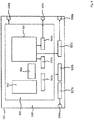
- Fig. 1 shows a schematic representation of a medical system 100 comprising an end user device 101 and a medical device 102.
- the medical device 102 is a blood glucose meter for continuous glucose monitoring.
- the medical device 102 may be an insulin pump or any other medical device that may be used with an end user device 101 to receive data from the medical device 102 in the end user device 101 or send data from the end user device 101 to the medical device 102.
- the end user device 101 may be a smart phone, personal computer, tablet computer, diabetes management device or any other end user device that may be communicatively coupled to a medical device 102 to transmit data to or receive data from the medical device 102.
- the end user device 101 comprises a processor 103 and a memory 104. In alternative embodiments more than one processor 103 and / or more than one memory 104 may be provided.
- a medical application as well as a validation application are stored in the memory 104 and may be retrieved from the memory 104 and executed by the processor 103.
- the end user device 101 further comprises a medical device communication interface 105 to receive data from and transmit data to the medical device 102.
- Medical device communication interface 105 may be configured to provide a connection to medical device 102 via a wire. Alternatively or additionally, medical device communication interface 105 may be configured to provide a wireless connection with medical device 102.
- a user interface 106 is provided in end user device 101.
- the user interface 106 may comprise a single interface device or a plurality of interface devices.
- the plurality of interface devices may comprise input devices, output devices and combined input/output devices.
- the user interface 106 may comprise a touchscreen, a display, a keyboard, a computer mouse, a display, a speaker, a microphone, and / or any other device via which an input may be received from a user or an output may be provided to a user.
- the end user device 101 may further be coupled, wirelessly or via a wire, to a server 107 or other external device by a further communication interface 108.
- Fig. 2 is a flow diagram that illustrates steps of a method for validating a medical application on an end user device 101 configured for data communication with a medical device 102 by the medical application.
- a user prompts the end user device 101 to download the medical application.
- prior information on the compatibility of the end user device 101 for the medical application is determined by determining device parameters, such as device model number, location and / or platform version, and receiving a white listing and a black listing from a server 107.
- the black listing and the white listing contain values for the parameters and / or combinations of values of the parameters indicating whether the end user device 101 is compatible, in the case of the white listing, or not compatible, in the case of the black listing, for the medical application.
- step 203 it is determined by the end user device 101, whether each device parameter is compatible, based on the white listing, not compatible, based on the black listing, or whether compatibility cannot be determined based on the black listing and the white listing.
- device parameters may be transmitted to the server 107 and determination regarding compatibility based on the white listing and the black listing may be performed in the server 107.
- step 204 If it is determined, based on the black listing, that the end user device 101 is not compatible for the medical application, the user is informed in step 204 by an output via a user interface 106 of the end user device 101 that the device is not supported for the medical application and the method terminates in step 205. If it is determined, based on the white listing, that the end user device 101 is compatible for the medical application, the medical application and a validation application are received by the end user device 101 in step 206. If compatibility cannot be determined based on the black listing and the white listing, the user is informed in step 207, by an output via the user interface 106 of the end user device 101, of a validation procedure and pre-requisites for the validation procedures using the validation app.
- the user decides in step 208 whether he would like to continue with the procedure and provides a corresponding input to the end user device 101 via user interface 106. If the user decides not to continue with the procedure, the method terminates in step 205. If the user decides to continue with the procedure, the medical application and the validation application are received by the end user device 101 in step 206.
- Fig. 3 is a flow diagram illustrating steps of another method for validating a medical application on an end user device 101 configured for data communication with a medical device 102 by the medical application.
- step 301 the validation application is executed and the validation is started. Additionally, the user may be prompted to confirm starting the validation. If the user confirms, the validation may then be started. If the user does not confirm starting the validation, the execution of the validation application may be terminated.
- the end user device is taken to an isolation mode in step 302.
- the isolation mode any external influence on the user device, such as data transmissions to or from the device 101 via third-party applications, is blocked.
- step 302 may be omitted and the end user device 101 may not be taken to isolation mode.
- the software environment and the hardware environment provided to the end user device 101 are determined. For example it may be determined which hardware devices, such as a user interface or processor, and software applications are provided in the end user device.
- a validation process for testing the software and hardware environment to be compatible with the execution requirements for executing the medical application is set up.
- the validation process may consist of several validation routines and may further be defined by the order of the validation routines in the validation process.
- the validation process may be selected from a plurality of pre-defined validation processes.
- Setting up the validation process may also, alternatively or in addition, include selecting one or more validation process modules, which may consist of one or more validation routines, from a plurality of pre-defined validation process modules and assembling a validation process, which may also be referred to as creating a validation map, from the routines.
- step 305 The end user device 101 is then baselined in step 305.
- Baselining comprises summarizing properties of the end user device 101, such as lists of configurations, binaries and their checksums.
- the results of baselining are stored in a Validation Baseline.
- step 305 may be omitted. In this case, no Validation Baseline is created.
- step 306 the software and hardware environment are tested according to the validation process. For example, it may be determined, whether certain minimal requirement, such as a speed of a data connection or a processing power, are fulfilled. Based on the results of the testing, a device validation protocol or report is created. Following, in step 307, it is determined based on the results of testing whether the software and hardware environment of the end user device 101 are compatible with the execution requirements.
- certain minimal requirement such as a speed of a data connection or a processing power
- a black listing containing values for parameters and / or combinations of values for parameters indicating that the end user device 101 is not compatible for the medical application, may be updated and stored on a server repository based on the results of the testing.
- step 309 the system is baselined again and the result is compared to the Validation Baseline created in step 305 to determine whether the baseline has changed. If the baseline has changed, the validation process returns to step 301 and validation starts over. As explained above with regard to step 301, the user may be prompted to confirm starting the validation process (again). If the user does not confirm starting the validation process, the validation application may be terminated. If it is determined that the baseline has not changed in step 309, step 310 is performed. In embodiments in which step 305 is omitted and no Validation Baseline is created, step 309 is omitted. In this case, if it is determined that the software and hardware environment of the end user device 101 are compatible with the execution requirements in step 307, step 310 is performed.
- Step 310 comprises creating a Device State Signature.
- the Device State Signature may be a secured, for example encrypted, key that represents the checksum of the device validation report and, if applicable, the Validation Baseline.
- the Device State Signature represents the state of the end user device 101 at the time of determining that the software and hardware environment are compatible with the execution requirements.
- the Device State Signature is stored on the end user device 101 and / or a server repository. Additionally, a white listing containing values for parameters and / or combinations of values for parameters indicating that the end user device 101 is compatible for the medical application, may be updated and stored on a server repository based on the results of the testing.
- the medical application is then downloaded and installed in the end user device 101. Additionally, the validation application may be amended in step 310. For example, software routines for monitoring the end user device 101 and / or the medical application and / or for triggering re-execution of the validation process may be downloaded and installed.
- step 311 the medical application is then executed in a demonstration or validation mode.
- the software and hardware environment are tested to be compatible with execution requirements while the medical application is executed in demonstration or validation mode.
- the execution requirements may be any or all requirements with regard to which testing was performed in step 306. For example, if in step 306, a processing power was determined to meet minimum requirements for the medical application, it may be tested in step 311, whether processing power is sufficient while running the medical application. Alternatively or additionally, testing may be performed in step 311 with regard to one or more execution requirements with regard to which testing was not performed in step 306. For example, a speed for performing certain software routines specific to the medical application may be determined and compared to a minimum speed requirement. Based on the results of the testing, an application validation protocol or report is created. Following, in step 312, it is determined based on the results of testing, whether the software and hardware environment of the end user device 101 are compatible with the execution requirements while the medical application is executed in demonstration or validation mode.
- the medical application is marked as unusable and / or is uninstalled from the end user device 101 in step 313. Following, the method proceeds to step 308 in which execution of the validation application is terminated and receiving and executing the medical application is blocked. Additionally, a black listing, containing values for parameters and / or combinations of values for parameters indicating that the end user device 101 is not compatible for the medical application, may be updated and stored on a server repository based on the results of the testing.
- step 312 it is determined that the software and hardware environment of the end user device 101 are compatible with the execution requirements, then, in step 314, the system is once again baselined and the result is compared to the Validation Baseline created in step 305 to determine whether the baseline has changed. If the baseline has changed, the validation process returns to step 301 and validation starts over. As explained above with regard to step 301, the user may be prompted to confirm starting the validation process (again). If the user does not confirm starting the validation process, the validation application may be terminated. If it is determined that the baseline has not changed in step 314, step 315 is performed. In embodiments in which step 305 is omitted and no Validation Baseline is created, step 314 is omitted. In this case, if it is determined that the software and hardware environment of the end user device 101 are compatible with the execution requirements in step 312, step 315 is performed.
- an Application State Signature is created.
- the Application State Signature may be a secured, for example encrypted, key that represents the checksum of the application validation report and the Device State Signature.
- the Device State Signature may be included in the Application State Signature entirely, in part, or in a summary such as a checksum. Alternatively, the Device State Signature may not be included in the Application State Signature.
- the Application State Signature represents the state of the end user device 101 at the time of determining that the software and hardware environment are compatible with the execution requirements while the medical application is executed in demonstration or validation mode.
- the Application State Signature is stored on the end user device 101 and / or a server repository.
- the Device State Signature is not stored on a server repository in step 310 and the Device State Signature and the Application State Signature are stored on a server repository, separately or in consolidated form, in step 315. Additionally, a white listing containing values for parameters and / or combinations of values for parameters indicating that the end user device 101 is compatible for the medical application, may be updated and stored on a server repository based on the results of the testing.
- the flow diagram in Fig. 4 illustrates steps of a further method for validating a medical application.
- a present hardware and software environment provided to the end user device 101 are determined every time the medical application is executed.
- the medical application is started in step 401.
- the present hardware and software environment provided to the user device 101 are determined.
- the end user device 101 is baselined.
- a Device State Signature and / or an Application State Signature are retrieved from the memory 104 of the end user device 101 and / or from a server repository.
- the baseline determined in step 402 is compared in step 404 to the Device State Signature and / or the Application State Signature retrieved in step 403.
- the medical application is executed in step 405.
- step 404 If, in step 404, it is determined that the present hardware and software environment is different from the hardware and software environment determined in a previous validation, the medical application is blocked from execution in step 406. The end user device 101 may then return to a normal mode of operation.
- Blocking the medical application from execution may comprise suppressing execution of any code of the medical application.
- the medical application may not be started in the end user device 101.
- blocking the medical application from execution may comprise suppressing execution of only parts of the code of the medical application. For example, when execution of the medical application is blocked, a graphical user interface of the medical application may load, but all data transmission from and to the medical device 102 and other external devices 107 may be blocked by suppressing all execution of the respective elements of the code of the medical application.
- the user may be notified of the blocking. For example, a message may be displayed on a display of the end user device 101 informing the user that the medical application has been blocked from execution.
- the notification may also comprise the reasons for blocking the medical application from execution and / or the extent of the blocking, such as which functionalities of the medical application have been blocked when the medical application itself is not blocked from loading altogether.
- the present validation may comprise all steps of the previous validation.
- the previous validation may, for example, comprise all steps described with regard to the embodiment of the method of Fig. 3 .
- steps may be added to and / or deleted in comparison to the previous validation or the present validation may be separate and different from the previous validation.
- the user may not be prompted to start the present validation in step 406.
- the present validation may be performed automatically.
- Fig. 5 is a schematic illustration of a step of setting up a validation process for the method for validating a medical application on the end user device 101.
- the end user device 101 comprises a platform 500 which may also be referred to as a software domain.
- the platform 500 may be essentially comprised of an operating system.
- Software components include the medical application 501, the validation application 502 as well as several software components 503a, ... , 503c that may form part of the platform 500 itself or may be provided as third-party applications. Additionally, data, such as validation routines 504, may be stored in association with the platform 500 or software components provided thereon.
- the end user device 101 further comprises a hardware domain 505.
- the hardware domain comprises hardware components such as different interface devices 506a, ...
- the interface device 506a may be an optical disk drive and the interface device 506b may be a wireless data communication interface such as a Bluetooth module.
- Other software components 507a, ... , 507c may be associated with the hardware domain 500 and not with the platform 500.
- software components 507a, ... , 507c may be firmware components.
- the validation process may be set up based on which components the medical application 501 will interact with.
- the medical application 501 interacts with software components 503b, 503c and 507c and with hardware components 506b and 506c.
- the medical application 501 interacts with hardware component 506b via software component 507c in the hardware domain.
- Medical application 501 interacts with hardware component 506c via software component 503c and the platform 500.
- the validation process may be set up accordingly.
- the validation process modules associated with software components 503b, 503c and 507c and with hardware components 506b and 506c may be chosen to assemble the validation process, but validation process modules associated with software components 503a, 507a, 507b and 507d and with hardware components 506a and 506d may not exist or may exist but may not be included in the validation process.
Landscapes
- Engineering & Computer Science (AREA)
- Theoretical Computer Science (AREA)
- General Engineering & Computer Science (AREA)
- Software Systems (AREA)
- Computer Security & Cryptography (AREA)
- Health & Medical Sciences (AREA)
- Physics & Mathematics (AREA)
- General Physics & Mathematics (AREA)
- Computer Hardware Design (AREA)
- Biomedical Technology (AREA)
- General Business, Economics & Management (AREA)
- Business, Economics & Management (AREA)
- Epidemiology (AREA)
- General Health & Medical Sciences (AREA)
- Medical Informatics (AREA)
- Primary Health Care (AREA)
- Public Health (AREA)
- Quality & Reliability (AREA)
- Signal Processing (AREA)
- Computer Networks & Wireless Communication (AREA)
- Computing Systems (AREA)
- Stored Programmes (AREA)
Abstract
Description
- The present disclosure refers to a method for validating a medical application on an end user device configured for data communication with a medical device by the medical application, an end user device and a medical system.
- Users of a medical device may employ end user devices on which a medical application is running for communicating with medical device. The medical application can be used to manage data communication between the medical device of the end user device, such as transmitting measurement data acquired by the medical device to the end user device or sending commands generated from user input from the end user device to the medical device. For example, a smartphone of a diabetes patient may be configured to run a medical application that collects glucose values from a glucose meter and is also used to configure the glucose meter. As data communication with medical devices is concerned, safety and security of medical application is an important issue.
- Document
US 2017/0147313 A1 discloses systems and methods for application software system installation in a user device, wherein the desired App includes App configuration data to be entered by the intended user through a user interface. An App configuration data validation processor verifies that the user has correctly entered the desired App configuration data. When the user requests an install of the desired App to a particular device, the system digitally signs the App with the validated embedded data in an App configuration file, which digital signature must be validated by the intended device before installation of the App is accepted on the device. After both validation of the configuration data and the digital signature, the user is then permitted to execute the App on the intended device. - In document
US 9,185,554 B2 - Document
US 6,775,536 B1 describes a method in which a wireless domain sets a security policy for all mobile communication devices within the domain by use of a system entry proxy server. A developer makes an application or code segment available at a developer station. The application is certified by a certificate defining a developer security setting. The user of the mobile communication device initiates a download of the application so that it can be installed onto the mobile communication device. The application is downloaded through the system entry proxy server which authenticates the application, then re-certifies it with a compact certificate including an operator defined security policy. In this way the operator can control which resources of the mobile communication device are accessed by all applications coming into the wireless domain. - It is an object of the present disclosure to provide a method for validating a medical application on an end user device configured for data communication with a medical device by the medical application that provides enhanced safety and functionality. Further, an end user device for data communication with a medical device by a medical application and a medical system shall be provided.
- For solving the problem, a method for validating a medical application according to the independent claim 1 is proposed. Further, an end user device for data communication with a medical device by a medical application according to the independent claim 12 and a medical system according to claim 13 comprising the medical device are provided. Alternative embodiments are the subject of dependent claims.
- According to an aspect, a method for validating a medical application on an end user device configured for data communication with a medical device by the medical application is provided. The method comprises: receiving a medical application in an end user device, the medical application being a software-implemented application and configured to provide for data communication between the end user device and a medical device; receiving a validation application in the end user device, the validation application being a software-implemented application; and at least in case of a first execution of the medical application in the end user device, executing the validation application. Executing the validation application comprises: determining a software environment provided to the user device; determining a hardware environment provided to the user device; in response to the software and hardware environment determined, setting up a validation process for testing the software and hardware environment to be compatible with execution requirements for executing the medical application in the end user device; and testing the software and hardware environment according to the validation process. The method for validating a medical application further comprises executing the medical application in the end user device, if the software and hardware environment are tested compatible with the execution requirements by the validation application, and blocking the medical application from execution in the end user device, if the software and hardware environment are tested not compatible with the execution requirements by the validation application.
- According to another aspect, an end user device for data communication with a medical device by a medical application is provided. The end user device is having one or more processors; a medical application, the medical application being a software-implemented application and configured to provide for data communication between the end user device and a medical device; and a validation application. The validation application is a software-implemented application and is configured, at least in case of a first execution of the medical application in the end user device, to: determine a software environment provided to the user device; determine a hardware environment provided to the user device; in response to the software and hardware environment determined, set up a validation process for testing the software and hardware environment to be compatible with execution requirements for executing the medical application in the end user device; and test the software and hardware environment according to the validation process. The medical application is further configured to be executed by the one or more processors, if the software and hardware environment are tested compatible with the execution requirements by the validation application, and to be blocked from execution by the one or more processors, if the software and hardware environment are tested not compatible with the execution requirements by the validation application.
- According to a further aspect, a medical system is provided. The medical system comprises a medical device and the end user device.
- According to the technologies proposed, a hardware and software environment provided to an end user device are tested to be compatible with execution requirements for executing a medical application using a validation application. The validation application allows executing the medical application or blocks the medical application from execution in response to the testing. The validation application may be understood or referred to as enveloping the medical application and screening it from the outside, i.e. interaction with software and hardware components external to the medical application itself. The validation application may therefore also be referred to as an Envelope App. If the software and hardware environment are tested compatible with the execution requirements by the Envelope App, the envelope is opened, i.e. execution the medical application is allowed.
- The receiving the medical application may be performed prior to or after the receiving the validation application. Alternatively, the receiving the medical application and the receiving the validation application may be performed, at least partly, at the same time. The receiving the medical application may be performed prior to or after the executing the validation application. Alternatively, the receiving the medical application may be performed while executing the validation application. For example, part of the testing the software and hardware environment, which may also respectively be referred to as a software and a hardware configuration, may be performed before the receiving the medical application and another part of the testing the software and hardware environment may be performed after the receiving the medical application.
- The end user device may be a smart phone, personal computer, tablet computer, diabetes management device or any other end user device that may be communicatively coupled to a medical device to transmit data to or receive data from the medical device.
- The medical application and the validation application are received in the end user device. The executing of the validation application may therefore be referred to as an in field validation. As the validation application is executed at least in case of a first execution of the medical application, the executing the validation application may be referred to as an on demand validation.
- The executing of the medical application may further comprise generating a validation report in the end user device, the validation report indicating the medical application to be validated, and transmitting the validation report to a server device. The validation report may comprise information on the hardware and / or software environment provided to the user device and / or information on test results determined testing the software and / or hardware environment.
- The method may further comprise storing the validation report in a non-editable data format in at least one of the end user device and the server. For example, the validation report may include a security signature and may only be accessed using a secure code. The validation report may be encrypted using a security signature and a secure code may be needed to decrypt the validation report. The validation report may serve as proof that a validation process has taken place, for example in front of official bodies. For example, the validation report may be encrypted by the validation application using a public key supplied by an official body, such as a government agency concerned with the safety of medical devices, and then transmitted to the official body. The official body may then decrypt the validation report using a private key that is not known outside the official body and analyze the validation report to ensure that official requirements regarding validation were fulfilled.
- The blocking of the medical application from execution may comprise generating a non-validation notification in the end user device, the non-validation notification indicating the medical application not to be validated, and outputting the non-validation notification through an output device of the end user device. The non-validation notification may comprise audio and / or video data. For example, the non-validation notification may comprise an alarm tone played through a speaker of the user device and a text message indicating non-validation displayed on a display of the user device.
- Alternatively or in addition, the blocking of the medical application from execution may comprise generating a validation report in the end user device, the validation report indicating the medical application to not be validated, and transmitting the validation report to a server device. The validation report may comprise information on the hardware and / or software environment provided to the user device and / or information on test results determined testing the software and / or hardware environment. The validation report may be stored in a non-editable data format in at least one of the end user device and the server. Features described above with regard to the validation report indicating the medical application to be validated may apply to the validation report indicating the medical application to not be validated, accordingly.
- The setting up of the validation process may comprise selecting the validation process from a plurality of pre-defined validation processes, each of the pre-defined validation processes assigned to at least one software environment and / or at least one hardware environment. Pre-defined validation processes from which the validation process may be selected may be provided in the end user device and / or a server.
- The pre-defined validation processes may be different from each other with regard to the software environment and / or the hardware environment that they are assigned to. For example, different pre-defined validation processes may be assigned to a certain model of end user device, a certain version of an operating system and a certain version of an operating system running on a certain model of end user device, respectively, each of the pre-defined validation processes being adapted to the respective model of end user device, version of an operating system or combination thereof.
- As an alternative or in addition to selecting the validation process from a plurality of pre-defined validation processes, the setting up of the validation process may comprise assembling the validation process from one or more pre-defined validation process modules. Each of the pre-defined validation process modules may be assigned to at least one software environment and / or at least one hardware environment. For example, different pre-defined validation process modules may each be assigned to a certain type of user interface (such as a touchscreen, a speaker or a display) provided to a user device. If it is determined that the hardware environment provided to the user device includes such a type of user interface, the corresponding pre-defined validation process module may be included in the assembly of the validation process or may be added to a pre-defined validation process.
- A pre-selection of pre-defined validation processes and / or pre-defined validation process modules may be made at the time of receiving the validation application and / or the medical application. The pre-selection of pre-defined validation processes and / or pre-defined validation process modules may be received from a server together with the validation application and / or the medical application and stored in the end use device. In such an embodiment, the validation process may be selected and / or assembled from the pre-selection of pre-defined validation processes and / or pre-defined validation process modules stored on the end user device. For example the pre-selection may be made based on information transmitted by the end user device when receiving the validation application and / or the medical application.
- The blocking of the medical application from execution may comprise executing the medical application with reduced functionality in the end user device. Executing the medical application with reduced functionality may comprise blocking at least one functionality provided by the medical application from execution in the end user device, and executing at least one other functionality provided by the medical application in the end user device. A determination whether a functionality shall be executed or shall be blocked may be made based on the software environment and / or the hardware environment determined by the validation application. Functionalities that may be executed and / or blocked may include functionalities related to data communication between the end user device and the medical device, such as receiving measurement data from the medical device in the end user device and submitting control data from the end user device to the medical device.
- In an exemplary embodiment, executing the medical application with reduced functionality in the end user device comprises allowing the end user device to receive measurement data from the medical device and blocking the end user device from transmitting control data to the medical device. In a different embodiment, all data communication between the end user device and the medical device may be blocked. In such an embodiment, only functionality regarding an interaction between the user and the end user device may be allowed. Dummy data may be provided to simulate data transmission functionality.
- The method may comprise re-executing the validation application. The re-executing the validation application may comprise determining at least one of a present software environment and a present hardware environment provided to the user device and, if one of the present software environment and the present hardware environment is determined to be different from the software environment and the hardware environment, respectively, setting up a present validation process for testing the present software and / or the present hardware environment to be compatible with execution requirements for executing the medical application in the end user device, and testing the present software and / or the present hardware environment according to the validation process.
- Following, the medical application may be executed in the end user device, if the software and hardware environment are tested compatible with the execution requirements by the validation application, and the medical application may be blocked from execution in the end user device, if the software and hardware environment are tested not compatible with the execution requirements by the validation application
- The re-executing of the validation application may comprise terminating re-execution of the validation application, if none of the present software environment and the present hardware environment is determined to be different from the software environment and the hardware environment, respectively.
- The re-executing of the validation application may comprise, if one of the present software environment and the present hardware environment is determined to be different from the software environment and the hardware environment, blocking the medical application from execution and terminating re-execution of the validation application. An output signal may be generated informing the user of the blocking of the medical application from execution. In such an embodiment, the medical application may be blocked from execution until a full re-execution of the validation app is triggered comprising setting up a present validation process for testing the present software and / or the present hardware environment to be compatible with execution requirements for executing the medical application in the end user device and testing the present software and / or the present hardware environment according to the validation process, resulting in blocking or allowing execution of the medical application. For example, full re-execution of the validation app may be triggered in response to a user input.
- Determining a present software environment and / or a present hardware environment may become necessary in certain embodiments because changes in the software environment and / or the hardware environment may influence compatibility with execution requirements for executing the medical application.
- The validation application may be re-executed in set intervals. For example, such intervals may be time intervals, such as a time passed since the validation application has last been executed, or a different type of interval, such as a number of times the medical application has been executed since the validation has last been executed. The validation application may be re-executed every time the medical application is executed.
- Alternatively or additionally, the validation application may be re-executed in response to an event. One example of such an event is a user input prompting the re-execution of the validation application. Another example of an event is receiving, in the end user device, data prompting re-execution of the validation application. Such data may be received, for example, from a server or the medical device. Data prompting re-execution of the validation application may also be received from another validation application associated with another medical application running on the same user device upon execution of the other validation application. Yet another example of an event that may trigger re-execution of the validation application is a probable change in the hardware environment and / or the software environment. For example, a change in data received from a user input device by the medical application may indicate that there may have been a change in hardware with regard to the input device. In response to the determination of such change in data received by the medical application, re-execution of the validation application may be triggered.
- The method may comprise providing a white listing of at least one of software components and hardware components allowed for being provided in the software environment and the hardware environment, respectively, provided to the end user device, and determining whether at least one of a hardware component and a software component determined to be provided in the software environment and the hardware environment, respectively, is in the white listing.
- If it is determined that a hardware component, a software component, or a combination of hardware components and / or software components is in the white listing, testing the software environment and / or the hardware environment may be foregone insofar as the component or combination of components determined to be in the white listing is regarded. Alternatively or additionally, if it is determined that a certain hardware component, a certain software component, or a certain combination of hardware components and / or software components is in the white listing, testing the software environment and / or the hardware environment may be foregone entirely and the medical application may be executed.
- The white listing may be provided prior to executing the validation application. Alternatively, the white listing may be provided during the execution of the validation application. The white listing may be dynamically updated. For example, the white listing may be updated via a server. The white listing may be updated by adding new components when the components are determined to be compatible with execution requirements for executing the medical application and / or by deleting components when the components are determined to no longer be compatible with execution requirements for executing the medical application. New components that may be added to the white listing may comprise components that are newly introduced or components that have changed, for example software components that have been updated. Components may be deleted when they are determined to no longer be compatible with execution requirements for executing the medical application after the component has changed, for example when a software component has been updated. Alternatively or additionally, components may be added to or deleted from the white listing when it is determined that they are compatible or that they are no longer compatible with execution requirements for executing the medical application after the medical application has changed, for example after the medical application has been updated.
- Dynamically updating the white listing may include adding or deleting a component to the white listing in response to a validation application, executed in an end user device, determining the component to be compatible or not compatible, respectively, with execution requirements for executing a medical application and providing the updated white listing for use in other validation applications, executed on other end user devices, for example via a server.
- The method may comprise providing a black listing of at least one of software components and hardware components not allowed for being provided in the software environment and the hardware environment, respectively, provided to the end user device, and determining whether at least one of a hardware component and a software component determined to be provided in the software environment and the hardware environment, respectively, is in the black listing.
- If it is determined that a hardware component, a software component, or a combination of hardware components and / or software components is in the black listing, testing the software environment and / or the hardware environment may be foregone and the medical application may be blocked from execution in the end user device. Alternatively, if it is determined that a hardware component, a software component, or a combination of hardware components and / or software components is in the black listing, testing the software environment and / or the hardware environment may be performed but, if the software and hardware environment are otherwise tested compatible with the execution requirements by the validation application, only limited execution of the medical application in the end user device may be allowed. For example, functionality with regard to the hardware components, the software component, or the combination of hardware components and / or software components determined to be in the black listing may be excluded from execution.
- The black listing may be provided prior to executing the validation application. Alternatively, the black listing may be provided during the execution of the validation application. The black listing may be dynamically updated. For example, the black listing may be updated via a server. The black listing may be updated by adding new components when the components are determined to not be compatible with execution requirements for executing the medical application and / or by deleting components when the components are determined to no longer be incompatible with execution requirements for executing the medical application. New components that may be added to the black listing may comprise components that are newly introduced or components that have changed, for example software components that have been updated. Components may be deleted when they are determined to now be compatible with execution requirements for executing the medical application after the component has changed, for example when a software component has been updated. Alternatively or additionally, components may be added to or deleted from the black listing when it is determined that they are no longer compatible or that they are now compatible with execution requirements for executing the medical application after the medical application has changed, for example after the medical application has been updated.
- Dynamically updating the black listing may include adding or deleting a component to the black listing in response to a validation application, executed in an end user device, determining the component to be not compatible or compatible, respectively, with execution requirements for executing a medical application and providing the updated black listing for use in other validation applications, executed on other end user devices, for example via a server.
- In an embodiment, the providing a black listing and / or the providing a white listing and the determining whether at least one of a hardware component and a software component determined to be provided in the software environment and the hardware environment, respectively, is in the black listing and / or the white listing may be performed prior to and separate from the executing the validation application. Based on the determining whether at least one of a hardware component and a software component is in the black listing and / or the white listing, a feedback may be provided to the user prior to the actual validation process. In such an embodiment the white listing and / or the black listing may or may not be used in the validation process as described above.
- The executing of the validation application may comprise executing a user interaction routine configured to test a user interface provided in the end user device. In an exemplary embodiment, a request for a user input may be outputted to the user via a user interface. A user input may then be received and it may be determined whether the user input was correctly received. For example, a user may be prompted, via a message displayed on a touchscreen of the end user device, to make a certain input, such as a pattern drawn by the user with his finger, via the touchscreen. The input may then be compared to a reference and it may be determined whether the input was correctly received based on a deviation of the input from the reference. Thus, correct calibration of the touchscreen may be determined. In another example of a user interaction routine, the user may be prompted, via a speaker of the end user device, to make a certain input, such as repeating a sentence, to a microphone of the end user device. Based on comparing the input received to a reference, correct functioning of the microphone and the speaker may be determined. Other examples of user interaction routines may be implemented using any user interface or combination of user interfaces provided in the end user device.
- The executing of the validation application may comprise executing the medical application in demonstration mode. Demonstration mode may comprise limiting functionality of the medical application. Executing the medical application in demonstration mode may comprise blocking at least one functionality provided by the medical application from execution and executing at least one other functionality provided by the medical application. Functionalities that may be executed and / or blocked may include functionalities related to data communication between the end user device and the medical device, such as receiving measurement data from the medical device in the end user device and submitting control data from the end user device to the medical device. For example, demonstration mode may comprise allowing the end user device to receive measurement data from the medical device and blocking the end user device from transmitting control data to the medical device. Alternatively, all data communication between the end user device and the medical device may be blocked. In demonstration mode, only functionality regarding an interaction between the user and the end user device may be allowed. Dummy data may be provided to simulate data transmission functionality. The medical application may be executed in demonstration mode to test a user interface under realistic conditions. Alternatively or additionally, the medical application may be executed in demonstration mode for testing the software and hardware environment according to the validation process under realistic conditions. For example, the processing speed of a hardware component, such as a processor, may be determined under realistic conditions in demonstration mode.
- According to the technologies proposed, a hardware and software environment provided to an end user device are tested to be compatible with execution requirements for executing a medical application. Compatibility with execution requirements may refer to any, all, or a combination of several parameters. For example, it may be tested that none of the software and / or hardware components that form part of the hardware and / or software environment are excluded from use with the medical application. Components may be excluded because they are on a list of excluded components and / or because they fail certain tests. Such tests may include determining the speed of execution of software components, processing power of hardware components such as processors or graphics adapters, data throughput of transceiver devices or bus systems and / or security parameters of hardware and / or software.
- Security parameters that may be tested may encompass, for example, level of hardware or software based data encryption for data storage and / or transmission and / or access to hardware, software and / or stored data by a third party application installed on the user device. It may be determined that the software environment includes third-party apps that are known to be vulnerable to hacking or that are known to disclose sensitive data to third parties and therefore, the software environment may not be compatible with execution requirements.
- Testing of compatibility with execution requirements may, alternatively or additionally, be based on whether the combination of software and / or hardware components that was determined is allowed. For example, a certain processor may be allowed, but a combination of this processor with a certain software module, that is known to demand a substantive amount of the processor's processing power, may not be allowed. In further examples, the combination of a certain third-party application with a certain operating system or the combination of a certain processor with a certain graphics adapter may not be allowed.
- Determining the hardware and software environment may comprise determining one or any combination of a make and model of the end user device, a processor architecture, storage devices provided in the end user device, storage devices provided outside and associated with the end user device, communication interfaces (such as Bluetooth and / or USB), user interfaces (such as buttons, display, touchscreen and / or speaker, including parameters associated therewith, such as dimension and pixel density of a display), type and version of the operating system, additional software libraries provided in the end user device and other parameters suitable to test the software and hardware environment to be compatible with execution requirements for executing the medical application.
- In an exemplary embodiment, the end user device may be configured for data communication by the medical application with a medical device that is configured to provide continuous monitoring data indicative of an analyte in a bodily fluid of the user. Data communication may comprise transmitting monitoring or measurement data and / or transmitting control data, such as data for configuring the medical device (for example defining a measurement interval for acquiring continuous monitoring data).
- Continuous monitoring data may be provided by a sensor that is a fully or partially implanted sensor for continuous glucose monitoring (CGM). In general, in the context of CGM, an analyte value or level indicative of a glucose value or level in the blood may be determined. The analyte value may be measured in an interstitial fluid. The measurement may be performed subcutaneously or in vivo. CGM may be implemented as a nearly real-time or quasi-continuous monitoring procedure frequently or automatically providing / updating analyte values without user interaction. In an alternative embodiment, analyte may be measured with a biosensor in a contact lens through the eye fluid or with a biosensor on the skin via transdermal measurement in sudor. A CGM sensor may stay in place for several days to weeks and then must be replaced.
- The medical application may display information to the end user via a display device of the end user device. The displaying information may comprise displaying the information via a graphical user interface of the medical application. The graphical user interface of the medical application may comprise elements that are independent of the software environment and / or the hardware environment. For example, the medical application may display information via a graphical user interface with a size and / or aspect ratio that does not change across hardware and / or software environments, such as different operating systems or changing display settings. Alternatively or additionally, the medical application may be configured to display any or all other elements or combination of elements of a graphical user interface of the medical application, such as type font, font size, color scheme and the like, independently of the software environment and / or the hardware environment. The medical application may be configured to override display settings of the software environment and / or the hardware environment. For example, the medical application may be configured to override settings of a display theme set in the end user device, for example a mobile phone of the end user.
- Setting up the validation process may comprise setting up a reduced validation process in which the software and hardware environment are not tested to be compatible with one or more execution requirements for executing the medical application device. The one or more execution requirements for which compatibility is not tested may comprise one or more execution requirements for which testing is not necessary because information is displayed on the end user device via a graphical user interface comprising elements that are independent of the software environment and / or the hardware environment.
- With regard to the end user device and the system, the alternative embodiments described above may apply mutatis mutandis.
- Following, further embodiments are described with reference to figures. In the figures, show:
- Fig. 1
- a schematic representation of a medical system;
- Fig. 2
- a flow diagram for steps of a method for validating a medical application;
- Fig. 3
- a flow diagram for steps of another method for validating a medical application;
- Fig. 4
- a flow diagram for steps of a further method for validating a medical application; and
- Fig. 5
- a schematic illustration of a step of setting up a validation process for the method for validating a medical application.
-
Fig. 1 shows a schematic representation of amedical system 100 comprising anend user device 101 and amedical device 102. In the embodiment shown, themedical device 102 is a blood glucose meter for continuous glucose monitoring. In alternative embodiments, themedical device 102 may be an insulin pump or any other medical device that may be used with anend user device 101 to receive data from themedical device 102 in theend user device 101 or send data from theend user device 101 to themedical device 102. - The
end user device 101 may be a smart phone, personal computer, tablet computer, diabetes management device or any other end user device that may be communicatively coupled to amedical device 102 to transmit data to or receive data from themedical device 102. Theend user device 101 comprises aprocessor 103 and amemory 104. In alternative embodiments more than oneprocessor 103 and / or more than onememory 104 may be provided. A medical application as well as a validation application are stored in thememory 104 and may be retrieved from thememory 104 and executed by theprocessor 103. - The
end user device 101 further comprises a medicaldevice communication interface 105 to receive data from and transmit data to themedical device 102. Medicaldevice communication interface 105 may be configured to provide a connection tomedical device 102 via a wire. Alternatively or additionally, medicaldevice communication interface 105 may be configured to provide a wireless connection withmedical device 102. - Additionally, a
user interface 106 is provided inend user device 101. Theuser interface 106 may comprise a single interface device or a plurality of interface devices. The plurality of interface devices may comprise input devices, output devices and combined input/output devices. For example, theuser interface 106 may comprise a touchscreen, a display, a keyboard, a computer mouse, a display, a speaker, a microphone, and / or any other device via which an input may be received from a user or an output may be provided to a user. - The
end user device 101 may further be coupled, wirelessly or via a wire, to aserver 107 or other external device by afurther communication interface 108. -
Fig. 2 is a flow diagram that illustrates steps of a method for validating a medical application on anend user device 101 configured for data communication with amedical device 102 by the medical application. - In
step 201, a user prompts theend user device 101 to download the medical application. Instep 202, in response to the user prompt, prior information on the compatibility of theend user device 101 for the medical application is determined by determining device parameters, such as device model number, location and / or platform version, and receiving a white listing and a black listing from aserver 107. The black listing and the white listing contain values for the parameters and / or combinations of values of the parameters indicating whether theend user device 101 is compatible, in the case of the white listing, or not compatible, in the case of the black listing, for the medical application. Following, instep 203, it is determined by theend user device 101, whether each device parameter is compatible, based on the white listing, not compatible, based on the black listing, or whether compatibility cannot be determined based on the black listing and the white listing. Alternatively or additionally, device parameters may be transmitted to theserver 107 and determination regarding compatibility based on the white listing and the black listing may be performed in theserver 107. - If it is determined, based on the black listing, that the
end user device 101 is not compatible for the medical application, the user is informed instep 204 by an output via auser interface 106 of theend user device 101 that the device is not supported for the medical application and the method terminates instep 205. If it is determined, based on the white listing, that theend user device 101 is compatible for the medical application, the medical application and a validation application are received by theend user device 101 instep 206. If compatibility cannot be determined based on the black listing and the white listing, the user is informed instep 207, by an output via theuser interface 106 of theend user device 101, of a validation procedure and pre-requisites for the validation procedures using the validation app. Based on the information provided to the user, the user decides instep 208 whether he would like to continue with the procedure and provides a corresponding input to theend user device 101 viauser interface 106. If the user decides not to continue with the procedure, the method terminates instep 205. If the user decides to continue with the procedure, the medical application and the validation application are received by theend user device 101 instep 206. -
Fig. 3 is a flow diagram illustrating steps of another method for validating a medical application on anend user device 101 configured for data communication with amedical device 102 by the medical application. - In
step 301, the validation application is executed and the validation is started. Additionally, the user may be prompted to confirm starting the validation. If the user confirms, the validation may then be started. If the user does not confirm starting the validation, the execution of the validation application may be terminated. - The end user device is taken to an isolation mode in
step 302. In the isolation mode, any external influence on the user device, such as data transmissions to or from thedevice 101 via third-party applications, is blocked. Alternatively, step 302 may be omitted and theend user device 101 may not be taken to isolation mode. - Following, in
step 303, the software environment and the hardware environment provided to theend user device 101 are determined. For example it may be determined which hardware devices, such as a user interface or processor, and software applications are provided in the end user device. Instep 304, in response to the software and hardware environment determined, a validation process for testing the software and hardware environment to be compatible with the execution requirements for executing the medical application is set up. The validation process may consist of several validation routines and may further be defined by the order of the validation routines in the validation process. The validation process may be selected from a plurality of pre-defined validation processes. Setting up the validation process may also, alternatively or in addition, include selecting one or more validation process modules, which may consist of one or more validation routines, from a plurality of pre-defined validation process modules and assembling a validation process, which may also be referred to as creating a validation map, from the routines. - The
end user device 101 is then baselined instep 305. Baselining comprises summarizing properties of theend user device 101, such as lists of configurations, binaries and their checksums. The results of baselining are stored in a Validation Baseline. In an alternative embodiment, step 305 may be omitted. In this case, no Validation Baseline is created. - In
step 306, the software and hardware environment are tested according to the validation process. For example, it may be determined, whether certain minimal requirement, such as a speed of a data connection or a processing power, are fulfilled. Based on the results of the testing, a device validation protocol or report is created. Following, instep 307, it is determined based on the results of testing whether the software and hardware environment of theend user device 101 are compatible with the execution requirements. - If it is determined, that the software and hardware environment of the
end user device 101 are not compatible with the execution requirements, execution of the validation application is terminated instep 308 and receiving and executing the medical application is blocked. Additionally, a black listing, containing values for parameters and / or combinations of values for parameters indicating that theend user device 101 is not compatible for the medical application, may be updated and stored on a server repository based on the results of the testing. - If, in
step 307, it is determined that the software and hardware environment of theend user device 101 are compatible with the execution requirements, then, instep 309, the system is baselined again and the result is compared to the Validation Baseline created instep 305 to determine whether the baseline has changed. If the baseline has changed, the validation process returns to step 301 and validation starts over. As explained above with regard to step 301, the user may be prompted to confirm starting the validation process (again). If the user does not confirm starting the validation process, the validation application may be terminated. If it is determined that the baseline has not changed instep 309,step 310 is performed. In embodiments in which step 305 is omitted and no Validation Baseline is created,step 309 is omitted. In this case, if it is determined that the software and hardware environment of theend user device 101 are compatible with the execution requirements instep 307,step 310 is performed. - Step 310 comprises creating a Device State Signature. The Device State Signature may be a secured, for example encrypted, key that represents the checksum of the device validation report and, if applicable, the Validation Baseline. Hereby, the Device State Signature represents the state of the
end user device 101 at the time of determining that the software and hardware environment are compatible with the execution requirements. The Device State Signature is stored on theend user device 101 and / or a server repository. Additionally, a white listing containing values for parameters and / or combinations of values for parameters indicating that theend user device 101 is compatible for the medical application, may be updated and stored on a server repository based on the results of the testing. The medical application is then downloaded and installed in theend user device 101. Additionally, the validation application may be amended instep 310. For example, software routines for monitoring theend user device 101 and / or the medical application and / or for triggering re-execution of the validation process may be downloaded and installed. - In
step 311, the medical application is then executed in a demonstration or validation mode. The software and hardware environment are tested to be compatible with execution requirements while the medical application is executed in demonstration or validation mode. The execution requirements may be any or all requirements with regard to which testing was performed instep 306. For example, if instep 306, a processing power was determined to meet minimum requirements for the medical application, it may be tested instep 311, whether processing power is sufficient while running the medical application. Alternatively or additionally, testing may be performed instep 311 with regard to one or more execution requirements with regard to which testing was not performed instep 306. For example, a speed for performing certain software routines specific to the medical application may be determined and compared to a minimum speed requirement. Based on the results of the testing, an application validation protocol or report is created. Following, instep 312, it is determined based on the results of testing, whether the software and hardware environment of theend user device 101 are compatible with the execution requirements while the medical application is executed in demonstration or validation mode. - If it is determined that the software and hardware environment of the
end user device 101 are not compatible with the execution requirements, the medical application is marked as unusable and / or is uninstalled from theend user device 101 instep 313. Following, the method proceeds to step 308 in which execution of the validation application is terminated and receiving and executing the medical application is blocked. Additionally, a black listing, containing values for parameters and / or combinations of values for parameters indicating that theend user device 101 is not compatible for the medical application, may be updated and stored on a server repository based on the results of the testing. - If, in
step 312, it is determined that the software and hardware environment of theend user device 101 are compatible with the execution requirements, then, instep 314, the system is once again baselined and the result is compared to the Validation Baseline created instep 305 to determine whether the baseline has changed. If the baseline has changed, the validation process returns to step 301 and validation starts over. As explained above with regard to step 301, the user may be prompted to confirm starting the validation process (again). If the user does not confirm starting the validation process, the validation application may be terminated. If it is determined that the baseline has not changed instep 314,step 315 is performed. In embodiments in which step 305 is omitted and no Validation Baseline is created,step 314 is omitted. In this case, if it is determined that the software and hardware environment of theend user device 101 are compatible with the execution requirements instep 312,step 315 is performed. - In
step 315, an Application State Signature is created. The Application State Signature may be a secured, for example encrypted, key that represents the checksum of the application validation report and the Device State Signature. The Device State Signature may be included in the Application State Signature entirely, in part, or in a summary such as a checksum. Alternatively, the Device State Signature may not be included in the Application State Signature. Thereby, the Application State Signature represents the state of theend user device 101 at the time of determining that the software and hardware environment are compatible with the execution requirements while the medical application is executed in demonstration or validation mode. The Application State Signature is stored on theend user device 101 and / or a server repository. In an alternative embodiment, the Device State Signature is not stored on a server repository instep 310 and the Device State Signature and the Application State Signature are stored on a server repository, separately or in consolidated form, instep 315. Additionally, a white listing containing values for parameters and / or combinations of values for parameters indicating that theend user device 101 is compatible for the medical application, may be updated and stored on a server repository based on the results of the testing. - Execution of the medical application is then allowed in
step 316 and the validation process ends. - The flow diagram in
Fig. 4 illustrates steps of a further method for validating a medical application. In the embodiment shown, a present hardware and software environment provided to theend user device 101 are determined every time the medical application is executed. - The medical application is started in
step 401. Following, instep 402, the present hardware and software environment provided to theuser device 101 are determined. To determine the present hardware and software environment, theend user device 101 is baselined. Instep 403, a Device State Signature and / or an Application State Signature are retrieved from thememory 104 of theend user device 101 and / or from a server repository. To compare the present hardware and software environment to the hardware and software environment determined in a validation that was previously performed, the baseline determined instep 402 is compared instep 404 to the Device State Signature and / or the Application State Signature retrieved instep 403. - If it is determined that the present hardware and software environment is the same as the hardware and software environment determined in a previous validation, the medical application is executed in
step 405. - If, in
step 404, it is determined that the present hardware and software environment is different from the hardware and software environment determined in a previous validation, the medical application is blocked from execution instep 406. Theend user device 101 may then return to a normal mode of operation. - Blocking the medical application from execution may comprise suppressing execution of any code of the medical application. Hereby, the medical application may not be started in the
end user device 101. Alternatively, blocking the medical application from execution may comprise suppressing execution of only parts of the code of the medical application. For example, when execution of the medical application is blocked, a graphical user interface of the medical application may load, but all data transmission from and to themedical device 102 and otherexternal devices 107 may be blocked by suppressing all execution of the respective elements of the code of the medical application. - Whenever the medical application is blocked from execution, the user may be notified of the blocking. For example, a message may be displayed on a display of the
end user device 101 informing the user that the medical application has been blocked from execution. The notification may also comprise the reasons for blocking the medical application from execution and / or the extent of the blocking, such as which functionalities of the medical application have been blocked when the medical application itself is not blocked from loading altogether. - Alternatively, the user may be prompted to start a present validation comprising a present validation process. The present validation may comprise all steps of the previous validation. The previous validation may, for example, comprise all steps described with regard to the embodiment of the method of
Fig. 3 . Alternatively, steps may be added to and / or deleted in comparison to the previous validation or the present validation may be separate and different from the previous validation. - In a further alternative, the user may not be prompted to start the present validation in
step 406. The present validation may be performed automatically. -
Fig. 5 is a schematic illustration of a step of setting up a validation process for the method for validating a medical application on theend user device 101. Theend user device 101 comprises aplatform 500 which may also be referred to as a software domain. Theplatform 500 may be essentially comprised of an operating system. Several software components run on theplatform 500. Software components include themedical application 501, thevalidation application 502 as well asseveral software components 503a, ... , 503c that may form part of theplatform 500 itself or may be provided as third-party applications. Additionally, data, such asvalidation routines 504, may be stored in association with theplatform 500 or software components provided thereon. Theend user device 101 further comprises ahardware domain 505. The hardware domain comprises hardware components such asdifferent interface devices 506a, ... 506d. For example, theinterface device 506a may be an optical disk drive and theinterface device 506b may be a wireless data communication interface such as a Bluetooth module.Other software components 507a, ... , 507c may be associated with thehardware domain 500 and not with theplatform 500. For example,software components 507a, ... , 507c may be firmware components. - For setting up a validation process, hardware interface devices and software interface devices provided in the
end user device 101 are analyzed. The validation process may be set up based on which components themedical application 501 will interact with. In the embodiment shown inFig. 5 , themedical application 501 interacts withsoftware components hardware components medical application 501 interacts withhardware component 506b viasoftware component 507c in the hardware domain.Medical application 501 interacts withhardware component 506c viasoftware component 503c and theplatform 500. - When the components the medical application interacts with have been determined, the validation process may be set up accordingly. For example, in an embodiment of the method in which the validation process is assembled from pre-defined validation process modules, for the embodiment of the
end user device 101 shown inFig. 5 , validation process modules associated withsoftware components hardware components software components hardware components
Claims (13)
- A method for validating a medical application on an end user device (101) configured for data communication with a medical device (102) by the medical application, comprising- receiving a medical application in an end user device (101), the medical application being a software-implemented application and configured to provide for data communication between the end user device (101) and a medical device (102);- receiving a validation application in the end user device (101), the validation application being a software-implemented application;- at least in case of a first execution of the medical application in the end user device (101), executing the validation application, comprising- determining a software environment provided to the user device (101);- determining a hardware environment provided to the user device (101);- in response to the software and hardware environment determined, setting up a validation process for testing the software and hardware environment to be compatible with execution requirements for executing the medical application in the end user device (101); and- testing the software and hardware environment according to the validation process;- executing the medical application in the end user device (101), if the software and hardware environment are tested compatible with the execution requirements by the validation application; and- blocking the medical application from execution in the end user device (101), if the software and hardware environment are tested not compatible with the execution requirements by the validation application.
- The method according to claim 1, wherein the executing of the medical application further comprises generating a validation report in the end user device (101), the validation report indicating the medical application to be validated, and transmitting the validation report to a server device (107).
- The method according to claim 2, further comprising storing the validation report in a non-editable data format in at least one of the end user device (101) and the server (107).
- The method according to at least one of the preceding claims, wherein the blocking of the medical application from execution further comprises generating a non-validation notification in the end user device (101), the non-validation notification indicating the medical application not to be validated, and outputting the non-validation notification through an output device of the end user device (101).
- The method according to at least one of the preceding claims, wherein the setting up of the validation process further comprises selecting the validation process from a plurality of pre-defined validation processes, each of the pre-defined validation processes assigned to at least one software environment and / or at least one hardware environment.
- The method according to at least one of the preceding claims, wherein the blocking of the medical application from execution further comprises executing the medical application with reduced functionality in the end user device (101), comprising- blocking at least one functionality provided by the medical application from execution in the end user device (101); and- executing at least one other functionality provided by the medical application in the end user device (101).
- The method according to at least one of the preceding claims, further comprising re-executing the validation application, comprising- determining at least one of a present software environment and a present hardware environment provided to the user device (101); and- if one of the present software environment and the present hardware environment is determined to be different from the software environment and the hardware environment, respectively, setting up a present validation process for testing the present software and / or the present hardware environment to be compatible with execution requirements for executing the medical application in the end user device (101), and testing the present software and / or the present hardware environment according to the validation process.
- The method according to at least one of the preceding claims, further comprising- providing a white listing of at least one of software components and hardware components allowed for being provided in the software environment and the hardware environment, respectively, provided to the end user device (101); and- determining whether at least one of a hardware component and a software component determined to be provided in the software environment and the hardware environment, respectively, is in the white listing.
- The method according to at least one of the preceding claims, further comprising- providing a black listing of at least one of software components and hardware components not allowed for being provided in the software environment and the hardware environment, respectively, provided to the end user device (101); and- determining whether at least one of a hardware component and a software component determined to be provided in the software environment and the hardware environment, respectively, is in the black listing.
- The method according to at least one of the preceding claims, wherein the executing of the validation application further comprises executing a user interaction routine configured to test a user interface (106) provided in the end user device (101).
- The method according to at least one of the preceding claims, wherein the executing of the validation application further comprises executing the medical application in demonstration mode.
- An end user device (101) for data communication with a medical device (102) by a medical application, comprising- one or more processors (103);- a medical application, the medical application being a software-implemented application and configured to provide for data communication between the end user device (101) and a medical device (102); and- a validation application, the validation application being a software-implemented application and configured, at least in case of a first execution of the medical application in the end user device (101), tothe medical application further configured to be- determine a software environment provided to the user device;- determine a hardware environment provided to the user device;- in response to the software and hardware environment determined, set up a validation process for testing the software and hardware environment to be compatible with execution requirements for executing the medical application in the end user device (101); and- test the software and hardware environment according to the validation process;- executed by the one or more processors (103), if the software and hardware environment are tested compatible with the execution requirements by the validation application; and- blocked from execution by the one or more processors (103), if the software and hardware environment are tested not compatible with the execution requirements by the validation application.
- A medical system (100), comprising a medical device (102), and an end user device (101) according to claim 12.
Priority Applications (6)
| Application Number | Priority Date | Filing Date | Title |
|---|---|---|---|
| EP17192247.9A EP3460657B1 (en) | 2017-09-20 | 2017-09-20 | Method for validating a medical application, end user device and medical system |
| ES17192247T ES2896480T3 (en) | 2017-09-20 | 2017-09-20 | Procedure to validate a medical application, end user device and medical system |
| CA3075444A CA3075444C (en) | 2017-09-20 | 2018-09-19 | Method for validating a medical application, end user device and medical system |
| CN201880061187.2A CN111095206B (en) | 2017-09-20 | 2018-09-19 | Methods for validating medical applications, end-user devices and medical systems |
| PCT/EP2018/075386 WO2019057791A1 (en) | 2017-09-20 | 2018-09-19 | Method for validating a medical application, end user device and medical system |
| US16/824,463 US11620212B2 (en) | 2017-09-20 | 2020-03-19 | Method for validating a medical application, end user device and medical system |
Applications Claiming Priority (1)
| Application Number | Priority Date | Filing Date | Title |
|---|---|---|---|
| EP17192247.9A EP3460657B1 (en) | 2017-09-20 | 2017-09-20 | Method for validating a medical application, end user device and medical system |
Publications (2)
| Publication Number | Publication Date |
|---|---|
| EP3460657A1 true EP3460657A1 (en) | 2019-03-27 |
| EP3460657B1 EP3460657B1 (en) | 2021-09-08 |
Family
ID=59966585
Family Applications (1)
| Application Number | Title | Priority Date | Filing Date |
|---|---|---|---|
| EP17192247.9A Active EP3460657B1 (en) | 2017-09-20 | 2017-09-20 | Method for validating a medical application, end user device and medical system |
Country Status (6)
| Country | Link |
|---|---|
| US (1) | US11620212B2 (en) |
| EP (1) | EP3460657B1 (en) |
| CN (1) | CN111095206B (en) |
| CA (1) | CA3075444C (en) |
| ES (1) | ES2896480T3 (en) |
| WO (1) | WO2019057791A1 (en) |
Families Citing this family (5)
| Publication number | Priority date | Publication date | Assignee | Title |
|---|---|---|---|---|
| WO2021192318A1 (en) * | 2020-03-27 | 2021-09-30 | 日本電気株式会社 | Verification device, verification system, verification method and computer readable medium |
| EP3958114B1 (en) * | 2020-08-19 | 2024-04-24 | Giesecke+Devrient Mobile Security Germany GmbH | Software eligibility |
| CN112416792A (en) * | 2020-11-30 | 2021-02-26 | 深信服科技股份有限公司 | Application software compatibility detection method, device, device and storage medium |
| US12411755B2 (en) * | 2022-09-27 | 2025-09-09 | Salesforce, Inc. | Testing integration applications for systems |
| CN116300681B (en) * | 2023-05-16 | 2023-08-15 | 深圳华龙讯达信息技术股份有限公司 | Automatic wiring monitoring method and system for PLC |
Citations (5)
| Publication number | Priority date | Publication date | Assignee | Title |
|---|---|---|---|---|
| US6775536B1 (en) | 1999-11-03 | 2004-08-10 | Motorola, Inc | Method for validating an application for use in a mobile communication device |
| US9185554B2 (en) | 2008-02-15 | 2015-11-10 | Appcentral, Inc. | System and methods to store, retrieve, manage, augment and monitor applications on appliances |
| US20160188318A1 (en) * | 2014-12-30 | 2016-06-30 | Shenyang Neusoft Medical Systems Co., Ltd. | Data processing for upgrading medical equipment |
| US20170132120A1 (en) * | 2015-11-05 | 2017-05-11 | Dexcom, Inc. | Compatibility check for continuous glucose monitoring application |
| US20170147313A1 (en) | 2015-11-19 | 2017-05-25 | Xerox Corporation | System and method for validating configuration data values associated with software applications |
Family Cites Families (19)
| Publication number | Priority date | Publication date | Assignee | Title |
|---|---|---|---|---|
| US5987519A (en) * | 1996-09-20 | 1999-11-16 | Georgia Tech Research Corporation | Telemedicine system using voice video and data encapsulation and de-encapsulation for communicating medical information between central monitoring stations and remote patient monitoring stations |
| WO2000072583A1 (en) * | 1999-05-21 | 2000-11-30 | General Instrument Corporation | Software architecture for a television set-top terminal providing compatibility with multiple operating environments |
| US8577697B2 (en) * | 2000-02-28 | 2013-11-05 | Gregory A. Demopulos | Use of internet site as a registry for results of medical tests |
| WO2010132617A2 (en) * | 2009-05-12 | 2010-11-18 | Chronicmobile, Inc. | Methods and systems for managing, controlling and monitoring medical devices via one or more software applications functioning in a secure environment |
| US8667293B2 (en) * | 2011-08-11 | 2014-03-04 | Roche Diagnostics Operations, Inc. | Cryptographic data distribution and revocation for handheld medical devices |
| CN102955892B (en) * | 2011-08-31 | 2015-11-25 | 赵文平 | A kind of portable medical system |
| DE102011083887A1 (en) * | 2011-09-30 | 2014-02-27 | Siemens Ag | Automatic self-test procedure for medical devices |
| US9015654B2 (en) * | 2012-08-13 | 2015-04-21 | Bitbar Technologies Oy | System for providing test environments for executing and analysing test routines |
| US8887272B2 (en) * | 2012-08-24 | 2014-11-11 | General Electric Company | Medical device customization system |
| CN103077059A (en) * | 2013-01-07 | 2013-05-01 | 北京播思软件技术有限公司 | Method for judging whether application is matched or not |
| US10324826B2 (en) * | 2013-02-12 | 2019-06-18 | Focus IP Inc. | Developer channel compliance |
| FR3002346B1 (en) * | 2013-02-15 | 2015-03-06 | Voluntis | METHOD AND SYSTEM FOR REMOTELY MONITORING A SOFTWARE MEDICAL DEVICE |
| US9197972B2 (en) * | 2013-07-08 | 2015-11-24 | Starkey Laboratories, Inc. | Dynamic negotiation and discovery of hearing aid features and capabilities by fitting software to provide forward and backward compatibility |
| CN104636678B (en) * | 2013-11-15 | 2017-11-10 | 中国电信股份有限公司 | The method and system of management and control is carried out under a kind of cloud computing environment to terminal device |
| US9747181B2 (en) * | 2015-01-14 | 2017-08-29 | Red Hat, Inc. | System and method for inspection of system state during testing |
| CN105022628B (en) * | 2015-06-04 | 2018-09-18 | 北京宏远贵德科技有限公司 | A kind of expansible software application platform |
| US9740473B2 (en) * | 2015-08-26 | 2017-08-22 | Bank Of America Corporation | Software and associated hardware regression and compatibility testing system |
| CN105335292A (en) * | 2015-11-12 | 2016-02-17 | 广州华多网络科技有限公司 | Application compatibility testing method and system |
| US11456076B2 (en) * | 2019-05-02 | 2022-09-27 | Medtronic Minimed, Inc. | Methods for self-validation of hardware and software for safety-critical medical devices |
-
2017
- 2017-09-20 EP EP17192247.9A patent/EP3460657B1/en active Active
- 2017-09-20 ES ES17192247T patent/ES2896480T3/en active Active
-
2018
- 2018-09-19 CN CN201880061187.2A patent/CN111095206B/en active Active
- 2018-09-19 CA CA3075444A patent/CA3075444C/en active Active
- 2018-09-19 WO PCT/EP2018/075386 patent/WO2019057791A1/en not_active Ceased
-
2020
- 2020-03-19 US US16/824,463 patent/US11620212B2/en active Active
Patent Citations (5)
| Publication number | Priority date | Publication date | Assignee | Title |
|---|---|---|---|---|
| US6775536B1 (en) | 1999-11-03 | 2004-08-10 | Motorola, Inc | Method for validating an application for use in a mobile communication device |
| US9185554B2 (en) | 2008-02-15 | 2015-11-10 | Appcentral, Inc. | System and methods to store, retrieve, manage, augment and monitor applications on appliances |
| US20160188318A1 (en) * | 2014-12-30 | 2016-06-30 | Shenyang Neusoft Medical Systems Co., Ltd. | Data processing for upgrading medical equipment |
| US20170132120A1 (en) * | 2015-11-05 | 2017-05-11 | Dexcom, Inc. | Compatibility check for continuous glucose monitoring application |
| US20170147313A1 (en) | 2015-11-19 | 2017-05-25 | Xerox Corporation | System and method for validating configuration data values associated with software applications |
Also Published As
| Publication number | Publication date |
|---|---|
| CA3075444C (en) | 2022-09-27 |
| WO2019057791A1 (en) | 2019-03-28 |
| CN111095206B (en) | 2023-12-08 |
| ES2896480T3 (en) | 2022-02-24 |
| US11620212B2 (en) | 2023-04-04 |
| CN111095206A (en) | 2020-05-01 |
| EP3460657B1 (en) | 2021-09-08 |
| US20200218641A1 (en) | 2020-07-09 |
| CA3075444A1 (en) | 2019-03-28 |
Similar Documents
| Publication | Publication Date | Title |
|---|---|---|
| US11620212B2 (en) | Method for validating a medical application, end user device and medical system | |
| US11256496B2 (en) | Apparatus and method for managing application | |
| US10554656B2 (en) | Authentication processing method and electronic device supporting the same | |
| US20170205259A1 (en) | Electronic device and hardware diagnosis result-based process execution method thereof | |
| AU2016348259B2 (en) | Compatibility check for continuous glucose monitoring application | |
| EP3809297B1 (en) | Token-based scheme for granting permissions | |
| KR20170017713A (en) | Boot loader update firmware, method for updating boot loader | |
| US10691424B2 (en) | Method for programming and terminal device | |
| KR20130116409A (en) | Method and apparatus to evaluate required permissions for application | |
| US12282416B2 (en) | System and method for diagnosing a computing device in safe mode | |
| US20160366112A1 (en) | Managed open source medical devices | |
| US20160034658A1 (en) | Safety mitigations for hosting a safety critical application on an uncontrolled data processing device | |
| KR102320149B1 (en) | Electronic devcie for executing application and method for cotrolling thereof | |
| KR102495924B1 (en) | Method for security processing about application and electronic device supporting the same | |
| US20180203941A1 (en) | Electronic device and method for creating shortcut to web page in electronic device | |
| HK40029616A (en) | Method for validating a medical application, end user device and medical system | |
| HK40029616B (en) | Method for validating a medical application, end user device and medical system | |
| US10430613B2 (en) | Blood glucose measuring device with reliable transmission of values to an external device | |
| EP4288862A1 (en) | Modular digital treatment system | |
| US10635571B2 (en) | Apparatus with test execution environment | |
| KR20170094743A (en) | Method, apparatus, and system for creating service account |
Legal Events
| Date | Code | Title | Description |
|---|---|---|---|
| PUAI | Public reference made under article 153(3) epc to a published international application that has entered the european phase |
Free format text: ORIGINAL CODE: 0009012 |
|
| STAA | Information on the status of an ep patent application or granted ep patent |
Free format text: STATUS: REQUEST FOR EXAMINATION WAS MADE |
|
| 17P | Request for examination filed |
Effective date: 20180717 |
|
| AK | Designated contracting states |
Kind code of ref document: A1 Designated state(s): AL AT BE BG CH CY CZ DE DK EE ES FI FR GB GR HR HU IE IS IT LI LT LU LV MC MK MT NL NO PL PT RO RS SE SI SK SM TR |
|
| AX | Request for extension of the european patent |
Extension state: BA ME |
|
| GRAP | Despatch of communication of intention to grant a patent |
Free format text: ORIGINAL CODE: EPIDOSNIGR1 |
|
| STAA | Information on the status of an ep patent application or granted ep patent |
Free format text: STATUS: GRANT OF PATENT IS INTENDED |
|
| RIC1 | Information provided on ipc code assigned before grant |
Ipc: G06F 11/36 20060101ALN20210326BHEP Ipc: A61B 5/00 20060101ALN20210326BHEP Ipc: G06F 21/62 20130101ALN20210326BHEP Ipc: G06F 21/57 20130101ALI20210326BHEP Ipc: G06F 21/51 20130101ALI20210326BHEP Ipc: H04L 9/32 20060101ALI20210326BHEP Ipc: G06F 9/445 20180101AFI20210326BHEP |
|
| INTG | Intention to grant announced |
Effective date: 20210423 |
|
| GRAS | Grant fee paid |
Free format text: ORIGINAL CODE: EPIDOSNIGR3 |
|
| GRAA | (expected) grant |
Free format text: ORIGINAL CODE: 0009210 |
|
| STAA | Information on the status of an ep patent application or granted ep patent |
Free format text: STATUS: THE PATENT HAS BEEN GRANTED |
|
| AK | Designated contracting states |
Kind code of ref document: B1 Designated state(s): AL AT BE BG CH CY CZ DE DK EE ES FI FR GB GR HR HU IE IS IT LI LT LU LV MC MK MT NL NO PL PT RO RS SE SI SK SM TR |
|
| REG | Reference to a national code |
Ref country code: GB Ref legal event code: FG4D |
|
| REG | Reference to a national code |
Ref country code: AT Ref legal event code: REF Ref document number: 1429187 Country of ref document: AT Kind code of ref document: T Effective date: 20210915 Ref country code: CH Ref legal event code: EP |
|
| REG | Reference to a national code |
Ref country code: IE Ref legal event code: FG4D |
|
| REG | Reference to a national code |
Ref country code: DE Ref legal event code: R096 Ref document number: 602017045586 Country of ref document: DE |
|
| REG | Reference to a national code |
Ref country code: NL Ref legal event code: FP |
|
| REG | Reference to a national code |
Ref country code: LT Ref legal event code: MG9D |
|
| PG25 | Lapsed in a contracting state [announced via postgrant information from national office to epo] |
Ref country code: RS Free format text: LAPSE BECAUSE OF FAILURE TO SUBMIT A TRANSLATION OF THE DESCRIPTION OR TO PAY THE FEE WITHIN THE PRESCRIBED TIME-LIMIT Effective date: 20210908 Ref country code: SE Free format text: LAPSE BECAUSE OF FAILURE TO SUBMIT A TRANSLATION OF THE DESCRIPTION OR TO PAY THE FEE WITHIN THE PRESCRIBED TIME-LIMIT Effective date: 20210908 Ref country code: HR Free format text: LAPSE BECAUSE OF FAILURE TO SUBMIT A TRANSLATION OF THE DESCRIPTION OR TO PAY THE FEE WITHIN THE PRESCRIBED TIME-LIMIT Effective date: 20210908 Ref country code: LT Free format text: LAPSE BECAUSE OF FAILURE TO SUBMIT A TRANSLATION OF THE DESCRIPTION OR TO PAY THE FEE WITHIN THE PRESCRIBED TIME-LIMIT Effective date: 20210908 Ref country code: BG Free format text: LAPSE BECAUSE OF FAILURE TO SUBMIT A TRANSLATION OF THE DESCRIPTION OR TO PAY THE FEE WITHIN THE PRESCRIBED TIME-LIMIT Effective date: 20211208 Ref country code: NO Free format text: LAPSE BECAUSE OF FAILURE TO SUBMIT A TRANSLATION OF THE DESCRIPTION OR TO PAY THE FEE WITHIN THE PRESCRIBED TIME-LIMIT Effective date: 20211208 Ref country code: FI Free format text: LAPSE BECAUSE OF FAILURE TO SUBMIT A TRANSLATION OF THE DESCRIPTION OR TO PAY THE FEE WITHIN THE PRESCRIBED TIME-LIMIT Effective date: 20210908 |
|
| REG | Reference to a national code |
Ref country code: ES Ref legal event code: FG2A Ref document number: 2896480 Country of ref document: ES Kind code of ref document: T3 Effective date: 20220224 |
|
| PG25 | Lapsed in a contracting state [announced via postgrant information from national office to epo] |
Ref country code: LV Free format text: LAPSE BECAUSE OF FAILURE TO SUBMIT A TRANSLATION OF THE DESCRIPTION OR TO PAY THE FEE WITHIN THE PRESCRIBED TIME-LIMIT Effective date: 20210908 Ref country code: GR Free format text: LAPSE BECAUSE OF FAILURE TO SUBMIT A TRANSLATION OF THE DESCRIPTION OR TO PAY THE FEE WITHIN THE PRESCRIBED TIME-LIMIT Effective date: 20211209 |
|
| PG25 | Lapsed in a contracting state [announced via postgrant information from national office to epo] |
Ref country code: IS Free format text: LAPSE BECAUSE OF FAILURE TO SUBMIT A TRANSLATION OF THE DESCRIPTION OR TO PAY THE FEE WITHIN THE PRESCRIBED TIME-LIMIT Effective date: 20220108 Ref country code: SM Free format text: LAPSE BECAUSE OF FAILURE TO SUBMIT A TRANSLATION OF THE DESCRIPTION OR TO PAY THE FEE WITHIN THE PRESCRIBED TIME-LIMIT Effective date: 20210908 Ref country code: SK Free format text: LAPSE BECAUSE OF FAILURE TO SUBMIT A TRANSLATION OF THE DESCRIPTION OR TO PAY THE FEE WITHIN THE PRESCRIBED TIME-LIMIT Effective date: 20210908 Ref country code: RO Free format text: LAPSE BECAUSE OF FAILURE TO SUBMIT A TRANSLATION OF THE DESCRIPTION OR TO PAY THE FEE WITHIN THE PRESCRIBED TIME-LIMIT Effective date: 20210908 Ref country code: PT Free format text: LAPSE BECAUSE OF FAILURE TO SUBMIT A TRANSLATION OF THE DESCRIPTION OR TO PAY THE FEE WITHIN THE PRESCRIBED TIME-LIMIT Effective date: 20220110 Ref country code: PL Free format text: LAPSE BECAUSE OF FAILURE TO SUBMIT A TRANSLATION OF THE DESCRIPTION OR TO PAY THE FEE WITHIN THE PRESCRIBED TIME-LIMIT Effective date: 20210908 Ref country code: EE Free format text: LAPSE BECAUSE OF FAILURE TO SUBMIT A TRANSLATION OF THE DESCRIPTION OR TO PAY THE FEE WITHIN THE PRESCRIBED TIME-LIMIT Effective date: 20210908 Ref country code: CZ Free format text: LAPSE BECAUSE OF FAILURE TO SUBMIT A TRANSLATION OF THE DESCRIPTION OR TO PAY THE FEE WITHIN THE PRESCRIBED TIME-LIMIT Effective date: 20210908 Ref country code: AL Free format text: LAPSE BECAUSE OF FAILURE TO SUBMIT A TRANSLATION OF THE DESCRIPTION OR TO PAY THE FEE WITHIN THE PRESCRIBED TIME-LIMIT Effective date: 20210908 |
|
| REG | Reference to a national code |
Ref country code: DE Ref legal event code: R097 Ref document number: 602017045586 Country of ref document: DE |
|
| PG25 | Lapsed in a contracting state [announced via postgrant information from national office to epo] |
Ref country code: MC Free format text: LAPSE BECAUSE OF FAILURE TO SUBMIT A TRANSLATION OF THE DESCRIPTION OR TO PAY THE FEE WITHIN THE PRESCRIBED TIME-LIMIT Effective date: 20210908 |
|
| PLBE | No opposition filed within time limit |
Free format text: ORIGINAL CODE: 0009261 |
|
| STAA | Information on the status of an ep patent application or granted ep patent |
Free format text: STATUS: NO OPPOSITION FILED WITHIN TIME LIMIT |
|
| PG25 | Lapsed in a contracting state [announced via postgrant information from national office to epo] |
Ref country code: LU Free format text: LAPSE BECAUSE OF NON-PAYMENT OF DUE FEES Effective date: 20210920 Ref country code: IE Free format text: LAPSE BECAUSE OF NON-PAYMENT OF DUE FEES Effective date: 20210920 Ref country code: DK Free format text: LAPSE BECAUSE OF FAILURE TO SUBMIT A TRANSLATION OF THE DESCRIPTION OR TO PAY THE FEE WITHIN THE PRESCRIBED TIME-LIMIT Effective date: 20210908 |
|
| 26N | No opposition filed |
Effective date: 20220609 |
|
| PG25 | Lapsed in a contracting state [announced via postgrant information from national office to epo] |
Ref country code: SI Free format text: LAPSE BECAUSE OF FAILURE TO SUBMIT A TRANSLATION OF THE DESCRIPTION OR TO PAY THE FEE WITHIN THE PRESCRIBED TIME-LIMIT Effective date: 20210908 |
|
| REG | Reference to a national code |
Ref country code: AT Ref legal event code: UEP Ref document number: 1429187 Country of ref document: AT Kind code of ref document: T Effective date: 20210908 |
|
| PG25 | Lapsed in a contracting state [announced via postgrant information from national office to epo] |
Ref country code: CY Free format text: LAPSE BECAUSE OF FAILURE TO SUBMIT A TRANSLATION OF THE DESCRIPTION OR TO PAY THE FEE WITHIN THE PRESCRIBED TIME-LIMIT Effective date: 20210908 |
|
| PG25 | Lapsed in a contracting state [announced via postgrant information from national office to epo] |
Ref country code: HU Free format text: LAPSE BECAUSE OF FAILURE TO SUBMIT A TRANSLATION OF THE DESCRIPTION OR TO PAY THE FEE WITHIN THE PRESCRIBED TIME-LIMIT; INVALID AB INITIO Effective date: 20170920 |
|
| PG25 | Lapsed in a contracting state [announced via postgrant information from national office to epo] |
Ref country code: MK Free format text: LAPSE BECAUSE OF FAILURE TO SUBMIT A TRANSLATION OF THE DESCRIPTION OR TO PAY THE FEE WITHIN THE PRESCRIBED TIME-LIMIT Effective date: 20210908 |
|
| PG25 | Lapsed in a contracting state [announced via postgrant information from national office to epo] |
Ref country code: TR Free format text: LAPSE BECAUSE OF FAILURE TO SUBMIT A TRANSLATION OF THE DESCRIPTION OR TO PAY THE FEE WITHIN THE PRESCRIBED TIME-LIMIT Effective date: 20210908 |
|
| PG25 | Lapsed in a contracting state [announced via postgrant information from national office to epo] |
Ref country code: MT Free format text: LAPSE BECAUSE OF FAILURE TO SUBMIT A TRANSLATION OF THE DESCRIPTION OR TO PAY THE FEE WITHIN THE PRESCRIBED TIME-LIMIT Effective date: 20210908 |
|
| PGFP | Annual fee paid to national office [announced via postgrant information from national office to epo] |
Ref country code: NL Payment date: 20250820 Year of fee payment: 9 |
|
| REG | Reference to a national code |
Ref country code: CH Ref legal event code: U11 Free format text: ST27 STATUS EVENT CODE: U-0-0-U10-U11 (AS PROVIDED BY THE NATIONAL OFFICE) Effective date: 20251001 |
|
| PGFP | Annual fee paid to national office [announced via postgrant information from national office to epo] |
Ref country code: DE Payment date: 20250820 Year of fee payment: 9 |
|
| PGFP | Annual fee paid to national office [announced via postgrant information from national office to epo] |
Ref country code: IT Payment date: 20250820 Year of fee payment: 9 |
|
| PGFP | Annual fee paid to national office [announced via postgrant information from national office to epo] |
Ref country code: BE Payment date: 20250820 Year of fee payment: 9 Ref country code: GB Payment date: 20250820 Year of fee payment: 9 |
|
| PGFP | Annual fee paid to national office [announced via postgrant information from national office to epo] |
Ref country code: FR Payment date: 20250821 Year of fee payment: 9 Ref country code: AT Payment date: 20250822 Year of fee payment: 9 |
|
| PGFP | Annual fee paid to national office [announced via postgrant information from national office to epo] |
Ref country code: CH Payment date: 20251001 Year of fee payment: 9 |
|
| PGFP | Annual fee paid to national office [announced via postgrant information from national office to epo] |
Ref country code: ES Payment date: 20251001 Year of fee payment: 9 |