EP3459937A1 - Thiazole derivative and applications - Google Patents
Thiazole derivative and applications Download PDFInfo
- Publication number
- EP3459937A1 EP3459937A1 EP17798741.9A EP17798741A EP3459937A1 EP 3459937 A1 EP3459937 A1 EP 3459937A1 EP 17798741 A EP17798741 A EP 17798741A EP 3459937 A1 EP3459937 A1 EP 3459937A1
- Authority
- EP
- European Patent Office
- Prior art keywords
- dmso
- compound
- nmr
- mhz
- ppm
- Prior art date
- Legal status (The legal status is an assumption and is not a legal conclusion. Google has not performed a legal analysis and makes no representation as to the accuracy of the status listed.)
- Granted
Links
- SRABRRCKNYGQTH-UHFFFAOYSA-N NNc1nc(-c(cccc2)c2Cl)c[s]1 Chemical compound NNc1nc(-c(cccc2)c2Cl)c[s]1 SRABRRCKNYGQTH-UHFFFAOYSA-N 0.000 description 4
- DYNFCHNNOHNJFG-UHFFFAOYSA-N OC(c1ccccc1C=O)=O Chemical compound OC(c1ccccc1C=O)=O DYNFCHNNOHNJFG-UHFFFAOYSA-N 0.000 description 4
- 0 CC=CC=CC(c1c(*)[s]c(N(*)N=CC2=C(*)C=C*CC2)n1)=C Chemical compound CC=CC=CC(c1c(*)[s]c(N(*)N=CC2=C(*)C=C*CC2)n1)=C 0.000 description 2
- MWJQRSGTLUFRBG-UHFFFAOYSA-N CCC(C)OC(c1ccccc1C=O)=O Chemical compound CCC(C)OC(c1ccccc1C=O)=O MWJQRSGTLUFRBG-UHFFFAOYSA-N 0.000 description 2
- MNHUMUGQZWLTMS-MFKUBSTISA-N CCCCCCOC(c1c(/C=N/Nc2nc(-c(cccc3)c3Cl)c[s]2)cccc1)=O Chemical compound CCCCCCOC(c1c(/C=N/Nc2nc(-c(cccc3)c3Cl)c[s]2)cccc1)=O MNHUMUGQZWLTMS-MFKUBSTISA-N 0.000 description 2
- ZNLRDURVXHNFAQ-WSDLNYQXSA-N CCOC(c1c(/C=N/N(C)c2nc(-c3ccccc3Cl)c[s]2)cccc1)=O Chemical compound CCOC(c1c(/C=N/N(C)c2nc(-c3ccccc3Cl)c[s]2)cccc1)=O ZNLRDURVXHNFAQ-WSDLNYQXSA-N 0.000 description 2
- ZFRHFXUGJAVHHC-SRZZPIQSSA-N CCOC(c1c(/C=N/Nc2nc(-c(cccc3)c3Cl)c[s]2)cccc1)=O Chemical compound CCOC(c1c(/C=N/Nc2nc(-c(cccc3)c3Cl)c[s]2)cccc1)=O ZFRHFXUGJAVHHC-SRZZPIQSSA-N 0.000 description 2
- MZHAZBRTLZPDGJ-KEBDBYFISA-N CN(c1nc(-c2cc(Cl)ccc2)c[s]1)/N=C/c1ccccc1C(O)=O Chemical compound CN(c1nc(-c2cc(Cl)ccc2)c[s]1)/N=C/c1ccccc1C(O)=O MZHAZBRTLZPDGJ-KEBDBYFISA-N 0.000 description 2
- XBWNARHAPCLIPT-OGLMXYFKSA-N CN(c1nc(-c2ccccc2Cl)c[s]1)/N=C/c(cccc1)c1C(OCCc1ccccc1)=O Chemical compound CN(c1nc(-c2ccccc2Cl)c[s]1)/N=C/c(cccc1)c1C(OCCc1ccccc1)=O XBWNARHAPCLIPT-OGLMXYFKSA-N 0.000 description 2
- AQNQQHJNRPDOQV-UHFFFAOYSA-N BrC1CCCCC1 Chemical compound BrC1CCCCC1 AQNQQHJNRPDOQV-UHFFFAOYSA-N 0.000 description 1
- WMPPDTMATNBGJN-UHFFFAOYSA-N BrCCc1ccccc1 Chemical compound BrCCc1ccccc1 WMPPDTMATNBGJN-UHFFFAOYSA-N 0.000 description 1
- PAKSAFVIUPHTML-BRJLIKDPSA-N CC(C)(C)C(OCOC(c1c(/C=N/Nc2nc(-c3ccccc3Cl)c[s]2)cccc1)=O)=O Chemical compound CC(C)(C)C(OCOC(c1c(/C=N/Nc2nc(-c3ccccc3Cl)c[s]2)cccc1)=O)=O PAKSAFVIUPHTML-BRJLIKDPSA-N 0.000 description 1
- WHHBCWXWNIPTKD-UHFFFAOYSA-N CC(C)(C)C(OCOC(c1c(C=O)cccc1)=O)=O Chemical compound CC(C)(C)C(OCOC(c1c(C=O)cccc1)=O)=O WHHBCWXWNIPTKD-UHFFFAOYSA-N 0.000 description 1
- HLLKQKQKFAGQIX-SSDVNMTOSA-N CC(C)N(c1nc(-c(cccc2)c2Cl)c[s]1)/N=C/c(cccc1)c1C(O)=O Chemical compound CC(C)N(c1nc(-c(cccc2)c2Cl)c[s]1)/N=C/c(cccc1)c1C(O)=O HLLKQKQKFAGQIX-SSDVNMTOSA-N 0.000 description 1
- PFVUFAZRLARQAG-BRJLIKDPSA-N CC(C)OC(OCOC(c1c(/C=N/N(C)c2nc(-c(cccc3)c3Cl)c[s]2)cccc1)=O)=O Chemical compound CC(C)OC(OCOC(c1c(/C=N/N(C)c2nc(-c(cccc3)c3Cl)c[s]2)cccc1)=O)=O PFVUFAZRLARQAG-BRJLIKDPSA-N 0.000 description 1
- XDBWHWABMMFXKS-UHFFFAOYSA-N CC1(C=O)C(C(O)=O)=CC=CC1 Chemical compound CC1(C=O)C(C(O)=O)=CC=CC1 XDBWHWABMMFXKS-UHFFFAOYSA-N 0.000 description 1
- BGOSULWPVXEKKI-ZMOGYAJESA-N CCC(C)OC(c1c(/C=N/N(C)c2nc(-c(cccc3)c3Cl)c[s]2)cccc1)=O Chemical compound CCC(C)OC(c1c(/C=N/N(C)c2nc(-c(cccc3)c3Cl)c[s]2)cccc1)=O BGOSULWPVXEKKI-ZMOGYAJESA-N 0.000 description 1
- ZXRKXSISTKAYIZ-FSJBWODESA-N CCC(C)OC(c1c(/C=N/Nc2nc(-c3ccccc3Cl)c[s]2)cccc1)=O Chemical compound CCC(C)OC(c1c(/C=N/Nc2nc(-c3ccccc3Cl)c[s]2)cccc1)=O ZXRKXSISTKAYIZ-FSJBWODESA-N 0.000 description 1
- KEQFZYOMPQSLSE-WYMPLXKRSA-N CCC(C)OC(c1c(/C=N/Nc2nc(C3=CC=CC(C)C3Cl)c[s]2)cccc1)=O Chemical compound CCC(C)OC(c1c(/C=N/Nc2nc(C3=CC=CC(C)C3Cl)c[s]2)cccc1)=O KEQFZYOMPQSLSE-WYMPLXKRSA-N 0.000 description 1
- MXEWWTKKSJEFBI-ZMOGYAJESA-N CCCC(C)N(c1nc(-c2ccccc2Cl)c[s]1)/N=C/c(cccc1)c1C(O)=O Chemical compound CCCC(C)N(c1nc(-c2ccccc2Cl)c[s]1)/N=C/c(cccc1)c1C(O)=O MXEWWTKKSJEFBI-ZMOGYAJESA-N 0.000 description 1
- SQNVTRDUANZZEW-ZVHZXABRSA-N CCCCCOC(c1c(/C=N/Nc2nc(-c3ccccc3Cl)c[s]2)cccc1)=O Chemical compound CCCCCOC(c1c(/C=N/Nc2nc(-c3ccccc3Cl)c[s]2)cccc1)=O SQNVTRDUANZZEW-ZVHZXABRSA-N 0.000 description 1
- UXXVSJNDWCNYRX-ZVHZXABRSA-N CCCCOC(c1c(/C=N/N(C)c2nc(-c(cccc3)c3Cl)c[s]2)cccc1)O Chemical compound CCCCOC(c1c(/C=N/N(C)c2nc(-c(cccc3)c3Cl)c[s]2)cccc1)O UXXVSJNDWCNYRX-ZVHZXABRSA-N 0.000 description 1
- PKAZHLRCUZGGQC-WUXMJOGZSA-N CN(C(N)=S)/N=C/c(cccc1)c1C(O)=O Chemical compound CN(C(N)=S)/N=C/c(cccc1)c1C(O)=O PKAZHLRCUZGGQC-WUXMJOGZSA-N 0.000 description 1
- QJIAVFWQSVGVPA-GZIVZEMBSA-N CN(c1nc(-c(cccc2)c2Cl)c[s]1)/N=C/c(cc(c(F)c1)F)c1C(O)=O Chemical compound CN(c1nc(-c(cccc2)c2Cl)c[s]1)/N=C/c(cc(c(F)c1)F)c1C(O)=O QJIAVFWQSVGVPA-GZIVZEMBSA-N 0.000 description 1
- GHBGEMBKECCUMV-GZTJUZNOSA-N CN/N=C/c1ccccc1C(OC1CCCCC1)=O Chemical compound CN/N=C/c1ccccc1C(OC1CCCCC1)=O GHBGEMBKECCUMV-GZTJUZNOSA-N 0.000 description 1
- VIAYTTYQXLNACZ-UDWIEESQSA-N Cc1c(-c2ccccc2)nc(N(C)/N=C/c(cccc2)c2C(O)=O)[s]1 Chemical compound Cc1c(-c2ccccc2)nc(N(C)/N=C/c(cccc2)c2C(O)=O)[s]1 VIAYTTYQXLNACZ-UDWIEESQSA-N 0.000 description 1
- JWUAANNBWIHIPL-YBFXNURJSA-N Cc1c(-c2ccccc2)nc(N/N=C/c(cccc2)c2C(O)=O)[s]1 Chemical compound Cc1c(-c2ccccc2)nc(N/N=C/c(cccc2)c2C(O)=O)[s]1 JWUAANNBWIHIPL-YBFXNURJSA-N 0.000 description 1
- PXDKDBSUXJRBBL-AWQFTUOYSA-N Cc1cc(C(O)=O)c(/C=N/Nc2nc(-c(cccc3)c3Cl)c[s]2)cc1 Chemical compound Cc1cc(C(O)=O)c(/C=N/Nc2nc(-c(cccc3)c3Cl)c[s]2)cc1 PXDKDBSUXJRBBL-AWQFTUOYSA-N 0.000 description 1
- PRWRZICOAUPILM-RGVLZGJSSA-N Cc1ccccc1-c1c[s]c(N(C)/N=C/c(cccc2)c2C(O)=O)n1 Chemical compound Cc1ccccc1-c1c[s]c(N(C)/N=C/c(cccc2)c2C(O)=O)n1 PRWRZICOAUPILM-RGVLZGJSSA-N 0.000 description 1
- IJYBKLAOLQLXEG-AFUMVMLFSA-N Clc1ccccc1-c1c[s]c(N/N=C/c2c(COC3CCCCC3)cccc2)n1 Chemical compound Clc1ccccc1-c1c[s]c(N/N=C/c2c(COC3CCCCC3)cccc2)n1 IJYBKLAOLQLXEG-AFUMVMLFSA-N 0.000 description 1
- WYXQIAWWNXCWQY-AFUMVMLFSA-N O=C(c1c(/C=N/Nc2nc(-c(cccc3)c3Cl)c[s]2)cccc1)OC1CCCCC1 Chemical compound O=C(c1c(/C=N/Nc2nc(-c(cccc3)c3Cl)c[s]2)cccc1)OC1CCCCC1 WYXQIAWWNXCWQY-AFUMVMLFSA-N 0.000 description 1
- RTUHFPQCMXSWFS-JVWAILMASA-N O=C(c1c(/C=N/Nc2nc(-c(cccc3)c3Cl)c[s]2)cccc1)OCCc1ccccc1 Chemical compound O=C(c1c(/C=N/Nc2nc(-c(cccc3)c3Cl)c[s]2)cccc1)OCCc1ccccc1 RTUHFPQCMXSWFS-JVWAILMASA-N 0.000 description 1
- TUMKAYOBQXEYRS-ZVBGSRNCSA-N O=COCOC(c1c(/C=N/Nc2nc(-c3ccccc3Cl)c[s]2)cccc1)=O Chemical compound O=COCOC(c1c(/C=N/Nc2nc(-c3ccccc3Cl)c[s]2)cccc1)=O TUMKAYOBQXEYRS-ZVBGSRNCSA-N 0.000 description 1
- KQNMLAVTNUFBMY-UHFFFAOYSA-N O=Cc(cccc1)c1C(OCCc1ccccc1)=O Chemical compound O=Cc(cccc1)c1C(OCCc1ccccc1)=O KQNMLAVTNUFBMY-UHFFFAOYSA-N 0.000 description 1
- QPOPOGXCFMHHLZ-UHFFFAOYSA-N O=Cc1ccccc1C(Cl)=O Chemical compound O=Cc1ccccc1C(Cl)=O QPOPOGXCFMHHLZ-UHFFFAOYSA-N 0.000 description 1
- HQTAJLYIUKDSMX-UHFFFAOYSA-N O=Cc1ccccc1C(OC1CCCCC1)=O Chemical compound O=Cc1ccccc1C(OC1CCCCC1)=O HQTAJLYIUKDSMX-UHFFFAOYSA-N 0.000 description 1
- OEWWFQYTNGODQM-UHFFFAOYSA-N O=Cc1ccccc1C(OCc1ccccc1)=O Chemical compound O=Cc1ccccc1C(OCc1ccccc1)=O OEWWFQYTNGODQM-UHFFFAOYSA-N 0.000 description 1
- DDEIFUOYHWEWSS-DJKKODMXSA-N OC(c1c(/C=N/Nc2nc(-c(cccc3)c3Cl)c[s]2)cccc1)=O Chemical compound OC(c1c(/C=N/Nc2nc(-c(cccc3)c3Cl)c[s]2)cccc1)=O DDEIFUOYHWEWSS-DJKKODMXSA-N 0.000 description 1
- QJIBUPQBUVEXTE-DNTJNYDQSA-N OC(c1c(/C=N/Nc2nc(-c3ccccc3Cl)c[s]2)cccc1F)=O Chemical compound OC(c1c(/C=N/Nc2nc(-c3ccccc3Cl)c[s]2)cccc1F)=O QJIBUPQBUVEXTE-DNTJNYDQSA-N 0.000 description 1
- WVDDGKGOMKODPV-UHFFFAOYSA-N OCc1ccccc1 Chemical compound OCc1ccccc1 WVDDGKGOMKODPV-UHFFFAOYSA-N 0.000 description 1
Images
Classifications
-
- A—HUMAN NECESSITIES
- A61—MEDICAL OR VETERINARY SCIENCE; HYGIENE
- A61K—PREPARATIONS FOR MEDICAL, DENTAL OR TOILETRY PURPOSES
- A61K31/00—Medicinal preparations containing organic active ingredients
- A61K31/33—Heterocyclic compounds
- A61K31/395—Heterocyclic compounds having nitrogen as a ring hetero atom, e.g. guanethidine or rifamycins
- A61K31/41—Heterocyclic compounds having nitrogen as a ring hetero atom, e.g. guanethidine or rifamycins having five-membered rings with two or more ring hetero atoms, at least one of which being nitrogen, e.g. tetrazole
- A61K31/425—Thiazoles
- A61K31/426—1,3-Thiazoles
-
- C—CHEMISTRY; METALLURGY
- C07—ORGANIC CHEMISTRY
- C07D—HETEROCYCLIC COMPOUNDS
- C07D277/00—Heterocyclic compounds containing 1,3-thiazole or hydrogenated 1,3-thiazole rings
- C07D277/02—Heterocyclic compounds containing 1,3-thiazole or hydrogenated 1,3-thiazole rings not condensed with other rings
- C07D277/20—Heterocyclic compounds containing 1,3-thiazole or hydrogenated 1,3-thiazole rings not condensed with other rings having two or three double bonds between ring members or between ring members and non-ring members
- C07D277/32—Heterocyclic compounds containing 1,3-thiazole or hydrogenated 1,3-thiazole rings not condensed with other rings having two or three double bonds between ring members or between ring members and non-ring members with hetero atoms or with carbon atoms having three bonds to hetero atoms with at the most one bond to halogen, e.g. ester or nitrile radicals, directly attached to ring carbon atoms
- C07D277/38—Nitrogen atoms
- C07D277/50—Nitrogen atoms bound to hetero atoms
-
- A—HUMAN NECESSITIES
- A61—MEDICAL OR VETERINARY SCIENCE; HYGIENE
- A61P—SPECIFIC THERAPEUTIC ACTIVITY OF CHEMICAL COMPOUNDS OR MEDICINAL PREPARATIONS
- A61P17/00—Drugs for dermatological disorders
- A61P17/06—Antipsoriatics
-
- A—HUMAN NECESSITIES
- A61—MEDICAL OR VETERINARY SCIENCE; HYGIENE
- A61P—SPECIFIC THERAPEUTIC ACTIVITY OF CHEMICAL COMPOUNDS OR MEDICINAL PREPARATIONS
- A61P19/00—Drugs for skeletal disorders
- A61P19/02—Drugs for skeletal disorders for joint disorders, e.g. arthritis, arthrosis
-
- A—HUMAN NECESSITIES
- A61—MEDICAL OR VETERINARY SCIENCE; HYGIENE
- A61P—SPECIFIC THERAPEUTIC ACTIVITY OF CHEMICAL COMPOUNDS OR MEDICINAL PREPARATIONS
- A61P31/00—Antiinfectives, i.e. antibiotics, antiseptics, chemotherapeutics
- A61P31/04—Antibacterial agents
-
- A—HUMAN NECESSITIES
- A61—MEDICAL OR VETERINARY SCIENCE; HYGIENE
- A61P—SPECIFIC THERAPEUTIC ACTIVITY OF CHEMICAL COMPOUNDS OR MEDICINAL PREPARATIONS
- A61P33/00—Antiparasitic agents
-
- A—HUMAN NECESSITIES
- A61—MEDICAL OR VETERINARY SCIENCE; HYGIENE
- A61P—SPECIFIC THERAPEUTIC ACTIVITY OF CHEMICAL COMPOUNDS OR MEDICINAL PREPARATIONS
- A61P35/00—Antineoplastic agents
-
- A—HUMAN NECESSITIES
- A61—MEDICAL OR VETERINARY SCIENCE; HYGIENE
- A61P—SPECIFIC THERAPEUTIC ACTIVITY OF CHEMICAL COMPOUNDS OR MEDICINAL PREPARATIONS
- A61P37/00—Drugs for immunological or allergic disorders
Definitions
- the present invention relates to the field of medicinal chemistry.
- the present invention relates to a novel thiazole derivative and a synthesis method thereof as well as its use as a dihydroorotate dehydrogenase (DHODH) inhibitor for treating DHODH-mediated diseases.
- DHODH dihydroorotate dehydrogenase
- Dihydroorotate dehydrogenase is an iron-containing flavin-dependent mitochondrial enzyme, which is a key enzyme in the synthesis of pyrimidines in nucleic acids and catalyzes the fourth step-limiting reaction in the de novo biosynthetic pathway of pyrimidine.
- DHODH Dihydroorotate dehydrogenase
- the resting lymphocytes in a human body mainly obtain pyrimidine nucleotides required for cell metabolism through the salvage synthesis pathway.
- the requirements of lymphocytes for pyrimidine nucleotides can reach 8 times or higher that those of resting lymphocytes.
- de novo synthesis pathway has to be initiated to supplement pyrimidine nucleotides, thereby achieving the proliferation of lymphocytes and completion of various immune functions. Therefore, de novo synthesis pathway of pyrimidine can be inhibited by inhibiting DHODH, thereby blocking the synthesis of neo-pyrimidine, causing disorders in DNA synthesis and inhibiting rapidly proliferation of human cells, such as, activated T-lymphocytes, B-lymphocytes, and tumor cells.
- DHODH dihydroorotate dehydrogenase
- Type I DHODH is present in prokaryotes and in cells. These enzymes use some water-soluble molecules (such as fumaric acid and NAD+) as electron transporters in redox process; and type II DHODH is mainly located on mitochondrial inner membrane of mammals and some protozoa, and such enzymes utilize Flavin Mononucleotide (FMN) and Co-enzyme Q (CoQ, also known as ubiquinone) as electron transporters.
- FMN Flavin Mononucleotide
- CoQ also known as ubiquinone
- type II DHODH has a highly variable N-terminal extension for assisting binding of the enzyme to mitochondrial membrane, and the N-terminus forms a separate double ⁇ helix structure, thereby providing a binding site for steroids.
- human DHODH hDHODH
- Plasmodium falciparum DHODH Pf DHODH
- DHODH inhibitors can effectively reduce activities and numbers of immune-activated T-lymphocytes and B-lymphocytes, and can be successfully developed into a therapeutic medicament against tumors and autoimmune diseases, such as rheumatoid arthritis.
- typical marketed DHODH inhibitors are mainly leflunomide, teriflunomide (A771726) and brequinar, the structural formulas of which are shown below.
- Leflunomide marketed in 1998 is an efficient inhibitor of DHODH, which blocks the cell signaling process by blocking the de novo synthesis pathway of pyrimidine and inhibiting the activity of tyrosine kinase. It is a novel isoxazole derivative with anti-inflammatory and immunosuppressive effects. It has been clinically used to treat rheumatoid arthritis, lupus erythematosus, multiple primary and secondary glomerular diseases, and to prevent graft rejection. However, long-term use of Leflunomide can cause large side effects such as diarrhea, liver enzyme abnormalities, and rash due to its long half-life. Triflurane is an effective metabolite of Leflunomide.
- Brequinar has also entered Phase II clinical trials, but is limited by its narrow therapeutic window, and the clinical trials of Brequinar have found that when Brequinar is orally administered in combination with cyclosporine A or cisplatin, mucositis, white blood cell loss and thrombocytopenia may be caused.
- R 1 is selected from a C1-C6 alkyl (preferably C1-C3 alkyl);
- R 3 is selected from H or a substituted or unsubstituted C1-C6 alkyl (preferably C1-C3 alkyl);
- R 5 and R 6 are independently selected from the group consisting of H, halogen (preferably F) and an unsubstituted or halogen (preferably F)-substituted C1-C3 alkyl;
- R 7 and R 8 are independently selected from the group consisting of H and halogen (preferably Cl); and
- R 9 is H .
- R 1 is selected from the group consisting of: H, a C1-C6 alkyl, preferably C1-C3 alkyl
- R 3 is selected from the group consisting of: H, a substituted or unsubstituted C1-C6 alkyl (preferably C1-C3 alkyl)
- R 5 is selected from the group consisting of: H, halogen (preferably F), an unsubstituted or halogen (preferably F)-substituted C1-C3 alkyl
- R 6 is selected from the group consisting of: H, halogen (preferably F), hydroxyl, NH 2
- R 7 and R 8 are independently selected from the group consisting of: H and halogen (preferably Cl)
- R 9 is H.
- a compound or a pharmaceutically acceptable salt or ester thereof selected from the following group is provided in the invention: No. Structure No. Structure 1 2 3 4 5 6 7 8 8-1 9 9-1 10 10-1 11 12 12-1 13 14 15 17 19 20 21 22 23 23-1 24 25 58 A1 A2 A3 A4 A5 A6 A7 A8 A9 A10 A11 A12 A13 B1 B2 B3 B4 B5 B6 B7 B8 B9 B10 B11 B12
- a compound or a pharmaceutically acceptable salt or ester thereof selected from the following group is provided in the invention: No. Structure No. Structure 1 3 8-1 9 9-1 10 10-1 11 12 12-1 21 22 23 23-1 A1 A2 A3 A4 A5 A6 A7 A8 A9 A10 A11 A12 A13 B1 B2 B3 B4 B5 B6 B7 B8 B9 B10 B11 B12
- a pharmaceutical composition comprising a compound or a pharmaceutically acceptable salt or ester thereof of the first or second aspect of the present invention, and a pharmaceutically acceptable carrier or excipient.
- the pharmaceutical composition is a dosage form suitable for oral administration, including but not limited to a tablet, solution, suspension, capsule, granule, powder.
- a compound or a pharmaceutically acceptable salt or ester thereof of the first or second aspect of the invention is provided in the invention for preparing a medicament for treating DHODH-mediated diseases.
- the DHODH-mediated diseases include, but are not limited to, autoimmune diseases, bacterial infections, parasites and tumors.
- the autoimmune disease includes, but is not limited to, rheumatoid arthritis, organ transplant rejection, psoriasis.
- a method for treating DHODH-mediated diseases comprising administering a compound or a pharmaceutically acceptable salt or ester thereof of the first or second aspect of the invention, or the pharmaceutical composition of the third aspect of the invention to a subject in need thereof.
- alkyl refers to a saturated branched or straight-chain alkyl in a carbon chain length of 1 to 10 carbon atoms
- a preferred alkyl includes an alkyl having from 2 to 8 carbon atoms, 1 to 6, 1 to 4 and 1-3 carbon atoms.
- alkyl include, but are not limited to, methyl, ethyl, n-propyl, isopropyl, n-butyl, isobutyl, heptyl and the like.
- the alkyl may be substituted by one or more substituents, for example halogen or haloalkyl.
- the alkyl may be an alkyl substituted with 1 to 4 fluorine atoms, or the alkyl may be an alkyl substituted with a fluoroalkyl.
- cycloalkyl means a saturated alkyl with alicyclic structure, for example, a C3-C6 cycloalkyl.
- the cycloalkyl includes, but is not limited to, cyclopropyl, cyclobutyl, cyclopentyl or cyclohexyl.
- the cycloalkyl described herein may be substituted or unsubstituted, including but not limited to, substituted with one or more halogen atoms, such as fluorine atoms.
- amino refers to a group of the formula "NR x R y ", wherein R x and R y may be independently selected from H or a C 1 -C 3 alkyl or C 1 -C 3 haloalkyl. In a specific embodiment, “amino” as used herein refers to NH 2 .
- halogen refers to fluoro, chloro, bromo and iodo.
- the halogen is chlorine or fluorine; more preferably fluorine.
- the present inventors have unexpectedly discovered a series of thiazole derivatives with novel structural skeletons, which exhibit significant DHODH inhibitory activity in tests at molecular, cellular and animal level, low toxicity, good safety, and thus good prospects for being developed into medicaments.
- R 1 is selected from a C1-C6 alkyl (preferably C1-C3 alkyl);
- R 3 is selected from the group consisting of H, a substituted or unsubstituted C1-C6 alkyl (preferably C1-C3 alkyl);
- R 5 and R 6 are independently selected from the group consisting of H, halogen (preferably F), an unsubstituted or halogen (preferably F)-substituted C1-C3 alkyl;
- R 7 and R 8 are independently selected from the group consisting of H and halogen (preferably Cl); and
- R 9 is H; or, R 1 is selected from the group consisting of H and C1-C6 alkyl, preferably C1-C3 alkyl;
- R 3 is selected from the group consisting of H and substituted or unsubstituted C1-C6 alkyl (preferably C1-C3 alkyl);
- R 5 is selected from the group consisting of H and halogen (preferably F
- a pharmaceutical composition comprising a therapeutically effective amount of a compound or a pharmaceutically acceptable salt or ester thereof of the present invention, and a pharmaceutically acceptable carrier or excipient, based on the above compounds, is further provided in the present invention.
- Examples of the pharmaceutically acceptable salt of a compound of the invention include, but are not limited to, inorganic and organic acid salts such as hydrochloride, hydrobromide, sulfate, citrate, lactate, tartrate, maleate, fumarate, mandelate and oxalate; and inorganic and organic base salts formed with bases such as sodium hydroxide, tris(hydroxymethyl)aminomethane (TRIS, tromethamine) and N-methyl glucosamine.
- inorganic and organic acid salts such as hydrochloride, hydrobromide, sulfate, citrate, lactate, tartrate, maleate, fumarate, mandelate and oxalate
- inorganic and organic base salts formed with bases such as sodium hydroxide, tris(hydroxymethyl)aminomethane (TRIS, tromethamine) and N-methyl glucosamine.
- a pharmaceutically acceptable ester of a compound of the invention is a compound wherein the carboxyl of the compound of formula I is esterified, including but not limited to: an ester formed from a substituted or unsubstituted C1-C10 alkyl or cycloalkyl, or with the compound of formula I, wherein "substituted” means that a group is substituted with a group selected from phenyl or halogen.
- a pharmaceutically acceptable ester of a mn of the invention is selected from the group consisting of: A1 A2 A3 A4 A5 A6 A7 A8 A9 A10 A11 A12 A13 B1 B2 B3 B4 B5 B6 B7 B8 B9 B10 B11 B12
- a unit oral dose can include from about 0.01 to 50 mg, preferably from about 0.1 to 10 mg, of a compound of the invention.
- the unit dose may be administered one or more times per day in one or more tablets, and each tablet contains from about 0.1 to 50 mg, preferably from about 0.25 to 10 mg of a compound of the invention or a solvate thereof.
- the pharmaceutical composition of the present invention can be formulated into a dosage form suitable for various administration routes, including but not limited to, a dosage form suitable for parenteral, subcutaneous, intravenous, intramuscular, intraperitoneal, transdermal, oral, intrathecal, intracranial, intranasal or topical administration for treating tumors and other diseases.
- the administered amount is an amount effective to ameliorate or eliminate one or more conditions.
- an effective amount is a dosage sufficient to ameliorate or, in some way, alleviate symptoms associated with a disease.
- Such a dosage can be administered in a single dose or can be administered according to an effective therapeutic regimen.
- the administered amount may cure the disease, but usually is to improve symptoms of the disease. Repeated administrations are generally required to achieve the desired improvement in symptoms.
- the dosage of the drug will be determined according to the age, health and weight of a patient, the type of concurrent treatment, the frequency of treatment, and the desired therapeutic benefits.
- the pharmaceutical preparation of the present invention can be administered to any mammal as long as they can obtain therapeutic effects of the compound of the present invention.
- the most important among these mammals is humans.
- the compounds of the invention or pharmaceutical compositions thereof are useful for treating a variety of DHODH-mediated diseases.
- DHODH-mediated diseases are autoimmune diseases, organ transplant rejection, bacterial infections, parasitic diseases or tumors.
- the autoimmune disease is rheumatoid arthritis, lupus erythematosus or psoriasis.
- the pharmaceutical preparations of the invention can be prepared in a known manner. For example, it is manufactured by a conventional mixing, granulating, tableting, dissolving, or freeze-drying process.
- the mixture can be selectively milled by combining solid auxiliary substances and the active compound. If necessary, after adding an appropriate amount of auxiliary substances, the mixture of granules is processed to obtain a tablet or tablet core.
- Suitable auxiliary substances are, in particular, fillers, for example sugars, such as lactose or sucrose, mannitol or sorbitol; cellulose preparations or calcium phosphates, such as tricalcium phosphate or calcium hydrogen phosphate; and binders, such as starch pastes, including corn starch, wheat starch, rice starch, potato starch, gelatin, tragacanth, methyl cellulose, hydroxypropyl methyl cellulose, sodium carboxymethyl cellulose, or polyvinylpyrrolidone.
- fillers for example sugars, such as lactose or sucrose, mannitol or sorbitol
- cellulose preparations or calcium phosphates such as tricalcium phosphate or calcium hydrogen phosphate
- binders such as starch pastes, including corn starch, wheat starch, rice starch, potato starch, gelatin, tragacanth, methyl cellulose, hydroxypropyl methyl cellulose, sodium carboxymethyl cellulose, or
- a disintegrating agent such as the above-mentioned starch, and carboxymethyl starch, crosslinked polyvinylpyrrolidone, agar, or alginic acid or a salt thereof such as sodium alginate may be added.
- Auxiliary substances can be, in particular, flow regulators and lubricants, for example, silica, talc, stearates such as calcium magnesium stearate, stearic acid or polyethylene glycol.
- the tablet core can be provided with a suitable coating that is resistant to gastric juice. For this purpose, a concentrated sugar solution can be applied.
- Such solutions may contain gum arabic, talc, polyvinylpyrrolidone, polyethylene glycol and/or titanium dioxide, lacquer solutions and suitable organic solvents or solvent mixtures.
- a suitable cellulose solution such as cellulose acetate ortho-phthalate or hydroxypropyl methylcellulose ortho-phthalate can be used.
- a dye or pigment can be added to the coating of the tablet or tablet core for, for example, identification or for characterizing the combination of dosages of active ingredients.
- a method for treating DHODH-mediated diseases comprises administering to a subject in need thereof a compound of the invention or a pharmaceutical composition comprising a compound of the invention.
- Methods of administration include, but are not limited to, various methods of administration well known in the art, which can be determined based on the actual circumstances of a patient.
- the methods include, but are not limited to, parenteral, subcutaneous, intravenous, intramuscular, intraperitoneal, transdermal, buccal, intrathecal, intracranial, nasal or topical administration.
- the invention also encompasses the use of a compound of the invention in the manufacture of a medicament for treating DHODH-mediated diseases.
- a compound of the present invention can form a salt or an ester due to the contained carboxyl, thereby forming a prodrug.
- o-carboxybenzaldehyde 150 mg, 1 mmol was weighed into a 50 mL single-mouth flask, compound 3 (225 mg, 1 mmol) was added, 30 mL of absolute ethanol was added, three drops of acetic acid were added as a catalyst, and stirred at room temperature under nitrogen. The reaction was monitored by TLC until the end of the reaction. The hot reaction mixture was filtered rapidly. The filter cake was rinsed for three times with iced ethanol, and dried to obtain bright yellow powdery solids (250 mg, yield 70%). Mp: 195-196 °C.
- o-carboxybenzaldehyde 1.5g, 10 mmol was weighed into a 100 mL three-necked flask, cesium carbonate (6.5g, 20 mmol) and 20 ml of N,N-dimethylformamide (DMF) were added, and ethyl iodide (4.68 g, 30 mmol) was added with electromagnetic-stirring and heated to 70 °C for 4 h. The reaction was monitored by TLC until the end of the reaction, and the heating was stopped. 20 mL of water was added to the reaction flask. The reaction mixture was extracted for three times with dichloromethane and water.
- cesium carbonate 6.5g, 20 mmol
- DMF N,N-dimethylformamide
- O-carboxybenzaldehyde (1 g, 6.7 mmol) was weighed into a 100 mL three-necked flask, cesium carbonate (4.3 g, 13.3 mmol), potassium iodide (1.1 g, 6.7 mmol) and 15 mL of N,N-dimethylformamide (DMF) were added, and chloromethyl pivalate (1.5 g, 10 mmol) was added under stirring.
- the reaction mixture was heated to 70 °C for 20 h.
- the reaction was monitored by TLC until the reaction was completed. The heating was stopped and 20 mL of water was added into the reaction flask.
- a crude product was obtained according to the same synthesis method as that for A1 . Afterwards, a pale yellow powder was obtained through solid precipitation by adding another solvent (the crude product was completely dissolved in an appropriate amount of ethyl acetate, petroleum ether was added with electromagnetic-stirring and rapidly stirred, and solids were precipitated and suction-filtered). (180 mg, yield 49%). Mp: 114-115 °C.
- o-carboxybenzaldehyde (1.5 g, 10 mmol) was weighed into a 100 mL three-necked flask B, and 20 mL of anhydrous toluene was added.
- thionyl chloride (1.79 g, 15 mmol) was added with electromagnetic-stirring. After 15 minutes, the ice bath was removed, and the three-necked flask B was transferred to an oil bath and heat to reflux at 110 °C for 4 h. The heating was stopped, and the solvent was removed in vacuo to obtain a yellow viscous liquid, which was directly diluted with 10 mL of anhydrous dichloromethane.
- Benzyl alcohol (1.08 g, 10 mmol), triethylamine (1.52 g, 15 mmol), 15 mL of anhydrous dichloromethane were added into another 100 mL single-mouth reaction flask A and electromagnetic-stirred in an ice salt bath for 15 minutes.
- An acid chloride solution in dichloromethane was added dropwise to the single-mouth reaction flask A for 30 minutes in an ice bath. Afterwards, the reaction system was warmed to room temperature, and the reaction was detected by TLC. After the reaction was completed, water was added to the reaction solution and stirred for 10 minutes, and the mixture was allowed to stratification. The organic phase was taken, and the aqueous phase was extracted for three times with dichloromethane.
- o-carboxybenzaldehyde (1.5 g, 10 mmol) was weighed into a 100 mL three-necked flask, and 30 mL of anhydrous dichloromethane was added. 4 drops of anhydrous DMF were added into the flask in an ice salt bath. Thionyl chloride (1.9 g, 15 mmol) was added with electromagnetic-stirring. After 30 minutes, the ice bath was removed, and the flask was warmed to room temperature for 2 h, and the reaction was detected by TLC. After the reaction was completed, the solvent was removed in vacuo to obtain a yellow viscous liquid, which was directly diluted with 10 mL of anhydrous dichloromethane.
- DCM: MeOH 100: 1 v/v
- reaction mixture was placed in the ice bath for another half an hour, the ice bath was removed, the reaction mixture was warmed to room temperature for 2 h, and the reaction was detected: the reaction solution was taken into a tube, methanol was added with shaking, then water and ethyl acetate were added and allowed to stand, the upper organic phase was taken and detected by TLC to determine that the raw material point basically disappeared.
- the preparation of acid chloride was successful.
- the solvent of the reaction solution was evaporated to dryness in vacuo to give a yellow liquid, which was directly used in the next step.
- hs DHODH protein was obtained according to hs DHODH gene sequence in GenBank and the conditions described in a conventional method, for example, Sambrook et al., Molecular Cloning: A Laboratory Guide (New York: Cold Spring Harbor Laboratory Press, 1989).
- the correctly sequenced recombinant plasmid pET-19b-DHODH was transformed into competent E. coli BL21 (DE3), and cultured on LB plate containing ampicillin. Colonies were randomly selected, inoculated into LB medium containing 100 ⁇ M ampicillin, and incubate overnight at 37 °C, 230 rpm. The cells were inoculated at a ratio of 1: 200 in 500 mL of LB medium containing 100 ⁇ L of ampicillin and expanded at 37 °C, 230 rpm. When the OD value of the cells reached 0.8-1, IPTG was added into the medium to a final concentration of IPDG of 0.5 mM, and expression was induced overnight at 25 °C. The induced cells were collected by centrifugation at 4000 °C, 4 °C, washed with deionized water, and centrifuged again to collect the bacterial pellet, which was stored at -80 °C.
- the supernatant was loaded onto a Ni-NTA column, and the pass-through liquid was collected, and then the resin was washed for 3-4 times with a lysis liquid containing 20 mM imidazole, and finally eluted with a lysis liquid containing 300 mM imidazole. After elution, protein solution was collected. 10 ⁇ L of the above protein sample was taken for SDS-PAGE electrophoresis to determine the content of target protein. Finally, the eluted protein solution is dialyzed in the dialysis liquid to remove imidazole, thereby obtaining a pure protein.
- DHO dihydroorotate
- Orotate OA
- FMN Flavin mononucleotide
- FMNH 2 reduced flavin mononucleotide
- CoQ coenzyme Q
- DCIP diclofenac sodium salt
- the degree to which the substrate DHO is oxidized can be judged based on the degree of decrease in absorbance.
- the degree of oxidation of the substrate DHO per unit time is the initial rate of the enzymatic reaction. Upon addition of a inhibitor, the initial rate of the enzymatic reaction is reduced.
- the purified DHODH was diluted to 10 nM with a test buffer (50 mM HEPES, pH 8.0, 150 mM KCl, 0.1% Triton X-100), and coenzyme Q and DCIP were added to a final concentration of 100 ⁇ M and 120 ⁇ M, respectively, mixed well, added into a 96-well plate and incubated for 5 min at room temperature.
- Substrate DHO was added to start the reaction with a DHO final concentration of 500 ⁇ M.
- the absorbance was read at 600 nm using a BioTek microplate reader and read every 30 s for 6 min.
- test results of pharmaceutically acceptable esters of a compound of the invention are shown in the following table: No. 2 Structure Molecular weight IC 50 ( ⁇ M) A1 385.87 2.33622 ⁇ 0.04680 A2 399.08 1.40452 ⁇ 0.06606 A3 399.08 1.85794 ⁇ 0.02135 A4 413.10 3.53302 ⁇ 0.14798 A5 413.10 4.65095 ⁇ 0.02643 A6 427.11 >50 A7 441.13 >50 A8 439.11 >50 A9 471.10 >50 A10 473.08 >50 A11 447.08 >50 A12 461.10 >50 A13 384.08 >50 B1 399.08 2.78515 ⁇ 0.04653 B2 413.10 1.95561 ⁇ 0.11059 B3 413.10 3.3655 ⁇ 0.15427 B4 427.11 >50 B5 427.11 >50 B6 441.13 >50 B7 455.14 >50 B8 453.13 >50 B9 475.11 >50 B10
- the compound of the present invention shows a prospect of becoming a novel DHODH inhibitor with low toxicity and high safety.
- Table A-1 Wistar rat division for compound 1 Group No. Group Number of rat Administration and dosage Administration mode 1 Normal Control group 6 Solvent system Intraperiton eal injection 2 Model group 11 Solvent system Intraperiton eal injection 3 Low dosage group 11 5 mg/kg compound 1 Intraperiton eal injection 4 High dosage group 11 30 mg/kg compound 1 Intraperiton eal injection 5 Positive drug control group 10 0.3 mg/kg Methotrexate Intraperiton eal injection
- the animal model used in this experiment was a type II collagen-induced arthritis animal model (CIA) established by using Wistar rat.
- CIA type II collagen-induced arthritis animal model
- rats were subcutaneously injected with a mixed solution of Bovine II Collgen (CII) and Incomplete Freund's Adjuvant (IFA) to establish a rat model of arthritis.
- CII Bovine II Collgen
- IFA Incomplete Freund's Adjuvant
- the sum of the scores of two hind paws is used to evaluate the incidence of arthritis in rats.
- the maximum sum of score is 8 points.
- Wistar rats were used to establish a CIA animal model. Joints were taken on the 28th day for subsequent fixation, paraffin embedding, section, staining and histopathological observation.
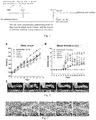
- the experiment results are shown as follows: During the experiment, the weight of rats in the control group continued to increase. Compared with the model group, the weight gain of the rats in the model group was slightly slower. Administration of Compound 1 and methotrexate can improve the condition of the rats and the slow gain of body weight ( Fig. 2A ).
- Figure 2C shows representative photographs for the foot of rats in each of the different treatment groups on day 28 of the experiment. It can be seen from Fig. 2C that the foot swelling of rats in the model group is the most serious, and the swelling degree of the foot, after the administration of the positive drug and two different concentrations of compound 1, was improved, and the effects of high dose of compound 1 is more significant than those of low dose.
- tissue sections also showed that the synovial hyperplasia and inflammatory cell infiltration in rats treated with Compound 1 were greatly improved compared with the model group.
Landscapes
- Health & Medical Sciences (AREA)
- Chemical & Material Sciences (AREA)
- Organic Chemistry (AREA)
- Veterinary Medicine (AREA)
- Medicinal Chemistry (AREA)
- Public Health (AREA)
- General Health & Medical Sciences (AREA)
- Animal Behavior & Ethology (AREA)
- Life Sciences & Earth Sciences (AREA)
- Pharmacology & Pharmacy (AREA)
- General Chemical & Material Sciences (AREA)
- Chemical Kinetics & Catalysis (AREA)
- Nuclear Medicine, Radiotherapy & Molecular Imaging (AREA)
- Bioinformatics & Cheminformatics (AREA)
- Engineering & Computer Science (AREA)
- Immunology (AREA)
- Rheumatology (AREA)
- Physical Education & Sports Medicine (AREA)
- Orthopedic Medicine & Surgery (AREA)
- Dermatology (AREA)
- Tropical Medicine & Parasitology (AREA)
- Epidemiology (AREA)
- Communicable Diseases (AREA)
- Oncology (AREA)
- Pharmaceuticals Containing Other Organic And Inorganic Compounds (AREA)
Abstract
Description
- The present invention relates to the field of medicinal chemistry. In particular, the present invention relates to a novel thiazole derivative and a synthesis method thereof as well as its use as a dihydroorotate dehydrogenase (DHODH) inhibitor for treating DHODH-mediated diseases.
- Dihydroorotate dehydrogenase (DHODH) is an iron-containing flavin-dependent mitochondrial enzyme, which is a key enzyme in the synthesis of pyrimidines in nucleic acids and catalyzes the fourth step-limiting reaction in the de novo biosynthetic pathway of pyrimidine. There are two ways to obtain pyrimidine nucleotides in humans, de novo synthesis and salvage synthesis. The resting lymphocytes in a human body mainly obtain pyrimidine nucleotides required for cell metabolism through the salvage synthesis pathway. However, under the immune activation state, the requirements of lymphocytes for pyrimidine nucleotides can reach 8 times or higher that those of resting lymphocytes. At this time, de novo synthesis pathway has to be initiated to supplement pyrimidine nucleotides, thereby achieving the proliferation of lymphocytes and completion of various immune functions. Therefore, de novo synthesis pathway of pyrimidine can be inhibited by inhibiting DHODH, thereby blocking the synthesis of neo-pyrimidine, causing disorders in DNA synthesis and inhibiting rapidly proliferation of human cells, such as, activated T-lymphocytes, B-lymphocytes, and tumor cells. Thus, dihydroorotate dehydrogenase (DHODH) inhibitors can be successfully developed into medicaments against rheumatic arthritis, tumor, organ transplant rejection, autoimmune diseases, such as psoriasis.
- There are two main types of DHODH from different organisms: type I and type II. Type I DHODH is present in prokaryotes and in cells. These enzymes use some water-soluble molecules (such as fumaric acid and NAD+) as electron transporters in redox process; and type II DHODH is mainly located on mitochondrial inner membrane of mammals and some protozoa, and such enzymes utilize Flavin Mononucleotide (FMN) and Co-enzyme Q (CoQ, also known as ubiquinone) as electron transporters. Significantly different from type I DHODH, type II DHODH has a highly variable N-terminal extension for assisting binding of the enzyme to mitochondrial membrane, and the N-terminus forms a separate double α helix structure, thereby providing a binding site for steroids. Both human DHODH (hDHODH) and Plasmodium falciparum DHODH (Pf DHODH) belong to type II mitochondria-associated enzymes.
- Kinetic studies have shown that the conversion of DHO (dihydroorotate) to OA (orotic acid) is a continuous "ping-pong" mechanism. The process is mainly accomplished by two half-reactions: firstly, dihydroorotate is oxidized to orotic acid under the catalysis of dihydroorotate dehydrogenase, and FMN accepts the hydrogen atom removed in the process and is oxidized to FMNH2. This half-reaction is the rate-limiting step of the catalytic reaction. Afterwards, FMNH2 is de-hydrogenated under the action of CoQ, re-reduced to FMN and returned to the cycle, as shown in the following reaction formula.

- DHODH inhibitors can effectively reduce activities and numbers of immune-activated T-lymphocytes and B-lymphocytes, and can be successfully developed into a therapeutic medicament against tumors and autoimmune diseases, such as rheumatoid arthritis. At present, typical marketed DHODH inhibitors are mainly leflunomide, teriflunomide (A771726) and brequinar, the structural formulas of which are shown below.

- Leflunomide marketed in 1998 is an efficient inhibitor of DHODH, which blocks the cell signaling process by blocking the de novo synthesis pathway of pyrimidine and inhibiting the activity of tyrosine kinase. It is a novel isoxazole derivative with anti-inflammatory and immunosuppressive effects. It has been clinically used to treat rheumatoid arthritis, lupus erythematosus, multiple primary and secondary glomerular diseases, and to prevent graft rejection. However, long-term use of Leflunomide can cause large side effects such as diarrhea, liver enzyme abnormalities, and rash due to its long half-life. Triflurane is an effective metabolite of Leflunomide. Brequinar has also entered Phase II clinical trials, but is limited by its narrow therapeutic window, and the clinical trials of Brequinar have found that when Brequinar is orally administered in combination with cyclosporine A or cisplatin, mucositis, white blood cell loss and thrombocytopenia may be caused.
- Therefore, there is an urgent need in the art to find novel DHODH inhibitors, which are more efficient, safer and have better pharmacological properties.
- It is an object of the present invention to provide a compound having a novel structure, high DHODH inhibitory activity, low toxicity, and good safety.
- In a first aspect, a compound of formula I or a pharmaceutically acceptable salt or ester thereof is provided in the invention:

- R1 is selected from the group consisting of: H, a substituted or unsubstituted C1-C6 alkyl, C3-C6 cycloalkyl;
- R2 is selected from the group consisting of: H, halogen, a substituted or unsubstituted C1-C6 alkyl, substituted or unsubstituted C1-C6 alkoxy, CN, NO2, hydroxy, NRaRb;
- Ra, Rb are independently selected from H or C1-C6 alkyl;
- R3 is selected from the group consisting of H and a substituted or unsubstituted C1-C6 alkyl;
- R4 is selected from the group consisting of H and halogen;
- m is an integer from 0 to 4;
- n is an integer from 0 to 5;
- wherein, when R2 is H and R3 is H, R1 is not H.
- In a specific embodiment, the compound is shown in Formula II:

- R5 and R6 are independently selected from the group consisting of H, halogen, a substituted or unsubstituted C1-C6 alkyl, substituted or unsubstituted C1-C6 alkoxy, hydroxyl and NH2;
- R7, R8 and R9 are independently selected from the group consisting of H and halogen; R1 and R3 are as described above.
- In a specific embodiment, R1 is selected from a C1-C6 alkyl (preferably C1-C3 alkyl); R3 is selected from H or a substituted or unsubstituted C1-C6 alkyl (preferably C1-C3 alkyl); R5 and R6 are independently selected from the group consisting of H, halogen (preferably F) and an unsubstituted or halogen (preferably F)-substituted C1-C3 alkyl; R7 and R8 are independently selected from the group consisting of H and halogen (preferably Cl); and R9 is H .
- In a specific embodiment, R1 is selected from the group consisting of: H, a C1-C6 alkyl, preferably C1-C3 alkyl; R3 is selected from the group consisting of: H, a substituted or unsubstituted C1-C6 alkyl (preferably C1-C3 alkyl); R5 is selected from the group consisting of: H, halogen (preferably F), an unsubstituted or halogen (preferably F)-substituted C1-C3 alkyl; R6 is selected from the group consisting of: H, halogen (preferably F), hydroxyl, NH2; R7 and R8 are independently selected from the group consisting of: H and halogen (preferably Cl); and R9 is H.
- In a second aspect, a compound or a pharmaceutically acceptable salt or ester thereof selected from the following group is provided in the invention:
No. Structure No. Structure 1 
2 
3 
4 
5 
6 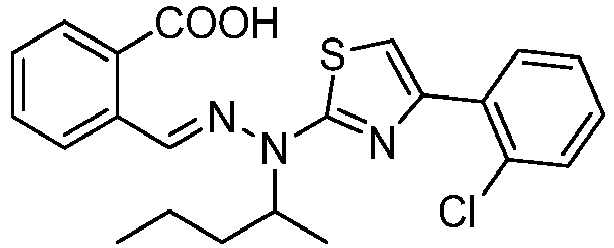
7 
8 
8-1 
9 
9-1 
10 
10-1 
11 
12 
12-1 
13 
14 
15 
17 
19 
20 
21 
22 
23 
23-1 
24 
25 
58 
A1 
A2 
A3 
A4 
A5 
A6 
A7 
A8 
A9 
A10 
A11 
A12 
A13 
B1 
B2 
B3 
B4 
B5 
B6 
B7 
B8 
B9 
B10 
B11 
B12 
- In a specific embodiment, a compound or a pharmaceutically acceptable salt or ester thereof selected from the following group is provided in the invention:
No. Structure No. Structure 1 
3 
8-1 
9 
9-1 
10 
10-1 
11 
12 
12-1 
21 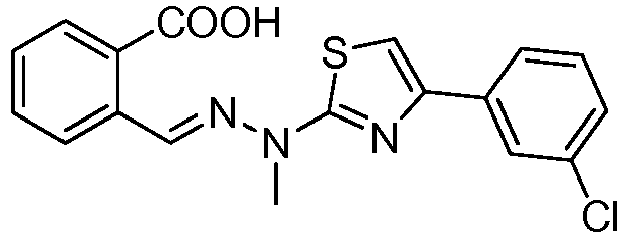
22 
23 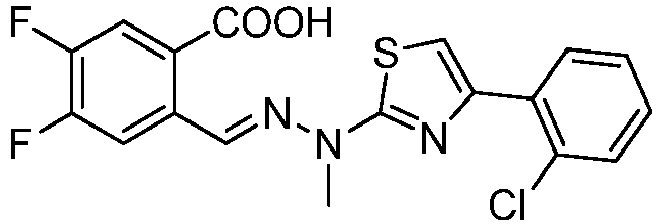
23-1 
A1 
A2 
A3 
A4 
A5 
A6 
A7 
A8 
A9 
A10 
A11 
A12 
A13 
B1 
B2 
B3 
B4 
B5 
B6 
B7 
B8 
B9 
B10 
B11 
B12 
- In a third aspect, a pharmaceutical composition is provided in the present invention, comprising a compound or a pharmaceutically acceptable salt or ester thereof of the first or second aspect of the present invention, and a pharmaceutically acceptable carrier or excipient.
- In a preferred embodiment, the pharmaceutical composition is a dosage form suitable for oral administration, including but not limited to a tablet, solution, suspension, capsule, granule, powder.
- In a fourth aspect, the use of a compound or a pharmaceutically acceptable salt or ester thereof of the first or second aspect of the invention is provided in the invention for preparing a medicament for treating DHODH-mediated diseases.
- In a specific embodiment, the DHODH-mediated diseases include, but are not limited to, autoimmune diseases, bacterial infections, parasites and tumors.
- In a specific embodiment, the autoimmune disease includes, but is not limited to, rheumatoid arthritis, organ transplant rejection, psoriasis.
- In a fifth aspect, a method for treating DHODH-mediated diseases are provided in the present invention, comprising administering a compound or a pharmaceutically acceptable salt or ester thereof of the first or second aspect of the invention, or the pharmaceutical composition of the third aspect of the invention to a subject in need thereof.
- It is to be understood that, within the scope of the present invention, various technical features of the present invention and the technical features specifically described hereinafter (as in the Examples) may be combined with each other to constitute new or preferred technical solutions, which will not described one by one herein.
-
-
Figure 1 is a schematic diagram of the rheumatoid arthritis experiment of Wistar rat (corresponding to Compound 1). -
Figure 2 shows effects of Compound 1 on body weight and joint swelling of CIA model rats. Among them, Figure A shows the trend of change in the body weight of rats (weighed once every three days). Figure B shows the trend of change in the score of rat joint swelling (scored every two days). Figure C shows representative photographs of rat foot from different experiment groups. The data are expressed as mean ± SEM, ##P < 0.01, compared with the control; * P < 0.05, ** P <0.01, compared with the model. -
Figure 3 is a representative photograph of HE staining of joint tissue sections, and shows effects of Compound 1 on the histopathology of CIA model rats; wherein S means synovial membrane; C means cartilage; Bn means bone; and magnification is 40×. - After extensive and intensive research, the inventors have unexpectedly discovered a series of thiazole derivatives, structural skeletons of which are completely different from those of highly active DHODH inhibitors reported in the literature (e.g., leflunomide, teriflamine, Brequinar). These compounds show significant DHODH inhibitory activities in testes at molecular, cellular and animal level, low toxicities, good safety and thus good prospects for being developed into medicaments. The present invention has been completed based the above discoveries.
- Some groups mentioned herein are defined as follows:
As used herein, "alkyl" refers to a saturated branched or straight-chain alkyl in a carbon chain length of 1 to 10 carbon atoms, and a preferred alkyl includes an alkyl having from 2 to 8 carbon atoms, 1 to 6, 1 to 4 and 1-3 carbon atoms. Examples of alkyl include, but are not limited to, methyl, ethyl, n-propyl, isopropyl, n-butyl, isobutyl, heptyl and the like. The alkyl may be substituted by one or more substituents, for example halogen or haloalkyl. For example, the alkyl may be an alkyl substituted with 1 to 4 fluorine atoms, or the alkyl may be an alkyl substituted with a fluoroalkyl. - As used herein, "cycloalkyl" means a saturated alkyl with alicyclic structure, for example, a C3-C6 cycloalkyl. In a specific embodiment, the cycloalkyl includes, but is not limited to, cyclopropyl, cyclobutyl, cyclopentyl or cyclohexyl. The cycloalkyl described herein may be substituted or unsubstituted, including but not limited to, substituted with one or more halogen atoms, such as fluorine atoms.
- As used herein, "amino" refers to a group of the formula "NRxRy", wherein Rx and Ry may be independently selected from H or a C1-C3 alkyl or C1-C3 haloalkyl. In a specific embodiment, "amino" as used herein refers to NH2.
- As used herein, "halogen" refers to fluoro, chloro, bromo and iodo. In a preferred embodiment, the halogen is chlorine or fluorine; more preferably fluorine.
- The present inventors have unexpectedly discovered a series of thiazole derivatives with novel structural skeletons, which exhibit significant DHODH inhibitory activity in tests at molecular, cellular and animal level, low toxicity, good safety, and thus good prospects for being developed into medicaments.
- In a specific embodiment, the compound of the invention is shown in the following structural formula:

- R1 is selected from the group consisting of: H, a substituted or unsubstituted C1-C6 alkyl and C3-C6 cycloalkyl;
- R2 is selected from the group consisting of: H, halogen, a substituted or unsubstituted C1-C6 alkyl, substituted or unsubstituted C1-C6 alkoxy, CN, NO2, hydroxy, NRaRb;
- Ra, Rb are independently selected from H or C1-C6 alkyl;
- R3 is selected from the group consisting of: H, a substituted or unsubstituted C1-C6 alkyl;
- R4 is selected from H or halogen;
- m is an integer from 0-4;
- n is an integer from 0 to 5;
- wherein, when R2 is H and R3 is H, R1 is not H.
- In a preferred embodiment, the compound of the invention is shown in Formula II:

- R5 and R6 are independently selected from the group consisting of H, halogen, a substituted or unsubstituted C1-C6 alkyl, substituted or unsubstituted C1-C6 alkoxy, hydroxy, NH2;
- R7, R8 and R9 are independently selected from H or halogen;
- R1 and R3 are described as above.
- In a further embodiment, R1 is selected from a C1-C6 alkyl (preferably C1-C3 alkyl); R3 is selected from the group consisting of H, a substituted or unsubstituted C1-C6 alkyl (preferably C1-C3 alkyl); R5 and R6 are independently selected from the group consisting of H, halogen (preferably F), an unsubstituted or halogen (preferably F)-substituted C1-C3 alkyl; R7 and R8 are independently selected from the group consisting of H and halogen (preferably Cl); and R9 is H; or, R1 is selected from the group consisting of H and C1-C6 alkyl, preferably C1-C3 alkyl; R3 is selected from the group consisting of H and substituted or unsubstituted C1-C6 alkyl (preferably C1-C3 alkyl); R5 is selected from the group consisting of H and halogen (preferably F), an unsubstituted or halogen (preferably F)-substituted C1-C3 alkyl; R6 is selected from the group consisting of H, halogen (preferably F), hydroxyl and NH2; R7 and R8 are independently selected from H and halogen (preferably Cl); and R9 is H.
- A pharmaceutical composition comprising a therapeutically effective amount of a compound or a pharmaceutically acceptable salt or ester thereof of the present invention, and a pharmaceutically acceptable carrier or excipient, based on the above compounds, is further provided in the present invention.
- Examples of the pharmaceutically acceptable salt of a compound of the invention include, but are not limited to, inorganic and organic acid salts such as hydrochloride, hydrobromide, sulfate, citrate, lactate, tartrate, maleate, fumarate, mandelate and oxalate; and inorganic and organic base salts formed with bases such as sodium hydroxide, tris(hydroxymethyl)aminomethane (TRIS, tromethamine) and N-methyl glucosamine.
- A pharmaceutically acceptable ester of a compound of the invention is a compound wherein the carboxyl of the compound of formula I is esterified, including but not limited to: an ester formed from a substituted or unsubstituted C1-C10 alkyl or cycloalkyl,


A1 
A2 
A3 
A4 
A5 
A6 
A7 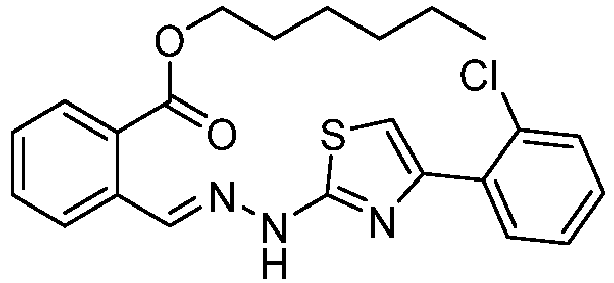
A8 
A9 
A10 
A11 
A12 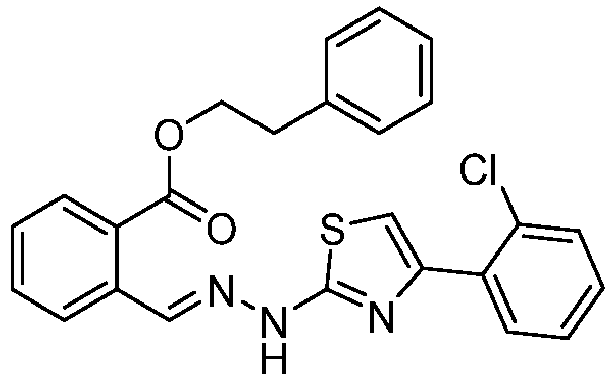
A13 
B1 
B2 
B3 
B4 
B5 
B6 
B7 
B8 
B9 
B10 
B11 
B12 
- A skilled person in the art can determine the optimal dosage of each active ingredient in the pharmaceutical composition of the present invention, although the needs of each person vary. In general, the compound of the present invention or a pharmaceutically acceptable salt thereof is orally administered to a mammal in an amount of from about 0.0025 to 50 mg/kg body weight per day. However, it is preferably about 0.01 to 10 mg per kilogram for oral administration. For example, a unit oral dose can include from about 0.01 to 50 mg, preferably from about 0.1 to 10 mg, of a compound of the invention. The unit dose may be administered one or more times per day in one or more tablets, and each tablet contains from about 0.1 to 50 mg, preferably from about 0.25 to 10 mg of a compound of the invention or a solvate thereof.
- The pharmaceutical composition of the present invention can be formulated into a dosage form suitable for various administration routes, including but not limited to, a dosage form suitable for parenteral, subcutaneous, intravenous, intramuscular, intraperitoneal, transdermal, oral, intrathecal, intracranial, intranasal or topical administration for treating tumors and other diseases. The administered amount is an amount effective to ameliorate or eliminate one or more conditions. For the treatment of a particular disease, an effective amount is a dosage sufficient to ameliorate or, in some way, alleviate symptoms associated with a disease. Such a dosage can be administered in a single dose or can be administered according to an effective therapeutic regimen. The administered amount may cure the disease, but usually is to improve symptoms of the disease. Repeated administrations are generally required to achieve the desired improvement in symptoms. The dosage of the drug will be determined according to the age, health and weight of a patient, the type of concurrent treatment, the frequency of treatment, and the desired therapeutic benefits.
- The pharmaceutical preparation of the present invention can be administered to any mammal as long as they can obtain therapeutic effects of the compound of the present invention. The most important among these mammals is humans. The compounds of the invention or pharmaceutical compositions thereof are useful for treating a variety of DHODH-mediated diseases. Herein, DHODH-mediated diseases are autoimmune diseases, organ transplant rejection, bacterial infections, parasitic diseases or tumors. In a specific embodiment, the autoimmune disease is rheumatoid arthritis, lupus erythematosus or psoriasis.
- The pharmaceutical preparations of the invention can be prepared in a known manner. For example, it is manufactured by a conventional mixing, granulating, tableting, dissolving, or freeze-drying process. When manufacturing oral formulations, the mixture can be selectively milled by combining solid auxiliary substances and the active compound. If necessary, after adding an appropriate amount of auxiliary substances, the mixture of granules is processed to obtain a tablet or tablet core.
- Suitable auxiliary substances are, in particular, fillers, for example sugars, such as lactose or sucrose, mannitol or sorbitol; cellulose preparations or calcium phosphates, such as tricalcium phosphate or calcium hydrogen phosphate; and binders, such as starch pastes, including corn starch, wheat starch, rice starch, potato starch, gelatin, tragacanth, methyl cellulose, hydroxypropyl methyl cellulose, sodium carboxymethyl cellulose, or polyvinylpyrrolidone. If necessary, a disintegrating agent such as the above-mentioned starch, and carboxymethyl starch, crosslinked polyvinylpyrrolidone, agar, or alginic acid or a salt thereof such as sodium alginate may be added. Auxiliary substances can be, in particular, flow regulators and lubricants, for example, silica, talc, stearates such as calcium magnesium stearate, stearic acid or polyethylene glycol. If desired, the tablet core can be provided with a suitable coating that is resistant to gastric juice. For this purpose, a concentrated sugar solution can be applied. Such solutions may contain gum arabic, talc, polyvinylpyrrolidone, polyethylene glycol and/or titanium dioxide, lacquer solutions and suitable organic solvents or solvent mixtures. For preparing a gastric juice-resistant coating, a suitable cellulose solution such as cellulose acetate ortho-phthalate or hydroxypropyl methylcellulose ortho-phthalate can be used. A dye or pigment can be added to the coating of the tablet or tablet core for, for example, identification or for characterizing the combination of dosages of active ingredients.
- Accordingly, a method for treating DHODH-mediated diseases is also provided in the present invention, which comprises administering to a subject in need thereof a compound of the invention or a pharmaceutical composition comprising a compound of the invention.
- Methods of administration include, but are not limited to, various methods of administration well known in the art, which can be determined based on the actual circumstances of a patient. The methods include, but are not limited to, parenteral, subcutaneous, intravenous, intramuscular, intraperitoneal, transdermal, buccal, intrathecal, intracranial, nasal or topical administration.
- The invention also encompasses the use of a compound of the invention in the manufacture of a medicament for treating DHODH-mediated diseases.
- Further, a skilled person will, based on the common knowledge in the art and the contents of the present invention, appreciate that a compound of the present invention can form a salt or an ester due to the contained carboxyl, thereby forming a prodrug.
-
- 1. A series of structurally novel thiazole derivatives are firstly discovered in the present invention;
- 2. The compound of the present invention is a highly effective and low-toxic DHODH inhibitor, and thus has important academic value and practical significance.
- Technical solutions of the present invention are further described below in combination with specific examples, but the following examples are not intended to limit the invention, and all methods of application according to the principles and technical means of the present invention shall fall within the scope of the invention. Experimental methods in the following examples which do not specify specific conditions are usually carried out according to conventional conditions or conditions recommended by manufacturers. Percentages and parts are calculated by weight unless otherwise stated.
-


- 2.5 g (17.3 mmol) of methyl hydrazine sulfate was weighed into a 250 ml single-mouth flask, 100 ml of ethanol was added, and 1.6 g (20.8 mmol) of ammonium thiocyanate was added with stirring. The reaction mixture was heated to reflux for 72 h. The reaction solution was cooled to room temperature and suction-filtered. The obtained filtrate was then evaporated to dryness and separated through silica gel column chromatography (DCM / MeOH = 40: 1) to give a second side product as white powdery solids (0.63 g, yield 34.2%). 1H NMR (400 MHz, DMSO-d6, ppm) δ 7.36 (s, 2H), 4.89 (s, 2H), 3.41 (s, 3H). GC-MS (EI) calcd for C2H7N3S [M]+ 105.0, found 105.0.
- 80 mg (0.76 mmol) of compound (1-1) was weighted into a 50 ml single-mouth flask, 20 ml of ethanol was added, and o-carboxybenzaldehyde (114 mg, 0.76 mmol) was added with stirring. The reaction mixture was heated to reflux, and the reaction was monitored by TLC until the starting materials were completely converted. The reaction solution was cooled to room temperature, and the solvent was evaporated to dryness. The obtained residue was separated through silica gel column chromatography (DCM / MeOH = 120: 1) to give white powdery solids (100 mg, yield 56%). 1H NMR (400 MHz, DMSO-d6, ppm) δ 13.36 (br, 1H), 8.56 (s, 1H), 8.51(s, 1H), 8.31 (d, J = 7.8 Hz, 1H), 8.25 (s, 1H), 7.88 (d, J = 8 Hz, 1H), 7.59 (t, J = 7.2 Hz, 1H), 7.50 (t, J = 7.2 Hz, 1H), 3.77 (s, 3H). LC-MS (ESI) calcd for C10H12N3O2S [M+H]+ 238.1, found 238.1.
- 100 mg (0.42 mmol) of compound (2) was weighed into a 50 ml single-mouth flask, 10 ml of ethanol was added, and 65 µL (0.42 mmol) of 2'-chloro-2-bromoacetophenone was added with stirring. The reaction mixture was warmed to reflux, and the reaction was monitored by TLC until the starting materials were completely converted. The reaction solution was cooled to room temperature, and the solvent was evaporated to dryness. The obtained residue was separated through silica gel column chromatography (DCM/MeOH = 120:1) to give yellow powdery solids (106 mg, yield 67.9%). Mp. 210.4-212.0°C. 1H NMR (400 MHz, DMSO-d6, ppm) δ 13.30 (s, 1H), 8.62 (s, 1H), 8.02 (d, J = 7.6 Hz, 1H), 7.98 - 7.90 (m, 2H), 7.66 (t, J = 7.6 Hz, 1H), 7.56 - 7.49 (m, 2H), 7.47 (s, 1H), 7.43 (td, J 1 = 7.4 Hz, J 2 = 1.2 Hz, 1H), 7.36 (td, J 1 = 7.6 Hz, J 2 = 1.6 Hz, 1H), 3.68 (s, 3H). 13C NMR (125 MHz, DMSO-d6, ppm) δ 168.98, 168.57, 147.11, 136.94, 135.17, 133.42, 132.48, 131.51, 131.09, 130.98, 130.75, 130.16, 129.45, 129.19, 127.63, 126.51, 111.41, 32.88. HRMS (ESI) calcd for C18H15N3O2SCl [M+H]+ 372.0574, found 372.0575.
- The inventors further synthesized following compounds using a similar method and corresponding starting materials:
-

- Mp. 203.3-204.1°C. 1H NMR (500 MHz, DMSO-d6, ppm) δ 13.32 (br, 1H), 8.64 (s, 1H), 7.98 - 7.91 (m, 3H), 7.66 (t, J = 7.5 Hz, 1H), 7.56 - 7.46 (m, 2H), 7.45 - 7.39 (m, 2H), 7.34 (t, J = 6.8 Hz, 1H), 4.32 (q, J = 6.8 Hz, 2H), 1.27 (t, J = 7.0 Hz, 3H). 13C NMR (125 MHz, DMSO-d6, ppm) δ 168.56, 168.36, 147.34, 137.00, 135.42, 133.53, 132.50, 131.53, 131.12, 130.92, 130.72, 130.22, 129.42, 129.19, 127.62, 126.62, 111.22, 40.38, 10.33. HRMS (ESI) calcd for C19H17N3O2SCl [M+H]+ 386.0730, found 386.0728.
-

- Mp. 172.6-173.4°C. 1H NMR (400 MHz, DMSO-d6, ppm) δ 13.35 (br, 1H), 8.65 (s, 1H), 7.98 (d, J = 8.0 Hz, 1H), 7.95-7.92 (m, 2H), 7.67 (t, J = 7.2 Hz, 1H), 7.54 (d, J = 8.0 Hz, 1H), 7.5 (t, J = 7.6 Hz, 1H), 7.45-7.42 (m, 2H), 7.36 (t, J 1 = 7.6 Hz, J 2 = 1.6 Hz, 1H), 4.25 (t, J = 7.2 Hz, 2H), 1.82-1.73 (m, 2H), 0.97 (t, J = 7.4 Hz, 1H). 13C NMR (100 MHz, DMSO-d6, ppm) δ 168.54, 168.22 146.95, 136.63, 134.96, 133.17, 132.11, 131.10, 130.74, 130.55, 130.34, 129.82, 129.04, 128.80, 127.26, 126.09, 110.77, 46.31, 17.98, 11.17. HRMS (ESI) calcd for C20H19N3O2SCl [M+H]+ 400.0887, found 400.0879.
-

- Mp. 185.4-187.0°C. 1H NMR (400 MHz, DMSO-d6, ppm) δ 13.35 (br, 1H), 8.91 (s, 1H), 7.99 (d, J = 8.0 Hz, 1H), 7.95-7.92 (m, 2H), 7.67 (t, J = 7.6 Hz, 1H), 7.54 (d, J = 8.0 Hz, 1H), 7.52 (t, J = 7.6 Hz, 1H), 7.46-7.42 (m, 2H), 7.36 (td, J 1 = 7.6 Hz, J 2 = 1.6 Hz, 1H), 5.22-5.11 (m, 1H), 1.57 (d, J = 6.8 Hz, 6H). 13C NMR (100 MHz, DMSO-d6, ppm) δ 168.22, 168.21, 146.90, 137.32, 135.23, 133.14, 132.07, 131.06, 130.64, 130.58, 130.39, 129.88, 128.97, 128.78, 127.28, 125.91, 111.12, 49.61, 18.07, 18.07. HRMS (ESI) calcd for C20H19N3O2SCl [M+H]+ 400.0887, found 400.0885 .
-

- Mp. 170.5-170.6°C. 1H NMR (400 MHz, DMSO-d6, ppm) δ 13.32 (br, 1H), 8.91 (s, 1H), 7.99 (d, J = 8.0 Hz, 1H), 7.95-7.90 (m, 2H), 7.67 (t, J 1 = 7.6 Hz, 1H), 7.55-7.48 (m, 2H), 7.46-7.42 (m, 2H), 7.36 (td, J 1 = 7.6 Hz, J 2 = 1.6 Hz, 1H), 5.00-4.93 (m, 1H), 2.35-2.24 (m, 1H), 1.92-1.81 (m, 1H), 1.54 (d, J = 6.8 Hz, 3H), 0.88 (t, J = 7.2 Hz, 3H). 13C NMR (100 MHz, DMSO-d6, ppm) δ 168.66, 168.19, 146.97, 137.03, 135.24, 133.19, 132.13, 131.04, 130.67, 130.58, 130.39, 129.70, 128.98, 128.77, 127.29, 125.91, 111.04, 55.67, 25.26, 16.33, 11.14. HRMS (ESI) calcd for C21H21N3O2SCl [M+H]+ 414.1043, found 414.1029.
-
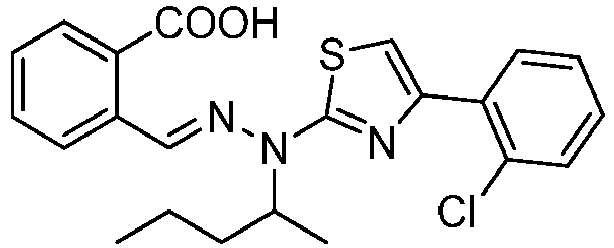
- Mp. 146.7-147.0°C. 1H NMR (400 MHz, DMSO-d6, ppm) δ 13.35 (br, 1H), 8.91 (s, 1H), 7.98 (d, J = 7.6 Hz, 1H), 7.94 (d, J = 8.0 Hz, 1H), 7.91 (dd, J1 = 7.6 Hz, J2 = 1.6 Hz, 1H), 7.67 (t, J = 7.6 Hz, 1H), 7.53 (d, J = 8.0 Hz, 1H), 7.49 (t, J = 7.6 Hz, 1H), 7.46-7.42 (m, 2H), 7.36 (td, J1 = 7.6 Hz, J2 = 1.6 Hz, 1H), 5.14-5.06 (m, 1H), 2.34-2.25 (m, 1H), 1.82-1.73 (m, 1H), 1.53 (d, J = 6.8 Hz, 3H), 1.34-1.24 (m, 2H), 0.89 (t, J = 7.4 Hz, 1H). 13C NMR (100 MHz, DMSO-d6, ppm) δ 168.68, 168.20, 146.98, 137.04, 135.30, 133.20, 132.14, 131.00, 130.68, 130.59, 130.40, 129.68, 128.99, 127.30, 125.90, 111.09, 53.81, 34.20, 19.46, 16.46, 13.60. HRMS (ESI) calcd for C22H23N3O2SCl [M+H]+ 428.1200, found 428.1193.
-

- Mp. 187.9-188.9°C. 1H NMR (400 MHz, DMSO-d6, ppm) δ 13.24 (br, 1H), 8.75 (s, 1H), 7.98-7.01 (m, 3H), 7.66 (t, J = 7.6 Hz, 1H), 7.54 (d, J = 8.0 Hz, 1H), 7.49 (t, J = 7.6 Hz, 1H), 7.45-7.41 (m, 2H), 7.36 (td, J1 = 7.6 Hz, J 2 = 1.6 Hz, 1H), 4.35 (t, J = 6.4 Hz, 2H), 3.76 (t, J = 6.4 Hz, 2H). 13C NMR (100 MHz, DMSO-d6, ppm) δ 168.64, 168.23, 146.87, 136.89, 134.91, 133.15, 131.99, 131.19, 130.71, 130.46, 130.32, 130.16, 129.04, 128.79, 127.22, 126.28, 110.78, 56.24, 47.46. HRMS (ESI) calcd for C19H17N3O3SCl [M+H]+ 402.0679, found 402.0678.
-

- Mp. 209.3-210.7°C. 1H NMR (400 MHz, DMSO-d6, ppm) δ 14.02 (br, 1H), 8.66 (s, 1H), 8.21 (d, J = 8.0 Hz, 1H), 8.17 (s, 1H), 8.02 (d, J = 8.0 Hz, 1H), 7.95 (d, J = 7.6 Hz, 1H), 7.56-7.53 (m, 2H), 7.43 (t, J = 7.6 Hz, 1H), 7.37 (t, J = 7.6 Hz, 1H), 3.70 (s, 3H). 13C NMR (100 MHz, DMSO-d6, ppm) δ 168.33, 167.17, 146.79, 138.38, 135.01, 132.91, 131.12, 130.70, 130.37, 129.14, 128.57, 128.25, 128.20, 127.26, 127.04, 125.10, 122.40, 111.51, 32.68. HRMS (ESI) calcd for C19H14N3O2SClF3 [M+H]+ 440.0447, found 440.0433.
-

- Mp. 231.3-232.5°C. 1H NMR (400 MHz, DMSO-d6, ppm) δ 13.30 (br, 1H), 8.59 (s, 1H), 7.96 (d, J = 7.6 Hz, 1H), 7.92 (d, J = 8.0 Hz, 1H), 7.75 (s, 1H), 7.54 (d, J = 7.6 Hz, 1H), 7.49-7.46 (m, 2H), 7.43 (t, J = 7.6 Hz, 1H), 7.36 (t, J = 7.6 Hz, 1H), 3.66 (s, 3H), 2.38 (s, 3H). 13C NMR (100 MHz, DMSO-d6, ppm) δ 168.60, 168.35, 146.68, 138.54, 136.64, 133.03, 132.70, 132.07, 131.11, 130.86, 130.67, 130.34, 129.83, 129.00, 127.21, 126.04, 110.84, 32.39, 20.69. HRMS (ESI) calcd for C19H17N3O2SCl [M+H]+ 386.0730, found 386.0738.
-

- Mp. 228.6-229.7°C. 1H NMR (400 MHz, DMSO-d6, ppm) δ 13.28 (br, 1H), 8.14 (s, 1H), 7.93 (dd, J1 = 7.6 Hz, J2 = 1.6 Hz, 1H), 7.61 (dd, J1 = 7.0 Hz, J2 = 1.8 Hz, 1H), 7.55-7.49 (m, 3H), 7.44-7.41 (m, 1H), 7.36 (td, J1 = 7.6 Hz, J2 = 1.6 Hz, 1H), 3.68 (s, 3H). 13C NMR (100 MHz, DMSO-d6, ppm) δ 168.55, 168.01, 159.74 (d, 1 J = 249 Hz), 146.67, 133.68, 133.10, 131.50, 131.12, 130.72, 130.32, 130.10 (d, 3 J = 8.8 Hz), 129.06, 127.23, 125.53 (d, 4 J = 3.1 Hz), 121.75 (d, 2 J = 11.8 Hz), 118.76 (d, 2 J = 22 Hz), 111.13, 32.28. HRMS (ESI) calcd for C18H14N3O2FSCl [M+H]+ 390.0479, found 390.0475.
-

- Mp. 243.2-245.2°C. 1H NMR (400 MHz, DMSO-d6, ppm) δ 13.24 (br, 1H), 8.54 (s, 1H), 7.91(d, J = 8.0 Hz, 1H), 7.73 (s, 1H), 7.64-7.53 (m, 2H), 7.46-7.42 (m, 3H), 7.33 (t, J = 7.4 Hz, 1H), 3.60 (s, 3H), 2.44 (s, 3H), 2.38 (s, 3H). 13C NMR (100 MHz, DMSO-d6, ppm) δ 168.35, 165.40, 145.43, 138.33, 135.76, 135.16, 132.68, 132.22, 130.86, 129.62, 128.24, 128.24, 127.85, 127.85, 127.06, 125.89, 119.27, 31.85, 20.68, 12.24. HRMS (ESI) calcd for C20H20N3O2S [M+H]+ 366.1276, found 366.1273.
-

- Mp. 222.7-224.9°C. 1H NMR (400 MHz, DMSO-d6, ppm) δ 13.32 (br, 1H), 8.58 (s, 1H), 8.01 (d, J = 8.0 Hz, 1H), 7.92 (d, J = 7.6 Hz, 1H), 7.68-7.63 (m, 3H), 7.50-7.43 (m, 3H), 7.34 (t, J = 7.4 Hz, 1H), 3.62 (s, 3H), 2.44 (s, 3H). 13C NMR (100 MHz, DMSO-d6, ppm) δ 168.24, 165.36, 145.47, 135.66, 135.13, 134.90, 131.98, 130.58, 129.70, 128.59, 128.25, 128.25, 127.86, 127.86, 127.09, 125.94, 119.44, 31.93, 12.24. HRMS (ESI) calcd for C19H16N3O2S [M-H]- 350.0963, found 350.0951.
-

- Mp. 208.8-209.8°C. 1H NMR (400 MHz, DMSO-d6, ppm) δ 13.46 (br, 1H), 8.60 (s, 1H), 8.01 (d, J = 8.0 Hz, 1H), 7.92 (d, J = 8.0 Hz, 1H), 7.64 (t, J = 7.4 Hz, 1H), 7.56 (d, J = 7.6 Hz, 1H), 7.49-7.39 (m, 4H), 3.56 (s, 3H), 2.15 (s, 3H). 13C NMR (100 MHz, DMSO-d6, ppm) δ 168.98, 166.46, 144.56, 136.46, 135.29, 134.54, 133.25, 132.50, 132.31, 131.05, 130.72, 130.26, 130.01, 129.09, 127.49, 126.42, 121.85, 32.46, 12.16. HRMS (ESI) calcd for C19H17N3O2SCl [M+H]+ 386.0730, found 386.0727.
-

- Mp. 223.9-223.9°C. 1H NMR (500 MHz, DMSO-d6, ppm) δ 12.57 (br, 2H), 8.79 (s, 1H), 8.01 (d, J = 8.0 Hz, 1H), 7.88 (d, J = 8.0 Hz, 1H), 7.62 (t, J = 7.5 Hz, 1H), 7.56 - 7.51 (m, 1H), 7.46 (t, J = 7.5 Hz, 1H), 7.44-7.36 (m, 3H), 2.49 (q, J = 7.5 Hz, 1H), 1.13 (t, J = 7.5 Hz, 3H). 13C NMR (125 MHz, DMSO-d6, ppm) δ 169.28, 165.92, 144.14, 140.84, 135.89, 135.46, 133.99, 133.03, 133.02, 131.46, 130.81, 130.73, 130.60, 129.73, 128.09, 127.73, 127.01, 20.99, 17.25. HRMS (ESI) calcd for C19H17N3O2SCl [M+H]+ 386.0730, found 386.0729.
-

- Mp. 217.6-217.8°C. 1H NMR (400 MHz, DMSO-d6, ppm) δ 12.7(br, 2H), 8.77(s, 1H), 7.99(d, J = 7.6 Hz, 1H), 7.87(d, J = 7.2 Hz, 1H), 7.62(t, J = 7.4 Hz, 1H), 7.562-7.543(m, 1H), 7.481-7.397(m, 4H), 2.14(s, 3H). 13C NMR (125 MHz, DMSO-d6, ppm) δ 168.65, 165.18, 144.49, 140.16, 135.25, 134.56, 133.21, 132.46, 130.83, 130.14, 130.03, 129.11, 127.45, 126.37, 119.49, 12.15. HRMS (ESI) calcd for C18H15N3O2SCl [M+H]+ 372.0574, found 372.0569.
-

- Mp. 215.9-216.0°C. 1H NMR (400 MHz, DMSO-d6, ppm) δ 12.7 (br, 2H), 8.77 (s, 1H), 7.99 (d, J = 7.6 Hz, 1H), 7.87 (dd, J1 = 8.0 Hz, J2 = 1.2 Hz, 1H), 7.63-7.59 (m, 3H), 7.48-7.43(m, 3H), 7.33 (t, J = 7.2 Hz, 1H), 2.43 (s, 3H). 13C NMR (125 MHz, DMSO-d6, ppm) δ 168.66, 164.72, 146.00, 140.05, 135.64, 135.24, 132.36, 130.83, 130.12, 129.08, 128.73, 128.73, 128.35, 128.35, 127.51, 126.33, 117.61, 12.74. HRMS (ESI) calcd for C18H16N3O2S [M+H]+ 338.0963, found 338.0954.
-

- Mp. 268.4-269.5°C. 1H NMR (400 MHz, DMSO-d6, ppm) δ 13.31 (br, 1H), 8.63 (s, 1H), 8.02-8.00 (m, 2H), 7.93 (d, J = 7.2 Hz, 1H), 7.67 (t, J = 7.6 Hz, 1H), 7.63 (s, 1H), 7.58 (d, J = 7.6 Hz, 1H), 7.50 (t, J = 7.2 Hz, 1H), 7.43 (dd, J 1 = 7.2 Hz, J 2 = 2.8 Hz, 1H), 3.68 (s, 3H). 13C NMR (100 MHz, DMSO-d6, ppm) δ 168.68, 168.15, 145.13, 136.79, 134.70, 134.21, 132.14, 132.06, 131.85, 130.59, 130.17, 129.76, 129.20, 128.84, 128.58, 126.13, 112.31, 32.49. HRMS (ESI) calcd for C18H14N3O2SCl2 [M+H]+ 406.0184, found 406.0187.
-

- Mp. 205.6-206.8°C. 1H NMR (400 MHz, DMSO-d6, ppm) δ 13.31 (br, 1H), 8.62 (s, 1H), 8.02 (d, J = 7.6 Hz, 1H), 7.94-7.91 (m, 3H), 7.66 (t, J = 7.2 Hz, 1H), 7.49 (t, J = 7.2 Hz, 1H), 7.45-7.40 (m, 3H), 7.31 (t, J = 7.2 Hz, 1H), 3.71 (s, 3H). 13C NMR (100 MHz, DMSO-d6, ppm) δ 169.45, 168.20, 150.18, 136.35, 134.80, 134.49, 132.07, 130.60, 129.71, 128.76, 128.56, 128.56, 127.59, 126.09, 125.54, 125.54, 105.97, 32.51. HRMS (ESI) calcd for C18H16N3O2S [M+H]+ 338.0963, found 338.0963.
-

- Mp. 244.7-245.4°C. 1H NMR (400 MHz, DMSO-d6, ppm) δ 13.32 (br, 1H), 8.63 (s, 1H), 8.01 (d, J = 7.6 Hz, 1H), 7.97 (s, 1H), 7.93 (d, J = 7.6 Hz, 1H), 7.88 (d, J = 8.0 Hz, 1H), 7.66 (t, J = 7.6 Hz, 1H), 7.61 (s, 1H), 7.50 (t, J = 7.6 Hz, 1H), 7.45 (t, J = 7.6 Hz, 1H), 7.37 (d, J = 8.0 Hz, 1H), 3.71 (s, 3H). 13C NMR (100 MHz, DMSO-d6, ppm) δ 169.57, 168.18, 148.56, 136.64, 136.50, 134.72, 133.48, 132.06, 130.59, 130.44, 129.76, 128.81, 127.28, 126.12, 125.16, 124.05, 107.56, 32.52. HRMS (ESI) calcd for C18H15N3O2SCl [M+H]+ 372.0574, found 372.0574.
-

- Mp. 89.9-90.1°C. 1H NMR (400 MHz, DMSO-d6, ppm) δ 13.29 (br, 1H), 8.85 (s, 1H), 7.98 (d, J = 8.0 Hz, 1H), 7.92 (d, J = 7.6 Hz, 1H), 7.65 (t, J = 7.6 Hz, 1H), 7.56-7.54 (m, 1H), 7.51-7.41 (m, 4H), 5.05-4.96 (m, 1H), 2.29-2.22 (m, 1H), 2.16 (s, 3H), 1.75-1.67 (m, 1H), 1.46 (d, J = 7.2 Hz, 3H), 1.28-1.23 (m, 2H), 0.87 (t, J = 7.6 Hz, 3H). 13C NMR (100 MHz, DMSO-d6, ppm) δ 168.23, 166.06, 144.08, 136.14, 135.46, 134.09, 132.79, 132.09, 131.93, 130.58, 129.64, 129.60, 129.48, 128.56, 126.95, 125.73, 121.62, 53.39, 34.01, 19.41, 16.35, 13.58, 11.52. HRMS (ESI) calcd for C23H25N3O2SCl [M+H]+ 442.1356, found 442.1354.
-

- Mp: 211.2-211.7 °C. 1H NMR (400 MHz, DMSO-d 6): δ 12.40 (s, 1H), 8.18 (s, 1H), 7.86 (dd, J 1 = 7.6 Hz, J 2 = 1.6 Hz, 1H), 7.69 (d, J =8.0 Hz, 1H), 7.55-7.50 (m, 2H), 7.41 (t, J = 7.6 Hz, 1H), 7.37 (s, 1H), 7.35 (t, J = 7.6 Hz, 1H), 7.29(t, J = 8.8 Hz, 1H). 13C NMR (100 MHz, DMSO-d 6): 167.56, 166.14, 160.51, 158.06, 147.64, 138.21, 138.17, 133.94, 133.89, 133.68, 131.54, 131.25, 130.83, 129.53, 127.72, 122.04,116.51, 116.29, 109.58. HRMS (ESI) calcd for C17H10N3O2SClF [M-H]- 374.0166, found 374.0164. Purity: 97.09% (tR 12.05 min).
-

- Thiosemicarbazide (10 g, 109.7 mmol) was weighed into a 500 mL three-necked flask, 200 mL of absolute ethanol was added, and acetone (8.1 mL, 109.7 mmol) and 2 mL of acetic acid were added with stirring, and heated to 78 °C. The reaction was detected by TLC plate, the reaction was completed after 4 hours, and the heating was stopped. The reaction solution was allowed to stand overnight, and white flaky solids were precipitated, which were filtered to give crude product. The crude product was re-crystallized in water, and filtered to give a pure product of 12.1 g (yield 84%). 1H NMR (400 MHz, DMSO-d6, ppm): δ 9.86 (s, 1H), 7.95 (s, 1H), 7.45 (s, 1H), 1.90 (s, 3H), 1.88 (s, 3H).
-

- Compound 1 (9 g, 68.6 mmol) was weighed into a 500 mL three-necked flask, 200 mL of absolute ethanol was added, and 2-bromo-2'-chloroacetophenone (17.6 g, 75.5 mmol) was added with stirring at room temperature, and then heated to 78 °C. The reaction was monitored by TLC. After 5 hours, the reaction was completed, the heating was stopped, and the reaction solution was allowed to stand and cooled to room temperature for precipitating yellow solids. The solids were filtered, and the filter cake was re-crystallized in ethanol, allowed to stand, filtered, and dried to give yellow powdery solids (14.2 g, yield 78%). 1H NMR (400 MHz, DMSO-d6, ppm): δ 7.69 (d, J = 7.8 Hz, 1H), 7.50 (d, J = 7.8 Hz, 1H), 7.40 (m, 2H), 6.98 (s, 1H), 2.21 (s, 3H), 2.10 (s, 3H).
-

- Compound 2 (10g, 37.7 mmol) was weighed into a 250 mL three-necked flask, 130 mL of absolute ethanol was added, and 80% hydrazine hydrate (5.3 mL, 107.8 mmol) was added and heated to reflux under nitrogen atmosphere. A large amount of solids precipitated during heating. The reaction was quenched, and suction-filtrated to obtain 5 g of crude compound 3. The reaction mixture was refluxed for 12 h, and then the reaction was stopped. The reaction mixture was placed in a refrigerator overnight, and filtered to obtain 2 g of crude product. The crude product was re-crystallized in ethanol to give white flocculent solids (5.1 g, yield 60.7%). 1H NMR (400 MHz, DMSO-d6, ppm): δ 8.58 (s, 1H), 7.86 (dd, J 1 = 7.8 Hz, J 2 = 2.0 Hz, 1H), 7.46 (dd, J 1 = 7.8 Hz, J 2 = 1.6 Hz, 1H), 7.38 (td, J 1 = 7.8 Hz, J 2 = 1.6 Hz, 1H), 7.27 (td, J 1 = 7.8 Hz, J 2 = 2.0 Hz, 1H), 7.10 (s, 1H), 4.85 (s, 2H). LC-MS (ESI) calcd for C9H8N3SCl [M+H]+ 226.01, found 226.10.
-

- o-carboxybenzaldehyde (150 mg, 1 mmol) was weighed into a 50 mL single-mouth flask, compound 3 (225 mg, 1 mmol) was added, 30 mL of absolute ethanol was added, three drops of acetic acid were added as a catalyst, and stirred at room temperature under nitrogen. The reaction was monitored by TLC until the end of the reaction. The hot reaction mixture was filtered rapidly. The filter cake was rinsed for three times with iced ethanol, and dried to obtain bright yellow powdery solids (250 mg, yield 70%). Mp: 195-196 °C. 1H NMR (400 MHz, DMSO-d6, ppm): δ 13.30 (br, 1H), 12.05 (br, 1H), 8.84 (s, 1H), 8.02 (d, J = 7.6 Hz, 1H), 7.91 (t, J = 8.0 Hz, 2H), 7.66 (t, J = 7.2 Hz, 1H), 7.55 (d, J = 7.6 Hz, 1H), 7.51 (t, J = 8 Hz, 1H), 7.44 (t, J = 7.2 Hz, 1H), 7.38-7.34 (m, 2H). 13C NMR (100 MHz, DMSO-d6, ppm): δ 168.12, 167.26, 140.26, 135.03, 134.55, 133.23, 131.94, 131.42, 131.05, 130.72, 130.34, 129.80, 129.01, 128.81, 127.22, 125.96, 109.26. HRMS (ESI) calcd for C17H13N3O2SCl [M+H]+ 358.0417, found 358.0419. HPLC purity: 96.88 %, Retention time = 9.34 min.
-

- o-carboxybenzaldehyde (1.5g, 10 mmol) was weighed into a 100 mL three-necked flask, cesium carbonate (6.5g, 20 mmol) and 20 ml of N,N-dimethylformamide (DMF) were added, and ethyl iodide (4.68 g, 30 mmol) was added with electromagnetic-stirring and heated to 70 °C for 4 h. The reaction was monitored by TLC until the end of the reaction, and the heating was stopped. 20 mL of water was added to the reaction flask. The reaction mixture was extracted for three times with dichloromethane and water. The organic phases were pooled and dried over anhydrous sodium sulfate and suction-filtered, and the filtrate was evaporated to dryness and purified through silica gel column chromatography to give a colorless transparent liquid (1.4 g, yield 79%). 1H NMR (400 MHz, DMSO-d6, ppm): δ 10.41 (s, 1H), 7.92-7.90 (m, 1H), 7.88-7.85 (m, 1H), 7.81-7.77 (m, 2H), 4.40 (q, J = 7.2 Hz, 2H), 1.34 (t, J = 7.2 Hz, 3H). LC-MS (ESI) calcd for C10H10O3 [M+H]+ 179.06, found 179.10.
-

- Compound 1a (178 mg, 1 mmol) was weighed into a 50 mL two-necked flask, another compound 3 (225 mg, 1 mmol) was added to the reaction flask, 15 mL of absolute ethanol was added, and the reaction was stirred under nitrogen for 4 h. The reaction was monitored by TLC until the starting materials were completely converted. The reaction mixture was suction-filtered, and the filter cake was rinsed with ethanol and dried to obtain 280 mg of a nearly pure product. After purification through a column, 220 mg of a pale yellow solid powder was obtained (yield 57%). Mp: 172-173 °C. 1H NMR (400 MHz, DMSO-d6, ppm): δ 13.30 (br, 1H), 12.05 (br, 1H), 8.84 (s, 1H), 8.02 (d, J = 7.6 Hz, 1H), 7.91 (t, J = 80 Hz, 2H), 7.66 (t, J = 7.2 Hz, 1H), 7.55 (d, J = 7.6 Hz, 1H), 7.51 (t, J = 8 Hz, 1H), 7.44 (t, J = 7.2 Hz, 1H), 7.38-7.34 (m, 2H). 13C NMR (100 MHz, DMSO-d6, ppm): δ 167.92, 16.70, 147.26, 141.03, 134.55, 133.23, 131.94, 131.82, 131.06, 130.70, 130.34, 128.80, 128.74, 128.60, 127.22, 125.96, 109.26, 61.23, 14010. HRMS (ESI) calcd for C19H17N3O2SCl [M+H]+ 386.0730, found 386.0731. HPLC purity: 98.88 %, Retention time = 16.14 min.
-

- 1.5 g of a transparent liquid (yield 78%) was obtained according to the same synthesis method as that for 1a. 1H NMR (400 MHz, DMSO-d6, ppm): δ 10.40 (s, 1H), 7.93 - 7.90 (m, 1H), 7.88 - 7.84 (m, 1H), 7.81 - 7.77 (m, 2H), 4.29 (t, J = 6.6 Hz, 2H), 1.74 (h, J = 7.1 Hz, 2H), 0.97 (t, J = 7.4 Hz, 3H). LC-MS (ESI) calcd for C11H12O3 [M+H]+ 193.08, found 193.10.
-

- 180 mg of a pale yellow solid powder (yield 58%) was obtained according to the same synthesis method as that for A1. Mp: 170-171 °C. 1H NMR (400 MHz, DMSO-d6, ppm): δ 12.40 (s, 1H), 8.71 (s, 1H), 8.00 (d, J = 7.9 Hz, 1H), 7.88 (d, J = 7.6, 2.4 Hz, 2H), 7.67 (t, J = 7.6 Hz, 1H), 7.52 (q, J = 7.9 Hz, 2H), 7.46 - 7.32 (m, 3H), 4.26 (t, J = 6.5 Hz, 2H), 1.76 (h, J = 7.1 Hz, 2H), 0.98 (t, J = 7.3 Hz, 3H). 13C NMR (100 MHz, DMSO-d6, ppm): δ 167.68, 167.03, 147.63, 140.16, 134.95, 133.6, 132.71, 131.53, 131.22, 130.85, 130.59, 129.52, 129.4, 129.38, 127.73, 126.74, 109.35, 67.06, 21.96, 10.87. HRMS (ESI) calcd for C20H18N3O2SCl [M+H]+ 400.0808, found 400.0888. HPLCpurity:96.95%, Retention time = 12.44 min.
-

- 1.7 g of a yellow transparent liquid (yield 88%) was obtained according to the same synthesis method as that for 1a. 1H NMR (400 MHz, DMSO-d6, ppm): δ 10.40 (s, 1H), 7.91 - 7.83 (m, 2H), 7.80 - 7.75 (m, 2H), 5.20 (hept, J = 6.2 Hz, 1H), 1.35 (d, J = 6.2 Hz, 6H). LC-MS (ESI) calcd for C11H12O3 [M+H]+ 193.08, found 193.10.
-

- 200 mg of a brown solid powder (yield 60%) was obtained according to the same synthesis method as that for A1. Mp: 159-160 °C. 1H NMR (400 MHz, DMSO-d6, ppm): δ 12.40 (s, 1H), 8.69 (s, 1H), 7.99 (d, J = 7.8 Hz, 1H), 7.90 - 7.81 (m, 2H), 7.65 (t, J = 7.6 Hz, 1H), 7.55 - 7.46 (m, 2H), 7.44 - 7.32 (m, 3H), 5.16 (hept, J = 6.3 Hz, 1H), 1.35 (d, J = 6.1 Hz, 6H). 13C NMR (100 MHz, DMSO-d6, ppm): δ 205.55, 167.21, 166.04, 147.14, 139.59, 134.28, 133.20, 132.07, 131.02, 130.72, 130.35, 130.07, 129.35, 129.00, 128.84, 127.21, 126.11, 108.82, 68.85, 21.53. HRMS (ESI) calcd for C20H18ClN3O2S [M+H]+ 400.0808, found 400.0868. HPLC purity: 97.35%, Retention time = 10.44 min.
-

- 1.7 g of a yellow transparent liquid (yield 86%) was obtained according to the same synthesis method as that for 1a. 1H NMR (400 MHz, DMSO-d6, ppm): δ 10.41 (s, 1H), 7.93 - 7.90 (m, 1H), 7.88 - 7.85 (m, 1H), 7.81 - 7.77 (m, 2H), 4.33 (t, J = 6.5 Hz, 2H), 1.71 (p, J = 8.5, 6.6 Hz, 2H), 1.42 (h, 2H), 0.94 (t, J = 7.4 Hz, 3H). LC-MS (ESI) calcd for C12H14O3 [M+H]+ 207.09, found 207.10.
-

- 210 mg of a yellow powder (yield 55%) was obtained according to the same synthesis method as that for A1. Mp: 144-145 °C. 1H NMR (400 MHz, DMSO-d6, ppm): δ 12.40 (s, 1H), 8.71 (s, 1H), 8.00 (dd, J = 8.0, 1.2 Hz, 1H), 7.89 - 7.84 (m, 2H), 7.67 (td, J = 7.6, 1.3 Hz, 1H), 7.56 - 7.48 (m, 2H), 7.42 (td, J = 7.5, 1.5 Hz, 1H), 7.39 - 7.33 (m, 2H), 4.30 (t, J = 6.6 Hz, 2H), 1.72 (p, 2H), 1.42 (h, 2H), 0.94 (t, J = 7.4 Hz, 3H). 13C NMR (100 MHz, DMSO-d6, ppm): δ 167.68, 167.02, 147.63, 140.16, 134.95, 133.70, 132.70, 131.53, 131.22, 130.85, 130.58, 129.52, 129.40, 129.37, 127.73, 126.77, 109.35, 65.32, 30.57, 19.23, 14.09. HRMS (ESI) calcd for C21H20N3O2SCl [M+H]+ 414.0965, found 414.1044. HPLC purity: 97.15%, Retention time = 11.23 min.
-

- 1.8 g of a transparent liquid (yield 91%) was obtained according to the same synthesis method as that for 1a. 1H NMR (400 MHz, DMSO-d6, ppm): δ 10.39 (s, 1H), 7.91 - 7.88 (m, 1H), 7.87 - 7.84 (m, 1H), 7.81 - 7.76 (m, 2H), 5.06 (q, J = 6.2 Hz, 1H), 1.75 - 1.64 (m, 2H), 1.32 (d, J = 6.3 Hz, 3H), 0.93 (t, J = 7.4 Hz, 3H). LC-MS (ESI) calcd for C12H14O3 [M+H]+ 207.09, found 207.10.
-

- 150 mg of a pale yellow powder (yield 52%) was obtained according to the same synthesis method as that for A1. Mp: 137-138 °C. 1H NMR (400 MHz, DMSO-d6, ppm): δ 12.41 (s, 1H), 8.71 (s, 1H), 8.00 (d, J = 7.9, 1.2 Hz, 1H), 7.90 - 7.84 (m, 2H), 7.69 - 7.64 (m, 1H), 7.56 - 7.48 (m, 2H), 7.42 (td, J = 7.5, 1.5 Hz, 1H), 7.39 - 7.33 (m, 2H), 5.03 (h, J = 6.3 Hz, 1H), 1.77 - 1.63 (m, 2H), 1.33 (d, J = 6.3 Hz, 3H), 0.93 (t, J = 7.4 Hz, 3H). 13C NMR (100 MHz, DMSO-d6, ppm): δ 167.71, 166.60, 147.64, 140.09, 134.89, 133.70, 132.64, 131.53, 131.22, 130.86, 130.52, 129.74, 129.52, 129.39, 127.73, 126.67, 109.35, 73.65, 28.66, 19.65, 10.07. HRMS (ESI) calcd for C21H20N3O2SCl [M+H]+ 414.0965, found 414.0988. HPLC purity: 98.05%, Retention time = 11.14 min.
-

- 1.6 g of a transparent liquid (yield 77%) was obtained according to the same synthesis method as that for 1a. 1H NMR (400 MHz, DMSO-d6, ppm): δ 10.40 (s, 1H), 7.93 - 7.89 (m, 1H), 7.88 - 7.84 (m, 1H), 7.81 - 7.77 (m, 2H), 4.32 (t, J = 6.6 Hz, 2H), 1.72 (p, J = 6.8 Hz, 2H), 1.42 - 1.30 (m, 4H), 0.92 - 0.87 (m, 3H). LC-MS (ESI) calcd for C13H16O3 [M+H]+ 221.11, found 221.10.
-

- 120 mg of a yellow powder (yield 52%) was obtained according to the same synthesis method as that for A1. Mp: 98-99 °C. 1H NMR (400 MHz, DMSO-d6, ppm): δ 12.39 (s, 1H), 8.71 (s, 1H), 7.99 (dd, J = 8.0, 1.2 Hz, 1H), 7.86 (ddd, J = 7.8, 6.1, 1.6 Hz, 2H), 7.66 (td, J = 7.7, 1.4 Hz, 1H), 7.55 - 7.48 (m, 2H), 7.42 (td, J = 7.5, 1.5 Hz, 1H), 7.38 - 7.33 (m, 2H), 4.29 (t, J = 6.7 Hz, 2H), 1.74 (p, J = 6.8 Hz, 2H), 1.42 - 1.30 (m, 4H), 0.89 (t, J = 7.0 Hz, 3H). 13C NMR (100 MHz, DMSO-d6, ppm): δ 167.68, 167.02, 147.63, 140.19, 134.95, 133.70, 132.69, 131.52, 131.22, 130.85, 130.57, 129.52, 129.40, 129.38, 127.73, 126.80, 109.33, 65.60, 28.21, 28.14, 22.29, 14.34. HRMS (ESI) calcd for C22H22N3O2SCl [M+H]+ 428.1121, found 428.1201. HPLC purity: 99.55%, Retention time = 7.73 min.
-

- 1.9 g of a transparent liquid (yield 81%) was obtained according to the same synthesis method as that for 1a. 1H NMR (400 MHz, DMSO-d6, ppm): δ 10.40 (s, 1H), 7.93 - 7.88 (m, 1H), 7.88 - 7.83 (m, 1H), 7.82 - 7.76 (m, 2H), 4.32 (t, J = 6.6 Hz, 2H), 1.71 (p, 2H), 1.43 - 1.25 (m, 6H), 0.90 - 0.83 (m, 3H). LC-MS (ESI) calcd for C14H18O3 [M+H]+ 235.13, found 235.10.
-

- 110 mg of a pale yellow powder (yield 59%) was obtained according to the same synthesis method as that for A1. Mp: 92-93 °C. 1H NMR (400 MHz, DMSO-d6, ppm): δ 12.45 (s, 1H), 8.76 (s, 1H), 8.05 (d, J = 8.0 Hz, 1H), 7.96 - 7.87 (m, 2H), 7.72 (t, J = 7.7 Hz, 1H), 7.62 - 7.53 (m, 2H), 7.51 - 7.37 (m, 3H), 4.34 (t, J = 6.6 Hz, 2H), 1.79 (t, J = 7.4 Hz, 2H), 1.49 - 1.28 (m, 6H), 0.92 (t, J = 6.7 Hz, 3H). 13C NMR (100 MHz, DMSO-d6, ppm): 167.56, 166.92, 147.53, 140.10, 134.85, 133.60, 132.56, 131.41, 131.12, 130.74, 130.44, 129.39, 129.30, 129.27, 127.60, 126.71, 109.20, 65.51, 31.27, 28.36, 25.52, 22.36, 14.22. HRMS (ESI) calcd for C23H24N3O2SCl [M+H]+ 442.1278, found 442.1355. HPLC purity: 98.60%, Retention time = 13.41 min.
-

- 1.8 g of a pale yellow transparent liquid (yield 77%) was obtained according to the same synthesis method as that for 1a. 1H NMR (400 MHz, DMSO-d6, ppm): δ 10.41 (s, 1H), 7.93 - 7.88 (m, 1H), 7.87 - 7.82 (m, 1H), 7.81 - 7.75 (m, 2H), 5.05 - 4.95 (m, 1H), 1.97 - 1.88 (m, 2H), 1.76 - 1.66 (m, 2H), 1.61 - 1.47 (m, 3H), 1.47 - 1.36 (m, 2H), 1.36 - 1.25 (m, 1H). LC-MS (ESI) calcd for C14H16O3 [M+H]+ 233.11, found 233.10.
-
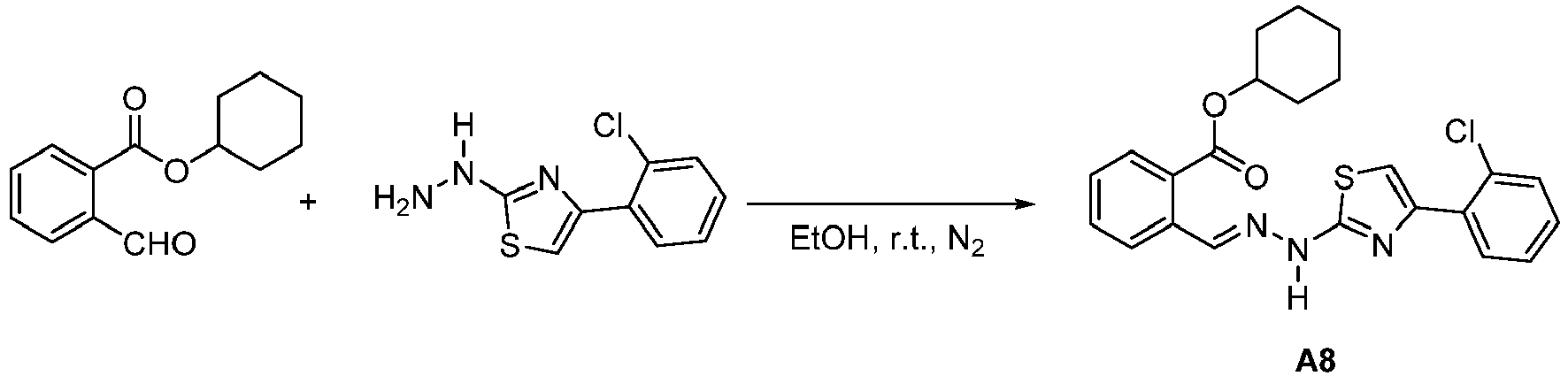
- 130 mg of a yellow powder (yield 50%) was obtained according to the same synthesis method as that for A1. Mp: 153-155 °C. 1H NMR (400 MHz, DMSO-d6, ppm): δ 12.42 (s, 1H), 8.70 (s, 1H), 8.00 (d, J = 7.8 Hz, 1H), 7.90 - 7.83 (m, 2H), 7.66 (t, J = 7.4 Hz, 1H), 7.56 - 7.47 (m, 2H), 7.42 (td, J = 7.5, 1.2 Hz, 1H), 7.39 - 7.33 (m, 2H), 5.00 - 4.91 (m, 1H), 1.98 - 1.89 (m, 2H), 1.78 - 1.68 (m, 2H), 1.64 - 1.49 (m, 3H), 1.47 - 1.25 (m, 3H). 13C NMR (100 MHz, DMSO-d6, ppm): δ 167.72, 166.37, 140.10, 134.84, 132.62, 131.52, 131.22, 130.86, 130.60, 129.80, 129.52, 129.39, 127.73, 126.67, 109.34, 73.85, 31.44, 25.34, 23.69. HRMS (ESI) calcd for C23H22N3O2SCl [M+H]+ 440.1121, found 440.1101. HPLC purity: 98.03%, Retention time = 13.03 min.
-

- O-carboxybenzaldehyde (1 g, 6.7 mmol) was weighed into a 100 mL three-necked flask, cesium carbonate (4.3 g, 13.3 mmol), potassium iodide (1.1 g, 6.7 mmol) and 15 mL of N,N-dimethylformamide (DMF) were added, and chloromethyl pivalate (1.5 g, 10 mmol) was added under stirring. The reaction mixture was heated to 70 °C for 20 h. The reaction was monitored by TLC until the reaction was completed. The heating was stopped and 20 mL of water was added into the reaction flask. The reaction solution was extracted for three times with dichloromethane and water, and the organic layers were combined, dried over anhydrous sodium sulfate, and suction-filtered. The filtrate was purified through a silica-gel column to obtain a clear transparent liquid (0.9 g, yield 52%). LC-MS (ESI) calcd for C14H16O5 [M+H]+ 265.08, found 265.10.
-

- A crude product was obtained according to the same synthesis method as that for A1. Afterwards, a pale yellow powder was obtained through solid precipitation by adding another solvent (the crude product was completely dissolved in an appropriate amount of ethyl acetate, petroleum ether was added with electromagnetic-stirring and rapidly stirred, and solids were precipitated and suction-filtered). (180 mg, yield 49%). Mp: 114-115 °C. 1H NMR (400 MHz, DMSO-d6, ppm): δ 12.43 (s, 1H), 8.73 (s, 1H), 8.03 (d, J = 8.0, 1.2 Hz, 1H), 7.89 - 7.83 (m, 2H), 7.74 - 7.68 (m, 1H), 7.56 - 7.51 (m, 2H), 7.42 (td, J = 7.5, 1.4 Hz, 1H), 7.39 - 7.33 (m, 2H), 5.98 (s, 2H), 1.18 (s, 9H). 13C NMR (100 MHz, DMSO-d6, ppm): δ 167.13, 164.91, 139.23, 135.19, 133.04, 131.04, 130.73, 130.35, 130.31, 129.04, 129.02, 127.24, 127.06, 126.51, 108.96, 80.13, 38.26, 26.47. HRMS (ESI) calcd for C23H22N3O4SCl [M+H]+ 472.1020, found 472.1096. HPLC purity: 97.79%, Retention time = 9.68 min.
-

- 0.8 g of a colorless transparent liquid (yield 45%) was obtained according to the same synthesis method as that for 9a. LC-MS (ESI) calcd for C13H14O6 [M+NH4]+ 284.08, found 284.10.
-

- 160 mg of a yellow powder (yield 53%) was obtained according to the same synthesis method as that for A9. Mp: 110-111 °C. 1H NMR (400 MHz, DMSO-d6, ppm): δ 12.44 (s, 1H), 8.76 (s, 1H), 8.04 (d, J = 8.0, 1.2 Hz, 1H), 7.93 - 7.85 (m, 2H), 7.73 (t, J = 7.6, 1.3 Hz, 1H), 7.57 - 7.51 (m, 2H), 7.43 (td, J = 7.5, 1.5 Hz, 1H), 7.40 - 7.33 (m, 2H), 5.96 (s, 2H), 4.85 (hept, J = 6.2 Hz, 1H), 1.26 (d, J = 6.2 Hz, 6H). 13C NMR (100 MHz, DMSO-d6, ppm): δ 167.62, 165.32, 153.25, 147.67, 139.76, 135.83, 133.66, 131.54, 131.23, 131.01, 130.85, 129.54, 129.49, 127.74, 127.30, 126.99, 109.47, 83.02, 73.24, 21.80 . HRMS (ESI) calcd for C22H20N3O5SCl [M+H]+ 474.0812, found 474.0889. HPLC purity: 99.25%, Retention time = 12.74 min.
-

- o-carboxybenzaldehyde (1.5 g, 10 mmol) was weighed into a 100 mL three-necked flask B, and 20 mL of anhydrous toluene was added. In an ice bath, thionyl chloride (1.79 g, 15 mmol) was added with electromagnetic-stirring. After 15 minutes, the ice bath was removed, and the three-necked flask B was transferred to an oil bath and heat to reflux at 110 °C for 4 h. The heating was stopped, and the solvent was removed in vacuo to obtain a yellow viscous liquid, which was directly diluted with 10 mL of anhydrous dichloromethane. Benzyl alcohol (1.08 g, 10 mmol), triethylamine (1.52 g, 15 mmol), 15 mL of anhydrous dichloromethane were added into another 100 mL single-mouth reaction flask A and electromagnetic-stirred in an ice salt bath for 15 minutes. An acid chloride solution in dichloromethane was added dropwise to the single-mouth reaction flask A for 30 minutes in an ice bath. Afterwards, the reaction system was warmed to room temperature, and the reaction was detected by TLC. After the reaction was completed, water was added to the reaction solution and stirred for 10 minutes, and the mixture was allowed to stratification. The organic phase was taken, and the aqueous phase was extracted for three times with dichloromethane. Organic phases were combined, dried, evaporated to dryness, and purified through a column, so as to give a colorless transparent liquid (1.1 g, yield 46%). 1H NMR (400 MHz, DMSO-d6, ppm): δ 10.42 (s, 1H), 7.95 - 7.91 (m, 2H), 7.78 - 7.75 (m, 2H), 7.50 - 7.48 (m, 2H), 7.42 - 7.36 (m, 3H), 5.39 (s, 2H). LC-MS (ESI) calcd for C15H12O3 [M+H]+ 241.08, found 241.10.
-

- 80 mg of a brown powder (yield 46%) was obtained according to the same synthesis method as that for A1. Mp: 168-169 °C. 1H NMR (400 MHz, DMSO-d6, ppm): δ 12.41 (s, 1H), 8.78 (s, 1H), 8.02 (d, J = 7.9 Hz, 1H), 7.92 - 7.86 (m, 2H), 7.70 - 7.65 (m, 1H), 7.56 - 7.49 (m, 4H), 7.45 - 7.40 (m, 3H), 7.39 - 7.34 (m, 3H), 5.38 (s, 2H). 13C NMR (100 MHz, DMSO-d6, ppm): δ 166.20, 147.14, 139.61, 135.86, 134.72, 133.20, 132.41, 131.04, 130.73, 130.35, 130.21, 129.01, 128.92, 128.51, 128.37, 128.16, 128.08, 127.22, 126.35, 108.87, 66.59. HRMS (ESI) calcd for C24H18N3O2SCl [M+H]+ 448.0808, found 448.0888. HPLC purity: 98.45%, Retention time = 12.14 min.
- Phenylethyl 2-formylbenzoate 12a

- 2.5 g of a transparent liquid (yield 70%) was obtained according to the same synthesis method as that for 9a. 1H NMR (400 MHz, DMSO-d6, ppm): δ 10.31 (s, 1H), 7.86 - 7.81 (m, 2H), 7.79 - 7.74 (m, 2H), 7.32 (d, J = 4.4 Hz, 4H), 7.27 - 7.20 (m, 1H), 4.56 (t, J = 6.7 Hz, 2H), 3.06 (t, J = 6.7 Hz, 2H). LC-MS (ESI) calcd for C16H14O3 [M+H]+ 255.09, found 255.10.
-

- 110 mg of a yellow powder (yield 51%) was obtained according to the same synthesis method as that for A1. Mp: 116-118 °C. 1H NMR (400 MHz, DMSO-d6, ppm): δ 12.46 (s, 1H), 8.79 (s, 1H), 8.05 (d, J = 7.9 Hz, 1H), 7.94 (d, J = 7.7 Hz, 1H), 7.84 (d, J = 7.8 Hz, 1H), 7.71 (t, J = 7.7 Hz, 1H), 7.60 (d, J = 7.9 Hz, 1H), 7.54 (t, J = 7.6 Hz, 1H), 7.48 (t, J = 7.6 Hz, 1H), 7.46 - 7.34 (m, 6H), 7.32 - 7.25 (m, 1H), 4.57 (t, J = 6.8 Hz, 2H), 3.14 (t, J = 6.9 Hz, 2H). 13C NMR (100 MHz, DMSO-d6, ppm): δ 167.58, 166.74, 147.55, 140.03, 138.30, 134.93, 133.61, 132.66, 131.43, 131.13, 130.75, 130.45, 129.41, 129.24, 129.03, 128.78, 127.62, 126.80, 126.67, 109.25, 65.98, 34.61. HRMS (ESI) calcd for C25H20N3O2SCl [M+H]+ 462.0965, found 462.1041. HPLC purity: 98.60%, Retention time = 12.24 min.
-

- o-carboxybenzaldehyde (1.5 g, 10 mmol) was weighed into a 100 mL three-necked flask, and 30 mL of anhydrous dichloromethane was added. 4 drops of anhydrous DMF were added into the flask in an ice salt bath. Thionyl chloride (1.9 g, 15 mmol) was added with electromagnetic-stirring. After 30 minutes, the ice bath was removed, and the flask was warmed to room temperature for 2 h, and the reaction was detected by TLC. After the reaction was completed, the solvent was removed in vacuo to obtain a yellow viscous liquid, which was directly diluted with 10 mL of anhydrous dichloromethane. Dimethylamine (0.45 g, 10 mmol), triethylamine (1.52 g, 15 mmol), 10 mL of anhydrous dichloromethane were added into another 100 mL single-mouth reaction flask and electromagnetic-stirred in an ice salt bath for 15 minutes. A freshly prepared acid chloride solution in dichloromethane was added dropwise through a constant pressure dropping funnel into the reaction flask for 30 minutes in an ice bath. Afterwards, the reaction system was warmed to room temperature, and the reaction was detected by TLC. After the reaction was completed, water was added to the reaction solution and stirred for 10 minutes, and the mixture was allowed to stratification. The organic phase was taken, and the aqueous phase was extracted for three times with dichloromethane. Organic phases were combined, dried, evaporated to dryness, and purified through a column, so as to give a colorless transparent liquid (0.5 g, yield 26%). 1H NMR (400 MHz, DMSO-d6, ppm): δ 9.97 (s, 1H), 7.98 - 7.94 (m, 1H), 7.75 (td, J = 7.5, 1.4 Hz, 1H), 7.67 - 7.61 (m, 1H), 7.44 - 7.39 (m, 1H), 3.03 (s, 3H), 2.72 (s, 3H). LC-MS (ESI) calcd for C10H11NO2 [M+H]+ 178.08, found 178.10.
-

- 80 mg of a yellow powder (yield 31%) was obtained according to the same synthesis method as that for A1. Mp: 181-182 °C. 1H NMR(400 MHz, DMSO-d6, ppm): δ 12.25 (s, 1H), 8.07 (s, 1H), 7.94 - 7.89 (m, 2H), 7.61 - 7.58 (m, 1H), 7.57 - 7.53 (m, 1H), 7.52 - 7.46 (m, 2H), 7.44 - 7.40 (m, 2H), 7.37 - 7.32 (m, 1H), 3.13 (s, 3H), 2.85 (s, 3H). 13C NMR (100 MHz, DMSO-d6, ppm): δ 169.33, 167.36, 147.51, 139.24, 136.34, 133.59, 131.42, 131.12, 130.92, 130.74, 129.47, 129.41, 129.32, 127.61, 127.19, 126.02, 109.19, 38.50, 34.64. HRMS (ESI) calcd for C19H17N4OSCl [M+H]+ 385.0812, found 385.0802. HPLC purity: 96.13%, Retention time = 4.18 min.
-
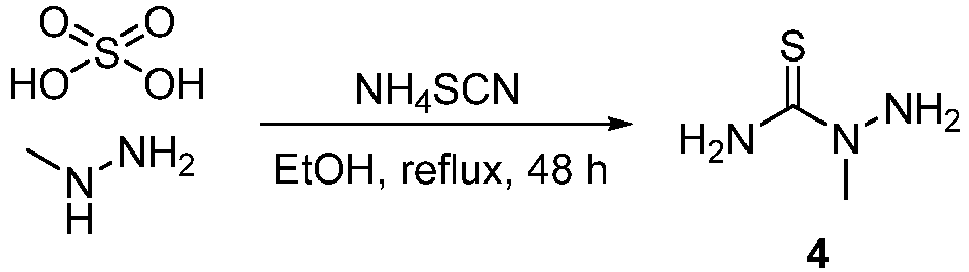
- Methyl hydrazine sulfate (12.5 g, 86.5 mmol) was weighed into a 500 ml three-mouth flask, 350 ml of anhydrous ethanol was added, and ammonium thiocyanate (8 g, 104.0 mmol) of was added with electromagnetic-stirring. The reaction mixture was heated to reflux, and detected by TLC for 48 h. The reaction was stopped, cooled to room temperature and suction-filtered. The obtained filtrate was evaporated to dryness and separated through silica gel column chromatography (DCM: MeOH = 100: 1 v/v) to give white powdery solids (2.2 g, yield 24%). 1H NMR (400 MHz, DMSO-d6, ppm): δ 7.38 (s, 2H), 4.88 (s, 2H), 3.40 (s, 3H). LC-MS (ESI) calcd for C2H7N3S [M+H]+ 106.04, found 106.10.
-

- Compound 4 (600 mg, 5.7 mmol) was weighed into a 250 mL three-necked flask, 150 mL of absolute ethanol was added, o-formylbenzoic acid (855 mg, 5.7 mmol) was added with electromagnetic-stirring, heated to reflux, and the reaction was monitored by TLC. After 4 h, the reaction was completed, the heating was stopped, and the reaction solution was cooled to room temperature. The solvent was evaporated to dryness in vacuo and purified through silica gel column chromatography (DCM: MeOH = 100: 1, v/v) to obtain white powdery solids (700 mg, yield 51.9%). 1H NMR (400 MHz, DMSO-d6, ppm): δ 13.32 (br, 1H), 8.54 (s, 1H), 8.50(s, 1H), 8.33 (d, J = 7.6 Hz, 1H), 8.24 (s, 1H), 7.90 (d, J = 7.8 Hz, 1H), 7.60 (t, J = 7.2 Hz, 1H), 7.52 (t, J = 7.2 Hz, 1H), 3.75 (s, 3H). LC-MS (ESI) calcd for C2H7N3S [M+H]+ 238.06, found 238.10.
-

- Compound 5 (700 mg, 2.94 mmol) was weighed into a 250 mL three-necked flask, 80 mL of absolute ethanol was added, and 2-bromo-2'-chloroacetophenone (0.46 mL, 2.94 mmol) was added with electromagnetic-stirring, and heated to reflux. The reaction was detected by TLC. After 4 h, the reaction was completed. The heating was stopped and the reaction mixture was cooled to room temperature. The solvent was evaporated to dryness in vacuo and purified through silica gel column chromatography (DCM: MeOH = 100: 1, v/ v) to give 540 mg of yellow powdery solids (yield 49%). Mp: 210-211 °C. 1H NMR (400 MHz, DMSO-d6, ppm): δ 13.26 (s, 1H), 8.60 (s, 1H), 8.04 (d, J = 7.6 Hz, 1H), 7.97-7.89 (m, 2H), 7.64 (t, J = 7.8 Hz, 1H), 7.55-7.48 (m, 2H), 7.46 (s, 1H), 7.40 (td, J 1 = 7.6 Hz, J 2 = 1.2 Hz, 1H), 7.32 (td, J 1 = 7.6 Hz, J 2 = 1.6 Hz, 1H), 3.65 (s, 3H). 13C NMR (100 MHz, DMSO-d6, ppm): δ 168.96, 168.50, 147.22, 136.91, 135.21, 133.40, 132.46, 131.50, 131.02, 130.88, 130.55, 130.14, 129.46, 129.18, 127.62, 126.50, 111.43, 32.90. HRMS (ESI) calcd for C18H15ClN3O2S [M+H]+ 372.0574, found 372.0573. HPLC purity: 98.15%, Retention time = 9.46 min.
-

- Compound B (0.2 g, 0.54 mmol) was weighed into a 50 mL two-necked flask, cesium carbonate (0.35 g, 1.08 mmol) and 10 mL of N,N-dimethylformamide (DMF) were added, and iodoethane (0.18 g, 1.08 mmol) was added with electromagnetic-stirring. The reaction was heated to 70 °C, and detected by TLC during the reaction. After 5 hr, the reaction was completed. The heating was stopped, and 20 mL of water was added to the reaction flask. The reaction solution was extracted with dichloromethane (DCM), and allowed to stand for separating the organic phase. The aqueous phase was extracted for three times with dichloromethane. Organic phases were combined and dried. The solvent was evaporated to dryness in vacuo and purified through column chromatography to give yellow powdery solids (120 mg, yield 58%). Mp: 109-110 °C. 1H NMR (400 MHz, DMSO-d6, ppm): δ 8.49 (s, 1H), 8.02 (d, J = 8.1, 1.2 Hz, 1H), 7.96 (dd, J = 7.7, 1.8 Hz, 1H), 7.92 - 7.88 (m, 1H), 7.69 (t, J = 7.6, 1.4 Hz, 1H), 7.56 - 7.47 (m, 3H), 7.45 - 7.40 (m, 1H), 7.37 (td, J = 7.6, 1.8 Hz, 1H), 4.36 (q, J = 7.1 Hz, 2H), 3.69 (s, 3H), 1.35 (t, J = 7.1 Hz, 3H). 13C NMR (100 MHz, DMSO-d6, ppm): δ 168.51, 166.58, 146.72, 136.19, 134.55, 133.00, 132.32, 131.12, 130.69, 130.36, 130.36, 129.08, 129.06, 128.88, 127.25, 126.36, 111.10, 61.16, 32.55, 14.04. HRMS (ESI) calcd for C20H18N3O2SCl [M+H]+ 400.0808, found 400.0886. HPLC purity: 98.65%, Retention time = 16.44 min.
-

- 100 mg of yellow powdery solids (yield 51%) was obtained according to the same synthesis method as that for B1. Mp: 96-97 °C. 1H NMR (400 MHz, DMSO-d6, ppm): δ 8.49 (s, 1H), 8.02 (d, J = 8.0, 1.2 Hz, 1H), 7.96 (dd, J = 7.7, 1.9 Hz, 1H), 7.91 (dd, J = 7.9, 1.4 Hz, 1H), 7.72 - 7.67 (m, 1H), 7.57 - 7.46 (m, 3H), 7.43 (td, J = 7.5, 1.4 Hz, 1H), 7.37 (td, J = 7.6, 1.8 Hz, 1H), 4.27 (t, J = 6.6 Hz, 2H), 3.68 (s, 3H), 1.75 (h, J = 7.1 Hz, 2H), 0.98 (t, J = 7.4 Hz, 3H). 13C NMR (100 MHz, DMSO-d6, ppm): δ 169.00, 167.14, 147.22, 136.65, 135.11, 133.49, 132.84, 131.62, 131.19, 130.87, 130.81, 129.59, 129.53, 129.42, 127.76, 126.94, 111.61, 67.09, 33.05, 21.99, 10.89. HRMS (ESI) calcd for C21H20N3O2SCl [M+H]+ 414.0965, found 414.1042. HPLC purity: 99.75%, Retention time = 15.44 min.
-

- 140 mg of pale yellow powder (yield 57%) was obtained according to the same synthesis method as that for B1. Mp: 128-130 °C. 1H NMR (400 MHz, DMSO-d6, ppm): δ 8.48 (s, 1H), 8.02 (d, J = 8.0, 1.2 Hz, 1H), 7.96 (dd, J = 7.7, 1.8 Hz, 1H), 7.88 (d, J = 7.8, 1.4 Hz, 1H), 7.71 - 7.65 (m, 1H), 7.56 - 7.47 (m, 3H), 7.46 - 7.39 (m, 1H), 7.36 (td, J = 7.6, 1.8 Hz, 1H), 5.21 (hept, J= 6.3 Hz, 1H), 3.69 (s, 3H), 1.36 (d, J = 6.2 Hz, 6H). 13C NMR (100 MHz, DMSO-d6, ppm): δ 168.52, 166.09, 146.73, 136.11, 134.45, 133.01, 132.24, 131.12, 130.70, 130.36, 129.43, 129.08, 128.87, 127.25, 126.27, 111.10, 68.75, 32.54, 21.59. HRMS (ESI) calcd for C21H20N3O2SCl [M+H]+ 414.0965, found 414.0955. HPLC purity: 99.65%, Retention time = 12.44 min.
-

- 190 mg of yellow powdery solids (yield 61%) was obtained according to the same synthesis method as that for B1. Mp: 135-136 °C. 1H NMR (400 MHz, DMSO-d6, ppm): δ 8.49 (s, 1H), 8.01 (d, J = 7.9, 1.2 Hz, 1H), 7.96 (dd, J = 7.7, 1.8 Hz, 1H), 7.90 (dd, J = 7.8, 1.3 Hz, 1H), 7.72 - 7.66 (m, 1H), 7.56 - 7.46 (m, 3H), 7.43 (td, J = 7.5, 1.4 Hz, 1H), 7.36 (td, J = 7.6, 1.9 Hz, 1H), 4.31 (t, J = 6.6 Hz, 2H), 3.68 (s, 3H), 1.71 (p, 2H), 1.42 (h, 2H), 0.93 (t, J = 7.4 Hz, 3H). 13C NMR (100 MHz, DMSO-d6, ppm): δ 168.98, 167.14, 147.21, 136.62, 135.11, 133.49, 132.81, 131.62, 131.18, 130.86, 130.80, 129.58, 129.50, 129.40, 127.75, 126.95, 111.60, 65.33, 33.03, 30.60, 19.26, 14.06. HRMS (ESI) calcd for C22H22N3O2SCl [M+H]+ 428.1121, found 428.1131. HPLC purity: 98.65%, Retention time = 20.44 min.
-

- 160 mg of pale yellow powder (yield 56%) was obtained according to the same synthesis method as that for B1. Mp: 131-132 °C. 1H NMR (400 MHz, DMSO-d6, ppm): δ 8.49 (s, 1H), 8.02 (dd, J = 8.0, 1.2 Hz, 1H), 7.96 (dd, J = 7.7, 1.8 Hz, 1H), 7.90 (dd, J = 7.8, 1.4 Hz, 1H), 7.72 - 7.66 (m, 1H), 7.56 - 7.46 (m, 3H), 7.43 (td, J = 7.5, 1.4 Hz, 1H), 7.37 (td, J = 7.6, 1.9 Hz, 1H), 5.06 (h, J = 6.3 Hz, 1H), 3.69 (s, 3H), 1.76 - 1.62 (m, 2H), 1.33 (d, J = 6.3 Hz, 3H), 0.93 (t, J = 7.5 Hz, 3H). 13C NMR (100 MHz, DMSO-d6, ppm): δ 169.02, 166.68, 147.22, 136.57, 135.04, 133.49, 132.80, 131.62, 131.19, 130.87, 130.79, 129.81, 129.60, 129.43, 127.76, 126.84, 111.62, 73.57, 33.04, 28.71, 19.66, 10.04. HRMS (ESI) calcd for C22H22N3O2SCl [M+H]+ 428.1121, found 428.1131. HPLC purity: 98.95%, Retention time = 11.42 min.
-

- 130 mg of pale yellow powder (yield 55%) was obtained according to the same synthesis method as that for B1. Mp: 117-118 °C.1H NMR (400 MHz, DMSO-d6, ppm): δ 8.48 (s, 1H), 8.04 - 7.85 (m, 3H), 7.69 (t, J = 7.6 Hz, 1H), 7.59 - 7.31 (m, 5H), 4.30 (t, J = 6.5 Hz, 2H), 3.68 (s, 3H), 1.78 - 1.64 (m, 2H), 1.35 (s, 4H), 0.88 (t, J = 6.7 Hz, 3H). 13C NMR(100 MHz, DMSO-d6, ppm): δ 168.99, 167.18, 147.22, 136.69, 135.08, 133.50, 132.80, 131.62, 131.19, 130.87, 130.77, 129.60, 129.57, 129.42, 127.76, 127.01, 111.60, 65.64, 33.05, 28.26, 28.19, 22.28, 14.33. HRMS (ESI) calcd for C23H24N3O2SCl [M+H]+ 442.1278, found 442.1265. HPLC purity: 98.21 %, Retention time = 22.10 min.
-

- 170 mg of pale yellow powder (yield 49%) was obtained according to the same synthesis method as that for B1. Mp: 88-89 °C. 1H NMR (400 MHz, DMSO-d6, ppm): δ 8.48 (s, 1H), 8.02 - 7.94 (m, 2H), 7.88 (dd, J = 7.8, 1.3 Hz, 1H), 7.72 - 7.66 (m, 1H), 7.58 - 7.46 (m, 3H), 7.43 (td, J = 7.6, 1.4 Hz, 1H), 7.36 (td, J = 7.6, 1.9 Hz, 1H), 4.30 (t, J = 6.6 Hz, 2H), 3.68 (s, 3H), 1.75 - 1.66 (m, 2H), 1.41 - 1.25 (m, 6H), 0.88 - 0.82 (m, 3H). 13C NMR (100 MHz, DMSO-d6, ppm): δ 237.52, 235.49, 158.25, 145.81, 132.69, 131.51, 131.35, 131.07, 130.76, 129.48, 129.31, 127.65, 126.94, 125.32, 124.37, 91.91, 65.55, 32.94, 31.27, 28.41, 25.58, 22.38, 14.24. HRMS (ESI) calcd for C24H26N3O2SCl [M+H]+ 456.1434, found 456.1410. HPLC purity: 97.55%, Retention time = 13.12 min.
-

- 130 mg of pale yellow powder (yield 53%) was obtained according to the same synthesis method as that for B1. Mp: 134-136 °C. 1H NMR (100 MHz, DMSO-d6, ppm): δ 8.50 (s, 1H), 8.02 (d, J = 8.0, 1.3 Hz, 1H), 7.96 (dd, J = 7.7, 1.8 Hz, 1H), 7.90 (dd, J = 7.9, 1.4 Hz, 1H), 7.72 - 7.66 (m, 1H), 7.56 - 7.47 (m, 3H), 7.43 (td, J = 7.5, 1.5 Hz, 1H), 7.37 (td, J = 7.6, 1.9 Hz, 1H), 5.03 - 4.95 (m, 1H), 3.69 (s, 3H), 1.98 - 1.90 (m, 2H), 1.79 - 1.65 (m, 2H), 1.61 - 1.49 (m, 3H), 1.47 - 1.29 (m, 3H). 13C NMR (100 MHz, DMSO-d6, ppm): δ 169.02, 166.44, 147.22, 136.65, 135.03, 133.50, 132.81, 131.62, 131.20, 130.87, 129.89, 129.61, 129.43, 127.77, 126.82, 111.62, 73.78, 33.06, 31.51, 25.32, 23.69. HRMS (ESI) calcd for C24H24N3O2SCl [M+H]+ 454.1278, found 454.1294. HPLC purity: 97.32%, Retention time = 11.53 min.
-

- 100 mg of yellow powder (yield 46%) was obtained according to the same synthesis method as that for B1, except that an equimolar amount of potassium iodide was added. Mp: 125-126 °C. 1H NMR (400 MHz, DMSO-d6, ppm): δ 8.40 (s, 1H), 8.02 - 7.93 (m, 2H), 7.84 - 7.80 (m, 1H), 7.71 - 7.66 (m, 1H), 7.56 - 7.47 (m, 3H), 7.43 (td, J = 7.5, 1.5 Hz, 1H), 7.37 (td, J = 7.6, 1.9 Hz, 1H), 7.31 (d, J = 4.3 Hz, 4H), 7.26 - 7.19 (m, 1H), 4.54 (t, J = 6.7 Hz, 2H), 3.61 (s, 3H), 3.06 (t, J = 6.7 Hz, 2H). 13C NMR (100 MHz, DMSO-d6, ppm): δ 168.88, 166.89, 147.13, 138.34, 136.45, 135.03, 133.42, 132.77, 131.52, 131.10, 130.76, 130.60, 129.49, 129.24, 128.77, 127.65, 126.90, 126.80, 111.49, 65.95, 34.67, 32.92. HRMS (ESI) calcd for C26H22N3O2SCl [M+H]+ 476.1121, found 476.1201. HPLC purity: 99.01%, Retention time = 9.75 min.
-

- 120 mg of bright yellow powder (yield 57%) was obtained according to the same synthesis method as that for B9. Mp: 126-127 °C. 1H NMR (400 MHz, DMSO-d6, ppm): δ 8.44 (s, 1H), 8.03 (d, J = 8.0, 1.2 Hz, 1H), 7.96 (dd, J = 7.7, 1.9 Hz, 1H), 7.89 - 7.85 (m, 1H), 7.77 - 7.71 (m, 1H), 7.57 - 7.53 (m, 2H), 7.49 (s, 1H), 7.43 (td, J = 7.5, 1.4 Hz, 1H), 7.37 (td, J = 7.6, 1.9 Hz, 1H), 5.99 (s, 2H), 3.69 (s, 3H), 1.17 (s, 9H). 13C NMR (100 MHz, DMSO-d6, ppm): δ 176.91, 168.94, 165.74, 147.24, 136.17, 135.56, 133.60, 133.48, 131.64, 131.20, 130.97, 130.87, 129.62, 129.56, 128.04, 127.77, 127.18, 111.73, 89.14, 80.79, 33.07, 26.96. HRMS (ESI) calcd for C24H24N3O4SCl [M+H]+ 486.1176, found 486.1256. HPLC purity: 97.64 %, Retention time = 13.15 min.
-

- 90 mg of firefly yellow powder (yield 54%) was obtained according to the same synthesis method as that for B9. Mp: 122-123 °C. 1H NMR (400 MHz, DMSO-d6, ppm): δ 8.74 (s, 1H), 8.30 (d, J = 8.0, 1.3 Hz, 1H), 8.15 (dd, J = 8.0, 1.4 Hz, 1H), 8.09 (dd, J = 7.8, 1.8 Hz, 1H), 7.74 -7.67 (m, 1H), 7.54 - 7.47 (m, 2H), 7.44 - 7.36 (m, 2H), 7.36 - 7.28 (m, 2H), 6.10 (s, 2H), 5.07 - 5.00 (m, 1H), 3.86 (s, 3H), 1.42 (d, J = 6.2 Hz, 6H). 13C NMR (100 MHz, DMSO-d6, ppm): δ 169.03, 165.22, 153.36, 147.30, 136.67, 134.75, 133.43, 133.13, 131.72, 131.21, 131.12, 130.39, 128.36, 128.31, 126.86, 126.71, 126.38, 110.68, 82.11, 73.18, 32.67, 21.57. HRMS (ESI) calcd for C23H22N3O5SCl [M+H]+ 488.0969, found 488.1046. HPLC purity: 95.65%, Retention time = 6.77 min.
-

- Compound B (0.2 g, 0.54 mmol) was weighed into a 50 mL two-necked flask, and 10 mL of dichloromethane and 2 drops of N,N-dimethylformamide (DMF) were added, and stirred for 10 minutes in an ice bath. Oxalyl chloride (0.13 g, 1.08 mmol) was dissolved in 5 mL of dichloromethane and added dropwise to the reaction flask. The reaction mixture was placed in the ice bath for another half an hour, the ice bath was removed, the reaction mixture was warmed to room temperature for 2 h, and the reaction was detected: the reaction solution was taken into a tube, methanol was added with shaking, then water and ethyl acetate were added and allowed to stand, the upper organic phase was taken and detected by TLC to determine that the raw material point basically disappeared. The preparation of acid chloride was successful. The solvent of the reaction solution was evaporated to dryness in vacuo to give a yellow liquid, which was directly used in the next step.
-

- Dimethylamine (24 mg, 0.54 mmol), triethylamine (55 mg, 0.54 mmol) and 10 mL of anhydrous dichloromethane were added into a 50 mL single-mouth reaction flask and electromagnetic-stirred for 15 minutes in an ice bath. The freshly prepared acid chloride solution in dichloromethane was added dropwise to the reaction flask, and maintained in an ice bath for 30 minutes. The reaction was warmed to room temperature for 10 hours, and detected by TLC. After the reaction was completed, 5 ml of water and 5 ml of dichloromethane were added into the reaction mixture, and stirred for 10 minutes. The mixture was allowed to stand for stratification. The organic phase was taken, the aqueous phase was extracted for three times with dichloromethane, and organic phases were combined and dried. The solvent was evaporated to dryness in vacuo and purified through column chromatography to give 50 mg of off-white solid powder (yield 25%). Mp: 160-161 °C. 1H NMR(400 MHz, DMSO-d6, ppm): δ 7.96 (dd, J = 8.0, 2 Hz, 1H), 7.87 (d, J = 7.6 Hz, 1H), 7.73 (s, 1H), 7.55 - 7.29 (m, 7H), 3.65 (s, 3H), 3.07 (s, 3H), 2.80 (s, 3H). 13C NMR (100 MHz, DMSO-d6, ppm): δ 169.57, 168.91, 147.14, 136.30, 135.65, 133.52, 131.62, 131.34, 131.19, 130.86, 129.58, 129.46, 127.76, 127.59, 127.22, 111.59, 38.62, 34.90, 32.95. HRMS (ESI) calcd for C20H19N4OSCl [M+H]+ 399.0968, found 399.1048. HPLC purity: 99.75%, Retention time = 4.61 min.
- Culture of protein: hsDHODH protein was obtained according to hsDHODH gene sequence in GenBank and the conditions described in a conventional method, for example, Sambrook et al., Molecular Cloning: A Laboratory Guide (New York: Cold Spring Harbor Laboratory Press, 1989).
- The correctly sequenced recombinant plasmid pET-19b-DHODH was transformed into competent E. coli BL21 (DE3), and cultured on LB plate containing ampicillin. Colonies were randomly selected, inoculated into LB medium containing 100 µM ampicillin, and incubate overnight at 37 °C, 230 rpm. The cells were inoculated at a ratio of 1: 200 in 500 mL of LB medium containing 100 µL of ampicillin and expanded at 37 °C, 230 rpm. When the OD value of the cells reached 0.8-1, IPTG was added into the medium to a final concentration of IPDG of 0.5 mM, and expression was induced overnight at 25 °C. The induced cells were collected by centrifugation at 4000 °C, 4 °C, washed with deionized water, and centrifuged again to collect the bacterial pellet, which was stored at -80 °C.
- Purification of protein: cells were re-suspended in lysis liquid containing 50 mM HEPES (pH 8.0), 0.15 M NaCl, 10 mM imidazole, 10% glycerol, 0.1% Triton X-100, and a small amount of soy protease inhibitor added. After re-suspended and mixed homogeneously, cells were ultrasonically disrupted. The disruption solution was centrifuged for 30 min, and the supernatant and precipitate were taken for protein electrophoresis to determine the form of protein. The supernatant was loaded onto a Ni-NTA column, and the pass-through liquid was collected, and then the resin was washed for 3-4 times with a lysis liquid containing 20 mM imidazole, and finally eluted with a lysis liquid containing 300 mM imidazole. After elution, protein solution was collected. 10 µL of the above protein sample was taken for SDS-PAGE electrophoresis to determine the content of target protein. Finally, the eluted protein solution is dialyzed in the dialysis liquid to remove imidazole, thereby obtaining a pure protein.
- Principles of activity test at enzyme level: firstly, dihydroorotate (DHO) is oxidatively dehydrogenated by DHODH to form orotic acid (Orotate, OA), accompanied by reduction of Flavin mononucleotide (FMN) into reduced flavin mononucleotide (FMNH2) by accepting 2H+ and 2e-, then coenzyme Q (CoQ) as hydrogen acceptor accepting electron and proton from FMNH2 is reduced into reduced coenzyme Q (CoQH2), reduced coenzyme Q transfers electrons to a chromogenic substrate, diclofenac sodium salt (DCIP), and finally DCIP was reduced. DCIP shows maximum absorption at 600 nm, while the reduced DCIP does not show absorption at 600 nm. The degree to which the substrate DHO is oxidized can be judged based on the degree of decrease in absorbance. The degree of oxidation of the substrate DHO per unit time is the initial rate of the enzymatic reaction. Upon addition of a inhibitor, the initial rate of the enzymatic reaction is reduced.
- The purified DHODH was diluted to 10 nM with a test buffer (50 mM HEPES, pH 8.0, 150 mM KCl, 0.1% Triton X-100), and coenzyme Q and DCIP were added to a final concentration of 100 µM and 120 µM, respectively, mixed well, added into a 96-well plate and incubated for 5 min at room temperature. Substrate DHO was added to start the reaction with a DHO final concentration of 500 µM. The absorbance was read at 600 nm using a BioTek microplate reader and read every 30 s for 6 min. For inhibitor activity test, different concentrations of inhibitors were added into the above reaction system, the initial rate of enzymatic reaction when no inhibitor was added was V0, and the initial rate of enzymatic reaction after an inhibitor was added was Vi, and the inhibition rate of a compound was calculated by the formula (1-Vi/V0) × 100%. For calculating IC50 of a compound, Origin 8.0 was used to test the inhibition rate at least 8 concentrations. In the experimental procedure, Brequinar (purchased from Sigma-Aldrich Reagent) was used as a positive control and at least three parallels were set in each experiment. The results are shown as follows:
No. of Compound IC50(µM) hsDHODH 1 0.0097±0.0001 2 0.0587±0.0016 3 0.0086±0.0001 4 0.0931±0.0011 5 0.0244±0.0002 6 0.0191±0.0006 7 0.4253±0.0092 8 0.0868±0.0009 9 0.0084±0.0001 10 0.0018±0.0001 11 0.0136±0.0005 12 0.0088±0.0001 13 0.0355±0.0009 14 0.3557±0.0064 15 0.0662±0.0002 17 0.0811±0.0001 19 0.0282±0.0000 20 0.0244±0.0005 21 0.0106±0.0000 22 0.0154±0.0002 23 0.0044±0.0000 24 0.0214±0.0005 25 0.0316±0.0001 58 0.2342±0.0068 Brequinar 0.00845±0.00005 - Similarly, test results of pharmaceutically acceptable esters of a compound of the invention are shown in the following table:
No. 2 Structure Molecular weight IC50 (µM) A1 
385.87 2.33622±0.04680 A2 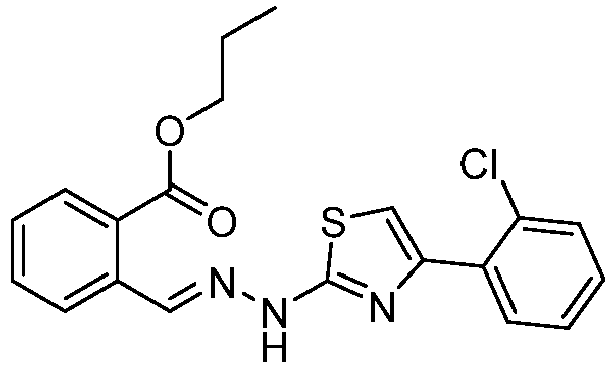
399.08 1.40452±0.06606 A3 
399.08 1.85794±0.02135 A4 
413.10 3.53302±0.14798 A5 
413.10 4.65095±0.02643 A6 
427.11 >50 A7 
441.13 >50 A8 
439.11 >50 A9 
471.10 >50 A10 
473.08 >50 A11 
447.08 >50 A12 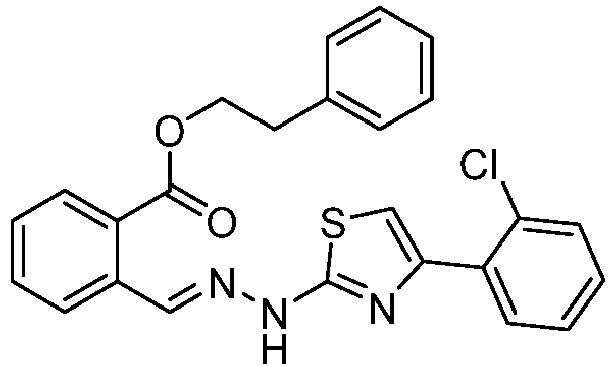
461.10 >50 A13 
384.08 >50 B1 
399.08 2.78515±0.04653 B2 
413.10 1.95561±0.11059 B3 
413.10 3.3655±0.15427 B4 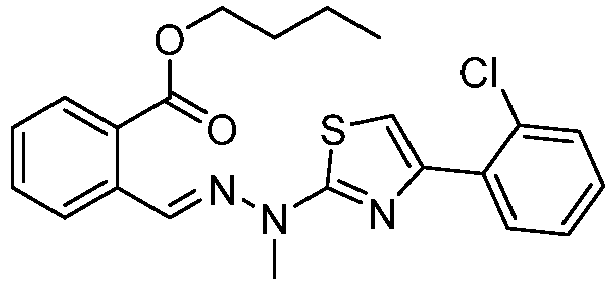
427.11 >50 B5 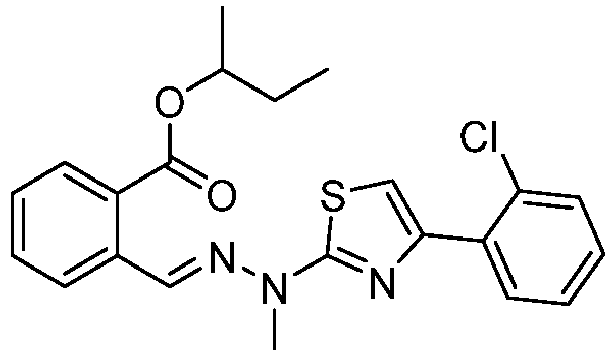
427.11 >50 B6 
441.13 >50 B7 
455.14 >50 B8 
453.13 >50 B9 
475.11 >50 B10 
485.12 >50 B11 
487.10 >50 B12 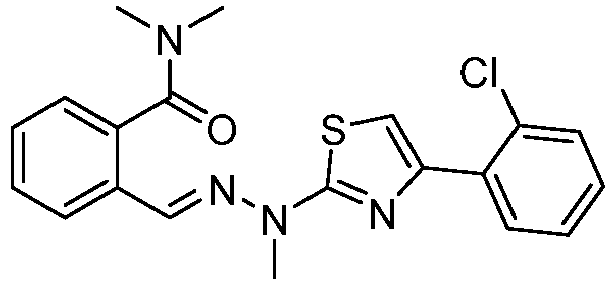
398.10 >50 - From the results of the activity assay of the compound of the present invention carried out at the enzyme level, it is understood that the compounds of the present invention have excellent DHODH inhibitory activity, and IC50 values for some compounds for inhibiting DHODH can even reach 1-10 nM.
- Therefore, the compound of the present invention shows a prospect of becoming a novel DHODH inhibitor with low toxicity and high safety.
-
Table A-1. Wistar rat division for compound 1 Group No. Group Number of rat Administration and dosage Administration mode 1 Normal Control group 6 Solvent system Intraperiton eal injection 2 Model group 11 Solvent system Intraperiton eal injection 3 Low dosage group 11 5 mg/kg compound 1 Intraperiton eal injection 4 High dosage group 11 30 mg/kg compound 1 Intraperiton eal injection 5 Positive drug control group 10 0.3 mg/kg Methotrexate Intraperiton eal injection - The animal model used in this experiment was a type II collagen-induced arthritis animal model (CIA) established by using Wistar rat. On the 0 and 7th day of the experiment, rats were subcutaneously injected with a mixed solution of Bovine II Collgen (CII) and Incomplete Freund's Adjuvant (IFA) to establish a rat model of arthritis.
- In the pharmacodynamic test of Compound 1, Compound 1 and the positive drug, methotrexate were dissolved in a solvent system consisting of dimethyl sulfoxide (DMSO), polyethylene glycol 400 (PEG 400) and physiological saline at a volume ratio of 1: 10: 9.
- During the administration to the rats (day 0 to 27 of the experiment), the body weight of a rat was weighed every three days, and the growth was observed. After the joints of the rat began to swell, the degree of joint swelling was scored every two days. The specific scoring criteria are shown in Table B.
Table B. Score standard for joint swelling of rat Score Symptom 0 No redness 1 redness and swelling in small toe joint 2 Swelling in toe joint and ankle 3 Swelling in the part below the ankle joint 4 Swelling in ankle joint and below part - Because the incidence of inflammation in fore paw is low and the hind paws are more prone to swelling and the degree of swelling is more serious, the sum of the scores of two hind paws is used to evaluate the incidence of arthritis in rats. The maximum sum of score is 8 points.
- In this experiment, Wistar rats were used to establish a CIA animal model. Joints were taken on the 28th day for subsequent fixation, paraffin embedding, section, staining and histopathological observation. The experiment results are shown as follows:
During the experiment, the weight of rats in the control group continued to increase. Compared with the model group, the weight gain of the rats in the model group was slightly slower. Administration of Compound 1 and methotrexate can improve the condition of the rats and the slow gain of body weight (Fig. 2A ). - On the 10th day of the experiment, i.e., the third day after booster immunization, the rats in the model group began to develop gradually. On the 18th day of the experiment, the joint swelling of the rats in the model group was the most serious, and afterwards the situation became stable. The administration of positive drug methotrexate (0.3 mg/kg) can significantly reduce the degree of joint swelling in rats, and in the rats given compound 1 (5 mg/kg, 30 mg/kg), compared with the model group, the degree of joint swelling was also significantly reduced. Especially, when a higher dosage (30 mg/kg) was given, the swelling was more significantly reduced. On the 28th day, scores of joint swelling in the high-dose group and positive drug group were similar (
Fig. 2B ). -
Figure 2C shows representative photographs for the foot of rats in each of the different treatment groups onday 28 of the experiment. It can be seen fromFig. 2C that the foot swelling of rats in the model group is the most serious, and the swelling degree of the foot, after the administration of the positive drug and two different concentrations of compound 1, was improved, and the effects of high dose of compound 1 is more significant than those of low dose. - The above results of weight gain and joint swelling scores indicate that Compound 1 may have a strong effect on improving joint swelling in CIA animal model.
- Results of effects of Compound 1 on histopathology of arthritic rats are shown in
Figure 3 . There was a significant inflammatory cell infiltration in the joint tissues of the model group, accompanied by severe cartilage damage and bone erosion. In the rats treated with Compound 1, the histopathological features were significantly alleviated, and in the higher dose group, improvement was more significant, indicating that Compound 1 may have a significant anti-arthritic effect, and the effect has a dose-dependent relationship. - In the experiment, an animal model of type II collagen-induced arthritis was established using Wistar rats, and therapeutic effects of DHODH inhibitor, Compound 1 on arthritis were tested. Results showed that after the arthritis model was established and treated with Compound 1, the weight loss caused by the establishment of the model can be improved and the swelling of the joints in rats can be reduced.
- In addition, the results of tissue sections also showed that the synovial hyperplasia and inflammatory cell infiltration in rats treated with Compound 1 were greatly improved compared with the model group.
- The above results indicate that Compound 1 has anti-inflammatory effects and is a potential compound for RA treatment with a dose-dependent relationship.
- All documents mentioned in the present application are hereby incorporated by reference in their entireties as if each document is separately cited as a reference. In addition, it is to be understood that various modifications and changes may be made by a skilled person in the art, after reading the above teachings of the present invention, and the equivalent forms also fall within the scope defined by the claims appended hereto.
Claims (11)
- A compound of formula I or a pharmaceutically acceptable salt or ester thereof
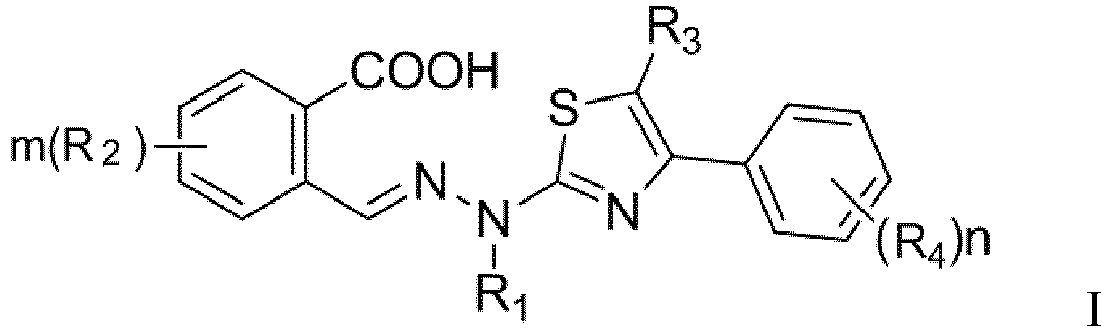 R1 is selected from the group consisting of: H, a substituted or unsubstituted C1-C6 alkyl, C3-C6 cycloalkyl;R2 is selected from the group consisting of: H, halogen, a substituted or unsubstituted C1-C6 alkyl, substituted or unsubstituted C1-C6 alkoxy, CN, NO2, hydroxy, NRaRb;Ra, Rb are independently selected from H or C1-C6 alkyl;R3 is selected from the group consisting of H and a substituted or unsubstituted C1-C6 alkyl;R4 is selected from the group consisting of H and halogen;m is an integer from 0 to 4;n is an integer from 0 to 5;wherein, when R2 is H and R3 is H, R1 is not H.
 - The compound of claim 1 or a pharmaceutically acceptable salt or ester thereof, wherein the compound is shown in Formula II:
 R5 and R6 are independently selected from the group consisting of H, halogen, a substituted or unsubstituted C1-C6 alkyl, substituted or unsubstituted C1-C6 alkoxy, hydroxy and NH2;R7, R8 and R9 are independently selected from the group consisting of H and halogen;R1 and R3 are as described in claim 1.
 - The compound of claim 2 or a pharmaceutically acceptable salt or ester thereof, wherein R1 is selected from a C1-C6 alkyl (preferably C1-C3 alkyl);
R3 is selected from H or a substituted or unsubstituted C1-C6 alkyl (preferably C1-C3 alkyl);
R5 and R6 are independently selected from the group consisting of H, halogen (preferably F), an unsubstituted or halogen (preferably F)-substituted C1-C3 alkyl;
R7 and R8 are independently selected from the group consisting of H and halogen (preferably Cl); and
R9 is H. - The compound of claim 2 or a pharmaceutically acceptable salt or ester thereof, wherein R1 is selected from H or a C1-C6 alkyl, preferably a C1-C3 alkyl;
R3 is selected from H or a substituted or unsubstituted C1-C6 alkyl, preferably C1-C3 alkyl; R5 is selected from the group consisting of H, halogen (preferably F), an unsubstituted or halogen (preferably F)-substituted C1-C3 alkyl;
R6 is selected from the group consisting of H, halogen (preferably F), hydroxyl and NH2; R7 and R8 are independently selected from H or halogen (preferably Cl); and
R9 is H. - A compound or a pharmaceutically acceptable salt or ester thereof selected from the following group:
No. Structure No. Structure 1 
2 
3 
4 
5 
6 
7 
8 
8-1 
9 
9-1 
10 
10-1 
11 
12 
12-1 
13 
14 
15 
17 
19 
20 
21 
22 
23 
23-1 
24 
25 
58 
A1 
A2 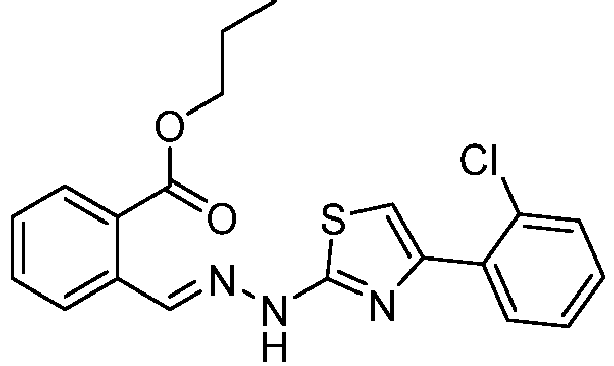
A3 
A4 
A5 
A6 
A7 
A8 
A9 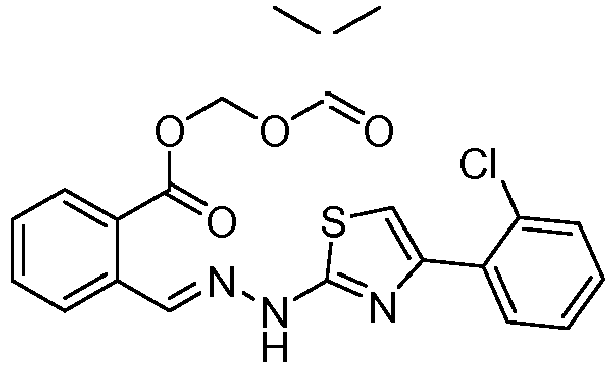
A10 
A11 
A12 
A13 
B1 
B2 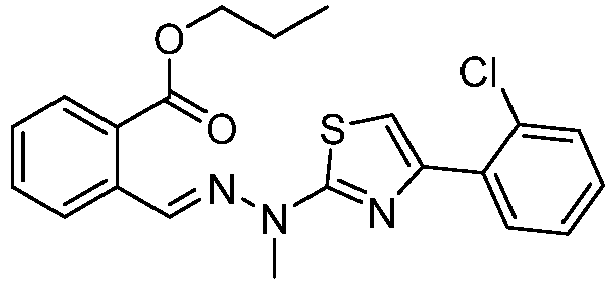
B3 
B4 
B5 
B6 
B7 
B8 
B9 
B10 
B11 
B12 
- The compound of claim 5 or a pharmaceutically acceptable salt or ester thereof, wherein the compound is selected from the following group:
No. Structure No. Structure 1 
3 
8-1 
9 
9-1 
10 
10-1 
11 
12 
12-1 
21 
22 
23 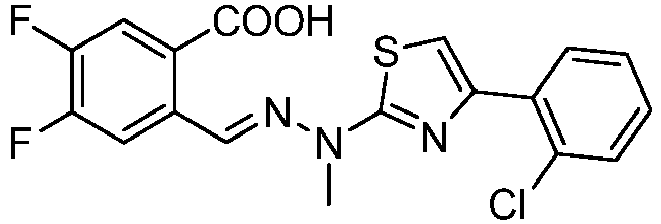
23-1 
A1 
A2 
A3 
A4 
A5 
A6 
A7 
A8 
A9 
A10 
A11 
A12 
A13 
B1 
B2 
B3 
B4 
B5 
B6 
B7 
B8 
B9 
B10 
B11 
B12 
- A pharmaceutical composition, comprising a compound of any one of claims 1-6 or a pharmaceutically acceptable salt or ester thereof, and a pharmaceutically acceptable carrier or excipient.
- Use of the compound of any one of claims 1-6 for preparing a medicament for treating DHODH-mediated diseases.
- The use of claim 8, wherein the DHODH-mediated diseases include, but are not limited to, autoimmune diseases, bacterial infections, parasites and tumors.
- The use of claim 9, wherein the autoimmune disease includes, but is not limited to, rheumatoid arthritis, organ transplant rejection, psoriasis.
- A method for treating DHODH-mediated diseases, comprising administering the compound of any one of claims 1-6 or a pharmaceutically acceptable salt or ester thereof, or the pharmaceutical composition of claim 7 to a subject in need thereof.
Applications Claiming Priority (2)
| Application Number | Priority Date | Filing Date | Title |
|---|---|---|---|
| CN201610327056.7A CN107382902B (en) | 2016-05-17 | 2016-05-17 | Thiazole derivatives and their applications |
| PCT/CN2017/084748 WO2017198178A1 (en) | 2016-05-17 | 2017-05-17 | Thiazole derivative and applications |
Publications (3)
| Publication Number | Publication Date |
|---|---|
| EP3459937A1 true EP3459937A1 (en) | 2019-03-27 |
| EP3459937A4 EP3459937A4 (en) | 2019-11-13 |
| EP3459937B1 EP3459937B1 (en) | 2021-12-29 |
Family
ID=60325729
Family Applications (1)
| Application Number | Title | Priority Date | Filing Date |
|---|---|---|---|
| EP17798741.9A Not-in-force EP3459937B1 (en) | 2016-05-17 | 2017-05-17 | Thiazole derivative and applications |
Country Status (5)
| Country | Link |
|---|---|
| US (1) | US10919869B2 (en) |
| EP (1) | EP3459937B1 (en) |
| JP (1) | JP7030791B2 (en) |
| CN (1) | CN107382902B (en) |
| WO (1) | WO2017198178A1 (en) |
Families Citing this family (8)
| Publication number | Priority date | Publication date | Assignee | Title |
|---|---|---|---|---|
| CN107375279B (en) * | 2016-05-17 | 2022-11-01 | 华东理工大学 | Use of novel thiazole derivatives for the treatment of inflammatory bowel disease |
| CN108721283A (en) * | 2017-04-20 | 2018-11-02 | 华东理工大学 | Application of the thiazole in treating non-lymphocytic leukemia |
| WO2020107221A1 (en) * | 2018-11-27 | 2020-06-04 | Tsinghua University | Chemical activators of nicotinamide mononucleotide adenlyly transferase 2 (nmnat2) and uses thereof |
| US11432291B2 (en) | 2019-06-21 | 2022-08-30 | Huawei Technologies Co., Ltd. | System and scheme on group based identity and scrambling for UE cooperation transmission |
| US20230190713A1 (en) * | 2020-03-02 | 2023-06-22 | East China University Of Science And Technology | Anti-rna virus drug and application thereof |
| CN112707874A (en) * | 2020-12-29 | 2021-04-27 | 广东中科药物研究有限公司 | Antiviral compound and preparation method thereof |
| CN115701427A (en) * | 2021-08-02 | 2023-02-10 | 上海汇伦医药股份有限公司 | Multi-substituted thiazole derivatives and their application in disease treatment |
| WO2025176215A1 (en) * | 2024-02-23 | 2025-08-28 | 复旦大学 | 2-aminothiazole compound derivative and use thereof |
Family Cites Families (7)
| Publication number | Priority date | Publication date | Assignee | Title |
|---|---|---|---|---|
| US4319026A (en) * | 1980-08-14 | 1982-03-09 | Gulf Oil Corporation | Heterocyclic-substituted hydrazides and hydrazones as plant growth regulators |
| MXPA06012130A (en) * | 2004-04-20 | 2007-01-31 | Transtech Pharma Inc | Substituted thiazole and pyrimidine derivatives as melanocortin receptor modulators. |
| WO2011053468A1 (en) * | 2009-10-30 | 2011-05-05 | Sanofi-Aventis | Amino-benzoic acid derivatives for use in the treatment of dihydrogenase-related disorders |
| CN103006653A (en) * | 2011-09-27 | 2013-04-03 | 华东理工大学 | Applications of 2,4-disubstituted thiazoles derivatives being taken as DHODH (dihydroorotate dehydrogenase) inhibitor |
| CN103058949A (en) * | 2011-10-18 | 2013-04-24 | 华东理工大学 | Thiazole derivative acting as DHODH inhibitor and its application |
| CN103127095A (en) | 2011-11-23 | 2013-06-05 | 华东理工大学 | Synthesis and application of dihydrothiophenone derivative as pfDHODH inhibitor |
| KR20160079123A (en) | 2013-11-22 | 2016-07-05 | 젠자임 코포레이션 | Novel methods for treating neurodegenerative diseases |
-
2016
- 2016-05-17 CN CN201610327056.7A patent/CN107382902B/en not_active Expired - Fee Related
-
2017
- 2017-05-17 US US16/302,564 patent/US10919869B2/en not_active Expired - Fee Related
- 2017-05-17 EP EP17798741.9A patent/EP3459937B1/en not_active Not-in-force
- 2017-05-17 WO PCT/CN2017/084748 patent/WO2017198178A1/en not_active Ceased
- 2017-05-17 JP JP2019513101A patent/JP7030791B2/en not_active Expired - Fee Related
Also Published As
| Publication number | Publication date |
|---|---|
| EP3459937B1 (en) | 2021-12-29 |
| CN107382902B (en) | 2022-08-12 |
| JP7030791B2 (en) | 2022-03-07 |
| CN107382902A (en) | 2017-11-24 |
| WO2017198178A1 (en) | 2017-11-23 |
| US20190292162A1 (en) | 2019-09-26 |
| JP2019519604A (en) | 2019-07-11 |
| EP3459937A4 (en) | 2019-11-13 |
| US10919869B2 (en) | 2021-02-16 |
Similar Documents
| Publication | Publication Date | Title |
|---|---|---|
| EP3459937B1 (en) | Thiazole derivative and applications | |
| CN103998434B (en) | Thiazole and application thereof as DHODH inhibitor | |
| US10766882B2 (en) | 1,2-naphthoquinone based derivative and method of preparing the same | |
| JP2022000453A (en) | Pyrazole-amide compounds and pharmaceutical use thereof | |
| TW200410675A (en) | An NF-κB activation inhibitor | |
| CN103842350B (en) | As five yuan of dihydro heterocyclic ketones derivatives and the application of DHODH inhibitor | |
| HUE031506T2 (en) | Aldose reductase inhibitors and uses thereof | |
| US10093631B2 (en) | Bifunctional compounds and use for reducing uric acid levels | |
| CN106892878B (en) | Thiazole derivative and application thereof in inhibiting dihydroorotate dehydrogenase | |
| CN117769544A (en) | Multi-substituted thiazole derivatives and their applications in disease treatment | |
| EP3091005B1 (en) | 1,2-naphthoquinone derivative and method for preparing same | |
| EP2552915B1 (en) | Compounds for the treatment of hiv | |
| US11534427B2 (en) | Applications of novel thiazole derivative in treating inflammatory bowel diseases | |
| EP3212644B1 (en) | Derivatives of 2-(1,2,4-triazol-3-ylsulfanyl)-n-1,3,4-thiadiazol-2-yl acetamide which are useful for the treatment of diabetes | |
| JPWO2002083649A1 (en) | Novel imidazolidinedione derivatives and their pharmaceutical uses | |
| EP0298134B1 (en) | Aromatic heterocyclic carboxylic acid amide derivatives, process for their preparation, and pharmaceutical composition containing same | |
| CN107459491A (en) | Benzamide compound containing 1,2,3 triazole structures and application thereof | |
| JP2023071839A (en) | Hydrazinopurine and triazolopurine compounds for inhibiting xanthine oxidase | |
| TW201736366A (en) | Pyridazine derivatives, compositions and methods of use | |
| CN101248074A (en) | Xanthine oxidase inhibitors | |
| CN111303161B (en) | Pyrimido-nitrogen heterocyclic compound and application thereof | |
| WO2025184668A1 (en) | Compounds and formulations for restoring tumor suppressor functions | |
| CN120774919A (en) | Pyrazolo [3,4-d ] pyridazinone compound, preparation method thereof, pharmaceutical composition and application thereof | |
| HK1225017A1 (en) | 1,2-naphthoquinone derivative and method for preparing same | |
| HK1225017B (en) | 1,2-naphthoquinone derivative and method for preparing same |
Legal Events
| Date | Code | Title | Description |
|---|---|---|---|
| STAA | Information on the status of an ep patent application or granted ep patent |
Free format text: STATUS: THE INTERNATIONAL PUBLICATION HAS BEEN MADE |
|
| PUAI | Public reference made under article 153(3) epc to a published international application that has entered the european phase |
Free format text: ORIGINAL CODE: 0009012 |
|
| STAA | Information on the status of an ep patent application or granted ep patent |
Free format text: STATUS: REQUEST FOR EXAMINATION WAS MADE |
|
| 17P | Request for examination filed |
Effective date: 20181217 |
|
| AK | Designated contracting states |
Kind code of ref document: A1 Designated state(s): AL AT BE BG CH CY CZ DE DK EE ES FI FR GB GR HR HU IE IS IT LI LT LU LV MC MK MT NL NO PL PT RO RS SE SI SK SM TR |
|
| AX | Request for extension of the european patent |
Extension state: BA ME |
|
| DAV | Request for validation of the european patent (deleted) | ||
| DAX | Request for extension of the european patent (deleted) | ||
| RIC1 | Information provided on ipc code assigned before grant |
Ipc: A61P 37/00 20060101ALI20191002BHEP Ipc: A61P 19/02 20060101ALI20191002BHEP Ipc: A61P 35/00 20060101ALI20191002BHEP Ipc: A61K 31/426 20060101ALI20191002BHEP Ipc: A61P 17/06 20060101ALI20191002BHEP Ipc: A61P 33/00 20060101ALI20191002BHEP Ipc: C07D 277/50 20060101AFI20191002BHEP Ipc: A61P 29/00 20060101ALI20191002BHEP Ipc: A61P 31/04 20060101ALI20191002BHEP Ipc: A61P 37/06 20060101ALI20191002BHEP |
|
| A4 | Supplementary search report drawn up and despatched |
Effective date: 20191014 |
|
| STAA | Information on the status of an ep patent application or granted ep patent |
Free format text: STATUS: EXAMINATION IS IN PROGRESS |
|
| 17Q | First examination report despatched |
Effective date: 20200728 |
|
| GRAP | Despatch of communication of intention to grant a patent |
Free format text: ORIGINAL CODE: EPIDOSNIGR1 |
|
| STAA | Information on the status of an ep patent application or granted ep patent |
Free format text: STATUS: GRANT OF PATENT IS INTENDED |
|
| INTG | Intention to grant announced |
Effective date: 20210727 |
|
| GRAS | Grant fee paid |
Free format text: ORIGINAL CODE: EPIDOSNIGR3 |
|
| GRAA | (expected) grant |
Free format text: ORIGINAL CODE: 0009210 |
|
| STAA | Information on the status of an ep patent application or granted ep patent |
Free format text: STATUS: THE PATENT HAS BEEN GRANTED |
|
| AK | Designated contracting states |
Kind code of ref document: B1 Designated state(s): AL AT BE BG CH CY CZ DE DK EE ES FI FR GB GR HR HU IE IS IT LI LT LU LV MC MK MT NL NO PL PT RO RS SE SI SK SM TR |
|
| REG | Reference to a national code |
Ref country code: GB Ref legal event code: FG4D |
|
| REG | Reference to a national code |
Ref country code: CH Ref legal event code: EP |
|
| REG | Reference to a national code |
Ref country code: AT Ref legal event code: REF Ref document number: 1458586 Country of ref document: AT Kind code of ref document: T Effective date: 20220115 |
|
| REG | Reference to a national code |
Ref country code: IE Ref legal event code: FG4D |
|
| REG | Reference to a national code |
Ref country code: DE Ref legal event code: R096 Ref document number: 602017051637 Country of ref document: DE |
|
| REG | Reference to a national code |
Ref country code: LT Ref legal event code: MG9D |
|
| PG25 | Lapsed in a contracting state [announced via postgrant information from national office to epo] |
Ref country code: RS Free format text: LAPSE BECAUSE OF FAILURE TO SUBMIT A TRANSLATION OF THE DESCRIPTION OR TO PAY THE FEE WITHIN THE PRESCRIBED TIME-LIMIT Effective date: 20211229 Ref country code: LT Free format text: LAPSE BECAUSE OF FAILURE TO SUBMIT A TRANSLATION OF THE DESCRIPTION OR TO PAY THE FEE WITHIN THE PRESCRIBED TIME-LIMIT Effective date: 20211229 Ref country code: FI Free format text: LAPSE BECAUSE OF FAILURE TO SUBMIT A TRANSLATION OF THE DESCRIPTION OR TO PAY THE FEE WITHIN THE PRESCRIBED TIME-LIMIT Effective date: 20211229 Ref country code: BG Free format text: LAPSE BECAUSE OF FAILURE TO SUBMIT A TRANSLATION OF THE DESCRIPTION OR TO PAY THE FEE WITHIN THE PRESCRIBED TIME-LIMIT Effective date: 20220329 |
|
| REG | Reference to a national code |
Ref country code: NL Ref legal event code: MP Effective date: 20211229 |
|
| REG | Reference to a national code |
Ref country code: AT Ref legal event code: MK05 Ref document number: 1458586 Country of ref document: AT Kind code of ref document: T Effective date: 20211229 |
|
| PG25 | Lapsed in a contracting state [announced via postgrant information from national office to epo] |
Ref country code: SE Free format text: LAPSE BECAUSE OF FAILURE TO SUBMIT A TRANSLATION OF THE DESCRIPTION OR TO PAY THE FEE WITHIN THE PRESCRIBED TIME-LIMIT Effective date: 20211229 Ref country code: NO Free format text: LAPSE BECAUSE OF FAILURE TO SUBMIT A TRANSLATION OF THE DESCRIPTION OR TO PAY THE FEE WITHIN THE PRESCRIBED TIME-LIMIT Effective date: 20220329 Ref country code: LV Free format text: LAPSE BECAUSE OF FAILURE TO SUBMIT A TRANSLATION OF THE DESCRIPTION OR TO PAY THE FEE WITHIN THE PRESCRIBED TIME-LIMIT Effective date: 20211229 Ref country code: HR Free format text: LAPSE BECAUSE OF FAILURE TO SUBMIT A TRANSLATION OF THE DESCRIPTION OR TO PAY THE FEE WITHIN THE PRESCRIBED TIME-LIMIT Effective date: 20211229 Ref country code: GR Free format text: LAPSE BECAUSE OF FAILURE TO SUBMIT A TRANSLATION OF THE DESCRIPTION OR TO PAY THE FEE WITHIN THE PRESCRIBED TIME-LIMIT Effective date: 20220330 |
|
| PG25 | Lapsed in a contracting state [announced via postgrant information from national office to epo] |
Ref country code: NL Free format text: LAPSE BECAUSE OF FAILURE TO SUBMIT A TRANSLATION OF THE DESCRIPTION OR TO PAY THE FEE WITHIN THE PRESCRIBED TIME-LIMIT Effective date: 20211229 |
|
| PG25 | Lapsed in a contracting state [announced via postgrant information from national office to epo] |
Ref country code: SM Free format text: LAPSE BECAUSE OF FAILURE TO SUBMIT A TRANSLATION OF THE DESCRIPTION OR TO PAY THE FEE WITHIN THE PRESCRIBED TIME-LIMIT Effective date: 20211229 Ref country code: SK Free format text: LAPSE BECAUSE OF FAILURE TO SUBMIT A TRANSLATION OF THE DESCRIPTION OR TO PAY THE FEE WITHIN THE PRESCRIBED TIME-LIMIT Effective date: 20211229 Ref country code: RO Free format text: LAPSE BECAUSE OF FAILURE TO SUBMIT A TRANSLATION OF THE DESCRIPTION OR TO PAY THE FEE WITHIN THE PRESCRIBED TIME-LIMIT Effective date: 20211229 Ref country code: PT Free format text: LAPSE BECAUSE OF FAILURE TO SUBMIT A TRANSLATION OF THE DESCRIPTION OR TO PAY THE FEE WITHIN THE PRESCRIBED TIME-LIMIT Effective date: 20220429 Ref country code: ES Free format text: LAPSE BECAUSE OF FAILURE TO SUBMIT A TRANSLATION OF THE DESCRIPTION OR TO PAY THE FEE WITHIN THE PRESCRIBED TIME-LIMIT Effective date: 20211229 Ref country code: EE Free format text: LAPSE BECAUSE OF FAILURE TO SUBMIT A TRANSLATION OF THE DESCRIPTION OR TO PAY THE FEE WITHIN THE PRESCRIBED TIME-LIMIT Effective date: 20211229 Ref country code: CZ Free format text: LAPSE BECAUSE OF FAILURE TO SUBMIT A TRANSLATION OF THE DESCRIPTION OR TO PAY THE FEE WITHIN THE PRESCRIBED TIME-LIMIT Effective date: 20211229 |
|
| PGFP | Annual fee paid to national office [announced via postgrant information from national office to epo] |
Ref country code: GB Payment date: 20220520 Year of fee payment: 6 Ref country code: FR Payment date: 20220525 Year of fee payment: 6 Ref country code: DE Payment date: 20220519 Year of fee payment: 6 |
|
| PG25 | Lapsed in a contracting state [announced via postgrant information from national office to epo] |
Ref country code: PL Free format text: LAPSE BECAUSE OF FAILURE TO SUBMIT A TRANSLATION OF THE DESCRIPTION OR TO PAY THE FEE WITHIN THE PRESCRIBED TIME-LIMIT Effective date: 20211229 Ref country code: AT Free format text: LAPSE BECAUSE OF FAILURE TO SUBMIT A TRANSLATION OF THE DESCRIPTION OR TO PAY THE FEE WITHIN THE PRESCRIBED TIME-LIMIT Effective date: 20211229 |
|
| PGFP | Annual fee paid to national office [announced via postgrant information from national office to epo] |
Ref country code: CH Payment date: 20220519 Year of fee payment: 6 Ref country code: BE Payment date: 20220519 Year of fee payment: 6 |
|
| PG25 | Lapsed in a contracting state [announced via postgrant information from national office to epo] |
Ref country code: IS Free format text: LAPSE BECAUSE OF FAILURE TO SUBMIT A TRANSLATION OF THE DESCRIPTION OR TO PAY THE FEE WITHIN THE PRESCRIBED TIME-LIMIT Effective date: 20220429 |
|
| REG | Reference to a national code |
Ref country code: DE Ref legal event code: R097 Ref document number: 602017051637 Country of ref document: DE |
|
| PG25 | Lapsed in a contracting state [announced via postgrant information from national office to epo] |
Ref country code: DK Free format text: LAPSE BECAUSE OF FAILURE TO SUBMIT A TRANSLATION OF THE DESCRIPTION OR TO PAY THE FEE WITHIN THE PRESCRIBED TIME-LIMIT Effective date: 20211229 Ref country code: AL Free format text: LAPSE BECAUSE OF FAILURE TO SUBMIT A TRANSLATION OF THE DESCRIPTION OR TO PAY THE FEE WITHIN THE PRESCRIBED TIME-LIMIT Effective date: 20211229 |
|
| PLBE | No opposition filed within time limit |
Free format text: ORIGINAL CODE: 0009261 |
|
| STAA | Information on the status of an ep patent application or granted ep patent |
Free format text: STATUS: NO OPPOSITION FILED WITHIN TIME LIMIT |
|
| 26N | No opposition filed |
Effective date: 20220930 |
|
| PG25 | Lapsed in a contracting state [announced via postgrant information from national office to epo] |
Ref country code: MC Free format text: LAPSE BECAUSE OF FAILURE TO SUBMIT A TRANSLATION OF THE DESCRIPTION OR TO PAY THE FEE WITHIN THE PRESCRIBED TIME-LIMIT Effective date: 20211229 Ref country code: LU Free format text: LAPSE BECAUSE OF NON-PAYMENT OF DUE FEES Effective date: 20220517 |
|
| PG25 | Lapsed in a contracting state [announced via postgrant information from national office to epo] |
Ref country code: SI Free format text: LAPSE BECAUSE OF FAILURE TO SUBMIT A TRANSLATION OF THE DESCRIPTION OR TO PAY THE FEE WITHIN THE PRESCRIBED TIME-LIMIT Effective date: 20211229 |
|
| PG25 | Lapsed in a contracting state [announced via postgrant information from national office to epo] |
Ref country code: IE Free format text: LAPSE BECAUSE OF NON-PAYMENT OF DUE FEES Effective date: 20220517 |
|
| PG25 | Lapsed in a contracting state [announced via postgrant information from national office to epo] |
Ref country code: IT Free format text: LAPSE BECAUSE OF FAILURE TO SUBMIT A TRANSLATION OF THE DESCRIPTION OR TO PAY THE FEE WITHIN THE PRESCRIBED TIME-LIMIT Effective date: 20211229 |
|
| P01 | Opt-out of the competence of the unified patent court (upc) registered |
Effective date: 20230517 |
|
| REG | Reference to a national code |
Ref country code: DE Ref legal event code: R119 Ref document number: 602017051637 Country of ref document: DE |
|
| REG | Reference to a national code |
Ref country code: CH Ref legal event code: PL |
|
| GBPC | Gb: european patent ceased through non-payment of renewal fee |
Effective date: 20230517 |
|
| REG | Reference to a national code |
Ref country code: BE Ref legal event code: MM Effective date: 20230531 |
|
| PG25 | Lapsed in a contracting state [announced via postgrant information from national office to epo] |
Ref country code: LI Free format text: LAPSE BECAUSE OF NON-PAYMENT OF DUE FEES Effective date: 20230531 Ref country code: CH Free format text: LAPSE BECAUSE OF NON-PAYMENT OF DUE FEES Effective date: 20230531 |
|
| PG25 | Lapsed in a contracting state [announced via postgrant information from national office to epo] |
Ref country code: HU Free format text: LAPSE BECAUSE OF FAILURE TO SUBMIT A TRANSLATION OF THE DESCRIPTION OR TO PAY THE FEE WITHIN THE PRESCRIBED TIME-LIMIT; INVALID AB INITIO Effective date: 20170517 |
|
| PG25 | Lapsed in a contracting state [announced via postgrant information from national office to epo] |
Ref country code: MK Free format text: LAPSE BECAUSE OF FAILURE TO SUBMIT A TRANSLATION OF THE DESCRIPTION OR TO PAY THE FEE WITHIN THE PRESCRIBED TIME-LIMIT Effective date: 20211229 Ref country code: DE Free format text: LAPSE BECAUSE OF NON-PAYMENT OF DUE FEES Effective date: 20231201 Ref country code: CY Free format text: LAPSE BECAUSE OF FAILURE TO SUBMIT A TRANSLATION OF THE DESCRIPTION OR TO PAY THE FEE WITHIN THE PRESCRIBED TIME-LIMIT Effective date: 20211229 Ref country code: GB Free format text: LAPSE BECAUSE OF NON-PAYMENT OF DUE FEES Effective date: 20230517 |
|
| PG25 | Lapsed in a contracting state [announced via postgrant information from national office to epo] |
Ref country code: FR Free format text: LAPSE BECAUSE OF NON-PAYMENT OF DUE FEES Effective date: 20230531 Ref country code: BE Free format text: LAPSE BECAUSE OF NON-PAYMENT OF DUE FEES Effective date: 20230531 |
|
| PG25 | Lapsed in a contracting state [announced via postgrant information from national office to epo] |
Ref country code: MT Free format text: LAPSE BECAUSE OF FAILURE TO SUBMIT A TRANSLATION OF THE DESCRIPTION OR TO PAY THE FEE WITHIN THE PRESCRIBED TIME-LIMIT Effective date: 20211229 |
|
| PG25 | Lapsed in a contracting state [announced via postgrant information from national office to epo] |
Ref country code: TR Free format text: LAPSE BECAUSE OF FAILURE TO SUBMIT A TRANSLATION OF THE DESCRIPTION OR TO PAY THE FEE WITHIN THE PRESCRIBED TIME-LIMIT Effective date: 20211229 |