EP3459018B1 - Reinforcement learning using pseudo-counts - Google Patents
Reinforcement learning using pseudo-counts Download PDFInfo
- Publication number
- EP3459018B1 EP3459018B1 EP17726168.2A EP17726168A EP3459018B1 EP 3459018 B1 EP3459018 B1 EP 3459018B1 EP 17726168 A EP17726168 A EP 17726168A EP 3459018 B1 EP3459018 B1 EP 3459018B1
- Authority
- EP
- European Patent Office
- Prior art keywords
- observation
- agent
- reward
- action
- neural network
- Prior art date
- Legal status (The legal status is an assumption and is not a legal conclusion. Google has not performed a legal analysis and makes no representation as to the accuracy of the status listed.)
- Active
Links
Images


Classifications
-
- G—PHYSICS
- G06—COMPUTING OR CALCULATING; COUNTING
- G06N—COMPUTING ARRANGEMENTS BASED ON SPECIFIC COMPUTATIONAL MODELS
- G06N3/00—Computing arrangements based on biological models
- G06N3/02—Neural networks
- G06N3/08—Learning methods
-
- G—PHYSICS
- G06—COMPUTING OR CALCULATING; COUNTING
- G06F—ELECTRIC DIGITAL DATA PROCESSING
- G06F17/00—Digital computing or data processing equipment or methods, specially adapted for specific functions
- G06F17/10—Complex mathematical operations
- G06F17/18—Complex mathematical operations for evaluating statistical data, e.g. average values, frequency distributions, probability functions, regression analysis
-
- G—PHYSICS
- G06—COMPUTING OR CALCULATING; COUNTING
- G06N—COMPUTING ARRANGEMENTS BASED ON SPECIFIC COMPUTATIONAL MODELS
- G06N3/00—Computing arrangements based on biological models
- G06N3/004—Artificial life, i.e. computing arrangements simulating life
- G06N3/006—Artificial life, i.e. computing arrangements simulating life based on simulated virtual individual or collective life forms, e.g. social simulations or particle swarm optimisation [PSO]
-
- G—PHYSICS
- G06—COMPUTING OR CALCULATING; COUNTING
- G06N—COMPUTING ARRANGEMENTS BASED ON SPECIFIC COMPUTATIONAL MODELS
- G06N3/00—Computing arrangements based on biological models
- G06N3/02—Neural networks
- G06N3/04—Architecture, e.g. interconnection topology
- G06N3/045—Combinations of networks
-
- G—PHYSICS
- G06—COMPUTING OR CALCULATING; COUNTING
- G06N—COMPUTING ARRANGEMENTS BASED ON SPECIFIC COMPUTATIONAL MODELS
- G06N3/00—Computing arrangements based on biological models
- G06N3/02—Neural networks
- G06N3/04—Architecture, e.g. interconnection topology
- G06N3/047—Probabilistic or stochastic networks
-
- G—PHYSICS
- G06—COMPUTING OR CALCULATING; COUNTING
- G06N—COMPUTING ARRANGEMENTS BASED ON SPECIFIC COMPUTATIONAL MODELS
- G06N3/00—Computing arrangements based on biological models
- G06N3/02—Neural networks
- G06N3/08—Learning methods
- G06N3/092—Reinforcement learning
Definitions
- This specification relates to reinforcement learning.
- an agent interacts with an environment by performing actions that are selected by the reinforcement learning system in response to receiving observations that characterize the current state of the environment.
- Some reinforcement learning systems select the action to be performed by the agent in response to receiving a given observation in accordance with an output of a neural network.
- Neural networks are machine learning models that employ one or more layers of nonlinear units to predict an output for a received input.
- Some neural networks are deep neural networks that include one or more hidden layers in addition to an output layer. The output of each hidden layer is used as input to the next layer in the network, i.e., the next hidden layer or the output layer.
- Each layer of the network generates an output from a received input in accordance with current values of a respective set of parameters.
- Stadie et al. (arXiv:1507.00814v3 ) disclosed incentivizing exploration in reinforcement learning with deep predictive models.
- Lopes et al. (Proceedings of NIPS 25, pp. 206-215 ) disclosed exploration in model-based reinforcement learning by empirically estimating learning progress.
- Bureau and Sebag Proceedings of ALR'14 ) disclosed Bellmanian bandit networks.
- the present invention provides for computer-implemented methods, according to claim 1, as well as corresponding computer-readable media and computer systems, according to claims 9 and 10. Further aspects of the invention are outlined in the dependent claims.
- the reinforcement learning system can effectively select actions to be performed by a mechanical agent in an action space in order to complete a task, i.e., by using a neural network that is trained using a pseudo-count method.
- the action space is a real world environment with which the agent can interact.
- the system combines bonus rewards, which are inversely proportional to pseudo-counts derived from a sequential density model, with actual rewards that resulted from the agent performing actions to generate combined rewards.
- the system uses the combined rewards to train the neural network to select actions to be performed by the agent.
- the neural network can incentivize the agent to explore an environment more thoroughly (e.g., encouraging the agent to explore observations that have not been observed frequently), thus improving exploration results while requiring a smaller number of training iterations.
- the system can reduce computational time and resources required to select actions for the agent to explore the environment.
- the method has an advantage that a mechanical agent such as a robot, or autonomous or semi-autonomous vehicle can improve its interaction with a real-world environment. It can enable for example the accomplishment of a specific task or improvement of navigation through or observation of the environment.
- This specification generally describes a reinforcement learning system that selects actions to be performed by a reinforcement learning agent interacting with an environment by using a neural network.
- the agent receives data characterizing the current state of the environment and performs an action from an action space, i.e., a discrete action space or continuous action space, in response to the received data.
- an action space i.e., a discrete action space or continuous action space
- Data characterizing a state of the environment will be referred to in this specification as an observation.
- the environment is a real-world environment and the agent is a mechanical agent interacting with the real-world environment.
- the agent may be a robot interacting with the environment to accomplish a specific task.
- the agent may be an autonomous or semi-autonomous vehicle navigating through the environment.
- the observation can be data captured by one or more sensors of the mechanical agent as it interacts with the environment, e.g., a camera, a LIDAR sensor, a temperature sensor, and so on.
- the environment is a simulated environment and the agent is implemented as one or more computers interacting with the simulated environment.
- the simulated environment may be a video game and the agent may be a simulated user playing the video game.
- FIG. 1 shows an example reinforcement learning system 100.
- the reinforcement learning system 100 is an example of a system implemented as computer programs on one or more computers in one or more locations in which the systems, components, and techniques described below are implemented.
- the reinforcement learning system 100 selects actions to be performed by a reinforcement learning agent 102 interacting with an environment 104. That is, the reinforcement learning system 100 receives observations, with each observation characterizing a respective state of the environment 104, and, in response to each observation, selects an action from an action space to be performed by the reinforcement learning agent 102 in response to the observation and then instructs or otherwise causes the agent 102 to perform the selected action. After the agent 102 performs a selected action, the environment 104 transitions to a new state and the system 100 receives another observation characterizing the next state of the environment 104 and a reward.
- the reward can be a numeric value that is received by the system 100 or the agent 102 from the environment 104 as a result of the agent 102 performing the selected action.
- the reward received by the system 100 generally varies depending on the result of the transition of states caused by the agent 102 performing the selected action. For example, a transition into a state that is closer to completing the task being performed by the agent 102 may result in a higher reward being received by the system 100 than a transition into a state that is farther from completing the task being performed by the agent 102.
- the reinforcement learning system 100 includes a neural network 110.
- the neural network 110 is a neural network that is configured to receive an observation and to process the observation to generate an output that defines the action that should be performed by the agent in response to the observation.
- the neural network 110 is a neural network that receives an observation and an action and outputs a probability that represents a probability that the action is the one that maximizes the chances of the agent completing the task.
- the neural network 110 is a neural network that receives an observation and generates an output that defines a probability distribution over possible actions, with the probability for each action being the probability that the action is the one that maximizes the chances of the agent completing the task.
- the neural network 110 is a neural network that is configured to receive an observation and an action performed by the agent in response to the observation, i.e., an observation-action pair, and to generate a Q-value for the observation-action pair that represents an estimated return resulting from the agent performing the action in response the observation in the observation-action pair.
- the neural network 110 can repeatedly perform the process, e.g. by repeatedly generating Q-values for observation-action pairs.
- the system 100 can then use the generated Q-values to determine an action for the agent to perform in response to a given observation.
- the reinforcement learning system 100 trains the neural network 110 to determine trained values of the parameters of the neural network 110 by using combined rewards generated by a counting system 120.
- the counting system 120 maintains a sequence of observations that the system 100 has previously received.
- the counting system receives data identifying the given observation, the action, and the actual reward. Based on the data, the counting system 120 determines a pseudo-count for the given observation using a sequential density model. The counting system 120 then determines an exploration reward bonus that incentivizes the agent to explore the environment from the determined pseudo-count for the given observation. Subsequently, the counting system 120 determines a combined reward from the actual reward and the exploration reward bonus.
- the reinforcement learning system 100 uses the combined reward to train the neural network 110. Training the neural network 110 is described in more detail below with reference to FIG. 2 . Determining the pseudo-count, exploration reward bonus, and combined reward for a given observation is described in more detail below with reference to FIG. 3 .
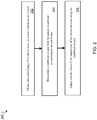
- FIG. 2 is a flow diagram of an example process for training a neural network used to select actions to be performed by an agent interacting with an environment.
- the process 200 will be described as being performed by a system of one or more computers located in one or more locations.
- the reinforcement learning system 100 of FIG. 1 appropriately programmed in accordance with this specification, performs the process 200.
- the system obtains data identifying (i) a first observation characterizing a first state of the environment, (ii) a first action performed by the agent in response to the first observation, and (iii) an actual reward received resulting from the agent performing the action in response to the first observation (step 202).
- the actual reward is a numeric value that depends on how the environment changed in response to the agent performing the first action.
- the system can obtain the data from a memory that stores experience tuples, i.e., observation-action-reward tuples, generated from the agent interacting with the environment.
- the obtained data has been generated as a result of a most-recent interaction of the agent with the environment.
- An exploration reward bonus can be used to incentivize the agent to explore the environment.
- the exploration reward bonus can be used to encourage the agent to explore new parts of the environment by receiving new observations that have not been observed before. Determining an exploration reward bonus is described in more detail below with reference to FIG. 3 .
- the system then adjusts current values of the parameters of the neural network using the combined reward (step 206).
- the system adjusts the current values of the parameters of the neural network such that the neural network selects actions that that maximize the expected sum of combined rewards. That is, the system can adjust the current values of parameters of the neural network such that the neural network selects actions that (i) result in the environment transitioning into states that are closer to completing the task, which yield higher actual rewards being received by the system, and/or that (ii) encourage the agent to explore observations that have not been observed frequently or never been observed before to maximize the received exploration reward bonuses.
- Adjusting the current values of the parameters includes using the combined reward in place of the actual reward in performing an iteration of a reinforcement learning technique.
- the system can use any appropriate reinforcement learning technique, i.e., a reinforcement learning technique that is appropriate for training neural networks that generate the kinds of outputs that the neural network is configured to generate.
- the reinforcement learning technique is a Double DQN technique with a mixed in Monte Carlo return.
- the reinforcement learning technique is an actor-critic technique.
- the system also obtains additional information, e.g., the next observation received after the agent performs the first action, required to perform the iteration of the technique and then performs the reinforcement learning technique using the first observation, the first action, the combined reward, and the additional information.
- additional information e.g., the next observation received after the agent performs the first action, required to perform the iteration of the technique and then performs the reinforcement learning technique using the first observation, the first action, the combined reward, and the additional information.
- FIG. 3 is a flow diagram of an example process for generating a combined reward.
- the process 300 will be described as being performed by a system of one or more computers located in one or more locations.
- the reinforcement learning system 100 of FIG. 1 appropriately programmed in accordance with this specification, performs the process 300.
- the system determines a pseudo-count for the first observation (step 302).
- the pseudo-count is an estimated measure of how certain the system is about what the effects of taking actions in response to the first observation will be.
- the pseudo-count for the first observation is an empirical count function that depends on a number of occurrences of the first observation during the training of the neural network.
- X 1 ... X n x 1: n ) is a conditional probability representing a likelihood that the n +1 th observation X n +1 is the same as the first observation x given that n previous observations X 1 , ..., X n have been received.
- the sequential density model can be, for example, a pixel-level density model.
- Pixel-level density models are described in more detail in Bellemare, M., Veness, J., and Talvitie, E. (2014). "Skip context tree switching.” In Proceedings of the 31st International Conference on Machine Learning, pages 1458-1466
- Pr ⁇ ( X n +2 x
- the system determines an exploration reward bonus that incentivizes the agent to explore the environment from the pseudo-count for the first observation x (step 302).
- the exploration reward bonus is inversely proportional to the pseudo-count N ⁇ ( x ). That means when the pseudo-count N ⁇ ( x ) becomes larger, i.e., the first observation x has occurred more frequently, the exploration reward bonus corresponding to the first observation becomes smaller, and vice versa.
- the two constants a and b are generally positive constants.
- the system then generates a combined reward corresponding to the first observation from the actual reward and the exploration reward bonus (step 304). For example, the system generates the combined reward by summing the actual reward and the exploration reward bonus.
- a system of one or more computers to be configured to perform particular operations or actions means that the system has installed on it software, firmware, hardware, or a combination of them that in operation cause the system to perform the operations or actions.
- one or more computer programs to be configured to perform particular operations or actions means that the one or more programs include instructions that, when executed by data processing apparatus, cause the apparatus to perform the operations or actions.
- Embodiments of the subject matter and the functional operations described in this specification can be implemented in digital electronic circuitry, in tangibly-embodied computer software or firmware, in computer hardware, including the structures disclosed in this specification and their structural equivalents, or in combinations of one or more of them.
- Embodiments of the subject matter described in this specification can be implemented as one or more computer programs, i.e., one or more modules of computer program instructions encoded on a tangible non transitory program carrier for execution by, or to control the operation of, data processing apparatus.
- the program instructions can be encoded on an artificially generated propagated signal, e.g., a machine-generated electrical, optical, or electromagnetic signal, that is generated to encode information for transmission to suitable receiver apparatus for execution by a data processing apparatus.
- the computer storage medium can be a machine-readable storage device, a machine-readable storage substrate, a random or serial access memory device, or a combination of one or more of them. The computer storage medium is not, however, a propagated signal.
- data processing apparatus encompasses all kinds of apparatus, devices, and machines for processing data, including by way of example a programmable processor, a computer, or multiple processors or computers.
- the apparatus can include special purpose logic circuitry, e.g., an FPGA (field programmable gate array) or an ASIC (application specific integrated circuit).
- the apparatus can also include, in addition to hardware, code that creates an execution environment for the computer program in question, e.g., code that constitutes processor firmware, a protocol stack, a database management system, an operating system, or a combination of one or more of them.
- a computer program (which may also be referred to or described as a program, software, a software application, a module, a software module, a script, or code) can be written in any form of programming language, including compiled or interpreted languages, or declarative or procedural languages, and it can be deployed in any form, including as a stand-alone program or as a module, component, subroutine, or other unit suitable for use in a computing environment.
- a computer program may, but need not, correspond to a file in a file system.
- a program can be stored in a portion of a file that holds other programs or data, e.g., one or more scripts stored in a markup language document, in a single file dedicated to the program in question, or in multiple coordinated files, e.g., files that store one or more modules, sub programs, or portions of code.
- a computer program can be deployed to be executed on one computer or on multiple computers that are located at one site or distributed across multiple sites and interconnected by a communication network.
- an “engine,” or “software engine,” refers to a software implemented input/output system that provides an output that is different from the input.
- An engine can be an encoded block of functionality, such as a library, a platform, a software development kit ("SDK”), or an object.
- SDK software development kit
- Each engine can be implemented on any appropriate type of computing device, e.g., servers, mobile phones, tablet computers, notebook computers, music players, e-book readers, laptop or desktop computers, PDAs, smart phones, or other stationary or portable devices, that includes one or more processors and computer readable media. Additionally, two or more of the engines may be implemented on the same computing device, or on different computing devices.
- the processes and logic flows described in this specification can be performed by one or more programmable computers executing one or more computer programs to perform functions by operating on input data and generating output.
- the processes and logic flows can also be performed by, and apparatus can also be implemented as, special purpose logic circuitry, e.g., an FPGA (field programmable gate array) or an ASIC (application specific integrated circuit).
- special purpose logic circuitry e.g., an FPGA (field programmable gate array) or an ASIC (application specific integrated circuit).
- the processes and logic flows can be performed by and apparatus can also be implemented as a graphics processing unit (GPU).
- GPU graphics processing unit
- Computers suitable for the execution of a computer program include, by way of example, can be based on general or special purpose microprocessors or both, or any other kind of central processing unit.
- a central processing unit will receive instructions and data from a read only memory or a random access memory or both.
- the essential elements of a computer are a central processing unit for performing or executing instructions and one or more memory devices for storing instructions and data.
- a computer will also include, or be operatively coupled to receive data from or transfer data to, or both, one or more mass storage devices for storing data, e.g., magnetic, magneto optical disks, or optical disks.
- mass storage devices for storing data, e.g., magnetic, magneto optical disks, or optical disks.
- a computer need not have such devices.
- a computer can be embedded in another device, e.g., a mobile telephone, a personal digital assistant (PDA), a mobile audio or video player, a game console, a Global Positioning System (GPS) receiver, or a portable storage device, e.g., a universal serial bus (USB) flash drive, to name just a few.
- PDA personal digital assistant
- GPS Global Positioning System
- USB universal serial bus
- Computer readable media suitable for storing computer program instructions and data include all forms of non-volatile memory, media and memory devices, including by way of example semiconductor memory devices, e.g., EPROM, EEPROM, and flash memory devices; magnetic disks, e.g., internal hard disks or removable disks; magneto optical disks; and CD ROM and DVD-ROM disks.
- semiconductor memory devices e.g., EPROM, EEPROM, and flash memory devices
- magnetic disks e.g., internal hard disks or removable disks
- magneto optical disks e.g., CD ROM and DVD-ROM disks.
- the processor and the memory can be supplemented by, or incorporated in, special purpose logic circuitry.
- a computer having a display device, e.g., a CRT (cathode ray tube) or LCD (liquid crystal display) monitor, for displaying information to the user and a keyboard and a pointing device, e.g., a mouse or a trackball, by which the user can provide input to the computer.
- a display device e.g., a CRT (cathode ray tube) or LCD (liquid crystal display) monitor
- keyboard and a pointing device e.g., a mouse or a trackball
- Other kinds of devices can be used to provide for interaction with a user as well; for example, feedback provided to the user can be any form of sensory feedback, e.g., visual feedback, auditory feedback, or tactile feedback; and input from the user can be received in any form, including acoustic, speech, or tactile input.
- a computer can interact with a user by sending documents to and receiving documents from a device that is used by the user; for example, by sending web pages to a
- Embodiments of the subject matter described in this specification can be implemented in a computing system that includes a back end component, e.g., as a data server, or that includes a middleware component, e.g., an application server, or that includes a front end component, e.g., a client computer having a graphical user interface or a Web browser through which a user can interact with an implementation of the subject matter described in this specification, or any combination of one or more such back end, middleware, or front end components.
- the components of the system can be interconnected by any form or medium of digital data communication, e.g., a communication network. Examples of communication networks include a local area network (“LAN”) and a wide area network (“WAN”), e.g., the Internet.
- LAN local area network
- WAN wide area network
- the computing system can include clients and servers.
- a client and server are generally remote from each other and typically interact through a communication network.
- the relationship of client and server arises by virtue of computer programs running on the respective computers and having a client-server relationship to each other.
Landscapes
- Engineering & Computer Science (AREA)
- Physics & Mathematics (AREA)
- Theoretical Computer Science (AREA)
- Data Mining & Analysis (AREA)
- General Physics & Mathematics (AREA)
- Mathematical Physics (AREA)
- Software Systems (AREA)
- General Engineering & Computer Science (AREA)
- Life Sciences & Earth Sciences (AREA)
- Artificial Intelligence (AREA)
- Biophysics (AREA)
- Molecular Biology (AREA)
- Computing Systems (AREA)
- Evolutionary Computation (AREA)
- Biomedical Technology (AREA)
- Computational Linguistics (AREA)
- General Health & Medical Sciences (AREA)
- Health & Medical Sciences (AREA)
- Probability & Statistics with Applications (AREA)
- Mathematical Analysis (AREA)
- Pure & Applied Mathematics (AREA)
- Computational Mathematics (AREA)
- Mathematical Optimization (AREA)
- Bioinformatics & Cheminformatics (AREA)
- Evolutionary Biology (AREA)
- Operations Research (AREA)
- Bioinformatics & Computational Biology (AREA)
- Algebra (AREA)
- Databases & Information Systems (AREA)
- Image Analysis (AREA)
- User Interface Of Digital Computer (AREA)
- Management, Administration, Business Operations System, And Electronic Commerce (AREA)
Description
- This specification relates to reinforcement learning.
- In a reinforcement learning system, an agent interacts with an environment by performing actions that are selected by the reinforcement learning system in response to receiving observations that characterize the current state of the environment.
- Some reinforcement learning systems select the action to be performed by the agent in response to receiving a given observation in accordance with an output of a neural network.
- Neural networks are machine learning models that employ one or more layers of nonlinear units to predict an output for a received input. Some neural networks are deep neural networks that include one or more hidden layers in addition to an output layer. The output of each hidden layer is used as input to the next layer in the network, i.e., the next hidden layer or the output layer. Each layer of the network generates an output from a received input in accordance with current values of a respective set of parameters. In 2015, Stadie et al. (arXiv:1507.00814v3) disclosed incentivizing exploration in reinforcement learning with deep predictive models. In 2012, Lopes et al. (Proceedings of NIPS 25, pp. 206-215) disclosed exploration in model-based reinforcement learning by empirically estimating learning progress. In 2014, Bureau and Sebag (Proceedings of ALR'14) disclosed Bellmanian bandit networks.
- The present invention provides for computer-implemented methods, according to claim 1, as well as corresponding computer-readable media and computer systems, according to claims 9 and 10. Further aspects of the invention are outlined in the dependent claims.
- The subject matter described in this specification can be implemented in particular implementations so as to realize one or more of the following advantages. The reinforcement learning system can effectively select actions to be performed by a mechanical agent in an action space in order to complete a task, i.e., by using a neural network that is trained using a pseudo-count method. The action space is a real world environment with which the agent can interact. In particular, the system combines bonus rewards, which are inversely proportional to pseudo-counts derived from a sequential density model, with actual rewards that resulted from the agent performing actions to generate combined rewards. The system then uses the combined rewards to train the neural network to select actions to be performed by the agent. Being trained in this manner, the neural network can incentivize the agent to explore an environment more thoroughly (e.g., encouraging the agent to explore observations that have not been observed frequently), thus improving exploration results while requiring a smaller number of training iterations. By training the neural network using pseudo-counts, the system can reduce computational time and resources required to select actions for the agent to explore the environment.
- The method has an advantage that a mechanical agent such as a robot, or autonomous or semi-autonomous vehicle can improve its interaction with a real-world environment. It can enable for example the accomplishment of a specific task or improvement of navigation through or observation of the environment.
- The details of one or more embodiments of the subject matter of this specification are set forth in the accompanying drawings and the description below. Other features, aspects, and advantages of the subject matter will become apparent from the description, the drawings, and the claims.
-
-
FIG. 1 shows an example reinforcement learning system. -
FIG. 2 is a flow diagram of an example process for training a neural network used to select actions to be performed by an agent interacting with an environment. -
FIG. 3 is a flow diagram of an example process for generating a combined reward. - Like reference numbers and designations in the various drawings indicate like elements.
- This specification generally describes a reinforcement learning system that selects actions to be performed by a reinforcement learning agent interacting with an environment by using a neural network. In order to interact with the environment, the agent receives data characterizing the current state of the environment and performs an action from an action space, i.e., a discrete action space or continuous action space, in response to the received data. Data characterizing a state of the environment will be referred to in this specification as an observation.
- The environment is a real-world environment and the agent is a mechanical agent interacting with the real-world environment. For example, the agent may be a robot interacting with the environment to accomplish a specific task. As another example, the agent may be an autonomous or semi-autonomous vehicle navigating through the environment. In these cases, the observation can be data captured by one or more sensors of the mechanical agent as it interacts with the environment, e.g., a camera, a LIDAR sensor, a temperature sensor, and so on.
- In other implementations, not covered by the scope of the claims, the environment is a simulated environment and the agent is implemented as one or more computers interacting with the simulated environment. For example, the simulated environment may be a video game and the agent may be a simulated user playing the video game.
-
FIG. 1 shows an examplereinforcement learning system 100. Thereinforcement learning system 100 is an example of a system implemented as computer programs on one or more computers in one or more locations in which the systems, components, and techniques described below are implemented. - The
reinforcement learning system 100 selects actions to be performed by areinforcement learning agent 102 interacting with anenvironment 104. That is, thereinforcement learning system 100 receives observations, with each observation characterizing a respective state of theenvironment 104, and, in response to each observation, selects an action from an action space to be performed by thereinforcement learning agent 102 in response to the observation and then instructs or otherwise causes theagent 102 to perform the selected action. After theagent 102 performs a selected action, theenvironment 104 transitions to a new state and thesystem 100 receives another observation characterizing the next state of theenvironment 104 and a reward. The reward can be a numeric value that is received by thesystem 100 or theagent 102 from theenvironment 104 as a result of theagent 102 performing the selected action. That is, the reward received by thesystem 100 generally varies depending on the result of the transition of states caused by theagent 102 performing the selected action. For example, a transition into a state that is closer to completing the task being performed by theagent 102 may result in a higher reward being received by thesystem 100 than a transition into a state that is farther from completing the task being performed by theagent 102. - In particular, to select an action, the
reinforcement learning system 100 includes aneural network 110. Generally, theneural network 110 is a neural network that is configured to receive an observation and to process the observation to generate an output that defines the action that should be performed by the agent in response to the observation. - In some implementations, the
neural network 110 is a neural network that receives an observation and an action and outputs a probability that represents a probability that the action is the one that maximizes the chances of the agent completing the task. - In some implementations, the
neural network 110 is a neural network that receives an observation and generates an output that defines a probability distribution over possible actions, with the probability for each action being the probability that the action is the one that maximizes the chances of the agent completing the task. - In some other implementations, the
neural network 110 is a neural network that is configured to receive an observation and an action performed by the agent in response to the observation, i.e., an observation-action pair, and to generate a Q-value for the observation-action pair that represents an estimated return resulting from the agent performing the action in response the observation in the observation-action pair. Theneural network 110 can repeatedly perform the process, e.g. by repeatedly generating Q-values for observation-action pairs. Thesystem 100 can then use the generated Q-values to determine an action for the agent to perform in response to a given observation. - To allow the
agent 102 to effectively interact with the environment, thereinforcement learning system 100 trains theneural network 110 to determine trained values of the parameters of theneural network 110 by using combined rewards generated by acounting system 120. In particular, during training, thecounting system 120 maintains a sequence of observations that thesystem 100 has previously received. - After the
agent 102 performed an action in response to a given observation and an actual reward was received by thesystem 100 as a result of the agent performing the action, the counting system receives data identifying the given observation, the action, and the actual reward. Based on the data, thecounting system 120 determines a pseudo-count for the given observation using a sequential density model. Thecounting system 120 then determines an exploration reward bonus that incentivizes the agent to explore the environment from the determined pseudo-count for the given observation. Subsequently, thecounting system 120 determines a combined reward from the actual reward and the exploration reward bonus. - The
reinforcement learning system 100 then uses the combined reward to train theneural network 110. Training theneural network 110 is described in more detail below with reference toFIG. 2 . Determining the pseudo-count, exploration reward bonus, and combined reward for a given observation is described in more detail below with reference toFIG. 3 . -
FIG. 2 is a flow diagram of an example process for training a neural network used to select actions to be performed by an agent interacting with an environment. For convenience, theprocess 200 will be described as being performed by a system of one or more computers located in one or more locations. Thereinforcement learning system 100 ofFIG. 1 , appropriately programmed in accordance with this specification, performs theprocess 200. - The system obtains data identifying (i) a first observation characterizing a first state of the environment, (ii) a first action performed by the agent in response to the first observation, and (iii) an actual reward received resulting from the agent performing the action in response to the first observation (step 202). Generally, the actual reward is a numeric value that depends on how the environment changed in response to the agent performing the first action. In some implementations, e.g., in implementations where the neural network is being trained using an off-policy algorithm, the system can obtain the data from a memory that stores experience tuples, i.e., observation-action-reward tuples, generated from the agent interacting with the environment. In other implementations, e.g., in implementations whether the neural network is being trained using an on-policy algorithm, the obtained data has been generated as a result of a most-recent interaction of the agent with the environment.
- Next, the system determines a combined reward corresponding to the first observation from the actual reward and an exploration reward bonus (step 204). An exploration reward bonus can be used to incentivize the agent to explore the environment. For example, the exploration reward bonus can be used to encourage the agent to explore new parts of the environment by receiving new observations that have not been observed before. Determining an exploration reward bonus is described in more detail below with reference to
FIG. 3 . - The system then adjusts current values of the parameters of the neural network using the combined reward (step 206). Generally, the system adjusts the current values of the parameters of the neural network such that the neural network selects actions that that maximize the expected sum of combined rewards. That is, the system can adjust the current values of parameters of the neural network such that the neural network selects actions that (i) result in the environment transitioning into states that are closer to completing the task, which yield higher actual rewards being received by the system, and/or that (ii) encourage the agent to explore observations that have not been observed frequently or never been observed before to maximize the received exploration reward bonuses.
- Adjusting the current values of the parameters includes using the combined reward in place of the actual reward in performing an iteration of a reinforcement learning technique. The system can use any appropriate reinforcement learning technique, i.e., a reinforcement learning technique that is appropriate for training neural networks that generate the kinds of outputs that the neural network is configured to generate. For example, in some implementations, the reinforcement learning technique is a Double DQN technique with a mixed in Monte Carlo return. In some other implementations, the reinforcement learning technique is an actor-critic technique. In some of these reinforcement learning techniques, the system also obtains additional information, e.g., the next observation received after the agent performs the first action, required to perform the iteration of the technique and then performs the reinforcement learning technique using the first observation, the first action, the combined reward, and the additional information.
-
FIG. 3 is a flow diagram of an example process for generating a combined reward. For convenience, theprocess 300 will be described as being performed by a system of one or more computers located in one or more locations. Thereinforcement learning system 100 ofFIG. 1 , appropriately programmed in accordance with this specification, performs theprocess 300. - The system determines a pseudo-count for the first observation (step 302). The pseudo-count is an estimated measure of how certain the system is about what the effects of taking actions in response to the first observation will be. Specifically, the pseudo-count for the first observation is an empirical count function that depends on a number of occurrences of the first observation during the training of the neural network. The pseudo-count N̂(x) for the first observation x can be determined as follows:


- The sequential density model represents a likelihood that the first observation x occurs given n previous observations X 1, ..., Xn as follows:

- The sequential density model can be, for example, a pixel-level density model. Pixel-level density models are described in more detail in Bellemare, M., Veness, J., and Talvitie, E. (2014). "Skip context tree switching." In Proceedings of the 31st International Conference on Machine Learning, pages 1458-1466
- The recoding probability is a value of the sequential density model for the first observation x after observing a new occurrence of the first observation:

- The recoding probability can be determined as follows:

- The system then determines an exploration reward bonus that incentivizes the agent to explore the environment from the pseudo-count for the first observation x (step 302). Generally, the exploration reward bonus is inversely proportional to the pseudo-count N̂(x). That means when the pseudo-count N̂(x) becomes larger, i.e., the first observation x has occurred more frequently, the exploration reward bonus corresponding to the first observation becomes smaller, and vice versa. In some implementations, the exploration reward bonus RB can be determined as follows:

- The system then generates a combined reward corresponding to the first observation from the actual reward and the exploration reward bonus (step 304). For example, the system generates the combined reward by summing the actual reward and the exploration reward bonus.
- For a system of one or more computers to be configured to perform particular operations or actions means that the system has installed on it software, firmware, hardware, or a combination of them that in operation cause the system to perform the operations or actions. For one or more computer programs to be configured to perform particular operations or actions means that the one or more programs include instructions that, when executed by data processing apparatus, cause the apparatus to perform the operations or actions.
- Embodiments of the subject matter and the functional operations described in this specification can be implemented in digital electronic circuitry, in tangibly-embodied computer software or firmware, in computer hardware, including the structures disclosed in this specification and their structural equivalents, or in combinations of one or more of them. Embodiments of the subject matter described in this specification can be implemented as one or more computer programs, i.e., one or more modules of computer program instructions encoded on a tangible non transitory program carrier for execution by, or to control the operation of, data processing apparatus. Alternatively, or in addition, the program instructions can be encoded on an artificially generated propagated signal, e.g., a machine-generated electrical, optical, or electromagnetic signal, that is generated to encode information for transmission to suitable receiver apparatus for execution by a data processing apparatus. The computer storage medium can be a machine-readable storage device, a machine-readable storage substrate, a random or serial access memory device, or a combination of one or more of them. The computer storage medium is not, however, a propagated signal.
- The term "data processing apparatus" encompasses all kinds of apparatus, devices, and machines for processing data, including by way of example a programmable processor, a computer, or multiple processors or computers. The apparatus can include special purpose logic circuitry, e.g., an FPGA (field programmable gate array) or an ASIC (application specific integrated circuit). The apparatus can also include, in addition to hardware, code that creates an execution environment for the computer program in question, e.g., code that constitutes processor firmware, a protocol stack, a database management system, an operating system, or a combination of one or more of them.
- A computer program (which may also be referred to or described as a program, software, a software application, a module, a software module, a script, or code) can be written in any form of programming language, including compiled or interpreted languages, or declarative or procedural languages, and it can be deployed in any form, including as a stand-alone program or as a module, component, subroutine, or other unit suitable for use in a computing environment. A computer program may, but need not, correspond to a file in a file system. A program can be stored in a portion of a file that holds other programs or data, e.g., one or more scripts stored in a markup language document, in a single file dedicated to the program in question, or in multiple coordinated files, e.g., files that store one or more modules, sub programs, or portions of code. A computer program can be deployed to be executed on one computer or on multiple computers that are located at one site or distributed across multiple sites and interconnected by a communication network.
- As used in this specification, an "engine," or "software engine," refers to a software implemented input/output system that provides an output that is different from the input. An engine can be an encoded block of functionality, such as a library, a platform, a software development kit ("SDK"), or an object. Each engine can be implemented on any appropriate type of computing device, e.g., servers, mobile phones, tablet computers, notebook computers, music players, e-book readers, laptop or desktop computers, PDAs, smart phones, or other stationary or portable devices, that includes one or more processors and computer readable media. Additionally, two or more of the engines may be implemented on the same computing device, or on different computing devices.
- The processes and logic flows described in this specification can be performed by one or more programmable computers executing one or more computer programs to perform functions by operating on input data and generating output. The processes and logic flows can also be performed by, and apparatus can also be implemented as, special purpose logic circuitry, e.g., an FPGA (field programmable gate array) or an ASIC (application specific integrated circuit). For example, the processes and logic flows can be performed by and apparatus can also be implemented as a graphics processing unit (GPU).
- Computers suitable for the execution of a computer program include, by way of example, can be based on general or special purpose microprocessors or both, or any other kind of central processing unit. Generally, a central processing unit will receive instructions and data from a read only memory or a random access memory or both. The essential elements of a computer are a central processing unit for performing or executing instructions and one or more memory devices for storing instructions and data. Generally, a computer will also include, or be operatively coupled to receive data from or transfer data to, or both, one or more mass storage devices for storing data, e.g., magnetic, magneto optical disks, or optical disks. However, a computer need not have such devices. Moreover, a computer can be embedded in another device, e.g., a mobile telephone, a personal digital assistant (PDA), a mobile audio or video player, a game console, a Global Positioning System (GPS) receiver, or a portable storage device, e.g., a universal serial bus (USB) flash drive, to name just a few.
- Computer readable media suitable for storing computer program instructions and data include all forms of non-volatile memory, media and memory devices, including by way of example semiconductor memory devices, e.g., EPROM, EEPROM, and flash memory devices; magnetic disks, e.g., internal hard disks or removable disks; magneto optical disks; and CD ROM and DVD-ROM disks. The processor and the memory can be supplemented by, or incorporated in, special purpose logic circuitry.
- To provide for interaction with a user, embodiments of the subject matter described in this specification can be implemented on a computer having a display device, e.g., a CRT (cathode ray tube) or LCD (liquid crystal display) monitor, for displaying information to the user and a keyboard and a pointing device, e.g., a mouse or a trackball, by which the user can provide input to the computer. Other kinds of devices can be used to provide for interaction with a user as well; for example, feedback provided to the user can be any form of sensory feedback, e.g., visual feedback, auditory feedback, or tactile feedback; and input from the user can be received in any form, including acoustic, speech, or tactile input. In addition, a computer can interact with a user by sending documents to and receiving documents from a device that is used by the user; for example, by sending web pages to a web browser on a user's client device in response to requests received from the web browser.
- Embodiments of the subject matter described in this specification can be implemented in a computing system that includes a back end component, e.g., as a data server, or that includes a middleware component, e.g., an application server, or that includes a front end component, e.g., a client computer having a graphical user interface or a Web browser through which a user can interact with an implementation of the subject matter described in this specification, or any combination of one or more such back end, middleware, or front end components. The components of the system can be interconnected by any form or medium of digital data communication, e.g., a communication network. Examples of communication networks include a local area network ("LAN") and a wide area network ("WAN"), e.g., the Internet.
- The computing system can include clients and servers. A client and server are generally remote from each other and typically interact through a communication network. The relationship of client and server arises by virtue of computer programs running on the respective computers and having a client-server relationship to each other.
- Particular embodiments of the subject matter have been described. Other embodiments are within the scope of the following claims. In certain implementations, multitasking and parallel processing may be advantageous.
Claims (10)
- A computer-implemented method for training a neural network used to select actions to be performed by an agent interacting with an environment, wherein the agent is a mechanical agent and the environment is a real-world environment, the method comprising using the neural network for selecting an action, performing the selected action, and receiving an actual reward, wherein the neural network is trained as the agent explores the environment, the method further comprising:obtaining data identifying (i) a first observation characterizing a first state of the environment, (ii) the action, selected using the neural network, performed by the agent in response to the first observation, and (iii) the actual reward received resulting from the agent performing the action in response to the first observation;determining a pseudo-count for the first observation dependent upon a sequential density model which represents a likelihood that the first observation occurs next given a sequence of previous observations, wherein the pseudo-count depends upon a number of previous occurrences of the first observation during the training of the neural network;determining an exploration reward bonus that incentivizes the agent to explore the environment from the pseudo-count for the first observation, wherein the exploration reward bonus is lower when the pseudo-count is higher and vice-versa;generating a combined reward from the actual reward and the exploration reward bonus; andadjusting current values of parameters of the neural network using the combined reward.
- The method of claim 1, wherein adjusting the current values of the parameters comprises:
using the combined reward in place of the actual reward in performing an iteration of a reinforcement learning technique. - The method of any one of claims 1 or 2, wherein the neural network is configured to receive the first observation and generates an output that defines a probability distribution over possible actions, with the probability for each action being the probability that the action is the one that maximizes the chances of the agent completing a task performed by the agent.
- The method of any one of claims 1 or 2, wherein the neural network is configured to receive an observation-action pair which is the first observation and the action performed by the agent in response to the first observation, and to generate a Q-value for the observation-action pair that represents an estimated return resulting from the agent performing the action in response the observation in the observation-action pair.
- The method of any one of claims 1-4, wherein generating the combined reward comprises summing the actual reward and the exploration reward bonus.
- The method of any one of claims 1-5, wherein the exploration reward bonus RB satisfies:

- The method of any one of claims 1-6, wherein the pseudo-count N̂(x) for the first observation is of the form:


- The method of any one of claims 1-7, wherein the sequential density model is a pixel-level density model.
- One or more computer storage media encoded with instructions that, when executed by one or more computers, cause the one or more computers to perform the operations of the respective method of any one of claims 1-8.
- A system comprising the one or more computer storage media of claim 9 and one or more computers for executing the instructions.
Applications Claiming Priority (2)
| Application Number | Priority Date | Filing Date | Title |
|---|---|---|---|
| US201662339778P | 2016-05-20 | 2016-05-20 | |
| PCT/US2017/033218 WO2017201220A1 (en) | 2016-05-20 | 2017-05-18 | Reinforcement learning using pseudo-counts |
Publications (2)
| Publication Number | Publication Date |
|---|---|
| EP3459018A1 EP3459018A1 (en) | 2019-03-27 |
| EP3459018B1 true EP3459018B1 (en) | 2021-10-20 |
Family
ID=58779356
Family Applications (1)
| Application Number | Title | Priority Date | Filing Date |
|---|---|---|---|
| EP17726168.2A Active EP3459018B1 (en) | 2016-05-20 | 2017-05-18 | Reinforcement learning using pseudo-counts |
Country Status (5)
| Country | Link |
|---|---|
| US (1) | US11727264B2 (en) |
| EP (1) | EP3459018B1 (en) |
| JP (1) | JP6667674B2 (en) |
| CN (1) | CN109155005A (en) |
| WO (1) | WO2017201220A1 (en) |
Families Citing this family (12)
| Publication number | Priority date | Publication date | Assignee | Title |
|---|---|---|---|---|
| CN117521725A (en) * | 2016-11-04 | 2024-02-06 | 渊慧科技有限公司 | Enhance learning system |
| WO2020074741A1 (en) * | 2018-10-12 | 2020-04-16 | Deepmind Technologies Limited | Controlling agents over long time scales using temporal value transport |
| JP7336856B2 (en) * | 2019-03-01 | 2023-09-01 | 株式会社Preferred Networks | Information processing device, method and program |
| WO2020180480A1 (en) * | 2019-03-05 | 2020-09-10 | Hrl Laboratories, Llc | A robust, scalable and generalizable machine learning paradigm for multi-agent applications |
| CN111898727B (en) * | 2019-05-06 | 2024-07-19 | 清华大学 | Reinforcement learning method, device and storage medium based on short-term access mechanism |
| GB201906551D0 (en) * | 2019-05-09 | 2019-06-26 | Microsoft Technology Licensing Llc | Training behavior of an agent |
| CN112486584A (en) * | 2019-08-23 | 2021-03-12 | 中国科学院深圳先进技术研究院 | Method and system for carrying out parameter adjustment on big data platform by using reinforcement learning |
| US11699062B2 (en) * | 2019-09-06 | 2023-07-11 | Honda Motor Co., Ltd. | System and method for implementing reward based strategies for promoting exploration |
| CN114641778B (en) * | 2019-10-08 | 2026-05-12 | Gdm控股有限责任公司 | Gated linear context gaming machine |
| CN110994620A (en) * | 2019-11-16 | 2020-04-10 | 国网浙江省电力有限公司台州供电公司 | Q-Learning algorithm-based power grid power flow intelligent adjustment method |
| CN112883947B (en) * | 2021-04-29 | 2021-07-16 | 腾讯科技(深圳)有限公司 | Image processing method, image processing device, computer equipment and storage medium |
| CN114841276B (en) * | 2022-05-13 | 2025-12-16 | 北京京东乾石科技有限公司 | Data processing method and device, electronic equipment and computer readable medium |
Family Cites Families (2)
| Publication number | Priority date | Publication date | Assignee | Title |
|---|---|---|---|---|
| US9186793B1 (en) * | 2012-08-31 | 2015-11-17 | Brain Corporation | Apparatus and methods for controlling attention of a robot |
| US9679258B2 (en) * | 2013-10-08 | 2017-06-13 | Google Inc. | Methods and apparatus for reinforcement learning |
-
2017
- 2017-05-18 CN CN201780031296.5A patent/CN109155005A/en active Pending
- 2017-05-18 US US16/303,501 patent/US11727264B2/en active Active
- 2017-05-18 EP EP17726168.2A patent/EP3459018B1/en active Active
- 2017-05-18 WO PCT/US2017/033218 patent/WO2017201220A1/en not_active Ceased
- 2017-05-18 JP JP2018560871A patent/JP6667674B2/en active Active
Also Published As
| Publication number | Publication date |
|---|---|
| EP3459018A1 (en) | 2019-03-27 |
| CN109155005A (en) | 2019-01-04 |
| US11727264B2 (en) | 2023-08-15 |
| JP2019517074A (en) | 2019-06-20 |
| JP6667674B2 (en) | 2020-03-18 |
| WO2017201220A1 (en) | 2017-11-23 |
| US20200327405A1 (en) | 2020-10-15 |
Similar Documents
| Publication | Publication Date | Title |
|---|---|---|
| US11727264B2 (en) | Reinforcement learning using pseudo-counts | |
| US12561573B2 (en) | Continuous control with deep reinforcement learning | |
| US12086714B2 (en) | Training neural networks using a prioritized experience memory | |
| CN107851216B (en) | Method for selecting actions to be performed by reinforcement learning agents interacting with an environment | |
| CN110520868B (en) | Method, program product and storage medium for distributed reinforcement learning | |
| CN110235148B (en) | Training action selection neural network | |
| CN110326004B (en) | Training Policy Neural Networks Using Path Consistency Learning | |
| EP4398159B1 (en) | Asynchronous deep reinforcement learning | |
| KR102172277B1 (en) | Dual deep neural network | |
| CN110088775B (en) | Environmental prediction using reinforcement learning | |
| EP3523761B1 (en) | Recurrent environment predictors | |
| US20190130267A1 (en) | Training neural networks using priority queues | |
| US11755879B2 (en) | Low-pass recurrent neural network systems with memory | |
| US11062229B1 (en) | Training latent variable machine learning models using multi-sample objectives | |
| WO2019117970A1 (en) | Adaptive object tracking policy |
Legal Events
| Date | Code | Title | Description |
|---|---|---|---|
| STAA | Information on the status of an ep patent application or granted ep patent |
Free format text: STATUS: UNKNOWN |
|
| STAA | Information on the status of an ep patent application or granted ep patent |
Free format text: STATUS: THE INTERNATIONAL PUBLICATION HAS BEEN MADE |
|
| PUAI | Public reference made under article 153(3) epc to a published international application that has entered the european phase |
Free format text: ORIGINAL CODE: 0009012 |
|
| STAA | Information on the status of an ep patent application or granted ep patent |
Free format text: STATUS: REQUEST FOR EXAMINATION WAS MADE |
|
| 17P | Request for examination filed |
Effective date: 20181120 |
|
| AK | Designated contracting states |
Kind code of ref document: A1 Designated state(s): AL AT BE BG CH CY CZ DE DK EE ES FI FR GB GR HR HU IE IS IT LI LT LU LV MC MK MT NL NO PL PT RO RS SE SI SK SM TR |
|
| AX | Request for extension of the european patent |
Extension state: BA ME |
|
| DAV | Request for validation of the european patent (deleted) | ||
| DAX | Request for extension of the european patent (deleted) | ||
| GRAP | Despatch of communication of intention to grant a patent |
Free format text: ORIGINAL CODE: EPIDOSNIGR1 |
|
| STAA | Information on the status of an ep patent application or granted ep patent |
Free format text: STATUS: GRANT OF PATENT IS INTENDED |
|
| INTG | Intention to grant announced |
Effective date: 20210723 |
|
| GRAS | Grant fee paid |
Free format text: ORIGINAL CODE: EPIDOSNIGR3 |
|
| GRAA | (expected) grant |
Free format text: ORIGINAL CODE: 0009210 |
|
| STAA | Information on the status of an ep patent application or granted ep patent |
Free format text: STATUS: THE PATENT HAS BEEN GRANTED |
|
| AK | Designated contracting states |
Kind code of ref document: B1 Designated state(s): AL AT BE BG CH CY CZ DE DK EE ES FI FR GB GR HR HU IE IS IT LI LT LU LV MC MK MT NL NO PL PT RO RS SE SI SK SM TR |
|
| REG | Reference to a national code |
Ref country code: GB Ref legal event code: FG4D |
|
| REG | Reference to a national code |
Ref country code: CH Ref legal event code: EP |
|
| REG | Reference to a national code |
Ref country code: IE Ref legal event code: FG4D |
|
| REG | Reference to a national code |
Ref country code: DE Ref legal event code: R096 Ref document number: 602017047873 Country of ref document: DE |
|
| REG | Reference to a national code |
Ref country code: AT Ref legal event code: REF Ref document number: 1440538 Country of ref document: AT Kind code of ref document: T Effective date: 20211115 |
|
| REG | Reference to a national code |
Ref country code: LT Ref legal event code: MG9D |
|
| REG | Reference to a national code |
Ref country code: NL Ref legal event code: MP Effective date: 20211020 |
|
| REG | Reference to a national code |
Ref country code: AT Ref legal event code: MK05 Ref document number: 1440538 Country of ref document: AT Kind code of ref document: T Effective date: 20211020 |
|
| PG25 | Lapsed in a contracting state [announced via postgrant information from national office to epo] |
Ref country code: RS Free format text: LAPSE BECAUSE OF FAILURE TO SUBMIT A TRANSLATION OF THE DESCRIPTION OR TO PAY THE FEE WITHIN THE PRESCRIBED TIME-LIMIT Effective date: 20211020 Ref country code: LT Free format text: LAPSE BECAUSE OF FAILURE TO SUBMIT A TRANSLATION OF THE DESCRIPTION OR TO PAY THE FEE WITHIN THE PRESCRIBED TIME-LIMIT Effective date: 20211020 Ref country code: FI Free format text: LAPSE BECAUSE OF FAILURE TO SUBMIT A TRANSLATION OF THE DESCRIPTION OR TO PAY THE FEE WITHIN THE PRESCRIBED TIME-LIMIT Effective date: 20211020 Ref country code: BG Free format text: LAPSE BECAUSE OF FAILURE TO SUBMIT A TRANSLATION OF THE DESCRIPTION OR TO PAY THE FEE WITHIN THE PRESCRIBED TIME-LIMIT Effective date: 20220120 Ref country code: AT Free format text: LAPSE BECAUSE OF FAILURE TO SUBMIT A TRANSLATION OF THE DESCRIPTION OR TO PAY THE FEE WITHIN THE PRESCRIBED TIME-LIMIT Effective date: 20211020 |
|
| PG25 | Lapsed in a contracting state [announced via postgrant information from national office to epo] |
Ref country code: IS Free format text: LAPSE BECAUSE OF FAILURE TO SUBMIT A TRANSLATION OF THE DESCRIPTION OR TO PAY THE FEE WITHIN THE PRESCRIBED TIME-LIMIT Effective date: 20220220 Ref country code: SE Free format text: LAPSE BECAUSE OF FAILURE TO SUBMIT A TRANSLATION OF THE DESCRIPTION OR TO PAY THE FEE WITHIN THE PRESCRIBED TIME-LIMIT Effective date: 20211020 Ref country code: PT Free format text: LAPSE BECAUSE OF FAILURE TO SUBMIT A TRANSLATION OF THE DESCRIPTION OR TO PAY THE FEE WITHIN THE PRESCRIBED TIME-LIMIT Effective date: 20220221 Ref country code: PL Free format text: LAPSE BECAUSE OF FAILURE TO SUBMIT A TRANSLATION OF THE DESCRIPTION OR TO PAY THE FEE WITHIN THE PRESCRIBED TIME-LIMIT Effective date: 20211020 Ref country code: NO Free format text: LAPSE BECAUSE OF FAILURE TO SUBMIT A TRANSLATION OF THE DESCRIPTION OR TO PAY THE FEE WITHIN THE PRESCRIBED TIME-LIMIT Effective date: 20220120 Ref country code: NL Free format text: LAPSE BECAUSE OF FAILURE TO SUBMIT A TRANSLATION OF THE DESCRIPTION OR TO PAY THE FEE WITHIN THE PRESCRIBED TIME-LIMIT Effective date: 20211020 Ref country code: LV Free format text: LAPSE BECAUSE OF FAILURE TO SUBMIT A TRANSLATION OF THE DESCRIPTION OR TO PAY THE FEE WITHIN THE PRESCRIBED TIME-LIMIT Effective date: 20211020 Ref country code: HR Free format text: LAPSE BECAUSE OF FAILURE TO SUBMIT A TRANSLATION OF THE DESCRIPTION OR TO PAY THE FEE WITHIN THE PRESCRIBED TIME-LIMIT Effective date: 20211020 Ref country code: GR Free format text: LAPSE BECAUSE OF FAILURE TO SUBMIT A TRANSLATION OF THE DESCRIPTION OR TO PAY THE FEE WITHIN THE PRESCRIBED TIME-LIMIT Effective date: 20220121 Ref country code: ES Free format text: LAPSE BECAUSE OF FAILURE TO SUBMIT A TRANSLATION OF THE DESCRIPTION OR TO PAY THE FEE WITHIN THE PRESCRIBED TIME-LIMIT Effective date: 20211020 |
|
| REG | Reference to a national code |
Ref country code: DE Ref legal event code: R097 Ref document number: 602017047873 Country of ref document: DE |
|
| PG25 | Lapsed in a contracting state [announced via postgrant information from national office to epo] |
Ref country code: SM Free format text: LAPSE BECAUSE OF FAILURE TO SUBMIT A TRANSLATION OF THE DESCRIPTION OR TO PAY THE FEE WITHIN THE PRESCRIBED TIME-LIMIT Effective date: 20211020 Ref country code: SK Free format text: LAPSE BECAUSE OF FAILURE TO SUBMIT A TRANSLATION OF THE DESCRIPTION OR TO PAY THE FEE WITHIN THE PRESCRIBED TIME-LIMIT Effective date: 20211020 Ref country code: RO Free format text: LAPSE BECAUSE OF FAILURE TO SUBMIT A TRANSLATION OF THE DESCRIPTION OR TO PAY THE FEE WITHIN THE PRESCRIBED TIME-LIMIT Effective date: 20211020 Ref country code: EE Free format text: LAPSE BECAUSE OF FAILURE TO SUBMIT A TRANSLATION OF THE DESCRIPTION OR TO PAY THE FEE WITHIN THE PRESCRIBED TIME-LIMIT Effective date: 20211020 Ref country code: DK Free format text: LAPSE BECAUSE OF FAILURE TO SUBMIT A TRANSLATION OF THE DESCRIPTION OR TO PAY THE FEE WITHIN THE PRESCRIBED TIME-LIMIT Effective date: 20211020 Ref country code: CZ Free format text: LAPSE BECAUSE OF FAILURE TO SUBMIT A TRANSLATION OF THE DESCRIPTION OR TO PAY THE FEE WITHIN THE PRESCRIBED TIME-LIMIT Effective date: 20211020 |
|
| PLBE | No opposition filed within time limit |
Free format text: ORIGINAL CODE: 0009261 |
|
| STAA | Information on the status of an ep patent application or granted ep patent |
Free format text: STATUS: NO OPPOSITION FILED WITHIN TIME LIMIT |
|
| 26N | No opposition filed |
Effective date: 20220721 |
|
| PG25 | Lapsed in a contracting state [announced via postgrant information from national office to epo] |
Ref country code: AL Free format text: LAPSE BECAUSE OF FAILURE TO SUBMIT A TRANSLATION OF THE DESCRIPTION OR TO PAY THE FEE WITHIN THE PRESCRIBED TIME-LIMIT Effective date: 20211020 |
|
| PG25 | Lapsed in a contracting state [announced via postgrant information from national office to epo] |
Ref country code: SI Free format text: LAPSE BECAUSE OF FAILURE TO SUBMIT A TRANSLATION OF THE DESCRIPTION OR TO PAY THE FEE WITHIN THE PRESCRIBED TIME-LIMIT Effective date: 20211020 |
|
| REG | Reference to a national code |
Ref country code: CH Ref legal event code: PL |
|
| REG | Reference to a national code |
Ref country code: BE Ref legal event code: MM Effective date: 20220531 |
|
| PG25 | Lapsed in a contracting state [announced via postgrant information from national office to epo] |
Ref country code: MC Free format text: LAPSE BECAUSE OF FAILURE TO SUBMIT A TRANSLATION OF THE DESCRIPTION OR TO PAY THE FEE WITHIN THE PRESCRIBED TIME-LIMIT Effective date: 20211020 Ref country code: LU Free format text: LAPSE BECAUSE OF NON-PAYMENT OF DUE FEES Effective date: 20220518 Ref country code: LI Free format text: LAPSE BECAUSE OF NON-PAYMENT OF DUE FEES Effective date: 20220531 Ref country code: CH Free format text: LAPSE BECAUSE OF NON-PAYMENT OF DUE FEES Effective date: 20220531 |
|
| PG25 | Lapsed in a contracting state [announced via postgrant information from national office to epo] |
Ref country code: IE Free format text: LAPSE BECAUSE OF NON-PAYMENT OF DUE FEES Effective date: 20220518 |
|
| PG25 | Lapsed in a contracting state [announced via postgrant information from national office to epo] |
Ref country code: IT Free format text: LAPSE BECAUSE OF FAILURE TO SUBMIT A TRANSLATION OF THE DESCRIPTION OR TO PAY THE FEE WITHIN THE PRESCRIBED TIME-LIMIT Effective date: 20211020 Ref country code: BE Free format text: LAPSE BECAUSE OF NON-PAYMENT OF DUE FEES Effective date: 20220531 |
|
| P01 | Opt-out of the competence of the unified patent court (upc) registered |
Effective date: 20230505 |
|
| PG25 | Lapsed in a contracting state [announced via postgrant information from national office to epo] |
Ref country code: HU Free format text: LAPSE BECAUSE OF FAILURE TO SUBMIT A TRANSLATION OF THE DESCRIPTION OR TO PAY THE FEE WITHIN THE PRESCRIBED TIME-LIMIT; INVALID AB INITIO Effective date: 20170518 |
|
| PG25 | Lapsed in a contracting state [announced via postgrant information from national office to epo] |
Ref country code: MK Free format text: LAPSE BECAUSE OF FAILURE TO SUBMIT A TRANSLATION OF THE DESCRIPTION OR TO PAY THE FEE WITHIN THE PRESCRIBED TIME-LIMIT Effective date: 20211020 Ref country code: CY Free format text: LAPSE BECAUSE OF FAILURE TO SUBMIT A TRANSLATION OF THE DESCRIPTION OR TO PAY THE FEE WITHIN THE PRESCRIBED TIME-LIMIT Effective date: 20211020 |
|
| PG25 | Lapsed in a contracting state [announced via postgrant information from national office to epo] |
Ref country code: MT Free format text: LAPSE BECAUSE OF FAILURE TO SUBMIT A TRANSLATION OF THE DESCRIPTION OR TO PAY THE FEE WITHIN THE PRESCRIBED TIME-LIMIT Effective date: 20211020 |
|
| PGFP | Annual fee paid to national office [announced via postgrant information from national office to epo] |
Ref country code: DE Payment date: 20250529 Year of fee payment: 9 |
|
| PGFP | Annual fee paid to national office [announced via postgrant information from national office to epo] |
Ref country code: GB Payment date: 20250527 Year of fee payment: 9 |
|
| PGFP | Annual fee paid to national office [announced via postgrant information from national office to epo] |
Ref country code: FR Payment date: 20250526 Year of fee payment: 9 |
|
| PG25 | Lapsed in a contracting state [announced via postgrant information from national office to epo] |
Ref country code: TR Free format text: LAPSE BECAUSE OF FAILURE TO SUBMIT A TRANSLATION OF THE DESCRIPTION OR TO PAY THE FEE WITHIN THE PRESCRIBED TIME-LIMIT Effective date: 20211020 |
|
| REG | Reference to a national code |
Ref country code: DE Ref legal event code: R081 Ref document number: 602017047873 Country of ref document: DE Owner name: GDM HOLDING LLC (N.D.GES.D.STAATES DELAWARE), , US Free format text: FORMER OWNER: DEEPMIND TECHNOLOGIES LTD., LONDON, GB |