EP3459017B1 - Progressive neural networks - Google Patents
Progressive neural networks Download PDFInfo
- Publication number
- EP3459017B1 EP3459017B1 EP16826910.8A EP16826910A EP3459017B1 EP 3459017 B1 EP3459017 B1 EP 3459017B1 EP 16826910 A EP16826910 A EP 16826910A EP 3459017 B1 EP3459017 B1 EP 3459017B1
- Authority
- EP
- European Patent Office
- Prior art keywords
- layer
- dnn
- subsequent
- sequence
- dnns
- Prior art date
- Legal status (The legal status is an assumption and is not a legal conclusion. Google has not performed a legal analysis and makes no representation as to the accuracy of the status listed.)
- Active
Links
Images


Classifications
-
- G—PHYSICS
- G06—COMPUTING OR CALCULATING; COUNTING
- G06N—COMPUTING ARRANGEMENTS BASED ON SPECIFIC COMPUTATIONAL MODELS
- G06N3/00—Computing arrangements based on biological models
- G06N3/02—Neural networks
- G06N3/04—Architecture, e.g. interconnection topology
- G06N3/045—Combinations of networks
-
- G—PHYSICS
- G06—COMPUTING OR CALCULATING; COUNTING
- G06F—ELECTRIC DIGITAL DATA PROCESSING
- G06F17/00—Digital computing or data processing equipment or methods, specially adapted for specific functions
- G06F17/10—Complex mathematical operations
- G06F17/16—Matrix or vector computation, e.g. matrix-matrix or matrix-vector multiplication, matrix factorization
-
- G—PHYSICS
- G06—COMPUTING OR CALCULATING; COUNTING
- G06N—COMPUTING ARRANGEMENTS BASED ON SPECIFIC COMPUTATIONAL MODELS
- G06N3/00—Computing arrangements based on biological models
- G06N3/02—Neural networks
- G06N3/04—Architecture, e.g. interconnection topology
- G06N3/045—Combinations of networks
- G06N3/0455—Auto-encoder networks; Encoder-decoder networks
-
- G—PHYSICS
- G06—COMPUTING OR CALCULATING; COUNTING
- G06N—COMPUTING ARRANGEMENTS BASED ON SPECIFIC COMPUTATIONAL MODELS
- G06N3/00—Computing arrangements based on biological models
- G06N3/02—Neural networks
- G06N3/04—Architecture, e.g. interconnection topology
- G06N3/0464—Convolutional networks [CNN, ConvNet]
-
- G—PHYSICS
- G06—COMPUTING OR CALCULATING; COUNTING
- G06N—COMPUTING ARRANGEMENTS BASED ON SPECIFIC COMPUTATIONAL MODELS
- G06N3/00—Computing arrangements based on biological models
- G06N3/02—Neural networks
- G06N3/04—Architecture, e.g. interconnection topology
- G06N3/0475—Generative networks
-
- G—PHYSICS
- G06—COMPUTING OR CALCULATING; COUNTING
- G06N—COMPUTING ARRANGEMENTS BASED ON SPECIFIC COMPUTATIONAL MODELS
- G06N3/00—Computing arrangements based on biological models
- G06N3/02—Neural networks
- G06N3/08—Learning methods
-
- G—PHYSICS
- G06—COMPUTING OR CALCULATING; COUNTING
- G06N—COMPUTING ARRANGEMENTS BASED ON SPECIFIC COMPUTATIONAL MODELS
- G06N3/00—Computing arrangements based on biological models
- G06N3/02—Neural networks
- G06N3/08—Learning methods
- G06N3/082—Learning methods modifying the architecture, e.g. adding, deleting or silencing nodes or connections
-
- G—PHYSICS
- G06—COMPUTING OR CALCULATING; COUNTING
- G06N—COMPUTING ARRANGEMENTS BASED ON SPECIFIC COMPUTATIONAL MODELS
- G06N3/00—Computing arrangements based on biological models
- G06N3/02—Neural networks
- G06N3/08—Learning methods
- G06N3/084—Backpropagation, e.g. using gradient descent
-
- G—PHYSICS
- G06—COMPUTING OR CALCULATING; COUNTING
- G06N—COMPUTING ARRANGEMENTS BASED ON SPECIFIC COMPUTATIONAL MODELS
- G06N3/00—Computing arrangements based on biological models
- G06N3/02—Neural networks
- G06N3/08—Learning methods
- G06N3/09—Supervised learning
-
- G—PHYSICS
- G06—COMPUTING OR CALCULATING; COUNTING
- G06N—COMPUTING ARRANGEMENTS BASED ON SPECIFIC COMPUTATIONAL MODELS
- G06N3/00—Computing arrangements based on biological models
- G06N3/02—Neural networks
- G06N3/08—Learning methods
- G06N3/094—Adversarial learning
-
- G—PHYSICS
- G06—COMPUTING OR CALCULATING; COUNTING
- G06N—COMPUTING ARRANGEMENTS BASED ON SPECIFIC COMPUTATIONAL MODELS
- G06N3/00—Computing arrangements based on biological models
- G06N3/02—Neural networks
- G06N3/08—Learning methods
- G06N3/096—Transfer learning
-
- G—PHYSICS
- G06—COMPUTING OR CALCULATING; COUNTING
- G06N—COMPUTING ARRANGEMENTS BASED ON SPECIFIC COMPUTATIONAL MODELS
- G06N3/00—Computing arrangements based on biological models
- G06N3/02—Neural networks
- G06N3/08—Learning methods
- G06N3/0985—Hyperparameter optimisation; Meta-learning; Learning-to-learn
Definitions
- This specification relates to neural networks.
- Neural networks are machine learning models that employ one or more layers of nonlinear units to predict an output for a received input.
- Some neural networks include one or more hidden layers in addition to an output layer. The output of each hidden layer is used as input to the next layer in the network, i.e., the next hidden layer or the output layer.
- Each layer of the network generates an output from a received input in accordance with current values of a respective set of parameters.
- Terekhov Et Al “Knowledge Transfer In Deep Block-Modular Neural Networks", 24 July 2015, Network And Parallel Computing; Springer International Publishing, pp 268 - 279 describes training an initial network on a task then adding blocks of neurons and learning connections to the neurons in the blocks.
- This specification describes how a system implemented as computer programs on one or more computers in one or more locations can learn multiple machine learning tasks in sequence, where task features are preserved so that new tasks can benefit from all previously learnt features.
- the invention is set out in claim 1.
- This specification generally describes a neural network system implemented by one or more computers, the neural network system comprising a sequence of deep neural networks (DNNs), wherein each DNN in the sequence of DNNs has been trained to perform a respective machine learning task, and wherein the sequence of DNN comprises: a first DNN that corresponds to a first machine learning task, wherein (i) the first DNN comprises a first plurality of indexed layers, and (ii) each layer in the first plurality of indexed layers is configured to receive a respective layer input and process the layer input to generate a respective layer output; and one or more subsequent DNNs corresponding to one or more respective machine learning tasks, wherein (i) each subsequent DNN comprises a respective plurality of indexed layers, and (ii) each layer in a respective plurality of indexed layers with index greater than one receives input from (i) a preceding layer of the respective subsequent DNN, and (ii) one or more preceding layers of respective preceding DNNs, wherein a preceding layer is a layer whose
- each layer with index equal to one in a respective plurality of indexed layers receives a respective subsequent DNN input.
- the first plurality of indexed layers comprises L hidden layers
- each respective plurality of indexed layers s comprises M s hidden layers.
- L is not equal to M s for each s.
- L is equal to M s for one or more s.
- each layer in the first plurality of indexed layers comprises a hidden activation h i 1 ⁇ R n i , where n i represents a number of hidden units at layer i ⁇ L.
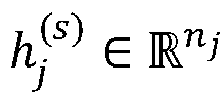
- each layer in a respective plurality of indexed layers s comprises a hidden activation h j s ⁇ R n j , where n j represents a number of hidden units at layer j ⁇ M s .
- h i k represents an activation of the k-th subsequent DNN
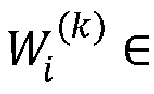
- W i k ⁇ R n i ⁇ n i ⁇ 1 represents a weight matrix of layer i of the k-th subsequent DNN
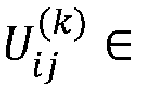
- U ij k ⁇ R n i ⁇ n j represents lateral connections from layer i of the k-th subsequent DNN to layer i-1 of the j -th subsequent DNN
- ⁇ represents an element-wise non linearity
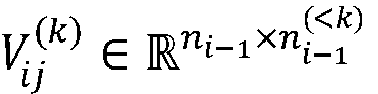
- V ij k ⁇ R n i ⁇ 1 ⁇ n i ⁇ 1 ⁇ k represents a projection matrix
- DNNs deep neural networks
- each DNN in the sequence corresponding to a respective machine learning task
- the method comprising: for a first machine learning task in the sequence: training a first DNN in the sequence that corresponds to the first machine learning task to perform the first machine learning task, wherein (i) the first DNN comprises a first plurality of indexed layers, and (ii) each layer in the first plurality of indexed layers is configured to receive a respective layer input and process the layer input to generate a respective layer output; for each subsequent machine learning task in the sequence: training a subsequent DNN corresponding to the machine learning task to perform the machine learning task, wherein (i) the subsequent DNN comprises a subsequent plurality of indexed layers, and (ii) each layer with index greater than one in the subsequent indexed plurality of layers receives input from (i) a preceding layer of the subsequent DNN, and (ii) one or more preceding layers of respective preceding D
- DNNs deep neural networks
- a system of one or more computers can be configured to perform particular operations or actions by virtue of software, firmware, hardware, or any combination thereof installed on the system that in operation may cause the system to perform the actions.
- One or more computer programs can be configured to perform particular operations or actions by virtue of including instructions that, when executed by data processing apparatus, cause the apparatus to perform the actions.
- each DNN layer with index equal to one in a respective plurality of indexed layers receives a respective subsequent DNN input.
- the sequence of machine learning tasks comprises independent machine learning tasks.
- the first DNN comprises one or more respective DNN parameters
- each subsequent DNN comprises one or more respective subsequent DNN parameters
- training each subsequent DNN comprises setting preceding DNN parameters of preceding DNNs to constant values.
- training each subsequent DNN further comprises adjusting values of the respective subsequent DNN parameters using a machine learning training technique.
- each DNN in the sequence of DNNs has been trained to perform a respective machine learning task, the sequence of DNN comprising: a first DNN that corresponds to a first machine learning task, wherein (i) the first DNN comprises a first plurality of indexed layers, and (ii) each layer in the first plurality of indexed layers is configured to receive a respective layer input and process the layer input to generate a respective layer output; and one or more subsequent DNNs corresponding to one or more respective machine learning tasks, wherein (i) each subsequent DNN comprises a respective plurality of indexed layers, and (ii) each layer in a respective plurality of indexed layers with index greater than one receives input from (i) a preceding layer of the respective subsequent DNN, and (ii) one or more preceding layers of respective preceding DNNs, wherein a preceding layer is a layer whose index is one less than the current index; the method comprising
- a neural network may be pre-trained on a source domain (where data is often abundant), the output layers of the neural network may be adapted to the target domain, and the neural network may be fine-tuned using machine learning techniques such as backpropagation.
- machine learning techniques such as backpropagation.
- fine-tuning methods may suffice.
- fine-tuning methods may allow the recovery of expert performance in the target domain, it is a destructive process that discards previously learnt neural network parameters corresponding to previous tasks.
- each neural network may be copied before fine-tuning to explicitly remember all previous tasks.
- distillation methods may provide a potential solution to multi-task learning.
- distillation methods assume that training data is available for all tasks - an assumption which may not always hold.
- a progressive neural network system provides a model architecture that, by construction, supports transfer learning across sequences of machine learning tasks. While systems implementing fine-tuning methods incorporate previously learned knowledge only at initialization, the structure of progressive neural network systems allows for previously learned knowledge from previously trained models to be integrated at each layer of the current model. By combining previously learnt knowledge in this manner, progressive neural network systems have a more complex compositionality. Such a compositionality may enable a progressive neural network system to achieve a learning speed up compared to other neural network systems.
- a progressive neural network system does not assume that the machine learning tasks on which it is trained are related or similar. For example, other neural network systems that implement standard pre-train and fine tune methods, often assume that the machine learning tasks on which they are trained are overlapping. Conversely, a progressive neural network system makes no such assumptions, and may even be applied to settings where machine learning tasks are orthogonal or even adversarial. In particular, progressive neural network systems allocate new deep neural networks for each new task, whose weights are initialized randomly. Such deep neural networks are free to reuse, modify or ignore previously learned features through lateral connections between previous deep neural networks. The lateral connections, in combination with freezing previously learned parameters when training a new deep neural network, ensures that there is no interference between machine learning tasks and prevents catastrophic forgetting.
- FIG. 1 shows an example progressive neural network system 100.
- the system 100 is an example of a system implemented as computer programs on one or more computers in one or more locations, in which the systems, components, and techniques described below can be implemented.
- the progressive neural network system 100 may learn multiple machine learning tasks in sequence, where task features are preserved so that new tasks can benefit from all previously learned features and so that the final neural network system can be evaluated on each machine learning task.
- the multiple machine learning tasks includes one or more independent machine learning tasks, e.g., machine learning tasks whose relationships are orthogonal to each other.
- one or more of the machine learning tasks in include adversarial machine learning tasks.
- the machine learning tasks in the sequence of machine learning tasks are sensorimotor robot learning tasks.
- a first machine learning task in the sequence of machine learning tasks may include a sensorimotor learning task such as locomotion.
- a second machine learning task in the sequence of machine learning tasks may include a second sensorimotor learning task such as grasping.
- the progressive neural network system 100 includes a sequence of Deep Neural Networks (DNNs) 102.
- the sequence of DNNs may include a first DNN 104 and one or more subsequent DNNs.
- FIG. 1 shows two subsequent DNNs, e.g., subsequent DNNs 106 and 108.
- the progressive neural network system 100 may include more or fewer subsequent DNNs.
- the type of DNNs included in the sequence of DNNs is dependent on the type of machine learning tasks that the DNNs are trained to perform.
- the first DNN 104 in the sequence of DNNs 102 corresponds to a first machine learning task in the sequence of machine learning tasks. That is, the first DNN 104 in the sequence of DNNs 102 is a DNN that is configured to perform a first machine learning task, e.g., through training on appropriate training data.
- the first DNN 104 includes multiple neural network layers, e.g., input layer 104a, hidden layers 104b and 104c, and output layer 104d.
- the first DNN 104 is illustrated as having four neural network layers, however in some cases the first DNN 104 may include more or fewer neural network layers.
- the DNNs in the sequence of DNNs are illustrated as columns having stacked neural network layers. However, in some implementations the DNNs in the sequence of DNNs may be columns that include other types of neural network layers, e.g., long short term memory recurrent neural network layers.
- Each neural network layer in the multiple neural network layers of the first DNN 104 may contain one or more hidden units and may be configured to receive a respective layer input, e.g., from a preceding neural network layer, and to process the layer input to generate a respective layer output.
- the multiple layers may include L indexed neural network layers.
- Each of the L layers generate a respective layer output in accordance with parameters ⁇ i 1 for the neural network layer.
- the neural network layer parameters ⁇ i 1 are parameters that may be trained, e.g., using standard backpropagation techniques. Training a first DNN in a progressive neural network system is described in more detail below with reference to FIG. 2 .
- Subsequent DNNs in the sequence of DNNs 102 correspond to subsequent machine learning tasks in the sequence of machine learning tasks. That is, each subsequent DNN in the sequence of DNNs is a DNN that may be configured to perform a subsequent machine learning task, e.g., through training on appropriate training data.
- Each subsequent DNN e.g., subsequent DNNs 106 and 108, include multiple neural network layers.
- subsequent DNN 106 includes input layer 106a, hidden layers 106b and 106c, and output layer 106d.
- subsequent DNN 108 includes input layer 108a, hidden layers 108b and 108c, and output layer 108d.
- the subsequent DNNs 106 and 108 are illustrated as having four neural network layers each.
- each of the subsequent DNNs may include more or fewer neural network layers.
- Each neural network layer in a subsequent DNN with index greater than one is configured to receive input from (i) a preceding layer of the subsequent DNN, and (ii) one or more preceding layers of respective preceding DNNs, where a preceding layer is a layer whose index is one less than the current index.
- neural network layer 106b of subsequent DNN 106 is configured to receive input from (i) neural network layer 106a of DNN 106, and (ii) neural network layer 104a of DNN 104.
- neural network layer 106c of subsequent DNN 106 is configured to receive input from (i) neural network layer 106b of DNN 106, and (ii) neural network layer 104b of DNN 104.
- a neural network layer l of a subsequent DNN may receive input from neural network layer l - 1 of the DNN, and input from one or more preceding neural network layers l - 1 of respective preceding DNNs.
- a neural network layer l of a third DNN in the sequence of DNNs may receive input from neural network layer l - 1 of the third DNN and two inputs from neural network layers l - 1 of the first and second DNN, respectively.
- a neural network layer with index equal to one receives a respective DNN input, e.g., inputs 2 and 3.
- a one-to one correspondence between DNNs is not required - layers in a subsequent DNN may be connected to every other layer of a preceding DNN, for example.
- some of a preceding DNN may not be used at all, e.g., one or more layers of a preceding DNN may only include connections between layers within the preceding DNN.
- each subsequent DNN s may include M s neural network layers, where each layer i of the M s layers includes a hidden activation h i s ⁇ R n i , with n i representing a number of hidden units at layer i ⁇ M s .
- the number of layers L in the first DNN may not be equal to the number of layers in each subsequent DNN, e.g., L may not be equal to M s for each s.
- the number of layers L in the first DNN may be equal to the number of layers in one or more of the subsequent DNNs, e.g., L may be equal to M s for one or more s.
- the numbers of layers in the subsequent DNNs may vary, e.g., M s is not the same for each s.
- the progressive neural network system 100 is trained to perform a sequence of machine learning tasks.
- the first DNN 104 in the sequence of DNNs 102 corresponds to a first machine learning task in the sequence of machine learning tasks, that is the first DNN 104 in the sequence of DNNs 102 is a DNN that may be configured to perform a first machine learning task, e.g., through training on appropriate training data.
- a subsequent DNN e.g., DNN 106
- a subsequent DNN is instantiated.
- the total number of DNNs in the progressive neural network system 100 may be equal to the number of machine learning tasks in the sequence of machine learning tasks.
- the sequence of machine learning tasks may include K + 1 machine learning tasks.
- ⁇ ( x ) max(0, x ).
- a different activation may be applied to different DNN layers - it is not required that the same transformation be applied at each DNN layer.
- a DNN layer is augmented with non-linear lateral connections to other DNN layers.
- the connections from other DNN layers need not only represent simple readings of information from the other DNNs. Rather, the connections represent learned, possibly non-linear transformations of the information. In some cases, such non-linear lateral connections may improve initial conditioning and perform dimensionality reduction.
- a basic lateral connection is described above with reference to equation (1).
- Such basic lateral connections can be replaced with a single hidden layer multilayer perceptron (MLP) whose first layer is a projection onto an n i- 1 dimensional subspace.
- MLP multilayer perceptron
- the number of parameters stemming from the lateral connections may be of the same order as the number of parameters for the first DNN.
- h i k represents an activation of the k -th subsequent DNN
- W i k ⁇ R n i ⁇ n i ⁇ 1 represents a weight or parameter matrix of layer i of the k -th subsequent DNN
- U ij k ⁇ R n i ⁇ n j represents lateral connections from layer i of the k -th subsequent DNN to layer i-1 of the j -th subsequent DNN
- ⁇ represents an element-wise non linearity
- lateral connections can be replaced by including an additional linear layer, with a potentially different number of outputs compared to the number of inputs.
- lateral connections can be replaced by performing 1 ⁇ 1 convolutions across image height and width and using dense fully connected input and output connections.
- an additional nonlinearity can be added on top of such a layer before representations are concatenated and fed to the current DNN.
- the K +1 machine learning tasks may be independent machine learning tasks, that is no assumptions regarding the type of tasks or relationships between the K tasks are made.
- the K +1 machine learning tasks may be orthogonal or adversarial. Training a progressive neural network system to perform K + 1 machine learning tasks, and processing an input, e.g., corresponding to a K + 1 -th machine learning task using a progressive neural network is described below with reference to FIGS. 2 and 3 , respectively.
- FIG. 2 is a flow diagram of an example process 200 for training a progressive neural network system to perform a sequence of machine learning tasks.
- the process 200 will be described as being performed by a system of one or more computers located in one or more locations.
- a system including a sequence of deep neural networks (DNNs), where each DNN in the sequence corresponds to a respective machine learning task can perform the process 200.
- the progressive neural network system 100 of FIG. 1 appropriately programmed in accordance with this specification, can perform the process 200.
- the system trains a first DNN in the sequence that corresponds to the first machine learning task to perform the first machine learning task (step 202).
- the first DNN may include a first number of indexed layers, e.g., L hidden layers, where each layer in the first number of indexed layers is configured to receive a respective layer input and process the layer input to generate a respective layer output according to one or more respective first DNN parameters.
- each layer in the first number of indexed layers may include a hidden activation h i 1 ⁇ R n i , where n i represents a number of hidden units at layer i ⁇ L.
- the system trains a subsequent DNN corresponding to the machine learning task to perform the machine learning task (step 204).
- the system need not perform a same learning algorithm to train a subsequent DNNs as learning algorithms used to train preceding DNNs, e.g., the first DNN. In other words, the system may apply different training algorithms to each of the DNNs in the sequence of DNNs.
- the subsequent DNN may include a subsequent number of indexed layers, where each layer with index greater than one in the subsequent number of indexed layers receives input from (i) a preceding layer of the subsequent DNN, that is a layer whose index is one less than the current index, and (ii) one or more preceding layers of respective preceding DNNs.
- each layer with index equal to one in a subsequent plurality of indexed layers receives a respective subsequent DNN input.
- Each layer in the subsequent number of indexed layers is configured to receive a respective layer input and process the layer input to generate a respective layer output according to one or more respective subsequent DNN parameters.
- training each subsequent DNN may include setting preceding DNN parameters of preceding DNNs to constant values, e.g., to previously trained values, and adjusting values of the respective subsequent DNN parameters using a machine learning training technique, e.g., backpropagation of gradients.
- each subsequent DNN corresponding to a subsequent machine learning task is randomly initialized prior to training.
- each subsequent DNN corresponding to a subsequent machine learning task may be initialized so that the subsequent DNN initially produces a same output as a preceding DNN. The initialization of each subsequent DNN affects how equation (1) above is instantiated at the output layer.
- FIG. 3 is a flow diagram of an example process 300 for processing an input using a progressive neural network.
- the process 300 will be described as being performed by a system of one or more computers located in one or more locations.
- a system including a sequence of deep neural networks (DNNs) e.g., the progressive neural network system 100 of FIG. 1 , appropriately programmed in accordance with this specification, can perform the process 300.
- DNNs deep neural networks
- the system receives an input as part of a machine learning task corresponding to a last subsequent DNN in the sequence of DNNs (step 302).
- the input may be an input that is part of a machine learning task corresponding to a K + 1 -th machine learning task in a sequence of machine learning tasks.
- the K + 1 -th machine learning task may be independent to other machine learning tasks in the sequence of machine learning tasks, that is the K + 1 -th machine learning task may be orthogonal or adversarial to one or more of the other machine learning tasks in the sequence of machine learning tasks.
- the system processes the input using the last subsequent DNN in the sequence to generate a last subsequent DNN output for the machine learning task (step 304).
- the last subsequent DNN includes a number of indexed layers, and (ii) each layer in the number of indexed layers with index greater than one receives input from (i) a preceding layer of the last subsequent DNN, and (ii) one or more preceding layers of each preceding DNN in the sequence of DNNs, where a preceding layer is a layer whose index is one less than the current index.
- Each layer with index equal to one in a respective plurality of indexed layers receives a respective subsequent DNN input.
- the system processes the received input using features learnt from previous machine learning tasks in the sequence of machine learning tasks. That is, the system processes the received input using not only the last subsequent DNN in the sequence, but also each DNN to which at least one layer of the last subsequent DNN is connected to. This structure is applicable even if the machine learning task corresponding to the received input is unrelated to previous machine learning tasks performed by previous DNNs.
- Embodiments of the subject matter and the functional operations described in this specification can be implemented in digital electronic circuitry, in tangibly-embodied computer software or firmware, in computer hardware, including the structures disclosed in this specification and their structural equivalents, or in combinations of one or more of them.
- Embodiments of the subject matter described in this specification can be implemented as one or more computer programs, i.e., one or more modules of computer program instructions encoded on a tangible non transitory program carrier for execution by, or to control the operation of, data processing apparatus.
- the program instructions can be encoded on an artificially generated propagated signal, e.g., a machine-generated electrical, optical, or electromagnetic signal, that is generated to encode information for transmission to suitable receiver apparatus for execution by a data processing apparatus.
- the computer storage medium can be a machine-readable storage device, a machine-readable storage substrate, a random or serial access memory device, or a combination of one or more of them. The computer storage medium is not, however, a propagated signal.
Landscapes
- Engineering & Computer Science (AREA)
- Physics & Mathematics (AREA)
- Theoretical Computer Science (AREA)
- Mathematical Physics (AREA)
- General Physics & Mathematics (AREA)
- Data Mining & Analysis (AREA)
- Computing Systems (AREA)
- Software Systems (AREA)
- General Engineering & Computer Science (AREA)
- Biophysics (AREA)
- General Health & Medical Sciences (AREA)
- Molecular Biology (AREA)
- Evolutionary Computation (AREA)
- Computational Linguistics (AREA)
- Biomedical Technology (AREA)
- Artificial Intelligence (AREA)
- Life Sciences & Earth Sciences (AREA)
- Health & Medical Sciences (AREA)
- Computational Mathematics (AREA)
- Mathematical Analysis (AREA)
- Mathematical Optimization (AREA)
- Pure & Applied Mathematics (AREA)
- Algebra (AREA)
- Databases & Information Systems (AREA)
- Image Analysis (AREA)
- Manipulator (AREA)
- Feedback Control In General (AREA)
Description
- This specification relates to neural networks.
- Neural networks are machine learning models that employ one or more layers of nonlinear units to predict an output for a received input. Some neural networks include one or more hidden layers in addition to an output layer. The output of each hidden layer is used as input to the next layer in the network, i.e., the next hidden layer or the output layer. Each layer of the network generates an output from a received input in accordance with current values of a respective set of parameters. Terekhov Et Al, "Knowledge Transfer In Deep Block-Modular Neural Networks", 24 July 2015, Network And Parallel Computing; Springer International Publishing, pp 268 - 279 describes training an initial network on a task then adding blocks of neurons and learning connections to the neurons in the blocks.
- This specification describes how a system implemented as computer programs on one or more computers in one or more locations can learn multiple machine learning tasks in sequence, where task features are preserved so that new tasks can benefit from all previously learnt features.
- The invention is set out in
claim 1. - This specification generally describes a neural network system implemented by one or more computers, the neural network system comprising a sequence of deep neural networks (DNNs), wherein each DNN in the sequence of DNNs has been trained to perform a respective machine learning task, and wherein the sequence of DNN comprises: a first DNN that corresponds to a first machine learning task, wherein (i) the first DNN comprises a first plurality of indexed layers, and (ii) each layer in the first plurality of indexed layers is configured to receive a respective layer input and process the layer input to generate a respective layer output; and one or more subsequent DNNs corresponding to one or more respective machine learning tasks, wherein (i) each subsequent DNN comprises a respective plurality of indexed layers, and (ii) each layer in a respective plurality of indexed layers with index greater than one receives input from (i) a preceding layer of the respective subsequent DNN, and (ii) one or more preceding layers of respective preceding DNNs, wherein a preceding layer is a layer whose index is one less than the current index.
- In some implementations each layer with index equal to one in a respective plurality of indexed layers receives a respective subsequent DNN input.
- In some implementations (i) the first plurality of indexed layers comprises L hidden layers, and (ii) each respective plurality of indexed layers s comprises Ms hidden layers.
- In some implementations L is not equal to Ms for each s.
- In some implementations L is equal to Ms for one or more s.
- In some implementations each layer in the first plurality of indexed layers comprises a hidden
activation 
- In some implementations each layer in a respective plurality of indexed layers s comprises a hidden activation
- In some implementations the sequence of machine learning tasks comprises k +1 machine learning tasks, and wherein an activation of the k-th subsequent DNN is given by


- In some implementations the sequence of machine learning tasks comprises k machine learning tasks, and wherein an activation of the k-th subsequent DNN is given by



- .
- There is also described a method for sequentially training a sequence of deep neural networks (DNNs) to perform a sequence of machine learning tasks, each DNN in the sequence corresponding to a respective machine learning task, and the method comprising: for a first machine learning task in the sequence: training a first DNN in the sequence that corresponds to the first machine learning task to perform the first machine learning task, wherein (i) the first DNN comprises a first plurality of indexed layers, and (ii) each layer in the first plurality of indexed layers is configured to receive a respective layer input and process the layer input to generate a respective layer output; for each subsequent machine learning task in the sequence: training a subsequent DNN corresponding to the machine learning task to perform the machine learning task, wherein (i) the subsequent DNN comprises a subsequent plurality of indexed layers, and (ii) each layer with index greater than one in the subsequent indexed plurality of layers receives input from (i) a preceding layer of the subsequent DNN, and (ii) one or more preceding layers of respective preceding DNNs, wherein a preceding layer is a layer whose index is one less than the current index.
- There are further described corresponding computer systems, apparatus, and computer programs recorded on one or more computer storage devices, each configured to perform the actions of the described methods. A system of one or more computers can be configured to perform particular operations or actions by virtue of software, firmware, hardware, or any combination thereof installed on the system that in operation may cause the system to perform the actions. One or more computer programs can be configured to perform particular operations or actions by virtue of including instructions that, when executed by data processing apparatus, cause the apparatus to perform the actions.
- In some implementations each DNN layer with index equal to one in a respective plurality of indexed layers receives a respective subsequent DNN input.
- In some implementations the sequence of machine learning tasks comprises independent machine learning tasks.
- .
- In some implementations (i) the first DNN comprises one or more respective DNN parameters, and (ii) each subsequent DNN comprises one or more respective subsequent DNN parameters, and training each subsequent DNN comprises setting preceding DNN parameters of preceding DNNs to constant values.
- In some implementations training each subsequent DNN further comprises adjusting values of the respective subsequent DNN parameters using a machine learning training technique.
- There is also described a method for processing an input using a sequence of deep neural networks (DNNs), wherein each DNN in the sequence of DNNs has been trained to perform a respective machine learning task, the sequence of DNN comprising: a first DNN that corresponds to a first machine learning task, wherein (i) the first DNN comprises a first plurality of indexed layers, and (ii) each layer in the first plurality of indexed layers is configured to receive a respective layer input and process the layer input to generate a respective layer output; and one or more subsequent DNNs corresponding to one or more respective machine learning tasks, wherein (i) each subsequent DNN comprises a respective plurality of indexed layers, and (ii) each layer in a respective plurality of indexed layers with index greater than one receives input from (i) a preceding layer of the respective subsequent DNN, and (ii) one or more preceding layers of respective preceding DNNs, wherein a preceding layer is a layer whose index is one less than the current index; the method comprising: receiving an input as part of a machine learning task corresponding to a last subsequent DNN in the sequence of DNNs; and processing the input using the last subsequent DNN in the sequence to generate a last subsequent DNN output for the machine learning task.
- .
- .
- .
- The subject matter described in this specification can be implemented in particular embodiments so as to realize one or more of the following advantages.
- To implement transfer learning in neural networks, systems typically perform fine-tuning methods. For example, a neural network may be pre-trained on a source domain (where data is often abundant), the output layers of the neural network may be adapted to the target domain, and the neural network may be fine-tuned using machine learning techniques such as backpropagation. In some settings, e.g., when performing a single task, such fine-tuning methods may suffice. However, in other settings, e.g., when implementing transfer learning across multiple tasks, such methods may suffer from several flaws and may not suffice. For example, while fine-tuning methods may allow the recovery of expert performance in the target domain, it is a destructive process that discards previously learnt neural network parameters corresponding to previous tasks. To overcome these problems, each neural network may be copied before fine-tuning to explicitly remember all previous tasks.
- In some cases, distillation methods may provide a potential solution to multi-task learning. However distillation methods assume that training data is available for all tasks - an assumption which may not always hold.
- A progressive neural network system, as described in this specification, provides a model architecture that, by construction, supports transfer learning across sequences of machine learning tasks. While systems implementing fine-tuning methods incorporate previously learned knowledge only at initialization, the structure of progressive neural network systems allows for previously learned knowledge from previously trained models to be integrated at each layer of the current model. By combining previously learnt knowledge in this manner, progressive neural network systems have a more complex compositionality. Such a compositionality may enable a progressive neural network system to achieve a learning speed up compared to other neural network systems.
- In addition, progressive neural network systems naturally accumulate experiences and are immune to forgetting by design, making them ideally suited to tackling continual or lifelong learning tasks.
- A progressive neural network system, as described in this specification, does not assume that the machine learning tasks on which it is trained are related or similar. For example, other neural network systems that implement standard pre-train and fine tune methods, often assume that the machine learning tasks on which they are trained are overlapping. Conversely, a progressive neural network system makes no such assumptions, and may even be applied to settings where machine learning tasks are orthogonal or even adversarial. In particular, progressive neural network systems allocate new deep neural networks for each new task, whose weights are initialized randomly. Such deep neural networks are free to reuse, modify or ignore previously learned features through lateral connections between previous deep neural networks. The lateral connections, in combination with freezing previously learned parameters when training a new deep neural network, ensures that there is no interference between machine learning tasks and prevents catastrophic forgetting.
- The details of one or more embodiments of the subject matter of this specification are set forth in the accompanying drawings and the description below. Other features, aspects, and advantages of the subject matter will become apparent from the description, the drawings, and the claims.
-
-
FIG. 1 shows an example progressive neural network system. -
FIG. 2 is a flow diagram of an example process for training a progressive neural network system to perform a sequence of machine learning tasks. -
FIG. 3 is a flow diagram of an example process for processing an input using a progressive neural network. - Like reference numbers and designations in the various drawings indicate like elements.
-
FIG. 1 shows an example progressiveneural network system 100. Thesystem 100 is an example of a system implemented as computer programs on one or more computers in one or more locations, in which the systems, components, and techniques described below can be implemented. - The progressive
neural network system 100 may learn multiple machine learning tasks in sequence, where task features are preserved so that new tasks can benefit from all previously learned features and so that the final neural network system can be evaluated on each machine learning task. - In some implementations the multiple machine learning tasks includes one or more independent machine learning tasks, e.g., machine learning tasks whose relationships are orthogonal to each other. In some implementations one or more of the machine learning tasks in include adversarial machine learning tasks.
- The machine learning tasks in the sequence of machine learning tasks are sensorimotor robot learning tasks. For example, a first machine learning task in the sequence of machine learning tasks may include a sensorimotor learning task such as locomotion. A second machine learning task in the sequence of machine learning tasks may include a second sensorimotor learning task such as grasping.
- .
- The progressive
neural network system 100 includes a sequence of Deep Neural Networks (DNNs) 102. For example, as shown inFIG. 1 , the sequence of DNNs may include afirst DNN 104 and one or more subsequent DNNs. For convenience,FIG. 1 shows two subsequent DNNs, e.g.,subsequent DNNs neural network system 100 may include more or fewer subsequent DNNs. - The type of DNNs included in the sequence of DNNs is dependent on the type of machine learning tasks that the DNNs are trained to perform.
- The
first DNN 104 in the sequence ofDNNs 102 corresponds to a first machine learning task in the sequence of machine learning tasks. That is, thefirst DNN 104 in the sequence ofDNNs 102 is a DNN that is configured to perform a first machine learning task, e.g., through training on appropriate training data. Thefirst DNN 104 includes multiple neural network layers, e.g.,input layer 104a,hidden layers output layer 104d. For convenience, thefirst DNN 104 is illustrated as having four neural network layers, however in some cases thefirst DNN 104 may include more or fewer neural network layers. For example, generally, thefirst DNN 104 may include L indexed layers e.g., layers i = 1,..., L. Layer i = 1 may correspond to a bottom input layer of thefirst DNN 104, e.g.,input layer 104a, that is configured to receive a first DNN input, e.g.,input 1. Layer i = L may correspond to a top output layer of thefirst DNN 104, e.g.,output layer 104d, that is configured to output a first DNN output, e.g.,output 1. In addition, for convenience, the DNNs in the sequence of DNNs are illustrated as columns having stacked neural network layers. However, in some implementations the DNNs in the sequence of DNNs may be columns that include other types of neural network layers, e.g., long short term memory recurrent neural network layers. - Each neural network layer in the multiple neural network layers of the
first DNN 104 may contain one or more hidden units and may be configured to receive a respective layer input, e.g., from a preceding neural network layer, and to process the layer input to generate a respective layer output. As described above, in some implementations the multiple layers may include L indexed neural network layers. Each of the L layers generate a respective layer output in accordance withparameters 
parameters 
FIG. 2 . - Subsequent DNNs in the sequence of
DNNs 102 correspond to subsequent machine learning tasks in the sequence of machine learning tasks. That is, each subsequent DNN in the sequence of DNNs is a DNN that may be configured to perform a subsequent machine learning task, e.g., through training on appropriate training data. Each subsequent DNN, e.g.,subsequent DNNs subsequent DNN 106 includesinput layer 106a,hidden layers output layer 106d. Similarly,subsequent DNN 108 includesinput layer 108a,hidden layers output layer 108d. For convenience, thesubsequent DNNs input layer input 3. Layer i = M may correspond to a top neural network layer of the subsequent DNN, e.g.,output layer output 3. - Each neural network layer in a subsequent DNN with index greater than one is configured to receive input from (i) a preceding layer of the subsequent DNN, and (ii) one or more preceding layers of respective preceding DNNs, where a preceding layer is a layer whose index is one less than the current index. For example,
neural network layer 106b ofsubsequent DNN 106 is configured to receive input from (i)neural network layer 106a ofDNN 106, and (ii)neural network layer 104a ofDNN 104. Similarly,neural network layer 106c ofsubsequent DNN 106 is configured to receive input from (i)neural network layer 106b ofDNN 106, and (ii)neural network layer 104b ofDNN 104. - As a general example, a neural network layer l of a subsequent DNN may receive input from neural network layer l - 1 of the DNN, and input from one or more preceding neural network layers l - 1 of respective preceding DNNs. For example, a neural network layer l of a third DNN in the sequence of DNNs may receive input from neural network layer l - 1 of the third DNN and two inputs from neural network layers l - 1 of the first and second DNN, respectively. A neural network layer with index equal to one receives a respective DNN input, e.g.,
inputs 2 and 3. A one-to one correspondence between DNNs is not required - layers in a subsequent DNN may be connected to every other layer of a preceding DNN, for example. As another example, some of a preceding DNN may not be used at all, e.g., one or more layers of a preceding DNN may only include connections between layers within the preceding DNN. - In some implementations each subsequent DNN s may include Ms neural network layers, where each layer i of the Ms layers includes a hidden activation

- As described above, the progressive
neural network system 100 is trained to perform a sequence of machine learning tasks. Thefirst DNN 104 in the sequence ofDNNs 102 corresponds to a first machine learning task in the sequence of machine learning tasks, that is thefirst DNN 104 in the sequence ofDNNs 102 is a DNN that may be configured to perform a first machine learning task, e.g., through training on appropriate training data. When a second machine learning task in the sequence of machine learning tasks is received or selected, a subsequent DNN, e.g.,DNN 106, is instantiated. Each time a subsequent machine learning task in the sequence of machine learning tasks is received or selected, a corresponding subsequent DNN is instantiated. In this manner, the total number of DNNs in the progressiveneural network system 100 may be equal to the number of machine learning tasks in the sequence of machine learning tasks. - In some implementations the sequence of machine learning tasks may include K + 1 machine learning tasks. In these cases, a hidden activation of an i-th layer of a k-th subsequent DNN may be given by


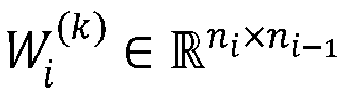

FIG. 1 illustrates the above described system with K = 3. - A DNN layer is augmented with non-linear lateral connections to other DNN layers. In other words, the connections from other DNN layers need not only represent simple readings of information from the other DNNs. Rather, the connections represent learned, possibly non-linear transformations of the information. In some cases, such non-linear lateral connections may improve initial conditioning and perform dimensionality reduction.
- For example, a basic lateral connection is described above with reference to equation (1). Such basic lateral connections can be replaced with a single hidden layer multilayer perceptron (MLP) whose first layer is a projection onto an n i-1 dimensional subspace. By replacing basic lateral connections with non-linear lateral connections, the number of parameters stemming from the lateral connections may be of the same order as the number of parameters for the first DNN.
- For example, the sequence of machine learning tasks may include K+1 machine learning tasks, and an activation of an i-th layer of a k-th subsequent DNN may be given by


- In some implementations, the K+1 machine learning tasks may be independent machine learning tasks, that is no assumptions regarding the type of tasks or relationships between the K tasks are made. For example, the K+1 machine learning tasks may be orthogonal or adversarial. Training a progressive neural network system to perform K+1 machine learning tasks, and processing an input, e.g., corresponding to a K+1-th machine learning task using a progressive neural network is described below with reference to
FIGS. 2 and3 , respectively. -
FIG. 2 is a flow diagram of anexample process 200 for training a progressive neural network system to perform a sequence of machine learning tasks. For convenience, theprocess 200 will be described as being performed by a system of one or more computers located in one or more locations. For example, a system including a sequence of deep neural networks (DNNs), where each DNN in the sequence corresponds to a respective machine learning task, appropriately programmed in accordance with this specification, can perform theprocess 200. For example, the progressiveneural network system 100 ofFIG. 1 , appropriately programmed in accordance with this specification, can perform theprocess 200. - For a first machine learning task in the sequence, the system trains a first DNN in the sequence that corresponds to the first machine learning task to perform the first machine learning task (step 202). The first DNN may include a first number of indexed layers, e.g., L hidden layers, where each layer in the first number of indexed layers is configured to receive a respective layer input and process the layer input to generate a respective layer output according to one or more respective first DNN parameters.
- In some implementations each layer in the first number of indexed layers may include a hidden
activation 
- For each subsequent machine learning task in the sequence, the system trains a subsequent DNN corresponding to the machine learning task to perform the machine learning task (step 204). The system need not perform a same learning algorithm to train a subsequent DNNs as learning algorithms used to train preceding DNNs, e.g., the first DNN. In other words, the system may apply different training algorithms to each of the DNNs in the sequence of DNNs.
- The subsequent DNN may include a subsequent number of indexed layers, where each layer with index greater than one in the subsequent number of indexed layers receives input from (i) a preceding layer of the subsequent DNN, that is a layer whose index is one less than the current index, and (ii) one or more preceding layers of respective preceding DNNs. In some implementations, each layer with index equal to one in a subsequent plurality of indexed layers receives a respective subsequent DNN input. Each layer in the subsequent number of indexed layers is configured to receive a respective layer input and process the layer input to generate a respective layer output according to one or more respective subsequent DNN parameters.
- In some implementations training each subsequent DNN may include setting preceding DNN parameters of preceding DNNs to constant values, e.g., to previously trained values, and adjusting values of the respective subsequent DNN parameters using a machine learning training technique, e.g., backpropagation of gradients. In some implementations each subsequent DNN corresponding to a subsequent machine learning task is randomly initialized prior to training. In other implementations each subsequent DNN corresponding to a subsequent machine learning task may be initialized so that the subsequent DNN initially produces a same output as a preceding DNN. The initialization of each subsequent DNN affects how equation (1) above is instantiated at the output layer.
-
FIG. 3 is a flow diagram of anexample process 300 for processing an input using a progressive neural network. For convenience, theprocess 300 will be described as being performed by a system of one or more computers located in one or more locations. For example, a system including a sequence of deep neural networks (DNNs), e.g., the progressiveneural network system 100 ofFIG. 1 , appropriately programmed in accordance with this specification, can perform theprocess 300. - The system receives an input as part of a machine learning task corresponding to a last subsequent DNN in the sequence of DNNs (step 302). For example, the input may be an input that is part of a machine learning task corresponding to a K+1-th machine learning task in a sequence of machine learning tasks. The K+1-th machine learning task may be independent to other machine learning tasks in the sequence of machine learning tasks, that is the K+1-th machine learning task may be orthogonal or adversarial to one or more of the other machine learning tasks in the sequence of machine learning tasks.
- The system processes the input using the last subsequent DNN in the sequence to generate a last subsequent DNN output for the machine learning task (step 304). The last subsequent DNN includes a number of indexed layers, and (ii) each layer in the number of indexed layers with index greater than one receives input from (i) a preceding layer of the last subsequent DNN, and (ii) one or more preceding layers of each preceding DNN in the sequence of DNNs, where a preceding layer is a layer whose index is one less than the current index. Each layer with index equal to one in a respective plurality of indexed layers receives a respective subsequent DNN input.
- Due to the structure of the system, as described above with reference to
FIG. 1 , the system processes the received input using features learnt from previous machine learning tasks in the sequence of machine learning tasks. That is, the system processes the received input using not only the last subsequent DNN in the sequence, but also each DNN to which at least one layer of the last subsequent DNN is connected to. This structure is applicable even if the machine learning task corresponding to the received input is unrelated to previous machine learning tasks performed by previous DNNs. - .
- Embodiments of the subject matter and the functional operations described in this specification can be implemented in digital electronic circuitry, in tangibly-embodied computer software or firmware, in computer hardware, including the structures disclosed in this specification and their structural equivalents, or in combinations of one or more of them. Embodiments of the subject matter described in this specification can be implemented as one or more computer programs, i.e., one or more modules of computer program instructions encoded on a tangible non transitory program carrier for execution by, or to control the operation of, data processing apparatus. Alternatively or in addition, the program instructions can be encoded on an artificially generated propagated signal, e.g., a machine-generated electrical, optical, or electromagnetic signal, that is generated to encode information for transmission to suitable receiver apparatus for execution by a data processing apparatus. The computer storage medium can be a machine-readable storage device, a machine-readable storage substrate, a random or serial access memory device, or a combination of one or more of them. The computer storage medium is not, however, a propagated signal.
Claims (11)
- A computer-implemented method of performing robot learning tasks comprising sensorimotor learning tasks, wherein the sensorimotor learning tasks comprise locomotion or grasping tasks, the method comprising processing inputs using a sequence of deep neural networks (DNNs), wherein each DNN in the sequence of DNNs has been trained to perform a respective robot learning task of a sequence of sensorimotor robot learning tasks consisting of locomotion or grasping tasks, the sequence of DNNs comprising:a first DNN (104) that corresponds to a first robot learning task of the sequence of robot learning tasks, wherein(i) the first DNN comprises an input layer, an output layer, and a first plurality of indexed hidden layers, and(ii) each layer in the first plurality of indexed hidden layers is configured to receive a respective layer input and process the layer input to generate a respective layer output; andone or more subsequent DNNs (106, 108) corresponding to one or more subsequent respective robot learning tasks of the sequence of robot learning tasks, wherein each subsequent DNN in the sequence of DNNs is a DNN configured to perform a corresponding one of the subsequent sensorimotor robot learning tasks andthe method further comprising:(i) each subsequent DNN comprises a respective input layer, a respective output layer, and a respective plurality of indexed hidden layers, and(ii) each layer in a respective plurality of indexed hidden layers of said each subsequent DNN with index, i, greater than one receives input from(i) a preceding hidden layer of the respective subsequent DNN, and(ii) one or more preceding hidden layers of respective preceding DNNs, through respective non-linear lateral connections, wherein a preceding hidden layer is a layer whose index is one less than the index, i;each DNN receiving a respective input as part of the locomotion or grasping sensorimotor robot learning task corresponding to that respective DNN in the sequence of DNNs; andprocessing the respective inputs using the respective DNNs of the sequence of DNNs,using the last subsequent DNN in the sequence to generate a last subsequent DNN output for performing the locomotion or grasping sensorimotor robot learning task corresponding to the last subsequent DNN.
- The method of claim 1 wherein the non-linear lateral connections comprise a single hidden layer multilayer perceptron, MLP.
- The method of claim 1 or 2 wherein a subsequent DNN is a convolutional neural network and wherein the non-linear lateral connections to the convolutional neural network comprise 1 × 1 convolutions followed by a non-linearity.
- The method of any of claims 1 to 3, wherein each layer with index equal to one in a respective plurality of indexed layers receives a respective subsequent DNN input.
- The method of any one of claims 1 to 4, wherein (i) the first plurality of indexed layers comprises L hidden layers, and (ii) each respective plurality of indexed layers s comprises Ms hidden layers, wherein each layer in the first plurality of indexed layers comprises a hidden activation





- The method of any one of claims 1 to 5, wherein the sequence of robot learning tasks comprises independent locomotion or grasping sensorimotor robot learning tasks.
- A computer-implemented method for sequentially training a sequence of deep neural networks (DNNs) to perform a sequence of robot learning tasks as claimed in Claim 1, each DNN in the sequence corresponding to a respective robot learning task, wherein the sequence of robot learning tasks is a sequence of sensorimotor robot learning tasks consisting of locomotion or grasping tasks, the method comprising:for a first robot learning task in the sequence:
training a first DNN (104) in the sequence that corresponds to the first robot learning task to perform the first robot learning task, wherein (i) the first DNN comprises a an input layer, an output layer, and a first plurality of indexed hidden layers, (ii) each layer in the first plurality of indexed hidden layers is configured to receive a respective layer input and process the layer input to generate a respective layer output;for each subsequent robot learning task in the sequence:
training a subsequent DNN (106, 108) corresponding to the robot learning task to perform the robot learning task, wherein (i) the subsequent DNN comprises a respective input layer, a respective output layer, and a respective plurality of indexed hidden layers, and (ii) each layer in a respective plurality of indexed hidden layers of said each subsequent DNN with index, i, greater than one receives input from (i) a preceding hidden layer of the subsequent DNN, and (ii) one or more preceding I hidden layers of respective preceding DNNs, through respective non-linear lateral connections, wherein a preceding layer is a layer whose index is one less than the index, i. - The method of claim 7, wherein the sequence of robot learning tasks comprises independent locomotion or grasping sensorimotor robot learning tasks.
- The method of any one of claims 7 to 8, wherein (i) the first DNN comprises one or more respective DNN parameters, and (ii) each subsequent DNN comprises one or more respective subsequent DNN parameters, and
wherein training each subsequent DNN comprises setting preceding DNN parameters of preceding DNNs to constant values. - The method of any one of claims 7 to 9, wherein training each subsequent DNN further comprises adjusting values of the respective subsequent DNN parameters using a machine learning training technique.
- Computer-readable instructions which, when executed by at least one computer, cause the at least one computer to cause performance of the method of any of claims 1 to 10.
Priority Applications (1)
| Application Number | Priority Date | Filing Date | Title |
|---|---|---|---|
| EP23199207.4A EP4312157B1 (en) | 2016-05-20 | 2016-12-30 | Progressive neural networks |
Applications Claiming Priority (2)
| Application Number | Priority Date | Filing Date | Title |
|---|---|---|---|
| US201662339719P | 2016-05-20 | 2016-05-20 | |
| PCT/US2016/069589 WO2017200597A1 (en) | 2016-05-20 | 2016-12-30 | Progressive neural networks |
Related Child Applications (2)
| Application Number | Title | Priority Date | Filing Date |
|---|---|---|---|
| EP23199207.4A Division-Into EP4312157B1 (en) | 2016-05-20 | 2016-12-30 | Progressive neural networks |
| EP23199207.4A Division EP4312157B1 (en) | 2016-05-20 | 2016-12-30 | Progressive neural networks |
Publications (2)
| Publication Number | Publication Date |
|---|---|
| EP3459017A1 EP3459017A1 (en) | 2019-03-27 |
| EP3459017B1 true EP3459017B1 (en) | 2023-11-01 |
Family
ID=57822141
Family Applications (2)
| Application Number | Title | Priority Date | Filing Date |
|---|---|---|---|
| EP16826910.8A Active EP3459017B1 (en) | 2016-05-20 | 2016-12-30 | Progressive neural networks |
| EP23199207.4A Active EP4312157B1 (en) | 2016-05-20 | 2016-12-30 | Progressive neural networks |
Family Applications After (1)
| Application Number | Title | Priority Date | Filing Date |
|---|---|---|---|
| EP23199207.4A Active EP4312157B1 (en) | 2016-05-20 | 2016-12-30 | Progressive neural networks |
Country Status (5)
| Country | Link |
|---|---|
| US (3) | US10949734B2 (en) |
| EP (2) | EP3459017B1 (en) |
| CN (2) | CN109328362B (en) |
| PL (1) | PL3459017T3 (en) |
| WO (1) | WO2017200597A1 (en) |
Families Citing this family (38)
| Publication number | Priority date | Publication date | Assignee | Title |
|---|---|---|---|---|
| IE87469B1 (en) * | 2016-10-06 | 2024-01-03 | Google Llc | Image processing neural networks with separable convolutional layers |
| WO2018071392A1 (en) * | 2016-10-10 | 2018-04-19 | Deepmind Technologies Limited | Neural networks for selecting actions to be performed by a robotic agent |
| US10963783B2 (en) * | 2017-02-19 | 2021-03-30 | Intel Corporation | Technologies for optimized machine learning training |
| WO2018184193A1 (en) * | 2017-04-07 | 2018-10-11 | Intel Corporation | Advanced artificial intelligence agent for modeling physical interactions |
| US10679129B2 (en) | 2017-09-28 | 2020-06-09 | D5Ai Llc | Stochastic categorical autoencoder network |
| US11100399B2 (en) * | 2017-11-21 | 2021-08-24 | International Business Machines Corporation | Feature extraction using multi-task learning |
| CN107968962B (en) * | 2017-12-12 | 2019-08-09 | 华中科技大学 | A video generation method for two non-adjacent images based on deep learning |
| CN108388795A (en) * | 2018-02-11 | 2018-08-10 | 浙江工业大学 | A kind of confrontation attack defense method based on LSTM detectors |
| EP3537345A1 (en) * | 2018-03-06 | 2019-09-11 | Hybris AG | Computer-implemented method, system and computer program product for providing a conversational application interface |
| KR102565278B1 (en) | 2018-03-26 | 2023-08-09 | 삼성전자주식회사 | Image segmentation method, image segmentation device, and learning method ofimage segmentation |
| EP3782080B1 (en) | 2018-04-18 | 2025-01-29 | DeepMind Technologies Limited | Neural networks for scalable continual learning in domains with sequentially learned tasks |
| US10657377B2 (en) | 2018-06-12 | 2020-05-19 | At&T Intellectual Property I, L.P. | Model-driven learning for video analytics |
| JP7055211B2 (en) * | 2018-08-31 | 2022-04-15 | オリンパス株式会社 | Data processing system and data processing method |
| US11645509B2 (en) * | 2018-09-27 | 2023-05-09 | Salesforce.Com, Inc. | Continual neural network learning via explicit structure learning |
| US11676008B2 (en) * | 2018-09-27 | 2023-06-13 | Google Llc | Parameter-efficient multi-task and transfer learning |
| US11715043B2 (en) | 2019-03-01 | 2023-08-01 | Apple Inc. | Semantics preservation for machine learning models deployed as dependent on other machine learning models |
| US11559221B2 (en) * | 2019-03-22 | 2023-01-24 | Siemens Healthcare Gmbh | Multi-task progressive networks for patient modeling for medical scans |
| CN111797865A (en) * | 2019-04-09 | 2020-10-20 | Oppo广东移动通信有限公司 | Data processing method, apparatus, storage medium and electronic device |
| CN110334743B (en) * | 2019-06-10 | 2021-05-04 | 浙江大学 | A Progressive Transfer Learning Method Based on Convolutional Long Short-Term Memory Networks |
| US11741370B2 (en) * | 2019-08-28 | 2023-08-29 | International Business Machines Corporation | Transfer learning based on cross-domain homophily influences |
| US11475297B2 (en) | 2019-08-28 | 2022-10-18 | International Business Machines Corporation | Cross-domain homophily quantification for transfer learning |
| US12398718B2 (en) * | 2019-09-12 | 2025-08-26 | Schneider Electric Systems Usa, Inc. | Well site machine learning based analytics |
| WO2021061781A1 (en) * | 2019-09-25 | 2021-04-01 | Google Llc | Multi-task adapter neural networks |
| DE102019220171A1 (en) * | 2019-12-19 | 2021-06-24 | Conti Temic Microelectronic Gmbh | Conversion of input image data from a plurality of vehicle cameras of an all-round vision system into optimized output image data |
| CN111340089A (en) * | 2020-02-21 | 2020-06-26 | 苏州工业园区服务外包职业学院 | Image feature learning method, model, apparatus and computer storage medium |
| US11783187B2 (en) | 2020-03-04 | 2023-10-10 | Here Global B.V. | Method, apparatus, and system for progressive training of evolving machine learning architectures |
| US11087883B1 (en) * | 2020-04-02 | 2021-08-10 | Blue Eye Soft, Inc. | Systems and methods for transfer-to-transfer learning-based training of a machine learning model for detecting medical conditions |
| US11995566B2 (en) | 2020-06-02 | 2024-05-28 | Nec Corporation | Machine learning knowledge management based on lifelong boosting in presence of less data |
| CN111723203A (en) * | 2020-06-15 | 2020-09-29 | 苏州意能通信息技术有限公司 | Text classification method based on lifetime learning |
| WO2022028926A1 (en) | 2020-08-07 | 2022-02-10 | Telefonaktiebolaget Lm Ericsson (Publ) | Offline simulation-to-reality transfer for reinforcement learning |
| US12174915B1 (en) | 2020-10-01 | 2024-12-24 | Wells Fargo Bank, N.A. | Progressive machine learning using a qualifier |
| US12236939B2 (en) * | 2021-03-12 | 2025-02-25 | Samsung Electronics Co., Ltd. | Method of generating a trigger word detection model, and an apparatus for the same |
| US12626091B2 (en) * | 2021-11-17 | 2026-05-12 | University Of Florida Research Foundation, Incorporated | Configuration process framework for machine learning models |
| US12094087B2 (en) * | 2022-03-04 | 2024-09-17 | Wisconsin Alumni Research Foundation | Systems, methods, and media for generating digital images using low bit depth image sensor data |
| WO2023183478A1 (en) * | 2022-03-23 | 2023-09-28 | University Of Southern California | Automated vessel wall segmentation system and method |
| US12517983B2 (en) * | 2022-08-22 | 2026-01-06 | Nec Corporation | SNR detection with few-shot trained models |
| CN120917457A (en) * | 2023-01-26 | 2025-11-07 | Gdm控股有限公司 | Reducing plasticity loss during training of neural networks |
| WO2026030752A1 (en) * | 2024-08-02 | 2026-02-05 | Incora Health, Inc. | Wearable devices using machine learned models for individual-specific biometric tracking and outcome predictions |
Family Cites Families (16)
| Publication number | Priority date | Publication date | Assignee | Title |
|---|---|---|---|---|
| US5113483A (en) * | 1990-06-15 | 1992-05-12 | Microelectronics And Computer Technology Corporation | Neural network with semi-localized non-linear mapping of the input space |
| EP0466022A3 (en) * | 1990-07-12 | 1993-08-25 | Allen-Bradley Company, Inc. | Teaching method for recurrent neural networks |
| FR2691004B1 (en) * | 1992-05-05 | 1994-06-17 | Thomson Csf | CONNECTIONIST DEVICE FOR MONITORING THE EVOLUTION OF INFORMATION BETWEEN AT LEAST TWO DATA VALUES, AND APPLICATIONS. |
| US5572628A (en) * | 1994-09-16 | 1996-11-05 | Lucent Technologies Inc. | Training system for neural networks |
| US5748847A (en) * | 1995-12-21 | 1998-05-05 | Maryland Technology Corporation | Nonadaptively trained adaptive neural systems |
| US6038338A (en) * | 1997-02-03 | 2000-03-14 | The United States Of America As Represented By The Secretary Of The Navy | Hybrid neural network for pattern recognition |
| KR100529311B1 (en) * | 2003-01-21 | 2005-11-17 | 삼성전자주식회사 | Apparatus and method for selecting the length of variable length coding bit stream using neural network |
| US7958071B2 (en) * | 2007-04-19 | 2011-06-07 | Hewlett-Packard Development Company, L.P. | Computational nodes and computational-node networks that include dynamical-nanodevice connections |
| US20140032570A1 (en) * | 2012-07-30 | 2014-01-30 | International Business Machines Corporation | Discriminative Learning Via Hierarchical Transformations |
| US9177550B2 (en) * | 2013-03-06 | 2015-11-03 | Microsoft Technology Licensing, Llc | Conservatively adapting a deep neural network in a recognition system |
| GB2513105A (en) * | 2013-03-15 | 2014-10-22 | Deepmind Technologies Ltd | Signal processing systems |
| US9202462B2 (en) * | 2013-09-30 | 2015-12-01 | Google Inc. | Key phrase detection |
| JP6382354B2 (en) * | 2014-03-06 | 2018-08-29 | プログレス インコーポレイテッドProgress,Inc. | Neural network and neural network training method |
| CN104573731B (en) * | 2015-02-06 | 2018-03-23 | 厦门大学 | Fast target detection method based on convolutional neural networks |
| CN205139973U (en) * | 2015-10-26 | 2016-04-06 | 中国人民解放军军械工程学院 | BP neural network based on FPGA device founds |
| WO2018071392A1 (en) * | 2016-10-10 | 2018-04-19 | Deepmind Technologies Limited | Neural networks for selecting actions to be performed by a robotic agent |
-
2016
- 2016-12-30 EP EP16826910.8A patent/EP3459017B1/en active Active
- 2016-12-30 US US15/396,319 patent/US10949734B2/en active Active
- 2016-12-30 CN CN201680085917.3A patent/CN109328362B/en active Active
- 2016-12-30 CN CN202311698806.8A patent/CN117829216A/en active Pending
- 2016-12-30 EP EP23199207.4A patent/EP4312157B1/en active Active
- 2016-12-30 PL PL16826910.8T patent/PL3459017T3/en unknown
- 2016-12-30 WO PCT/US2016/069589 patent/WO2017200597A1/en not_active Ceased
-
2021
- 2021-03-15 US US17/201,542 patent/US11775804B2/en active Active
-
2023
- 2023-10-02 US US18/479,775 patent/US12462145B2/en active Active
Also Published As
| Publication number | Publication date |
|---|---|
| EP3459017A1 (en) | 2019-03-27 |
| US20240119262A1 (en) | 2024-04-11 |
| EP4312157A2 (en) | 2024-01-31 |
| US10949734B2 (en) | 2021-03-16 |
| PL3459017T3 (en) | 2024-05-13 |
| US20170337464A1 (en) | 2017-11-23 |
| US20210201116A1 (en) | 2021-07-01 |
| CN109328362A (en) | 2019-02-12 |
| CN117829216A (en) | 2024-04-05 |
| US11775804B2 (en) | 2023-10-03 |
| CN109328362B (en) | 2024-01-05 |
| EP4312157A3 (en) | 2024-03-20 |
| WO2017200597A1 (en) | 2017-11-23 |
| EP4312157B1 (en) | 2026-02-04 |
| US12462145B2 (en) | 2025-11-04 |
Similar Documents
| Publication | Publication Date | Title |
|---|---|---|
| US12462145B2 (en) | Progressive neural networks | |
| US11829882B2 (en) | System and method for addressing overfitting in a neural network | |
| EP3574454B1 (en) | Learning neural network structure | |
| US10380479B2 (en) | Acceleration of convolutional neural network training using stochastic perforation | |
| US9619749B2 (en) | Neural network and method of neural network training | |
| JP6620439B2 (en) | Learning method, program, and learning apparatus | |
| US11526735B2 (en) | Neuromorphic neuron apparatus for artificial neural networks | |
| EP3136304A1 (en) | Methods and systems for performing reinforcement learning in hierarchical and temporally extended environments | |
| TWI612433B (en) | Ensemble learning prediction aparatus and method, and non-transitory computer-readable storage medium | |
| EP3089081A1 (en) | Hierarchical neural network device, learning method for determination device, and determination method | |
| CN104662526A (en) | Apparatus and methods for efficient updates in spiking neuron networks | |
| CN114419878B (en) | Method, electronic device and storage medium for predicting urban road network global traffic state | |
| US20180181863A1 (en) | Learning system and learning method | |
| KR101563569B1 (en) | Learnable Dynamic Visual Image Pattern Recognition System and Method | |
| CN113625753A (en) | Method for guiding neural network to learn maneuvering flight of unmanned aerial vehicle by expert rules | |
| Espinoza et al. | Short term chaotic time series prediction using symmetric LS-SVM regression | |
| WO2019057552A1 (en) | Temporal pooling and correlation in an artificial neural network | |
| JP2016173843A (en) | Processing device, discrimination method, and program | |
| US20170316308A1 (en) | Highly trainable neural network configuration | |
| Tushar et al. | Extreme Learning ANFIS for classification problems | |
| US20200184331A1 (en) | Method and device for processing data through a neural network | |
| US11467728B2 (en) | Storage device using neural network and operating method for automatic redistribution of information and variable storage capacity based on accuracy-storage capacity tradeoff thereof | |
| US20230004351A1 (en) | Method and device for additive coding of signals in order to implement digital mac operations with dynamic precision | |
| US20240046098A1 (en) | Computer implemented method for transforming a pre trained neural network and a device therefor | |
| US12003255B2 (en) | Method and device for binary coding of signals in order to implement digital MAC operations with dynamic precision |
Legal Events
| Date | Code | Title | Description |
|---|---|---|---|
| STAA | Information on the status of an ep patent application or granted ep patent |
Free format text: STATUS: UNKNOWN |
|
| STAA | Information on the status of an ep patent application or granted ep patent |
Free format text: STATUS: THE INTERNATIONAL PUBLICATION HAS BEEN MADE |
|
| PUAI | Public reference made under article 153(3) epc to a published international application that has entered the european phase |
Free format text: ORIGINAL CODE: 0009012 |
|
| STAA | Information on the status of an ep patent application or granted ep patent |
Free format text: STATUS: REQUEST FOR EXAMINATION WAS MADE |
|
| 17P | Request for examination filed |
Effective date: 20181120 |
|
| AK | Designated contracting states |
Kind code of ref document: A1 Designated state(s): AL AT BE BG CH CY CZ DE DK EE ES FI FR GB GR HR HU IE IS IT LI LT LU LV MC MK MT NL NO PL PT RO RS SE SI SK SM TR |
|
| AX | Request for extension of the european patent |
Extension state: BA ME |
|
| DAV | Request for validation of the european patent (deleted) | ||
| DAX | Request for extension of the european patent (deleted) | ||
| STAA | Information on the status of an ep patent application or granted ep patent |
Free format text: STATUS: EXAMINATION IS IN PROGRESS |
|
| 17Q | First examination report despatched |
Effective date: 20210113 |
|
| REG | Reference to a national code |
Ref country code: DE Ref legal event code: R079 Free format text: PREVIOUS MAIN CLASS: G06N0003040000 Ipc: G06N0003045000 Ref country code: DE Ref legal event code: R079 Ref document number: 602016083887 Country of ref document: DE Free format text: PREVIOUS MAIN CLASS: G06N0003040000 Ipc: G06N0003045000 |
|
| RIC1 | Information provided on ipc code assigned before grant |
Ipc: G06N 3/045 20230101AFI20230327BHEP |
|
| GRAP | Despatch of communication of intention to grant a patent |
Free format text: ORIGINAL CODE: EPIDOSNIGR1 |
|
| STAA | Information on the status of an ep patent application or granted ep patent |
Free format text: STATUS: GRANT OF PATENT IS INTENDED |
|
| INTG | Intention to grant announced |
Effective date: 20230512 |
|
| P01 | Opt-out of the competence of the unified patent court (upc) registered |
Effective date: 20230505 |
|
| GRAS | Grant fee paid |
Free format text: ORIGINAL CODE: EPIDOSNIGR3 |
|
| GRAA | (expected) grant |
Free format text: ORIGINAL CODE: 0009210 |
|
| STAA | Information on the status of an ep patent application or granted ep patent |
Free format text: STATUS: THE PATENT HAS BEEN GRANTED |
|
| AK | Designated contracting states |
Kind code of ref document: B1 Designated state(s): AL AT BE BG CH CY CZ DE DK EE ES FI FR GB GR HR HU IE IS IT LI LT LU LV MC MK MT NL NO PL PT RO RS SE SI SK SM TR |
|
| REG | Reference to a national code |
Ref country code: GB Ref legal event code: FG4D |
|
| REG | Reference to a national code |
Ref country code: CH Ref legal event code: EP |
|
| REG | Reference to a national code |
Ref country code: IE Ref legal event code: FG4D |
|
| REG | Reference to a national code |
Ref country code: DE Ref legal event code: R096 Ref document number: 602016083887 Country of ref document: DE |
|
| REG | Reference to a national code |
Ref country code: NL Ref legal event code: FP |
|
| REG | Reference to a national code |
Ref country code: LT Ref legal event code: MG9D |
|
| PG25 | Lapsed in a contracting state [announced via postgrant information from national office to epo] |
Ref country code: GR Free format text: LAPSE BECAUSE OF FAILURE TO SUBMIT A TRANSLATION OF THE DESCRIPTION OR TO PAY THE FEE WITHIN THE PRESCRIBED TIME-LIMIT Effective date: 20240202 |
|
| PG25 | Lapsed in a contracting state [announced via postgrant information from national office to epo] |
Ref country code: IS Free format text: LAPSE BECAUSE OF FAILURE TO SUBMIT A TRANSLATION OF THE DESCRIPTION OR TO PAY THE FEE WITHIN THE PRESCRIBED TIME-LIMIT Effective date: 20240301 |
|
| PG25 | Lapsed in a contracting state [announced via postgrant information from national office to epo] |
Ref country code: LT Free format text: LAPSE BECAUSE OF FAILURE TO SUBMIT A TRANSLATION OF THE DESCRIPTION OR TO PAY THE FEE WITHIN THE PRESCRIBED TIME-LIMIT Effective date: 20231101 |
|
| REG | Reference to a national code |
Ref country code: AT Ref legal event code: MK05 Ref document number: 1628058 Country of ref document: AT Kind code of ref document: T Effective date: 20231101 |
|
| PG25 | Lapsed in a contracting state [announced via postgrant information from national office to epo] |
Ref country code: AT Free format text: LAPSE BECAUSE OF FAILURE TO SUBMIT A TRANSLATION OF THE DESCRIPTION OR TO PAY THE FEE WITHIN THE PRESCRIBED TIME-LIMIT Effective date: 20231101 |
|
| PG25 | Lapsed in a contracting state [announced via postgrant information from national office to epo] |
Ref country code: ES Free format text: LAPSE BECAUSE OF FAILURE TO SUBMIT A TRANSLATION OF THE DESCRIPTION OR TO PAY THE FEE WITHIN THE PRESCRIBED TIME-LIMIT Effective date: 20231101 |
|
| PG25 | Lapsed in a contracting state [announced via postgrant information from national office to epo] |
Ref country code: LT Free format text: LAPSE BECAUSE OF FAILURE TO SUBMIT A TRANSLATION OF THE DESCRIPTION OR TO PAY THE FEE WITHIN THE PRESCRIBED TIME-LIMIT Effective date: 20231101 Ref country code: IS Free format text: LAPSE BECAUSE OF FAILURE TO SUBMIT A TRANSLATION OF THE DESCRIPTION OR TO PAY THE FEE WITHIN THE PRESCRIBED TIME-LIMIT Effective date: 20240301 Ref country code: GR Free format text: LAPSE BECAUSE OF FAILURE TO SUBMIT A TRANSLATION OF THE DESCRIPTION OR TO PAY THE FEE WITHIN THE PRESCRIBED TIME-LIMIT Effective date: 20240202 Ref country code: ES Free format text: LAPSE BECAUSE OF FAILURE TO SUBMIT A TRANSLATION OF THE DESCRIPTION OR TO PAY THE FEE WITHIN THE PRESCRIBED TIME-LIMIT Effective date: 20231101 Ref country code: BG Free format text: LAPSE BECAUSE OF FAILURE TO SUBMIT A TRANSLATION OF THE DESCRIPTION OR TO PAY THE FEE WITHIN THE PRESCRIBED TIME-LIMIT Effective date: 20240201 Ref country code: AT Free format text: LAPSE BECAUSE OF FAILURE TO SUBMIT A TRANSLATION OF THE DESCRIPTION OR TO PAY THE FEE WITHIN THE PRESCRIBED TIME-LIMIT Effective date: 20231101 Ref country code: PT Free format text: LAPSE BECAUSE OF FAILURE TO SUBMIT A TRANSLATION OF THE DESCRIPTION OR TO PAY THE FEE WITHIN THE PRESCRIBED TIME-LIMIT Effective date: 20240301 |
|
| PG25 | Lapsed in a contracting state [announced via postgrant information from national office to epo] |
Ref country code: SE Free format text: LAPSE BECAUSE OF FAILURE TO SUBMIT A TRANSLATION OF THE DESCRIPTION OR TO PAY THE FEE WITHIN THE PRESCRIBED TIME-LIMIT Effective date: 20231101 Ref country code: RS Free format text: LAPSE BECAUSE OF FAILURE TO SUBMIT A TRANSLATION OF THE DESCRIPTION OR TO PAY THE FEE WITHIN THE PRESCRIBED TIME-LIMIT Effective date: 20231101 Ref country code: NO Free format text: LAPSE BECAUSE OF FAILURE TO SUBMIT A TRANSLATION OF THE DESCRIPTION OR TO PAY THE FEE WITHIN THE PRESCRIBED TIME-LIMIT Effective date: 20240201 Ref country code: LV Free format text: LAPSE BECAUSE OF FAILURE TO SUBMIT A TRANSLATION OF THE DESCRIPTION OR TO PAY THE FEE WITHIN THE PRESCRIBED TIME-LIMIT Effective date: 20231101 Ref country code: HR Free format text: LAPSE BECAUSE OF FAILURE TO SUBMIT A TRANSLATION OF THE DESCRIPTION OR TO PAY THE FEE WITHIN THE PRESCRIBED TIME-LIMIT Effective date: 20231101 |
|
| PG25 | Lapsed in a contracting state [announced via postgrant information from national office to epo] |
Ref country code: DK Free format text: LAPSE BECAUSE OF FAILURE TO SUBMIT A TRANSLATION OF THE DESCRIPTION OR TO PAY THE FEE WITHIN THE PRESCRIBED TIME-LIMIT Effective date: 20231101 |
|
| PG25 | Lapsed in a contracting state [announced via postgrant information from national office to epo] |
Ref country code: CZ Free format text: LAPSE BECAUSE OF FAILURE TO SUBMIT A TRANSLATION OF THE DESCRIPTION OR TO PAY THE FEE WITHIN THE PRESCRIBED TIME-LIMIT Effective date: 20231101 |
|
| PG25 | Lapsed in a contracting state [announced via postgrant information from national office to epo] |
Ref country code: SK Free format text: LAPSE BECAUSE OF FAILURE TO SUBMIT A TRANSLATION OF THE DESCRIPTION OR TO PAY THE FEE WITHIN THE PRESCRIBED TIME-LIMIT Effective date: 20231101 |
|
| PG25 | Lapsed in a contracting state [announced via postgrant information from national office to epo] |
Ref country code: SM Free format text: LAPSE BECAUSE OF FAILURE TO SUBMIT A TRANSLATION OF THE DESCRIPTION OR TO PAY THE FEE WITHIN THE PRESCRIBED TIME-LIMIT Effective date: 20231101 Ref country code: SK Free format text: LAPSE BECAUSE OF FAILURE TO SUBMIT A TRANSLATION OF THE DESCRIPTION OR TO PAY THE FEE WITHIN THE PRESCRIBED TIME-LIMIT Effective date: 20231101 Ref country code: RO Free format text: LAPSE BECAUSE OF FAILURE TO SUBMIT A TRANSLATION OF THE DESCRIPTION OR TO PAY THE FEE WITHIN THE PRESCRIBED TIME-LIMIT Effective date: 20231101 Ref country code: EE Free format text: LAPSE BECAUSE OF FAILURE TO SUBMIT A TRANSLATION OF THE DESCRIPTION OR TO PAY THE FEE WITHIN THE PRESCRIBED TIME-LIMIT Effective date: 20231101 Ref country code: DK Free format text: LAPSE BECAUSE OF FAILURE TO SUBMIT A TRANSLATION OF THE DESCRIPTION OR TO PAY THE FEE WITHIN THE PRESCRIBED TIME-LIMIT Effective date: 20231101 Ref country code: CZ Free format text: LAPSE BECAUSE OF FAILURE TO SUBMIT A TRANSLATION OF THE DESCRIPTION OR TO PAY THE FEE WITHIN THE PRESCRIBED TIME-LIMIT Effective date: 20231101 |
|
| REG | Reference to a national code |
Ref country code: DE Ref legal event code: R097 Ref document number: 602016083887 Country of ref document: DE |
|
| PG25 | Lapsed in a contracting state [announced via postgrant information from national office to epo] |
Ref country code: LU Free format text: LAPSE BECAUSE OF NON-PAYMENT OF DUE FEES Effective date: 20231230 |
|
| PG25 | Lapsed in a contracting state [announced via postgrant information from national office to epo] |
Ref country code: MC Free format text: LAPSE BECAUSE OF FAILURE TO SUBMIT A TRANSLATION OF THE DESCRIPTION OR TO PAY THE FEE WITHIN THE PRESCRIBED TIME-LIMIT Effective date: 20231101 |
|
| REG | Reference to a national code |
Ref country code: BE Ref legal event code: MM Effective date: 20231231 |
|
| PG25 | Lapsed in a contracting state [announced via postgrant information from national office to epo] |
Ref country code: MC Free format text: LAPSE BECAUSE OF FAILURE TO SUBMIT A TRANSLATION OF THE DESCRIPTION OR TO PAY THE FEE WITHIN THE PRESCRIBED TIME-LIMIT Effective date: 20231101 Ref country code: LU Free format text: LAPSE BECAUSE OF NON-PAYMENT OF DUE FEES Effective date: 20231230 |
|
| PLBE | No opposition filed within time limit |
Free format text: ORIGINAL CODE: 0009261 |
|
| STAA | Information on the status of an ep patent application or granted ep patent |
Free format text: STATUS: NO OPPOSITION FILED WITHIN TIME LIMIT |
|
| 26N | No opposition filed |
Effective date: 20240802 |
|
| PG25 | Lapsed in a contracting state [announced via postgrant information from national office to epo] |
Ref country code: BE Free format text: LAPSE BECAUSE OF NON-PAYMENT OF DUE FEES Effective date: 20231231 |
|
| PG25 | Lapsed in a contracting state [announced via postgrant information from national office to epo] |
Ref country code: SI Free format text: LAPSE BECAUSE OF FAILURE TO SUBMIT A TRANSLATION OF THE DESCRIPTION OR TO PAY THE FEE WITHIN THE PRESCRIBED TIME-LIMIT Effective date: 20231101 |
|
| PG25 | Lapsed in a contracting state [announced via postgrant information from national office to epo] |
Ref country code: SI Free format text: LAPSE BECAUSE OF FAILURE TO SUBMIT A TRANSLATION OF THE DESCRIPTION OR TO PAY THE FEE WITHIN THE PRESCRIBED TIME-LIMIT Effective date: 20231101 Ref country code: BE Free format text: LAPSE BECAUSE OF NON-PAYMENT OF DUE FEES Effective date: 20231231 |
|
| PG25 | Lapsed in a contracting state [announced via postgrant information from national office to epo] |
Ref country code: FI Free format text: LAPSE BECAUSE OF FAILURE TO SUBMIT A TRANSLATION OF THE DESCRIPTION OR TO PAY THE FEE WITHIN THE PRESCRIBED TIME-LIMIT Effective date: 20231101 |
|
| PG25 | Lapsed in a contracting state [announced via postgrant information from national office to epo] |
Ref country code: CY Free format text: LAPSE BECAUSE OF FAILURE TO SUBMIT A TRANSLATION OF THE DESCRIPTION OR TO PAY THE FEE WITHIN THE PRESCRIBED TIME-LIMIT; INVALID AB INITIO Effective date: 20161230 |
|
| PG25 | Lapsed in a contracting state [announced via postgrant information from national office to epo] |
Ref country code: HU Free format text: LAPSE BECAUSE OF FAILURE TO SUBMIT A TRANSLATION OF THE DESCRIPTION OR TO PAY THE FEE WITHIN THE PRESCRIBED TIME-LIMIT; INVALID AB INITIO Effective date: 20161230 |
|
| PG25 | Lapsed in a contracting state [announced via postgrant information from national office to epo] |
Ref country code: TR Free format text: LAPSE BECAUSE OF FAILURE TO SUBMIT A TRANSLATION OF THE DESCRIPTION OR TO PAY THE FEE WITHIN THE PRESCRIBED TIME-LIMIT Effective date: 20231101 |
|
| REG | Reference to a national code |
Ref country code: CH Ref legal event code: U11 Free format text: ST27 STATUS EVENT CODE: U-0-0-U10-U11 (AS PROVIDED BY THE NATIONAL OFFICE) Effective date: 20260101 |
|
| PGFP | Annual fee paid to national office [announced via postgrant information from national office to epo] |
Ref country code: GB Payment date: 20251229 Year of fee payment: 10 |
|
| PGFP | Annual fee paid to national office [announced via postgrant information from national office to epo] |
Ref country code: IT Payment date: 20251219 Year of fee payment: 10 |
|
| PGFP | Annual fee paid to national office [announced via postgrant information from national office to epo] |
Ref country code: NL Payment date: 20251226 Year of fee payment: 10 Ref country code: FR Payment date: 20251226 Year of fee payment: 10 |
|
| PGFP | Annual fee paid to national office [announced via postgrant information from national office to epo] |
Ref country code: IE Payment date: 20251229 Year of fee payment: 10 |
|
| PGFP | Annual fee paid to national office [announced via postgrant information from national office to epo] |
Ref country code: PL Payment date: 20251209 Year of fee payment: 10 |
|
| REG | Reference to a national code |
Ref country code: DE Ref legal event code: R081 Ref document number: 602016083887 Country of ref document: DE Owner name: GDM HOLDING LLC (N.D.GES.D.STAATES DELAWARE), , US Free format text: FORMER OWNER: DEEPMIND TECHNOLOGIES LIMITED, LONDON, GB |
|
| PGFP | Annual fee paid to national office [announced via postgrant information from national office to epo] |
Ref country code: DE Payment date: 20251229 Year of fee payment: 10 |
|
| PGFP | Annual fee paid to national office [announced via postgrant information from national office to epo] |
Ref country code: CH Payment date: 20260101 Year of fee payment: 10 |