EP3458052B1 - Combination treatment of cancer - Google Patents
Combination treatment of cancer Download PDFInfo
- Publication number
- EP3458052B1 EP3458052B1 EP17726573.3A EP17726573A EP3458052B1 EP 3458052 B1 EP3458052 B1 EP 3458052B1 EP 17726573 A EP17726573 A EP 17726573A EP 3458052 B1 EP3458052 B1 EP 3458052B1
- Authority
- EP
- European Patent Office
- Prior art keywords
- cancer
- treatment
- vrac
- vrac modulator
- cancer treatment
- Prior art date
- Legal status (The legal status is an assumption and is not a legal conclusion. Google has not performed a legal analysis and makes no representation as to the accuracy of the status listed.)
- Active
Links
Images






Classifications
-
- C—CHEMISTRY; METALLURGY
- C07—ORGANIC CHEMISTRY
- C07D—HETEROCYCLIC COMPOUNDS
- C07D257/00—Heterocyclic compounds containing rings having four nitrogen atoms as the only ring hetero atoms
- C07D257/02—Heterocyclic compounds containing rings having four nitrogen atoms as the only ring hetero atoms not condensed with other rings
- C07D257/04—Five-membered rings
-
- A—HUMAN NECESSITIES
- A61—MEDICAL OR VETERINARY SCIENCE; HYGIENE
- A61K—PREPARATIONS FOR MEDICAL, DENTAL OR TOILETRY PURPOSES
- A61K31/00—Medicinal preparations containing organic active ingredients
- A61K31/13—Amines
- A61K31/135—Amines having aromatic rings, e.g. ketamine, nortriptyline
- A61K31/138—Aryloxyalkylamines, e.g. propranolol, tamoxifen, phenoxybenzamine
-
- A—HUMAN NECESSITIES
- A61—MEDICAL OR VETERINARY SCIENCE; HYGIENE
- A61K—PREPARATIONS FOR MEDICAL, DENTAL OR TOILETRY PURPOSES
- A61K31/00—Medicinal preparations containing organic active ingredients
- A61K31/33—Heterocyclic compounds
- A61K31/335—Heterocyclic compounds having oxygen as the only ring hetero atom, e.g. fungichromin
- A61K31/337—Heterocyclic compounds having oxygen as the only ring hetero atom, e.g. fungichromin having four-membered rings, e.g. taxol
-
- A—HUMAN NECESSITIES
- A61—MEDICAL OR VETERINARY SCIENCE; HYGIENE
- A61K—PREPARATIONS FOR MEDICAL, DENTAL OR TOILETRY PURPOSES
- A61K31/00—Medicinal preparations containing organic active ingredients
- A61K31/33—Heterocyclic compounds
- A61K31/395—Heterocyclic compounds having nitrogen as a ring hetero atom, e.g. guanethidine or rifamycins
- A61K31/41—Heterocyclic compounds having nitrogen as a ring hetero atom, e.g. guanethidine or rifamycins having five-membered rings with two or more ring hetero atoms, at least one of which being nitrogen, e.g. tetrazole
-
- A—HUMAN NECESSITIES
- A61—MEDICAL OR VETERINARY SCIENCE; HYGIENE
- A61K—PREPARATIONS FOR MEDICAL, DENTAL OR TOILETRY PURPOSES
- A61K31/00—Medicinal preparations containing organic active ingredients
- A61K31/33—Heterocyclic compounds
- A61K31/395—Heterocyclic compounds having nitrogen as a ring hetero atom, e.g. guanethidine or rifamycins
- A61K31/435—Heterocyclic compounds having nitrogen as a ring hetero atom, e.g. guanethidine or rifamycins having six-membered rings with one nitrogen as the only ring hetero atom
- A61K31/47—Quinolines; Isoquinolines
- A61K31/4738—Quinolines; Isoquinolines ortho- or peri-condensed with heterocyclic ring systems
- A61K31/4745—Quinolines; Isoquinolines ortho- or peri-condensed with heterocyclic ring systems condensed with ring systems having nitrogen as a ring hetero atom, e.g. phenantrolines
-
- A—HUMAN NECESSITIES
- A61—MEDICAL OR VETERINARY SCIENCE; HYGIENE
- A61K—PREPARATIONS FOR MEDICAL, DENTAL OR TOILETRY PURPOSES
- A61K31/00—Medicinal preparations containing organic active ingredients
- A61K31/33—Heterocyclic compounds
- A61K31/395—Heterocyclic compounds having nitrogen as a ring hetero atom, e.g. guanethidine or rifamycins
- A61K31/495—Heterocyclic compounds having nitrogen as a ring hetero atom, e.g. guanethidine or rifamycins having six-membered rings with two or more nitrogen atoms as the only ring heteroatoms, e.g. piperazine or tetrazines
-
- A—HUMAN NECESSITIES
- A61—MEDICAL OR VETERINARY SCIENCE; HYGIENE
- A61K—PREPARATIONS FOR MEDICAL, DENTAL OR TOILETRY PURPOSES
- A61K31/00—Medicinal preparations containing organic active ingredients
- A61K31/33—Heterocyclic compounds
- A61K31/395—Heterocyclic compounds having nitrogen as a ring hetero atom, e.g. guanethidine or rifamycins
- A61K31/495—Heterocyclic compounds having nitrogen as a ring hetero atom, e.g. guanethidine or rifamycins having six-membered rings with two or more nitrogen atoms as the only ring heteroatoms, e.g. piperazine or tetrazines
- A61K31/505—Pyrimidines; Hydrogenated pyrimidines, e.g. trimethoprim
- A61K31/513—Pyrimidines; Hydrogenated pyrimidines, e.g. trimethoprim having oxo groups directly attached to the heterocyclic ring, e.g. cytosine
-
- A—HUMAN NECESSITIES
- A61—MEDICAL OR VETERINARY SCIENCE; HYGIENE
- A61K—PREPARATIONS FOR MEDICAL, DENTAL OR TOILETRY PURPOSES
- A61K31/00—Medicinal preparations containing organic active ingredients
- A61K31/56—Compounds containing cyclopenta[a]hydrophenanthrene ring systems; Derivatives thereof, e.g. steroids
- A61K31/565—Compounds containing cyclopenta[a]hydrophenanthrene ring systems; Derivatives thereof, e.g. steroids not substituted in position 17 beta by a carbon atom, e.g. estrane, estradiol
- A61K31/566—Compounds containing cyclopenta[a]hydrophenanthrene ring systems; Derivatives thereof, e.g. steroids not substituted in position 17 beta by a carbon atom, e.g. estrane, estradiol having an oxo group in position 17, e.g. estrone
-
- A—HUMAN NECESSITIES
- A61—MEDICAL OR VETERINARY SCIENCE; HYGIENE
- A61K—PREPARATIONS FOR MEDICAL, DENTAL OR TOILETRY PURPOSES
- A61K33/00—Medicinal preparations containing inorganic active ingredients
- A61K33/24—Heavy metals; Compounds thereof
- A61K33/243—Platinum; Compounds thereof
-
- A—HUMAN NECESSITIES
- A61—MEDICAL OR VETERINARY SCIENCE; HYGIENE
- A61K—PREPARATIONS FOR MEDICAL, DENTAL OR TOILETRY PURPOSES
- A61K45/00—Medicinal preparations containing active ingredients not provided for in groups A61K31/00 - A61K41/00
- A61K45/06—Mixtures of active ingredients without chemical characterisation, e.g. antiphlogistics and cardiaca
-
- A—HUMAN NECESSITIES
- A61—MEDICAL OR VETERINARY SCIENCE; HYGIENE
- A61P—SPECIFIC THERAPEUTIC ACTIVITY OF CHEMICAL COMPOUNDS OR MEDICINAL PREPARATIONS
- A61P1/00—Drugs for disorders of the alimentary tract or the digestive system
-
- A—HUMAN NECESSITIES
- A61—MEDICAL OR VETERINARY SCIENCE; HYGIENE
- A61P—SPECIFIC THERAPEUTIC ACTIVITY OF CHEMICAL COMPOUNDS OR MEDICINAL PREPARATIONS
- A61P11/00—Drugs for disorders of the respiratory system
-
- A—HUMAN NECESSITIES
- A61—MEDICAL OR VETERINARY SCIENCE; HYGIENE
- A61P—SPECIFIC THERAPEUTIC ACTIVITY OF CHEMICAL COMPOUNDS OR MEDICINAL PREPARATIONS
- A61P15/00—Drugs for genital or sexual disorders; Contraceptives
-
- A—HUMAN NECESSITIES
- A61—MEDICAL OR VETERINARY SCIENCE; HYGIENE
- A61P—SPECIFIC THERAPEUTIC ACTIVITY OF CHEMICAL COMPOUNDS OR MEDICINAL PREPARATIONS
- A61P25/00—Drugs for disorders of the nervous system
-
- A—HUMAN NECESSITIES
- A61—MEDICAL OR VETERINARY SCIENCE; HYGIENE
- A61P—SPECIFIC THERAPEUTIC ACTIVITY OF CHEMICAL COMPOUNDS OR MEDICINAL PREPARATIONS
- A61P35/00—Antineoplastic agents
-
- A—HUMAN NECESSITIES
- A61—MEDICAL OR VETERINARY SCIENCE; HYGIENE
- A61P—SPECIFIC THERAPEUTIC ACTIVITY OF CHEMICAL COMPOUNDS OR MEDICINAL PREPARATIONS
- A61P35/00—Antineoplastic agents
- A61P35/02—Antineoplastic agents specific for leukemia
-
- A—HUMAN NECESSITIES
- A61—MEDICAL OR VETERINARY SCIENCE; HYGIENE
- A61P—SPECIFIC THERAPEUTIC ACTIVITY OF CHEMICAL COMPOUNDS OR MEDICINAL PREPARATIONS
- A61P35/00—Antineoplastic agents
- A61P35/04—Antineoplastic agents specific for metastasis
-
- A—HUMAN NECESSITIES
- A61—MEDICAL OR VETERINARY SCIENCE; HYGIENE
- A61P—SPECIFIC THERAPEUTIC ACTIVITY OF CHEMICAL COMPOUNDS OR MEDICINAL PREPARATIONS
- A61P43/00—Drugs for specific purposes, not provided for in groups A61P1/00-A61P41/00
Definitions
- the present disclosure relates to treatment of cancer, in particular to methods of sensitising cancer cells to an anti-cancer treatment by administering an effective amount of a VRAC modulator.
- Cancer is an overwhelming burden to our society with approximately 14 million new cases of cancer diagnosed in 2014. Despite the introduction of many new treatment modalities/options, de novo or acquired resistance to the applied treatments still represents the major cause of death from cancer.
- VRACs Volume Regulated Anion Channels
- An important function of VRAC is cell volume regulation. Upon swelling of the cell in hypotonic solution these channels are activated and chloride ions flow out of the cell in parallel with potassium ions (via potassium channels) and water, thereby restoring the original cell volume.
- NS3728 Endovion; SCO-101
- SCO-101 is a potent orally active VRAC blocker.
- VRAC modulators including NS3728, and their use in the treatment of sickle cell anaemia.
- VRAC modulators including NS3728, and their use in the treatment of diseases responsive to anti-angiogenic therapy, in particular anti-metastatic treatment.
- WO 2007/104719 and EP 1 526 851 disclose that a series of diphenylureas, lacking the tetrazolyl moiety of NS3728, are VRAC inhibitors and useful for the treatment of cancer and can be used in combination with a mitotic inhibitor such as docetaxel.
- Chemotherapeutic treatment of metastatic colorectal cancer is generally based on the anti-metabolite drug 5-fluorouracil (5FU) combined with either the DNA-binding agent oxaliplatin (e.g. FOLFOX regimen) or the topoisomerase I inhibitor irinotecan (e.g. FOLFIRI regimen) and often administered in combination with biological treatment, e.g. EGFR targeting drugs or anti-angiogenic drugs.
- 5FU 5-fluorouracil
- BC Breast cancer
- adjuvant treatment of BC the most often used drugs are cytotoxic drugs including anthracyclines (topoisomerase 2 inhibitors) and taxanes. These drugs are most often administered in conjunction with cyclophosphamide.
- adjuvant treatment most often includes anti-estrogens such as aromatase inhibitors, estrogen receptor antagonists (tamoxifen and fulvestrant).
- anti-estrogens such as aromatase inhibitors, estrogen receptor antagonists (tamoxifen and fulvestrant).
- approximately 18-20% of patients receiving adjuvant or neoadjuvant systemic anti-cancer treatment will experience a disease recurrence.
- the present invention provides a novel treatment regimen for cancer and is particularly suitable for treatment of chemotherapy-resistant cancers.
- the treatment regimen of the present invention comprises treatment with a compound capable of modulating the activity of volume regulated anion channels (VRAC), i.e. the VRAC modulator Endovion (NS3728).
- VRAC volume regulated anion channels
- NS3728 VRAC modulator Endovion
- Co-treatment with NS3728 has surprisingly been shown to enhance the effect of an anti-cancer treatment. Further, co-treatment with NS3728 is shown to be capable of re-sensitising chemotherapy resistant cancer cells to treatment with certain chemotherapeutic agents.
- the present invention relates to a VRAC modulator of formula I or a pharmaceutically acceptable salt thereof, and an anti-cancer treatment for use in the treatment of cancer, wherein the anti-cancer treatment is a topoisomerase I inhibitor selected from irinotecan, its active metabolite SN-38, or topotecan.
- the anti-cancer treatment is a topoisomerase I inhibitor selected from irinotecan, its active metabolite SN-38, or topotecan.
- the present invention relates to a pharmaceutical composition
- a pharmaceutical composition comprising an effective amount of a VRAC modulator of formula I or a pharmaceutically acceptable salt thereof, an anti-cancer treatment and one or more pharmaceutically acceptable adjuvants, excipients, carriers, buffers and/or diluents, wherein the anti-cancer treatment is a topoisomerase I inhibitor selected from irinotecan, its active metabolite SN-38, or topotecan.
- the present invention relates to a composition
- a composition comprising an effective amount of a VRAC modulator of formula I or a pharmaceutically acceptable salt thereof, and an effective amount of an anti-cancer treatment for use as a medicament, wherein the anti-cancer treatment is a topoisomerase I inhibitor selected from irinotecan, its active metabolite SN-38, or topotecan.
- the present invention relates to a kit of parts comprising a VRAC modulator of formula I or a pharmaceutically acceptable salt thereof, and an anti-cancer treatment, wherein the VRAC modulator and the anti-cancer treatment are formulated for simultaneous, sequential or separate administration and optionally instructions for use, wherein said anti-cancer treatment is a topoisomerase I inhibitor selected from irinotecan, its active metabolite SN-38, or topotecan.
- the present inventors have surprisingly found that co-treatment of cancer with a VRAC modulator and an anti-cancer therapy, such as a chemotherapeutic agent, has increased efficacy as compared to monotherapy, and furthermore re-sensitises chemoresistant cancer cells to treatment, and therefore propose a new treatment regimen for cancer wherein a VRAC modulator is administered to potentiate the therapeutic effect of an anti-cancer treatment and/or sensitise the cancer cells to the anti-cancer treatment.
- a VRAC modulator is administered to potentiate the therapeutic effect of an anti-cancer treatment and/or sensitise the cancer cells to the anti-cancer treatment.
- VRAC Volume regulated anion channels
- VRAC Volume-Sensitive Organic Osmolyte Anion Channel
- VSOAC Volume Sensitive Outward Rectifier
- VDAC Voltage Dependent Anion Channel
- HSVOR Human Volume-Sensitive Outward Rectifier
- VRCIC Volume Regulated Chloride Channel
- VRAC is an almost ubiquitously distributed anion channel, which is activated by cell swelling and/or a decrease in intracellular ionic strength. It is the channel mediating increased anion conductance during Regulatory Volume Decrease (RVD).
- RVD Regulatory Volume Decrease
- VRAC Activation of VRAC is obligatory dependent on the presence of intracellular ATP and complex intracellular signalling cascades involving protein kinases support the activation process.
- VRAC modulator is a VRAC blocker.
- VRAC blocker is used interchangeably herein with the term "VRAC inhibitor”.
- a VRAC blocker is a compound that inhibits the transmembrane transport of chloride or any other anion or neutral molecule in response to cell swelling or decrease in intracellular ionic strength.
- a compound acting as a VRAC inhibitor binds to the channel protein and exerts its inhibiting effect discernible via one or more of the methods of measuring VRAC function as described herein.
- Inhibiting compounds may act via one or more theoretical mode-of-actions (MOA), the main groups of which are:
- VRAC blockers The elucidation of the detailed MOA for a particular compound is a very challenging task, and may require combination of high-sensitivity functional measurements (e.g. single channel recordings as mentioned herein) and high-resolution structural information (e.g. crystallography, sequence analyses, mutagenesis analyses etc.). In the present case it is not unequivocally determined which MOAs are responsible for the VRAC inhibiting effects of the VRAC modulators mentioned herein. Thus, they are collectively referred to as VRAC blockers.
- VRAC blocker The potential of a given substance to act as a VRAC blocker may be determined using standard laboratory test methods, such as
- VRAC activity it is necessary to activate the channel protein by swelling the cell (e.g. by exposure to a hypotonic extracellular Ringers solution) or by making the intracellular solution hypertonic or low in ionic strength (only few technologies allow that, i.e. the whole cell patch clamp describes under 1.a below)
- VRAC activity is most directly registered by electrophysiological methods that allow direct measurements of the swelling activated transmembrane anion current at a fixed membrane potential (voltage clamp). The possibilities are:
- VRAC expression can be measured for example by qPCR, in situ hybridization or antibodies.
- VRAC blockers being diphenyl urea derivatives are described in WO 98/47879 and/or WO 00/24707 .
- the VRAC blockers show IC50-values of less than 10 ⁇ M, such as less than 1000 nM, for example less than 100 nM, such as less than 50 nM, for example less than 10 nM for in vitro inhibition according to the standard test methods.
- the VRAC blocker has an IC50 of 5 ⁇ M or less, such as 3 ⁇ M or less, for example 1 ⁇ M or less, such as 0.5 ⁇ M or less, for example 0.1 ⁇ M or less, such as 10 nM or less, for example 5 nM or less.
- the VRAC blocker has an IC50 of 2 ⁇ M or less, such as 1 ⁇ M or less, such as 0.5 ⁇ M or less, for example 0.1 ⁇ M or less, such as 10 nM or less, for example 5 nM or less. In a preferred embodiment of the present disclosure, the VRAC blocker has an IC50 of 0.5 ⁇ M or less.
- VRAC blocker is a compound of general formula I or a pharmaceutically acceptable salt thereof
- VRAC blocker is a compound of general formula I or a pharmaceutically acceptable salt thereof
- R 2 represents tetrazolyl
- R 3 , R 4 , R 5 , R 6 , R 12 , R 13 , R 14 , R 15 , and R 16 independently of each other represent hydrogen, halo, trifluoromethyl, or nitro.
- the compound of general formula I, R 3 , R 5 , and R 6 represent hydrogen; and R 4 represents halo, such as bromine.
- the compound of general formula I, R 3 , R 4 , R 5 and R 6 represent hydrogen.
- R 3 , R 5 , and R 6 represent hydrogen; and R 4 represents -NR a R b , such as amino.
- R 3 , R 5 , and R 6 represent hydrogen; and R 4 represents -NR a -CO-R b , such as acetylamino.
- R 3 , R 5 , and R 6 represent hydrogen; and R 4 represents phenyl substituted with trifluoromethyl, nitro or -CO-NHR c ; wherein R c is phenyl.
- R 4 represents phenyl substituted with trifluoromethyl, such as 4-trifluoromethylphenyl.
- R 4 represents phenyl substituted with nitro, such as 3-nitrophenyl.
- R 4 represents phenyl substituted with -CO-NHR c , such as anilinocarbonylphenyl, in particular 4-anilinocarbonylphenyl.
- R 3 , R 5 , and R 6 represent hydrogen; and R 4 represents phenyl substituted with -CO-OR c or -CO-NR'R".
- R 4 represents phenyl substituted with -CO-O-R c , wherein R c is hydrogen.
- R4 represents phenyl substituted with -CO-NR'R", such as 4-dimethylcarbamoylphenyl or 4-(4-methyl-1-piperazine-carbonyl)-phenyl.
- R 15 represents trifluoromethyl. In a special embodiment of the present disclosure, R 15 represents trifluoromethyl and R 12 , R 13 , R 14 and R 16 represent hydrogen. In a further embodiment of the present disclosure R 13 represents trifluoromethyl. In a special embodiment of the present disclosure, R 13 and R 15 represent trifluoromethyl and R 12 , R 14 and R 16 represent hydrogen.
- R 16 represents trifluoromethyl. In a special embodiment of the present disclosure, R 16 represents trifluoromethyl and R 12 , R 13 , R 14 and R 15 represent hydrogen.
- R 15 represents halo, such as chloro or bromo.
- R 15 represents halo, such as chloro or bromo
- R 12 , R 13 , R 14 and R 16 represent hydrogen.
- R 13 and R 15 represent halo, such as chloro
- R 12 , R 14 and R 16 represent hydrogen.
- R 14 and R 15 represent halo, such as chloro, and R 12 , R 13 and R 16 represent hydrogen.
- R 16 represents halo, such as fluoro.
- R 16 represents halo, such as fluoro, and R 12 , R 13 , R 14 and R 15 represent hydrogen.
- R 16 represents alkyl, such as methyl or ethyl. In a special embodiment of the present disclosure, R 16 represents alkyl, such as methyl or ethyl, and R 12 , R 13 , R 14 and R 15 represent hydrogen.
- R 14 represents nitro. In a special embodiment of the present disclosure, R 14 represents nitro, and R 12 , R 13 , R 15 and R 16 represent hydrogen.
- R 14 represents alkylcarbonyl, such as acetyl.
- R 14 represents alkylcarbonyl, such as acetyl, and R 12 , R 13 , R 15 and R 16 represent hydrogen.
- R 15 represents phenyl.
- R 14 represents phenyl.
- one of R 14 or R 15 represents phenyl, and the remaining of R 12 , R 13 , R 14 , R 15 and R 16 represent hydrogen.
- R 15 represents pyridyl, such as pyridin-3-yl.
- R 15 represents pyridyl, such as pyridin-3-yl, and R 12 , R 13 , R 14 and R 16 represent hydrogen.
- R 15 and R 16 together with the phenyl ring to which they are attached form a naphthyl ring.
- R 14 and R 15 together with the phenyl ring to which they are attached form an indanyl ring.
- the compound of general formula I is selected from
- the compound is N-(2-aminoethyl)-2-aminoethyl-N-(2-aminoethyl)-2-aminoethyl-N-(2-aminoethyl)-2-aminoethyl-N-(2-aminoethyl)-2-aminoethyl-N-(2-aminoethyl)-2-aminoethyl-N-(2-aminoethyl)-2-aminoethyl-N-(2-aminoethyl)-2-aminoethyl-N-(2-aminoethyl)-2-aminoethyl-N-(2-aminoethyl)-2-aminoethyl-N-(2-aminoethyl)-2-aminoethyl-N-(2-aminoethyl)-2-aminoethyl-N
- the VRAC blocker of the present invention is NS3728: or a pharmaceutically acceptable salt thereof.
- NS3728 is also known as Endovion and SCO-101.
- NS3728 is a potent orally active VRAC blocker with an IC 50 of 0.40 ⁇ M ( Helix et al., J Membrane Biol. 196, 2003 ).
- VRAC blocker NS3623 is a VRAC blocker with an IC 50 of 1.8 ⁇ M ( Helix et al., J Membrane Biol. 196, 2003 ).
- VRAC blocker NS3749 is a VRAC blocker with an IC 50 of 1.4 ⁇ M ( Helix et al., J Membrane Biol. 196, 2003 ).
- VRAC blocker tamoxifen (TMX): or a pharmaceutically acceptable salt thereof.
- the VRAC blocker is not tamoxifen.
- the anti-cancer treatment is an anti-estrogen, more particularly tamoxifen
- the VRAC blocker is not tamoxifen.
- VRAC modulators are described in EP 2 919 009 .
- halo represents fluoro, chloro, bromo or iodo.
- an alkyl group designates a univalent saturated, straight or branched hydrocarbon chain.
- the hydrocarbon chain preferably contain of from one to six carbon atoms (C 1-6 -alkyl), including pentyl, isopentyl, neopentyl, tertiary pentyl, hexyl and isohexyl.
- alkyl represents a C 1-4 -alkyl group, including butyl, isobutyl, secondary butyl, and tertiary butyl.
- alkyl represents a C 1-3 -alkyl group, which may in particular be methyl, ethyl, propyl or isopropyl.
- heteroaryl group designates an aromatic mono-, bi- or poly-heterocyclic group, which holds one or more heteroatoms in its ring structure.
- Preferred heteroatoms include nitrogen (N), oxygen (O), and sulphur (S).
- Preferred monocyclic heteroaryl groups of the disclosure include aromatic 5- and 6 membered heterocyclic monocyclic groups, including furanyl, in particular 2- or 3-furanyl; thienyl, in particular 2 or 3-thienyl; pyrrolyl (azolyl), in particular 1,2 or 3-pyrrolyl; oxazolyl, in particular oxazol-2,4 or 5-yl; thiazolyl, in particular thiazol-2,4 or 5-yl; imidazolyl, in particular 1,2 or 4-imidazolyl; pyrazolyl, in particular 1,3 or 4-pyrazolyl; isoxazolyl, in particular isoxazol-3,4 or 5-yl; isothiazolyl, in particular isothiazol-3,4 or 5-yl; oxadiazolyl, in particular 1,2,3-, 1,2,4-, 1,2,5- or 1,3,4-oxadiazol-3,4 or 5-yl; triazolyl, in particular 1,2,3-, 1,
- 5- to 7-membered heterocyclic rings comprising one nitrogen atom include for example, but not limited to, pyrolidine, piperidine, homopiperidine, pyrroline, tetrahydropyridine, pyrazolidine, imidazolidine, piperazine, homopiperazine, and morpholine.
- VRAC blocker as described herein may be provided in any form suitable for the intended administration. Suitable forms include pharmaceutically (i.e. physiologically) acceptable salts, and pre- or prodrug forms.
- Examples of pharmaceutically acceptable addition salts include, without limitation, the non-toxic inorganic and organic acid addition salts such as the hydrochloride derived from hydrochloric acid, the hydrobromide derived from hydrobromic acid, the nitrate derived from nitric acid, the perchlorate derived from perchloric acid, the phosphate derived from phosphoric acid, the sulphate derived from sulphuric acid, the formate derived from formic acid, the acetate derived from acetic acid, the aconate derived from aconitic acid, the ascorbate derived from ascorbic acid, the benzenesulphonate derived from benzensulphonic acid, the benzoate derived from benzoic acid, the cinnamate derived from cinnamic acid, the citrate derived from citric acid, the embonate derived from embonic acid, the enantate derived from enanthic acid, the fumarate derived from fuma
- acids such as oxalic acid, which may not be considered pharmaceutically acceptable, may be useful in the preparation of salts useful as intermediates in obtaining a chemical compound for use according to the disclosure and its pharmaceutically acceptable acid addition salt.
- Examples of pharmaceutically acceptable cationic salts of a chemical compound of the disclosure include, without limitation, the sodium, the potassium, the calcium, the magnesium, the zinc, the aluminium, the lithium, the choline, the lysine, and the ammonium salt, and the like, of a chemical compound of the disclosure containing an anionic group.
- Such cationic salts may be formed by procedures well known and described in the art.
- the "onium salts" of N-containing compounds are also contemplated as pharmaceutically acceptable salts (aza-onium salts).
- Preferred azaonium salts include the alkyl-onium salts, in particular the methyl- and the ethyl-onium salts; the cycloalkyl-onium salts, in particular the cyclopropyl-onium salts; and the cycloalkylalkyl-onium salts, in particular the cyclopropyl-methyl-onium salts.
- the present disclosure relates a pharmaceutical composition
- a pharmaceutical composition comprising an effective amount of a VRAC modulator and a chemotherapeutic agent.
- VRAC blocker and/or the chemotherapeutic agent as disclosed herein may be administered in the form of the raw chemical compounds, it is preferred to introduce the active ingredient, optionally in the form of a physiologically acceptable salt, in a pharmaceutical composition together with one or more adjuvants, excipients, carriers, buffers, diluents, and/or other customary pharmaceutical auxiliaries.
- the present disclosure provides pharmaceutical compositions comprising the VRAC blocker according to the disclosure, or a pharmaceutically acceptable salt or derivative thereof, together with one or more pharmaceutically acceptable carriers therefore, and, optionally, other therapeutic and/or prophylactic ingredients know and used in the art.
- the carrier(s) must be "acceptable” in the sense of being compatible with the other ingredients of the formulation and not harmful to the recipient thereof.
- the present disclosure provides pharmaceutical compositions comprising more than one compound or prodrug for use according to the disclosure, such as two different compounds or prodrugs for use according to the disclosure.
- compositions of the disclosure may be those suitable for oral, rectal, bronchial, nasal, pulmonal, topical (including buccal and sub-lingual), transdermal, vaginal or parenteral (including cutaneous, subcutaneous, intramuscular, intraperitoneal, intravenous, intraarterial, intracerebral, intraocular injection or infusion) administration, or those in a form suitable for administration by inhalation or insufflation, including powders and liquid aerosol administration, or by sustained release systems.
- sustained release systems include semipermeable matrices of solid hydrophobic polymers containing the compound of the disclosure, which matrices may be in form of shaped articles, e.g. films or microcapsules.
- the VRAC blocker of the disclosure together with a conventional adjuvant, carrier, or diluent, may thus be placed into the form of pharmaceutical compositions and unit dosages thereof.
- Such forms include solids, and in particular tablets, filled capsules, powder and pellet forms, and liquids, in particular aqueous or non-aqueous solutions, suspensions, emulsions, elixirs, and capsules filled with the same, all for oral use, suppositories for rectal administration, and sterile injectable solutions for parenteral use.
- Such pharmaceutical compositions and unit dosage forms thereof may comprise conventional ingredients in conventional proportions, with or without additional active compounds or principles, and such unit dosage forms may contain any suitable effective amount of the active ingredient commensurate with the intended daily dosage range to be employed.
- VRAC blocker as disclosed herein can be administered in a wide variety of oral and parenteral dosage forms.
- pharmaceutically acceptable carriers can be either solid or liquid.
- Solid form preparations include powders, tablets, pills, capsules, cachets, suppositories, and dispersible granules.
- a solid carrier can be one or more substances which may also act as diluents, flavouring agents, solubilizers, lubricants, suspending agents, binders, preservatives, tablet disintegrating agents, or an encapsulating material.
- the carrier is a finely divided solid, which is in a mixture with the finely divided active component.
- the active component is mixed with the carrier having the necessary binding capacity in suitable proportions and compacted in the shape and size desired.
- the powders and tablets preferably contain from five or ten to about seventy percent of the active compound.
- Suitable carriers are magnesium carbonate, magnesium stearate, talc, sugar, lactose, pectin, dextrin, starch, gelatin, tragacanth, methylcellulose, sodium carboxymethylcellulose, a low melting wax, cocoa butter, and the like.
- the term "preparation” is intended to include the formulation of the active compound with encapsulating material as carrier providing a capsule in which the active component, with or without carriers, is surrounded by a carrier, which is thus in association with it.
- cachets and lozenges are included. Tablets, powders, capsules, pills, cachets, and lozenges can be used as solid forms suitable for oral administration.
- a low melting wax such as a mixture of fatty acid glyceride or cocoa butter
- the active component is dispersed homogeneously therein, as by stirring.
- the molten homogenous mixture is then poured into convenient sized moulds, allowed to cool, and thereby to solidify.
- compositions suitable for vaginal administration may be presented as pessaries, tampons, creams, gels, pastes, foams or sprays containing in addition to the active ingredient such carriers as are known in the art to be appropriate.
- Liquid preparations include solutions, suspensions, and emulsions, for example, water or water-propylene glycol solutions.
- parenteral injection liquid preparations can be formulated as solutions in aqueous polyethylene glycol solution.
- the VRAC blocker according to the present disclosure may thus be formulated for parenteral administration (e.g. by injection, for example bolus injection or continuous infusion) and may be presented in unit dose form in ampoules, pre-filled syringes, small volume infusion or in multi-dose containers with an added preservative.
- the compositions may take such forms as suspensions, solutions, or emulsions in oily or aqueous vehicles, and may contain formulation agents such as suspending, stabilising and/or dispersing agents.
- the VRAC blocker may be in powder form, obtained by aseptic isolation of sterile solid or by lyophilization from solution, for constitution with a suitable vehicle, e.g. sterile, pyrogen-free water, before use.
- a suitable vehicle e.g. sterile, pyrogen-free water
- Aqueous solutions suitable for oral use can be prepared by dissolving the active component in water and adding suitable colorants, flavours, stabilising and thickening agents, as desired.
- Aqueous suspensions suitable for oral use can be made by dispersing the finely divided active component in water with viscous material, such as natural or synthetic gums, resins, methylcellulose, sodium carboxymethylcellulose, or other well-known suspending agents.
- viscous material such as natural or synthetic gums, resins, methylcellulose, sodium carboxymethylcellulose, or other well-known suspending agents.
- solid form preparations intended for conversion shortly before use to liquid form preparations for oral administration.
- liquid forms include solutions, suspensions, and emulsions.
- preparations may comprise colorants, flavours, stabilisers, buffers, artificial and natural sweeteners, dispersants, thickeners, solubilizing agents, and the like.
- the VRAC blocker may be formulated as ointments, creams or lotions, or as a transdermal patch.
- Ointments and creams may, for example, be formulated with an aqueous or oily base with the addition of suitable thickening and/or gelling agents.
- Lotions may be formulated with an aqueous or oily base and will in general also contain one or more emulsifying agents, stabilising agents, dispersing agents, suspending agents, thickening agents, or colouring agents.
- compositions suitable for topical administration in the mouth include lozenges comprising the active agent in a flavoured base, usually sucrose and acacia or tragacanth; pastilles comprising the active ingredient in an inert base such as gelatin and glycerine or sucrose and acacia; and mouthwashes comprising the active ingredient in a suitable liquid carrier.
- Solutions or suspensions may be applied directly to the nasal cavity by conventional means, for example with a dropper, pipette or spray.
- the compositions may be provided in single or multi-dose form.
- Administration to the respiratory tract may also be achieved by means of an aerosol formulation in which the active ingredient is provided in a pressurised pack with a suitable propellant such as a chlorofluorocarbon (CFC) for example dichlorodifluoromethane, trichlorofluoromethane, or dichlorotetrafluoroethane, carbon dioxide, or other suitable gas.
- a suitable propellant such as a chlorofluorocarbon (CFC) for example dichlorodifluoromethane, trichlorofluoromethane, or dichlorotetrafluoroethane, carbon dioxide, or other suitable gas.
- CFC chlorofluorocarbon
- the aerosol may conveniently also contain a surfactant such as lecithin.
- the dose of drug may be controlled by provision of a metered valve.
- the active ingredients may be provided in the form of a dry powder, for example a powder mix of the compound in a suitable powder base such as lactose, starch, starch derivatives such as hydroxypropylmethyl cellulose and polyvinylpyrrolidone (PVP).
- a powder base such as lactose, starch, starch derivatives such as hydroxypropylmethyl cellulose and polyvinylpyrrolidone (PVP).
- PVP polyvinylpyrrolidone
- the powder carrier will form a gel in the nasal cavity.
- the powder composition may be presented in unit dose form for example in capsules or cartridges of, e.g., gelatine, or blister packs from which the powder may be administered by means of an inhaler.
- the compound In compositions intended for administration to the respiratory tract, including intranasal compositions, the compound will generally have a small particle size for example of the order of 5 microns or less. Such a particle size may be obtained by means known in the art, for example by micronisation.
- compositions adapted to give sustained release of the VRAC active ingredient may be employed.
- the pharmaceutical preparations are preferably in unit dosage forms.
- the preparation is subdivided into unit doses containing appropriate quantities of the active component.
- the unit dosage form can be a packaged preparation, the package containing discrete quantities of preparation, such as packaged tablets, capsules, and powders in vials or ampoules.
- the unit dosage form can be a capsule, tablet, cachet, or lozenge itself, or it can be the appropriate number of any of these in packaged form.
- Tablets or capsules for oral administration and liquids for intravenous administration and continuous infusion are preferred compositions.
- the VRAC inhibitor is formulated for topical administration.
- a therapeutically effective dose refers to that amount of active ingredient, which ameliorates the symptoms or condition.
- Therapeutic efficacy and toxicity e.g. ED 50 and LD 50
- ED 50 and LD 50 may be determined by standard pharmacological procedures in cell cultures or experimental animals.
- the dose ratio between therapeutic and toxic effects is the therapeutic index and may be expressed by the ratio LD 50 /ED 50 .
- Pharmaceutical compositions exhibiting large therapeutic indexes are preferred.
- the dose administered must of course be carefully adjusted to the age, weight and condition of the individual being treated, as well as the route of administration, dosage form and regimen, and the result desired, and the exact dosage should of course be determined by the practitioner.
- the actual dosage of the VRAC modular and/or the anti-cancer agent depends on the nature and severity of the disease being treated, and is within the discretion of the physician, and may be varied by titration of the dosage to the particular circumstances to produce the desired therapeutic effect.
- the VRAC blocker may be administered in one or several doses per day.
- Exemplary ranges are from 10-200 mg/day p.o. (per oral) administered in one or two doses, such as from 25-50 mg p.o. twice a day.
- the subject to be treated according to the present disclosure may be any human or animal subject, preferably a human suffering from cancer.
- the present disclosure relates to sensitising cancer cells to an anti-cancer treatment or potentiating the therapeutic effect of an anti-cancer treatment.
- the cancer is resistant to treatment with a chemotherapeutic agent. If a cancer is resistant, co-treatment with a VRAC blocker is capable of re-sensitising the cancer to the chemotherapeutic agent in question.
- Resistance of cancers may be either de novo resistance or acquired resistance.
- a cancer is regarded as resistant to a particular anti-cancer therapy if a patient treated with the clinically accepted dosage of the anti-cancer agent does not respond as expected to the anti-cancer agent, i.e. in case of worsening, growth, or spread of the cancer (progressive disease). Whether a cancer is drug-sensitive or resistant can be determined by the skilled person.
- the cancer to be treated according to the present disclosure may be selected from the group consisting of lung cancer (non small cell lung cancer and small cell lung cancer), Glioblastomas, Head and neck cancers, Malignant melanomas, Basal cell skin cancer, Squamous cell skin cancer, Breast cancer, Liver cancer, Pancreatic cancer, Prostate cancer, Colorectal cancer, anal cancer, Cervix uteri cancer, Bladder cancer, Corpus uteri cancer, Ovarian cancer, Gall bladder cancer, Sarcomas, Leukemia's (myeloid and lymphatic), Lymphomas, Myelomatosis.
- lung cancer non small cell lung cancer and small cell lung cancer
- Glioblastomas head and neck cancers
- Malignant melanomas Basal cell skin cancer
- Squamous cell skin cancer Squamous cell skin cancer
- Breast cancer Liver cancer
- Pancreatic cancer Pancreatic cancer
- Prostate cancer Pancreatic cancer
- Colorectal cancer anal cancer
- the cancer is metastatic.
- the cancer is colorectal cancer.
- the cancer is metastatic colorectal cancer.
- the cancer is breast cancer.
- the cancer is metastatic breast cancer.
- the cancer is glioblastoma.
- the cancer is a solid tumour such as a solid tumour selected from sarcoma, carcinoma and lymphoma.
- the cancer is not a solid tumour.
- the cancer may be a hematological malignancy including but not limited to leukemia.
- the cancer is prostate cancer, such as metastatic prostate cancer.
- the cancer is a steroid hormone receptor positive cancer, e.g. an estrogen receptor positive cancer, a progesterone receptor positive cancer or an androgen receptor positive cancer.
- a steroid hormone receptor positive cancer e.g. an estrogen receptor positive cancer, a progesterone receptor positive cancer or an androgen receptor positive cancer.
- An anti-cancer treatment according to the present disclosure may be treatment with one or more chemotherapeutic agents and/or radiation therapy.
- the anti-cancer treatment encompasses treatment with a chemotherapeutic agent.
- Chemotherapy drugs can be divided into groups based on factors such as how they work, their chemical structure, and their relationship to other drugs. Some drugs act in more than one way, and may belong to more than one group.
- the anti-cancer treatment of the present disclosure encompasses treatment with more than one chemotherapeutic agent.
- the anti-cancer treatment is a chemotherapeutic agent selected from the group consisting of a cytotoxic agent, a cytostatic agent, an anti-hormone agent, an anti-angiogenic agent and an anti-cancer biologic agent with a well-defined target.
- the chemotherapeutic agent is a cytotoxic agent or a cytostatic agent.
- the anti-cancer treatment is a chemotherapeutic agent and the VRAC modulator is co-administered with the chemotherapeutic agent.
- the VRAC modulator may be administered prior to, simultaneously with and/or after initiation of the anti-cancer treatment. In one embodiment of the present disclosure the VRAC modulator is administered prior to initiation of anti-cancer treatment. In one embodiment of the present disclosure the VRAC modulator is administered simultaneously with the anti-cancer treatment.
- Co-administration refers to administration of a VRAC modulator and an anti-cancer treatment to a subject, wherein the VRAC modulator may be administered prior to, simultaneously with and/or after the anti-cancer treatment.
- VRAC modulator potentiates the effect of the anti-cancer treatment.
- the effect of treatment with a VRAC blocker and an anti-cancer treatment is additive or synergistic.
- the effect of treatment is synergistic.
- administration of the VRAC modulator allows for administration of the anti-cancer treatment at a lower than normal dose, i.e. a dose that would normally be considered a sub-therapeutic dosage.
- administering enhances the clinical effect of the anti-cancer treatment.
- Clinical effect may be determined by the clinician.
- the anti-cancer treatment is a chemotherapeutic agent selected from the group consisting of topoisomerase inhibitors, anti-hormone agents, alkylating agents, antimetabolites, anti-tumour antibiotics, mitotic inhibitors, corticosteroids, targeted anti-cancer therapies, differentiating agents, and immunotherapy.
- the chemotherapeutic agent of the present invention is a Topoisomerase I inhibitor selected from irinotecan, its active metabolite SN-38, or topotecan.
- Topoisomerase inhibitors interfere with enzymes called topoisomerases, which help separate the strands of DNA so they can be copied during the S phase.
- Topoisomerase inhibitors are used to treat colorectal cancer, certain leukemias, as well as lung, ovarian, gastrointestinal, and other cancers.
- Topoisomerase inhibitors are grouped according to which type of enzyme they affect.
- Topoisomerase I inhibitors include:
- Topoisomerase II inhibitors include:
- the topoisomerase I inhibitor is Irinotecan or its active metabolite SN-38.
- the topoisomerase inhibitor I inhibitor is combined with a VRAC modulator for the treatment of colorectal cancer, in particular colorectal cancer which is resistant to treatment with said topoisomerase inhibitor.
- the colorectal cancer is metastatic colorectal cancer.
- irinotecan/SN-38 is co-administered with NS3728, for the treatment of colorectal cancer, in particular an irinotecan/SN-38 resistant colorectal cancer.
- colorectal cancer is metastatic colorectal cancer.
- the present disclosure relates to a method of sensitising cancer cells to an anti-cancer treatment comprising administering to a subject in need thereof an effective amount of a VRAC modulator.
- the present disclosure relates to a method of potentiating the therapeutic effect of an anti-cancer treatment comprising administering to a subject in need thereof an effective amount of a VRAC modulator.
- the present disclosure relates to a method for treatment of cancer comprising administering to a subject in need thereof an effective amount of a VRAC modulator and an effective amount of an anti-cancer treatment, such as a chemotherapeutic agent.
- the present disclosure relates to a composition
- a composition comprising an effective amount of a VRAC modulator and an effective amount of a chemotherapeutic agent for use as a medicament.
- the present disclosure relates to a composition
- a composition comprising an effective amount of a VRAC modulator and an effective amount of a chemotherapeutic agent for use in the treatment of cancer.
- the present disclosure relates to a VRAC modulator for use in sensitising cancer cells to an anti-cancer treatment.
- the present disclosure relates to a VRAC modulator for use in potentiating the therapeutic effect of an anti-cancer treatment.
- the present disclosure relates to use of a VRAC modulator for the manufacture of a medicament for sensitising cancer cells to an anti-cancer treatment or for use in potentiating the therapeutic effect of an anti-cancer treatment.
- the present disclosure relates to a kit of parts comprising a VRAC modulator and a chemotherapeutic agent, wherein the VRAC modulator and the chemotherapeutic agent are formulated for simultaneous, sequential or separate administration and optionally instructions for use.
- the present disclosure relates to a VRAC modulator and an anti-cancer therapy, such as a chemotherapeutic agent, for use in the treatment of cancer in a subject, wherein said cancer has been determined to be resistant to treatment with said anti-cancer therapy.
- Treatment with a VRAC modulator re-sensitises the resistant cancer cells to treatment with the anti-cancer therapy.
- the resistance may be de novo resistance or acquired resistance.
- Co-treatment with the VRAC modulator as described herein may be considered an adjuvant therapy to an anti-cancer treatment as the VRAC modulator maximises the effectiveness of the anti-cancer therapy.
- treatment with a VRAC modulator as described herein may be considered a neoadjuvant therapy when administered before the anti-cancer treatment.
- the tumour growth was retarded by inoculating only half the number of cells (2.5 million of C6 cells per animal) and making use of the subcutaneous air sac (SAS) technique.
- SAS subcutaneous air sac
- the rats were anaesthetized with CO 2 /O 2 and 10-15 ml of air was introduced dorsally by subcutaneous injections to produce an air sac located approximately 4-5 cm behind the head.
- the wall of the air sac became progressively thicker with time and after 10-14 days a sufficient lining of cells with the appearance of a transparent membrane had been established.
- the C6 glioma cells were inoculated in the rats directly on the membrane. The treatment was started at the day of inoculation and the study was terminated on day 10 of treatment.
- the C6 cells exhibited less aggressive growth and oral administration of NS3728 (40 mg/kg/day) given either as monotherapy or in combination with temozolomide (5 mg/kg/day) produced a significant inhibition of tumour growth ( Fig. 2 ) while treatment with temozolomide alone did not result in a significant tumour growth inhibition as measured by tumour weight.
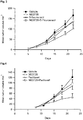
- NS3728 The in vivo antitumor effect of NS3728 on the human HT29 colon cancer cell line were tested as monotherapy (80 mg/kg) respectively in combination with paclitaxel (5 mg/kg) or 5-flourouracil (30 mg/kg) in two independent experimental series.
- NS3728 was given per oral (PO), whereas both paclitaxel and 5-flourouracil were dosed intraperitoneally (IP) by injection.
- IP intraperitoneally
- NS3728 is capable of potentiating the effect of 5-flourourecil and paclitaxel in vivo.
- Example 3 Docetaxel and NS3728 in docetaxel resistant MCF-7 and MDA-MB231 human breast cancer cell lines.
- breast cancer is a heterogenous disease and at least 6 subtypes of breast cancer have been described previously by Soerlie et al (PMID: 11553815). As a major difference, breast cancer can be divided into hormone (estrogen and progesterone) receptor positive and hormone receptor negative breast cancer. We have in our experiments included these two major subtypes.
- MCF-7 estrogen and progesterone receptor positive
- MDA-MB-231 estrogen and progesterone receptor negative and HER2 receptor negative (the so-called triple negative phenotype)
- DMSO did not affect cell viability of the docetaxel resistant MCF-7 breast cancer cells.
- 65 nM of Docetaxel was chosen as this is the concentration to which the docetaxel resistant MCF-7 breast cancer cells were made resistant.
- 65 nM Docetaxel and 40 ⁇ M NS3728 provided as monotherapy did not decrease cell viability.
- the combination of 40 ⁇ M NS3728 and 65 nM Docetaxel resulted in a combinatory effect on cell viability for the docetaxel resistant MCF-7 breast cancer cells.
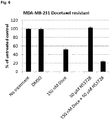
- DMSO did not affect cell viability of Docetaxel resistant MDA-MB-231 breast cancer cells.
- 150 nM of Docetaxel was chosen as this is the concentration to which the cells were made resistant.
- 150 nM Docetaxel reduced the viability to about 50% of untreated controls.
- 50 ⁇ M NS3728 did not decrease cell viability.
- 50 ⁇ M NS3728 and 150 nM Docetaxel a combinatory effect on cell viability was observed for the Docetaxel resistant MDA-MB-231 breast cancer cells.
- VRAC inhibitor NS3728 can enhance the effect of Docetaxel on Docetaxel resistant breast cancer cell lines.
- NS3728 is capable of re-sensitising docetaxel-resistant cancer cells to treatment with Docetaxel.
- Example 4 Oxaliplatin or SN38 and NS3728 in parental HCT116, HT29 and LoVo human colorectal cancer (CRC) cell lines.
- CRC cells display genetic instability caused by chromosomal instability, microsatellite instability (MSI) and the CpG island methylator phenotype (CIMP), which result in activation of proto-oncogenes such as KRAS and inactivation of tumor suppressor genes such as TP53 (p53).
- MSI microsatellite instability
- CIMP CpG island methylator phenotype
- KRAS proto-oncogenes
- TP53 tumor suppressor genes
- NS3728 as single drug or in combination with either OXP or SN-38 in the parental, i.e. drug-sensitive, cell lines.
- MTT 3-(4,5-dimethylthiazol-2-yl)-2,5-diphenyltetrazolium bromide
- NS3728, OXP, SN-38 or combinations of NS3728 with one of the cytotoxic drugs were added for 48 hours before cell viability was determined. All values are expressed in percentage of untreated cells (named: "no treatment").
- DMSO dimethyl sulfoxide
- DMSO caused a minor reduction in cell viability of HCT116 parental cells.
- NS3728 reduced cell viability to about 50% of untreated cells and OXP dose-dependently decreased cell viability of HCT116 parental cells.
- Combinations of 40 or 50 ⁇ M NS3728 and 0.16/0.8/4/20 ⁇ m Oxaliplatin did not inhibit cell viability more than either monotherapy in HCT116 parental cells.
- DMSO caused a minor reduction in cell viability.
- NS3728 reduced cell viability to about 50% of untreated cells at two concentrations (40 and 50 ⁇ M).
- SN-38 (0.16 ⁇ M) also decreased viability to about 50% of untreated cells.
- the combinations of 40 or 50 ⁇ M NS3728 and 0.16 ⁇ M SN-38 had a combinatorial inhibitory effect on cell viability with the 40 ⁇ M NS3728 + SN-38 reducing cell viability to about 30% of untreated cells and the 50 ⁇ M NS3728 + SN-38 reducing cell viability to about 23% of untreated cells.
- DMSO reduced cell viability in this cell line to about 78% of untreated cells.
- NS3728 reduced cell viability to about 90% of untreated cells at 40 ⁇ M and to about
- DMSO reduced cell viability in this cell line to about 75% of untreated cells.
- NS3728 reduced cell viability to about 45% of untreated cells at 40 ⁇ M and to about 38% of untreated cells at 50 ⁇ M.
- SN-38 (0.0064 ⁇ M) decreased viability to about 53% of untreated cells.
- Combinations of 40 or 50 ⁇ M NS3728 and 0.0064 ⁇ M SN-38 caused a combinatorial inhibitory effect on cell viability with the 40 ⁇ M NS3728 + SN-38 reducing cell viability to about 35% of untreated cells and the 50 ⁇ M NS3728 + SN-38 reducing cell viability to about 22% of untreated cells.
- VRAC inhibitor NS3728 can 1) inhibit CRC cell growth when administered as monotherapy and 2) enhance the effect of certain types of chemotherapy on human CRC cells. No combinatory effect of NS3728 and oxaliplatin was found. Thus, the results show that treatment with a VRAC inhibitor can potentiate the effect of certain types of chemotherapy.
- Example 5 Oxaliplatin or SN-38 and NS3728 in oxaliplatin (OXP) or SN-38 resistant HCT116, HT29 and LoVo human colorectal cancer (CRC) cell lines.
- OXP oxaliplatin
- CRC LoVo human colorectal cancer
- DMSO dimethyl sulfoxide
- NS3728 does not seem to be capable of potentiating the therapeutic effect of oxaliplatin in oxaliplatin sensitive CRC cells which are resistant to SN-38.
- DMSO had no effect on cell viability.
- NS3728 (30 ⁇ M) reduced cell viability to about 85% of untreated cells and SN-38 (4 ⁇ M) had almost no effect on cell viability.
- combinations of 4 ⁇ M SN-38 and 30 ⁇ M NS3728 caused a combined reduction in cell viability and thus significantly reduced cell viability to about 60%.
- DMSO had no effect on cell viability.
- NS3728 (30 ⁇ M) increased viability to about 120% of untreated cells.
- NS3728 (40 ⁇ M) had no effect on cell viability and
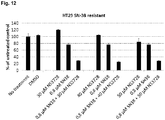
- NS3728 (50 ⁇ M) reduced viability to about 85% of untreated cells.
- SN-38 (0.8 ⁇ M) reduced viability to about 78% of untreated cells.
- Combinations of 0.8 ⁇ M SN-38 and 30/40/50 ⁇ M NS3728 caused a significant combined reduction in cell viability to less than 30% of untreated cells for all three NS3728 concentrations.
- DMSO reduced cell viability in this cell line to about 80% of untreated cells.
- NS3728 (30 ⁇ M) reduced viability to about 80% of untreated cells
- NS3728 40 ⁇ M reduced viability to about 57%
- NS3728 50 ⁇ M reduced viability to about 50% of untreated cells.
- SN-38 (0.16 ⁇ M) reduced viability to about 78% of untreated cells. Combinations of 0.16 ⁇ M SN-38 and 30/40/50 ⁇ M NS3728 caused a significant combined reduction in cell viability to less than 20% of untreated cells for all three NS3728 concentrations.
- DMSO caused essentially no change in cell viability.
- NS3728 (20 ⁇ M) reduced viability to about 85% of untreated cells and SN-38 (0.1 ⁇ M) reduced viability to about 43% of untreated cells.
- DMSO reduced viability to about 85% of untreated cells.
- VRAC inhibitor NS3728 can enhance the effect of certain types of chemotherapy on resistant CRC cell lines.
- NS3728 also enhanced the effect of SN-38 in cancer cells with acquired SN-38 resistance or with acquired oxaliplatin resistance.
- the data suggests that NS3728 is capable of re-sensitising SN-38 drug-resistant cancer cells to treatment with SN-38.
- Example 6 Tamoxifen or Fulvestrant in combination with NS3728 in tamoxifen resistant MCF-7/LCC2 or Fulvestrant MCF-7/LCC9 human breast cancer cell lines.
- MCF-7 is an estrogen and progesterone receptor positive cell line.
- 0.1 ⁇ M of Tamoxifen was chosen as this is the concentration which was shown in the original publication to cause only minor cell growth effects on MCF-7/LCC2 cells whereas growth of Tamoxifen sensitive cells were significantly more inhibited.
- 40 ⁇ M NS3728 caused a minor reduction in cell viability to 70% of untreated control.
- 0.1 ⁇ M Tamoxifen had no effect on the cell viability of the tamoxifen-resistant MCF-7/LCC2 cells.
- the combination of 40 ⁇ M NS3728 and 0.1 ⁇ M Tamoxifen caused a strong and significant (P ⁇ 0.05) reduction of MCF-7/LCC2 cell viability to less than 40% of untreated cells ( Fig. 16 ).
- 1 ⁇ M of Fulvestrant was chosen as this is the concentration that was applied in the original publication as the final concentration to establish the MCF-7/LCC9 cell line and this concentration is strongly inhibiting growth of Fulvestrant sensitive MCF-7 cells (Brünner et al, 1997, PMID 9270017).
- 40 ⁇ M NS3728 caused a reduction in cell viability to 60% of untreated control.
- 1 ⁇ M Fulvestrant had no effect on the cell viability of the fulvestrant-resistant MCF-7/LCC9 cells.
- the combination of 40 ⁇ M NS3728 and 1 ⁇ M Fulvestrant caused a strong and significant (P ⁇ 0.05) reduction of MCF-7/LCC9 cell viability to 24% of untreated cells ( Fig. 17 ).
- VRAC inhibitor NS3728 can enhance the effect of two types of anti-estrogens, namely Tamoxifen and Fulvestrant, on MCF-7 breast cancer cells that are made resistant to these types of anti-estrogens.
- NS3728 is capable of re-sensitising anti-estrogen-resistant breast cancer cells to treatment with anti-estrogens, in particular to tamoxifen and fulvestrant.
- mice used for the experiments are severely immunocompromised to prevent rejection of the human cancer cells.
- the experimental set-up comprises three stages:
- Stage 1 Growth of sensitive (parental) and docetaxel-resistant MDA-MB-231 cells
- mice are inoculated with different numbers of the sensitive or the docetaxel-resistant MDA-MB-231 cells. This experiment determines the optimal number of cancer cells which is important for the subsequent dose-response experiments in Stages 2 and 3.
- mice are treated with docetaxel when tumors have established.
- Sensitive or docetaxel-resistant MDA-MB-231 cells are inoculated into mice, with cell numbers as determined from Stage 1. This experiment is important to demonstrate that cancer cells are also sensitive or resistant, respectively, in an in vivo setting.
- parental and docetaxel-resistant MDA-MB-231 cells are inoculated into mice and treated with vehicle (control group), docetaxel alone, NS3728 alone or a combination of NS3728 and docetaxel.
- tumor formation is monitored by palpation and measured by caliper.
- Tumor volume is calculated and is plotted against time in a growth-curve. The mice are euthanized when the tumors are near maximal size (12 mm) or if the mice display any signs of discomfort or illness.
Landscapes
- Health & Medical Sciences (AREA)
- Chemical & Material Sciences (AREA)
- Animal Behavior & Ethology (AREA)
- Veterinary Medicine (AREA)
- Public Health (AREA)
- General Health & Medical Sciences (AREA)
- Life Sciences & Earth Sciences (AREA)
- Medicinal Chemistry (AREA)
- Pharmacology & Pharmacy (AREA)
- Organic Chemistry (AREA)
- Epidemiology (AREA)
- Nuclear Medicine, Radiotherapy & Molecular Imaging (AREA)
- General Chemical & Material Sciences (AREA)
- Chemical Kinetics & Catalysis (AREA)
- Engineering & Computer Science (AREA)
- Bioinformatics & Cheminformatics (AREA)
- Oncology (AREA)
- Inorganic Chemistry (AREA)
- Biomedical Technology (AREA)
- Neurology (AREA)
- Neurosurgery (AREA)
- Endocrinology (AREA)
- Reproductive Health (AREA)
- Pulmonology (AREA)
- Hematology (AREA)
- Pharmaceuticals Containing Other Organic And Inorganic Compounds (AREA)
- Acyclic And Carbocyclic Compounds In Medicinal Compositions (AREA)
- Medicines That Contain Protein Lipid Enzymes And Other Medicines (AREA)
- Medicines Containing Material From Animals Or Micro-Organisms (AREA)
Description
- The present disclosure relates to treatment of cancer, in particular to methods of sensitising cancer cells to an anti-cancer treatment by administering an effective amount of a VRAC modulator.
- Cancer is an overwhelming burden to our society with approximately 14 million new cases of cancer diagnosed in 2014. Despite the introduction of many new treatment modalities/options, de novo or acquired resistance to the applied treatments still represents the major cause of death from cancer.
- Volume Regulated Anion Channels (VRACs) are present in most mammalian cells. An important function of VRAC is cell volume regulation. Upon swelling of the cell in hypotonic solution these channels are activated and chloride ions flow out of the cell in parallel with potassium ions (via potassium channels) and water, thereby restoring the original cell volume.
- Compounds capable of blocking the activity of VRAC are characterised in Helix et al., J. Membrane Biol. 196 (2003). For example, NS3728 (Endovion; SCO-101) is a potent orally active VRAC blocker.
-
WO 98/47879 WO 00/24707 -
WO 2004/012733 discloses VRAC modulators, including NS3728, and their use in the treatment of diseases responsive to anti-angiogenic therapy, in particular anti-metastatic treatment. - Stenvang et al., AACR-NCI-EORTC Symposium: Molecular Targets and Cancer Therapeutics, 24-09-2015 discloses that the compound Disulfiram re-sensitizes cells which are resistant to a topoisomerase I inhibitor (NS-38), and that NS3728 re-sensitizes cells which are resistant to a mitotic inhibitor (doxetaxel).
- Daudigeos-Dubus et al., PLoS One, 2015, 10(11), e0142612, 1-20; Schmieder et al., Internat. J. Cancer, 2014, 135(6), 1487-96; and Lu et al., OncoTargets and Therapy, 2014 (7), 2143-6 disclose that regorafenib has a synergistic effect with irinotecan and enhances its cytotoxicity.
- Samalin et al., Brit. J. Cancer, 2014, 110(5), 1148-954 and Mross et al., Eur. J. Cancer, 2007, 43(1), 55-63 disclose that sorafenib plus irinotecan demonstrated synergistic activity without enhanced toxicity.
- Sun et al., J. Clin. Oncol., 2010, 28(18), 2947-51 and Awada et al., Eur. J. Cancer, 2012, 48(4), 465-74 disclose the combined use of doxetaxel and sorafenib for the treatment of gastric cancer.
- Pedersen et al., Internat. J. Oncol., 2014, 45, 2167-75 and Lethert et al., J. Clin. Onco., 2012, 30, (15 suppl), e11042 disclose the efficacy of sorafenib for the treatment of tamoxifen or fulvestrant resistant breast cancer.
-
WO 2007/104719 andEP 1 526 851 disclose that a series of diphenylureas, lacking the tetrazolyl moiety of NS3728, are VRAC inhibitors and useful for the treatment of cancer and can be used in combination with a mitotic inhibitor such as docetaxel. - Previous studies have indicated a role for VRAC in the ability of cancer cells to undergo apoptosis and NS3728 has been shown to inhibit cisplatin mediated apoptosis in vitro (Poulsen et al., Am J Physiol Cell Physiol, 2010; Sorensen et al., Am J Physiol Cell Physiol, 2016; Planells_Cases, R. et al., EMBO J., 2015).
- Chemotherapeutic treatment of metastatic colorectal cancer (mCRC) is generally based on the anti-metabolite drug 5-fluorouracil (5FU) combined with either the DNA-binding agent oxaliplatin (e.g. FOLFOX regimen) or the topoisomerase I inhibitor irinotecan (e.g. FOLFIRI regimen) and often administered in combination with biological treatment, e.g. EGFR targeting drugs or anti-angiogenic drugs. Notwithstanding the efficacy of these combination regimens, which have significantly increased the response rate and survival of mCRC patients (Cunningham et al., 2010; Gallagher and Kemeny, 2010), only 30 to 50% of treated patients show an objective response to either of the combination therapies and progression of the cancer despite chemotherapy treatment is a common outcome (Gallagher and Kemeny, 2010; Goldberg et al., 2004). To make it even worse, the objective response rate to second line chemotherapy treatment of mCRC FOLFOX to prior FOLFIRI treated patients and vice versa is reduced to 10-20% and objective response to third line treatment is almost not existing. It is thus clear that de novo (pre-existing) or acquired drug resistance constitute the major problem in the management of mCRC. Similar conclusions can be drawn when discussing primary CRC where a large proportion (30-40%) of stage III patients receiving adjuvant chemotherapy (most often FOLFOX or XELOX) will present disease recurrence subsequent to the chemotherapy.
- Breast cancer (BC) is a heterogeneous disease which is also reflected in a heterogeneous response pattern to various types of chemotherapy. In adjuvant treatment of BC the most often used drugs are cytotoxic drugs including anthracyclines (topoisomerase 2 inhibitors) and taxanes. These drugs are most often administered in conjunction with cyclophosphamide. For patients with estrogen receptor positive BC, adjuvant treatment most often includes anti-estrogens such as aromatase inhibitors, estrogen receptor antagonists (tamoxifen and fulvestrant). However, approximately 18-20% of patients receiving adjuvant or neoadjuvant systemic anti-cancer treatment will experience a disease recurrence. In patients with metastatic BC (mBC) response rates to systemic therapy range from 60% in first line treatment with a rapid decrease to 20-25% when reaching 3rd to 4th line treatment. These figures clearly indicate a high degree of both de novo resistance and acquired resistance leading to disease progression and the death of thousands of women every year.
- It follows that identification, characterisation and preclinical and clinical validation of new drugs and drug combinations for treatment of cancer and in particular drug resistant cancer constitute a highly unmet medical need.
- The present invention provides a novel treatment regimen for cancer and is particularly suitable for treatment of chemotherapy-resistant cancers. The treatment regimen of the present invention comprises treatment with a compound capable of modulating the activity of volume regulated anion channels (VRAC), i.e. the VRAC modulator Endovion (NS3728). Co-treatment with NS3728 has surprisingly been shown to enhance the effect of an anti-cancer treatment. Further, co-treatment with NS3728 is shown to be capable of re-sensitising chemotherapy resistant cancer cells to treatment with certain chemotherapeutic agents.
- In a first aspect, the present invention relates to a VRAC modulator of formula I

- In a second aspect, the present invention relates to a pharmaceutical composition comprising an effective amount of a VRAC modulator of formula I

- In a third aspect, the present invention relates to a composition comprising an effective amount of a VRAC modulator of formula I

- In a fourth aspect, the present invention relates to a kit of parts comprising a VRAC modulator of formula I

-
-
Fig. 1 . Effect of daily doses of NS3728 (40 mg/kg PO), temozolamide (Temodal) (25 mg/kg IP), and the combination thereof on the growth of C9 glioblastoma xenografts in vivo. -
Fig. 2 . Effect of daily doses of NS3728 (40 mg/kg) temozolamide (Temodal) (5 mg/kg IP), and the combination thereof on the growth of C9 glioblastoma cells in the subcutaneous airsac (SAS) model in vivo. -
Fig. 3 . Effect of NS3728 (80 mg/kg, PO), 5-flourouracil (30 mg/kg, IP) and the combination thereof on the growth of HT29 colon tumour xenografts compared to mice treated with vehicle in vivo. -
Fig. 4 . Effect of NS3728 (80 mg/kg, PO), paclitaxel (5 mg/kg, IP) and the combination thereof on the growth of HT29 colon tumour xenografts compared to mice treated with vehicle in vivo. -
Fig. 5 . Effect of NS3728, docetaxel and the combination thereof on cell viability of Docetaxel resistant MCF7 breast cancer cells in vitro. Error bars are standard deviations. -
Fig. 6 . Effect of NS3728, docetaxel and the combination thereof on cell viability of Docetaxel resistant MDA-MB-231 breast cancer cells in vitro. Error bars are standard deviations. -
Fig. 7 . Effect of NS3728, Oxalipatin and the combination thereof on cell viability of parental HCT116 CRC cancer cells in vitro. Error bars are standard deviations. -
Fig. 8 . Effect of NS3728, SN-38 and the combination thereof on cell viability of parental HCT116 CRC cancer cells in vitro. Error bars are standard deviations. -
Fig. 9 . Effect of NS3728, SN-38 and the combination thereof on cell viability of parental HT29 CRC cancer cells in vitro. Error bars are standard deviations. -
Fig. 10 . Effect of NS3728, SN-38 and the combination thereof on cell viability of parental LoVo CRC cancer cells in vitro. Error bars are standard deviations. -
Fig. 11 . Effect of NS3728, SN-38 and the combination thereof on cell viability of SN-38 resistant HCT116 CRC cancer cells in vitro. Error bars are standard deviations. -
Fig. 12 . Effect of NS3728, SN-38 and the combination thereof on cell viability of SN-38 resistant HT29 CRC cancer cells in vitro. Error bars are standard deviations. -
Fig. 13 . Effect of NS3728, SN-38 and the combination thereof on cell viability of SN-38 resistant LoVo CRC cancer cells in vitro. Error bars are standard deviations. -
Fig. 14 . Effect of NS3728, SN-38 and the combination thereof on cell viability of oxaliplatin resistant HT29 CRC cancer cells in vitro. Error bars are standard deviations. -
Fig. 15 . Effect of NS3728, SN-38 and the combination thereof on cell viability of oxaliplatin resistant LoVo CRC cancer cells in vitro. Error bars are standard deviations. -
Fig. 16 . Effect of NS3728, tamoxifen and the combination thereof on cell viability of tamoxifen resistant MCF7/LCC2 breast cancer cells in vitro. Error bars are standard deviations. -
Fig. 17 . Effect of NS3728, ICI182,780 (Fulvestrant/Faslodex) and the combination thereof on cell viability of ICI182,780 resistant MCF7/LCC9 breast cancer cells in vitro. Error bars are standard deviations. - The invention is defined by the appended claims. Any embodiment not falling under the scope of the appended claims does not form part of the invention.
- The present inventors have surprisingly found that co-treatment of cancer with a VRAC modulator and an anti-cancer therapy, such as a chemotherapeutic agent, has increased efficacy as compared to monotherapy, and furthermore re-sensitises chemoresistant cancer cells to treatment, and therefore propose a new treatment regimen for cancer wherein a VRAC modulator is administered to potentiate the therapeutic effect of an anti-cancer treatment and/or sensitise the cancer cells to the anti-cancer treatment.
- Volume regulated anion channels (VRAC) are present in most mammalian cells. An important function of VRAC is cell volume regulation: Upon swelling of the cell in hypotonic solution these channels are activated and chloride ions flow out of the cell in parallel with potassium ions (via potassium channels) and water, thereby restoring the original cell volume.
- The gene family encoding the VRACs was identified essentially simultaneously by two independent groups in 2014 as being the LRRC8 family (Voss et al, 2014, Science 344(6184):634-8 and Qui et al, 2014, Cell 157(2):447-58). VRAC has also in the literature historically been known as Volume-Sensitive Organic Osmolyte Anion Channel (VSOAC), Volume Sensitive Outward Rectifier (VSOR), Voltage Dependent Anion Channel (VDAC), Human Volume-Sensitive Outward Rectifier (HSVOR), Volume Regulated Chloride Channel (VRCIC) and ICI,swell. These phenotypical manifestations are currently assumed to be the result of different compositions of LRRC8 subunits in the functional VRAC expressed in different cell types.
- VRAC is an almost ubiquitously distributed anion channel, which is activated by cell swelling and/or a decrease in intracellular ionic strength. It is the channel mediating increased anion conductance during Regulatory Volume Decrease (RVD). In electrophysiological recordings VRAC exhibits outward rectification and in most cells a pronounced voltage-dependent inactivation at positive membrane potentials. VRAC is highly anion selective with a unique selectivity sequence for small inorganic ions: SCN- < I- = NO3 - < Br- < Cl- < HCO3 - < F- (Eisenman type I halide selectivity sequence) and - depending on the specific subunit composition - having a wide pore that also allows the permeation of a large number of negatively charged or neutral organic molecules such as cisplatin.
- Activation of VRAC is obligatory dependent on the presence of intracellular ATP and complex intracellular signalling cascades involving protein kinases support the activation process.
- The VRAC modulator is a VRAC blocker. The term "VRAC blocker" is used interchangeably herein with the term "VRAC inhibitor". A VRAC blocker is a compound that inhibits the transmembrane transport of chloride or any other anion or neutral molecule in response to cell swelling or decrease in intracellular ionic strength.
- A compound acting as a VRAC inhibitor binds to the channel protein and exerts its inhibiting effect discernible via one or more of the methods of measuring VRAC function as described herein. Inhibiting compounds may act via one or more theoretical mode-of-actions (MOA), the main groups of which are:
- 1) A way to obtain inhibition is by directly obstructing (blocking) the current flow through the open channel by binding somewhere in the transmembrane pore region of the channel. Such molecules are sometimes referred to as "blockers" in the art.
- 2) Another - much more heterogeneous way - to obtain inhibition is by preventing or delaying the channel's natural activation processes and/or by stimulating/accelerating its natural inactivation or deactivation processes. Such molecules are expected overall to result in a lowered probability of finding an individual channel protein in its open configuration (lowered open state probability, Po). Such molecules may be mentioned collectively as "negative gating modulators", no matter which microscopic processes they influence. A negative gating modulator is also sometimes referred to as a "negative allosteric modulator" or a "NAM".
- The elucidation of the detailed MOA for a particular compound is a very challenging task, and may require combination of high-sensitivity functional measurements (e.g. single channel recordings as mentioned herein) and high-resolution structural information (e.g. crystallography, sequence analyses, mutagenesis analyses etc.). In the present case it is not unequivocally determined which MOAs are responsible for the VRAC inhibiting effects of the VRAC modulators mentioned herein. Thus, they are collectively referred to as VRAC blockers.
- The potential of a given substance to act as a VRAC blocker may be determined using standard laboratory test methods, such as
- a) whole cell or single channel patch clamp technology, or the automatic HTC versions of the same
- b) microelectrode electrophysiology (penetrating, sharp electrodes),
- c) flux assays (e.g. radioactive as well as non-radioactive isotopes),
- d) fluorescent dyes (e.g. membrane potential - or chloride concentration indicators),
- e) cell volume measurements (e.g. light scattering, coulter counter measurements, or optical methods such as image analysis).
- To measure VRAC activity it is necessary to activate the channel protein by swelling the cell (e.g. by exposure to a hypotonic extracellular Ringers solution) or by making the intracellular solution hypertonic or low in ionic strength (only few technologies allow that, i.e. the whole cell patch clamp describes under 1.a below)
- VRAC activity is most directly registered by electrophysiological methods that allow direct measurements of the swelling activated transmembrane anion current at a fixed membrane potential (voltage clamp). The possibilities are:
-
- a) Manual whole cell patch clamp (measurement of the anion current from the entire cell membrane). This is the most realistic configuration for drug screening. The cell attached configuration (measurement of the current through relatively few ion channels expressed in a tiny piece of the cell membrane) has been used in a few cases in the literature, and the same counts for the excised configurations, where the membrane fragments have been isolated on the tip of the patch pipette (inside out and outside out configurations). These methods are mostly relevant in biophysical investigations or in the elucidation of mode-of-action of specific compounds (low throughput).
- b) Perforated patch recordings (essentially the same configuration as the whole cell configuration described under 1a, with the difference that there is not established a hole in the membrane, however a low resistance connection to the cell interior by using permeabilizing agents (typically bacterial pore forming peptides, such as amphotericin B). The throughput is considerably lower that the whole cell method but has the advantage of keeping the cellular milieu closer to the physiological composition during recording. (In the context of VRAC, which depends on intracellular ATP, this molecule does not need to be applied to the pipette solution as it has in the whole cell configuration).
- c) Manual "classical" electrophysiology using membrane penetrating "sharp" electrodes. Not easily implemented for drug screening, since the method is very difficult to use with typical small laboratory cell lines (HEK, CHO etc.)
- d) Various forms of HTS electrophysiology, which today is exemplified by QPatch or QUBE from Sophion Bioscience (Korsgaard, MP et al, Comb Chem High Troughput Screen, 2009; Chambers, C et al, Assay Drug Dev Technol., 2016) or the Nanion systems. All methods are basically doing whole cell measurements (see a) or perforated patch measurements (see b) using a flat glass or silicon substrate mounted on a chip, which allow a high degree or automatization of measurements and compound/fluid handling in a parallel set up.
- More indirect effects of VRAC activation can be measured by:
- a) Expression (either stably, transiently, or inducible) of a halide-sensitive fluorescent protein or peptide in the cell in question (i.e. HEK293). Most used is yellow fluorescent protein (YFP), the light emission of which is extremely sensitive to the type and concentration of halides in the medium. In this context it is exploited that the effect of the iodide ion is much more pronounced than the chlorine ion. By applying iodide ions, (which are more permeable trough VRAC than the CI ions) to the extracellular solution it is achieved that these pass the membrane into the cell interior when VRAC opens (in the opposite direction of the chlorine ions leaving the cell). Thereby the VRAC activation is reported by the increased light emission from YFP. Inhibitors of VRAC are expected to dampen this emission (less iodide ion influx) and the method can thus be used for quantification of the potency and degree of inhibition.
- b) The degree of swelling of the cells which express VRAC can be followed directly by measuring the cell size, for example by a coulter counter, light scattering techniques, microscopic techniques or impedance measurements. VRAC inhibition will not affect the swelling process, but will prevent or delay the volume recovery process called RVD (regulatory volume decrease) which is driven by VRAC activation. It is important to realize that by measuring both YFP and cell size one increasingly relies on indirect "downstream" effects of VRAC activation, which significantly increases the risk of registering both false positive and false negative signals. Such results are therefore usually validated by use of electrophysiology measurements.
- c) Many other methods can be coupled to VRAC activation, but these are even more indirect. Effects in migration, proliferation, cytotoxicity, apoptosis assays on special cell lines may all be important in their own rights with respect to prediction of in vivo cancer effects, but none are only dependent on VRAC.
- VRAC expression can be measured for example by qPCR, in situ hybridization or antibodies.
- VRAC blockers being diphenyl urea derivatives are described in
WO 98/47879 WO 00/24707 - In one embodiment of the present disclosure, the VRAC blockers show IC50-values of less than 10 µM, such as less than 1000 nM, for example less than 100 nM, such as less than 50 nM, for example less than 10 nM for in vitro inhibition according to the standard test methods.
- In one embodiment of the present disclosure, the VRAC blocker has an IC50 of 5µM or less, such as 3µM or less, for example 1 µM or less, such as 0.5 µM or less, for example 0.1 µM or less, such as 10 nM or less, for example 5 nM or less.
- In one embodiment of the present disclosure, the VRAC blocker has an IC50 of 2µM or less, such as 1µM or less, such as 0.5 µM or less, for example 0.1 µM or less, such as 10 nM or less, for example 5 nM or less. In a preferred embodiment of the present disclosure, the VRAC blocker has an IC50 of 0.5µM or less.
- One example of a VRAC blocker is a compound of general formula I

- wherein R2 represents tetrazolyl; and
- R3, R4, R5, R6, R12, R13, R14, R15, and R16 independently of each other represent hydrogen, halo, trifluoromethyl, nitro, alkyl, alkylcarbonyl, -NRaRb, -NRa-CO-Rb, phenyl or heteroaryl;
- which phenyl is optionally substituted with halo, trifluoromethyl, nitro, -CO-NHRc, -COO-Rc or -CO-NR'R";
- wherein Rc is hydrogen, alkyl, or phenyl;
- R' and R" independently of each other are hydrogen or alkyl; or
- R' and R" together with the nitrogen to which they are attached form a 5- to 7-membered heterocyclic ring, which ring may optionally comprise as a ring member, one oxygen atom, and/or one additional nitrogen atom, and/or one carbon-carbon double bond, and/or one carbon-nitrogen double bond;
- and which heterocyclic ring may optionally be substituted with alkyl;
- Ra and Rb independently of each other are hydrogen or alkyl; or
- R15 and R16, or R14 and R15 together with the phenyl ring to which they are attached form a naphthyl ring or an indanyl ring; and R3, R4, R5, R6, R12 and R13 and the remaining one of R14, R15 and R16 are as defined above.
- Another example of a VRAC blocker is a compound of general formula I

- wherein R2 represents tetrazolyl;
- R3, R4, R5, R6, R12, R13, R14, R15, and R16 independently of each other represent hydrogen, halo, trifluoromethyl, nitro, or phenyl;
- which phenyl is optionally substituted with halo, trifluoromethyl, nitro, or -CO-NHRc; wherein Rc is hydrogen, alkyl, or phenyl.
- In one embodiment of the present disclosure the compound of general formula I, R2 represents tetrazolyl; R3, R4, R5, R6, R12, R13, R14, R15, and R16 independently of each other represent hydrogen, halo, trifluoromethyl, or nitro.
- In one embodiment of the present disclosure the compound of general formula I, R3, R5, and R6 represent hydrogen; and R4 represents halo, such as bromine.
- In one embodiment of the present disclosure the compound of general formula I, R3, R4, R5 and R6 represent hydrogen.
- In a further embodiment of the present disclosure of the compound of general formula I, R3, R5, and R6 represent hydrogen; and R4 represents -NRaRb, such as amino.
- In a still further embodiment of the present disclosure of the compound of general formula I, R3, R5, and R6 represent hydrogen; and R4 represents -NRa-CO-Rb, such as acetylamino.
- In a further embodiment of the present disclosure of the compound of general formula I, R3, R5, and R6 represent hydrogen; and R4 represents phenyl substituted with trifluoromethyl, nitro or -CO-NHRc; wherein Rc is phenyl. In a special embodiment of the present disclosure, R4 represents phenyl substituted with trifluoromethyl, such as 4-trifluoromethylphenyl. In a further embodiment of the present disclosure, R4 represents phenyl substituted with nitro, such as 3-nitrophenyl. In a further embodiment of the present disclosure, R4 represents phenyl substituted with -CO-NHRc, such as anilinocarbonylphenyl, in particular 4-anilinocarbonylphenyl.
- In a further embodiment of the present disclosure of the compound of general formula I, R3, R5, and R6 represent hydrogen; and R4 represents phenyl substituted with -CO-ORc or -CO-NR'R". In a special embodiment of the present disclosure, R4 represents phenyl substituted with -CO-O-Rc, wherein Rc is hydrogen. In a special embodiment of the present disclosure, R4 represents phenyl substituted with -CO-NR'R", such as 4-dimethylcarbamoylphenyl or 4-(4-methyl-1-piperazine-carbonyl)-phenyl.
- In a still further embodiment of the present disclosure, R15 represents trifluoromethyl. In a special embodiment of the present disclosure, R15 represents trifluoromethyl and R12, R13, R14 and R16 represent hydrogen. In a further embodiment of the present disclosure R13 represents trifluoromethyl. In a special embodiment of the present disclosure, R13 and R15 represent trifluoromethyl and R12, R14 and R16 represent hydrogen.
- In a further embodiment of the present disclosure, R16 represents trifluoromethyl. In a special embodiment of the present disclosure, R16 represents trifluoromethyl and R12, R13, R14 and R15 represent hydrogen.
- In a still further embodiment of the present disclosure, R15 represents halo, such as chloro or bromo. In a special embodiment of the present disclosure, R15 represents halo, such as chloro or bromo, and R12, R13, R14 and R16 represent hydrogen. In a further embodiment of the present disclosure, R13 and R15 represent halo, such as chloro, and R12, R14 and R16 represent hydrogen. In a still further embodiment of the present disclosure, R14 and R15 represent halo, such as chloro, and R12, R13 and R16 represent hydrogen.
- In a further embodiment of the present disclosure, R16 represents halo, such as fluoro. In a special embodiment of the present disclosure, R16 represents halo, such as fluoro, and R12, R13, R14 and R15 represent hydrogen.
- In a still further embodiment of the present disclosure, R16 represents alkyl, such as methyl or ethyl. In a special embodiment of the present disclosure, R16 represents alkyl, such as methyl or ethyl, and R12, R13, R14 and R15 represent hydrogen.
- In a further embodiment of the present disclosure, R14 represents nitro. In a special embodiment of the present disclosure, R14 represents nitro, and R12, R13, R15 and R16 represent hydrogen.
- In a still further embodiment of the present disclosure, R14 represents alkylcarbonyl, such as acetyl. In a special embodiment of the present disclosure, R14 represents alkylcarbonyl, such as acetyl, and R12, R13, R15 and R16 represent hydrogen.
- In a further embodiment of the present disclosure, R15 represents phenyl. In a further embodiment of the present disclosure, R14 represents phenyl. In a special embodiment of the present disclosure, one of R14 or R15 represents phenyl, and the remaining of R12, R13, R14, R15 and R16 represent hydrogen.
- In a still further embodiment of the present disclosure, R15 represents pyridyl, such as pyridin-3-yl. In a special embodiment of the present disclosure, R15 represents pyridyl, such as pyridin-3-yl, and R12, R13, R14 and R16 represent hydrogen.
- In a further embodiment of the present disclosure, R15 and R16 together with the phenyl ring to which they are attached form a naphthyl ring.
- In a still further embodiment of the present disclosure, R14 and R15 together with the phenyl ring to which they are attached form an indanyl ring.
- In a further embodiment of the present disclosure, the compound of general formula I is selected from
- N-4-Nitrophenyl-N'-[4-bromo-2-(1-H-tetrazol-5-yl)phenyl]urea;
- N-3,5-Di(trifluoromethyl)phenyl-N'-[4-bromo-2-(1-H-tetrazol-5-yl)phenyl] urea;
- N-3-Trifluoromethylphenyl-N'-[4-(3-nitrophenyl)-2-(1-H-tetrazol-5-yl)phenyl] urea;
- N-3-Trifluoromethylphenyl-N'-[4-(4-anilinocarbonylphenyl)-2-(1-H-tetrazol-5-yl)phenyl] urea;
- N-3-Trifluoromethylphenyl-N'-[4-(4-trifluoromethylphenyl)-2-(1-H-tetrazol-5-yl)phenyl] urea;
- N-(3-Trifluoromethyl-phenyl)-N'-[2-(1-H-tetrazol-5-yl)-phenyl]urea;
- N-(3-Trifluoromethyl-phenyl)-N'-[4-bromo-2-(1-H-terazol-5-yl)-phenyl]urea;
- N-(3-Trilfuoromethyl-phenyl)-N'-[4-phenyl-2-(1-H-tetrazol-5-yl)-phenyl] urea;
- N-(3-Chloro-phenyl)-N'-[2-(1-H-tetrazol-5-yl)-phenyl]urea;
- N-(3-Trifluoromethyl-phenyl)-N'-[4-amino-2-(1-H-tetrazol-5-yl)-phenyl]urea;
- N-(3-Trifluoromethyl-phenyl)-N'-[4-acetylamino-2-(1-H-tetrazol-5-yl)-phenyl]urea;
- N-(3-Trilfuoromethyl-phenyl)-N'-[4-carbamoyl-2-(1-H-tetrazol-5-yl)-phenyl] urea;
- N-(3-Trifluoromethyl-phenyl)-N'-[4-(N",N"-dimethylcarbamoyl)-2-(1-H-tetrazol-5-yl)-phenyl] urea;
- 3'-(1-H-tetrazol-5-yl)-4'-[3-(3-trifluoromethyl-phenyl)-ureido]-biphenyl-4-carboxylic acid;
- N-(Indan-5-yl)-N'-[2-(1-H-tetrazol-5-yl)-phenyl]urea;
- N-(Biphenyl-4-yl)-N'-[2-(1-H-tetrazol-5-yl)-phenyl]urea;
- N-(Biphenyl-3-yl)-N'-[2-(1-H-tetrazol-5-yl)-phenyl]urea;
- N-(3-Acetyl-phenyl)-N'-[2-(1-H-tetrazol-5-yl)-phenyl]urea;
- N-(Biphenyl-3-yl)-N'-[2-(1-H-tetrazol-5-yl)-phenyl]urea;
- N-[3-(Pyridin-3-yl)-phenyl]-N'-[2-(1-H-tetrazol-5-yl)-phenyl]urea;
- N-(3-Bromo-phenyl)-N'-[4'-(4-methyl-piperazine-1-carbonyl)-3-(1-H-tetrazol-5-yl)-biphenyl-4-yl] urea;
- N-(3,5-Dichloro-phenyl)-N'-[4-bromo-2-(1-H-tetrazol-5-yl)-phenyl] urea;
- N-(3,4-Dichloro-phenyl)-N'-[4-bromo-2-(1-H-tetrazol-5-yl)-phenyl] urea;
- N-(Naphthalen-1-yl)-N'-[4-bromo-2-(1-H-tetrazol-5-yl)-phenyl] urea;
- N-(2-Trifluoromethyl-phenyl)-N'-[4-bromo-2-(1-H-tetrazol-5-yl)-phenyl]urea;
- N-(2-Fluoro-phenyl)-N'-[4-bromo-2-(1-H-tetrazol-5-yl)-phenyl] urea;
- N-(2-Ethyl-phenyl)-N'-[4-bromo-2-(1-H-tetrazol-5-yl)-phenyl] urea;
- In a special embodiment of the present disclosure, the compound is
- N-4-Nitrophenyl-N'-[4-bromo-2-(1-H-tetrazol-5-yl)phenyl]urea;
- N-3,5-Di(trifluoromethyl)phenyl-N'-[4-bromo-2-(1-H-tetrazol-5-yl)phenyl] urea;
- N-3-Trifluoromethylphenyl-N'-[4-(3-nitrophenyl)-2-(1-H-tetrazol-5-yl)phenyl] urea;
- N-3-Trifluoromethylphenyl-N'-[4-(4-anilinocarbonylphenyl)-2-(1-H-tetrazol-5-yl)phenyl] urea;
- N-3-Trifluoromethylphenyl-N'-[4-(4-trifluoromethylphenyl)-2-(1-H-tetrazol-5-yl)phenyl] urea;
- The VRAC blocker of the present invention is NS3728:

- Also disclosed herein is the VRAC blocker NS3623:

- Also disclosed herein is the VRAC blocker NS3749:

- Also disclosed herein is the VRAC blocker tamoxifen (TMX):
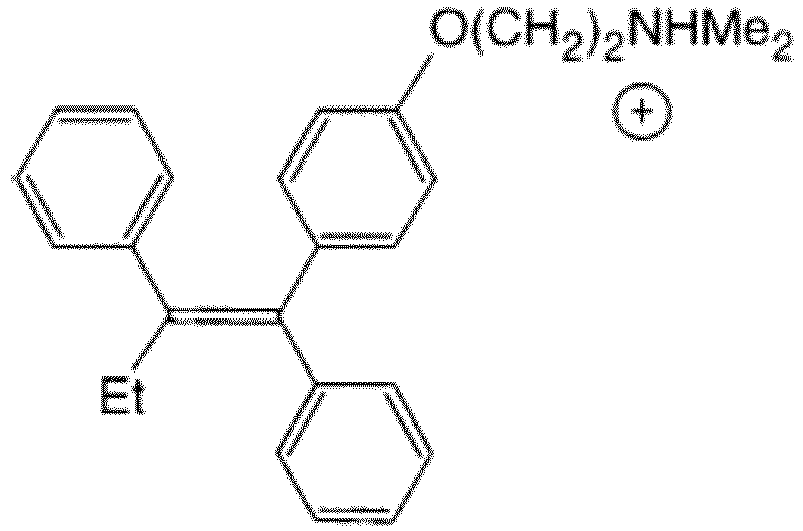
- In one embodiment of the present disclosure the VRAC blocker is not tamoxifen. In particular, when the anti-cancer treatment is an anti-estrogen, more particularly tamoxifen, the VRAC blocker is not tamoxifen.
- Other examples of VRAC blockers include DIDS (IC50 = 26 µM) and NPPB (IC50 = 21 µM) (Helix et al., J Membrane Biol. 196, 2003).
- Other VRAC modulators are described in
EP 2 919 009 . - In the context of the present disclosure halo represents fluoro, chloro, bromo or iodo.
- In the context of present disclosure an alkyl group designates a univalent saturated, straight or branched hydrocarbon chain. The hydrocarbon chain preferably contain of from one to six carbon atoms (C1-6-alkyl), including pentyl, isopentyl, neopentyl, tertiary pentyl, hexyl and isohexyl. In one embodiment of the present disclosure alkyl represents a C1-4-alkyl group, including butyl, isobutyl, secondary butyl, and tertiary butyl. In another embodiment of this disclosure alkyl represents a C1-3-alkyl group, which may in particular be methyl, ethyl, propyl or isopropyl.
- In the context of present disclosure a heteroaryl group designates an aromatic mono-, bi- or poly-heterocyclic group, which holds one or more heteroatoms in its ring structure. Preferred heteroatoms include nitrogen (N), oxygen (O), and sulphur (S). Preferred monocyclic heteroaryl groups of the disclosure include aromatic 5- and 6 membered heterocyclic monocyclic groups, including furanyl, in particular 2- or 3-furanyl; thienyl, in particular 2 or 3-thienyl; pyrrolyl (azolyl), in particular 1,2 or 3-pyrrolyl; oxazolyl, in particular oxazol-2,4 or 5-yl; thiazolyl, in particular thiazol-2,4 or 5-yl; imidazolyl, in particular 1,2 or 4-imidazolyl; pyrazolyl, in particular 1,3 or 4-pyrazolyl; isoxazolyl, in particular isoxazol-3,4 or 5-yl; isothiazolyl, in particular isothiazol-3,4 or 5-yl; oxadiazolyl, in particular 1,2,3-, 1,2,4-, 1,2,5- or 1,3,4-oxadiazol-3,4 or 5-yl; triazolyl, in particular 1,2,3-, 1,2,4-, 2,1,3- or 4,1,2-triazolyl; thiadiazolyl, in particular thiadiazol-3,4 or 5-yl; pyridinyl, in particular 2,3 or 4-pyridinyl; pyridazinyl, in particular 3 or 4-pyridazinyl; pyrimidinyl, in particular 2,4 or 5-pyrimidinyl; pyrazinyl, in particular 2 or 3-pyrazinyl; and triazinyl, in particular 1,2, 3-, 1,2,4- or 1,3,5-triazinyl.
- 5- to 7-membered heterocyclic rings comprising one nitrogen atom include for example, but not limited to, pyrolidine, piperidine, homopiperidine, pyrroline, tetrahydropyridine, pyrazolidine, imidazolidine, piperazine, homopiperazine, and morpholine.
- The VRAC blocker as described herein may be provided in any form suitable for the intended administration. Suitable forms include pharmaceutically (i.e. physiologically) acceptable salts, and pre- or prodrug forms.
- Examples of pharmaceutically acceptable addition salts include, without limitation, the non-toxic inorganic and organic acid addition salts such as the hydrochloride derived from hydrochloric acid, the hydrobromide derived from hydrobromic acid, the nitrate derived from nitric acid, the perchlorate derived from perchloric acid, the phosphate derived from phosphoric acid, the sulphate derived from sulphuric acid, the formate derived from formic acid, the acetate derived from acetic acid, the aconate derived from aconitic acid, the ascorbate derived from ascorbic acid, the benzenesulphonate derived from benzensulphonic acid, the benzoate derived from benzoic acid, the cinnamate derived from cinnamic acid, the citrate derived from citric acid, the embonate derived from embonic acid, the enantate derived from enanthic acid, the fumarate derived from fumaric acid, the glutamate derived from glutamic acid, the glycolate derived from glycolic acid, the lactate derived from lactic acid, the maleate derived from maleic acid, the malonate derived from malonic acid, the mandelate derived from mandelic acid, the methanesulphonate derived from methane sulphonic acid, the naphthalene-2-sulphonate derived from naphtalene-2-sulphonic acid, the phthalate derived from phthalic acid, the salicylate derived from salicylic acid, the sorbate derived from sorbic acid, the stearate derived from stearic acid, the succinate derived from succinic acid, the tartrate derived from tartaric acid, the toluene-p-sulphonate derived from p-toluene sulphonic acid, and the like. Such salts may be formed by procedures well known and described in the art.
- Other acids such as oxalic acid, which may not be considered pharmaceutically acceptable, may be useful in the preparation of salts useful as intermediates in obtaining a chemical compound for use according to the disclosure and its pharmaceutically acceptable acid addition salt.
- Examples of pharmaceutically acceptable cationic salts of a chemical compound of the disclosure include, without limitation, the sodium, the potassium, the calcium, the magnesium, the zinc, the aluminium, the lithium, the choline, the lysine, and the ammonium salt, and the like, of a chemical compound of the disclosure containing an anionic group. Such cationic salts may be formed by procedures well known and described in the art.
In the context of this disclosure the "onium salts" of N-containing compounds are also contemplated as pharmaceutically acceptable salts (aza-onium salts). Preferred azaonium salts include the alkyl-onium salts, in particular the methyl- and the ethyl-onium salts; the cycloalkyl-onium salts, in particular the cyclopropyl-onium salts; and the cycloalkylalkyl-onium salts, in particular the cyclopropyl-methyl-onium salts. - In one embodiment the present disclosure relates a pharmaceutical composition comprising an effective amount of a VRAC modulator and a chemotherapeutic agent.
- While the VRAC blocker and/or the chemotherapeutic agent as disclosed herein may be administered in the form of the raw chemical compounds, it is preferred to introduce the active ingredient, optionally in the form of a physiologically acceptable salt, in a pharmaceutical composition together with one or more adjuvants, excipients, carriers, buffers, diluents, and/or other customary pharmaceutical auxiliaries.
- In one embodiment, the present disclosure provides pharmaceutical compositions comprising the VRAC blocker according to the disclosure, or a pharmaceutically acceptable salt or derivative thereof, together with one or more pharmaceutically acceptable carriers therefore, and, optionally, other therapeutic and/or prophylactic ingredients know and used in the art. The carrier(s) must be "acceptable" in the sense of being compatible with the other ingredients of the formulation and not harmful to the recipient thereof. In a further embodiment, the present disclosure provides pharmaceutical compositions comprising more than one compound or prodrug for use according to the disclosure, such as two different compounds or prodrugs for use according to the disclosure.
- Pharmaceutical compositions of the disclosure may be those suitable for oral, rectal, bronchial, nasal, pulmonal, topical (including buccal and sub-lingual), transdermal, vaginal or parenteral (including cutaneous, subcutaneous, intramuscular, intraperitoneal, intravenous, intraarterial, intracerebral, intraocular injection or infusion) administration, or those in a form suitable for administration by inhalation or insufflation, including powders and liquid aerosol administration, or by sustained release systems. Suitable examples of sustained release systems include semipermeable matrices of solid hydrophobic polymers containing the compound of the disclosure, which matrices may be in form of shaped articles, e.g. films or microcapsules.
- The VRAC blocker of the disclosure, together with a conventional adjuvant, carrier, or diluent, may thus be placed into the form of pharmaceutical compositions and unit dosages thereof. Such forms include solids, and in particular tablets, filled capsules, powder and pellet forms, and liquids, in particular aqueous or non-aqueous solutions, suspensions, emulsions, elixirs, and capsules filled with the same, all for oral use, suppositories for rectal administration, and sterile injectable solutions for parenteral use. Such pharmaceutical compositions and unit dosage forms thereof may comprise conventional ingredients in conventional proportions, with or without additional active compounds or principles, and such unit dosage forms may contain any suitable effective amount of the active ingredient commensurate with the intended daily dosage range to be employed.
- The VRAC blocker as disclosed herein can be administered in a wide variety of oral and parenteral dosage forms.
- For preparing pharmaceutical compositions from a chemical compound of the present disclosure, pharmaceutically acceptable carriers can be either solid or liquid. Solid form preparations include powders, tablets, pills, capsules, cachets, suppositories, and dispersible granules. A solid carrier can be one or more substances which may also act as diluents, flavouring agents, solubilizers, lubricants, suspending agents, binders, preservatives, tablet disintegrating agents, or an encapsulating material.
In powders, the carrier is a finely divided solid, which is in a mixture with the finely divided active component. - In tablets, the active component is mixed with the carrier having the necessary binding capacity in suitable proportions and compacted in the shape and size desired.
The powders and tablets preferably contain from five or ten to about seventy percent of the active compound. Suitable carriers are magnesium carbonate, magnesium stearate, talc, sugar, lactose, pectin, dextrin, starch, gelatin, tragacanth, methylcellulose, sodium carboxymethylcellulose, a low melting wax, cocoa butter, and the like. The term "preparation" is intended to include the formulation of the active compound with encapsulating material as carrier providing a capsule in which the active component, with or without carriers, is surrounded by a carrier, which is thus in association with it. Similarly, cachets and lozenges are included. Tablets, powders, capsules, pills, cachets, and lozenges can be used as solid forms suitable for oral administration. - For preparing suppositories, a low melting wax, such as a mixture of fatty acid glyceride or cocoa butter, is first melted and the active component is dispersed homogeneously therein, as by stirring. The molten homogenous mixture is then poured into convenient sized moulds, allowed to cool, and thereby to solidify.
- Compositions suitable for vaginal administration may be presented as pessaries, tampons, creams, gels, pastes, foams or sprays containing in addition to the active ingredient such carriers as are known in the art to be appropriate.
- Liquid preparations include solutions, suspensions, and emulsions, for example, water or water-propylene glycol solutions. For example, parenteral injection liquid preparations can be formulated as solutions in aqueous polyethylene glycol solution. The VRAC blocker according to the present disclosure may thus be formulated for parenteral administration (e.g. by injection, for example bolus injection or continuous infusion) and may be presented in unit dose form in ampoules, pre-filled syringes, small volume infusion or in multi-dose containers with an added preservative. The compositions may take such forms as suspensions, solutions, or emulsions in oily or aqueous vehicles, and may contain formulation agents such as suspending, stabilising and/or dispersing agents. Alternatively, the VRAC blocker may be in powder form, obtained by aseptic isolation of sterile solid or by lyophilization from solution, for constitution with a suitable vehicle, e.g. sterile, pyrogen-free water, before use. Aqueous solutions suitable for oral use can be prepared by dissolving the active component in water and adding suitable colorants, flavours, stabilising and thickening agents, as desired.
- Aqueous suspensions suitable for oral use can be made by dispersing the finely divided active component in water with viscous material, such as natural or synthetic gums, resins, methylcellulose, sodium carboxymethylcellulose, or other well-known suspending agents.
- Also included are solid form preparations, intended for conversion shortly before use to liquid form preparations for oral administration. Such liquid forms include solutions, suspensions, and emulsions. In addition to the active component such preparations may comprise colorants, flavours, stabilisers, buffers, artificial and natural sweeteners, dispersants, thickeners, solubilizing agents, and the like.
- For topical administration to the epidermis the VRAC blocker may be formulated as ointments, creams or lotions, or as a transdermal patch. Ointments and creams may, for example, be formulated with an aqueous or oily base with the addition of suitable thickening and/or gelling agents. Lotions may be formulated with an aqueous or oily base and will in general also contain one or more emulsifying agents, stabilising agents, dispersing agents, suspending agents, thickening agents, or colouring agents. Compositions suitable for topical administration in the mouth include lozenges comprising the active agent in a flavoured base, usually sucrose and acacia or tragacanth; pastilles comprising the active ingredient in an inert base such as gelatin and glycerine or sucrose and acacia; and mouthwashes comprising the active ingredient in a suitable liquid carrier.
- Solutions or suspensions may be applied directly to the nasal cavity by conventional means, for example with a dropper, pipette or spray. The compositions may be provided in single or multi-dose form.
- Administration to the respiratory tract may also be achieved by means of an aerosol formulation in which the active ingredient is provided in a pressurised pack with a suitable propellant such as a chlorofluorocarbon (CFC) for example dichlorodifluoromethane, trichlorofluoromethane, or dichlorotetrafluoroethane, carbon dioxide, or other suitable gas. The aerosol may conveniently also contain a surfactant such as lecithin. The dose of drug may be controlled by provision of a metered valve. Alternatively the active ingredients may be provided in the form of a dry powder, for example a powder mix of the compound in a suitable powder base such as lactose, starch, starch derivatives such as hydroxypropylmethyl cellulose and polyvinylpyrrolidone (PVP). Conveniently the powder carrier will form a gel in the nasal cavity. The powder composition may be presented in unit dose form for example in capsules or cartridges of, e.g., gelatine, or blister packs from which the powder may be administered by means of an inhaler.
- In compositions intended for administration to the respiratory tract, including intranasal compositions, the compound will generally have a small particle size for example of the order of 5 microns or less. Such a particle size may be obtained by means known in the art, for example by micronisation.
- When desired, compositions adapted to give sustained release of the VRAC active ingredient may be employed.
- The pharmaceutical preparations are preferably in unit dosage forms. In such form, the preparation is subdivided into unit doses containing appropriate quantities of the active component. The unit dosage form can be a packaged preparation, the package containing discrete quantities of preparation, such as packaged tablets, capsules, and powders in vials or ampoules. Also, the unit dosage form can be a capsule, tablet, cachet, or lozenge itself, or it can be the appropriate number of any of these in packaged form.
- Tablets or capsules for oral administration and liquids for intravenous administration and continuous infusion are preferred compositions.
- In other embodiments of the present disclosure the VRAC inhibitor is formulated for topical administration.
- Further details on techniques for formulation and administration may be found in the latest edition of Remington's Pharmaceutical Sciences (Maack Publishing Co, Easton, PA).
- A therapeutically effective dose refers to that amount of active ingredient, which ameliorates the symptoms or condition. Therapeutic efficacy and toxicity, e.g. ED50 and LD50, may be determined by standard pharmacological procedures in cell cultures or experimental animals. The dose ratio between therapeutic and toxic effects is the therapeutic index and may be expressed by the ratio LD50/ED50. Pharmaceutical compositions exhibiting large therapeutic indexes are preferred.
- The dose administered must of course be carefully adjusted to the age, weight and condition of the individual being treated, as well as the route of administration, dosage form and regimen, and the result desired, and the exact dosage should of course be determined by the practitioner.
- The actual dosage of the VRAC modular and/or the anti-cancer agent depends on the nature and severity of the disease being treated, and is within the discretion of the physician, and may be varied by titration of the dosage to the particular circumstances to produce the desired therapeutic effect.
- For example the VRAC blocker may be administered in one or several doses per day. Exemplary ranges are from 10-200 mg/day p.o. (per oral) administered in one or two doses, such as from 25-50 mg p.o. twice a day.
- The subject to be treated according to the present disclosure may be any human or animal subject, preferably a human suffering from cancer.
- The present disclosure relates to sensitising cancer cells to an anti-cancer treatment or potentiating the therapeutic effect of an anti-cancer treatment.
- In one embodiment of the present disclosure the cancer is resistant to treatment with a chemotherapeutic agent. If a cancer is resistant, co-treatment with a VRAC blocker is capable of re-sensitising the cancer to the chemotherapeutic agent in question. Resistance of cancers may be either de novo resistance or acquired resistance. In general, a cancer is regarded as resistant to a particular anti-cancer therapy if a patient treated with the clinically accepted dosage of the anti-cancer agent does not respond as expected to the anti-cancer agent, i.e. in case of worsening, growth, or spread of the cancer (progressive disease). Whether a cancer is drug-sensitive or resistant can be determined by the skilled person.
- In one embodiment of the present disclosure, the cancer to be treated according to the present disclosure may be selected from the group consisting of lung cancer (non small cell lung cancer and small cell lung cancer), Glioblastomas, Head and neck cancers, Malignant melanomas, Basal cell skin cancer, Squamous cell skin cancer, Breast cancer, Liver cancer, Pancreatic cancer, Prostate cancer, Colorectal cancer, anal cancer, Cervix uteri cancer, Bladder cancer, Corpus uteri cancer, Ovarian cancer, Gall bladder cancer, Sarcomas, Leukemia's (myeloid and lymphatic), Lymphomas, Myelomatosis.
- In one embodiment of the present disclosure the cancer is metastatic.
- In one embodiment of the present disclosure the cancer is colorectal cancer.
- In one embodiment of the present disclosure the cancer is metastatic colorectal cancer.
- In one embodiment of the present disclosure the cancer is breast cancer.
- In one embodiment of the present disclosure the cancer is metastatic breast cancer.
- In one embodiment of the present disclosure the cancer is glioblastoma.
- In one embodiment of the present disclosure the cancer is a solid tumour such as a solid tumour selected from sarcoma, carcinoma and lymphoma.
- In one embodiment of the present disclosure the cancer is not a solid tumour. For example, the cancer may be a hematological malignancy including but not limited to leukemia.
- In one embodiment of the present disclosure the cancer is prostate cancer, such as metastatic prostate cancer.
- In one embodiment of the present disclosure the cancer is a steroid hormone receptor positive cancer, e.g. an estrogen receptor positive cancer, a progesterone receptor positive cancer or an androgen receptor positive cancer.
- An anti-cancer treatment according to the present disclosure may be treatment with one or more chemotherapeutic agents and/or radiation therapy. In a preferred embodiment of the present disclosure, the anti-cancer treatment encompasses treatment with a chemotherapeutic agent.
- Chemotherapy drugs can be divided into groups based on factors such as how they work, their chemical structure, and their relationship to other drugs. Some drugs act in more than one way, and may belong to more than one group. In one embodiment the anti-cancer treatment of the present disclosure encompasses treatment with more than one chemotherapeutic agent.
- In one embodiment of the present disclosure, the anti-cancer treatment is a chemotherapeutic agent selected from the group consisting of a cytotoxic agent, a cytostatic agent, an anti-hormone agent, an anti-angiogenic agent and an anti-cancer biologic agent with a well-defined target.
- In one embodiment of the present disclosure, the chemotherapeutic agent is a cytotoxic agent or a cytostatic agent.
- In a preferred embodiment of the present disclosure, the anti-cancer treatment is a chemotherapeutic agent and the VRAC modulator is co-administered with the chemotherapeutic agent.
- The VRAC modulator may be administered prior to, simultaneously with and/or after initiation of the anti-cancer treatment. In one embodiment of the present disclosure the VRAC modulator is administered prior to initiation of anti-cancer treatment. In one embodiment of the present disclosure the VRAC modulator is administered simultaneously with the anti-cancer treatment.
- Co-administration as used herein refers to administration of a VRAC modulator and an anti-cancer treatment to a subject, wherein the VRAC modulator may be administered prior to, simultaneously with and/or after the anti-cancer treatment.
- Administration of a VRAC modulator potentiates the effect of the anti-cancer treatment. Thus, the effect of treatment with a VRAC blocker and an anti-cancer treatment is additive or synergistic. In one embodiment of the present disclosure, the effect of treatment is synergistic.
- In one embodiment of the present disclosure administration of the VRAC modulator allows for administration of the anti-cancer treatment at a lower than normal dose, i.e. a dose that would normally be considered a sub-therapeutic dosage.
- In one embodiment of the present disclosure administration of the VRAC modulator enhances the clinical effect of the anti-cancer treatment. Clinical effect may be determined by the clinician.
- In one embodiment of the present disclosure, the anti-cancer treatment is a chemotherapeutic agent selected from the group consisting of topoisomerase inhibitors, anti-hormone agents, alkylating agents, antimetabolites, anti-tumour antibiotics, mitotic inhibitors, corticosteroids, targeted anti-cancer therapies, differentiating agents, and immunotherapy.
- The chemotherapeutic agent of the present invention is a Topoisomerase I inhibitor selected from irinotecan, its active metabolite SN-38, or topotecan. Topoisomerase inhibitors interfere with enzymes called topoisomerases, which help separate the strands of DNA so they can be copied during the S phase. Topoisomerase inhibitors are used to treat colorectal cancer, certain leukemias, as well as lung, ovarian, gastrointestinal, and other cancers.
- Topoisomerase inhibitors are grouped according to which type of enzyme they affect.
- Topoisomerase I inhibitors include:
- Topotecan
- Irinotecan (CPT-11). The active metabolite of irinotecan is SN-38.
- Topoisomerase II inhibitors include:
- Etoposide (VP-16)
- Teniposide.
- Mitoxantrone (also acts as an anti-tumor antibiotic)
- Anthracyclines
- In one embodiment the topoisomerase I inhibitor is Irinotecan or its active metabolite SN-38.
- In one embodiment the topoisomerase inhibitor I inhibitoris combined with a VRAC modulator for the treatment of colorectal cancer, in particular colorectal cancer which is resistant to treatment with said topoisomerase inhibitor. In one embodiment the colorectal cancer is metastatic colorectal cancer.
- In a particular embodiment, irinotecan/SN-38 is co-administered with NS3728, for the treatment of colorectal cancer, in particular an irinotecan/SN-38 resistant colorectal cancer. In one embodiment the colorectal cancer is metastatic colorectal cancer.
- In one embodiment the present disclosure relates to a method of sensitising cancer cells to an anti-cancer treatment comprising administering to a subject in need thereof an effective amount of a VRAC modulator.
- In one embodiment the present disclosure relates to a method of potentiating the therapeutic effect of an anti-cancer treatment comprising administering to a subject in need thereof an effective amount of a VRAC modulator.
- In one embodiment the present disclosure relates to a method for treatment of cancer comprising administering to a subject in need thereof an effective amount of a VRAC modulator and an effective amount of an anti-cancer treatment, such as a chemotherapeutic agent.
- In one embodiment the present disclosure relates to a composition comprising an effective amount of a VRAC modulator and an effective amount of a chemotherapeutic agent for use as a medicament.
- In one embodiment the present disclosure relates to a composition comprising an effective amount of a VRAC modulator and an effective amount of a chemotherapeutic agent for use in the treatment of cancer.
- In one embodiment the present disclosure relates to a VRAC modulator for use in sensitising cancer cells to an anti-cancer treatment.
- In one embodiment the present disclosure relates to a VRAC modulator for use in potentiating the therapeutic effect of an anti-cancer treatment.
- In one embodiment the present disclosure relates to use of a VRAC modulator for the manufacture of a medicament for sensitising cancer cells to an anti-cancer treatment or for use in potentiating the therapeutic effect of an anti-cancer treatment.
- In one embodiment the present disclosure relates to a kit of parts comprising a VRAC modulator and a chemotherapeutic agent, wherein the VRAC modulator and the chemotherapeutic agent are formulated for simultaneous, sequential or separate administration and optionally instructions for use.
- In a particularly interesting embodiment the present disclosure relates to a VRAC modulator and an anti-cancer therapy, such as a chemotherapeutic agent, for use in the treatment of cancer in a subject, wherein said cancer has been determined to be resistant to treatment with said anti-cancer therapy. Treatment with a VRAC modulator re-sensitises the resistant cancer cells to treatment with the anti-cancer therapy. The resistance may be de novo resistance or acquired resistance.
- Co-treatment with the VRAC modulator as described herein may be considered an adjuvant therapy to an anti-cancer treatment as the VRAC modulator maximises the effectiveness of the anti-cancer therapy.
- In one embodiment treatment with a VRAC modulator as described herein may be considered a neoadjuvant therapy when administered before the anti-cancer treatment.
- The in vivo anti-tumor effect of NS3728 on C6 glioma cells given either as monotherapy (40 mg/kg/day) or in combination with temozolomide (Temodal, 25 or 5 mg/kg/day) was tested in two separate experiments, using either the xenograft method or the subcutaneous air sac model (SAS; see Lichtenberg, J., P.J. Hjarnaa, P.E. Kristjansen, D. Hansen & L. Binderup: The rat subcutaneous air sac mode: A quantitative assay of antiangiogenesis in induced vessels Pharmacology & Toxicology, 1999, 84, 34-40.).
- In the
first study 5 million C6 rat glioma cells were inoculated into the flank of Fisher rats. Three days later the tumours had grown into a size of 2-5 mm in diameter and treatment was started. The C6 cells were observed to have aggressive growth behaviour and quickly marked solid tumours had been formed. Oral administration of NS3728 (40 mg/kg/day) in combination with temozolomide (25 mg/kg/day) resulted in a significant reduction of growth rate, whereas neither NS3728 (40 mg/kg/day) nor temozolomide (25 mg/kg/day) exhibited any significant anti-tumor effect when given as monotherapy (seeFig. 1 ). Clear signs of toxicity were observed in all animals treated with temozolomide and comprised of subdued behaviour, hunched appearance and loss of body weight. The study was terminated on day 4 of treatment due to ethical reasons. - In the second study the tumour growth was retarded by inoculating only half the number of cells (2.5 million of C6 cells per animal) and making use of the subcutaneous air sac (SAS) technique. In brief, the rats were anaesthetized with CO2/O2 and 10-15 ml of air was introduced dorsally by subcutaneous injections to produce an air sac located approximately 4-5 cm behind the head. The wall of the air sac became progressively thicker with time and after 10-14 days a sufficient lining of cells with the appearance of a transparent membrane had been established. The C6 glioma cells were inoculated in the rats directly on the membrane. The treatment was started at the day of inoculation and the study was terminated on
day 10 of treatment. The C6 cells exhibited less aggressive growth and oral administration of NS3728 (40 mg/kg/day) given either as monotherapy or in combination with temozolomide (5 mg/kg/day) produced a significant inhibition of tumour growth (Fig. 2 ) while treatment with temozolomide alone did not result in a significant tumour growth inhibition as measured by tumour weight. - The experiments presented here demonstrate that NS3728 dosed orally in combination with temozolomide ("first line" therapy against glioblastoma in Denmark) retards the growth of the C6 glioma cells by 50-55% independently of the site of inoculation. Compared to monotherapy with either compound the effects were clearly additive or synergistic. Thus, the results show that treatment with NS3728 sensitises cancer cells to treatment and potentiates the effect of temozolomide in vivo.
- The in vivo antitumor effect of NS3728 on the human HT29 colon cancer cell line were tested as monotherapy (80 mg/kg) respectively in combination with paclitaxel (5 mg/kg) or 5-flourouracil (30 mg/kg) in two independent experimental series. NS3728 was given per oral (PO), whereas both paclitaxel and 5-flourouracil were dosed intraperitoneally (IP) by injection. The cancer cells were inoculated subcutaneously at t=0 (one animal in the vehicle group did not develop a tumour and was excluded from the 5-flourouracil experiment), and treatments started at day 4 and ended at day 22. The experiments comprised the following dosing groups (n=9-10/group):
- 1) Vehicle,
- 2) NS3728,
- 3) paclitaxel or 5-flourouracil,
- 4) NS3728 + paclitaxel or NS3728 + 5-flourouracil.
- The dosing occurred in periods (days 4-8; days 11-15, days 18-22) with daily dosing of both NS3728 and cytotoxic drug, interrupted by dosing holidays. The results are shown in
Fig. 3 (5-flourouracil) andFig. 4 (paclitaxel). In both experiments the tumour volume in the vehicle group increased in a superlinear way until a final tumour volume of 166 mm3 in the 5-flourouracil experiment and 122 mm3 in the paclitaxel experiment. A mild (non-significant) depression of the growth curves were observed with both NS3728 and cytotoxic drugs given as monotherapy. In contrast, the growth curves were further reduced with the combination therapy (NS3728 and the cytotoxic drug) with both cytotoxic drugs, respectively, reaching significance (t-test) to the control group for both combinations (P=0.03 for NS3728 + 5-flourouracil and P=0.003 for NS3728 + paclitaxel). - In conclusion, we have demonstrated that a human xenografted HT29 tumour exhibits increased sensitivity to the combination treatment of NS3728 and either 5-flourourecil or paclitaxel as compared to monotherapy with one of the chemotherapeutic drugs. Thus, NS3728 is capable of potentiating the effect of 5-flourourecil and paclitaxel in vivo.
- Breast cancer is a heterogenous disease and at least 6 subtypes of breast cancer have been described previously by Soerlie et al (PMID: 11553815). As a major difference, breast cancer can be divided into hormone (estrogen and progesterone) receptor positive and hormone receptor negative breast cancer. We have in our experiments included these two major subtypes. We established human breast cancer cell lines that are resistant to the chemotherapy docetaxel as described in Hansen et al 2015 (PMID: 25596703). These cell lines are MCF-7 and MDA-MB-231.
- MCF-7: estrogen and progesterone receptor positive
MDA-MB-231: estrogen and progesterone receptor negative and HER2 receptor negative (the so-called triple negative phenotype) - We have examined the effects of NS3728 as single drug or in combination with docetaxel in docetaxel resistant breast cancer cell lines.
- We employed standard MTT (3-(4,5-dimethylthiazol-2-yl)-2,5-diphenyltetrazolium bromide) cell viability assays. The cells were seeded in 96-well plates (10,000 cells/well) and allowed to adhere for 24 hours. Subsequently, NS3728, docetaxel or combinations of the two drugs were added for 72 hours before cell viability was determined. All values are expressed in percentage of untreated cells (named: "no treatment"). "DMSO" refers to the solvent control as both NS3728 and docetaxel are diluted in DMSO. Thus, the DMSO (Dimethyl sulfoxide) control is included to investigate any potential effect on cell viability by the organic solvent. Each data point was carried out in triplicate.
- DMSO did not affect cell viability of the docetaxel resistant MCF-7 breast cancer cells. 65 nM of Docetaxel was chosen as this is the concentration to which the docetaxel resistant MCF-7 breast cancer cells were made resistant. 65 nM Docetaxel and 40 µM NS3728 provided as monotherapy did not decrease cell viability. The combination of 40 µM NS3728 and 65 nM Docetaxel resulted in a combinatory effect on cell viability for the docetaxel resistant MCF-7 breast cancer cells.
- The effect of NS3728, docetaxel and the combination thereof on cell viability of Docetaxel resistant MCF-7 breast cancer cells is shown in
fig. 5 . - DMSO did not affect cell viability of Docetaxel resistant MDA-MB-231 breast cancer cells. 150 nM of Docetaxel was chosen as this is the concentration to which the cells were made resistant. 150 nM Docetaxel reduced the viability to about 50% of untreated controls. 50 µM NS3728 did not decrease cell viability. At 50 µM NS3728 and 150 nM Docetaxel a combinatory effect on cell viability was observed for the Docetaxel resistant MDA-MB-231 breast cancer cells.
- The effect of NS3728, docetaxel and the combination thereof on cell viability of Docetaxel resistant MDA-MB-231 breast cancer cells is shown in
fig. 6 . - These preclinical studies demonstrate that the VRAC inhibitor NS3728 can enhance the effect of Docetaxel on Docetaxel resistant breast cancer cell lines. Thus, the data shows that NS3728 is capable of re-sensitising docetaxel-resistant cancer cells to treatment with Docetaxel.
- CRC cells display genetic instability caused by chromosomal instability, microsatellite instability (MSI) and the CpG island methylator phenotype (CIMP), which result in activation of proto-oncogenes such as KRAS and inactivation of tumor suppressor genes such as TP53 (p53). The presence or absence of certain genetic alterations may determine the response of CRC patients to treatment and therefore it is important to study CRC cell lines that harbour different combinations of the genetic alterations described above. We have therefore chosen three cell lines to represent the major genetic alterations observed in CRC patients:
- HCT116: MSI, KRAS mutated, TP53 wild type, CIMP +, CIN -, from primary tumor (Dukes C)
- HT29: MSS, KRAS wild type, TP53 mutated, CIMP +, CIN +, from primary tumor (Dukes C)
- LoVo: MSI, KRAS mutated, TP53 wild type, CIMP -, CIN -, from metastasis (Dukes C)
- We have examined the effects of NS3728 as single drug or in combination with either OXP or SN-38 in the parental, i.e. drug-sensitive, cell lines. We have employed standard MTT (3-(4,5-dimethylthiazol-2-yl)-2,5-diphenyltetrazolium bromide) cell viability assays. The cells were seeded in 96-well plates (10,000 cells/well) and allowed to adhere for 24 hours. Subsequently, NS3728, OXP, SN-38 or combinations of NS3728 with one of the cytotoxic drugs were added for 48 hours before cell viability was determined. All values are expressed in percentage of untreated cells (named: "no treatment"). "DMSO" refers to the solvent control as both NS3728 and chemotherapeutic drugs are diluted in DMSO. Thus, the DMSO (Dimethyl sulfoxide) control is included to investigate any potential effect on cell viability by the organic solvent. Each data point was carried out in triplicate.
- In parental cells, we have tested the effect of NS3728 as a single agent and in combination with either OXP or SN-38.
- DMSO caused a minor reduction in cell viability of HCT116 parental cells. NS3728 reduced cell viability to about 50% of untreated cells and OXP dose-dependently decreased cell viability of HCT116 parental cells. Combinations of 40 or 50 µM NS3728 and 0.16/0.8/4/20 µm Oxaliplatin did not inhibit cell viability more than either monotherapy in HCT116 parental cells.
- The effect of combination of NS3728 and OXA on cell viability of parental HCT116 CRC cancer cells is shown in
fig. 7 . - In HT29 parental and LoVo parental cells we also did not observe any combinatorial inhibitory effect on cell viability of NS3728 and OXP (data not shown).
- Thus, there does not seem to be any effect of combining NS3728 and oxaliplatin in OXP sensitive colorectal cancer.
- DMSO caused a minor reduction in cell viability. NS3728 reduced cell viability to about 50% of untreated cells at two concentrations (40 and 50 µM). SN-38 (0.16 µM) also decreased viability to about 50% of untreated cells. The combinations of 40 or 50 µM NS3728 and 0.16 µM SN-38 had a combinatorial inhibitory effect on cell viability with the 40 µM NS3728 + SN-38 reducing cell viability to about 30% of untreated cells and the 50 µM NS3728 + SN-38 reducing cell viability to about 23% of untreated cells.
- The effect of combination of NS3728 and SN-38 on cell viability of parental HCT116 CRC cancer cells is shown in
fig. 8 . - DMSO reduced cell viability in this cell line to about 78% of untreated cells. NS3728 reduced cell viability to about 90% of untreated cells at 40 µM and to about
- 77% of untreated cells at 50 µM. SN-38 (0.032 µM) decreased viability to about 77% of untreated cells. Combinations of 40 or 50 µM NS3728 and 0.032 µM SN-38 caused a combinatorial inhibitory effect on cell viability with the 40 µM NS3728 + SN-38 reducing cell viability to about 50% of untreated cells and the 50 µM NS3728 + SN-38 reducing cell viability to about 38% of untreated cells.
- The effect of combination of NS3728 and SN-38 on cell viability of parental HT29 CRC cancer cells is shown in
fig. 9 . - DMSO reduced cell viability in this cell line to about 75% of untreated cells. NS3728 reduced cell viability to about 45% of untreated cells at 40 µM and to about 38% of untreated cells at 50 µM. SN-38 (0.0064 µM) decreased viability to about 53% of untreated cells. Combinations of 40 or 50 µM NS3728 and 0.0064 µM SN-38 caused a combinatorial inhibitory effect on cell viability with the 40 µM NS3728 + SN-38 reducing cell viability to about 35% of untreated cells and the 50 µM NS3728 + SN-38 reducing cell viability to about 22% of untreated cells.
- The effect of combination of NS3728 and SN-38 on cell viability of parental LoVo CRC cancer cells is shown in
fig. 10 . - These preclinical studies demonstrate that the VRAC inhibitor NS3728 can 1) inhibit CRC cell growth when administered as monotherapy and 2) enhance the effect of certain types of chemotherapy on human CRC cells. No combinatory effect of NS3728 and oxaliplatin was found. Thus, the results show that treatment with a VRAC inhibitor can potentiate the effect of certain types of chemotherapy.
- We have established human CRC cancer cell lines that are resistant to the chemotherapeutics oxaliplatin (OXP) or SN-38 (the active metabolite of irinotecan) as described in Jensen et al 2015 (PMID: 25759163). These cell lines are HCT116, HT29 and LoVo.
- We have examined the effects of NS3728 as single drug or in combination with either OXP or SN-38 in the OXP and SN-38 resistant cell lines. We have employed standard MTT (3-(4,5-dimethylthiazol-2-yl)-2,5-diphenyltetrazolium bromide) cell viability assays. The cells were seeded in 96-well plates (10,000 cells/well) and allowed to adhere for 24 hours. Subsequently, NS3728, OXP, SN-38 or combinations of the drugs were added for 48 hours before cell viability was determined. All values are expressed in percentage of untreated cells (named: "no treatment"). "DMSO" refers to the solvent control as both NS3728 and chemotherapeutic drugs are diluted in DMSO. Thus, the DMSO (Dimethyl sulfoxide) control is included to investigate any potential effect on cell viability by the organic solvent. Each data point was carried out in triplicate.
- In OXP resistant cells, we have tested the effect of NS3728 as a single agent and in combination with either SN-38 or OXP.
- In SN-38 resistant cells, we have tested the effect of NS3728 as a single agent and in combination with either SN-38 or OXP.
- No effect of combining NS3728 and Oxaliplatin was found in the SN-38 resistant HCT116, HT29 and LoVo CRC cancer cell lines as compared to monotherapy with either NS3728 or Oxaliplatin (Data not shown). Thus, NS3728 does not seem to be capable of potentiating the therapeutic effect of oxaliplatin in oxaliplatin sensitive CRC cells which are resistant to SN-38.
- In this cell line DMSO had no effect on cell viability. NS3728 (30 µM) reduced cell viability to about 85% of untreated cells and SN-38 (4µM) had almost no effect on cell viability. However, combinations of 4 µM SN-38 and 30 µM NS3728 caused a combined reduction in cell viability and thus significantly reduced cell viability to about 60%.
- The effect of combination of NS3728 and SN-38 on cell viability of SN-38 resistant HCT116 CRC cancer cells is shown in
fig. 11 . - DMSO had no effect on cell viability. NS3728 (30 µM) increased viability to about 120% of untreated cells. NS3728 (40 µM) had no effect on cell viability and NS3728 (50µM) reduced viability to about 85% of untreated cells. SN-38 (0.8 µM) reduced viability to about 78% of untreated cells. Combinations of 0.8 µM SN-38 and 30/40/50 µM NS3728 caused a significant combined reduction in cell viability to less than 30% of untreated cells for all three NS3728 concentrations.
- The effect of combination of NS3728 and SN-38 on cell viability of SN-38 resistant HT29 CRC cancer cells is shown in
fig. 12 . - DMSO reduced cell viability in this cell line to about 80% of untreated cells. NS3728 (30 µM) reduced viability to about 80% of untreated cells, NS3728 (40 µM) reduced viability to about 57% and NS3728 (50µM) reduced viability to about 50% of untreated cells. SN-38 (0.16 µM) reduced viability to about 78% of untreated cells. Combinations of 0.16 µM SN-38 and 30/40/50 µM NS3728 caused a significant combined reduction in cell viability to less than 20% of untreated cells for all three NS3728 concentrations.
- The effect of combination of NS3728 and SN-38 on cell viability of SN-38 resistant LoVo CRC cancer cells is shown in
fig. 13 . - DMSO caused essentially no change in cell viability. NS3728 (20 µM) reduced viability to about 85% of untreated cells and SN-38 (0.1 µM) reduced viability to about 43% of untreated cells. Combinations of 20 µM NS3728 and 0.1 µM SN-38 caused a combined effects on cell viability.
- The effect of combination of NS3728 and SN-38 on cell viability of oxaliplatin resistant HT29 CRC cancer cells is shown in
fig. 14 . - DMSO reduced viability to about 85% of untreated cells. Combinations of 20/30/40/50 µM NS3728 and SN-38 (0.005 µM) all had significant combined effects on cell viability.
- The effect of combination of NS3728 and SN-38 on cell viability of oxaliplatin resistant LoVo CRC cancer cells is shown in
fig. 15 . - In oxaliplatin resistant HCT116 CRC cells a minor inhibitory combined effect was observed when NS38728 was combined with SN-38 (data not shown).
- No effect of combining NS3728 and Oxaliplatin was found in the oxaliplatin resistant HCT116, HT29 and LoVo CRC cancer cell lines as compared to monotherapy with either NS3728 or Oxaliplatin (Data not shown). Thus, NS3728 does not seem to be capable of re-sensitising Oxaliplatin resistant CRC cells to treatment with oxaliplatin.
- These preclinical studies demonstrate that the VRAC inhibitor NS3728 can enhance the effect of certain types of chemotherapy on resistant CRC cell lines. Of particular interest is that NS3728 also enhanced the effect of SN-38 in cancer cells with acquired SN-38 resistance or with acquired oxaliplatin resistance. The data suggests that NS3728 is capable of re-sensitising SN-38 drug-resistant cancer cells to treatment with SN-38.
- We established human breast cancer cell lines that are resistant to the anti-estrogen Tamoxifen as described in Brunner et al 1993 (PMID: 8324732). These cell lines are MCF-7/LCC2. We also established human breast cancer cell lines that are resistant to the anti-estrogen Fulvestrant as described in Brunner et al 1997 (PMID: 9270017). MCF-7 is an estrogen and progesterone receptor positive cell line.
- We have examined the effects of NS3728 as single drug or in combination with either Tamoxifen or Fulvestrant in MCF-7/LCC2 or MCF-7/LCC9) drug-resistant breast cancer cell lines, respectively.
- We employed standard MTT (3-(4,5-dimethylthiazol-2-yl)-2,5-diphenyltetrazolium bromide) cell viability assays. The cells were seeded in 96-well plates (10,000 cells/well) and allowed to adhere for 24 hours. Subsequently, NS3728, docetaxel or combinations of the two drugs were added for 72 hours before cell viability was determined. All values are expressed in percentage of untreated cells (named: "no treatment"). Each data point was carried out in triplicate.
- 0.1 µM of Tamoxifen was chosen as this is the concentration which was shown in the original publication to cause only minor cell growth effects on MCF-7/LCC2 cells whereas growth of Tamoxifen sensitive cells were significantly more inhibited. 40 µM NS3728 caused a minor reduction in cell viability to 70% of untreated control. 0.1 µM Tamoxifen had no effect on the cell viability of the tamoxifen-resistant MCF-7/LCC2 cells. The combination of 40 µM NS3728 and 0.1 µM Tamoxifen caused a strong and significant (P<0.05) reduction of MCF-7/LCC2 cell viability to less than 40% of untreated cells (
Fig. 16 ). - 1 µM of Fulvestrant was chosen as this is the concentration that was applied in the original publication as the final concentration to establish the MCF-7/LCC9 cell line and this concentration is strongly inhibiting growth of Fulvestrant sensitive MCF-7 cells (Brünner et al, 1997, PMID 9270017). 40 µM NS3728 caused a reduction in cell viability to 60% of untreated control. 1 µM Fulvestrant had no effect on the cell viability of the fulvestrant-resistant MCF-7/LCC9 cells. The combination of 40 µM NS3728 and 1 µM Fulvestrant caused a strong and significant (P<0.05) reduction of MCF-7/LCC9 cell viability to 24% of untreated cells (
Fig. 17 ). - These preclinical studies demonstrate that the VRAC inhibitor NS3728 can enhance the effect of two types of anti-estrogens, namely Tamoxifen and Fulvestrant, on MCF-7 breast cancer cells that are made resistant to these types of anti-estrogens. Thus, the data suggest that NS3728 is capable of re-sensitising anti-estrogen-resistant breast cancer cells to treatment with anti-estrogens, in particular to tamoxifen and fulvestrant.
- Mouse xenograft experiments are performed with a pair of sensitive- and docetaxel-resistant triple-negative human breast cancer cell lines (MDA-MB-231). The mice used for the experiments are severely immunocompromised to prevent rejection of the human cancer cells.
- The experimental set-up comprises three stages:
- 1. "growth"
- 2. "dose-response"
- 3. "drug treatment"
- To determine the optimal cell number for xenograft tumor growth of docetaxel-sensitive and docetaxel-resistant MDA-MB-231 cells, two groups of mice are inoculated with different numbers of the sensitive or the docetaxel-resistant MDA-MB-231 cells. This experiment determines the optimal number of cancer cells which is important for the subsequent dose-response experiments in
Stages 2 and 3. - To confirm the docetaxel-sensitive and -resistant phenotypes in the xenografted MDA-MB-231 cells, the mice are treated with docetaxel when tumors have established. Sensitive or docetaxel-resistant MDA-MB-231 cells are inoculated into mice, with cell numbers as determined from Stage 1. This experiment is important to demonstrate that cancer cells are also sensitive or resistant, respectively, in an in vivo setting.
- To determine the re-sensitizing effect of NS3728 in combination with docetaxel in docetaxel-resistant xenograft tumors, parental and docetaxel-resistant MDA-MB-231 cells are inoculated into mice and treated with vehicle (control group), docetaxel alone, NS3728 alone or a combination of NS3728 and docetaxel.
- In all steps, tumor formation is monitored by palpation and measured by caliper. Tumor volume is calculated and is plotted against time in a growth-curve. The mice are euthanized when the tumors are near maximal size (12 mm) or if the mice display any signs of discomfort or illness.
- Based on our in vitro experiments (
Fig.6 ) and the xenograft experiments with paclitaxel (Fig. 4 ) we expect to observe that a combination of docetaxel and NS3728 will restore docetaxel sensitivity in the xenografted docetaxel resistant MDA-MB-231 cells, reflected in reduced tumor volume in comparison to either NS3728 alone or docetaxel alone.
Claims (15)
- A VRAC modulator of formula I

- The VRAC modulator and the anti-cancer treatment for use according to any of the preceding claims, wherein the VRAC modulator is administered prior to and/or simultaneously with and/or after initiation of anti-cancer treatment.
- The VRAC modulator and the anti-cancer treatment for use according to any of the preceding claims, wherein the VRAC modulator is in the form of tablets or capsules for oral administration.
- The VRAC modulator and the anti-cancer treatment for use according to any of the preceding claims, wherein the VRAC modulator is in the form of a liquid for intravenous administration or continuous infusion.
- The VRAC modulator and the anti-cancer treatment for use according to any of the preceding claims, wherein the cancer is resistant to the anti-cancer treatment.
- The VRAC modulator and the anti-cancer treatment for use according to any of the preceding claims, wherein the cancer is a solid tumour, such as a solid tumour selected from sarcoma, carcinoma and lymphoma.
- The VRAC modulator and the anti-cancer treatment for use according to any of the preceding claims, wherein the cancer is selected from the group consisting of gastrointestinal cancer, Colorectal cancer, Breast cancer, lung cancer (non small cell lung cancer and small cell lung cancer), Glioblastomas, Head and neck cancers, Malignant melanomas, Basal cell skin cancer, Squamous cell skin cancer, Liver cancer, Pancreatic cancer, Prostate cancer, anal cancer, Cervix uteri cancer, Bladder cancer, Corpus uteri cancer, Ovarian cancer, Gall bladder cancer, Sarcomas, Leukemia's (myeloid and lymphatic), Lymphomas, Myelomatosis.
- The VRAC modulator and the anti-cancer treatment for use according to any of the preceding claims, wherein the cancer is metastatic cancer.
- The VRAC modulator and the anti-cancer treatment for use according to any of the preceding claims, wherein the cancer is colorectal cancer, such as metastatic colorectal cancer.
- The VRAC modulator and the anti-cancer treatment for use according to any of claims 1 to 9, wherein the cancer is breast cancer, such as metastatic breast cancer.
- The VRAC modulator and the anti-cancer treatment for use according to any of claims 1 to 9, wherein the cancer is glioblastoma.
- The VRAC modulator and the anti-cancer treatment for use according to any of claims 1 to 9, wherein the cancer is lung cancer.
- A pharmaceutical composition comprising an effective amount of a VRAC modulator of formula I

- A composition comprising an effective amount of a VRAC modulator of formula I

- A kit of parts comprising a VRAC modulator of formula I

Priority Applications (10)
| Application Number | Priority Date | Filing Date | Title |
|---|---|---|---|
| PL17726573T PL3458052T3 (en) | 2016-05-17 | 2017-05-17 | Combined cancer therapy |
| SM20200053T SMT202000053T1 (en) | 2016-05-17 | 2017-05-17 | Combination treatment of cancer |
| PL19205104T PL3622953T3 (en) | 2016-05-17 | 2017-05-17 | Combined cancer therapy |
| DK19205104.3T DK3622953T3 (en) | 2016-05-17 | 2017-05-17 | Combination therapy of cancer |
| EP19205104.3A EP3622953B1 (en) | 2016-05-17 | 2017-05-17 | Combination treatment of cancer |
| RS20200088A RS59844B1 (en) | 2016-05-17 | 2017-05-17 | Combination treatment of cancer |
| HRP20200076TT HRP20200076T1 (en) | 2016-05-17 | 2017-05-17 | COMBINATION TREATMENT OF CANCER |
| SI201730169T SI3458052T1 (en) | 2016-05-17 | 2017-05-17 | Combination treatment of cancer |
| EP21162597.5A EP3854393A1 (en) | 2016-05-17 | 2017-05-17 | Ns3728 for use in combination with temozolomide for the treatment of glioblastoma |
| CY20211100332T CY1124242T1 (en) | 2016-05-17 | 2021-04-15 | COMBINATIVE CANCER THERAPY |
Applications Claiming Priority (2)
| Application Number | Priority Date | Filing Date | Title |
|---|---|---|---|
| DKPA201670325 | 2016-05-17 | ||
| PCT/EP2017/061823 WO2017198700A1 (en) | 2016-05-17 | 2017-05-17 | Combination treatment of cancer |
Related Child Applications (2)
| Application Number | Title | Priority Date | Filing Date |
|---|---|---|---|
| EP19205104.3A Division EP3622953B1 (en) | 2016-05-17 | 2017-05-17 | Combination treatment of cancer |
| EP21162597.5A Division EP3854393A1 (en) | 2016-05-17 | 2017-05-17 | Ns3728 for use in combination with temozolomide for the treatment of glioblastoma |
Publications (2)
| Publication Number | Publication Date |
|---|---|
| EP3458052A1 EP3458052A1 (en) | 2019-03-27 |
| EP3458052B1 true EP3458052B1 (en) | 2019-11-06 |
Family
ID=58800797
Family Applications (3)
| Application Number | Title | Priority Date | Filing Date |
|---|---|---|---|
| EP19205104.3A Active EP3622953B1 (en) | 2016-05-17 | 2017-05-17 | Combination treatment of cancer |
| EP21162597.5A Pending EP3854393A1 (en) | 2016-05-17 | 2017-05-17 | Ns3728 for use in combination with temozolomide for the treatment of glioblastoma |
| EP17726573.3A Active EP3458052B1 (en) | 2016-05-17 | 2017-05-17 | Combination treatment of cancer |
Family Applications Before (2)
| Application Number | Title | Priority Date | Filing Date |
|---|---|---|---|
| EP19205104.3A Active EP3622953B1 (en) | 2016-05-17 | 2017-05-17 | Combination treatment of cancer |
| EP21162597.5A Pending EP3854393A1 (en) | 2016-05-17 | 2017-05-17 | Ns3728 for use in combination with temozolomide for the treatment of glioblastoma |
Country Status (19)
| Country | Link |
|---|---|
| US (2) | US11103481B2 (en) |
| EP (3) | EP3622953B1 (en) |
| JP (1) | JP7033554B2 (en) |
| CN (4) | CN109475535A (en) |
| AU (1) | AU2017266724B2 (en) |
| BR (1) | BR112018073518A2 (en) |
| CA (1) | CA3023202A1 (en) |
| CY (2) | CY1122541T1 (en) |
| DK (2) | DK3622953T3 (en) |
| ES (2) | ES2870805T3 (en) |
| HR (2) | HRP20200076T1 (en) |
| HU (2) | HUE047542T2 (en) |
| LT (2) | LT3458052T (en) |
| PL (2) | PL3458052T3 (en) |
| PT (2) | PT3622953T (en) |
| RS (2) | RS59844B1 (en) |
| SI (2) | SI3458052T1 (en) |
| SM (2) | SMT202000053T1 (en) |
| WO (1) | WO2017198700A1 (en) |
Families Citing this family (13)
| Publication number | Priority date | Publication date | Assignee | Title |
|---|---|---|---|---|
| SI3458052T1 (en) * | 2016-05-17 | 2020-04-30 | Scandion Oncology A/S | Combination treatment of cancer |
| WO2019165158A1 (en) * | 2018-02-22 | 2019-08-29 | University Of Florida Research Foundation, Incorporated | Il-6 inhibitors and methods of treatment |
| EP3846802A1 (en) * | 2018-09-06 | 2021-07-14 | Scandion Oncology A/S | Urea derivatives for use in the treatment of subjects with elevated expression and/or activity of srpk1 |
| WO2020079051A1 (en) | 2018-10-16 | 2020-04-23 | Scandion Oncology A/S | Compounds for treatment of microbial infection |
| EP4104834A1 (en) | 2021-06-14 | 2022-12-21 | Scandion Oncology A/S | Combination treatments for cancer patients and methods for identifying same |
| CA3221558A1 (en) | 2021-06-14 | 2022-12-22 | Peter Michael Vestlev | Methods of increasing the plasma drug exposure of anticancer agents |
| EP4355324A1 (en) | 2021-06-14 | 2024-04-24 | Scandion Oncology A/S | Combination treatments for cancer patients and methods for identifying same |
| TW202321205A (en) | 2021-07-16 | 2023-06-01 | 丹麥商斯坎丁腫瘤公司 | Thermodynamically stable form of sco-101 |
| EP4197525A1 (en) | 2021-12-20 | 2023-06-21 | Scandion Oncology A/S | Combination of drugs for the treatment of cancer |
| CN117229258B (en) * | 2022-06-07 | 2024-07-19 | 杭州壹瑞医药科技有限公司 | N-tetrazolyl aryl urea derivatives and preparation method and application thereof |
| WO2023242235A1 (en) | 2022-06-14 | 2023-12-21 | Scandion Oncology A/S | Abcg2 inhibitor and nae inhibitor for the treatment of cancer |
| WO2024013058A1 (en) | 2022-07-11 | 2024-01-18 | Scandion Oncology A/S | Salts of sco-101 and methods involving salts |
| WO2025125679A1 (en) | 2023-12-15 | 2025-06-19 | Scandion Oncology A/S | Improved anti-cancer treatment regimen |
Family Cites Families (13)
| Publication number | Priority date | Publication date | Assignee | Title |
|---|---|---|---|---|
| US5004758A (en) * | 1987-12-01 | 1991-04-02 | Smithkline Beecham Corporation | Water soluble camptothecin analogs useful for inhibiting the growth of animal tumor cells |
| CN1118462C (en) | 1997-04-22 | 2003-08-20 | 神经研究公司 | Substituted phenyl derivatives, their preparation and use |
| SK5222001A3 (en) | 1998-10-22 | 2002-05-09 | Neurosearch As | Substituted phenyl derivatives, their preparation and use |
| ATE372770T1 (en) * | 2002-08-01 | 2007-09-15 | Neurosearch As | COMPOUNDS USEFUL IN THE TREATMENT OF DISEASES THAT RESPOND TO ANTI-ANGIOGENIC THERAPY |
| UA81664C2 (en) | 2003-06-17 | 2008-01-25 | Ньюросерч А/С | Normal;heading 1;heading 2;DIPHENYLUREA DERIVATIVES AND THEIR USE AS CHLORIDE CHANNEL BLOCKERS |
| EP1713809B1 (en) | 2004-02-04 | 2009-07-29 | Neurosearch A/S | Dimeric azacyclic compounds and their use |
| JP2008524158A (en) | 2004-12-17 | 2008-07-10 | ノイロサーチ アクティーゼルスカブ | Diphenylurea derivatives useful as potassium channel activators |
| WO2007104719A1 (en) * | 2006-03-14 | 2007-09-20 | Neurosearch A/S | Diphenylurea derivatives and their use as chloride channel blockers or bkca channel modulators |
| PA8852901A1 (en) * | 2008-12-22 | 2010-07-27 | Lilly Co Eli | PROTEIN CINASE INHIBITORS |
| TWI508954B (en) * | 2012-04-27 | 2015-11-21 | Nat Defense Medical Ct | Heterocyclic fused anthraquinone derivatives, manufacturing method and pharmaceutical composition using thereof |
| EP2919009B1 (en) | 2014-03-10 | 2018-09-19 | Max-Delbrück-Centrum für Molekulare Medizin in der Helmholtz-Gemeinschaft | LRRC8 proteins and protein complexes and methods for identification of channel modulators |
| EP3064207B1 (en) | 2015-03-04 | 2017-12-20 | Scandion Oncology A/S | 4-amino-3-phenylamino-6-phenylpyrazolo[3,4-d]pyrimidine derivatives for use as BCRP inhibitors in therapeutic treatments |
| SI3458052T1 (en) * | 2016-05-17 | 2020-04-30 | Scandion Oncology A/S | Combination treatment of cancer |
-
2017
- 2017-05-17 SI SI201730169T patent/SI3458052T1/en unknown
- 2017-05-17 ES ES19205104T patent/ES2870805T3/en active Active
- 2017-05-17 HU HUE17726573A patent/HUE047542T2/en unknown
- 2017-05-17 RS RS20200088A patent/RS59844B1/en unknown
- 2017-05-17 RS RS20210510A patent/RS61786B1/en unknown
- 2017-05-17 CN CN201780043536.3A patent/CN109475535A/en active Pending
- 2017-05-17 PT PT192051043T patent/PT3622953T/en unknown
- 2017-05-17 AU AU2017266724A patent/AU2017266724B2/en active Active
- 2017-05-17 EP EP19205104.3A patent/EP3622953B1/en active Active
- 2017-05-17 EP EP21162597.5A patent/EP3854393A1/en active Pending
- 2017-05-17 SI SI201730713T patent/SI3622953T1/en unknown
- 2017-05-17 LT LTEP17726573.3T patent/LT3458052T/en unknown
- 2017-05-17 CA CA3023202A patent/CA3023202A1/en active Pending
- 2017-05-17 PL PL17726573T patent/PL3458052T3/en unknown
- 2017-05-17 HU HUE19205104A patent/HUE053744T2/en unknown
- 2017-05-17 CN CN202411725073.7A patent/CN119548494A/en active Pending
- 2017-05-17 PL PL19205104T patent/PL3622953T3/en unknown
- 2017-05-17 US US16/302,195 patent/US11103481B2/en active Active
- 2017-05-17 DK DK19205104.3T patent/DK3622953T3/en active
- 2017-05-17 SM SM20200053T patent/SMT202000053T1/en unknown
- 2017-05-17 EP EP17726573.3A patent/EP3458052B1/en active Active
- 2017-05-17 WO PCT/EP2017/061823 patent/WO2017198700A1/en not_active Ceased
- 2017-05-17 HR HRP20200076TT patent/HRP20200076T1/en unknown
- 2017-05-17 CN CN202411725070.3A patent/CN119548493A/en active Pending
- 2017-05-17 DK DK17726573.3T patent/DK3458052T3/en active
- 2017-05-17 JP JP2018560218A patent/JP7033554B2/en active Active
- 2017-05-17 CN CN202411725068.6A patent/CN119564679A/en active Pending
- 2017-05-17 LT LTEP19205104.3T patent/LT3622953T/en unknown
- 2017-05-17 BR BR112018073518-3A patent/BR112018073518A2/en not_active Application Discontinuation
- 2017-05-17 SM SM20210245T patent/SMT202100245T1/en unknown
- 2017-05-17 PT PT177265733T patent/PT3458052T/en unknown
- 2017-05-17 ES ES17726573T patent/ES2770374T3/en active Active
-
2020
- 2020-01-27 CY CY20201100070T patent/CY1122541T1/en unknown
-
2021
- 2021-04-09 HR HRP20210572TT patent/HRP20210572T1/en unknown
- 2021-04-15 CY CY20211100332T patent/CY1124242T1/en unknown
- 2021-07-29 US US17/388,208 patent/US11903927B2/en active Active
Non-Patent Citations (1)
| Title |
|---|
| None * |
Also Published As
Similar Documents
| Publication | Publication Date | Title |
|---|---|---|
| US11903927B2 (en) | Combination treatment of cancer | |
| JP7323592B2 (en) | Combination therapy to treat cancer | |
| EP2694071B1 (en) | Combinations of akt inhibitor compounds and chemotherapeutic agents, and methods of use | |
| JP6678585B2 (en) | Cancer treatment using a combination of ERK and RAF inhibitors | |
| TW202521120A (en) | A Pharmaceutical Combination and Use thereof | |
| CN107614062A (en) | Methods of treating cancer with ROR gamma inhibitors | |
| JP6147246B2 (en) | Combinations of AKT and MEK inhibitor compounds and methods of use | |
| HK40026430A (en) | Combination treatment of cancer | |
| HK40026430B (en) | Combination treatment of cancer | |
| HK40057888A (en) | Ns3728 for use in combination with temozolomide for the treatment of glioblastoma | |
| CA3141072A1 (en) | Methods and uses for treating cancer |
Legal Events
| Date | Code | Title | Description |
|---|---|---|---|
| STAA | Information on the status of an ep patent application or granted ep patent |
Free format text: STATUS: UNKNOWN |
|
| STAA | Information on the status of an ep patent application or granted ep patent |
Free format text: STATUS: THE INTERNATIONAL PUBLICATION HAS BEEN MADE |
|
| PUAI | Public reference made under article 153(3) epc to a published international application that has entered the european phase |
Free format text: ORIGINAL CODE: 0009012 |
|
| STAA | Information on the status of an ep patent application or granted ep patent |
Free format text: STATUS: REQUEST FOR EXAMINATION WAS MADE |
|
| 17P | Request for examination filed |
Effective date: 20181210 |
|
| AK | Designated contracting states |
Kind code of ref document: A1 Designated state(s): AL AT BE BG CH CY CZ DE DK EE ES FI FR GB GR HR HU IE IS IT LI LT LU LV MC MK MT NL NO PL PT RO RS SE SI SK SM TR |
|
| AX | Request for extension of the european patent |
Extension state: BA ME |
|
| REG | Reference to a national code |
Ref country code: DE Ref legal event code: R079 Ref document number: 602017008504 Country of ref document: DE Free format text: PREVIOUS MAIN CLASS: A61K0031424500 Ipc: A61K0031410000 |
|
| RIC1 | Information provided on ipc code assigned before grant |
Ipc: A61K 31/4745 20060101ALI20190405BHEP Ipc: A61K 31/41 20060101AFI20190405BHEP Ipc: A61P 35/00 20060101ALI20190405BHEP |
|
| GRAP | Despatch of communication of intention to grant a patent |
Free format text: ORIGINAL CODE: EPIDOSNIGR1 |
|
| STAA | Information on the status of an ep patent application or granted ep patent |
Free format text: STATUS: GRANT OF PATENT IS INTENDED |
|
| DAV | Request for validation of the european patent (deleted) | ||
| DAX | Request for extension of the european patent (deleted) | ||
| INTG | Intention to grant announced |
Effective date: 20190520 |
|
| GRAS | Grant fee paid |
Free format text: ORIGINAL CODE: EPIDOSNIGR3 |
|
| GRAA | (expected) grant |
Free format text: ORIGINAL CODE: 0009210 |
|
| STAA | Information on the status of an ep patent application or granted ep patent |
Free format text: STATUS: THE PATENT HAS BEEN GRANTED |
|
| AK | Designated contracting states |
Kind code of ref document: B1 Designated state(s): AL AT BE BG CH CY CZ DE DK EE ES FI FR GB GR HR HU IE IS IT LI LT LU LV MC MK MT NL NO PL PT RO RS SE SI SK SM TR |
|
| REG | Reference to a national code |
Ref country code: GB Ref legal event code: FG4D |
|
| REG | Reference to a national code |
Ref country code: AT Ref legal event code: REF Ref document number: 1197843 Country of ref document: AT Kind code of ref document: T Effective date: 20191115 Ref country code: CH Ref legal event code: EP |
|
| REG | Reference to a national code |
Ref country code: DE Ref legal event code: R096 Ref document number: 602017008504 Country of ref document: DE |
|
| REG | Reference to a national code |
Ref country code: IE Ref legal event code: FG4D |
|
| RAP2 | Party data changed (patent owner data changed or rights of a patent transferred) |
Owner name: SCANDION ONCOLOGY A/S |
|
| REG | Reference to a national code |
Ref country code: HR Ref legal event code: TUEP Ref document number: P20200076T Country of ref document: HR |
|
| REG | Reference to a national code |
Ref country code: RO Ref legal event code: EPE |
|
| REG | Reference to a national code |
Ref country code: CH Ref legal event code: NV Representative=s name: STOLMAR AND PARTNER INTELLECTUAL PROPERTY S.A., CH |
|
| REG | Reference to a national code |
Ref country code: DK Ref legal event code: T3 Effective date: 20200128 Ref country code: PT Ref legal event code: SC4A Ref document number: 3458052 Country of ref document: PT Date of ref document: 20200203 Kind code of ref document: T Free format text: AVAILABILITY OF NATIONAL TRANSLATION Effective date: 20200124 |
|
| REG | Reference to a national code |
Ref country code: FI Ref legal event code: FGE |
|
| REG | Reference to a national code |
Ref country code: NL Ref legal event code: FP |
|
| REG | Reference to a national code |
Ref country code: SE Ref legal event code: TRGR |
|
| REG | Reference to a national code |
Ref country code: NO Ref legal event code: T2 Effective date: 20191106 |
|
| REG | Reference to a national code |
Ref country code: HR Ref legal event code: T1PR Ref document number: P20200076 Country of ref document: HR |
|
| REG | Reference to a national code |
Ref country code: EE Ref legal event code: FG4A Ref document number: E018697 Country of ref document: EE Effective date: 20200124 |
|
| REG | Reference to a national code |
Ref country code: HU Ref legal event code: AG4A Ref document number: E047542 Country of ref document: HU |
|
| REG | Reference to a national code |
Ref country code: GR Ref legal event code: EP Ref document number: 20200400232 Country of ref document: GR Effective date: 20200511 |
|
| REG | Reference to a national code |
Ref country code: HR Ref legal event code: ODRP Ref document number: P20200076 Country of ref document: HR Payment date: 20200428 Year of fee payment: 4 |
|
| REG | Reference to a national code |
Ref country code: SK Ref legal event code: T3 Ref document number: E 33721 Country of ref document: SK |
|
| REG | Reference to a national code |
Ref country code: ES Ref legal event code: FG2A Ref document number: 2770374 Country of ref document: ES Kind code of ref document: T3 Effective date: 20200701 |
|
| REG | Reference to a national code |
Ref country code: DE Ref legal event code: R097 Ref document number: 602017008504 Country of ref document: DE |
|
| PLBE | No opposition filed within time limit |
Free format text: ORIGINAL CODE: 0009261 |
|
| STAA | Information on the status of an ep patent application or granted ep patent |
Free format text: STATUS: NO OPPOSITION FILED WITHIN TIME LIMIT |
|
| 26N | No opposition filed |
Effective date: 20200807 |
|
| REG | Reference to a national code |
Ref country code: HU Ref legal event code: HC9C Owner name: SCANDION ONCOLOGY A/S, DK |
|
| REG | Reference to a national code |
Ref country code: HR Ref legal event code: ODRP Ref document number: P20200076 Country of ref document: HR Payment date: 20210427 Year of fee payment: 5 |
|
| REG | Reference to a national code |
Ref country code: HR Ref legal event code: ODRP Ref document number: P20200076 Country of ref document: HR Payment date: 20220426 Year of fee payment: 6 |
|
| PGFP | Annual fee paid to national office [announced via postgrant information from national office to epo] |
Ref country code: SM Payment date: 20220504 Year of fee payment: 6 Ref country code: RS Payment date: 20220427 Year of fee payment: 6 Ref country code: MC Payment date: 20220429 Year of fee payment: 6 Ref country code: LU Payment date: 20220513 Year of fee payment: 6 Ref country code: LT Payment date: 20220502 Year of fee payment: 6 Ref country code: HR Payment date: 20220426 Year of fee payment: 6 Ref country code: EE Payment date: 20220516 Year of fee payment: 6 Ref country code: CY Payment date: 20220428 Year of fee payment: 6 Ref country code: BG Payment date: 20220511 Year of fee payment: 6 |
|
| PGFP | Annual fee paid to national office [announced via postgrant information from national office to epo] |
Ref country code: SI Payment date: 20220426 Year of fee payment: 6 Ref country code: LV Payment date: 20220523 Year of fee payment: 6 |
|
| PGFP | Annual fee paid to national office [announced via postgrant information from national office to epo] |
Ref country code: MT Payment date: 20220504 Year of fee payment: 6 Ref country code: IS Payment date: 20220429 Year of fee payment: 6 |
|
| REG | Reference to a national code |
Ref country code: HU Ref legal event code: HC9C Owner name: SCANDION ONCOLOGY A/S, DK |
|
| PGFP | Annual fee paid to national office [announced via postgrant information from national office to epo] |
Ref country code: AL Payment date: 20220509 Year of fee payment: 6 |
|
| PGFP | Annual fee paid to national office [announced via postgrant information from national office to epo] |
Ref country code: MK Payment date: 20220427 Year of fee payment: 6 |
|
| P01 | Opt-out of the competence of the unified patent court (upc) registered |
Effective date: 20230525 |
|
| REG | Reference to a national code |
Ref country code: HR Ref legal event code: PBON Ref document number: P20200076 Country of ref document: HR Effective date: 20230517 |
|
| REG | Reference to a national code |
Ref country code: LT Ref legal event code: MM4D Effective date: 20230517 |
|
| REG | Reference to a national code |
Ref country code: EE Ref legal event code: MM4A Ref document number: E018697 Country of ref document: EE Effective date: 20230531 |
|
| PG25 | Lapsed in a contracting state [announced via postgrant information from national office to epo] |
Ref country code: MC Free format text: LAPSE BECAUSE OF NON-PAYMENT OF DUE FEES Effective date: 20230531 |
|
| PG25 | Lapsed in a contracting state [announced via postgrant information from national office to epo] |
Ref country code: SM Free format text: LAPSE BECAUSE OF NON-PAYMENT OF DUE FEES Effective date: 20231212 Ref country code: SI Free format text: LAPSE BECAUSE OF NON-PAYMENT OF DUE FEES Effective date: 20230518 Ref country code: RS Free format text: LAPSE BECAUSE OF NON-PAYMENT OF DUE FEES Effective date: 20230517 Ref country code: MC Free format text: LAPSE BECAUSE OF NON-PAYMENT OF DUE FEES Effective date: 20230531 Ref country code: LV Free format text: LAPSE BECAUSE OF NON-PAYMENT OF DUE FEES Effective date: 20230517 Ref country code: LU Free format text: LAPSE BECAUSE OF NON-PAYMENT OF DUE FEES Effective date: 20230517 Ref country code: LT Free format text: LAPSE BECAUSE OF NON-PAYMENT OF DUE FEES Effective date: 20230517 Ref country code: HR Free format text: LAPSE BECAUSE OF NON-PAYMENT OF DUE FEES Effective date: 20230517 Ref country code: EE Free format text: LAPSE BECAUSE OF NON-PAYMENT OF DUE FEES Effective date: 20230531 Ref country code: CY Free format text: LAPSE BECAUSE OF NON-PAYMENT OF DUE FEES Effective date: 20230517 |
|
| REG | Reference to a national code |
Ref country code: SI Ref legal event code: KO00 Effective date: 20240228 |
|
| PGFP | Annual fee paid to national office [announced via postgrant information from national office to epo] |
Ref country code: NL Payment date: 20240526 Year of fee payment: 8 |
|
| PGFP | Annual fee paid to national office [announced via postgrant information from national office to epo] |
Ref country code: IE Payment date: 20240527 Year of fee payment: 8 |
|
| PGFP | Annual fee paid to national office [announced via postgrant information from national office to epo] |
Ref country code: DK Payment date: 20240527 Year of fee payment: 8 |
|
| PGFP | Annual fee paid to national office [announced via postgrant information from national office to epo] |
Ref country code: GR Payment date: 20240530 Year of fee payment: 8 |
|
| PGFP | Annual fee paid to national office [announced via postgrant information from national office to epo] |
Ref country code: CZ Payment date: 20240507 Year of fee payment: 8 Ref country code: AT Payment date: 20240503 Year of fee payment: 8 |
|
| PGFP | Annual fee paid to national office [announced via postgrant information from national office to epo] |
Ref country code: SK Payment date: 20240502 Year of fee payment: 8 |
|
| PGFP | Annual fee paid to national office [announced via postgrant information from national office to epo] |
Ref country code: RO Payment date: 20240507 Year of fee payment: 8 Ref country code: NO Payment date: 20240530 Year of fee payment: 8 |
|
| PGFP | Annual fee paid to national office [announced via postgrant information from national office to epo] |
Ref country code: PL Payment date: 20240506 Year of fee payment: 8 Ref country code: PT Payment date: 20240502 Year of fee payment: 8 |
|
| PGFP | Annual fee paid to national office [announced via postgrant information from national office to epo] |
Ref country code: TR Payment date: 20240503 Year of fee payment: 8 Ref country code: SE Payment date: 20240527 Year of fee payment: 8 Ref country code: HU Payment date: 20240509 Year of fee payment: 8 Ref country code: BE Payment date: 20240527 Year of fee payment: 8 |
|
| PG25 | Lapsed in a contracting state [announced via postgrant information from national office to epo] |
Ref country code: BG Free format text: LAPSE BECAUSE OF NON-PAYMENT OF DUE FEES Effective date: 20230517 |
|
| PG25 | Lapsed in a contracting state [announced via postgrant information from national office to epo] |
Ref country code: BG Free format text: LAPSE BECAUSE OF NON-PAYMENT OF DUE FEES Effective date: 20230517 |
|
| PGFP | Annual fee paid to national office [announced via postgrant information from national office to epo] |
Ref country code: DE Payment date: 20250529 Year of fee payment: 9 |
|
| PGFP | Annual fee paid to national office [announced via postgrant information from national office to epo] |
Ref country code: ES Payment date: 20250602 Year of fee payment: 9 Ref country code: GB Payment date: 20250527 Year of fee payment: 9 |
|
| PGFP | Annual fee paid to national office [announced via postgrant information from national office to epo] |
Ref country code: IT Payment date: 20250521 Year of fee payment: 9 |
|
| PGFP | Annual fee paid to national office [announced via postgrant information from national office to epo] |
Ref country code: FR Payment date: 20250526 Year of fee payment: 9 |
|
| PG25 | Lapsed in a contracting state [announced via postgrant information from national office to epo] |
Ref country code: IS Free format text: LAPSE BECAUSE OF NON-PAYMENT OF DUE FEES Effective date: 20231204 |
|
| REG | Reference to a national code |
Ref country code: CH Ref legal event code: U11 Free format text: ST27 STATUS EVENT CODE: U-0-0-U10-U11 (AS PROVIDED BY THE NATIONAL OFFICE) Effective date: 20251103 |
|
| PG25 | Lapsed in a contracting state [announced via postgrant information from national office to epo] |
Ref country code: PT Free format text: LAPSE BECAUSE OF NON-PAYMENT OF DUE FEES Effective date: 20251117 |
|
| REG | Reference to a national code |
Ref country code: DK Ref legal event code: EBP Effective date: 20250531 |
|
| REG | Reference to a national code |
Ref country code: NL Ref legal event code: MM Effective date: 20250601 |
|
| PG25 | Lapsed in a contracting state [announced via postgrant information from national office to epo] |
Ref country code: NO Free format text: LAPSE BECAUSE OF NON-PAYMENT OF DUE FEES Effective date: 20250531 |
|
| PG25 | Lapsed in a contracting state [announced via postgrant information from national office to epo] |
Ref country code: AT Free format text: LAPSE BECAUSE OF NON-PAYMENT OF DUE FEES Effective date: 20250517 |
|
| PGFP | Annual fee paid to national office [announced via postgrant information from national office to epo] |
Ref country code: FI Payment date: 20251103 Year of fee payment: 9 |
|
| REG | Reference to a national code |
Ref country code: SK Ref legal event code: MM4A Ref document number: E 33721 Country of ref document: SK Effective date: 20250517 |
|
| PG25 | Lapsed in a contracting state [announced via postgrant information from national office to epo] |
Ref country code: HU Free format text: LAPSE BECAUSE OF NON-PAYMENT OF DUE FEES Effective date: 20250518 |
|
| REG | Reference to a national code |
Ref country code: AT Ref legal event code: MM01 Ref document number: 1197843 Country of ref document: AT Kind code of ref document: T Effective date: 20250517 |
|
| PG25 | Lapsed in a contracting state [announced via postgrant information from national office to epo] |
Ref country code: GR Free format text: LAPSE BECAUSE OF NON-PAYMENT OF DUE FEES Effective date: 20251205 |
|
| PGFP | Annual fee paid to national office [announced via postgrant information from national office to epo] |
Ref country code: CH Payment date: 20251103 Year of fee payment: 9 |
|
| PG25 | Lapsed in a contracting state [announced via postgrant information from national office to epo] |
Ref country code: SE Free format text: LAPSE BECAUSE OF NON-PAYMENT OF DUE FEES Effective date: 20250518 Ref country code: CZ Free format text: LAPSE BECAUSE OF NON-PAYMENT OF DUE FEES Effective date: 20250517 |
|
| PG25 | Lapsed in a contracting state [announced via postgrant information from national office to epo] |
Ref country code: SK Free format text: LAPSE BECAUSE OF NON-PAYMENT OF DUE FEES Effective date: 20250517 Ref country code: RO Free format text: LAPSE BECAUSE OF NON-PAYMENT OF DUE FEES Effective date: 20250517 |
|
| REG | Reference to a national code |
Ref country code: SE Ref legal event code: EUG |
|
| REG | Reference to a national code |
Ref country code: BE Ref legal event code: MM Effective date: 20250531 |
|
| PG25 | Lapsed in a contracting state [announced via postgrant information from national office to epo] |
Ref country code: NL Free format text: LAPSE BECAUSE OF NON-PAYMENT OF DUE FEES Effective date: 20250601 |
|
| PG25 | Lapsed in a contracting state [announced via postgrant information from national office to epo] |
Ref country code: DK Free format text: LAPSE BECAUSE OF NON-PAYMENT OF DUE FEES Effective date: 20250531 Ref country code: IE Free format text: LAPSE BECAUSE OF NON-PAYMENT OF DUE FEES Effective date: 20250517 |
|
| PG25 | Lapsed in a contracting state [announced via postgrant information from national office to epo] |
Ref country code: BE Free format text: LAPSE BECAUSE OF NON-PAYMENT OF DUE FEES Effective date: 20250531 |