EP3457630A1 - Identification of an alternate principal member port by a target device in a storage area network - Google Patents
Identification of an alternate principal member port by a target device in a storage area network Download PDFInfo
- Publication number
- EP3457630A1 EP3457630A1 EP17207620.0A EP17207620A EP3457630A1 EP 3457630 A1 EP3457630 A1 EP 3457630A1 EP 17207620 A EP17207620 A EP 17207620A EP 3457630 A1 EP3457630 A1 EP 3457630A1
- Authority
- EP
- European Patent Office
- Prior art keywords
- target device
- member port
- principal member
- target
- san
- Prior art date
- Legal status (The legal status is an assumption and is not a legal conclusion. Google has not performed a legal analysis and makes no representation as to the accuracy of the status listed.)
- Granted
Links
Images
Classifications
-
- H—ELECTRICITY
- H04—ELECTRIC COMMUNICATION TECHNIQUE
- H04L—TRANSMISSION OF DIGITAL INFORMATION, e.g. TELEGRAPHIC COMMUNICATION
- H04L41/00—Arrangements for maintenance, administration or management of data switching networks, e.g. of packet switching networks
- H04L41/06—Management of faults, events, alarms or notifications
- H04L41/0654—Management of faults, events, alarms or notifications using network fault recovery
- H04L41/0663—Performing the actions predefined by failover planning, e.g. switching to standby network elements
-
- G—PHYSICS
- G06—COMPUTING OR CALCULATING; COUNTING
- G06F—ELECTRIC DIGITAL DATA PROCESSING
- G06F11/00—Error detection; Error correction; Monitoring
- G06F11/07—Responding to the occurrence of a fault, e.g. fault tolerance
- G06F11/16—Error detection or correction of the data by redundancy in hardware
- G06F11/20—Error detection or correction of the data by redundancy in hardware using active fault-masking, e.g. by switching out faulty elements or by switching in spare elements
- G06F11/2002—Error detection or correction of the data by redundancy in hardware using active fault-masking, e.g. by switching out faulty elements or by switching in spare elements where interconnections or communication control functionality are redundant
-
- G—PHYSICS
- G06—COMPUTING OR CALCULATING; COUNTING
- G06F—ELECTRIC DIGITAL DATA PROCESSING
- G06F3/00—Input arrangements for transferring data to be processed into a form capable of being handled by the computer; Output arrangements for transferring data from processing unit to output unit, e.g. interface arrangements
- G06F3/06—Digital input from, or digital output to, record carriers, e.g. RAID, emulated record carriers or networked record carriers
- G06F3/0601—Interfaces specially adapted for storage systems
- G06F3/0668—Interfaces specially adapted for storage systems adopting a particular infrastructure
- G06F3/067—Distributed or networked storage systems, e.g. storage area networks [SAN], network attached storage [NAS]
-
- H—ELECTRICITY
- H04—ELECTRIC COMMUNICATION TECHNIQUE
- H04L—TRANSMISSION OF DIGITAL INFORMATION, e.g. TELEGRAPHIC COMMUNICATION
- H04L41/00—Arrangements for maintenance, administration or management of data switching networks, e.g. of packet switching networks
- H04L41/06—Management of faults, events, alarms or notifications
- H04L41/0654—Management of faults, events, alarms or notifications using network fault recovery
- H04L41/0668—Management of faults, events, alarms or notifications using network fault recovery by dynamic selection of recovery network elements, e.g. replacement by the most appropriate element after failure
-
- H—ELECTRICITY
- H04—ELECTRIC COMMUNICATION TECHNIQUE
- H04L—TRANSMISSION OF DIGITAL INFORMATION, e.g. TELEGRAPHIC COMMUNICATION
- H04L41/00—Arrangements for maintenance, administration or management of data switching networks, e.g. of packet switching networks
- H04L41/08—Configuration management of networks or network elements
-
- H—ELECTRICITY
- H04—ELECTRIC COMMUNICATION TECHNIQUE
- H04L—TRANSMISSION OF DIGITAL INFORMATION, e.g. TELEGRAPHIC COMMUNICATION
- H04L67/00—Network arrangements or protocols for supporting network services or applications
- H04L67/01—Protocols
- H04L67/10—Protocols in which an application is distributed across nodes in the network
- H04L67/1097—Protocols in which an application is distributed across nodes in the network for distributed storage of data in networks, e.g. transport arrangements for network file system [NFS], storage area networks [SAN] or network attached storage [NAS]
-
- H—ELECTRICITY
- H04—ELECTRIC COMMUNICATION TECHNIQUE
- H04L—TRANSMISSION OF DIGITAL INFORMATION, e.g. TELEGRAPHIC COMMUNICATION
- H04L69/00—Network arrangements, protocols or services independent of the application payload and not provided for in the other groups of this subclass
- H04L69/40—Network arrangements, protocols or services independent of the application payload and not provided for in the other groups of this subclass for recovering from a failure of a protocol instance or entity, e.g. service redundancy protocols, protocol state redundancy or protocol service redirection
-
- H—ELECTRICITY
- H04—ELECTRIC COMMUNICATION TECHNIQUE
- H04L—TRANSMISSION OF DIGITAL INFORMATION, e.g. TELEGRAPHIC COMMUNICATION
- H04L43/00—Arrangements for monitoring or testing data switching networks
- H04L43/08—Monitoring or testing based on specific metrics, e.g. QoS, energy consumption or environmental parameters
- H04L43/0805—Monitoring or testing based on specific metrics, e.g. QoS, energy consumption or environmental parameters by checking availability
- H04L43/0817—Monitoring or testing based on specific metrics, e.g. QoS, energy consumption or environmental parameters by checking availability by checking functioning
-
- H—ELECTRICITY
- H04—ELECTRIC COMMUNICATION TECHNIQUE
- H04L—TRANSMISSION OF DIGITAL INFORMATION, e.g. TELEGRAPHIC COMMUNICATION
- H04L43/00—Arrangements for monitoring or testing data switching networks
- H04L43/16—Threshold monitoring
Definitions
- a Storage Area Network is a high-speed network that may connect multiple storage devices with multiple servers.
- a SAN provides block-level storage that may be accessed by applications running on any associated server.
- a storage area network removes storage from servers and consolidates it in a manner that each server in a SAN may access shared storage as if it is directly attached to the server.
- a SAN thus serves as a pool of storage for servers in the network.
- a SAN typically includes a dedicated network of storage devices that are generally not accessible through the local area network (LAN) by other devices.
- SAN plays a useful role in any data center by providing access and connectivity between storage arrays and servers via a dedicated network.
- This dedicated network may use Fiber Channel (FC) storage protocol.
- FC Fiber Channel
- zoning may be implemented in a SAN to control who can see what in a SAN.
- Zoning is a logical separation of traffic between host and resources. By breaking up a network into zones, processing activity is distributed evenly across a network so that no single device is overburdened.
- an administrator may consider information related to, for example, network fabric, switch ports, target ports, initiator ports, SAN fabric usage pattern, target storage system, target port availability, customer Service Level Agreement (SLA), and zone design pattern, etc.
- SLA customer Service Level Agreement
- Fibre Channel zoning is a feature that adds to security and better management of a SAN by providing segregation and allowing controlled communication among selected devices within the network fabric.
- pre-empting potential issues in a SAN installation is a challenging task.
- a peer zone may include a principal member port and peer member ports.
- communication between a principal member port and a peer member port is allowed, but communication is not allowed between any two peer members.
- communication path between the principal member port and peer member ports may be affected. This is not a desirable scenario in a SAN.
- a target device in a Storage Area Network may determine that a principal member port of a target driven peer zone on the target device is likely to fail based on diagnostic information related to the principal member port.
- the target driven peer zone may be configured in the SAN via the target device.
- the target device may identify an alternate principal member port on the target device.
- the target device may perform an action to indicate the alternate principal member port as the principal member port.
- Proposed solution uses the target port diagnostic information to identify the near-failing storage array target port. It analyzes the diagnostic data for any failure prediction and, based upon the analysis, the target device may take an in-band corrective action to replace the failing principal member with the peer target port to maintain an end-to-end host to target data connectivity path.
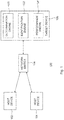
- FIG. 1 is a block diagram of an example computing environment 100 for identifying an alternate principal member port by a target device.
- computing environment 100 may include host devices 102 and 104, a network switch 106, and a target device 108. Although two host devices, one network switch, and one target device are shown in FIG. 1 , other examples consistent with this disclosure may include more or less than two host devices, more than one network switch, and more than one target device.
- computing environment 100 may represent a storage area network.
- Host devices 102 and 104 may each represent any type of computing device capable of reading machine-executable instructions. Examples of host devices 102 and 104 may each include, without limitation, a server, a desktop computer, a notebook computer, a tablet computer, a thin client, a mobile device, a personal digital assistant (PDA), a phablet, and the like.
- server may include a computer and/or a computer program (machine-readable instructions) that may process requests from other (client) computers over a network.
- Target device 108 may be a storage device, a storage software, or any combination thereof.
- the storage device may be an internal storage device, an external storage device, or a network attached storage device.
- Other examples of the storage device may include a hard disk drive, a storage disc (for example, a CD-ROM, a DVD, etc.), a storage tape, a solid state drive, a USB drive, a Serial Advanced Technology Attachment (SATA) disk drive, a Fibre Channel (FC) disk drive, a Serial Attached SCSI (SAS) disk drive, a magnetic tape drive, an optical jukebox, and the like.
- SATA Serial Advanced Technology Attachment
- FC Fibre Channel
- SAS Serial Attached SCSI
- the storage device may be a Direct Attached Storage (DAS) device, a Redundant Array of Inexpensive Disks (RAID), a data archival storage system, or a block-based device over a storage area network (SAN).
- DAS Direct Attached Storage
- RAID Redundant Array of Inexpensive Disks
- SAN storage area network
- the storage device may be a storage array, which may include one or more storage drives (for example, hard disk drives, solid state drives, etc.).
- Host devices 102 and 104 may each be communicatively coupled to target device 108, for example, via a network fabric.
- network fabric may refer to a network topology in which components may exchange data with each other through interconnecting network devices.
- the network fabric may include one or multiple network devices, for example, network switch 106, a network router, cables, etc.
- Host devices 102 and 104 may each connect to the network fabric via respective Host Bus Adaptors (HBAs).
- HBAs Host Bus Adaptors
- Some example communication protocols that may be used by host devices 102 and 104 to communicate with target device 108 via the network fabric may include Fibre Channel (FC), Ethernet, Internet Small Computer System Interface (iSCSI), HyperSCSI, ATA over Ethernet (AoE), and Fibre Channel over Ethernet (FCoE).
- FC Fibre Channel
- iSCSI Internet Small Computer System Interface
- iSCSI Internet Small Computer System Interface
- HyperSCSI HyperSCSI
- AoE ATA over Ethernet
- FCoE Fibre Channel over Ethernet
- host devices 102 and 104 may each be referred to as an "initiator".
- the initiator may initiate a connection over the network fabric to one or multiple ports ("target ports") on target device 108.
- a target port may provide access to a storage volume to the initiator.
- Fibre Channel protocol may be used as the communication protocol by a host device (for example, 102) to communicate with target device 108 via the network fabric.
- Fibre Channel zoning may be implemented in SAN.
- Fiber Channel zoning may include partitioning of a Fibre Channel fabric into smaller subsets to, for example, restrict interference, add security, and simplify management of SAN. Through zoning, devices in SAN may be divided into logical groups over the physical configuration of the network fabric. Zoning may limit a device in SAN to access a controlled subset of other devices or ports. Each device in SAN may be placed into multiple zones.
- a zone set may comprise of one or more zones.
- a zone may be a member of more than one zone set and comprise of multiple zone members. Members in a zone may access each other, however members in different zones cannot access each other.
- a device may belong to more than one zone. Only one zone set can be activated at any time.
- target device 108 may include a determination engine 120, an identification engine 122, and a performance engine 124.
- Engines 120, 122, and 124 may include any combination of hardware and programming to implement the functionalities of the engines described herein, but at least include hardware that is configured to perform the functionalities.
- the programming for the engines may be processor executable instructions stored on at least one non-transitory machine-readable storage medium and the hardware for the engines may include at least one processing resource to execute those instructions.
- the hardware may also include other electronic circuitry to at least partially implement at least one engine of target device 108.
- the at least one machine-readable storage medium may store instructions that, when executed by the at least one processing resource, at least partially implement some or all engines of target device 108.
- target device 108 may include the at least one machine-readable storage medium storing the instructions and the at least one processing resource to execute the instructions.
- Determination engine 120 in target device 108 of SAN may determine that a principal member port of a target driven peer zone on target device 108 is likely to fail based on diagnostic information related to the principal member port.
- target driven peer zoning may be implemented in the network fabric of SAN. Each peer zone may include a principal member port and peer member ports. In a peer zone, communication between a principal member port and a peer member port is allowed, but communication is not allowed between any two peer members.
- a target driven peer zone is a peer zone that is configured in the network fabric through target device 108. Target driven peer zoning does not involve any zone pre-configuration requirement before hosts can be provisioned to target device 108. This significantly reduces the time needed to configure SAN.
- target driven peer zoning Without target driven peer zoning, an administrator may have to preconfigure zones on network switch 106 before configuring hosts 102 and 104. Through target driven peer zoning a user may directly start provisioning hosts to target device 108, for example, via a Command Line Interface (CLI).
- CLI Command Line Interface
- network devices in the network fabric (for example, 104) of SAN may use Read Diagnostics Parameters (RDP) command to obtain diagnostic information in-band from all end devices attached to the fabric on a periodic basis.
- RDP Read Diagnostics Parameters
- in-band network access may refer to a network usage wherein the same network may be used to monitor and control a data network and to communicate data packets not used for management or control of that data network.
- network management information for example, via Simple Network Management Protocol (SNMP) packets
- SNMP Simple Network Management Protocol
- Examples of the end devices may include storage systems (for example, 108), host adapters, and switches (for example, 104) in the network fabric.
- the periodicity may be programmed, for example, from 30 minutes to 24 hours depending on, for example, the size of the fabric.
- Examples of the diagnostic information may include Small form-factor pluggable (SFP) diagnostic data such as temperature, voltage, Tx and Rx power and Tx bias, port speed descriptor - supported speeds and current speed, Link Error Status Block (LESB) data - link failure, loss-of-sync, loss-of-signal counts, and invalid CRC counts.
- SFP Small form-factor pluggable
- LESB Link Error Status Block
- each switch (for example, 106) in the fabric may collect this data from all the devices connected to it, as well as all ports on the switch, thus collecting data from both ends of the links.
- the diagnostic information may be stored in a distributed database on network switch 106 from where it may be accessed by target device 108.
- Target device 108 may analyze the diagnostic information that it obtains from network switch 106 to determine whether a principal member port of a target driven peer zone on target device 108 is likely to fail.
- target device 108 may constantly analyze diagnostic data, for example, temperature, supply voltage, bias current, Tx power and Rx power of principal port transceivers and determine their health on a periodic basis. These values may be compared against pre-defined warning thresholds and alarm thresholds. If any of these parameters cross warning thresholds or stay within alarm thresholds over an extended period of time (for example, a few days), then the component could be identified as likely to fail.
- the principal member port of a target driven peer zone may be identified as a candidate that is about to fail.
- the principal member port may be identified as likely to fail.
- link events for example, loss of synchronization
- the principal member port of a target driven peer zone may be identified as a candidate that is about to fail.
- identification engine 122 may identify an alternate principal member port on the target device 108. In some examples, identification engine 122 may identify, from the available ports on target device 108, a port that is physically coupled to the network fabric based upon fabric ID. Identification engine 122 may identify such port as the alternate principal member port on the target device 108.
- performance engine 124 may perform an action to indicate the alternate principal member port as the principal member port.
- the "action" may include sending, by performance engine 124, a replace principal member request to network switch 106 to replace principal member port of the target driven peer zone with the alternate principal member port.
- the request may include details such as a peer zone name, a principal member port identifier (for example, a World Wide Name (WWN)) and an alternate principal member port identifier (for example, a WWN).
- WWN World Wide Name
- the request may be sent in-band to network switch 106.
- network switch 106 may determine whether the principal member port that is requested to be replaced pertains to a peer zone.
- network switch 106 may determine whether the peer zone is a member of an active zone set. In response to a determination that the peer zone is a member of an active zone set, network switch 106 may accept the request. On the other hand, in response to a determination that the peer zone is not a member of an active zone set, network switch 106 may reject the request. Network switch 106 may proceed to add the alternate principal member port into the existing target driven peer zone. After adding the alternate principal member port, network switch 106 may indicate the alternate principal member port as the principal member port for the peer zone, and remove the earlier principal member port from the peer zone. A database maintained on network switch 106 may be updated to reflect this change.
- Network switch 106 may notify about the change related to the principal member port to the peer members (for example, initiators 102 and 104) in the peer zone, and to target device 108.
- the notification may occur via a registered state change notification (RSCN).
- the initiators 102 and 104 may login to target device 108 via the alternate principal member port.
- target device 108 may update its internal database to reflect the alternate principal member port as the principal member port.
- Target device 108 may receive all subsequent messages from switch 108 at the alternate principal member port.
- the "action" may include creating, by performance engine 124 on target device 108, a new peer zone that includes the alternate principal member port and the peer members of the peer zone that the principal member port was previously a part of.
- the new peer zone may be created via command "AAPZ - add/replace active peer zone”.
- a database maintained on network switch 106 may be updated to reflect the new peer zone.
- performance engine 124 may remove the peer zone that the principal member port was previously a part of.
- the earlier peer zone may be removed via command "RAPZ - remove active peer zone". Since AAPZ and RAPZ are switch commands, creation of the new peer zone and removal of the earlier peer zone are transparent to network switch 106.
- Target device 108 may update its database to reflect the alternate principal member port as the principal member port.
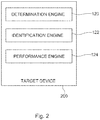
- FIG. 2 is a block diagram of an example target device 200 for identifying an alternate principal member port in a storage area network.
- target device 200 may be implemented by any suitable device, as described herein in relation to target device 108 of FIG. 1 , for example.
- target device 200 may include a determination engine 120, an identification engine 122, and a performance engine 124, as described above in relation to FIG. 1 .
- determination engine 120 on target device 200 may determine that a principal member port of a target driven peer zone on target device 200 is likely to fail based on diagnostic information related to the principal member port.
- the target driven peer zone may be configured in the SAN via target device 200.
- identification engine 122 may identify an alternate principal member port on target device 200.
- performance engine 124 may send a request to a network switch in the SAN to replace the principal member port of the target driven peer zone with the alternate principal member port. Performance engine 124 may then determine that the request has been completed.
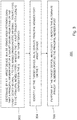
- FIG. 3 is a block diagram of an example method 300 for identifying an alternate principal member port in a storage area network.
- the method 300 may be fully or partially executed on a device such as target device 108 of FIG. 1 , or target device 200 of FIG. 2 .
- a target device in a Storage Area Network may determine that a principal member port of a target driven peer zone on the target device is likely to fail based on diagnostic information related to the principal member port.
- the target driven peer zone may be configured in the SAN via the target device.
- the target device may identify an alternate principal member port on the target device.
- the target device may perform an action to indicate the alternate principal member port as the principal member port.
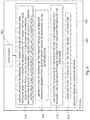
- FIG. 4 is a block diagram of an example system 400 including instructions in a machine-readable storage medium to identify an alternate principal member port in a storage area network.
- System 400 includes a processor 402 and a machine-readable storage medium 404 communicatively coupled through a system bus.
- system 400 may be analogous to target device 108 of FIG. 1 , or target device 200 of FIG. 2 .
- Processor 402 may be any type of Central Processing Unit (CPU), microprocessor, or processing logic that interprets and executes machine-readable instructions stored in machine-readable storage medium 404.
- Machine-readable storage medium 404 may be a random access memory (RAM) or another type of dynamic storage device that may store information and machine-readable instructions that may be executed by processor 402.
- RAM random access memory
- machine-readable storage medium 404 may be Synchronous DRAM (SDRAM), Double Data Rate (DDR), Rambus DRAM (RDRAM), Rambus RAM, etc. or storage memory media such as a floppy disk, a hard disk, a CD-ROM, a DVD, a pen drive, and the like.
- machine-readable storage medium may be a non-transitory machine-readable medium.
- Machine-readable storage medium 404 may store instructions 406, 408, 410, and 412.
- instructions 406 may be executed by processor 402 to determine in a Storage Area Network (SAN) that a principal member port of a target driven peer zone on the target device is likely to fail based on diagnostic information related to the principal member port, wherein the target driven peer zone is configured in the SAN via the target device.
- instructions 408 may be executed by processor 402 to identify an alternate principal member port on the target device, in response to the determination.
- Instructions 410 may be executed by processor 402 to create a new peer zone that includes the alternate principal member port and peer members of the peer zone.
- Instructions 412 may be executed by processor 402 to remove the peer zone that the principal member port was previously a part of.
- FIG. 3 For the purpose of simplicity of explanation, the example method of FIG. 3 is shown as executing serially, however it is to be understood and appreciated that the present and other examples are not limited by the illustrated order.
- the example systems of FIGS. 1 , 2 , and 4 , and method of FIG. 3 may be implemented in the form of a computer program product including computer-executable instructions, such as program code, which may be run on any suitable computing device in conjunction with a suitable operating system (for example, Microsoft Windows, Linux, UNIX, and the like). Examples within the scope of the present solution may also include program products comprising non-transitory computer-readable media for carrying or having computer-executable instructions or data structures stored thereon.
- Such computer-readable media can be any available media that can be accessed by a general purpose or special purpose computer.
- Such computer-readable media can comprise RAM, ROM, EPROM, EEPROM, CD-ROM, magnetic disk storage or other storage devices, or any other medium which can be used to carry or store desired program code in the form of computer-executable instructions and which can be accessed by a general purpose or special purpose computer.
- the computer readable instructions can also be accessed from memory and executed by a processor.
Landscapes
- Engineering & Computer Science (AREA)
- Computer Networks & Wireless Communication (AREA)
- Signal Processing (AREA)
- Theoretical Computer Science (AREA)
- Physics & Mathematics (AREA)
- General Engineering & Computer Science (AREA)
- General Physics & Mathematics (AREA)
- Computer Security & Cryptography (AREA)
- Quality & Reliability (AREA)
- Human Computer Interaction (AREA)
- Debugging And Monitoring (AREA)
- Information Retrieval, Db Structures And Fs Structures Therefor (AREA)
Abstract
Description
- A Storage Area Network (SAN) is a high-speed network that may connect multiple storage devices with multiple servers. A SAN provides block-level storage that may be accessed by applications running on any associated server. A storage area network removes storage from servers and consolidates it in a manner that each server in a SAN may access shared storage as if it is directly attached to the server. A SAN thus serves as a pool of storage for servers in the network.
- The following detailed description references the drawings, wherein:
-
FIG. 1 is a block diagram of an example computing environment for identifying an alternate principal member port by a target device; -
FIG. 2 is a block diagram of an example target device for identifying an alternate principal member port in a storage area network; -
FIG. 3 is a block diagram of an example method of identifying an alternate principal member port by a target device in a storage area network; and -
FIG. 4 is a block diagram of an example system including instructions in a machine-readable storage medium to identify an alternate principal member port by a target device in a storage area network. - A SAN typically includes a dedicated network of storage devices that are generally not accessible through the local area network (LAN) by other devices. SAN plays a useful role in any data center by providing access and connectivity between storage arrays and servers via a dedicated network. This dedicated network may use Fiber Channel (FC) storage protocol.
- In some examples, zoning may be implemented in a SAN to control who can see what in a SAN. Zoning is a logical separation of traffic between host and resources. By breaking up a network into zones, processing activity is distributed evenly across a network so that no single device is overburdened. To build a SAN zone, an administrator may consider information related to, for example, network fabric, switch ports, target ports, initiator ports, SAN fabric usage pattern, target storage system, target port availability, customer Service Level Agreement (SLA), and zone design pattern, etc.
- One of the challenges with large SANs is keeping them up and running all the time because any downtime could be expensive and complex to triage. To avoid downtime, SANs may be continuously monitored to address any challenges in a timely manner. Fibre Channel zoning is a feature that adds to security and better management of a SAN by providing segregation and allowing controlled communication among selected devices within the network fabric. However, pre-empting potential issues in a SAN installation is a challenging task.
- For example, in a target orchestrated peer zoning in a Fiber Channel based SAN, a peer zone may include a principal member port and peer member ports. In a peer zone, communication between a principal member port and a peer member port is allowed, but communication is not allowed between any two peer members. In case of any fault related to the principal member port, communication path between the principal member port and peer member ports may be affected. This is not a desirable scenario in a SAN.
- To address these technical challenges, the present disclosure describes various examples for identifying an alternate principal member port by a target device in a storage area network. A target device in a Storage Area Network (SAN) may determine that a principal member port of a target driven peer zone on the target device is likely to fail based on diagnostic information related to the principal member port. The target driven peer zone may be configured in the SAN via the target device. In response to determining, the target device may identify an alternate principal member port on the target device. The target device may perform an action to indicate the alternate principal member port as the principal member port.
- Proposed solution uses the target port diagnostic information to identify the near-failing storage array target port. It analyzes the diagnostic data for any failure prediction and, based upon the analysis, the target device may take an in-band corrective action to replace the failing principal member with the peer target port to maintain an end-to-end host to target data connectivity path.
-
FIG. 1 is a block diagram of anexample computing environment 100 for identifying an alternate principal member port by a target device. In some examples,computing environment 100 may includehost devices network switch 106, and atarget device 108. Although two host devices, one network switch, and one target device are shown inFIG. 1 , other examples consistent with this disclosure may include more or less than two host devices, more than one network switch, and more than one target device. In some examples,computing environment 100 may represent a storage area network. -
Host devices host devices -
Target device 108 may be a storage device, a storage software, or any combination thereof. The storage device may be an internal storage device, an external storage device, or a network attached storage device. Other examples of the storage device may include a hard disk drive, a storage disc (for example, a CD-ROM, a DVD, etc.), a storage tape, a solid state drive, a USB drive, a Serial Advanced Technology Attachment (SATA) disk drive, a Fibre Channel (FC) disk drive, a Serial Attached SCSI (SAS) disk drive, a magnetic tape drive, an optical jukebox, and the like. In other examples, the storage device may be a Direct Attached Storage (DAS) device, a Redundant Array of Inexpensive Disks (RAID), a data archival storage system, or a block-based device over a storage area network (SAN). In one example, the storage device may be a storage array, which may include one or more storage drives (for example, hard disk drives, solid state drives, etc.). -
Host devices device 108, for example, via a network fabric. As used herein, the term "network fabric" may refer to a network topology in which components may exchange data with each other through interconnecting network devices. In some examples, the network fabric may include one or multiple network devices, for example,network switch 106, a network router, cables, etc.Host devices - Some example communication protocols that may be used by
host devices target device 108 via the network fabric may include Fibre Channel (FC), Ethernet, Internet Small Computer System Interface (iSCSI), HyperSCSI, ATA over Ethernet (AoE), and Fibre Channel over Ethernet (FCoE). - In some examples,
host devices target device 108. A target port may provide access to a storage volume to the initiator. - As mentioned earlier, in some examples, Fibre Channel protocol may be used as the communication protocol by a host device (for example, 102) to communicate with
target device 108 via the network fabric. In some examples, Fibre Channel zoning may be implemented in SAN. As used herein, Fiber Channel zoning may include partitioning of a Fibre Channel fabric into smaller subsets to, for example, restrict interference, add security, and simplify management of SAN. Through zoning, devices in SAN may be divided into logical groups over the physical configuration of the network fabric. Zoning may limit a device in SAN to access a controlled subset of other devices or ports. Each device in SAN may be placed into multiple zones. - A zone set may comprise of one or more zones. A zone may be a member of more than one zone set and comprise of multiple zone members. Members in a zone may access each other, however members in different zones cannot access each other. A device may belong to more than one zone. Only one zone set can be activated at any time.
- In some examples,
target device 108 may include adetermination engine 120, anidentification engine 122, and aperformance engine 124. -
Engines target device 108. In some examples, the at least one machine-readable storage medium may store instructions that, when executed by the at least one processing resource, at least partially implement some or all engines oftarget device 108. In such examples,target device 108 may include the at least one machine-readable storage medium storing the instructions and the at least one processing resource to execute the instructions. -
Determination engine 120 intarget device 108 of SAN may determine that a principal member port of a target driven peer zone ontarget device 108 is likely to fail based on diagnostic information related to the principal member port. In some examples, target driven peer zoning may be implemented in the network fabric of SAN. Each peer zone may include a principal member port and peer member ports. In a peer zone, communication between a principal member port and a peer member port is allowed, but communication is not allowed between any two peer members. A target driven peer zone is a peer zone that is configured in the network fabric throughtarget device 108. Target driven peer zoning does not involve any zone pre-configuration requirement before hosts can be provisioned to targetdevice 108. This significantly reduces the time needed to configure SAN. Without target driven peer zoning, an administrator may have to preconfigure zones onnetwork switch 106 before configuringhosts device 108, for example, via a Command Line Interface (CLI). - In some examples, network devices in the network fabric (for example, 104) of SAN may use Read Diagnostics Parameters (RDP) command to obtain diagnostic information in-band from all end devices attached to the fabric on a periodic basis. As used herein, "in-band" network access may refer to a network usage wherein the same network may be used to monitor and control a data network and to communicate data packets not used for management or control of that data network. In some examples, during in-band network access, network management information (for example, via Simple Network Management Protocol (SNMP) packets) may travel the same network path as normal data packets (i.e., data packets whose content does not relate to management or control of that network).
- Examples of the end devices may include storage systems (for example, 108), host adapters, and switches (for example, 104) in the network fabric. The periodicity may be programmed, for example, from 30 minutes to 24 hours depending on, for example, the size of the fabric. Examples of the diagnostic information may include Small form-factor pluggable (SFP) diagnostic data such as temperature, voltage, Tx and Rx power and Tx bias, port speed descriptor - supported speeds and current speed, Link Error Status Block (LESB) data - link failure, loss-of-sync, loss-of-signal counts, and invalid CRC counts. Once configured, each switch (for example, 106) in the fabric may collect this data from all the devices connected to it, as well as all ports on the switch, thus collecting data from both ends of the links. In an example, the diagnostic information may be stored in a distributed database on
network switch 106 from where it may be accessed bytarget device 108. -
Target device 108 may analyze the diagnostic information that it obtains fromnetwork switch 106 to determine whether a principal member port of a target driven peer zone ontarget device 108 is likely to fail. In some examples,target device 108 may constantly analyze diagnostic data, for example, temperature, supply voltage, bias current, Tx power and Rx power of principal port transceivers and determine their health on a periodic basis. These values may be compared against pre-defined warning thresholds and alarm thresholds. If any of these parameters cross warning thresholds or stay within alarm thresholds over an extended period of time (for example, a few days), then the component could be identified as likely to fail. For example, if the component temperature is below 0° C or above 80° C (alarm thresholds), for a pre-defined time, the principal member port of a target driven peer zone may be identified as a candidate that is about to fail. In another example, if CRC errors of the link are incrementing, for example, at the rate of 5 errors/hour, the principal member port may be identified as likely to fail. In a further example, if there are link events (for example, loss of synchronization) occurring regularly within a pre-defined period (for example, five per hour), the principal member port of a target driven peer zone may be identified as a candidate that is about to fail. - In response to a determination by
determination engine 120 that the principal port member of the target driven peer zone is likely to fail,identification engine 122 may identify an alternate principal member port on thetarget device 108. In some examples,identification engine 122 may identify, from the available ports ontarget device 108, a port that is physically coupled to the network fabric based upon fabric ID.Identification engine 122 may identify such port as the alternate principal member port on thetarget device 108. - Once the alternate principal member port on the
target device 108 is identified,performance engine 124 may perform an action to indicate the alternate principal member port as the principal member port. In some examples, the "action" may include sending, byperformance engine 124, a replace principal member request to networkswitch 106 to replace principal member port of the target driven peer zone with the alternate principal member port. The request may include details such as a peer zone name, a principal member port identifier (for example, a World Wide Name (WWN)) and an alternate principal member port identifier (for example, a WWN). In an example, the request may be sent in-band to networkswitch 106. In response,network switch 106 may determine whether the principal member port that is requested to be replaced pertains to a peer zone. If the request pertains to a peer zone,network switch 106 may determine whether the peer zone is a member of an active zone set. In response to a determination that the peer zone is a member of an active zone set,network switch 106 may accept the request. On the other hand, in response to a determination that the peer zone is not a member of an active zone set,network switch 106 may reject the request.Network switch 106 may proceed to add the alternate principal member port into the existing target driven peer zone. After adding the alternate principal member port,network switch 106 may indicate the alternate principal member port as the principal member port for the peer zone, and remove the earlier principal member port from the peer zone. A database maintained onnetwork switch 106 may be updated to reflect this change.Network switch 106 may notify about the change related to the principal member port to the peer members (for example,initiators 102 and 104) in the peer zone, and to targetdevice 108. In some examples, the notification may occur via a registered state change notification (RSCN). In response to the notification, theinitiators device 108 via the alternate principal member port. In response to the notification,target device 108 may update its internal database to reflect the alternate principal member port as the principal member port.Target device 108 may receive all subsequent messages fromswitch 108 at the alternate principal member port. - In another example, the "action" may include creating, by
performance engine 124 ontarget device 108, a new peer zone that includes the alternate principal member port and the peer members of the peer zone that the principal member port was previously a part of. In some examples, the new peer zone may be created via command "AAPZ - add/replace active peer zone". A database maintained onnetwork switch 106 may be updated to reflect the new peer zone. Once the new peer zone is created,performance engine 124 may remove the peer zone that the principal member port was previously a part of. In some examples, the earlier peer zone may be removed via command "RAPZ - remove active peer zone". Since AAPZ and RAPZ are switch commands, creation of the new peer zone and removal of the earlier peer zone are transparent tonetwork switch 106.Target device 108 may update its database to reflect the alternate principal member port as the principal member port. -
FIG. 2 is a block diagram of anexample target device 200 for identifying an alternate principal member port in a storage area network. In some examples,target device 200 may be implemented by any suitable device, as described herein in relation totarget device 108 ofFIG. 1 , for example. - In some examples,
target device 200 may include adetermination engine 120, anidentification engine 122, and aperformance engine 124, as described above in relation toFIG. 1 . - In some examples,
determination engine 120 ontarget device 200, which may be present in a SAN, may determine that a principal member port of a target driven peer zone ontarget device 200 is likely to fail based on diagnostic information related to the principal member port. The target driven peer zone may be configured in the SAN viatarget device 200. In response to the determination,identification engine 122 may identify an alternate principal member port ontarget device 200. Subsequent to the identification,performance engine 124 may send a request to a network switch in the SAN to replace the principal member port of the target driven peer zone with the alternate principal member port.Performance engine 124 may then determine that the request has been completed. -
FIG. 3 is a block diagram of anexample method 300 for identifying an alternate principal member port in a storage area network. Themethod 300, which is described below, may be fully or partially executed on a device such astarget device 108 ofFIG. 1 , ortarget device 200 ofFIG. 2 . However, other suitable network or computing devices may executemethod 300 as well. Atblock 302, a target device in a Storage Area Network (SAN) may determine that a principal member port of a target driven peer zone on the target device is likely to fail based on diagnostic information related to the principal member port. The target driven peer zone may be configured in the SAN via the target device. Atblock 304, in response to determining, the target device may identify an alternate principal member port on the target device. Atblock 306, the target device may perform an action to indicate the alternate principal member port as the principal member port. -
FIG. 4 is a block diagram of anexample system 400 including instructions in a machine-readable storage medium to identify an alternate principal member port in a storage area network.System 400 includes aprocessor 402 and a machine-readable storage medium 404 communicatively coupled through a system bus. In some examples,system 400 may be analogous totarget device 108 ofFIG. 1 , ortarget device 200 ofFIG. 2 .Processor 402 may be any type of Central Processing Unit (CPU), microprocessor, or processing logic that interprets and executes machine-readable instructions stored in machine-readable storage medium 404. Machine-readable storage medium 404 may be a random access memory (RAM) or another type of dynamic storage device that may store information and machine-readable instructions that may be executed byprocessor 402. For example, machine-readable storage medium 404 may be Synchronous DRAM (SDRAM), Double Data Rate (DDR), Rambus DRAM (RDRAM), Rambus RAM, etc. or storage memory media such as a floppy disk, a hard disk, a CD-ROM, a DVD, a pen drive, and the like. In some examples, machine-readable storage medium may be a non-transitory machine-readable medium. - Machine-
readable storage medium 404 may storeinstructions instructions 406 may be executed byprocessor 402 to determine in a Storage Area Network (SAN) that a principal member port of a target driven peer zone on the target device is likely to fail based on diagnostic information related to the principal member port, wherein the target driven peer zone is configured in the SAN via the target device. In response to the determination,instructions 408 may be executed byprocessor 402 to identify an alternate principal member port on the target device, in response to the determination.Instructions 410 may be executed byprocessor 402 to create a new peer zone that includes the alternate principal member port and peer members of the peer zone.Instructions 412 may be executed byprocessor 402 to remove the peer zone that the principal member port was previously a part of. - For the purpose of simplicity of explanation, the example method of
FIG. 3 is shown as executing serially, however it is to be understood and appreciated that the present and other examples are not limited by the illustrated order. The example systems ofFIGS. 1 ,2 , and4 , and method ofFIG. 3 may be implemented in the form of a computer program product including computer-executable instructions, such as program code, which may be run on any suitable computing device in conjunction with a suitable operating system (for example, Microsoft Windows, Linux, UNIX, and the like). Examples within the scope of the present solution may also include program products comprising non-transitory computer-readable media for carrying or having computer-executable instructions or data structures stored thereon. Such computer-readable media can be any available media that can be accessed by a general purpose or special purpose computer. By way of example, such computer-readable media can comprise RAM, ROM, EPROM, EEPROM, CD-ROM, magnetic disk storage or other storage devices, or any other medium which can be used to carry or store desired program code in the form of computer-executable instructions and which can be accessed by a general purpose or special purpose computer. The computer readable instructions can also be accessed from memory and executed by a processor. - It should be noted that the above-described examples of the present solution is for the purpose of illustration only. Although the solution has been described in conjunction with a specific example thereof, numerous modifications may be possible without materially departing from the teachings and advantages of the subject matter described herein. Other substitutions, modifications and changes may be made without departing from the spirit of the present solution. All of the features disclosed in this specification (including any accompanying claims, abstract and drawings), and/or all of the steps of any method or process so disclosed, may be combined in any combination, except combinations where at least some of such features and/or steps are mutually exclusive.
Claims (15)
- A method comprising:determining, by a target device, in a Storage Area Network (SAN) that a principal member port of a target driven peer zone on the target device is likely to fail based on diagnostic information related to the principal member port, wherein the target driven peer zone is configured in the SAN via the target device;in response to determining, identifying, by the target device, an alternate principal member port on the target device; andperforming, by the target device, an action to indicate the alternate principal member port as the principal member port.
- The method of claim 1, wherein the action comprises:sending, by the target device, a request to a network switch in the SAN to replace the principal member port of the target driven peer zone with the alternate principal member port; anddetermining, by the target device, that the request has been completed.
- The method of claim 2, wherein the request comprises:a name of the target driven peer zone, an identifier for the principal member port, and an identifier for the alternate principal member port.
- The method of claim 2, wherein determining that the request has been completed comprises:receiving, by the target device, a notification indicating that the request has been completed.
- The method of claim 1, wherein the action comprises:creating, by the target device, a new peer zone that comprises the alternate principal member port and peer members of the target driven peer zone.
- The method of claim 5, further comprising:removing, by the target device, the target driven peer zone.
- A target device comprising:a determination engine to determine in a Storage Area Network (SAN) that a principal member port of a target driven peer zone on the target device is likely to fail based on diagnostic information related to the principal member port, wherein the target driven peer zone is configured in the SAN via the target device;an identification engine to identify, in response to the determination, an alternate principal member port on the target device; anda performance engine to:send a request to a network switch in the SAN to replace the principal member port of the target driven peer zone with the alternate principal member port; anddetermine that the request has been completed.
- The target device of claim 7, wherein the SAN comprises a Fibre Channel-based SAN.
- The target device of claim 7, wherein the alternate principal member port on the target device is physically coupled to the network switch.
- The target device of claim 7, wherein to replace the principal member port of the target driven peer zone with the alternate principal member port comprises updating a database on the network switch.
- The target device of claim 7, wherein the request is sent in-band to the network switch.
- A non-transitory machine-readable storage medium comprising instructions, the instructions executable by a processor to:determine, by a target device, in a Storage Area Network (SAN) that a principal member port of a target driven peer zone on the target device is likely to fail based on diagnostic information related to the principal member port, wherein the target driven peer zone is configured in the SAN via the target device;identify, by the target device, an alternate principal member port on the target device, in response to the determination;create, by the target device, a new peer zone that comprises the alternate principal member port and peer members of the target driven peer zone; andremove, by the target device, the target driven peer zone.
- The storage medium of claim 12, wherein the instructions to determine comprise instructions to:obtain, by the target device, diagnostic information related to the principal member port from a network switch in the SAN; andanalyze, by the target device, the diagnostic information related to the principal member port.
- The storage medium of claim 12, wherein instructions to identify comprise instructions to:identify, by the target device, a port on the target device that is physically coupled to a network fabric of the SAN; andselect, by the target device, the port as the alternate principal member port.
- The storage medium of claim 12, further comprising instructions to update a database on the target device to include the new peer zone.
Applications Claiming Priority (1)
| Application Number | Priority Date | Filing Date | Title |
|---|---|---|---|
| US15/704,224 US10509706B2 (en) | 2017-09-14 | 2017-09-14 | Identification of an alternate principal member port by a target device in a storage area network |
Publications (2)
| Publication Number | Publication Date |
|---|---|
| EP3457630A1 true EP3457630A1 (en) | 2019-03-20 |
| EP3457630B1 EP3457630B1 (en) | 2022-01-26 |
Family
ID=60937503
Family Applications (1)
| Application Number | Title | Priority Date | Filing Date |
|---|---|---|---|
| EP17207620.0A Active EP3457630B1 (en) | 2017-09-14 | 2017-12-15 | Identification of an alternate principal member port by a target device in a storage area network |
Country Status (3)
| Country | Link |
|---|---|
| US (1) | US10509706B2 (en) |
| EP (1) | EP3457630B1 (en) |
| CN (1) | CN109510856B (en) |
Families Citing this family (17)
| Publication number | Priority date | Publication date | Assignee | Title |
|---|---|---|---|---|
| US11231872B2 (en) | 2018-07-05 | 2022-01-25 | Hewlett Packard Enterprise Development Lp | Identification of substitute controllers based on temperature data |
| US12423141B2 (en) | 2020-12-09 | 2025-09-23 | Dell Products L.P. | System and method for dynamic data protection architecture |
| US11809912B2 (en) | 2020-12-09 | 2023-11-07 | Dell Products L.P. | System and method for allocating resources to perform workloads |
| US11853782B2 (en) | 2020-12-09 | 2023-12-26 | Dell Products L.P. | Method and system for composing systems using resource sets |
| US11809911B2 (en) | 2020-12-09 | 2023-11-07 | Dell Products L.P. | Resuming workload execution in composed information handling system |
| US11934875B2 (en) | 2020-12-09 | 2024-03-19 | Dell Products L.P. | Method and system for maintaining composed systems |
| US11928515B2 (en) | 2020-12-09 | 2024-03-12 | Dell Products L.P. | System and method for managing resource allocations in composed systems |
| US11768612B2 (en) | 2021-01-28 | 2023-09-26 | Dell Products L.P. | System and method for distributed deduplication in a composed system |
| US12204946B2 (en) | 2021-01-28 | 2025-01-21 | Dell Products L.P. | Method and system for providing composable infrastructure capabilities |
| US11797341B2 (en) | 2021-01-28 | 2023-10-24 | Dell Products L.P. | System and method for performing remediation action during operation analysis |
| US12026557B2 (en) | 2021-07-22 | 2024-07-02 | Dell Products L.P. | Method and system for a utilizing a proxy service to generate a composed information handling system |
| US11947697B2 (en) | 2021-07-22 | 2024-04-02 | Dell Products L.P. | Method and system to place resources in a known state to be used in a composed information handling system |
| US12013768B2 (en) | 2021-07-22 | 2024-06-18 | Dell Products L.P. | Method and system for automated healing of hardware resources in a composed information handling system |
| US12008412B2 (en) | 2021-07-28 | 2024-06-11 | Dell Products | Resource selection for complex solutions |
| US11928506B2 (en) * | 2021-07-28 | 2024-03-12 | Dell Products L.P. | Managing composition service entities with complex networks |
| US12699618B2 (en) * | 2023-08-28 | 2026-08-04 | International Business Machines Corporation | Command to trigger diagnostic port activation |
| CN119052101B (en) * | 2024-08-27 | 2026-01-30 | 苏州元脑智能科技有限公司 | A method, equipment, and medium for detecting and analyzing storage area networks. |
Citations (2)
| Publication number | Priority date | Publication date | Assignee | Title |
|---|---|---|---|---|
| WO2013118195A1 (en) * | 2012-02-10 | 2013-08-15 | Hitachi, Ltd. | Storage management method and storage system in virtual volume having data arranged astride storage devices |
| WO2017078662A1 (en) * | 2015-11-02 | 2017-05-11 | Hewlett Packard Enterprise Development Lp | Storage area network diagnostic data |
Family Cites Families (21)
| Publication number | Priority date | Publication date | Assignee | Title |
|---|---|---|---|---|
| US7058844B2 (en) * | 2001-06-15 | 2006-06-06 | Sun Microsystems, Inc. | System and method for rapid fault isolation in a storage area network |
| US7275103B1 (en) * | 2002-12-18 | 2007-09-25 | Veritas Operating Corporation | Storage path optimization for SANs |
| JP4758259B2 (en) * | 2006-01-31 | 2011-08-24 | 株式会社クラウド・スコープ・テクノロジーズ | Network monitoring apparatus and method |
| US7930583B1 (en) * | 2006-09-14 | 2011-04-19 | Symantec Operating Corporation | System and method for domain failure analysis of a storage area network |
| US8209409B2 (en) * | 2007-04-09 | 2012-06-26 | Hewlett-Packard Development Company, L.P. | Diagnosis of a storage area network |
| CN102334092B (en) * | 2009-04-14 | 2016-01-13 | 株式会社日立制作所 | Storage system and control method thereof |
| US8705351B1 (en) * | 2009-05-06 | 2014-04-22 | Qlogic, Corporation | Method and system for load balancing in networks |
| CN102263807A (en) * | 2010-05-31 | 2011-11-30 | 国际商业机器公司 | Method for keeping communication path smooth in storage area network and storage area network |
| US9081502B2 (en) * | 2012-10-18 | 2015-07-14 | Hitachi, Ltd. | Method and apparatus of storage volume migration in cooperation with takeover of storage area network configuration |
| US9304875B2 (en) * | 2012-11-30 | 2016-04-05 | International Business Machines Corporation | Dynamically tracking logical units moving between input/output ports of a storage area network target |
| AU2014259538B2 (en) | 2013-11-08 | 2015-12-10 | Accenture Global Services Limited | Network node failure predictive system |
| US9590892B2 (en) | 2013-12-02 | 2017-03-07 | University Of Ontario Institute Of Technology | Proactive controller for failure resiliency in communication networks |
| US9628340B2 (en) | 2014-05-05 | 2017-04-18 | Ciena Corporation | Proactive operations, administration, and maintenance systems and methods in networks using data analytics |
| CN104333469B (en) * | 2014-11-13 | 2018-02-27 | 浪潮(北京)电子信息产业有限公司 | A kind of storage system Fibre Channel conversation managing method and system |
| US9722863B2 (en) * | 2015-01-13 | 2017-08-01 | International Business Machines Corporation | Isolating the sources of faults/potential faults within computing networks |
| US9912613B2 (en) | 2015-03-30 | 2018-03-06 | International Business Machines Corporation | Dynamic service orchestration within PaaS platforms |
| WO2016204777A1 (en) * | 2015-06-19 | 2016-12-22 | Hewlett Packard Enterprise Development LP. | Network communications |
| US20170070387A1 (en) | 2015-09-09 | 2017-03-09 | Telefonaktiebolaget L M Ericsson (Publ) | Method for pro-active traffic redirection in multi-hop wireless networks using software defined networking |
| US10148483B1 (en) * | 2015-09-30 | 2018-12-04 | EMC IP Holding Company LLC | Dynamic front end connectivity optimizations |
| CN105591818A (en) * | 2015-12-21 | 2016-05-18 | 杭州华三通信技术有限公司 | Method and device for synchronizing port diagnostic information |
| CN106888111B (en) * | 2016-12-30 | 2019-11-08 | 北京同有飞骥科技股份有限公司 | A method of solving dual computer group FC-SAN switching |
-
2017
- 2017-09-14 US US15/704,224 patent/US10509706B2/en active Active
- 2017-12-15 EP EP17207620.0A patent/EP3457630B1/en active Active
-
2018
- 2018-01-19 CN CN201810053799.9A patent/CN109510856B/en active Active
Patent Citations (2)
| Publication number | Priority date | Publication date | Assignee | Title |
|---|---|---|---|---|
| WO2013118195A1 (en) * | 2012-02-10 | 2013-08-15 | Hitachi, Ltd. | Storage management method and storage system in virtual volume having data arranged astride storage devices |
| WO2017078662A1 (en) * | 2015-11-02 | 2017-05-11 | Hewlett Packard Enterprise Development Lp | Storage area network diagnostic data |
Also Published As
| Publication number | Publication date |
|---|---|
| CN109510856A (en) | 2019-03-22 |
| US20190079837A1 (en) | 2019-03-14 |
| EP3457630B1 (en) | 2022-01-26 |
| CN109510856B (en) | 2021-08-24 |
| US10509706B2 (en) | 2019-12-17 |
Similar Documents
| Publication | Publication Date | Title |
|---|---|---|
| EP3457630B1 (en) | Identification of an alternate principal member port by a target device in a storage area network | |
| US11366590B2 (en) | Host device with multi-path layer providing dynamic control of one or more path selection algorithms | |
| US10708140B2 (en) | Automatically updating zone information in a storage area network | |
| US20200349094A1 (en) | Host device with multi-path layer configured for detection and resolution of initiator-related conditions | |
| CN106886366B (en) | Storage medium, system and method for using an extender for storage area network management | |
| US11320994B2 (en) | Dynamic configuration change control in a storage system using multi-path layer notifications | |
| US8639808B1 (en) | Method and apparatus for monitoring storage unit ownership to continuously balance input/output loads across storage processors | |
| US9390034B1 (en) | Unified SCSI target management for performing a delayed shutdown of a service daemon in a deduplication appliance | |
| US20160217049A1 (en) | Fibre Channel Failover Based on Fabric Connectivity | |
| US11169716B2 (en) | Prediction of maintenance window of a storage system | |
| US11308004B1 (en) | Multi-path layer configured for detection and mitigation of slow drain issues in a storage area network | |
| US11032123B1 (en) | Hierarchical storage system management | |
| US11467765B2 (en) | Detection and mitigation of slow drain issues using response times and storage-side latency view | |
| US11032373B1 (en) | Host-based bandwidth control for virtual initiators | |
| US12299327B2 (en) | Concurrent handling of multiple asynchronous events in a storage system | |
| US12568040B2 (en) | Multi-path layer configured for performing root cause analysis of path anomalies | |
| US10133509B2 (en) | Consistency group abstraction | |
| US10826785B2 (en) | Data traffic monitoring tool | |
| US10782889B2 (en) | Fibre channel scale-out with physical path discovery and volume move | |
| US11418594B1 (en) | Multi-path layer configured to provide link availability information to storage system for load rebalancing | |
| US11720369B2 (en) | Path management and failure prediction using target port power levels | |
| US9378160B1 (en) | Unified SCSI target management for shutting down and de-configuring a service daemon in a deduplication appliance | |
| US11797312B2 (en) | Synchronization of multi-pathing settings across clustered nodes | |
| US11216200B2 (en) | Partition utilization awareness of logical units on storage arrays used for booting | |
| US10609144B2 (en) | Creating a storage area network zone based on a service level agreement |
Legal Events
| Date | Code | Title | Description |
|---|---|---|---|
| PUAI | Public reference made under article 153(3) epc to a published international application that has entered the european phase |
Free format text: ORIGINAL CODE: 0009012 |
|
| STAA | Information on the status of an ep patent application or granted ep patent |
Free format text: STATUS: THE APPLICATION HAS BEEN PUBLISHED |
|
| AK | Designated contracting states |
Kind code of ref document: A1 Designated state(s): AL AT BE BG CH CY CZ DE DK EE ES FI FR GB GR HR HU IE IS IT LI LT LU LV MC MK MT NL NO PL PT RO RS SE SI SK SM TR |
|
| AX | Request for extension of the european patent |
Extension state: BA ME |
|
| STAA | Information on the status of an ep patent application or granted ep patent |
Free format text: STATUS: REQUEST FOR EXAMINATION WAS MADE |
|
| 17P | Request for examination filed |
Effective date: 20190711 |
|
| RBV | Designated contracting states (corrected) |
Designated state(s): AL AT BE BG CH CY CZ DE DK EE ES FI FR GB GR HR HU IE IS IT LI LT LU LV MC MK MT NL NO PL PT RO RS SE SI SK SM TR |
|
| STAA | Information on the status of an ep patent application or granted ep patent |
Free format text: STATUS: EXAMINATION IS IN PROGRESS |
|
| 17Q | First examination report despatched |
Effective date: 20200513 |
|
| GRAP | Despatch of communication of intention to grant a patent |
Free format text: ORIGINAL CODE: EPIDOSNIGR1 |
|
| STAA | Information on the status of an ep patent application or granted ep patent |
Free format text: STATUS: GRANT OF PATENT IS INTENDED |
|
| INTG | Intention to grant announced |
Effective date: 20211011 |
|
| GRAS | Grant fee paid |
Free format text: ORIGINAL CODE: EPIDOSNIGR3 |
|
| GRAA | (expected) grant |
Free format text: ORIGINAL CODE: 0009210 |
|
| STAA | Information on the status of an ep patent application or granted ep patent |
Free format text: STATUS: THE PATENT HAS BEEN GRANTED |
|
| AK | Designated contracting states |
Kind code of ref document: B1 Designated state(s): AL AT BE BG CH CY CZ DE DK EE ES FI FR GB GR HR HU IE IS IT LI LT LU LV MC MK MT NL NO PL PT RO RS SE SI SK SM TR |
|
| REG | Reference to a national code |
Ref country code: GB Ref legal event code: FG4D |
|
| REG | Reference to a national code |
Ref country code: CH Ref legal event code: EP |
|
| REG | Reference to a national code |
Ref country code: AT Ref legal event code: REF Ref document number: 1466142 Country of ref document: AT Kind code of ref document: T Effective date: 20220215 |
|
| REG | Reference to a national code |
Ref country code: IE Ref legal event code: FG4D |
|
| REG | Reference to a national code |
Ref country code: DE Ref legal event code: R096 Ref document number: 602017052716 Country of ref document: DE |
|
| REG | Reference to a national code |
Ref country code: LT Ref legal event code: MG9D |
|
| REG | Reference to a national code |
Ref country code: NL Ref legal event code: MP Effective date: 20220126 |
|
| REG | Reference to a national code |
Ref country code: AT Ref legal event code: MK05 Ref document number: 1466142 Country of ref document: AT Kind code of ref document: T Effective date: 20220126 |
|
| PG25 | Lapsed in a contracting state [announced via postgrant information from national office to epo] |
Ref country code: NL Free format text: LAPSE BECAUSE OF FAILURE TO SUBMIT A TRANSLATION OF THE DESCRIPTION OR TO PAY THE FEE WITHIN THE PRESCRIBED TIME-LIMIT Effective date: 20220126 |
|
| PG25 | Lapsed in a contracting state [announced via postgrant information from national office to epo] |
Ref country code: SE Free format text: LAPSE BECAUSE OF FAILURE TO SUBMIT A TRANSLATION OF THE DESCRIPTION OR TO PAY THE FEE WITHIN THE PRESCRIBED TIME-LIMIT Effective date: 20220126 Ref country code: RS Free format text: LAPSE BECAUSE OF FAILURE TO SUBMIT A TRANSLATION OF THE DESCRIPTION OR TO PAY THE FEE WITHIN THE PRESCRIBED TIME-LIMIT Effective date: 20220126 Ref country code: PT Free format text: LAPSE BECAUSE OF FAILURE TO SUBMIT A TRANSLATION OF THE DESCRIPTION OR TO PAY THE FEE WITHIN THE PRESCRIBED TIME-LIMIT Effective date: 20220526 Ref country code: NO Free format text: LAPSE BECAUSE OF FAILURE TO SUBMIT A TRANSLATION OF THE DESCRIPTION OR TO PAY THE FEE WITHIN THE PRESCRIBED TIME-LIMIT Effective date: 20220426 Ref country code: LT Free format text: LAPSE BECAUSE OF FAILURE TO SUBMIT A TRANSLATION OF THE DESCRIPTION OR TO PAY THE FEE WITHIN THE PRESCRIBED TIME-LIMIT Effective date: 20220126 Ref country code: HR Free format text: LAPSE BECAUSE OF FAILURE TO SUBMIT A TRANSLATION OF THE DESCRIPTION OR TO PAY THE FEE WITHIN THE PRESCRIBED TIME-LIMIT Effective date: 20220126 Ref country code: ES Free format text: LAPSE BECAUSE OF FAILURE TO SUBMIT A TRANSLATION OF THE DESCRIPTION OR TO PAY THE FEE WITHIN THE PRESCRIBED TIME-LIMIT Effective date: 20220126 Ref country code: BG Free format text: LAPSE BECAUSE OF FAILURE TO SUBMIT A TRANSLATION OF THE DESCRIPTION OR TO PAY THE FEE WITHIN THE PRESCRIBED TIME-LIMIT Effective date: 20220426 |
|
| PG25 | Lapsed in a contracting state [announced via postgrant information from national office to epo] |
Ref country code: PL Free format text: LAPSE BECAUSE OF FAILURE TO SUBMIT A TRANSLATION OF THE DESCRIPTION OR TO PAY THE FEE WITHIN THE PRESCRIBED TIME-LIMIT Effective date: 20220126 Ref country code: LV Free format text: LAPSE BECAUSE OF FAILURE TO SUBMIT A TRANSLATION OF THE DESCRIPTION OR TO PAY THE FEE WITHIN THE PRESCRIBED TIME-LIMIT Effective date: 20220126 Ref country code: GR Free format text: LAPSE BECAUSE OF FAILURE TO SUBMIT A TRANSLATION OF THE DESCRIPTION OR TO PAY THE FEE WITHIN THE PRESCRIBED TIME-LIMIT Effective date: 20220427 Ref country code: FI Free format text: LAPSE BECAUSE OF FAILURE TO SUBMIT A TRANSLATION OF THE DESCRIPTION OR TO PAY THE FEE WITHIN THE PRESCRIBED TIME-LIMIT Effective date: 20220126 Ref country code: AT Free format text: LAPSE BECAUSE OF FAILURE TO SUBMIT A TRANSLATION OF THE DESCRIPTION OR TO PAY THE FEE WITHIN THE PRESCRIBED TIME-LIMIT Effective date: 20220126 |
|
| PG25 | Lapsed in a contracting state [announced via postgrant information from national office to epo] |
Ref country code: IS Free format text: LAPSE BECAUSE OF FAILURE TO SUBMIT A TRANSLATION OF THE DESCRIPTION OR TO PAY THE FEE WITHIN THE PRESCRIBED TIME-LIMIT Effective date: 20220526 |
|
| REG | Reference to a national code |
Ref country code: DE Ref legal event code: R097 Ref document number: 602017052716 Country of ref document: DE |
|
| PG25 | Lapsed in a contracting state [announced via postgrant information from national office to epo] |
Ref country code: SM Free format text: LAPSE BECAUSE OF FAILURE TO SUBMIT A TRANSLATION OF THE DESCRIPTION OR TO PAY THE FEE WITHIN THE PRESCRIBED TIME-LIMIT Effective date: 20220126 Ref country code: SK Free format text: LAPSE BECAUSE OF FAILURE TO SUBMIT A TRANSLATION OF THE DESCRIPTION OR TO PAY THE FEE WITHIN THE PRESCRIBED TIME-LIMIT Effective date: 20220126 Ref country code: RO Free format text: LAPSE BECAUSE OF FAILURE TO SUBMIT A TRANSLATION OF THE DESCRIPTION OR TO PAY THE FEE WITHIN THE PRESCRIBED TIME-LIMIT Effective date: 20220126 Ref country code: EE Free format text: LAPSE BECAUSE OF FAILURE TO SUBMIT A TRANSLATION OF THE DESCRIPTION OR TO PAY THE FEE WITHIN THE PRESCRIBED TIME-LIMIT Effective date: 20220126 Ref country code: DK Free format text: LAPSE BECAUSE OF FAILURE TO SUBMIT A TRANSLATION OF THE DESCRIPTION OR TO PAY THE FEE WITHIN THE PRESCRIBED TIME-LIMIT Effective date: 20220126 Ref country code: CZ Free format text: LAPSE BECAUSE OF FAILURE TO SUBMIT A TRANSLATION OF THE DESCRIPTION OR TO PAY THE FEE WITHIN THE PRESCRIBED TIME-LIMIT Effective date: 20220126 |
|
| REG | Reference to a national code |
Ref country code: DE Ref legal event code: R081 Ref document number: 602017052716 Country of ref document: DE Owner name: HEWLETT PACKARD ENTERPRISE DEVELOPMENT LP, SPR, US Free format text: FORMER OWNER: HEWLETT PACKARD ENTERPRISE DEVELOPMENT LP, HOUSTON, TX, US Ref country code: DE Ref legal event code: R082 Ref document number: 602017052716 Country of ref document: DE Representative=s name: MARKS & CLERK (LUXEMBOURG) LLP, LU |
|
| PG25 | Lapsed in a contracting state [announced via postgrant information from national office to epo] |
Ref country code: AL Free format text: LAPSE BECAUSE OF FAILURE TO SUBMIT A TRANSLATION OF THE DESCRIPTION OR TO PAY THE FEE WITHIN THE PRESCRIBED TIME-LIMIT Effective date: 20220126 |
|
| PLBE | No opposition filed within time limit |
Free format text: ORIGINAL CODE: 0009261 |
|
| STAA | Information on the status of an ep patent application or granted ep patent |
Free format text: STATUS: NO OPPOSITION FILED WITHIN TIME LIMIT |
|
| 26N | No opposition filed |
Effective date: 20221027 |
|
| PG25 | Lapsed in a contracting state [announced via postgrant information from national office to epo] |
Ref country code: SI Free format text: LAPSE BECAUSE OF FAILURE TO SUBMIT A TRANSLATION OF THE DESCRIPTION OR TO PAY THE FEE WITHIN THE PRESCRIBED TIME-LIMIT Effective date: 20220126 |
|
| PG25 | Lapsed in a contracting state [announced via postgrant information from national office to epo] |
Ref country code: IT Free format text: LAPSE BECAUSE OF FAILURE TO SUBMIT A TRANSLATION OF THE DESCRIPTION OR TO PAY THE FEE WITHIN THE PRESCRIBED TIME-LIMIT Effective date: 20220126 |
|
| REG | Reference to a national code |
Ref country code: CH Ref legal event code: PL |
|
| REG | Reference to a national code |
Ref country code: BE Ref legal event code: MM Effective date: 20221231 |
|
| PG25 | Lapsed in a contracting state [announced via postgrant information from national office to epo] |
Ref country code: LU Free format text: LAPSE BECAUSE OF NON-PAYMENT OF DUE FEES Effective date: 20221215 |
|
| PG25 | Lapsed in a contracting state [announced via postgrant information from national office to epo] |
Ref country code: LI Free format text: LAPSE BECAUSE OF NON-PAYMENT OF DUE FEES Effective date: 20221231 Ref country code: IE Free format text: LAPSE BECAUSE OF NON-PAYMENT OF DUE FEES Effective date: 20221215 Ref country code: CH Free format text: LAPSE BECAUSE OF NON-PAYMENT OF DUE FEES Effective date: 20221231 |
|
| PG25 | Lapsed in a contracting state [announced via postgrant information from national office to epo] |
Ref country code: FR Free format text: LAPSE BECAUSE OF NON-PAYMENT OF DUE FEES Effective date: 20221231 Ref country code: BE Free format text: LAPSE BECAUSE OF NON-PAYMENT OF DUE FEES Effective date: 20221231 |
|
| PG25 | Lapsed in a contracting state [announced via postgrant information from national office to epo] |
Ref country code: HU Free format text: LAPSE BECAUSE OF FAILURE TO SUBMIT A TRANSLATION OF THE DESCRIPTION OR TO PAY THE FEE WITHIN THE PRESCRIBED TIME-LIMIT; INVALID AB INITIO Effective date: 20171215 |
|
| PG25 | Lapsed in a contracting state [announced via postgrant information from national office to epo] |
Ref country code: CY Free format text: LAPSE BECAUSE OF FAILURE TO SUBMIT A TRANSLATION OF THE DESCRIPTION OR TO PAY THE FEE WITHIN THE PRESCRIBED TIME-LIMIT Effective date: 20220126 |
|
| PG25 | Lapsed in a contracting state [announced via postgrant information from national office to epo] |
Ref country code: MK Free format text: LAPSE BECAUSE OF FAILURE TO SUBMIT A TRANSLATION OF THE DESCRIPTION OR TO PAY THE FEE WITHIN THE PRESCRIBED TIME-LIMIT Effective date: 20220126 |
|
| PG25 | Lapsed in a contracting state [announced via postgrant information from national office to epo] |
Ref country code: MC Free format text: LAPSE BECAUSE OF FAILURE TO SUBMIT A TRANSLATION OF THE DESCRIPTION OR TO PAY THE FEE WITHIN THE PRESCRIBED TIME-LIMIT Effective date: 20220126 |
|
| PG25 | Lapsed in a contracting state [announced via postgrant information from national office to epo] |
Ref country code: MC Free format text: LAPSE BECAUSE OF FAILURE TO SUBMIT A TRANSLATION OF THE DESCRIPTION OR TO PAY THE FEE WITHIN THE PRESCRIBED TIME-LIMIT Effective date: 20220126 |
|
| PG25 | Lapsed in a contracting state [announced via postgrant information from national office to epo] |
Ref country code: MT Free format text: LAPSE BECAUSE OF FAILURE TO SUBMIT A TRANSLATION OF THE DESCRIPTION OR TO PAY THE FEE WITHIN THE PRESCRIBED TIME-LIMIT Effective date: 20220126 |
|
| PG25 | Lapsed in a contracting state [announced via postgrant information from national office to epo] |
Ref country code: TR Free format text: LAPSE BECAUSE OF FAILURE TO SUBMIT A TRANSLATION OF THE DESCRIPTION OR TO PAY THE FEE WITHIN THE PRESCRIBED TIME-LIMIT Effective date: 20220126 |
|
| PGFP | Annual fee paid to national office [announced via postgrant information from national office to epo] |
Ref country code: GB Payment date: 20251223 Year of fee payment: 9 |
|
| PGFP | Annual fee paid to national office [announced via postgrant information from national office to epo] |
Ref country code: DE Payment date: 20251229 Year of fee payment: 9 |