EP3456829A1 - Method of improving potexviral vector stability - Google Patents
Method of improving potexviral vector stability Download PDFInfo
- Publication number
- EP3456829A1 EP3456829A1 EP17191524.2A EP17191524A EP3456829A1 EP 3456829 A1 EP3456829 A1 EP 3456829A1 EP 17191524 A EP17191524 A EP 17191524A EP 3456829 A1 EP3456829 A1 EP 3456829A1
- Authority
- EP
- European Patent Office
- Prior art keywords
- nucleic acid
- potexviral
- acid sequence
- protein
- encoding
- Prior art date
- Legal status (The legal status is an assumption and is not a legal conclusion. Google has not performed a legal analysis and makes no representation as to the accuracy of the status listed.)
- Withdrawn
Links
- 239000013598 vector Substances 0.000 title claims abstract description 140
- 238000000034 method Methods 0.000 title claims abstract description 49
- 150000007523 nucleic acids Chemical class 0.000 claims abstract description 234
- 108090000623 proteins and genes Proteins 0.000 claims abstract description 157
- 102000004169 proteins and genes Human genes 0.000 claims abstract description 132
- 108091028043 Nucleic acid sequence Proteins 0.000 claims abstract description 128
- 102000039446 nucleic acids Human genes 0.000 claims abstract description 108
- 108020004707 nucleic acids Proteins 0.000 claims abstract description 107
- 108060004795 Methyltransferase Proteins 0.000 claims abstract description 40
- 241000196324 Embryophyta Species 0.000 claims description 179
- 239000002773 nucleotide Substances 0.000 claims description 56
- 125000003729 nucleotide group Chemical group 0.000 claims description 56
- 230000033001 locomotion Effects 0.000 claims description 26
- 101710132601 Capsid protein Proteins 0.000 claims description 21
- 101710094648 Coat protein Proteins 0.000 claims description 21
- 101710125418 Major capsid protein Proteins 0.000 claims description 21
- 101710141454 Nucleoprotein Proteins 0.000 claims description 21
- 101710083689 Probable capsid protein Proteins 0.000 claims description 21
- 230000006798 recombination Effects 0.000 claims description 18
- 238000005215 recombination Methods 0.000 claims description 18
- 102100021181 Golgi phosphoprotein 3 Human genes 0.000 claims description 15
- 240000007594 Oryza sativa Species 0.000 claims description 15
- 235000007164 Oryza sativa Nutrition 0.000 claims description 15
- 240000003768 Solanum lycopersicum Species 0.000 claims description 15
- 230000008569 process Effects 0.000 claims description 15
- 235000002637 Nicotiana tabacum Nutrition 0.000 claims description 13
- 244000061176 Nicotiana tabacum Species 0.000 claims description 10
- 235000007688 Lycopersicon esculentum Nutrition 0.000 claims description 9
- 108010052160 Site-specific recombinase Proteins 0.000 claims description 9
- 235000009566 rice Nutrition 0.000 claims description 8
- 241000208125 Nicotiana Species 0.000 claims description 7
- 235000002595 Solanum tuberosum Nutrition 0.000 claims description 6
- 244000061456 Solanum tuberosum Species 0.000 claims description 6
- 108050006689 Tobamoviral movement proteins Proteins 0.000 claims description 6
- 230000015572 biosynthetic process Effects 0.000 claims description 5
- 238000011144 upstream manufacturing Methods 0.000 claims description 5
- 241000207746 Nicotiana benthamiana Species 0.000 claims description 4
- 241000219198 Brassica Species 0.000 claims description 3
- 235000005637 Brassica campestris Nutrition 0.000 claims description 3
- 235000003351 Brassica cretica Nutrition 0.000 claims description 3
- 244000178993 Brassica juncea Species 0.000 claims description 3
- 235000011332 Brassica juncea Nutrition 0.000 claims description 3
- 235000014700 Brassica juncea var napiformis Nutrition 0.000 claims description 3
- 240000002791 Brassica napus Species 0.000 claims description 3
- 235000011293 Brassica napus Nutrition 0.000 claims description 3
- 241001301148 Brassica rapa subsp. oleifera Species 0.000 claims description 3
- 235000003343 Brassica rupestris Nutrition 0.000 claims description 3
- 235000002566 Capsicum Nutrition 0.000 claims description 3
- 244000038022 Chenopodium capitatum Species 0.000 claims description 3
- 235000004391 Chenopodium capitatum Nutrition 0.000 claims description 3
- 235000005488 Chenopodium foliosum Nutrition 0.000 claims description 3
- 240000008067 Cucumis sativus Species 0.000 claims description 3
- 235000010799 Cucumis sativus var sativus Nutrition 0.000 claims description 3
- 244000024675 Eruca sativa Species 0.000 claims description 3
- 235000014755 Eruca sativa Nutrition 0.000 claims description 3
- 235000016623 Fragaria vesca Nutrition 0.000 claims description 3
- 240000009088 Fragaria x ananassa Species 0.000 claims description 3
- 235000011363 Fragaria x ananassa Nutrition 0.000 claims description 3
- 235000010469 Glycine max Nutrition 0.000 claims description 3
- 244000068988 Glycine max Species 0.000 claims description 3
- 244000020551 Helianthus annuus Species 0.000 claims description 3
- 235000003222 Helianthus annuus Nutrition 0.000 claims description 3
- 235000003228 Lactuca sativa Nutrition 0.000 claims description 3
- 240000008415 Lactuca sativa Species 0.000 claims description 3
- 235000007849 Lepidium sativum Nutrition 0.000 claims description 3
- 244000211187 Lepidium sativum Species 0.000 claims description 3
- 240000004658 Medicago sativa Species 0.000 claims description 3
- 235000017587 Medicago sativa ssp. sativa Nutrition 0.000 claims description 3
- 239000006002 Pepper Substances 0.000 claims description 3
- 240000007377 Petunia x hybrida Species 0.000 claims description 3
- 235000016761 Piper aduncum Nutrition 0.000 claims description 3
- 240000003889 Piper guineense Species 0.000 claims description 3
- 235000017804 Piper guineense Nutrition 0.000 claims description 3
- 235000008184 Piper nigrum Nutrition 0.000 claims description 3
- 235000002597 Solanum melongena Nutrition 0.000 claims description 3
- 244000061458 Solanum melongena Species 0.000 claims description 3
- 235000009337 Spinacia oleracea Nutrition 0.000 claims description 3
- 244000300264 Spinacia oleracea Species 0.000 claims description 3
- 235000021307 Triticum Nutrition 0.000 claims description 3
- 244000098338 Triticum aestivum Species 0.000 claims description 3
- 240000008042 Zea mays Species 0.000 claims description 3
- 235000005824 Zea mays ssp. parviglumis Nutrition 0.000 claims description 3
- 235000002017 Zea mays subsp mays Nutrition 0.000 claims description 3
- 235000000183 arugula Nutrition 0.000 claims description 3
- QKSKPIVNLNLAAV-UHFFFAOYSA-N bis(2-chloroethyl) sulfide Chemical compound ClCCSCCCl QKSKPIVNLNLAAV-UHFFFAOYSA-N 0.000 claims description 3
- 235000005822 corn Nutrition 0.000 claims description 3
- 235000010460 mustard Nutrition 0.000 claims description 3
- 108700026244 Open Reading Frames Proteins 0.000 description 83
- 241000709992 Potato virus X Species 0.000 description 70
- 241000710007 Potexvirus Species 0.000 description 43
- 108700010070 Codon Usage Proteins 0.000 description 31
- 108091032973 (ribonucleotides)n+m Proteins 0.000 description 22
- 108091026890 Coding region Proteins 0.000 description 22
- 230000009885 systemic effect Effects 0.000 description 20
- 101000947178 Homo sapiens Platelet basic protein Proteins 0.000 description 18
- 125000000539 amino acid group Chemical group 0.000 description 17
- 238000001764 infiltration Methods 0.000 description 17
- 230000008595 infiltration Effects 0.000 description 16
- 108020004414 DNA Proteins 0.000 description 14
- 230000014509 gene expression Effects 0.000 description 14
- 238000003780 insertion Methods 0.000 description 13
- 230000037431 insertion Effects 0.000 description 13
- 239000013612 plasmid Substances 0.000 description 9
- 230000002068 genetic effect Effects 0.000 description 8
- 239000013603 viral vector Substances 0.000 description 8
- 241000282414 Homo sapiens Species 0.000 description 7
- 101100102840 Potato mop-top virus (isolate Potato/Sweden/Sw) 8K protein gene Proteins 0.000 description 7
- 238000010240 RT-PCR analysis Methods 0.000 description 7
- 239000012634 fragment Substances 0.000 description 7
- 239000005090 green fluorescent protein Substances 0.000 description 7
- 238000004519 manufacturing process Methods 0.000 description 7
- 108020004705 Codon Proteins 0.000 description 6
- 240000005979 Hordeum vulgare Species 0.000 description 6
- 235000007340 Hordeum vulgare Nutrition 0.000 description 6
- 239000000463 material Substances 0.000 description 6
- 238000013518 transcription Methods 0.000 description 6
- 230000035897 transcription Effects 0.000 description 6
- 241000589158 Agrobacterium Species 0.000 description 5
- 241000186000 Bifidobacterium Species 0.000 description 5
- 241000723873 Tobacco mosaic virus Species 0.000 description 5
- 108050006628 Viral movement proteins Proteins 0.000 description 5
- 238000004458 analytical method Methods 0.000 description 5
- 238000010367 cloning Methods 0.000 description 5
- 230000009466 transformation Effects 0.000 description 5
- 241000219195 Arabidopsis thaliana Species 0.000 description 4
- 101900259239 Potato virus X Coat protein Proteins 0.000 description 4
- 108091036066 Three prime untranslated region Proteins 0.000 description 4
- 229930002877 anthocyanin Natural products 0.000 description 4
- 235000010208 anthocyanin Nutrition 0.000 description 4
- 239000004410 anthocyanin Substances 0.000 description 4
- 150000004636 anthocyanins Chemical class 0.000 description 4
- OPTASPLRGRRNAP-UHFFFAOYSA-N cytosine Chemical compound NC=1C=CNC(=O)N=1 OPTASPLRGRRNAP-UHFFFAOYSA-N 0.000 description 4
- UYTPUPDQBNUYGX-UHFFFAOYSA-N guanine Chemical compound O=C1NC(N)=NC2=C1N=CN2 UYTPUPDQBNUYGX-UHFFFAOYSA-N 0.000 description 4
- 230000001404 mediated effect Effects 0.000 description 4
- 230000010076 replication Effects 0.000 description 4
- 238000003757 reverse transcription PCR Methods 0.000 description 4
- 108091026898 Leader sequence (mRNA) Proteins 0.000 description 3
- 108091034117 Oligonucleotide Proteins 0.000 description 3
- 235000002560 Solanum lycopersicum Nutrition 0.000 description 3
- 108091027544 Subgenomic mRNA Proteins 0.000 description 3
- 241000700605 Viruses Species 0.000 description 3
- 150000001413 amino acids Chemical group 0.000 description 3
- 230000015556 catabolic process Effects 0.000 description 3
- 239000013611 chromosomal DNA Substances 0.000 description 3
- 239000002299 complementary DNA Substances 0.000 description 3
- 238000006731 degradation reaction Methods 0.000 description 3
- 238000013461 design Methods 0.000 description 3
- 241001493065 dsRNA viruses Species 0.000 description 3
- 238000012986 modification Methods 0.000 description 3
- 230000004048 modification Effects 0.000 description 3
- 238000001890 transfection Methods 0.000 description 3
- 230000010474 transient expression Effects 0.000 description 3
- 230000003612 virological effect Effects 0.000 description 3
- 241000589155 Agrobacterium tumefaciens Species 0.000 description 2
- 241000219194 Arabidopsis Species 0.000 description 2
- 108090000565 Capsid Proteins Proteins 0.000 description 2
- 108010043121 Green Fluorescent Proteins Proteins 0.000 description 2
- 102000004144 Green Fluorescent Proteins Human genes 0.000 description 2
- 108020004684 Internal Ribosome Entry Sites Proteins 0.000 description 2
- 101710172804 K protein Proteins 0.000 description 2
- 102000002508 Peptide Elongation Factors Human genes 0.000 description 2
- 108010068204 Peptide Elongation Factors Proteins 0.000 description 2
- 108010090971 Plant Viral Movement Proteins Proteins 0.000 description 2
- 238000010806 PrimeScriptTM RT Reagent kit Methods 0.000 description 2
- 102000007056 Recombinant Fusion Proteins Human genes 0.000 description 2
- 108010008281 Recombinant Fusion Proteins Proteins 0.000 description 2
- 102000018120 Recombinases Human genes 0.000 description 2
- 108010091086 Recombinases Proteins 0.000 description 2
- 238000009825 accumulation Methods 0.000 description 2
- 239000011543 agarose gel Substances 0.000 description 2
- 230000003321 amplification Effects 0.000 description 2
- 238000003776 cleavage reaction Methods 0.000 description 2
- 229940104302 cytosine Drugs 0.000 description 2
- 208000015181 infectious disease Diseases 0.000 description 2
- 239000000203 mixture Substances 0.000 description 2
- 238000003199 nucleic acid amplification method Methods 0.000 description 2
- 238000005457 optimization Methods 0.000 description 2
- 239000002245 particle Substances 0.000 description 2
- 239000002243 precursor Substances 0.000 description 2
- 238000012545 processing Methods 0.000 description 2
- 230000001105 regulatory effect Effects 0.000 description 2
- 230000009261 transgenic effect Effects 0.000 description 2
- 238000012384 transportation and delivery Methods 0.000 description 2
- 101150033532 virG gene Proteins 0.000 description 2
- FWMNVWWHGCHHJJ-SKKKGAJSSA-N 4-amino-1-[(2r)-6-amino-2-[[(2r)-2-[[(2r)-2-[[(2r)-2-amino-3-phenylpropanoyl]amino]-3-phenylpropanoyl]amino]-4-methylpentanoyl]amino]hexanoyl]piperidine-4-carboxylic acid Chemical compound C([C@H](C(=O)N[C@H](CC(C)C)C(=O)N[C@H](CCCCN)C(=O)N1CCC(N)(CC1)C(O)=O)NC(=O)[C@H](N)CC=1C=CC=CC=1)C1=CC=CC=C1 FWMNVWWHGCHHJJ-SKKKGAJSSA-N 0.000 description 1
- 102100032533 ADP/ATP translocase 1 Human genes 0.000 description 1
- GFFGJBXGBJISGV-UHFFFAOYSA-N Adenine Chemical compound NC1=NC=NC2=C1N=CN2 GFFGJBXGBJISGV-UHFFFAOYSA-N 0.000 description 1
- 229930024421 Adenine Natural products 0.000 description 1
- 241000242764 Aequorea victoria Species 0.000 description 1
- 101000662893 Arabidopsis thaliana Telomere repeat-binding factor 1 Proteins 0.000 description 1
- 101000662890 Arabidopsis thaliana Telomere repeat-binding factor 2 Proteins 0.000 description 1
- 101000662891 Arabidopsis thaliana Telomere repeat-binding factor 3 Proteins 0.000 description 1
- 101000662896 Arabidopsis thaliana Telomere repeat-binding factor 4 Proteins 0.000 description 1
- 101000662897 Arabidopsis thaliana Telomere repeat-binding factor 5 Proteins 0.000 description 1
- 235000017166 Bambusa arundinacea Nutrition 0.000 description 1
- 235000017491 Bambusa tulda Nutrition 0.000 description 1
- 241000701489 Cauliflower mosaic virus Species 0.000 description 1
- 230000006820 DNA synthesis Effects 0.000 description 1
- 102100031780 Endonuclease Human genes 0.000 description 1
- 108010042407 Endonucleases Proteins 0.000 description 1
- 101000768061 Escherichia phage P1 Antirepressor protein 1 Proteins 0.000 description 1
- 102100036263 Glutamyl-tRNA(Gln) amidotransferase subunit C, mitochondrial Human genes 0.000 description 1
- 101000796932 Homo sapiens ADP/ATP translocase 1 Proteins 0.000 description 1
- 101001001786 Homo sapiens Glutamyl-tRNA(Gln) amidotransferase subunit C, mitochondrial Proteins 0.000 description 1
- 108090000144 Human Proteins Proteins 0.000 description 1
- 102000003839 Human Proteins Human genes 0.000 description 1
- 102100034349 Integrase Human genes 0.000 description 1
- 108010061833 Integrases Proteins 0.000 description 1
- 108091092195 Intron Proteins 0.000 description 1
- 241000709995 Papaya mosaic virus Species 0.000 description 1
- 244000082204 Phyllostachys viridis Species 0.000 description 1
- 235000015334 Phyllostachys viridis Nutrition 0.000 description 1
- 108020005089 Plant RNA Proteins 0.000 description 1
- 241000242583 Scyphozoa Species 0.000 description 1
- 238000012300 Sequence Analysis Methods 0.000 description 1
- 101100018379 Shigella flexneri icsA gene Proteins 0.000 description 1
- 108091081024 Start codon Proteins 0.000 description 1
- 241001147459 Turnip vein-clearing virus Species 0.000 description 1
- 208000027418 Wounds and injury Diseases 0.000 description 1
- 101100476911 Yersinia enterocolitica yscW gene Proteins 0.000 description 1
- 229960000643 adenine Drugs 0.000 description 1
- 230000009418 agronomic effect Effects 0.000 description 1
- 101150017961 ant-1 gene Proteins 0.000 description 1
- 238000013459 approach Methods 0.000 description 1
- 239000011425 bamboo Substances 0.000 description 1
- 230000006696 biosynthetic metabolic pathway Effects 0.000 description 1
- 238000004113 cell culture Methods 0.000 description 1
- 230000009087 cell motility Effects 0.000 description 1
- 230000008859 change Effects 0.000 description 1
- 239000013599 cloning vector Substances 0.000 description 1
- 239000013256 coordination polymer Substances 0.000 description 1
- 239000007799 cork Substances 0.000 description 1
- 230000006378 damage Effects 0.000 description 1
- 230000003247 decreasing effect Effects 0.000 description 1
- 238000012217 deletion Methods 0.000 description 1
- 230000037430 deletion Effects 0.000 description 1
- 230000008030 elimination Effects 0.000 description 1
- 238000003379 elimination reaction Methods 0.000 description 1
- 239000000499 gel Substances 0.000 description 1
- 238000010348 incorporation Methods 0.000 description 1
- 208000014674 injury Diseases 0.000 description 1
- 230000035772 mutation Effects 0.000 description 1
- 210000000056 organ Anatomy 0.000 description 1
- 238000000746 purification Methods 0.000 description 1
- 230000008929 regeneration Effects 0.000 description 1
- 238000011069 regeneration method Methods 0.000 description 1
- 230000003362 replicative effect Effects 0.000 description 1
- 108091008146 restriction endonucleases Proteins 0.000 description 1
- 238000012552 review Methods 0.000 description 1
- 102200111112 rs397514590 Human genes 0.000 description 1
- 102220316155 rs553046896 Human genes 0.000 description 1
- 230000007017 scission Effects 0.000 description 1
- 230000007480 spreading Effects 0.000 description 1
- 238000003892 spreading Methods 0.000 description 1
- 239000000725 suspension Substances 0.000 description 1
- 238000003786 synthesis reaction Methods 0.000 description 1
- 238000012385 systemic delivery Methods 0.000 description 1
- 238000012360 testing method Methods 0.000 description 1
- RWQNBRDOKXIBIV-UHFFFAOYSA-N thymine Chemical class CC1=CNC(=O)NC1=O RWQNBRDOKXIBIV-UHFFFAOYSA-N 0.000 description 1
- 230000002103 transcriptional effect Effects 0.000 description 1
- 238000012546 transfer Methods 0.000 description 1
- 238000003146 transient transfection Methods 0.000 description 1
- 230000014616 translation Effects 0.000 description 1
- 201000008827 tuberculosis Diseases 0.000 description 1
Images



Classifications
-
- C—CHEMISTRY; METALLURGY
- C12—BIOCHEMISTRY; BEER; SPIRITS; WINE; VINEGAR; MICROBIOLOGY; ENZYMOLOGY; MUTATION OR GENETIC ENGINEERING
- C12N—MICROORGANISMS OR ENZYMES; COMPOSITIONS THEREOF; PROPAGATING, PRESERVING, OR MAINTAINING MICROORGANISMS; MUTATION OR GENETIC ENGINEERING; CULTURE MEDIA
- C12N15/00—Mutation or genetic engineering; DNA or RNA concerning genetic engineering, vectors, e.g. plasmids, or their isolation, preparation or purification; Use of hosts therefor
- C12N15/09—Recombinant DNA-technology
- C12N15/63—Introduction of foreign genetic material using vectors; Vectors; Use of hosts therefor; Regulation of expression
- C12N15/79—Vectors or expression systems specially adapted for eukaryotic hosts
- C12N15/82—Vectors or expression systems specially adapted for eukaryotic hosts for plant cells, e.g. plant artificial chromosomes (PACs)
- C12N15/8201—Methods for introducing genetic material into plant cells, e.g. DNA, RNA, stable or transient incorporation, tissue culture methods adapted for transformation
- C12N15/8202—Methods for introducing genetic material into plant cells, e.g. DNA, RNA, stable or transient incorporation, tissue culture methods adapted for transformation by biological means, e.g. cell mediated or natural vector
- C12N15/8203—Virus mediated transformation
-
- C—CHEMISTRY; METALLURGY
- C12—BIOCHEMISTRY; BEER; SPIRITS; WINE; VINEGAR; MICROBIOLOGY; ENZYMOLOGY; MUTATION OR GENETIC ENGINEERING
- C12N—MICROORGANISMS OR ENZYMES; COMPOSITIONS THEREOF; PROPAGATING, PRESERVING, OR MAINTAINING MICROORGANISMS; MUTATION OR GENETIC ENGINEERING; CULTURE MEDIA
- C12N15/00—Mutation or genetic engineering; DNA or RNA concerning genetic engineering, vectors, e.g. plasmids, or their isolation, preparation or purification; Use of hosts therefor
- C12N15/09—Recombinant DNA-technology
- C12N15/63—Introduction of foreign genetic material using vectors; Vectors; Use of hosts therefor; Regulation of expression
- C12N15/79—Vectors or expression systems specially adapted for eukaryotic hosts
- C12N15/82—Vectors or expression systems specially adapted for eukaryotic hosts for plant cells, e.g. plant artificial chromosomes (PACs)
- C12N15/8216—Methods for controlling, regulating or enhancing expression of transgenes in plant cells
-
- C—CHEMISTRY; METALLURGY
- C12—BIOCHEMISTRY; BEER; SPIRITS; WINE; VINEGAR; MICROBIOLOGY; ENZYMOLOGY; MUTATION OR GENETIC ENGINEERING
- C12N—MICROORGANISMS OR ENZYMES; COMPOSITIONS THEREOF; PROPAGATING, PRESERVING, OR MAINTAINING MICROORGANISMS; MUTATION OR GENETIC ENGINEERING; CULTURE MEDIA
- C12N2770/00—MICROORGANISMS OR ENZYMES; COMPOSITIONS THEREOF; PROPAGATING, PRESERVING, OR MAINTAINING MICROORGANISMS; MUTATION OR GENETIC ENGINEERING; CULTURE MEDIA ssRNA viruses positive-sense
- C12N2770/00011—Details
- C12N2770/00041—Use of virus, viral particle or viral elements as a vector
- C12N2770/00043—Use of virus, viral particle or viral elements as a vector viral genome or elements thereof as genetic vector
Definitions
- the present invention relates to a method of producing a potexviral vector for expressing a protein of interest in a plant.
- the invention also relates to methods of improving the capability for long-distance movement in a plant of a potexviral replicon.
- the invention also provides a process of expressing a protein of interest in a plant or in plant tissue. Further, nucleic acids for the methods and processes are provided.
- High-yield expression of heterologous proteins in plants can be achieved using viral vectors.
- Viral vector systems were predominantly developed for transient expression followed by infection ( Donson et al., 1991, Proc Natl Acad Sci U S A, 88:7204-7208 ; Chapman, Kavanagh & Baulcombe, 1992, Plant J., 2:549-557 ) or transfection ( Marillonnet et al., 2005, Nat Biotechnol., 23:718-723 ; Santi et al., 2006, Proc Natl Acad Sci U S A. 103:861-866 ; WO2005/049839 ) of a plant host.
- RNA virus-based vectors derived from potexvirus such as PVX (Potato Virus X) can also provide high yield of recombinant proteins ( Chapman, Kavanagh & Baulcombe, 1992, Plant J., 2:549-557 ; Baulcombe, Chapman & Santa Cruz, 1995, Plant J., 7:1045-1053 ; Zhou et al., 2006, Appl. Microbiol.
- potexviruses are plant RNA viruses with a plus-sense single-stranded genome.
- WO 2008/028661 describes a way to increase the expression yield of a protein of interest expressed in a plant or in plant tissue from a potexviral vector by a vector design wherein the sequences as defined in item (ii) of claim 1 are positioned after (downstream in 5 to 3' direction) the RNA-dependent RNA polymerase coding sequence (RdRp or RdRP) of item (i) and precede said heterologous nucleic acid of item (iii).
- RdRp or RdRP RNA-dependent RNA polymerase coding sequence
- this vector design leads to a cell-to-cell movement capability of the RNA replicon and, at the same time, to higher expression levels of the heterologous nucleic acid compared to potexviral vectors where a heterologous nucleic acid was placed upstream of the potexviral coat protein gene.
- Viral vectors used for expressing a foreign gene in plants typically contain, apart from the ORF encoding the foreign protein to be expressed, remaining viral ORFs that allow the vector to replicate and to spread in plant tissue or entire plants, such as by cell to cell movement and/or long distance movement in a plant.
- the replicated and spreading viral vector is desired to be stable such as not to change the nucleic acid sequence of interest to be expressed.
- potexviral replicons containing an ORF to be expressed, spread over plant organs, but are sometimes not stable and lose the nucleic acid sequence of interest over time.
- some potexviral vectors containing a heterologous nucleic acid sequence such as that encoding AtFT or sGFP are unusually stable.
- the present invention that provides:
- potexviral replicons carrying a heterologous nucleic acid encoding a protein of interest for expression in a plant or plant tissue have an improved capability for long-distance movement in a plant, if the GC content of the heterologous nucleic acid, notably of the ORF encoding the protein of interest, is increased.
- the expression yield of a protein of interest in the plant or plant tissue is improved and costs for purification of the protein of interest decrease.
- the protein of interest provides the plant with an agronomic trait.
- the potexviral replicon is a nucleic acid that is replicated in plant cells and capable of cell-to-cell and long distance movement in a plant and in plant tissue.
- the potexviral replicon makes use of the replication and, preferably, protein expression system of potexviruses in plants or plant cells.
- the potexviral replicon may be built on a natural potexvirus e.g. by comprising genetic components from a potexvirus, or by using genetic components suitably altered compared to those of a potexvirus.
- the potexviral replicon is or comprises an RNA.
- the potexviral vector of the invention is the vehicle used for providing cells of a plant or of plant tissue with the potexviral replicon.
- the potexviral replicon may itself be used as the potexviral vector of the invention. However, the potexviral vector may comprise or encode the potexviral replicon.
- the potexviral vector as well as the nucleic acid mentioned below may be DNA or RNA. If it is RNA, it is or comprises the potexviral replicon; if it is DNA, it encodes the potexviral replicon. If the potexviral vector or said nucleic acid are DNA, segments (i) to (iii) are generally also DNA. If said potexviral vector or said nucleic acid are RNA, segments (i) to (iii) are generally also RNA.
- the potexviral replicon is an RNA comprising at least the following segments (i) to (iii), preferably in this order in 5'- to 3'-direction:
- the potexviral vector of the invention is a nucleic acid comprising or encoding the potexviral replicon. Accordingly, the potexviral vector comprises, preferably in this order in 5'- to 3'-direction, the following segments (i) to (iii):
- nucleic acid of the above potexviral vector and the "RNA” of the above potexviral replicon are also collectively referred to as “nucleic acid of the invention".
- the heterologous nucleic sequence of item (iii) is also referred to herein as “second heterologous nucleic (sequence)" and said ORF is also referred to herein as “second ORF”.
- an ORF open reading frame
- the ORF is the coding nucleic acid sequence of the protein of interest.
- the ORF consists of the base triplets from and including the start codon to the stop codon, and may include introns.
- the ORF encodes the protein of interest from its N-terminus to its C-terminus.
- the potexviral replicon can replicate in plant cells due to the presence of the potexviral elements or segments of items (i) and (ii) and optionally further genetic elements of the potexviral replicon. These further genetic elements may also be contained in or encoded in the potexviral vector.
- the second heterologous nucleic acid sequence of item (iii) above is produced.
- the second heterologous nucleic acid sequence generally encodes the same protein as the first heterologous nucleic acid sequence.
- the second heterologous nucleic acid sequence differs from the first heterologous nucleic acid sequence in that the ORF of the former has a higher GC content than the ORF of the latter.
- Higher GC content means that the sum of G and C (guanine and cytosine) bases is higher.
- GC content herein means a G+C content. The GC content is determined by counting the number of G and C bases in a given nucleic acid.
- the second heterologous nucleic acid sequence may consist of the ORF or coding sequence of the protein of interest.
- the coding sequence of the protein of interest is herein also referred to as ORF (open reading frame).
- the second heterologous nucleic acid sequence may comprise the coding sequence (ORF) of the protein of interest and one or more further nucleotides or nucleotide stretches such as restriction endonuclease site(s) for engineering the potexviral vector or genetic elements for expressing the protein of interest from the potexviral replicon in plants or plant cells.
- the GC content defined herein is that of the segment that consists of the coding sequence (ORF) of the protein of interest.
- the second heterologous nucleic acid sequence has a higher GC content than the first heterologous nucleic acid sequence.
- the first heterologous nucleic acid sequence also comprises an ORF that encodes the protein of interest.
- the first heterologous nucleic acid sequence may be a physical entity. However, for the invention, it is sufficient that the higher CG content of the ORF of the second heterologous nucleic acid can be determined by counting GC bases. Therefore, it is not necessary that the first heterologous nucleic acid and its ORF is/are a physical entity; it is sufficient that the first heterologous nucleic acid is a virtual nucleic acid, e.g. represented by the commonly used characters C, G, A, and T/U written on a sheet of paper or written in a computer-readable electronic file. As is generally known, these characters stand for cytosine, guanine, adenine and thymine/uracil nucleotides, respectively, in a nucleic acid sequence.
- the method employed for producing the second heterologous nucleic acid is not limited, provided the GC-content of the ORF encoding the protein of interest is higher than that of the ORF encoding the protein of interest of a first heterologous nucleic acid.
- Methods of producing a nucleic acid are part of the general knowledge in molecular biology.
- the second heterologous nucleic acid may, for example, be produced by automated DNA synthesis.
- the second heterologous nucleic acid may, alternatively, be produced by modifying the first heterologous nucleic acid by replacing nucleotides such that the GC content of the ORF encoding the protein of interest increases. Nucleotides of the first heterologous nucleic acid other than of the ORF may, if desired, also be changed in the production of the second heterologous nucleic acid.
- the potexviral replicon or the potexviral vector may be provided.
- the methods applicable in this step are generally known methods of molecular biology, and the invention is not limited with regard to the specific method used. Generally, it is preferred and more common to make the necessary nucleic acid modifications on the DNA level. Therefore, it is preferred that the second heterologous nucleic acid sequence is DNA and that the potexviral vector encoding the potexviral replicon is produced.
- the second heterologous nucleic acid sequence may be inserted into a nucleic acid comprising a nucleic acid comprising the segments (i) and (ii) above to produce the potexviral vector of the invention.
- the step of inserting the second heterologous nucleic acid sequence may be a usual a sub-cloning step wherein parts or nucleotides of the second heterologous nucleic acid, e.g. nucleotides of an endonuclease restriction site, may get lost, i.e. may not be present in the product.
- parts or nucleotides of the second heterologous nucleic acid e.g. nucleotides of an endonuclease restriction site
- at least a portion comprising the ORF of the protein of interest of the second heterologous nucleic acid is inserted into the product which is the potexviral vector.
- the second heterologous nucleic acid sequence may, apart from said ORF, further comprise genetic elements for expressing the protein of interest in plants or plants cells from the potexviral replicon, such as a ribosome binding site, a 5'-untranslated region and/or a 3'-untranslated region.
- nucleic acid In the following, embodiments of the nucleic acid are described.
- the nucleic acid of the invention comprises the following segments: (i) a nucleic acid sequence encoding a potexviral RNA-dependent RNA polymerase, (ii) a nucleic acid sequence comprising or encoding a potexviral triple-gene block, and (iii) a heterologous nucleic acid sequence comprising an ORF encoding the protein of interest.
- said ORF consists of at least 100 and at most 500 nucleotides and has a GC-content of at least 50%; or said ORF consists of at least 501 and at most 1000 nucleotides has a GC-content of at least 55%; and/or said ORF consists of at least 1001 nucleotides and has a GC-content of at least 58%.
- said ORF consists of at least 100 and at most 500 nucleotides and has a GC-content of at least 50%; or said ORF consists of at least 501 and at most 1000 nucleotides has a GC-content of at least 55%; and/or said ORF consists of at least 1001 nucleotides and has a GC-content of at least 58%.
- said ORF has a GC-content of at least 50% within a segment of said heterologous nucleic acid sequence, said segment consisting of at least 200 and at most 400 nucleotides, preferably at least 100 and at most 500 nucleotides; or said ORF has a GC-content of at least 55% within a segment of said heterologous nucleic acid sequence, said segment consisting of from 401 to 800 nucleotides, preferably from 501 to 1000 nucleotides; and/or said ORF has a GC-content of at least 58% within a segment of said heterologous nucleic acid sequence, said segment consisting of 801 or more, preferably 1001 or more nucleotides.
- said ORF has a GC-content of at least 52% within a segment of said heterologous nucleic acid sequence, said segment consisting of at least 200 and at most 400 nucleotides, preferably at least 100 and at most 500 nucleotides; or said ORF has a GC-content of at least 57% within a segment of said heterologous nucleic acid sequence, said segment consisting of from 401 to 800 nucleotides, preferably from 501 to 1000 nucleotides; and/or said ORF has a GC-content of at least 60% within a segment of said heterologous nucleic acid sequence, said segment consisting of 801 or more, preferably 1001 or more nucleotides.
- said ORF has a GC-content of at least 50% within a segment of said heterologous nucleic acid sequence, said segment consisting of at least 100 and at most 500 nucleotides; or said ORF has a GC-content of at least 55% within a segment of said heterologous nucleic acid sequence, said segment consisting of from 501 to 1000 nucleotides; and/or said ORF has a GC-content of at least 58% within a segment of said heterologous nucleic acid sequence, said segment consisting of 1001 or more nucleotides; preferably, said ORF has a GC-content of at least 52% within a segment of said heterologous nucleic acid sequence, said segment consisting of at least 100 and at most 500 nucleotides; or said ORF has a GC-content of at least 57% within a segment of said heterologous nucleic acid sequence, said segment consisting of from 501 to 1000 nucleotides; and/or said ORF has a GC-content of
- Potexviral vectors or nucleic acids comprising a heterologous nucleic acid encoding a green fluorescent protein may be excluded from the potexviral vectors or nucleic acid of the invention, respectively.
- Said potexviral vector or nucleic acid of the invention may be obtainable by inserting the second heterologous nucleic acid sequence into a nucleic acid construct encoding a potexvirus, whereby said heterologous nucleic acid sequence may be inserted downstream of a sequence encoding the triple gene block and/or downstream of a sequence encoding the coat protein of said potexvirus.
- modifications may be made to the genetic components of a natural potexvirus, such as to the RdRP gene, the triple gene block, the coat protein gene, or to the 5' or 3' non-translated regions of a potexvirus, examples for which are described below.
- the potexviral vector of the invention comprises, generally in the order from the 5' end to the 3' end, said segments (i) to (iii) of the invention. Further genetic elements may be present on said replicon for replication of the potexviral replicon in plant cells and/or or for expression of the protein of interest. For being a replicon, i.e. for autonomous replication in a plant cell, the potexviral replicon encodes an RdRp.
- the potexviral replicon may further have potexviral 5'- and/or 3'-untranslated regions and promoter-sequences in the 5'- or 3'-untranslated regions of said potexviral replicon for binding the potexviral RdRp and for replicating the potexviral replicon.
- Said potexviral replicon further may have sub-genomic promoters in segments of item (ii) and (iii) for generating sub-genomic RNAs for the expression of proteins encoded by the segments of items (ii) and (iii).
- said potexviral vector or the nucleic acid is DNA, it will typically have a transcription promoter at its 5'-end for allowing production by transcription of said potexviral replicon in plant cells.
- a transcription promoter allowing transcription of said RNA replicon from a DNA nucleic acid in planta is the 35S promoter that is widely used in plant biotechnology.
- the 35S promoter is an example of a constitutive promoter.
- Constitutive transcription promoters are preferably used in the potexviral vector, notably where the potexviral vector is used for transient transfection and transient expression on the protein of interest in a plant or in plant cells.
- the transcription promoter may be a regulated promoter such that formation of the potexviral replicon and expression of the protein of interest ca be started at a desired point in time.
- regulated promoters is the ethanol-inducible promoter described, for example, in WO 2007/137788 A1 .
- Segment (i) encodes a potexviral RdRp.
- the encoded potexviral RdRp may be the RdRp of a potexvirus, such as potato virus X, or it may be a function-conservative variant of an RdRp of a potexvirus.
- potexviral is not restricted to sequences that are exactly present in a potexvirus; the terms “potexvirus” or “of a potexvirus” mean that the designated element or segment is taken from a potexvirus.
- the RdRp may be considered a function-conservative variant of the RdRp of a potexvirus if said sequence of segment (i) encodes a protein having a sequence identity of at least 36 % to a protein encoded by SEQ ID NO: 37.
- said sequence identity is at least 45 %, in a further embodiment at least 55%, in another embodiment at least 65% and in an even further embodiment at least 75% to a protein encoded by SEQ ID NO: 37.
- sequence identities may be present over the entire sequence of SEQ ID NO: 37.
- sequence identities may be present within a protein sequence segment of at least 300 amino acid residues, within a protein sequence segment of at least 500 amino acid residues, within a protein sequence segment of at least 900 amino acid residues, or within a protein sequence segment of at least 1400 amino acid residues.
- said sequence identity between an RdRP encoded by SEQ ID NO: 37 and a function-conservative variant of a potexvirus RdRp is at least 45% in a protein sequence segment of at least 900 amino acid residues. In another example, said sequence identity between a protein encoded by SEQ ID NO: 37 and a function-conservative variant of a potexvirus RdRp is at least 55% in a protein sequence segment of at least 900 amino acid residues.
- the RdRp used in the potexviral replicon may be considered a function-conservative variant of a RdRp of a potexvirus if said sequence of item (i) encodes a protein having a sequence similarity of at least 50 % to a protein encoded by SEQ ID NO: 37.
- said sequence similarity is at least 60 %, in a further embodiment at least 70%, and in another embodiment at least 80 % to a protein encoded by SEQ ID NO: 37.
- sequence similarities may be present within a protein sequence segment of at least 300 amino acid residues, at least 500 amino acid residues, at least 900 amino acid residues, or at least 1400 amino acid residues.
- Amino acid sequence similarities may be determined using BLASTX defined above.
- sequence similarity between a protein encoded by SEQ ID NO: 37 and a function-conservative variant of a potexvirus RdRp is at least 70% in a protein sequence segment of at least 900 amino acid residues. In another example, said sequence similarity between a protein encoded by SEQ ID NO: 37 and a function-conservative variant of a potexvirus RdRp is at least 80% in a protein sequence segment of at least 900 amino acid residues.
- the RdRp used in said potexviral replicon may be considered a function-conservative variant of a RdRp of a potexvirus if said sequence of item (i) has a sequence identity of at least 55 %, of at least 60%, or of at least 70% to SEQ ID NO: 37.
- Said sequence identities may be present within SEQ ID NO: 37, or within a sequence segment of at least 900 nucleotides, within a sequence segment of at least 1500 nucleotides, within a sequence segment of at least 2000 nucleotides, or within a sequence segment of at least 4200 nucleotides of SEQ ID NO: 37. Nucleotide sequence identities may be determined using the BLAST given above.
- the potexviral replicon comprises the nucleic acid segment of item (ii) for allowing cell-to-cell movement of said potexviral replicon in a plant or in plant tissue.
- Cell-to-cell movement of the potexviral replicon is important for achieving expression of the segment of item (iii) in as many cells of said plant or said tissue as possible.
- the nucleic acid sequence of item (ii) comprises or encodes a potexviral triple gene block (abbreviated "TGB" herein; a review on the TGB is found in J. Gen. Virol. (2003) 84,1351-1366 ).
- the potexviral triple gene block encodes three proteins necessary to provide the capability of cell-to-cell movement to a potexvirus.
- potexviral triple gene block includes variants of the TGB of a potexvirus, provided the variants can provide, optionally with other necessary components, the potexviral replicon of the invention with the capability of cell-to-cell movement in a plant or in plant tissue.
- Examples of a potexviral TGB are TGBs of a potexvirus.
- An example of a potexviral TGB is the TGB of potato virus X (referred to as "PVX TGB" herein).
- the PVX TGB consists of three genes encoding three proteins designated 25K, 12K, and 8K according to their approximate molecular weight.
- the gene sequences encoding the PVX 25K, the PVX 12 K protein, and the PVX 8K protein are given in SEQ ID NO: 29, SEQ ID NO: 31, and SEQ ID NO: 33, respectively.
- Protein sequences of the PVX 25 K protein, the PVX 12K protein, and the PVX 8K protein are given in SEQ ID NO: 30, SEQ ID NO: 32, and SEQ ID NO: 34, respectively.
- said variant of a potexvirus TGB is a block of three genes, said block encoding three proteins one of which having a sequence identity of at least 33% to the PVX 25K protein, one having a sequence identity of at least 36 % to the PVX 12K protein and one having a sequence identity of at least 30 % to the PVX 8K protein.
- said function-conservative variant of a potexvirus TGB encodes three proteins one of which having a sequence identity of at least 40% to the PVX 25K protein, one having a sequence identity of at least 40% to the PVX 12K protein, and one having a sequence identity of at least 40 % to the PVX 8K protein.
- said function-conservative variant of a potexvirus TGB encodes three proteins one of which having a sequence identity of at least 50% to the PVX 25K protein, one having a sequence identity of at least 50 % to the PVX 12K protein and one having a sequence identity of at least 50 % to the PVX 8K protein.
- the corresponding sequence identity values are at least 60% for each protein.
- the corresponding sequence identity values are at least 70%, preferably at least 80%, for each protein.
- a function-conservative variant of a potexvirus TGB encodes three proteins as follows: a first protein comprising a protein sequence segment of at least 200 amino acid residues, said segment having a sequence identity of at least 40% to a sequence segment of the PVX 25K protein; a second protein comprising a protein sequence segment of at least 100 amino acid residues, said sequence segment having a sequence identity of at least 40 % to a sequence segment of the PVX 12K protein; and a third protein comprising a protein sequence segment of at least 55 amino acid residues, said sequence segment having a sequence identity of at least 40 % to a sequence segment of the PVX 8K protein.
- the corresponding sequence identity values are at least 50% for each protein.
- the corresponding sequence identity values are at least 60% for each of said first, second, and third protein.
- Said nucleic acid sequence of item (ii) preferably comprises a further sequence encoding a protein for cell-to-cell movement and long distance movement of said potexviral replicon such as a potexvirus coat protein or a function-conservative variant thereof.
- a variant of said potexvirus coat protein is considered a function-conservative variant of said coat protein if it is capable of providing said potexviral replicon, together with other necessary components such as the TGB, with the capability of cell-to-cell movement and long distance movement in a plant or in plant tissue.
- said potexviral replicon comprises a potexviral coat protein
- said potexviral replicon does not have an origin of viral particle assembly for avoiding spread of said potexviral replicon from plant to plant in the form of an assembled plant virus.
- said potexviral replicon comprises a potexviral coat protein gene and a potexviral TGB, it is possible that said TGB is located upstream of said coat protein gene or vice versa.
- said potexviral coat protein gene and said potexviral TGB may be present in any order in said nucleic acid sequence of item (ii).
- PVX coat protein The coding sequence of a PVX coat protein is given as SEQ ID NO: 35, and the amino acid sequence of the PVX coat protein is given as SEQ ID NO: 36.
- a protein can be considered a function-conservative variant of a potexvirus coat protein if it comprises a protein sequence segment of at least 200, alternatively at least 220, further alternatively 237 amino acid residues, said sequence segment having a sequence identity of at least 35% to a sequence segment of SEQ ID NO: 36.
- a protein is considered a function-conservative variant of a potexvirus coat protein if it comprises a protein sequence segment of at least 200, alternatively at least 220, further alternatively 237 amino acid residues, said sequence segment having a sequence identity of at least 45% to a sequence segment of SEQ ID NO: 36.
- the corresponding sequence identity values are at least 55%, preferably at least 65%, and more preferably at least 75%.
- said nucleic acid sequence of item (ii) may comprise, optionally instead of said sequence encoding said potexviral coat protein or variant thereof, a sequence encoding a plant viral movement protein (MP).
- MP plant viral movement protein
- An example of a suitable MP is a tobamoviral MP such as an MP of tobacco mosaic virus or an MP of turnip vein clearing virus.
- Said sequence encoding a plant viral movement protein and said potexvirus TGB (or a function-conservative variant thereof) may be present in any order in said nucleic acid sequence of item (ii).
- the heterologous nucleic acid sequence of item (iii) comprises at least the ORF of a protein of interest to be expressed in a plant or in plant tissue.
- Said sequence of item (iii) is heterologous in that it is heterologous to the potexvirus on which said potexviral replicon is based. In many cases, said sequence is also heterologous to said plant or said plant tissue in which it is to be expressed.
- the second heterologous nucleic acid of item (iii) typically comprises a sub-genomic promoter and other sequences required for expression such as ribosome binding site and/or an internal ribosome entry site (IRES).
- the second heterologous nucleic acid of item (iii) has one ORF that codes for one protein of interest.
- the nucleic acid, the potexviral vector and/or the potexviral replicon of the invention may comprise a potexviral or, preferably, a potexvirus 5'-nontranslated region (5'-NTR) and a potexviral or, preferably, a potexvirus 3'-nontranslated region (3'-NTR).
- the process of expressing a protein of interest in a plant or in plant tissue of the invention generally comprises providing a plant or plant tissue with said nucleic acid or potexviral vector of the invention. It is of course also possible to infect a plant or plant tissue with the potexviral replicon of the invention.
- said process is a transient expression process, whereby incorporation of the nucleic acid or potexviral vector of the invention into chromosomal DNA of the plant host is not necessary and not selected for.
- the potexviral vector may be stably incorporated into chromosomal DNA to produce a transgenic plant.
- the production of transgenic plants is known to the skilled person and comprises, inter alia, transformation of plant cells or tissue, selection of transformed cells or tissue, and regeneration of transformed plants.
- said nucleic acid or said potexviral vector of the invention is RNA, it may be used for infecting a plant or plant tissue, preferably in combination with mechanical injury of infected plant tissue such as leaves.
- said nucleic acid or potexviral vector of the invention is DNA.
- Said DNA may be introduced into cells of a plant or plant tissue, e.g. by particle bombardment or by Agrobacterium-mediated transformation.
- Agrobacterium-mediated transformation is the method of choice if several plants are to be provided with said nucleic acid or potexviral vector of the invention, e.g. for large scale protein production methods. Particularly efficient methods for Agrobacterium-mediated transformation or transfection are described in WO 2012/019660 and WO 2013/056829 .
- the process of expressing a protein of interest in a plant may be performed using the pro-vector approach (described in WO02088369 and by Marillonnet et al., 2004, Proc. Natl. Acad. Sci. USA, 101:6852-6857 ) by providing a plant or plant tissue with said kit or combination of nucleic acids of the invention.
- the nucleic acid of the invention is produced by site-specific recombination between a first and a second nucleic acid in cells of said plant.
- Said first and a second nucleic acid act as the pro-vectors described in WO02088369 and by Marillonnet et al. (above) and are also referred to herein as pro-vectors.
- a first nucleic acid (pro-vector) comprising or encoding segments of items (i) and (ii) and a second nucleic acid (pro-vector) comprising or encoding the segment of item (iii) is provided to a plant or plant tissue (e.g. by Agrobacterium-mediated transformation such as infiltration), wherein said first and said second pro-vector each has a recombination site for allowing assembly of a nucleic acid of the invention by site-specific recombination between said first and said second pro-vector.
- said first nucleic acid has, downstream of segment (ii) a first site-specific recombination site recognizable by a site-specific recombinase
- said second nucleic acid has, upstream of segment (iii), a second site-specific recombination site recognizable by a, preferably the same, site-specific recombinase for allowing site-specific recombination between said first and said second site-specific recombination site and formation of a nucleic acid according to the invention.
- Two or more vectors or said first and second nucleic acids may be provided to a plant or to plant tissue by providing mixtures of the vectors or mixtures of Agrobacterium strains, each strain containing one of said vectors or pro-vectors, to a plant or to plant tissue.
- the plant or plant tissue may further have or be provided with a site-specific recombinase recognizing the recombination sites of the first and second nucleic acids (pro-vectors). If the plant or plant tissue does not express the recombinase, a plant-expressible gene encoding the recombinase may be provided to the plant or plant tissue on one of said pro-vectors or on a separate vector.
- a usable site-specific recombinase examples include as described in WO02088369 ; an integrase as mentioned therein is also considered a site-specific recombinase.
- process of causing amplification and/or expression of one or more nucleic acid sequences of interest in a plant, plant tissue, plant cell or cell culture characterized in that a plant cell is provided with at least two precursor vectors designed for undergoing processing by site-specific recombination in said plant cell, whereby due to the processing by site-specific recombination between said precursor vectors, said plant cell is endowed with at least one replicon capable of autonomous replication in said plant cell, whereby said replicon provide(s) for said amplification and/or expression.
- Said protein of interest may be purified after production in said plant or plant tissue. Methods or purifying proteins from plants or plant cells are known in the art. In one method, a protein of interest may be directed to a plant apoplast and purified therefrom as described in WO 03/020938 .
- a heterologous nucleic acid or ORF coding for said protein of interest may be included in said nucleic acid encoding said potexviral replicon. If two or more proteins of interest are to be produced in the same plant or in the same plant tissue, said plant or plant cells may be provided with another nucleic acid or potexviral vector comprising or encoding a further potexviral replicon. Said further potexviral replicon may then encode one or more further proteins of interest.
- a first and a further nucleic acid of the invention may comprise or encode non-competing potexviral replicons as described in WO 2006/079546 .
- the process of expressing a protein of interest in a plant of the present invention is, with regard to the plant, not particularly limited.
- dicotyledonous plants or tissue thereof are used.
- Nicotiana species like Nicotiana benthamiana and Nicotiana tabacum are used; preferred plant species other than Nicotiana species are tomato, potato, pepper, eggplant, soybean, Petunia hybrida, Brassica napus, Brassica campestris, Brassica juncea, cress, arugula, mustard, strawberry, spinach, Chenopodium capitatum, alfalfa, lettuce, sunflower, potato, cucumber, corn, wheat and rice.
- Potexviruses such as potato virus X (PVX), papaya mosaic potexvirus or bamboo mosaic potexvirus.
- the invention may also be used for improving the capability for long-distance movement in a plant of a potexviral RNA replicon encoding a protein to be expressed in said plant.
- the method comprises the following steps:
- the method comprises the following steps:
- the above increasing, inserting, producing and providing steps may be performed similarly as described above.
- the methods of increasing the capability for long-distance movement in a plant of a potexviral replicon may be followed by providing the obtained potexviral replicon or potexviral vector to at least a part of said plant.
- An increase of the capability for long-distance movement in a plant may be followed experimentally, e.g. as described in the Examples.
- a plant may be provided with the potexviral vector on a selected leaf. After a predetermined period of time, e.g. after 5 days, after 7 days or after 9 days, tissue of systemic leaves may be investigated for the presence of the potexviral replicon encoded by the potexviral vector.
- RT-PCR may be used for testing any potexviral replicon in a systemic leaf for correctness and/or presence of all components of the potexviral replicon encoded by the potexviral vector.
- a systemic leaf is a leaf other than an inoculated leaf; a systemic leaf is a leaf where virus moves from a site of primary infection or transfection in inoculated leaf due to a long-distance systemic movement.
- PVX-based assembled viral vectors pNMD670 and pNMD4300 were used for cloning of DNA inserts of interest.
- pNMD4300 is a modified version of pNMD670 construct which is described in WO 2012/019660 .
- pNMD4300 contains virG N54D mutant gene sequence from LBA4404 strain of Agrobacterium tumefaciens (GenBank Accession No CP007228, nucleotide positions 161000-161725) inserted into the plasmid backbone for increasing the efficiency of T-DNA transfer.
- Nucleotide sequences of inserts of interest were either directly retrieved from GenBank or designed with modified GC content based on codon usage optimized for certain organisms. Sequences for cloning were either amplified using cDNA as a template or synthesized by Eurofins Genomics (Eurofins Genomics GmbH, Ebersberg, Germany). Codon usage modification was performed with Eurofins Genomics online tool based on codon usage patterns of organisms differing in average GC content (GENEius software). Inserts of interest were subcloned into pNMD4300 vector using Bsal restriction sites with CATG and GATC overhangs ( Fig. 1 ). Flanking Bsal sites were added to sequences of interest either by PCR or during gene synthesis.
- Example 2 PVX vector stability with inserts differing in Length, GC content and Ratio between GC content and the Length
- sGFP is a synthetic coding sequence for Green Fluorescent Protein from a jellyfish Aequorea victoria altered to conform to the favored codons of highly expressed human proteins which resulted in a substantial increase in expression efficiency (Haas et al 1996; Chiu et al 1996).
- Ratio GC Content/Length varied between 2.0 (SIWoolly) and 8.6 (AtFT).
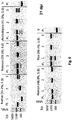
- FIG. 2 illustrates the result of RT-PCR analysis for PVX vectors containing insertions of sGFP, GUS, AtFT, CaDREB-LP1, SISUN, SILOG1, SIDREB1, SIGR, SIOVATE and SIWoolly genes 26 days post infiltration.
- PVX vectors with sGFP, AtFT, CaDREB1-LP1, SISUN and SIGR remain pretty stable.
- vectors with GUS, SILOG1, SIDREB1 and SIWoolly have already lost their inserts.
- Solanum lycopersicum anthocyanin 1 ( SIANT1 ) gene (AY348870.1) codes for MYB transcription factor anthocyanin 1 (SIANT1) (AAQ55181).
- ANT1 transcriptional factor activates the biosynthetic pathway leading to anthocyanin accumulation; plants overexpressing ANT1 gene acquire intensive purple coloration due to anthocyanin accumulation (Mathews et al 2003).
- Table 2 SIANT1 sequences with different codon usage (Example 3).
- AY348870.1 825 35.2 4.3 14 pNMD29561 Nicotiana tabacum 825 39.5 4.8 15 pNMD29541 Arabidopsis thaliana 825 41.0 5.0 16 pNMD30881 Potato Virus X 825 44.7 5.4 17 pNMD29531 Homo sapiens 825 48.0 5.8 18 pNMD29551 Oryza sativa 825 48.4 5.9 19 pNMD30722 Hordeum vulgare 825 51.0 6.2 20 pNMD30891 Bifidobacterium 825 56.1 6.8
- SIANT1 sequence analysis revealed very low GC content (35.2%) and quite low Ratio GC content/Length (4.3).
- the design was performed using online codon optimization tool from Eurofins Genomics (GENEius software) based on codon usage of organisms with different average values of GC content in their genomes (data retrieved from Kazusa Codon Usage Database (www.kazusa.or.jp/codon/)).
- SILOG1 native sequence is 678 bp in length; it has 41.9% GC content and 6.2 ratio between GC content and Length.
- SIOVATE is 1059 bp long; it has it has 41.0% GC content and 3.9 ratio between GC content and Length.
Landscapes
- Health & Medical Sciences (AREA)
- Life Sciences & Earth Sciences (AREA)
- Genetics & Genomics (AREA)
- Engineering & Computer Science (AREA)
- Biomedical Technology (AREA)
- Biotechnology (AREA)
- Bioinformatics & Cheminformatics (AREA)
- Organic Chemistry (AREA)
- Chemical & Material Sciences (AREA)
- Zoology (AREA)
- Wood Science & Technology (AREA)
- General Engineering & Computer Science (AREA)
- Molecular Biology (AREA)
- Plant Pathology (AREA)
- Microbiology (AREA)
- Biophysics (AREA)
- Physics & Mathematics (AREA)
- Cell Biology (AREA)
- Biochemistry (AREA)
- General Health & Medical Sciences (AREA)
- Virology (AREA)
- Micro-Organisms Or Cultivation Processes Thereof (AREA)
- Breeding Of Plants And Reproduction By Means Of Culturing (AREA)
Abstract
The invention provides a method of producing a potexviral vector for expressing a protein of interest in a plant, comprising
producing a second heterologous nucleic acid comprising a second ORF encoding said protein and having, in the second ORF, an increased GC-content compared to a first ORF encoding said protein in a first heterologous nucleic acid, and
providing said potexviral vector comprising the following segments: (i) a nucleic acid sequence segment encoding a potexviral RNA-dependent RNA polymerase, (ii) a nucleic acid sequence comprising or encoding a potexviral triple-gene block, and (iii) said second heterologous nucleic acid or a portion thereof comprising said second ORF.
Description
- The present invention relates to a method of producing a potexviral vector for expressing a protein of interest in a plant. The invention also relates to methods of improving the capability for long-distance movement in a plant of a potexviral replicon. The invention also provides a process of expressing a protein of interest in a plant or in plant tissue. Further, nucleic acids for the methods and processes are provided.
- High-yield expression of heterologous proteins in plants can be achieved using viral vectors. Viral vector systems were predominantly developed for transient expression followed by infection (Donson et al., 1991, Proc Natl Acad Sci U S A, 88:7204-7208; Chapman, Kavanagh & Baulcombe, 1992, Plant J., 2:549-557) or transfection (Marillonnet et al., 2005, Nat Biotechnol., 23:718-723; Santi et al., 2006, Proc Natl Acad Sci U S A. 103:861-866;
WO2005/049839 ) of a plant host. The best-established and commercially viable systems are based on plus-sense single-stranded RNA viruses, preferably on Tobacco Mosaic Virus (TMV)-derived vectors. Another group of RNA virus-based vectors derived from potexvirus such as PVX (Potato Virus X) can also provide high yield of recombinant proteins (Chapman, Kavanagh & Baulcombe, 1992, Plant J., 2:549-557; Baulcombe, Chapman & Santa Cruz, 1995, Plant J., 7:1045-1053; Zhou et al., 2006, Appl. Microbiol. Biotechnol., 72 (4): 756-762; Zelada et al., 2006, Tuberculosis, 86:263-267). Also potexviruses are plant RNA viruses with a plus-sense single-stranded genome. - In the first generation of systemic viral vectors, a large proportion of plant resources was wasted for the production of viral coat protein that is necessary for systemic movement of a viral replicon. For TMV-derived vectors this problem was solved by removing the coat protein gene and by using agro-infiltration for efficient systemic delivery of replicons, thus significantly boosting the yield of recombinant proteins of interest (
WO2005/049839 ; Marillonnet et al., (2005), Nat. Biotechnol., 23:718-723). However, unlike for TMV-derived replicons, for potexvirus-derived replicons viral coat protein is preferred not only for systemic, but also for short distance (cell-to-cell) movement.WO 2008/028661 describes a way to increase the expression yield of a protein of interest expressed in a plant or in plant tissue from a potexviral vector by a vector design wherein the sequences as defined in item (ii) ofclaim 1 are positioned after (downstream in 5 to 3' direction) the RNA-dependent RNA polymerase coding sequence (RdRp or RdRP) of item (i) and precede said heterologous nucleic acid of item (iii). In the special case of potexviral vectors, this vector design leads to a cell-to-cell movement capability of the RNA replicon and, at the same time, to higher expression levels of the heterologous nucleic acid compared to potexviral vectors where a heterologous nucleic acid was placed upstream of the potexviral coat protein gene. - Viral vectors used for expressing a foreign gene in plants typically contain, apart from the ORF encoding the foreign protein to be expressed, remaining viral ORFs that allow the vector to replicate and to spread in plant tissue or entire plants, such as by cell to cell movement and/or long distance movement in a plant. When expressing a sequence of interest in a plant, the replicated and spreading viral vector is desired to be stable such as not to change the nucleic acid sequence of interest to be expressed.
- The inventors have observed that when low leaves of young plants that were infiltrated with an agrobacterial suspension carrying vectors encoding potexviral replicons containing an ORF to be expressed, spread over plant organs, but are sometimes not stable and lose the nucleic acid sequence of interest over time. On the other hand, some potexviral vectors containing a heterologous nucleic acid sequence such as that encoding AtFT or sGFP are unusually stable.
- It is therefore an object of the present invention to provide a potexviral vector for expressing a heterologous nucleic acid or heterologous protein of interest, that is stable, notably in long-distance movement of the vector in plants.
- The inventors have studied this problem in detail to find a solution. Accordingly, the present invention that provides:
- (1) A method of producing a potexviral vector for expressing a protein of interest in a plant, comprising
producing a second heterologous nucleic acid sequence comprising a second ORF encoding said protein of interest and having, in the second ORF, an increased GC-content compared to a first ORF encoding said protein in a first heterologous nucleic acid sequence,and
providing said potexviral vector comprising the following segments: (i) a nucleic acid sequence encoding a potexviral RNA-dependent RNA polymerase, (ii) a nucleic acid sequence comprising or encoding a potexviral triple-gene block, and (iii) said second heterologous nucleic acid sequence or a portion thereof comprising said second ORF. - (2) A method of improving the capability for long-distance movement in a plant of a potexviral replicon encoding a protein of interest to be expressed in said plant, comprising
producing a second heterologous nucleic acid sequence comprising a second ORF encoding said protein of interest and having, in the second ORF, an increased GC-content compared to a first ORF encoding said protein in a first heterologous nucleic acid sequence,and
providing said potexviral replicon, or a potexviral vector comprising or encoding said potexviral replicon, said potexviral replicon comprising the following segments: (i) a nucleic acid sequence encoding a potexviral RNA-dependent RNA polymerase, (ii) a nucleic acid sequence comprising a potexviral triple-gene block, and (iii) said second heterologous nucleic acid sequence or a portion thereof comprising said second ORF. - (3) The method according to (1) or (2), wherein said step of providing a potexviral vector or potexviral replicon comprises inserting said second heterologous nucleic acid sequence, or a portion thereof comprising said second ORF, into a nucleic acid comprising (i) a nucleic acid sequence encoding a potexviral RNA-dependent RNA polymerase and (ii) a nucleic acid sequence encoding a potexviral triple-gene block to produce the potexviral vector or the potexviral replicon comprising the second heterologous nucleic acid sequence or a portion thereof comprising said second ORF.
- (4) A process of expressing a protein of interest in a plant or in plant tissue, comprising producing a potexviral vector according to the method of (1) and providing the produced potexviral vector to at least a part of said plant.
- (5) The method or process according to any one of (1) to (4), wherein said plant is selected from Nicotiana species such as Nicotiana benthamiana and Nicotiana tabacum, tomato, potato, pepper, eggplant, soybean, Petunia hybrida, Brassica napus, Brassica campestris, Brassica juncea, cress, arugula, mustard, strawberry, spinach, Chenopodium capitatum, alfalfa, lettuce, sunflower, potato, cucumber, corn, wheat, and rice.
- (6) The method or process according to any one of (1) to (5), wherein said (ii) nucleic acid sequence comprising or encoding a potexviral triple-gene block said further comprises a nucleic acid sequence encoding a potexviral coat protein or a nucleic acid sequence encoding a tobamoviral movement protein.
- (7) A method of improving the capability for long-distance movement in a plant of a potexviral replicon encoding a protein of interest to be expressed in said plant, comprising
increasing the GC-content of a first ORF encoding said protein in a first heterologous nucleic acid sequence, thereby obtaining a second heterologous nucleic acid sequence comprising a second ORF, said second ORF encoding said protein and having an increased GC-content, and
inserting said second heterologous nucleic acid sequence, or a portion thereof containing said second ORF, into a nucleic acid comprising (i) a nucleic acid sequence encoding a potexviral RNA-dependent RNA polymerase and (ii) a nucleic acid sequence comprising or encoding a potexviral triple-gene block to produce a potexviral vector comprising or encoding said potexviral replicon, said potexviral vector comprising the second heterologous nucleic acid sequence or a portion thereof comprising said second ORF. - (8) A potexviral vector obtained or obtainable by the method of (1).
- (9) A nucleic acid comprising the following segments: (i) a nucleic acid sequence encoding a potexviral RNA-dependent RNA polymerase, (ii) nucleic acid sequence comprising or encoding a potexviral triple-gene block, and (iii) a heterologous nucleic acid sequence comprising an ORF encoding a protein of interest, wherein
said ORF consists of at least 200 and at most 400 nucleotides and has a GC-content of at least 50%; or
said ORF consists of at least 401 and at most 800 nucleotides has a GC-content of at least 55%; and/or
said ORF consists of at least 801 nucleotides and has a GC-content of at least 58%. - (10) A nucleic acid comprising the following segments: (i) a nucleic acid sequence encoding a potexviral RNA-dependent RNA polymerase, (ii) nucleic acid sequence comprising or encoding a potexviral triple-gene block, and (iii) a heterologous nucleic acid sequence comprising an ORF encoding a protein of interest, wherein
said ORF consists of at least 100 and at most 500 nucleotides and has a GC-content of at least 50%; or
said ORF consists of at least 501 and at most 1000 nucleotides has a GC-content of at least 55%; and/or
said ORF consists of at least 1001 nucleotides and has a GC-content of at least 58%. - (11) The nucleic acid according to (9) or (10), said nucleic acid further comprising a nucleic acid sequence encoding a potexviral coat protein or a nucleic acid sequence encoding a tobamoviral movement protein.
- (12) A combination or kit comprising a first and a second nucleic acid, said first nucleic acid comprising segments (i) and (ii) as defined in (9), (10) or (11), said second nucleic acid comprising segment (iii) as defined in (9) or (10).
- (13) The combination or kit according to (12), wherein said first nucleic acid has, downstream of segment (ii) a first site-specific recombination site recognizable by a site-specific recombinase, and said second nucleic acid has, upstream of segment (iii), a second site-specific recombination site recognizable by said site-specific recombinase for allowing site-specific recombination between said first and said second site-specific recombination site and formation of a nucleic acid according to (9), (10), or (11), or a potexviral vector according to (8).
- (14) A process of expressing a heterologous nucleic acid sequence of interest in a plant or in plant tissue, comprising providing the plant or plant tissue with a nucleic acid of (9) or (10), with a potexviral vector according to (8), or with a combination or kit of nucleic acids according to (12) or (13), for expressing said heterologous nucleic acid sequence of interest.
- (15) Use of a heterologous nucleic acid as defined in (9) to (11), a potexviral vector according to (8), or a combination or kit according to (12) or (13) for expressing a protein encoded by said heterologous nucleic acid and for achieving improved long-distance movement of a potexviral vector in a plant.
- The inventors have surprisingly found that potexviral replicons carrying a heterologous nucleic acid encoding a protein of interest for expression in a plant or plant tissue have an improved capability for long-distance movement in a plant, if the GC content of the heterologous nucleic acid, notably of the ORF encoding the protein of interest, is increased. Thereby, the expression yield of a protein of interest in the plant or plant tissue is improved and costs for purification of the protein of interest decrease. In one embodiment, the protein of interest provides the plant with an agronomic trait.
-
-
Figure 1 shows schematically Potato Virus X (PVX)-based entry vectors pNMD4300 and pNMD670 for cloning of inserts of interest. The nucleotide sequences of these vectors are given as SEQ ID NO: 24 and 23, respectively.
RB and LB indicate the right and left borders of T-DNA of binary vectors. P35S:cauliflower mosaic virus 35S promoter; PVX-pol: RNA-dependent RNA polymerase from PVX; CP: coat protein ORF; 25K, 12K and 8K together indicate the 25 kDa, 12 kDa and 8 kDa triple gene block modules from PVX; N: 3'-untranslated region from PVX. INSERT stands for DNA insert of interest; Bsal stand for Bsal restriction sites with corresponding nucleotide overhangs shown below. virGN54D is a virG gene with N54D mutation from LBA4404 strain of Agrobacterium tumefaciens. -
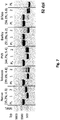
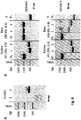
Figure 2 shows RT-PCR analysis of foreign insert stability in PVX viral vectors.
36 days old tomato Solanum lycopersicum 'Balcony Red' plants were transfected by syringe infiltration of agrobacterial cultures carrying PVX vectors. The infiltration was performed into two cotyledons leaves. Total RNA was isolated from systemic leaves of PVX infectedplants 26 days post infiltration using NucleoSpin® RNA Plant kit (Macherey-Nagel). RNA was reverse transcribed using PrimeScript™ RT Reagent Kit (Takara Clontech); resulting cDNA was used as a template for PCR with oligos specific for either PVX (UPPER PANEL) or tobacco Elongation Factor EF1α used as a RNA loading control (LOWER PANEL). PCR fragments of expected size are shown with arrows. Positions of missing expected PCR products on the gel are shown with a dashed line.
RT-PCR products were resolved in 1% agarose gels. MWL: Molecular Weight Ladder; GFP: RT-PCR product for plant infected with PVX vector carrying GFP insertion; GUS, AtFT, CaDREB, SISUN, SILOG1, SIDREB1, SIGR, SIOVATE, SIWOOLLY: RT-PCR products for plants infected with PVX vectors with insertions of GUS, AtFT, CaDREB, SISUN, SILOG1, SIDREB1, SIGR, SIOVATE, SIWOOLLY genes, respectively; V: plant infected with empty PVX entry vector without foreign insertion. Sizes of expected PCR fragments are given in brackets. -
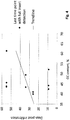
Figure 3 shows the relation between Insert Length and Stability. Latest day post infiltration when the full-length insert was detected (Y-axis) was plotted against the length of corresponding foreign insert (X axis). For analysis, values for GFP, GUS, AtFT, CaDREB, SISUN, SILOG1, SIDREB1, SIGR, SIOVATE and SIWOOLLY inserts (Table 1) were used. -
Figure 4 shows the relation between GC content and Stability of the insert. Latest day post infiltration when the full-length insert was detected (Y-axis) was plotted against the GC content (%) of corresponding foreign insert (X axis). For analysis, values for GFP, GUS, AtFT, CaDREB, SISUN, SILOG1, SIDREB1, SIGR, SIOVATE and SIWOOLLY inserts (Table 1) were used. GC content of inserts was determined using ENDMEMO on-line DNA/RNA GC Content Calculator (www.endmemo.com/bio/gc.php). -
Figure 5 shows the relation between GC content to Length Ratio and Stability of the insert. Latest day post infiltration when the full-length insert was detected (Y-axis) was plotted against the GC content to Length Ratio of corresponding foreign insert (X axis). For analysis, values for GFP, GUS, AtFT, CaDREB, SISUN, SILOG1, SIDREB1, SIGR, SIOVATE and SIWOOLLY inserts (Table 1) were used. The ratio between GC content and Length of insert was calculated using the formula: Ratio GC Content/Length = (GC content (%) / Length (bp) x 100. -
Figure 6 shows RT-PCR analysis of PVX vector stability for construct containing SIANT1 insertions withdifferent codon usage 21 days post infiltration (dpi). Systemic leaves of three independent tomato 'Balcony Red' plants were analyzed as described in Example 2.
Native (35.2%; 4.3): native SIANT1 coding sequence with 35.2% GC content and 4.3 Ratio GC Content/Length (pNMD721 construct).
Tobacco (39.5%; 4.8): SIANT1 coding sequence optimized for Nicotiana tabacum codon usage (39.5% GC content and 4.8 Ratio GC Content/Length; pNMD29561).
Arabidopsis (41.0%; 5.0): SIANT1 coding sequence optimized for Arabidopsis thaliana codon usage (41.0% GC content and 5.0 Ratio GC Content/Length; pNMD29541).
Human (48.0%, 5.8): SIANT1 coding sequence optimized for Homo sapiens codon usage (48.0% GC content and 5.8 Ratio GC Content/Length; pNMD29531).
Rice (48.4%; 5.9): SIANT1 coding sequence optimized for Homo sapiens codon usage (48.4% GC content and 5.9 Ratio GC Content/Length; pNMD29551).
V: empty entry PVX vector pNMD4300. PL: plasmid; 1, 2, and 3:Plants -
Figure 7 shows RT-PCR analysis of PVX vector stability for construct containing SIANT1 insertions withdifferent codon usage 52 days post infiltration. Systemic leaves of three independent tomato 'Balcony Red' plants were analyzed as described in Example 2.
Native (35.2%; 4.3): native SIANT1 coding sequence with 35.2% GC content and 4.3 Ratio GC Content/Length (pNMD721 construct).
Tobacco (39.5%; 4.8): SIANT1 coding sequence optimized for Nicotiana tabacum codon usage (39.5% GC content and 4.8 Ratio GC Content/Length; pNMD29561).
PVX (44.7%; 5.4): SIANT1 coding sequence optimized for PVX codon usage (44.7% GC content and 5.4 Ratio GC Content/Length; pNMD30881).
Barley (51.0%; 6.2): SIANT1 coding sequence optimized for Hordeum vulgare codon usage (51.0% GC content and 6.2 Ratio GC Content/Length; pNMD30722).
Bifido (56.1%; 6.8): SIANT1 coding sequence optimized for Bifidobacterium codon usage (56.1% GC content and 6.8 Ratio GC Content/Length; pNMD30891).
V: empty entry PVX vector pNMD4300. PL: plasmid; 1, 2, and 3:Plants -
Figure 8 shows RT-PCR analysis of PVX vector stability for construct containing native and codon-optimized sequences of SILOG1 and SIOVATE genes.- (A) Analysis of vectors with SILOG1 insertions.
Plant material from systemic leaves of tomato 'Balcony Red' plants was analyzed 34 days post infiltration. 1: plant transfected with pNMD27533 construct containing native SILOG1 sequence (41.9% GC content and 6.2 Ratio GC Content/Length). 2: plant transfected with pNMD31084 construct containing SILOG1 sequence optimized for Oryza sativa codon usage (53.2% GC content and 7.8 Ratio GC Content/Length). Expected size of PCR fragment for intact insertion is 870 bp, shown with arrow. - (B) Analysis of vectors with SILOG1 insertions. Upper panel: plant material analyzed 27 days post infiltration; Lower panel: plant material analyzed 82 days post infiltration.
Native (41.0%; 3.9): native SIOVATE coding sequence with 41.0% GC content and 4.6 Ratio GC Content/Length (pNMD27931 construct).
Rice (48.8%; 4.6): SIOVATE coding sequence optimized for Oryza sativa codon usage (48.8% GC content and 4.6 Ratio GC Content/Length; pNMD29551).
V: empty entry PVX vector pNMD4300. PL: plasmid; 1 and 2:Plants
- (A) Analysis of vectors with SILOG1 insertions.
-
Figure 9 shows Table 1: PVX vector insertions and their stability (Example 2). -
Figure 10 shows Table 3: Native and codon-optimized sequences of SILOG1 and SIOVATE genes (Example 4). - Herein, the potexviral replicon is a nucleic acid that is replicated in plant cells and capable of cell-to-cell and long distance movement in a plant and in plant tissue. The potexviral replicon makes use of the replication and, preferably, protein expression system of potexviruses in plants or plant cells. The potexviral replicon may be built on a natural potexvirus e.g. by comprising genetic components from a potexvirus, or by using genetic components suitably altered compared to those of a potexvirus. The potexviral replicon is or comprises an RNA. The potexviral vector of the invention is the vehicle used for providing cells of a plant or of plant tissue with the potexviral replicon. The potexviral replicon may itself be used as the potexviral vector of the invention. However, the potexviral vector may comprise or encode the potexviral replicon. The potexviral vector as well as the nucleic acid mentioned below may be DNA or RNA. If it is RNA, it is or comprises the potexviral replicon; if it is DNA, it encodes the potexviral replicon. If the potexviral vector or said nucleic acid are DNA, segments (i) to (iii) are generally also DNA. If said potexviral vector or said nucleic acid are RNA, segments (i) to (iii) are generally also RNA.
- The potexviral replicon is an RNA comprising at least the following segments (i) to (iii), preferably in this order in 5'- to 3'-direction:
- (i) a nucleic acid sequence encoding a potexviral RNA-dependent RNA polymerase (RdRp);
- (ii) a nucleic acid sequence comprising:
- (a) a potexvirus triple gene block and
- (b) optionally a sequence encoding a potexviral coat protein; or a sequence encoding a tobamoviral movement protein; and
- (iii) a heterologous nucleic acid sequence comprising an ORF encoding a protein of interest.
- The potexviral vector of the invention is a nucleic acid comprising or encoding the potexviral replicon. Accordingly, the potexviral vector comprises, preferably in this order in 5'- to 3'-direction, the following segments (i) to (iii):
- (i) a nucleic acid sequence encoding a potexviral RNA-dependent RNA polymerase (RdRp);
- (ii) a nucleic acid sequence:
- (a) comprising or encoding a potexvirus triple gene block and
- (b) optionally comprising a sequence encoding a potexviral coat protein; or comprising a sequence encoding a tobamoviral movement protein; and
- (iii) a heterologous nucleic sequence comprising an ORF encoding a protein of interest.
- The "nucleic acid" of the above potexviral vector and the "RNA" of the above potexviral replicon are also collectively referred to as "nucleic acid of the invention". The heterologous nucleic sequence of item (iii) is also referred to herein as "second heterologous nucleic (sequence)" and said ORF is also referred to herein as "second ORF". These elements and their production are further described below. Herein, an ORF (open reading frame) is the coding nucleic acid sequence of the protein of interest. The ORF consists of the base triplets from and including the start codon to the stop codon, and may include introns. The ORF encodes the protein of interest from its N-terminus to its C-terminus.
- The potexviral replicon can replicate in plant cells due to the presence of the potexviral elements or segments of items (i) and (ii) and optionally further genetic elements of the potexviral replicon. These further genetic elements may also be contained in or encoded in the potexviral vector.
- In the methods of the invention, the second heterologous nucleic acid sequence of item (iii) above is produced. The second heterologous nucleic acid sequence generally encodes the same protein as the first heterologous nucleic acid sequence. The second heterologous nucleic acid sequence differs from the first heterologous nucleic acid sequence in that the ORF of the former has a higher GC content than the ORF of the latter. Higher GC content means that the sum of G and C (guanine and cytosine) bases is higher. Thus, "GC content" herein means a G+C content. The GC content is determined by counting the number of G and C bases in a given nucleic acid. The second heterologous nucleic acid sequence may consist of the ORF or coding sequence of the protein of interest. The coding sequence of the protein of interest is herein also referred to as ORF (open reading frame). Alternatively, the second heterologous nucleic acid sequence may comprise the coding sequence (ORF) of the protein of interest and one or more further nucleotides or nucleotide stretches such as restriction endonuclease site(s) for engineering the potexviral vector or genetic elements for expressing the protein of interest from the potexviral replicon in plants or plant cells. If the second heterologous nucleic acid sequence comprises additional nucleotides or sequence stretches, the GC content defined herein is that of the segment that consists of the coding sequence (ORF) of the protein of interest. Preferably, the second heterologous nucleic acid sequence has a higher GC content than the first heterologous nucleic acid sequence.
- The first heterologous nucleic acid sequence also comprises an ORF that encodes the protein of interest. The first heterologous nucleic acid sequence may be a physical entity. However, for the invention, it is sufficient that the higher CG content of the ORF of the second heterologous nucleic acid can be determined by counting GC bases. Therefore, it is not necessary that the first heterologous nucleic acid and its ORF is/are a physical entity; it is sufficient that the first heterologous nucleic acid is a virtual nucleic acid, e.g. represented by the commonly used characters C, G, A, and T/U written on a sheet of paper or written in a computer-readable electronic file. As is generally known, these characters stand for cytosine, guanine, adenine and thymine/uracil nucleotides, respectively, in a nucleic acid sequence.
- The method employed for producing the second heterologous nucleic acid is not limited, provided the GC-content of the ORF encoding the protein of interest is higher than that of the ORF encoding the protein of interest of a first heterologous nucleic acid. Methods of producing a nucleic acid are part of the general knowledge in molecular biology. The second heterologous nucleic acid may, for example, be produced by automated DNA synthesis. The second heterologous nucleic acid may, alternatively, be produced by modifying the first heterologous nucleic acid by replacing nucleotides such that the GC content of the ORF encoding the protein of interest increases. Nucleotides of the first heterologous nucleic acid other than of the ORF may, if desired, also be changed in the production of the second heterologous nucleic acid.
- Using the produced second heterologous nucleic acid, the potexviral replicon or the potexviral vector may be provided. The methods applicable in this step are generally known methods of molecular biology, and the invention is not limited with regard to the specific method used. Generally, it is preferred and more common to make the necessary nucleic acid modifications on the DNA level. Therefore, it is preferred that the second heterologous nucleic acid sequence is DNA and that the potexviral vector encoding the potexviral replicon is produced. For example, the second heterologous nucleic acid sequence may be inserted into a nucleic acid comprising a nucleic acid comprising the segments (i) and (ii) above to produce the potexviral vector of the invention. The step of inserting the second heterologous nucleic acid sequence may be a usual a sub-cloning step wherein parts or nucleotides of the second heterologous nucleic acid, e.g. nucleotides of an endonuclease restriction site, may get lost, i.e. may not be present in the product. Thus, it is possible that not the entire second heterologous nucleic acid sequence ends up in the potexviral vector. In any event, at least a portion comprising the ORF of the protein of interest of the second heterologous nucleic acid is inserted into the product which is the potexviral vector.
- The second heterologous nucleic acid sequence may, apart from said ORF, further comprise genetic elements for expressing the protein of interest in plants or plants cells from the potexviral replicon, such as a ribosome binding site, a 5'-untranslated region and/or a 3'-untranslated region.
- In the following, embodiments of the nucleic acid are described.
- The nucleic acid of the invention comprises the following segments: (i) a nucleic acid sequence encoding a potexviral RNA-dependent RNA polymerase, (ii) a nucleic acid sequence comprising or encoding a potexviral triple-gene block, and (iii) a heterologous nucleic acid sequence comprising an ORF encoding the protein of interest.
- In one embodiment, said ORF consists of at least 100 and at most 500 nucleotides and has a GC-content of at least 50%; or said ORF consists of at least 501 and at most 1000 nucleotides has a GC-content of at least 55%; and/or said ORF consists of at least 1001 nucleotides and has a GC-content of at least 58%.
- In another embodiment, said ORF consists of at least 100 and at most 500 nucleotides and has a GC-content of at least 50%; or said ORF consists of at least 501 and at most 1000 nucleotides has a GC-content of at least 55%; and/or said ORF consists of at least 1001 nucleotides and has a GC-content of at least 58%.
- In a further embodiment, said ORF has a GC-content of at least 50% within a segment of said heterologous nucleic acid sequence, said segment consisting of at least 200 and at most 400 nucleotides, preferably at least 100 and at most 500 nucleotides; or said ORF has a GC-content of at least 55% within a segment of said heterologous nucleic acid sequence, said segment consisting of from 401 to 800 nucleotides, preferably from 501 to 1000 nucleotides; and/or said ORF has a GC-content of at least 58% within a segment of said heterologous nucleic acid sequence, said segment consisting of 801 or more, preferably 1001 or more nucleotides. Preferably, said ORF has a GC-content of at least 52% within a segment of said heterologous nucleic acid sequence, said segment consisting of at least 200 and at most 400 nucleotides, preferably at least 100 and at most 500 nucleotides; or said ORF has a GC-content of at least 57% within a segment of said heterologous nucleic acid sequence, said segment consisting of from 401 to 800 nucleotides, preferably from 501 to 1000 nucleotides; and/or said ORF has a GC-content of at least 60% within a segment of said heterologous nucleic acid sequence, said segment consisting of 801 or more, preferably 1001 or more nucleotides. In another embodiment of the nucleic acid, said ORF has a GC-content of at least 50% within a segment of said heterologous nucleic acid sequence, said segment consisting of at least 100 and at most 500 nucleotides; or said ORF has a GC-content of at least 55% within a segment of said heterologous nucleic acid sequence, said segment consisting of from 501 to 1000 nucleotides; and/or said ORF has a GC-content of at least 58% within a segment of said heterologous nucleic acid sequence, said segment consisting of 1001 or more nucleotides; preferably, said ORF has a GC-content of at least 52% within a segment of said heterologous nucleic acid sequence, said segment consisting of at least 100 and at most 500 nucleotides; or said ORF has a GC-content of at least 57% within a segment of said heterologous nucleic acid sequence, said segment consisting of from 501 to 1000 nucleotides; and/or said ORF has a GC-content of at least 60% within a segment of said heterologous nucleic acid sequence, said segment consisting of 1001 or more nucleotides.
- Potexviral vectors or nucleic acids comprising a heterologous nucleic acid encoding a green fluorescent protein may be excluded from the potexviral vectors or nucleic acid of the invention, respectively.
- Said potexviral vector or nucleic acid of the invention may be obtainable by inserting the second heterologous nucleic acid sequence into a nucleic acid construct encoding a potexvirus, whereby said heterologous nucleic acid sequence may be inserted downstream of a sequence encoding the triple gene block and/or downstream of a sequence encoding the coat protein of said potexvirus. However, modifications may be made to the genetic components of a natural potexvirus, such as to the RdRP gene, the triple gene block, the coat protein gene, or to the 5' or 3' non-translated regions of a potexvirus, examples for which are described below.
- The potexviral vector of the invention comprises, generally in the order from the 5' end to the 3' end, said segments (i) to (iii) of the invention. Further genetic elements may be present on said replicon for replication of the potexviral replicon in plant cells and/or or for expression of the protein of interest. For being a replicon, i.e. for autonomous replication in a plant cell, the potexviral replicon encodes an RdRp. The potexviral replicon may further have potexviral 5'- and/or 3'-untranslated regions and promoter-sequences in the 5'- or 3'-untranslated regions of said potexviral replicon for binding the potexviral RdRp and for replicating the potexviral replicon. Said potexviral replicon further may have sub-genomic promoters in segments of item (ii) and (iii) for generating sub-genomic RNAs for the expression of proteins encoded by the segments of items (ii) and (iii). If said potexviral vector or the nucleic acid is DNA, it will typically have a transcription promoter at its 5'-end for allowing production by transcription of said potexviral replicon in plant cells. An example of a transcription promoter allowing transcription of said RNA replicon from a DNA nucleic acid in planta is the 35S promoter that is widely used in plant biotechnology. The 35S promoter is an example of a constitutive promoter. Constitutive transcription promoters are preferably used in the potexviral vector, notably where the potexviral vector is used for transient transfection and transient expression on the protein of interest in a plant or in plant cells. If the potexviral vector is stably integrated in chromosomal DNA of a plant or in cells of a plant, the transcription promoter may be a regulated promoter such that formation of the potexviral replicon and expression of the protein of interest ca be started at a desired point in time. An example of regulated promoters is the ethanol-inducible promoter described, for example, in
WO 2007/137788 A1 . - Segment (i) encodes a potexviral RdRp. The encoded potexviral RdRp may be the RdRp of a potexvirus, such as potato virus X, or it may be a function-conservative variant of an RdRp of a potexvirus. Thus, the term "potexviral" is not restricted to sequences that are exactly present in a potexvirus; the terms "potexvirus" or "of a potexvirus" mean that the designated element or segment is taken from a potexvirus. The RdRp may be considered a function-conservative variant of the RdRp of a potexvirus if said sequence of segment (i) encodes a protein having a sequence identity of at least 36 % to a protein encoded by SEQ ID NO: 37. In another embodiment, said sequence identity is at least 45 %, in a further embodiment at least 55%, in another embodiment at least 65% and in an even further embodiment at least 75% to a protein encoded by SEQ ID NO: 37. These sequence identities may be present over the entire sequence of SEQ ID NO: 37. Alternatively, these sequence identities may be present within a protein sequence segment of at least 300 amino acid residues, within a protein sequence segment of at least 500 amino acid residues, within a protein sequence segment of at least 900 amino acid residues, or within a protein sequence segment of at least 1400 amino acid residues.
- Herein, the determination of sequence identities and similarities is done using Align Sequences Protein BLAST (BLASTP 2.6.1+) (Stephen F. Altschul, Thomas L. Madden, Alejandro A. Schäffer, Jinghui Zhang, Zheng Zhang, Webb Miller, and David J. Lipman (1997), "Gapped BLAST and PSI-BLAST: a new generation of protein database search programs", Nucleic Acids Res. 25:3389-3402).
- In one example, said sequence identity between an RdRP encoded by SEQ ID NO: 37 and a function-conservative variant of a potexvirus RdRp is at least 45% in a protein sequence segment of at least 900 amino acid residues. In another example, said sequence identity between a protein encoded by SEQ ID NO: 37 and a function-conservative variant of a potexvirus RdRp is at least 55% in a protein sequence segment of at least 900 amino acid residues.
- Alternatively, the RdRp used in the potexviral replicon may be considered a function-conservative variant of a RdRp of a potexvirus if said sequence of item (i) encodes a protein having a sequence similarity of at least 50 % to a protein encoded by SEQ ID NO: 37. In another embodiment, said sequence similarity is at least 60 %, in a further embodiment at least 70%, and in another embodiment at least 80 % to a protein encoded by SEQ ID NO: 37. These sequence similarities may be present over the entire sequence of SEQ ID NO: 37. Alternatively, these sequence similarities may be present within a protein sequence segment of at least 300 amino acid residues, at least 500 amino acid residues, at least 900 amino acid residues, or at least 1400 amino acid residues. Amino acid sequence similarities may be determined using BLASTX defined above.
- In one example, the sequence similarity between a protein encoded by SEQ ID NO: 37 and a function-conservative variant of a potexvirus RdRp is at least 70% in a protein sequence segment of at least 900 amino acid residues. In another example, said sequence similarity between a protein encoded by SEQ ID NO: 37 and a function-conservative variant of a potexvirus RdRp is at least 80% in a protein sequence segment of at least 900 amino acid residues.
- Alternatively, the RdRp used in said potexviral replicon may be considered a function-conservative variant of a RdRp of a potexvirus if said sequence of item (i) has a sequence identity of at least 55 %, of at least 60%, or of at least 70% to SEQ ID NO: 37. Said sequence identities may be present within SEQ ID NO: 37, or within a sequence segment of at least 900 nucleotides, within a sequence segment of at least 1500 nucleotides, within a sequence segment of at least 2000 nucleotides, or within a sequence segment of at least 4200 nucleotides of SEQ ID NO: 37. Nucleotide sequence identities may be determined using the BLAST given above.
- The potexviral replicon comprises the nucleic acid segment of item (ii) for allowing cell-to-cell movement of said potexviral replicon in a plant or in plant tissue. Cell-to-cell movement of the potexviral replicon is important for achieving expression of the segment of item (iii) in as many cells of said plant or said tissue as possible. The nucleic acid sequence of item (ii) comprises or encodes a potexviral triple gene block (abbreviated "TGB" herein; a review on the TGB is found in J. Gen. Virol. (2003) 84,1351-1366). The potexviral triple gene block encodes three proteins necessary to provide the capability of cell-to-cell movement to a potexvirus. The term "potexviral triple gene block" includes variants of the TGB of a potexvirus, provided the variants can provide, optionally with other necessary components, the potexviral replicon of the invention with the capability of cell-to-cell movement in a plant or in plant tissue.
- Examples of a potexviral TGB are TGBs of a potexvirus. An example of a potexviral TGB is the TGB of potato virus X (referred to as "PVX TGB" herein). The PVX TGB consists of three genes encoding three proteins designated 25K, 12K, and 8K according to their approximate molecular weight. The gene sequences encoding the
PVX 25K, thePVX 12 K protein, and thePVX 8K protein are given in SEQ ID NO: 29, SEQ ID NO: 31, and SEQ ID NO: 33, respectively. Protein sequences of thePVX 25 K protein, thePVX 12K protein, and thePVX 8K protein are given in SEQ ID NO: 30, SEQ ID NO: 32, and SEQ ID NO: 34, respectively. - In one embodiment, said variant of a potexvirus TGB is a block of three genes, said block encoding three proteins one of which having a sequence identity of at least 33% to the
PVX 25K protein, one having a sequence identity of at least 36 % to thePVX 12K protein and one having a sequence identity of at least 30 % to thePVX 8K protein. In another embodiment, said function-conservative variant of a potexvirus TGB encodes three proteins one of which having a sequence identity of at least 40% to thePVX 25K protein, one having a sequence identity of at least 40% to thePVX 12K protein, and one having a sequence identity of at least 40 % to thePVX 8K protein. In a further embodiment, said function-conservative variant of a potexvirus TGB encodes three proteins one of which having a sequence identity of at least 50% to thePVX 25K protein, one having a sequence identity of at least 50 % to thePVX 12K protein and one having a sequence identity of at least 50 % to thePVX 8K protein. In a further embodiment, the corresponding sequence identity values are at least 60% for each protein. In a further embodiment, the corresponding sequence identity values are at least 70%, preferably at least 80%, for each protein. - In another embodiment, a function-conservative variant of a potexvirus TGB encodes three proteins as follows: a first protein comprising a protein sequence segment of at least 200 amino acid residues, said segment having a sequence identity of at least 40% to a sequence segment of the
PVX 25K protein; a second protein comprising a protein sequence segment of at least 100 amino acid residues, said sequence segment having a sequence identity of at least 40 % to a sequence segment of thePVX 12K protein; and a third protein comprising a protein sequence segment of at least 55 amino acid residues, said sequence segment having a sequence identity of at least 40 % to a sequence segment of thePVX 8K protein. In a further embodiment, the corresponding sequence identity values are at least 50% for each protein. In a further embodiment, the corresponding sequence identity values are at least 60% for each of said first, second, and third protein. - Said nucleic acid sequence of item (ii) preferably comprises a further sequence encoding a protein for cell-to-cell movement and long distance movement of said potexviral replicon such as a potexvirus coat protein or a function-conservative variant thereof. A variant of said potexvirus coat protein is considered a function-conservative variant of said coat protein if it is capable of providing said potexviral replicon, together with other necessary components such as the TGB, with the capability of cell-to-cell movement and long distance movement in a plant or in plant tissue. In one embodiment where said potexviral replicon comprises a potexviral coat protein, said potexviral replicon does not have an origin of viral particle assembly for avoiding spread of said potexviral replicon from plant to plant in the form of an assembled plant virus. If said potexviral replicon comprises a potexviral coat protein gene and a potexviral TGB, it is possible that said TGB is located upstream of said coat protein gene or vice versa. Thus, said potexviral coat protein gene and said potexviral TGB may be present in any order in said nucleic acid sequence of item (ii).
- The coding sequence of a PVX coat protein is given as SEQ ID NO: 35, and the amino acid sequence of the PVX coat protein is given as SEQ ID NO: 36. A protein can be considered a function-conservative variant of a potexvirus coat protein if it comprises a protein sequence segment of at least 200, alternatively at least 220, further alternatively 237 amino acid residues, said sequence segment having a sequence identity of at least 35% to a sequence segment of SEQ ID NO: 36. In another embodiment, a protein is considered a function-conservative variant of a potexvirus coat protein if it comprises a protein sequence segment of at least 200, alternatively at least 220, further alternatively 237 amino acid residues, said sequence segment having a sequence identity of at least 45% to a sequence segment of SEQ ID NO: 36. In alternative embodiments, the corresponding sequence identity values are at least 55%, preferably at least 65%, and more preferably at least 75%.
- Alternatively, said nucleic acid sequence of item (ii) may comprise, optionally instead of said sequence encoding said potexviral coat protein or variant thereof, a sequence encoding a plant viral movement protein (MP). An example of a suitable MP is a tobamoviral MP such as an MP of tobacco mosaic virus or an MP of turnip vein clearing virus. Said sequence encoding a plant viral movement protein and said potexvirus TGB (or a function-conservative variant thereof) may be present in any order in said nucleic acid sequence of item (ii).
- As described above, the heterologous nucleic acid sequence of item (iii) comprises at least the ORF of a protein of interest to be expressed in a plant or in plant tissue. Said sequence of item (iii) is heterologous in that it is heterologous to the potexvirus on which said potexviral replicon is based. In many cases, said sequence is also heterologous to said plant or said plant tissue in which it is to be expressed. For being expressible from said potexviral replicon in a plant or in plant tissue, the second heterologous nucleic acid of item (iii) typically comprises a sub-genomic promoter and other sequences required for expression such as ribosome binding site and/or an internal ribosome entry site (IRES). In a preferred embodiment, the second heterologous nucleic acid of item (iii) has one ORF that codes for one protein of interest.
- The nucleic acid, the potexviral vector and/or the potexviral replicon of the invention may comprise a potexviral or, preferably, a
potexvirus 5'-nontranslated region (5'-NTR) and a potexviral or, preferably, a potexvirus 3'-nontranslated region (3'-NTR). - The process of expressing a protein of interest in a plant or in plant tissue of the invention generally comprises providing a plant or plant tissue with said nucleic acid or potexviral vector of the invention. It is of course also possible to infect a plant or plant tissue with the potexviral replicon of the invention. In one embodiment, said process is a transient expression process, whereby incorporation of the nucleic acid or potexviral vector of the invention into chromosomal DNA of the plant host is not necessary and not selected for. Alternatively, the potexviral vector may be stably incorporated into chromosomal DNA to produce a transgenic plant. The production of transgenic plants is known to the skilled person and comprises, inter alia, transformation of plant cells or tissue, selection of transformed cells or tissue, and regeneration of transformed plants.
- If said nucleic acid or said potexviral vector of the invention is RNA, it may be used for infecting a plant or plant tissue, preferably in combination with mechanical injury of infected plant tissue such as leaves. In another embodiment, said nucleic acid or potexviral vector of the invention is DNA. Said DNA may be introduced into cells of a plant or plant tissue, e.g. by particle bombardment or by Agrobacterium-mediated transformation. Agrobacterium-mediated transformation is the method of choice if several plants are to be provided with said nucleic acid or potexviral vector of the invention, e.g. for large scale protein production methods. Particularly efficient methods for Agrobacterium-mediated transformation or transfection are described in
WO 2012/019660 andWO 2013/056829 . - The process of expressing a protein of interest in a plant may be performed using the pro-vector approach (described in
WO02088369 WO02088369 and by Marillonnet et al. - Two or more vectors or said first and second nucleic acids may be provided to a plant or to plant tissue by providing mixtures of the vectors or mixtures of Agrobacterium strains, each strain containing one of said vectors or pro-vectors, to a plant or to plant tissue. The plant or plant tissue may further have or be provided with a site-specific recombinase recognizing the recombination sites of the first and second nucleic acids (pro-vectors). If the plant or plant tissue does not express the recombinase, a plant-expressible gene encoding the recombinase may be provided to the plant or plant tissue on one of said pro-vectors or on a separate vector. Examples of a usable site-specific recombinase are as described in
WO02088369
process of causing amplification and/or expression of one or more nucleic acid sequences of interest in a plant, plant tissue, plant cell or cell culture, characterized in that a plant cell is provided with at least two precursor vectors designed for undergoing processing by site-specific recombination in said plant cell, whereby due to the processing by site-specific recombination between said precursor vectors, said plant cell is endowed with at least one replicon capable of autonomous replication in said plant cell, whereby said replicon provide(s) for said amplification and/or expression. - Said protein of interest may be purified after production in said plant or plant tissue. Methods or purifying proteins from plants or plant cells are known in the art. In one method, a protein of interest may be directed to a plant apoplast and purified therefrom as described in
WO 03/020938 - If one protein of interest has to be produced or expressed, a heterologous nucleic acid or ORF coding for said protein of interest may be included in said nucleic acid encoding said potexviral replicon. If two or more proteins of interest are to be produced in the same plant or in the same plant tissue, said plant or plant cells may be provided with another nucleic acid or potexviral vector comprising or encoding a further potexviral replicon. Said further potexviral replicon may then encode one or more further proteins of interest. In one embodiment, a first and a further nucleic acid of the invention may comprise or encode non-competing potexviral replicons as described in
WO 2006/079546 . - The process of expressing a protein of interest in a plant of the present invention is, with regard to the plant, not particularly limited. In one embodiment, dicotyledonous plants or tissue thereof are used. In another embodiment, Nicotiana species like Nicotiana benthamiana and Nicotiana tabacum are used; preferred plant species other than Nicotiana species are tomato, potato, pepper, eggplant, soybean, Petunia hybrida, Brassica napus, Brassica campestris, Brassica juncea, cress, arugula, mustard, strawberry, spinach, Chenopodium capitatum, alfalfa, lettuce, sunflower, potato, cucumber, corn, wheat and rice.
- The most preferred plant viruses the potexviral replicons of the invention may be based on are Potexviruses such as potato virus X (PVX), papaya mosaic potexvirus or bamboo mosaic potexvirus.
- The invention may also be used for improving the capability for long-distance movement in a plant of a potexviral RNA replicon encoding a protein to be expressed in said plant. In one embodiment, the method comprises the following steps:
- a step of increasing the GC-content of a first ORF encoding said protein in a first heterologous nucleic acid sequence, thereby obtaining a second heterologous nucleic acid sequence comprising a second ORF, said second ORF encoding said protein and having an increased GC-content, and
- a step of inserting said second heterologous nucleic acid sequence, or a portion thereof containing said second ORF, into a nucleic acid comprising (i) a nucleic acid sequence encoding a potexviral RNA-dependent RNA polymerase and (ii) a nucleic acid comprising or encoding a potexviral triple-gene block to produce a potexviral vector comprising or encoding said RNA replicon, said potexviral vector comprising the second heterologous nucleic acid or a portion thereof comprising said second ORF.
- In another embodiment, the method comprises the following steps:
- a step of producing a second heterologous nucleic acid sequence comprising a second ORF encoding said protein and having, in the second ORF, an increased GC-content compared to a first ORF encoding said protein in a first heterologous nucleic acid sequence,and
- a step of providing said potexviral RNA replicon, or a potexviral vector comprising or encoding said potexviral RNA replicon, said potexviral RNA replicon comprising the following segments: (i) a nucleic acid sequence encoding a potexviral RNA-dependent RNA polymerase, (ii) a nucleic acid sequence comprising a potexviral triple-gene block, and (iii) said second heterologous nucleic acid or a portion thereof comprising said second ORF.
- The above increasing, inserting, producing and providing steps may be performed similarly as described above. The methods of increasing the capability for long-distance movement in a plant of a potexviral replicon may be followed by providing the obtained potexviral replicon or potexviral vector to at least a part of said plant. An increase of the capability for long-distance movement in a plant may be followed experimentally, e.g. as described in the Examples. Generally, a plant may be provided with the potexviral vector on a selected leaf. After a predetermined period of time, e.g. after 5 days, after 7 days or after 9 days, tissue of systemic leaves may be investigated for the presence of the potexviral replicon encoded by the potexviral vector. RT-PCR may be used for testing any potexviral replicon in a systemic leaf for correctness and/or presence of all components of the potexviral replicon encoded by the potexviral vector. A systemic leaf is a leaf other than an inoculated leaf; a systemic leaf is a leaf where virus moves from a site of primary infection or transfection in inoculated leaf due to a long-distance systemic movement.
- PVX-based assembled viral vectors pNMD670 and pNMD4300 (
Fig. 1 ) were used for cloning of DNA inserts of interest. pNMD4300 is a modified version of pNMD670 construct which is described inWO 2012/019660 . In contrast to pNMD670, pNMD4300 contains virG N54D mutant gene sequence from LBA4404 strain of Agrobacterium tumefaciens (GenBank Accession No CP007228, nucleotide positions 161000-161725) inserted into the plasmid backbone for increasing the efficiency of T-DNA transfer. - Nucleotide sequences of inserts of interest were either directly retrieved from GenBank or designed with modified GC content based on codon usage optimized for certain organisms. Sequences for cloning were either amplified using cDNA as a template or synthesized by Eurofins Genomics (Eurofins Genomics GmbH, Ebersberg, Germany). Codon usage modification was performed with Eurofins Genomics online tool based on codon usage patterns of organisms differing in average GC content (GENEius software). Inserts of interest were subcloned into pNMD4300 vector using Bsal restriction sites with CATG and GATC overhangs (
Fig. 1 ). Flanking Bsal sites were added to sequences of interest either by PCR or during gene synthesis. - Sequences of gene inserts used for cloning are listed in Table1, Table 2 and Table 3.
- We subcloned AtFT, CaDREB-LP1, AmROS1, GmLOG1, SILOG1, sGFP, SIGR, SIDREB1, SIOVATE, SISUN, GUS and SIWoolly coding sequences (12 in total) into pNMD4300 cloning vector (Table 1). All of them except sGFP were native sequences from corresponding organisms. sGFP is a synthetic coding sequence for Green Fluorescent Protein from a jellyfish Aequorea victoria altered to conform to the favored codons of highly expressed human proteins which resulted in a substantial increase in expression efficiency (Haas et al 1996; Chiu et al 1996).
- Gene inserts differed in their Length and GC content. The shortest insertion was AtFT (528b), and the longest one was SIWoolly (2193 bp) (Table 1). The GC content of inserts was determined using ENDMEMO on-line DNA/RNA GC Content Calculator (www.endmemo.com/bio/gc.php). The GC content of listed inserts was in in the range between 40.0% (SISUN) and 61.4% (sGFP) (Table 1). We also calculated the Ratio between GC content and Length of inserts. It was done using the following formula:

- Multiplier x100 was used for convenience to avoid too small fractional numbers. According to this formula, the Ratio GC Content/Length varied between 2.0 (SIWoolly) and 8.6 (AtFT).
- Cotyledons and the two first true leaves of 36 days old tomato Solanum lycopersicum 'Balcony Red' plants were syringe inoculated with agrobacterial cultures carrying PVX vectors listed in Table 1 (one independent plant per one construct). Plant material from infiltrated leaves was harvested using the cork borer at 9 dpi; the material from systemic leaves was harvested at 26, 27, 34 and 55 dpi. Total RNA isolated from harvested plant material reverse transcribed using PrimeScript™ RT Reagent Kit (Takara Clontech) and oligo dT primer. Resulting cDNA was used as a template for PCR with oligos specific for either PVX (8K-RT: tttgaagacatctcaacgcaatcatacttgtgc (SEQ ID NO: 25) and 3NTR-RT: tttgaagacttctcggttatgtagacgtagttatggtg (SEQ ID NO: 26)) or Elongation Factor EF1α from N. benthamiana (Genbank No. AY206004.1, oligos NbEF_for and NbEF_rev (Dean et al., 2005) used as an RNA loading control. PCR products were resolved in 1% agarose gel.
Fig. 2 illustrates the result of RT-PCR analysis for PVX vectors containing insertions of sGFP, GUS, AtFT, CaDREB-LP1, SISUN, SILOG1, SIDREB1, SIGR, SIOVATE andSIWoolly genes 26 days post infiltration. As one can see, at this time point PVX vectors with sGFP, AtFT, CaDREB1-LP1, SISUN and SIGR remain pretty stable. In contrast, vectors with GUS, SILOG1, SIDREB1 and SIWoolly have already lost their inserts. - The last day post infiltration when full-length insert was detected (even if additional shorter fragments resulting from partial insert elimination were present) was considered as a Last Time Point with Full Insert and used as criterion of vector stability (Table 1). We found the vectors with AtFT, CaDREB-LP1, AmROS1, and sGFP to be most stable: their inserts were detectable at 55 dpi. Vectors with SILOG1, SIDREB1, GUS and SIWoolly genes were highly unstable: their inserts were not detectable in systemic leaves at all. Vectors with GmLOG1, SIGR, SIOVATE and SISUN had moderate stability: their inserts were lost after 26-34 dpi.
- We analyzed the relation between Length of tested inserts and their Stability. For this purpose, we plotted the Last Time Point with Full Insert (Y-axis) against the Length of Insert (X axis) (
Fig. 3 ). We found that increasing the size of insert results in decreased vector stability, which is in accordance with former data from literature (e. g. Avesani et al., 2007). - We also analyzed the relation between GC content and Stability of inserts (
Fig. 4 ). We did not find a clear trend for analyzed pool of sequences probably due to large difference in size between individual inserts (e.g. 4 times difference between SIWoolly and AtFT). We then analyzed the relation between the Ratio GC Content/Length and Insert Stability. In this case, a clear trend was observed: an increase of the Ratio GC Content/Length resulted in an increase of insert stability (Fig. 5 ). - Solanum lycopersicum anthocyanin 1 (SIANT1) gene (AY348870.1) codes for MYB transcription factor anthocyanin 1 (SIANT1) (AAQ55181). ANT1 transcriptional factor activates the biosynthetic pathway leading to anthocyanin accumulation; plants overexpressing ANT1 gene acquire intensive purple coloration due to anthocyanin accumulation (Mathews et al 2003).
- We tried to overexpress SIANT1 gene in tomato 'Balcony Red' plants using PVX-based viral vector. Native SIANT1 coding sequence was subcloned into pNMD670 (without VirG) vector resulting in pNMD721 construct (Table 2). The pNMD721 construct was tested in planta using agrobacterial delivery via syringe infiltration of 28 days old plants. 21 dpi, relatively dense purple coloration was observed in infiltrated leaves. In contrast, few sparse colored spots were observed in systemic leaves. We analyzed systemic leaves of 3 independent plants transfected with this vector for the integrity of SIANT1 insert. RT-PCR analysis was performed as described in Example 2. It detected the loss of the insert by the PVX vector.
Table 2: SIANT1 sequences with different codon usage (Example 3). SEQ ID NO: Plasmid Codon usage Length, bp GC content, % Ratio GC content / Length 13 pNMD721 Solanum lycopersicum, native (GenBank Accession No. AY348870.1) 825 35.2 4.3 14 pNMD29561 Nicotiana tabacum 825 39.5 4.8 15 pNMD29541 Arabidopsis thaliana 825 41.0 5.0 16 pNMD30881 Potato Virus X 825 44.7 5.4 17 pNMD29531 Homo sapiens 825 48.0 5.8 18 pNMD29551 Oryza sativa 825 48.4 5.9 19 pNMD30722 Hordeum vulgare 825 51.0 6.2 20 pNMD30891 Bifidobacterium 825 56.1 6.8 - SIANT1 sequence analysis revealed very low GC content (35.2%) and quite low Ratio GC content/Length (4.3). We designed 7 new sequence versions with increased GC content and, as result, Ratio between GC content and Length (Table 2). The design was performed using online codon optimization tool from Eurofins Genomics (GENEius software) based on codon usage of organisms with different average values of GC content in their genomes (data retrieved from Kazusa Codon Usage Database (www.kazusa.or.jp/codon/)). For this purpose, we selected codon usage patterns of Nicotiana tabacum, Arabidopsis thaliana, Potato Virus X, Homo sapiens, Oryza sativa, Hordeum vulgare and Bifidobacterium with average GC content 39.2%, 41.0%, 44.7%, 48.0%, 48.4%, 51.0%, and 56.1%, respectively. Additionally, poly dA (AAAAA and AAAAAAA) and poly dT (TTTTT) sequences as well as Bsal cleavage sites (GGTCTCNNNNN (SEQ ID NO: 27)) and predicted donor/acceptor splicing sites (AGGTRAG/GCAGGT (SEQ ID NO: 28)) were avoided inside sequences. Designed sequences were synthesized by Eurofins Genomics and subcloned into pNMD670 vector resulting in constructs listed in Table 2. All constructs were tested in tomato 'Balcony Red' using agrobacterial delivery via syringe infiltration (3 independent 28 days old plants per one construct). Systemic leaves of infected tomato plants were analyzed for PVX vector integrity at 21 and 52 dpi (
Fig. 6 and7 ). - At 21 dpi, complete loss of the insert with native sequence was found in 2 out of 3 plants. In one plant both intact and partially degraded vector sequences were detected (
Fig. 6 ). For all other sequences (codon optimization for tobacco, Arabidopsis, human and rice), all tested plants contained intact vector sequence, although in some cases additional bands indicating partial loss of the insertion were also present (Fig. 6 ). - At 52 dpi, 2 plants for each construct were analyzed (
Fig. 7 ). We found complete loss of the insert for native sequence in both plants. Vector degradation was also observed for tobacco and PVX-optimized sequences with lower GC content and Ratio between GC content and Length. In contrast, for sequences with higher GC content (barley and Bifidobacterium codon usage) one of two plants contained intact vectors with SIANT1 insertion (Fig. 7 ). - These data show that increasing the GC content of the foreign insert sequence and, correspondingly, the ratio between the GC content and Length allows improving the stability and increasing the lifetime of systemic PVX vector.
- We also tried to improve the stability of PVX vectors with SILOG1 and SIOVATE inserts. As it was shown in Example 2, SILOG1 insert with native sequence (pNMD27533) was not detectable in systemic leaves, indicating very high instability (Table 1). SIOVATE (pNMD27931) showed moderate stability; intact insert as well as products of degradation was still detectable in systemic leaves at 26 dpi; however, the intact insert was completely lost already at 27 dpi (Table 1).
- SILOG1 native sequence is 678 bp in length; it has 41.9% GC content and 6.2 ratio between GC content and Length. SIOVATE is 1059 bp long; it has it has 41.0% GC content and 3.9 ratio between GC content and Length. We redesigned both sequences based on rice adapted codon used. Resulting sequences had increased GC content: 53.2% for SILOG1-rice and 48.8% for SIOVATE-rice. Both sequences were synthesized by Eurofins MWG Operon and subcloned into pNMD4300 vector.
- Resulting constructs (pNMD31084 for SILOG1-rice and pNMD31611 for SIOVATE-rice) were tested in 24 and 25 days old tomato 'Balcony Red' plants as described in Example 2. At 34 dpi, RT-PCR analysis revealed the dramatic increase of SILOG1-rice insert stability if compared with native sequence (
Fig. 8 , A). Significant increase of insert stability was also shown for codon-optimized SIOVATE. Rice codon usage adapted inserts remain intact at 27 dpi, whereas native sequence is completely lost (Fig. 8 , A, Upper panel). Despite the presence of products of vector degradation, one can detect the intact insert of SIOVATE-rice (Fig. 8 , A, Lower panel) even 82 dpi. -
- 1) Haas J., Park E.C., and Seed B. (1996) Codon usage limitation in the expression of HIV-1 envelope glycoprotein, Curr Biol 6(3): 315-24.
- 2) Chiu W., Niwa Y., Zeng W., Hirano T., Kobayashi H., and Sheen J. (1996) Engineered GFP as a vital reporter in plants, Curr Biol 6(3): 325-30.
- 3) Dean J.D., Goodwin P.H., Hsiang T. (2005) Induction of glutathione S-transferase genes of Nicotiana benthamiana following infection by Colletotrichum destructivum and C. orbiculare and involvement of one in resistance 56(416): 1525-1533.
- 4) Avesani L., Marconi G., Morandini F., Albertini E., Bruschetta M., Bortesi L., Pezzotti M., Porceddu A. (2007) Stability of Potato Virus X expression vectors is related to insert size: implications for replication models and risk assessment, Transgenic Res 16(5): 587-97.
- 5) Mathews H., Clendennen S.K., Caldwell C.G., Liu X.L., Connors K., Matheis N., Schuster D.K., Menasco D.J., Wagoner W., Lightner, J. and Wagner D.R. (2003) Activation tagging in tomato identifies a transcriptional regulator of anthocyanin biosynthesis, modification, and transport, Plant Cell 15 (8), 1689-1703.
-
- SEQ ID NO: 1
AtFT (NM_001334207.1) / one nucleotide exchange (deletion of Bsal-cleavage site)
- SEQ ID NO: 2
>CaDREB-LP1 (NM_001324857.1)
- SEQ ID NO: 3
>AmROS1(DQ275529.1)
- SEQ ID NO: 4
>GmLOG1(XM_003527643.3)
- SEQ ID NO: 5
>SILOG1 (NM_001324502.1)
- SEQ ID NO: 6
>sGFP (U43284.1), nucleotide positions 826-1545 / nucleotide exchanges C96T and T695A
- SEQ ID NO: 7
>SIGR (XM_010325884.2)
- SEQ ID NO: 8
>SIDREB1 (NM_001247760.1)

- SEQ ID NO: 9
>SIOVATE(NM_001247292.2)
- SEQ ID NO: 10
>SISUN (NM_001246864.2)
- SEQ ID NO: 11
>GUS (S69414.1) / nucleotide exchanges G835C and G903A

- SEQ ID NO: 12
>SIWoolly (XM_004232686.3)
- SEQ ID NO: 13
>SIANT1(NM_001247488.1) native sequence from Solanum lycopersicum

- SEQ ID NO: 14
>SIANT1 with Nicotiana tabacum codon usage
- SEQ ID NO: 15
>SIANT1 with Arabidopsis thaliana codon usage
- SEQ ID NO: 16
>SIANT1 with Potato Virus X codon usage
- SEQ ID NO: 17
>SIANT1 with Homo sapiens codon usage

- SEQ ID NO: 18
>SIANT1 with Oryza sativa codon usage
- SEQ ID NO: 19
>SIANT1 with Hordeum vulgare codon usage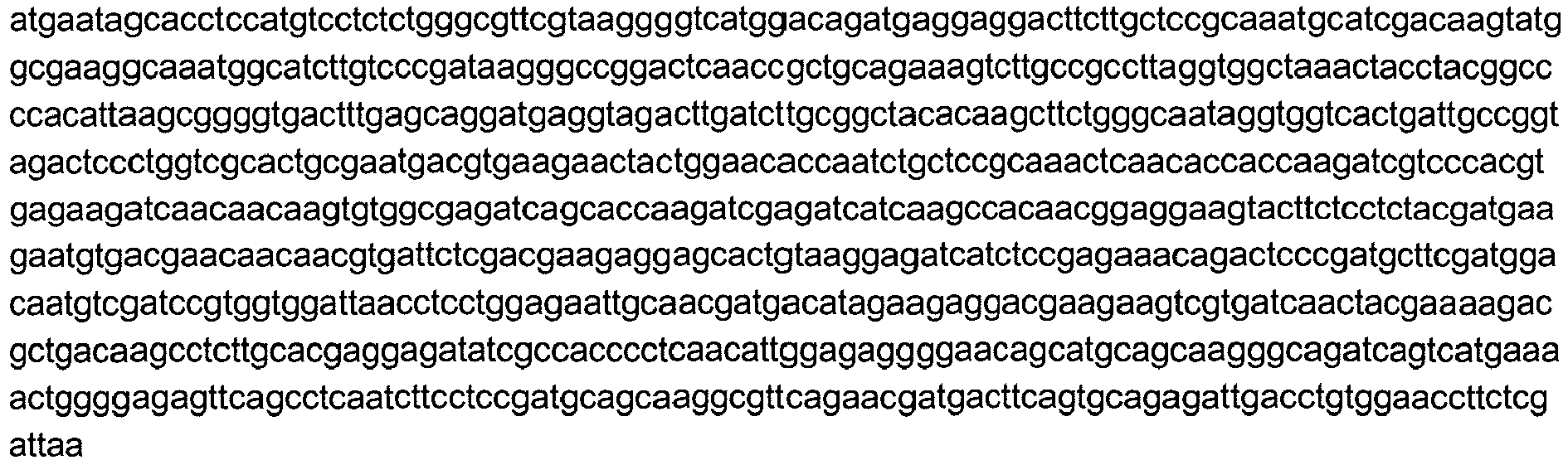
- SEQ ID NO: 20
>SIANT1 with Bifidobacterium codon usage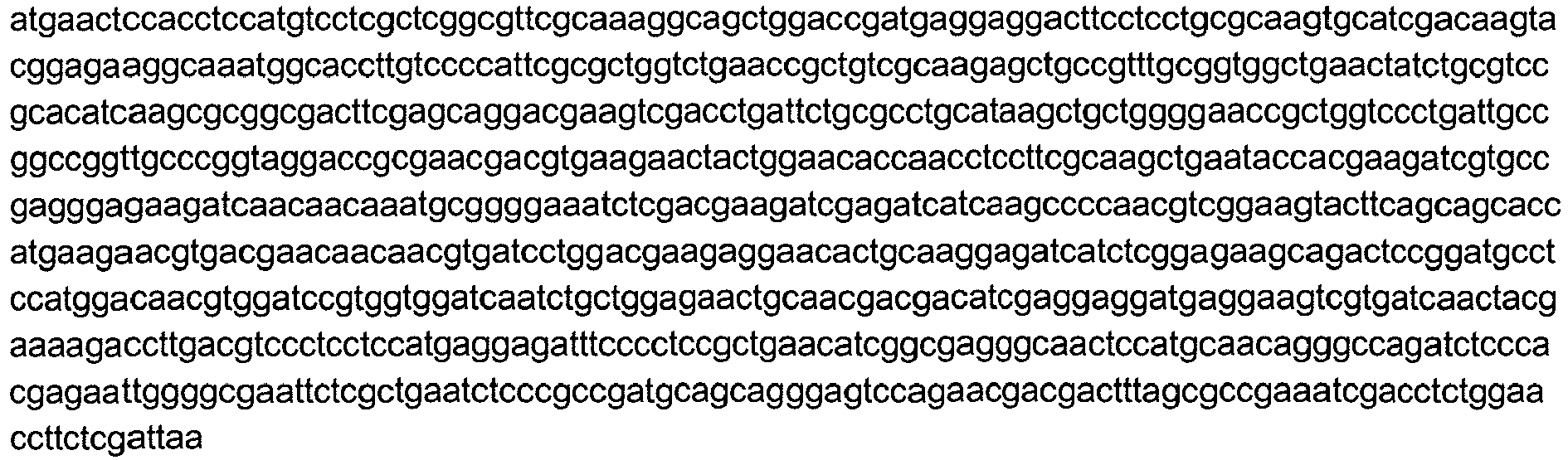
- SEQ ID NO: 21
>SILOG1 with Oryza sativa codon usage

- SEQ ID NO: 22
>SIOVATE with Oryza sativa codon usage
- SEQ ID NO: 23
>pNMD674


- SEQ ID NO: 24
>pNMD4300


- SEQ ID NO: 25: tttgaagacatctcaacgcaatcatacttgtgc
SEQ ID NO: 26: tttgaagacttctcggttatgtagacgtagttatggtg
SEQ ID NO: 27: GGTCTCNNNNN
SEQ ID NO: 28: AGGTRAG/GCAGGT - SEQ ID NO: 29:
PVX 25K nucleotide sequence
- SEQ ID NO: 30:
PVX 25K protein sequence
- SEQ ID NO: 31:
PVX 12K nucleotide sequence
- SEQ ID NO: 32:
PVX 12K protein sequence
- SEQ ID NO: 33:
PVX 8K nucleotide sequence
- SEQ ID NO: 34:
PVX 8K protein sequence
- SEQ ID NO: 35: PVX coat protein coding sequence

- SEQ ID NO: 36: PVX coat protein

- SEQ ID NO: 37: PVX RdRp coding sequence












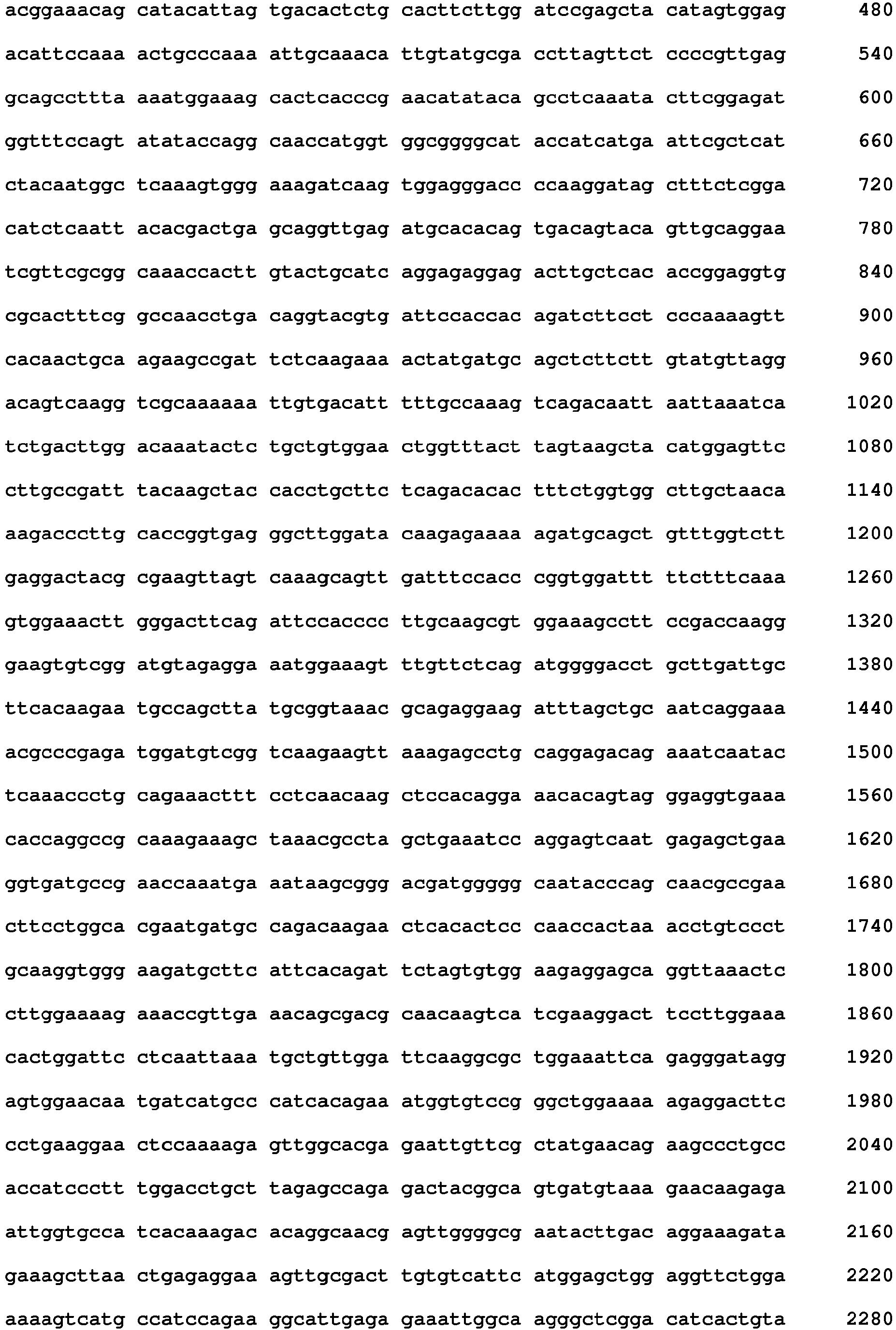


Claims (15)
- A method of producing a potexviral vector for expressing a protein of interest in a plant, comprisingproducing a second heterologous nucleic acid sequence comprising a second ORF encoding said protein of interest and having, in the second ORF, an increased GC-content compared to a first ORF encoding said protein in a first heterologous nucleic acid sequence, andproviding said potexviral vector comprising the following segments: (i) a nucleic acid sequence encoding a potexviral RNA-dependent RNA polymerase, (ii) a nucleic acid sequence comprising or encoding a potexviral triple-gene block, and (iii) said second heterologous nucleic acid sequence or a portion thereof comprising said second ORF.
- A method of improving the capability for long-distance movement in a plant of a potexviral replicon encoding a protein of interest to be expressed in said plant, comprisingproducing a second heterologous nucleic acid sequence comprising a second ORF encoding said protein of interest and having, in the second ORF, an increased GC-content compared to a first ORF encoding said protein in a first heterologous nucleic acid sequence, andproviding said potexviral replicon, or a potexviral vector comprising or encoding said potexviral replicon, said potexviral replicon comprising the following segments: (i) a nucleic acid sequence encoding a potexviral RNA-dependent RNA polymerase, (ii) a nucleic acid sequence comprising a potexviral triple-gene block, and (iii) said second heterologous nucleic acid sequence or a portion thereof comprising said second ORF.
- The method according to claim 1 or 2, wherein said step of providing a potexviral vector or potexviral replicon comprises inserting said second heterologous nucleic acid sequence, or a portion thereof comprising said second ORF, into a nucleic acid comprising (i) a nucleic acid sequence encoding a potexviral RNA-dependent RNA polymerase and (ii) a nucleic acid sequence encoding a potexviral triple-gene block to produce the potexviral vector or the potexviral replicon comprising the second heterologous nucleic acid sequence or a portion thereof comprising said second ORF.
- A process of expressing a protein of interest in a plant or in plant tissue, comprising producing a potexviral vector according to the method of claim 1 and providing the produced potexviral vector to at least a part of said plant.
- The method or process according to any one of claims 1 to 4, wherein said plant is selected from Nicotiana species such as Nicotiana benthamiana and Nicotiana tabacum, tomato, potato, pepper, eggplant, soybean, Petunia hybrida, Brassica napus, Brassica campestris, Brassica juncea, cress, arugula, mustard, strawberry, spinach, Chenopodium capitatum, alfalfa, lettuce, sunflower, potato, cucumber, corn, wheat, and rice.
- The method or process according to any one of claims 1 to 5, wherein said (ii) nucleic acid sequence comprising or encoding a potexviral triple-gene block said further comprises a nucleic acid sequence encoding a potexviral coat protein or a nucleic acid sequence encoding a tobamoviral movement protein.
- A method of improving the capability for long-distance movement in a plant of a potexviral replicon encoding a protein of interest to be expressed in said plant, comprisingincreasing the GC-content of a first ORF encoding said protein in a first heterologous nucleic acid sequence, thereby obtaining a second heterologous nucleic acid sequence comprising a second ORF, said second ORF encoding said protein and having an increased GC-content, andinserting said second heterologous nucleic acid sequence, or a portion thereof containing said second ORF, into a nucleic acid comprising (i) a nucleic acid sequence encoding a potexviral RNA-dependent RNA polymerase and (ii) a nucleic acid sequence comprising or encoding a potexviral triple-gene block to produce a potexviral vector comprising or encoding said potexviral replicon, said potexviral vector comprising the second heterologous nucleic acid sequence or a portion thereof comprising said second ORF.
- A potexviral vector obtained or obtainable by the method of claim 1.
- A nucleic acid comprising the following segments: (i) a nucleic acid sequence encoding a potexviral RNA-dependent RNA polymerase, (ii) nucleic acid sequence comprising or encoding a potexviral triple-gene block, and (iii) a heterologous nucleic acid sequence comprising an ORF encoding a protein of interest, whereinsaid ORF consists of at least 200 and at most 400 nucleotides and has a GC-content of at least 50%; orsaid ORF consists of at least 401 and at most 800 nucleotides has a GC-content of at least 55%; and/orsaid ORF consists of at least 801 nucleotides and has a GC-content of at least 58%.
- A nucleic acid comprising the following segments: (i) a nucleic acid sequence encoding a potexviral RNA-dependent RNA polymerase, (ii) nucleic acid sequence comprising or encoding a potexviral triple-gene block, and (iii) a heterologous nucleic acid sequence comprising an ORF encoding a protein of interest, whereinsaid ORF consists of at least 100 and at most 500 nucleotides and has a GC-content of at least 50%; orsaid ORF consists of at least 501 and at most 1000 nucleotides has a GC-content of at least 55%; and/orsaid ORF consists of at least 1001 nucleotides and has a GC-content of at least 58%.
- The nucleic acid according to claim 9 or 10, said nucleic acid further comprising, preferably in the nucleic acid sequence of (ii), a nucleic acid sequence encoding a potexviral coat protein or a nucleic acid sequence encoding a tobamoviral movement protein.
- A combination or kit comprising a first and a second nucleic acid, said first nucleic acid comprising segments (i) and (ii) as defined in claim 9, 10 or 11, said second nucleic acid comprising segment (iii) as defined in claim 9 or 10.
- The combination or kit according to claim 12, wherein said first nucleic acid has, downstream of segment (ii) a first site-specific recombination site recognizable by a site-specific recombinase, and said second nucleic acid has, upstream of segment (iii), a second site-specific recombination site recognizable by said site-specific recombinase for allowing site-specific recombination between said first and said second site-specific recombination site and formation of a nucleic acid according to claim 9, 10, or 11, or a potexviral vector according to claim 8.
- A process of expressing a heterologous nucleic acid sequence of interest in a plant or in plant tissue, comprising providing the plant or plant tissue with said nucleic acid of claim 9 or 10, with a potexviral vector according to claim 8, or with a combination or kit of nucleic acids according to claim 13 or 14.
- Use of a heterologous nucleic acid as defined in claim 9 or 10, a potexviral vector according to claim 8, or a combination or kit of nucleic acids according to claim 13 or 14 for expressing a protein encoded by said heterologous nucleic acid and for achieving improved long-distance movement of a potexviral vector in a plant.
Priority Applications (7)
| Application Number | Priority Date | Filing Date | Title |
|---|---|---|---|
| EP17191524.2A EP3456829A1 (en) | 2017-09-18 | 2017-09-18 | Method of improving potexviral vector stability |
| BR112020004658-2A BR112020004658A2 (en) | 2017-09-18 | 2018-09-17 | method to improve the stability of the potexvirus vector |
| EP18765932.1A EP3684935A1 (en) | 2017-09-18 | 2018-09-17 | Method of improving potexviral vector stability |
| AU2018334039A AU2018334039B2 (en) | 2017-09-18 | 2018-09-17 | Method of improving potexviral vector stability |
| US16/646,862 US20200255847A1 (en) | 2017-09-18 | 2018-09-17 | Method of improving potexviral vector stability |
| PCT/EP2018/075074 WO2019053262A1 (en) | 2017-09-18 | 2018-09-17 | Method of improving potexviral vector stability |
| JP2020515843A JP7309695B2 (en) | 2017-09-18 | 2018-09-17 | Methods for Improving Potexvirus Vector Stability |
Applications Claiming Priority (1)
| Application Number | Priority Date | Filing Date | Title |
|---|---|---|---|
| EP17191524.2A EP3456829A1 (en) | 2017-09-18 | 2017-09-18 | Method of improving potexviral vector stability |
Publications (1)
| Publication Number | Publication Date |
|---|---|
| EP3456829A1 true EP3456829A1 (en) | 2019-03-20 |
Family
ID=59901412
Family Applications (2)
| Application Number | Title | Priority Date | Filing Date |
|---|---|---|---|
| EP17191524.2A Withdrawn EP3456829A1 (en) | 2017-09-18 | 2017-09-18 | Method of improving potexviral vector stability |
| EP18765932.1A Pending EP3684935A1 (en) | 2017-09-18 | 2018-09-17 | Method of improving potexviral vector stability |
Family Applications After (1)
| Application Number | Title | Priority Date | Filing Date |
|---|---|---|---|
| EP18765932.1A Pending EP3684935A1 (en) | 2017-09-18 | 2018-09-17 | Method of improving potexviral vector stability |
Country Status (6)
| Country | Link |
|---|---|
| US (1) | US20200255847A1 (en) |
| EP (2) | EP3456829A1 (en) |
| JP (1) | JP7309695B2 (en) |
| AU (1) | AU2018334039B2 (en) |
| BR (1) | BR112020004658A2 (en) |
| WO (1) | WO2019053262A1 (en) |
Families Citing this family (3)
| Publication number | Priority date | Publication date | Assignee | Title |
|---|---|---|---|---|
| CN112961839B (en) * | 2021-02-11 | 2023-05-19 | 山东农业大学 | A Bivalent Attenuated Vaccine Against Cucumber Mosaic Virus and Potato Y Virus |
| CN113293175B (en) * | 2021-05-21 | 2022-12-09 | 山东农业大学 | Mutant plasmid combination capable of resisting cucumber mosaic virus and potato X virus and application thereof |
| WO2024020453A2 (en) * | 2022-07-20 | 2024-01-25 | Hdt Bio Corp. | Immune system modulators and uses thereof |
Citations (9)
| Publication number | Priority date | Publication date | Assignee | Title |
|---|---|---|---|---|
| WO2002088369A1 (en) | 2001-04-30 | 2002-11-07 | Icon Genetics Ag | Processes and vectors for amplification or expression of nucleic acid sequences of interest in plants |
| WO2003020938A2 (en) | 2001-09-04 | 2003-03-13 | Icon Genetics Ag | Method of protein production in plants |
| WO2005049839A2 (en) | 2003-11-10 | 2005-06-02 | Icon Genetics Ag | Rna virus-derived plant expression system |
| WO2006079546A2 (en) | 2005-01-28 | 2006-08-03 | Icon Genetics Gmbh | Production of antibodies in plants with plus -sense single -stranded viral rna vectors |
| WO2007137788A1 (en) | 2006-05-29 | 2007-12-06 | Icon Genetics Gmbh | Plant virus-based inducible expression system |
| WO2008028661A2 (en) | 2006-09-06 | 2008-03-13 | Icon Genetics Gmbh | Potexvirus- derived replicon |
| WO2012019660A1 (en) | 2010-08-07 | 2012-02-16 | Nomad Bioscience Gmbh | Process of transfecting plants |
| EP2568048A1 (en) * | 2007-06-29 | 2013-03-13 | Pioneer Hi-Bred International, Inc. | Methods for altering the genome of a monocot plant cell |
| WO2013056829A1 (en) | 2011-10-17 | 2013-04-25 | Nomad Bioscience Gmbh | Production, storage and use of cell wall-degrading enzymes |
Family Cites Families (2)
| Publication number | Priority date | Publication date | Assignee | Title |
|---|---|---|---|---|
| CA2913068C (en) | 2013-05-23 | 2023-01-10 | Nomad Bioscience Gmbh | Process of providing plants with abiotic stress resistance |
| EP3097783B1 (en) | 2015-05-26 | 2019-11-13 | Nomad Bioscience GmbH | Colicin m for the control of ehec |
-
2017
- 2017-09-18 EP EP17191524.2A patent/EP3456829A1/en not_active Withdrawn
-
2018
- 2018-09-17 AU AU2018334039A patent/AU2018334039B2/en active Active
- 2018-09-17 WO PCT/EP2018/075074 patent/WO2019053262A1/en not_active Ceased
- 2018-09-17 JP JP2020515843A patent/JP7309695B2/en active Active
- 2018-09-17 US US16/646,862 patent/US20200255847A1/en not_active Abandoned
- 2018-09-17 EP EP18765932.1A patent/EP3684935A1/en active Pending
- 2018-09-17 BR BR112020004658-2A patent/BR112020004658A2/en unknown
Patent Citations (10)
| Publication number | Priority date | Publication date | Assignee | Title |
|---|---|---|---|---|
| WO2002088369A1 (en) | 2001-04-30 | 2002-11-07 | Icon Genetics Ag | Processes and vectors for amplification or expression of nucleic acid sequences of interest in plants |
| WO2003020938A2 (en) | 2001-09-04 | 2003-03-13 | Icon Genetics Ag | Method of protein production in plants |
| WO2005049839A2 (en) | 2003-11-10 | 2005-06-02 | Icon Genetics Ag | Rna virus-derived plant expression system |
| WO2006079546A2 (en) | 2005-01-28 | 2006-08-03 | Icon Genetics Gmbh | Production of antibodies in plants with plus -sense single -stranded viral rna vectors |
| WO2007137788A1 (en) | 2006-05-29 | 2007-12-06 | Icon Genetics Gmbh | Plant virus-based inducible expression system |
| WO2008028661A2 (en) | 2006-09-06 | 2008-03-13 | Icon Genetics Gmbh | Potexvirus- derived replicon |
| EP2061890A2 (en) * | 2006-09-06 | 2009-05-27 | Icon Genetics GmbH | Potexvirus- derived replicon |
| EP2568048A1 (en) * | 2007-06-29 | 2013-03-13 | Pioneer Hi-Bred International, Inc. | Methods for altering the genome of a monocot plant cell |
| WO2012019660A1 (en) | 2010-08-07 | 2012-02-16 | Nomad Bioscience Gmbh | Process of transfecting plants |
| WO2013056829A1 (en) | 2011-10-17 | 2013-04-25 | Nomad Bioscience Gmbh | Production, storage and use of cell wall-degrading enzymes |
Non-Patent Citations (20)
| Title |
|---|
| "Genbank", Database accession no. AY206004.1 |
| "GenBank", Database accession no. CP007228 |
| ADAMS M J ET AL: "Codon usage bias amongst plant viruses", ARCHIVES OF VIROLOGY, SPRINGER WIEN, AT, vol. 149, no. 1, 1 January 2004 (2004-01-01), pages 113 - 135, XP002404994, ISSN: 0304-8608 * |
| AVESANI L.; MARCONI G.; MORANDINI F.; ALBERTINI E.; BRUSCHETTA M.; BORTESI L.; PEZZOTTI M.; PORCEDDU A.: "Stability of Potato Virus X expression vectors is related to insert size: implications for replication models and risk assessment", TRANSGENIC RES, vol. 16, no. 5, 2007, pages 587 - 97, XP019534538, DOI: doi:10.1007/s11248-006-9051-1 |
| BAULCOMBE; CHAPMAN; SANTA CRUZ, PLANT J., vol. 7, 1995, pages 1045 - 1053 |
| CHAPMAN; KAVANAGH; BAULCOMBE, PLANT J., vol. 2, 1992, pages 549 - 557 |
| CHIU W.; NIWA Y.; ZENG W.; HIRANO T.; KOBAYASHI H.; SHEEN J.: "Engineered GFP as a vital reporter in plants", CURR BIOL, vol. 6, no. 3, 1996, pages 325 - 30 |
| DEAN J.D.; GOODWIN P.H.; HSIANG T.: "Induction of glutathione S-transferase genes of Nicotiana benthamiana following infection", COLLETOTRICHUM DESTRUCTIVUM AND C. ORBICULARE AND INVOLVEMENT OF ONE IN RESISTANCE, vol. 56, no. 416, 2005, pages 1525 - 1533 |
| DONSON ET AL., PROC NATL ACAD SCI U S A, vol. 88, 1991, pages 7204 - 7208 |
| HAAS J.; PARK E.C.; SEED B.: "Codon usage limitation in the expression of HIV-1 envelope glycoprotein", CURR BIOL, vol. 6, no. 3, 1996, pages 315 - 24, XP000619599, DOI: doi:10.1016/S0960-9822(02)00482-7 |
| J. GEN. VIROL., vol. 84, 2003, pages 1351 - 1366 |
| MARILLONNET ET AL., NAT BIOTECHNOL., vol. 23, 2005, pages 718 - 723 |
| MARILLONNET ET AL., NAT. BIOTECHNOL., vol. 23, 2005, pages 718 - 723 |
| MARILLONNET ET AL., PROC. NATL. ACAD. SCI. USA, vol. 101, 2004, pages 6852 - 6857 |
| MATHEWS H.; CLENDENNEN S.K.; CALDWELL C.G.; LIU X.L.; CONNORS K.; MATHEIS N.; SCHUSTER D.K.; MENASCO D.J.; WAGONER W.; LIGHTNER, J: "Activation tagging in tomato identifies a transcriptional regulator of anthocyanin biosynthesis, modification, and transport", PLANT CELL, vol. 15, no. 8, 2003, pages 1689 - 1703, XP002467412, DOI: doi:10.1105/tpc.012963 |
| ROUHOLLAH BARAHIMIPOUR ET AL: "Dissecting the contributions of GC content and codon usage to gene expression in the model alga Chlamydomonas reinhardtii", THE PLANT JOURNAL, vol. 84, no. 4, 16 October 2015 (2015-10-16), GB, pages 704 - 717, XP055421909, ISSN: 0960-7412, DOI: 10.1111/tpj.13033 * |
| SANTI ET AL., PROC NATL ACAD SCI USA., vol. 103, 2006, pages 861 - 866 |
| STEPHEN F. ALTSCHUL; THOMAS L. MADDEN; ALEJANDRO A. SCHAFFER; JINGHUI ZHANG; ZHENG ZHANG; WEBB MILLER; DAVID J. LIPMAN: "Gapped BLAST and PSI-BLAST: a new generation of protein database search programs", NUCLEIC ACIDS RES., vol. 25, 1997, pages 3389 - 3402, XP002905950, DOI: doi:10.1093/nar/25.17.3389 |
| ZELADA ET AL., TUBERCULOSIS, vol. 86, 2006, pages 263 - 267 |
| ZHOU ET AL., APPL. MICROBIOL. BIOTECHNOL., vol. 72, no. 4, 2006, pages 756 - 762 |
Also Published As
| Publication number | Publication date |
|---|---|
| US20200255847A1 (en) | 2020-08-13 |
| WO2019053262A1 (en) | 2019-03-21 |
| JP7309695B2 (en) | 2023-07-18 |
| AU2018334039A1 (en) | 2020-03-12 |
| BR112020004658A2 (en) | 2020-09-24 |
| JP2020533989A (en) | 2020-11-26 |
| AU2018334039B2 (en) | 2024-11-14 |
| EP3684935A1 (en) | 2020-07-29 |
Similar Documents
| Publication | Publication Date | Title |
|---|---|---|
| CN112126637B (en) | Adenosine deaminase and related biological material and application thereof | |
| CA2439199C (en) | Processes and vectors for amplification or expression of nucleic acid sequences of interest in plants | |
| Herz et al. | Development of novel types of plastid transformation vectors and evaluation of factors controlling expression | |
| EP1706497B1 (en) | Two-component rna virus- derived plant expression system | |
| WO2005098004A2 (en) | Inducible boost of integrated satellite rna viruses | |
| US20200255847A1 (en) | Method of improving potexviral vector stability | |
| CN106957355B (en) | A PPR protein related to low light and low temperature tolerance of plants and its encoding gene and application | |
| Zhang et al. | Improvement of resistance to maize dwarf mosaic virus mediated by transgenic RNA interference | |
| CN113825838A (en) | Regulatory nucleic acid molecules for enhancing gene expression in plants | |
| Wagner et al. | Gene silencing studies in the gymnosperm species Pinus radiata | |
| CN101617048B (en) | Artificial DNA sequence with optimized leader function in 5' (5'-utr) for the improved expression of heterologous proteins in plants | |
| CN105713079A (en) | Application of protein and related biological material thereof in increasing plant yield | |
| EP3320097B1 (en) | Method for gene optimization | |
| Haffani et al. | Premature polyadenylation contributes to the poor expression of the Bacillus thuringiensis cry3Ca1 gene in transgenic potato plants | |
| Geyer et al. | Translational control of recombinant human acetylcholinesterase accumulation in plants | |
| CN112980847A (en) | Rubber tree ubiquitin gene promoter proHbUBI3 and cloning and application thereof | |
| Karcher et al. | Faithful editing of a tomato-specific mRNA editing site in transgenic tobacco chloroplasts | |
| Cazzonelli et al. | Analysis of RNA-mediated gene silencing using a new vector (pKNOCKOUT) and an in planta Agrobacterium transient expression system | |
| Li et al. | Increase of sulphur-containing amino acids in transgenic potato with 10 ku zein gene from maize | |
| Kunz et al. | Studies on the effects of a flanking repetitive sequence on the expression of single-copy transgenes in Nicotiana sylvestris and in N. sylvestris-N. tomentosiformis hybrids | |
| US20020164803A1 (en) | RNA transformation vectors derived from an uncapped single-component RNA virus | |
| US9441243B2 (en) | Importation of a ribozyme into vegetable mitochondria by a pseudo-tRNA that can be aminoacylated by valine | |
| CN107709551A (en) | The agriculture bacillus mediated genomic modification integrated without T DNA | |
| AU2004262676B2 (en) | Moss expressing promoting regions | |
| Junhua et al. | Effect of cDNA fragments in different length derived from potato virus Y coat protein gene on the induction of RNA-mediated virus resistance |
Legal Events
| Date | Code | Title | Description |
|---|---|---|---|
| PUAI | Public reference made under article 153(3) epc to a published international application that has entered the european phase |
Free format text: ORIGINAL CODE: 0009012 |
|
| AK | Designated contracting states |
Kind code of ref document: A1 Designated state(s): AL AT BE BG CH CY CZ DE DK EE ES FI FR GB GR HR HU IE IS IT LI LT LU LV MC MK MT NL NO PL PT RO RS SE SI SK SM TR |
|
| AX | Request for extension of the european patent |
Extension state: BA ME |
|
| STAA | Information on the status of an ep patent application or granted ep patent |
Free format text: STATUS: THE APPLICATION IS DEEMED TO BE WITHDRAWN |
|
| 18D | Application deemed to be withdrawn |
Effective date: 20190921 |