EP3454563A1 - Information processing apparatus for network camera, control method therefor and program - Google Patents
Information processing apparatus for network camera, control method therefor and program Download PDFInfo
- Publication number
- EP3454563A1 EP3454563A1 EP18191376.5A EP18191376A EP3454563A1 EP 3454563 A1 EP3454563 A1 EP 3454563A1 EP 18191376 A EP18191376 A EP 18191376A EP 3454563 A1 EP3454563 A1 EP 3454563A1
- Authority
- EP
- European Patent Office
- Prior art keywords
- stream
- individual
- video
- reception
- request
- Prior art date
- Legal status (The legal status is an assumption and is not a legal conclusion. Google has not performed a legal analysis and makes no representation as to the accuracy of the status listed.)
- Withdrawn
Links
Images





Classifications
-
- H—ELECTRICITY
- H04—ELECTRIC COMMUNICATION TECHNIQUE
- H04L—TRANSMISSION OF DIGITAL INFORMATION, e.g. TELEGRAPHIC COMMUNICATION
- H04L67/00—Network arrangements or protocols for supporting network services or applications
- H04L67/01—Protocols
- H04L67/06—Protocols specially adapted for file transfer, e.g. file transfer protocol [FTP]
-
- H—ELECTRICITY
- H04—ELECTRIC COMMUNICATION TECHNIQUE
- H04N—PICTORIAL COMMUNICATION, e.g. TELEVISION
- H04N21/00—Selective content distribution, e.g. interactive television or video on demand [VOD]
- H04N21/20—Servers specifically adapted for the distribution of content, e.g. VOD servers; Operations thereof
- H04N21/23—Processing of content or additional data; Elementary server operations; Server middleware
- H04N21/238—Interfacing the downstream path of the transmission network, e.g. adapting the transmission rate of a video stream to network bandwidth; Processing of multiplex streams
-
- H—ELECTRICITY
- H04—ELECTRIC COMMUNICATION TECHNIQUE
- H04L—TRANSMISSION OF DIGITAL INFORMATION, e.g. TELEGRAPHIC COMMUNICATION
- H04L65/00—Network arrangements, protocols or services for supporting real-time applications in data packet communication
- H04L65/60—Network streaming of media packets
- H04L65/61—Network streaming of media packets for supporting one-way streaming services, e.g. Internet radio
- H04L65/612—Network streaming of media packets for supporting one-way streaming services, e.g. Internet radio for unicast
-
- H—ELECTRICITY
- H04—ELECTRIC COMMUNICATION TECHNIQUE
- H04L—TRANSMISSION OF DIGITAL INFORMATION, e.g. TELEGRAPHIC COMMUNICATION
- H04L65/00—Network arrangements, protocols or services for supporting real-time applications in data packet communication
- H04L65/60—Network streaming of media packets
- H04L65/70—Media network packetisation
-
- H—ELECTRICITY
- H04—ELECTRIC COMMUNICATION TECHNIQUE
- H04L—TRANSMISSION OF DIGITAL INFORMATION, e.g. TELEGRAPHIC COMMUNICATION
- H04L65/00—Network arrangements, protocols or services for supporting real-time applications in data packet communication
- H04L65/60—Network streaming of media packets
- H04L65/75—Media network packet handling
- H04L65/762—Media network packet handling at the source
-
- H—ELECTRICITY
- H04—ELECTRIC COMMUNICATION TECHNIQUE
- H04L—TRANSMISSION OF DIGITAL INFORMATION, e.g. TELEGRAPHIC COMMUNICATION
- H04L67/00—Network arrangements or protocols for supporting network services or applications
- H04L67/50—Network services
- H04L67/56—Provisioning of proxy services
-
- H—ELECTRICITY
- H04—ELECTRIC COMMUNICATION TECHNIQUE
- H04L—TRANSMISSION OF DIGITAL INFORMATION, e.g. TELEGRAPHIC COMMUNICATION
- H04L67/00—Network arrangements or protocols for supporting network services or applications
- H04L67/50—Network services
- H04L67/60—Scheduling or organising the servicing of application requests, e.g. requests for application data transmissions using the analysis and optimisation of the required network resources
-
- H—ELECTRICITY
- H04—ELECTRIC COMMUNICATION TECHNIQUE
- H04N—PICTORIAL COMMUNICATION, e.g. TELEVISION
- H04N21/00—Selective content distribution, e.g. interactive television or video on demand [VOD]
- H04N21/20—Servers specifically adapted for the distribution of content, e.g. VOD servers; Operations thereof
- H04N21/23—Processing of content or additional data; Elementary server operations; Server middleware
- H04N21/231—Content storage operation, e.g. caching movies for short term storage, replicating data over plural servers, prioritizing data for deletion
- H04N21/23103—Content storage operation, e.g. caching movies for short term storage, replicating data over plural servers, prioritizing data for deletion using load balancing strategies, e.g. by placing or distributing content on different disks, different memories or different servers
-
- H—ELECTRICITY
- H04—ELECTRIC COMMUNICATION TECHNIQUE
- H04N—PICTORIAL COMMUNICATION, e.g. TELEVISION
- H04N21/00—Selective content distribution, e.g. interactive television or video on demand [VOD]
- H04N21/20—Servers specifically adapted for the distribution of content, e.g. VOD servers; Operations thereof
- H04N21/23—Processing of content or additional data; Elementary server operations; Server middleware
- H04N21/239—Interfacing the upstream path of the transmission network, e.g. prioritizing client content requests
- H04N21/2393—Interfacing the upstream path of the transmission network, e.g. prioritizing client content requests involving handling client requests
-
- H—ELECTRICITY
- H04—ELECTRIC COMMUNICATION TECHNIQUE
- H04N—PICTORIAL COMMUNICATION, e.g. TELEVISION
- H04N21/00—Selective content distribution, e.g. interactive television or video on demand [VOD]
- H04N21/40—Client devices specifically adapted for the reception of or interaction with content, e.g. set-top-box [STB]; Operations thereof
- H04N21/43—Processing of content or additional data, e.g. demultiplexing additional data from a digital video stream; Elementary client operations, e.g. monitoring of home network or synchronising decoder's clock; Client middleware
- H04N21/438—Interfacing the downstream path of the transmission network originating from a server, e.g. retrieving encoded video stream packets from an IP network
-
- H—ELECTRICITY
- H04—ELECTRIC COMMUNICATION TECHNIQUE
- H04N—PICTORIAL COMMUNICATION, e.g. TELEVISION
- H04N23/00—Cameras or camera modules comprising electronic image sensors; Control thereof
- H04N23/60—Control of cameras or camera modules
-
- H—ELECTRICITY
- H04—ELECTRIC COMMUNICATION TECHNIQUE
- H04N—PICTORIAL COMMUNICATION, e.g. TELEVISION
- H04N23/00—Cameras or camera modules comprising electronic image sensors; Control thereof
- H04N23/60—Control of cameras or camera modules
- H04N23/66—Remote control of cameras or camera parts, e.g. by remote control devices
- H04N23/661—Transmitting camera control signals through networks, e.g. control via the Internet
-
- H—ELECTRICITY
- H04—ELECTRIC COMMUNICATION TECHNIQUE
- H04N—PICTORIAL COMMUNICATION, e.g. TELEVISION
- H04N7/00—Television systems
- H04N7/18—Closed-circuit television [CCTV] systems, i.e. systems in which the video signal is not broadcast
Definitions
- the present invention relates to an information processing apparatus, a control method therefor and a storage medium.
- Video distribution from a network camera includes stream distribution of distributing a plurality of images (video stream) in response to one request from a client and individual distribution of sending one image (individual image) in response to one request from a client.
- a client that can receive a stream requests stream distribution for high-speed reception, and receives and displays a video stream.
- a client that cannot receive a stream requests individual distribution, and receives and displays an individual image.
- stream distribution since a network camera unilaterally distributes data upon receiving a request from a client, high-speed distribution is possible. Therefore, stream distribution is used when it is desirable to display a video at high speed.
- individual distribution an operation in which a network camera receives an individual request from a client and sends an individual image is repeated. Individual distribution allows display even on, for example, a browser regardless of the environment of the client.
- Japanese Patent Laid-Open No. 2008-211503 discloses a technique of normally displaying stream distribution and displaying, if an image is disturbed when switching a video stream, an image of individual distribution.
- a video stream cannot be received by communication via a proxy in some cases.
- the proxy may accumulate the divided data, receive all the data, and then send all the received data collectively.
- the divided data of a video stream or the like are sent using, for example, the HTTP chunk format.
- each divided data is sent in a format indicating that it is intermediate data or final data.
- the proxy accumulates the data (intermediate data) until the final data is received from the image source. Then, upon receiving the final data, the proxy sends the data accumulated so far to the client collectively.
- the image source is a camera
- intermediate data in the chunk format are successively sent as data (divided data) of a video stream.
- the proxy since no final data is received, the proxy only accumulates a video received from the camera, and does not send it to the client. As a result, a problem arises in which the video never reaches the client and is not displayed on the client at all.
- an information processing apparatus that allows a client to receive an image from a camera appropriately, and a control method for the information processing apparatus.
- the present invention in its first aspect provides an information processing apparatus as specified in claims 1 to 13.
- the present invention in its second aspect provides a method for an information processing apparatus as specified in claim 14.
- the present invention in its third aspect provides a computer program as specified in claim 15.
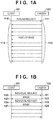
- Fig. 1A is a sequence chart when a client receives and displays stream distribution.
- a client 101 sends a stream request for requesting a video stream (step 110).
- a camera 102 Upon receiving the stream request (step 111), a camera 102 performs stream distribution (step 112).
- stream distribution a video photographed by the camera 102 is sent as a video stream.
- the client 101 receives the video stream sent from the camera 102, and displays it (step 113).
- Fig. 1B is a sequence chart when the client 101 receives an image individually distributed from the camera 102, and displays it.
- the client 101 sends an individual request (step 120).
- the camera 102 Upon receiving the individual request (step 121), the camera 102 performs individual distribution (step 122).
- an image to also be referred to as an individual image hereinafter
- images of a plurality of frames such as two or three frames may be requested and distributed.
- the client 101 receives the image sent by the camera 102, and displays it (step 123).
- the camera 102 receives the individual request (step 125), and distributes a next image (step 126).
- the client 101 receives and displays the image (step 127). By repeating this operation, the client 101 displays the images received from the camera 102 by individual distribution.
- a proxy 103 that relays data sending is interposed between the client 101 and the image source, and is set to accumulate divided intermediate data and send them will be described next with reference to Figs. 2A, 2B , 3A, and 3B .
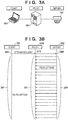
- Fig. 2A shows a state in which the client 101 is connected to a server 104 serving as an image source via the proxy 103.
- Fig. 2B is a sequence chart showing an operation when the proxy 103 set to accumulate intermediate data and send them at once is interposed.
- the client 101 sends a request to the server 104 (step 200).
- the proxy 103 directly sends the request to the server 104 (step 210).
- the server 104 replies to the request by dividing data to be sent and sending the divided data (step 221).
- the data can be divided and distributed using, for example, the HTTP chunk format.
- the data sent in step 221 are intermediate data added with no data end information, and the proxy 103 accumulates these data (step 211).
- the server 104 sends final data indicating the end of the divided data (step 222).
- the proxy 103 Upon receiving the final data (step 212), the proxy 103 sends the accumulated intermediate data and the final data to the client 101 collectively (step 213).
- the client 101 receives the divided and sent data collectively (step 201).
- the client 101 is connected to the camera 102 on the Internet via the proxy 103.
- the client 101 sends a stream request (step 300).
- the proxy 103 directly sends the stream request to the camera 102 (step 310).
- the camera 102 Upon receiving the stream request (step 320), the camera 102 returns a video obtained by photographing in a stream video format (step 321).
- the camera 102 continuously sends a video stream as intermediate data added with no end information in, for example, the chunk format. Since data added with end data is never sent from the camera 102, the proxy 103 only accumulates stream data as intermediate data, and does not send the video to the client 101 (step 311). As a result, the client 101 can never receive the video, and thus cannot display the video (step 301).
- Fig. 4 is a block diagram showing an example of the functional arrangements of the client 101 and camera 102 according to this embodiment.
- the client 101 executes reception processing of receiving a video from the camera 102 as an external apparatus.
- the client 101 and the camera 102 are connected by a network 450 via a proxy (not shown).
- the numbers of clients and cameras connected to the network 450 are not limited. However, for the sake of descriptive simplicity, assume that one client and one camera are connected.
- the network 450 any digital network such as the Internet or an intranet with a band enough to pass a camera control signal and compressed image signal (to be described later) may be used.
- a TCP/IP (UDP/IP) protocol is assumed as a network protocol in this embodiment, and an address indicates an IP address in the following description. Assume that the client 101 and the camera 102 are assigned with IP addresses.
- the camera 102 is a camera server apparatus having a camera function and a server function of distributing a video. Note that the camera function and the server function may be implemented by separate apparatuses or one apparatus.
- the camera 102 distributes image data via the network 450, and also executes various camera control operations.
- An image input unit 415 loads a photographed image (moving image or still image) of a video camera 411. The image input unit 415 loads an entire image if it is set to process an entire image, and loads part of an image if it is set to process a cut image.
- An image compressing unit 416 compresses the loaded photographed image to a data size that is readily distributed to the client 101.
- a storage unit 418 holds various setting values and data.
- the video camera 411 is attached to a movable panhead 412.
- a camera/panhead control unit 413 controls the movable panhead 412 in accordance with control contents designated by a command that has been received by the communication control unit 414 and interpreted by a command interpretation unit 417. This controls, for example, the pan, tilt, and rotation angles of the video camera 411.
- an authentication unit 419 determines whether to permit authentication.
- the camera 102 has guest and administrator user operation modes, and executable functions are different depending on a guest or an administrator.
- the authentication unit 419 performs authentication using a character string and password input by the user. If authentication succeeds, the authentication unit 419 certifies the user as an administrator, and transits to the administrator operation mode. In the administrator operation mode, a function or the like that can be performed only by the administrator is accepted.
- the image compressing unit 416 receives an NTSC image signal from the video camera 411, performs A/D conversion, compresses the signal by MotionJPEG, and transfers the compressed signal to the communication control unit 414.
- the communication control unit 414 sends the compressed image to the network 450.
- MotionJPEG compression is used as the compression format of the image.
- the camera 102 supports both stream distribution of distributing a video stream by one stream request and individual distribution of sending one image (individual image) by one individual request.
- the client 101 designates the IP address assigned to the camera 102, and is connected to the camera 102 via the network 450, thereby establishing communication.
- a communication control unit 421 of the client 101 receives photographed image data (video stream or individual image) sent from the camera 102, and panoramic image data held in the storage unit 418.
- the communication control unit 421 also receives the results of various camera control operations from the camera 102.
- a control unit 424 controls various kinds of operations including the operation of the client 101 in a stream reception mode and the operation of the client 101 in an individual reception mode.
- the control unit 424 executes reception processing (to be described later with reference to Figs. 9A and 9B ).
- the control unit 424 controls to generate a graphical user interface (GUI) from the results of the various camera control operations and the photographed image and panoramic image expanded by an image decompression unit 425, and displays the GUI on a display unit 426.
- GUI graphical user interface
- An operation input unit 423 accepts a GUI operation performed by the user via a mouse or keyboard.
- a command generation unit 422 generates various camera control commands based on GUI operations such as a mouse click operation on the panoramic image and a drag operation of a frame representing the pan, tilt, rotation, and zoom positions of the video camera 411.
- the command generation unit 422 also generates a command of the size of a received image, a cut distribution command, and the like.
- the generated various camera control commands are sent from the communication control unit 421 to the camera 102.
- a timer 430 measures a time since issuance of the stream request. The timer 430 is used to determine a time-out of display control.
- Fig. 12 is a block diagram showing an example of the hardware arrangement of the client 101.
- the client 101 is an information processing apparatus, and is implemented by, for example, a general-purpose computer apparatus.
- a CPU 1201 implements various control operations by executing programs stored in a ROM 1202 or a RAM 1203.
- the ROM 1202 and the RAM 1203 are examples of a memory connected to the CPU 1201.
- the ROM 1202 is a read-only nonvolatile memory.
- the RAM 1203 is a volatile memory that is appropriately writable. At least some of the functional units of the client 101 shown in Fig. 4 are implemented when the CPU 1201 executes predetermined programs.
- a display device 1204 forms the display unit 426, and performs various display operations under the control of the CPU 1201.
- a secondary storage device 1205 is, for example, a hard disk, and saves various kinds of data. Note that a program to be executed by the CPU 1201 may be stored in the secondary storage device 1205, and loaded into the RAM 1203 and executed by the CPU 1201, as needed.
- An input device 1206 includes a keyboard and a mouse, and forms the operation input unit 423. Note that the input device 1206 may include a touch panel provided on the display screen of the display device 1204.
- a network interface 1207 is an interface that connects the network 450 and the client 101. The above-described constituent elements are communicably connected to each other via a bus 1208.
- a GUI window (viewer window 500) will be described next with reference to Fig. 5 .
- a video distributed from the camera 102 is displayed in a video display area 501.
- Pan, tilt, and zoom operations can be performed using operation bars 511, 512, and 513.
- a snapshot button 514 is used to obtain a still image.
- An image size setting selector 515 is used to display a current video size and switch a video size to be displayed. It is possible to display, in the video display area 501, an image obtained by stream distribution described with reference to Fig. 1A and an image obtained by individual distribution described with reference to Fig. 1B .
- the reception operation of the client 101 will be described next.
- the client 101 determines the reception state of a video by requesting the camera 102 as an external apparatus to send the video, and executes one of a stream reception operation and an individual reception operation based on a determination result. In this embodiment, it is determined whether a video stream is received within a predetermined time since sending of a stream request, and one of the stream reception operation and the individual reception operation is selected based on a determination result. Exchange of the video between the client 101 and the camera 102 according to this embodiment will be described below with reference to Fig. 6 .
- the reception processing (viewer) operating on the client 101 sends a stream request to the camera.
- the client 101 normally receives a video stream and displays a video in the procedure shown in Fig. 1A .
- an operation sequence shown in Fig. 6 shows an operation when the proxy 103 that accumulates divided data and then sends the data at once is interposed between the client 101 and the camera 102, as described with reference to Figs. 3A and 3B .
- the client 101 sends a stream request to the camera 102 (step 600).
- the proxy 103 directly sends the request to the camera 102 (step 610).
- the stream request sent from the client 101 is received by the camera 102 via the proxy 103 (step 620).
- the camera 102 distributes a video stream in response to the stream request (step 621).
- the distributed video stream includes intermediate data, and the proxy 103 accumulates the intermediate data (step 611). Therefore, the client 101 receives no video.
- the client 101 activates the timer 430 (step 630) to measure an elapsed time since sending of the stream request. If no video stream is received before the value of the timer 430 reaches a predetermined value (for example, 3 sec) (step 631), the client 101 starts to send an individual request in order to receive an image by individual distribution (step 602). Upon receiving the individual request via the proxy 103, the camera 102 sends an image (step 623). The sent image is received by the client 101 via the proxy 103, and displayed in the video display area 501 (step 603). If an individual image is sent, it is not in a divided data format, and is not accumulated in the proxy 103. When individual distribution described above is repeated (steps 604, 624, and 605), the client 101 can receive the images distributed by the camera 102, and displays them as a video.
- a predetermined value for example, 3 sec
- Fig. 7 is a view showing a GUI when a video is displayed by individual distribution in step 602 and the subsequent steps of Fig. 6 .
- the images received by individual distribution are displayed in the video display area 501.
- an area 701 "video is acquired by individual request due to time-out of video stream" is displayed, explicitly indicating to the user that stream distribution has been switched to individual distribution.
- the user can grasp whether the client 101 executes the stream reception operation of receiving a video stream in response to a stream request or the individual reception operation of receiving an individual image in response to an individual request.
- Fig. 8A shows exchange when, if reception processing ends after a time-out occurs to switch to individual distribution, as shown in Fig. 6 , and then reception processing is activated, the client 101 acquires an image from the camera 102.
- the client 101 receives a video by individual distribution described with reference to Fig. 1B and displays it. That is, upon activation of reception processing, the client 101 sends an individual request (steps 800, 802, and 804).
- the camera 102 receives the individual request (steps 820, 822, and 824), and sends an image (steps 821, 823, and 825).
- the client 101 receives and displays the image (steps 801, 803, and 805).
- switching of the processing to individual distribution from beginning is preferably limited to a case in which an image can be displayed by switching to an individual request, as shown in Fig. 6 .
- the reason for this is as follows.
- the client 101 sends an individual request (steps 841 and 842).
- the camera 102 does not reply to the individual request either, it is considered that a malfunction has occurred in the camera 102. After eliminating the malfunction in the camera 102, it is desirable to attempt stream distribution first to perform reception by stream reception that allows high-speed video display.
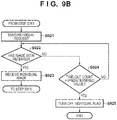
- Fig. 9A shows processing (reception processing) started in the client 101 when the viewer shown in Fig. 5 is opened.
- step S901 the control unit 424 determines whether an individual flag is ON. This individual flag is OFF at the beginning. A timing when the individual flag is turned on will be described later. If it is determined in step S901 that the individual flag is not ON, the control unit 424 sets, in step S902, a reception mode to a stream reception mode to prepare for reception of a video stream in order to receive a stream distributed by stream distribution. The control unit 424 sends, in step S903, a stream request to the camera 102, and activates, in step S904, the timer 430 to start measurement (time-out counting) of an elapsed time since sending of the stream request.
- step S905 the control unit 424 determines whether reception of the video stream has started. If it is determined in step S905 that reception of the video stream has not started, the control unit 424 determines in step S908 whether the time-out count started in step S904 exceeds 3 sec. If the time-out count is equal to or shorter than 3 sec, the processing in step S905 is repeated.
- step S905 If it is determined in step S905 that reception of the video stream has started, the control unit 424 continues the stream reception operation in step S906. That is, the stream reception operation in the stream reception mode set in step S901 is continued. In step S907, it is determined whether the stream reception operation ends. If it is determined in step S907 that the stream reception operation ends, this processing ends; otherwise, the stream reception operation in step S906 is repeated. The end of the stream reception operation indicates closing of the application of the viewer or the like.
- step S908 if it is determined in step S908 that the time-out count is longer than 3 sec, it is determined that the proxy which accumulates intermediate data is interposed, and the control unit 424 cancels the video stream in step S909.
- step S910 the control unit 424 sets the reception mode to an individual reception mode for receiving an image by individual distribution.
- the control unit 424 receives an individual image by an individual request for individually requesting an image included in a video stream, and displays it. More detailed description will be provided below.
- step S911 the control unit 424 turns on the individual flag. If the individual flag is ON, an operation by individual distribution is executed at the time of next activation, as indicated by step S901.
- step S912 the control unit 424 requests an individual image by sending an individual request.
- step S913 the control unit 424 receives and displays the individual image.
- step S914 the control unit 424 determines whether the individual reception operation ends. If it is determined that the individual reception operation ends, this processing ends; otherwise, the processes in step S912 and the subsequent steps are repeated. If the reception processing ends in a state in which the individual flag is ON, that is, the individual reception operation is executed, it is preferable to execute the individual reception operation without performing determination using a stream request at the time of next activation of the reception processing.
- the client 101 operates in the individual reception mode from the beginning (YES in step S901 ⁇ step S910).
- Fig. 9B shows this processing. Steps S921 to S925 of Fig. 9B show details of the processes in steps S912 and S913.
- the control unit 424 sends an individual request in step S921 while activating the timer 430 to start time-out counting.
- step S922 the control unit 424 determines whether an image for the individual request has been received. If the image has been received, the control unit 424 receives the individual image in step S923. On the other hand, if it is determined in step S922 that no image has been received, the control unit 424 determines in step S924 whether the time-out count exceeds a predetermined value. If the time-out count is equal to or smaller than the predetermined value, the process returns to step S922. If it is determined in step S924 that the time-out count exceeds the predetermined value, the control unit 424 turns off the individual flag in step S925, thereby ending the reception processing.
- the individual reception mode is set from the beginning at the time of next activation of the reception processing. If no image can be received even by executing the individual reception operation, the stream reception mode is set at the time of next activation of the reception processing to perform determination in steps S903 to S908.
- a proxy server that accumulates a video is interposed midway, it is possible to switch from the operation of receiving and displaying a video stream to the operation of receiving and displaying an individual image. Therefore, it is possible to see a video from a camera in either an environment where such proxy is interposed or an environment where no such proxy is interposed.
- control is performed to switch to reception of a video by an individual request if reception of a video stream cannot be started within a predetermined time since sending of a stream request.
- one of stream distribution and individual distribution is selected based on a time taken for arrival of an individual image by an individual request and a time taken for arrival of a video stream by a partial stream request. Note that the arrangements of a client 101 and a camera 102 and the basic operations of stream distribution and individual distribution according to the second embodiment are the same as in the first embodiment.
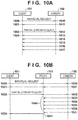
- Figs. 10A and 10B are sequence charts each showing exchange between the camera 102 and the client 101 before requesting actual distribution of a video according to the second embodiment.
- this processing before requesting actual distribution, it is determined whether an environment is that where a proxy that accumulates intermediate data is interposed, as shown in Figs. 2A and 2B or 3A and 3B.
- This processing will be referred to as environment determination processing hereinafter.
- the environment determination processing allows the client 101 to decide, before execution of actual video distribution (to be referred to as actual distribution hereinafter) by the camera 102, whether actual distribution is performed by stream distribution or individual distribution.
- a method of determining, by the environment determination processing, whether a proxy 103 that accumulates intermediate data is interposed will be described.
- a proxy set to accumulate intermediate data is interposed, data are returned when all the data are accumulated, and thus it takes time for the first data to return.
- the proxy accumulates data midway.
- Fig. 10A is a sequence chart when this determination processing is performed in a network environment where the proxy that accumulates intermediate data is not interposed.
- the client 101 sends an individual request (step 1000).
- the camera 102 Upon receiving the individual request (step 1010), the camera 102 sends a reply (individual image) to the individual request (step 1011).
- the client 101 receives the reply (step 1001), and holds, as the first time, the time from sending (step 1000) of the individual request to reception (step 1001) of the reply.
- the client 101 sends a partial stream request (step 1002).
- the partial stream request is used to cause the camera 102 to distribute a stream of a predetermined data amount. In this embodiment, assume that a predetermined number of video streams, for example, five video streams are distributed.
- the camera 102 Upon receiving the partial stream request (step 1012), the camera 102 returns requested partial streams (five videos) (steps 1013 to 1017).
- the client 101 receives the videos sent from the camera 102 (steps 1003 to 1007).
- the client 101 obtains, as the second time, the time from sending (step 1002) of the partial stream request to reception (step 1003) of the first video.
- the environment determination processing it is decided whether to execute a stream reception operation or an individual reception operation, based on the ratio or difference between the first time and the second time. For example, if the difference between the first time and the second time is equal to or smaller than a threshold, or a value obtained by dividing the first time by the second time is equal to or larger than a predetermined value, it is decided to execute a stream reception operation.
- a threshold or a value obtained by dividing the first time by the second time is equal to or larger than a predetermined value
- the environment is a normal environment (an environment where the proxy that accumulates data is not interposed). Note that if the decision processing is performed using the ratio between the first time and the second time, when the first time differs from the second time by less than twice, it is determined that the difference between the first time and the second time is small.
- the client 101 sends an individual request to the camera 102 (step 1020).
- the camera 102 receives the request (step 1030), and sends a reply (individual image) to the received request (step 1031).
- the client 101 receives the reply (step 1021).
- the client 101 obtains the time from sending (step 1020) of the individual request to reception (step 1021) of the reply, and holds it as the first time.
- the client 101 sends a partial stream request (step 1022).
- the partial stream request is as described above.
- the camera 102 Upon receiving the partial stream request (step 1032), the camera 102 returns requested partial streams (steps 1033 to 1037).
- the proxy 103 accumulates these partial streams until a partial stream with end information arrives (step 1040).
- the proxy Upon receiving the partial stream with end information, the proxy sends all the accumulated partial streams to the client 101 (step 1041).
- the client 101 receives the partial streams as a reply to the partial stream request (step 1023).
- the client 101 obtains the second time from sending (step 1022) of the partial stream request to reception (step 1023) of the reply. In the case shown in Fig.
- steps S1101 to S1109 correspond to the environment determination processing.
- step S1101 a control unit 424 sends an individual request.
- step S1102 a timer 430 is activated. At this time, the timer 430 starts to perform counting from 0.
- step S1103 the control unit 424 determines whether a reply to the request sent in step S1101 has been received. Step S1103 is repeated until the reply is received. If it is determined in step S1103 that the replay has been received, the control unit 424 substitutes, in step S1104, the value (to be referred to as a timer count hereinafter) of the timer 430 into count 1. As a result, the time from sending of the individual request to reception of the reply is set in count 1.
- step S1105 the control unit 424 sends a partial stream request to the camera 102.
- step S1106 the control unit 424 starts the timer 430.
- the timer 430 is started from 0.
- step S1107 the control unit 424 waits for reception of the first reply to the partial stream request. If the reply is received, the control unit 424 substitutes, in step S1108, the current timer count into count 2. As a result, the time from sending of the partial stream request to reception of the first reply is set in count 2.
- step S1109 the control unit 424 compares the times held in counts 1 and 2, and determines whether a value of count 1/count 2 is larger than 0.5. That is, it is determined whether the first time taken to receive the reply to the individual request is not so different from the second time taken to receive the reply to the partial stream request. If it is determined in step S1109 that the value is larger than 0.5, it is determined that there is no large difference between the times of counts 1 and 2, that is, the proxy 103 that accumulates intermediate data is not interposed. In this case, the process advances to step S1110, actual distribution is performed using video stream distribution.
- control unit 424 sets, in step S1110, the reception mode to the stream reception mode of receiving a video stream, and sends a stream request in step S1111.
- the control unit 424 receives and displays a video stream.
- Step S1112 is repeated until distribution of the video stream ends (step S1113).
- step S1114 the control unit 424 sets the reception mode to the individual reception mode of individually receiving an image by an individual request.
- the control unit 424 sends an individual request in step S1115, and receives and displays an individual image in step S1116.
- step S1117 the control unit 424 determines whether individual distribution ends. If it is determined that individual distribution ends, this processing ends; otherwise, the process returns to step S1115, and steps S1115 to S1117 are repeated until individual distribution ends. Note that the processing shown in Fig. 9B may be applied as the processes in steps S1115 and S1116, similarly to steps S912 and S913 of the first embodiment.
- the second embodiment it is determined whether the proxy that accumulates data (images) is interposed, by comparing the times taken to receive replies to an individual request and a partial stream request before causing the camera to start actual distribution of a video.
- it is decided based on a determination result whether to perform individual distribution or stream distribution it is possible to receive a video in an appropriate reception mode from the start of a viewer operation.
- a video photographed by the camera 102 is used as a reply to the request.
- the present invention is not limited to this.
- predetermined data other than a video and image may be used as a reply to the request.
- Embodiment(s) of the present invention can also be realized by a computer of a system or apparatus that reads out and executes computer executable instructions (e.g., one or more programs) recorded on a storage medium (which may also be referred to more fully as a 'non-transitory computer-readable storage medium') to perform the functions of one or more of the above-described embodiment(s) and/or that includes one or more circuits (e.g., application specific integrated circuit (ASIC)) for performing the functions of one or more of the above-described embodiment(s), and by a method performed by the computer of the system or apparatus by, for example, reading out and executing the computer executable instructions from the storage medium to perform the functions of one or more of the above-described embodiment(s) and/or controlling the one or more circuits to perform the functions of one or more of the above-described embodiment(s).
- computer executable instructions e.g., one or more programs
- a storage medium which may also be referred to more fully as
- the computer may comprise one or more processors (e.g., central processing unit (CPU), micro processing unit (MPU)) and may include a network of separate computers or separate processors to read out and execute the computer executable instructions.
- the computer executable instructions may be provided to the computer, for example, from a network or the storage medium.
- the storage medium may include, for example, one or more of a hard disk, a random-access memory (RAM), a read only memory (ROM), a storage of distributed computing systems, an optical disk (such as a compact disc (CD), digital versatile disc (DVD), or Blu-ray Disc (BD)TM), a flash memory device, a memory card, and the like.
- An information processing apparatus for executing reception processing of receiving a video from an external apparatus determines a reception state of the video from the external apparatus by requesting the external apparatus to send the video.
- the information processing apparatus executes, based on a result of determining the reception state, one of a stream reception operation of receiving a video stream by sending a stream request to the external apparatus and an individual reception operation of individually receiving an image included in the video stream by sending an individual request to the external apparatus.
Landscapes
- Engineering & Computer Science (AREA)
- Multimedia (AREA)
- Signal Processing (AREA)
- Computer Networks & Wireless Communication (AREA)
- Two-Way Televisions, Distribution Of Moving Picture Or The Like (AREA)
- Information Transfer Between Computers (AREA)
Abstract
Description
- The present invention relates to an information processing apparatus, a control method therefor and a storage medium.
- Video distribution from a network camera includes stream distribution of distributing a plurality of images (video stream) in response to one request from a client and individual distribution of sending one image (individual image) in response to one request from a client. In general, a client that can receive a stream requests stream distribution for high-speed reception, and receives and displays a video stream. On the other hand, a client that cannot receive a stream requests individual distribution, and receives and displays an individual image.
- In stream distribution, since a network camera unilaterally distributes data upon receiving a request from a client, high-speed distribution is possible. Therefore, stream distribution is used when it is desirable to display a video at high speed. In individual distribution, an operation in which a network camera receives an individual request from a client and sends an individual image is repeated. Individual distribution allows display even on, for example, a browser regardless of the environment of the client.
- There is proposed a client that selects and uses stream distribution or individual distribution in accordance with a situation. Japanese Patent Laid-Open No.
2008-211503 - However, if a client requests stream reception, a video stream cannot be received by communication via a proxy in some cases. This is because if data is divisionally sent from an image source, the proxy may accumulate the divided data, receive all the data, and then send all the received data collectively. The divided data of a video stream or the like are sent using, for example, the HTTP chunk format. In the chunk format, each divided data is sent in a format indicating that it is intermediate data or final data. The proxy accumulates the data (intermediate data) until the final data is received from the image source. Then, upon receiving the final data, the proxy sends the data accumulated so far to the client collectively.
- If the image source is a camera, intermediate data in the chunk format are successively sent as data (divided data) of a video stream. In this case, since no final data is received, the proxy only accumulates a video received from the camera, and does not send it to the client. As a result, a problem arises in which the video never reaches the client and is not displayed on the client at all.
- In embodiments of the present invention, to solve the above-described problem, there are provided an information processing apparatus that allows a client to receive an image from a camera appropriately, and a control method for the information processing apparatus.
- The present invention in its first aspect provides an information processing apparatus as specified in
claims 1 to 13. - The present invention in its second aspect provides a method for an information processing apparatus as specified in claim 14.
- The present invention in its third aspect provides a computer program as specified in claim 15.
- Further features of the present invention will become apparent from the following description of exemplary embodiments (with reference to the attached drawings).
-
-
Fig. 1A is a sequence chart for explaining stream distribution of a camera; -
Fig. 1B is a sequence chart for explaining individual distribution of the camera; -
Figs. 2A and 2B are a view and a sequence chart for explaining a divisional sending operation performed by interposing a proxy; -
Figs. 3A and 3B are a view and a sequence chart showing a state in which no video stream reaches a client by interposing the proxy; -
Fig. 4 is a block diagram showing an example of the functional arrangements of the camera and client according to an embodiment; -
Fig. 5 is a view showing a viewer window displayed on the client; -
Fig. 6 is a sequence chart for explaining the operations of the client, proxy, and camera according to the first embodiment; -
Fig. 7 is a view showing a viewer window displayed on the client; -
Figs. 8A and 8B are sequence charts for explaining the operations of the client, proxy, and camera according to the first embodiment; -
Fig. 9A is a flowchart illustrating reception processing according to the first embodiment; -
Fig. 9B is a flowchart illustrating the reception processing according to the first embodiment; -
Figs. 10A and 10B are sequence charts for explaining the operations of a client, proxy, and camera according to the second embodiment; -
Fig. 11 is a flowchart illustrating reception processing according to the second embodiment; and -
Fig. 12 is a block diagram showing an example of the hardware arrangement of the client according to the embodiment. - A preferred embodiment of the present invention will be described in detail below with reference to the accompanying drawings.
- Stream distribution and individual distribution according to the embodiment will be described first with reference to
Figs. 1A and 1B. Fig. 1A is a sequence chart when a client receives and displays stream distribution. Aclient 101 sends a stream request for requesting a video stream (step 110). Upon receiving the stream request (step 111), acamera 102 performs stream distribution (step 112). In stream distribution, a video photographed by thecamera 102 is sent as a video stream. Theclient 101 receives the video stream sent from thecamera 102, and displays it (step 113). -
Fig. 1B is a sequence chart when theclient 101 receives an image individually distributed from thecamera 102, and displays it. Theclient 101 sends an individual request (step 120). Upon receiving the individual request (step 121), thecamera 102 performs individual distribution (step 122). In individual distribution, an image (to also be referred to as an individual image hereinafter) of one frame of the video photographed by thecamera 102 is distributed. In individual distribution, instead of one frame, images of a plurality of frames such as two or three frames may be requested and distributed. Theclient 101 receives the image sent by thecamera 102, and displays it (step 123). Subsequently, if theclient 101 sends a next individual request (step 124), thecamera 102 receives the individual request (step 125), and distributes a next image (step 126). Theclient 101 receives and displays the image (step 127). By repeating this operation, theclient 101 displays the images received from thecamera 102 by individual distribution. - A case in which a
proxy 103 that relays data sending is interposed between theclient 101 and the image source, and is set to accumulate divided intermediate data and send them will be described next with reference toFigs. 2A, 2B ,3A, and 3B . -
Fig. 2A shows a state in which theclient 101 is connected to aserver 104 serving as an image source via theproxy 103.Fig. 2B is a sequence chart showing an operation when theproxy 103 set to accumulate intermediate data and send them at once is interposed. First, theclient 101 sends a request to the server 104 (step 200). Upon receiving the request, theproxy 103 directly sends the request to the server 104 (step 210). Upon receiving a request (step 220), theserver 104 replies to the request by dividing data to be sent and sending the divided data (step 221). The data can be divided and distributed using, for example, the HTTP chunk format. The data sent instep 221 are intermediate data added with no data end information, and theproxy 103 accumulates these data (step 211). After that, theserver 104 sends final data indicating the end of the divided data (step 222). Upon receiving the final data (step 212), theproxy 103 sends the accumulated intermediate data and the final data to theclient 101 collectively (step 213). Thus, theclient 101 receives the divided and sent data collectively (step 201). - An operation when a video of the
camera 102 is to be received, by stream distribution shown inFig. 1A , via theproxy 103 that accumulates intermediate data will be described next with reference toFig. 3A . - The
client 101 is connected to thecamera 102 on the Internet via theproxy 103. First, theclient 101 sends a stream request (step 300). Upon receiving the stream request, theproxy 103 directly sends the stream request to the camera 102 (step 310). Upon receiving the stream request (step 320), thecamera 102 returns a video obtained by photographing in a stream video format (step 321). At this time, thecamera 102 continuously sends a video stream as intermediate data added with no end information in, for example, the chunk format. Since data added with end data is never sent from thecamera 102, theproxy 103 only accumulates stream data as intermediate data, and does not send the video to the client 101 (step 311). As a result, theclient 101 can never receive the video, and thus cannot display the video (step 301). -
Fig. 4 is a block diagram showing an example of the functional arrangements of theclient 101 andcamera 102 according to this embodiment. Theclient 101 executes reception processing of receiving a video from thecamera 102 as an external apparatus. - In this embodiment, the
client 101 and thecamera 102 are connected by anetwork 450 via a proxy (not shown). The numbers of clients and cameras connected to thenetwork 450 are not limited. However, for the sake of descriptive simplicity, assume that one client and one camera are connected. As for thenetwork 450, any digital network such as the Internet or an intranet with a band enough to pass a camera control signal and compressed image signal (to be described later) may be used. Note that a TCP/IP (UDP/IP) protocol is assumed as a network protocol in this embodiment, and an address indicates an IP address in the following description. Assume that theclient 101 and thecamera 102 are assigned with IP addresses. - The
camera 102 according to this embodiment is a camera server apparatus having a camera function and a server function of distributing a video. Note that the camera function and the server function may be implemented by separate apparatuses or one apparatus. In accordance with a command received from the client by acommunication control unit 414, thecamera 102 distributes image data via thenetwork 450, and also executes various camera control operations. Animage input unit 415 loads a photographed image (moving image or still image) of avideo camera 411. Theimage input unit 415 loads an entire image if it is set to process an entire image, and loads part of an image if it is set to process a cut image. Animage compressing unit 416 compresses the loaded photographed image to a data size that is readily distributed to theclient 101. Astorage unit 418 holds various setting values and data. - The
video camera 411 is attached to amovable panhead 412. A camera/panhead control unit 413 controls themovable panhead 412 in accordance with control contents designated by a command that has been received by thecommunication control unit 414 and interpreted by acommand interpretation unit 417. This controls, for example, the pan, tilt, and rotation angles of thevideo camera 411. - When authentication information is sent via the
communication control unit 414, anauthentication unit 419 determines whether to permit authentication. Thecamera 102 has guest and administrator user operation modes, and executable functions are different depending on a guest or an administrator. Theauthentication unit 419 performs authentication using a character string and password input by the user. If authentication succeeds, theauthentication unit 419 certifies the user as an administrator, and transits to the administrator operation mode. In the administrator operation mode, a function or the like that can be performed only by the administrator is accepted. - The
image compressing unit 416 receives an NTSC image signal from thevideo camera 411, performs A/D conversion, compresses the signal by MotionJPEG, and transfers the compressed signal to thecommunication control unit 414. Thecommunication control unit 414 sends the compressed image to thenetwork 450. Note that MotionJPEG compression is used as the compression format of the image. However, the present invention is not limited to this compression format. Thecamera 102 supports both stream distribution of distributing a video stream by one stream request and individual distribution of sending one image (individual image) by one individual request. - The
client 101 designates the IP address assigned to thecamera 102, and is connected to thecamera 102 via thenetwork 450, thereby establishing communication. Acommunication control unit 421 of theclient 101 receives photographed image data (video stream or individual image) sent from thecamera 102, and panoramic image data held in thestorage unit 418. Thecommunication control unit 421 also receives the results of various camera control operations from thecamera 102. Acontrol unit 424 controls various kinds of operations including the operation of theclient 101 in a stream reception mode and the operation of theclient 101 in an individual reception mode. Thecontrol unit 424 executes reception processing (to be described later with reference toFigs. 9A and9B ). Thecontrol unit 424 controls to generate a graphical user interface (GUI) from the results of the various camera control operations and the photographed image and panoramic image expanded by animage decompression unit 425, and displays the GUI on adisplay unit 426. Anoperation input unit 423 accepts a GUI operation performed by the user via a mouse or keyboard. Acommand generation unit 422 generates various camera control commands based on GUI operations such as a mouse click operation on the panoramic image and a drag operation of a frame representing the pan, tilt, rotation, and zoom positions of thevideo camera 411. Thecommand generation unit 422 also generates a command of the size of a received image, a cut distribution command, and the like. The generated various camera control commands are sent from thecommunication control unit 421 to thecamera 102. Atimer 430 measures a time since issuance of the stream request. Thetimer 430 is used to determine a time-out of display control. -
Fig. 12 is a block diagram showing an example of the hardware arrangement of theclient 101. Theclient 101 is an information processing apparatus, and is implemented by, for example, a general-purpose computer apparatus. ACPU 1201 implements various control operations by executing programs stored in aROM 1202 or aRAM 1203. TheROM 1202 and theRAM 1203 are examples of a memory connected to theCPU 1201. TheROM 1202 is a read-only nonvolatile memory. TheRAM 1203 is a volatile memory that is appropriately writable. At least some of the functional units of theclient 101 shown inFig. 4 are implemented when theCPU 1201 executes predetermined programs. - A
display device 1204 forms thedisplay unit 426, and performs various display operations under the control of theCPU 1201. Asecondary storage device 1205 is, for example, a hard disk, and saves various kinds of data. Note that a program to be executed by theCPU 1201 may be stored in thesecondary storage device 1205, and loaded into theRAM 1203 and executed by theCPU 1201, as needed. Aninput device 1206 includes a keyboard and a mouse, and forms theoperation input unit 423. Note that theinput device 1206 may include a touch panel provided on the display screen of thedisplay device 1204. Anetwork interface 1207 is an interface that connects thenetwork 450 and theclient 101. The above-described constituent elements are communicably connected to each other via abus 1208. - A GUI window (viewer window 500) according to this embodiment will be described next with reference to
Fig. 5 . In theviewer window 500, a video distributed from thecamera 102 is displayed in avideo display area 501. Pan, tilt, and zoom operations can be performed using operation bars 511, 512, and 513. Asnapshot button 514 is used to obtain a still image. An imagesize setting selector 515 is used to display a current video size and switch a video size to be displayed. It is possible to display, in thevideo display area 501, an image obtained by stream distribution described with reference toFig. 1A and an image obtained by individual distribution described with reference toFig. 1B . - The reception operation of the
client 101 according to this embodiment will be described next. Theclient 101 determines the reception state of a video by requesting thecamera 102 as an external apparatus to send the video, and executes one of a stream reception operation and an individual reception operation based on a determination result. In this embodiment, it is determined whether a video stream is received within a predetermined time since sending of a stream request, and one of the stream reception operation and the individual reception operation is selected based on a determination result. Exchange of the video between theclient 101 and thecamera 102 according to this embodiment will be described below with reference toFig. 6 . - The reception processing (viewer) operating on the
client 101 according to this embodiment sends a stream request to the camera. Theclient 101 normally receives a video stream and displays a video in the procedure shown inFig. 1A . To the contrary, an operation sequence shown inFig. 6 shows an operation when theproxy 103 that accumulates divided data and then sends the data at once is interposed between theclient 101 and thecamera 102, as described with reference toFigs. 3A and 3B . Theclient 101 sends a stream request to the camera 102 (step 600). Upon receiving the request, theproxy 103 directly sends the request to the camera 102 (step 610). Thus, the stream request sent from theclient 101 is received by thecamera 102 via the proxy 103 (step 620). Thecamera 102 distributes a video stream in response to the stream request (step 621). The distributed video stream includes intermediate data, and theproxy 103 accumulates the intermediate data (step 611). Therefore, theclient 101 receives no video. - After sending the stream request, the
client 101 activates the timer 430 (step 630) to measure an elapsed time since sending of the stream request. If no video stream is received before the value of thetimer 430 reaches a predetermined value (for example, 3 sec) (step 631), theclient 101 starts to send an individual request in order to receive an image by individual distribution (step 602). Upon receiving the individual request via theproxy 103, thecamera 102 sends an image (step 623). The sent image is received by theclient 101 via theproxy 103, and displayed in the video display area 501 (step 603). If an individual image is sent, it is not in a divided data format, and is not accumulated in theproxy 103. When individual distribution described above is repeated (steps client 101 can receive the images distributed by thecamera 102, and displays them as a video. -
Fig. 7 is a view showing a GUI when a video is displayed by individual distribution instep 602 and the subsequent steps ofFig. 6 . As shown inFig. 7 , the images received by individual distribution are displayed in thevideo display area 501. In anarea 701, "video is acquired by individual request due to time-out of video stream" is displayed, explicitly indicating to the user that stream distribution has been switched to individual distribution. With this display, the user can grasp whether theclient 101 executes the stream reception operation of receiving a video stream in response to a stream request or the individual reception operation of receiving an individual image in response to an individual request. -
Fig. 8A shows exchange when, if reception processing ends after a time-out occurs to switch to individual distribution, as shown inFig. 6 , and then reception processing is activated, theclient 101 acquires an image from thecamera 102. In this case, if the same sequence as that shown inFig. 6 is performed again, that is, a video stream is to be received by a stream request, the possibility that a time-out of the timer 430 (3 sec) occurs without receiving a video is high. For this reason, from the beginning, theclient 101 receives a video by individual distribution described with reference toFig. 1B and displays it. That is, upon activation of reception processing, theclient 101 sends an individual request (steps camera 102 receives the individual request (steps steps client 101 receives and displays the image (steps - Note that as shown in
Fig. 8A , switching of the processing to individual distribution from beginning is preferably limited to a case in which an image can be displayed by switching to an individual request, as shown inFig. 6 . The reason for this is as follows. As shown inFig. 8B , after sending a stream request (step 840), if a time-out occurs without receiving a video, theclient 101 sends an individual request (steps 841 and 842). As shown inFig. 8B , if thecamera 102 does not reply to the individual request either, it is considered that a malfunction has occurred in thecamera 102. After eliminating the malfunction in thecamera 102, it is desirable to attempt stream distribution first to perform reception by stream reception that allows high-speed video display. - The above-described processing will be further explained with reference to the flowchart of
Fig. 9A. Fig. 9A shows processing (reception processing) started in theclient 101 when the viewer shown inFig. 5 is opened. - In step S901, the
control unit 424 determines whether an individual flag is ON. This individual flag is OFF at the beginning. A timing when the individual flag is turned on will be described later. If it is determined in step S901 that the individual flag is not ON, thecontrol unit 424 sets, in step S902, a reception mode to a stream reception mode to prepare for reception of a video stream in order to receive a stream distributed by stream distribution. Thecontrol unit 424 sends, in step S903, a stream request to thecamera 102, and activates, in step S904, thetimer 430 to start measurement (time-out counting) of an elapsed time since sending of the stream request. - In step S905, the
control unit 424 determines whether reception of the video stream has started. If it is determined in step S905 that reception of the video stream has not started, thecontrol unit 424 determines in step S908 whether the time-out count started in step S904 exceeds 3 sec. If the time-out count is equal to or shorter than 3 sec, the processing in step S905 is repeated. - If it is determined in step S905 that reception of the video stream has started, the
control unit 424 continues the stream reception operation in step S906. That is, the stream reception operation in the stream reception mode set in step S901 is continued. In step S907, it is determined whether the stream reception operation ends. If it is determined in step S907 that the stream reception operation ends, this processing ends; otherwise, the stream reception operation in step S906 is repeated. The end of the stream reception operation indicates closing of the application of the viewer or the like. - On the other hand, if it is determined in step S908 that the time-out count is longer than 3 sec, it is determined that the proxy which accumulates intermediate data is interposed, and the
control unit 424 cancels the video stream in step S909. In step S910, thecontrol unit 424 sets the reception mode to an individual reception mode for receiving an image by individual distribution. In the individual reception mode, thecontrol unit 424 receives an individual image by an individual request for individually requesting an image included in a video stream, and displays it. More detailed description will be provided below. - In step S911, the
control unit 424 turns on the individual flag. If the individual flag is ON, an operation by individual distribution is executed at the time of next activation, as indicated by step S901. In step S912, thecontrol unit 424 requests an individual image by sending an individual request. In step S913, thecontrol unit 424 receives and displays the individual image. In step S914, thecontrol unit 424 determines whether the individual reception operation ends. If it is determined that the individual reception operation ends, this processing ends; otherwise, the processes in step S912 and the subsequent steps are repeated. If the reception processing ends in a state in which the individual flag is ON, that is, the individual reception operation is executed, it is preferable to execute the individual reception operation without performing determination using a stream request at the time of next activation of the reception processing. This is because the possibility that a time-out occurs due to interposition of theproxy 103 is high even if a stream request is sent. Therefore, in the reception processing of this embodiment, if the individual flag is ON at the time of activation, theclient 101 operates in the individual reception mode from the beginning (YES in step S901 → step S910). - As described above, if the
camera 102 does not reply to the individual request either, it is considered that a malfunction has occurred in thecamera 102. In this case, after eliminating the malfunction, the user may want to perform reception by stream reception that allows high-speed video display. Therefore, if an image for the individual request is not received within the predetermined time in step S913, thecontrol unit 424 turns off the individual flag turned on in step S911, thereby ending the processing.Fig. 9B shows this processing. Steps S921 to S925 ofFig. 9B show details of the processes in steps S912 and S913. Thecontrol unit 424 sends an individual request in step S921 while activating thetimer 430 to start time-out counting. In step S922, thecontrol unit 424 determines whether an image for the individual request has been received. If the image has been received, thecontrol unit 424 receives the individual image in step S923. On the other hand, if it is determined in step S922 that no image has been received, thecontrol unit 424 determines in step S924 whether the time-out count exceeds a predetermined value. If the time-out count is equal to or smaller than the predetermined value, the process returns to step S922. If it is determined in step S924 that the time-out count exceeds the predetermined value, thecontrol unit 424 turns off the individual flag in step S925, thereby ending the reception processing. If the image can be received by executing the individual reception operation, the individual reception mode is set from the beginning at the time of next activation of the reception processing. If no image can be received even by executing the individual reception operation, the stream reception mode is set at the time of next activation of the reception processing to perform determination in steps S903 to S908. - As described above, according to the first embodiment, if a proxy server that accumulates a video is interposed midway, it is possible to switch from the operation of receiving and displaying a video stream to the operation of receiving and displaying an individual image. Therefore, it is possible to see a video from a camera in either an environment where such proxy is interposed or an environment where no such proxy is interposed.
- In the first embodiment, control is performed to switch to reception of a video by an individual request if reception of a video stream cannot be started within a predetermined time since sending of a stream request. In the second embodiment, one of stream distribution and individual distribution is selected based on a time taken for arrival of an individual image by an individual request and a time taken for arrival of a video stream by a partial stream request. Note that the arrangements of a
client 101 and acamera 102 and the basic operations of stream distribution and individual distribution according to the second embodiment are the same as in the first embodiment. -
Figs. 10A and 10B are sequence charts each showing exchange between thecamera 102 and theclient 101 before requesting actual distribution of a video according to the second embodiment. With this processing, before requesting actual distribution, it is determined whether an environment is that where a proxy that accumulates intermediate data is interposed, as shown inFigs. 2A and 2B or 3A and 3B. This processing will be referred to as environment determination processing hereinafter. The environment determination processing allows theclient 101 to decide, before execution of actual video distribution (to be referred to as actual distribution hereinafter) by thecamera 102, whether actual distribution is performed by stream distribution or individual distribution. - A method of determining, by the environment determination processing, whether a
proxy 103 that accumulates intermediate data is interposed will be described. In the case of an individual request, even if a proxy set to accumulate intermediate data is interposed, a reply is received soon from thecamera 102. On the other hand, in the case of stream distribution, if a proxy set to accumulate intermediate data is interposed, data are returned when all the data are accumulated, and thus it takes time for the first data to return. Using this fact, if the difference between the time from sending of an individual request to the first reply and the time from sending of a stream request to the first reply is large, it is determined that the proxy accumulates data midway. -
Fig. 10A is a sequence chart when this determination processing is performed in a network environment where the proxy that accumulates intermediate data is not interposed. Theclient 101 sends an individual request (step 1000). Upon receiving the individual request (step 1010), thecamera 102 sends a reply (individual image) to the individual request (step 1011). Theclient 101 receives the reply (step 1001), and holds, as the first time, the time from sending (step 1000) of the individual request to reception (step 1001) of the reply. Next, theclient 101 sends a partial stream request (step 1002). The partial stream request is used to cause thecamera 102 to distribute a stream of a predetermined data amount. In this embodiment, assume that a predetermined number of video streams, for example, five video streams are distributed. Upon receiving the partial stream request (step 1012), thecamera 102 returns requested partial streams (five videos) (steps 1013 to 1017). Theclient 101 receives the videos sent from the camera 102 (steps 1003 to 1007). Theclient 101 obtains, as the second time, the time from sending (step 1002) of the partial stream request to reception (step 1003) of the first video. - In this embodiment, in the environment determination processing, it is decided whether to execute a stream reception operation or an individual reception operation, based on the ratio or difference between the first time and the second time. For example, if the difference between the first time and the second time is equal to or smaller than a threshold, or a value obtained by dividing the first time by the second time is equal to or larger than a predetermined value, it is decided to execute a stream reception operation. In
Fig. 10A , since the difference between the held first time fromstep 1000 to step 1001 and the second time fromstep 1002 to step 1003 is small, it is determined that the environment is a normal environment (an environment where the proxy that accumulates data is not interposed). Note that if the decision processing is performed using the ratio between the first time and the second time, when the first time differs from the second time by less than twice, it is determined that the difference between the first time and the second time is small. - A case in which the same processing as that shown in
Fig. 10A is performed in a state in which the proxy that accumulates intermediate data is interposed will be described next with reference toFig. 10B . First, theclient 101 sends an individual request to the camera 102 (step 1020). Thecamera 102 receives the request (step 1030), and sends a reply (individual image) to the received request (step 1031). Theclient 101 receives the reply (step 1021). Theclient 101 obtains the time from sending (step 1020) of the individual request to reception (step 1021) of the reply, and holds it as the first time. - Next, the
client 101 sends a partial stream request (step 1022). The partial stream request is as described above. Upon receiving the partial stream request (step 1032), thecamera 102 returns requested partial streams (steps 1033 to 1037). Theproxy 103 accumulates these partial streams until a partial stream with end information arrives (step 1040). Upon receiving the partial stream with end information, the proxy sends all the accumulated partial streams to the client 101 (step 1041). Theclient 101 receives the partial streams as a reply to the partial stream request (step 1023). Theclient 101 obtains the second time from sending (step 1022) of the partial stream request to reception (step 1023) of the reply. In the case shown inFig. 10B , since the difference between the first time fromstep 1020 to step 1021 and the second time fromstep 1022 to step 1023 is large, it is determined that the environment is an environment where the proxy that accumulates data is interposed. As described above, if the first time differs from the second time by twice or more, it is determined that the difference between the first time and the second time is large. - Viewer reception processing by the
client 101 according to the second embodiment including the above-described environment determination processing will be explained with reference to the flowchart ofFig. 11 . InFig. 11 , steps S1101 to S1109 correspond to the environment determination processing. - In step S1101, a
control unit 424 sends an individual request. In step S1102, atimer 430 is activated. At this time, thetimer 430 starts to perform counting from 0. In step S1103, thecontrol unit 424 determines whether a reply to the request sent in step S1101 has been received. Step S1103 is repeated until the reply is received. If it is determined in step S1103 that the replay has been received, thecontrol unit 424 substitutes, in step S1104, the value (to be referred to as a timer count hereinafter) of thetimer 430 intocount 1. As a result, the time from sending of the individual request to reception of the reply is set incount 1. - In step S1105, the
control unit 424 sends a partial stream request to thecamera 102. In step S1106, thecontrol unit 424 starts thetimer 430. Thetimer 430 is started from 0. After that, in step S1107, thecontrol unit 424 waits for reception of the first reply to the partial stream request. If the reply is received, thecontrol unit 424 substitutes, in step S1108, the current timer count intocount 2. As a result, the time from sending of the partial stream request to reception of the first reply is set incount 2. - In step S1109, the
control unit 424 compares the times held incounts count 1/count 2 is larger than 0.5. That is, it is determined whether the first time taken to receive the reply to the individual request is not so different from the second time taken to receive the reply to the partial stream request. If it is determined in step S1109 that the value is larger than 0.5, it is determined that there is no large difference between the times ofcounts proxy 103 that accumulates intermediate data is not interposed. In this case, the process advances to step S1110, actual distribution is performed using video stream distribution. That is, thecontrol unit 424 sets, in step S1110, the reception mode to the stream reception mode of receiving a video stream, and sends a stream request in step S1111. In step S1112, thecontrol unit 424 receives and displays a video stream. Step S1112 is repeated until distribution of the video stream ends (step S1113). - On the other hand, if it is determined in step S1109 that the value is equal to or smaller than 0.5, the process advances to step S1114, and actual distribution is performed using individual distribution. That is, in step S1114, the
control unit 424 sets the reception mode to the individual reception mode of individually receiving an image by an individual request. Thecontrol unit 424 sends an individual request in step S1115, and receives and displays an individual image in step S1116. In step S1117, thecontrol unit 424 determines whether individual distribution ends. If it is determined that individual distribution ends, this processing ends; otherwise, the process returns to step S1115, and steps S1115 to S1117 are repeated until individual distribution ends. Note that the processing shown inFig. 9B may be applied as the processes in steps S1115 and S1116, similarly to steps S912 and S913 of the first embodiment. - As described above, in the second embodiment, it is determined whether the proxy that accumulates data (images) is interposed, by comparing the times taken to receive replies to an individual request and a partial stream request before causing the camera to start actual distribution of a video. In the second embodiment, since it is decided based on a determination result whether to perform individual distribution or stream distribution, it is possible to receive a video in an appropriate reception mode from the start of a viewer operation.
- Note that in the above example, in each of distribution by an individual request and distribution by a partial stream request executed in the environment determination processing before actual distribution, a video photographed by the
camera 102 is used as a reply to the request. However, the present invention is not limited to this. In the environment determination processing, predetermined data other than a video and image may be used as a reply to the request. - Embodiment(s) of the present invention can also be realized by a computer of a system or apparatus that reads out and executes computer executable instructions (e.g., one or more programs) recorded on a storage medium (which may also be referred to more fully as a 'non-transitory computer-readable storage medium') to perform the functions of one or more of the above-described embodiment(s) and/or that includes one or more circuits (e.g., application specific integrated circuit (ASIC)) for performing the functions of one or more of the above-described embodiment(s), and by a method performed by the computer of the system or apparatus by, for example, reading out and executing the computer executable instructions from the storage medium to perform the functions of one or more of the above-described embodiment(s) and/or controlling the one or more circuits to perform the functions of one or more of the above-described embodiment(s). The computer may comprise one or more processors (e.g., central processing unit (CPU), micro processing unit (MPU)) and may include a network of separate computers or separate processors to read out and execute the computer executable instructions. The computer executable instructions may be provided to the computer, for example, from a network or the storage medium. The storage medium may include, for example, one or more of a hard disk, a random-access memory (RAM), a read only memory (ROM), a storage of distributed computing systems, an optical disk (such as a compact disc (CD), digital versatile disc (DVD), or Blu-ray Disc (BD)™), a flash memory device, a memory card, and the like.
- While the present invention has been described with reference to exemplary embodiments, it is to be understood that the invention is not limited to the disclosed exemplary embodiments. The scope of the following claims is to be accorded the broadest interpretation so as to encompass all such modifications and equivalent structures and functions.
- An information processing apparatus for executing reception processing of receiving a video from an external apparatus determines a reception state of the video from the external apparatus by requesting the external apparatus to send the video. The information processing apparatus executes, based on a result of determining the reception state, one of a stream reception operation of receiving a video stream by sending a stream request to the external apparatus and an individual reception operation of individually receiving an image included in the video stream by sending an individual request to the external apparatus.
Claims (15)
- An information processing apparatus (101) for executing reception processing of receiving a video from an external apparatus, comprising:determination means (424, S903-S905, S908, S1101-S1109) for determining a reception state of the video from the external apparatus by requesting the external apparatus to send the video; andexecution means (424, S906-S907, S909-S913, S1110-S1116) for executing, based on a result of determining the reception state by the determination means, one of a stream reception operation of receiving a video stream by sending a stream request to the external apparatus and an individual reception operation of individually receiving an image included in the video stream by sending an individual request to the external apparatus.
- The apparatus according to claim 1, wherein
the determination means determines whether the video stream is received from the external apparatus within a predetermined time since sending of the stream request, and
the execution means continues, if the determination means determines that the video stream has been received, the stream reception operation, and executes, if the determination means determines that no video stream has been received, the individual reception operation. - The apparatus according to claim 2, wherein at the time of activation of the reception processing, the determination means is executed.
- The apparatus according to claim 2 or 3, wherein
the reception processing executes the stream reception operation at the time of activation, and
the execution means continues, if the determination means determines that the video stream has been received, the stream reception operation, and starts, if the determination means determines that no video stream has been received, the individual reception operation by canceling the stream request. - The apparatus according to claim 3 or 4, wherein if the execution means executes the individual reception operation, the individual reception operation is executed at the time of next activation of the reception processing without performing determination using the stream request.
- The apparatus according to any one of claims 2 to 5, wherein
if an image can be received when the execution means executes the individual reception operation, the individual reception operation is executed at the time of next activation of the reception processing without performing determination by the determination means, and
if no image can be received when the execution means executes the individual reception operation, determination by the determination means is performed by executing the stream reception operation at the time of next activation of the reception processing. - The apparatus according to any one of claims 2 to 6, further comprising display control means for causing a display device to display one of the video stream received by the stream reception operation and the image received by the individual reception operation.
- The apparatus according to claim 7, wherein the display control means performs display to explicitly indicate which of the stream reception operation and the individual reception operation is currently executed.
- The apparatus according to claim 1, wherein
the determination means measures a first time from sending of the individual request to reception of a reply to the individual request and a second time from sending of a partial stream request for sending a stream of a predetermined data amount to reception of a reply to the partial stream request, and
the execution means decides, based on the first time and the second time, which of the stream reception operation and the individual reception operation is to be executed. - The apparatus according to claim 8, wherein the execution means decides, based on one of a ratio and a difference between the first time and the second time, which of the stream reception operation and the individual reception operation is to be executed.
- The apparatus according to claim 9 or 10, wherein the reply to the individual request includes an individual image photographed by the external apparatus, and the reply to the partial stream request includes a predetermined number of video streams photographed by the external apparatus.
- The apparatus according to any one of claims 9 to 11, wherein if a value obtained by dividing the first time by the second time is not smaller than a predetermined value, the execution means decides to execute the stream reception operation.
- The apparatus according any one of claims 9 to 11, wherein if a difference between the first time and the second time is not larger than a threshold, the execution means decides to execute the stream reception operation.
- A control method for an information processing apparatus for executing reception processing of receiving a video from an external apparatus, comprising:determining (S903-S905, S908, S1101-S1109) a reception state of the video by requesting the external apparatus to send the video; andexecuting, (S906-S907, S909-S913, S1110-S1116) based on a result of determining the reception state, one of a stream reception operation of receiving a video stream by sending a stream request to the external apparatus and an individual reception operation of individually receiving an image included in the video stream by sending an individual request to the external apparatus.
- A computer program for causing a computer to execute a control method for an information processing apparatus for executing reception processing of receiving a video from an external apparatus, the method comprising:determining a reception state of the video by requesting the external apparatus to send the video; andexecuting, based on a result of determining the reception state, one of a stream reception operation of receiving a video stream by sending a stream request to the external apparatus and an individual reception operation of individually receiving an image included in the video stream by sending an individual request to the external apparatus.
Applications Claiming Priority (1)
| Application Number | Priority Date | Filing Date | Title |
|---|---|---|---|
| JP2017173222A JP7022540B2 (en) | 2017-09-08 | 2017-09-08 | Information processing equipment and its control method |
Publications (1)
| Publication Number | Publication Date |
|---|---|
| EP3454563A1 true EP3454563A1 (en) | 2019-03-13 |
Family
ID=63442566
Family Applications (1)
| Application Number | Title | Priority Date | Filing Date |
|---|---|---|---|
| EP18191376.5A Withdrawn EP3454563A1 (en) | 2017-09-08 | 2018-08-29 | Information processing apparatus for network camera, control method therefor and program |
Country Status (4)
| Country | Link |
|---|---|
| US (1) | US10868847B2 (en) |
| EP (1) | EP3454563A1 (en) |
| JP (1) | JP7022540B2 (en) |
| CN (1) | CN109474835B (en) |
Families Citing this family (1)
| Publication number | Priority date | Publication date | Assignee | Title |
|---|---|---|---|---|
| JP6844480B2 (en) * | 2017-09-22 | 2021-03-17 | 株式会社Jvcケンウッド | Video data streaming monitoring equipment, methods and programs, as well as terminal equipment and video data streaming monitoring systems |
Citations (5)
| Publication number | Priority date | Publication date | Assignee | Title |
|---|---|---|---|---|
| JP2008211503A (en) | 2007-02-26 | 2008-09-11 | Hitachi Kokusai Electric Inc | Video transmission system |
| WO2013144826A1 (en) * | 2012-03-27 | 2013-10-03 | Videotec S.P.A | Interface device for video cameras |
| US20140025782A1 (en) * | 2012-07-18 | 2014-01-23 | Hon Hai Precision Industry Co., Ltd. | System and method for playing and transmitting network video |
| US20140376875A1 (en) * | 2013-03-15 | 2014-12-25 | Canon Kabushiki Kaisha | Imaging apparatus |
| WO2017095649A1 (en) * | 2015-12-03 | 2017-06-08 | Microsoft Technology Licensing, Llc | Protocol fallback during call signaling |
Family Cites Families (46)
| Publication number | Priority date | Publication date | Assignee | Title |
|---|---|---|---|---|
| US5815793A (en) * | 1995-10-05 | 1998-09-29 | Microsoft Corporation | Parallel computer |
| US6771594B1 (en) * | 1997-03-31 | 2004-08-03 | Intel Corporation | Reliable/non-reliable transmission of voice using TCP/UDP based on network quality of service |
| DE19717548A1 (en) * | 1997-04-25 | 1998-11-05 | Philips Patentverwaltung | Transmission system |
| US6717936B1 (en) * | 1998-07-29 | 2004-04-06 | Qwest Communications International, Inc. | Directory talk service and system |
| US6275470B1 (en) * | 1999-06-18 | 2001-08-14 | Digital Island, Inc. | On-demand overlay routing for computer-based communication networks |
| US6965926B1 (en) * | 2000-04-10 | 2005-11-15 | Silverpop Systems, Inc. | Methods and systems for receiving and viewing content-rich communications |
| US6925495B2 (en) * | 2000-07-13 | 2005-08-02 | Vendaria Media, Inc. | Method and system for delivering and monitoring an on-demand playlist over a network using a template |
| US7478164B1 (en) * | 2001-06-12 | 2009-01-13 | Netapp, Inc. | Methods and apparatus for pacing delivery of streaming media data |
| US7088467B1 (en) * | 2001-07-06 | 2006-08-08 | Hewlett-Packard Development Company, L.P. | Digital video imaging with high-resolution still imaging capability |
| US7369537B1 (en) * | 2001-07-18 | 2008-05-06 | Global Ip Solutions, Inc. | Adaptive Voice-over-Internet-Protocol (VoIP) testing and selecting transport including 3-way proxy, client-to-client, UDP, TCP, SSL, and recipient-connect methods |
| JP3734774B2 (en) * | 2002-06-21 | 2006-01-11 | 株式会社リコー | Network facsimile apparatus and facsimile communication method |
| US7702817B2 (en) * | 2003-10-28 | 2010-04-20 | Microsoft Corporation | Wireless network access technologies for retrieving a virtual resource via a plurality of wireless network interfaces |
| JP4155920B2 (en) * | 2003-12-25 | 2008-09-24 | 株式会社日立コミュニケーションテクノロジー | Media gateway and automatic call forwarding service system |
| US8145219B2 (en) * | 2004-07-28 | 2012-03-27 | Broadcom Corporation | Handoff of a multimedia call session using background network scanning |
| US20060168626A1 (en) * | 2005-01-21 | 2006-07-27 | U-Turn Media Corporation | Methods and systems for providing video content to a mobile client |
| US20070011338A1 (en) * | 2005-06-08 | 2007-01-11 | Logitech Europe S.A. | System and method for transparently processing multimedia data |
| US8055783B2 (en) * | 2005-08-22 | 2011-11-08 | Utc Fire & Security Americas Corporation, Inc. | Systems and methods for media stream processing |
| US9021134B1 (en) * | 2006-03-03 | 2015-04-28 | Juniper Networks, Inc. | Media stream transport conversion within an intermediate network device |
| US20080056139A1 (en) * | 2006-09-06 | 2008-03-06 | Mentor Graphics Corporation | Network traffic monitoring using embedded target-side analyzer during embedded software development |
| WO2008049425A1 (en) * | 2006-10-24 | 2008-05-02 | Medianet Innovations A/S | Method and system for firewall friendly real-time communication |
| FR2919778A1 (en) * | 2007-07-30 | 2009-02-06 | Canon Kk | METHOD FOR TRANSMITTING DATA PACKETS IN A TUNNEL, COMPUTER PROGRAM PRODUCT, CORRESPONDING STORAGE MEDIUM AND TUNNEL HEAD |
| US8560634B2 (en) * | 2007-10-17 | 2013-10-15 | Dispersive Networks, Inc. | Apparatus, systems and methods utilizing dispersive networking |
| US8165091B2 (en) * | 2008-06-27 | 2012-04-24 | Nix John A | Efficient handover of media communications in heterogeneous IP networks using LAN profiles and network handover rules |
| US8938201B2 (en) * | 2010-04-16 | 2015-01-20 | Spirent Communications, Inc. | WiFi positioning bench test method and instrument |
| GB2490364B (en) * | 2011-04-28 | 2015-09-23 | Thales Holdings Uk Plc | Wireless communication method and apparatus |
| JP5101728B1 (en) * | 2011-05-12 | 2012-12-19 | シャープ株式会社 | Output system and display system |
| US9087163B2 (en) * | 2012-07-11 | 2015-07-21 | Silicon Image, Inc. | Transmission of multiple protocol data elements via an interface utilizing a data tunnel |
| EP2908535A4 (en) | 2012-10-09 | 2016-07-06 | Sharp Kk | Content transmission device, content playback device, content distribution system, method for controlling content transmission device, method for controlling content playback device, control program, and recording medium |
| US10075498B2 (en) * | 2012-12-21 | 2018-09-11 | Vmware, Inc. | Systems and methods for transmitting data in real time |
| US9569232B1 (en) * | 2013-02-19 | 2017-02-14 | Amazon Technologies, Inc. | Network traffic data in virtualized environments |
| US9602359B2 (en) * | 2013-03-15 | 2017-03-21 | Custom Microwave Components, Inc. | Methods, systems, and computer program product for providing graphical cross connectivity and dynamic configurability |
| JP6465541B2 (en) * | 2013-08-06 | 2019-02-06 | キヤノン株式会社 | COMMUNICATION DEVICE, REPRODUCTION DEVICE, ITS METHOD, AND PROGRAM |
| CN105659588B (en) * | 2013-08-06 | 2019-03-08 | 株式会社理光 | Information processing apparatus and determination result providing method |
| JP6338349B2 (en) * | 2013-10-28 | 2018-06-06 | キヤノン株式会社 | Data transmitting apparatus, data receiving apparatus, control method therefor, and program |
| US9380351B2 (en) * | 2014-01-17 | 2016-06-28 | Lg Display Co., Ltd. | Apparatus for transmitting encoded video stream and method for transmitting the same |
| JP2015170955A (en) * | 2014-03-06 | 2015-09-28 | 富士通株式会社 | COMMUNICATION METHOD, COMMUNICATION CONTROL PROGRAM, AND COMMUNICATION DEVICE |
| US20150281303A1 (en) * | 2014-03-26 | 2015-10-01 | Mohamed Yousef | Adaptive media streaming |
| US20160080205A1 (en) * | 2014-09-16 | 2016-03-17 | Sentry360 | Plug and Play Camera Configuration Tool for Internet Protocol Cameras with Export to Third-Party Video Management Software Support, Batch Firmware Update, and Other Capabilities |
| JP2016091436A (en) * | 2014-11-08 | 2016-05-23 | キヤノン株式会社 | COMMUNICATION DEVICE, COMMUNICATION METHOD, AND PROGRAM |
| US11057446B2 (en) * | 2015-05-14 | 2021-07-06 | Bright Data Ltd. | System and method for streaming content from multiple servers |
| WO2017065798A1 (en) * | 2015-10-16 | 2017-04-20 | Hewlett-Packard Development Company, L.P. | Notification systems |
| US10582022B2 (en) * | 2016-05-20 | 2020-03-03 | Citrix Systems, Inc. | Adaptive session reliability over multiple transports |
| US9998299B2 (en) * | 2016-07-20 | 2018-06-12 | Oracle International Corporation | Efficient transport of encapsulated media traffic over restrictive networks |
| CN106791680A (en) * | 2016-12-30 | 2017-05-31 | 国网上海市电力公司 | A kind of mobile phone remote video monitoring system in outer damage source building site |
| US10348722B2 (en) * | 2017-06-30 | 2019-07-09 | Paypal, Inc. | System and method for implementing hacker traffic barriers |
| US20190081991A1 (en) * | 2017-09-08 | 2019-03-14 | Qualcomm Incorporated | Systems and methods for session initiation protocol communication |
-
2017
- 2017-09-08 JP JP2017173222A patent/JP7022540B2/en active Active
-
2018
- 2018-08-29 CN CN201810993475.3A patent/CN109474835B/en active Active
- 2018-08-29 EP EP18191376.5A patent/EP3454563A1/en not_active Withdrawn
- 2018-09-04 US US16/120,724 patent/US10868847B2/en active Active
Patent Citations (5)
| Publication number | Priority date | Publication date | Assignee | Title |
|---|---|---|---|---|
| JP2008211503A (en) | 2007-02-26 | 2008-09-11 | Hitachi Kokusai Electric Inc | Video transmission system |
| WO2013144826A1 (en) * | 2012-03-27 | 2013-10-03 | Videotec S.P.A | Interface device for video cameras |
| US20140025782A1 (en) * | 2012-07-18 | 2014-01-23 | Hon Hai Precision Industry Co., Ltd. | System and method for playing and transmitting network video |
| US20140376875A1 (en) * | 2013-03-15 | 2014-12-25 | Canon Kabushiki Kaisha | Imaging apparatus |
| WO2017095649A1 (en) * | 2015-12-03 | 2017-06-08 | Microsoft Technology Licensing, Llc | Protocol fallback during call signaling |
Non-Patent Citations (2)
| Title |
|---|
| LIN CHIA-FENG ET AL: "A fault-tolerant ONVIF protocol extension for seamless surveillance video stream recording", COMPUTER STANDARDS AND INTERFACES, vol. 55, 4 May 2017 (2017-05-04) - 4 May 2017 (2017-05-04), pages 55 - 72, XP085290398, ISSN: 0920-5489, DOI: 10.1016/J.CSI.2017.04.005 * |
| ONVIF: "ONVIF(TM) Streaming Specification", 30 June 2017 (2017-06-30), pages 6, XP055538378, Retrieved from the Internet <URL:https://www.onvif.org/specs/stream/ONVIF-Streaming-Spec-v1706.pdf> [retrieved on 20190104] * |
Also Published As
| Publication number | Publication date |
|---|---|
| JP2019050487A (en) | 2019-03-28 |
| US20190081999A1 (en) | 2019-03-14 |
| US10868847B2 (en) | 2020-12-15 |
| CN109474835B (en) | 2022-04-05 |
| CN109474835A (en) | 2019-03-15 |
| JP7022540B2 (en) | 2022-02-18 |
Similar Documents
| Publication | Publication Date | Title |
|---|---|---|
| US20170041530A1 (en) | Information processing apparatus and control method therefor | |
| US20150229835A1 (en) | Image processing system, image processing method, and program | |
| WO2010038447A1 (en) | Image processing apparatus and image processing method | |
| GB2525287A (en) | Display controlling apparatus and displaying method | |
| JP6991768B2 (en) | Display control device and display control method | |
| WO2008075635A1 (en) | Imaging device and imaging system | |
| EP3442214B1 (en) | Control apparatus, control method, and program for setting position and/or quality of images delivered by a network camera | |
| EP3454563A1 (en) | Information processing apparatus for network camera, control method therefor and program | |
| CN111444909B (en) | Image data acquisition method, terminal equipment and medium | |
| CN110868560A (en) | A video recording method and terminal device based on a binocular camera | |
| EP3151113B1 (en) | Remote support system, information processing apparatus, image processing apparatus, methods of controlling these, and storage medium | |
| US10771679B2 (en) | Image capturing control apparatus, method of controlling the same and computer readable storage medium | |
| CN112312007A (en) | Information processing apparatus, imaging apparatus, control method, and storage medium | |
| US9906752B2 (en) | Imaging apparatus and control method thereof | |
| JP2014236313A (en) | Display controller, display control system, program | |
| US10863100B2 (en) | Control apparatus, communication apparatus, control method, and storage medium | |
| KR101198172B1 (en) | Apparatus and method for displaying a reference image and a surveilliance image in digital video recorder | |
| JP4208595B2 (en) | Image change detection system | |
| JP2023007575A (en) | Imaging apparatus, method for controlling imaging apparatus, program, and information processing apparatus | |
| JP7793576B2 (en) | Information processing device, information processing method, and program | |
| JP6362090B2 (en) | How to display the preset position of the network camera | |
| JP4514515B2 (en) | Camera system | |
| JP7802520B2 (en) | Information processing device, information processing method, imaging device, control method, and program | |
| US20260067584A1 (en) | Information processing apparatus, control method for the same, and storage medium | |
| EP4465646A1 (en) | Video output apparatus and method, program and storage medium |
Legal Events
| Date | Code | Title | Description |
|---|---|---|---|
| PUAI | Public reference made under article 153(3) epc to a published international application that has entered the european phase |
Free format text: ORIGINAL CODE: 0009012 |
|
| STAA | Information on the status of an ep patent application or granted ep patent |
Free format text: STATUS: THE APPLICATION HAS BEEN PUBLISHED |
|
| AK | Designated contracting states |
Kind code of ref document: A1 Designated state(s): AL AT BE BG CH CY CZ DE DK EE ES FI FR GB GR HR HU IE IS IT LI LT LU LV MC MK MT NL NO PL PT RO RS SE SI SK SM TR |
|
| AX | Request for extension of the european patent |
Extension state: BA ME |
|
| STAA | Information on the status of an ep patent application or granted ep patent |
Free format text: STATUS: REQUEST FOR EXAMINATION WAS MADE |
|
| 17P | Request for examination filed |
Effective date: 20190913 |
|
| RBV | Designated contracting states (corrected) |
Designated state(s): AL AT BE BG CH CY CZ DE DK EE ES FI FR GB GR HR HU IE IS IT LI LT LU LV MC MK MT NL NO PL PT RO RS SE SI SK SM TR |
|
| STAA | Information on the status of an ep patent application or granted ep patent |
Free format text: STATUS: EXAMINATION IS IN PROGRESS |
|
| 17Q | First examination report despatched |
Effective date: 20200813 |
|
| STAA | Information on the status of an ep patent application or granted ep patent |
Free format text: STATUS: THE APPLICATION HAS BEEN WITHDRAWN |
|
| 18W | Application withdrawn |
Effective date: 20240926 |